


QuizTraffic rulesNorway
Test your knowledge with our multiple-choice quiz. Learn from each answer and improve your understanding of the traffic rules and road signs of Norway.
 Traffic signs
 Traffic rules
 Norway
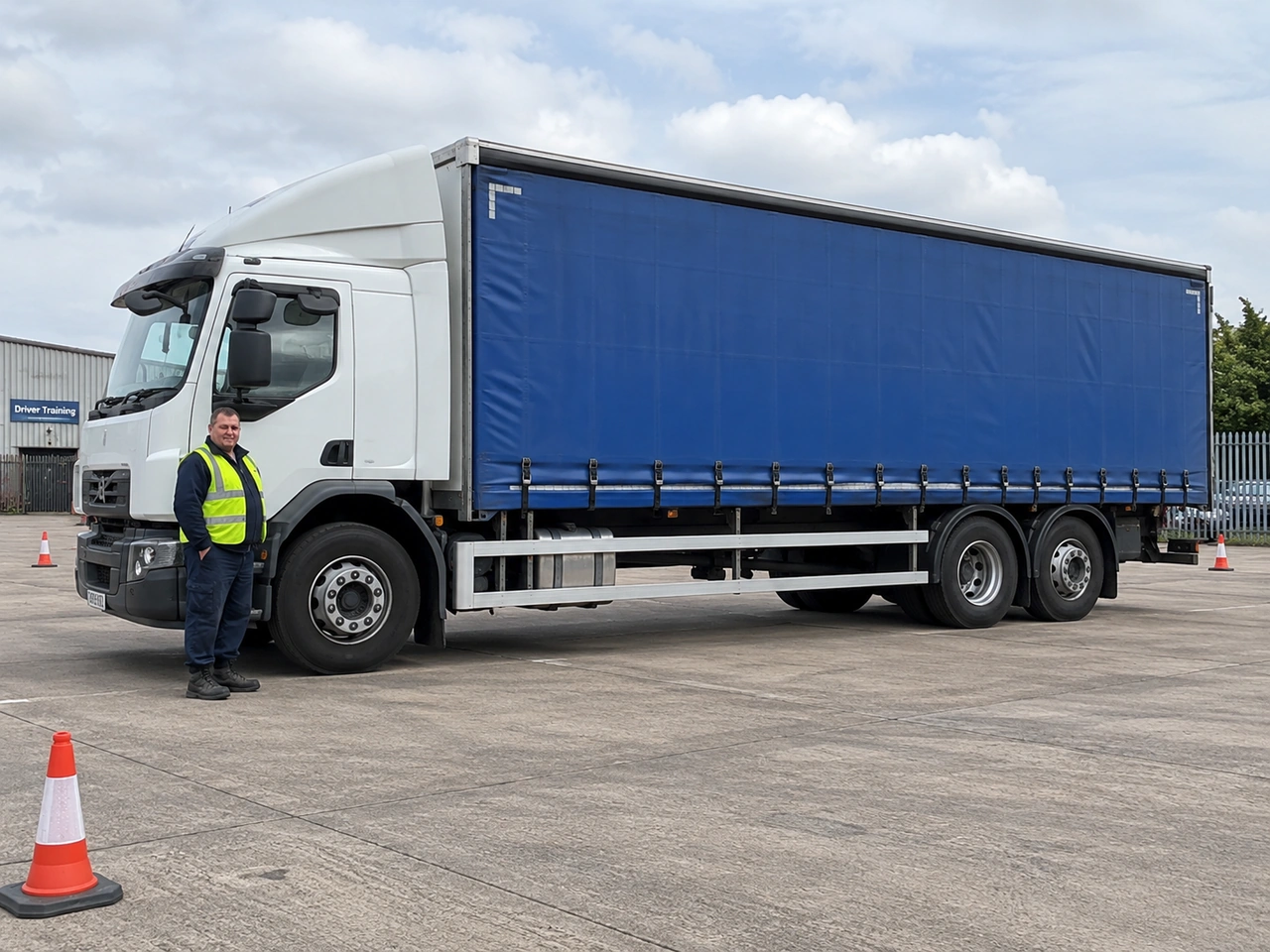
801. What is the minimum licence for a goods vehicle over 7,500 kg maximum authorised mass?
Category C1 is limited to vehicles with a maximum authorised mass not exceeding 7,500 kg. A goods vehicle above this limit requires category C.
Norway. Check the maximum authorised mass in the vehicle registration certificate (vognkort).

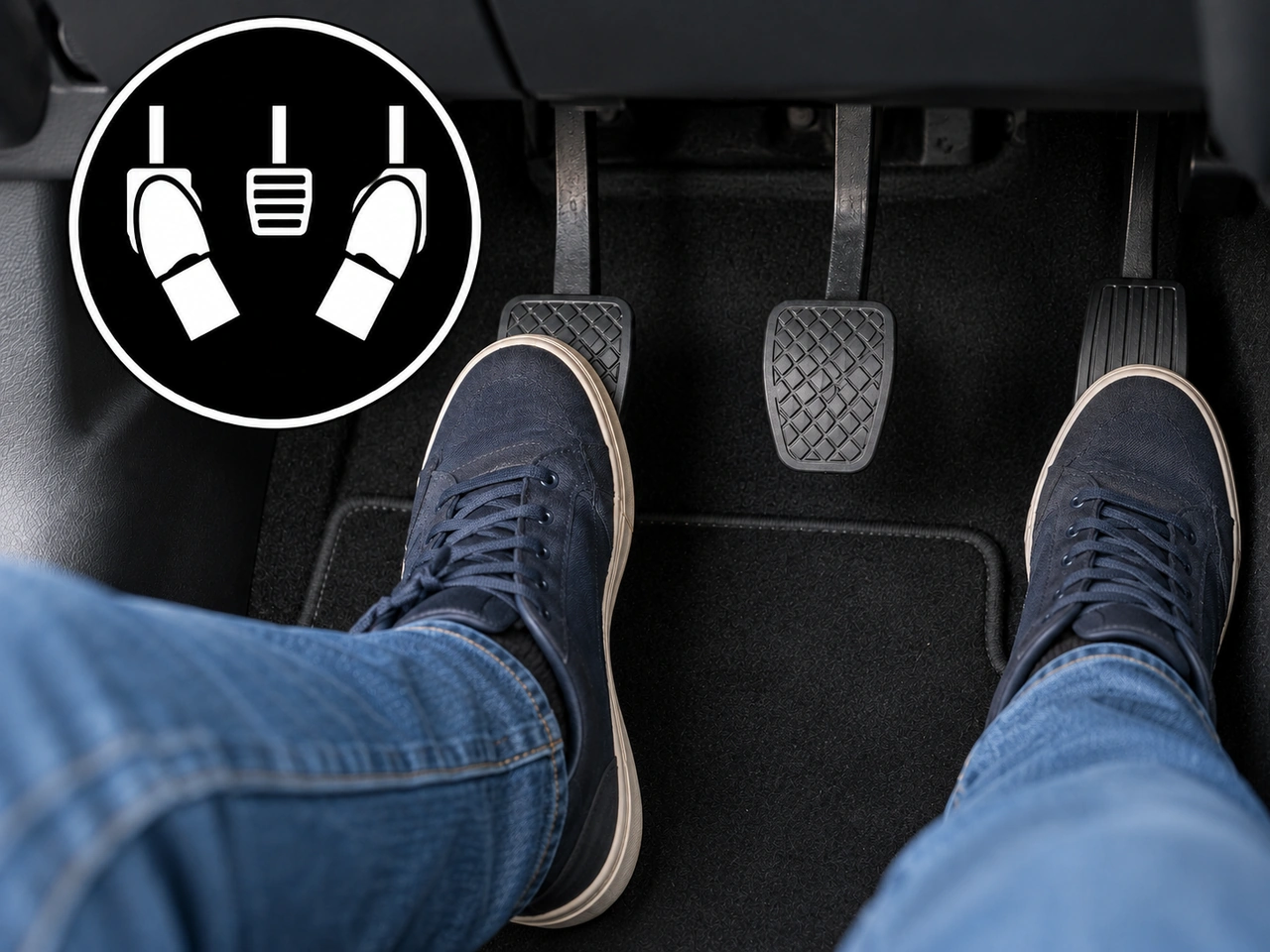
802. How should you use the clutch and accelerator when moving off?
When moving off, release the clutch pedal smoothly through the biting point while applying the accelerator progressively. This helps the vehicle move away smoothly without stalling or excessive engine speed.
At the biting point, the clutch begins to transmit power to the wheels. Ease the clutch up while gradually applying the accelerator.
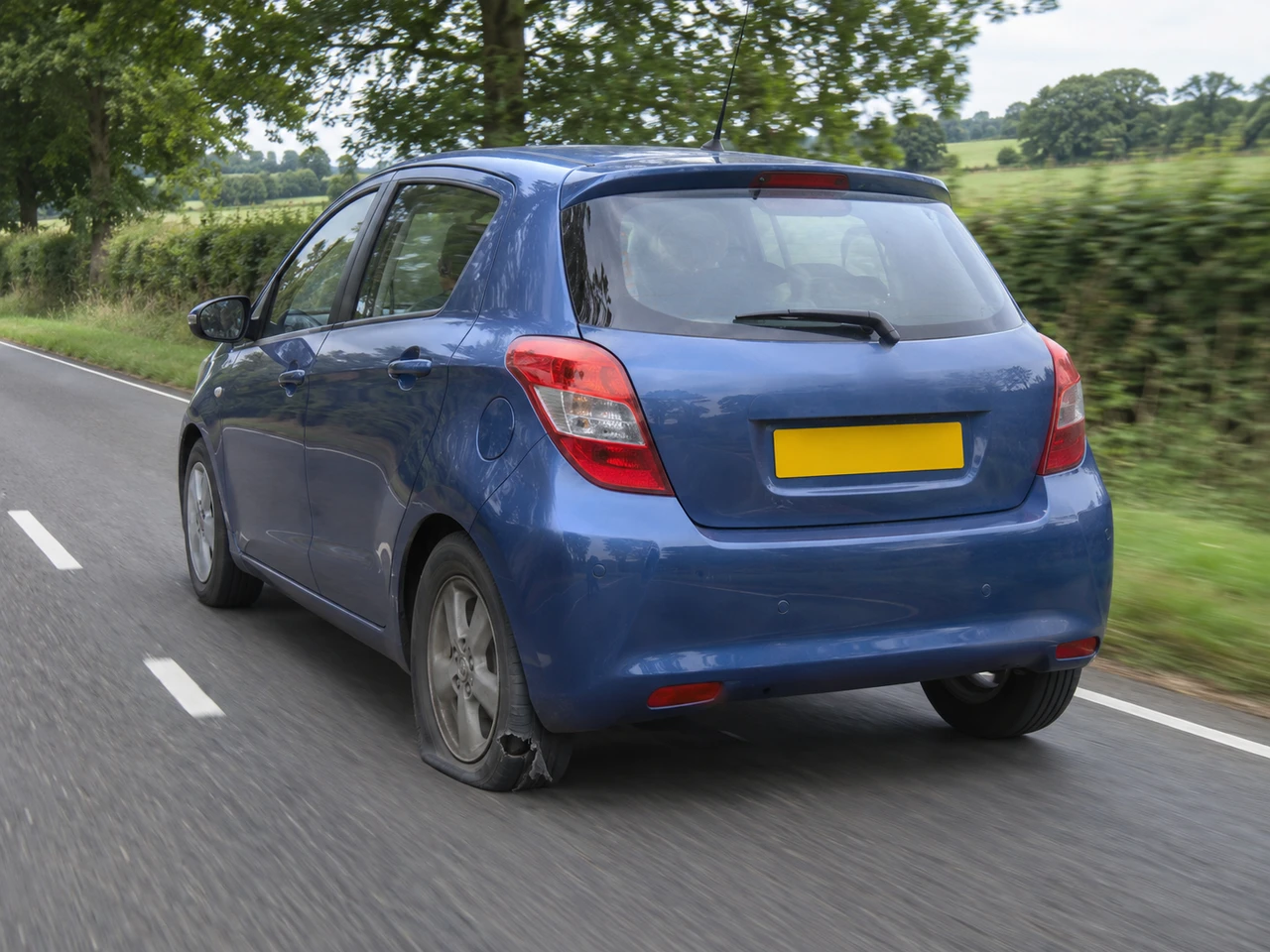
803. What should you do if one of your tyres suddenly bursts while driving?
Keep the vehicle balanced and under control. Hold the steering wheel firmly with both hands, avoid abrupt braking or steering and ease off the accelerator gradually. Once the vehicle is stable, continue slowing and move out of traffic when safe. Stop in a protected place and arrange assistance; do not continue normal driving on the damaged tyre.
Hold the steering wheel securely and retain control while slowing towards a roadside stop.
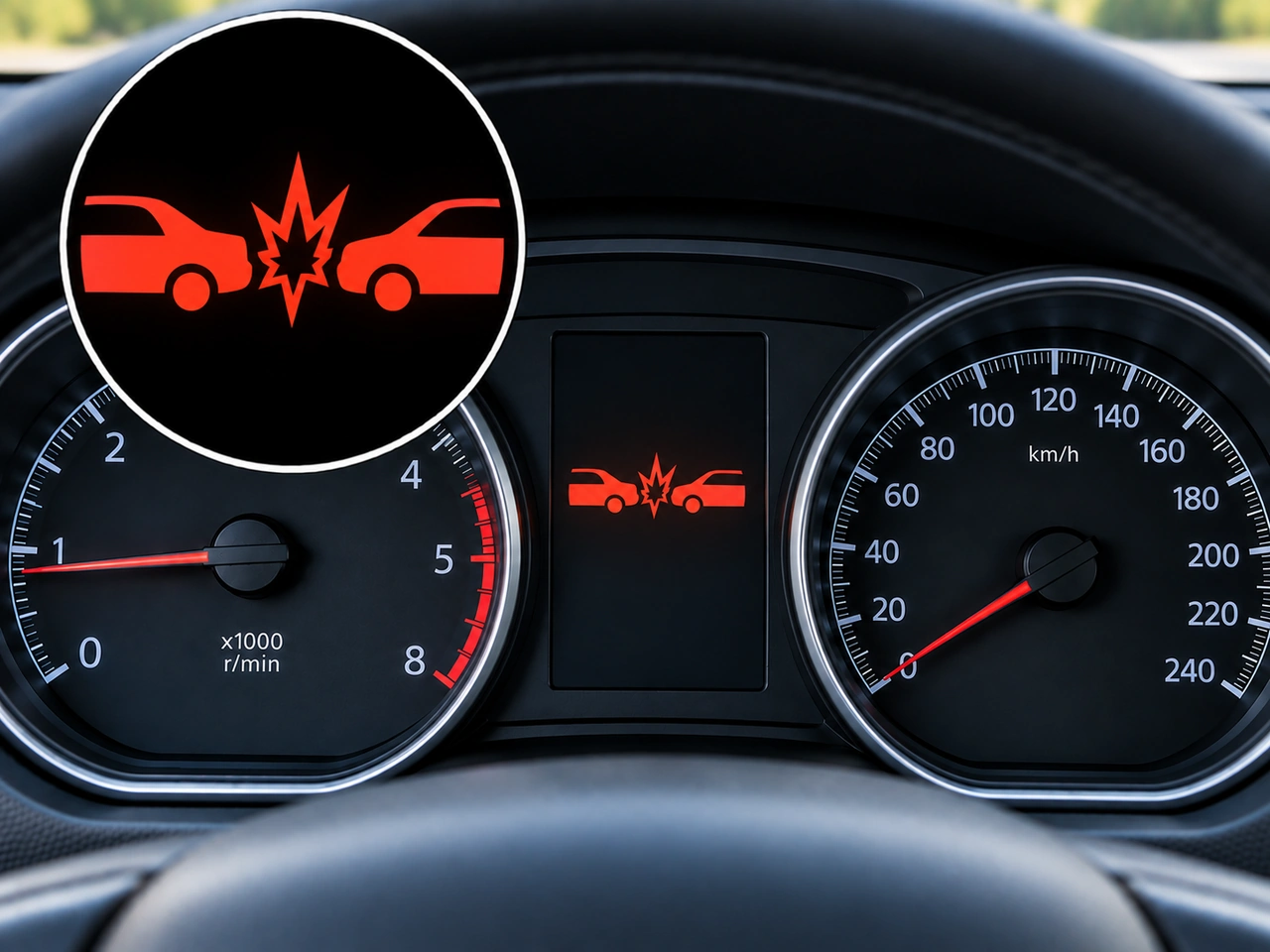
804. What does this dashboard symbol indicate?
This symbol relates to the forward-collision warning or automatic emergency braking system. It may warn the driver when the vehicle detects a risk of collision with traffic ahead.
If the display warns of a collision ahead, be ready to brake or take other safe action immediately.
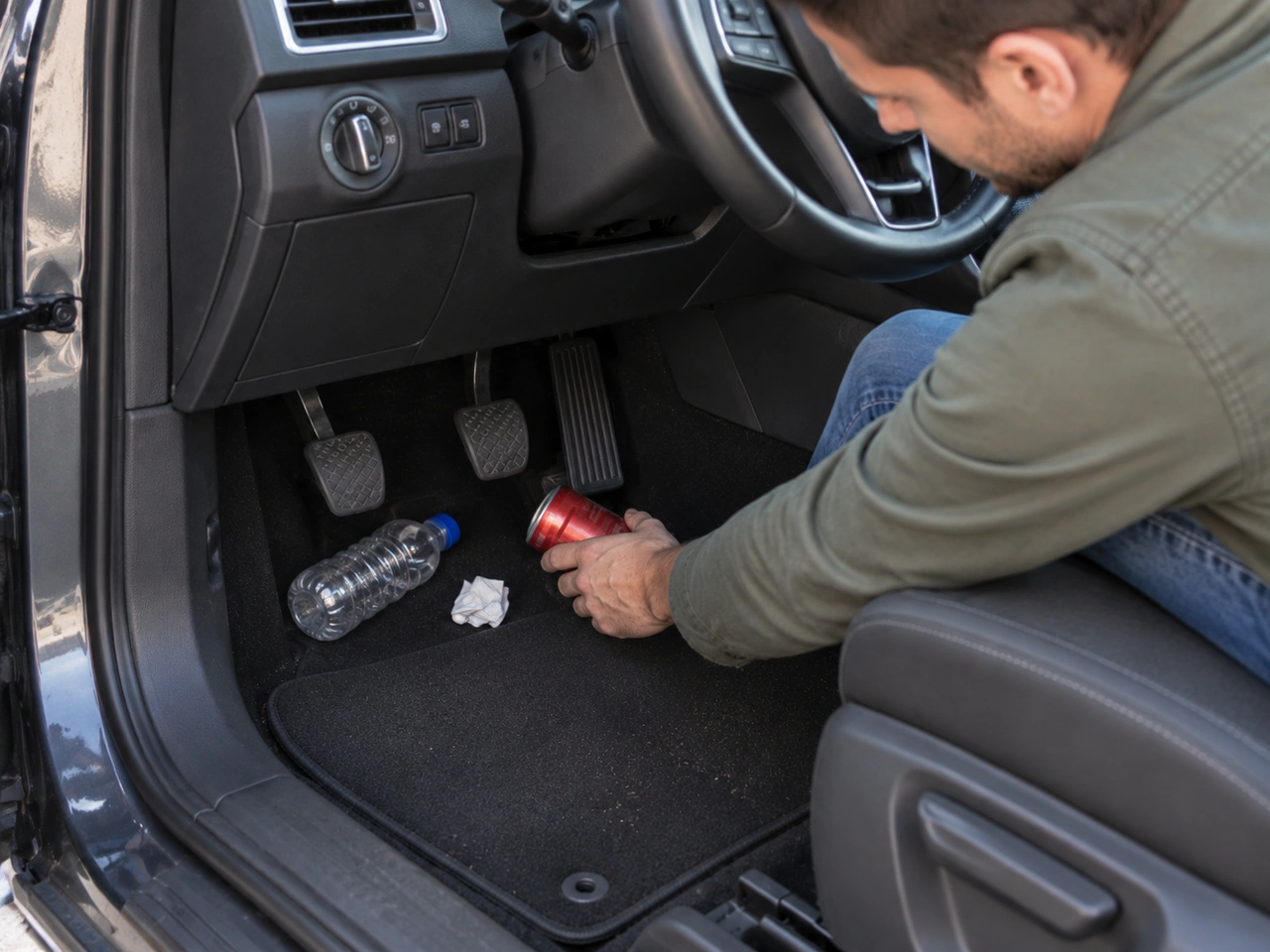
805. Why should you keep the driver's footwell free of loose objects?
Loose objects in the driver's footwell, such as bottles, cans, or rubbish, can roll into the pedal area and interfere with the accelerator, brake, or clutch. Keep the footwell clear so you can operate the pedals safely and without obstruction.
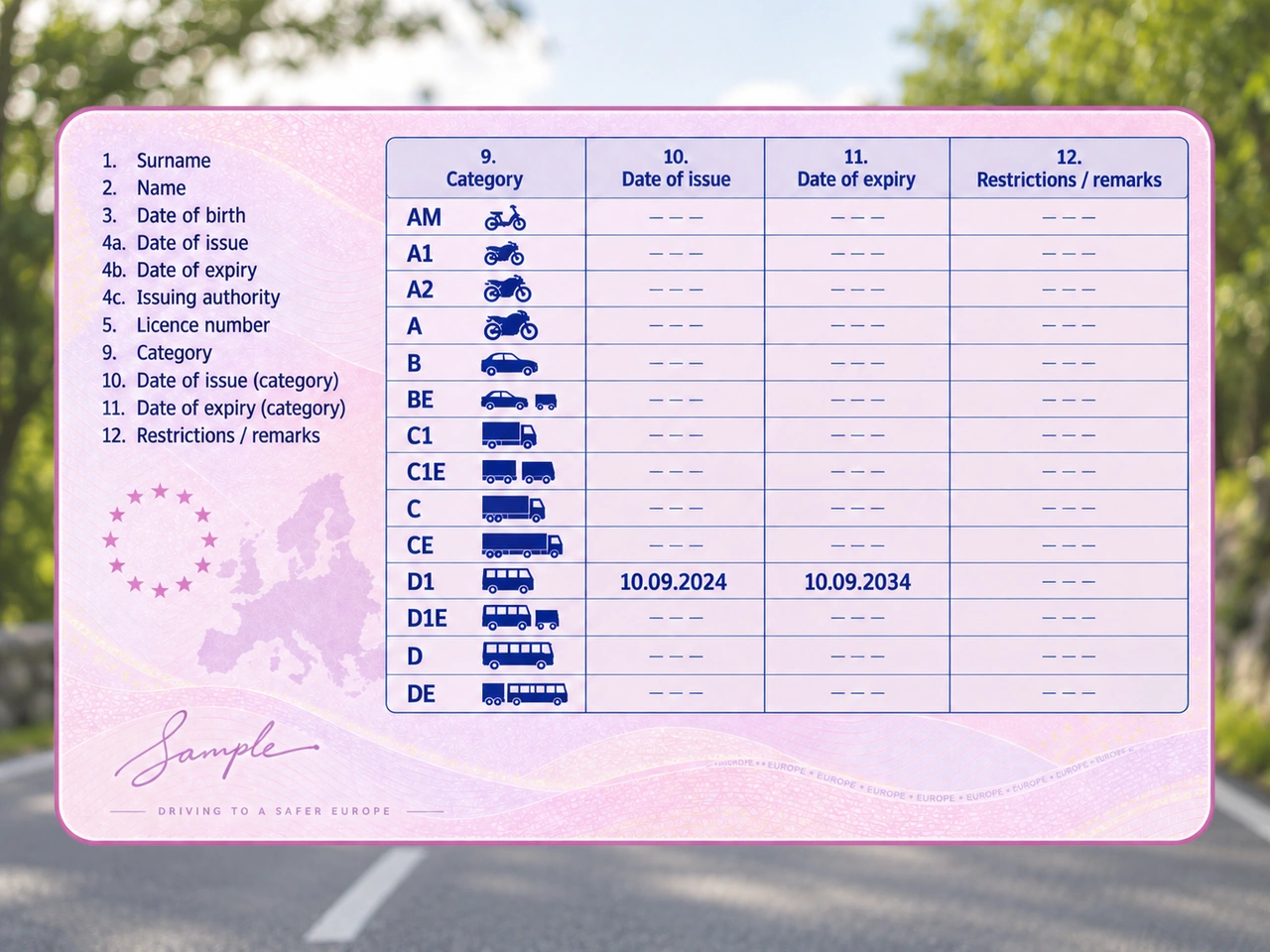
806. Which passenger vehicles are covered by driving licence D1?
Category D1 covers vehicles designed to carry no more than 16 passengers in addition to the driver and with a maximum length of 8 metres. A trailer up to 750 kg may be towed.
Norway. Check both limits. A bus designed for 14 passengers but measuring 8.2 metres falls outside D1.
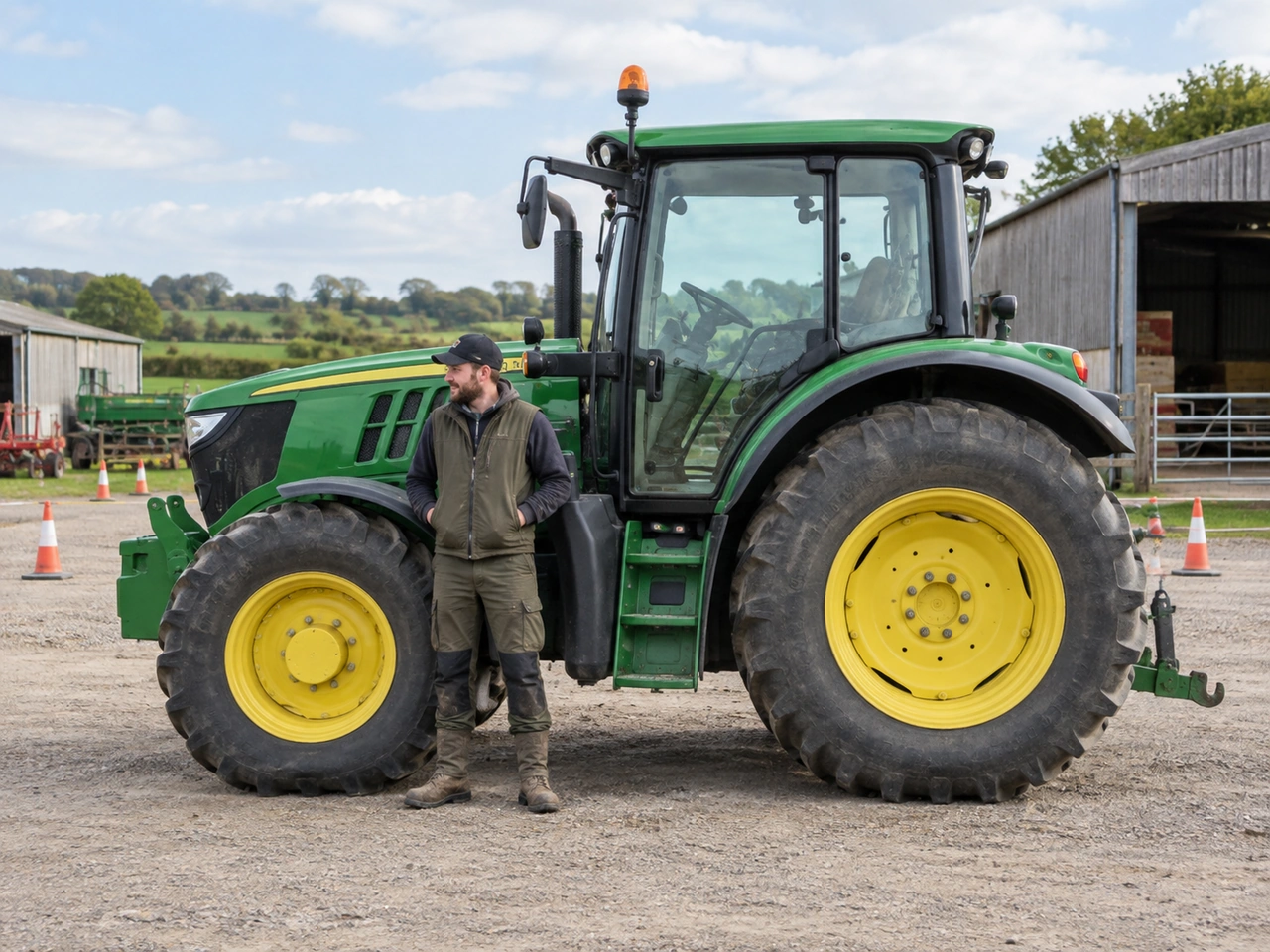
807. Which EU driving licence category is used for tractors?
There is no single harmonised EU driving licence category for agricultural or forestry tractors. The required licence depends on national rules. For example, Belgium uses category G, the Netherlands category T, and Germany categories L and T.
Norway. You can obtain category T from age 16. Check the tractor and trailer limits and any codes printed on the licence before driving the combination.
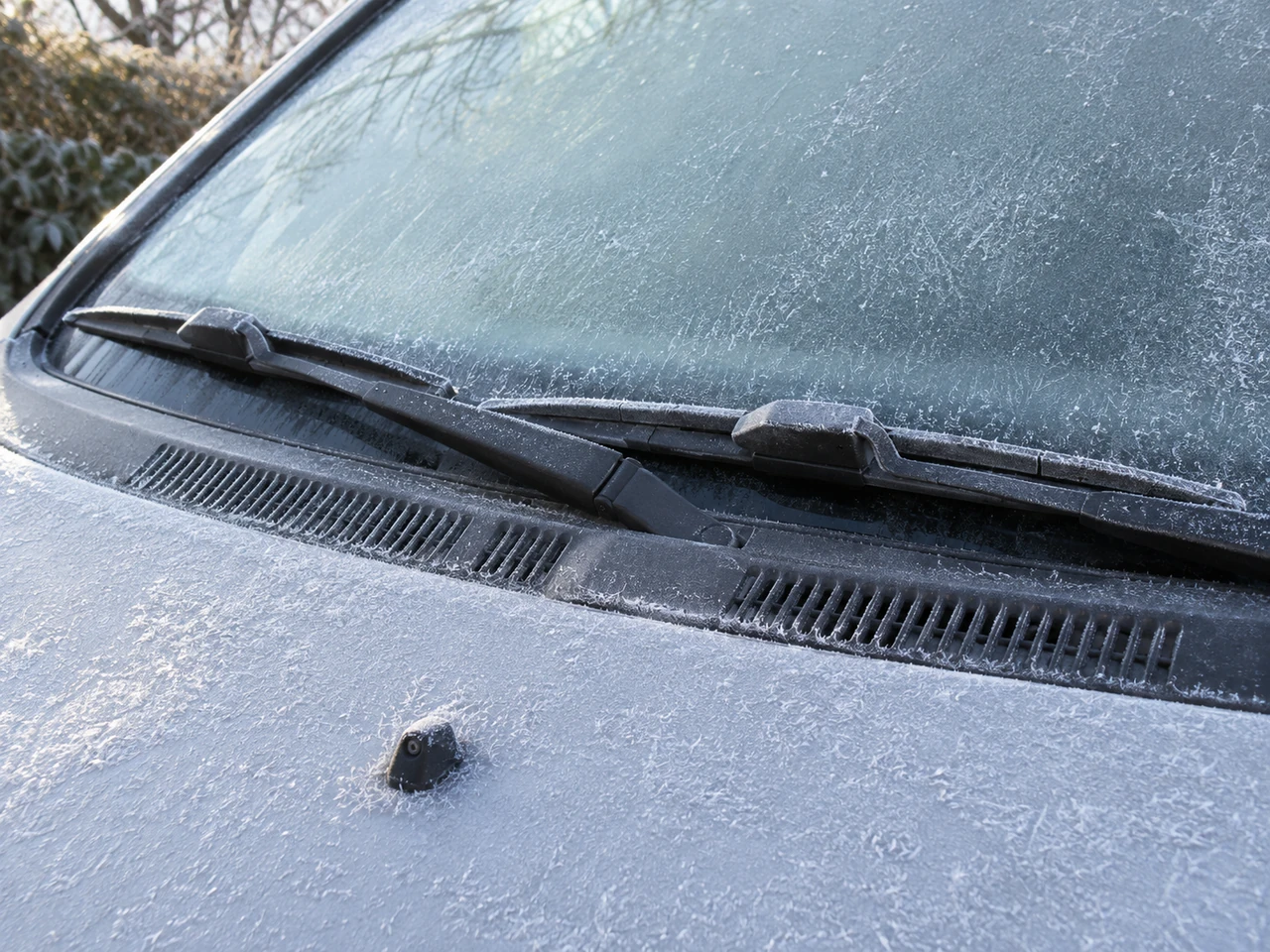
808. Plain water in the windscreen washer system cannot freeze.
Plain water can freeze in the reservoir, pipes and washer jets. Use suitable windscreen washer fluid at the dilution specified for the expected temperature. Do not substitute engine coolant.
🔗 Sources
Kia owner’s manual (manufacturer guidance) • Safety guidance, cold-climate washer fluid; do not use engine coolant
Image credit: AI-generated
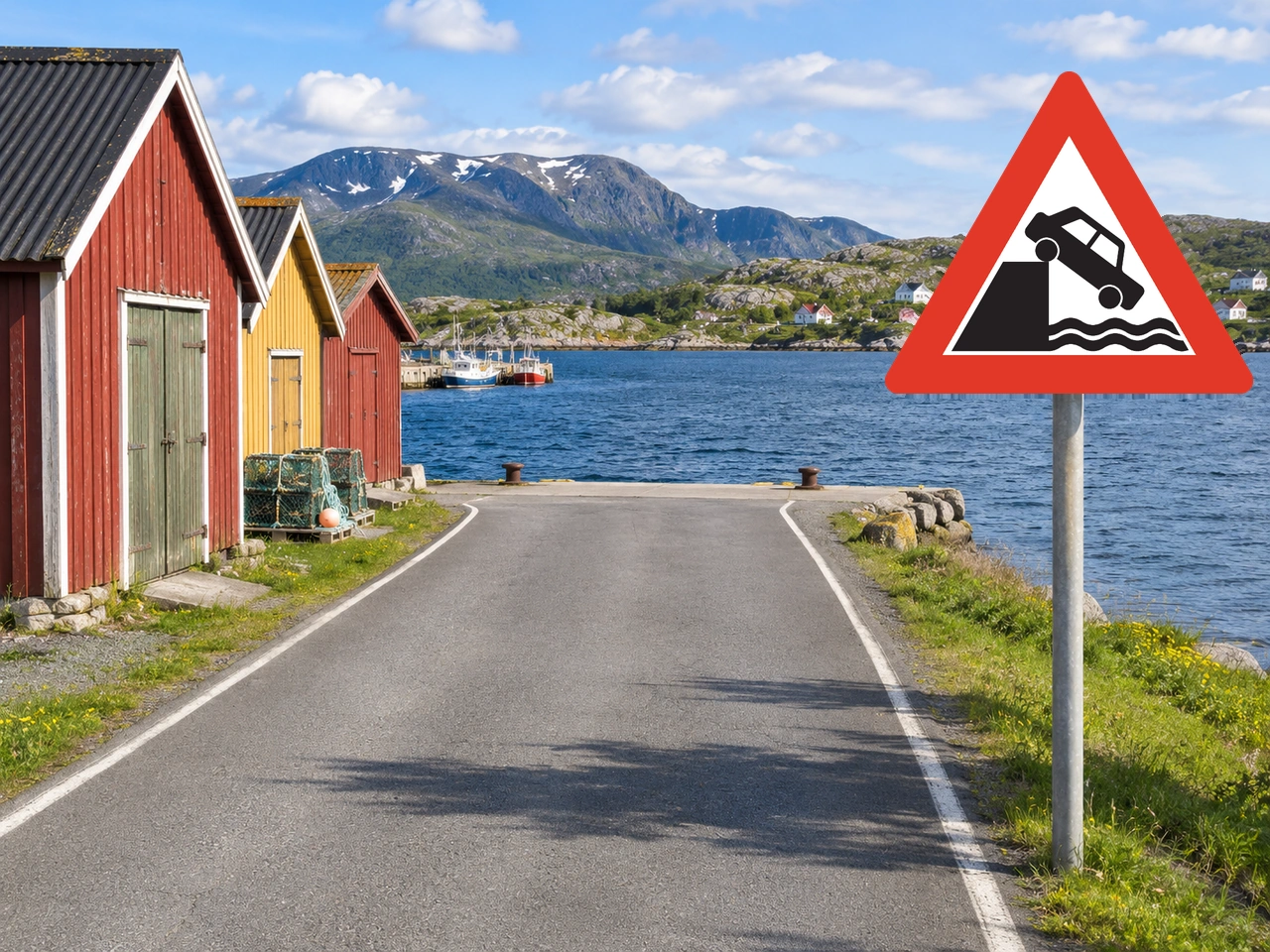
809. This car-and-water warning sign means an opening bridge is ahead.
This sign warns that the road leads onto a quay or riverbank. It is different from the opening-bridge warning sign, which shows a raised bridge leaf. Take extra care near the water edge.
🔗 Sources
Norway • Skiltforskriften • Sign 120
Statens vegvesen • Official traffic-sign meanings
Statens vegvesen • Official sign artwork
Sign artwork: Statens vegvesen original EPS archive, Sign 120, file 120_0.eps. Native car, quay and water symbol, orientation, border and proportions retained; resized and composited onto the existing same-entry scene. Border red follows the authority's published colour chart: PMS 179, using the published web swatch RGB 226/56/40. No third-party open licence is asserted for the government artwork.
Image credit: AI-generated background with source sign artwork resized and placed on the sign face.
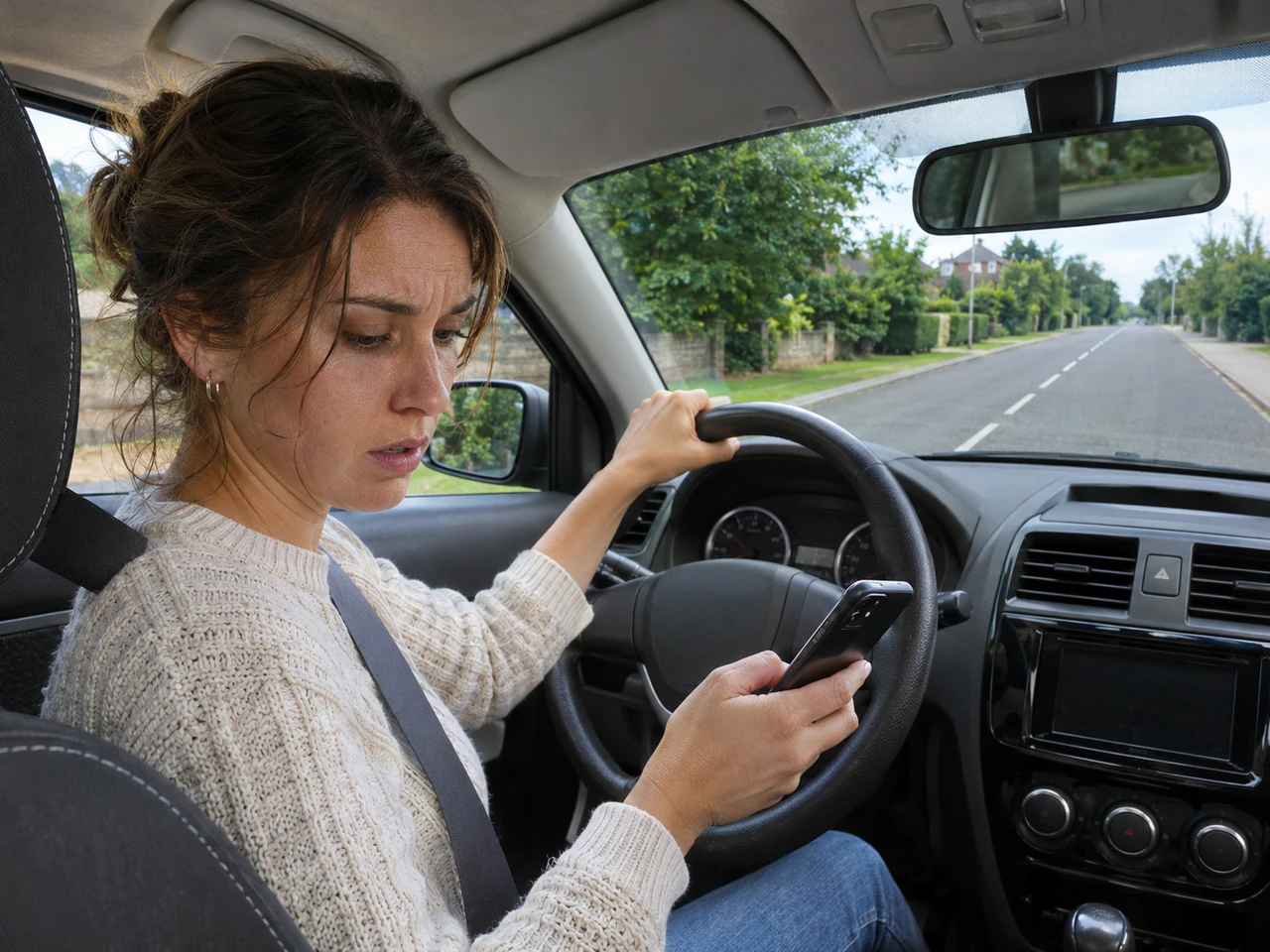
810. It is safe to read a text message briefly while driving.
Reading a message takes your attention away from driving. Wait until you are safely parked before reading or replying.
🔗 Sources
The Highway Code (Great Britain) • Safety guidance, Rules 148–149
Image credit: AI-generated
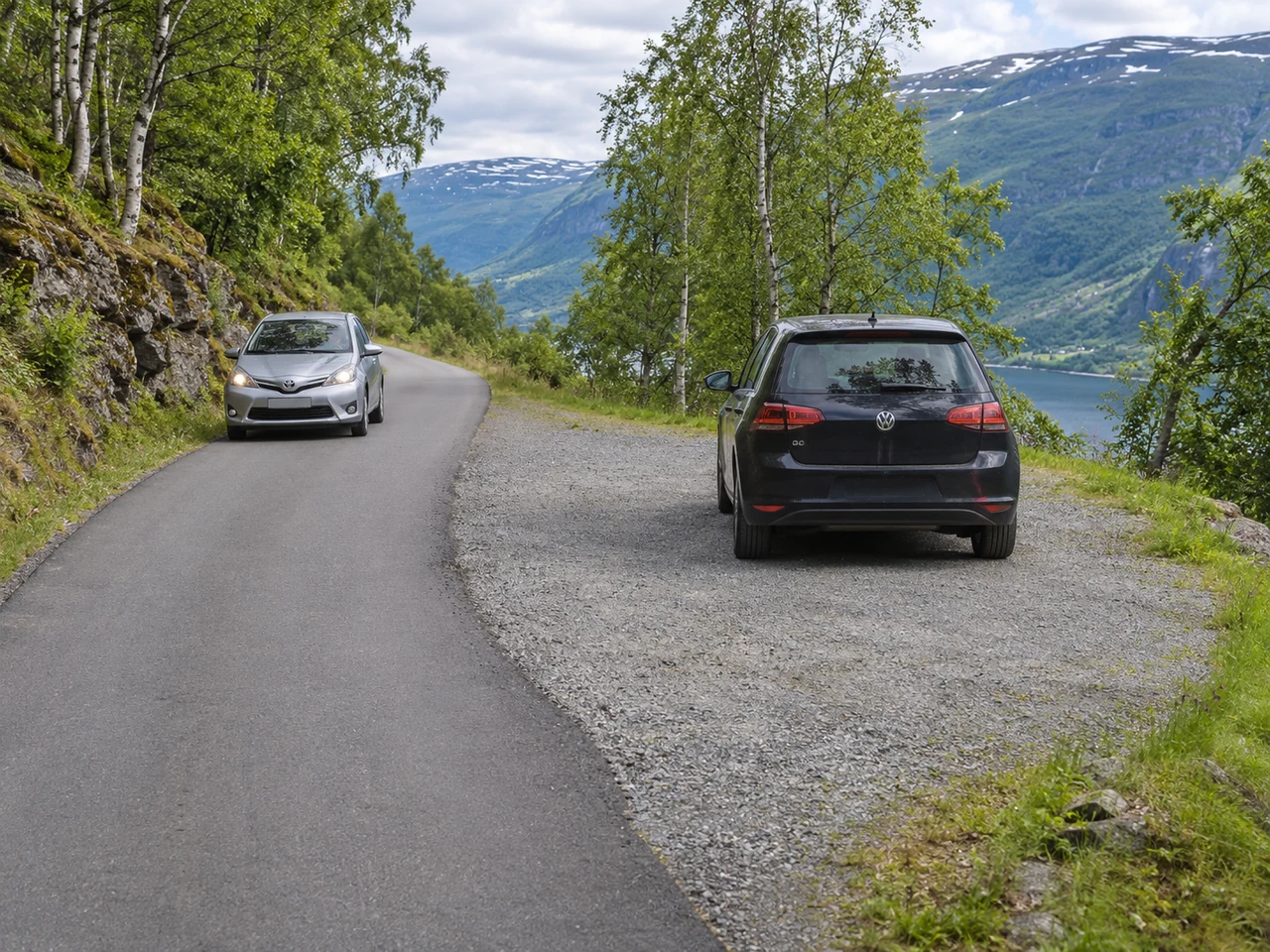
811. What should you do when meeting another vehicle on a narrow mountain road?
Narrow mountain roads may not provide enough space for two vehicles. Reduce speed and cooperate to pass safely.
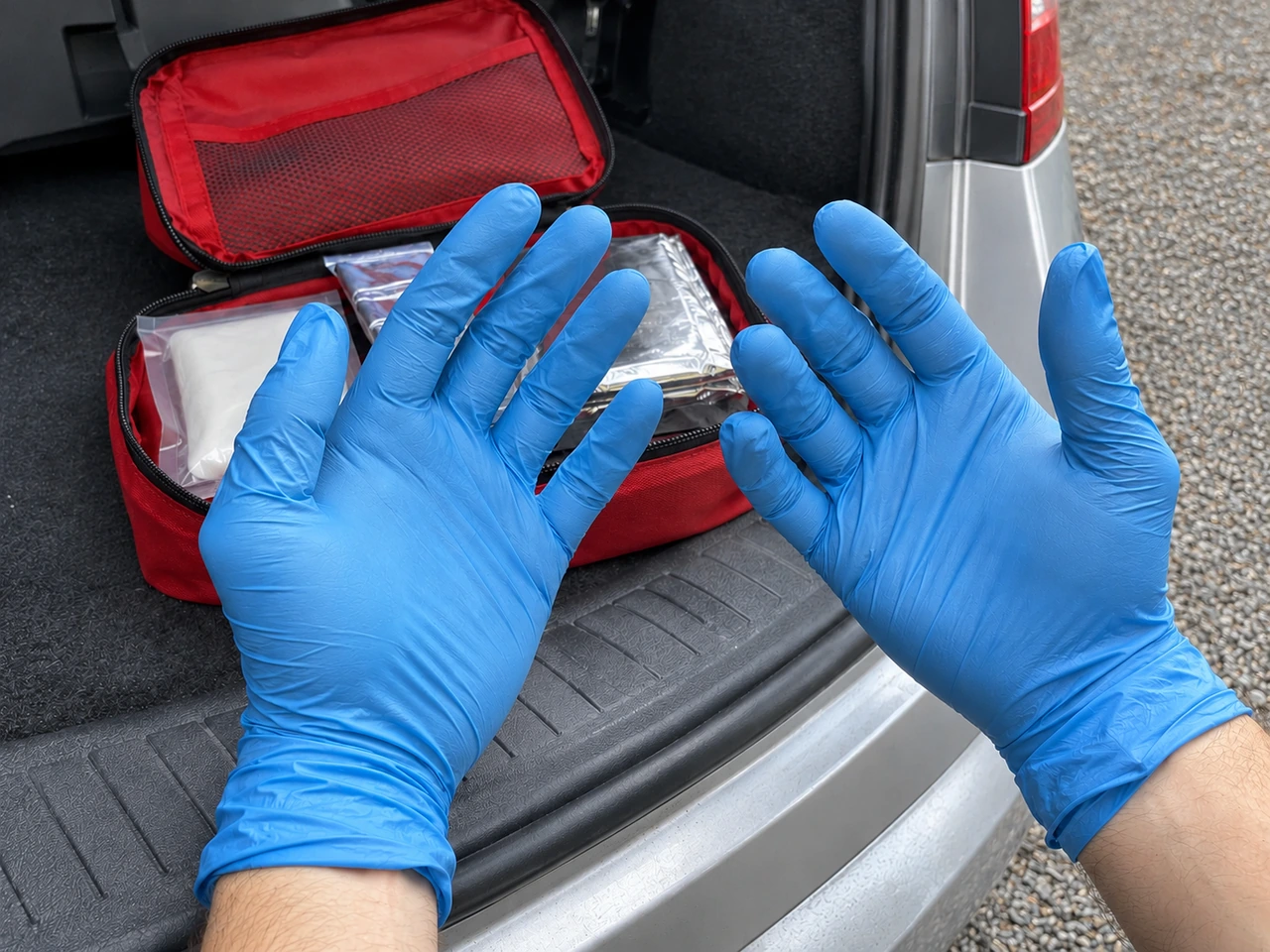
812. Disposable gloves can reduce infection risk when giving first aid.
Use suitable disposable gloves if available, particularly when contact with blood is possible. Gloves supplement hand hygiene and other safe practices. Call for emergency help when needed and follow the operator's instructions.
🔗 Sources
The Highway Code (Great Britain) • Safety guidance, 1. Deal with danger: first-aid kit gloves
NHS Scotland infection-control guidance • Gloves for blood exposure supplement hand hygiene.
Image credit: AI-generated
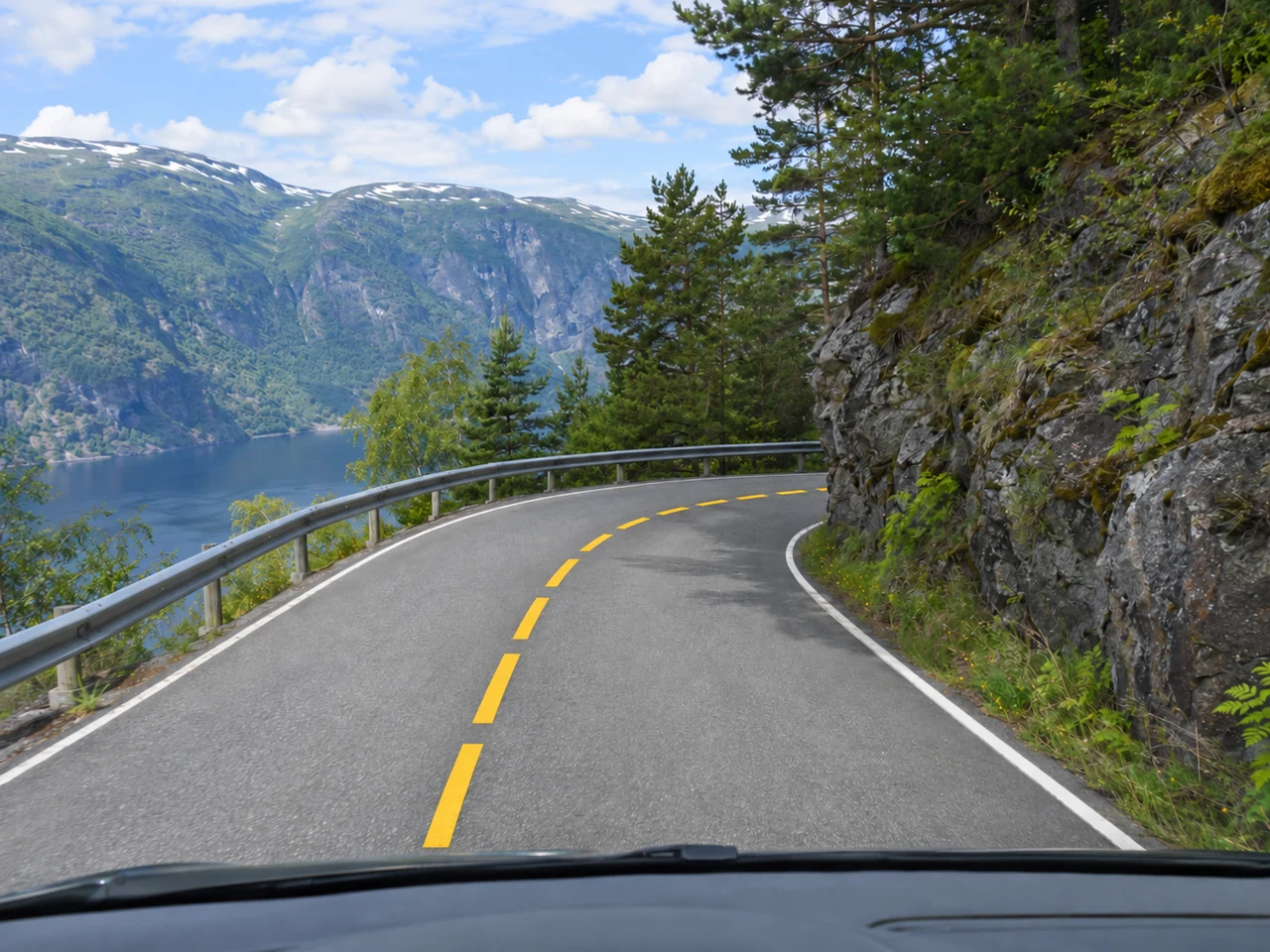
813. How should you approach a sharp bend on a mountain road?
Mountain bends may hide oncoming vehicles, cyclists, animals, or debris. Slow down before entering and keep a safe road position.
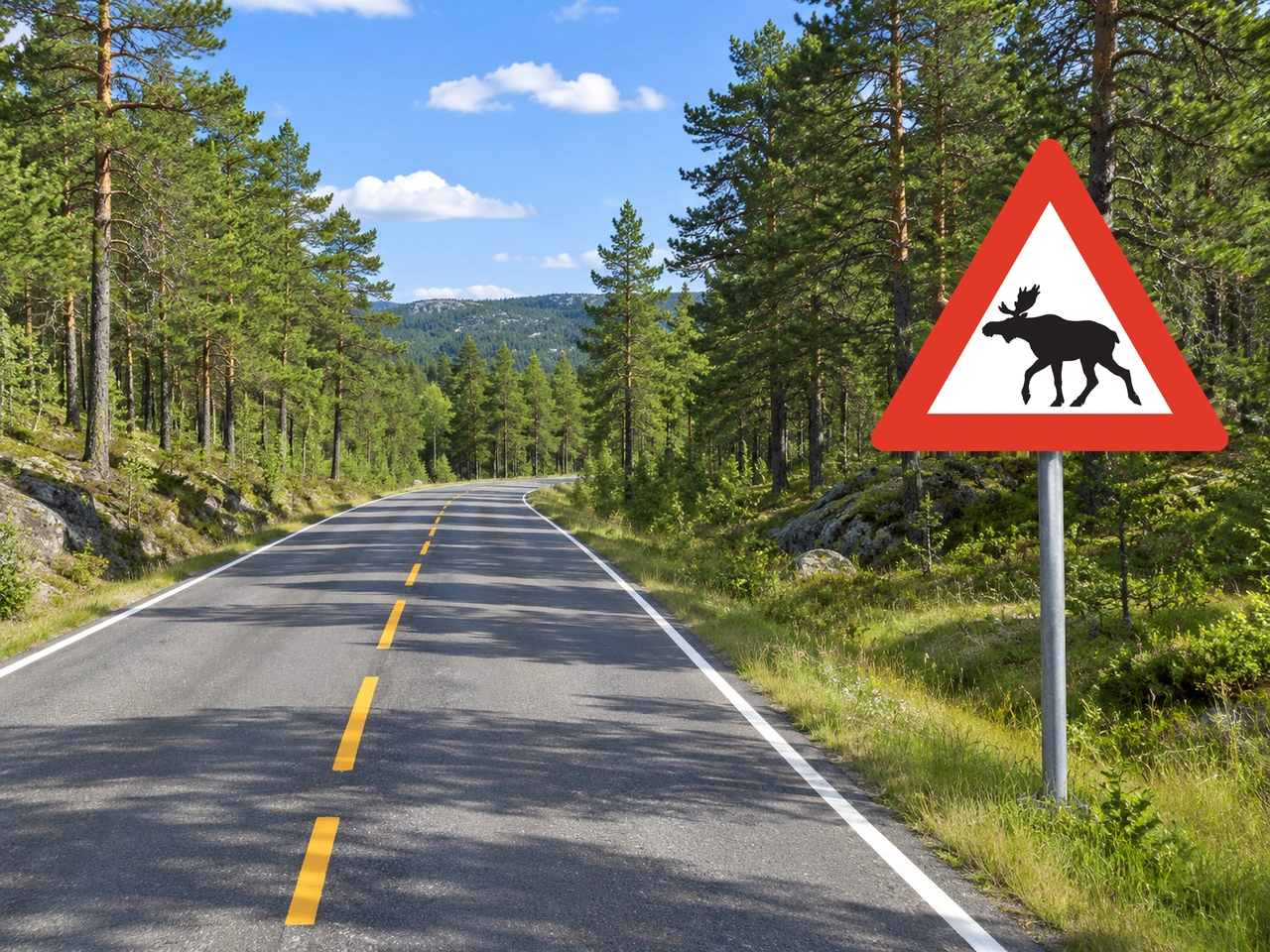
814. A wildlife warning sign without a time plate only applies after dark.
The sign warns of animals crossing the road and is not limited to darkness. Animals can appear in daylight too. Watch the road and verges, and adapt your speed to the risk.
🔗 Sources
Norway • Skiltforskriften • Sign 146.1
Statens vegvesen • Official traffic-sign meanings
Statens vegvesen • Official sign artwork
Sign artwork: Statens vegvesen original EPS archive, Sign 146.1, file 146_1.eps. Native elk silhouette, orientation, border and proportions retained; resized and composited onto the existing same-entry scene. Border red follows the authority's published colour chart: PMS 179, using the published web swatch RGB 226/56/40. No third-party open licence is asserted for the government artwork.
Image credit: AI-generated background with source sign artwork resized and placed on the sign face.
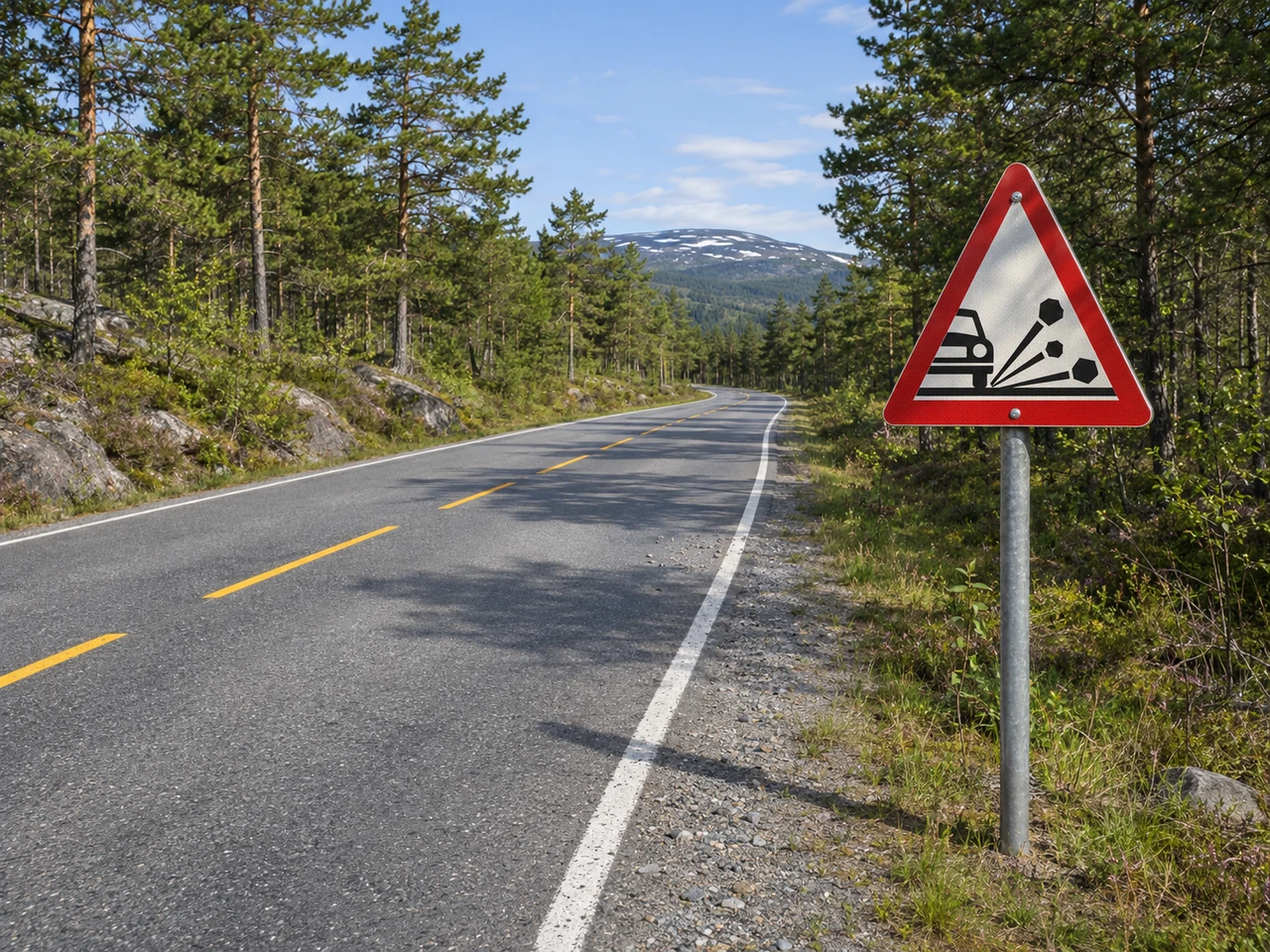
815. The triangular sign showing stones thrown up by a vehicle warns of loose chippings or gravel.
This sign warns of loose chippings or gravel. Choose a suitable speed and leave adequate space to reduce the risk from reduced grip and flying stones.
🔗 Sources
Norway • Skiltforskriften • Sign 112
Statens vegvesen • Official traffic-sign meanings
Statens vegvesen • Official sign artwork
Sign artwork: Statens vegvesen original EPS archive, Sign 112, file 112_0.eps. Native car and loose-stone symbol, border and proportions retained; resized and composited onto the existing same-entry scene. Border red follows the authority's published colour chart: PMS 179, using the published web swatch RGB 226/56/40. No third-party open licence is asserted for the government artwork.
Image credit: AI-generated background with source sign artwork resized and placed on the sign face.

816. What should a designated driver do?
A designated driver should remain sober so they can drive safely and respond properly to traffic conditions.
Norway. Choose a driver who will stay sober for the whole outing. If everyone plans to drink, book a taxi or check the last public transport departure in advance.
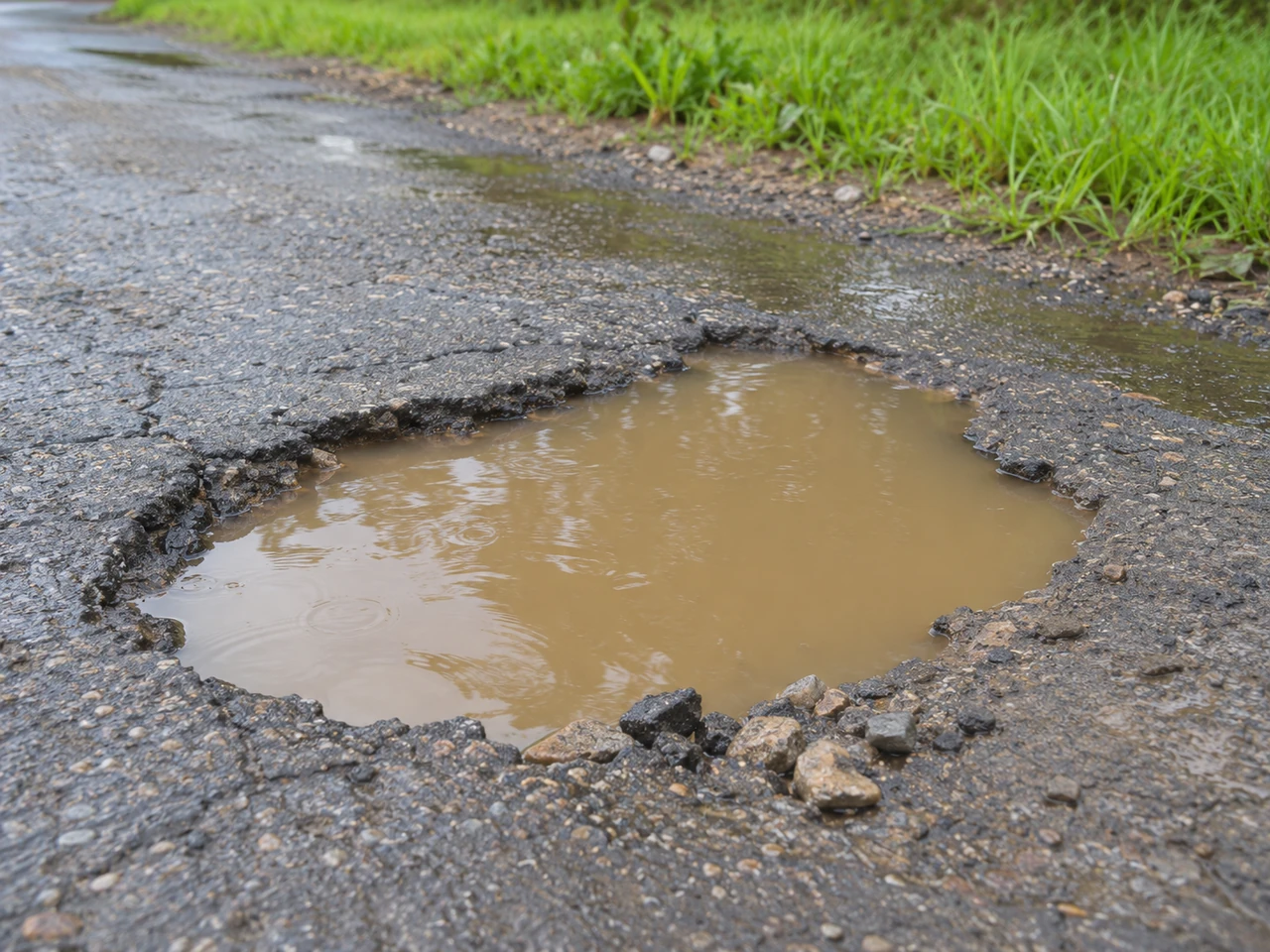
817. A puddle can hide a pothole or other damage to the road.
Water can conceal broken road surfaces and make the depth of a hole hard to judge. Look ahead and slow down safely; do not make a sudden swerve into other traffic to avoid it.
🔗 Sources
Portland Bureau of Transportation (United States) • Safety guidance, hidden potholes and gentle driving
Image credit: AI-generated
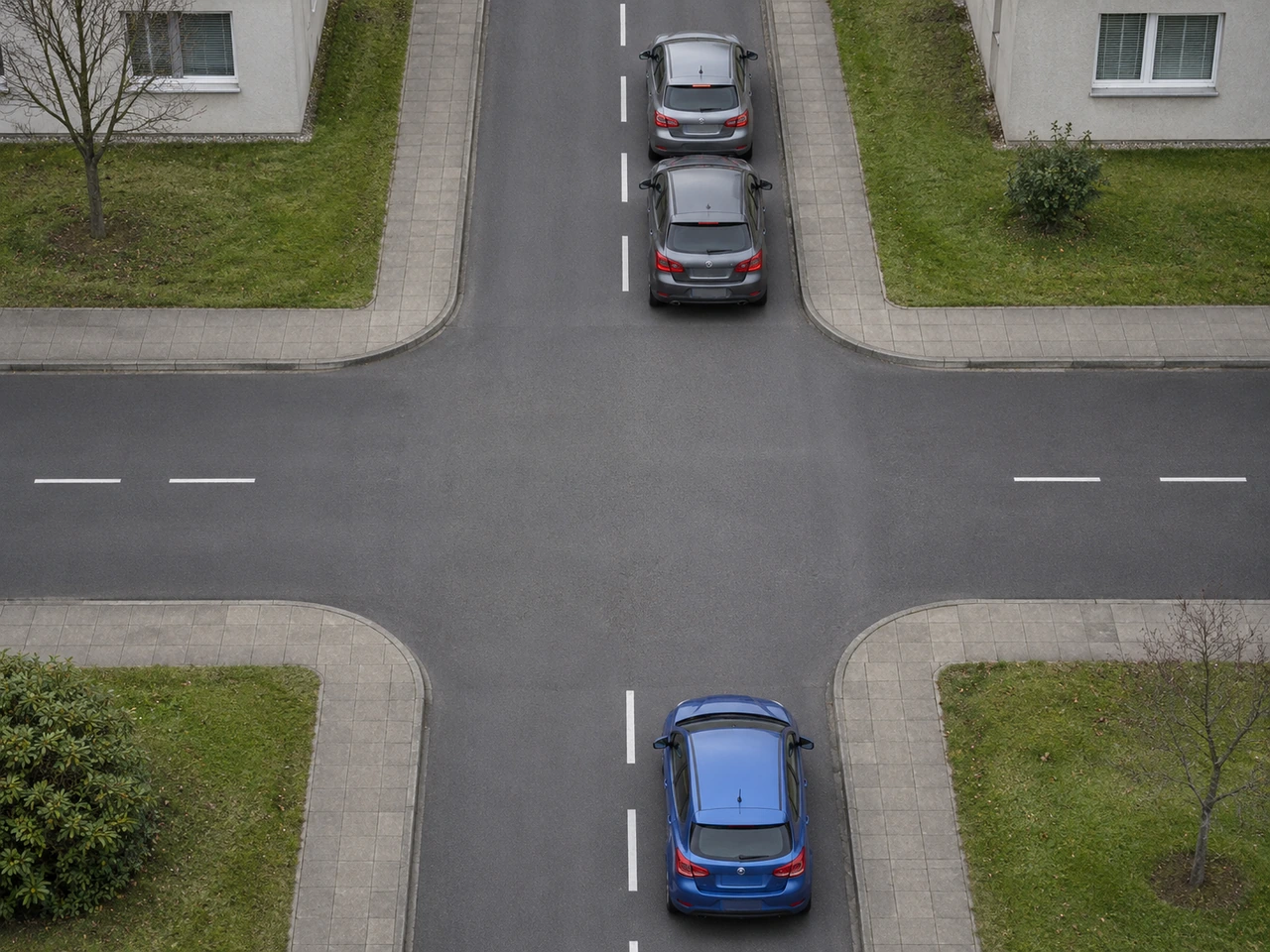
818. Why should you avoid blocking a junction?
Blocking a junction can prevent other traffic from crossing and make queues worse. Wait before entering if there is no room to clear the junction. Look beyond the junction for sufficient exit space rather than simply following the vehicle ahead.
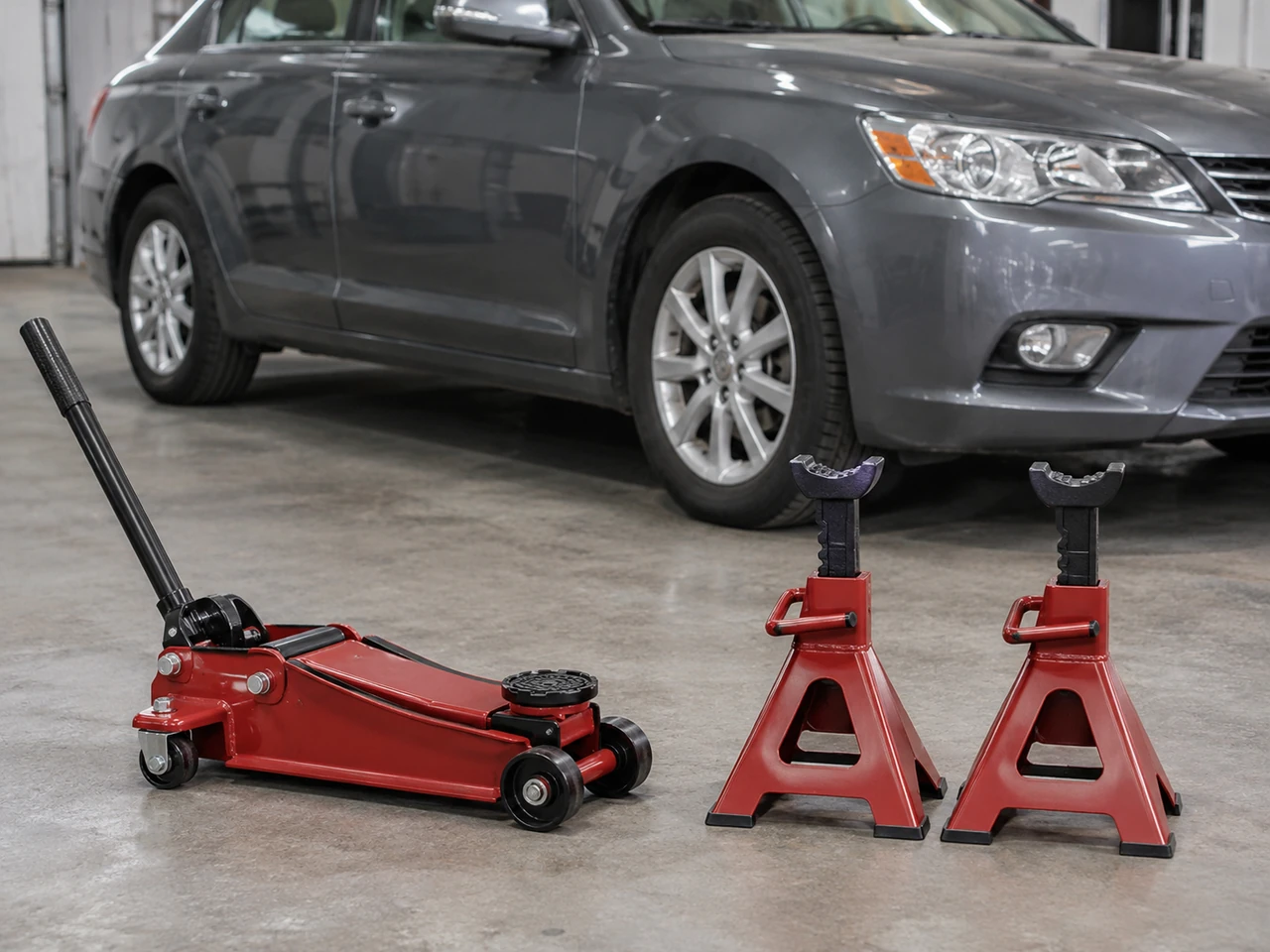
819. It is safe to work under a car supported only by a jack.
A jack alone is not a safe support for working underneath a vehicle. Use suitable, correctly positioned supports on firm, level ground, chock the wheels remaining on the ground and follow the vehicle and equipment instructions. Never exceed the equipment's rated capacity.
🔗 Sources
HSE (Great Britain) • Safety guidance, working safely under vehicles
Image credit: AI-generated
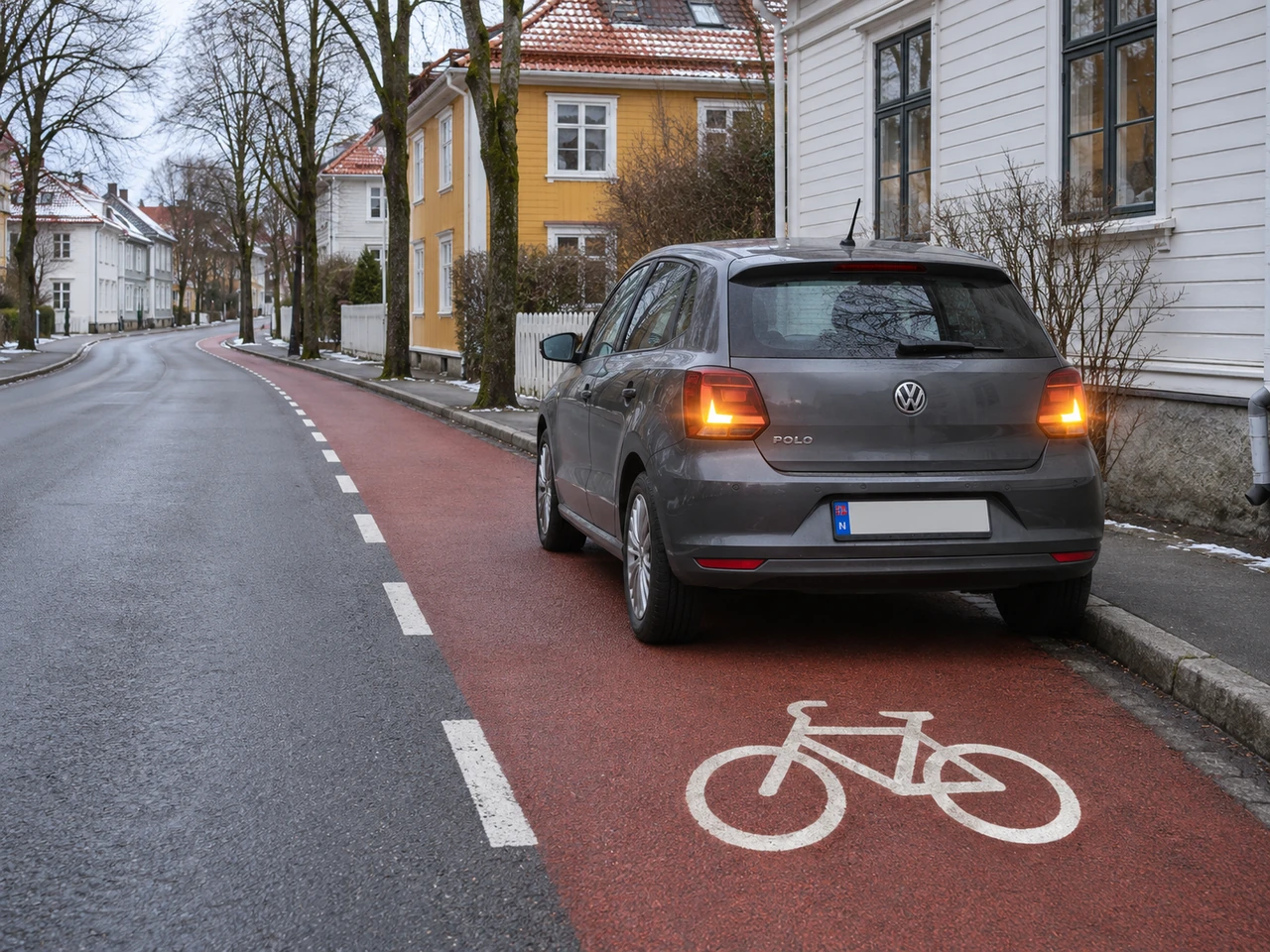
820. You may park anywhere as long as you leave your hazard lights on.
Hazard lights are used to warn other road users of a hazard or an unexpectedly stopped vehicle. They do not make illegal or unsafe parking acceptable.
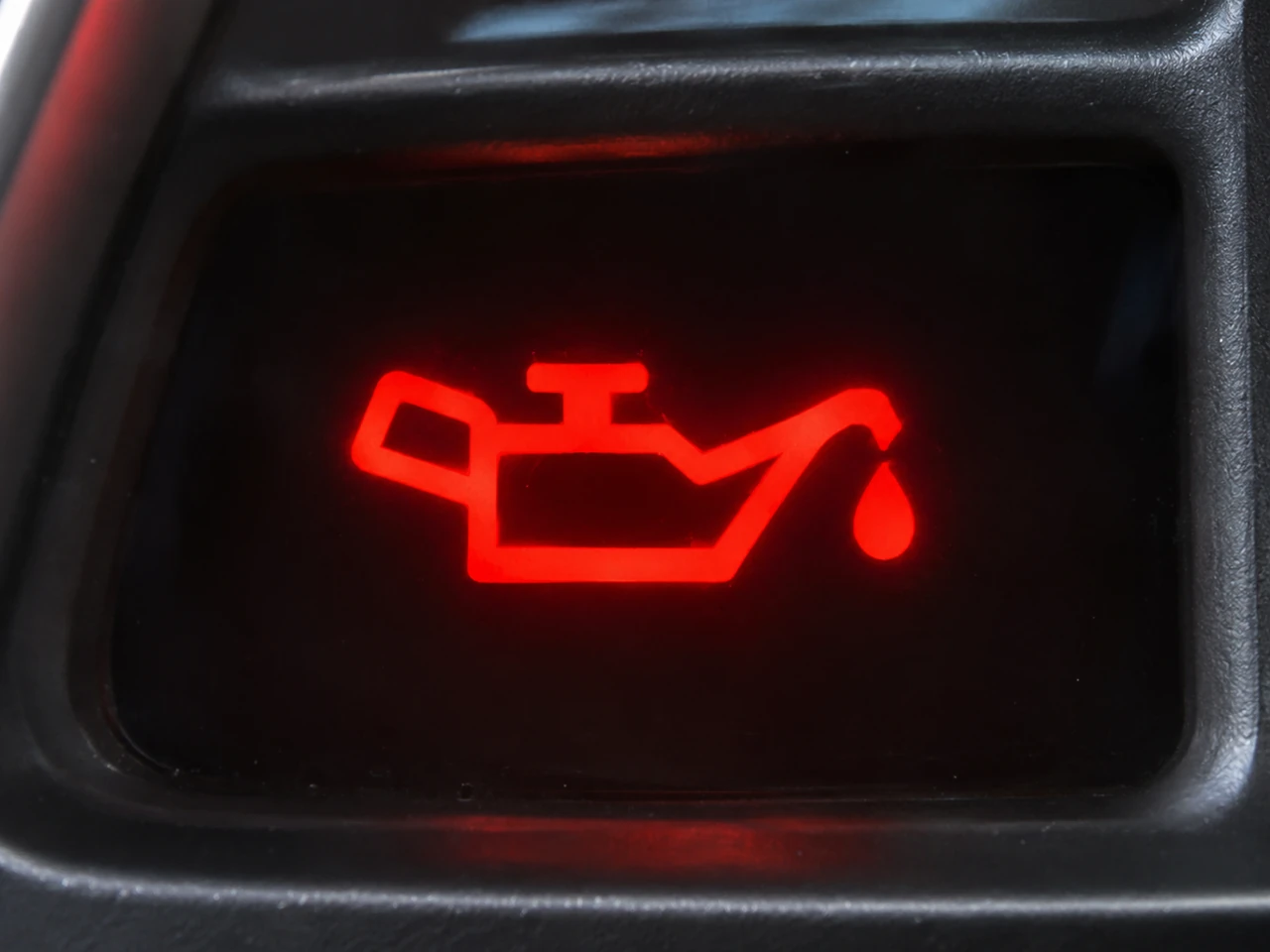
821. It is safe to keep driving with a low oil-pressure warning while the engine is running.
Stop as soon as it is safe and switch off the engine. Follow the handbook and seek help if the warning persists. This pressure warning needs prompt action; it is different from a routine oil-change reminder.
🔗 Sources
Ford owner’s manual (manufacturer guidance) • Safety guidance, Low Oil Pressure Warning Lamp; follow your vehicle’s handbook
Image credit: AI-generated
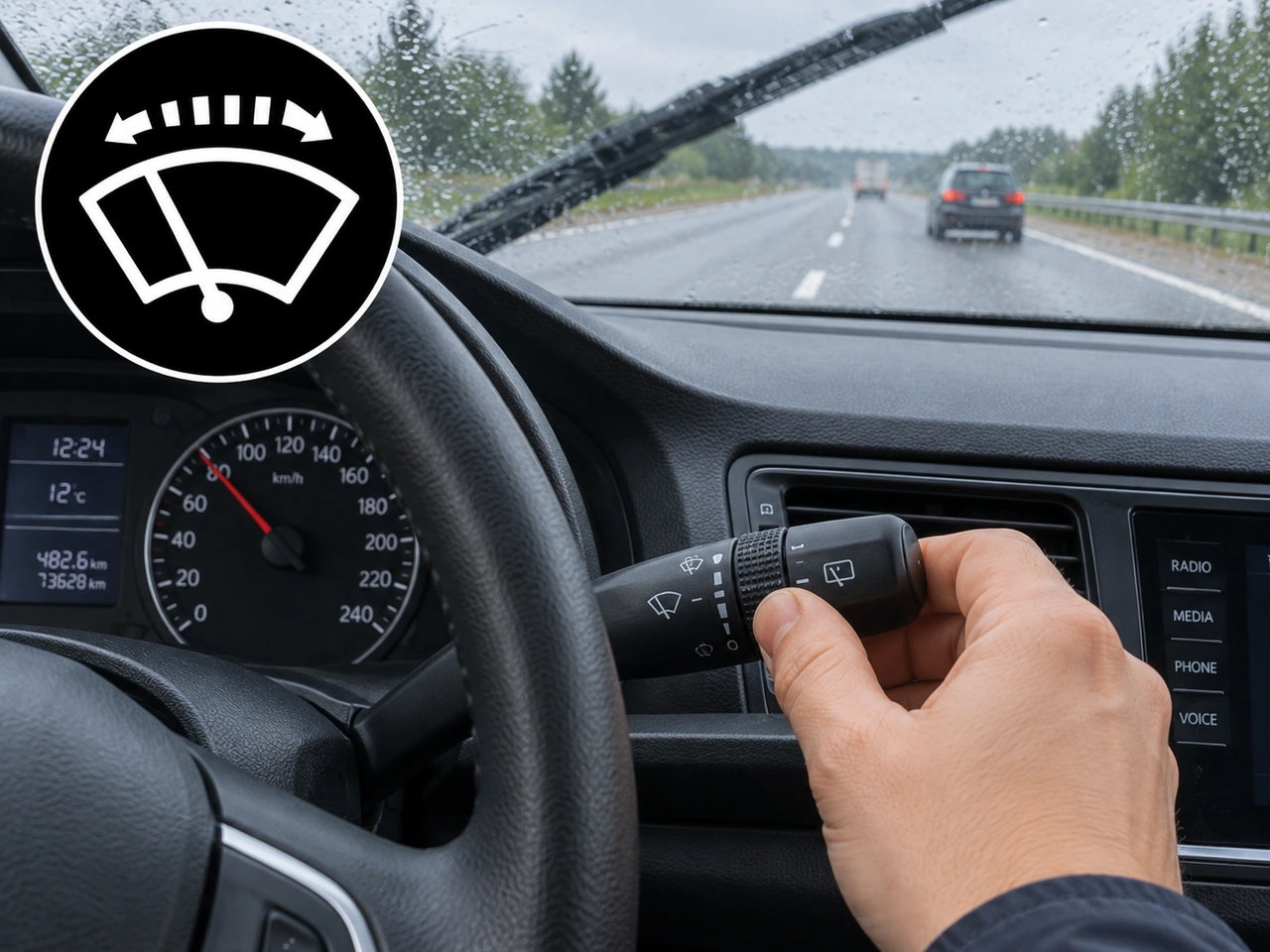
822. What does the intermittent wiper interval control adjust?
The intermittent wiper interval control adjusts the time between windscreen-wiper sweeps, allowing the driver to match the wiping frequency to light rain or spray.
Shorten the interval for more frequent sweeps or lengthen it when light rain needs less frequent wiping.
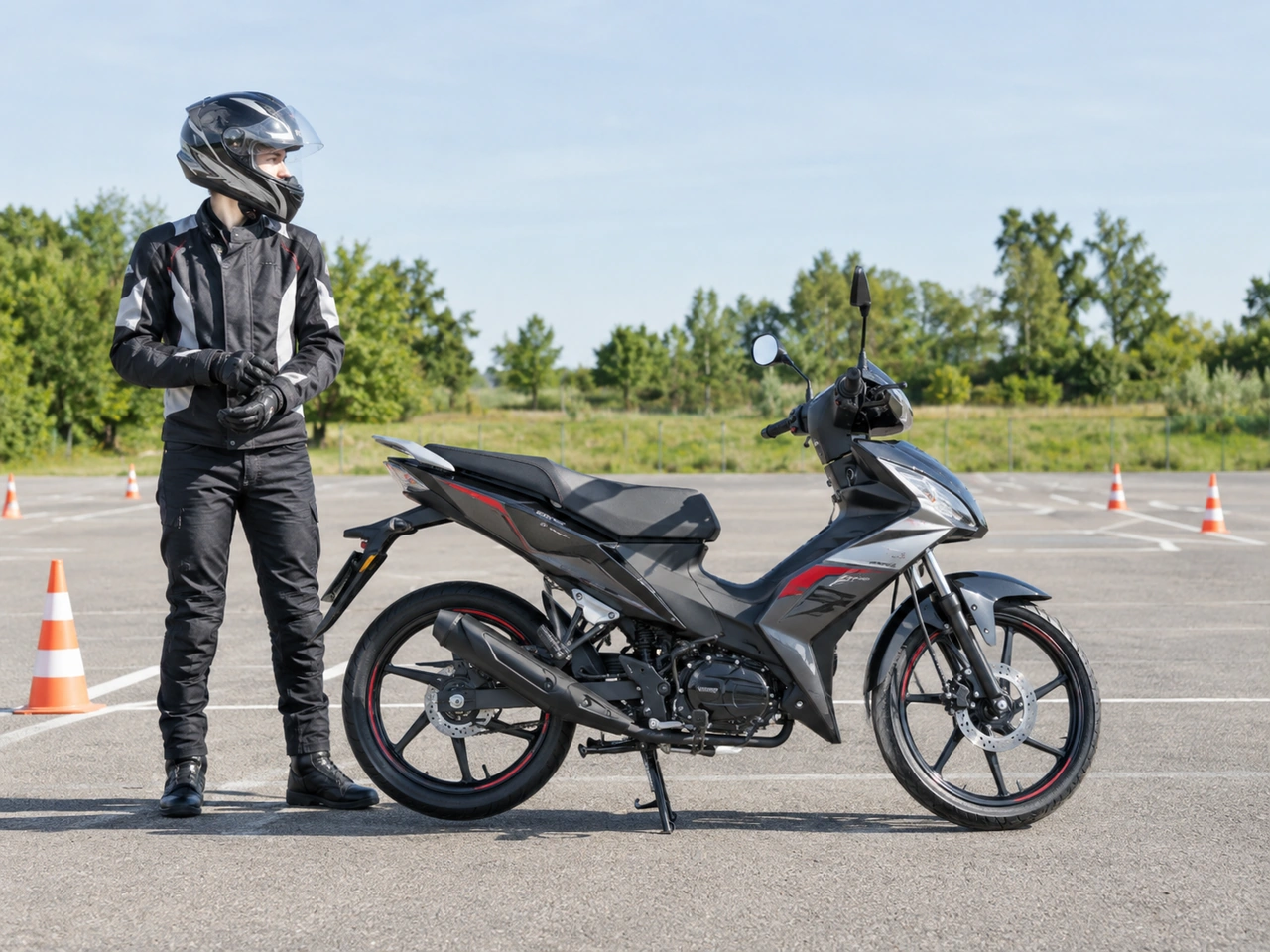
823. What is the minimum licence for a moped with a maximum design speed of 45 km/h?
Category AM is the basic licence for a qualifying moped with a maximum design speed of 45 km/h.
Norway. For a three- or four-wheeled moped, check its unladen mass as well as its classification. AM 146 uses a 150 kg limit, excluding battery weight for electric mopeds.
🔗 Sources
Statens vegvesen · Hva kan du kjøre med førerkort klasse AM?
EUR-Lex · Directive 2006/126/EC on driving licences · Article 4(2)
Image credit: AI-generated
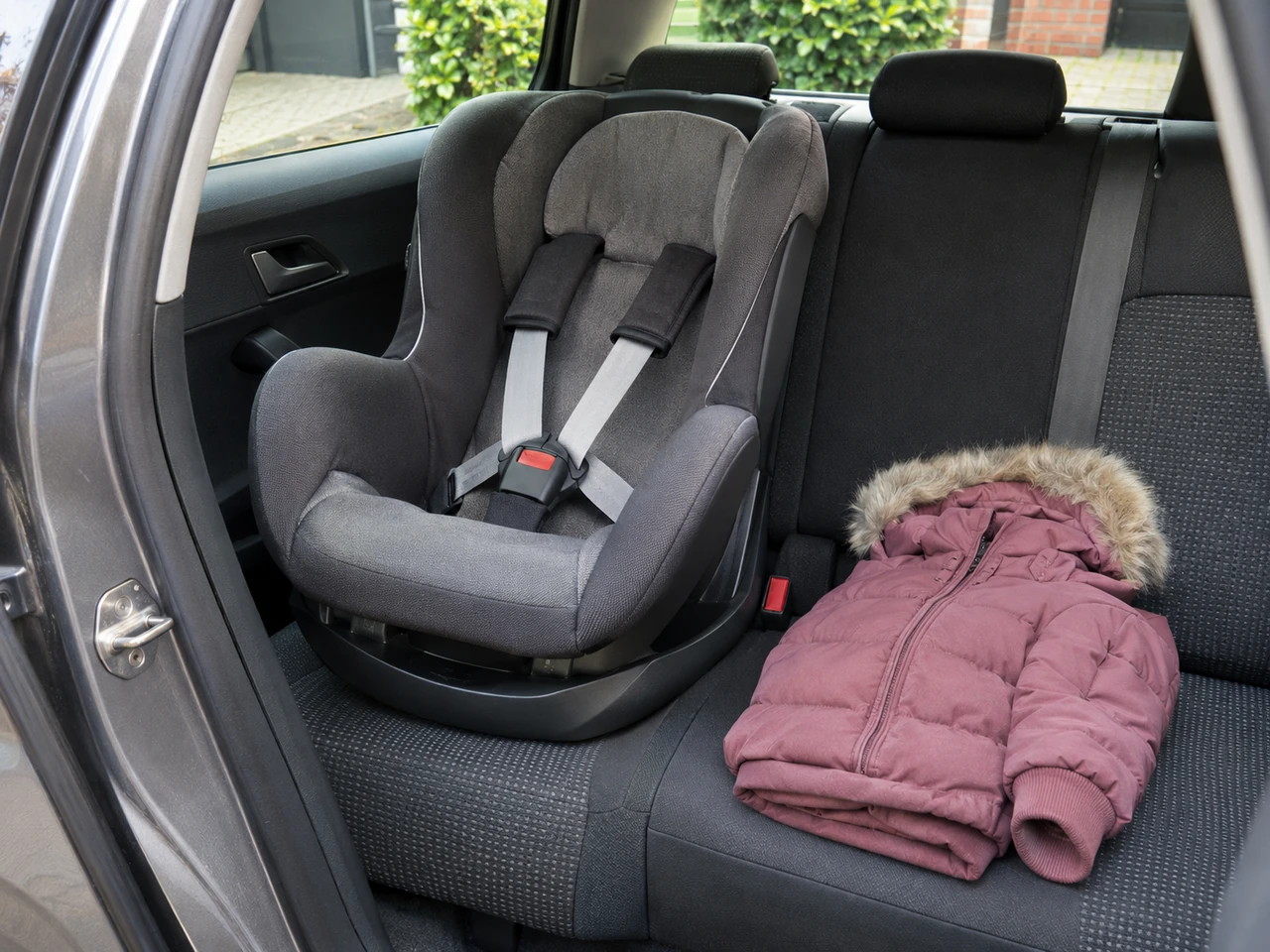
824. A bulky coat under a child-seat harness can prevent a snug fit.
Bulky clothing can leave the harness too loose to restrain the child properly. Fit the harness according to the child-seat instructions, without a bulky coat underneath.
🔗 Sources
NHTSA (United States) • Safety guidance, Car Seats: thin layers and a snug harness
Image credit: AI-generated
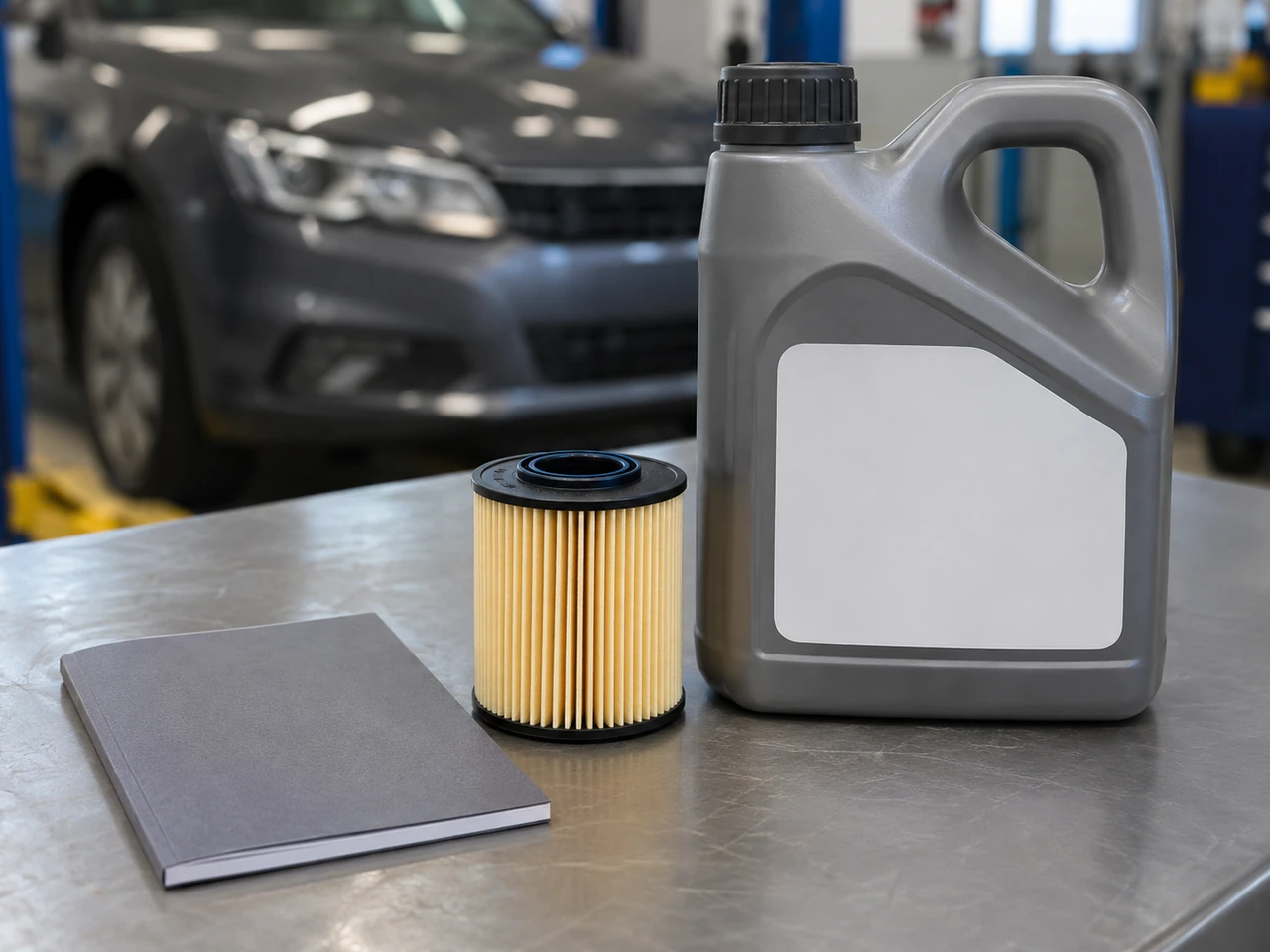
825. Engine oil only needs changing when its level falls below the minimum mark.
The oil level does not tell you whether an oil change is due. Follow the vehicle's oil-change schedule and service reminders, including any time or distance limit. Topping up does not replace an oil and filter change.
🔗 Sources
Ford owner’s manual (manufacturer guidance) • Safety guidance, service intervals and oil-change service
Image credit: AI-generated
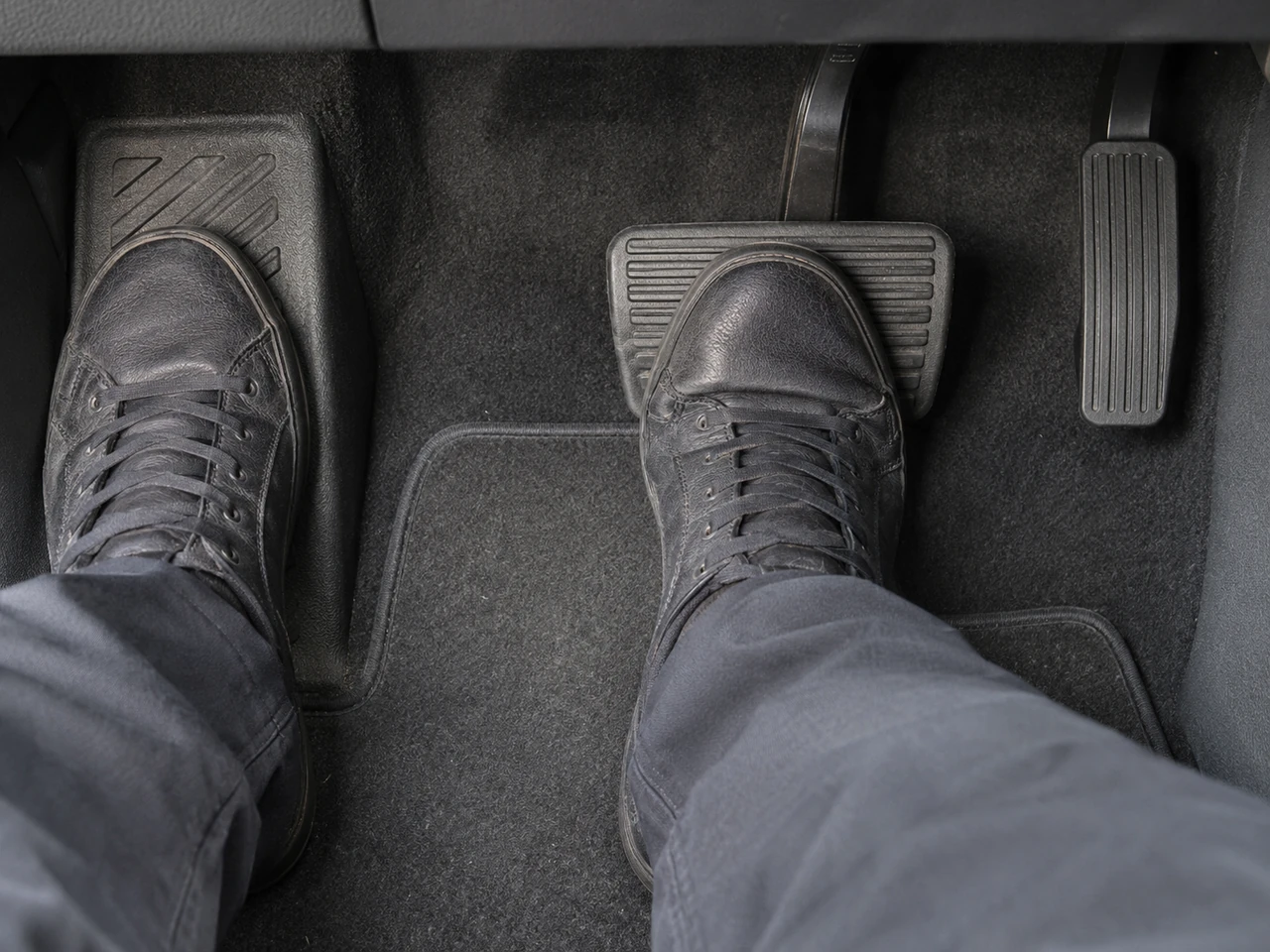
826. You should pump the brake pedal during emergency braking with ABS.
With ABS, apply firm, continuous pressure to the brake pedal during emergency braking. Do not pump the pedal. Follow the instructions in the vehicle handbook.
🔗 Sources
The Highway Code (Great Britain) • Rule 120 • General safety guidance on emergency braking with ABS.
Image credit: AI-generated. Existing same-entry detail photograph, reused for both driving sides.
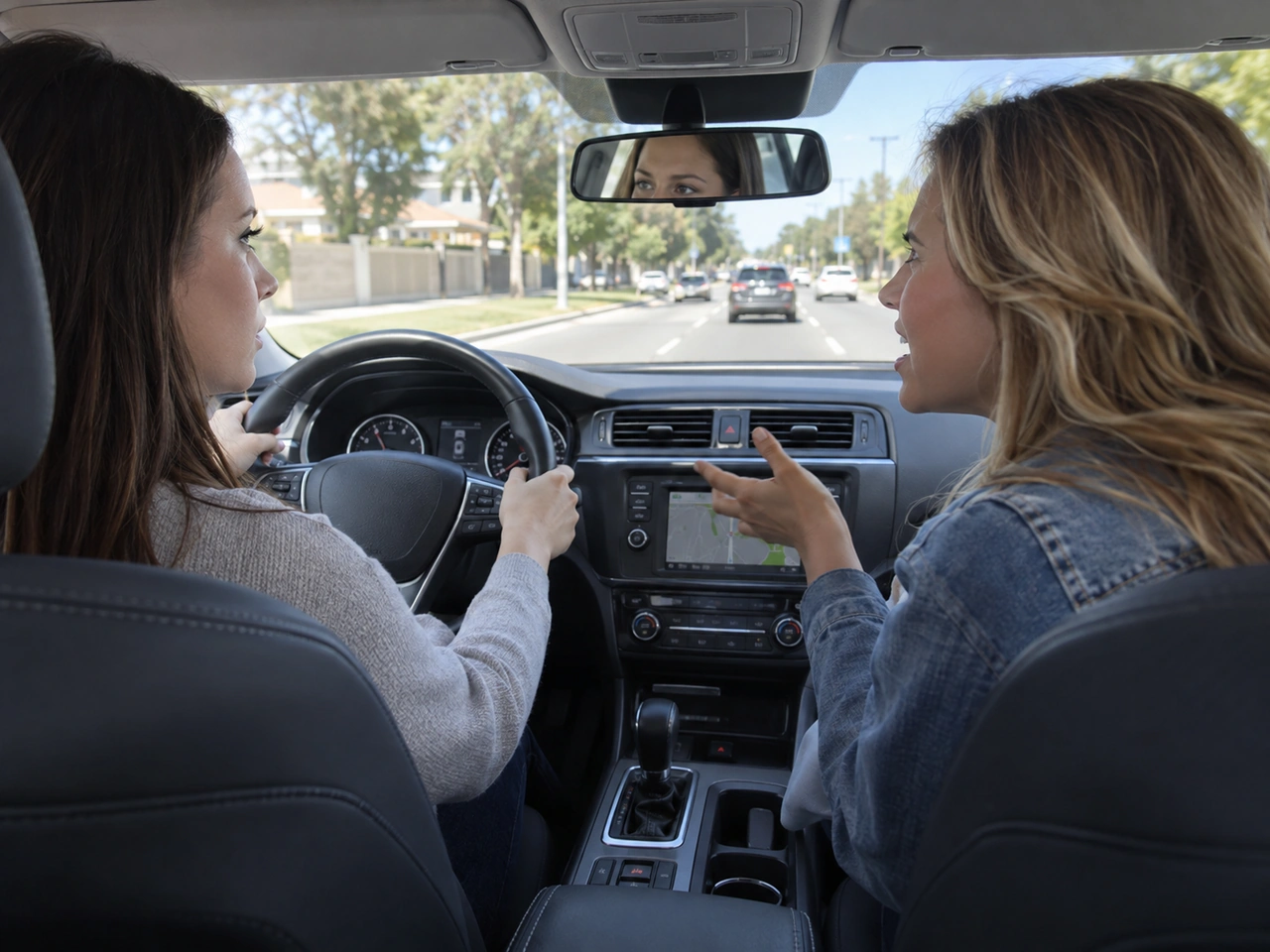
827. What should you do if passengers are distracting you while driving?
Passengers can reduce a driver's attention and concentration. If their behaviour becomes distracting, ask them to stop and keep your focus on driving. If necessary, stop somewhere safe before dealing with the situation.
🔗 Sources
Great Britain — Highway Code, rule 148; distraction and warning sounds
USA NHTSA — General distraction and attention to driving
Image credit: AI-generated
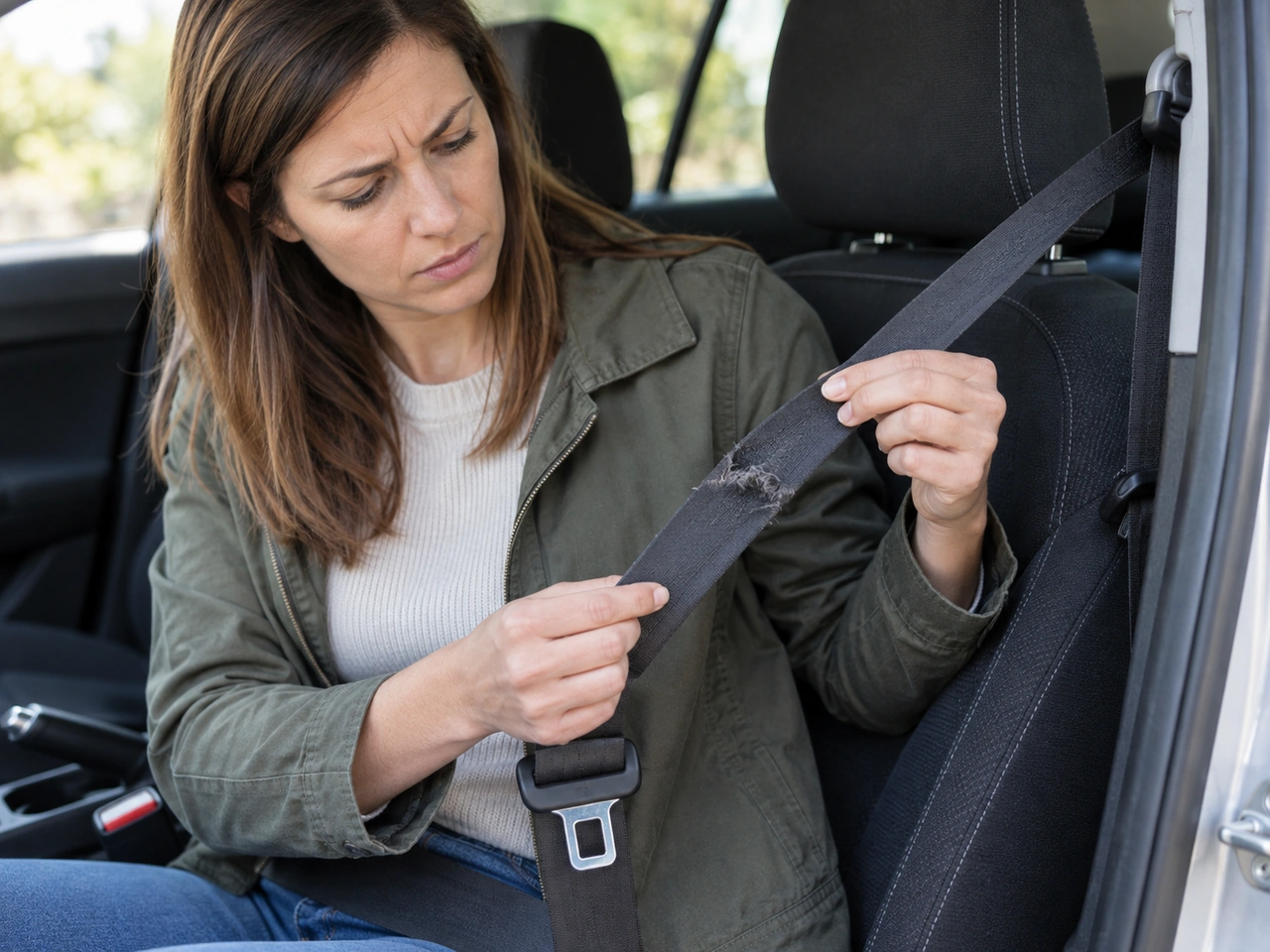
828. What should you do if a seat belt is frayed or damaged?
A damaged seat belt may not provide proper protection in a collision. Frayed webbing, damaged buckles, faulty retractors, or other defects should be professionally inspected and repaired or replaced before the seat belt is relied upon.
🔗 Sources
Nissan 2025 Sentra manual — Model-specific seat-belt use, condition and maintenance example
Image credit: AI-generated
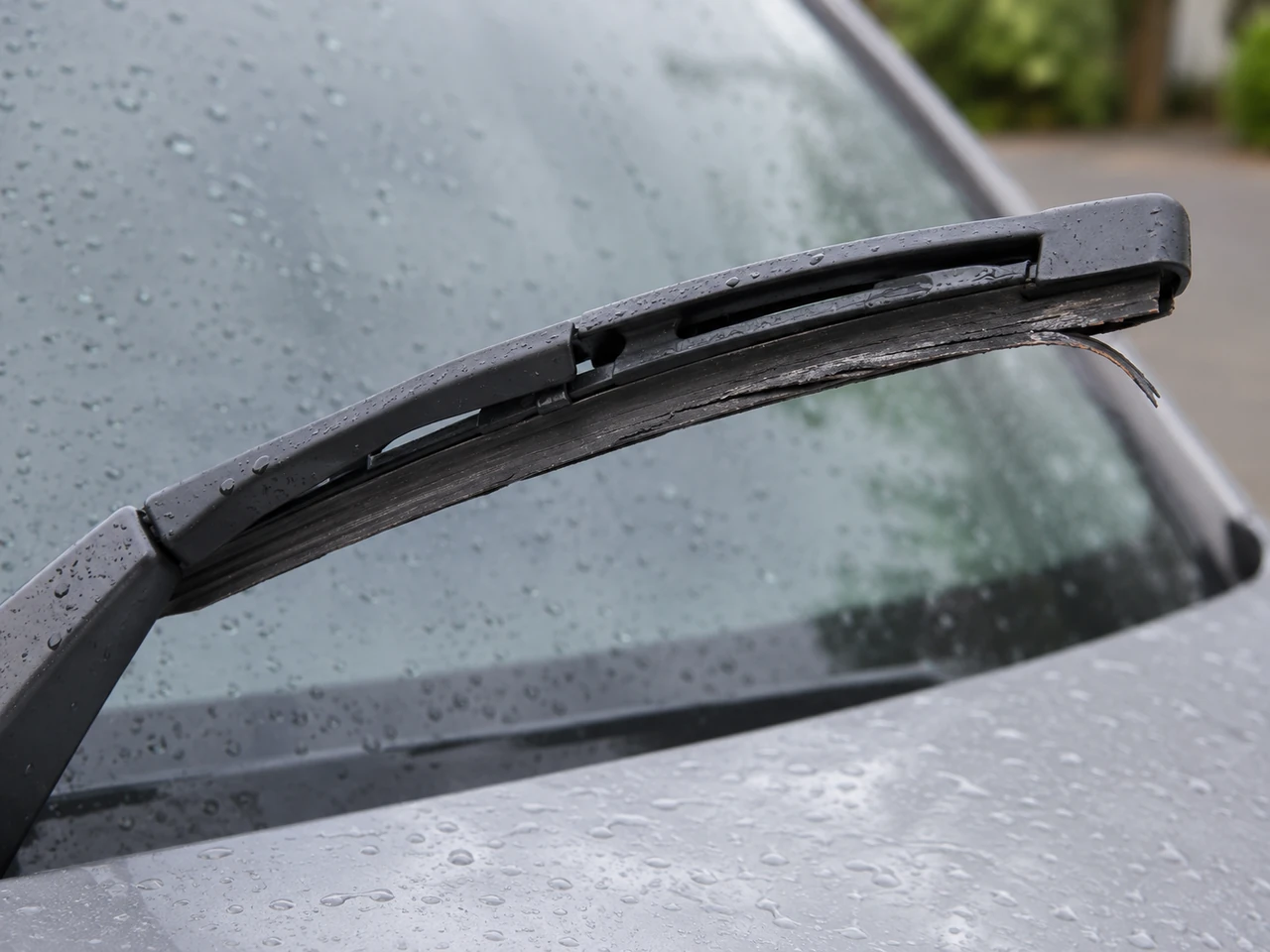
829. Worn wiper blades are harmless if the washer-fluid reservoir is full.
Washer fluid cannot repair a worn blade. Damaged or worn rubber can leave water and dirt on the windscreen, reducing visibility. Check the blades and replace them when needed.
🔗 Sources
Portland Bureau of Transportation (United States) • Safety guidance, Planning ahead: check wipers for damage
Image credit: AI-generated
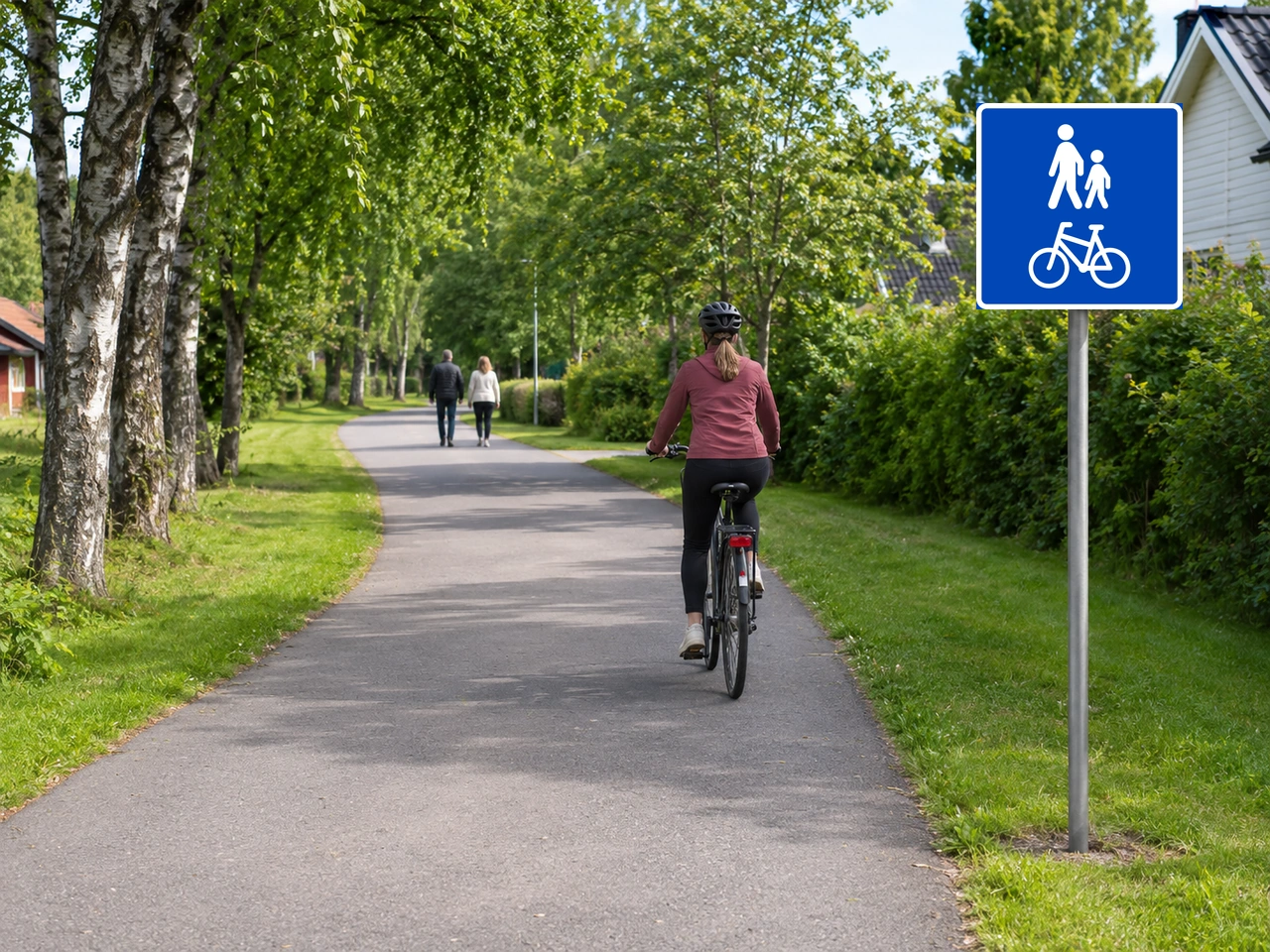
830. Cyclists on a signed shared pedestrian-and-cycle path must take care around pedestrians.
Cyclists must show consideration for pedestrians on a shared path and must not endanger or obstruct them. They must adjust their speed to pedestrians when necessary.
🔗 Sources
Norway • Statens vegvesen • Cycling on a shared pedestrian-and-cycle route
Official Norwegian sign artwork: Statens vegvesen, sign 522, original EPS artwork 522_0.eps from the national sign artwork archive. Native pictogram, orientation, borders and proportions retained. Colours use the authority's published PMS web swatches: blue PMS 293 and red PMS 179 where present. Original files and colour guidance. No third-party open licence is asserted for the government artwork.

Image credit: AI-generated background with source sign artwork resized and placed on the sign face.
Statens vegvesen • Official sign 522
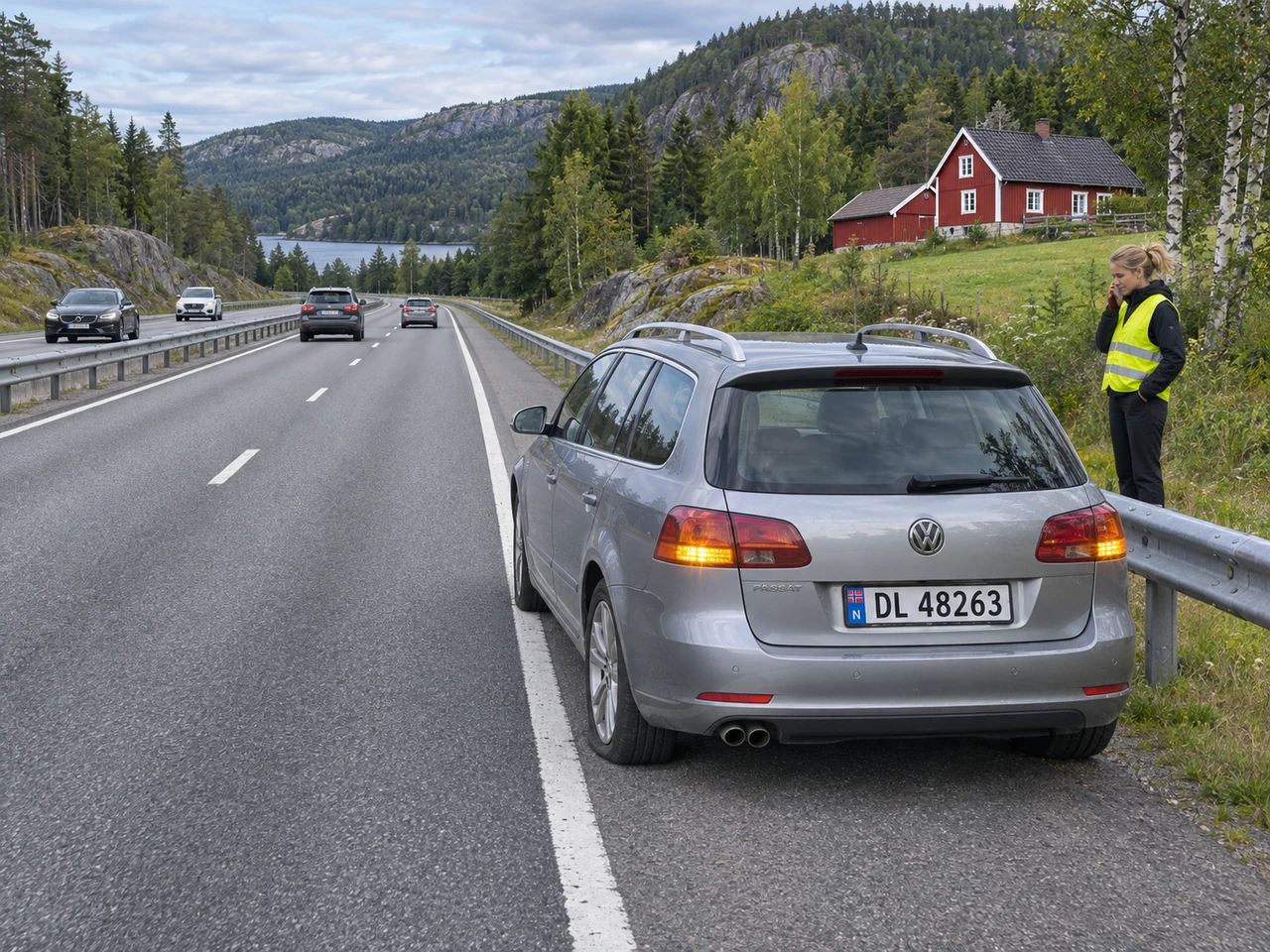
831. What should you do about a flat tyre on a high-speed road?
Changing a wheel close to high-speed traffic is extremely dangerous. Move away from traffic and use professional assistance.
If you can, move clear of the running lanes. Use your hazard lights to warn approaching drivers and call for recovery from a safe place.
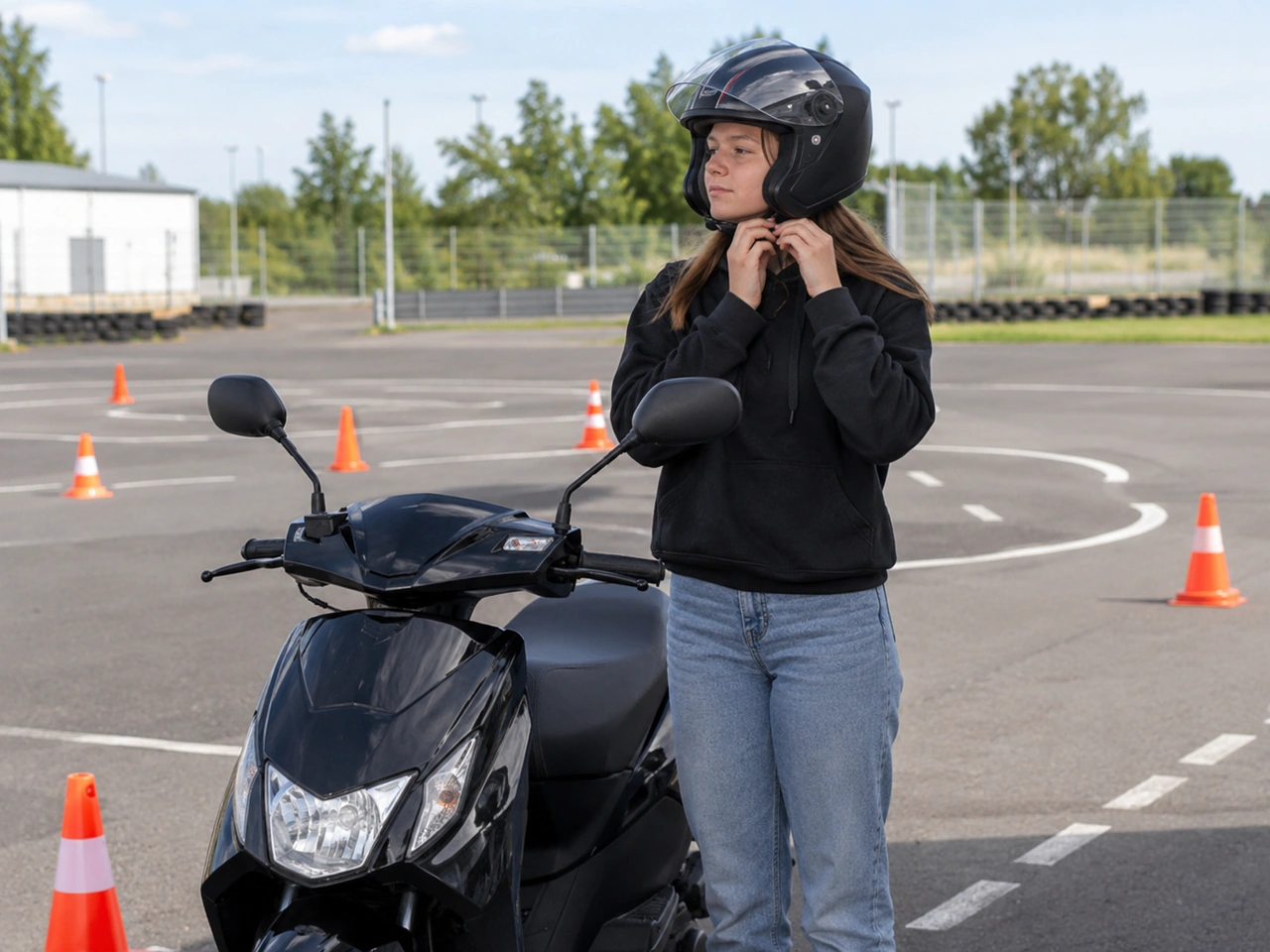
832. What is the minimum age for riding a moped?
The minimum age for riding a moped in Norway is generally 16 years.
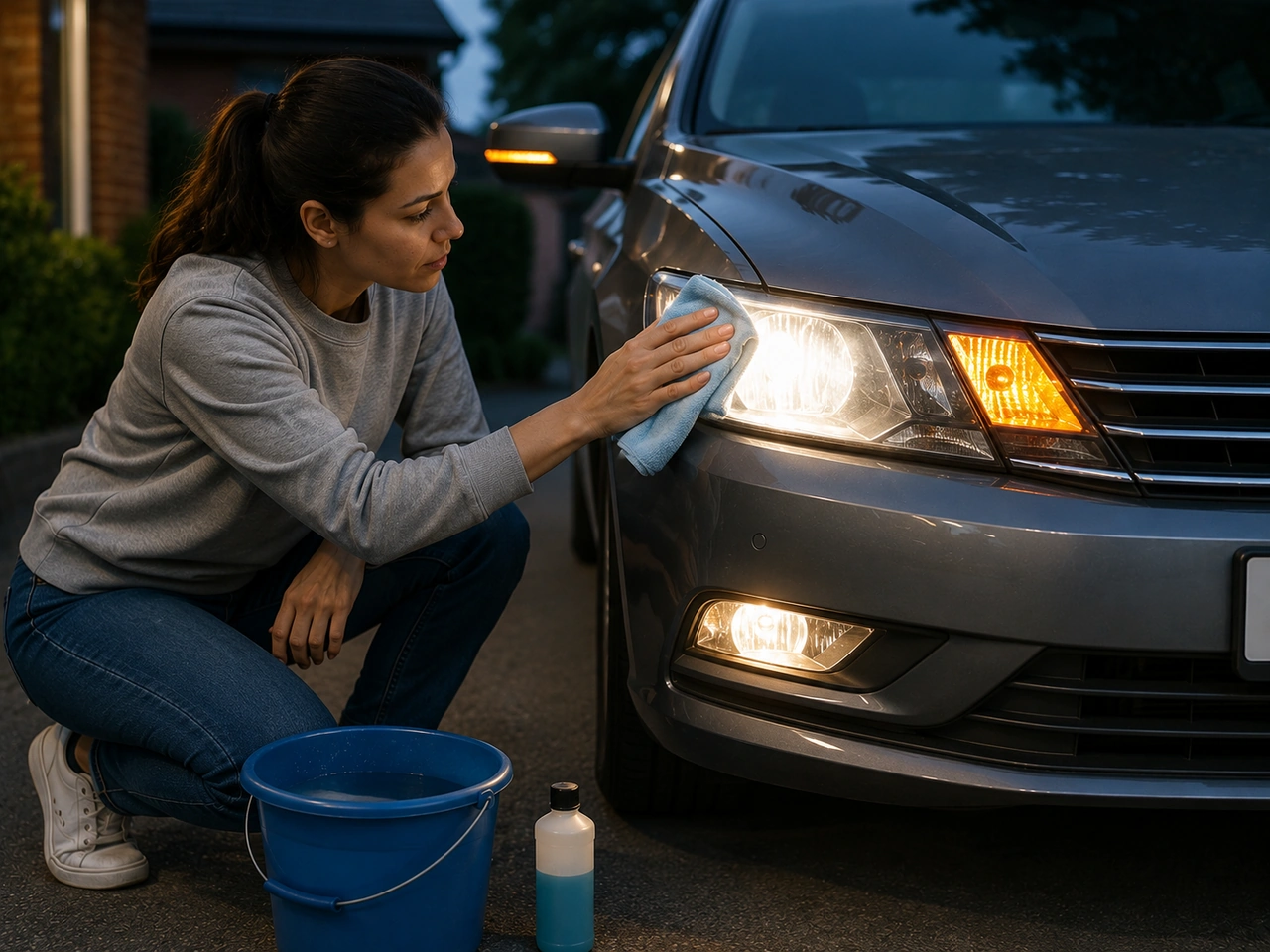
833. Why should headlights, indicators, and other exterior lights be kept clean and working?
Dirty or faulty lights reduce visibility and make it harder for other road users to understand when you are braking, turning, reversing, or changing position.
Norway. Check and clean the headlights, indicators, reflectors and other exterior lights so others can see your vehicle and signals.
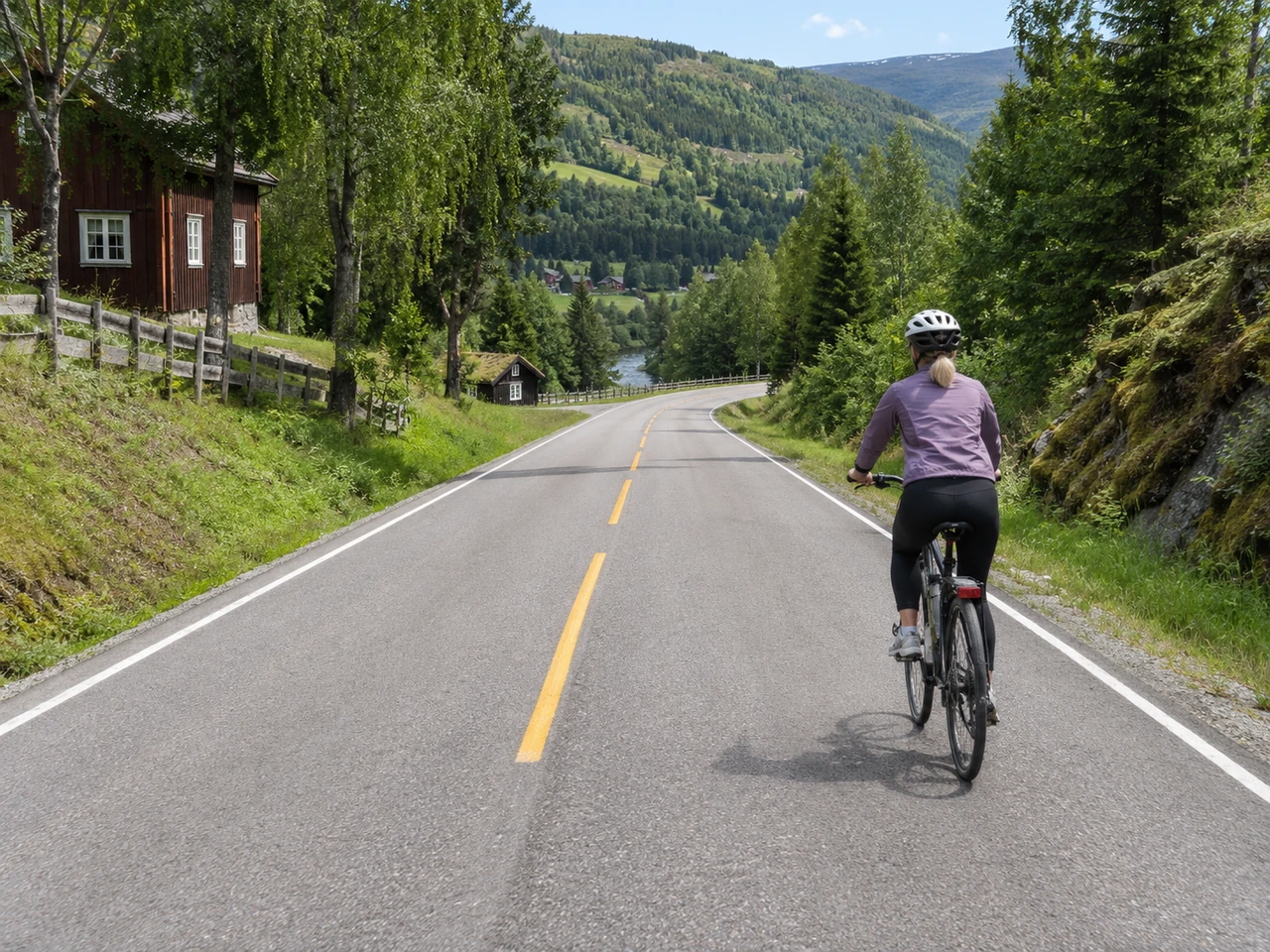
834. What should cyclists do when cycling downhill?
Speed can build quickly on a descent, increasing stopping distance and leaving less time to respond to hazards. Keep both hands ready to brake and control your speed so you can stop within the distance you can see is clear. Brake smoothly before bends rather than entering them too fast.
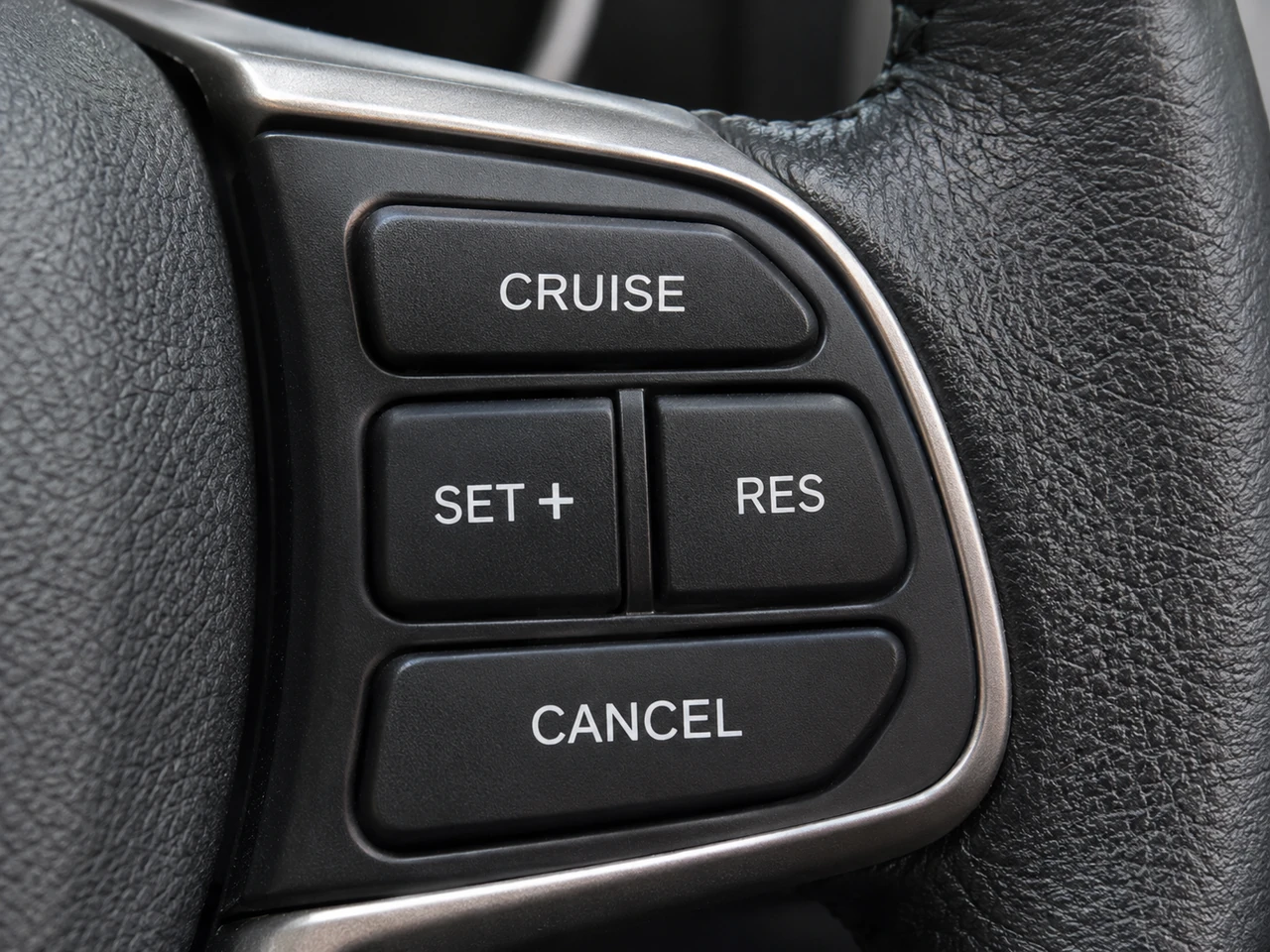
835. You should avoid using cruise control when the road surface is slippery.
Do not use cruise control on slippery roads. Control your speed directly, adapt it to the conditions and follow the vehicle handbook's restrictions on using the system.
🔗 Sources
Ford owner’s manual (manufacturer guidance) • Safety guidance, cruise-control restrictions; follow your own vehicle’s handbook
Image credit: AI-generated
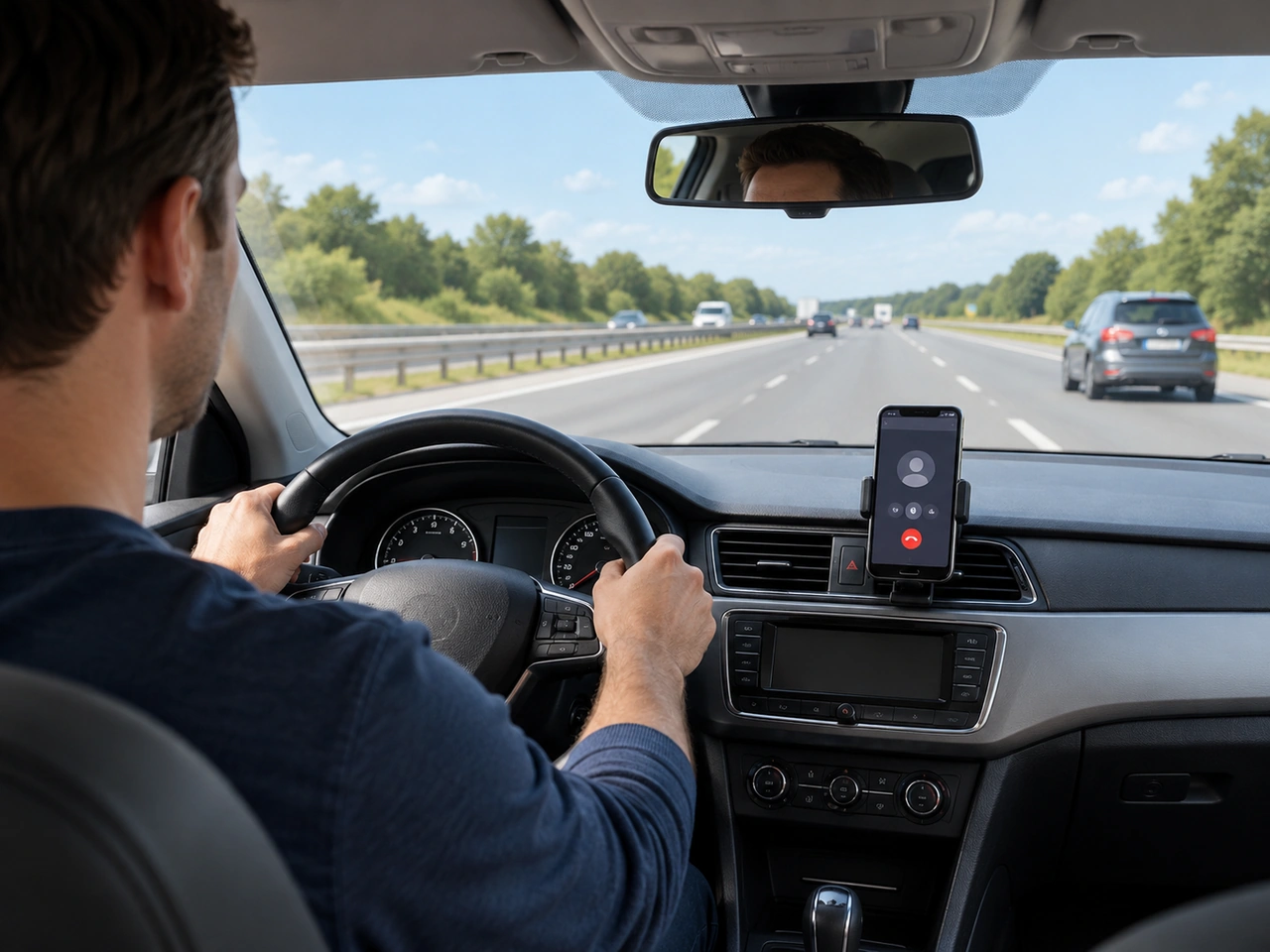
836. How may drivers normally use a phone while driving?
When phone use while driving is permitted in Norway, drivers must generally use a hands-free system. Local rules may restrict which devices are allowed.
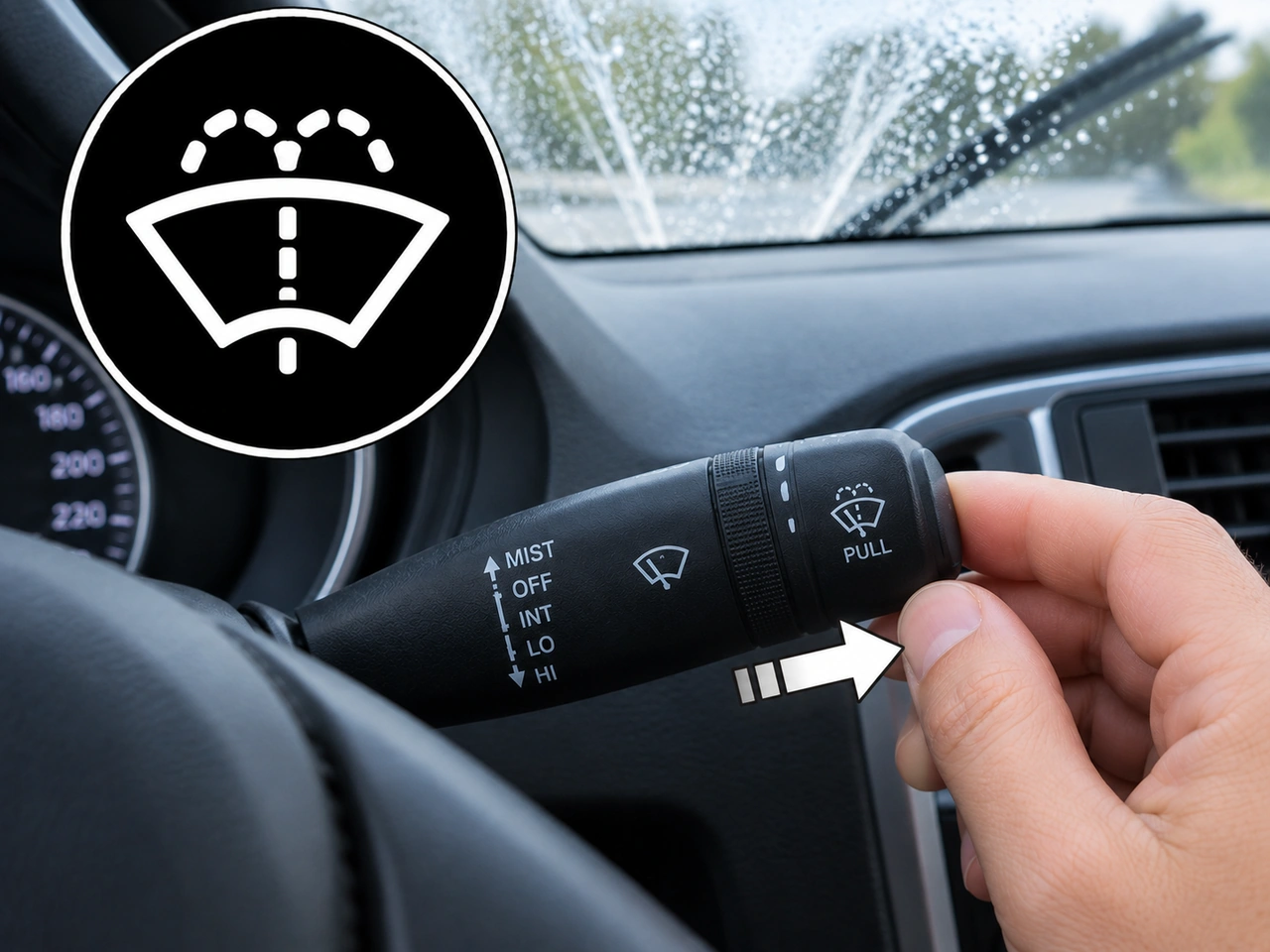
837. What does this vehicle-control symbol indicate?
This symbol indicates the windscreen washer. Operating the control sprays washer fluid onto the windscreen and normally activates the wipers to help clean the glass.
The spray symbol identifies the front washer control. The wipers usually sweep the glass after you operate the washer.
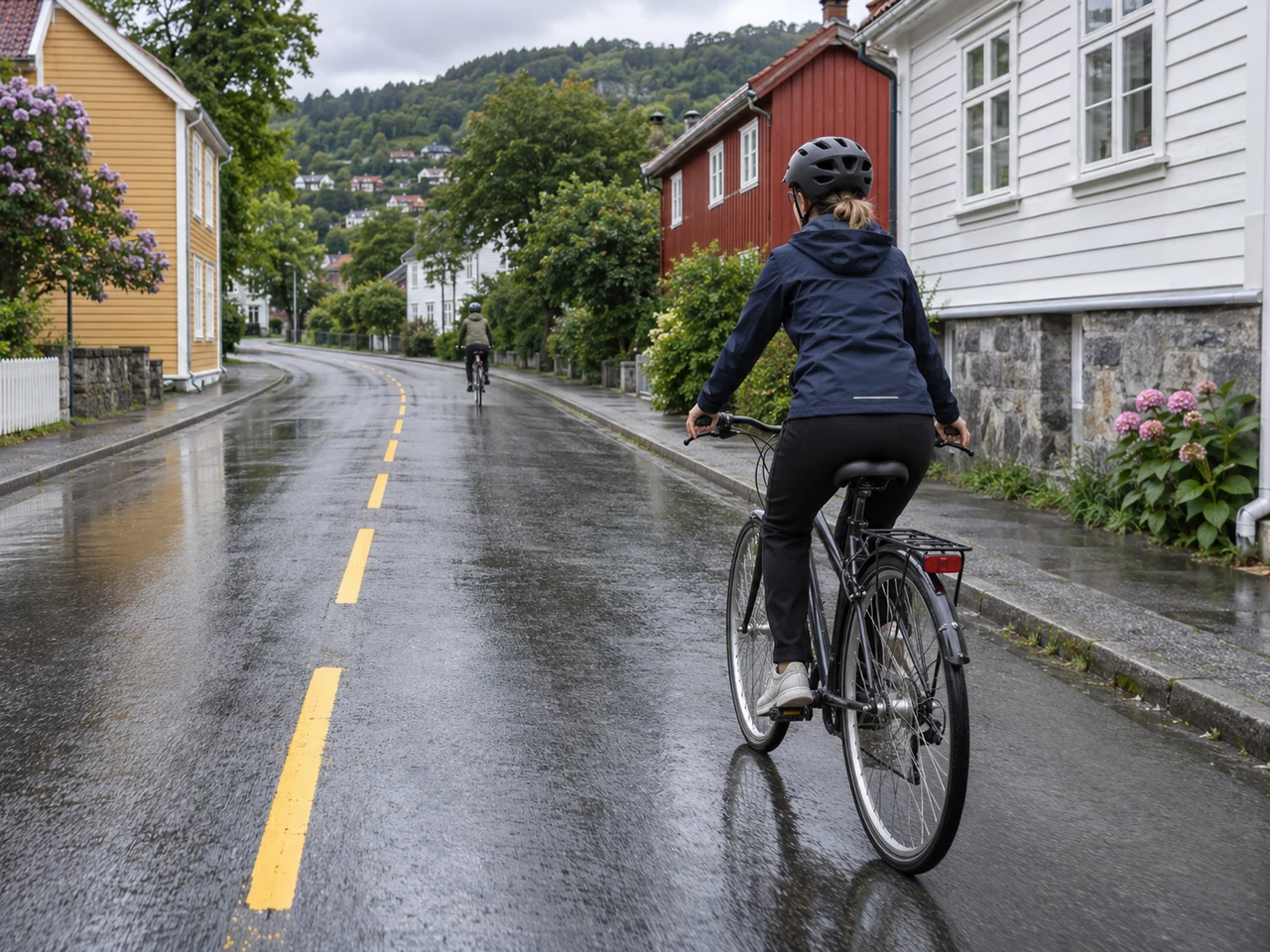
838. How should cyclists brake on a wet road?
Wet surfaces can reduce tyre grip and increase stopping distance. Reduce speed, allow extra room and apply both brakes progressively to avoid locking a wheel. Slow before bends and avoid abrupt braking or steering, especially on slippery surfaces.
🔗 Sources
Singapore Land Transport Authority safe cycling guide, wet weather
Image credit: AI-generated
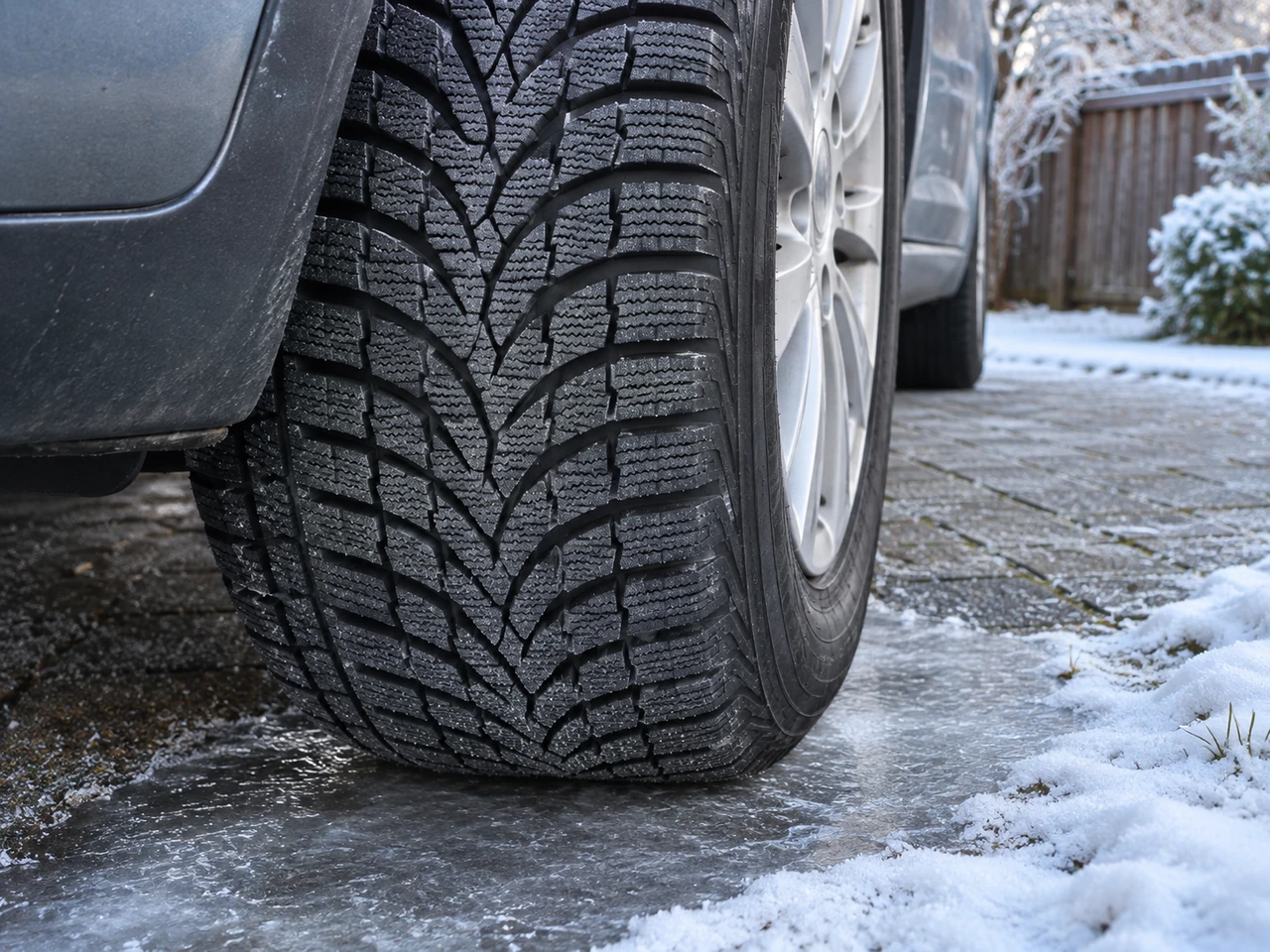
839. Winter tyres remove the risk of skidding on ice.
Winter tyres can improve grip in wintry conditions, but ice can still be extremely slippery. Reduce speed, leave generous stopping space and use steering, acceleration and braking smoothly.
🔗 Sources
Traffic Scotland (Great Britain) • Safety guidance, winter tyres and careful driving on ice
Image credit: AI-generated
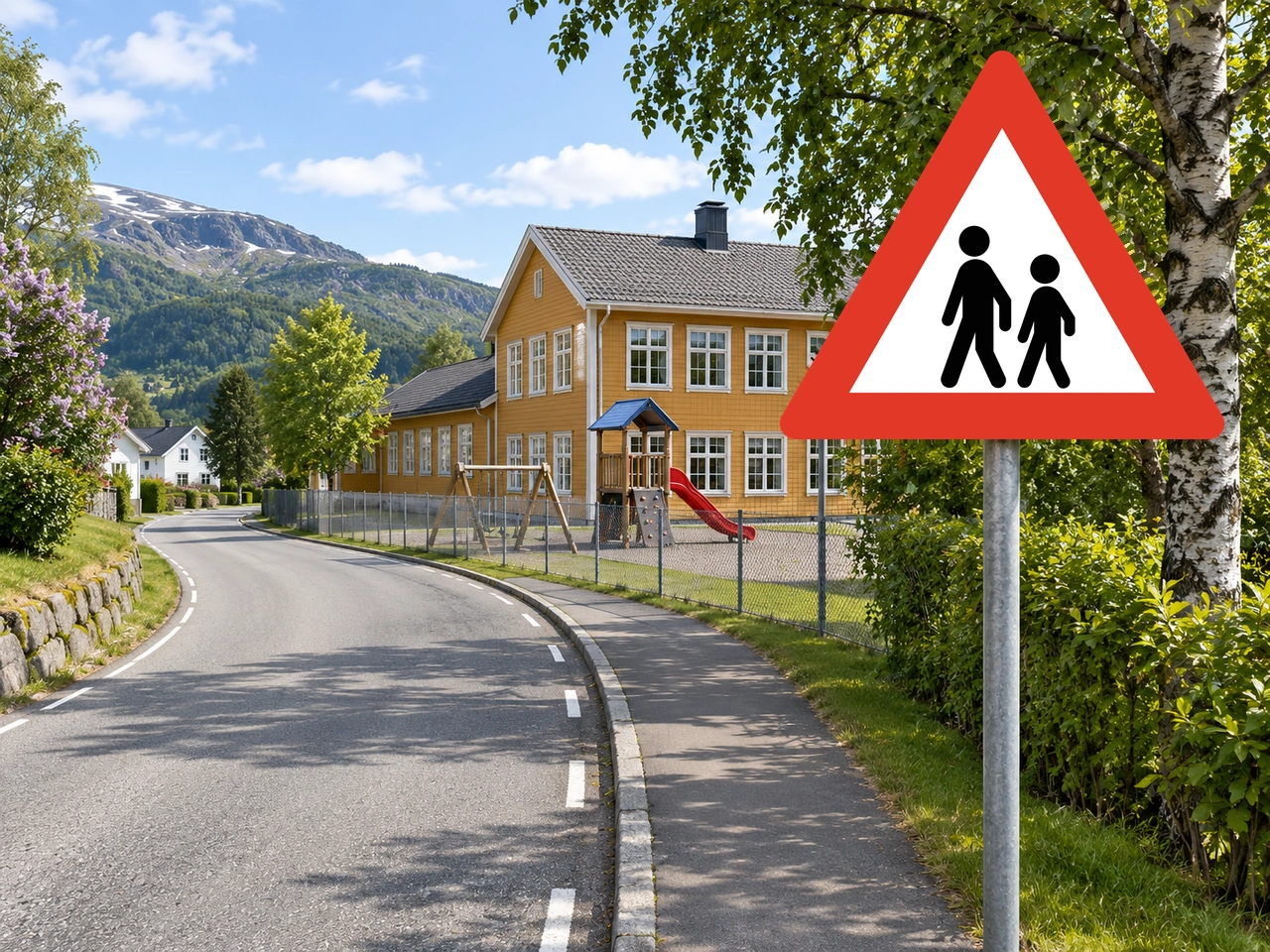
840. A triangular children warning sign calls for extra attention because children may enter the road.
The sign warns of children near the road. Pay extra attention and adapt your speed to the hazard, being ready to slow down or stop. It does not mark a play area.
🔗 Sources
Norway • Skiltforskriften • Sign 142
Statens vegvesen • Official traffic-sign meanings
Statens vegvesen • Official sign artwork
Sign artwork: Statens vegvesen original EPS archive, Sign 142, file 142_0.eps. Native children silhouettes, border and proportions retained; resized and composited onto the existing same-entry scene. Border red follows the authority's published colour chart: PMS 179, using the published web swatch RGB 226/56/40. No third-party open licence is asserted for the government artwork.
Image credit: AI-generated background with source sign artwork resized and placed on the sign face.
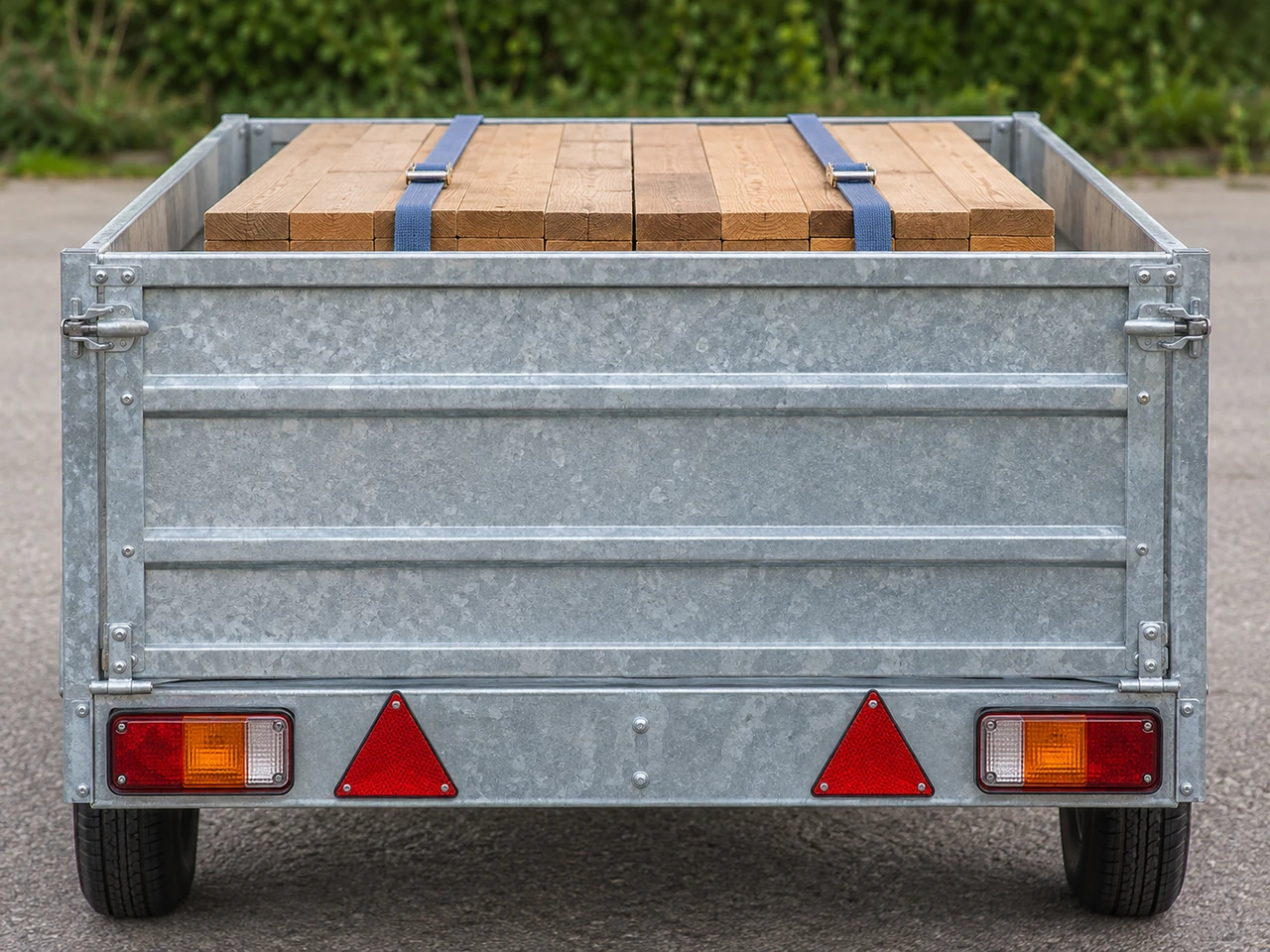
841. A load may hide the vehicle's reflectors if its lights and number plate remain visible.
The required rear reflectors must remain visible and effective. Keeping the lights and number plate visible does not compensate for obscured reflectors. Reposition the load or provide the prescribed additional equipment where the applicable rules allow it.
🔗 Sources
Lovdata • Vehicle technical regulations, Chapter 28: lights, signals and reflectors
Image credit: AI-generated
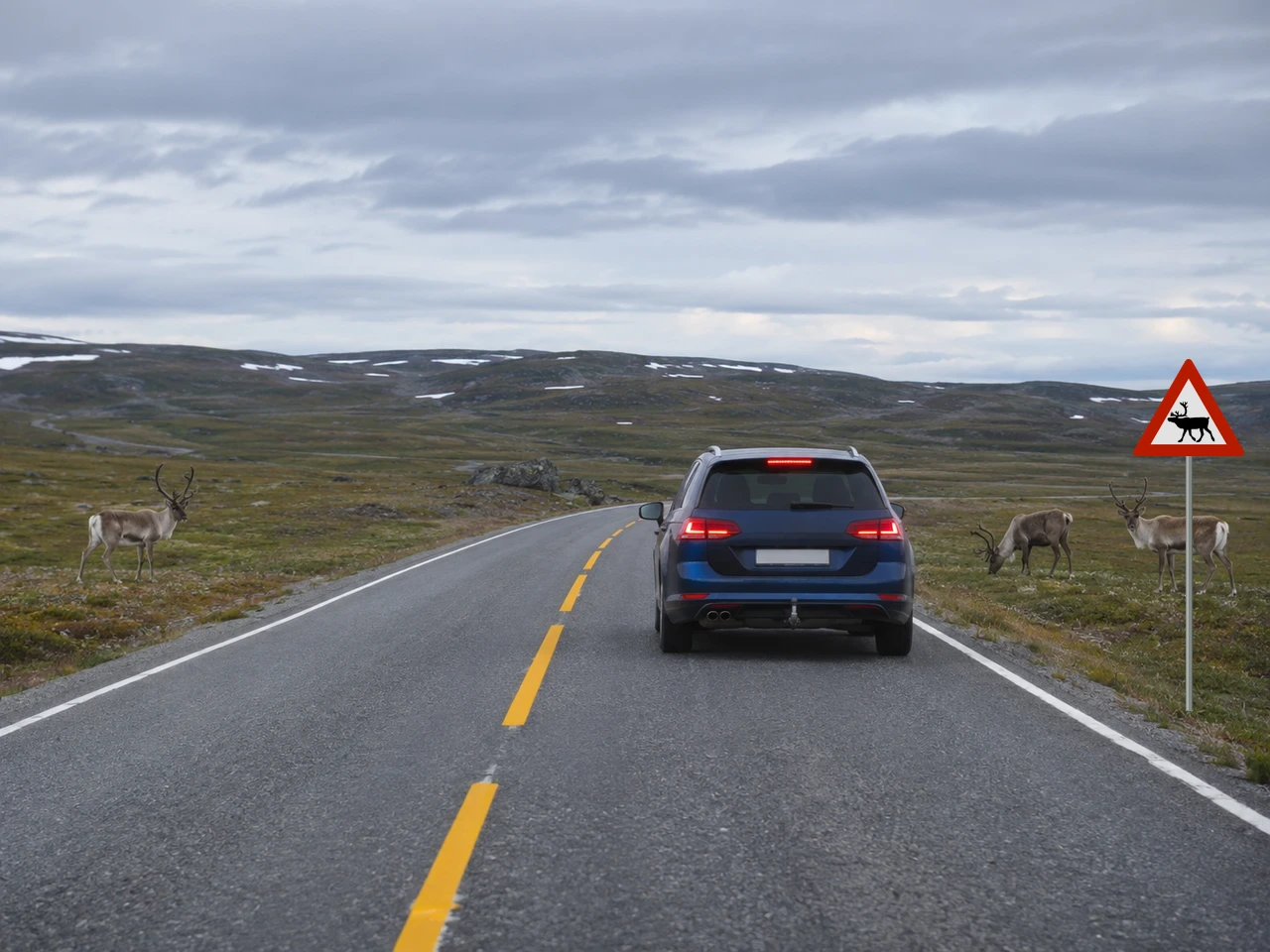
842. What should you expect after one wild animal crosses the road?
Many animals travel in groups. Slow down and continue watching both sides of the road.
🔗 Sources
Norwegian Public Roads Administration, Traffic Sign Handbook – 146.2
Sign artwork: Norwegian Public Roads Administration, via Wikimedia Commons.

Norwegian Public Roads Administration – Animal collisions and prevention
Image credit: AI-generated
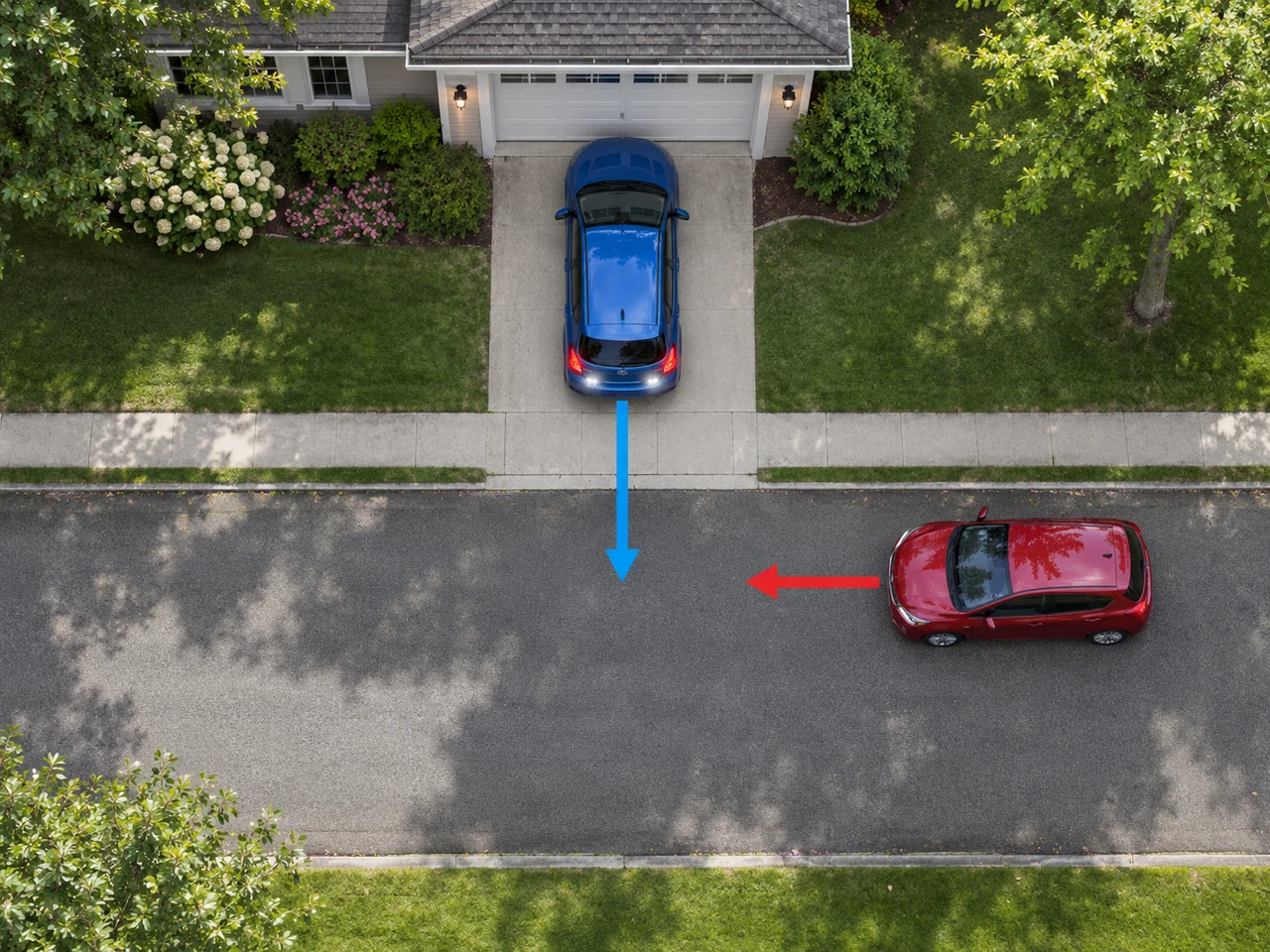
843. Blue is waiting in a driveway as red approaches on the road. Who must give way?
Blue must stay in the driveway and let red pass. Before moving, check the pavement and the road for other users. Reversing lights do not give priority. Reverse only where local rules permit it and the route is clear.
🔗 Sources
AI-generated illustration • Traffic-rules.com / Rijbewijs-online.be • WCIT • CC BY-SA 4.0.
🔗 Lovdata • Traffic Rules, section 11(1)
🔗 Supreme Court of Norway • HR-2024-2325-U, paragraphs 24–25
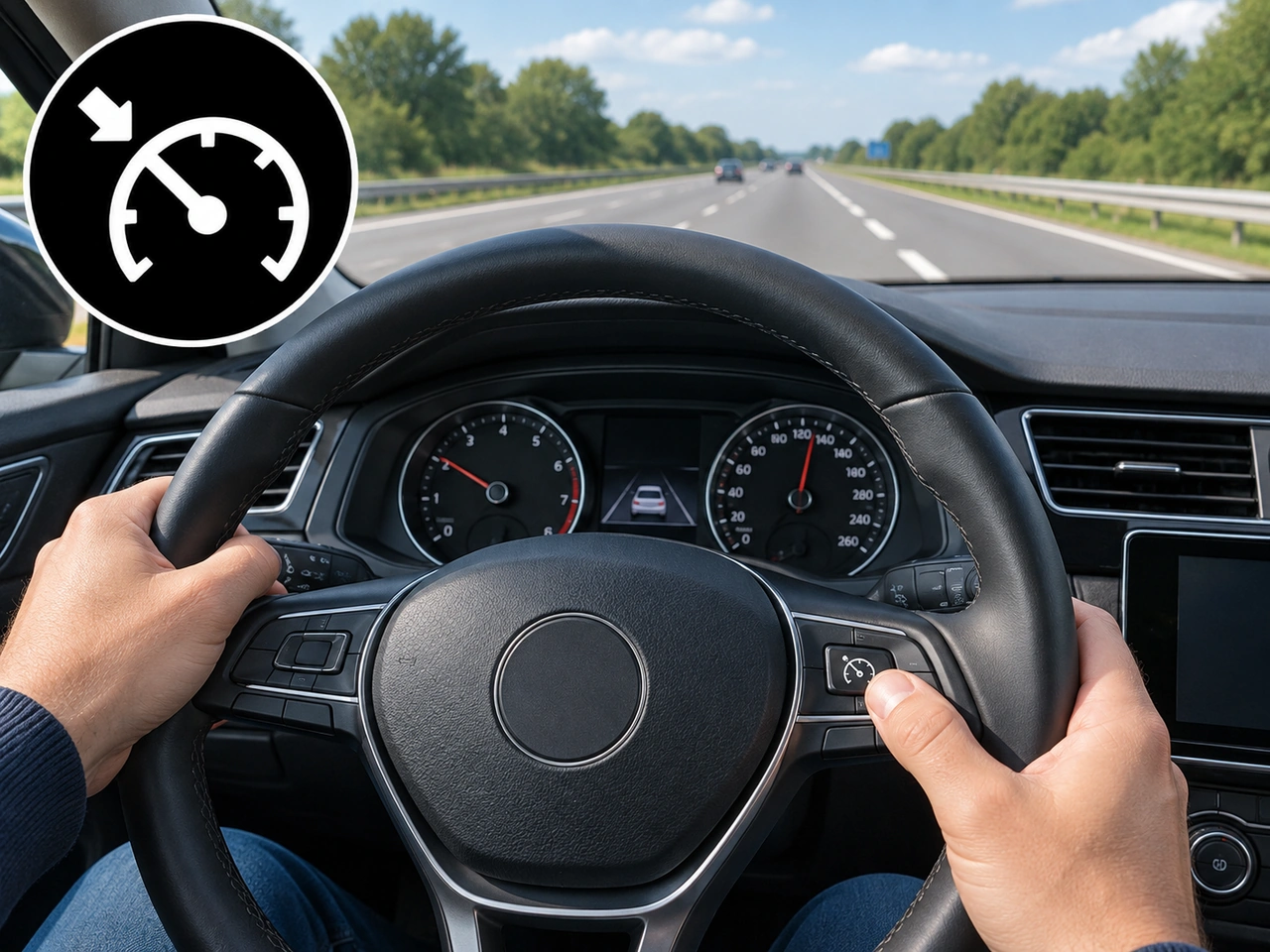
844. What is the purpose of cruise control?
Cruise control can maintain a selected speed without the driver continuously pressing the accelerator. The driver must remain attentive and ready to brake or take control when necessary.
Conventional cruise control holds a set speed. You can normally cancel it with the brake pedal or the cancel control.
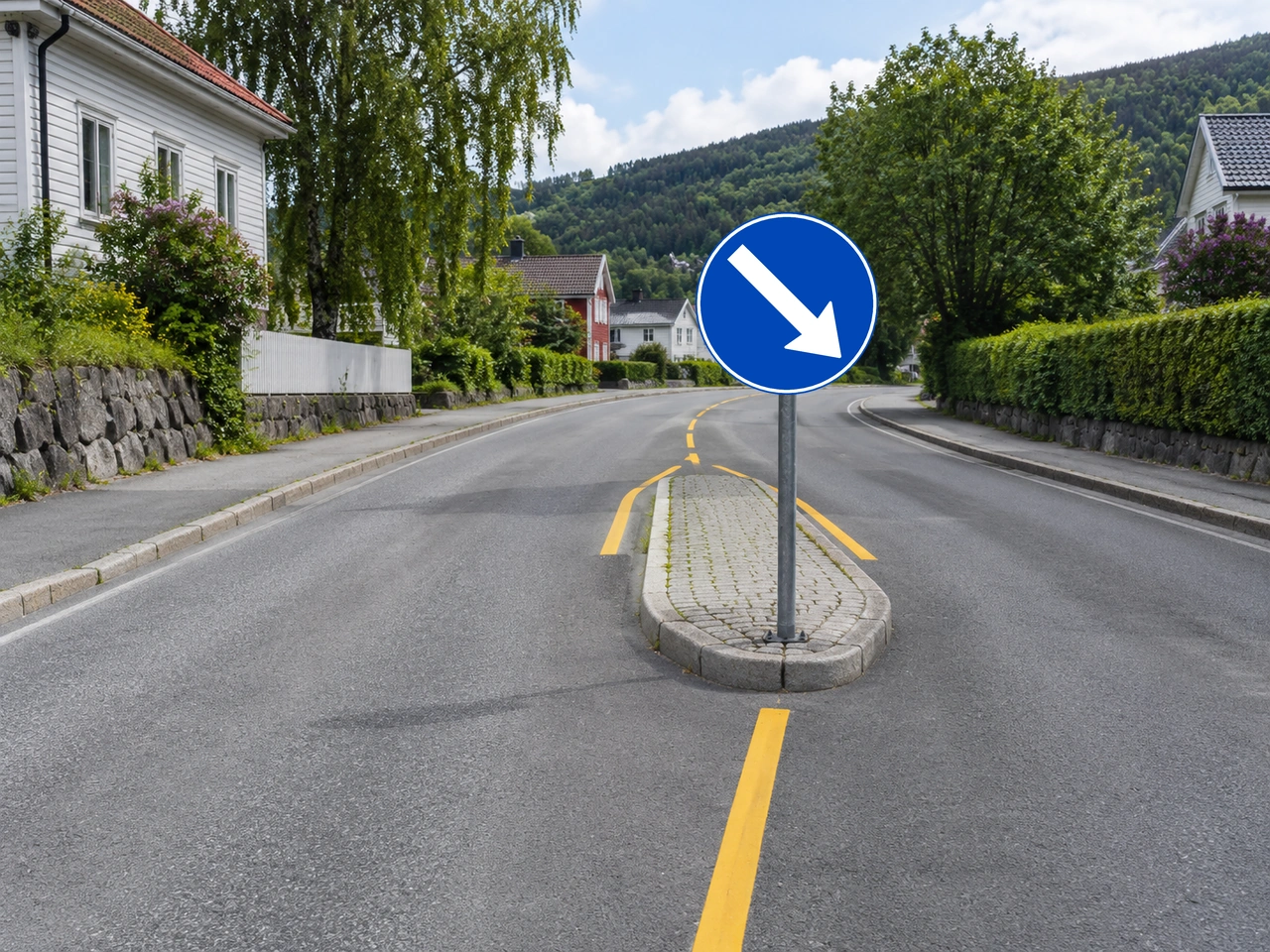
845. The blue down-right arrow shown requires you to pass the obstacle on its right.
When this straight-arrow mandatory sign is placed on an obstacle, pass on the side indicated by the arrow. Here, the arrow points down and right, so keep to the right of the obstacle.
🔗 Sources
Norway • Skiltforskriften • Sign 404.1
Statens vegvesen • Official traffic-sign meanings
Statens vegvesen • Official sign artwork
Official Norwegian sign artwork: Statens vegvesen, sign 404.1, original EPS file 404_1.eps from the national sign artwork archive. Native pictogram, lettering, orientation, borders and proportions retained. Colours use the authority's published PMS web swatches: blue PMS 293 and red PMS 179 where present. Original files and colour guidance. No third-party open licence is asserted for the government artwork.
Image credit: AI-generated background with source sign artwork resized and placed on the sign face.
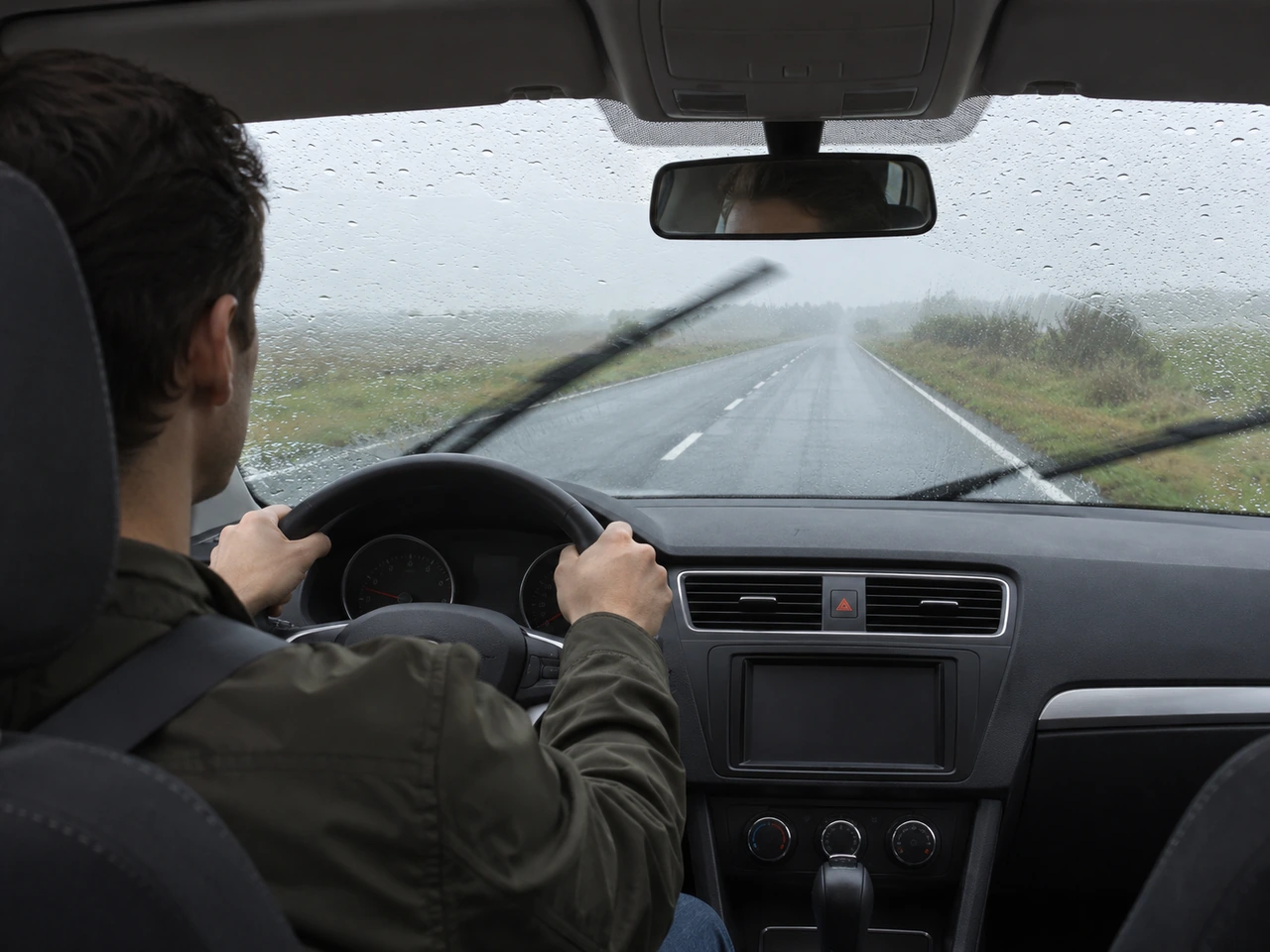
846. Why should you adjust your speed in bad weather?
Rain, snow and ice can reduce tyre grip, while fog and spray can hide hazards. Reduce speed smoothly and leave more room to stop. A posted speed limit is a maximum, not a target in poor conditions.
🔗 Sources
Great Britain — Highway Code, rule 125; speed appropriate to conditions
Great Britain — Highway Code, rule 227; general wet-road safety
Image credit: AI-generated
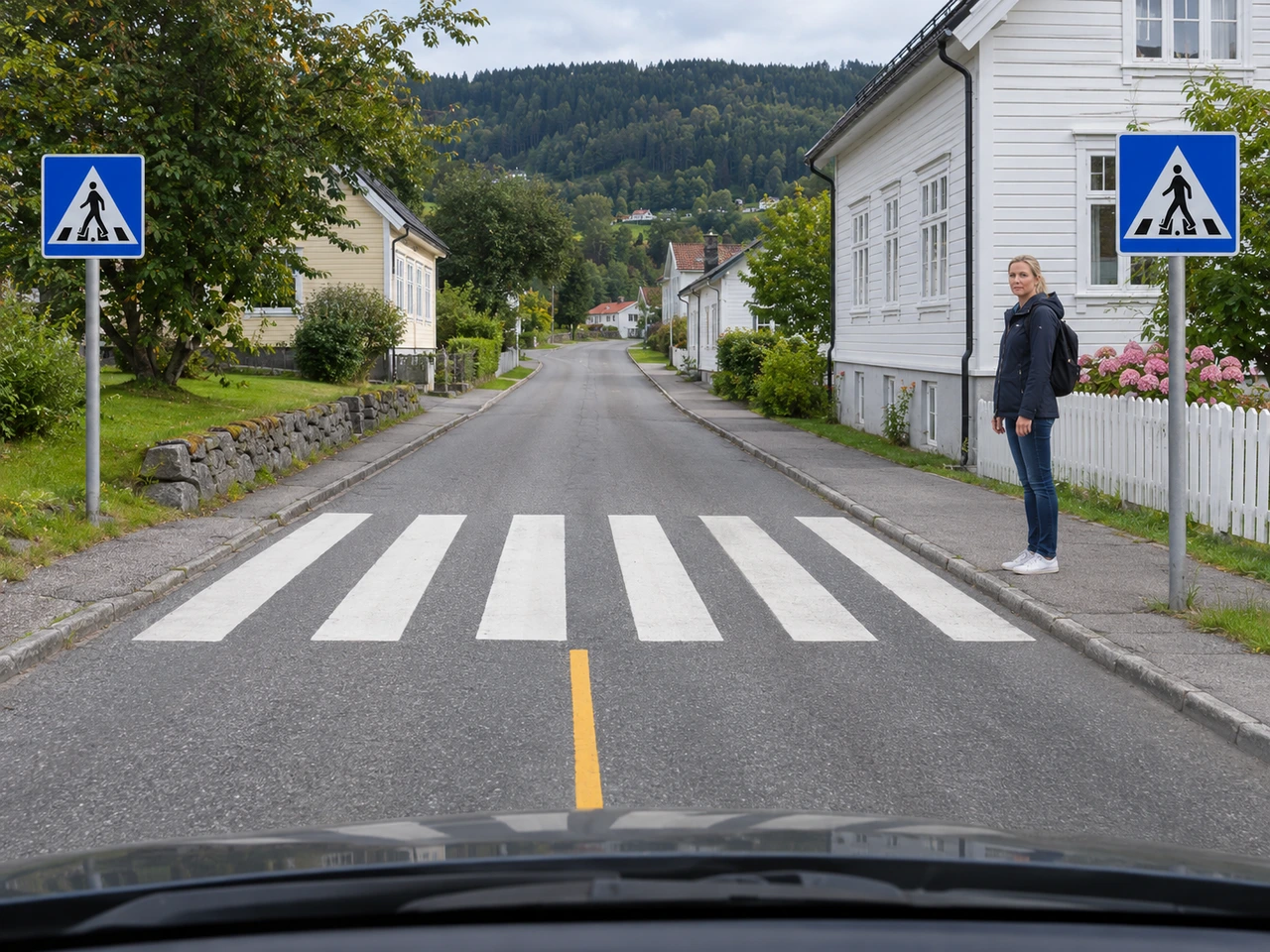
847. What should you do when people are waiting at a pedestrian crossing?
Approach slowly enough to stop safely. Watch people waiting to cross and follow the local give-way rules for that crossing.
🔗 Sources
Norwegian Traffic Rules — Section 9: duties towards pedestrians
Norwegian Public Roads Administration — Sign 516
Image credit: AI-generated
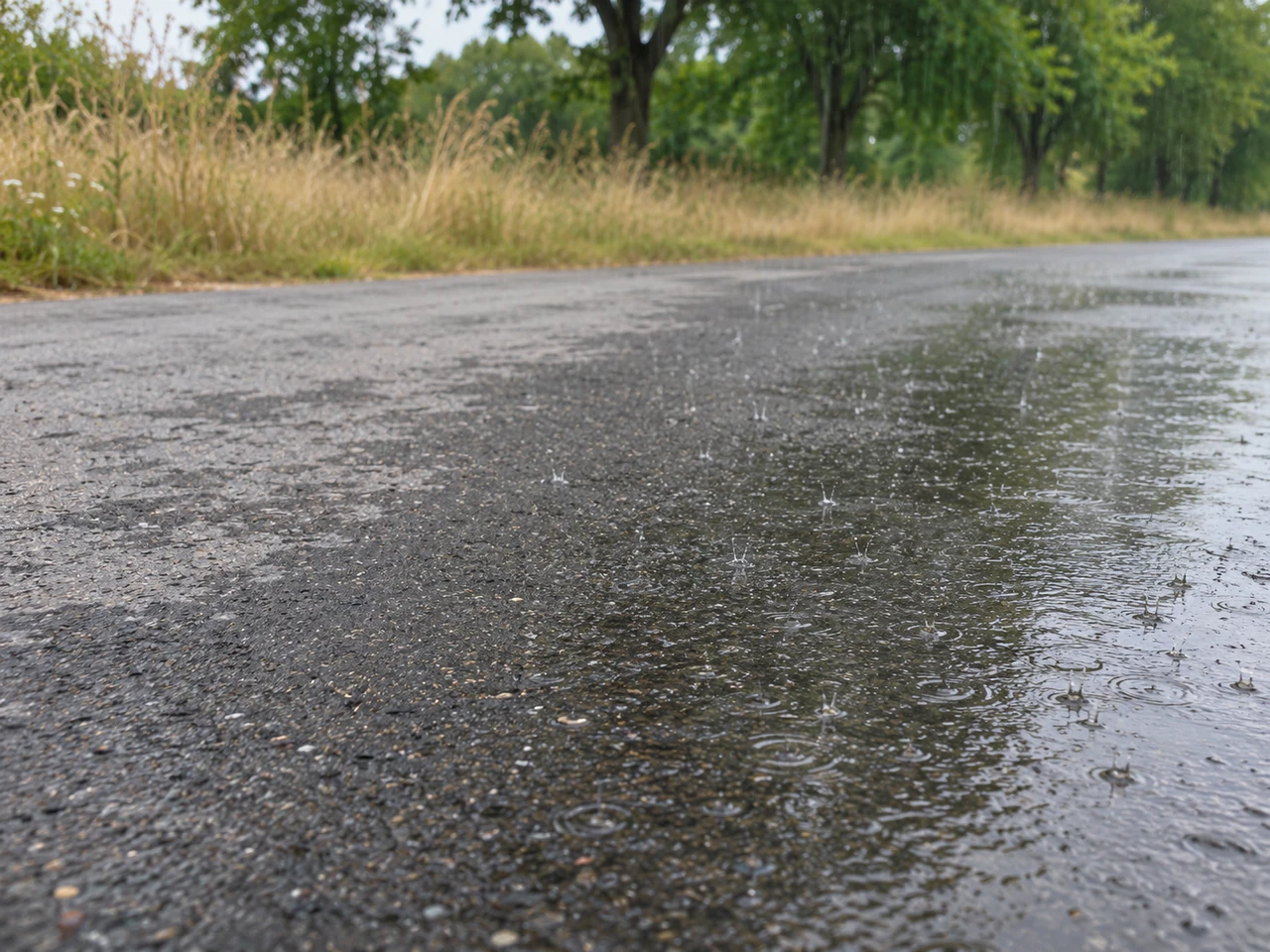
848. Rain after a dry spell can make the road slippery.
A road surface can become slippery when rain follows dry weather. Adapt your speed to the conditions and allow extra space to stop.
🔗 Sources
National Weather Service (United States) • Safety guidance, Rain After a Long Dry Stretch
Image credit: AI-generated
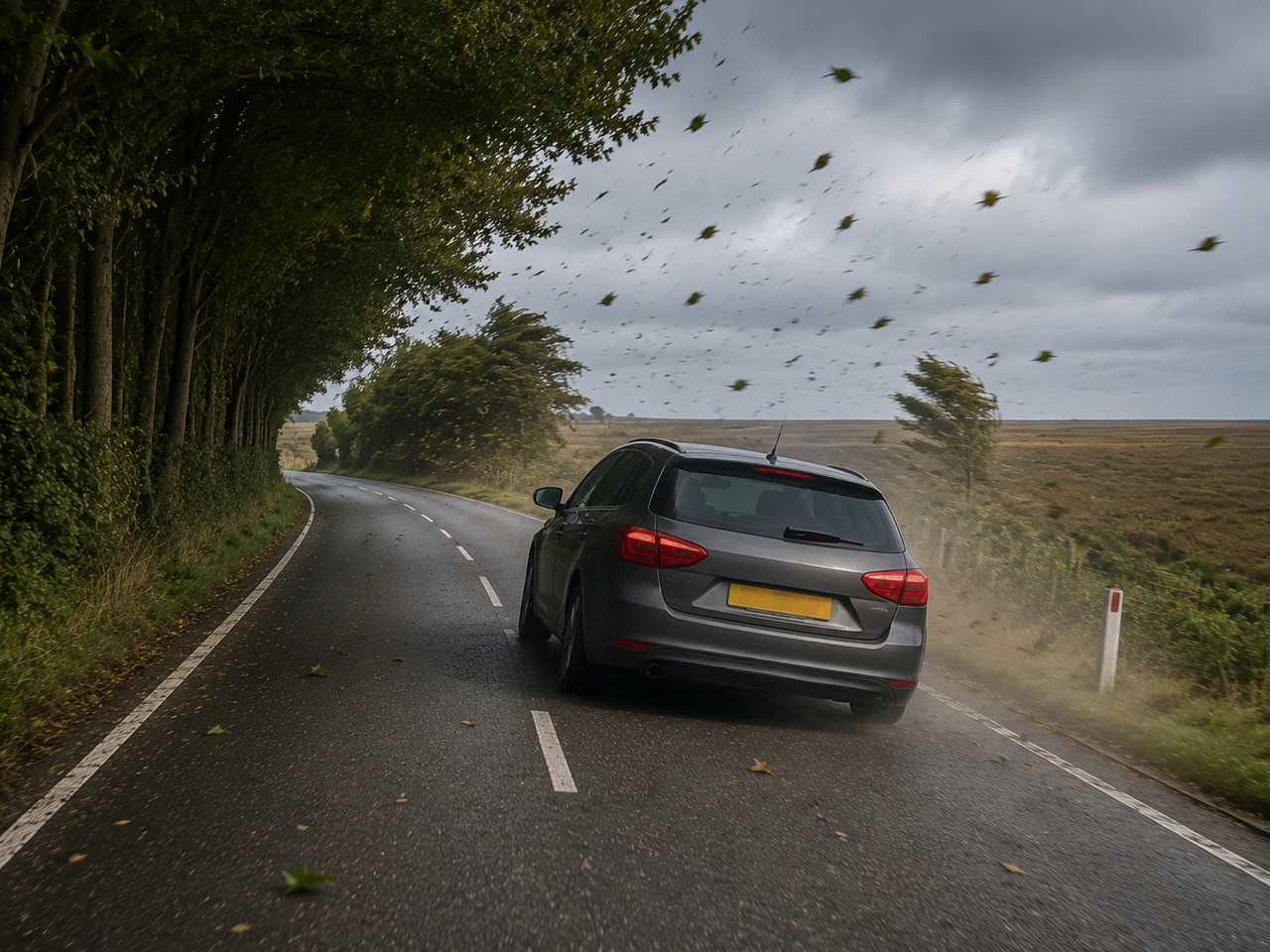
849. What should you expect when leaving a sheltered area during strong winds?
A hedge, building, tree line or large vehicle can shelter you from a crosswind. When that shelter ends, a sudden gust may push your vehicle sideways. Anticipate the change and reduce speed beforehand where needed. Keep a firm but relaxed grip and correct your course smoothly. Do not rely on driver-assistance systems to compensate for wind.
Norway. Section 6 requires control at the chosen speed. As a practical application, anticipate wind exposure before leaving shelter and reduce speed before a gust reaches the vehicle.
🔗 Sources
Lovdata.no • Norway — Road Traffic Act § 6, practical application
Image credit: AI-generated
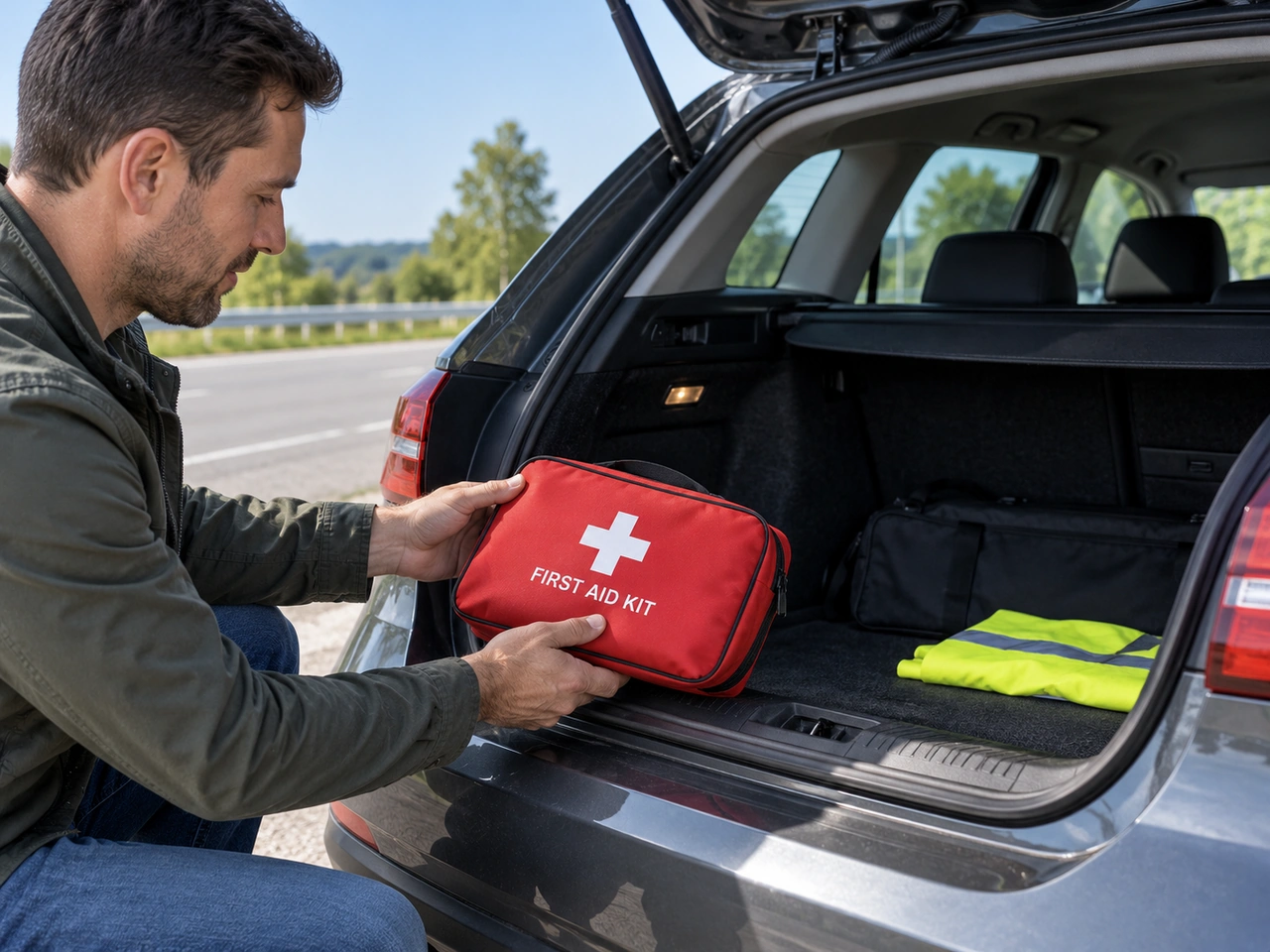
850. Is a first-aid kit required in cars?
Cars in Norway are not generally required to carry a first-aid kit.
🔗 Sources
Image credit: AI-generated