


QuizTraffic rulesNorway
Test your knowledge with our multiple-choice quiz. Learn from each answer and improve your understanding of the traffic rules and road signs of Norway.
 Traffic signs
 Traffic rules
 Norway
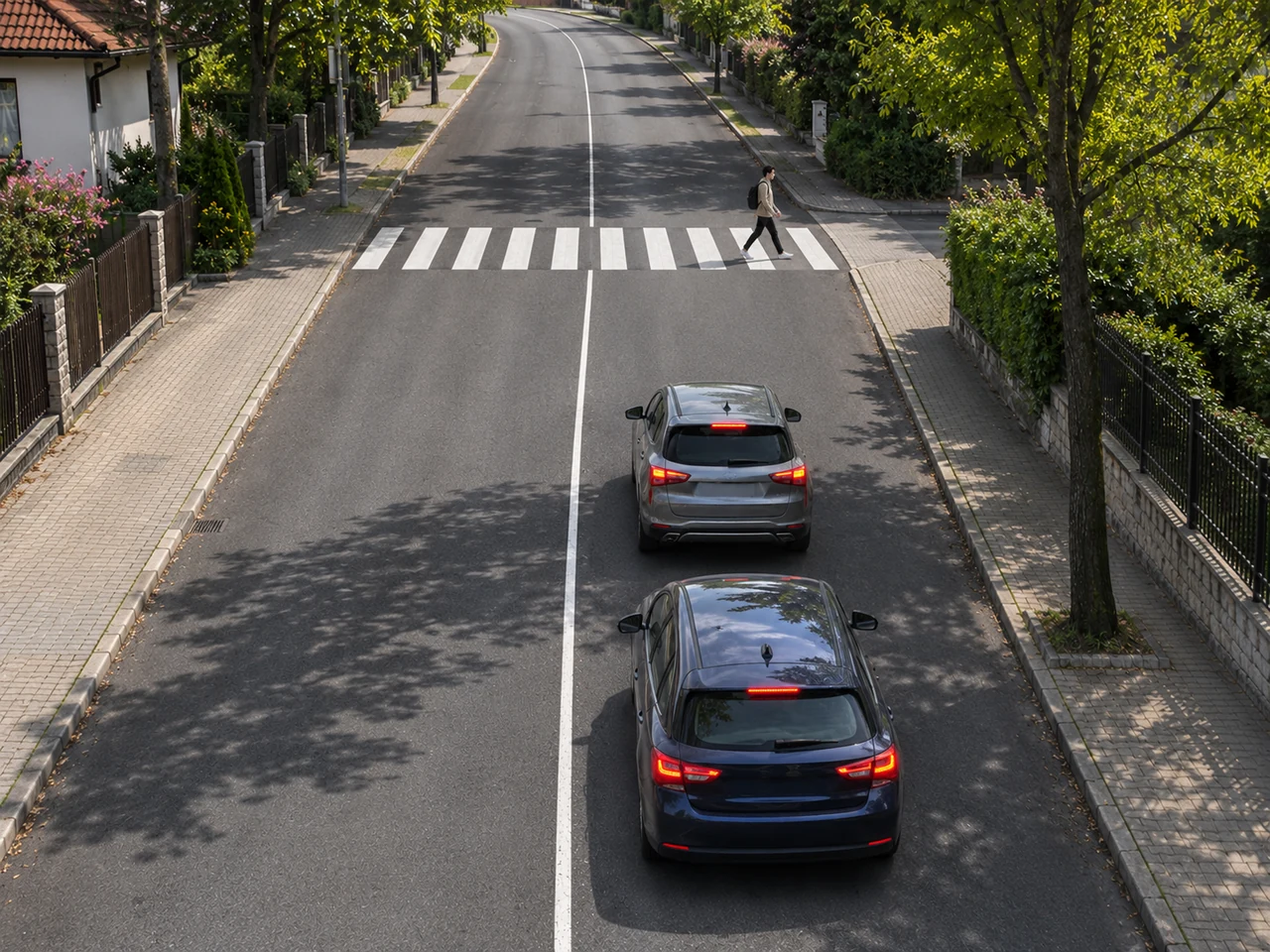
851. Why should you avoid overtaking when approaching a pedestrian crossing?
A vehicle slowing or stopping near a pedestrian crossing may be hiding someone who is crossing. Overtaking could put you directly into the pedestrian's path.
Norway. When approaching a pedestrian crossing, stay behind any vehicle or tram that blocks any part of your view of the crossing.

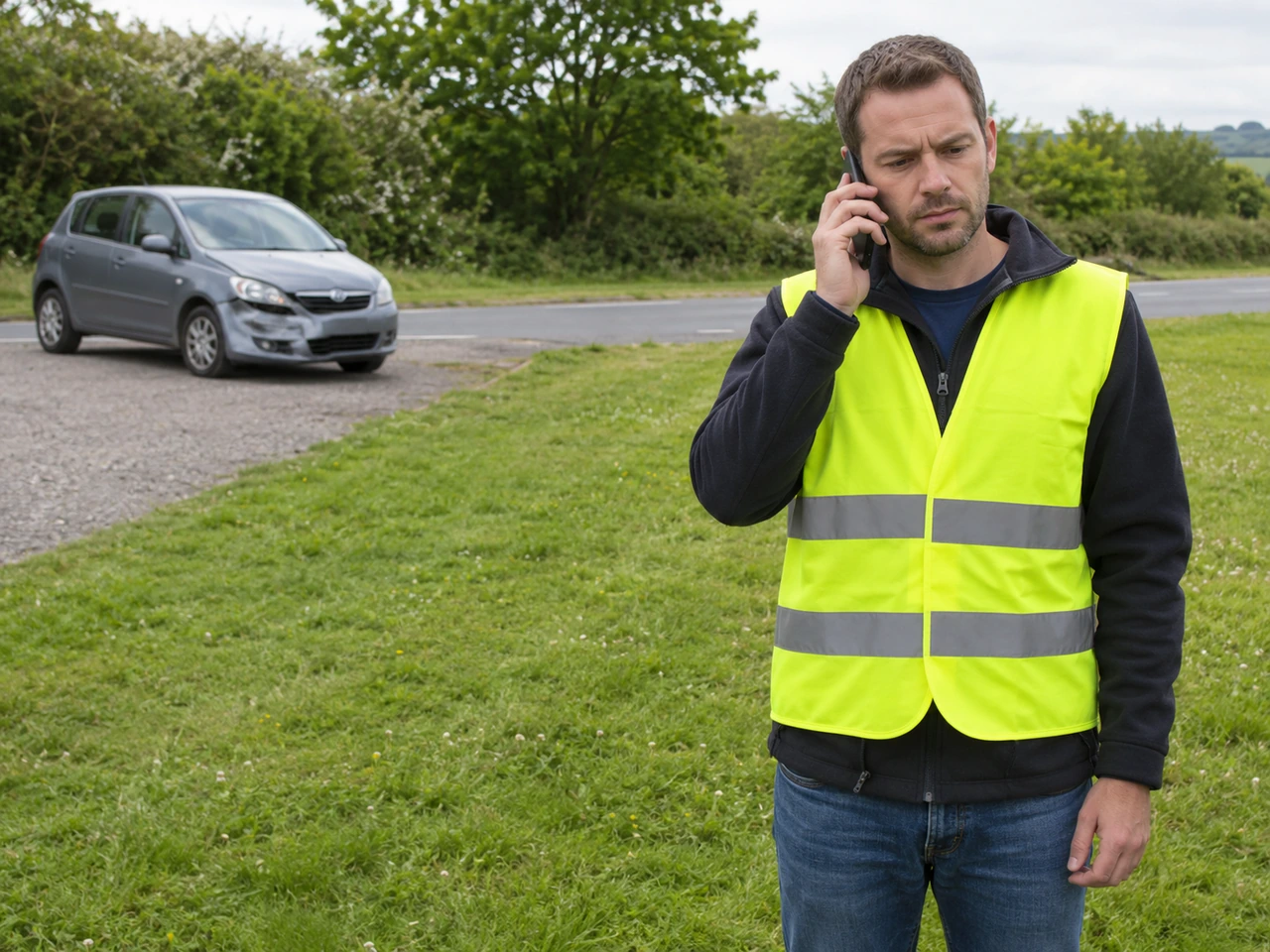
852. What should you do when an emergency call handler gives instructions after a collision?
Follow the call handler's instructions and answer their questions. Ask for clarification if you do not understand, and tell them if the situation changes. Keep yourself out of danger.
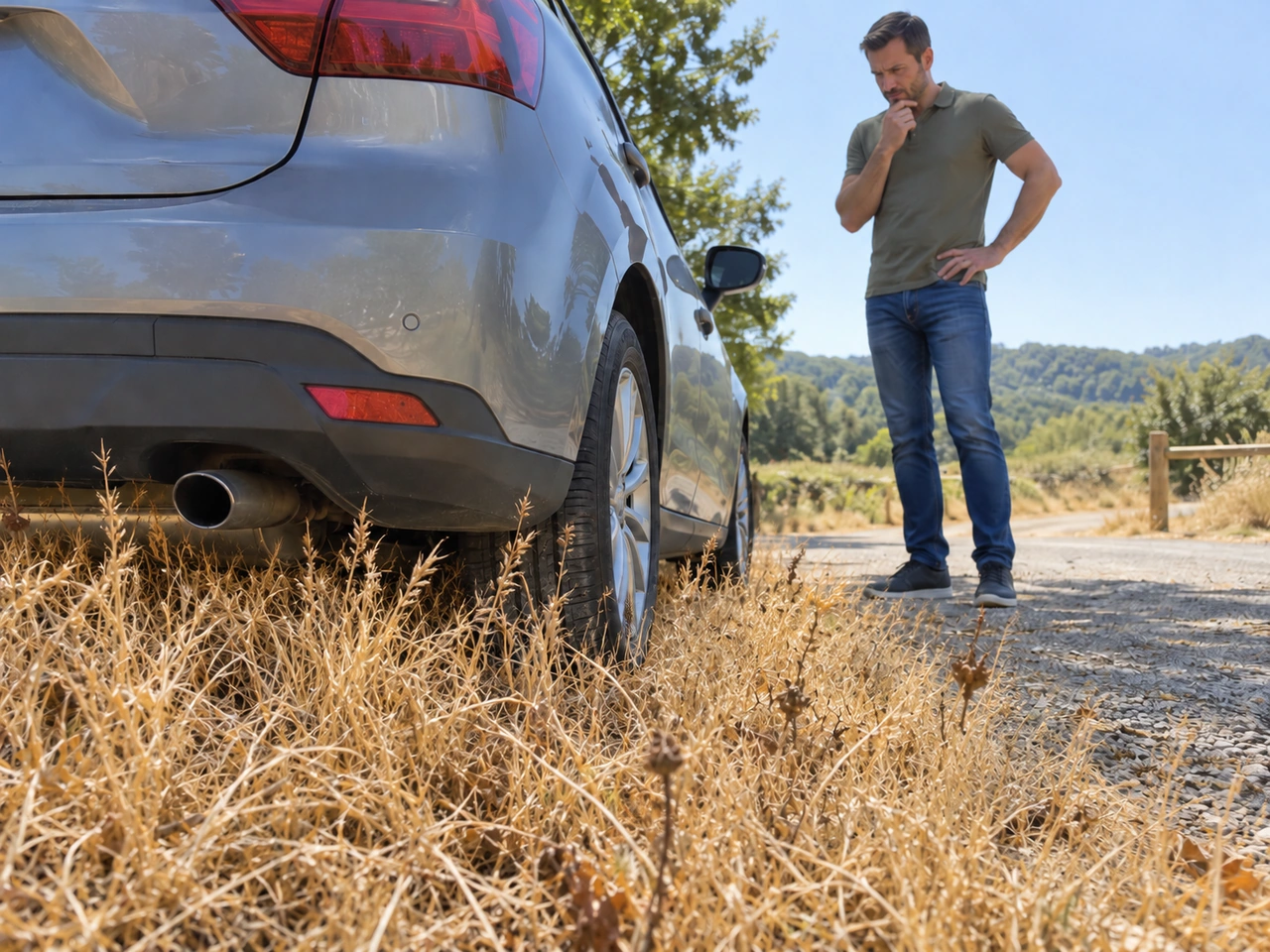
853. Why should you avoid parking a petrol or diesel vehicle on dry grass?
Parts of the exhaust system, especially the catalytic converter, can become very hot while driving. Parking over dry grass, leaves, or other combustible vegetation can create a fire risk. Park on a suitable non-flammable surface whenever possible.
🔗 Sources
Nissan 2025 Sentra manual — Model-specific exhaust gases, closed spaces and hot components example
Image credit: AI-generated
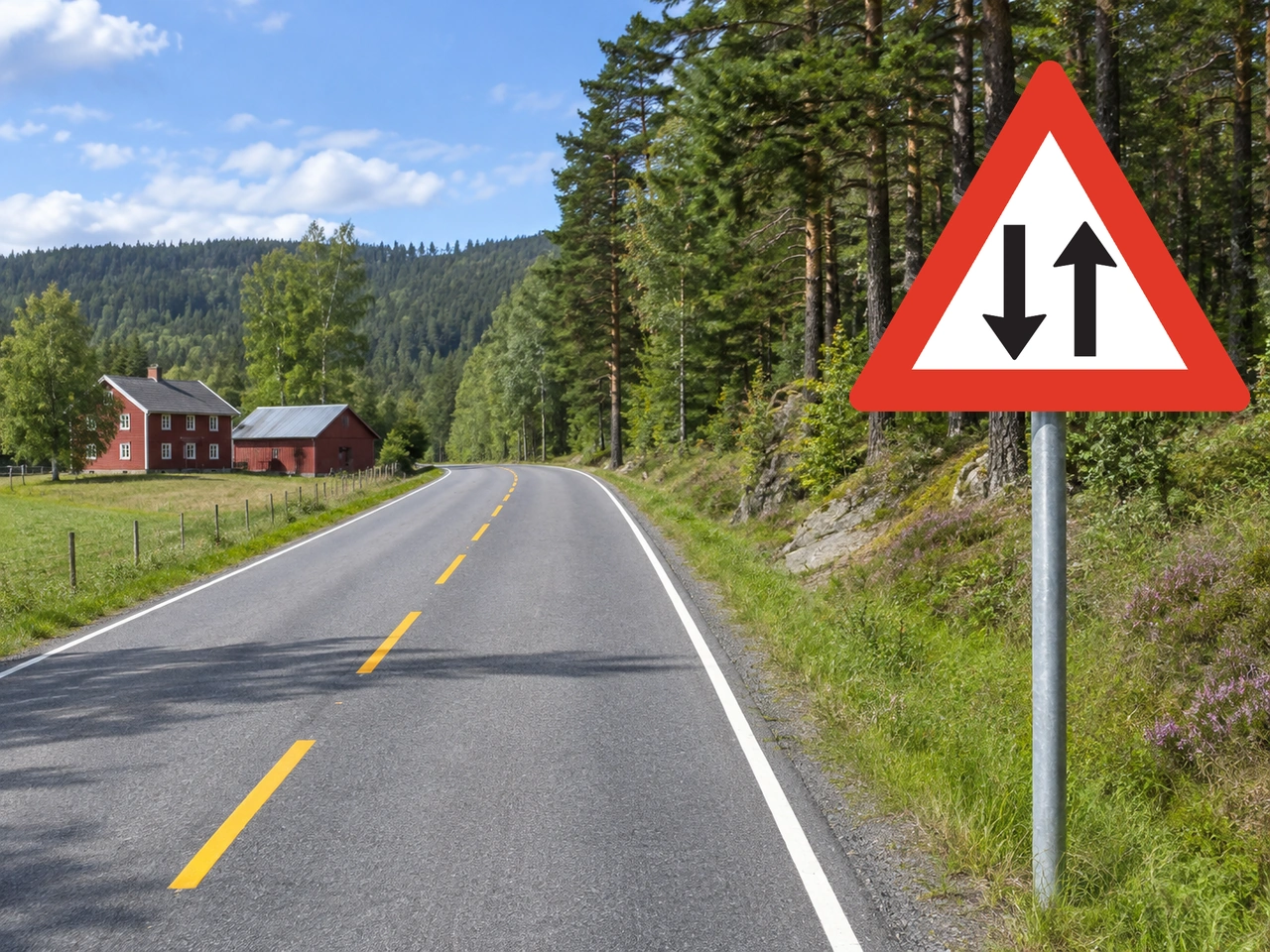
854. The warning sign shown, with two vertical arrows pointing in opposite directions, marks a one-way road.
The sign warns of two-way traffic, with vehicles travelling in opposite directions. It is not a one-way sign. Be alert for oncoming traffic and keep to your side of the road.
🔗 Sources
Statens vegvesen • Fareskilt • 148 Møtende trafikk
Sign artwork: Statens vegvesen original EPS archive, Sign 148, file 148_0.eps. Native opposing arrows with the upward arrow on the right, orientation, border and proportions retained; resized and composited onto the existing same-entry photographic scene. Border red follows the authority's published colour chart: PMS 179, using the published web swatch RGB 226/56/40. No third-party open licence is asserted for the government artwork.
Image credit: AI-generated background with source sign artwork resized and placed on the sign face.
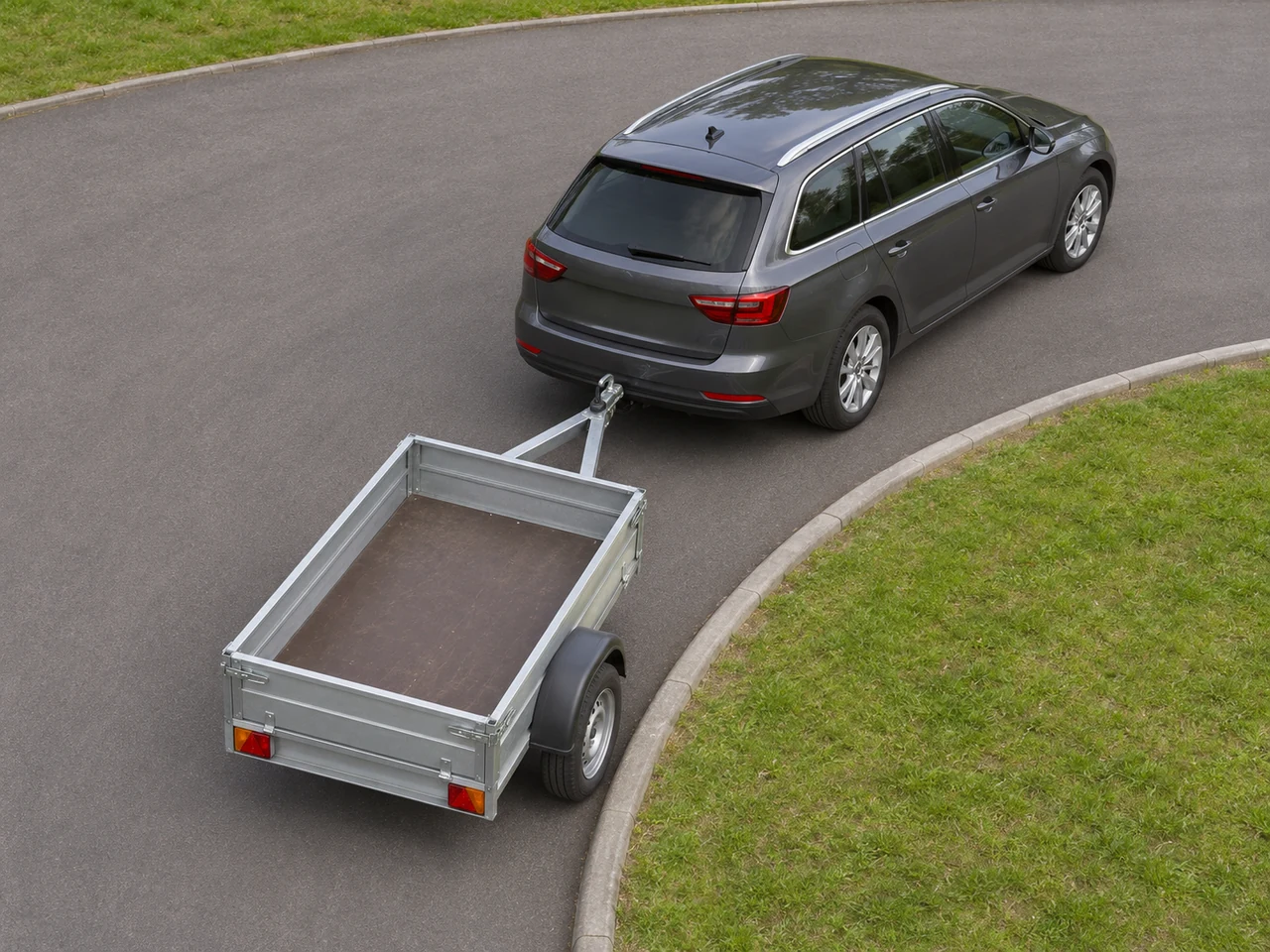
855. Why must you take wider turns when towing a trailer?
Trailer wheels cut closer to the inside of a turn. Allow enough clearance from kerbs, signs, pedestrians, and other vehicles.
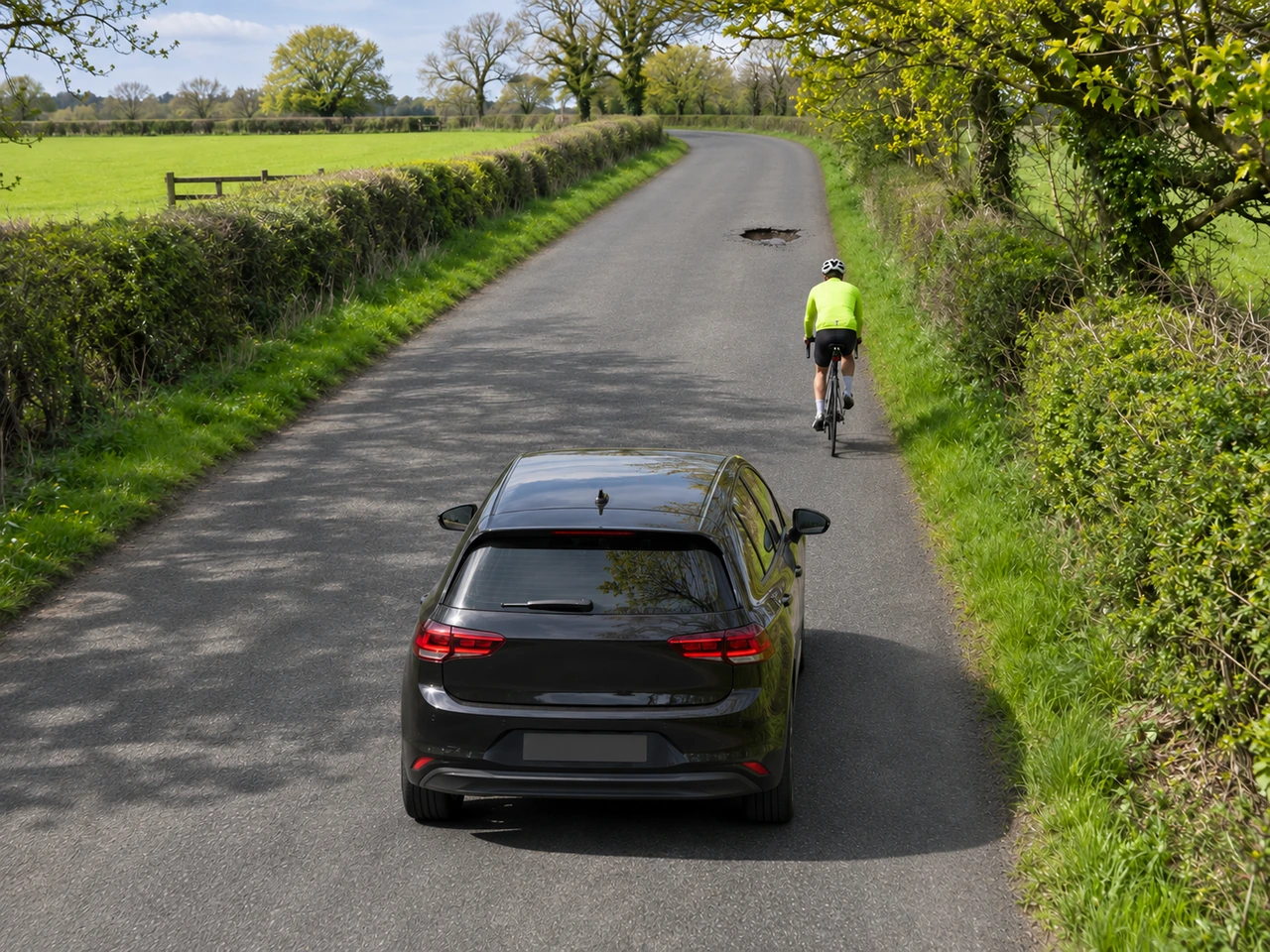
856. Why should you keep a safe distance from cyclists?
Cyclists may need to move around potholes, parked cars, or drains. Giving them enough space helps prevent dangerous situations.
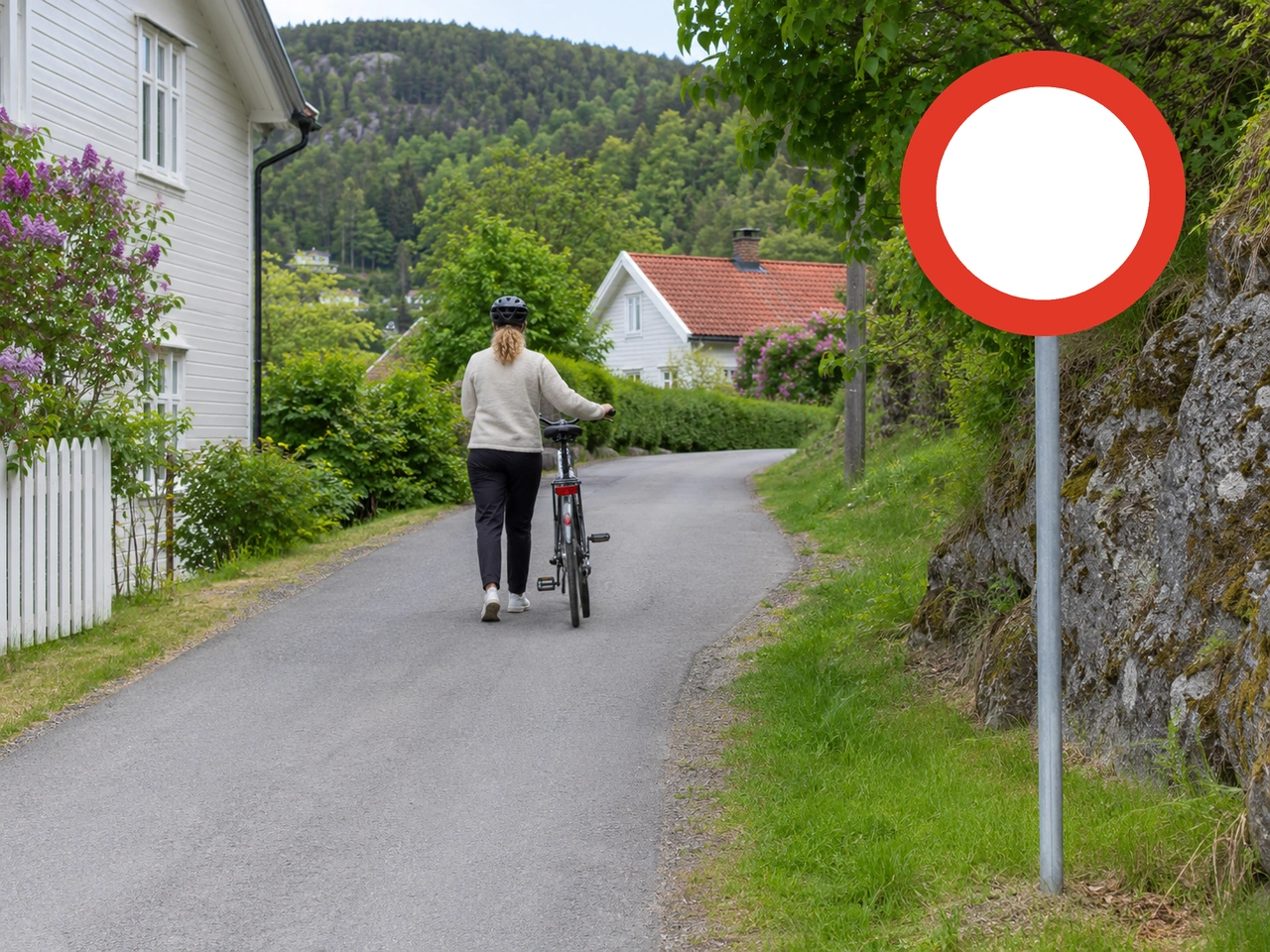
857. You may push a bicycle past the circular sign with a plain red border.
The plain red-bordered sign prohibits vehicles of all kinds, but you may dismount and push a bicycle while following pedestrian rules. Riding a bicycle past it is different. Other applicable restrictions still have to be followed.
🔗 Sources
Norway • Skiltforskriften • Sign 306.0
Statens vegvesen • Official traffic-sign meanings
Statens vegvesen • Official sign artwork
Official Norwegian sign artwork: Statens vegvesen, sign 306.0, original EPS artwork 306_0.eps from the national sign artwork archive. Native pictogram, orientation, borders and proportions retained. Colours use the authority's published PMS web swatches: blue PMS 293 and red PMS 179 where present. Original files and colour guidance. No third-party open licence is asserted for the government artwork.

Image credit: AI-generated background with source sign artwork resized and placed on the sign face.
Norway • Applicable traffic or parking rule
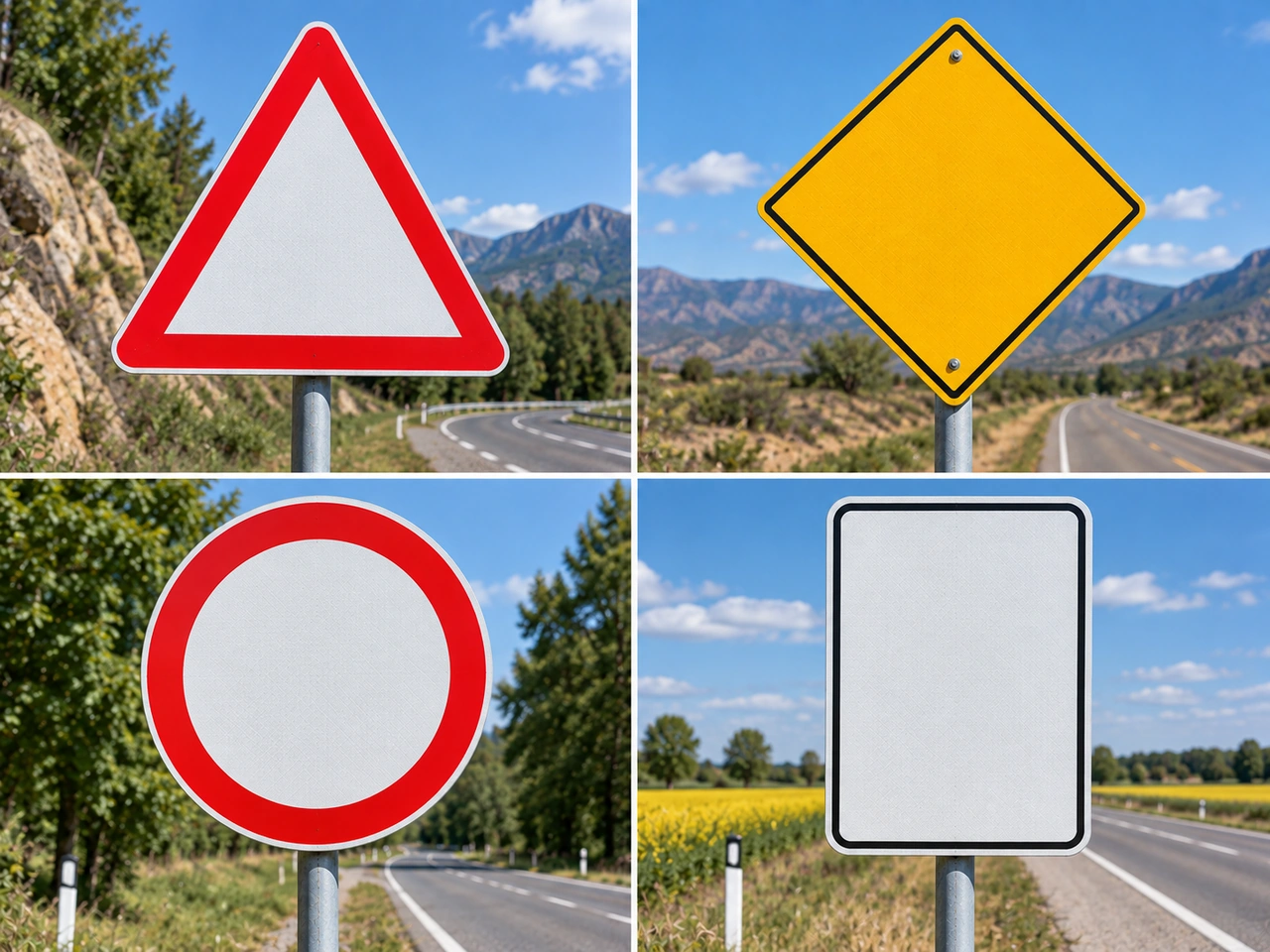
858. What shape are most warning signs?
Most warning signs in Norway are triangular.
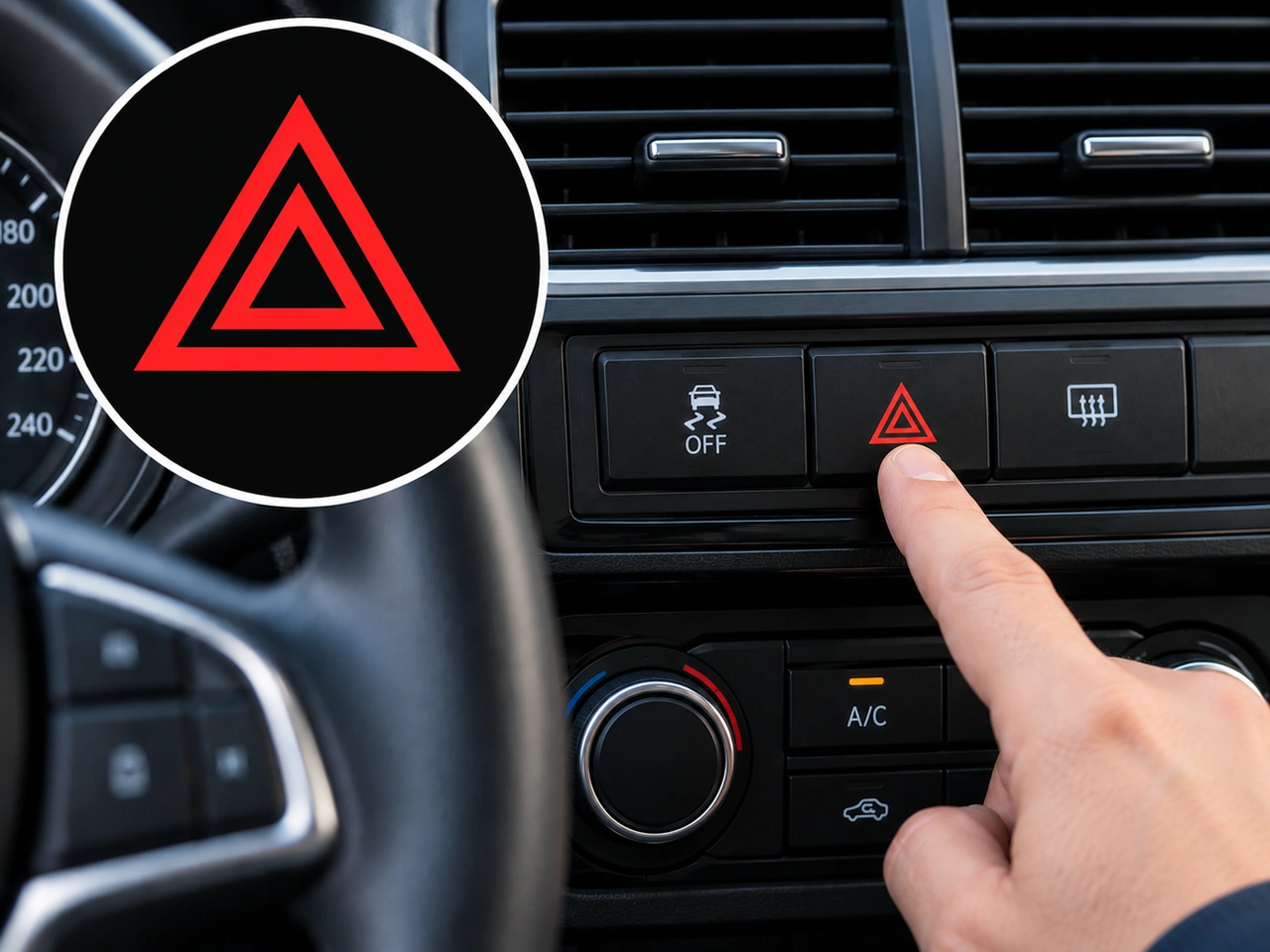
859. What does this dashboard symbol indicate?
This symbol indicates the hazard warning lights. When activated, all direction indicators flash simultaneously to warn other road users of a hazard or unusual situation.
The triangle identifies the hazard warning control. Activating it flashes the left and right direction indicators together.
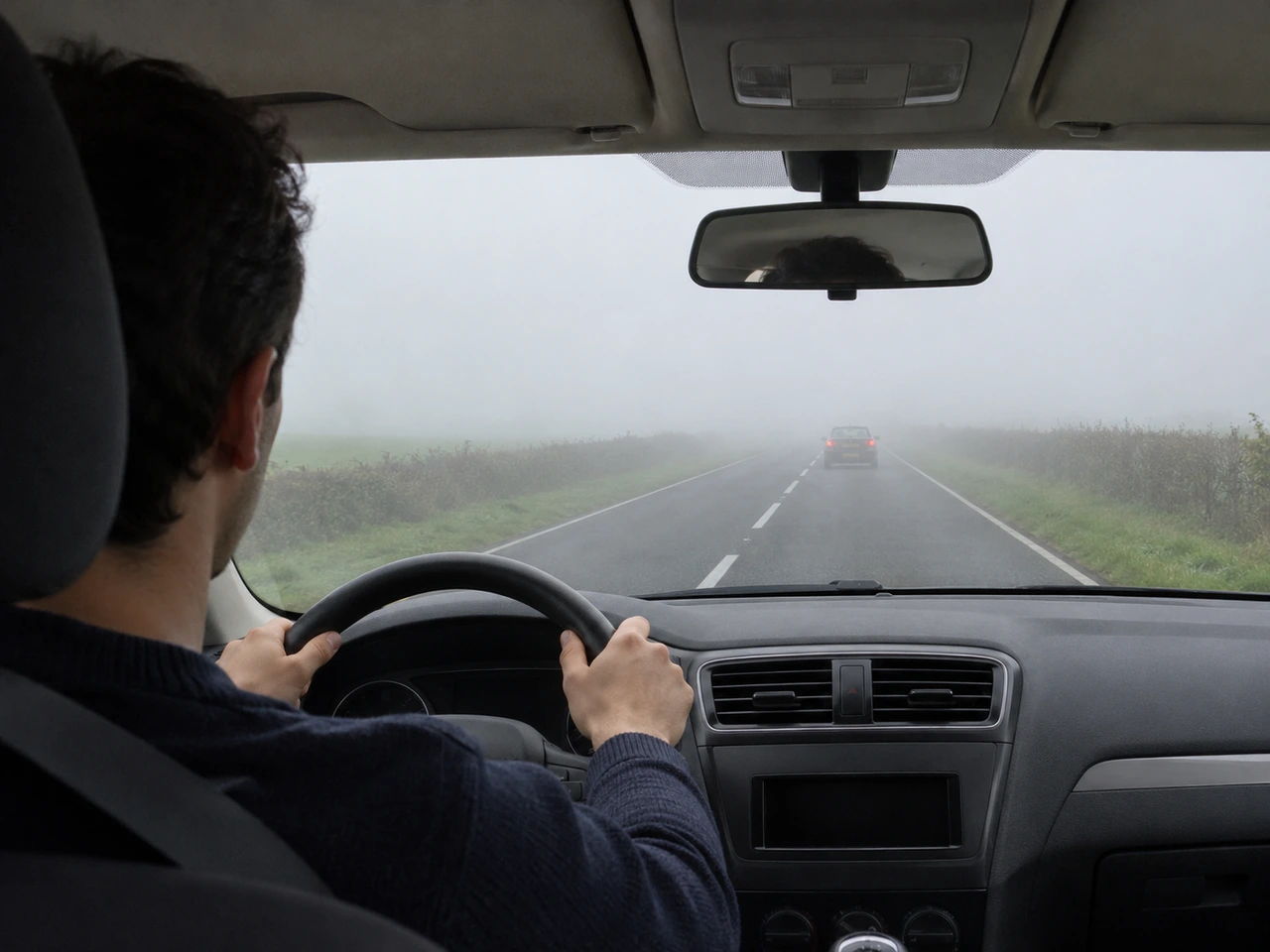
860. Why should you avoid following another vehicle too closely in fog?
A short following gap leaves too little space and time to respond if the vehicle ahead slows or stops. Fog can also make the gap seem larger than it is. Reduce speed and leave more room rather than moving closer to keep the rear lights in view. Do not assume that following another vehicle guarantees a clear path.
🔗 Sources
Great Britain — Highway Code, rule 235; fog observation and safe speed
UK Met Office — General fog visibility and speed-perception advice
Image credit: AI-generated
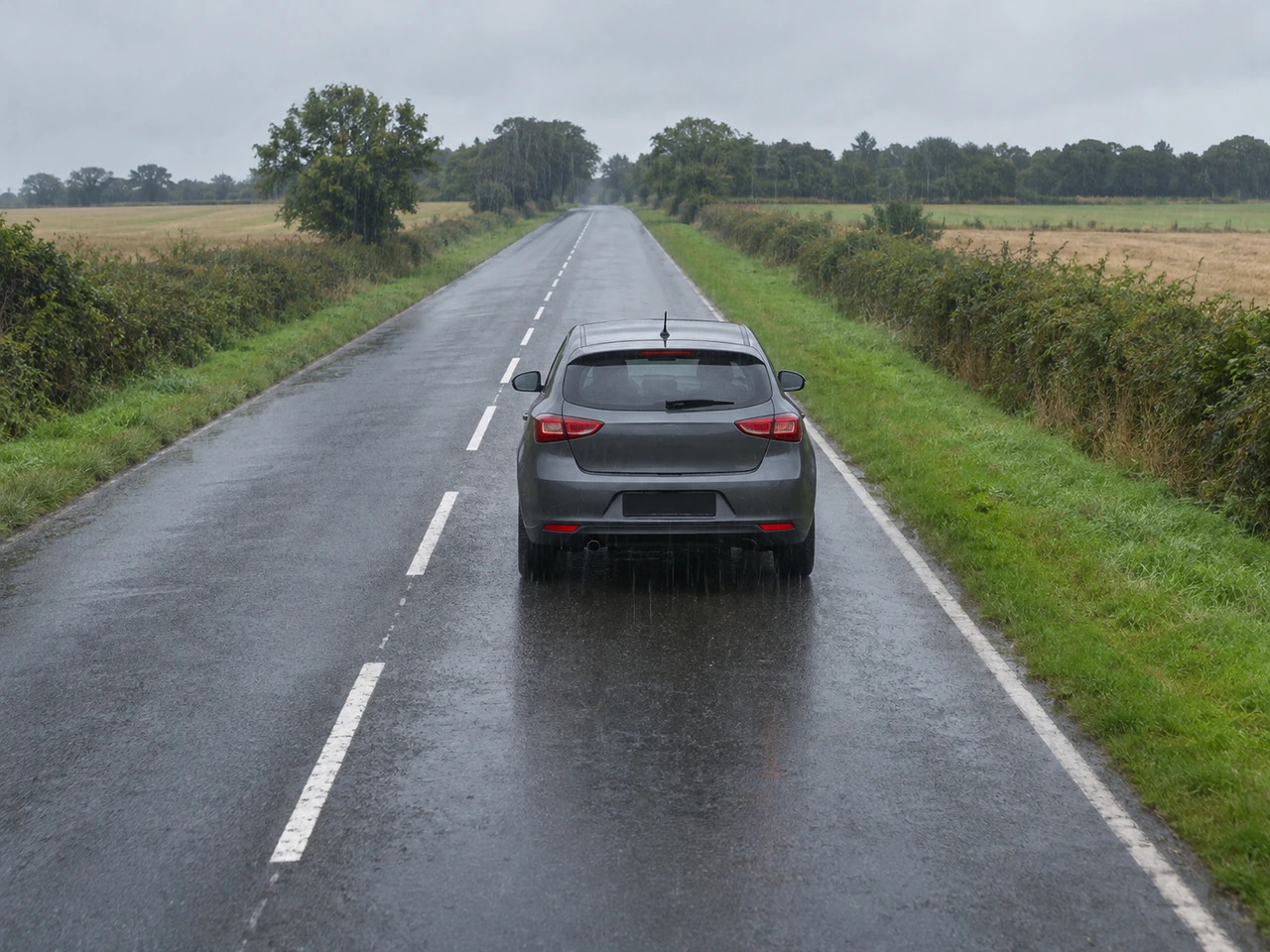
861. Why are roads especially slippery during rain after a dry period?
During dry weather, deposits such as oil, dust and dirt can accumulate on the road. The first rain mixes with these deposits and can make the surface unusually slippery, even before large puddles appear. Reduce speed, leave more room ahead and use smooth steering, acceleration and braking.
🔗 Sources
Australia AIHW — Rain after dry weather and slippery road deposits
Image credit: AI-generated
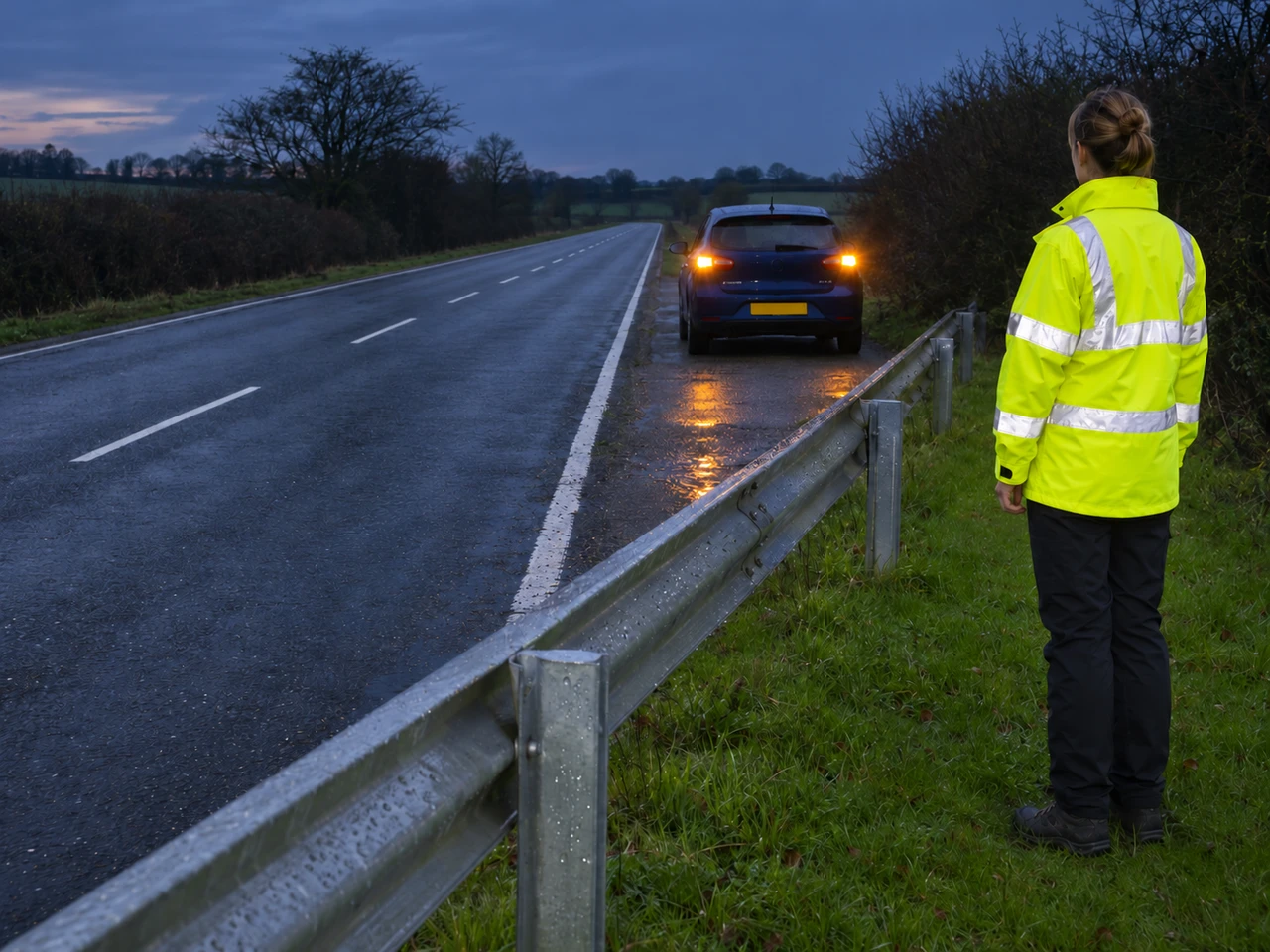
862. Why is high-visibility clothing useful during a roadside breakdown?
Fluorescent material helps you stand out in daylight, while retroreflective strips return light towards its source, such as approaching headlights. A high-visibility vest helps others see you but provides no protection from a collision. Keep it within reach and put it on before leaving where required, while still moving to a protected place away from traffic.
Reflective clothing helps visibility at night; continue keeping away from the vehicle and moving traffic.
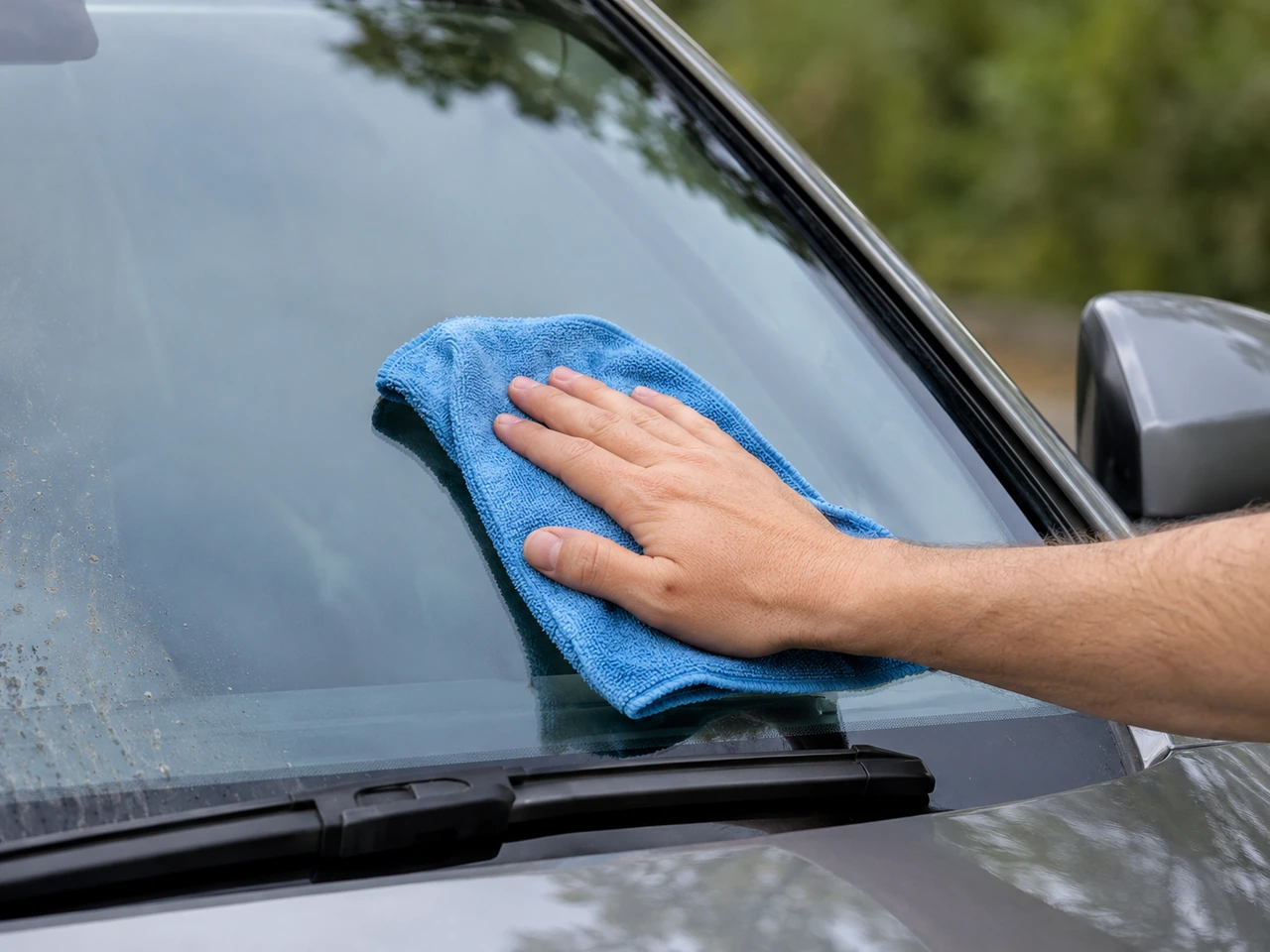
863. Why should you keep your windscreen clean?
A clean windscreen helps you notice road users and hazards sooner. Dirt and greasy film scatter light, making glare from low sun or headlights worse. Clean the glass inside as well as outside before setting off, keep the washer reservoir filled and check the wiper blades.
🔗 Sources
Great Britain — Highway Code Annex 6; general maintenance and visibility advice
Image credit: AI-generated
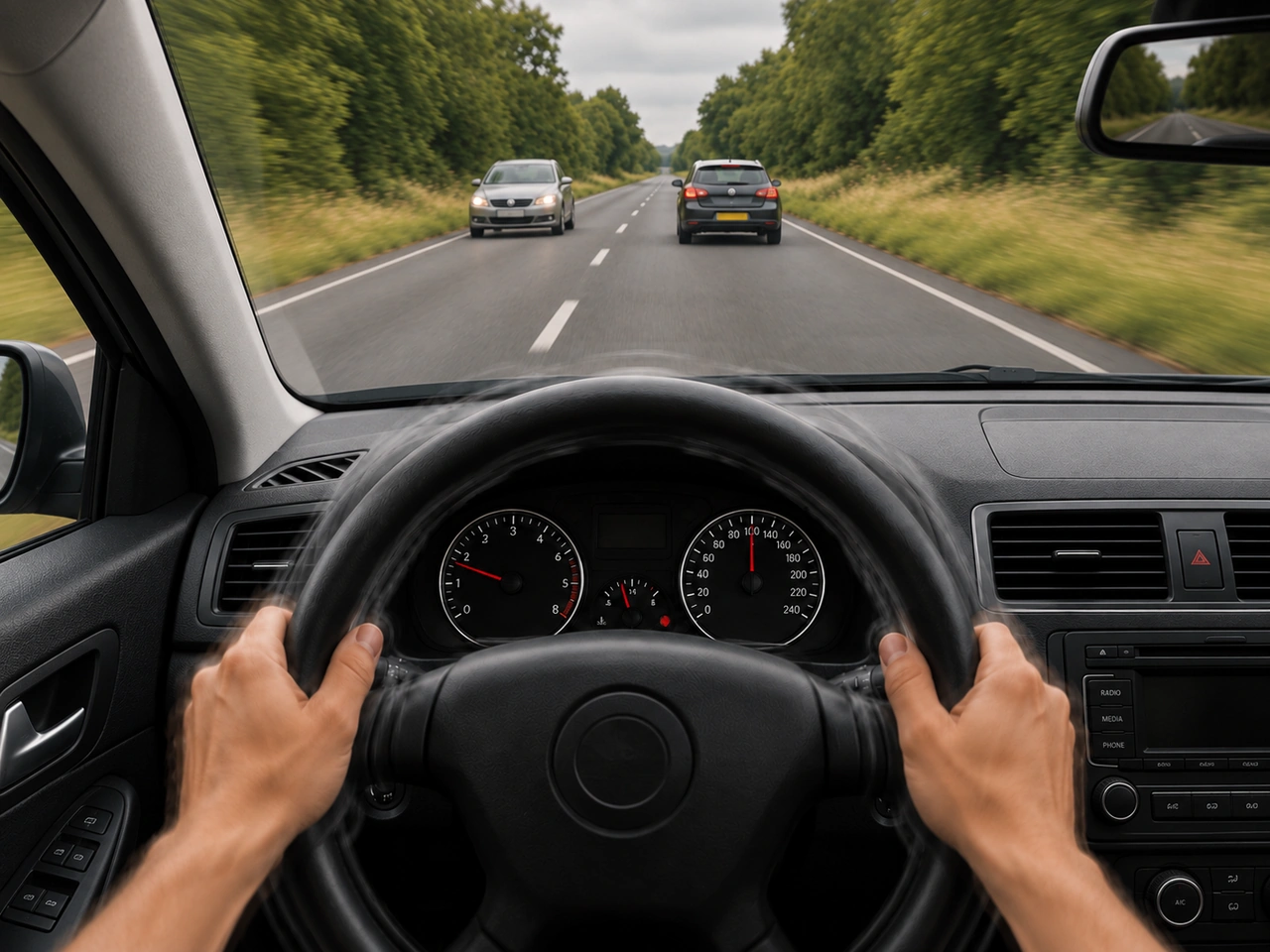
864. What should you do if an unusual vibration develops in the steering wheel?
An unusual vibration may indicate tyre damage, wheel imbalance, loose components, or another mechanical fault. Reduce speed and arrange an inspection.
Norway. Slow down smoothly and stop somewhere safe if a strong steering vibration develops. Have the wheels, tyres and steering checked before continuing.
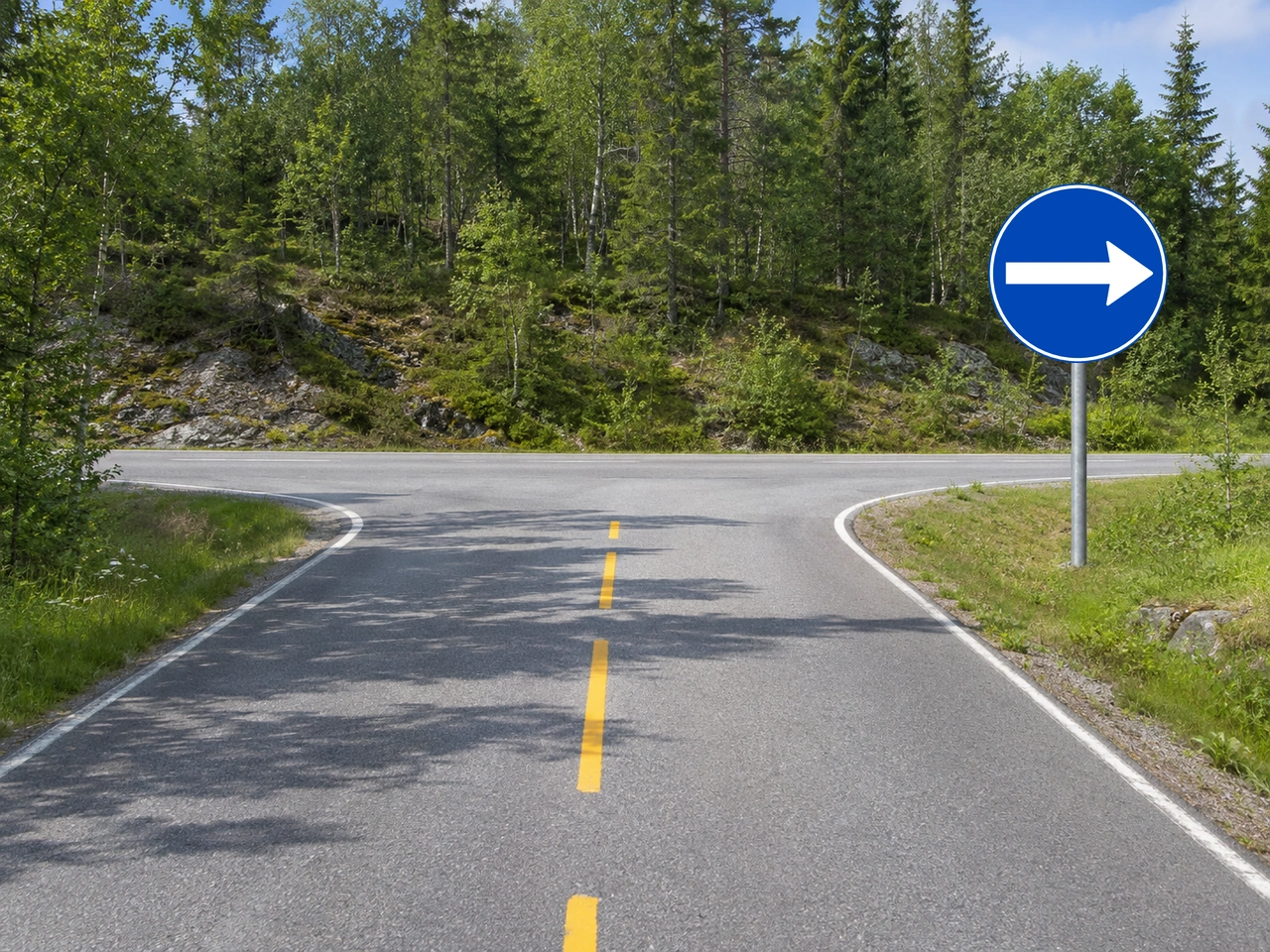
865. A blue circular sign with a right-pointing arrow marks a one-way road.
The circular sign requires a right turn here. It does not mark a one-way road.
🔗 Sources
Statens vegvesen • Traffic signs • 402 Påbudt kjøreretning
Official Norwegian sign artwork: Statens vegvesen, sign 402.1, original EPS file 402_1.eps from the national sign artwork archive. Native Sone lettering, pictogram, cancellation stripes, arrow, orientation, borders and proportions retained. Colours use the authority's published PMS web swatches: blue PMS 293 and red PMS 179 where present. Original files and colour guidance. No third-party open licence is asserted for the government artwork.
Image credit: AI-generated background with source sign artwork resized and placed on the sign face.
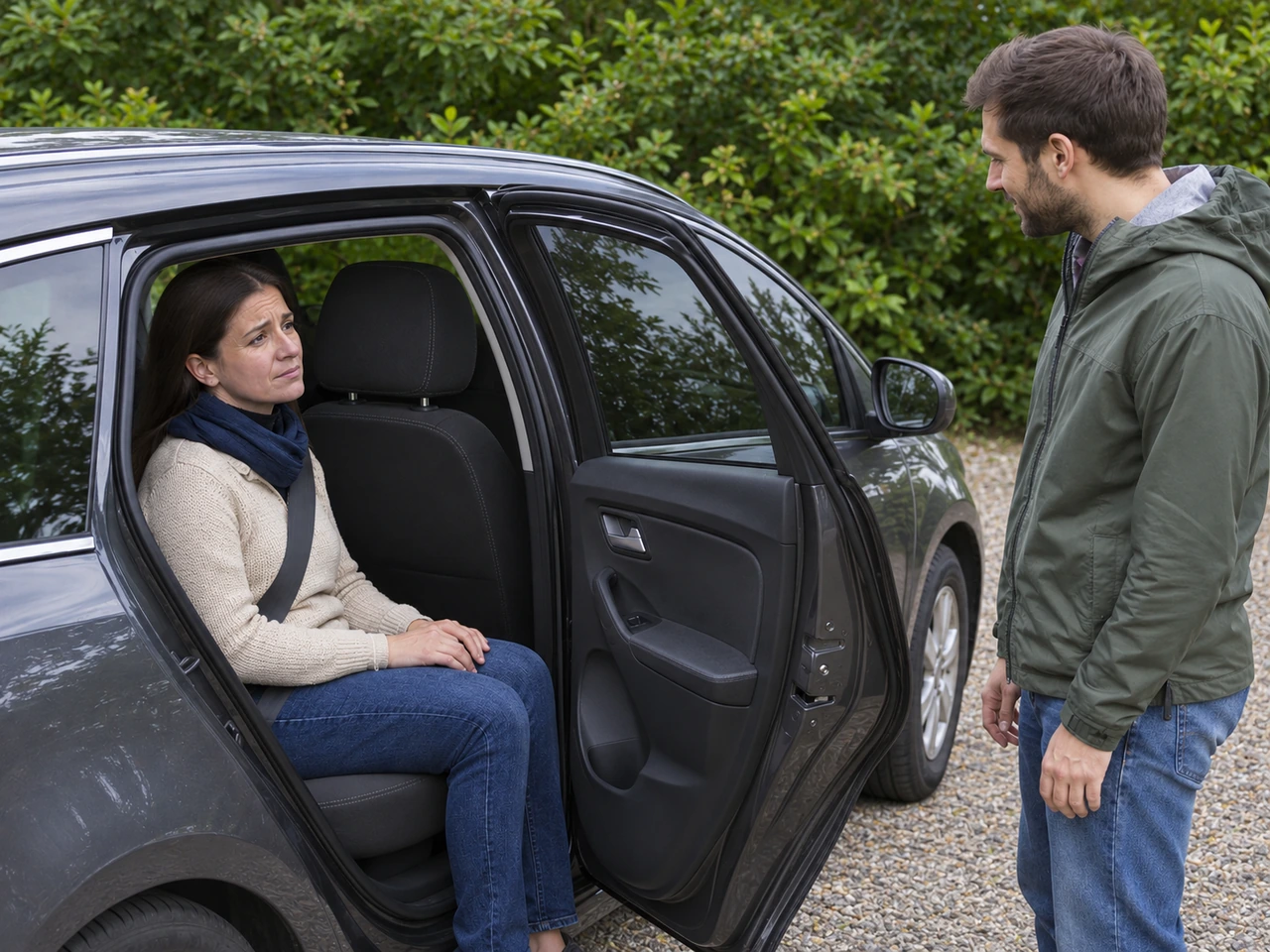
866. You should always move an injured person out of a vehicle immediately.
Unnecessary movement can worsen injuries. Do not move them unless there is immediate danger or movement is needed for lifesaving care. Call the emergency services and follow the operator's instructions.
🔗 Sources
The Highway Code (Great Britain) • Safety guidance, 3. Help those involved
Image credit: AI-generated
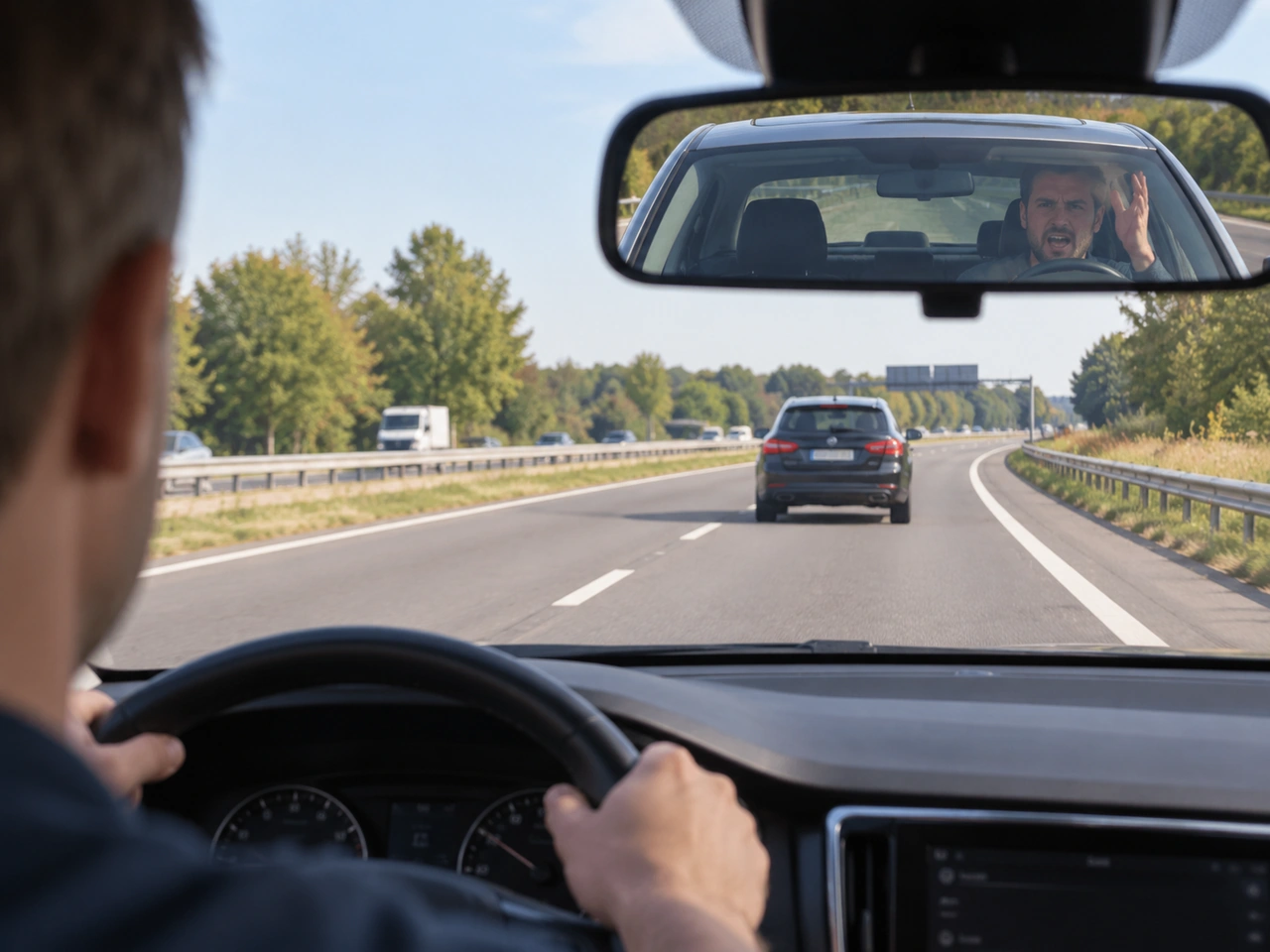
867. What should you do if another driver behaves aggressively towards you?
If another driver behaves aggressively, do not retaliate or become involved in a confrontation. Stay calm, increase the distance between you, and let the other vehicle move away when possible. If you feel threatened, go to a safe public place and seek appropriate assistance.
🔗 Sources
Great Britain — Highway Code, rule 147; general calm and considerate driving
Image credit: AI-generated
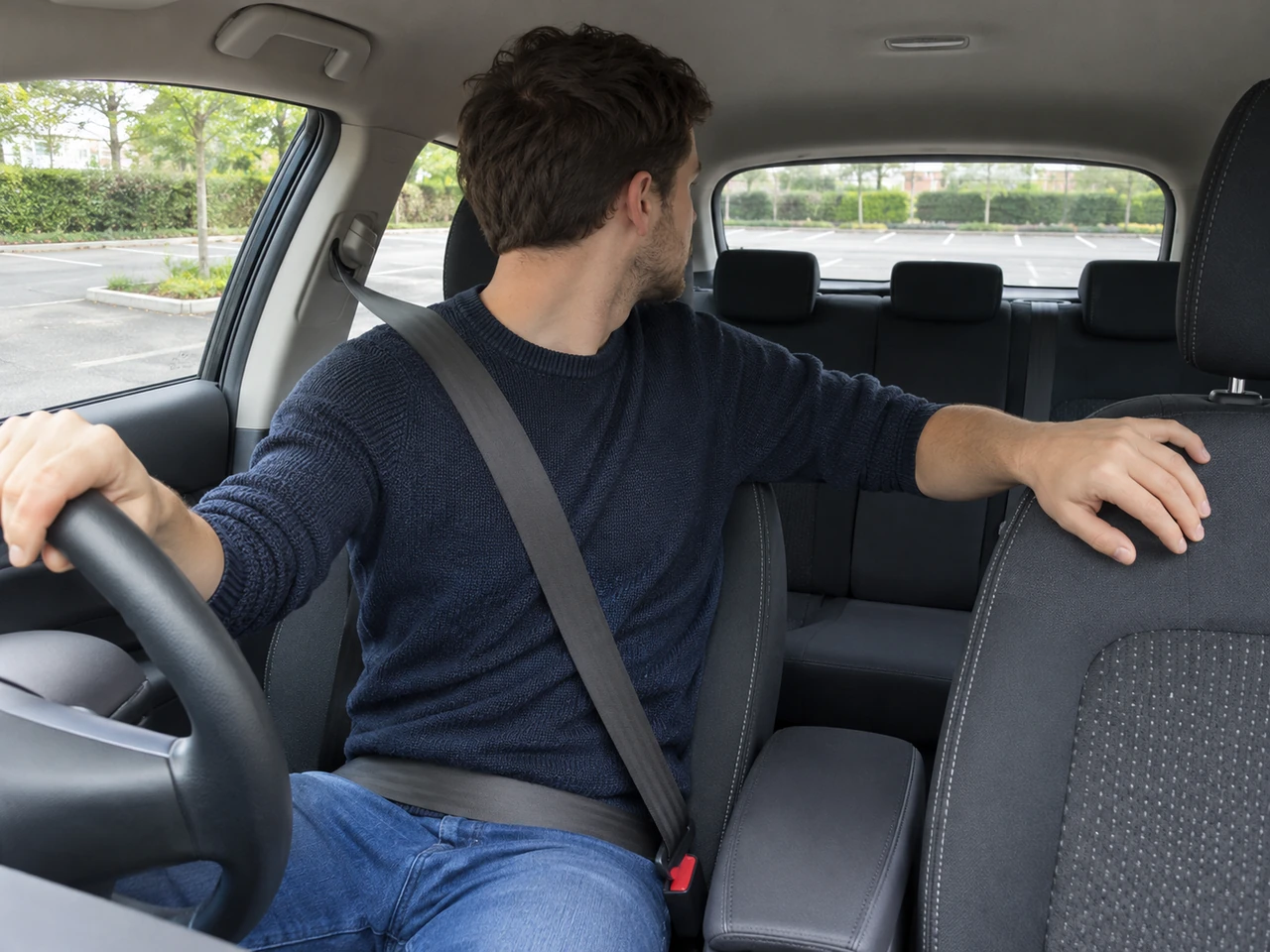
868. You should keep checking all around while reversing.
Your surroundings can change after your first check. Reverse slowly and keep checking for pedestrians, cyclists, vehicles and obstacles around the car.
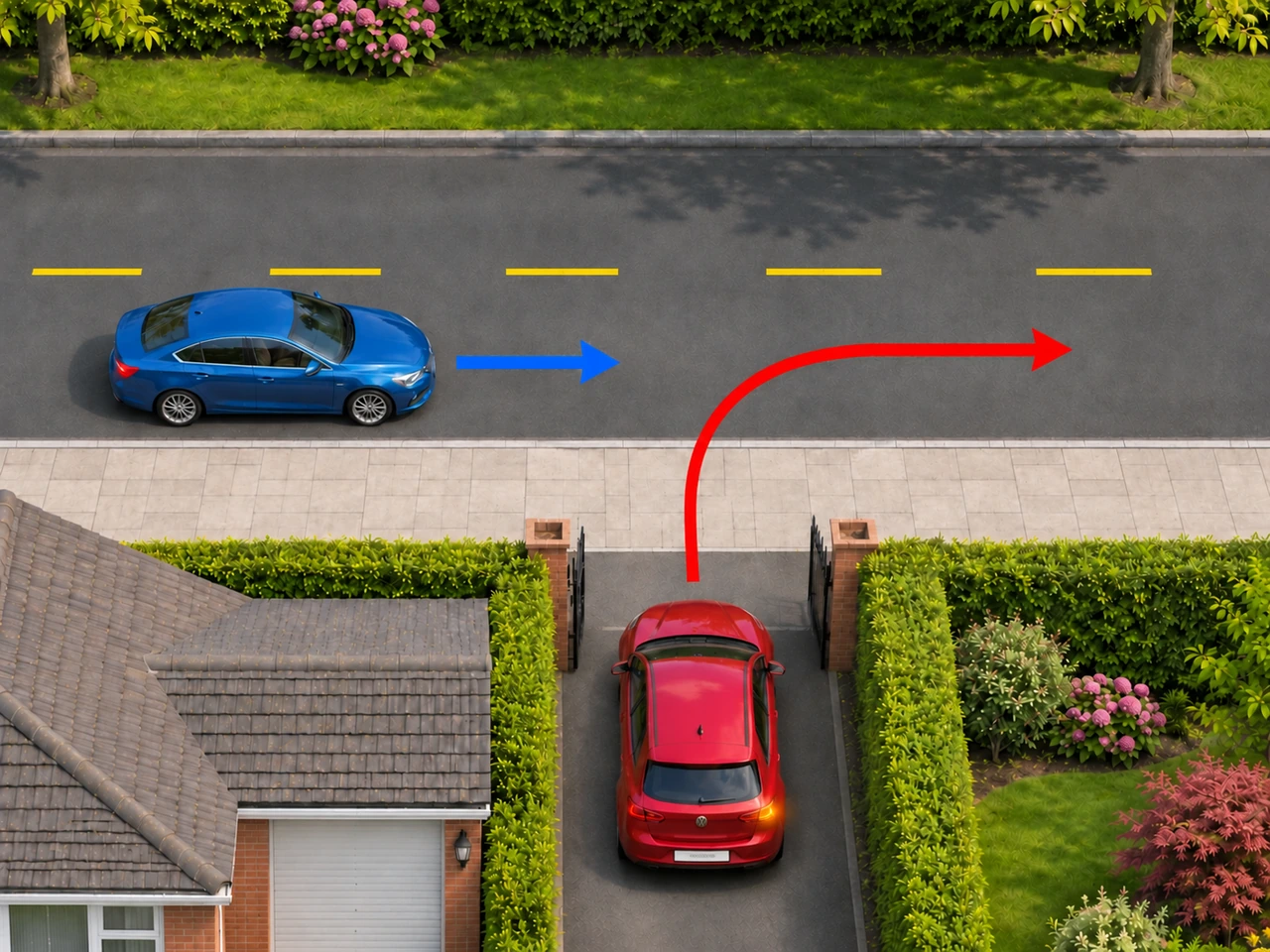
869. Which car must give way as red leaves this private driveway?
Red is entering the public road from a recognisable private driveway. It must give way to other traffic, including blue and anyone using the pavement it crosses. Red should wait clear of the pavement and join only when the whole movement can be made safely.
🔗 Sources
AI-generated illustration • Traffic-rules.com / Rijbewijs-online.be • WCIT • CC BY-SA 4.0.
🔗 Lovdata • Traffic Rules, section 7(4)
🔗 Norwegian Public Roads Administration • Giving way when leaving property and parking areas
🔗 Lovdata • Sign Regulations, section 21(3), yellow opposing-traffic markings
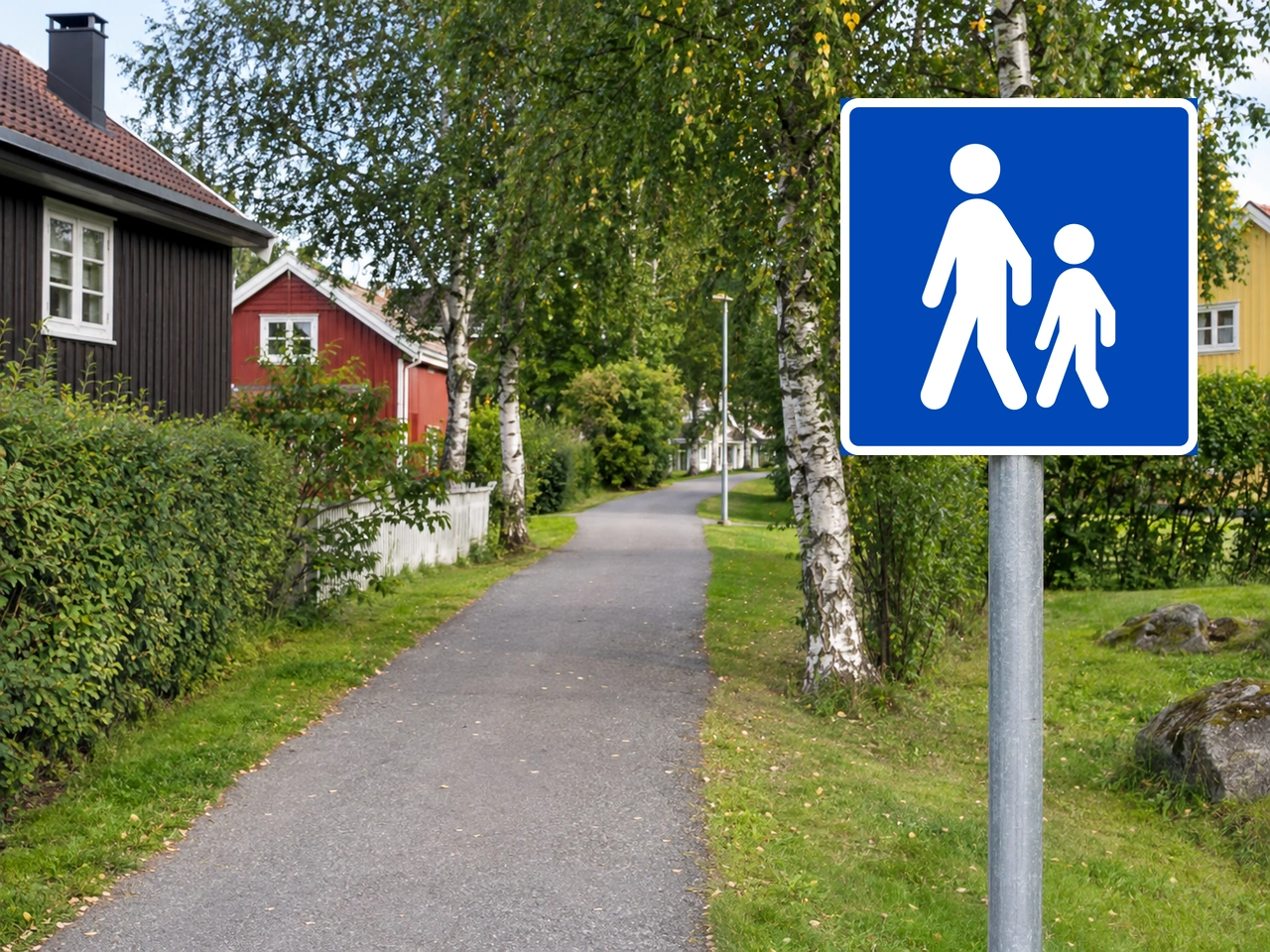
870. The blue pedestrian-only sign shown also designates a shared cycling path.
The sign designates a pedestrian path. It is different from a shared pedestrian-and-cycle path. Check supplementary plates and local exceptions before cycling there.
🔗 Sources
Lovdata • Sign Regulations • § 12 • Signs 518 and 522
Statens vegvesen • Traffic rules for cyclists
Official Norwegian sign artwork: Statens vegvesen, sign 518, original EPS file 518_0.eps from the national sign artwork archive. Native pictogram, lettering, orientation, borders and proportions retained. Colours use the authority's published PMS web swatches: blue PMS 293 and red PMS 179 where present. Original files and colour guidance. No third-party open licence is asserted for the government artwork.
Image credit: AI-generated background with source sign artwork resized and placed on the sign face.
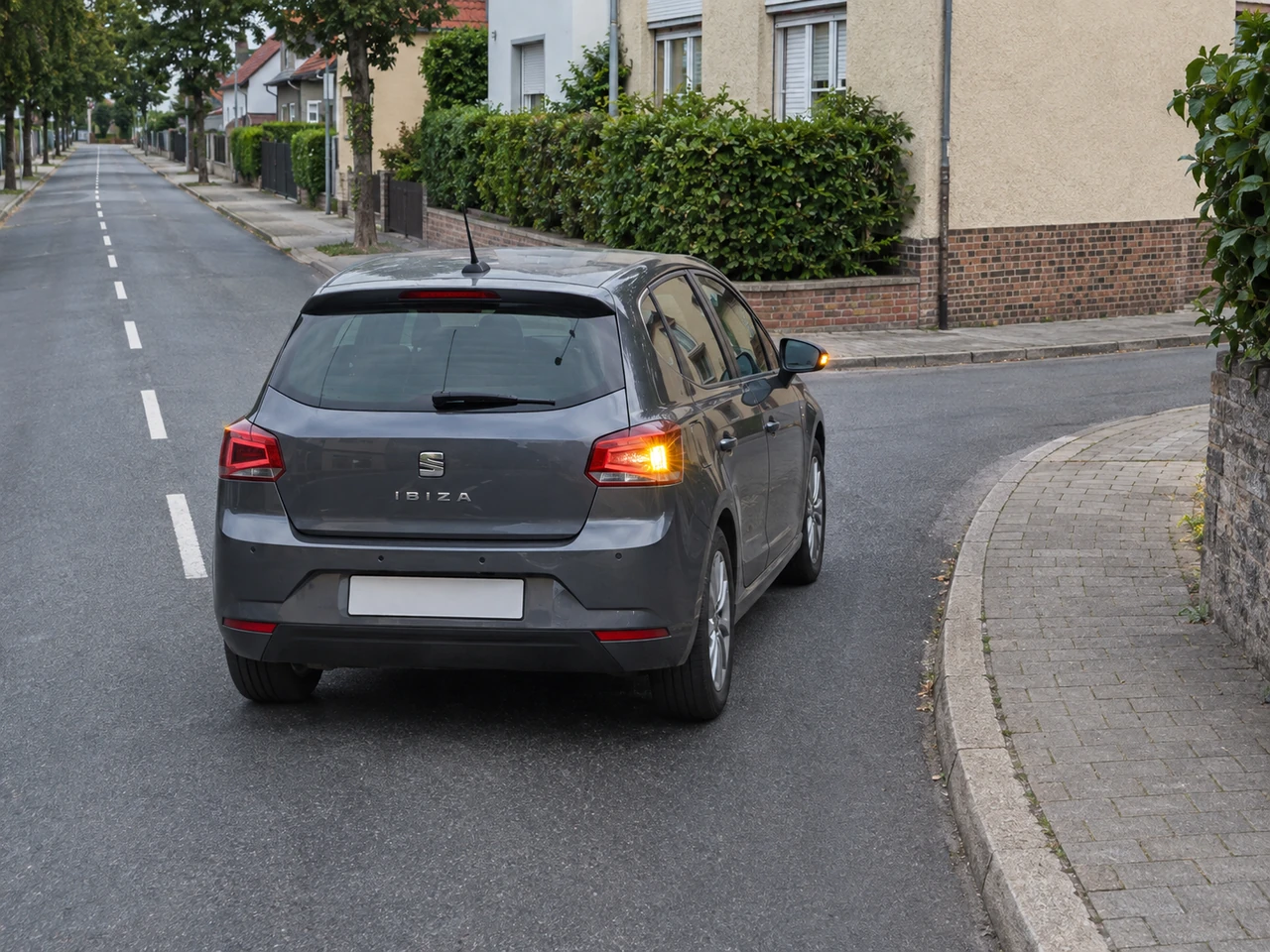
871. You should signal before turning or changing lanes.
A clear signal helps other road users understand your intentions, but you must still check that the manoeuvre can be made safely.
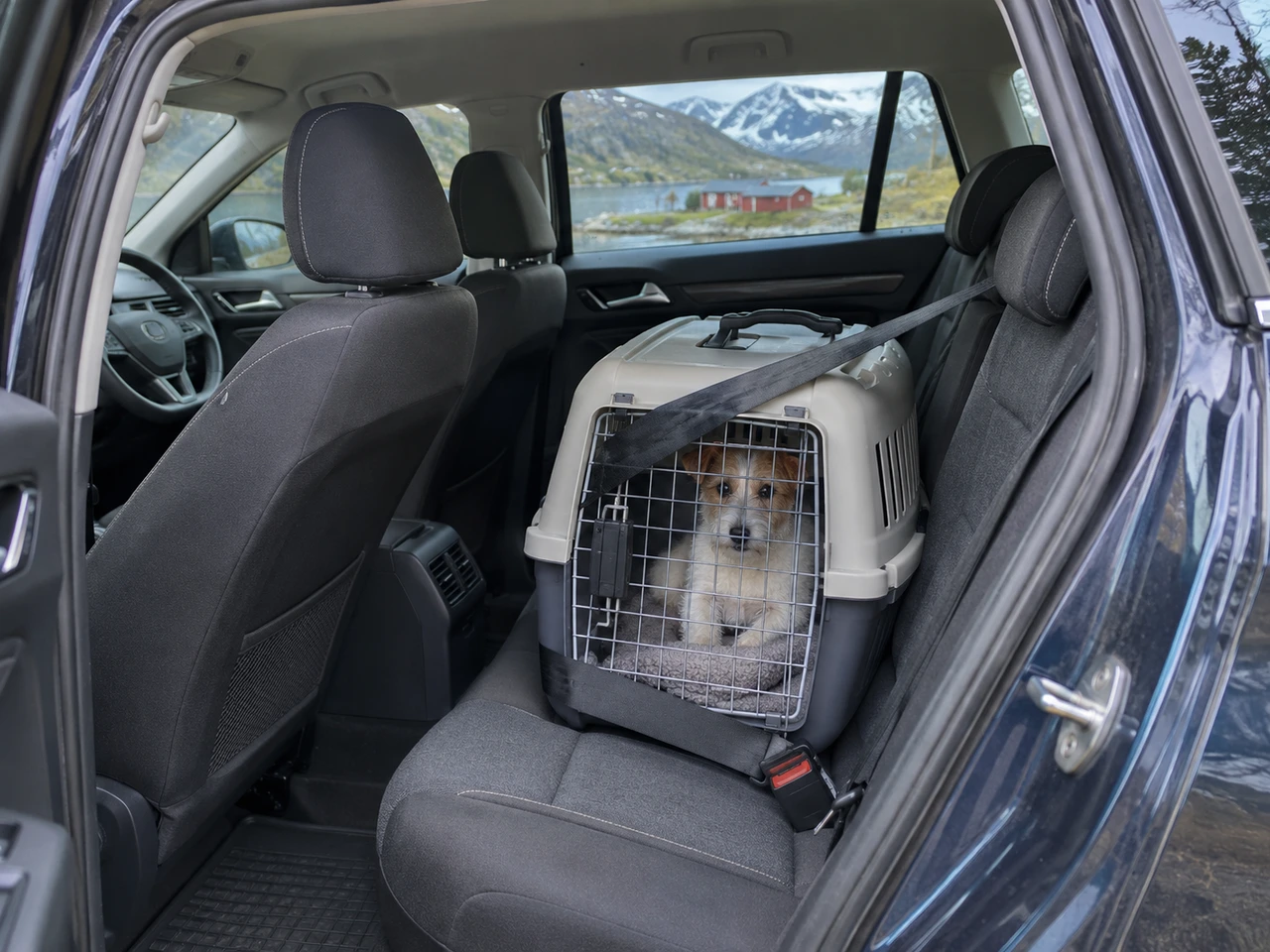
872. How should pets be carried safely in a vehicle?
A pet moving freely inside a vehicle can distract the driver and may be thrown around during sudden braking or a collision. Use a suitable carrier, harness, barrier, or other secure restraint appropriate for the animal and vehicle.
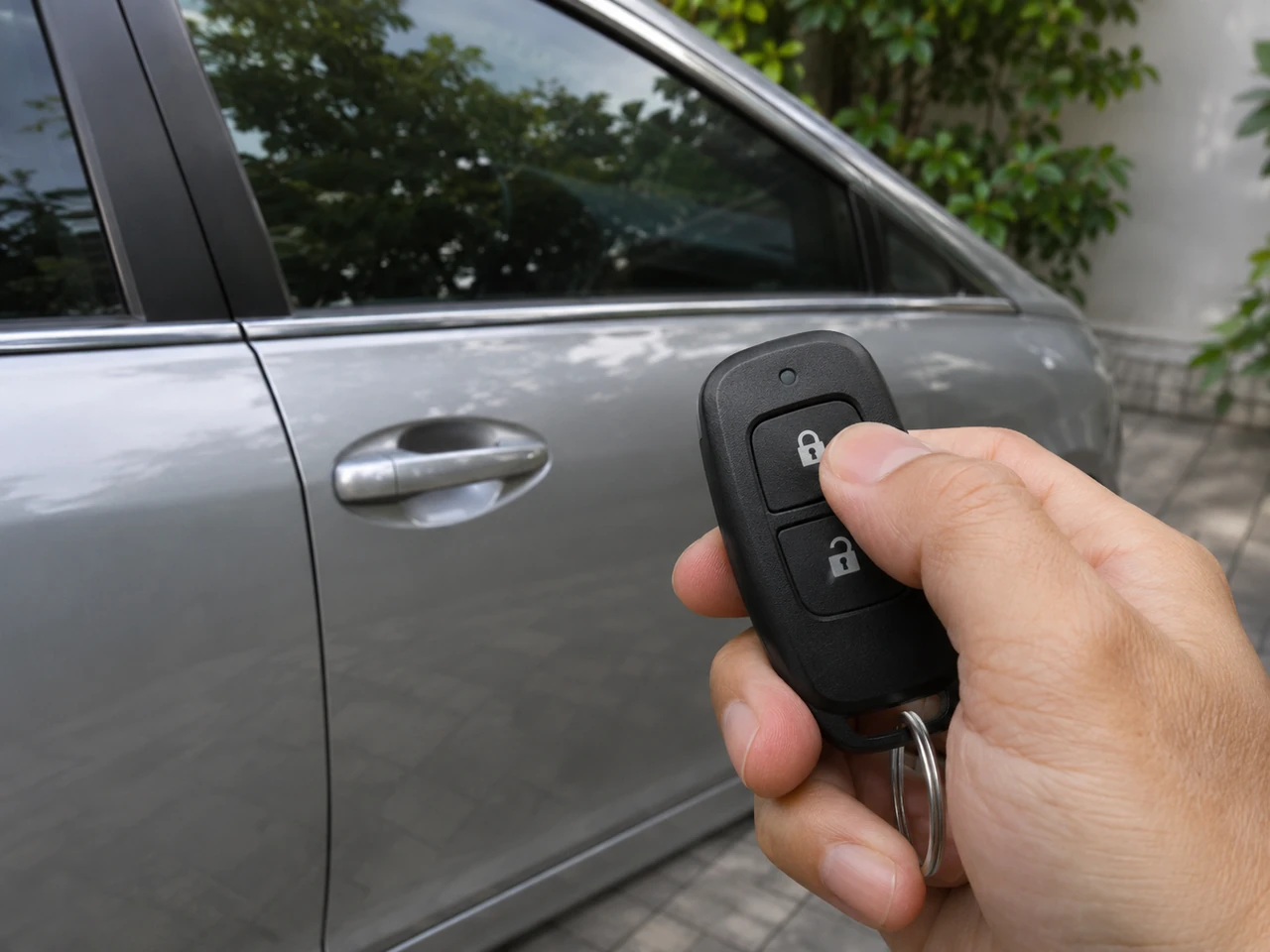
873. Before walking away from a parked vehicle, the driver must take precautions to prevent accidents.
Secure the parked vehicle against movement before leaving it. Other precautions may also be needed to prevent an accident.
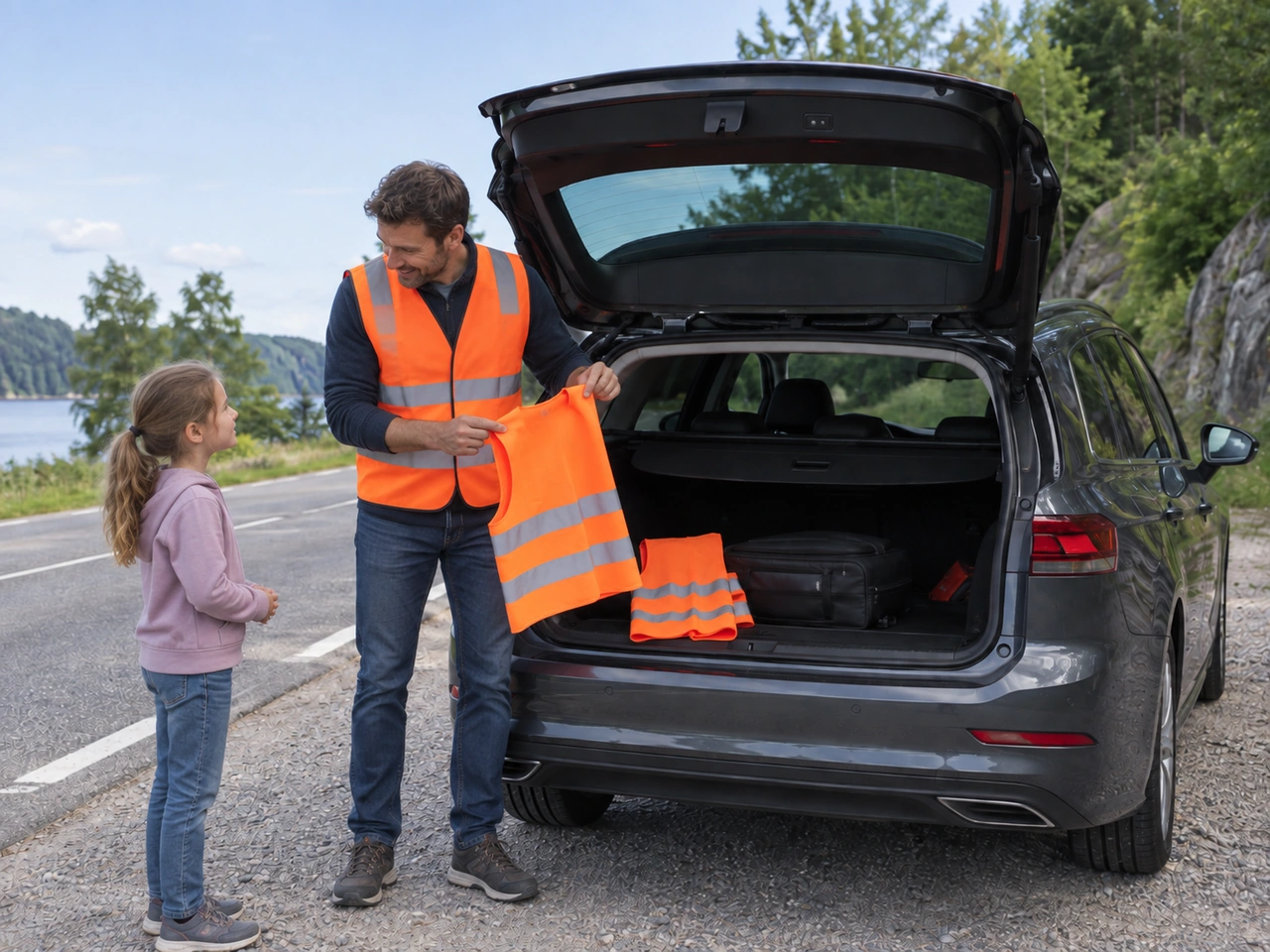
874. Is a high-visibility vest required in cars?
Cars in Norway are required to carry a high-visibility vest.
🔗 Sources
Image credit: AI-generated
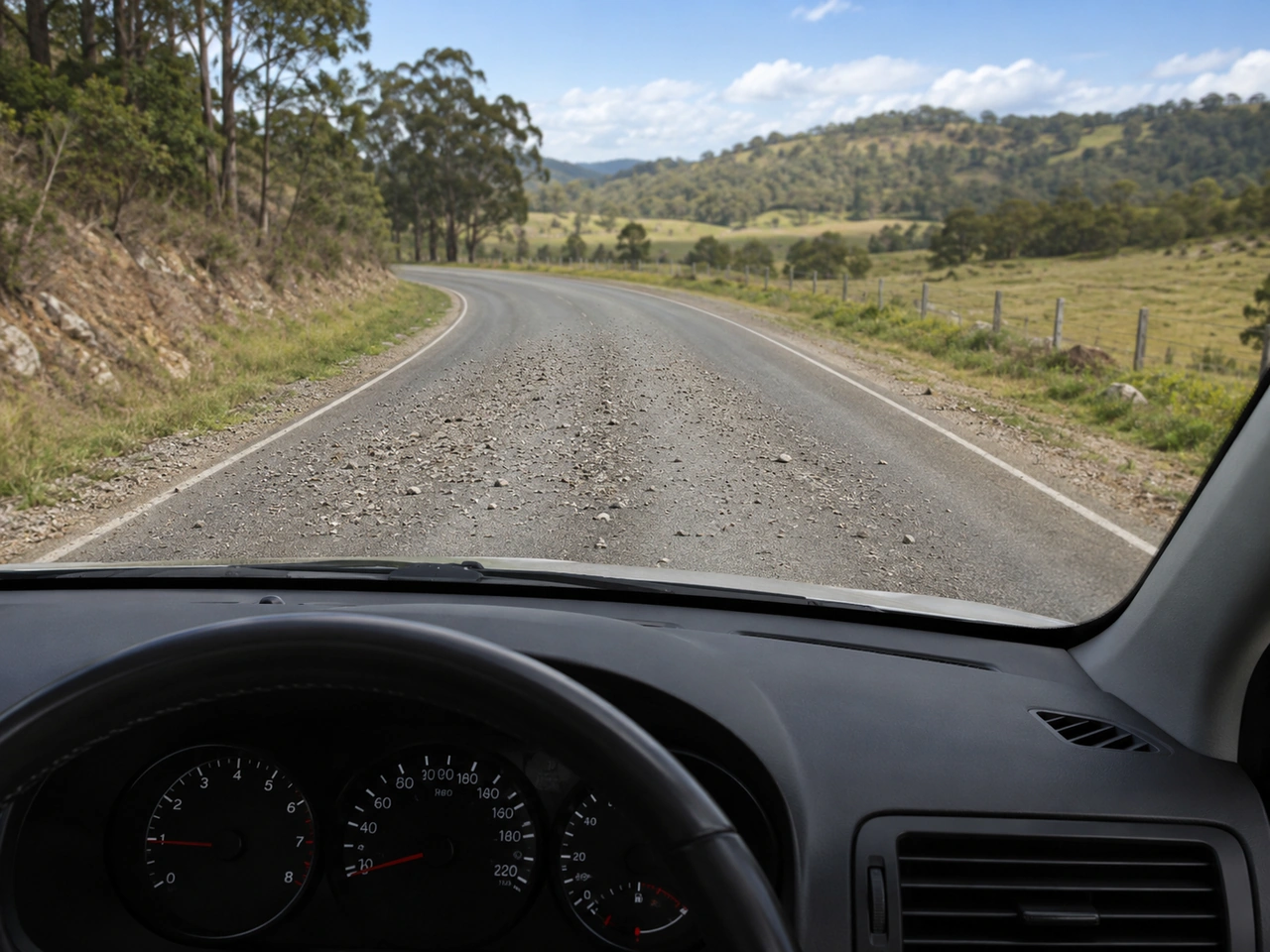
875. What should you do if you see loose gravel on the road?
Loose gravel reduces grip and can make the vehicle skid. Slow down and use smooth steering and braking.
🔗 Sources
New South Wales — general advice on reduced grip and control on gravel
Great Britain — Highway Code, rule 119; harsh controls and skid risk
Image credit: AI-generated
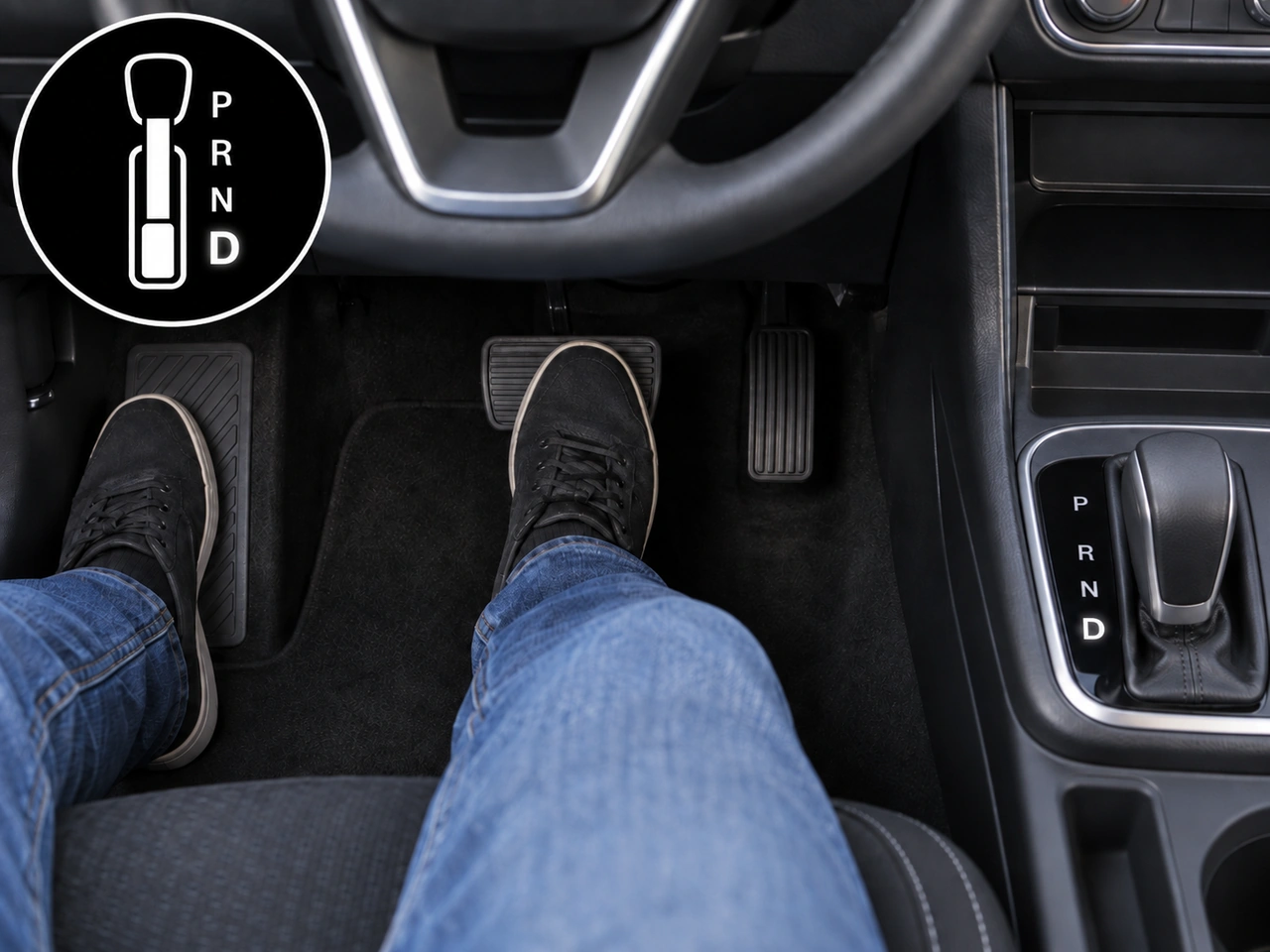
876. What should you do when an automatic vehicle is stationary in D?
An automatic vehicle may creep forward when D (Drive) is selected, even without pressing the accelerator. Keep the brake pedal pressed while stationary to prevent unintended movement.
With Drive selected, some automatic cars begin to move as soon as you release the brake. Hold the brake until you are ready to move.
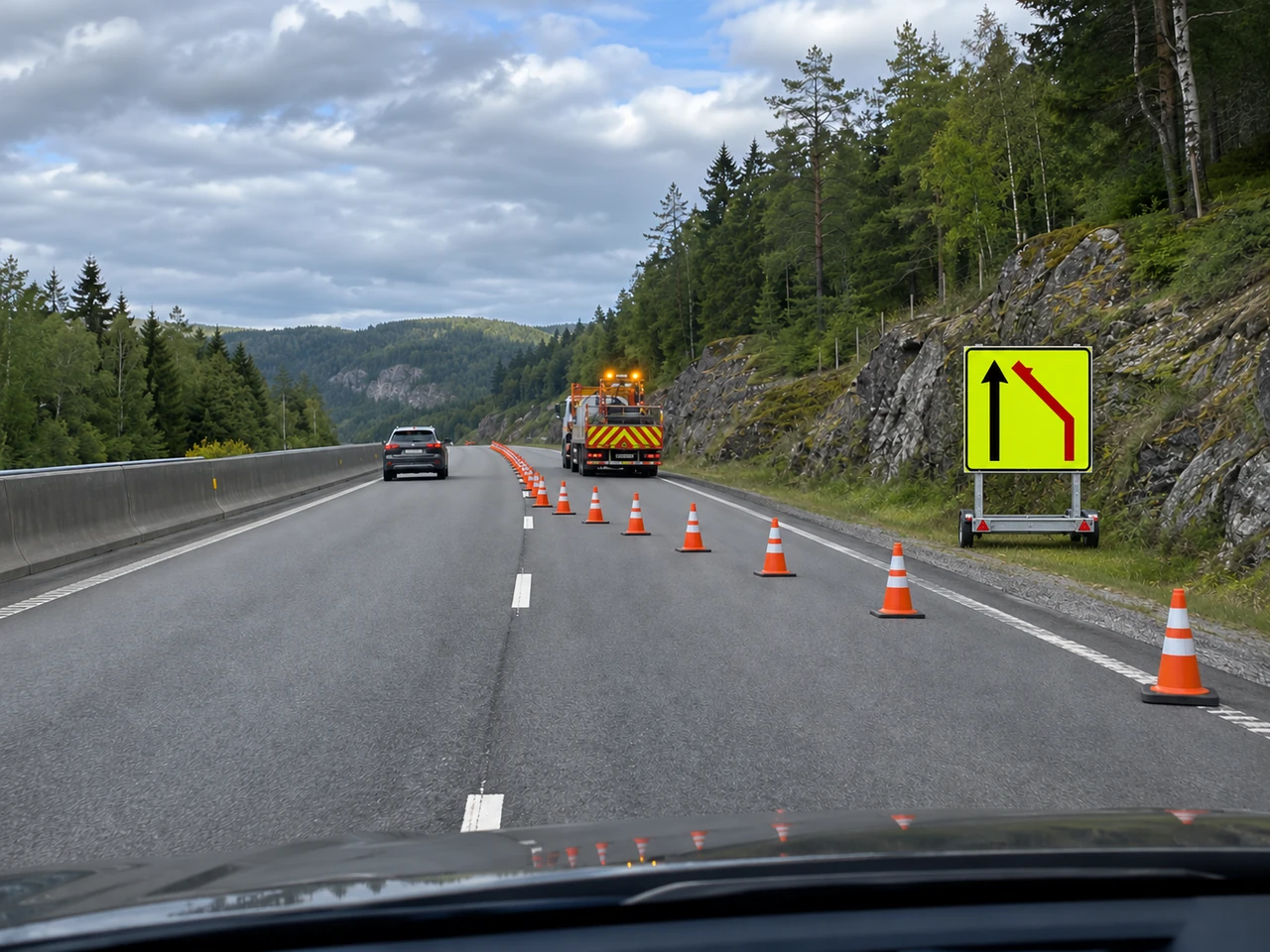
877. What should you do when approaching a temporary lane closure?
Observe the temporary signs, adjust your speed, and merge safely according to the traffic situation and local rules.
🔗 Sources
Norwegian Traffic Rules, section 8
Norwegian Public Roads Administration, N301, sign 532
Image credit: AI-generated
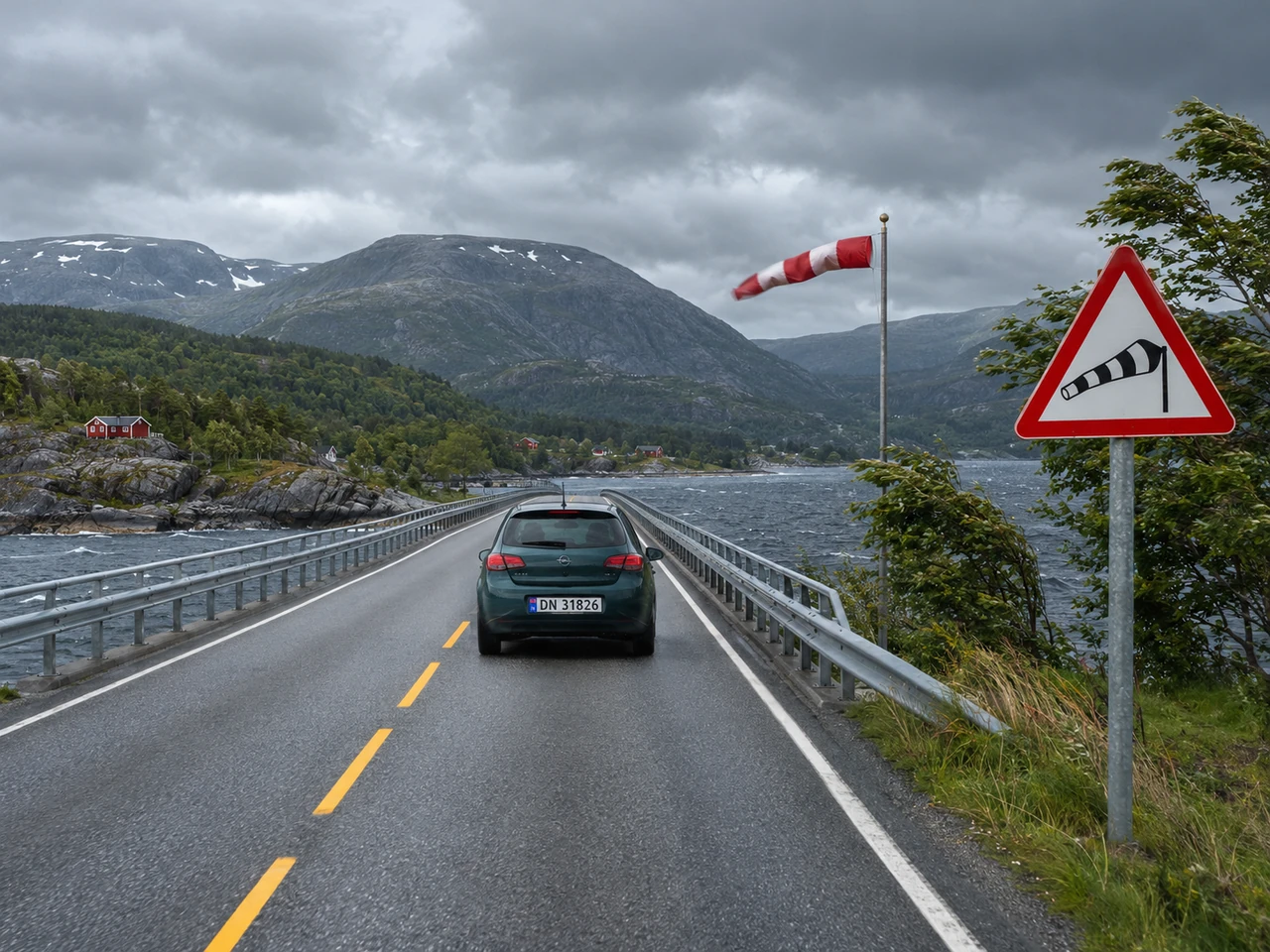
878. Why can bridges be dangerous in strong winds?
Bridges and viaducts often provide little shelter from crosswinds. Gusts can push vehicles off course, especially high-sided vehicles and those towing caravans or trailers. Adapt your speed before the exposed section and allow room for other road users. Follow any posted restrictions or closures. The crosswind warning sign does not itself impose a numerical speed limit.
Norway. Statens vegvesen advises extra caution on bridges in strong wind, particularly with a motorhome or caravan. Check Vegvesen trafikk for bridge status and wind information, and obey any displayed restrictions or closure.
🔗 Sources
Vegvesen.no • Norway — Strong-wind precautions on bridges
Vegvesen.no • Norway — Bridge status and route alerts
Image credit: AI-generated
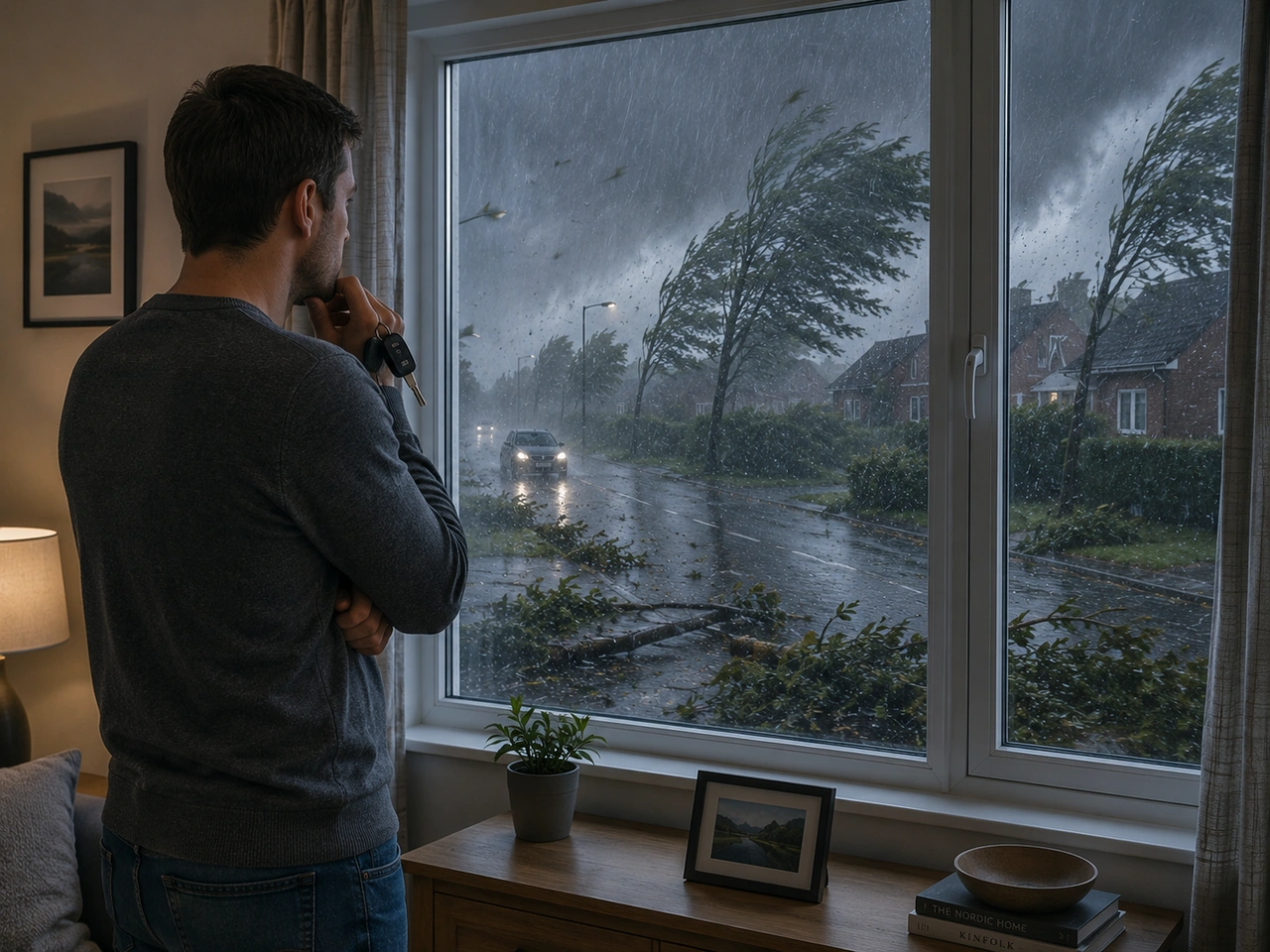
879. When should you consider delaying a journey because of severe weather?
Check the forecast, weather warnings and traffic information before departure. Postpone a non-essential journey when wind, falling debris or other severe conditions make driving unsafe. An open road and a well-maintained vehicle do not guarantee a safe journey. Follow official instructions and road closures. If already travelling, use a suitable safe stopping place and avoid parking near trees.
Norway. MET says an orange warning calls for assessing whether planned activity is safe, with serious consequences and possible road closures. Read the actual warning and check Vegvesen trafikk; postpone travel if the journey cannot be made safely.
🔗 Sources
MET.no • Norway — Warning levels and activity decisions
Vegvesen.no • Norway — Route and weather-exposed-road alerts
Image credit: AI-generated
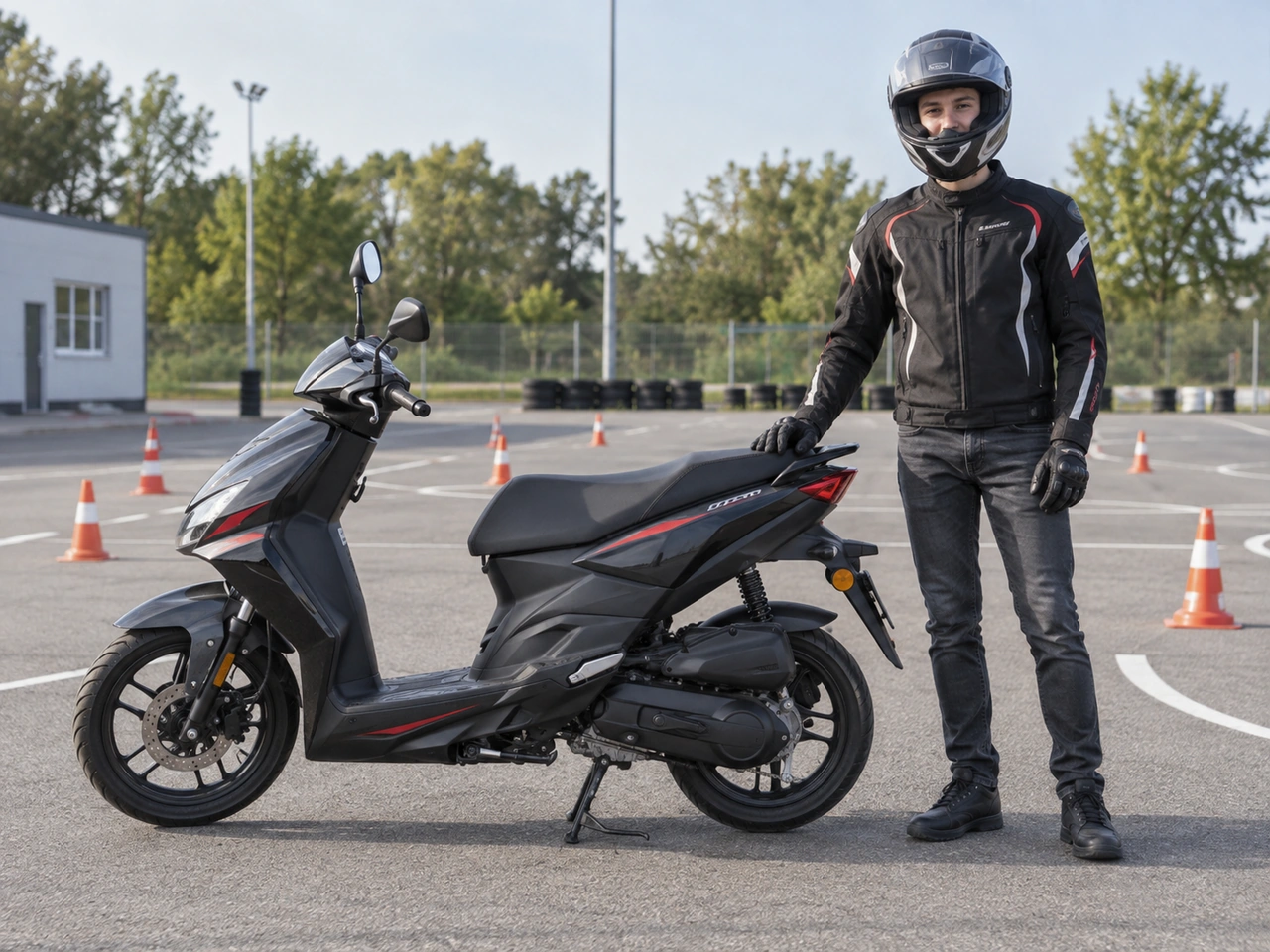
880. Which licence category is mainly associated with mopeds?
Driving licence AM is mainly associated with mopeds. Category AM covers mopeds with a design speed above 25 km/h and up to 45 km/h.
Norway. For a three- or four-wheeled moped, check its unladen mass as well as its classification. AM 146 uses a 150 kg limit, excluding battery weight for electric mopeds.
🔗 Sources
Statens vegvesen · Hva kan du kjøre med førerkort klasse AM?
EUR-Lex · Directive 2006/126/EC on driving licences · Article 4(2)
Image credit: AI-generated
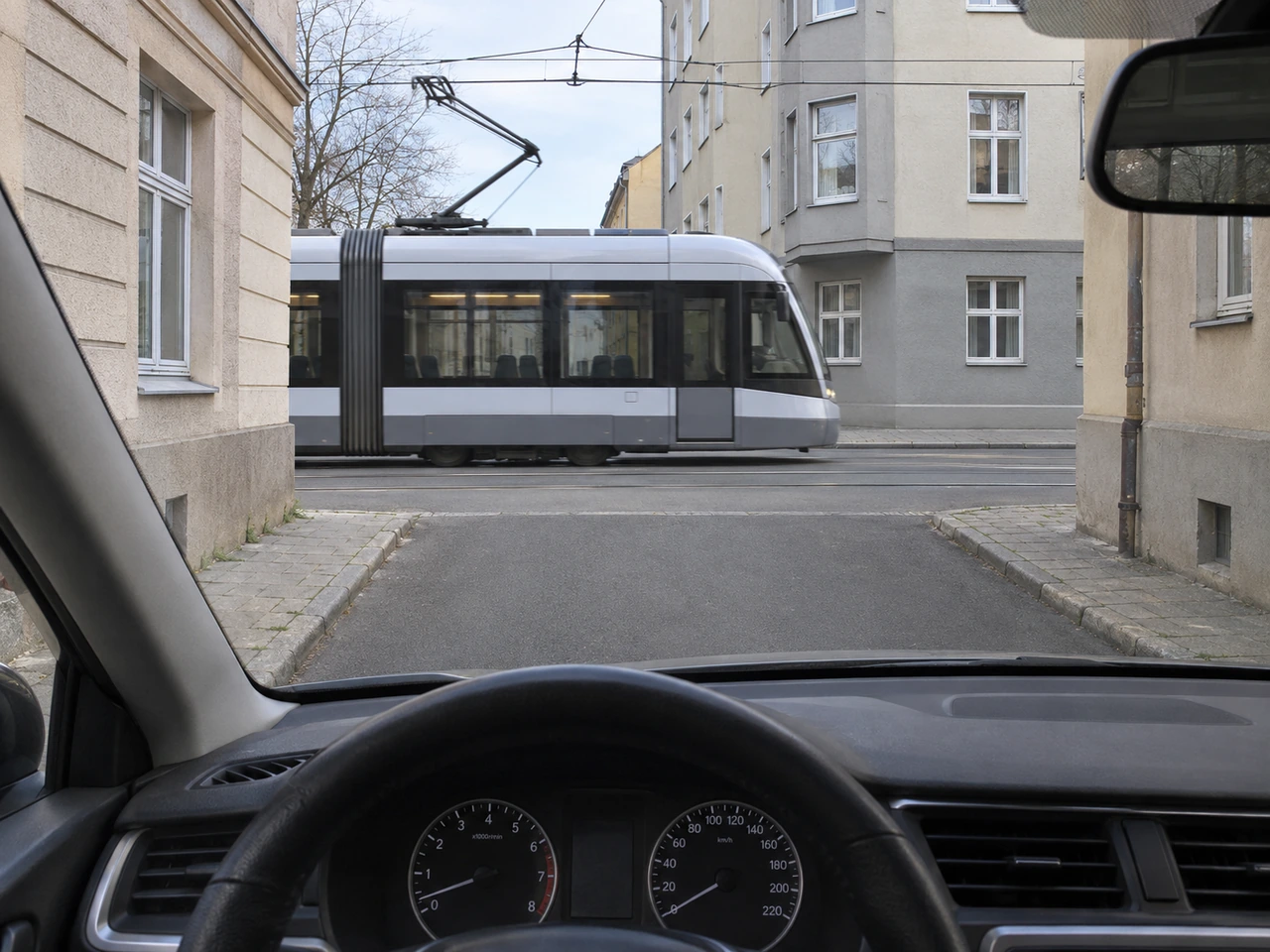
881. Why should you take extra care when crossing a tram or bus lane?
Cross only where permitted. Check both directions and wait if needed. Trams cannot steer around obstacles, and both trams and buses may need a long distance to stop.
🔗 Sources
UK Highway Code — General tram safety guidance: Rules 300–302
UK Highway Code — General guidance on bus-lane restrictions: Rule 141
Image credit: AI-generated
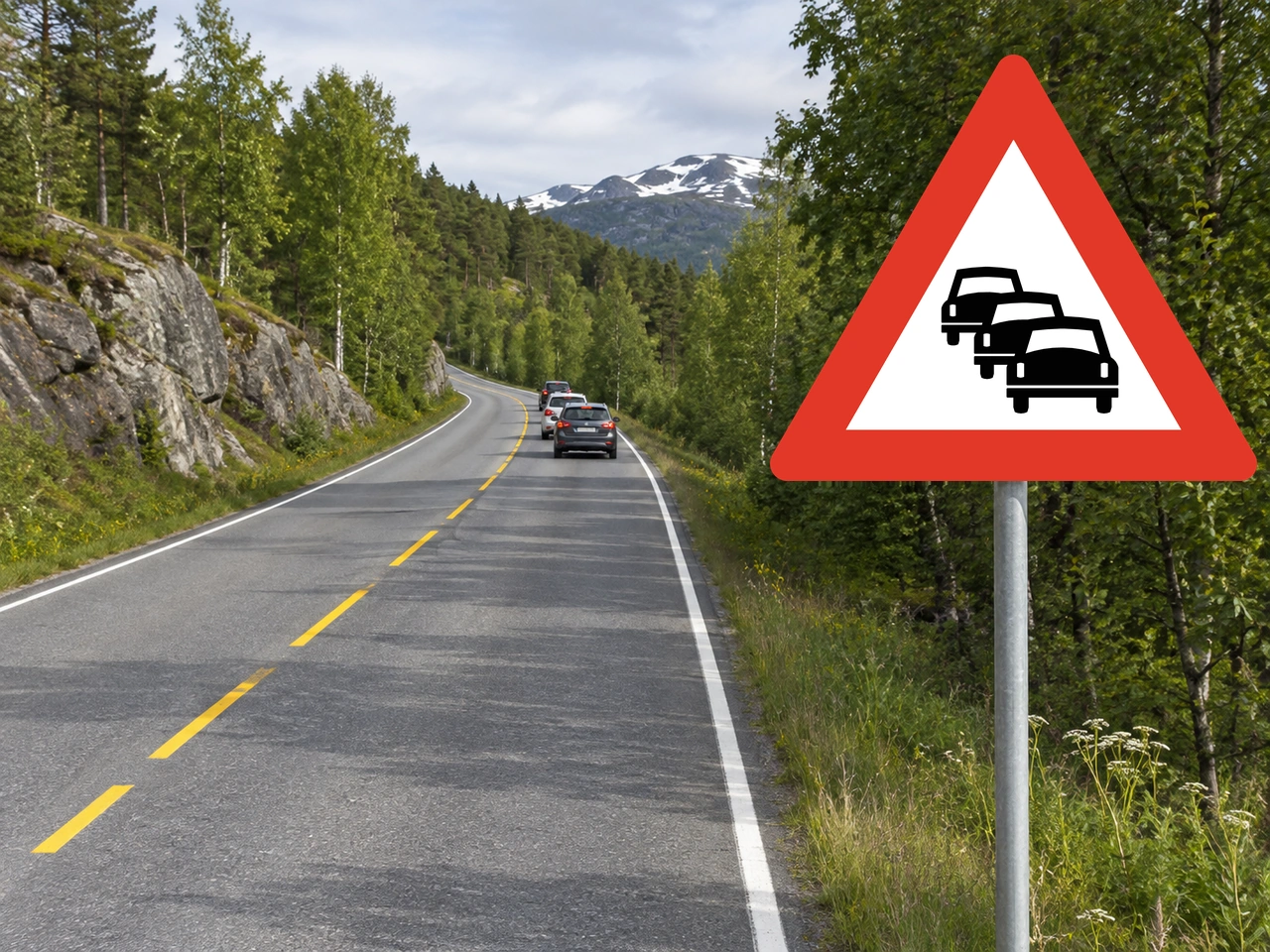
882. The triangular sign showing a line of cars warns of traffic queues ahead.
The sign warns of congestion ahead. Pay extra attention and be ready to slow down or stop as traffic requires. It does not show the exact position of the end of a queue.
🔗 Sources
Norway • Skiltforskriften • Sign 149
Statens vegvesen • Official traffic-sign meanings
Statens vegvesen • Official sign artwork
Sign artwork: Statens vegvesen original EPS archive, Sign 149, file 149_0.eps. Native three-car arrangement, border and proportions retained; resized and composited onto the existing same-entry scene. Border red follows the authority's published colour chart: PMS 179, using the published web swatch RGB 226/56/40. No third-party open licence is asserted for the government artwork.
Image credit: AI-generated background with source sign artwork resized and placed on the sign face.
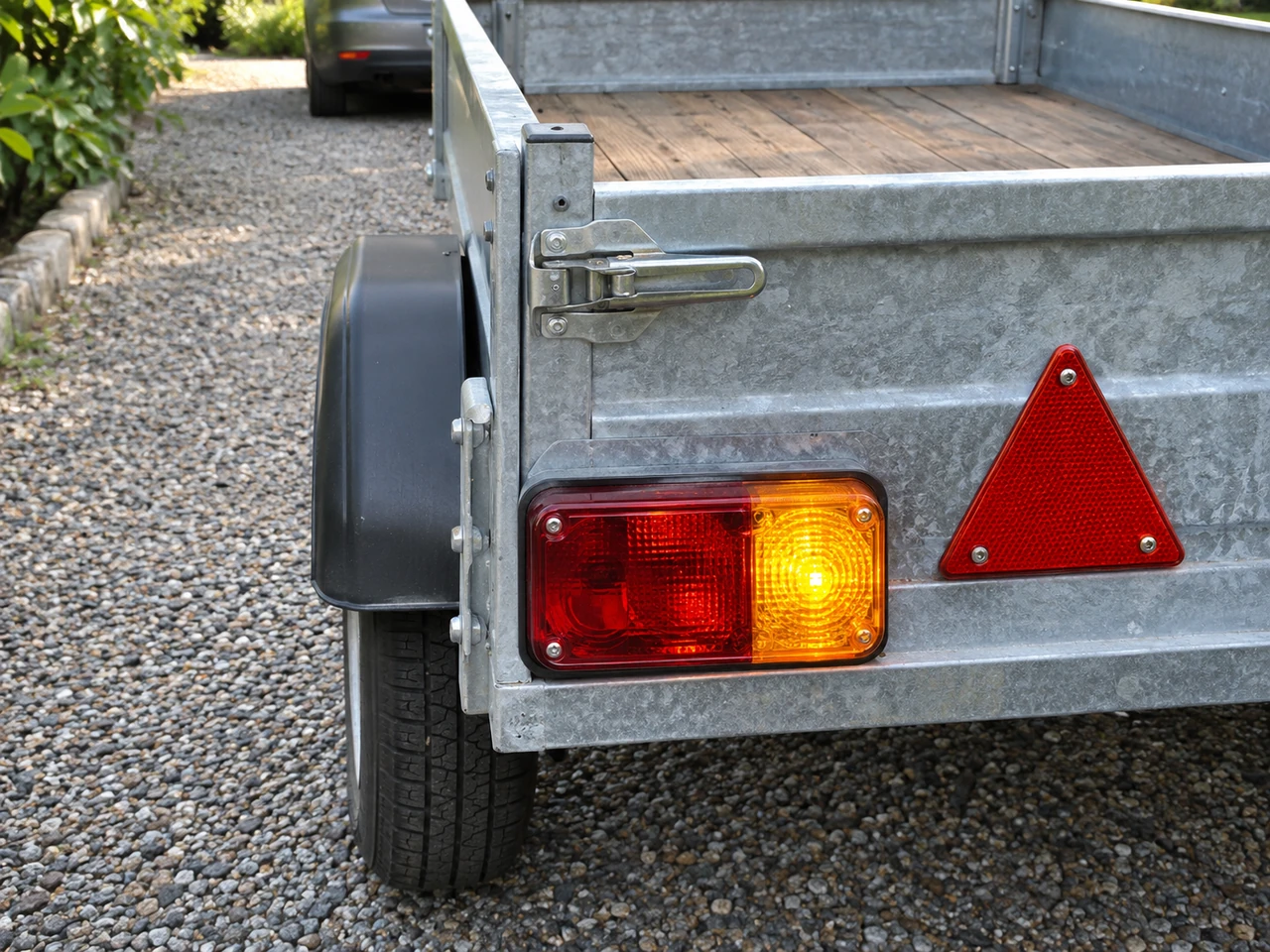
883. You should check that your trailer's lights work before each journey.
Check the trailer's lights and indicators as part of your pre-journey checks. The car's lights working does not prove that the trailer's lights work.
🔗 Sources
DVSA towing guidance (Great Britain) • Safety guidance, Lights and indicators
Image credit: AI-generated
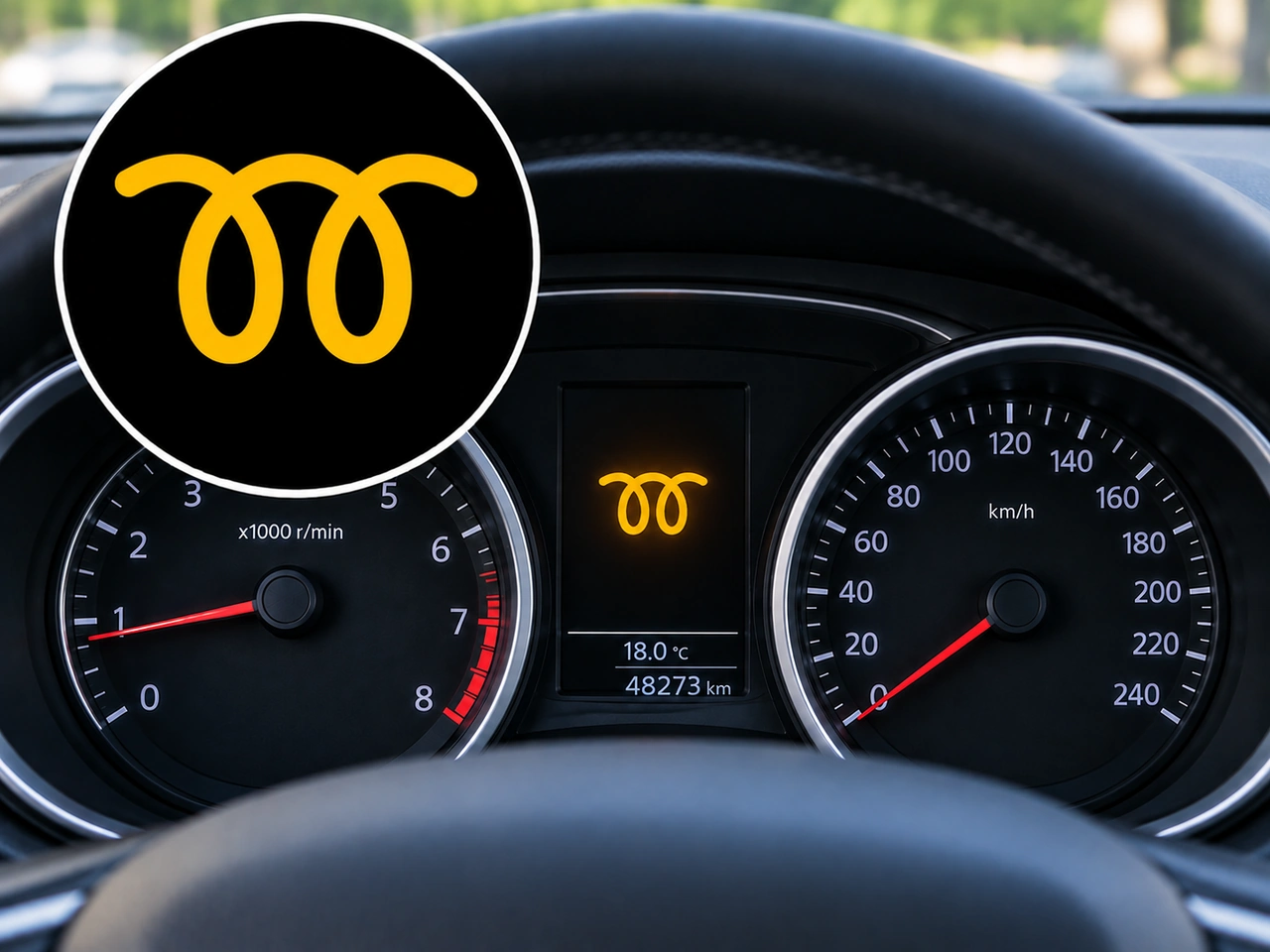
884. What does this dashboard symbol indicate?
This symbol indicates the diesel glow-plug preheating system. In a diesel vehicle, wait for the light to go out before starting the engine when required. If it remains illuminated or flashes while driving, it may indicate a fault.
The coil symbol can light up while a diesel engine preheats before starting. If it flashes while driving, check the handbook for the fault procedure.
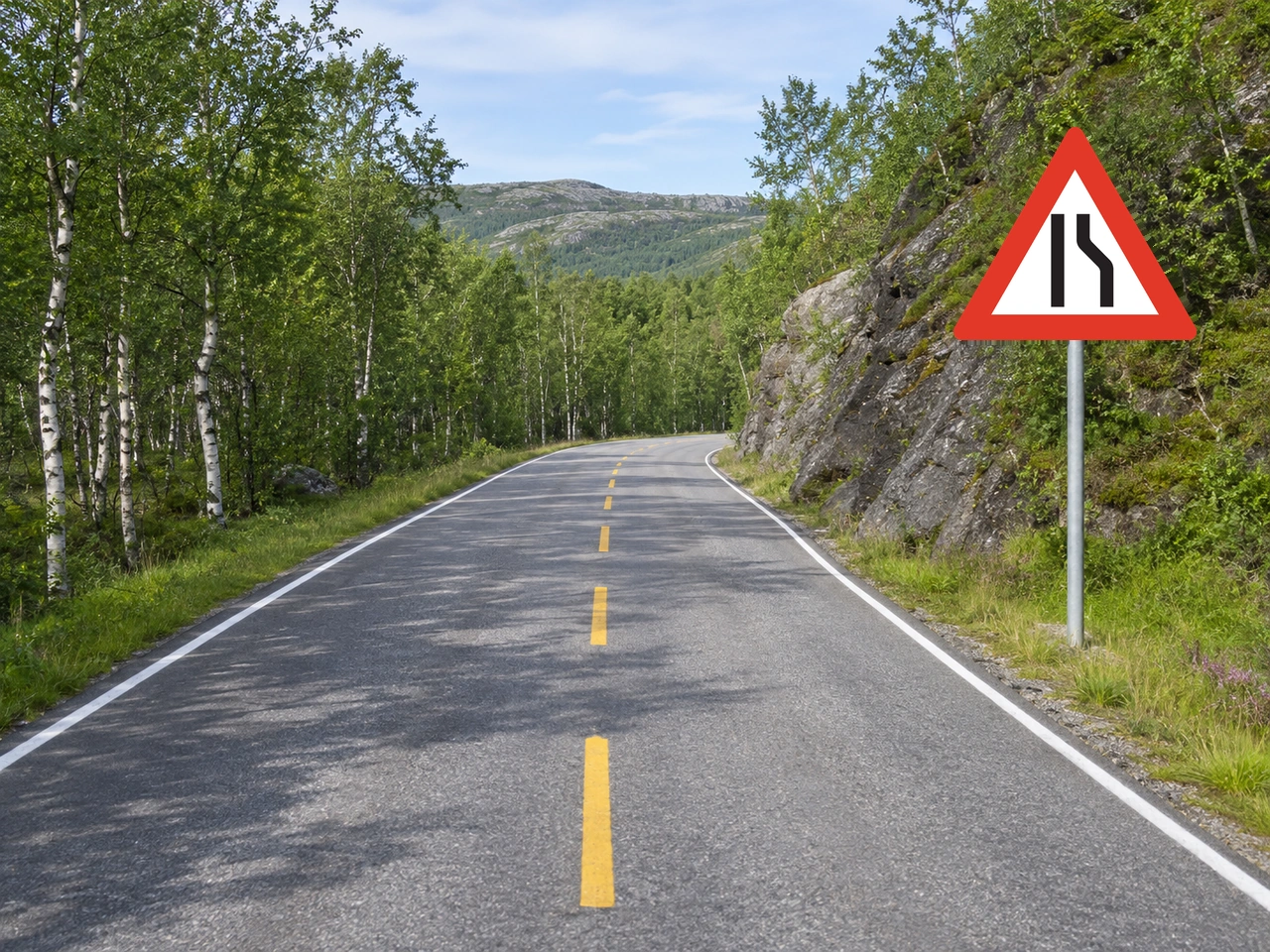
885. The warning sign with the right-hand road edge bending inwards warns of narrowing on the right.
The straight left edge and inward-bending right edge show that the road narrows on the right. Approach with extra attention and a suitable speed. This warning sign does not itself give priority over oncoming traffic.
🔗 Sources
Norway • Skiltforskriften • Sign 106.2
Statens vegvesen • Official traffic-sign meanings
Statens vegvesen • Official sign artwork
Sign artwork: Statens vegvesen original EPS archive, Sign 106.2, file 106_2.eps. Native right-side narrowing symbol, orientation, border and proportions retained; resized and composited onto the new same-entry photographic scene. Border red follows the authority's published colour chart: PMS 179, using the published web swatch RGB 226/56/40. No third-party open licence is asserted for the government artwork.
Image credit: AI-generated background with source sign artwork resized and placed on the sign face.
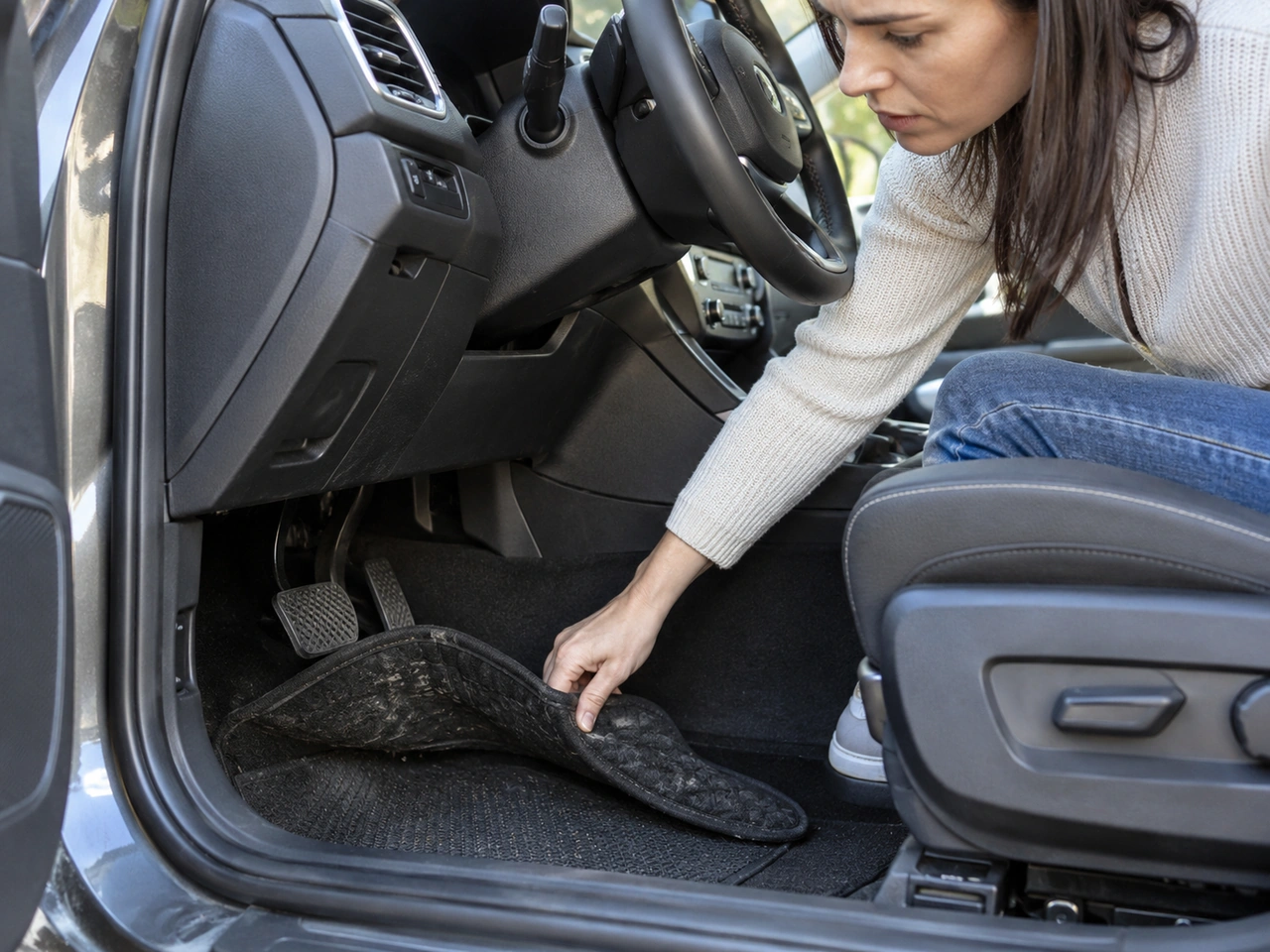
886. Why should the driver's floor mat be properly secured?
A loose or incorrectly fitted floor mat can move into the pedal area and interfere with the accelerator, brake, or clutch. Make sure the driver's floor mat is correctly fitted, secured, and does not obstruct any pedal.
🔗 Sources
Nissan 2025 Sentra manual — Model-specific secure floor mats and clear pedals example
Image credit: AI-generated
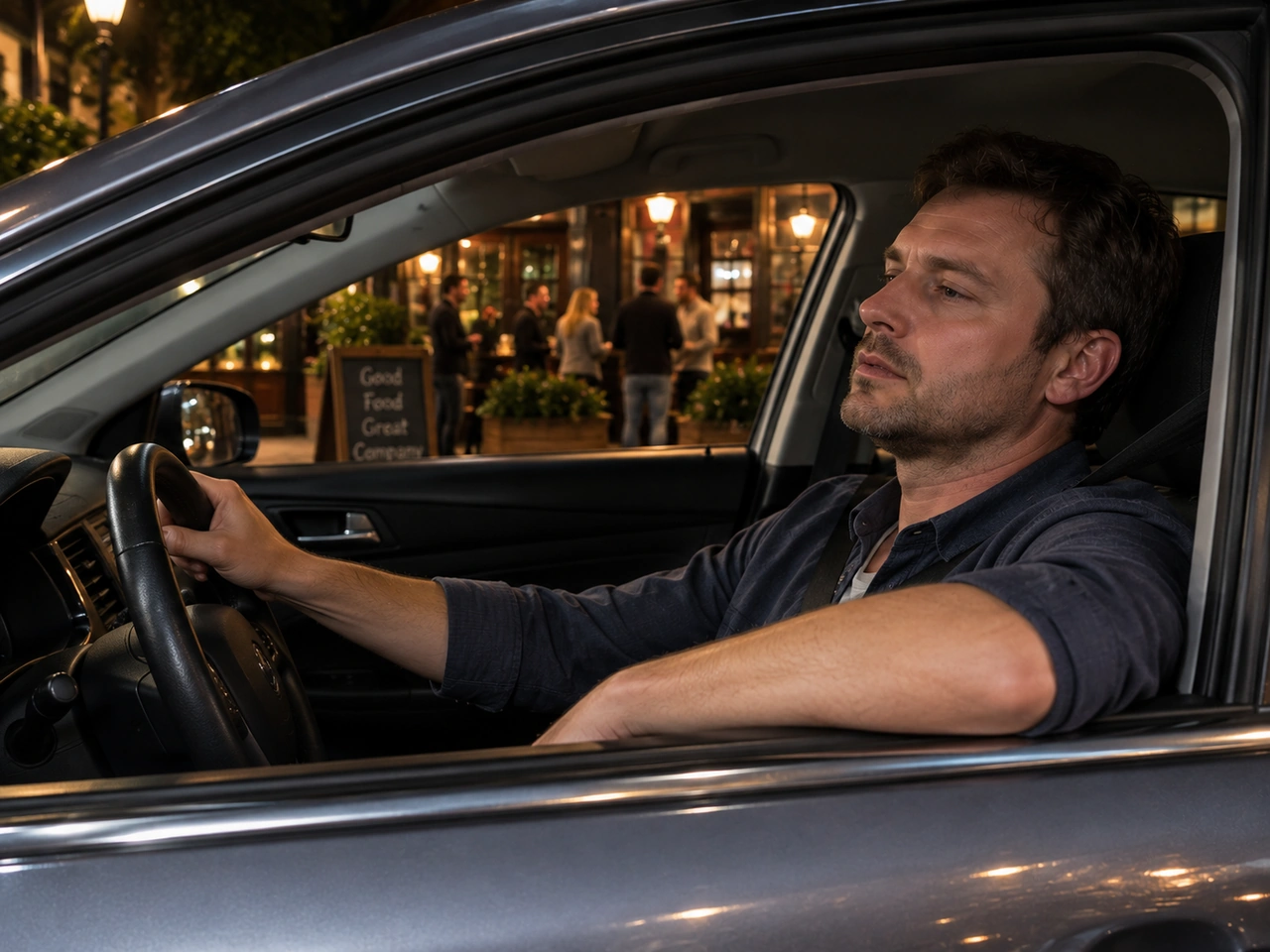
887. Does opening a window make an alcohol-impaired driver safe?
Fresh air may make someone feel more awake, but it does not reduce their alcohol concentration or restore safe driving ability.
Norway. Fresh air may feel refreshing while alcohol still affects your driving. Blood alcohol falls as your body breaks it down, so use another way home if you have been drinking.
🔗 Sources
Oslo universitetssykehus · Alkoholpromille – eksempler på beregning
Trygg Trafikk · Slik påvirker rus deg i trafikken
Image credit: AI-generated
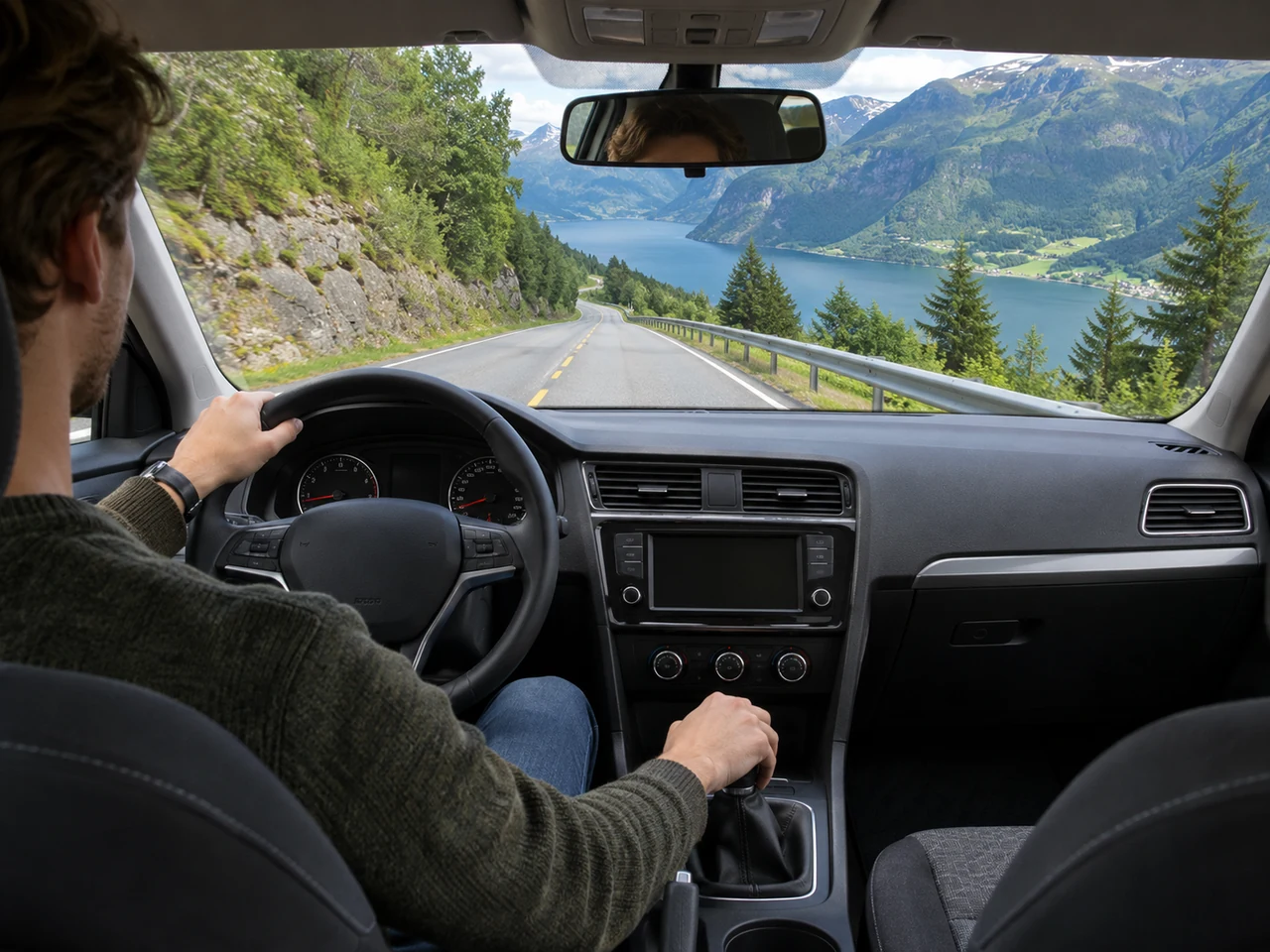
888. Why should you use a lower gear when driving downhill?
Engine braking helps prevent the vehicle from gaining too much speed and reduces strain on the brakes.
🔗 Sources
Image credit: AI-generated
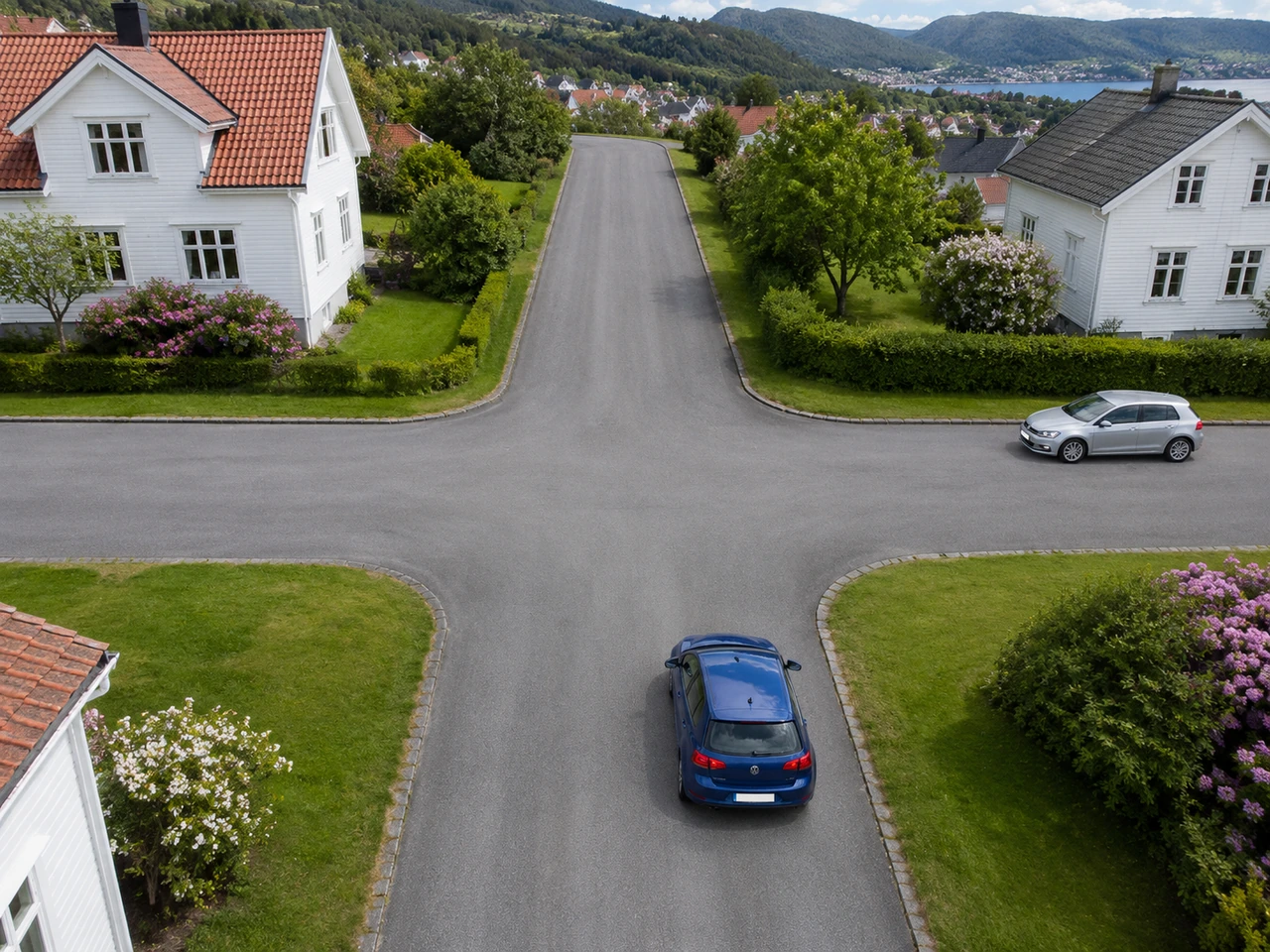
889. What should you do when approaching an uncontrolled junction?
At an uncontrolled junction, priority may not be obvious. Reduce speed, check carefully, and only enter when you are sure it is safe.
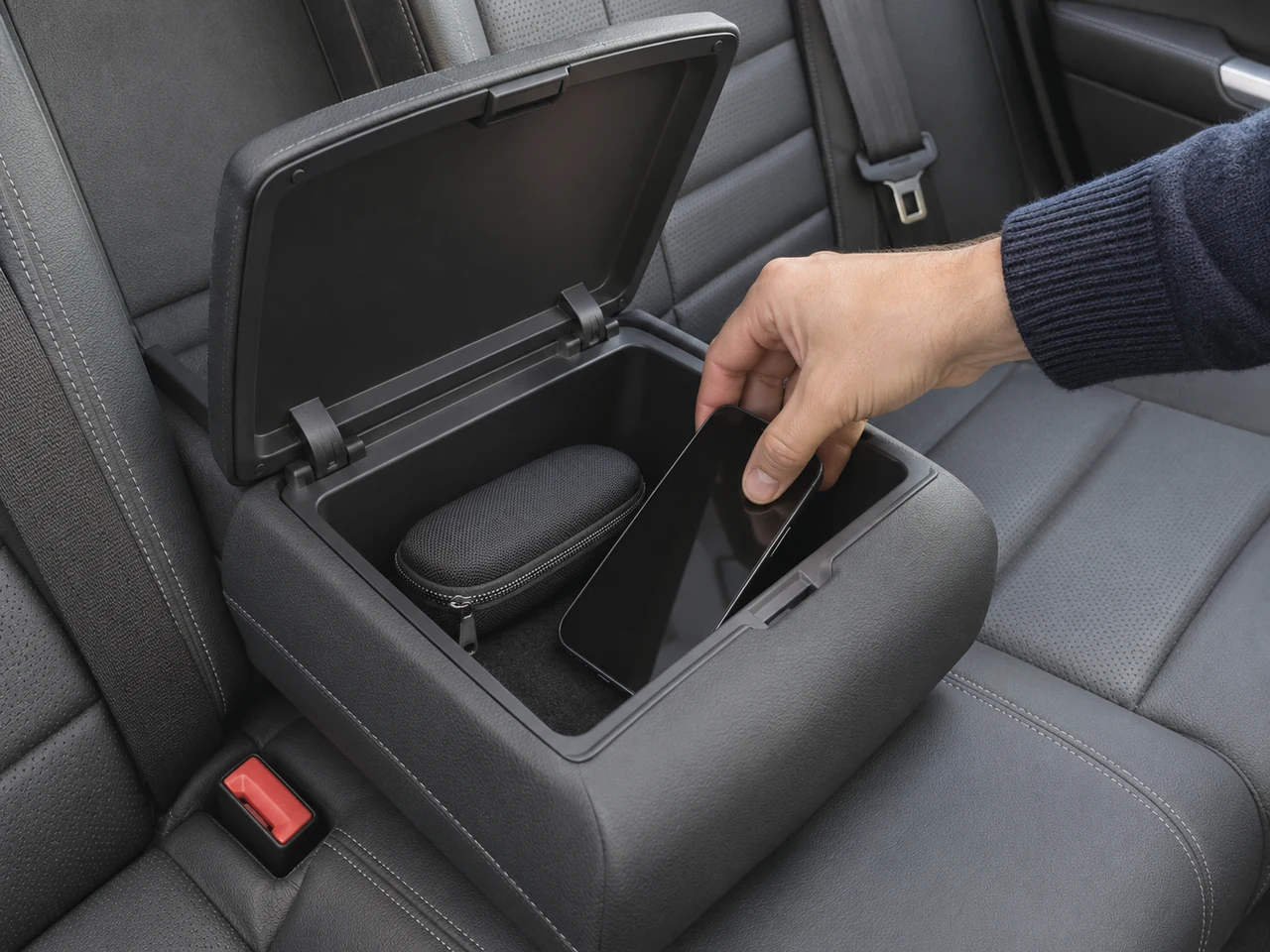
890. Why should loose items inside a vehicle be secured?
Loose objects can move or be thrown forwards during sudden braking or a collision. Secure luggage and other items so they cannot injure occupants or interfere with the driver or vehicle controls.
🔗 Sources
Norwegian Regulations on the Use of Vehicles, § 3-2, load placement
NZTA safe loading and towing guide, practical guidance
Image credit: AI-generated
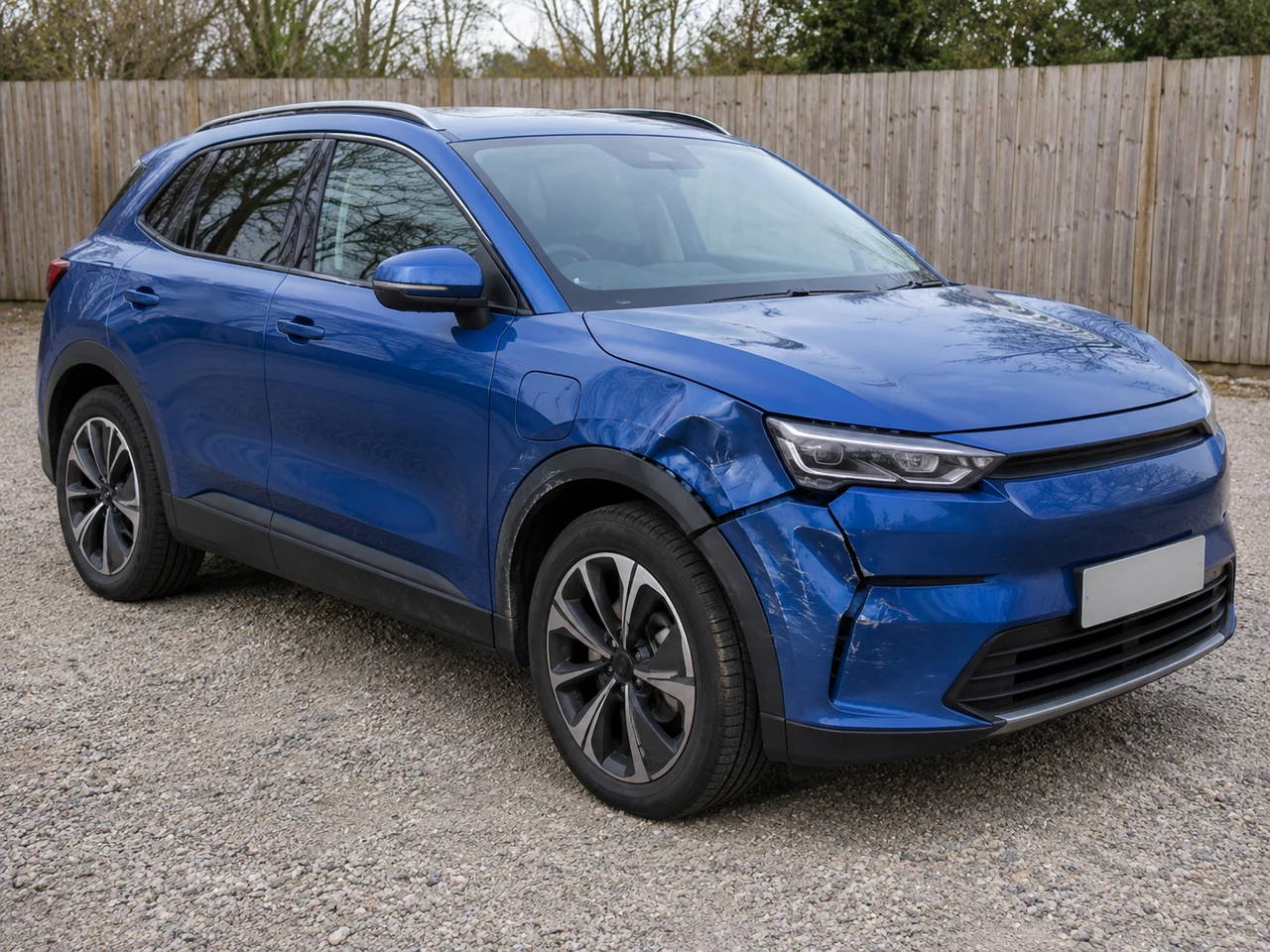
891. A damaged electric-car battery is safe if there is no smoke.
A damaged high-voltage battery can pose shock and fire risks, including a delayed fire. Keep clear of damaged electrical parts and seek specialist help. If there is smoke, fire or immediate danger, move away and call emergency services.
🔗 Sources
NHTSA (United States) • Safety guidance, high-voltage battery damage and immediate or delayed fire risks
Image credit: AI-generated
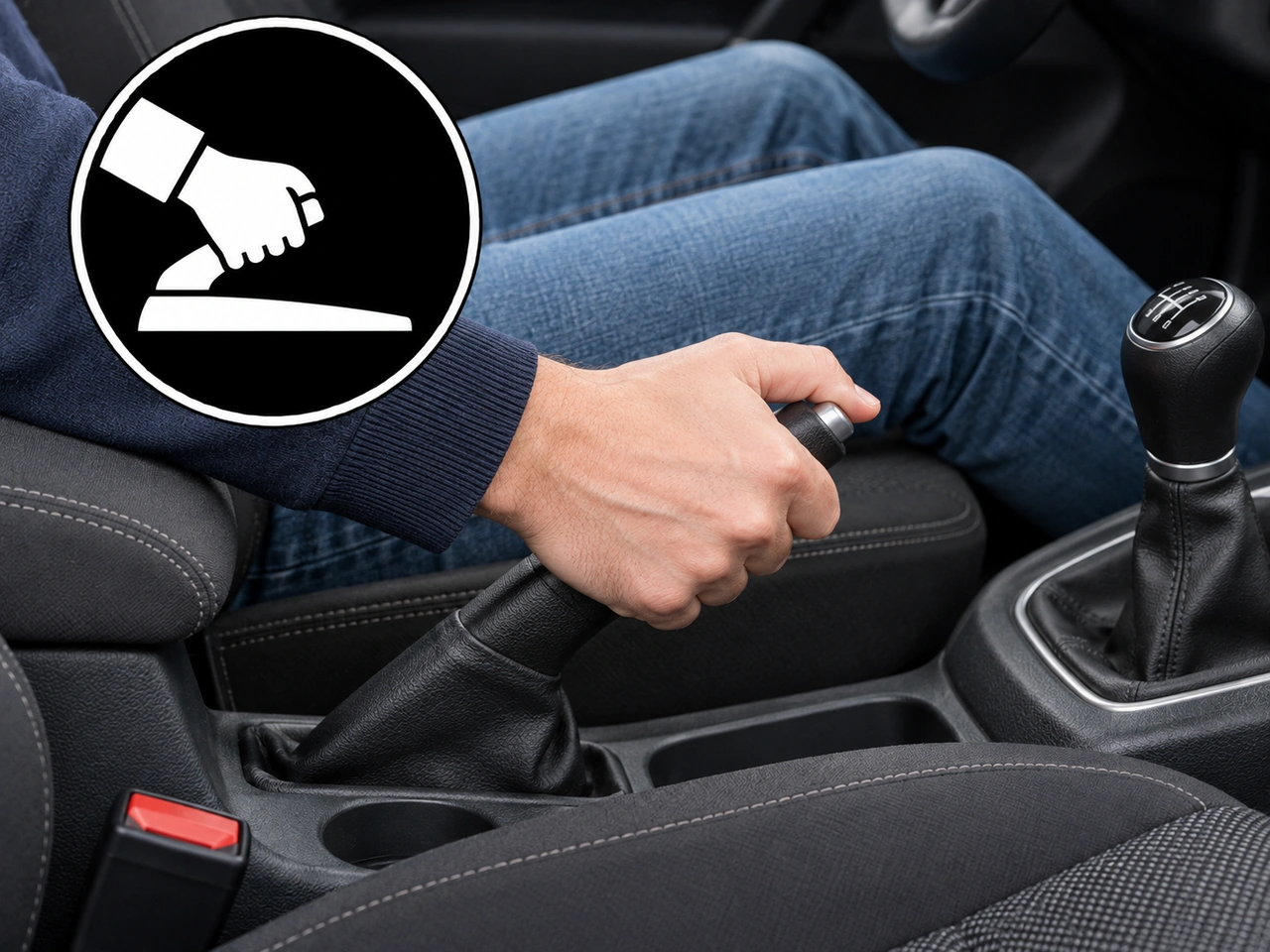
892. What is the purpose of the manual parking brake?
The manual parking brake helps keep the vehicle stationary when parked. It is normally applied by pulling up the handbrake lever and released before driving away.
With the vehicle stationary, hold the foot brake and pull the handbrake lever up firmly to secure the vehicle.
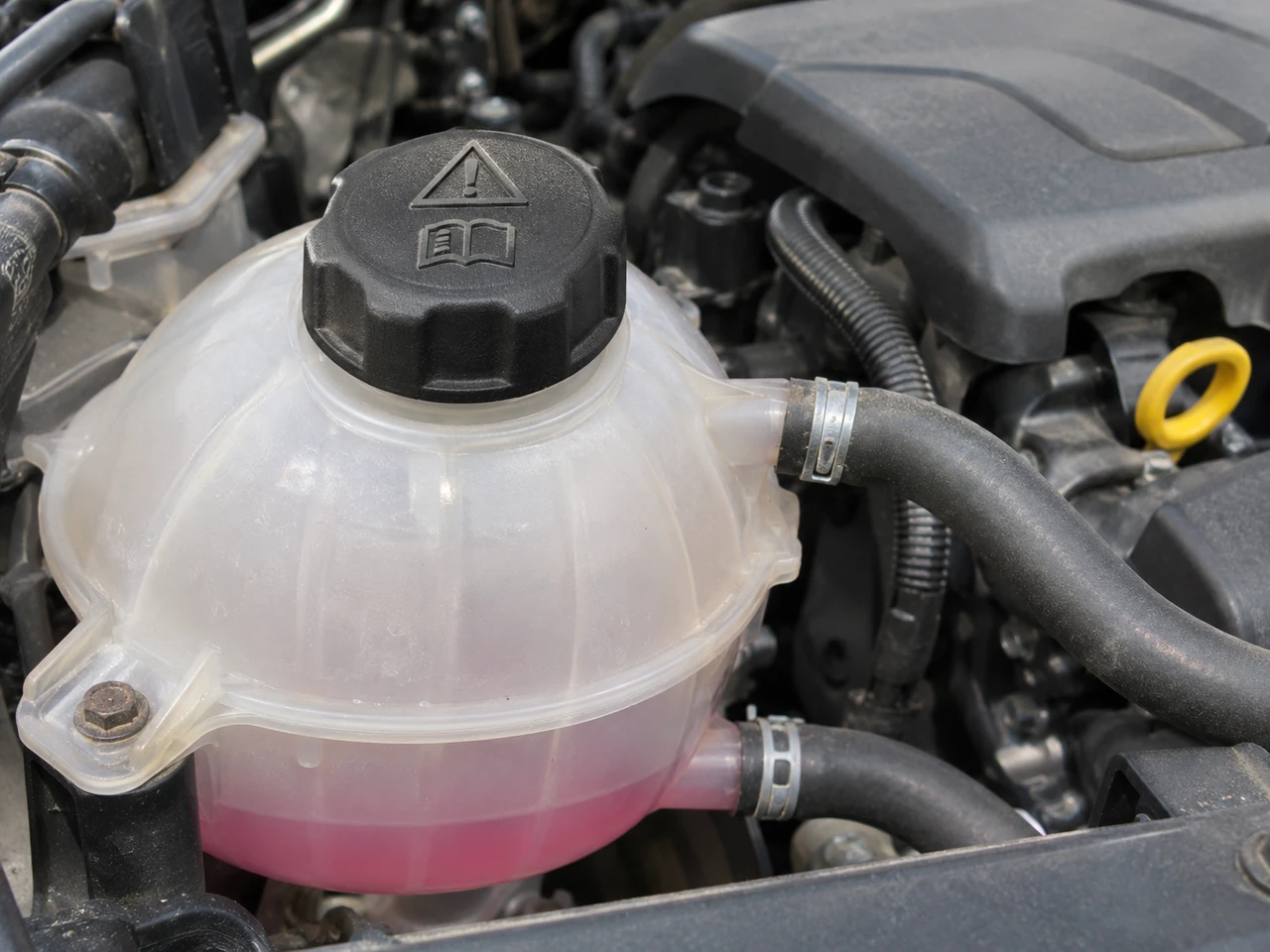
893. It is safe to open the coolant cap while the engine is still hot.
Let the engine cool before opening the cooling system, and follow the vehicle handbook. Do not open the coolant cap while the engine is hot.
🔗 Sources
The Highway Code (Great Britain) • Safety guidance, overheated engines and coolant filler caps
Image credit: AI-generated
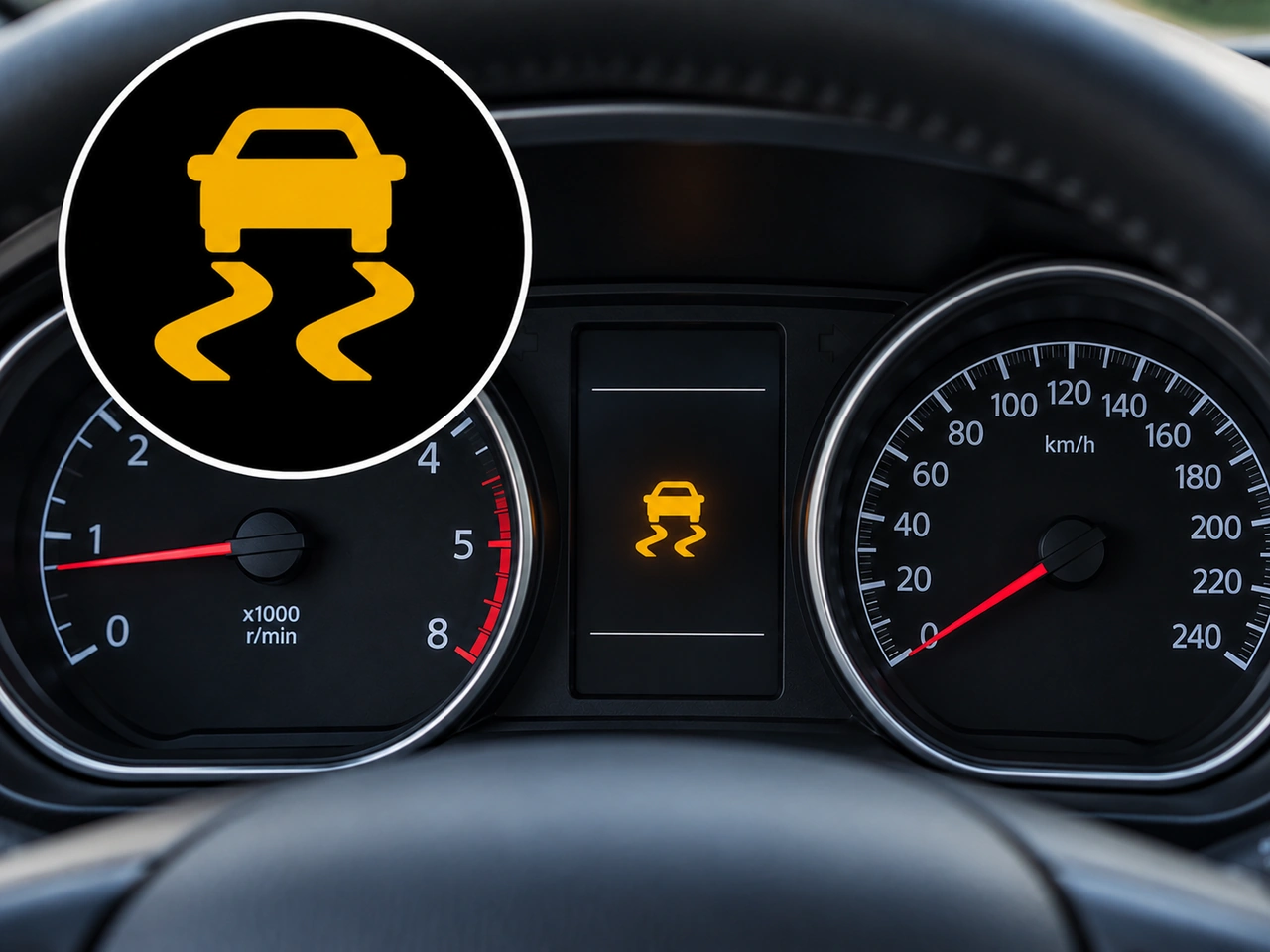
894. What does this dashboard symbol indicate?
This symbol relates to the electronic stability control (ESC) system. It may flash when the system is actively helping to maintain stability. If it remains illuminated, the system may be switched off or have a fault.
A flashing symbol can mean stability control is intervening. A steady light can indicate a fault or that the system is off. Check any accompanying message.
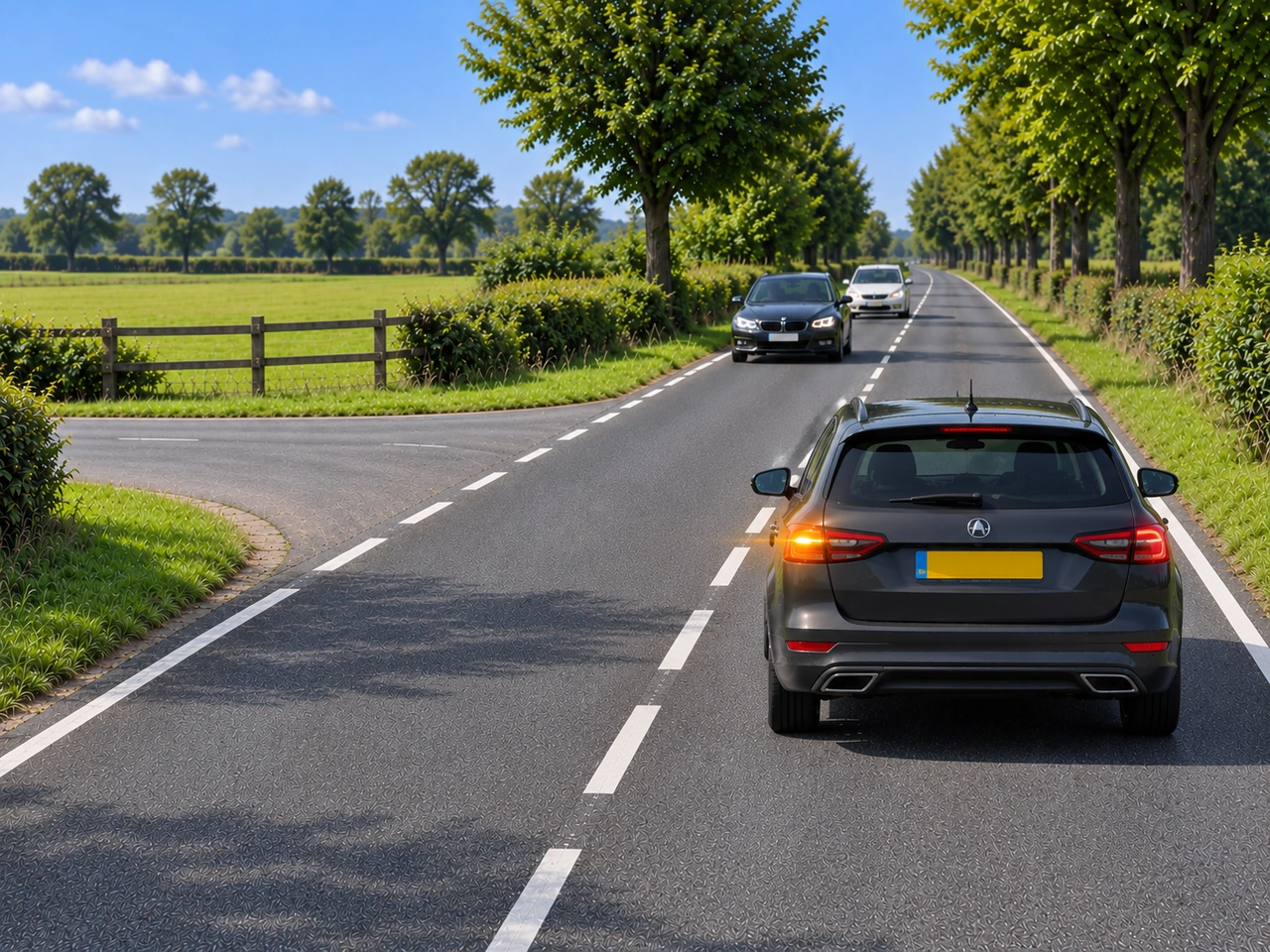
895. Why should you be careful when turning across oncoming traffic?
Turning across traffic requires careful observation. Misjudging speed or distance can lead to a serious collision.
Norway. Give way to oncoming traffic before turning left across its path. Wait for a gap that lets you complete the turn safely.
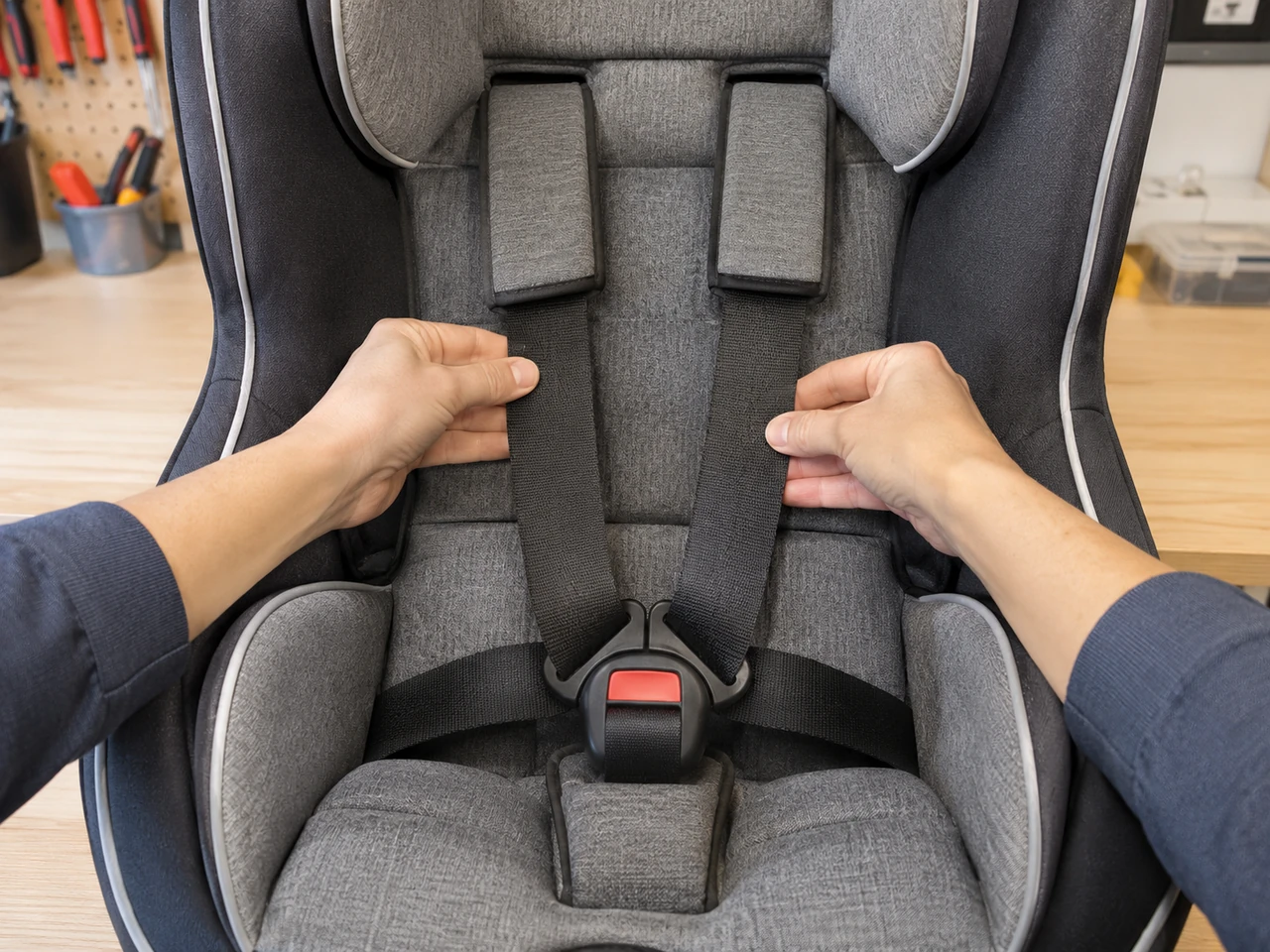
896. Child-seat harness straps should lie flat without twists.
Twisted straps do not fit as intended. Check that the harness lies flat and is adjusted according to the child-seat instructions before travelling.
🔗 Sources
NHTSA (United States) • Safety guidance, Fitting Your Child Correctly In The Seat
Image credit: AI-generated
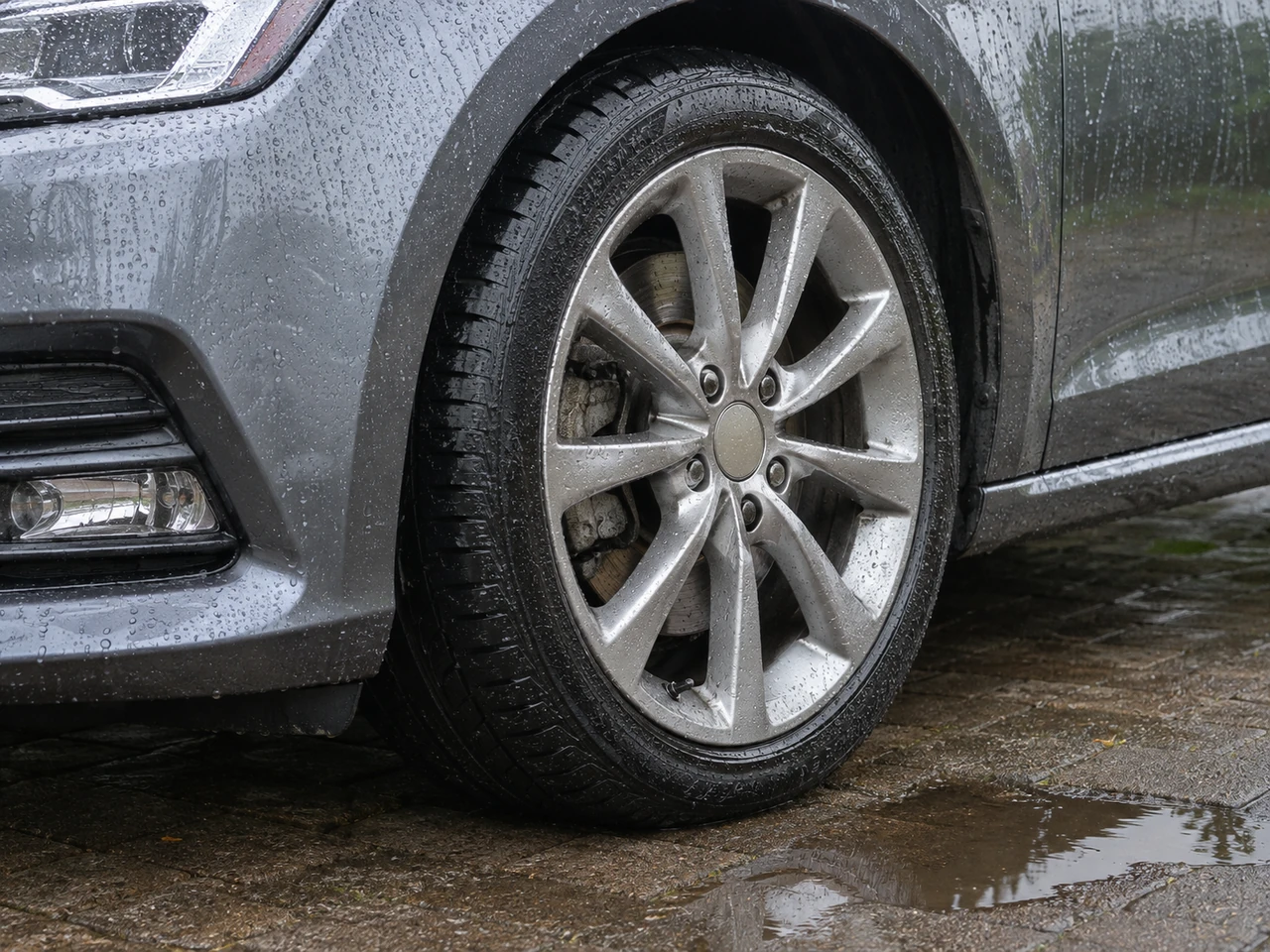
897. Brakes are always just as effective after driving through deep water.
Water can reduce brake effectiveness. Avoid entering floodwater. If you have driven through water, test the brakes gently at the first safe opportunity. Stop safely and seek help if they do not work normally.
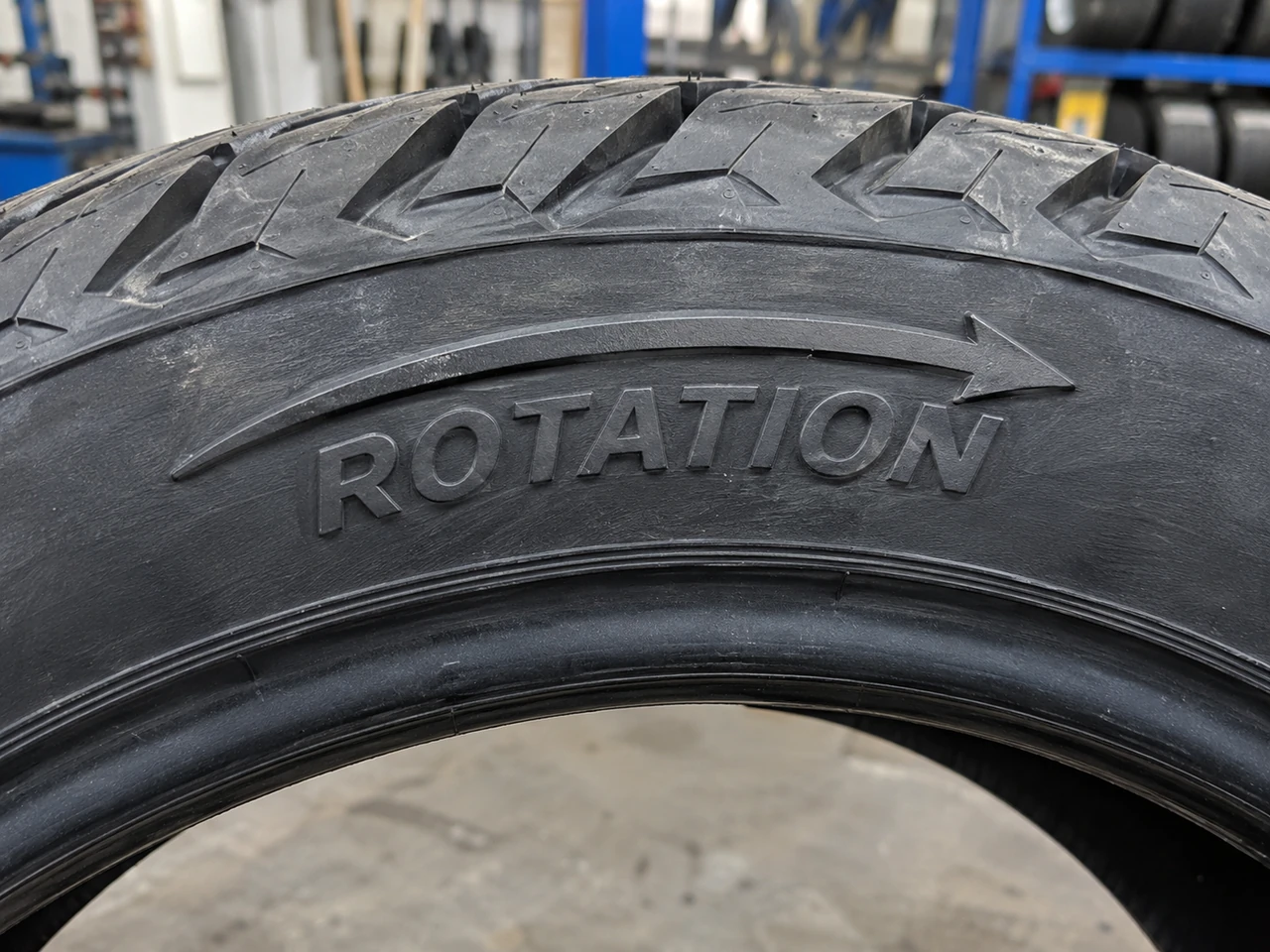
898. A directional tyre's rotation arrow can be ignored when fitting it.
A directional tyre must be fitted so its indicated direction matches the wheel's rotation when travelling forwards. Follow the tyre manufacturer's markings and have the fitting checked if you are unsure.
🔗 Sources
Michelin (manufacturer guidance) • Safety guidance, directional tread and rotation arrows
Image credit: AI-generated
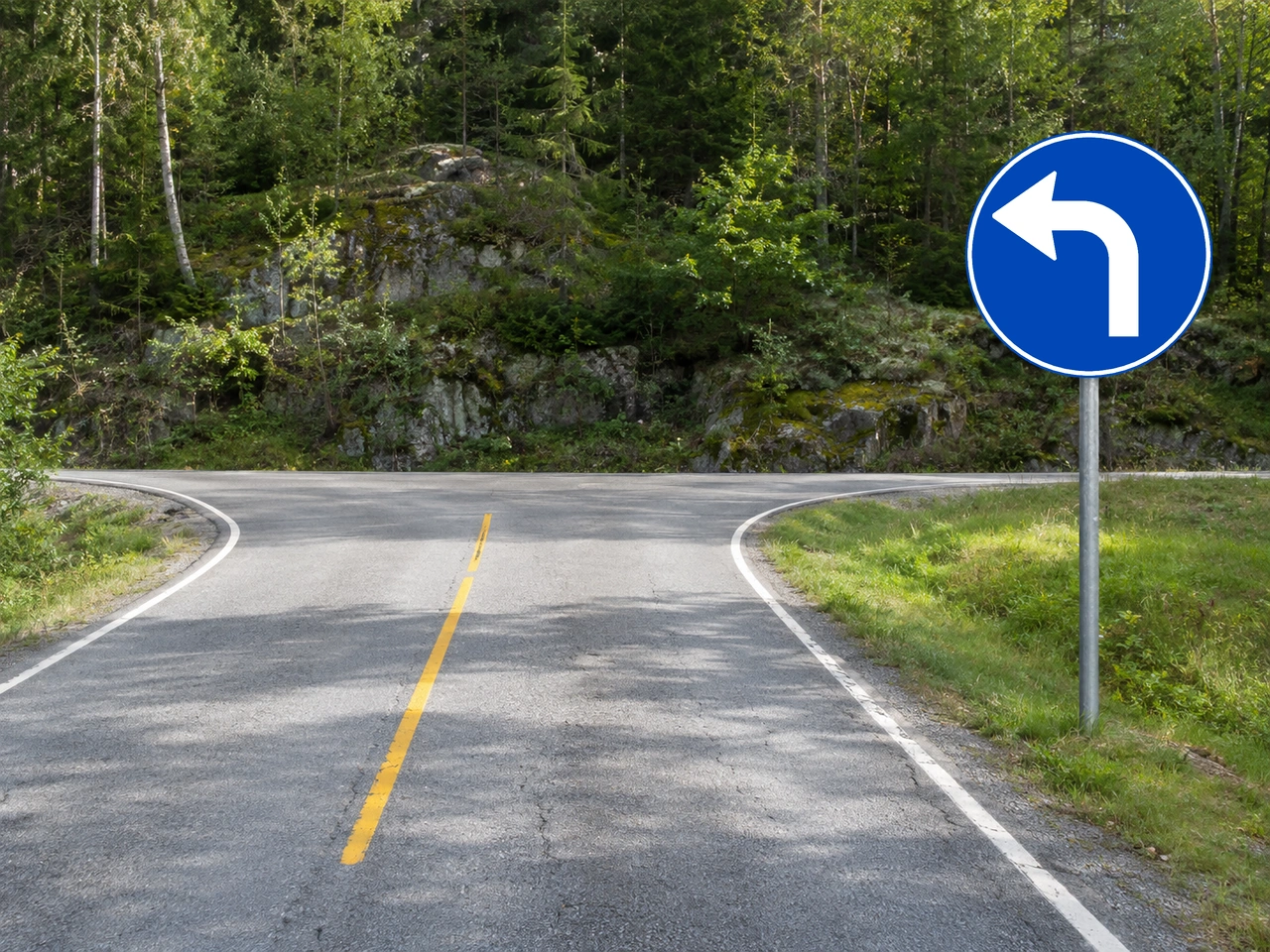
899. The blue circular bent left arrow shown requires drivers to turn left.
This mandatory direction sign requires drivers to follow the indicated left turn. It is different from a one-way-street information sign. No exemption panel is shown.
🔗 Sources
Norway • Skiltforskriften • Sign 402.5
Statens vegvesen • Official traffic-sign meanings
Statens vegvesen • Official sign artwork
Official Norwegian sign artwork: Statens vegvesen, sign 402.5, original EPS file 402_5.eps from the national sign artwork archive. Native symbol, orientation, borders and proportions retained. Colours use the authority's published PMS web swatches: blue PMS 293 and red PMS 179 where present. Original files and colour guidance. No third-party open licence is asserted for the government artwork.
Image credit: AI-generated background with source sign artwork resized and placed on the sign face.
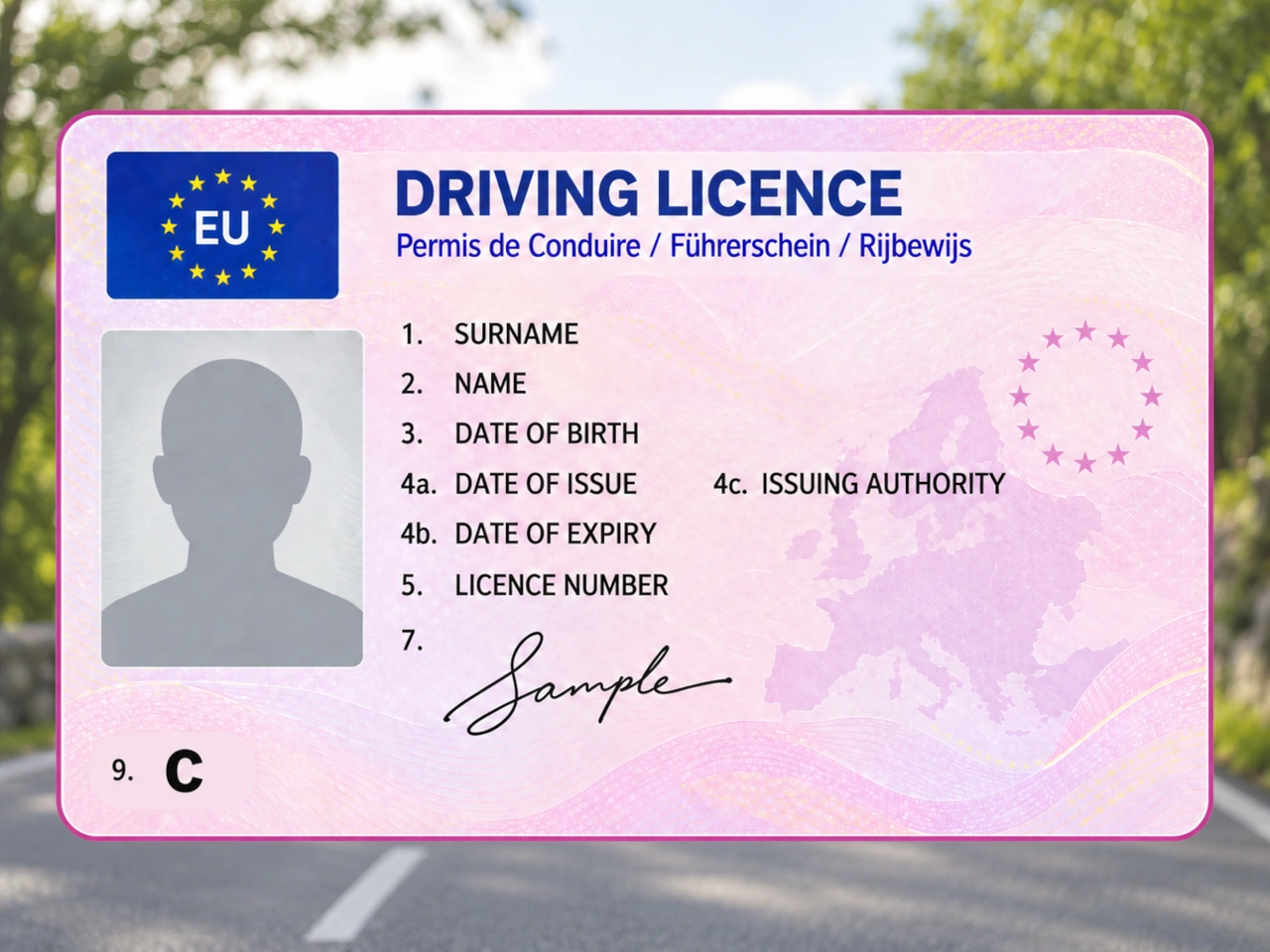
900. Which vehicle type is mainly associated with driving licence C?
Driving licence C is mainly associated with trucks. Category C1 covers smaller heavy vehicles, C covers larger heavy vehicles, and C1E and CE allow heavier trailers.
Norway. You normally need to be 21 and already hold category B. Mandatory training for the Driver Certificate of Professional Competence can allow earlier access.