


QuizTraffic rulesNorway
Test your knowledge with our multiple-choice quiz. Learn from each answer and improve your understanding of the traffic rules and road signs of Norway.
 Traffic signs
 Traffic rules
 Norway
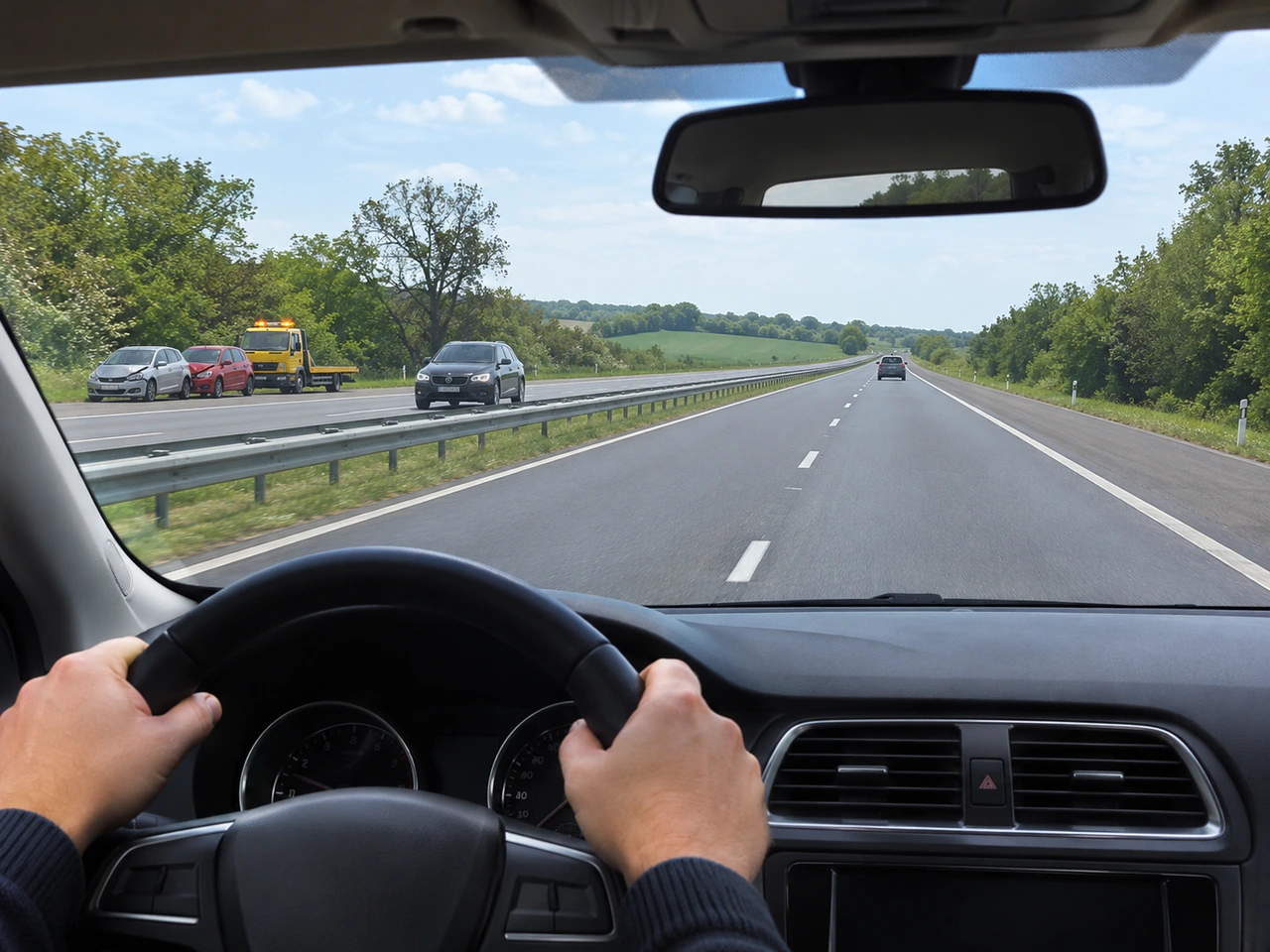
901. Why should you avoid slowing just to look at a collision on the opposite carriageway?
Keep watching your own road and maintain a safe gap. Slow when hazards or instructions require it, but do not brake or stop merely to watch an incident across the central reservation.

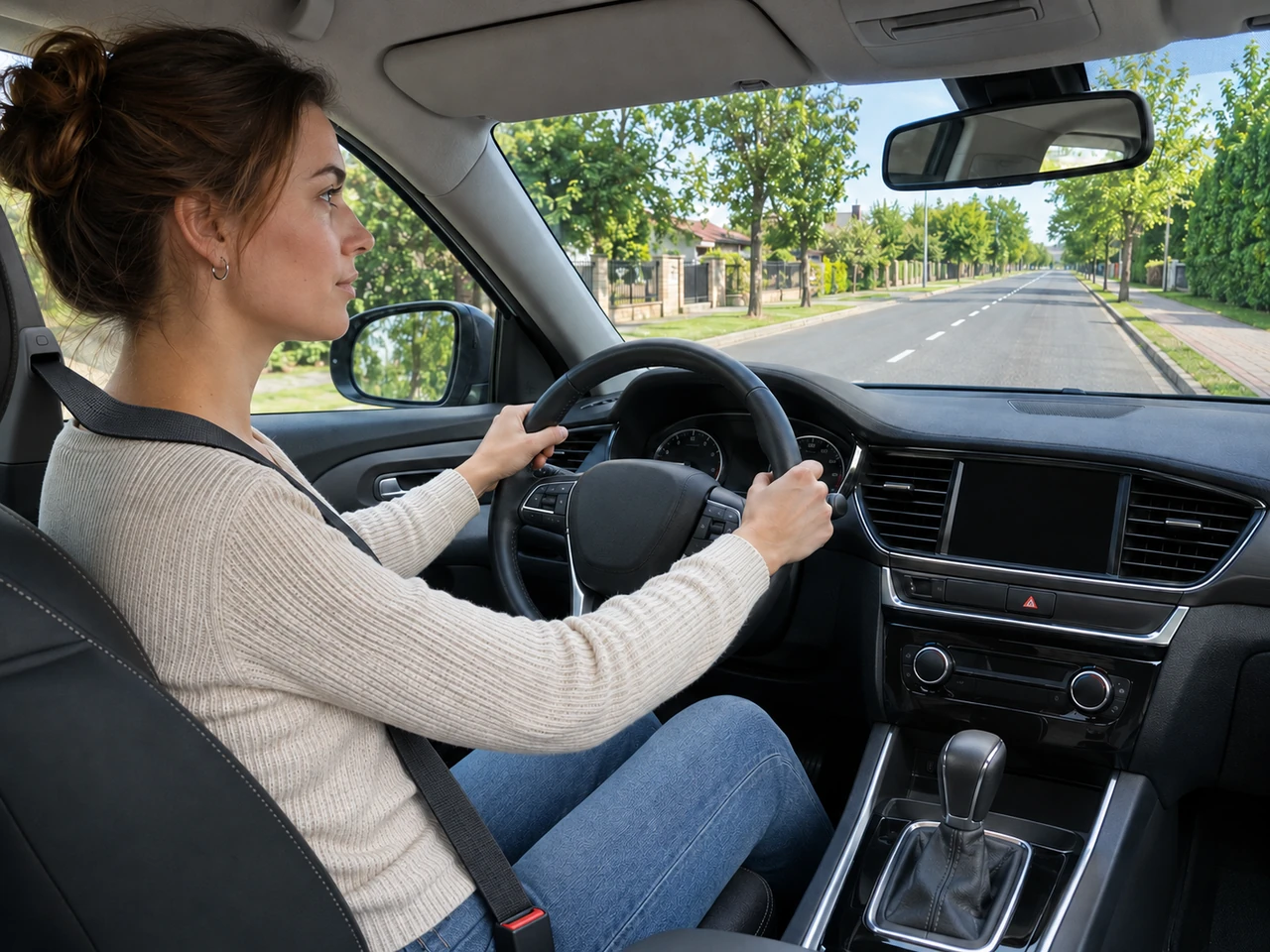
902. You should stay focused on the road and avoid unnecessary distractions.
Distractions reduce awareness and reaction time, making driving more dangerous.
🔗 Sources
The Highway Code (Great Britain) • Safety guidance, Rules 148–150
Image credit: AI-generated
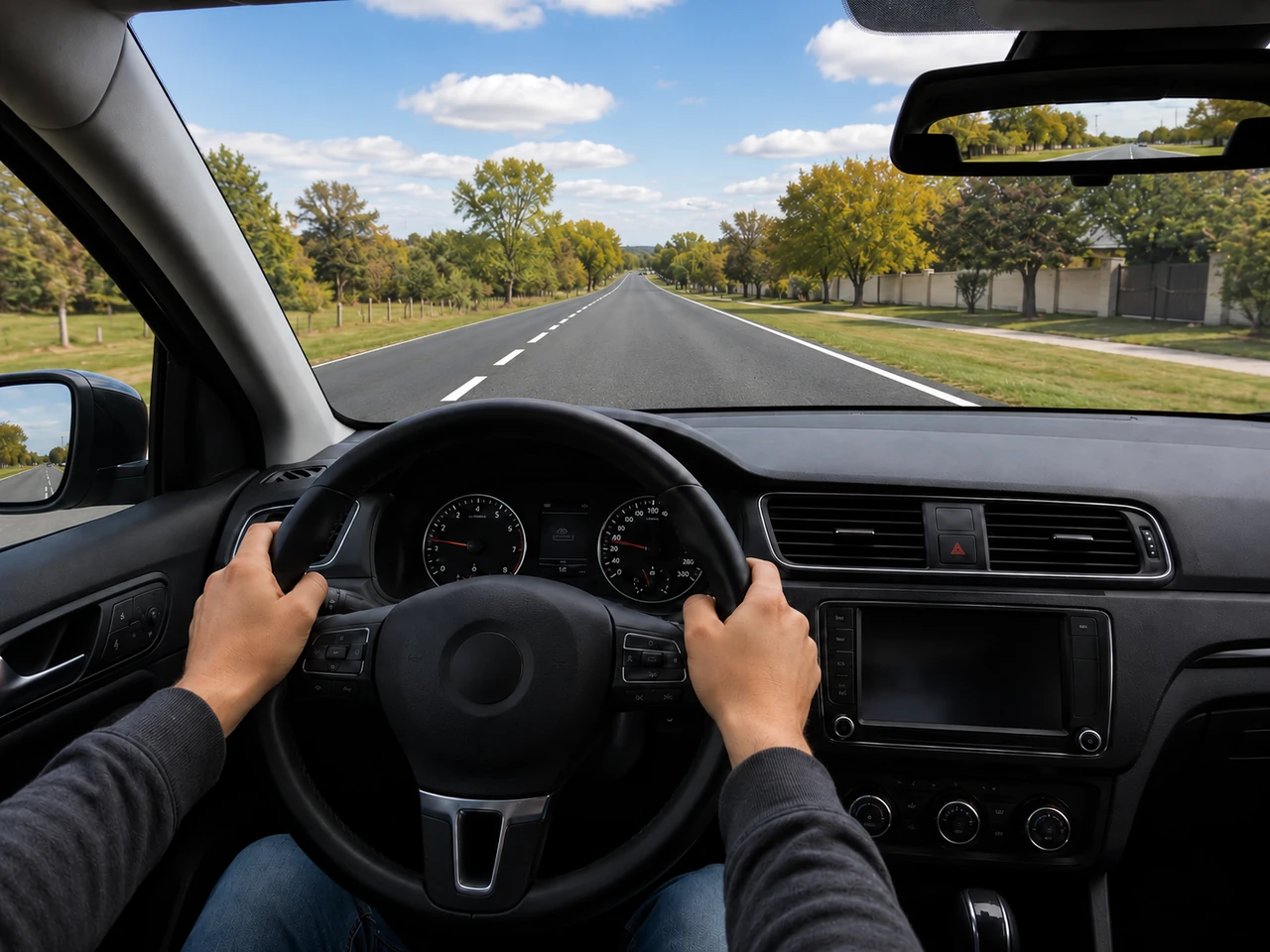
903. You should keep both hands on the steering wheel whenever possible.
Using both hands where possible helps you maintain steering control. Keep control of the vehicle when briefly using a gear lever or another necessary control.
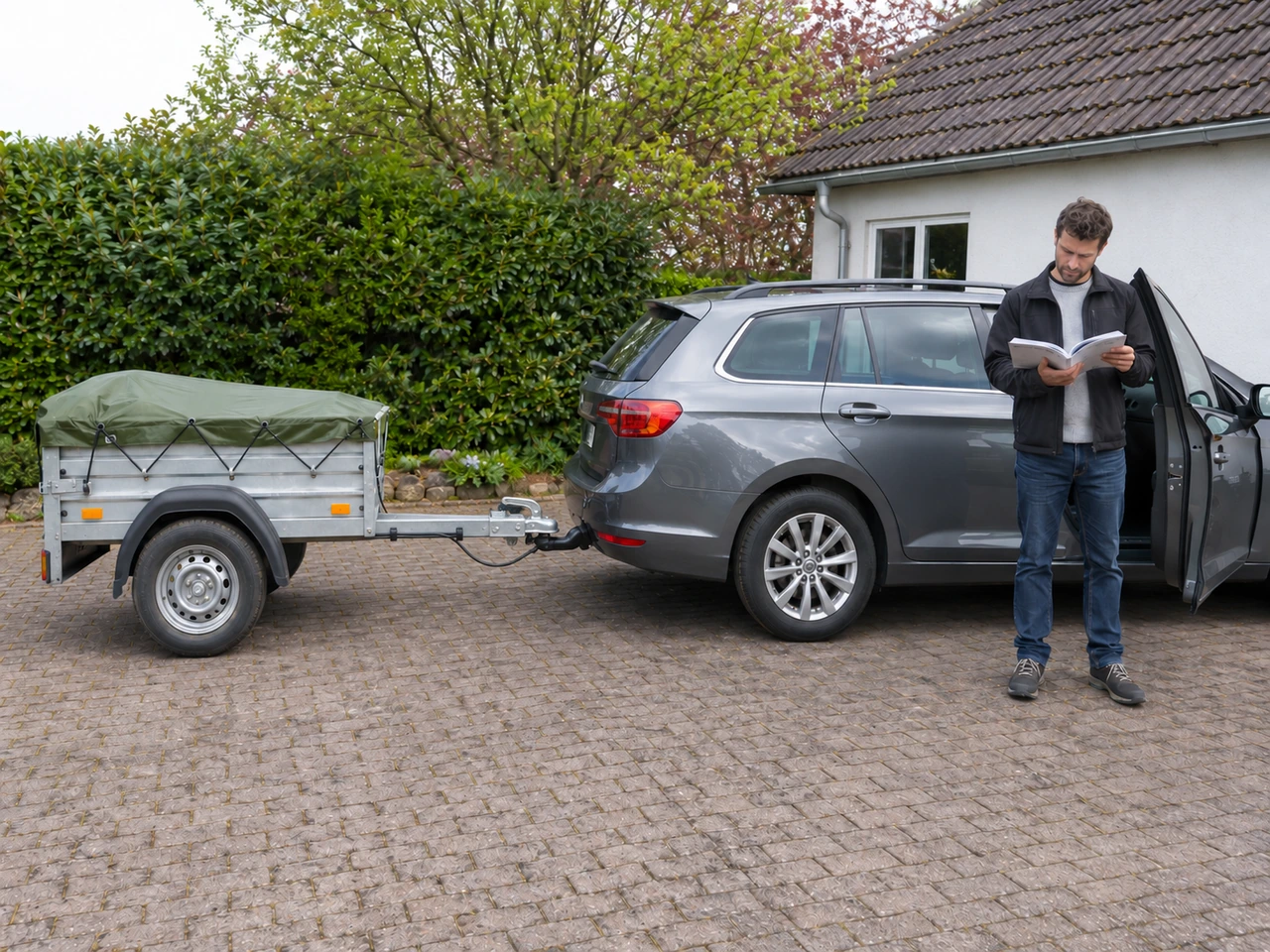
904. What else must you check when your licence allows you to tow a trailer?
The correct driving entitlement does not override the towing and load limits. Check the limits for the towing vehicle, trailer, combination and coupling, including any braking requirements, using the vehicle information and local rules.
🔗 Sources
GOV.UK — Great Britain
GOV.UK — Great Britain
qld.gov.au — Australian public authority
Image credit: AI-generated
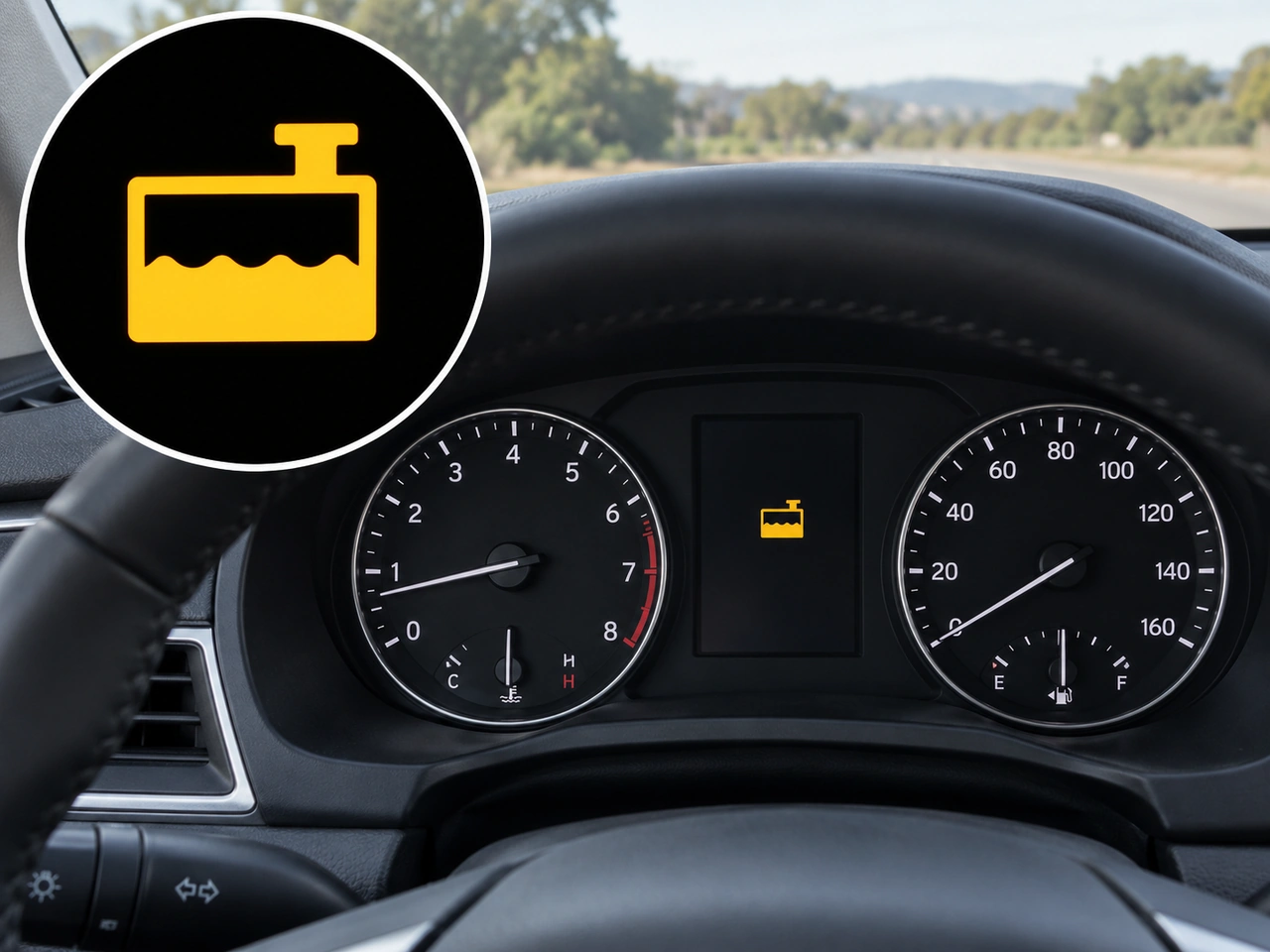
905. What can this cooling-system warning indicate?
A cooling-system warning can indicate low coolant, excessive coolant temperature or a system fault. Check any accompanying message for details.
If a red cooling-system warning comes on while driving, pull over safely and switch off the engine. Let it cool completely before checking the coolant level or opening the reservoir.
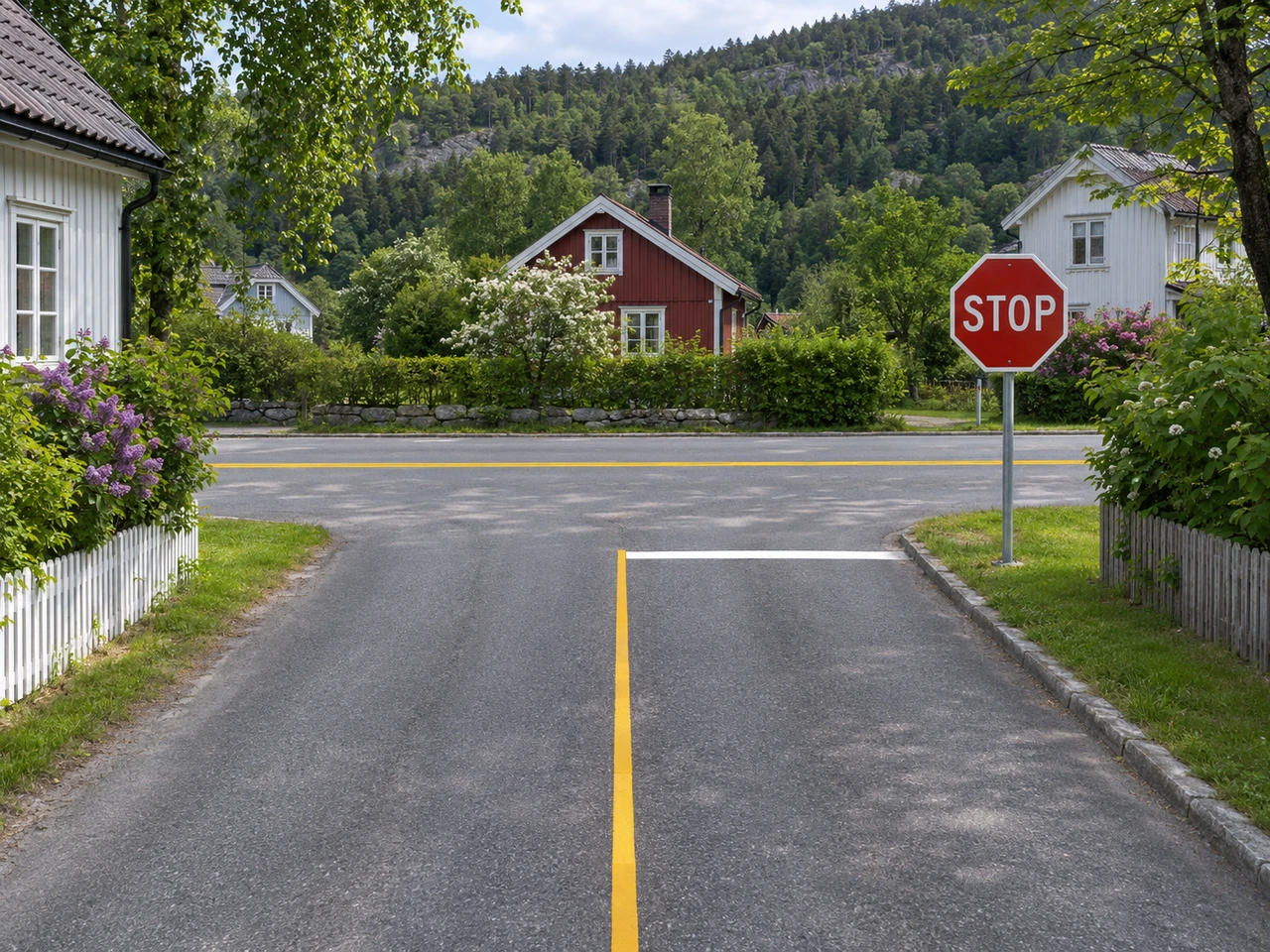
906. What colour is a stop sign usually?
A stop sign has a red background. Come to a complete stop at the required stopping point.
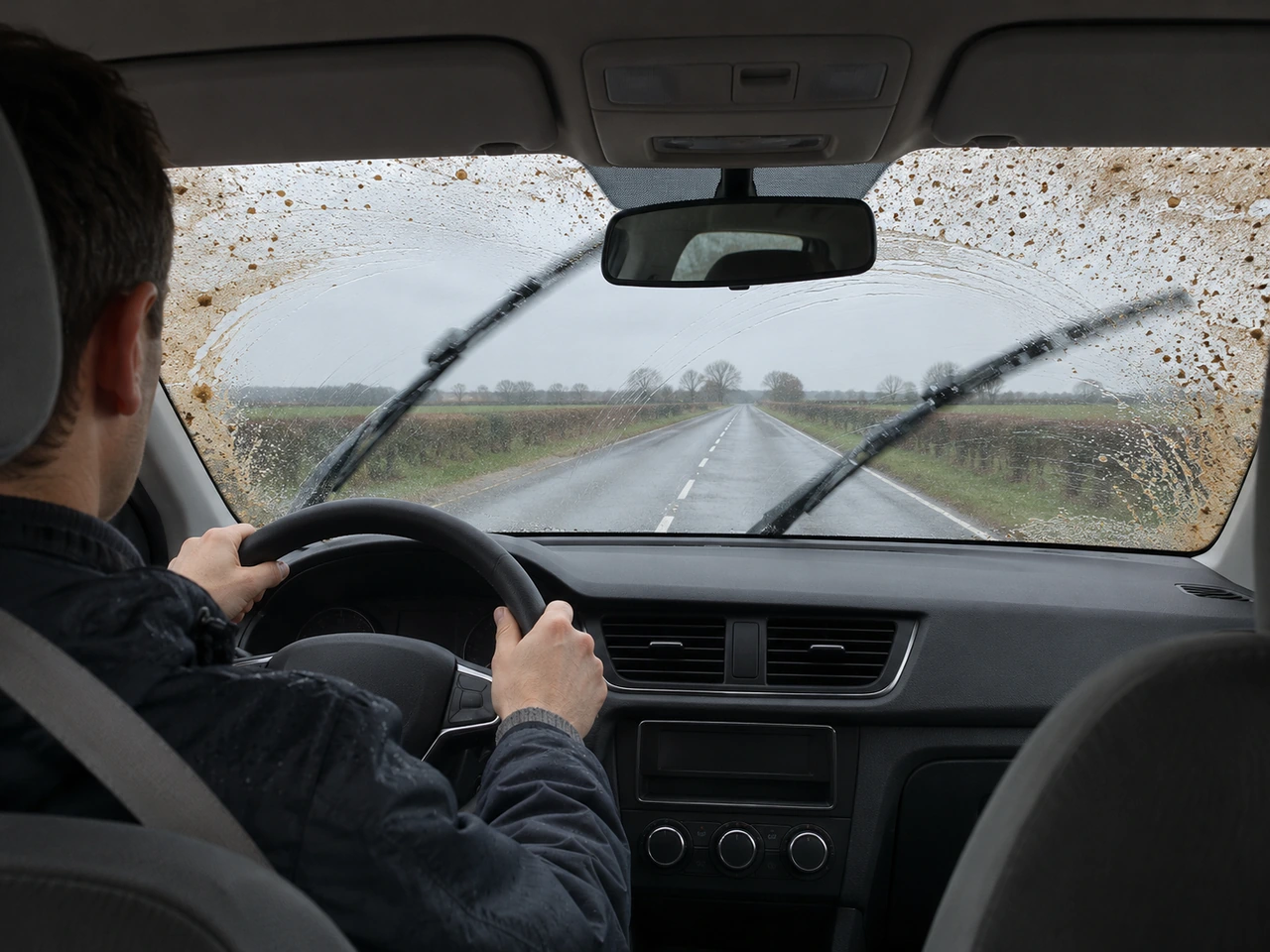
907. What should you do if your windscreen becomes covered with mud or spray?
Mud and road spray can suddenly hide hazards. Ease off the accelerator, slow down safely and use washer fluid with the wipers to clear the glass. Leave enough space behind other vehicles to reduce spray and improve your view. If the glass does not clear sufficiently, stop somewhere safe to clean it; do not continue driving without a clear view.
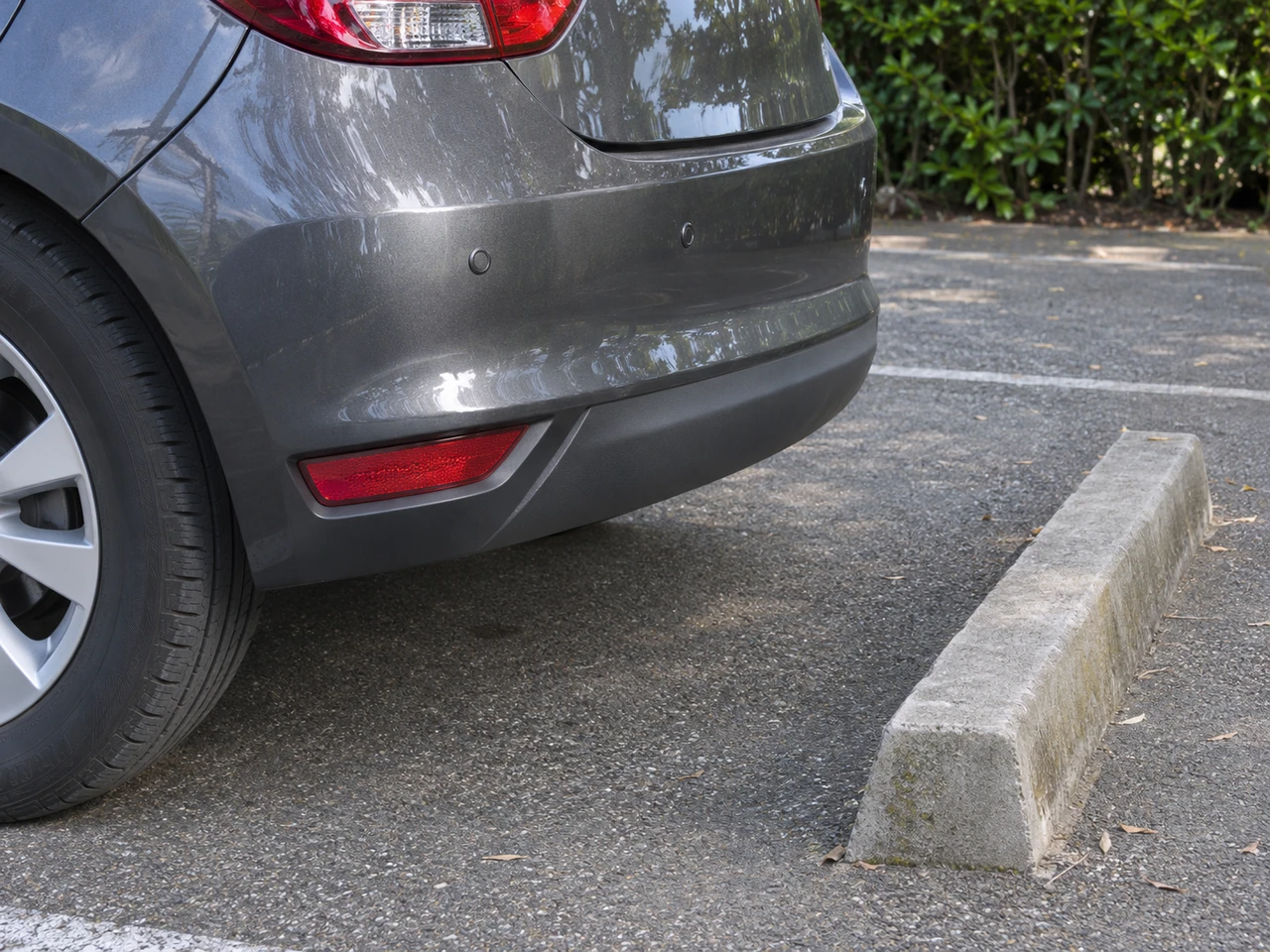
908. Parking sensors are guaranteed to detect every nearby obstacle.
Small or low objects may go undetected. Keep checking all around and stop if you cannot confirm that the path is clear. Use the sensors as an aid and follow the vehicle handbook.
🔗 Sources
Ford owner’s manual (manufacturer guidance) • Safety guidance, parking-aid limitations; follow your vehicle’s handbook
Image credit: AI-generated
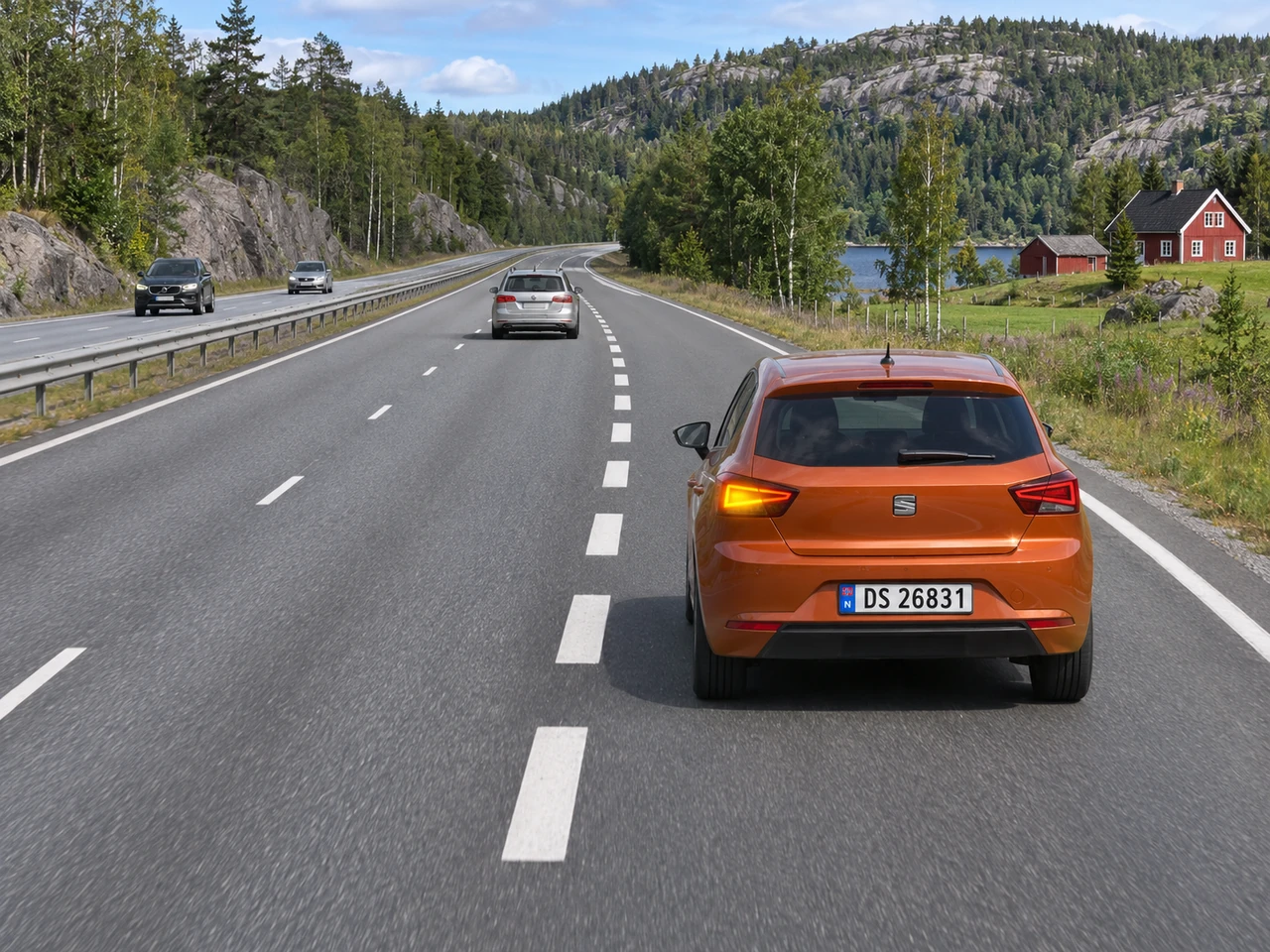
909. Why should you adjust your speed before merging onto a motorway?
Adjust your speed within the speed limit to fit safely into the traffic flow. Check your mirrors and blind spots, signal, and enter only when there is a safe gap.
Use the acceleration lane to adjust your speed to the lane you plan to enter, within the applicable speed limit.
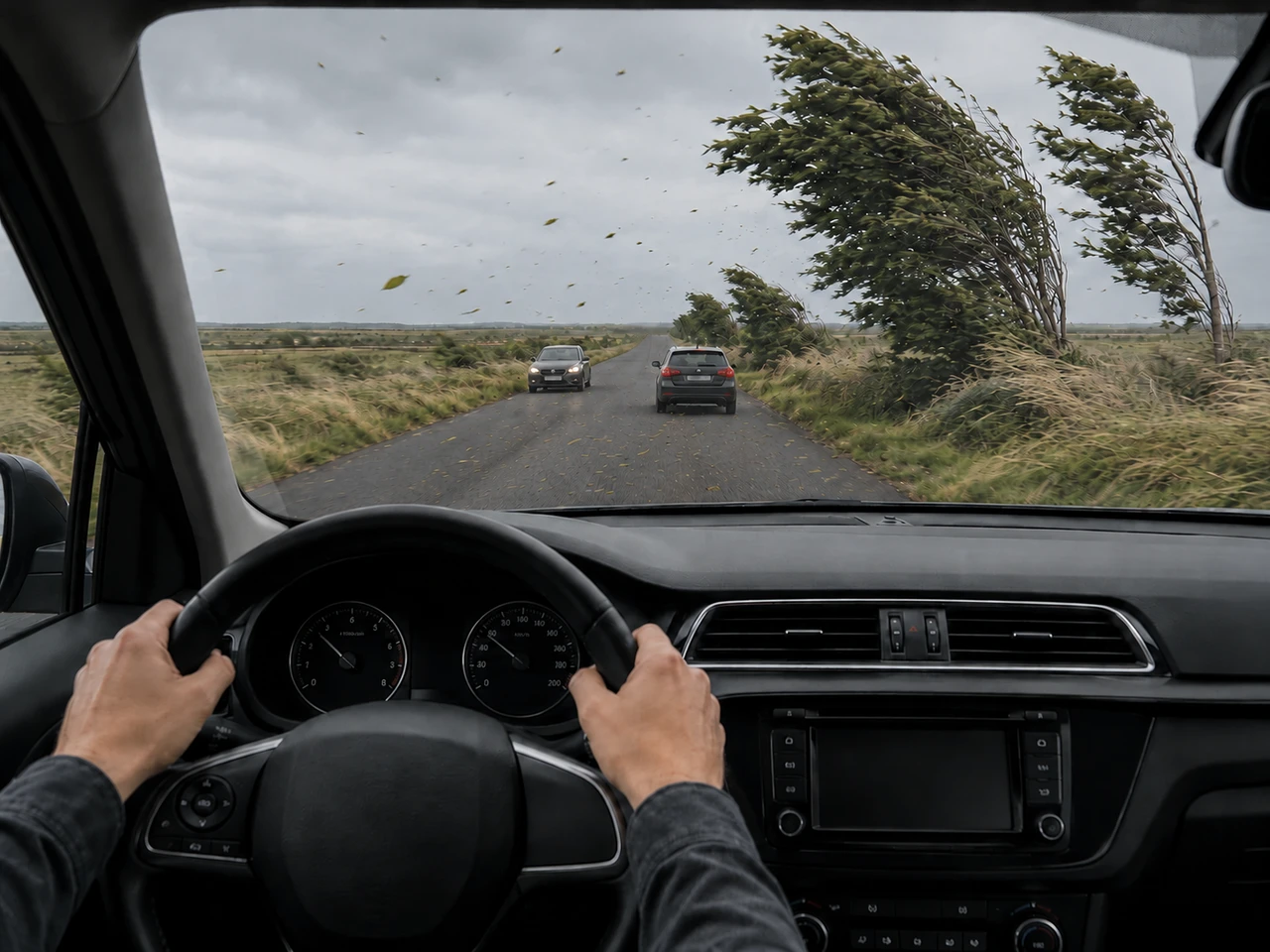
910. What should you do if strong winds push your vehicle sideways?
Look along your intended path, keep both hands on the wheel and make small, smooth corrections to maintain your lane. Ease off the accelerator to reduce speed as conditions require. Avoid an abrupt swerve or hard braking merely to counter the gust. Stay alert to other vehicles moving sideways. Emergency braking may still be necessary for an immediate hazard.
Norway. Section 6 requires the driver to retain full control. Ease speed and make smooth steering corrections rather than allowing a gust to carry the vehicle across the centre line.
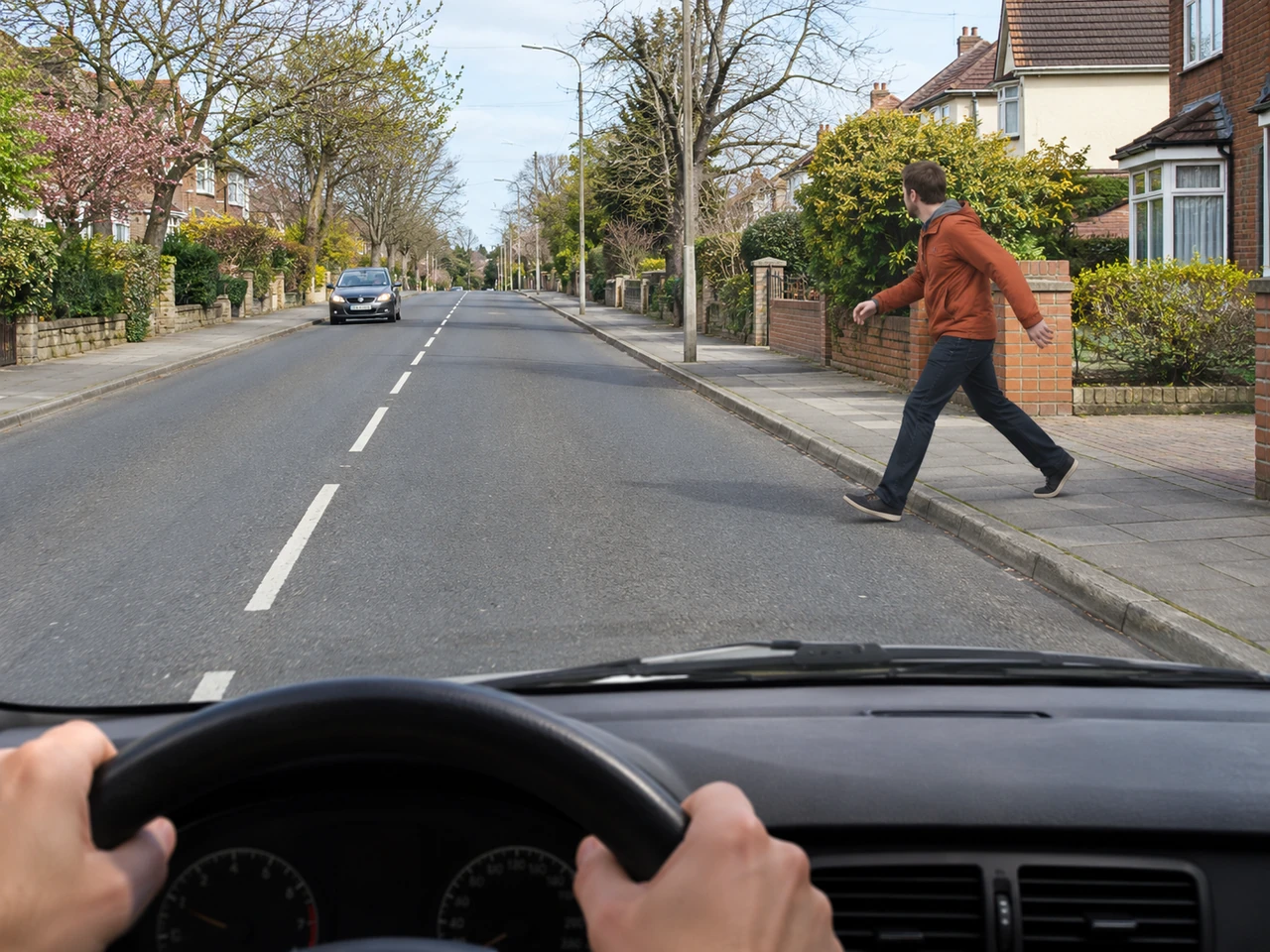
911. Why should pedestrians avoid sudden movements near traffic?
Stepping suddenly into the road can leave a driver too little time to react and stop. Stop before the kerb, look and listen for traffic in all directions, and cross only when it is safe. Walk across rather than running. The image shows unsafe behaviour.
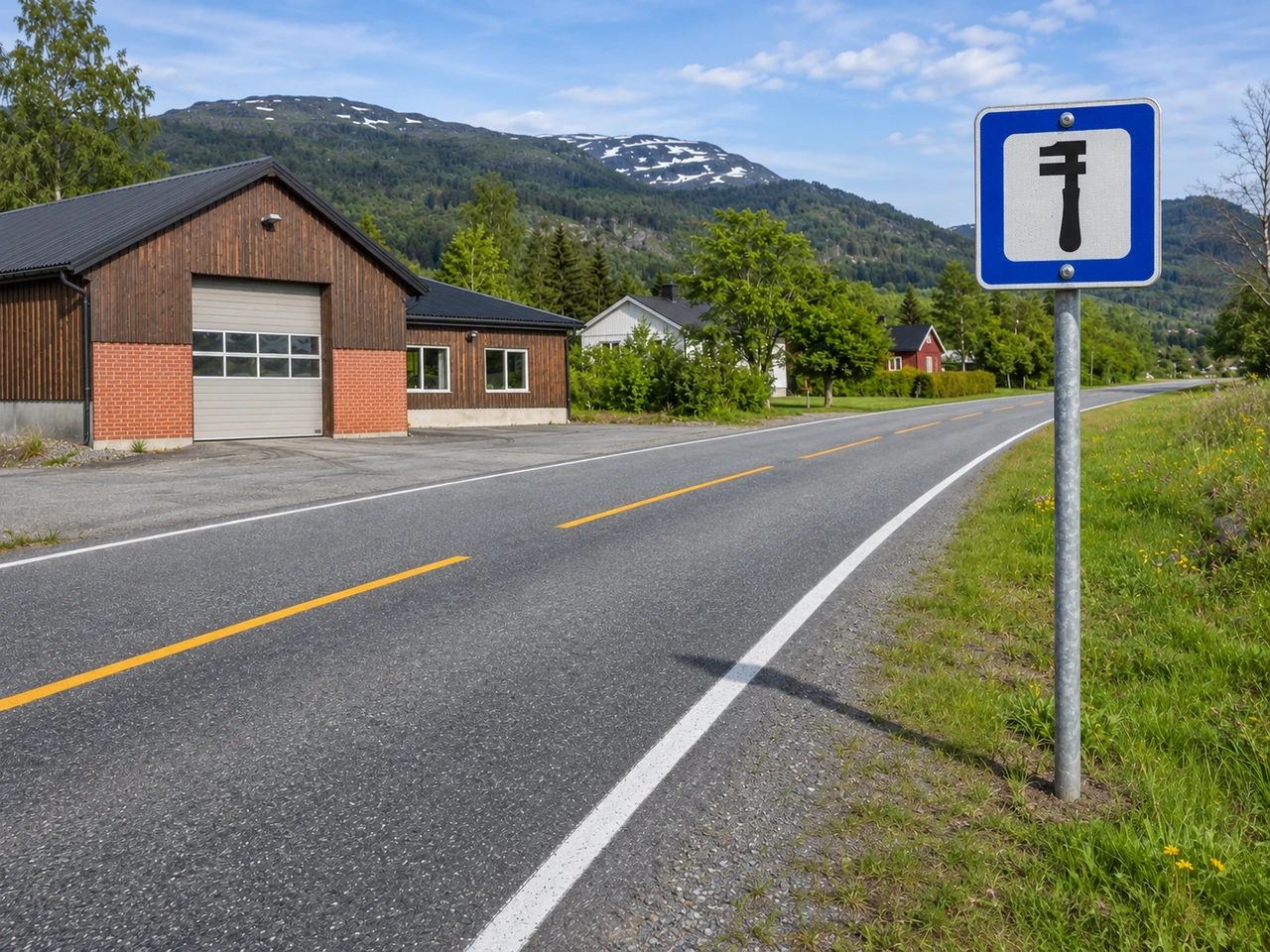
912. The blue repair-tool sign requires every driver to stop for a vehicle inspection.
The repair-tool symbol identifies a repair or vehicle-service facility. It does not order every passing driver to stop or undergo a vehicle inspection.
🔗 Sources
Norway • Skiltforskriften • Sign 608
Statens vegvesen • Official traffic-sign meanings
Statens vegvesen • Official sign artwork
Official Norwegian sign artwork: Statens vegvesen, sign 608, original EPS file 608_0.eps from the national sign artwork archive. Native pictogram, orientation, borders and proportions retained. Colours use the authority's published PMS web swatches: blue PMS 293 and red PMS 179 where present. Original files and colour guidance. No third-party open licence is asserted for the government artwork.

Image credit: AI-generated background with source sign artwork resized and placed on the sign face.
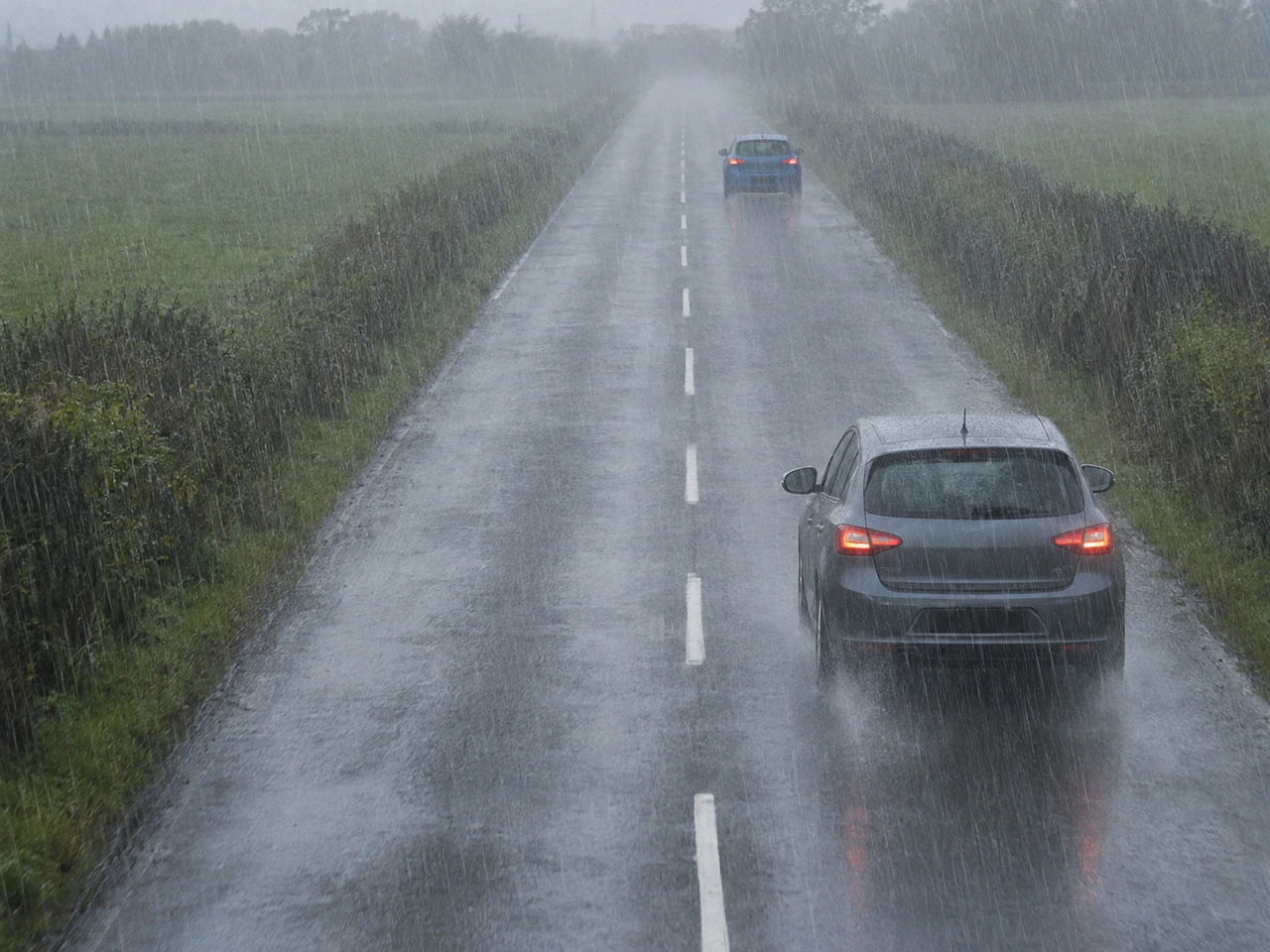
913. What should you do when driving through heavy rain?
Heavy rain reduces visibility and wet-road grip. Slow down smoothly and leave a larger following gap so you have more time to see hazards and stop. Avoid cruise control in these conditions. Before setting off, check the tyres, wipers and demisting system, and clean the windows inside and outside. If visibility becomes too poor, find a safe place to stop.
🔗 Sources
Great Britain — Highway Code, rule 227; general wet-road safety
Michelin — Technical aquaplaning explanation and prevention
Image credit: AI-generated
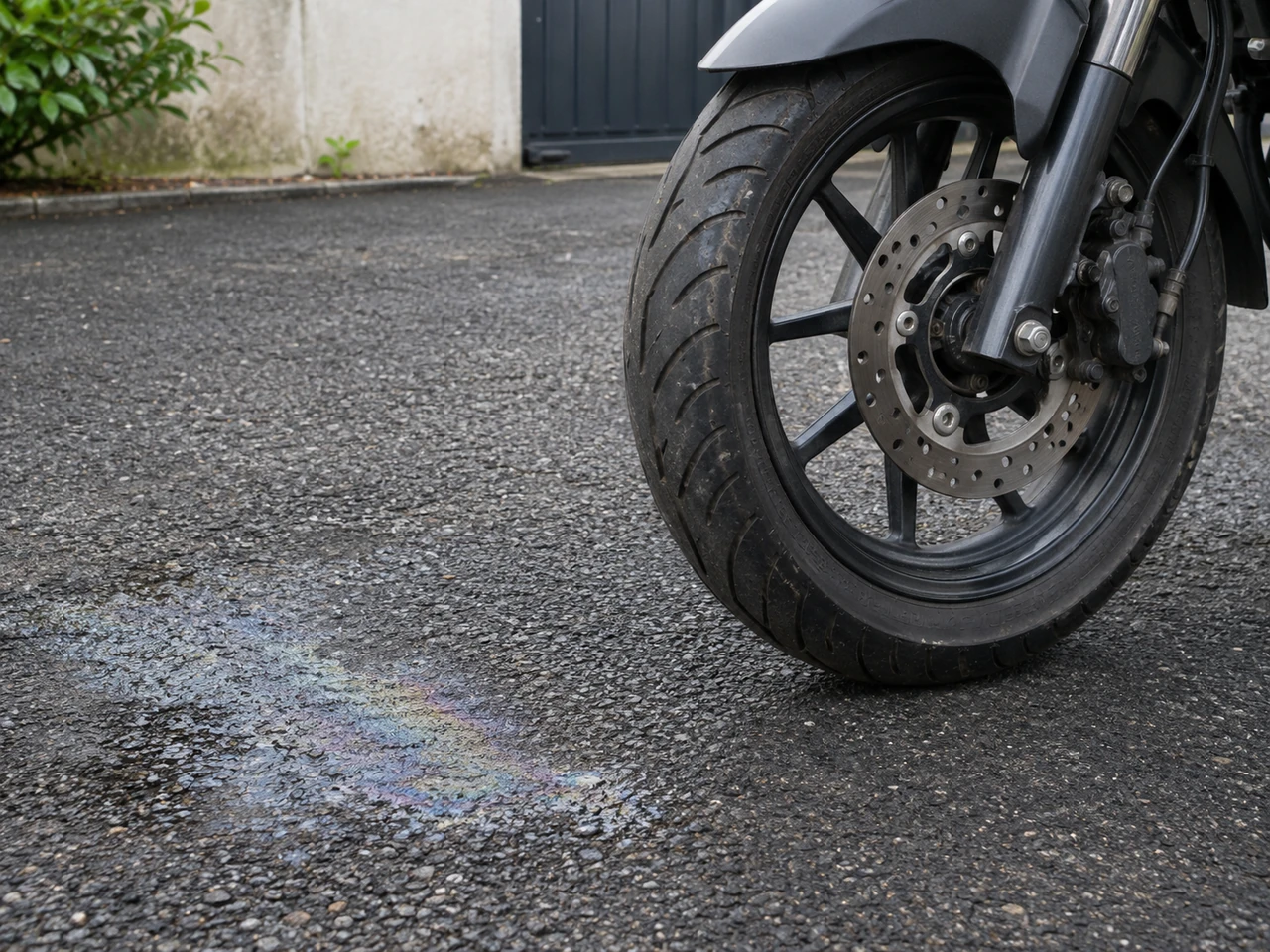
914. Diesel spilled on the road can reduce tyre grip.
Diesel can make the road slippery and is especially dangerous for motorcyclists. If you encounter a spill, avoid sudden braking, acceleration or steering and keep clear where it is safe to do so.
🔗 Sources
The Highway Code (Great Britain) • Safety guidance, diesel spillage and reduced tyre grip
Image credit: AI-generated
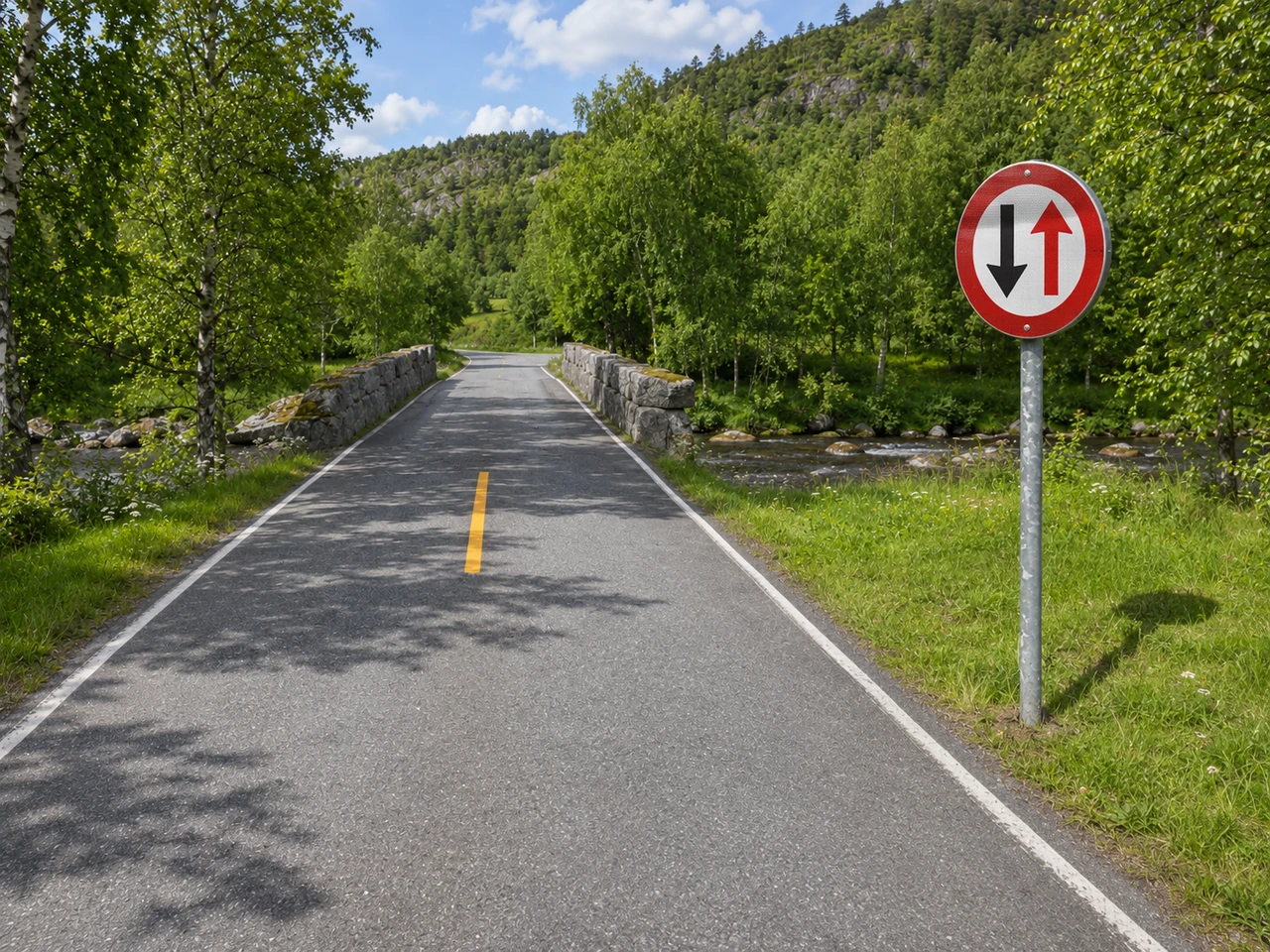
915. The red-bordered sign with opposing arrows requires you to give way to oncoming traffic.
The sign gives priority to oncoming traffic. You must wait if proceeding would conflict with it. It is different from the blue sign that gives you priority over oncoming traffic.
🔗 Sources
Statens vegvesen • Traffic signs • 212 Vikeplikt overfor møtende kjørende
Official Norwegian sign artwork: Statens vegvesen, sign 212, original EPS file 212_0.eps from the national sign artwork archive. Native geometry, orientation, borders and proportions retained. Colours use the authority's published PMS web swatches: red PMS 179, blue PMS 293 and yellow PMS 130 where present. Original files and colour guidance. No third-party open licence is asserted for the government artwork.
Image credit: AI-generated background with source sign artwork resized and placed on the sign face.
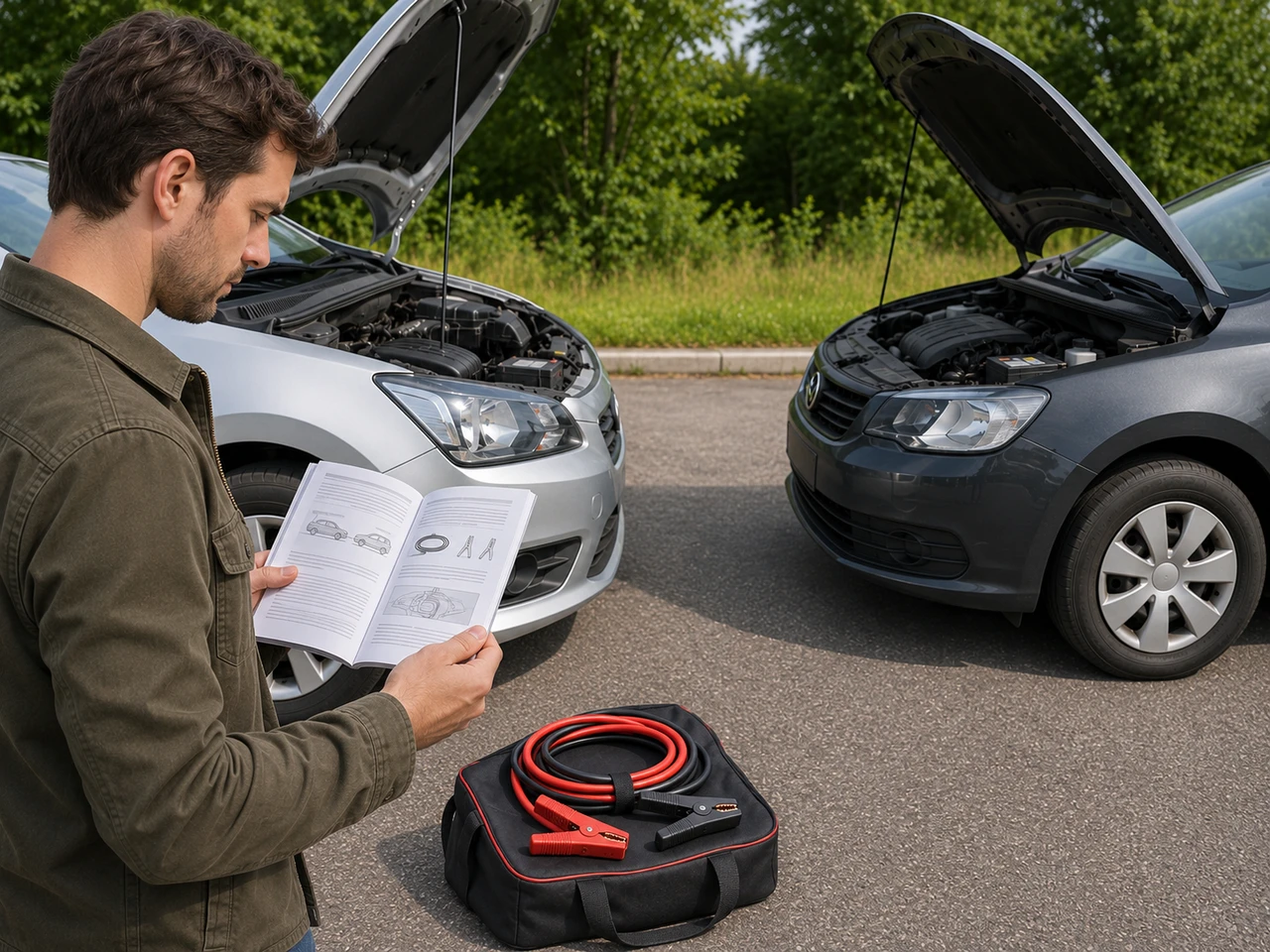
916. What should you do before attempting to jump-start a vehicle?
Check the handbooks for both vehicles, or for the vehicle and booster, before connecting any leads. Confirm that jump-starting is permitted, that the nominal voltages are compatible and that you can identify the designated connection points and specified order. Do not attempt to jump-start a damaged or frozen battery. Keep ignition sources away and protect your eyes. Never use a hybrid or electric vehicle as a donor unless its manufacturer permits it, and never use high-voltage components as connection points. If uncertain, request professional assistance.
Check the manufacturer instructions, voltage compatibility and earth polarity before attempting a jump-start. If compatibility is uncertain, obtain qualified assistance.
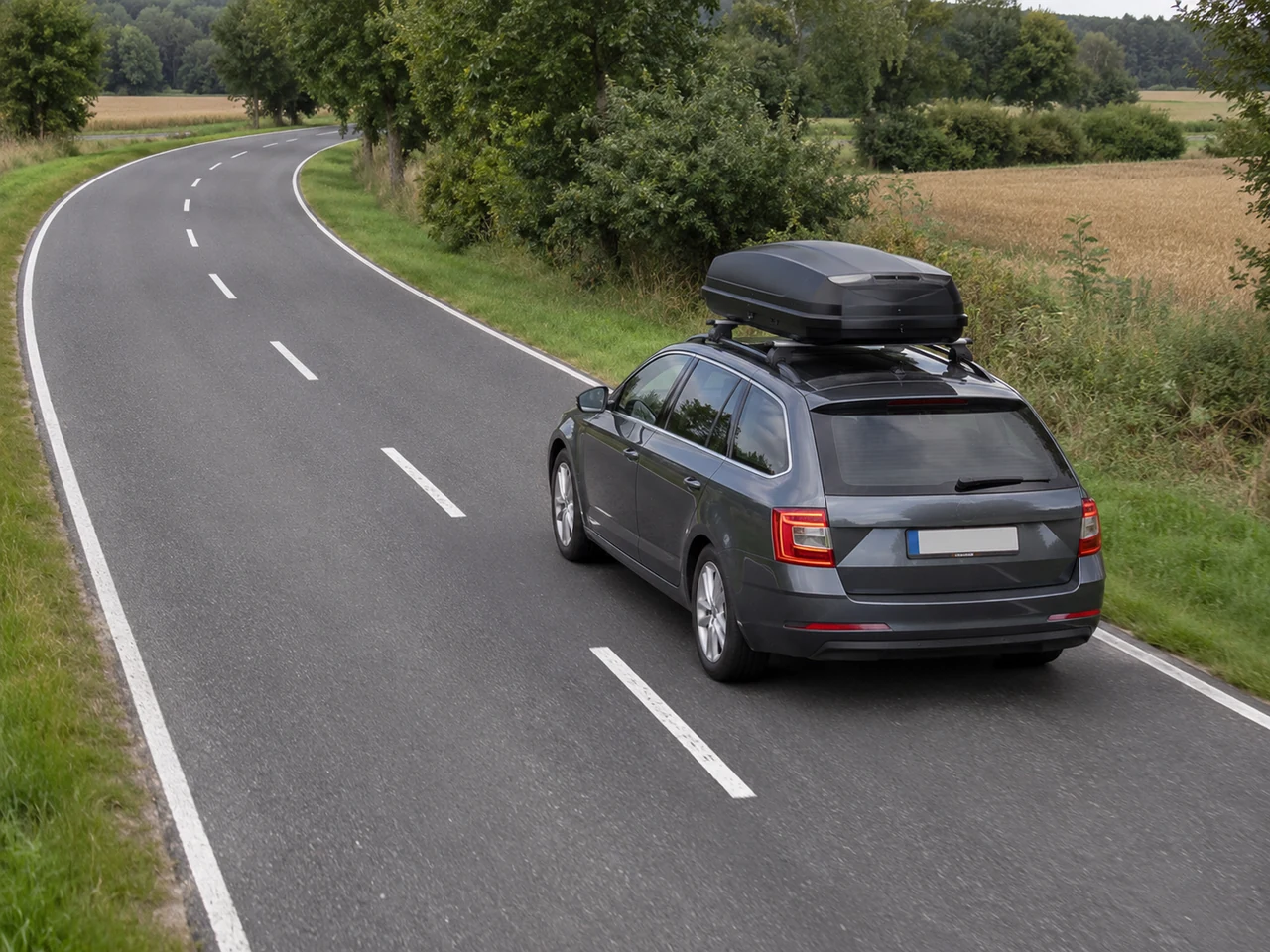
917. How can a roof load affect vehicle handling?
Weight carried high on the vehicle can increase body movement and make sudden steering or cornering less stable.
🔗 Sources
Norwegian Regulations on the Use of Vehicles, § 3-2, load placement
NZTA safe loading and towing guide, practical guidance
Image credit: AI-generated
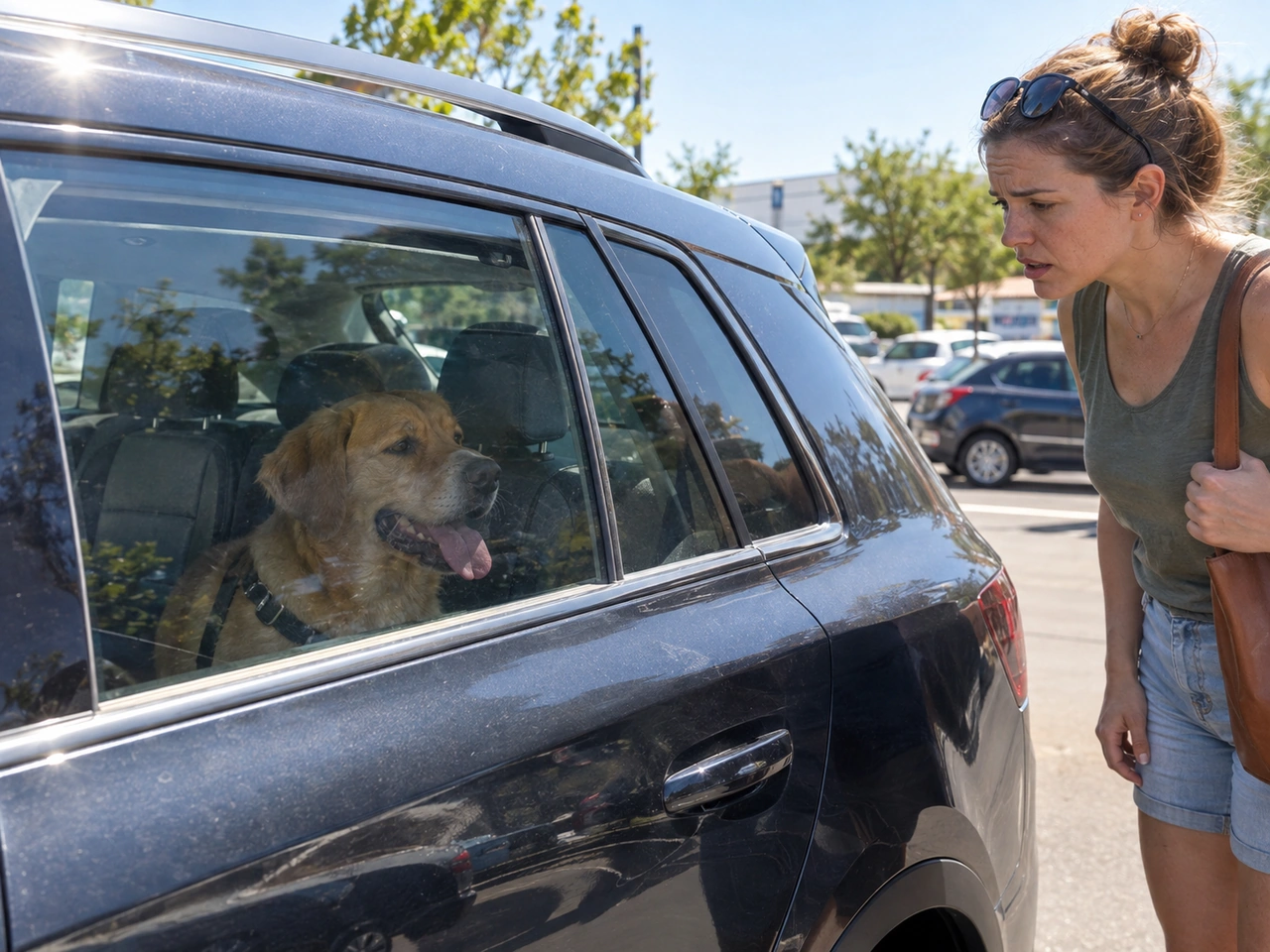
918. Why should you never leave a child or pet alone in a parked vehicle on a warm day?
The inside of a parked vehicle can heat up rapidly, even when the outside temperature does not feel extreme. Children and animals are particularly vulnerable to overheating and heatstroke. Leaving a window partly open does not make the vehicle safe.
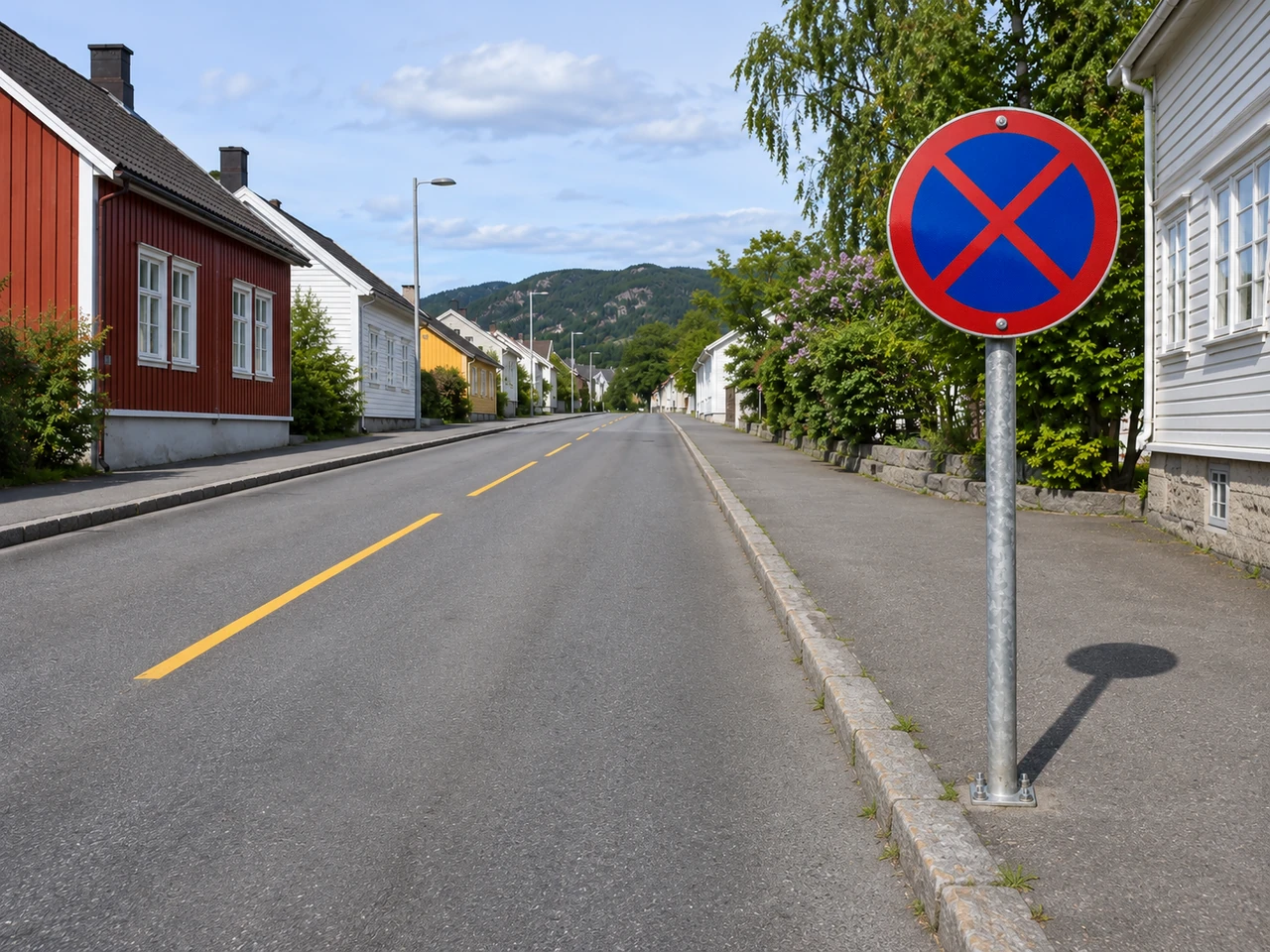
919. The blue circular sign with a red cross prohibits both stopping and parking.
This sign prohibits both stopping and parking. It must not be confused with the single-diagonal no-parking sign.
🔗 Sources
Norway • Skiltforskriften • Sign 370
Statens vegvesen • Official traffic-sign meanings
Statens vegvesen • Official sign artwork
Official Norwegian sign artwork: Statens vegvesen, sign 370, original EPS file 370_0.eps from the national sign artwork archive. Native symbol, orientation, borders and proportions retained. Colours use the authority's published PMS web swatches: blue PMS 293 and red PMS 179 where present. Original files and colour guidance. No third-party open licence is asserted for the government artwork.
Image credit: AI-generated background with source sign artwork resized and placed on the sign face.
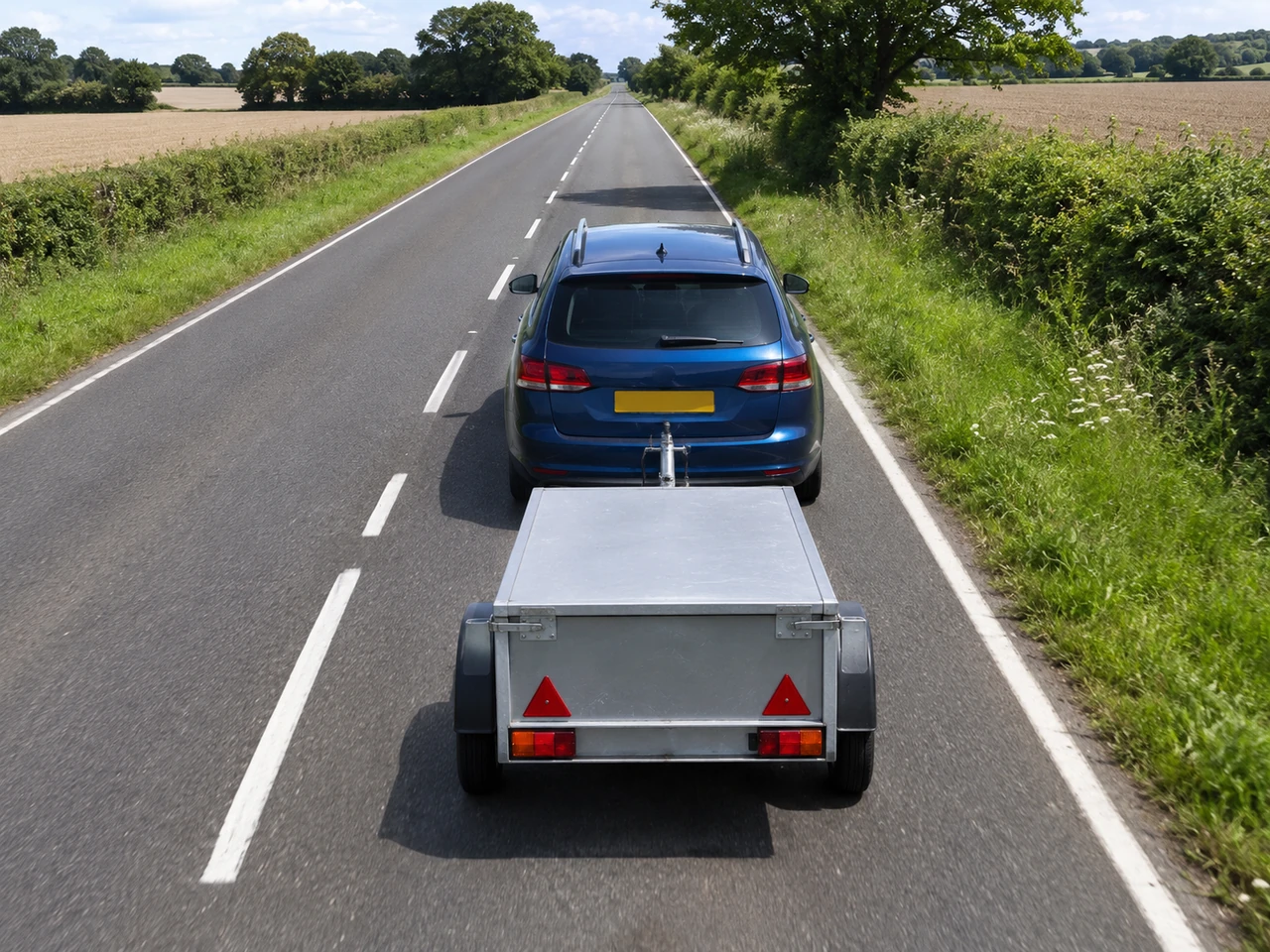
920. Towing a trailer can increase your stopping distance.
A trailer changes how the vehicle responds when braking. Allow more room to stop and follow the towing guidance for your vehicle and trailer.
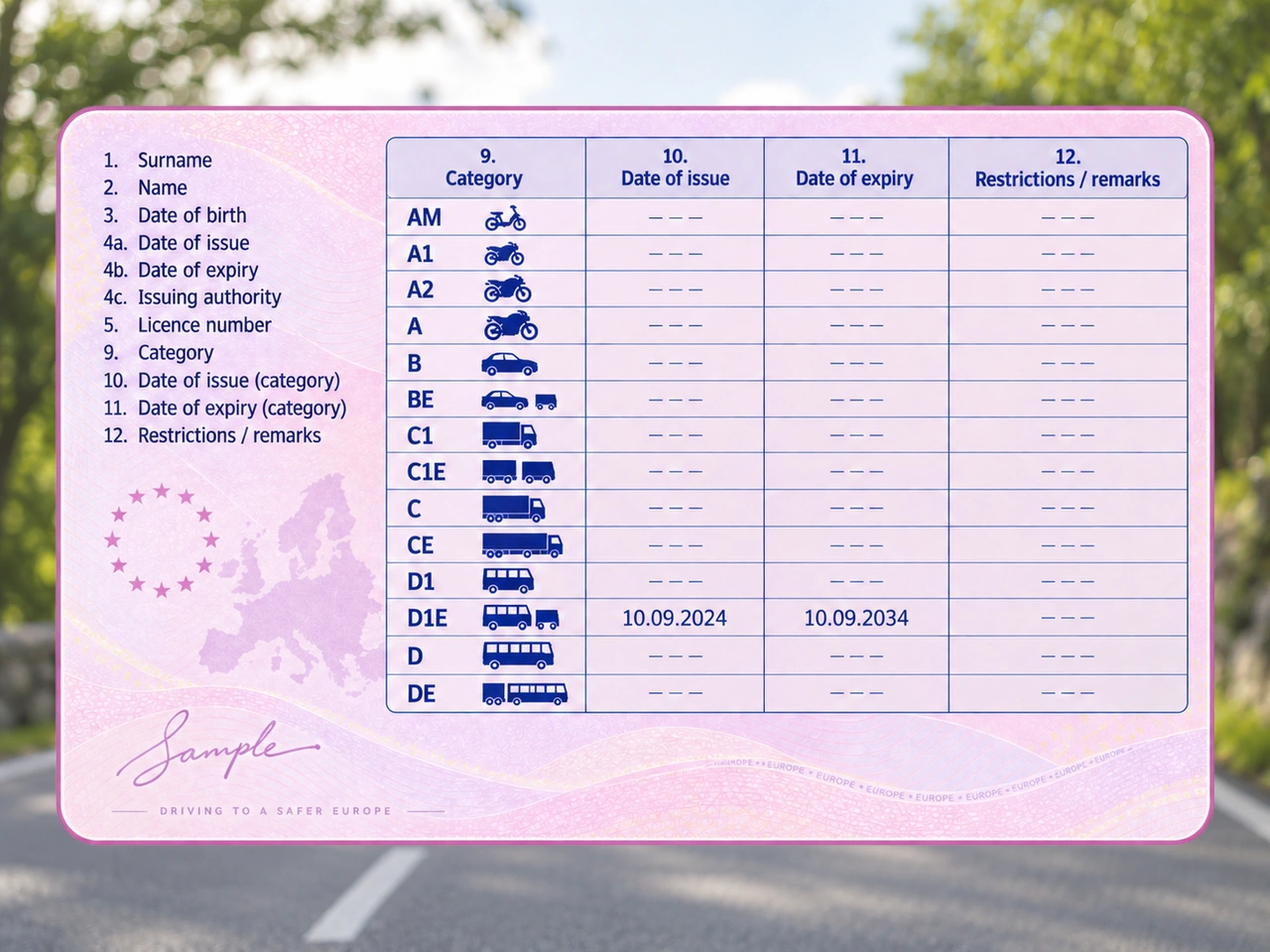
921. Which vehicle combination requires category D1E?
Category D1E covers combinations consisting of a category D1 vehicle and a trailer with a maximum authorised mass above 750 kg.
Norway. D1E extends D1 to heavier trailers. The towing vehicle still has to meet the D1 passenger and length limits.
🔗 Sources
EUR-Lex · Directive 2006/126/EC on driving licences · Article 4(4)(i)
Image credit: AI-generated
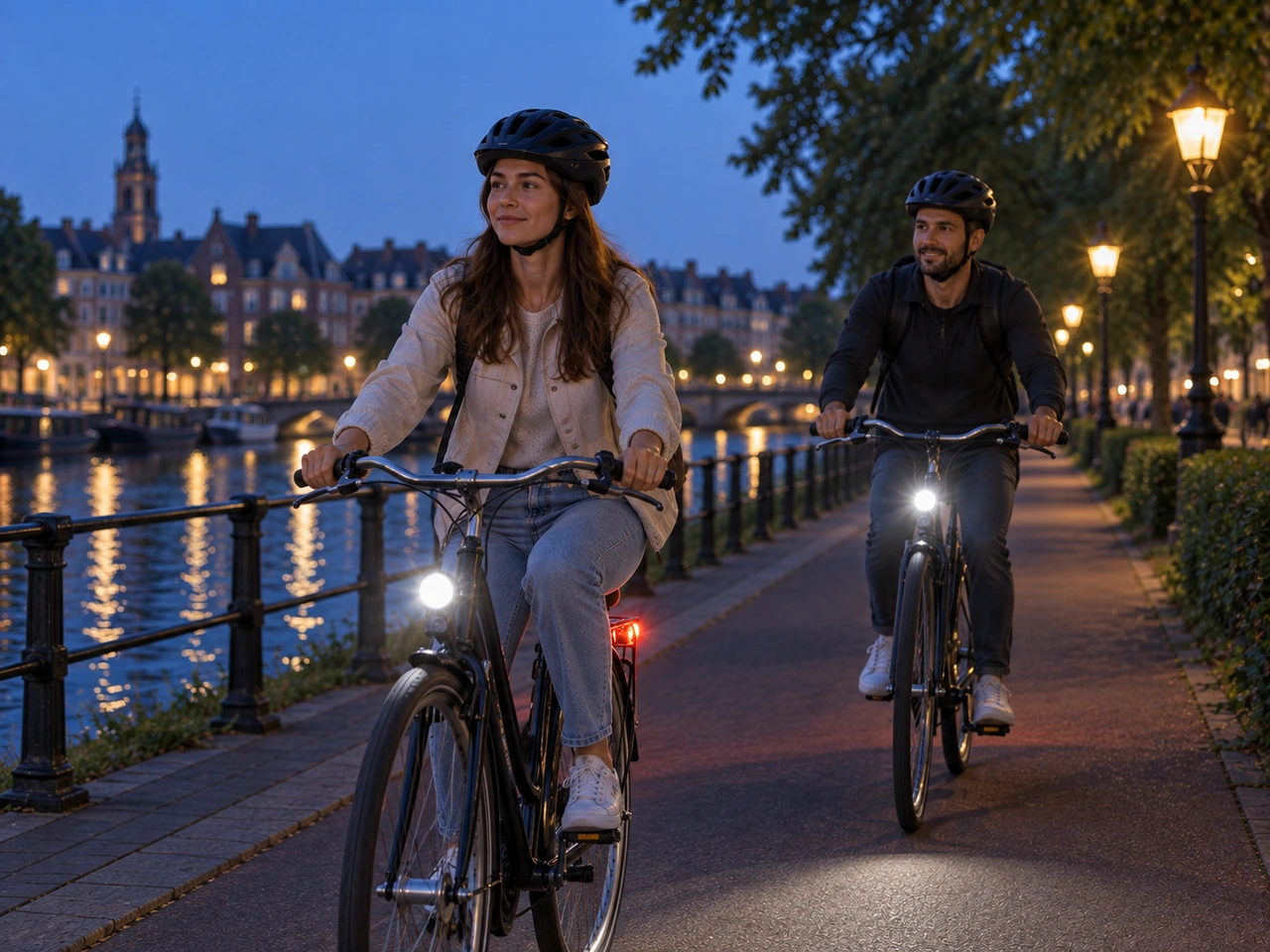
922. Are bicycle lights required at night?
Cyclists in Norway are generally required to use bicycle lights at night.
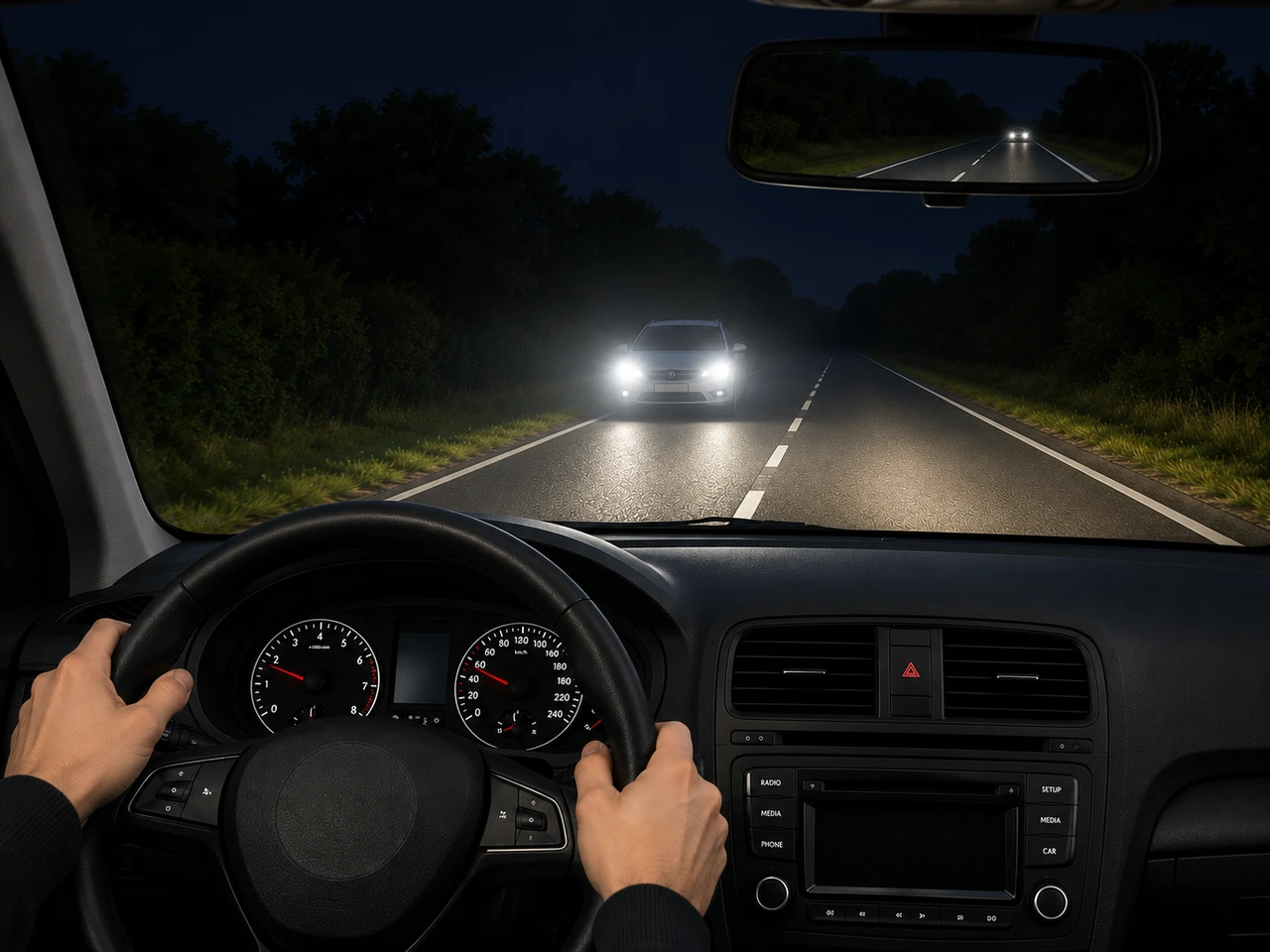
923. What should you do if your main beam could dazzle another driver?
Main beam can dazzle other road users and reduce their visibility. Switch to dipped headlights whenever your main beam could dazzle another driver.
Norway. Use dipped headlights when main beam could dazzle someone. The rule also covers trains, trams and vessels travelling alongside the road.
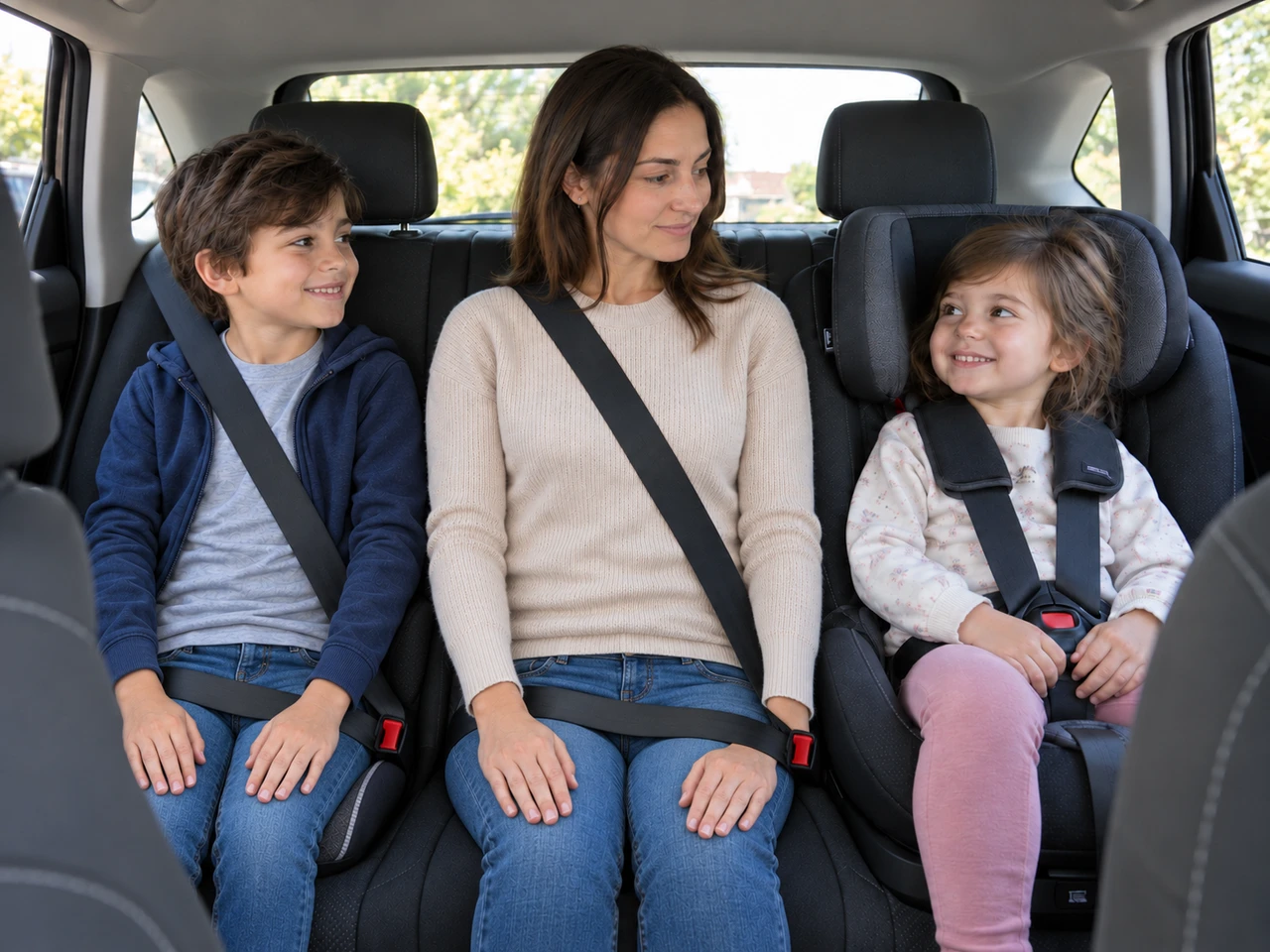
924. Should rear-seat passengers be securely restrained?
Rear-seat passengers should be securely restrained using seat belts or suitable child restraints as appropriate. Proper restraint reduces the risk of serious injury and prevents occupants from being thrown around or forwards in a collision.
Norway. The driver is responsible for making sure passengers under 15 are correctly restrained, including those seated in the rear.
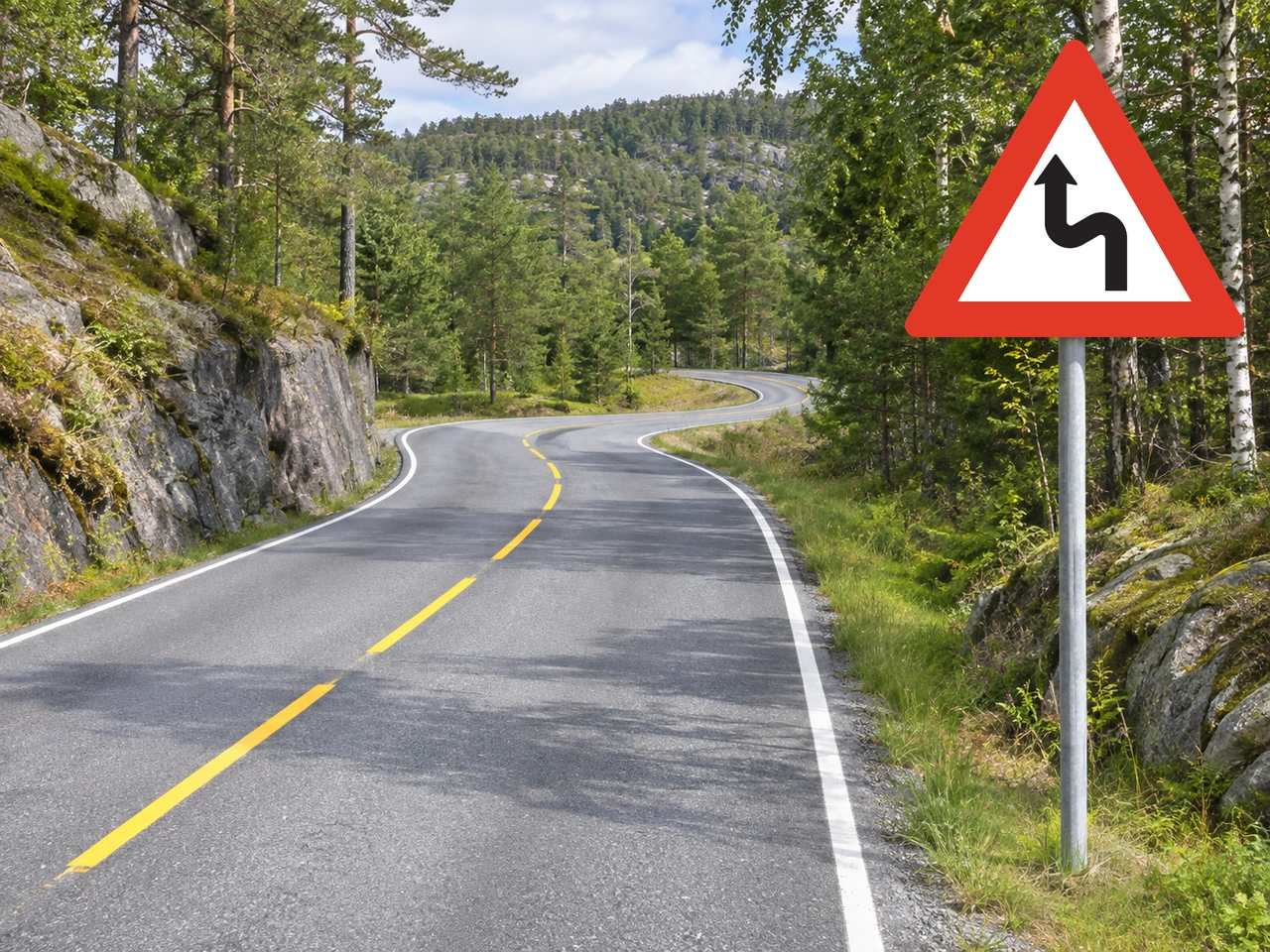
925. The double-bend sign with a lower leftward bend warns that the first bend is to the left.
Read the symbol from the bottom upwards, in your direction of travel. This version warns of a left bend followed by a right bend. Approach with extra attention and a suitable speed.
🔗 Sources
Norway • Skiltforskriften • Sign 102.2
Statens vegvesen • Official traffic-sign meanings
Statens vegvesen • Official sign artwork
Sign artwork: Statens vegvesen original EPS archive, Sign 102.2, file 102_2.eps. Native first-left double-bend arrow, border and proportions retained; resized and composited onto the existing same-entry scene. Border red follows the authority's published colour chart: PMS 179, using the published web swatch RGB 226/56/40. No third-party open licence is asserted for the government artwork.
Image credit: AI-generated background with source sign artwork resized and placed on the sign face.
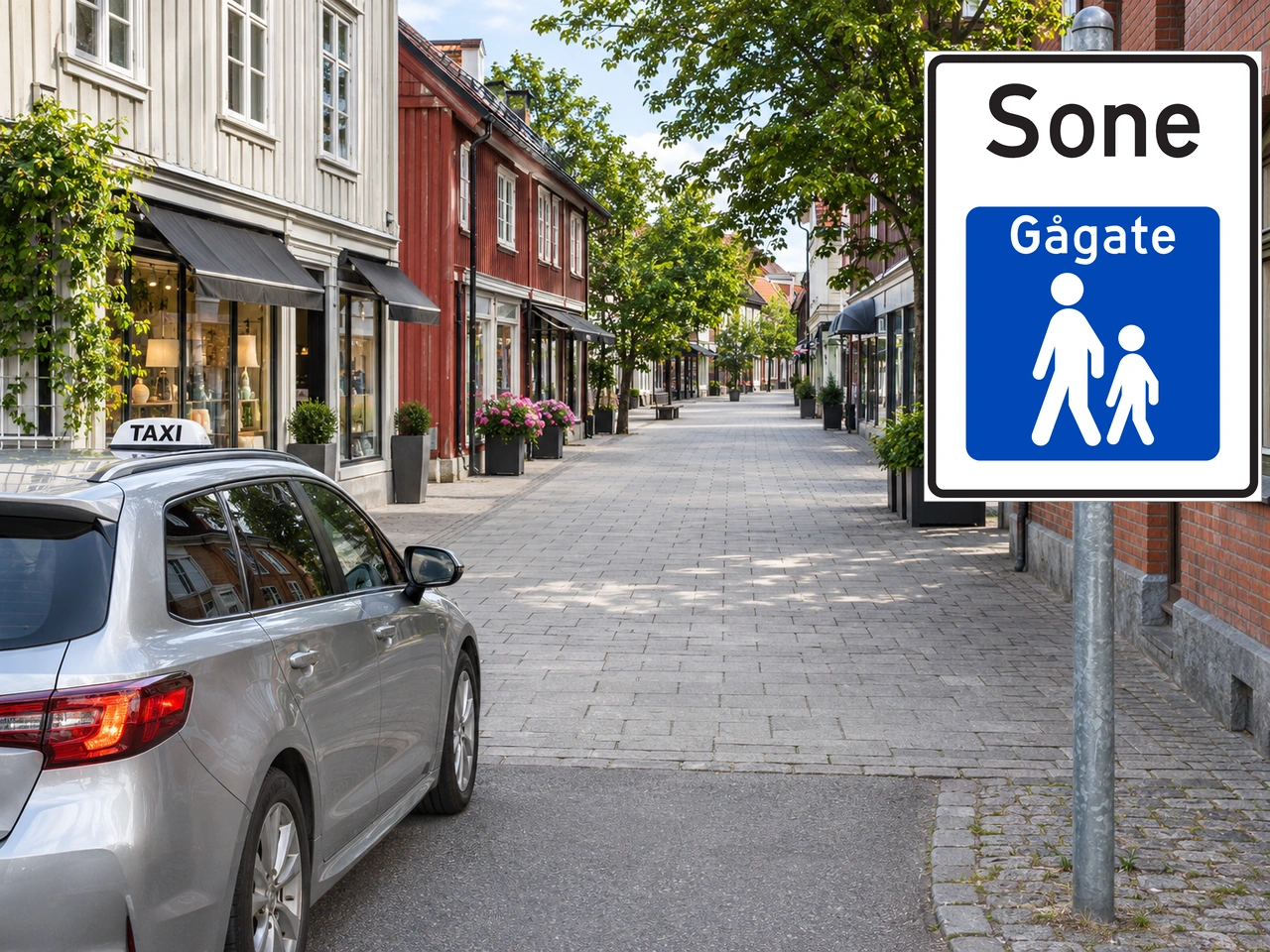
926. Carrying a customer lets a taxi enter every pedestrian zone automatically.
A taxi may enter only if the access rules for that pedestrian zone allow it. Check the signs and any local conditions.
🔗 Sources
Lovdata • Sign Regulations • § 12 • 548 • Gågate
Statens vegvesen • Handbook V122 • Section 3.5.2 • Pedestrian streets
Official Norwegian sign artwork: Statens vegvesen, sign 548, original EPS artwork 548_0.eps from the national sign artwork archive. Native lettering, numbers, pictogram, orientation, borders and proportions retained. Colours use the authority's published PMS web swatches: blue PMS 293 and red PMS 179 where present. Original files and colour guidance. No third-party open licence is asserted for the government artwork.
Image credit: AI-generated background with source sign artwork resized and placed on the sign face.
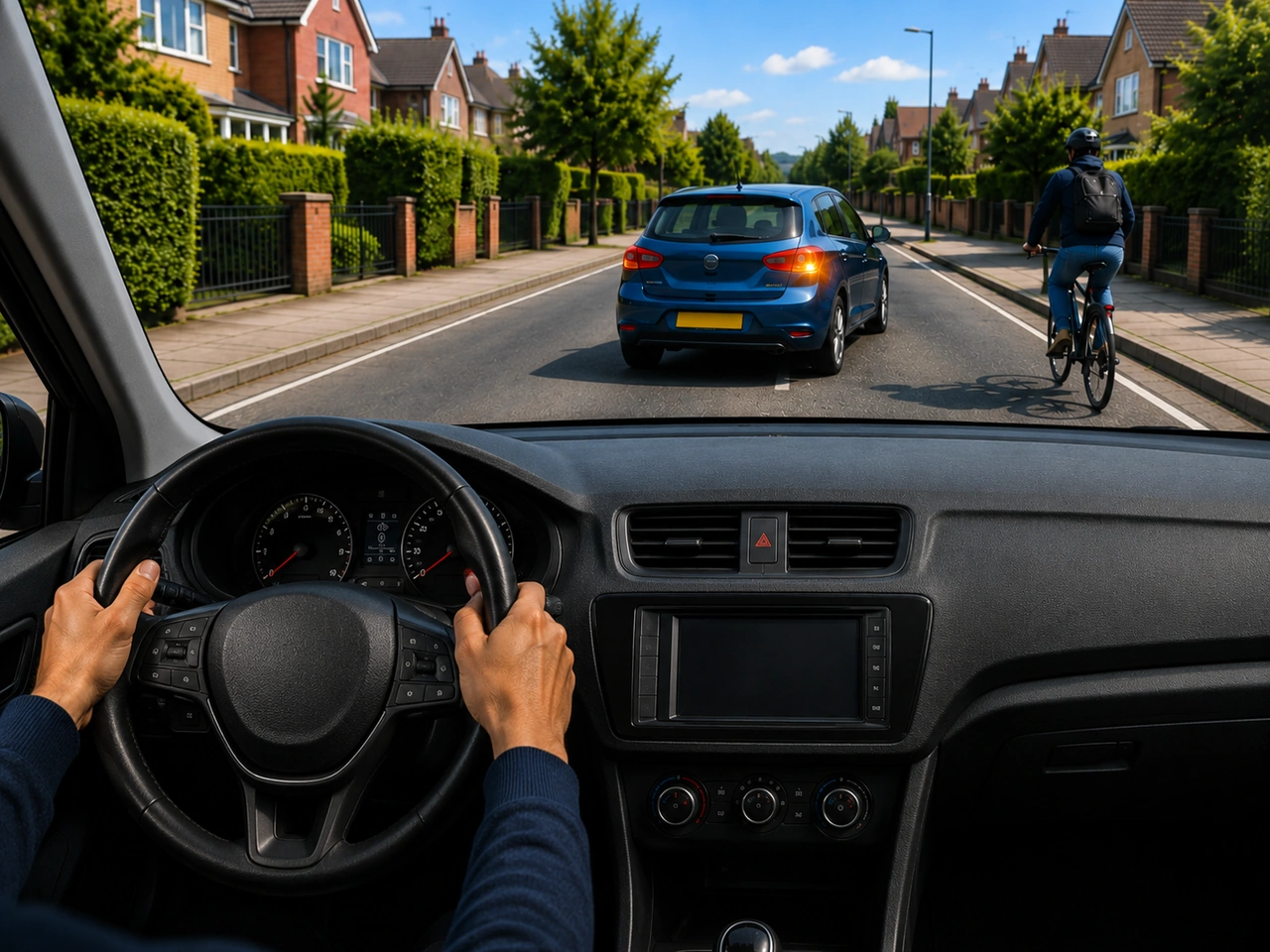
927. What should you do if another road user makes a mistake?
Road users can make mistakes. Staying calm and reacting safely helps prevent crashes.
🔗 Sources
Great Britain — Highway Code, rule 147; general calm and considerate driving
Image credit: AI-generated
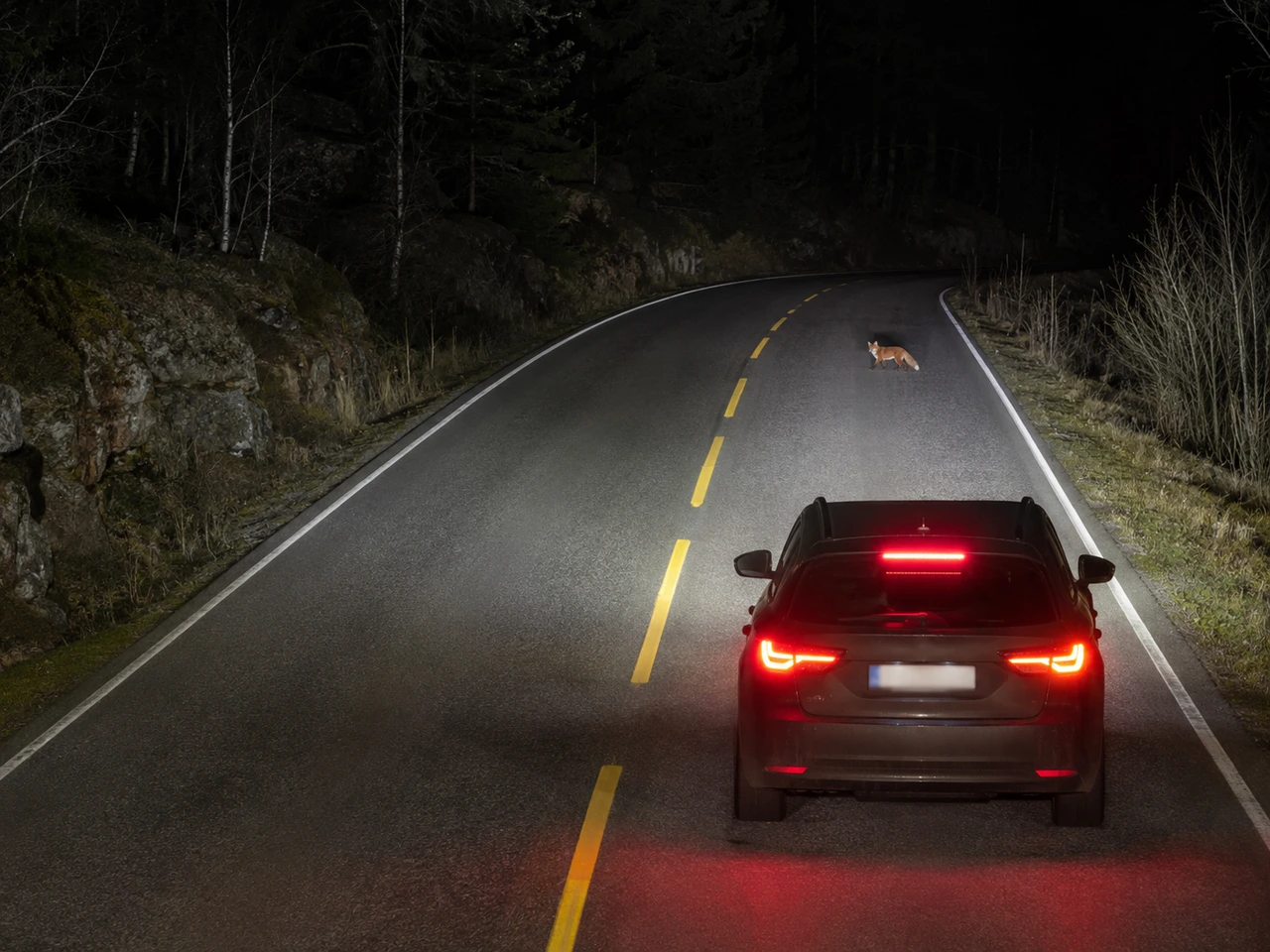
928. What should you do if an animal is standing on the road at night?
Animals may freeze, turn back, or move unpredictably when caught in vehicle headlights.
🔗 Sources
Norwegian Traffic Rules, section 13
Norwegian Public Roads Administration – Animal collisions and prevention
Image credit: AI-generated
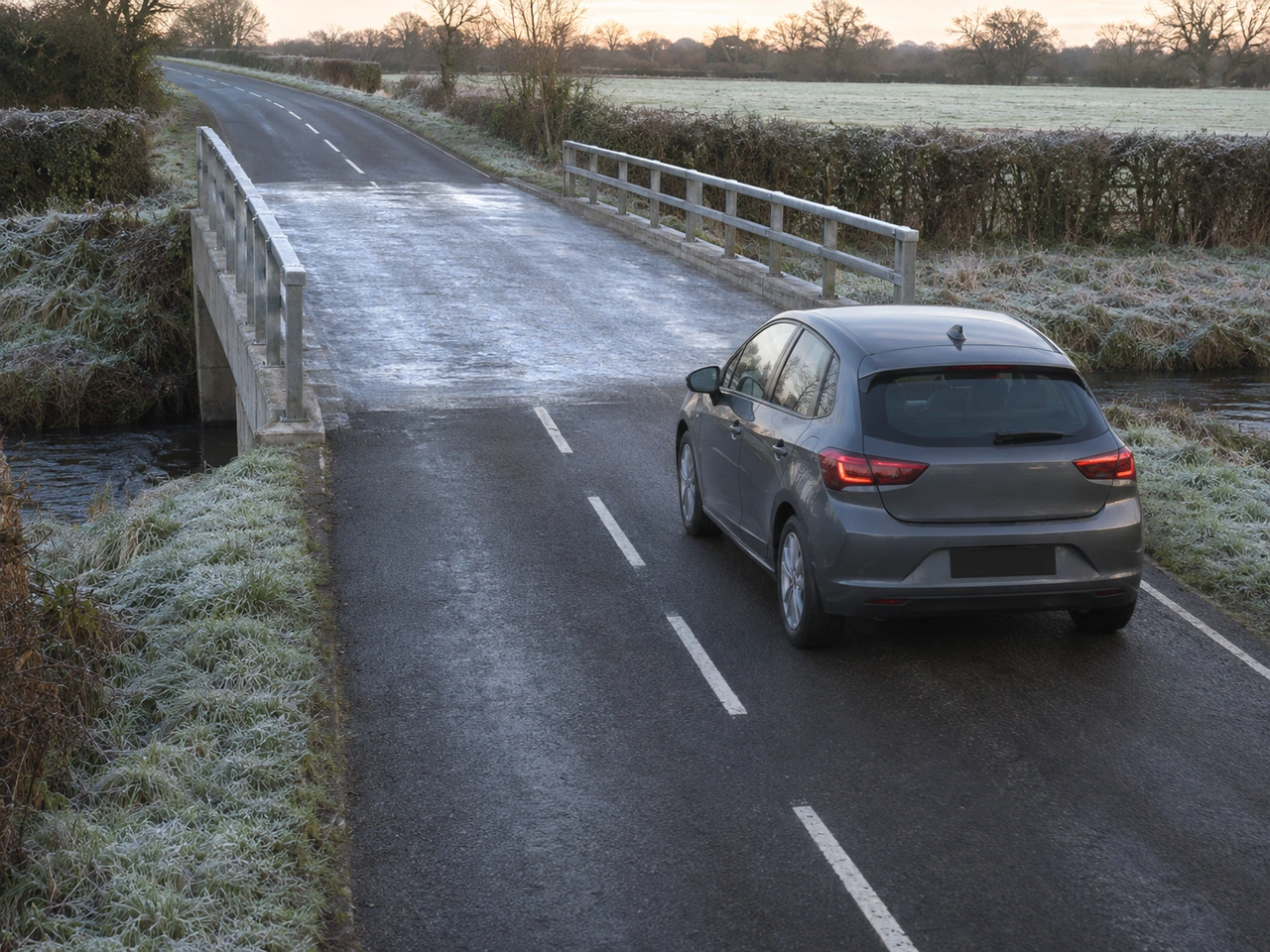
929. Why can bridges and overpasses become icy before nearby roads?
A bridge deck is exposed to cold air above and below, allowing it to cool and freeze sooner than a nearby road built directly on the ground. The approach may therefore be only damp while the bridge is icy. Reduce speed smoothly before reaching an exposed bridge and avoid abrupt control inputs on it.
🔗 Sources
USA National Weather Service — Why exposed bridge decks freeze first
Image credit: AI-generated
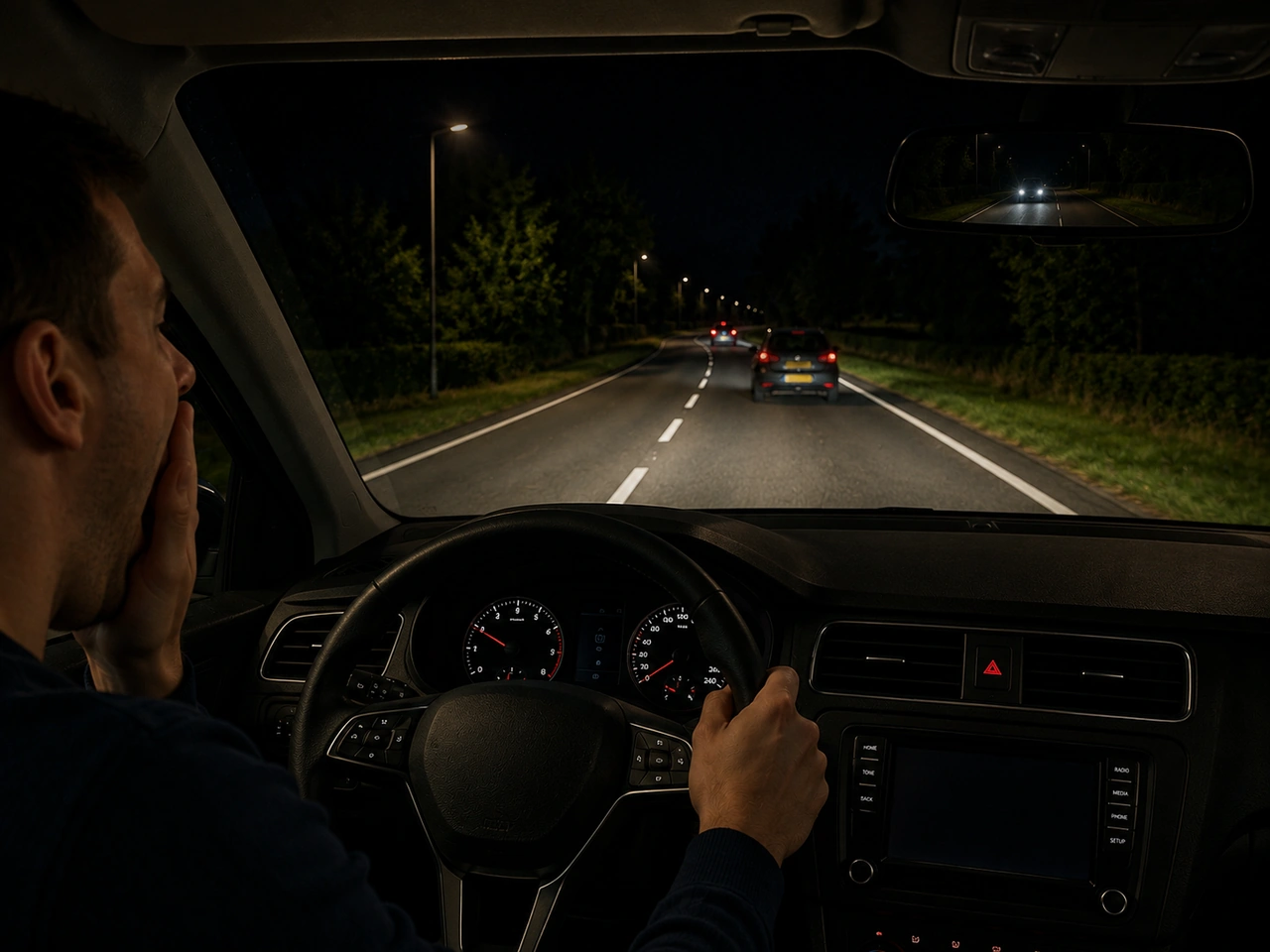
930. What should you do if you feel tired while driving?
Driving while tired reduces concentration and reaction time. Stop somewhere safe and rest before continuing.
Norway. Statens vegvesen advises stopping and resting when you become tired. The Vegvesen trafikk app can help you identify rest areas along the route before you set off.
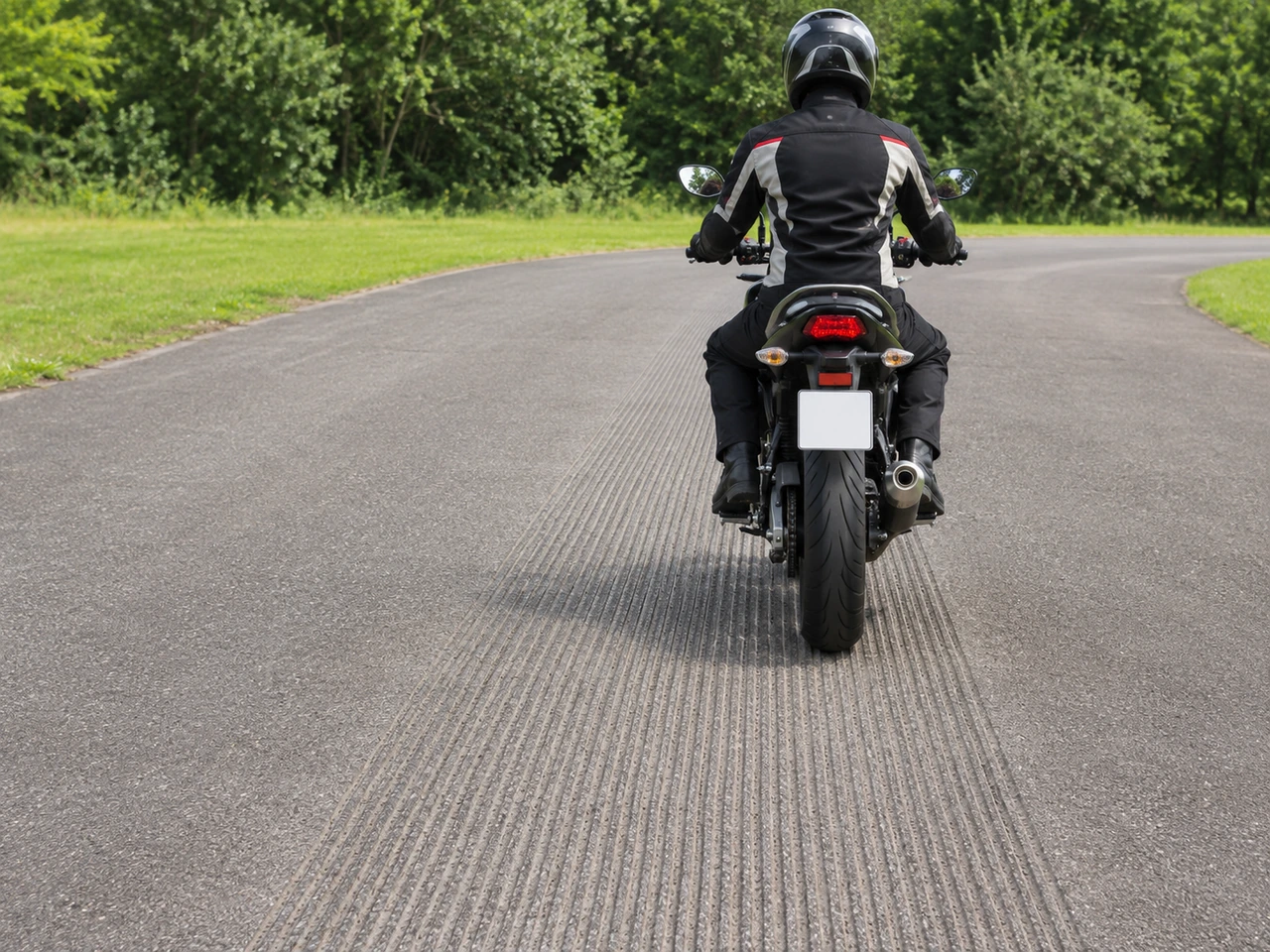
931. How should a motorcyclist react to grooves or ruts in the road?
Longitudinal grooves or ruts can affect a motorcycle's steering and may make the wheels follow the uneven surface. Reduce speed where necessary, keep a relaxed but steady grip and avoid sudden braking, acceleration or steering corrections.
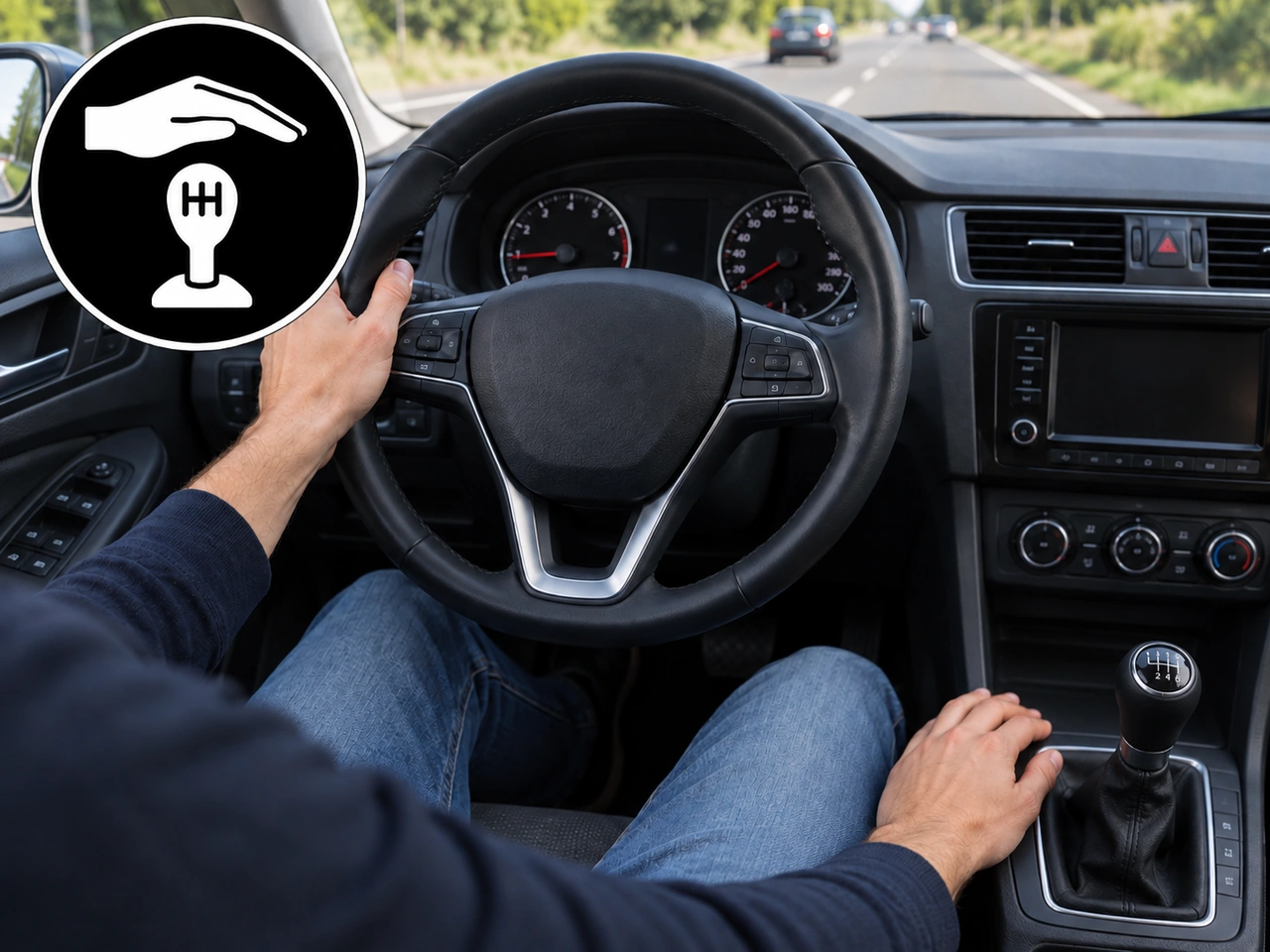
932. Why should you avoid resting your hand on the gear lever while driving?
Resting your hand on the gear lever can place unnecessary pressure on parts of the gear-selection mechanism and contribute to wear. Keep both hands on the steering wheel when you are not changing gear.
Return your hand to the steering wheel after a gear change. Some manufacturers warn that sustained pressure on the gear lever can cause wear.
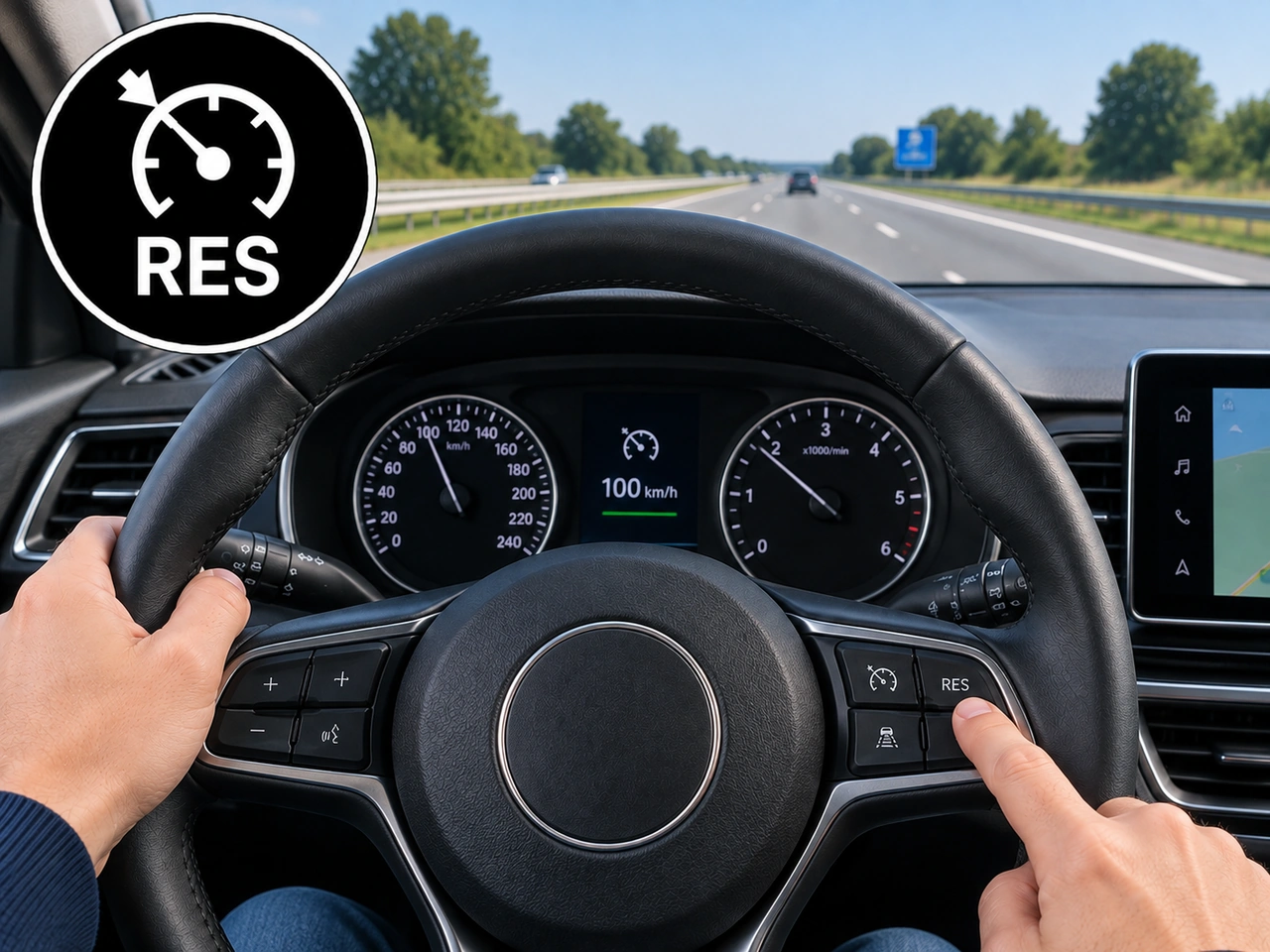
933. What does the resume function of cruise control normally do?
The resume function normally returns the vehicle to the previously set cruise-control speed after the system has been temporarily disengaged. The driver should use it only when traffic and road conditions are suitable.
Check the stored speed before pressing RES. The car may accelerate to reach that speed.
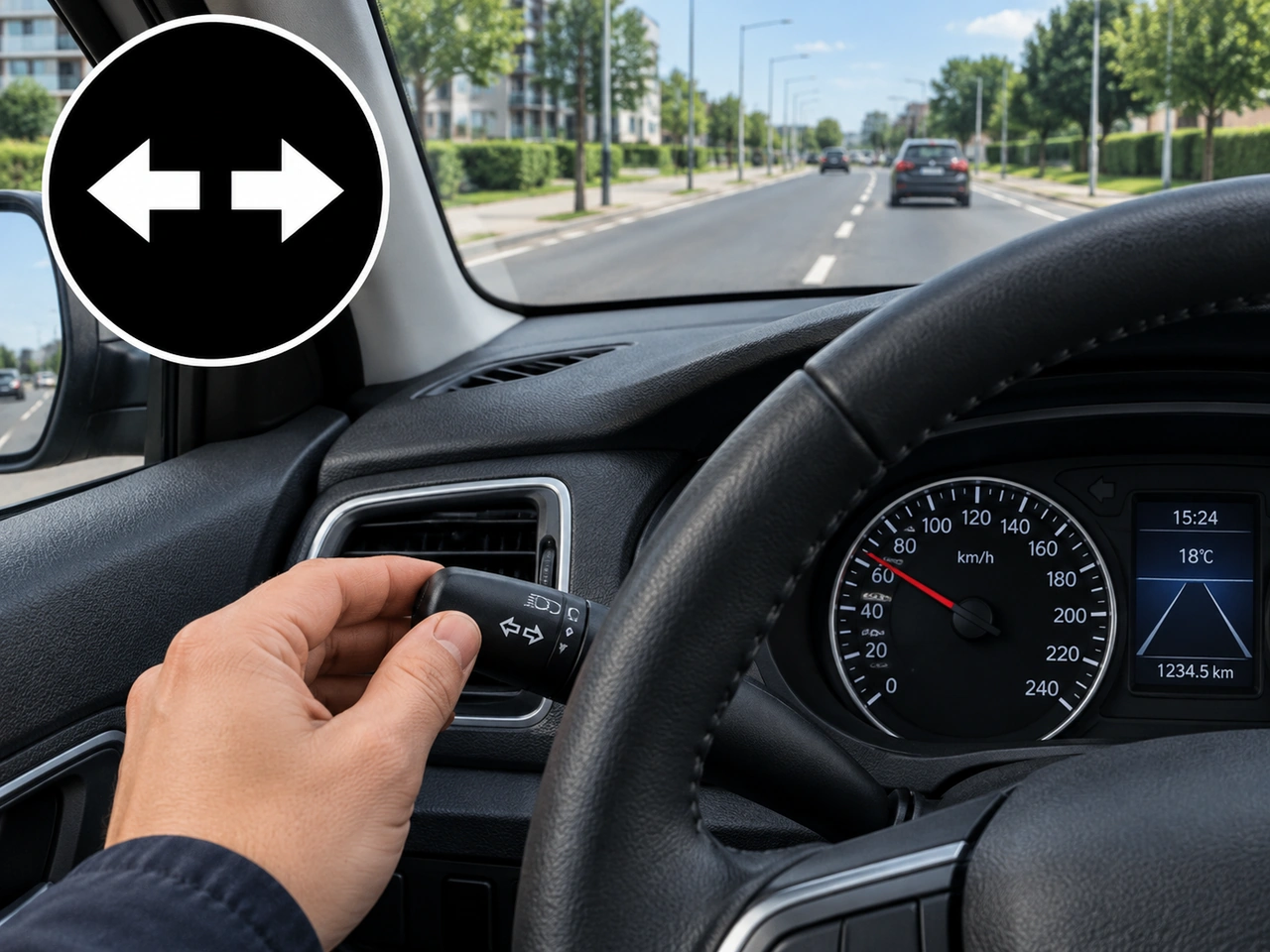
934. What should you do if a direction indicator does not cancel after a turn?
Direction indicators often cancel automatically after a turn, but if an indicator remains on, return the indicator control to its neutral position so you do not mislead other road users.
After the manoeuvre, check that the indicator has stopped flashing. Cancel it manually if it is still on.
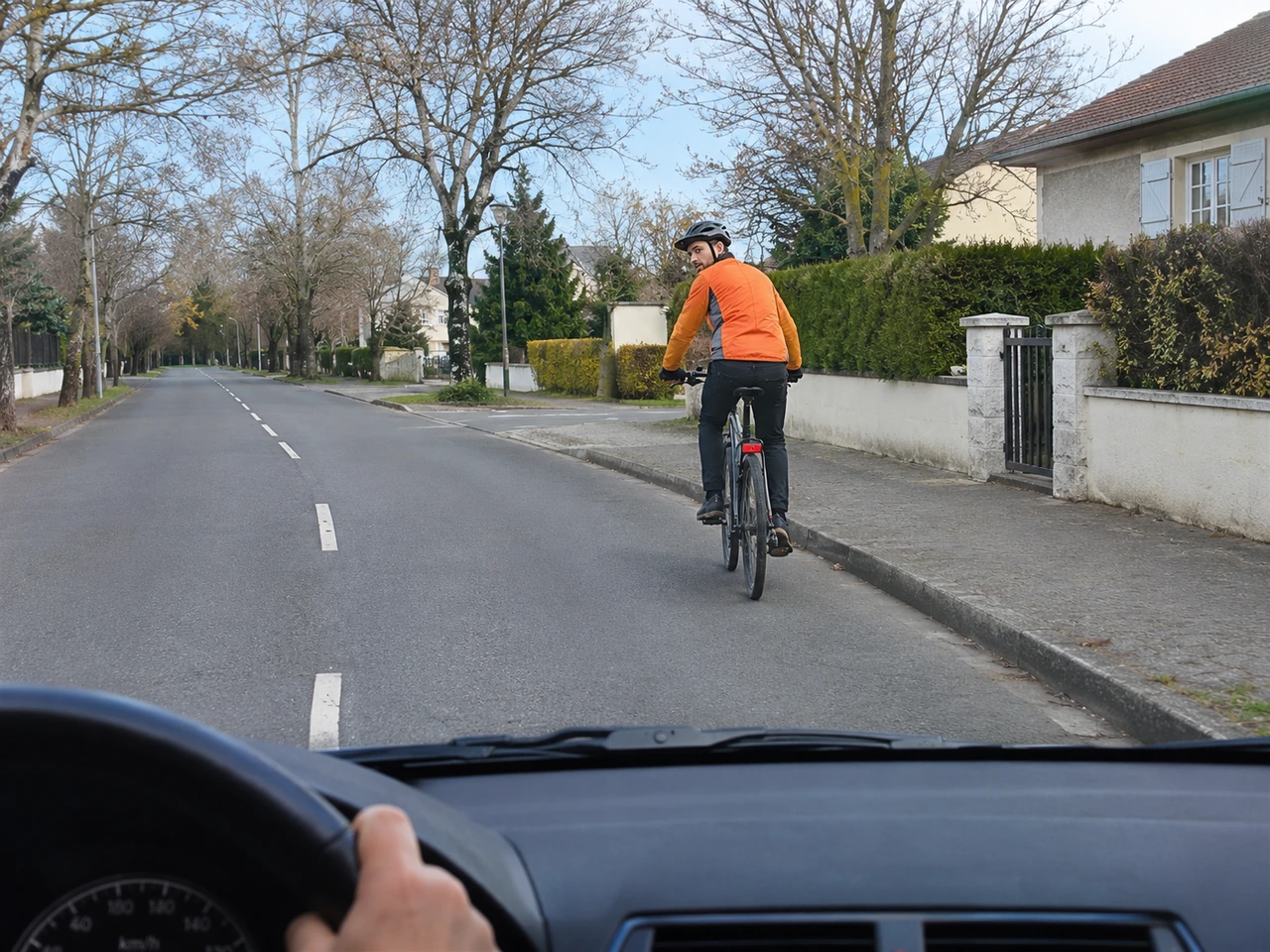
935. What might a cyclist looking over their shoulder be about to do?
A shoulder check may be an early sign that a cyclist intends to turn or move out. Leave room and time, and do not assume that they will maintain their current line.
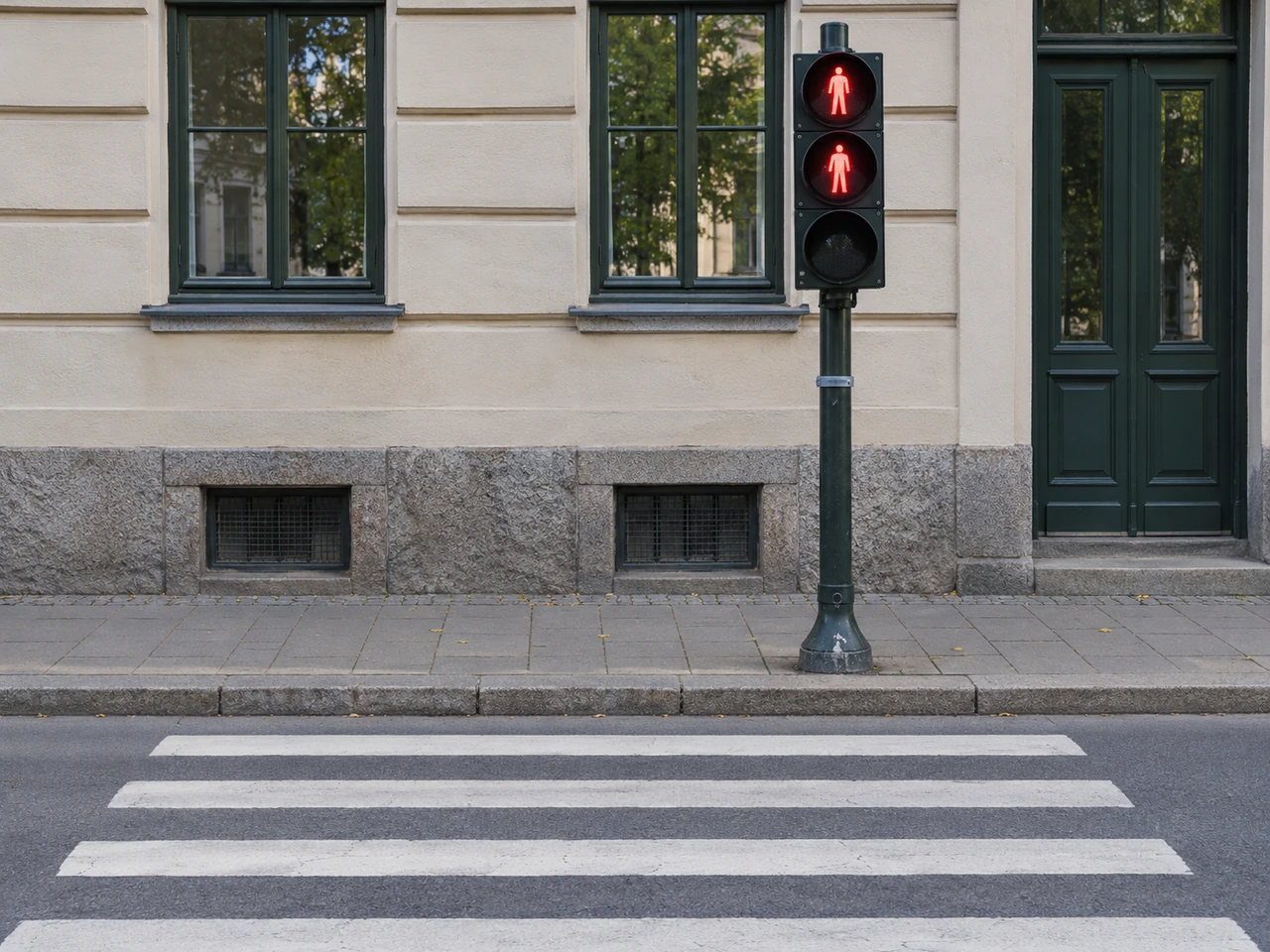
936. You are waiting to cross. What should you do at this pedestrian signal?
The signal shown means you should not start crossing. Wait for the pedestrian signal that permits you to cross, then check that it is safe.
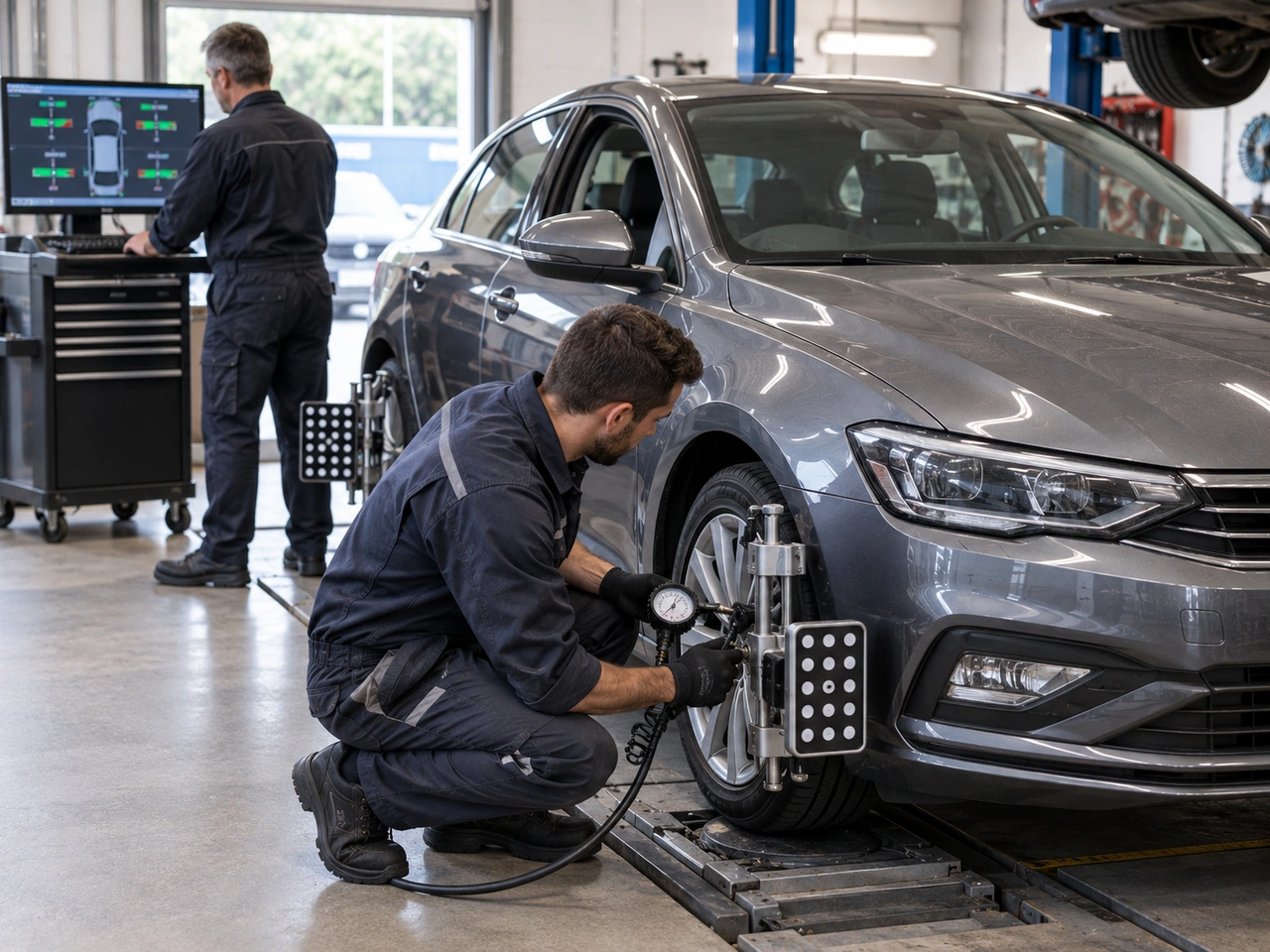
937. What should you do if the vehicle consistently pulls to one side?
Persistent pulling can be caused by incorrect tyre pressure, wheel misalignment, suspension wear, or a braking fault. It should not be ignored.
Norway. Check the tyre pressures if the vehicle consistently pulls to one side. If the pull continues, have the steering, brakes and wheel alignment inspected.
🔗 Sources
Michelin · Wheel alignment and balancing (technical guidance)
NZTA · Brake-fault symptoms (general maintenance guidance)
Image credit: AI-generated
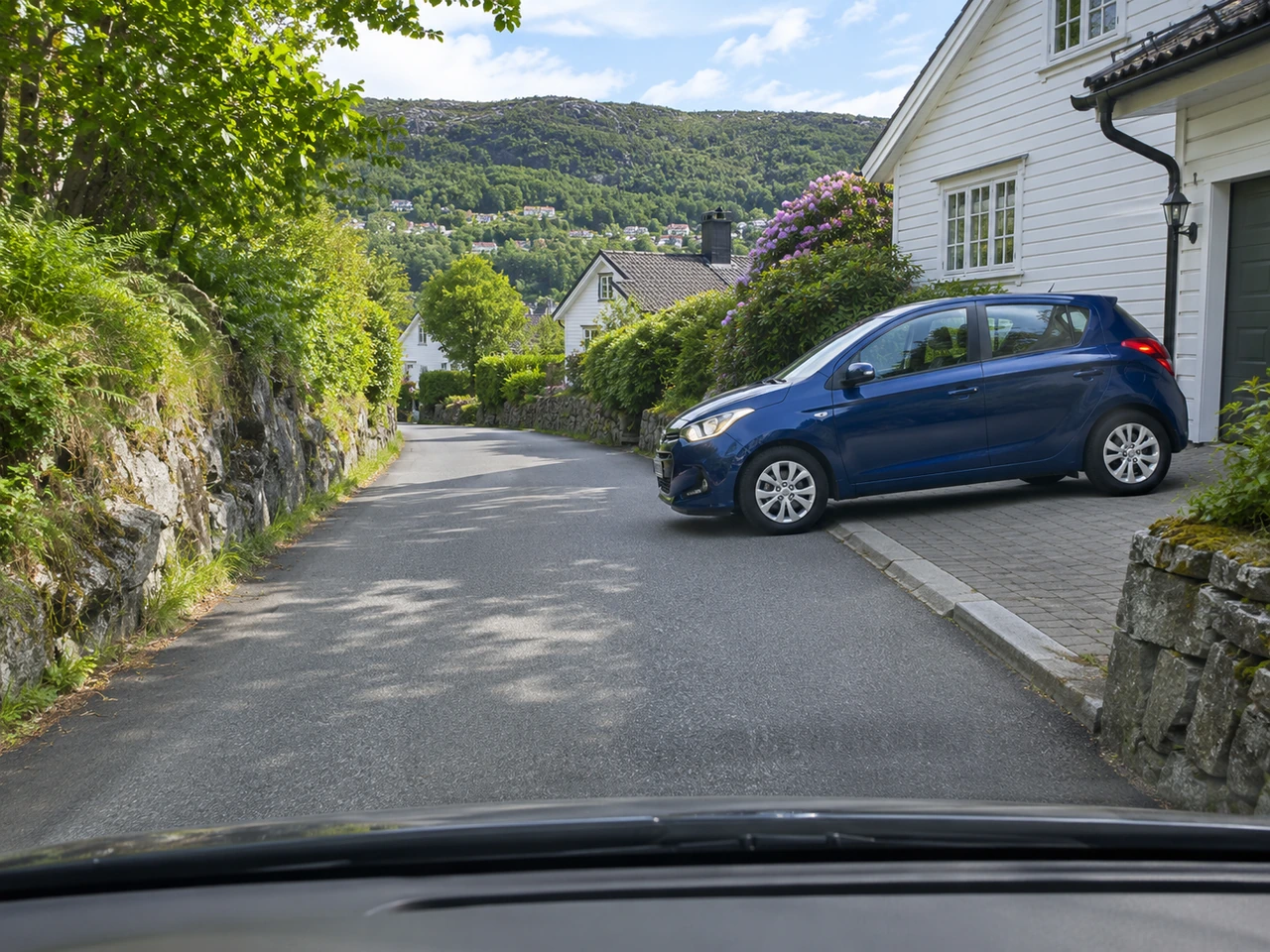
938. What should you do if another driver does not give way when they should?
Even if you have priority, safety comes first. Slow down, stay calm, and avoid creating a dangerous situation.
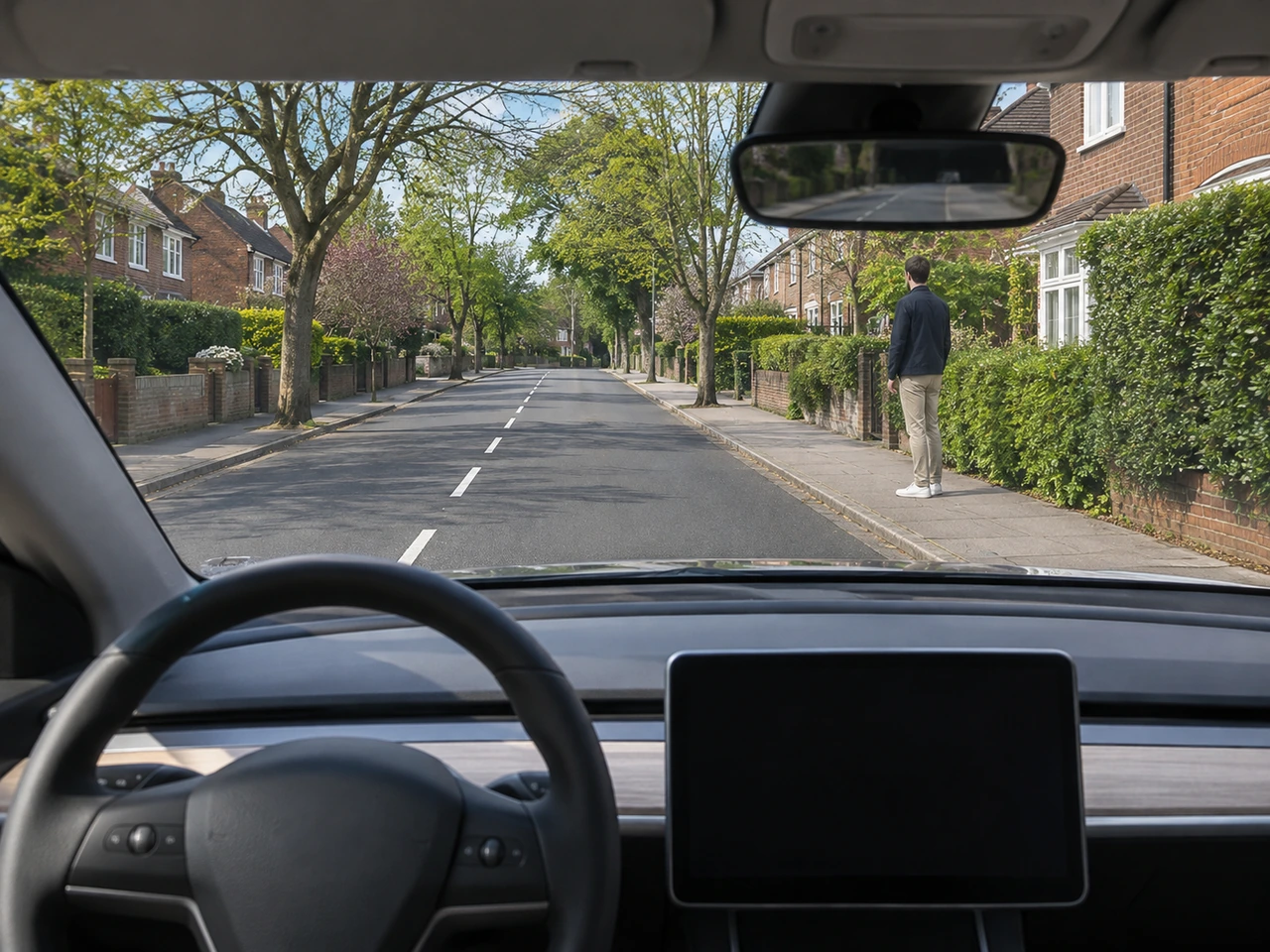
939. Why should you take extra care near pedestrians in a quiet electric vehicle?
Low vehicle noise can make your approach harder to notice. Drive cautiously and do not assume that a pedestrian has heard you, even if a warning sound is fitted.
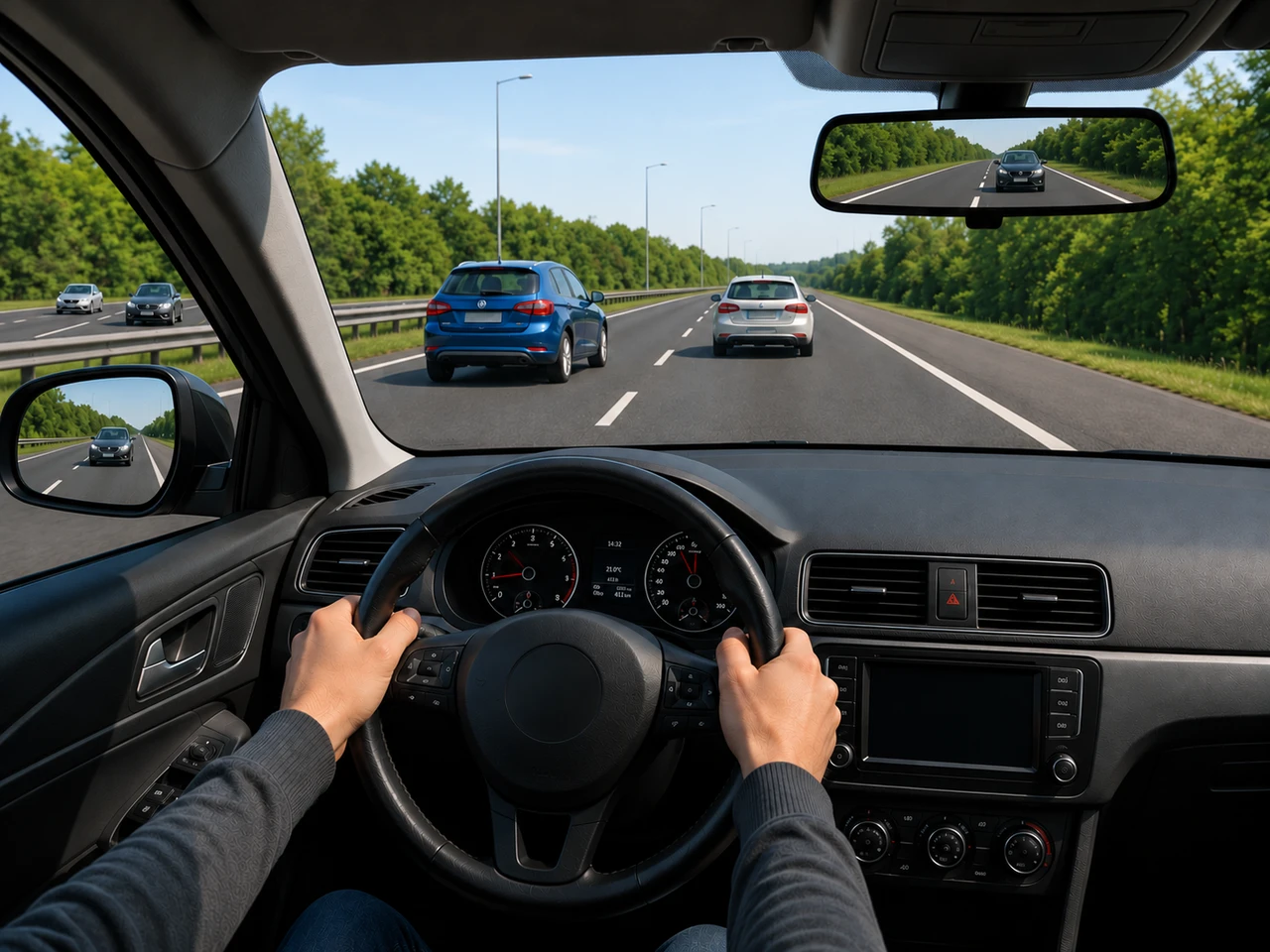
940. What should you do before changing lanes?
Always check your mirrors, look over your shoulder if necessary, and make sure it is safe before changing lanes.
Norway. Give way to vehicles in the lane you want to enter and in any lane you need to cross to get there.
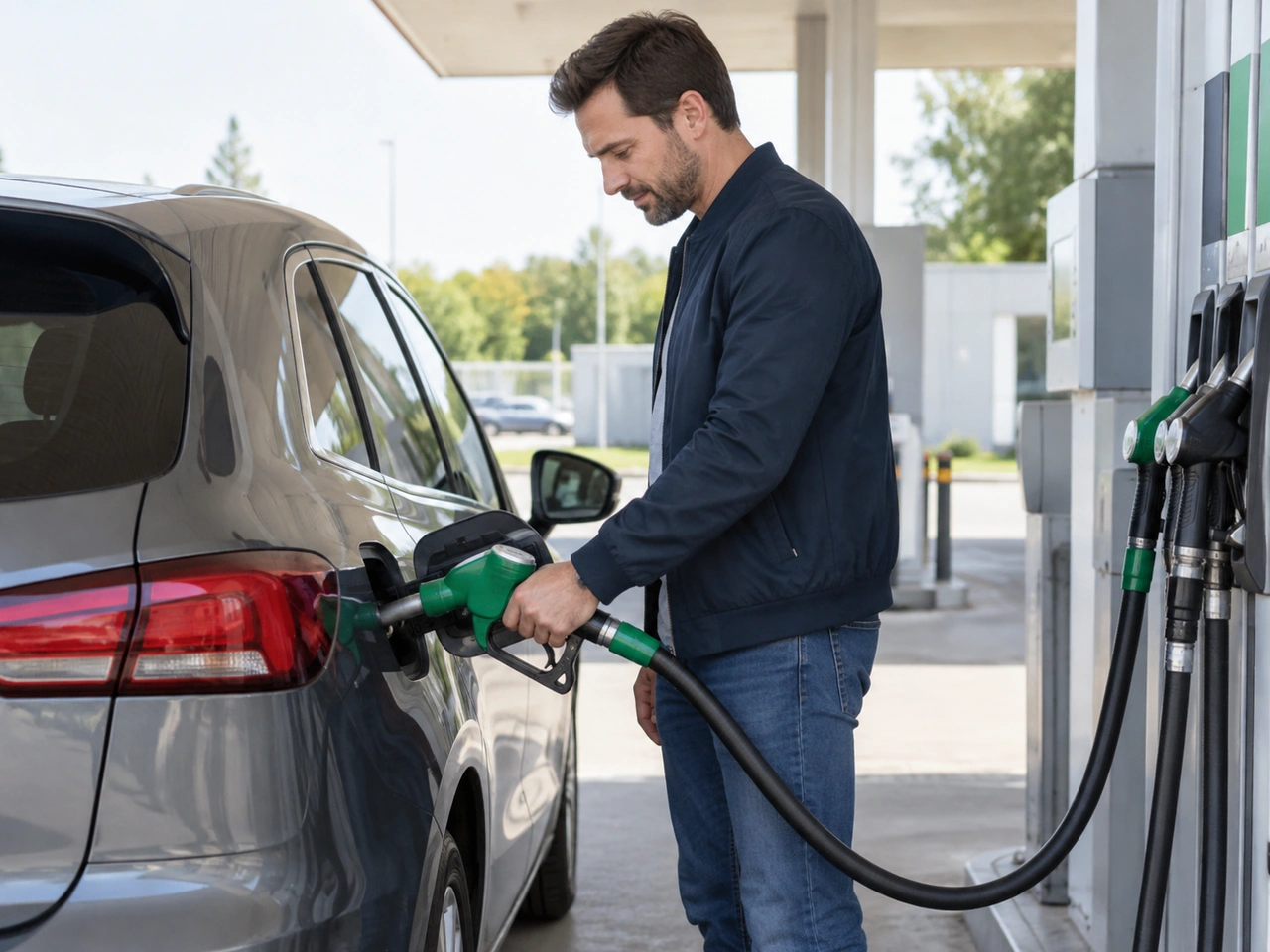
941. What should you normally do when the fuel nozzle automatically clicks off?
When the fuel nozzle automatically clicks off, stop refuelling rather than repeatedly topping up the tank. Continuing can cause fuel to spill or overflow and may interfere with the vehicle's fuel-vapour control system.
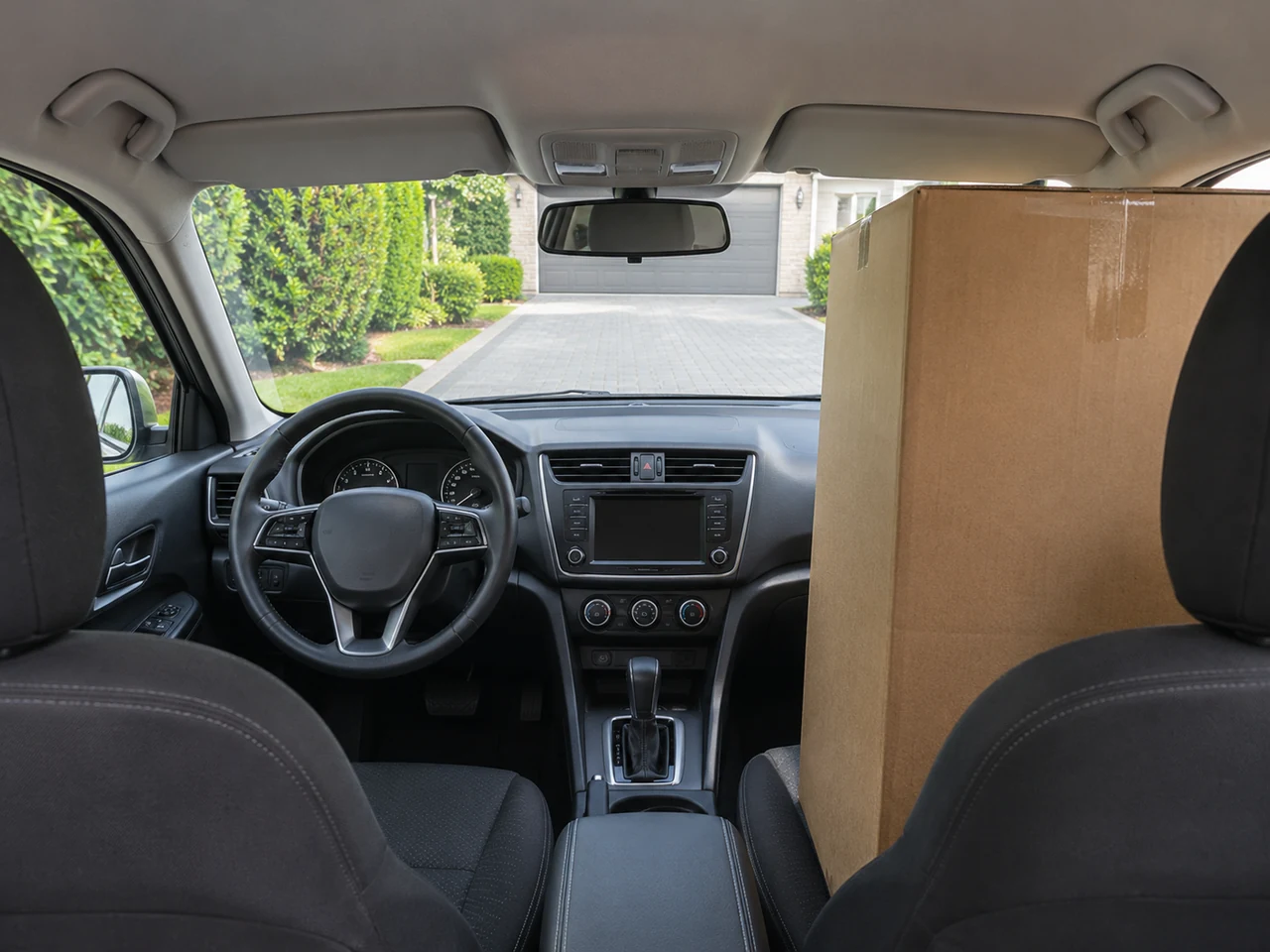
942. Why must luggage or other objects not obstruct the driver's view?
The driver must have a clear view of the road and surroundings. Luggage, decorations, or other objects that obstruct the windscreen, windows, or mirrors can hide pedestrians, cyclists, vehicles, signs, or other hazards.
🔗 Sources
Norwegian Regulations on the Use of Vehicles, § 3-2, load placement
NZTA safe loading and towing guide, practical guidance
Image credit: AI-generated
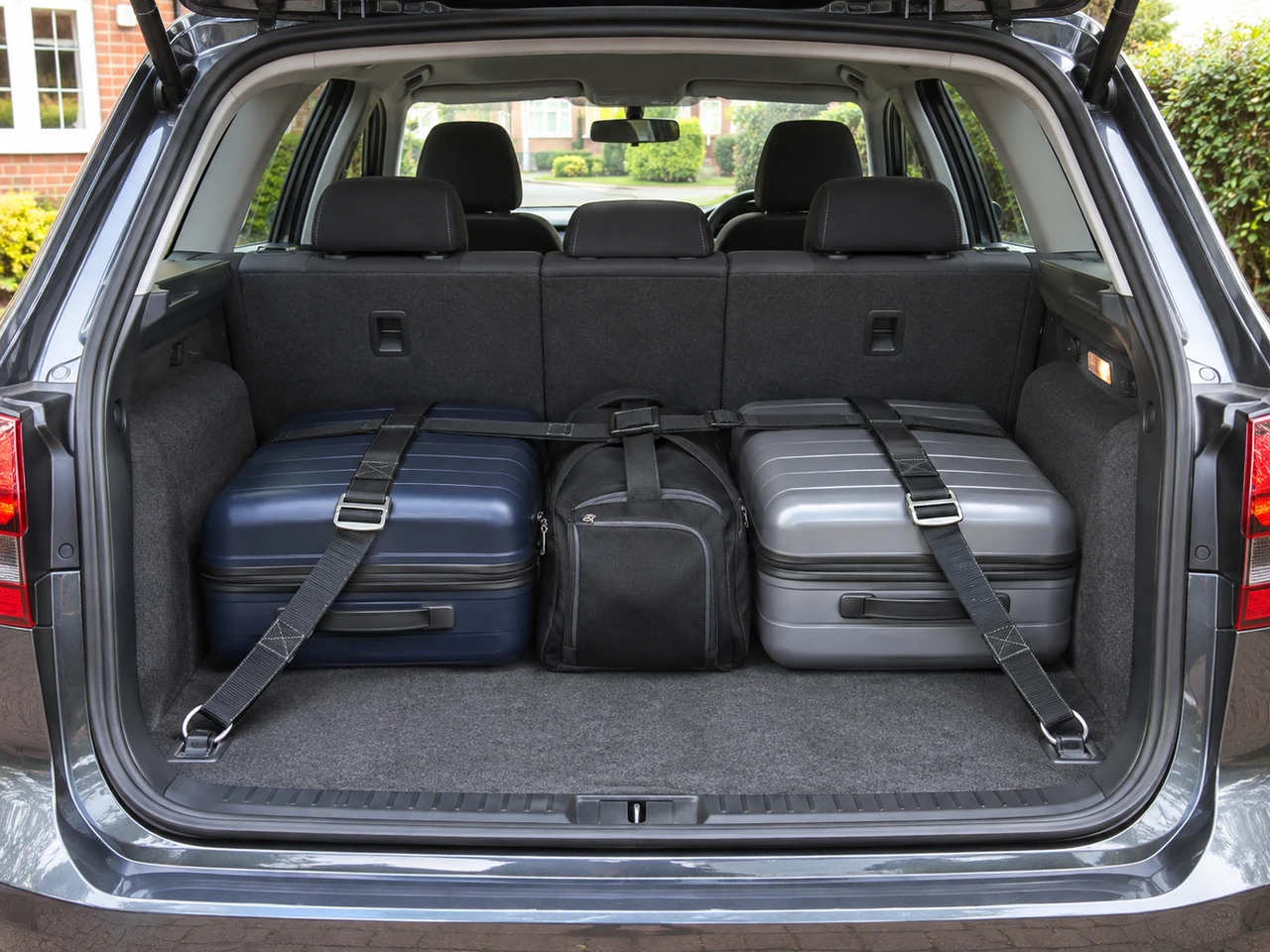
943. You should secure luggage before starting your journey.
Unsecured luggage can move during braking or a collision and injure occupants. Stow it securely without obstructing your view or access to the controls.
🔗 Sources
The Highway Code (Great Britain) • Rule 98 • General safety guidance on securing loads and objects.
Image credit: AI-generated. Existing same-entry detail photograph, reused for both driving sides.
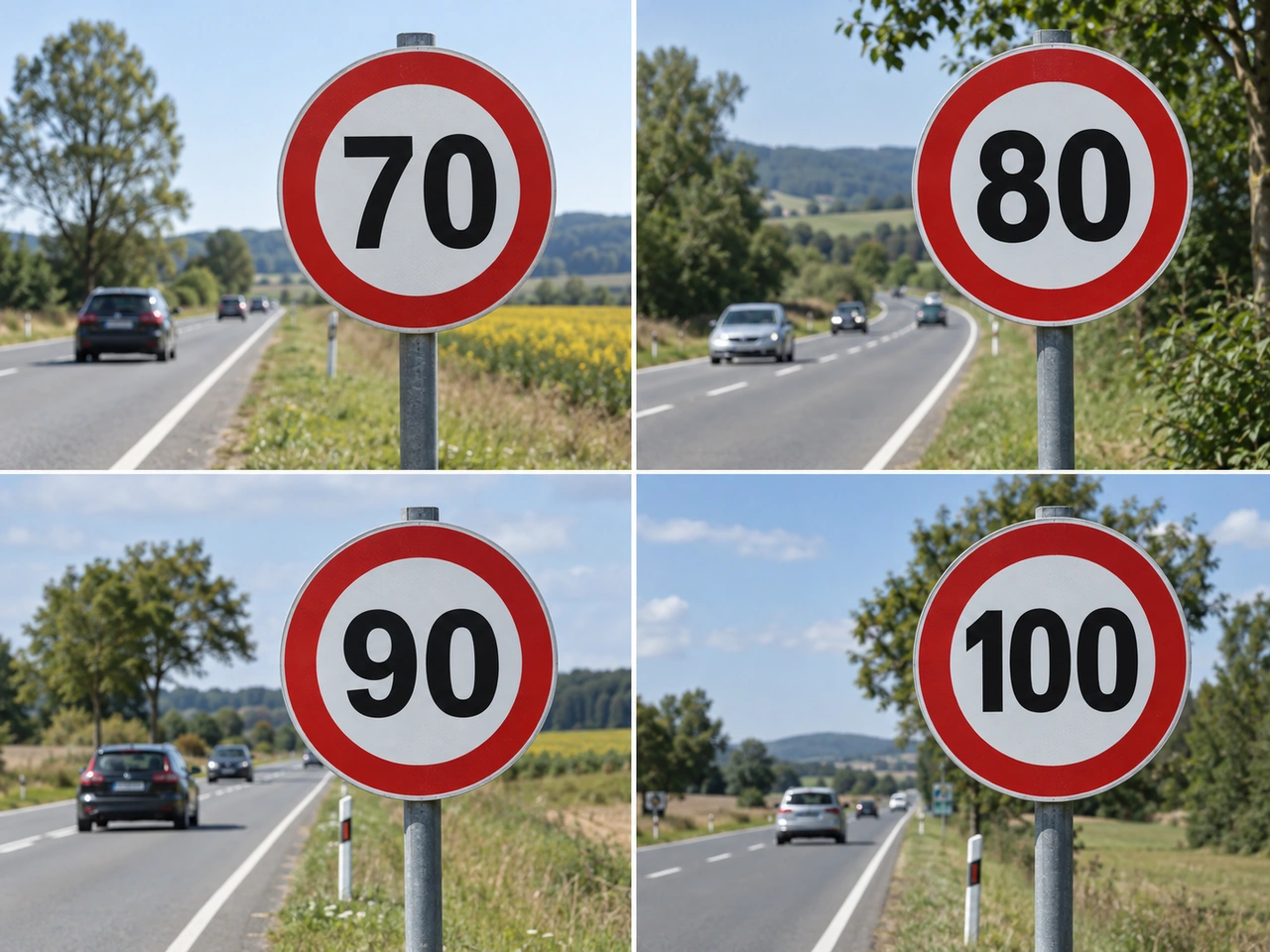
944. What is the general speed limit for cars on ordinary roads outside built-up areas?
In Norway, the general speed limit for cars on ordinary roads outside built-up areas is 80 km/h, unless signs indicate otherwise.
🔗 Sources
Image credit: AI-generated
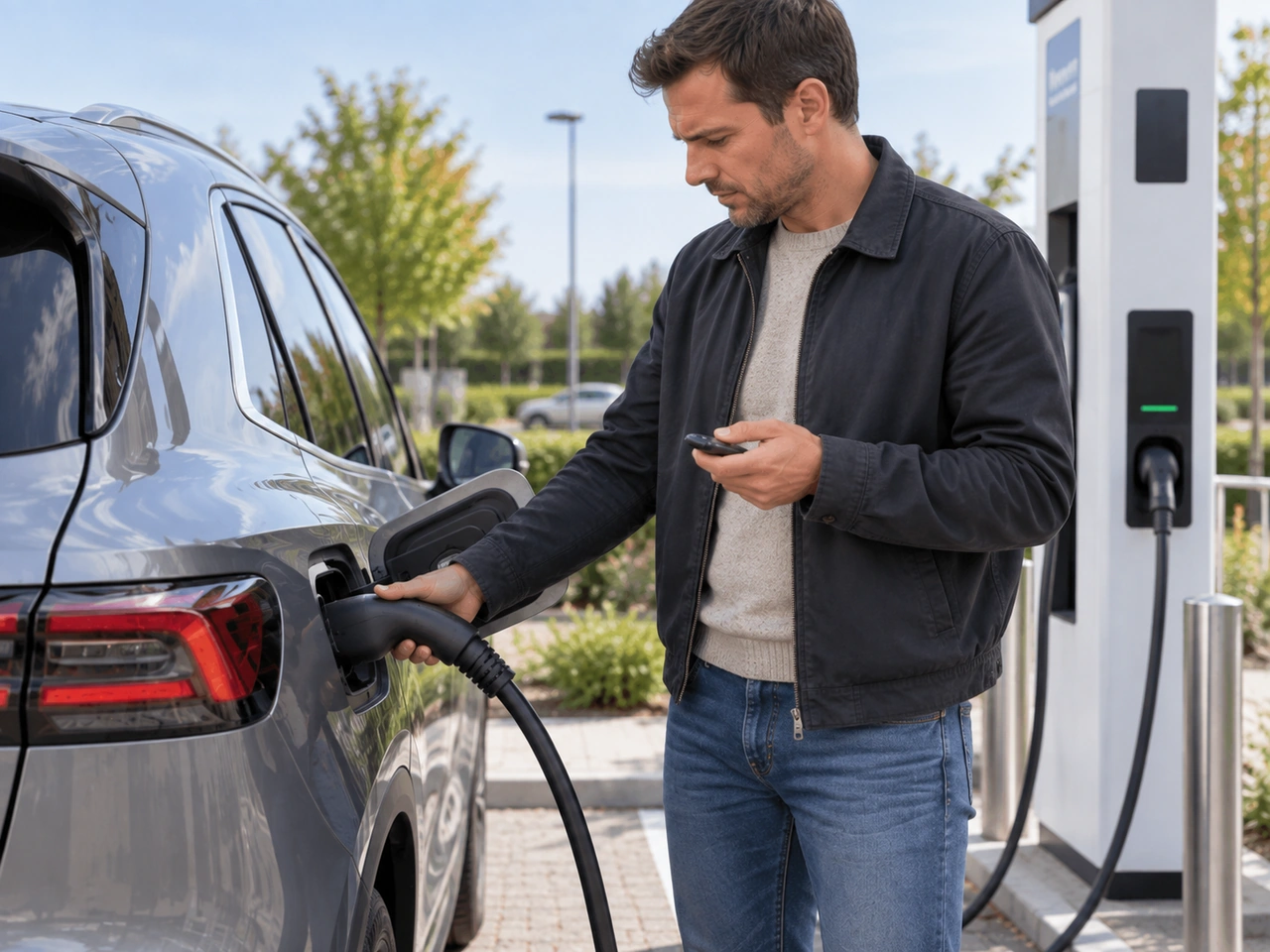
945. What should you do if an EV charging connector will not release from the vehicle?
Charging connectors may remain locked while charging or until the vehicle is unlocked. Stop the charging session and follow the vehicle or charger's release procedure. Never force the connector; if it remains stuck, seek appropriate assistance.
🔗 Sources
Tesla Norway – Model 3 owner’s manual, releasing the charge cable
Image credit: AI-generated
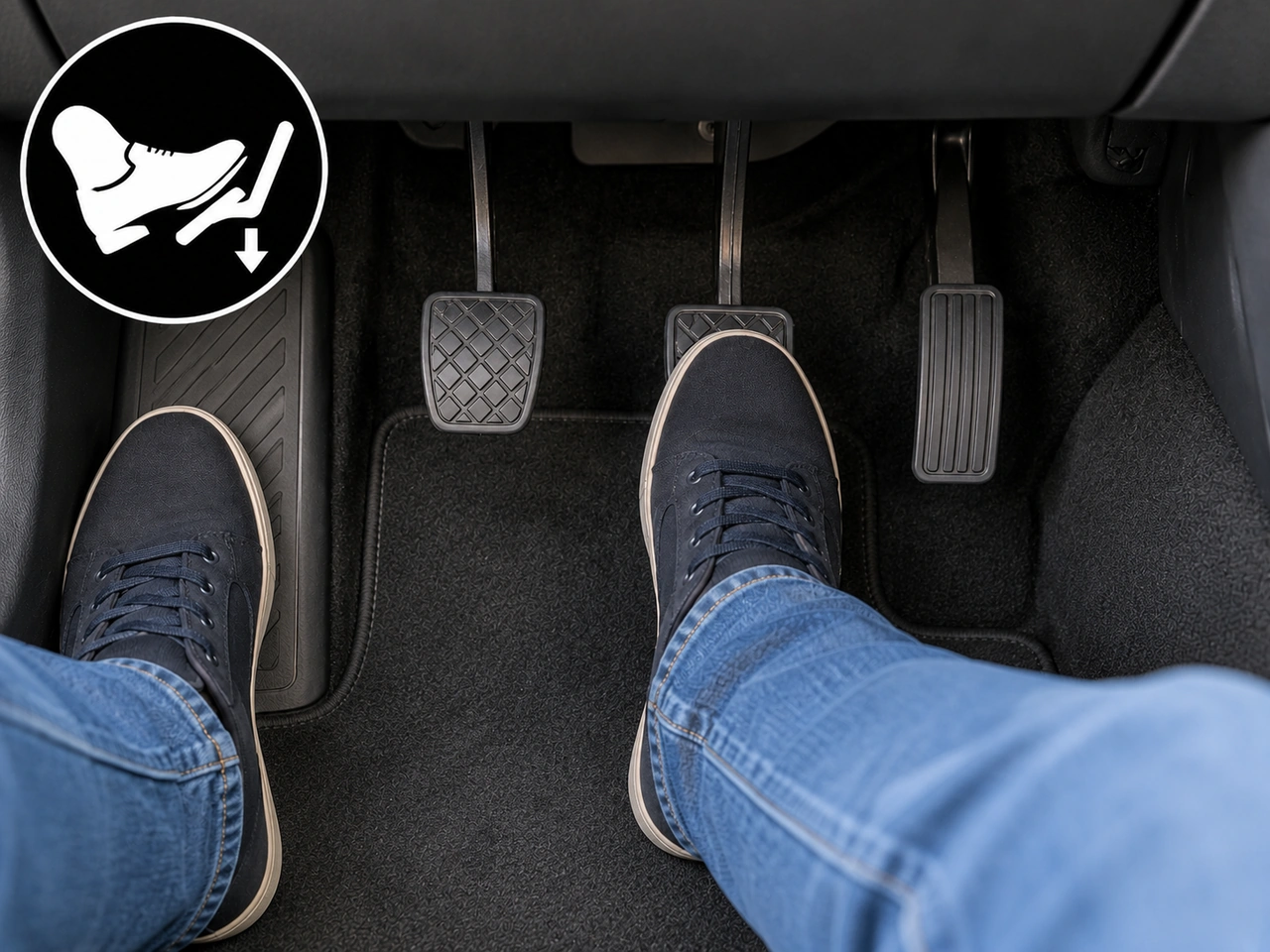
946. How should you normally apply the brake pedal for a smooth stop?
For normal braking, apply the brake pedal progressively and smoothly. As the vehicle comes to a stop, easing the pressure slightly can help avoid a sudden jerk.
For a planned stop, ease off the accelerator and apply the brake smoothly. In a manual car, press the clutch fully shortly before stopping.
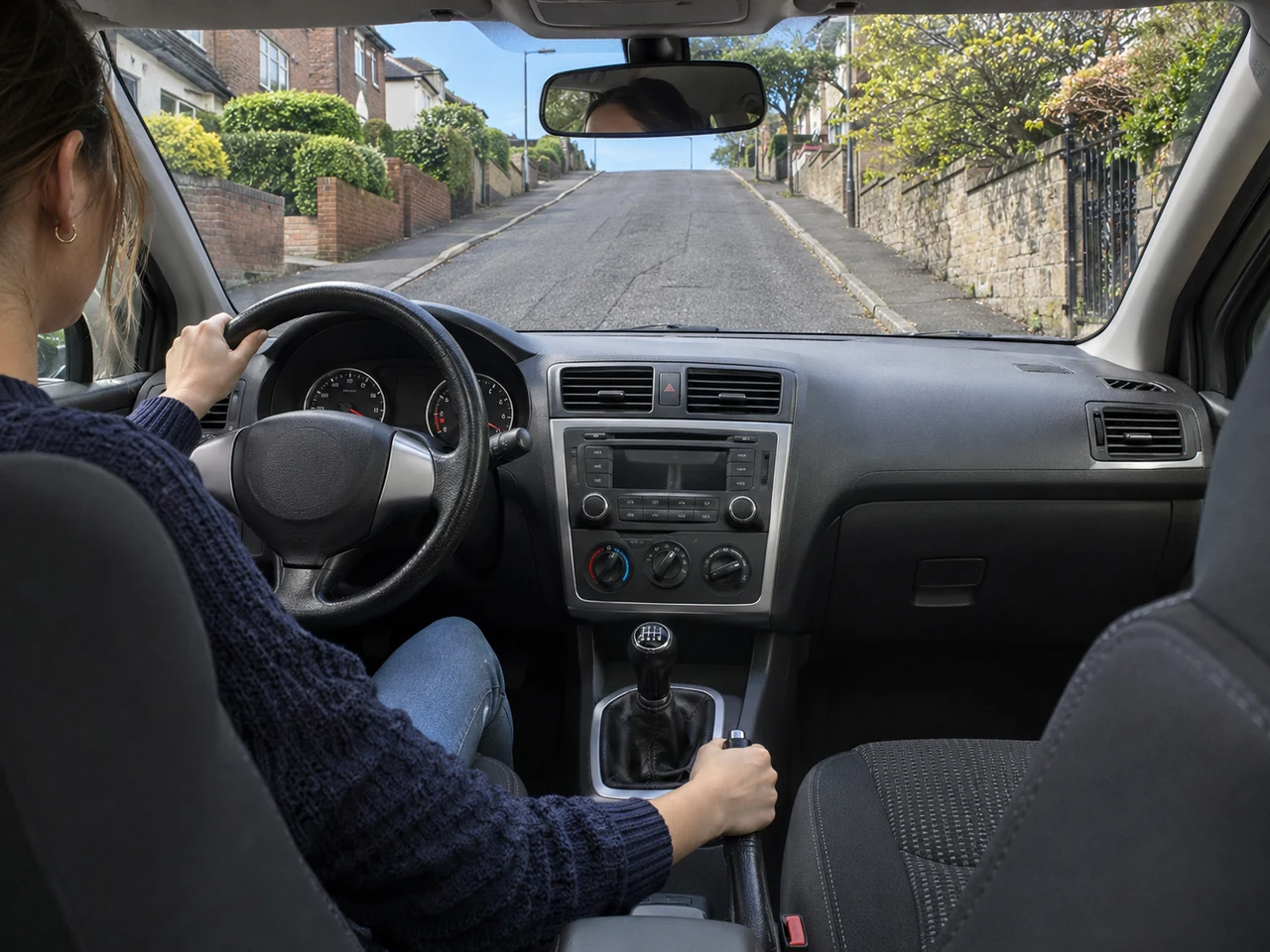
947. How can the parking brake help when moving off uphill in a manual car?
When moving off uphill, the parking brake can hold the vehicle stationary while you prepare to move. Release it smoothly once the clutch reaches the biting point and sufficient power is applied.
With the parking brake holding the car, build enough drive at the biting point to prevent rollback before releasing the brake.
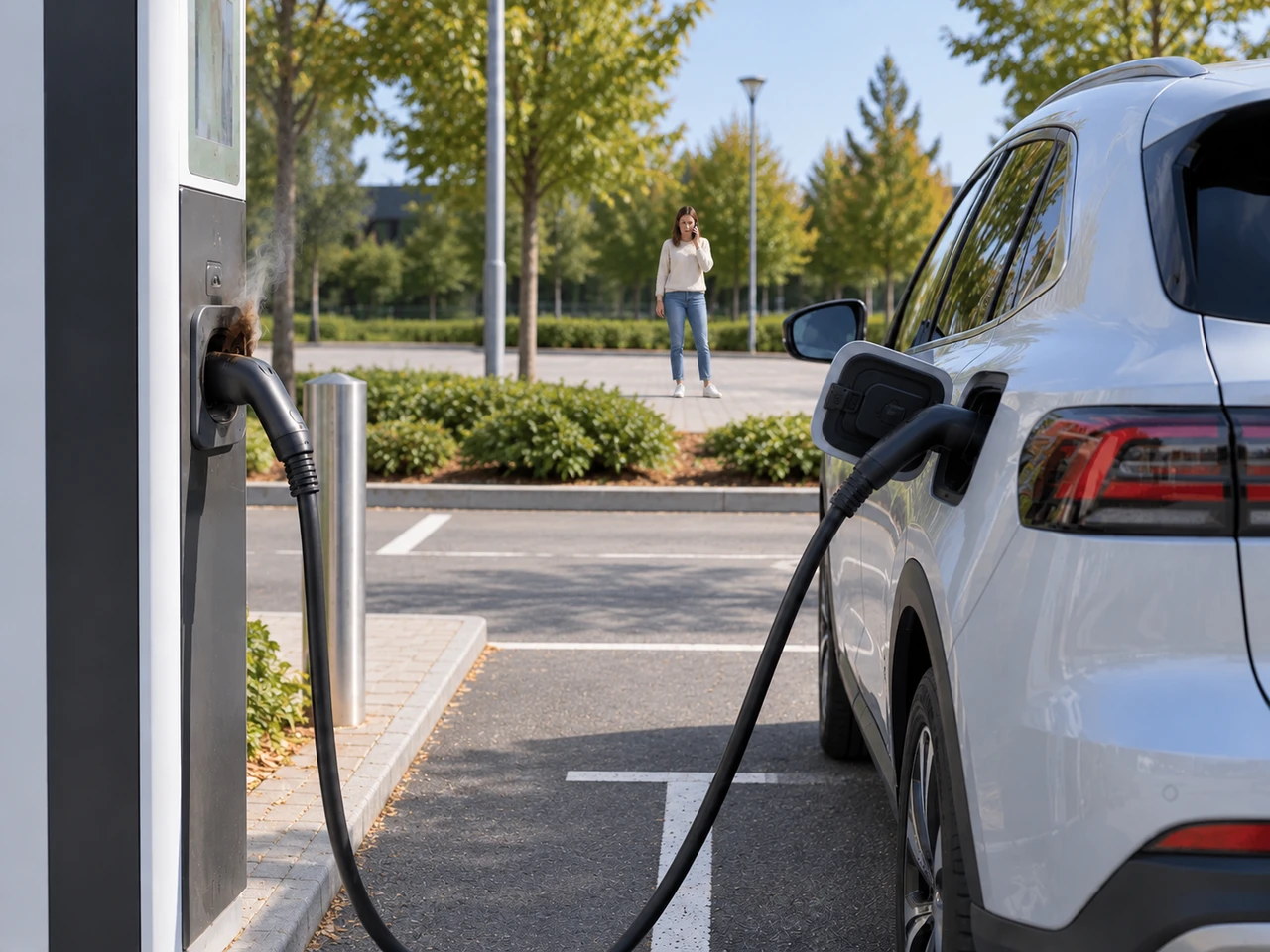
948. What should you do if EV charging equipment becomes unusually hot or smells burnt?
Unusual heat, a burning smell, smoke, sparks, or repeated charging faults can indicate an electrical problem. Stop using the charging equipment if it is safe to do so, keep clear of anything damaged or overheating, and report the fault or seek appropriate assistance.
🔗 Sources
Tesla – Local Model 3 owner’s manual, wall plug temperature alert UMC_a017
Image credit: AI-generated
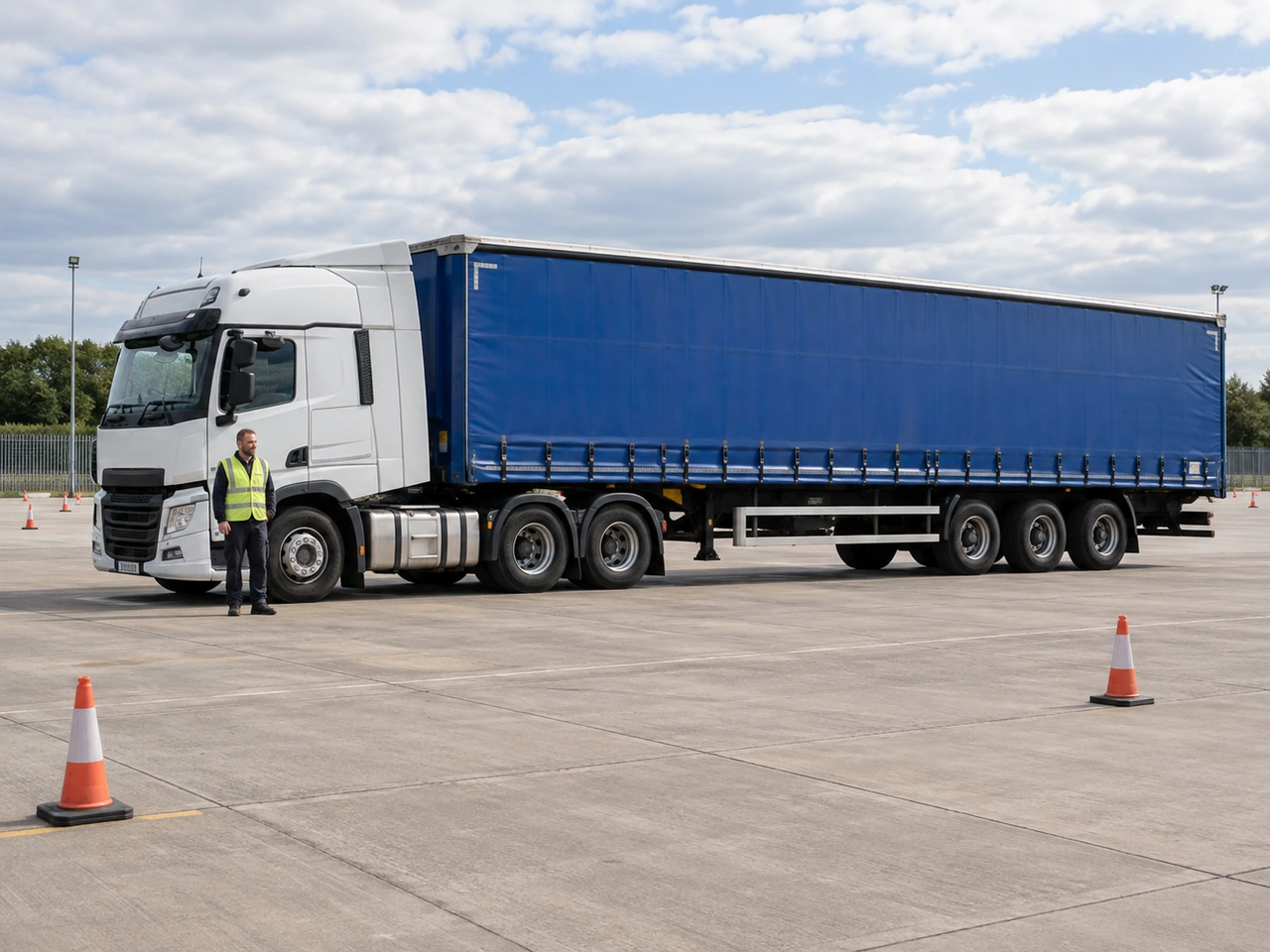
949. What is the minimum licence for a lorry that requires category C towing a trailer rated above 750 kg?
Category C permits a trailer with a maximum authorised mass of up to 750 kg. A category C vehicle towing a trailer or semi-trailer above 750 kg requires category CE.
Norway. Check the maximum authorised mass in the vehicle registration certificate (vognkort). Read the trailer’s certificate when checking the 750 kg threshold.
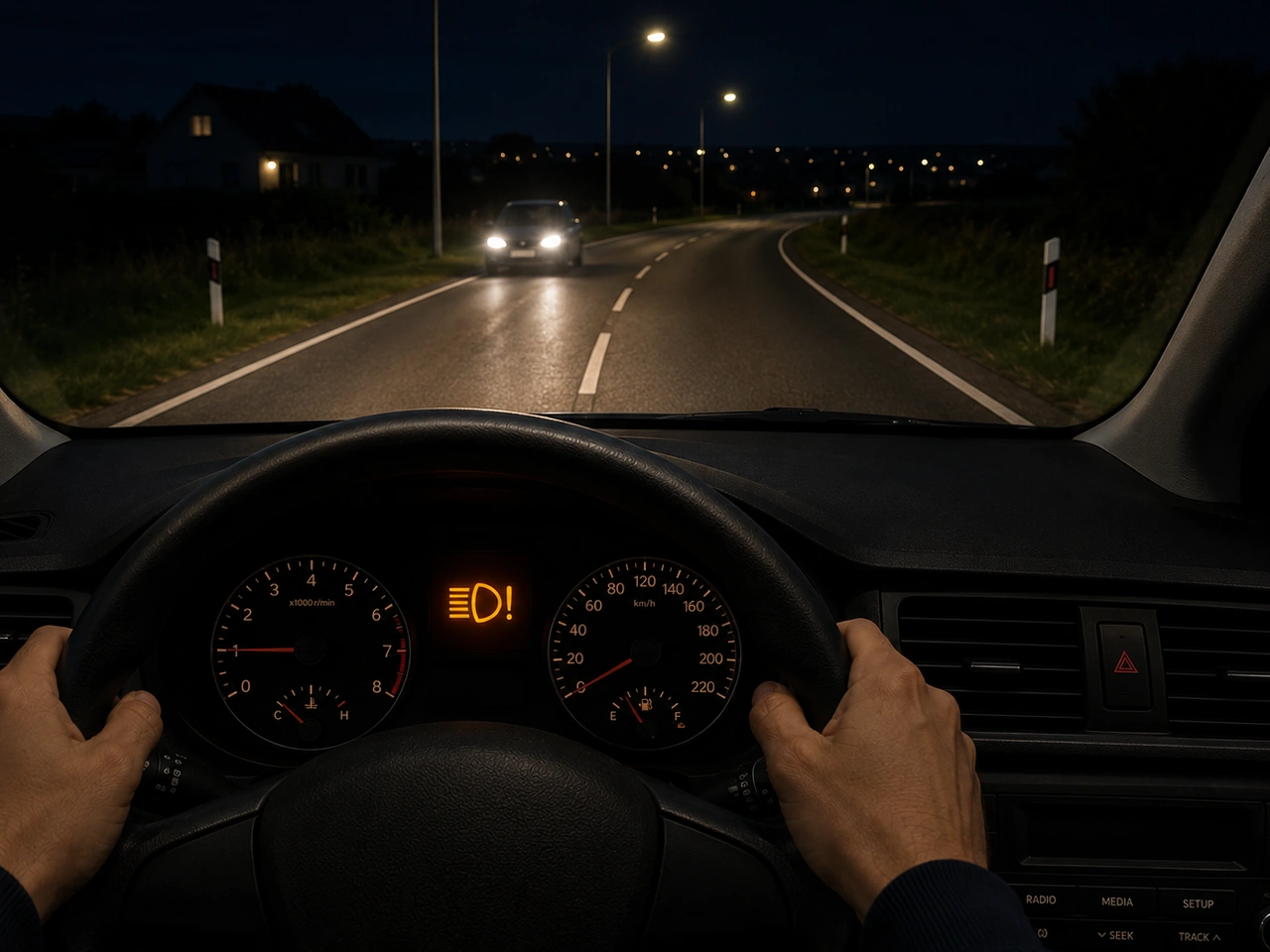
950. What should you do if your headlights fail while driving at night?
Loss of headlights can leave you unable to see hazards and difficult for others to see. Reduce speed smoothly, maintain control and stop clear of moving traffic as soon as safely possible. Use working lights or hazard warning lights to make the vehicle visible while reaching a safe stop. They do not make it safe to continue your journey without effective headlights. Once stopped, follow local rules for warning other traffic and arrange assistance.
Failed headlights compromise night visibility. Stop in relative safety and arrange repairs before resuming night driving.