


QuizTraffic rulesNorway
Test your knowledge with our multiple-choice quiz. Learn from each answer and improve your understanding of the traffic rules and road signs of Norway.
 Traffic signs
 Traffic rules
 Norway
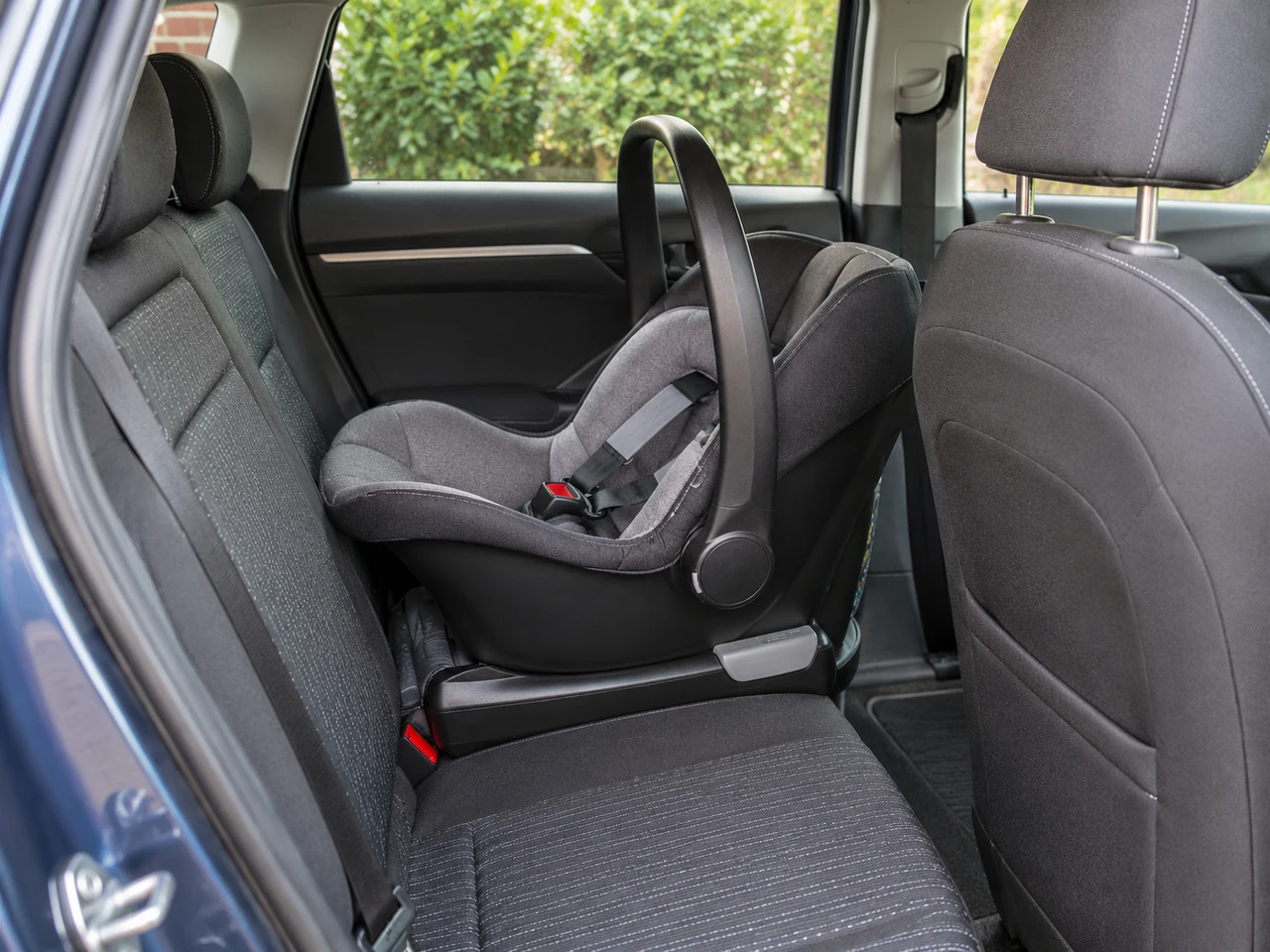
951. A rear-facing child seat is safe in front of an active frontal airbag.
A deploying frontal airbag can seriously injure a child in a rear-facing seat. Never place a rear-facing child restraint in front of an active frontal airbag; follow the vehicle and restraint instructions.

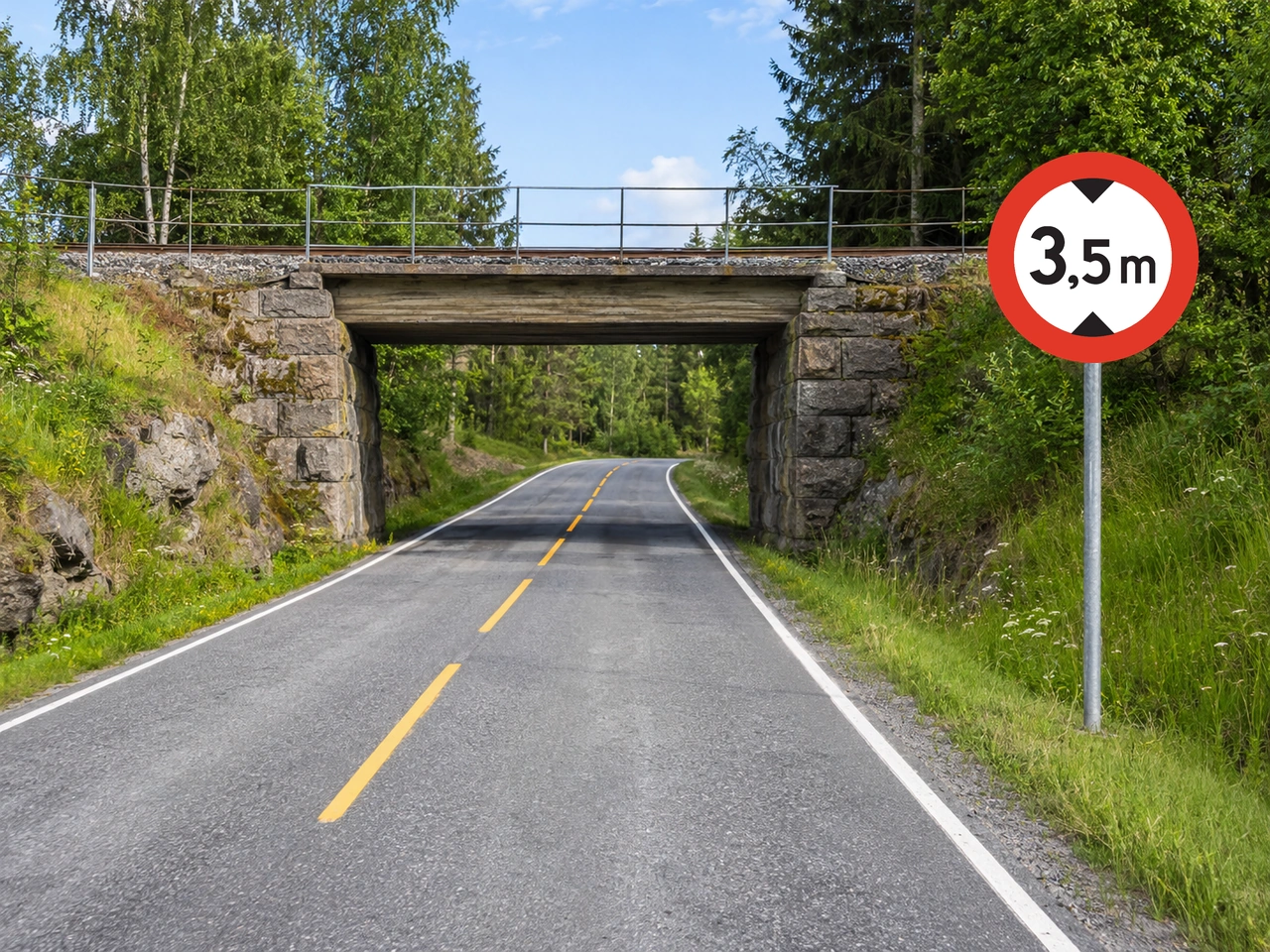
952. The height shown on this sign must be compared with the total height of the vehicle and its load.
The posted height concerns the actual height of the vehicle and its load together. Include roof boxes and other items carried above the vehicle. Check your total height before choosing a route.
🔗 Sources
Norwegian Traffic Signs Regulations, section 8 — 314 Høydegrense
Official Norwegian sign artwork: Statens vegvesen, sign 314, original EPS file 314_0.eps from the national sign artwork archive. Native numbers, lettering, pictogram, orientation, borders and proportions retained. Red follows the published PMS 179 web swatch, RGB 226/56/40, where present. Original files and colour guidance. No third-party open licence is asserted for the government artwork.

Image credit: AI-generated background with source sign artwork resized and placed on the sign face.
Norwegian Public Roads Administration, Handbook N300, Part 3, printed page 33 — sign 314 artwork.
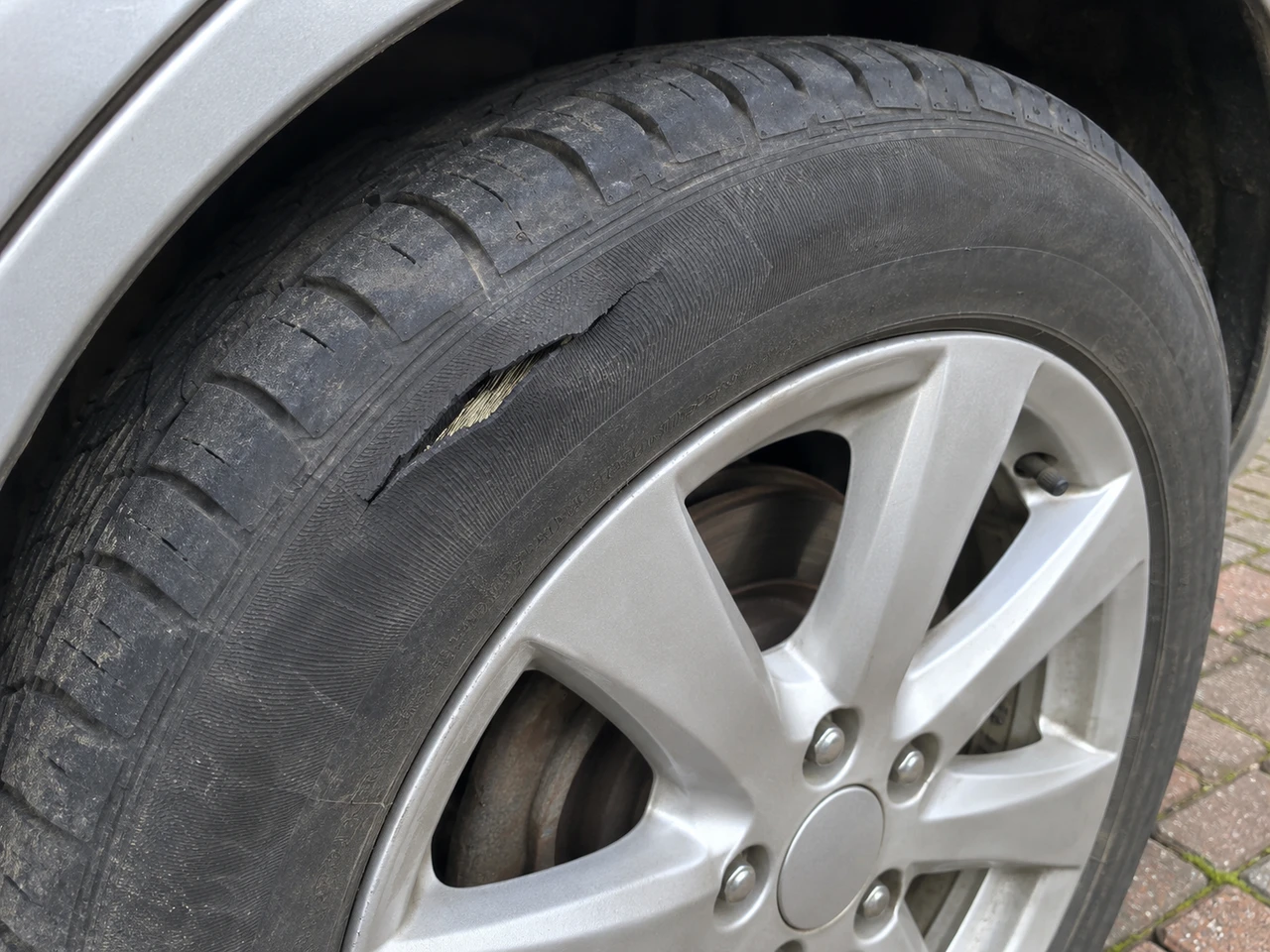
953. What should you do if a tyre has a deep cut, bulge, or exposed cords?
Cuts, bulges, and exposed cords can indicate serious structural damage. The tyre may fail suddenly and should not be used normally.
Norway. Check the sidewalls as well as the tread. If you find a deep cut, bulge or exposed cords, arrange a safe replacement or recovery before driving.
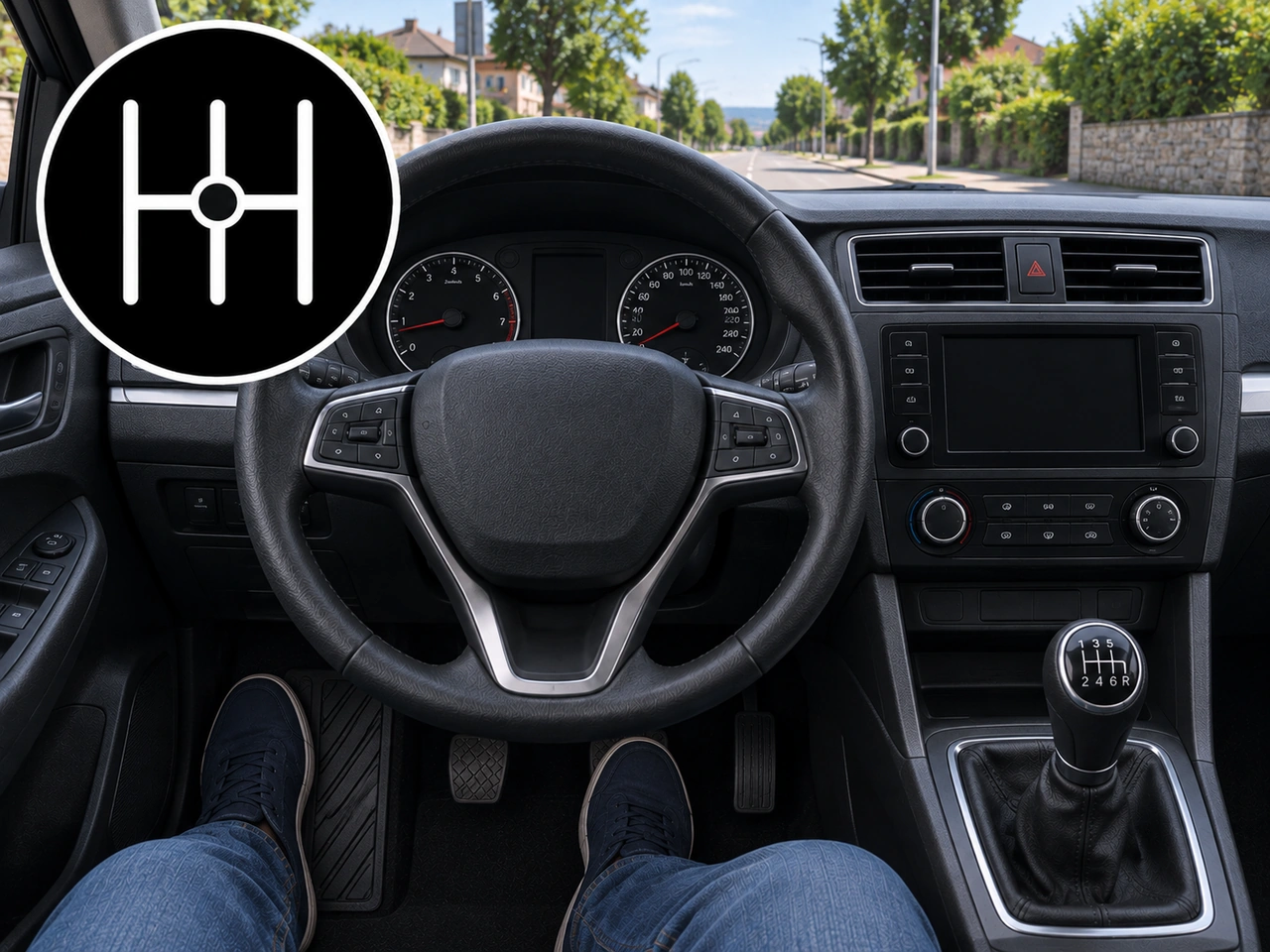
954. What should you normally do with the gearbox during a longer stop in a manual vehicle?
During a longer stop, selecting neutral and releasing the clutch can reduce unnecessary strain on the clutch release mechanism. Keep the vehicle securely held with the brake or parking brake as appropriate.
Once stopped, hold the vehicle with the brake while you select neutral and let the clutch pedal up. In some cars this also allows automatic stop-start to operate.
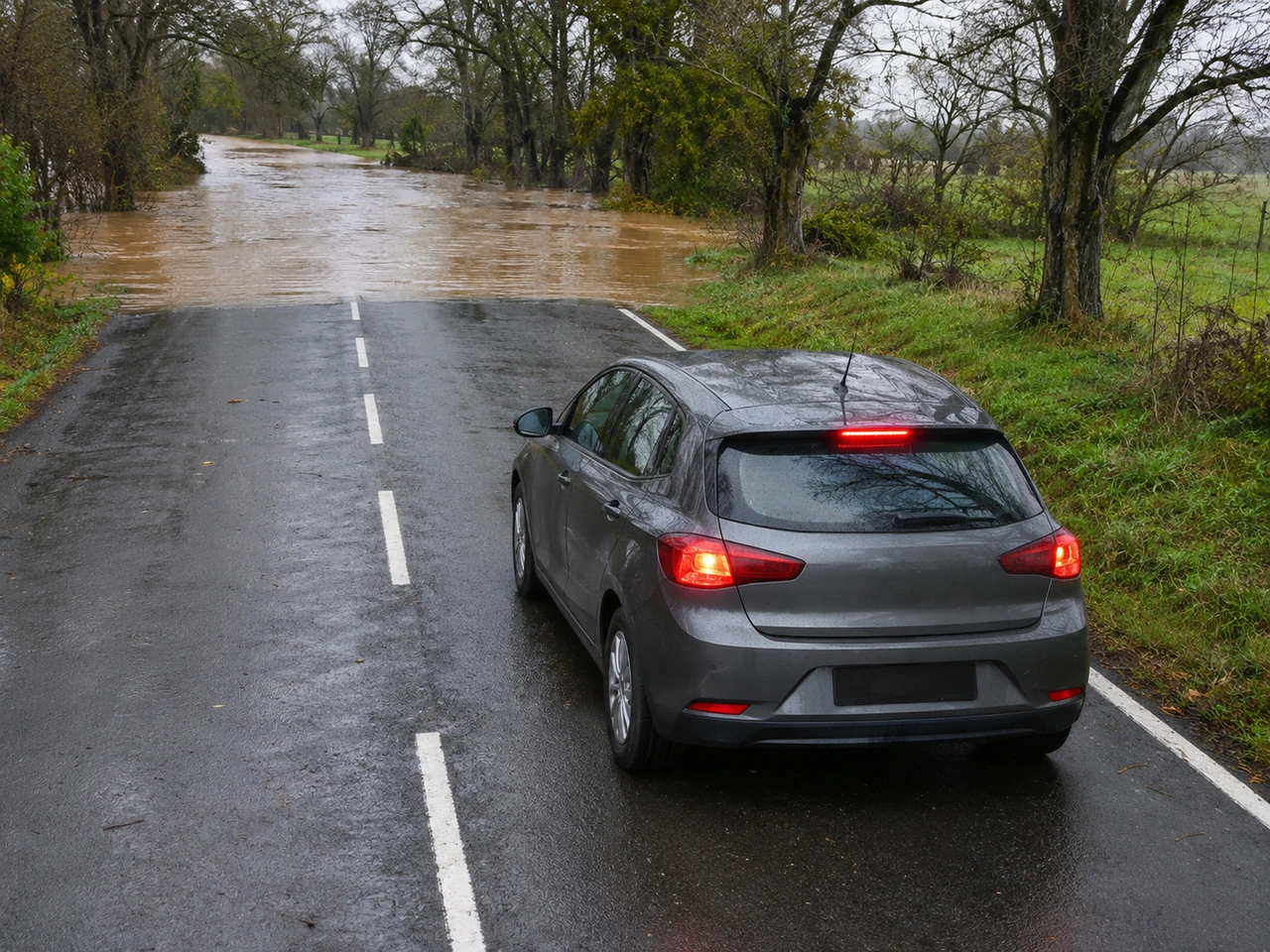
955. Why should you avoid driving through deep water?
Floodwater can conceal holes and damaged road edges, and moving water can carry a vehicle away. It can also damage the engine and affect braking. Do not enter a flooded road or try to determine a safe crossing speed from its appearance. Stop before the water where safe, then use another route.
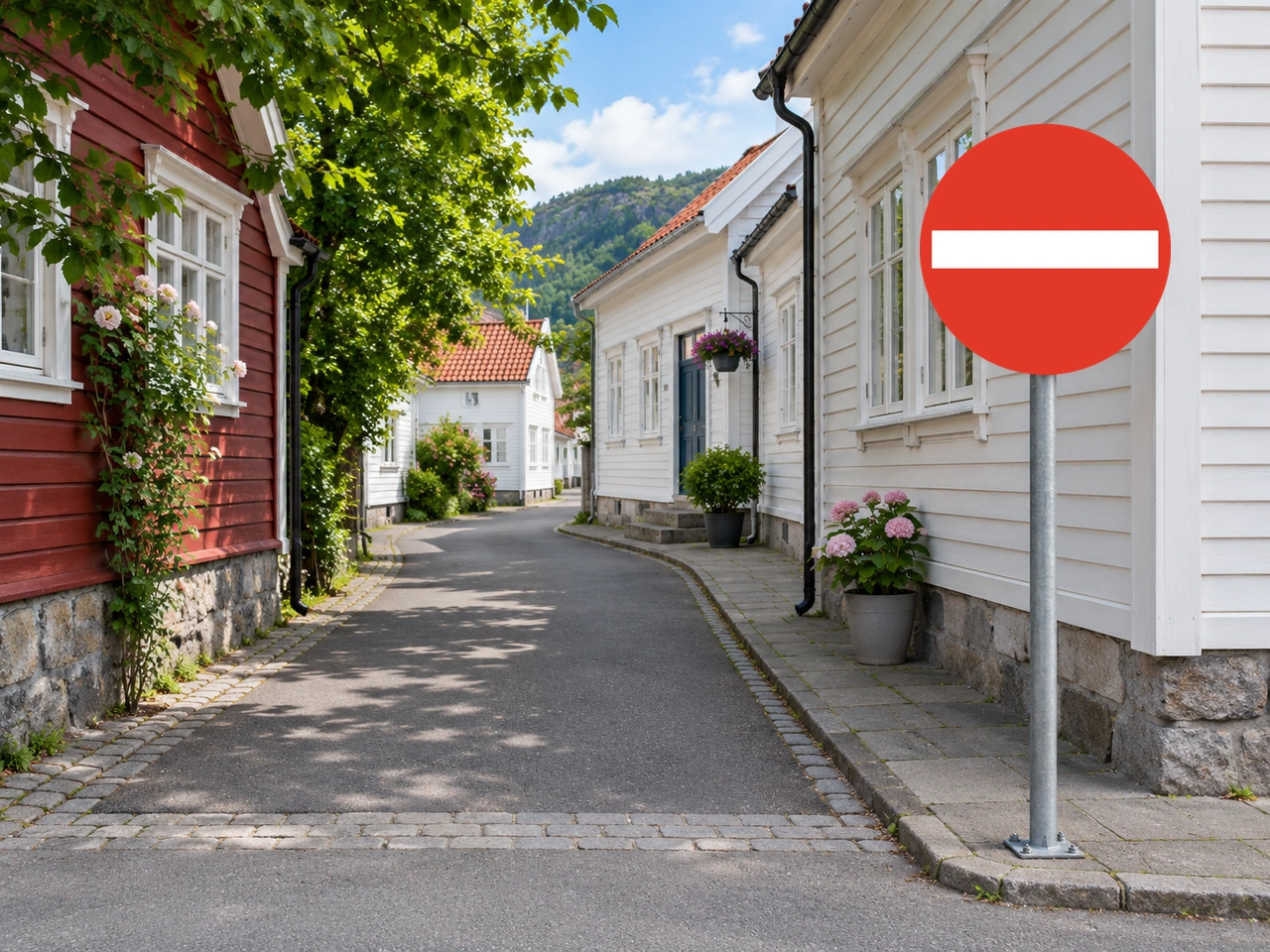
956. The no-entry sign shown prohibits a car from entering.
The no-entry sign prohibits entry into the carriageway it applies to. Do not drive past it from that direction unless an applicable exemption permits you to do so.
🔗 Sources
Norway • Skiltforskriften • Sign 302
Statens vegvesen • Official traffic-sign meanings
Statens vegvesen • Official sign artwork
Official Norwegian sign artwork: Statens vegvesen, sign 302, original EPS file 302_0.eps from the national sign artwork archive. Native symbol, lettering, orientation, borders and proportions retained. Colours use the authority's published PMS web swatches: red PMS 179. Original files and colour guidance. No third-party open licence is asserted for the government artwork.
Image credit: AI-generated background with source sign artwork resized and placed on the sign face.
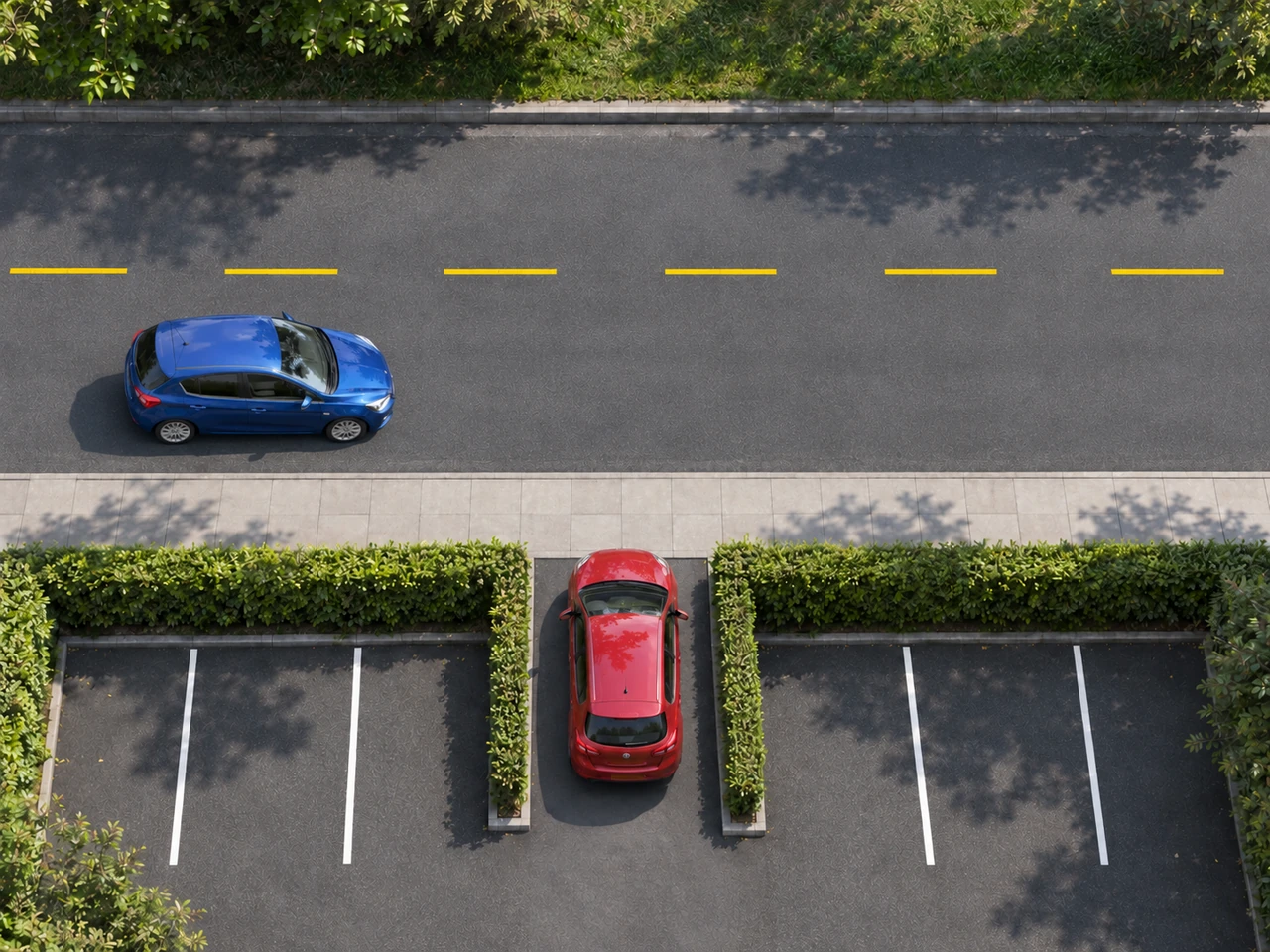
957. There is no room to wait between the pavement and the road. Where should red wait while blue passes?
Wait before crossing the pavement while blue passes. Once there is a safe gap on the road, check for pedestrians again and move across only when both routes are clear.
🔗 Sources
AI-generated illustration • Traffic-rules.com / Rijbewijs-online.be • WCIT • CC BY-SA 4.0.
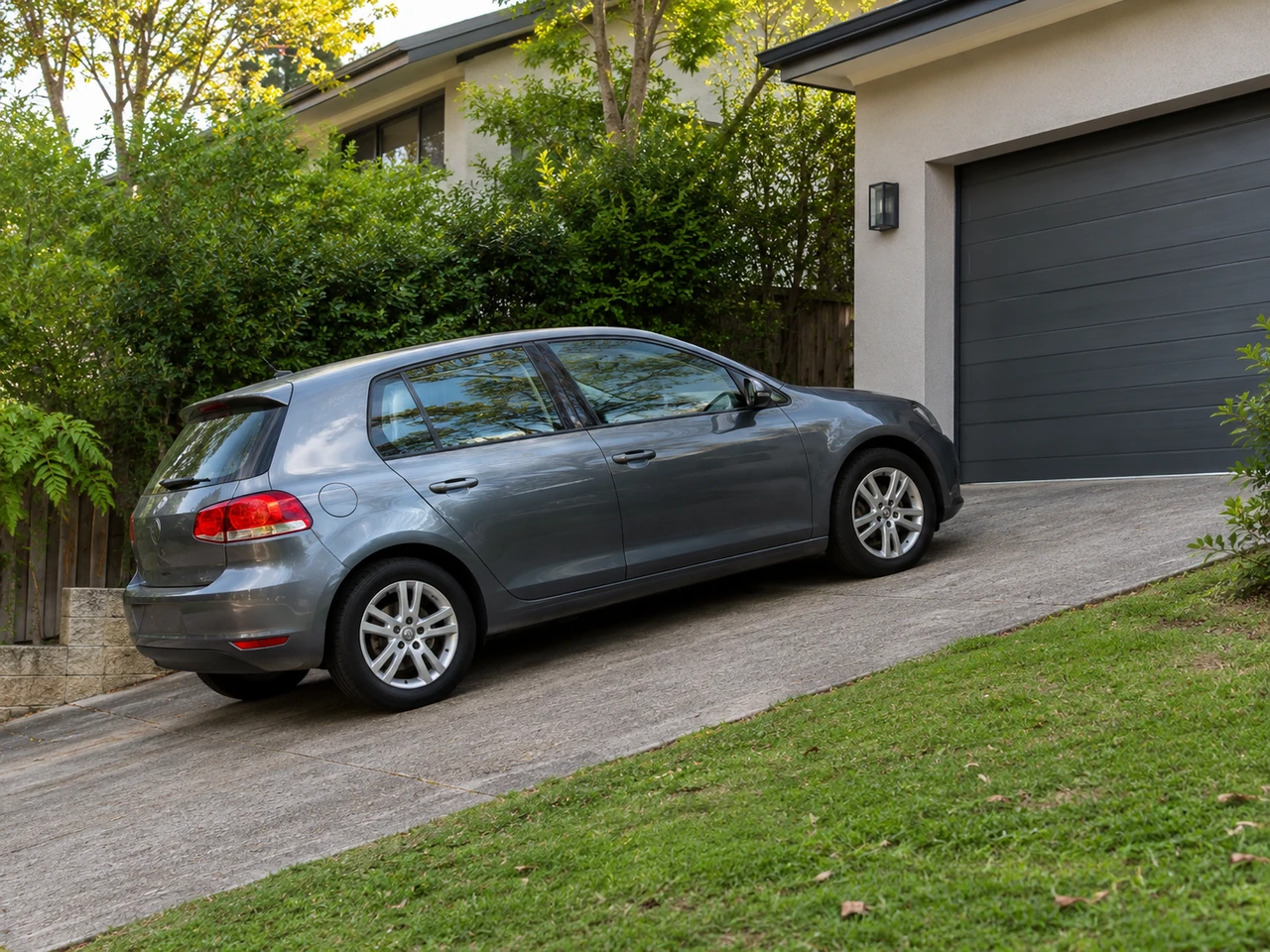
958. Hill-start assist replaces the parking brake when you leave a car parked on a slope.
Hill-start assist holds the brakes briefly to help you move off on a slope. It does not replace the parking brake. Secure the parked car as directed in the vehicle handbook.
🔗 Sources
Ford owner’s manual (manufacturer guidance) • Safety guidance, brief brake hold; parking-brake precautions
Image credit: AI-generated
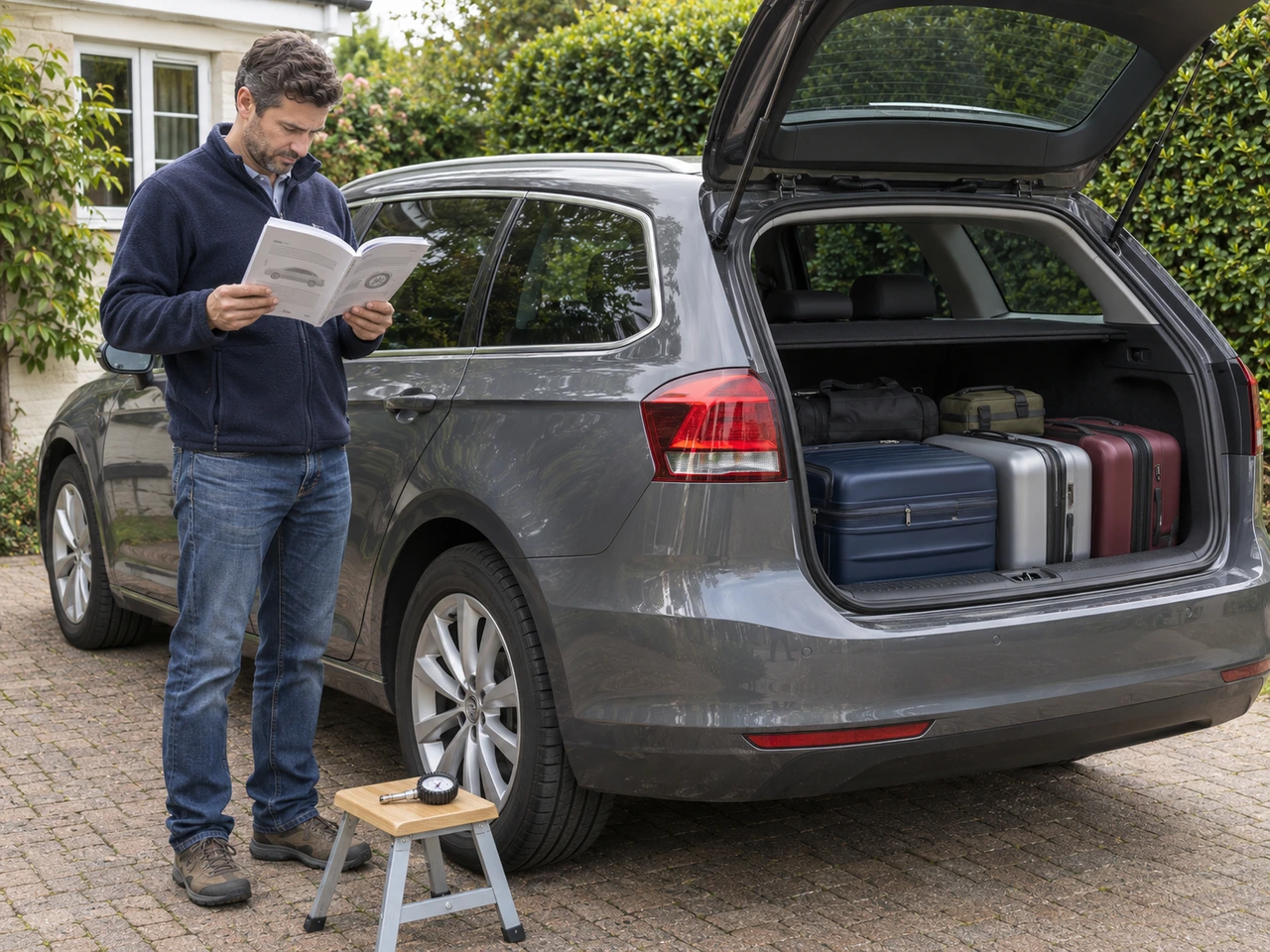
959. Where should you check the tyre-pressure setting for a fully loaded car?
Use the vehicle manufacturer's pressure specification for the load being carried. Check the handbook or vehicle data and measure pressures with cold tyres. Do not assume the lightly loaded setting is correct.
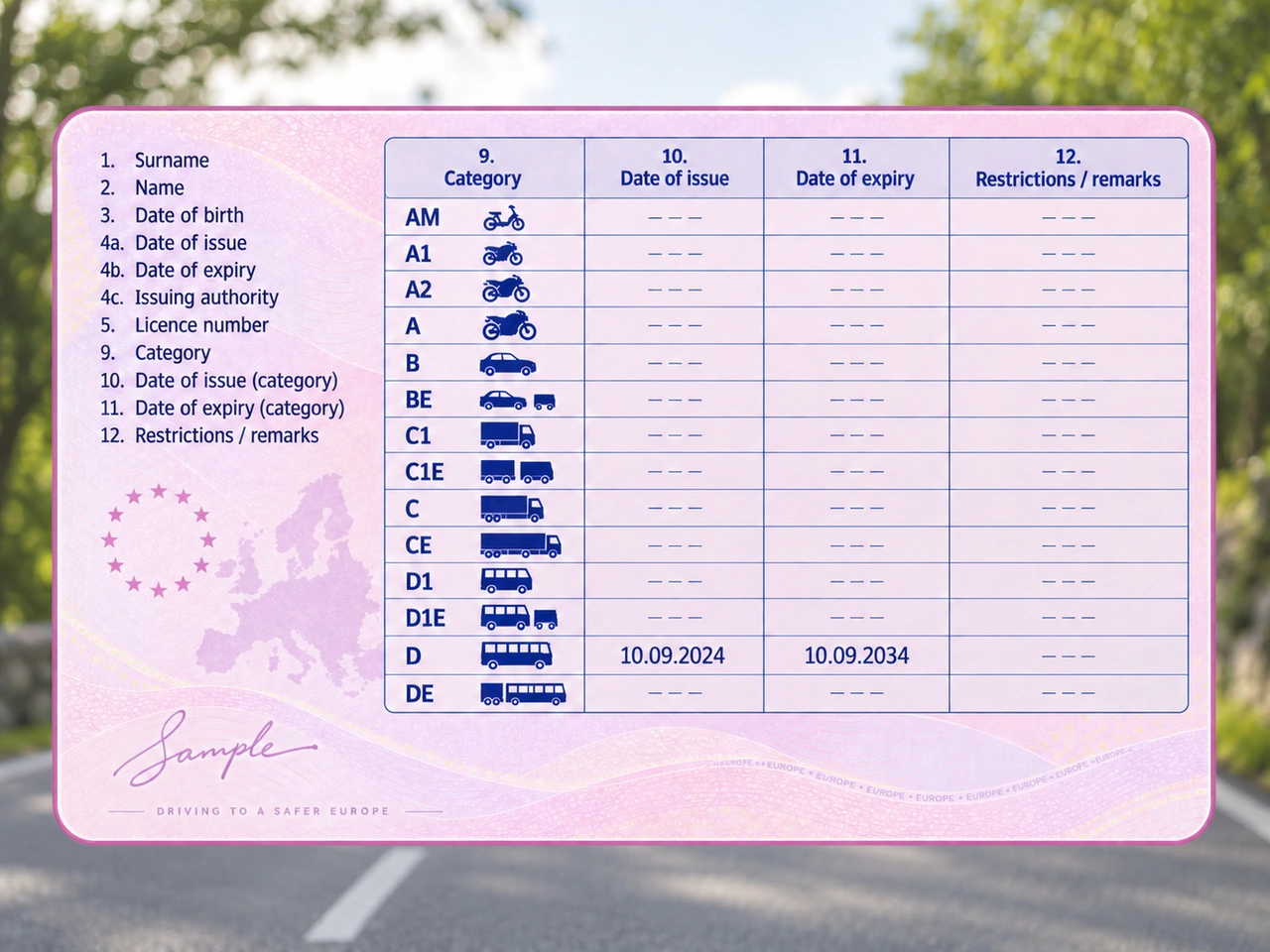
960. Which passenger vehicles are covered by driving licence D?
Category D covers motor vehicles designed and constructed to carry more than eight passengers in addition to the driver. A trailer up to 750 kg may be towed.
Norway. Use the vehicle’s designed passenger capacity. The category does not change when the coach is empty.
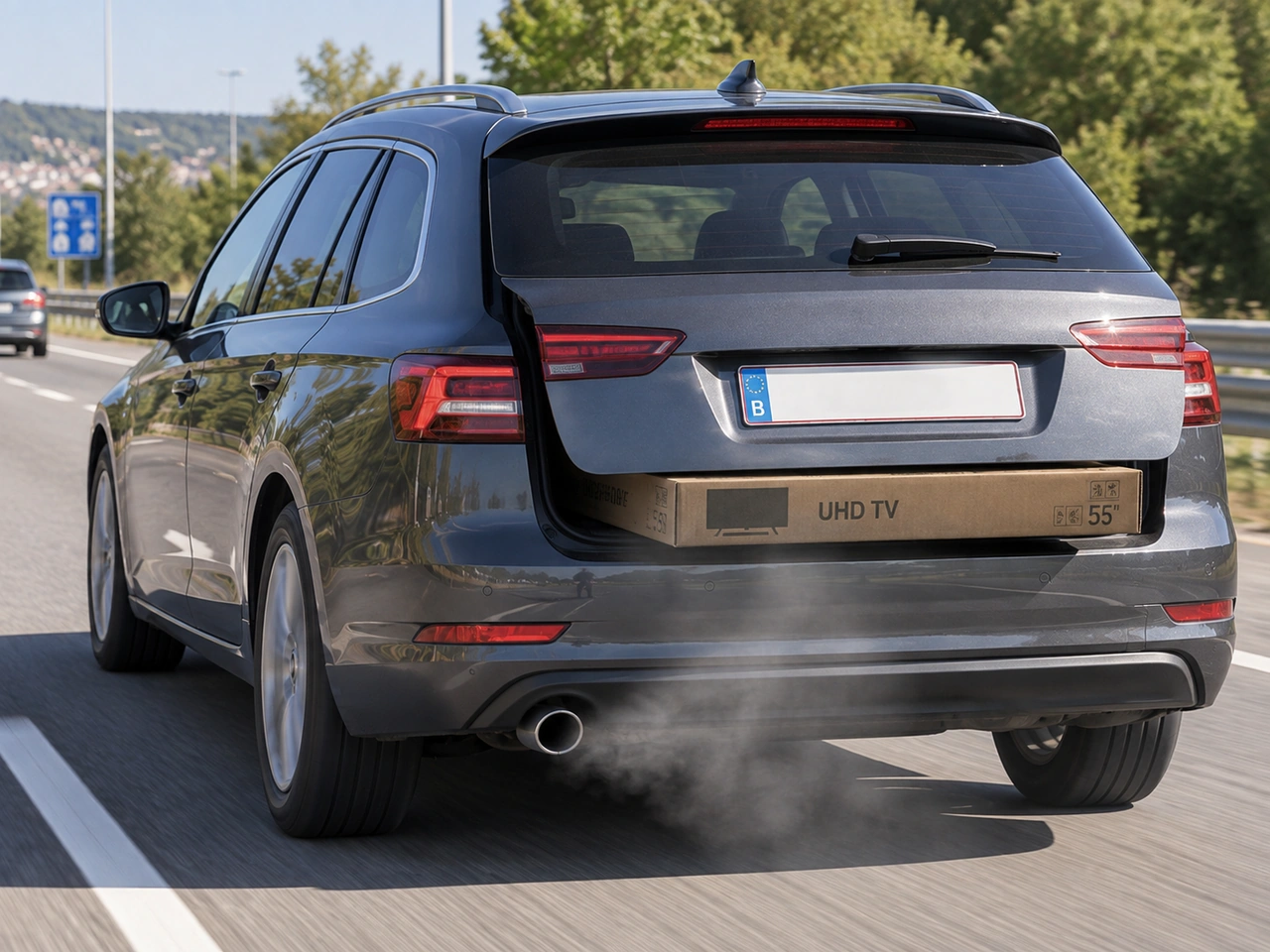
961. What is a danger of driving a petrol or diesel vehicle with the boot or tailgate open?
Driving with the boot or tailgate open can allow exhaust gases to be drawn into the vehicle. Exhaust fumes may contain carbon monoxide, which is poisonous and may be difficult to detect. Keep the luggage compartment properly closed while driving whenever possible.
🔗 Sources
Nissan 2025 Sentra manual — Model-specific exhaust gases, closed spaces and hot components example
Image credit: AI-generated
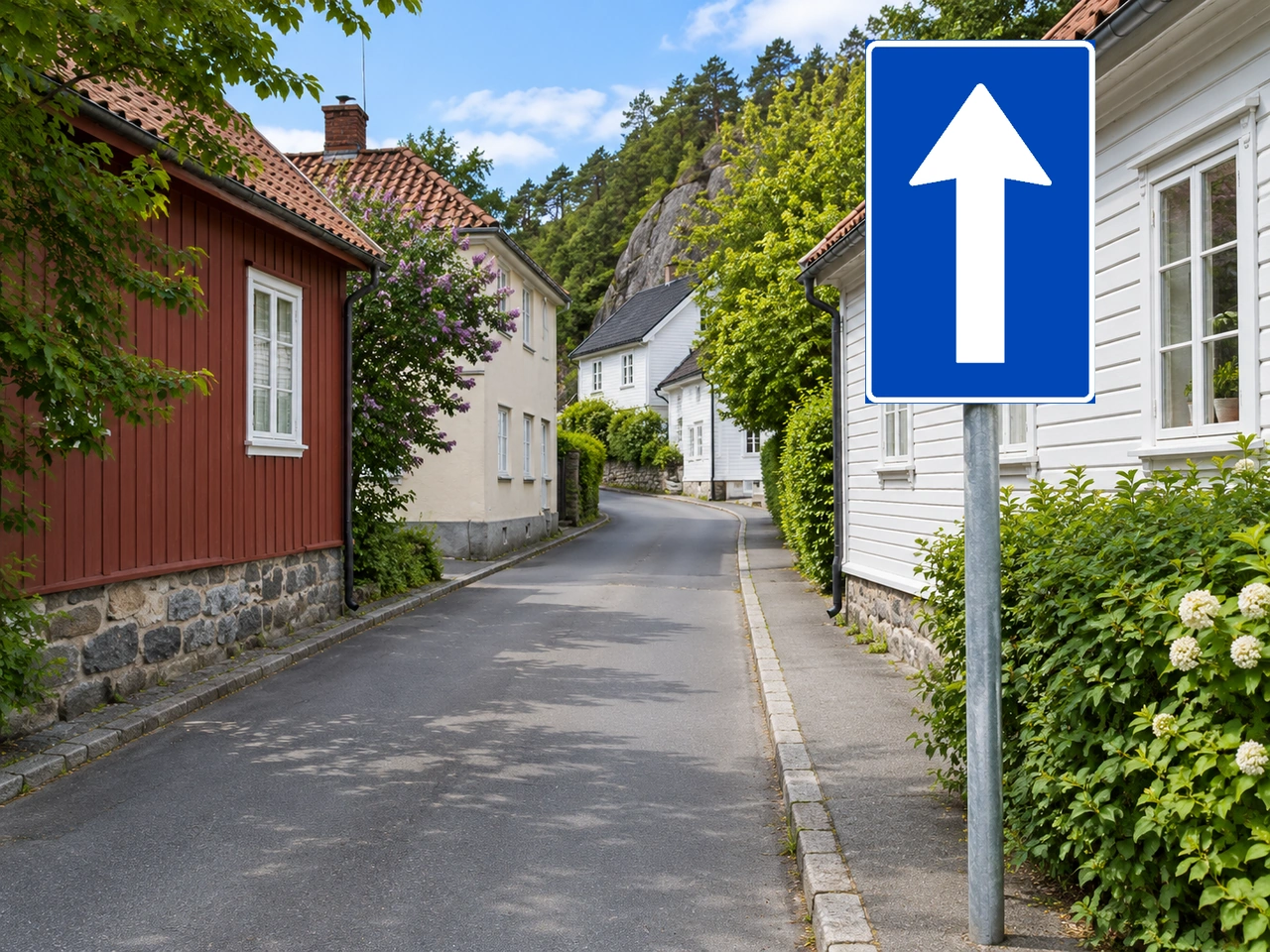
962. This blue sign with a white arrow indicates a one-way street.
This sign indicates a road with one-way traffic in the direction of the arrow. It is different from a blue circular mandatory-direction sign. Any permitted contraflow cycling is indicated by supplementary signs.
🔗 Sources
Norway • Skiltforskriften • Sign 526.1
Statens vegvesen • Official traffic-sign meanings
Statens vegvesen • Official sign artwork
Official Norwegian sign artwork: Statens vegvesen, sign 526.1, original EPS file 526_1.eps from the national sign artwork archive. Native symbol, orientation, borders and proportions retained. Colours use the authority's published PMS web swatches: blue PMS 293 and red PMS 179 where present. Original files and colour guidance. No third-party open licence is asserted for the government artwork.
Image credit: AI-generated background with source sign artwork resized and placed on the sign face.
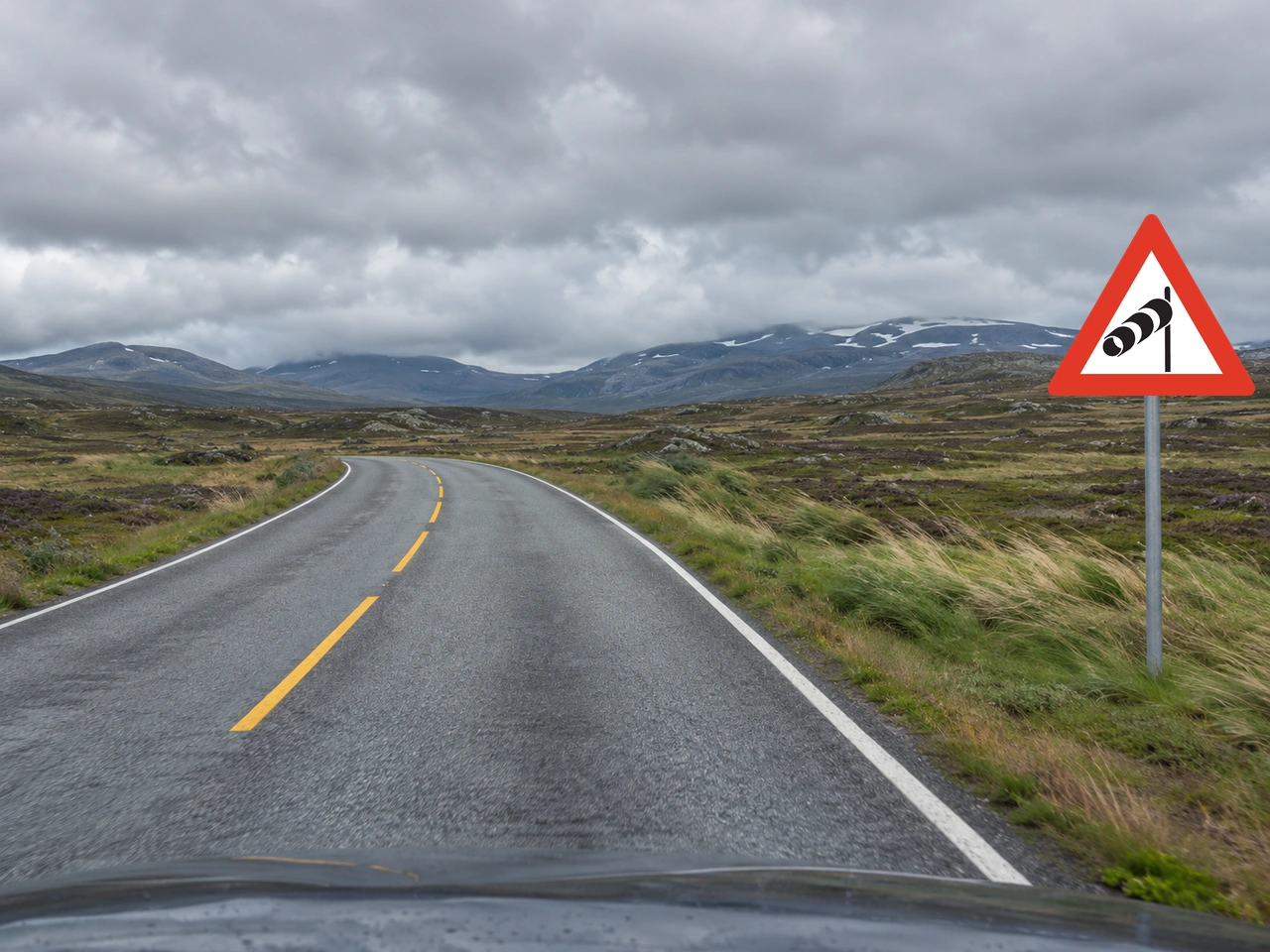
963. Strong crosswinds can push a car off course.
Sudden gusts can affect your direction, especially on exposed roads or when passing gaps in hedges. Reduce speed as needed and keep a firm grip on the steering wheel.
🔗 Sources
Norwegian Government • Road Signs Regulations, section 4 • 152: Sidevind.
Official Norwegian sign artwork: Statens vegvesen, sign 152, original EPS file 152_0.eps from the national sign artwork archive. Native geometry, orientation, borders and proportions retained. Colours use the authority's published PMS web swatches: red PMS 179, blue PMS 293 and yellow PMS 130 where present. Original files and colour guidance. No third-party open licence is asserted for the government artwork.
Image credit: AI-generated background with source sign artwork resized and placed on the sign face.
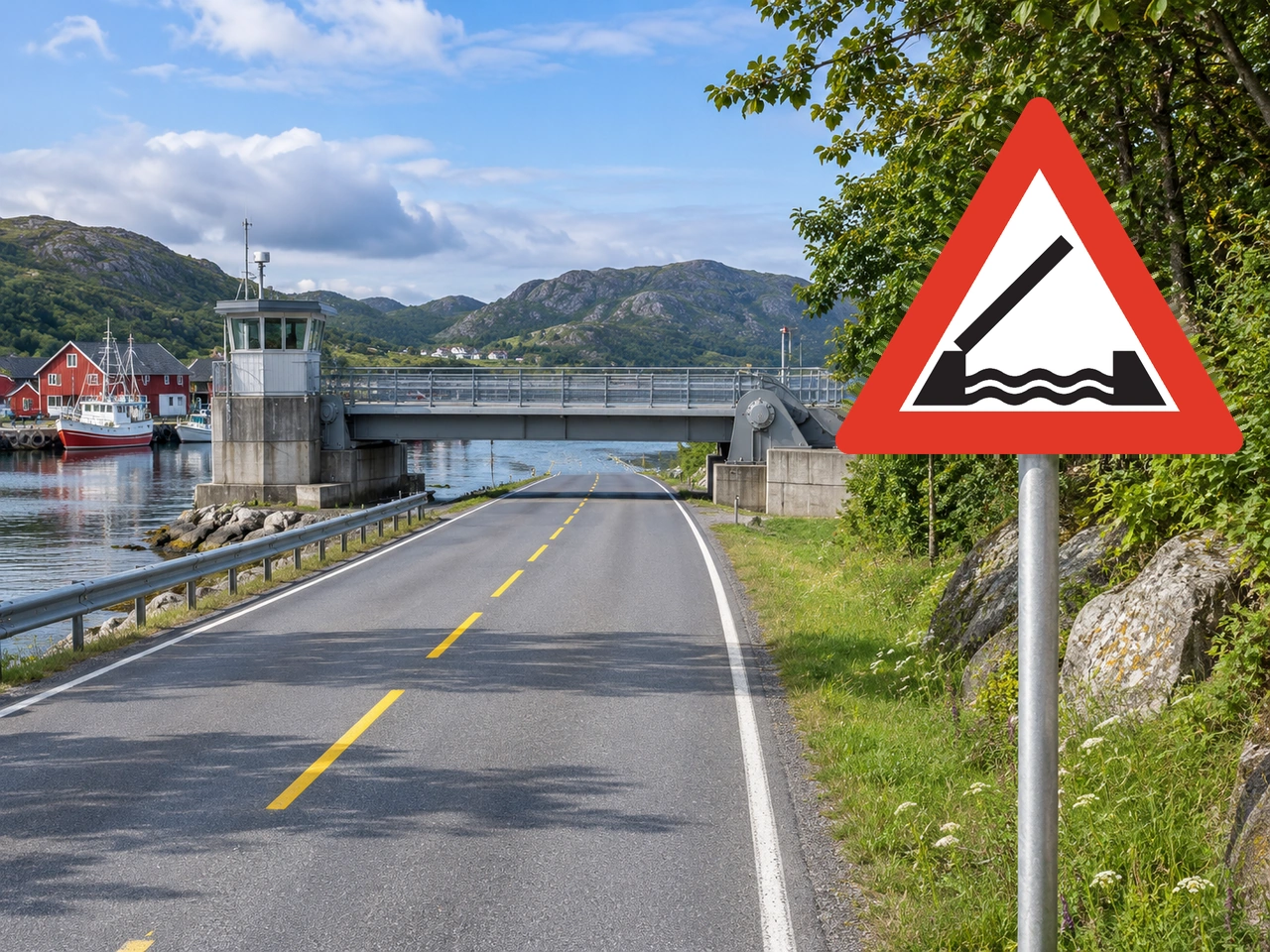
964. The triangular sign showing a raised bridge deck warns of a steep ascent.
The raised bridge-deck symbol warns of a movable bridge. A steep-ascent warning instead indicates an uphill gradient.
🔗 Sources
Norway • Skiltforskriften • Sign 118
Statens vegvesen • Official traffic-sign meanings
Statens vegvesen • Official sign artwork
Sign artwork: Statens vegvesen original EPS archive, Sign 118, file 118_0.eps. Native raised bridge deck and water lines, orientation, border and proportions retained; resized and composited onto the existing same-entry scene. Border red follows the authority's published colour chart: PMS 179, using the published web swatch RGB 226/56/40. No third-party open licence is asserted for the government artwork.
Image credit: AI-generated background with source sign artwork resized and placed on the sign face.
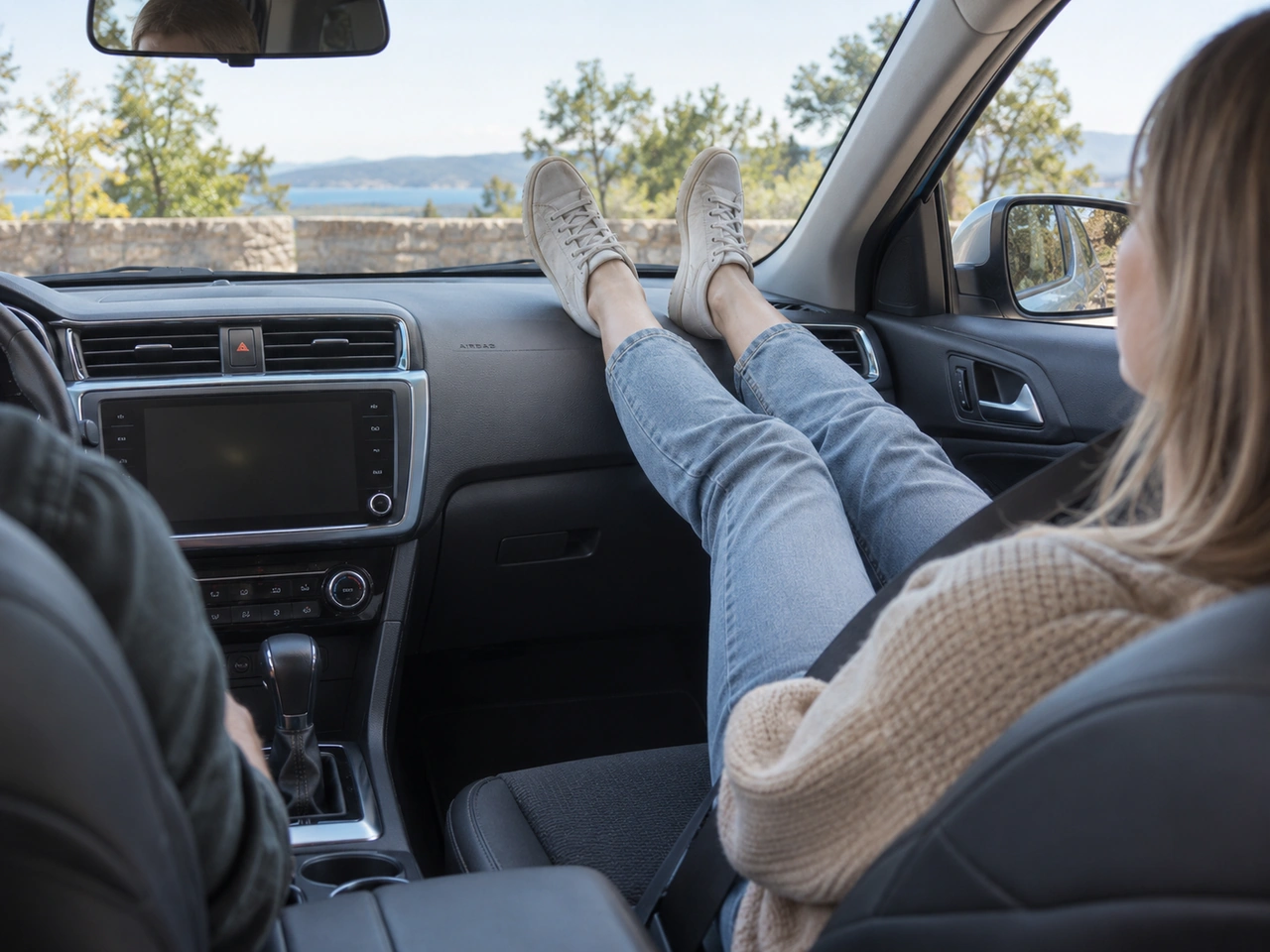
965. Why should a front passenger keep their feet off the dashboard?
A front airbag deploys very quickly and with considerable force. If a passenger has their feet or legs on the dashboard, airbag deployment can force their legs backwards and greatly increase the risk of serious injury. Passengers should sit normally with their feet in the footwell and wear their seat belts correctly. The driver should make sure everyone is seated and restrained safely before setting off.
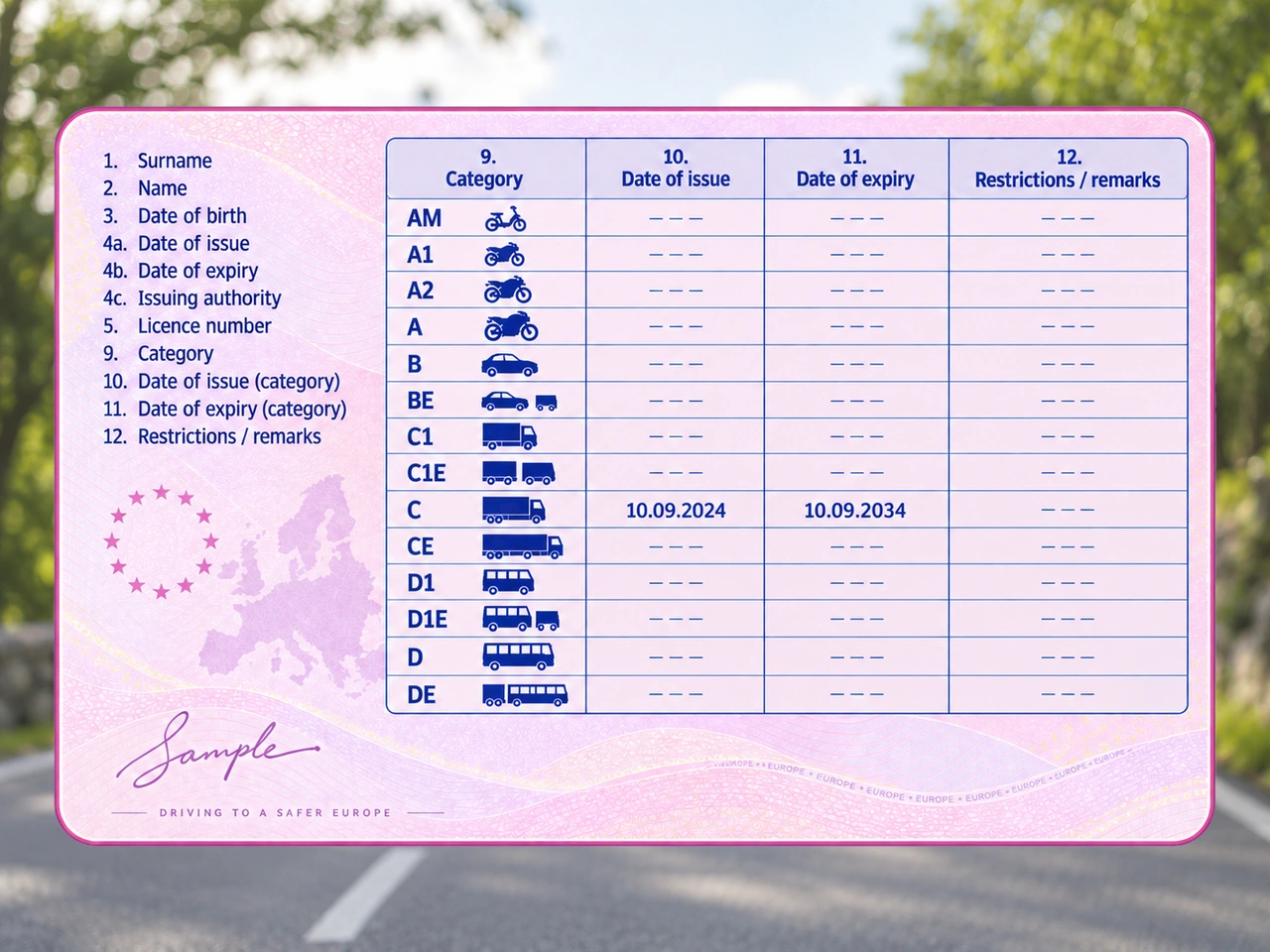
966. Which vehicles are covered by driving licence C?
Category C covers motor vehicles, other than categories D1 and D, with a maximum authorised mass above 3,500 kg and designed to carry no more than eight passengers in addition to the driver. A trailer up to 750 kg may be towed.
Norway. Category C also covers lorries within the C1 mass range. If you tow a trailer, check its maximum authorised mass separately.
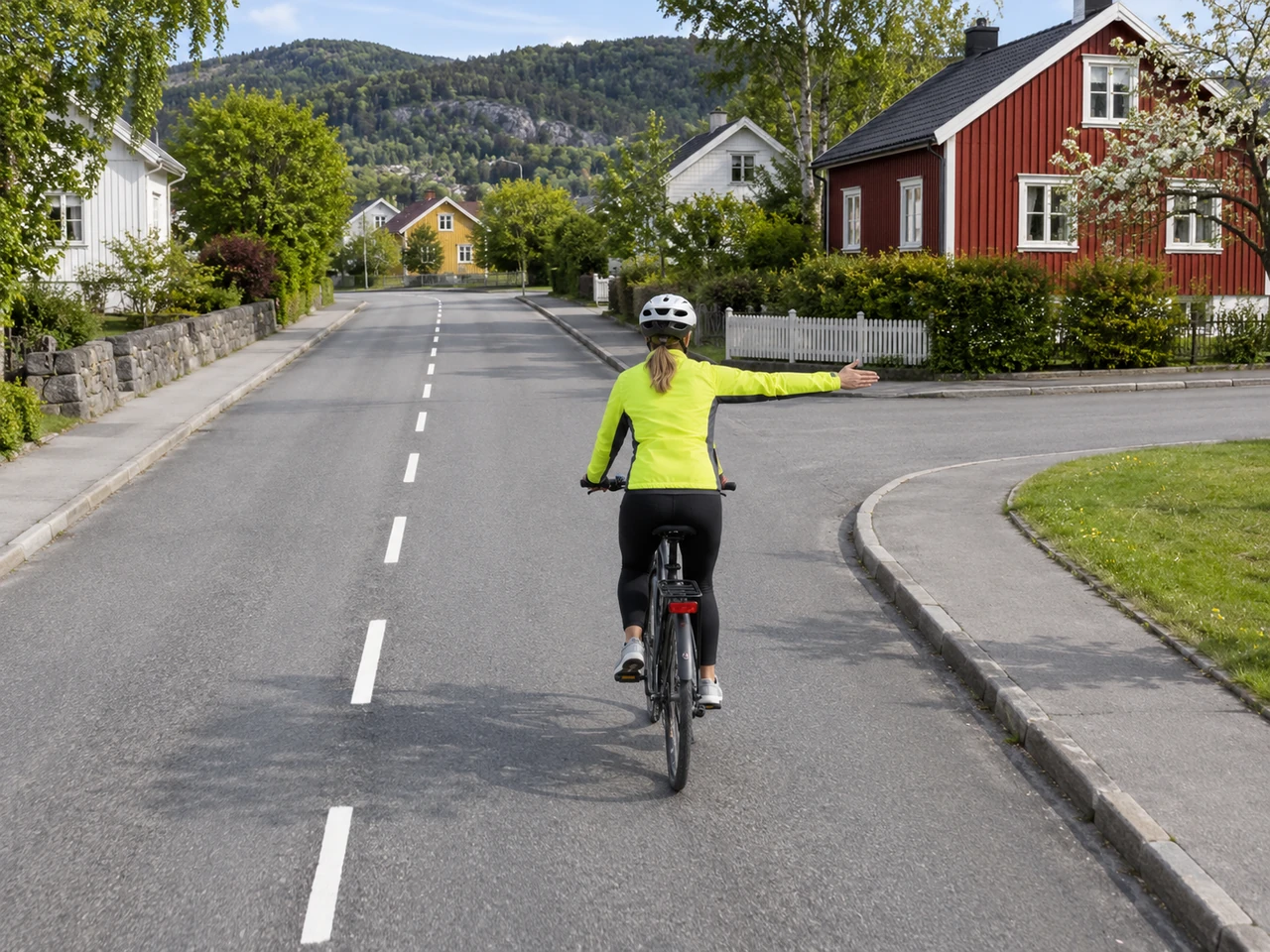
967. What should cyclists do before turning or changing position on the road?
Before turning or changing road position, check behind and around you, signal clearly when you can safely release a hand, and move only when it is safe. A signal tells others what you intend to do; it does not give you priority. Keep control of the bicycle throughout the manoeuvre.
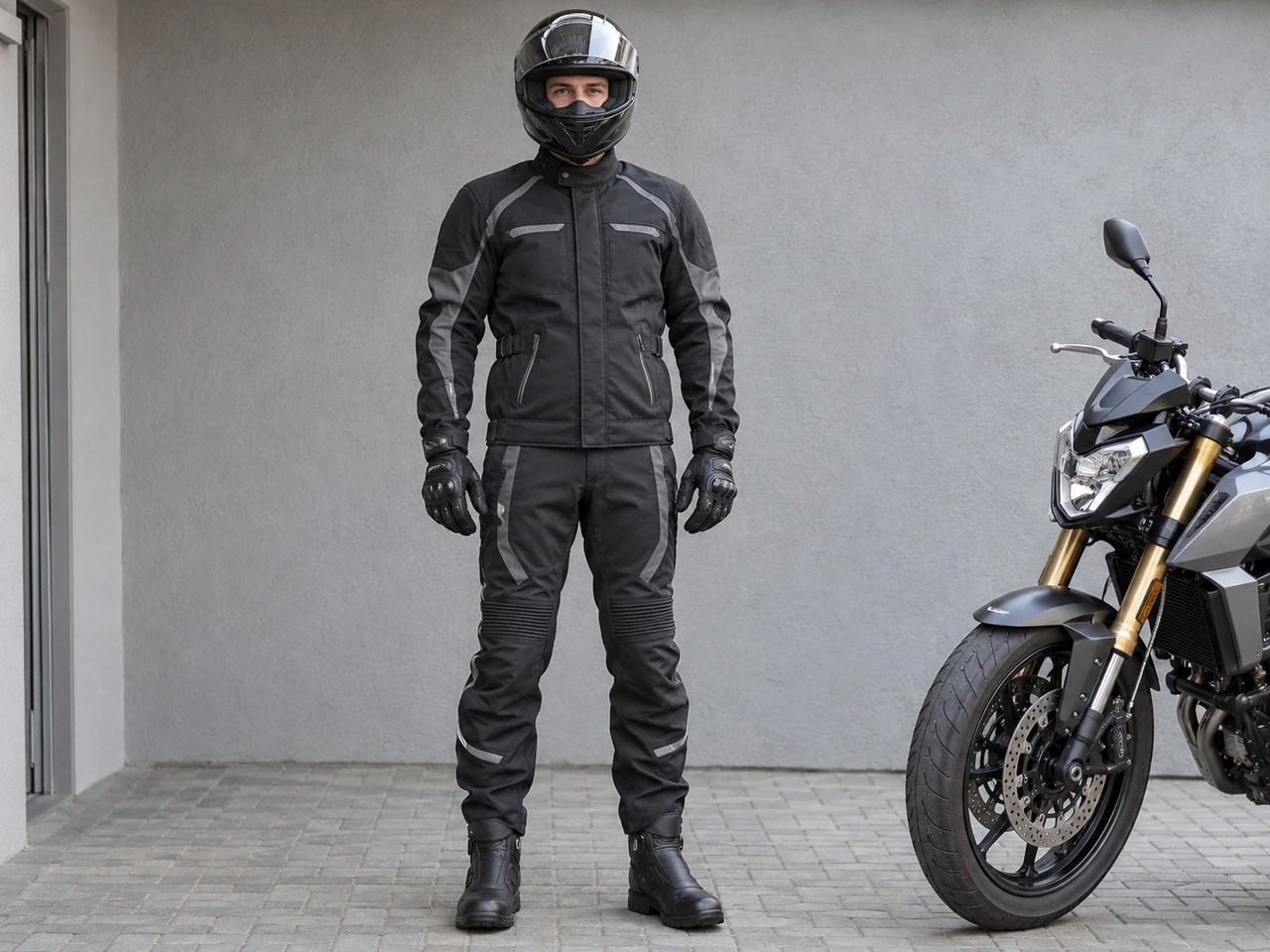
968. Should motorcyclists wear protective clothing?
Motorcyclists should wear protective clothing because it can reduce injuries from falls, impacts and sliding on the road. Suitable jackets, trousers, gloves and boots provide additional protection, but they do not replace a securely fitted helmet or safe riding.
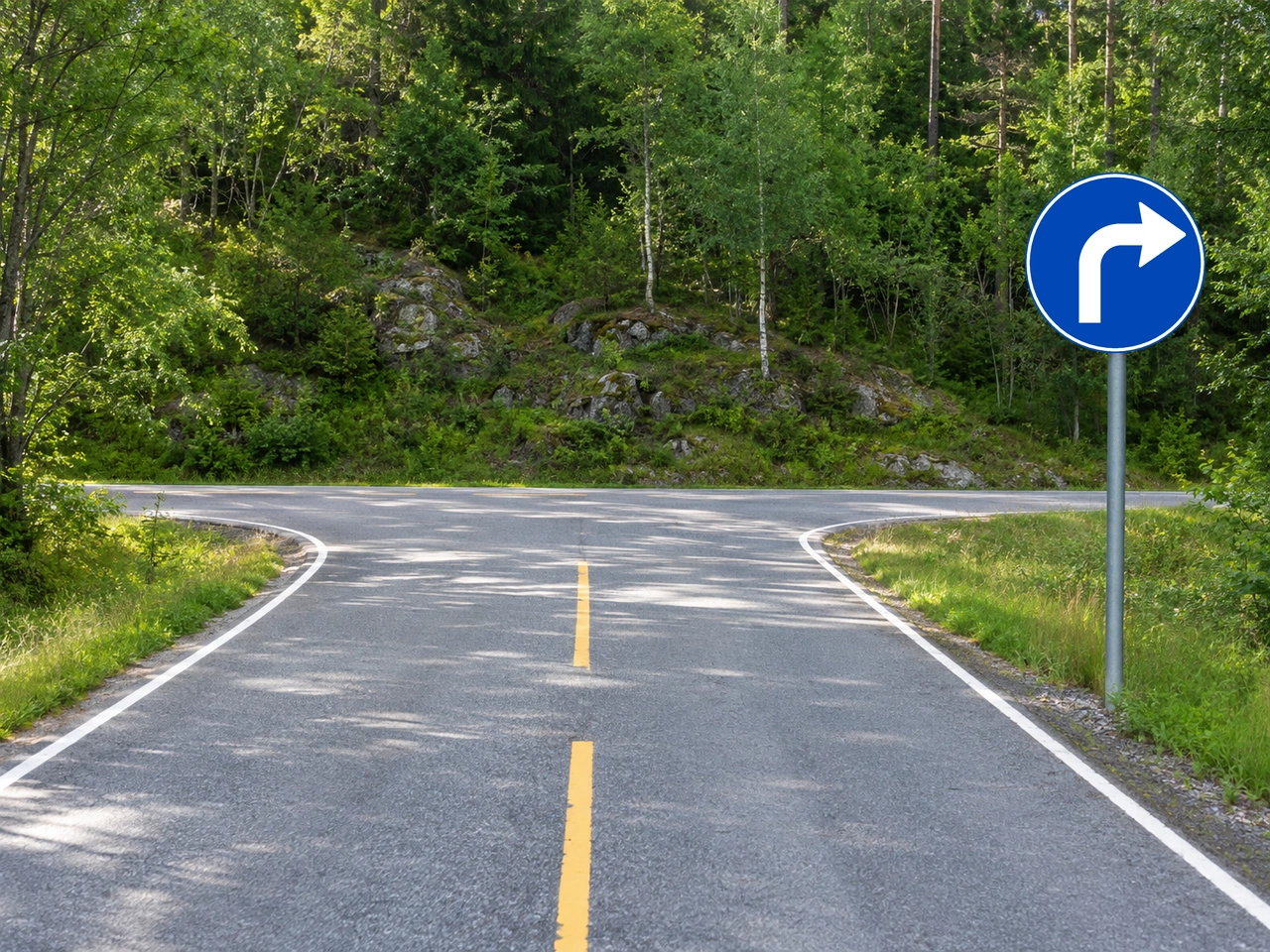
969. The sign shown requires you to turn right from this lane.
The sign prescribes the right turn. Use your indicator and obey any applicable signals and give-way rules. It does not itself grant priority.
🔗 Sources
Norway • Skiltforskriften • Sign 402.4
Statens vegvesen • Official traffic-sign meanings
Statens vegvesen • Official sign artwork
Official Norwegian sign artwork: Statens vegvesen, sign 402.4, original EPS file 402_4.eps from the national sign artwork archive. Native pictogram, orientation, borders and proportions retained. Colours use the authority's published PMS web swatches: blue PMS 293 and red PMS 179 where present. Original files and colour guidance. No third-party open licence is asserted for the government artwork.
Image credit: AI-generated background with source sign artwork resized and placed on the sign face.
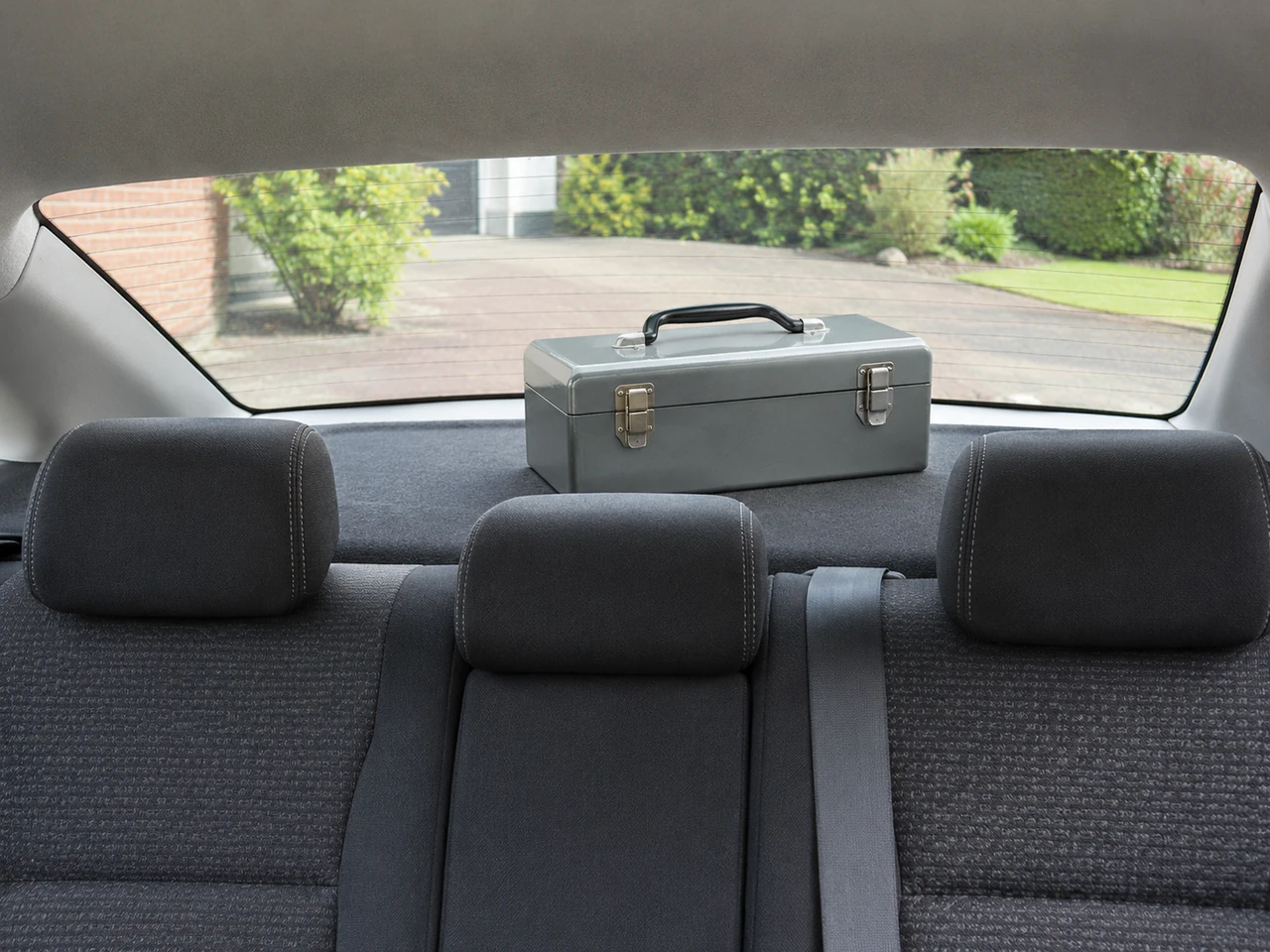
970. Heavy objects can be left loose on the parcel shelf if the rear view is clear.
A clear view does not make loose objects safe. They can fly forwards during sudden braking or a crash and injure occupants. Stow heavy items low down in a suitable load area and secure them.
🔗 Sources
DVSA load-securing guidance (Great Britain) • Safety guidance, Cars: stow heavy items in the boot
Image credit: AI-generated
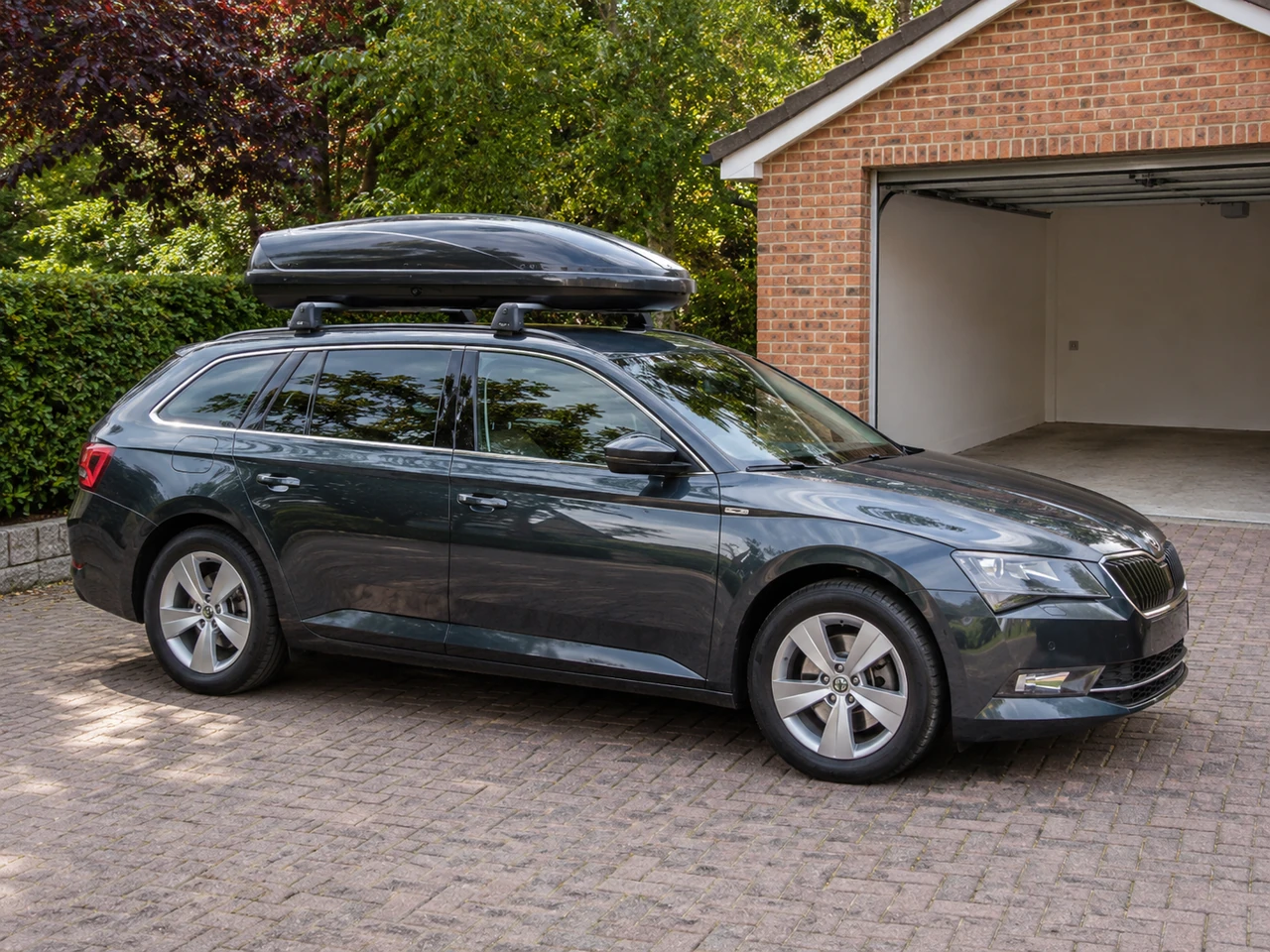
971. A roof box increases the height you must allow for at low entrances.
Allow for the car, roof bars and roof box together when checking clearance. Measure the overall height before approaching low garages, barriers or other overhead obstructions.
🔗 Sources
Thule (manufacturer guidance) • Safety guidance, increased overall height; model-specific fitting instructions
Image credit: AI-generated
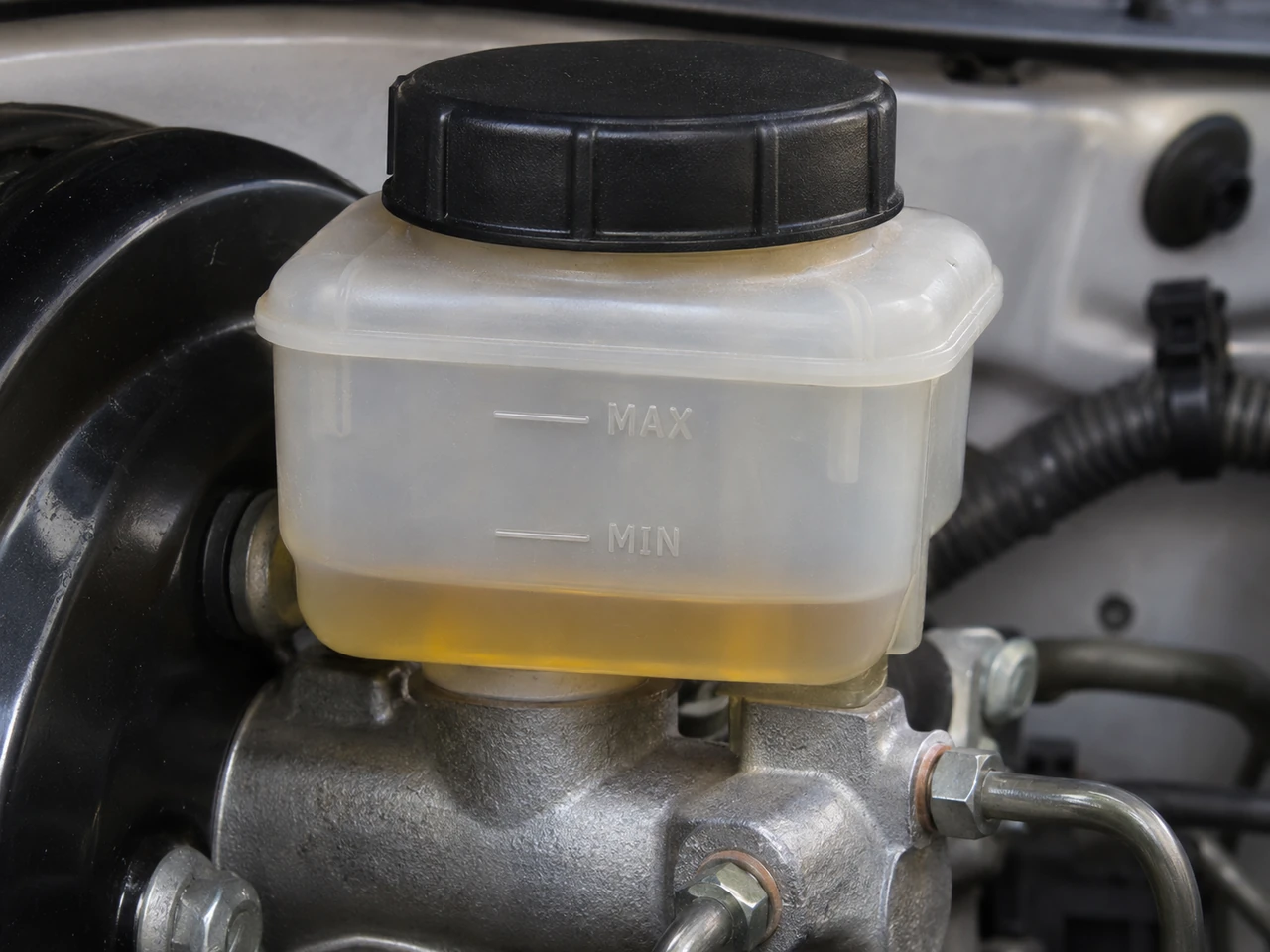
972. Brake fluid below the minimum mark needs prompt attention.
A level below the minimum mark can affect braking. Follow the handbook and have the brake system checked as soon as possible. If braking is affected, stop safely and arrange assistance.
🔗 Sources
The Highway Code (Great Britain) • Safety guidance, brake-fluid checks and brake failure
Image credit: AI-generated
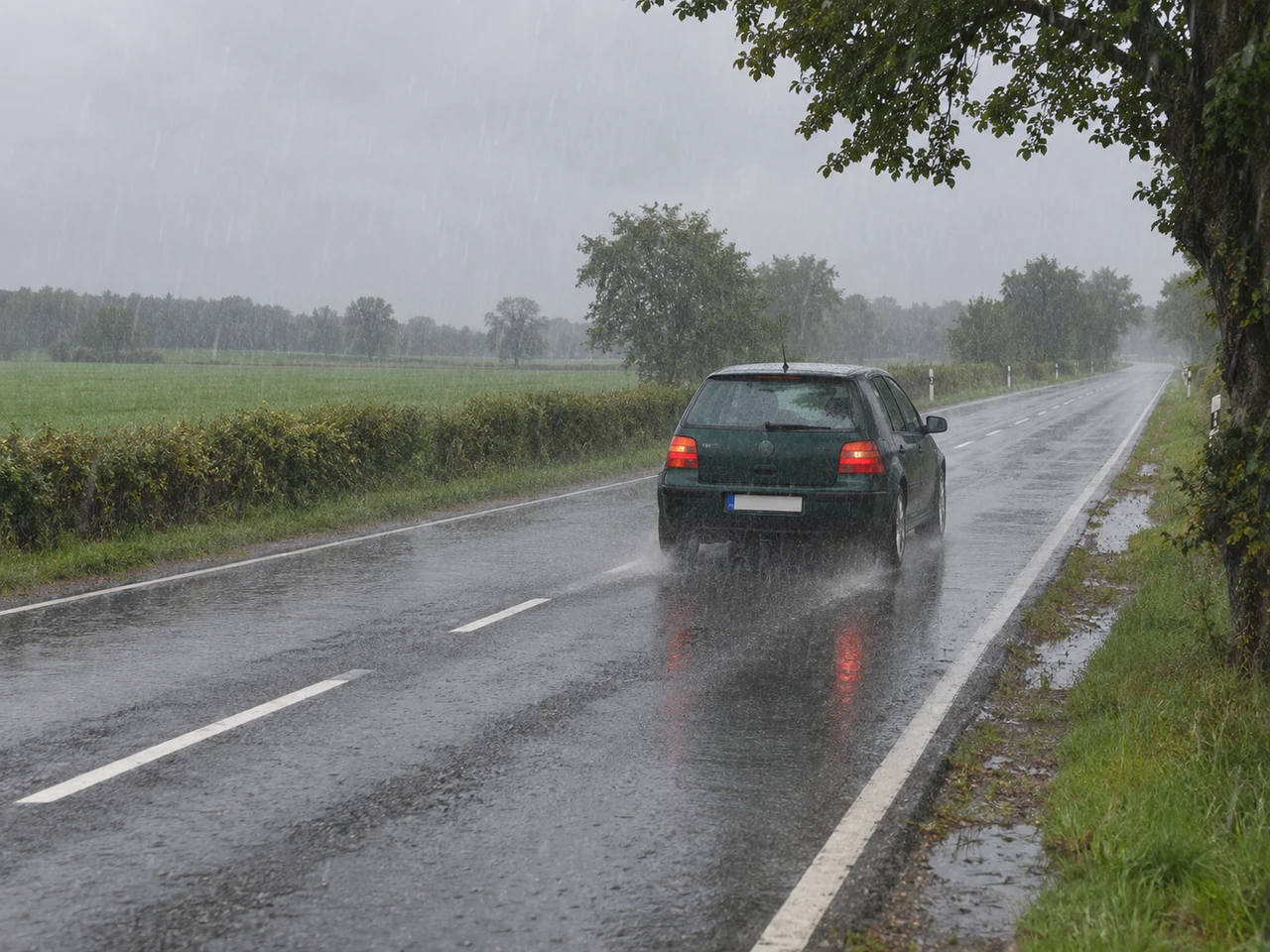
973. Rain can reduce tyre grip and increase stopping distance.
Wet roads reduce traction, so your vehicle may need more distance to stop safely.
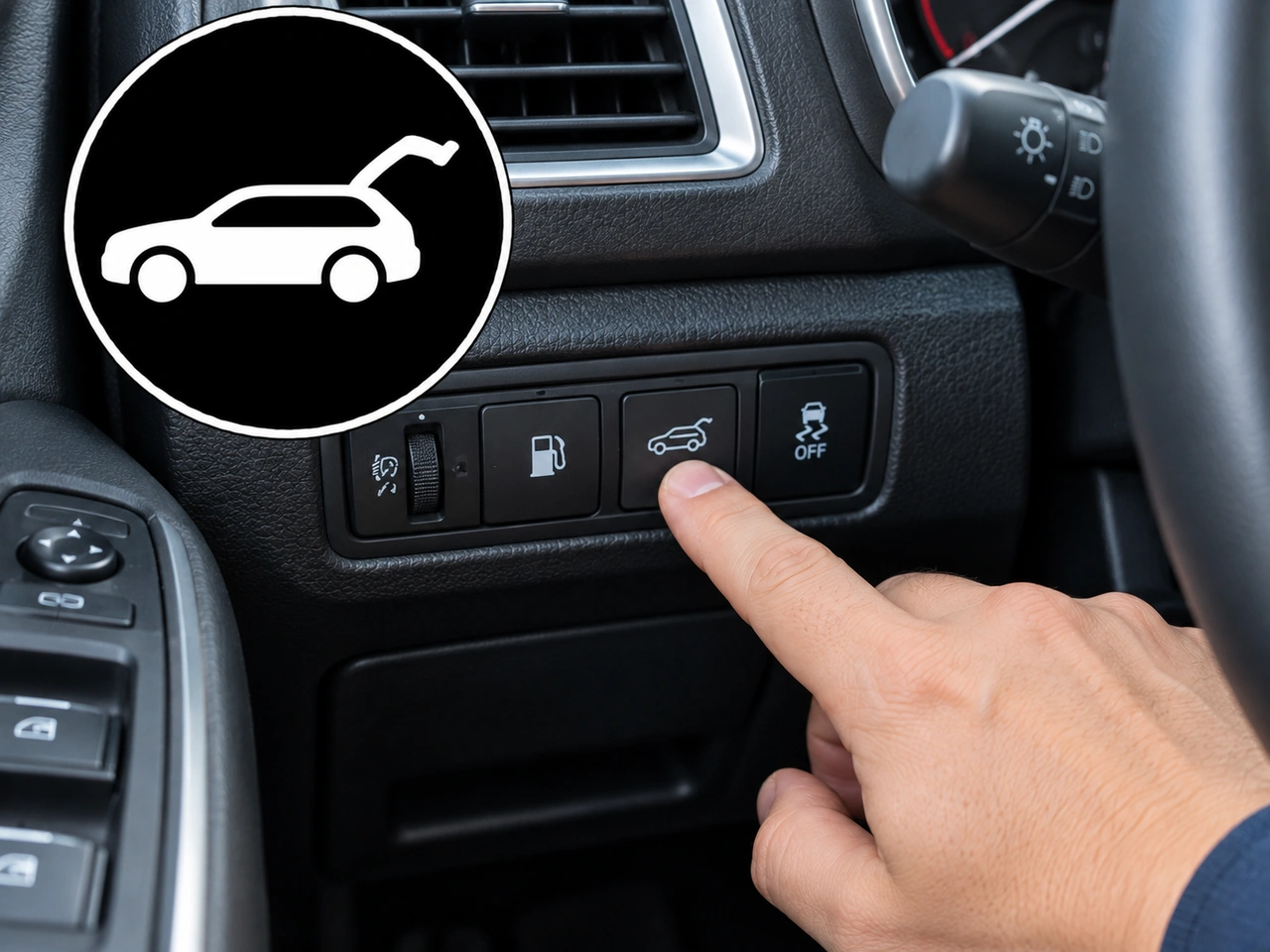
974. What does this vehicle-control symbol indicate?
This symbol indicates the boot or tailgate release. Operating the control unlocks or opens the luggage compartment, depending on the vehicle.
The open-tailgate symbol identifies the luggage-compartment release. Check there is room behind and above the vehicle before opening a powered tailgate.
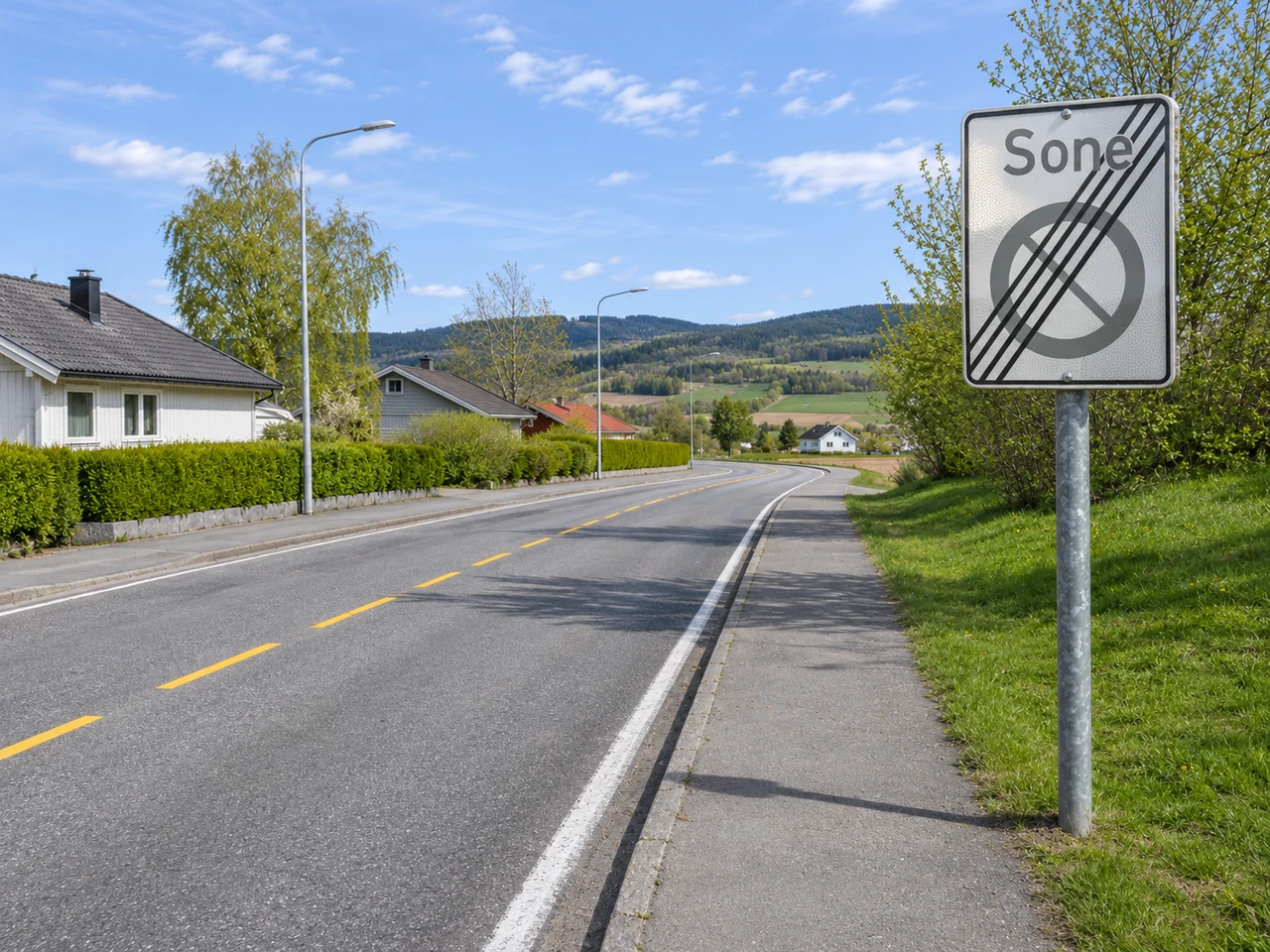
975. The end-of-parking-zone sign means you may park anywhere beyond it.
The sign ends the parking-management zone. General parking rules and any other applicable signs still apply beyond it.
🔗 Sources
Norway • Skiltforskriften • Sign 378.2
Statens vegvesen • Official traffic-sign meanings
Statens vegvesen • Official sign artwork
Official Norwegian sign artwork: Statens vegvesen, sign 378.2, original EPS file 378_2.eps from the national sign artwork archive. Native Sone lettering, pictogram, cancellation stripes, arrow, orientation, borders and proportions retained. Colours use the authority's published PMS web swatches: blue PMS 293 and red PMS 179 where present. Original files and colour guidance. No third-party open licence is asserted for the government artwork.
Image credit: AI-generated background with source sign artwork resized and placed on the sign face.
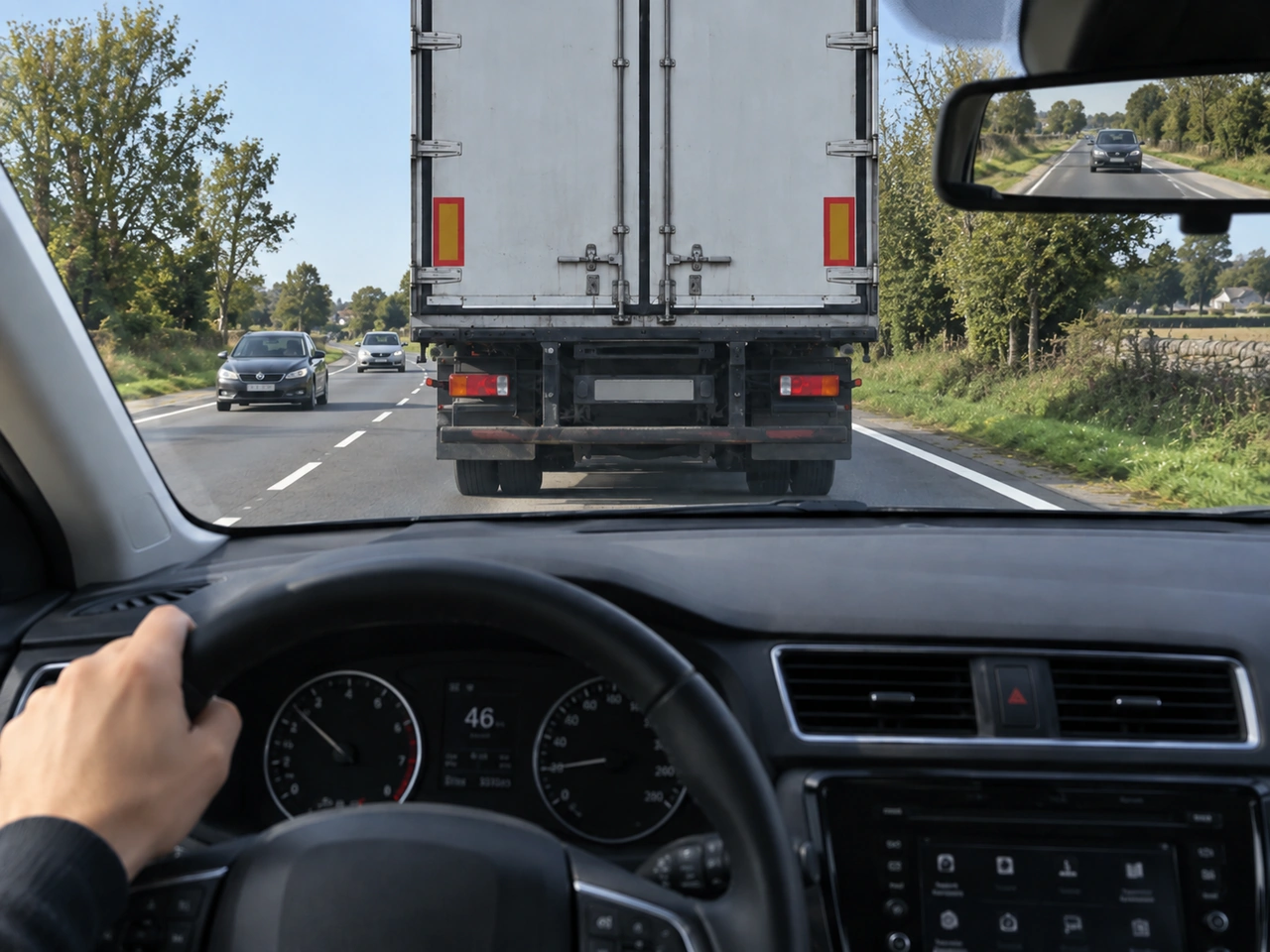
976. Why should you leave extra space when following a large vehicle?
A large vehicle can block your view of traffic, signs, junctions, or hazards ahead. Leaving extra space improves your view and gives you more time to react if traffic slows or a hazard develops.
Norway. Allow enough room to stop safely behind the vehicle ahead. Increasing that gap also helps you see around a large vehicle.
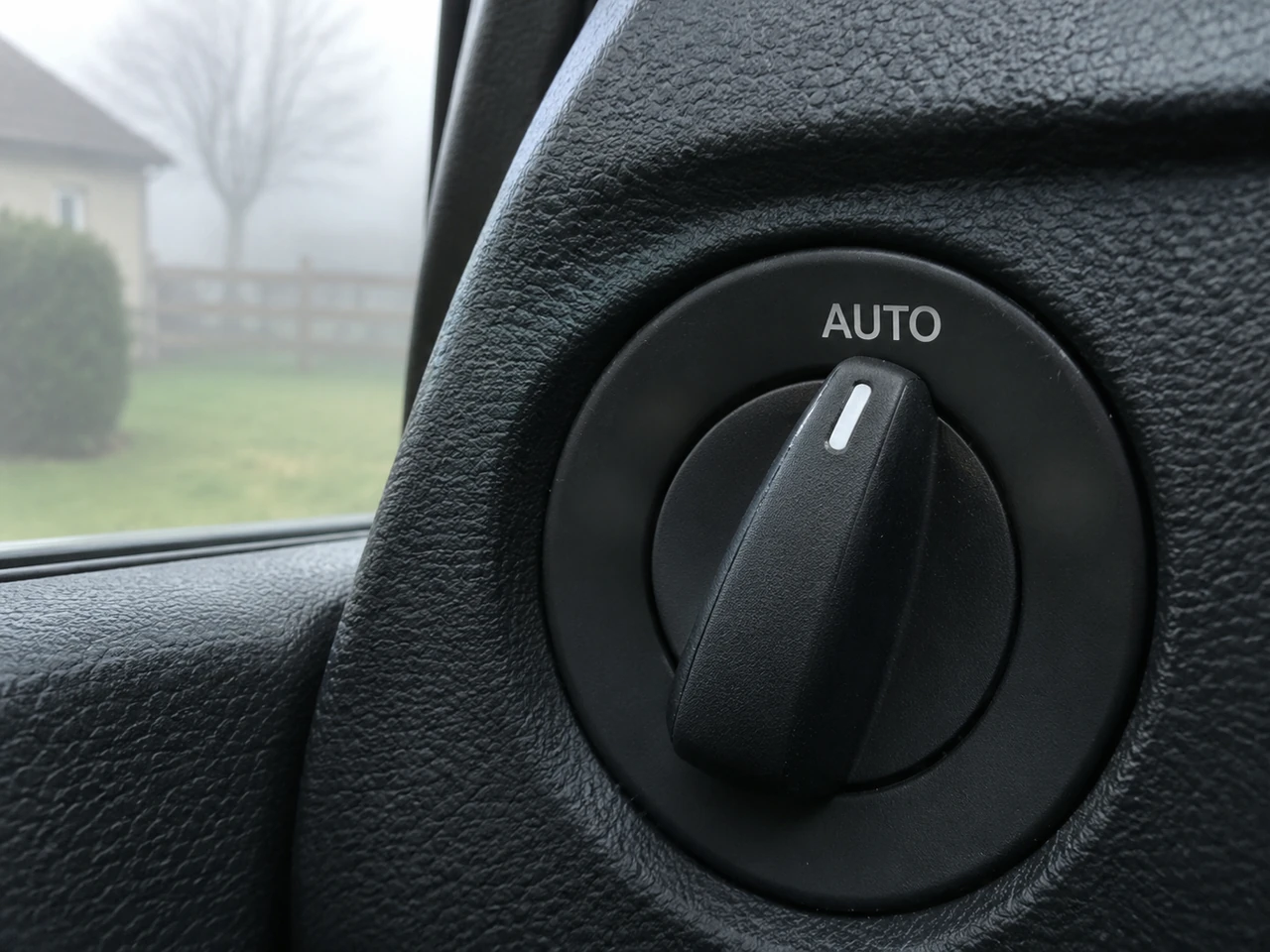
977. Automatic headlights are guaranteed to switch on whenever there is fog.
Some automatic systems respond mainly to ambient brightness and may not switch on in daytime fog. Check the lighting and select suitable lights manually when needed, following the vehicle handbook and local rules.
🔗 Sources
Ford owner’s manual (manufacturer guidance) • Safety guidance, Autolamps: override in low visibility; follow your vehicle’s handbook
Image credit: AI-generated
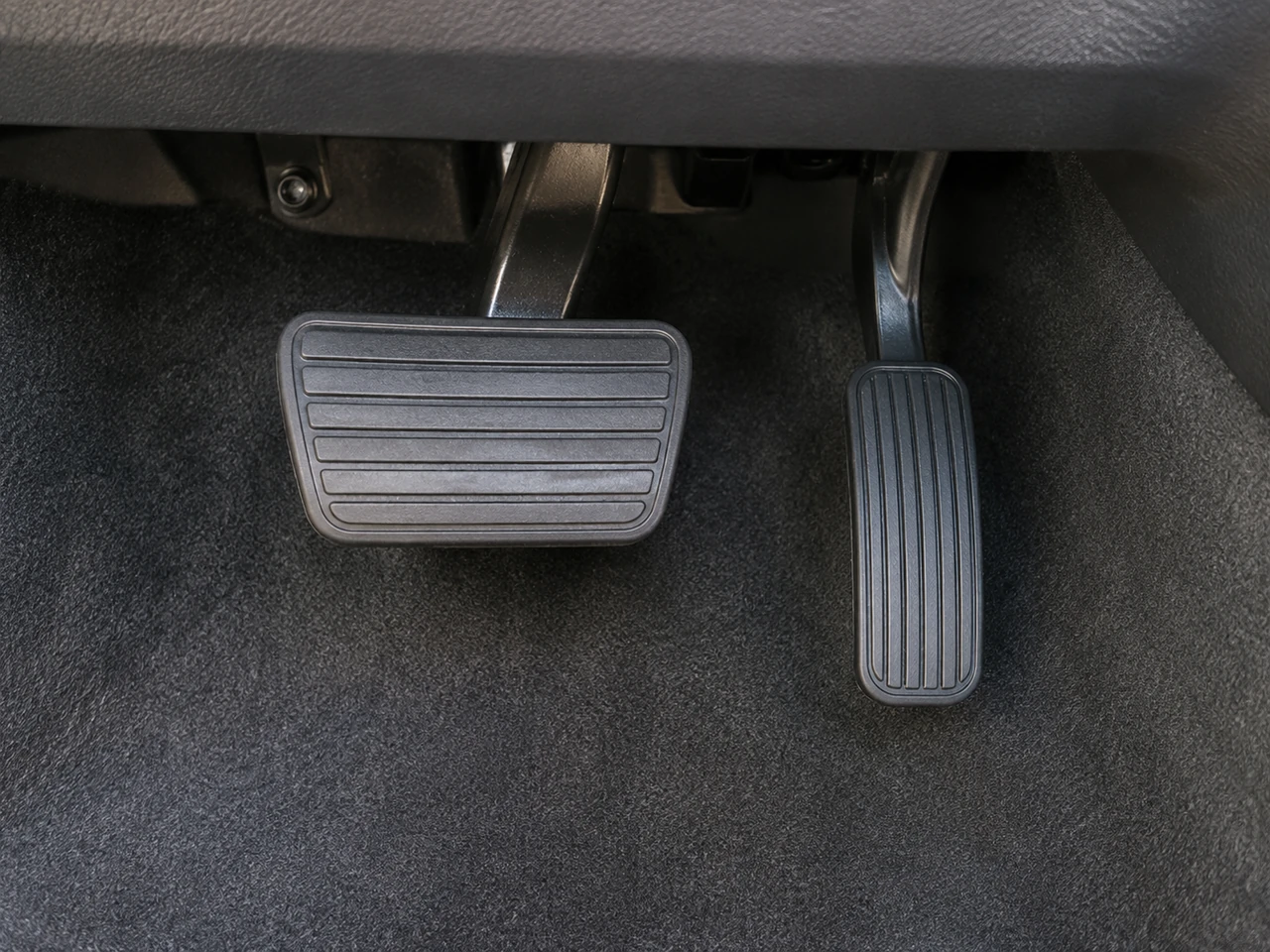
978. Braking always requires the same pedal effort after the engine is switched off.
Switching the engine off can reduce brake assistance, so more pedal force may be needed. Do not switch it off while moving except as directed for an emergency. Systems vary; normal automatic stop-start operation is different from switching the vehicle off.
🔗 Sources
Ford owner’s manual (manufacturer guidance) • Safety guidance, Stopping the Engine When Your Vehicle is Moving; systems vary
Image credit: AI-generated
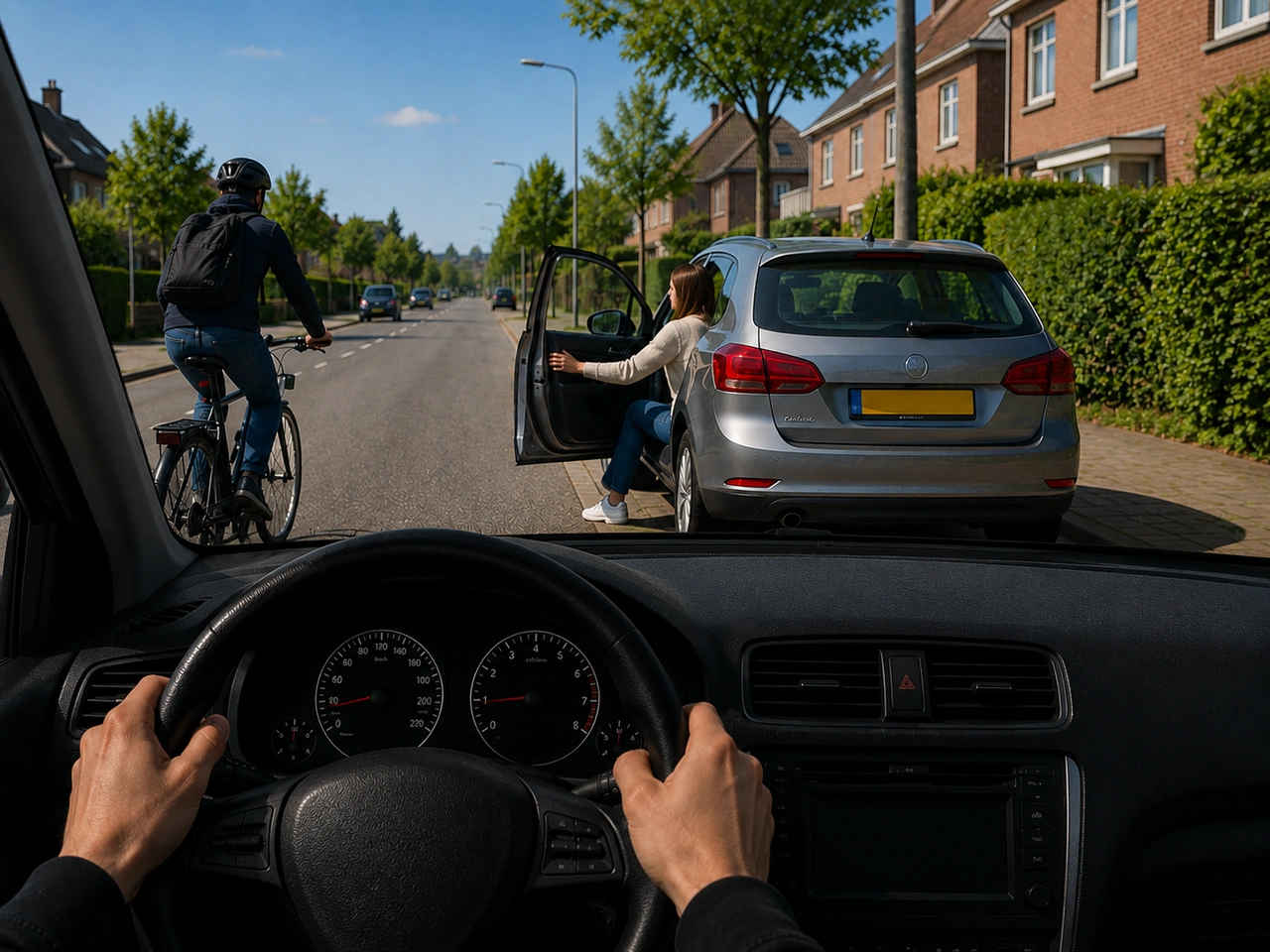
979. What should you do before opening your car door near traffic?
Before opening a car door, check carefully for cyclists, pedestrians, and vehicles to avoid causing a collision.
🔗 Sources
Great Britain — Highway Code, rule 239; door opening and passenger safety
Image credit: AI-generated
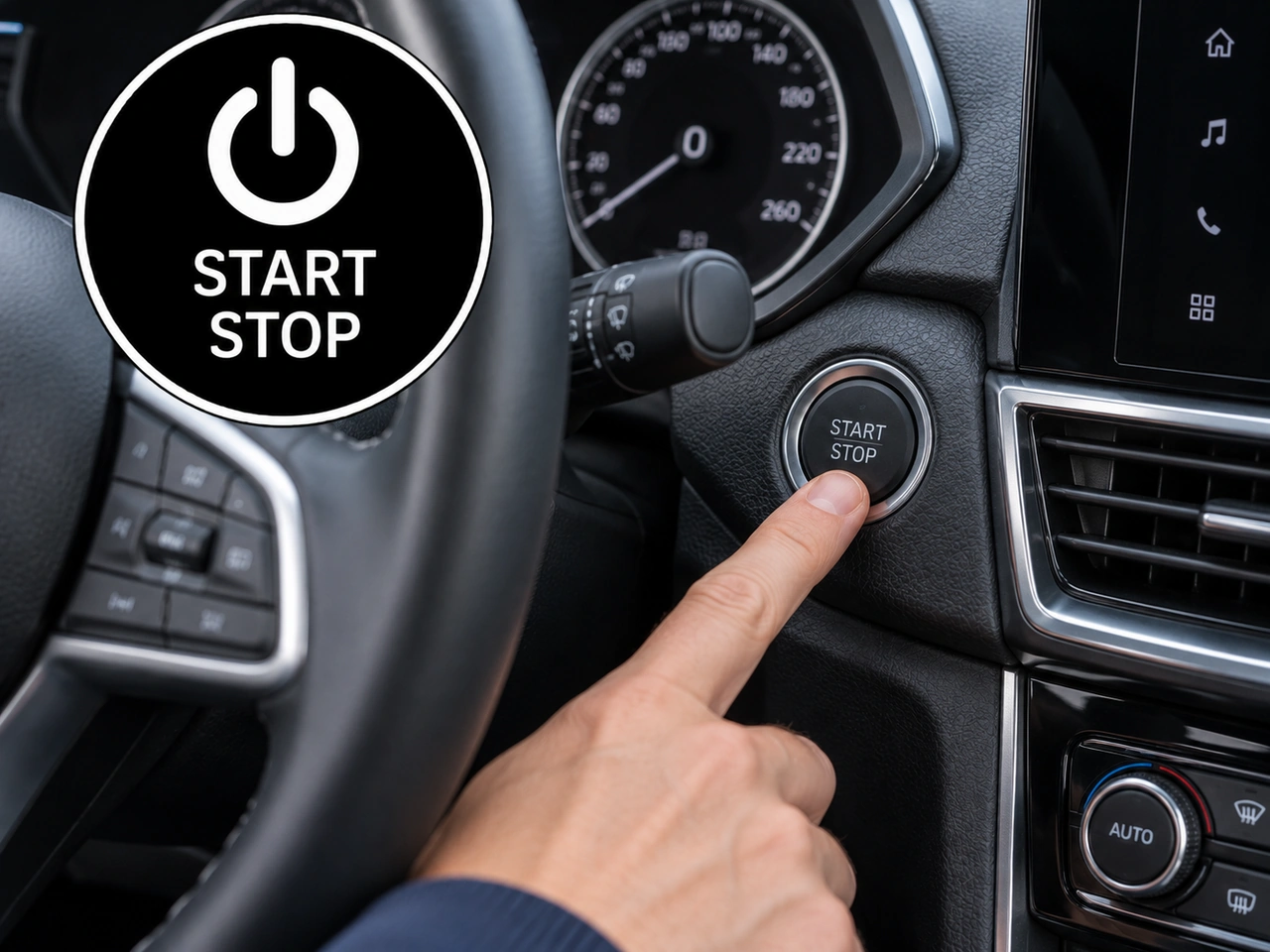
980. What does this vehicle-control button operate?
The engine start/stop button is used to start or switch off the vehicle's engine or electric drive system. Starting the vehicle normally also requires the brake or clutch pedal to be pressed.
On push-button models, starting usually requires the brake pedal on an automatic or the clutch pedal on a manual. Check the handbook for the starting sequence.
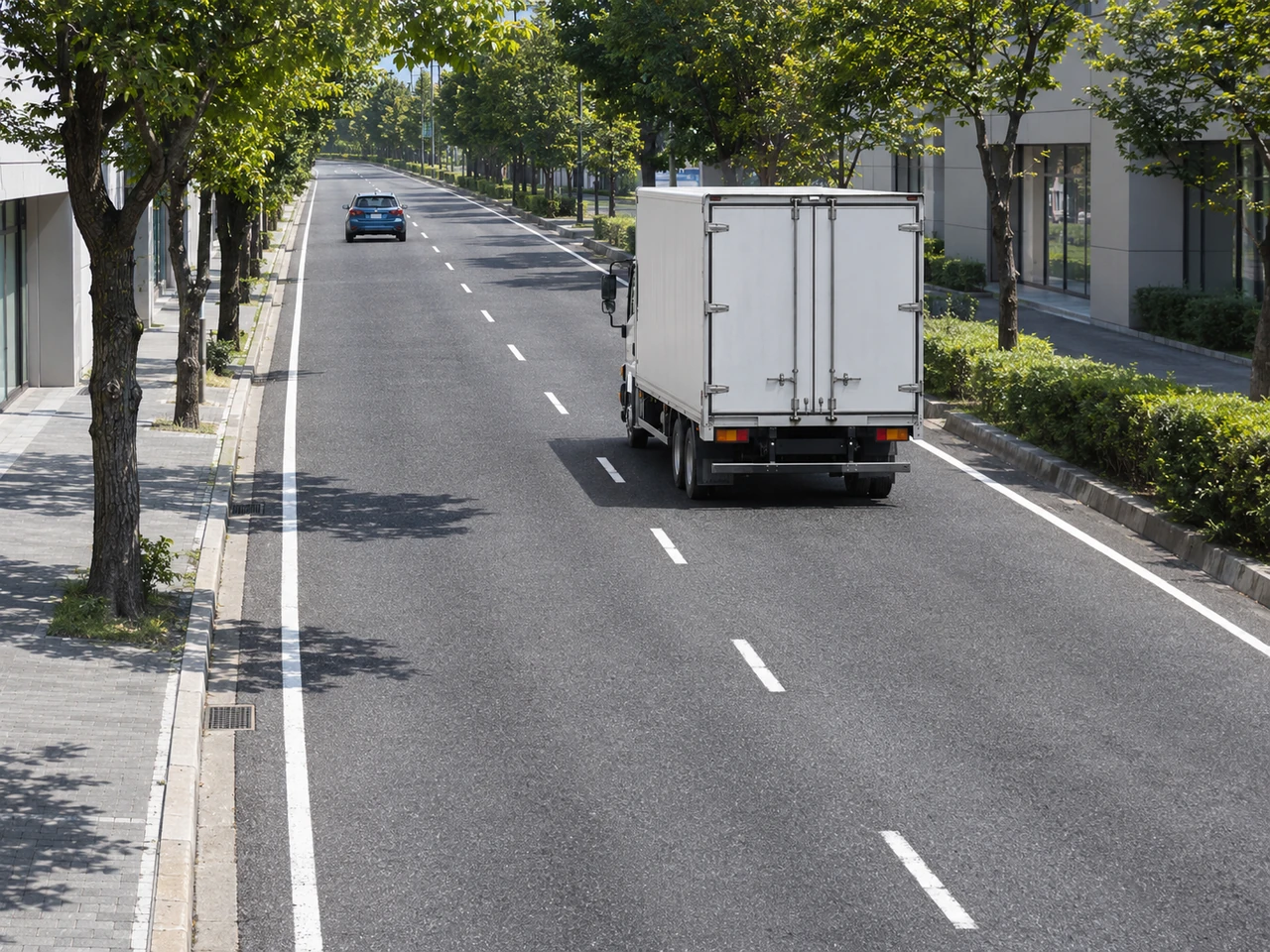
981. It is safe to cut closely in front of a lorry after overtaking.
Cutting in reduces the lorry's available stopping space. Leave a generous gap before returning to its lane, and do not force the driver to brake.
🔗 Sources
Virginia DMV (United States) • Safety guidance, Sharing the Road: do not cut in
Image credit: AI-generated
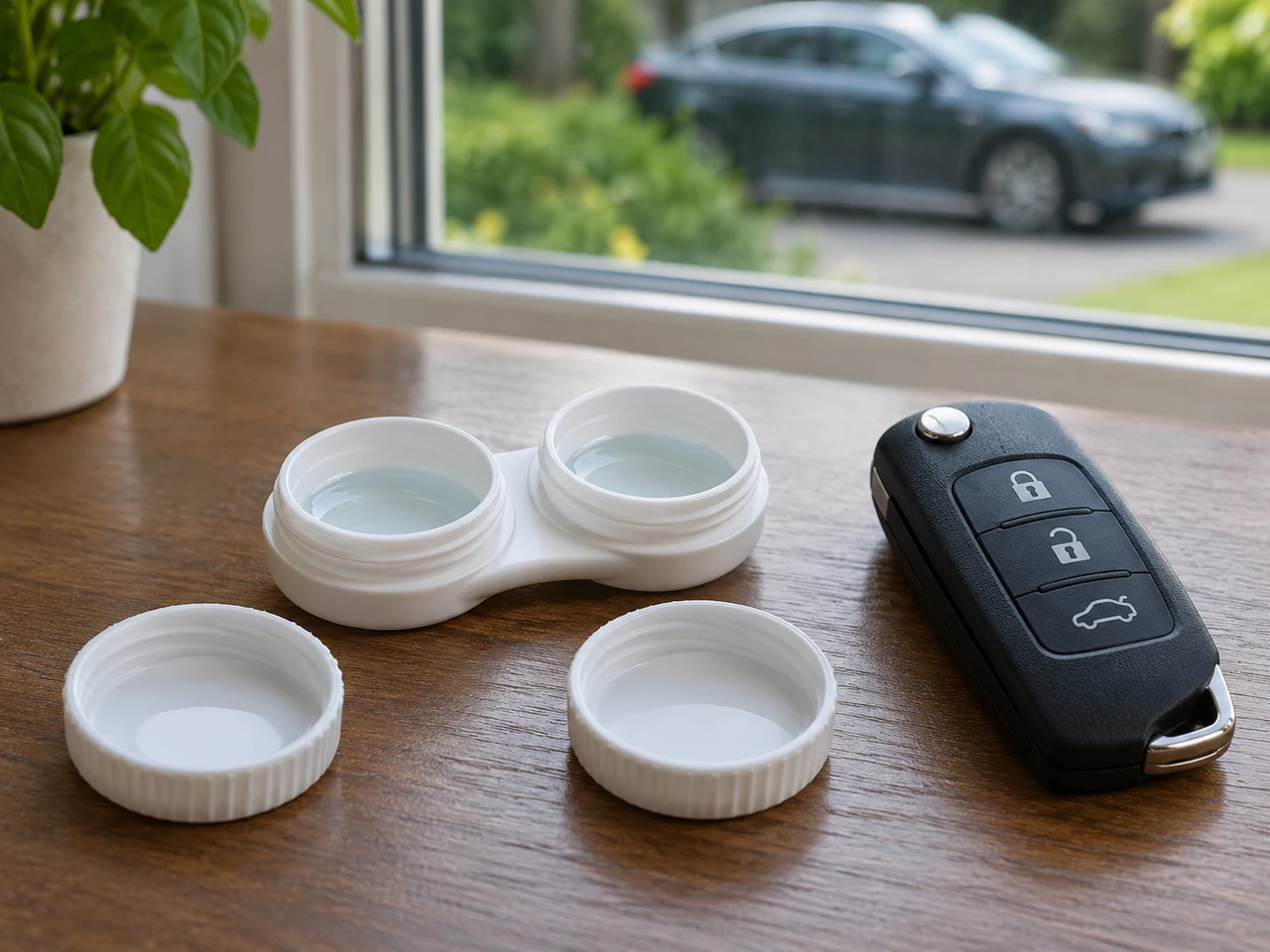
982. It is safe to keep driving with blurred vision after losing a contact lens.
If losing a contact lens affects your vision, stop safely and do not continue until you can see clearly and meet the requirements for driving. Use suitable replacement lenses or arrange another way to travel.
🔗 Sources
The Highway Code (Great Britain) • Safety guidance, Rule 92; meet local eyesight requirements before continuing
Image credit: AI-generated
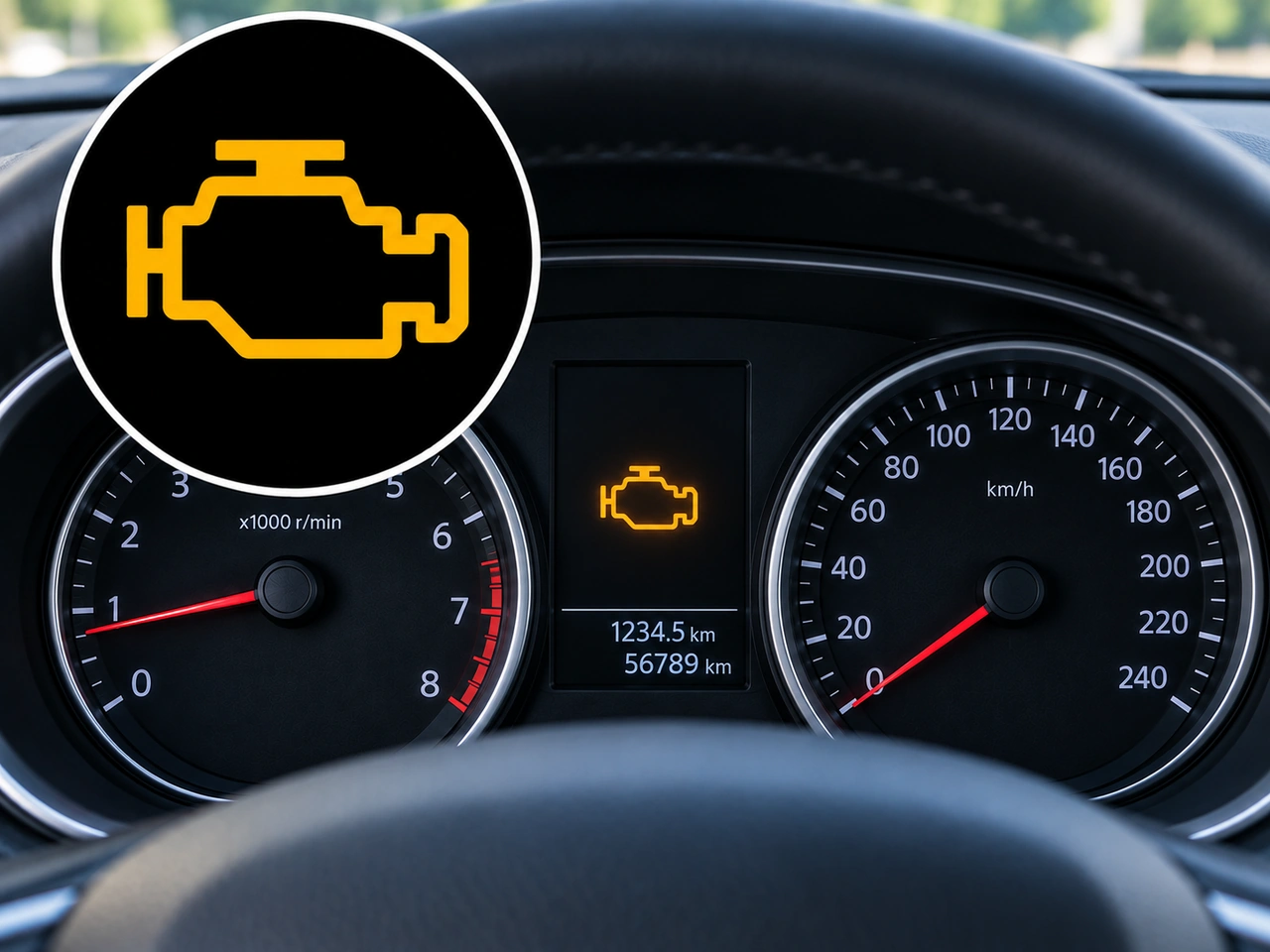
983. What does this dashboard symbol indicate?
This symbol indicates a fault detected by the engine-management or emissions-control system. If it remains illuminated while driving, the vehicle should be checked according to the manufacturer's instructions.
The engine-shaped light can indicate an engine or emissions fault. Check the handbook for the response to a steady or flashing light.
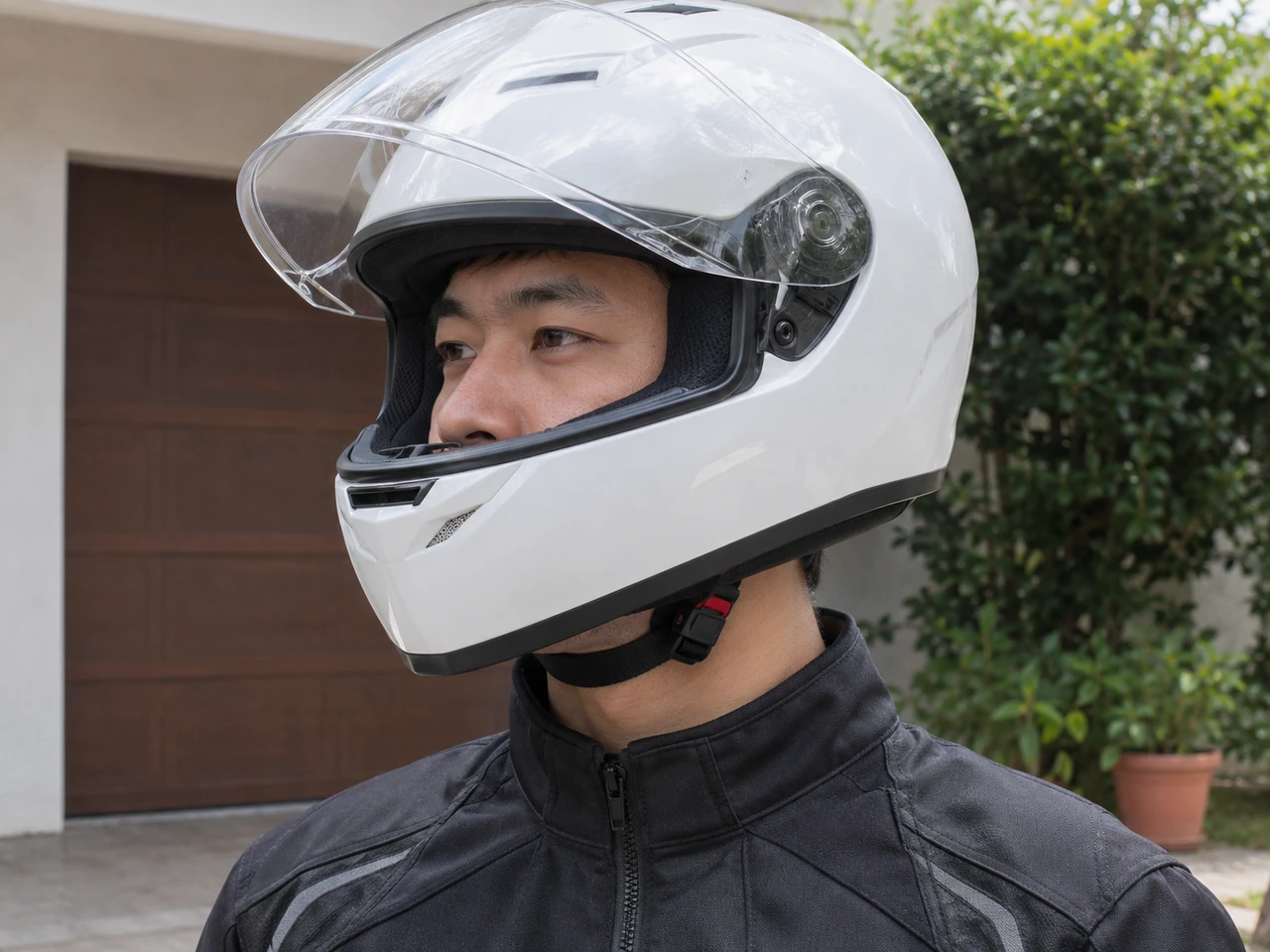
984. A motorcycle helmet should fit correctly and be securely fastened.
A correctly fitted, securely fastened helmet helps keep it in position during a crash. Use a suitable approved helmet and follow its fitting and fastening instructions.
🔗 Sources
The Highway Code (Great Britain) • Safety guidance, Rule 83; use a helmet approved locally
Image credit: AI-generated
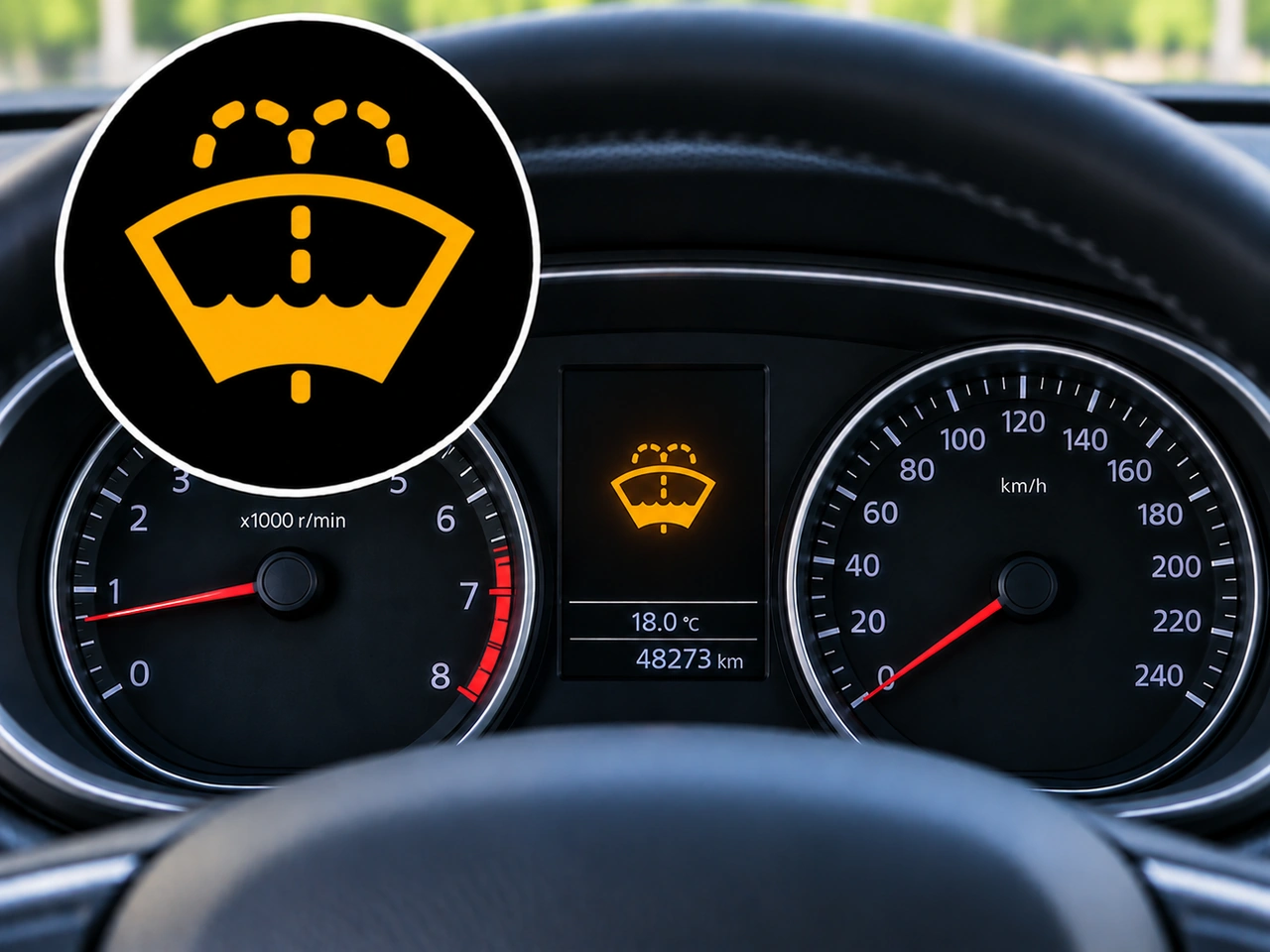
985. What does this dashboard symbol indicate?
This symbol indicates that the windscreen washer fluid level is low. Refill the washer-fluid reservoir with suitable fluid when possible.
Top up the washer reservoir with suitable screenwash. Use a fluid rated for the temperatures you expect.
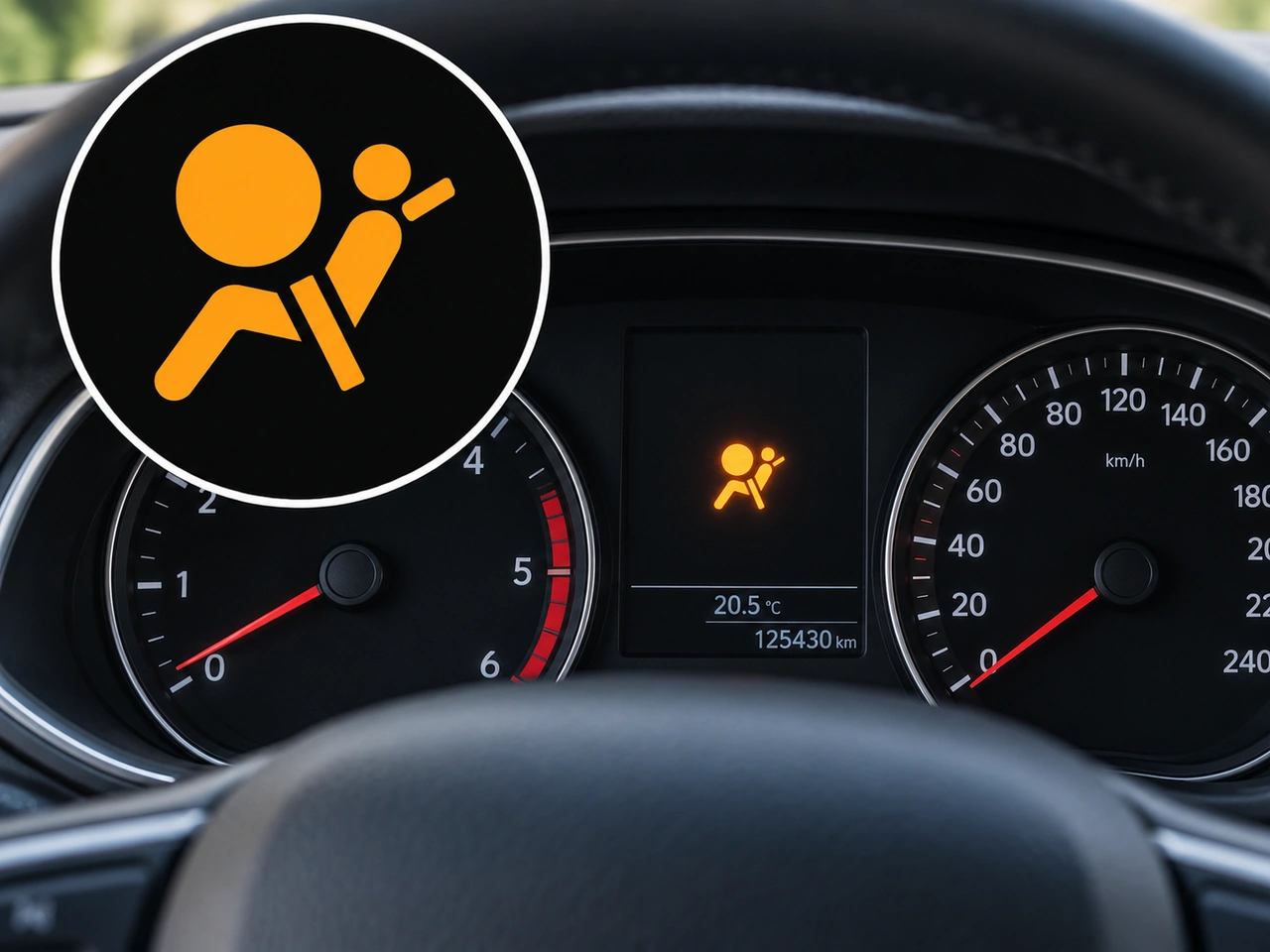
986. What does this dashboard symbol indicate?
This symbol indicates a possible fault in the airbag or supplementary restraint system. If it remains illuminated while driving, the system should be checked because one or more airbags or seat-belt pretensioners may not operate correctly in a collision.
If this warning stays on after startup, have the restraint system checked promptly. A fault may affect an airbag or a seat-belt pretensioner.
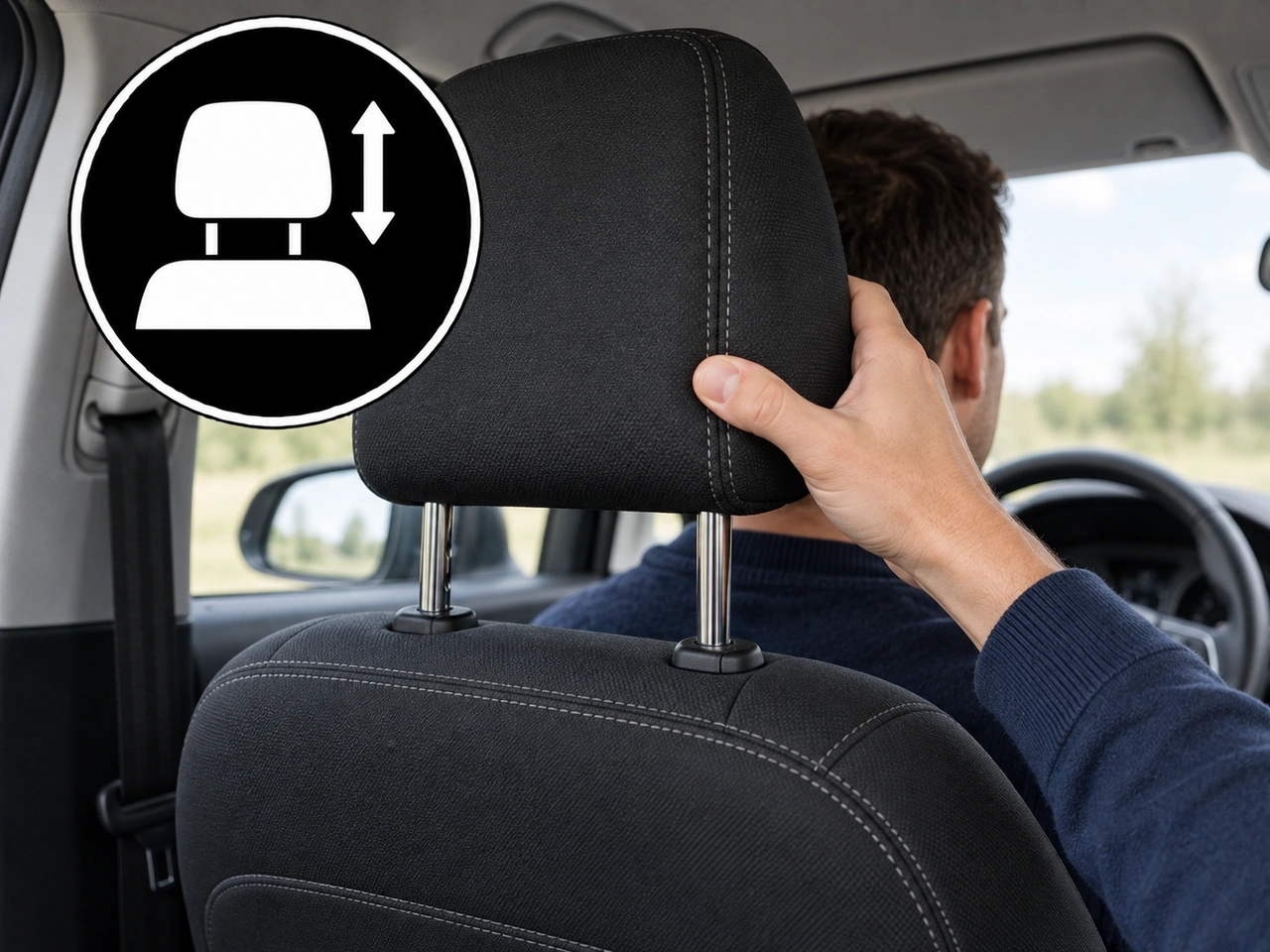
987. Why should the head restraint be adjusted correctly?
A correctly adjusted head restraint helps support the head and can reduce the risk of neck injury, especially in a rear-end collision. The top of the restraint should normally be level with the top of the head.
Adjust the head restraint before driving. Set its top level with the top of your head, keep it close behind your head, and check that it locks in place.
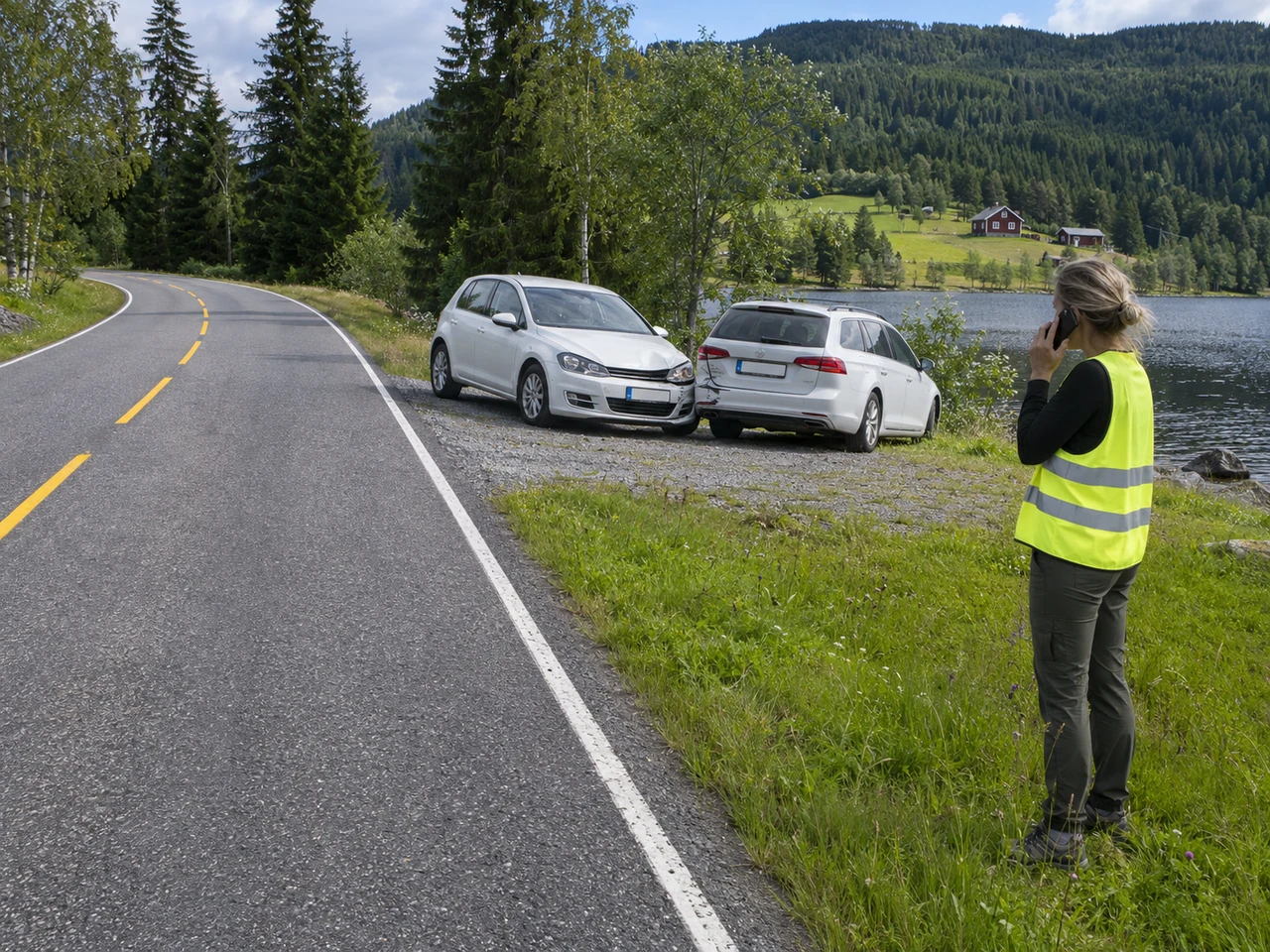
988. When reporting a crash, you should give emergency services the most precise location you can.
Give the road name or number, direction of travel and nearby landmarks or location markers where possible. Describe what happened and any casualties, answer the operator's questions and follow their instructions.
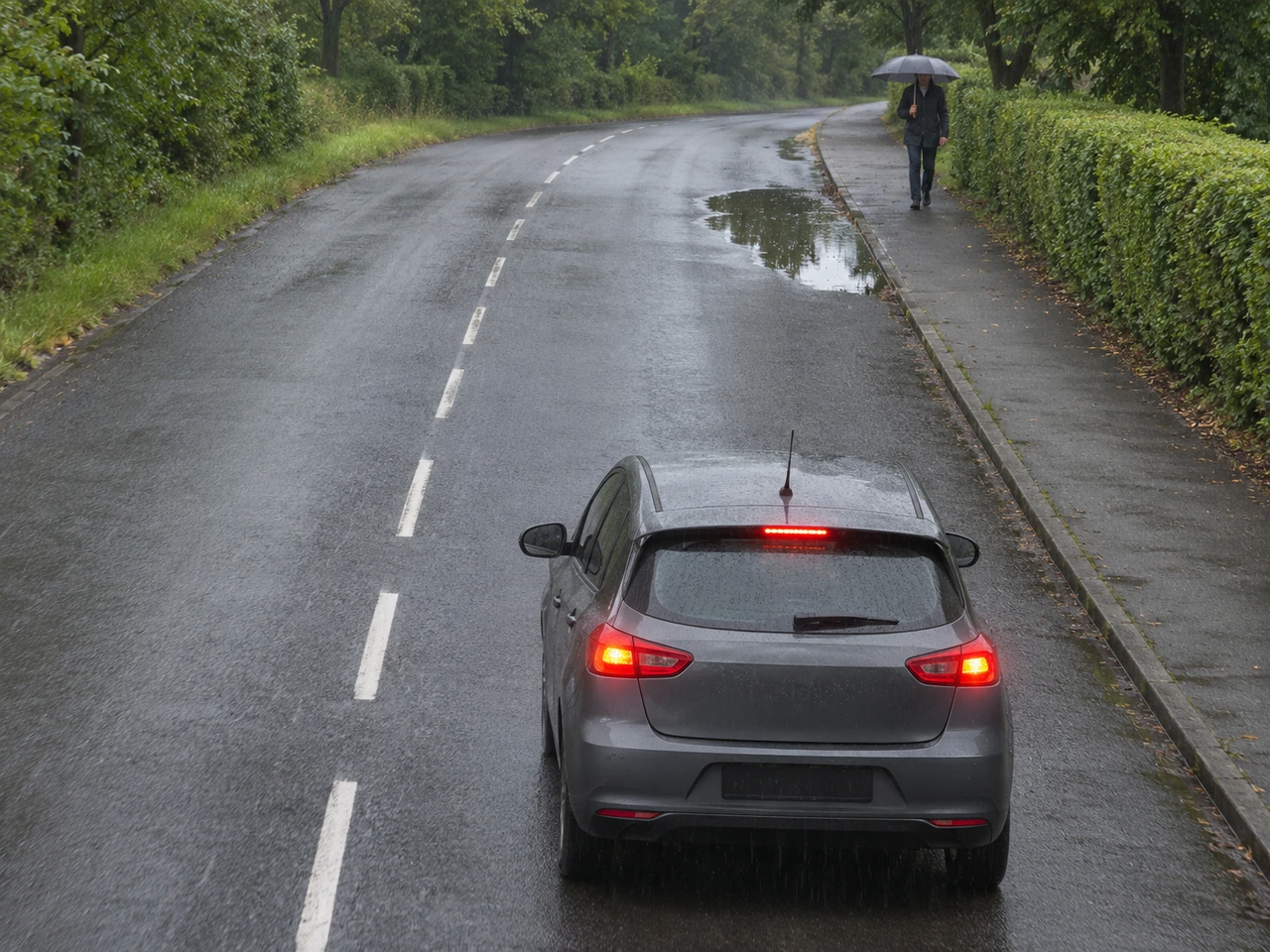
989. What should you do before driving through a puddle?
Slow down before reaching surface water, while there is still good grip. A puddle may conceal a pothole or be deeper than it appears. Avoid splashing people on the pavement. Do not swerve into another lane to avoid water, and do not enter a flooded stretch of road.
🔗 Sources
Michelin — Technical aquaplaning explanation and prevention
UK Met Office — General severe-weather, wind and flood safety
Image credit: AI-generated
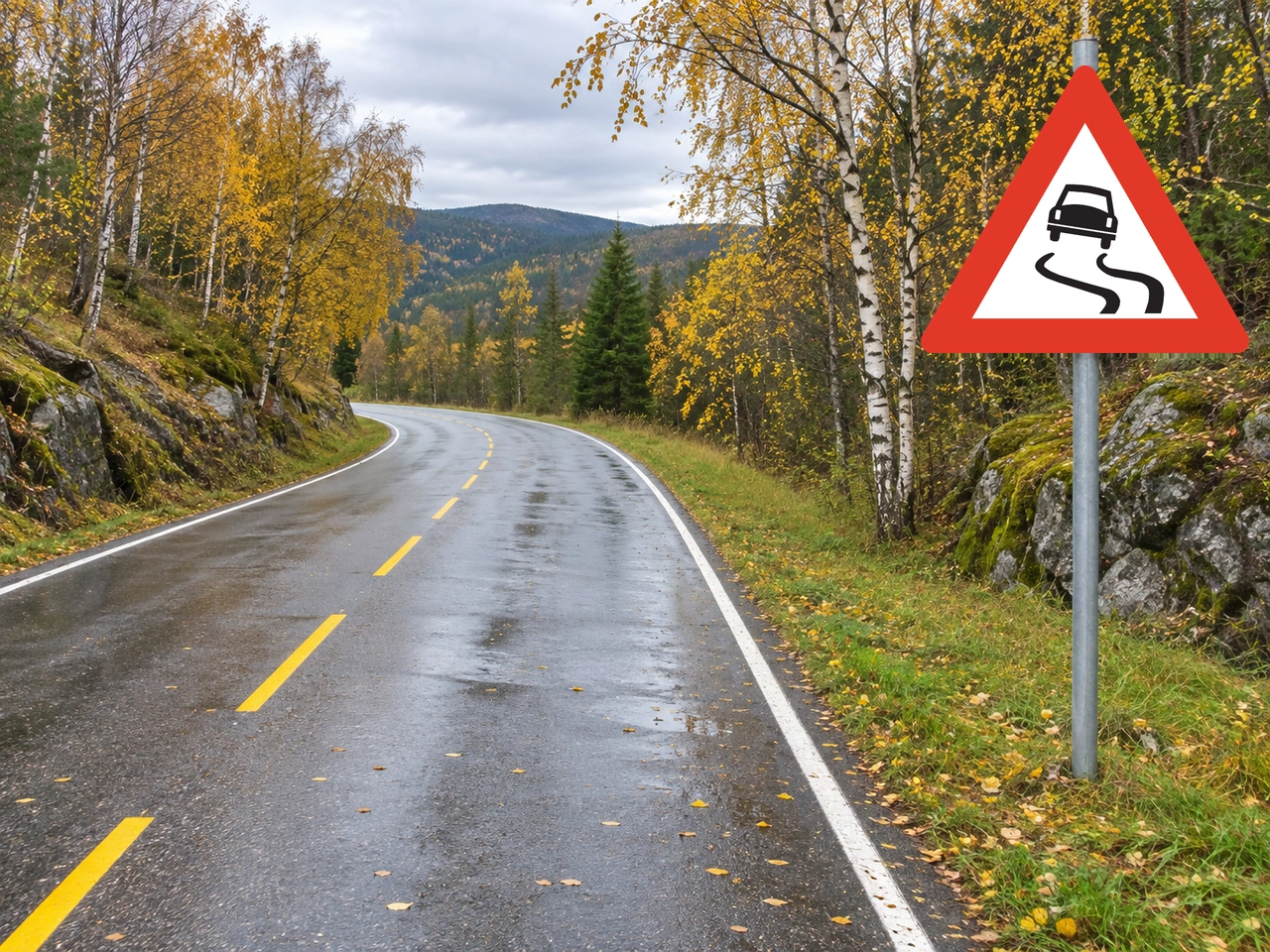
990. The skidding-car warning sign only warns of ice.
The sign warns that the road may be slippery. Wet pavement and other conditions can also reduce grip. Slow down and steer and brake smoothly.
🔗 Sources
Norway • Skiltforskriften • Sign 116
Statens vegvesen • Official traffic-sign meanings
Statens vegvesen • Official sign artwork
Sign artwork: Statens vegvesen original EPS archive, Sign 116, file 116_0.eps. Native car and skid-trail symbol, border and proportions retained; resized and composited onto the existing same-entry scene. Border red follows the authority's published colour chart: PMS 179, using the published web swatch RGB 226/56/40. No third-party open licence is asserted for the government artwork.
Image credit: AI-generated background with source sign artwork resized and placed on the sign face.
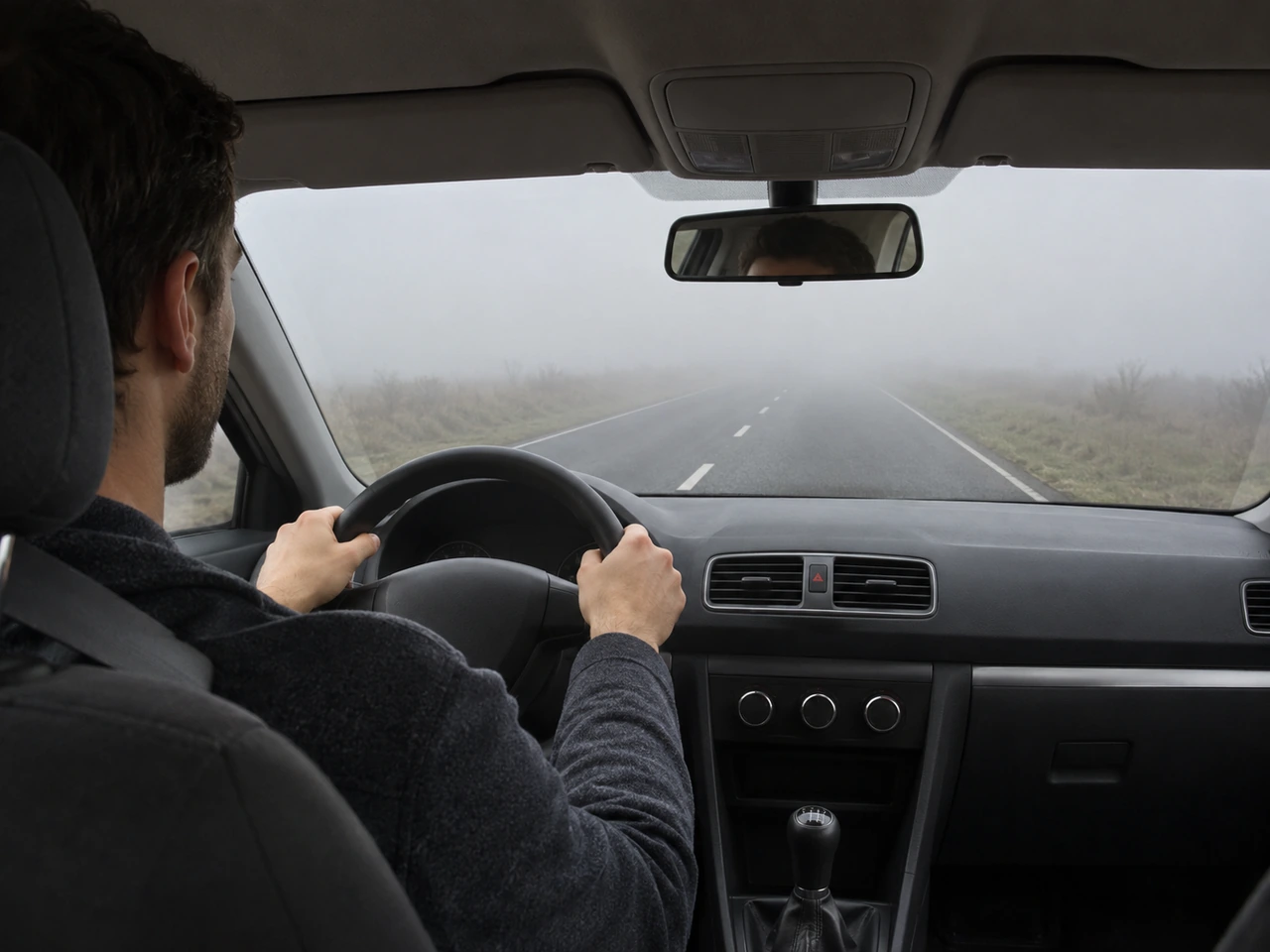
991. What should you do if visibility is reduced by fog?
Slow down, increase your following distance and choose lights suited to the conditions. Main beam can reflect from fog and worsen your view. Avoid following another vehicle closely as a guide.
🔗 Sources
England National Highways — General fog driving and safe stopping advice
Image credit: AI-generated
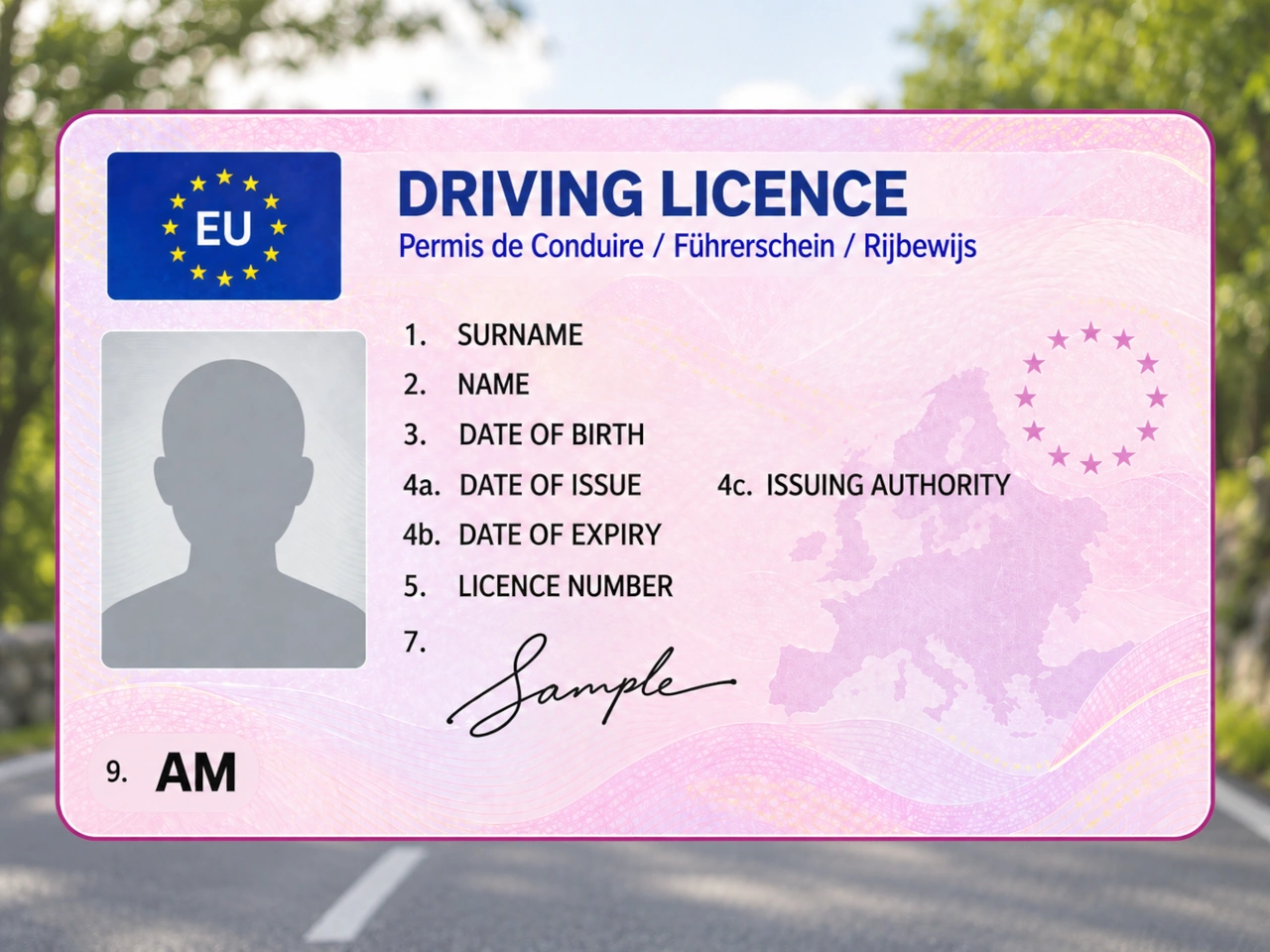
992. Which vehicle type is mainly associated with driving licence AM?
Driving licence AM is mainly associated with mopeds. Category AM covers mopeds with a design speed above 25 km/h and up to 45 km/h.
Norway. You can obtain category AM from age 16. AM 146 covers two-wheeled mopeds and qualifying three- or four-wheeled mopeds with an unladen mass of up to 150 kg, excluding battery weight for electric mopeds.
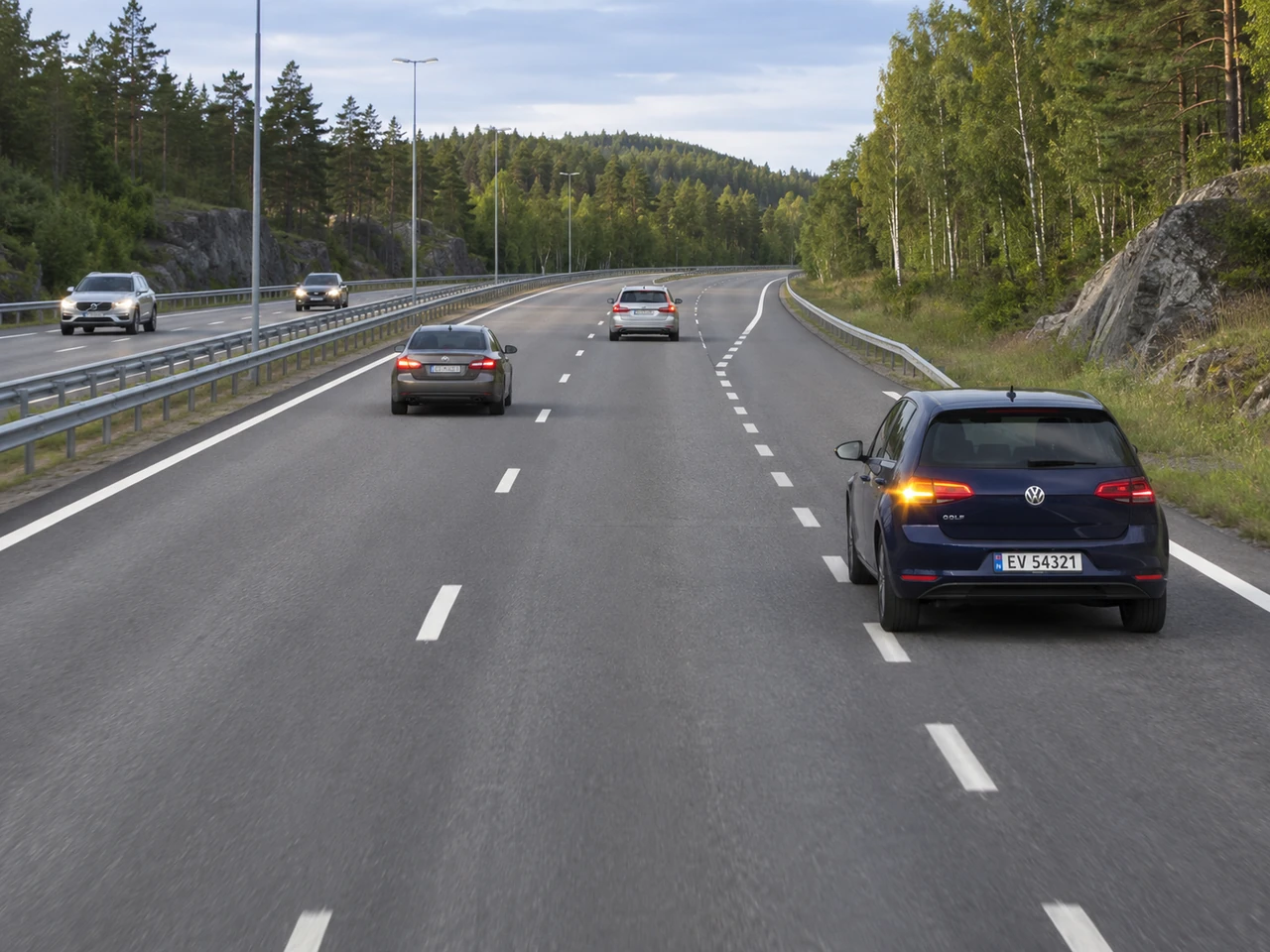
993. How should you merge at a motorway entry where you must give way?
Where motorway traffic has priority, adjust your speed and wait for a safe gap. Merge without forcing other drivers to brake or change direction.
Norway requires cooperation at an acceleration lane. Joining drivers adjust their speed to match traffic, and drivers in the target lane must help them merge. Follow give-way signs where posted.
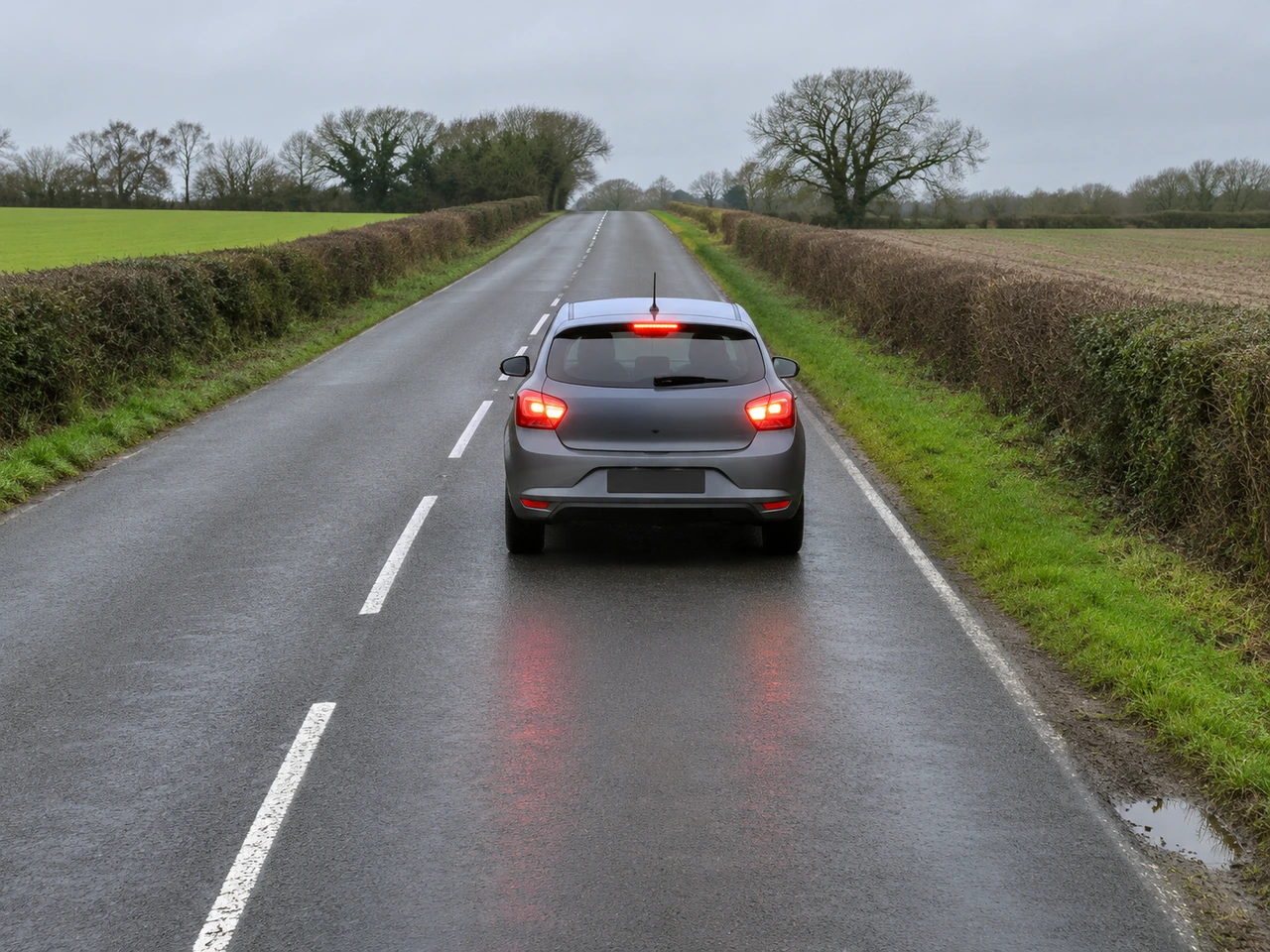
994. What should you do if your brakes feel less effective after driving through water?
Water on the brakes can temporarily reduce their effectiveness. At the first safe opportunity, check traffic ahead and behind, then test the footbrake gently at low speed. Light applications can help dry the brakes; avoid sudden hard braking as a test. If braking does not return to normal, stop somewhere safe and seek assistance. This is not a reason to enter floodwater.
🔗 Sources
Great Britain — Highway Code, rule 121; checking water-affected brakes
Image credit: AI-generated
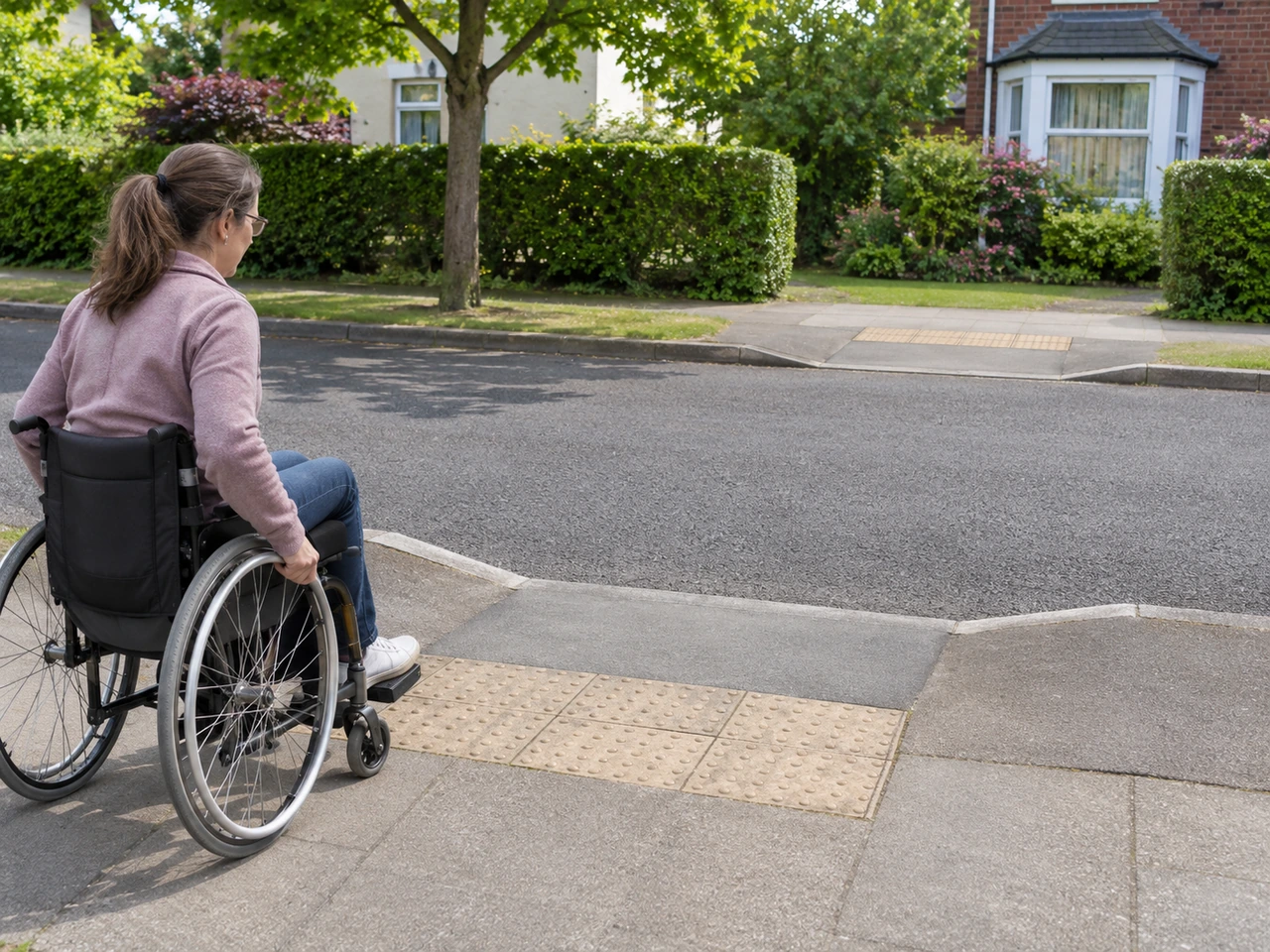
995. Why should you keep a dropped kerb at a pedestrian crossing point clear?
A dropped kerb helps wheelchair users and people with pushchairs cross the road. Blocking it can obstruct their route and force them towards moving traffic.
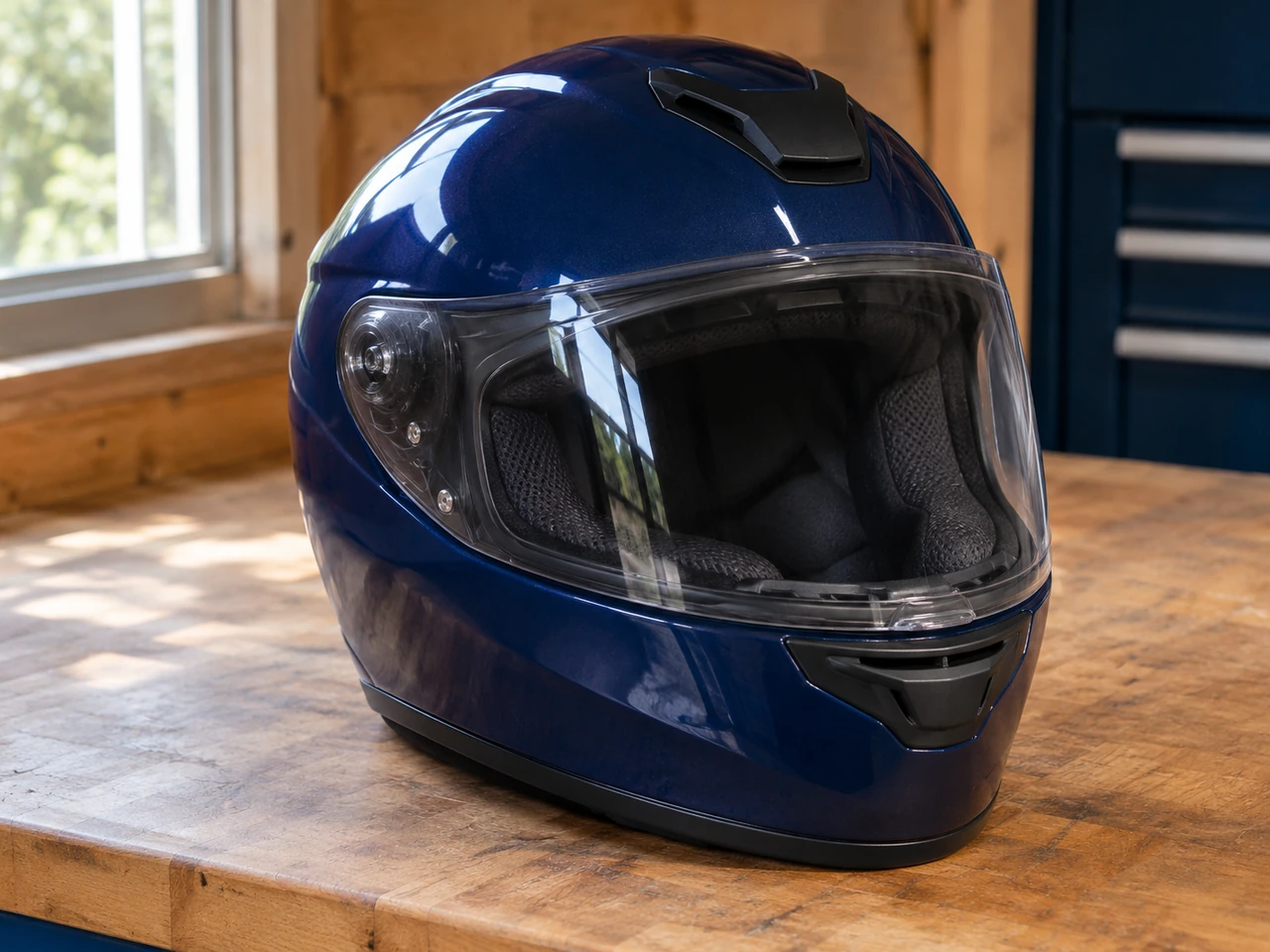
996. A motorcycle helmet is safe after a hard impact if no damage is visible.
An impact can damage the shell or protective lining without obvious marks outside. Replace a helmet after a crash impact, and follow the manufacturer's guidance if it has been dropped or struck.
🔗 Sources
Department for Transport SHARP (Great Britain) • Safety guidance, impact damage and replacement guidance
Image credit: AI-generated
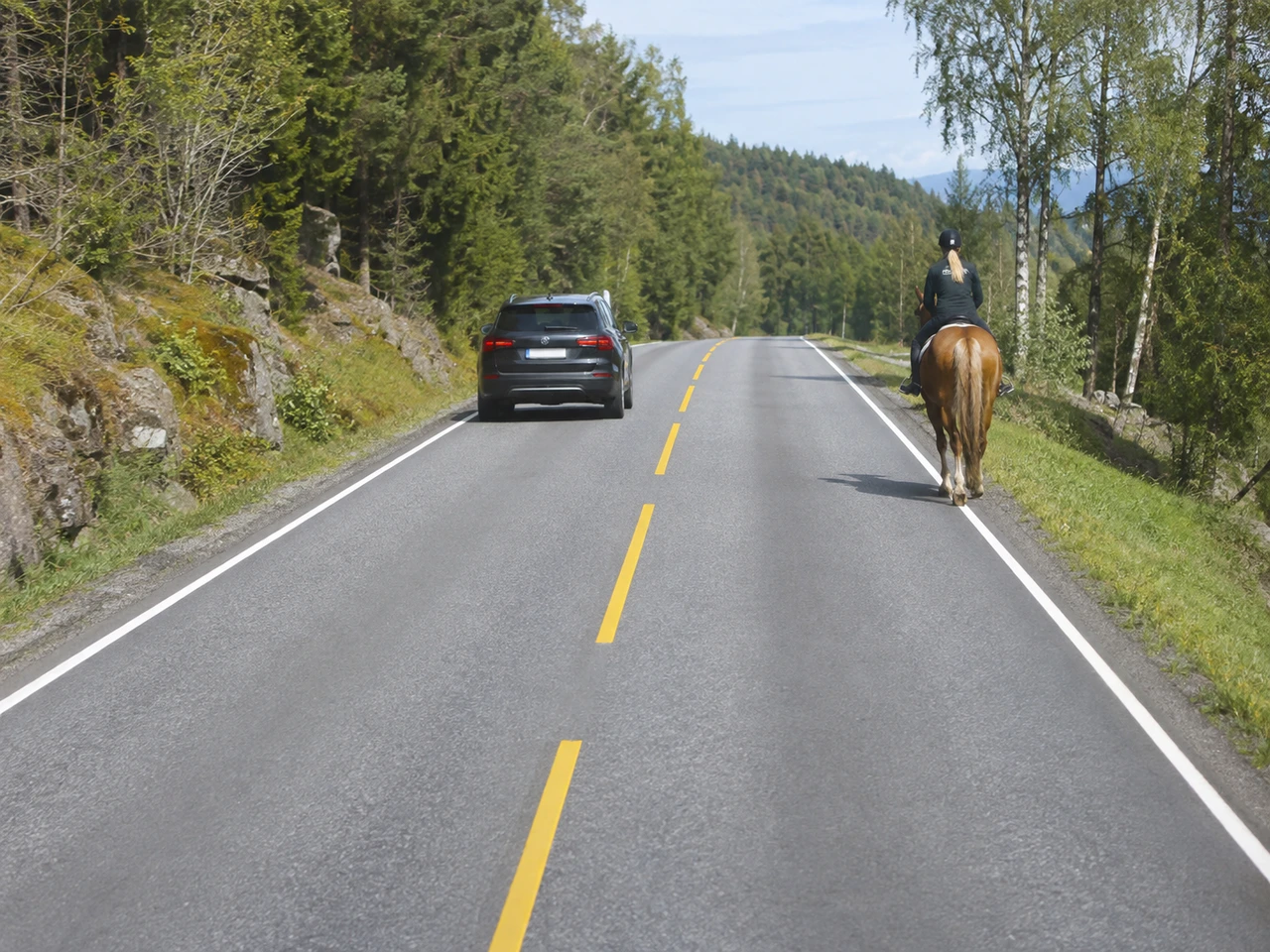
997. What should you do when passing a horse rider?
Horses can be startled by noise or sudden movement. Slow down, pass carefully, and leave enough space.
🔗 Sources
Norwegian Traffic Rules, sections 2 and 12
Norwegian Government – Guide to horses, including road safety
Image credit: AI-generated
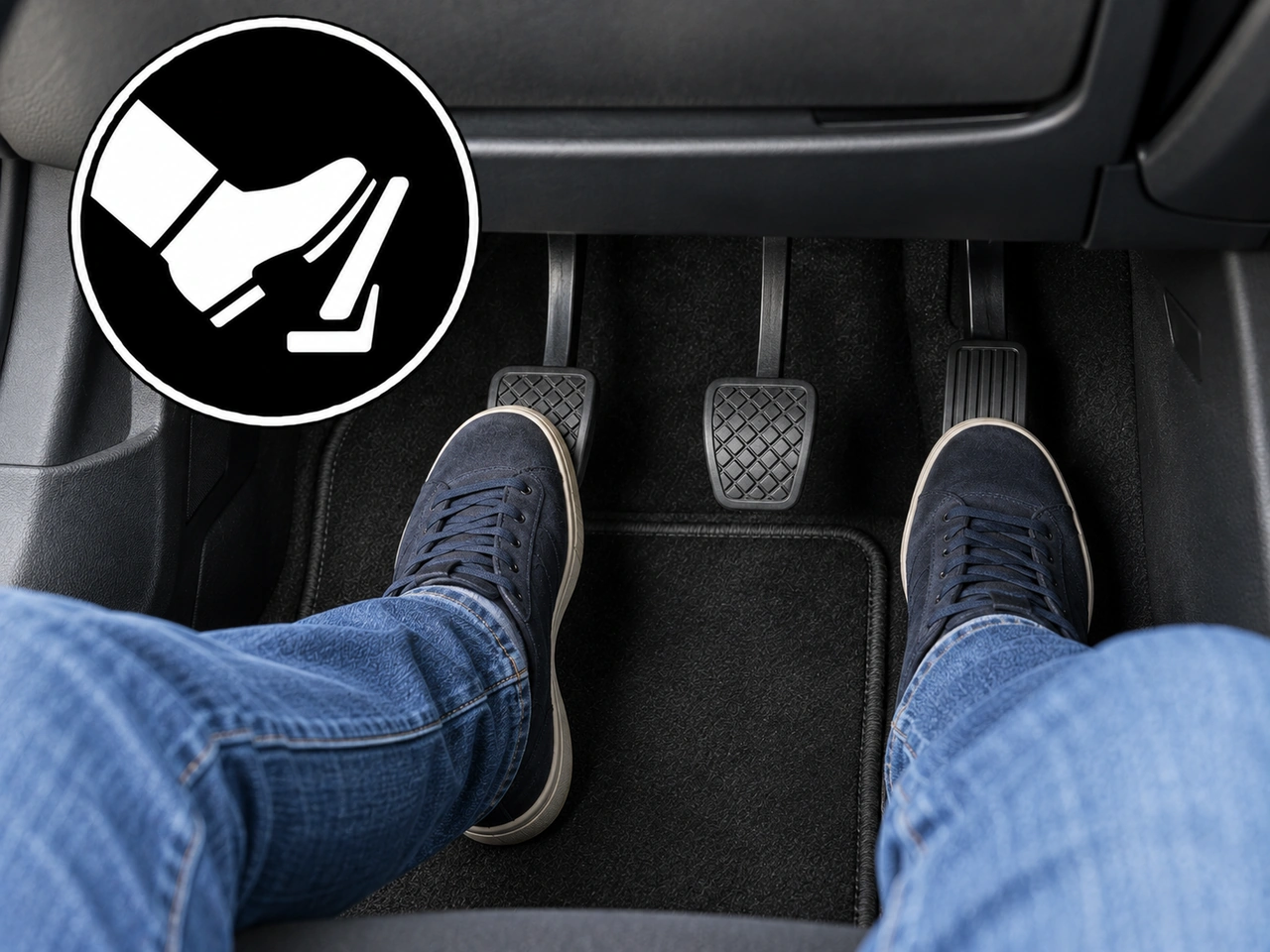
998. What is the clutch biting point?
The clutch biting point is reached as the clutch pedal is released and the clutch begins to transmit power from the engine to the transmission. Controlling this point helps the driver move off smoothly.
The biting point is where the clutch starts to transmit drive as you lift the pedal. Use it briefly to move off smoothly and use the brake to hold the car on a hill.
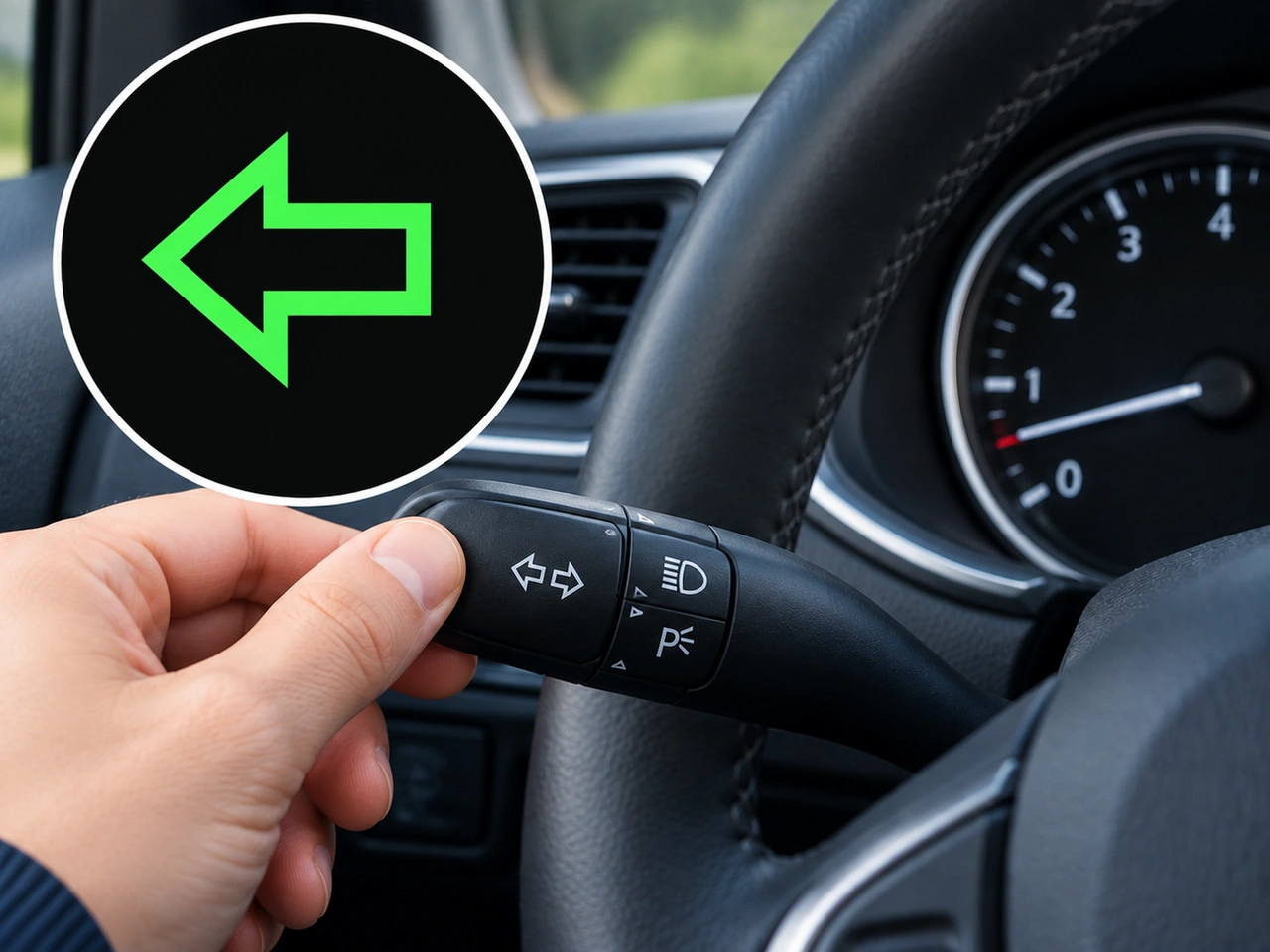
999. What does this dashboard symbol indicate?
This symbol indicates that a direction indicator is operating. The flashing indicator shows the direction in which the driver intends to turn or change position on the road.
A flashing arrow shows which side is signalling. Both arrows may flash together when the hazard warning lights are on.
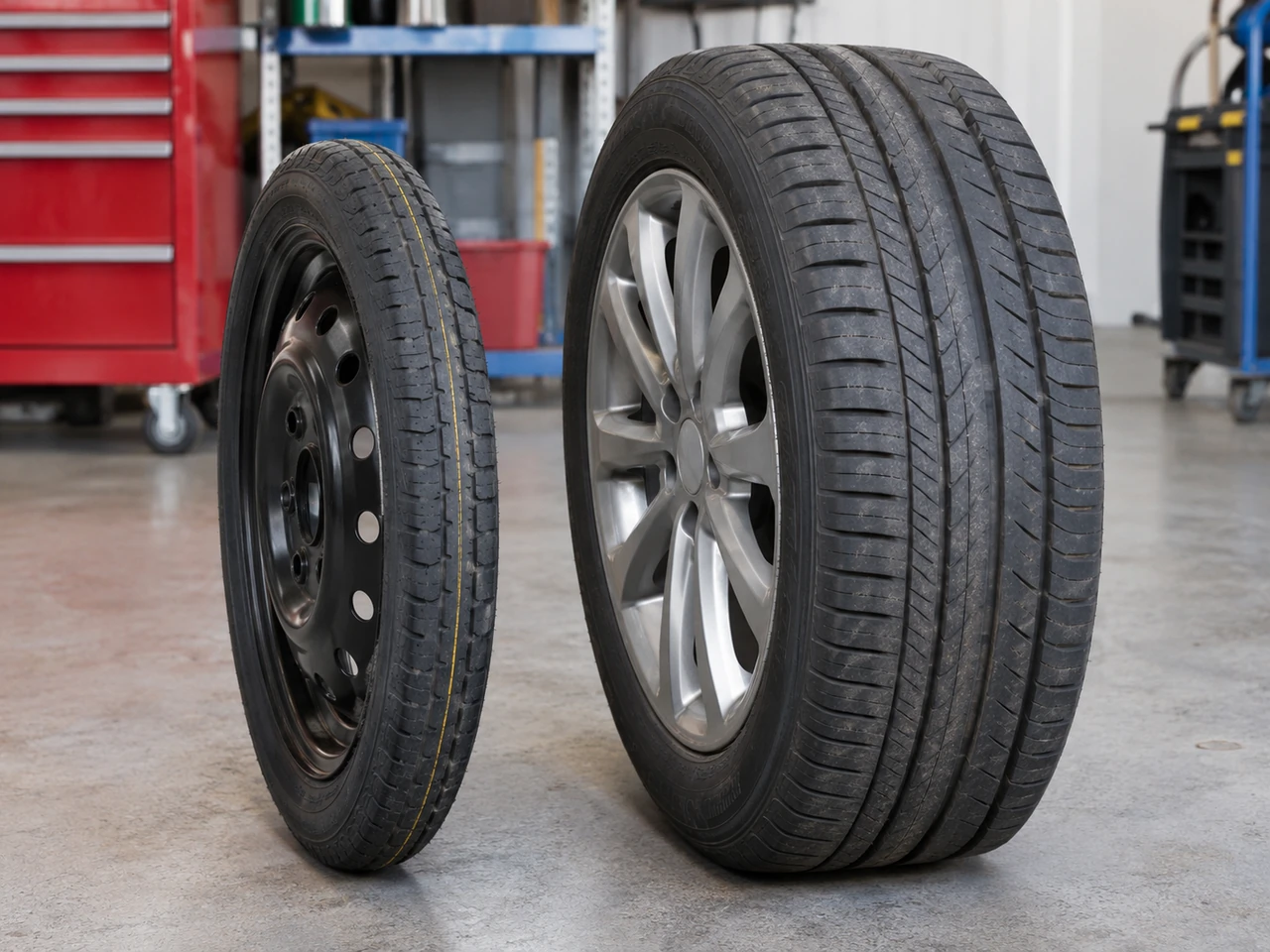
1000. A temporary spare wheel may have a restricted maximum speed.
Follow the restrictions marked on the spare and given in the vehicle handbook, including speed, inflation pressure and permitted use. Arrange repair or replacement of the damaged tyre as soon as possible.
🔗 Sources
Volvo Support Norway — V40 temporary spare; model-specific manufacturer guidance.
Image credit: AI-generated