


QuizTraffic rulesNorway
Test your knowledge with our multiple-choice quiz. Learn from each answer and improve your understanding of the traffic rules and road signs of Norway.
 Traffic signs
 Traffic rules
 Norway
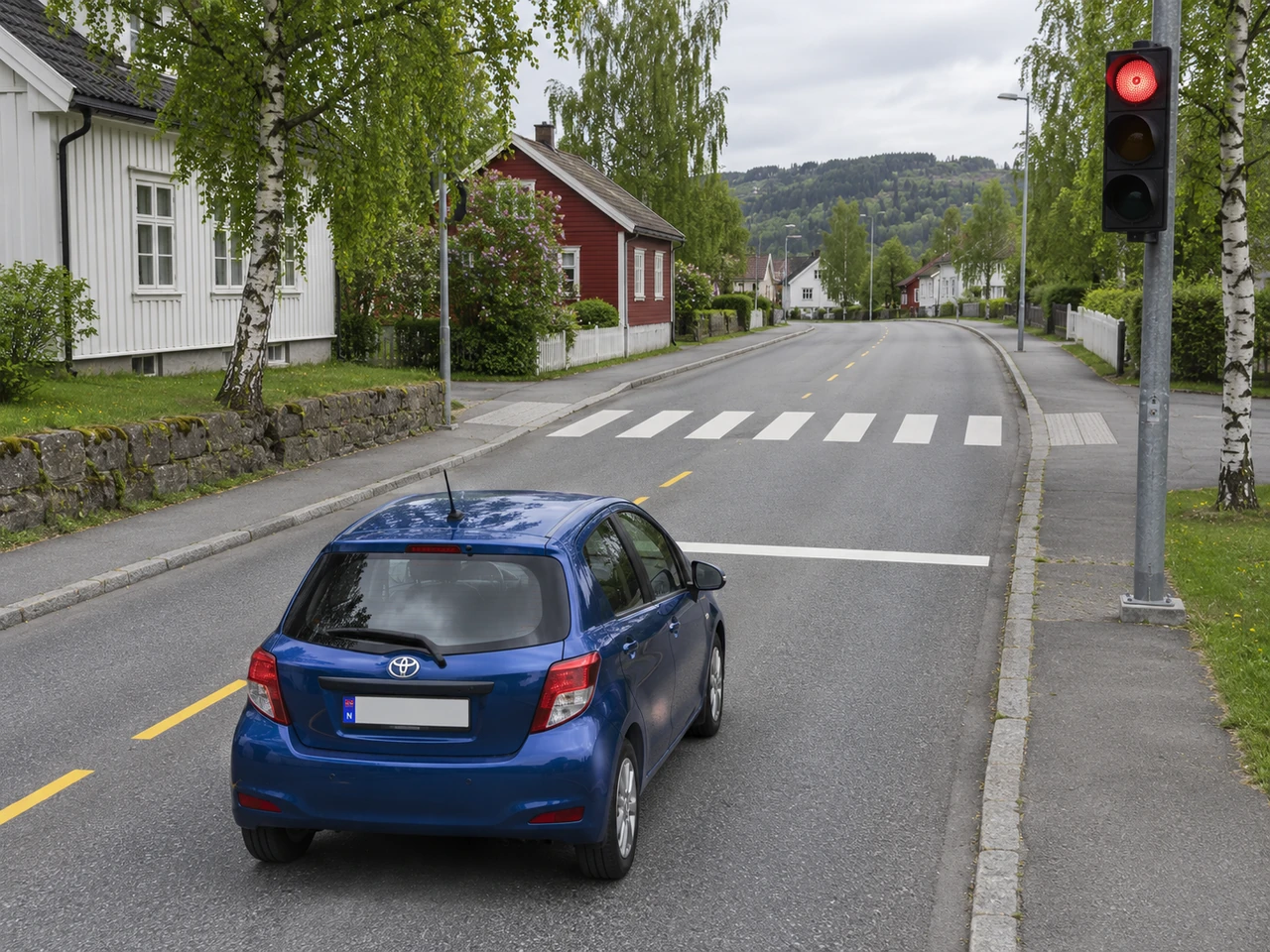
1001. A steady red traffic light normally means you must stop.
Stop at the stop line and wait until you are allowed to proceed. Local rules may permit a movement under a separate green arrow or another specific exception. Follow directions from authorised traffic controllers.

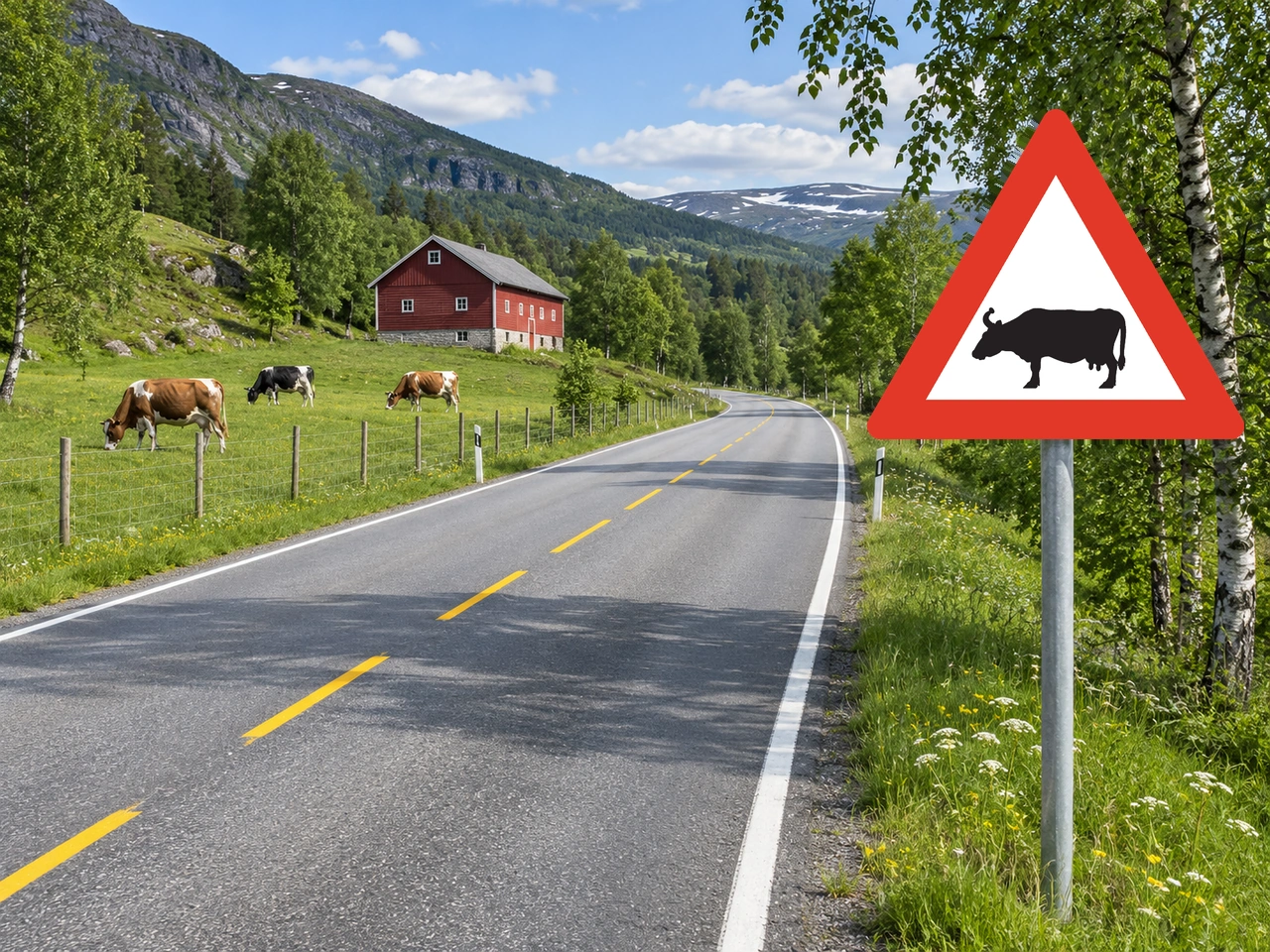
1002. The triangular cattle warning sign refers only to wild animals.
The cattle symbol warns of livestock being driven or crossing the road. Wildlife is shown by a different animal symbol.
🔗 Sources
Norway • Skiltforskriften • Sign 146.4
Statens vegvesen • Official traffic-sign meanings
Statens vegvesen • Official sign artwork
Sign artwork: Statens vegvesen original EPS archive, Sign 146.4, file 146_4.eps. Native cattle silhouette, border and proportions retained; resized and composited onto the existing same-entry scene. Border red follows the authority's published colour chart: PMS 179, using the published web swatch RGB 226/56/40. No third-party open licence is asserted for the government artwork.
Image credit: AI-generated background with source sign artwork resized and placed on the sign face.
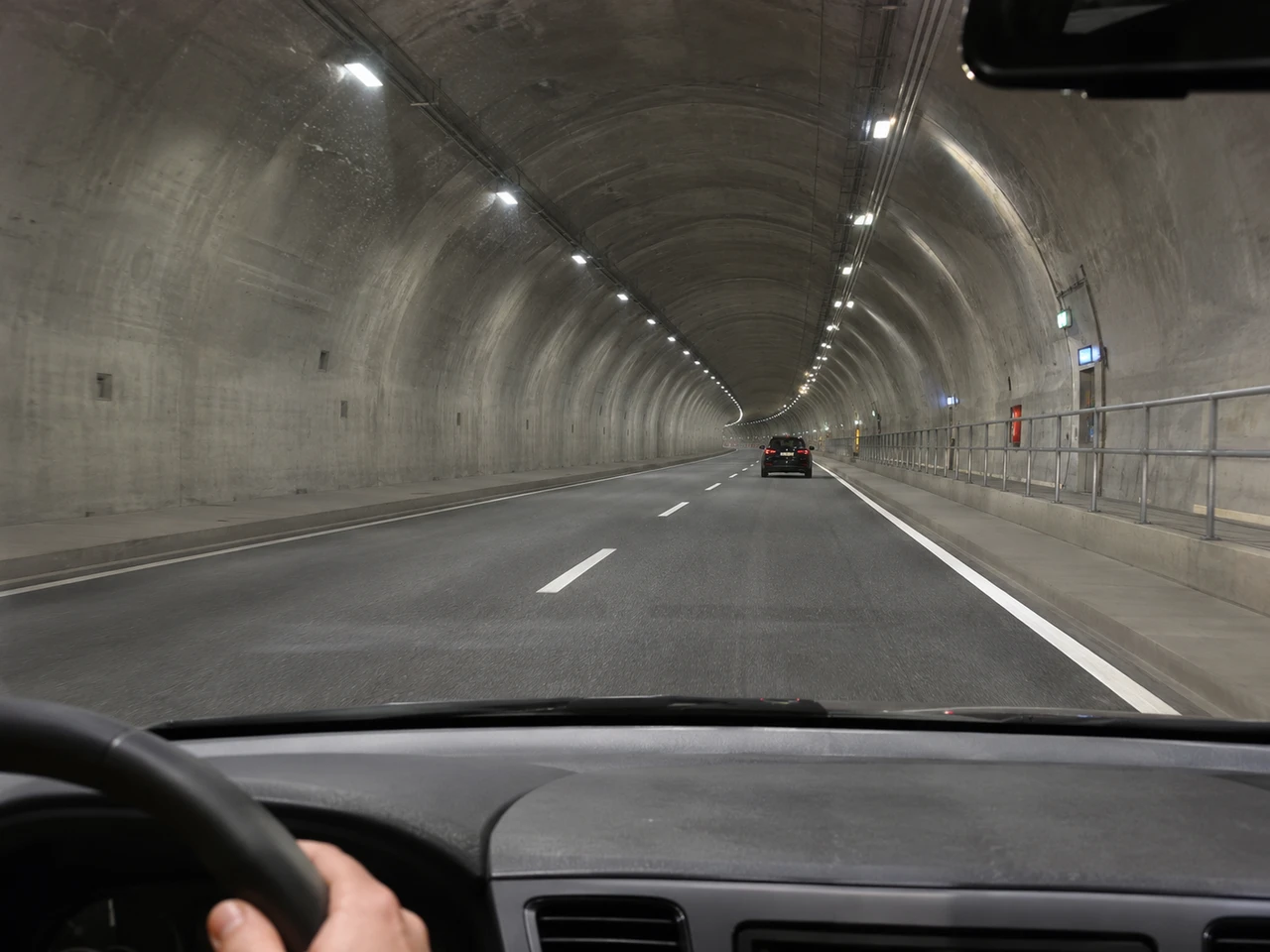
1003. Why should you leave a safe following distance inside a tunnel?
Limited space and visibility can make incidents inside tunnels especially dangerous. A safe gap gives you more time to react.
Norway: Keep enough space to react if traffic ahead brakes or stops. Statens vegvesen advises a good following distance in tunnels. Adapt your speed and gap to visibility and conditions; a confined lane leaves little room to avoid a collision. Follow any local controls or instructions.
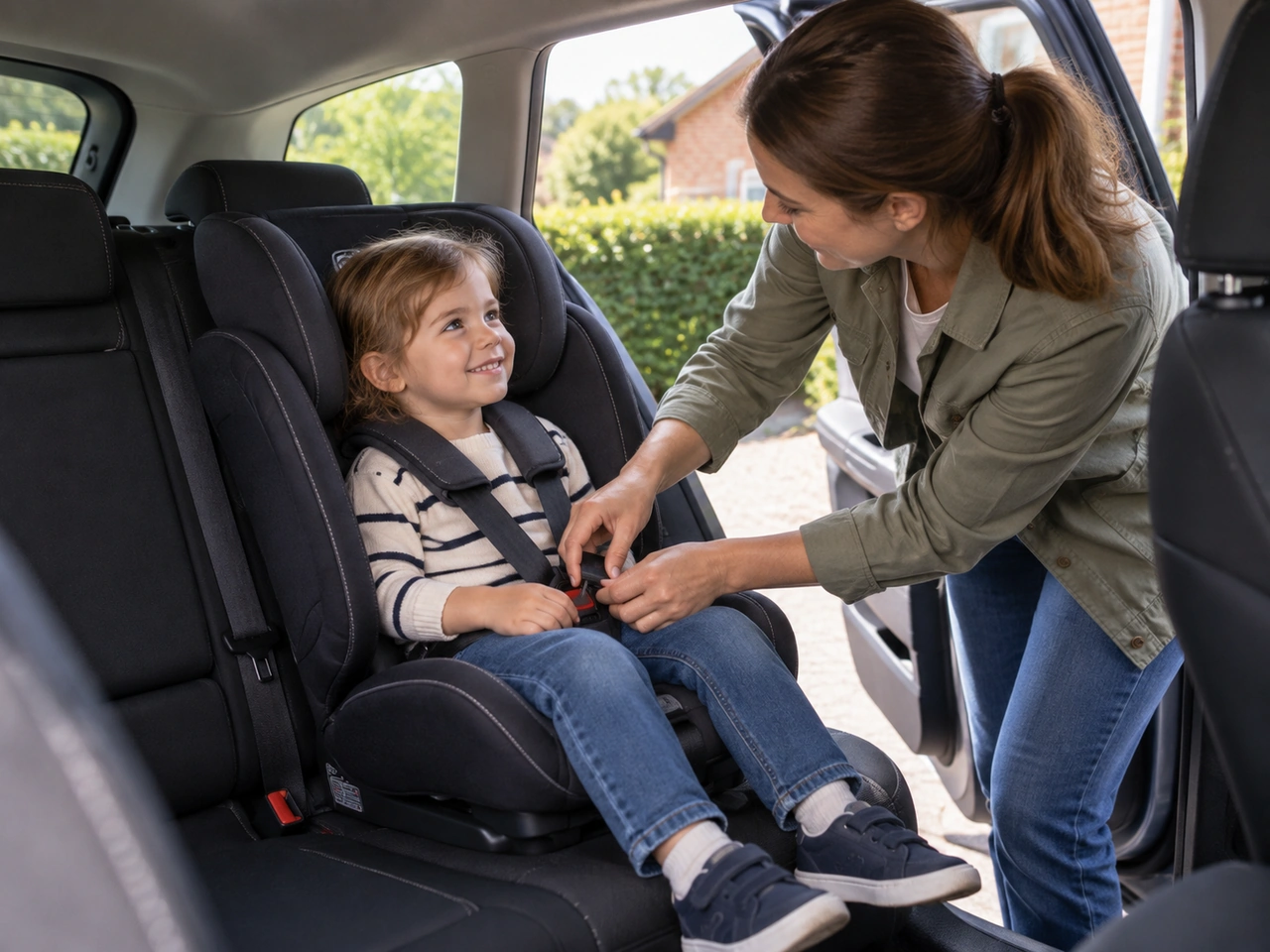
1004. Why should a child use a suitable child restraint?
A suitable child restraint is designed to protect a child according to their size and development. It helps position and restrain the child correctly, reducing the risk of serious injury in a collision or sudden stop.
Norway. Children shorter than 135 cm need an approved restraint suited to their height and weight. From 135 cm to below 150 cm, use approved equipment if available in the car.
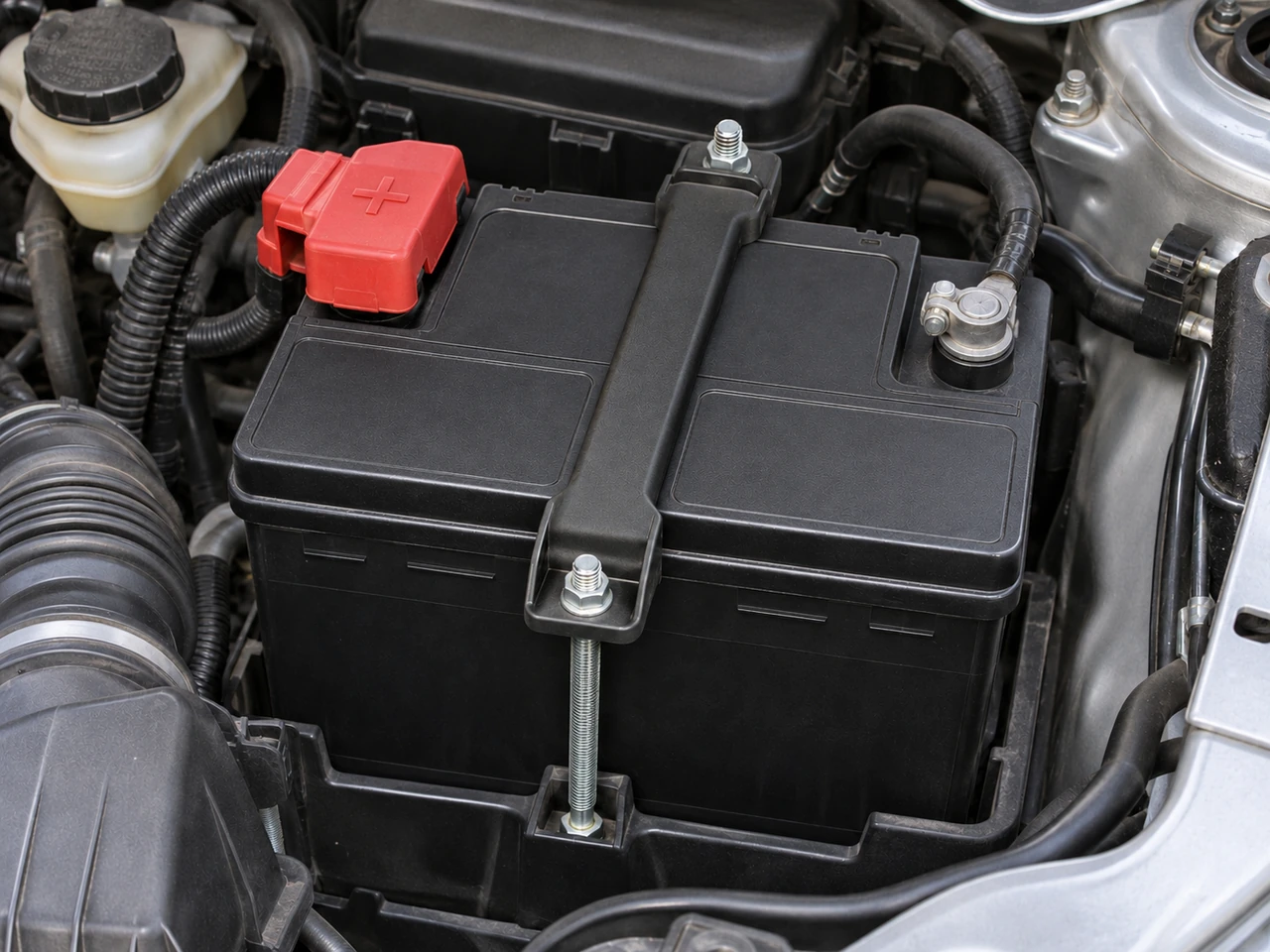
1005. A car's starter battery should be secured in its mounting.
A loose battery can move, damage connections or cause a short circuit. Use the correct tray and retaining hardware for the vehicle, and have loose or damaged mountings repaired.
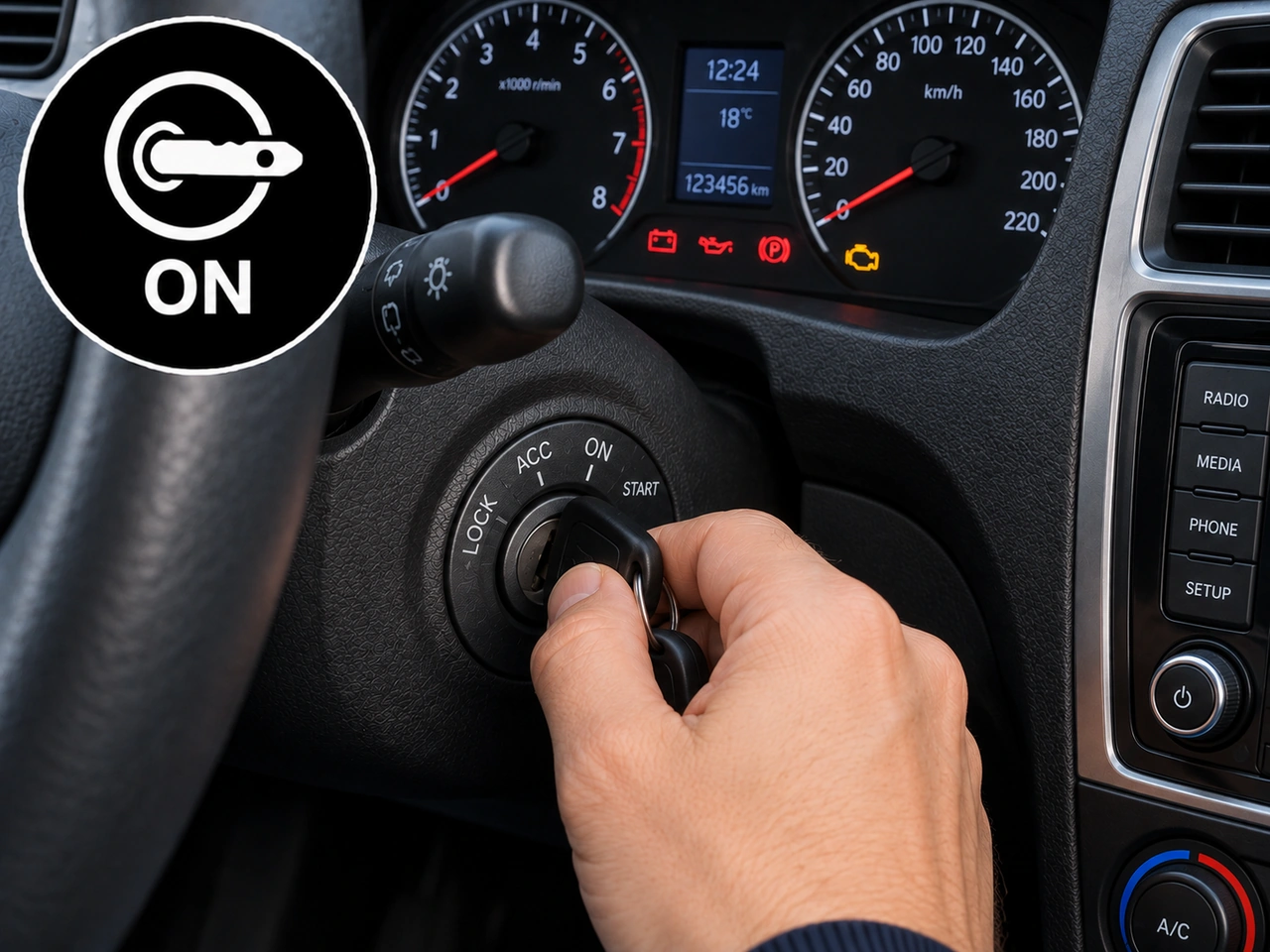
1006. What does the ON position of a traditional ignition switch normally do?
The ON position normally switches on the vehicle's electrical and ignition systems without operating the starter motor. The engine is started by turning the key further to the START position.
On a keyed ignition, ON powers the vehicle systems and may light warning lamps as part of a check. START operates the starter motor.
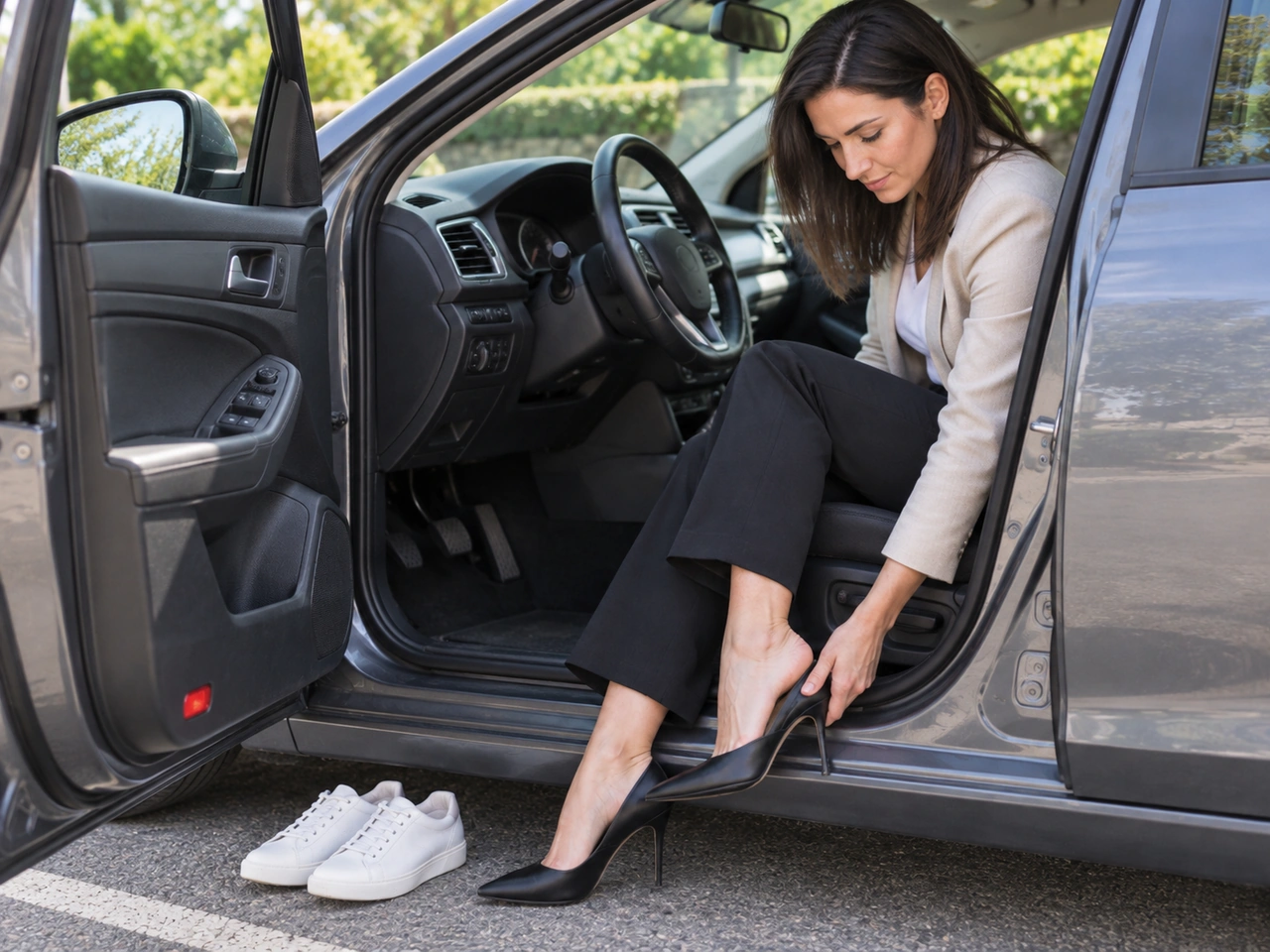
1007. Why should you wear suitable footwear when driving?
Suitable footwear helps you operate the accelerator, brake, and clutch accurately. Loose, bulky, or slippery footwear can interfere with pedal control or become caught around the pedals.
🔗 Sources
Great Britain — Highway Code, rule 97; clear view, controls and footwear
Image credit: AI-generated
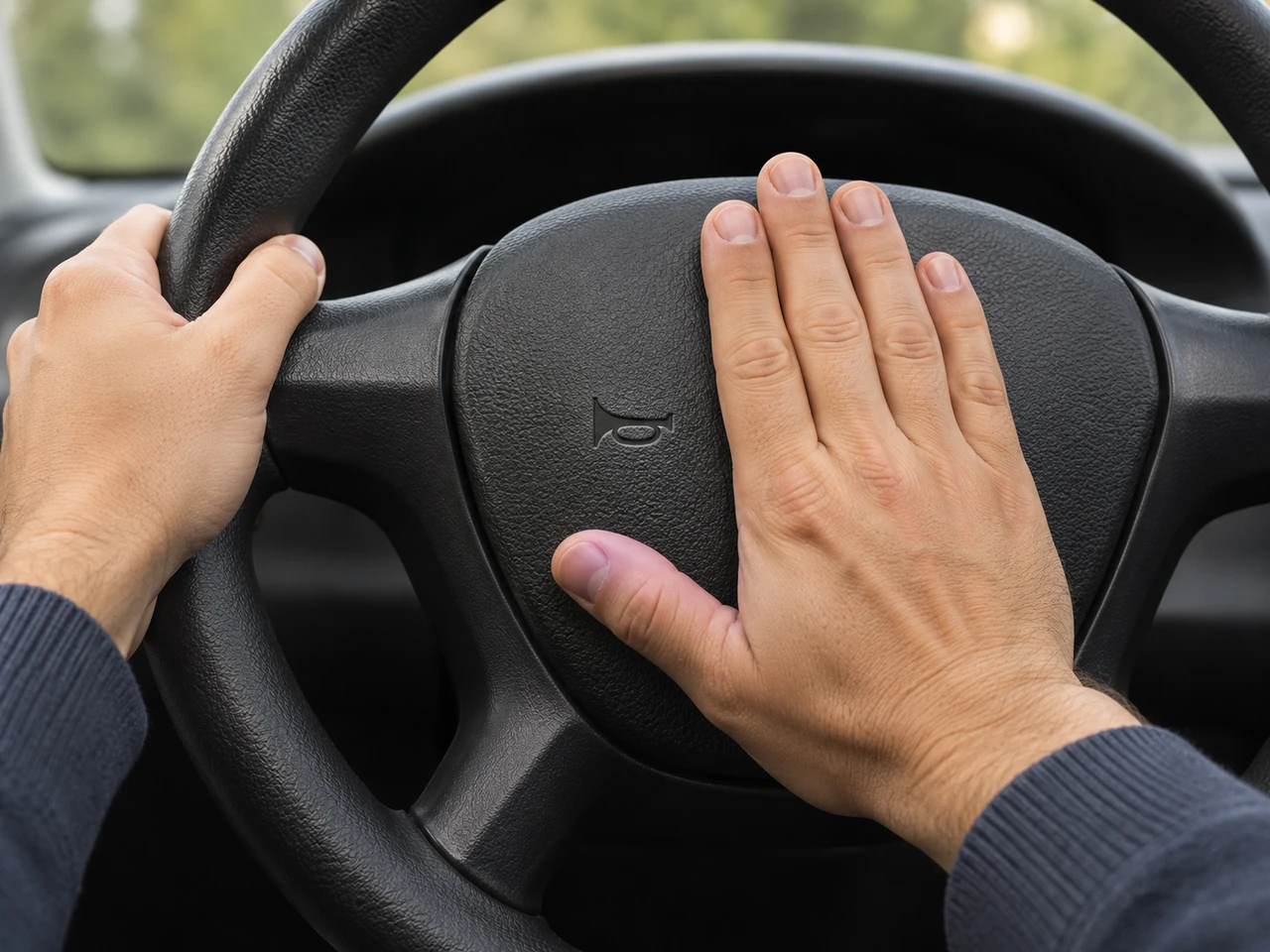
1008. Sounding your horn gives you priority over other road users.
The horn can warn others of your presence, but it does not give you priority. Still follow the applicable rules and proceed only when it is safe.
🔗 Sources
The Highway Code (Great Britain) • Safety guidance, Rule 112; warning other road users
Image credit: AI-generated
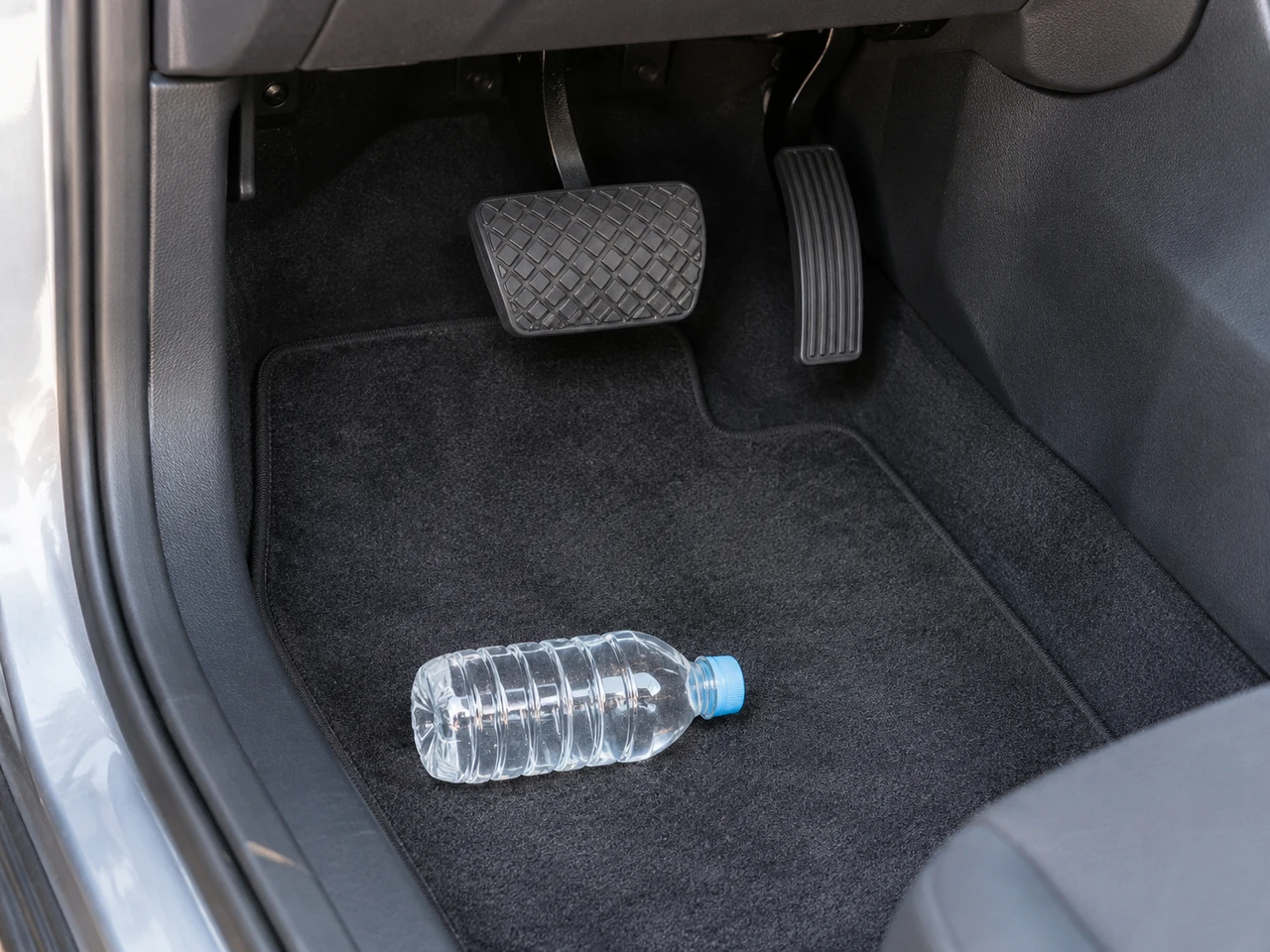
1009. A loose bottle in the driver's footwell is harmless while it is clear of the pedals.
The bottle can roll forward and obstruct a pedal. Keep the driver's footwell clear of loose objects and secure items before setting off.
🔗 Sources
Ford owner’s manual (manufacturer guidance) • Safety guidance, Floor Mats: loose objects and pedal obstruction; follow your vehicle’s handbook
Image credit: AI-generated
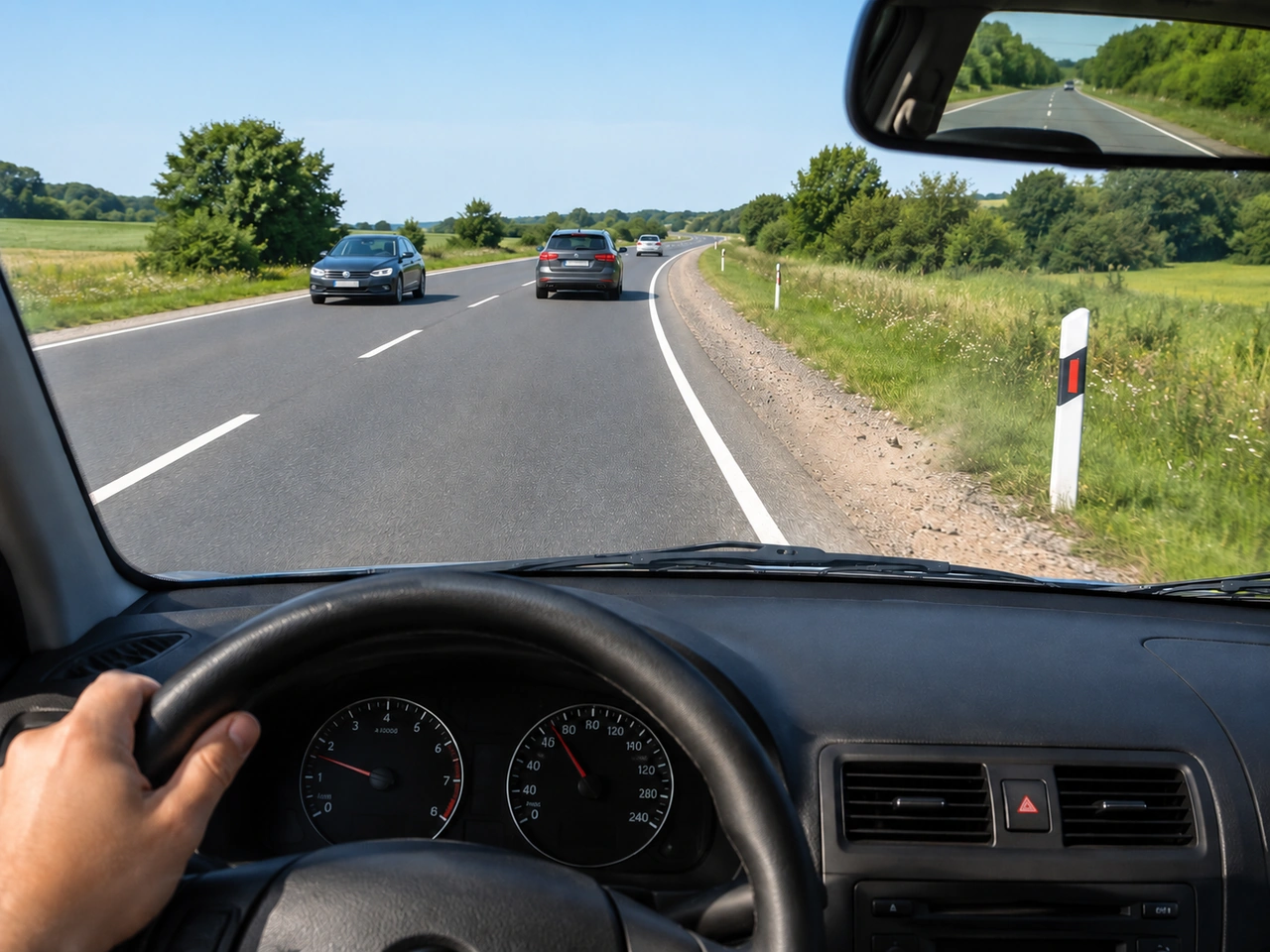
1010. What should you do if your vehicle begins to drift onto the shoulder?
If you drift onto the shoulder, avoid sudden steering or braking. Slow gently and return to the road smoothly when it is safe.
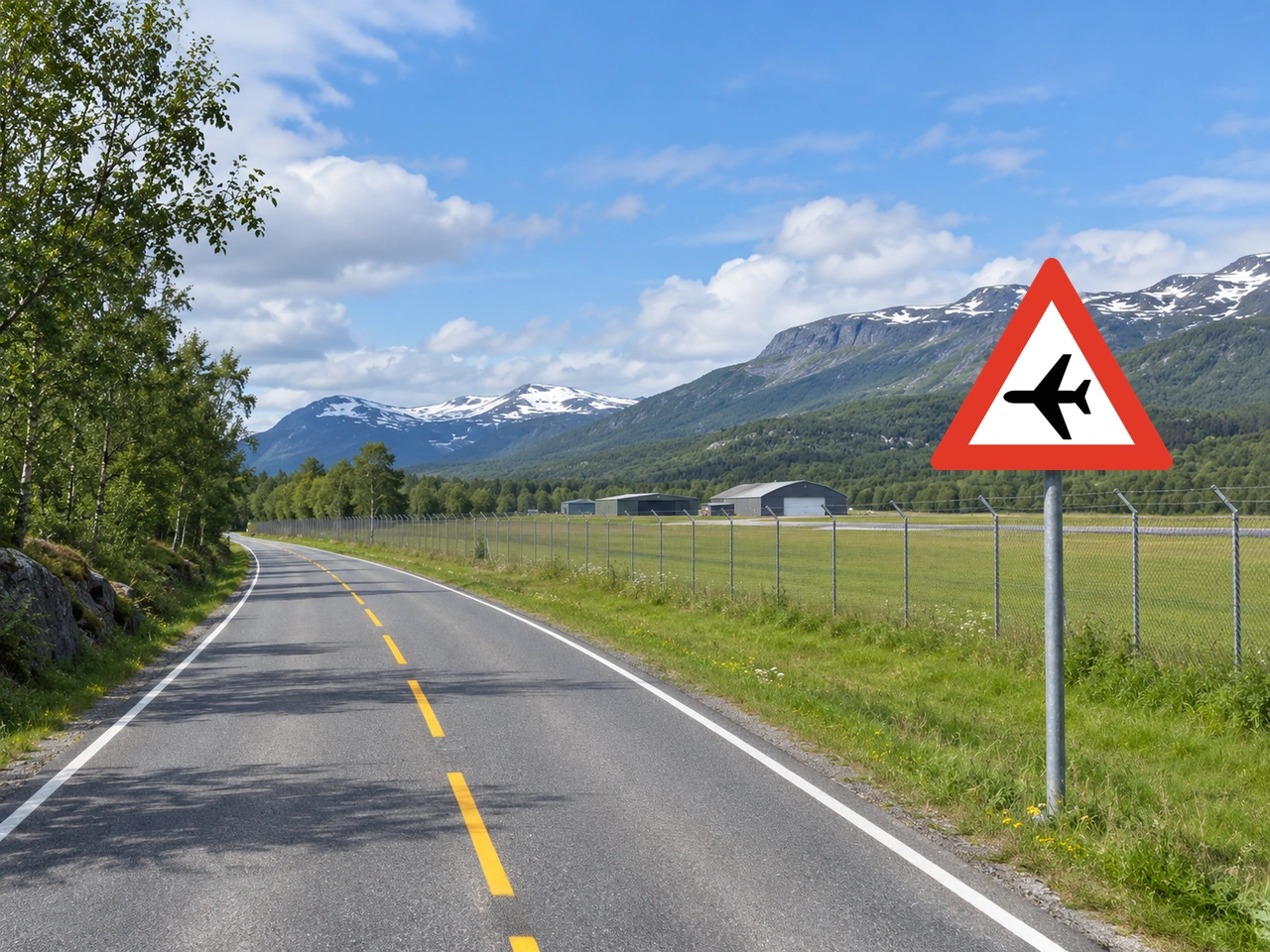
1011. The triangular aircraft sign warns of flight operations near the road.
The aircraft symbol warns of flight operations, which may involve low-flying aircraft near the road. Stay attentive and approach with appropriate caution.
🔗 Sources
Norway • Skiltforskriften • Sign 150
Statens vegvesen • Official traffic-sign meanings
Statens vegvesen • Official sign artwork
Sign artwork: Statens vegvesen original EPS archive, Sign 150, file 150_0.eps. Native aircraft silhouette, orientation, border and proportions retained; resized and composited onto the existing same-entry scene. Border red follows the authority's published colour chart: PMS 179, using the published web swatch RGB 226/56/40. No third-party open licence is asserted for the government artwork.
Image credit: AI-generated background with source sign artwork resized and placed on the sign face.
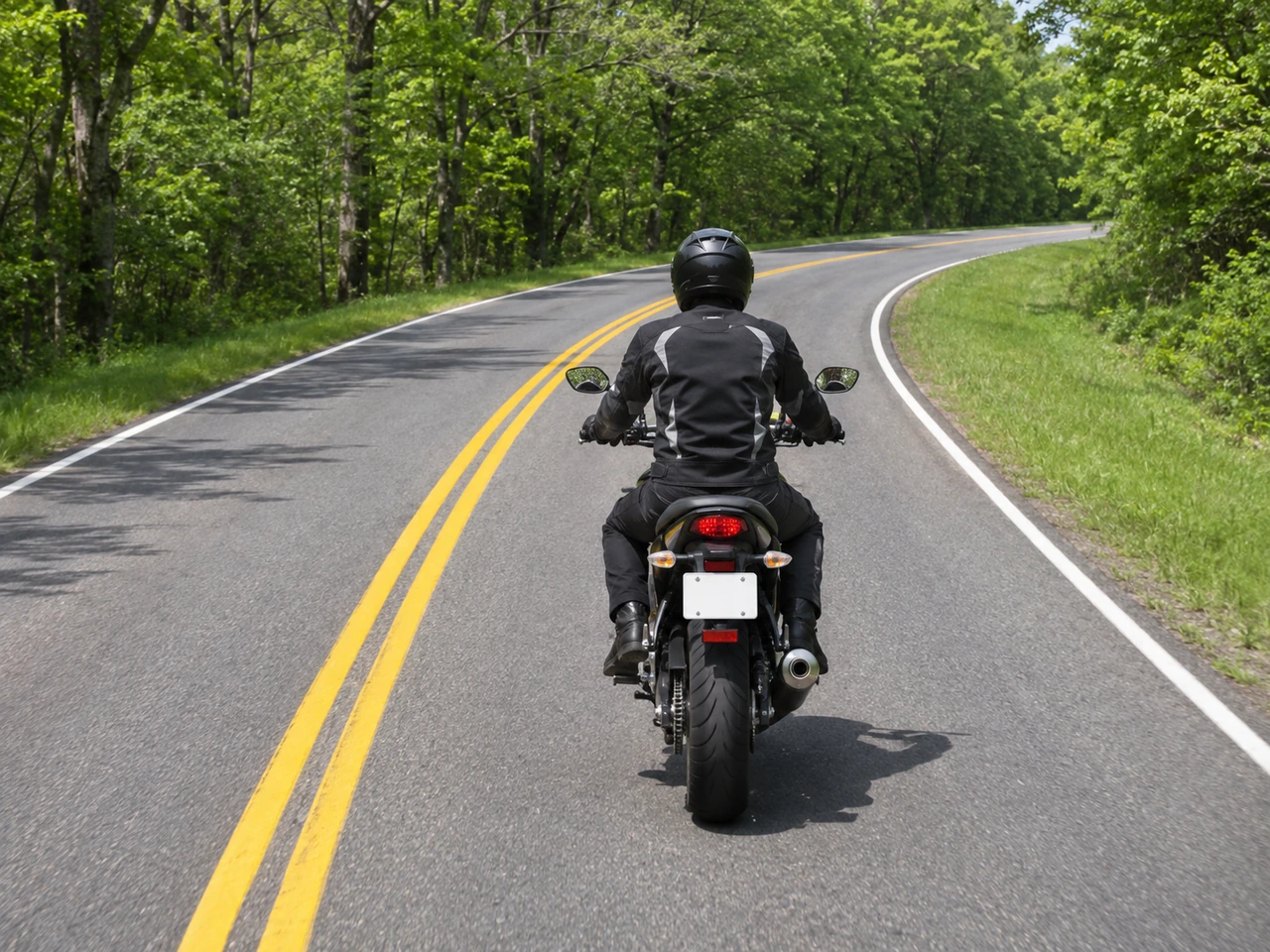
1012. What should a motorcyclist do before entering a bend?
Adjust your speed before entering the bend so you can steer smoothly and remain within a safe position. Look through the bend towards where you want to travel and be prepared for hazards that may be hidden from view.
🔗 Sources
DLD.Utah.gov — Motorcycle Handbook, Braking and Turning
Forsvaret.no — Driving in Norway, Road markings
Image credit: AI-generated
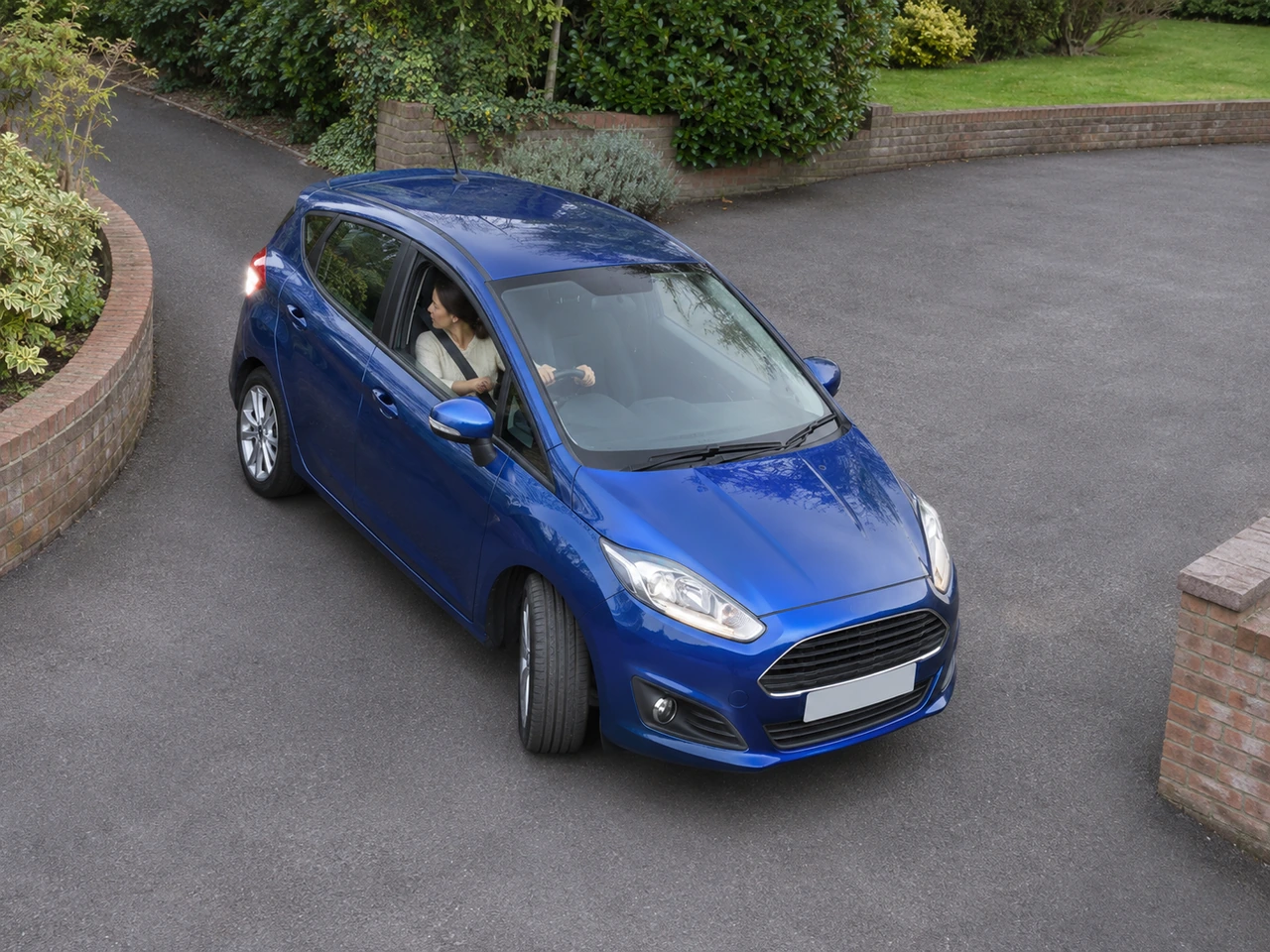
1013. What must you allow for at the front when reversing around a corner?
As you steer while reversing, the front swings out. Check all around and leave enough clearance beside the front as well as behind.
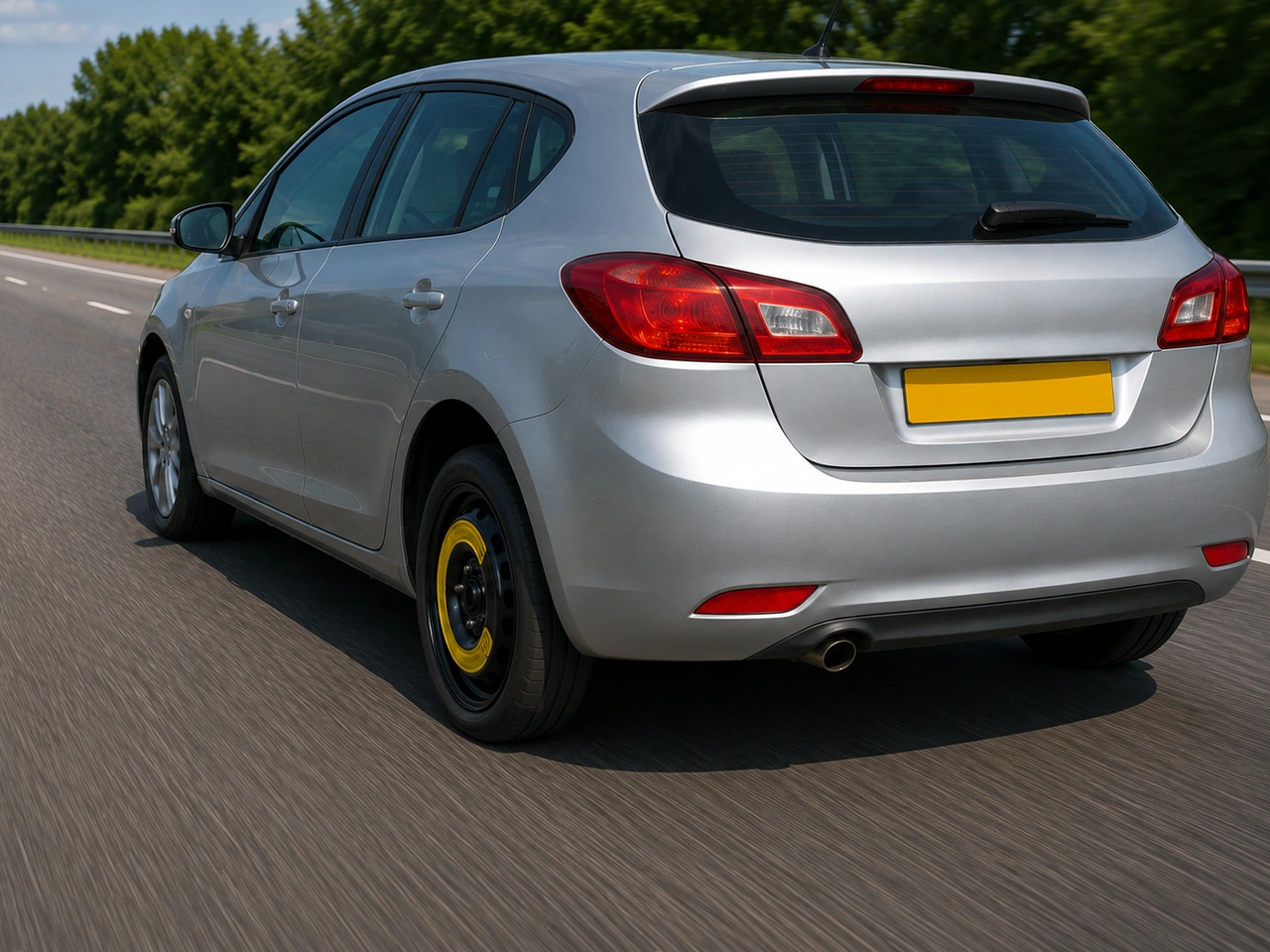
1014. What should you do after fitting a temporary spare wheel?
A temporary spare is an emergency measure and may have different handling, pressure, speed or distance limits from the normal wheels. Read its label and the vehicle handbook, observe all applicable restrictions and arrange a proper tyre repair or replacement promptly. Do not assume a single speed or distance limit applies to every spare, or inflate it to the normal road-tyre pressure without checking the specification. Follow any restrictions on its fitting position, towing or vehicle loading.
Follow the speed and use restrictions on the spare wheel and in your handbook. A temporary spare needs prompt replacement with the correct road wheel.
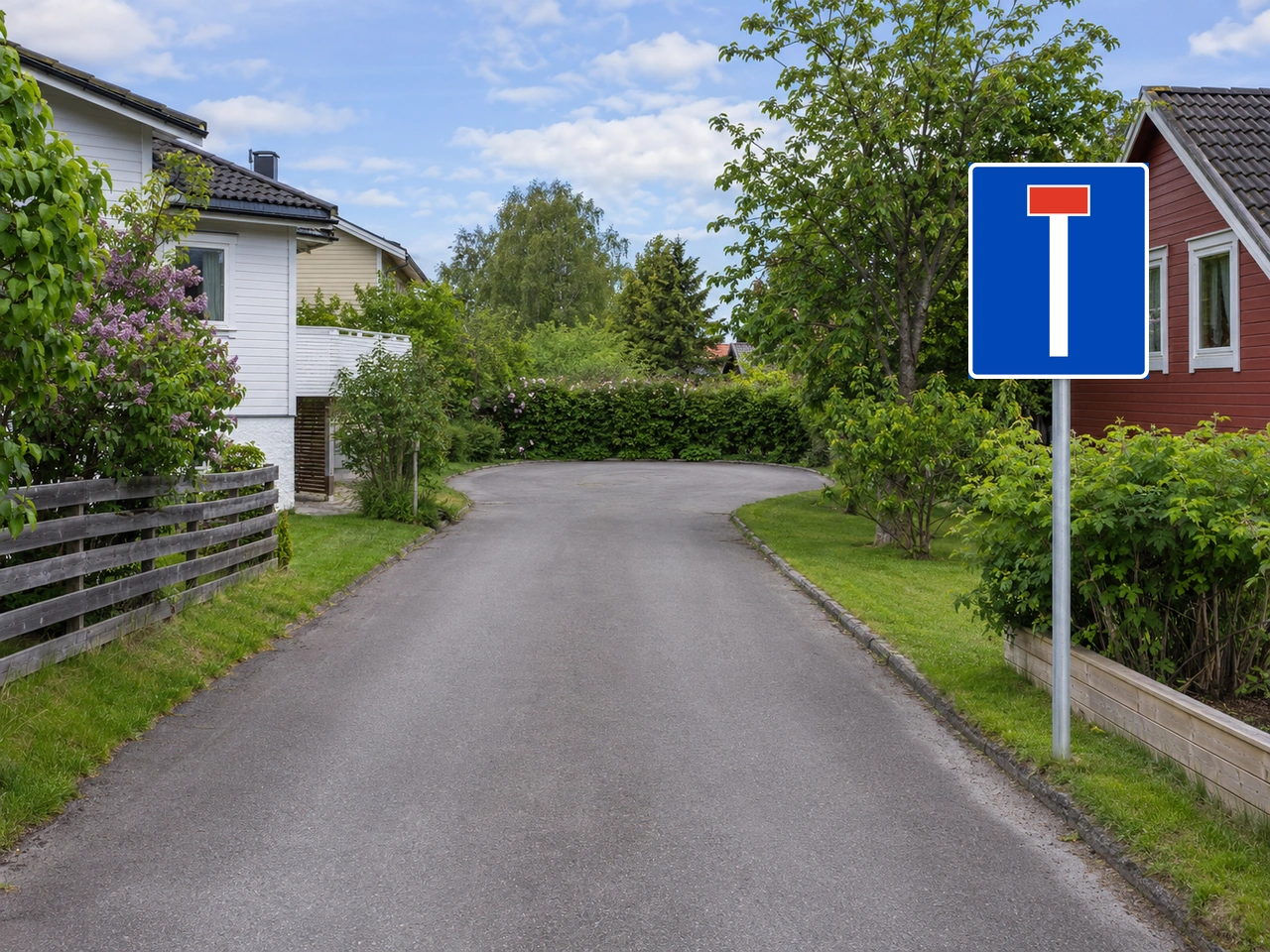
1015. A dead-end sign does not by itself prohibit you from entering the street.
The dead-end sign warns that the road has no through route for motor vehicles. It is not a no-entry sign. Check other restrictions and make sure you can turn or leave safely.
🔗 Sources
Norway • Skiltforskriften • Sign 527.1
Statens vegvesen • Official traffic-sign meanings
Statens vegvesen • Official sign artwork
Official Norwegian sign artwork: Statens vegvesen, sign 527.1, original EPS file 527_1.eps from the national sign artwork archive. Native pictogram, orientation, borders and proportions retained. Colours use the authority's published PMS web swatches: blue PMS 293 and red PMS 179 where present. Original files and colour guidance. No third-party open licence is asserted for the government artwork.

Image credit: AI-generated background with source sign artwork resized and placed on the sign face.
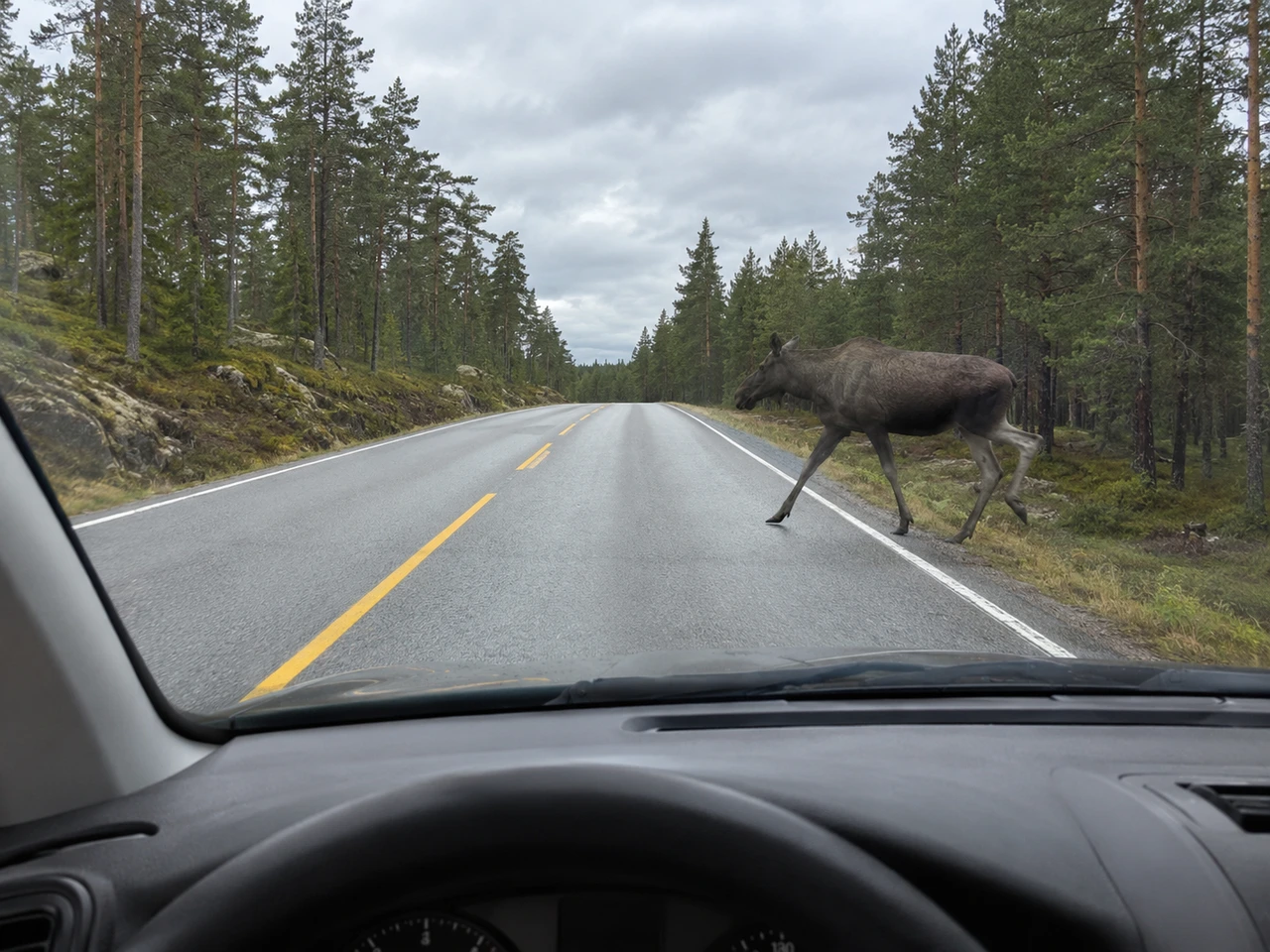
1016. What should you do if a large animal suddenly enters your path?
If a large animal enters the road, brake firmly while keeping the vehicle under control. Avoid sudden swerving, as this can cause you to lose control or collide with other traffic.
🔗 Sources
Norwegian Public Roads Administration – Animal collisions and prevention
Norwegian Traffic Rules, section 13
Image credit: AI-generated
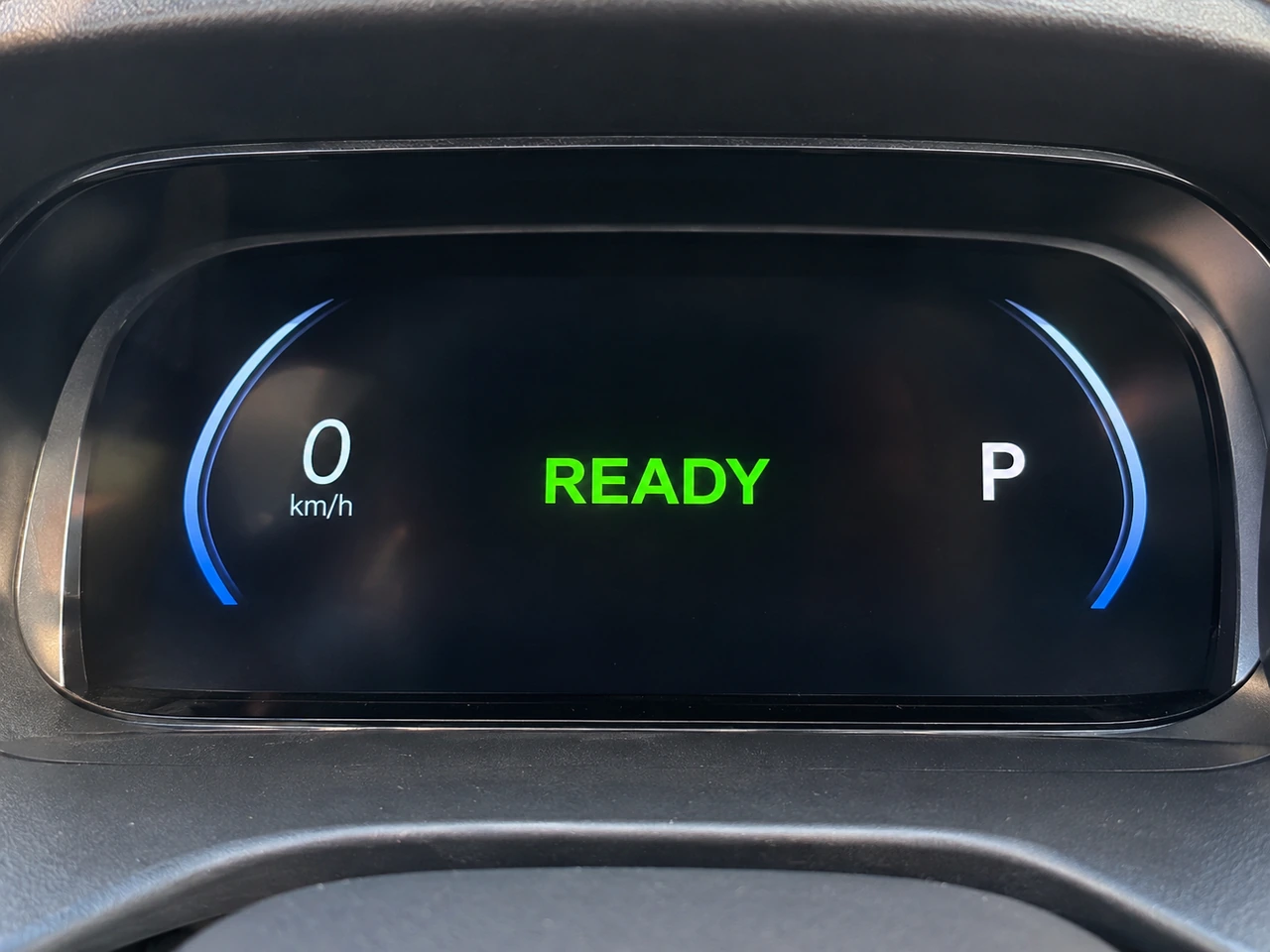
1017. What does this EV's green READY indication tell you?
An electric vehicle can be ready to move without engine noise. Use the vehicle's specified READY indication, and complete the normal safety checks before selecting a drive position or moving.
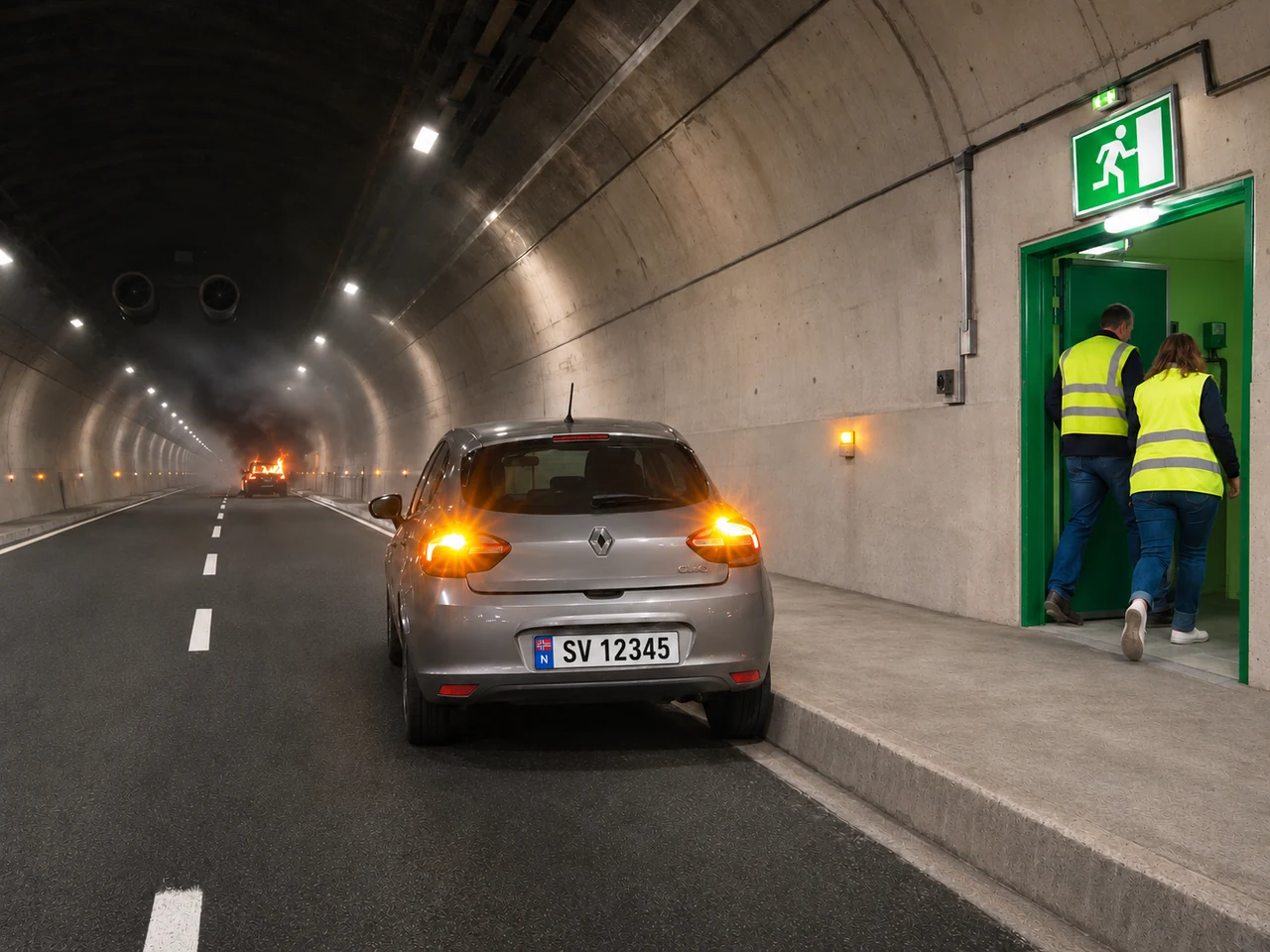
1018. What should you do if you see smoke or fire inside a tunnel?
Keep clear of fire and smoke and follow evacuation instructions promptly. Drive out only if this is safe. If you cannot continue safely, leave the vehicle safely and use the indicated escape route. Follow the instructions for the tunnel you are using.
Norway: Act promptly to get clear of the danger. Statens vegvesen advises driving out if safely possible; if you cannot, leave the vehicle at the side with hazard lights on and evacuate on foot. Do not wait for help inside the vehicle. Follow the escape route and incident instructions for that tunnel. The illustration shows a one-way bore with a marked escape door.
🔗 Sources
Statens vegvesen • Fire evacuation
Bergen brannvesen • One-way and two-way tunnel procedures
Image credit: AI-generated
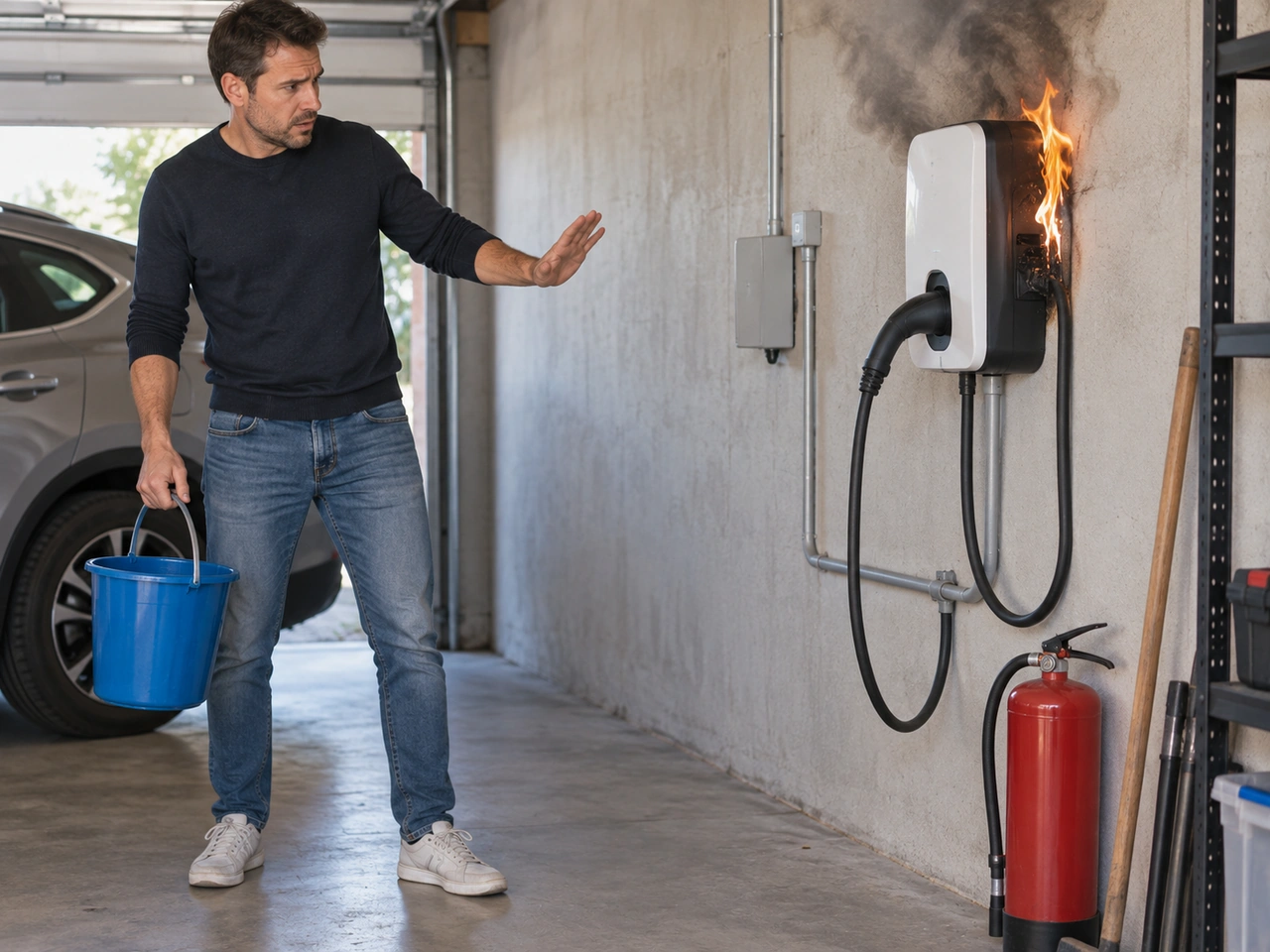
1019. Why should you not use water on a fire involving live electrical equipment?
Water can conduct electricity, so throwing water or directing an ordinary water jet onto energised equipment can expose you to electric shock. Keep people away, leave damaged cables and equipment alone, and call the emergency services. This is advice for an untrained person near live equipment; it does not mean that firefighters must never use water on an electric vehicle. Trained crews may use large quantities of water to cool an EV battery fire using specialist procedures.
An untrained bystander should not put water on live electrical equipment. Evacuate people, keep clear and call emergency services; this is not a firefighter EV-cooling procedure.
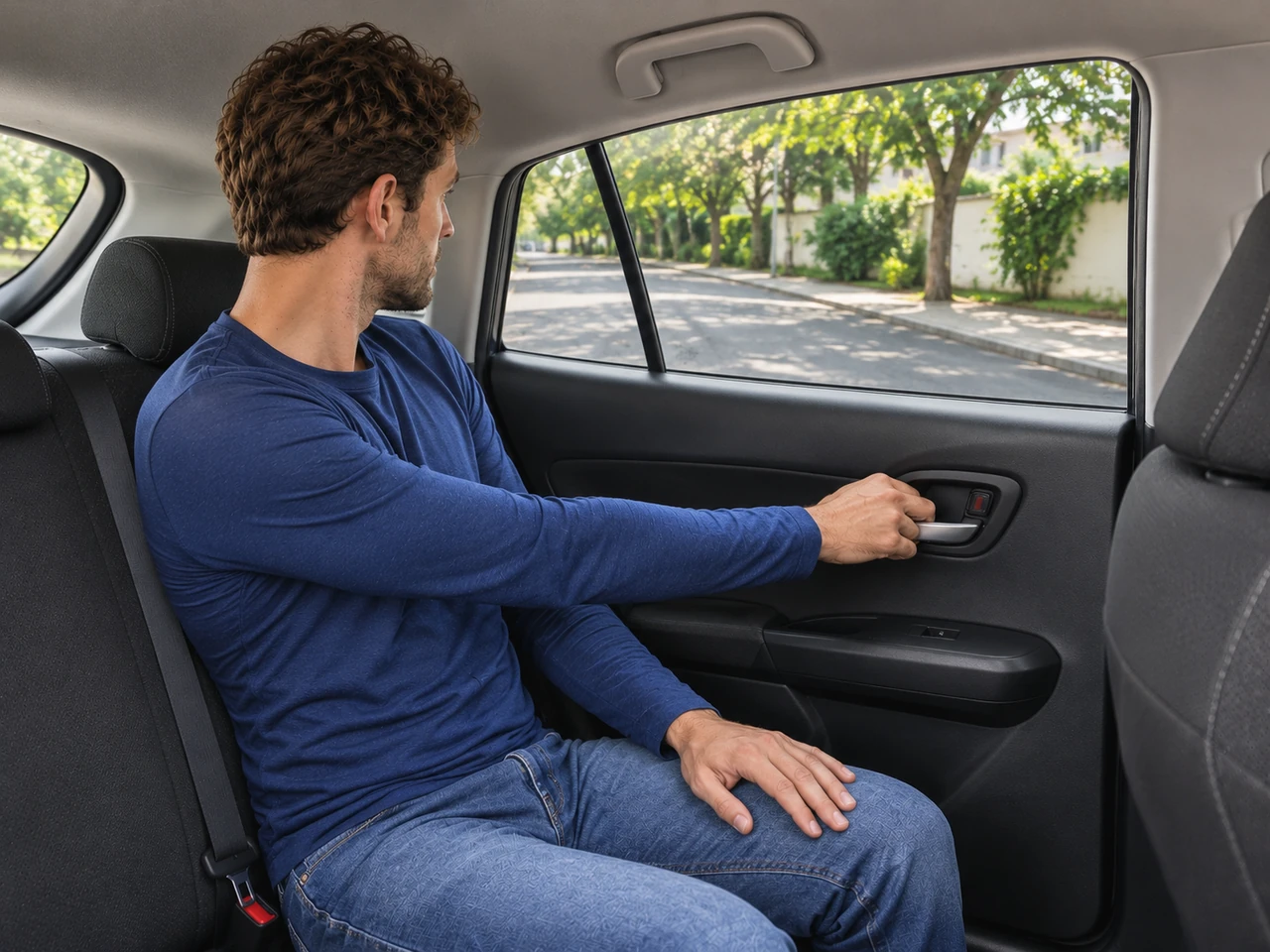
1020. Opening a car door with your far hand can help you look behind.
Where you are able to do so, using the hand furthest from the door helps turn your body and head to look behind. Still check carefully for cyclists, motorcyclists and other road users before opening the door.
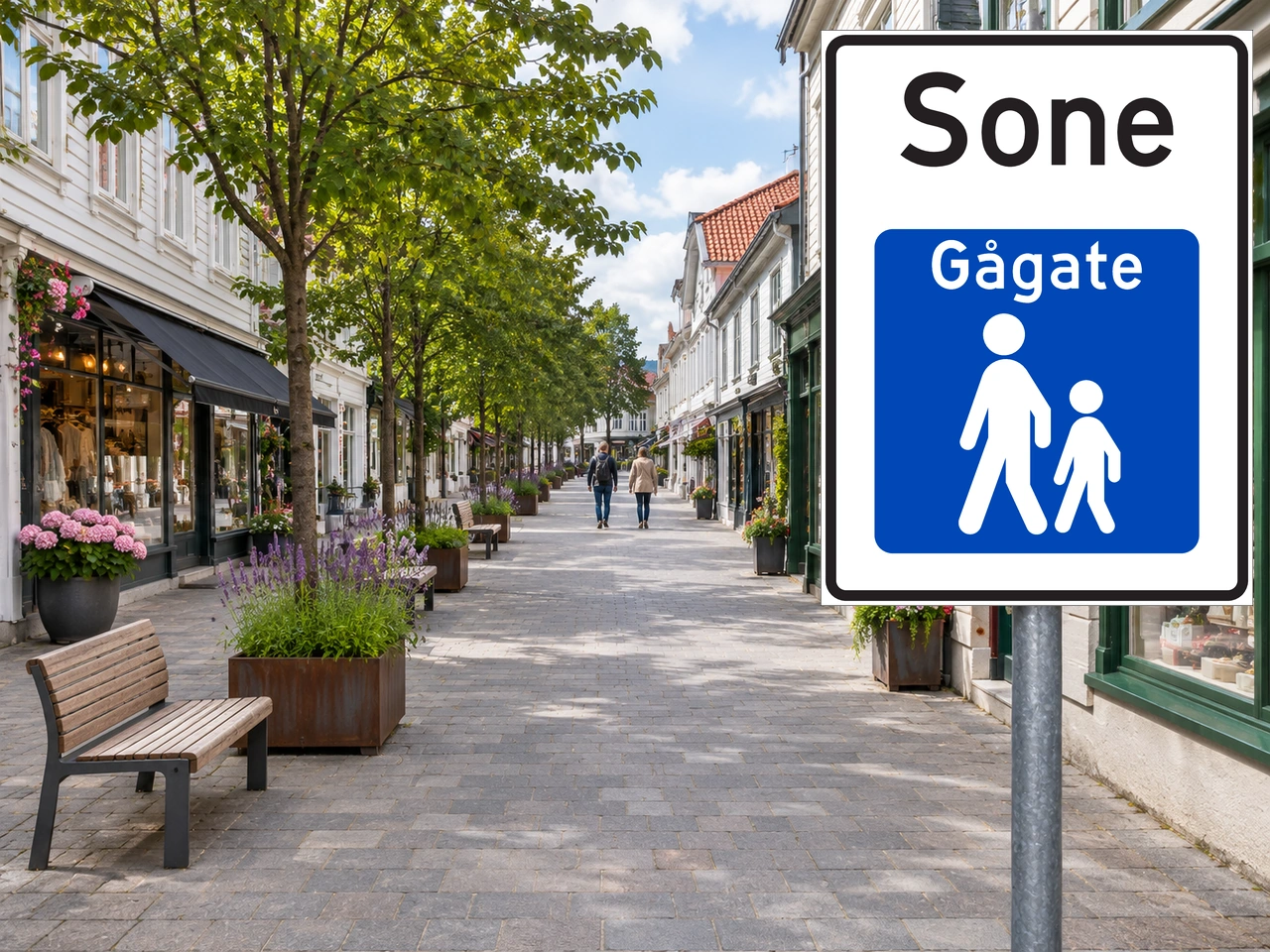
1021. Drivers admitted to a pedestrian zone must travel at walking pace.
Drivers allowed into a pedestrian zone must travel at walking pace and give way to pedestrians. They must stop when necessary.
🔗 Sources
Norway • Skiltforskriften • Sign 548
Statens vegvesen • Official traffic-sign meanings
Statens vegvesen • Official sign artwork
Official Norwegian sign artwork: Statens vegvesen, sign 548, original EPS artwork 548_0.eps from the national sign artwork archive. Native lettering, numbers, pictogram, orientation, borders and proportions retained. Colours use the authority's published PMS web swatches: blue PMS 293 and red PMS 179 where present. Original files and colour guidance. No third-party open licence is asserted for the government artwork.
Image credit: AI-generated background with source sign artwork resized and placed on the sign face.
Norway • Applicable traffic or parking rule
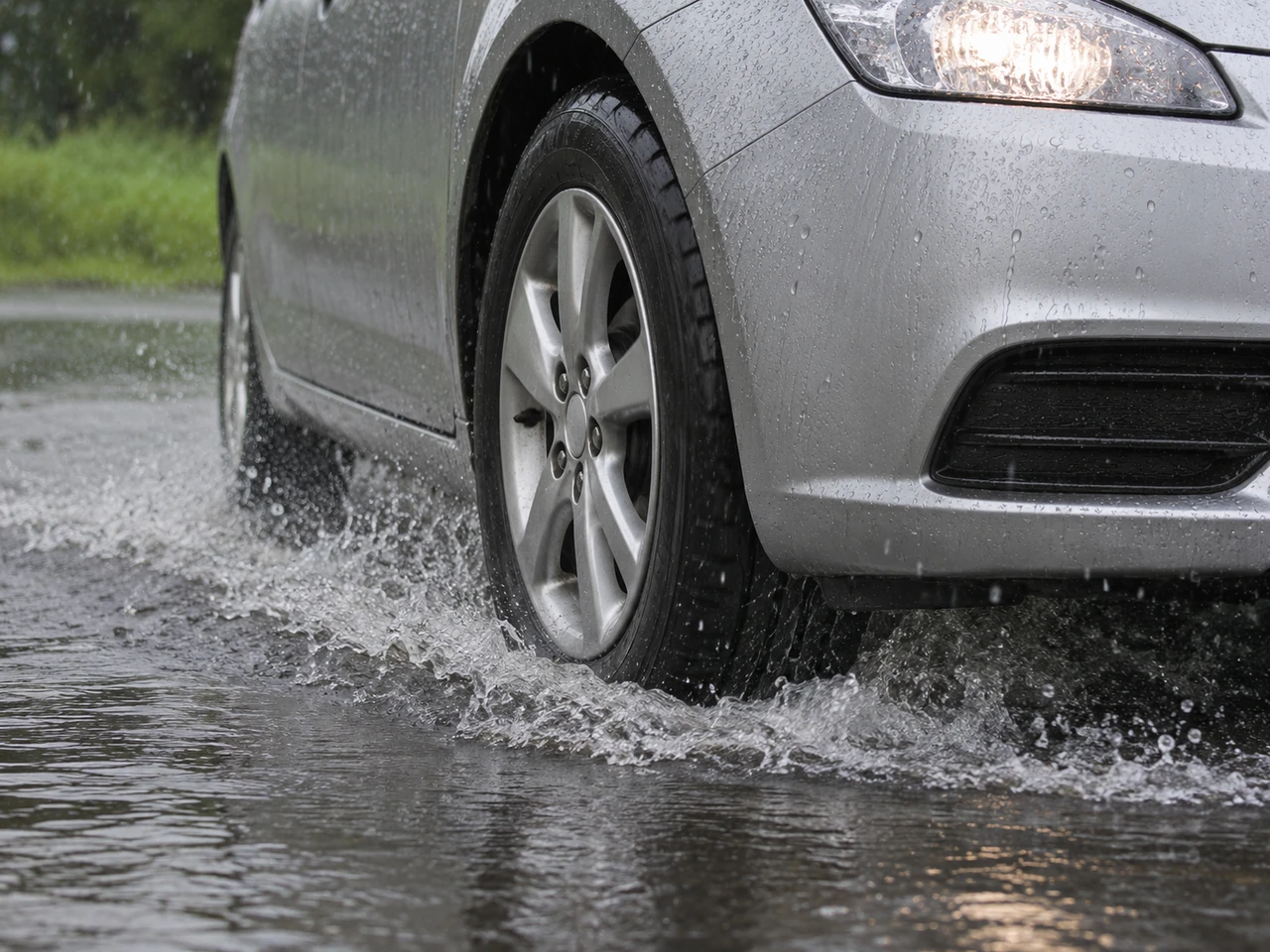
1022. Braking hard is the best way to regain grip when aquaplaning.
Avoid harsh braking. Ease off the accelerator gently and keep the steering steady while the tyres regain contact with the road.
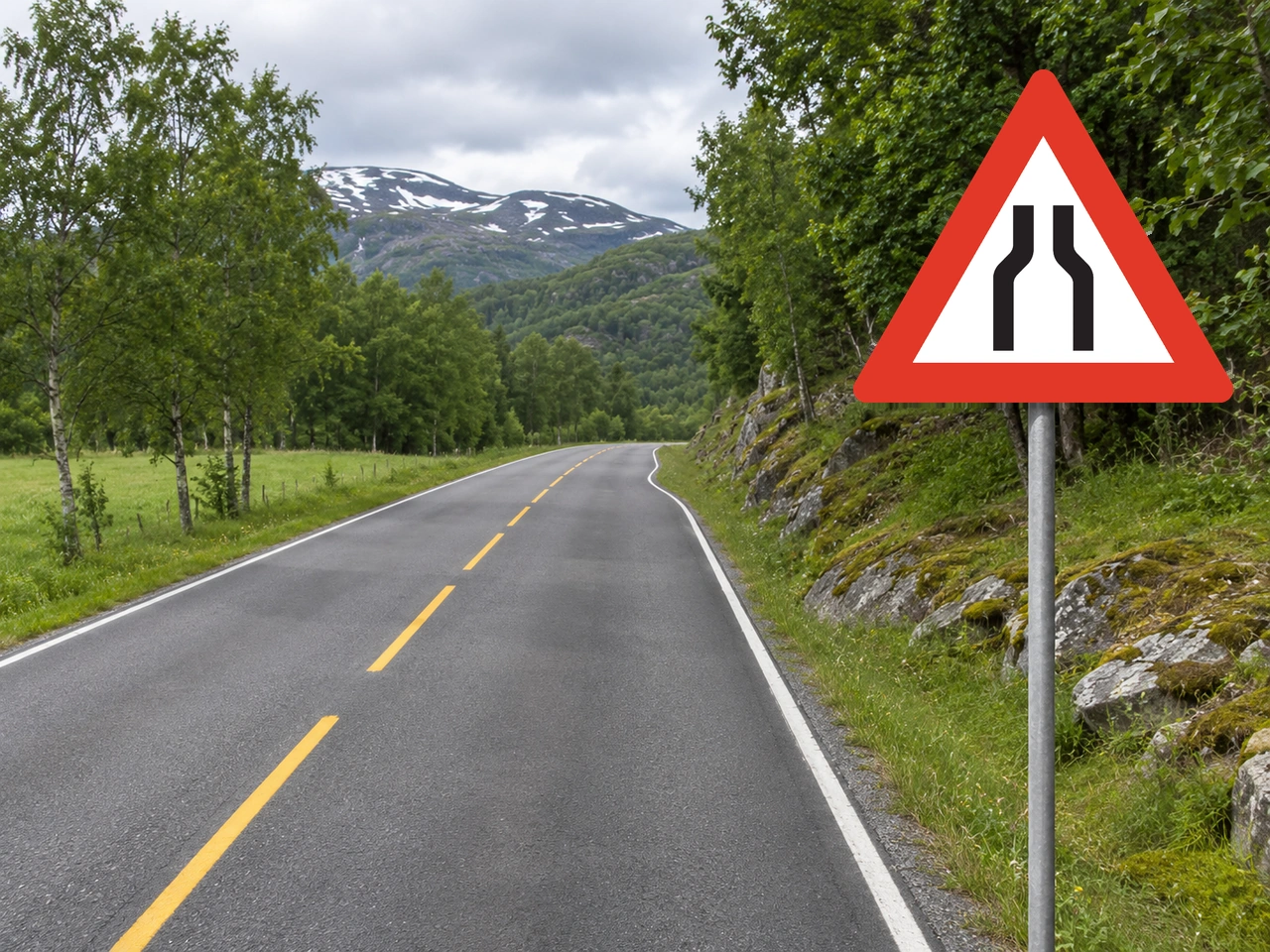
1023. The warning sign with both road edges bending inwards means the road narrows.
The sign warns that the road ahead becomes narrower on both sides. Approach with extra attention and a suitable speed. It does not by itself give you priority over oncoming traffic.
🔗 Sources
Norway • Skiltforskriften • Sign 106.1
Statens vegvesen • Official traffic-sign meanings
Statens vegvesen • Official sign artwork
Sign artwork: Statens vegvesen original EPS archive, Sign 106.1, file 106_1.eps. The former right-only narrowing face has been corrected to match the existing both-side note. Native both-side narrowing symbol, border and proportions retained; resized and composited onto the existing same-entry scene. Border red follows the authority's published colour chart: PMS 179, using the published web swatch RGB 226/56/40. No third-party open licence is asserted for the government artwork.
Image credit: AI-generated background with source sign artwork resized and placed on the sign face.
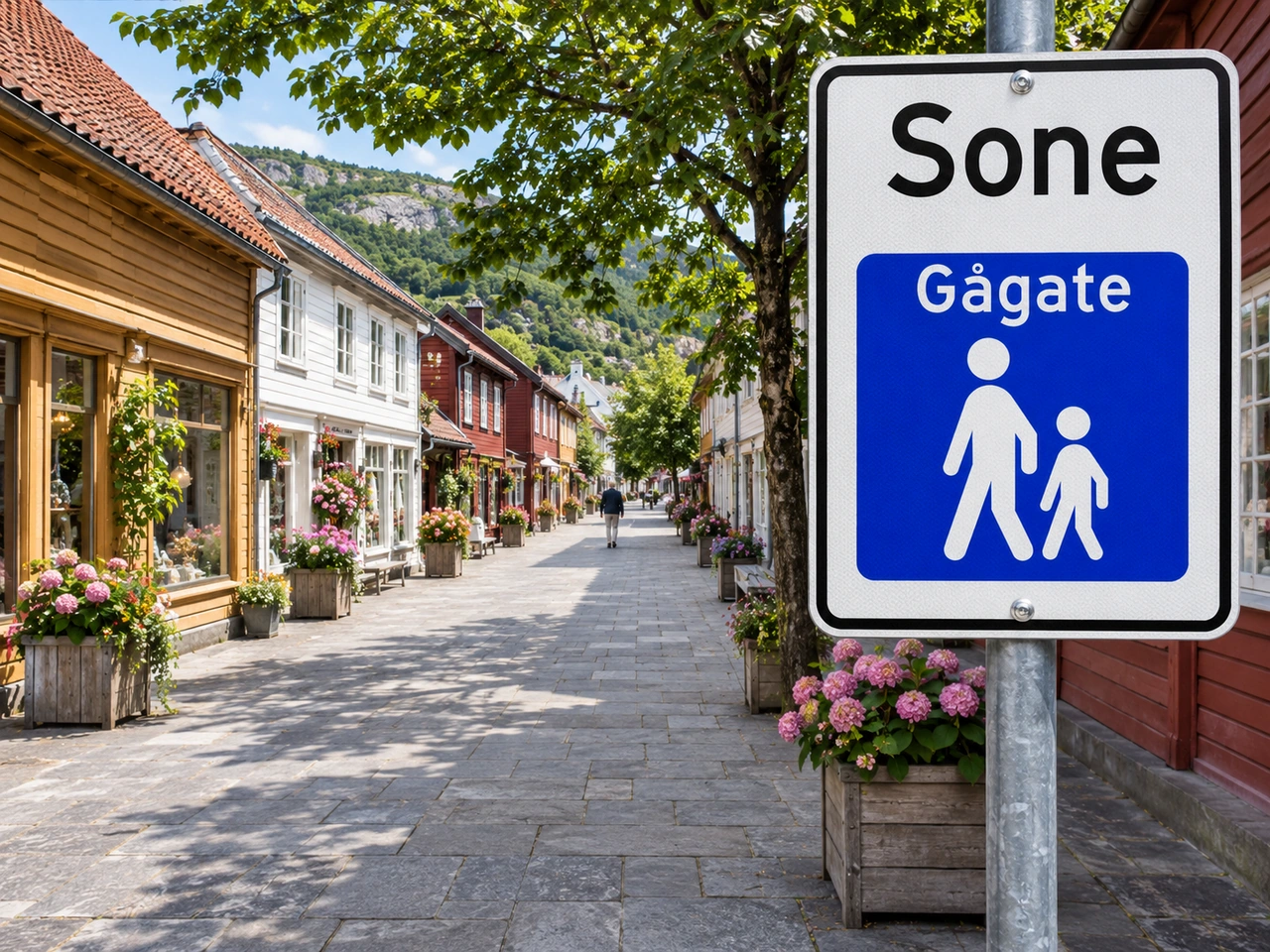
1024. Permission to drive into a pedestrian zone automatically allows you to park there.
Permission to enter a pedestrian zone does not itself authorise parking. Follow the zone’s parking rules and access conditions.
🔗 Sources
Norway • Skiltforskriften • Sign 548
Statens vegvesen • Official traffic-sign meanings
Statens vegvesen • Official sign artwork
Image credit: Generated scene; sign design referenced from Statens vegvesen.
Norway • Applicable traffic or parking rule
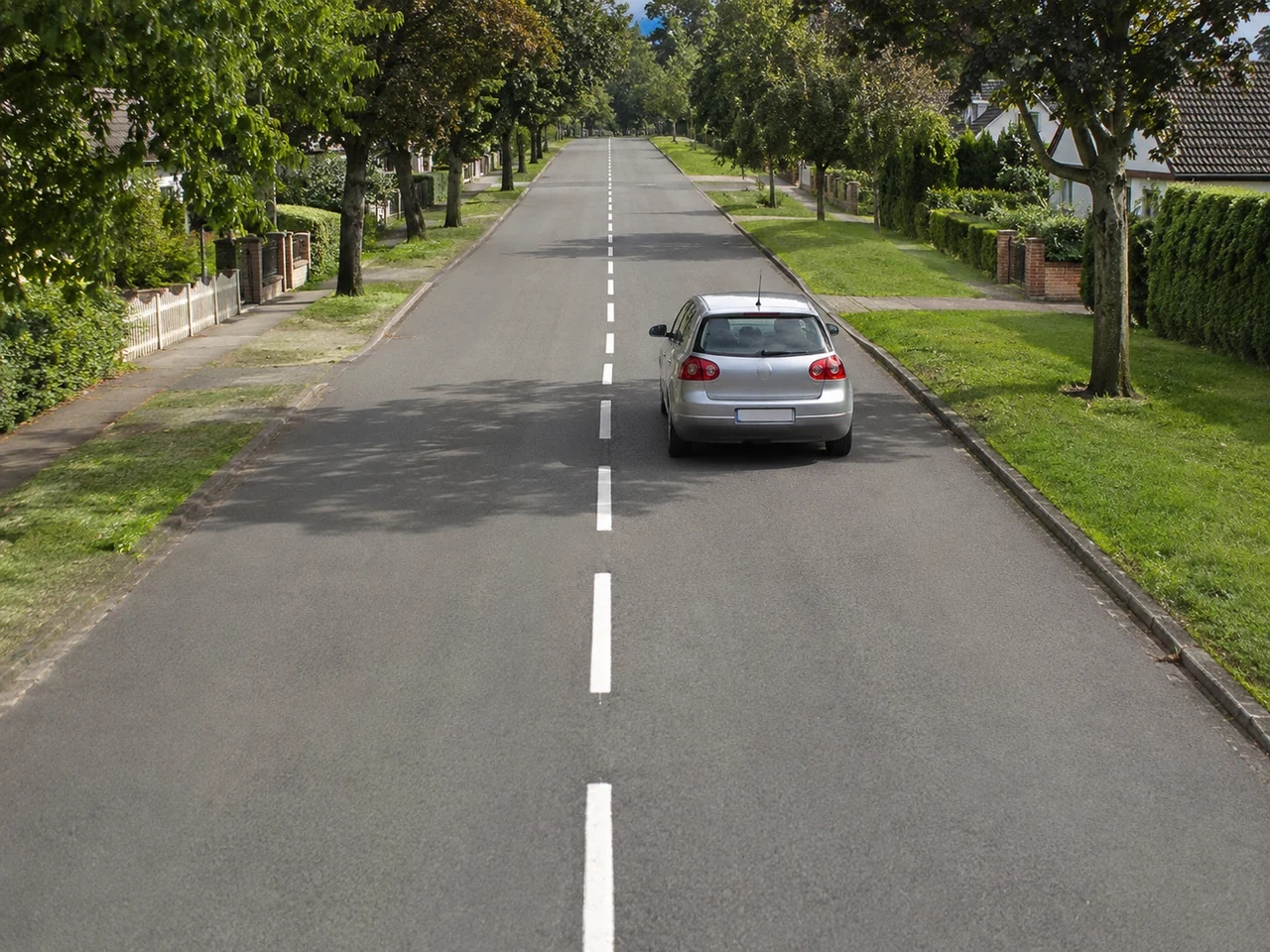
1025. How can smooth acceleration reduce energy use?
Smooth, progressive acceleration usually uses less fuel or energy than repeated heavy acceleration. Accelerate according to traffic conditions and avoid unnecessary bursts of speed.
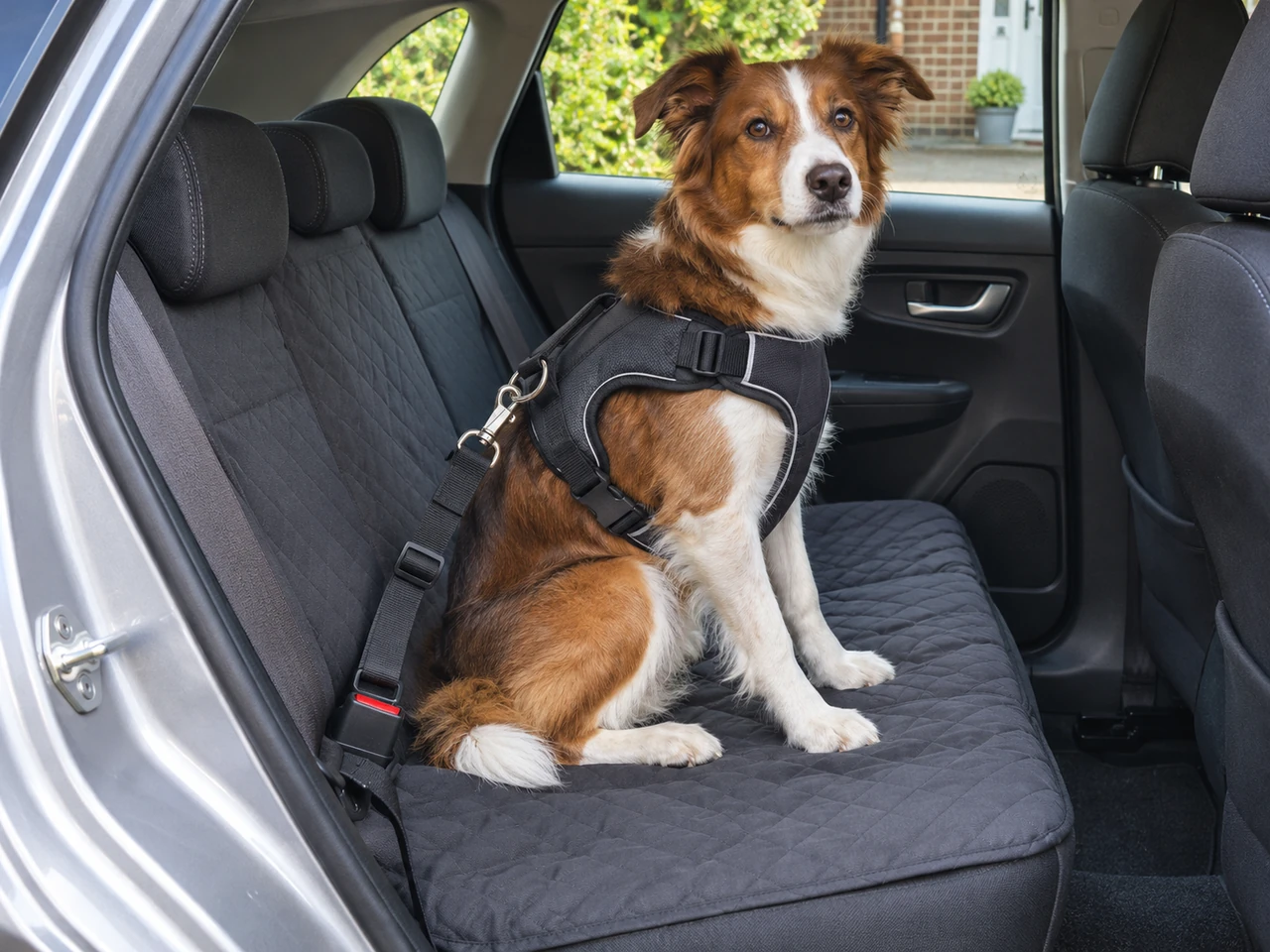
1026. Animals should be suitably restrained when travelling in a car.
A loose animal can distract the driver or be injured during sudden braking. Use a suitable vehicle harness, carrier or other restraint, fitted according to its instructions.
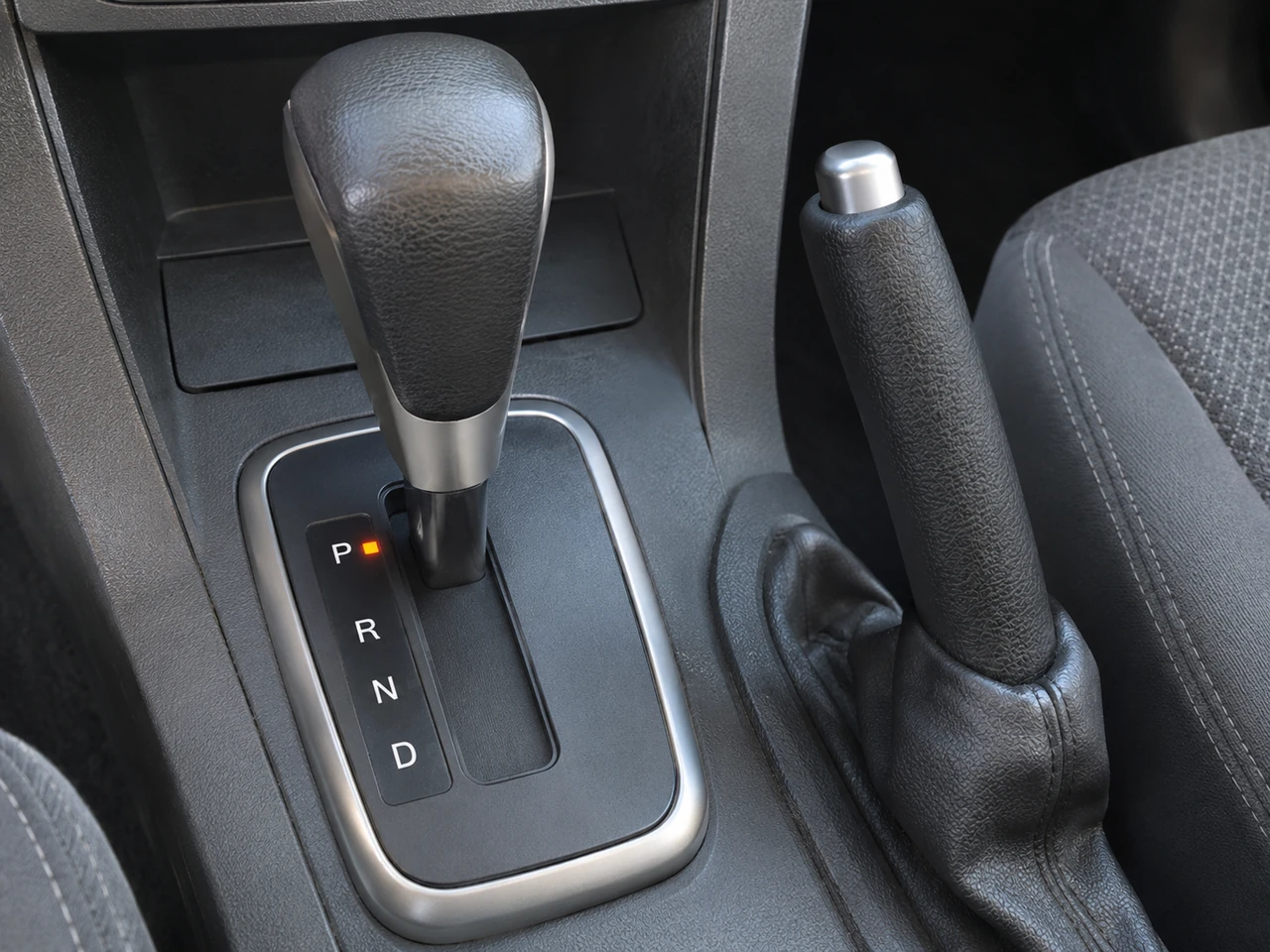
1027. Selecting Park in an automatic car always removes the need for the parking brake.
Use the parking brake as well as Park, following the vehicle handbook. Some electric parking brakes apply automatically, so check that yours is applied and follow the instructions for your car.
🔗 Sources
The Highway Code (Great Britain) • Safety guidance, Rules 239 and 252; follow your vehicle’s handbook
Image credit: AI-generated
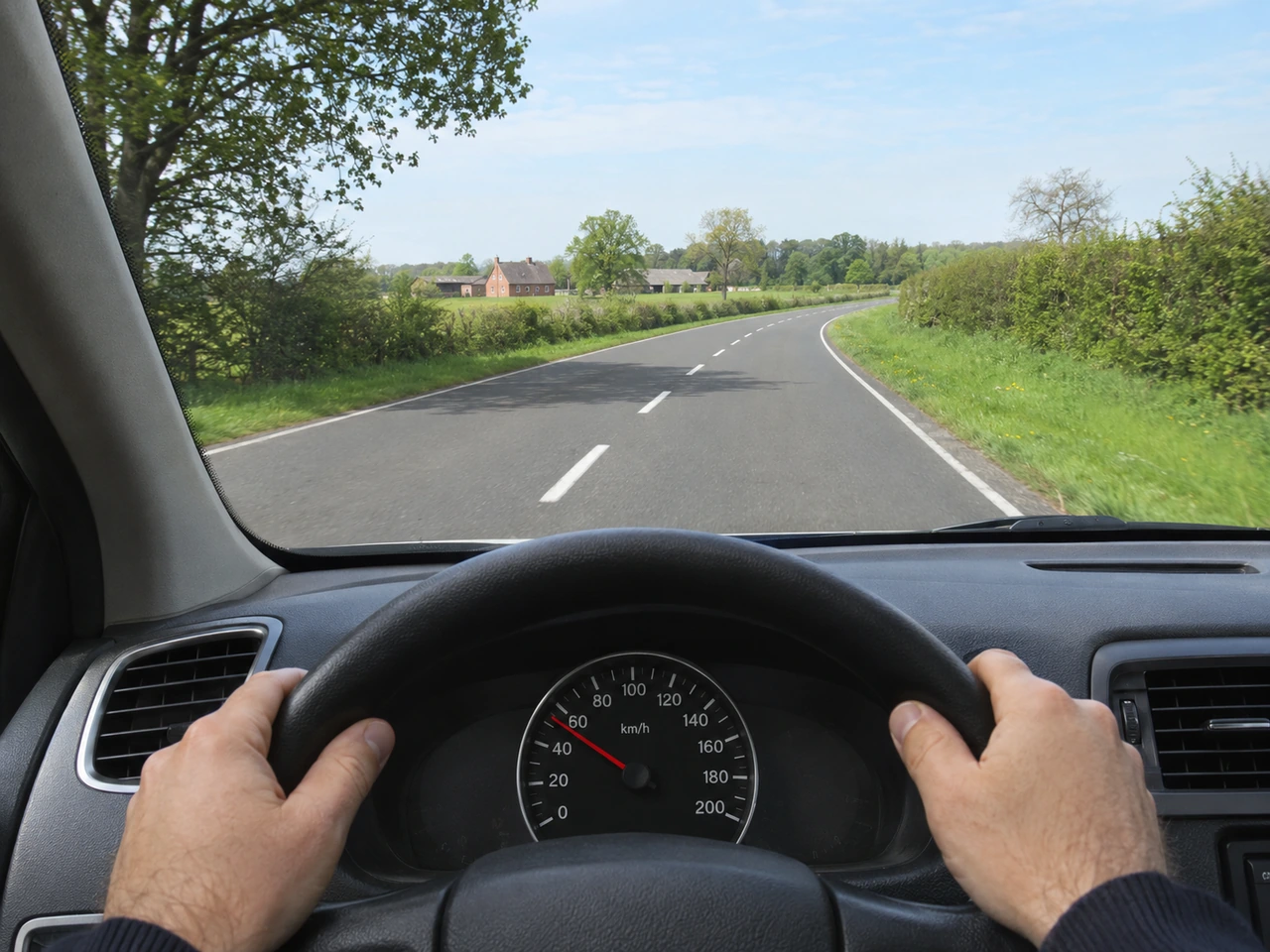
1028. Why should you check your speed after leaving a motorway?
After sustained high-speed driving, a lower speed can feel slower than it really is. Check the speedometer and adjust to the new road, its limits and its hazards.
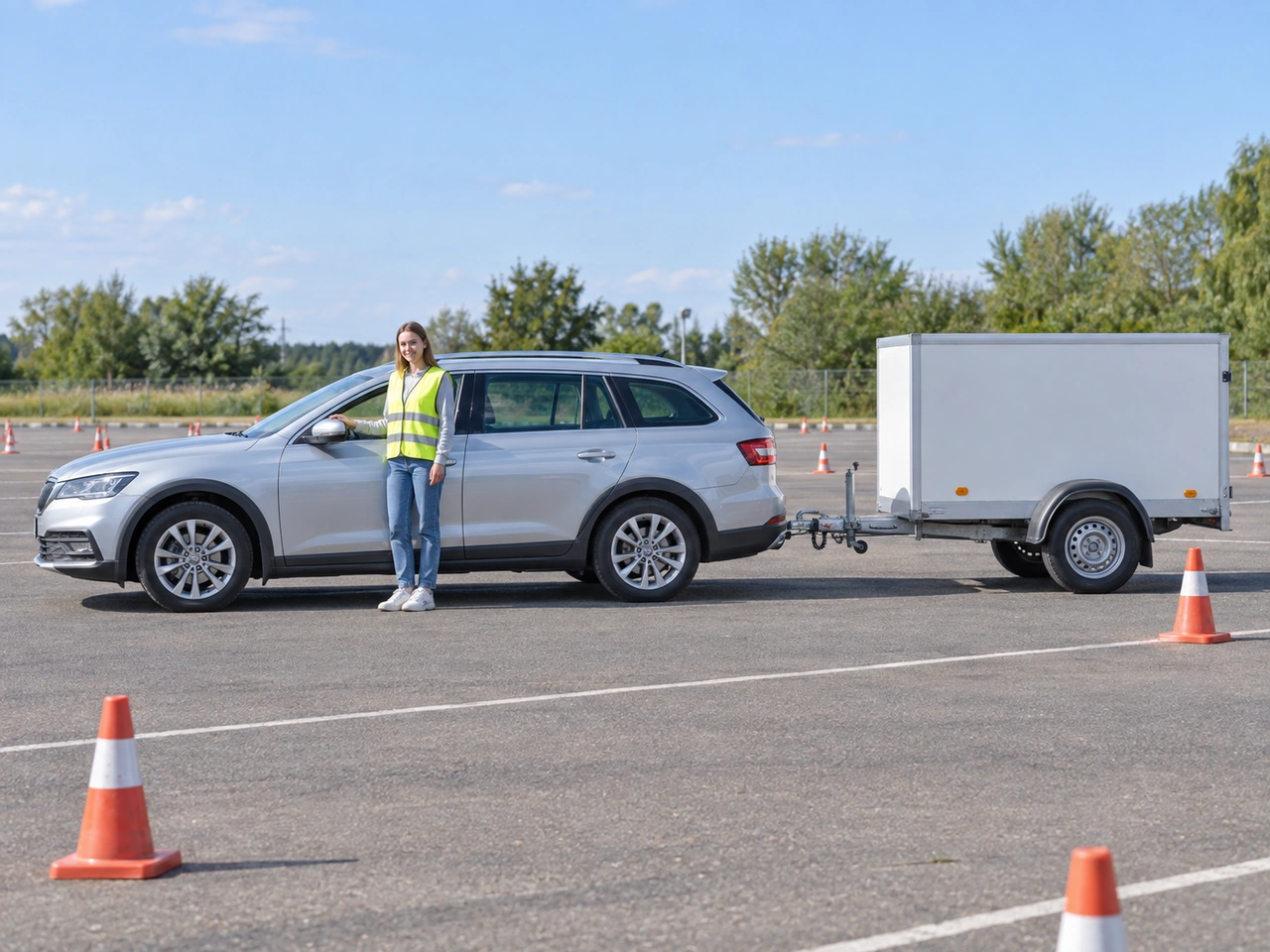
1029. What does Code 96 allow with a category B licence?
Code 96 allows a category B vehicle to tow a trailer over 750 kg when the combined maximum authorised mass exceeds 3,500 kg but does not exceed 4,250 kg. Code 96 is not a separate driving licence category.
Norway. Complete at least seven hours of mandatory training to obtain B96 without a new practical driving test.
🔗 Sources
Statens vegvesen · Passenger car with trailer – B 96
EUR-Lex · Directive 2006/126/EC on driving licences · Article 4(4)(b) and Annex I
Image credit: AI-generated
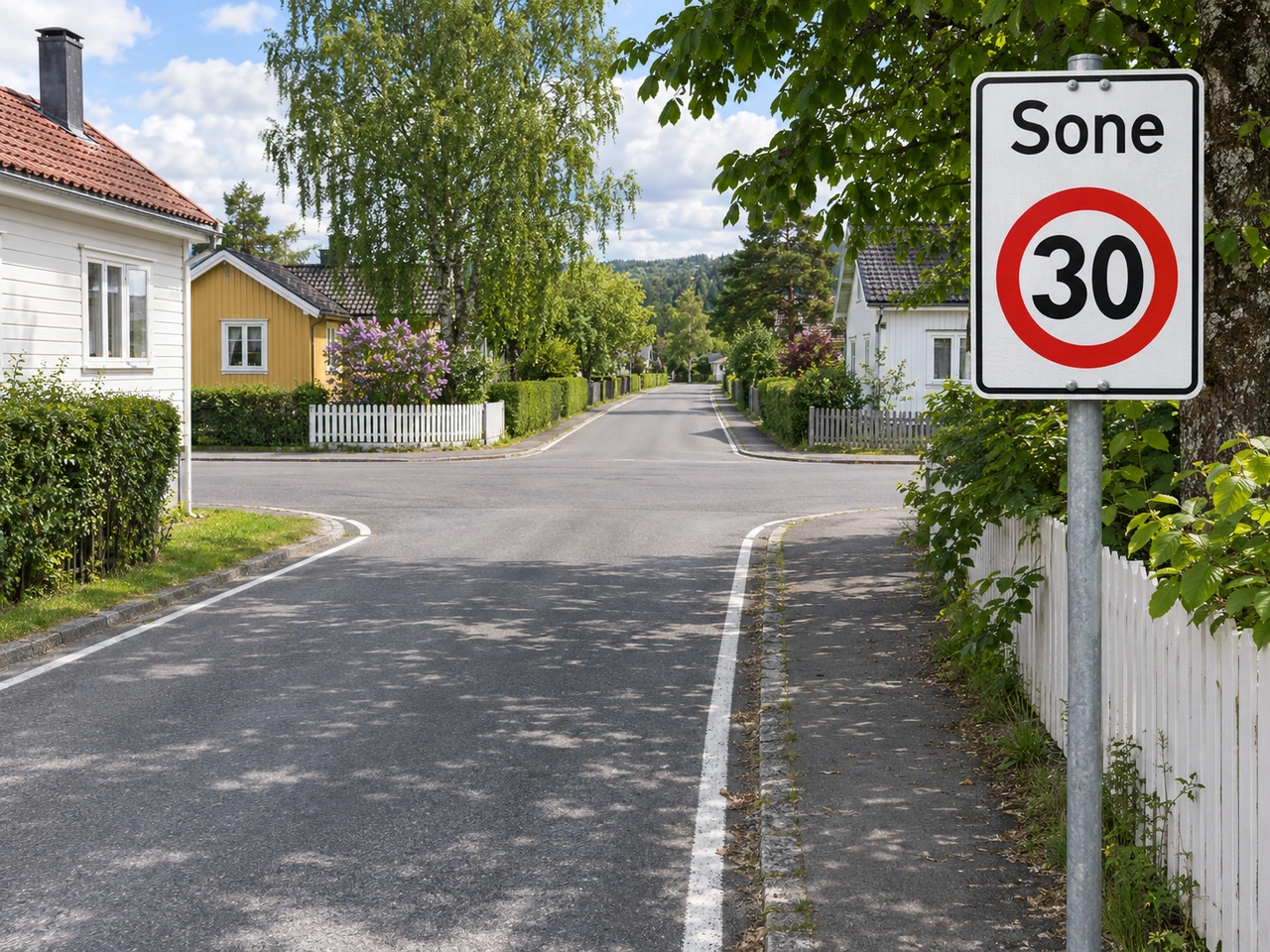
1030. A 30 km/h zone normally continues after a junction until the end-of-zone sign.
A junction does not end a signed 30 km/h zone. The zone is marked by its entry and exit signs. Continue to respect the zone limit after a junction, while following any other applicable signs or directions.
🔗 Sources
Norway • Skiltforskriften • Sign 366
Statens vegvesen • Official traffic-sign meanings
Statens vegvesen • Official sign artwork
Image credit: Generated scene; sign design referenced from Statens vegvesen.
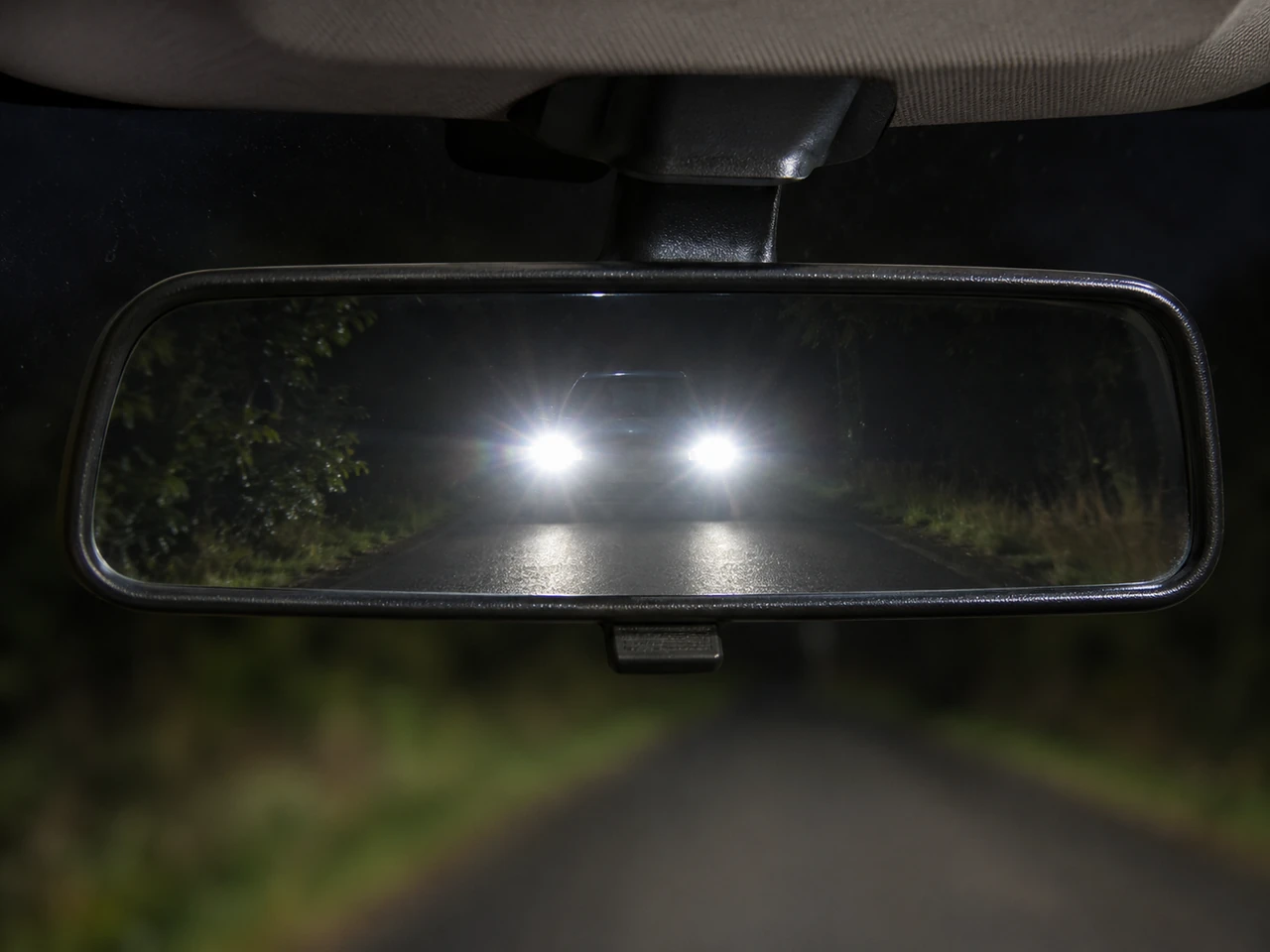
1031. Main beam can dazzle drivers ahead as well as oncoming drivers.
Bright headlights can dazzle oncoming drivers and reflect in the mirrors of drivers ahead. Dip your headlights whenever main beam could dazzle another road user.
🔗 Sources
The Highway Code (Great Britain) • Safety guidance, Rules 114–115
Image credit: AI-generated
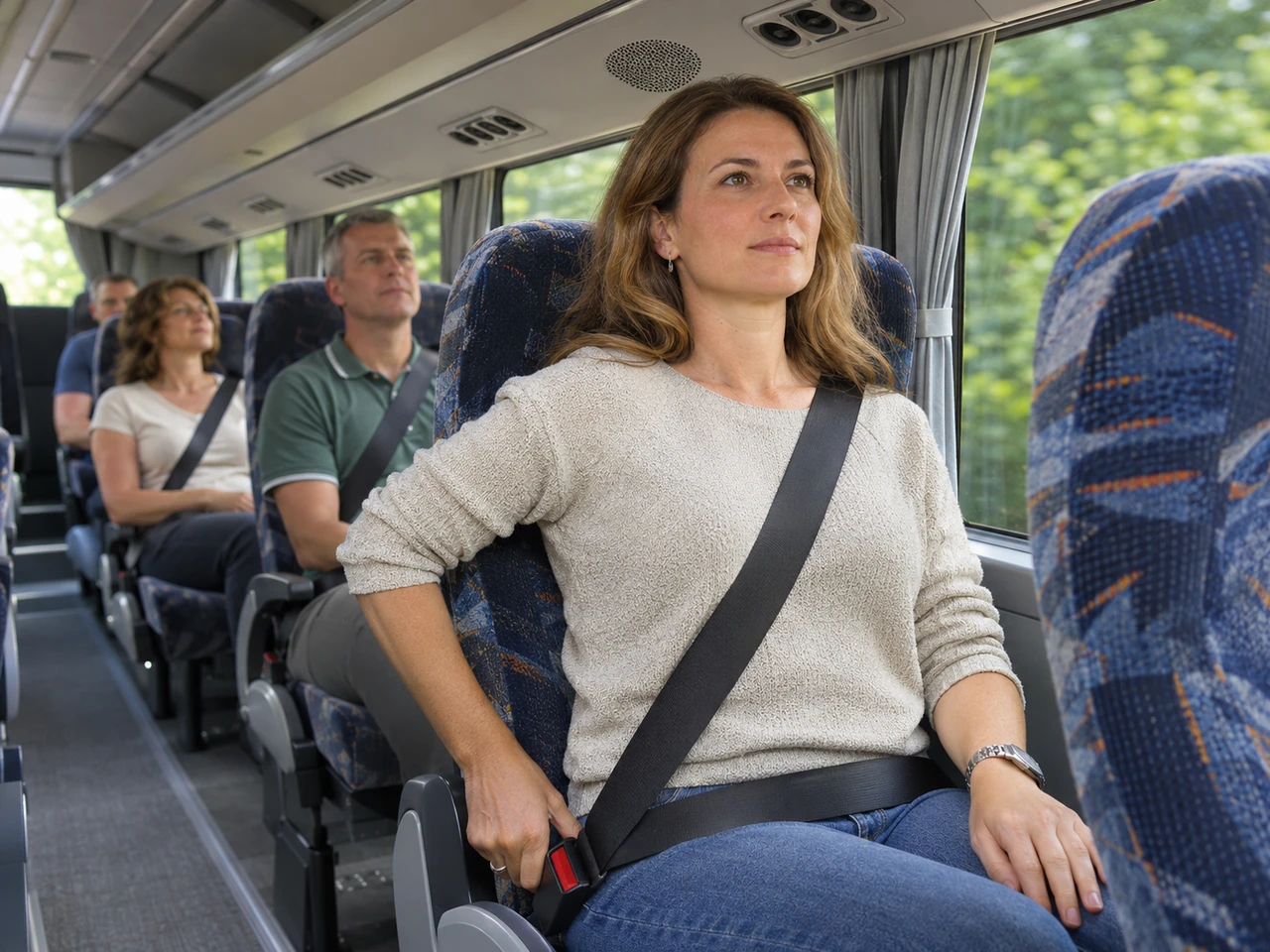
1032. A coach driver may tell passengers about the requirement to wear seat belts.
For passenger vehicles with more than eight passenger seats, passengers must be informed about seat-belt use. An announcement by the driver is one of the permitted ways to do this; a notice is not the only option.
🔗 Sources
Lovdata • Regulation on seat-belt use, section 1, bus passenger information
Image credit: AI-generated
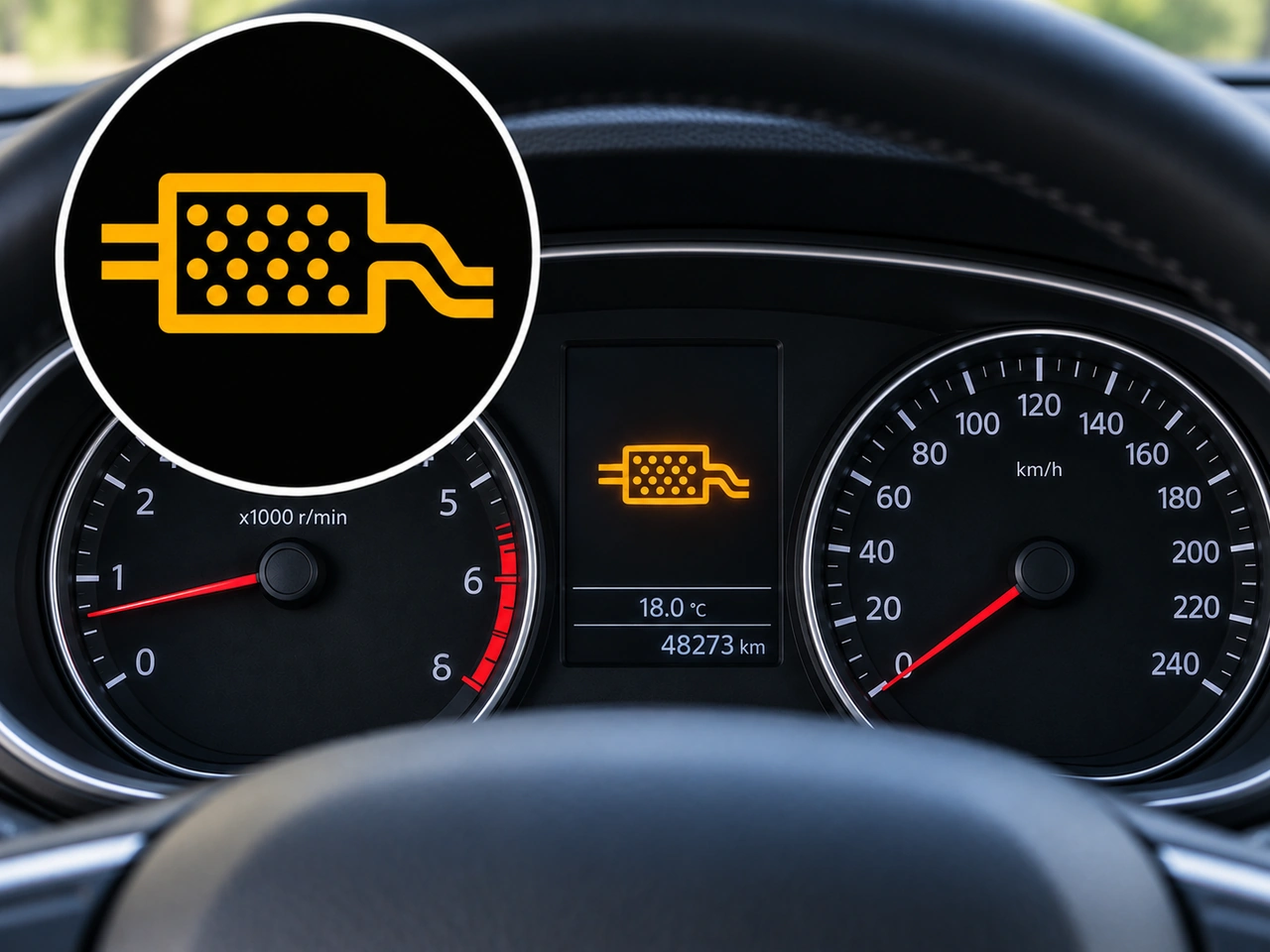
1033. What does this dashboard symbol indicate?
This symbol indicates a problem with the diesel particulate filter (DPF), often because soot has accumulated in the filter. The vehicle may require regeneration or professional inspection, depending on the vehicle and warning status.
The warning can indicate soot buildup in the diesel particulate filter. Follow the model-specific handbook instructions for this warning.
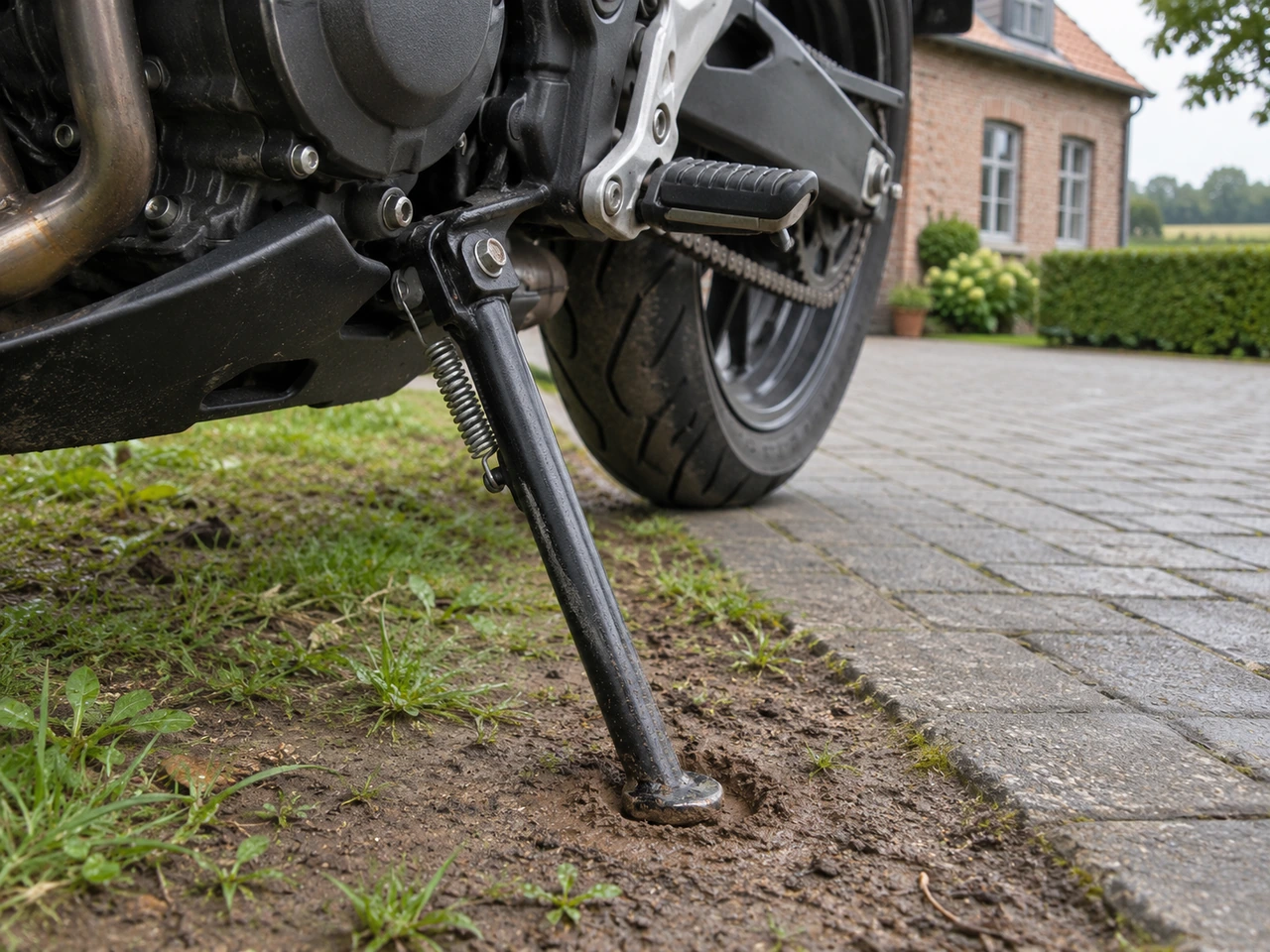
1034. Why should you take care when parking a motorcycle on soft ground?
On soft or unstable ground, the side or centre stand can sink or move, causing the motorcycle to fall. Park on a firm, stable surface or use a suitable support under the stand when necessary.
🔗 Sources
Honda.com — Parking advice
HondaMotopub.com — Owner's manual, Parking
Image credit: AI-generated
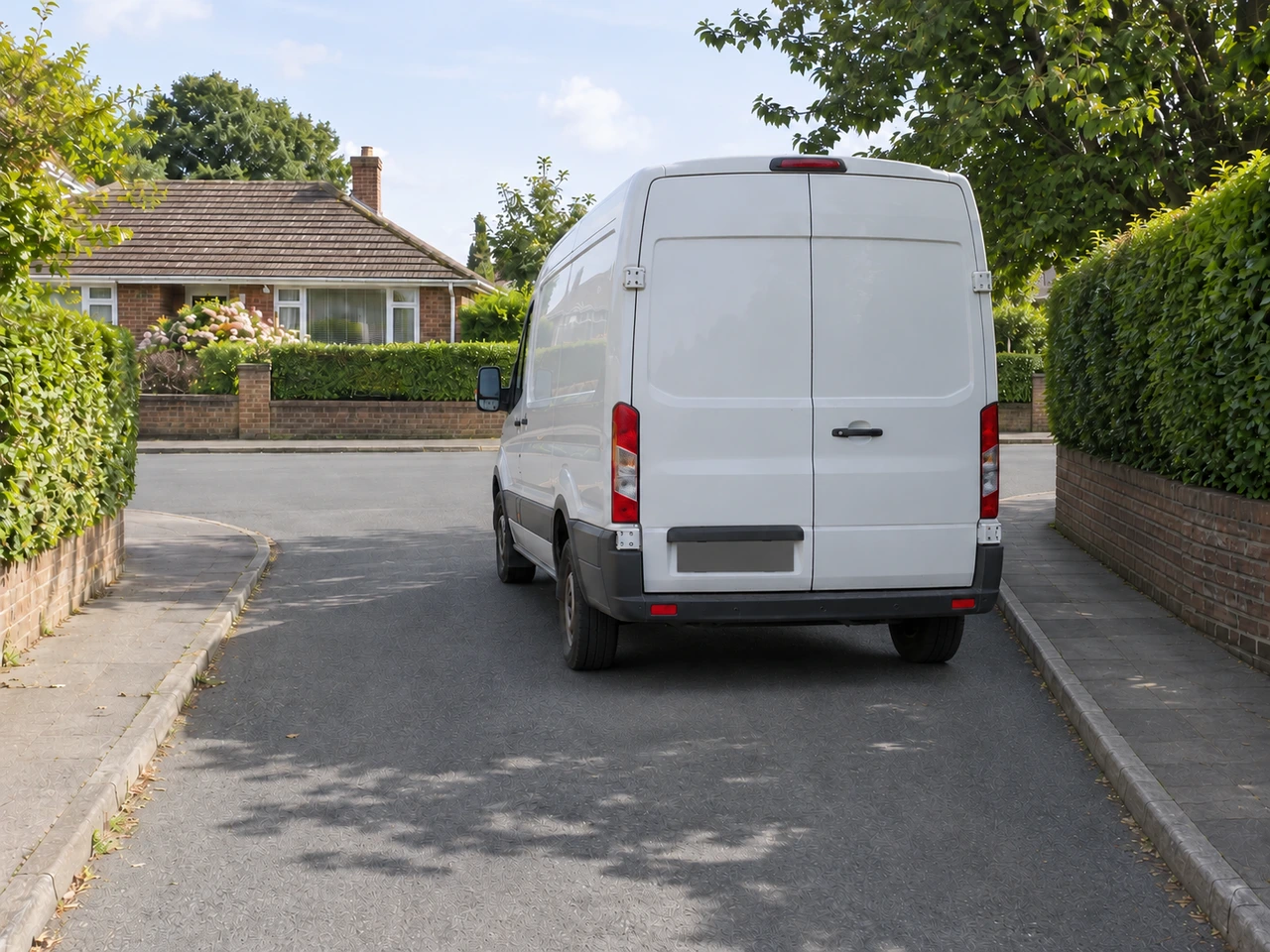
1035. How can parking too close to a junction affect visibility?
Parking too close to a junction can block visibility. Drivers, cyclists, and pedestrians may have difficulty seeing each other in time.
🔗 Sources
UK Highway Code — General parking safety guidance: danger and obstruction, Rules 242–243
Image credit: AI-generated
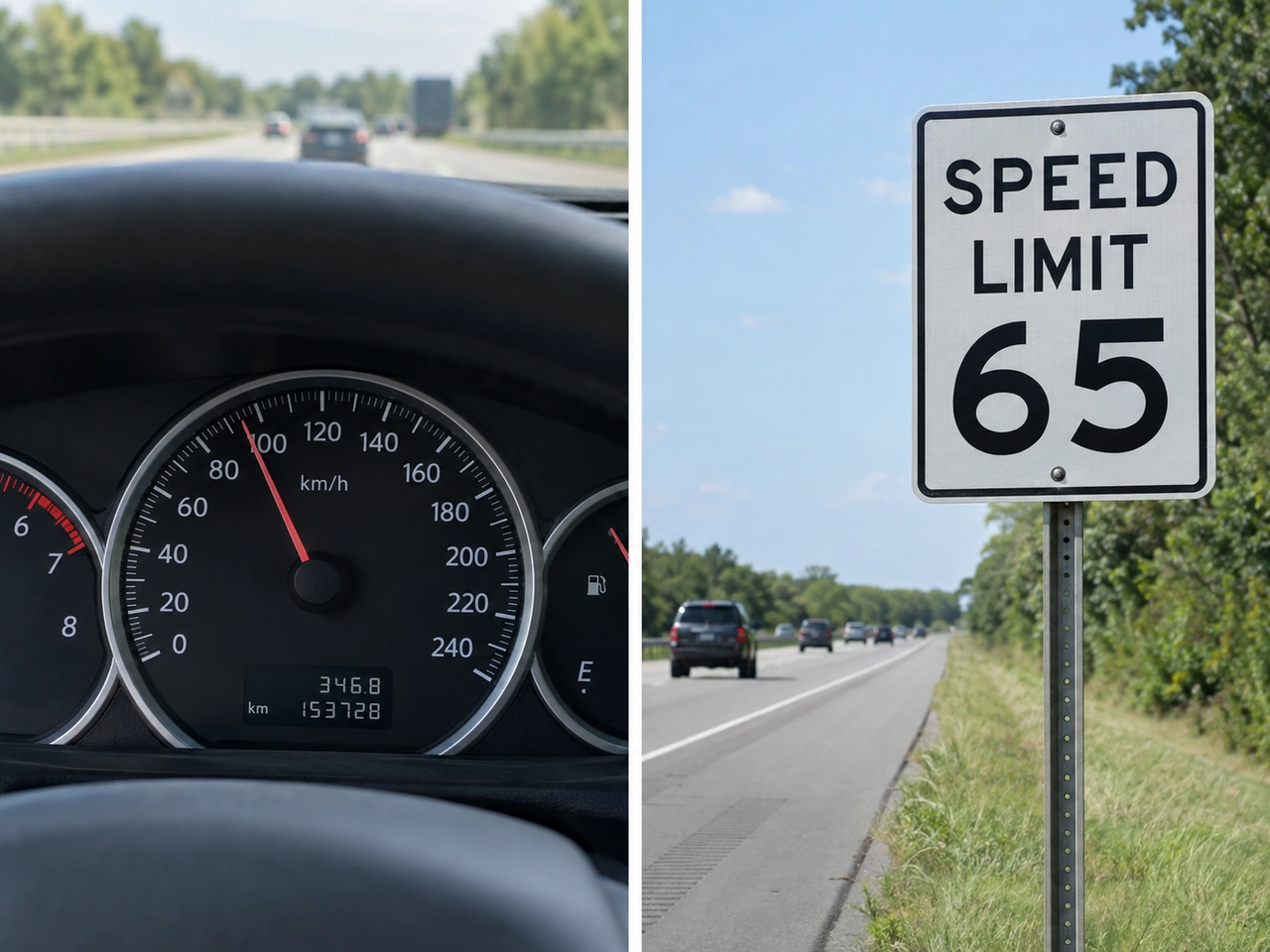
1036. Which speed unit is used?
Road speeds in Norway are shown in kilometres per hour (km/h).
🔗 Sources
Country example: Republic of Ireland — Tourism Ireland; kilometres and km/h on road signs
Image credit: AI-generated
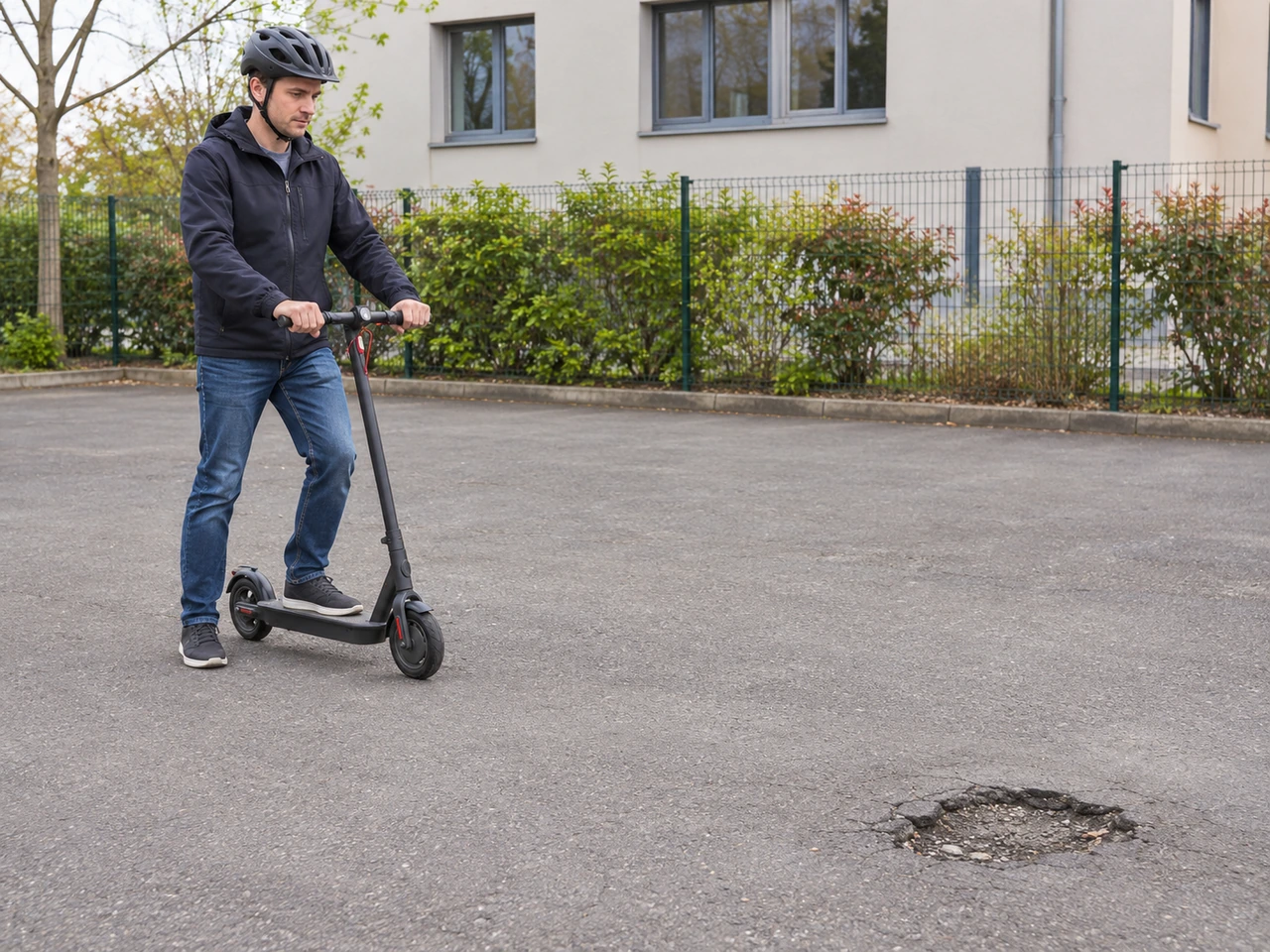
1037. Why should an electric-scooter rider take extra care near potholes?
Small scooter wheels can be more easily deflected or stopped by uneven surfaces. Look ahead, reduce speed in good time and avoid sudden swerves into other road users.
🔗 Sources
OECD / International Transport Forum
Reference: Vehicle risk factors: wheel size
Image credit: AI-generated
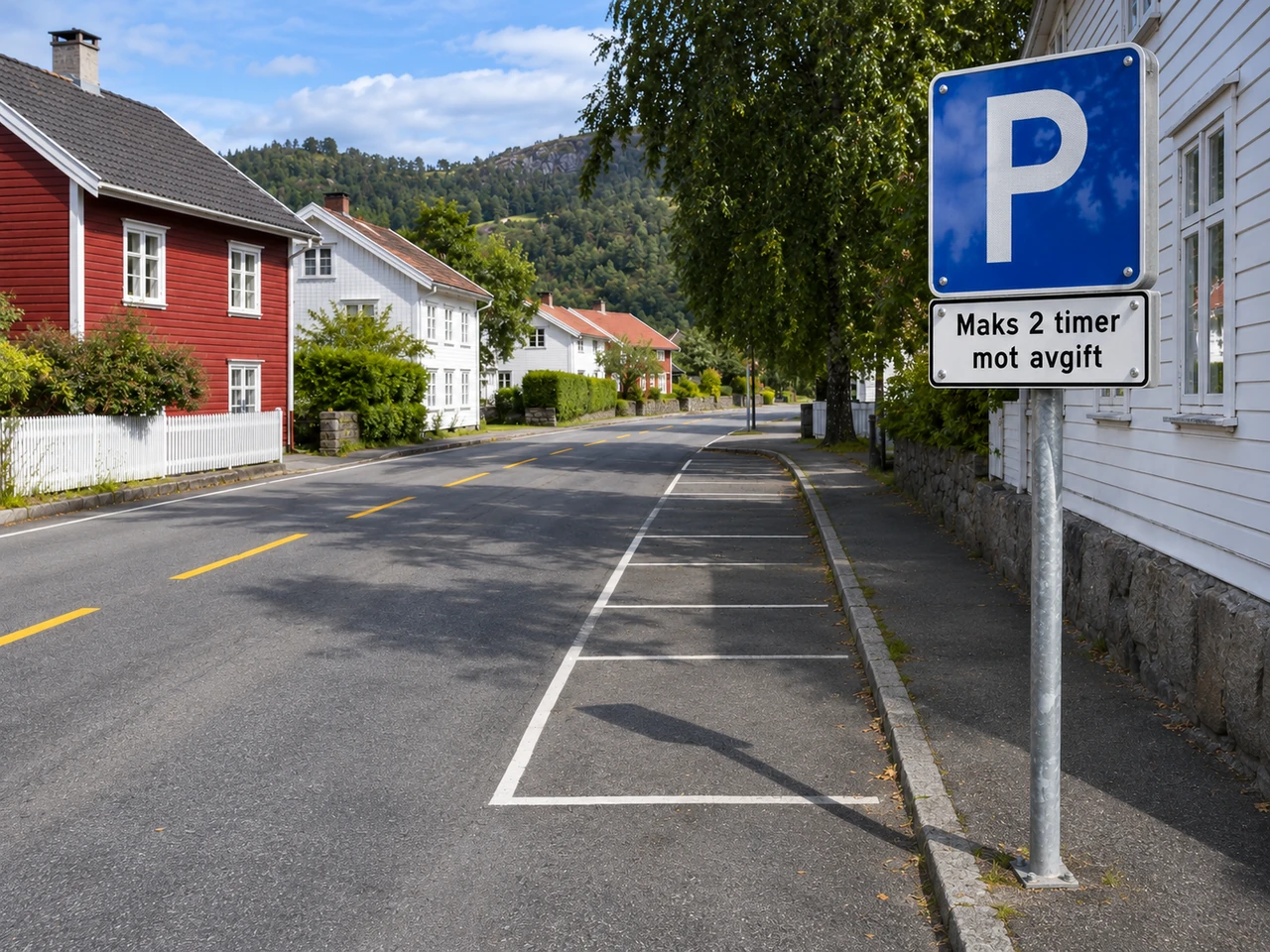
1038. A blue parking sign can have extra conditions on a supplementary plate.
A supplementary plate can limit parking by time or user group, or require a parking ticket or disc. Read the complete sign and follow the conditions that apply to your vehicle.
🔗 Sources
Norway • Skiltforskriften • Sign 552; 808
Statens vegvesen • Official traffic-sign meanings
Statens vegvesen • Official sign artwork
Official Norwegian sign artwork: Statens vegvesen, sign 552 + supplementary text, original EPS artwork 552_0.eps from the national sign artwork archive. Supplementary plate: Trondheim municipality published Maks 2 timer / mot avgift artwork, from its parking guidance; original lettering, border and proportions retained. Native lettering, pictogram, orientation, borders and proportions retained. Colours use the authority's published PMS web swatches: blue PMS 293 and red PMS 179 where present. No third-party open licence is asserted for the government artwork.
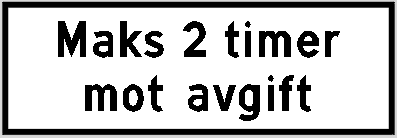
Image credit: AI-generated background with source sign artwork resized and placed on the sign face.
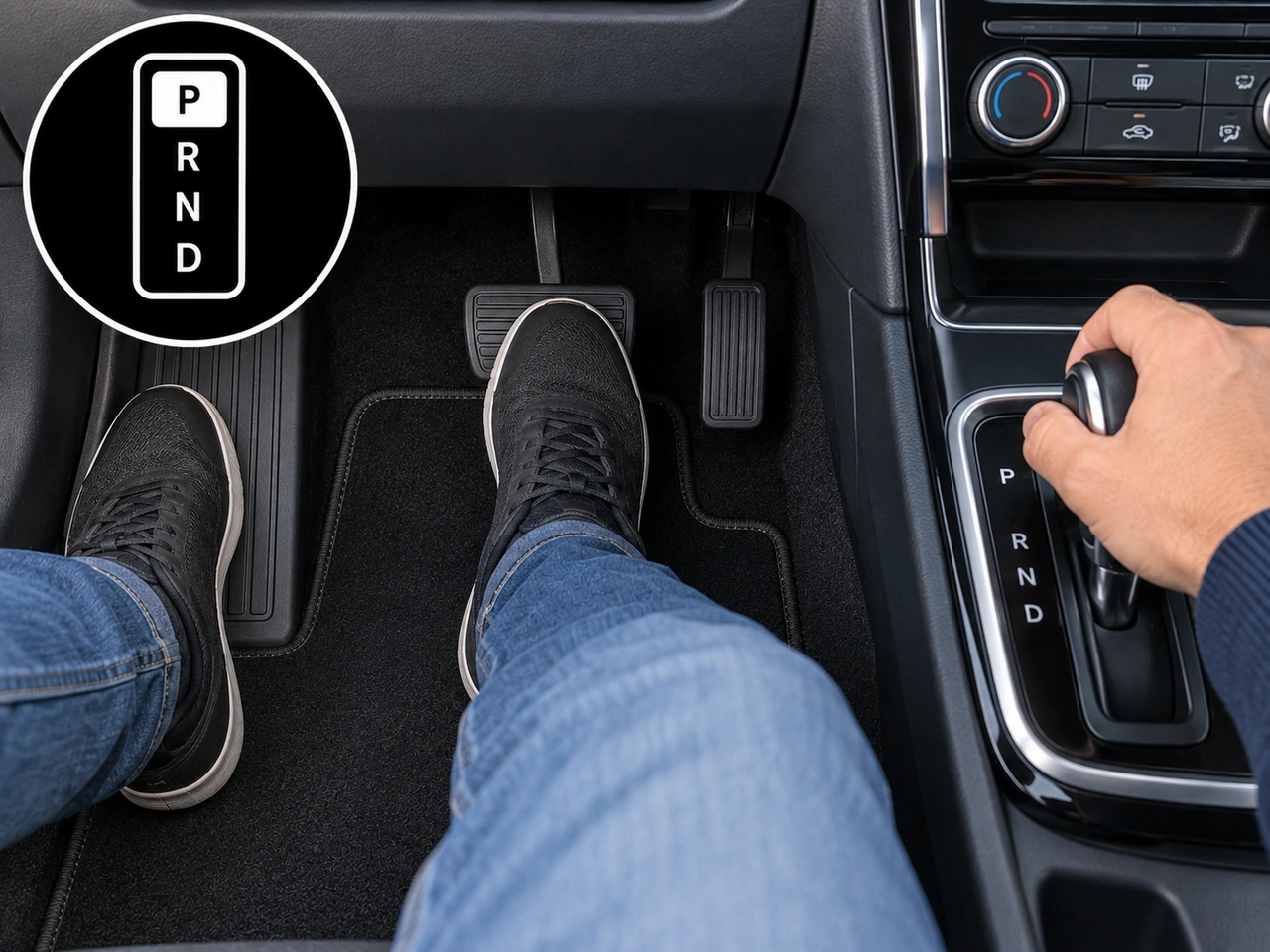
1039. When should you select P (Park) in an automatic vehicle?
Select P (Park) only after the vehicle has come to a complete stop. Selecting Park while the vehicle is moving can damage the transmission.
Use the foot brake to bring the vehicle to a complete stop before selecting P (Park).
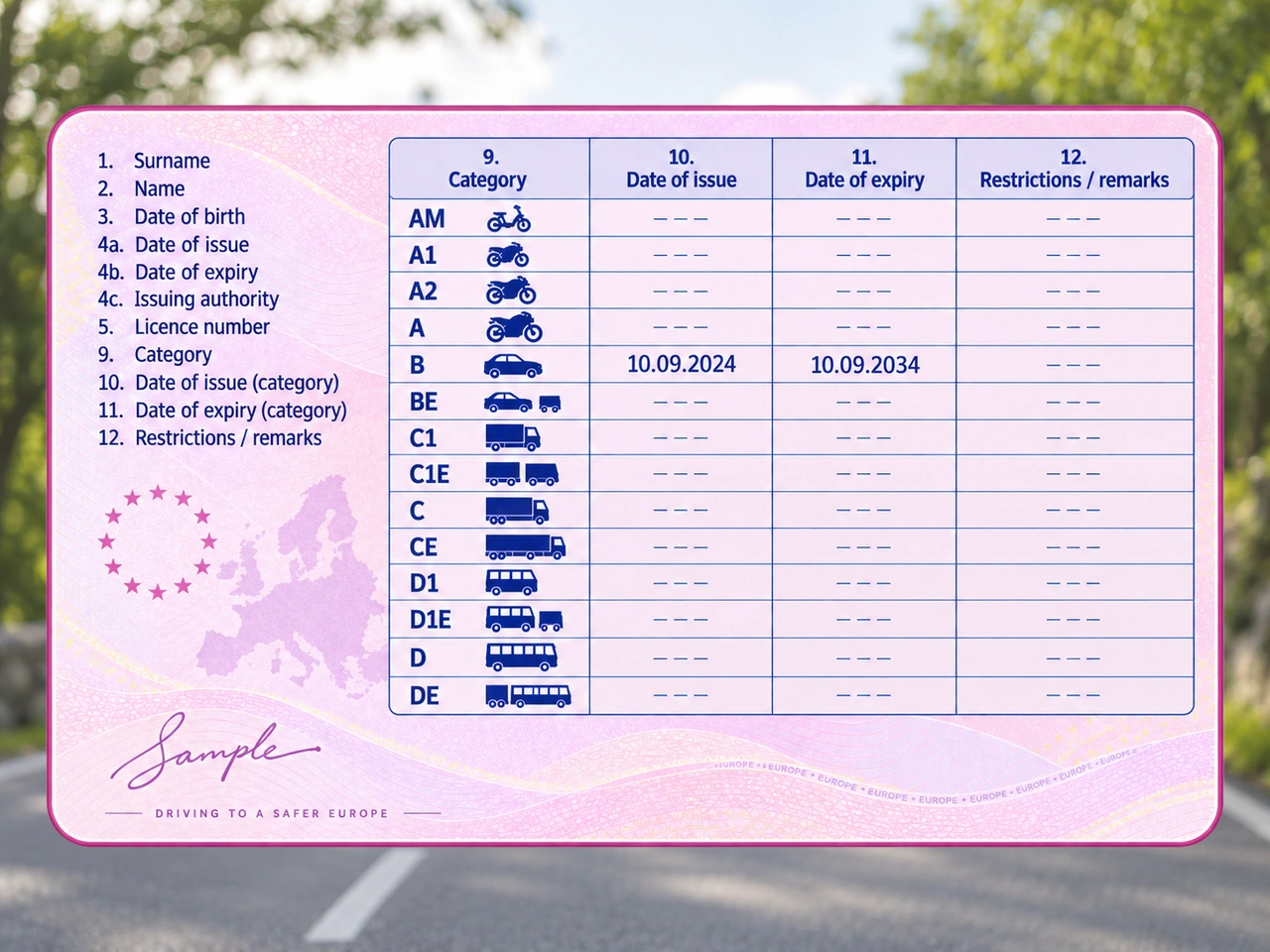
1040. Which vehicles are normally covered by driving licence B?
Category B normally covers motor vehicles with a maximum authorised mass of no more than 3,500 kg and designed to carry no more than eight passengers in addition to the driver. Trailer rules depend on the trailer and combined authorised mass.
Norway. Category B can cover a light van as well as a car. Check its maximum authorised mass and its approved passenger capacity.
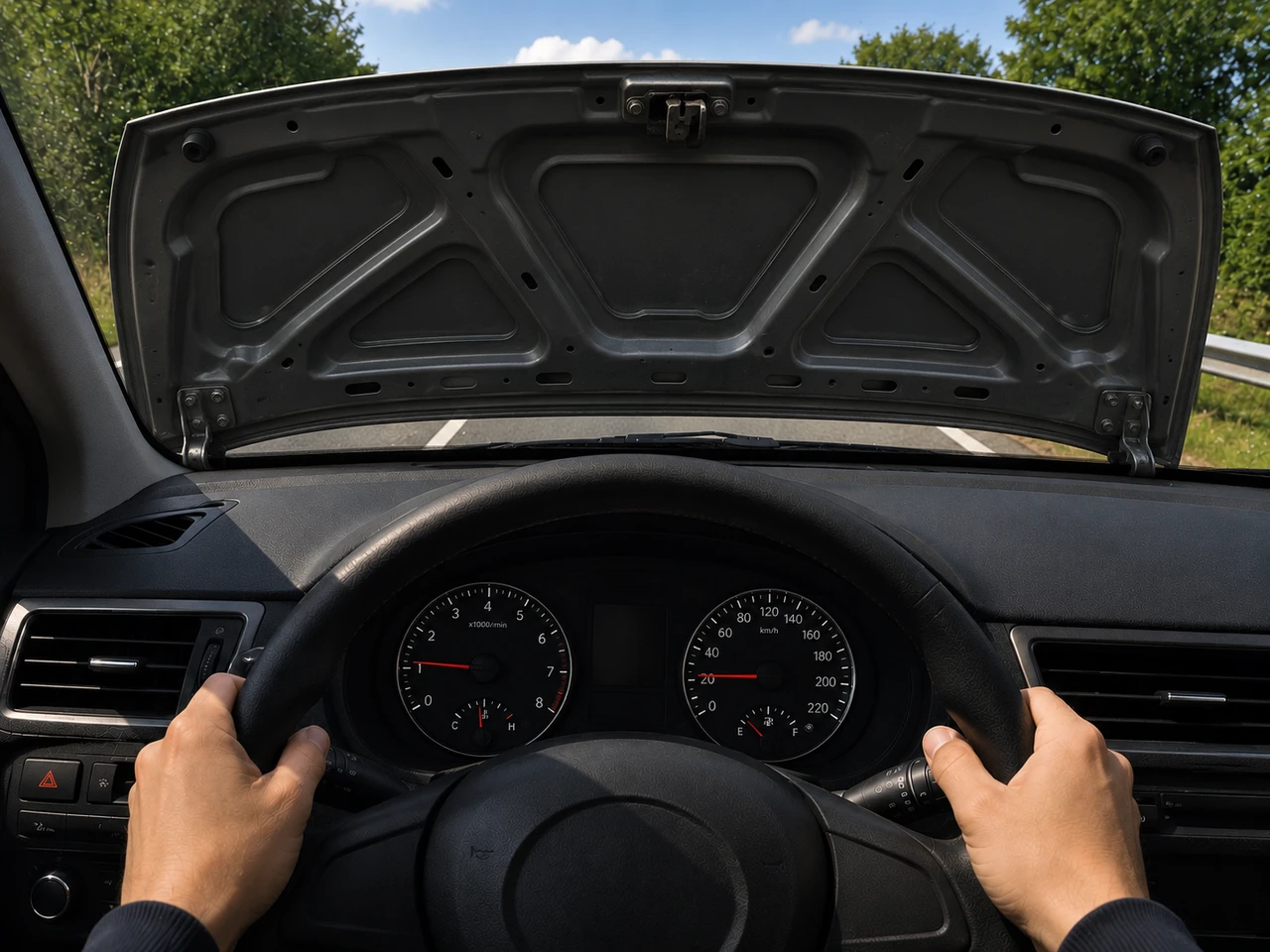
1041. What should you do if the bonnet suddenly opens while you are driving?
A raised bonnet can block most of your forward view. Keep control, avoid abrupt steering or braking, and slow down smoothly. Use whatever view remains through a gap or at the edge of the bonnet to maintain direction only while reaching a safe stopping place. Do not continue your journey by trying to look around it. Once stopped, arrange assistance and have the bonnet and its retaining mechanism checked before driving again.
An open bonnet obstructs forward vision. Keep control and reach relative safety; restore clear vision before continuing.
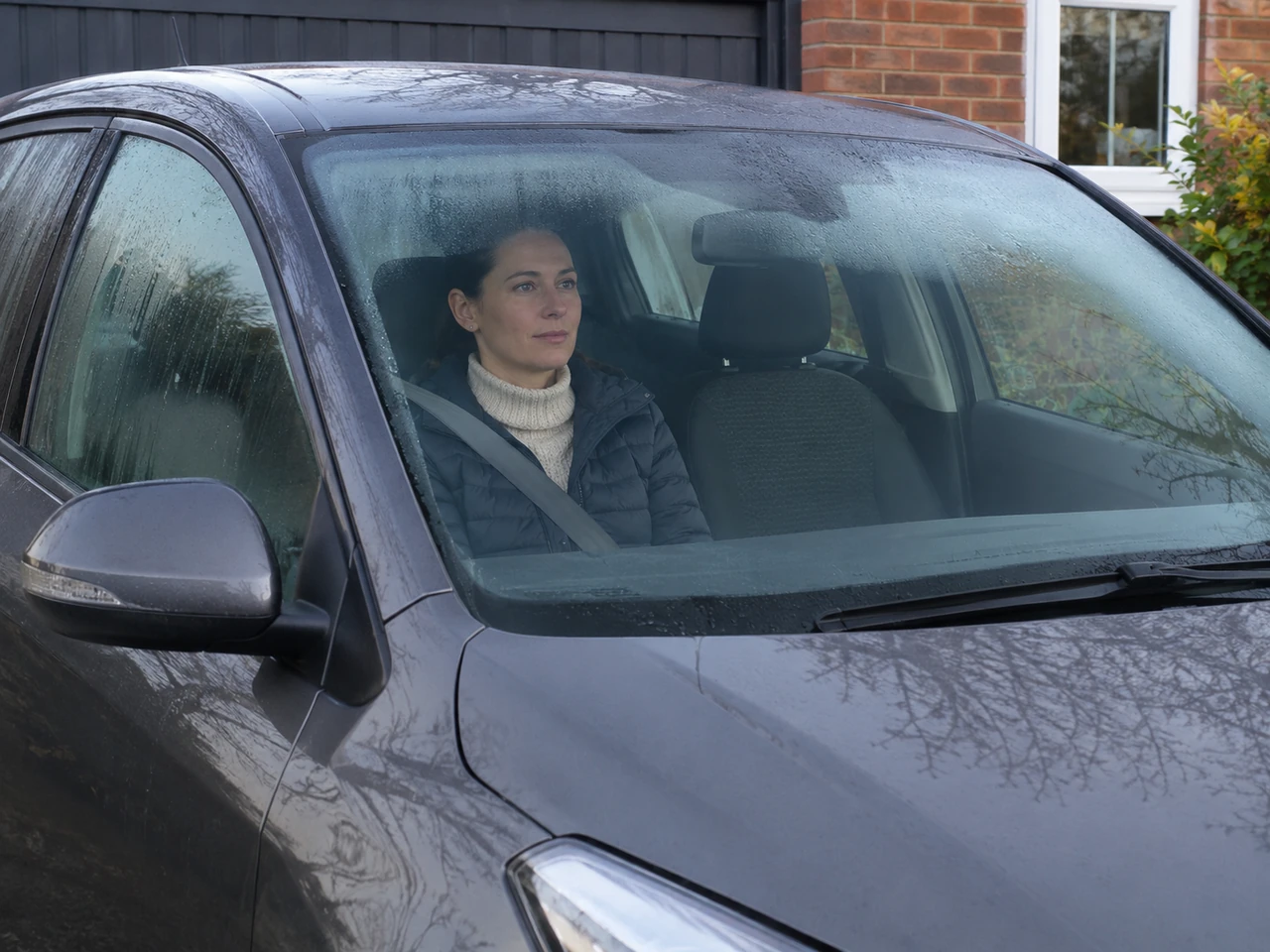
1042. You should demist your windows before setting off.
Misted glass restricts your view. Use the ventilation and demister controls to clear the windows before moving, and keep them clear throughout the journey.
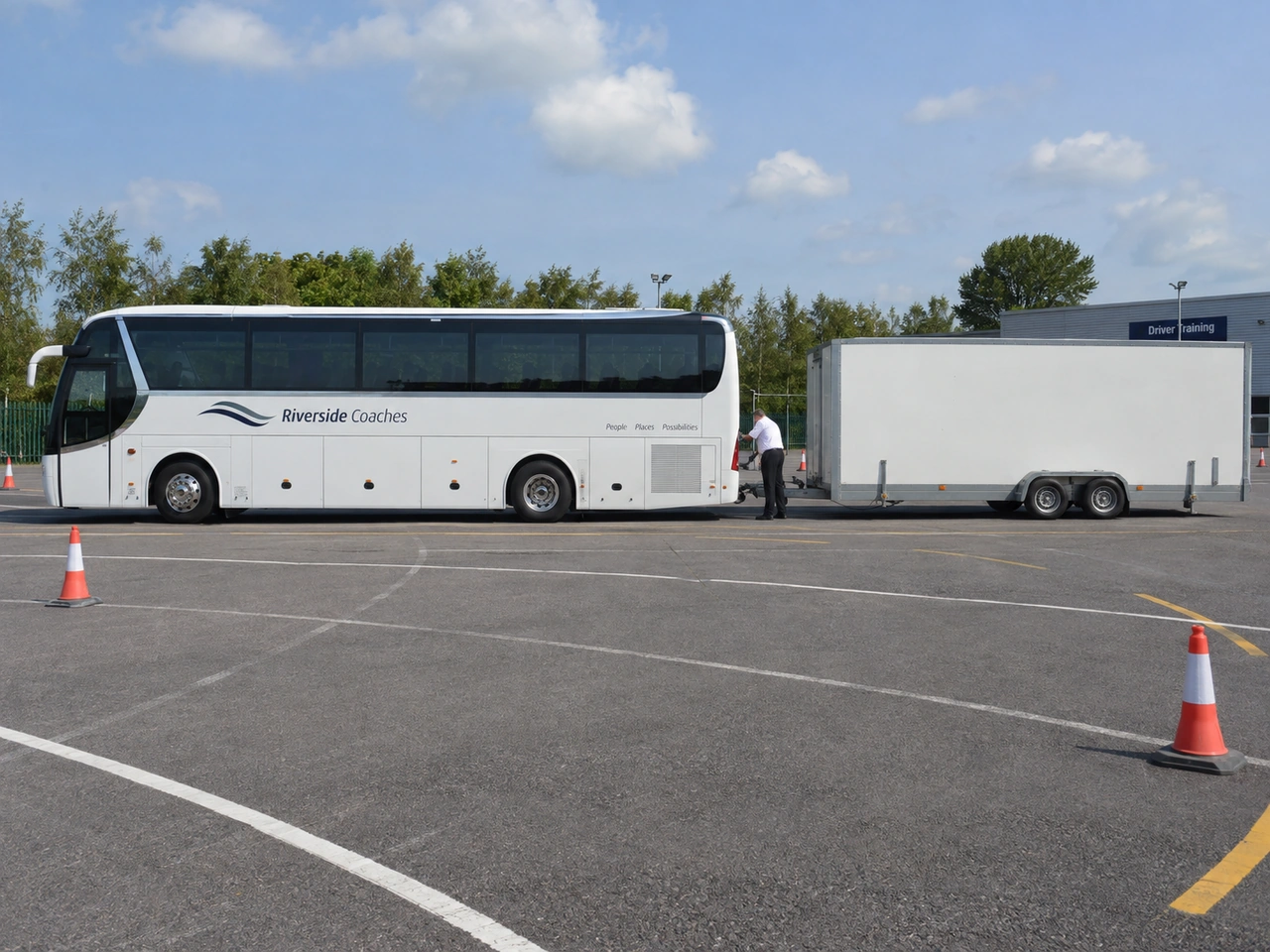
1043. What is the minimum licence for a bus that requires category D towing a trailer rated above 750 kg?
Category D permits a trailer with a maximum authorised mass of up to 750 kg. A category D vehicle towing a trailer above 750 kg requires category DE.
Norway. Use the trailer’s maximum authorised mass from its registration certificate (vognkort) when checking the 750 kg threshold.
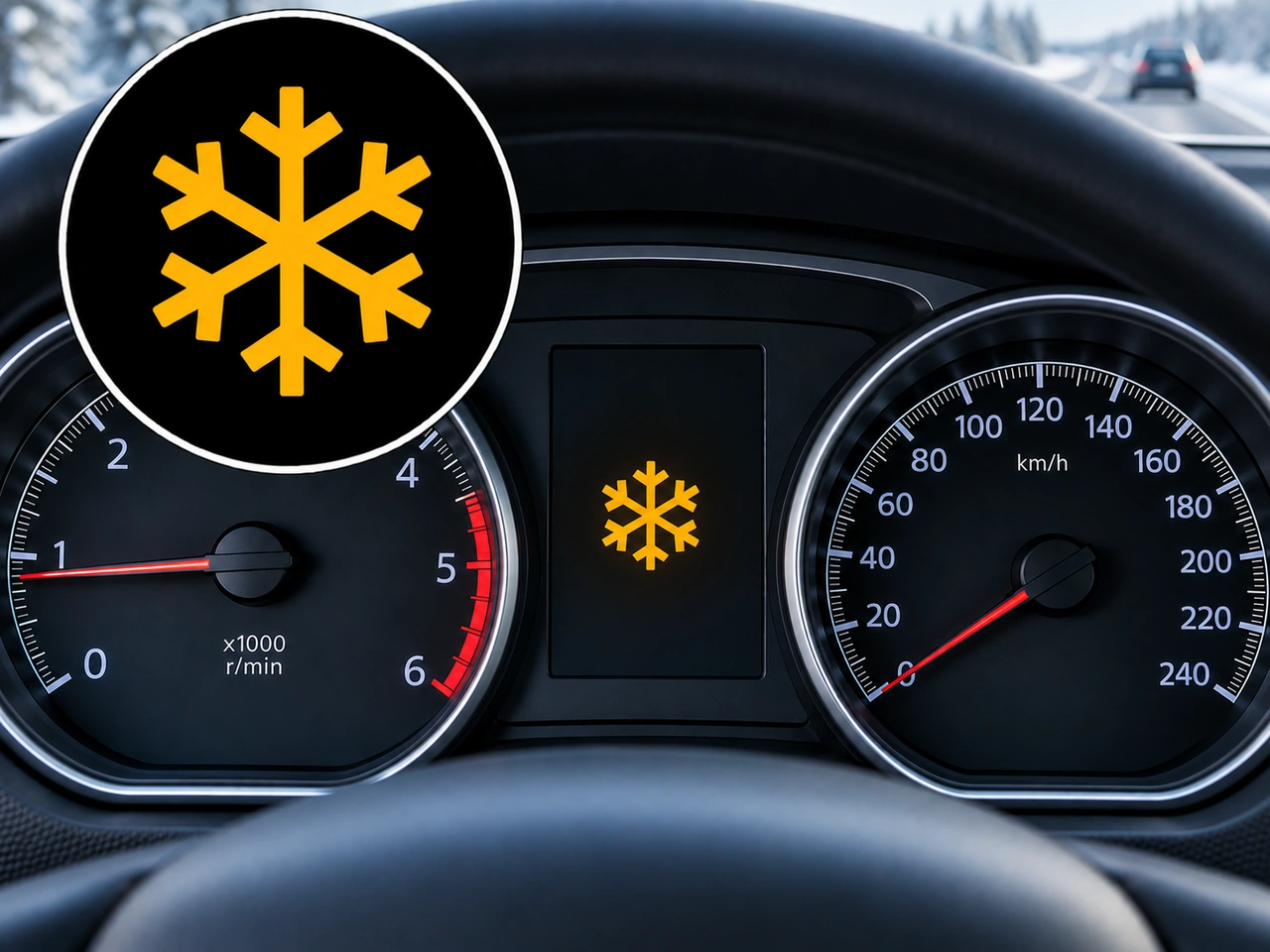
1044. What does this dashboard symbol indicate?
This symbol warns that the outside temperature is low enough for ice to form. Road surfaces, especially bridges and shaded areas, may be slippery even when they appear clear.
A low outside-temperature warning means ice is possible. Adjust your speed to the conditions, even if the road looks clear.
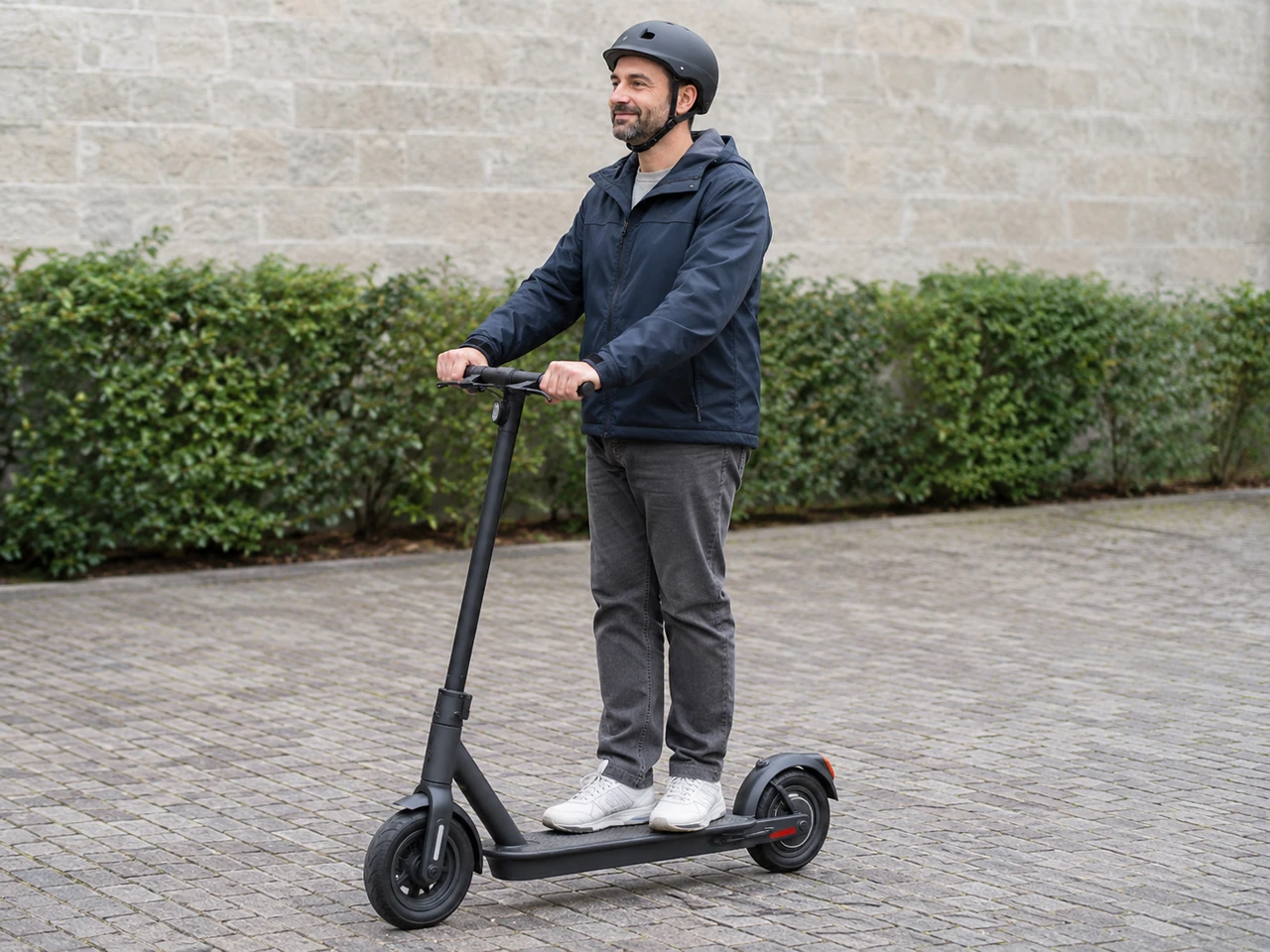
1045. A standard standing e-scooter may carry a passenger if both adults fit on its deck.
A standard standing e-scooter is for one rider. A passenger may not share its deck.
🔗 Sources
Norwegian Public Roads Administration • E-scooter traffic rules: passengers
Image credit: AI-generated
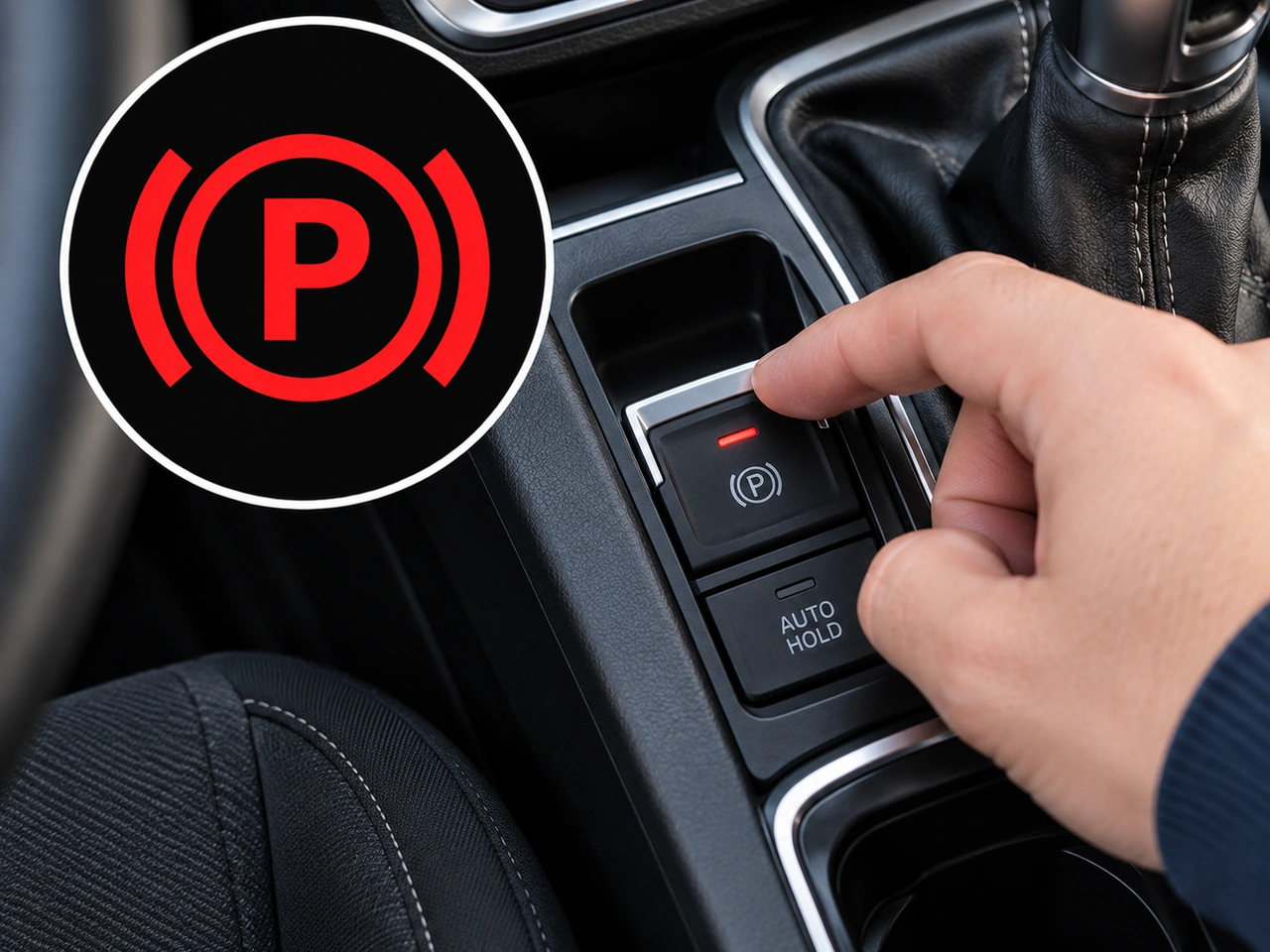
1046. What does this dashboard symbol indicate?
This symbol indicates that the parking brake is applied. It should normally go out when the parking brake is fully released.
This indicator shows the parking brake is applied. If a brake warning remains after release, check the handbook for the meaning on your vehicle.
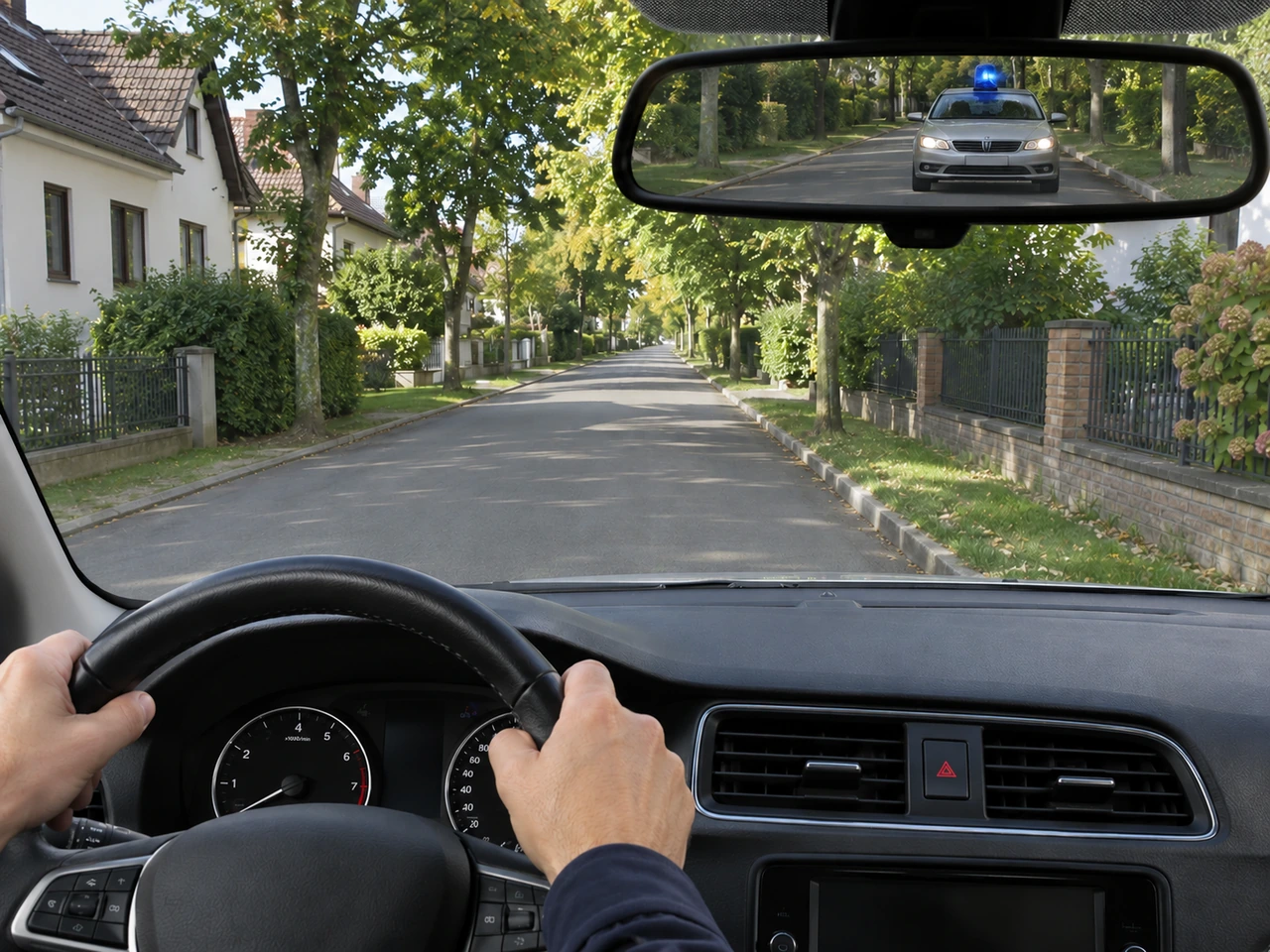
1047. What should you do if an emergency vehicle approaches with lights or siren on?
When an emergency vehicle uses lights or siren, check your surroundings and make room safely without sudden or dangerous movements.
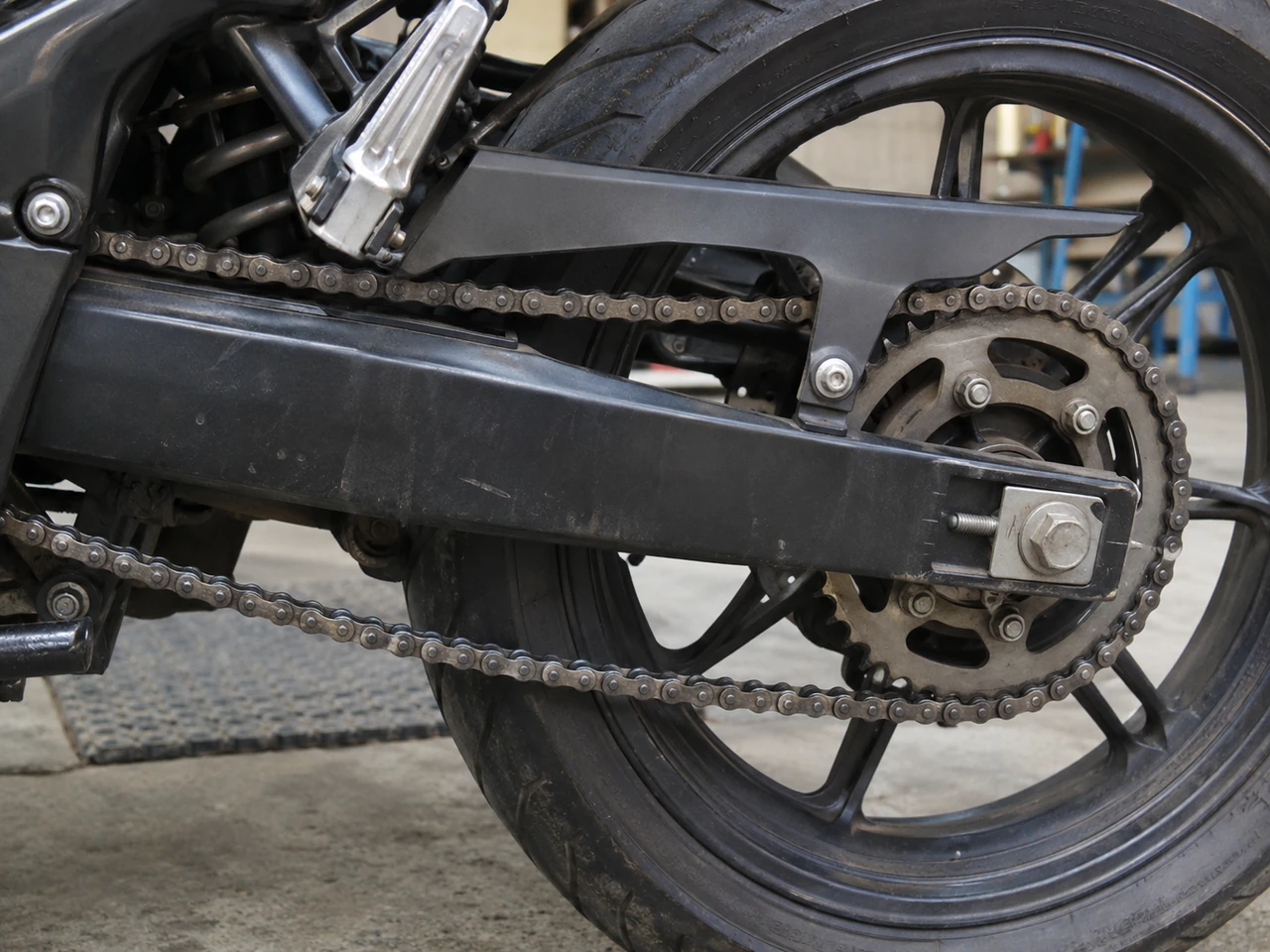
1048. On a chain-driven motorcycle, drive-chain slack should be checked as the handbook directs.
The correct slack and checking method vary between motorcycles. Follow the handbook with the engine stopped, and arrange adjustment or inspection if the chain is outside specification or damaged.
🔗 Sources
Honda owner’s manual (manufacturer guidance) • Safety guidance, drive-chain inspection with the engine stopped; model-specific method and limits
Image credit: AI-generated
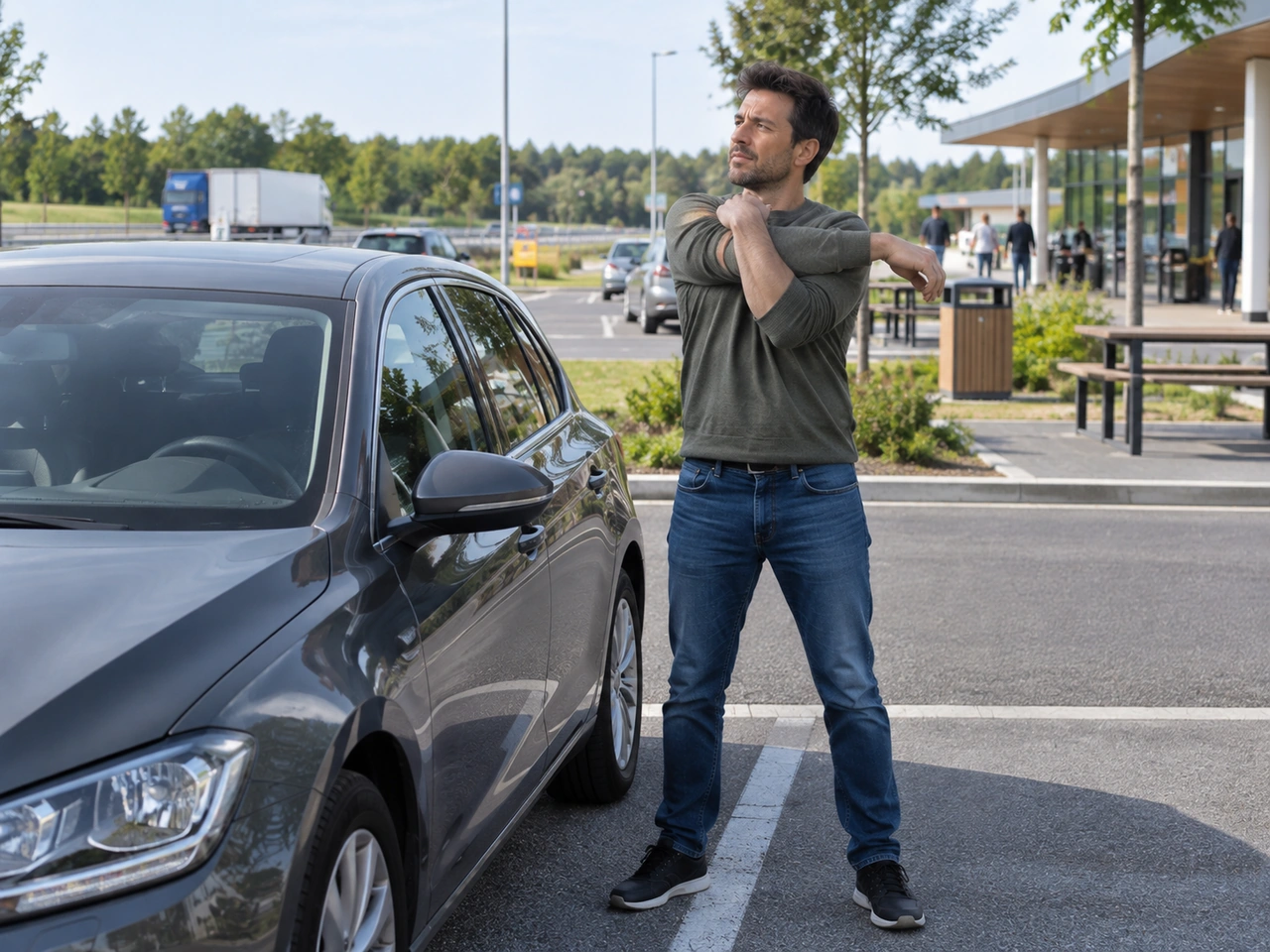
1049. Why should you take regular breaks during a long journey?
Regular breaks during a long journey help reduce fatigue and maintain concentration. Do not wait until you are struggling to stay awake before stopping to rest.
Norway. Look for a rasteplass (rest area) along your route. Trygg Trafikk recommends taking breaks on long journeys and resting if you become tired.
🔗 Sources
Statens vegvesen · Trygg på bilferie
Trygg Trafikk · Veileder for trafikksikker fylkeskommune
Image credit: AI-generated
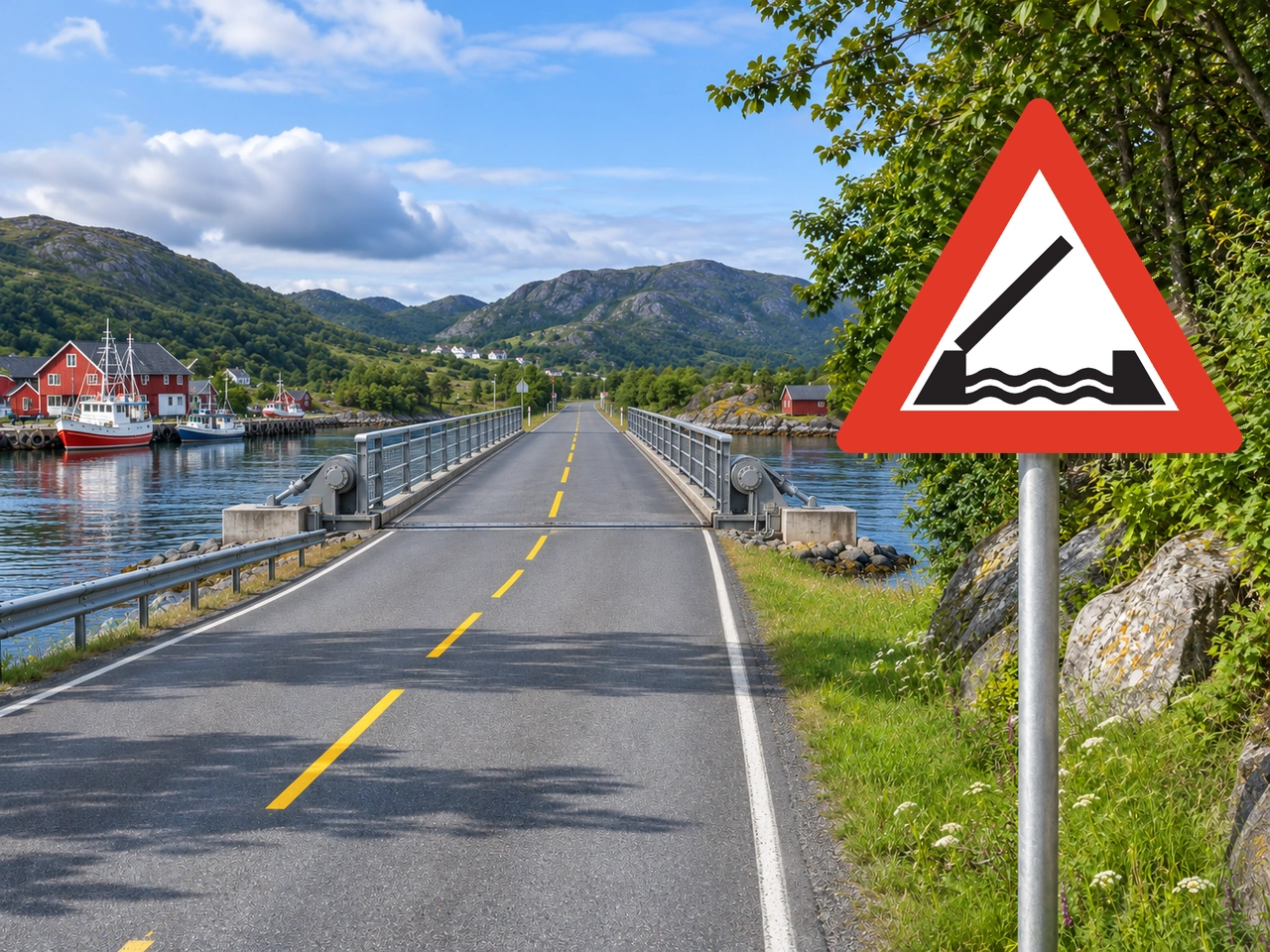
1050. This raised-bridge warning sign indicates a fixed bridge that cannot open.
This sign warns of an opening bridge. Approach cautiously and obey any signals, barriers and other controls. The warning sign alone does not tell you whether the bridge is currently open or closed.
🔗 Sources
Norway • Skiltforskriften • Sign 118
Statens vegvesen • Official traffic-sign meanings
Statens vegvesen • Official sign artwork
Sign artwork: Statens vegvesen original EPS archive, Sign 118, file 118_0.eps. Native raised bridge deck and water lines, orientation, border and proportions retained; resized and composited onto the existing same-entry scene. Border red follows the authority's published colour chart: PMS 179, using the published web swatch RGB 226/56/40. No third-party open licence is asserted for the government artwork.
Image credit: AI-generated background with source sign artwork resized and placed on the sign face.