QuizTraffic rulesPanama

Test your knowledge with our multiple-choice quiz. Learn from each answer and improve your understanding of the traffic rules and road signs of Panama.
For informational purposes only. Always follow official regulations. Some content and images were created with AI assistance.


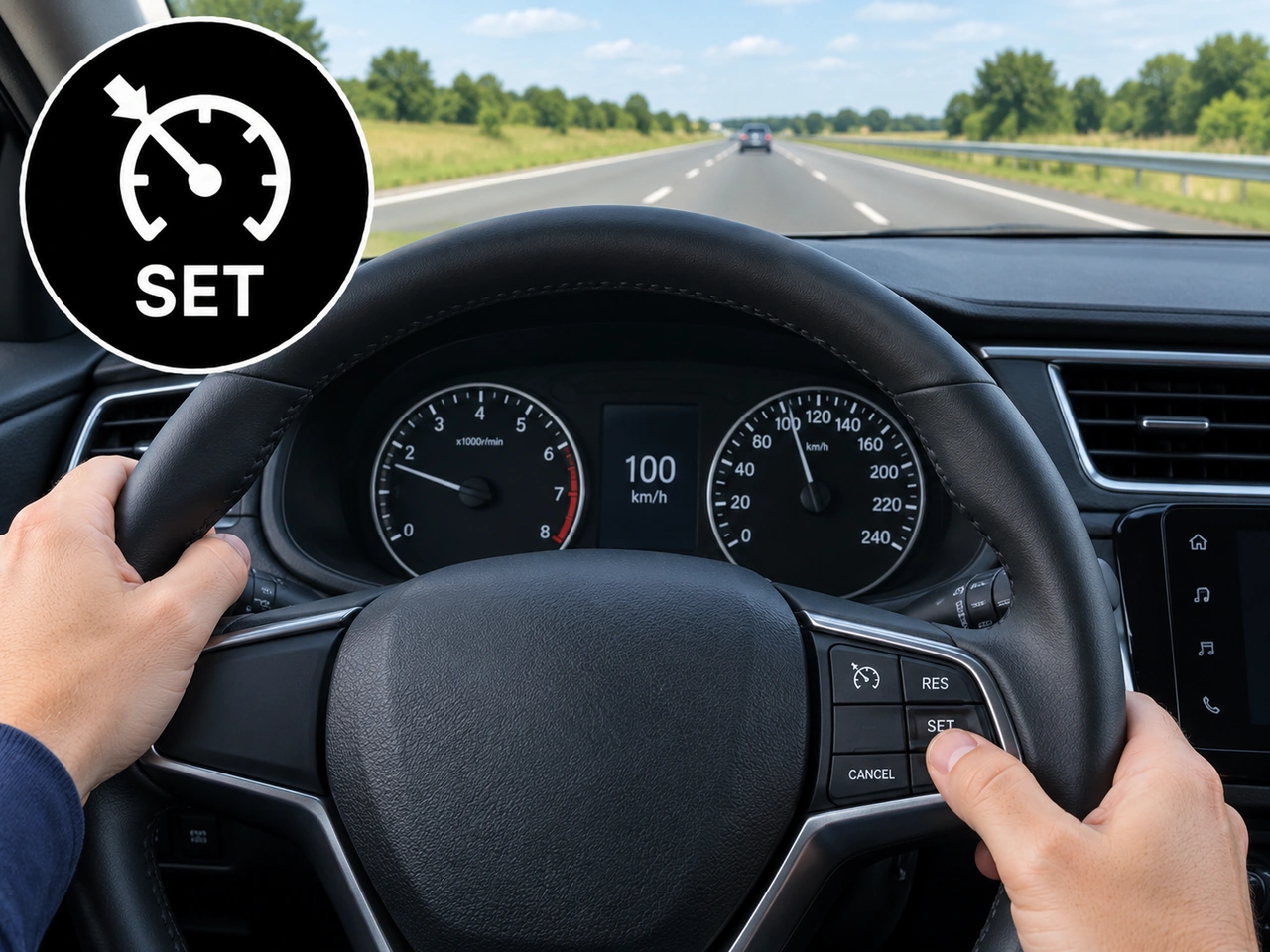
What does the SET function of cruise control normally do?

201. What does the SET function of cruise control normally do?

Switches cruise control off.
✓ Stores the current speed as the cruising speed.
Returns to a previously stored speed.
Applies the brakes automatically.

The SET function normally stores the vehicle's current speed as the cruise-control speed. Use it only when the road, traffic, and driving conditions are suitable.

SET button for storing a cruising speed
AI-generated by Traffic-rules.com • WCIT • CC BY-SA
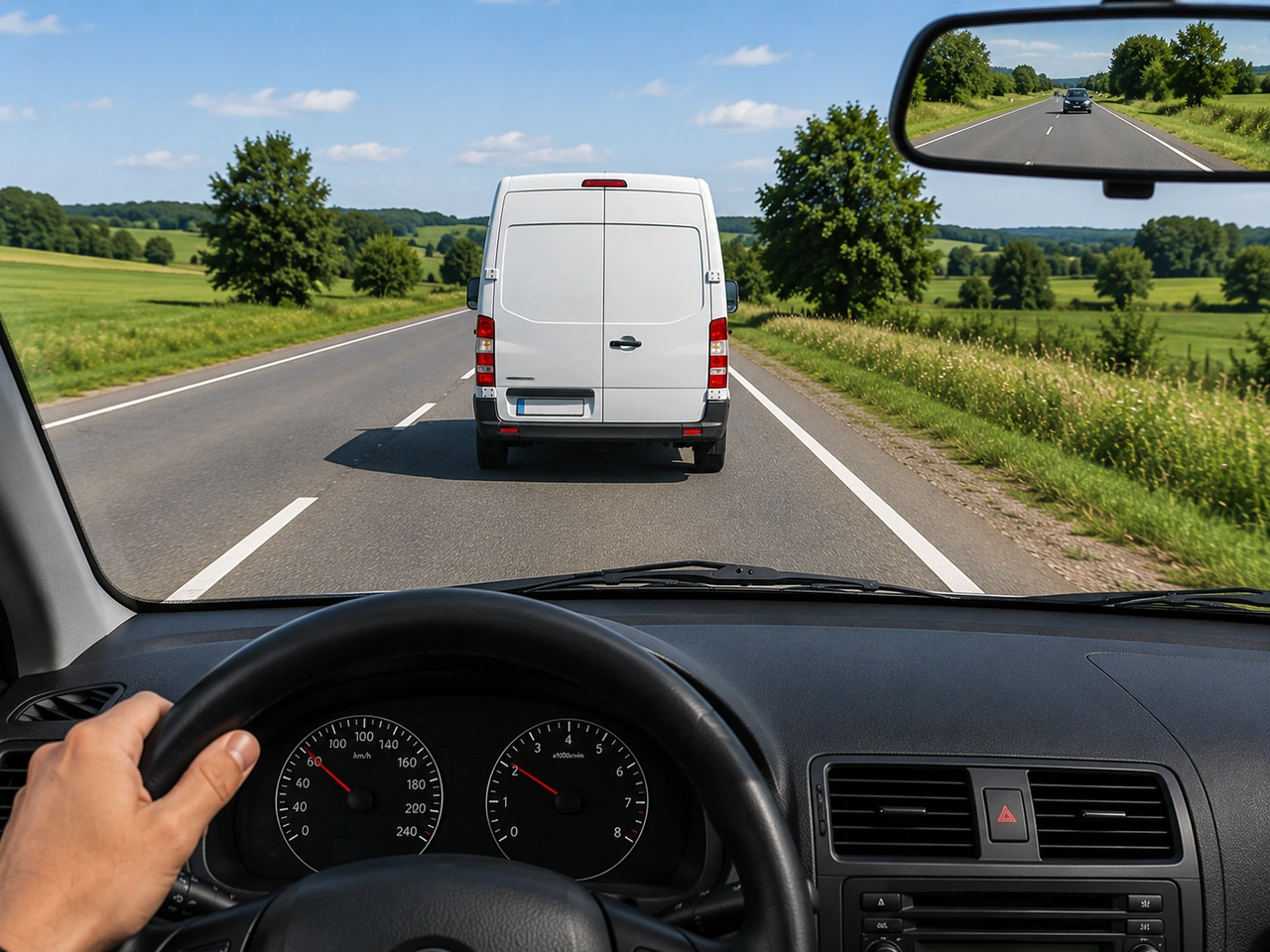
What is the main risk when following a vehicle with limited rear visibility?

202. What is the main risk when following a vehicle with limited rear visibility?

The vehicle has priority when changing lanes.
The driver can see you better if you follow closely.
The driver cannot use the side mirrors.
✓ The driver may not see you clearly.

Vans, trucks, and vehicles with blocked rear windows may have limited visibility. Keep extra distance and avoid sitting in blind spots.

Vehicle with limited rearward visibility
AI-generated by Traffic-rules.com • WCIT • CC BY-SA
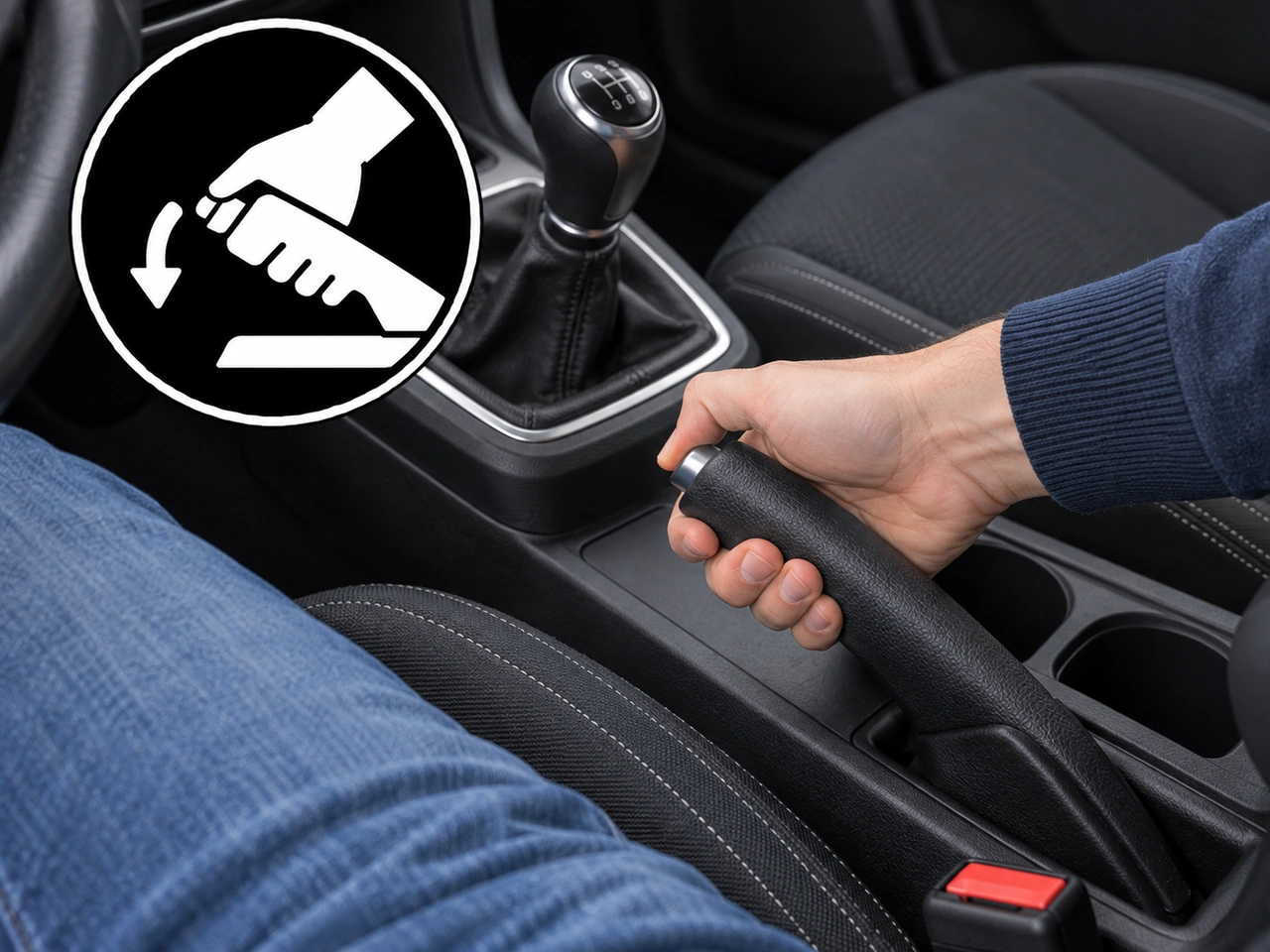
What should you do with a manual parking brake before driving away?

203. What should you do with a manual parking brake before driving away?

Apply it only after moving off.
✓ Release it fully.
Leave it partly applied.
Pull it up further.

The manual parking brake should be released fully before driving away. Driving with it partly applied can cause unnecessary brake wear and overheating.

Releasing a manual handbrake before driving away
AI-generated by Traffic-rules.com • WCIT • CC BY-SA
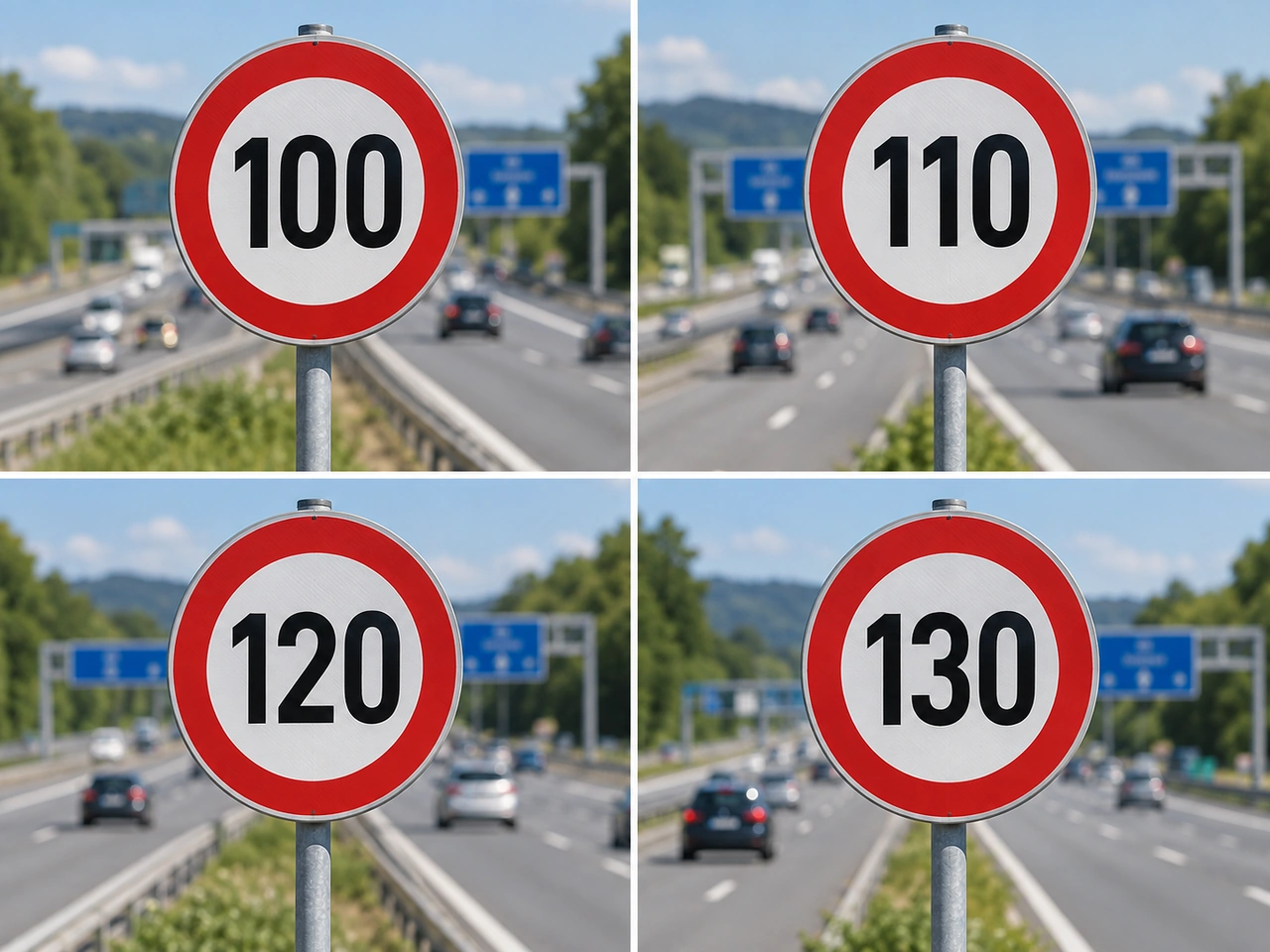
What is the general motorway speed limit for cars in Panama?

204. What is the general motorway speed limit for cars in Panama?

✓ 120 km/h.
110 km/h.
100 km/h.
Other speed limit.

The general motorway speed limit for cars in Panama is 120 km/h, unless signs indicate otherwise.

Motorway speed limits for cars
AI-generated by Traffic-rules.com • WCIT • CC BY-SA
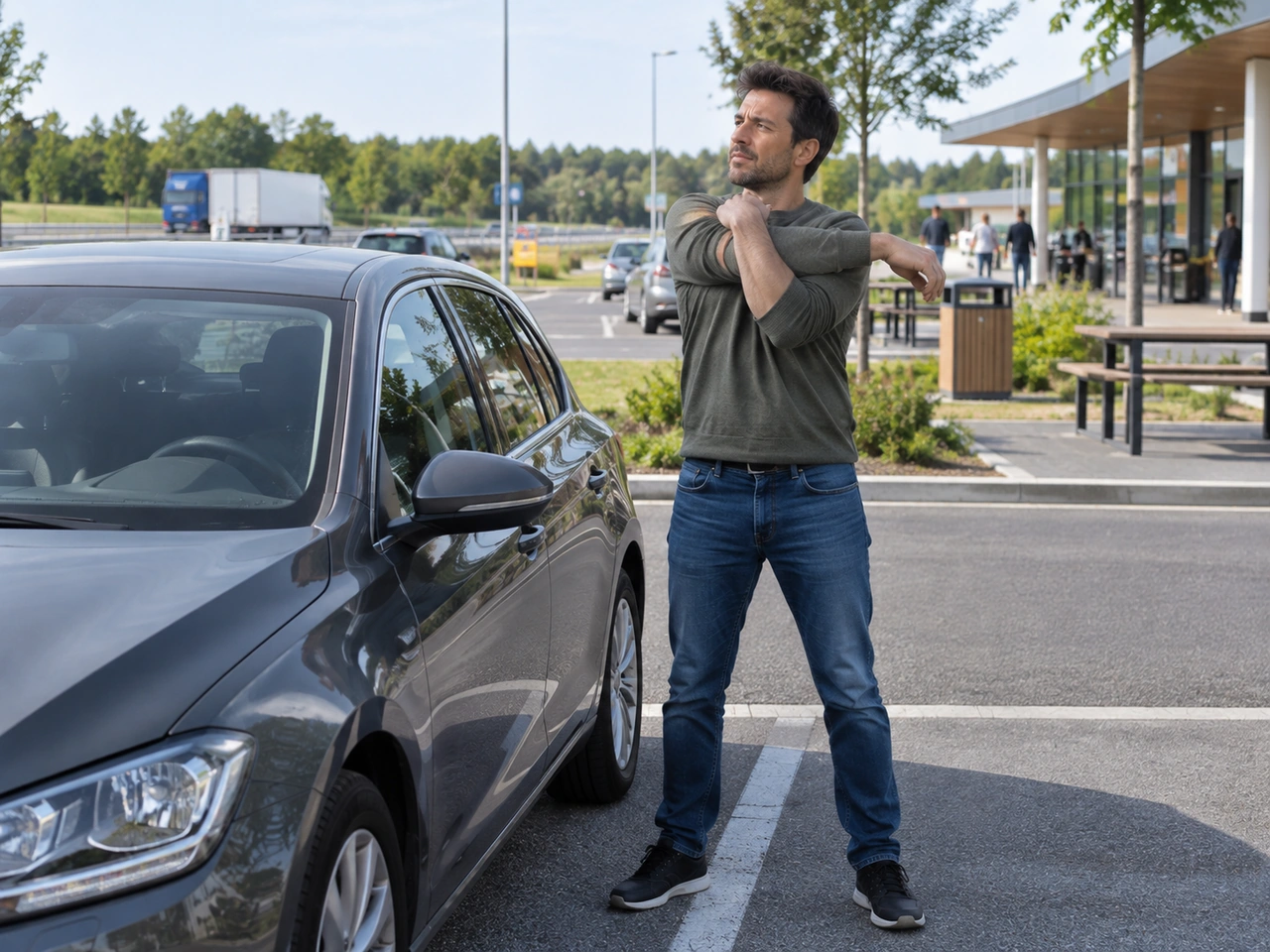
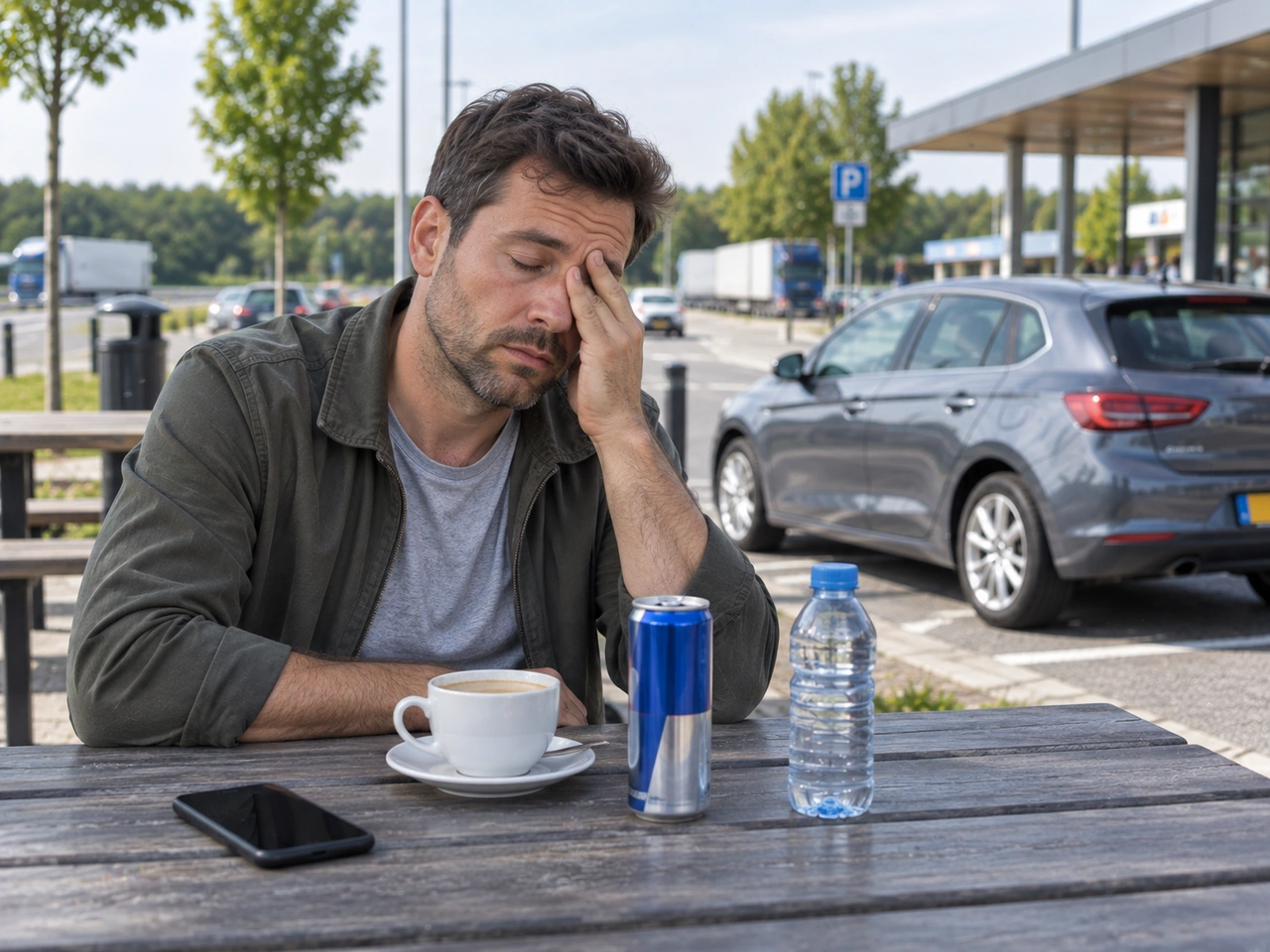
Can coffee, energy drinks, fresh air, or loud music replace proper rest when you are tired?

205. Can coffee, energy drinks, fresh air, or loud music replace proper rest when you are tired?

Yes, if the journey is less than one hour.
✓ No, they may only increase alertness temporarily.
Yes, if you use several of them together.
Only coffee can replace proper rest.

Coffee, energy drinks, fresh air, or loud music may make you feel more alert for a short time, but they do not remove fatigue. If you are too tired to drive safely, stop somewhere safe and get proper rest.

Stimulant drinks and driver tiredness
AI-generated by Traffic-rules.com • WCIT • CC BY-SA
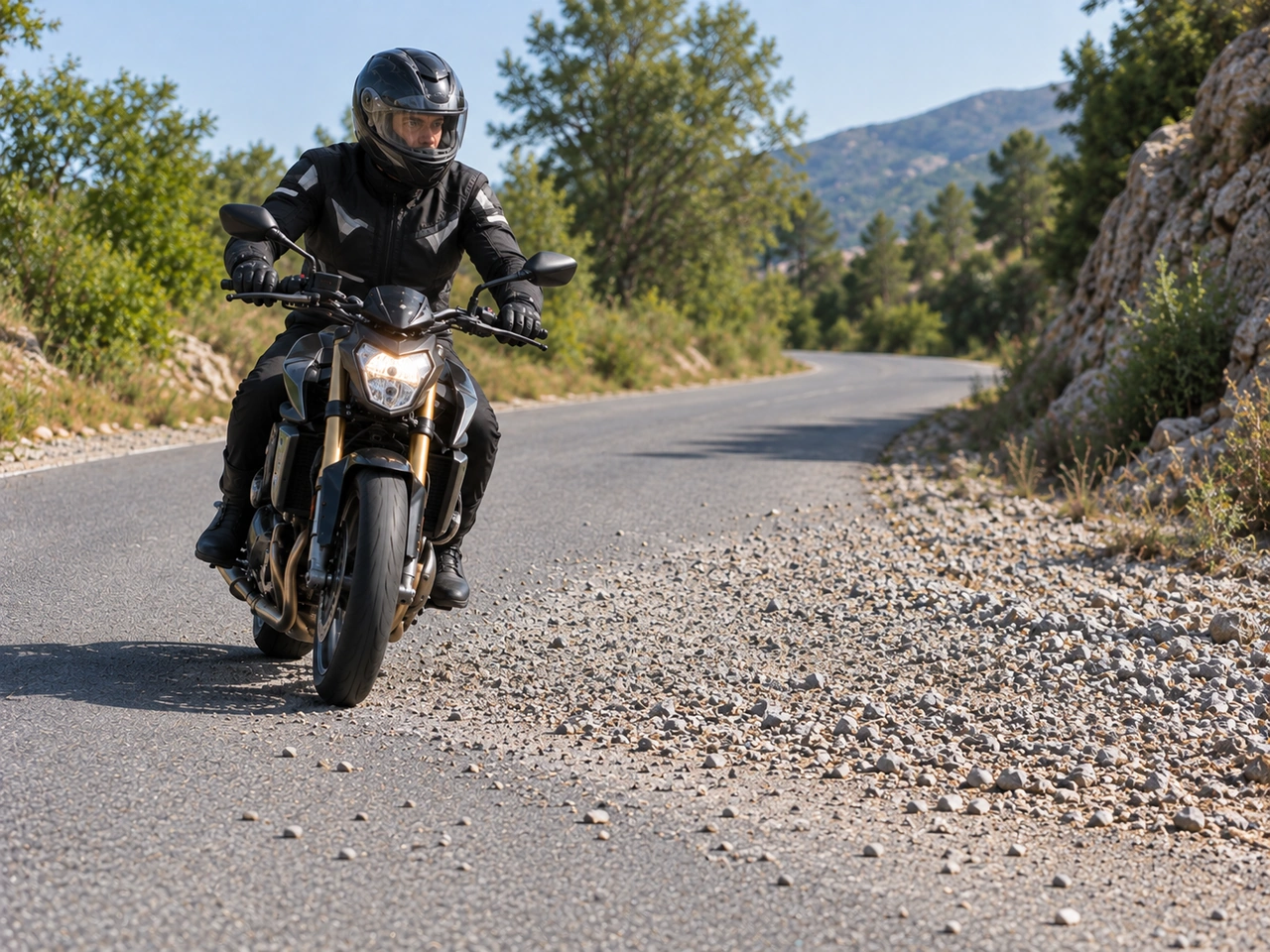
What should a motorcyclist do when approaching loose gravel?

206. What should a motorcyclist do when approaching loose gravel?

✓ Reduce speed before reaching it and use smooth controls.
Brake hard while riding over it.
Accelerate sharply to cross it quickly.
Lean the motorcycle more than usual.

Loose gravel can significantly reduce tyre grip. Reduce speed before reaching it, keep the motorcycle as upright as practical, and avoid sudden braking, acceleration or steering while crossing the loose surface.

Motorcyclist approaching loose gravel
AI-generated by Traffic-rules.com • WCIT • CC BY-SA
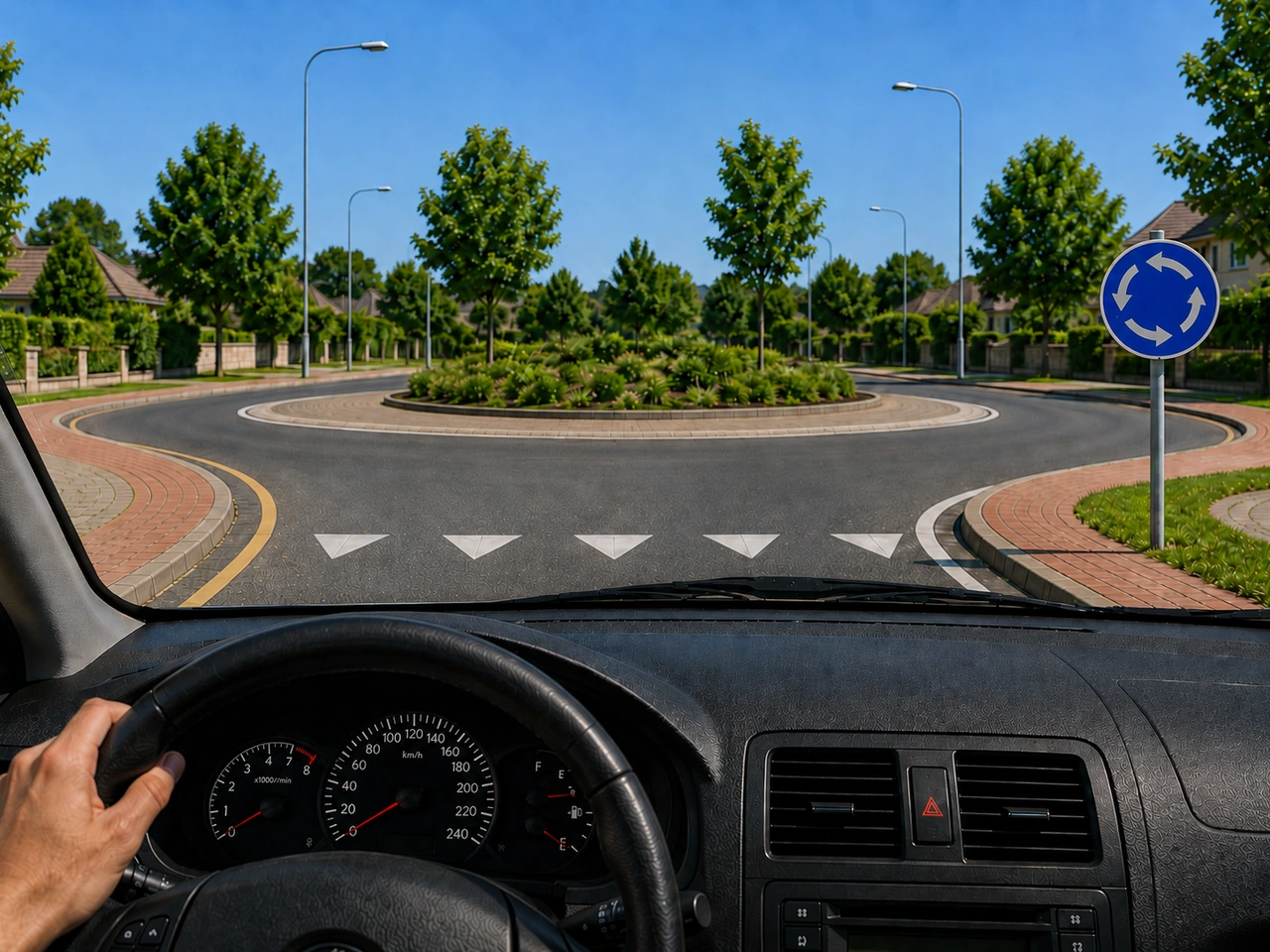
What should you do before entering a roundabout?

207. What should you do before entering a roundabout?

Enter without giving way if you are going straight ahead.
✓ Slow down and give way when required.
Enter first if you reach the roundabout before other traffic.
Stop before every roundabout, even when it is clear.

Before entering a roundabout, reduce your speed, observe traffic, and give way according to the local rules.

Vehicle approaching a roundabout
AI-generated by Traffic-rules.com • WCIT • CC BY-SA
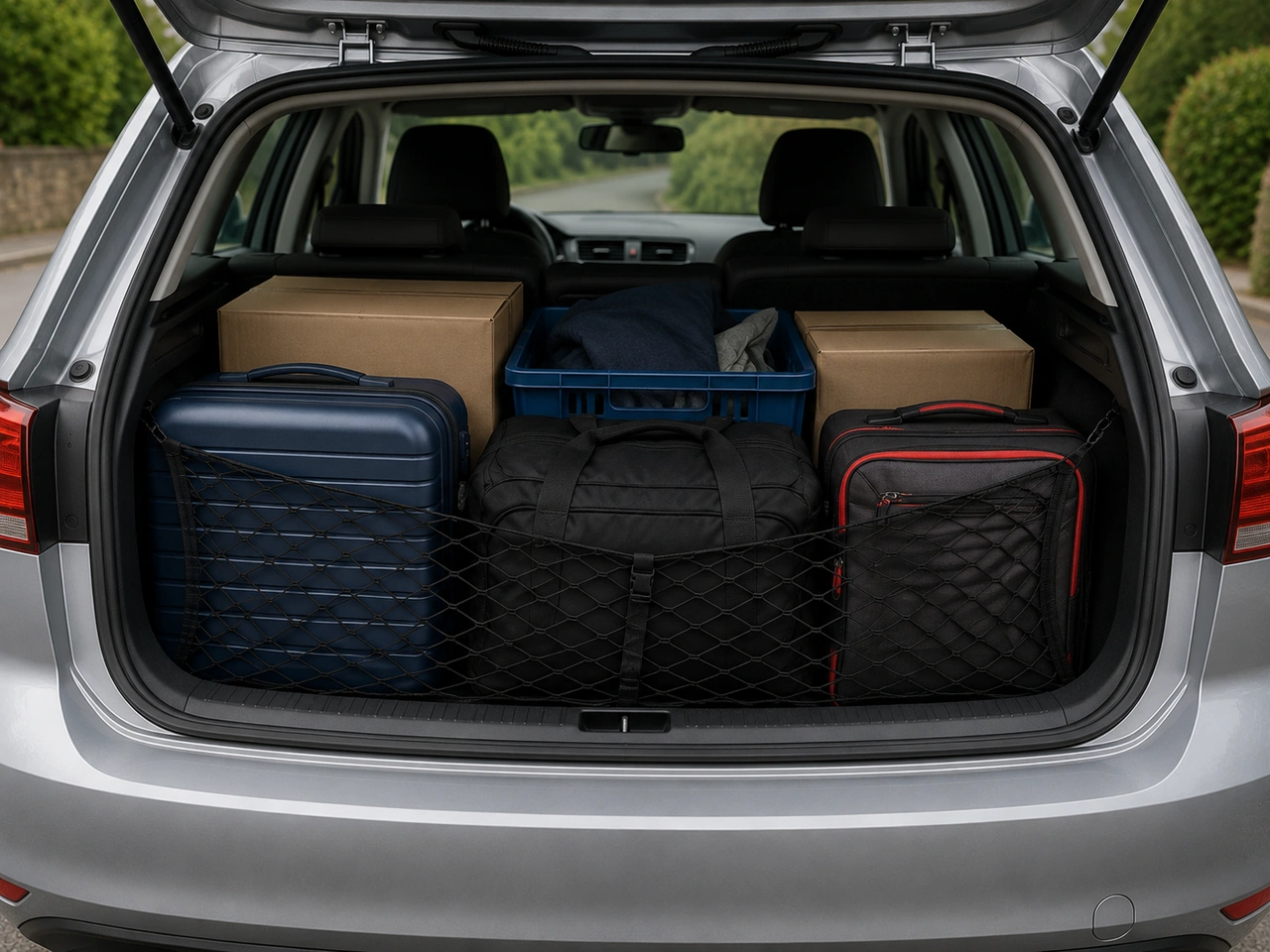
How should luggage or other cargo be carried in or on a vehicle?

208. How should luggage or other cargo be carried in or on a vehicle?

Anywhere, as long as the vehicle is not overloaded.
Where it is easiest to reach while driving.
✓ Securely, within load limits, without blocking visibility or lights.
Loosely in the passenger area for short journeys.

Unsecured or overloaded cargo can affect steering and braking, injure occupants during sudden stops, or fall into the road. It must not obstruct the driver's view or vehicle lights.

Luggage and cargo carried in a vehicle
AI-generated by Traffic-rules.com • WCIT • CC BY-SA
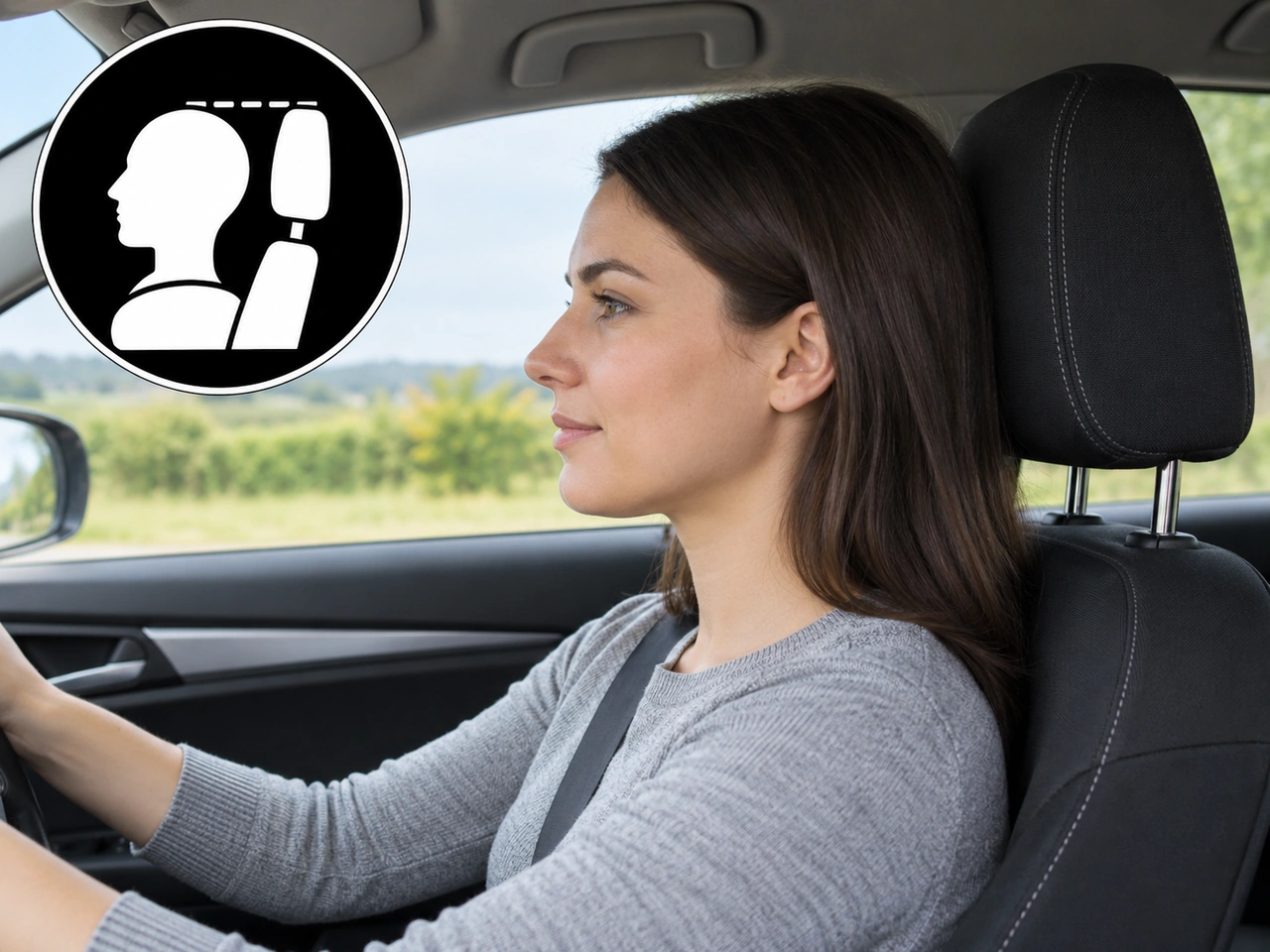
Where should the top of the head restraint normally be positioned?

209. Where should the top of the head restraint normally be positioned?

As low as possible.
Level with the shoulders.
✓ Approximately level with the top of the head.
Behind the neck only.

The head restraint should normally be adjusted so that its top is approximately level with the top of the head. This helps reduce the risk of neck injury in a collision.

Adjusting the head restraint to head height
AI-generated by Traffic-rules.com • WCIT • CC BY-SA
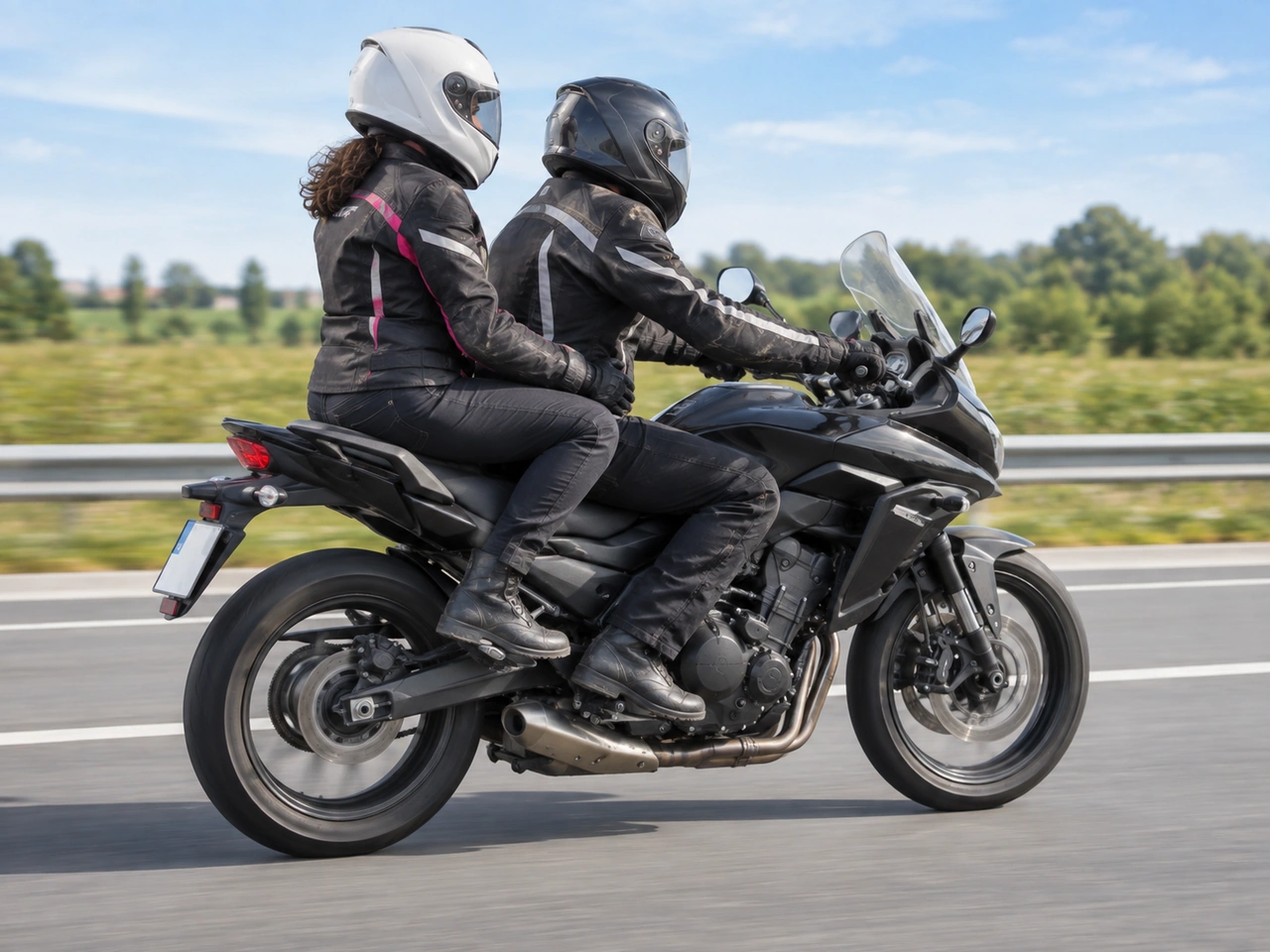
How should a passenger normally sit on a motorcycle?

210. How should a passenger normally sit on a motorcycle?

Sideways so they can get off more easily.
✓ Securely on the passenger seat with both feet on the footrests.
With one foot hanging down when travelling slowly.
As far back as possible without using the footrests.

A motorcycle passenger should sit securely on the designated passenger seat, keep both feet on the footrests and avoid sudden movements that could affect the motorcycle's balance and stability.

Passenger seated on a motorcycle with feet on the footrests
AI-generated by Traffic-rules.com • WCIT • CC BY-SA
What does this vehicle-control symbol indicate?

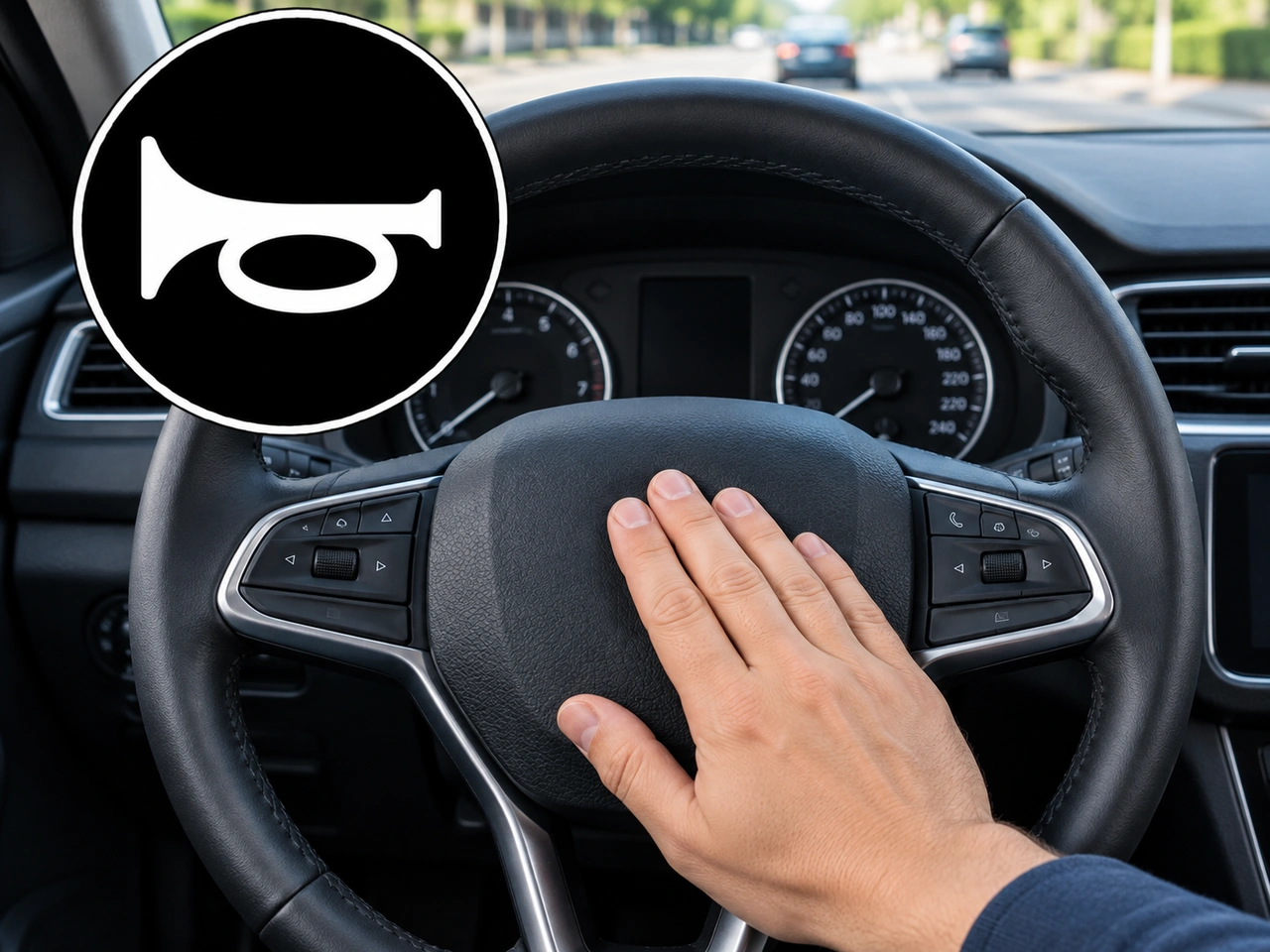
211. What does this vehicle-control symbol indicate?

Cruise control.
Hazard warning lights.
✓ Horn.
Parking assistance.

This symbol indicates the horn control. The horn is used to warn other road users of your presence when necessary.

Vehicle horn control and symbol
AI-generated by Traffic-rules.com • WCIT • CC BY-SA
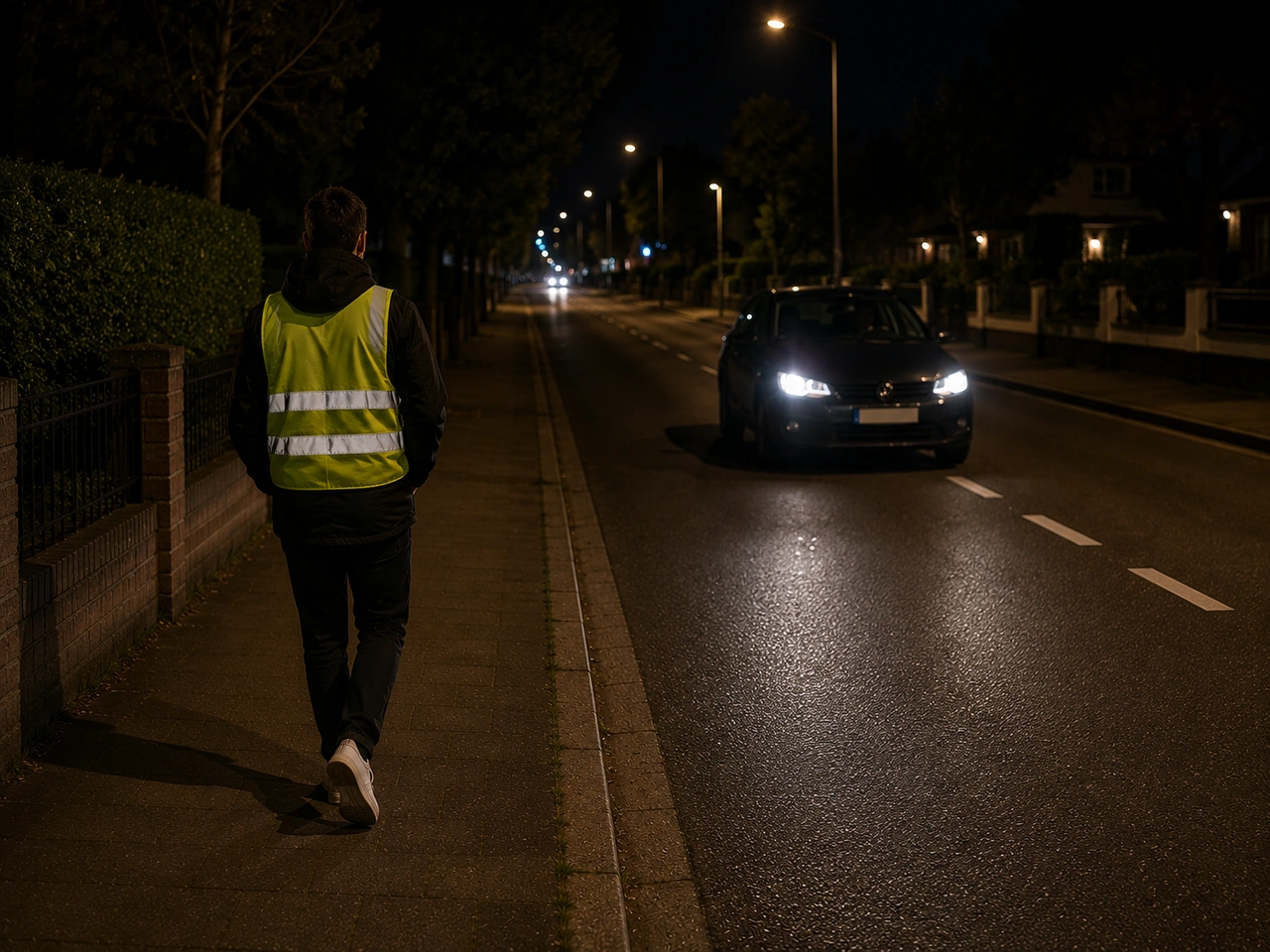
Why is it important to make yourself visible at night?

212. Why is it important to make yourself visible at night?

✓ To make drivers see you more easily.
To make it safe to walk closer to moving traffic.
To make drivers give way wherever you cross.
To ensure drivers can always stop in time.

Bright or reflective clothing helps drivers notice pedestrians in low-light conditions.

Pedestrian visibility beside a road at night
AI-generated by Traffic-rules.com • WCIT • CC BY-SA
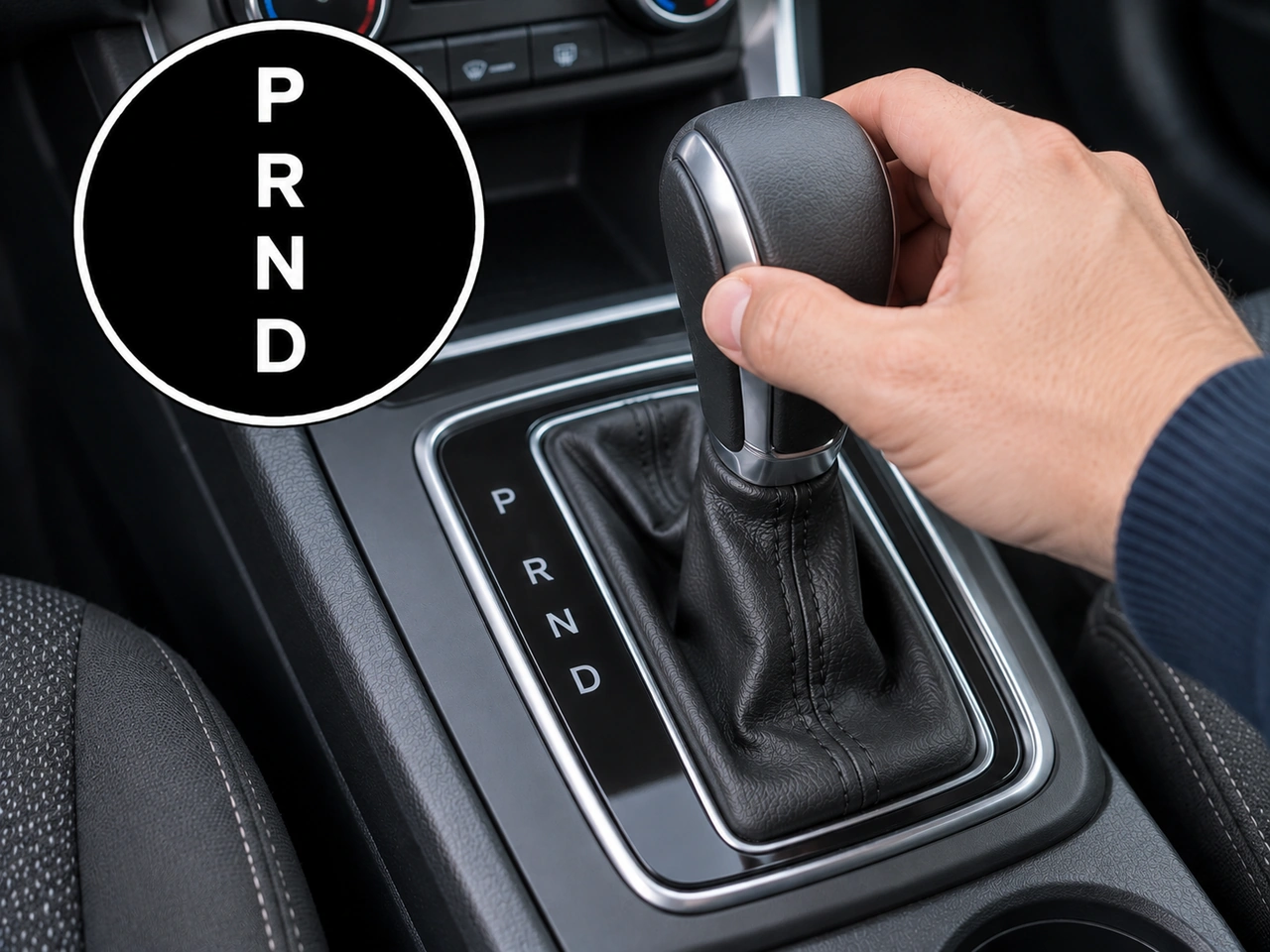
Which selector position prevents drive being transmitted to the wheels?

213. Which selector position prevents drive being transmitted to the wheels?

P (Park).
D (Drive).
R (Reverse).
✓ N (Neutral).

Select N (Neutral) when drive should not be transmitted to the wheels. Unlike Park, Neutral does not lock the transmission to prevent the vehicle from rolling.

Automatic gear selector with P, R, N and D positions
AI-generated by Traffic-rules.com • WCIT • CC BY-SA
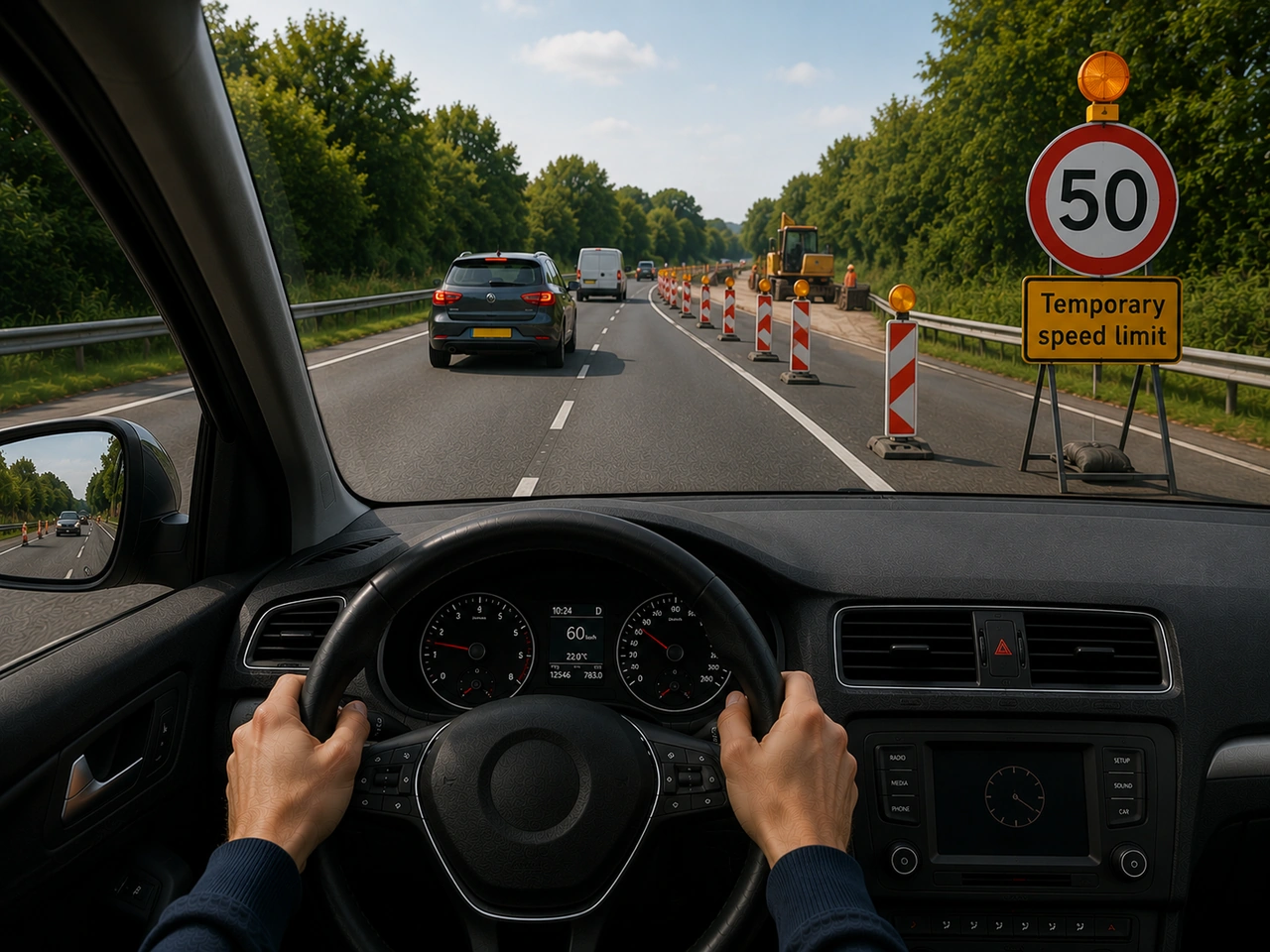
Why should you not ignore temporary speed limits?

214. Why should you not ignore temporary speed limits?

They are recommendations rather than limits.
✓ They are used to protect people and manage hazards.
They apply only to road workers.
They apply only when traffic is congested.

Temporary speed limits may be used near roadworks, accidents, events, or dangerous conditions. They help keep traffic safe.

Temporary speed-limit sign at roadworks
AI-generated by Traffic-rules.com • WCIT • CC BY-SA
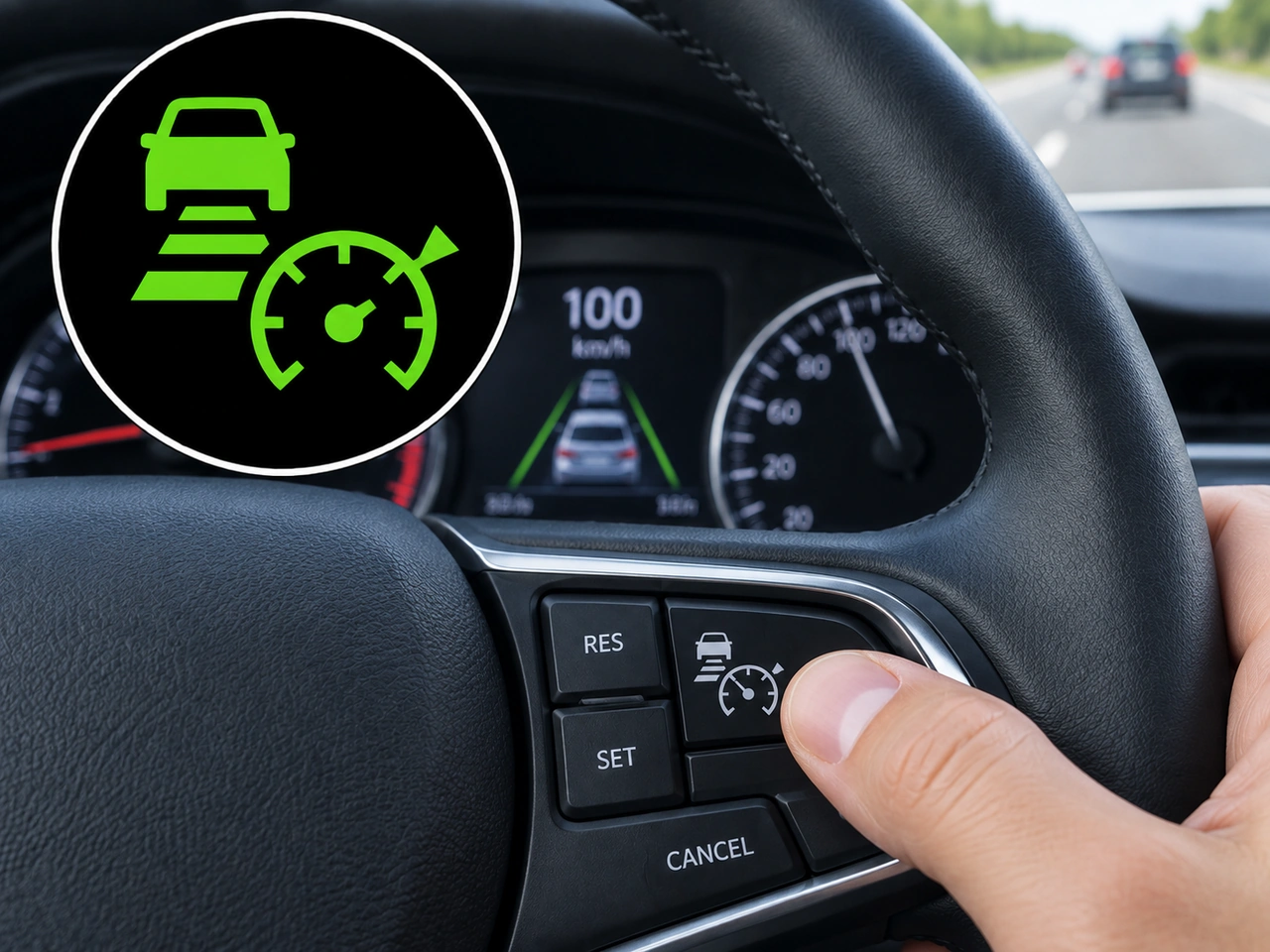
What does this dashboard symbol indicate?

215. What does this dashboard symbol indicate?

Parking assistance.
Electronic stability control.
✓ Adaptive cruise control.
Lane-departure warning.

This symbol relates to adaptive cruise control (ACC). The system can maintain a selected speed and automatically adjust the vehicle's speed to help maintain a set distance from traffic ahead.

Adaptive cruise-control symbol on the dashboard
AI-generated by Traffic-rules.com • WCIT • CC BY-SA
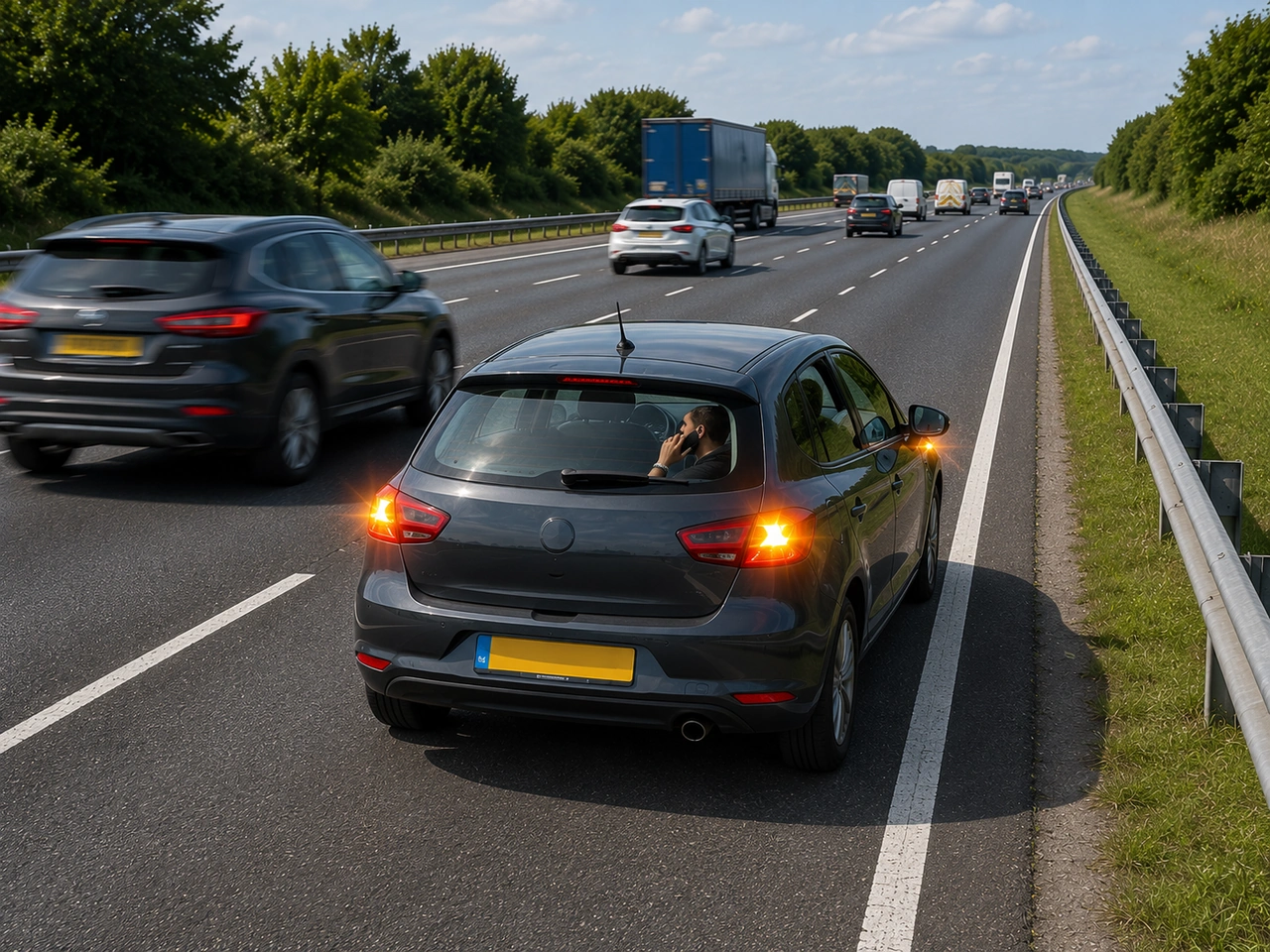
What should you do if it is unsafe to leave a stranded vehicle?

216. What should you do if it is unsafe to leave a stranded vehicle?

Leave the vehicle and wait beside it for help.
✓ Stay inside, use hazard lights, and call the emergency services.
Try to push the vehicle out of the traffic lane.
Switch off all lights to preserve the battery.

If leaving the vehicle would put you in greater danger, remain restrained, make the vehicle visible, contact the emergency services, and follow their instructions.

Vehicle stranded among moving traffic
AI-generated by Traffic-rules.com • WCIT • CC BY-SA
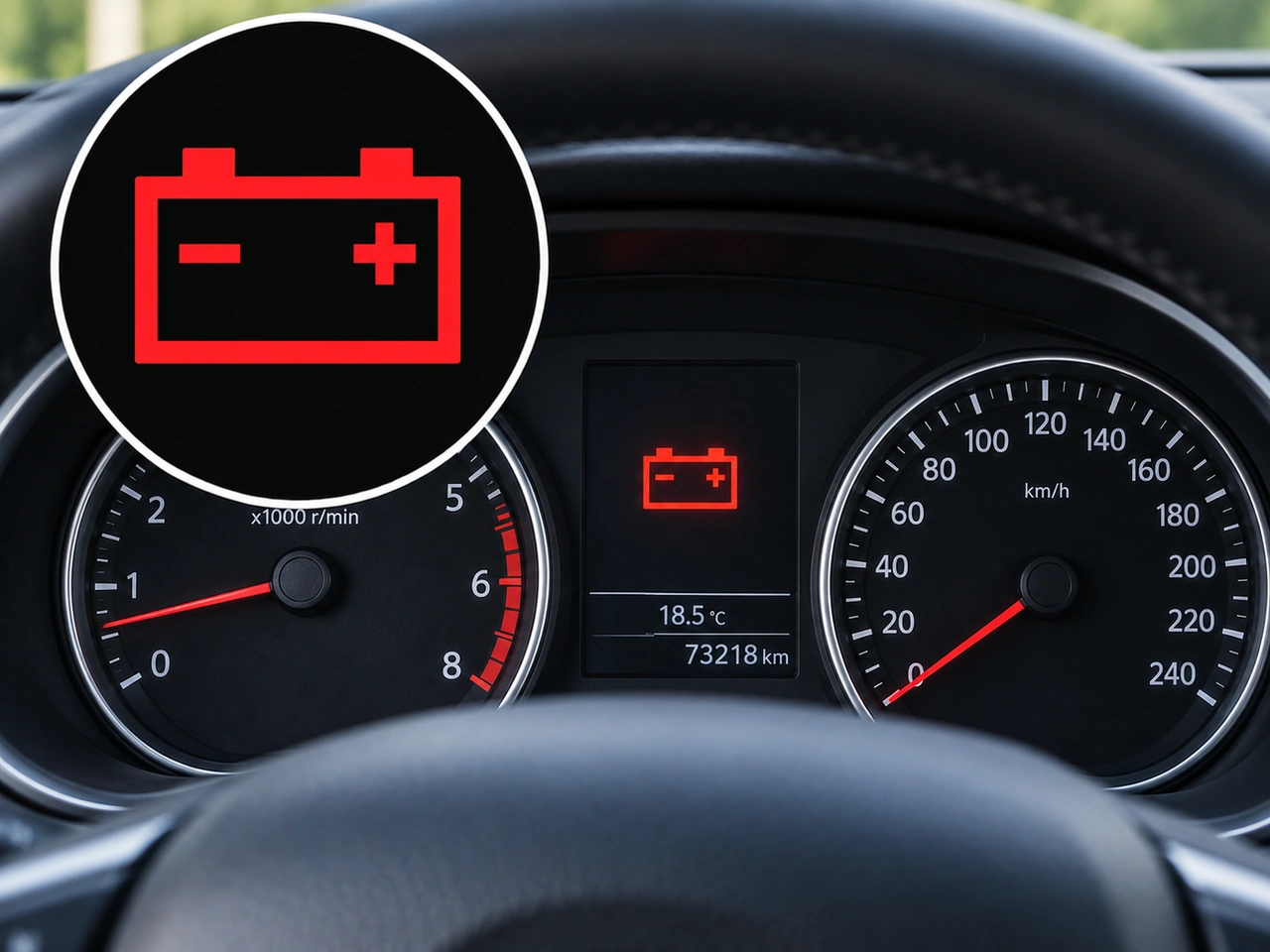
What does this dashboard symbol indicate?

217. What does this dashboard symbol indicate?

Engine-temperature warning.
Oil-pressure warning.
✓ Charging-system warning.
Engine-management warning.

This symbol indicates a problem with the vehicle's charging system. If it remains illuminated while the engine is running, the battery may not be charging correctly because of a fault with the alternator, battery, wiring, or related components.

Charging-system warning symbol on the dashboard
AI-generated by Traffic-rules.com • WCIT • CC BY-SA
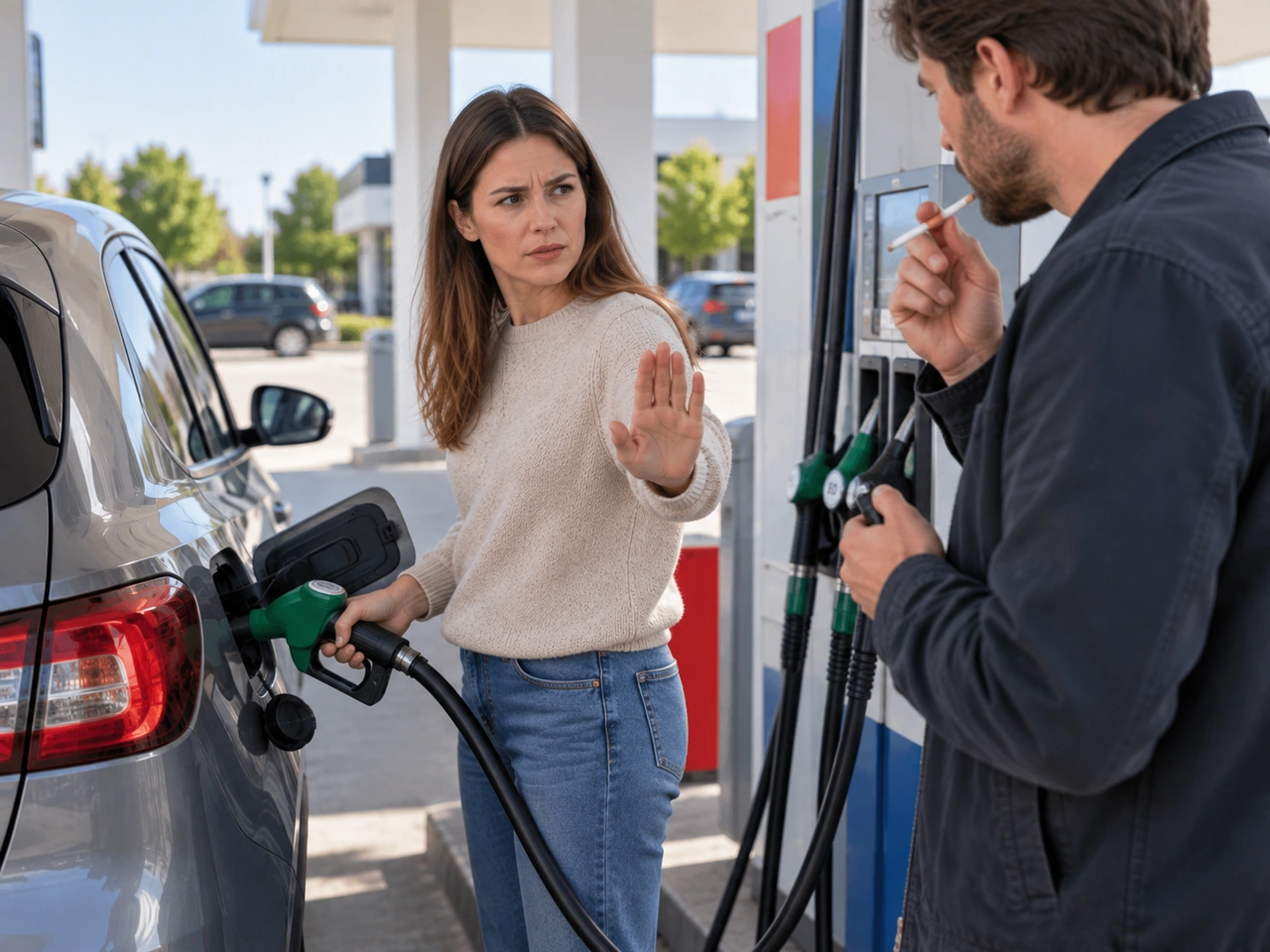
Why must you avoid smoking or open flames at a filling station?

218. Why must you avoid smoking or open flames at a filling station?

Smoke can interfere with the fuel gauge.
Smoke can prevent the fuel cap from sealing.
✓ Fuel vapours can ignite and cause a fire.
Heat can make the fuel nozzle stop automatically.

Petrol and other fuels can produce flammable vapours. Smoking, open flames, sparks, or other ignition sources can ignite these vapours and cause a serious fire. Follow all filling-station safety rules while refuelling.

No-smoking warning at a filling station
AI-generated by Traffic-rules.com • WCIT • CC BY-SA
What should you do if you are unsure who has priority at a junction?

219. What should you do if you are unsure who has priority at a junction?

Rely on eye contact and enter the junction first.
✓ Slow down and proceed only when it is safe.
Enter slowly so the other driver has time to react.
Proceed if the other driver appears to be slowing down.

If priority is unclear, reduce speed, observe carefully, and avoid entering the junction until you are sure it is safe.

Vehicles approaching a junction with uncertain priority
AI-generated by Traffic-rules.com • WCIT • CC BY-SA
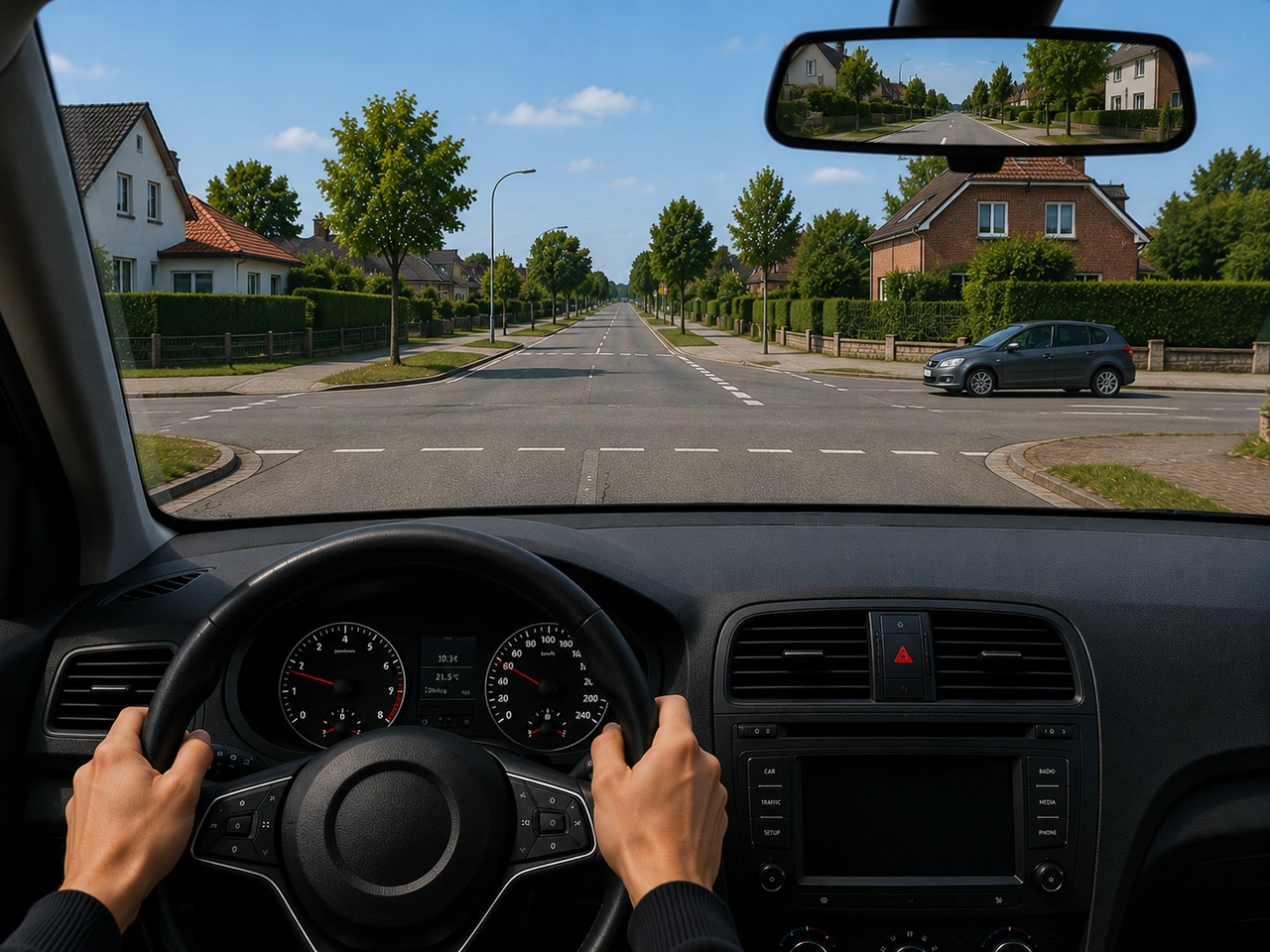
Why should you never reverse or make a U-turn inside a tunnel unless directed?

220. Why should you never reverse or make a U-turn inside a tunnel unless directed?

Reversing can interfere with the tunnel lighting.
Tunnel ventilation works only in the normal direction of travel.
✓ It can cause a serious collision with approaching traffic.
A U-turn can confuse the tunnel's traffic monitoring system.

Other drivers may not expect a vehicle to reverse or turn around. Only change direction when instructed by police or tunnel staff.

Vehicle manoeuvring inside a road tunnel
AI-generated by Traffic-rules.com • WCIT • CC BY-SA
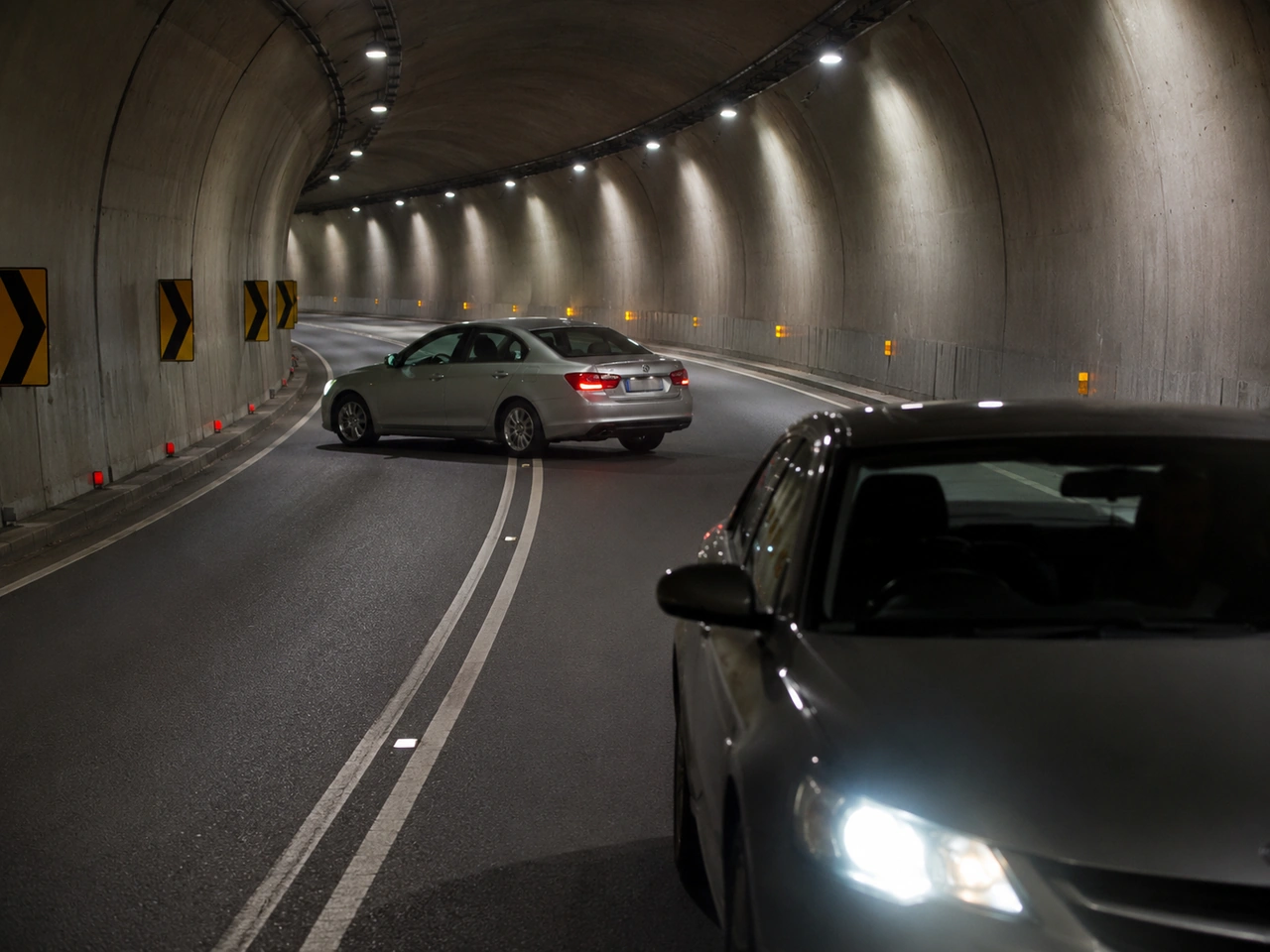
What should you do if the windscreen becomes damaged while driving?

221. What should you do if the windscreen becomes damaged while driving?

Continue driving if you can still see part of the road.
Rely on the mirrors instead of the windscreen.
✓ Reduce speed and stop safely if your view is affected.
Remove loose glass while the vehicle is moving.

Severe damage can obstruct your view and weaken the glass. Do not continue if you cannot see the road clearly.

Damaged windscreen affecting the driver's view
AI-generated by Traffic-rules.com • WCIT • CC BY-SA
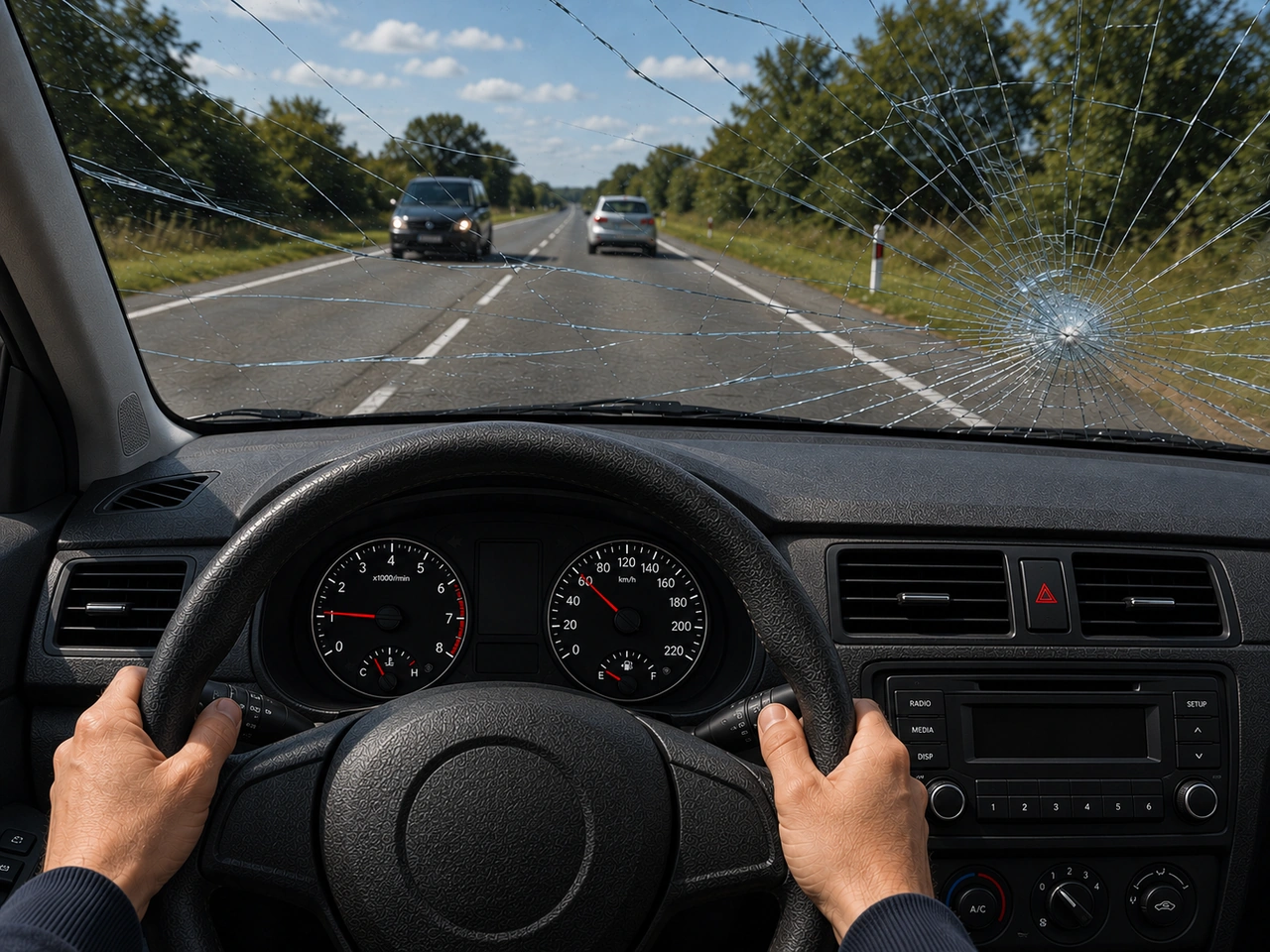
How should you pass a large vehicle in strong winds?

222. How should you pass a large vehicle in strong winds?

✓ Be prepared for sudden wind changes when passing.
Stay close beside it to remain sheltered from the wind.
Use the horn before moving alongside the vehicle.
Accelerate sharply as soon as you start passing.

Large vehicles can block wind and then expose you to strong gusts when you pass them.

Vehicle passing a large vehicle in windy conditions
AI-generated by Traffic-rules.com • WCIT • CC BY-SA
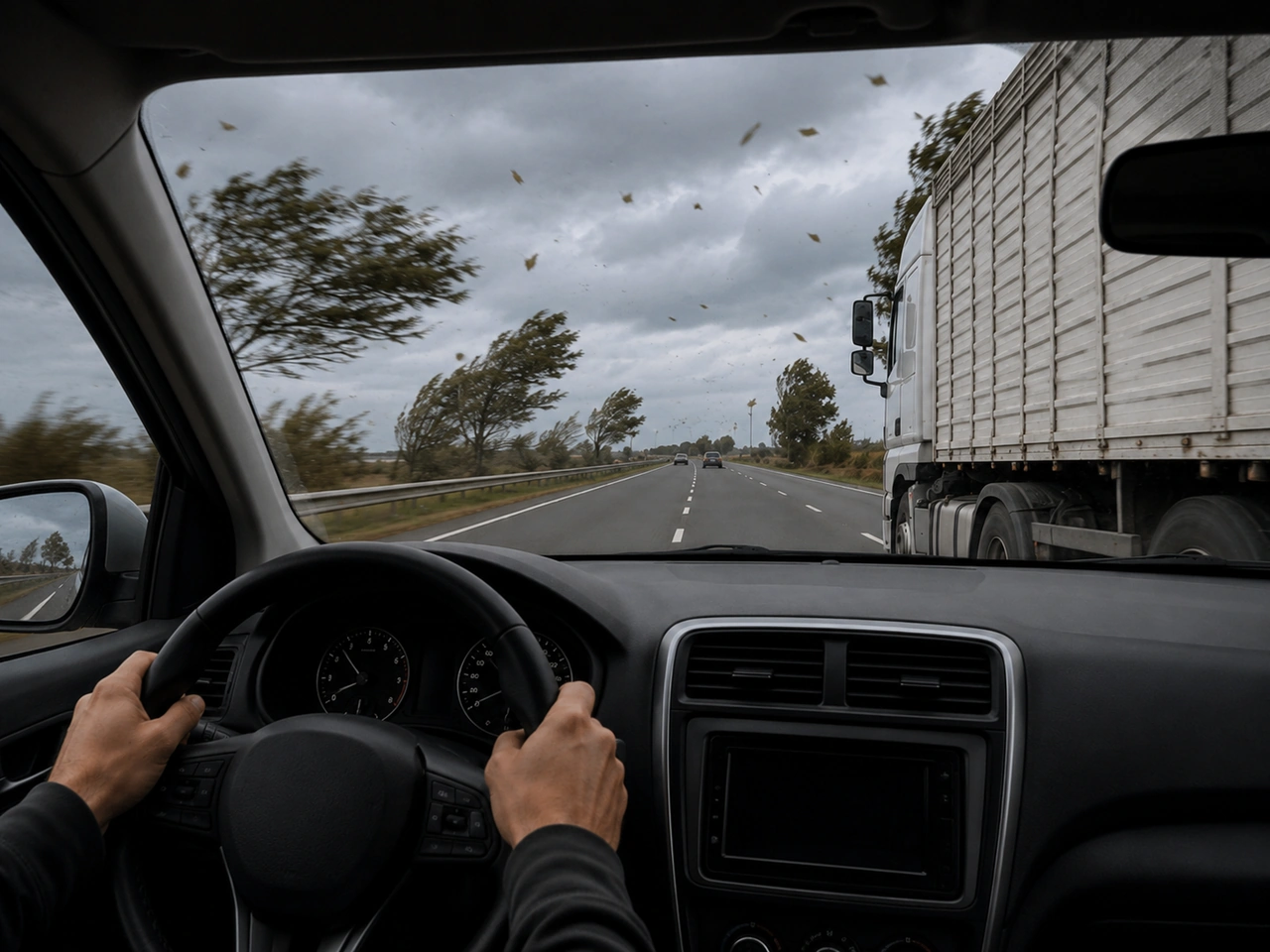
What should you do if you miss your motorway exit?

223. What should you do if you miss your motorway exit?

Cross the painted separation area back to the exit.
Use an emergency opening in the central reservation.
Turn around if traffic is light enough.
✓ Continue to the next exit.

Never reverse or make a sudden manoeuvre. Continue safely and change your route at the next suitable exit.

Vehicle continuing past a motorway exit
AI-generated by Traffic-rules.com • WCIT • CC BY-SA
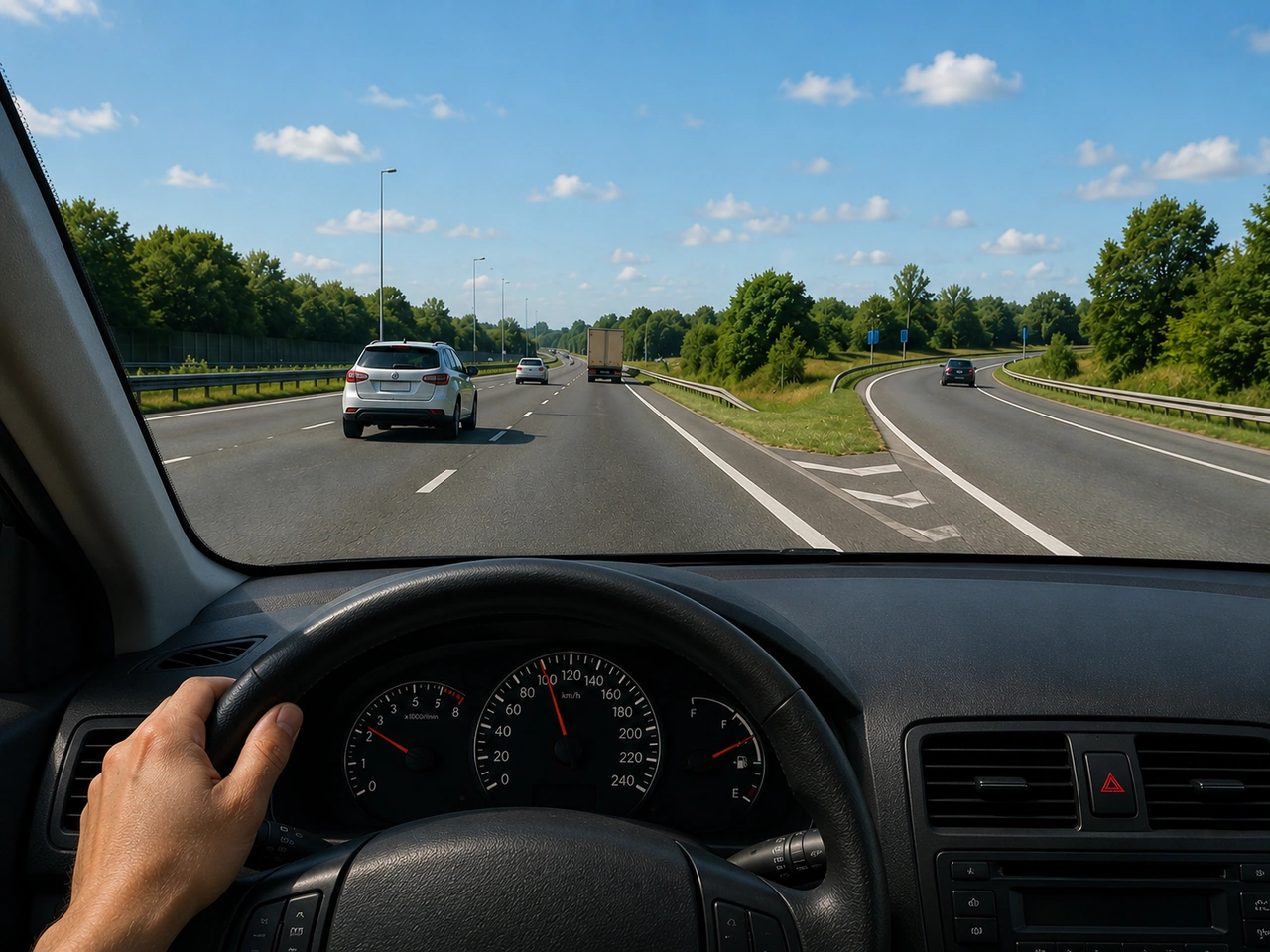
What do the + and − controls of cruise control normally do?

224. What do the + and − controls of cruise control normally do?

✓ Increase or decrease the selected cruising speed.
Apply or release the parking brake.
Switch between cruise control and the speed limiter.
Change the transmission gear.

When cruise control is active, the + and − controls normally increase or decrease the selected cruising speed. The amount of each adjustment can vary between vehicles.

Plus and minus controls for the cruising speed
AI-generated by Traffic-rules.com • WCIT • CC BY-SA
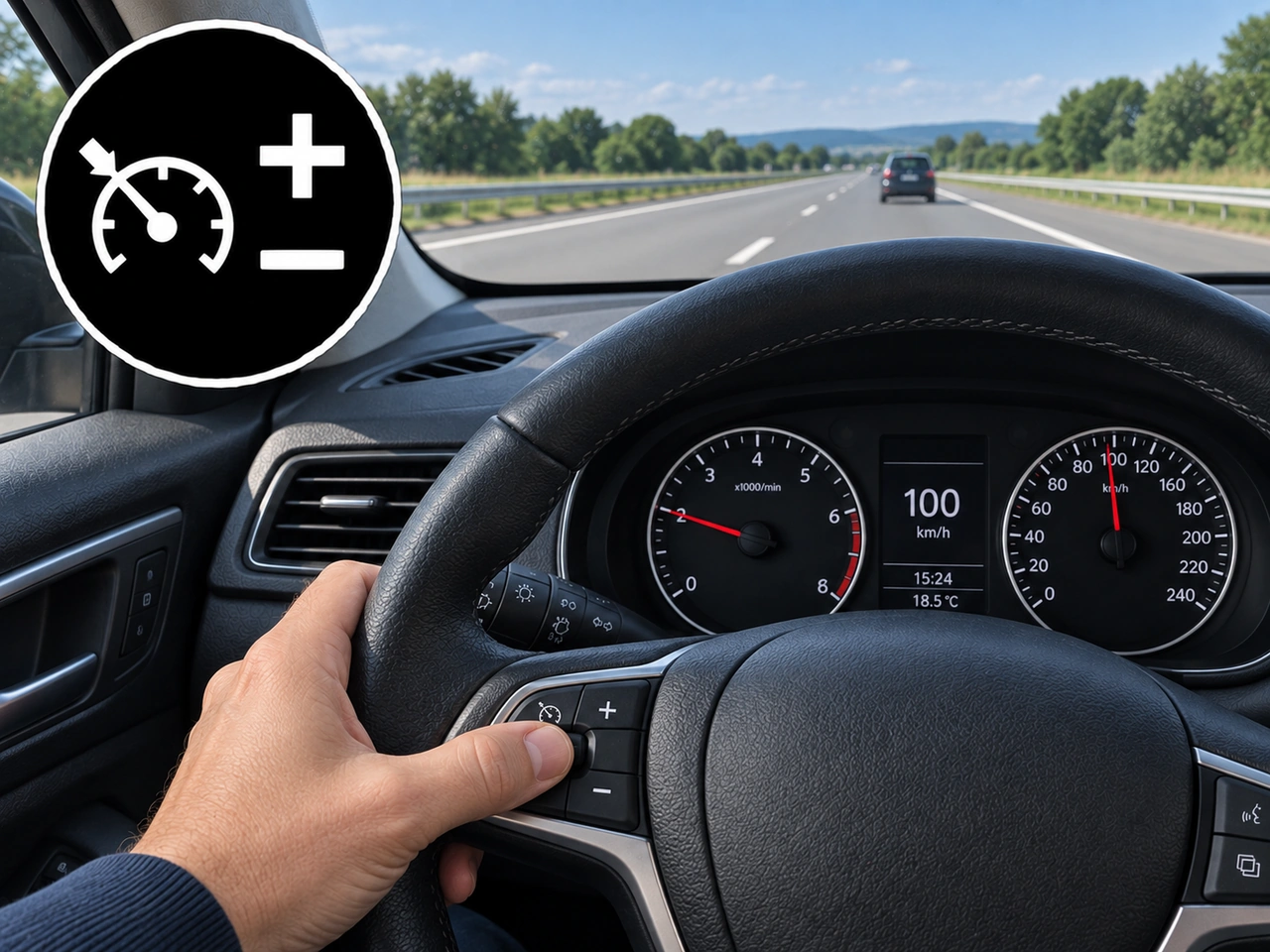
How can parking too close to a junction affect visibility?

225. How can parking too close to a junction affect visibility?

It affects only the driver of the parked vehicle.
✓ It can block the view between road users.
It improves visibility by slowing down traffic.
It blocks the view only for pedestrians.

Parking too close to a junction can block visibility. Drivers, cyclists, and pedestrians may have difficulty seeing each other in time.

Parked vehicle obstructing visibility near a junction
AI-generated by Traffic-rules.com • WCIT • CC BY-SA
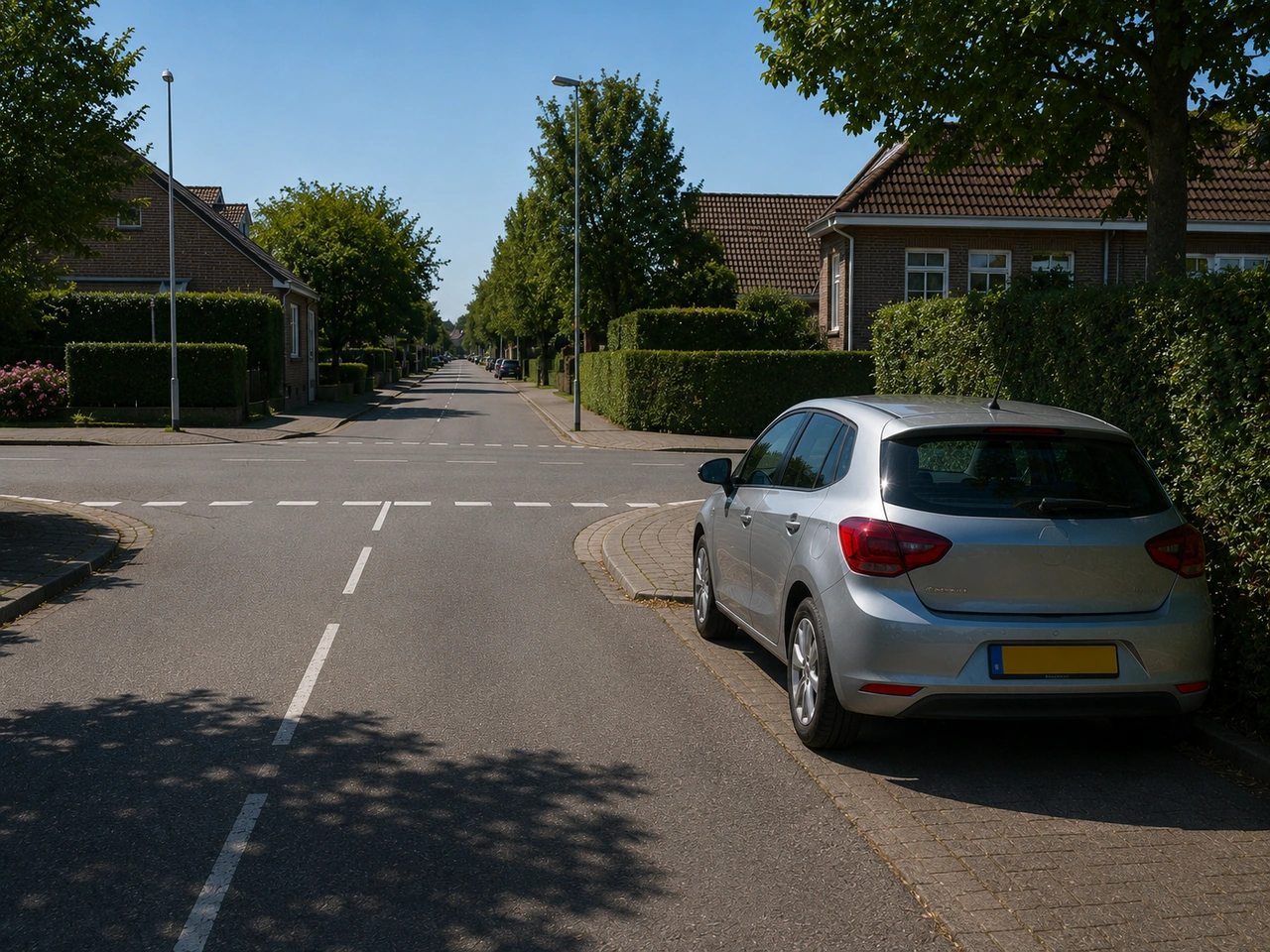
What should you do if your vehicle becomes stuck on a railway crossing?

226. What should you do if your vehicle becomes stuck on a railway crossing?

✓ Get everyone out, move away, and contact the emergency services.
Try to restart the vehicle until help arrives.
Stay inside the vehicle and call for assistance.
Walk along the tracks to look for help.

Move everyone well away from the tracks. Use the crossing emergency telephone or displayed contact information where available, or contact the emergency services immediately.

Vehicle stranded on a railway crossing
AI-generated by Traffic-rules.com • WCIT • CC BY-SA
Why should you take care when parking a motorcycle on soft ground?

227. Why should you take care when parking a motorcycle on soft ground?

✓ The stand may sink into the ground and the motorcycle could fall.
The tyres may immediately lose air pressure.
The brakes may lock while the motorcycle is parked.
The engine may become difficult to start.

On soft or unstable ground, the side or centre stand can sink or move, causing the motorcycle to fall. Park on a firm, stable surface or use a suitable support under the stand when necessary.

Motorcycle stand resting on soft ground
AI-generated by Traffic-rules.com • WCIT • CC BY-SA
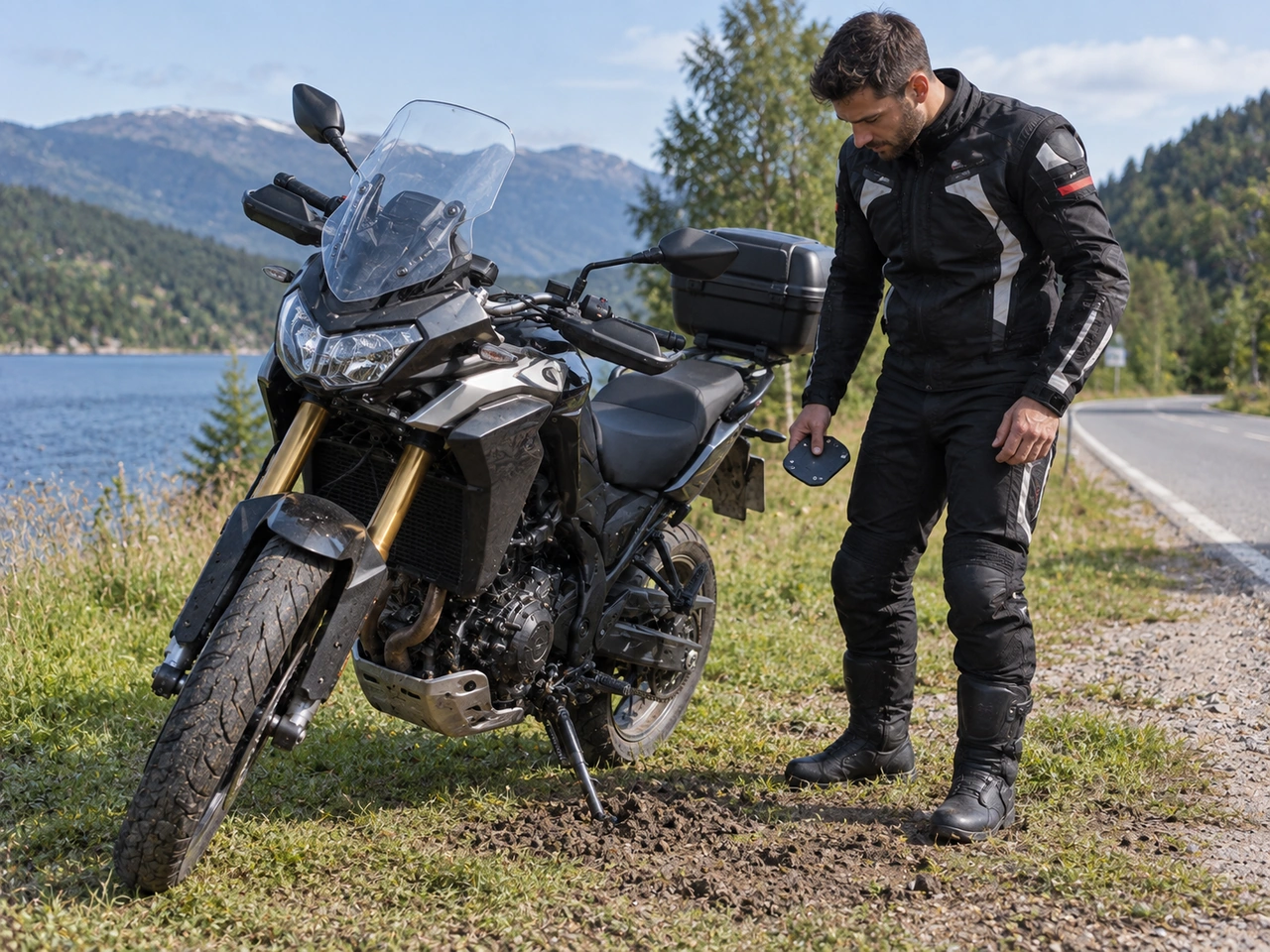
Why should you be careful when driving beside a bus at a stop?

228. Why should you be careful when driving beside a bus at a stop?

✓ Passengers may step out or cross near the bus.
A stopped bus always has priority over passing traffic.
Vehicles beside a bus must always stop and wait.
Bus stops usually have a lower speed limit.

Stopped buses can hide pedestrians, and passengers may cross unexpectedly. Slow down and be ready to react.

Vehicle passing a bus at a stop
AI-generated by Traffic-rules.com • WCIT • CC BY-SA
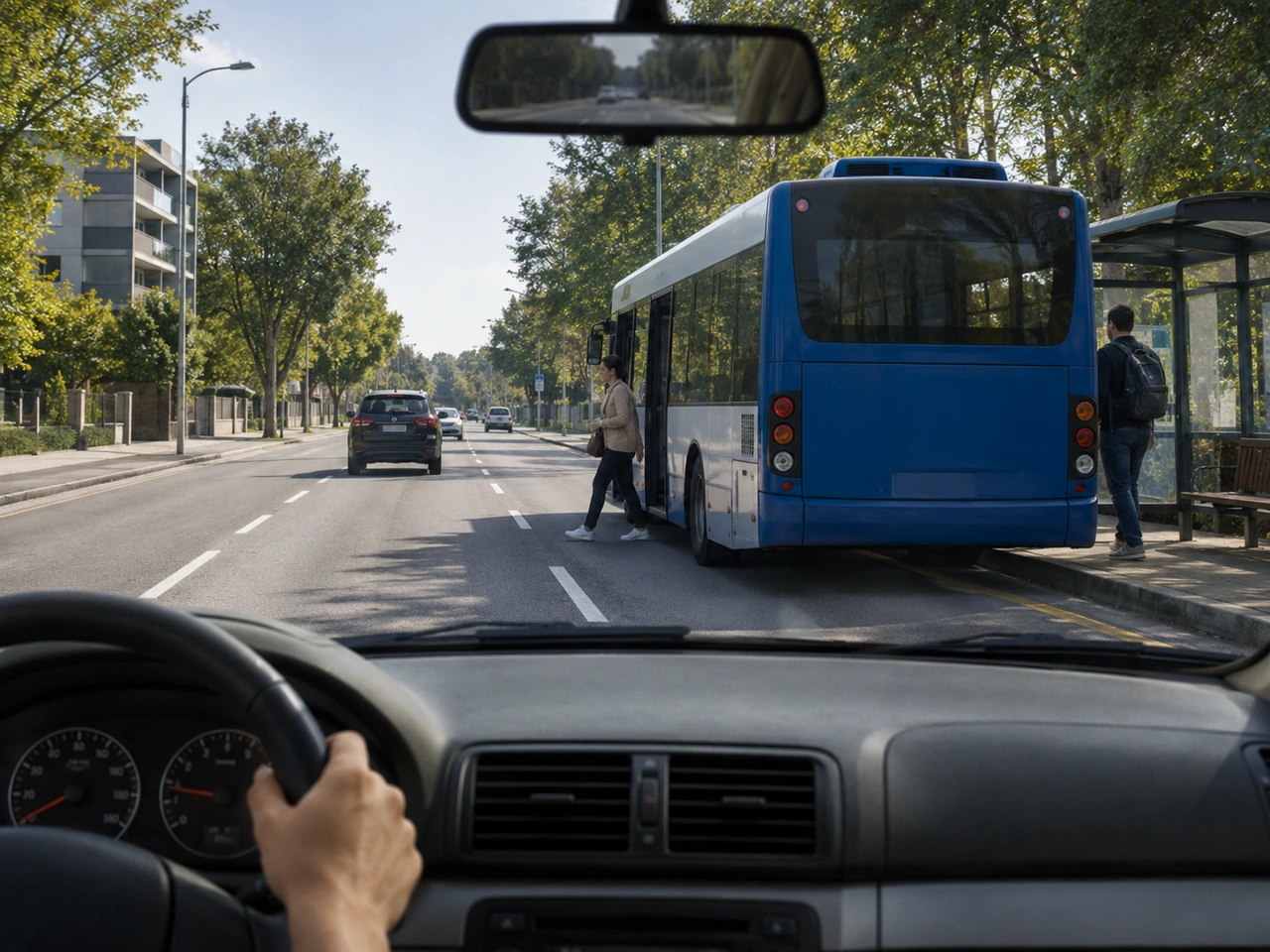
What does this vehicle-control symbol indicate?

229. What does this vehicle-control symbol indicate?

Electric window control.
Central door locking.
✓ Exterior mirror folding.
Exterior mirror adjustment.

This control folds or unfolds the vehicle's exterior mirrors. It is useful when parking in narrow spaces or when leaving the vehicle parked.

Control for folding the exterior mirrors
AI-generated by Traffic-rules.com • WCIT • CC BY-SA
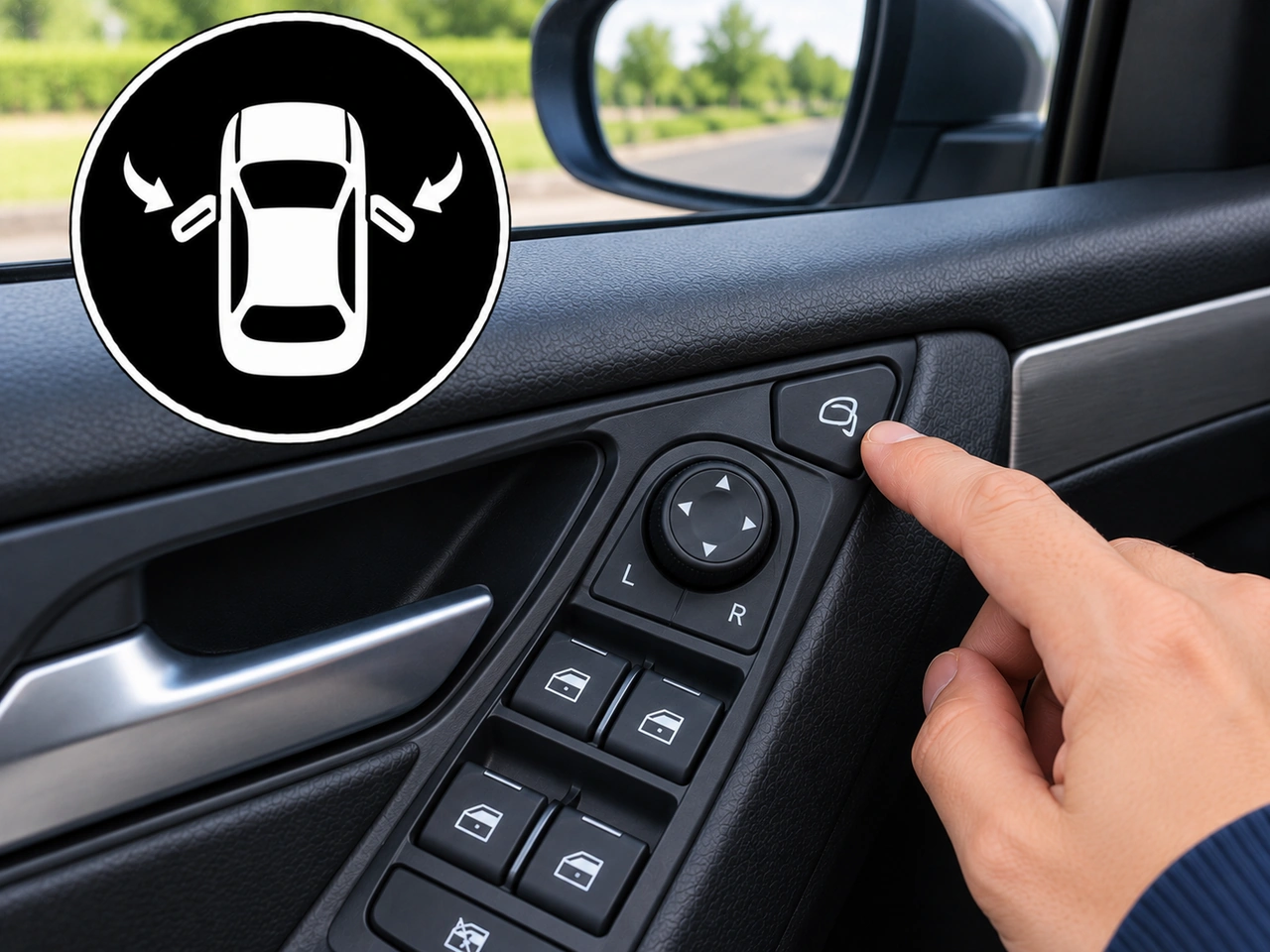
What is the main emergency number in Panama?

230. What is the main emergency number in Panama?

000.
✓ 911.
123.
112.

The main emergency number in Panama is 911.

911 emergency telephone number
AI-generated by Traffic-rules.com • WCIT • CC BY-SA
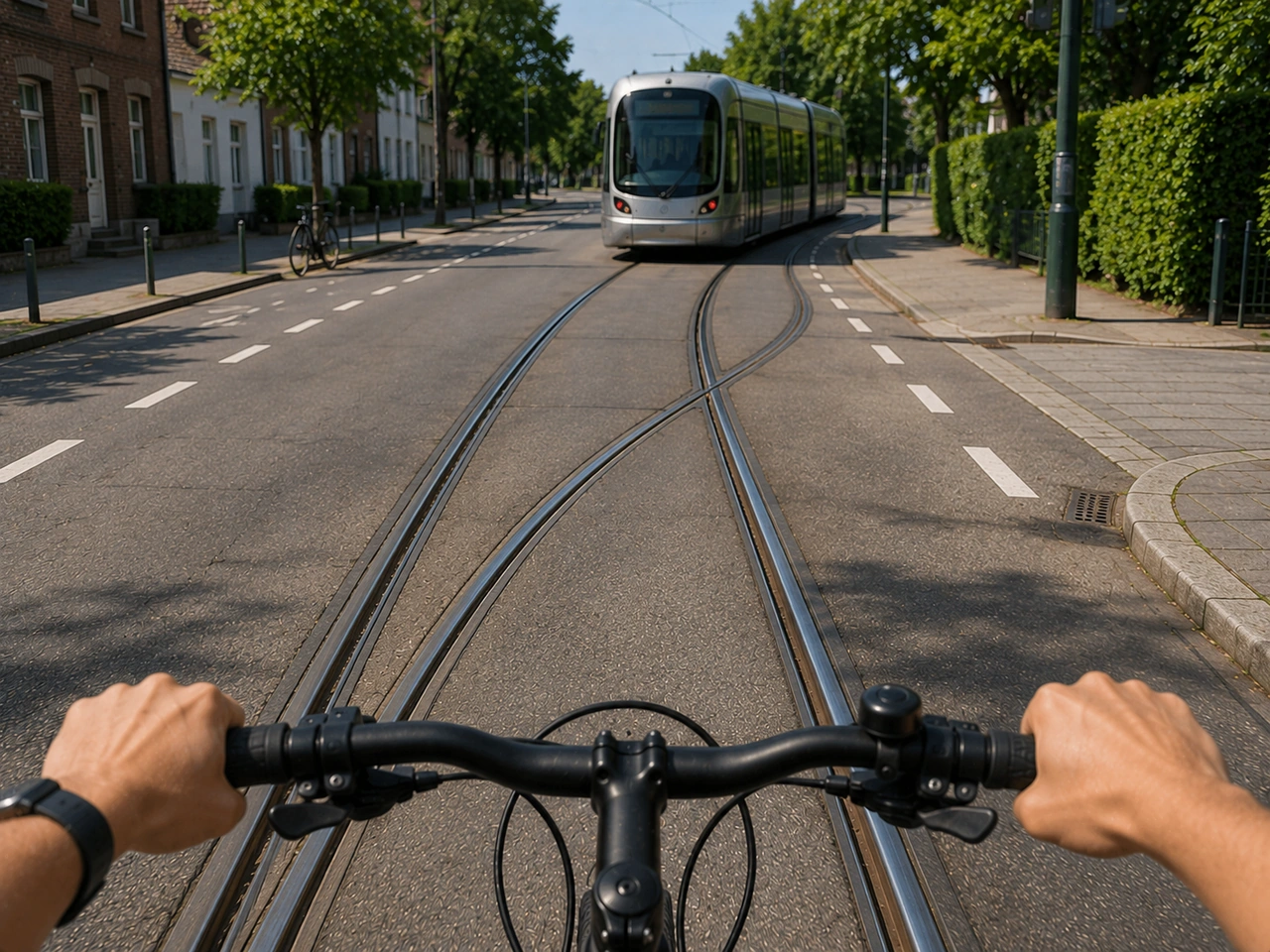
How should cyclists cross railway or tram tracks?

231. How should cyclists cross railway or tram tracks?

Keep the wheels parallel with the rails while crossing.
Follow the rails briefly before crossing them.
✓ Cross at a safe angle, as close to perpendicular as possible.
Increase speed so the wheels cannot get caught.

A bicycle wheel can become trapped in a rail groove. Crossing at a wider angle reduces this risk.

Cyclist crossing rails in the road
AI-generated by Traffic-rules.com • WCIT • CC BY-SA
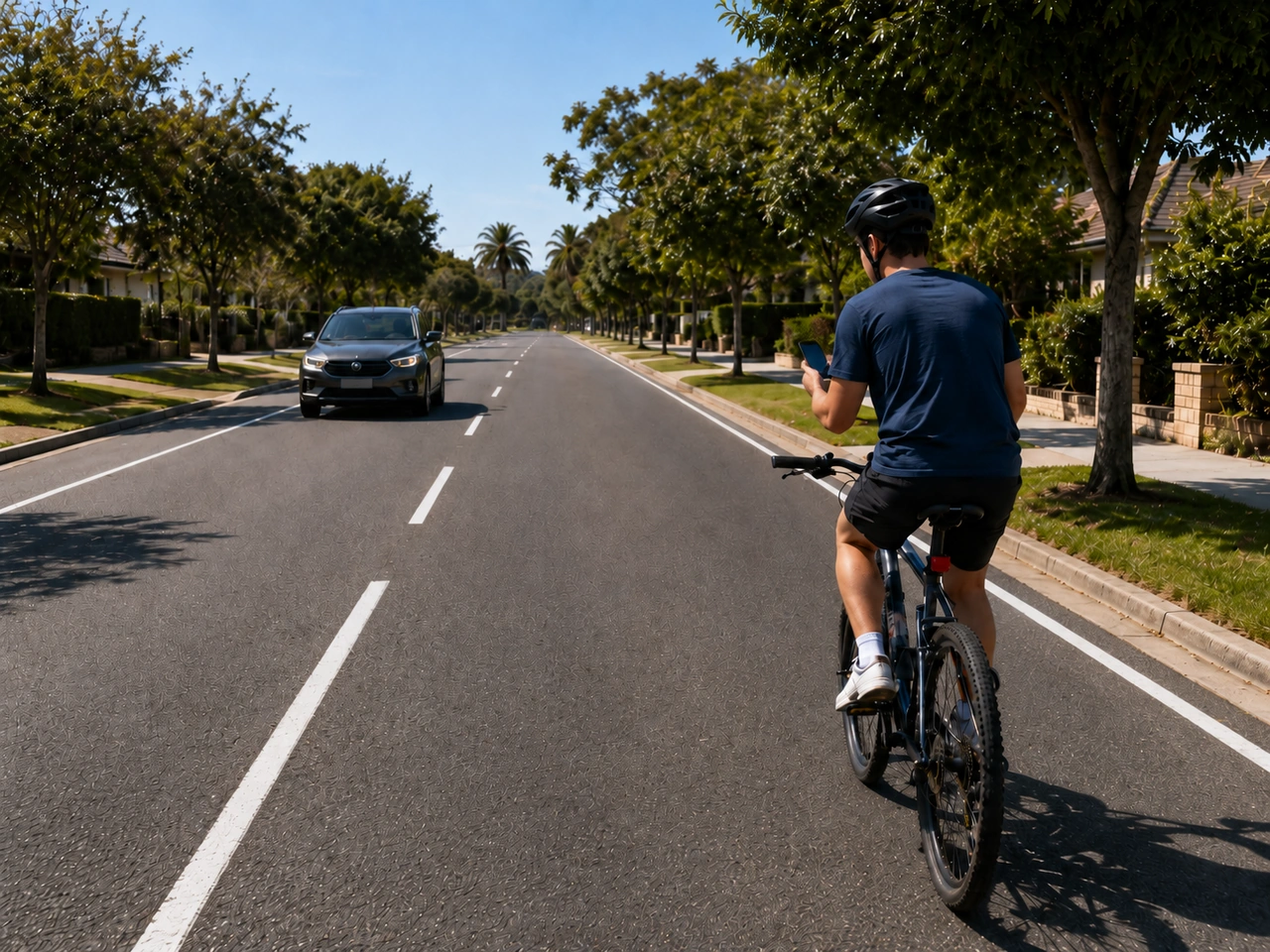
Why should cyclists avoid using a handheld phone?

232. Why should cyclists avoid using a handheld phone?

✓ It reduces your control and attention.
Because phones can interfere with bicycle electronics.
Because a phone may be used only at low speeds.
Because phones must be switched off while cycling.

Using a phone can distract you and may prevent you from steering, braking, or reacting properly.

Cyclist using a handheld phone
AI-generated by Traffic-rules.com • WCIT • CC BY-SA
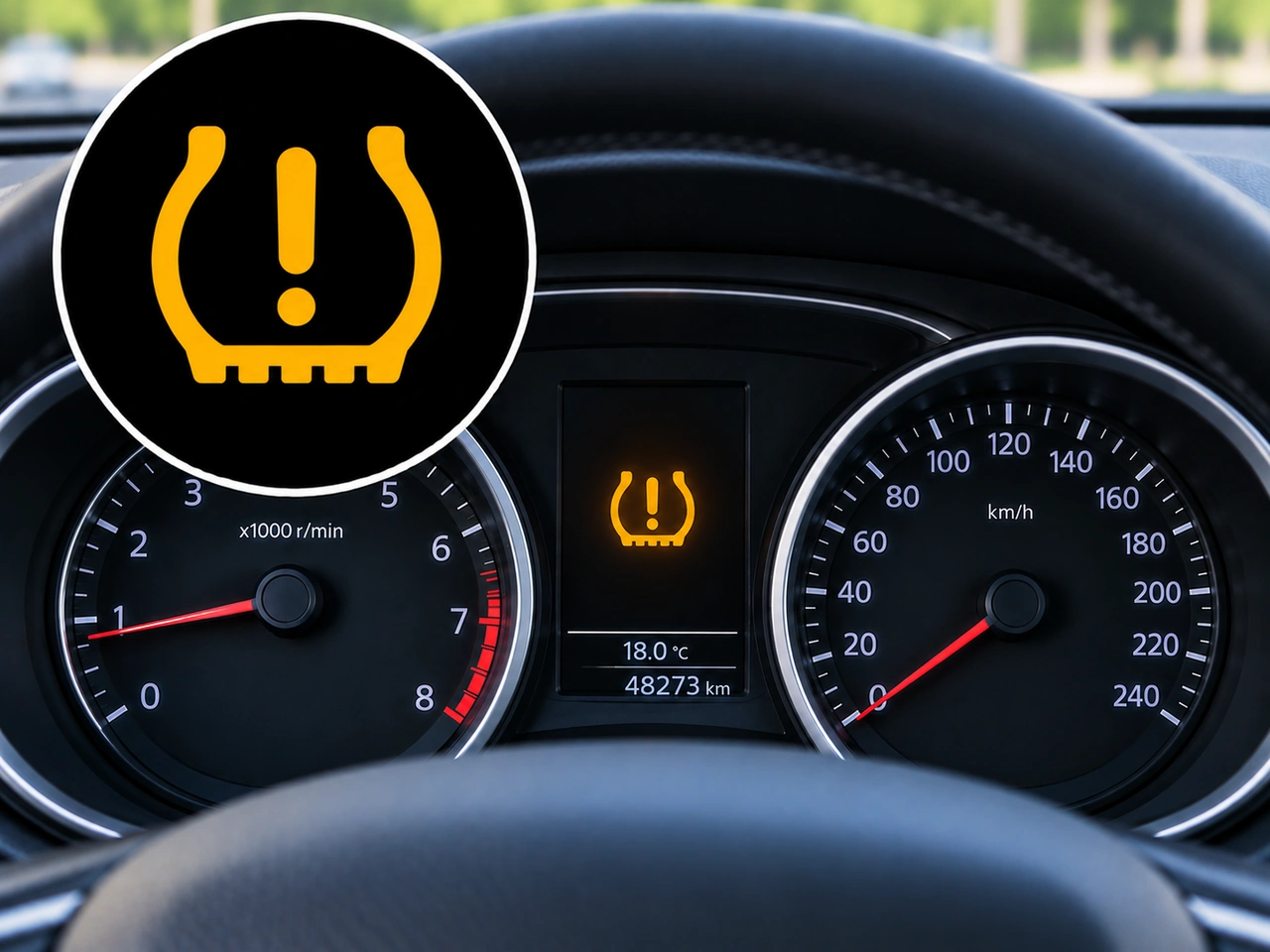
What does this dashboard symbol indicate?

233. What does this dashboard symbol indicate?

Power-steering warning.
Electronic stability control.
✓ Low tyre pressure.
Brake-system warning.

This symbol indicates that one or more tyres may have low pressure. Check the tyre pressures and inspect the tyres for damage or a puncture.

Tyre-pressure warning symbol on the dashboard
AI-generated by Traffic-rules.com • WCIT • CC BY-SA
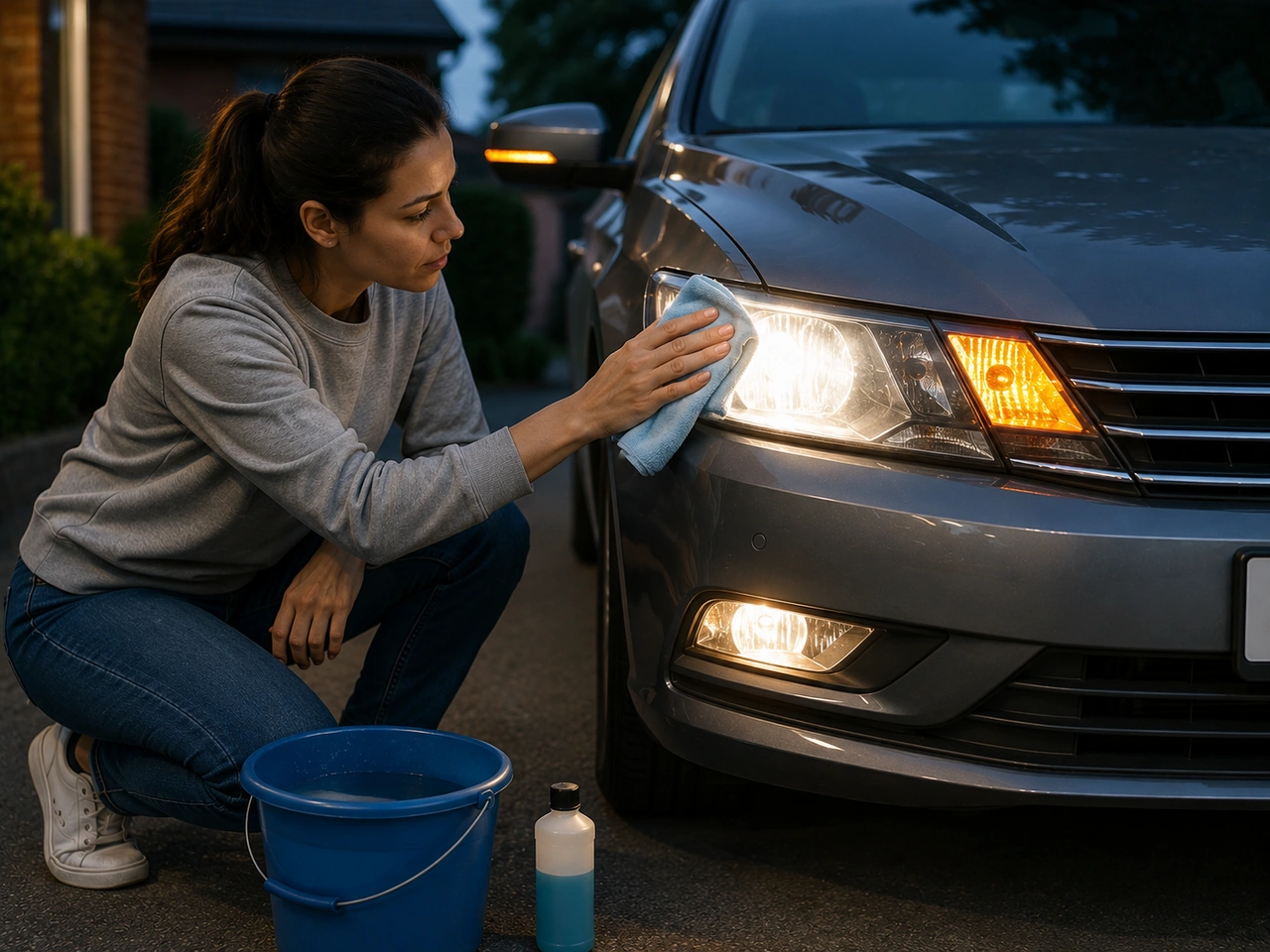
Why should headlights, indicators, and other exterior lights be kept clean and working?

234. Why should headlights, indicators, and other exterior lights be kept clean and working?

✓ They help you see, be seen, and communicate your intentions.
They prevent the windscreen from misting.
They only need to work when you drive at night.
They improve braking performance in poor weather.

Dirty or faulty lights reduce visibility and make it harder for other road users to understand when you are braking, turning, reversing, or changing position.

Checking and cleaning a vehicle's exterior lights
AI-generated by Traffic-rules.com • WCIT • CC BY-SA
How can unnecessary weight affect a vehicle's energy use?

235. How can unnecessary weight affect a vehicle's energy use?

It makes the vehicle easier to accelerate.
It improves braking efficiency.
✓ It can increase the energy needed to move the vehicle.
It always reduces fuel consumption.

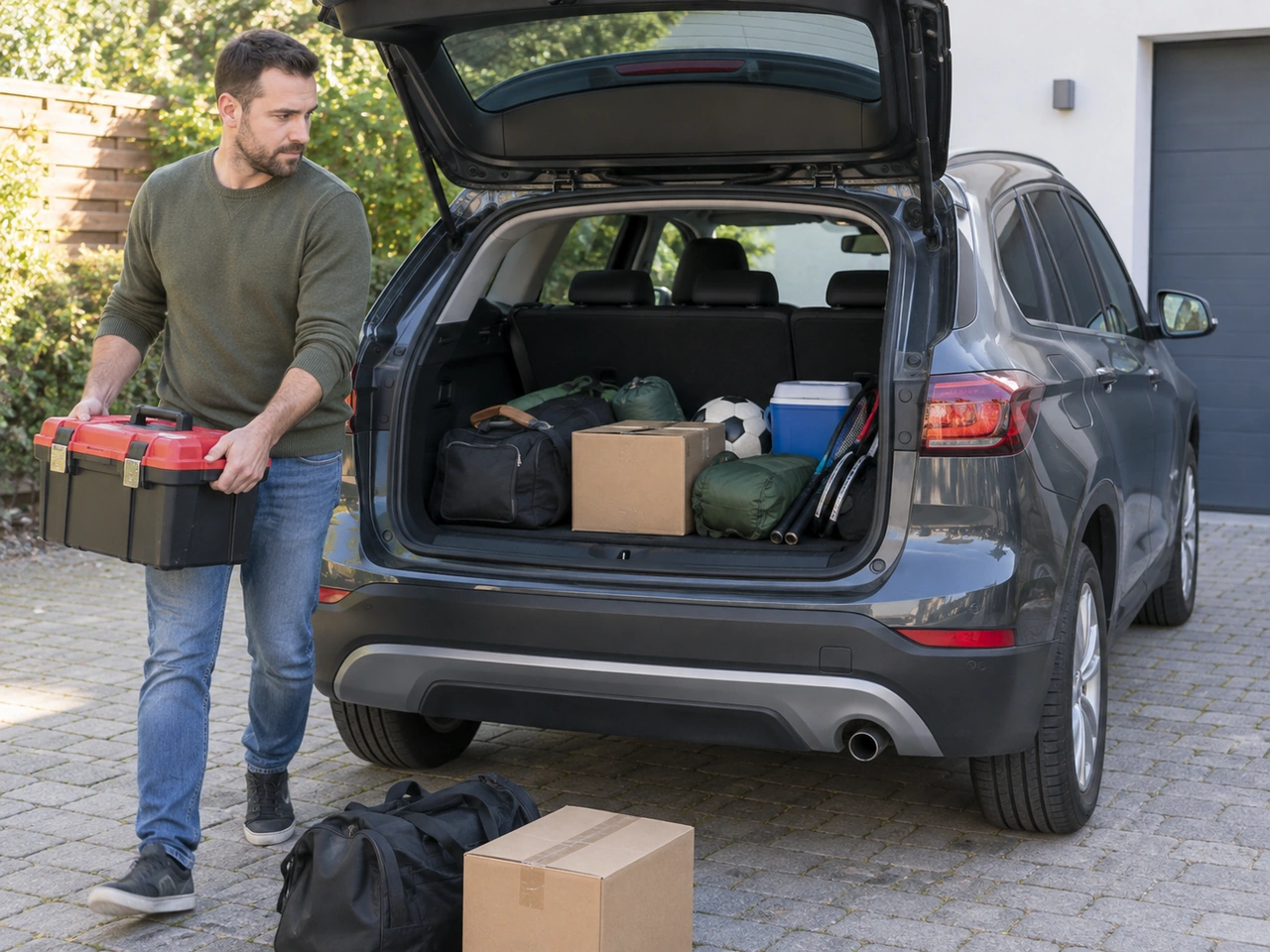
Extra weight generally requires more energy when accelerating and climbing. Removing unnecessary heavy items can help reduce fuel or energy consumption while keeping all essential equipment in the vehicle.

Extra luggage adding weight to a vehicle
AI-generated by Traffic-rules.com • WCIT • CC BY-SA
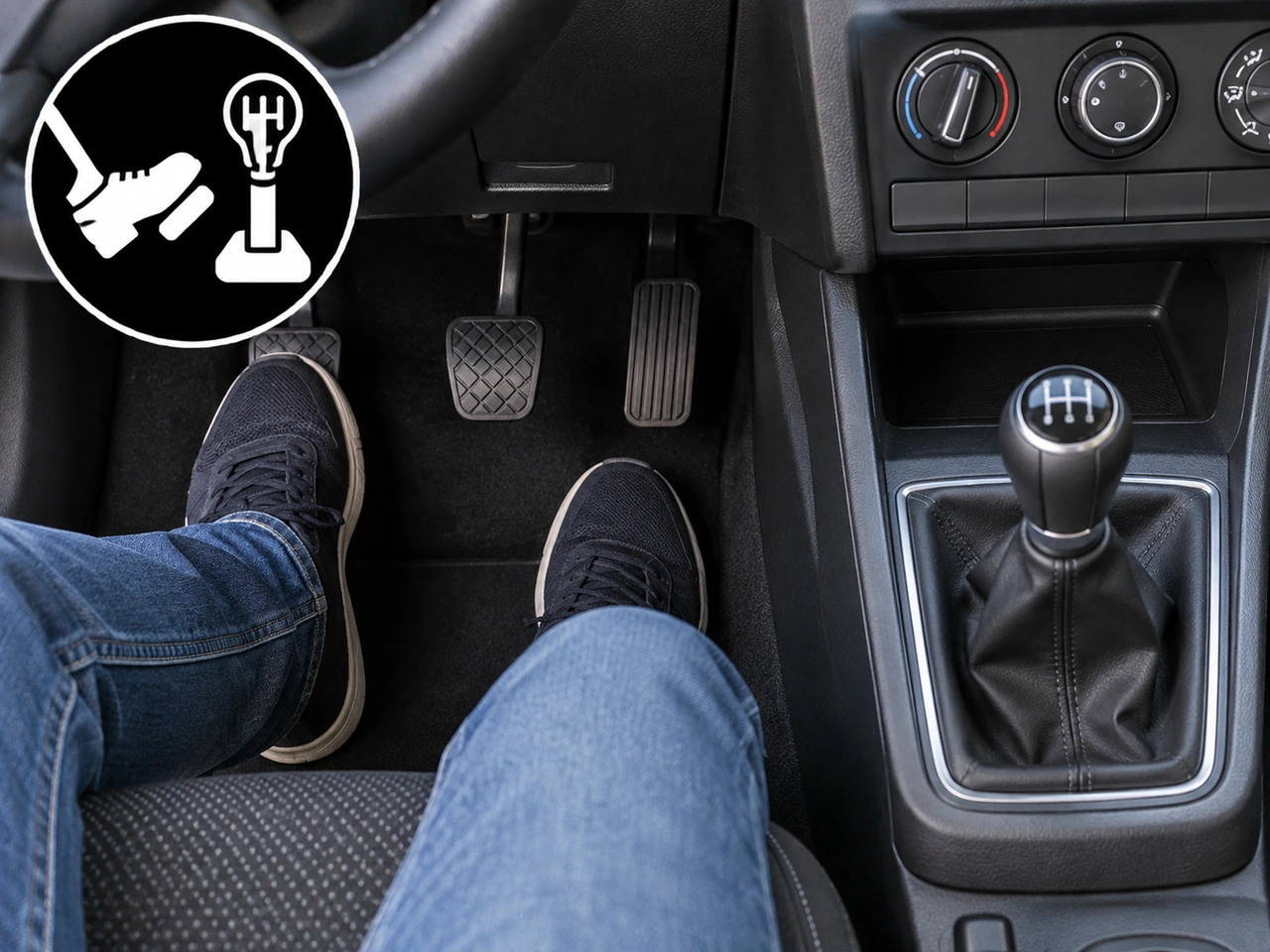
What should you check before starting a manual vehicle?

236. What should you check before starting a manual vehicle?

✓ That the gearbox is in neutral and the clutch is pressed.
That the parking brake is released.
That first gear is selected and the accelerator is pressed.
That reverse gear is selected.

Before starting a manual vehicle, make sure the gearbox is in neutral and press the clutch pedal. This helps prevent the vehicle from moving unexpectedly when the engine starts.

Clutch and gear checks before starting a manual vehicle
AI-generated by Traffic-rules.com • WCIT • CC BY-SA
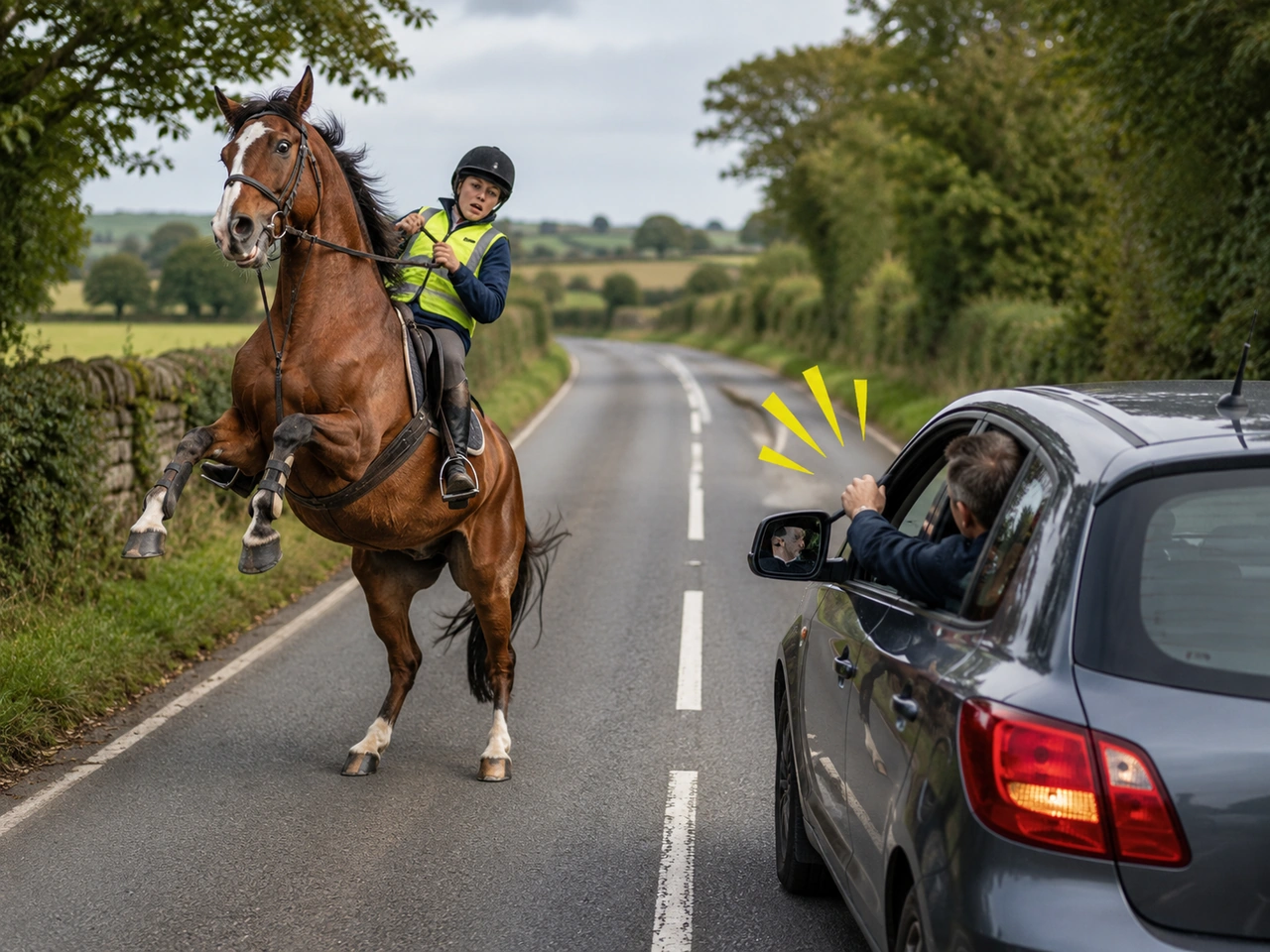
Why should you avoid sounding the horn near horses?

237. Why should you avoid sounding the horn near horses?

✓ The noise may frighten them.
Using the horn gives the horse rider priority.
The rider may think you are signalling them to stop.
Horses cannot hear a vehicle horn clearly.

Horses can be startled by sudden or loud noises and may move unpredictably. Slow down, give them plenty of space, and avoid using the horn unless necessary.

Vehicle approaching a horse and rider
AI-generated by Traffic-rules.com • WCIT • CC BY-SA
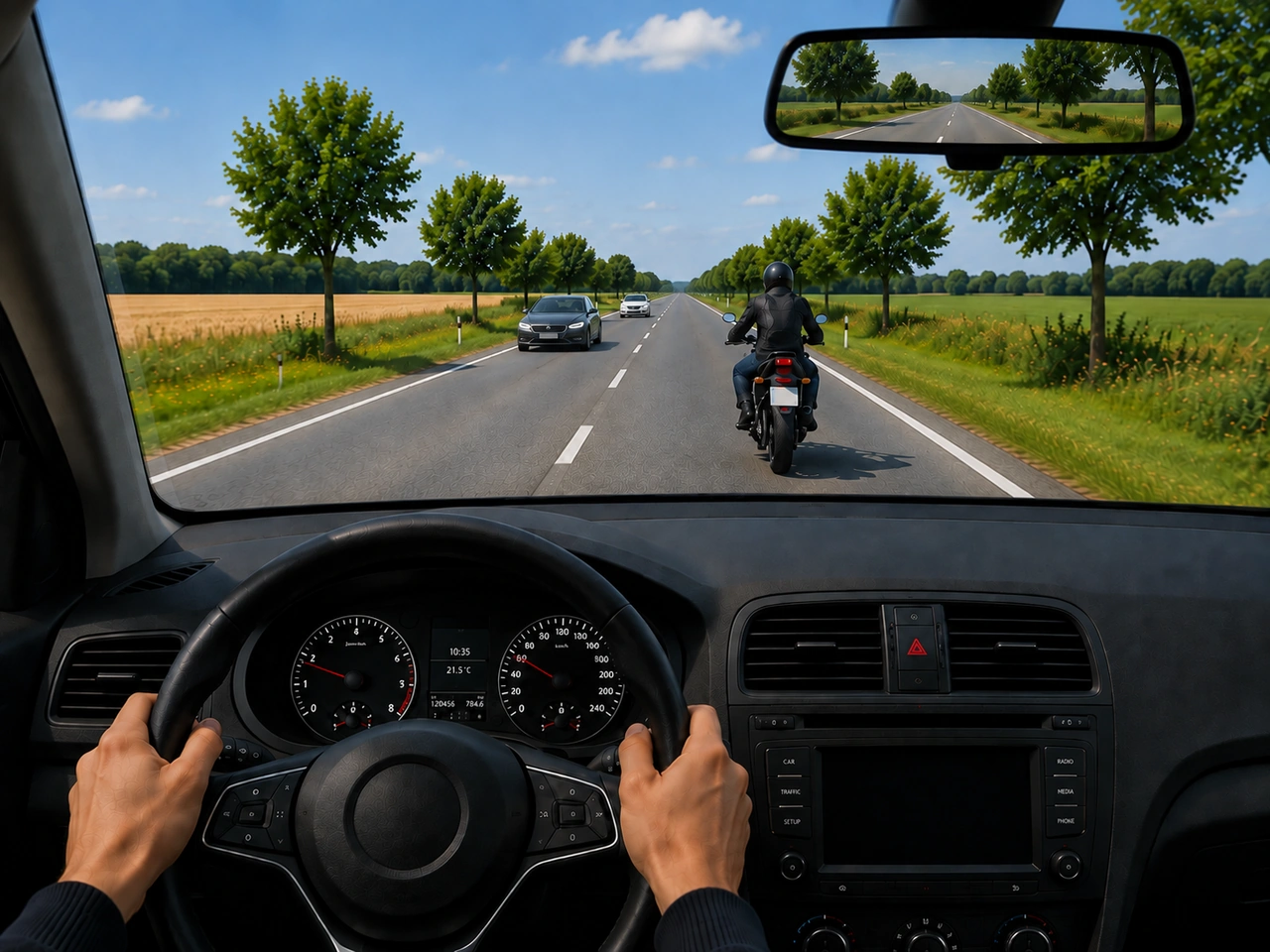
Why should you leave extra space behind a motorcycle?

238. Why should you leave extra space behind a motorcycle?

Motorcycles need less space to stop than cars.
Motorcyclists cannot see vehicles directly behind them.
Following closely makes it easier to overtake safely.
✓ Motorcycles can slow down quickly and are more vulnerable.

Motorcyclists are more exposed than car drivers. Extra following distance gives you more time to react safely.

Following distance behind a motorcycle
AI-generated by Traffic-rules.com • WCIT • CC BY-SA
What is the purpose of the seat-belt retractor?

239. What is the purpose of the seat-belt retractor?

To release the seat belt from the buckle.
To tighten the parking brake.
✓ To take up slack and lock the belt when necessary.
To adjust the seat height.

The seat-belt retractor takes up slack and helps keep the belt properly positioned against the body. It allows normal movement but can lock during sudden braking, rapid belt movement or a collision.

Seat-belt webbing and retracting mechanism
AI-generated by Traffic-rules.com • WCIT • CC BY-SA
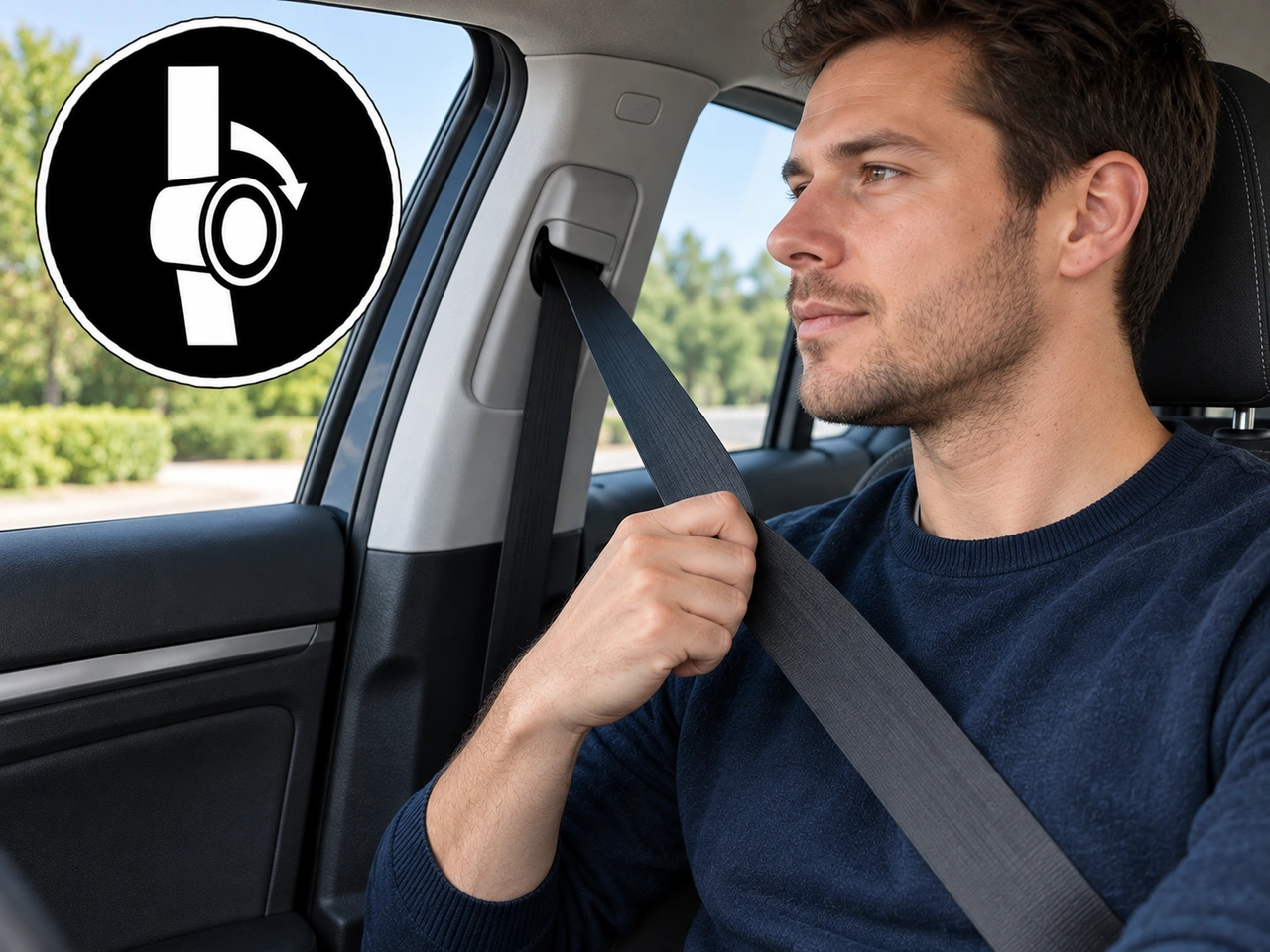
What should you do if you see loose gravel on the road?

240. What should you do if you see loose gravel on the road?

✓ Slow down and avoid sudden steering or braking.
Maintain your speed and avoid using the brakes.
Follow the vehicle ahead closely in its tyre tracks.
Brake firmly before the tyres begin to slide.

Loose gravel reduces grip and can make the vehicle skid. Slow down and use smooth steering and braking.

Vehicle on a loose gravel road
AI-generated by Traffic-rules.com • WCIT • CC BY-SA
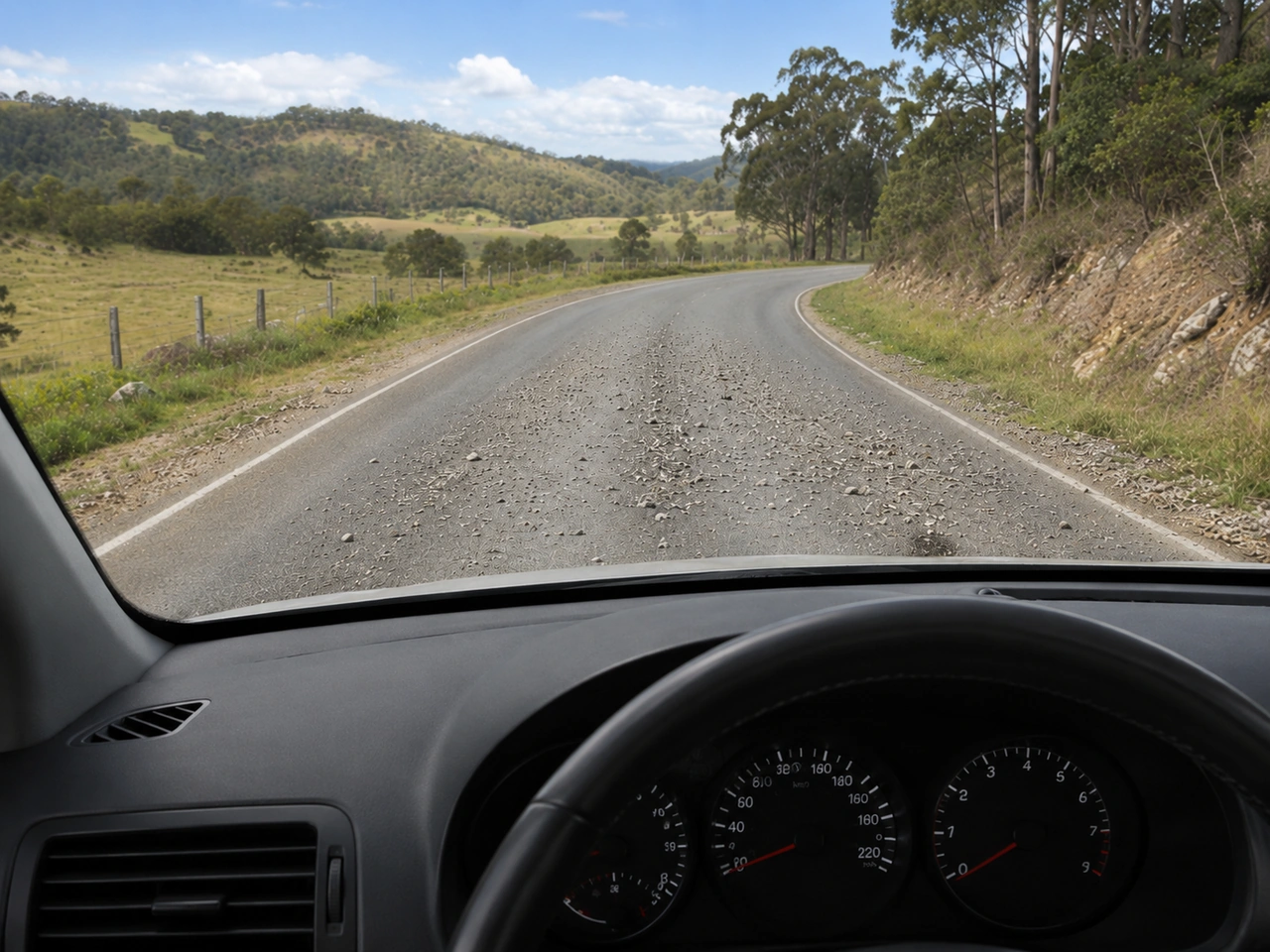
What should you expect when lanes become narrower in roadworks?

241. What should you expect when lanes become narrower in roadworks?

The speed limit automatically increases.
Temporary lane markings no longer need to be followed.
✓ Less space between your vehicle, barriers, and other traffic.
All vehicles must drive in the centre of the lane.

Narrow lanes leave less room for error. Keep a steady position, avoid drifting toward barriers or nearby vehicles, and reduce speed if necessary.

Narrow traffic lanes through roadworks
AI-generated by Traffic-rules.com • WCIT • CC BY-SA
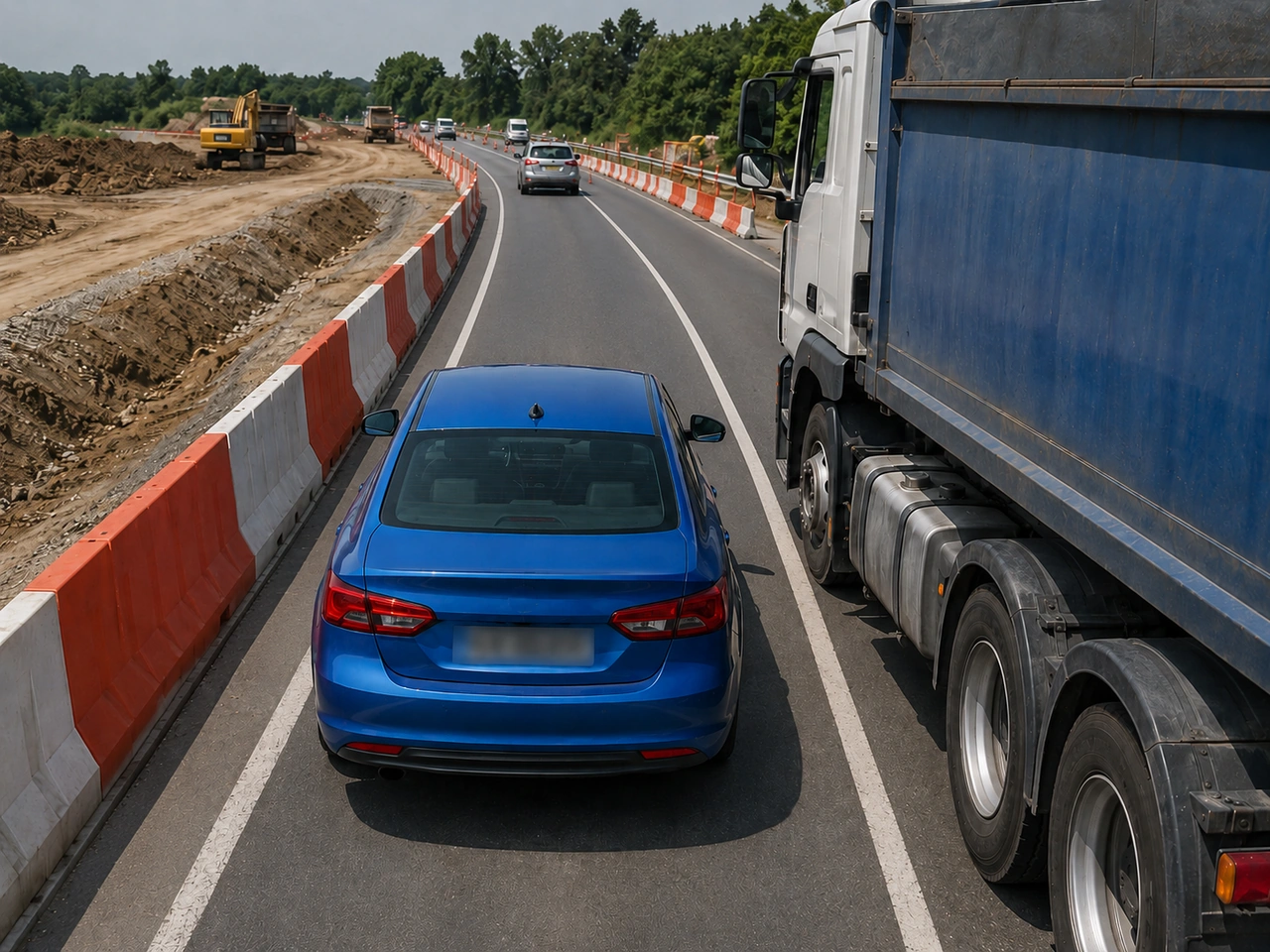
What should you do if the engine-temperature warning shows overheating?

242. What should you do if the engine-temperature warning shows overheating?

Open the coolant cap immediately to release heat.
✓ Stop safely, switch off the engine, and allow it to cool.
Continue driving slowly until the warning disappears.
Increase engine speed to improve coolant circulation.

Continuing to drive an overheating vehicle can cause severe damage. Allow the engine to cool and follow the manufacturer's instructions.

Engine-overheating warning on the dashboard
AI-generated by Traffic-rules.com • WCIT • CC BY-SA
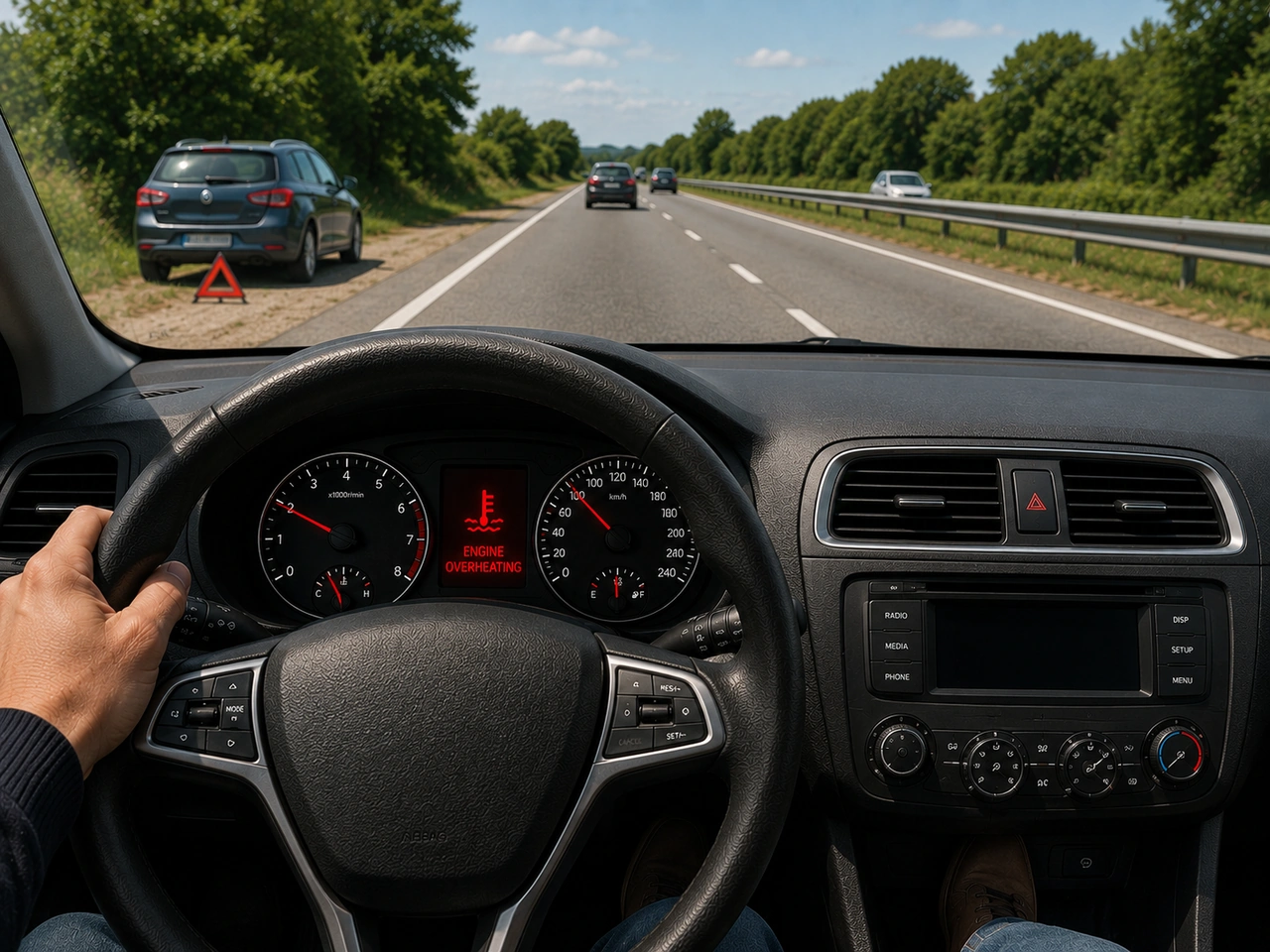
Which factors can increase a vehicle's stopping distance?

243. Which factors can increase a vehicle's stopping distance?

Having a full fuel tank and adjusted mirrors.
Using dipped headlights and keeping the windows closed.
Driving in a lower gear and using the indicators.
✓ Higher speed, slower reactions, poor grip, and vehicle condition.

Stopping distance can increase because of higher speed, slower driver reactions, reduced tyre grip, poor weather or road conditions, worn tyres, weak brakes, or a heavier vehicle. Both the driver's reaction distance and the vehicle's braking distance can be affected.

Road and vehicle conditions affecting stopping distance
AI-generated by Traffic-rules.com • WCIT • CC BY-SA
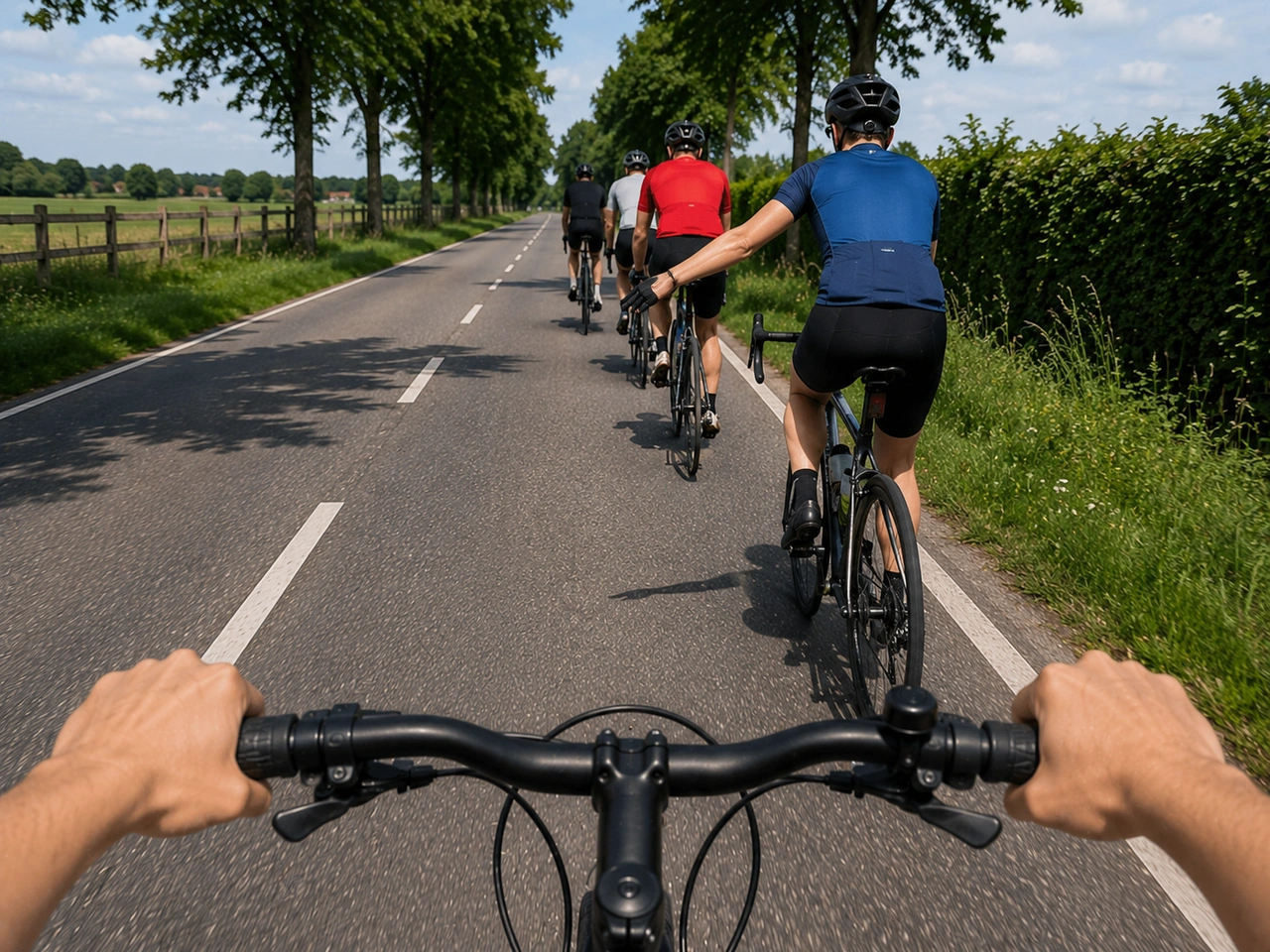
How should cyclists ride when travelling in a group?

244. How should cyclists ride when travelling in a group?

Ride side by side even when traffic cannot pass safely.
Ride as close together as possible to stay as one group.
✓ Predictably, with safe gaps and clear communication.
Follow the cyclist ahead without checking traffic yourself.

Safe spacing and communication help group members respond to braking, turns, obstacles, and changing traffic conditions.

Group of cyclists riding along a road
AI-generated by Traffic-rules.com • WCIT • CC BY-SA
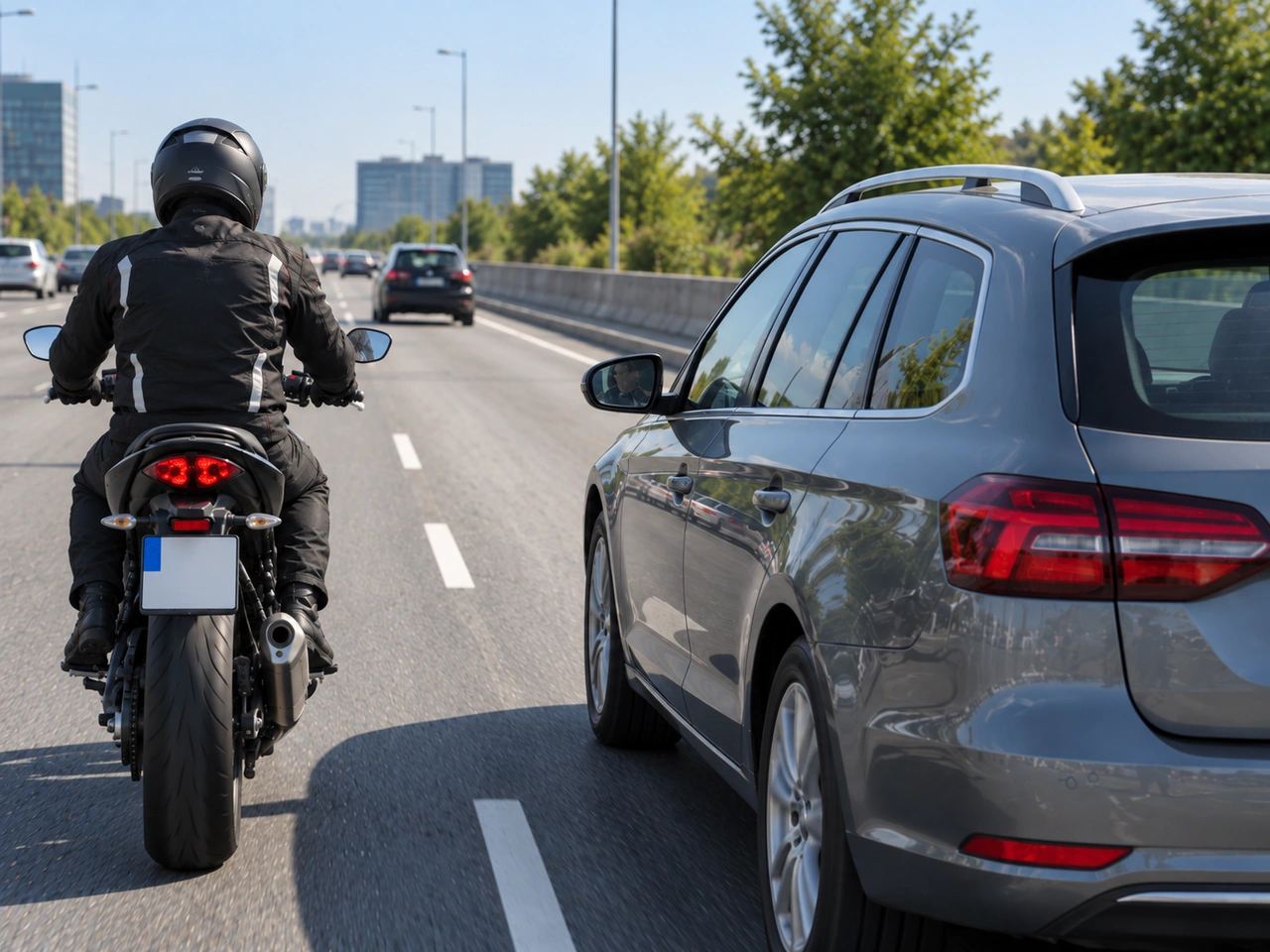
Why should a motorcyclist avoid riding in another vehicle's blind spot?

245. Why should a motorcyclist avoid riding in another vehicle's blind spot?

The motorcycle will use more fuel.
✓ The driver may not be able to see the motorcycle.
The motorcycle's indicators may be harder to see.
The vehicle ahead must always change lanes.

Motorcycles can be difficult to see, particularly when they remain in another vehicle's blind spot. Avoid staying alongside a vehicle where the driver may not see you, and choose a position where you are more likely to be visible.

Motorcycle in another vehicle's blind spot
AI-generated by Traffic-rules.com • WCIT • CC BY-SA
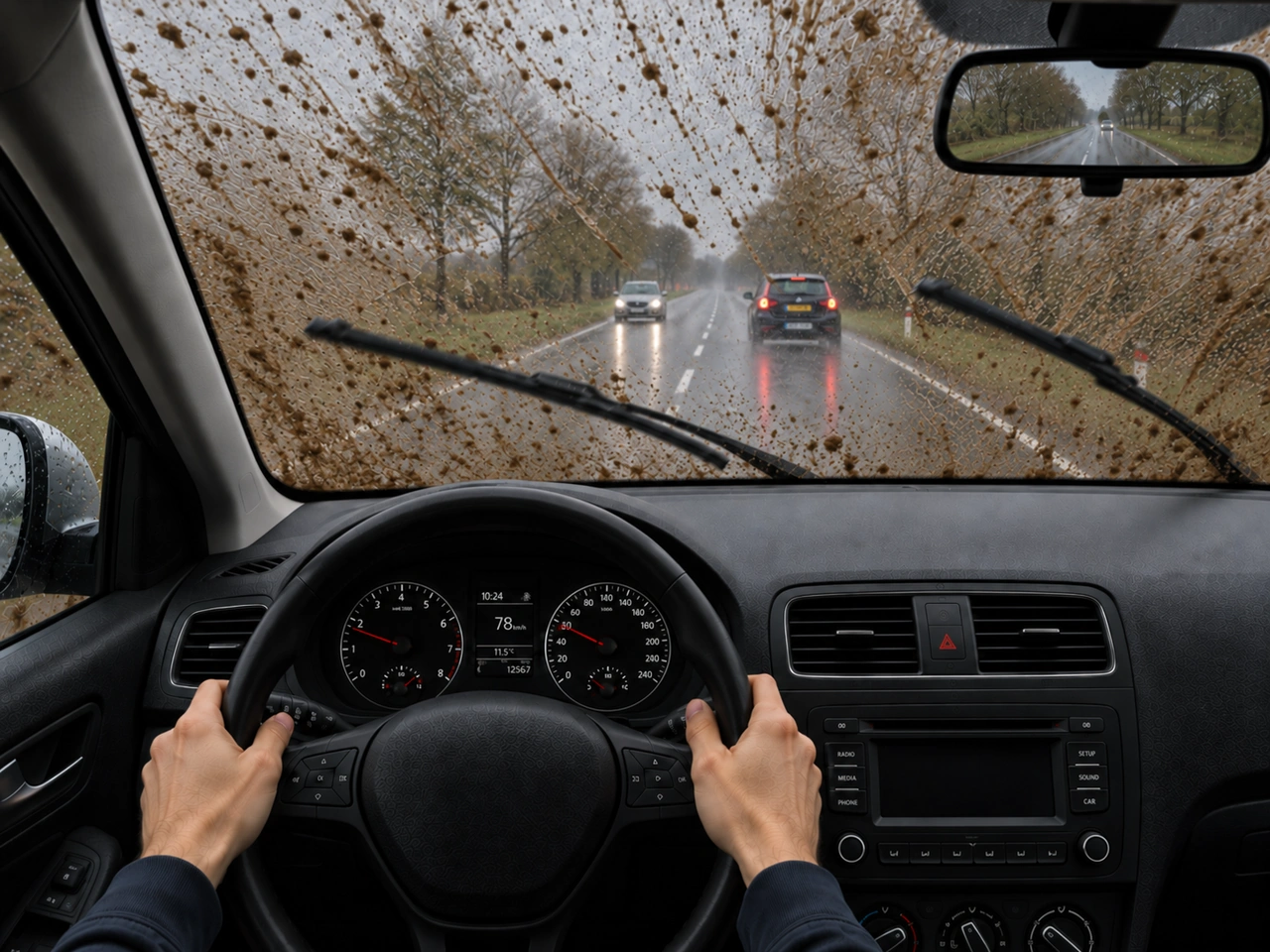
What should you do if your windscreen becomes covered with mud or spray?

246. What should you do if your windscreen becomes covered with mud or spray?

Continue driving and wait for the spray to clear.
Switch off the wipers until the windscreen dries.
✓ Slow down and use the washers and wipers to restore clear vision.
Use the demister instead of the washers.

Clear visibility is essential. Slow down safely and use your washers and wipers until you can see the road clearly again.

Mud and spray obscuring a vehicle's windscreen
AI-generated by Traffic-rules.com • WCIT • CC BY-SA
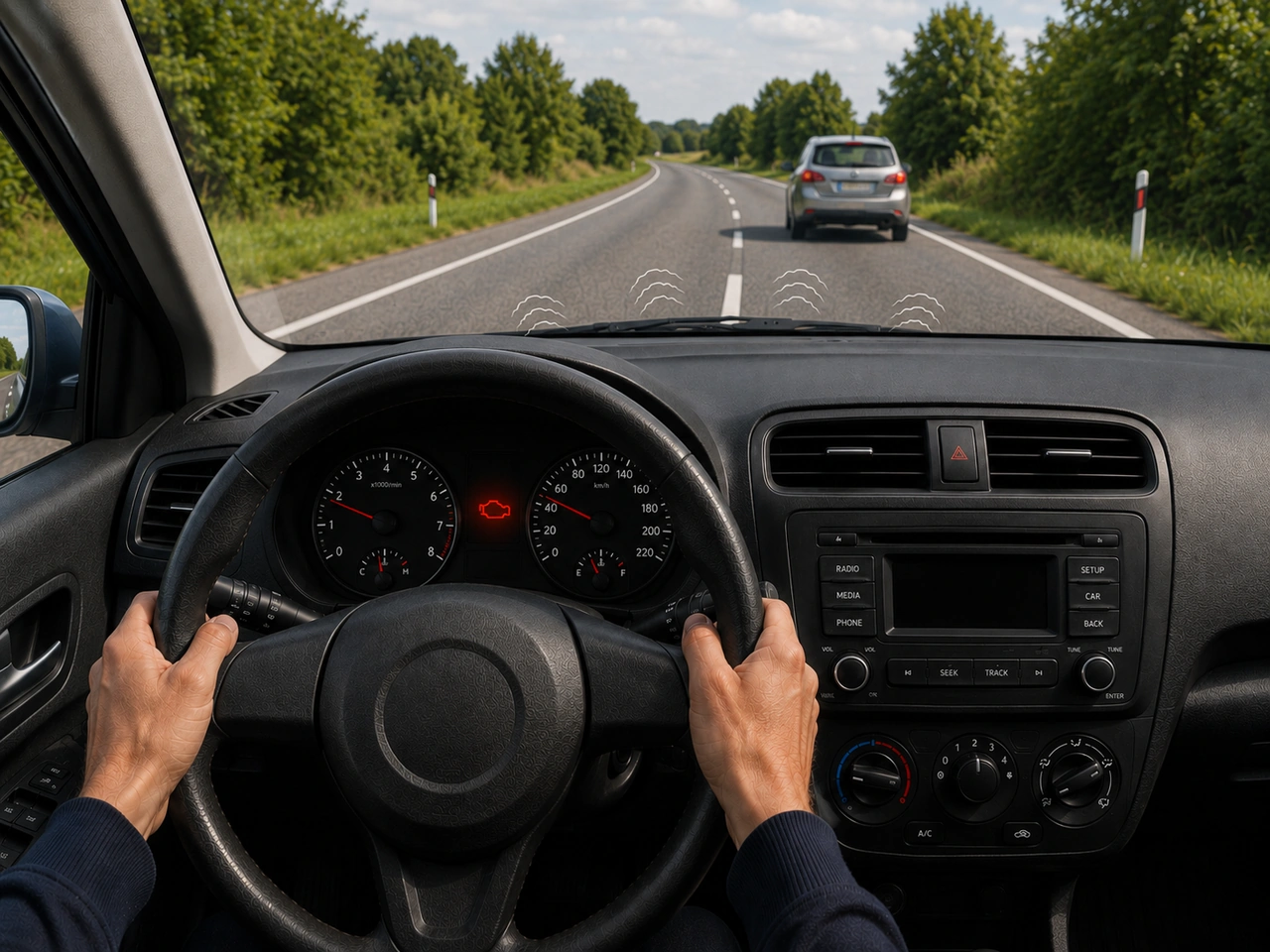
What should you do if a red warning light appears with an unusual noise?

247. What should you do if a red warning light appears with an unusual noise?

Continue slowly if the vehicle still responds normally.
Wait until the next service to have it checked.
✓ Stop safely, switch off the engine, and seek assistance.
Stop only if another warning light appears.

A red warning combined with an unusual noise may indicate a serious fault. Continuing could cause damage or loss of control.

Red dashboard warning requiring the driver's attention
AI-generated by Traffic-rules.com • WCIT • CC BY-SA
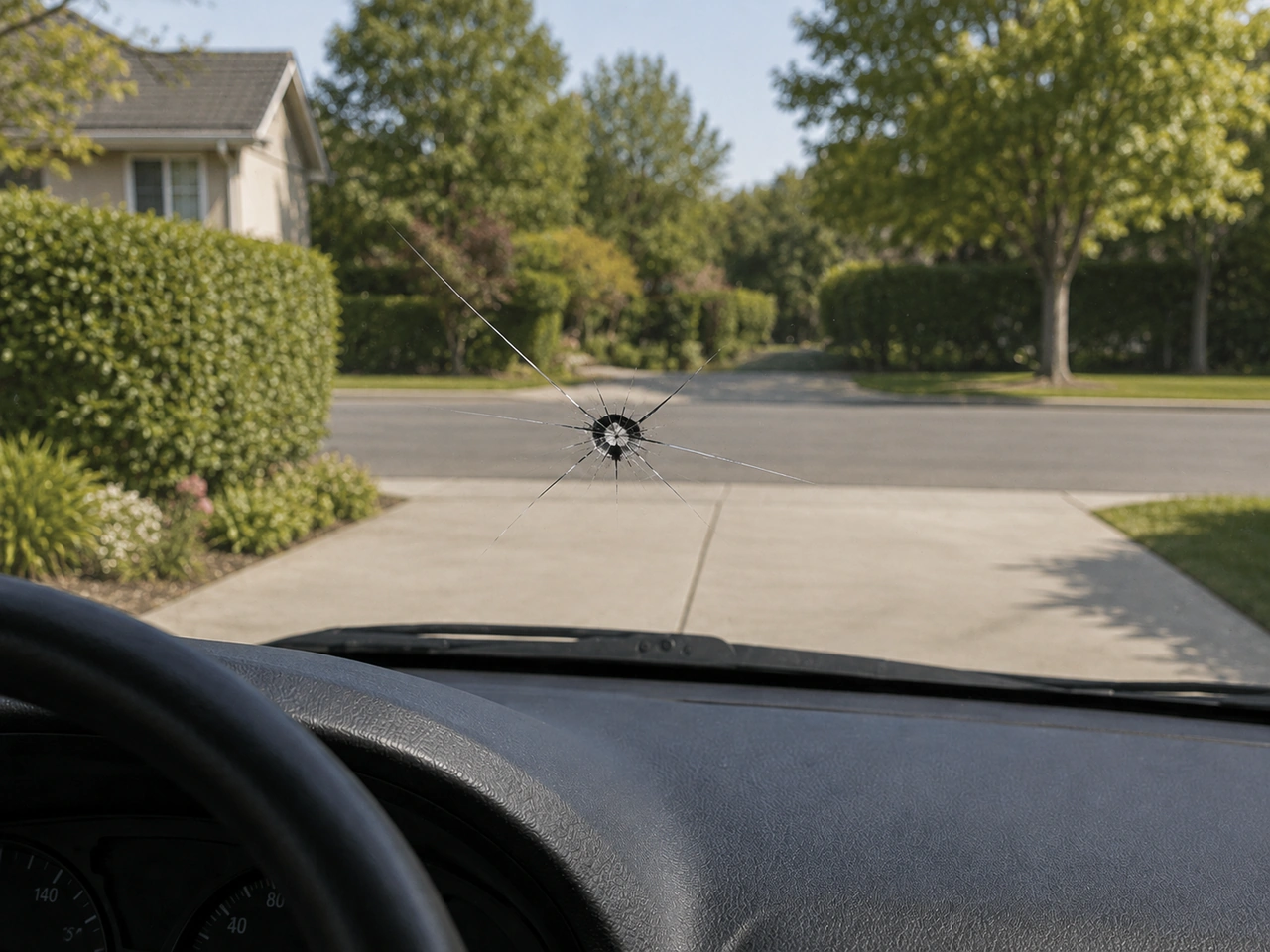
What should you do about a chip in the windscreen?

248. What should you do about a chip in the windscreen?

✓ Have it assessed and repaired promptly.
Wait until the chip becomes a larger crack.
Clean the glass and continue driving normally.
Cover the chip so it cannot spread.

A chip can obstruct your view, weaken the glass, and develop into a larger crack. Have it checked and repaired promptly.

Stone chip in a vehicle's windscreen
AI-generated by Traffic-rules.com • WCIT • CC BY-SA
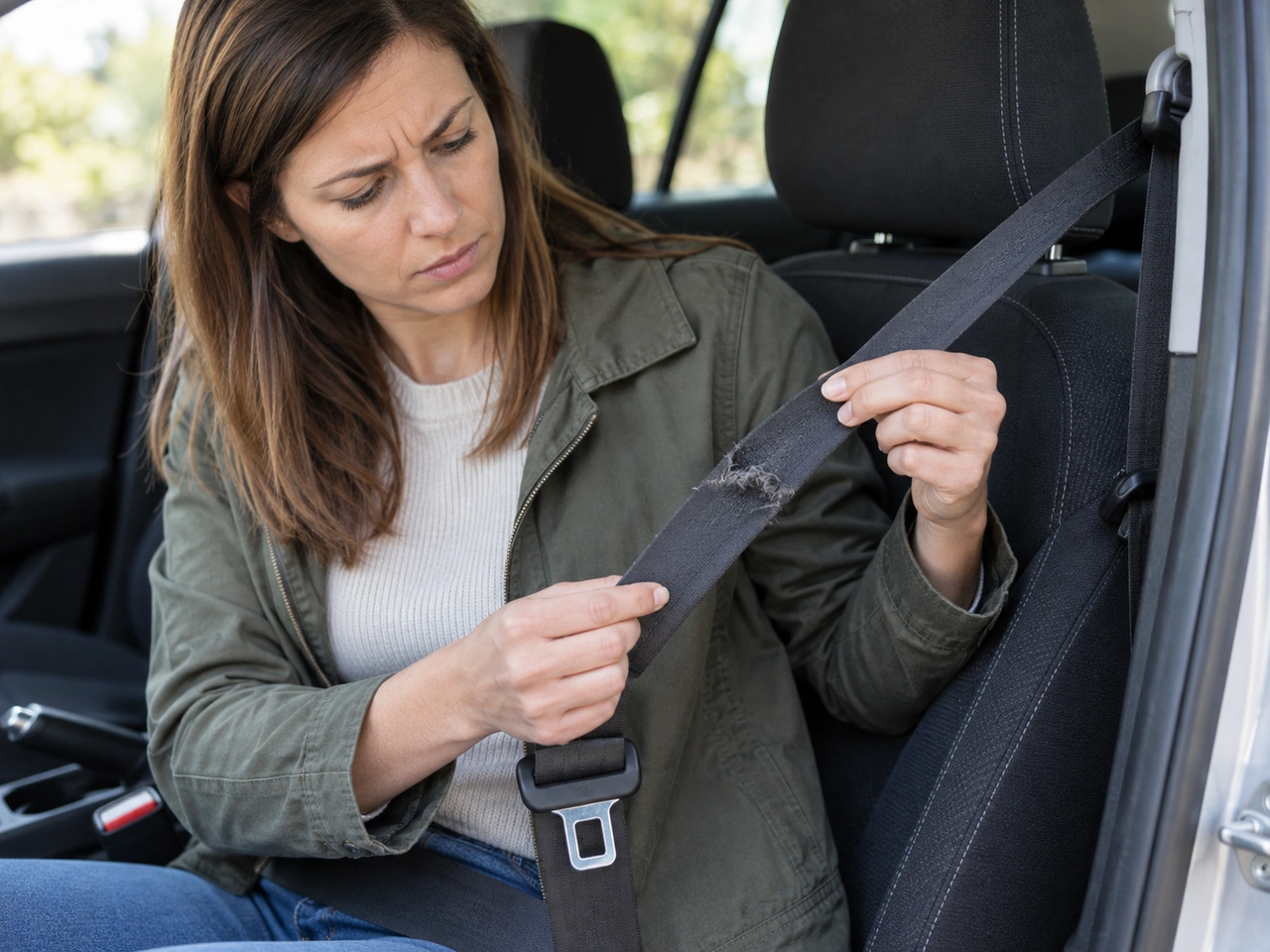
What should you do if a seat belt is frayed or damaged?

249. What should you do if a seat belt is frayed or damaged?

Wear the belt loosely to reduce strain on it.
Cover the damaged section and continue using it.
Twist the damaged section so it cannot tear further.
✓ Have it inspected and replaced before relying on it.

A damaged seat belt may not provide proper protection in a collision. Frayed webbing, damaged buckles, faulty retractors, or other defects should be professionally inspected and repaired or replaced before the seat belt is relied upon.

Frayed or damaged seat-belt webbing
AI-generated by Traffic-rules.com • WCIT • CC BY-SA
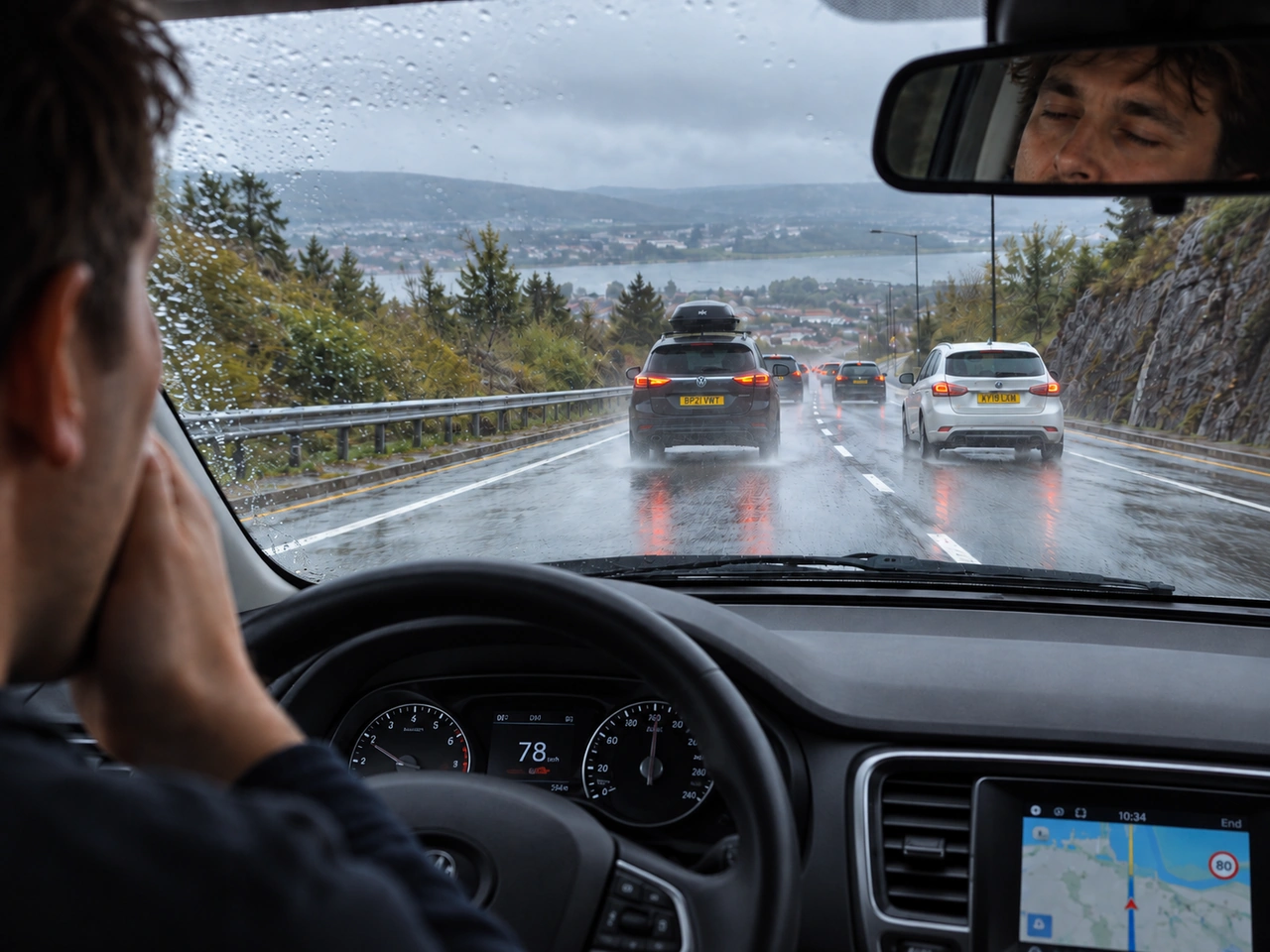
Why should you take regular breaks during a long journey?

250. Why should you take regular breaks during a long journey?

✓ To help prevent fatigue and maintain concentration.
To allow the engine to cool down.
To reduce tyre pressure.
To make the journey feel shorter.

Regular breaks during a long journey help reduce fatigue and maintain concentration. Do not wait until you are struggling to stay awake before stopping to rest.

Driver resting during a long journey
AI-generated by Traffic-rules.com • WCIT • CC BY-SA