


SwedenSweden
 Traffic rules
 Sweden
1. Sweden
Sweden occupies the eastern side of the Scandinavian Peninsula in Northern Europe, bordering Norway and Finland and linked to Denmark by the Öresund connection. Traffic drives on the right. Its long north-south extent produces very different driving conditions, from busy roads around Stockholm, Gothenburg and Malmö to sparsely populated forest roads in the north. Snow, ice, long periods of winter darkness and encounters with moose, deer and reindeer can all be important considerations. Swedish is the principal language used for written road information, while Sweden's distinctive warning signs use the familiar triangular European form with a yellow background rather than the white background common in many other European countries.
Sweden has no nationwide motorway vignette. Most roads can be used without a road-use charge, although congestion taxes apply in Stockholm and Gothenburg and separate infrastructure charges apply to certain bridges. Winter rules are particularly important: passenger cars and other light vehicles must use winter tyres from 1 December to 31 March when winter road conditions exist. Studded tyres are normally permitted from 1 October to 15 April, although local streets can prohibit them. Vehicle lights must also be used during daytime driving throughout the year.
AI
Which side of the road do you drive on in Sweden?
Drive on the right-hand side of the road and normally overtake on the left.
What is the emergency number in Sweden?
Call 112 for urgent emergency assistance, including police, ambulance, fire and rescue services.
What is the alcohol limit for driving in Sweden?
The drink-driving threshold is 0.2‰ (0.2 g/l) in blood, corresponding to 0.10 mg of alcohol per litre of exhaled air. Because the threshold is low, the safest approach is not to drink alcohol before driving.
What is the general speed limit in built-up areas in Sweden?
The statutory base limit in a built-up area is 50 km/h. However, many urban streets are signed at 30 or 40 km/h, so always follow the posted limit.
What is the general speed limit outside built-up areas in Sweden?
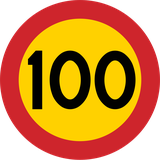
The statutory base limit outside built-up areas is 70 km/h where no other limit has been established. Many main roads are instead specifically signed at 80, 90, 100 or 110 km/h.
What is the motorway speed limit in Sweden?
The general motorway maximum is 110 km/h, but designated motorway sections may have a signed maximum of 120 km/h.
Which vehicles are allowed on Swedish motorways?
Motorways are restricted to motor vehicles and combinations that are designed and permitted to travel at least 40 km/h. Class I mopeds are specifically prohibited, as are pedestrians, bicycles and other road users not permitted on motorways.
Do you need a motorway vignette in Sweden?
No. Sweden has no nationwide motorway vignette for passenger cars. However, congestion taxes and certain bridge infrastructure charges can apply.
Does Sweden charge a congestion tax?
Yes. Stockholm and Gothenburg have congestion-tax systems during specified times. The tax also applies to vehicles registered outside Sweden.
Are there other road tolls in Sweden?
Yes. Although there is no general motorway toll system for passenger cars, infrastructure charges apply to certain bridges, including bridges at Motala, Sundsvall and Skurubron.
Must you use headlights during the daytime in Sweden?
Yes. Vehicle lighting must be used while driving on the road. During normal daylight, daytime running lights or permitted equivalent lighting may be used instead of dipped headlights.
Are winter tyres mandatory in Sweden?
Yes. From 1 December to 31 March, passenger cars and other covered light vehicles must use winter tyres or equivalent equipment whenever winter road conditions exist. Winter conditions mean snow, ice, slush or frost on any part of the road.
Do Sweden's winter-tyre rules apply to foreign cars?
Yes. The Swedish winter-tyre requirements apply to vehicles registered in Sweden and abroad.
When can studded tyres be used in Sweden?
Studded tyres are normally permitted from 1 October to 15 April. They may also be used outside that period when winter road conditions exist or are expected.
Can studded tyres be prohibited on individual streets in Sweden?
Yes. Municipalities may impose local bans on vehicles using studded tyres on particular roads or road sections, so drivers should obey local signs even during the normal studded-tyre season.
Are seat belts compulsory in Sweden?
Yes. Everyone travelling in a vehicle equipped with seat belts must normally use the available seat belt.
When must children use a child restraint in Sweden?
Children shorter than 135 cm must use an appropriate child seat, booster cushion or other approved child-restraint system instead of or together with the vehicle's seat belt.
Are motorcycle helmets compulsory in Sweden?
Yes. Motorcycle riders must normally wear a protective helmet. Helmet requirements also apply to passengers, subject to limited exceptions for certain enclosed vehicles.
Must children wear a bicycle helmet in Sweden?
Yes. Children and young people under 15 years old must wear a helmet when cycling or when being carried on a bicycle.
Can you use a mobile phone while driving in Sweden?
You must not use a mobile phone or other communication equipment in a way that negatively affects your driving, and you must not hold the device in your hand while driving.
Does priority from the right apply in Sweden?
Yes. Where two vehicle paths cross and no other priority rule applies, a driver must normally give way to traffic approaching from the right.
Who has priority at a roundabout in Sweden?
A driver entering a roundabout must give way to vehicles already circulating on it.
Do pedestrians have priority at crossings in Sweden?
At an uncontrolled pedestrian crossing, drivers must give way to pedestrians who have entered or are just about to enter the crossing. Pedestrians must still take account of the distance and speed of approaching vehicles.
Can you overtake at an uncontrolled pedestrian crossing in Sweden?
No. A vehicle or tram must not normally be overtaken immediately before or on an uncontrolled pedestrian crossing.
How much space must you leave when overtaking a cyclist in Sweden?
Swedish law requires a safe lateral distance when overtaking, but it does not prescribe one universal numerical distance such as 1.5 metres. The clearance must be sufficient for the circumstances.
Must drivers let buses leave bus stops in Sweden?
On a road where the maximum speed is 50 km/h or lower, a driver approaching a bus that signals its intention to leave a stop must slow down and allow the bus to move out, stopping if necessary.
What should you do if you collide with wildlife in Sweden?
A collision involving wildlife or reindeer must be taken seriously. Call 112 and report the collision, warn other traffic and mark the location so that the animal can be located if it has left the road.
What safety equipment must a car carry in Sweden?
A car must carry an approved warning triangle. If the vehicle becomes immobilised in a hazardous position, the triangle must be used where required to warn approaching traffic. A reflective vest is sensible to carry but is not generally mandatory equipment for an ordinary passenger car.

