
Traffic rulesSouth Africa
Learn the traffic rules of South Africa with lots of pictures, clear traffic signs and interactive quizzes. Simple, visual and easy to follow.


Driving licence basics in South Africa
What is the authority to drive called in South Africa?
It is called a driving licence. The plastic credit-card-format document is the driving licence card used as proof of the licence and its recorded vehicle codes and conditions.
Who administers learner and driving licences in South Africa?
Applications and tests are handled by registered Driving Licence Testing Centres, commonly called DLTCs, operating through provincial and municipal authorities and the national eNaTIS system.
Do the same national licence codes apply throughout South Africa?
Yes. Vehicle codes and the core testing framework are established nationally, although bookings, fees, opening hours and local administrative arrangements can differ between testing centres.
Must a person hold a driving licence to drive on a public road?
Yes. A person must hold a valid licence authorising the class of vehicle being driven, unless the person is lawfully driving under a learner's licence and complying with its supervision conditions.
What is a DLTC?
A DLTC is a registered Driving Licence Testing Centre where applicants book learner and practical tests and complete transactions such as card renewal, replacement, conversion and professional driving permit applications.
What is eNaTIS?
eNaTIS is the electronic National Traffic Information System used for road-traffic records and transactions, including learner licences, driving licences, vehicles and professional driving permits.
Can some licence appointments be booked online?
Yes. NaTIS Online Services supports selected bookings and transactions. Availability depends on the province, testing centre and service, so applicants should check the current online portal and local DLTC instructions.
Are licence fees identical at every testing centre?
No. Official national guidance directs applicants to the relevant local licensing office because booking, issue, renewal and temporary-licence fees can differ and are periodically revised.
What identification is normally used for a licence application?
Applicants normally present acceptable identification such as a South African identity document, a valid South African passport or another document accepted for the specific transaction.
Why is proof of address commonly required?
The traffic register must contain current residential and postal details. A utility account or another accepted document is normally used, with an affidavit if the account is in another person's name.
What can an applicant living in an informal settlement use as proof of address?
Official guidance allows a letter bearing an official date stamp from the ward councillor confirming the applicant's postal and residential address.
Must a licence holder report a permanent change of address?
Yes. The National Road Traffic Act requires a licence holder to notify the relevant registering authority of a permanent change of residential address within the prescribed period, generally 14 days.
Learner's licences and supervised driving
What is a learner's licence?
It is a provisional licence showing that the holder has basic knowledge of road rules, road traffic signs and vehicle controls and may learn to drive subject to the applicable restrictions.
How long is a South African learner's licence valid?
It is valid for 24 months from the date of issue and cannot be extended.
Can an expired learner's licence be renewed?
No. Because it cannot be extended, a person who still needs learner authority after expiry must apply and pass the learner's licence process again.
Must a learner driver be supervised in a car or heavy vehicle?
Yes. The learner must be accompanied by a person who holds a valid driving licence authorising that class of vehicle.
Does the supervising driver need a PrDP when the vehicle requires one?
Yes. If the vehicle being used requires a professional driving permit, the supervising licensed driver must also hold the appropriate valid PrDP.
Must a learner motorcyclist be accompanied on the motorcycle?
No. The ordinary accompanying-driver rule does not operate in the same way for a motorcycle learner, but the learner must comply with the motorcycle-specific restrictions.
May a learner motorcyclist carry a passenger?
No. A learner riding a motorcycle may not carry another person on that motorcycle.
What are the national learner's licence codes?
Code 1 covers motorcycles, motor tricycles and quadrucycles; Code 2 covers vehicles not exceeding 3,500 kg gross vehicle mass; and Code 3 covers vehicles exceeding 3,500 kg gross vehicle mass.
What is the minimum age for learner Code 1 up to 125 cc?
The applicant must be at least 16 years old on the date of the learner's test when the motorcycle engine does not exceed 125 cc.
What is the minimum age for learner Code 1 above 125 cc?
The applicant must be at least 18 years old on the date of the learner's test when the motorcycle engine exceeds 125 cc.
What is the minimum age for learner Code 2?
The applicant must be at least 17 years old on the date of the test.
What is the minimum age for learner Code 3?
The applicant must be at least 18 years old on the date of the test.
Driving licence codes and minimum ages
What does driving licence Code A1 authorise?
It authorises a motorcycle, with or without a sidecar, whose engine capacity does not exceed 125 cc, subject to any conditions recorded on the licence.
What is the minimum age for a full Code A1 licence?
The applicant must be at least 17 years old on the date of the practical test.
What does driving licence Code A authorise?
It authorises a motorcycle, with or without a sidecar, whose engine capacity exceeds 125 cc, subject to the licence conditions.
What is the minimum age for a Code A licence?
The applicant must be at least 18 years old.
What does Code B authorise?
Code B covers a motor vehicle, including a qualifying minibus, bus or goods vehicle, with a gross vehicle mass not exceeding 3,500 kg, but it does not by itself provide every professional passenger or goods authorisation.
What is the minimum age for a Code B driving licence?
The applicant must be at least 18 years old on the date of the practical test.
What does Code C1 authorise?
Code C1 covers a motor vehicle, bus, minibus or goods vehicle with a gross vehicle mass above 3,500 kg but not exceeding 16,000 kg.
What does Code C authorise?
Code C covers a motor vehicle, bus or goods vehicle with a gross vehicle mass exceeding 16,000 kg.
What does Code EB authorise?
Code EB covers specified articulated light vehicles and light-vehicle combinations, including qualifying combinations whose gross combination mass does not exceed 3,500 kg.
What does Code EC1 authorise?
Code EC1 covers specified articulated heavy vehicles and combinations in the intermediate heavy range, generally above 3,500 kg and not exceeding the prescribed 16,000 kg limits.
What does Code EC authorise?
Code EC covers articulated heavy vehicles or qualifying bus and goods-vehicle combinations whose gross combination mass exceeds 16,000 kg.
Does a newly issued heavy-vehicle licence automatically authorise Code B vehicles?
No. For licences issued from 1 February 2011, Codes C1, C, EC1 and EC do not automatically authorise vehicles requiring Code B or EB. Older preserved entitlements may differ.
Applying for learner and driving tests
Where does a person apply for a learner's licence?
The person applies through an appropriate DLTC, using the booking method accepted by that centre or the applicable NaTIS online service.
Which form is used for a learner's licence application?
The prescribed Application for learner's licence form LL1 is completed at the DLTC or as otherwise directed by the authority.
What is normally taken when booking a learner's test?
Applicants normally take acceptable identification, the required number of photographs, proof of address and the prescribed booking fee.
Must an applicant aged 65 or older provide an additional document for a learner's licence?
Yes. Official guidance requires an applicant aged 65 or older to complete the prescribed medical certificate form MC in addition to form LL1.
Is an eye test required for a learner's licence application?
Yes. It may be performed at the DLTC or by a qualified optometrist whose completed report is submitted in the accepted manner.
Which form is used to apply for a driving licence test?
The applicant completes the prescribed Application for driving licence form DL1 at the DLTC.
Must the applicant already have a learner's licence before booking a practical test?
Yes. A valid learner's licence for the relevant vehicle class is required before the person can be tested for the corresponding driving licence.
What documents are normally required when booking the practical test?
The applicant normally presents the learner's licence, acceptable identification, the requested photographs, proof of residential address and the prescribed booking fee.
Why should applicants confirm the number of photographs with the DLTC?
Official pages mention different numbers for different transactions and centres. Confirming first avoids bringing photographs in the wrong quantity or format.
What should the applicant keep after paying the practical-test booking fee?
The receipt should be kept because it serves as proof of payment and confirmation of the booked date and time.
Must the applicant attend at the specified test time?
Yes. The booking receipt and learner's licence are checked before the test, and late arrival or absence can cause the appointment and fee to be lost under local rules.
Can booking procedures differ between provinces?
Yes. National requirements apply, but online booking availability, accepted payment channels, document checks and appointment management may differ between provinces and DLTCs.
Learner's licence knowledge test
What knowledge is examined in the learner's licence test?
The test covers the rules of the road, road traffic signs and markings, and the controls of the relevant type of motor vehicle.
Should an applicant study all three knowledge areas?
Yes. The prescribed assessment has separate requirements for road rules, traffic signs and vehicle controls, so strength in one area does not compensate for failing another.
What are the prescribed minimum marks for the traditional learner test sections?
The official testing standard specifies minimum marks of 22 for rules of the road, 23 for road traffic signs and 6 for vehicle controls.
Can a person pass after failing one test section but scoring highly overall?
No. The applicant must meet the prescribed minimum in each required section rather than relying only on an overall total.
Are learner tests increasingly computerised?
Yes. The Computerised Learner's Licence Testing system is used at many centres and generates randomised questions linked to NaTIS, but applicants should confirm the system used by their DLTC.
Does computerisation change what applicants must study?
No. The core subject areas remain road rules, road traffic signs and markings, and vehicle controls.
What should be taken to the learner's test appointment?
At minimum, official guidance requires the booking receipt and acceptable identification, together with any additional item the particular DLTC instructed the applicant to bring.
Is the learner's licence issued immediately after a pass?
It is normally issued on the same day after the applicant has passed and paid the prescribed issue fee.
What happens after failing the learner's test?
The applicant must make a new booking and comply with the applicable waiting, appointment and fee arrangements before being tested again.
Are unofficial answer sheets a safe way to prepare?
No. Tests can use randomised questions, and attempting to obtain or use unauthorised test material can constitute cheating and lead to disqualification or prosecution.
Where can official study material be found?
The eNaTIS and government transport channels provide learner-driver material covering road rules, road signs and vehicle controls. Some provinces also distribute study guides through libraries or local programmes.
K53 practical driving examination
What testing method is used for the practical driving examination?
South African practical driving tests use the prescribed K53 testing method for the relevant vehicle category.
Who conducts the practical driving test?
A qualified and registered examiner for driving licences conducts and scores the test at an appropriately graded DLTC.
What are the main parts of the Code B K53 test?
The full light-motor-vehicle test contains a yard test and a road test, which together assess vehicle handling, observation, compliance with traffic rules and safe driving in traffic.
What does the yard test assess?
It assesses prescribed manoeuvres and the applicant's control, observation and safety procedures in the testing area before or in addition to the public-road portion.
What does the road test assess?
It assesses practical driving in traffic, including observation, signals, vehicle control, positioning, compliance with signs and rules, and appropriate responses to road conditions.
Is a pre-trip inspection part of K53 preparation?
Yes. Applicants should know the prescribed exterior and interior checks and be able to demonstrate that the vehicle can be used safely.
Must the test vehicle match the licence code?
Yes. The vehicle must be of the appropriate class and satisfy the prescribed test-vehicle and roadworthiness requirements for the code being tested.
Can a driving test be taken in an automatic vehicle?
Yes. However, passing in an automatic vehicle results in a licence condition restricting the holder to automatic-transmission vehicles unless the restriction is later lawfully removed.
Does passing in a manual vehicle normally permit automatic vehicles?
Yes. A manual-transmission licence for the relevant class normally also permits an automatic vehicle in that class, subject to any other recorded conditions.
Is attendance at a private driving school legally required for every ordinary applicant?
National application guidance does not make private-school attendance a universal prerequisite, but professional instruction can help an applicant learn the K53 method and safe vehicle control.
What happens immediately after passing the practical test?
The applicant's fingerprints are captured, the required eye-test process is completed, the issue fee is paid and a temporary driving licence is issued while the card is produced.
How long does production of the driving licence card normally take?
Government guidance gives an expected period of about four to six weeks, although production or local administrative delays can extend the waiting time.
Motorcycle learner and driving licences
Which learner code is used for motorcycles?
Learner Code 1 is used for motorcycles with or without a sidecar, motor tricycles and quadrucycles.
Can a 16-year-old obtain a learner's licence for any motorcycle?
No. At 16 the learner authority is limited to the motorcycle class whose engine does not exceed 125 cc.
When may a person apply for learner authority above 125 cc?
The person must be at least 18 years old on the date of the learner's test.
When may a person take the full A1 practical test?
The applicant must be at least 17 years old and hold the relevant valid learner's licence.
When may a person take the full Code A practical test?
The applicant must be at least 18 years old and hold the relevant valid learner's licence.
Is the motorcycle practical test the same as the Code B car test?
No. Motorcycles are tested under the dedicated K53 motorcycle manual and manoeuvres appropriate to two-wheel vehicle control.
May a learner motorcycle rider carry a pillion passenger?
No. Carrying another person is prohibited while riding under a learner's licence.
Does the learner need a licensed rider seated behind them?
No. Motorcycle learner rules do not require an accompanying person on the motorcycle, unlike the supervision rule for cars and heavy vehicles.
Must the motorcycle used for the test be roadworthy and properly licensed?
Yes. It must be suitable for the code, legally usable and capable of completing the prescribed test safely.
Does Code A1 authorise a motorcycle above 125 cc?
No. A motorcycle exceeding 125 cc requires Code A authority.
Does a motorcycle licence authorise a passenger car?
No. Motorcycle and light-motor-vehicle authorisations are separate. A person who also wants to drive a car must obtain the appropriate Code B or other vehicle licence.
Heavy vehicles, combinations and licence scope
Which learner code is required for a vehicle above 3,500 kg gross vehicle mass?
Learner Code 3 is used for motor vehicles whose gross vehicle mass exceeds 3,500 kg.
What is the minimum age for a heavy-vehicle learner's licence?
The applicant must be at least 18 years old.
What weight range is associated with Code C1?
Code C1 covers the prescribed heavy-vehicle class above 3,500 kg and up to 16,000 kg gross vehicle mass.
What weight range is associated with Code C?
Code C covers the prescribed motor vehicle, bus or goods-vehicle class exceeding 16,000 kg gross vehicle mass.
Why are EB, EC1 and EC described as combination codes?
They authorise specified articulated vehicles or combinations of a drawing vehicle and trailer within the mass limits assigned to each code.
Does Code B cover every vehicle below 3,500 kg in commercial use?
It covers the vehicle class, but commercial passenger or goods operation may additionally require a PrDP and, where applicable, an operating licence.
Can a person with a post-2011 Code C1 licence automatically drive a Code B car?
No. Heavy-vehicle licences issued from 1 February 2011 do not automatically include Code B or EB authority.
Can older heavy-vehicle licences retain broader authority?
Yes. The 2011 change preserved qualifying authorisations already held before the change, so the codes and endorsements recorded for the individual licence must be checked.
Is a separate learner's licence needed when adding another vehicle category?
The applicant must hold learner authority appropriate to the category being tested unless a specific legal exemption applies. The current licence card alone does not replace that learner requirement.
Does a bus licence code alone permit carrying passengers for reward?
No. The correct vehicle code is required, but professional passenger transport also generally requires the appropriate PrDP and any operating authority required for the service.
Does a heavy goods-vehicle licence code alone replace a PrDP?
No. A PrDP is an additional professional authorisation and is required for prescribed goods vehicles and operations.
Which K53 manual applies to heavy-vehicle tests?
Heavy-vehicle applicants are tested under the prescribed K53 Practical Driving Test for Motor Vehicle Drivers volume for heavy motor vehicles.
Renewal, validity, temporary and replacement cards
What is the current ordinary driving licence card validity period?
As of 4 August 2026, motorists must continue using the existing five-year renewal system because the approved ten-year period has not yet taken legal effect.
Has a ten-year card period been approved for some licence codes?
Yes. Cabinet approved a future ten-year period for Codes A1, A, B and EB on 30 July 2026, but regulations must still be amended before it becomes effective.
Which codes are intended to remain on a five-year card cycle after the proposed change?
The July 2026 proposal retains a five-year card period for Codes C1, C, EC1 and EC.
When should a driving licence card be renewed?
Government service guidance recommends applying about four weeks before the expiry date so that the replacement can be processed before the existing card expires.
Must a person repeat the practical driving test when renewing a card?
No. Ordinary renewal does not require another driving test, although identity, fingerprints, eyesight and licence conditions are checked.
Is an eye test required at renewal?
Yes. It can be performed at the DLTC or by an accepted optometrist whose report is submitted to the centre.
What happens if eyesight has deteriorated?
The authority may add or update conditions, such as a requirement to wear corrective lenses. If the applicant does not meet the required eyesight standard, renewal may be refused.
When is a temporary driving licence useful?
It can provide temporary proof of driving authority when a card has expired and renewal has been applied for, or when a card has been lost, stolen or damaged and a replacement is pending.
How long is a temporary driving licence valid?
It is valid for six months.
Is a temporary driving licence issued immediately?
It is normally issued on the same day after the required application, eye test, documents and fee have been completed.
Must a person retake the driving test after losing a card?
No. Replacement of a lost, stolen or damaged card does not require a new practical test, but eye testing and fingerprint capture are required.
Can a South African driving licence card be renewed from abroad?
No. Current government guidance requires renewal at a South African DLTC. A person abroad may obtain a confirmation letter for foreign conversion, but that letter is not itself a driving licence.
Medical fitness, eyesight and licence conditions
Why is eyesight tested during licensing transactions?
Safe driving requires the prescribed visual standard. Eye testing is used for learner applications, first issue, renewal, replacement, temporary licences and professional permits as applicable.
May an applicant submit an optometrist's eye-test report?
Yes. Official guidance allows testing by a qualified optometrist, provided the prescribed report is submitted and accepted by the DLTC.
Can a licence require the driver to wear glasses or contact lenses?
Yes. Corrective-lens requirements and other conditions can be recorded on the driving licence and must be obeyed whenever the person drives.
What is the purpose of the medical declaration on an application form?
It requires the applicant to disclose diseases, disabilities or other conditions that may disqualify the person or require further assessment, restrictions or an adapted vehicle.
Does every applicant need a doctor's medical certificate for an ordinary Code B licence?
No. A doctor's certificate is not a universal requirement for every ordinary applicant, but it is required in specified cases, including certain age or medical situations and PrDP applications.
Why does an applicant aged 65 or older complete an MC form for a learner's licence?
The additional medical certificate enables the authority to assess fitness before issuing learner authority to an older first-time or repeat applicant.
Can a person with a disability obtain a driving licence?
Potentially yes. Eligibility depends on whether the person can meet the fitness and practical-driving requirements, sometimes using a suitably modified vehicle and licence conditions.
Can vehicle adaptations be recorded as licence conditions?
Yes. Where safe driving depends on particular controls or modifications, the authorisation can be limited to vehicles meeting those recorded conditions.
What happens if a licence holder develops a condition affecting safe driving?
The person should seek medical advice and comply with any duty to report or undergo assessment. The authority may amend conditions, suspend authority or require further evaluation where legally justified.
Can a licence be suspended or cancelled for legal disqualification?
Yes. Courts and traffic authorities can suspend or cancel driving authority in circumstances provided by road-traffic law, and a disqualified person may not lawfully drive.
How does the 2026 AARTO rollout affect licence-related penalties?
AARTO Phase 2 began on 1 July 2026 in 62 local and metropolitan municipalities, expanding administrative enforcement and the points-demerit framework in phases rather than making every procedure identical nationwide immediately.
Foreign licences, visitors and conversion
Can a visitor drive in South Africa on a foreign driving licence?
A qualifying foreign licence can be recognised if it was validly issued, authorises the relevant vehicle class and satisfies the prescribed language, identification, photograph and signature conditions.
Must a foreign licence be in English?
It must be in English or be accompanied by an acceptable English translation or an English certificate of authenticity or validity from a competent authority.
What if the foreign licence does not show the holder's photograph or signature?
The driver should carry an accompanying formal identity document, such as a passport, that supplies the missing photograph or signature and supports identification.
Does an International Driving Permit replace the underlying national licence?
No. An IDP is a supporting translation or permit and should be carried with the valid national driving licence on which it was issued.
When must a new permanent resident convert a foreign licence?
Current South African Government guidance states that conversion must be completed within one year after permanent residence is granted, otherwise the foreign licence is regarded as invalid.
Can a diplomatic-permit holder apply for conversion?
Yes. Official guidance permits an eligible diplomatic-permit holder to apply even without permanent-residence status.
Must the foreign licence still be valid when it is converted?
Yes. It must be valid and must not have been cancelled or suspended.
Is a practical driving test required for an eligible foreign-licence conversion?
No. The official conversion procedure does not require a new driving examination, but an eye test is conducted before the exchange is finalised.
Where should a permanent resident apply for conversion?
The applicant should use a DLTC in the province in which permanent residence was obtained and submit the prescribed DL1 and NCP forms and supporting documents.
Must the applicant surrender the foreign licence?
Yes. The foreign licence or permit must be handed over when the South African driving licence is received.
What proof may be required from the foreign issuing authority?
The DLTC may require confirmation that the licence is authentic and valid and a description of the vehicle classes it authorises, especially where foreign code labels do not correspond to South African codes.
Professional driving permits
What is a professional driving permit?
A professional driving permit, abbreviated PrDP, is an additional authorisation required for prescribed passenger, goods and dangerous-goods driving on public roads.
Does a PrDP replace the ordinary driving licence?
No. The driver must hold both a valid ordinary driving licence for the vehicle class and the appropriate valid PrDP.
Which PrDP categories are commonly identified?
The principal categories are G for goods, P for passengers and D for dangerous goods, with the permit applying according to the vehicle and operation.
At what age may a person hold a goods PrDP?
The minimum age is 18.
At what age may a person hold a passenger PrDP?
The minimum age is 21.
At what age may a person hold a dangerous-goods PrDP?
The minimum age is 25.
Is medical fitness required for a PrDP?
Yes. The applicant must be medically certified as fit, and the medical certificate submitted with the application must generally be no older than two months.
Is special training required for a dangerous-goods PrDP?
Yes. Category D applicants must provide certification from an approved training body in addition to meeting the other requirements.
Are criminal and driving-record checks part of a PrDP application?
Yes. The process includes prescribed checks concerning relevant convictions, alcohol or drug driving, violence for certain categories, and licence suspension or disqualification.
Which form is used for a PrDP application?
The applicant completes form PD1 and also completes the required notification-of-particulars form NCP.
How long can PrDP processing take?
Government guidance states that the permit may take up to 12 weeks to become ready, depending on completion of medical, identity and conviction checks.
How often must a PrDP be renewed under the current cycle?
PrDPs remain on a two-year renewal cycle. The July 2026 Cabinet decision on longer ordinary light-vehicle card validity did not change that cycle.
Sources and methodology
Which source was used for learner's licence rules?
The official South African Government learner's licence service was used for learner codes, minimum ages, supervision, validity, documents, forms and eyesight requirements.
Which source was used for driving licence codes and first applications?
The official South African Government driving licence service was used for Codes A1, A, B, C1, C, EB, EC1 and EC and for the practical-test application process.
Which sources were used for renewals and replacement cards?
The official government pages for renewal, temporary licences and lost or damaged cards were used.
Which source was used for professional driving permits?
The official South African Government PrDP service was used for applicable vehicles, age thresholds, medical fitness, training, record checks and application steps.
Which source was used for foreign-licence recognition and conversion?
The official foreign driving licence conversion service and the RTMC foreign-licence FAQ were used.
Which source was used for K53 testing standards?
The official K53 light-vehicle publication and the K53 manuals distributed through eNaTIS were used for the yard, road and category-specific practical tests.
Which source was used for learner-test minimum marks?
The official minimum requirements for driving licence testing centres were used for the prescribed section minima in the learner's test.
How was the July 2026 ten-year validity decision handled?
The official Department of Transport statement of 30 July 2026 was used. It expressly says motorists must continue renewing under the current system until the regulation is amended.
Which source was used for the current AARTO rollout status?
The government report Implementation of AARTO continues was used to confirm that Phase 2 began on 1 July 2026 in 62 municipalities.
When was this FAQ last reviewed?
This English master was last reviewed on 4 August 2026. Applicants should confirm current fees, bookings, acceptable documents, local test arrangements and the effective date of future licence-card amendments with the relevant DLTC or official transport authority.
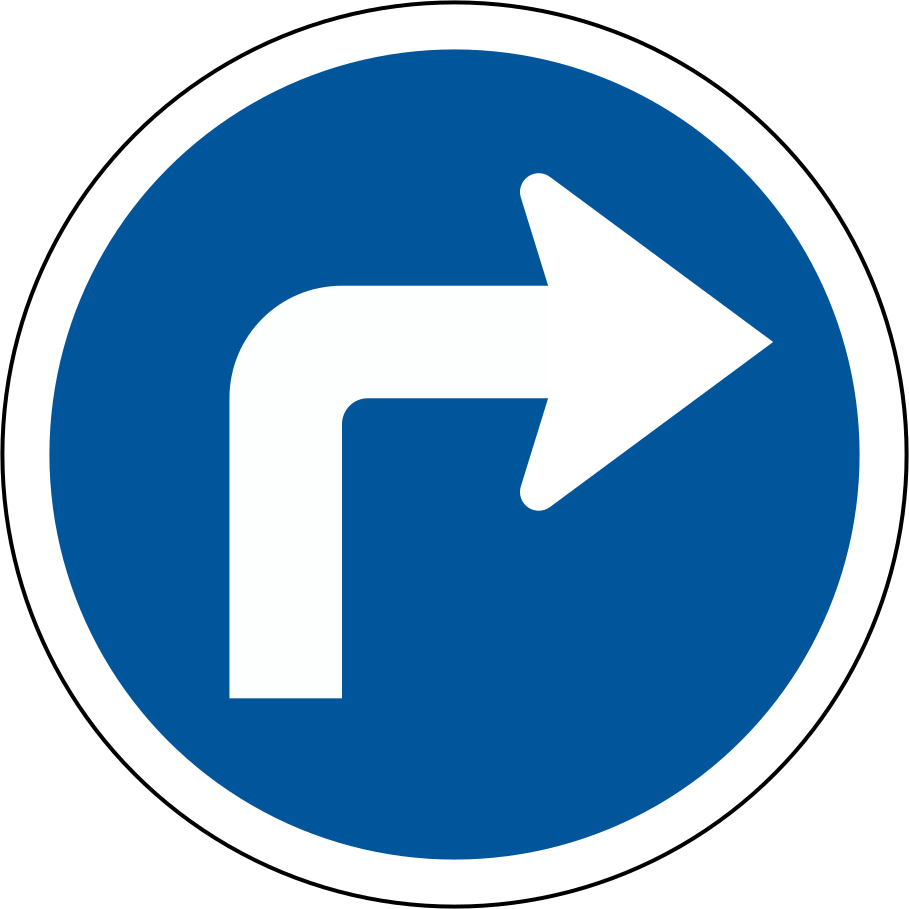
1. What does this traffic sign mean?
This traffic sign indicates that turning right is mandatory at the junction ahead. Traffic must turn right and may not continue straight ahead or turn left.
English • R109 • Turn right. Turn right at the next junction or entrance.
Sources
🔗 Commons.wikimedia.org
🔗 Transport.gov.za • Department of Transport · SADC RTSM Vol. 1, chapter 2, PDF p. 50 (May 2012)
SVG source: Southern African Development Community • Public domain • Original revision 2017-05-23. Wikimedia original unmodified.
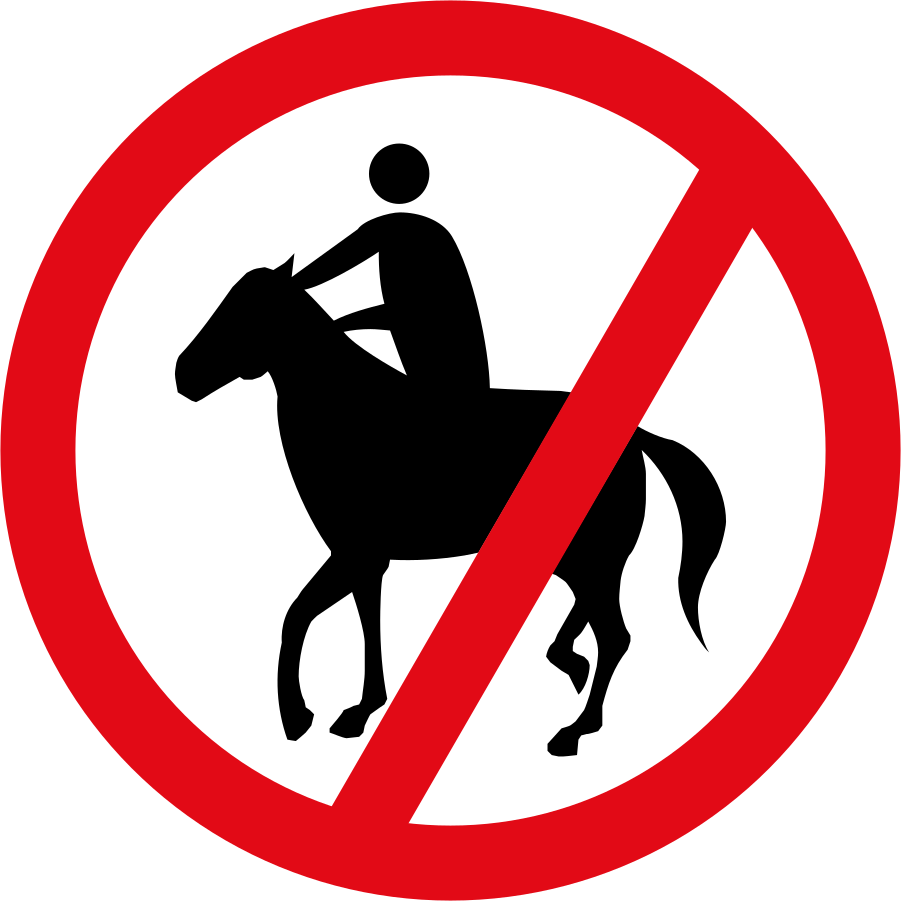
2. What does this traffic sign mean?
This traffic sign indicates that equestrians are prohibited. Equestrians may not enter or continue beyond the sign. Other road users may still be permitted unless another restriction applies.
English • R238 • No horses and riders. The indicated class of road user must not proceed beyond this sign: horses and riders.
Sources
🔗 Commons.wikimedia.org
🔗 Transport.gov.za • Department of Transport · SADC RTSM Vol. 1, chapter 2, PDF p. 84 (May 2012)
SVG source: Southern African Development Community • Public domain • Original revision 2017-06-19. Wikimedia original unmodified.
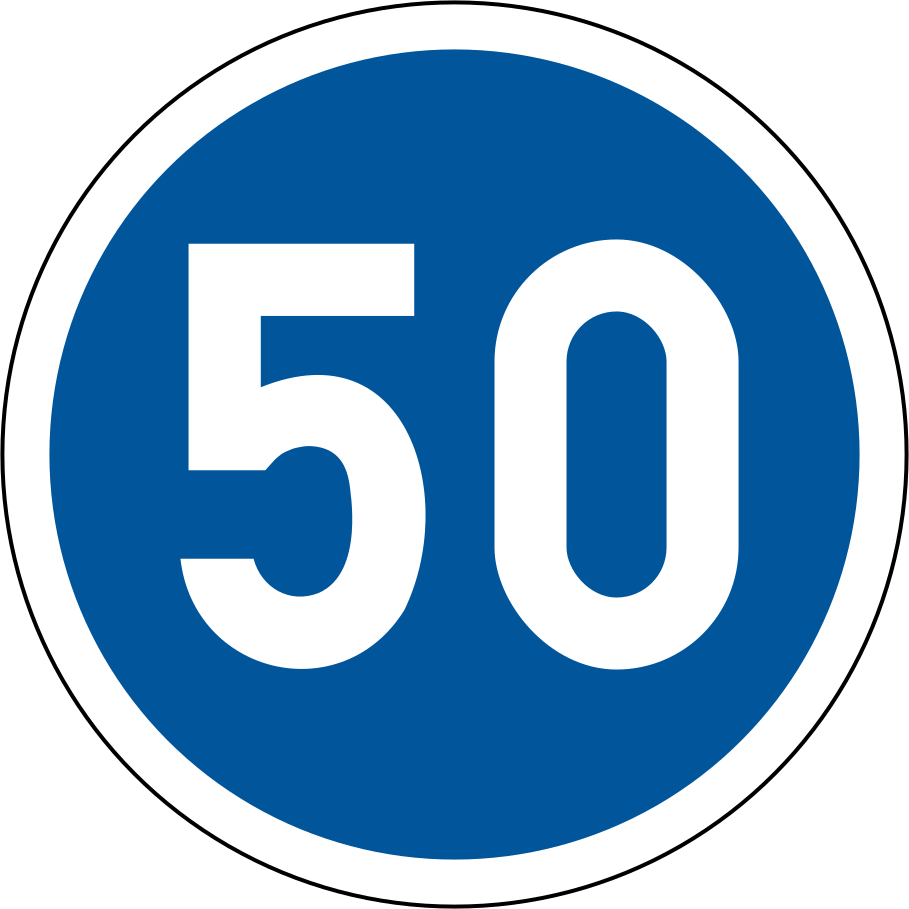
3. What does this traffic sign mean?
This traffic sign indicates the start of a minimum speed. Road users covered by the sign must travel at or above the indicated speed when conditions allow. Driving more slowly may still be necessary because of traffic, weather, road conditions or another safety-related reason.
English • R101 • Minimum speed: 50 km/h. Vehicles must travel at least 50 kilometres per hour on the indicated road or portion of road, subject to safety and prevailing traffic conditions.
Sources
🔗 Commons.wikimedia.org
🔗 Transport.gov.za • Department of Transport · SADC RTSM Vol. 1, chapter 2, PDF p. 46 (May 2012)
SVG source: Southern African Development Community • Public domain • Original revision 2017-06-24. Wikimedia original unmodified.
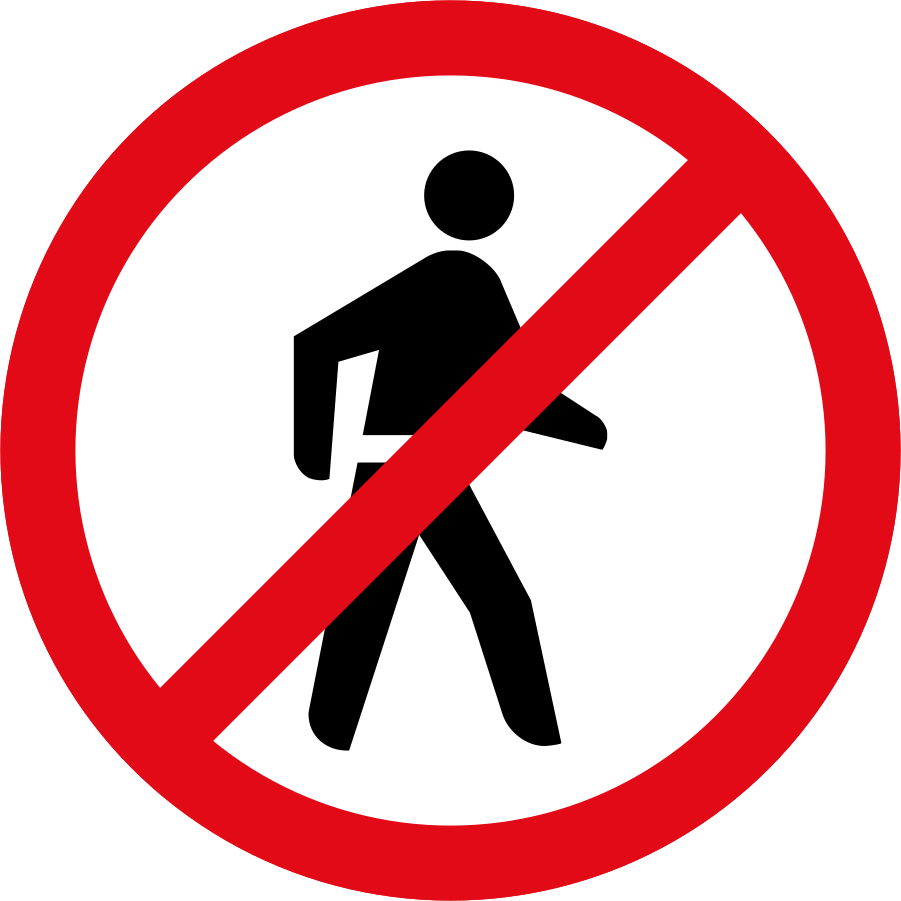
4. What does this traffic sign mean?
This traffic sign indicates that pedestrians are prohibited. Pedestrians may not enter or continue beyond the sign. Other road users may still be permitted unless another restriction applies.
English • R218 • No pedestrians. The indicated class of road user must not proceed beyond this sign: pedestrians.
Sources
🔗 Commons.wikimedia.org
🔗 Transport.gov.za • Department of Transport · SADC RTSM Vol. 1, chapter 2, PDF p. 76 (May 2012)
SVG source: Southern African Development Community • Public domain • Original revision 2017-05-25. Wikimedia original unmodified.
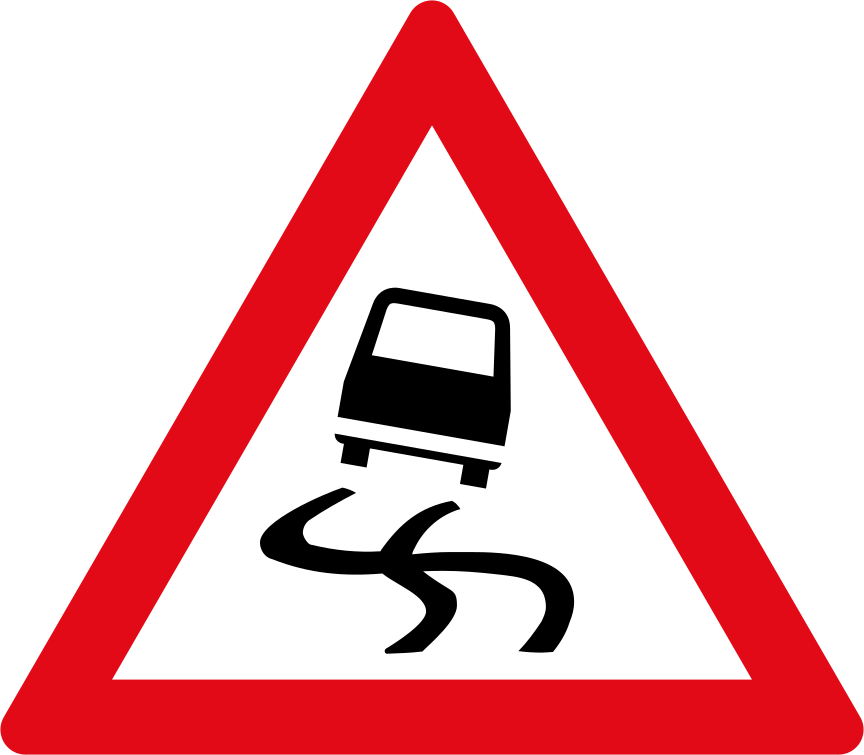
5. What does this traffic sign mean?
This traffic sign indicates a warning for a slippery road surface. The road ahead may provide reduced tyre grip because of water, ice, mud, oil or another surface condition. Reduce speed and avoid sudden braking, acceleration or steering movements.
English • W333 • Slippery road. The road surface may be slippery. Reduce speed and avoid sudden manoeuvres.
Sources
🔗 Commons.wikimedia.org
🔗 Transport.gov.za • Department of Transport · SADC RTSM Vol. 1, chapter 3, PDF p. 6 (May 2012)
SVG source: Southern African Development Community • Public domain • Original revision 2018-08-22. Wikimedia original unmodified.
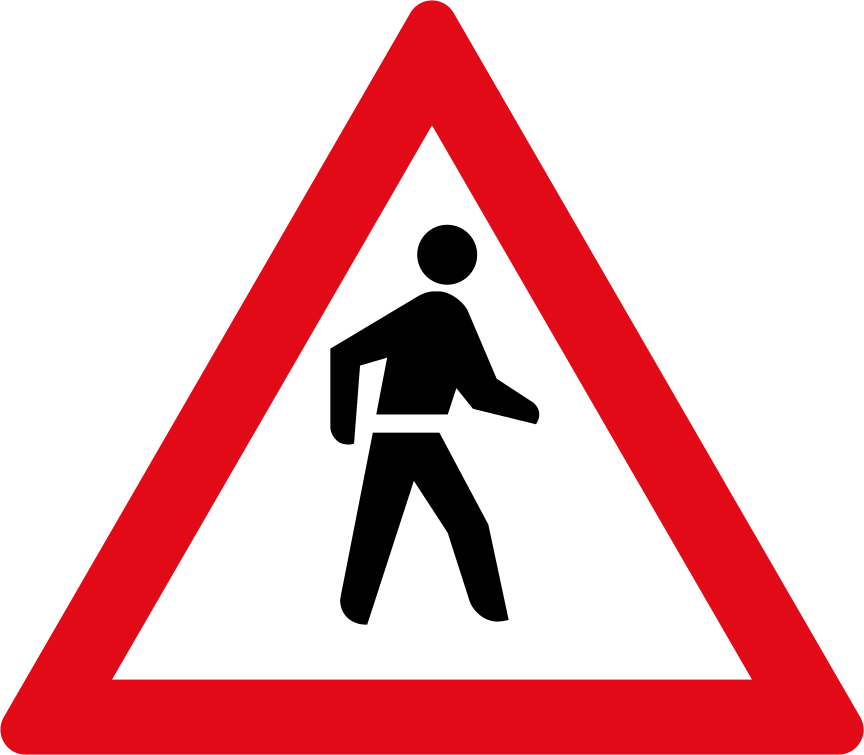
6. What does this traffic sign mean?
This traffic sign indicates a warning for pedestrians. Pedestrians may be walking near or crossing the road ahead. Reduce speed, watch carefully and be prepared to stop.
English • W307 • Pedestrians. Pedestrians may be on or crossing the road ahead.
Sources
🔗 Commons.wikimedia.org
🔗 Transport.gov.za • Department of Transport · SADC RTSM Vol. 1, chapter 3, PDF p. 5 (May 2012)
SVG source: Southern African Development Community • Public domain • Original revision 2017-08-01. Wikimedia original unmodified.
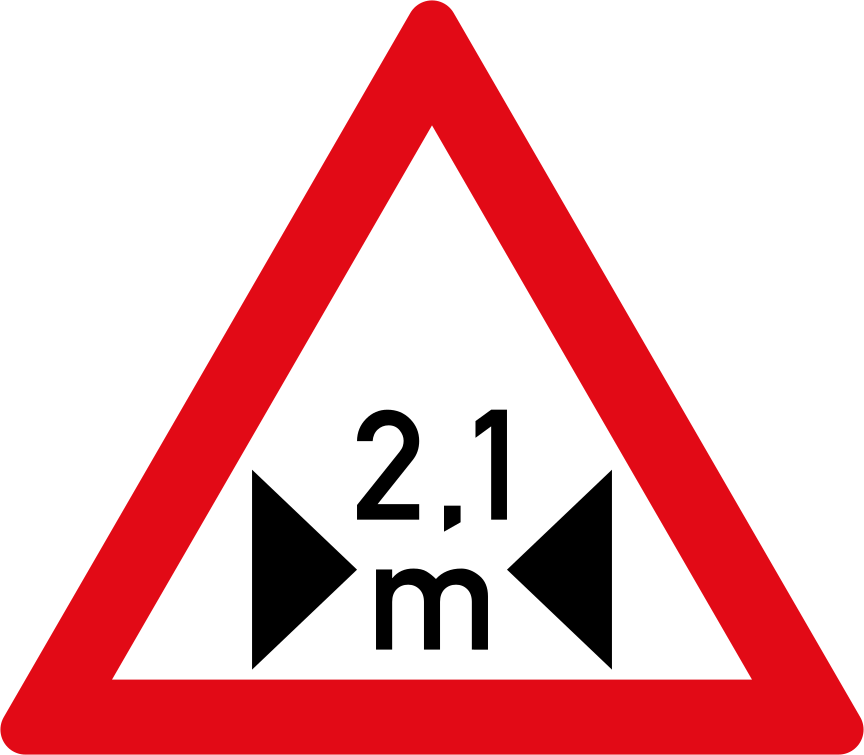
7. What does this traffic sign mean?
This traffic sign indicates a warning for a width restriction. The available passage ahead is limited in width. Drivers of wide vehicles should check their vehicle width and use another route if the vehicle cannot pass safely.
English • W360 • Width restriction: 2.1 m. A width restriction of 2.1 metres is ahead. Check your vehicle and load width; obey the regulatory sign at the restriction.
Sources
🔗 Commons.wikimedia.org
🔗 Transport.gov.za • Department of Transport · SADC RTSM Vol. 1, chapter 3, PDF p. 7 (May 2012)
SVG source: Southern African Development Community • Public domain • Original revision 2017-08-07. Wikimedia original unmodified.
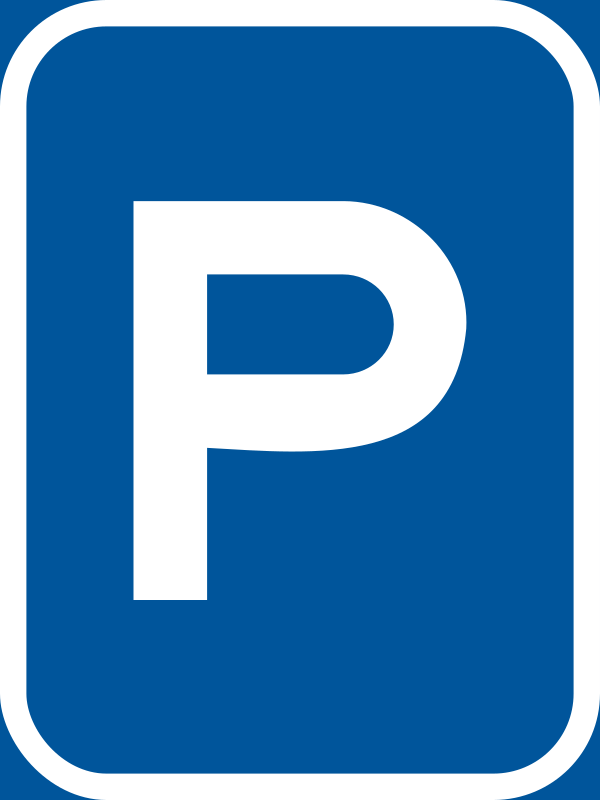
8. What does this traffic sign mean?
This traffic sign indicates that parking is allowed. Vehicles may be parked in the area covered by the sign subject to any indicated conditions, restrictions or local parking rules.
English • R305-P • Parking. The parking area is reserved for use upon payment of the tariff indicated there. Obey any additional signed times or conditions.
Sources
🔗 Commons.wikimedia.org
🔗 Transport.gov.za • Department of Transport · SADC RTSM Vol. 1, chapter 2, PDF p. 89 (May 2012)
SVG source: Southern African Development Community • Public domain • Original revision 2016-03-23. Wikimedia original unmodified.
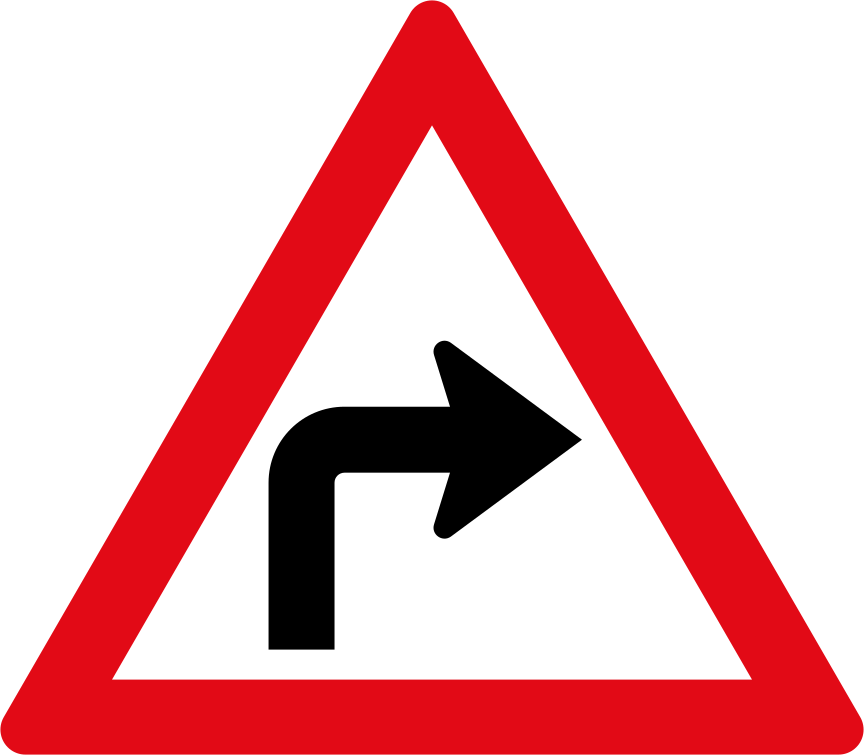
9. What does this traffic sign mean?
This traffic sign indicates a warning for a sharp curve to the right. A tight right-hand bend lies ahead. Reduce speed before entering the curve, remain within your lane and use smooth steering, particularly when visibility or road grip is reduced.
English • W204 • Sharp curve to the right. A sharp right-hand curve is ahead.
Sources
🔗 Commons.wikimedia.org
🔗 Transport.gov.za • Department of Transport · SADC RTSM Vol. 1, chapter 3, PDF p. 4 (May 2012)
SVG source: Southern African Development Community • Public domain • Original revision 2017-07-28. Wikimedia original unmodified.
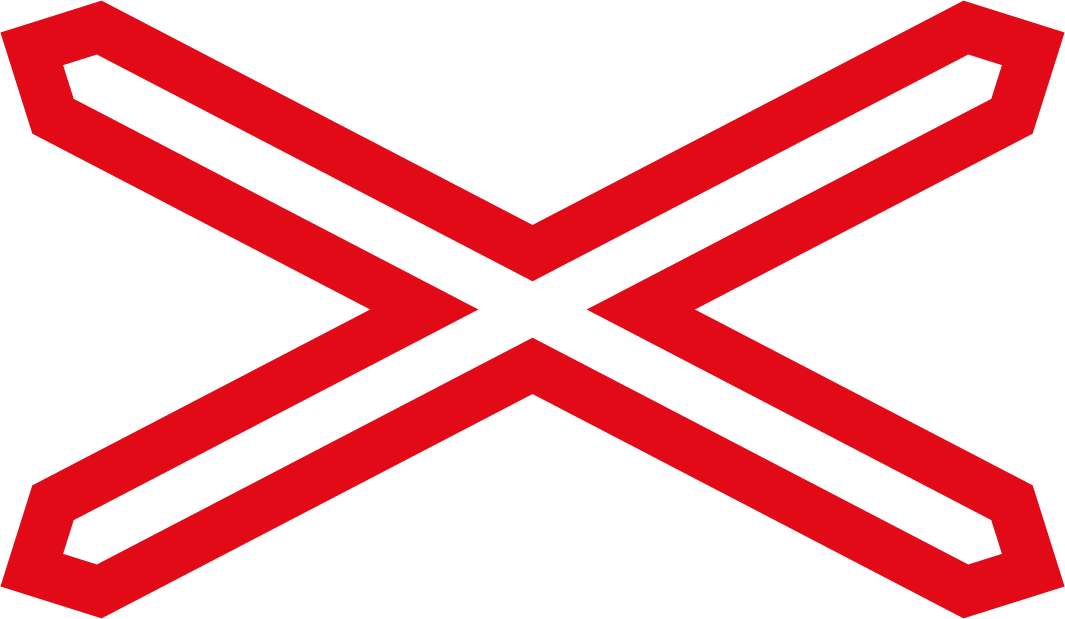
10. What does this traffic sign mean?
This traffic sign indicates a warning for a railway crossing with one track. It alerts drivers to a level crossing where a single railway track crosses the road. Drivers should approach with caution and be prepared to stop, even if no barriers or warning lights are active.
English • W403 • Single-track railway crossing. This marker identifies a railway crossing with one track. Check for trains and obey all crossing controls. It marks the crossing rather than serving only as an advance warning.
Sources
🔗 Commons.wikimedia.org • Wikimedia Commons original • Southern African Development Community • Public domain • Original revision 2018-08-25. Wikimedia original unmodified.
🔗 Transport.gov.za • Department of Transport · SADC RTSM Vol. 1, chapter 3 · W403 · PDF p. 53 (May 2012).
Image via Commons.wikimedia.org
Southern African Development Community • Public domain • Source revision 2018-08-25. Wikimedia original unmodified.
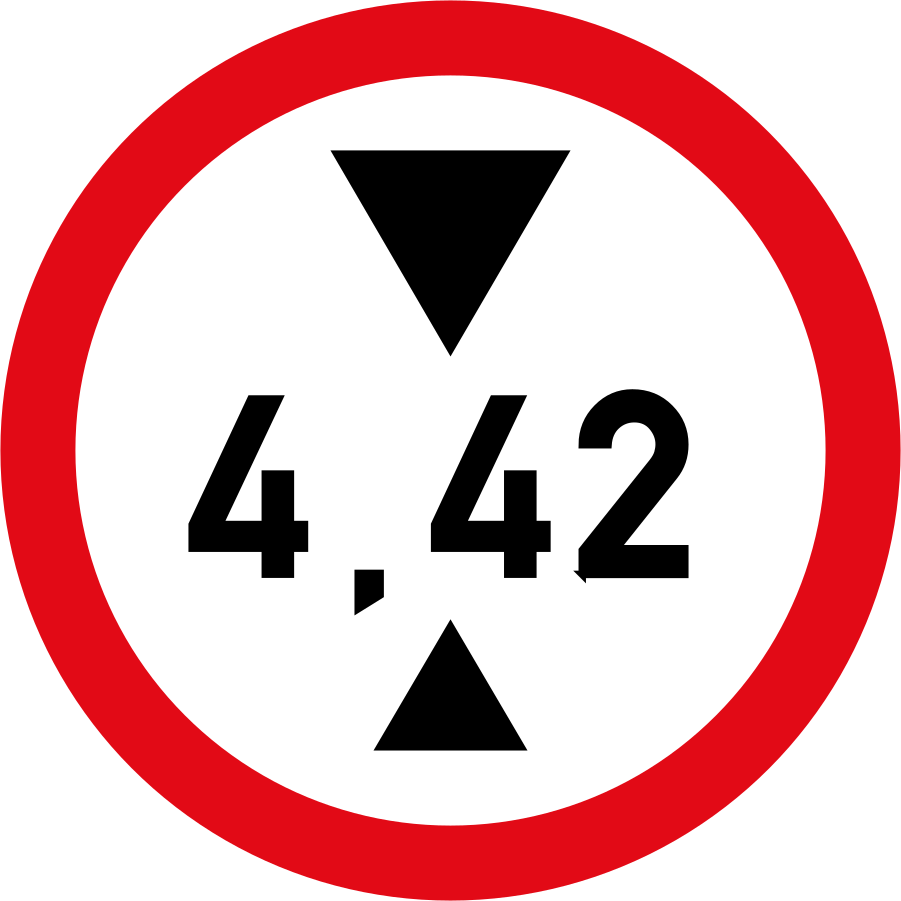
11. What does this traffic sign mean?
This traffic sign indicates that vehicles higher than indicated are prohibited. A vehicle or vehicle combination whose overall height, including its load, exceeds the displayed limit may not continue beyond the sign.
English • R204 • Height limit: 4.42 m. Do not proceed unless the vehicle and load are lower than the indicated clearance of 4.42 metres. Include an antenna where a height gauge applies.
Sources
🔗 Commons.wikimedia.org
🔗 Transport.gov.za • Department of Transport · SADC RTSM Vol. 1, chapter 2, PDF p. 67 (May 2012)
SVG source: Southern African Development Community • Public domain • Original revision 2017-06-22. Wikimedia original unmodified.
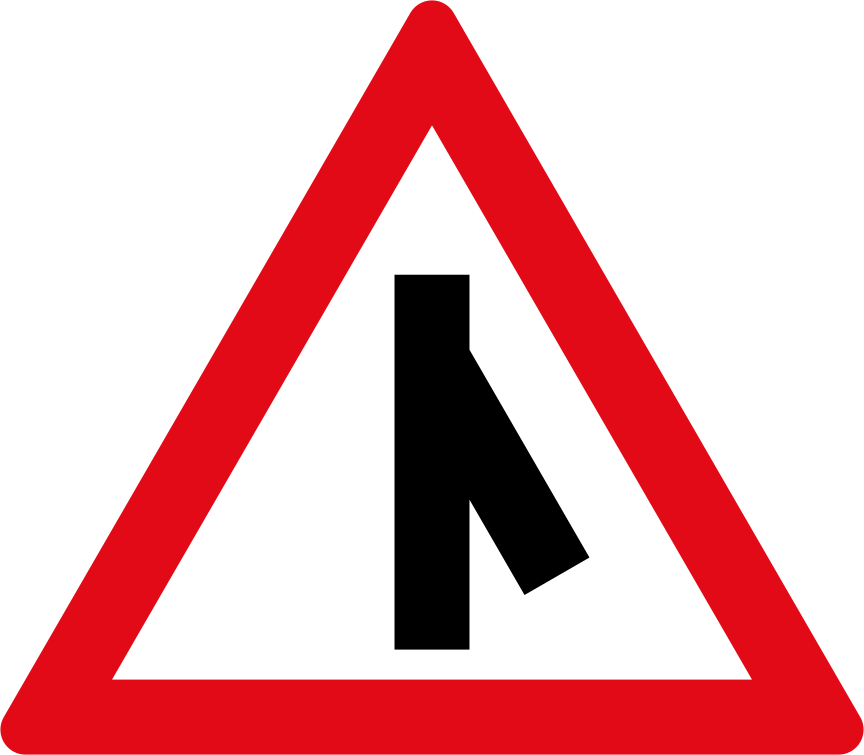
12. What does this traffic sign mean?
This traffic sign indicates a warning for merging traffic from the right. Traffic travelling in the same general direction may join your traffic stream from the right. Stay alert for entering vehicles and follow the applicable priority signs and local rules.
English • W114 • Merging traffic from the right. Traffic may join from the right at an acute angle ahead. Watch for entering vehicles and follow the applicable priority signs and local rules.
Sources
🔗 Commons.wikimedia.org • Wikimedia Commons original • Southern African Development Community • Public domain • Original revision 2017-07-26. Wikimedia original unmodified.
🔗 Transport.gov.za • Department of Transport · SADC RTSM Vol. 1, chapter 3 · W114 · PDF p. 16 (May 2012).
Image via Commons.wikimedia.org
Southern African Development Community • Public domain • Source revision 2017-07-26. Wikimedia original unmodified.
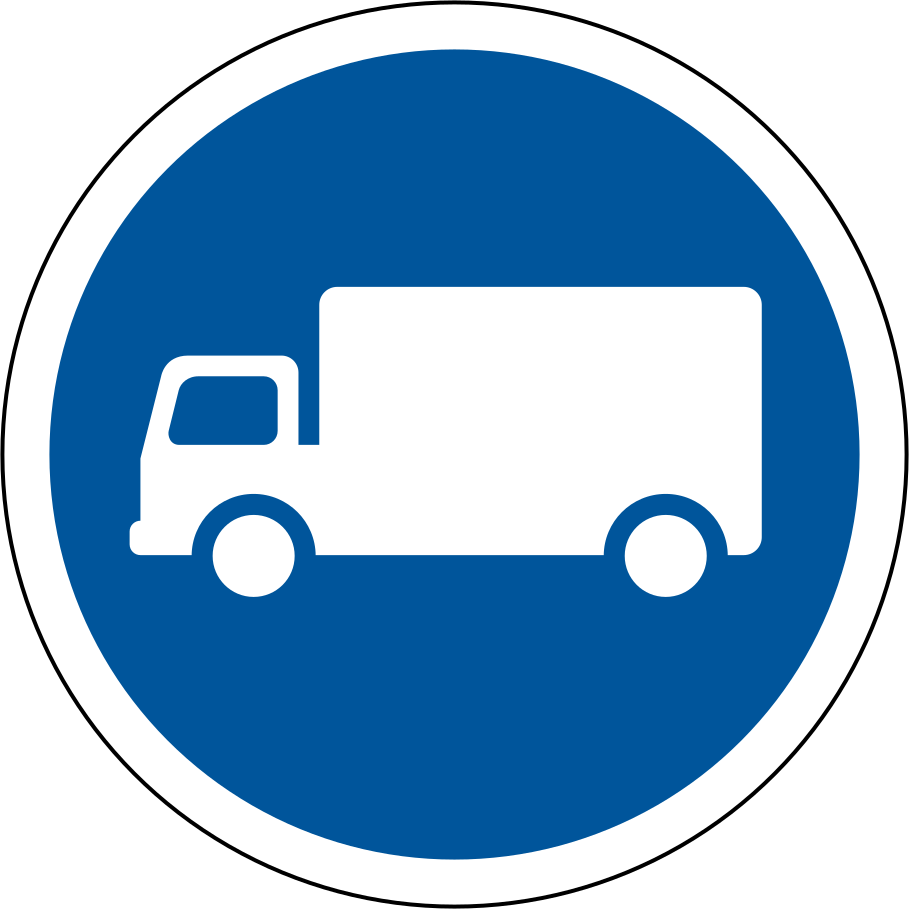
13. What does this traffic sign mean?
This traffic sign indicates a mandatory lane for trucks. Trucks must use the designated lane where the sign applies. Other road users may use the lane only where the applicable signs or local rules permit them to do so.
English • R123 • Goods vehicles only. This road or portion of road is set aside for goods vehicles over 3,500 kg GVM/GCM only; that class must use it rather than another road or portion of road.
Sources
🔗 Commons.wikimedia.org
🔗 Transport.gov.za • Department of Transport · SADC RTSM Vol. 1, chapter 2, PDF p. 56 (May 2012)
SVG source: Southern African Development Community • Public domain • Original revision 2017-06-12. Wikimedia original unmodified.
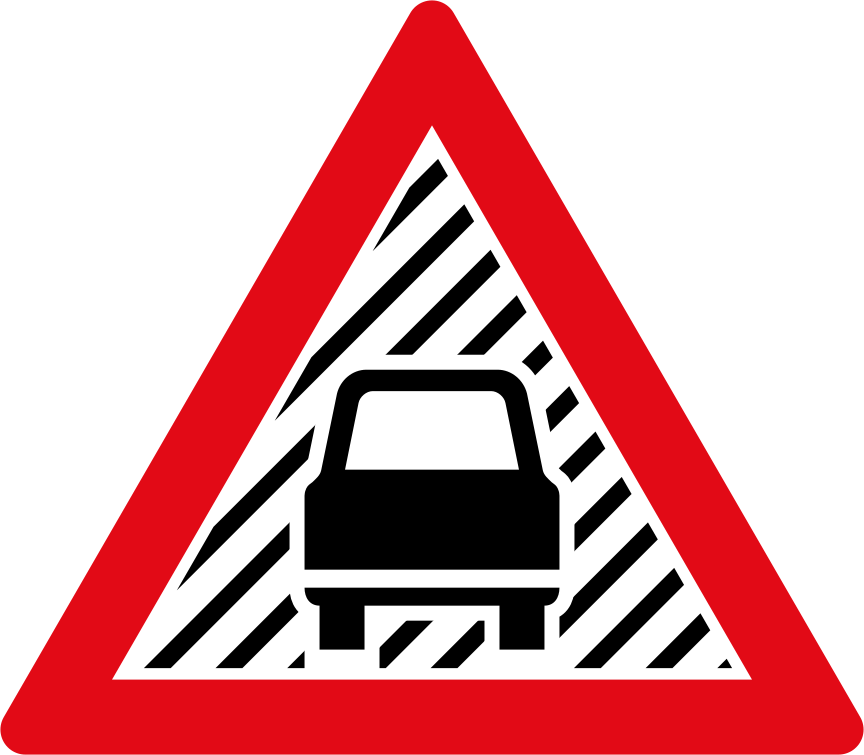
14. What does this traffic sign mean?
This traffic sign indicates a warning for poor visibility. Fog, heavy rain, snow, smoke or another condition may significantly reduce how far you can see. Reduce speed, increase your following distance and use the vehicle lighting required by the local rules and conditions.
English • W354 • Reduced visibility. Visibility may be reduced ahead, for example by fog or smoke.
Sources
🔗 Commons.wikimedia.org
🔗 Transport.gov.za • Department of Transport · SADC RTSM Vol. 1, chapter 3, PDF p. 7 (May 2012)
SVG source: Southern African Development Community • Public domain • Original revision 2017-08-16. Wikimedia original unmodified.
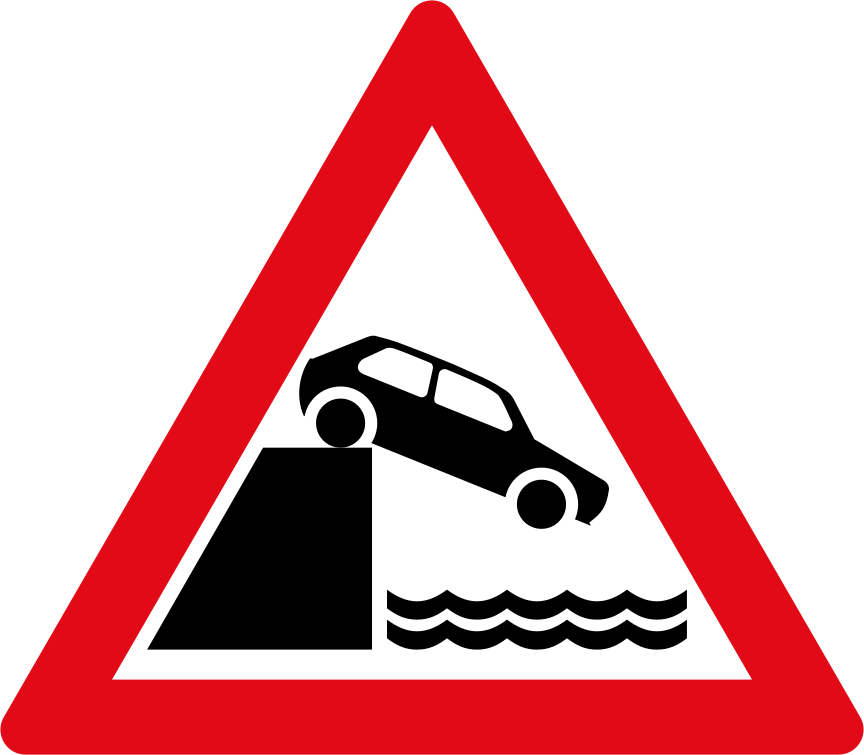
15. What does this traffic sign mean?
This traffic sign indicates a warning for a quayside or riverbank. The road approaches or runs close to an edge beside water, where a vehicle could leave the roadway and enter the water. Reduce speed, identify the road edge carefully and take extra care in darkness or poor visibility.
English • W348 • Jetty edge or river bank. The road approaches an unprotected jetty edge or river bank. Take care near the water.
Sources
🔗 Commons.wikimedia.org
🔗 Transport.gov.za • Department of Transport · SADC RTSM Vol. 1, chapter 3, PDF p. 6 (May 2012)
SVG source: Southern African Development Community • Public domain • Original revision 2017-08-05. Wikimedia original unmodified.
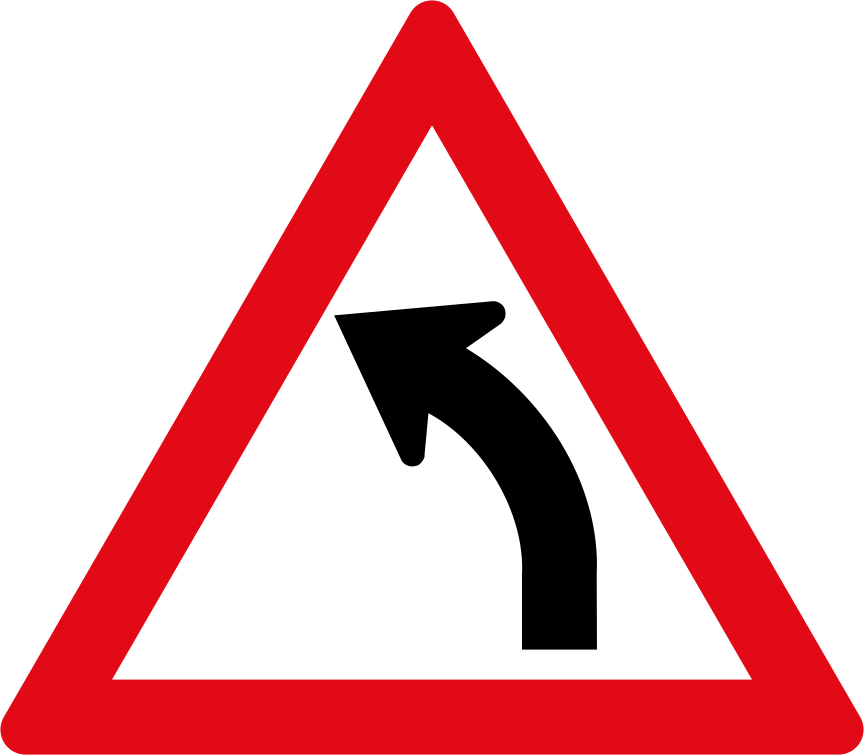
16. What does this traffic sign mean?
This traffic sign indicates a warning for a curve to the left. A left-hand bend lies ahead. Reduce speed before entering the curve, maintain your lane position and use smooth steering.
English • W203 • Gentle curve to the left. The road curves to the left ahead.
Sources
🔗 Commons.wikimedia.org
🔗 Transport.gov.za • Department of Transport · SADC RTSM Vol. 1, chapter 3, PDF p. 4 (May 2012)
SVG source: Southern African Development Community • Public domain • Original revision 2017-07-28. Wikimedia original unmodified.
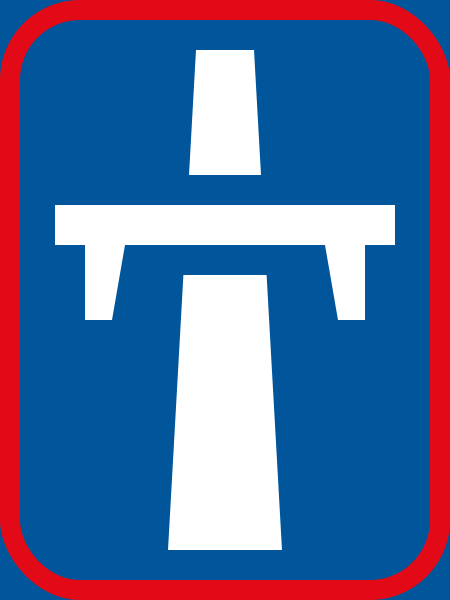
17. What does this traffic sign mean?
This traffic sign indicates the start of an expressway. From this point, the traffic rules and access conditions that apply to expressways take effect according to the applicable local regulations.
English • R402 • Single carriageway freeway begins. The comprehensive rules for a single carriageway freeway apply beyond this sign. Obey the freeway access and driving restrictions.
Sources
🔗 Commons.wikimedia.org
🔗 Transport.gov.za • Department of Transport · SADC RTSM Vol. 1, chapter 2, PDF p. 111 (May 2012)
SVG source: Southern African Development Community • Public domain • Original revision 2017-05-01. Wikimedia original unmodified.
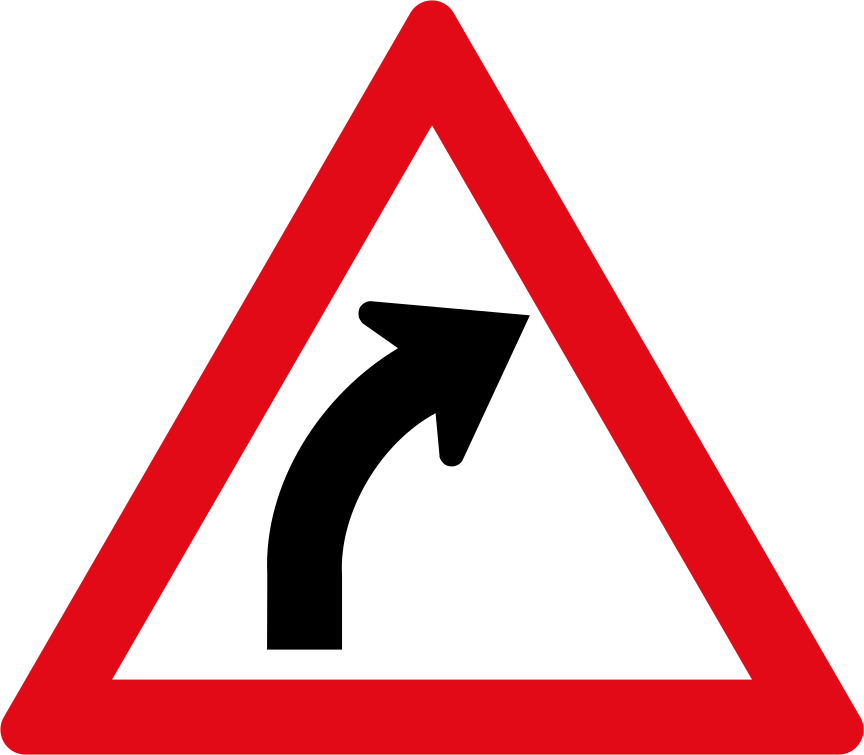
18. What does this traffic sign mean?
This traffic sign indicates a warning for a curve to the right. A right-hand bend lies ahead. Reduce speed before entering the curve, maintain your lane position and use smooth steering.
English • W202 • Gentle curve to the right. The road curves to the right ahead.
Sources
🔗 Commons.wikimedia.org
🔗 Transport.gov.za • Department of Transport · SADC RTSM Vol. 1, chapter 3, PDF p. 4 (May 2012)
SVG source: Southern African Development Community • Public domain • Original revision 2017-07-28. Wikimedia original unmodified.
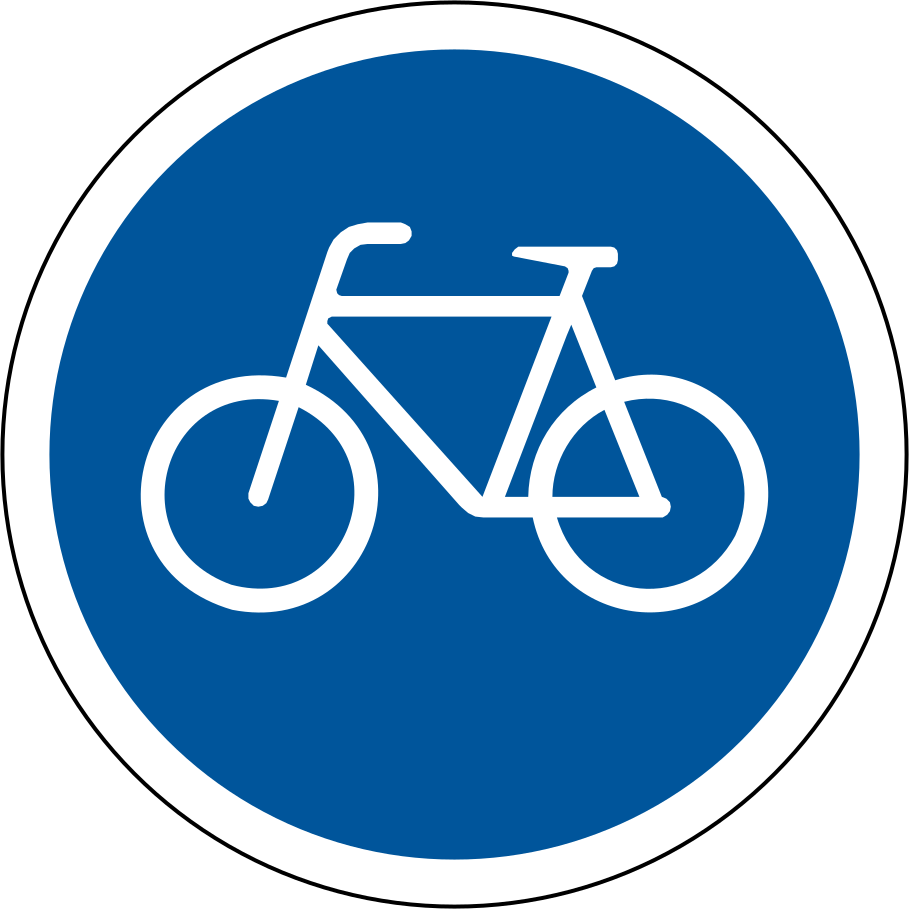
19. What does this traffic sign mean?
This traffic sign indicates a mandatory path for cyclists. Cyclists must use the designated path where the sign applies. Other road users may use the path only where the applicable signs or local rules permit them to do so.
English • R111 • Cyclists only. This road or portion of the road is set aside for cyclists only; the indicated class must use it rather than another road or portion of road.
Sources
🔗 Commons.wikimedia.org
🔗 Transport.gov.za • Department of Transport · SADC RTSM Vol. 1, chapter 2, PDF p. 52 (May 2012)
SVG source: Southern African Development Community • Public domain • Original revision 2017-05-25. Wikimedia original unmodified.
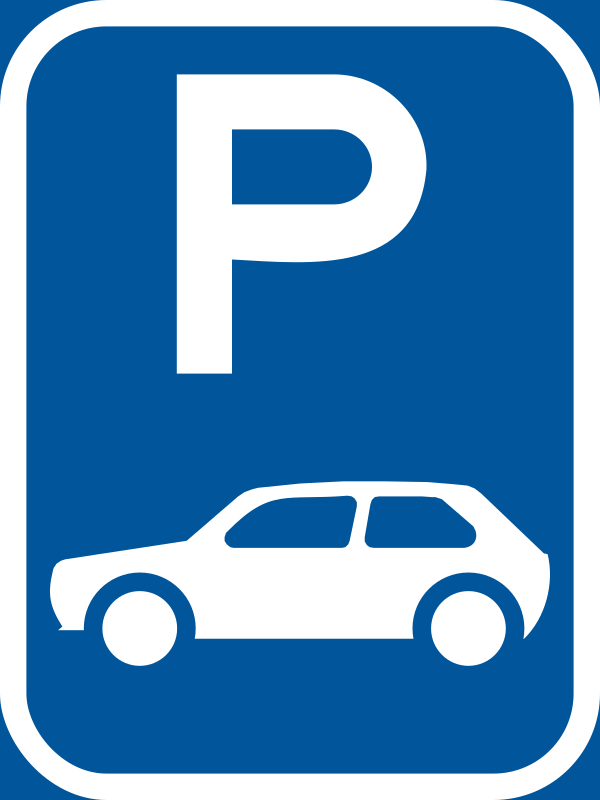
20. What does this traffic sign mean?
This traffic sign indicates that parking is reserved for cars. Other vehicle categories may not use the parking space or area unless an applicable sign or local rule permits it.
English • R308-P • Motor car parking reservation. The parking area is reserved for motor cars. Observe any displayed time or other conditions.
Sources
🔗 Commons.wikimedia.org • Wikimedia Commons original • Southern African Development Community • Public domain • Original revision 2016-03-24. Wikimedia original unmodified.
🔗 Transport.gov.za • Department of Transport · SADC RTSM Vol. 1, chapter 2 · R308-P · PDF p. 92 (May 2012).
Image via Commons.wikimedia.org
Southern African Development Community • Public domain • Source revision 2016-03-24. Wikimedia original unmodified.
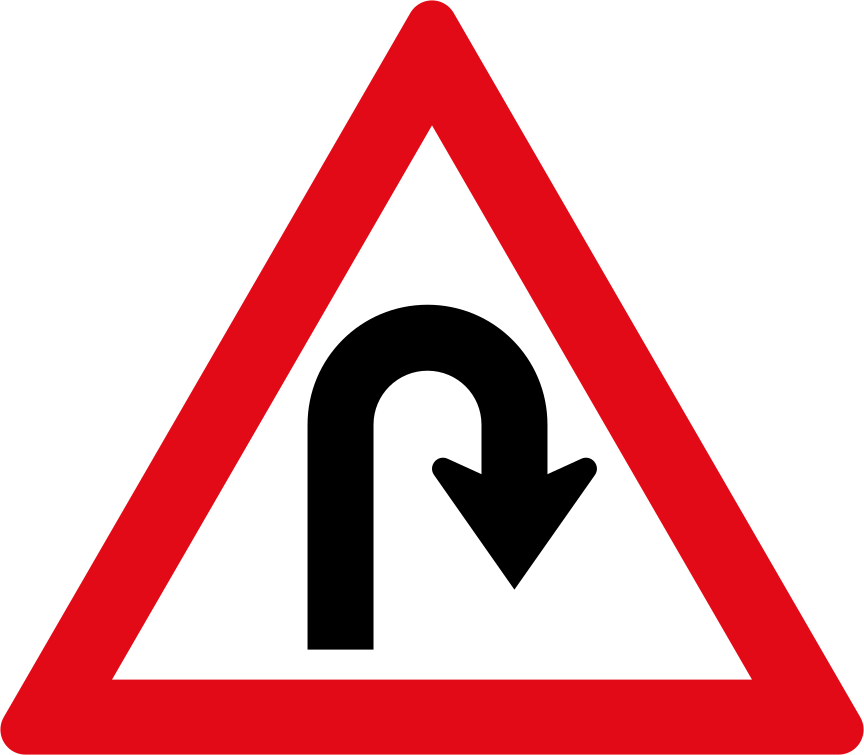
21. What does this traffic sign mean?
This traffic sign warns of a hairpin bend to the right. The road ahead makes a very sharp turn, so reduce speed and be prepared to steer sharply to the right.
English • W206 • Hairpin bend to the right. A very tight bend to the right is ahead. Reduce speed before the bend.
Sources
🔗 Commons.wikimedia.org
🔗 Transport.gov.za • Department of Transport · SADC RTSM Vol. 1, chapter 3, PDF p. 4 (May 2012)
SVG source: Southern African Development Community • Public domain • Original revision 2017-07-28. Wikimedia original unmodified.
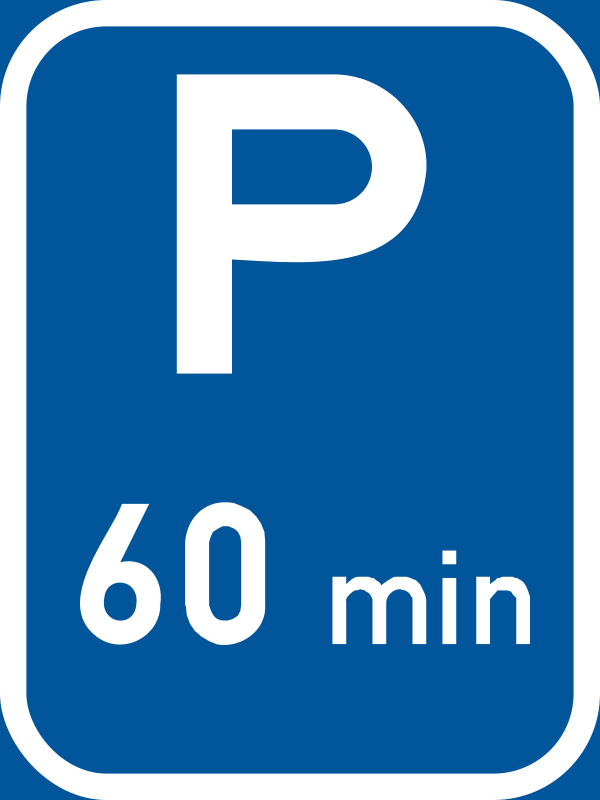
22. What does this traffic sign mean?
This traffic sign indicates that parking is allowed only for a limited time. Observe the permitted parking duration and use a parking disc or other time-recording method where required.
English • R306-P • Limited parking reservation. The illustrated sign limits parking to 60 minutes. Observe any applicable payment, time and other conditions. This sign does not by itself require a parking disc.
Sources
🔗 Commons.wikimedia.org • Wikimedia Commons original • Southern African Development Community • Public domain • Original revision 2016-03-24. Wikimedia original unmodified.
🔗 Transport.gov.za • Department of Transport · SADC RTSM Vol. 1, chapter 2 · R306-P · PDF p. 89 (May 2012).
Image via Commons.wikimedia.org
Southern African Development Community • Public domain • Source revision 2016-03-24. Wikimedia original unmodified.
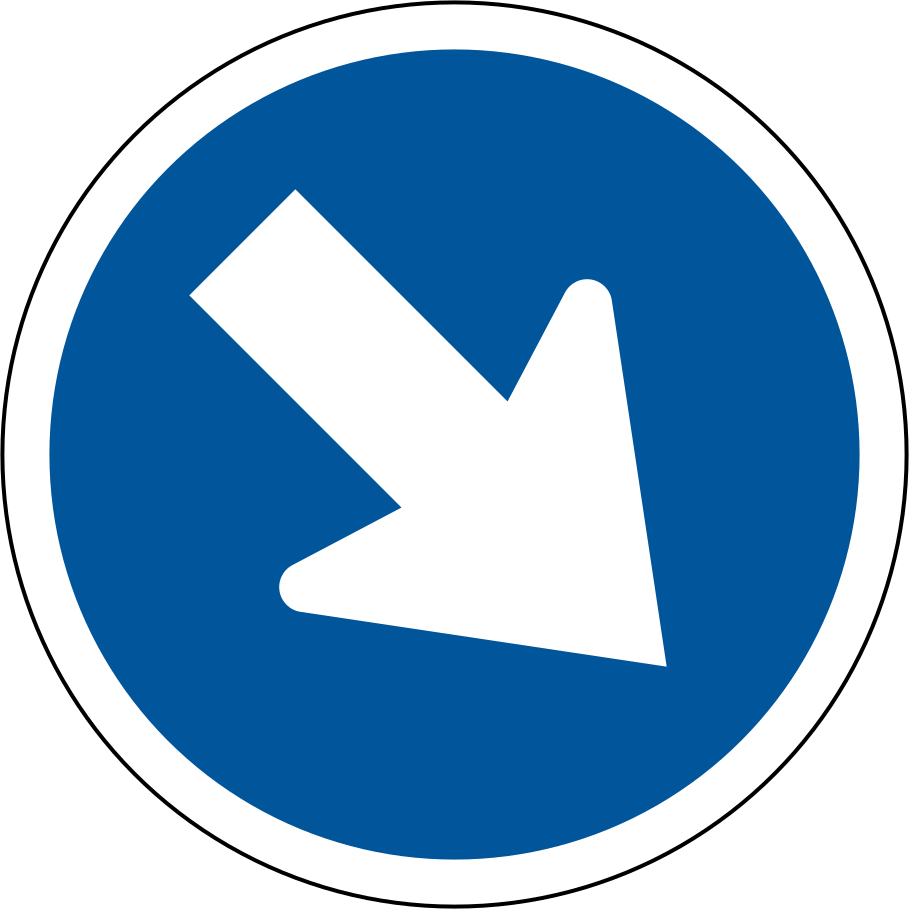
23. What does this traffic sign mean?
This traffic sign indicates that traffic must pass an obstacle on the right. Keep to the right of the obstacle and follow any accompanying signs or road markings.
English • R104 • Keep right. Pass to the right of the obstruction or sign.
Sources
🔗 Commons.wikimedia.org
🔗 Transport.gov.za • Department of Transport · SADC RTSM Vol. 1, chapter 2, PDF p. 48 (May 2012)
SVG source: Southern African Development Community • Public domain • Original revision 2017-05-22. Wikimedia original unmodified.
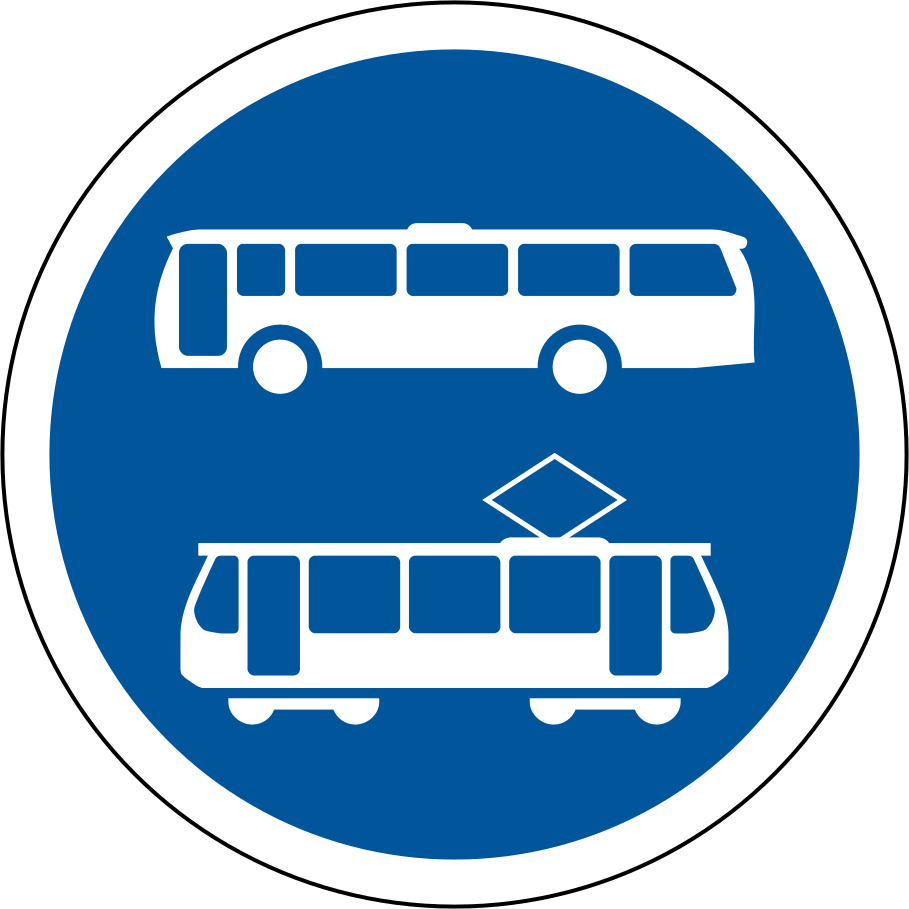
24. What does this traffic sign mean?
This traffic sign indicates a mandatory lane for buses and trams. Buses and trams must use the designated lane or track where the sign applies. Other road users may use it only where the applicable signs or local rules permit them to do so.
English • R139 • Buses and trams only. This road or portion of the road is set aside for buses and trams only; the indicated class must use it rather than another road or portion of road.
Sources
🔗 Commons.wikimedia.org
🔗 Transport.gov.za • Department of Transport · SADC RTSM Vol. 1, chapter 2, PDF p. 63 (May 2012)
SVG source: Southern African Development Community • Public domain • Original revision 2017-06-21. Wikimedia original unmodified.
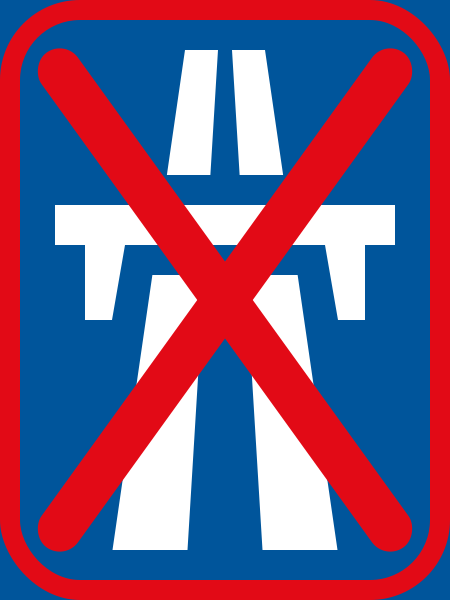
25. What does this traffic sign mean?
This traffic sign indicates the end of the motorway. The special motorway rules end at this point. Follow the speed limits, access rules and other traffic signs that apply to the road ahead.
English • R401-600 • End of dual carriageway freeway. The comprehensive dual carriageway freeway rules imposed by R401 end here.
Sources
🔗 Commons.wikimedia.org
🔗 Transport.gov.za • Department of Transport · SADC RTSM Vol. 1, chapter 2, PDF p. 134 (May 2012)
SVG source: Southern African Development Community • Public domain • Original revision 2017-04-30. Wikimedia original unmodified.
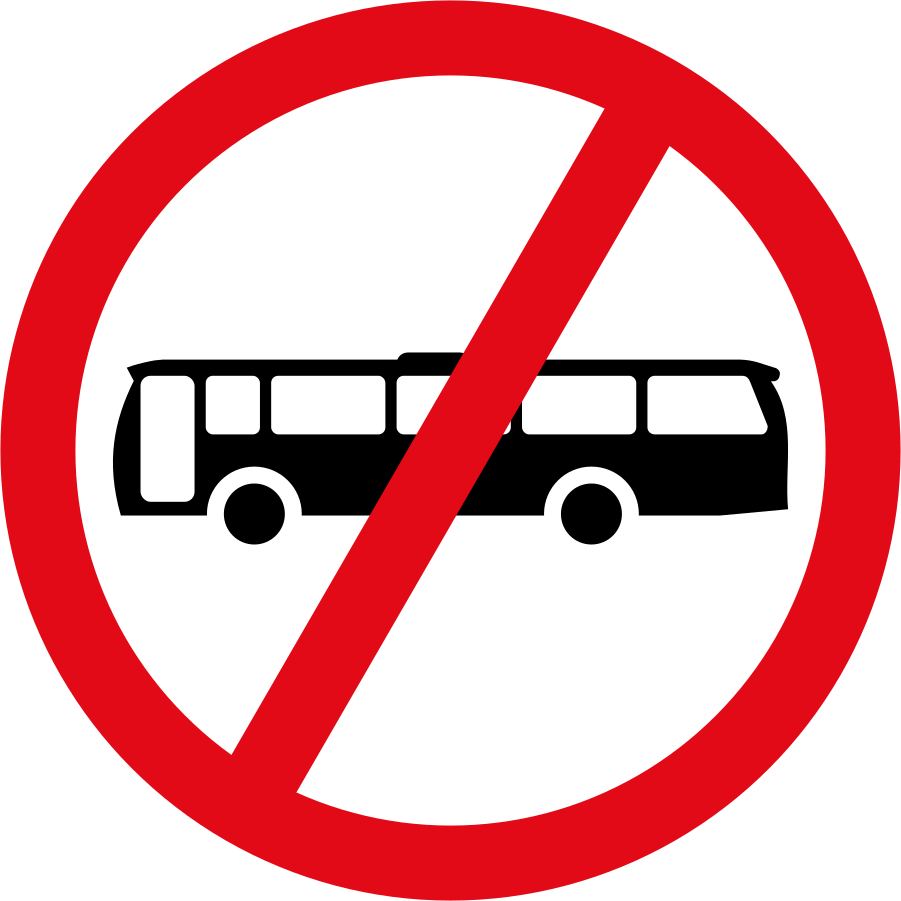
26. What does this traffic sign mean?
This traffic sign indicates that buses are prohibited. Buses covered by the sign may not enter or continue beyond it. Other road users may still be permitted unless another restriction applies.
English • R227 • No buses. The indicated class of road user must not proceed beyond this sign: buses.
Sources
🔗 Commons.wikimedia.org
🔗 Transport.gov.za • Department of Transport · SADC RTSM Vol. 1, chapter 2, PDF p. 81 (May 2012) Artwork correction: the earlier R226 source above documents the previous image. The displayed SVG now follows R227 and the captioned meaning.
🔗 Commons.wikimedia.org • Current SVG source • Southern African Development Community • Public domain • Original revision 2017-06-11. Wikimedia original unmodified.
🔗 Transport.gov.za • Department of Transport · SADC RTSM Vol. 1, chapter 2 · R227 · PDF p. 81 (May 2012).
Image via Commons.wikimedia.org
Southern African Development Community • Public domain • Source revision 2017-06-11. Wikimedia original unmodified.
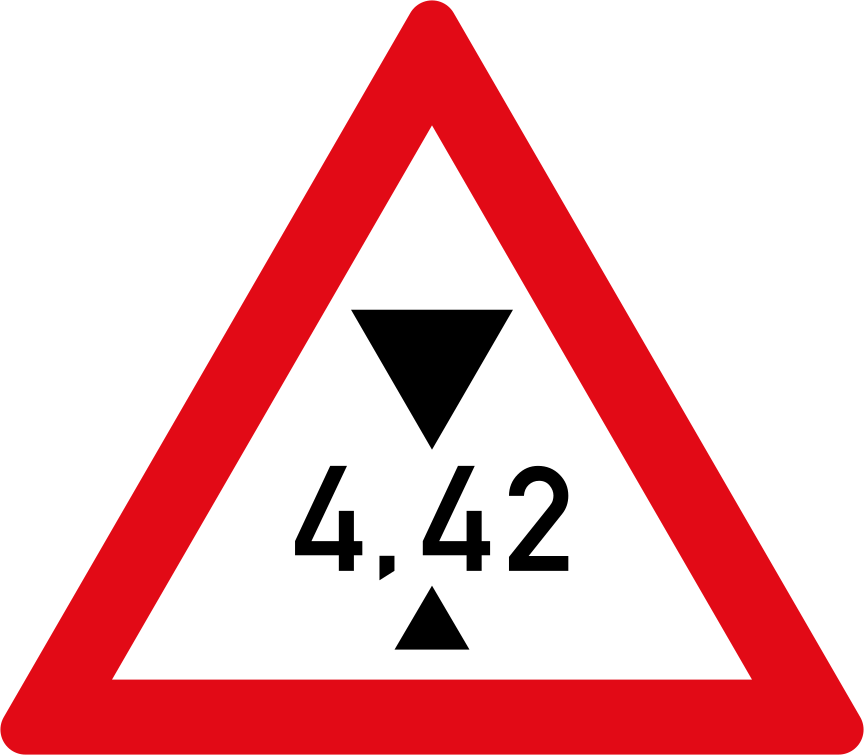
27. What does this traffic sign mean?
This traffic sign indicates a warning for a height restriction. The available clearance ahead is limited, for example at a bridge, tunnel or other overhead structure. Drivers of tall vehicles should check their vehicle height and use another route if the vehicle cannot pass safely.
English • W320 • Height restricted: 4.42 m. A restricted clearance of 4.42 metres is ahead. Check the height of your vehicle and load; obey the height-limit sign at the restriction.
Sources
🔗 Commons.wikimedia.org
🔗 Transport.gov.za • Department of Transport · SADC RTSM Vol. 1, chapter 3, PDF p. 5 (May 2012)
SVG source: Southern African Development Community • Public domain • Original revision 2017-08-11. Wikimedia original unmodified.

28. What does this traffic sign mean?
This traffic sign indicates the start of a priority road. Drivers on the priority road normally have priority over traffic entering from side roads until the priority road ends, unless traffic lights, other signs or applicable traffic rules indicate otherwise.
English • IN7 • Right of way at the junction ahead. Traffic on the road you are following has right of way at the junction ahead. This sign is not a blanket priority declaration for every subsequent junction.
Sources
🔗 Commons.wikimedia.org
🔗 Transport.gov.za • Department of Transport · SADC RTSM Vol. 1, chapter 5, PDF p. 12 (May 2012)
SVG source: Southern African Development Community • Public domain • Original revision 2019-07-25. Wikimedia original unmodified.
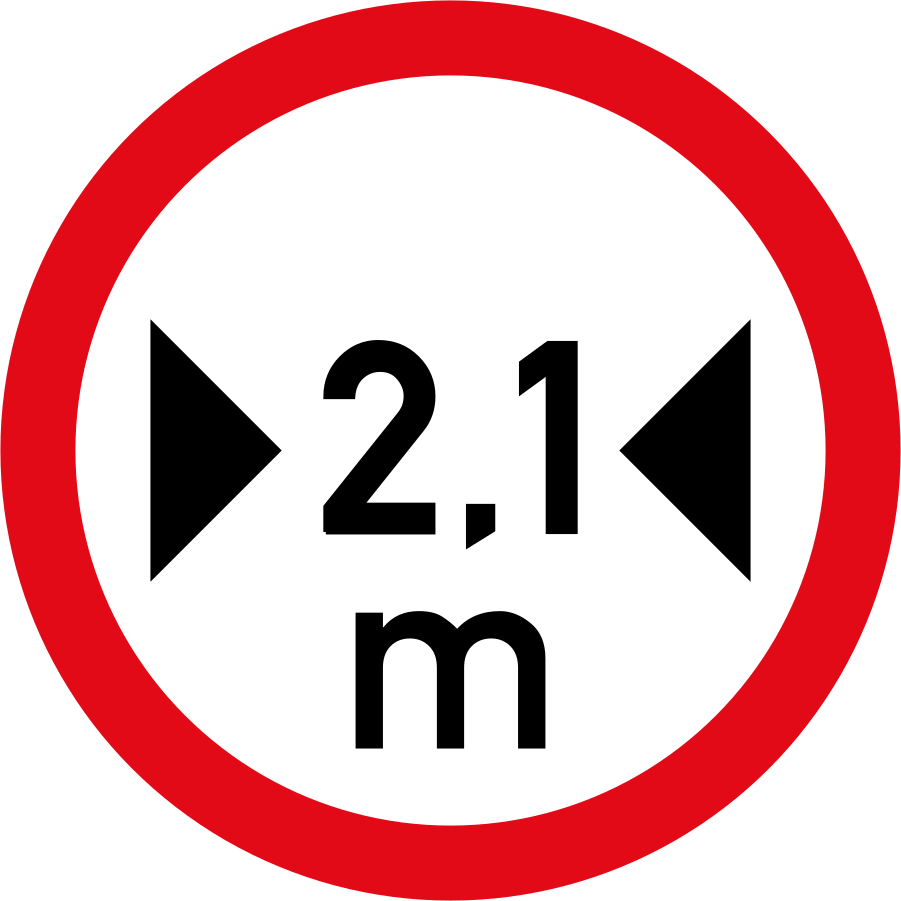
29. What does this traffic sign mean?
This traffic sign indicates that vehicles wider than indicated are prohibited. A vehicle or vehicle combination whose overall width, including its load, exceeds the displayed limit may not continue beyond the sign.
English • R239 • Width limit: 2.1 m. Vehicles 2.1 metres wide or wider, including their load, must not proceed beyond the sign.
Sources
🔗 Commons.wikimedia.org
🔗 Transport.gov.za • Department of Transport · SADC RTSM Vol. 1, chapter 2, PDF p. 84 (May 2012)
SVG source: Southern African Development Community • Public domain • Original revision 2017-06-22. Wikimedia original unmodified.
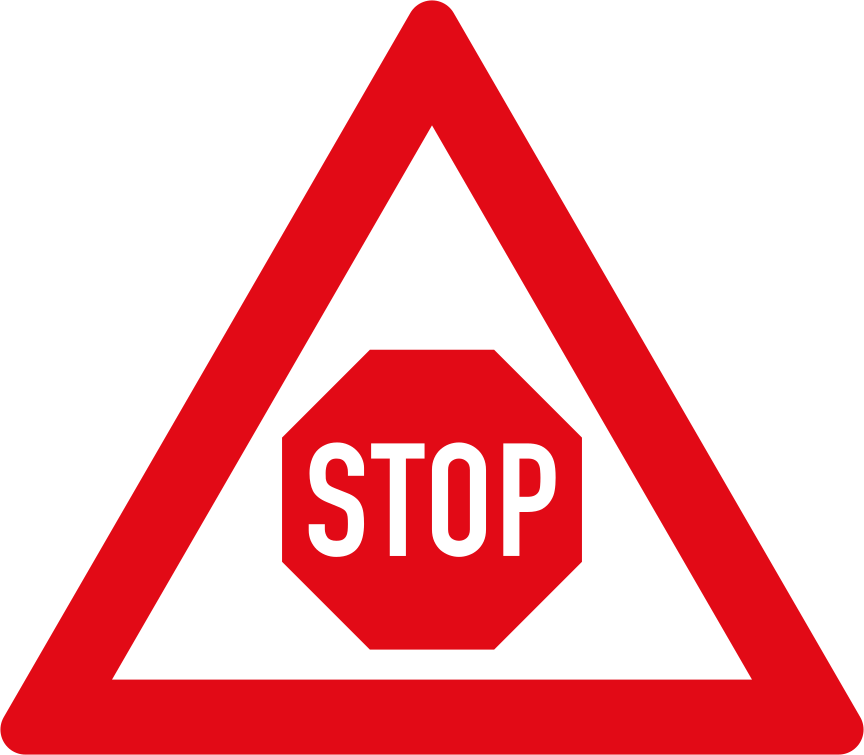
30. What does this traffic sign mean?
This traffic sign indicates stop and give way ahead. A stop sign applies at the location ahead. Reduce speed in good time and be prepared to come to a complete stop.
English • W302 • Stop ahead. A stop-controlled junction is ahead.
Sources
🔗 Commons.wikimedia.org
🔗 Transport.gov.za • Department of Transport · SADC RTSM Vol. 1, chapter 3, PDF p. 5 (May 2012)
SVG source: Southern African Development Community • Public domain • Original revision 2017-07-31. Wikimedia original unmodified.
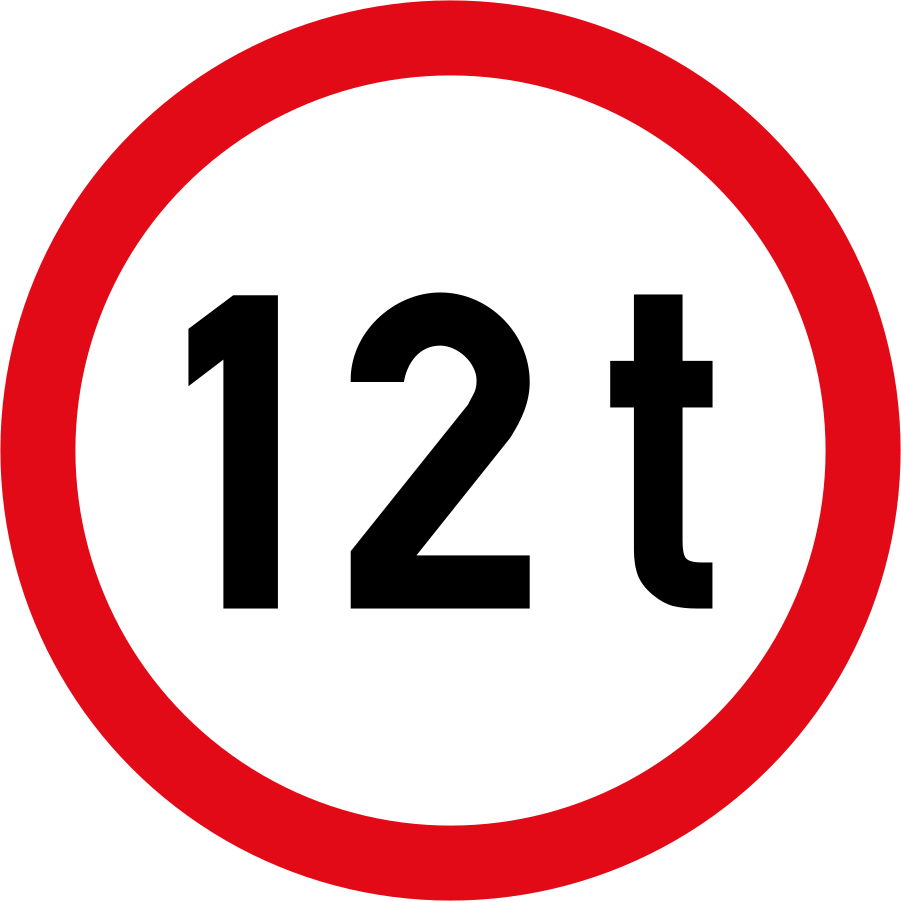
31. What does this traffic sign mean?
This traffic sign indicates that vehicles heavier than indicated are prohibited. Vehicles or vehicle combinations exceeding the displayed mass limit may not continue beyond the sign. The legally relevant mass is determined by the applicable local rules.
English • R202 • Mass limit: 12 t. Vehicles with a gross vehicle mass or gross combination mass exceeding 12 tonnes must not proceed beyond the sign.
Sources
🔗 Commons.wikimedia.org
🔗 Transport.gov.za • Department of Transport · SADC RTSM Vol. 1, chapter 2, PDF p. 65 (May 2012)
SVG source: Southern African Development Community • Public domain • Original revision 2017-06-23. Wikimedia original unmodified.
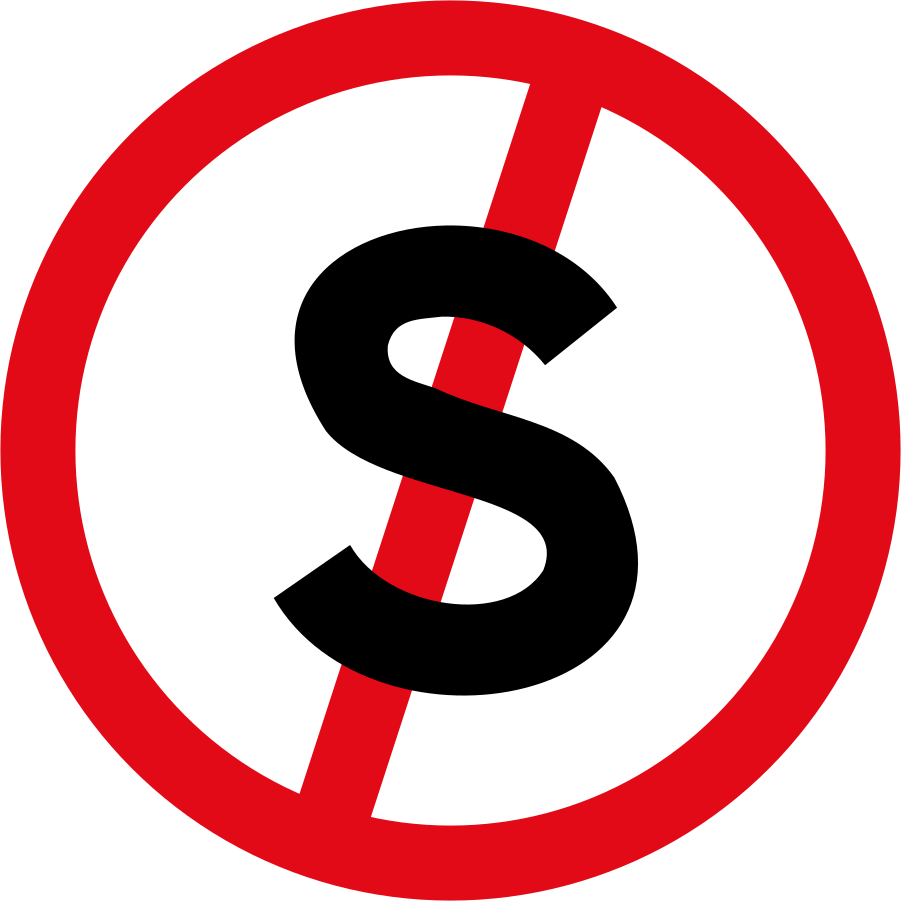
32. What does this traffic sign mean?
This traffic sign indicates that parking and stopping are prohibited. Vehicles may not stop or park voluntarily where the restriction applies, except where an applicable rule provides an exemption or stopping is required by traffic conditions.
English • R217 • No stopping. Do not stop on the indicated portion of road, except to comply with a traffic signal or officer, or to avoid a collision. Read any secondary message for the scope of the restriction.
Sources
🔗 Commons.wikimedia.org
🔗 Transport.gov.za • Department of Transport · SADC RTSM Vol. 1, chapter 2, PDF p. 75 (May 2012)
SVG source: Southern African Development Community • Public domain • Original revision 2017-05-31. Wikimedia original unmodified.
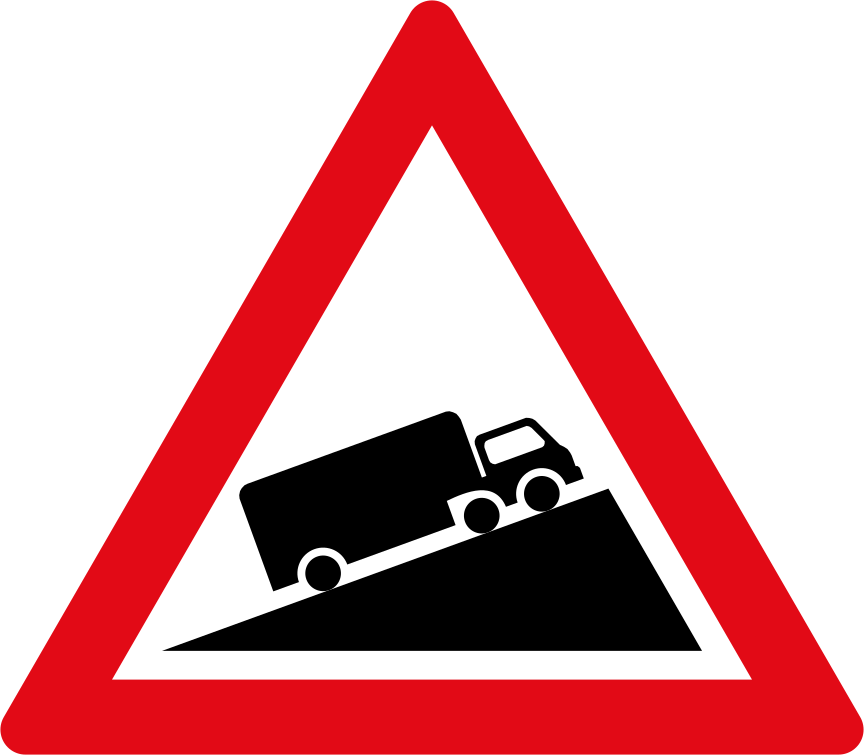
33. What does this traffic sign mean?
This traffic sign indicates a warning for a steep ascent. A steep uphill gradient lies ahead and may cause heavy or low-powered vehicles to lose speed. Select a suitable gear, maintain a safe following distance and be prepared for slower traffic.
English • W323 • Steep ascent. A steep uphill section is ahead. Expect slow heavy vehicles.
Sources
🔗 Commons.wikimedia.org
🔗 Transport.gov.za • Department of Transport · SADC RTSM Vol. 1, chapter 3, PDF p. 5 (May 2012)
SVG source: Southern African Development Community • Public domain • Original revision 2018-08-23. Wikimedia original unmodified.
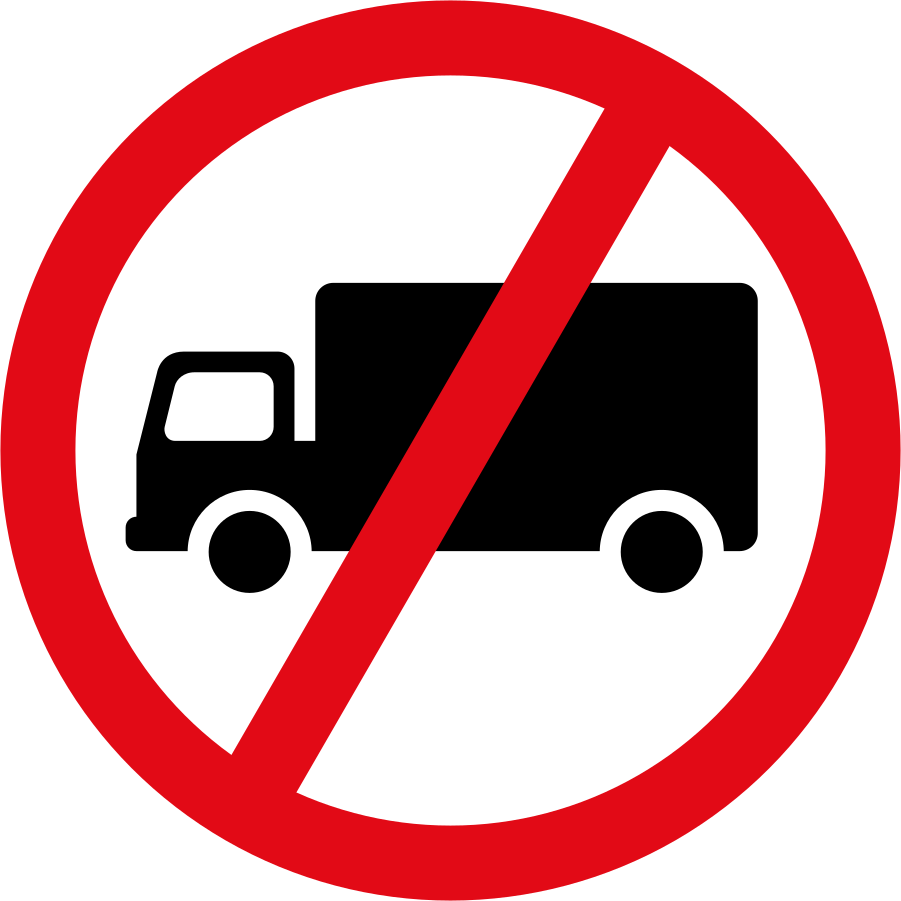
34. What does this traffic sign mean?
This traffic sign indicates that trucks are prohibited. Trucks covered by the sign may not enter or continue beyond it. Any applicable weight threshold or vehicle-category limitation is determined by the sign, supplementary information and local rules.
English • R229 • No goods vehicles. Goods vehicles over 3,500 kg GVM/GCM must not proceed beyond the sign.
Sources
🔗 Commons.wikimedia.org
🔗 Transport.gov.za • Department of Transport · SADC RTSM Vol. 1, chapter 2, PDF p. 81 (May 2012)
SVG source: Southern African Development Community • Public domain • Original revision 2017-06-12. Wikimedia original unmodified.
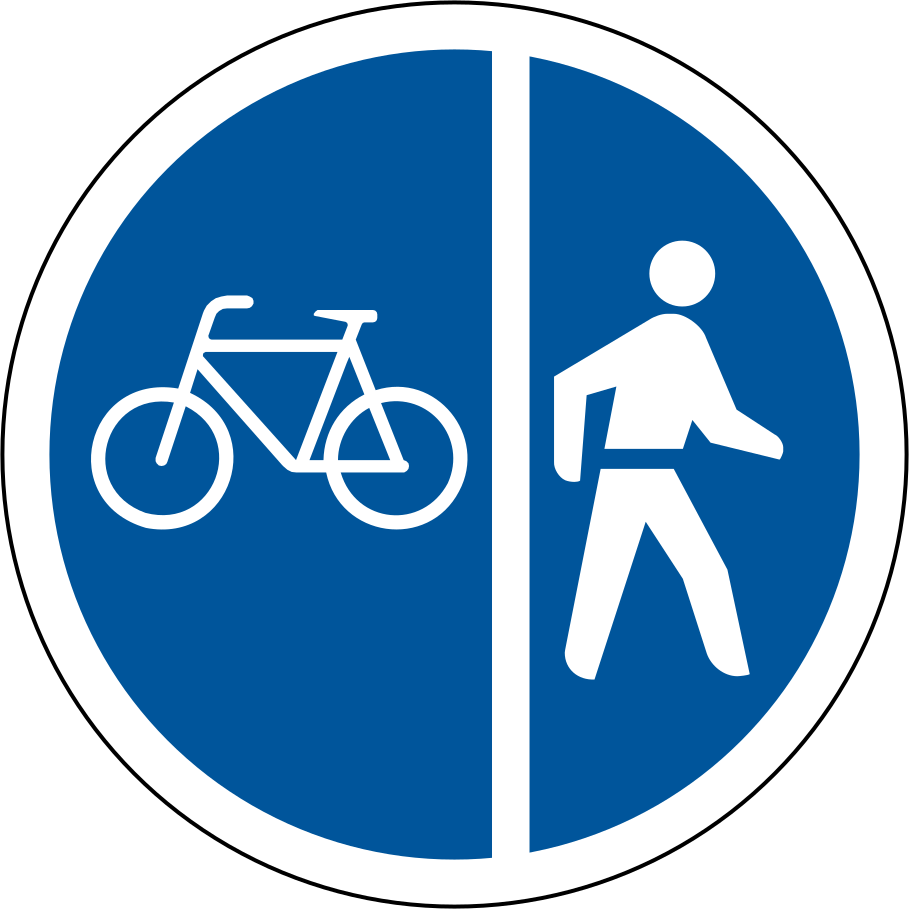
35. What does this traffic sign mean?
This traffic sign indicates a mandatory divided path for pedestrians and cyclists. Pedestrians and cyclists must use the section designated for them. Other road users may use the path only where the applicable signs or local rules permit them to do so.
English • R113 • Cyclists and pedestrians only, with barrier. Only cyclists and pedestrians may use this path. Cyclists use the left portion and pedestrians the right portion, as indicated by the symbols and dividing barrier.
Sources
🔗 Commons.wikimedia.org
🔗 Transport.gov.za • Department of Transport · SADC RTSM Vol. 1, chapter 2, PDF p. 53 (May 2012)
SVG source: Southern African Development Community • Public domain • Original revision 2017-05-28. Wikimedia original unmodified.
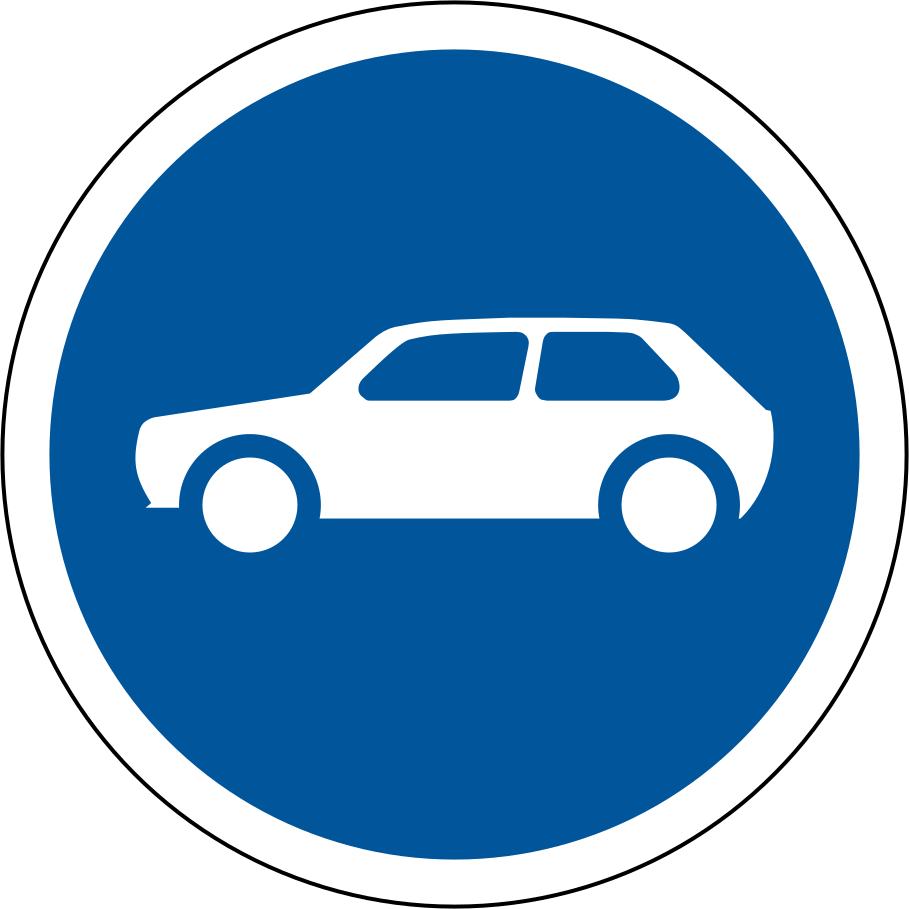
36. What does this traffic sign mean?
This traffic sign indicates a mandatory lane for cars. Cars must use the designated lane or route where the sign applies. Other road users may use it only where the applicable signs or local rules permit them to do so.
English • R117 • Motor cars only. This road or portion of the road is set aside for motor cars only; the indicated class must use it rather than another road or portion of road.
Sources
🔗 Commons.wikimedia.org
🔗 Transport.gov.za • Department of Transport · SADC RTSM Vol. 1, chapter 2, PDF p. 55 (May 2012)
SVG source: Southern African Development Community • Public domain • Original revision 2017-06-05. Wikimedia original unmodified.
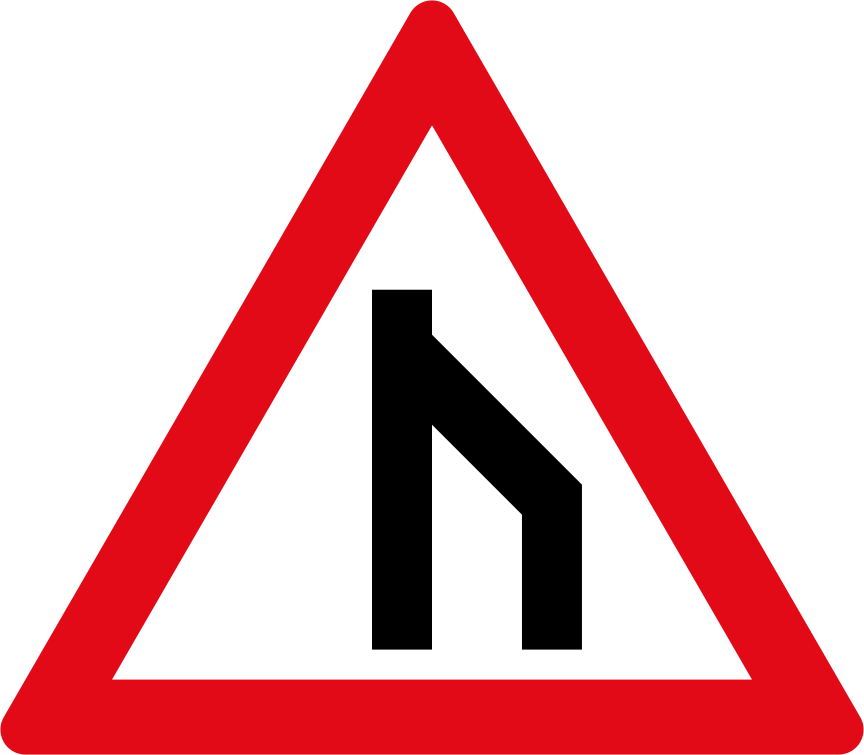
37. What does this traffic sign mean?
This traffic sign indicates a warning for the end of a divided road. The separation between opposing directions of traffic ends ahead, and oncoming traffic will no longer be divided by a central reservation. Reduce speed and adjust to the new road layout.
English • W117 • End of a divided roadway. The separation between opposing traffic streams ends ahead. Be prepared for two-way traffic without a central reservation.
Sources
🔗 Commons.wikimedia.org • Wikimedia Commons original • Southern African Development Community • Public domain • Original revision 2018-08-20. Wikimedia original unmodified.
🔗 Transport.gov.za • Department of Transport · SADC RTSM Vol. 1, chapter 3 · W117 · PDF p. 17 (May 2012).
Image via Commons.wikimedia.org
Southern African Development Community • Public domain • Source revision 2018-08-20. Wikimedia original unmodified.
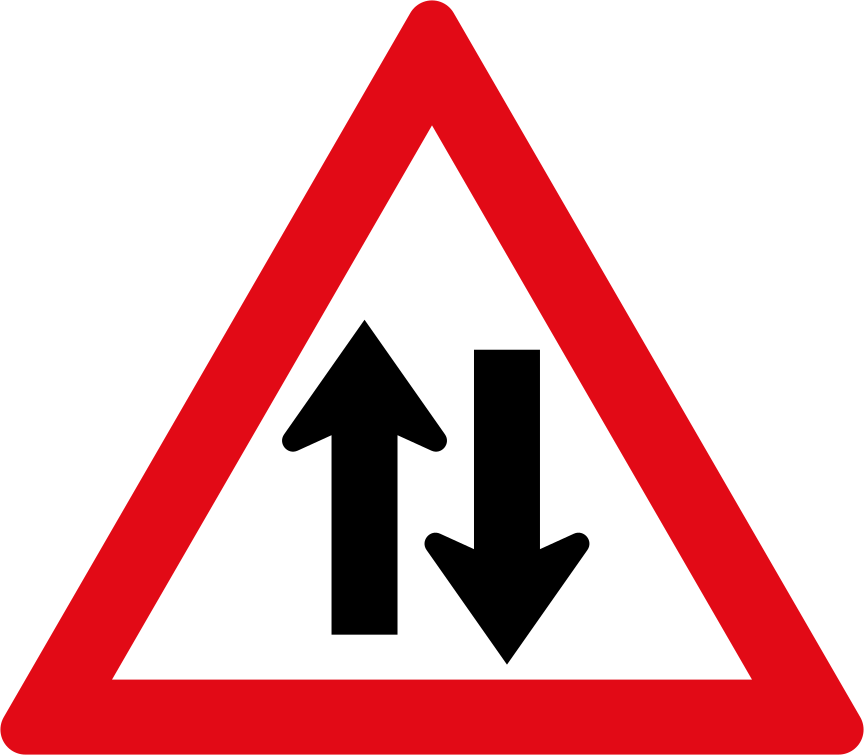
38. What does this traffic sign mean?
This traffic sign indicates a warning for two-way traffic. Oncoming traffic will use the same road or carriageway ahead. Keep to the correct side of the road and overtake only where it is permitted and clearly safe.
English • W212 • Two-way traffic. Two-way traffic is ahead. Watch for vehicles travelling in the opposite direction.
Sources
🔗 Commons.wikimedia.org
🔗 Transport.gov.za • Department of Transport · SADC RTSM Vol. 1, chapter 3, PDF p. 4 (May 2012)
SVG source: Southern African Development Community • Public domain • Original revision 2017-07-31. Wikimedia original unmodified.
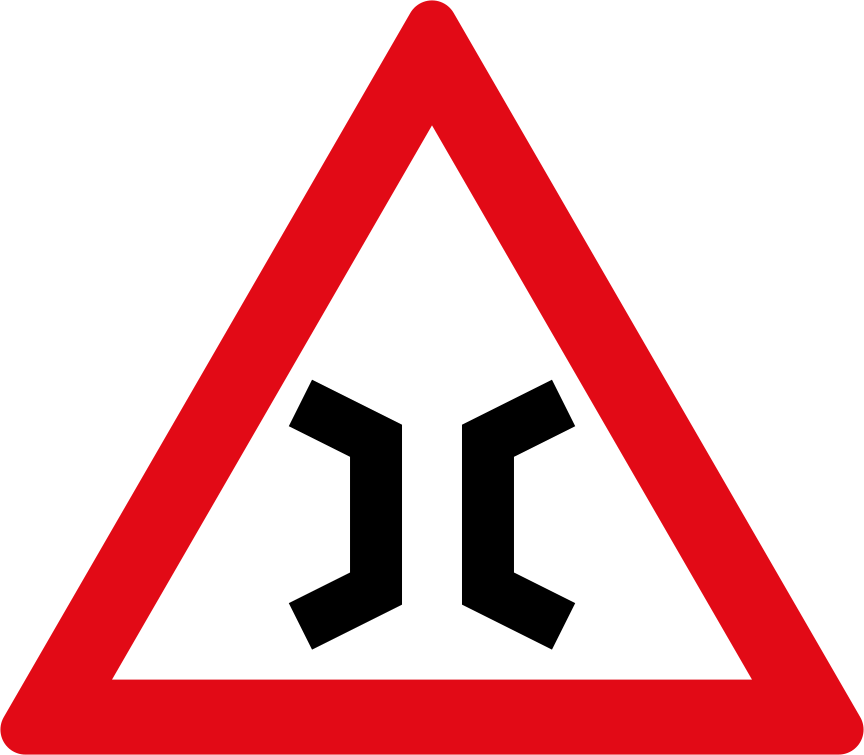
39. What does this traffic sign mean?
This traffic sign indicates a warning for a narrowing ahead. The available road width decreases ahead. Reduce speed when necessary and be prepared for less lateral space between vehicles, obstacles or the road edge.
English • W326 • Narrow bridge. A narrow bridge is ahead.
Sources
🔗 Commons.wikimedia.org
🔗 Transport.gov.za • Department of Transport · SADC RTSM Vol. 1, chapter 3, PDF p. 6 (May 2012)
SVG source: Southern African Development Community • Public domain • Original revision 2017-08-07. Wikimedia original unmodified.
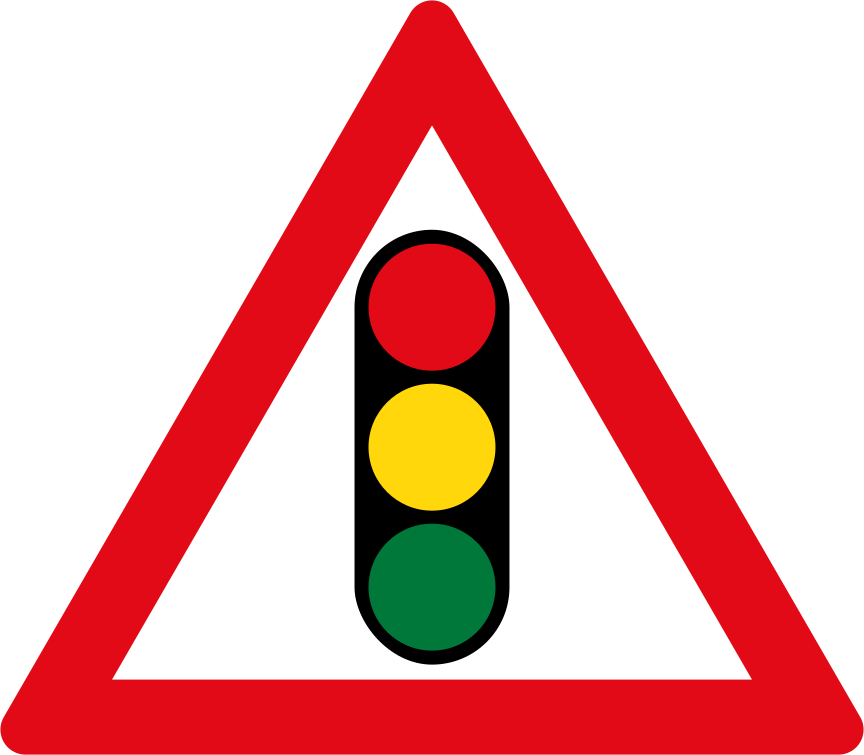
40. What does this traffic sign mean?
This traffic sign indicates a warning for traffic lights ahead. Traffic signals are located ahead and may not be visible early enough without advance warning. Reduce speed and be prepared to stop if the signal requires it.
English • W301 • Traffic signals ahead. Traffic signals are ahead. Be prepared to stop.
Sources
🔗 Commons.wikimedia.org
🔗 Transport.gov.za • Department of Transport · SADC RTSM Vol. 1, chapter 3, PDF p. 5 (May 2012)
SVG source: Southern African Development Community • Public domain • Original revision 2017-07-31. Wikimedia original unmodified.
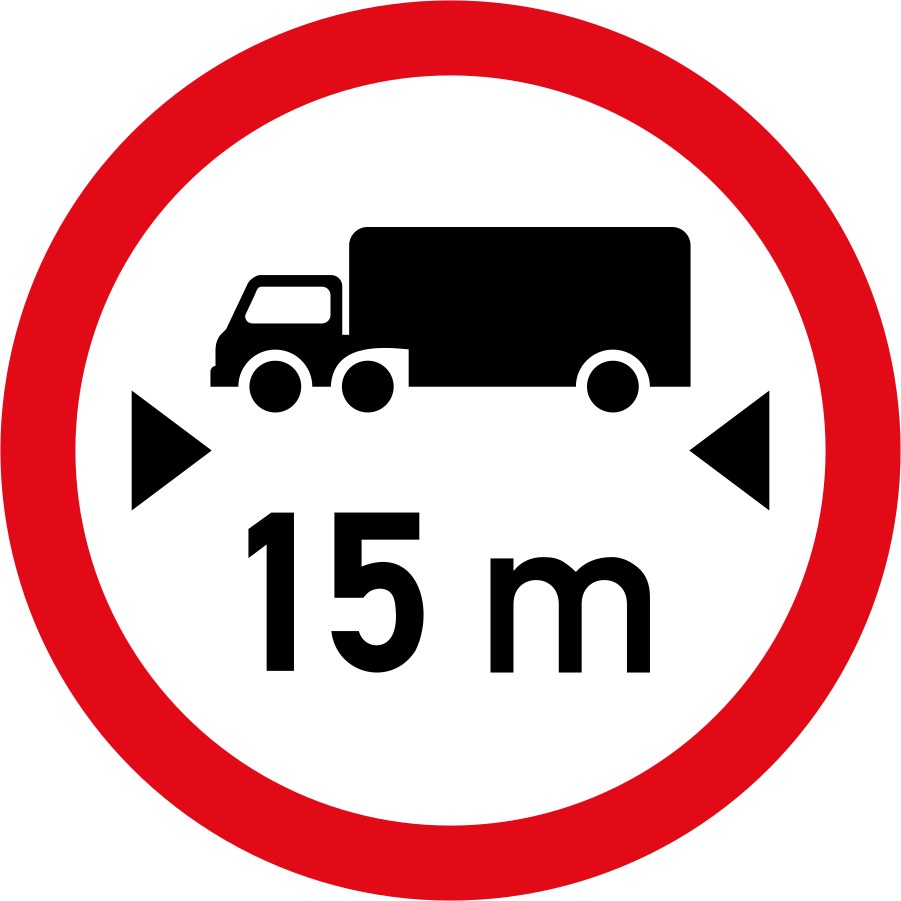
41. What does this traffic sign mean?
This traffic sign indicates that vehicles longer than indicated are prohibited. A vehicle or vehicle combination whose overall length, including its load, exceeds the displayed limit may not continue beyond the sign.
English • R205 • Length limit: 15 m. Vehicles or combinations longer than 15 metres, including projections, must not proceed beyond the sign.
Sources
🔗 Commons.wikimedia.org
🔗 Transport.gov.za • Department of Transport · SADC RTSM Vol. 1, chapter 2, PDF p. 68 (May 2012)
SVG source: Southern African Development Community • Public domain • Original revision 2017-06-24. Wikimedia original unmodified.
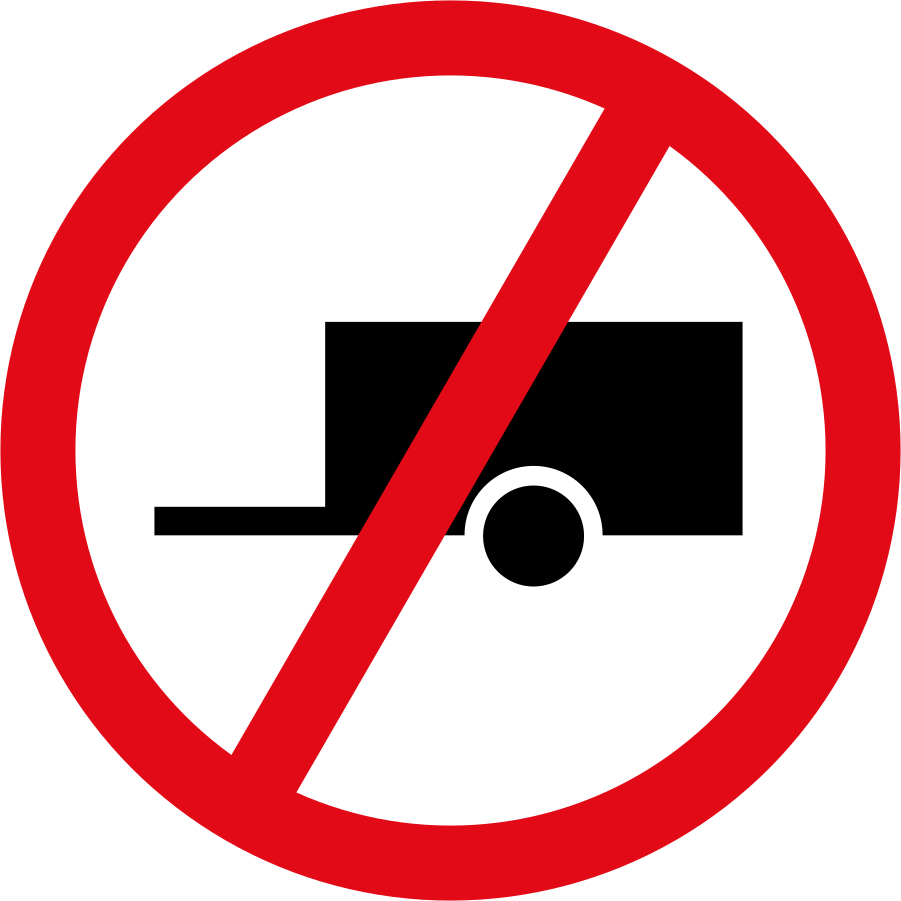
42. What does this traffic sign mean?
This traffic sign indicates that trailers are prohibited. Vehicles towing trailers covered by the sign may not enter or continue beyond it. Vehicles without a trailer may still be permitted unless another restriction applies.
English • R240 • No towed vehicles. The indicated class of road user must not proceed beyond this sign: towed vehicles.
Sources
🔗 Commons.wikimedia.org
🔗 Transport.gov.za • Department of Transport · SADC RTSM Vol. 1, chapter 2, PDF p. 84 (May 2012)
SVG source: Southern African Development Community • Public domain • Original revision 2017-06-22. Wikimedia original unmodified.
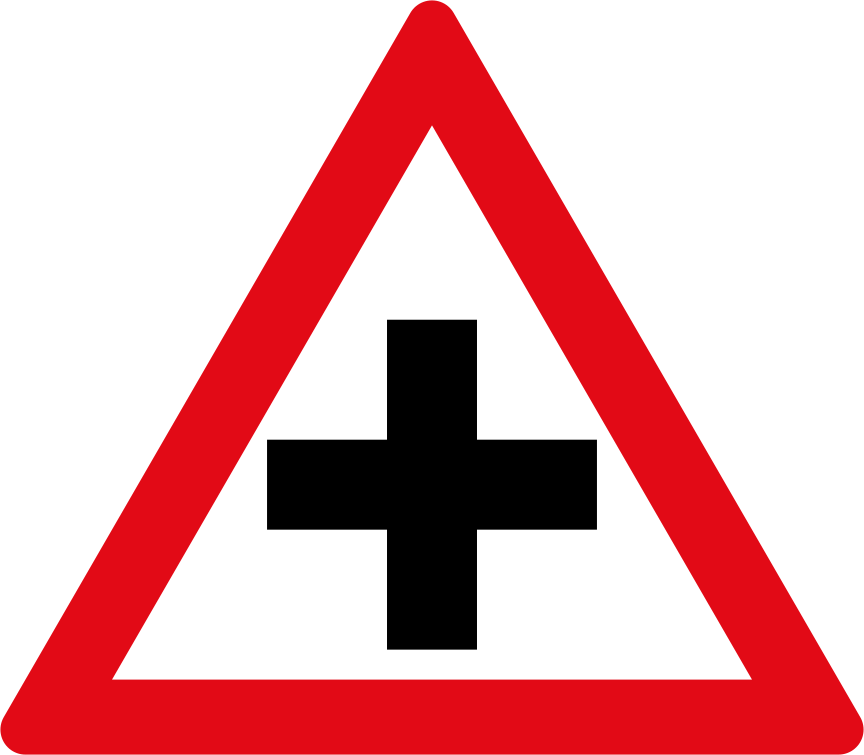
43. What does this traffic sign mean?
This traffic sign indicates a warning for an uncontrolled crossroad. An intersection without traffic signals or signs assigning priority lies ahead. Reduce speed, watch for traffic approaching from other directions and follow the applicable local priority rules.
English • W101 • Crossroad. A crossroad is ahead. This plain cross symbol does not itself assign priority.
Sources
🔗 Commons.wikimedia.org
🔗 Transport.gov.za • Department of Transport · SADC RTSM Vol. 1, chapter 3, PDF p. 3 (May 2012)
SVG source: Southern African Development Community • Public domain • Original revision 2017-07-26. Wikimedia original unmodified.
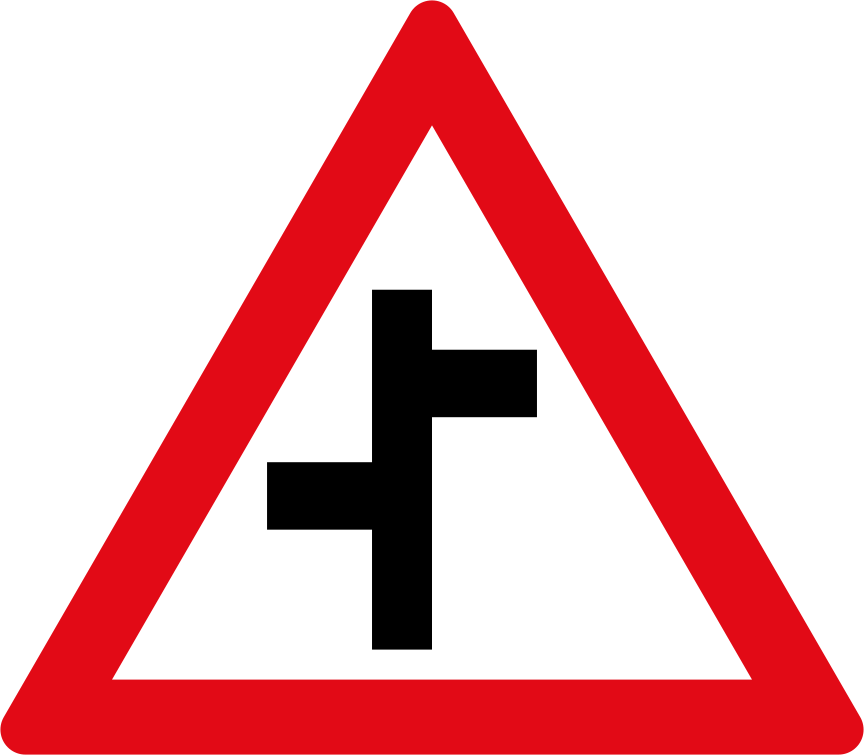
44. What does this traffic sign mean?
This traffic sign indicates a warning for a staggered junction. Side roads join the main road at different points rather than directly opposite each other. Reduce speed and watch carefully for vehicles entering, leaving or crossing the main road.
English • W110 • Staggered junctions: left then right. Side roads join first from the left and then from the right.
Sources
🔗 Commons.wikimedia.org
🔗 Transport.gov.za • Department of Transport · SADC RTSM Vol. 1, chapter 3, PDF p. 3 (May 2012)
SVG source: Southern African Development Community • Public domain • Original revision 2017-07-26. Wikimedia original unmodified.
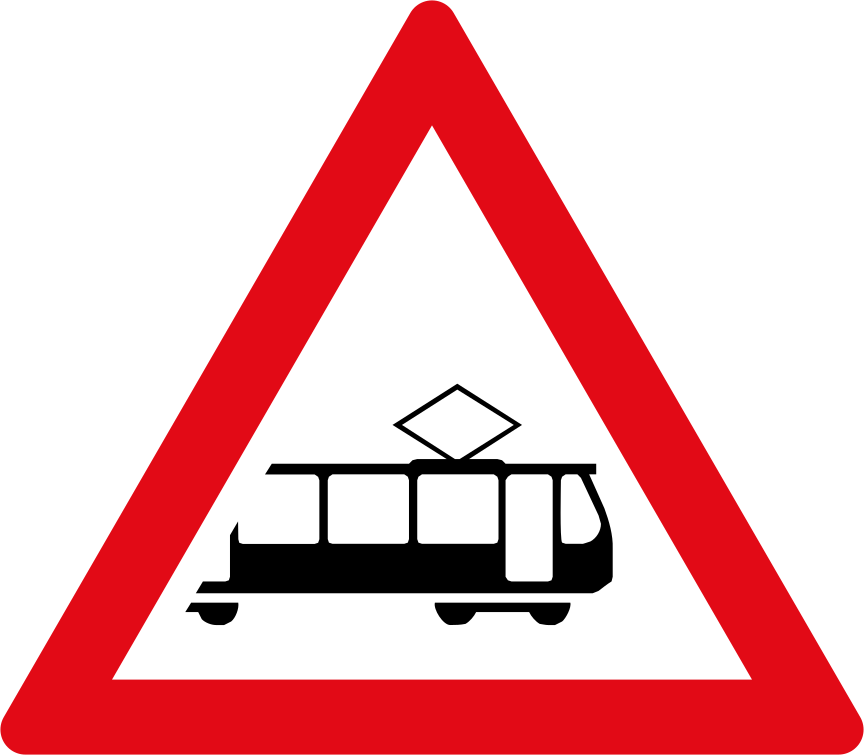
45. What does this traffic sign mean?
This traffic sign indicates a warning for trams. Tram tracks cross or run along the road ahead, and trams may enter the traffic path. Reduce speed, watch carefully for approaching trams and follow the applicable traffic signals, priority signs and local rules.
English • W362 • Tram. Trams or tram tracks may be encountered ahead.
Sources
🔗 Commons.wikimedia.org
🔗 Transport.gov.za • Department of Transport · SADC RTSM Vol. 1, chapter 3, PDF p. 7 (May 2012)
SVG source: Southern African Development Community • Public domain • Original revision 2018-08-22. Wikimedia original unmodified.
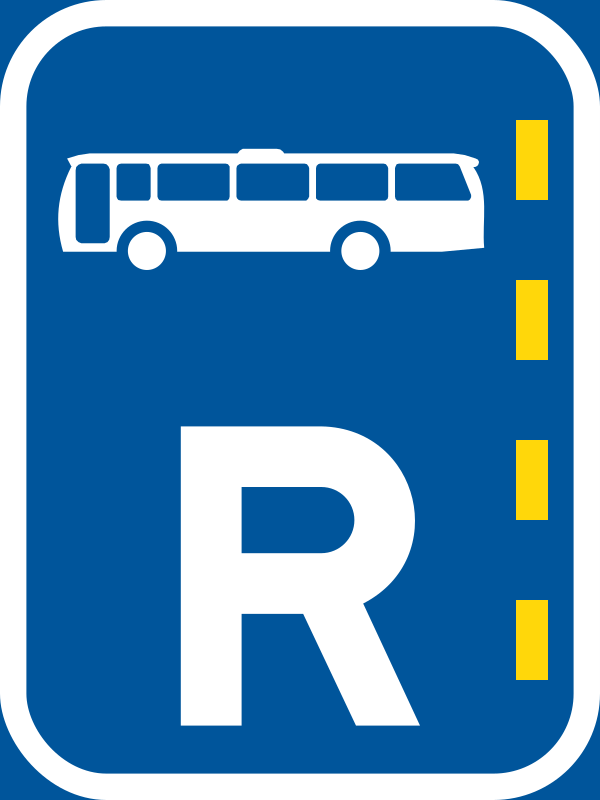
46. What does this traffic sign mean?
This traffic sign indicates a lane for buses. The lane is intended for buses and any other road users permitted by the applicable signs or local rules.
English • R302 • Bus lane reservation. The indicated lane is reserved for buses. Read it together with the lane markings and any displayed time or other conditions.
Sources
🔗 Commons.wikimedia.org • Wikimedia Commons original • Southern African Development Community • Public domain • Original revision 2016-04-01. Wikimedia original unmodified.
🔗 Transport.gov.za • Department of Transport · SADC RTSM Vol. 1, chapter 2 · R302 · PDF p. 87 (May 2012).
Image via Commons.wikimedia.org
Southern African Development Community • Public domain • Source revision 2016-04-01. Wikimedia original unmodified.
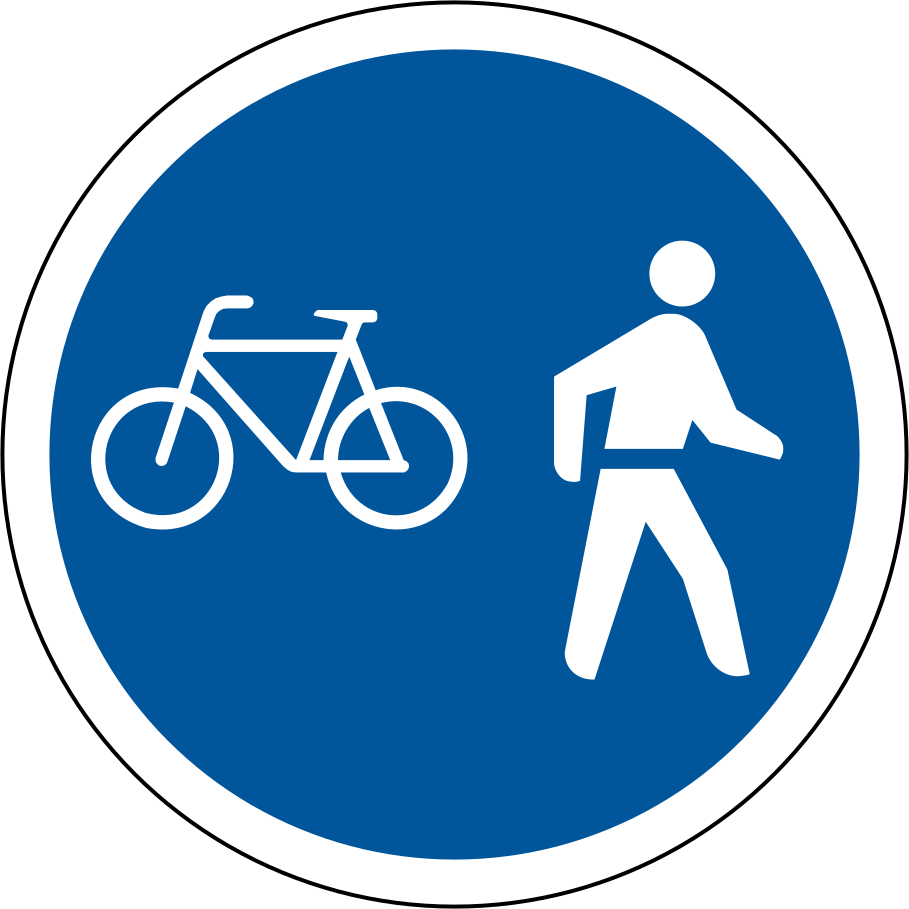
47. What does this traffic sign mean?
This traffic sign indicates a mandatory shared path for pedestrians and cyclists. Pedestrians and cyclists must use the same designated path rather than separate sections. They must share the space safely and follow the applicable local rules.
English • R112 • Cyclists and pedestrians only. This road or path is set aside for cyclists and pedestrians only, sharing the space without a dividing barrier.
Sources
🔗 Commons.wikimedia.org
🔗 Transport.gov.za • Department of Transport · SADC RTSM Vol. 1, chapter 2, PDF p. 53 (May 2012)
SVG source: Southern African Development Community • Public domain • Original revision 2017-05-28. Wikimedia original unmodified.
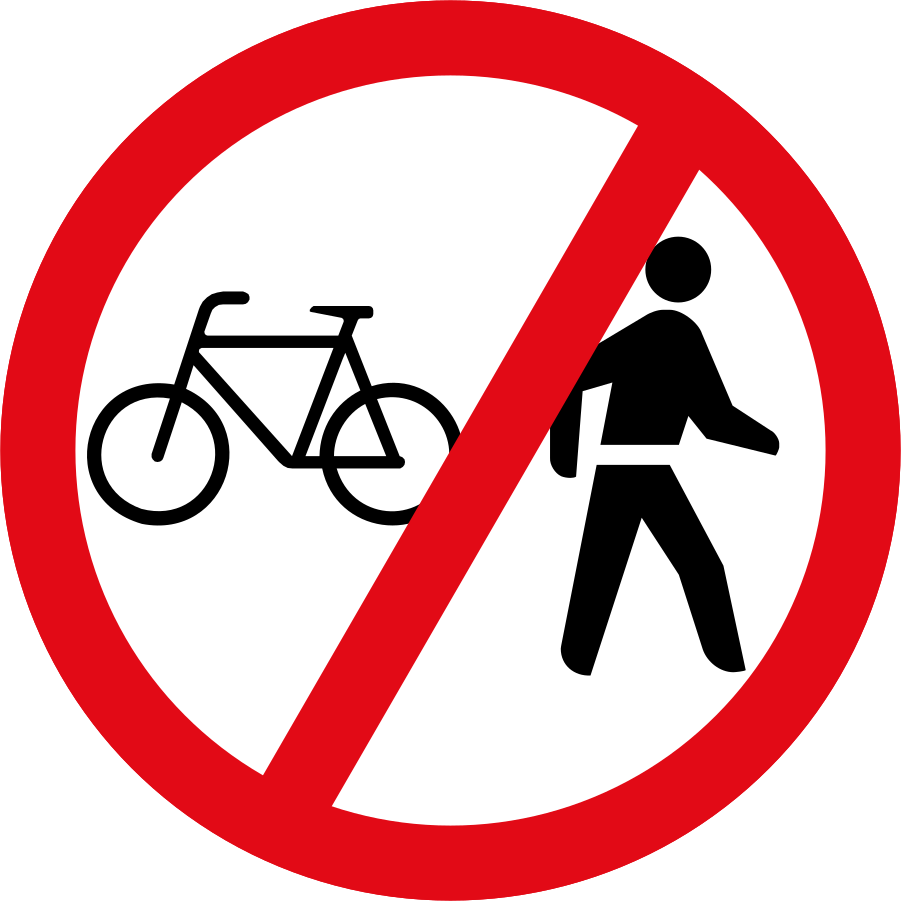
48. What does this traffic sign mean?
This traffic sign indicates that pedestrians and cyclists are prohibited. Pedestrians and cyclists may not enter or continue beyond the sign. Other road users may still be permitted unless another restriction applies.
English • R220 • No cyclists and pedestrians. The indicated class of road user must not proceed beyond this sign: cyclists and pedestrians.
Sources
🔗 Commons.wikimedia.org
🔗 Transport.gov.za • Department of Transport · SADC RTSM Vol. 1, chapter 2, PDF p. 78 (May 2012)
SVG source: Southern African Development Community • Public domain • Original revision 2017-05-28. Wikimedia original unmodified.
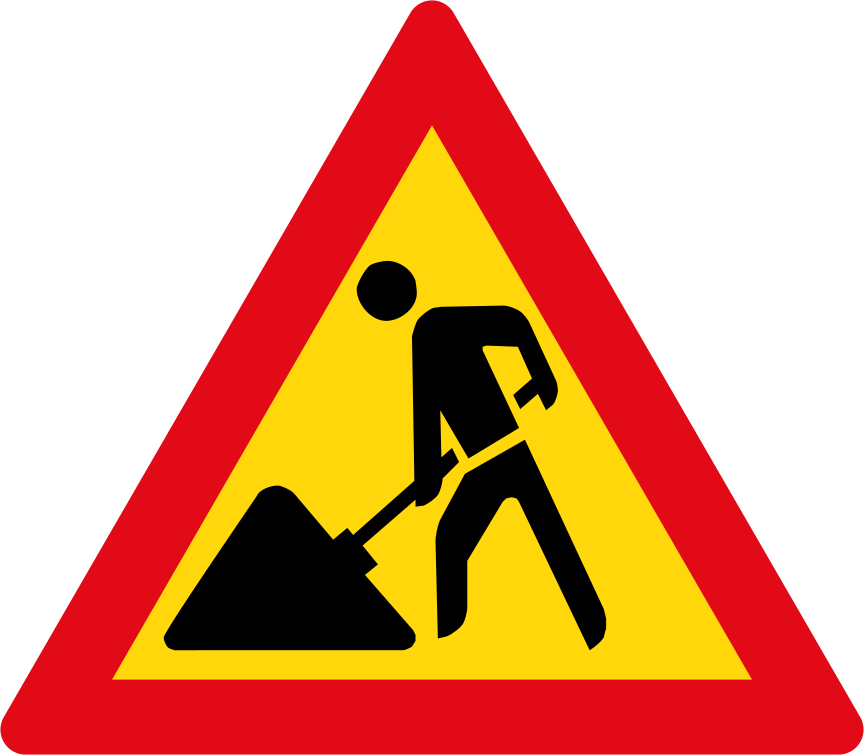
49. What does this traffic sign mean?
This traffic sign indicates a warning for roadworks. Construction or maintenance work is taking place on or beside the road. Reduce speed where necessary and be prepared for workers, machinery, temporary traffic signals, changed lane layouts or uneven road surfaces.
English • TW336 • Temporary warning: roadworks ahead. Road construction or maintenance work is taking place ahead. Slow down as necessary and watch for workers, machinery and changed traffic arrangements. Yellow background identifies the temporary version.
Sources
🔗 Commons.wikimedia.org • Wikimedia Commons original • Southern African Development Community • Public domain • Original revision 2018-08-24. Wikimedia original unmodified.
🔗 Transport.gov.za • Department of Transport · SADC RTSM Vol. 1, chapter 3 · TW336 · PDF p. 39 (May 2012).
Image via Commons.wikimedia.org
Southern African Development Community • Public domain • Source revision 2018-08-24. Wikimedia original unmodified.
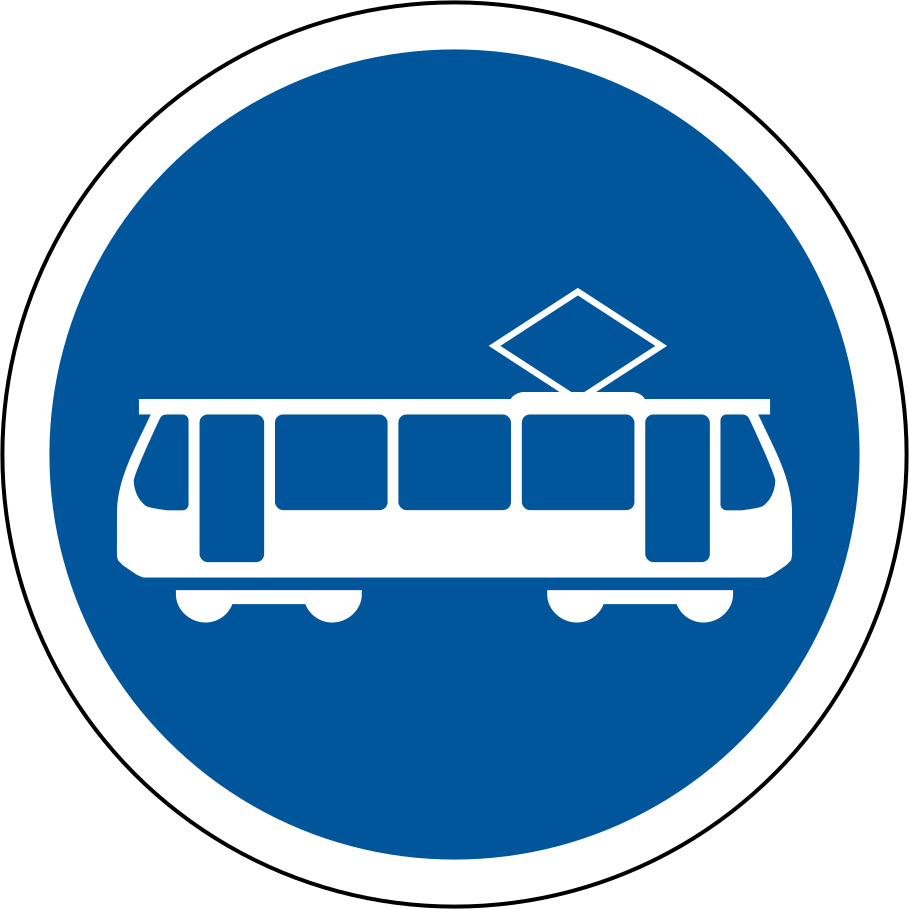
50. What does this traffic sign mean?
This traffic sign indicates a mandatory lane for trams. The lane or track is reserved for trams and may be used by other road users only where the applicable signs or local rules allow it.
English • R138 • Trams only. This road or portion of the road is set aside for trams only; the indicated class must use it rather than another road or portion of road.
Sources
🔗 Commons.wikimedia.org
🔗 Transport.gov.za • Department of Transport · SADC RTSM Vol. 1, chapter 2, PDF p. 63 (May 2012)
SVG source: Southern African Development Community • Public domain • Original revision 2017-06-21. Wikimedia original unmodified.