QuizTraffic rulesSouth Africa

This interesting quiz helps you test your knowledge in a clear and visual way. With easy multiple-choice questions, you can quickly build confidence and learn new facts while keeping it simple, interactive, and fun.


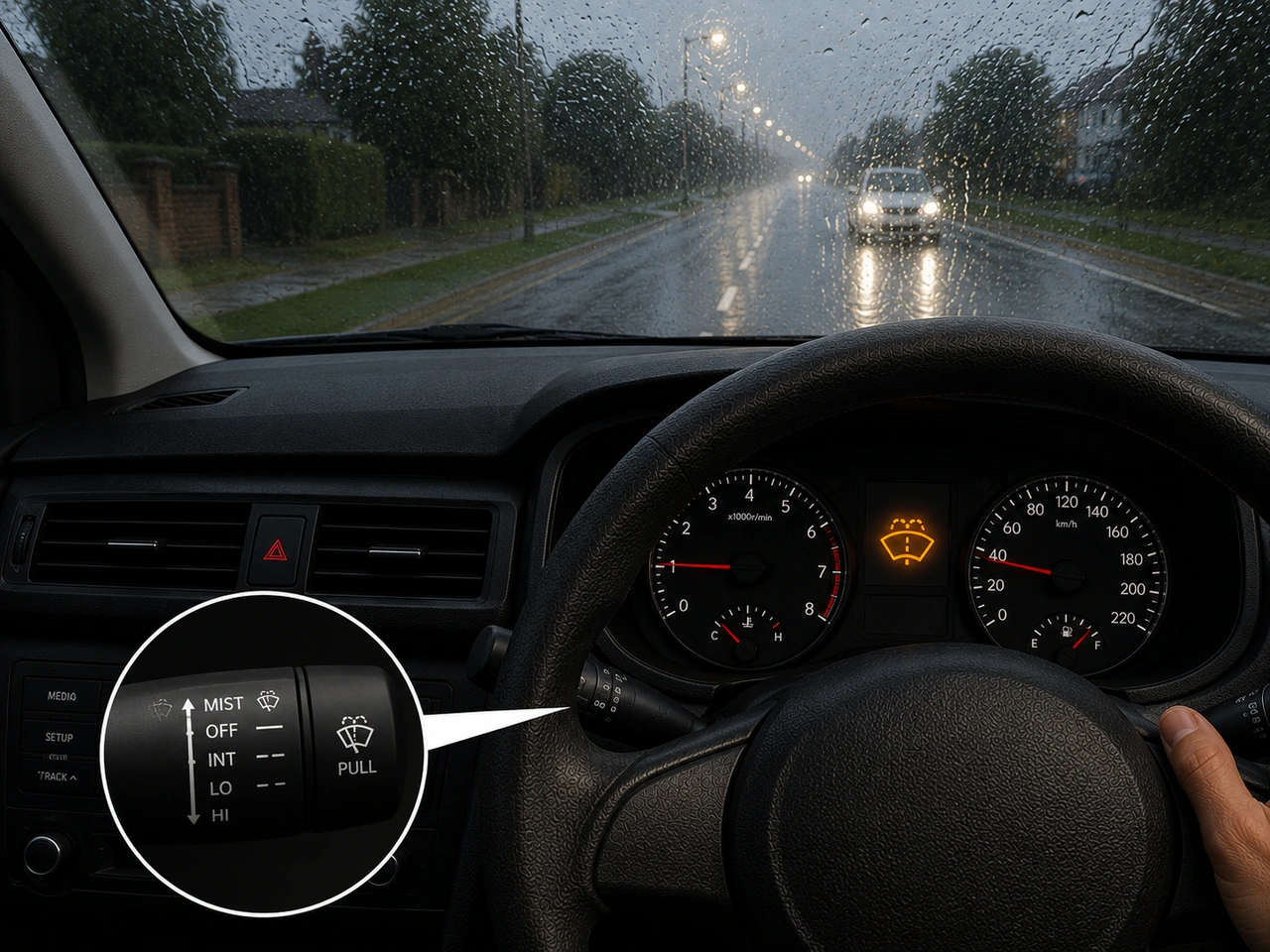
What should you do if the windscreen wipers stop working during heavy rain?

101. What should you do if the windscreen wipers stop working during heavy rain?

Use the washer fluid repeatedly to clear the windscreen.
Follow another vehicle closely so you can see its lights.
✓ Reduce speed and stop in a safe place as soon as possible.
Continue slowly using the hazard lights.

Do not continue when you cannot see clearly. Slow down smoothly and stop somewhere protected from traffic.

Windscreen wipers failing during heavy rain
AI-generated by Traffic-rules.com • WCIT • CC BY-SA
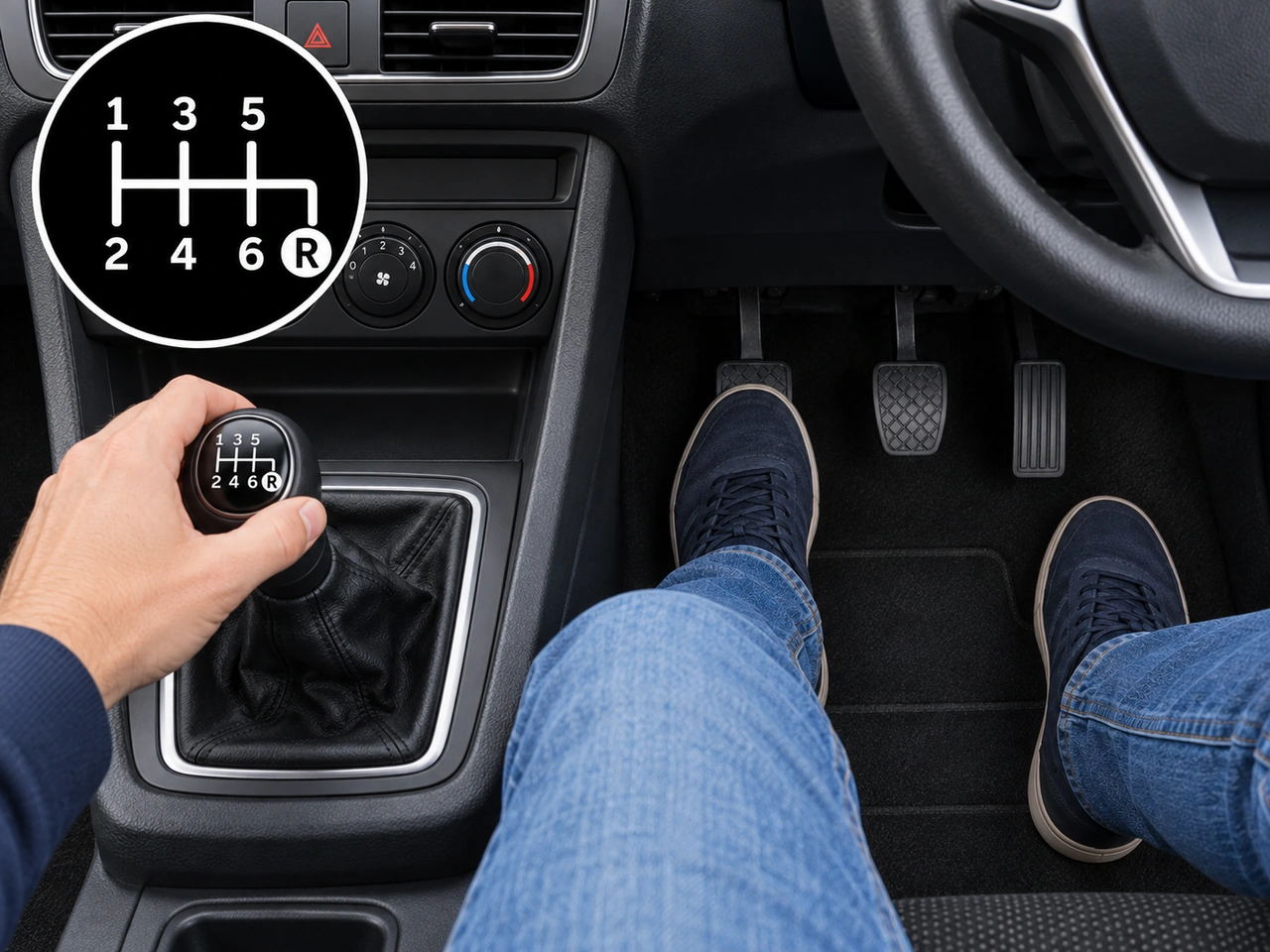
When should you select reverse gear in a manual vehicle?

102. When should you select reverse gear in a manual vehicle?

✓ After the vehicle has come to a complete stop.
Before pressing the clutch pedal.
Whenever you want to reduce speed.
While the vehicle is still moving forward slowly.

Select reverse gear only after the vehicle has come to a complete stop. Press the clutch fully before selecting reverse to avoid unnecessary wear or damage to the transmission.

Selecting reverse gear in a stationary manual vehicle
AI-generated by Traffic-rules.com • WCIT • CC BY-SA
Why should you avoid sudden braking when it is not necessary?

103. Why should you avoid sudden braking when it is not necessary?

It causes the tyres to lose pressure.
✓ Vehicles behind may not have time to react.
It makes the brakes less effective afterwards.
It prevents the brake lights from working properly.

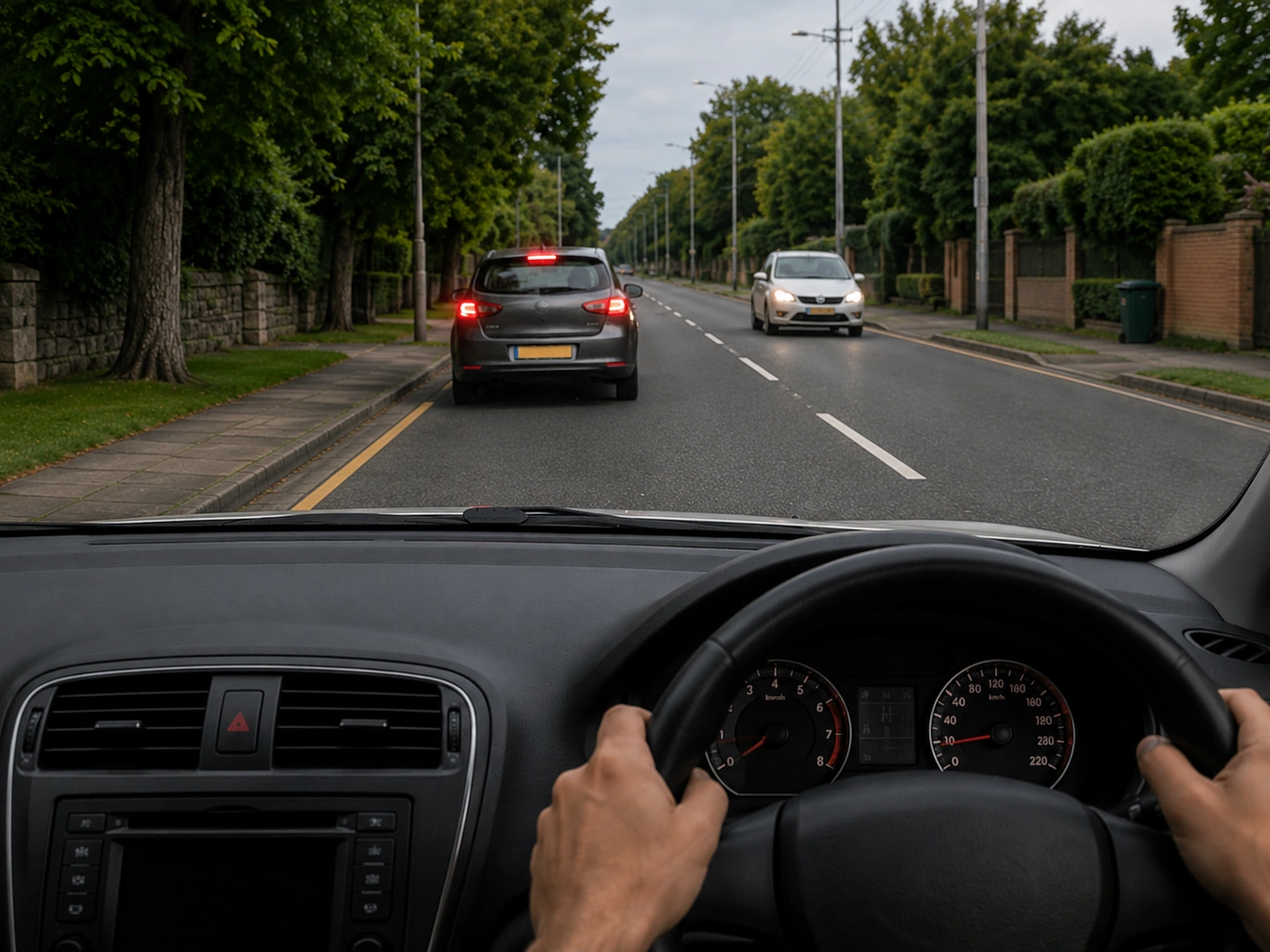
Sudden braking can surprise drivers behind you and increase the risk of a rear-end collision.

Following traffic and the risk of sudden braking
AI-generated by Traffic-rules.com • WCIT • CC BY-SA
Why should you keep a dog on a leash near traffic?

104. Why should you keep a dog on a leash near traffic?

To give the dog priority when crossing the road.
To make it easier for drivers to hear the dog.
To allow the dog to walk closer to moving traffic.
✓ To prevent it from suddenly running into the road.

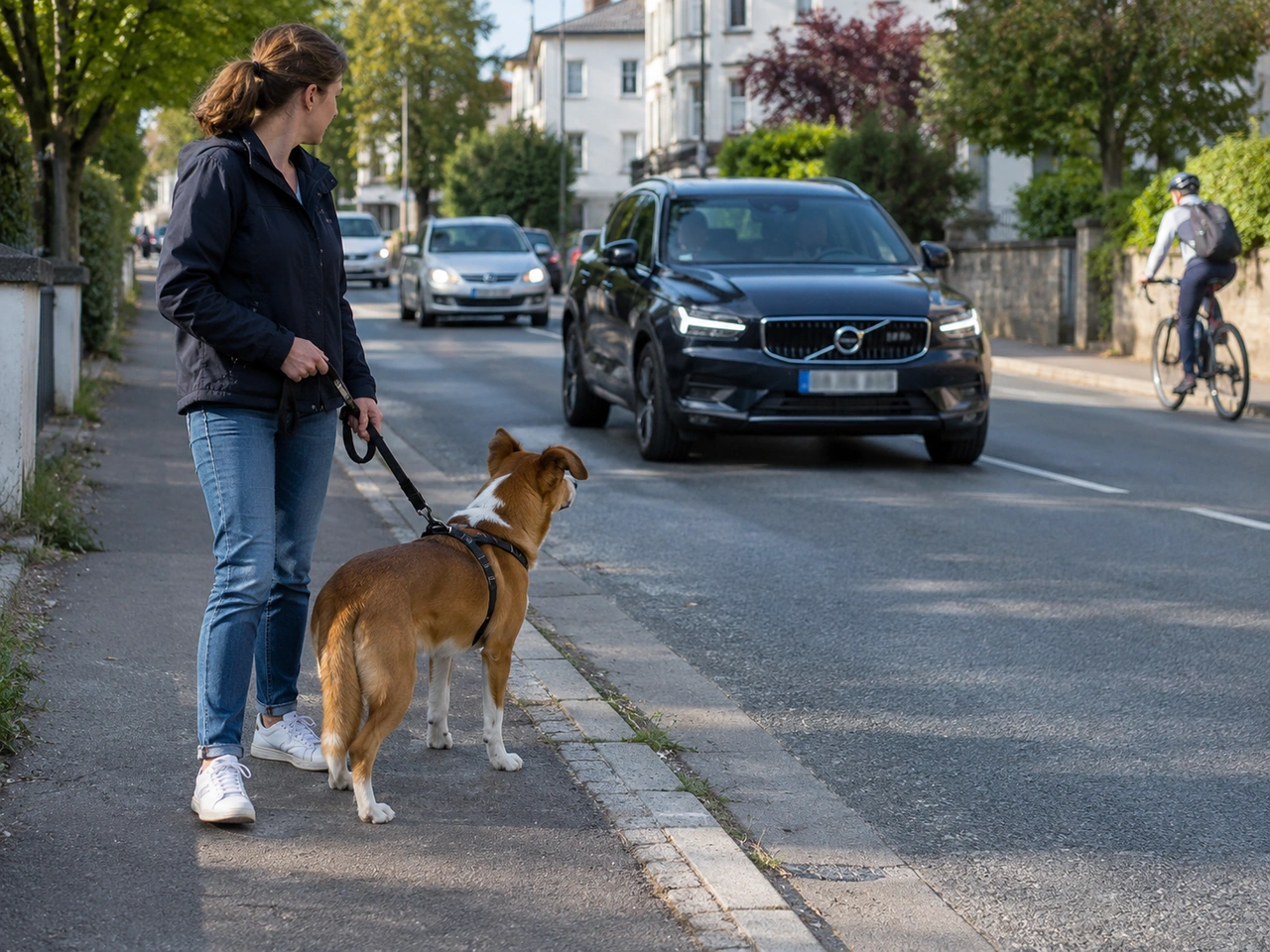
Dogs can react unpredictably to vehicles, people, noises, or other animals. Keeping a dog under close control on a leash near traffic reduces the risk of it suddenly entering the road and endangering itself or other road users.

Pedestrian keeping a dog on a leash near traffic
AI-generated by Traffic-rules.com • WCIT • CC BY-SA
What should you do when reversing with a trailer?

105. What should you do when reversing with a trailer?

Ask a guide to stand directly behind the trailer.
Make large steering corrections as soon as it turns.
Watch only the trailer and ignore surrounding traffic.
✓ Reverse slowly and make small steering corrections.

Trailers react quickly to steering while reversing. Move slowly, observe carefully, and use a guide only from a safe visible position.

Vehicle reversing with a trailer
AI-generated by Traffic-rules.com • WCIT • CC BY-SA
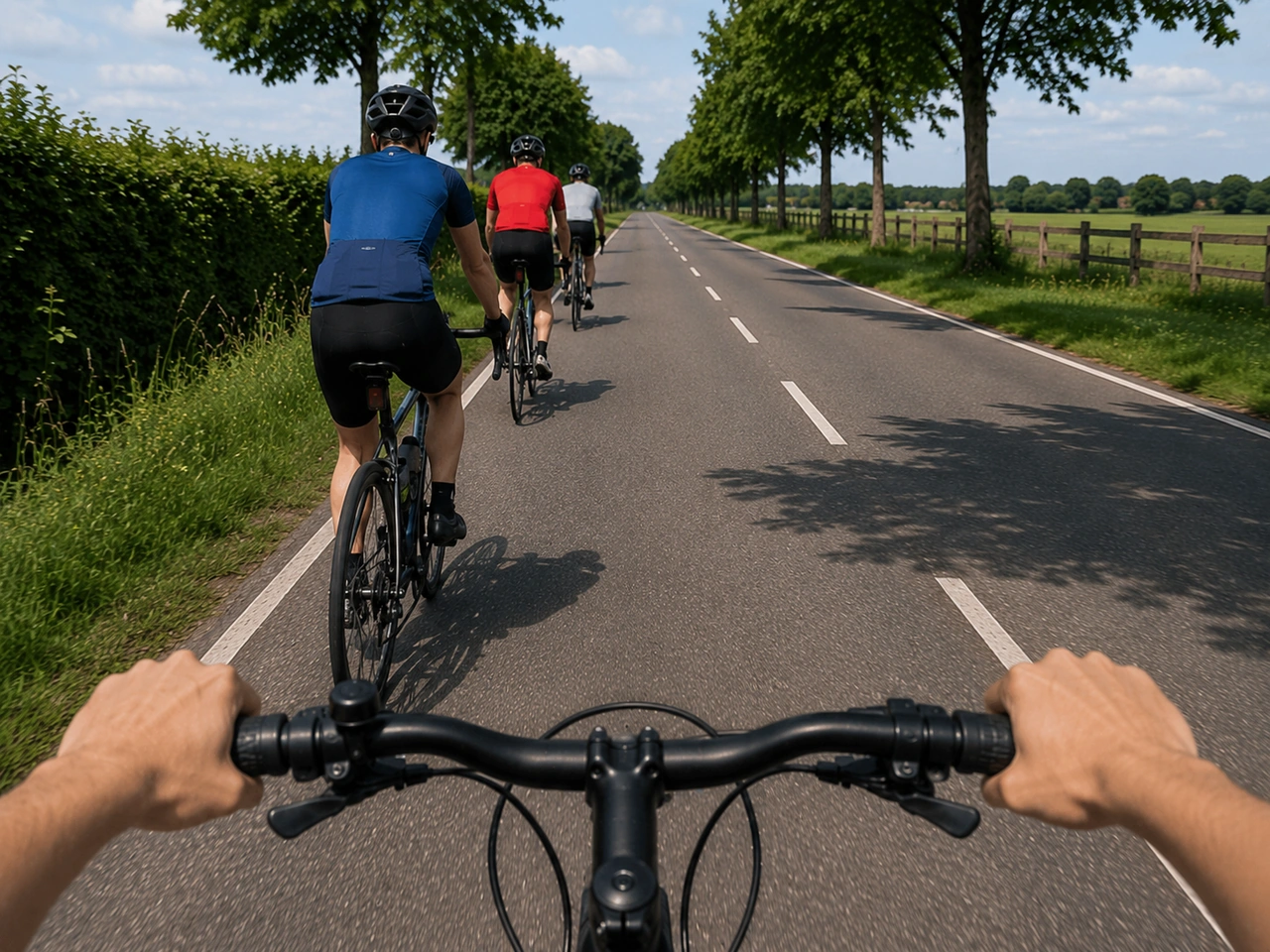
How should cyclists ride when travelling in a group?

106. How should cyclists ride when travelling in a group?

✓ Predictably, with safe gaps and clear communication.
Ride as close together as possible to stay as one group.
Follow the cyclist ahead without checking traffic yourself.
Ride side by side even when traffic cannot pass safely.

Safe spacing and communication help group members respond to braking, turns, obstacles, and changing traffic conditions.

Group of cyclists riding along a road
AI-generated by Traffic-rules.com • WCIT • CC BY-SA
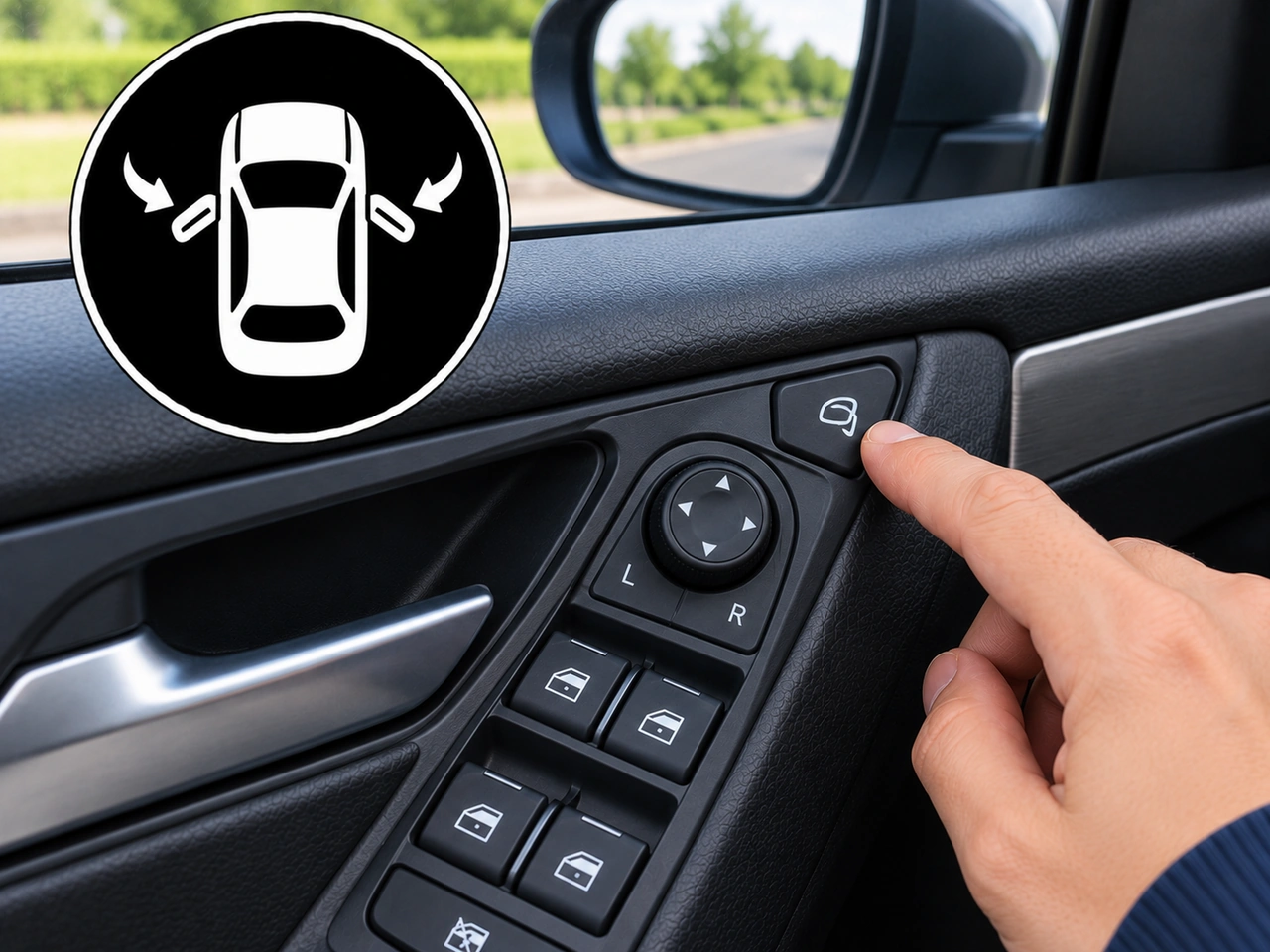
What does this vehicle-control symbol indicate?

107. What does this vehicle-control symbol indicate?

Seat adjustment.
Exterior mirror adjustment.
✓ Exterior mirror folding.
Central door locking.

This control folds or unfolds the vehicle's exterior mirrors. It is useful when parking in narrow spaces or when leaving the vehicle parked.

Control for folding the exterior mirrors
AI-generated by Traffic-rules.com • WCIT • CC BY-SA
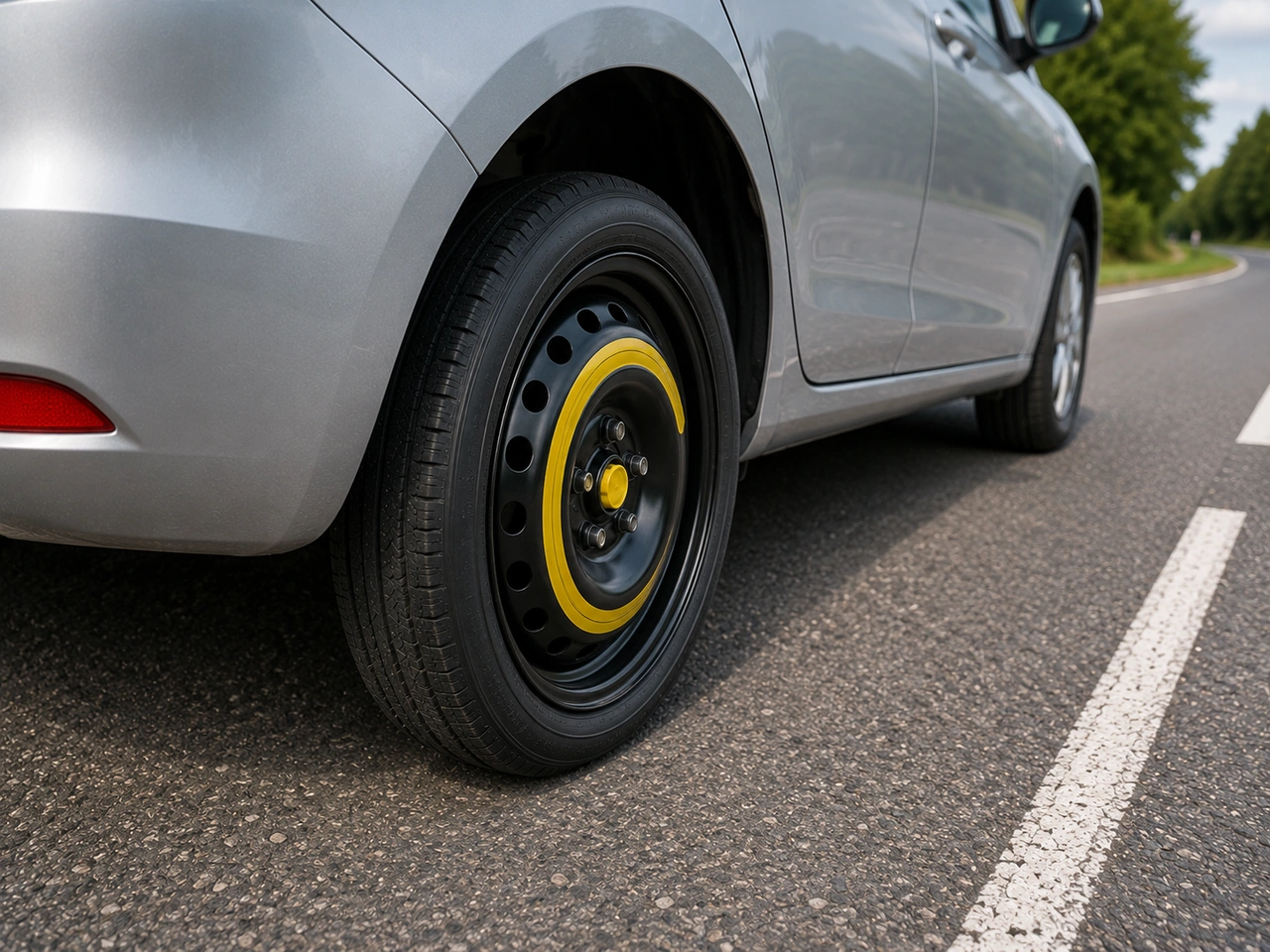
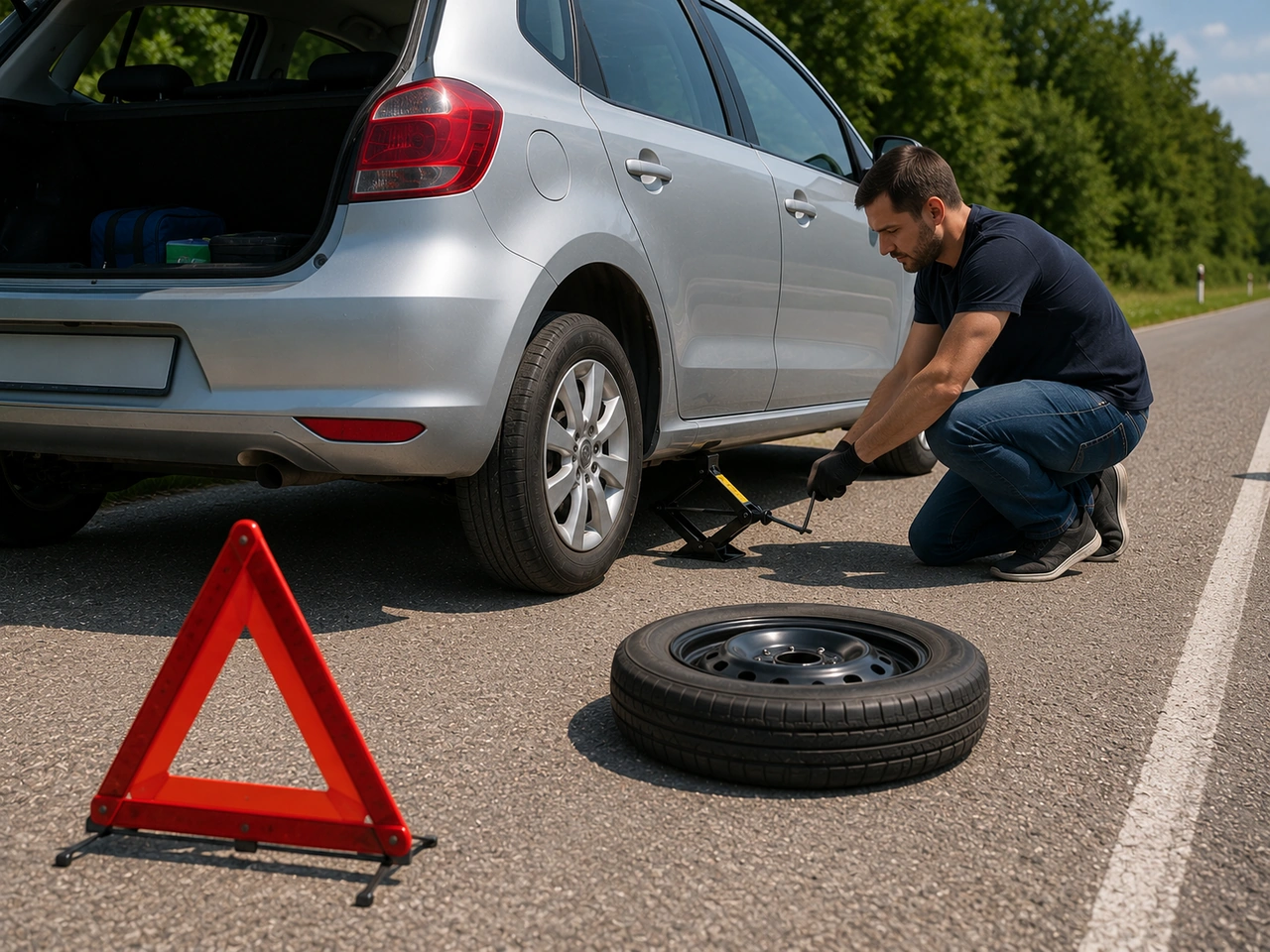
What should you do after fitting a temporary spare wheel?

108. What should you do after fitting a temporary spare wheel?

Use it as a permanent replacement if it looks undamaged.
Ignore its speed restriction on short journeys.
✓ Follow its speed and distance restrictions and replace it as soon as possible.
Drive normally if the vehicle feels stable.

Temporary spare wheels may have limited speed, distance, and handling capabilities. Arrange a proper repair or replacement promptly.

Temporary spare wheel fitted to a vehicle
AI-generated by Traffic-rules.com • WCIT • CC BY-SA
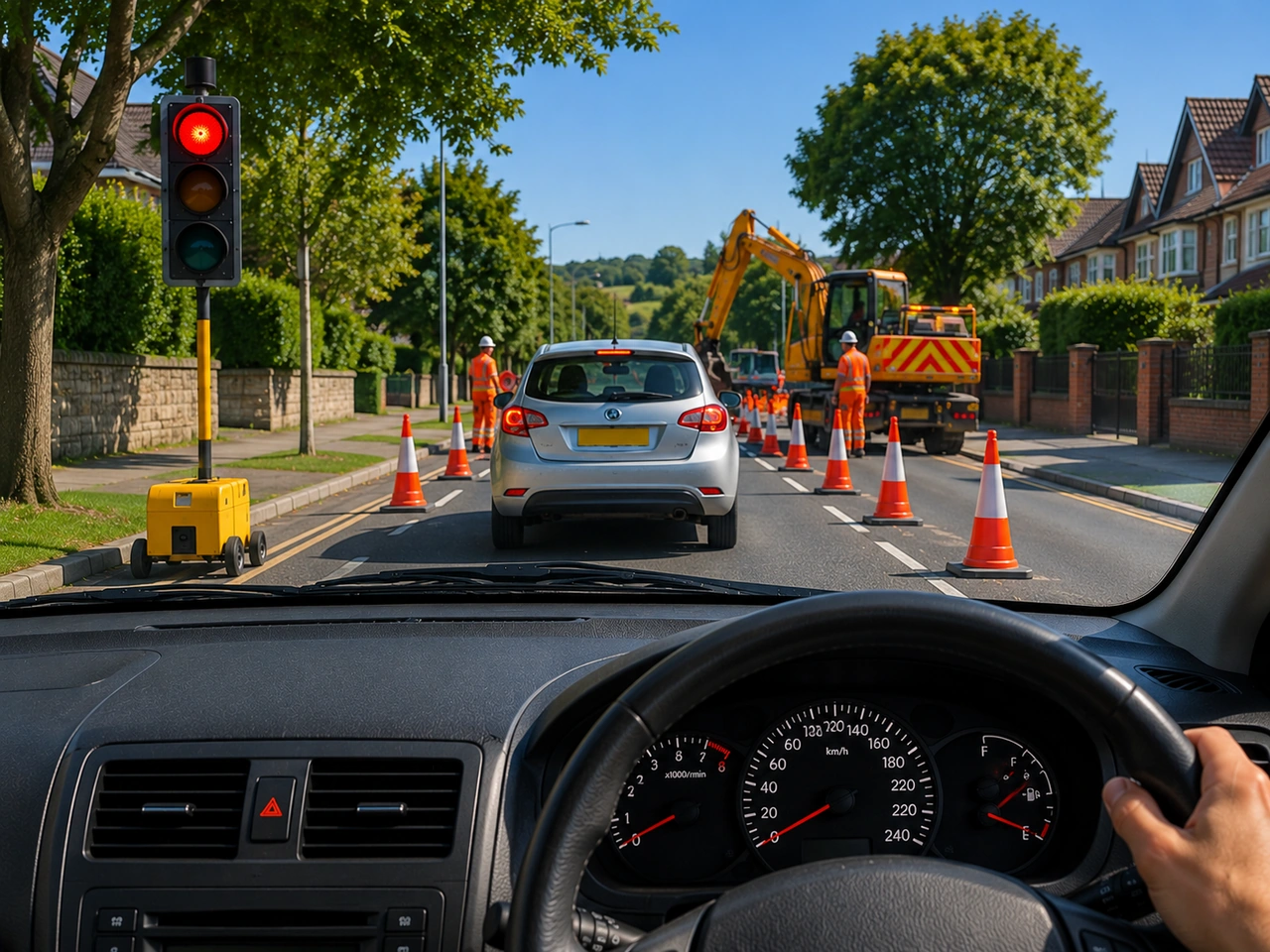
What should you do when roadworks are ahead?

109. What should you do when roadworks are ahead?

Follow the vehicle ahead closely through the work zone.
Ignore temporary signs if permanent signs are still visible.
Use your horn to warn road workers that you are approaching.
✓ Slow down and follow the temporary signs.

Roadworks can create narrow lanes, workers near traffic, uneven surfaces, and temporary rules. Slow down and follow the signs.

Roadworks and temporary traffic signs ahead
AI-generated by Traffic-rules.com • WCIT • CC BY-SA
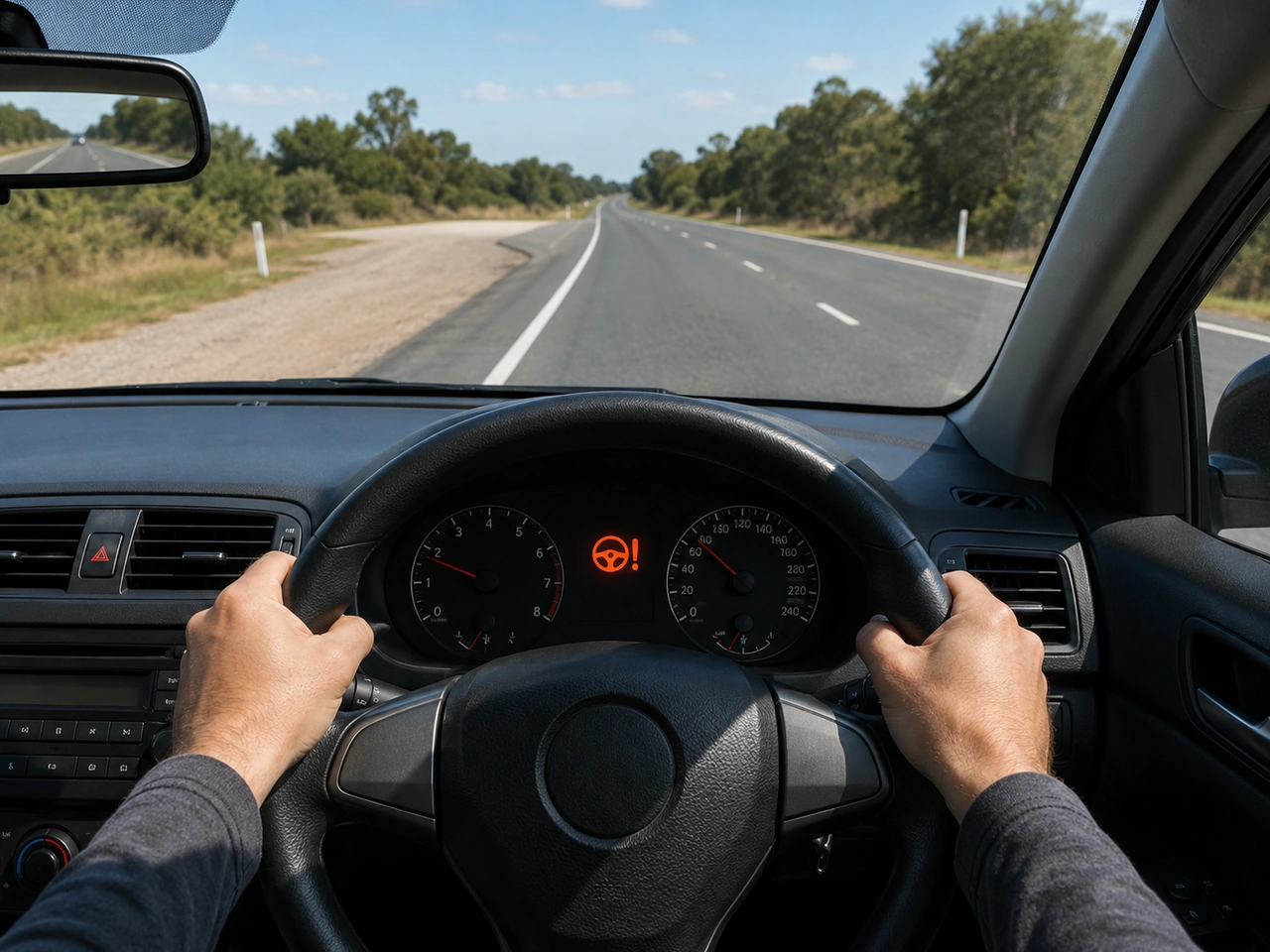
What should you do if the power steering suddenly stops assisting you?

110. What should you do if the power steering suddenly stops assisting you?

Accelerate to make the steering easier.
✓ Hold the wheel firmly, use greater steering effort, and stop safely.
Make sharp steering movements to test the remaining assistance.
Keep driving normally if the vehicle still turns.

The vehicle can normally still be steered, but much more effort may be required. Reduce speed and arrange an inspection.

Driver coping with a loss of power-steering assistance
AI-generated by Traffic-rules.com • WCIT • CC BY-SA
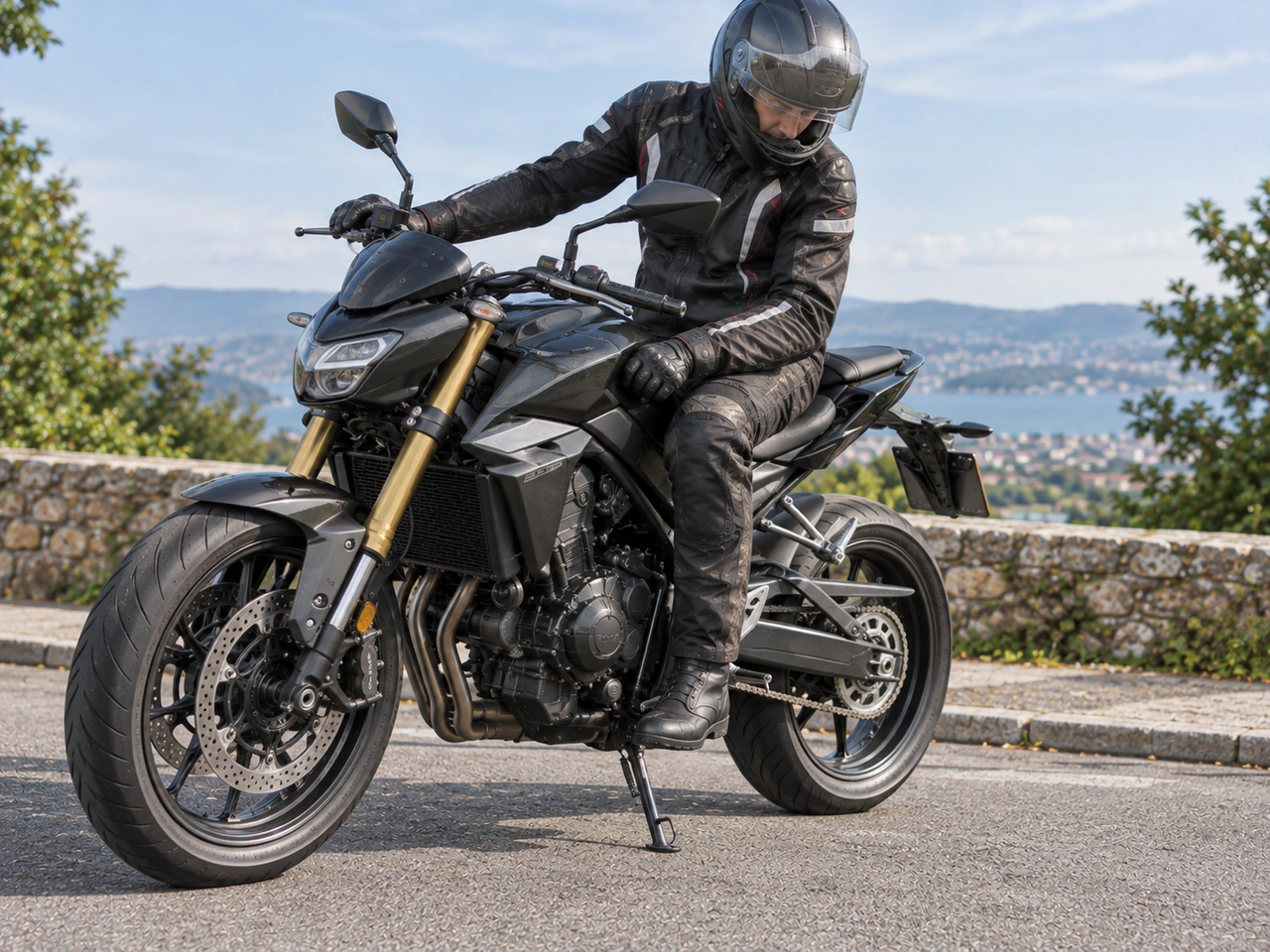
Should the side stand be fully raised before riding a motorcycle?

111. Should the side stand be fully raised before riding a motorcycle?

No, it only needs to be raised on motorways.
✓ Yes, a lowered stand could catch the road and affect control.
No, it can remain down when riding slowly.
Yes, but only when carrying a passenger.

The side stand should be fully raised before riding. If it remains down, it may strike the road surface, particularly when turning, and could cause the rider to lose control.

Motorcycle side stand and pre-ride checks
AI-generated by Traffic-rules.com • WCIT • CC BY-SA
What should you do if your vehicle begins to aquaplane?

112. What should you do if your vehicle begins to aquaplane?

Turn the steering wheel sharply to regain grip.
Accelerate to push through the water.
✓ Ease off the accelerator and keep steering gently.
Brake firmly to force the tyres back onto the road.

Aquaplaning happens when the tyres lose contact with the road surface. Ease off the accelerator, avoid sudden movements, and wait for grip to return.

Vehicle losing tyre contact on a water-covered road
AI-generated by Traffic-rules.com • WCIT • CC BY-SA
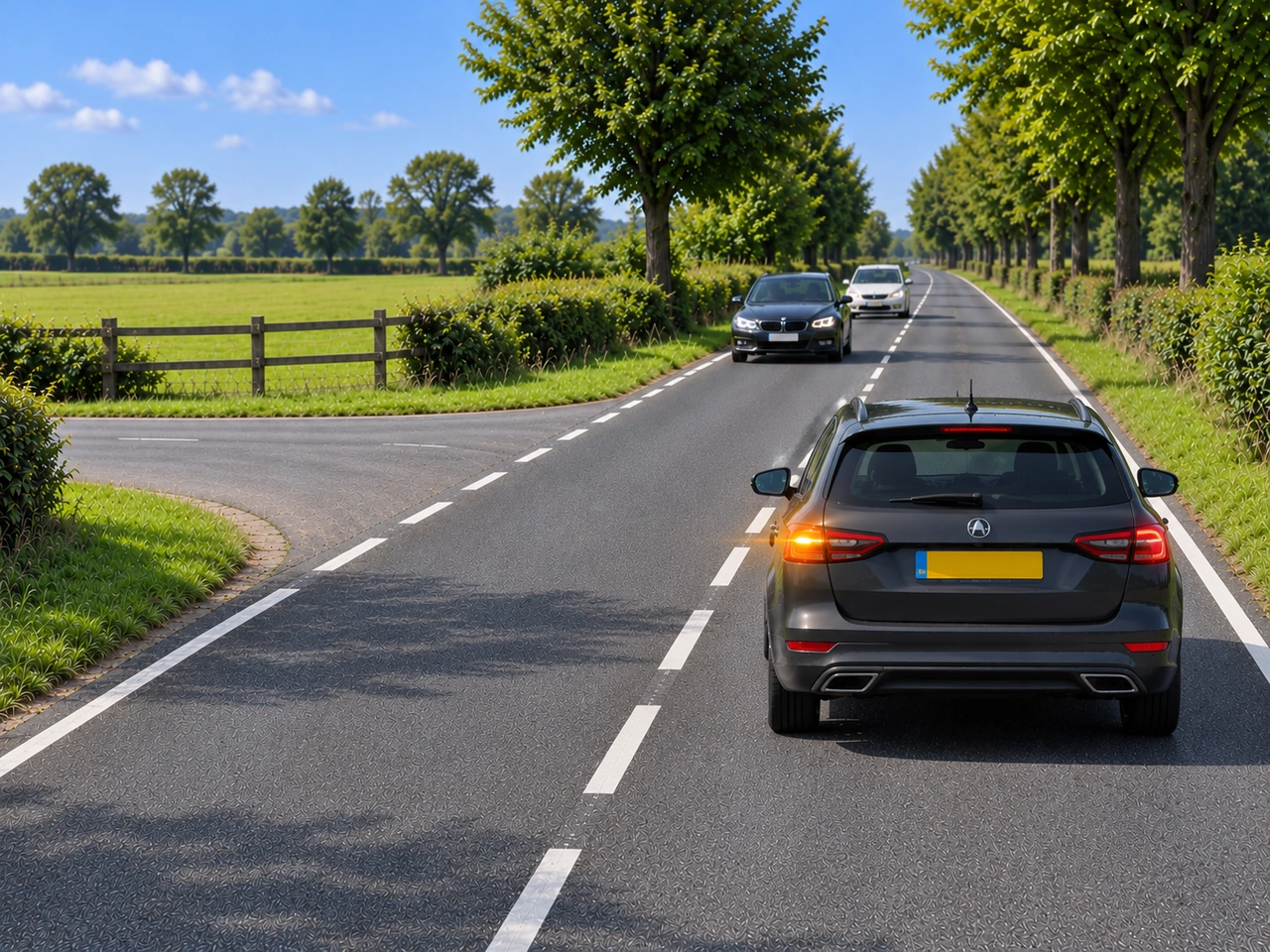
Why should you be careful when turning across oncoming traffic?

113. Why should you be careful when turning across oncoming traffic?

✓ You must judge the speed and distance of approaching vehicles.
Turning gives you priority over approaching traffic.
Oncoming vehicles need more distance to change lanes.
Turning makes your vehicle take longer to accelerate.

Turning across traffic requires careful observation. Misjudging speed or distance can lead to a serious collision.

Vehicle preparing to turn across oncoming traffic
AI-generated by Traffic-rules.com • WCIT • CC BY-SA
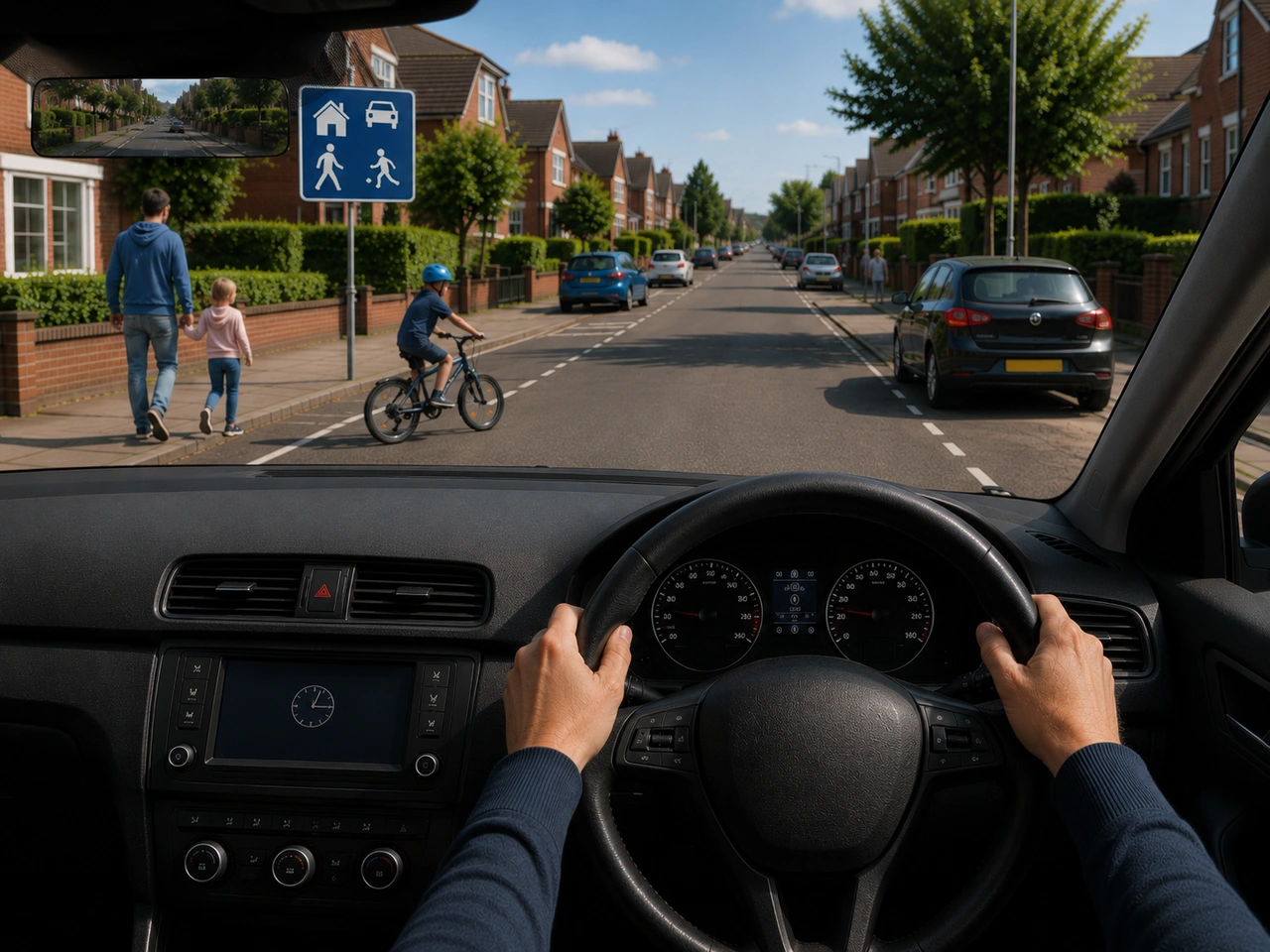
Why should you reduce speed in residential areas?

114. Why should you reduce speed in residential areas?

Parked vehicles have priority over moving traffic.
Because residential roads are usually more slippery.
✓ Pedestrians, cyclists, and children may be nearby.
Traffic from side roads must always give way.

Residential areas often have pedestrians, cyclists, parked vehicles, driveways, and children, and hazards may appear suddenly. Lower speed gives you more time to react and stop safely.

Vehicle travelling through a residential street
AI-generated by Traffic-rules.com • WCIT • CC BY-SA
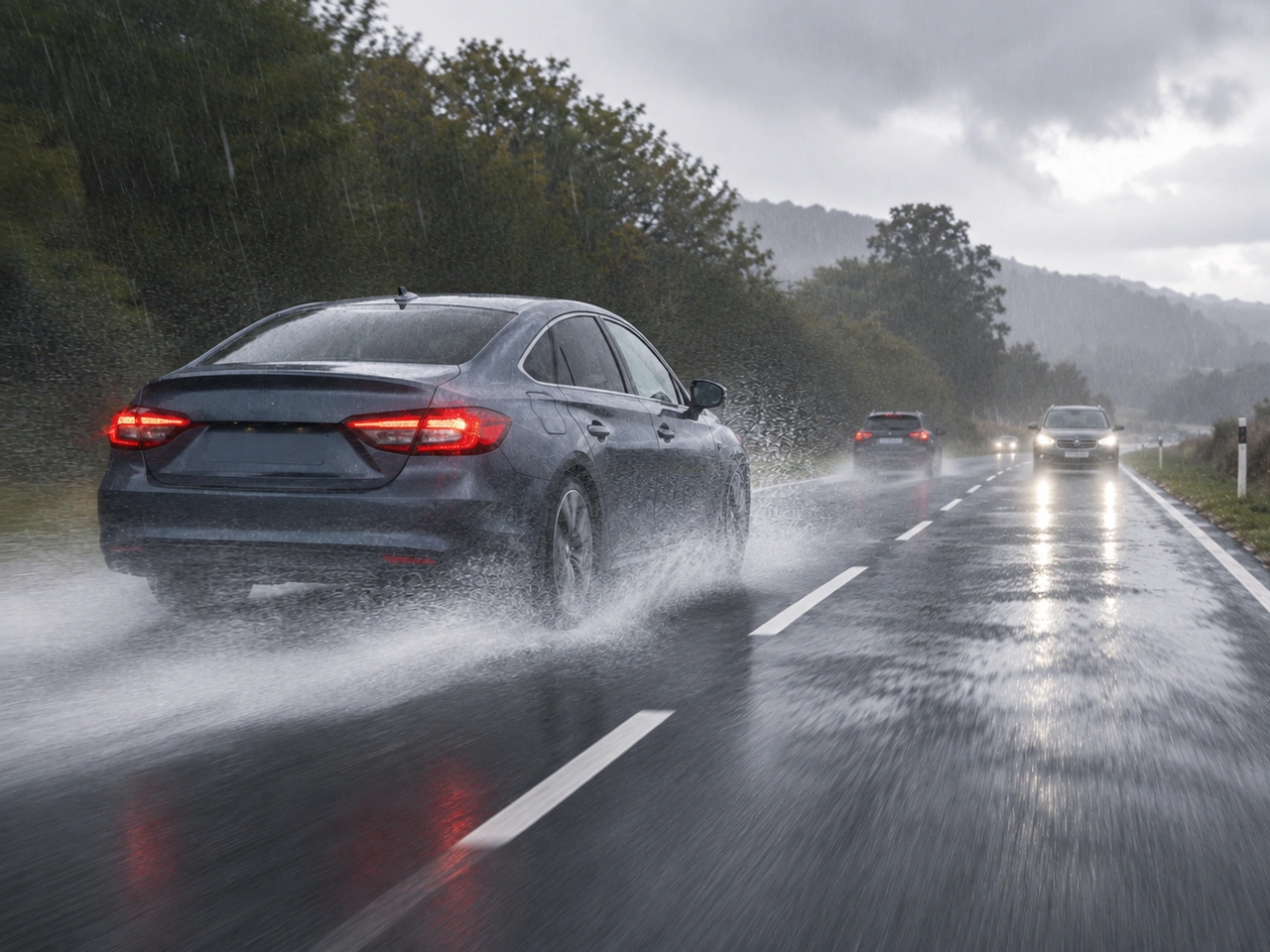
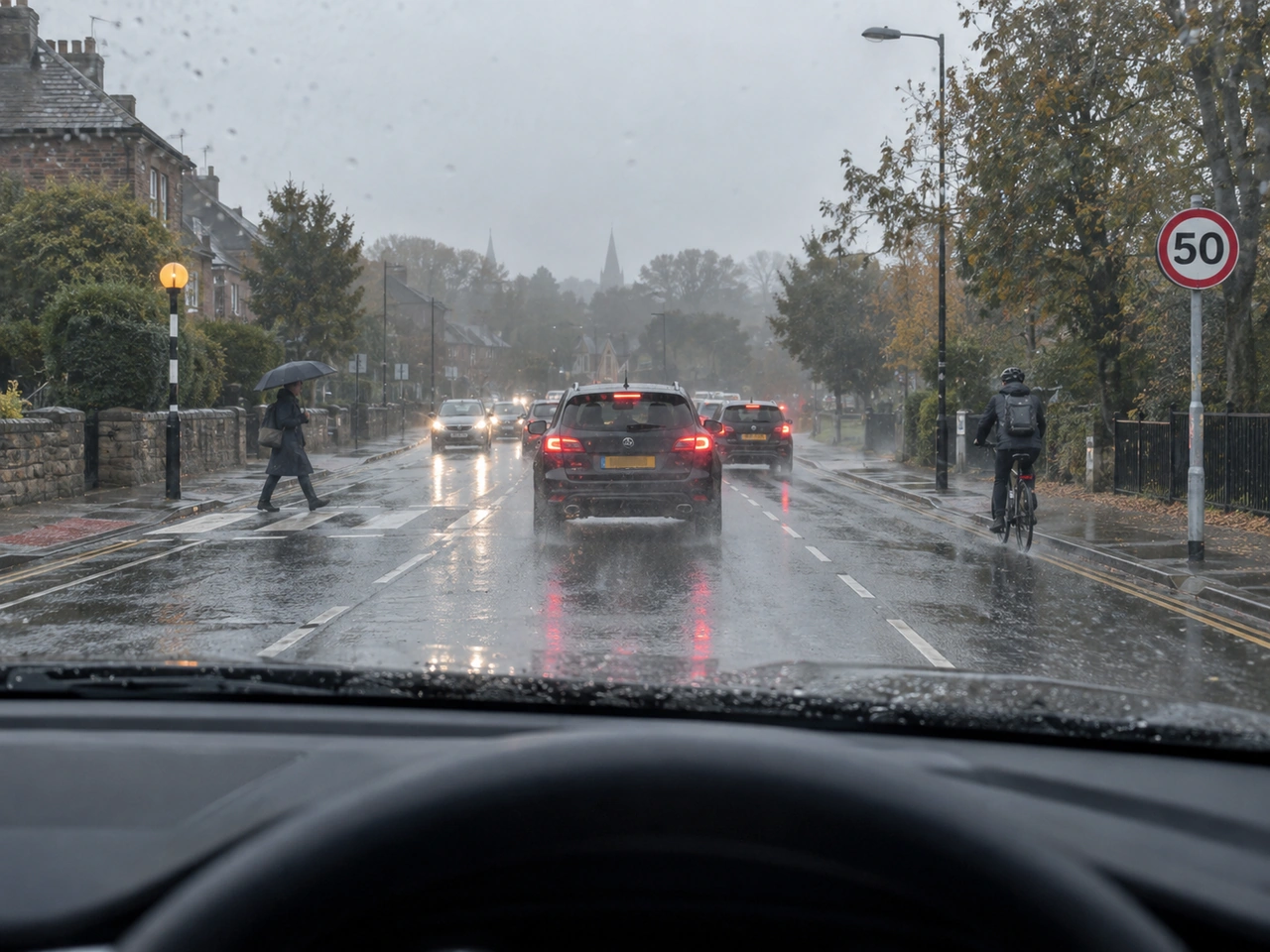
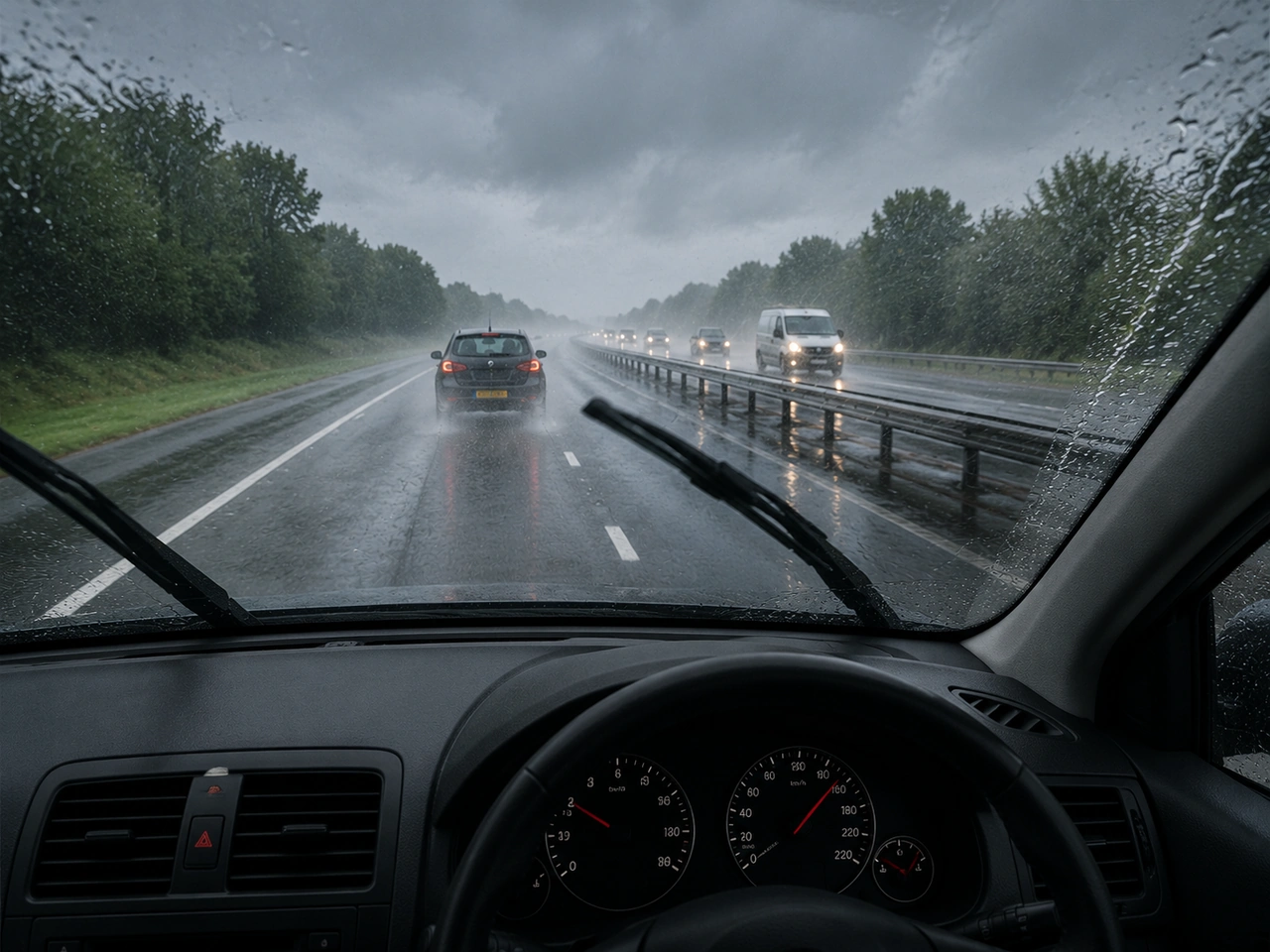
What should you do when driving through heavy rain?

115. What should you do when driving through heavy rain?

Use cruise control to maintain a constant speed.
✓ Reduce speed and increase your following distance.
Use main beam to improve visibility.
Drive closer to the vehicle ahead for guidance.

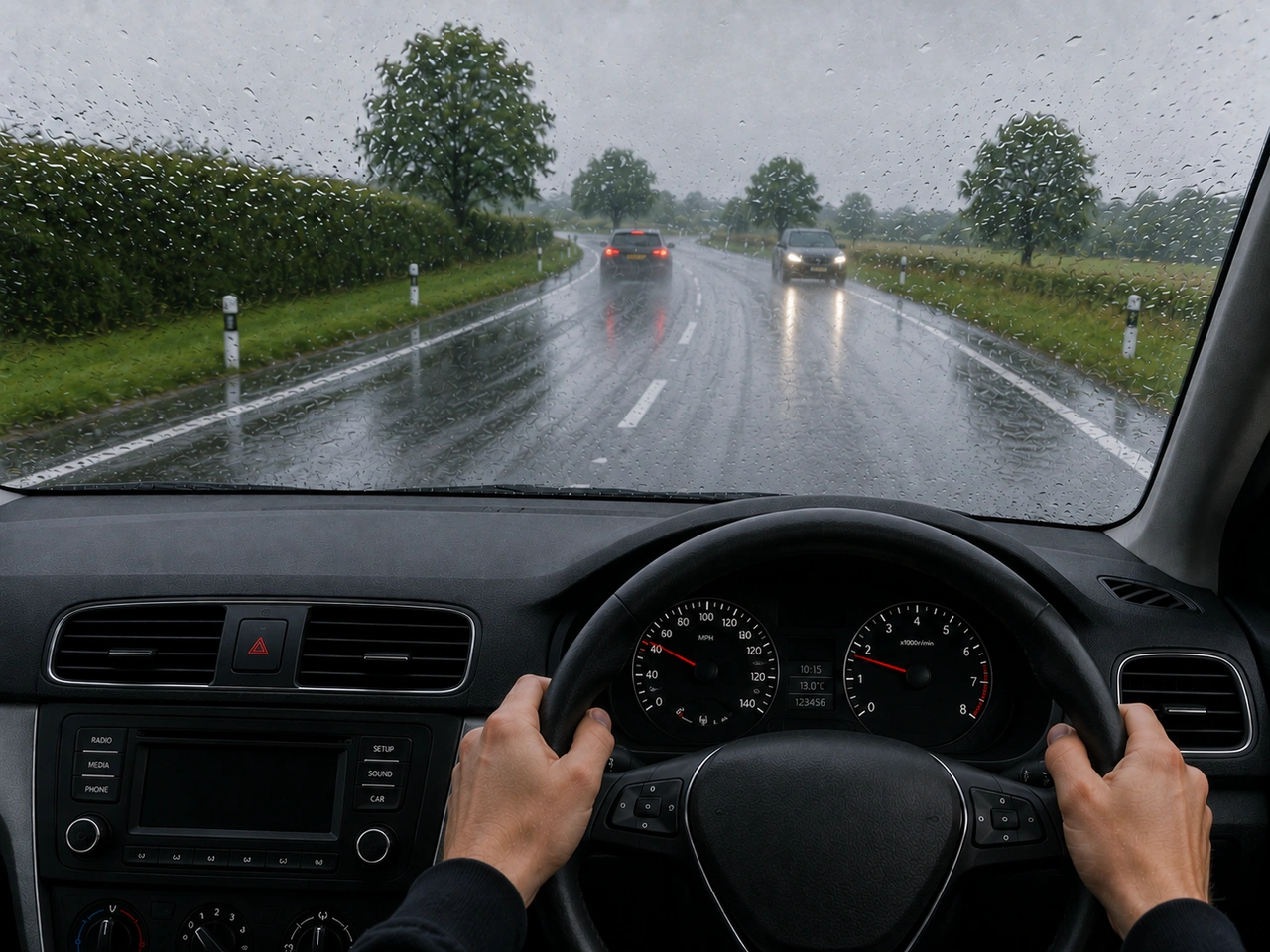
Heavy rain reduces grip and visibility. Lower speed and extra distance give you more time to react safely.

Vehicle travelling through heavy rain
AI-generated by Traffic-rules.com • WCIT • CC BY-SA
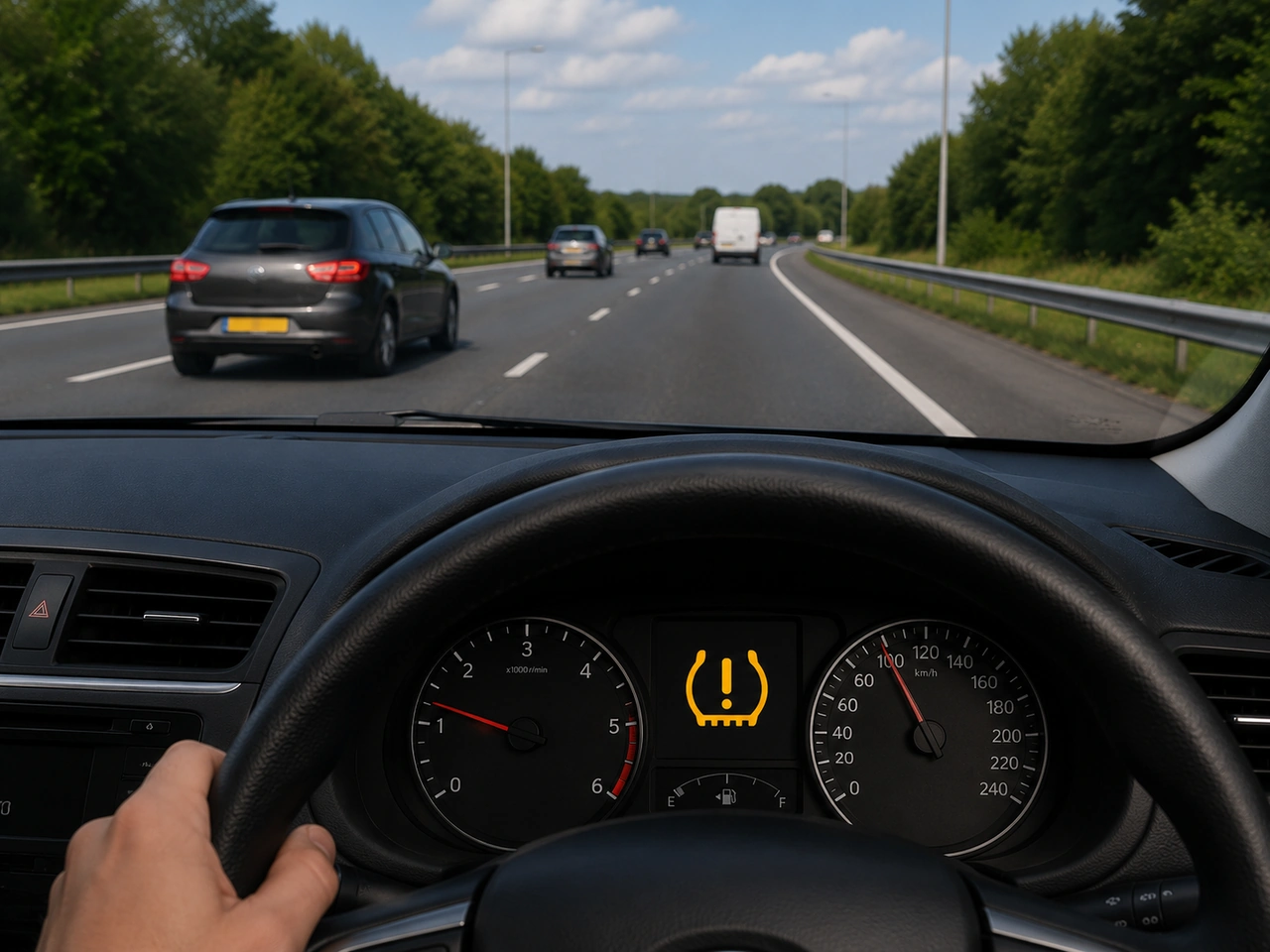
What should you do if a tyre-pressure warning appears and handling changes?

116. What should you do if a tyre-pressure warning appears and handling changes?

Accelerate slightly to warm the tyre.
Brake firmly to test whether the tyre still has grip.
Release air from the other tyres to balance the pressure.
✓ Reduce speed and stop safely to check the tyres.

A pressure loss or damaged tyre can affect steering and braking. If the tyre-pressure warning appears together with a change in handling, it may indicate a serious tyre problem. Stop safely and inspect the tyres before continuing.

Tyre-pressure warning and a tyre inspection
AI-generated by Traffic-rules.com • WCIT • CC BY-SA
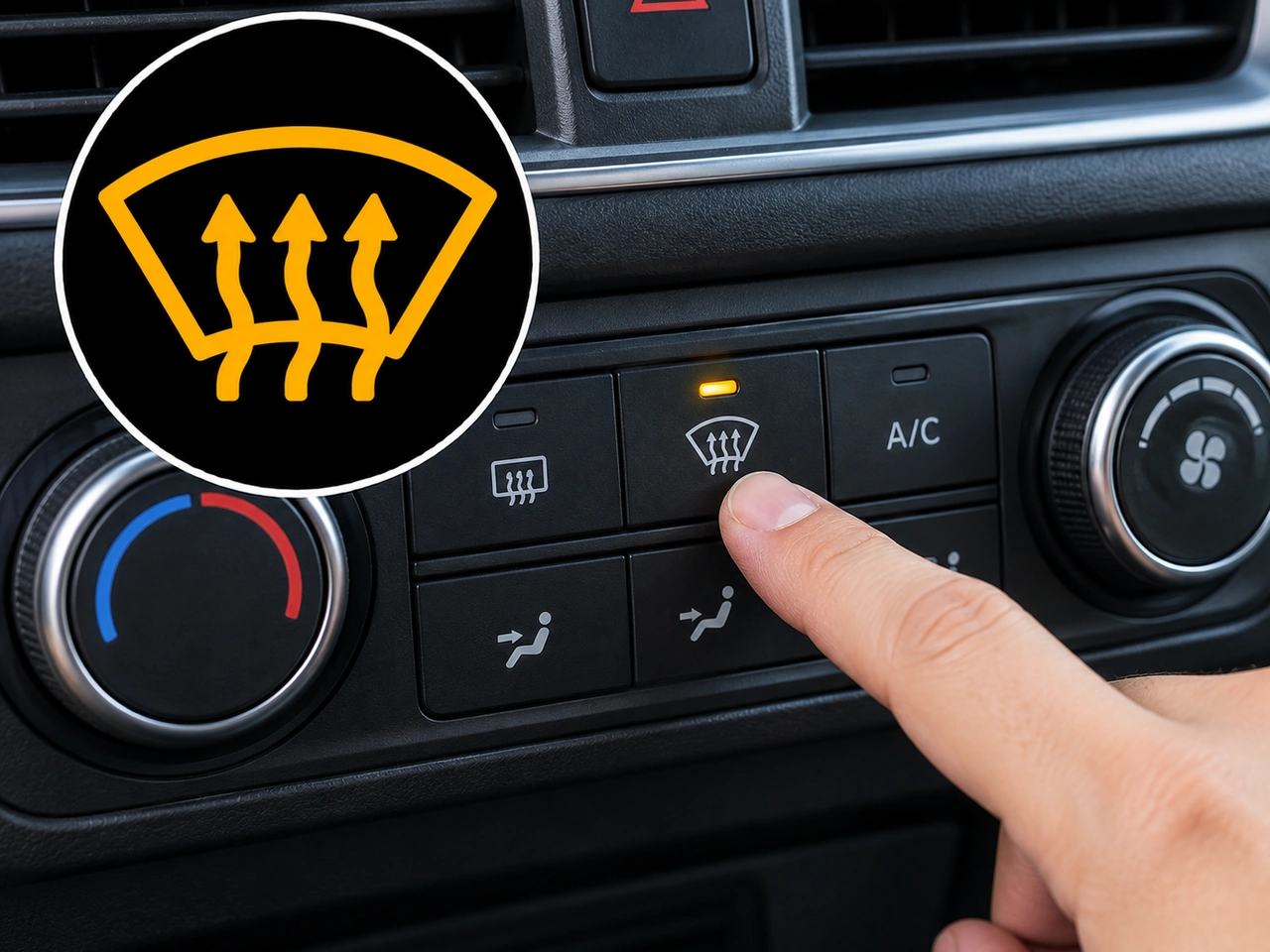
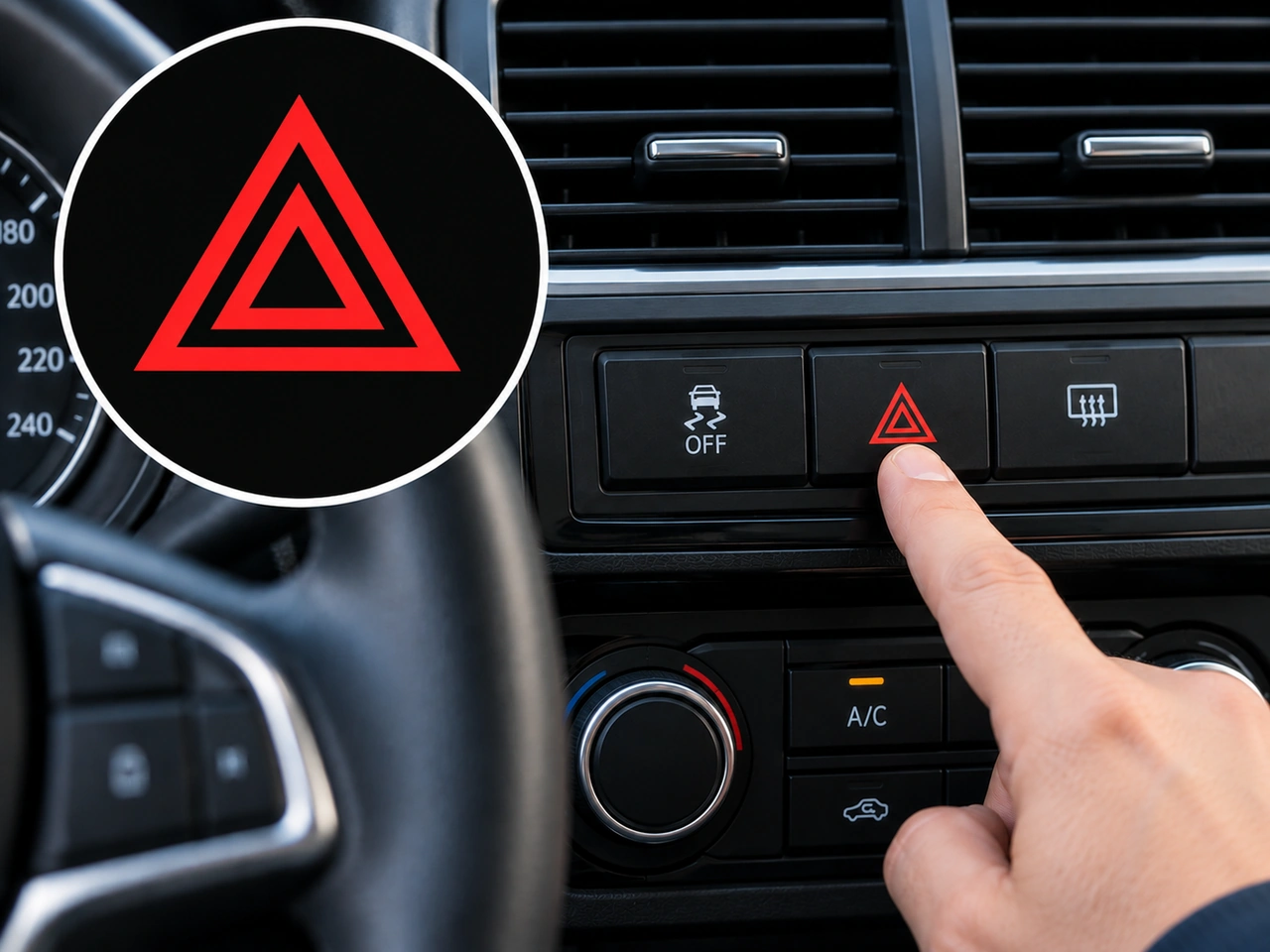
What does this dashboard symbol indicate?

117. What does this dashboard symbol indicate?

Emergency braking.
Direction indicators.
✓ Hazard warning lights.
Brake warning.

This symbol indicates the hazard warning lights. When activated, all direction indicators flash simultaneously to warn other road users of a hazard or unusual situation.

Hazard warning light symbol on the dashboard
AI-generated by Traffic-rules.com • WCIT • CC BY-SA
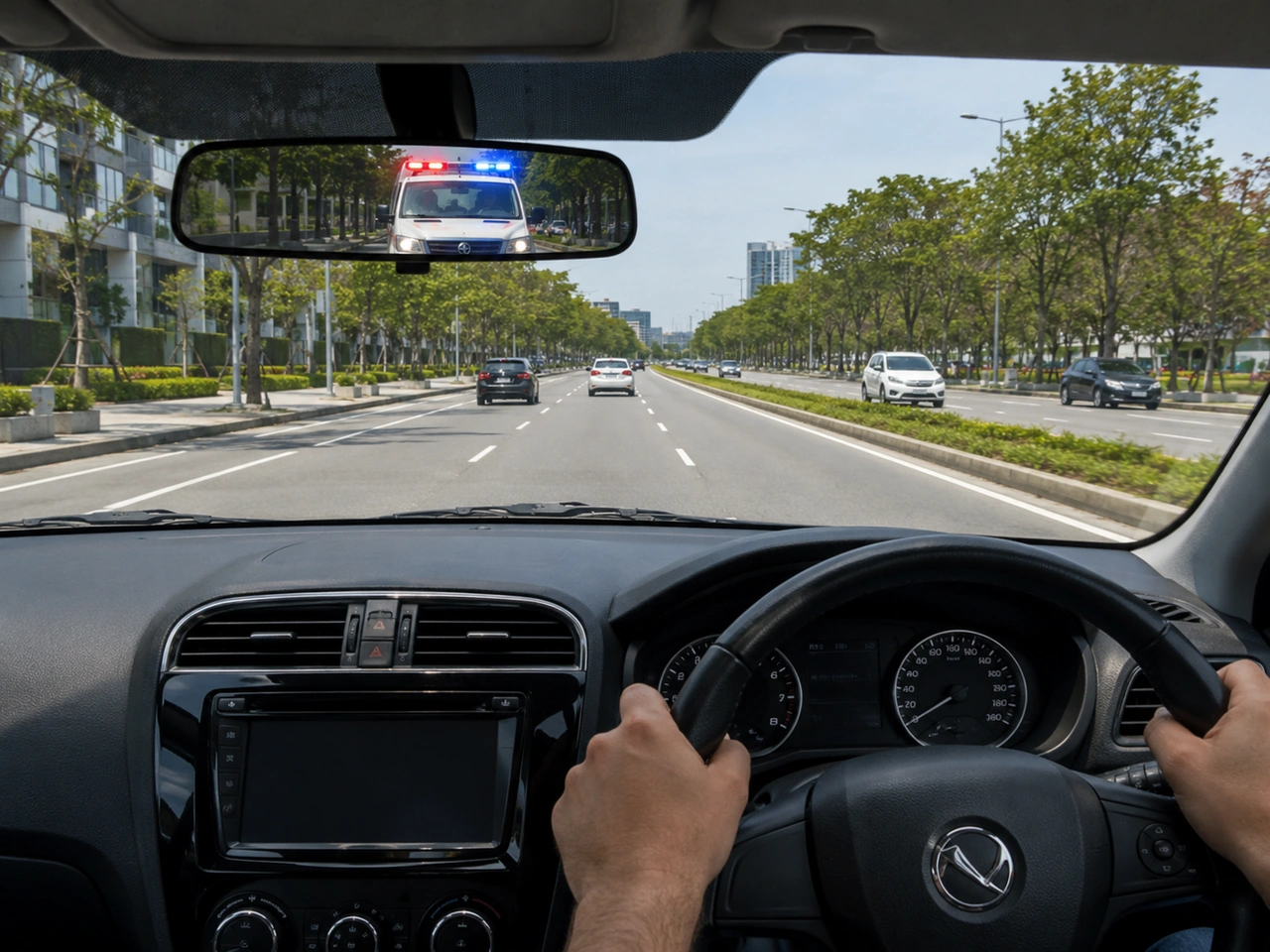
What should you do if an emergency vehicle approaches with lights or siren on?

118. What should you do if an emergency vehicle approaches with lights or siren on?

✓ Stay calm and make room safely.
Move aside without checking surrounding traffic.
Ignore it if there is not enough room to pass.
Stop immediately wherever you are.

When an emergency vehicle uses lights or siren, check your surroundings and make room safely without sudden or dangerous movements.

Emergency vehicle approaching with warning lights flashing
AI-generated by Traffic-rules.com • WCIT • CC BY-SA
What does the SET function of cruise control normally do?

119. What does the SET function of cruise control normally do?

✓ Stores the current speed as the cruising speed.
Applies the brakes automatically.
Switches cruise control off.
Returns to a previously stored speed.

The SET function normally stores the vehicle's current speed as the cruise-control speed. Use it only when the road, traffic, and driving conditions are suitable.

SET button for storing a cruising speed
AI-generated by Traffic-rules.com • WCIT • CC BY-SA
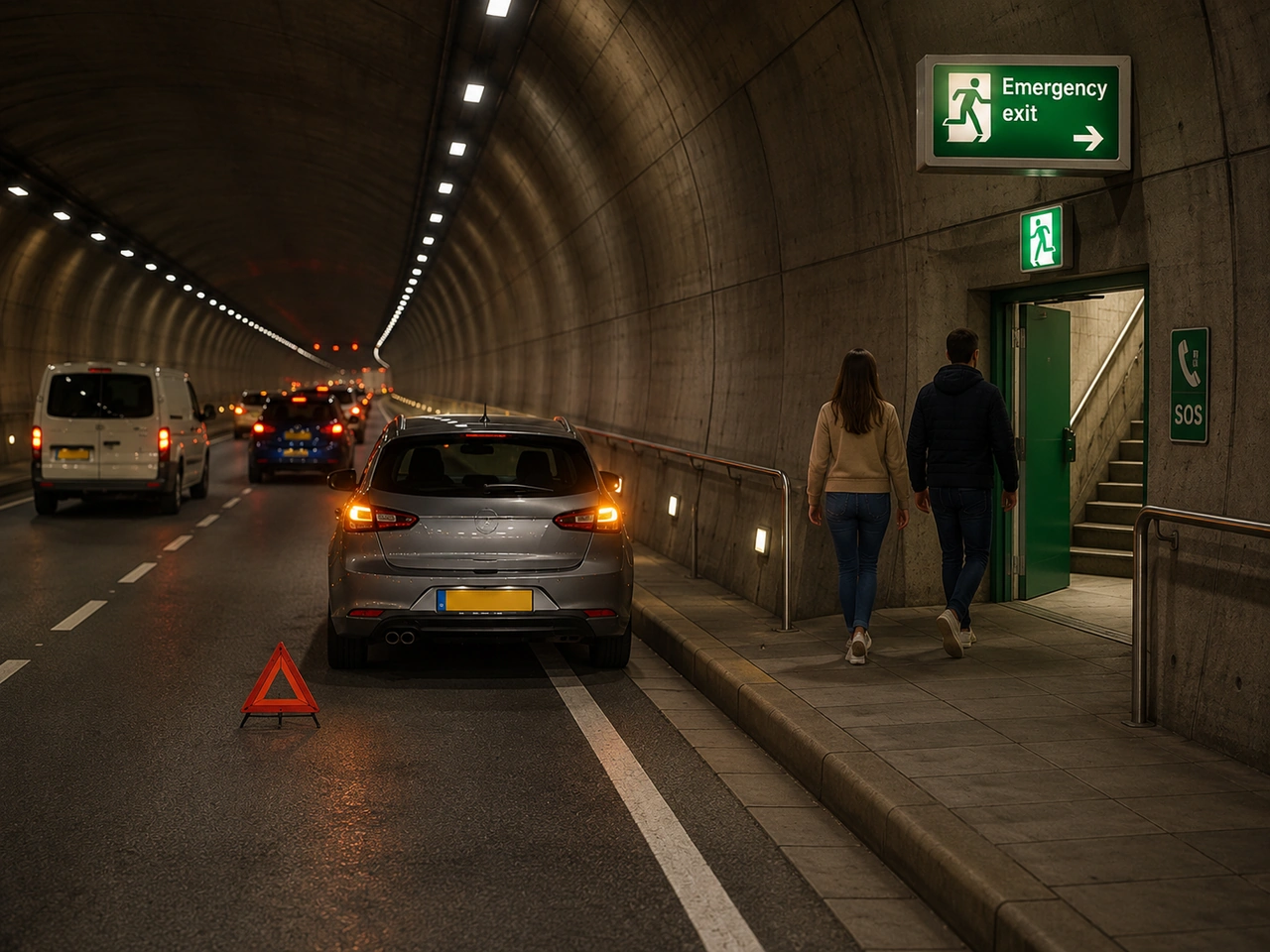
Where should you go after safely leaving a disabled vehicle in a tunnel?

120. Where should you go after safely leaving a disabled vehicle in a tunnel?

Wait directly behind the vehicle where drivers can see you.
✓ To a protected emergency area or exit away from traffic.
Stay close to the vehicle until traffic starts moving.
Remain beside the vehicle and wait for assistance.

Move away from live traffic and use a marked emergency exit, refuge area, or protected walkway where available.

Leaving a disabled vehicle for a tunnel emergency area
AI-generated by Traffic-rules.com • WCIT • CC BY-SA
What should you do after stopping because of a breakdown?

121. What should you do after stopping because of a breakdown?

✓ Apply the parking brake, switch off the engine, and use hazard lights.
Leave the engine running and keep the vehicle in neutral.
Switch off the hazard lights once the vehicle has stopped.
Leave the parking brake off if the road is level.

Secure the vehicle so that it cannot move and use the hazard warning lights to alert approaching traffic. Where required and safe, place a warning triangle to give additional warning.

Broken-down vehicle with hazard warning lights
AI-generated by Traffic-rules.com • WCIT • CC BY-SA
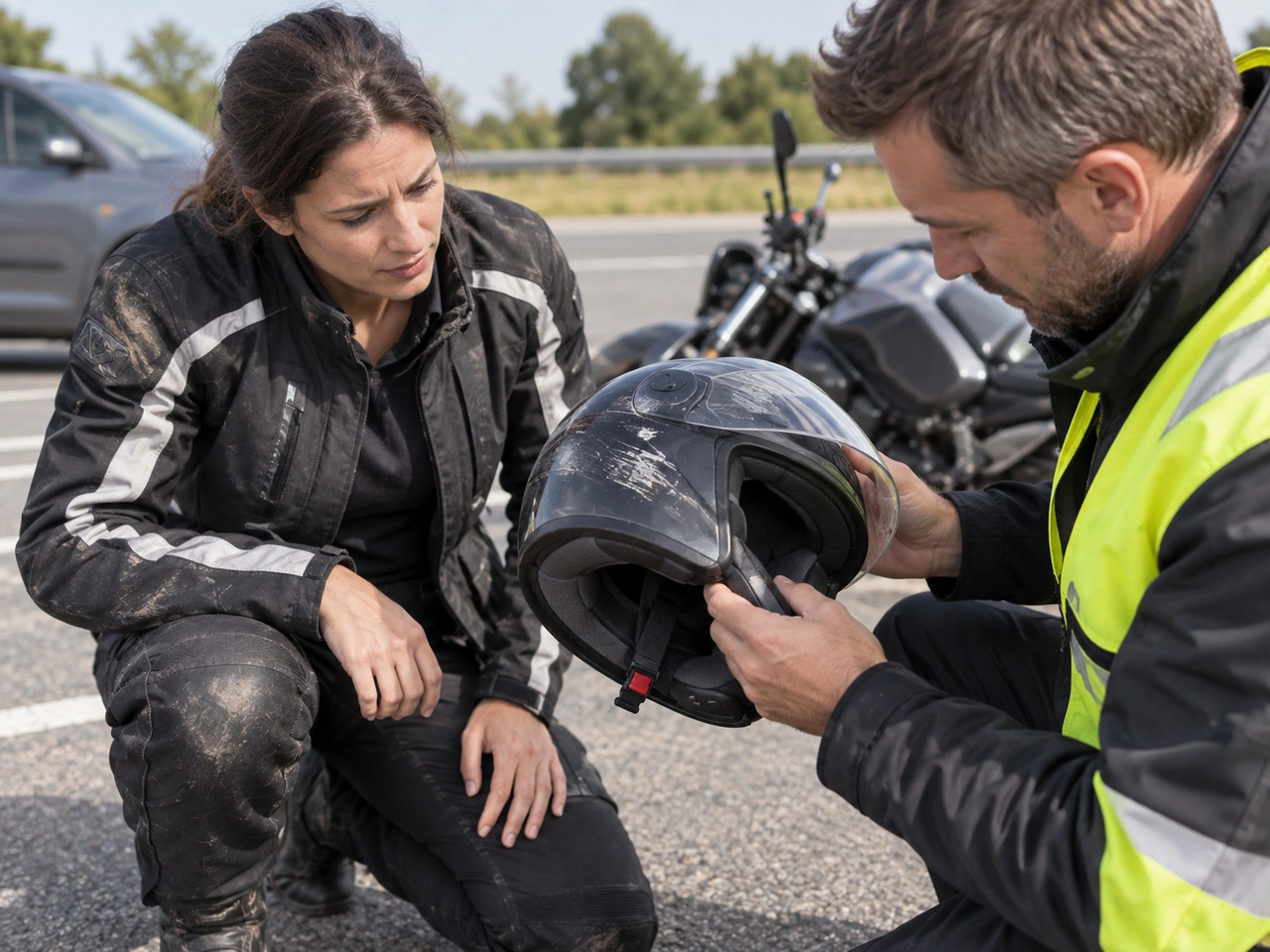
What should you do with a helmet that has taken a significant impact in a collision?

122. What should you do with a helmet that has taken a significant impact in a collision?

Use it again after tightening the straps.
✓ Stop using it and follow the manufacturer's replacement guidance.
Keep using it if the visor or straps still work.
Keep using it if there are no visible cracks.

A helmet can be damaged internally by a significant impact even when no damage is visible from the outside. Stop using the helmet and follow the manufacturer's guidance, which will commonly require replacement after a significant impact.

Helmet inspection after a significant impact
AI-generated by Traffic-rules.com • WCIT • CC BY-SA
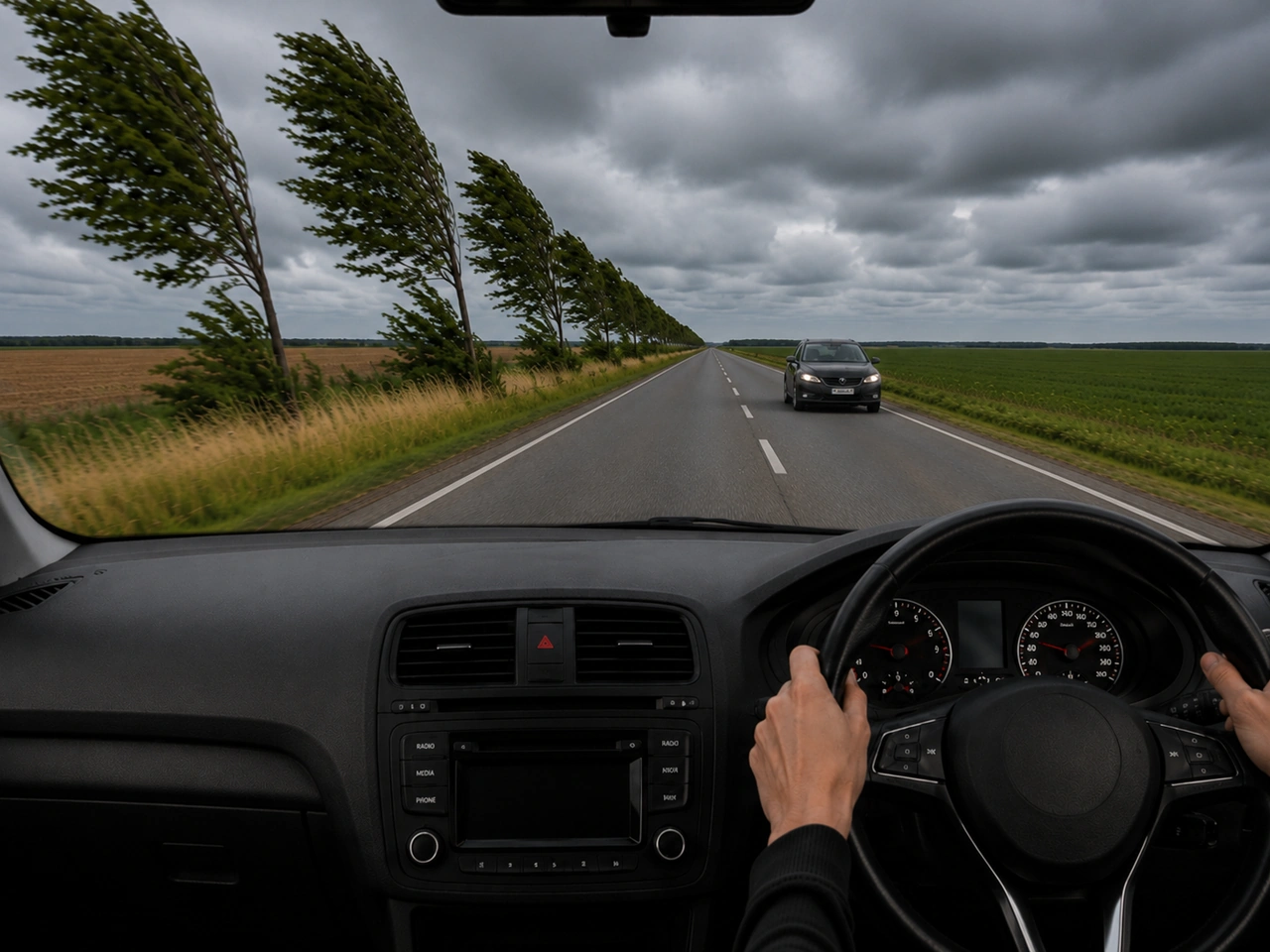
What should you do when driving in strong wind?

123. What should you do when driving in strong wind?

✓ Hold the steering wheel firmly and reduce speed if needed.
Open the windows to improve aerodynamics.
Increase speed so the vehicle is less affected by gusts.
Drive close behind large vehicles for protection from the wind.

Strong wind can affect vehicle control, especially near open areas, bridges, large vehicles, cyclists, and motorcyclists.

Driver controlling a vehicle in strong wind
AI-generated by Traffic-rules.com • WCIT • CC BY-SA
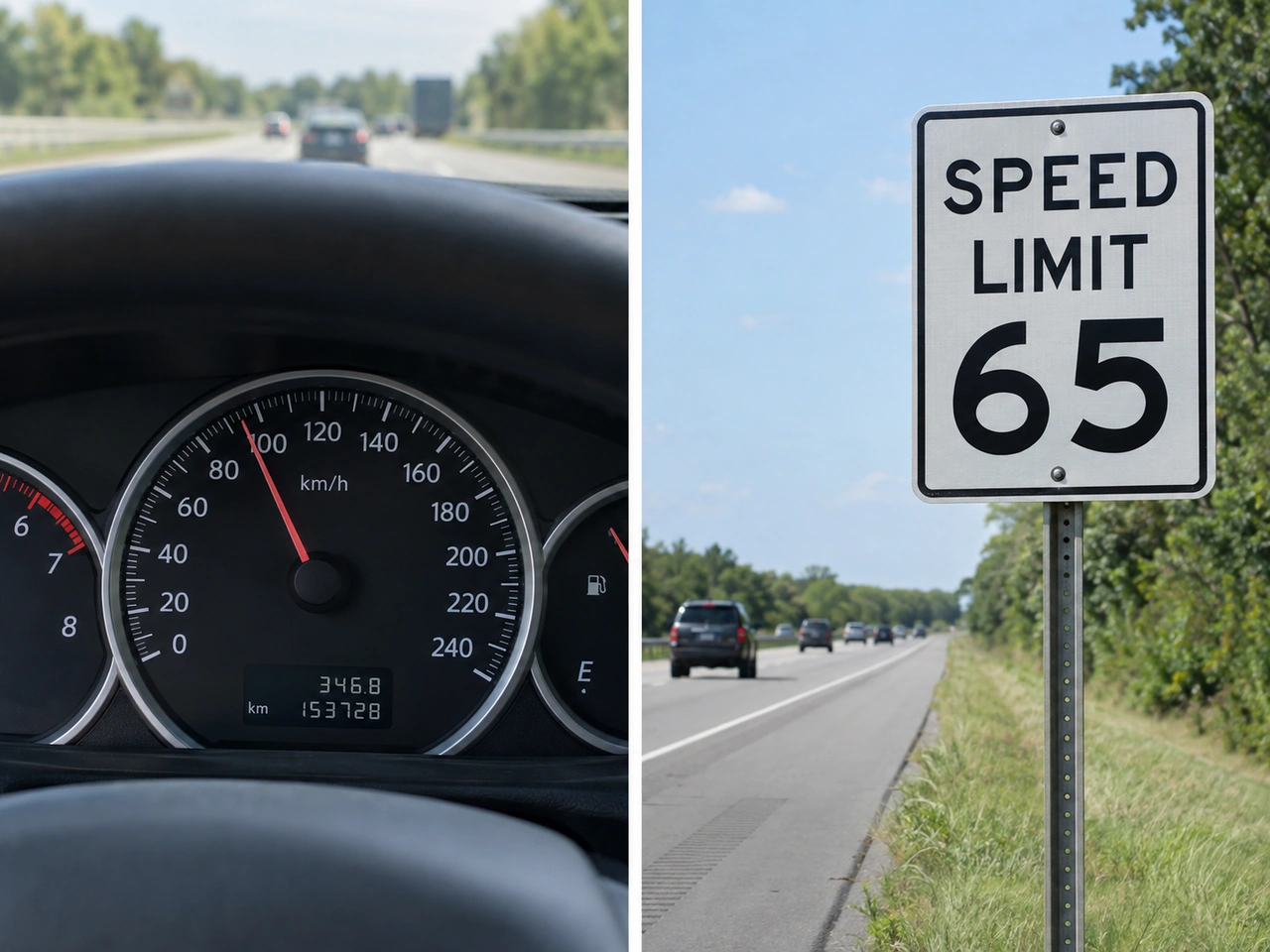
Which speed unit is used in South Africa?

124. Which speed unit is used in South Africa?

Miles per hour (mph).
✓ Kilometres per hour (km/h).

Road speeds in South Africa are shown in kilometres per hour (km/h).

Road speed expressed in kilometres per hour
AI-generated by Traffic-rules.com • WCIT • CC BY-SA
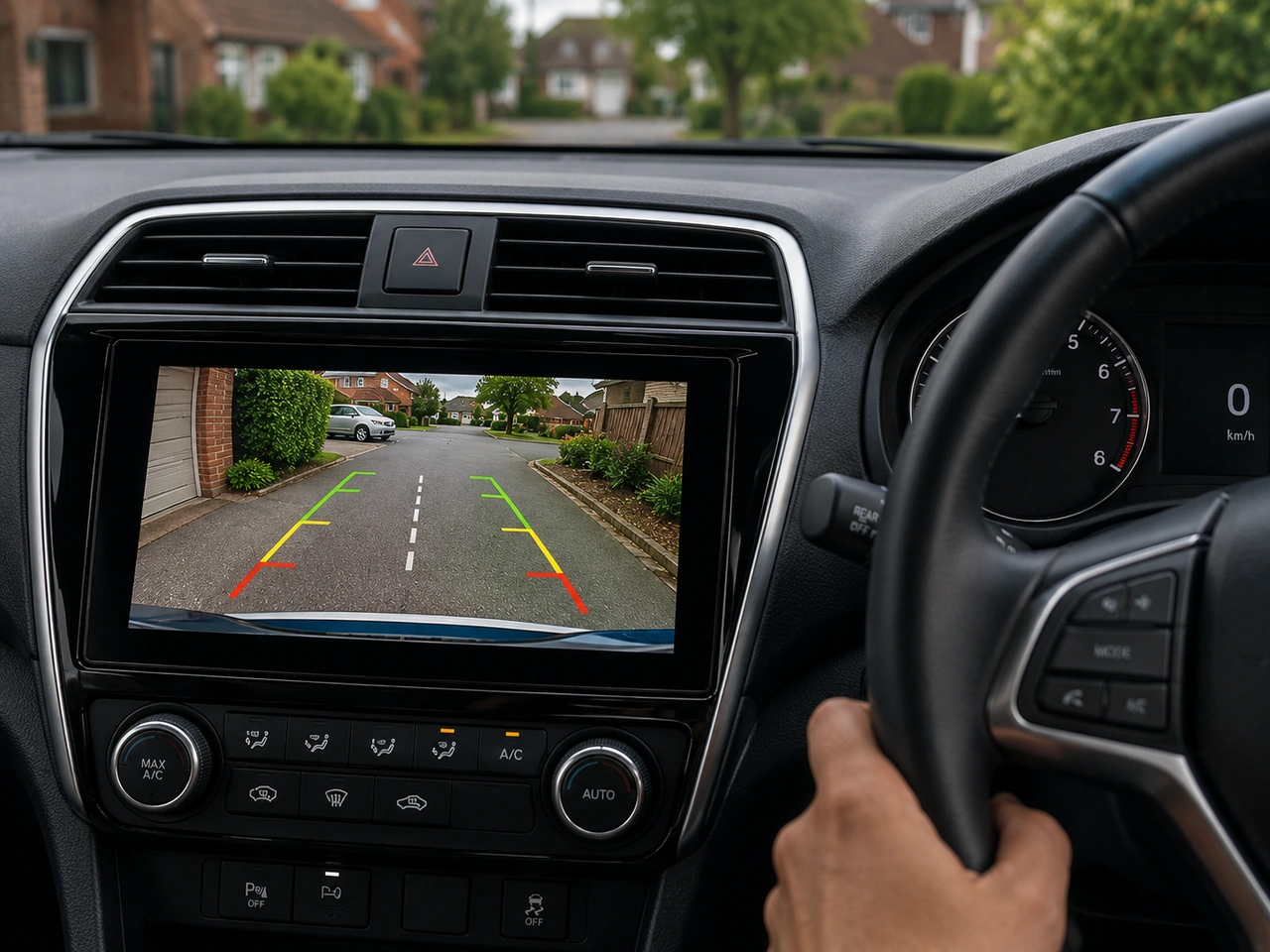
Why should you not rely only on a reversing camera?

125. Why should you not rely only on a reversing camera?

✓ It may not show everything around the vehicle.
It guarantees that the path behind is clear.
It removes the need to look around before reversing.
It makes mirrors unnecessary when reversing.

Reversing cameras can help, but they may have blind spots and limited coverage. Always check your mirrors and surroundings, look around where possible, and reverse slowly.

Reversing-camera display inside a vehicle
AI-generated by Traffic-rules.com • WCIT • CC BY-SA
Does driving at the speed limit always mean your speed is safe?

126. Does driving at the speed limit always mean your speed is safe?

✓ No, you may need to drive more slowly for the conditions.
Yes, the speed limit is always the safest speed.
Yes, if the road ahead appears clear.
Yes, if your vehicle is in good condition.

A speed limit is a maximum permitted speed, not a target. You may need to drive more slowly because of traffic, poor visibility, weather, road conditions, pedestrians, cyclists, or other hazards.

Speed-limit sign and changing road conditions
AI-generated by Traffic-rules.com • WCIT • CC BY-SA
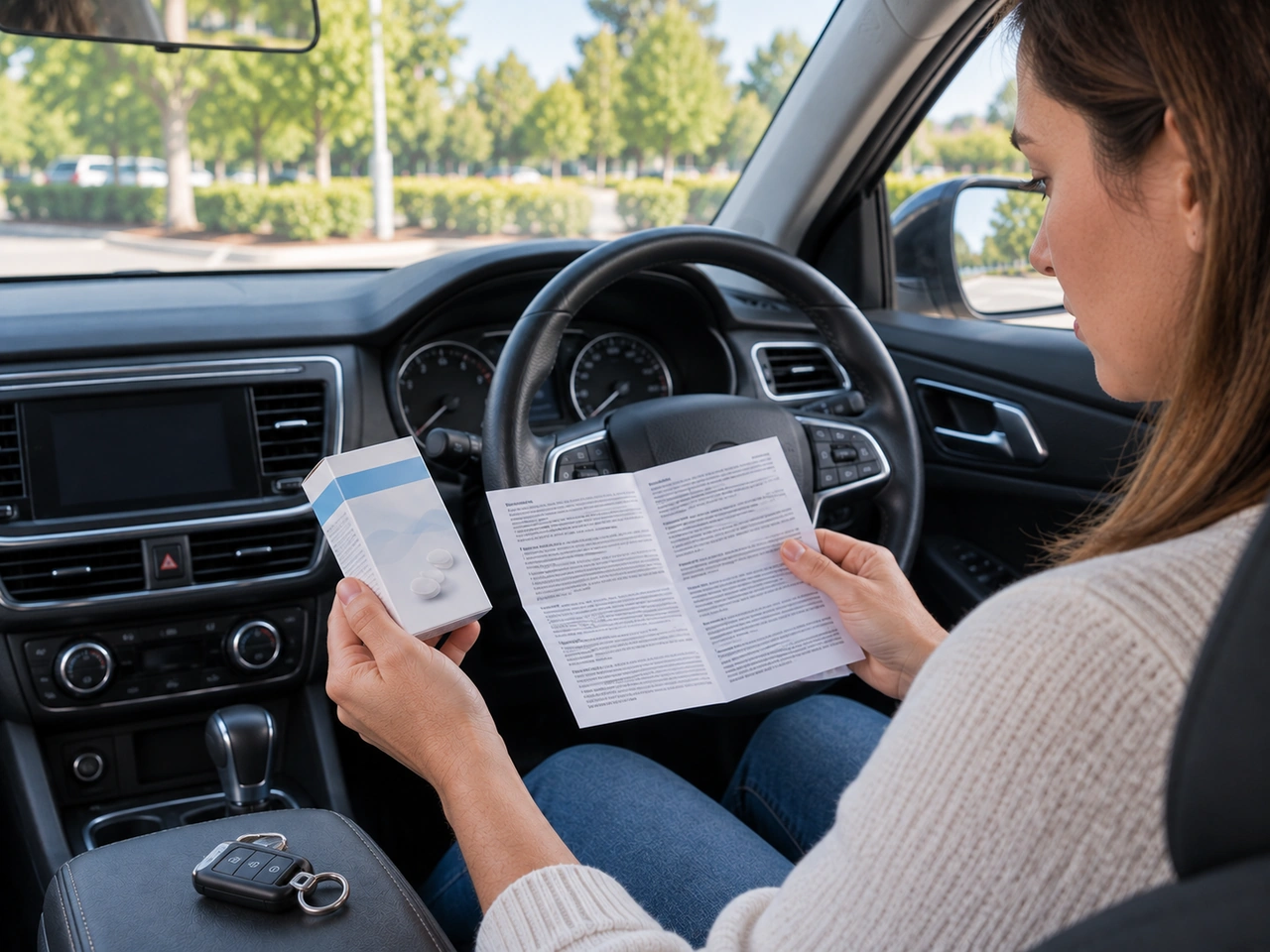
What should you do before driving after taking medicine?

127. What should you do before driving after taking medicine?

Take an extra dose before a long journey.
Drive slowly until you know how it affects you.
Drink coffee to prevent any side effects.
✓ Check whether it may affect your ability to drive.

Some medicines can affect driving ability by causing drowsiness, dizziness, blurred vision, slower reactions, or reduced concentration. Check the label or patient information and follow advice from your doctor or pharmacist before driving.

Checking medicine warnings before driving
AI-generated by Traffic-rules.com • WCIT • CC BY-SA
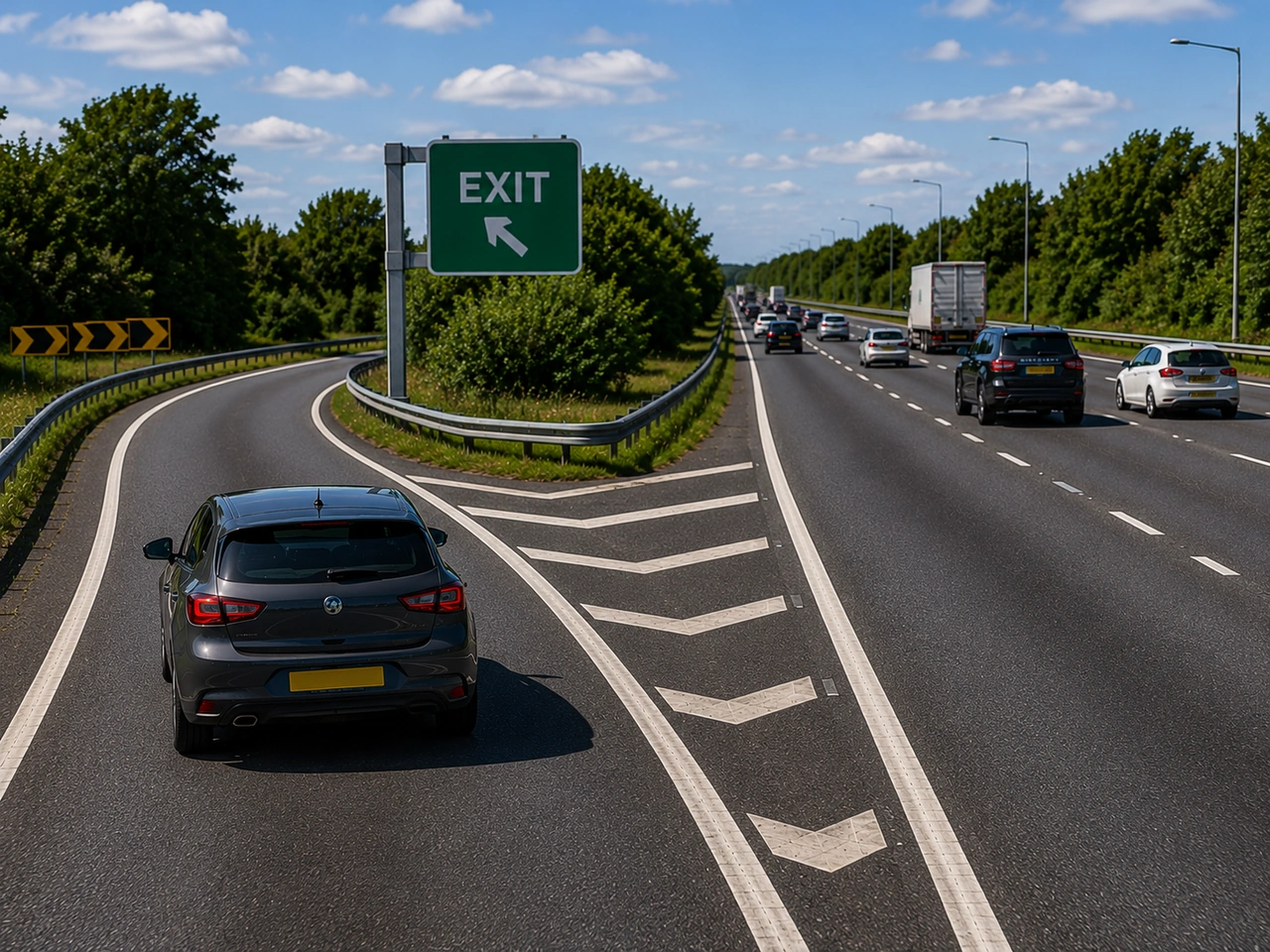
What should you do before leaving a motorway?

128. What should you do before leaving a motorway?

Wait until the exit begins before checking your mirrors.
Cross several lanes at the last moment.
Signal only after entering the exit lane.
✓ Check your mirrors, signal in good time, and enter the exit lane safely.

Plan your exit early, move into the correct lane safely, and reduce speed after entering the exit road where appropriate.

Vehicle preparing to take a motorway exit
AI-generated by Traffic-rules.com • WCIT • CC BY-SA
What should you do with a child restraint after a collision?

129. What should you do with a child restraint after a collision?

Replace only the seat cover.
Keep using it if no damage is visible.
✓ Follow the manufacturer's instructions about inspection or replacement.
Repair damaged parts yourself.

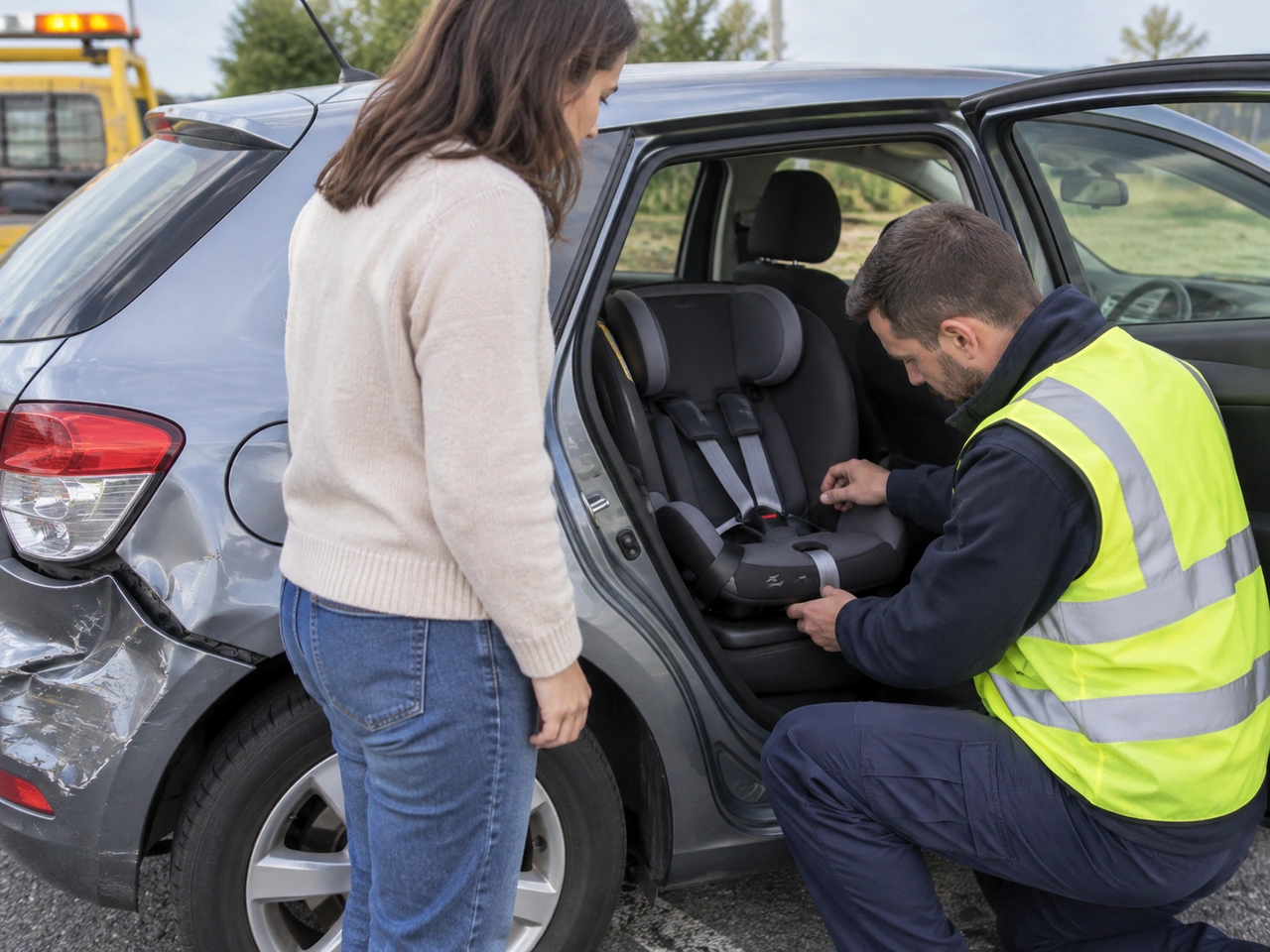
A child restraint may be damaged in a collision even when the damage is not obvious. Follow the manufacturer's instructions, as the restraint may need to be inspected or replaced before it is used again.

Child car seat requiring inspection after a collision
AI-generated by Traffic-rules.com • WCIT • CC BY-SA
What should you do with the clutch when bringing a manual vehicle to a stop?

130. What should you do with the clutch when bringing a manual vehicle to a stop?

✓ Press it before the engine begins to stall.
Pump it repeatedly while braking.
Keep it released until after the vehicle stops.
Press it before using the brake pedal.

When stopping a manual vehicle, brake normally and press the clutch pedal before the engine speed becomes too low and the engine stalls. Avoid pressing the clutch unnecessarily early, as this reduces engine braking.

Clutch-pedal operation when stopping a manual vehicle
AI-generated by Traffic-rules.com • WCIT • CC BY-SA
Why does higher speed increase the risk of aquaplaning?

131. Why does higher speed increase the risk of aquaplaning?

The suspension becomes less effective at high speed.
✓ The tyres have less time to clear water from the road surface.
The vehicle becomes heavier as speed increases.
Higher speed increases the tyre pressure.

At higher speeds, the tyres may not disperse water effectively, making it easier for the vehicle to lose contact with the road.

Vehicle speed and aquaplaning on a wet road
AI-generated by Traffic-rules.com • WCIT • CC BY-SA
What is important when raising a vehicle with its jack?

132. What is important when raising a vehicle with its jack?

✓ Use the correct jacking point and never go underneath a vehicle on a jack.
Work underneath if the jack appears stable.
Use any solid-looking part underneath the vehicle.
Raise the vehicle before applying the parking brake.

A jack can slip or fail if it is incorrectly positioned. Secure the vehicle and use additional approved supports before working underneath it.

Vehicle raised at a jacking point for a wheel change
AI-generated by Traffic-rules.com • WCIT • CC BY-SA
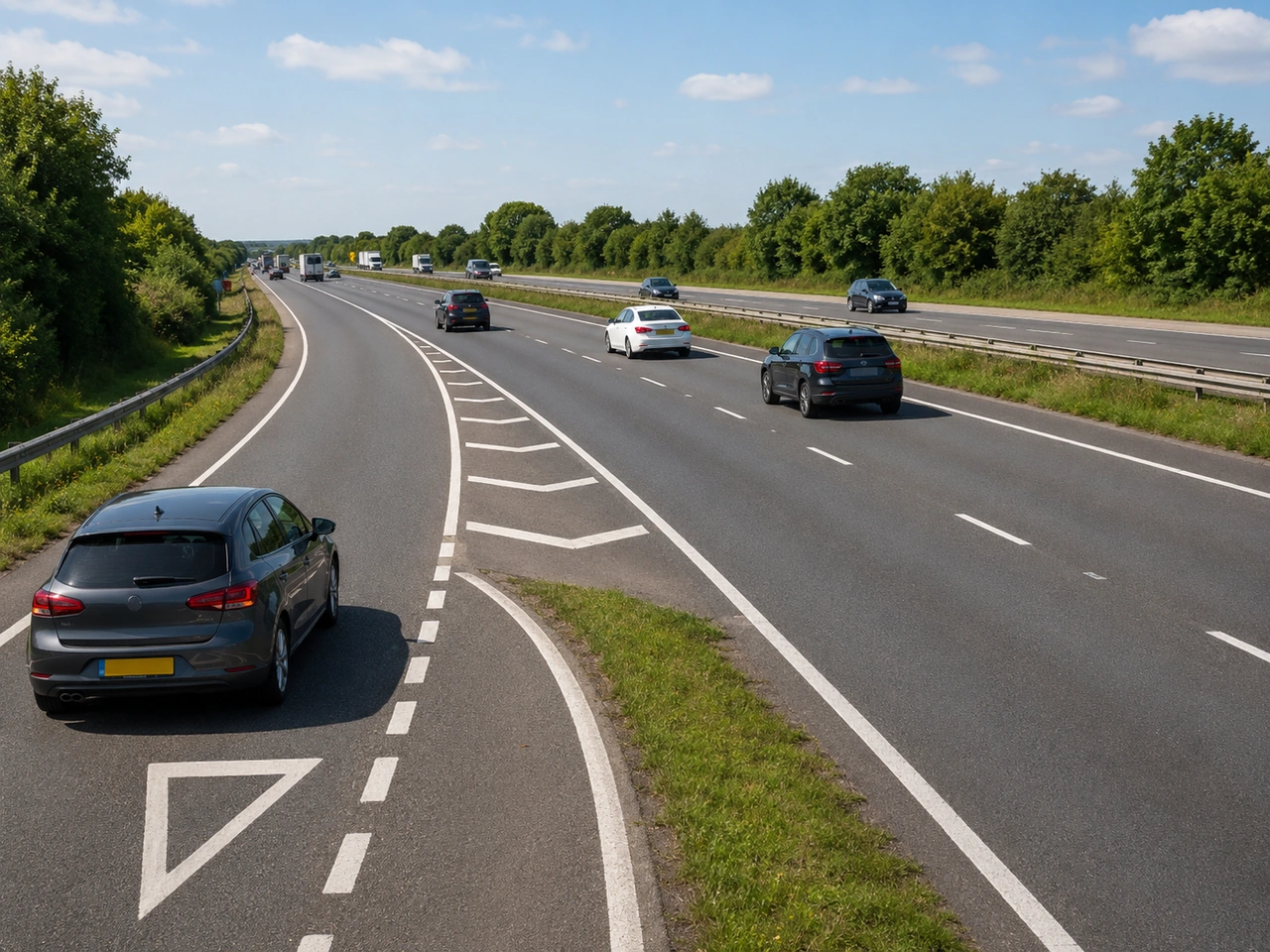
Who normally has priority when you enter a motorway from an entry lane?

133. Who normally has priority when you enter a motorway from an entry lane?

Whichever vehicle reaches the merge point first.
✓ Traffic already travelling on the motorway.
The vehicle closest to the end of the entry lane.
Traffic entering from the entry lane.

You must adjust your speed and find a safe gap without forcing motorway traffic to brake or change direction.

Vehicle entering beside traffic already on a motorway
AI-generated by Traffic-rules.com • WCIT • CC BY-SA
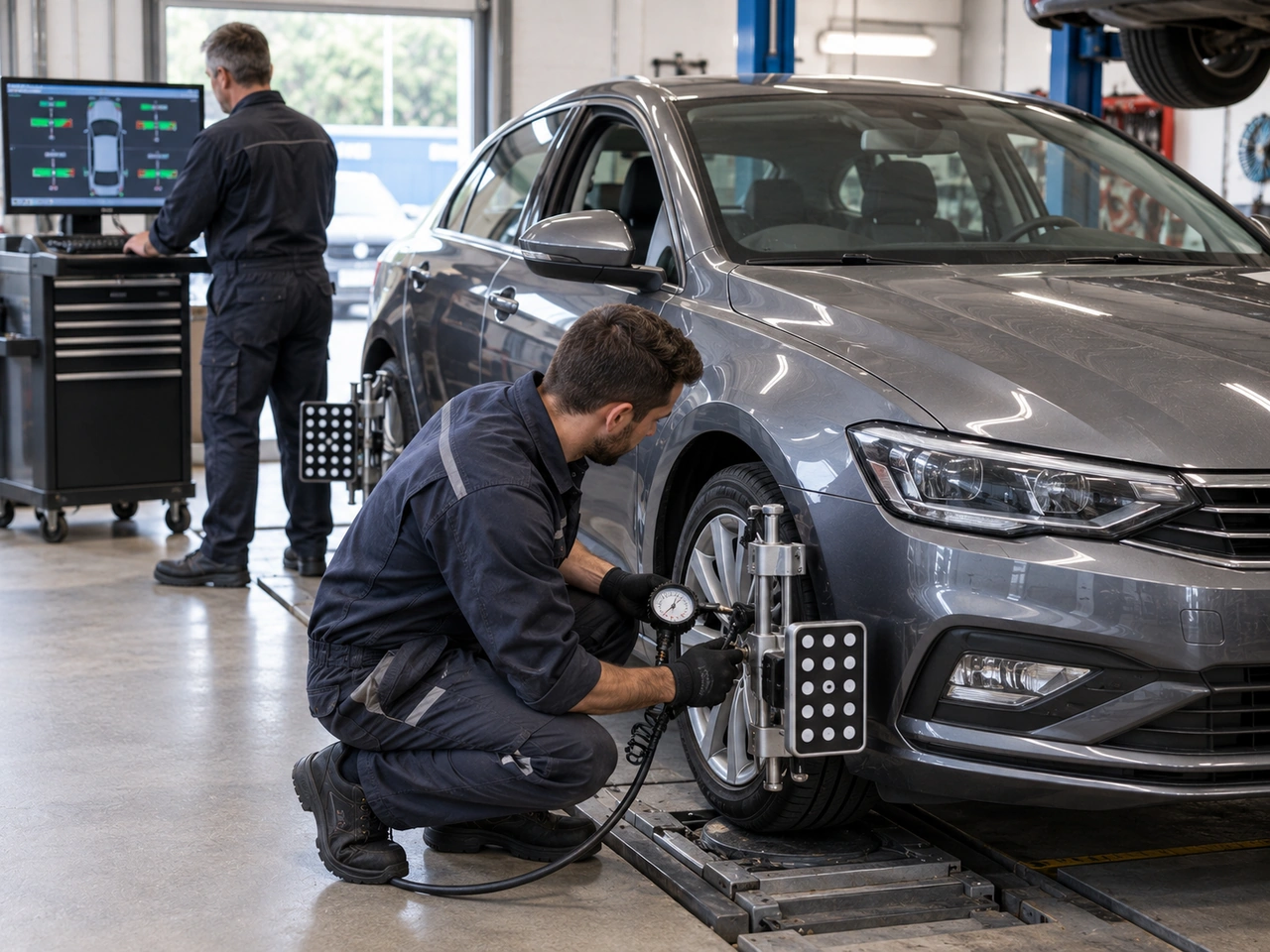
What should you do if the vehicle consistently pulls to one side?

134. What should you do if the vehicle consistently pulls to one side?

✓ Check the tyre pressures and have the steering, alignment, and brakes inspected.
Keep driving and correct the steering as needed.
Increase speed to see if the vehicle straightens.
Reduce pressure in the tyre on the opposite side.

Persistent pulling can be caused by incorrect tyre pressure, wheel misalignment, suspension wear, or a braking fault. It should not be ignored.

Vehicle pulling to one side while travelling
AI-generated by Traffic-rules.com • WCIT • CC BY-SA
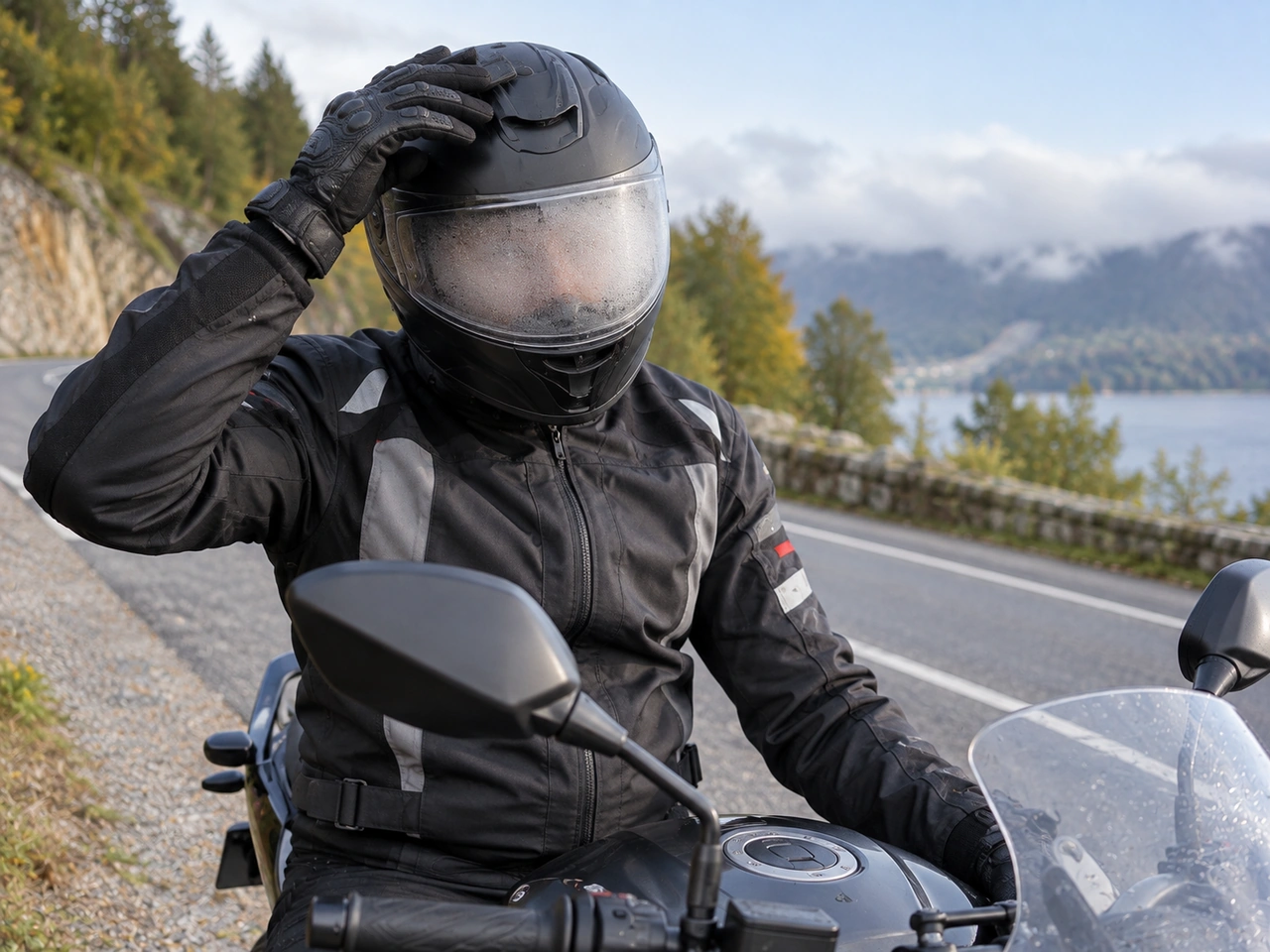
What should you do if your motorcycle helmet visor starts to fog?

135. What should you do if your motorcycle helmet visor starts to fog?

Look around the side of the visor instead.
Close all helmet vents completely.
Wipe the inside of the visor while riding.
✓ Reduce speed and clear the visor safely.

A fogged visor can seriously reduce your view of the road. Reduce speed and use the helmet's ventilation, demisting or anti-fog features where available. If you cannot restore a clear view safely, stop in a safe place before continuing.

Misted visor on a motorcycle helmet
AI-generated by Traffic-rules.com • WCIT • CC BY-SA
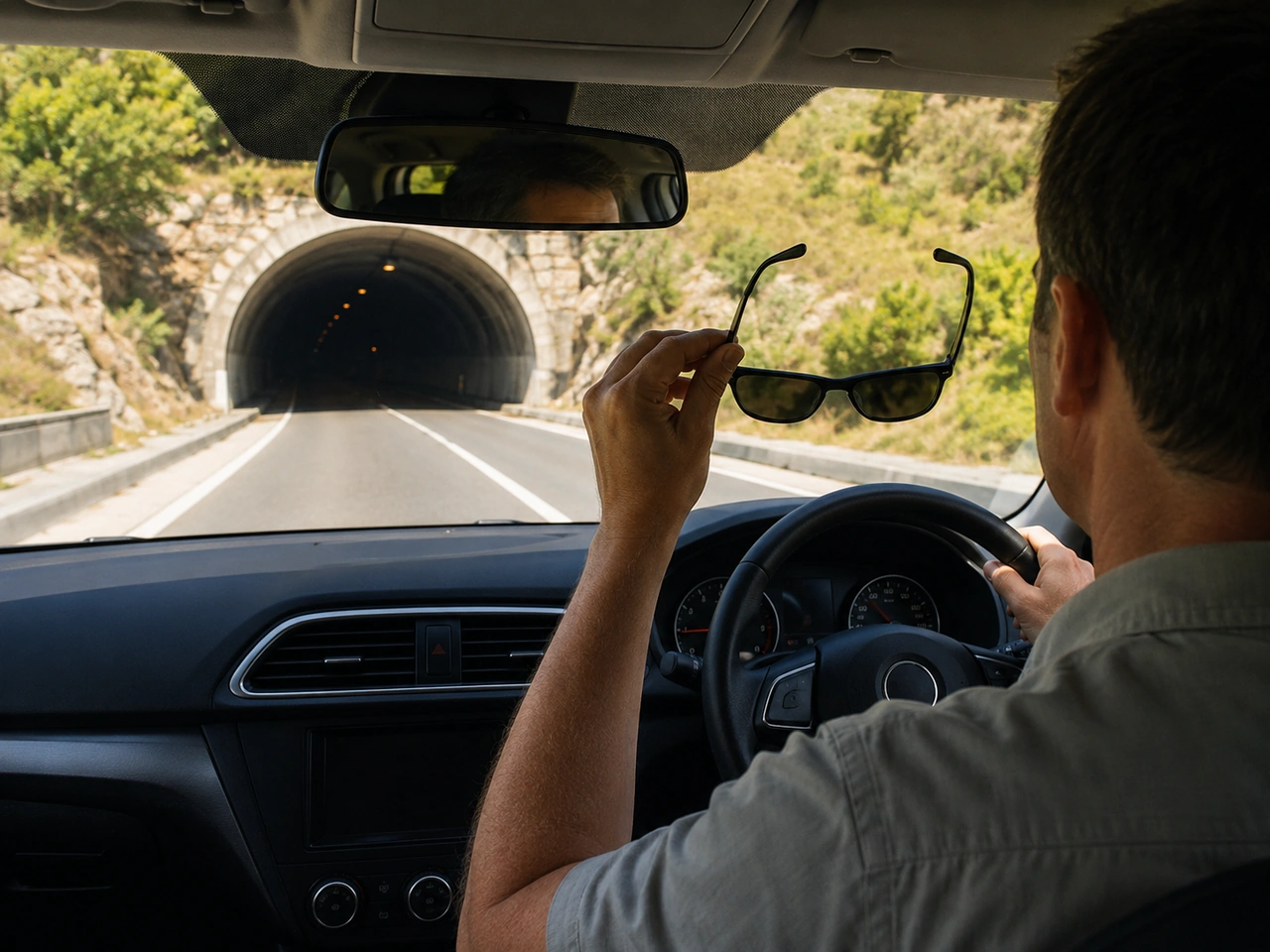
Why should you remove dark sunglasses before entering a tunnel?

136. Why should you remove dark sunglasses before entering a tunnel?

✓ Your eyes need to adjust to the lower light level.
To prevent the automatic lights from switching on.
Because tunnel lighting can damage dark lenses.
To prevent the lenses from reflecting tunnel lights.

Dark sunglasses reduce the amount of light reaching your eyes and can make hazards inside a tunnel harder to see.

Driver removing sunglasses before entering a tunnel
AI-generated by Traffic-rules.com • WCIT • CC BY-SA
What does this dashboard symbol indicate?

137. What does this dashboard symbol indicate?

Air recirculation.
Rear window demister.
✓ Front windscreen demister.
Air conditioning.

This symbol indicates the front windscreen demister. It directs airflow towards the windscreen to help clear condensation, mist or frost and restore a clear view.

Front windscreen demister symbol on the dashboard
AI-generated by Traffic-rules.com • WCIT • CC BY-SA
You must stop at a red traffic light.

138. You must stop at a red traffic light.

✓ True.
False.

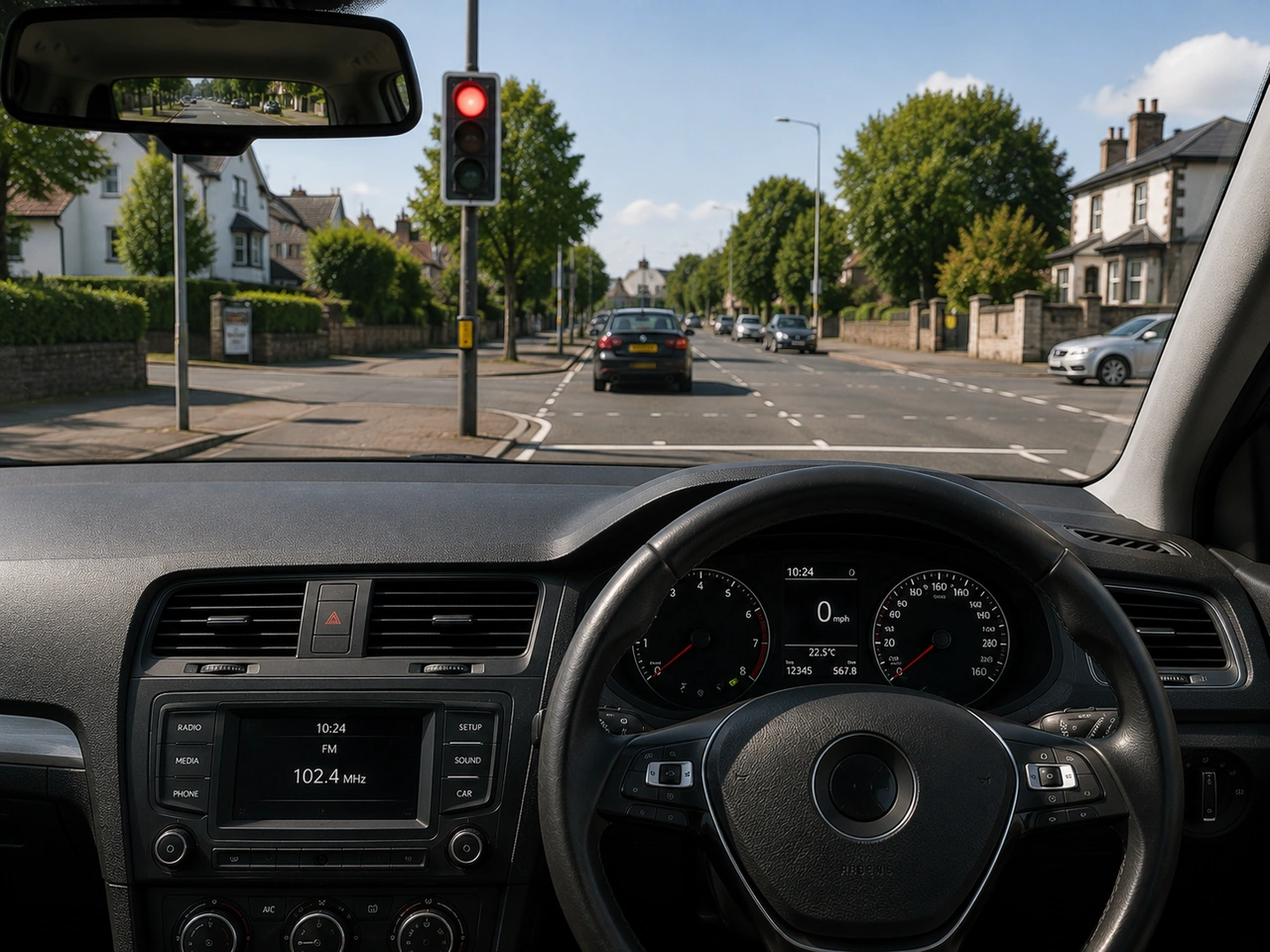
A red traffic light means you must stop and wait until it is allowed to proceed.

Vehicle stopped at a red traffic light
AI-generated by Traffic-rules.com • WCIT • CC BY-SA
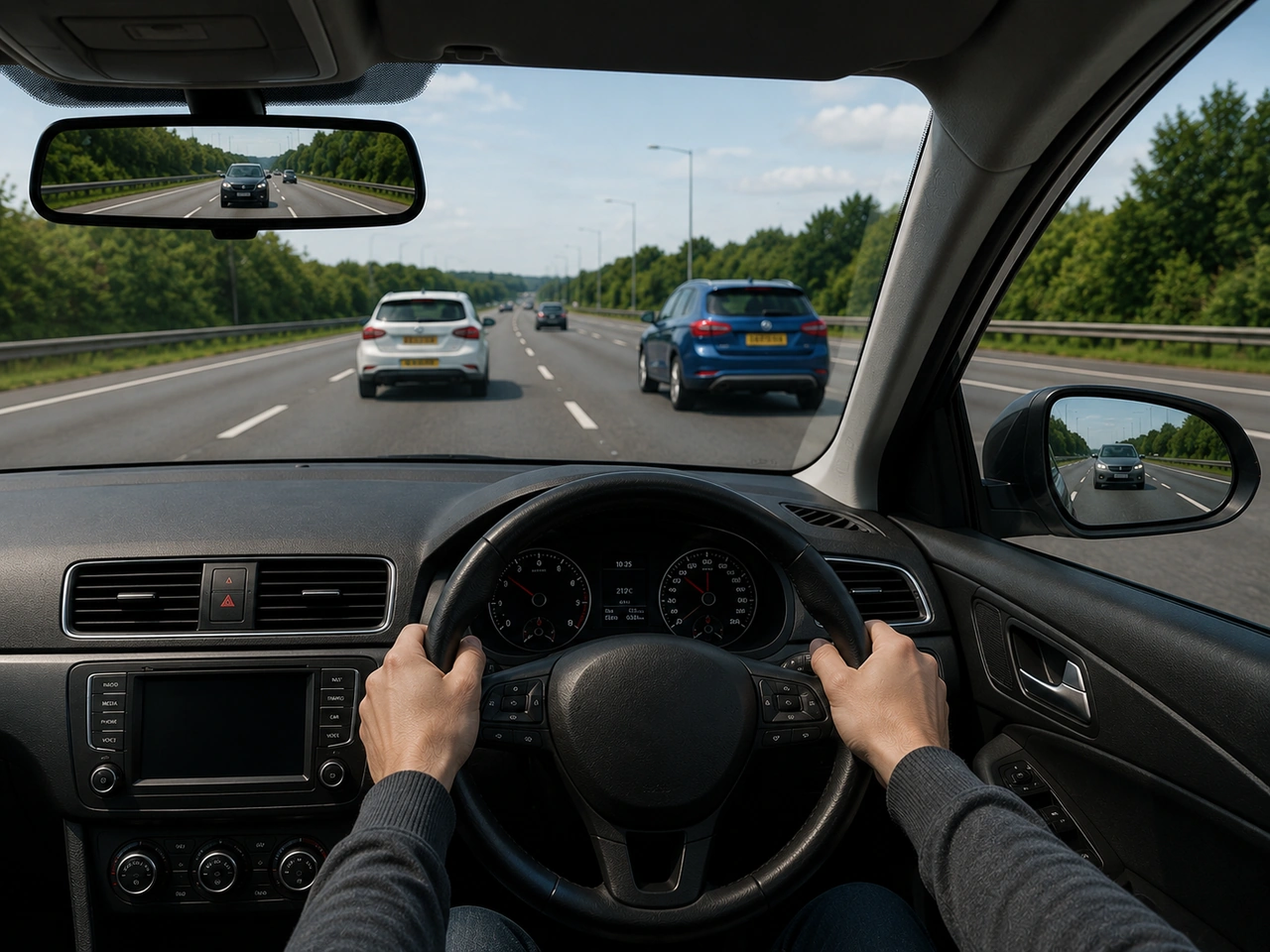
What should you do before changing lanes?

139. What should you do before changing lanes?

Check only the lane directly beside you.
Rely on your mirrors without checking the blind spot.
✓ Check your mirrors and blind spot.
Check the blind spot only after starting to move.

Always check your mirrors, look over your shoulder if necessary, and make sure it is safe before changing lanes.

Driver checking surrounding traffic before changing lanes
AI-generated by Traffic-rules.com • WCIT • CC BY-SA
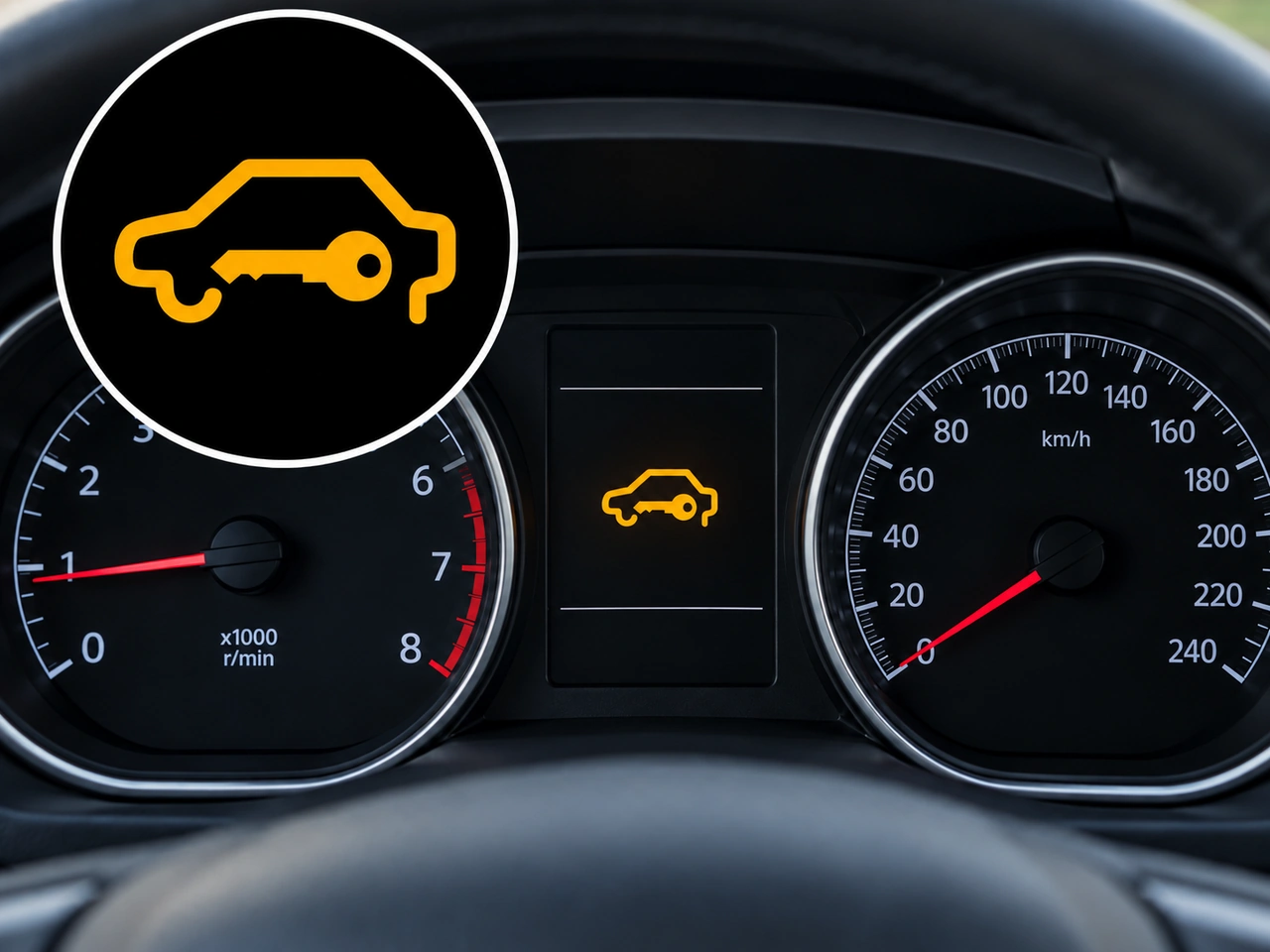
What does this dashboard symbol indicate?

140. What does this dashboard symbol indicate?

Door-open warning.
Charging-system warning.
✓ Immobiliser or anti-theft system.
Engine-management warning.

This symbol relates to the vehicle's immobiliser or anti-theft system. If it remains illuminated or flashes unexpectedly, the vehicle may not recognise the key or there may be a fault in the security system.

Immobiliser indicator symbol on the dashboard
AI-generated by Traffic-rules.com • WCIT • CC BY-SA
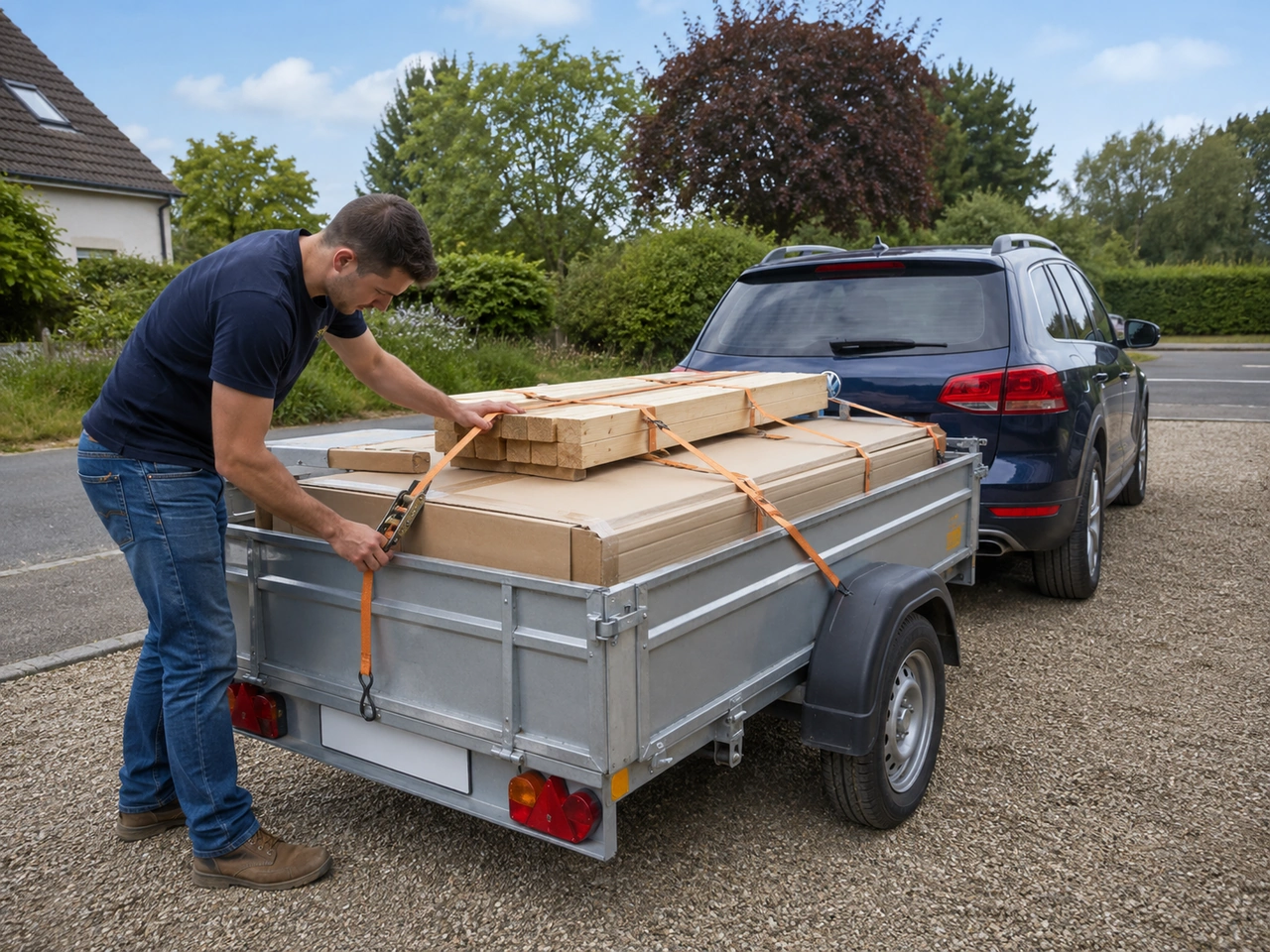
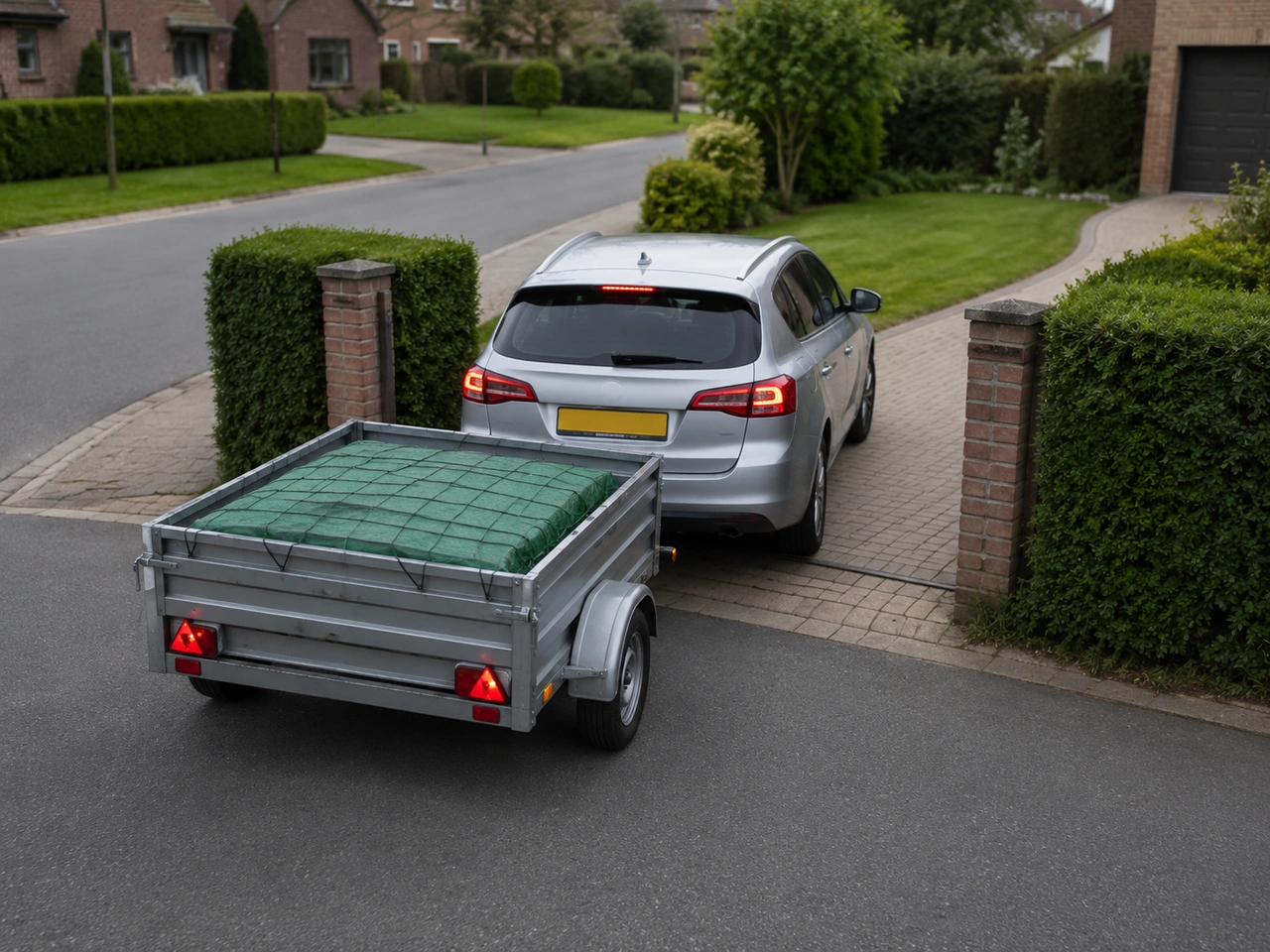
What should you do before driving with a load?

141. What should you do before driving with a load?

Check the load only after you have started driving.
Secure only the heaviest items.
✓ Make sure it is properly secured and cannot move or fall.
Place heavy items on top of lighter items.

An unsecured load can shift, affect vehicle control, or fall into the road. Check that everything is safely restrained before moving.

Checking a vehicle's load before setting off
AI-generated by Traffic-rules.com • WCIT • CC BY-SA
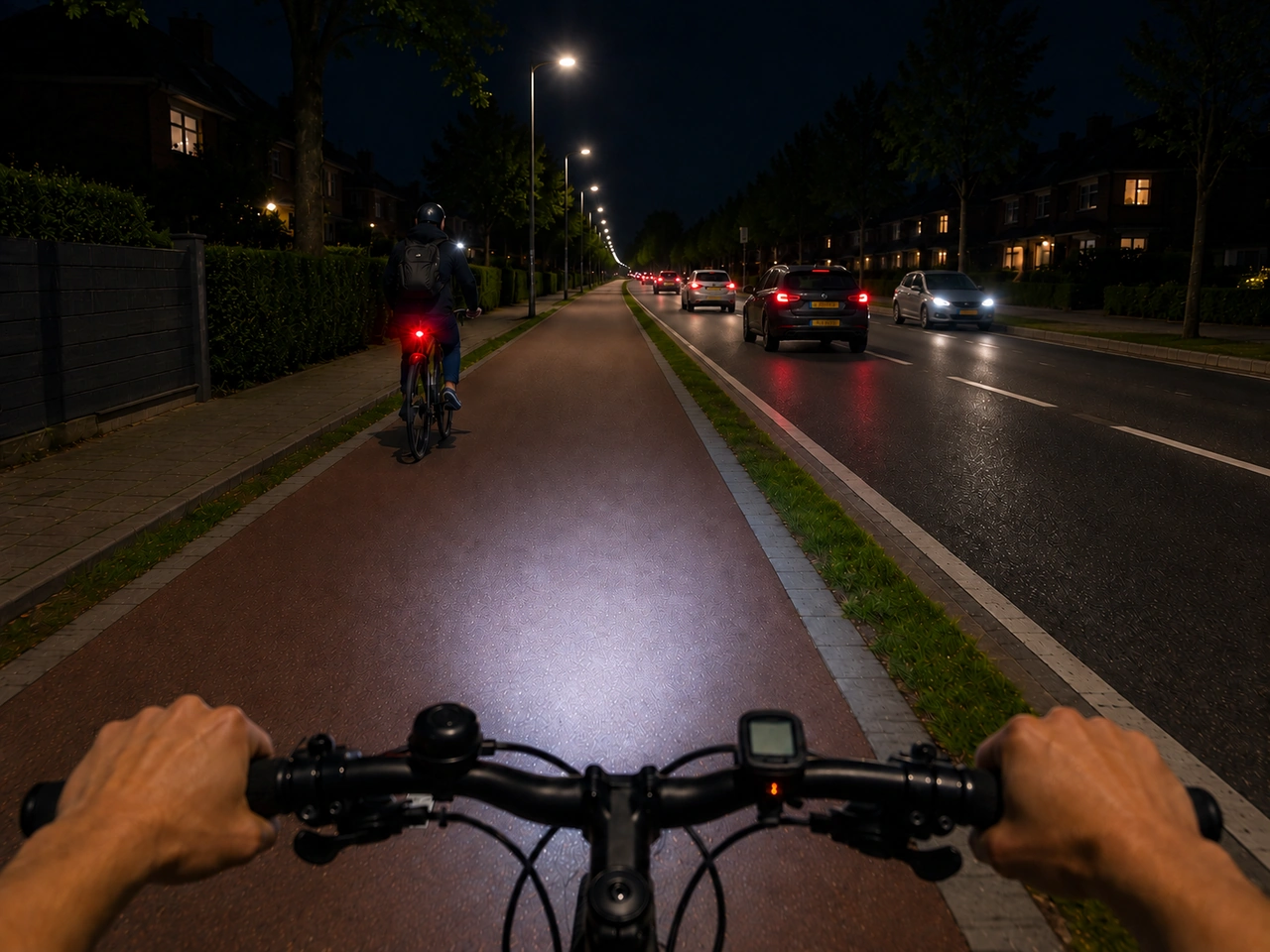
Why is it important to use bicycle lights at night?

142. Why is it important to use bicycle lights at night?

They are needed only on roads without street lighting.
They make the bicycle easier to control.
✓ They help you see and help others notice you.
They make reflective clothing unnecessary.

Front and rear lights improve visibility and make it easier for drivers, cyclists, and pedestrians to detect you.

Bicycle lights used when riding at night
AI-generated by Traffic-rules.com • WCIT • CC BY-SA
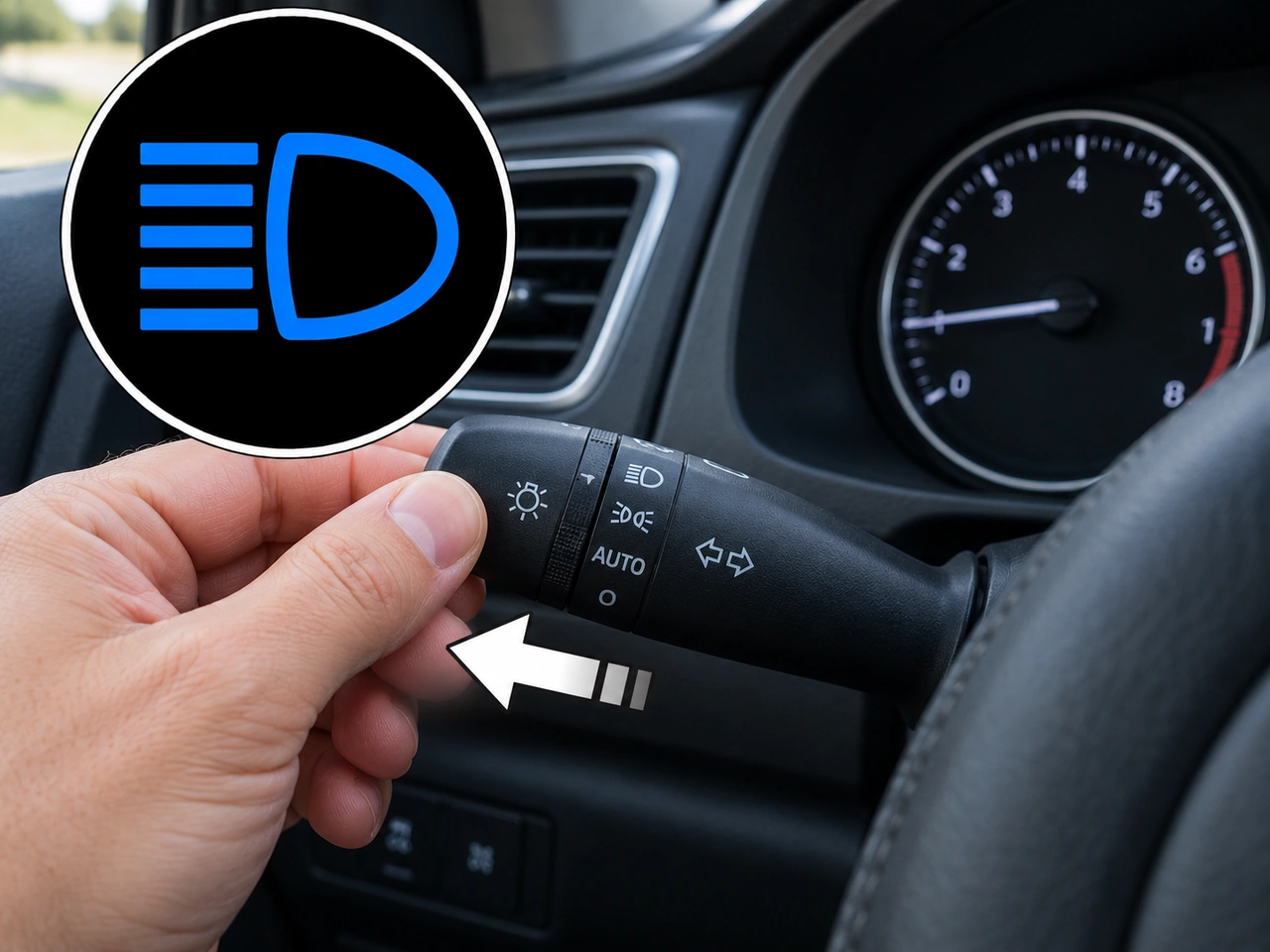
What does pulling the lighting stalk towards you normally do?

143. What does pulling the lighting stalk towards you normally do?

✓ Flash the main-beam headlights.
Switch on the front fog lights.
Activate the direction indicators.
Switch on the dipped headlights.

Pulling the lighting stalk towards you normally flashes the main-beam headlights. This briefly illuminates the main beam while the stalk is held or operated.

Lighting stalk used to flash the main-beam headlights
AI-generated by Traffic-rules.com • WCIT • CC BY-SA
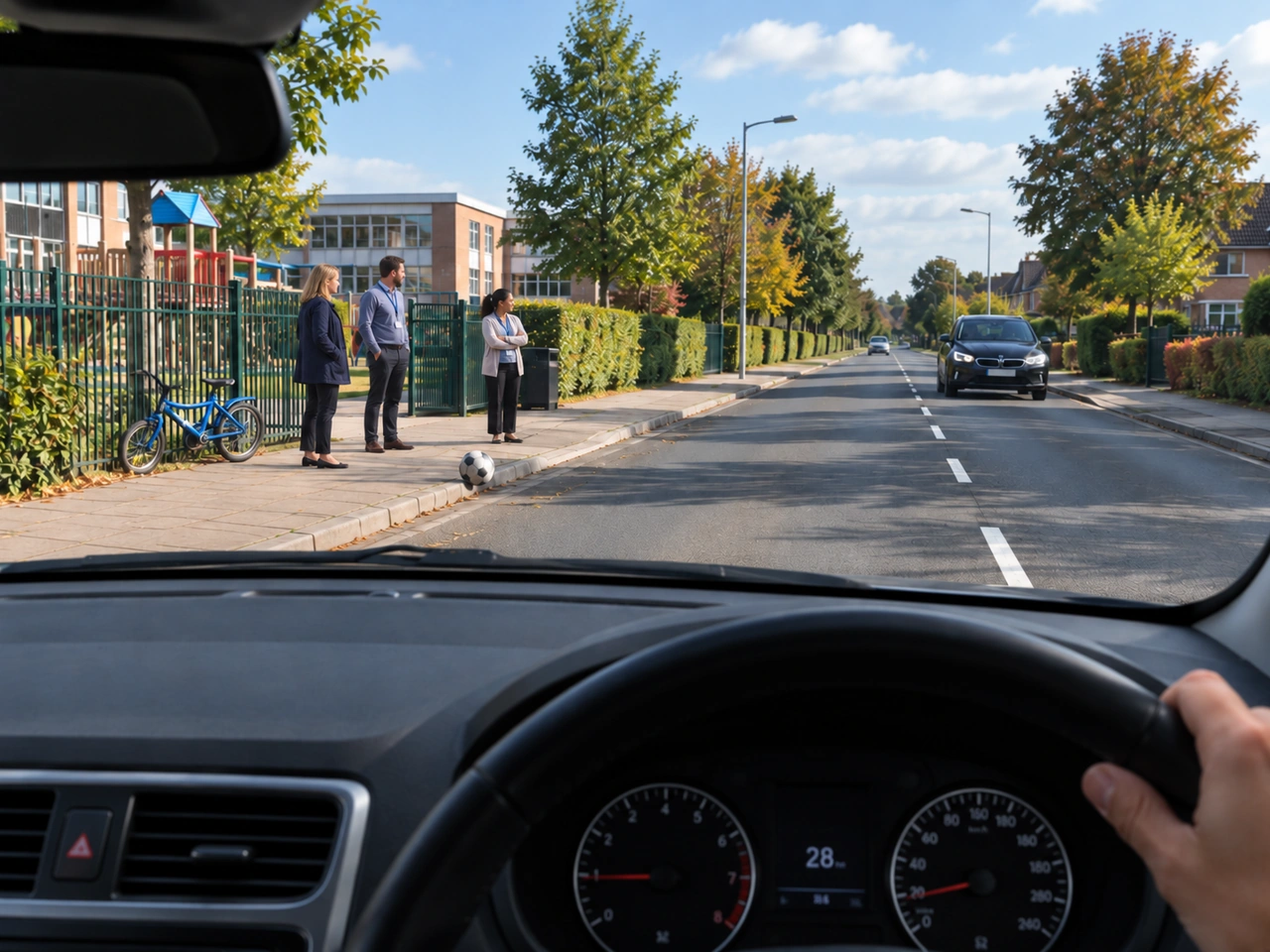
Why should you slow down near schools or playgrounds?

144. Why should you slow down near schools or playgrounds?

Vehicles must stop whenever children are nearby.
✓ Children may behave unpredictably.
Children always have priority near schools.
Children are easier to see when you drive slowly.

Children may suddenly cross the road or move unexpectedly, so drivers should slow down and stay alert near schools and playgrounds.

Vehicle approaching a school or playground area
AI-generated by Traffic-rules.com • WCIT • CC BY-SA
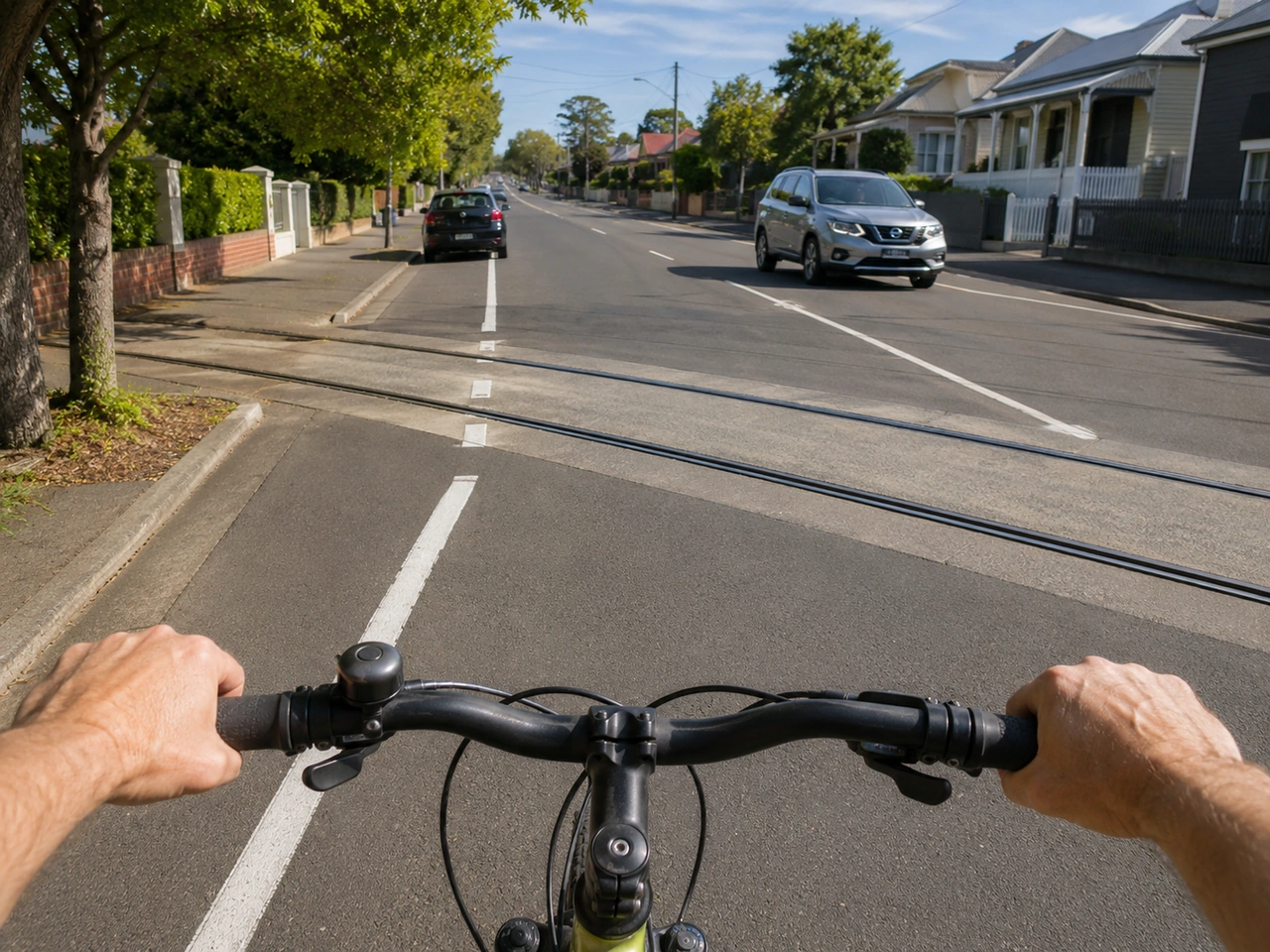
How should cyclists cross railway or tram tracks?

145. How should cyclists cross railway or tram tracks?

Keep the wheels parallel with the rails while crossing.
Brake firmly while the front wheel is on the rail.
Increase speed so the wheels cannot get caught.
✓ Cross at a safe angle, as close to perpendicular as possible.

A bicycle wheel can become trapped in a rail groove. Crossing at a wider angle reduces this risk.

Cyclist crossing rails in the road
AI-generated by Traffic-rules.com • WCIT • CC BY-SA
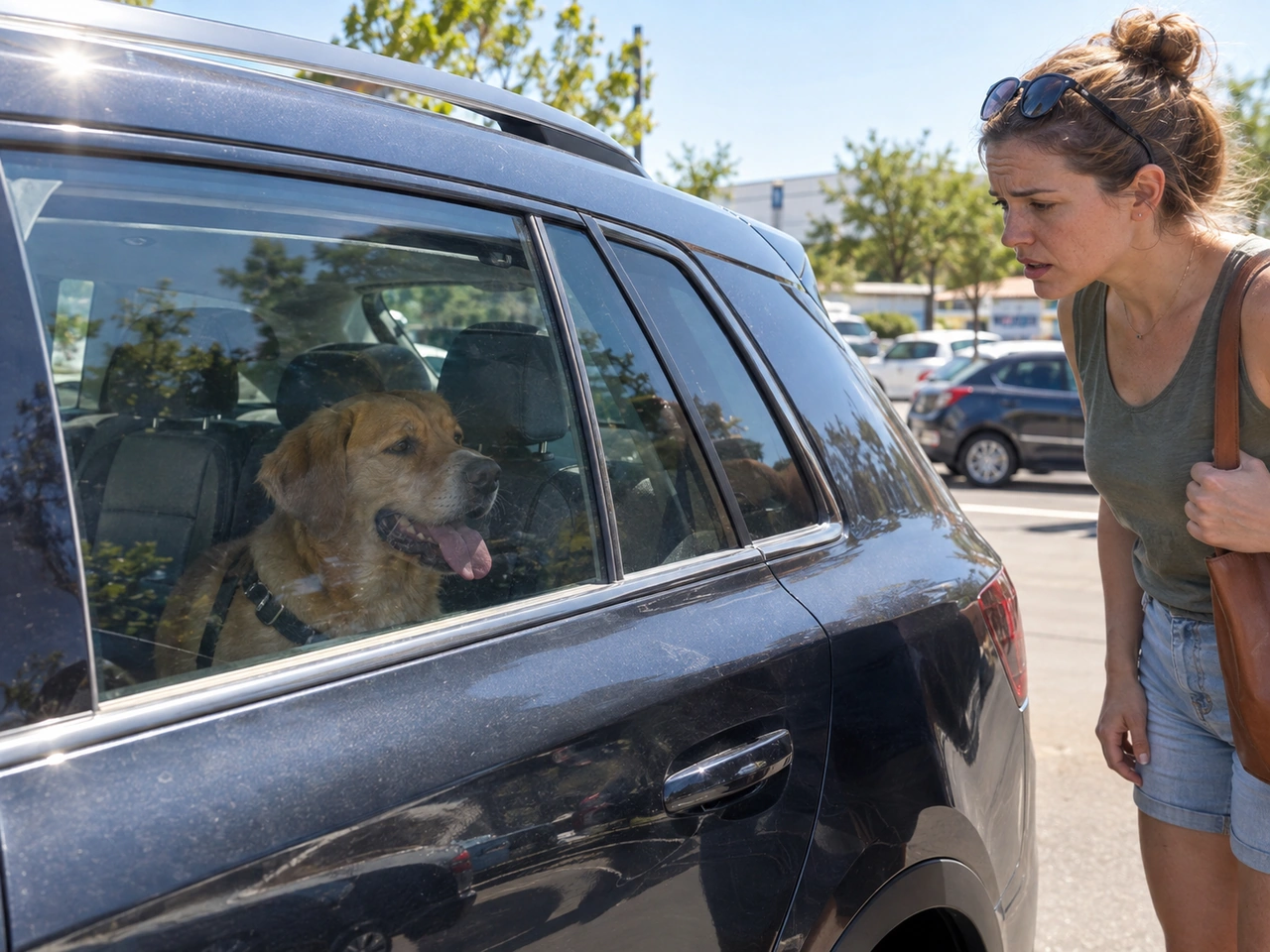
Why should you never leave a child or pet alone in a parked vehicle on a warm day?

146. Why should you never leave a child or pet alone in a parked vehicle on a warm day?

The tyres may lose pressure while the vehicle is parked.
✓ The interior can heat up quickly and cause serious heat illness.
The windows may become difficult to open.
The vehicle battery may discharge more quickly.

The inside of a parked vehicle can heat up rapidly, even when the outside temperature does not feel extreme. Children and animals are particularly vulnerable to overheating and heatstroke. Leaving a window partly open does not make the vehicle safe.

Parked vehicle and the danger of interior heat
AI-generated by Traffic-rules.com • WCIT • CC BY-SA
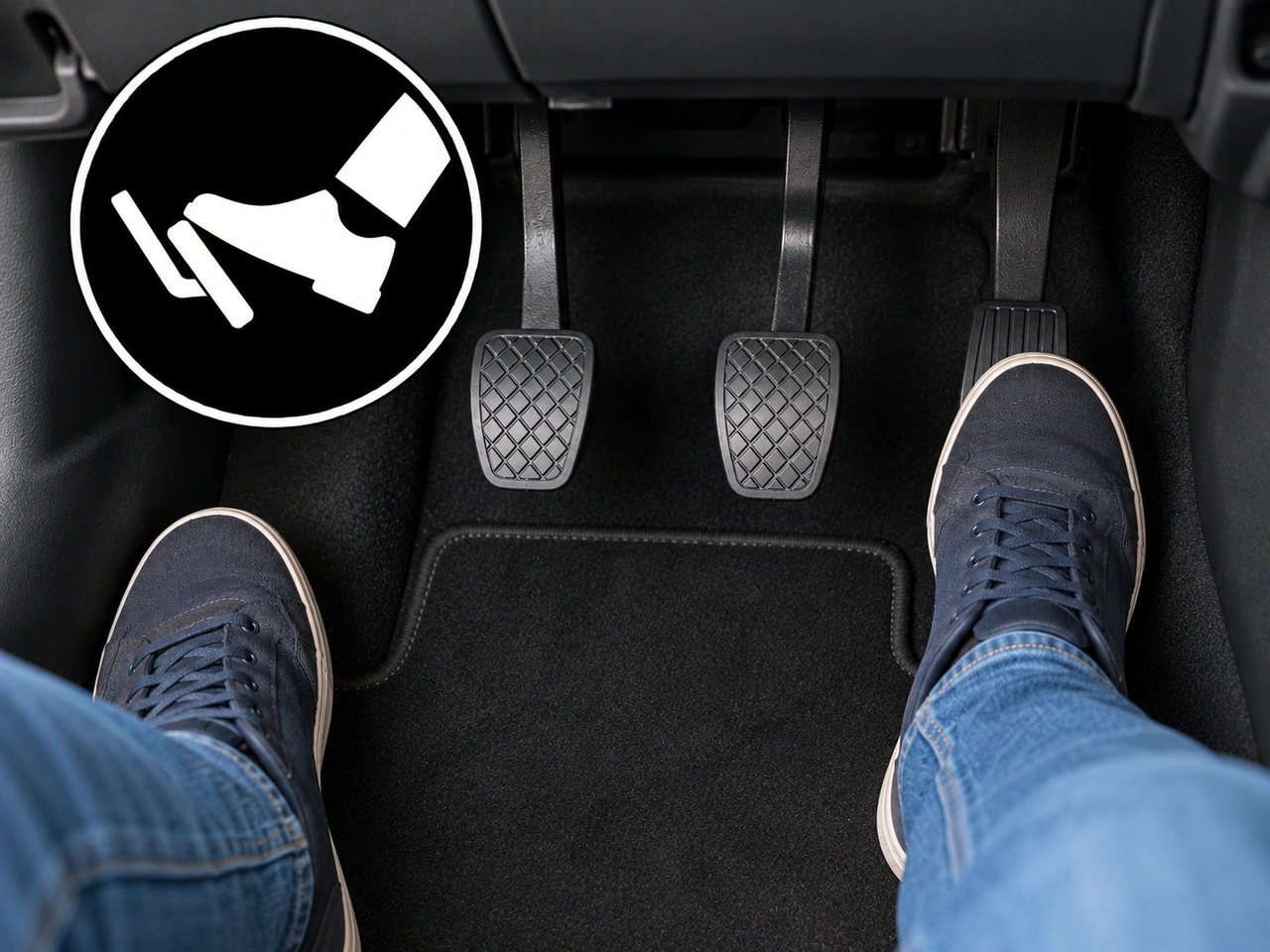
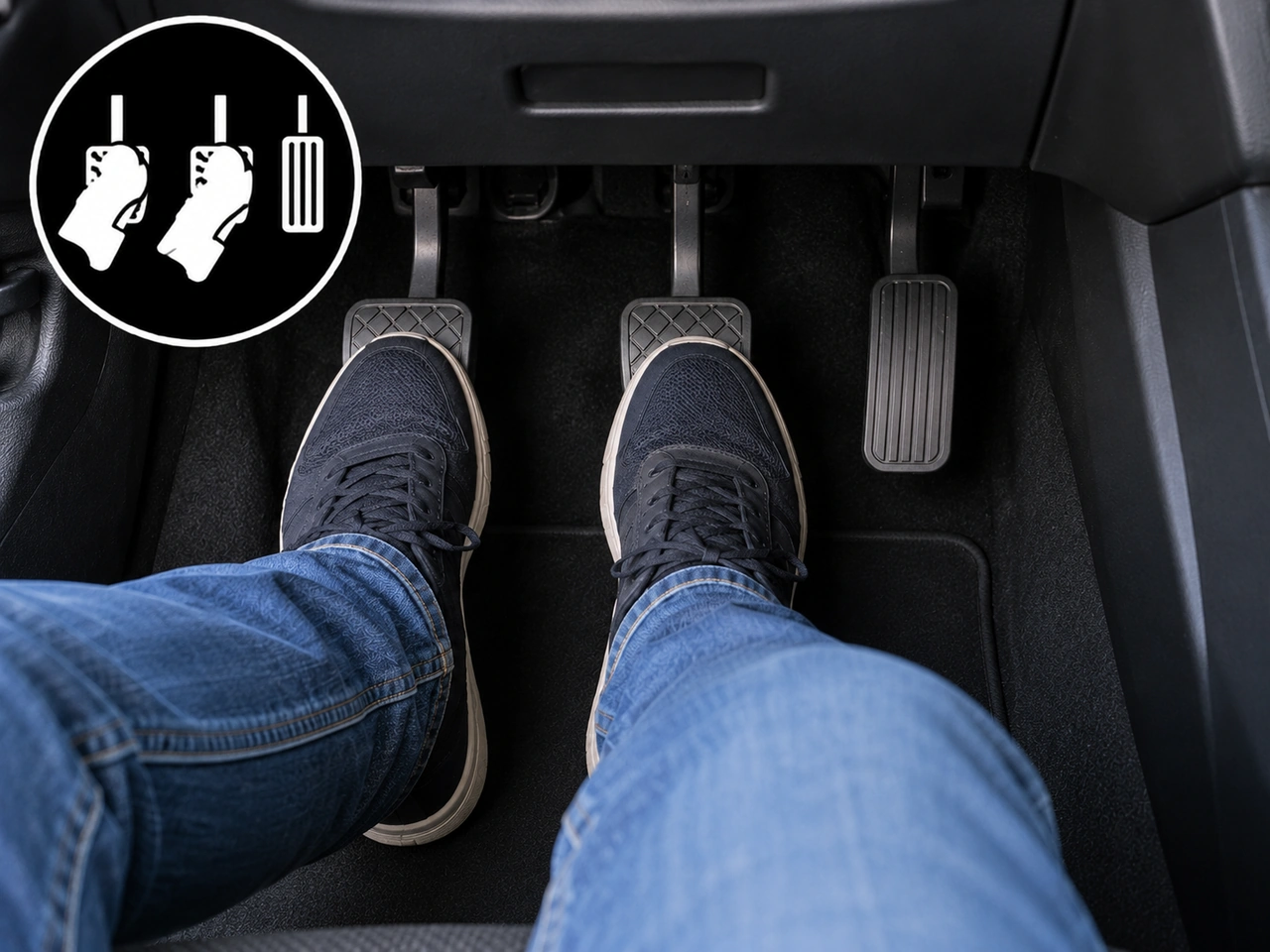
Which pedal is used to increase the vehicle's speed?

147. Which pedal is used to increase the vehicle's speed?

✓ The accelerator pedal.
The brake pedal.
The clutch pedal.
The footrest.

The accelerator pedal controls the amount of power delivered by the engine and is used to increase or maintain the vehicle's speed. It is the right-hand pedal.

Accelerator pedal in the driver's footwell
AI-generated by Traffic-rules.com • WCIT • CC BY-SA
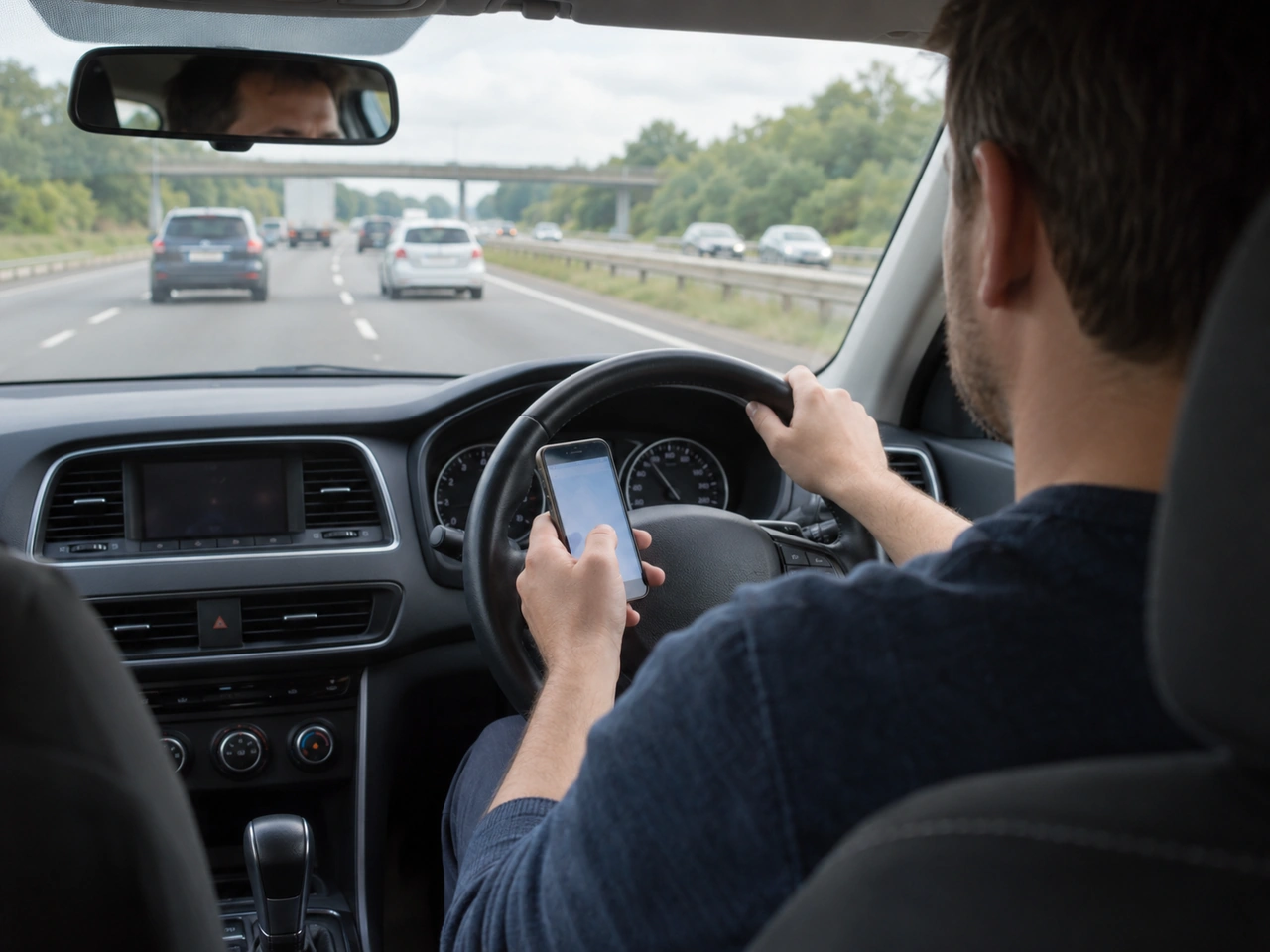
Can drivers use a handheld phone while driving in South Africa?

148. Can drivers use a handheld phone while driving in South Africa?

✓ No.
Yes.

Drivers in South Africa are generally not allowed to use a handheld phone while driving.

Driver using a handheld phone
AI-generated by Traffic-rules.com • WCIT • CC BY-SA
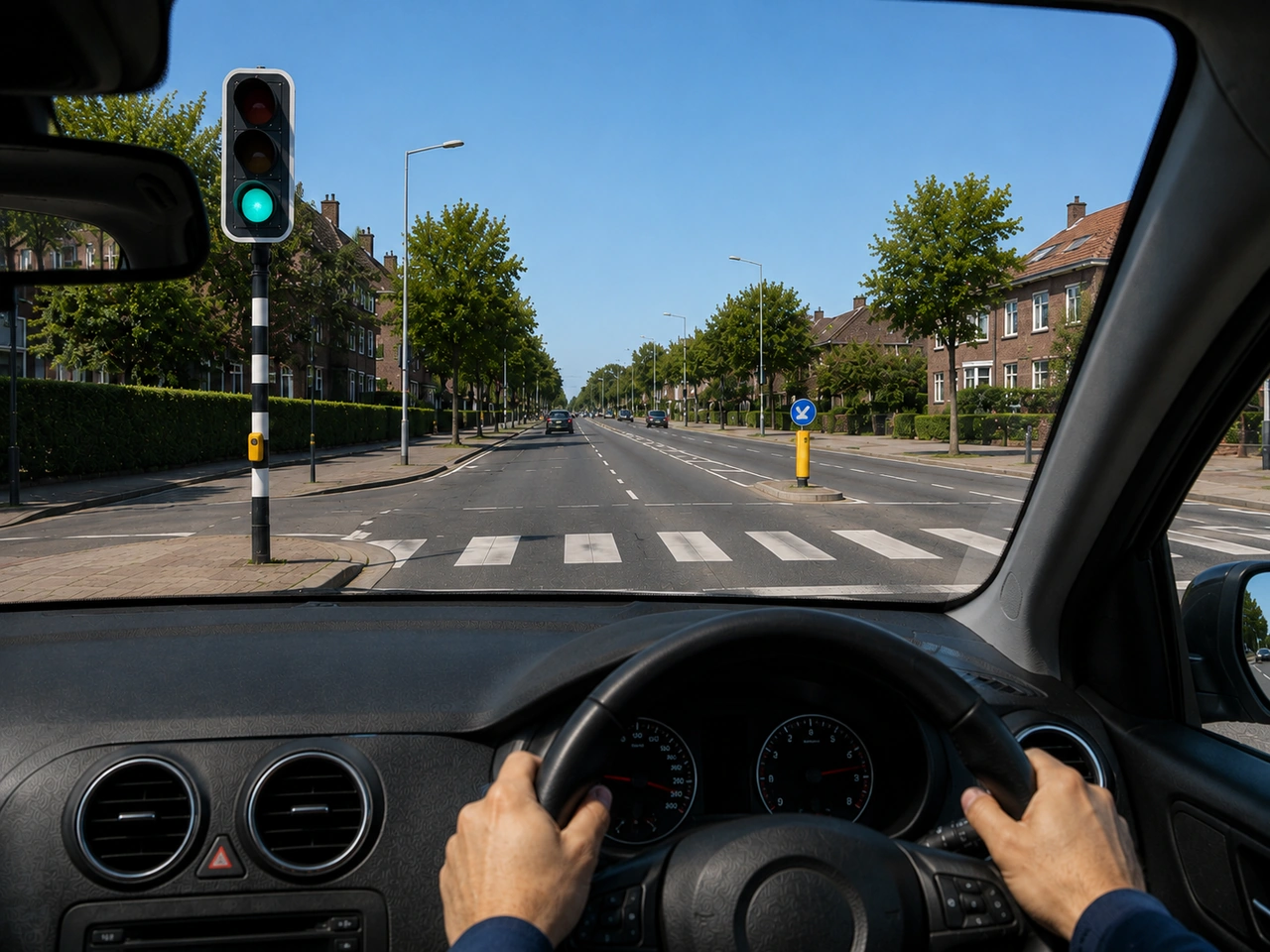
What does a green traffic light mean?

149. What does a green traffic light mean?

You have priority over all other road users.
You must proceed as soon as the light turns green.
✓ You may proceed if it is safe.
You may turn in any direction without checking the signs.

A green light allows you to continue, but you must still watch for pedestrians, cyclists, and other road users.

Green traffic light at a junction
AI-generated by Traffic-rules.com • WCIT • CC BY-SA
What should you do if traffic stops and a driver waves you across?

150. What should you do if traffic stops and a driver waves you across?

Check only the lane nearest to you.
Assume traffic in the other lanes will also stop.
✓ Check that all lanes are safe before crossing.
Cross immediately once the driver waves you through.

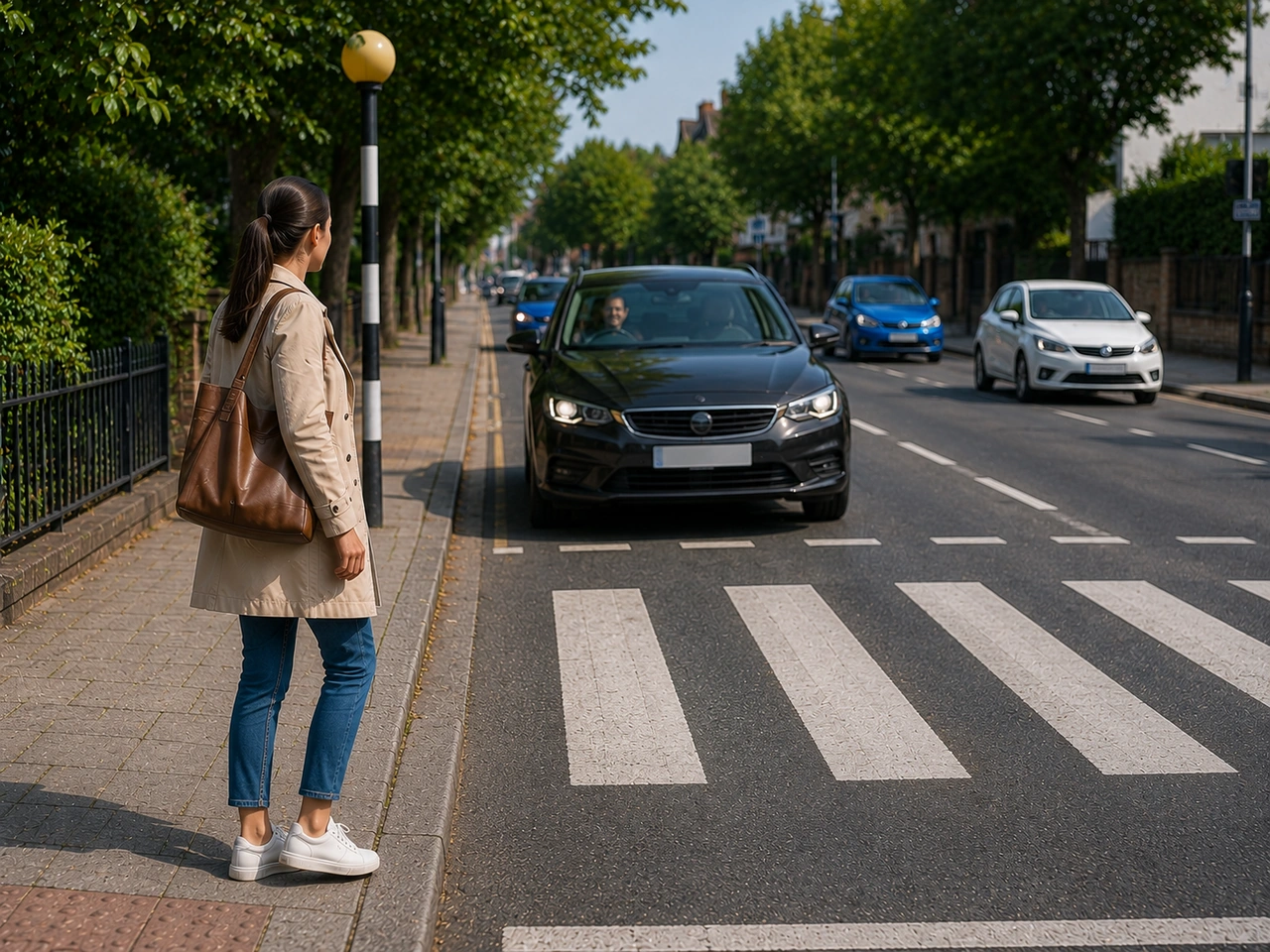
One driver may stop, but other vehicles may still be moving. Always check all lanes before crossing.

Driver waving a pedestrian across the road
AI-generated by Traffic-rules.com • WCIT • CC BY-SA