

Here you can study for the exam. Look up keywords and learn definitions about all kind of subjects.
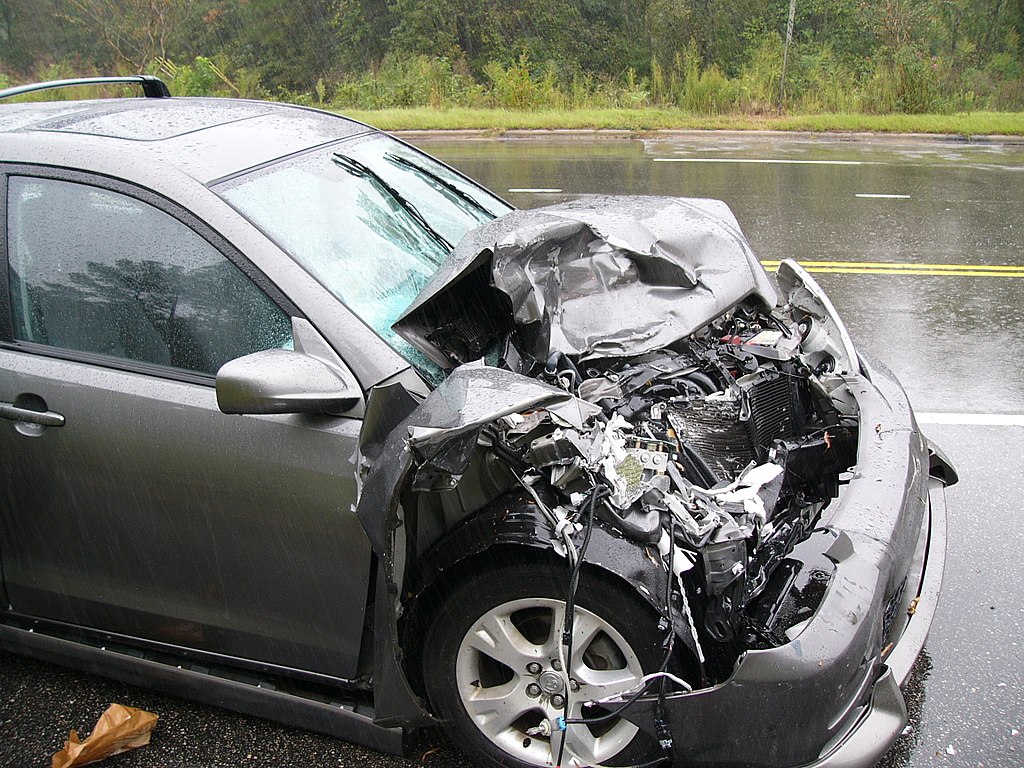
An accident is often happening quickly. What should you do if you are involved in an accident?
Alcohol and driving a vehicle are a very dangerous combination. Alcohol reduces attention, assessment and reaction capacity. A drunk driver is not only a danger to himself, but also to other road users. That is why the police often organize alcohol checks, alcohol intoxication is measurable and punishable from a certain level.
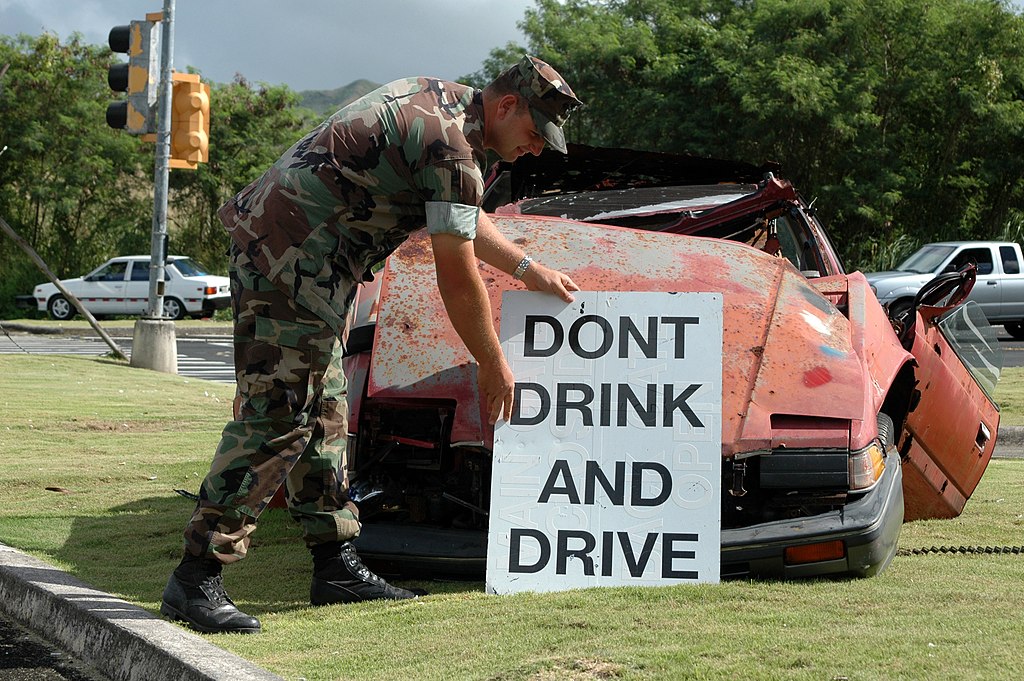 © Wikimedia.org/Nathanael T. Miller, CC0
A blind spot in a vehicle is an area around the vehicle that cannot be directly observed by the driver while at the controls, under existing circumstances. Blind spots exist in a wide range of vehicles: aircraft, cars, motorboats, sailboats, and trucks. Other types of transport have no blind spots at all, such as bicycles, horses, and motorcycles. Proper adjustment of mirrors and use of other technical solutions can eliminate or alleviate vehicle blind spots.
Braking distance refers to the distance a vehicle will travel from the point when its brakes are fully applied to when it comes to a complete stop. It is primarily affected by the original speed of the vehicle and the coefficient of friction between the tires and the road surface, and negligibly by the tires' rolling resistance and vehicle's air drag.
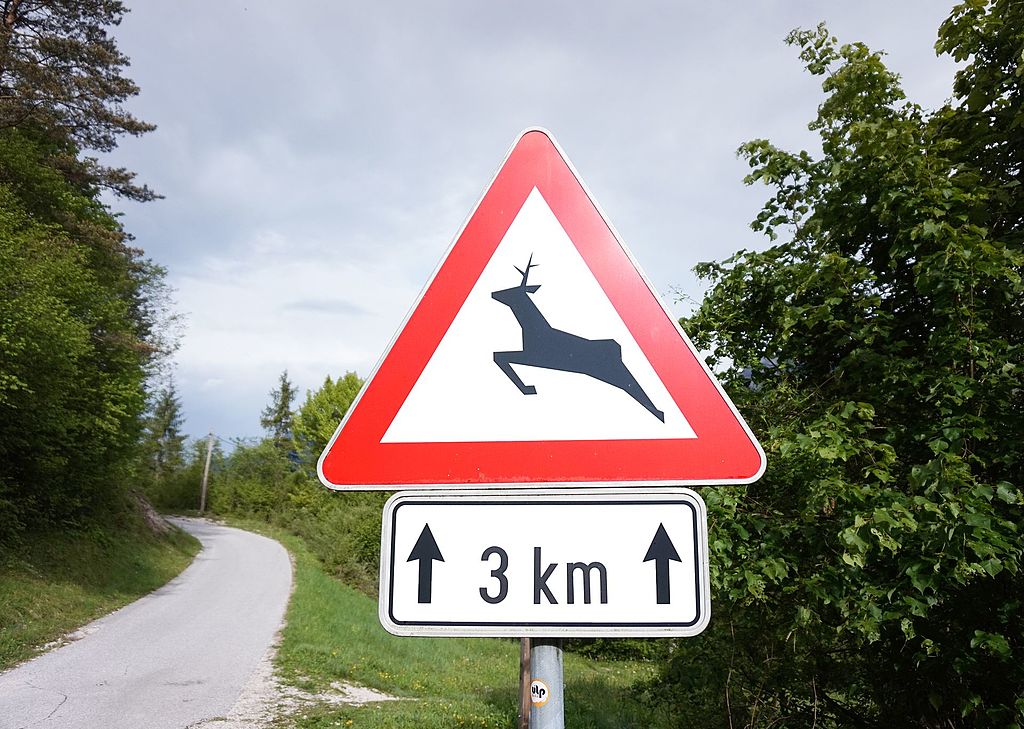
Crossing animals can cause dangerous traffic situations. In green areas it often happens that animals cross the road.
A crosswind is any wind that has a perpendicular component to the line or direction of travel. This affects the aerodynamics of many forms of transport. Moving non-parallel to the wind's direction creates a crosswind component on the object and thus increasing the apparent wind on the object; such use of cross wind travel is used to advantage by sailing craft, kiteboarding craft, power kiting, etc. On the other side, crosswind moves the path of vehicles sideways and can be a hazard.
There are many dangers on public roads, drivers have to recognize these dangers and respond in the right way. Here you will find an overview of the most common hazards.
A driver must concentrate on driving his vehicle. A driver is distracted when something pulls away his attention from the road, so he can focus less on driving his vehicle. A distracted driver is at greater risk of being involved in an accident. With the known consequences (property damage, injuries, deaths).
 © Wikimedia.org/Melissa Wenger, CC0
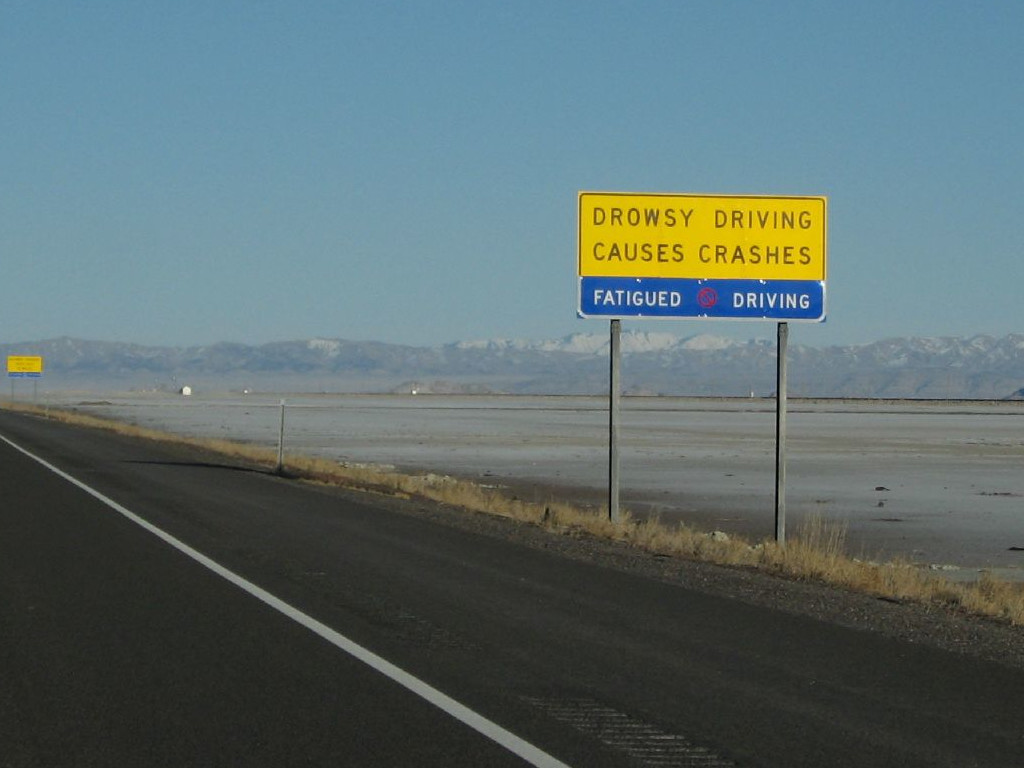
Fatigue is a feeling of tiredness. It may be sudden or gradual in onset. It is a normal phenomenon if it follows prolonged physical or mental activity, and resolves completely with rest. However, it may be a symptom of a medical condition if it is prolonged, severe, progressive, or occurs without provocation.
A driver commits a hit and run if he leaves the scene of the accident with the intention of escaping the consequences. Never commit a jit and run, there are very strict penalties!
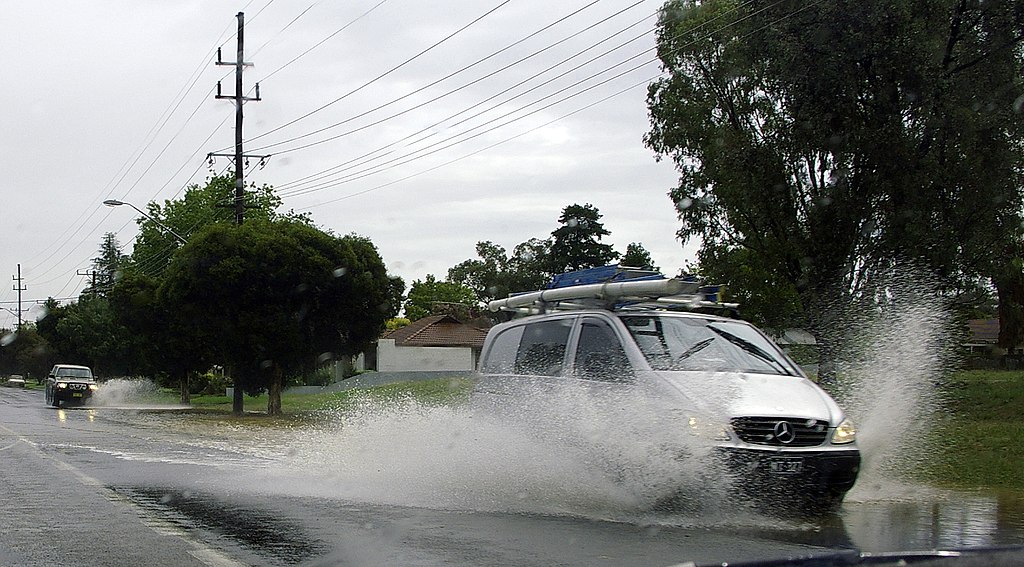
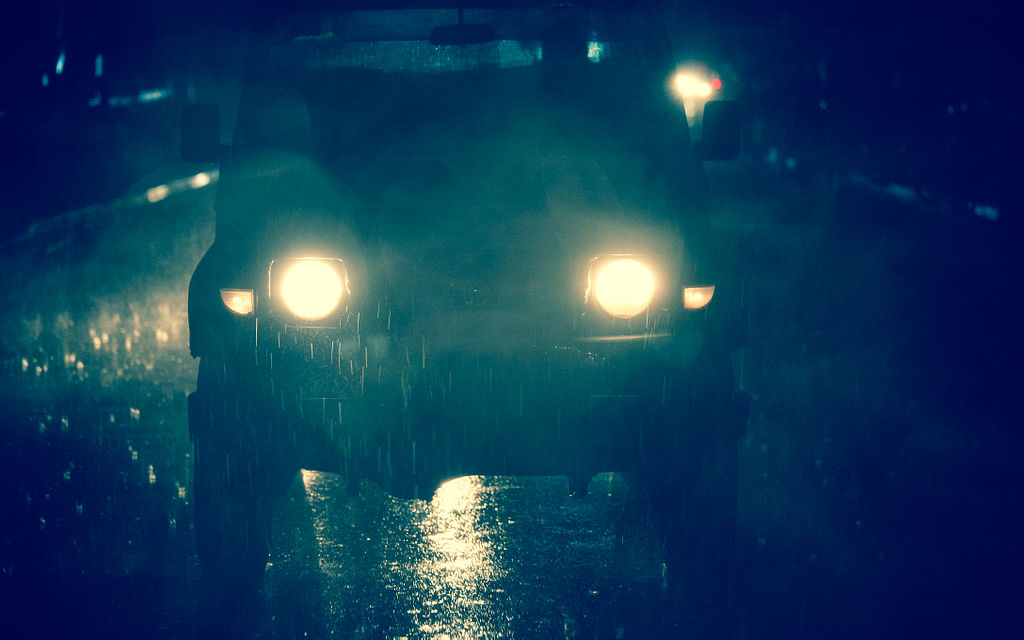
In case of rain or a wet road surface, most tires have a good grip up to about 55 km / h. If you drive faster, the tires start riding on the water like water skis. We call this 'hydroplaning', in dutch water smoothness or aquaplaning. If there is water on the road surface, the tires can completely lose their grip with the road. Bare or worn tires can lose their grip at much lower speeds. The best way to prevent hydroplaning is to reduce the speed in case of rain or a wet road surface.
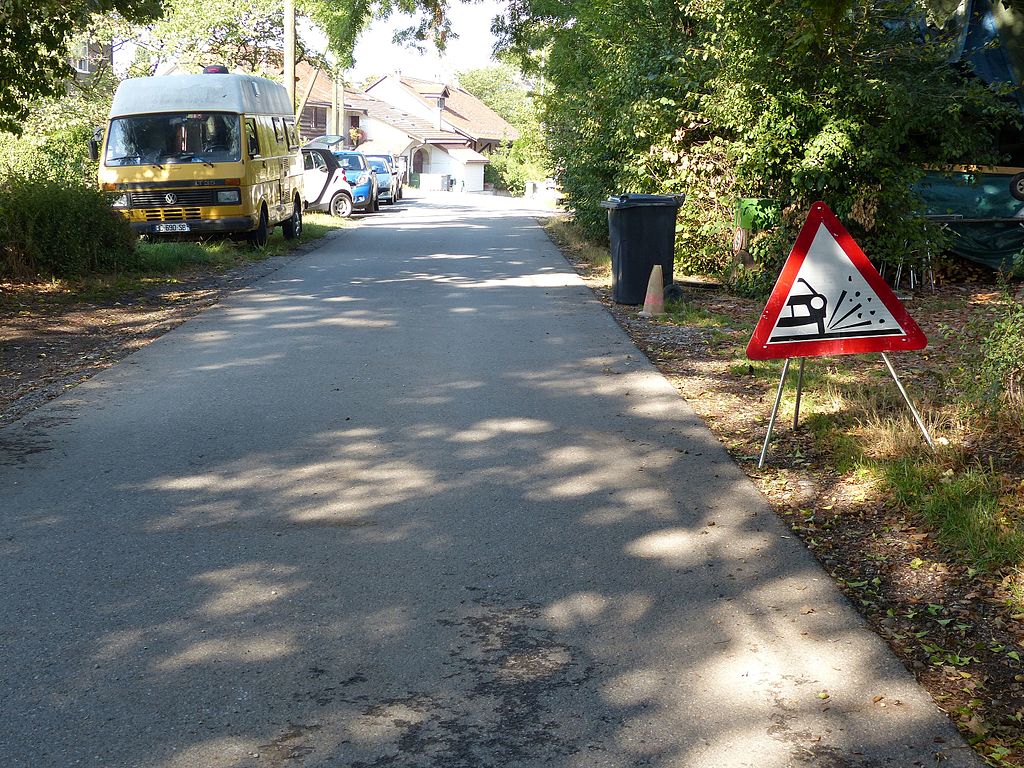
Loose chippings are loose gravel or stone fragments on a road surface and form a hazard to vehicles using that road. It may come from the road's chip seal. Excessive speed while driving through loose chippings damage both the road and vehicles. Loose chippings can reduce traction and cause loss of control. This is a special hazard to motorcyclists and bicyclists, who may lose their balance and fall if their tires start sliding. Loose chippings can be picked up by tyres and damage them, or may be spun off to become high speed missiles, which may injure or damage other persons or vehicles on the road.
Night-blindness is a condition making it difficult or impossible to see in relatively low light. It is a symptom of several eye diseases. Night blindness may exist from birth, or be caused by injury or malnutrition (for example, vitamin A deficiency). It can be described as insufficient adaptation to darkness.
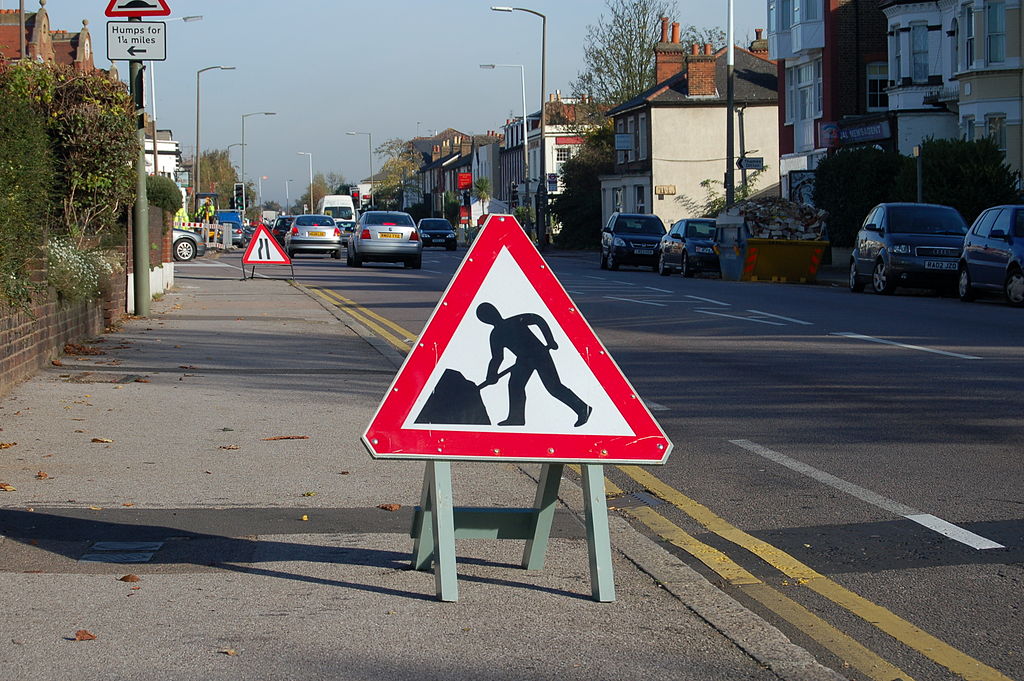
In roadworks, temporary orange colored lines are often painted on the road surface. The orange stripes then replace the white ones.
Roadrage is aggressive or angry behavior exhibited by motorists. These behaviors include rude and offensive gestures, verbal insults, physical threats or dangerous driving methods targeted toward another driver or non-drivers such as pedestrians or cyclists in an effort to intimidate or release frustration. Road rage can lead to altercations, assaults and collisions that result in serious physical injuries or even death. Strategies include long horn honks, swerving, tailgating, brake checking, and attempting to fight.
 © Wikimedia.org/DaleHulm, CC BY-SA
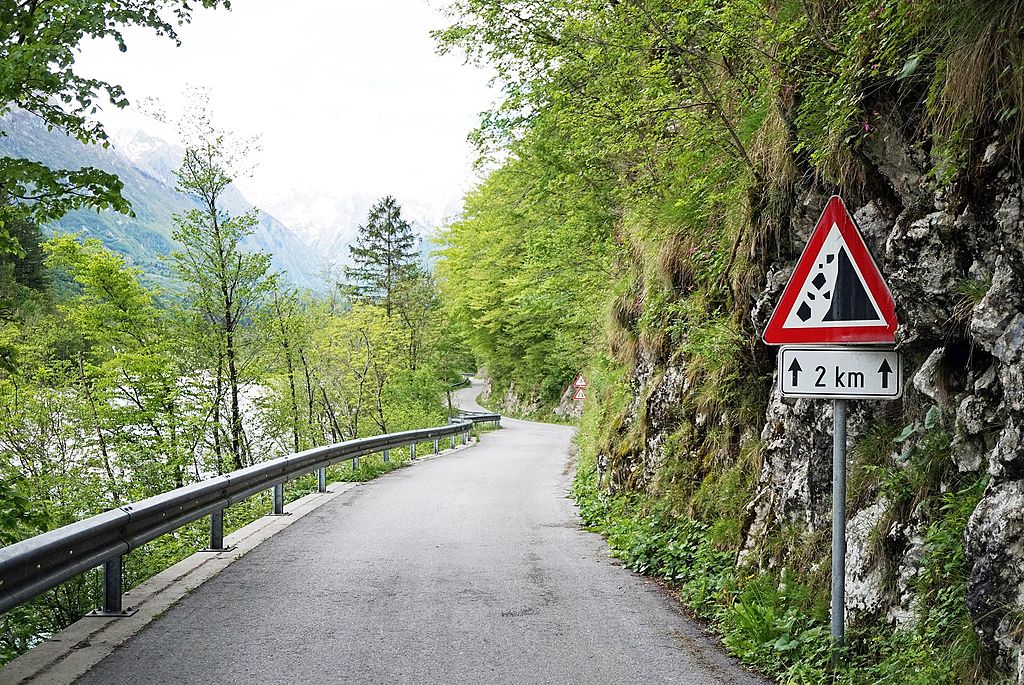
Rockfall refers to quantities of rock falling freely from a cliff face. A rockfall is a fragment of rock detached by sliding or falling, that falls along a vertical or sub-vertical cliff, proceeds down slope by bouncing and flying along ballistic trajectories or by rolling on talus or debris slopes.
Road slipperiness is a condition of low skid resistance due to insufficient road friction. It is a result of snow, ice, water, loose material and the texture of the road surface on the traction produced by the wheels of a vehicle. Road slipperiness can be measured either in terms of the friction between a freely-spinning wheel and the ground, or the braking distance of a braking vehicle, and is related to the coefficient of friction between the tyre and the road surface.
Tailgating is when a driver drives behind another vehicle while not leaving sufficient distance to stop without causing a collision if the vehicle in front stops suddenly. The safe distance for following another vehicle varies depending on various factors including vehicle speed, weather, visibility and other road conditions. Some jurisdictions may require a minimal gap of a specified distance or time interval.
Traffic congestion is a condition on transport that is characterised by slower speeds, longer trip times, and increased vehicular queueing. Traffic congestion on urban road networks has become increasingly problematic since the 1950s. When traffic demand is great enough that the interaction between vehicles slows the speed of the traffic stream, this results in some congestion. As demand approaches the capacity of a road, extreme traffic congestion sets in. When vehicles are fully stopped for periods of time, this is known as a traffic jam. Traffic congestion can lead to drivers becoming frustrated and engaging in road rage.
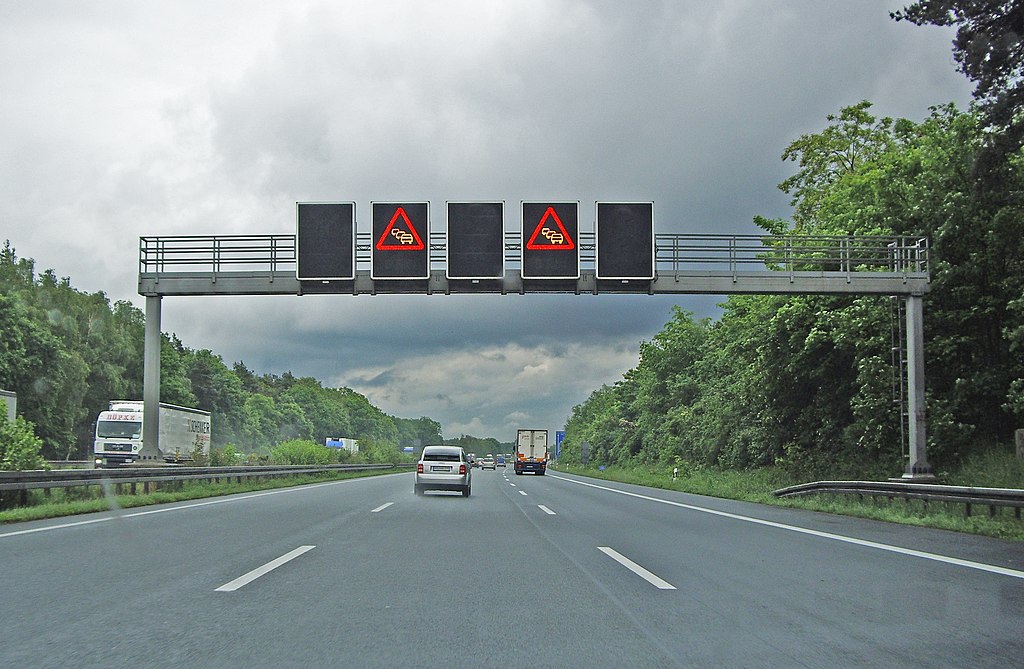 © Wikimedia.org/Flor!an, CC BY
Reduce your speed in rain, snow and sleet. The road surface is much smoother in bad weather conditions, so the tires have less grip. In case of a wet road surface it is best to reduce your speed by about 15 km / h. With snow you can best halve your speed. Use snow tires or snow chains when there is snow on the road. On ice you have to drive very carefully, because a vehicle is not controllable on ice. It is therefore very dangerous to drive on ice.
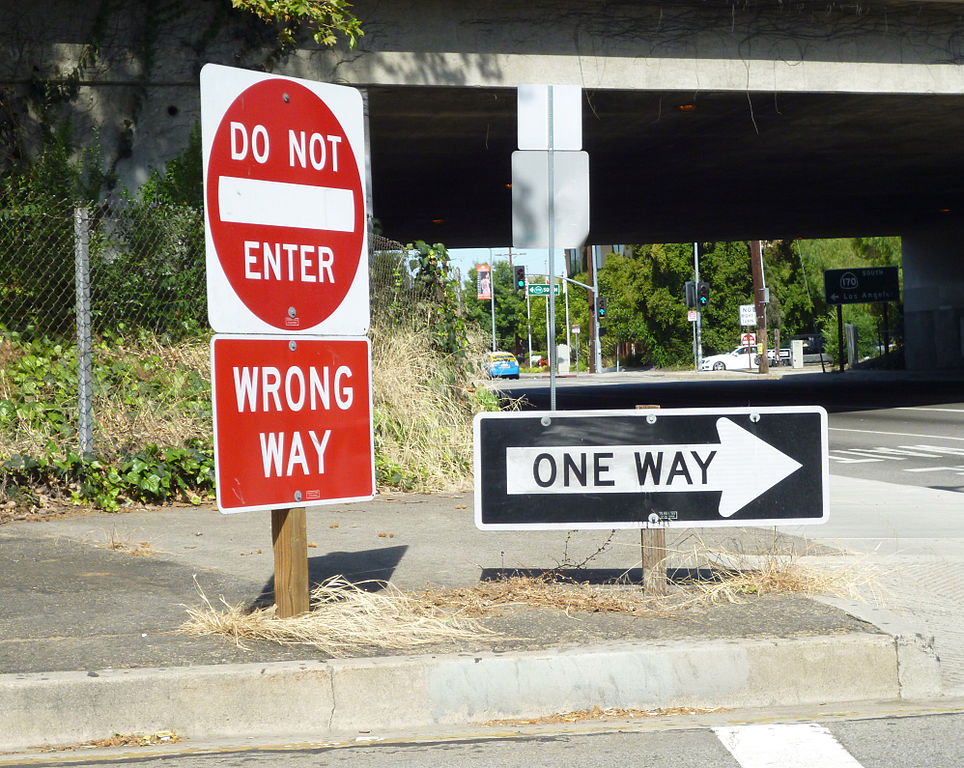
Wrong-way driving is the act of driving a motor vehicle against the direction of traffic. It can occur on either one- or two-way roads, as well as in parking lots and parking garages, and may be due to driver inattention or impairment, or because of insufficient or confusing road markings or signage, or a driver from a right-hand traffic country being unaccustomed to driving in a left-hand traffic country. People intentionally drive in the wrong direction because they missed an exit, for thrill-seeking, or as a shortcut.

Help us promote traffic rules on the internet, together we can make the public road safer for everyone. Post a comment or share on social media!

look at the sign on the road to avoid accidents and horrible driving conditions
 -3
-3


I received a 300$ ticket because I passed a police control of other cars/drivers on the right lane of a highway (the control was on the hard shoulder of the highway). Is it really true, that you have to change the lane in such cases? Thanks!

I am an American living in Italy. The Italian Drivers License theory test is the hardest test I have ever studied for and I am in my 70s have multiple degrees, multiple professional certifications. Have to take the Italian Drivers Theory test in Italian. No english. So many rules. More signs in small medieval Italian town I live in then in major US cities I have lived in. No Italian license no driving. No buying or renting a car. Test here was good, clean. Lots of tricky questions on many practice and real official tests. Thanks

Most problems are a result of higher than safe driving speeds. Please just slow down and be patient.

Question 121: Poor translation: Vehicles with polluted fluids prohibited Should be translated as: Vehicles with dangerous liquids prohibited

Question 83: Poor translation: Vehicles with polluted fluids prohibited Should be translated as: Vehicles with dangerous liquids prohibited
0

Want even more practice? Visit similar websites offering realistic practice driving knowledge tests. Visit us to see what sets our tests apart! https://dkttest.com/capital-territory/
Cool tool! And fun to check whether I remember the rules :) Two things I noticed: Warning for a crossroad side roads on the left and right. While technically that might be the correct translation, this sign tells you, that you are on the main road and have the right of way for the next crossroad and only the next crossroad. Usually (if no sign specifies otherwise) you have to give way to drivers coming from the right at every intersection, which can get a bit annoying in communal areas, so seeing this sign feels less like a warning and more like relief :). A Fahrradstraße is not a lane for cyclists but a street for cyclists, meaning the (whole!) street is intended predominantly for cyclists, who are then allowed to ride next to each other. Cars are allowed to drive there (unless another sign prohibits such), but have to adjust their speed to the cyclists. I believe they are not allowed to pass at all, even if the oncoming lane is empty.









 Nov 21, 2024














More community