

Here you can study for the exam. Look up keywords and learn definitions about all kind of subjects.
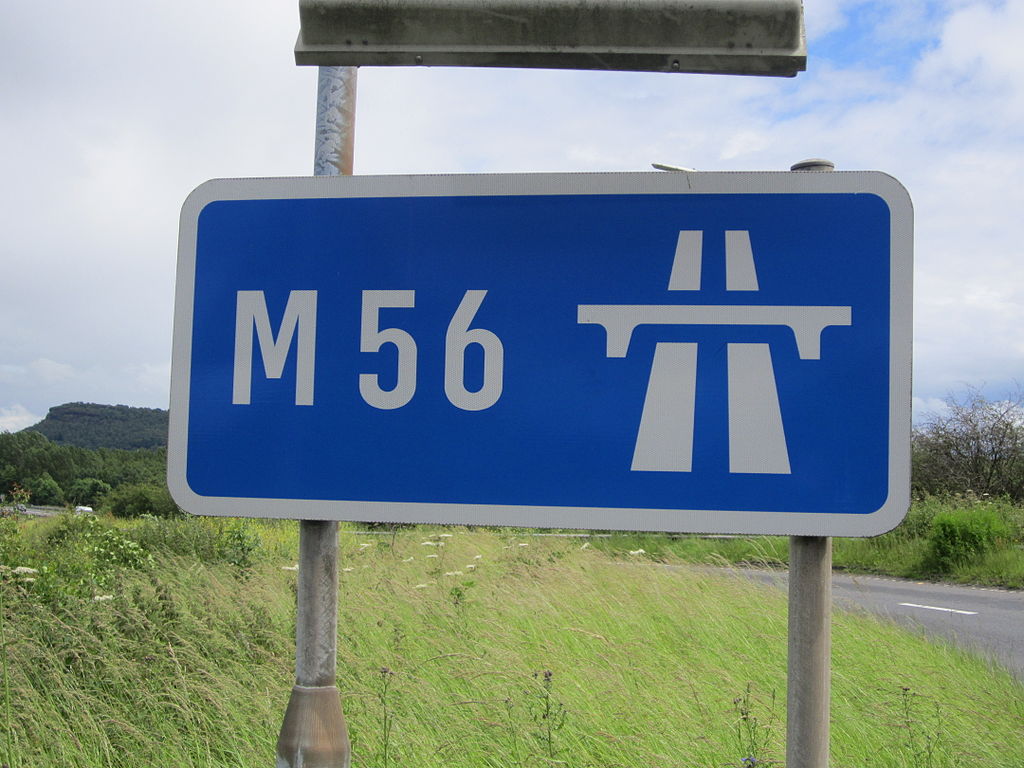
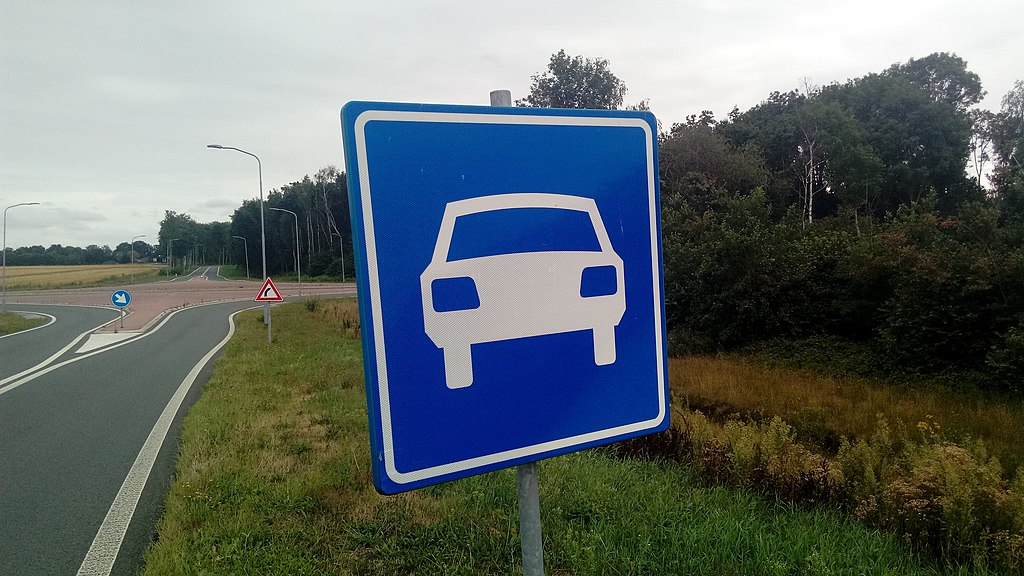
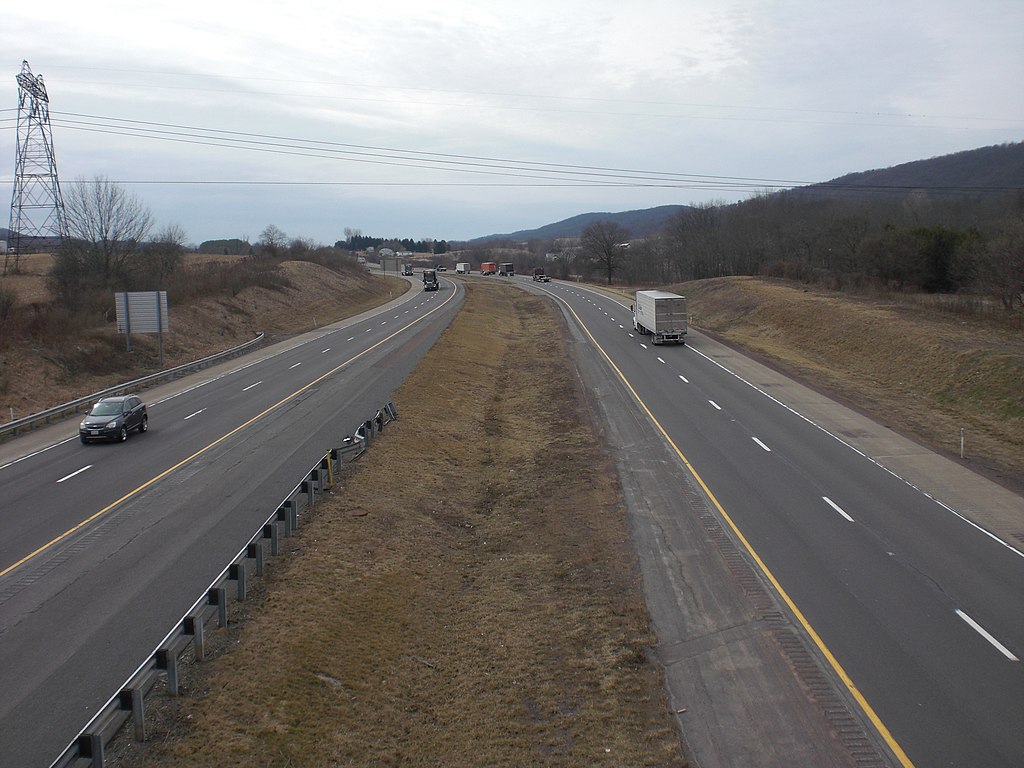
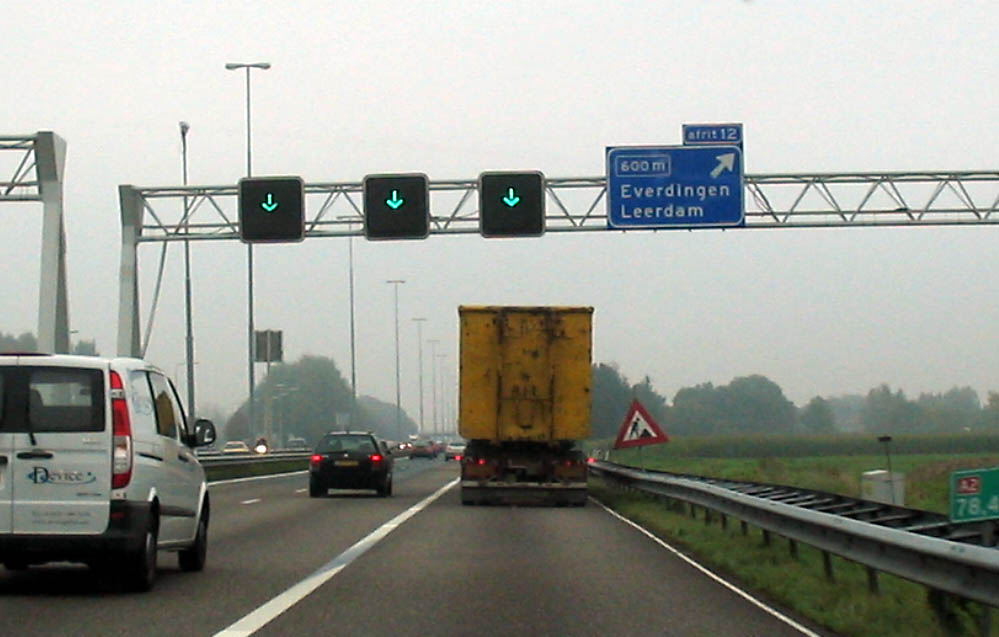
A motorway is a public road intended for the traffic of fast vehicles, such as cars, motorbikes, trucks and buses. On a motorway there is a central reservation between the two directions and there are no traffic lights or intersections.
A bike box, advanced stop line or stop box is a road marking at road junctions allowing certain types of vehicle a head start when the traffic signal changes from red to green. Bike boxes are implemented widely in Belgium, Denmark, United Kingdom and other European countries.
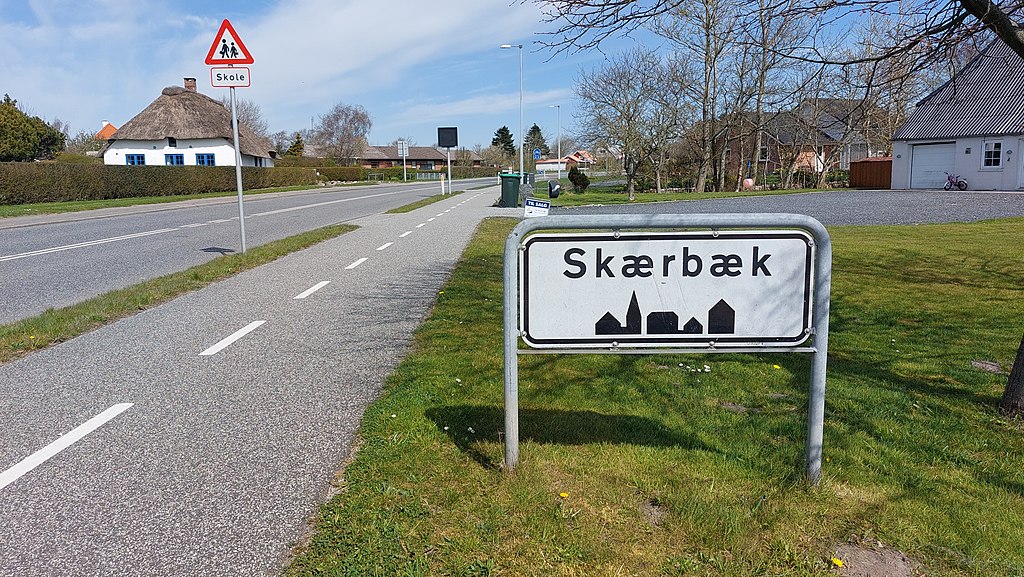
The built-up area is an area designated by the government where there is a lot of construction. Because of the higher population density, drivers have to take extra account of other road users. Pay extra attention in the vicinity of crossings, schools and parks.
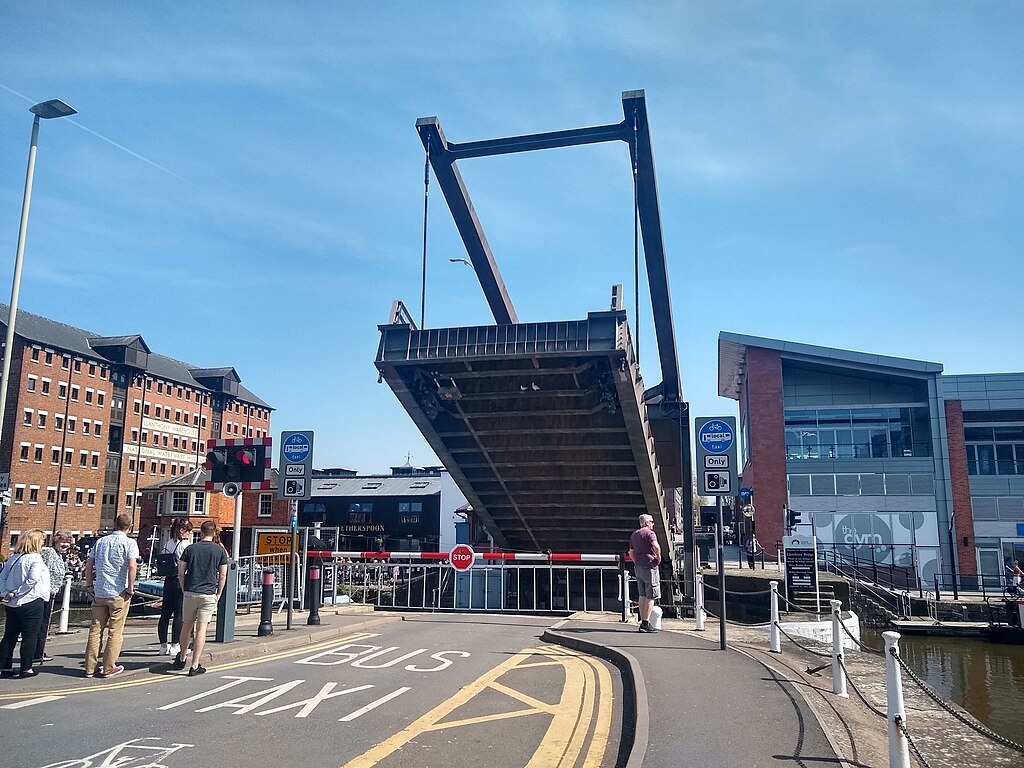
A bridge is a fixed or movable connection for traffic, between two points that are separated by a river, canal, canyon, valley, road, railroad or another obstacle.
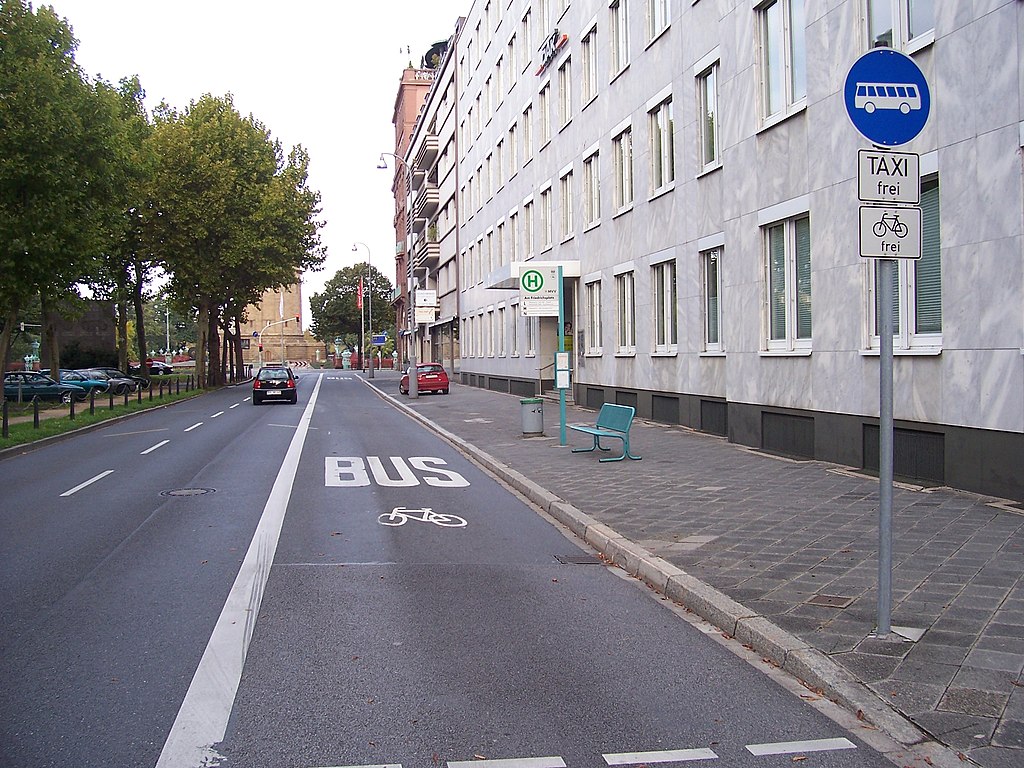
A bus lane or bus-only lane is a lane restricted to buses, often on certain days and times, and generally used to speed up public transport that would be otherwise held up by traffic congestion. Bus lanes are a key component of a high-quality bus rapid transit (BRT) network, improving bus travel speeds and reliability by reducing delay caused by other traffic.
A charging station is an element in an infrastructure that supplies electric energy for the recharging of plug-in electric vehicles—including electric cars, neighborhood electric vehicles and plug-in hybrids. For charging at home or work, some electric vehicles have converters on board that can plug into a standard electrical outlet or a high-capacity appliance outlet.
Customs is an authority or agency in a country responsible for collecting tariffs and for controlling the flow of goods, including animals, transports, personal, and hazardous items, into and out of a country. The movement of people into and out of a country is normally monitored by migration authorities, under a variety of names and arrangements. Immigration authorities normally check for appropriate documentation, verify that a person is entitled to enter the country, apprehend people wanted by domestic or international arrest warrants, and impede the entry of people deemed dangerous to the country.
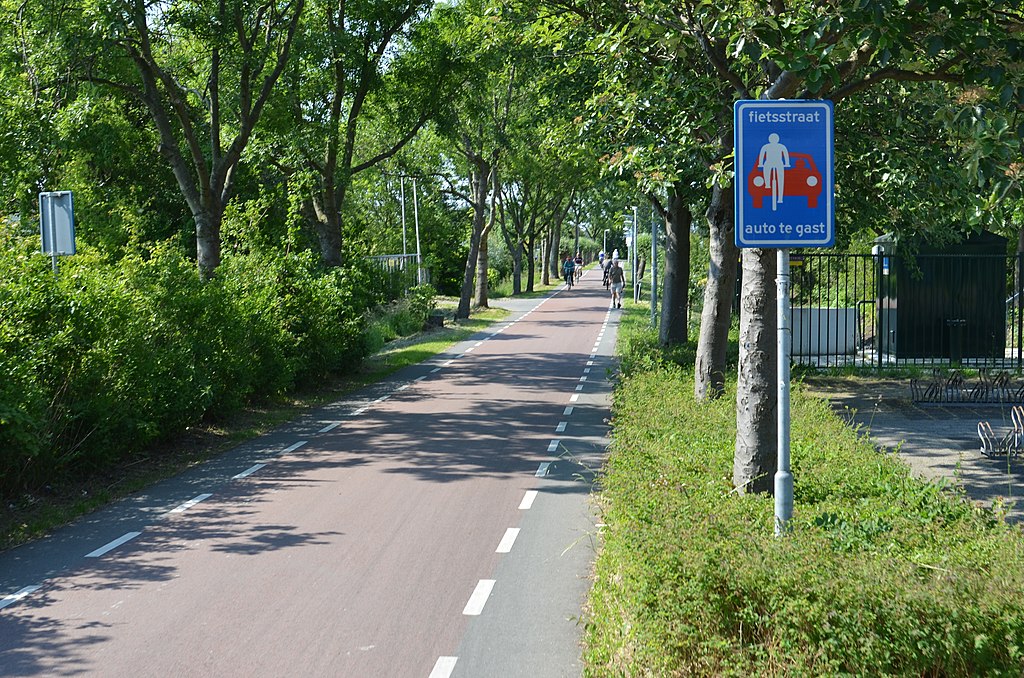
A bicycle street is a street in which the cyclists are the most important road users. Motor vehicles are allowed, but cars are not allowed to overtake cyclists.
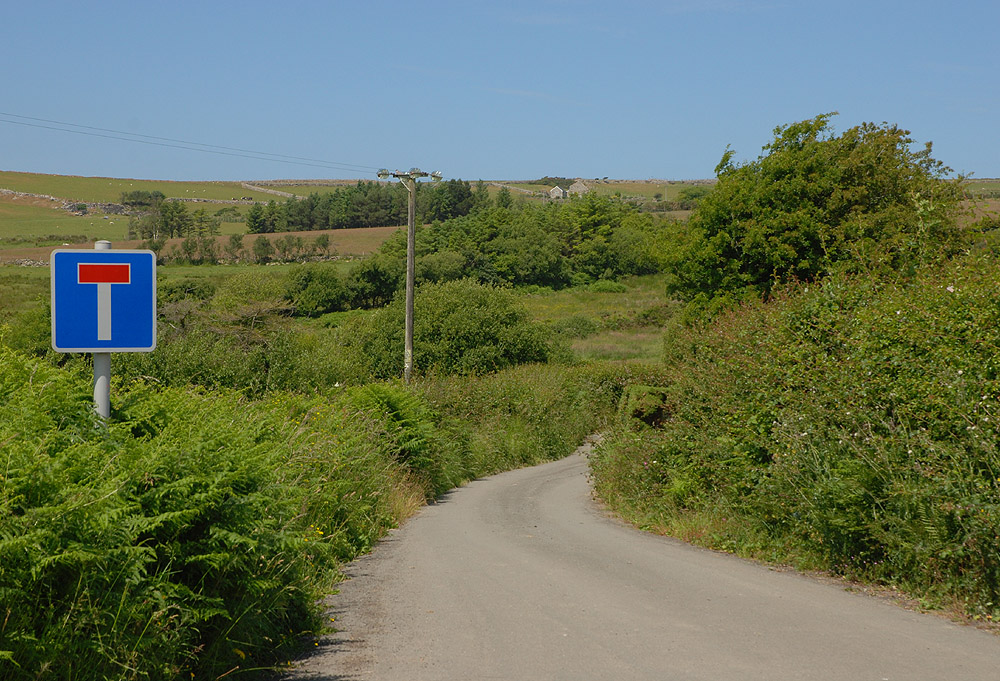
A dead end, also known as a cul-de-sac, no through road or no exit road, is a street with only one inlet or outlet. Dead ends are created in urban planning to limit through-traffic in residential areas. While some dead ends provide no possible passage except in and out of their road entry, others allow cyclists, pedestrians or other non-automotive traffic to pass through connecting easements or paths.
A shoulder is an emergency stopping lane by the verge of a road or motorway. The purpose of building a shoulder is that in the event of an emergency or breakdown, a motorist can pull into the shoulder to get out of the flow of traffic and obtain a greater degree of safety.
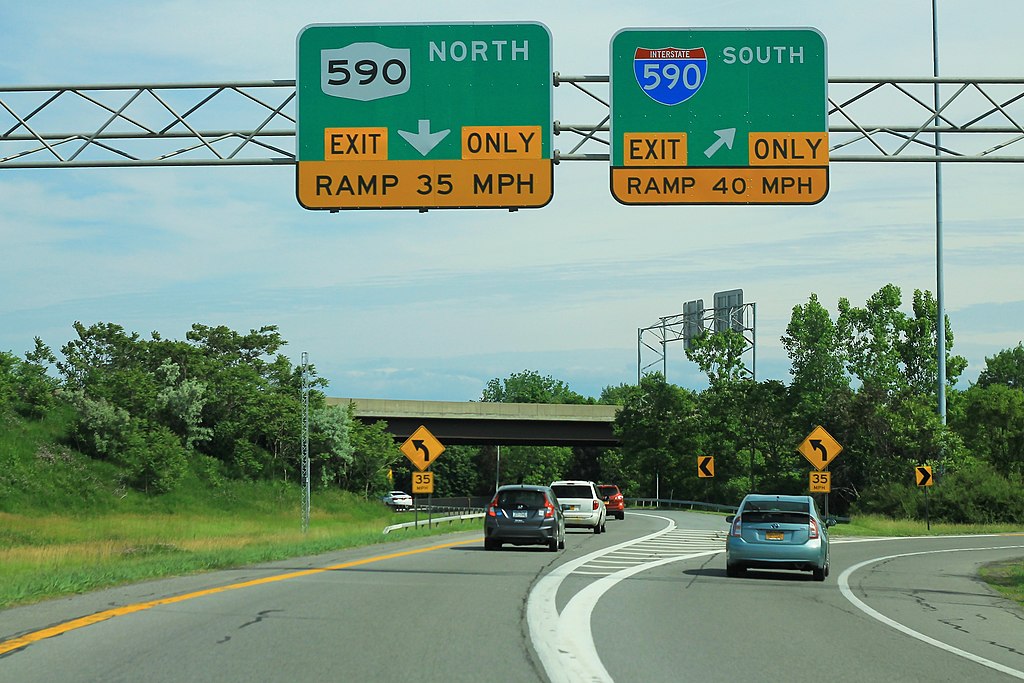
High-speed roads generally have an exit / exit lane to give you time to reduce speed.
An expressway is a public road, similar to a motorway but often with intersections and traffic lights.
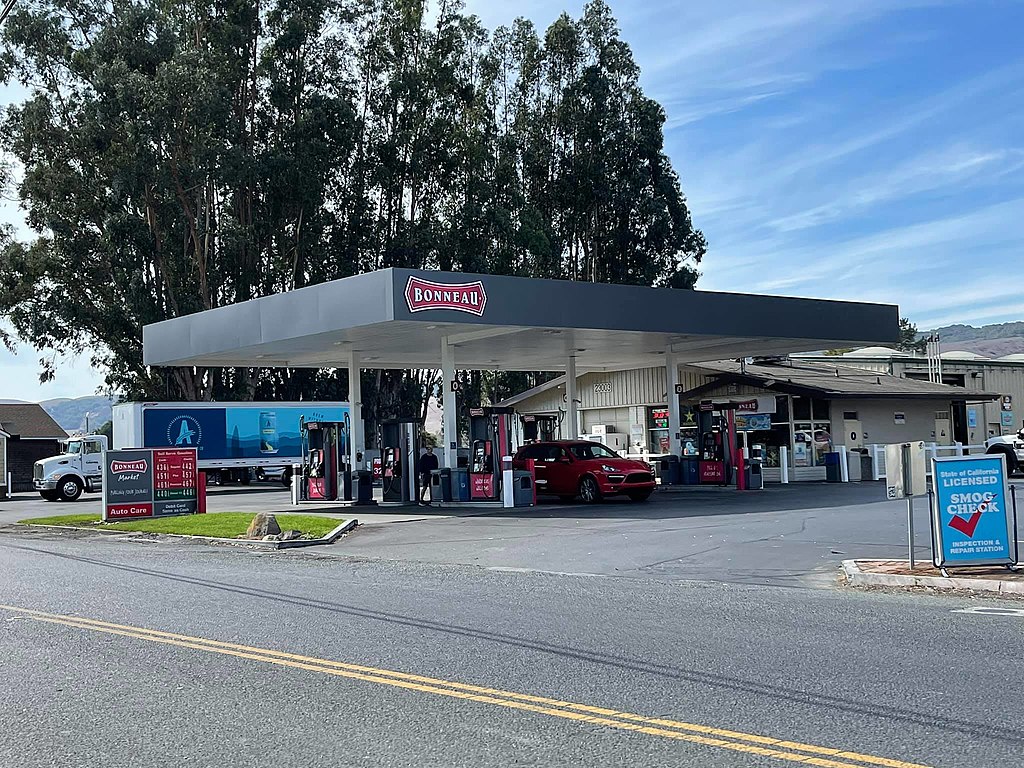
A filling station is a facility that sells fuel and engine lubricants for motor vehicles. The most common fuels sold in the 2010s are gasoline (gasoline or gas in the United States and Canada, generally petrol elsewhere) and diesel fuel. A filling station that sells only electric energy is also known as a charging station.
A lane is part of a roadway that is designated to be used by a single line of vehicles, to control and guide drivers and reduce traffic conflicts. Most public roads have at least two lanes, one for traffic in each direction, separated by lane markings. On multilane roadways and busier two-lane roads, lanes are designated with road surface markings. Major highways often have two multi-lane roadways separated by a median.
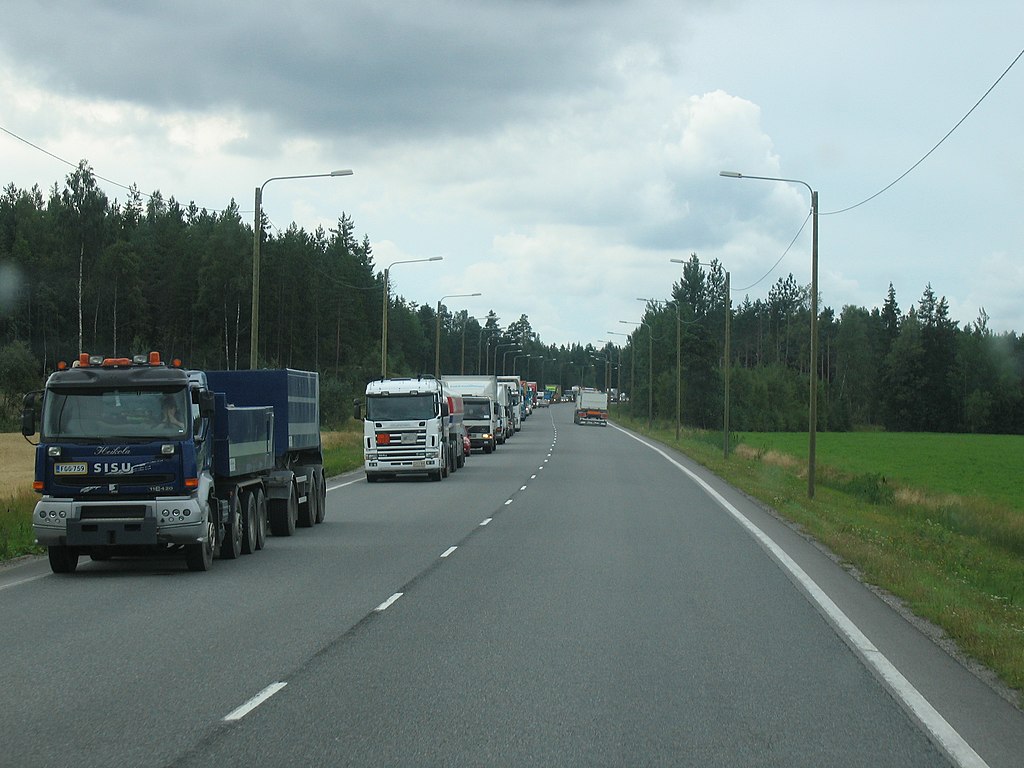 © Wikimedia.org/Teppo Lainio, CC BY-SA
Left-hand traffic (LHT) and right-hand traffic (RHT) are the practice, in bidirectional traffic, of keeping to the left side or to the right side of the road, respectively. A fundamental element to traffic flow, it is sometimes referred to as the rule of the road.
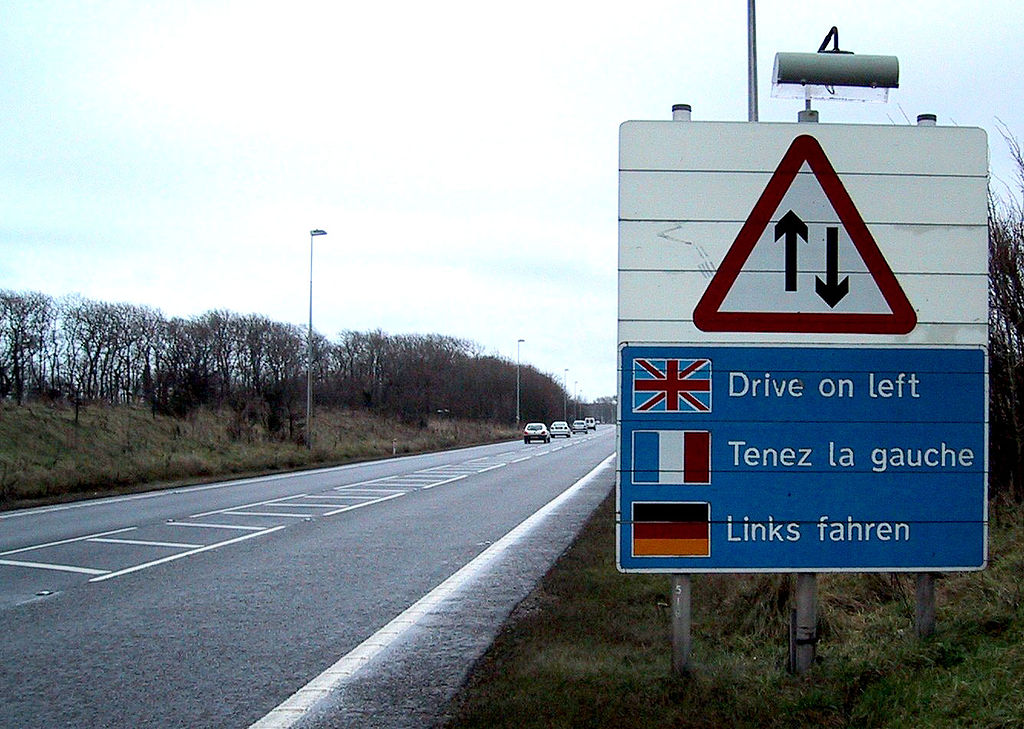 © Wikimedia.org/NFH, CC0
The median strip or central reservation is the reserved area that separates opposing lanes of traffic on divided roadways, such as divided highways, dual carriageways, freeways, and motorways. The term also applies to divided roadways other than highways, such as some major streets in urban or suburban areas. The reserved area may simply be paved, but commonly it is adapted to other functions.
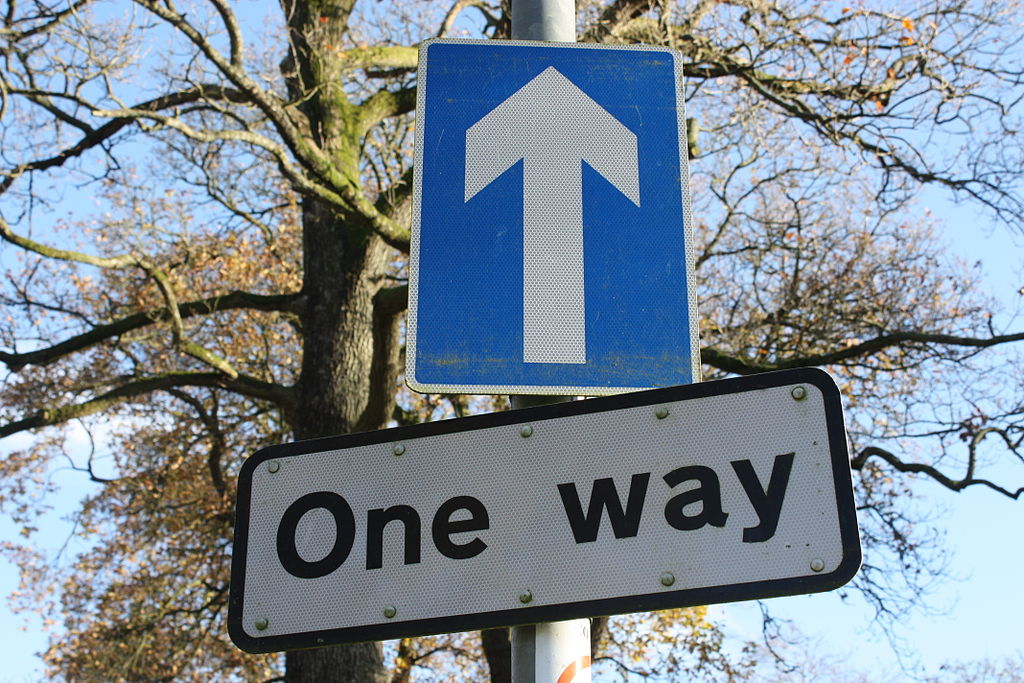
One-way traffic is traffic that moves in a single direction. A one-way street is a street either facilitating only one-way traffic, or designed to direct vehicles to move in one direction. One-way streets typically result in higher traffic flow as drivers may avoid encountering oncoming traffic or turns through oncoming traffic.
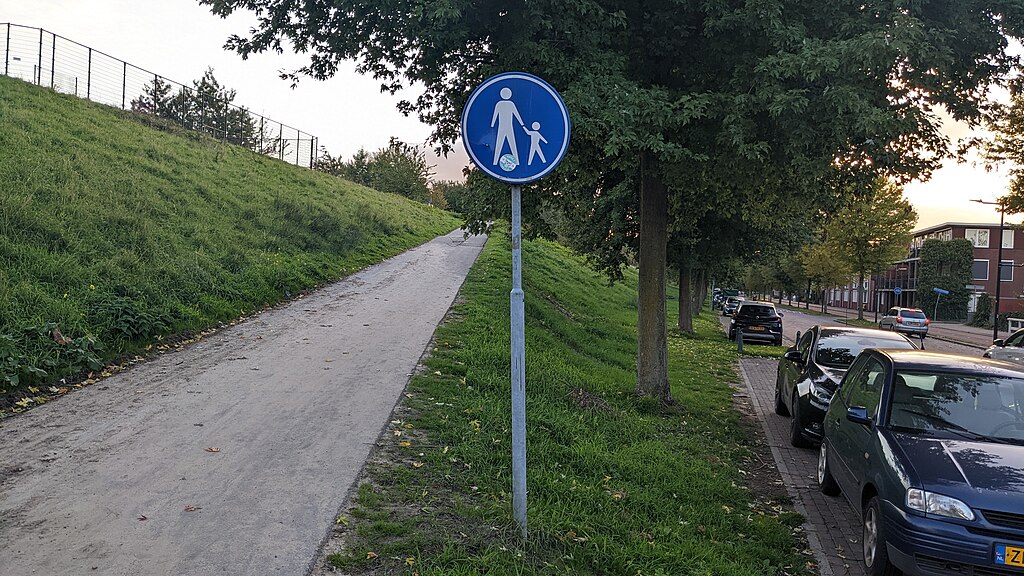
A path is a narrow road that only allows the traffic of pedestrians and vehicles that do not need more space than pedestrians.
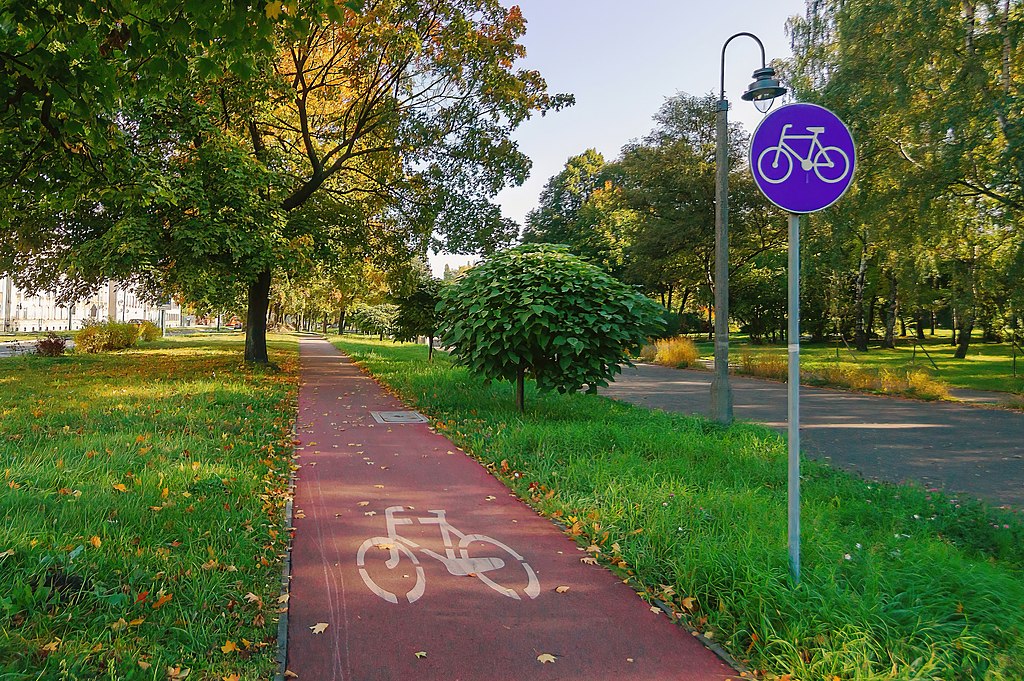
The bike path is part of the public road intended for the traffic of cyclists. If a bike path is available, cyclists must use it. The bike path is not part of the roadway. Cars may not park, stand or drive on the cycle path.
The footpath is the part of the public road intended for pedestrian traffic. Sometimes it is also called a pavement or sidewalk. If a footpath is present, pedestrians must use it.
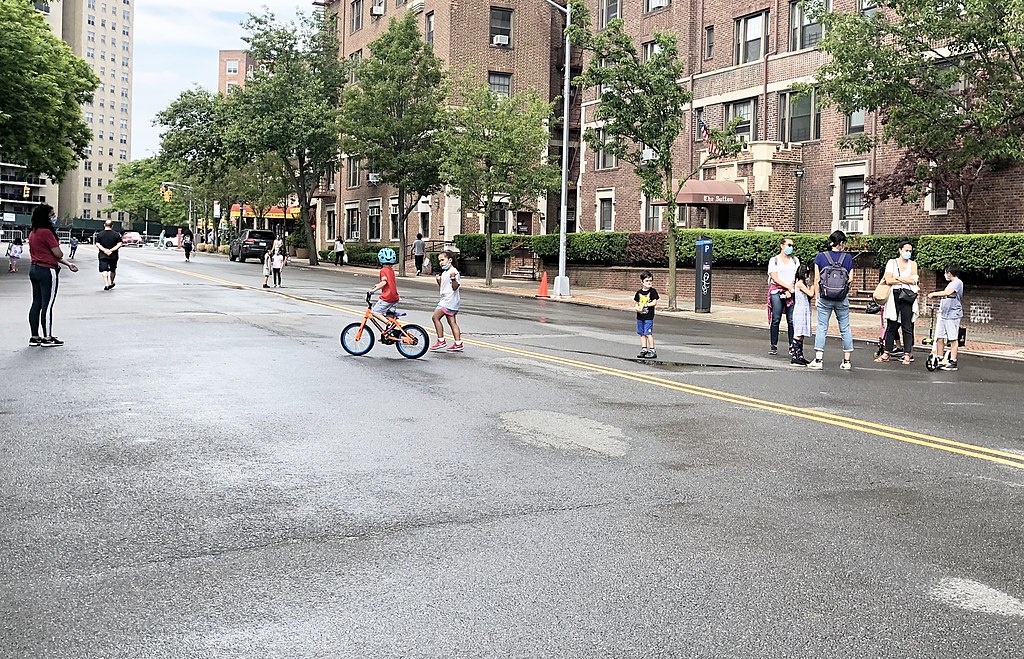
A public road where temporarily and during certain hours at the entrances a fence is placed with the indication 'play street'.
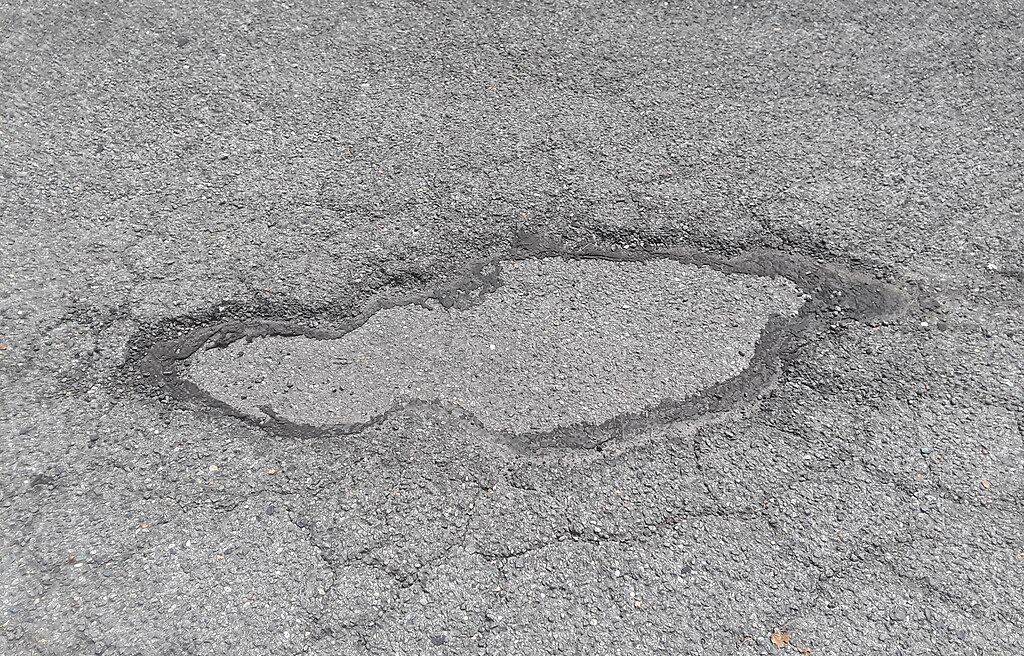
A pothole is a depression in a road surface, usually asphalt pavement, where traffic has removed broken pieces of the pavement. It is usually the result of water in the underlying soil structure and traffic passing over the affected area. Water first weakens the underlying soil; traffic then fatigues and breaks the poorly supported asphalt surface in the affected area. Continued traffic action ejects both asphalt and the underlying soil material to create a hole in the pavement.
A private property is a place where we can only come if we have permission to do so. For example a parking lot of a company, a private road or a driveway of a garage.
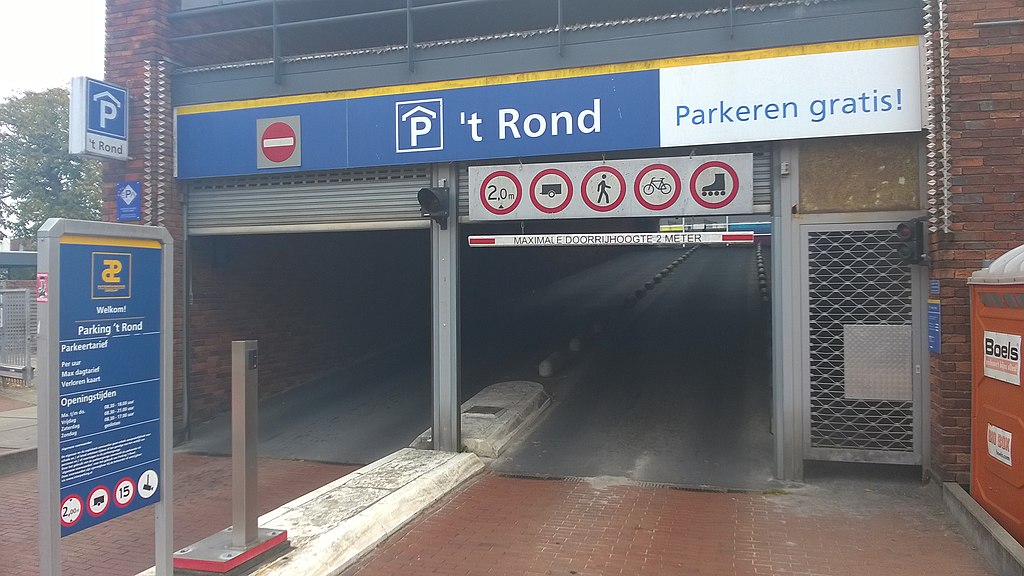 © Wikimedia.org/Ant1234567, CC BY-SA
A public property or public space is a place where we will only come if we have to be there for something. The traffic regulations only apply to public roads, but it is usually also applied on a public property.
The public road contains the lane, bicycle path, footpath and roadside and goes all the way to the canal or a property. On public roads we are allowed to drive with all vehicles (if no restrictions are imposed by traffic signs).
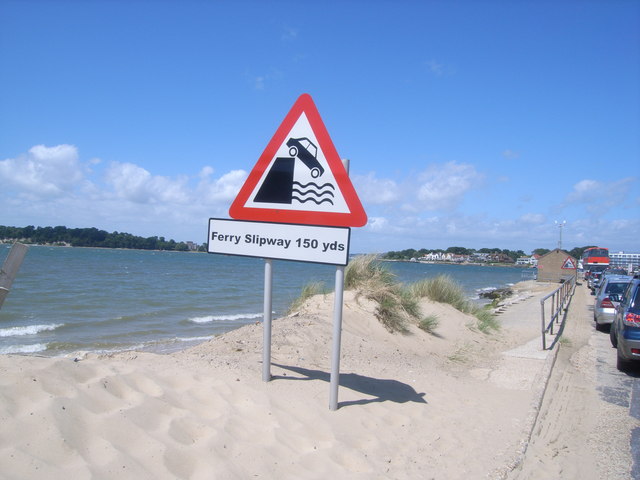
A quay is a structure on the shore of a harbour or on the bank of a river or canal where ships may dock to load and unload cargo or passengers.
High-speed roads generally have a ramp / slip-in lane to give you time to build up speed. Use the ramp to achieve the same speed as the vehicles on the main road. If you have to wait for space on the main road, drive slower so that you have enough space to merge onto the main road.
Pedestrians walk on the road in a residential area, but they are not allowed to hinder traffic.
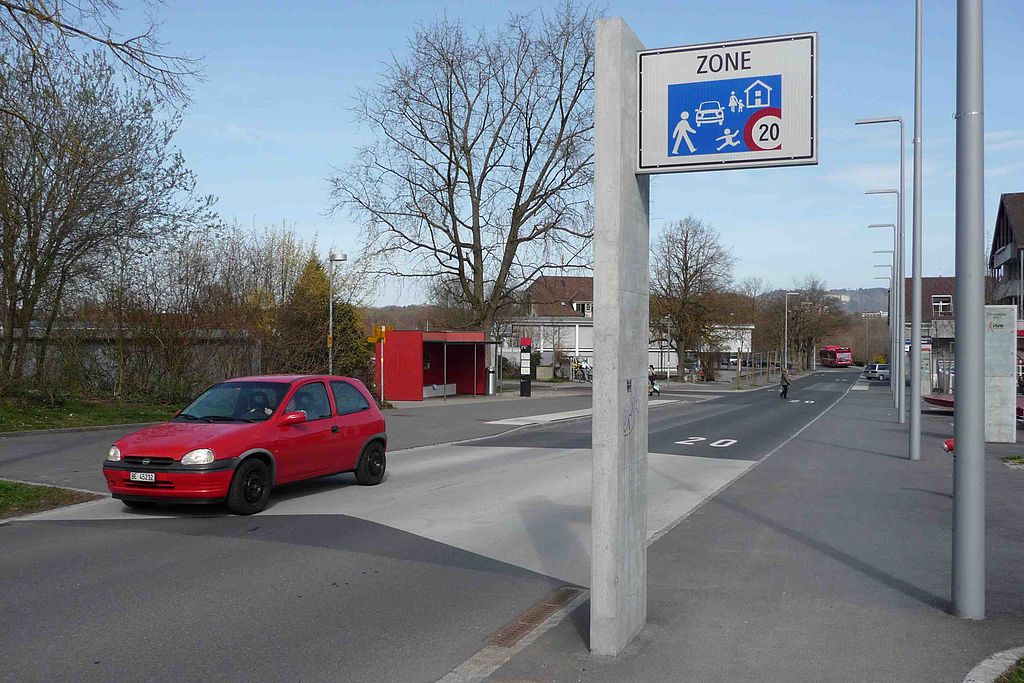 © Wikimedia.org/Suzanne Michel, CC BY-SA
A ring road is a road or a series of connected roads encircling a town, city, or country. The most common purpose of a ring road is to assist in reducing traffic volumes in the urban centre, such as by offering an alternate route around the city for drivers who do not need to stop in the city core.
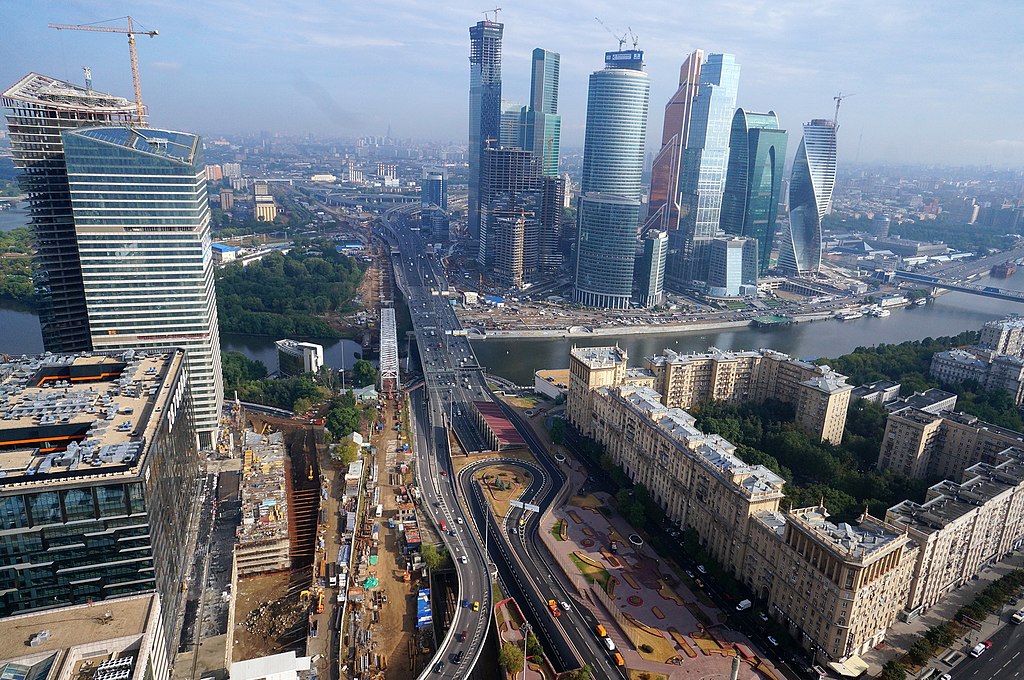 © Wikimedia.org/Stroi.mos.ru, CC BY
The roadway or carriageway is a part of the public road intended for the movement of vehicles. The lane is intended for the traffic of cars, trucks, buses, tractors and motorbikes. If there is no footpath or bicycle path, pedestrians and cyclists also use the roadway.
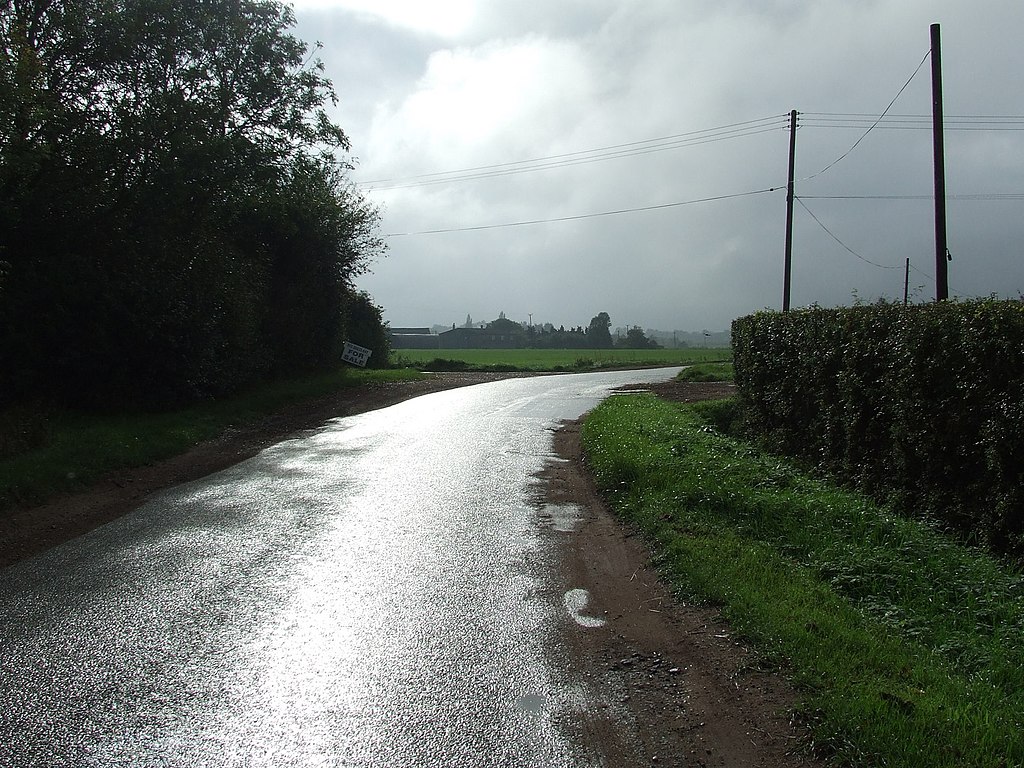
A road surface or pavement is the durable surface material laid down on an area intended to sustain vehicular or foot traffic, such as a road or walkway. In the past, gravel road surfaces, cobblestone and granite setts were extensively used, but thet have mostly been replaced by asphalt or concrete laid on a compacted base course.
A rush-hour lane is an extra lane on a lane of a motorway. The rush-hour lane is often at the expense of the emergency lane. The rush-hour lane is only opened in heavy traffic.
A slope or grade of a road refers to the tangent of the angle of the road to the horizontal. It is a special case of the slope, where zero indicates horizontality. A larger number indicates higher or steeper degree of 'tilt'.
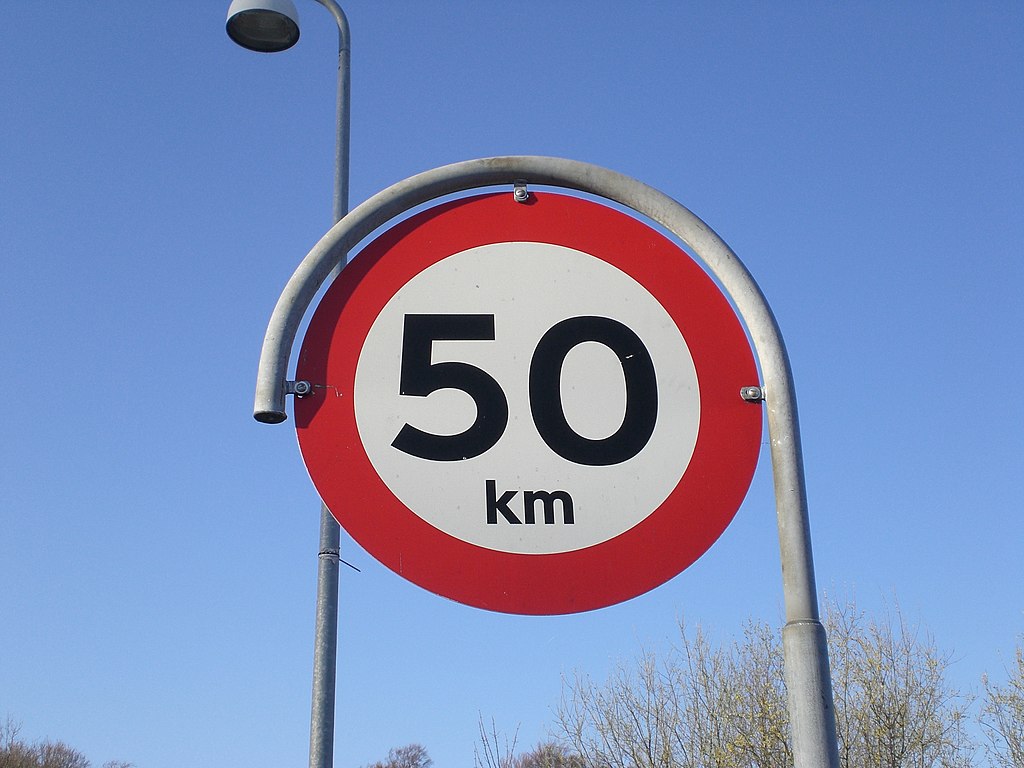
The speed depends on the type of road and the conditions in which you are driving. Do not drive faster than the speed limit and make sure you can drive safely and comfortably.
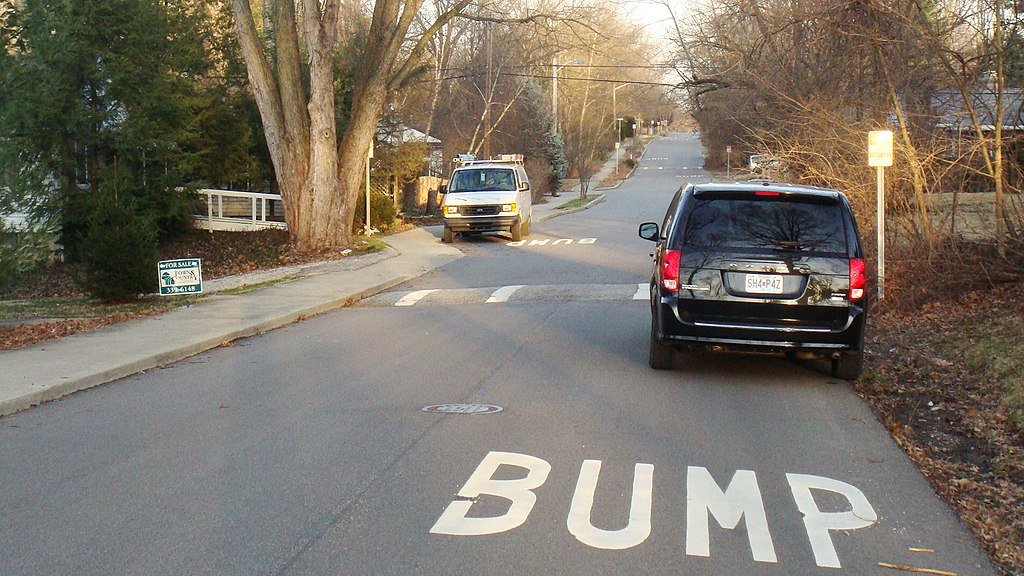
A speed bump is a traffic calming device that use vertical deflection to slow motor-vehicle traffic in order to improve safety conditions. Variations include the speed hump, speed cushion and speed table.
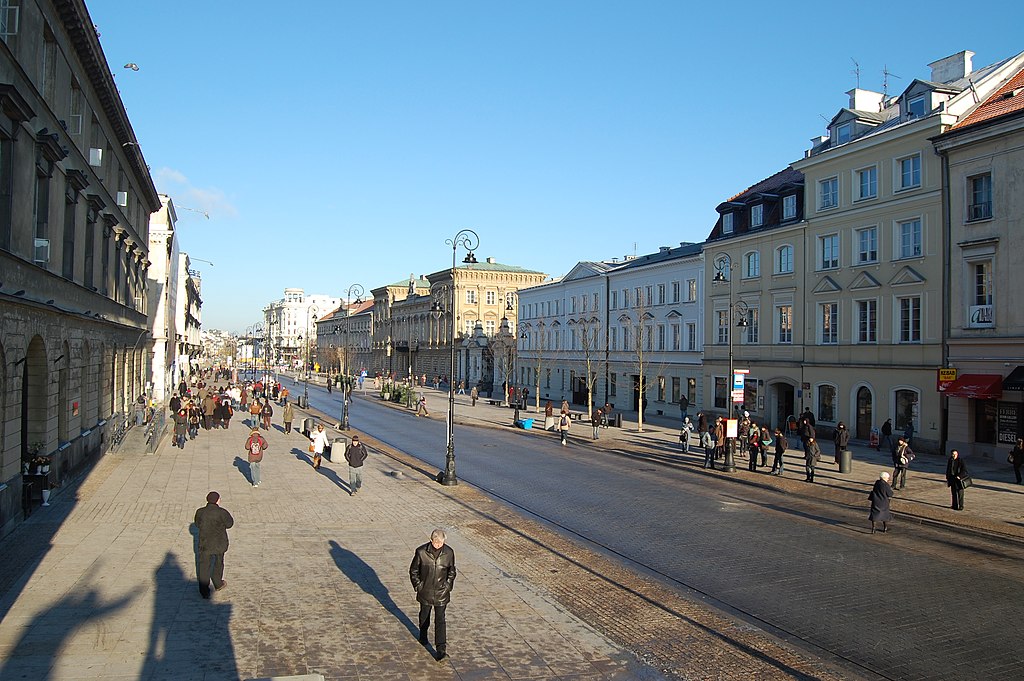
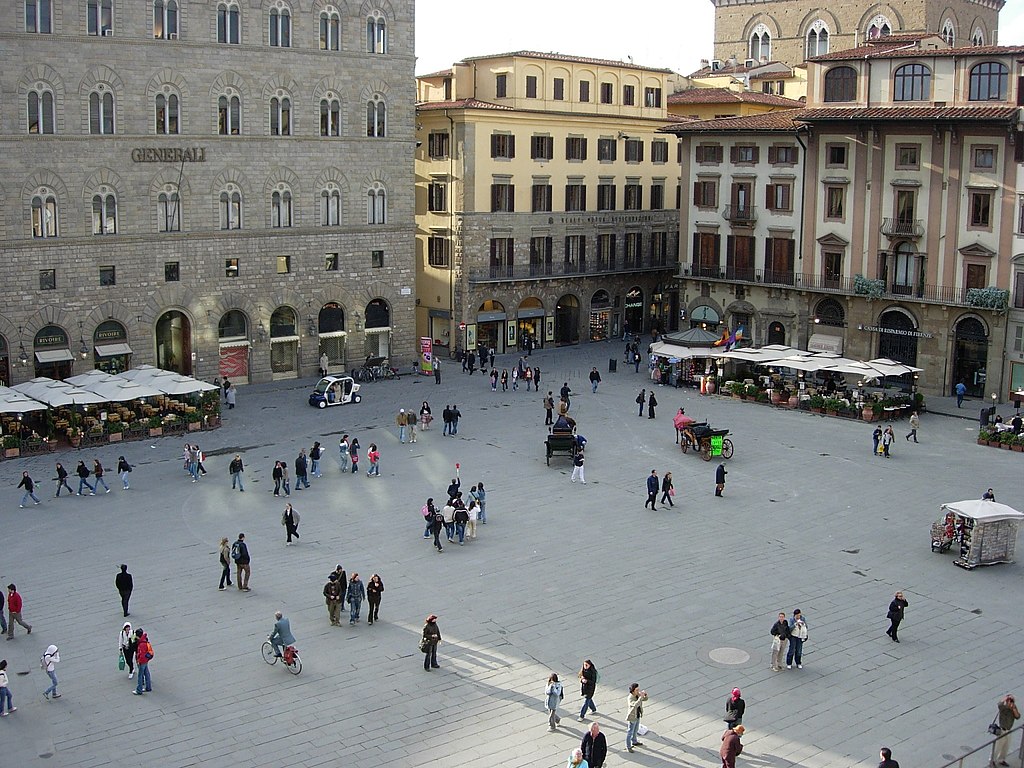
A square is an open space, where a public road opens or several public roads come together, and where the location allows traffic and other activities to be organized together.
A toll road, also known as a turnpike or tollway or toll plaza, is a public or private road (almost always a controlled-access highway in the present day) for which a fee or toll is assessed for passage. It is a form of road pricing typically implemented to help recoup the cost of road construction and maintenance.
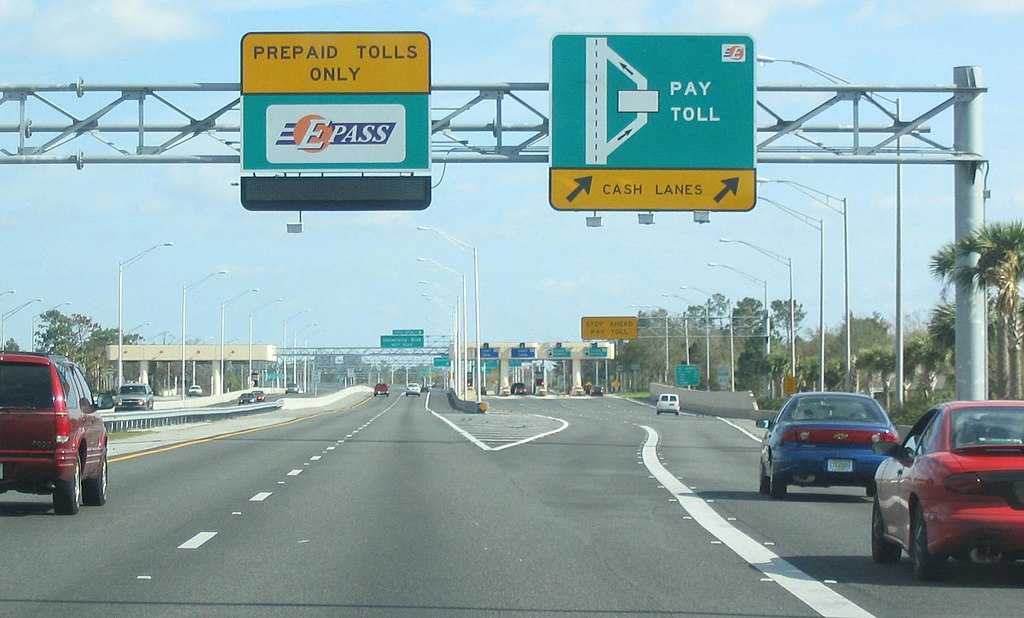 © Wikimedia.org/SPUI, CC0
A tunnel is an underground passageway, dug through the surrounding soil/earth/rock and enclosed except for entrance and exit, commonly at each end.
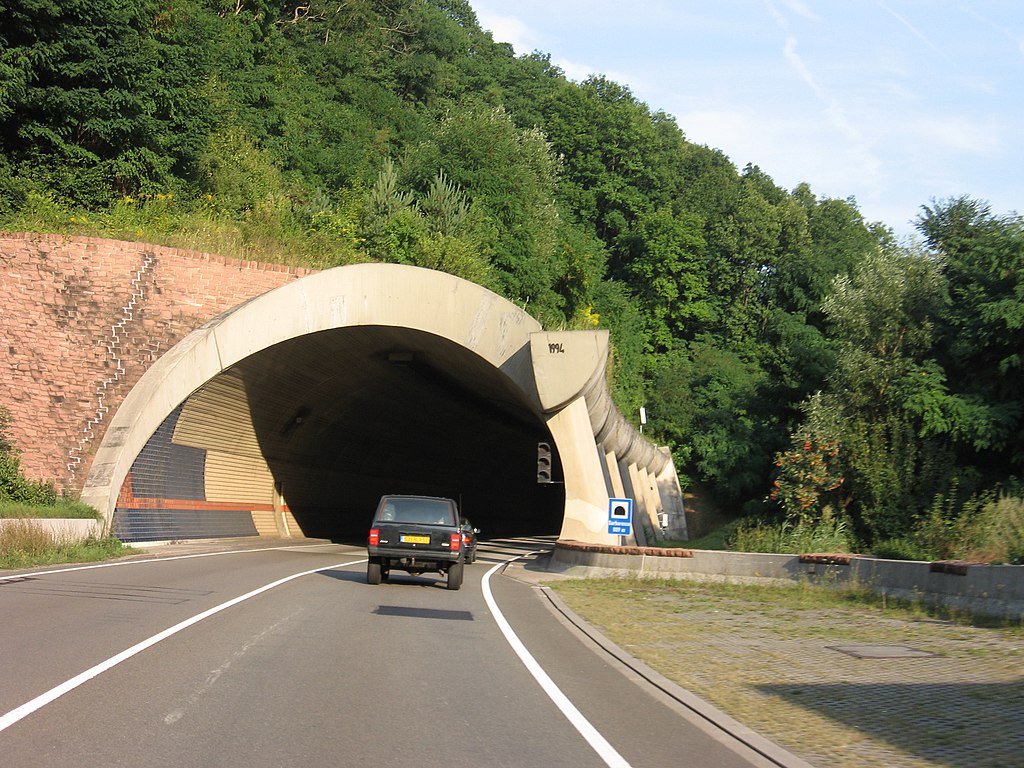 © Wikimedia.org/Michiel1972, CC BY-SA
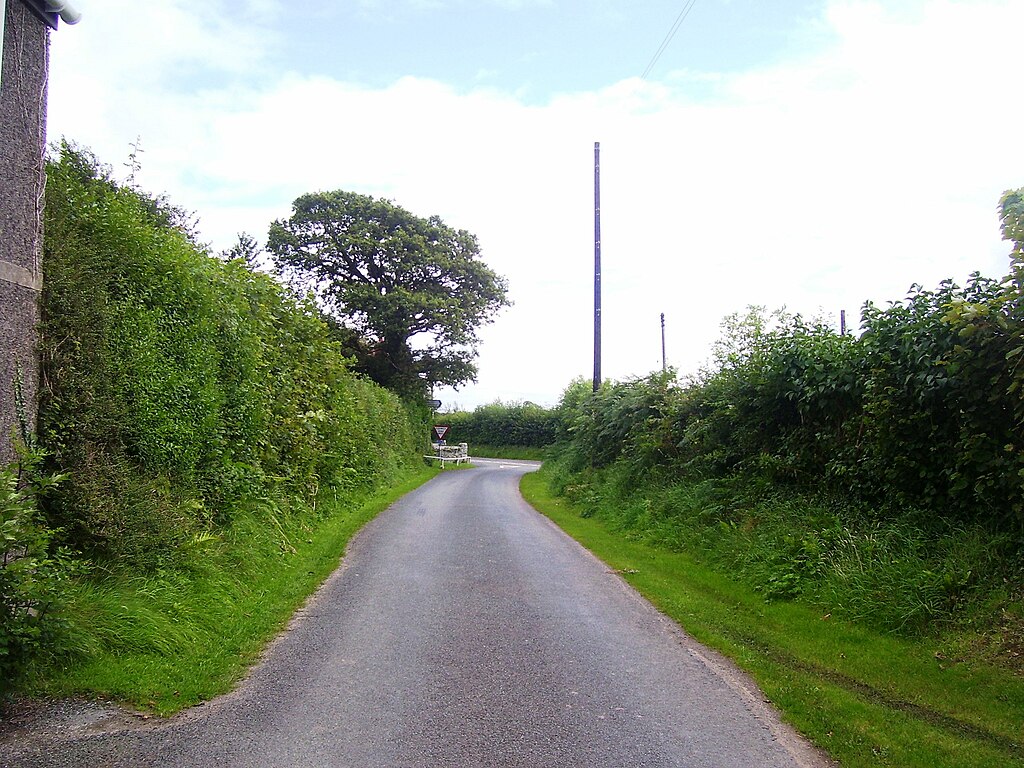
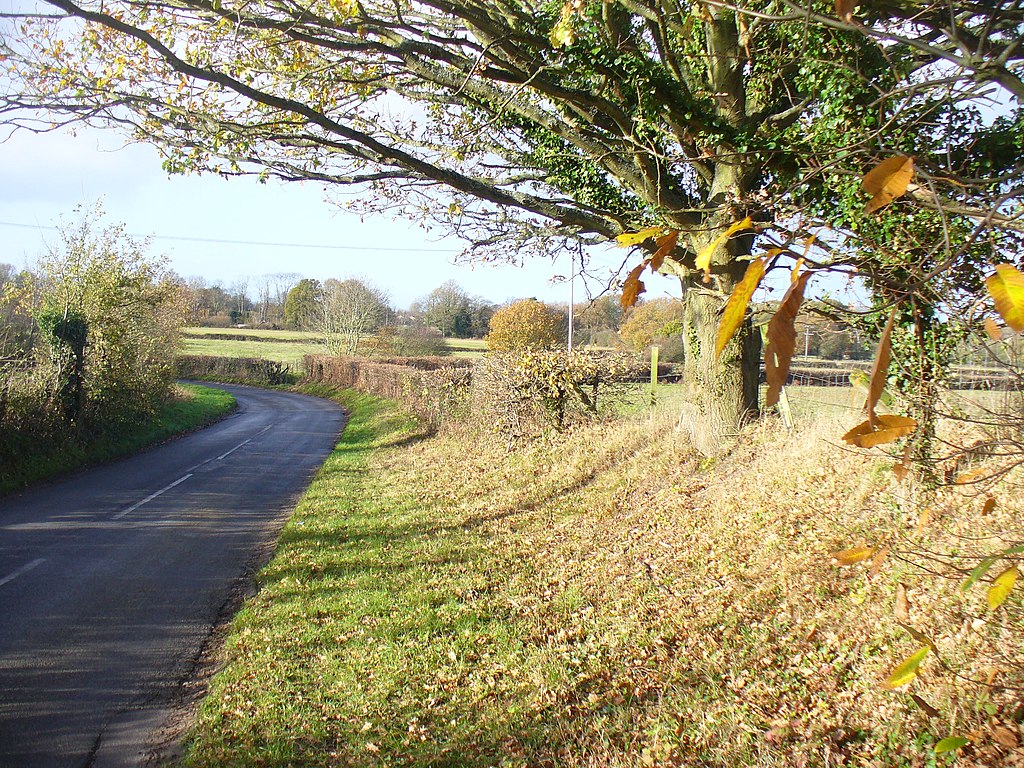
A verge is a strip of soil along a road and is often planted with grass, plants or trees. Road signs are often placed in the roadside. If the road is too narrow to cross another vehicle, you can move on the roadside.

Help us promote traffic rules on the internet, together we can make the public road safer for everyone. Post a comment or share on social media!

look at the sign on the road to avoid accidents and horrible driving conditions
 -3
-3



I received a 300$ ticket because I passed a police control of other cars/drivers on the right lane of a highway (the control was on the hard shoulder of the highway). Is it really true, that you have to change the lane in such cases? Thanks!

I am an American living in Italy. The Italian Drivers License theory test is the hardest test I have ever studied for and I am in my 70s have multiple degrees, multiple professional certifications. Have to take the Italian Drivers Theory test in Italian. No english. So many rules. More signs in small medieval Italian town I live in then in major US cities I have lived in. No Italian license no driving. No buying or renting a car. Test here was good, clean. Lots of tricky questions on many practice and real official tests. Thanks

Most problems are a result of higher than safe driving speeds. Please just slow down and be patient.

Question 121: Poor translation: Vehicles with polluted fluids prohibited Should be translated as: Vehicles with dangerous liquids prohibited

Question 83: Poor translation: Vehicles with polluted fluids prohibited Should be translated as: Vehicles with dangerous liquids prohibited
0

Want even more practice? Visit similar websites offering realistic practice driving knowledge tests. Visit us to see what sets our tests apart! https://dkttest.com/capital-territory/
Cool tool! And fun to check whether I remember the rules :) Two things I noticed: Warning for a crossroad side roads on the left and right. While technically that might be the correct translation, this sign tells you, that you are on the main road and have the right of way for the next crossroad and only the next crossroad. Usually (if no sign specifies otherwise) you have to give way to drivers coming from the right at every intersection, which can get a bit annoying in communal areas, so seeing this sign feels less like a warning and more like relief :). A Fahrradstraße is not a lane for cyclists but a street for cyclists, meaning the (whole!) street is intended predominantly for cyclists, who are then allowed to ride next to each other. Cars are allowed to drive there (unless another sign prohibits such), but have to adjust their speed to the cyclists. I believe they are not allowed to pass at all, even if the oncoming lane is empty.













 Nov 21, 2024














More community