

Señales de tráficoBruselas
 Normas de tráfico
 Bruselas
126. Discapacidad
La discapacidad se refiere a una condición física, sensorial, intelectual u otra de larga duración que, junto con barreras ambientales o de accesibilidad, puede afectar a la participación en actividades cotidianas. En el tráfico, las personas con discapacidad pueden ser peatones, conductores, ciclistas, pasajeros o usuarios de dispositivos de movilidad.
Los sistemas viales deben tener en cuenta accesibilidad, cruces seguros, estacionamiento adecuado y tiempo y espacio suficientes para personas con distintas necesidades. Los conductores deben prestar especial atención a quienes puedan necesitar más tiempo o espacio.

Must drivers take extra care around people with disabilities in Belgium?
Yes. Drivers must be especially cautious around people with disabilities and must slow down and, if necessary, stop.
Can people with disabilities obtain a special parking card in Belgium?
Yes, when they meet the applicable eligibility conditions. The official parking card allows its holder to use parking spaces reserved for people with disabilities and provides additional parking benefits under the applicable rules.
Can another person use a Belgian disability parking card?
The card is personal to its holder. It may be used when the holder is travelling in the vehicle, either as the driver or as a passenger, but it may not be used when the holder is not present.

127. Tren para automóviles
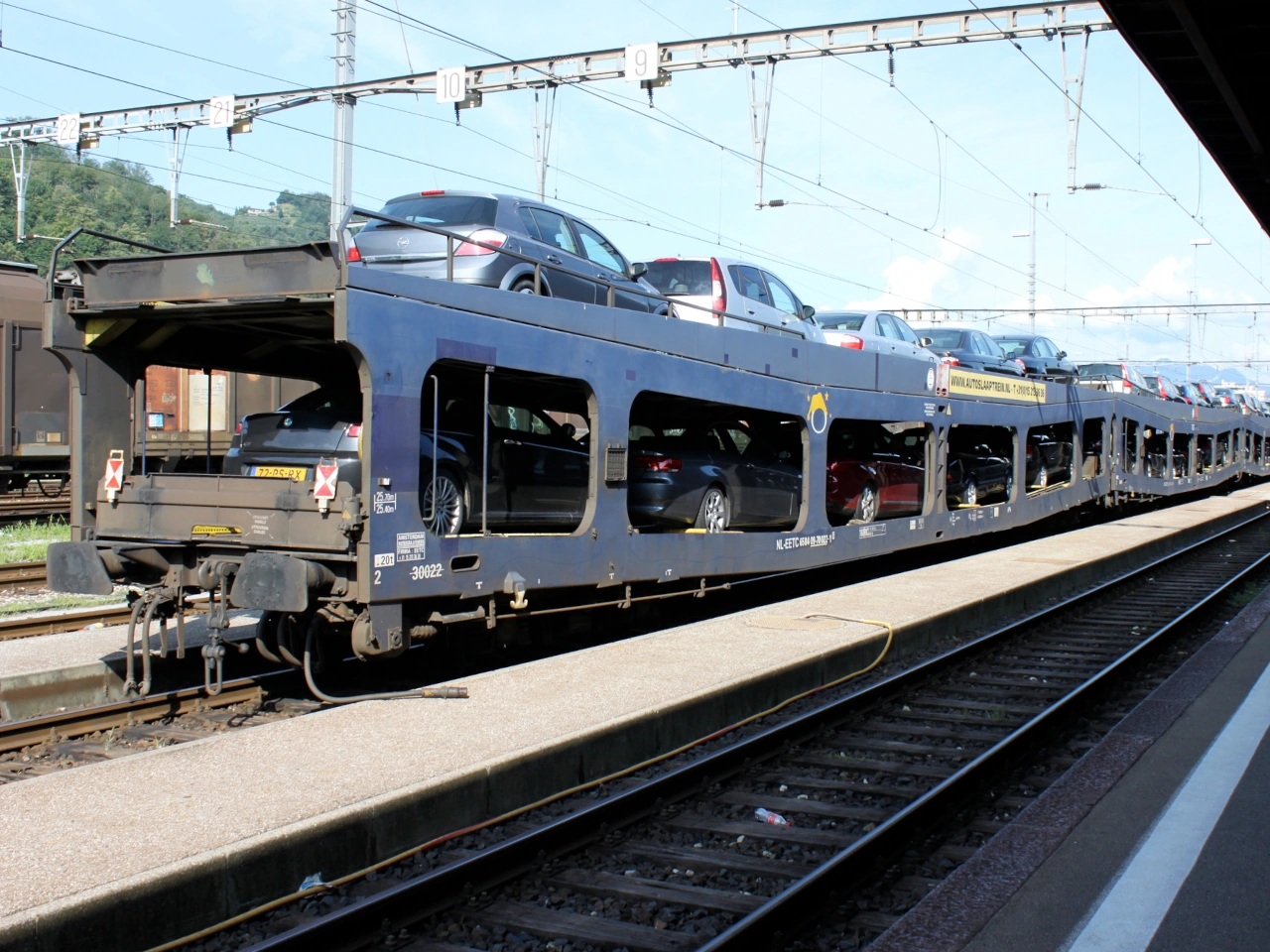
Un tren para automóviles transporta a los pasajeros junto con su coche, motocicleta u otro vehículo admitido en el mismo viaje. Los pasajeros viajan normalmente en coches de pasajeros o dormitorios mientras su vehículo se transporta en vagones específicos.
Está destinado principalmente a viajes de larga distancia, permitiendo evitar conducir toda la ruta y disponer del propio vehículo al llegar. Dimensiones, procedimientos de carga y rutas admitidas dependen del operador.
Can you currently take your car on a Motorail train from Belgium?
No current vehicle-transport service is offered from Belgium by Nightjet. Passengers travelling from Belgium can use international rail services, but their car or motorcycle cannot currently be loaded onto those Belgian Nightjet connections.
Does SNCB's train-and-car service carry cars on trains?
No. SNCB's current train-and-car services are designed to combine rail travel with facilities such as station car parking or car rental, rather than transporting the passenger's own vehicle on the train.
Can Belgian travellers use Motorail services elsewhere in Europe?
Yes, where an operator still offers vehicle transport. Travellers can first reach a suitable Motorail departure point by another route and then use a connection on which vehicle transport is available, subject to the operator's vehicle and booking requirements.
128. km/h
km/h significa kilómetros por hora y es una unidad de velocidad. Expresa cuántos kilómetros recorrería un vehículo u objeto en una hora si mantuviera la misma velocidad.
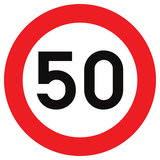
Por ejemplo, 50 km/h significa desplazarse a razón de 50 kilómetros por hora. Es la unidad ampliamente utilizada para velocidades y límites en países con sistema métrico.
Which speed unit is used on Belgian roads?
Belgium uses kilometres per hour (km/h) for road speeds and speed limits.
What does the number on a Belgian speed-limit sign mean?
The number on a C43 speed-limit sign indicates the maximum permitted speed in kilometres per hour. For example, a C43 sign displaying 50 means that drivers may not exceed 50 km/h.
Does a Belgian speed-limit sign have to display 'km/h'?
No. The number on a C43 sign is understood as a speed in kilometres per hour. Under the current Belgian Road Code, displaying the abbreviation 'km' on the sign is optional.
129. mph
mph significa millas por hora y es una unidad de velocidad. Expresa cuántas millas recorrería un vehículo u objeto en una hora si mantuviera la misma velocidad.
Por ejemplo, 50 mph significa desplazarse a 50 millas por hora. Una milla por hora equivale aproximadamente a 1,61 km/h, por lo que los valores numéricos en mph y km/h son diferentes.

Does Belgium use mph for road speeds?
No. Belgian road speeds and speed limits are expressed in kilometres per hour (km/h), not miles per hour.
Do Belgian speed-limit signs show mph?
No. The number displayed on a Belgian C43 speed-limit sign represents the maximum permitted speed in kilometres per hour.
What should you do if your vehicle's speedometer also shows mph in Belgium?
When driving in Belgium, you must compare your speed with the applicable limit in km/h. If your speedometer displays both units, use the km/h scale when interpreting Belgian speed limits.
130. Velocímetro
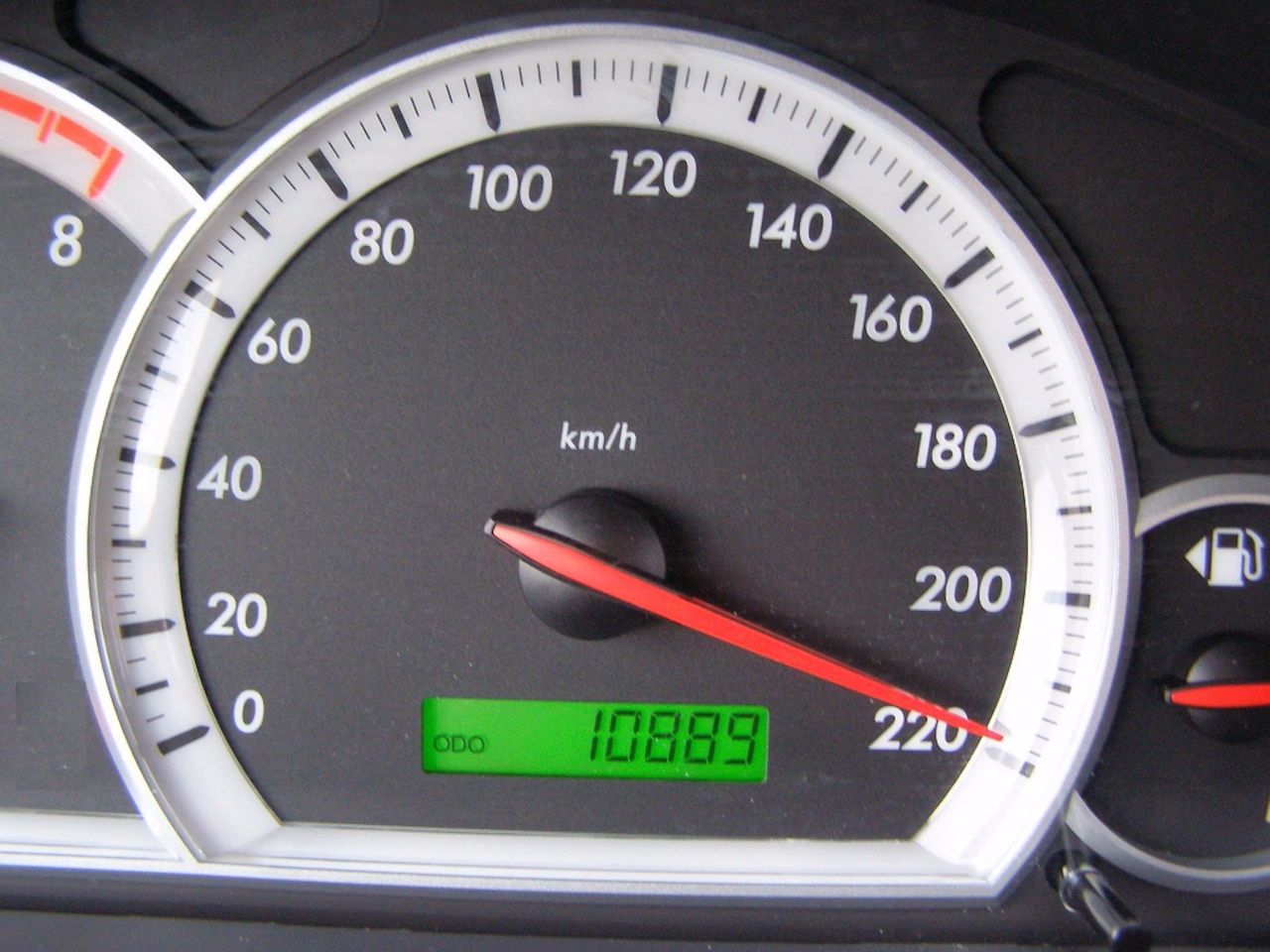
Un velocímetro es un instrumento del vehículo que muestra la velocidad actual. Normalmente aparece en el cuadro de instrumentos y puede utilizar una esfera analógica, pantalla digital o ambas.
Los conductores deben utilizarlo para controlar su velocidad y mantenerse dentro del límite aplicable. La unidad mostrada suele ser km/h o mph según el país y vehículo.

Must cars have a speedometer in Belgium?
Yes. Vehicles subject to the applicable technical approval requirements must be equipped with a functioning speedometer.
Which unit must a Belgian speedometer show?
The speedometer must provide a speed indication in kilometres per hour (km/h). A vehicle may also display mph in addition to km/h.
Can a speedometer legally show less than the vehicle's true speed?
No. Under the applicable vehicle-approval requirements, the indicated speed must not be lower than the vehicle's actual speed. A permitted positive tolerance means the speedometer may indicate somewhat more than the true speed.
131. Límite general de velocidad
Un límite nacional de velocidad es una velocidad máxima por defecto establecida por ley para un tipo de carretera o vehículo cuando no se indica un límite local diferente o inferior. Puede variar según se trate de autopista, carretera rural, vía urbana u otra categoría.
Los conductores deben conocer los límites generales aplicables en el país o región donde circulan y obedecer siempre cualquier límite señalizado que sustituya la regla general.
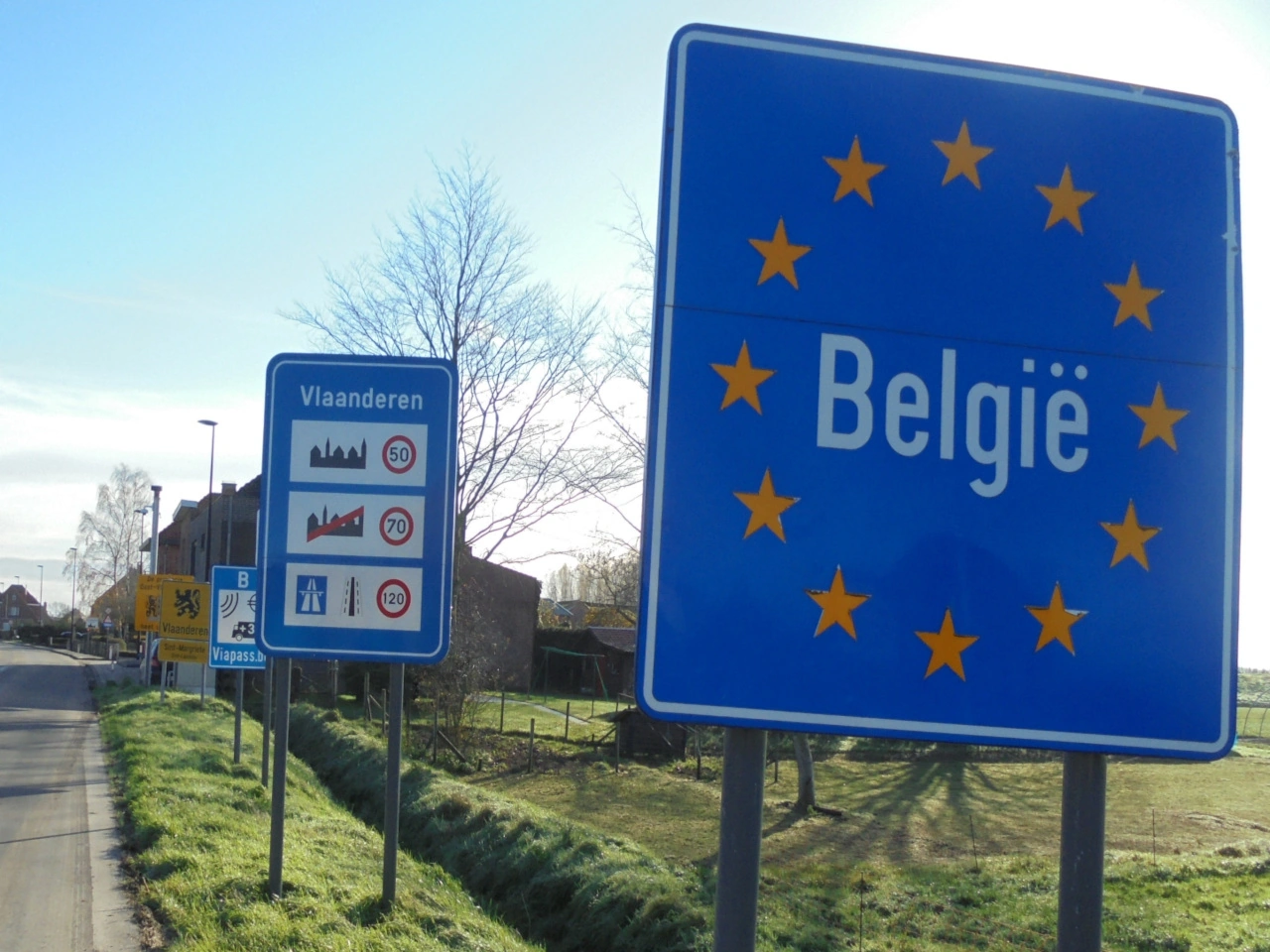
Does Belgium have one national speed limit?
No. Belgium has different general speed limits according to the road type, vehicle and region. Drivers must therefore know whether they are in Brussels, Flanders or Wallonia and follow any posted speed limits.
What are the general built-up-area speed limits in Belgium?
The general built-up-area limit is currently 30 km/h in the Brussels-Capital Region and 50 km/h in Flanders and Wallonia, unless signs impose or permit another speed.
Is there a Belgian national-speed-limit sign?
No dedicated sign simply meaning 'national speed limit applies' is used in the current Belgian system. When a local C43 speed restriction ends, an applicable end-of-restriction sign or the general rules for the road and region determine the speed that applies next.
132. Altura libre del vehículo
La altura libre del vehículo es la altura a la que la carrocería o chasis se sitúa sobre la superficie de la carretera. Depende principalmente de suspensión, ruedas y neumáticos y puede cambiar con la carga.
Modificarla bajando o elevando la suspensión puede afectar a la distancia al suelo, alineación, manejo y espacio entre vehículo y carretera. Las modificaciones deben cumplir las normas técnicas y de homologación del país.
Can you lower a car's ride height in Belgium?
Yes, under specific conditions. A category M1 passenger car may be lowered when the modification complies with the applicable Belgian technical requirements.
Must a lowered car be inspected in Belgium?
Yes. After the suspension has been lowered, the vehicle must undergo a specific technical inspection before it is used on the road again.
What is checked after lowering a car in Belgium?
The inspection includes checks of the modification and the vehicle's wheel geometry to verify that the wheel positions remain within the applicable technical requirements.
133. Camino de tierra
Un camino de tierra es una vía sin pavimentar cuya superficie consiste principalmente en tierra natural o suelo compactado, en lugar de asfalto, hormigón o una capa añadida de grava. Son habituales en zonas rurales, agrícolas, forestales y remotas.
Los conductores deben adaptar la velocidad a las condiciones de la superficie y evitar frenadas, aceleraciones o giros bruscos. El polvo, barro, roderas, baches y menor adherencia pueden dificultar la conducción, especialmente durante o después del mal tiempo.
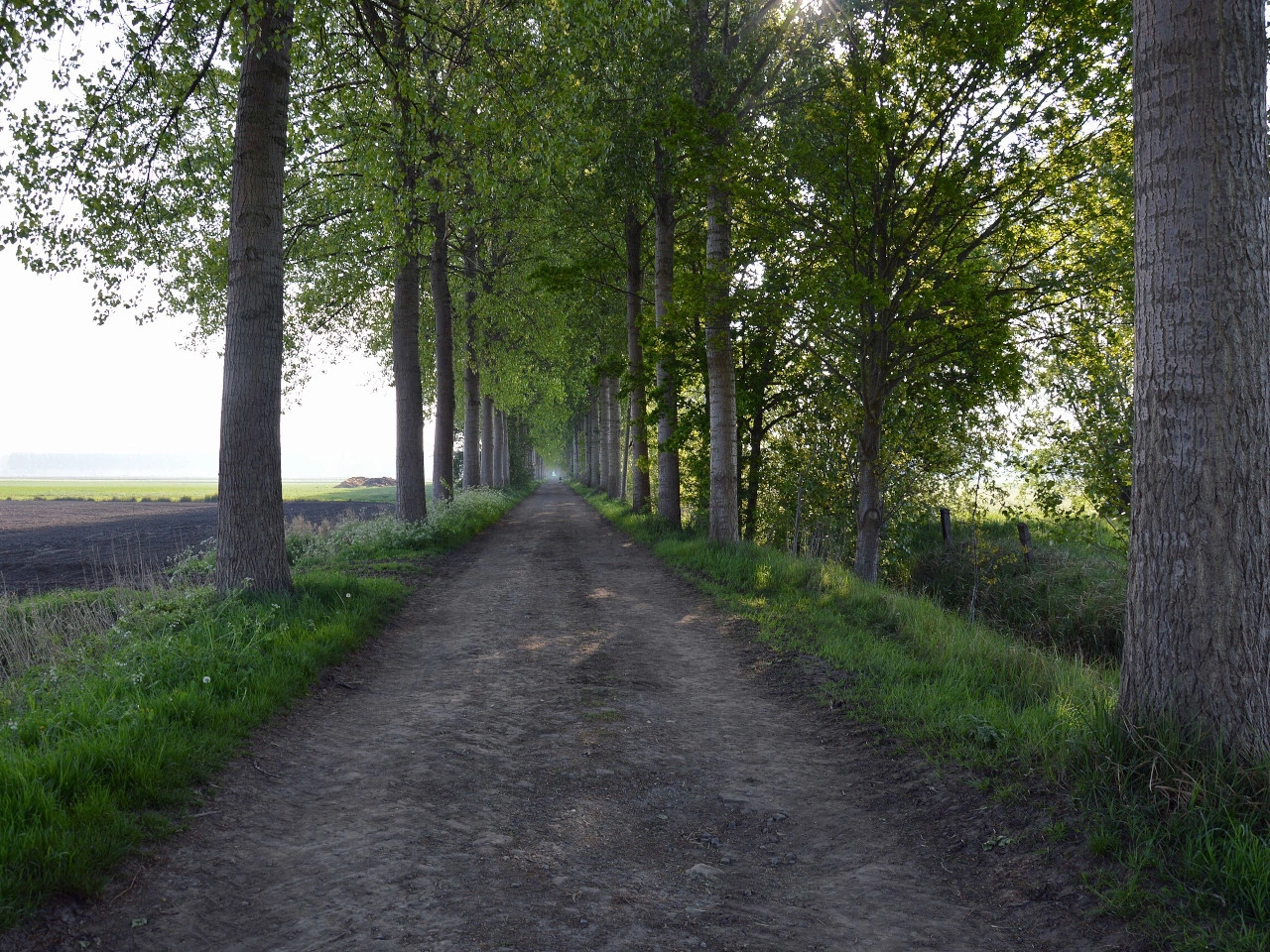
How is a dirt or earth road defined in Belgium?
The Belgian Road Code defines an aardeweg as a public road that is wider than a path and is not laid out for vehicle traffic in general.
Who has priority when leaving an earth road in Belgium?
A driver coming from an earth road or path onto a public road with a carriageway must give way to every driver travelling on the road or carriageway being entered.
Does an earth road stop being an earth road if its entrance is paved in Belgium?
No. An earth road does not lose its legal status merely because the section where it connects with another public road has the appearance of a normal carriageway.
134. Conducción
La conducción es el acto de controlar y manejar un vehículo u otro medio de transporte reconocido en el tráfico. Incluye dirigir, acelerar, frenar, observar la carretera e interactuar de forma segura con otros usuarios.
Una conducción segura exige mantener el control, respetar normas y señales, observar el tráfico circundante y adaptarse a las condiciones de la carretera, tiempo y visibilidad.

What must a driver be capable of doing in Belgium?
Every driver must be capable of driving and possess the necessary physical fitness, knowledge and driving skill. The driver must remain able to perform all necessary manoeuvres and keep the vehicle under control.
Must every moving vehicle have a driver in Belgium?
Yes. Every moving vehicle or vehicle combination must have a driver. Similar rules also apply to people controlling certain animals and livestock.
Can you use a handheld phone while driving in Belgium?
No. Unless the vehicle is stationary or parked, a driver may not use, hold or manipulate a mobile electronic device with a screen unless it is secured in a holder intended for that purpose.
135. Sistema start-stop
Un sistema start-stop apaga automáticamente el motor cuando el vehículo está detenido y lo vuelve a arrancar cuando el conductor está preparado para moverse. Es habitual en vehículos con motor de combustión para reducir el ralentí innecesario.
Normalmente funciona automáticamente cuando se cumplen determinadas condiciones, como al detenerse en tráfico. Su funcionamiento no sustituye la responsabilidad del conductor de controlar el vehículo con seguridad y respetar las normas aplicables.
Is a start-stop system required in Belgium?
No general requirement in the Belgian Road Code requires every vehicle to have a start-stop system. Whether a particular vehicle is equipped with one depends on its design and technical specifications.
Can you leave your engine idling unnecessarily in Belgium?
No. The Belgian Road Code states that drivers may not leave the engine running at idle except when this is necessary.
Does having a start-stop system change the Belgian idling rule?
No. A start-stop system can automatically switch off the engine while the vehicle is stationary, but the driver remains responsible for complying with the rules concerning unnecessary engine idling.
136. Cambio manual
Un cambio manual es una transmisión en la que el conductor selecciona las marchas manualmente, normalmente mediante una palanca junto con un pedal de embrague. El conductor acciona el embrague para desconectar y volver a conectar el motor de la transmisión al arrancar, detenerse o cambiar de marcha.
Conducir un vehículo manual exige coordinar embrague, acelerador y selección de marcha. A diferencia de una transmisión automática, los cambios los controla directamente el conductor.
Can you drive a manual car with an automatic-only Belgian licence?
No. If category B on the driving licence carries code 78, the licence is restricted to vehicles with an automatic transmission.
How can you remove code 78 from a Belgian driving licence?
To remove the automatic-transmission restriction, the driver must pass a new practical driving examination with a manual-transmission vehicle.
Can a Belgian driver without code 78 drive both manual and automatic cars?
Yes. If the relevant driving-licence category is not restricted by code 78, the driver may operate both manual and automatic vehicles within that licence category.
137. Cambio automático
Un cambio automático cambia de marchas automáticamente sin exigir al conductor utilizar un pedal de embrague convencional ni seleccionar manualmente cada marcha. Según el diseño, el conductor suele elegir posiciones como estacionamiento, marcha atrás, punto muerto y avance mientras la transmisión gestiona los cambios.
Puede simplificar la conducción al eliminar la necesidad de coordinar un embrague y cambios manuales. Existen distintas tecnologías, como automáticos convencionales, transmisiones de variación continua y sistemas de doble embrague.
How is an automatic vehicle defined for Belgian driving licences?
For driving-licence purposes, an automatic vehicle is one that does not have a clutch pedal, or the applicable manually operated clutch, that the driver must use when starting, stopping and changing gears.
What does code 78 mean on a Belgian driving licence?
Code 78 means that the relevant driving-licence category is restricted to vehicles with an automatic transmission.
How can you remove code 78 from a Belgian driving licence?
To remove the restriction, the driver must pass a new practical driving examination with a manual-transmission vehicle.
138. Acelerador
El acelerador es un control utilizado para regular la potencia producida por un motor. En la mayoría de coches y camiones se controla mediante el pedal del acelerador, mientras que las motocicletas suelen utilizar un puño giratorio en el manillar.
Aumentar el acelerador generalmente aumenta la potencia disponible para acelerar, mientras que reducirlo disminuye la potencia transmitida a las ruedas. El sistema exacto difiere entre vehículos de combustión, híbridos y eléctricos.

Does the Belgian Road Code have a special rule for the throttle?
No separate traffic rule specifically defines the throttle. Its safe use forms part of the driver's general responsibility to maintain control of the vehicle.
Must a driver remain in control while accelerating in Belgium?
Yes. Every driver must remain capable of carrying out all necessary manoeuvres and must keep the vehicle under control at all times.
Can you repeatedly rev an idling engine in Belgium?
No. Belgian traffic rules prohibit a driver from repeatedly accelerating an engine while it is running in neutral. Unnecessary engine idling is also prohibited.
139. Cuentarrevoluciones
Un cuentarrevoluciones es un instrumento que muestra la velocidad de giro de un motor, normalmente medida en revoluciones por minuto (RPM). Suele aparecer en el cuadro de instrumentos cerca del velocímetro.
Ayuda al conductor a comprender a qué velocidad gira el motor y puede ayudar a seleccionar una marcha adecuada en vehículos manuales. Mide la velocidad del motor, no la velocidad del vehículo.
What does a tachometer show in a Belgian vehicle?
A tachometer shows the engine's rotational speed in revolutions per minute (RPM). It does not show the vehicle's speed in km/h.
Is a tachometer the same as a tachograph in Belgium?
No. A tachometer displays engine speed, while a tachograph is recording equipment used in regulated road transport to record information such as vehicle speed, distance travelled and time.
Does the Belgian Road Code set traffic rules based on tachometer RPM?
No. The current Belgian Road Code does not establish general road-traffic limits based on engine RPM. Drivers must instead comply with the applicable speed limits and keep their vehicle under control.
140. Volante
El volante es el mando principal utilizado por el conductor para cambiar la dirección del vehículo. Al girarlo se acciona el sistema de dirección, que cambia el ángulo de las ruedas directrices y orienta el vehículo por la trayectoria deseada.
El conductor debe utilizar el volante con suavidad y mantener el control total del vehículo. Los sistemas modernos pueden incluir asistencia y mandos para funciones como audio, control de crucero o información del conductor.

Must a driver keep control of the steering in Belgium?
Yes. Every driver must remain capable of carrying out all necessary driving movements and must continuously keep the vehicle under control.
Does Belgian law prescribe a specific hand position on the steering wheel?
No general fixed hand position is prescribed in the current Belgian Road Code. The driver must nevertheless remain able to steer safely and maintain full control of the vehicle.
Can you hold a mobile phone while steering in Belgium?
No. Unless the vehicle is stationary or parked, a driver may not use, hold or manipulate a mobile electronic device with a screen unless it is secured in a holder intended for that purpose.
141. Dirección asistida
La dirección asistida ayuda al conductor a girar las ruedas, reduciendo el esfuerzo físico necesario en el volante. La asistencia puede ser hidráulica, eléctrica o combinar distintos sistemas.
Hace los vehículos más fáciles de maniobrar, especialmente a baja velocidad y al estacionar. La cantidad de asistencia puede variar con la velocidad para mantener una dirección estable y sensible a velocidades mayores.
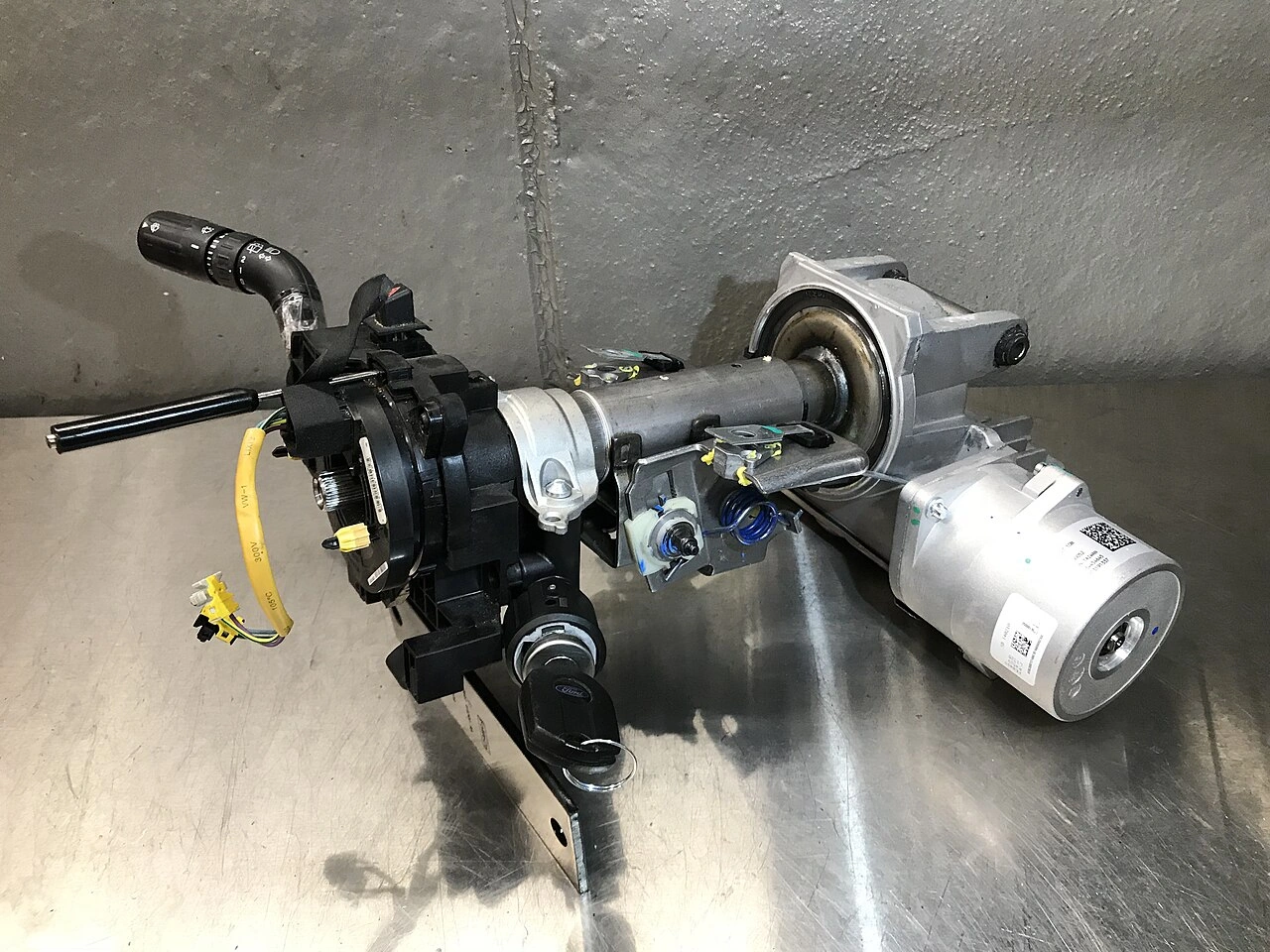
Is power steering mandatory on every car in Belgium?
No general rule requires every car to have power steering. The vehicle's steering system must, however, comply with the applicable technical and vehicle-approval requirements.
Must power steering be in good condition in Belgium?
Yes. The steering system is safety-critical equipment and must function correctly. Steering and steering assistance can be checked as part of vehicle technical and safety inspections.
What should you do if the power steering fails while driving in Belgium?
Keep control of the vehicle, reduce speed and stop safely when possible. Steering assistance failure can make the steering much heavier, so the vehicle should be inspected or repaired before normal driving continues.
142. Exploración visual
La exploración visual es la técnica de observar continuamente la carretera por delante, los espejos, laterales y tráfico circundante para detectar peligros y cambios lo antes posible. Una exploración eficaz implica mover regularmente la atención entre distintas partes del entorno en lugar de fijarse en un solo punto.
Los conductores deben mirar lejos hacia delante, comprobar los espejos con regularidad y observar zonas laterales y ángulos muertos, especialmente antes de cambiar velocidad, dirección o posición.

Is scanning specifically defined in the Belgian Road Code?
No. Scanning is a driving-observation technique rather than a separately defined legal concept, but effective observation supports the driver's obligations to remain in control and react safely to traffic conditions.
Must Belgian drivers be able to observe traffic behind them?
Yes. Rear-view mirrors must be adjusted so that the driver can observe traffic behind and to the left, including a vehicle that has started overtaking on the left.
Why must Belgian drivers scan the road ahead?
Drivers must adapt their speed to factors including other road users, traffic density, visibility and road conditions and must always be able to stop for a foreseeable obstacle.
143. Espejo
Un espejo es un dispositivo instalado en un vehículo que permite al conductor observar el tráfico detrás y a los lados sin apartar la vista de la carretera durante demasiado tiempo. Los vehículos suelen utilizar un espejo interior y uno o más exteriores.
Ayudan a controlar el entorno antes de cambiar de dirección, cambiar de carril, adelantar, incorporarse o reducir la velocidad. Como no muestran todas las zonas, también deben comprobarse los ángulos muertos mediante observación directa cuando sea necesario.
How must you adjust your mirrors in Belgium?
The driver must adjust the rear-view mirrors so that, from the normal driving position, they can observe traffic behind and to the left and in particular detect a vehicle that has started overtaking on the left.
Should you adjust your mirrors before starting to drive?
Yes. The mirrors should be correctly positioned for the driver's seating position before driving so that the required view of surrounding traffic is available.
Do Belgian cars need rear-view mirrors?
Yes. Cars must be equipped with the rear-view mirrors or approved indirect-vision equipment required by the applicable Belgian and European vehicle-approval rules.
Does an ordinary Belgian passenger car have an interior mirror?
Passenger vehicles are normally equipped with an interior rear-view mirror together with exterior rear-view mirrors according to their applicable technical approval requirements. Where rearward vision through the vehicle is impossible, approved exterior or indirect-vision arrangements provide the necessary view.
Can you drive with a broken mirror in Belgium?
A vehicle must continue to satisfy the applicable technical and visibility requirements. A required mirror that is missing, insecure or incapable of providing the necessary rearward view should therefore be repaired or replaced.
Do mirrors replace checking the blind spot?
No. Mirrors should be used together with direct observation where necessary. Before changing lane or moving sideways, the driver must make sure that the manoeuvre can be performed without endangering other road users.
Should you check your mirrors before overtaking in Belgium?
Yes. Before moving left to overtake, you must ensure that another driver behind has not already begun overtaking you and that the manoeuvre can be performed safely.
Should you check your mirrors before changing lane?
Yes. A lane change is a manoeuvre and must not endanger other road users. Check the mirrors and any relevant blind spot before moving into another lane.
Should you check for cyclists before opening a car door?
Yes. Before opening a door, use the mirrors and direct observation to check for cyclists, moped riders, motorcyclists and other road users approaching alongside the vehicle.
Do motorcycles need rear-view mirrors in Belgium?
Yes. Belgian technical regulations require motorcycles to be equipped with approved rear-view mirrors according to the vehicle's type and approval requirements.
How must a motorcyclist's mirrors be positioned in Belgium?
As with other drivers, the mirrors must be adjusted so the rider can observe traffic behind and to the left, including another vehicle that has begun overtaking.
Can extra mirrors be fitted when towing a caravan in Belgium?
Yes. Special removable rear-view mirrors may be fitted to the towing vehicle in addition to its normal approved mirrors when towing a caravan-type trailer, allowing the driver to maintain an adequate view behind the combination.
144. Combustible
El combustible es una fuente de energía utilizada para alimentar el motor de un vehículo. Entre los combustibles habituales se incluyen gasolina, diésel, GLP, GNC y combustibles alternativos. Los vehículos eléctricos utilizan electricidad en lugar de combustibles líquidos o gaseosos convencionales.
Los conductores deben utilizar siempre un combustible compatible con su vehículo. Usar uno incorrecto puede dañar el motor o sistema de alimentación, mientras que una conducción eficiente y un mantenimiento adecuado pueden reducir el consumo.

How are fuels labelled at Belgian filling stations?
Belgium uses standardised European fuel labels. Petrol is identified with labels such as E5 or E10, while diesel uses labels such as B7. These labels help drivers check whether a fuel is suitable for their vehicle.
What do E5 and E10 mean in Belgium?
E5 and E10 are petrol labels indicating the permitted proportion of ethanol or other equivalent renewable components in the fuel. Drivers should check which petrol their vehicle is approved to use.
Which conventional fuels are widely available in Belgium?
Common fuels include 95 RON E10 petrol, 98 RON E5 petrol and diesel B7. LPG and other alternative fuels are also available at suitable filling stations.
145. Indicador de combustible
Un indicador de combustible es un instrumento del cuadro que muestra aproximadamente cuánto combustible queda en el depósito. Suele utilizar una escala de vacío a lleno y puede incluir una luz de reserva.
La lectura es aproximada y puede variar ligeramente cuando el vehículo está en pendiente, acelera, frena o gira. Los conductores deben repostar antes de que el depósito quede completamente vacío.

What should you do when the low-fuel warning light appears in Belgium?
You should look for a suitable filling station and refuel as soon as reasonably possible. The remaining driving range varies between vehicles and should not be treated as a guaranteed distance.
Can you rely entirely on the fuel gauge when planning a journey?
No. The gauge only provides an approximate fuel level. For longer journeys, drivers should consider the expected distance, available filling stations and the vehicle's fuel consumption.
Why can the fuel-gauge reading change while driving?
Fuel moves inside the tank as the vehicle accelerates, brakes, corners or travels on a slope. The gauge system normally compensates for this, but temporary changes in the displayed level can still occur.
146. Gasolina
La gasolina, también llamada petrol en inglés británico, es un combustible líquido utilizado habitualmente en motores de encendido por chispa. Se produce principalmente a partir del petróleo y puede contener componentes renovables como etanol.
Los distintos tipos de gasolina se identifican por su octanaje y contenido de etanol. Los conductores deben utilizar siempre un combustible que cumpla las especificaciones recomendadas por el fabricante del vehículo.
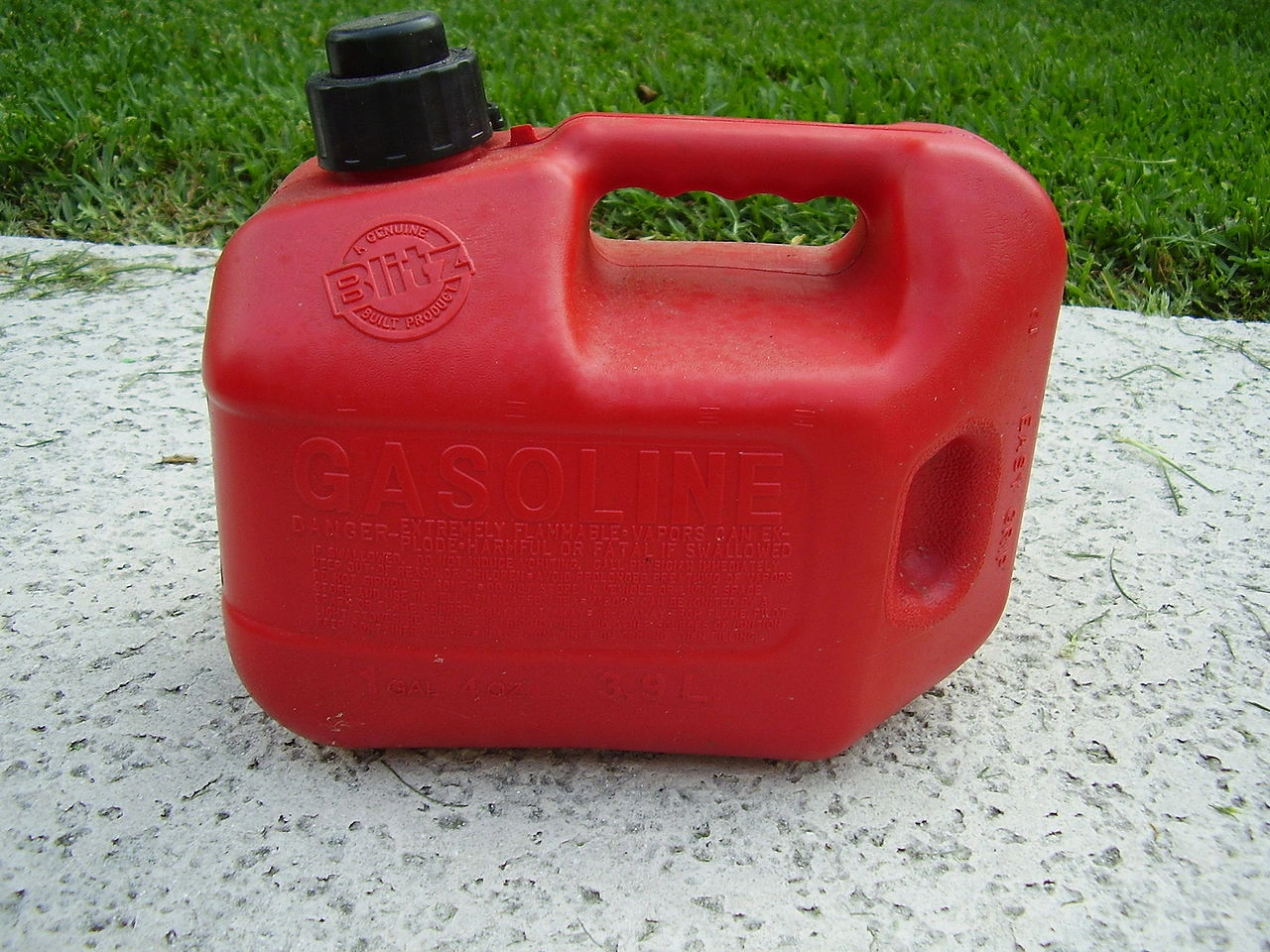
What is petrol called in Belgium?
Petrol is commonly called petrol in English and benzine or essence in Belgium's Dutch- and French-speaking contexts. At filling stations, petrol grades are identified by their octane rating and standardised fuel labels.
What petrol grades are commonly available in Belgium?
Common petrol grades include 95 RON E10 and 98 RON E5. Drivers should choose a grade that is approved for their vehicle.
Can every petrol vehicle in Belgium use E10?
No. Most modern petrol vehicles are compatible with E10, but some older vehicles may not be. Drivers should check the vehicle manufacturer's information before using E10 if compatibility is uncertain.
147. Diésel
El diésel es un combustible líquido utilizado en motores de encendido por compresión. A diferencia de los motores de gasolina, en los diésel el combustible se enciende por el calor producido al comprimir aire y no mediante bujías.
Puede contener componentes renovables como biodiésel. Los conductores deben utilizar un tipo aprobado por el fabricante, ya que un combustible incompatible puede dañar el motor o sistema de alimentación.

Which diesel fuel is commonly sold in Belgium?
Diesel B7 is the standard diesel commonly available for road vehicles in Belgium. It can contain up to 7% biocomponents and complies with the European diesel standard for road vehicles.
Are other types of diesel available in Belgium?
Yes. Other diesel fuels such as B10 and XTL can also be marketed in Belgium. Drivers should check that their vehicle is compatible before using an alternative diesel grade.
How is diesel identified at Belgian filling stations?
Diesel fuels use standardised European square fuel labels containing designations such as B7 or B10. These labels help drivers identify the correct fuel for their vehicle.
148. Líquido de escape diésel
El líquido de escape diésel (DEF) es un líquido utilizado por muchos vehículos diésel modernos con sistemas de reducción catalítica selectiva (SCR) para reducir las emisiones nocivas de óxidos de nitrógeno (NOx). En Europa se conoce comúnmente por la marca AdBlue.
No es combustible diésel y se almacena en un depósito separado. Es una solución de urea de alta pureza y agua que se inyecta en el sistema de escape, donde ayuda a convertir los óxidos de nitrógeno en sustancias menos nocivas.
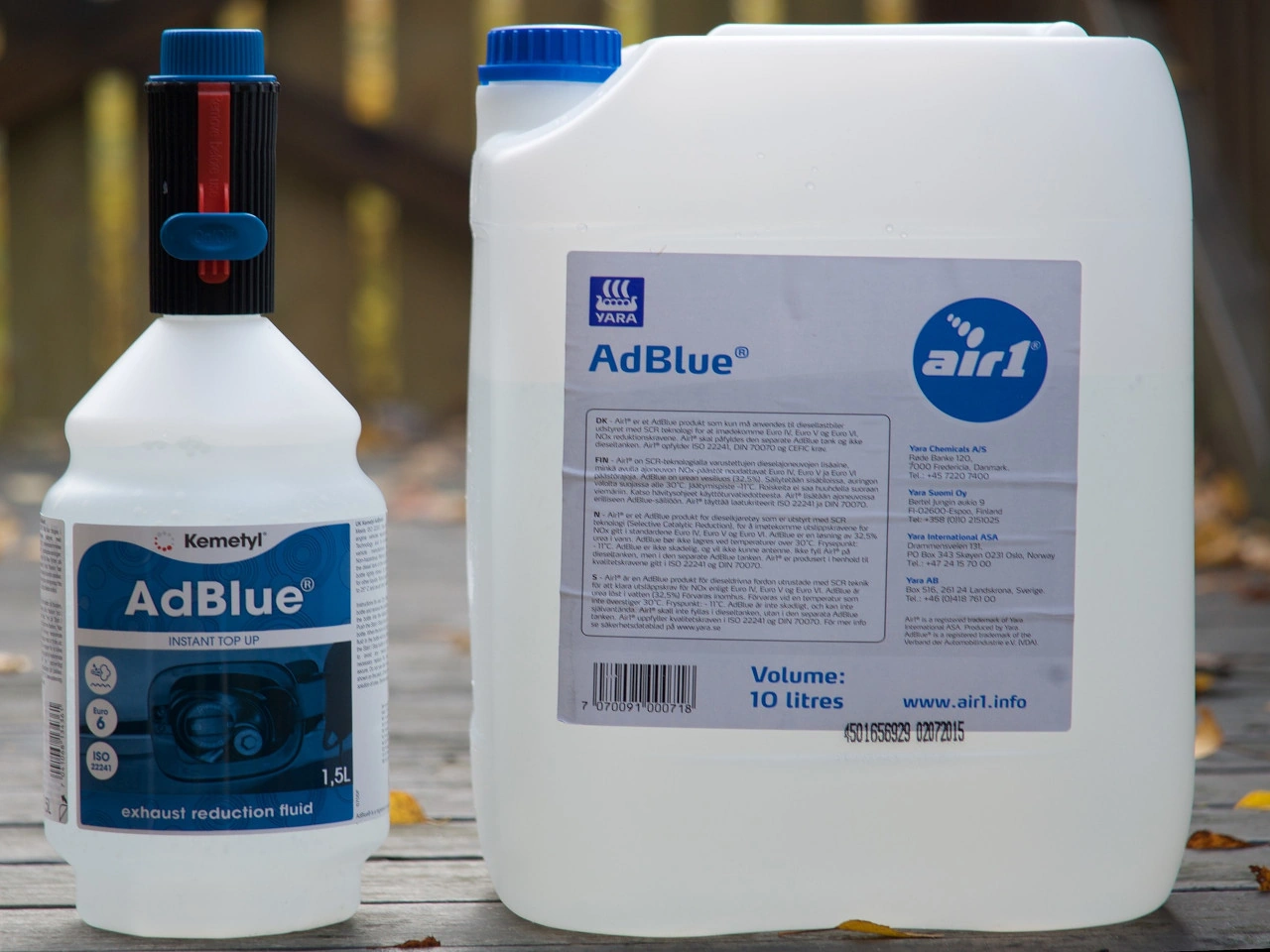
What is diesel exhaust fluid called in Belgium?
Diesel exhaust fluid is commonly known as AdBlue in Belgium. It is used by diesel vehicles equipped with selective catalytic reduction systems to reduce nitrogen oxide emissions.
Can AdBlue be added to the diesel tank?
No. AdBlue and diesel must be kept completely separate. AdBlue has its own tank and filler opening, and putting either liquid into the wrong tank can cause serious vehicle problems.
Should you refill AdBlue when the dashboard warning appears?
Yes. The warning indicates that the AdBlue level is becoming low. Drivers should refill it with a suitable product according to the vehicle manufacturer's instructions rather than waiting until the tank is empty.
149. Seguro de automóvil
El seguro de automóvil es protección financiera frente a riesgos asociados a poseer o utilizar un vehículo. Según la póliza, puede cubrir responsabilidad por lesiones o daños causados a terceros, así como daños, robo u otras pérdidas del vehículo asegurado.
La cobertura mínima legal varía entre países. Los conductores suelen poder contratar protección adicional por encima del mínimo obligatorio, como colisión, todo riesgo, robo, incendio o asistencia en carretera.

Is car insurance compulsory in Belgium?
Yes. Vehicles subject to the Belgian insurance obligation must have civil liability motor insurance when they are used on public roads or other areas covered by the legal requirement.
What does compulsory Belgian car insurance cover?
The compulsory civil liability insurance covers the insured person's legal liability for injury and property damage caused to third parties by the insured vehicle, subject to the applicable insurance rules and policy conditions.
Are additional forms of car insurance compulsory in Belgium?
No. Civil liability motor insurance is the compulsory element. Additional protection, such as cover for theft, fire, glass damage, accidental damage or other risks, can be purchased voluntarily according to the driver's needs and the insurer's policy conditions.
150. Botiquín de primeros auxilios
Un botiquín de primeros auxilios es un conjunto de suministros médicos destinado a proporcionar atención básica inmediata tras una lesión o accidente. Un botiquín para vehículo suele contener apósitos estériles, vendas, tiritas y otros materiales básicos para heridas.
Algunos países obligan a determinados vehículos a llevarlo y otros solo lo recomiendan. Debe guardarse en un lugar accesible y revisarse regularmente para que los elementos exigidos estén completos y utilizables.

Is a first aid kit compulsory in a car in Belgium?
Yes. Cars in Belgium must carry the required first-aid equipment. For an ordinary passenger car, this normally takes the form of a first-aid case containing the items prescribed by the technical vehicle regulations.
What must a Belgian car first aid kit contain?
The prescribed basic kit includes sterile dressings, triangular gauze, bandages, antiseptic adhesive plasters and safety pins or equivalent fasteners. It must also contain information about its contents and first-aid instructions.
Do buses and coaches need a larger first aid kit in Belgium?
Yes. Buses, coaches and certain vehicles used for passenger transport must carry a larger universal first-aid chest. Vehicles in this category with a maximum authorised mass above 5000 kg must carry two such first-aid chests.