Circulación entre carrilesTailandia

Aprende normas de tráfico con explicaciones claras y ejemplos visuales en nuestro libro ilustrado, diseñado para que estudiar sea sencillo y ameno.


28. Circulación entre carriles

La circulación entre carriles consiste en que una motocicleta u otro vehículo de dos ruedas permitido circule entre dos carriles o filas de tráfico que avanzan en la misma dirección. Cuando se realiza entre tráfico detenido o lento también se denomina habitualmente filtrado.

Puede reducir el tiempo de las motocicletas en congestión, pero exige especial cuidado porque los vehículos pueden cambiar de carril, abrir huecos o moverse inesperadamente. Su legalidad, vehículos autorizados y límites de velocidad dependen de las leyes locales.
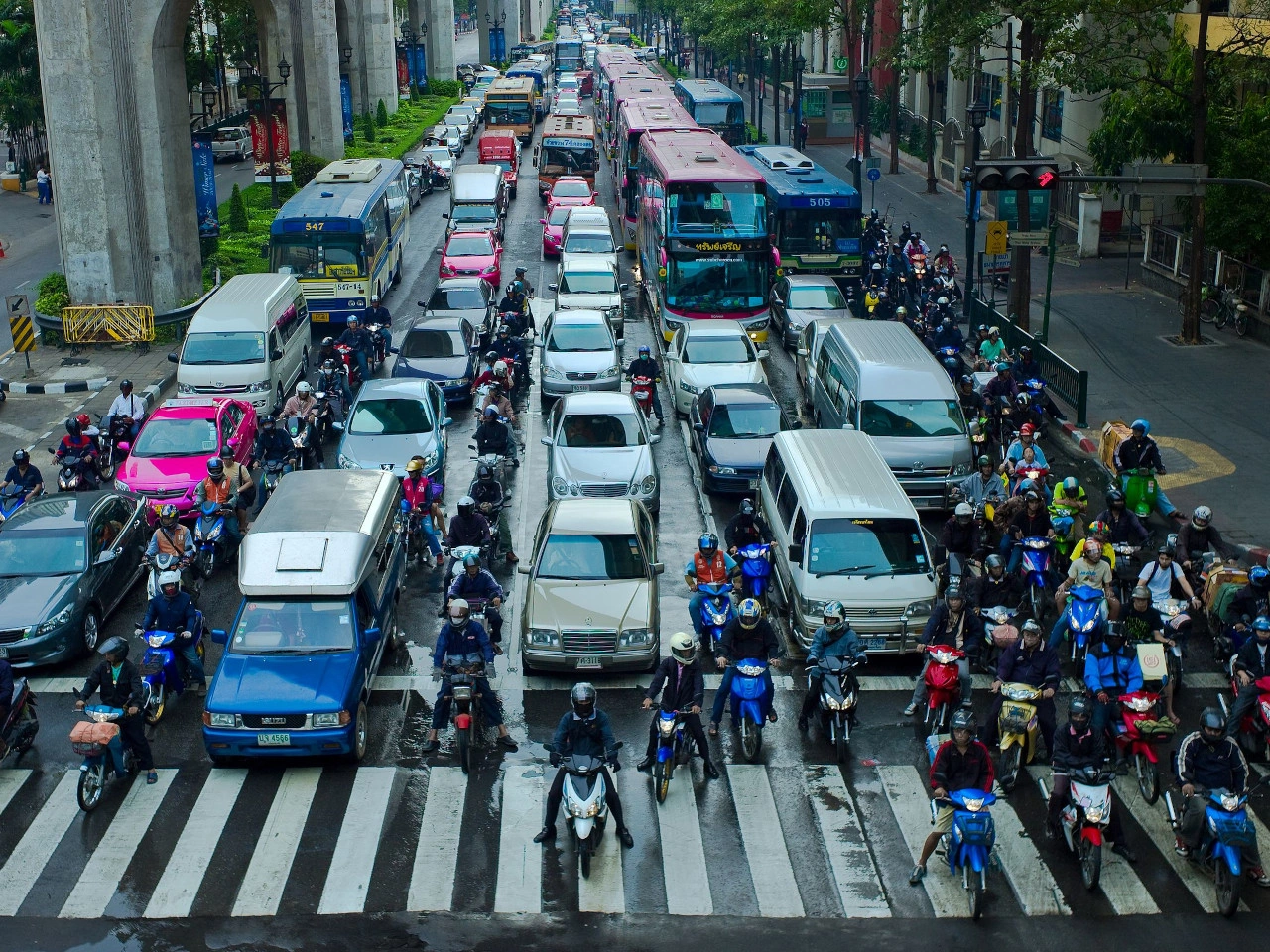
Circulación entre carriles
What is lane splitting?

Lane splitting means riding between two lanes or queues of vehicles travelling in the same direction.

What is the difference between lane splitting and lane filtering?

The terms are often used interchangeably. Lane filtering usually refers more specifically to riding between vehicles that are stationary or moving slowly, while lane splitting can be used more broadly.

Is lane splitting legal everywhere?

No. Some countries expressly permit it under specified conditions, some tolerate particular forms of filtering and others prohibit it.

Can motorcycles lane split at any speed?

No. Where lane splitting is permitted, local rules may impose a maximum motorcycle speed, a maximum speed difference compared with surrounding traffic or both.

Can you lane split between opposing traffic?

Lane splitting normally refers to travelling between lanes or queues moving in the same direction. Riding between your traffic queue and opposing traffic may be prohibited or governed by ordinary overtaking rules.

Can you use the road shoulder for lane splitting?

Not automatically. Permission to travel between traffic lanes does not normally give a rider permission to use an emergency lane, shoulder, cycle path or other restricted part of the road.

What are the main dangers of lane splitting?

Important risks include vehicles changing lane, narrowing gaps, blind spots, opening doors and sudden movements by drivers who may not expect a motorcycle between the lanes.

Should drivers check for motorcycles before changing lane?

Yes. Drivers should use their mirrors, signal appropriately and check relevant blind spots before changing lane.

Should a motorcyclist maintain a large speed difference while filtering?

No. A high speed difference reduces the time available for both the rider and other drivers to react. Where filtering is legal, specific limits may apply.

Does permission to lane split give the motorcyclist priority?

No automatic universal priority exists. Riders and other drivers must continue to follow the applicable manoeuvring, lane-changing and right-of-way rules.

1 Tailandia 2 Límite de velocidad 3 Velocidad mínima 4 Velocidad recomendada 5 Pendiente 6 Señal de STOP 7 Zona escolar 8 Cruce de animales 9 Curva 10 Obras 11 Semáforos 12 Circulación por la izquierda 13 Permiso de conducir 14 Marcha atrás 15 Intersección sin regulación 16 Matrícula 17 Autobús 18 Policía 19 Ambulancia 20 Bache 21 Camino 22 Partículas 23 Contaminación del aire 24 Hora punta 25 Código de circulación 26 Canaleta de la calle 27 Bicicleta de carga 28 Circulación entre carriles 29 Vehículo forestal 30 Vehículo de construcción 31 Camión articulado 32 Trolebús 33 Speed pedelec 34 Vehículo de reparto 35 Motor al ralentí 36 Grúa 37 Tracción a las cuatro ruedas 38 Bicicleta 39 Equipamiento de motocicleta 40 Vía férrea 41 Caravana 42 Remolque 43 Enganche de remolque 44 Camión de bomberos 45 Sirena 46 Convoy 47 Luces de vehículos de emergencia 48 Maquinaria agrícola 49 Bicicleta eléctrica 50 Vehículo eléctrico 51 Pedelec 52 Cuadriciclo 53 Microcoche 54 Vehículo todoterreno 55 Furgoneta 56 Vehículo recreativo 57 Scooter 58 Trikke 59 Vehículo de movilidad personal 60 Monopatín 61 Segway 62 Patinete 63 Patines 64 Cartero 65 Autoestopista 66 Niño pequeño 67 Niño 68 Discapacidad 69 Tren para automóviles 70 km/h 71 mph 72 Velocímetro 73 Altura libre del vehículo 74 Camino de tierra 75 Conducción 76 Sistema start-stop 77 Cambio manual 78 Cambio automático 79 Acelerador 80 Cuentarrevoluciones 81 Volante 82 Dirección asistida 83 Exploración visual 84 Espejo 85 Combustible 86 Indicador de combustible 87 Gasolina 88 Diésel 89 Líquido de escape diésel 90 Seguro de automóvil 91 Botiquín de primeros auxilios 92 Extintor 93 Ropa de alta visibilidad 94 Primeros auxilios 95 Barrera escalonada de hormigón 96 Barreras 97 Luces del vehículo 98 Alumbrado público 99 Luces de cruce 100 Luces de carretera ...