

Panneaux de signalisationBruxelles
 Règles de circulation
 Bruxelles
76. Place
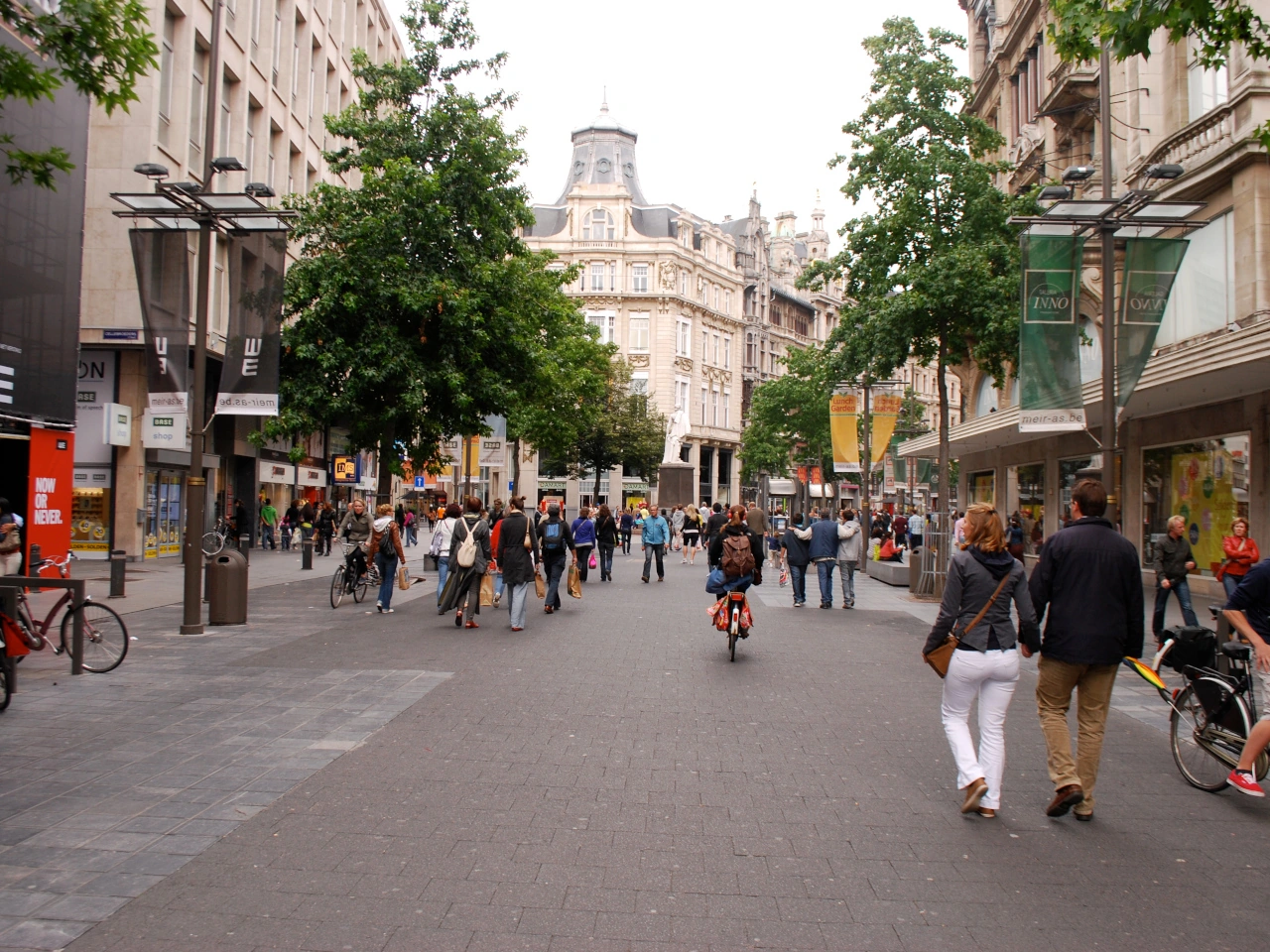
Une place est un espace public ouvert où se rejoignent une ou plusieurs routes, rues ou voies piétonnes. Les places sont courantes dans les villes et villages et peuvent offrir de l’espace pour la circulation, les piétons, le stationnement, les transports publics, les marchés ou d’autres activités publiques.
L’organisation de la circulation sur une place peut varier fortement. Elle peut comporter des chaussées, zones piétonnes, aménagements cyclables, places de stationnement ou zones à accès restreint ; les usagers doivent donc respecter les panneaux, marquages, règles de priorité et règlements locaux applicables.
What is legally considered a square in Belgium?
A Belgian square, or plein, is an open space where one public road enters or several public roads meet and where the layout allows traffic and other activities to be organised together.
Is a Belgian square itself a public road?
Yes. The Road Code expressly states that a square is a public road distinct from the roads that lead into it.
Is a square the same as an intersection in Belgium?
No. An intersection is the place where two or more public roads meet, while a square is legally a separate public road with an open spatial character.
Do the roads entering a Belgian square remain separate roads?
Yes. The square has its own legal identity as a public road and is distinct from the public roads that enter or meet it.
Can cars drive across a Belgian square?
Yes, where the traffic arrangement allows it. Traffic signs, road markings, pedestrian-zone rules or other restrictions may nevertheless limit or prohibit motor-vehicle access.
Can a Belgian square be part of a pedestrian zone?
Yes. A square may be included within a pedestrian zone. In that case the special pedestrian-zone access, speed and priority rules apply.
Can cyclists use a square inside a pedestrian zone?
Only when the pedestrian-zone signs permit them. Where cycling is authorised, cyclists must travel at walking speed, give priority to pedestrians and stop if necessary.
Can parking be allowed on a Belgian square?
Yes, where specifically permitted. Drivers must respect the parking spaces, signs, markings and any zonal parking rules applying within the square.
Does being on a square give any road user automatic priority?
No. The fact that a road user is travelling across a square does not itself create priority. Traffic lights, signs, markings and the applicable Belgian priority rules determine who must give way.
Is there a special Belgian speed limit for every square?
No. The applicable speed depends on the traffic signs and the zone in which the square is located, such as a Zone 30, pedestrian zone, woonerf or other regulated area.
Can a Belgian square contain tram tracks?
Yes. Squares can contain tram tracks and other public-transport infrastructure. Road users must respect the special priority rules applying to rail vehicles.
Can a Belgian square be temporarily closed to traffic?
Yes. Authorities may temporarily restrict or close traffic because of markets, public events, roadworks, emergencies or other traffic-management needs.
Will Belgium change the legal definition of a square in 2027?
Yes, the wording will be simplified. From 1 June 2027, the new Code defines a square as an open space where one or more public roads lead into it and states that the square is a public road distinct from those roads.

77. Chemin
Un chemin est un itinéraire relativement étroit destiné aux piétons et, lorsque cela est autorisé, à d’autres usagers de la route ou à de petits véhicules. Les chemins peuvent traverser des zones urbaines, la campagne, des parcs, des forêts ou relier d’autres routes, et peuvent être revêtus ou non.
Un chemin n’est pas nécessairement identique à un sentier piétonnier ou une piste cyclable. Les usagers autorisés à l’emprunter dépendent de son statut juridique, de sa largeur, de la signalisation routière et de la réglementation locale.

What is legally considered a path in Belgium?
A Belgian path, or pad, is a narrow public road that allows only pedestrians and vehicles requiring no more width than the space normally needed by pedestrians.
Is a Belgian path a public road?
Yes. A path is expressly defined as a type of public road, even though it is too narrow for ordinary vehicle traffic in general.
Is a Belgian path the same as a footpath?
No. A path is not necessarily reserved exclusively for pedestrians. The legal definition also permits sufficiently narrow vehicles, subject to any applicable traffic signs or restrictions.
Is a Belgian path the same as a cycle path?
No. A cycle path is a specifically designated part of the public road reserved for the categories indicated by the cycle-path rules. A path is a separate type of public road.
Can cyclists use a Belgian path?
Yes, where no sign or other rule prohibits them and the vehicle satisfies the characteristics of traffic permitted on the path. The path itself is not automatically a compulsory cycle facility.
Can ordinary cars use a Belgian path?
Normally no. A path only allows vehicles that require no more width than the space needed by pedestrians, so an ordinary passenger car does not fit the legal characteristics of permitted traffic.
Is access to a Belgian path determined only by whether a vehicle has a motor?
No. The basic legal definition is based on the narrow character of the public road and the amount of width the vehicle requires. Traffic signs can impose additional restrictions on particular vehicle categories.
What is the difference between a path and an earth road in Belgium?
A path is narrow and permits only pedestrians and very narrow vehicles. An earth road is wider than a path but is not arranged for vehicle traffic in general.
Does an earth road stop being an earth road where it meets another road?
No. An earth road keeps its legal character even if only the part where it joins another public road has the appearance of a normal roadway.
Who has priority when a driver leaves a Belgian path?
A driver coming from a path onto a public road with a roadway must give way to every driver travelling on the road or roadway being entered.
Does priority from the right give a driver leaving a path priority?
No. The special rule for drivers coming from a path overrides the ordinary priority-from-the-right rule when they enter a public road with a roadway. They must give way to traffic on that road.
Can traffic signs further restrict a Belgian path?
Yes. Although the legal definition determines which traffic can physically and legally use a path in principle, traffic signs can impose additional access prohibitions or reservations.
Will Belgium keep the definition of a path in 2027?
Yes. The Code of the Public Road scheduled to apply from 1 June 2027 retains essentially the same definition: a narrow public road allowing pedestrians and vehicles that require no more width than the space required by pedestrians.
78. Particules
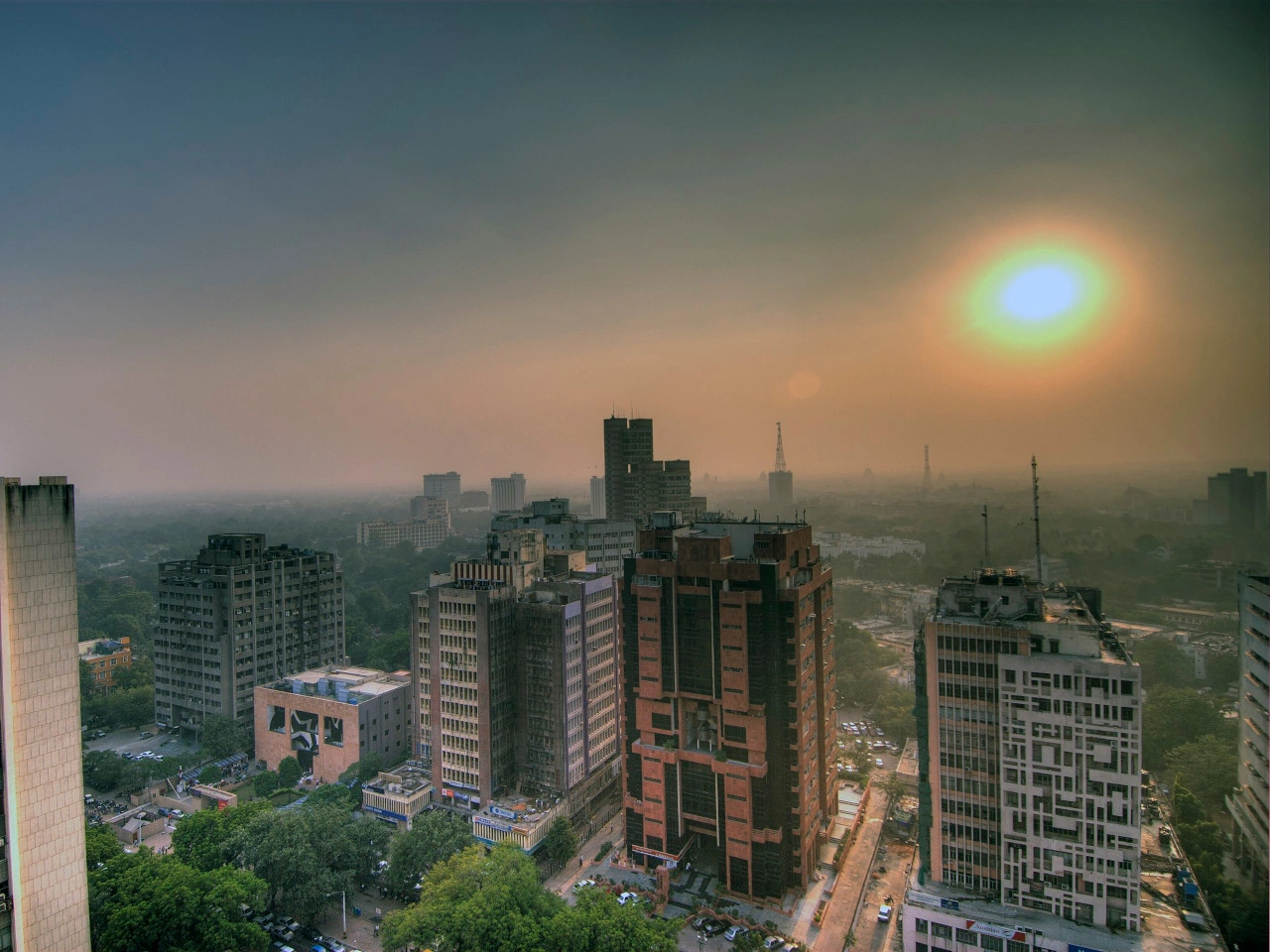
Les particules, ou matières particulaires (PM), sont de minuscules particules solides ou gouttelettes liquides en suspension dans l’air. Dans la circulation routière, les émissions de particules peuvent provenir des gaz d’échappement des véhicules, de l’usure des freins, de l’usure des pneus et de l’usure de la chaussée, ainsi que de la poussière remise en suspension par le passage des véhicules.
Les matières particulaires sont généralement classées selon la taille des particules. PM10 désigne les particules d’un diamètre allant jusqu’à environ 10 micromètres, tandis que PM2.5 désigne des particules plus fines allant jusqu’à environ 2,5 micromètres. Les normes d’émissions des véhicules, les filtres à particules et les mesures relatives à la qualité de l’air servent à réduire l’exposition à ces polluants.
What are particulates in road traffic?
Particulates are tiny airborne particles produced or disturbed by road traffic. Sources include vehicle exhaust, brakes, tyres and road-surface wear.
What is the difference between PM10 and PM2.5?
PM10 consists of particles with a diameter of up to approximately 10 micrometres, while PM2.5 consists of finer particles with a diameter of up to approximately 2.5 micrometres.
Do diesel cars produce particulate emissions?
Yes. Diesel combustion can produce soot and other fine particles. Modern diesel vehicles use emission-control equipment such as a diesel particulate filter to greatly reduce these exhaust emissions.
What is a diesel particulate filter?
A diesel particulate filter, or DPF, is an exhaust-treatment device that captures particulate matter produced by a diesel engine instead of allowing much of it to leave through the exhaust.
Are particulate filters checked during Belgian technical inspections?
Yes. Belgium introduced a particle-number measurement during technical inspection for applicable modern diesel vehicles to check whether the particulate filter is functioning correctly.
When was the Belgian particle-number test introduced?
The particle-number test was introduced on 1 July 2022 for the applicable diesel vehicles and is used during technical inspections in the Belgian regions.
Can the Belgian particle test detect a defective particulate filter?
Yes. The purpose of the particle-number test is to identify vehicles with a defective, removed or manipulated particulate filter by measuring the number of particles emitted.
Can you remove a diesel particulate filter in Belgium?
A vehicle's required emission-control equipment must remain compliant. Removing or manipulating the particulate filter can be detected during the technical inspection particle-number test and can cause the vehicle to fail the applicable emissions check.
Does installing a particulate filter change a vehicle's Euro standard?
No. Retrofitting a particulate filter does not by itself change the vehicle's official Euro emission standard. For example, Brussels LEZ rules continue to use the vehicle's official Euro classification.
Do electric vehicles produce particulate matter?
Fully electric vehicles do not produce combustion-engine exhaust particles, but their tyres, brakes and interaction with the road surface can still generate particulate matter.
Does Belgium regulate non-exhaust particles from vehicles?
Belgium is subject to the European vehicle-emission framework. The Euro 7 rules expand vehicle-emission requirements to include non-exhaust sources such as brake-particle emissions and tyre abrasion.
Are particulate emissions relevant to Belgian low-emission zones?
Yes, indirectly. Low-emission zones are intended to reduce harmful vehicle pollution, but access is generally determined using characteristics such as the vehicle category, fuel type and Euro standard rather than a roadside measurement of the individual vehicle's particulate emissions.
79. Pollution de l’air
La pollution de l’air est la présence dans l’air de gaz, de particules ou d’autres substances à des concentrations susceptibles de nuire à la santé humaine, à l’environnement ou aux écosystèmes. La circulation routière contribue à la pollution de l’air par les émissions d’échappement et par des sources hors échappement telles que l’usure des freins, l’usure des pneus et la poussière routière.
Parmi les principaux polluants liés au trafic figurent les oxydes d’azote, les particules, le monoxyde de carbone et les composés organiques volatils. Certains polluants sont émis directement par les véhicules, tandis que d’autres peuvent se former dans l’atmosphère par des réactions chimiques. Les normes d’émissions, les technologies plus propres et les mesures de gestion du trafic servent à réduire ces émissions.

Is road traffic an important source of air pollution in Belgium?
Yes. Road traffic contributes to several air pollutants, particularly nitrogen oxides and particulate matter, and its influence can be especially important near busy roads and in densely populated areas.
Which traffic-related pollutant is especially important near Belgian roads?
Nitrogen dioxide (NO2) is strongly associated with road traffic. The highest concentrations in Flanders are particularly linked to heavily trafficked roads.
Does Belgian road traffic also produce particulate matter?
Yes. Vehicles can contribute particulate matter through exhaust emissions as well as brake wear, tyre wear, road wear and resuspended road dust.
Do modern diesel cars still affect Belgian air quality?
Yes. Modern emission-control systems have greatly reduced pollutants from newer vehicles, but diesel traffic can still contribute to nitrogen-oxide and particulate emissions. The actual emissions depend on the vehicle technology, condition and driving circumstances.
How does Belgium measure air pollution?
Air quality is monitored through regional measurement networks, with Belgian data coordinated and reported through IRCEL-CELINE. Pollutants monitored include particulate matter, nitrogen dioxide and ozone.
Can you check current air quality in Belgium?
Yes. Belgian and regional air-quality services provide current measurements, maps and air-quality indices so that people can check conditions in their area.
What is the Belgian air-quality index?
Belgium uses the BelAQI air-quality index to communicate short-term air quality based on concentrations of important pollutants such as particulate matter, nitrogen dioxide and ozone.
Why does Brussels have a Low Emission Zone?
The Brussels Low Emission Zone restricts the most polluting vehicles in order to reduce traffic-related air pollution and improve public health.
Are Belgian low-emission zones based directly on measured exhaust pollution?
Not normally. Vehicle access is generally determined using characteristics such as the vehicle category, fuel type and Euro emission standard rather than measuring the emissions of each vehicle when it enters the zone.
Do electric cars eliminate all traffic-related air pollution?
No. Fully electric cars have no combustion-engine exhaust emissions while driving, but tyres, road wear and braking can still produce particulate matter.
Can air quality vary significantly within the same Belgian city?
Yes. Traffic-related pollution can vary considerably over short distances. Concentrations can be higher beside busy roads than in quieter streets or urban-background locations.
How can drivers help reduce traffic-related air pollution?
Drivers can reduce unnecessary emissions by maintaining their vehicle correctly, avoiding unnecessary idling, driving smoothly and using lower-emission transport alternatives where practical. Public transport, cycling and walking can also reduce the amount of motor traffic contributing to urban air pollution.
80. Heure de pointe
L’heure de pointe est une période pendant laquelle les routes et les réseaux de transport public connaissent une demande particulièrement élevée, généralement parce qu’un grand nombre de personnes se rendent au travail, à l’école ou à d’autres destinations régulières, ou en reviennent. Elle se produit le plus souvent le matin et en fin d’après-midi ou en soirée les jours ouvrables.
La circulation aux heures de pointe peut entraîner des embouteillages, des vitesses plus faibles, des trajets plus longs et des arrêts fréquents. Les conducteurs doivent maintenir une distance de sécurité, rester patients, anticiper l’évolution du trafic et respecter les éventuelles mesures temporaires ou dynamiques de gestion de la circulation.

What is rush hour in Belgium?
Rush hour refers to periods of particularly heavy traffic, usually associated with morning and evening commuting on working days.
Is there an official Belgian rush-hour time?
No. There is no single nationwide period legally defined as rush hour. The timing and severity of peak traffic depend on the road, region, day and actual traffic conditions.
Does rush hour change the normal Belgian traffic rules?
No. Ordinary traffic rules continue to apply during congestion. Drivers must continue to respect speed limits, lane rules, traffic lights, signs, following distances and other requirements.
Can Belgium use lower speed limits during rush hour?
Yes. Dynamic traffic-management systems can display speed limits according to traffic conditions. Drivers must respect the maximum speed indicated by the applicable signs or lane-control signals.
What is a Belgian rush-hour lane?
A spitsstrook is an additional motorway lane that can be opened during busy periods to provide extra road capacity. On Flemish motorways it is normally situated on the right-hand side where the emergency lane would otherwise be.
How do you know whether a Belgian rush-hour lane is open?
The lane may be used when the dynamic lane-control signal above it displays a green arrow or an applicable maximum speed.
What does a red cross above a Belgian rush-hour lane mean?
A red cross means that the lane is closed and ordinary traffic may not use it. Drivers must leave or avoid the lane as required.
Can you use a rush-hour lane if the overhead signals are switched off?
No. When the dynamic signalling above a Belgian rush-hour lane is completely extinguished, the rush-hour lane is considered closed and may not be used.
Is there one fixed speed limit on Belgian rush-hour lanes?
No. The permitted speed can be controlled dynamically. Drivers must follow the speed displayed above the lane and any other applicable speed restriction.
Must you form an emergency corridor during Belgian rush-hour congestion?
Yes. As soon as congestion develops on a carriageway with at least two lanes in the same direction, drivers must form an emergency corridor between the leftmost lane and the lane immediately to its right.
May you use your handheld phone while stationary in a Belgian traffic jam?
No. Being temporarily stationary because of congestion does not allow the driver to use, hold or manipulate a handheld electronic device with a screen. The applicable Belgian rules concerning mobile devices continue to apply in traffic jams.
Where can drivers check Belgian rush-hour traffic conditions?
Current traffic information and expected journey times are available through the regional traffic-information services. Checking conditions before departure can help drivers anticipate congestion and choose an appropriate route or departure time.
81. Code de la route
Un code de la route est un ensemble de lois et de règles de circulation qui régissent l’utilisation des voies publiques. Il fixe des règles pour les conducteurs, cyclistes, piétons et autres usagers et couvre notamment la priorité, la vitesse, le dépassement, le stationnement, les feux de circulation, les panneaux et les marquages routiers.
Les codes de la route diffèrent selon les pays et parfois selon les régions. Chaque usager est censé connaître et respecter les règles applicables à l’endroit où il circule, même lorsqu’elles diffèrent de celles de son pays d’origine.
What is the Belgian Road Code?
The Belgian Road Code is the set of rules governing road traffic and the use of public roads. The principal general traffic regulation currently in force is the Royal Decree of 1 December 1975.
Is Belgium introducing a new Road Code?
Yes. A new Code of the Public Road has been adopted, but it does not enter into force until 1 June 2027. Until then, the current Road Code remains applicable.
Will Belgium have one Road Code after 1 June 2027?
No. From 1 June 2027, the current 1975 regulation is scheduled to be replaced by four complementary regulations: a federal Code of the Public Road together with separate road regulations for Brussels, Flanders and Wallonia.
82. Caniveau
Un caniveau est un canal étroit situé le long du bord d’une route ou d’une rue qui recueille et évacue l’eau de pluie vers des avaloirs ou d’autres systèmes de drainage. Il se trouve généralement entre la chaussée et la bordure et peut être réalisé en béton, en pavés ou faire partie du revêtement.
Un caniveau est avant tout un élément de drainage et non une voie de circulation. Les usagers doivent rester prudents à proximité, car il peut contenir de l’eau, des débris, des ouvertures d’égout ou présenter une surface irrégulière.

Is a street gutter a separate type of traffic lane in Belgium?
No. The current Belgian Road Code does not define a street gutter as a separate type of traffic lane. Its primary function is drainage along the edge of the road.
Must cyclists ride in the gutter in Belgium?
No. The requirement to ride as close as possible to the right-hand edge of the carriageway does not mean that cyclists must ride in the gutter.
Can cyclists move away from the gutter when it is unsafe in Belgium?
Yes. Cyclists may keep sufficient distance from the edge when necessary to avoid hazards such as drains, debris or an uneven road surface, while still following the applicable rules on road position.
83. Vélo cargo
Un vélo cargo est un vélo conçu pour transporter des marchandises, des enfants ou d’autres charges plus volumineuses que celles pouvant normalement être transportées sur un vélo classique. Il peut comporter une caisse ou une plateforme devant ou derrière le cycliste, un porte-bagages arrière allongé ou plusieurs roues.
Les vélos cargo peuvent être entièrement propulsés par le cycliste ou équipés d’une assistance électrique au pédalage. Leurs dimensions autorisées, leur capacité en passagers, leur accès aux pistes cyclables et les limites de l’assistance électrique dépendent des règles locales de circulation et de classification des véhicules.

What is a cargo bike in Belgium?
A cargo bike is a bicycle intended to carry goods, children or larger loads. Common Belgian cargo-bike designs include two-wheel box bikes, three-wheel cargo bikes and longtails.
Is a cargo bike a separate legal vehicle category in Belgium?
No. The term describes the bicycle's purpose and design. Its legal classification depends on characteristics such as the number of wheels, width and type of electrical assistance.
Can a Belgian cargo bike have electric assistance?
Yes. A cargo bike with pedal assistance of no more than 250 W that stops assisting by 25 km/h remains classified as an ordinary cycle.
Can a more powerful electric cargo bike still follow bicycle rules?
Yes, within the motorised-cycle category. A motorised cycle may have an electric motor with a nominal continuous maximum power of up to 1 kW and assistance ending by 25 km/h. Under the current rules, its rider follows the traffic rules for cyclists.
Do ordinary Belgian cargo bikes need a driving licence?
No. An ordinary bicycle or electric bicycle within the 250 W and 25 km/h limits does not require a driving licence. A motorised cycle up to 1 kW and 25 km/h also currently requires no driving licence.
Must an ordinary Belgian cargo bike be registered?
No. Ordinary bicycles, electric bicycles within the 250 W and 25 km/h limits and motorised cycles up to 1 kW and 25 km/h do not require registration or a registration plate.
Can a cargo bike use Belgian cycle paths?
Yes, when its legal classification and width permit it. Cargo bicycles treated as bicycles follow the normal rules concerning compulsory cycle paths.
What happens if a three- or four-wheel cargo cycle is wider than 1 metre?
A three- or four-wheel cycle is treated as a bicycle for the applicable traffic rules only when it is no more than 1 metre wide. Wider cycles may not use the ordinary bicycle facilities that are reserved for cyclists.
How wide may a two-wheel Belgian bicycle be?
Under the current technical rules, the maximum width of a two-wheel bicycle is 0.75 metres. Different dimensional rules apply to three- and four-wheel cycles.
Can children travel in a Belgian cargo bike?
Yes, when the bicycle is designed and equipped for them. A bicycle may not carry more people than the number for which its seating positions are designed.
What safety provisions are required when carrying children?
Children must be carried using the appropriate seating arrangement. Belgian federal guidance also requires children's feet to be supported when they are transported on a bicycle or motorised cycle.
Can you carry children in a bicycle trailer?
Yes. A trailer attached to a bicycle or motorised cycle may carry no more than two passengers and must have secure seats providing adequate protection for their hands, feet and backs.
How heavy may a trailer behind a Belgian bicycle be?
A bicycle trailer may normally have a total mass of no more than 80 kg, including its load and passengers. A heavier trailer may be used when it has a braking system that operates automatically when the cyclist brakes.
Can a Belgian cargo bike carry goods wider than the bicycle?
The load on a two-wheel bicycle may project by up to 30 cm on each side, but the total loaded width may not exceed 1 metre. The load must also be positioned and secured safely.
Is a helmet compulsory on an ordinary cargo bike in Belgium?
No. There is currently no general helmet requirement for ordinary bicycle or ordinary electric-bicycle riders, although wearing a suitable bicycle helmet is recommended.
Do motorists have to leave extra passing distance around a cargo bike?
Motorists passing a cyclist must leave at least 1 metre inside a built-up area and at least 1.5 metres outside a built-up area. A driver should leave even more space where necessary because of the cargo bike's width, load or road conditions.
84. Véhicule forestier
Un véhicule forestier est un véhicule conçu, équipé ou adapté pour des travaux liés à la sylviculture et à la gestion des forêts. Il peut servir à tracter des machines, transporter du bois ou du matériel, ou effectuer des opérations telles que l’abattage, le débardage ou l’entretien des terrains forestiers.
Les véhicules forestiers peuvent comprendre des tracteurs, machines automotrices spécialisées, remorques et équipements interchangeables. Leur immatriculation, les exigences de permis, leur vitesse maximale, leur accès aux routes et leurs exigences techniques dépendent de leur classification juridique et de la réglementation locale.
What is a forestry vehicle in Belgium?
A Belgian forestry vehicle can include a land- or forestry tractor, its trailer or other machinery used for forestry operations. The exact legal classification depends on the design and use of the vehicle.
What is legally considered a land- or forestry tractor in Belgium?
A land- or forestry tractor is a powered wheeled or tracked vehicle with at least two axles and a design speed of at least 6 km/h, primarily designed for traction and for pulling, pushing, carrying or operating equipment or trailers used in agriculture or forestry.
Which Belgian driving-licence category applies to forestry tractors?
Category G covers land- and forestry tractors and their trailers, as well as certain vehicles registered as agricultural equipment, agricultural motors or mowing machines.
Does category G apply to every vehicle used in forestry?
No. Category G applies specifically to tractor-type vehicles when they are used for agricultural or forestry operations. Other self-propelled forestry machinery can fall under category B, C1 or C according to its maximum authorised mass.
What if a forestry tractor is used for work unrelated to forestry?
If the same tractor is used for an activity that is not connected with agricultural or forestry operations, category G no longer applies merely because the vehicle is technically a forestry tractor. The driving-licence category appropriate to the vehicle's maximum authorised mass must then be considered.
How old must you be to obtain a Belgian category G licence?
The theory examination may be taken from 15 years and 9 months and the practical examination from 16 years. Until the age of 18, code 205 limits the holder to a vehicle combination with a maximum authorised mass of no more than 20 tonnes.
Can another Belgian driving licence allow you to drive a category G vehicle?
Yes, within specified mass limits. Holders of licences such as B, BE, C1, C1E, C or CE may drive certain category G vehicles corresponding to the masses their licence permits. A valid CE licence also gives entitlement to category G.
Must a Belgian forestry vehicle be registered?
Yes, when it belongs to a category requiring registration for use on public roads. The DIV has a specific registration procedure for tractors and agricultural or forestry vehicles.
Does every Belgian forestry vehicle have a G registration plate?
No. The registration plate beginning with G is a special fiscal plate for qualifying agricultural and forestry vehicles authorised to use fully tax-exempt red diesel. It is not automatically issued to every forestry vehicle.
Can a Belgian forestry vehicle use a motorway?
No. Vehicles legally classified as agricultural vehicles are prohibited from Belgian motorways.
Can a Belgian forestry vehicle use an autoweg?
No. Agricultural vehicles are also specifically excluded from roads designated as autowegen.
Can forestry vehicles use roads reserved for agricultural vehicles in Belgium?
Yes, when they fall within the agricultural-vehicle category indicated by the signs. On roads marked F99c as reserved for the indicated agricultural vehicles and other permitted users, the maximum speed is 30 km/h and motorised traffic must take particular care around pedestrians, cyclists and riders.
85. Véhicule de chantier
Un véhicule de chantier est un véhicule ou une machine mobile conçu ou adapté pour des travaux liés à la construction, aux travaux routiers, à l’excavation, au levage ou au déplacement de matériaux. Les exemples comprennent les excavatrices, chargeuses, bulldozers, rouleaux compresseurs, grues mobiles, tombereaux et bétonnières.
Les véhicules de chantier varient fortement par leur taille, leur vitesse et leur classification juridique. Certains sont des véhicules routiers ordinaires, tandis que d’autres sont des machines spécialisées principalement destinées aux chantiers. Lorsqu’ils circulent sur la voie publique, ils doivent respecter les règles applicables concernant l’immatriculation, le permis de conduire, l’éclairage, les dimensions, le poids, la vitesse et la circulation.
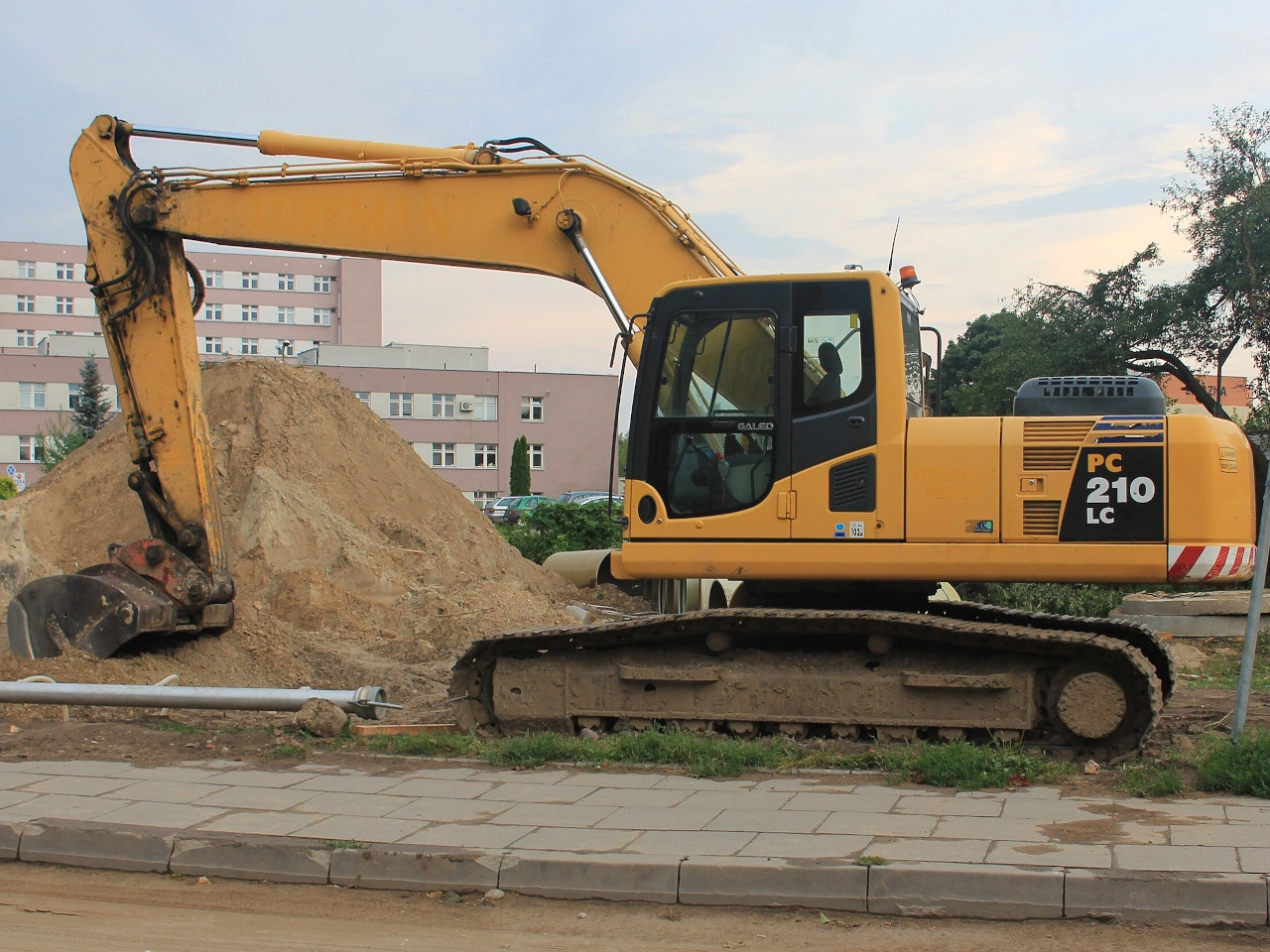
What is considered a construction vehicle in Belgium?
There is no single Belgian legal category called construction vehicle. Depending on its design and purpose, a construction vehicle may be classified as a goods vehicle, slow vehicle, vehicle of special construction, mobile crane or another vehicle category.
What is a Belgian vehicle of special construction?
A vehicle of special construction is a vehicle primarily designed or permanently converted to function as a tool, with almost no payload compared with its tare weight. The category includes certain self-propelled industrial machines.
What is a slow construction vehicle in Belgium?
A Belgian vehicle for slow transport is a motor vehicle whose construction and origin limit its nominal maximum speed to 40 km/h or less.
Can a construction vehicle travel on Belgian public roads?
Yes, when its legal classification and technical requirements permit road use. The vehicle must comply with the registration, technical, lighting, dimensional and other requirements applicable to its particular category.
Which driving licence is required for a construction vehicle in Belgium?
The required licence depends on the legal classification and characteristics of the vehicle. Ordinary goods vehicles normally fall within categories B, C1 or C according to their authorised mass, while special rules exist for certain industrial vehicles of special construction.
Can a category B licence be used for certain Belgian construction machines?
Yes, in a specific case. A category B licence may be used to drive an industrial vehicle of special construction with a design speed of no more than 40 km/h when travelling between construction sites less than 5 km apart or when operating within a port area.
Do flashing amber lights give a construction vehicle priority in Belgium?
No. Orange-yellow flashing lights warn other road users of a special task, obstruction or danger but do not give the vehicle the priority rights associated with a priority vehicle using blue lights and a siren.
When may a Belgian construction vehicle use flashing amber lights?
Orange-yellow flashing lights may be used while the vehicle is actually performing the task for which those lights are authorised or when its presence on the public road creates an obstruction or danger to traffic.
Can a slow construction vehicle use a Belgian motorway?
No. Motorway access is prohibited to vehicles or combinations that cannot reach 70 km/h on a level road. A construction machine limited by design to 40 km/h therefore cannot use a motorway under the ordinary rules.
Can an oversized construction vehicle travel on Belgian roads?
Yes, but special rules may apply. If the vehicle exceeds the normal permitted dimensions or masses, it may qualify as an exceptional vehicle and require a specific permit and compliance with the route and safety conditions imposed for that journey.
Which sign warns of construction or roadworks in Belgium?
The Belgian A31 warning sign warns road users that there are works ahead. Temporary signs, barriers and orange road markings may also be used to guide traffic through the work zone.
Can construction-site personnel control traffic in Belgium?
Yes, in the circumstances provided by law. A site supervisor responsible for protecting roadworks personnel may give traffic-control indications and may use the prescribed C3 stop disc to stop traffic.
86. Ensemble semi-remorque
Un ensemble semi-remorque est une combinaison constituée d’un tracteur routier et d’une semi-remorque, principalement utilisée pour transporter des marchandises. La semi-remorque est attelée au tracteur de sorte qu’une part importante de son poids repose sur le tracteur plutôt que entièrement sur ses propres roues.
Les ensembles semi-remorques sont couramment utilisés pour le transport de marchandises sur longue distance et peuvent transporter des conteneurs, produits réfrigérés, liquides, matériaux en vrac ou autres cargaisons. Des règles particulières peuvent concerner les permis de conduire, dimensions et masses maximales, limitations de vitesse, utilisation des voies, dépassements, chargement ainsi que temps de conduite et de repos.
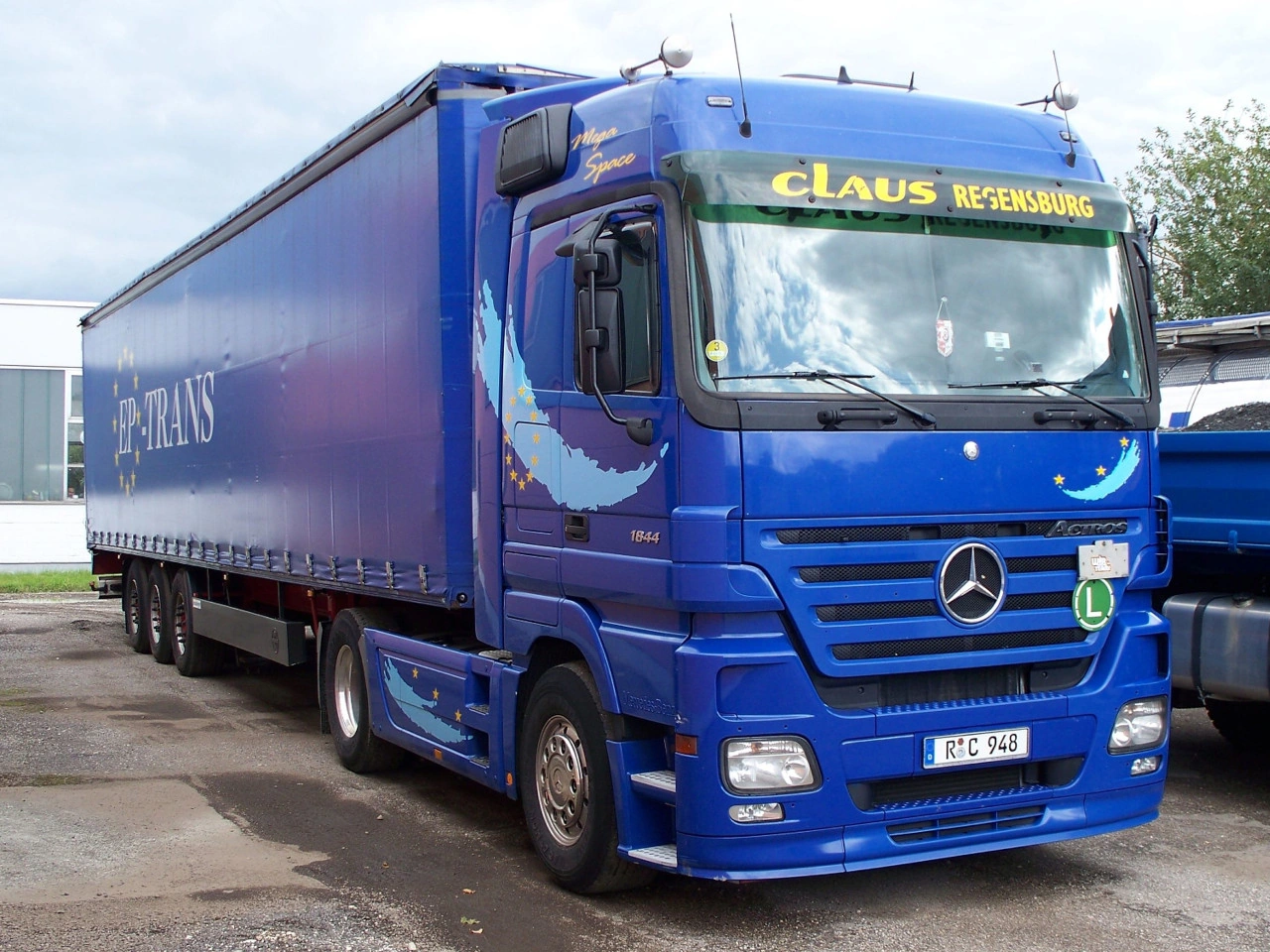
What is a semi-trailer truck in Belgium?
A Belgian semi-trailer truck consists of a tractor and a semi-trailer coupled together. Belgian technical regulations refer to this combination as an articulated vehicle.
What is legally considered a semi-trailer in Belgium?
A semi-trailer is a towed vehicle designed to be coupled to a semi-trailer tractor or dolly and to transfer a significant static vertical load to that towing vehicle.
What is a road tractor in Belgium?
A tractor is a motor vehicle in category N1, N2 or N3 designed primarily to tow semi-trailers or trailers.
Which driving licence normally applies to a Belgian semi-trailer truck?
A heavy tractor with a semi-trailer whose maximum authorised mass exceeds 750 kg normally requires a category CE driving licence. Category C by itself normally permits only a trailer with a maximum authorised mass not exceeding 750 kg.
Do professional semi-trailer truck drivers need Code 95 in Belgium?
Generally yes. Most professional drivers using category C and CE vehicles must hold the required professional competence, indicated by Code 95, unless a specific exemption applies.
What is the maximum length of a normal Belgian semi-trailer combination?
A standard articulated tractor-semi-trailer combination may generally be up to 16.5 metres long when the applicable geometric requirements concerning the semi-trailer and coupling are satisfied.
How heavy can a Belgian semi-trailer combination be?
The permitted maximum mass depends on the number of axles, suspension, configuration, region and type of transport. Common articulated configurations can reach up to approximately 44 tonnes under the applicable technical rules, while different limits apply to other combinations.
What is the maximum motorway speed for a semi-trailer truck in Belgium?
For a vehicle or combination with a maximum authorised mass exceeding 3.5 tonnes, the maximum speed on a Belgian motorway is 90 km/h, unless a lower limit applies.
Which motorway lanes may a Belgian semi-trailer truck use?
Under the rules currently applicable until 31 May 2027, when a motorway has three or more lanes in the same direction, vehicles and combinations exceeding 3.5 tonnes may normally use only the two rightmost lanes, except where particular lane-direction signs require otherwise.
Will the motorway lane rule change in June 2027?
Yes. From 1 June 2027, under the new Code of the Public Road, vehicles and combinations exceeding 3.5 tonnes may not use the leftmost lane of a motorway with three or more lanes in their direction. This replaces the current two-rightmost-lanes wording.
May a heavy semi-trailer truck overtake in rain in Belgium?
For vehicles and combinations used to transport goods with a maximum authorised mass exceeding 7.5 tonnes, overtaking is prohibited during precipitation on motorways, autowegen and roads with at least four lanes, subject to the specific exceptions provided by law.
Must heavy trucks keep extra distance outside built-up areas?
Yes. Outside built-up areas, vehicles and combinations exceeding 7.5 tonnes or longer than 7 metres must normally maintain at least 50 metres from another such vehicle travelling ahead.
Can a semi-trailer truck park indefinitely on a Belgian road?
No. Within built-up areas, vehicles and combinations with a maximum authorised mass exceeding 7.5 tonnes may not normally remain parked on the public road for more than eight consecutive hours except in specifically designated parking places.
87. Trolleybus
Un trolleybus est un autobus électrique qui reçoit normalement son énergie de lignes électriques aériennes au moyen de perches ou capteurs de courant montés sur le véhicule. Contrairement à un tram, il roule sur des pneus ordinaires et est dirigé par son conducteur au lieu d’être guidé par des rails.
Les trolleybus servent généralement au transport public de passagers et peuvent utiliser des voies de bus, des arrêts et d’autres infrastructures de transport public. Certains trolleybus modernes disposent aussi de batteries ou de systèmes auxiliaires leur permettant de parcourir de courtes distances sans rester connectés aux lignes aériennes.

What is legally considered a trolleybus in Belgium?
A Belgian trolleybus is an electrically powered autobus that obtains the energy needed for propulsion from an overhead electrical line.
Is a Belgian trolleybus legally a tram?
No. A trolleybus is a road vehicle rather than a rail vehicle. It runs on tyres and is steered by its driver instead of being guided by railway or tram tracks.
Is a trolleybus considered a motor vehicle in Belgium?
Yes. The Belgian Road Code includes the trolleybus within the legal definition of an auto.
Does an auxiliary motor stop a vehicle from being a trolleybus?
No. Belgian technical rules specifically state that fitting a trolleybus with an auxiliary motor that allows it to continue moving without taking electricity from the overhead line does not change its legal nature as a trolleybus.
Which driving licence is required for a Belgian trolleybus?
A trolleybus used to carry passengers falls within the Belgian passenger-vehicle licensing system. Depending on its passenger capacity and characteristics, the applicable licence is normally category D1 or D.
Does a trolleybus leaving a stop have priority in Belgium?
Inside a built-up area, yes in the specified circumstances. A driver travelling in the same direction must allow a trolleybus to leave its stop when the trolleybus driver indicates the intention to move off. The approaching driver must slow down and stop if necessary.
Does this special priority apply outside built-up areas?
No. The specific Belgian rule requiring following traffic to allow an autobus or trolleybus to leave its stop applies inside built-up areas.
Must drivers slow down when passing a stopped trolleybus?
Yes. Drivers must reduce their speed when passing a trolleybus that is stopped to allow passengers to board or leave.
What if trolleybus passengers must cross the roadway?
If there is no refuge island, drivers travelling along the side where passengers board or leave must allow them to reach the trolleybus, pavement, pedestrian area or verge safely. Drivers must stop when necessary and may resume driving only at moderate speed.
May you park near a Belgian trolleybus stop?
No. Parking is prohibited within 15 metres on either side of a sign indicating a trolleybus stop.
Can a Belgian trolleybus use a bus lane?
Yes, when operating as a regular public-transport service. Belgian F17 bus lanes are reserved by default for vehicles used for regular public passenger transport.
Can trolleybuses be controlled by special public-transport traffic lights?
Yes. Belgium uses special white bars, circles and triangles on a black background to control vehicles used for regular public passenger transport services, which can include trolleybuses.
88. Speed pedelec
Un speed pedelec est un vélo à assistance électrique rapide dont le moteur peut continuer à fournir une assistance au pédalage au-delà de la limite normale des vélos électriques, généralement jusqu’à environ 45 km/h. Il possède des pédales et est principalement conçu pour assister le cycliste pendant qu’il pédale.
En raison de sa vitesse plus élevée, un speed pedelec peut être classé juridiquement différemment d’un vélo ou vélo électrique ordinaire. Des règles particulières peuvent s’appliquer concernant l’âge minimum, le permis de conduire, le casque, l’immatriculation, l’assurance, l’utilisation des pistes cyclables et les routes autorisées, selon le pays.

What is a speed pedelec in Belgium?
A Belgian speed pedelec is a two-wheeled vehicle with pedals and an auxiliary drive primarily intended to assist pedalling, with assistance ending at a vehicle speed of no more than 45 km/h.
How powerful may a Belgian speed pedelec be?
A speed pedelec with an electric motor may have a nominal continuous maximum power of up to 4 kW.
Is a speed pedelec legally a bicycle in Belgium?
No. Under the Belgian traffic rules, a speed pedelec belongs to the broader legal category of mopeds, although several special rules distinguish it from ordinary class A and class B mopeds.
How old must you be to ride a speed pedelec in Belgium?
You must normally be at least 16 years old to ride a speed pedelec on the public road.
Which driving licence do you need for a Belgian speed pedelec?
You need at least a category AM driving licence. A licence valid for category A1, A2, A or B also provides access to category AM.
Must you wear a helmet on a speed pedelec in Belgium?
Yes. Both the rider and passenger must wear either an approved moped helmet or an appropriate bicycle helmet that provides the additional protection required for speed-pedelec use.
What type of bicycle helmet may be used on a Belgian speed pedelec?
The bicycle helmet must comply with the applicable approval requirements and provide protection for the temples and the back of the head. Belgian guidance specifies an EN 1078-approved helmet providing this additional protection.
Must a Belgian speed pedelec be registered?
Yes. A speed pedelec must be registered with the DIV and display a registration plate. Belgian speed-pedelec plates begin with S-P.
Does a Belgian speed pedelec need a certificate of conformity?
Yes. A certificate of conformity is required for a speed pedelec. It confirms the vehicle's approved technical classification, although the rider does not normally have to carry the certificate during every journey.
Is motor-vehicle liability insurance compulsory for every Belgian speed pedelec?
No. A normal speed pedelec whose motor provides pedal assistance and cannot propel the vehicle autonomously above 25 km/h is not subject to compulsory motor-vehicle liability insurance. If the motor can propel the vehicle above 25 km/h without pedalling, compulsory motor-vehicle liability insurance applies.
Can a speed pedelec use a Belgian cycle path?
Where the speed limit is 50 km/h or lower, a speed-pedelec rider may generally choose between the carriageway and an applicable cycle path, provided other cycle-path users are not endangered. Where the speed limit is higher than 50 km/h, the applicable cycle path must normally be used. Supplementary signs can impose different rules.
Can a speed pedelec use a D9 cycle facility in Belgium?
Yes. Speed pedelecs may use sections indicated by D9 under the applicable speed-based rules. They are not permitted on a D10 pedestrian-and-cycle facility under the current rules.
Can a Belgian speed pedelec use a motorway or autoweg?
No. Speed pedelecs belong to the moped category, and mopeds are prohibited on Belgian motorways and autowegen.
Can you carry a passenger on a Belgian speed pedelec?
Yes, when the vehicle is designed to carry one. The rider must be at least 18 years old to carry a passenger. A speed pedelec may carry no more passengers than its approved seating arrangement permits.
Can you carry a young child on a Belgian speed pedelec?
Children younger than 3 years may not be carried. Children from 3 to under 8 years old must be carried using an appropriate child-restraint system that satisfies the applicable requirements.
Can passengers travel in a trailer behind a Belgian speed pedelec?
No. A trailer may be attached for carrying goods where permitted, but persons may not be transported in a trailer attached to a speed pedelec.
89. Véhicule de livraison
Un véhicule de livraison est un véhicule utilisé pour transporter et livrer des marchandises, colis, fournitures ou autres biens à des domiciles, entreprises ou autres destinations. Il peut s’agir de fourgonnettes, camions, voitures, motos, vélos cargo ou d’autres véhicules selon le type et la quantité de marchandises transportées.
Les véhicules de livraison doivent respecter les règles ordinaires applicables à leur catégorie ainsi que toute règle spécifique concernant le chargement et le déchargement, les zones à accès restreint, le stationnement, les dimensions du véhicule et les zones à faibles émissions. L’autorisation d’effectuer une livraison ne permet pas automatiquement de s’arrêter ou de stationner n’importe où.

What is a delivery vehicle in Belgium?
A delivery vehicle is a vehicle being used to transport or deliver goods. It does not form one separate vehicle category: the normal rules applying to the vehicle itself, such as those for a car, light goods vehicle or truck, continue to apply.
Does loading or unloading count as parking in Belgium?
No, when the vehicle remains stationary only for the time necessary to load or unload goods. In that situation it is legally considered stopped. Remaining longer than necessary is considered parking.
Can you load or unload where an E1 no-parking sign applies?
Yes, provided stopping itself is permitted. E1 prohibits parking, while genuine loading or unloading for only the necessary time is legally considered stopping rather than parking.
Can you load or unload where an E3 sign applies?
No. E3 prohibits both stopping and parking, so a delivery vehicle may not stop there merely to load or unload goods.
How is a loading and unloading place indicated in Belgium?
An E9 parking sign can be supplemented with the loading-and-unloading symbol to indicate that the place is reserved for loading and unloading goods.
Can you wait for a customer in a Belgian loading zone?
If no goods are actually being loaded or unloaded and the vehicle remains stationary longer than necessary for that activity, it is considered parked rather than stopped. The loading space should therefore not be used simply as a waiting place.
Are delivery vehicles considered local traffic in Belgium?
Yes. The Belgian definition of local traffic or local access expressly includes delivery vehicles, together with residents, their visitors and several other specified categories.
Can a delivery vehicle pass a C3 sign marked 'Except local traffic'?
Yes, when the delivery falls within the Belgian definition of local traffic. The driver must nevertheless comply with any additional restrictions or conditions applying to the road.
Can delivery vehicles enter a Belgian pedestrian zone?
Yes, when the signs specifically permit vehicles that need to load or unload and subject to the restrictions shown. Other specific access possibilities also exist in limited circumstances for businesses located within the zone.
How fast may a delivery vehicle travel in a Belgian pedestrian zone?
A delivery vehicle legally admitted to a pedestrian zone must travel at walking speed, leave pedestrians free passage and stop when necessary. It may not endanger or hinder pedestrians.
Can a delivery vehicle park inside a Belgian pedestrian zone?
No. Even when a vehicle is authorised to enter a pedestrian zone for loading or unloading, parking is prohibited there.
Can a delivery vehicle stop on a Belgian cycle path to make a delivery?
No. Stopping and parking on a cycle path are prohibited. A delivery does not provide an exemption from this rule.
Do delivery vans have to comply with the Brussels Low Emission Zone?
Yes. Delivery vans are subject to the Brussels LEZ when they fall within the vehicle categories covered by its rules. Since 1 January 2026, Euro 5 diesel vans no longer meet the normal access criteria, meaning affected diesel vans generally need at least Euro 6 unless a valid exemption or day pass applies.
90. Moteur au ralenti
Le ralenti consiste à laisser tourner le moteur d’un véhicule alors que celui-ci est immobile et que le moteur n’est pas utilisé pour le déplacer. Cela peut se produire pendant une attente, un stationnement, un chargement ou déchargement ou avant le départ.
Un ralenti inutile consomme du carburant et produit des émissions d’échappement, de la pollution de l’air et du bruit. De nombreux pays ou autorités locales limitent le ralenti prolongé ou inutile, même si des exceptions peuvent s’appliquer lorsque le moteur est nécessaire pour la sécurité, un équipement technique ou une autre raison justifiée.
Is unnecessary idling allowed in Belgium?
No. Under the current Belgian Road Code, a driver may not leave the engine running in neutral unless this is necessary.
May you repeatedly rev the engine while stationary in Belgium?
No. The Belgian Road Code specifically prohibits repeatedly accelerating an engine while it is running in neutral.
Must you switch off your engine every time you stop at a red light?
No general federal rule requires drivers to manually switch off their engine at every red traffic light. Being temporarily prevented from moving by traffic conditions is different from voluntarily leaving a vehicle stationary or parked.
Can you leave your engine running while parked and waiting for someone?
You should not leave the engine running unnecessarily. The Belgian Road Code permits an engine to remain running in neutral only in a case of necessity.
Can you leave the engine running simply to warm up the vehicle?
You should not assume that ordinary engine warming constitutes a legal necessity. Modern vehicles should generally be operated according to the manufacturer's instructions, and unnecessary stationary engine running should be avoided.
Does Belgium set a nationwide maximum idling time in minutes?
No single federal time limit applies in the current Road Code. Instead, the rule prohibits leaving the engine running in neutral except where necessary. Regional or local rules may impose additional requirements.
Are the idling rules stricter in Wallonia?
Yes. In Wallonia, when a vehicle stops at a place where stopping or parking is legally permitted, the driver must normally switch off the engine immediately.
Are there exceptions to the Walloon engine-switch-off rule?
Yes. Exceptions include certain priority vehicles, military vehicles, vehicles involved in emergency or rescue work, specialised infrastructure-maintenance vehicles, vehicles with refrigeration equipment, vehicles whose engines provide electricity to specialised equipment and vehicles with a technical problem requiring the engine to remain running.
Can a refrigerated delivery truck keep its engine running in Wallonia?
Yes, where the exception applies. Vehicles equipped with refrigeration equipment are specifically included among the exceptions to the Walloon engine-switch-off rule.
Can a vehicle keep running because of a technical problem in Wallonia?
Yes, when it is necessary. A vehicle with a technical problem that requires the engine to continue running is specifically exempted from the immediate engine-switch-off requirement.
Why does Belgium restrict unnecessary idling?
Keeping a combustion engine running unnecessarily produces air pollutants, greenhouse-gas emissions, noise and fuel consumption without moving the vehicle.
Can local authorities impose additional anti-idling rules?
Yes. Regional and municipal environmental or police regulations can contain additional restrictions concerning stationary engines, noise or emissions, so drivers should also follow any applicable local rules.
91. Dépanneuse
Une dépanneuse est un véhicule spécialisé utilisé pour dépanner, remorquer, soulever ou transporter des véhicules en panne, accidentés, mal stationnés ou autrement incapables de poursuivre normalement leur trajet. Elle peut utiliser un équipement de levage, un treuil, un dispositif de levage des roues ou une plateforme.
Comme les opérations de dépannage peuvent avoir lieu à proximité de la circulation, les dépanneuses utilisent souvent des feux de signalisation et d’autres équipements de sécurité pendant leur intervention. Les conducteurs qui approchent doivent ralentir si nécessaire, laisser suffisamment d’espace et respecter toute signalisation temporaire ou instruction du personnel autorisé.
What is legally considered a tow truck in Belgium?
A Belgian tow truck is a category-N motor vehicle normally intended to clear the public road by removing or towing vehicles that have been damaged in an accident or have broken down.
Is any truck with towing equipment legally a Belgian tow truck?
No. A vehicle that is used for vehicle recovery only occasionally is not legally considered a tow truck. It must be normally intended and appropriately equipped for recovery work.
Can a Belgian tow truck have a loading platform?
Yes. A loading platform is permitted provided the tow truck has at least a fixed winch and two loading ramps, whether fixed or removable, as required by the technical regulations.
Must Belgian tow trucks use amber flashing lights while recovering a vehicle?
Yes. The tow truck's orange-yellow flashing lights must be used at the breakdown or recovery location and while the vehicle is being towed.
May a Belgian tow truck leave its amber lights on when it is not recovering a vehicle?
No. Outside the circumstances in which the tow truck is recovering or towing a vehicle, its orange-yellow flashing lights may not remain illuminated merely because it is a tow truck.
Do amber flashing lights give a Belgian tow truck priority?
No. Orange-yellow flashing lights serve as a warning of a special task, obstruction or danger. They do not give the tow truck the priority rights associated with a priority vehicle using the prescribed blue lights and audible warning.
Can a tow truck use the emergency lane to reach a motorway incident?
When a tow or recovery vehicle is legally travelling on the emergency lane to reach an incident on or beside a motorway or autoweg, or is using the emergency corridor, it must use one or two orange-yellow flashing lights.
Can an ordinary broken-down car be towed in Belgium?
Yes, but only under the applicable towing rules. A motor vehicle may normally be towed only when it can no longer move under its own power or no longer provides the necessary safety guarantees.
Can you tow a broken-down vehicle with an emergency coupling on a Belgian motorway?
No. Towing with an emergency or auxiliary coupling is prohibited on Belgian motorways. Professional towing equipment specifically fitted to recovery vehicles is treated differently and is not considered such an emergency coupling.
What is the maximum speed when using an emergency towing coupling in Belgium?
Where emergency or auxiliary towing is legally permitted, the maximum speed is 25 km/h, and the vehicle may only be taken to the place of repair.
Can a Belgian tow truck tow an articulated truck?
Yes, under specific conditions. A tow truck may tow an articulated vehicle solely to bring it to the place of repair, provided the tow truck satisfies the special technical requirements for doing so.
Which driving licence is required for a Belgian tow truck?
The required licence depends mainly on the tow truck's maximum authorised mass. A vehicle above 3.5 tonnes requires the appropriate category C-group licence: C1 covers vehicles above 3.5 tonnes up to 7.5 tonnes, while category C covers heavier vehicles.
92. Quatre roues motrices
Les quatre roues motrices, généralement désignées par 4WD ou 4x4, est un système de transmission capable d’envoyer la puissance aux quatre roues d’un véhicule. Elle peut améliorer la motricité sur la neige, la boue, le gravier, le sable ou les terrains irréguliers.
Les systèmes à quatre roues motrices peuvent fonctionner en permanence ou s’enclencher automatiquement ou manuellement lorsqu’une adhérence supplémentaire est nécessaire. Ils peuvent améliorer la capacité du véhicule à avancer sur des surfaces glissantes ou difficiles, mais ne remplacent pas des pneus adaptés, une vitesse sûre et une conduite prudente au freinage et à la direction.

Does a four-wheel-drive car have special traffic rules in Belgium?
No. Four-wheel drive by itself does not give a vehicle special priority, speed limits or road access. The ordinary rules applying to the vehicle category and road continue to apply.
Does a 4x4 require a special driving licence in Belgium?
No, not merely because it has four-wheel drive. The required driving-licence category depends on factors such as the vehicle's maximum authorised mass, passenger capacity and any trailer being towed.
Can a four-wheel-drive car drive faster in snow or bad weather?
No. Belgian drivers must always adapt their speed to the road, weather, visibility and traffic conditions. Four-wheel drive does not exempt the driver from this obligation.
Does four-wheel drive remove the need for good tyres?
No. The tyres must remain suitable and in safe condition. For ordinary cars, the main tread grooves must normally have a depth of at least 1.6 mm.
Can a Belgian 4x4 use snow chains?
Yes, when conditions justify them. Snow chains may be fitted to tyres when there is snow or ice on the road.
Are studded tyres normally permitted on Belgian roads?
No. Studded tyres are generally prohibited, although exceptional use can be authorised under specific conditions.
Does four-wheel drive give better braking on snow?
Not automatically. Four-wheel drive mainly improves the ability to transmit driving force to the road. Braking remains dependent on tyre grip, road conditions, vehicle speed and the braking system.
Can a four-wheel-drive vehicle use a Belgian motorway?
Yes, if the vehicle itself satisfies the motorway access requirements. Having four-wheel drive neither grants nor removes motorway access.
Can a 4x4 drive on roads that are closed to ordinary cars?
No. Four-wheel drive does not override access prohibitions, traffic signs or restrictions. A 4x4 must respect the same road-access signs that apply to its vehicle category.
Can a Belgian four-wheel-drive vehicle tow a trailer?
Yes, if the vehicle is approved for towing. The trailer and combination must remain within the maximum towing and combination masses authorised for the vehicle, and the driver must hold the appropriate licence.
Does Belgian law contain any special towing provision for four-wheel drive?
Yes, for certain vehicles. Belgian technical regulations provide a specific towing-mass provision for certain four-wheel-drive passenger cars and light vehicles with a chassis separate from the body when towing a trailer fitted with an overrun braking system. The vehicle's officially approved towing mass must still be respected.
Does owning a 4x4 allow you to drive off-road anywhere in Belgium?
No. Four-wheel drive is a technical characteristic of the vehicle and does not provide permission to enter roads, paths, forests or other areas where motor-vehicle access is prohibited or restricted.
93. Accès interdit à tous les véhicules
Accès interdit à tous les véhicules indique que les véhicules ne peuvent pas entrer sur la route, dans la rue ou dans la zone située au-delà du panneau. Contrairement à une interdiction d’entrer liée à un sens unique, l’interdiction s’applique normalement à la circulation venant des deux directions.
Les usagers concernés peuvent varier selon les pays. En fonction de la législation locale, les vélos, cyclomoteurs, véhicules à traction animale ou d’autres usagers peuvent également être interdits. Des panneaux complémentaires peuvent prévoir des exceptions pour les riverains, livraisons, cyclistes, transports publics ou autres véhicules autorisés.
Which sign means no vehicles in Belgium?
The Belgian C3 sign, a white circular sign with a red border, means access prohibited in both directions for every driver. It closes the road to drivers entering from either end unless an exception applies.
 Accès interdit dans les deux sens.
Signal routier C3 • Accès interdit, dans les deux sens, à tout conducteur.
Verkeersbord C3 • Verboden toegang, in beide richtingen, voor iedere bestuurder.
Is the Belgian C3 sign the same as a no-entry sign?
No. The C1 no-entry sign prohibits drivers from entering in one particular direction. The C3 sign prohibits access in both directions.
Does the C3 sign prohibit cars and motorcycles?
Yes. Drivers of cars, motorcycles and other vehicles may not pass a C3 sign unless a supplementary sign or another legal exception permits them to do so.
Are cyclists prohibited by a C3 sign in Belgium?
Yes, unless an exception is indicated. Cyclists are drivers and bicycles are vehicles under the Belgian Road Code. A supplementary bicycle panel can expressly exempt cyclists from the C3 prohibition.
Can mopeds and speed pedelecs be exempted from a C3 sign?
Yes. The appropriate supplementary panels can exempt cyclists and specified categories of moped riders or speed-pedelec riders from the C3 prohibition.
May pedestrians pass a C3 sign?
Yes, unless another rule or sign prohibits them. C3 applies to drivers rather than pedestrians. A separate prohibition, such as the applicable pedestrian-access sign, is required where pedestrians are also prohibited.
May you walk a bicycle past a C3 sign?
Normally yes, unless pedestrians are also prohibited. Under Belgian rules, a person walking a bicycle by hand is treated as a pedestrian rather than as a cyclist driving a vehicle.
Are horse riders affected by a C3 sign?
Yes. The Belgian definition of a driver also includes persons who lead or control riding, draught or pack animals or livestock. They are therefore covered by a C3 prohibition unless an exception applies.
What does 'Except local traffic' mean below a Belgian C3 sign?
A C3 sign may be supplemented with 'Except local traffic'. Belgian law defines local traffic to include vehicles of residents and their visitors, including delivery vehicles, regular public transport, certain maintenance and supervision vehicles, priority vehicles, cyclists and horse riders.
Can you use a C3 road with an 'Except local traffic' sign as a shortcut?
No. The exception is intended for traffic falling within the Belgian definition of local traffic. Ordinary through traffic that has no qualifying local purpose may not use the restricted road merely as a shortcut.
Can a Belgian C3 sign have a more limited exception?
Yes. Instead of allowing all local traffic, a supplementary panel may specify a more restricted exception, such as access for a particular activity or category of road user.
Does a C3 sign prohibit traffic from only one side of the road?
No. C3 specifically means that access is prohibited in both directions. Where entry is prohibited only from one direction, Belgium uses the C1 no-entry sign instead.
94. Vélo
Un vélo est un véhicule à deux roues ou plus principalement propulsé par son utilisateur au moyen de pédales ou de manivelles. Les vélos servent au transport, aux loisirs, au sport et, lorsqu’ils sont correctement équipés, au transport de petites charges ou de passagers.
Certains vélos disposent d’un moteur électrique qui assiste le cycliste pendant le pédalage. La classification juridique d’un vélo à assistance électrique dépend de la puissance du moteur, de la vitesse d’assistance et des règles locales. Les cyclistes doivent respecter les règles, panneaux, signaux et prescriptions d’utilisation de la route applicables aux vélos.
What is legally considered a bicycle in Belgium?
A Belgian bicycle is a two-wheeled cycle propelled by pedals or hand cranks. Three- and four-wheeled cycles up to 1 metre wide are generally treated in the same way for the applicable cycling rules.
Is an ordinary electric bicycle legally a bicycle in Belgium?
Yes. An electrically assisted bicycle remains classified as a cycle when the auxiliary motor has a maximum continuous rated power of no more than 250 W, assists only while pedalling and stops providing assistance by 25 km/h.
Is a cyclist legally a driver in Belgium?
Yes. A cyclist riding a bicycle is considered a driver and must follow the traffic rules applying to drivers as well as the specific rules for cyclists.
Must Belgian cyclists use a cycle path?
Yes, when an applicable and usable compulsory cycle path is provided. Cycle paths may be identified by the prescribed road markings or signs such as D7 or D9.
Where should a cyclist ride if there is no cycle path?
A cyclist must normally ride on the right-hand side of the carriageway. Certain suitable verges and, outside built-up areas, other specified parts of the public road may also be used under the applicable conditions.
Can children cycle on the pavement in Belgium?
Yes, if they are younger than 10 years old. They may ride on pavements and raised verges provided they do not endanger other road users.
Is a bicycle helmet compulsory in Belgium?
No. There is currently no general helmet requirement for ordinary cyclists, although wearing an approved bicycle helmet is strongly recommended.
What equipment must an ordinary Belgian bicycle have?
An ordinary bicycle must have a bell audible from 20 metres, two brakes with one acting on the front wheel and one on the rear wheel, and the prescribed front, rear, pedal and lateral reflectors.
When must bicycle lights be used in Belgium?
Bicycle lights must be used between nightfall and dawn and whenever visibility is less than approximately 200 metres. The front light must be white or yellow and the rear light red.
Can Belgian bicycle lights flash?
Yes. Bicycle lights may be steady or flashing, but they must not dazzle other road users. They may be fitted to the bicycle or worn by the cyclist and must remain clearly visible.
Can Belgian cyclists ride two abreast?
Yes. Cyclists may generally ride two abreast. On the carriageway they must ride single file when an oncoming vehicle cannot pass safely, and outside built-up areas they must also move into single file when a vehicle approaches from behind.
Can you carry a passenger on a bicycle in Belgium?
Yes, if the bicycle has a proper passenger seat and two footrests. A passenger may not simply sit on the luggage rack and may not travel side-saddle.
Can a bicycle tow a passenger trailer in Belgium?
Yes. A bicycle trailer may carry up to two passengers and must have secure seats that adequately protect their hands, feet and backs.
How much distance must motorists leave when passing a cyclist?
A motor vehicle passing a cyclist must leave at least 1 metre inside a built-up area and at least 1.5 metres outside a built-up area.
Is someone walking a bicycle considered a pedestrian in Belgium?
Yes. Once a person dismounts and walks the bicycle by hand, that person is treated as a pedestrian and follows the applicable pedestrian rules.
95. Équipement de moto
L’équipement de moto comprend les équipements de protection utilisés par le conducteur et le passager ainsi que les équipements de sécurité montés sur la moto. L’équipement du motocycliste comprend généralement un casque, des vêtements de protection, des gants, des bottes et une protection des yeux, tandis que la moto elle-même doit disposer d’éléments tels que feux, freins, rétroviseurs, pneus et dispositifs de signalisation conformément à la législation locale.
Les équipements légalement obligatoires varient selon les pays et les catégories de motos. Avant de partir, les motocyclistes doivent s’assurer que leurs équipements de protection et leur moto sont adaptés, correctement utilisés et en bon état de sécurité.
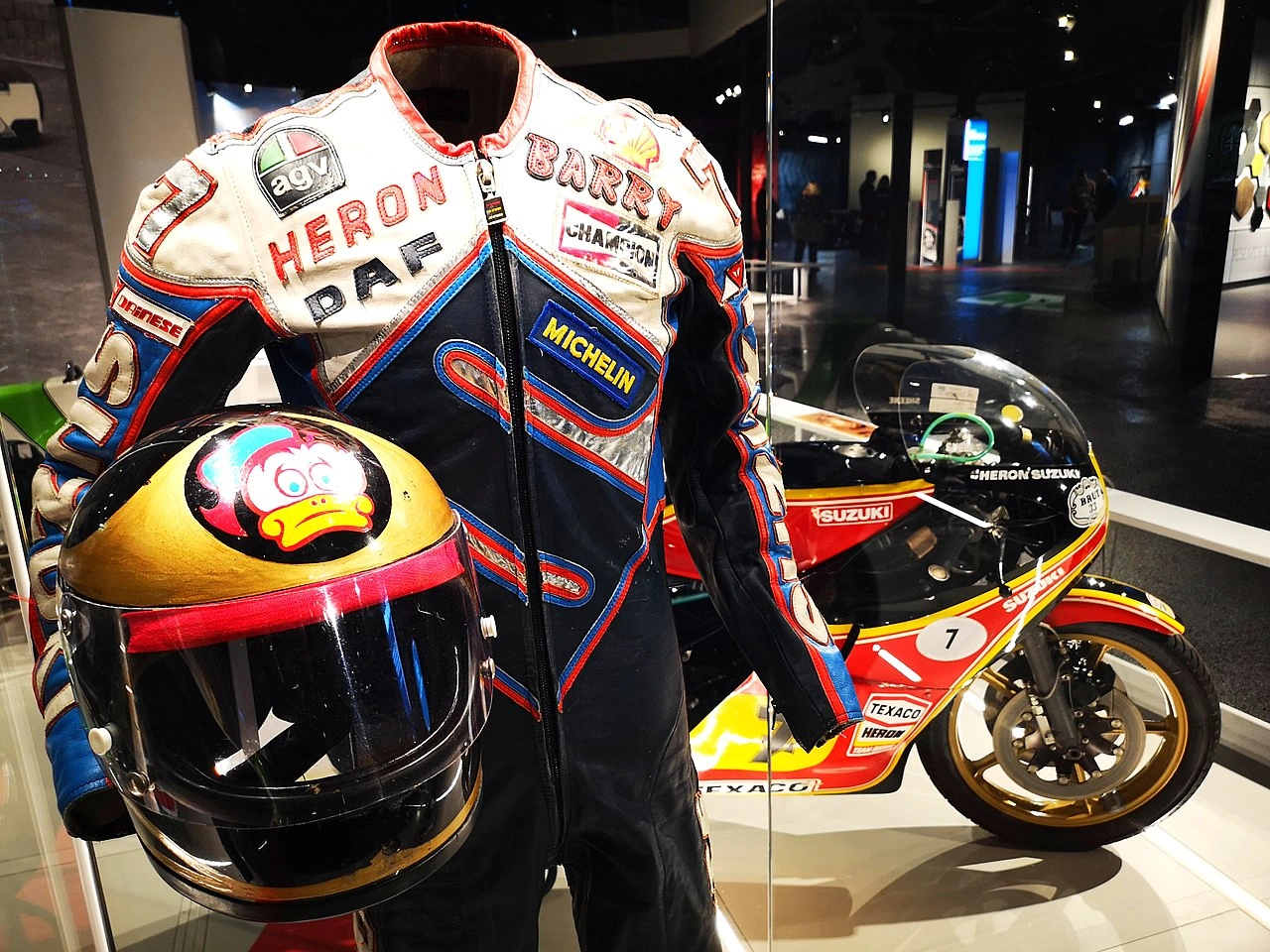
What protective equipment must a motorcyclist wear in Belgium?
A motorcycle rider must wear an approved helmet, gloves, a jacket with long sleeves and long trousers or an overall, together with boots or ankle boots that protect the ankles.
Must motorcycle passengers wear the same equipment in Belgium?
Yes. The Belgian requirements concerning the helmet, gloves, long sleeves, long trousers or overall and ankle-protecting footwear apply to both motorcycle riders and passengers.
Is a motorcycle helmet compulsory in Belgium?
Yes. Motorcycle riders and passengers must wear an approved protective helmet, except in the limited circumstances provided for motorcycles with a passenger compartment where the legally required restraint system is being used.
Can you ride a motorcycle in shorts in Belgium?
No. Motorcycle riders and passengers must wear long trousers or an overall. Shorts do not satisfy this requirement.
Can you ride a motorcycle in a short-sleeved shirt in Belgium?
No. Belgian law requires a jacket with long sleeves for motorcycle riders and passengers.
Are gloves compulsory on a motorcycle in Belgium?
Yes. Both the rider and passenger of a motorcycle must wear gloves.
What footwear must motorcyclists wear in Belgium?
Motorcycle riders and passengers must wear boots or ankle boots that protect the ankles.
Do the Belgian clothing rules also apply to a 125 cc scooter?
Yes, if the vehicle is legally classified as a motorcycle. The clothing requirement applies to motorcycles regardless of whether their design resembles a traditional motorcycle or a scooter.
Must a Belgian motorcycle use its headlight during the day?
Yes. Under the Road Code currently in force, motorcycles travelling on the public road must continuously use their dipped headlight and red rear light, including during daytime conditions when ordinary vehicle lighting would not otherwise be required.
How should motorcycle mirrors be used in Belgium?
The rider must adjust the rear-view mirrors so that traffic behind and to the left can be observed, including another vehicle beginning to overtake.
Must a motorcycle passenger use the footrests?
Yes. Motorcycle passengers must keep their feet on the footrests while travelling.
Is a reflective safety vest compulsory while normally riding a motorcycle?
No general rule requires a motorcyclist to wear a reflective vest during ordinary riding. However, if a motorcycle breaks down on a motorway or autoweg at a place where stopping or parking is prohibited, the driver must wear a retro-reflective safety vest as soon as they leave the vehicle.
96. Autorail
Un autorail est un véhicule ferroviaire automoteur capable de circuler de manière autonome et de transporter des passagers, bagages, courrier ou marchandises. Contrairement à une voiture voyageurs ou à un wagon de marchandises classique, il possède son propre système de propulsion et ne nécessite pas nécessairement une locomotive distincte.
Les autorails peuvent circuler seuls ou avec d’autres véhicules ferroviaires compatibles. Les usagers peuvent les rencontrer aux passages à niveau et doivent respecter tous les panneaux, signaux et barrières lorsqu’un autorail approche.
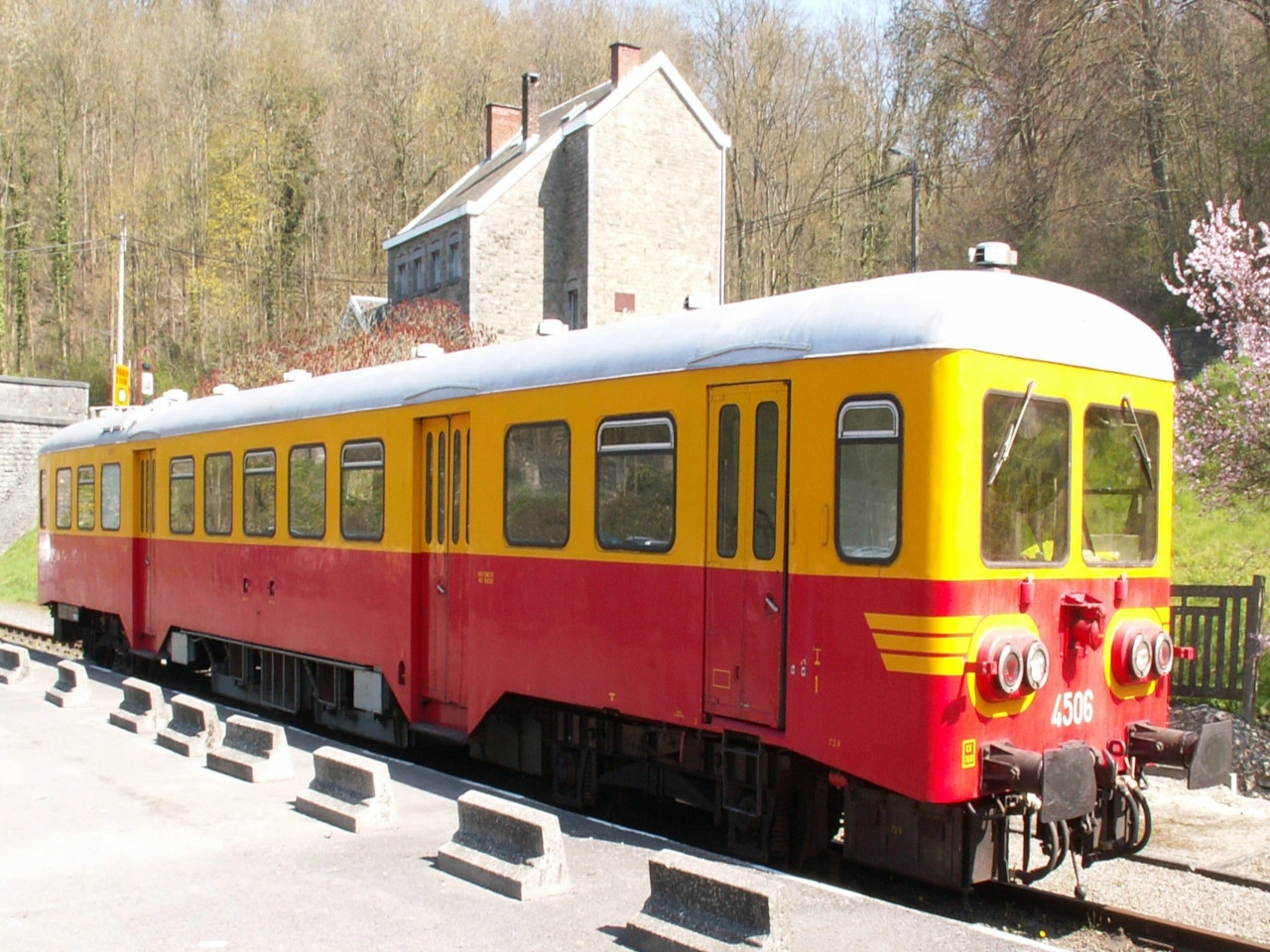
Is a railcar a separate traffic category in Belgium?
No. The current Belgian Road Code generally uses the broader term rail vehicle. A railcar operating on railway tracks falls within this broader concept for road-traffic interactions.
Must road users give way to railcars in Belgium?
Yes. Road users must give way to rail vehicles and must clear the tracks as quickly as possible when necessary.
What should you do if a railcar is approaching a Belgian level crossing?
Do not enter the crossing. At a crossing without barriers or functioning traffic lights, you may proceed only after making sure that no rail vehicle is approaching. You must also stop when barriers are moving or closed, red flashing lights are operating or the audible warning signal is sounding.
97. Voie ferrée
Une voie ferrée est une paire de rails utilisée pour guider les trams, trains ou autres véhicules ferroviaires. Les rails peuvent longer une route, la traverser ou être intégrés directement à la chaussée, de sorte que véhicules ferroviaires et autres usagers utilisent la même zone.
Les usagers doivent être particulièrement prudents près des voies, car les véhicules ferroviaires ne peuvent pas contourner les obstacles et nécessitent une distance importante pour s’arrêter. Conducteurs, cyclistes et piétons doivent respecter les règles de priorité, feux de circulation, panneaux d’avertissement et règles de franchissement applicables et éviter d’obstruer inutilement les voies.

Do trams have priority on tracks in Belgium?
Yes. Every road user must give way to rail vehicles and must clear the tracks as quickly as possible to allow them to pass.
Does a tram have priority even when it approaches from the left?
Yes. The special priority rule for rail vehicles is not the ordinary priority-from-the-right rule. Road users must give way to the tram regardless of whether it approaches from the left or right, subject to any applicable traffic-control signals.
May ordinary vehicles drive on tram tracks in Belgium?
This depends on how the tracks are incorporated into the public road. Where tracks form part of an ordinary carriageway, other traffic may use the road as permitted. A reserved public-transport track or separate track area may only be used in the circumstances permitted by Belgian rules and signs.
May you drive on railway tracks located outside the carriageway?
No. Ordinary traffic on tracks laid outside the carriageway is prohibited.
Which Belgian sign warns that tracks cross the carriageway?
The Belgian A49 warning sign indicates that the public road is crossed by one or more tracks that are laid in the carriageway.
May you park where your vehicle blocks tram tracks?
No. Parking is prohibited anywhere that the parked vehicle would obstruct the passage of a rail vehicle.
May you park near a Belgian tram stop?
No. Parking is prohibited within 15 metres on either side of a sign indicating a tram, bus or trolleybus stop.
On which side should you normally overtake a tram in Belgium?
A rail vehicle travelling along the carriageway is normally overtaken on the right, whether it is moving or stopped for passengers to board or leave.
Can you overtake a tram on the left?
Yes, in limited circumstances. This is permitted when passing on the right is impossible because of insufficient space or a fixed obstruction, provided oncoming road users are not hindered or endangered. It may also be permitted on a one-way carriageway when traffic conditions justify it.
What should drivers do near a tram stopped for passengers?
Drivers must reduce their speed. Where there is no refuge island and passengers must cross the roadway to reach or leave the tram, drivers on that side must stop when necessary so passengers can move safely.
Can pedestrians cross a pedestrian crossing over tram tracks when a tram approaches?
Normally no. Unless traffic lights specifically permit them to cross, pedestrians may not enter a pedestrian crossing that crosses tram tracks or a reserved tram track when a tram is approaching.
What should cyclists do when riding between tram tracks?
Cyclists must remember that the tram has priority and should clear the tracks as soon as this can be done safely when a tram needs to pass. Extra care is also needed because bicycle wheels can be affected by the rail grooves.
98. Transports publics
Les transports publics sont un système de transport collectif de passagers accessible au grand public. Ils comprennent couramment les autobus, trams, trains, métros et autres services réguliers de transport de passagers circulant sur des itinéraires établis ou au sein d’un réseau.
Les véhicules de transport public peuvent utiliser des voies réservées, rails, arrêts, stations ou signaux de circulation spécifiques et bénéficier d’une priorité particulière en vertu des règles locales. Les autres usagers doivent respecter les infrastructures, arrêts et toute signalisation ou tout signal spécial régissant l’interaction avec ces services.
What forms of public transport are available in Belgium?
Belgian public transport mainly includes trains, buses, trams and metro services. Different operators provide services depending on the transport mode and region.
Who operates public transport in Belgium?
NMBS/SNCB operates the national passenger railway network. De Lijn provides bus and tram services mainly in Flanders, TEC provides services in Wallonia and STIB/MIVB operates metro, tram and bus services in the Brussels-Capital Region.
Do trams have priority in Belgium?
Yes. Every road user must give way to rail vehicles such as trams and must clear the tracks as quickly as possible when necessary.
Does a bus leaving a stop have priority in Belgium?
Inside a built-up area, in the specified circumstances. A driver travelling in the same direction must allow an autobus or trolleybus to leave its stop when its driver indicates the intention to move off. The approaching driver must slow down and stop if necessary.
Does this special bus priority apply outside built-up areas?
No. The specific Belgian rule requiring following traffic to allow a bus to leave its stop applies within built-up areas.
Who may normally use a Belgian bus lane?
An F17 bus lane is reserved by default for vehicles used for regular public passenger transport. Other road users may use it only where Belgian rules permit this or where the appropriate symbol or indication is displayed.
Can cyclists use a Belgian bus lane?
Yes, when the bicycle symbol is indicated on the F17 sign or the applicable supplementary sign. Without such authorisation, the presence of a bus lane does not automatically permit cyclists to use it.
Can public-transport vehicles have special traffic lights in Belgium?
Yes. Belgium uses special white traffic signals on a black background to control vehicles used for regular public passenger transport, including tram and other authorised public-transport movements.
What should you do when passing a Belgian bus or tram stopped for passengers?
You must moderate your speed when passing a bus, coach, trolleybus, minibus or rail vehicle that is stopped so passengers can get in or out.
What if passengers must cross the road to board a bus or tram?
Where there is no refuge island, a driver travelling along the side where passengers are boarding or leaving must allow them to reach the vehicle, pavement or verge safely. The driver must stop if necessary and may continue only at moderate speed.
May you park near a Belgian bus or tram stop?
No. Parking is prohibited within 15 metres on either side of a sign indicating a bus, trolleybus or tram stop.
Can an ordinary driver briefly use a Belgian bus lane?
Yes, in certain specific situations. Other vehicles may enter or cross a bus lane when necessary to avoid an obstruction, turn near an intersection, cross it at an intersection or enter or leave adjoining property or a parking place, subject to the applicable rules.
99. Caravane
Une caravane est une remorque tractée conçue pour offrir un hébergement temporaire lors des voyages ou du camping. Elle comporte généralement un espace de couchage et peut également comprendre des installations de cuisine, des sièges, des rangements, un espace de toilette ou des sanitaires.
Lorsqu’ils tractent une caravane, les conducteurs doivent s’assurer qu’elle est correctement attelée, chargée en sécurité et qu’elle respecte les limites de remorquage et de poids autorisées. Une caravane modifie la longueur, le poids, le comportement et la distance d’arrêt de l’ensemble de véhicules.

Is a caravan considered a trailer in Belgium?
Yes. A towable caravan is subject to the Belgian rules for trailers because it is a vehicle intended to be moved by another vehicle.
Which Belgian sign indicates a caravan site?
The Belgian F73 information sign indicates a caravan site.
Which driving licence is needed to tow a caravan in Belgium?
It depends on the caravan's and towing vehicle's maximum authorised masses. Category B is sufficient within the applicable limits; heavier combinations may require B with code 96 or category BE.
100. Remorque
Une remorque est un véhicule conçu pour être tracté par un autre véhicule plutôt que pour se déplacer par ses propres moyens. Les remorques servent à transporter des marchandises, équipements, bateaux, caravanes ou autres charges et peuvent varier fortement en taille et en poids.
Les conducteurs qui tractent une remorque doivent s’assurer qu’elle est correctement attelée, convenablement chargée et adaptée au véhicule tracteur. La remorque peut augmenter la longueur, le poids, la distance d’arrêt et l’espace nécessaire pour tourner de l’ensemble.

How is a trailer defined in Belgium?
A trailer is legally defined as any vehicle intended to be moved by another vehicle.
Can you tow a trailer with a category B driving licence in Belgium?
Yes, within the applicable weight limits. A category B licence allows a trailer with a maximum authorised mass of up to 750 kg. A trailer over 750 kg is also permitted with category B when the combined maximum authorised mass of the towing vehicle and trailer does not exceed 3500 kg.
When do you need B96 or BE for a trailer in Belgium?
If the trailer exceeds 750 kg and the combination exceeds 3500 kg, category B with code 96 permits a combination up to 4250 kg. For a category B towing vehicle with a heavier combination, a BE licence may be required according to the applicable weight limits.