

Panneaux de signalisationBruxelles
 Règles de circulation
 Bruxelles
101. Attelage
Un attelage, aussi appelé dispositif d’attelage ou accouplement de remorque, est un dispositif fixé à un véhicule afin qu’une remorque, caravane ou autre véhicule tracté puisse y être relié en toute sécurité. Les voitures utilisent couramment une boule d’attelage, tandis que les véhicules plus lourds peuvent utiliser d’autres types d’accouplements mécaniques.
L’attelage et le véhicule tracteur doivent être adaptés à la remorque et aux charges concernées. Les conducteurs doivent respecter la capacité de remorquage homologuée du véhicule, les limites de l’attelage, la masse de la remorque et les éventuelles exigences concernant le permis de conduire, le freinage et la sécurité.

What is a tow hitch in Belgium?
A tow hitch, legally referred to as a coupling device, is equipment fitted to a vehicle so that a trailer, caravan or other towable vehicle can be mechanically connected to it.
Can you tow any trailer once a tow hitch is fitted?
No. The trailer must remain within the towing limits approved for the vehicle and the maximum permitted load of the coupling itself.
May a Belgian tow hitch be loaded beyond the value marked on it?
No. The coupling may not be subjected to a towing load greater than the maximum permitted value indicated for the coupling.
Does fitting a tow hitch affect the driving licence you need?
The hitch itself does not, but the trailer combination can. The required licence depends mainly on the maximum authorised masses of the towing vehicle, trailer and complete combination.
What trailer can you normally tow with a Belgian category B licence?
A category B vehicle may tow a trailer with a maximum authorised mass of up to 750 kg. A heavier trailer can also fall within category B when the maximum authorised mass of the complete combination does not exceed 3500 kg.
When is Belgian code 96 needed for towing?
For a category B towing vehicle with a trailer exceeding 750 kg, code 96 allows a combination with a maximum authorised mass exceeding 3500 kg but not exceeding 4250 kg.
When is a Belgian BE licence needed?
A category BE licence is generally required when a category B towing vehicle is combined with a heavier trailer and the combination falls outside the limits of category B or B with code 96, within the applicable BE mass limits.
Does fitting a tow hitch require a separate technical inspection in Flanders?
No. Since 1 September 2026, fitting a tow hitch no longer requires a separate technical inspection in Flanders. The tow hitch can still be checked as part of the vehicle's applicable technical inspection.
Can a tow hitch still be inspected in Flanders?
Yes. Since 1 September 2026, a separate inspection is no longer required solely because a tow hitch has been installed, but the tow hitch can still be checked as part of the vehicle's applicable technical inspection.
Does a small trailer need a separate Belgian registration plate?
A trailer with a maximum authorised mass of no more than 750 kg normally does not need its own registration. It must display a reproduction of the towing vehicle's registration plate.
What if a bicycle carrier on the tow hitch hides the registration plate?
If a bicycle carrier mounted on the rear of the vehicle or on its tow hitch hides the registration plate, the carrier must display a reproduction of the vehicle's registration plate.
Does a Belgian trailer need a safety cable or chain?
A trailer without a breakaway brake must normally have an auxiliary coupling in addition to the main coupling. This may consist of one or two cables or chains and must be capable of keeping the trailer connected if the main coupling fails.
Does a braked trailer use the same secondary coupling system?
Trailers equipped with a breakaway braking system are treated differently. The system is designed to apply the trailer brakes automatically if the trailer separates from the towing vehicle.
Should you check the tow hitch before every journey with a trailer?
Yes. Make sure that the coupling is fully engaged and secured, the electrical connection and trailer lights function correctly and any required safety or breakaway connection is properly attached.

102. Camion de pompiers
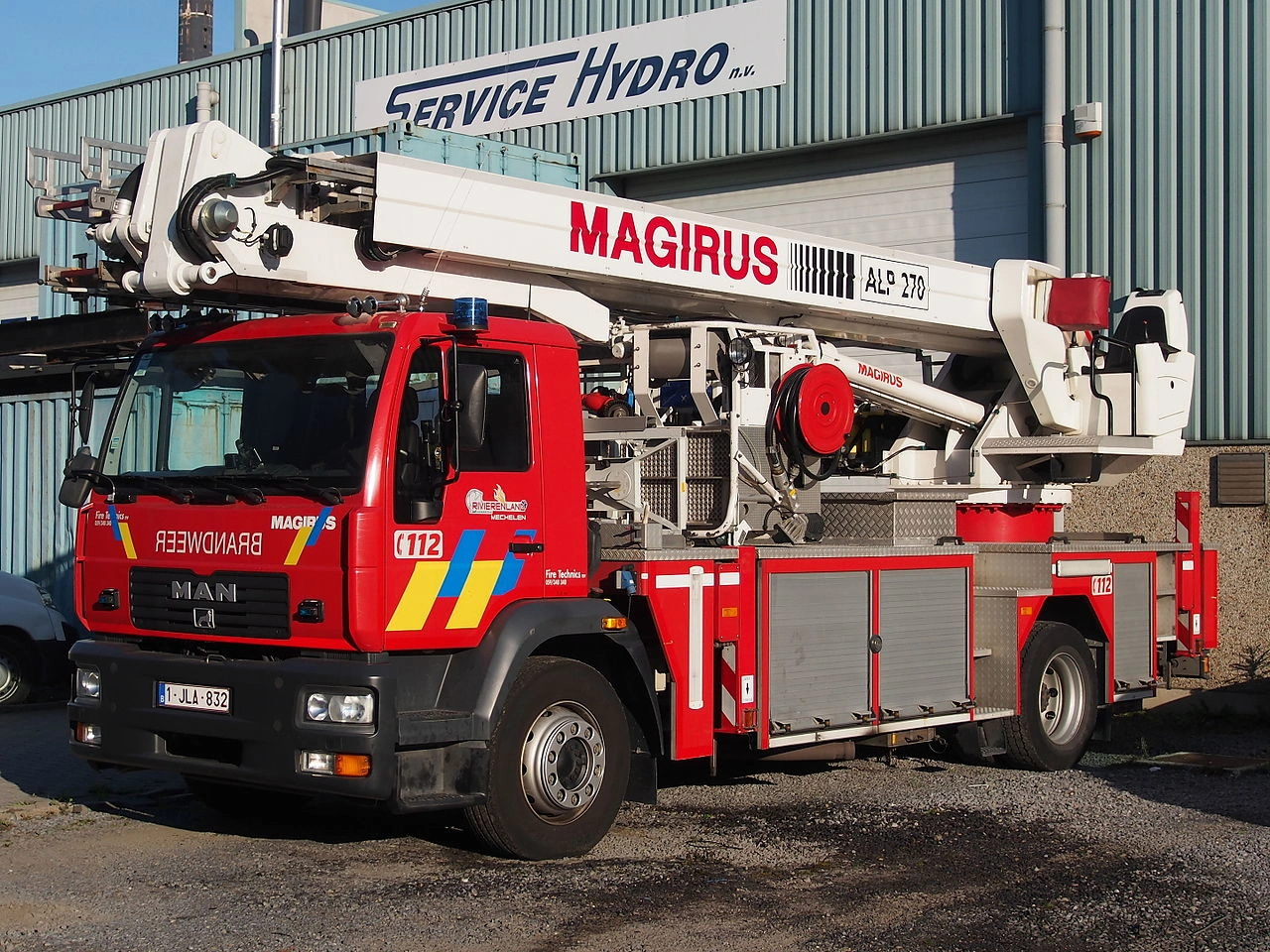
Un camion de pompiers est un véhicule d’urgence utilisé par les services d’incendie et de secours pour transporter des pompiers, du matériel de lutte contre l’incendie, du matériel de secours ou de l’eau vers des incendies, collisions et autres urgences. Différents types peuvent être conçus pour l’extinction, le secours, l’accès en hauteur ou d’autres tâches spécialisées.
Pendant une intervention, un camion de pompiers peut utiliser des feux d’avertissement et une sirène et bénéficier d’une priorité ou d’exemptions à certaines règles de circulation. Les autres usagers doivent respecter les règles locales applicables aux véhicules d’urgence, laisser suffisamment d’espace et éviter de gêner leur passage.
Is a fire truck a priority vehicle in Belgium?
Yes, when it meets the requirements for a priority vehicle. Belgian law expressly recognises fire-service vehicles among the vehicles whose drivers receive special exemptions while carrying out an urgent mission.
What should you do when a Belgian fire truck approaches with its siren?
You must immediately clear the way and give priority. You must stop if necessary so that the fire truck can pass safely.
Must a Belgian fire truck use its blue flashing lights during an urgent mission?
Yes. A priority vehicle must use its blue flashing lights when carrying out an urgent mission.
Must a Belgian fire truck use its siren during every urgent journey?
No. The special audible warning device may only be used during an urgent mission, but the Road Code does not require it to be used continuously throughout every urgent journey.
What if a fire truck has blue lights on but no siren?
The specific obligation requiring every road user to immediately clear the way and give priority applies when the special audible warning announces the approach of the priority vehicle. Drivers should nevertheless remain alert and avoid obstructing a fire truck displaying blue flashing lights.
Can a Belgian fire truck pass a red traffic light?
Yes, under specific conditions. A priority vehicle using its special audible warning may pass a red traffic light at moderate speed, provided this does not create danger for other road users.
Can a Belgian fire truck depart from ordinary traffic rules?
Yes. A fire-service vehicle carrying out an urgent mission may depart from many provisions of the Belgian Road Code. Certain specifically listed safety rules and orders from authorised persons must still be respected.
Can a Belgian fire truck exceed the speed limit?
Yes, when the urgent mission justifies it. Priority vehicles carrying out an urgent mission can be exempted from ordinary speed restrictions and posted C43 speed limits under the conditions provided by Belgian law.
Can a fire truck use the emergency lane in Belgium?
Yes. A priority vehicle carrying out an urgent mission may use the emergency lane, allowing it to reach an incident when the normal traffic lanes are congested or blocked.
What should you do in congestion when a Belgian fire truck approaches?
Keep the required emergency corridor clear and create as much safe space as possible. Do not drive into the emergency corridor yourself or obstruct the route needed by emergency vehicles.
Can you follow a Belgian fire truck through an emergency corridor?
No. The emergency corridor and other space created for priority vehicles must remain available for authorised emergency traffic. Ordinary drivers may not use it simply to bypass congestion.
What should you do near a fire truck stopped at an emergency?
Reduce speed, leave sufficient space and remain especially alert. Firefighters, hoses and rescue equipment may occupy the carriageway, and police or emergency personnel may temporarily control or divert traffic.
Does a Belgian fire truck have emergency exemptions when it is not on an urgent mission?
Not merely because it belongs to the fire service. The broad exemptions available to the driver of a fire-service priority vehicle apply when the vehicle is carrying out an urgent mission. Otherwise, the ordinary traffic rules generally apply unless another specific exception exists.
103. Sirène
Une sirène est un dispositif sonore puissant utilisé pour attirer l’attention et avertir qu’un véhicule d’urgence ou prioritaire approche. Les sirènes équipent couramment les ambulances, véhicules de pompiers et véhicules de police et peuvent produire des sons alternés ou variables afin d’être rapidement reconnues.
Lorsqu’un véhicule d’urgence approche avec sa sirène en fonctionnement, les usagers doivent rester attentifs, identifier d’où vient le véhicule et lui laisser un passage en toute sécurité. Les règles précises de priorité et d’utilisation des sirènes varient selon les pays.

When may an emergency vehicle use its siren in Belgium?
A priority vehicle may use its special audible warning device only when carrying out an urgent mission.
What must you do when you hear an approaching emergency siren in Belgium?
You must immediately clear the way and give priority to the approaching priority vehicle. If necessary, you must stop.
Is an emergency siren the same as an ordinary vehicle horn in Belgium?
No. The special audible warning device of a priority vehicle is subject to specific emergency-vehicle rules. Ordinary sound signals must be kept as short as possible and are generally permitted only when necessary to prevent an accident or, outside built-up areas, to warn a driver who is about to be overtaken.
104. Convoi
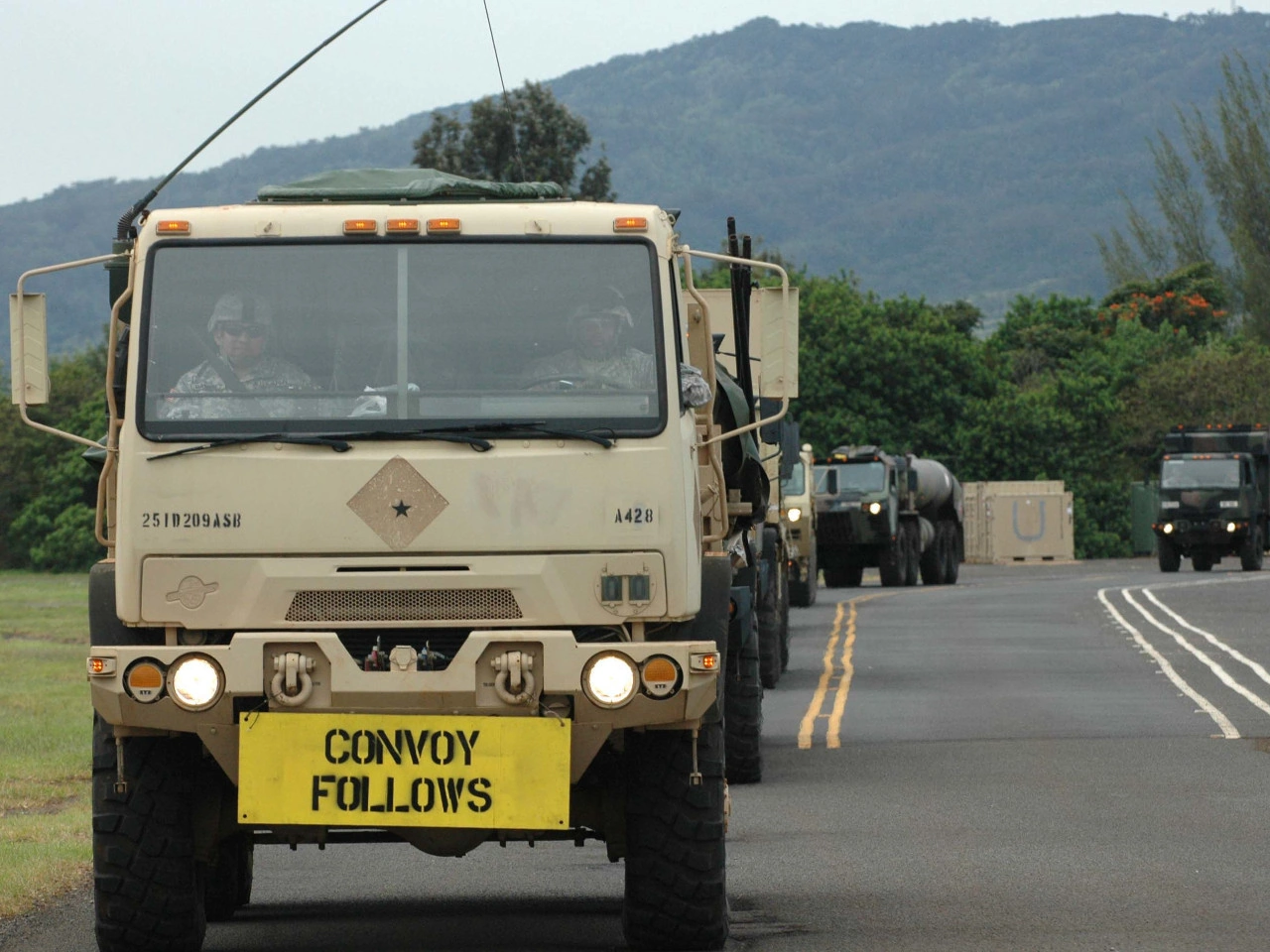
Un convoi est un groupe de véhicules circulant ensemble de manière organisée, généralement sur le même itinéraire et vers la même destination. Il peut être composé de véhicules ordinaires, de véhicules militaires, de transports exceptionnels ou de véhicules participant à un déplacement organisé.
Les conducteurs circulant en convoi doivent maintenir une distance de sécurité, respecter les règles de circulation applicables et éviter de gêner les autres usagers. Le fait de faire partie d’un convoi ne confère pas automatiquement une priorité particulière, sauf si des lois spécifiques, une escorte ou des mesures de régulation de la circulation le prévoient.
What distance must cars in a convoy keep in Belgium?
Outside built-up areas, cars travelling in convoy for a journey made together must keep a distance of at least 50 metres between vehicles.
Does an ordinary vehicle convoy have special priority in Belgium?
No. Simply travelling together as a convoy does not give ordinary vehicles special priority. Drivers must continue to follow the normal traffic rules.
Can you drive through a military convoy in Belgium?
No. Road users may not break through a military column consisting of marching troops or a vehicle convoy whose movement is controlled by authorised personnel or authorised military personnel.
105. Feux des véhicules d’urgence
Les feux des véhicules d’urgence sont des feux spéciaux clignotants ou rotatifs utilisés sur les véhicules d’urgence ou prioritaires autorisés afin de les rendre très visibles et d’avertir les autres usagers. Les véhicules de police, ambulances, véhicules de pompiers et autres véhicules d’intervention utilisent couramment des feux distinctifs lorsqu’ils répondent à un incident.
La couleur, la signification et l’utilisation autorisée des feux d’urgence varient selon les pays. Lorsque ces feux sont activés, les usagers doivent rester attentifs, identifier le véhicule qui approche et respecter les règles locales concernant la priorité ou la création d’un passage libre.
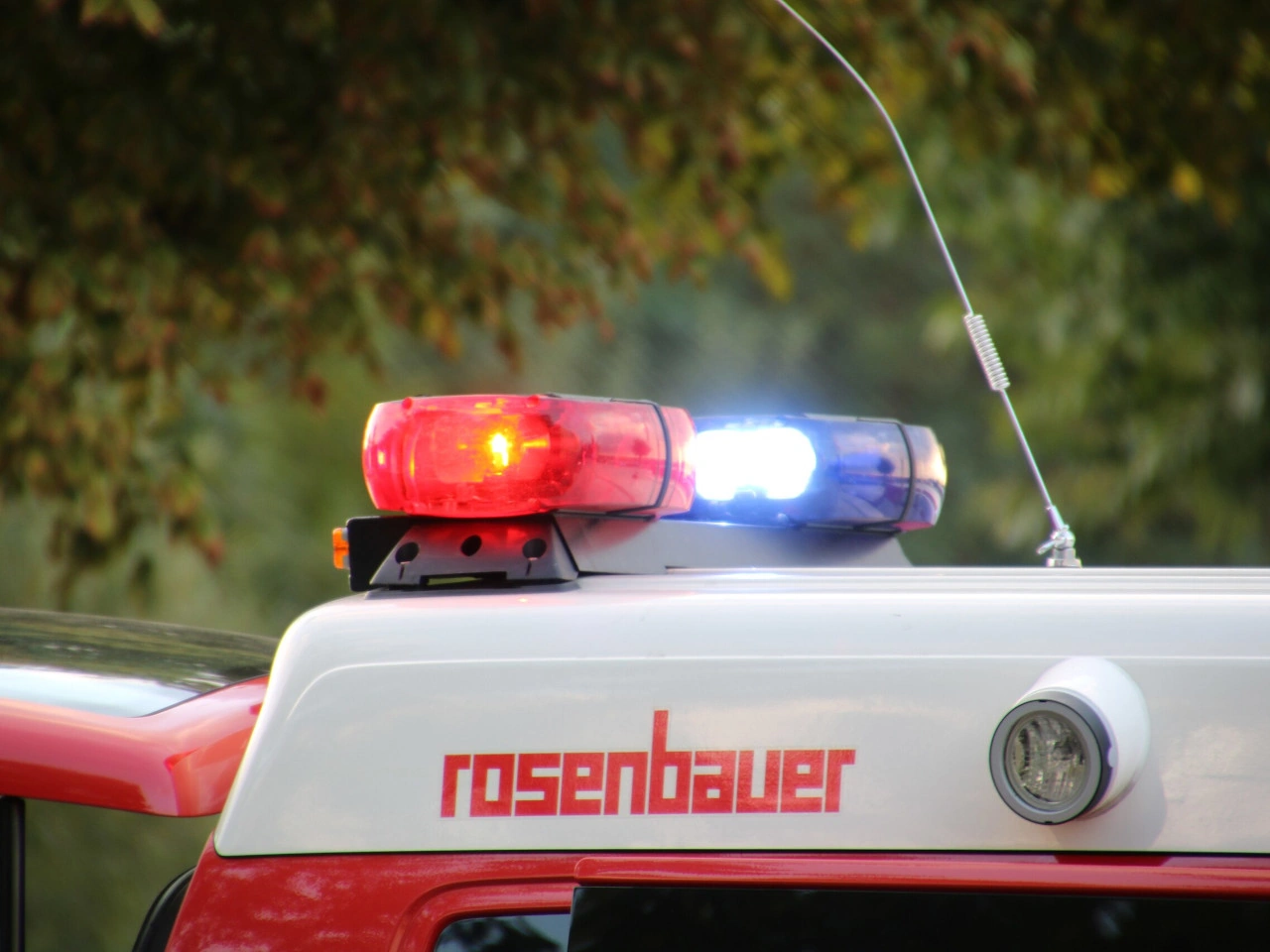
Which warning lights do priority vehicles use in Belgium?
Belgian priority vehicles are equipped with one or more blue flashing lights together with a special audible warning device.
When must a Belgian priority vehicle use its blue flashing lights?
The blue flashing lights must be used during an urgent mission. They may also be used during another mission when the nature of that mission justifies their use.
Do blue flashing lights alone require you to give way in Belgium?
The specific obligation to immediately clear the way and give priority applies when the approaching priority vehicle uses its special audible warning device. When blue lights are visible without the siren, road users should remain alert and avoid obstructing the vehicle.
106. Machines agricoles
Les machines agricoles comprennent les véhicules, machines et équipements conçus pour les travaux agricoles, comme le travail du sol, les semis, la récolte, la tonte, le transport des cultures ou l’utilisation d’outils agricoles. Il peut s’agir de tracteurs, moissonneuses-batteuses, pulvérisateurs automoteurs, faucheuses et autres équipements spécialisés.
Les machines agricoles peuvent être principalement destinées aux champs, mais doivent parfois circuler sur la voie publique. Dans ce cas, les règles applicables concernant l’immatriculation, le permis de conduire, l’éclairage, les dimensions, la vitesse et l’accès aux routes dépendent du type et de la classification juridique de la machine.
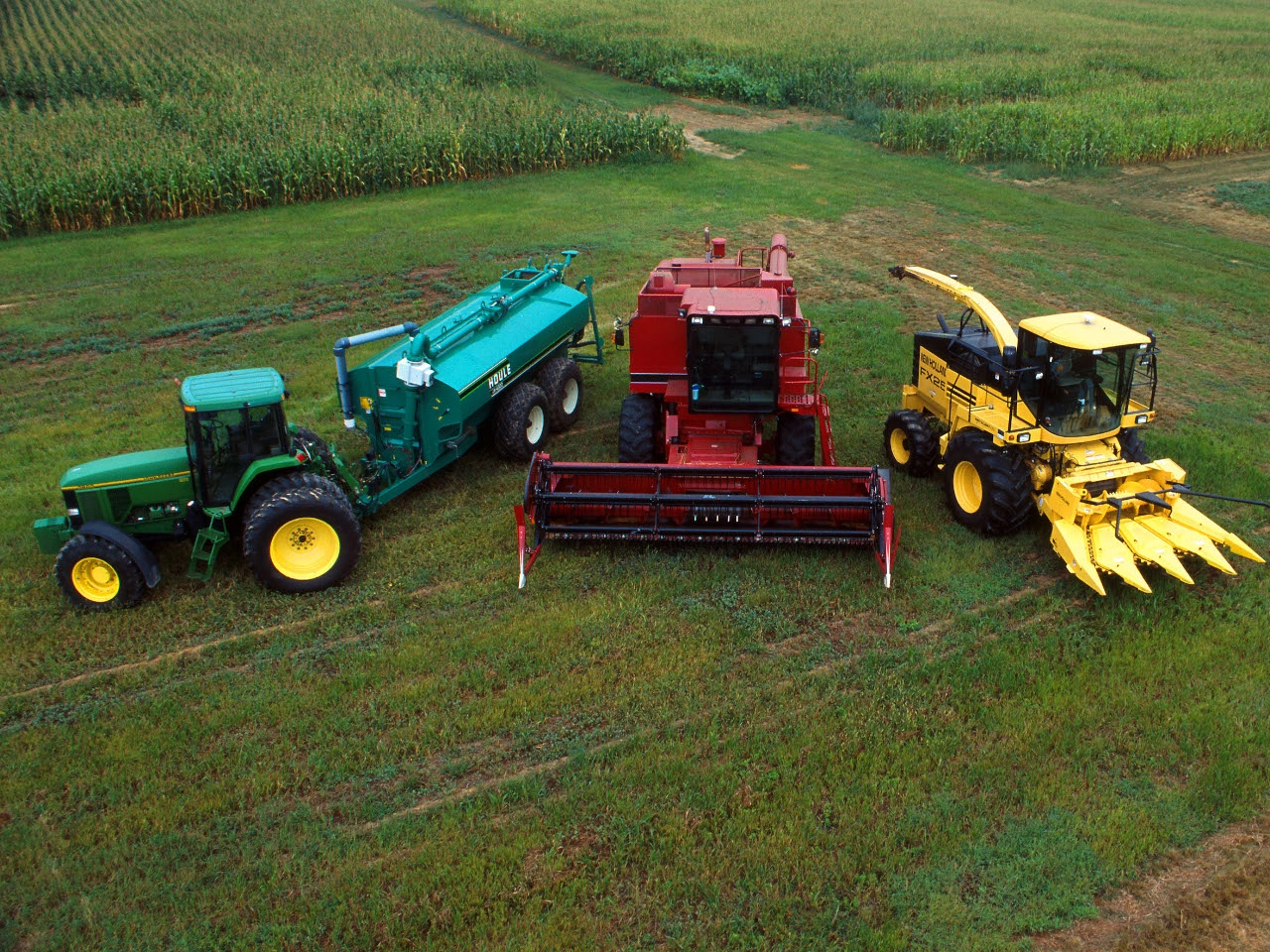
What is agricultural machinery in Belgium?
Belgian agricultural machinery can include land and forestry vehicles, agricultural tractors, self-propelled agricultural machines, agricultural trailers and other equipment designed or registered for agricultural work.
Which driving licence applies to agricultural machinery in Belgium?
Category G is the Belgian national driving-licence category specifically intended for land and forestry vehicles and their trailers and for certain vehicles registered as agricultural equipment, motor ploughs or mowing machines.
How old must you be to obtain a Belgian category G licence?
The category G theory examination may be taken from 15 years and 9 months and the practical examination from 16 years.
Are category G drivers under 18 subject to a mass restriction?
Yes. Until the age of 18, code 205 is placed on the licence and limits the driver to a vehicle combination consisting of a tractor and trailer with a maximum authorised mass of no more than 20 tonnes.
Does every agricultural vehicle require a category G licence?
Not necessarily. Holders of categories B, BE, C1, C1E, C or CE may drive category G vehicles within the maximum authorised masses covered by their licence. A category CE licence also gives entitlement to category G.
Is there an exemption for older Belgian agricultural-vehicle drivers?
Yes. A person born before 1 October 1982 may drive category G agricultural vehicles in Belgium without holding a category G licence.
Must Belgian agricultural machinery be registered?
Agricultural vehicles and machinery belonging to categories that require registration for public-road use must be registered with the DIV and display the appropriate registration plate.
Does every Belgian agricultural vehicle have a G licence plate?
No. Agricultural and forestry vehicles can have an ordinary registration plate. The plate beginning with G is a special fiscal plate for qualifying vehicles authorised to use fully tax-exempt agricultural diesel.
Can agricultural machinery use a Belgian motorway?
No. Agricultural vehicles are specifically prohibited from Belgian motorways, regardless of whether an individual machine might otherwise be capable of reaching motorway speed.
Can agricultural machinery use a Belgian autoweg?
No. Agricultural vehicles are also expressly excluded from roads legally designated as autowegen.
Is there one maximum speed for all Belgian agricultural machinery?
No. The applicable maximum speed depends on the vehicle's construction, mass, tyres, suspension, road and traffic signs. The vehicle's own construction speed may also impose a lower limit than the general road limit.
What is an F99c road in Belgium?
An F99c road is a road reserved for the categories indicated on the sign, which can include agricultural vehicles together with pedestrians, cyclists, riders and speed-pedelec riders.
What is the maximum speed on an F99c road?
The maximum speed on a road reserved under the current F99c rules is 30 km/h.
How must agricultural machinery behave on an F99c road?
Motorised traffic, and agricultural vehicles in particular, must exercise increased caution towards pedestrians, cyclists, riders and the other vulnerable users permitted on the road.
What should other drivers remember when overtaking agricultural machinery?
Agricultural machines can be slow, wide and difficult to see around. Drivers should wait for sufficient visibility and space and should be alert for machinery turning into fields or farm entrances.
107. Vélo électrique
Un vélo électrique, ou e-bike, est un vélo équipé d’un moteur électrique qui assiste le cycliste pendant le déplacement. La plupart utilisent une assistance au pédalage, ce qui signifie que le moteur fournit une puissance supplémentaire pendant que le cycliste pédale.
La classification juridique d’un vélo électrique dépend notamment de la puissance du moteur, de la vitesse maximale d’assistance et de la capacité éventuelle du moteur à propulser le vélo sans pédalage. Les vélos électriques plus rapides ou plus puissants peuvent être classés comme cyclomoteurs ou comme un autre type de véhicule à moteur et être soumis à des exigences différentes en matière de permis, casque, immatriculation et assurance.

What is an ordinary electric bicycle in Belgium?
An ordinary Belgian electric bicycle has an auxiliary electric motor with a maximum continuous rated power of no more than 250 W. The motor provides pedal assistance and stops assisting when the bicycle reaches 25 km/h or earlier when the rider stops pedalling.
Is an ordinary electric bicycle legally a bicycle in Belgium?
Yes. Electric assistance within the 250 W and 25 km/h limits does not change the vehicle's classification as a bicycle.
Do you need a driving licence for an ordinary Belgian electric bicycle?
No. An ordinary electric bicycle within the 250 W and 25 km/h limits does not require a driving licence.
Is there a minimum age for an ordinary electric bicycle in Belgium?
No specific minimum age applies merely because an ordinary bicycle has compliant electric pedal assistance. It follows the ordinary bicycle rules.
Must an ordinary Belgian electric bicycle be registered?
No. An ordinary electric bicycle within the 250 W and 25 km/h category does not require DIV registration or a registration plate.
Does an ordinary Belgian electric bicycle need a certificate of conformity?
No. The ordinary electric bicycle with a maximum of 250 W and pedal assistance up to 25 km/h does not require a certificate of conformity.
Is a helmet compulsory on an ordinary electric bicycle in Belgium?
No. There is currently no general helmet requirement for riders of ordinary electric bicycles, although wearing a suitable bicycle helmet is recommended.
Must an ordinary electric bicycle use the cycle path?
Yes, under the same conditions as an ordinary bicycle. An available and usable compulsory cycle path must generally be used where the Belgian cyclist rules require it.
What is a motorised cycle in Belgium?
A motorised cycle is a pedal vehicle with an auxiliary drive primarily intended to assist pedalling, with a maximum power of 1000 W and assistance ending by 25 km/h.
How old must you be to ride a Belgian motorised cycle?
You must normally be at least 16 years old to ride a motorised cycle.
Do you need a driving licence for a Belgian motorised cycle?
No. Although a minimum age of 16 applies, no driving licence is required for a motorised cycle within the applicable 1000 W and 25 km/h limits.
Does a Belgian motorised cycle need a certificate of conformity?
Yes. Unlike an ordinary 250 W electric bicycle, a motorised cycle requires a certificate of conformity (COC) confirming that it complies with the applicable technical requirements.
Does a motorised cycle follow normal cyclist rules?
Yes. Under the current Belgian Road Code, riders of motorised cycles are treated in the same way as riders of ordinary cycles for road-position and traffic rules.
Does an electric bicycle need compulsory motor insurance in Belgium?
For an ordinary pedal-assisted bicycle, compulsory motor-vehicle liability insurance is not required. Belgian insurance rules generally require such insurance when a motorised vehicle can propel itself autonomously at more than 25 km/h.
What happens if an electric bicycle assists above 25 km/h?
A pedal cycle providing assistance above 25 km/h no longer falls within the ordinary electric-bicycle or motorised-cycle categories. A vehicle providing pedal assistance up to 45 km/h can qualify as a speed pedelec and is subject to additional rules concerning the licence, helmet and registration.
What lights must an electric bicycle use in Belgium?
Because an ordinary electric bicycle follows the bicycle rules, it must use a white or yellow front light and a red rear light between nightfall and dawn and whenever visibility is less than approximately 200 metres.
108. Véhicule électrique
Un véhicule électrique, ou VE, est un véhicule utilisant un ou plusieurs moteurs électriques pour sa propulsion et stockant l’énergie électrique dans une batterie rechargeable ou un autre système de stockage. Un véhicule entièrement électrique utilise uniquement l’électricité pour se propulser, tandis qu’un hybride rechargeable associe une chaîne de traction électrique à une autre source d’énergie, comme un moteur à combustion.
Les véhicules électriques peuvent être rechargés à partir d’une alimentation électrique externe au moyen d’un point de recharge ou d’une borne de recharge approprié. Les règles concernant le permis de conduire, l’immatriculation, l’assurance, le stationnement et l’accès aux routes dépendent de la catégorie du véhicule et de la réglementation locale, et non simplement de sa propulsion électrique.

What is an electric vehicle in Belgium?
An electric vehicle uses an electric drivetrain for propulsion. A fully electric vehicle relies entirely on electric propulsion, while a plug-in hybrid combines electric propulsion with another power source such as a combustion engine.
Do electric cars follow different traffic rules in Belgium?
No. An electric passenger car follows the ordinary Belgian rules for cars concerning speed, priority, lane use, parking and road access unless a specific rule provides otherwise.
Which driving licence do you need for an electric car in Belgium?
An ordinary electric passenger car normally requires a category B driving licence when its maximum authorised mass does not exceed 3500 kg and it is designed for no more than eight passengers in addition to the driver.
Must an electric car be registered in Belgium?
Yes. An electric car subject to ordinary vehicle registration must be registered with the DIV and display the required registration plate before being used in traffic.
Does an electric car need insurance in Belgium?
Yes. Motor vehicles participating in Belgian road traffic must normally have at least the required civil-liability motor insurance.
Does charging an electric vehicle count as parking in Belgium?
Yes. Belgian law expressly considers charging the battery of an electric or hybrid-electric vehicle to be parking.
How is a parking space for electric vehicles indicated in Belgium?
An E9 parking sign can be supplemented with the prescribed electric-vehicle symbol to reserve a parking place for electric or hybrid-electric vehicles.
Must an electric vehicle be plugged in at a Belgian public charging space?
Yes. At a reserved parking place equipped with public charging infrastructure, an electric or hybrid-electric vehicle must be connected to that infrastructure while parked there.
Can an electric car park at a charger without being connected?
No where the Belgian rule reserving the public charging space applies. Merely being an electric vehicle is not sufficient; the vehicle must be connected to the charging infrastructure.
Does parking at a Belgian charging point automatically mean parking is free?
No. A charging-space reservation does not remove any applicable parking charges, time restrictions or other local parking conditions.
Can a plug-in hybrid use a Belgian electric-vehicle charging space?
Yes. Belgian parking rules for these spaces expressly include hybrid-electric vehicles, subject to the applicable signs and requirement to connect to public charging infrastructure.
Can fully electric vehicles enter the Brussels Low Emission Zone?
Yes. Fully electric vehicles are currently authorised to travel in the Brussels LEZ and benefit from an automatic exemption from the emission-based access restrictions.
Does an electric vehicle produce particulate pollution?
A fully electric vehicle produces no combustion-engine exhaust particles, but tyres, brakes and road-surface interaction can still generate particulate matter.
Can an electric car use Belgian motorways?
Yes. An ordinary electric car may use a motorway under the same access rules as a comparable conventional car. Electric propulsion does not create a separate motorway restriction.
109. Pedelec
Un pedelec, abréviation de cycle électrique à pédalage, est un vélo équipé d’un moteur électrique qui fournit une assistance pendant que le cycliste pédale. Le moteur complète l’effort du cycliste sans remplacer entièrement le pédalage.
La puissance maximale du moteur et la vitesse d’assistance autorisée dépendent de la législation locale. Lorsque le vélo reste dans les limites applicables, il est normalement considéré comme un vélo plutôt que comme un cyclomoteur ou une moto. Les vélos électriques plus rapides sont généralement classés séparément comme speed pedelecs.

What is a pedelec in Belgium?
An ordinary Belgian pedelec is an electrically assisted bicycle with a maximum continuous rated motor power of no more than 250 W and pedal assistance ending by 25 km/h.
Is a pedelec legally a bicycle in Belgium?
Yes. Adding a compliant electric auxiliary motor of no more than 250 W with pedal assistance up to 25 km/h does not change the vehicle's legal classification as a bicycle.
Does the motor of a Belgian pedelec work without pedalling?
An ordinary electric bicycle in this category is equipped with pedal assistance, meaning that the motor provides assistance while the pedals are being used.
What happens when a Belgian pedelec reaches 25 km/h?
The electric assistance must be progressively reduced and stopped by 25 km/h. It must also stop earlier when the rider stops pedalling.
Can you ride a pedelec faster than 25 km/h?
Yes, using your own effort or when travelling downhill. The 25 km/h threshold limits the electric assistance rather than imposing a general maximum bicycle speed.
Do you need a driving licence for a pedelec in Belgium?
No. An ordinary electric bicycle within the 250 W and 25 km/h limits does not require a driving licence.
Is there a minimum age for riding an ordinary pedelec in Belgium?
No specific minimum age applies. An ordinary pedelec follows the same rules as a conventional bicycle.
Must a Belgian pedelec be registered?
No. An ordinary pedelec does not require DIV registration or a registration plate.
Does a Belgian pedelec need a certificate of conformity?
No. An ordinary 250 W electric bicycle with assistance up to 25 km/h does not require a certificate of conformity.
Does a Belgian pedelec require compulsory motor insurance?
No. Compulsory motor-vehicle liability insurance does not apply to an ordinary pedelec whose motor only provides compliant pedal assistance.
Is a helmet compulsory on a Belgian pedelec?
No. There is currently no general helmet requirement for an ordinary electric bicycle, although wearing a suitable bicycle helmet is recommended.
Must a pedelec use Belgian cycle paths?
Yes, under the same conditions as an ordinary bicycle. When an applicable and usable compulsory cycle path is provided, the rider must normally use it.
What equipment must a Belgian pedelec have?
Because it is legally a bicycle, it follows the ordinary bicycle equipment requirements concerning brakes, a bell, reflectors and lights when required.
What is the difference between a pedelec and a Belgian motorised cycle?
An ordinary pedelec is limited to 250 W and 25 km/h and has pedal assistance only. A motorised cycle may have up to 1000 W, remains limited to 25 km/h and requires a certificate of conformity.
What is the difference between a pedelec and a speed pedelec?
A speed pedelec may provide pedal assistance up to 45 km/h and have a motor of up to 4000 W. Unlike an ordinary pedelec, it requires registration, an appropriate driving licence and a helmet.
110. Quadricycle
Un quadricycle est un véhicule à moteur à quatre roues appartenant à une catégorie inférieure ou distincte de celle d’une voiture de tourisme ordinaire. Il peut être conçu pour le transport de passagers, le transport de marchandises ou les loisirs et être propulsé par un moteur à combustion ou électrique.
La législation distingue souvent les quadricycles légers, à puissance et vitesse maximale par construction relativement faibles, des quadricycles plus lourds ou plus puissants. Les exigences concernant le permis de conduire, le casque, l’immatriculation, l’assurance et l’accès aux routes dépendent de la classification juridique du véhicule et de la réglementation locale.

What is a light quadricycle in Belgium?
A Belgian light quadricycle is a four-wheeled motor vehicle belonging to the light L6e category and having a maximum design speed of no more than 45 km/h.
How heavy may a Belgian light quadricycle be?
Under the current Road Code, a four-wheeled moped may have a maximum unladen mass of 425 kg. For an electric vehicle, the battery mass is excluded from this figure.
How many people can a Belgian light quadricycle carry?
A three- or four-wheeled moped may have no more than two seats in total, including the driver's seat.
Which driving licence is required for a Belgian light quadricycle?
A light quadricycle normally requires a category AM driving licence. Holders of higher licence categories such as A1, A2, A or B also have entitlement to category AM.
How old must you be to drive a light quadricycle in Belgium?
You must normally be at least 16 years old to drive a light quadricycle. The driver must be at least 18 years old to carry a passenger under the applicable moped rules.
Which licence is required for a heavier motor quadricycle?
A motor quadricycle that is not a light quadricycle belongs to category B for Belgian driving-licence purposes. The normal minimum age for the category B practical licence is 18.
Must a Belgian light quadricycle be registered?
Yes. Light quadricycles used on public roads must normally be registered with the DIV and display the appropriate registration plate.
Which licence plate does a Belgian light quadricycle use?
A Belgian light quadricycle receives a registration plate beginning with S-U.
Does a Belgian light quadricycle need insurance?
Yes. The normal registration procedure requires the vehicle to be insured and registered through the applicable motor-vehicle insurance and DIV procedure.
Must you wear a helmet in an open quadricycle in Belgium?
Yes, where the vehicle has no passenger compartment. Drivers and passengers of motorised three- and four-wheelers and mopeds without a passenger compartment must wear an approved protective helmet, subject to the specific legal exceptions.
Do you need a helmet in an enclosed quadricycle?
The general Belgian helmet requirement specifically applies to vehicles without a passenger compartment. In an enclosed vehicle, occupants must instead respect the applicable seat-belt and child-restraint requirements where the seating positions are equipped with them.
Must you wear a seat belt in an enclosed Belgian quadricycle?
Yes, where a seat belt is fitted. Drivers and passengers of motor vehicles other than cars must wear the seat belts provided at their seating positions.
Can a light quadricycle use a Belgian motorway?
No. A light quadricycle falls within the moped category, and mopeds are prohibited from Belgian motorways. Its maximum design speed of 45 km/h is also well below the motorway requirement.
Can a light quadricycle use a Belgian autoweg?
No. Mopeds are expressly prohibited from roads designated as autowegen, so a light quadricycle may not use them.
Can a heavier quadricycle use a motorway?
Only if the vehicle satisfies all motorway-access requirements. Belgian law specifically prohibits motor quadricycles without a passenger compartment and vehicles unable to reach 70 km/h on a level road. An enclosed motor quadricycle capable of satisfying the other motorway requirements is therefore treated differently from a light quadricycle.
Do heavier Belgian quadricycles follow the same road rules as cars?
Generally yes. Except where a special provision applies, drivers of motor quadricycles that are not classified as mopeds must follow the same traffic rules as drivers of cars.
111. Voiturette
Une voiturette est un très petit véhicule à moteur principalement conçu pour les courts trajets et les déplacements urbains. Elle possède généralement un habitacle fermé, quatre roues et une ou deux places, même si les conceptions et classifications juridiques varient.
De nombreuses voiturettes sont juridiquement classées comme quadricycles légers plutôt que comme voitures de tourisme ordinaires. Les modèles plus puissants ou rapides peuvent relever d’une catégorie de quadricycle plus lourd ou de voiture particulière. Le permis requis, l’âge minimum, l’immatriculation, l’assurance, la vitesse maximale et l’accès aux routes dépendent donc de la classification juridique officielle du véhicule.

What is a microcar in Belgium?
Microcar is not a separate Belgian legal vehicle category. Most low-speed microcars are legally classified as light quadricycles, while more powerful models can be classified as motor quadricycles.
What is a Belgian light microcar?
A typical light microcar is a four-wheeled light quadricycle with a maximum design speed of no more than 45 km/h.
How heavy may a Belgian light quadricycle be?
The maximum mass in running order is generally 425 kg. For electric vehicles, the traction-battery mass is excluded from this figure.
How many people may travel in a Belgian light microcar?
A three- or four-wheeled moped may have no more than two seats in total, including the driver's seat.
Which driving licence is required for a light microcar in Belgium?
A light quadricycle capable of travelling above 25 km/h and up to 45 km/h normally requires a category AM driving licence. A licence valid for A1, A2, A or B also includes category AM.
How old must you be to drive a light microcar in Belgium?
You must normally be at least 16 years old to obtain and use category AM.
How old must a microcar driver be to carry a passenger?
A category-AM driver must normally be at least 18 years old before carrying a passenger.
What licence is required for a more powerful Belgian microcar?
If the vehicle is legally classified as a motor quadricycle rather than a light quadricycle, category B is normally required. The normal minimum age for a full category B licence is 18.
Must a Belgian light microcar be registered?
Yes. Light quadricycles must be registered with the DIV and display the appropriate registration plate.
Which registration plate does a Belgian light microcar use?
A Belgian light quadricycle receives a registration plate beginning with S-U.
Does a Belgian microcar need insurance?
Yes. Motor vehicles participating in Belgian road traffic must normally have at least the compulsory civil-liability motor insurance.
Must you wear a helmet inside an enclosed Belgian microcar?
No general helmet requirement applies when the light quadricycle has a passenger compartment. The Belgian helmet requirement for mopeds and motor quadricycles specifically applies to vehicles without a passenger compartment.
Must you wear a seat belt in a Belgian microcar?
Yes, where seat belts are fitted. Drivers and passengers of motor vehicles other than cars must wear the seat belts provided at their seating positions.
Can a light microcar use a Belgian cycle path?
No. The Belgian cycle-path provisions allowing or requiring moped use concern two-wheeled mopeds. A four-wheeled light microcar therefore travels on the carriageway rather than on a cycle path.
Can a light microcar use a Belgian motorway?
No. A light quadricycle belongs to the moped category, and mopeds are prohibited from Belgian motorways. Its maximum design speed of 45 km/h is also below the motorway requirement.
Can a light microcar use a Belgian autoweg?
No. Belgian rules expressly prohibit mopeds from roads designated as autowegen.
112. Véhicule tout-terrain
Un véhicule tout-terrain (VTT/ATV) est un véhicule à moteur conçu pour circuler sur des surfaces accidentées ou irrégulières ainsi que, dans certains cas, sur des routes ordinaires. Ces véhicules ont généralement quatre roues, des pneus larges et une carrosserie compacte et sont utilisés pour les loisirs, l’agriculture, la sylviculture ou d’autres activités hors route.
La possibilité d’utiliser un véhicule tout-terrain sur la voie publique dépend de sa classification, de son immatriculation, de son équipement et des règles locales de circulation. Certains sont homologués pour la route, tandis que d’autres sont exclusivement destinés à un usage hors route.

How are road-going ATVs classified in Belgium?
Road-approved four-wheeled ATVs may be classified as light quads in category L6e-A or heavy quads in category L7e-A, depending on their technical characteristics.
Which driving licence is needed for a light quad in Belgium?
A light quadricycle with a maximum design speed of 45 km/h falls under category AM. Holders of an A1, A2, A or B licence automatically also hold category AM.
Which licence is required for a heavier quad in Belgium?
A road-going motor quadricycle that does not fall within the light category generally requires a category B driving licence.
113. Fourgonnette
Une fourgonnette est un véhicule à moteur à carrosserie fermée couramment utilisé pour transporter des marchandises, du matériel ou des passagers. Les fourgonnettes vont des petits véhicules de livraison aux véhicules utilitaires plus grands et peuvent être aménagées avec un espace de chargement, des sièges passagers ou les deux.
Comme les fourgonnettes varient fortement en taille, poids et usage, des règles différentes concernant le permis, la vitesse, le stationnement ou l’accès aux routes peuvent s’appliquer selon leur classification dans chaque pays.

How is a van defined in Belgium?
Belgian technical regulations define a bestelwagen as a truck with a cab integrated into the vehicle body. Vans intended primarily for carrying goods normally belong to one of the N vehicle categories.
Can you drive a van with a category B licence in Belgium?
Generally, yes if the vehicle falls within category B limits. This normally means a maximum authorised mass of no more than 3500 kg and no more than eight passenger seats in addition to the driver's seat.
Do heavier vans require a different driving licence in Belgium?
Yes. When a van exceeds the normal category-B weight limit, a C1 or C licence may be required, subject to specific exemptions or special rules that may apply to certain vehicles.
114. Véhicule de loisirs
Un véhicule de loisirs (RV) est un véhicule conçu ou aménagé pour le voyage, les loisirs et l’hébergement temporaire. Le terme peut inclure les camping-cars, fourgons aménagés et, dans un sens plus large, les caravanes ou remorques de camping tractées.
Les véhicules de loisirs peuvent comporter des installations de couchage, des sièges, une cuisine, des rangements et des équipements sanitaires. Leur classification juridique, les exigences de permis, les règles de stationnement ainsi que les dimensions ou poids autorisés varient selon les pays.

How are recreational vehicles treated in Belgium?
Belgian rules recognise vehicles such as motorhomes or campervans as specific vehicle types. The applicable registration, technical and driving-licence requirements depend on the particular vehicle and its maximum authorised mass.
Can you drive a motorhome with a category B licence in Belgium?
Yes, if it falls within category B limits. A category B licence generally covers a motorhome with a maximum authorised mass of no more than 3500 kg and no more than eight passenger seats in addition to the driver's seat.
Which licence is needed for a heavier motorhome in Belgium?
A motorhome exceeding 3500 kg generally requires a C1 or C licence, depending on its maximum authorised mass and the applicable licence conditions.
115. Scooter
Un scooter est un véhicule motorisé à deux roues généralement caractérisé par un cadre ouvert, une plateforme ou des repose-pieds pour le conducteur et des roues relativement petites. Il peut fonctionner à l’essence ou à l’électricité et aller du cyclomoteur à faible vitesse à des véhicules plus puissants juridiquement classés comme motos.
Les règles applicables à un scooter dépendent principalement de sa vitesse maximale, de sa puissance, de sa cylindrée et de sa catégorie juridique. Les exigences concernant le casque, le permis, l’immatriculation et la position sur la route varient donc selon les pays et les types de scooters.

How is a scooter classified in Belgium?
Scooter is not a separate legal vehicle category. Depending on its technical characteristics, a scooter may be classified as a class A moped, class B moped or motorcycle.
What is the speed difference between class A and class B scooters in Belgium?
A class A moped has a maximum design speed of 25 km/h, while a class B moped can have a maximum design speed of up to 45 km/h.
Where should a moped scooter ride in Belgium?
A two-wheeled class A moped must generally use a usable mandatory cycle path. For a class B moped, use of the cycle path depends on the applicable speed limit and signs: where the limit is 50 km/h or less it may generally use certain cycle paths, while on roads with a higher limit it must generally use them when they are present and usable.
116. Trikke
Un Trikke est un engin de mobilité personnelle à trois roues utilisé debout, avec une roue à l’avant et deux à l’arrière. L’utilisateur se tient sur des plateformes entre les roues et dirige l’engin au moyen d’un guidon. Selon le modèle, la propulsion peut provenir des mouvements du corps ou d’un moteur électrique.
Les Trikke utilisent un châssis inclinable caractéristique qui permet de tourner et de manœuvrer en déplaçant le poids du corps. Les règles de circulation applicables dépendent de la motorisation et des caractéristiques techniques de l’engin.
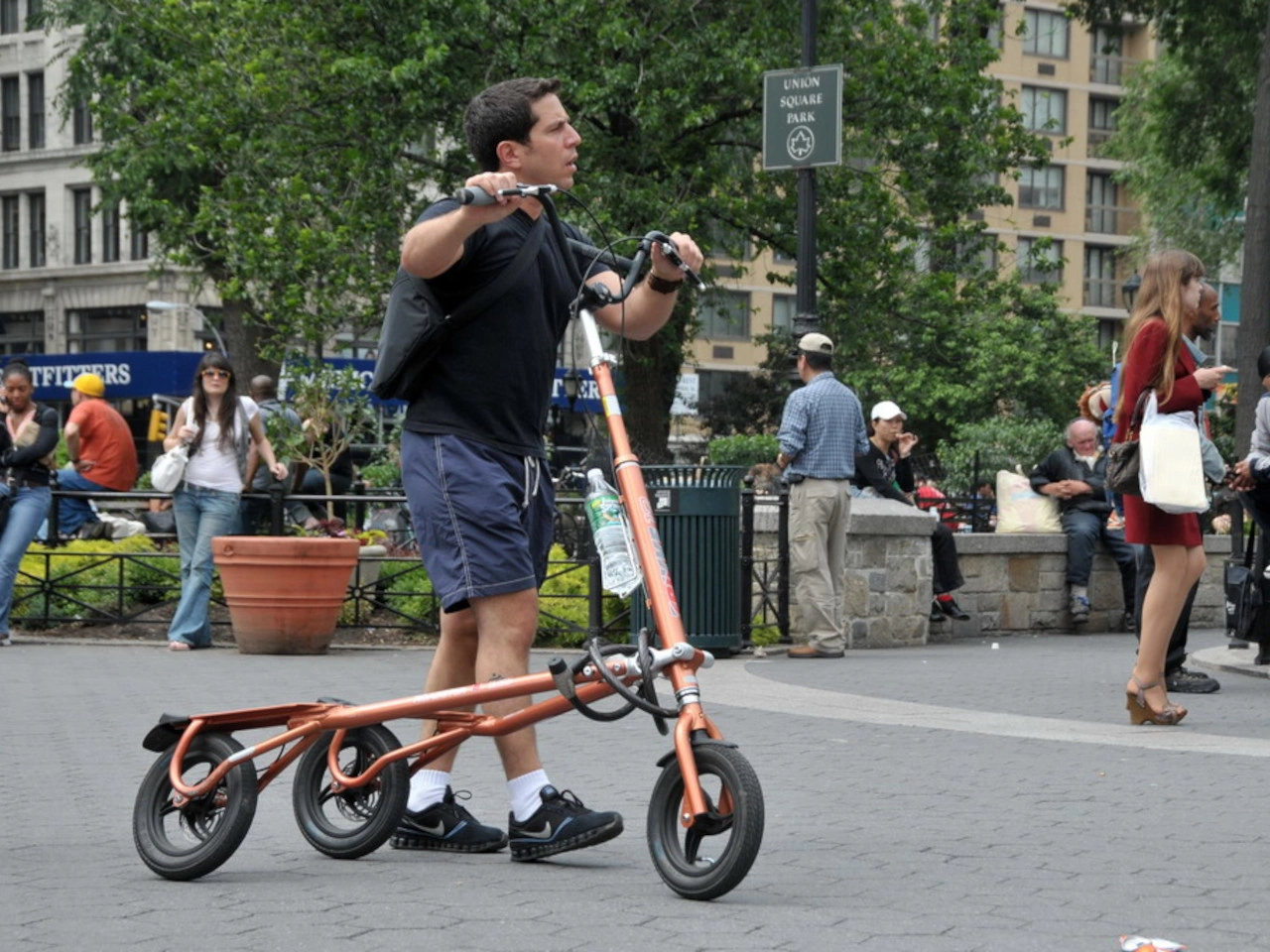
How is a non-motorised Trikke treated in Belgium?
A human-powered Trikke that falls within the definition of a non-motorised personal mobility device is treated as a pedestrian when travelling no faster than walking pace and as a cyclist when travelling faster than walking pace.
How is an electric Trikke treated in Belgium?
If an electric Trikke meets the definition of a motorised personal mobility device, including a maximum design speed of no more than 25 km/h, its user is treated as a cyclist.
Do all Trikke models have the same legal status in Belgium?
No. The classification depends on the particular vehicle's propulsion and technical characteristics. A faster or differently constructed motorised Trikke may fall into another vehicle category and therefore be subject to different rules.
117. Engin de déplacement personnel
Un engin de déplacement personnel, également appelé dispositif de mobilité personnelle, est un appareil compact conçu pour transporter une personne sur des distances relativement courtes. Il peut notamment s’agir de trottinettes, trottinettes électriques, skateboards, engins auto-équilibrés et dispositifs de mobilité.
Ces engins peuvent être propulsés par l’effort de l’utilisateur ou par un moteur électrique. Leur classification juridique, leur vitesse maximale, l’âge minimum d’utilisation et leur place autorisée sur la route varient selon les pays ; les utilisateurs doivent donc respecter les panneaux et réglementations locales.
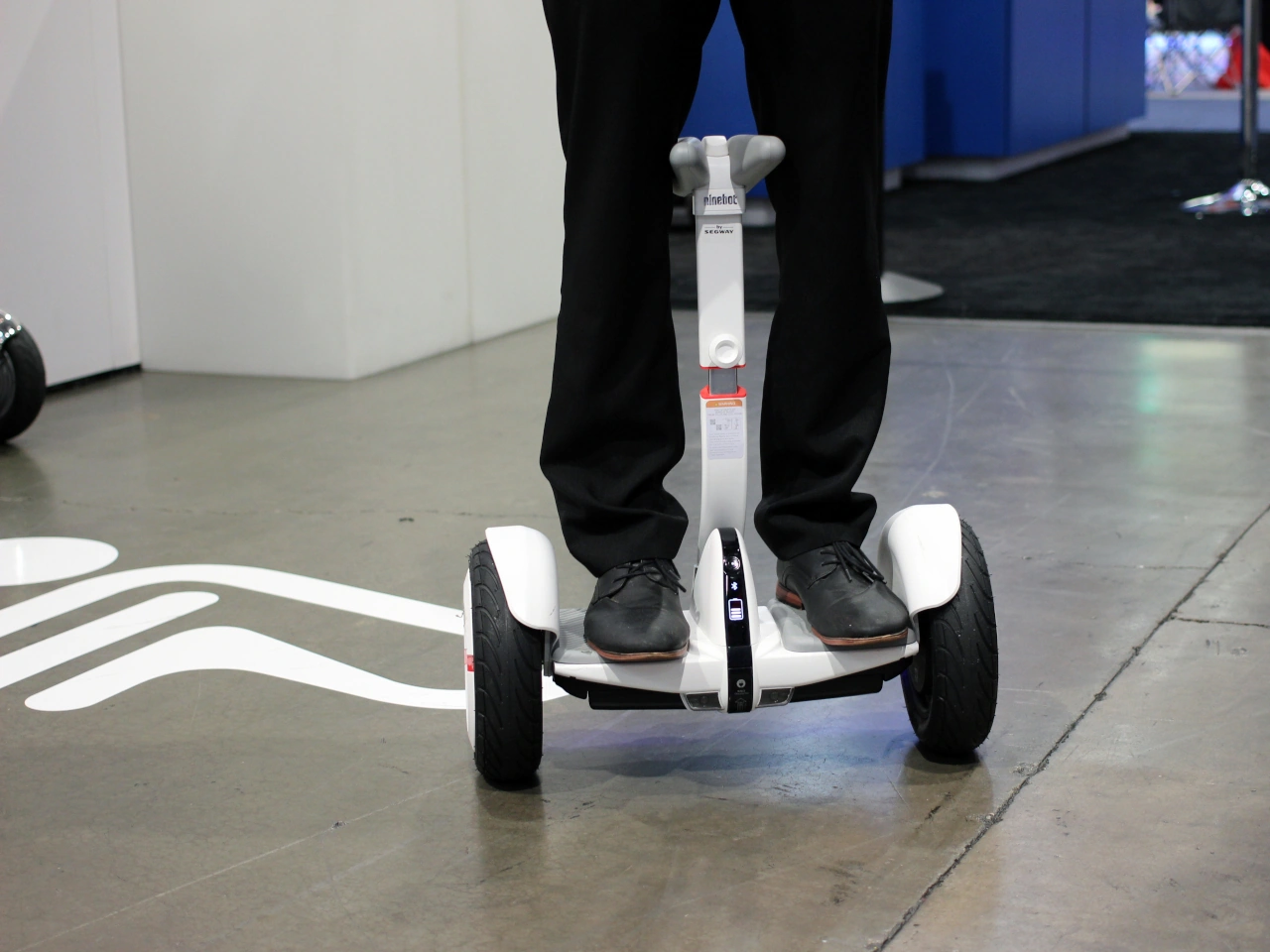
What is a personal transporter in Belgium?
Belgian law uses the term voortbewegingstoestel for a category that includes both non-motorised and motorised personal mobility devices.
What are examples of Belgian motorised personal transporters?
Examples include electric scooters, electric skateboards, monowheels, self-balancing electric devices, powered wheelchairs and mobility scooters.
What is the maximum design speed of a Belgian motorised personal transporter?
A motorised personal transporter must have a construction-determined maximum speed of no more than 25 km/h.
How are electric-scooter riders treated under Belgian traffic rules?
Users of motorised personal transporters are treated as cyclists. They therefore follow the traffic rules applying to cyclists unless a specific rule provides otherwise.
Must an electric scooter use the cycle path in Belgium?
Yes, where the corresponding cyclist rules require use of an available and usable cycle path. Because users of motorised personal transporters are treated as cyclists, they generally follow the same road-position rules.
Can you ride an electric scooter on the pavement in Belgium?
Normally not as an ordinary pedestrian. A motorised personal-transporter user is treated as a cyclist and must follow the applicable cyclist road-position rules rather than simply riding on the pavement at walking speed.
What is the exception for people with reduced mobility?
A person with reduced mobility using a motorised personal transporter intended for that purpose and travelling at no more than walking speed is treated as a pedestrian and may use the pedestrian facilities accordingly.
How old must you be to ride an electric scooter in Belgium?
You must normally be at least 16 years old to ride a motorised personal transporter on the public road.
Are there exceptions to the Belgian minimum age of 16?
Yes. The minimum age does not apply in certain places including residential areas and home zones, certain reserved roads, permitted pedestrian zones and play streets. It also does not apply to qualifying persons with reduced mobility using an appropriate device.
Do you need a driving licence for an electric scooter in Belgium?
No. Motorised personal transporters are not treated as motor vehicles for the purposes of the Belgian driving-licence rules, so an ordinary electric scooter within this category does not require a driving licence.
Can two people ride on one electric scooter in Belgium?
No, unless the device was specifically built to transport passengers. A personal transporter may not carry more passengers than the number for which its seating positions are designed.
What reflectors must a Belgian electric scooter have?
A motorised personal transporter with a handlebar must always have a white reflector at the front and a red reflector at the rear. Motorised personal transporters must also have the prescribed lateral reflective markings.
Does a Belgian electric scooter need a bell or horn?
A motorised personal transporter with a handlebar must have an audible warning device that can be heard from at least 20 metres.
Does a Belgian electric scooter need brakes?
Yes. Motorised personal transporters must have a sufficiently effective braking system.
What lights must a personal transporter use at night in Belgium?
When travelling outside areas reserved for pedestrians between nightfall and dawn or when visibility is below approximately 200 metres, the user must display a white or yellow light at the front and a red light at the rear.
How wide may a Belgian personal transporter be?
The maximum permitted width of a personal transporter is 1 metre.
Where may you park a personal transporter in Belgium?
Personal transporters must normally be placed outside the carriageway and ordinary parking strips without creating danger or obstruction, unless a specifically marked parking place permits them there.
Can special parking areas be reserved for electric scooters?
Yes. Belgian traffic signs and road markings can designate parking places specifically for personal transporters, including shared personal transporters.
118. Skateboard
Un skateboard est une petite planche montée sur des roues, utilisée debout en se propulsant avec le pied au sol ou grâce à la gravité. Les skateboards sont couramment utilisés pour les loisirs, le sport et les déplacements personnels de courte distance.
Les utilisateurs doivent garder le contrôle, surveiller attentivement les piétons et la circulation et adapter leur vitesse à l’environnement. Les endroits où l’utilisation d’un skateboard est autorisée et les règles applicables varient selon les pays.

How is a skateboard classified in Belgium?
A skateboard is considered a non-motorised personal mobility device under Belgian traffic rules.
Is a skateboard user considered a pedestrian in Belgium?
Yes, when travelling no faster than walking pace. A skateboard user moving at walking pace is treated as a pedestrian and must follow the rules applying to pedestrians.
What rules apply when a skateboard user travels faster than walking pace in Belgium?
When travelling faster than walking pace, the skateboard user is treated as a cyclist and must follow the traffic rules applying to cyclists.
119. Segway
Un Segway est un engin électrique de déplacement personnel auto-équilibré qui permet à un utilisateur debout de se déplacer en modifiant la position de son corps tandis que le système électronique maintient l’équilibre. Le Segway Personal Transporter classique possède deux roues et se commande au moyen d’un guidon ou d’un mécanisme de direction.
Les Segways sont utilisés pour le transport personnel, le tourisme, la sécurité et d’autres déplacements de courte distance. Leur statut juridique et les endroits où ils peuvent circuler dépendent des règles nationales concernant les engins de mobilité personnelle.

How is a Segway classified in Belgium?
A Segway that meets the applicable technical conditions, including a maximum design speed of no more than 25 km/h, is considered a motorised personal mobility device.
Is a Segway user treated as a cyclist in Belgium?
Yes. Users of motorised personal mobility devices are legally treated as cyclists and must follow the traffic rules that apply to them.
What is the minimum age for riding a Segway in Belgium?
The general minimum age for using a motorised personal mobility device on a public road is 16 years. Exceptions apply in locations such as residential areas, reserved roads, certain pedestrian zones and play streets.
120. Trottinette
Une trottinette est un engin de mobilité personnelle doté d’une plateforme étroite, de deux roues ou plus et d’un guidon. Une trottinette non motorisée est propulsée en poussant le sol avec un pied, tandis qu’une trottinette électrique utilise un moteur électrique.
Les trottinettes sont couramment utilisées pour les loisirs et les déplacements de courte distance. Les endroits où elles peuvent circuler et les règles applicables dépendent de leur motorisation et de leur classification juridique.

How is a non-motorised kick scooter treated in Belgium?
A normal kick scooter is a non-motorised personal mobility device. When the user travels no faster than walking pace, they are treated as a pedestrian; when travelling faster than walking pace, they are treated as a cyclist.
How is an electric kick scooter treated in Belgium?
An electric kick scooter with a maximum design speed of no more than 25 km/h can fall within the category of a motorised personal mobility device. Its user is treated as a cyclist.
What is the minimum age for using an electric kick scooter in Belgium?
The general minimum age for using a motorised personal mobility device on a public road is 16 years. Exceptions apply in residential areas and erven, on certain reserved roads, in qualifying pedestrian zones and play streets, as well as for certain mobility devices used by people with reduced mobility.
121. Patins à roulettes
Les patins à roulettes sont des chaussures équipées de roues permettant de se déplacer en patinant sur une surface lisse. Les patins traditionnels ont généralement quatre roues disposées par paires, tandis que les rollers en ligne ont leurs roues alignées.
Les patineurs doivent garder le contrôle, adapter leur vitesse à l’environnement et surveiller attentivement les piétons, cyclistes, véhicules et irrégularités du sol. Les endroits où le patinage est autorisé et les règles applicables varient selon les pays.

How are roller skates classified in Belgium?
Roller skates are considered a non-motorised personal mobility device under Belgian traffic rules.
Is a roller skater considered a pedestrian in Belgium?
Yes, when travelling no faster than walking pace. In that situation, the roller skater must follow the traffic rules that apply to pedestrians.
What rules apply when a roller skater travels faster than walking pace in Belgium?
When travelling faster than walking pace, the roller skater is treated as a cyclist and must follow the traffic rules applying to cyclists, including the applicable rules concerning road position and cycle facilities.
122. Facteur
Un facteur, ou agent postal, est une personne qui collecte, transporte ou distribue des lettres, colis et autres envois postaux. Les agents postaux peuvent se déplacer à pied ou utiliser des vélos, fourgonnettes, motos ou d’autres véhicules pendant leurs tournées.
Lorsqu’ils travaillent près de la route, les agents postaux doivent respecter les règles applicables aux piétons, cyclistes ou conducteurs selon leur mode de déplacement. Les autres usagers doivent être prudents dans les zones où ils peuvent s’arrêter fréquemment, traverser la route ou entrer et sortir d’un véhicule.

Do postal workers have special traffic priority in Belgium?
No general special priority is granted simply because someone is a postal worker. They must follow the traffic rules applicable to them as pedestrians, cyclists or drivers.
Do postal delivery vehicles have a general exemption from Belgian parking rules?
No general postal-service exemption is defined in the current Belgian Road Code. Postal delivery vehicles must follow the applicable stopping and parking rules unless a specific local authorisation or traffic arrangement provides otherwise.
Can Belgian road signs indicate a post office?
Yes. The Belgian F34a direction sign may guide road users toward public or general-interest facilities, including a post office.
123. Auto-stoppeur
Un auto-stoppeur est une personne qui attend au bord d’une route ou à un autre endroit approprié et demande aux conducteurs de passage de l’emmener gratuitement vers sa destination. L’auto-stop est une forme de transport informel qui peut être autorisée, limitée ou interdite selon les règles nationales et locales.
Les auto-stoppeurs doivent attendre dans un endroit sûr et légalement autorisé, à l’écart de la circulation, et ne pas se placer à un endroit où ils gênent le trafic ou incitent des véhicules à s’arrêter dangereusement.

Is a hitchhiker considered a pedestrian in Belgium?
Yes. A person hitchhiking on foot is subject to the normal Belgian rules for pedestrians and does not receive a special traffic status simply because they are seeking a ride.
Can you hitchhike from a Belgian motorway?
No. Pedestrians are prohibited from entering Belgian motorways, so a hitchhiker may not stand or walk on the motorway to seek a ride.
Where should a hitchhiker wait in Belgium?
A hitchhiker should use a safe place intended or permitted for pedestrians, such as a pavement or suitable verge, and should not unnecessarily stand on the carriageway or choose a location where a stopping vehicle would create a danger or obstruction.
124. Jeune enfant
Un jeune enfant est un enfant qui a dépassé le stade du nourrisson mais nécessite encore une surveillance étroite et une protection particulière à proximité des routes et des véhicules. Il peut voyager comme passager en voiture, dans les transports publics, à vélo ou dans d’autres véhicules selon les exigences de sécurité applicables.
En voiture, les jeunes enfants doivent utiliser un dispositif de retenue approprié adapté à leur taille. Les adultes doivent également les surveiller attentivement près des routes, parkings et véhicules en mouvement.

Must a toddler use a child seat in Belgium?
Yes. Children under 18 who are shorter than 135 cm must generally be transported in a suitable child restraint system.
Can a toddler travel on a seat without a seat belt in Belgium?
A child under 3 years old may not be transported on a seating position that is not equipped with a seat belt.
Can a rear-facing toddler seat be used in the front of a car in Belgium?
Yes, but only when the frontal airbag is deactivated or automatically deactivates correctly. A rear-facing child restraint must not be used in front of an active frontal airbag.
125. Enfant
Un enfant est une jeune personne qui nécessite une attention et une protection particulières dans la circulation en raison de sa petite taille, de son expérience limitée et de sa capacité encore en développement à reconnaître les dangers. Les enfants peuvent participer à la circulation comme piétons, cyclistes ou passagers.
Les conducteurs doivent redoubler de prudence lorsque des enfants sont présents ou peuvent raisonnablement être attendus, notamment près des écoles, terrains de jeux, zones résidentielles et passages pour piétons.
Must children use a child restraint in Belgium?
Yes. Children under 18 who are shorter than 135 cm must generally be transported in an appropriate child restraint system.
How must drivers behave around children in Belgium?
Drivers must be especially cautious around children. They must slow down and, if necessary, stop.
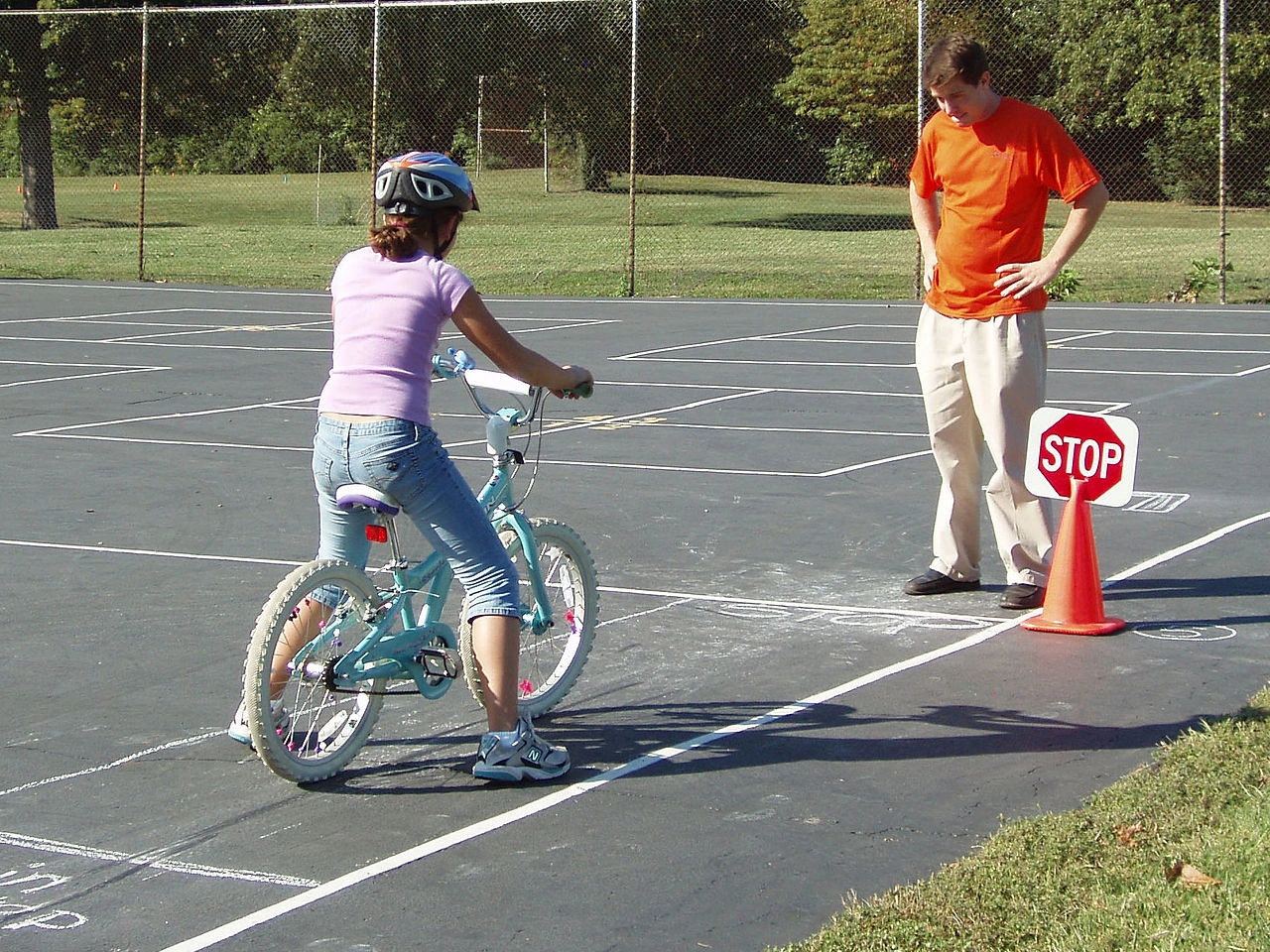
Can young children cycle on the pavement in Belgium?
Yes. Cyclists younger than 10 years old may use pavements and raised verges in all circumstances.