


Panneaux d’obligationPologne
 Règles de circulation
 Pologne
 Panneaux de priorité
 Panneaux de danger
 Panneaux d’interdiction
 Panneaux d’obligation
 Panneaux d’indication
 Panneaux additionnels
Panneaux d’obligation
Un panneau d’obligation indique aux conducteurs ce qu’ils doivent faire. Au lieu d’interdire des actions, il impose des obligations comme suivre une direction déterminée, utiliser une voie particulière ou respecter une vitesse minimale. Son objectif est de guider la circulation de manière sûre et efficace en faisant respecter un comportement commun là où l’ordre et la sécurité l’exigent.








1. Sens obligatoire du rond-point
Ce panneau de signalisation indique une obligation de suivre le sens du rond-point. Vous êtes tenu d’entrer et de circuler dans le rond-point dans le sens indiqué. Tourner à gauche, à droite ou aller tout droit sans suivre le rond-point est interdit.
English • Traffic sign C-12 • Roundabout. Sign C-12 indicates that traffic at the junction circulates around an island or square in the direction shown.
Polski • C-12 • ruch okrężny. Znak C-12 „ruch okrężny” oznacza, że na skrzyżowaniu ruch odbywa się dookoła wyspy lub placu w kierunku wskazanym na znaku.
Sources
🔗 Commons.wikimedia.org
🔗 Eli.gov.pl • § 36 ust. 1
SVG source: Commons.wikimedia.org • Original SVG
Paweł Grzywocz • Public domain • Original revision 2025-09-26. Wikimedia original unmodified.
Artwork reviewed against the Polish official sign catalogue, Dz.U. 2019 poz. 2310: Eli.gov.pl • C-12, PDF page 43, with amendments 2021/433, 2021/2065, 2022/2372 and 2026/133 checked. Catalogue-equivalent illustration; intentional update from the previous PNG. This is an educational illustration, not a manufacturing specification.
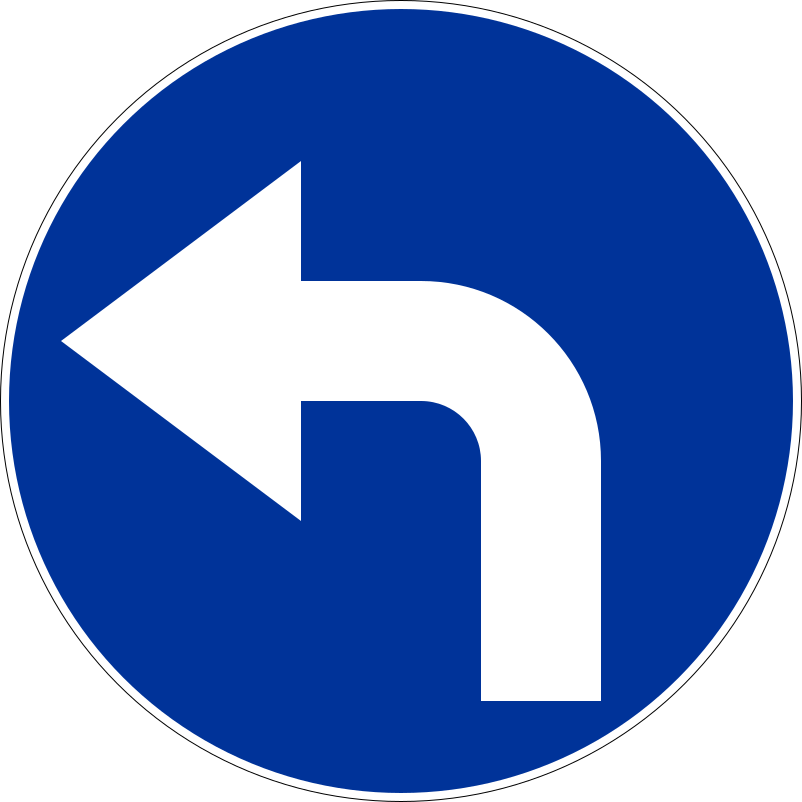
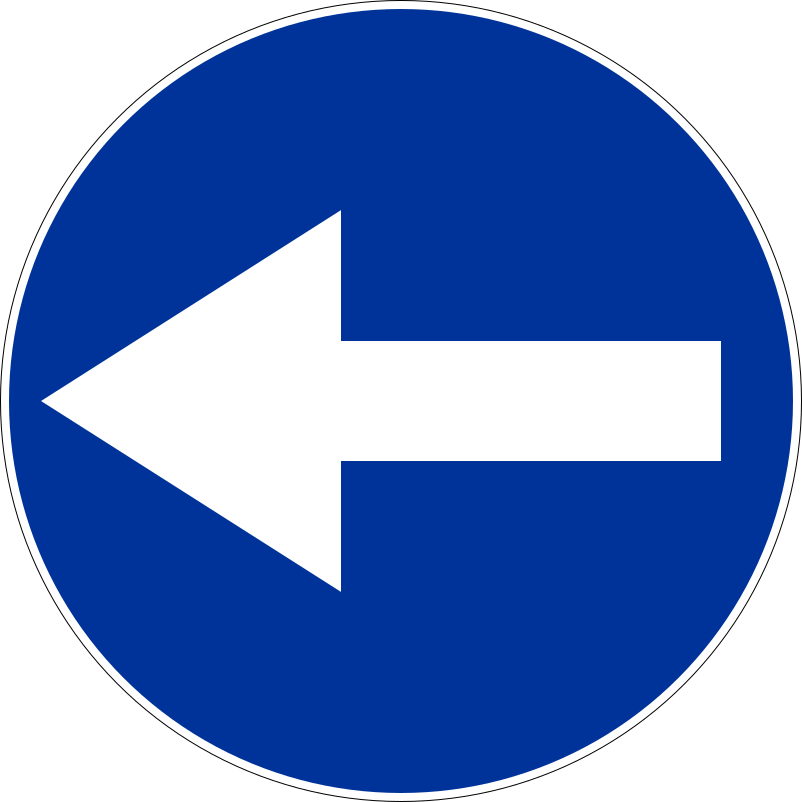
2. Obligation de tourner à gauche
Ce panneau de signalisation indique que le virage à gauche est obligatoire. Cela signifie que toute la circulation doit tourner à gauche à la prochaine intersection ou carrefour. Aller tout droit ou tourner à droite est interdit. Cela permet d'assurer la circulation et la sécurité aux intersections.
English • Traffic sign C-4 • Turn left after the sign. Signs C-1, Turn right before the sign; C-2, Turn right after the sign; C-3, Turn left before the sign; C-4, Turn left after the sign; C-5, Ahead only; C-6, Ahead or right only; C-7, Ahead or left only; C-8, Turn right or left; C-9, Pass to the right of the sign; C-10, Pass to the left of the sign; and C-11, Pass to either side of the sign, require drivers to follow the arrows. These signs may be installed in line with the road or carriageway centre line, or on the carriageway itself.
Polski • C-4 • nakaz jazdy w lewo za znakiem. Znaki: C-1 „nakaz jazdy w prawo przed znakiem”, C-2 „nakaz jazdy w prawo za znakiem”, C-3 „nakaz jazdy w lewo przed znakiem”, C-4 „nakaz jazdy w lewo za znakiem”, C-5 „nakaz jazdy prosto”, C-6 „nakaz jazdy prosto lub w prawo”, C-7 „nakaz jazdy prosto lub w lewo”, C-8 „nakaz jazdy w prawo lub w lewo”, C-9 „nakaz jazdy z prawej strony znaku”, C-10 „nakaz jazdy z lewej strony znaku”, C-11 „nakaz jazdy z prawej lub lewej strony znaku” zobowiązują kierującego do ruchu w kierunku zgodnym ze strzałkami; znaki te mogą być umieszczone na przedłużeniu osi drogi (jezdni) lub na samej jezdni.
Sources
🔗 Commons.wikimedia.org
🔗 Eli.gov.pl • § 35 ust. 1
SVG source: Commons.wikimedia.org • Original SVG
Paweł Grzywocz • Public domain • Original revision 2025-09-26. Wikimedia original unmodified.
Artwork reviewed against the Polish official sign catalogue, Dz.U. 2019 poz. 2310: Eli.gov.pl • C-4, PDF page 43, with amendments 2021/433, 2021/2065, 2022/2372 and 2026/133 checked. Catalogue-equivalent illustration; intentional update from the previous PNG. This is an educational illustration, not a manufacturing specification.
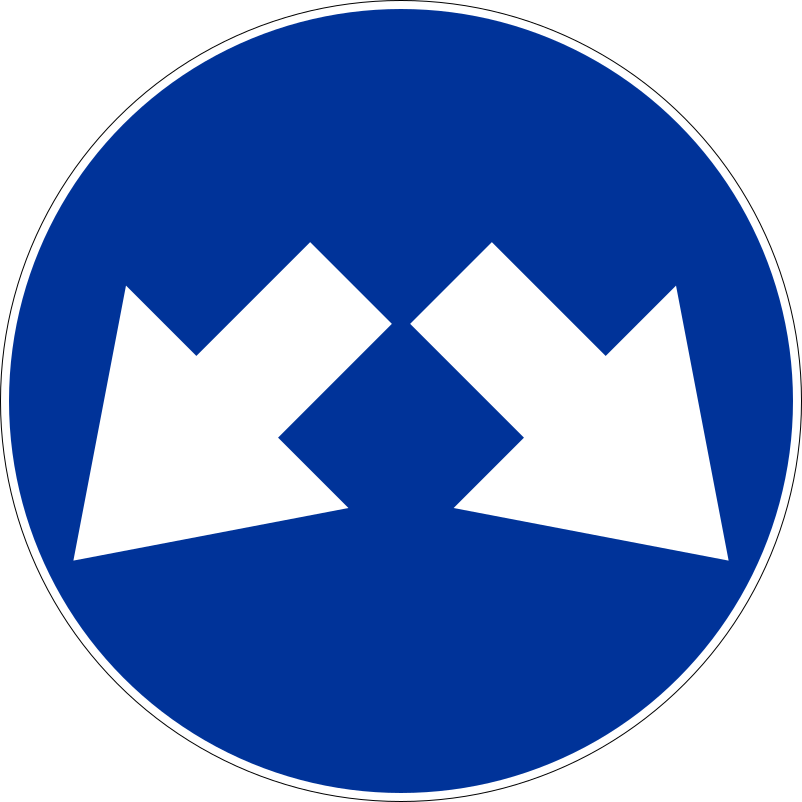
3. Obligation de tourner à gauche ou à droite
Ce panneau de signalisation indique qu'il est obligatoire de tourner à gauche ou à droite. Cela signifie que tous les véhicules doivent tourner à gauche ou à droite — il est interdit d'aller tout droit.
English • Traffic sign C-8 • Turn right or left. Signs C-1, Turn right before the sign; C-2, Turn right after the sign; C-3, Turn left before the sign; C-4, Turn left after the sign; C-5, Ahead only; C-6, Ahead or right only; C-7, Ahead or left only; C-8, Turn right or left; C-9, Pass to the right of the sign; C-10, Pass to the left of the sign; and C-11, Pass to either side of the sign, require drivers to follow the arrows. These signs may be installed in line with the road or carriageway centre line, or on the carriageway itself.
Polski • C-8 • nakaz jazdy w prawo lub w lewo. Znaki: C-1 „nakaz jazdy w prawo przed znakiem”, C-2 „nakaz jazdy w prawo za znakiem”, C-3 „nakaz jazdy w lewo przed znakiem”, C-4 „nakaz jazdy w lewo za znakiem”, C-5 „nakaz jazdy prosto”, C-6 „nakaz jazdy prosto lub w prawo”, C-7 „nakaz jazdy prosto lub w lewo”, C-8 „nakaz jazdy w prawo lub w lewo”, C-9 „nakaz jazdy z prawej strony znaku”, C-10 „nakaz jazdy z lewej strony znaku”, C-11 „nakaz jazdy z prawej lub lewej strony znaku” zobowiązują kierującego do ruchu w kierunku zgodnym ze strzałkami; znaki te mogą być umieszczone na przedłużeniu osi drogi (jezdni) lub na samej jezdni.
Sources
🔗 Commons.wikimedia.org
🔗 Eli.gov.pl • § 35 ust. 1
SVG source: Commons.wikimedia.org • Original SVG
Paweł Grzywocz • Public domain • Original revision 2025-09-26. Wikimedia original unmodified.
Artwork reviewed against the Polish official sign catalogue, Dz.U. 2019 poz. 2310: Eli.gov.pl • C-8, PDF page 43, with amendments 2021/433, 2021/2065, 2022/2372 and 2026/133 checked. Catalogue-equivalent illustration; intentional update from the previous PNG. This is an educational illustration, not a manufacturing specification.
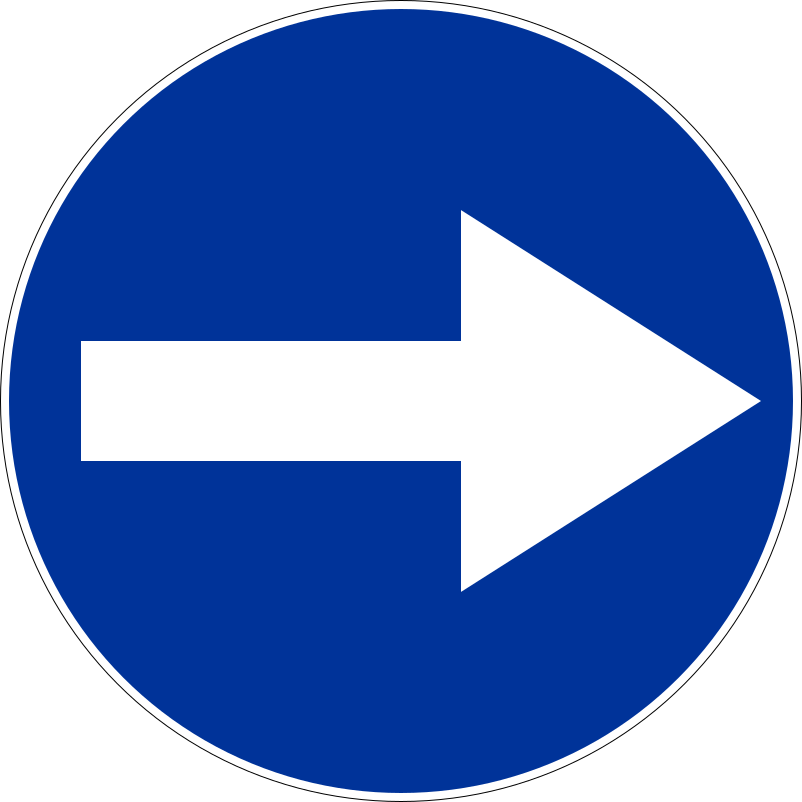
4. Obligation de tourner à droite
Ce panneau de signalisation indique qu'il est obligatoire de tourner à droite. Cela signifie que tous les véhicules doivent tourner à droite à la prochaine intersection ou au carrefour. Aller tout droit ou à gauche n'est pas autorisé.
English • Traffic sign C-2 • Turn right after the sign. Signs C-1, Turn right before the sign; C-2, Turn right after the sign; C-3, Turn left before the sign; C-4, Turn left after the sign; C-5, Ahead only; C-6, Ahead or right only; C-7, Ahead or left only; C-8, Turn right or left; C-9, Pass to the right of the sign; C-10, Pass to the left of the sign; and C-11, Pass to either side of the sign, require drivers to follow the arrows. These signs may be installed in line with the road or carriageway centre line, or on the carriageway itself.
Polski • C-2 • nakaz jazdy w prawo za znakiem. Znaki: C-1 „nakaz jazdy w prawo przed znakiem”, C-2 „nakaz jazdy w prawo za znakiem”, C-3 „nakaz jazdy w lewo przed znakiem”, C-4 „nakaz jazdy w lewo za znakiem”, C-5 „nakaz jazdy prosto”, C-6 „nakaz jazdy prosto lub w prawo”, C-7 „nakaz jazdy prosto lub w lewo”, C-8 „nakaz jazdy w prawo lub w lewo”, C-9 „nakaz jazdy z prawej strony znaku”, C-10 „nakaz jazdy z lewej strony znaku”, C-11 „nakaz jazdy z prawej lub lewej strony znaku” zobowiązują kierującego do ruchu w kierunku zgodnym ze strzałkami; znaki te mogą być umieszczone na przedłużeniu osi drogi (jezdni) lub na samej jezdni.
Sources
🔗 Commons.wikimedia.org
🔗 Eli.gov.pl • § 35 ust. 1
SVG source: Commons.wikimedia.org • Original SVG
Paweł Grzywocz • Public domain • Original revision 2025-09-26. Wikimedia original unmodified.
Artwork reviewed against the Polish official sign catalogue, Dz.U. 2019 poz. 2310: Eli.gov.pl • C-2, PDF page 43, with amendments 2021/433, 2021/2065, 2022/2372 and 2026/133 checked. Catalogue-equivalent illustration; intentional update from the previous PNG. This is an educational illustration, not a manufacturing specification.
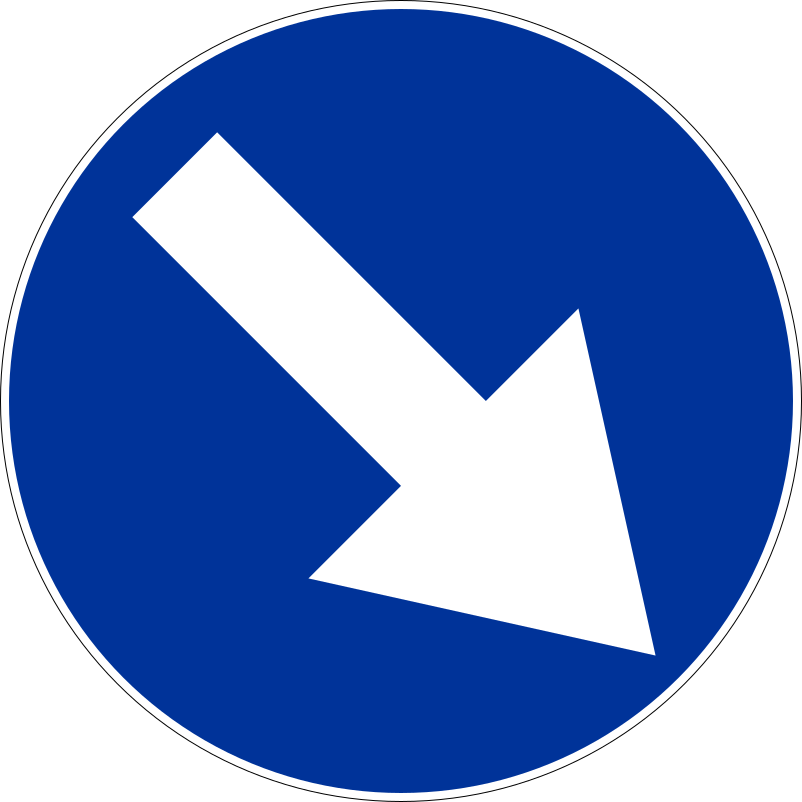
5. Contourner l'obstacle par la gauche
Ce panneau de signalisation indique que la circulation doit contourner l’obstacle par la gauche. Restez à gauche de l’obstacle et suivez les éventuels marquages ou panneaux complémentaires.
English • Traffic sign C-10 • Pass to the left of the sign. Signs C-1, Turn right before the sign; C-2, Turn right after the sign; C-3, Turn left before the sign; C-4, Turn left after the sign; C-5, Ahead only; C-6, Ahead or right only; C-7, Ahead or left only; C-8, Turn right or left; C-9, Pass to the right of the sign; C-10, Pass to the left of the sign; and C-11, Pass to either side of the sign, require drivers to follow the arrows. These signs may be installed in line with the road or carriageway centre line, or on the carriageway itself.
Polski • C-10 • nakaz jazdy z lewej strony znaku. Znaki: C-1 „nakaz jazdy w prawo przed znakiem”, C-2 „nakaz jazdy w prawo za znakiem”, C-3 „nakaz jazdy w lewo przed znakiem”, C-4 „nakaz jazdy w lewo za znakiem”, C-5 „nakaz jazdy prosto”, C-6 „nakaz jazdy prosto lub w prawo”, C-7 „nakaz jazdy prosto lub w lewo”, C-8 „nakaz jazdy w prawo lub w lewo”, C-9 „nakaz jazdy z prawej strony znaku”, C-10 „nakaz jazdy z lewej strony znaku”, C-11 „nakaz jazdy z prawej lub lewej strony znaku” zobowiązują kierującego do ruchu w kierunku zgodnym ze strzałkami; znaki te mogą być umieszczone na przedłużeniu osi drogi (jezdni) lub na samej jezdni.
Sources
🔗 Commons.wikimedia.org
🔗 Eli.gov.pl • § 35 ust. 1
SVG source: Commons.wikimedia.org • Original SVG
odder • CC BY-SA 2.5 • Original revision 2025-09-26. Wikimedia original unmodified.
Artwork reviewed against the Polish official sign catalogue, Dz.U. 2019 poz. 2310: Eli.gov.pl • C-10, PDF page 43, with amendments 2021/433, 2021/2065, 2022/2372 and 2026/133 checked. Catalogue-equivalent illustration; intentional update from the previous PNG. This is an educational illustration, not a manufacturing specification.
6. Contourner l'obstacle par la gauche ou la droite
Ce panneau de signalisation indique que la circulation doit contourner l’obstacle par la gauche ou par la droite. Utilisez l’un des côtés autorisés en suivant l’aménagement et la signalisation.
English • Traffic sign C-11 • Pass to either the right or left of the sign. Signs C-1, Turn right before the sign; C-2, Turn right after the sign; C-3, Turn left before the sign; C-4, Turn left after the sign; C-5, Ahead only; C-6, Ahead or right only; C-7, Ahead or left only; C-8, Turn right or left; C-9, Pass to the right of the sign; C-10, Pass to the left of the sign; and C-11, Pass to either side of the sign, require drivers to follow the arrows. These signs may be installed in line with the road or carriageway centre line, or on the carriageway itself.
Polski • C-11 • nakaz jazdy z prawej lub lewej strony znaku. Znaki: C-1 „nakaz jazdy w prawo przed znakiem”, C-2 „nakaz jazdy w prawo za znakiem”, C-3 „nakaz jazdy w lewo przed znakiem”, C-4 „nakaz jazdy w lewo za znakiem”, C-5 „nakaz jazdy prosto”, C-6 „nakaz jazdy prosto lub w prawo”, C-7 „nakaz jazdy prosto lub w lewo”, C-8 „nakaz jazdy w prawo lub w lewo”, C-9 „nakaz jazdy z prawej strony znaku”, C-10 „nakaz jazdy z lewej strony znaku”, C-11 „nakaz jazdy z prawej lub lewej strony znaku” zobowiązują kierującego do ruchu w kierunku zgodnym ze strzałkami; znaki te mogą być umieszczone na przedłużeniu osi drogi (jezdni) lub na samej jezdni.
Sources
🔗 Commons.wikimedia.org
🔗 Eli.gov.pl • § 35 ust. 1
SVG source: Commons.wikimedia.org • Original SVG
Paweł Grzywocz • Public domain • Original revision 2025-09-26. Wikimedia original unmodified.
Artwork reviewed against the Polish official sign catalogue, Dz.U. 2019 poz. 2310: Eli.gov.pl • C-11, PDF page 43, with amendments 2021/433, 2021/2065, 2022/2372 and 2026/133 checked. Catalogue-equivalent illustration; intentional update from the previous PNG. This is an educational illustration, not a manufacturing specification.
7. Contourner l'obstacle par la droite
Ce panneau de signalisation indique que la circulation doit contourner l’obstacle par la droite. Restez à droite de l’obstacle et suivez les éventuels marquages ou panneaux complémentaires.
English • Traffic sign C-9 • Pass to the right of the sign. Signs C-1, Turn right before the sign; C-2, Turn right after the sign; C-3, Turn left before the sign; C-4, Turn left after the sign; C-5, Ahead only; C-6, Ahead or right only; C-7, Ahead or left only; C-8, Turn right or left; C-9, Pass to the right of the sign; C-10, Pass to the left of the sign; and C-11, Pass to either side of the sign, require drivers to follow the arrows. These signs may be installed in line with the road or carriageway centre line, or on the carriageway itself.
Polski • C-9 • nakaz jazdy z prawej strony znaku. Znaki: C-1 „nakaz jazdy w prawo przed znakiem”, C-2 „nakaz jazdy w prawo za znakiem”, C-3 „nakaz jazdy w lewo przed znakiem”, C-4 „nakaz jazdy w lewo za znakiem”, C-5 „nakaz jazdy prosto”, C-6 „nakaz jazdy prosto lub w prawo”, C-7 „nakaz jazdy prosto lub w lewo”, C-8 „nakaz jazdy w prawo lub w lewo”, C-9 „nakaz jazdy z prawej strony znaku”, C-10 „nakaz jazdy z lewej strony znaku”, C-11 „nakaz jazdy z prawej lub lewej strony znaku” zobowiązują kierującego do ruchu w kierunku zgodnym ze strzałkami; znaki te mogą być umieszczone na przedłużeniu osi drogi (jezdni) lub na samej jezdni.
Sources
🔗 Commons.wikimedia.org
🔗 Eli.gov.pl • § 35 ust. 1
SVG source: Commons.wikimedia.org • Original SVG
odder • CC BY-SA 2.5 • Original revision 2025-09-26. Wikimedia original unmodified.
Artwork reviewed against the Polish official sign catalogue, Dz.U. 2019 poz. 2310: Eli.gov.pl • C-9, PDF page 43, with amendments 2021/433, 2021/2065, 2022/2372 and 2026/133 checked. Catalogue-equivalent illustration; intentional update from the previous PNG. This is an educational illustration, not a manufacturing specification.
8. Circulation tout droit ou tourner à gauche obligatoire
Ce panneau de signalisation indique que rouler tout droit ou tourner à gauche est obligatoire. Cela signifie que la circulation ne peut aller que tout droit ou tourner à gauche — il est interdit de tourner à droite. Ce panneau est utilisé pour la gestion de la circulation dans les intersections complexes ou les zones restreintes.
English • Traffic sign C-7 • Ahead or left only. Signs C-1, Turn right before the sign; C-2, Turn right after the sign; C-3, Turn left before the sign; C-4, Turn left after the sign; C-5, Ahead only; C-6, Ahead or right only; C-7, Ahead or left only; C-8, Turn right or left; C-9, Pass to the right of the sign; C-10, Pass to the left of the sign; and C-11, Pass to either side of the sign, require drivers to follow the arrows. These signs may be installed in line with the road or carriageway centre line, or on the carriageway itself.
Polski • C-7 • nakaz jazdy prosto lub w lewo. Znaki: C-1 „nakaz jazdy w prawo przed znakiem”, C-2 „nakaz jazdy w prawo za znakiem”, C-3 „nakaz jazdy w lewo przed znakiem”, C-4 „nakaz jazdy w lewo za znakiem”, C-5 „nakaz jazdy prosto”, C-6 „nakaz jazdy prosto lub w prawo”, C-7 „nakaz jazdy prosto lub w lewo”, C-8 „nakaz jazdy w prawo lub w lewo”, C-9 „nakaz jazdy z prawej strony znaku”, C-10 „nakaz jazdy z lewej strony znaku”, C-11 „nakaz jazdy z prawej lub lewej strony znaku” zobowiązują kierującego do ruchu w kierunku zgodnym ze strzałkami; znaki te mogą być umieszczone na przedłużeniu osi drogi (jezdni) lub na samej jezdni.
Sources
🔗 Commons.wikimedia.org
🔗 Eli.gov.pl • § 35 ust. 1
SVG source: Commons.wikimedia.org • Original SVG
Patrol110 • CC BY-SA 2.5 • Original revision 2025-09-26. Wikimedia original unmodified.
Artwork reviewed against the Polish official sign catalogue, Dz.U. 2019 poz. 2310: Eli.gov.pl • C-7, PDF page 43, with amendments 2021/433, 2021/2065, 2022/2372 and 2026/133 checked. Catalogue-equivalent illustration; intentional update from the previous PNG. This is an educational illustration, not a manufacturing specification.
9. Circulation tout droit ou tourner à droite obligatoire
Ce panneau de signalisation indique que rouler tout droit ou tourner à droite est obligatoire. Cela signifie que la circulation ne peut aller que tout droit ou tourner à droite — il est interdit de tourner à gauche. Cela aide à réguler la circulation dans les intersections, notamment près des rues à sens unique ou zones à accès restreint.
English • Traffic sign C-6 • Ahead or right only. Signs C-1, Turn right before the sign; C-2, Turn right after the sign; C-3, Turn left before the sign; C-4, Turn left after the sign; C-5, Ahead only; C-6, Ahead or right only; C-7, Ahead or left only; C-8, Turn right or left; C-9, Pass to the right of the sign; C-10, Pass to the left of the sign; and C-11, Pass to either side of the sign, require drivers to follow the arrows. These signs may be installed in line with the road or carriageway centre line, or on the carriageway itself.
Polski • C-6 • nakaz jazdy prosto lub w prawo. Znaki: C-1 „nakaz jazdy w prawo przed znakiem”, C-2 „nakaz jazdy w prawo za znakiem”, C-3 „nakaz jazdy w lewo przed znakiem”, C-4 „nakaz jazdy w lewo za znakiem”, C-5 „nakaz jazdy prosto”, C-6 „nakaz jazdy prosto lub w prawo”, C-7 „nakaz jazdy prosto lub w lewo”, C-8 „nakaz jazdy w prawo lub w lewo”, C-9 „nakaz jazdy z prawej strony znaku”, C-10 „nakaz jazdy z lewej strony znaku”, C-11 „nakaz jazdy z prawej lub lewej strony znaku” zobowiązują kierującego do ruchu w kierunku zgodnym ze strzałkami; znaki te mogą być umieszczone na przedłużeniu osi drogi (jezdni) lub na samej jezdni.
Sources
🔗 Commons.wikimedia.org
🔗 Eli.gov.pl • § 35 ust. 1
SVG source: Commons.wikimedia.org • Original SVG
odder • CC BY-SA 2.5 • Original revision 2025-09-26. Wikimedia original unmodified.
Artwork reviewed against the Polish official sign catalogue, Dz.U. 2019 poz. 2310: Eli.gov.pl • C-6, PDF page 43, with amendments 2021/433, 2021/2065, 2022/2372 and 2026/133 checked. Catalogue-equivalent illustration; intentional update from the previous PNG. This is an educational illustration, not a manufacturing specification.
10. Obligation de tourner à gauche
Ce panneau indique une obligation de tourner à gauche. Cela signifie que tous les véhicules doivent tourner à gauche à l'endroit où le panneau est situé. Aller tout droit ou tourner à droite est interdit.
English • Traffic sign C-3 • Turn left before the sign. Signs C-1, Turn right before the sign; C-2, Turn right after the sign; C-3, Turn left before the sign; C-4, Turn left after the sign; C-5, Ahead only; C-6, Ahead or right only; C-7, Ahead or left only; C-8, Turn right or left; C-9, Pass to the right of the sign; C-10, Pass to the left of the sign; and C-11, Pass to either side of the sign, require drivers to follow the arrows. These signs may be installed in line with the road or carriageway centre line, or on the carriageway itself.
Polski • C-3 • nakaz jazdy w lewo przed znakiem. Znaki: C-1 „nakaz jazdy w prawo przed znakiem”, C-2 „nakaz jazdy w prawo za znakiem”, C-3 „nakaz jazdy w lewo przed znakiem”, C-4 „nakaz jazdy w lewo za znakiem”, C-5 „nakaz jazdy prosto”, C-6 „nakaz jazdy prosto lub w prawo”, C-7 „nakaz jazdy prosto lub w lewo”, C-8 „nakaz jazdy w prawo lub w lewo”, C-9 „nakaz jazdy z prawej strony znaku”, C-10 „nakaz jazdy z lewej strony znaku”, C-11 „nakaz jazdy z prawej lub lewej strony znaku” zobowiązują kierującego do ruchu w kierunku zgodnym ze strzałkami; znaki te mogą być umieszczone na przedłużeniu osi drogi (jezdni) lub na samej jezdni.
Sources
🔗 Commons.wikimedia.org
🔗 Eli.gov.pl • § 35 ust. 1
SVG source: Commons.wikimedia.org • Original SVG
odder • CC BY-SA 2.5 • Original revision 2025-09-26. Wikimedia original unmodified.
Artwork reviewed against the Polish official sign catalogue, Dz.U. 2019 poz. 2310: Eli.gov.pl • C-3, PDF page 43, with amendments 2021/433, 2021/2065, 2022/2372 and 2026/133 checked. Catalogue-equivalent illustration; intentional update from the previous PNG. This is an educational illustration, not a manufacturing specification.
11. Obligation de tourner à droite
Ce panneau de signalisation indique une obligation de tourner à droite. Cela signifie que tout le trafic doit tourner à droite à l'endroit où le panneau est placé. Aller tout droit ou tourner à gauche est interdit.
English • Traffic sign C-1 • Turn right before the sign. Signs C-1, Turn right before the sign; C-2, Turn right after the sign; C-3, Turn left before the sign; C-4, Turn left after the sign; C-5, Ahead only; C-6, Ahead or right only; C-7, Ahead or left only; C-8, Turn right or left; C-9, Pass to the right of the sign; C-10, Pass to the left of the sign; and C-11, Pass to either side of the sign, require drivers to follow the arrows. These signs may be installed in line with the road or carriageway centre line, or on the carriageway itself.
Polski • C-1 • nakaz jazdy w prawo przed znakiem. Znaki: C-1 „nakaz jazdy w prawo przed znakiem”, C-2 „nakaz jazdy w prawo za znakiem”, C-3 „nakaz jazdy w lewo przed znakiem”, C-4 „nakaz jazdy w lewo za znakiem”, C-5 „nakaz jazdy prosto”, C-6 „nakaz jazdy prosto lub w prawo”, C-7 „nakaz jazdy prosto lub w lewo”, C-8 „nakaz jazdy w prawo lub w lewo”, C-9 „nakaz jazdy z prawej strony znaku”, C-10 „nakaz jazdy z lewej strony znaku”, C-11 „nakaz jazdy z prawej lub lewej strony znaku” zobowiązują kierującego do ruchu w kierunku zgodnym ze strzałkami; znaki te mogą być umieszczone na przedłużeniu osi drogi (jezdni) lub na samej jezdni.
Sources
🔗 Commons.wikimedia.org
🔗 Eli.gov.pl • § 35 ust. 1
SVG source: Commons.wikimedia.org • Original SVG
odder • CC BY-SA 2.5 • Original revision 2025-09-26. Wikimedia original unmodified.
Artwork reviewed against the Polish official sign catalogue, Dz.U. 2019 poz. 2310: Eli.gov.pl • C-1, PDF page 43, with amendments 2021/433, 2021/2065, 2022/2372 and 2026/133 checked. Catalogue-equivalent illustration; intentional update from the previous PNG. This is an educational illustration, not a manufacturing specification.
12. Circulation tout droit obligatoire
Ce panneau de signalisation indique que rouler tout droit est obligatoire, il est interdit de tourner à gauche ou à droite. Cela signifie que les véhicules doivent continuer tout droit — il est interdit de tourner à gauche ou à droite.
English • Traffic sign C-5 • Ahead only. Signs C-1, Turn right before the sign; C-2, Turn right after the sign; C-3, Turn left before the sign; C-4, Turn left after the sign; C-5, Ahead only; C-6, Ahead or right only; C-7, Ahead or left only; C-8, Turn right or left; C-9, Pass to the right of the sign; C-10, Pass to the left of the sign; and C-11, Pass to either side of the sign, require drivers to follow the arrows. These signs may be installed in line with the road or carriageway centre line, or on the carriageway itself.
Polski • C-5 • nakaz jazdy prosto. Znaki: C-1 „nakaz jazdy w prawo przed znakiem”, C-2 „nakaz jazdy w prawo za znakiem”, C-3 „nakaz jazdy w lewo przed znakiem”, C-4 „nakaz jazdy w lewo za znakiem”, C-5 „nakaz jazdy prosto”, C-6 „nakaz jazdy prosto lub w prawo”, C-7 „nakaz jazdy prosto lub w lewo”, C-8 „nakaz jazdy w prawo lub w lewo”, C-9 „nakaz jazdy z prawej strony znaku”, C-10 „nakaz jazdy z lewej strony znaku”, C-11 „nakaz jazdy z prawej lub lewej strony znaku” zobowiązują kierującego do ruchu w kierunku zgodnym ze strzałkami; znaki te mogą być umieszczone na przedłużeniu osi drogi (jezdni) lub na samej jezdni.
Sources
🔗 Commons.wikimedia.org
🔗 Eli.gov.pl • § 35 ust. 1
SVG source: Commons.wikimedia.org • Original SVG
odder • CC BY-SA 2.5 • Original revision 2025-09-26. Wikimedia original unmodified.
Artwork reviewed against the Polish official sign catalogue, Dz.U. 2019 poz. 2310: Eli.gov.pl • C-5, PDF page 43, with amendments 2021/433, 2021/2065, 2022/2372 and 2026/133 checked. Catalogue-equivalent illustration; intentional update from the previous PNG. This is an educational illustration, not a manufacturing specification.
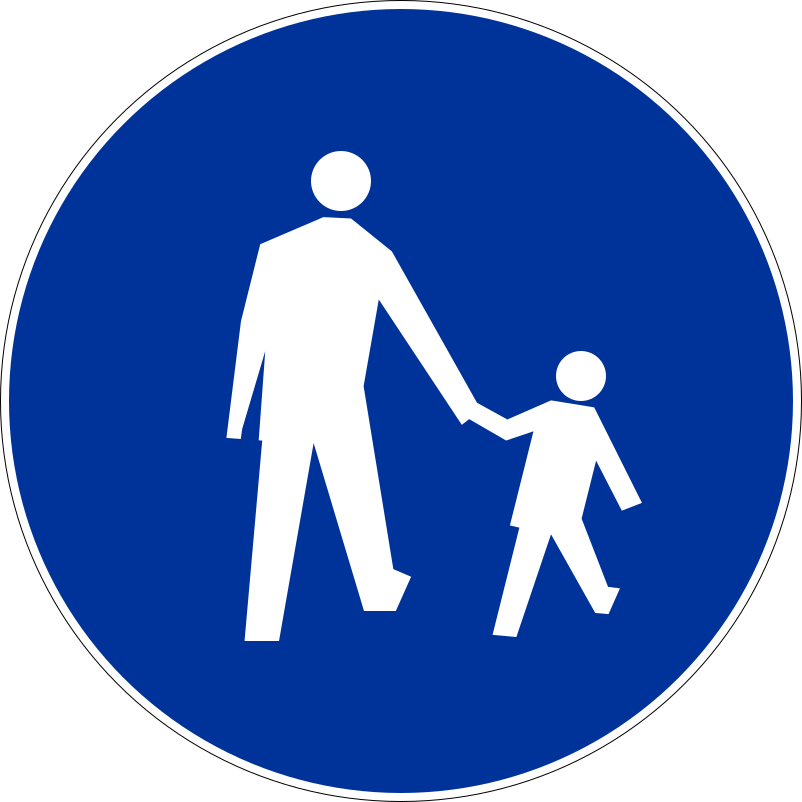
13. Chemin obligatoire pour les piétons
Ce panneau de signalisation indique le début d’un chemin pour piétons. Cela signifie que les piétons doivent utiliser le chemin désigné (trottoir ou sentier), et ne peuvent pas marcher sur la route adjacente ou dans d’autres zones. Les autres usagers (vélos, cyclomoteurs, etc.) ne sont pas autorisés, sauf indication contraire. Emplacements courants : trottoirs urbains, zones scolaires, parcs, passages souterrains.
English • Traffic sign C-16 • Pedestrian route. Sign C-16 identifies a road or part of it intended for pedestrians, who must use it. Under subsection 1a, the requirement applies until cancelled or until sign B-41, C-13 or D-40.
Polski • C-16 • droga dla pieszych. Znak C-16 „droga dla pieszych” oznacza drogę lub jej część przeznaczoną dla pieszych, którzy są obowiązani z niej korzystać. 1a. Nakaz wyrażony znakiem C-16 obowiązuje do odwołania albo do miejsca umieszczenia znaku B-41, C-13 albo D-40.
Sources
🔗 Commons.wikimedia.org
🔗 Eli.gov.pl • § 39 ust. 1
SVG source: Commons.wikimedia.org • Original SVG
Paweł Grzywocz • Public domain • Original revision 2025-09-26. Wikimedia original unmodified.
Artwork reviewed against the Polish official sign catalogue, Dz.U. 2019 poz. 2310: Eli.gov.pl • C-16, PDF page 43, with amendments 2021/433, 2021/2065, 2022/2372 and 2026/133 checked. Catalogue-equivalent illustration; intentional update from the previous PNG. This is an educational illustration, not a manufacturing specification.
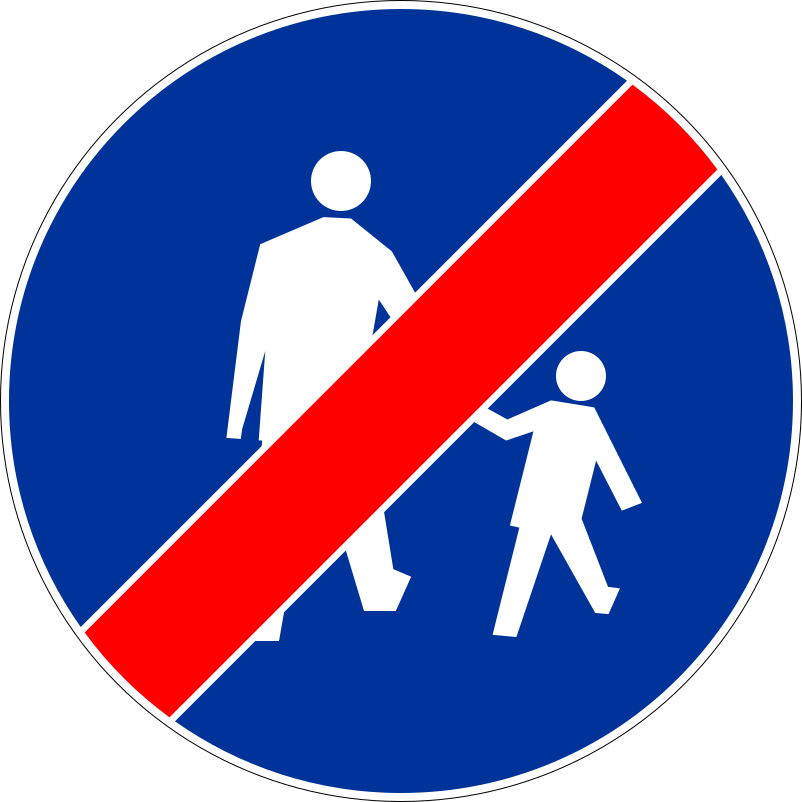
14. Fin du chemin piétonnier
Ce panneau de signalisation indique la fin du chemin pour piétons. Cela signifie que le chemin piétonnier désigné se termine ici. Ce panneau est souvent utilisé à la fin des trottoirs, sentiers ou zones piétonnes.
English • Traffic sign C-16a • End of the pedestrian route. Sign C-16a marks the end of a road intended for pedestrians.
Polski • C-16a • koniec drogi dla pieszych. Znak C-16a „koniec drogi dla pieszych” oznacza koniec drogi przeznaczonej dla pieszych.
Sources
🔗 Commons.wikimedia.org
🔗 Eli.gov.pl • § 39 ust. 2
SVG source: Commons.wikimedia.org • Original SVG
Paweł Grzywocz • Public domain • Original revision 2025-09-26. Wikimedia original unmodified.
Artwork reviewed against the Polish official sign catalogue, Dz.U. 2019 poz. 2310: Eli.gov.pl • C-16a, PDF page 43, with amendments 2021/433, 2021/2065, 2022/2372 and 2026/133 checked. Catalogue-equivalent illustration; intentional update from the previous PNG. This is an educational illustration, not a manufacturing specification.
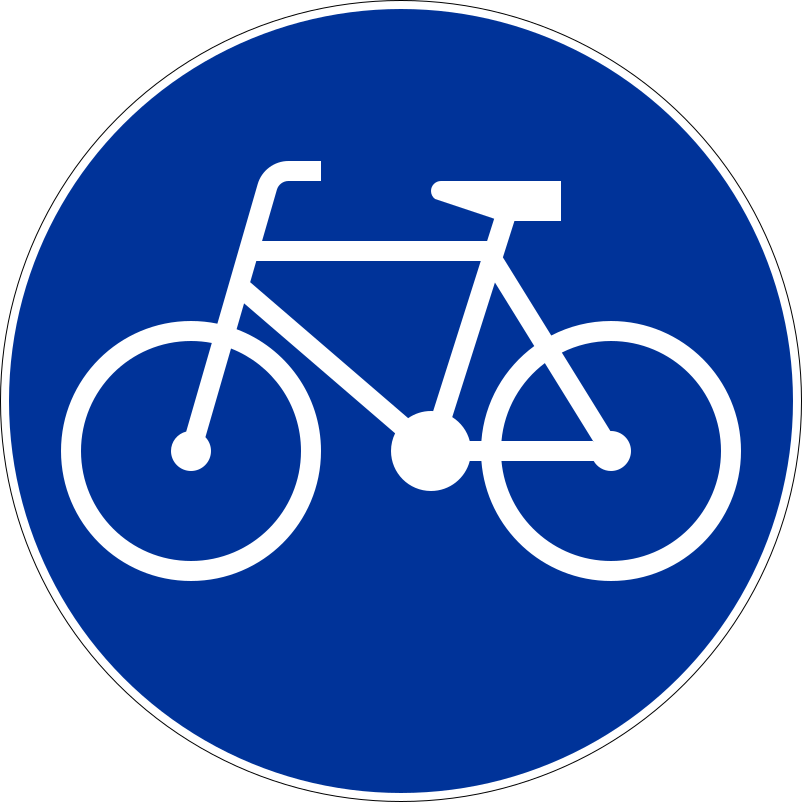
15. Voie obligatoire pour cyclistes
Ce panneau de signalisation indique le début d'une piste cyclable. Cela signifie que les cyclistes doivent emprunter la piste cyclable désignée et ne sont pas autorisés à circuler sur la route principale avec les véhicules motorisés. Cela assure la sécurité des cyclistes et un trafic fluide.
English • Traffic sign C-13 • Cycle route. Sign C-13 identifies a road intended for cyclists, who must use it if it serves the direction in which they are travelling or intend to turn.
Polski • C-13 • droga dla rowerów. Znak C-13 „droga dla rowerów” oznacza drogę przeznaczoną dla kierujących rowerami, którzy są obowiązani do korzystania z tej drogi, jeżeli jest ona wyznaczona dla kierunku, w którym oni poruszają się lub zamierzają skręcić.
Sources
🔗 Commons.wikimedia.org
🔗 Eli.gov.pl • § 37 ust. 1
SVG source: Commons.wikimedia.org • Original SVG
Author not stated on source page • Public domain • Original revision 2025-09-26. Wikimedia original unmodified.
Artwork reviewed against the Polish official sign catalogue, Dz.U. 2019 poz. 2310: Eli.gov.pl • C-13, PDF page 43, with amendments 2021/433, 2021/2065, 2022/2372 and 2026/133 checked. Catalogue-equivalent illustration; intentional update from the previous PNG. This is an educational illustration, not a manufacturing specification.
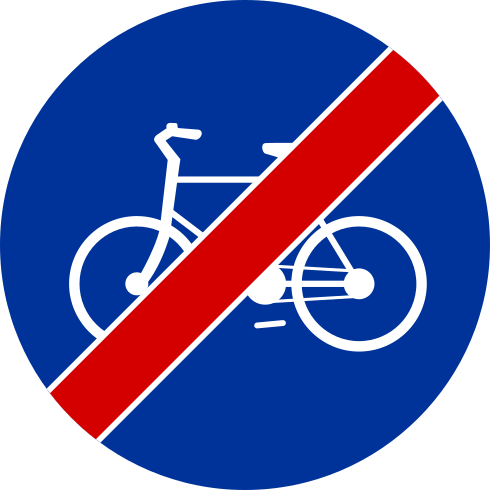
16. Fin de la piste cyclable
Ce panneau de signalisation indique la fin de la voie pour cyclistes. Cela signifie que la piste cyclable se termine à ce point. Après ce panneau, les cyclistes doivent rejoindre la chaussée générale et respecter les règles normales de circulation. Les cyclistes circulent alors dans la circulation mixte ou sur une autre voie désignée, si elle existe. Les automobilistes doivent rester attentifs à l’insertion des cyclistes dans le trafic.
English • Traffic sign C-13a • End of the cycle route. Sign C-13a marks the end of a road intended for cyclists.
Polski • C-13a • koniec drogi dla rowerów. Znak C-13a „koniec drogi dla rowerów” oznacza koniec drogi przeznaczonej dla kierujących rowerami.
Sources
🔗 Commons.wikimedia.org
🔗 Eli.gov.pl • § 37 ust. 3
SVG source: Commons.wikimedia.org • Original SVG
Gigillo83 • Public domain • Original revision 2021-11-15. Wikimedia original unmodified.
Artwork reviewed against the Polish official sign catalogue, Dz.U. 2019 poz. 2310: Eli.gov.pl • C-13a, PDF page 43, with amendments 2021/433, 2021/2065, 2022/2372 and 2026/133 checked. Catalogue-equivalent illustration; intentional update from the previous PNG. This is an educational illustration, not a manufacturing specification.
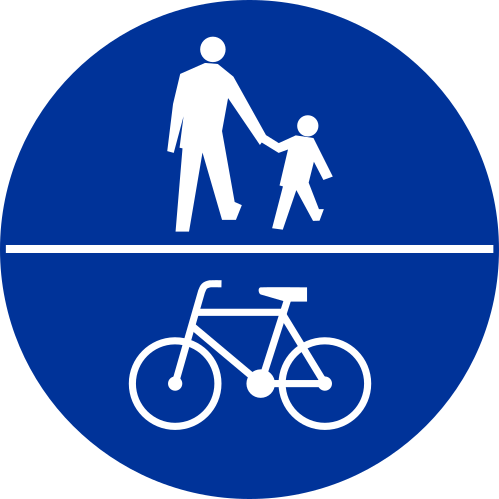
17. Voie partagée obligatoire pour piétons et cyclistes
Ce panneau de signalisation indique le début d'une voie partagée entre piétons et cyclistes. Cela signifie qu'une voie spécifique est partagée par les piétons et les cyclistes, et que les deux groupes doivent l'utiliser. Le chemin n'est pas divisé. Il s'agit d'un espace commun où chacun doit être vigilant et partager prudemment.
English • Traffic sign C-13+C-16 • Cycle route and pedestrian route. The symbols of C-13 and C-16 on one sign, separated by a vertical line, indicate adjoining cycle and pedestrian routes on the respective sides shown. Cyclists must use the route if it serves the direction in which they are travelling or intend to turn.
Polski • C-13+C-16 • droga dla rowerów i droga dla pieszych. Umieszczone na jednej tarczy symbole znaków C-13 i C-16 oddzielone kreską pionową oznaczają drogę dla rowerów i drogę dla pieszych położone obok siebie, odpowiednio po stronach wskazanych na znaku. Kierujący rowerami są obowiązani do korzystania z tak oznakowanej drogi, jeżeli jest ona wyznaczona dla kierunku, w którym oni poruszają się lub zamierzają skręcić.
Sources
🔗 Commons.wikimedia.org
🔗 Eli.gov.pl • § 40 ust. 2
SVG source: Pz • Public domain • Original revision 2012-04-16. Wikimedia original unmodified.
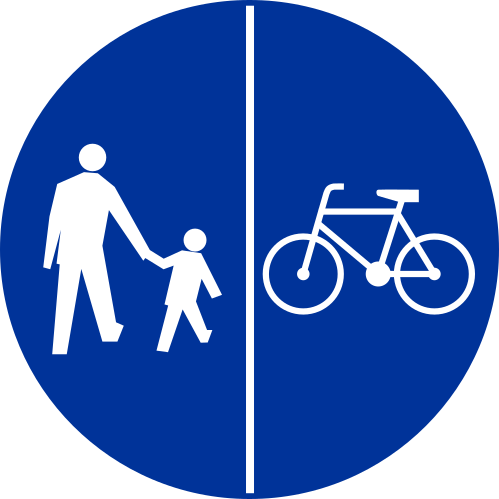
18. Chemin divisé obligatoire pour piétons et cyclistes
Ce panneau de signalisation indique le début d’un chemin partagé, séparé pour piétons et cyclistes. Il signifie qu’il existe un chemin d’usage commun, physiquement ou visuellement séparé en deux voies : une pour les piétons et une pour les cyclistes. Chaque groupe d’usagers doit rester sur sa voie dédiée.
English • Traffic sign C-13+C-16 • Cycle route and pedestrian route. The symbols of C-13 and C-16 on one sign, separated by a vertical line, indicate adjoining cycle and pedestrian routes on the respective sides shown. Cyclists must use the route if it serves the direction in which they are travelling or intend to turn.
Polski • C-13+C-16 • droga dla rowerów i droga dla pieszych. Umieszczone na jednej tarczy symbole znaków C-13 i C-16 oddzielone kreską pionową oznaczają drogę dla rowerów i drogę dla pieszych położone obok siebie, odpowiednio po stronach wskazanych na znaku. Kierujący rowerami są obowiązani do korzystania z tak oznakowanej drogi, jeżeli jest ona wyznaczona dla kierunku, w którym oni poruszają się lub zamierzają skręcić.
Sources
🔗 Commons.wikimedia.org
🔗 Eli.gov.pl • § 40 ust. 2
SVG source: Pz • Public domain • Original revision 2012-04-16. Wikimedia original unmodified.
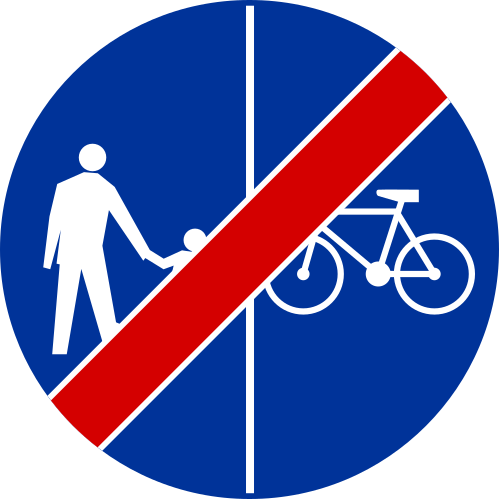
19. Fin du chemin séparé pour piétons et cyclistes
Ce panneau de signalisation indique la fin du chemin divisé pour piétons et cyclistes. Cela signifie que les voies séparées pour piétons et cyclistes ne s’appliquent plus au-delà de ce point.
English • Traffic sign C-13a+C-16a • End of the pedestrian and cycle route. Subsections 1 and 2, section 37(2) and (3), and section 39(1a) and (2) apply correspondingly to marking the end of a route for pedestrians and cyclists or adjoining separate cycle and pedestrian routes. Sign C-13/C-16 is also cancelled by C-13 or C-16.
Polski • C-13a+C-16a • koniec drogi dla pieszych i rowerów. Przepisy ust. 1 i 2, § 37 ust. 2 i 3 oraz § 39 ust. 1a i 2 stosuje się odpowiednio dla oznaczania końca drogi dla pieszych i kierujących rowerami oraz końca drogi dla rowerów i drogi dla pieszych położonych obok siebie, przy czym znak C-13/C-16 jest odwoływany również znakami C-13 albo C-16.
Sources
🔗 Commons.wikimedia.org
🔗 Eli.gov.pl • § 40 ust. 3
SVG source: Gigillo83 • Public domain • Original revision 2013-02-16. Wikimedia original unmodified.
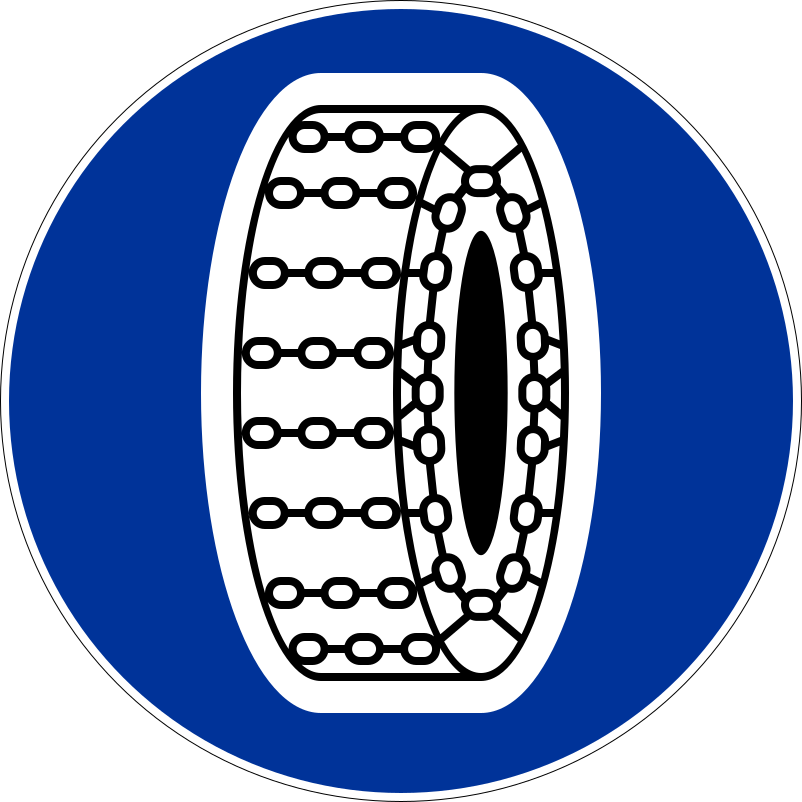
20. Chaînes à neige obligatoires
Ce panneau de signalisation indique que les chaînes à neige sont obligatoires. Cela signifie que les véhicules doivent être équipés de chaînes à neige sur au moins les roues motrices au-delà de l’endroit où le panneau est affiché. Cette règle s’applique quel que soit l’état de la chaussée. S’applique généralement aux voitures, camions et bus. Emplacements courants : cols de montagne, stations de ski et fortes pentes.
English • Traffic sign C-18 • Snow chains required. Sign C-18 requires drivers of motor vehicles on the road where it is installed to use snow chains on at least two driven wheels. A plate below it as referred to in section 23(2) means that the sign applies to the vehicles specified on that plate.
Polski • C-18 • nakaz używania łańcuchów przeciwpoślizgowych. Znak C-18 „nakaz używania łańcuchów przeciwpoślizgowych” oznacza, że na drodze, na której znak został umieszczony, kierujący pojazdem silnikowym jest obowiązany stosować łańcuchy przeciwpoślizgowe na co najmniej dwóch kołach napędowych; umieszczona pod znakiem tabliczka, o której mowa w § 23 ust. 2, oznacza, że znak dotyczy pojazdów określonych na tabliczce.
Sources
🔗 Commons.wikimedia.org
🔗 Eli.gov.pl • § 42 ust. 1
SVG source: Commons.wikimedia.org • Original SVG
Harry-C • CC BY 3.0 • Original revision 2025-09-27. Wikimedia original unmodified.
Artwork reviewed against the Polish official sign catalogue, Dz.U. 2019 poz. 2310: Eli.gov.pl • C-18, PDF page 43, with amendments 2021/433, 2021/2065, 2022/2372 and 2026/133 checked. Catalogue-equivalent illustration; intentional update from the previous PNG. This is an educational illustration, not a manufacturing specification.
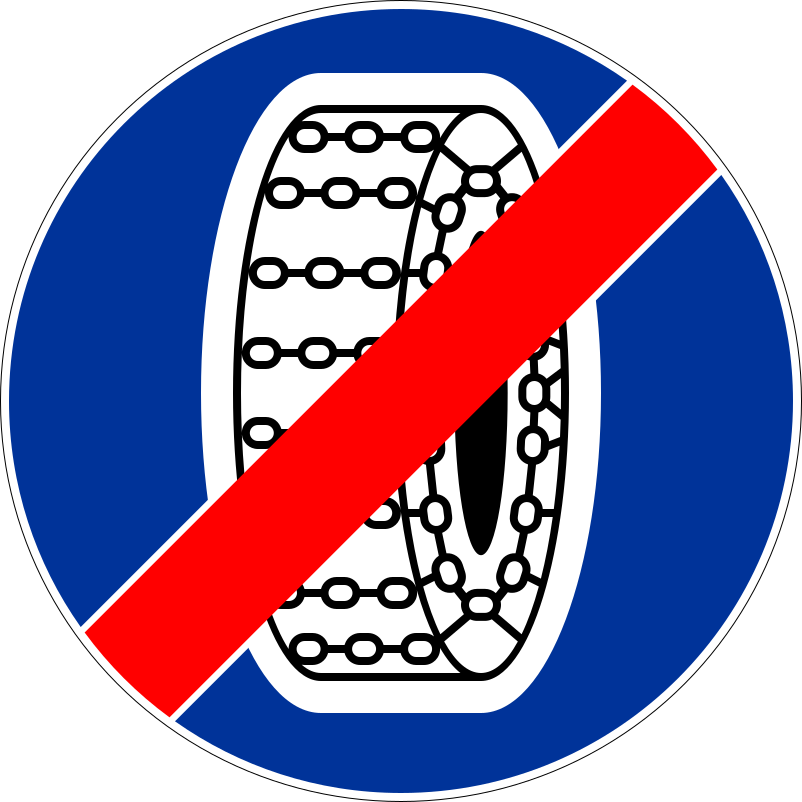
21. Fin de l'obligation des chaînes à neige
Ce panneau de signalisation indique la fin de l’obligation d’utiliser des chaînes à neige. L’obligation imposée précédemment prend fin ici. D’autres exigences d’équipement hivernal peuvent toutefois rester applicables.
English • Traffic sign C-19 • End of the snow-chain requirement. Sign C-19 marks the place where the requirement imposed by C-18 ends.
Polski • C-19 • koniec nakazu używania łańcuchów przeciwpoślizgowych. Znak C-19 „koniec nakazu używania łańcuchów przeciwpoślizgowych” oznacza miejsce, w którym nakaz określony znakiem C-18 przestaje obowiązywać.
Sources
🔗 Commons.wikimedia.org
🔗 Eli.gov.pl • § 42 ust. 2
SVG source: Commons.wikimedia.org • Original SVG
Harry-C • CC BY 3.0 • Original revision 2025-09-27. Wikimedia original unmodified.
Artwork reviewed against the Polish official sign catalogue, Dz.U. 2019 poz. 2310: Eli.gov.pl • C-19, PDF page 43, with amendments 2021/433, 2021/2065, 2022/2372 and 2026/133 checked. Catalogue-equivalent illustration; intentional update from the previous PNG. This is an educational illustration, not a manufacturing specification.
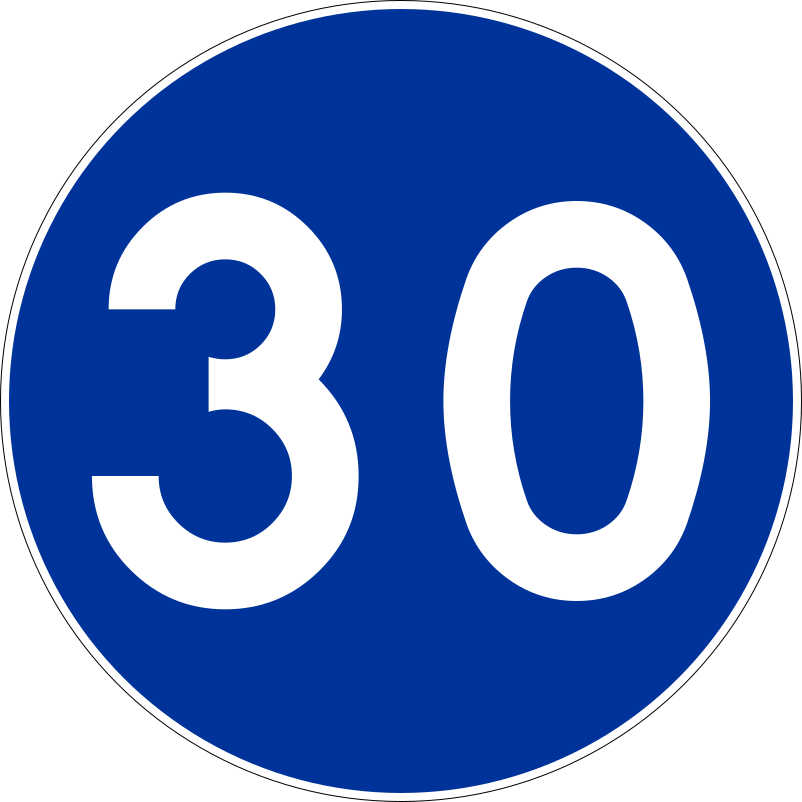
22. Début d'une vitesse minimale
Ce panneau de signalisation indique le début d’une vitesse minimale. Cela signifie que tous les véhicules doivent circuler à une vitesse égale ou supérieure à la limite indiquée — rouler plus lentement est interdit, sauf en cas de circulation, météo ou urgence le justifiant. Vise à empêcher que les véhicules lents ne gênent la circulation. Exceptions possibles en cas de danger, d’embouteillage ou de mauvaises conditions. Emplacements courants : autoroutes, tunnels, voies rapides.
English • Traffic sign C-14 • Minimum speed. Sign C-14 requires drivers, while observing speed limits under specific provisions, to travel at least at the speed shown in kilometres per hour, unless traffic conditions or safety require a lower speed.
Polski • C-14 • prędkość minimalna. Znak C-14 „prędkość minimalna” oznacza, że kierujący, przy zachowaniu ograniczeń prędkości wynikających z przepisów szczegółowych, jest obowiązany jechać z prędkością nie mniejszą niż określona na znaku liczbą kilometrów na godzinę, chyba że warunki ruchu lub jego bezpieczeństwo wymagają zmniejszenia prędkości.
Sources
🔗 Commons.wikimedia.org
🔗 Eli.gov.pl • § 38 ust. 1
SVG source: Commons.wikimedia.org • Original SVG
Paweł Grzywocz • Public domain • Original revision 2025-09-26. Wikimedia original unmodified.
Artwork reviewed against the Polish official sign catalogue, Dz.U. 2019 poz. 2310: Eli.gov.pl • C-14, PDF page 43, with amendments 2021/433, 2021/2065, 2022/2372 and 2026/133 checked. Catalogue-equivalent illustration; intentional update from the previous PNG. This is an educational illustration, not a manufacturing specification.
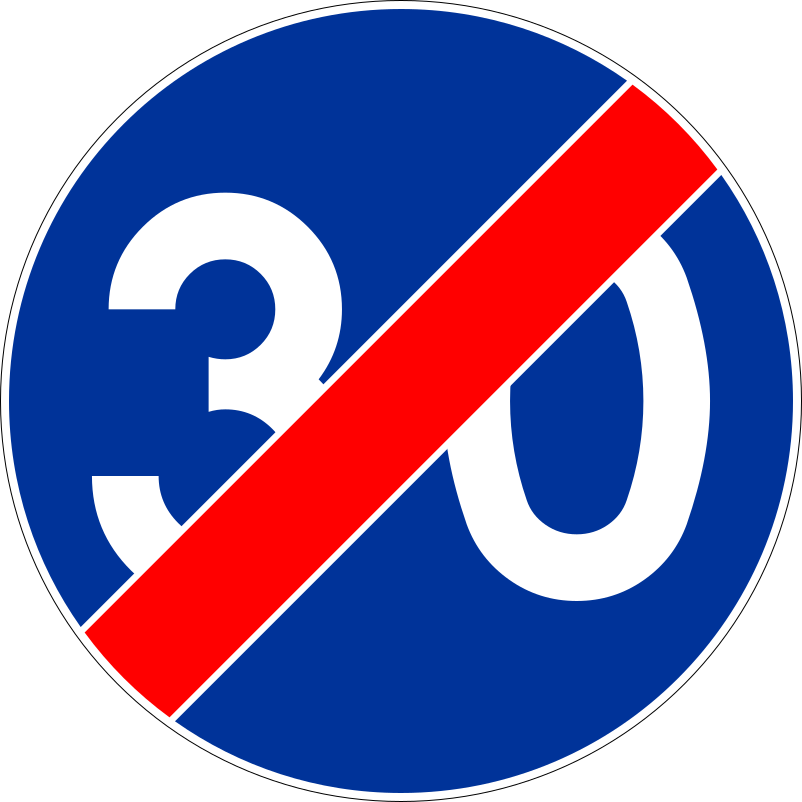
23. Fin de la vitesse minimale
Ce panneau de signalisation indique la fin de la vitesse minimale. Cela signifie que la limitation minimale de vitesse obligatoire ne s’applique plus au-delà de ce point. Les véhicules ne sont plus tenus de respecter la vitesse minimale indiquée auparavant. Ce panneau est souvent placé à la sortie des autoroutes, tunnels ou zones à grande vitesse.
English • Traffic sign C-15 • End of the minimum speed requirement. Sign C-15 marks the place where the minimum speed imposed by C-14 ceases to apply.
Polski • C-15 • koniec minimalnej prędkości. Znak C-15 „koniec minimalnej prędkości” oznacza miejsce, w którym prędkość minimalna określona znakiem C-14 przestaje obowiązywać.
Sources
🔗 Commons.wikimedia.org
🔗 Eli.gov.pl • § 38 ust. 2
SVG source: Commons.wikimedia.org • Original SVG
Paweł Grzywocz • Public domain • Original revision 2025-09-26. Wikimedia original unmodified.
Artwork reviewed against the Polish official sign catalogue, Dz.U. 2019 poz. 2310: Eli.gov.pl • C-15, PDF page 43, with amendments 2021/433, 2021/2065, 2022/2372 and 2026/133 checked. Catalogue-equivalent illustration; intentional update from the previous PNG. This is an educational illustration, not a manufacturing specification.
