


道路標識ドイツ
 交通ルール
交通ルール
 ドイツ
ドイツ
226. シートベルト
シートベルトは、急制動や衝突時に乗員を座席へ確実に保持する拘束装置です。車内へ衝突したり、車外へ放出されたりする危険を減らします。
腰ベルト部は腰骨の低い位置、肩ベルト部は胸部を通るよう体へしっかり沿わせます。ねじれ、背中の後ろへ回すなど保護効果を低下させる使い方をしてはいけません。

Why is wearing a seat belt important?
A seat belt restrains the occupant during sudden deceleration or a collision, helping prevent contact with the vehicle interior and reducing the risk of being thrown from the vehicle.
How should a seat belt be worn?
The belt should fit securely without twists. The lap section should lie low across the hips and the shoulder section should pass across the chest and shoulder rather than behind the back or under the arm.
Do airbags replace the need for a seat belt?
No. Seat belts and airbags are designed to work together. An airbag does not replace the restraint provided by a correctly worn seat belt.

227. チャイルドシート
チャイルドシートは、車両で移動する子どもを保護する安全装置です。後ろ向き・前向きチャイルドシートやブースターシートなどがあり、子どもの体格と製品仕様に応じて位置・拘束します。
子どもと車両に適したものを選び、メーカーの指示どおり取り付け、毎回正しく固定します。後ろ向きチャイルドシートを作動中の前面エアバッグの前に設置してはいけません。
What is a child restraint system?
A child restraint system is a safety device designed to secure a child in a vehicle. Depending on the child's size and the system, it can include a child seat, harness or booster seat used together with the vehicle's seat belt or dedicated anchorage system.
How should you choose a child restraint?
The restraint should be approved for the child's size and compatible with the vehicle. The manufacturer's instructions should be followed carefully when selecting, installing and using it.
Can a rear-facing child seat be placed in front of an active airbag?
No. A rear-facing child restraint must not be used on a seat with an active frontal airbag because deployment of the airbag can seriously endanger the child.
228. ヘッドレスト
ヘッドレストは、衝突時に身体に対する頭部の後方移動を抑え、特に追突時の首や頸椎の負傷リスクを減らすための車両安全装置です。
調整式の場合、首ではなく後頭部を支え、できるだけ頭に近づく位置へ調整します。運転者と乗客は出発前に体格へ合わせて調整します。
What is the purpose of a head restraint?
A head restraint limits excessive rearward movement of the head during a collision, helping reduce the forces acting on the neck and cervical spine.
How should a head restraint be adjusted?
It should be adjusted to support the back of the head rather than the neck and positioned as close to the head as practical. The seat and head restraint should be adjusted together to provide a comfortable and protective driving position.
Are head restraints part of passive safety?
Yes. Head restraints are passive safety devices because their main purpose is to reduce injury when a collision occurs rather than to prevent the collision itself.
229. エアバッグ
エアバッグは、特定の衝突時に急速展開し、乗員がハンドル、ダッシュボード、ドア、その他の車内部品へ衝突するリスクを減らす車両安全装置です。前面、側面、カーテンなどの種類があります。
補助拘束装置(SRS)の一部で、シートベルトの代わりではなく併用する設計です。乗員は正しい姿勢で座り、シートベルトを着用し、エアバッグとチャイルドシートに関するメーカー指示に従います。
What is an airbag?
An airbag is an inflatable vehicle safety device designed to help protect occupants during certain types of collision.
How does an airbag work?
Sensors detect collision conditions and, when the system determines that deployment is required, the airbag inflates extremely quickly to provide additional protection between the occupant and parts of the vehicle interior.
Does an airbag replace a seat belt?
No. Airbags are supplemental restraints and are designed to work together with seat belts. Occupants should always wear their seat belts where required.
What types of airbags can a car have?
Vehicles may have front airbags, side airbags, curtain airbags, knee airbags and other specialised airbags. The number and location depend on the vehicle design.
Does an airbag deploy in every collision?
No. Airbag systems are designed to deploy only when sensors detect collision conditions for which deployment is intended. Different airbags may deploy in different types of crashes.
Can an airbag be dangerous to a rear-facing child seat?
Yes. A rear-facing child restraint must not be placed in front of an active frontal passenger airbag because deployment can cause severe injury. The airbag must be deactivated where the vehicle and local rules permit such installation.
Can you switch off a passenger airbag?
Some vehicles allow the front passenger airbag to be deactivated, particularly when a rear-facing child restraint must be installed there. Follow the vehicle manufacturer's instructions carefully.
What does the airbag warning light mean?
An illuminated airbag or SRS warning light can indicate a fault in the restraint system. The system should be checked and repaired according to the vehicle manufacturer's instructions.
Can an airbag be reused after it deploys?
No. A deployed airbag is normally a single-use component and must be replaced together with any other affected restraint-system components before the system can function correctly again.
Should you sit close to an airbag?
Occupants should use a normal, correctly adjusted seating position and avoid placing themselves unnecessarily close to the airbag cover. Follow the seating and steering-wheel adjustment guidance provided by the vehicle manufacturer.
230. ABS
ABS(アンチロック・ブレーキ・システム)は、強い制動時に車輪がロックするのを防ぐアクティブセーフティシステムです。各車輪の制動圧を自動調整し、方向制御に必要な回転を維持します。
作動時はブレーキペダルに速い脈動や振動を感じる場合があります。通常、運転者はブレーキを繰り返し離すのではなく、強い踏力を維持しながら安全な方向へ操舵します。

What does ABS do?
ABS helps prevent the wheels from locking during heavy braking. By controlling wheel slip, it helps the driver retain steering control while braking strongly.
How should you brake when ABS activates?
Apply firm, continuous pressure to the brake pedal and keep steering as necessary. Pulsing or vibration through the pedal is normal while ABS is regulating the braking pressure.
Does ABS always reduce braking distance?
No. The main purpose of ABS is to prevent wheel lock and help maintain vehicle control. Actual stopping distance still depends on speed, tyres, road surface, weather and other conditions.
231. ESP
ESP(Electronic Stability Program、ESCとも呼ばれる)は、車両の横滑りや方向制御喪失を防ぐためのアクティブセーフティシステムです。運転者が意図する方向と実際の車両運動を比較し、不安定状態を検知すると介入します。
個別車輪へ自動的にブレーキをかけ、車両によってはエンジン出力も下げて意図した進路へ戻すのを支援します。タイヤグリップの限界内で作動するため、過大な速度や非常に滑りやすい条件を克服できるものではありません。

What does ESP do?
ESP helps maintain vehicle stability when it detects that the vehicle is beginning to deviate from the driver's intended direction. It can selectively brake individual wheels and may reduce engine power to help restore control.
What is the difference between ESP and ESC?
ESP and ESC refer to the same general type of electronic stability-control system. ESP means Electronic Stability Program, while ESC means Electronic Stability Control. Vehicle manufacturers may also use other names for similar systems.
Can ESP prevent every skid?
No. ESP can assist in maintaining stability, but it cannot overcome the physical limits of tyre grip. Excessive speed, worn tyres, ice or other very slippery conditions can still cause a vehicle to lose control.
232. トラクションコントロールシステム
トラクションコントロールシステム(TCS)は、加速時に駆動輪が過度に空転するのを防ぐアクティブセーフティシステムです。グリップ低下を検知すると、エンジン出力低減、1輪以上への制動、または両方を行います。
濡れた、凍結した、雪のある、または緩い路面での加速に特に有効です。利用可能なタイヤグリップをより効果的に使うのを助けますが、グリップがほとんどない場所に新たなグリップを作ることはできません。

What does traction control do?
Traction control detects excessive wheel spin during acceleration and intervenes to help the driven wheels regain grip. Depending on the vehicle, it can reduce engine power or apply braking to individual wheels.
When is traction control most useful?
It is particularly useful when accelerating on surfaces with limited grip, such as wet roads, snow, ice, mud or loose gravel.
What is the difference between traction control and ESP?
Traction control primarily limits wheel spin during acceleration. ESP or ESC has a broader function and helps stabilise the vehicle when it begins to deviate from the driver's intended direction. The systems commonly share wheel-speed sensors and braking components.
233. ヘルメット
ヘルメットは、衝突や転倒時の頭部負傷のリスクと重症度を減らすための防護具です。オートバイ、モペッド、自転車など用途別の種類があり、特定の安全規格が適用される場合があります。
着用義務は国、車両区分、利用者、場合によっては年齢によって異なります。用途に適したものを選び、正しいサイズで確実に装着して初めて設計された保護性能を発揮します。

What is a helmet?
A helmet is protective headgear designed to reduce the risk and severity of head injury if a rider falls or is involved in a collision.
Who should wear a helmet?
Helmet requirements depend on the vehicle and local traffic law. Motorcyclists and moped riders commonly have compulsory helmet requirements, while bicycle rules vary between countries.
Is a motorcycle helmet the same as a bicycle helmet?
No. Motorcycle and bicycle helmets are designed and tested for different conditions and are subject to different safety standards. Use a helmet approved for the type of vehicle concerned.
Should a passenger also wear a helmet?
Yes, where required. Passengers on motorcycles, mopeds and certain other vehicles are generally exposed to the same head-injury risks as the rider and may be subject to the same helmet requirement.
How should a helmet fit?
A helmet should fit securely and comfortably without excessive movement. It should be worn and fastened according to the manufacturer's instructions.
Can you use a damaged helmet?
A helmet that has suffered a significant impact or has visible structural damage may no longer provide its intended protection and should normally be inspected or replaced.
Can any helmet be used on a motorcycle?
No. Where motorcycle helmets are regulated, the helmet must comply with the applicable approval or safety standard. A recreational or ordinary bicycle helmet is generally not an acceptable substitute.
Are bicycle helmets compulsory everywhere?
No. Some countries require helmets for all cyclists, others only for particular age groups or types of bicycle, and some recommend them without making them compulsory.
Do speed pedelecs require a special helmet?
They may. Because speed pedelecs can travel considerably faster than ordinary bicycles, some countries require an approved moped helmet or a bicycle helmet satisfying additional requirements.
Does wearing a helmet replace safe riding?
No. A helmet provides additional protection but does not replace safe speed, observation, correct road position, appropriate clothing or compliance with traffic rules.
234. 自転車ヘルメット
自転車ヘルメットは、転倒や衝突時の頭部負傷のリスクと重症度を減らすための防護具です。通常、衝撃吸収ライナー、外殻、頭部へ保持するあご紐で構成されます。
正しいサイズで水平に装着し、確実に締めます。損傷したヘルメットは、外見上分かりにくくても保護性能が低下している可能性があるため交換します。

What is the purpose of a bicycle helmet?
A bicycle helmet is designed to absorb part of the impact energy during a fall or collision and help reduce the risk and severity of head injuries.
How should a bicycle helmet fit?
The helmet should fit snugly, sit level on the head and be secured with the retention strap. It should not move excessively when the cyclist moves their head.
Is wearing a bicycle helmet compulsory everywhere?
No. Helmet requirements vary between countries and may also depend on the cyclist's age or the type of bicycle being used. Riders should check the rules that apply where they are cycling.
235. ハンズフリー
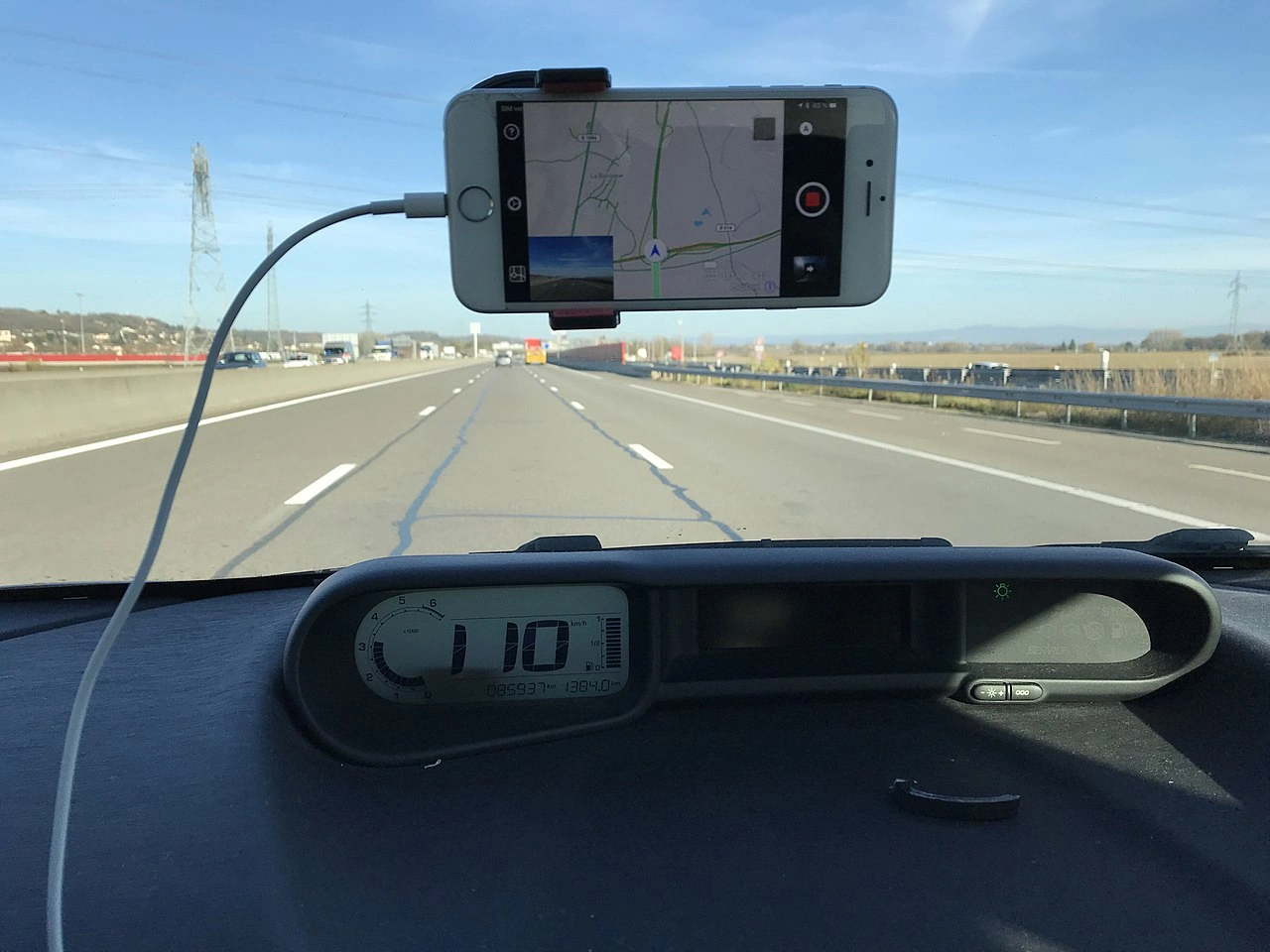
ハンズフリーは、電話や通信機器を手で持たずに使用することを指します。車載システム、ヘッドセット、イヤホン、音声操作、適切なホルダーへ固定した電話などを使います。
機器を物理的に扱う必要は減りますが、会話や操作自体が運転者の注意をそらす可能性があります。使用を最小限にし、道路へ注意を集中します。
What does hands-free mean while driving?
Hands-free means using a communication device without holding it. Calls can be handled through a vehicle system, headset, earphones, voice control or another permitted system.
Is hands-free phone use completely distraction-free?
No. Even when the driver does not physically handle the phone, a conversation or interaction with a device can reduce attention to traffic. Drivers should keep such use to a minimum.
Does hands-free use allow you to hold the phone?
No. Holding a telephone while calling is not hands-free use. Whether handheld or mounted-device use is legally permitted depends on the traffic rules of the country.
236. スマートフォン
スマートフォンは、電話、メッセージ、インターネット、ナビゲーション、カメラ、アプリなどを組み合わせた携帯電子機器です。交通ではナビゲーションやハンズフリー通信に役立つ一方、視覚、手動、精神面の大きな注意散漫を生む可能性があります。
運転中に手で操作したり見続けたりしないようにします。使用が認められる場合も、現地交通規則に従って設置・操作し、安全な車両制御を妨げてはいけません。

Why is smartphone use dangerous while driving?
Using a smartphone can take the driver's eyes off the road, hands away from the controls and attention away from traffic. Reading messages, typing or selecting apps can therefore significantly increase distraction.
Can a smartphone be used for navigation while driving?
It may be permitted when the device is properly mounted and used according to local traffic rules. The route should preferably be programmed before starting the journey and interaction with the screen should be kept to a minimum.
Is hands-free smartphone use completely safe?
No. Hands-free operation removes the need to hold the device but conversations, navigation changes and other interactions can still distract the driver.
237. GPS
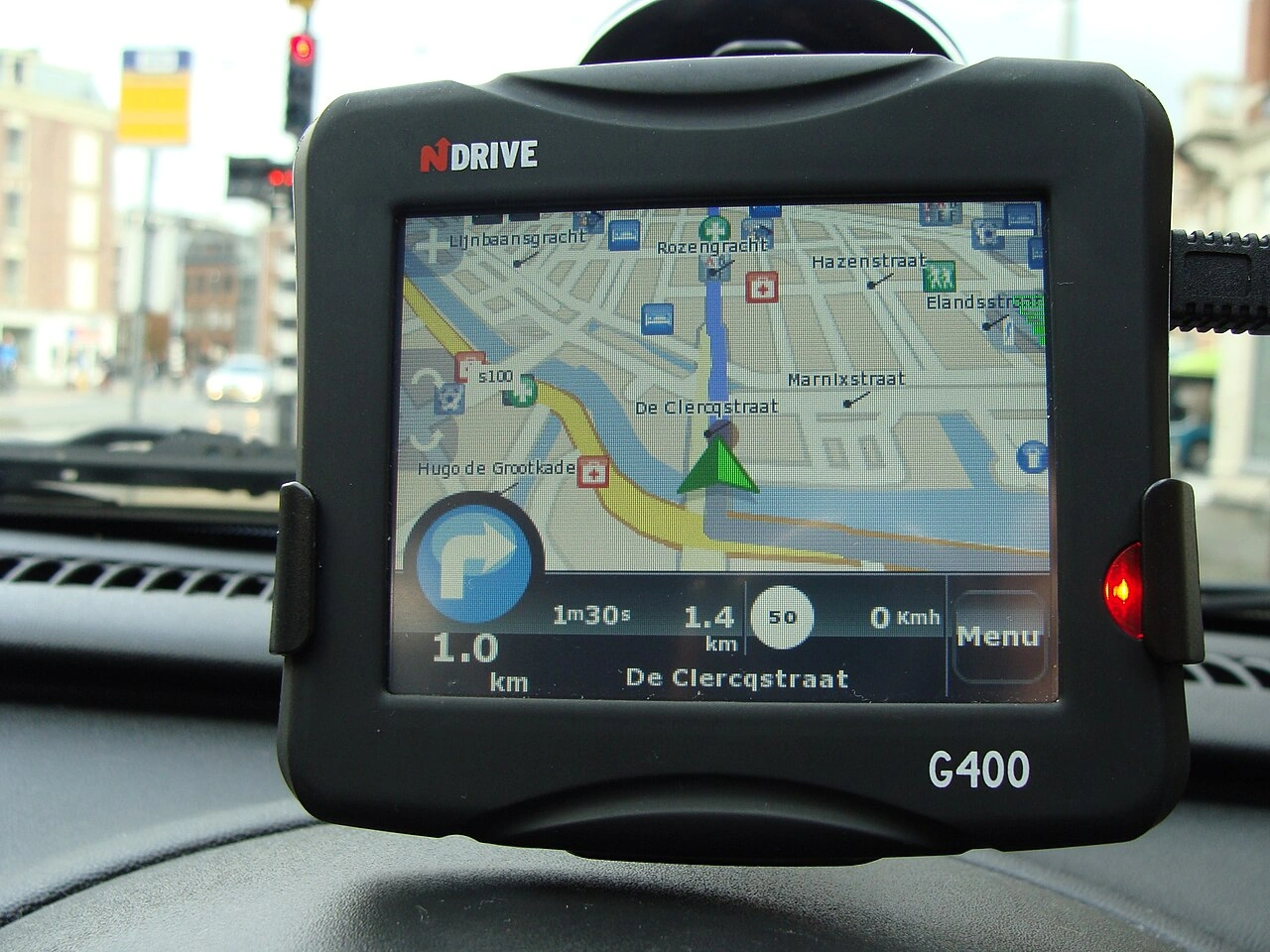
GPS(全地球測位システム)は、対応機器が自らの位置を特定できる衛星測位・ナビゲーションシステムです。車両ではデジタル地図と組み合わせ、経路を計算して画面や音声で案内できます。
目的地はできるだけ出発前に設定し、運転中の不必要な操作を避けます。GPS案内は参考であり、交通標識、交通規則、実際の道路状況と矛盾する場合に従ってはいけません。
What does GPS do in a vehicle?
A GPS navigation system determines the vehicle's position and uses digital map information to calculate routes and provide directions towards a destination.
Should you always follow GPS directions?
No. Traffic signs, signals, road closures and actual road conditions take priority over navigation instructions. A driver remains responsible for choosing a legal and safe route.
Should you program a GPS while driving?
It is safer to enter the destination and adjust the route before starting the journey. If significant changes are needed, stop in a safe and permitted place rather than becoming distracted while driving.
238. ブレーキ
ブレーキは、速度を下げ、車両を停止させ、または停止状態を維持するための車両システムです。多くの道路車両は車輪の摩擦ブレーキを使い、電気・ハイブリッド車は減速時にエネルギーを回収する回生ブレーキも使う場合があります。
ブレーキシステムは正常な状態に保つ必要があります。摩耗、過熱、機械故障、タイヤグリップ低下などは制動距離を増やし、安全な車両制御能力を低下させます。

What is the purpose of a vehicle's brakes?
The brakes allow the driver to reduce speed and stop the vehicle in a controlled manner. A separate parking brake is normally used to keep the vehicle stationary after it has stopped.
What are signs of a possible brake problem?
Warning signs can include reduced braking performance, unusual noises, vibration, a soft or unusually hard brake pedal, pulling to one side or a brake-system warning light. A suspected brake problem should be inspected promptly.
Can brakes become less effective when they overheat?
Yes. Prolonged or repeated heavy braking can cause brake fade, reducing braking effectiveness. On long descents, appropriate gear selection and engine braking can help reduce excessive use of the service brakes.
239. パーキングブレーキ
パーキングブレーキは、駐車後に停止中の車両が動かないようにするブレーキ装置です。従来は手動レバー式ですが、現代の車両では足踏み式や電動式もあります。
特に坂道では、駐車するたびに確実に作動させます。通常のフットブレーキとは別に作動し、運転者が車両を離れていても停止状態を保てるようにします。
What is a handbrake used for?
The handbrake or parking brake keeps a stationary vehicle from rolling after it has been parked. It is particularly important when parking on a slope.
Is every handbrake operated by a hand lever?
No. Traditional parking brakes use a hand-operated lever, but some vehicles use a foot pedal or an electronic switch. These systems perform the same basic parking-brake function.
Should you use the handbrake every time you park?
Yes. The parking brake should normally be applied whenever the vehicle is parked so that it remains securely stationary. Selecting an appropriate gear or transmission position provides additional security but does not replace the parking brake.
240. ブレーキフルード
ブレーキフルードは、多くの車両の油圧ブレーキで、ブレーキペダルから油圧回路を通じて車輪のブレーキへ力を伝える液体です。高温に耐え、確実な制動に必要な油圧特性を維持する必要があります。
液量と状態は車両メーカーの指示に従って確認します。互換性のない、または汚染された液は制動性能を損なうため、指定された種類だけを使用します。

What does brake fluid do?
Brake fluid transmits hydraulic pressure from the driver's brake input to the braking mechanisms at the wheels, allowing the vehicle to slow or stop.
Can you use any type of brake fluid?
No. The correct specification depends on the vehicle and braking system. Drivers should use only the brake fluid specified by the vehicle manufacturer and should not mix incompatible types.
What does a low brake-fluid level mean?
A low level can indicate brake-system wear, a leak or another problem. If the level is below the specified minimum or a brake warning light appears, the braking system should be checked promptly.
241. タイヤ
タイヤは、車輪の周囲へ装着され、道路と接触するゴム製部品です。制動、加速、操舵の力を路面へ伝え、車両安定性と路面保持に重要な役割を果たします。
十分な溝深さ、正しい空気圧を保ち、重大な損傷や過度な摩耗がないことを確認します。車両に適したタイヤを使用し、特に長距離走行や厳しい天候の前には状態を定期的に点検します。

Why are tyres important for road safety?
Tyres are the vehicle's contact with the road and transmit the forces required for steering, acceleration and braking. Their condition and available grip therefore directly affect vehicle control.
What should you check on your tyres?
Regularly check tyre pressure, tread depth and general condition. Look for excessive or uneven wear, cuts, cracks, bulges or other damage and replace tyres when they are no longer safe or legally compliant.
Should tyres on the same axle match?
Requirements vary between countries, but tyres fitted to the same axle should be compatible in dimensions, construction and performance. National rules may impose specific matching requirements.
242. タイヤ表示
タイヤ表示は、タイヤ側面に記載された文字と数字の列で、タイヤ幅、扁平率、構造、ホイール径、荷重能力、速度記号など重要な特性を示します。代表例は205/55 R16 91Vです。
車両に適した仕様のタイヤを使用します。必要なタイヤサイズや規格は通常、車両取扱説明書、適合証明書、メーカー情報で確認できます。

What does a tyre code such as 205/55 R16 mean?
205 indicates the nominal tyre width in millimetres, 55 is the aspect ratio between sidewall height and tyre width, R indicates radial construction and 16 indicates the diameter of the wheel rim in inches.
What do numbers and letters such as 91V mean on a tyre?
The number is the load index, which identifies the maximum load the tyre is designed to carry under specified conditions. The letter is the speed rating or speed-category symbol, which indicates the tyre's approved speed capability.
What other markings can appear on a tyre?
Tyres can carry additional markings indicating approval, manufacturer information, production date, suitability for winter conditions, reinforced construction or other technical characteristics. The exact markings depend on the tyre type and applicable standards.
243. 冬用タイヤ
冬用タイヤは、低温、雪、その他の冬季条件でグリップと制動性能を高めるよう設計されたタイヤです。トレッドパターンとゴム配合が低温でも機能し、適切な冬季条件では通常の夏用タイヤより高いグリップを提供します。
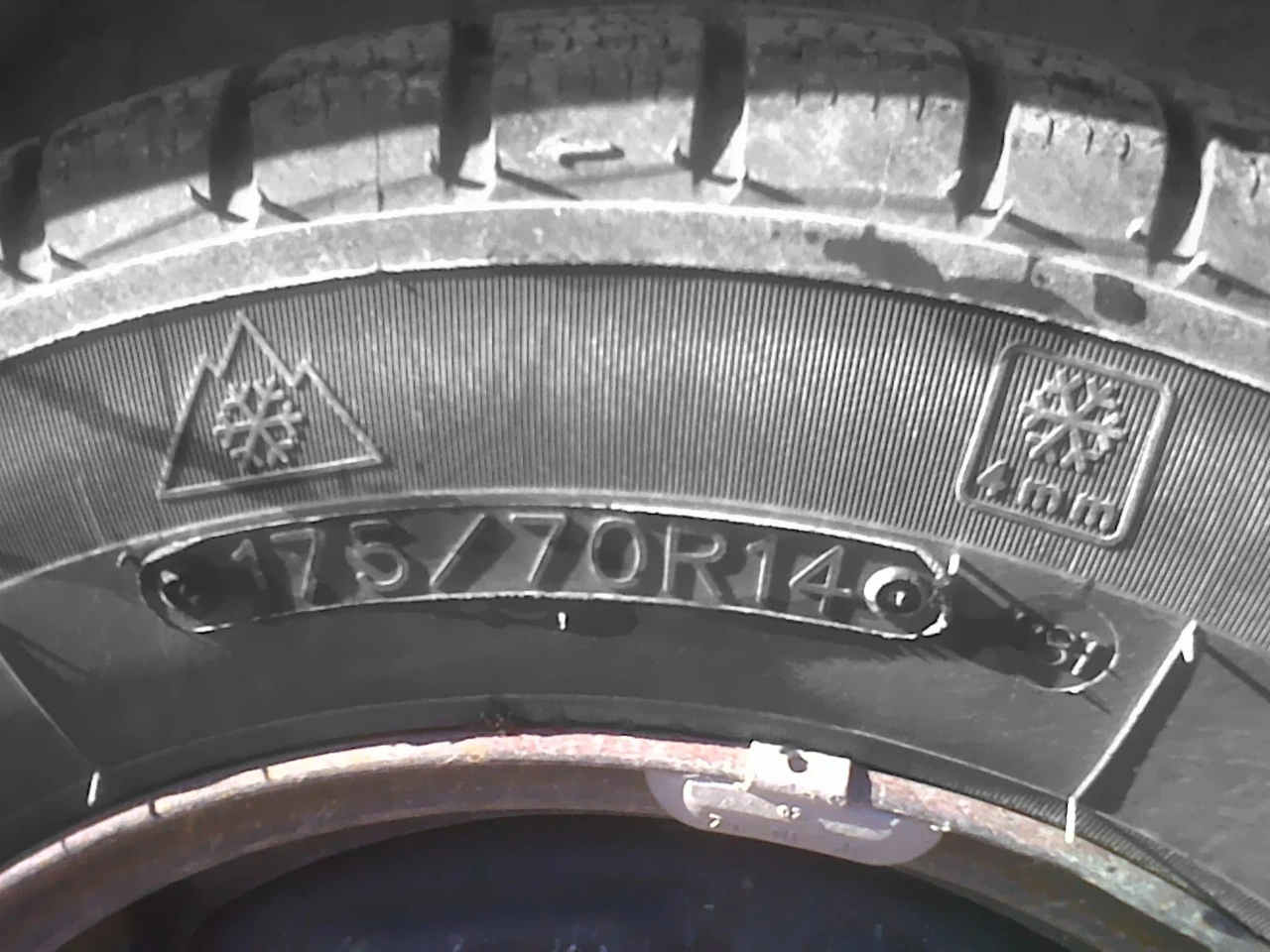
側面の表示で識別できます。3つの山と雪の結晶を示す3PMSF記号は、厳しい雪条件に対する所定の性能要件を満たしたことを示します。
What is the difference between winter and summer tyres?
Winter tyres use tread patterns and rubber compounds designed to provide better performance in cold temperatures, snow and other winter conditions. Summer tyres are optimised primarily for warmer conditions.
What does the 3PMSF symbol mean?
The Three-Peak Mountain Snowflake symbol identifies a tyre that has met specified performance requirements for use in severe snow conditions. It provides a more specific indication of tested snow performance than an M+S marking alone.
Are winter tyres compulsory everywhere?
No. Some countries require winter tyres during particular months or whenever winter conditions occur, while others have no general requirement. Drivers travelling abroad should check the rules of every country on their route.
244. タイヤ空気圧
タイヤ空気圧は、タイヤ内部の空気圧です。正しい空気圧はタイヤ本来の形状と路面接触を維持し、操縦性、制動、摩耗、燃費に重要です。
定期的に確認し、車両メーカー指定値へ調整します。推奨空気圧は車両、タイヤサイズ、積載量で異なり、前後輪で別の値となる場合もあります。
Why is correct tyre pressure important?
Correct tyre pressure helps provide predictable handling, braking and tyre wear. Incorrect pressure can reduce performance, increase tyre wear and increase fuel consumption.
How do you know the correct tyre pressure?
Use the pressure specified by the vehicle manufacturer rather than the maximum pressure marked on the tyre. The recommended values can normally be found in the vehicle handbook or on a vehicle information label.
Should tyre pressure be checked regularly?
Yes. Tyres gradually lose air over time, so their pressure should be checked regularly and before demanding or long journeys. The pressure should be adjusted to the manufacturer's recommended value.
245. スノーチェーン
スノーチェーンは、雪や氷で覆われた道路でグリップを高めるためタイヤ周囲へ装着する滑り止め装置です。通常のタイヤでは十分なトラクションが得られない急坂や山岳道路で特に有効です。
車両とチェーンメーカーの指示に従い、通常は駆動輪へ装着します。不要になったら外し、乾燥路面で使用を続けてタイヤ、チェーン、路面を損傷しないようにします。

What are snow chains used for?
Snow chains increase traction when driving on roads covered with snow or ice. They can help a vehicle accelerate, steer and brake where ordinary tyre grip is insufficient.
Which tyres should snow chains be fitted to?
Snow chains are normally fitted to the driven wheels, but the correct arrangement depends on the vehicle and its drivetrain. Drivers should follow the vehicle and chain manufacturer's instructions.
Are snow chains compulsory everywhere in winter?
No. Requirements vary between countries and roads. Some countries require chains to be carried during certain periods or fitted when indicated by traffic signs or winter conditions, while others impose no general requirement.
246. 自転車タイヤ
自転車タイヤは、自転車の車輪周囲へ取り付けられ、道路など走行面との接触を担うゴム製タイヤです。トレッド、空気圧、幅、構造はグリップ、転がり抵抗、快適性、操縦性へ影響します。
適切な空気圧を保ち、摩耗、切れ、ひび、異物の刺さりなどを定期的に点検します。適切な種類と空気圧は自転車、利用者、荷重、走行条件によります。

Why are bicycle tyres important for safety?
Bicycle tyres provide the grip needed for steering and braking and help absorb irregularities in the road surface. Worn, damaged or incorrectly inflated tyres can reduce control and increase the risk of a puncture or loss of grip.
What should you check on a bicycle tyre?
Check the tyre for adequate pressure, excessive tread wear, cuts, cracks, bulges and objects embedded in the tread. The tyre should also be correctly seated on the rim.
Do all bicycles use the same type of tyre?
No. Tyre width, diameter, tread and construction vary according to the bicycle and its intended use. Road bicycles commonly use relatively narrow tyres, while mountain bikes generally use wider tyres with more pronounced tread.
247. 無限軌道
無限軌道は、通常の車輪の代わりに、複数の車輪やローラーの周囲を連続したベルトまたはチェーンが回る車両推進方式です。建設機械、農業車両、軍用車両など、軟弱・不整地で高いトラクションを必要とする機械で一般的です。
車両重量を広い接地面へ分散するため、トラクション向上と接地圧低減に役立ちます。金属、ゴム、複合材料などで作られ、公道利用の可否は車両と適用規則によります。

What is a continuous track used for?
Continuous tracks provide traction and distribute a vehicle's weight over a larger contact area than conventional wheels. They are particularly useful on mud, snow, loose soil, construction sites and other difficult terrain.
What are continuous tracks made from?
Tracks can consist of linked metal sections, continuous rubber belts or systems combining metal and rubber components. The design depends on the vehicle and its intended operating conditions.
Can tracked vehicles travel on normal roads?
Some tracked vehicles can use public roads when they meet the applicable vehicle, registration and road-use requirements. Restrictions may apply because certain track designs can damage road surfaces or because the vehicle has unusual dimensions, weight or speed characteristics.
248. 車両総重量
車両総重量(GVW)は、ある時点での車両の実際の総重量で、車両本体、運転者、乗客、燃料、荷物、その他の積載物を含みます。人や荷物の増減で変化します。
GVWは、車両の最大許容総重量であるGVWRまたは最大許容質量(MAM)と混同してはいけません。実際の車両総重量は許容最大値を超えてはいけません。
What does Gross Vehicle Weight include?
Gross Vehicle Weight includes the weight of the vehicle itself together with the driver, passengers, fuel, luggage, cargo and other items being carried at that moment.
What is the difference between GVW and GVWR?
GVW is the vehicle's actual weight at a particular moment. GVWR is the maximum total weight the vehicle is designed or legally permitted to have when loaded. The actual GVW must remain within the applicable maximum.
Why is Gross Vehicle Weight important?
Vehicle weight affects braking, handling, tyre and axle loading and legal weight limits. Overloading can reduce safety and may also cause the vehicle to exceed permitted axle or total-mass limits.
249. 車両総重量定格
車両総重量定格(GVWR)は、車両が満載状態で運行するよう設計・承認された最大総重量です。車両本体、運転者、乗客、燃料、荷物、その他の搭載物を含みます。
GVWRは固定の最大値であり、ある時点での実際の重量である車両総重量(GVW)とは異なります。実際の積載重量は許容最大値を超えてはいけません。
What does GVWR include?
GVWR represents the permitted maximum total weight of the loaded vehicle, including the vehicle itself, driver, passengers, fuel, luggage, cargo and other equipment carried by the vehicle.
What is the difference between GVWR and GVW?
GVWR is the maximum permitted or rated weight of the vehicle, while GVW is its actual weight at a particular moment. The GVW changes as passengers or cargo are added or removed, while the GVWR remains a fixed limit.
Why is GVWR important?
GVWR determines how heavily a vehicle may be loaded and can affect driving-licence categories, vehicle classification and other legal requirements. Exceeding the permitted maximum can also adversely affect braking, handling, tyres and other vehicle components.
250. 積荷
積荷は、車両またはトレーラーで運ばれる商品、材料、機器、その他の物品です。個人の荷物や自転車から、商業貨物、機械、ばら積み材料まで含まれます。
移動、落下、運転者の視界妨害、車両安定性への悪影響がないよう配置・固定します。総積載量も車両の許容重量と軸重限度内に保ちます。
Why must cargo be secured?
Unsecured cargo can move during acceleration, braking or cornering and can affect vehicle stability or fall onto the road. Proper securing protects the occupants, other road users and the cargo itself.
Can cargo affect vehicle handling?
Yes. Heavy or poorly distributed cargo can change the vehicle's centre of gravity, braking distance, steering and stability. Loads should therefore be distributed appropriately and kept within the vehicle's permitted limits.
Can cargo extend beyond a vehicle?
In some circumstances it can, but national rules normally limit how far a load may project beyond the front, rear or sides of a vehicle and may require projecting loads to be specially marked.