Steigung oder GefälleNiederlande

Lerne Verkehrsregeln mit klaren Erklärungen und visuellen Beispielen in unserem illustrierten Buch – einfach, verständlich und anschaulich.


11. Steigung oder Gefälle

Eine Steigung oder ein Gefälle ist ein Straßenabschnitt, der deutlich ansteigt oder abfällt. Ein starker Höhenunterschied kann Fahrzeuggeschwindigkeit, Bremsweg, Traktion, Sicht und die Fähigkeit schwerer oder leistungsschwacher Fahrzeuge beeinflussen, eine gleichmäßige Geschwindigkeit zu halten.

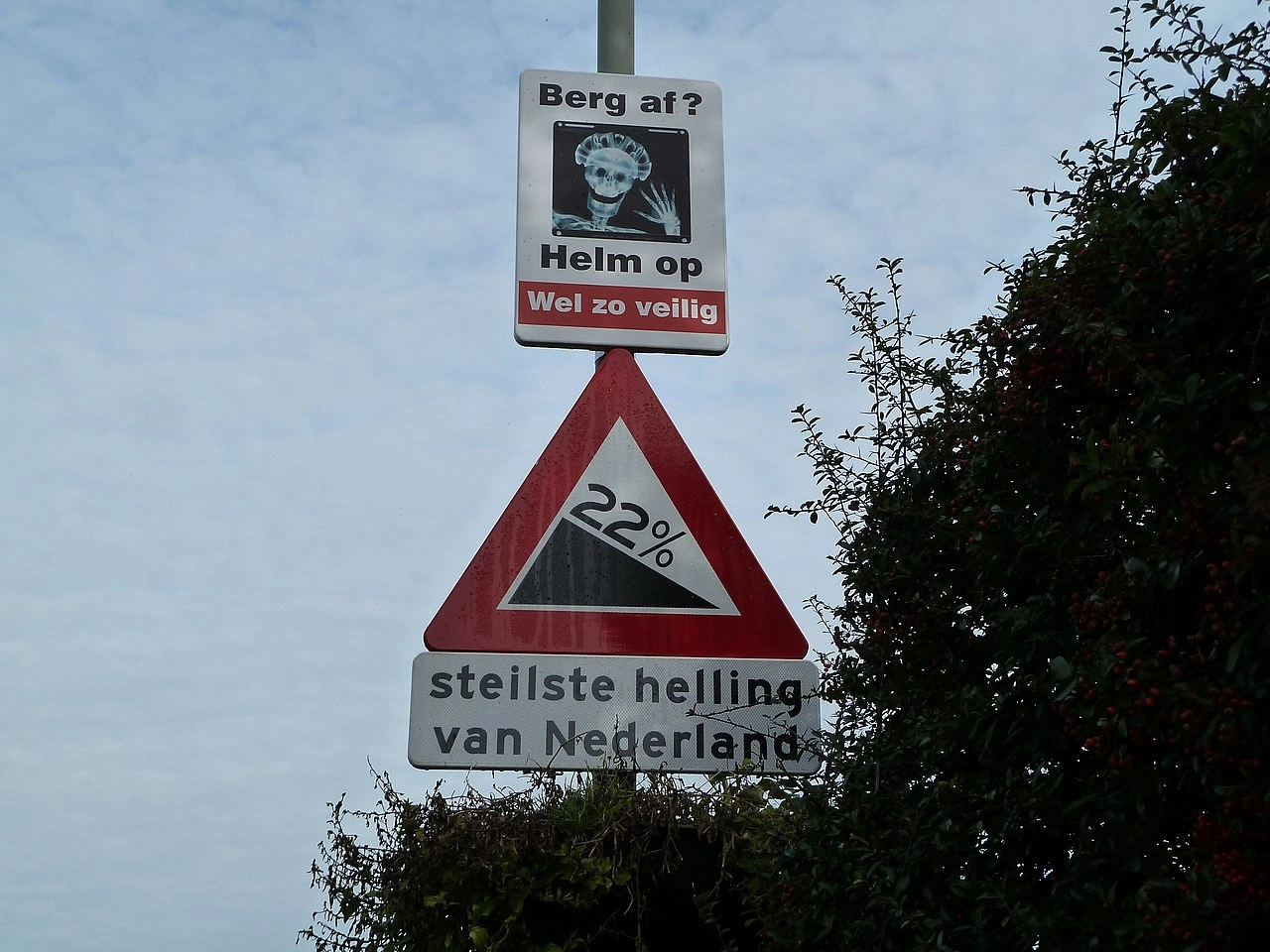
Warnzeichen können auf eine starke Steigung oder ein gefährliches Gefälle hinweisen und die Neigung in Prozent anzeigen. Fahrer sollten ihre Geschwindigkeit frühzeitig anpassen, einen geeigneten Gang wählen und mit langsamen Fahrzeugen, Kurven sowie wechselnden Straßenbedingungen rechnen.
Steigung oder Gefälle
What is a road slope?

A road slope is a section of road that rises or descends over a particular distance. It may also be called a gradient, incline or decline.

How can you recognise a steep slope?

A steep slope may be indicated by a warning sign showing an ascending or descending road. The sign may also display the gradient as a percentage.

What does a gradient of 10% mean?

A gradient of 10% means that the road rises or falls approximately 10 metres for every 100 metres travelled horizontally. It does not mean that the road is inclined at 10 degrees.

What is the difference between an ascent and a descent?

An ascent rises in the direction of travel, while a descent falls in the direction of travel. The same section of road is therefore an ascent in one direction and a descent in the other.

Does a slope warning sign impose a speed limit?

Not normally. It warns of a hazard rather than setting a numerical limit. Drivers must still respect the applicable speed limit and reduce their speed further when necessary.

How should you approach a steep descent?

Reduce speed before the descent, select a suitable gear and maintain a safe following distance. Avoid allowing the vehicle to gain excessive speed.

Which gear should you use when descending?

Use a gear that provides sufficient engine braking and helps keep the vehicle at a controlled speed. The appropriate gear depends on the vehicle, gradient and road conditions.

Should you coast downhill in neutral?

No. Coasting reduces engine braking and may make it harder to control the vehicle’s speed. Keep the transmission engaged while descending.

Why should you avoid continuous heavy braking?

Continuous braking on a long descent can cause the brakes to become excessively hot and lose effectiveness. Select a suitable gear, control speed early and use the brakes progressively when needed.

What is brake fade?

Brake fade is a reduction in braking performance caused by excessive heat. It can occur when the brakes are used continuously during a long or steep descent.

How should you drive uphill?

Select a suitable gear before the engine begins to struggle and maintain a steady speed where possible. Be prepared for heavy or low-powered vehicles travelling slowly ahead.

May a vehicle lose speed on a steep ascent?

Yes. Heavy vehicles, vehicles towing trailers and low-powered vehicles may slow considerably. Other drivers should maintain a safe distance and avoid impatient manoeuvres.

May you overtake near the top of a slope?

Do not overtake when the crest prevents you from seeing far enough ahead. Overtaking near a hilltop may also be expressly prohibited by local law, signs or road markings.

Why is visibility limited near the crest of a slope?

The road surface itself may hide approaching traffic, stopped vehicles, pedestrians or other hazards beyond the crest.

Who has priority on a narrow slope?

Some countries give priority to uphill traffic, while others rely on signs or ordinary obstruction rules. Drivers must follow local law and cooperate when passing is difficult.

How should you meet another vehicle on a narrow slope?

Reduce speed and use a passing place where available. The driver who can reverse or move aside more safely should cooperate, subject to any applicable priority signs or local rules.

How do rain, snow or ice affect a slope?

They reduce traction and make acceleration, braking and steering more difficult. Increase the following distance, use smooth controls and reduce speed before entering the slope.

Why are cyclists vulnerable on slopes?

Cyclists may travel slowly and move less steadily when climbing, while they may reach high speeds when descending. Drivers should leave sufficient space and avoid overtaking without a clear view.

How should you park on a slope?

Use the parking brake, select the appropriate gear or parking position and follow local rules concerning wheel position. Make sure the vehicle cannot roll into traffic.

Can a slope affect towing?

Yes. A trailer increases the load on the engine and brakes and may affect stability. Drivers should use a suitable gear, maintain additional distance and avoid excessive speed.

1 Niederlande 2 Autobahn 3 Schnellstraße 4 Wohngebiet 5 Zone 6 Geschwindigkeitsbegrenzung 7 Gehweg 8 Radweg 9 Fahrradstraße 10 Fußgängerzone 11 Steigung oder Gefälle 12 Bushaltestelle 13 Sackgasse 14 Stoppschild 15 Vorfahrt gewähren 16 Kreisverkehr 17 Vorfahrtstraße 18 Bahnübergang 19 Schulbereich 20 Überholen 21 Wild- oder Viehwechsel 22 Straßenarbeiten 23 Gewichtsbeschränkung 24 Geschwindigkeitskontrolle 25 Selektive Sperren 26 Umweltzone 27 Vorfahrt an der nächsten Kreuzung 28 Ampeln 29 Warnung vor Ampeln 30 Fahrbahnmarkierungen 31 Geschwindigkeitsanzeige 32 Verkehrsspiegel 33 Notruftelefon 34 Radroute 35 Parken 36 Parkverbot 37 Halteverbot 38 Park and Ride 39 Kiss and Ride 40 Parkscheibe 41 Behindertenparkplatz 42 Verkehrsmanagement 43 Einfädeln 44 Rückwärtsfahren 45 Ungeregelte Kreuzung 46 Fahrrad-Hinweisstreifen 47 Verkehrsspitzen-Fahrstreifen 48 Notausgang 49 Überbreite oder übergroße Ladung 50 Ortsgrenze 51 Parkzone 52 Achslastbegrenzung 53 Kennzeichen 54 Ladestation 55 Allgemeine Gefahr 56 Reitweg 57 Radfahrer 58 Lkw 59 Bus 60 Polizei 61 Krankenwagen 62 Fahrradabstellanlage 63 Straßenbahnsignale 64 Europäische Abgasnorm 65 Schlagloch 66 Weg 67 Feinstaub 68 Luftverschmutzung 69 Hauptverkehrszeit 70 Straßenverkehrsordnung 71 Straßenrinne 72 Lastenfahrrad 73 Forstfahrzeug 74 Baufahrzeug 75 Sattelzug 76 Oberleitungsbus 77 Speed-Pedelec 78 Lieferfahrzeug 79 Leerlauf 80 Abschleppwagen 81 Allradantrieb 82 Verbot für Fahrzeuge 83 Fahrrad 84 Motorradausrüstung 85 Gleis 86 Wohnwagen 87 Anhänger 88 Anhängerkupplung 89 Feuerwehrfahrzeug 90 Sirene 91 Konvoi 92 Warnbeleuchtung von Einsatzfahrzeugen 93 Landwirtschaftliche Maschinen 94 Elektrofahrrad 95 Elektrofahrzeug 96 Pedelec 97 Leichtkraftfahrzeug 98 Microcar 99 Geländefahrzeug 100 Lieferwagen ...