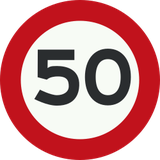
WohngebietNiederlande

Lerne Verkehrsregeln mit klaren Erklärungen und visuellen Beispielen in unserem illustrierten Buch – einfach, verständlich und anschaulich.


4. Wohngebiet

Ein Wohngebiet ist eine Straße oder Gruppe von Straßen, in der Wohnnutzung und die Zufahrt zu örtlichen Grundstücken die Hauptfunktionen darstellen. Fahrer müssen mit Fußgängern, Radfahrern, Kindern, geparkten Fahrzeugen sowie Fahrzeugen rechnen, die aus Einfahrten heraus- oder hineinfahren.

Einige Länder kennzeichnen bestimmte Wohngebiete mit Verkehrszeichen und wenden dort besondere Niedriggeschwindigkeits- oder Mischverkehrsregeln an. Geschwindigkeitsbegrenzung, Rechte von Fußgängern, Parkregeln und zugelassene Verkehrsteilnehmer richten sich daher nach den örtlichen Verkehrszeichen und Vorschriften.

Wohngebiet
How can you recognise a residential area?

A residential area commonly contains homes, driveways, parked vehicles and local streets. It may also have special entrance signs, traffic-calming measures or shared road space, but its appearance and legal status differ between countries.

Is a residential area the same as a built-up area?

Not necessarily. A built-up area may include residential, commercial and industrial streets. A residential area is primarily associated with housing and local access and may form only one part of a larger built-up area.

Is every residential neighbourhood a legally designated residential zone?

No. In many countries, special residential-zone rules apply only where an official entrance sign is displayed. An ordinary neighbourhood may remain subject to the normal rules for the surrounding road or built-up area.

What is the speed limit in a residential area?

There is no universal residential-area speed limit. Some countries apply a very low limit in signposted residential or shared-space zones, while ordinary residential streets may follow the general built-up-area limit or a posted zone limit.

Do pedestrians have priority in a residential area?

The rights of pedestrians depend on the country and the type of residential area. In some signposted shared-space zones, pedestrians may use the whole road and drivers must give them special consideration. On ordinary residential streets, the normal pedestrian and crossing rules may apply.

May children play in a residential area?

Playing may be expressly permitted in certain legally designated residential or shared-space zones. This is not automatically allowed on every residential street. Drivers should nevertheless remain especially alert for children, who may enter the road unexpectedly.

Which road users may enter a residential area?

Residential areas are normally accessible to local motor traffic, cyclists and pedestrians, but additional signs may restrict certain vehicles or through traffic. A residential area is therefore not necessarily a pedestrian-only zone.

How should you drive in a residential area?

Drive at a speed that allows you to stop safely, watch both sides of the road and expect pedestrians, cyclists, children, pets and vehicles emerging from entrances. Leave enough space and avoid unnecessary acceleration, noise or aggressive overtaking.

May you overtake in a residential area?

Overtaking is not universally prohibited, but it may be restricted by local law, signs or road design. Even where it is permitted, drivers should not overtake when the limited space or presence of vulnerable road users makes it unsafe.

Where may you park in a residential area?

Follow the local parking signs, markings and general parking rules. Do not block entrances, pavements, crossings, sight lines or the passage of other road users. Special residential zones may permit parking only in designated spaces.

What is the difference between a residential area and a pedestrian zone?

Motor vehicles are normally still permitted in a residential area, although they may be subject to strict speed and parking rules. In a pedestrian zone, vehicle access is generally prohibited or limited to specific users, purposes or times.

1 Niederlande 2 Autobahn 3 Schnellstraße 4 Wohngebiet 5 Zone 6 Geschwindigkeitsbegrenzung 7 Gehweg 8 Radweg 9 Fahrradstraße 10 Fußgängerzone 11 Steigung oder Gefälle 12 Bushaltestelle 13 Sackgasse 14 Stoppschild 15 Vorfahrt gewähren 16 Kreisverkehr 17 Vorfahrtstraße 18 Bahnübergang 19 Schulbereich 20 Überholen 21 Wild- oder Viehwechsel 22 Straßenarbeiten 23 Gewichtsbeschränkung 24 Geschwindigkeitskontrolle 25 Selektive Sperren 26 Umweltzone 27 Vorfahrt an der nächsten Kreuzung 28 Ampeln 29 Warnung vor Ampeln 30 Fahrbahnmarkierungen 31 Geschwindigkeitsanzeige 32 Verkehrsspiegel 33 Notruftelefon 34 Radroute 35 Parken 36 Parkverbot 37 Halteverbot 38 Park and Ride 39 Kiss and Ride 40 Parkscheibe 41 Behindertenparkplatz 42 Verkehrsmanagement 43 Einfädeln 44 Rückwärtsfahren 45 Ungeregelte Kreuzung 46 Fahrrad-Hinweisstreifen 47 Verkehrsspitzen-Fahrstreifen 48 Notausgang 49 Überbreite oder übergroße Ladung 50 Ortsgrenze 51 Parkzone 52 Achslastbegrenzung 53 Kennzeichen 54 Ladestation 55 Allgemeine Gefahr 56 Reitweg 57 Radfahrer 58 Lkw 59 Bus 60 Polizei 61 Krankenwagen 62 Fahrradabstellanlage 63 Straßenbahnsignale 64 Europäische Abgasnorm 65 Schlagloch 66 Weg 67 Feinstaub 68 Luftverschmutzung 69 Hauptverkehrszeit 70 Straßenverkehrsordnung 71 Straßenrinne 72 Lastenfahrrad 73 Forstfahrzeug 74 Baufahrzeug 75 Sattelzug 76 Oberleitungsbus 77 Speed-Pedelec 78 Lieferfahrzeug 79 Leerlauf 80 Abschleppwagen 81 Allradantrieb 82 Verbot für Fahrzeuge 83 Fahrrad 84 Motorradausrüstung 85 Gleis 86 Wohnwagen 87 Anhänger 88 Anhängerkupplung 89 Feuerwehrfahrzeug 90 Sirene 91 Konvoi 92 Warnbeleuchtung von Einsatzfahrzeugen 93 Landwirtschaftliche Maschinen 94 Elektrofahrrad 95 Elektrofahrzeug 96 Pedelec 97 Leichtkraftfahrzeug 98 Microcar 99 Geländefahrzeug 100 Lieferwagen ...