QuizTraffic rulesArgentina

Test your knowledge with our multiple-choice quiz. Learn from each answer and improve your understanding of the traffic rules and road signs of Argentina.

For informational purposes only. Always follow official regulations. Some content and images were created with AI assistance.


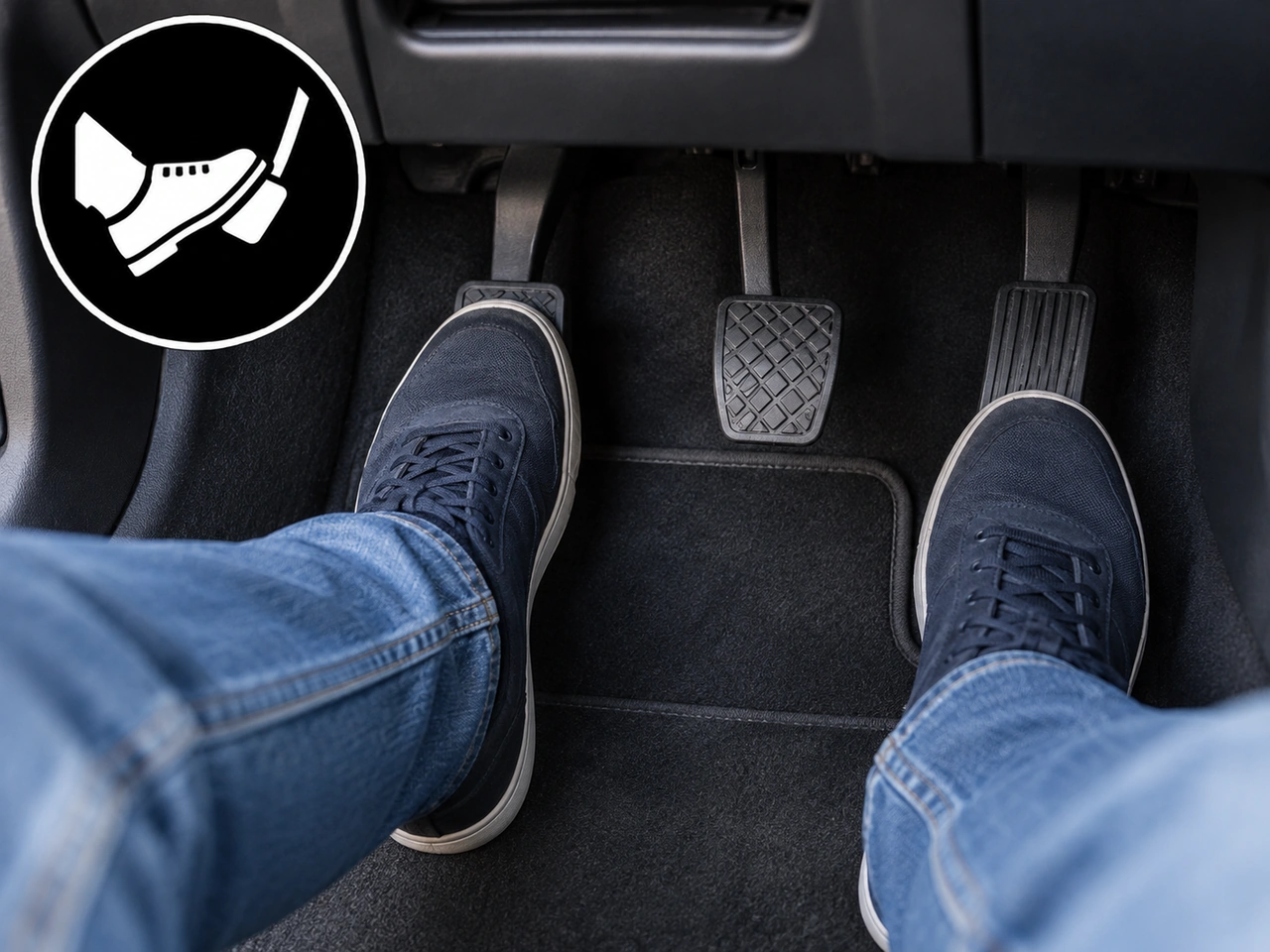
Why should you avoid keeping the clutch pedal pressed while driving?

651. Why should you avoid keeping the clutch pedal pressed while driving?

✓ It reduces engine braking and vehicle control.
It applies the parking brake.
It locks the steering.
It increases tyre pressure.

Keeping the clutch pedal pressed while the vehicle is moving disconnects the engine from the transmission. This reduces engine braking and can reduce your control of the vehicle.

Clutch held down while a vehicle is moving.
Keeping the clutch down removes engine braking. On a descent, the car can gain speed more quickly and rely more on the foot brake.
🔗 Sources

The Highway Code · Rule 122

Image credit: AI-generated

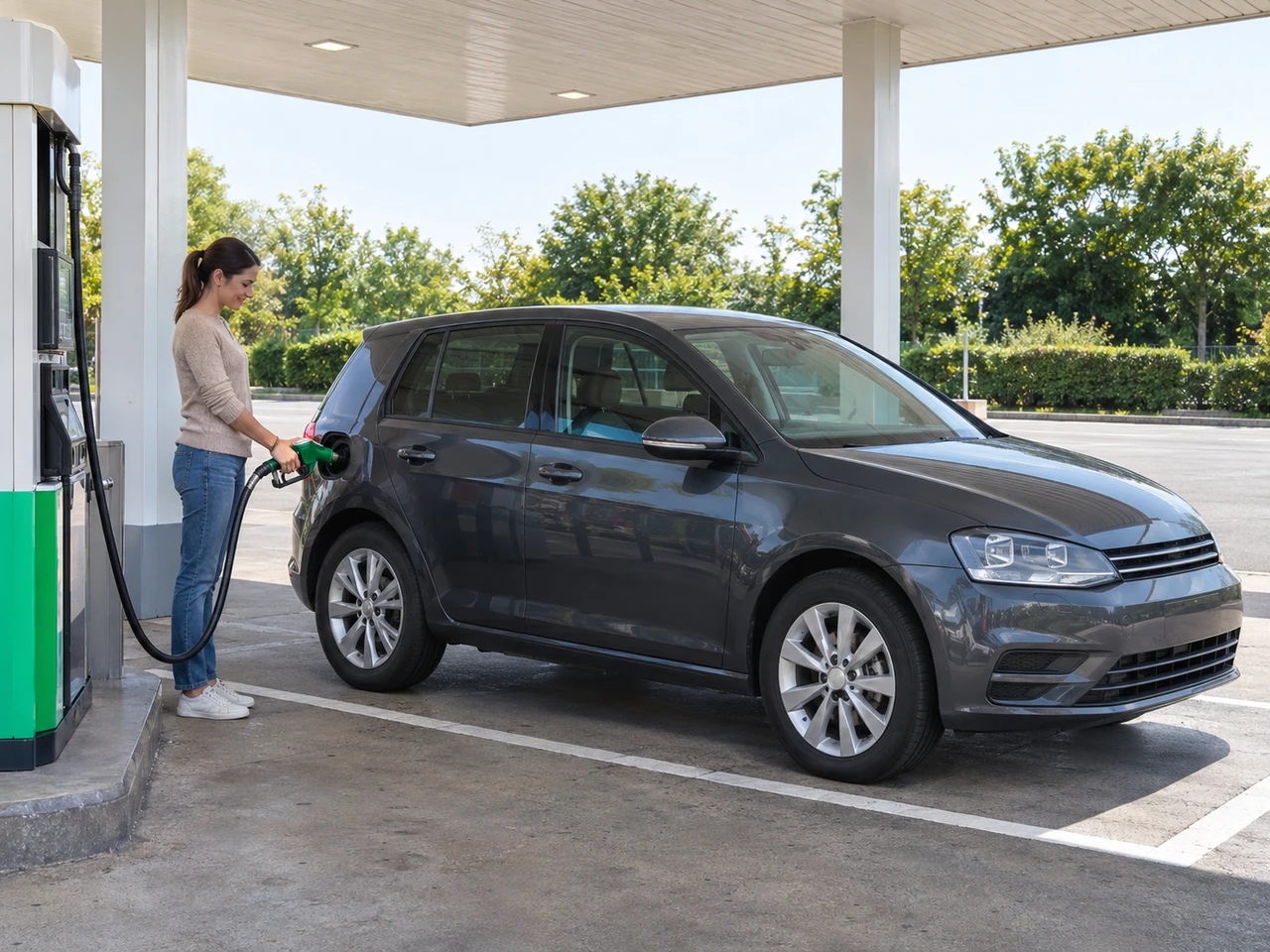
How should you position your vehicle beside a fuel pump?

652. How should you position your vehicle beside a fuel pump?

Wherever there is space, regardless of the fuel-filler position.
As close to the pump as possible, even if access is restricted.
With the fuel hose stretched tightly across the vehicle.
✓ With the fuel-filler side close enough for the hose to reach safely.

Position the vehicle so the fuel filler is close to the pump and the hose can reach without being stretched tightly across or around the vehicle. Stop within the designated refuelling area and leave enough space to use the pump safely.
On the Volvo XC90 Twin Engine, the arrow beside the fuel symbol shows which side the filler is on. Check it before choosing a pump bay.
🔗 Sources

Volvo XC90 Twin Engine – Owner’s manual, fuel filler location

Image credit: AI-generated

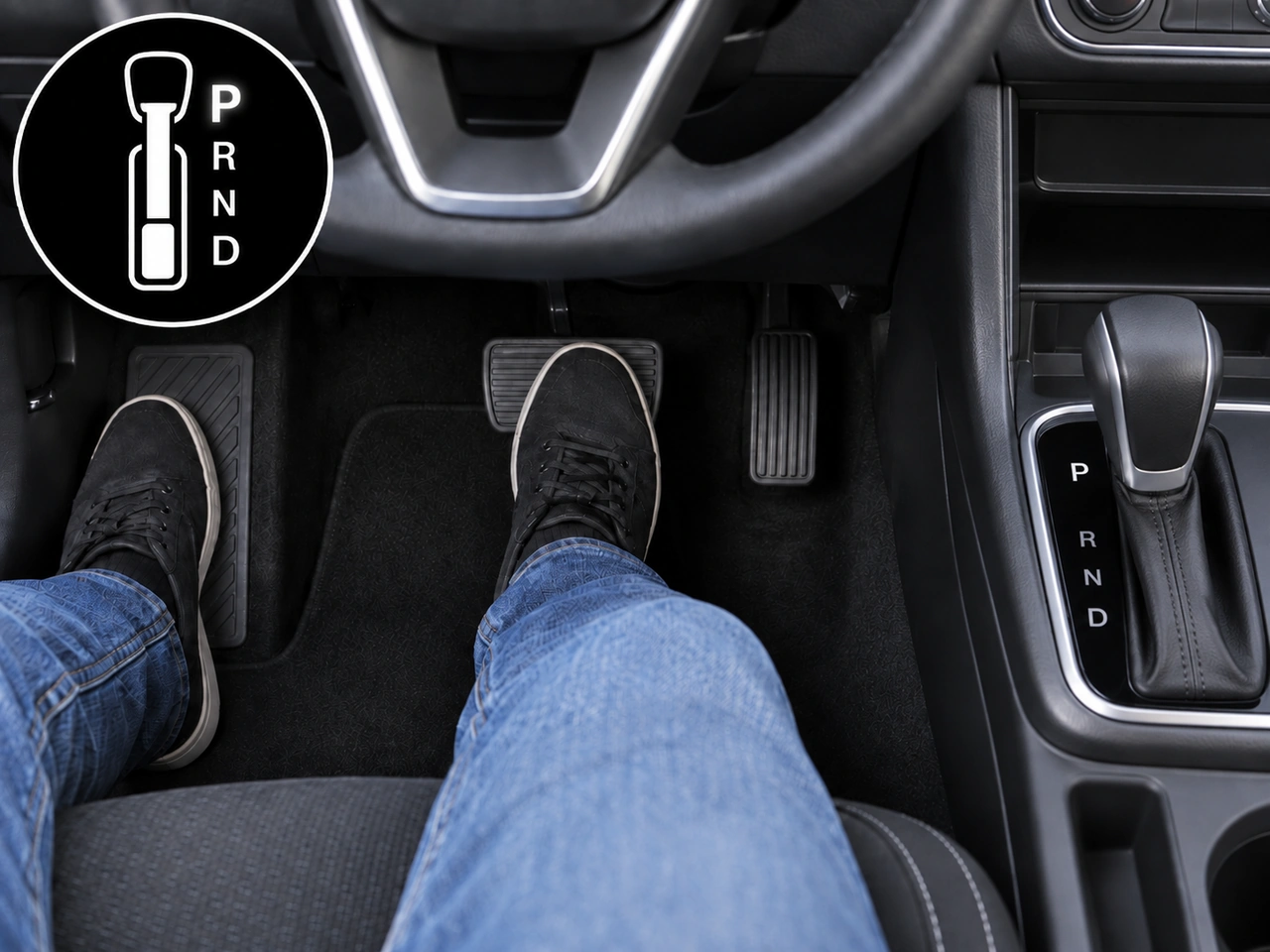
What should you normally select before leaving an automatic vehicle parked?

653. What should you normally select before leaving an automatic vehicle parked?

✓ P (Park).
N (Neutral).
R (Reverse).
D (Drive).

Select P (Park) before leaving an automatic vehicle parked. Park locks the transmission to help prevent the vehicle from rolling; the parking brake should also be applied.

Park position on an automatic gear selector.
Secure the vehicle with both P (Park) and the parking brake before getting out.
🔗 Sources

Ford owner’s manual · Automatic transmission

Image credit: AI-generated

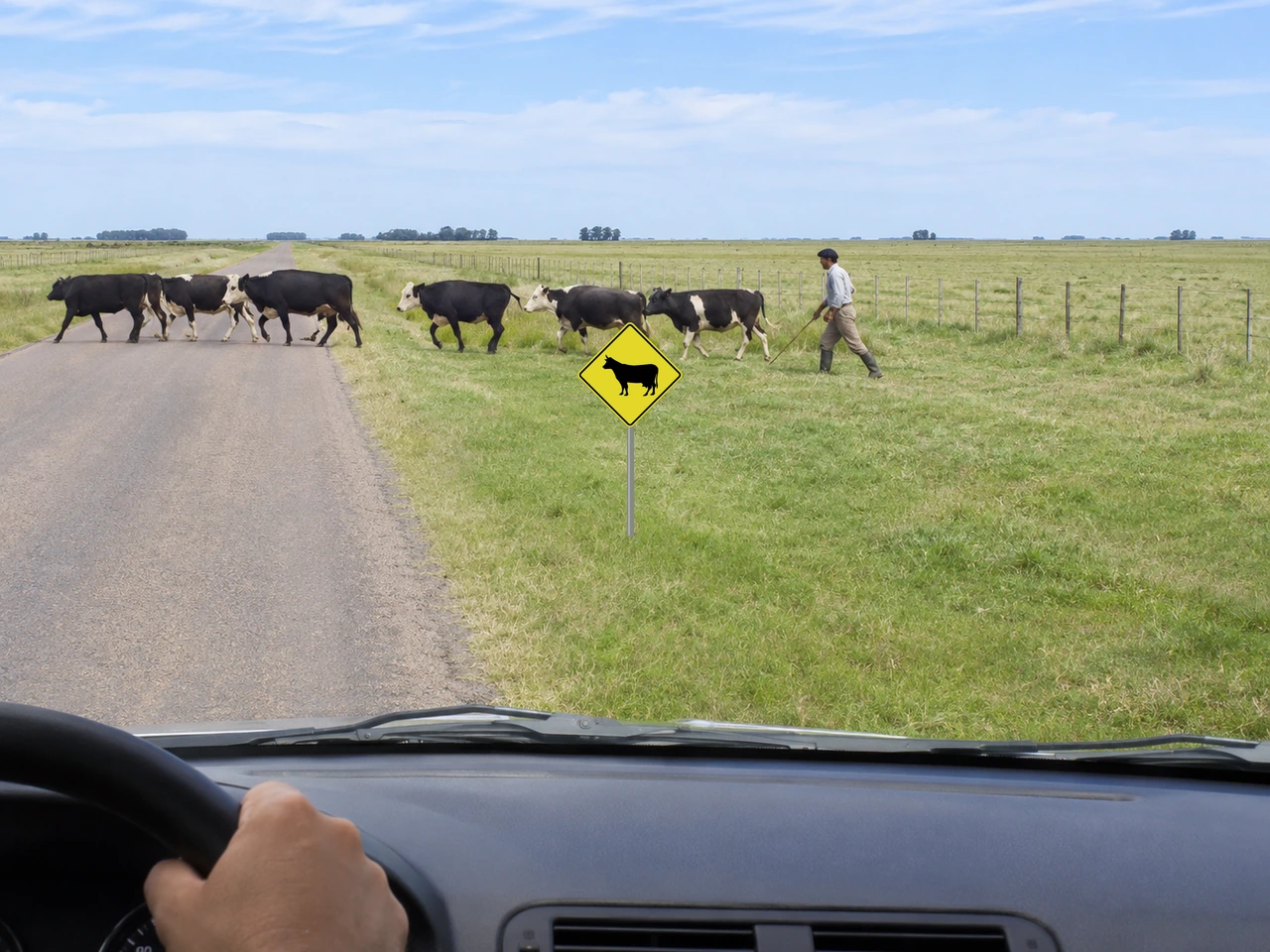
What should you do when livestock are on the road?

654. What should you do when livestock are on the road?

✓ Slow down and follow the instructions of the person controlling them.
Use the verge to pass the animals.
Follow closely so other traffic can overtake.
Drive through the group before it spreads across the road.

Livestock may spread across the road, stop suddenly, or change direction without warning. Slow down, keep a safe distance, avoid sudden movements or loud noises, and follow any instructions from the person controlling the animals.

Sign P-27(a) warns that livestock may be on or crossing the road. Slow down, keep your distance and follow the handler’s instructions.
🔗 Sources

Argentina, Decreto 196/2025, Anexo L, P.27.

Sign artwork by Vialidad Nacional, vectorised by Civitas13, CC BY 4.0, via Wikimedia Commons. Resized, shaded and composited. CC BY 4.0.

Scene credit: AI-generated.
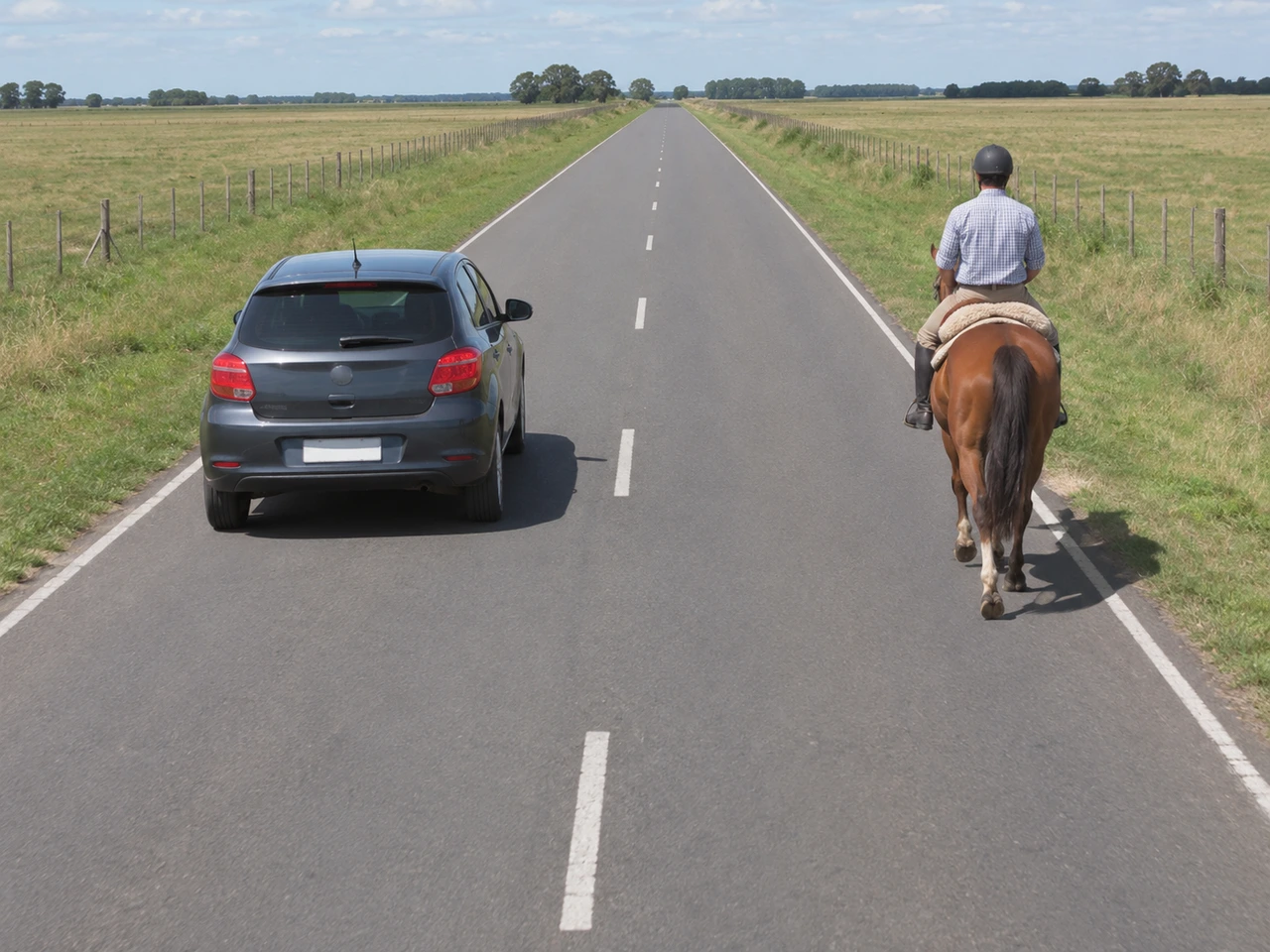
What should you do when passing a horse rider?

655. What should you do when passing a horse rider?

Pass closely to reduce the time beside the horse.
Accelerate while passing to get past quickly.
Flash your headlights before moving alongside.
✓ Slow down and give plenty of space.

Horses can be startled by noise or sudden movement. Slow down, pass carefully, and leave enough space.

The rider is travelling on a rural road in the Pampas. Slow down, wait until you can pass safely and leave a wide gap. Avoid sounding your horn.
🔗 Sources

UK Highway Code, rule 163, general advice on passing horse riders.

Scene credit: AI-generated.
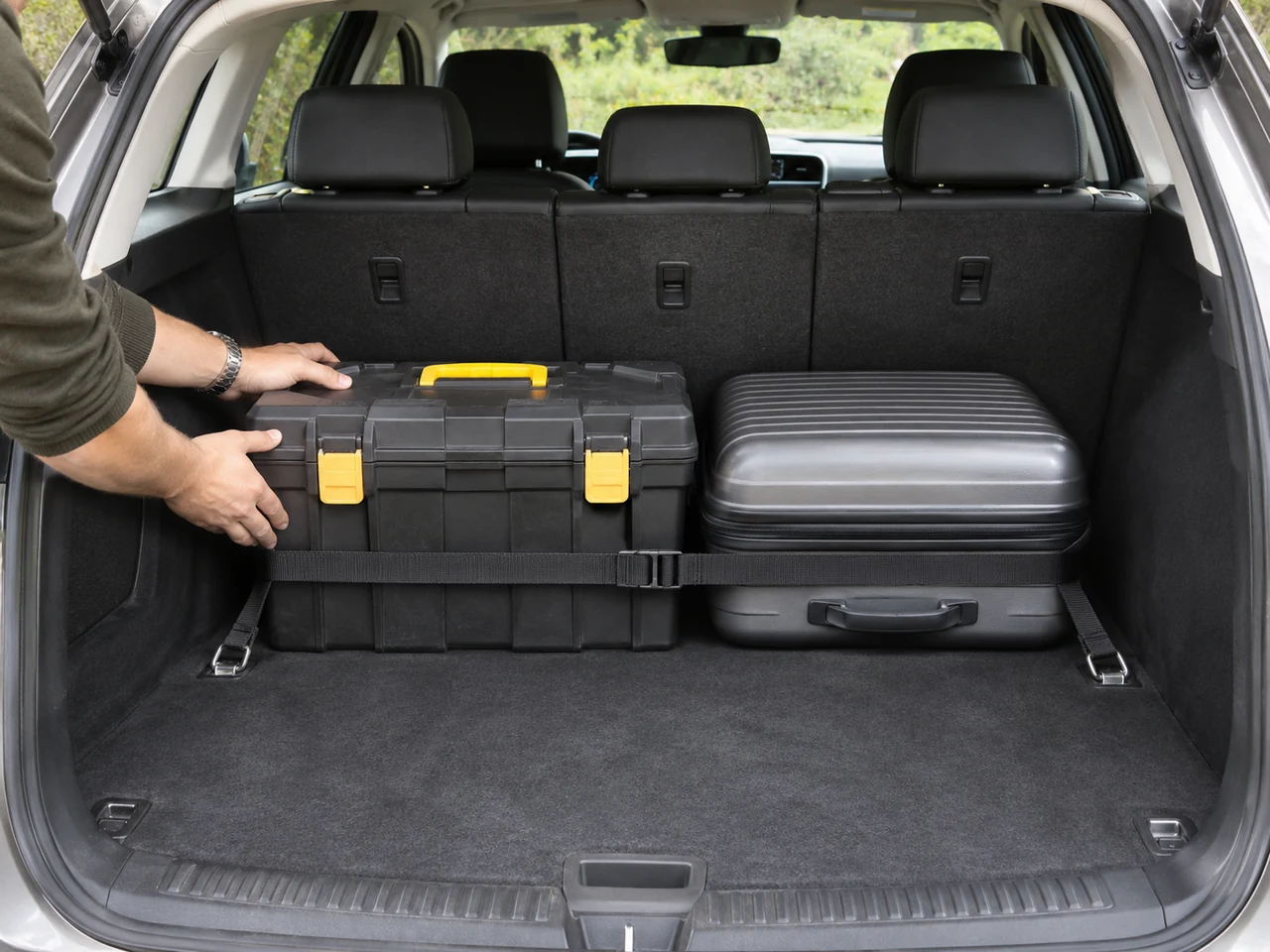
Why should heavy items be placed low and evenly distributed?

656. Why should heavy items be placed low and evenly distributed?

To increase the available luggage space.
✓ To help keep the vehicle stable.
To reduce fuel consumption.
To reduce wear on the engine.

A high or uneven load can make the vehicle unstable, especially during braking, cornering, or sudden steering.

Argentina. Keep heavy items low and distribute their weight. On a trailer, position the load so it stays within the permitted axle loads and vertical load on the coupling.
🔗 Sources

Argentina National Traffic Law 24.449, articles 48 and 57

NZTA safe loading and towing guide, practical guidance

Image credit: AI-generated
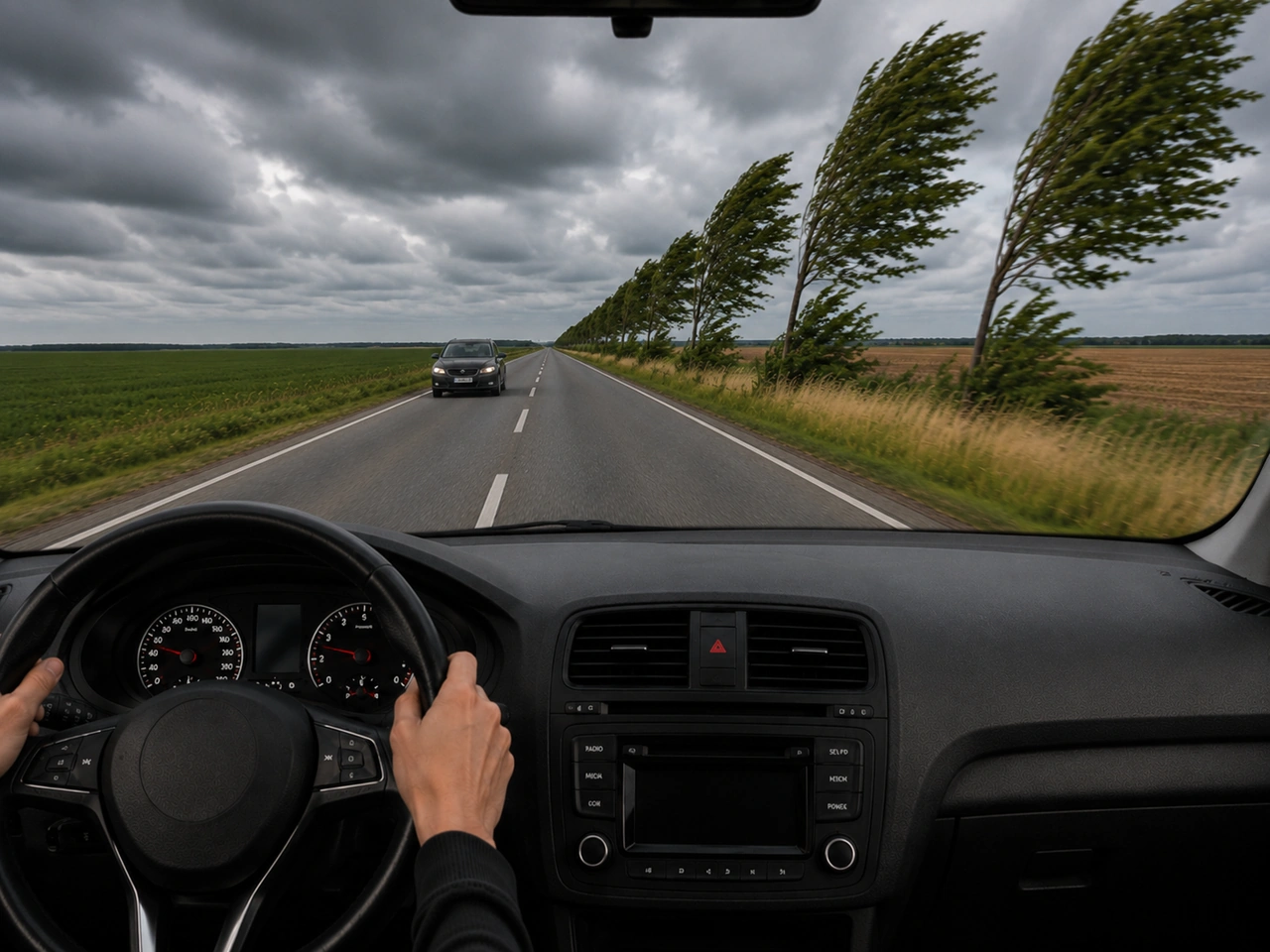
What should you do when driving in strong wind?

657. What should you do when driving in strong wind?

Open the windows to improve aerodynamics.
✓ Reduce speed and hold the wheel with both hands.
Increase speed so the vehicle is less affected by gusts.
Use main beam to make your vehicle more visible.

Strong gusts can push your vehicle off course. Reduce speed, keep both hands on the steering wheel and make smooth corrections. Leave extra space around other road users, particularly cyclists, motorcyclists and high-sided vehicles. Be ready for sudden changes on exposed roads, bridges and at the end of shelter. If conditions become unsafe, postpone the journey or stop at a suitable safe place.

Driver controlling a vehicle in strong wind

Argentina. Law 24,449, article 50 requires a speed that preserves control in the prevailing conditions. Slow down for gusts; the posted maximum is not a target. P.30 warns of strong lateral winds, using a wind-bent tree symbol.
🔗 Sources

Argentina • Law 24,449, article 50: safe speed and vehicle control
Argentina • Decree 196/2025, road-sign system: P.30

Image credit: AI-generated
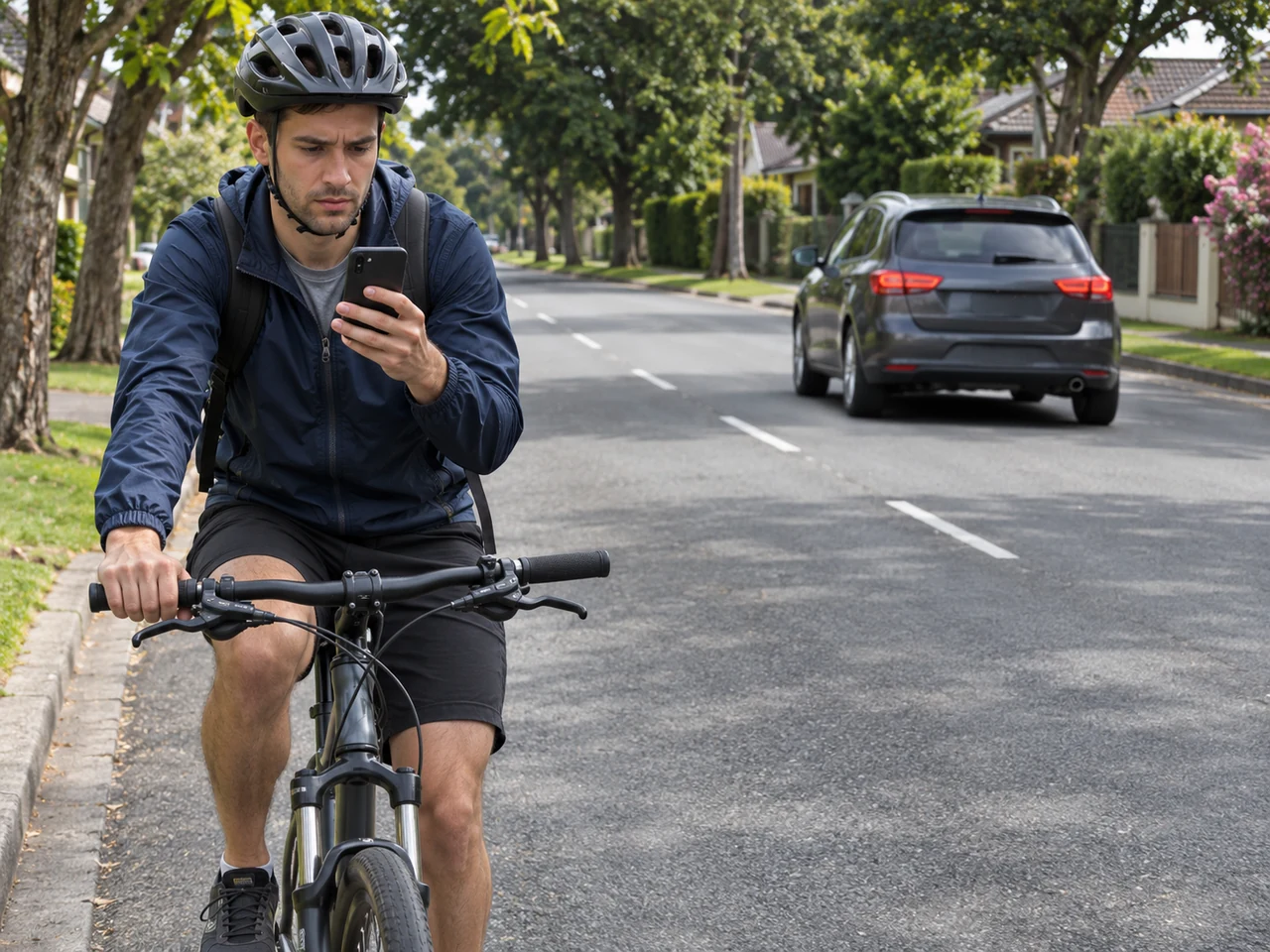
Why should cyclists avoid using a handheld phone?

658. Why should cyclists avoid using a handheld phone?

Because a phone may be used only at low speeds.
Because phones must be switched off while cycling.
✓ It reduces your control and attention.
Because phones can interfere with bicycle electronics.

Holding and using a phone can take your eyes off the road, distract your attention and leave only one hand available for steering and braking. Stop somewhere safe before handling the phone. Even hands-free use can distract you, so keep your attention on the road and other road users.
Phone use in Argentina. Stop in a safe place before handling your phone. Keep your attention on traffic and both hands available to steer and brake.
🔗 Sources

Buenos Aires — safe cycling guidance

Image credit: AI-generated

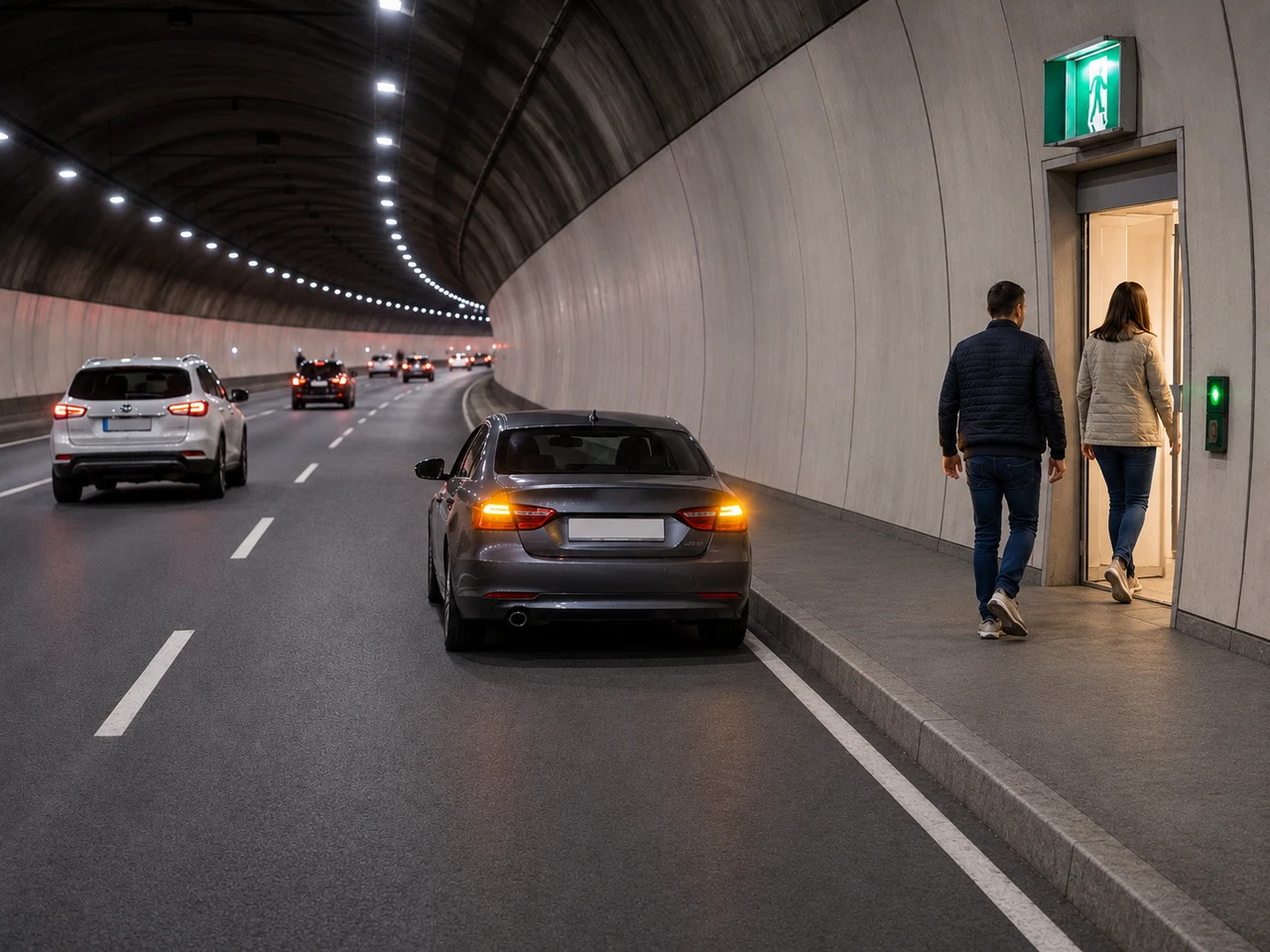
If you must leave a disabled vehicle in a tunnel, what should you do next?

659. If you must leave a disabled vehicle in a tunnel, what should you do next?

✓ Move clear of traffic and follow the local emergency instructions.
Walk along the traffic lane toward the tunnel entrance.
Stay close to the vehicle until traffic starts moving.
Remain beside the vehicle and wait for assistance.

If leaving is necessary, choose a position away from passing traffic and follow local instructions. Ordinary breakdown and fire procedures can differ. Use the guidance for the tunnel and country. An emergency-telephone recess must not be assumed to be a fire shelter.
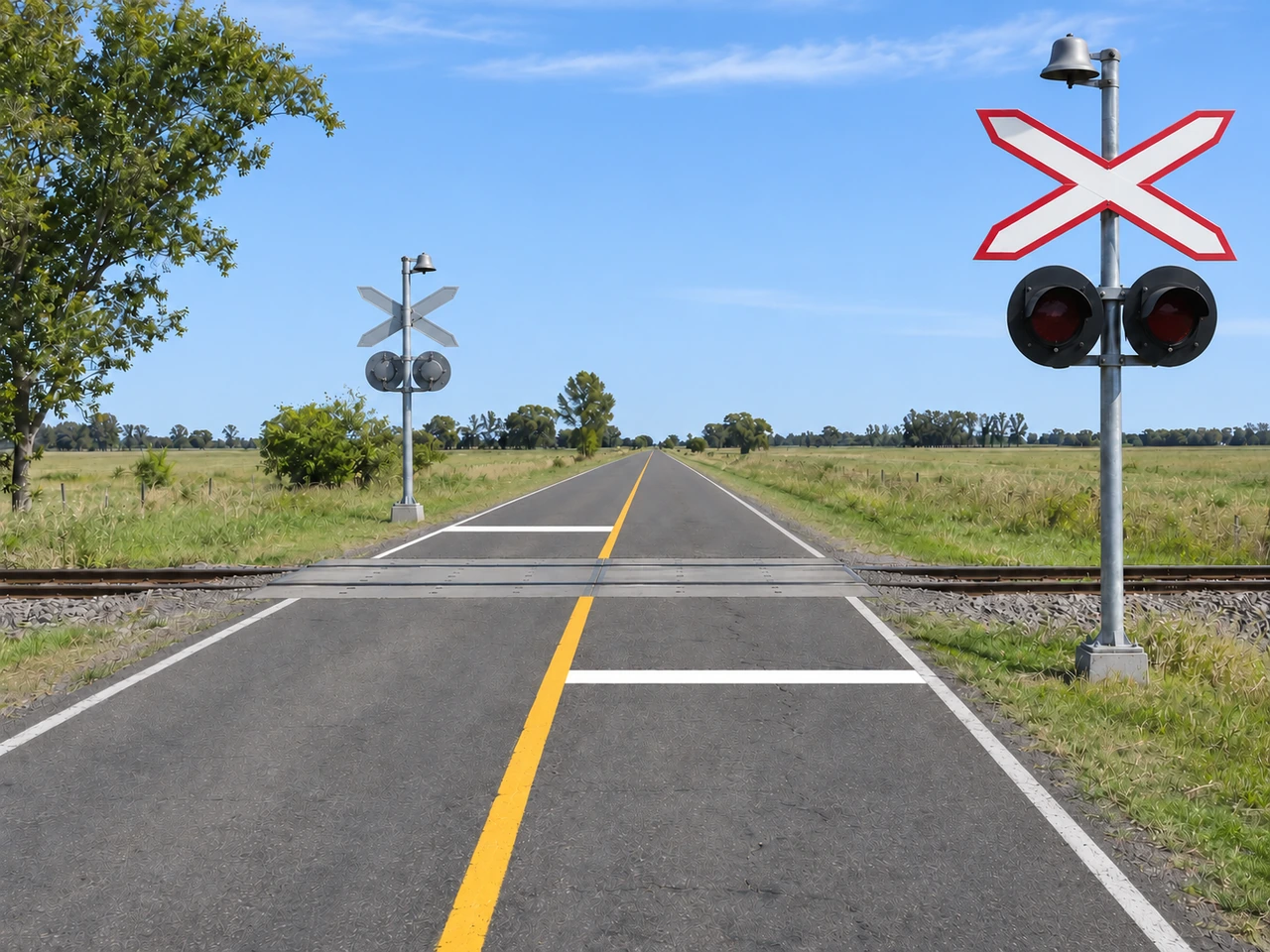
What should you do at a railway crossing without barriers?

660. What should you do at a railway crossing without barriers?

Follow the vehicle ahead without checking yourself.
✓ Stop if required, look both ways and listen before crossing.
Maintain your speed if the tracks look clear.
Cross quickly if you cannot see a train.

Slow down and obey any stop sign or warning signal. Look both ways and listen for trains. Cross only when the tracks and the road beyond are clear.
A red-bordered P.3 crossbuck marks an Argentinian single-track crossing without barriers. The warning lamps are shown unlit. Give priority to approaching trains and obey the crossing controls. Look both ways and listen; enter only when the tracks and exit are clear.
🔗 Sources

Argentina — Decree 196/2025, P.3 crossbuck and railway signals

Argentina National Road Safety Agency — Driver manual: railway level crossings

UK Highway Code — General crossing-safety guidance, Rules 291–298

Image credit: AI-generated

Daytime running lights always switch on the rear position lights.

661. Daytime running lights always switch on the rear position lights.

True.
✓ False.

On some vehicles, daytime running lights illuminate only the front. Learn how your lights operate and select the appropriate lighting for darkness or poor visibility; do not assume that the rear lights are on.

Daytime running lights may leave the rear unlit. On some vehicles, daytime running lights illuminate only the front. Learn how your lights operate and select the appropriate lighting for darkness or poor visibility; do not assume that the rear lights are on.
🔗 Sources

Department for Transport (Great Britain) • Safety guidance, DRLs and rear position lamps; local lighting rules apply

Image credit: AI-generated
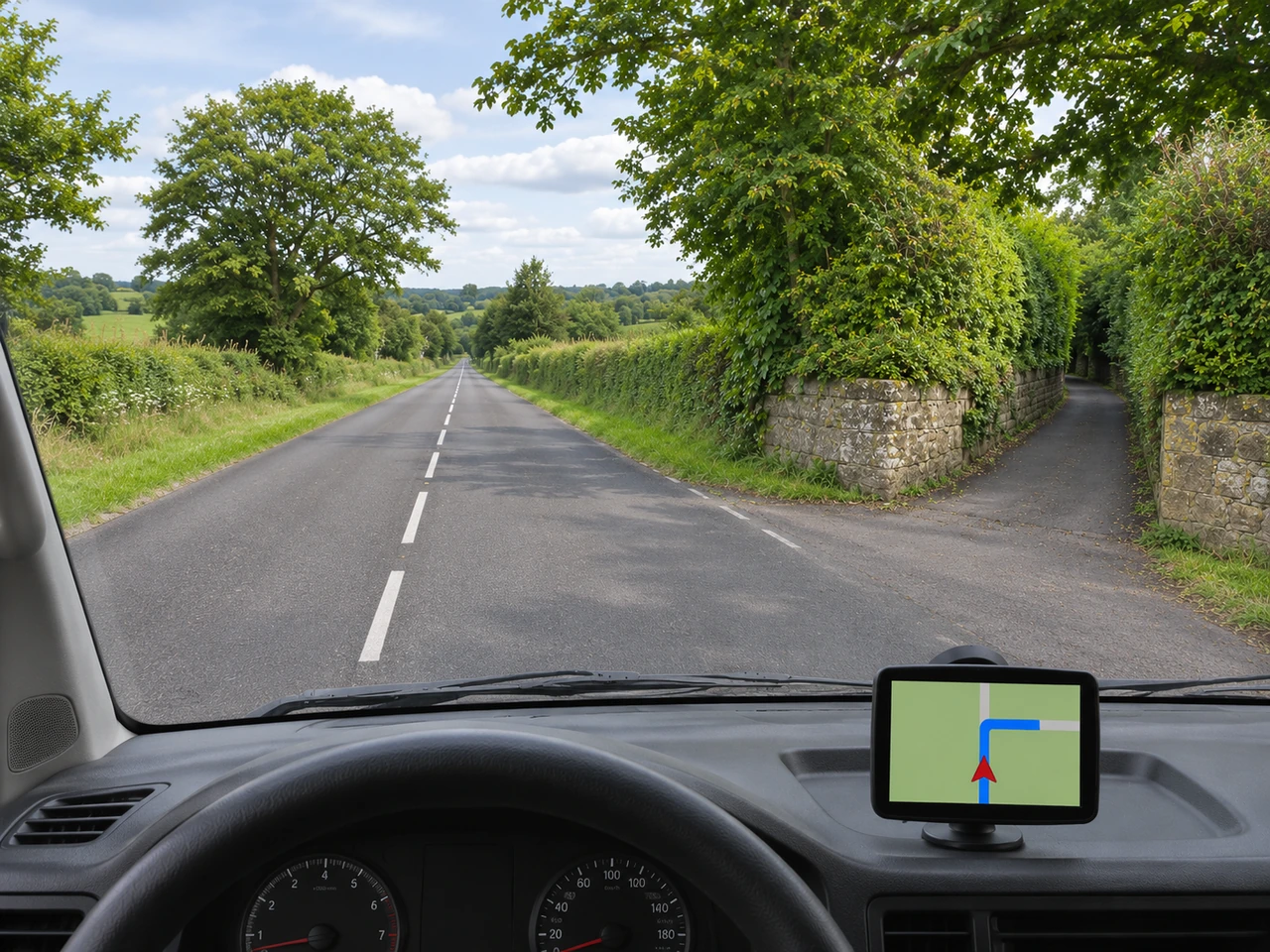
What should you do if a satnav route appears unsuitable for your vehicle?

662. What should you do if a satnav route appears unsuitable for your vehicle?

Enter because the device guarantees clearance.
Follow a smaller vehicle without checking.
✓ Check suitability before committing to the road.
Accelerate through before meeting other traffic.

Route guidance does not guarantee that a road suits your vehicle. Check restrictions, dimensions and the route ahead. If necessary, continue by a safe alternative or stop safely to replan.
Checking whether a suggested narrow route suits the vehicle. General road-safety guidance: Route guidance does not guarantee that a road suits your vehicle. Check restrictions, dimensions and the route ahead. If necessary, continue by a safe alternative or stop safely to replan.
🔗 Sources

GOV.UK — Great Britain

Image credit: AI-generated

What should you do if your vehicle catches fire?

663. What should you do if your vehicle catches fire?

Open the bonnet fully to find where the fire started.
Stay inside the vehicle while waiting for assistance.
Try to move personal belongings out before leaving.
✓ Stop, switch off the engine, evacuate everyone, and call the emergency services.

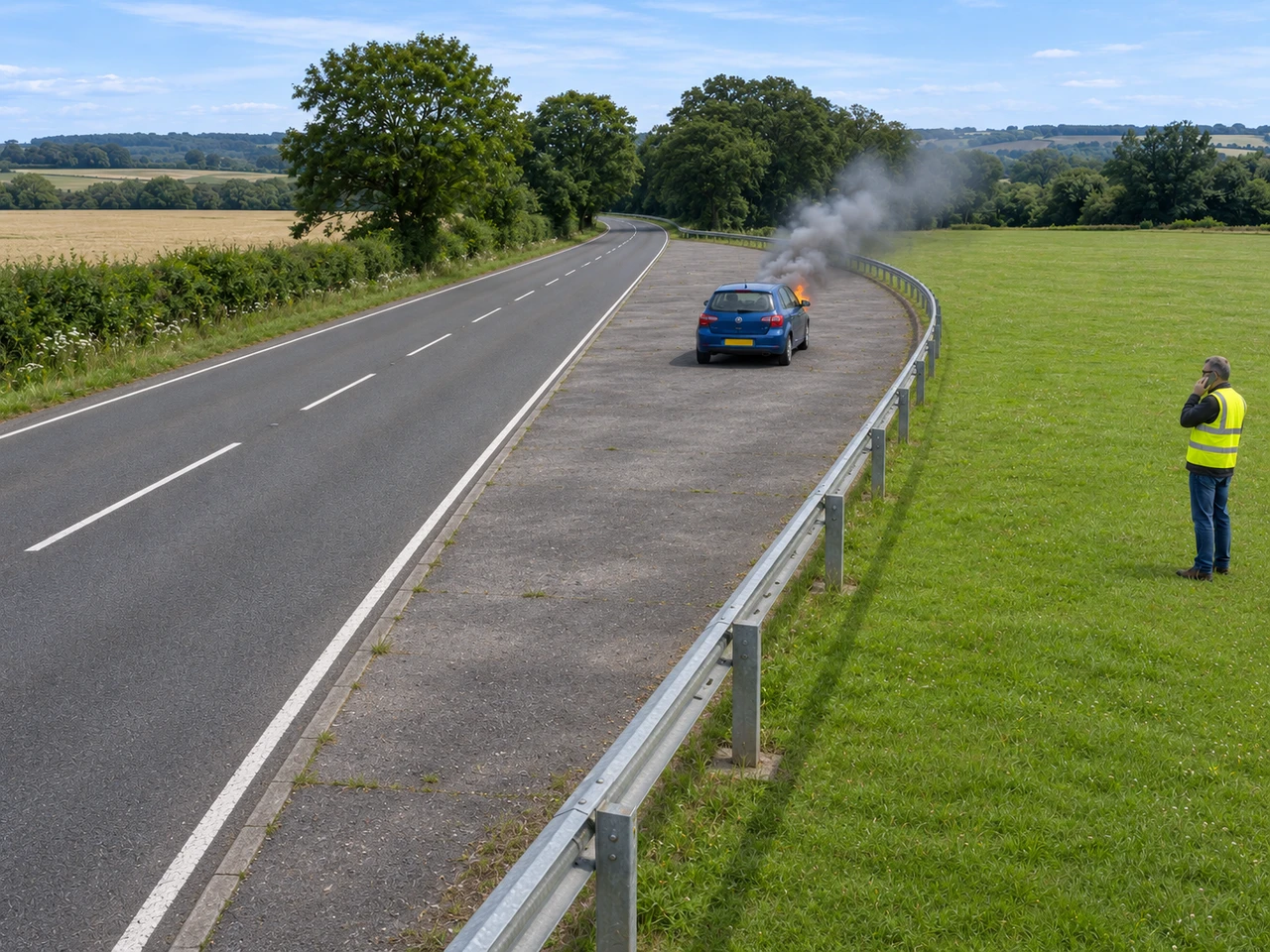
Stop as soon as you can safely, switch off the engine and get everyone out. Move well away from the vehicle and traffic, preferably upwind and clear of smoke, and call the emergency services. Never return for belongings. Do not open the bonnet or boot if a fire may be inside, because admitting air can intensify it. Keep clear and leave firefighting to the fire service, especially where an electric vehicle’s high-voltage battery may be involved.

Caller well away from a car with an engine-compartment fire and closed bonnet.
Evacuate occupants and call the fire service; opening the bonnet can intensify an engine-compartment fire.
🔗 Sources

GOV.UK (Great Britain), Annex 6.

Image credit: AI-generated

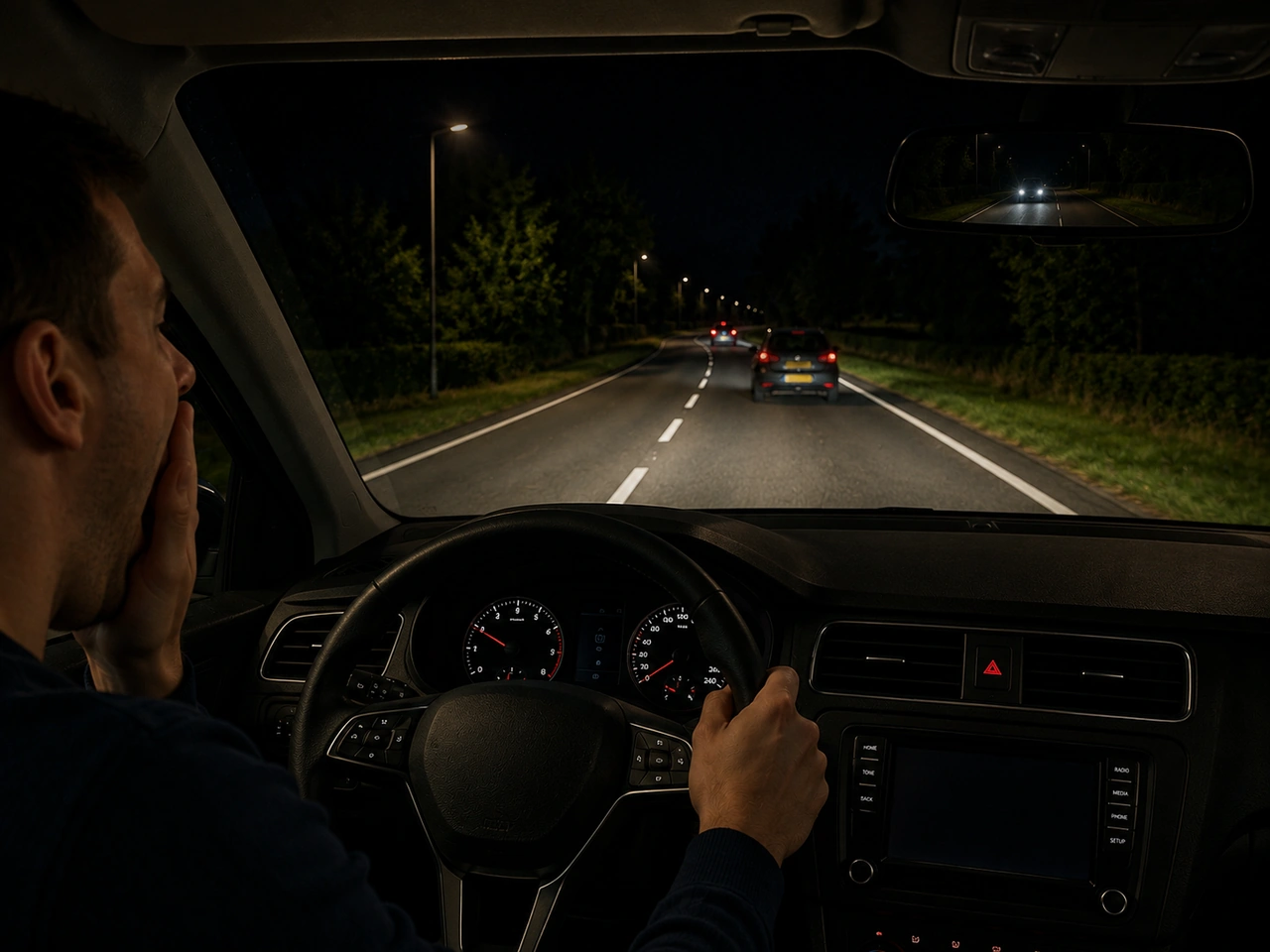
What should you do if you feel tired while driving?

664. What should you do if you feel tired while driving?

✓ Stop in a safe place and take a break.
Drink coffee and continue without stopping.
Drive faster to reach your destination sooner.
Open a window and continue driving.

Driving while tired reduces concentration and reaction time. Stop somewhere safe and rest before continuing.

Tired driver taking a break from a journey.
Argentina. Pull over at a safe place such as a service area and rest. If you still feel sleepy, delay the journey or let a rested, licensed driver take over.
🔗 Sources

Agencia Nacional de Seguridad Vial · Curso Nacional, Module 8

NHTSA · Drowsy Driving

Image credit: AI-generated

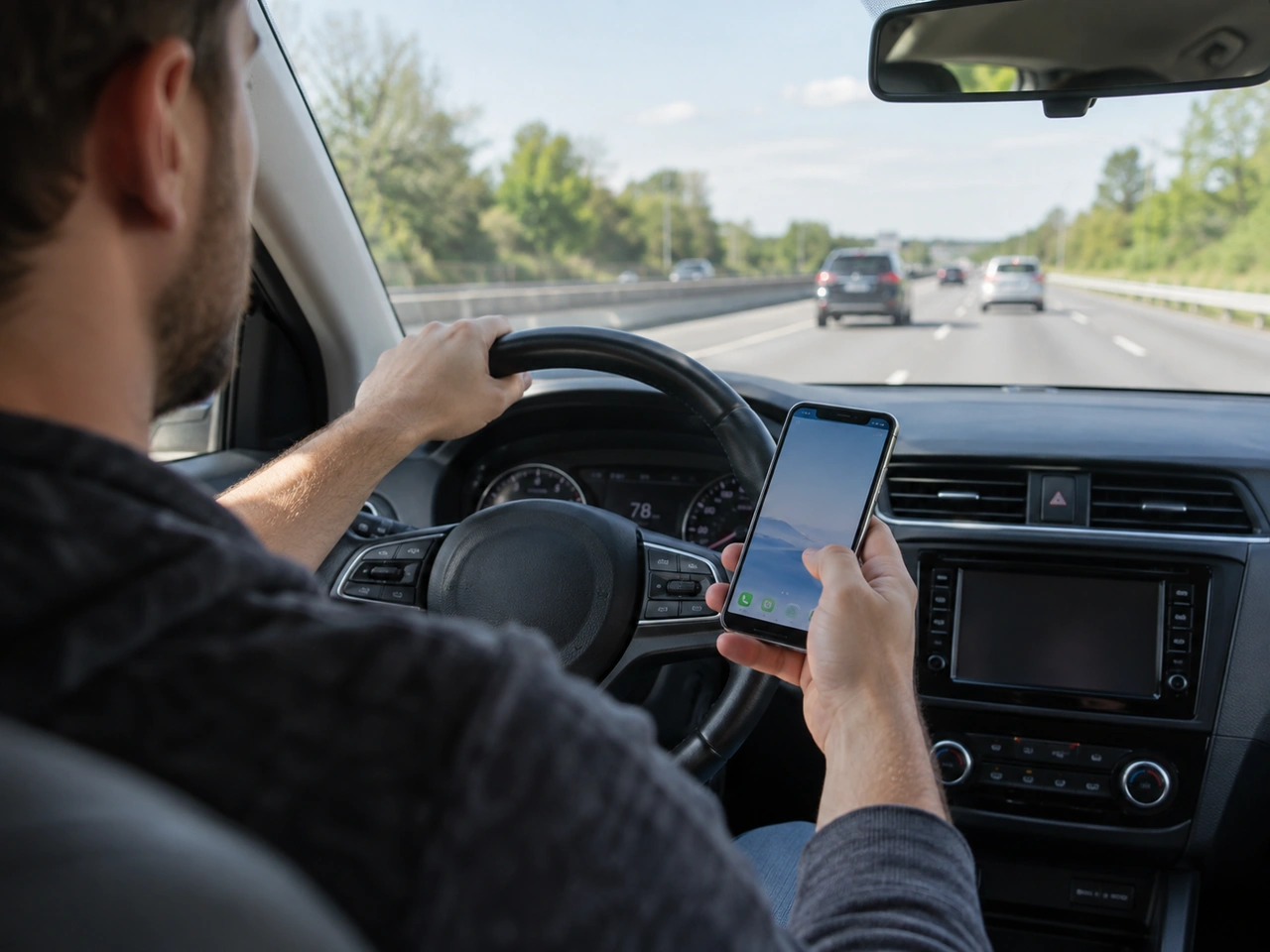
Can drivers use a handheld phone while driving?

665. Can drivers use a handheld phone while driving?

✓ No.
Yes.

Drivers in Argentina are generally not allowed to use a handheld phone while driving.

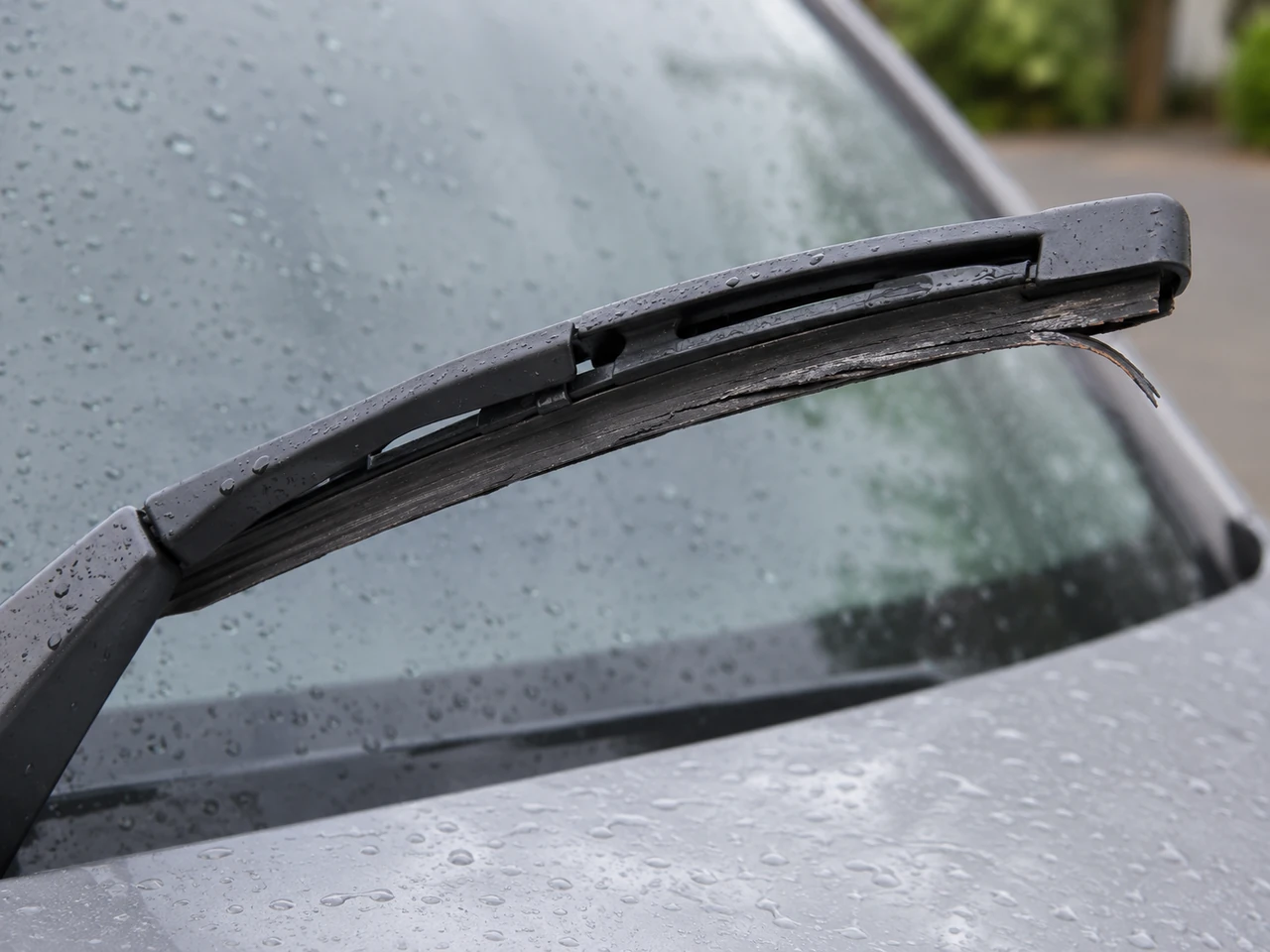
Worn wiper blades are harmless if the washer-fluid reservoir is full.

666. Worn wiper blades are harmless if the washer-fluid reservoir is full.

True.
✓ False.

Washer fluid cannot repair a worn blade. Damaged or worn rubber can leave water and dirt on the windscreen, reducing visibility. Check the blades and replace them when needed.

Replace worn wipers when needed. Washer fluid cannot repair a worn blade. Damaged or worn rubber can leave water and dirt on the windscreen, reducing visibility. Check the blades and replace them when needed.
🔗 Sources

Portland Bureau of Transportation (United States) • Safety guidance, Planning ahead: check wipers for damage

Image credit: AI-generated
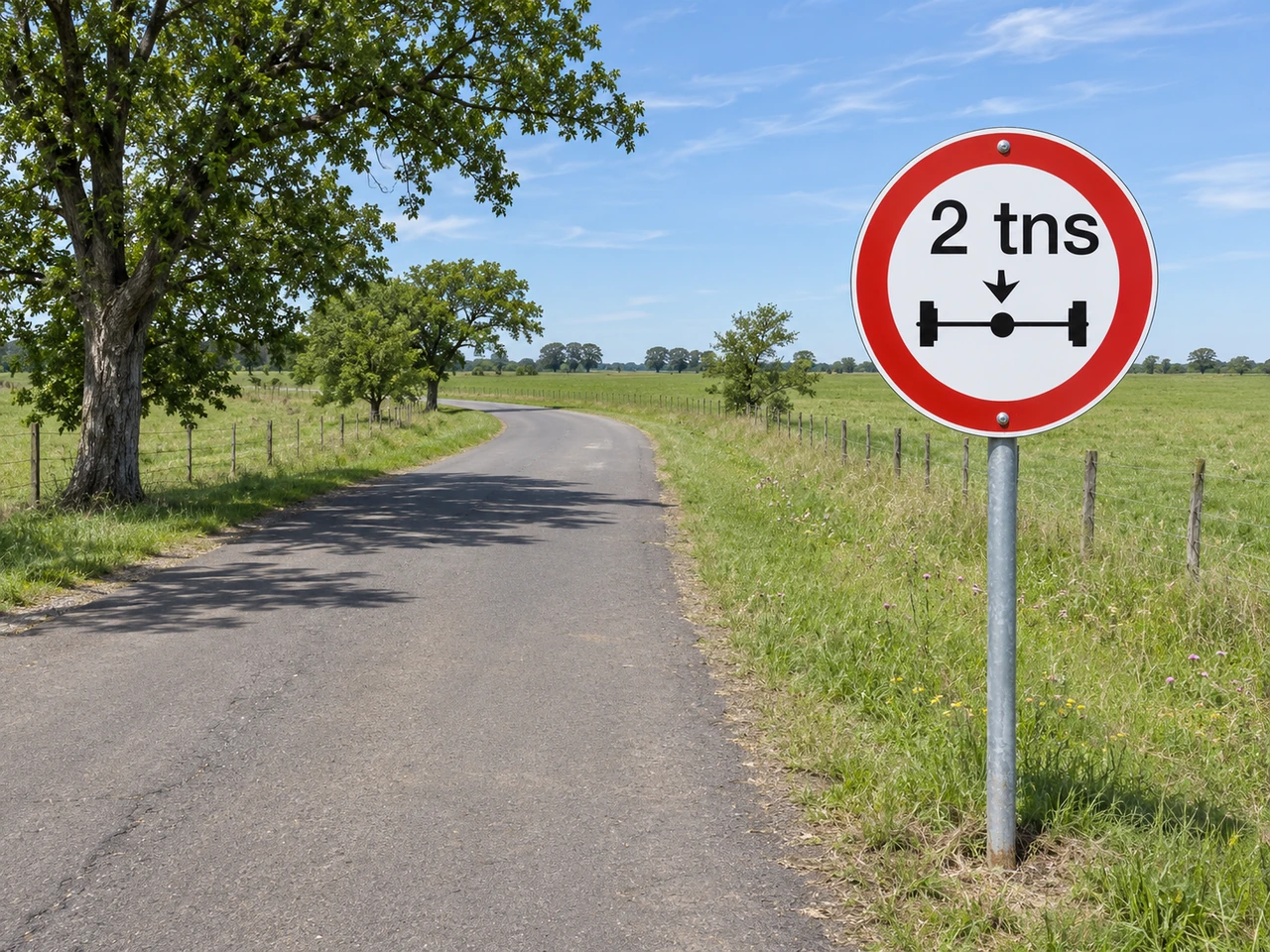
An axle-load limit sign refers to the total mass of the whole vehicle.

667. An axle-load limit sign refers to the total mass of the whole vehicle.

True.
✓ False.

The sign limits the actual load borne by an axle, including the load carried. It is different from a total-mass restriction. Check the relevant axle load against the displayed limit.

Argentina — sign R.11, axle variant. The 2 tns axle variant prohibits proceeding when the load on an axle exceeds two tonnes. The axle symbol distinguishes it from the total-weight version of R.11. It is used for restrictions such as weak bridges or low-capacity pavements.
🔗 Sources

National Uniform Road Signing System, Annex L to Decree 779/1995 as replaced by Decree 196/2025, chapter III, point 10, R.11.

Image credit: AI-generated

Sign artwork reference: Municipality of San Miguel, driver-training Module 5, restriction signs, PDF page 9; incorporated into a generated scene.
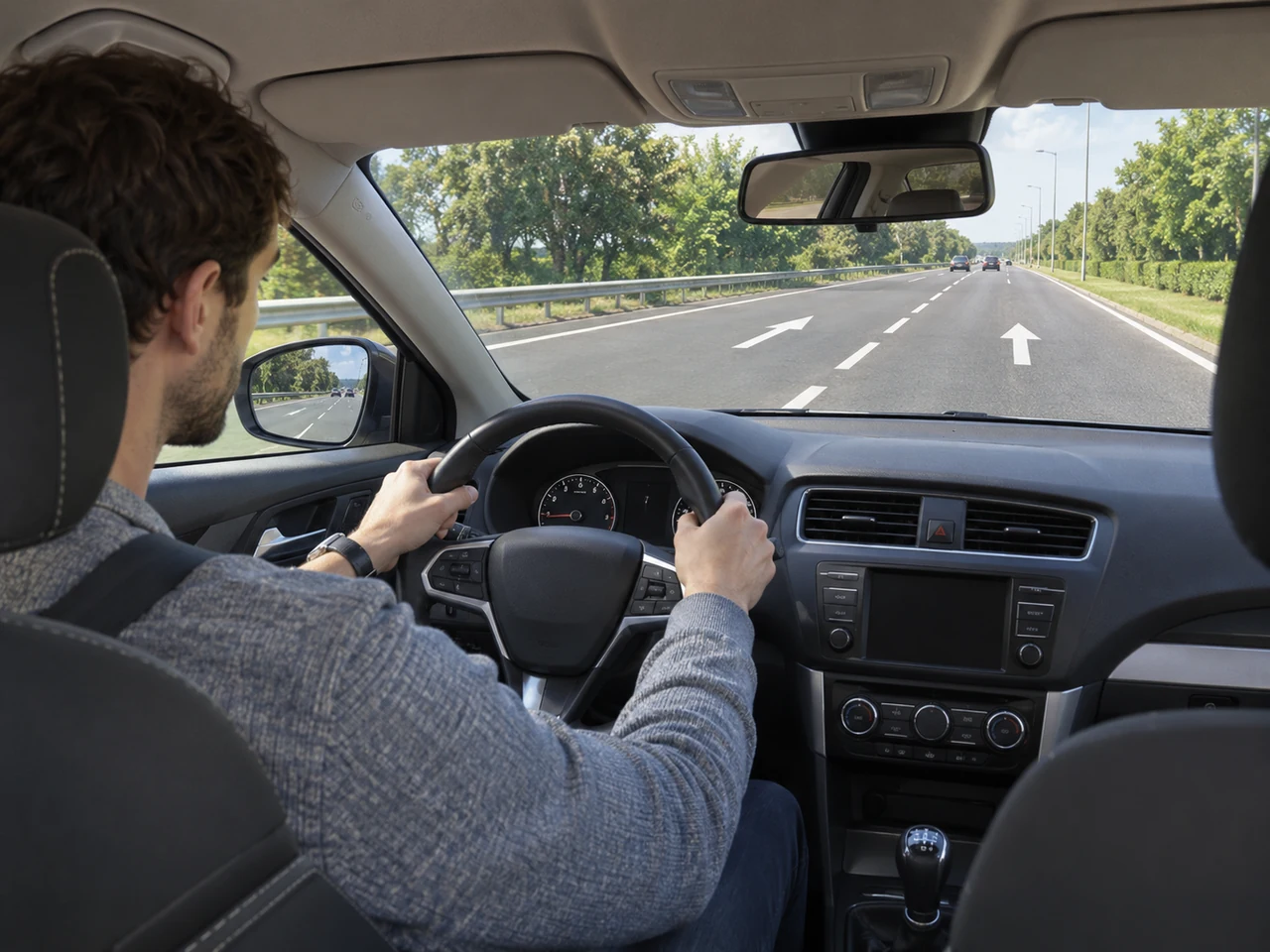
You should check your mirrors before changing lanes.

668. You should check your mirrors before changing lanes.

False.
✓ True.

Check the relevant blind spots as well as your mirrors, and change lanes only when it is safe.
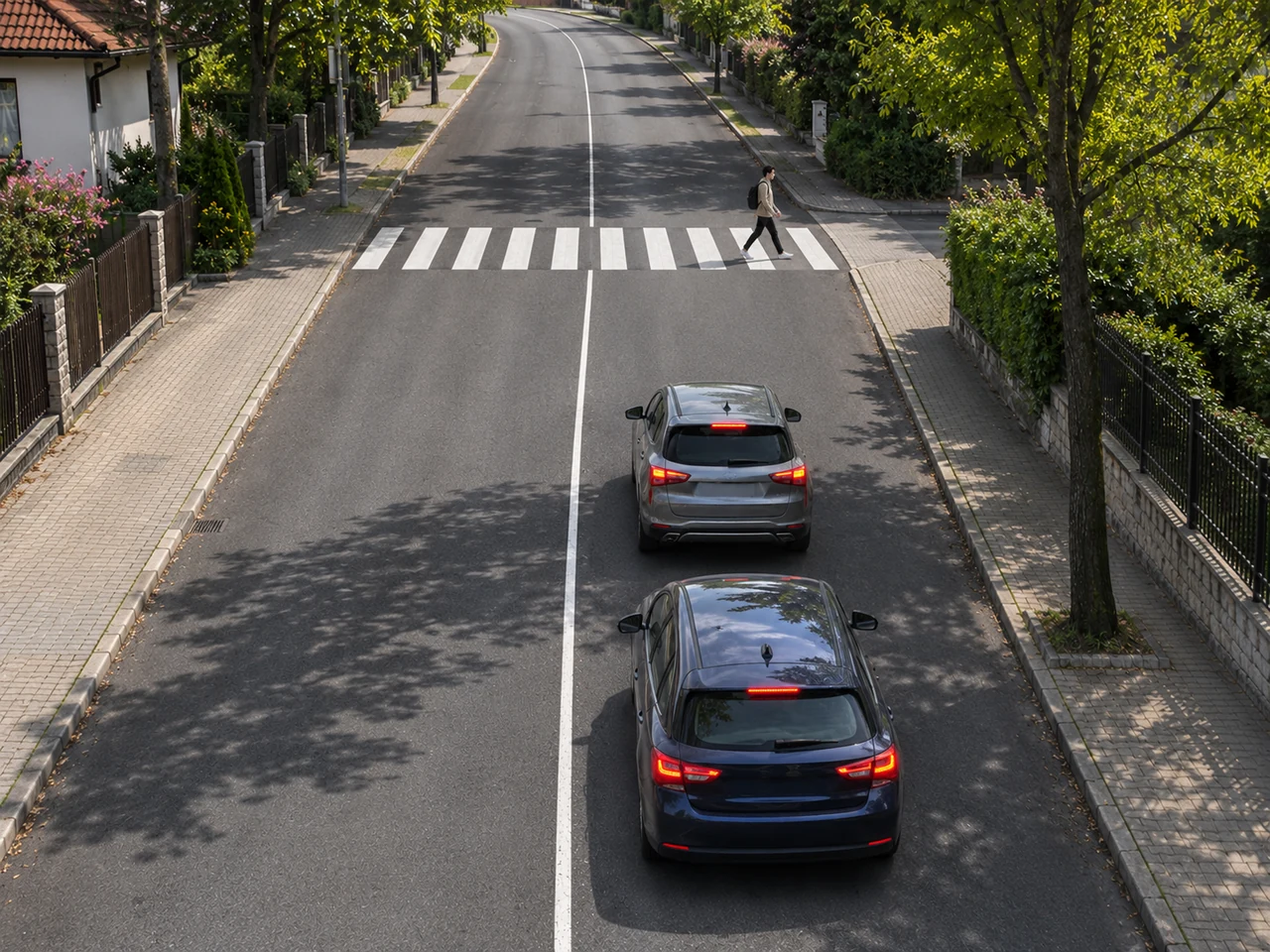
Check the space before changing lanes. Use the mirrors, then check the relevant blind spot before moving across. Look for vehicles, motorcycles and cyclists alongside or approaching from behind. Signal clearly and change lanes only when the gap is safe; signalling does not create a gap.
🔗 Sources

The Highway Code (Great Britain) • Safety guidance, Rule 133

Image credit: AI-generated

Why should you avoid overtaking when approaching a pedestrian crossing?

669. Why should you avoid overtaking when approaching a pedestrian crossing?

The road surface is usually more slippery near crossings.
✓ A pedestrian may be hidden by the vehicle ahead.
Vehicles use more braking distance near crossings.
Crossing markings can make lane changes more difficult.

A vehicle slowing or stopping near a pedestrian crossing may be hiding someone who is crossing. Overtaking could put you directly into the pedestrian's path.

Vehicles approaching a pedestrian crossing.
🔗 Sources

Great Britain — Highway Code, rule 167; pedestrian-crossing overtaking hazards

Image credit: AI-generated
What should you do when approaching a tunnel?

670. What should you do when approaching a tunnel?

Stop and wait until the tunnel is clear.
Increase speed to spend less time inside.
✓ Use the correct lights and keep a safe distance.
Switch on the hazard lights before entering.

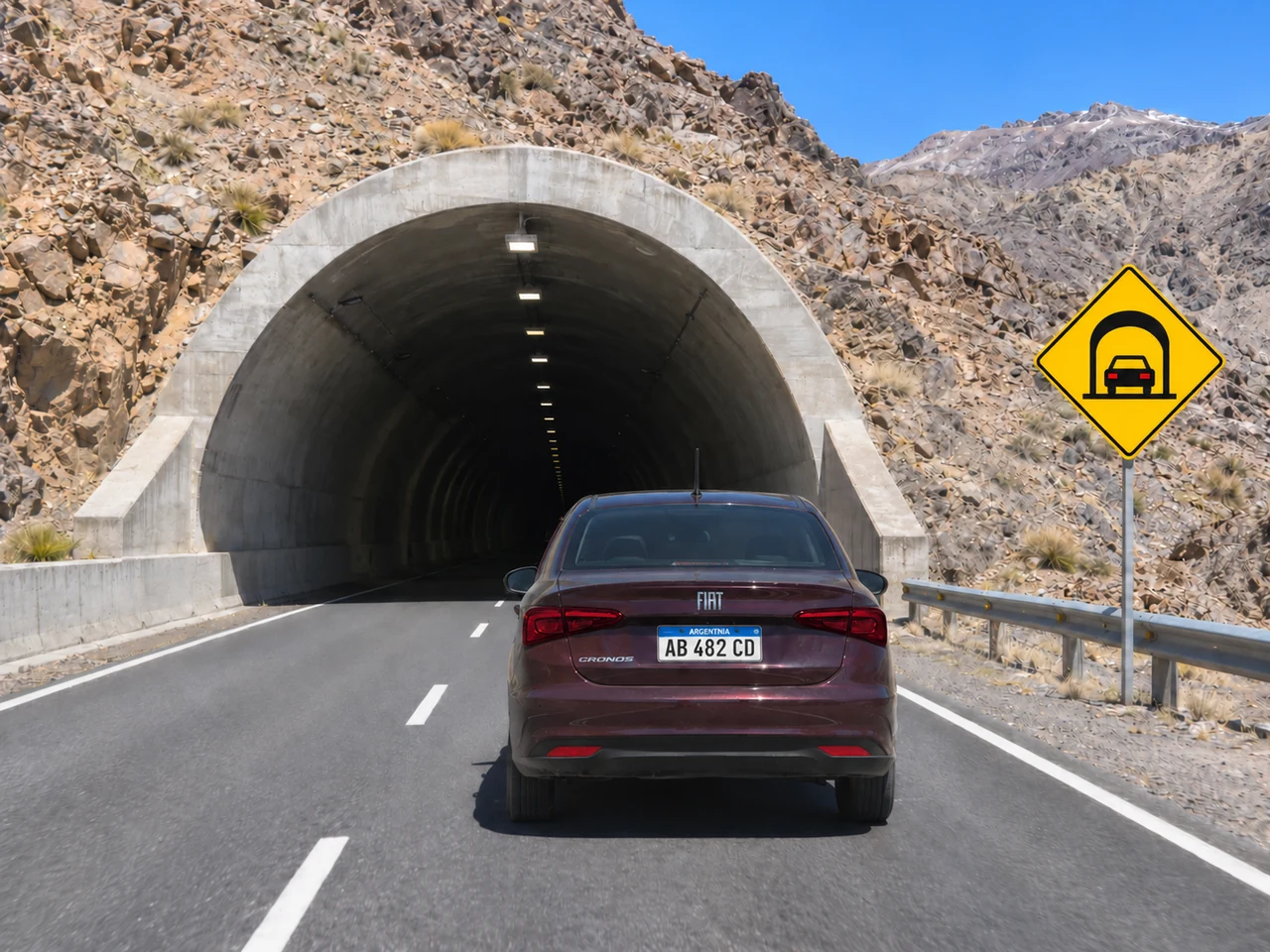
When entering a tunnel, use the correct lights, keep enough distance, and stay alert for slower traffic.

Argentine sedan in the right lane approaching an illustrative Andean tunnel with P.15 warning sign

Argentina: Argentine warning sign P.15 warns that a tunnel is ahead. Its symbol shows the rear of a car inside a tunnel outline. Use the warning to prepare for the change in light and visibility, check the signs and choose an appropriate speed before reaching the portal. Keep a prudent distance from traffic ahead so you have room to react if it slows. National Law 24.449, article 47, addresses dipped headlights or daytime running lights on national routes; that general wording should not be mistaken for a guarantee that DRL alone provides suitable lighting inside a dark tunnel. Select lighting appropriate to the conditions and follow the instructions displayed for the particular tunnel.
🔗 Sources

Argentina • Decree 196/2025, Annex L, P.15 TUNEL
Argentina • National Law 24.449, articles 47 and 48(g)
Vialidad Nacional • Vertical signing manual, 2017, printed page 171: P-15 artwork

Image credit: AI-generated

Why should you be especially alert for wild animals at dawn and dusk?

671. Why should you be especially alert for wild animals at dawn and dusk?

Road signs are harder for animals to recognise.
✓ Many animals are more active at these times.
Animals cannot see vehicles during daylight.
Wild animals avoid roads during the rest of the day.

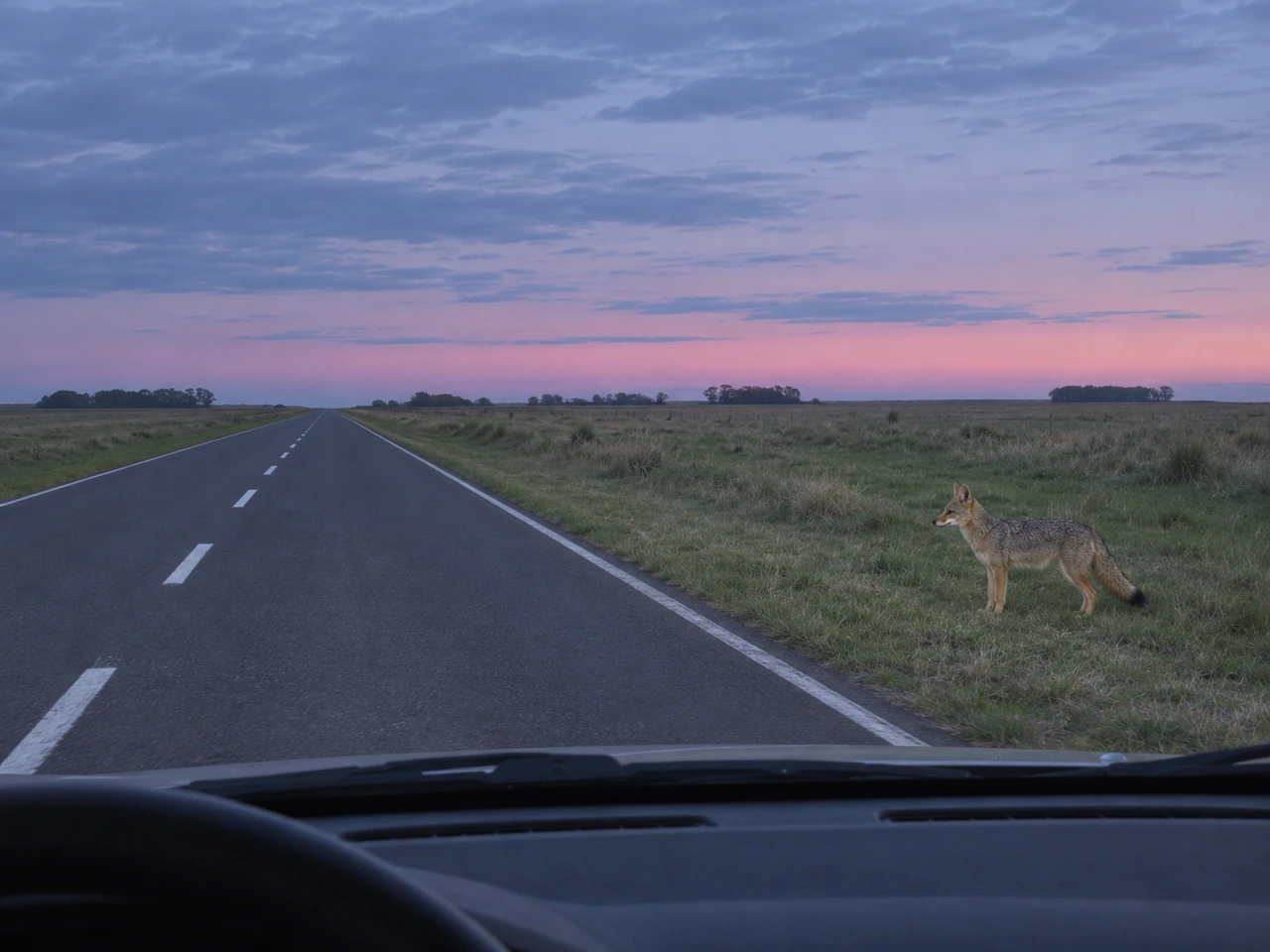
Many wild animals are most active around dawn and dusk, when visibility may also be reduced.
A pampas fox stands near the road at dawn. Wildlife can be more active around dawn and dusk, when it is harder to see. Slow down and scan both verges.
🔗 Sources

Parks Canada, general guidance on wildlife along roads.

Scene credit: AI-generated.

What should you do before crossing the road?

672. What should you do before crossing the road?

Listen for vehicles instead of looking.
Look only where traffic normally comes from.
✓ Look for traffic in all directions.
Follow another pedestrian without checking yourself.

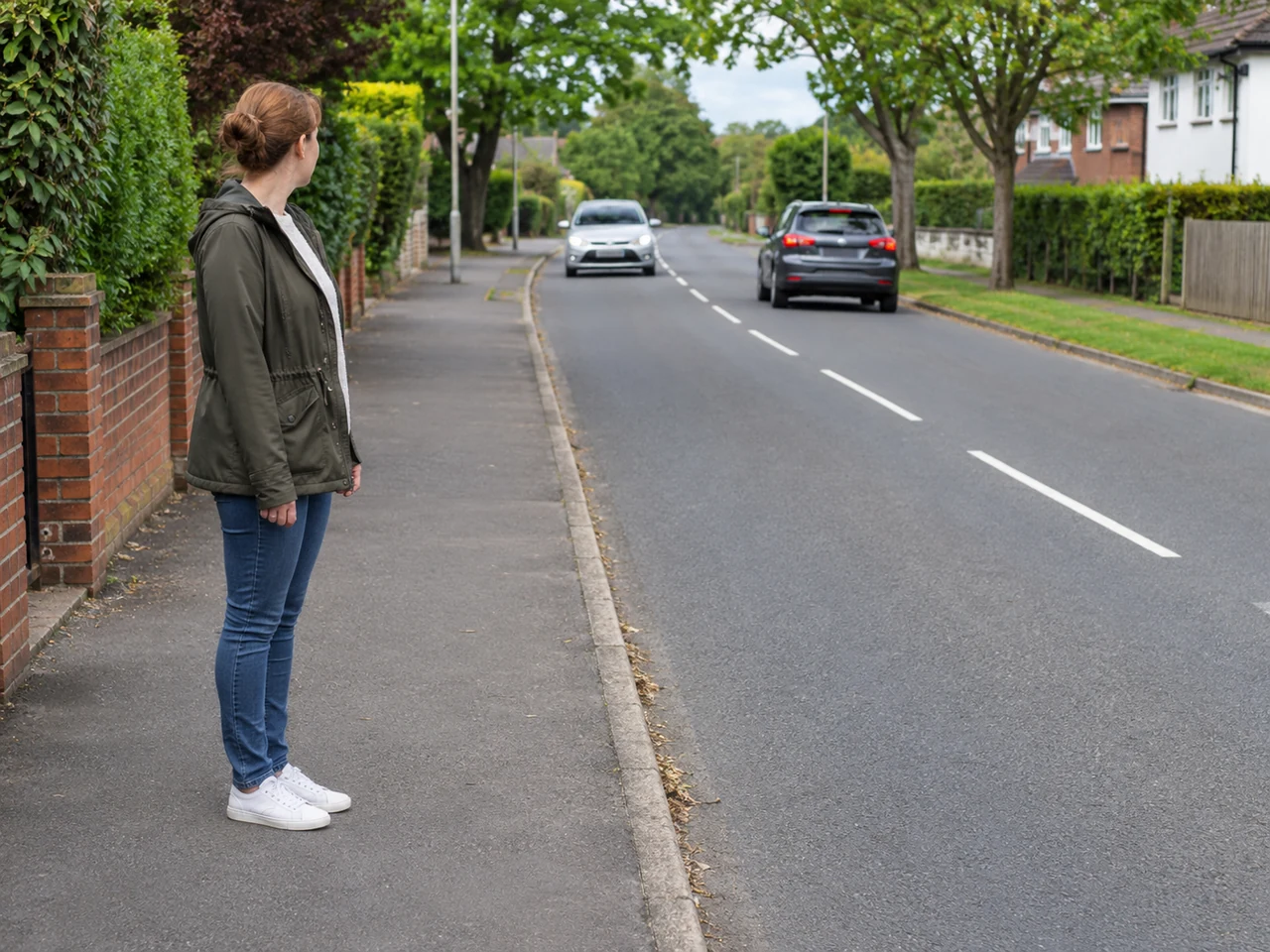
Stop before the kerb and look and listen for traffic in all directions. Check both directions, every lane and any turning vehicles, cyclists or motorcyclists that could cross your path. Do not rely on where traffic normally comes from or follow another pedestrian without checking yourself. Cross only when it is safe and keep looking and listening as you walk across.
A pedestrian waits on the pavement and checks traffic before crossing a road with right-hand traffic. A left-hand-drive car approaches in one lane while a white car travels away in the other. Look and listen in every direction rather than checking only the nearest lane.
🔗 Sources

Great Britain — Highway Code, rule 7; crossing advice

Image credit: AI-generated

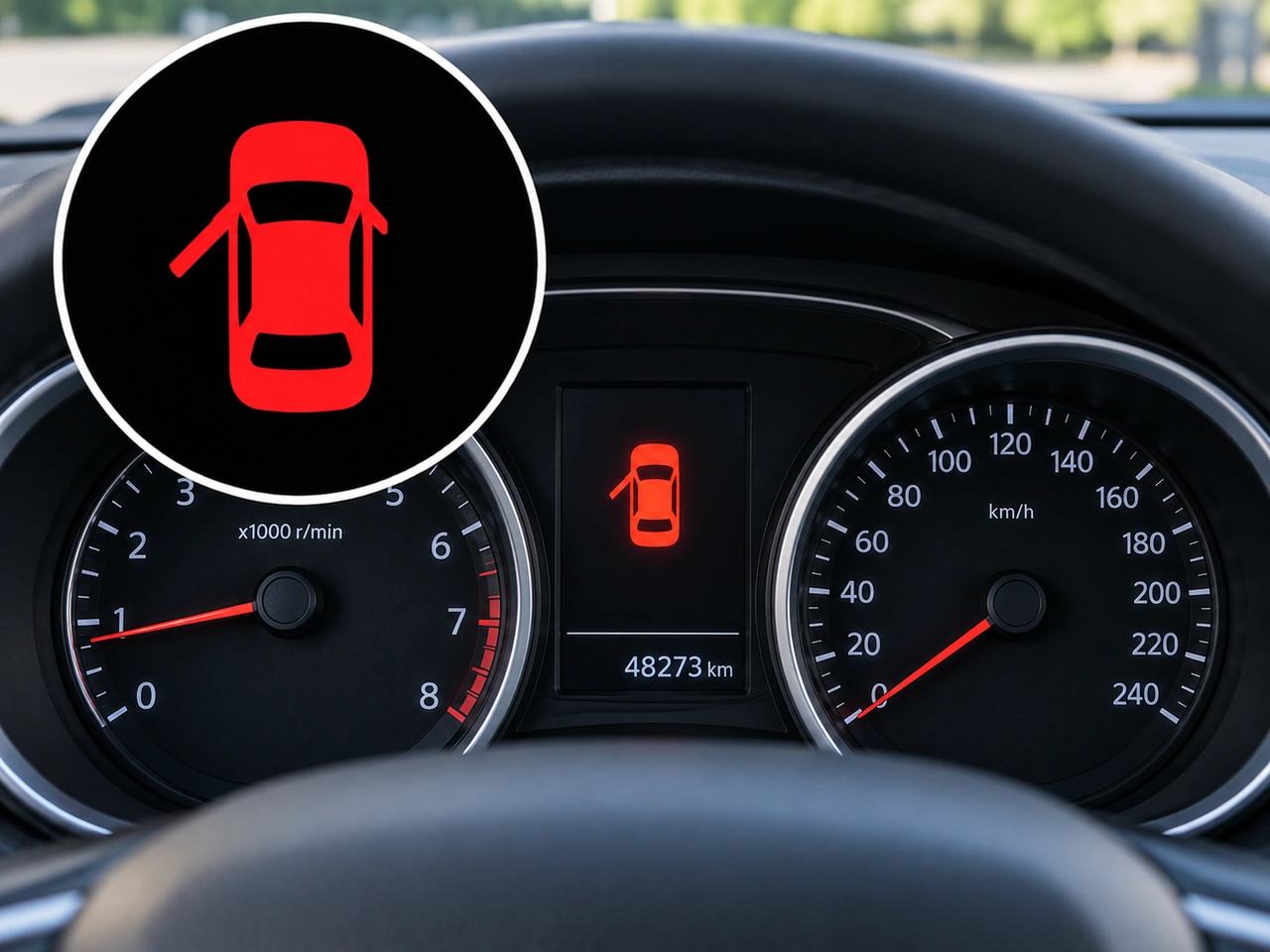
What does this dashboard symbol indicate?

673. What does this dashboard symbol indicate?

✓ A door is open.
The seat belt is not fastened.
The parking brake is applied.
The anti-theft system is active.

This symbol indicates that one or more vehicle doors are not fully closed. Check that all doors are securely shut before driving.

Door-open warning symbol on the dashboard.
Close any open door securely before moving off. Some displays identify the exact door that needs checking.
🔗 Sources

Volkswagen · Dashboard warning and indicator lights

Image credit: AI-generated

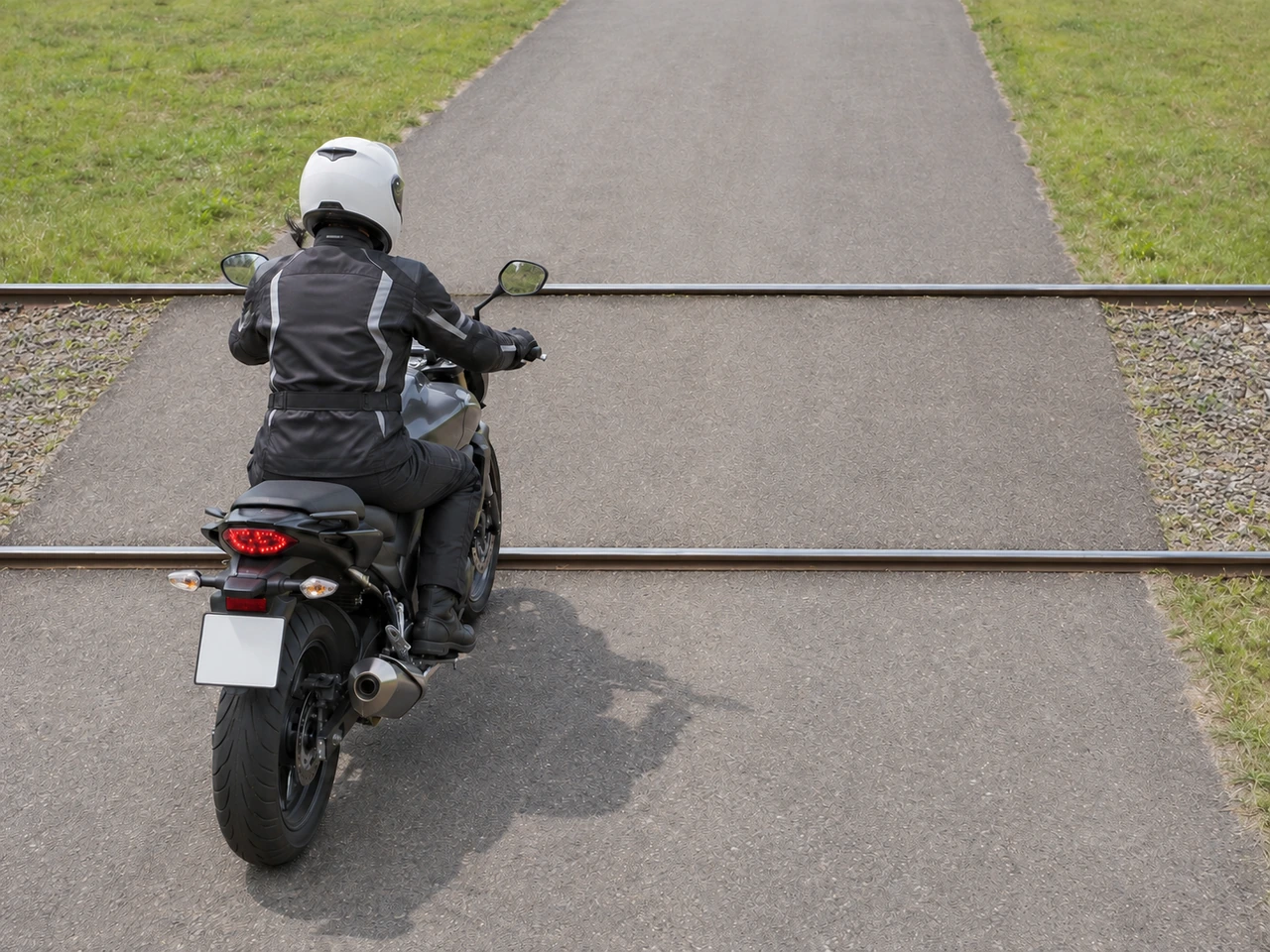
How should a motorcyclist cross tram or railway rails?

674. How should a motorcyclist cross tram or railway rails?

While braking firmly on the rails.
With the motorcycle leaning sharply.
✓ At a safe angle, as close to perpendicular as practical.
At a very shallow angle alongside the rails.

Rails can be slippery and can catch a motorcycle tyre, especially when wet. Cross them at a sufficiently large angle, as close to perpendicular as practical, and avoid sudden braking, acceleration or steering while crossing.
Cross rails at a safe angle. A rider approaches a near-perpendicular rail crossing on a closed training route. Avoid shallow crossing angles and abrupt control inputs. On public roads, choose a safe path within your lane and obey crossing controls; do not swerve into traffic to achieve a particular angle.
🔗 Sources

GOV.UK — Highway Code, Rule 306

Image credit: AI-generated

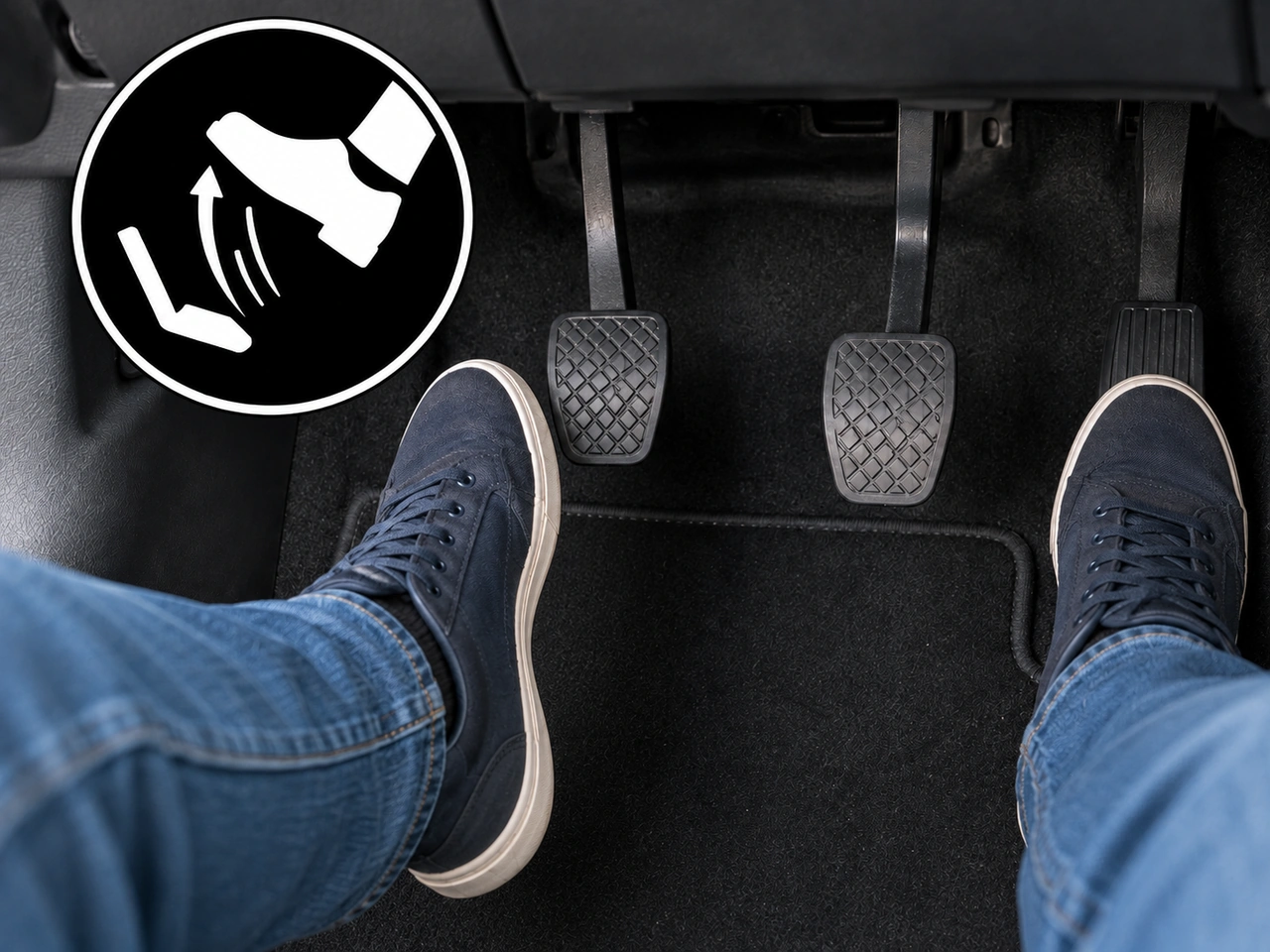
What may happen if you release the clutch too quickly when moving off?

675. What may happen if you release the clutch too quickly when moving off?

The steering may lock.
✓ The engine may stall.
The parking brake may engage.
The headlights may switch off.

Releasing the clutch pedal too quickly when moving off can cause the engine to stall. Release the clutch smoothly through the biting point while applying the accelerator progressively.

Clutch release and engine stalling when moving off.
Ease the pedal through the biting point as the car begins to move. A sudden release at low engine speed can stall the engine.
🔗 Sources

NZ Transport Agency · Moving off and stopping

Image credit: AI-generated

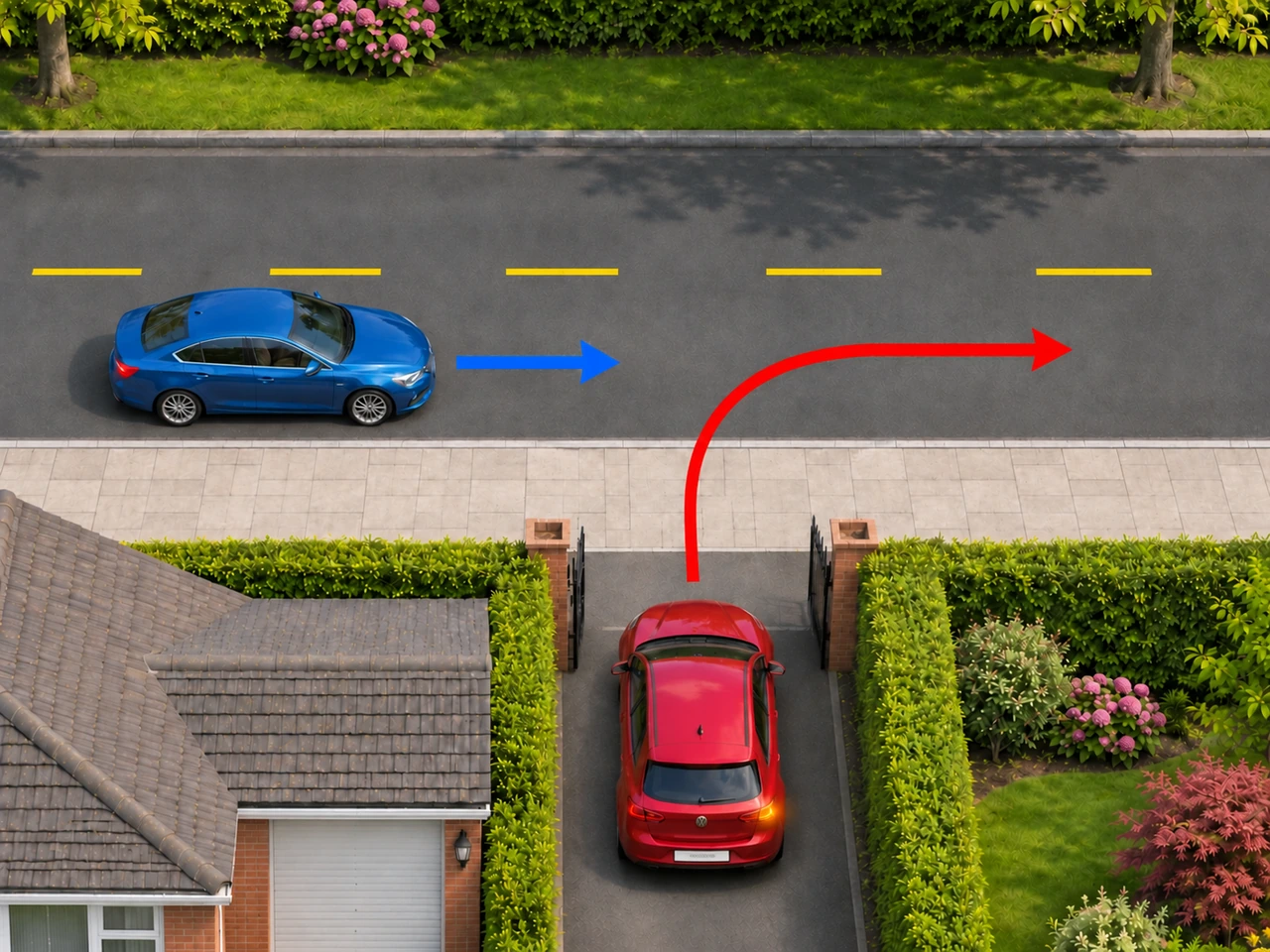
Which car must give way as red leaves this private driveway?

676. Which car must give way as red leaves this private driveway?

Whichever car reaches the road last.
Neither car.
The blue car.
✓ The red car.

Red is entering the public road from a recognisable private driveway. It must give way to other traffic, including blue and anyone using the pavement it crosses. Red should wait clear of the pavement and join only when the whole movement can be made safely.

Red waits inside a private driveway while blue approaches from the left on the road. Argentina: National Traffic Law article 39(b) requires cautious manoeuvres without risk or disruption to traffic. Red should let blue pass, keep the pavement clear and check both routes before joining.
🔗 Sources

AI-generated illustration • Traffic-rules.com / Rijbewijs-online.be • WCIT • CC BY-SA 4.0.

🔗 Argentina Government • National Traffic Law 24,449, article 39(b)
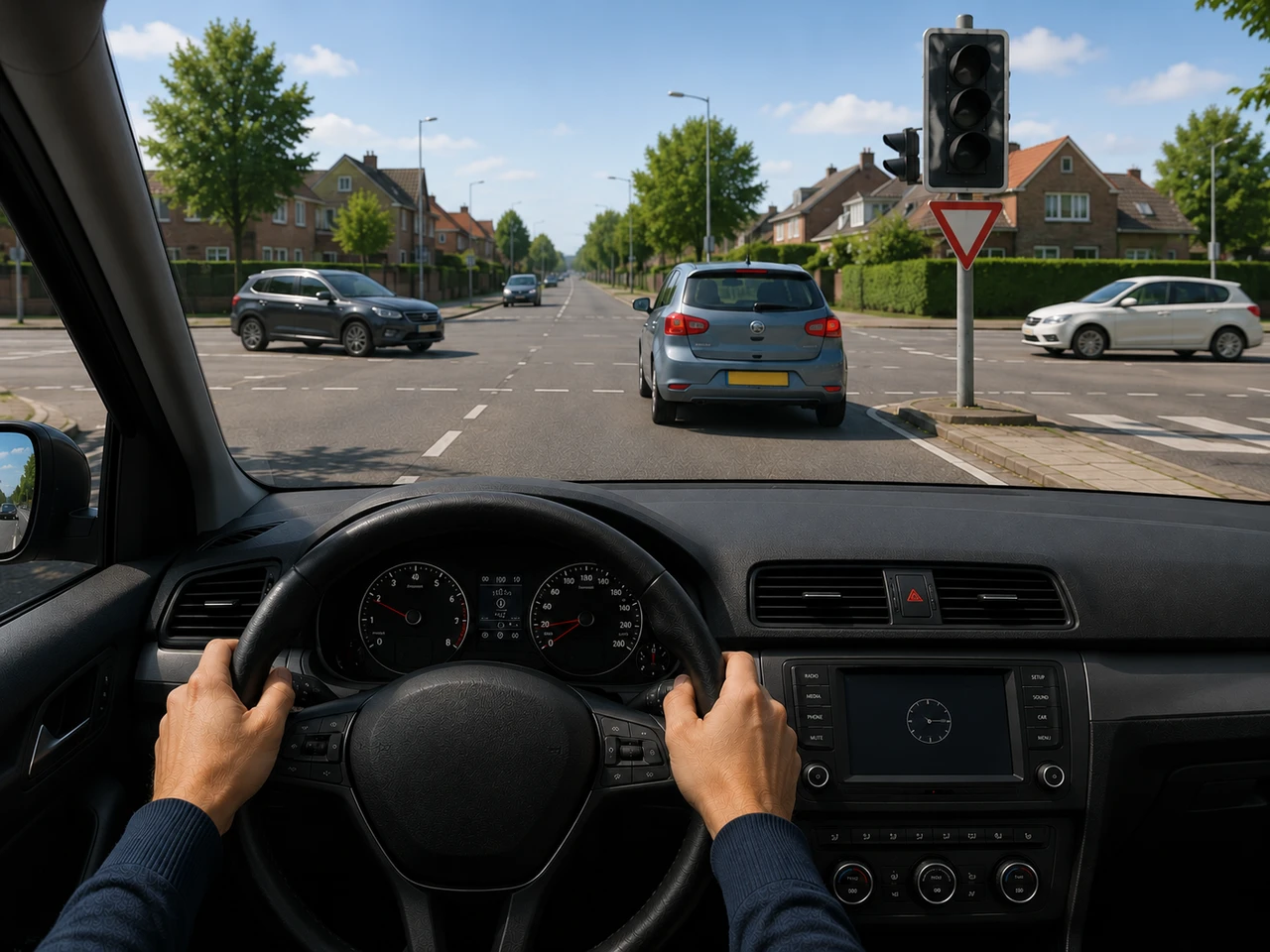
What should you do when traffic lights are not working?

677. What should you do when traffic lights are not working?

Treat the junction as if you have priority.
Follow the vehicle ahead through the junction.
Wait for another driver to enter first, then follow.
✓ Follow the local rules, including stopping where required.

If traffic lights are not working, slow down and check each approach. Some places require a full stop. Elsewhere, follow any applicable signs, markings or priority rules. Proceed only when it is safe.
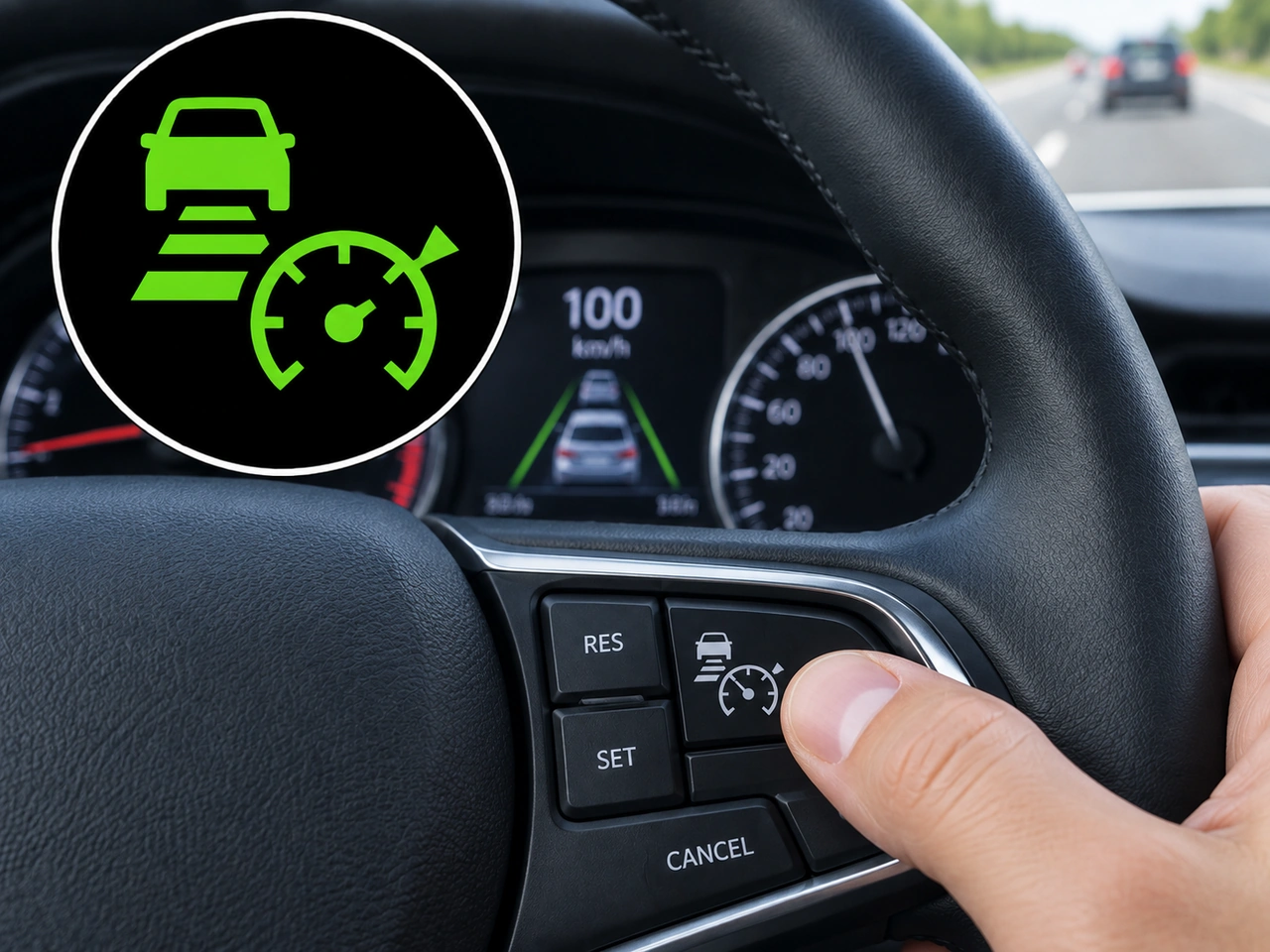
What does this dashboard symbol indicate?

678. What does this dashboard symbol indicate?

✓ Adaptive cruise control.
Lane-departure warning.
Automatic start-stop system.
Parking assistance.

This symbol relates to adaptive cruise control (ACC). The system can maintain a selected speed and automatically adjust the vehicle's speed to help maintain a set distance from traffic ahead.

Adaptive cruise-control symbol on the dashboard.
Adaptive cruise control can adjust speed to help maintain the selected gap to vehicles ahead. Check the display to see whether the system is active.
🔗 Sources

Volkswagen · Dashboard warning and indicator lights

Image credit: AI-generated

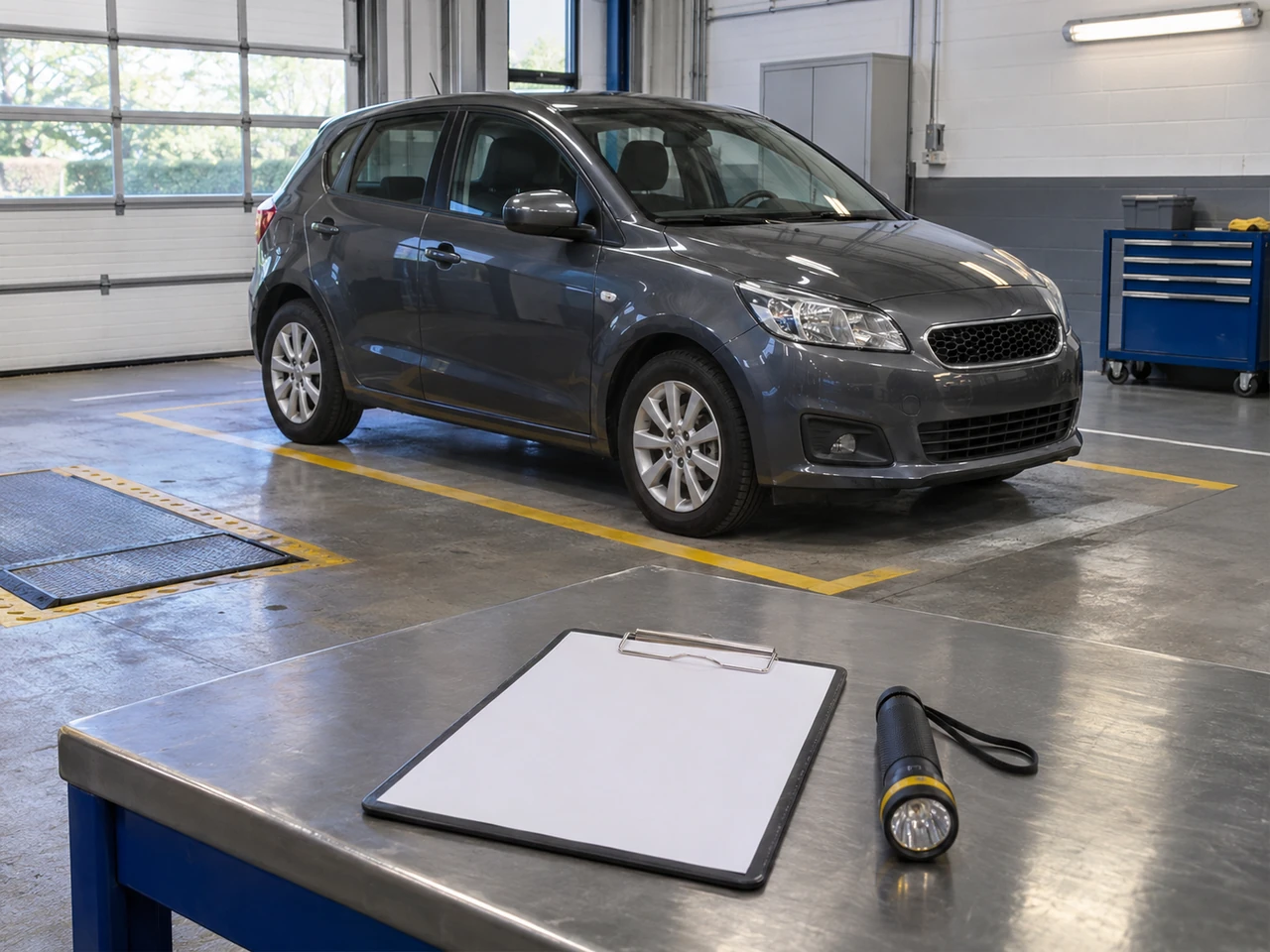
Passing a vehicle inspection guarantees that no new faults can develop.

679. Passing a vehicle inspection guarantees that no new faults can develop.

True.
✓ False.

An inspection assesses the vehicle at the time it is checked. Faults can develop afterwards, so continue routine checks and have defects repaired. Inspection requirements vary by country.

Continue checks after a vehicle inspection. An inspection assesses the vehicle at the time it is checked. Faults can develop afterwards, so continue routine checks and have defects repaired. Inspection requirements vary by country.
🔗 Sources

GOV.UK (Great Britain) • Safety guidance, roadworthiness and a current MOT certificate

Image credit: AI-generated
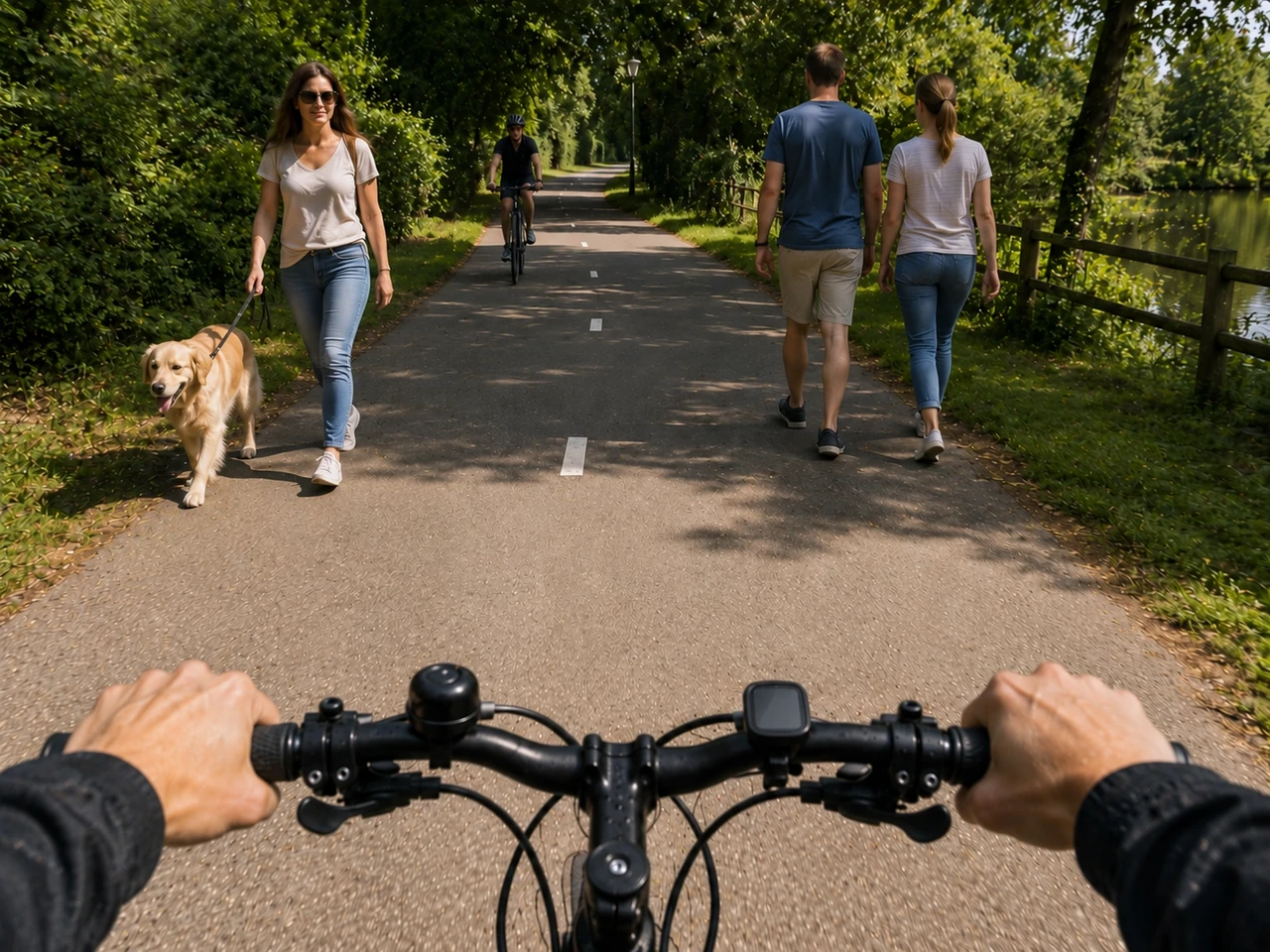
What should cyclists do when passing pedestrians on a shared path?

680. What should cyclists do when passing pedestrians on a shared path?

✓ Slow down, give warning, and leave enough space.
Pass closely if there is not enough room.
Use your bell and keep the same speed.
Pass quickly before they change direction.

Pedestrians may change direction unexpectedly or may not hear you approaching. Slow down, give a gentle warning in good time and leave enough space. A bell does not give you priority. Wait or stop if you cannot pass safely, and do not assume a pedestrian has heard your warning.
Passing on shared paths in Argentina. Argentina’s road-marking rules provide for cycle paths shared with pedestrians. When passing on one, slow down and leave room. Drivers crossing the marked path must give way to its users.
🔗 Sources

Argentina — Decree 196/2025, road marking H.6

Image credit: AI-generated

Why should you remove dark sunglasses before entering a tunnel?

681. Why should you remove dark sunglasses before entering a tunnel?

To prevent the lenses from reflecting tunnel lights.
✓ Your eyes need to adjust to the lower light level.
To prevent the automatic lights from switching on.
To make the vehicle headlights work more effectively.

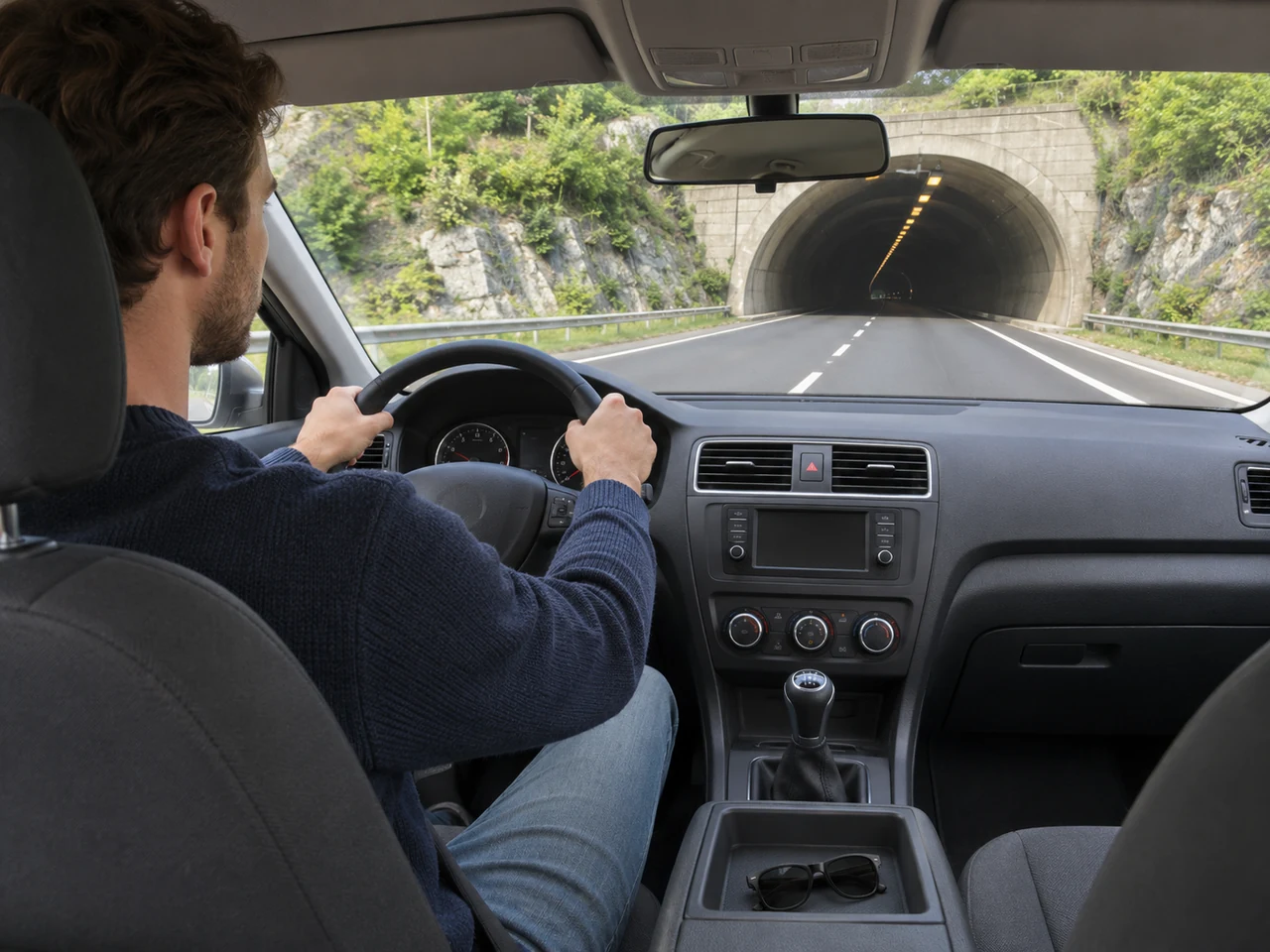
Dark sunglasses reduce the amount of light reaching your eyes and can make hazards inside a tunnel harder to see.

Driver removing sunglasses before entering a tunnel.
🔗 Sources

Spain DGT — General tunnel visibility, observation and emergency guidance

Image credit: AI-generated
Why should you not use water on a fire involving live electrical equipment?

682. Why should you not use water on a fire involving live electrical equipment?

✓ Water can conduct electricity and create an electric-shock hazard.
Water can make the electrical equipment restart.
Water prevents the power supply from switching off.
Water makes electrical cables harder to disconnect.

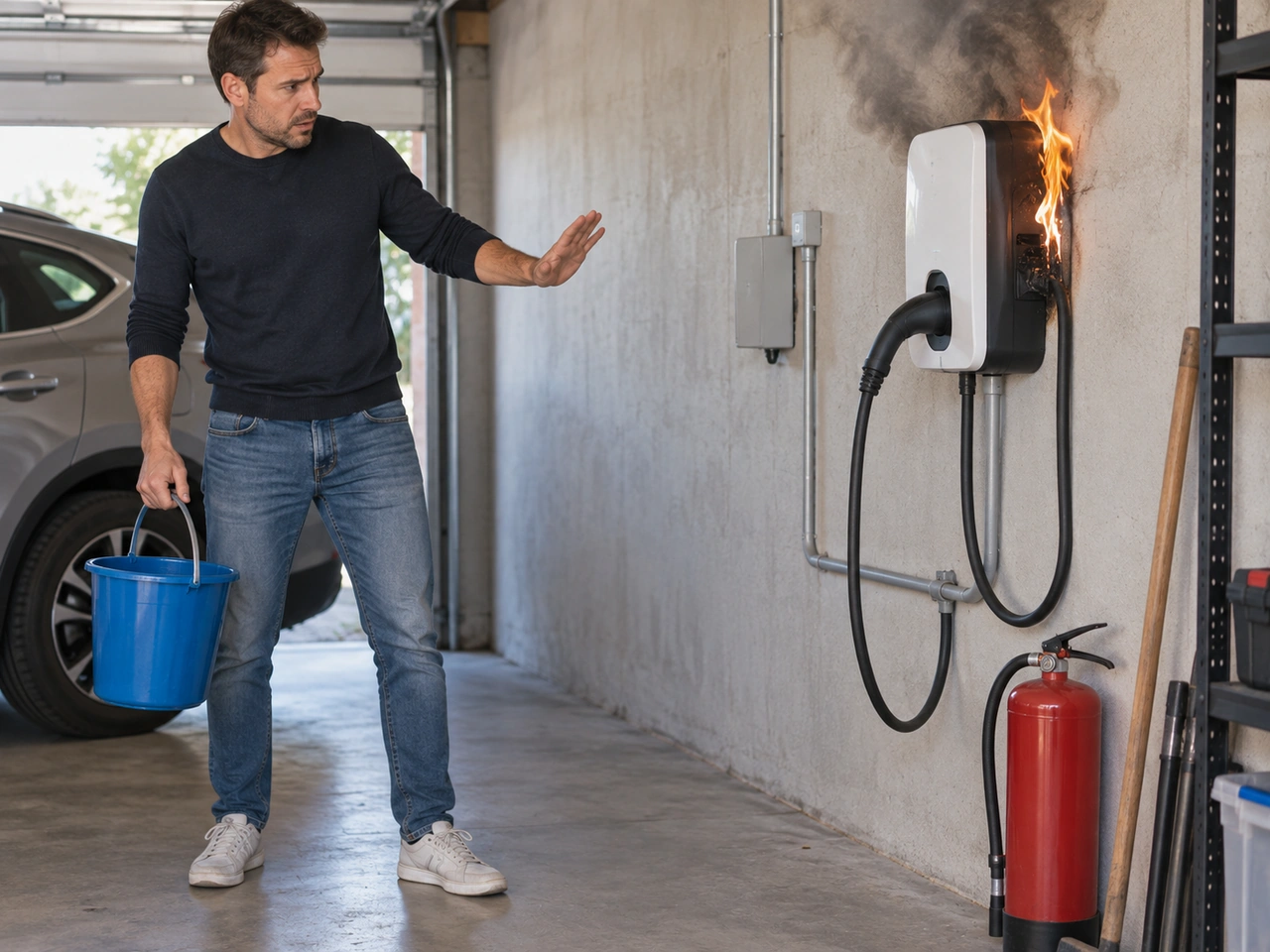
Water can conduct electricity, so throwing water or directing an ordinary water jet onto energised equipment can expose you to electric shock. Keep people away, leave damaged cables and equipment alone, and call the emergency services. This is advice for an untrained person near live equipment; it does not mean that firefighters must never use water on an electric vehicle. Trained crews may use large quantities of water to cool an EV battery fire using specialist procedures.

Fire involving live electrical equipment.
An untrained bystander should not put water on live electrical equipment. Evacuate people, keep clear and call emergency services; this is not a firefighter EV-cooling procedure.
🔗 Sources

Cornwall Fire and Rescue (England): electrical fires.

Image credit: AI-generated

What should you do when the motorway entry lane merges with traffic?

683. What should you do when the motorway entry lane merges with traffic?

Enter at a low speed and let motorway traffic adjust.
Merge as soon as the entry lane begins.
Force your way into the nearest gap.
✓ Match your speed, check around you, and merge into a safe gap.

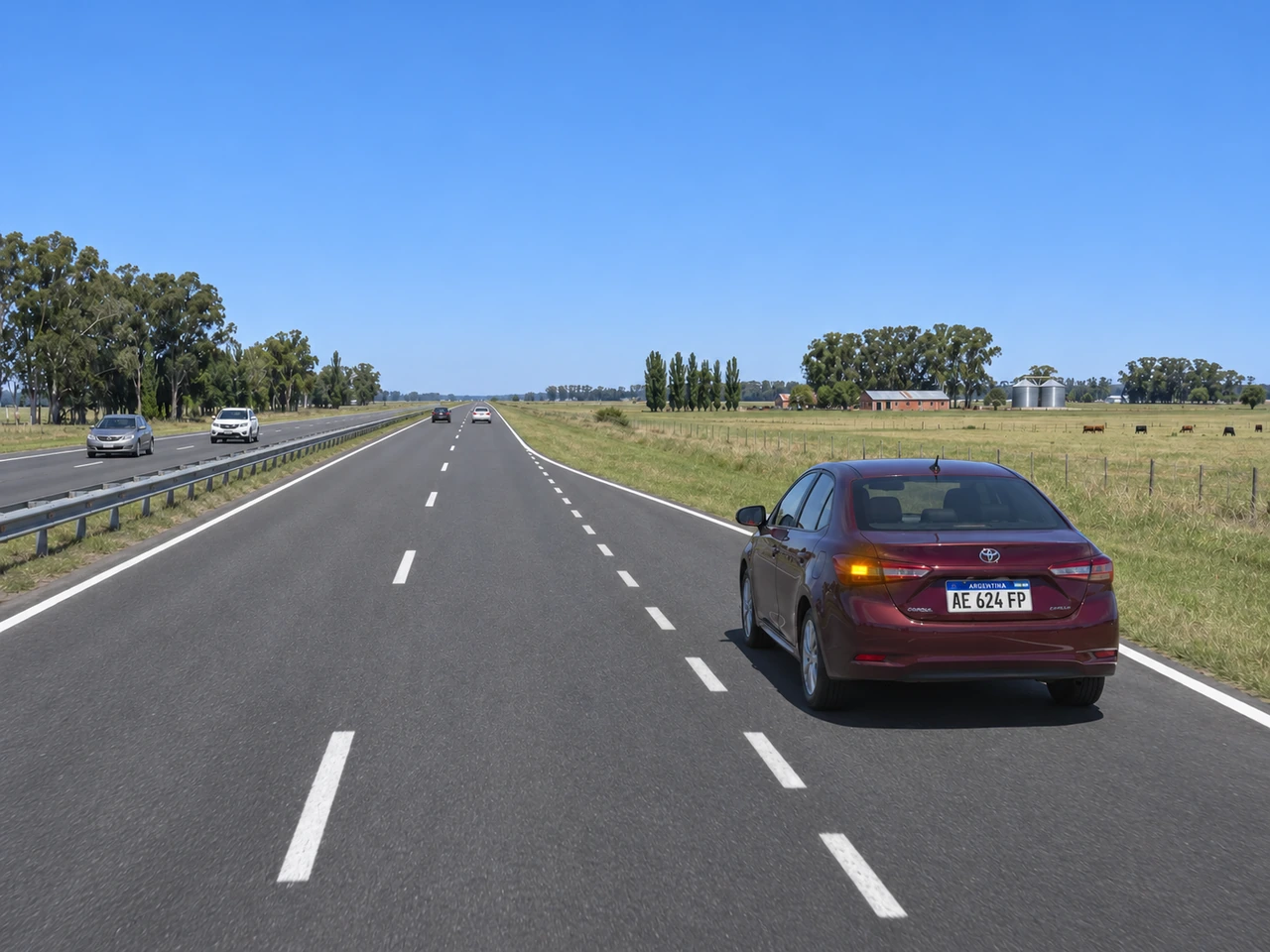
Use the entry lane to build a suitable speed, check carefully, signal, and merge only when it is safe.

Sedan signalling left in an Argentine motorway right acceleration lane.
Use the entry lane to adjust your speed. Check for traffic approaching on your left, signal before changing lanes and merge only when there is a safe gap.
🔗 Sources

Argentine National Traffic Law 24,449 · Articles 39 and 45

Image credit: AI-generated

Why must you avoid smoking or open flames at a filling station?

684. Why must you avoid smoking or open flames at a filling station?

✓ Fuel vapours can ignite and cause a fire.
Open flames can reduce the fuel's quality.
Smoke can interfere with the fuel gauge.
Heat can make the fuel nozzle stop automatically.

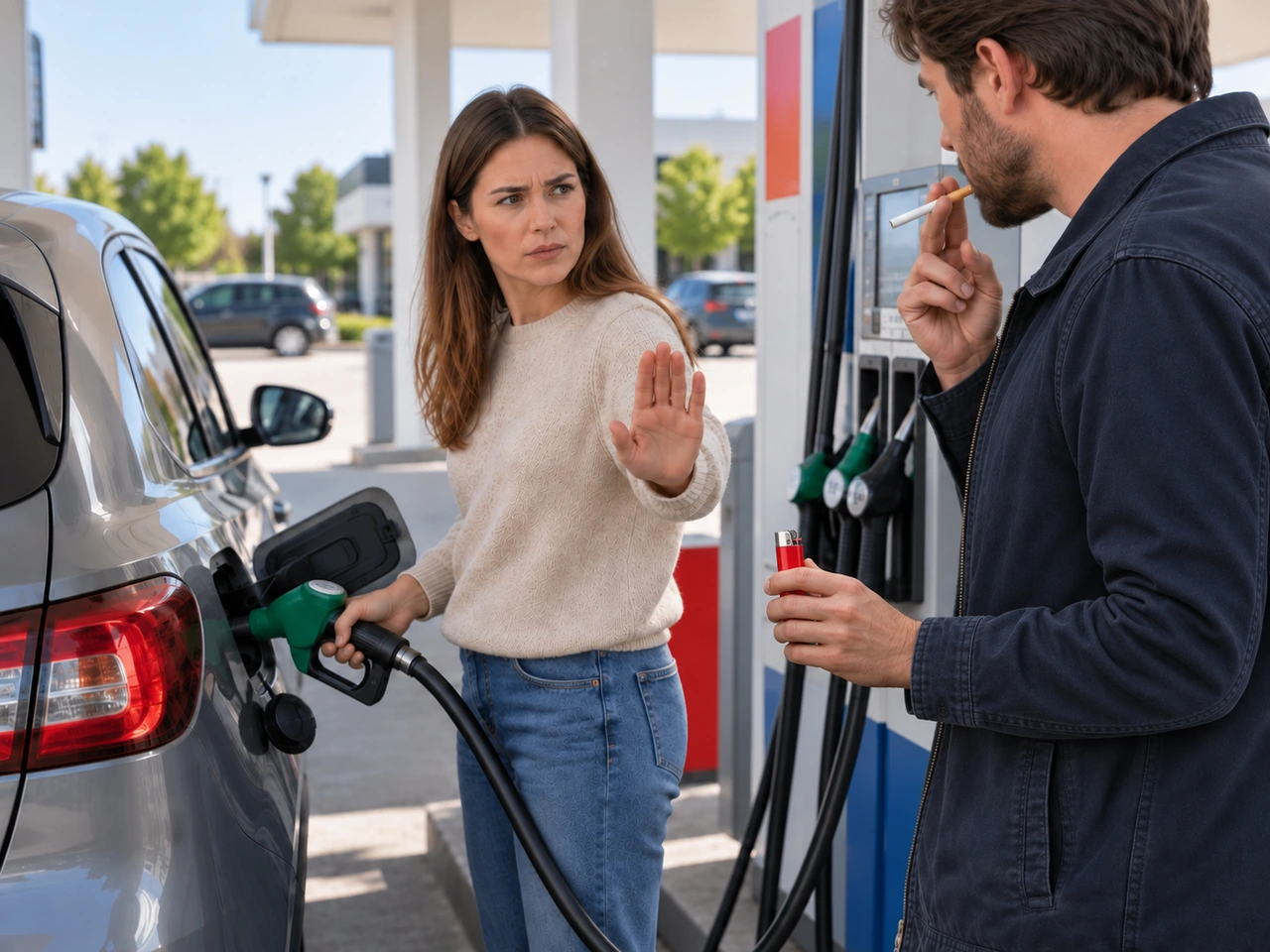
Petrol and other fuels can produce flammable vapours. Smoking, open flames, sparks, or other ignition sources can ignite these vapours and cause a serious fire. Follow all filling-station safety rules while refuelling.
At a self-service filling station, follow the posted no-smoking instruction. Keep cigarettes and other ignition sources away from the pump.
🔗 Sources

Argentina – Resolution 147/2025, self-service pump signage

Image credit: AI-generated

What does this vehicle-control symbol indicate?

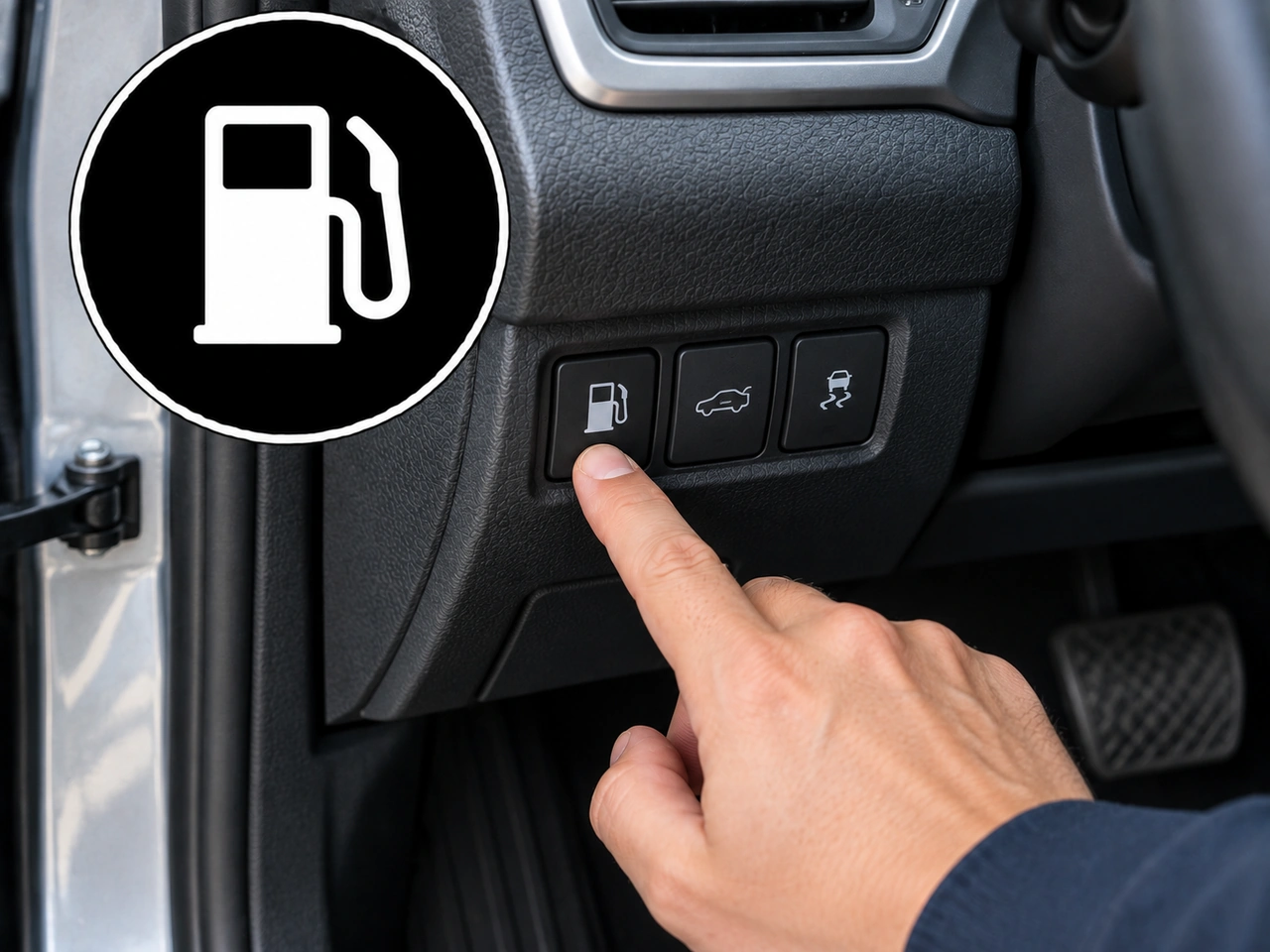
685. What does this vehicle-control symbol indicate?

✓ Fuel-filler flap release.
Central door locking.
Boot release.
Bonnet release.

This control releases the fuel-filler flap, allowing access to the vehicle's fuel filler.

Release control for the fuel-filler flap.
The fuel-pump symbol can identify the filler-flap release. Once the flap releases, open it to reach the fuel filler.
🔗 Sources

Ford owner’s manual · Fuel filler door release

Image credit: AI-generated

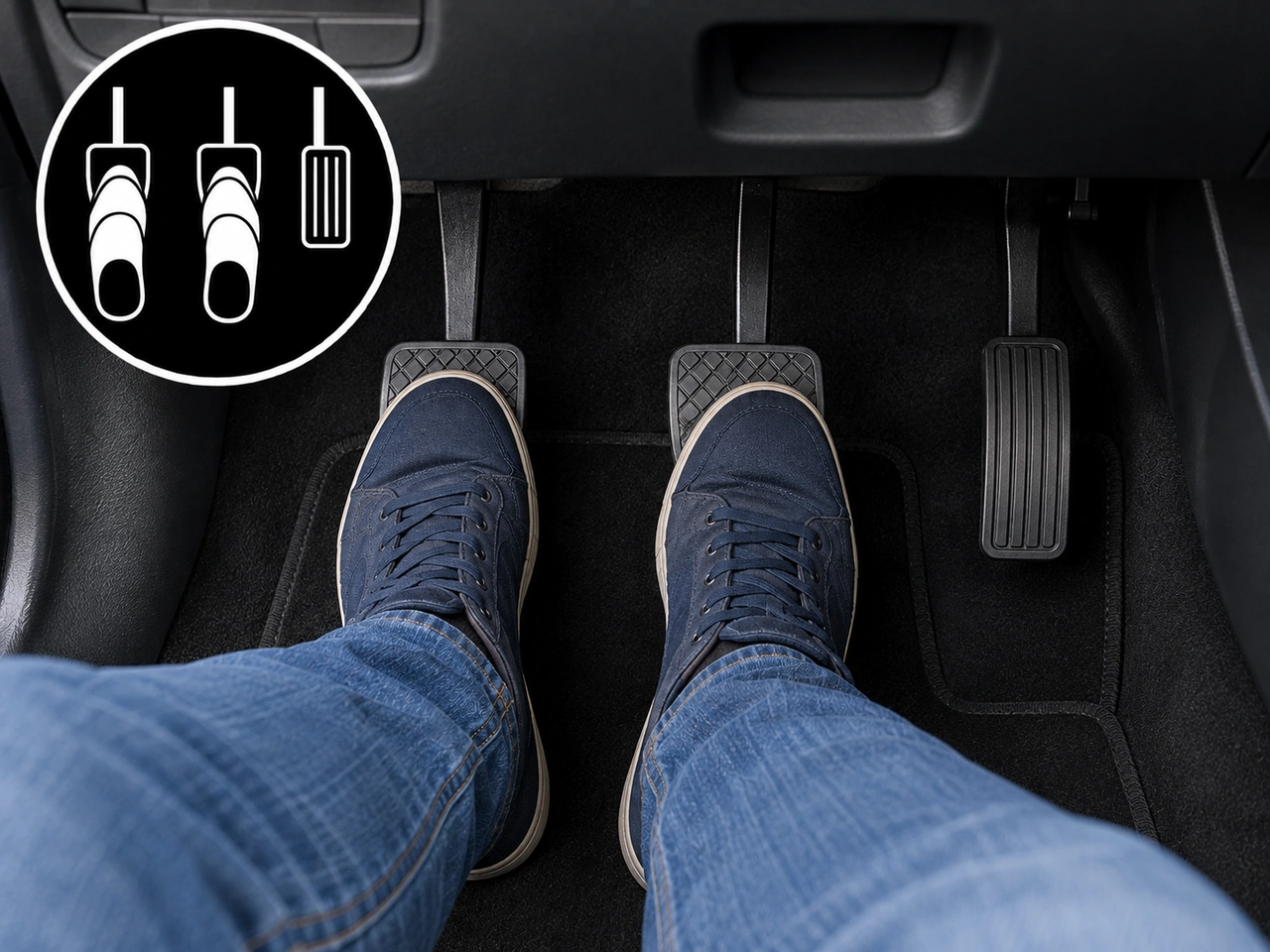
What should you do with the clutch during emergency braking in a manual vehicle?

686. What should you do with the clutch during emergency braking in a manual vehicle?

Pump it repeatedly.
Release it suddenly.
✓ Brake first. If time allows, press the clutch fully just before stopping.
Keep it partly pressed.

Apply the brake immediately. If time allows, press the clutch pedal fully just before the car stops to prevent stalling. Keep braking even if the engine stalls.

Brake and clutch operation during an emergency stop.
Brake immediately in an emergency. If time allows, press the clutch fully as the car is about to stop. Keep braking if the engine stalls.
🔗 Sources

NZ Transport Agency · Emergency braking

Image credit: AI-generated

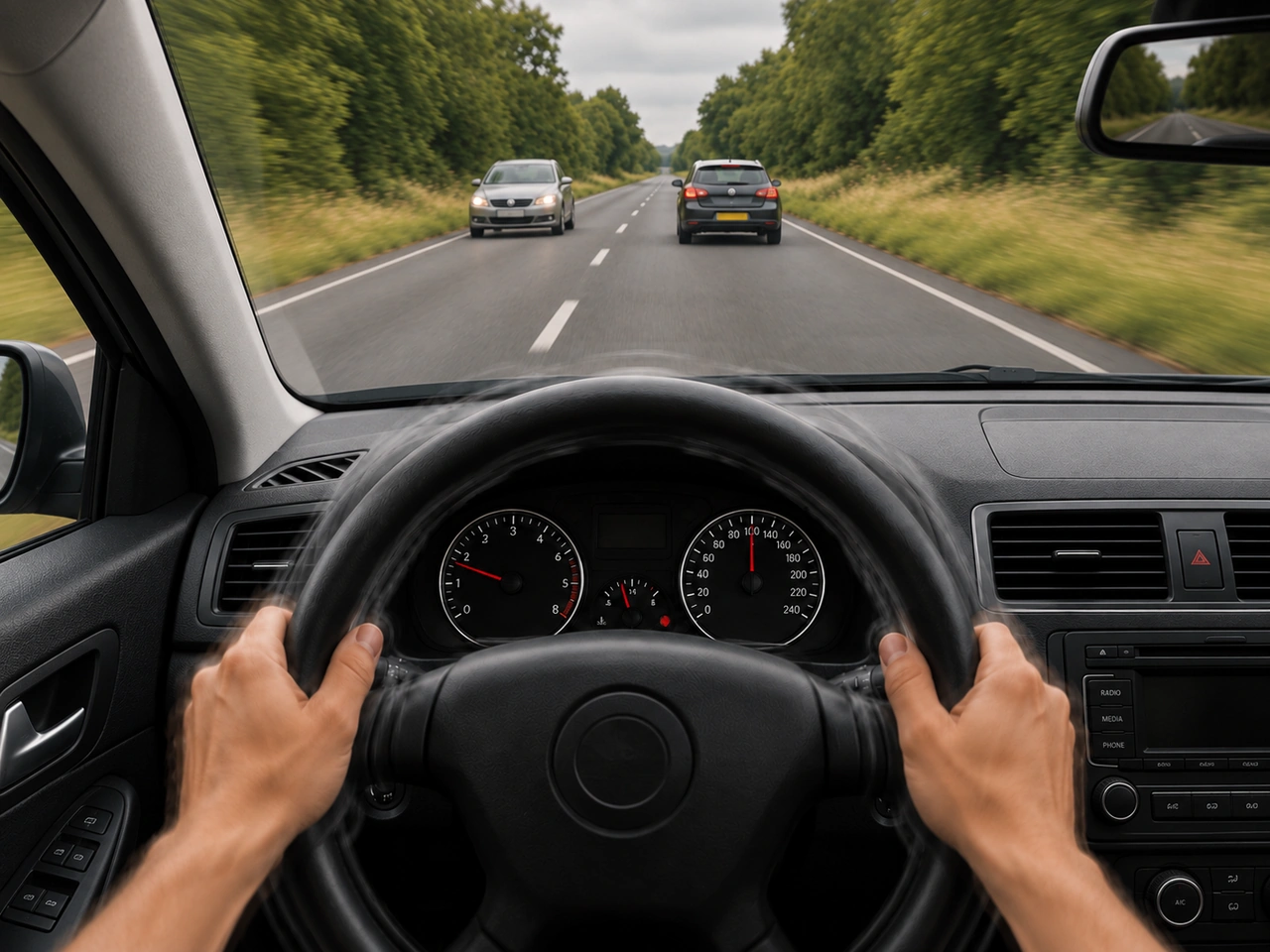
What should you do if an unusual vibration develops in the steering wheel?

687. What should you do if an unusual vibration develops in the steering wheel?

Increase speed until the vibration becomes less noticeable.
✓ Reduce speed and have the tyres, wheels, and steering checked.
Keep driving if the vehicle still steers normally.
Hold the steering wheel more tightly and continue.

An unusual vibration may indicate tyre damage, wheel imbalance, loose components, or another mechanical fault. Reduce speed and arrange an inspection.

Driver experiencing vibration through the steering wheel.
Argentina. Slow down smoothly and stop somewhere safe if a strong steering vibration develops. Have the wheels, tyres and steering checked before continuing.
🔗 Sources

Michelin · Wheel alignment and balancing (technical guidance)

Image credit: AI-generated

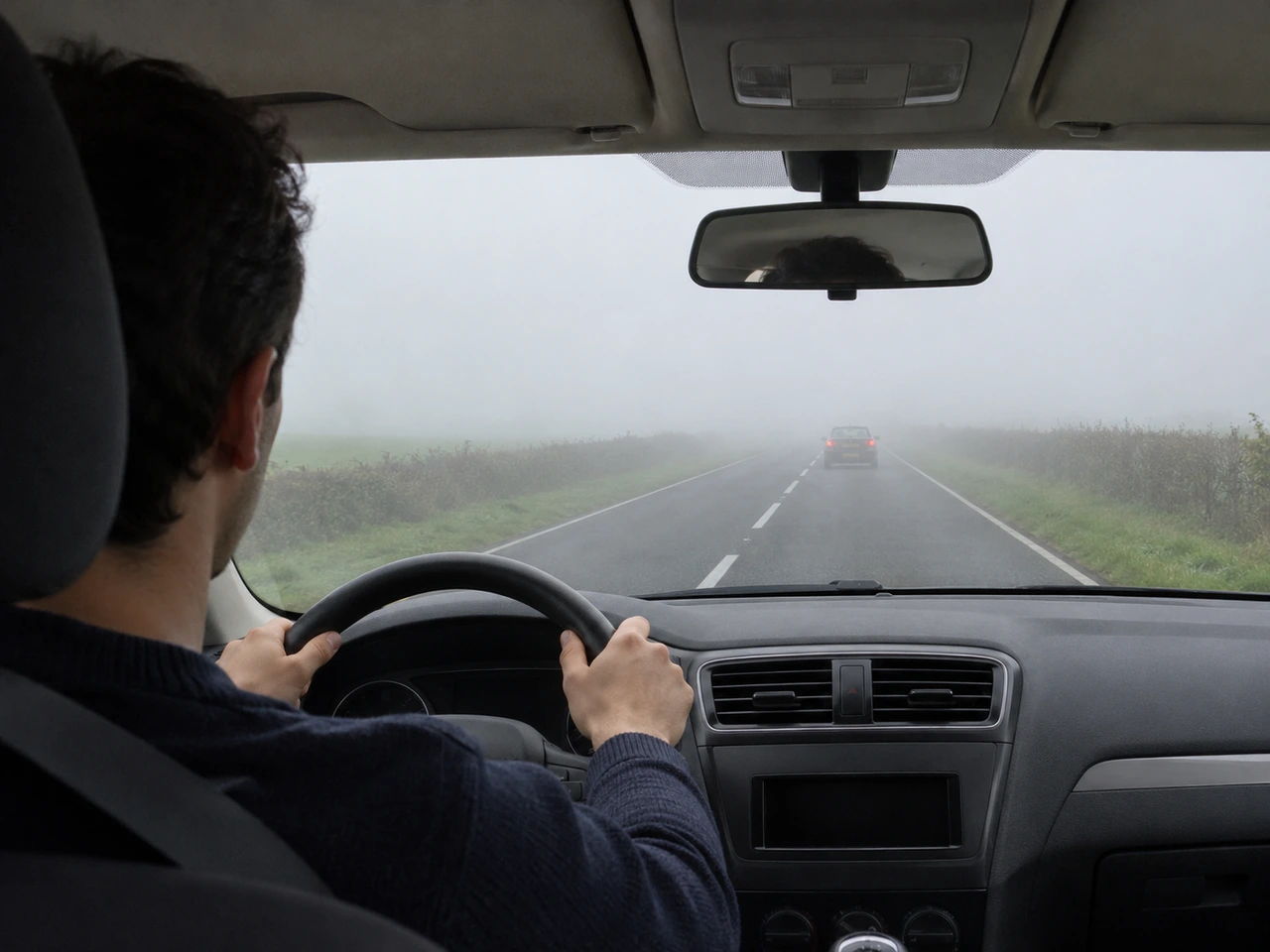
Why should you avoid following another vehicle too closely in fog?

688. Why should you avoid following another vehicle too closely in fog?

✓ You may have too little time to react if it brakes suddenly.
Fog makes the brakes work more quickly.
To reduce fuel consumption in poor visibility.
To prevent your tyres from overheating.

A short following gap leaves too little space and time to respond if the vehicle ahead slows or stops. Fog can also make the gap seem larger than it is. Reduce speed and leave more room rather than moving closer to keep the rear lights in view. Do not assume that following another vehicle guarantees a clear path.

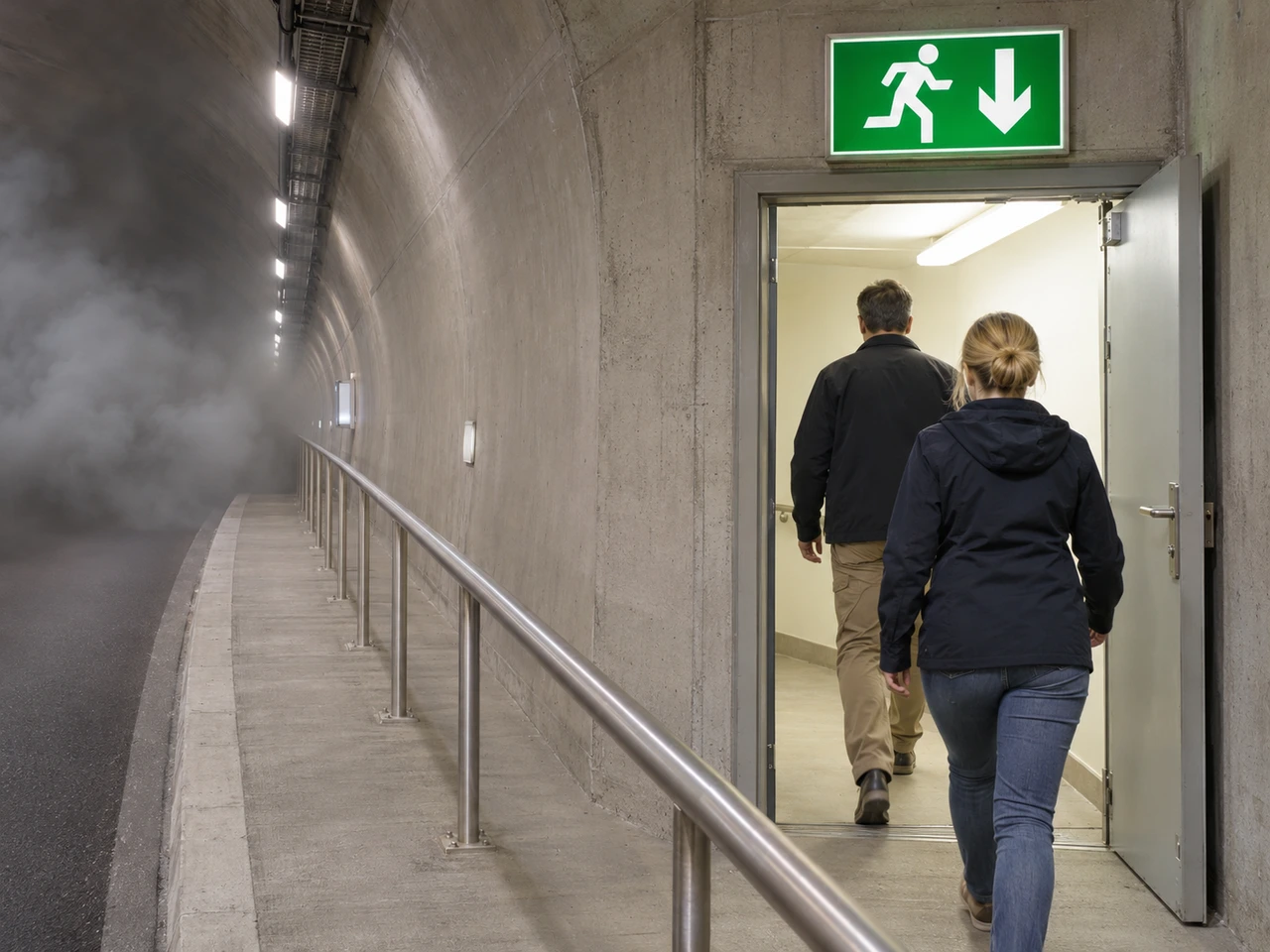
What should you do if you see smoke or fire inside a tunnel?

689. What should you do if you see smoke or fire inside a tunnel?

✓ Keep clear of the fire and follow evacuation instructions.
Keep driving normally unless the tunnel is completely blocked.
Stay inside the vehicle and wait for the smoke to clear.
Reverse toward the entrance without checking behind.

Keep clear of fire and smoke and follow evacuation instructions promptly. Drive out only if this is safe. If you cannot continue safely, leave the vehicle safely and use the indicated escape route. Follow the instructions for the tunnel you are using.
Two people use a marked emergency exit while smoke fills part of the tunnel.
🔗 Sources

Great Britain Merseytravel — Operator guidance on tunnel traffic, breakdowns and evacuation

Spain DGT — General tunnel visibility, observation and emergency guidance

Image credit: AI-generated

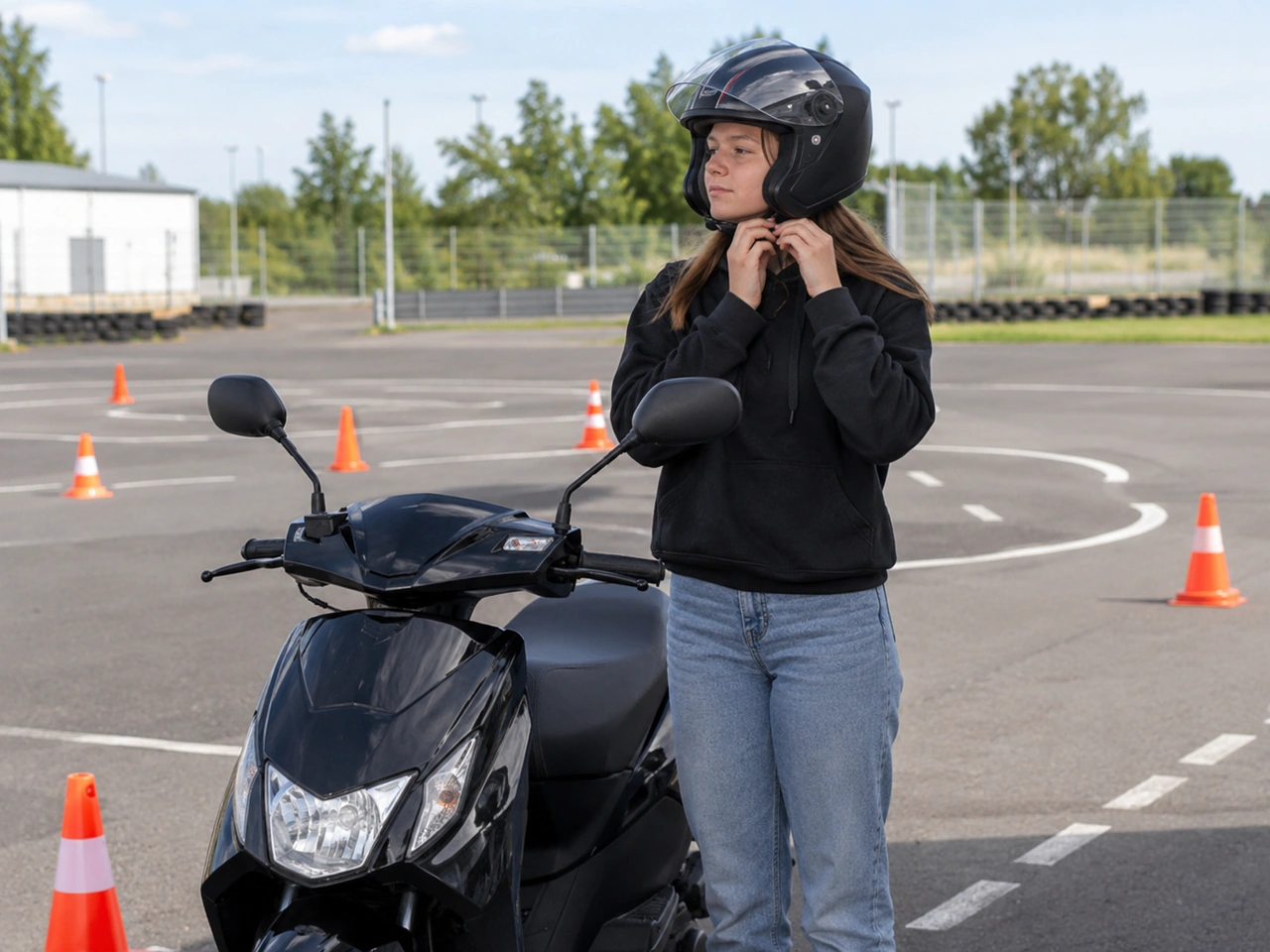
What is the minimum age for riding a moped?

690. What is the minimum age for riding a moped?

18 years.
14 years.
✓ 16 years.
15 years.

The minimum age for riding a moped in Argentina is generally 16 years.
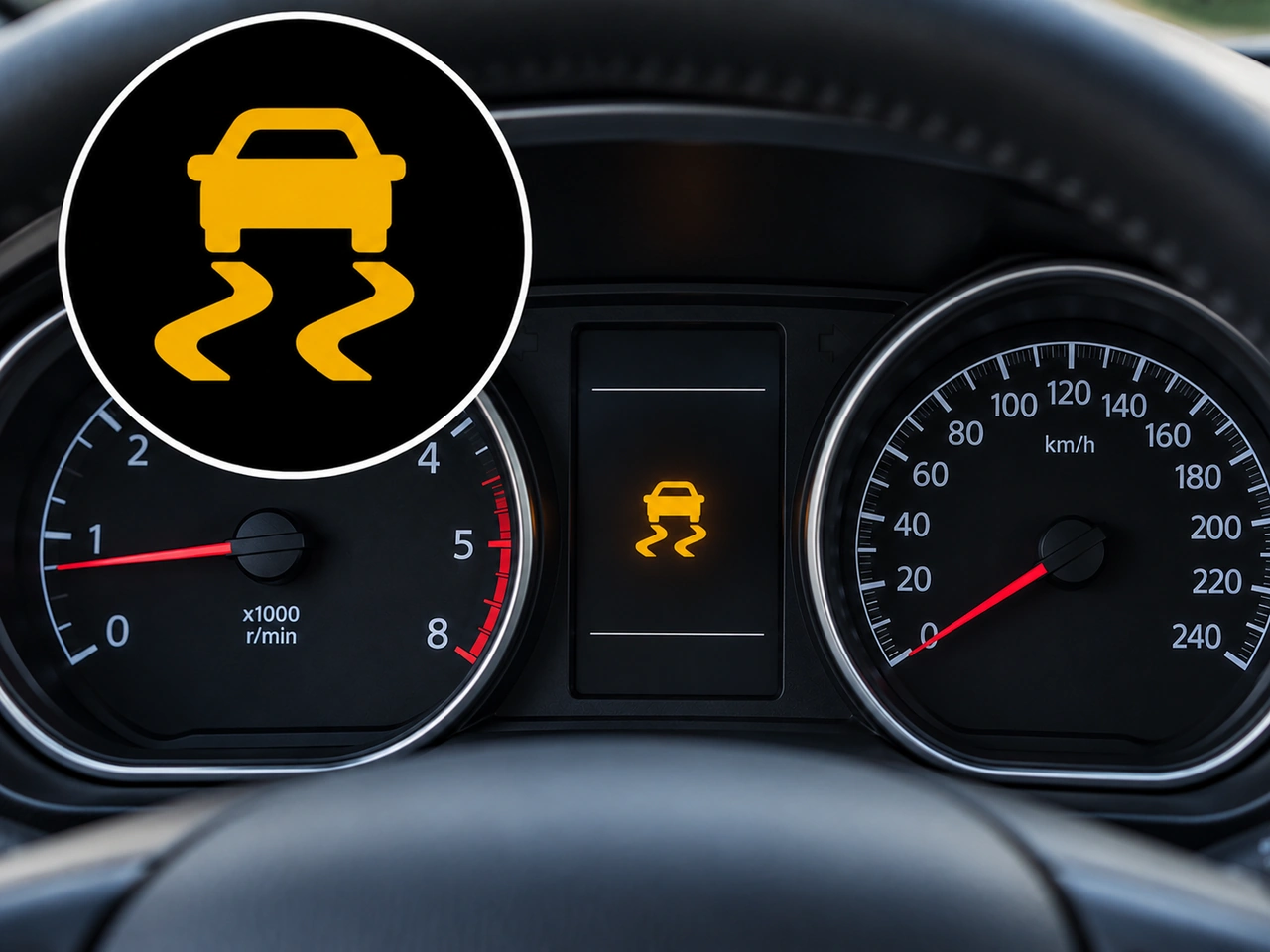
What does this dashboard symbol indicate?

691. What does this dashboard symbol indicate?

Low tyre pressure.
Power-steering warning.
Engine-management warning.
✓ Electronic stability control.

This symbol relates to the electronic stability control (ESC) system. It may flash when the system is actively helping to maintain stability. If it remains illuminated, the system may be switched off or have a fault.

Electronic stability control symbol on the dashboard.
A flashing symbol can mean stability control is intervening. A steady light can indicate a fault or that the system is off. Check any accompanying message.
🔗 Sources

Volkswagen · Dashboard warning and indicator lights

Image credit: AI-generated

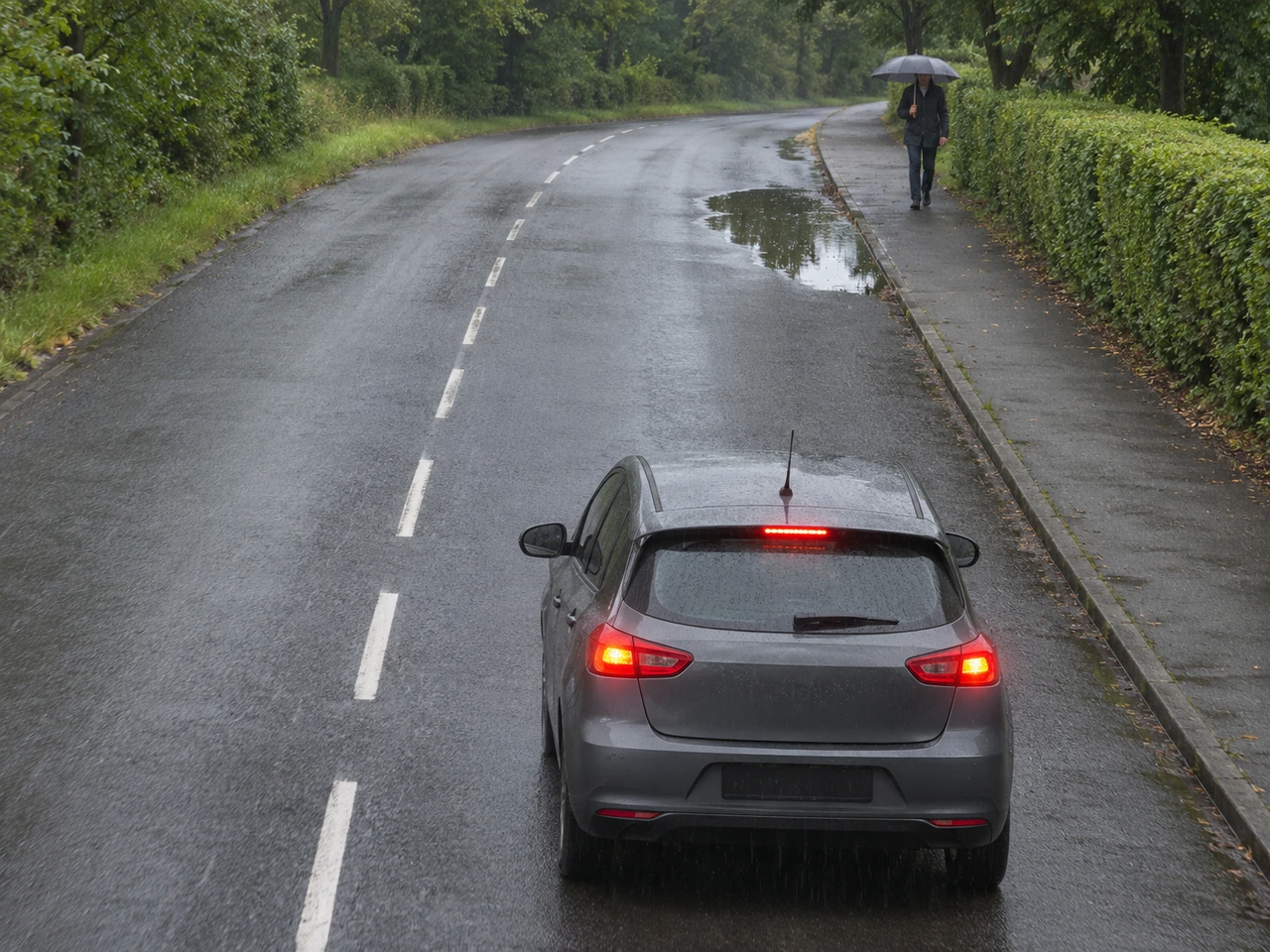
What should you do before driving through a puddle?

692. What should you do before driving through a puddle?

Follow another vehicle closely to judge the depth.
Brake firmly while driving through the water.
Maintain your normal speed if the road looks clear.
✓ Slow down and check whether it is safe to proceed.

Slow down before reaching surface water, while there is still good grip. A puddle may conceal a pothole or be deeper than it appears. Avoid splashing people on the pavement. Do not swerve into another lane to avoid water, and do not enter a flooded stretch of road.

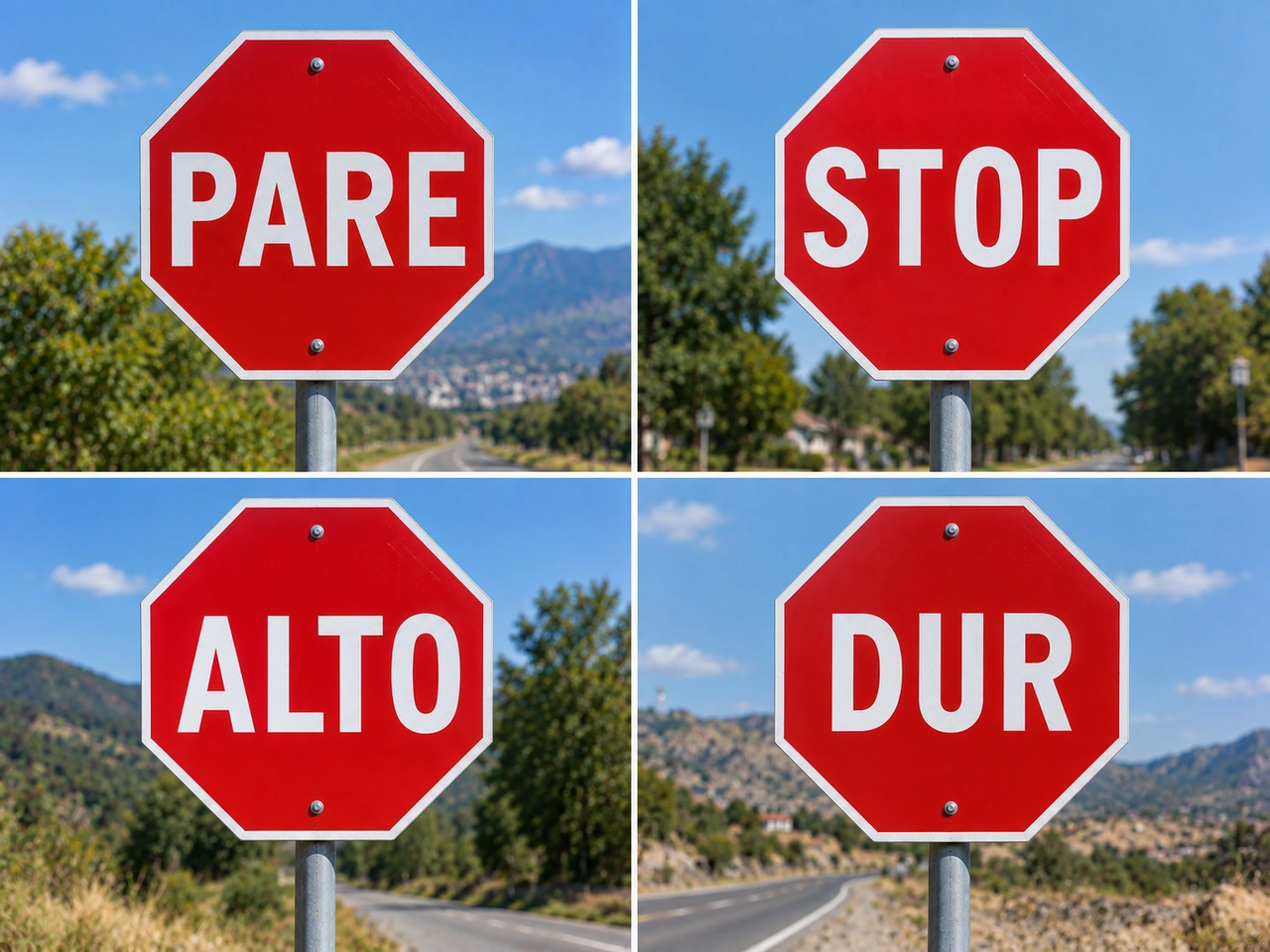
What word is commonly shown on STOP signs?

693. What word is commonly shown on STOP signs?

STOP.
ALTO.
✓ PARE.
DUR.

In Argentina, STOP signs commonly display the word PARE.

Different wording used on stop signs.
🔗 Sources

Country example: Brazil — official traffic enforcement manual; PARE sign R-1

Image credit: AI-generated
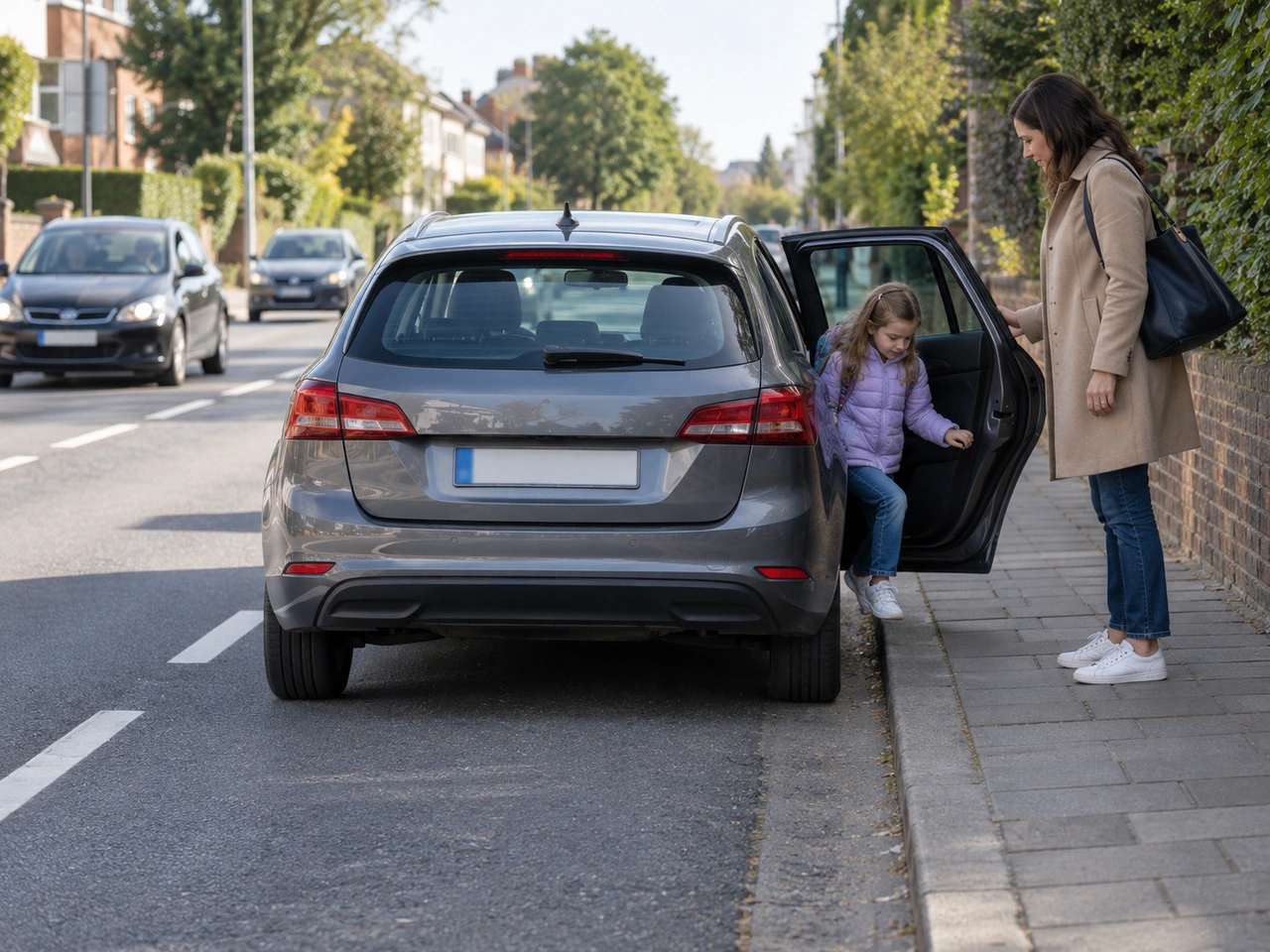
Where should passengers get in or out of a vehicle when possible?

694. Where should passengers get in or out of a vehicle when possible?

Through whichever door opens first.
✓ On the side away from moving traffic.
From the rear door nearest the centre of the road.
On the side closest to approaching traffic.

Passengers should get in or out on the side away from moving traffic whenever possible. This is particularly important for children, who may not recognise approaching traffic or other road users. Before opening any door, check that it is safe.

Passenger leaving a vehicle on the side away from traffic.
🔗 Sources

Great Britain — Highway Code, rule 239; door opening and passenger safety

Image credit: AI-generated
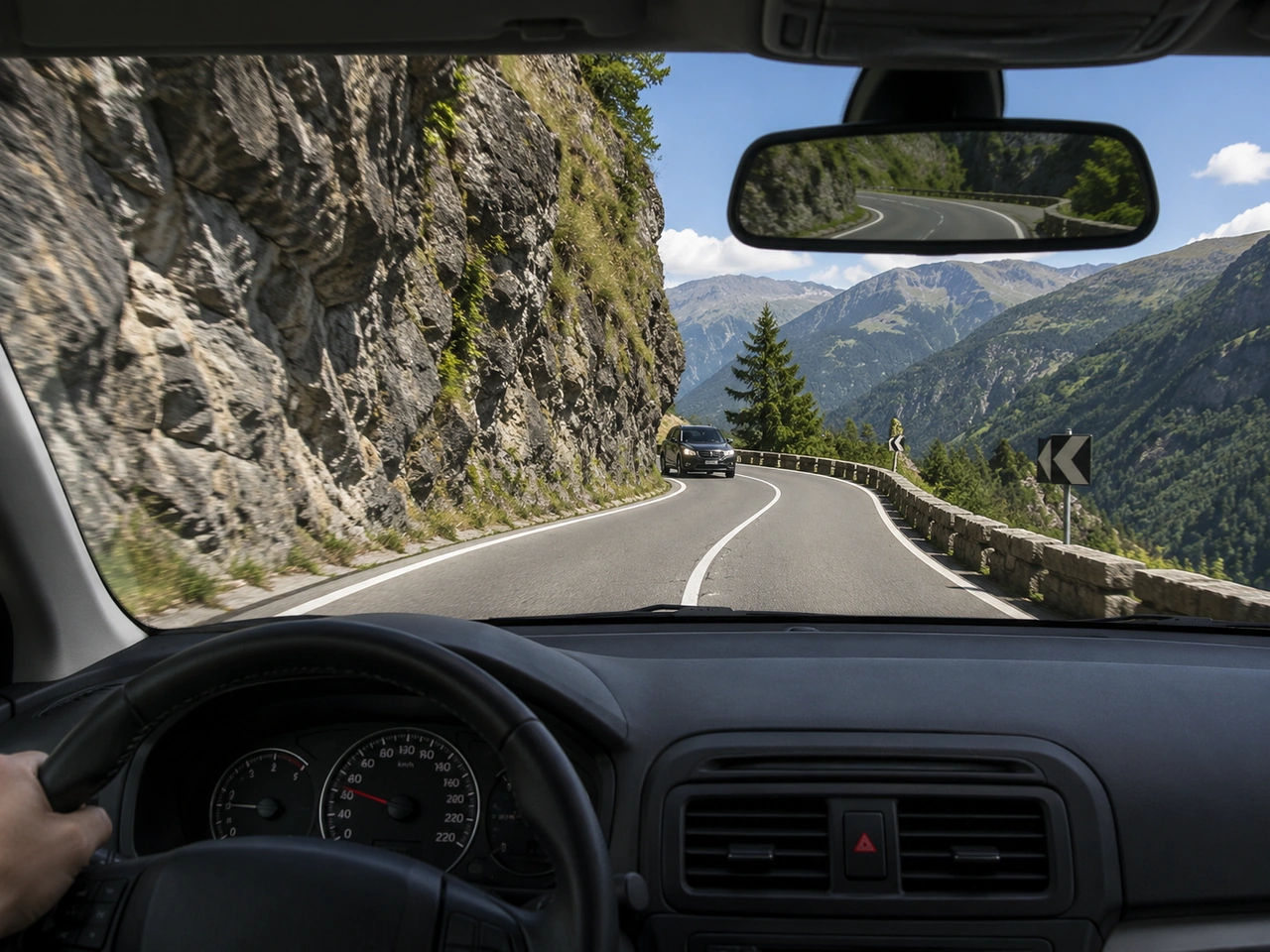
How should you approach a sharp bend on a mountain road?

695. How should you approach a sharp bend on a mountain road?

Move toward the centre of the road for a better view.
✓ Reduce speed before the bend and remain in your lane.
Brake hard while turning through the bend.
Accelerate through the bend to maintain momentum.

Mountain bends may hide oncoming vehicles, cyclists, animals, or debris. Slow down before entering and keep a safe road position.

Reduce speed before the bend and stay on your side. The national traffic law requires speed suited to visibility and road conditions.
🔗 Sources

Image credit: AI-generated, shared right-hand-traffic scene
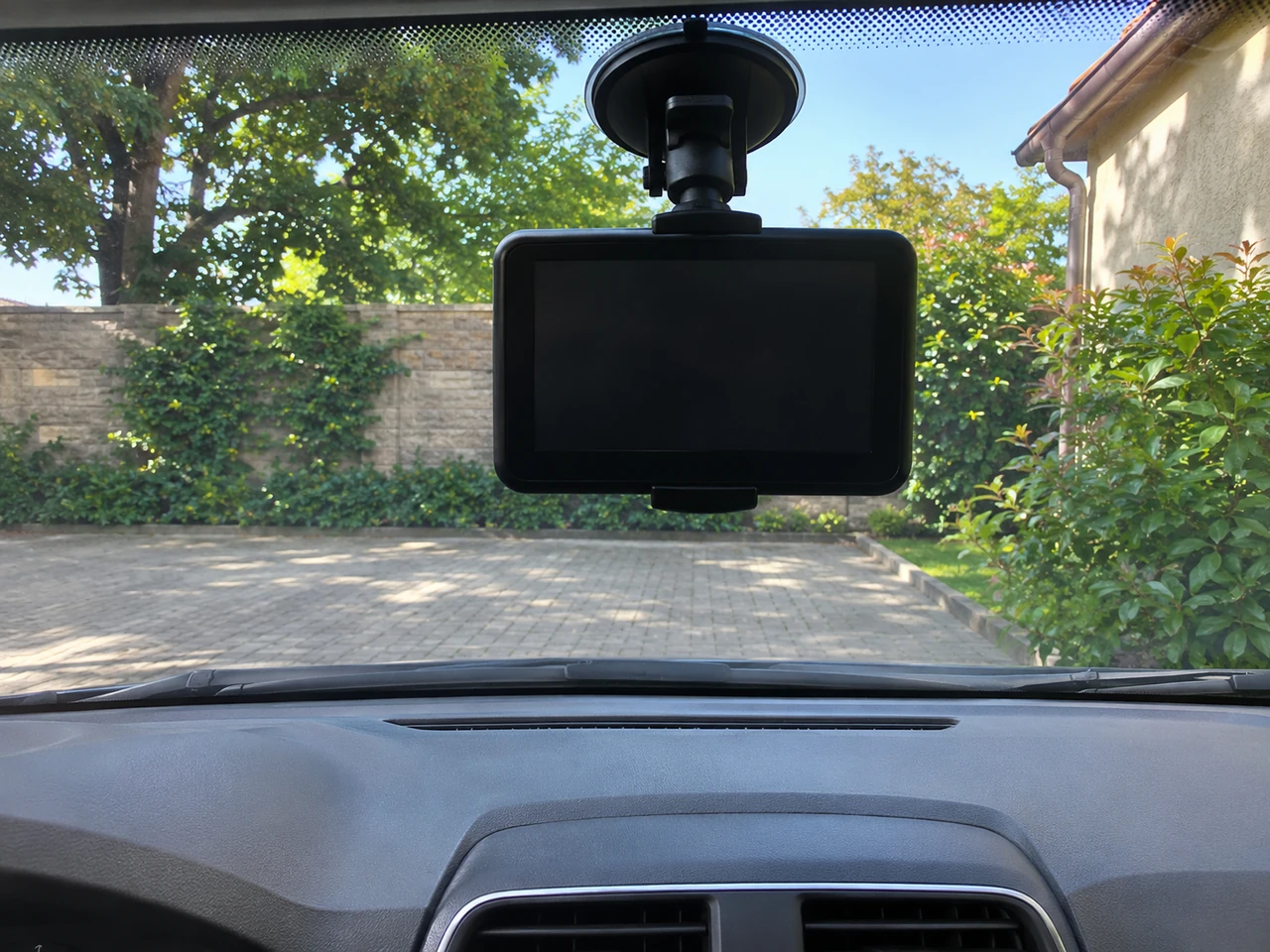
A securely mounted navigation screen can still block your view.

696. A securely mounted navigation screen can still block your view.

✓ True.
False.

A firm mount prevents movement but does not guarantee a clear view. Position the device so that it does not obstruct your view of the road or other traffic, following the vehicle and device instructions.

Keep mounted devices clear of your view. A firm mount prevents movement but does not guarantee a clear view. Position the device so that it does not obstruct your view of the road or other traffic, following the vehicle and device instructions.
🔗 Sources

GOV.UK (Great Britain) • Safety guidance, Using devices hands-free: unobstructed road view

Image credit: AI-generated
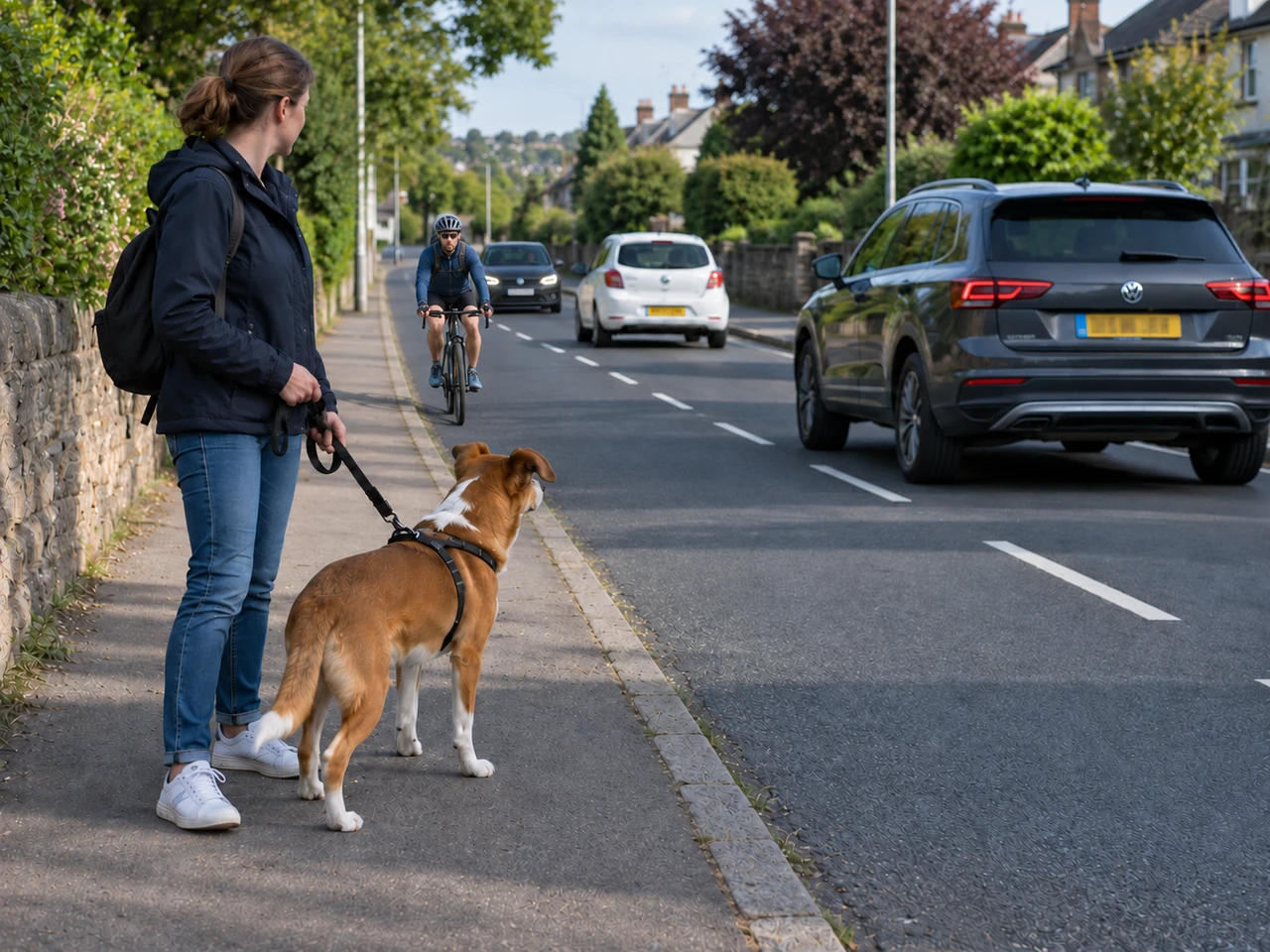
Why should you keep a dog on a lead near traffic?

697. Why should you keep a dog on a lead near traffic?

To allow the dog to walk closer to moving traffic.
To give the dog priority when crossing the road.
To make it easier for drivers to hear the dog.
✓ To prevent it from suddenly running into the road.

Dogs can react unpredictably to traffic, noises or other animals. Keep the dog under close control on a short lead so it cannot suddenly run into the road. Keep it on the inner side of the pavement where practicable, away from the kerb, and stay alert to traffic and other pavement users.
An attentive handler keeps a dog close on a short lead on a road with right-hand traffic. The dog stays on the inner side of the pavement, with all paws clear of the kerb and the handler between it and traffic. Close control reduces the risk of the dog suddenly entering the road.
🔗 Sources

Great Britain — Highway Code, rule 56; dog control advice

Image credit: AI-generated

What is the clutch biting point?

698. What is the clutch biting point?

✓ The point where the clutch begins to transmit power to the wheels.
The point where the engine switches off.
The point where the parking brake releases.
The point where the clutch pedal is fully pressed.

The clutch biting point is reached as the clutch pedal is released and the clutch begins to transmit power from the engine to the transmission. Controlling this point helps the driver move off smoothly.

Clutch-pedal control when moving off.
The biting point is where the clutch starts to transmit drive as you lift the pedal. Use it briefly to move off smoothly and use the brake to hold the car on a hill.
🔗 Sources

RAC · Clutch control and moving off

Image credit: AI-generated

How should a passenger normally sit on a motorcycle?

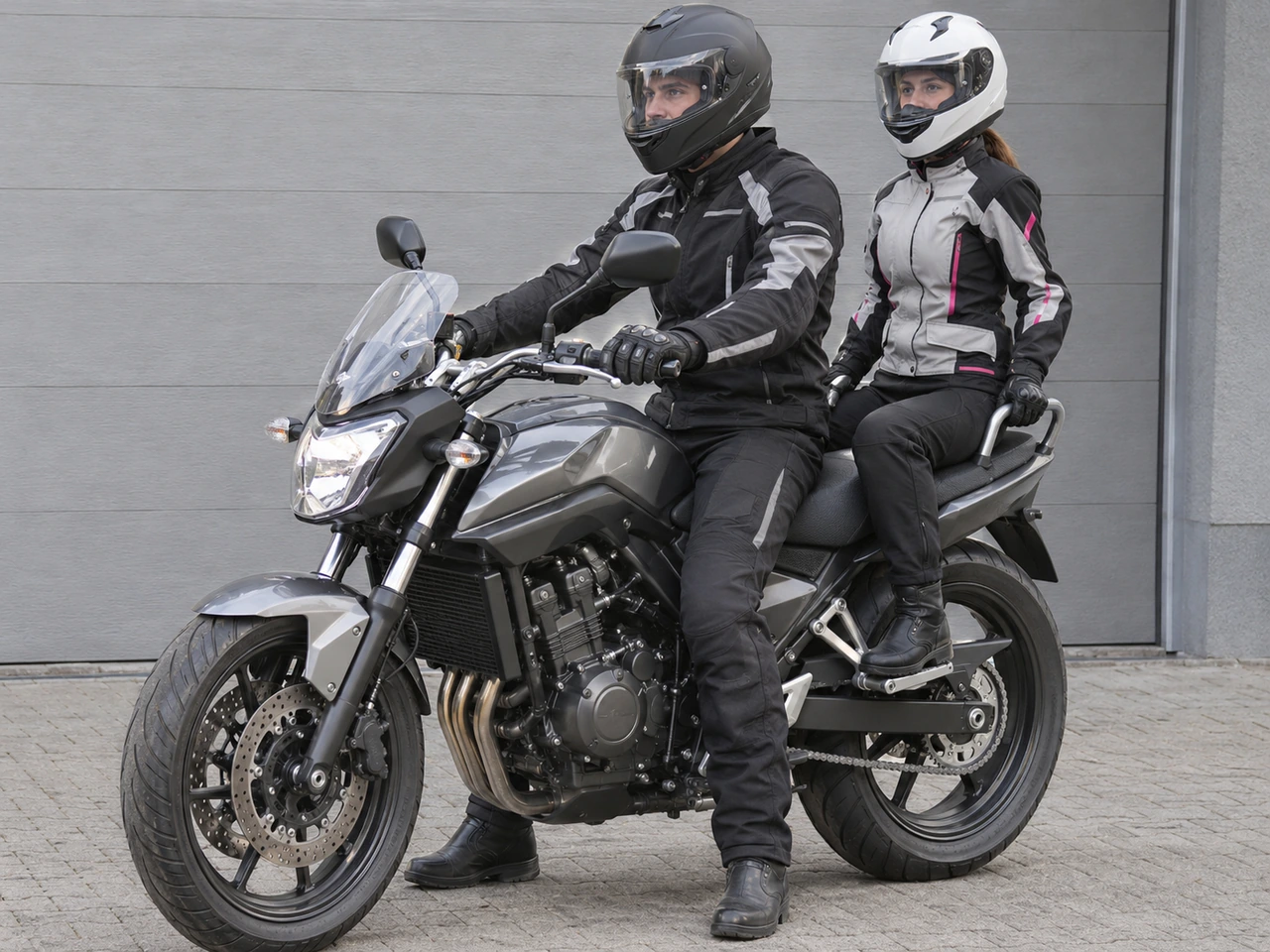
699. How should a passenger normally sit on a motorcycle?

Standing on the footrests when the road is uneven.
With one foot hanging down when travelling slowly.
✓ Securely on the passenger seat with both feet on the footrests.
As far back as possible without using the footrests.

A motorcycle passenger should sit securely on the designated passenger seat, keep both feet on the footrests and avoid sudden movements that could affect the motorcycle's balance and stability.
Sit securely on the passenger seat. An adult passenger sits astride the designated rear seat of a stationary motorcycle, holding the grab handles with a boot on the passenger footrest. Keep both feet on the passenger footrests and avoid sudden movements. The rider steadies the motorcycle.
🔗 Sources

DLD.Utah.gov — Motorcycle Handbook, Preparing your passenger

Image credit: AI-generated

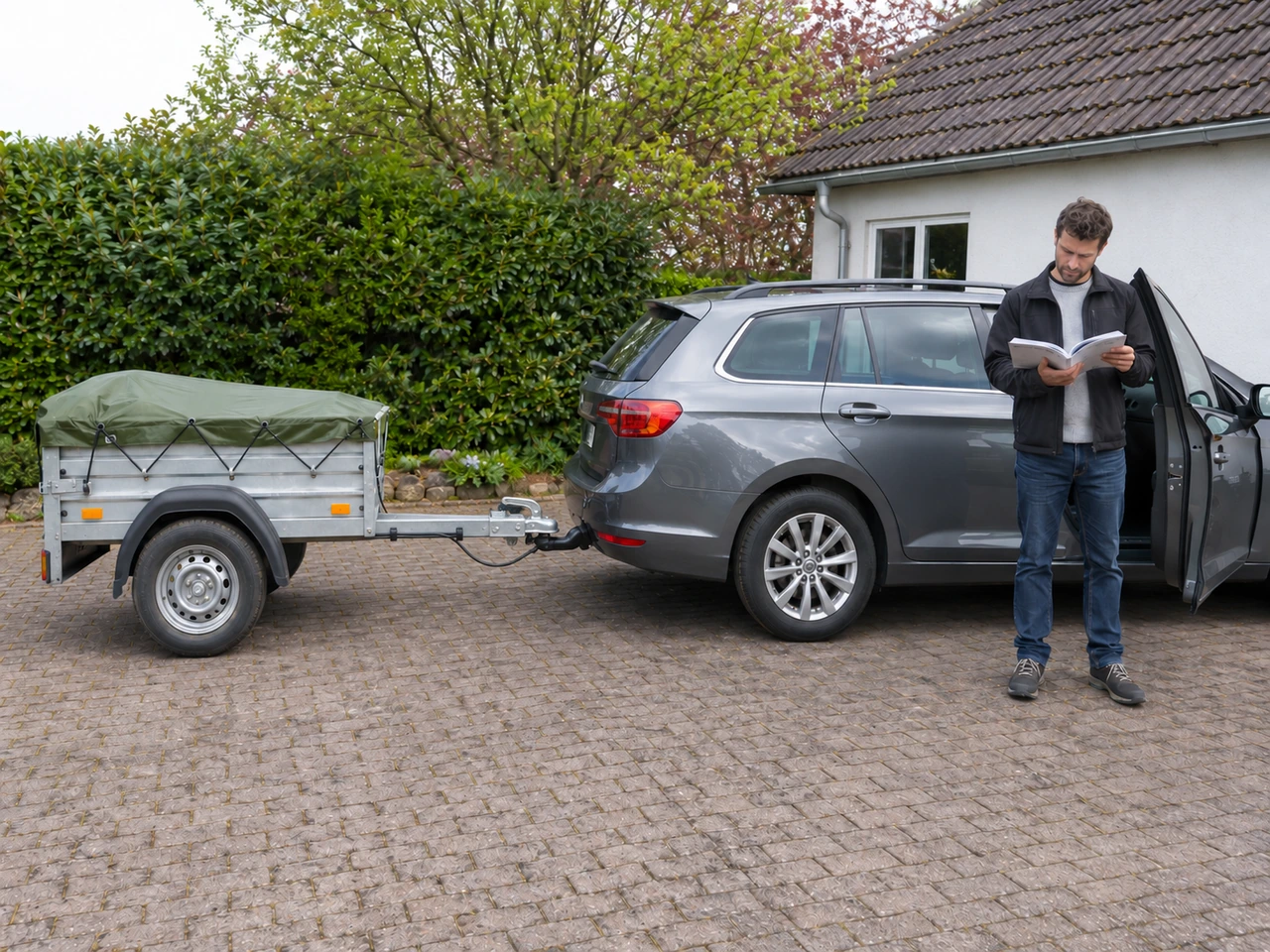
What else must you check when your licence allows you to tow a trailer?

700. What else must you check when your licence allows you to tow a trailer?

✓ The permitted weights for the vehicle and trailer.
Only that the engine can pull the trailer uphill.
Only that the trailer coupling appears to fit.
Only that the trailer has fewer wheels than the car.

The correct driving entitlement does not override the towing and load limits. Check the limits for the towing vehicle, trailer, combination and coupling, including any braking requirements, using the vehicle information and local rules.

Checking towing and loaded-weight limits for a car and trailer. General road-safety guidance: The correct driving entitlement does not override the towing and load limits. Check the limits for the towing vehicle, trailer, combination and coupling, including any braking requirements, using the vehicle information and local rules.
🔗 Sources

GOV.UK — Great Britain
qld.gov.au — Australian public authority

Image credit: AI-generated