


QuizTraffic rulesArgentina
Test your knowledge with our multiple-choice quiz. Learn from each answer and improve your understanding of the traffic rules and road signs of Argentina.
 Traffic signs
 Traffic rules
 Argentina
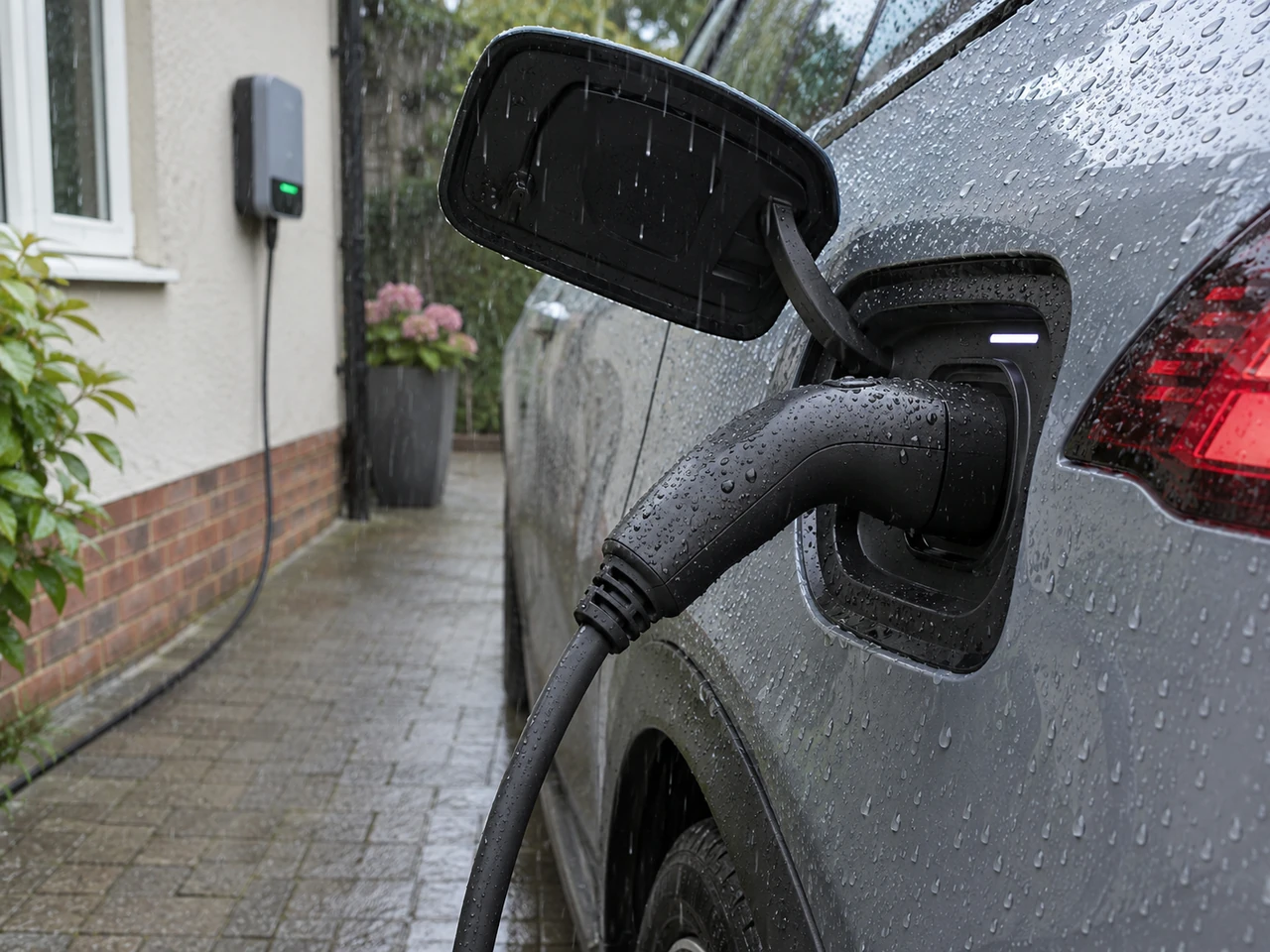
751. An EV charger rated for outdoor use can never be used in normal rain.
Suitable outdoor charging equipment can be used in ordinary rain within its specified conditions. Follow the vehicle and charger instructions; this does not make flooded, damaged or otherwise unsuitable equipment safe to use.
🔗 Sources
EECA (New Zealand) • Safety guidance, rain, equipment suitability and damaged equipment
Image credit: AI-generated

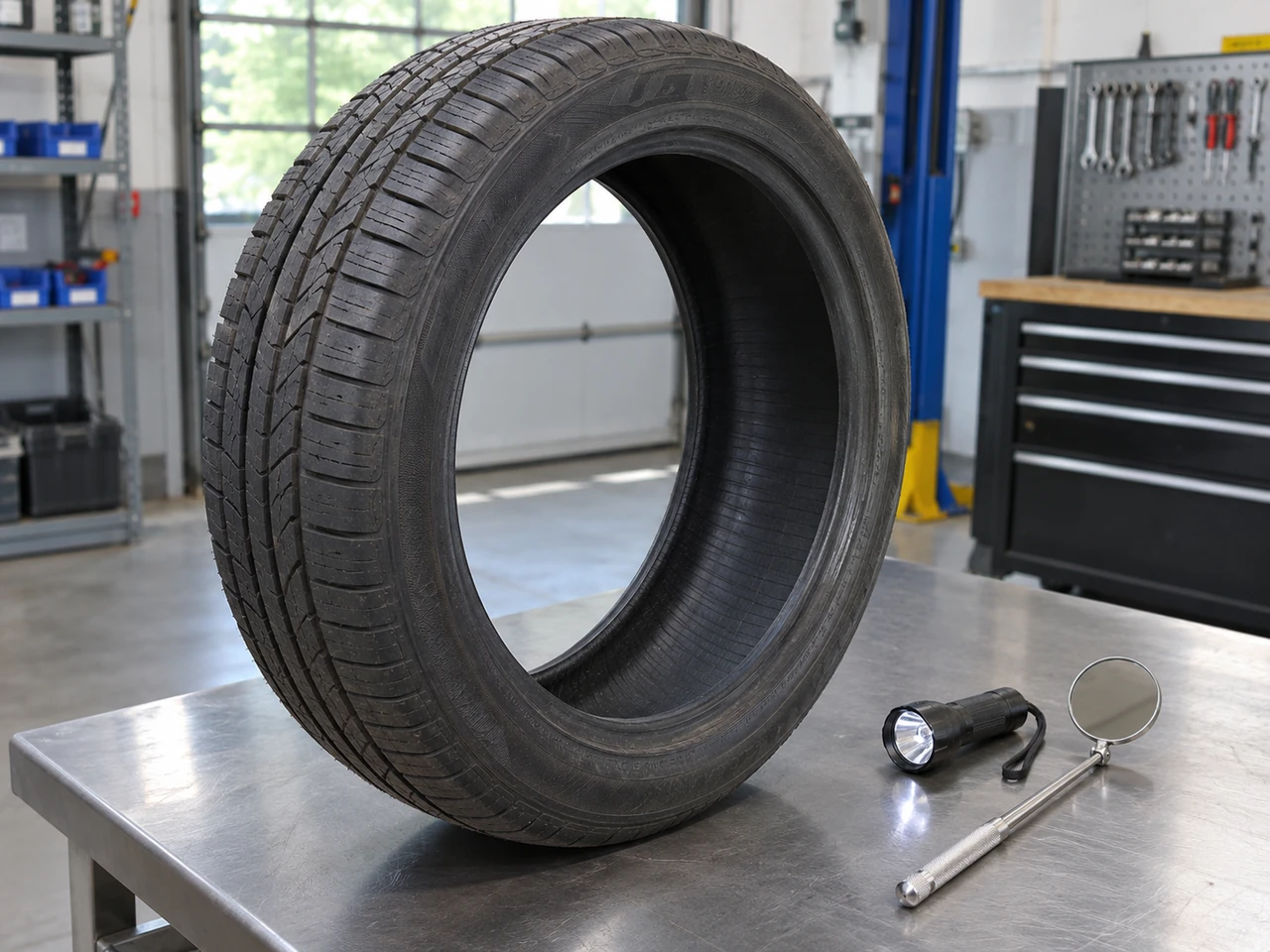
752. A tyre sealed with an emergency repair kit needs no further professional inspection.
An emergency sealant repair is temporary. Have a tyre specialist inspect the tyre as soon as possible and decide whether it can be repaired or must be replaced. Follow the kit's speed, distance and pressure-check instructions in the meantime.
🔗 Sources
Ford owner’s manual (manufacturer guidance) • Safety guidance, temporary mobility and tyre-specialist advice
Image credit: AI-generated
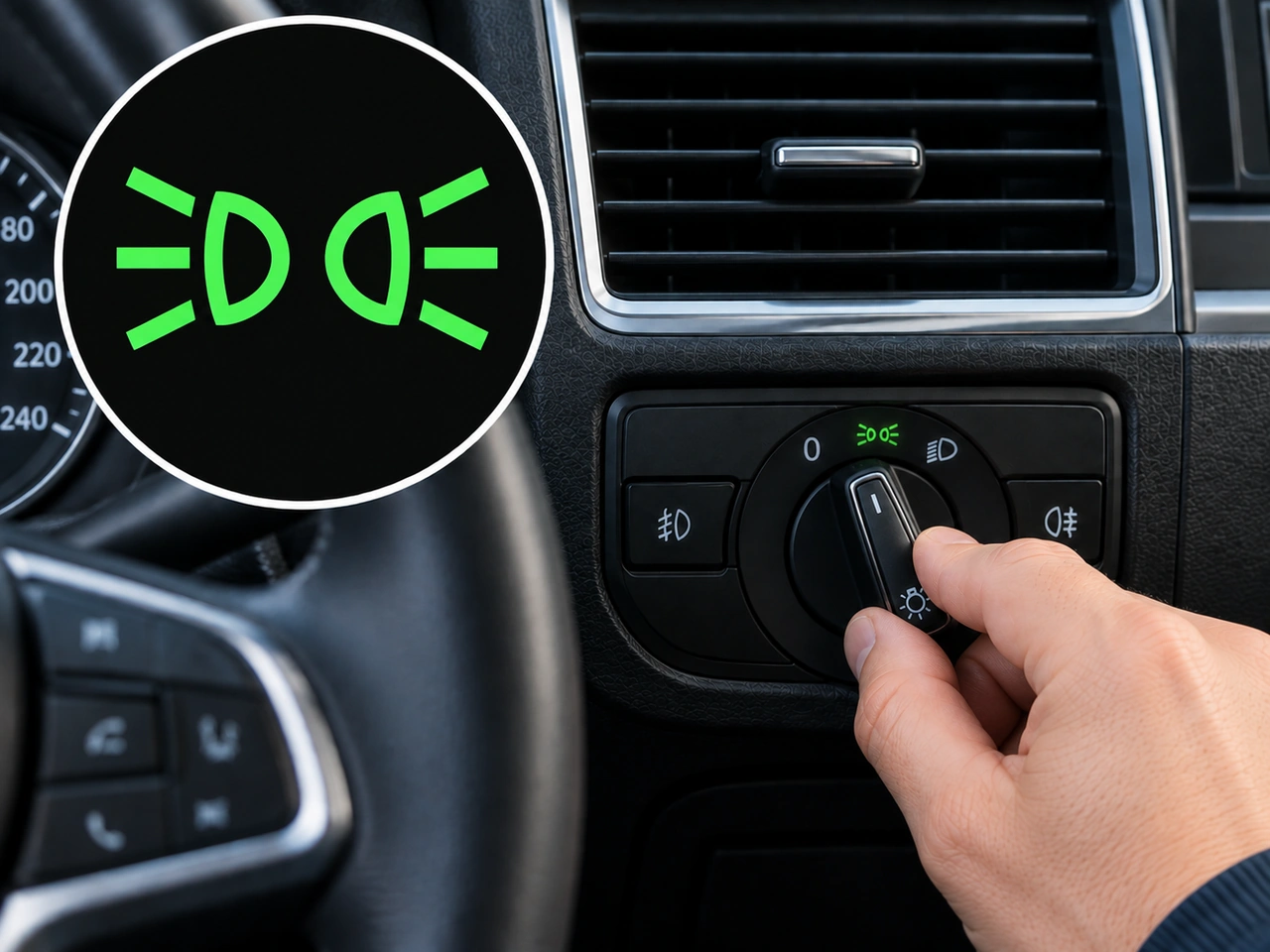
753. What does this dashboard symbol indicate?
This symbol indicates that the sidelights, also known as position or parking lights, are switched on. They help make the vehicle visible to other road users but provide little illumination of the road ahead.
Two small lamps facing away from each other identify the position lights, also called sidelights.
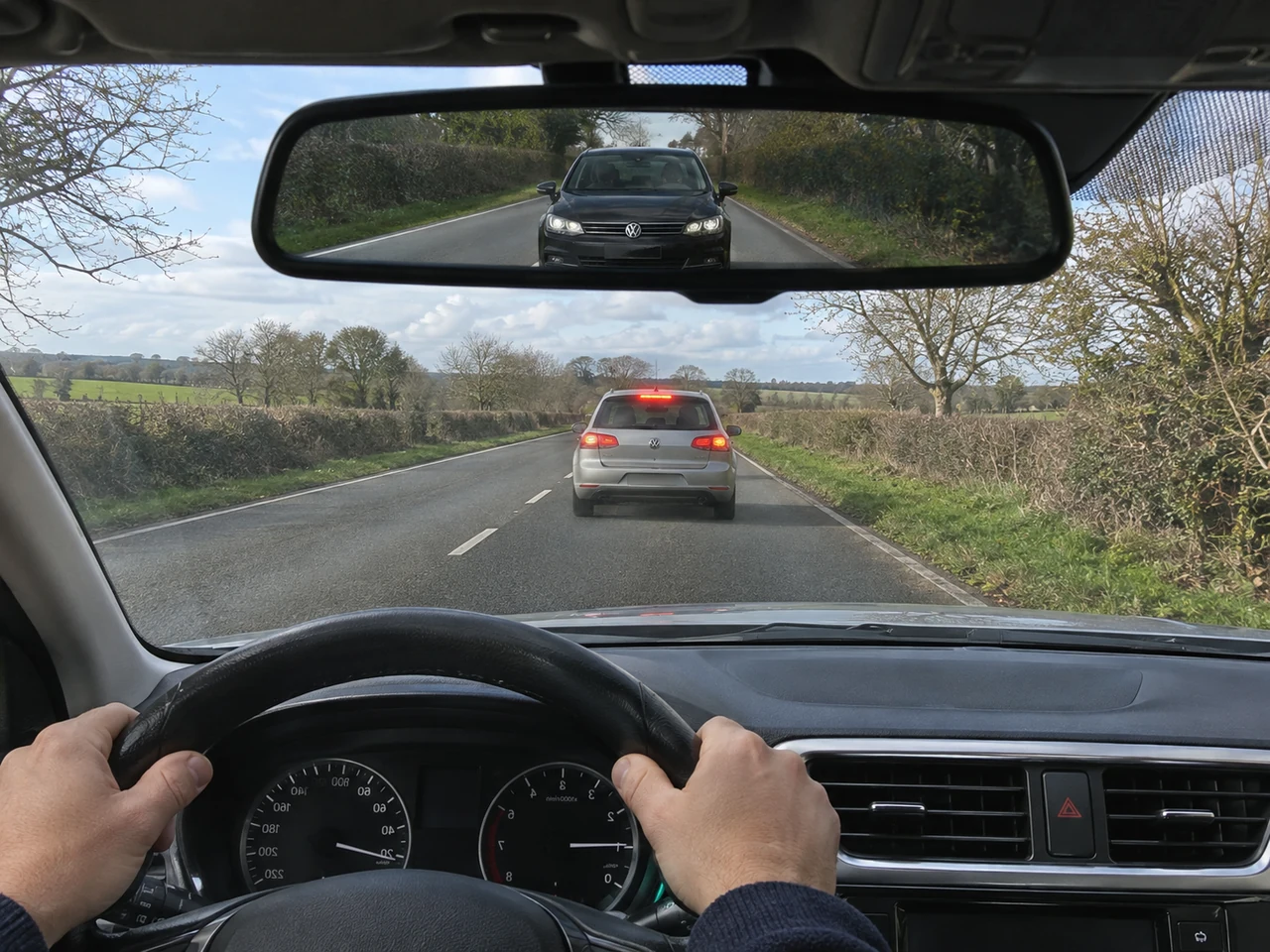
754. Why should you check your mirrors before braking?
Checking your mirrors helps you understand what is happening behind you and anticipate how following traffic may react. In an emergency, do not delay necessary braking.
🔗 Sources
Great Britain — Highway Code, rule 161; mirrors before changing speed
Image credit: AI-generated
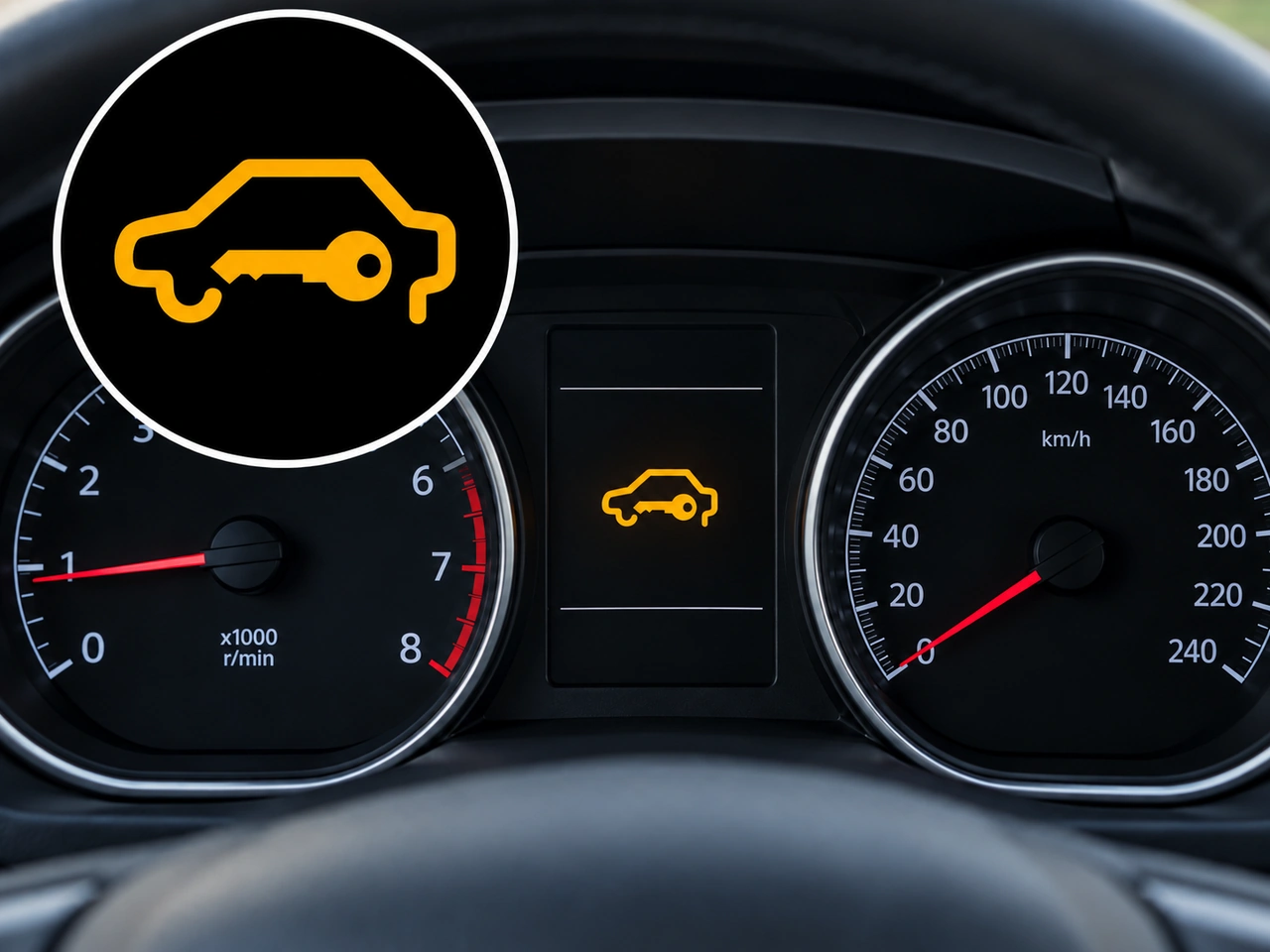
755. What does this dashboard symbol indicate?
This symbol relates to the vehicle's immobiliser or anti-theft system. If it remains illuminated or flashes unexpectedly, the vehicle may not recognise the key or there may be a fault in the security system.
The security indicator may flash when the vehicle is parked. If it behaves unexpectedly or the engine will not start, check the key and follow the handbook.
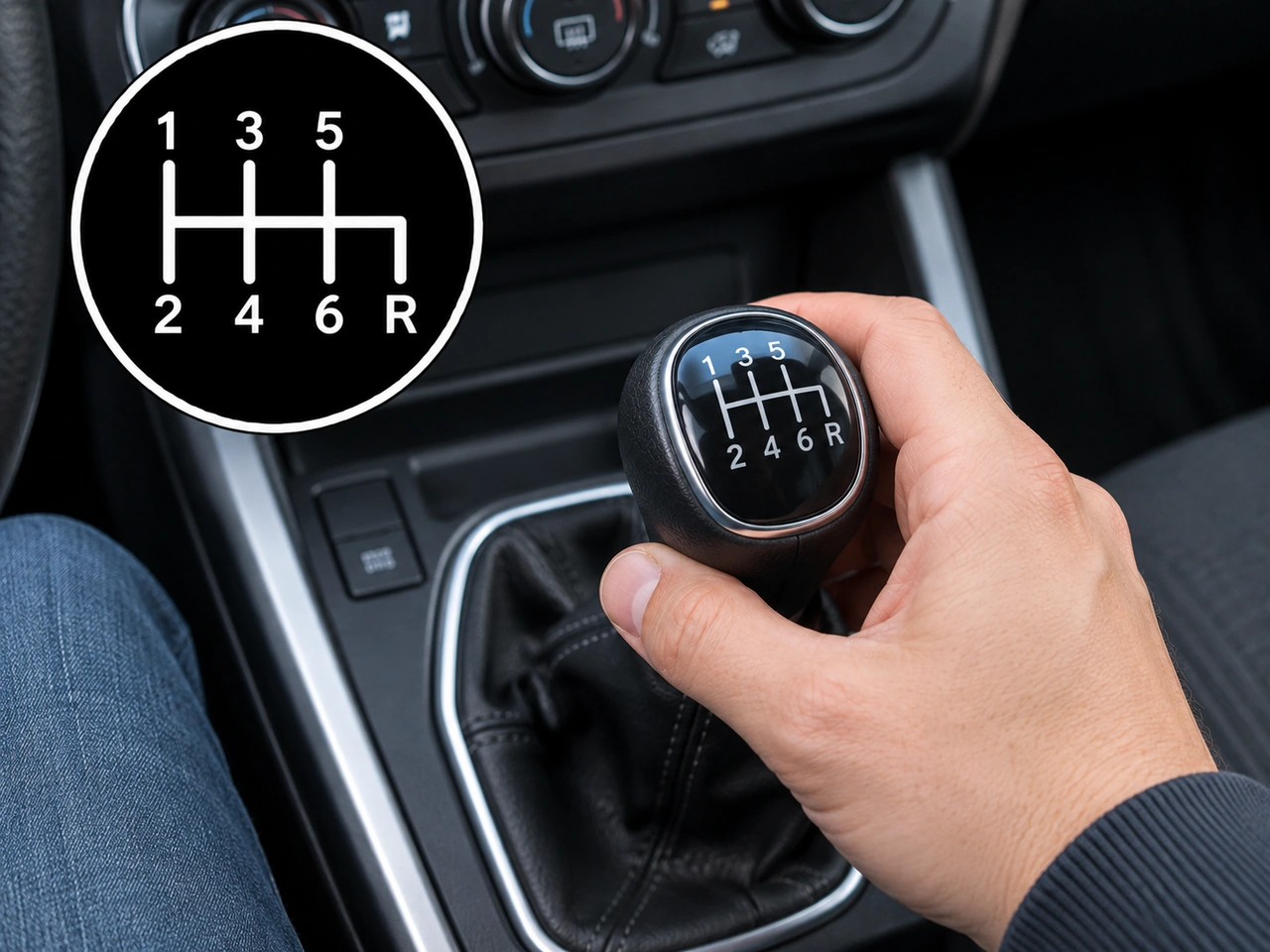
756. Which gear is normally used when moving off from a standstill?
1st gear is normally used when moving off from a standstill because it provides the greatest pulling power at low speed.
First gear is the usual choice for moving off. Release the clutch smoothly as the car starts to move.
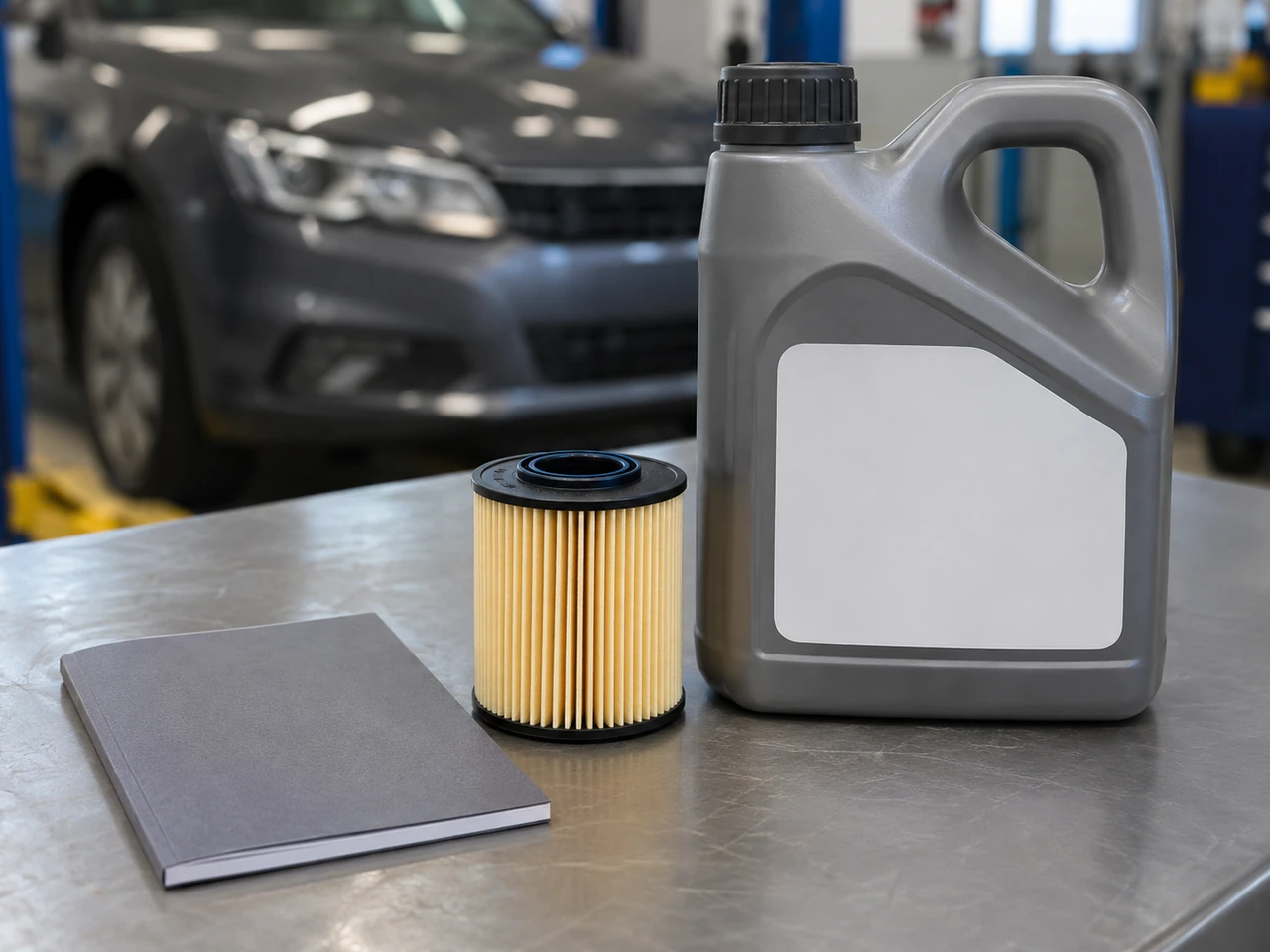
757. Engine oil only needs changing when its level falls below the minimum mark.
The oil level does not tell you whether an oil change is due. Follow the vehicle's oil-change schedule and service reminders, including any time or distance limit. Topping up does not replace an oil and filter change.
🔗 Sources
Ford owner’s manual (manufacturer guidance) • Safety guidance, service intervals and oil-change service
Image credit: AI-generated
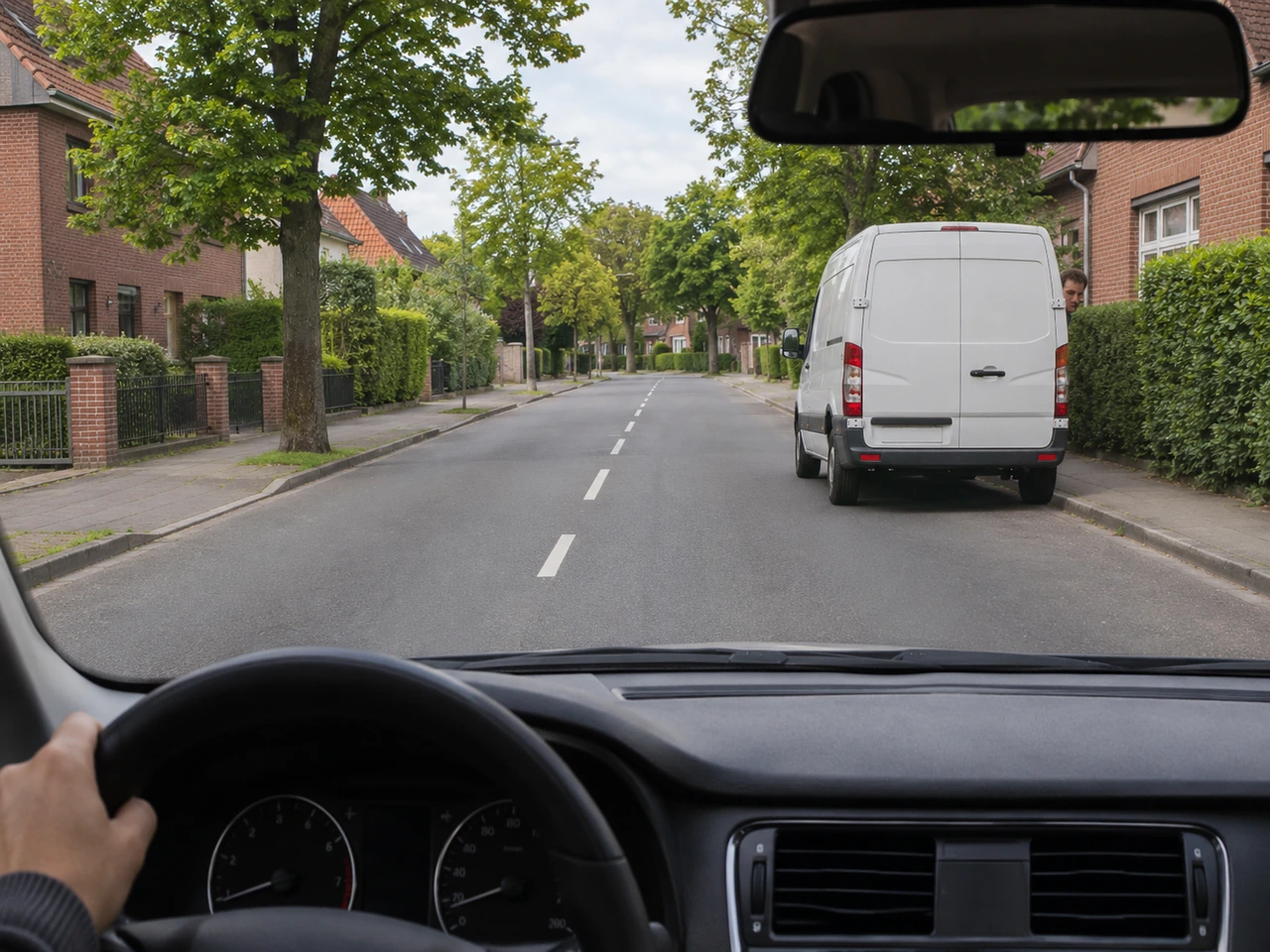
758. What should you expect when parked vehicles hide the pavement ahead?
Parked vehicles can hide someone about to cross. Reduce speed as needed, leave space and be ready to stop.
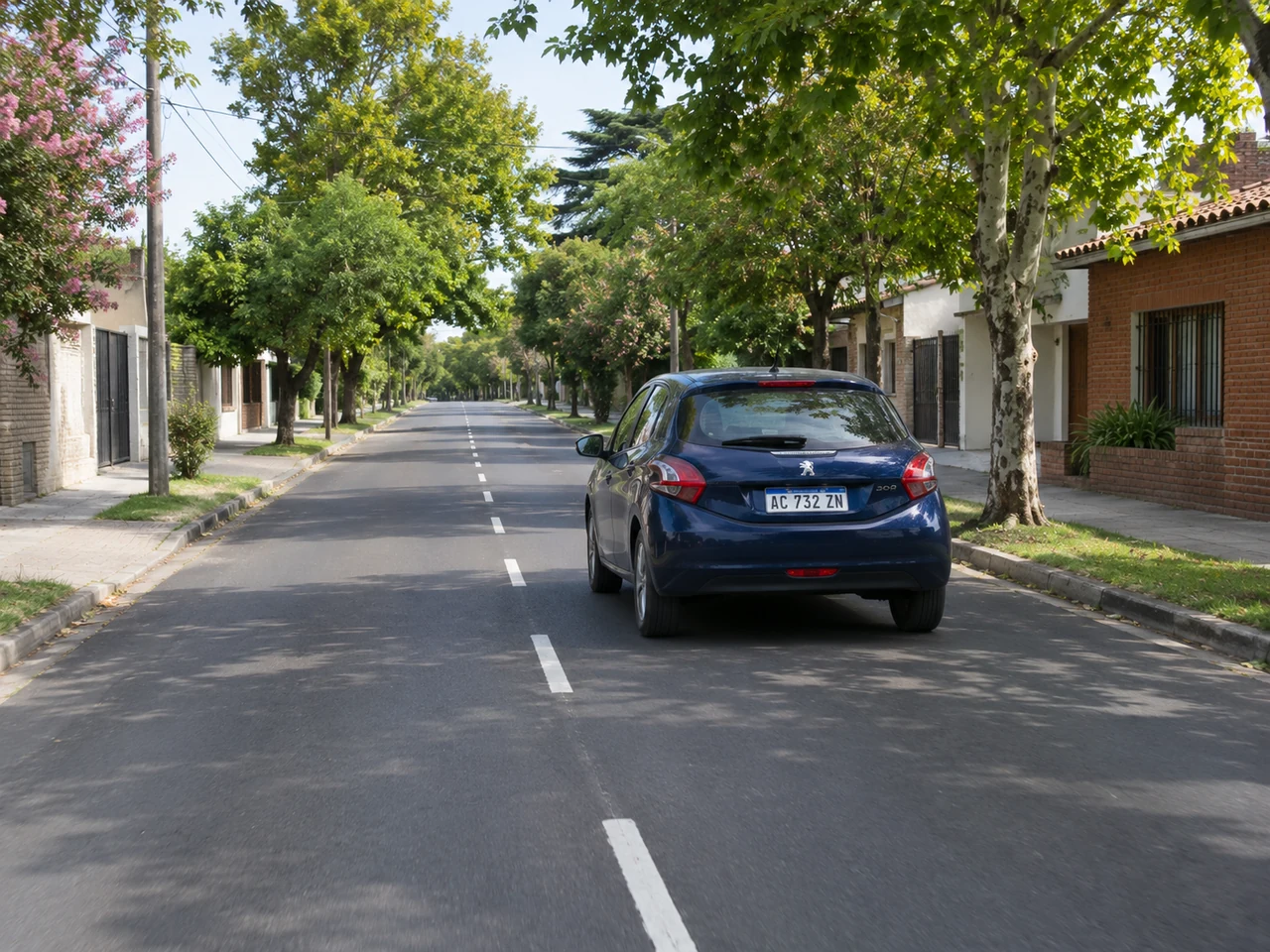
759. How can smooth acceleration reduce energy use?
Smooth, progressive acceleration usually uses less fuel or energy than repeated heavy acceleration. Accelerate according to traffic conditions and avoid unnecessary bursts of speed.
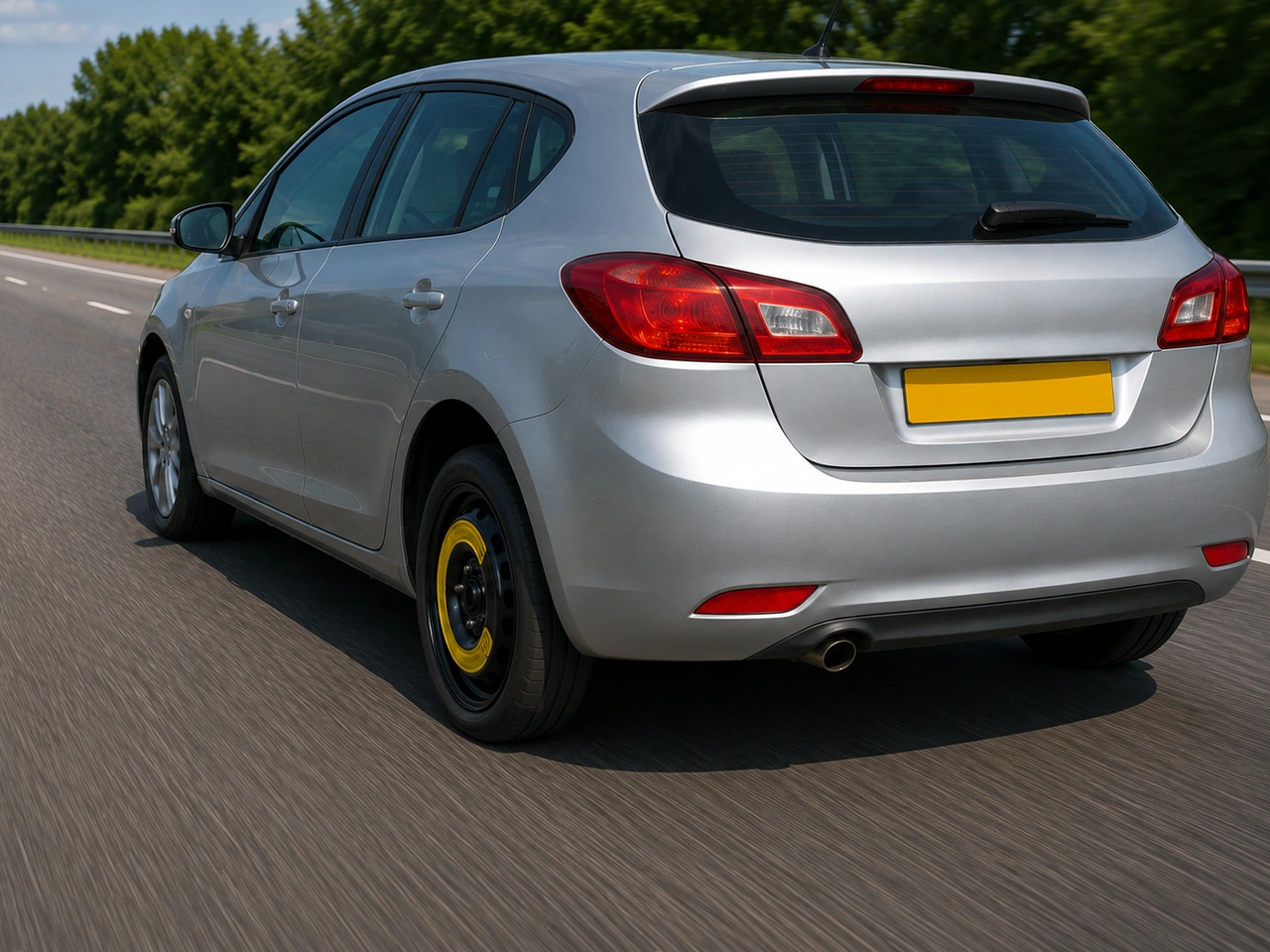
760. What should you do after fitting a temporary spare wheel?
A temporary spare is an emergency measure and may have different handling, pressure, speed or distance limits from the normal wheels. Read its label and the vehicle handbook, observe all applicable restrictions and arrange a proper tyre repair or replacement promptly. Do not assume a single speed or distance limit applies to every spare, or inflate it to the normal road-tyre pressure without checking the specification. Follow any restrictions on its fitting position, towing or vehicle loading.
Follow the speed and use restrictions on the spare wheel and in your handbook. A temporary spare needs prompt replacement with the correct road wheel.
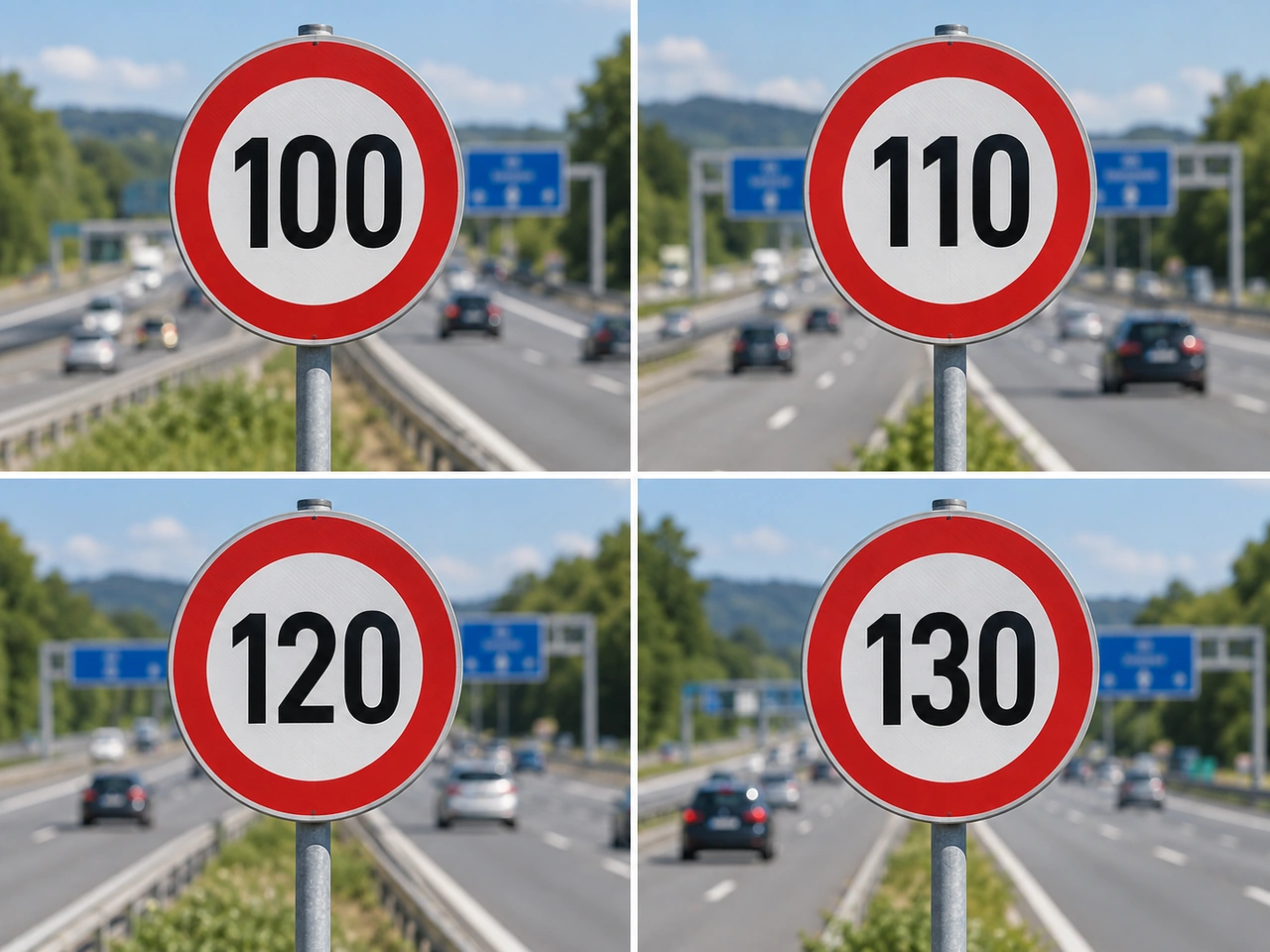
761. What is the general motorway speed limit for cars?
The general motorway speed limit for cars in Argentina is 130 km/h, unless signs indicate otherwise.
🔗 Sources
Image credit: AI-generated
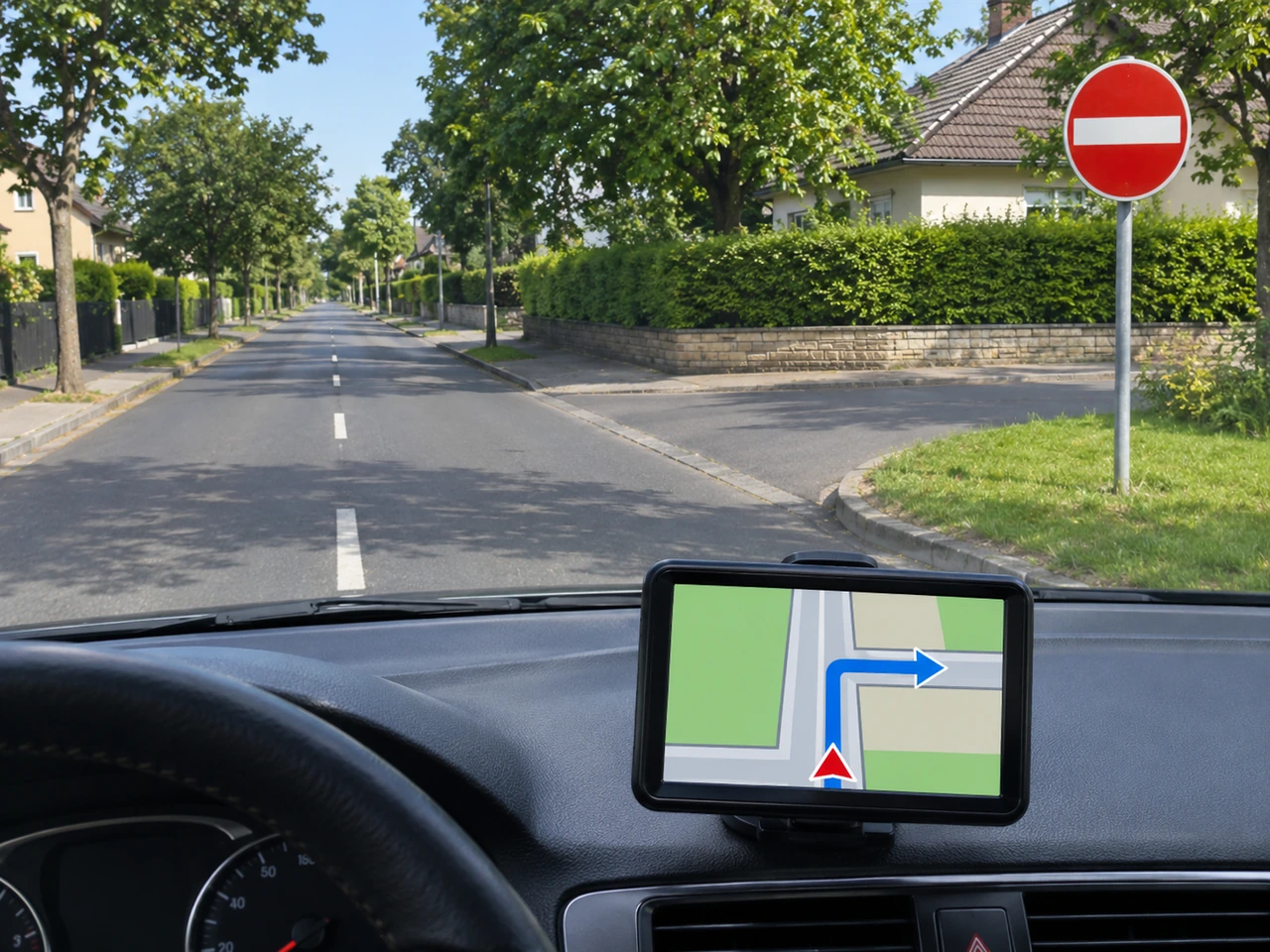
762. What should you do if your satnav directs you into a road marked no entry?
A satnav may give incorrect or outdated directions. It does not authorise you to ignore a no-entry sign. Continue only by a safe, permitted route.
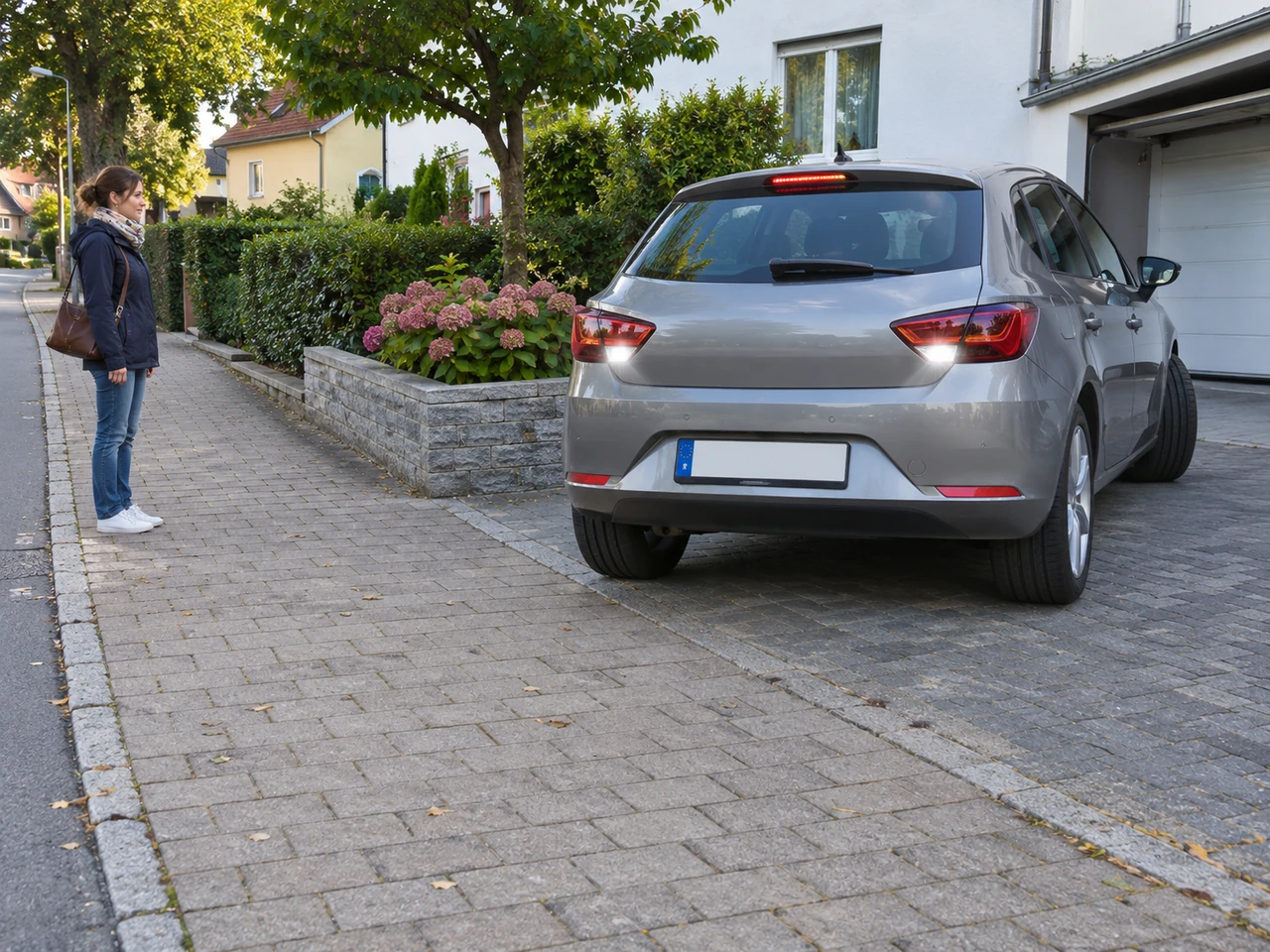
763. What should you do if a vehicle is reversing near you?
Reversing vehicles have blind spots. Stay well clear of the vehicle and never walk behind it while it is reversing or showing white reversing lights. Wait outside its path until the manoeuvre is complete and it is safe to pass. Do not rely on reversing sensors or assume that the driver has seen you.
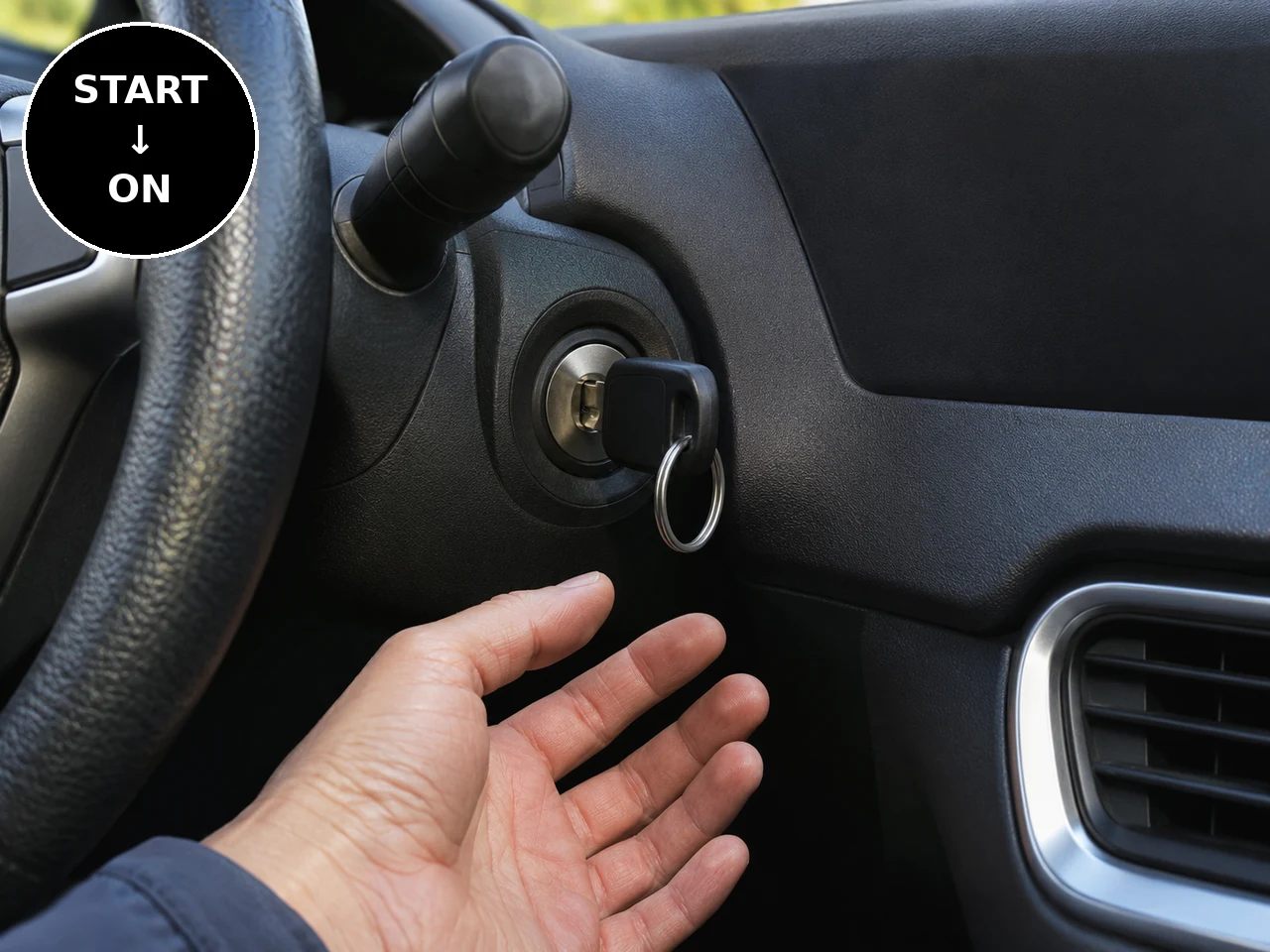
764. What should you do with the ignition key once the engine starts?
Once the engine starts, release the ignition key so it returns from START to the ON position. Holding the key in START unnecessarily can keep the starter motor engaged.
On a spring-loaded ignition switch, letting go of the key returns it to ON and stops cranking.
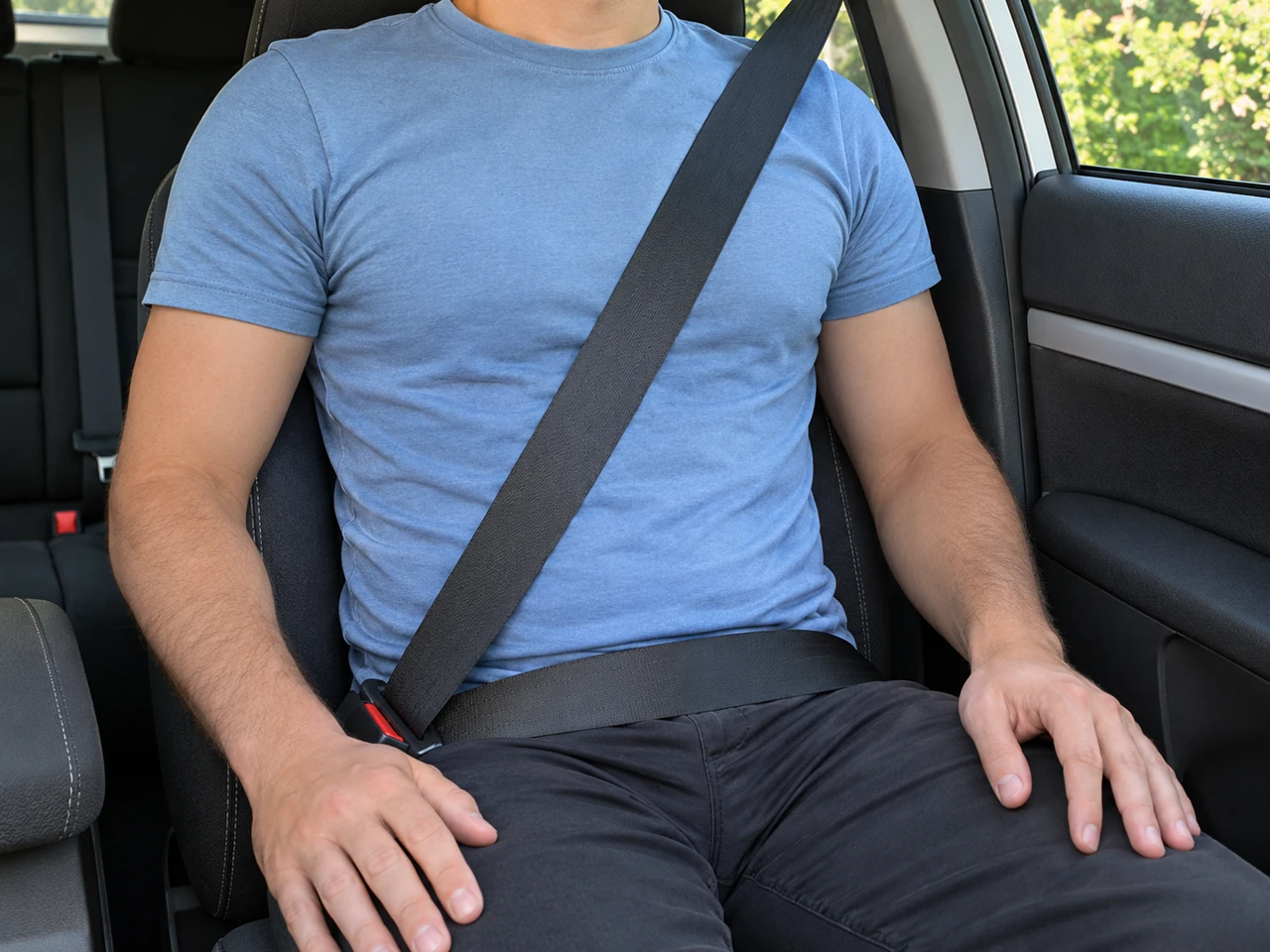
765. The lap section of a seat belt should fit snugly across your hips.
Keep the lap belt low across your hips, rather than your stomach. The shoulder belt should cross the middle of your chest and shoulder, with both sections flat and snug.
🔗 Sources
NHTSA (United States) • Safety guidance, proper lap and shoulder belt fit
Image credit: AI-generated
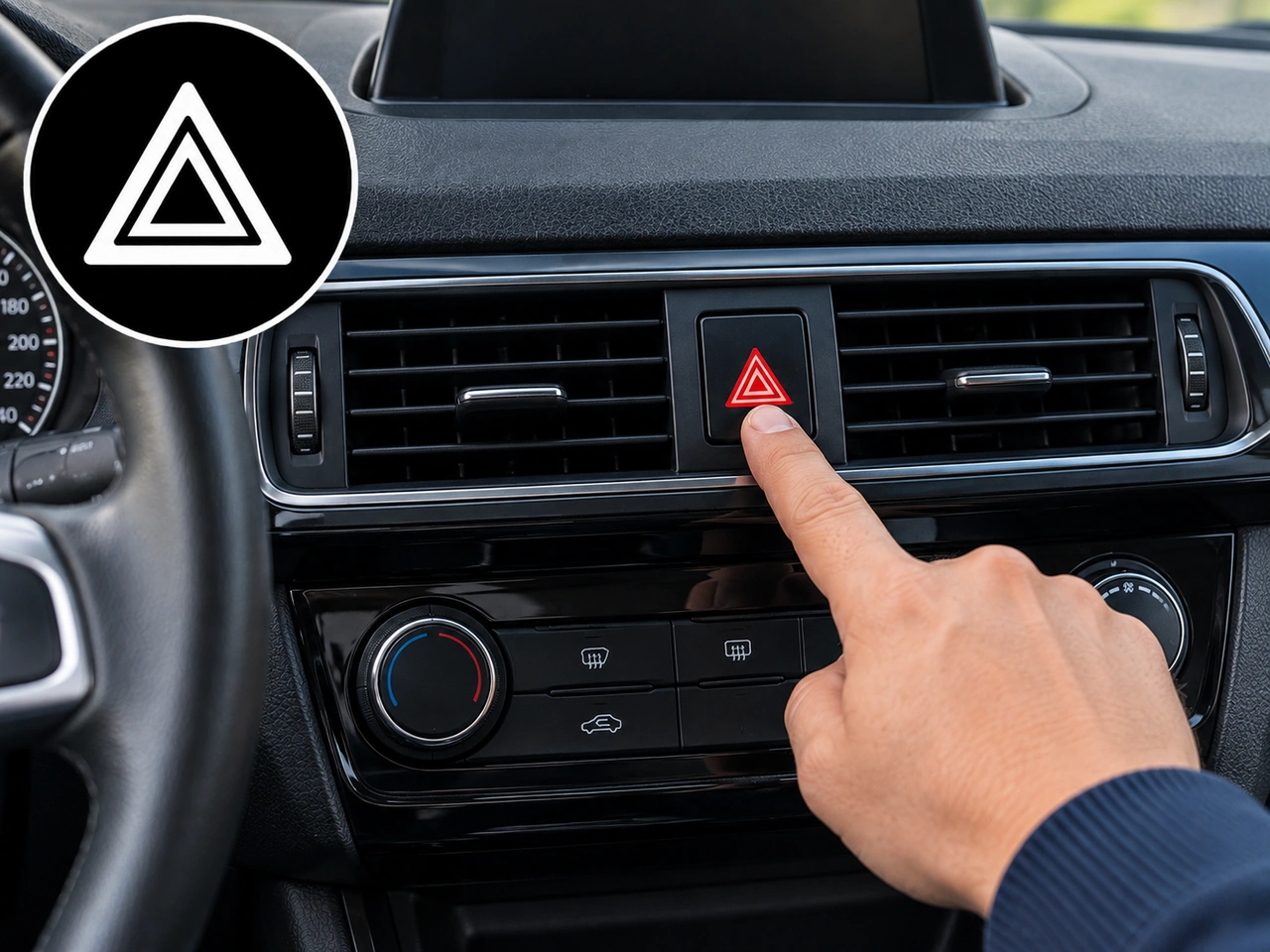
766. Which control activates all direction indicators at the same time?
The hazard warning light switch activates all direction indicators at the same time to warn other road users of a hazard or emergency.
Press the hazard switch to flash the front and rear indicators together. Press it again to switch them off.
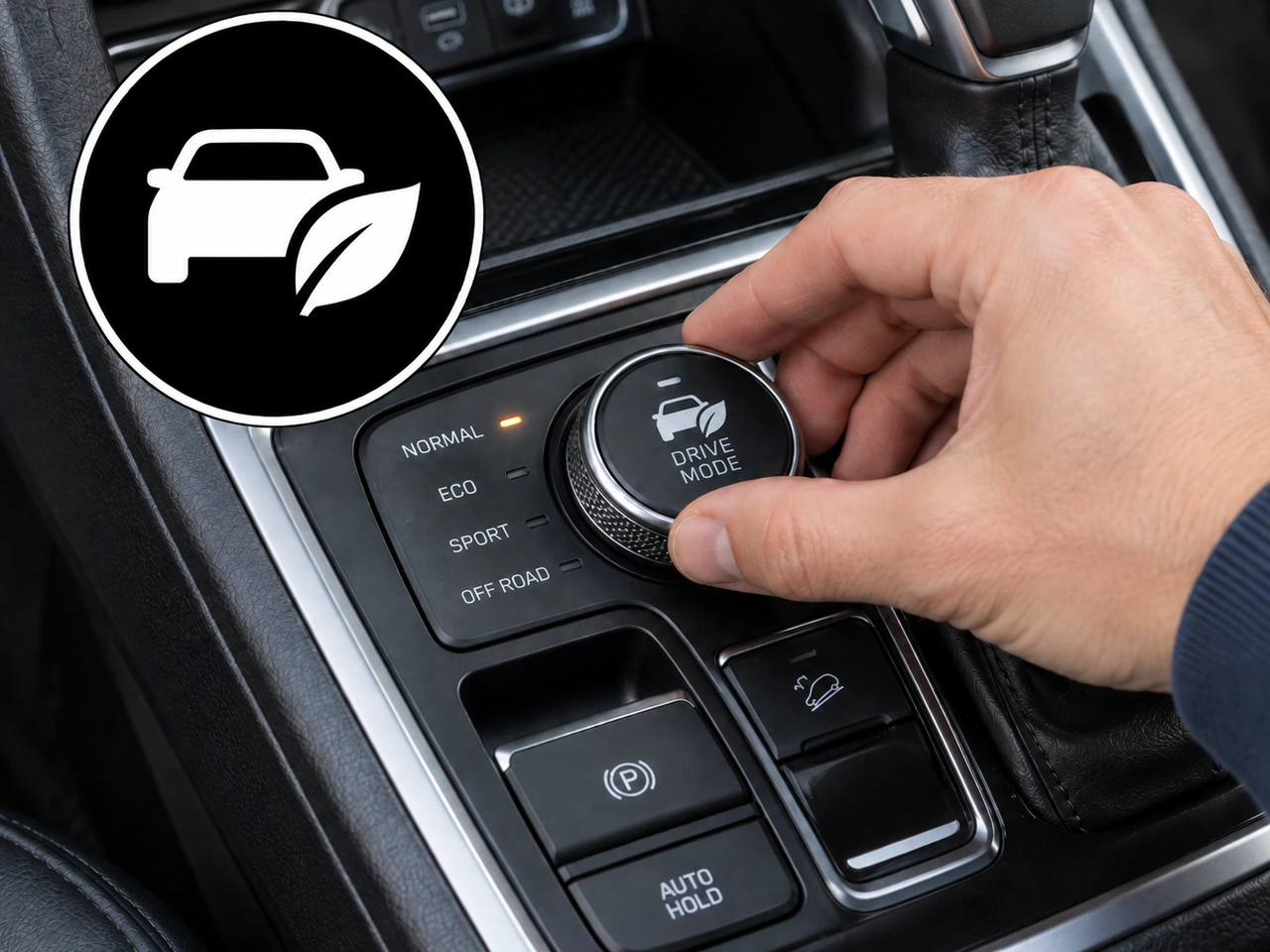
767. What does this vehicle-control symbol indicate?
This control selects a driving mode. Depending on the vehicle, different modes can alter characteristics such as accelerator response, steering assistance, transmission behaviour or energy use.
Check the instrument display to see which drive mode is selected. Available modes and their effects depend on the vehicle.
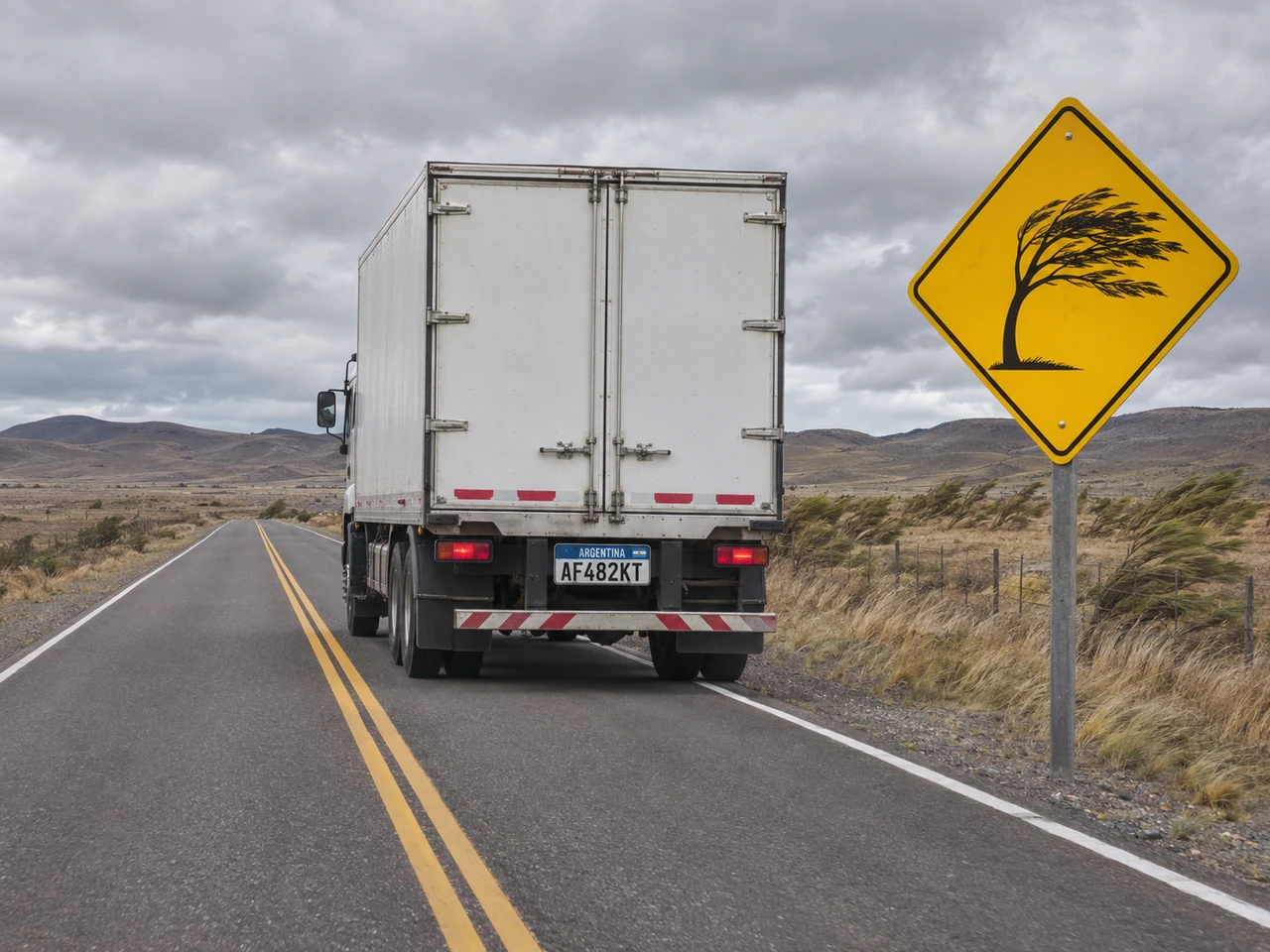
768. Which vehicles are especially vulnerable to strong crosswinds?
High-sided vehicles have a large surface exposed to crosswinds and may be pushed sideways by a sudden gust. Lightly loaded vehicles, caravans and trailers can also be unstable, while cyclists and motorcyclists may lose balance or change course. Leave room, avoid lingering alongside large vehicles and adapt your speed before exposed stretches. A crosswind warning sign identifies a hazard; it does not itself specify a numerical speed limit.
Argentina. Buenos Aires City guidance explains that large vehicles present more surface to lateral wind and recommends reducing speed. A tall box body can therefore be more exposed than a low car. P.30 warns of the wind hazard; its presence does not define a safe speed for every vehicle.
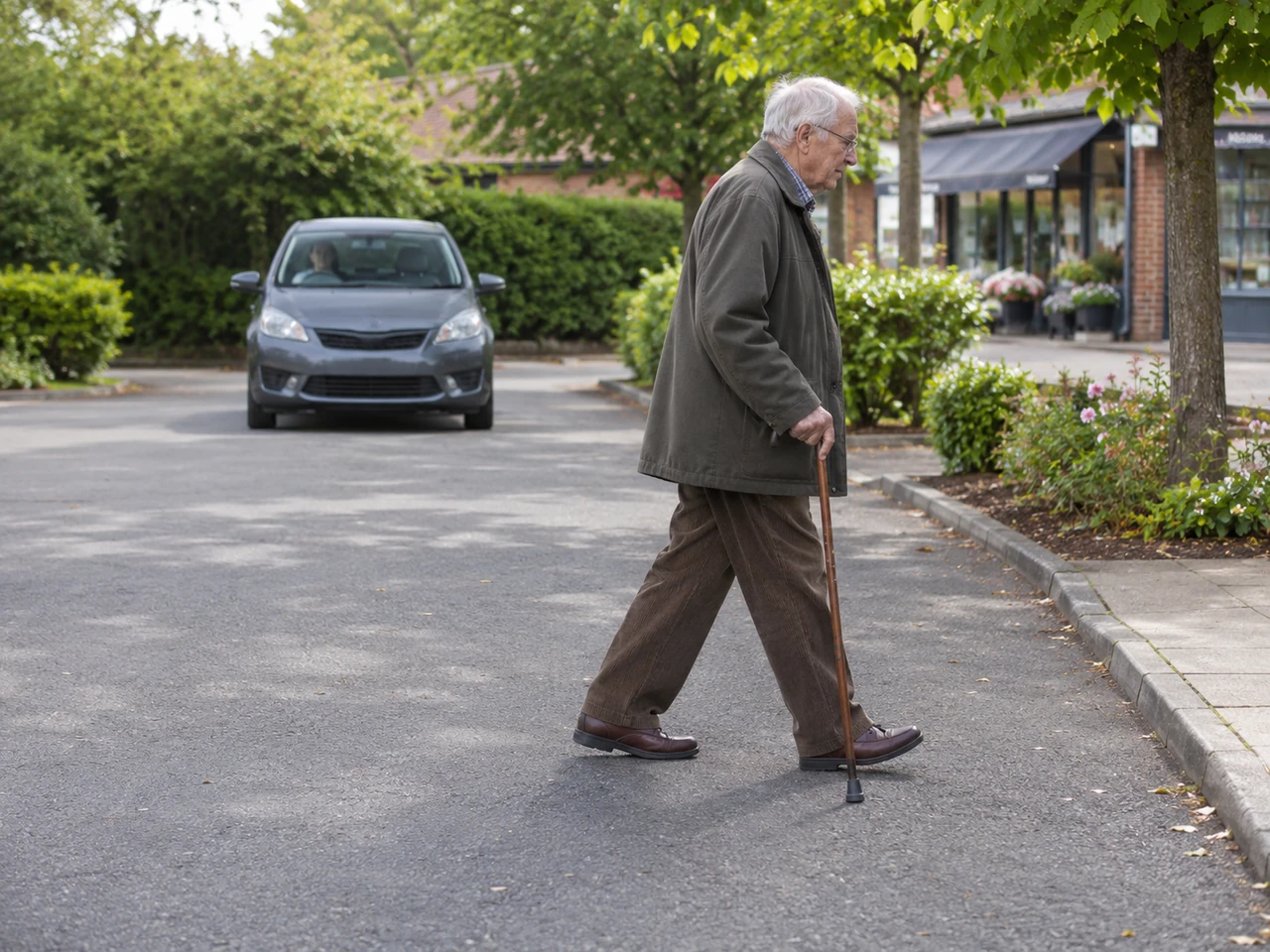
769. Some pedestrians need more time to cross the road.
Some people need extra time because of age, disability or difficulty walking. Be patient and do not pressure them to hurry.
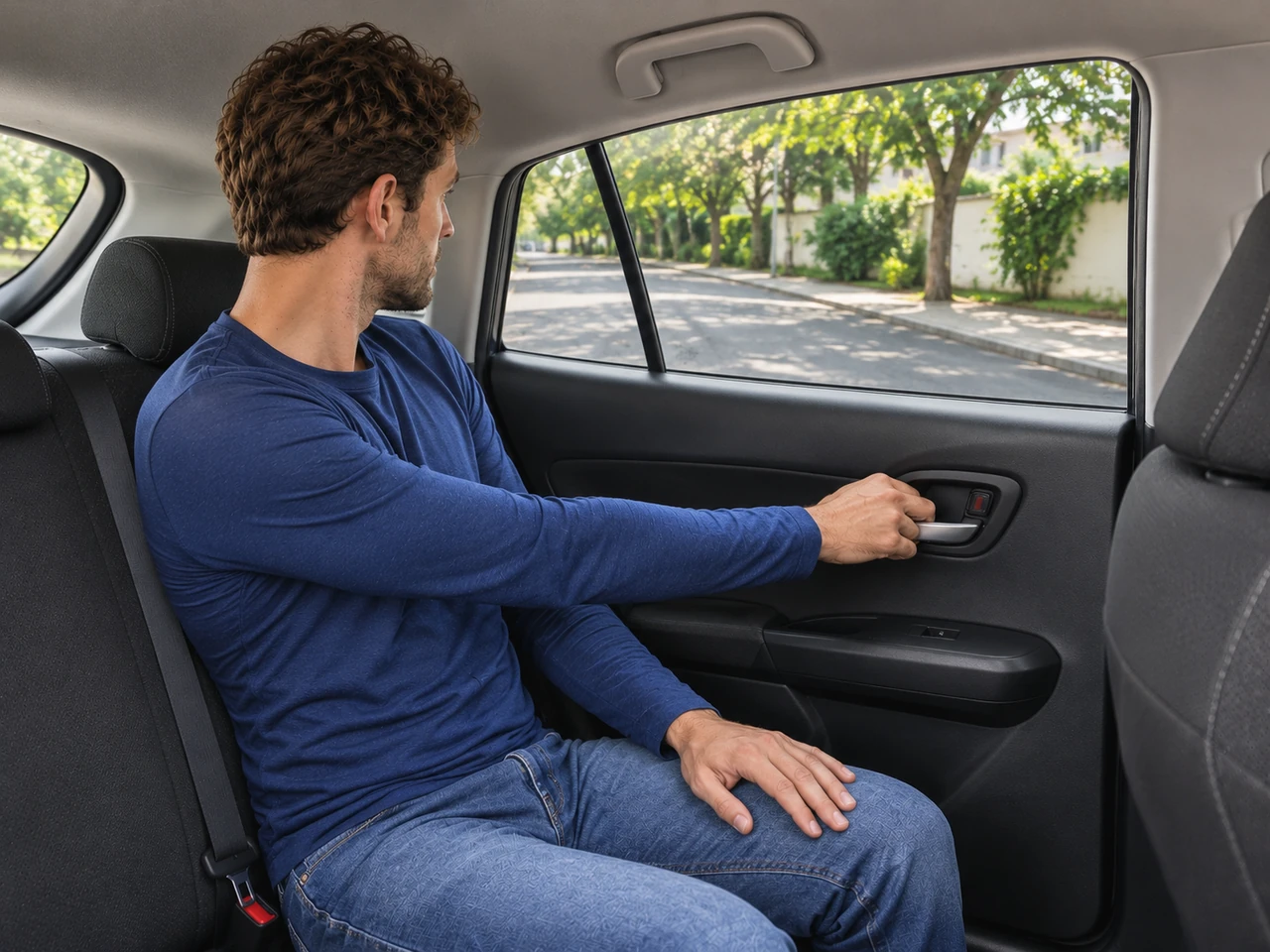
770. Opening a car door with your far hand can help you look behind.
Where you are able to do so, using the hand furthest from the door helps turn your body and head to look behind. Still check carefully for cyclists, motorcyclists and other road users before opening the door.
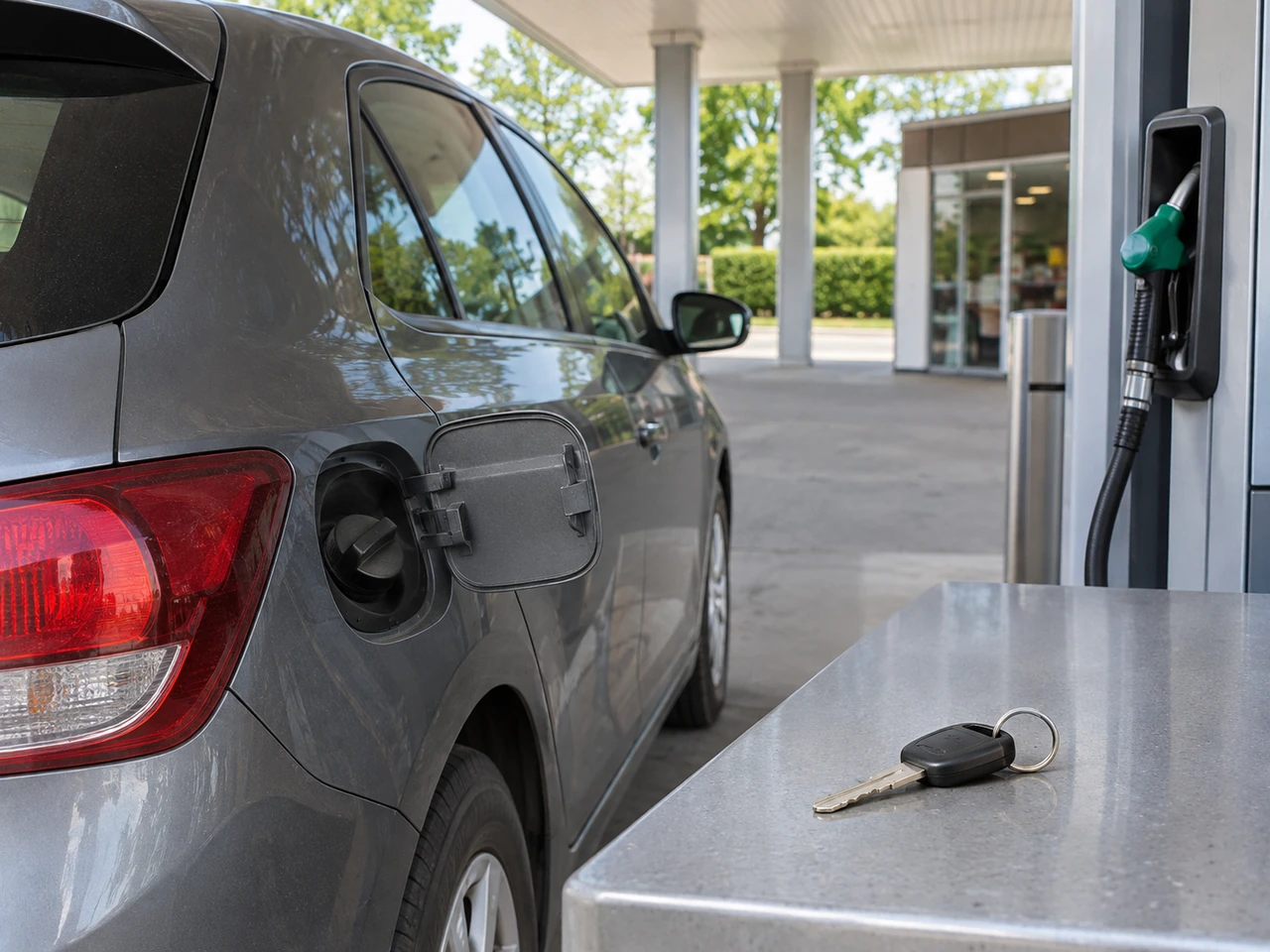
771. Starting the engine is harmless after filling the tank with the wrong fuel.
Wrong fuel can damage the fuel system and engine. Do not switch on the ignition or start the engine; tell the station attendant and arrange professional assistance. If the engine is already running, stop safely and switch it off.
🔗 Sources
The AA roadside-assistance guidance (Great Britain) • Safety guidance, Fuel Assist: do not start or switch on the ignition
Image credit: AI-generated
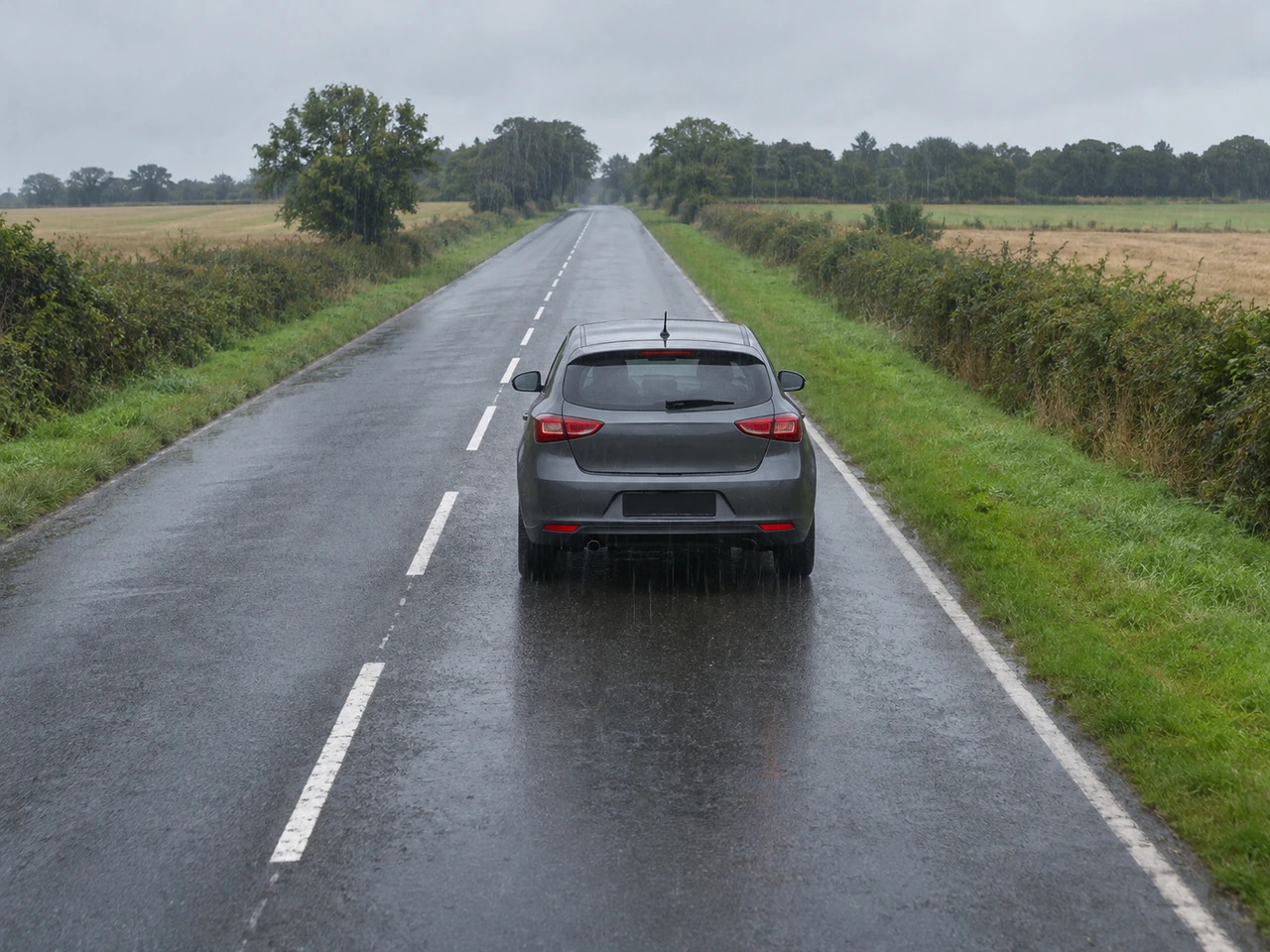
772. Why are roads especially slippery during rain after a dry period?
During dry weather, deposits such as oil, dust and dirt can accumulate on the road. The first rain mixes with these deposits and can make the surface unusually slippery, even before large puddles appear. Reduce speed, leave more room ahead and use smooth steering, acceleration and braking.
🔗 Sources
Australia AIHW — Rain after dry weather and slippery road deposits
Image credit: AI-generated
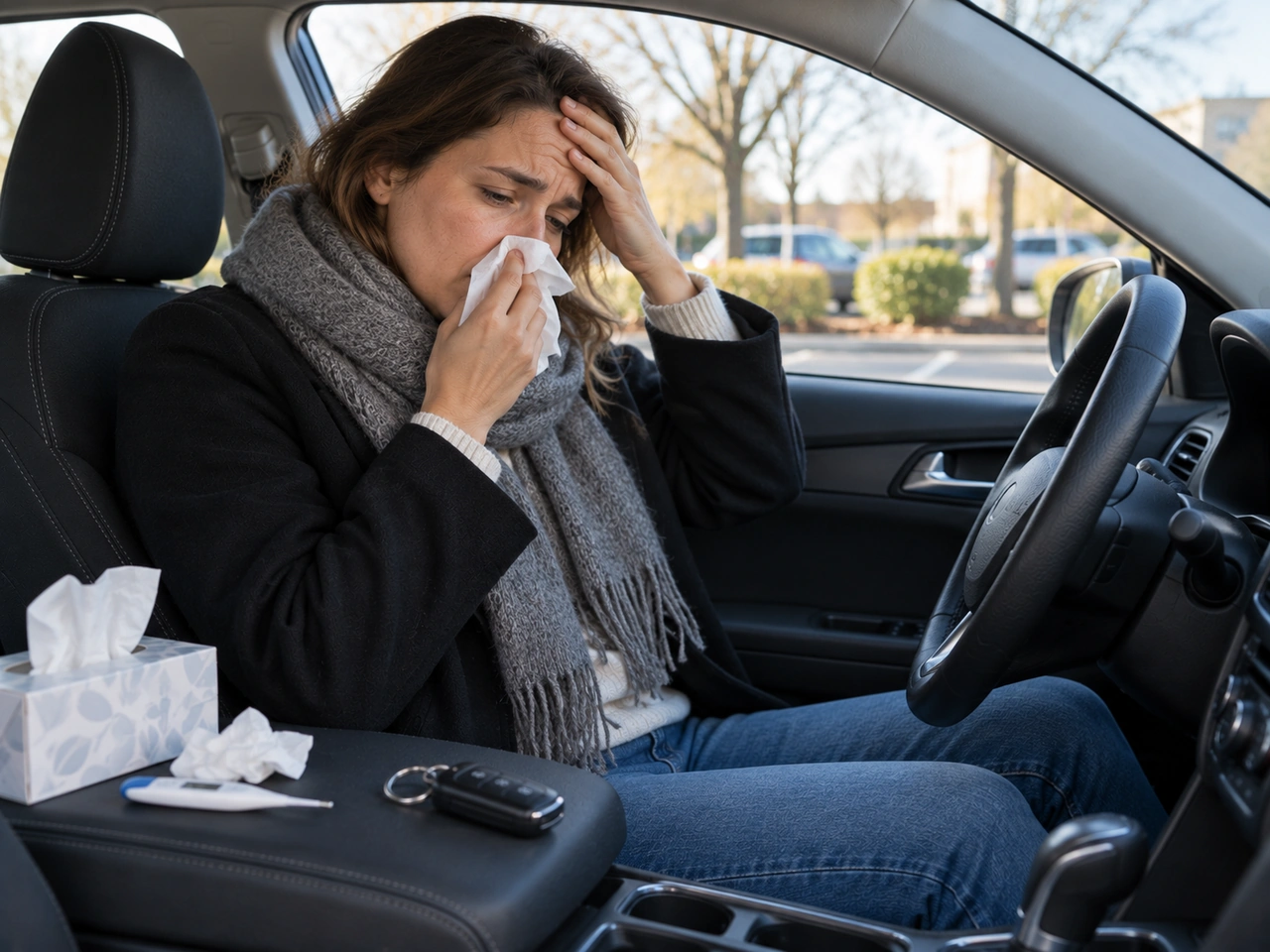
773. What should you do if illness affects your ability to drive safely?
Illness can reduce concentration, alertness, coordination, or reaction time. If you do not feel fit to drive safely, postpone the journey or use another form of transport.
Argentina. If illness affects your concentration, vision or control of the vehicle, delay the journey or ask someone else to drive. Check with a doctor if you are unsure how the illness might affect driving.
🔗 Sources
Argentina · Traffic Law 24.449, Article 48
Agencia Nacional de Seguridad Vial · Curso Nacional, Module 8
Image credit: AI-generated
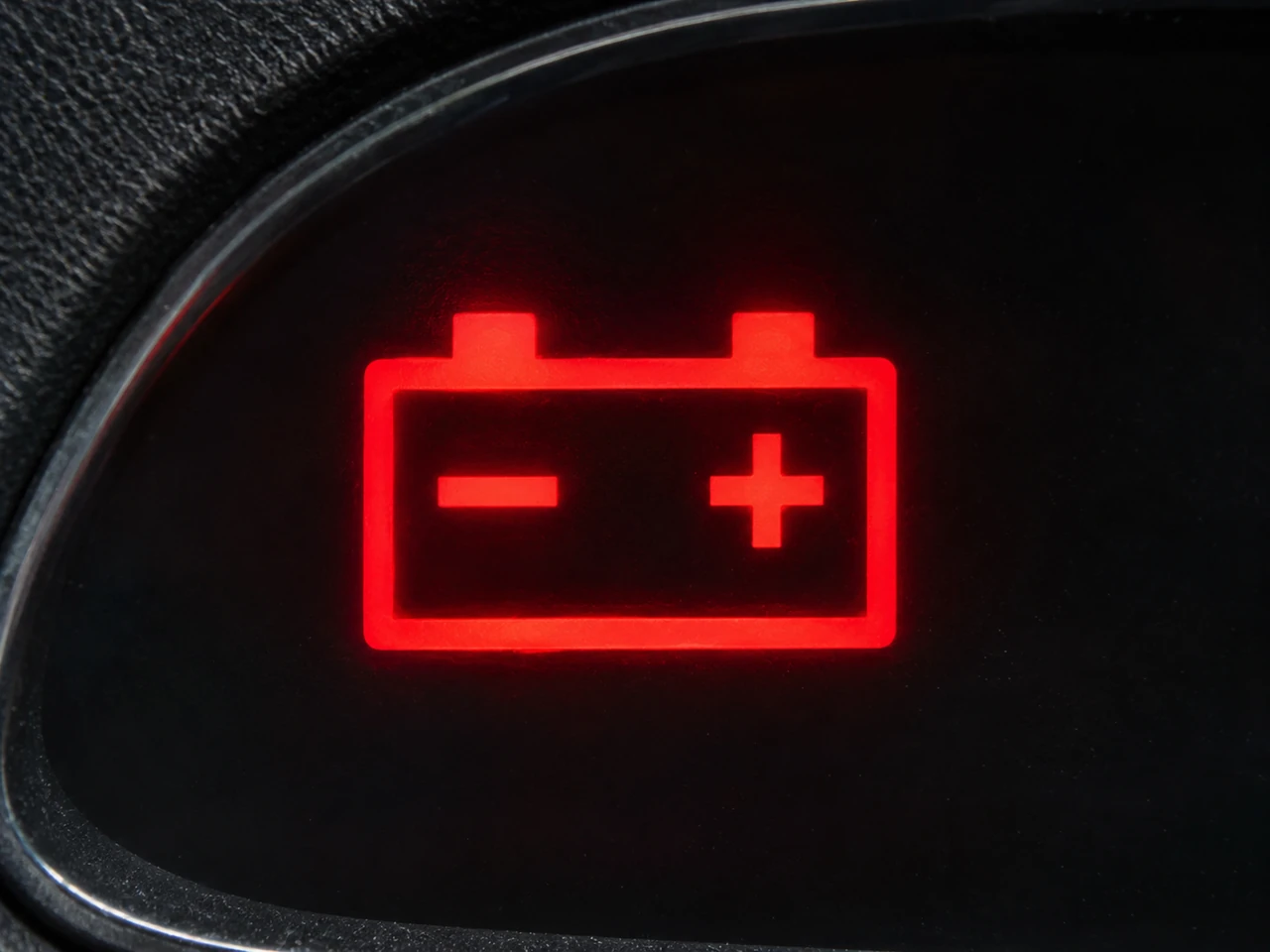
774. A battery warning light that stays on with the engine running means the battery is fully charged.
It can indicate that the battery is not charging properly or that the charging system has a fault. Follow the vehicle handbook and have the system checked promptly; it is not a full-charge indicator.
🔗 Sources
Ford owner’s manual (manufacturer guidance) • Safety guidance, 12-volt battery charging-system warning
Image credit: AI-generated
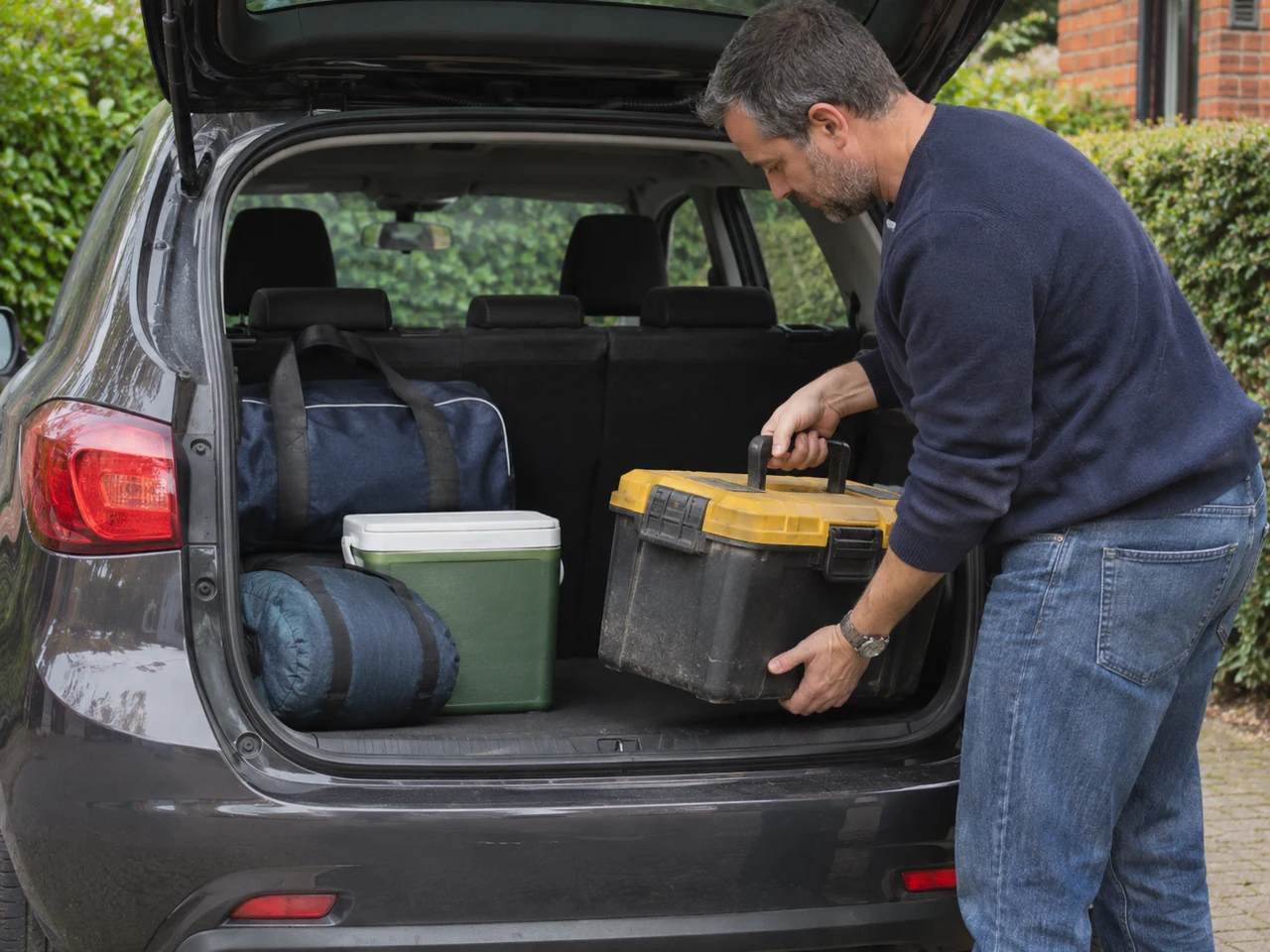
775. How can unnecessary weight affect a vehicle's energy use?
Extra weight generally requires more energy when accelerating and climbing. Removing unnecessary heavy items can help reduce fuel or energy consumption while keeping all essential equipment in the vehicle.
🔗 Sources
Government of Argentina – Efficient driving guide for light vehicles
Image credit: AI-generated
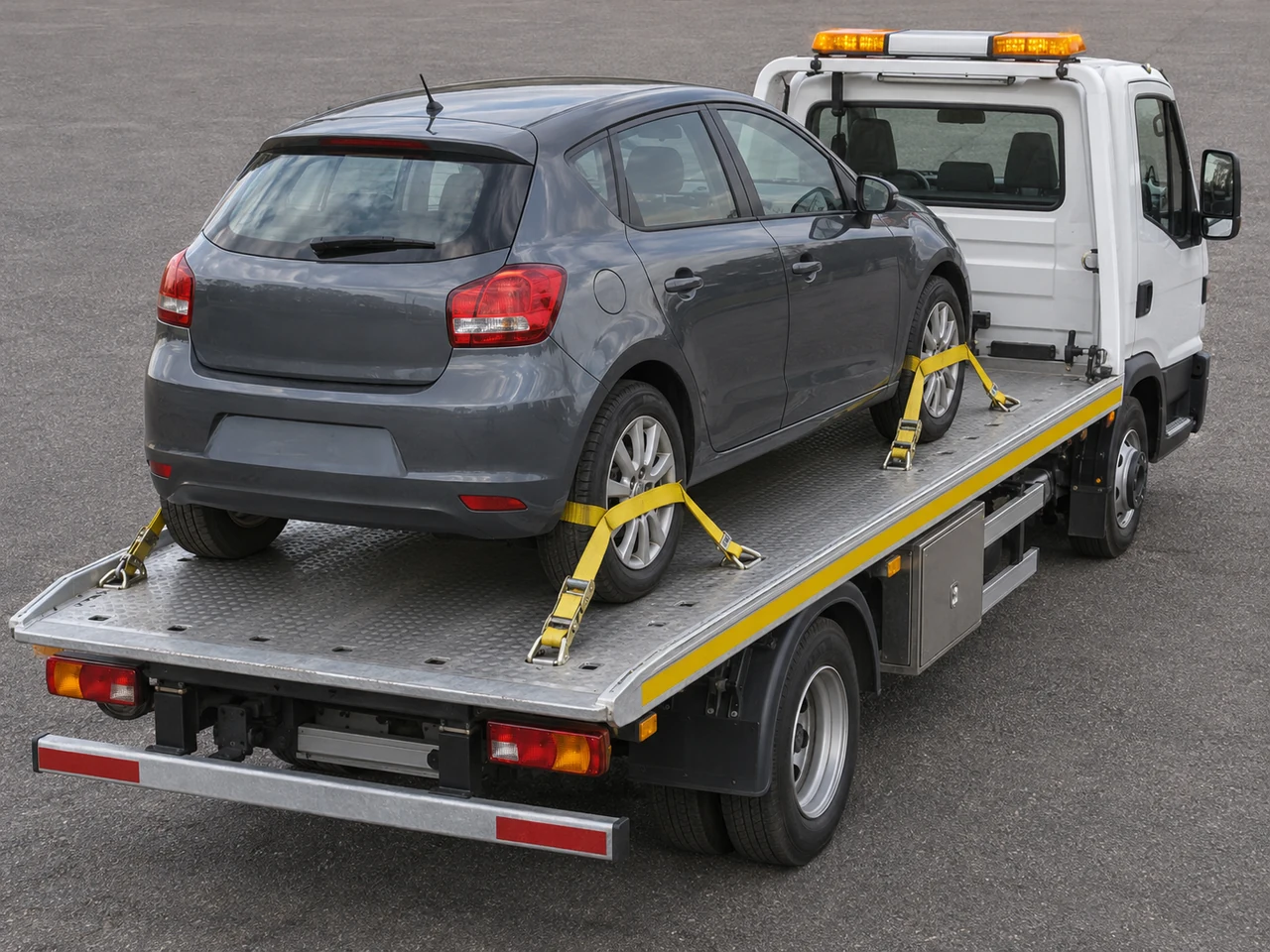
776. How should a disabled vehicle be towed?
Incorrect towing can damage the vehicle or cause loss of control. Follow the manufacturer's instructions and local rules, and use professional recovery when the correct procedure is uncertain.
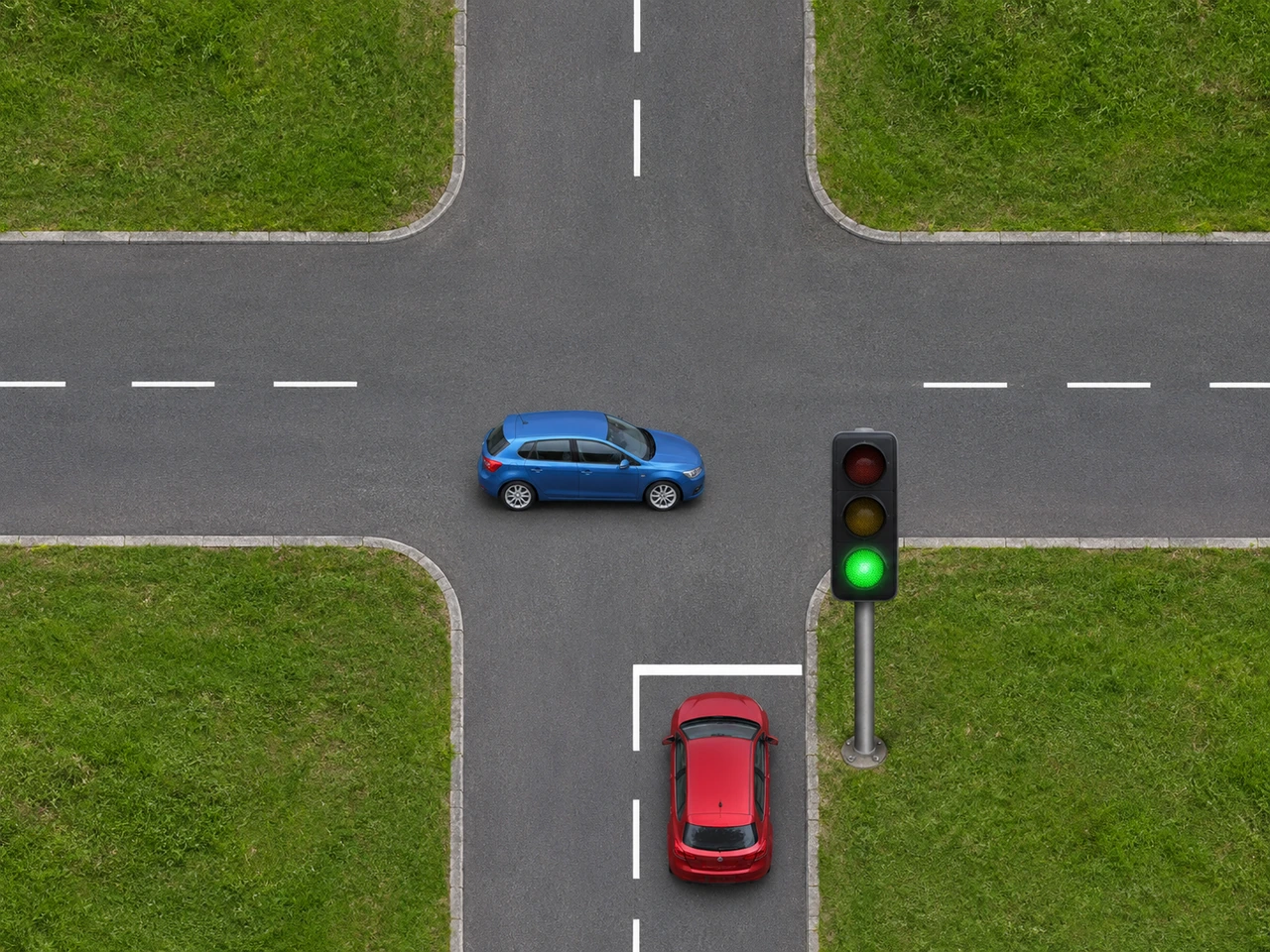
777. Red now has green, but blue is still crossing its path. What should red do?
Wait before entering while blue is still clearing the junction. Once blue has passed, check that the route is clear and that there is enough room beyond the junction before moving off.
🔗 Sources
AI-generated illustration • Traffic-rules.com / Rijbewijs-online.be • WCIT • CC BY-SA 4.0.
🔗 Argentina • National Traffic Act No. 24,449, Article 44(e)
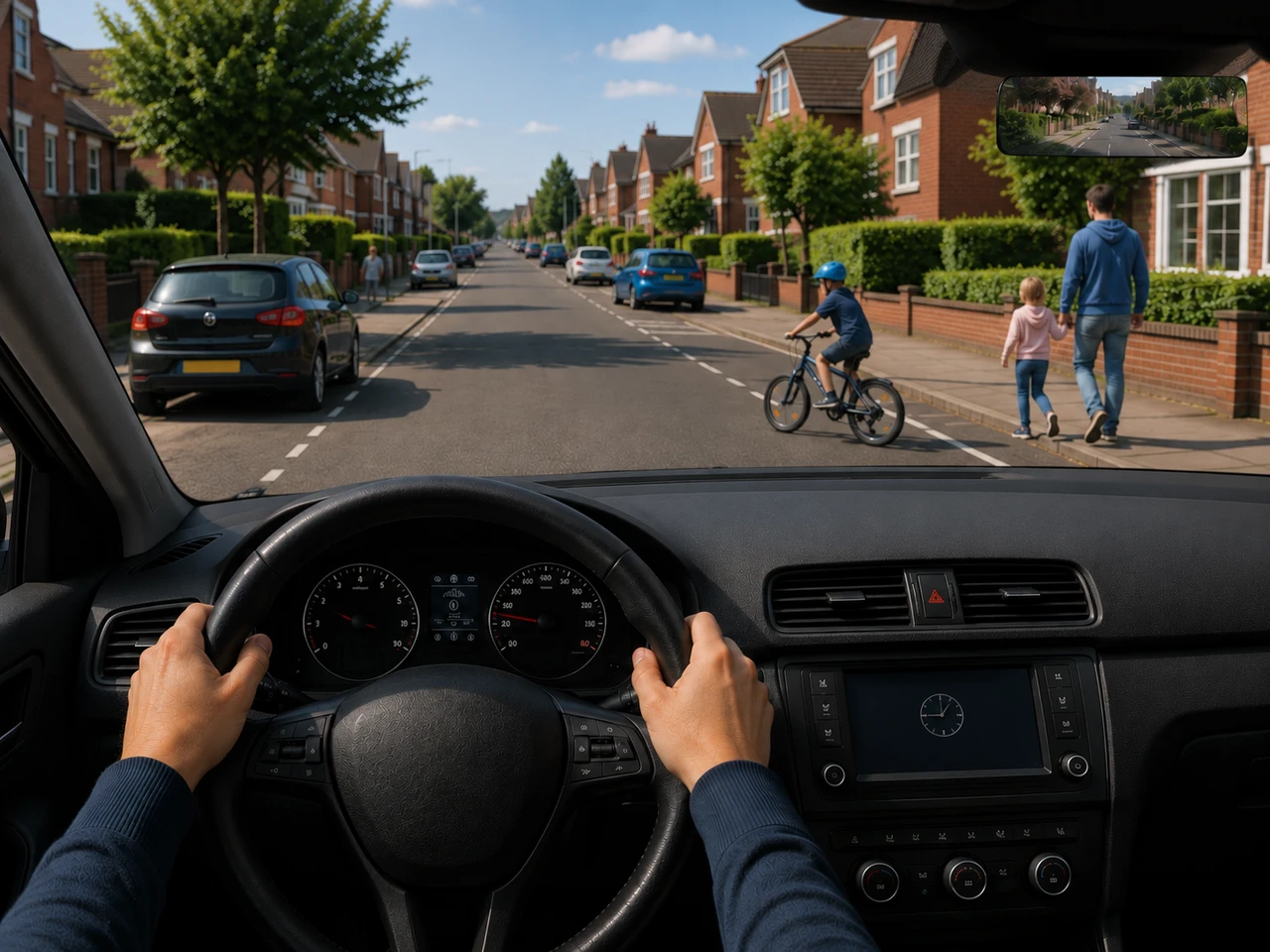
778. Why should you reduce speed in residential areas?
Residential areas often have pedestrians, cyclists, parked vehicles, driveways, and children, and hazards may appear suddenly. Lower speed gives you more time to react and stop safely.
Argentina. Under the national rules, the usual maximum for an ordinary urban street is 40 km/h. Observe posted limits and lower local limits.
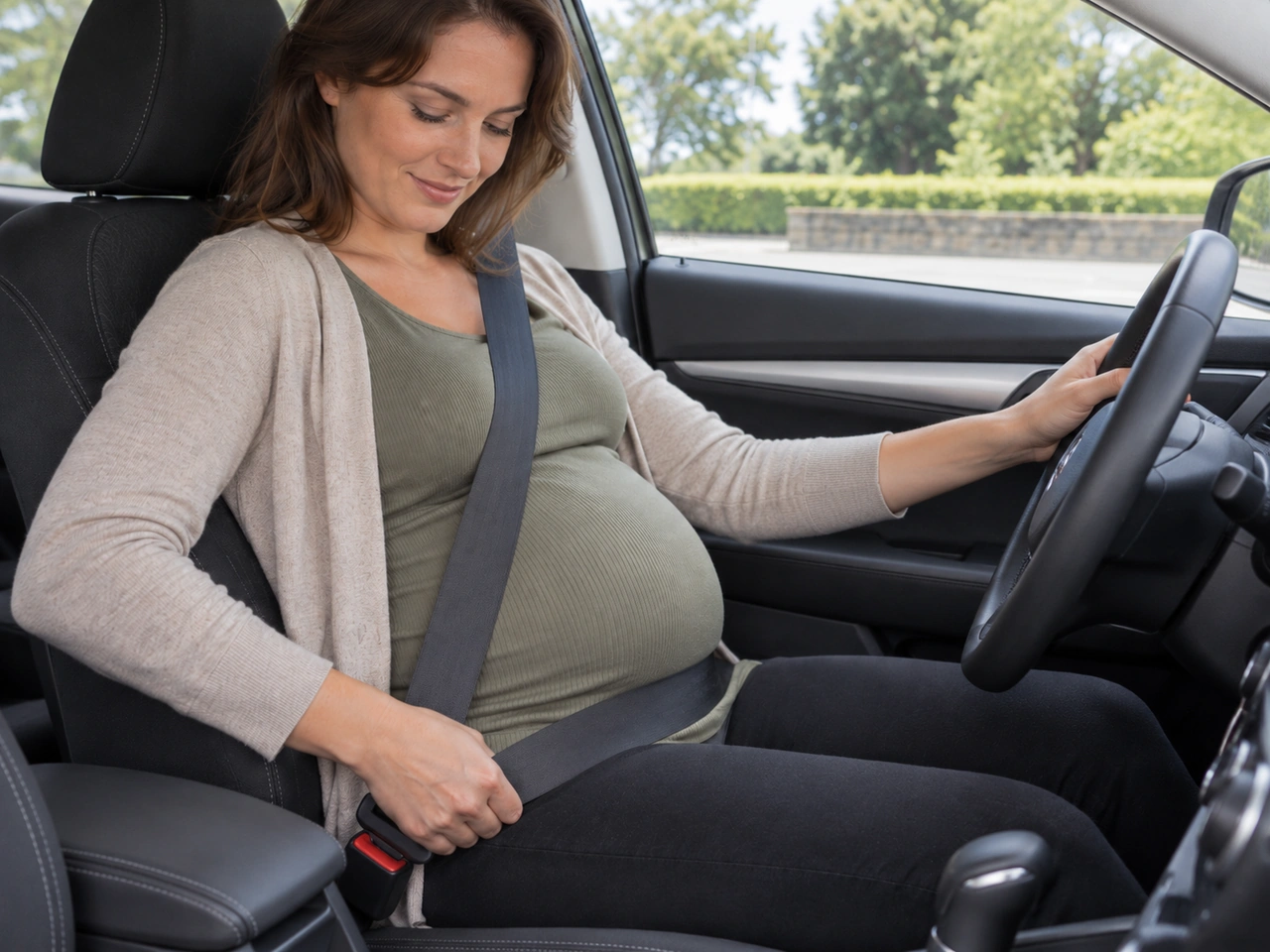
779. How should a three-point seat belt normally be worn during pregnancy?
During pregnancy, a three-point seat belt should be worn correctly. The lap belt should sit low across the hips, below the abdomen, while the shoulder belt should pass across the chest and to the side of the abdomen. The belt should fit snugly and should not be placed behind the back or under the arm.
🔗 Sources
USA NHTSA — General seat-belt fit, all seating positions and pregnancy guidance
Image credit: AI-generated
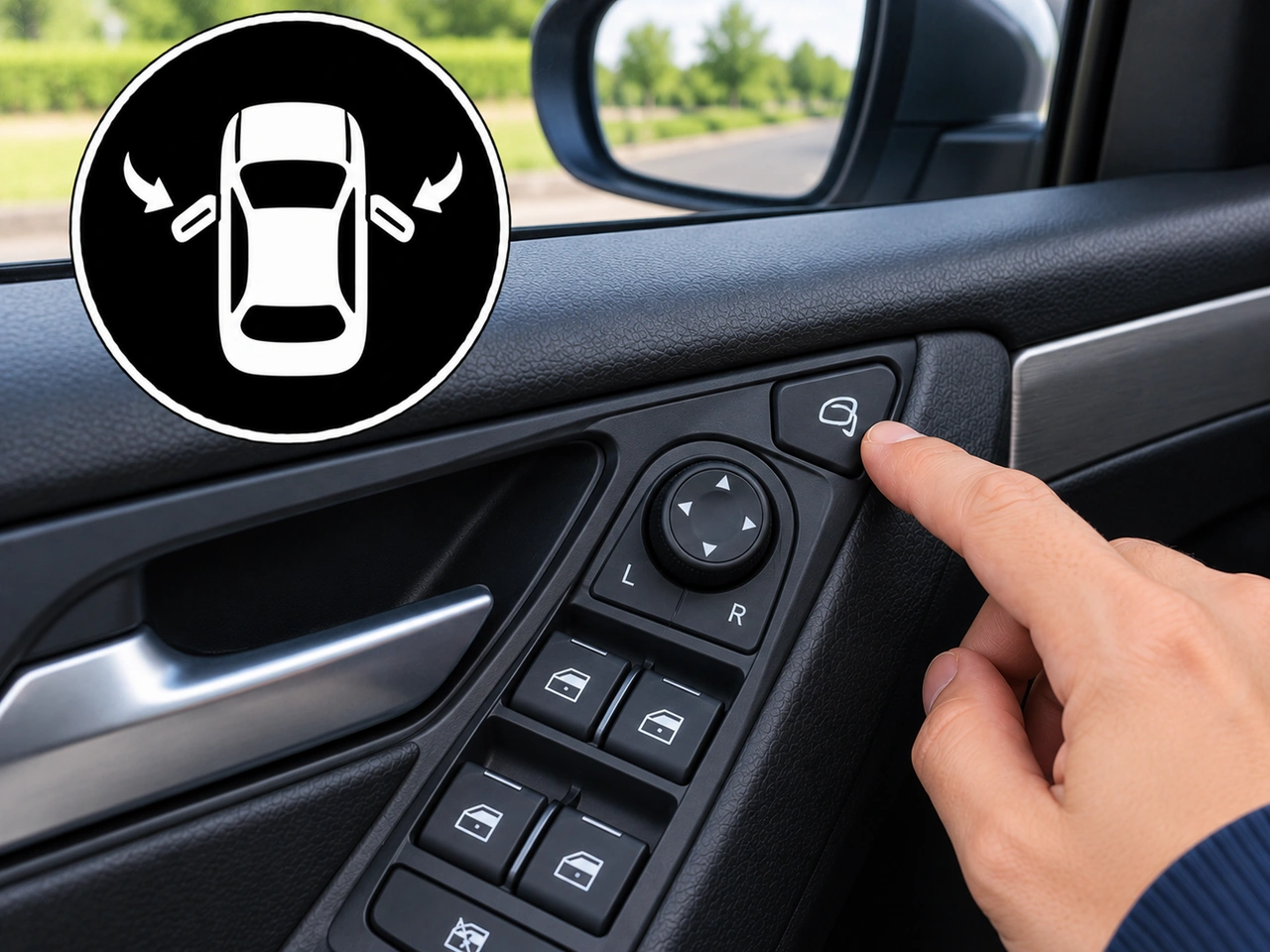
780. What does this vehicle-control symbol indicate?
This control folds or unfolds the vehicle's exterior mirrors. It is useful when parking in narrow spaces or when leaving the vehicle parked.
On vehicles with power-folding mirrors, use the switch to fold or unfold them. Check they are unfolded and correctly adjusted before driving.
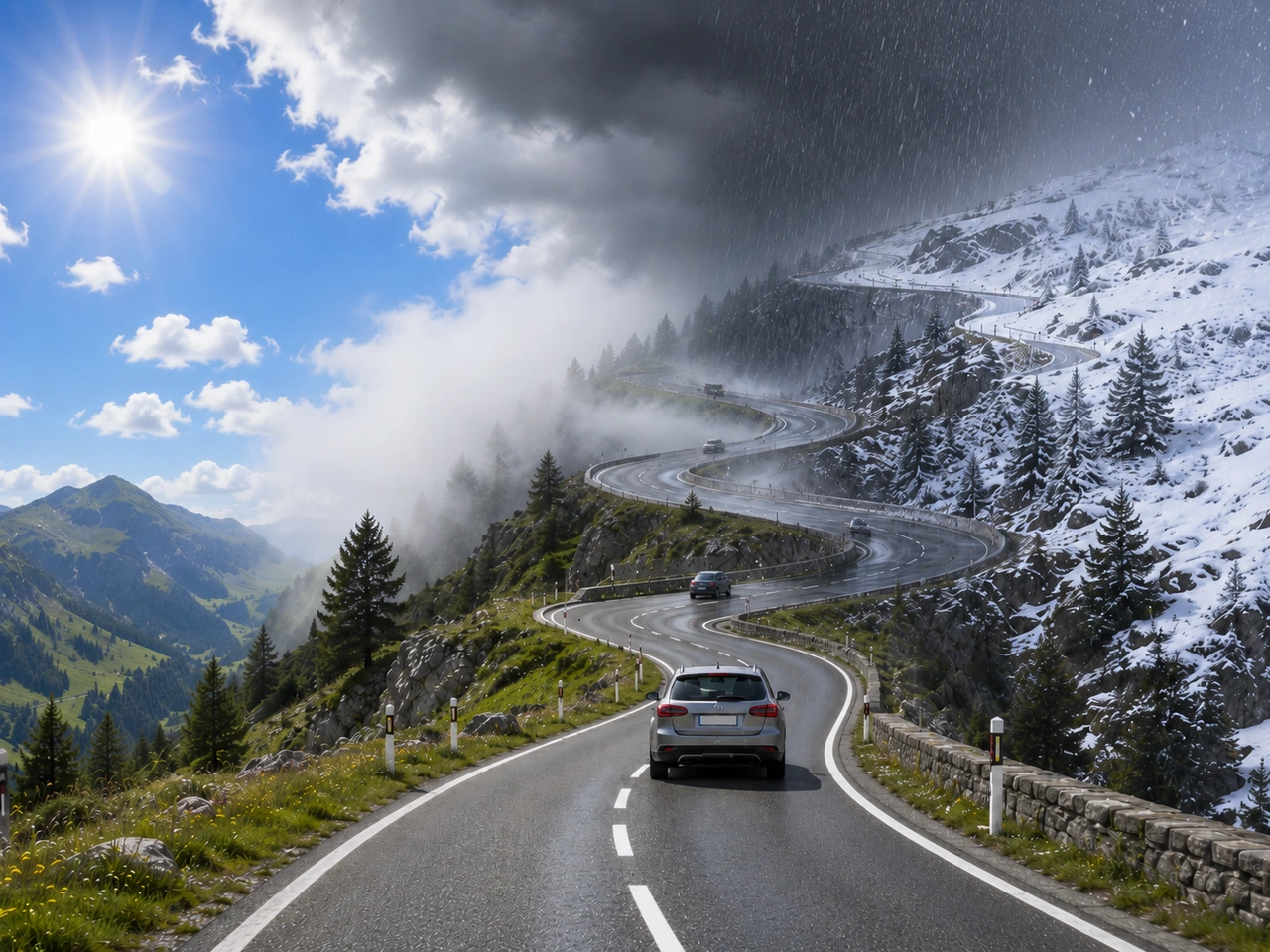
781. Why should you be prepared for changing conditions on mountain roads?
Fog, rain, snow, ice, falling rocks, and strong winds can develop rapidly in mountainous areas.
🔗 Sources
Image credit: AI-generated, shared right-hand-traffic scene
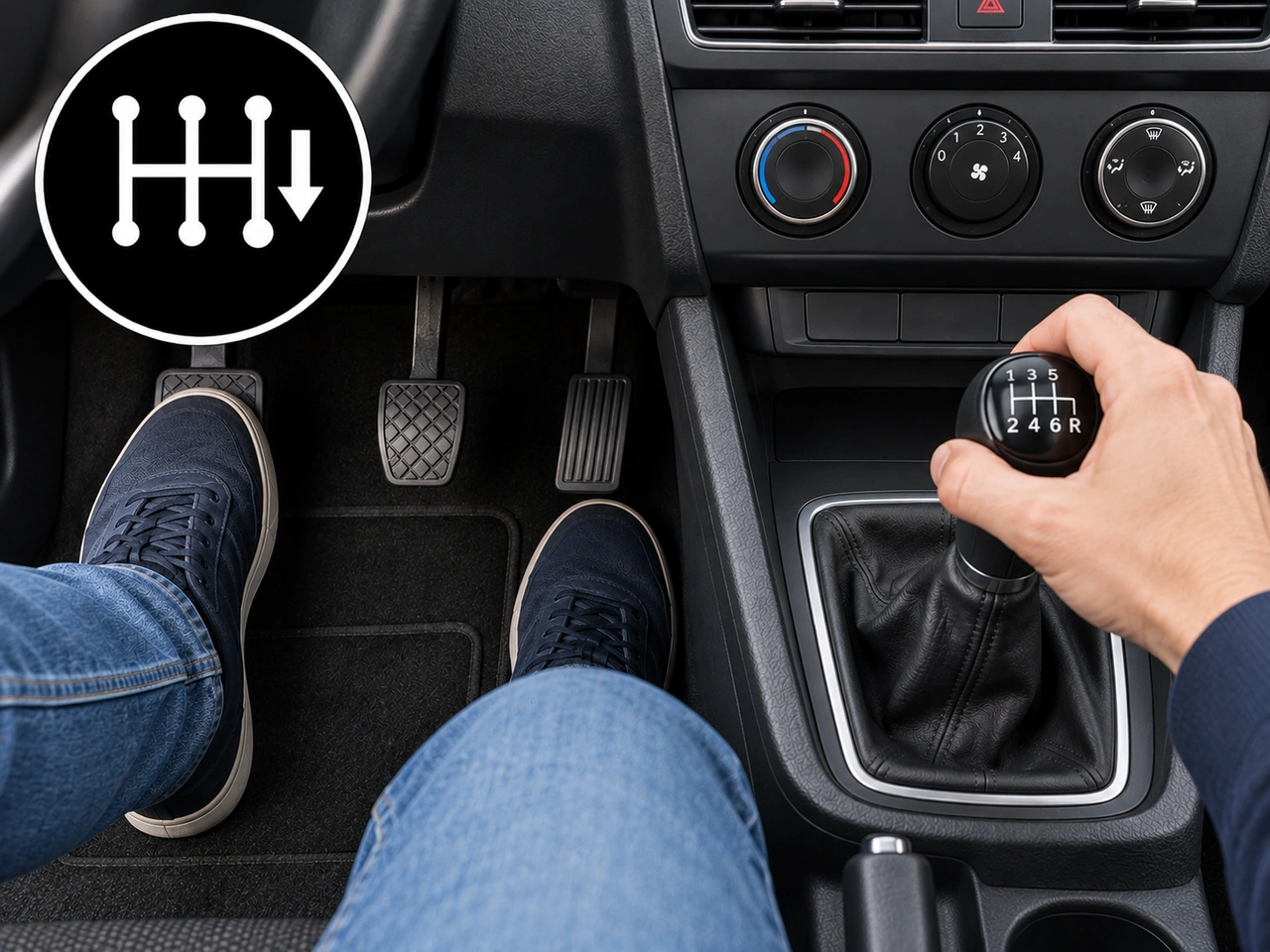
782. What should you consider before selecting a lower gear in a manual vehicle?
Before selecting a lower gear, make sure the vehicle's speed is suitable for that gear. Selecting too low a gear at excessive speed can cause harsh engine braking and place unnecessary stress on the drivetrain.
If the car is going too fast for the lower gear, slow down with the brakes before shifting.
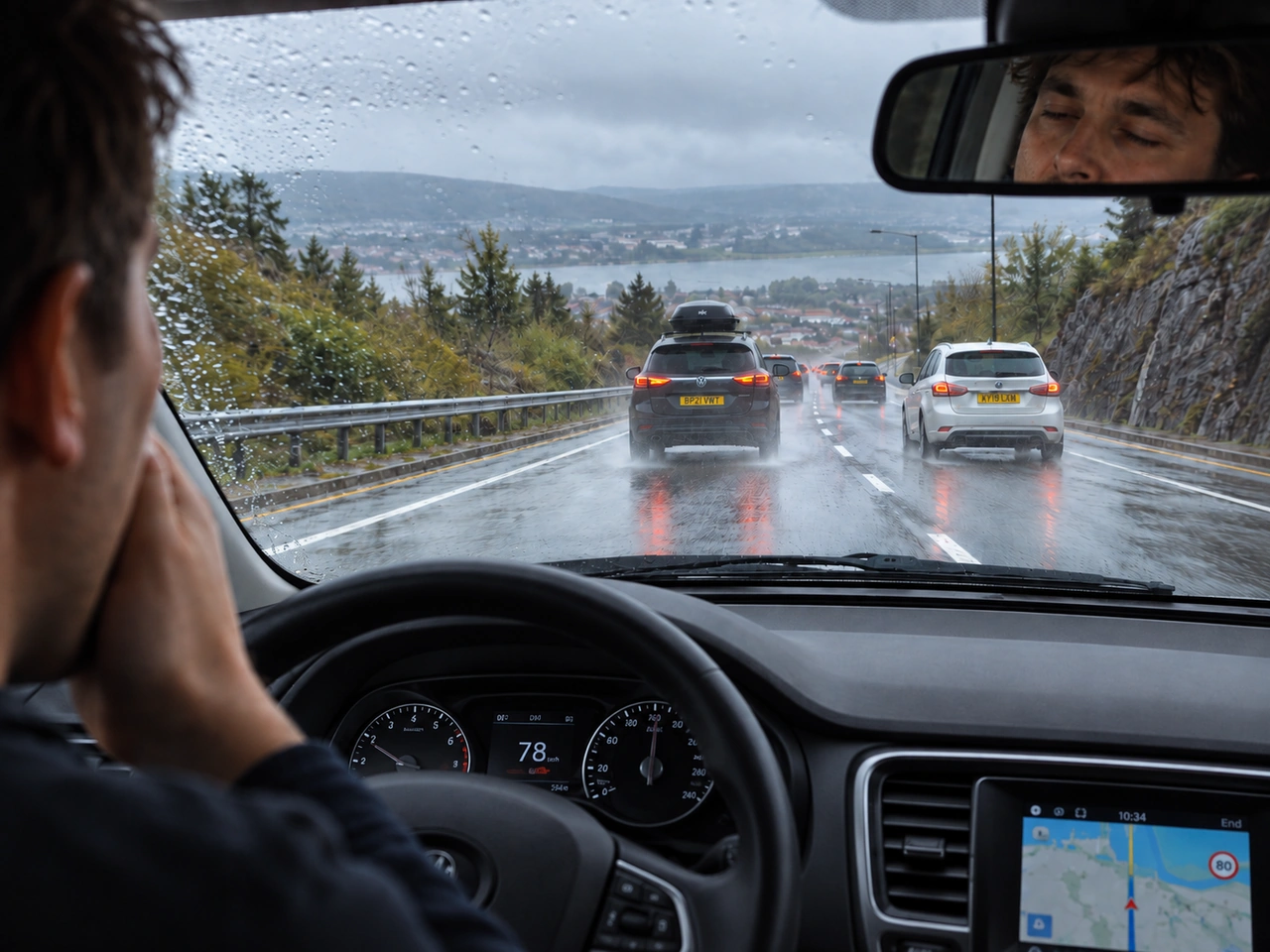
783. Which factors can increase a vehicle's stopping distance?
Stopping distance can increase because of higher speed, slower driver reactions, reduced tyre grip, poor weather or road conditions, worn tyres, weak brakes, or a heavier vehicle. Both the driver's reaction distance and the vehicle's braking distance can be affected.
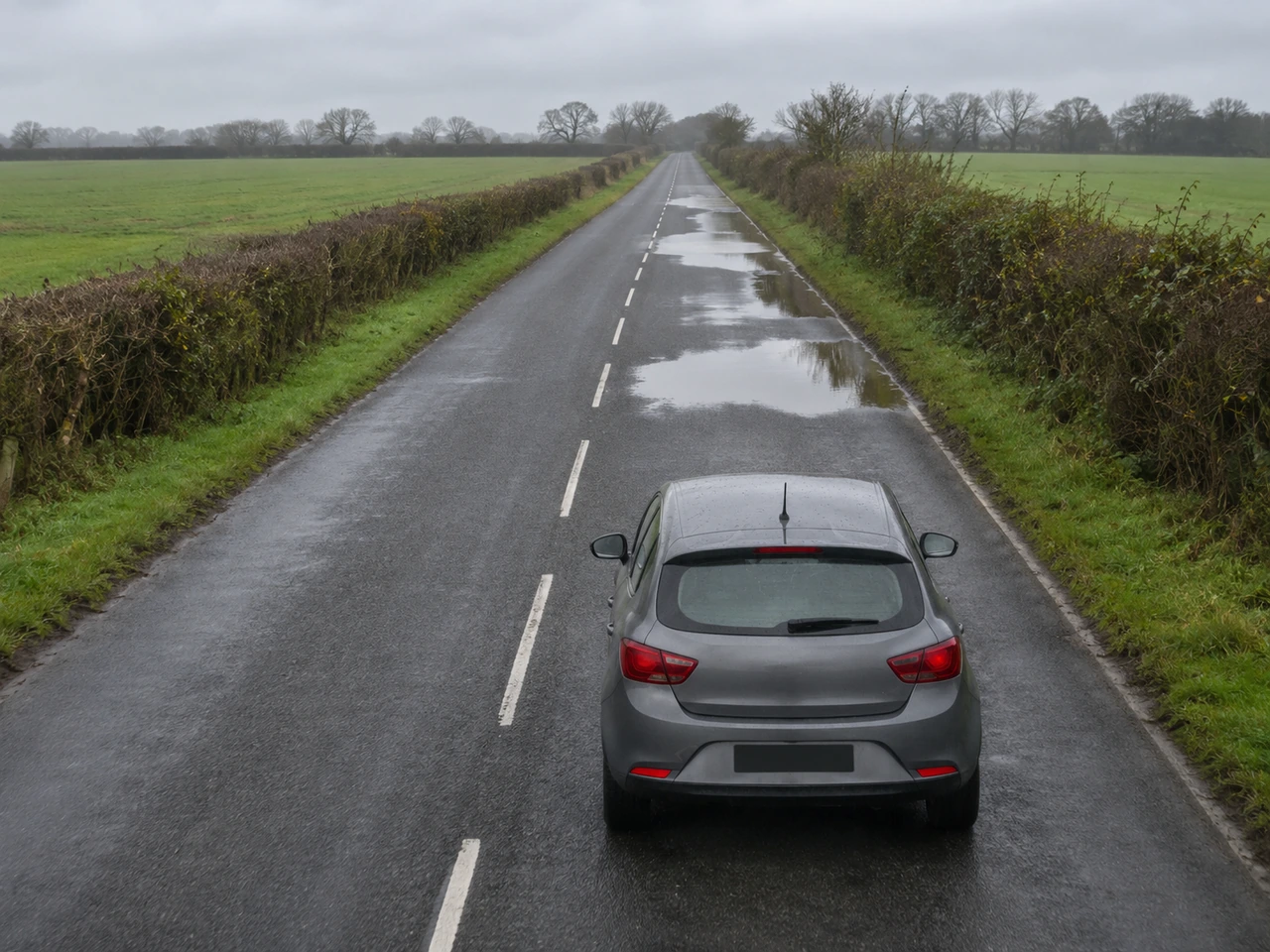
784. Which roads are most likely to cause aquaplaning?
Water can collect in ruts, dips and poorly drained parts of a road, especially at the bottom of a descent. The greater quantity of water makes it harder for tyres to maintain grip. Look well ahead and reduce speed smoothly before reaching surface water. Avoid sudden swerves into another lane. If the road is flooded or the water depth is uncertain, stop where safe and choose another route.
🔗 Sources
Michelin — Technical aquaplaning explanation and prevention
UK Met Office — General severe-weather, wind and flood safety
Image credit: AI-generated
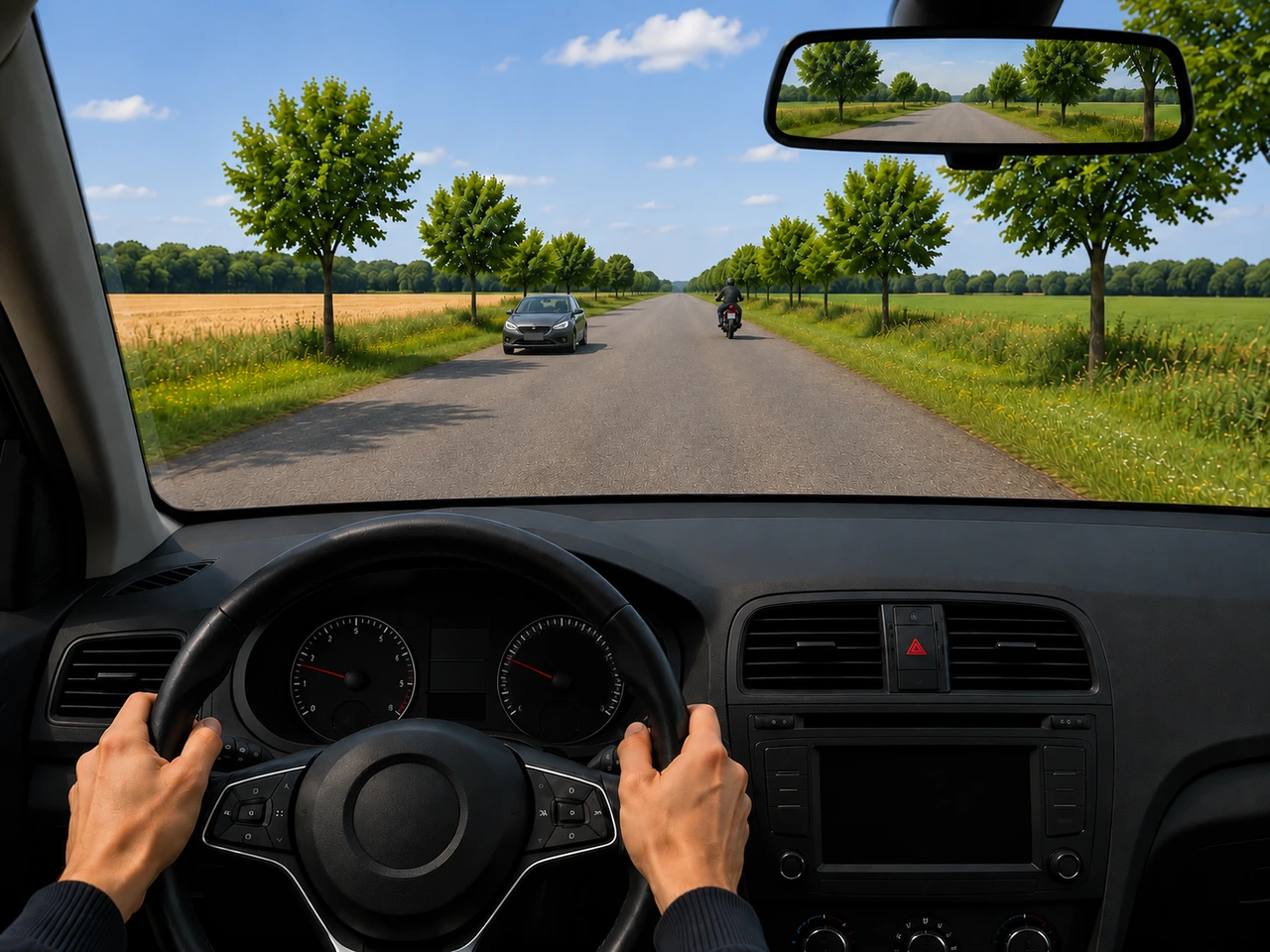
785. Why should you leave extra space behind a motorcycle?
A rider may slow suddenly or move to avoid a pothole or debris. Leave enough room to react and brake safely, and increase the gap when grip or visibility is poor.
🔗 Sources
UK Highway Code — General following-distance safety guidance: Rule 126
UK Highway Code — Allow riders room to avoid road hazards: Rule 213
Image credit: AI-generated
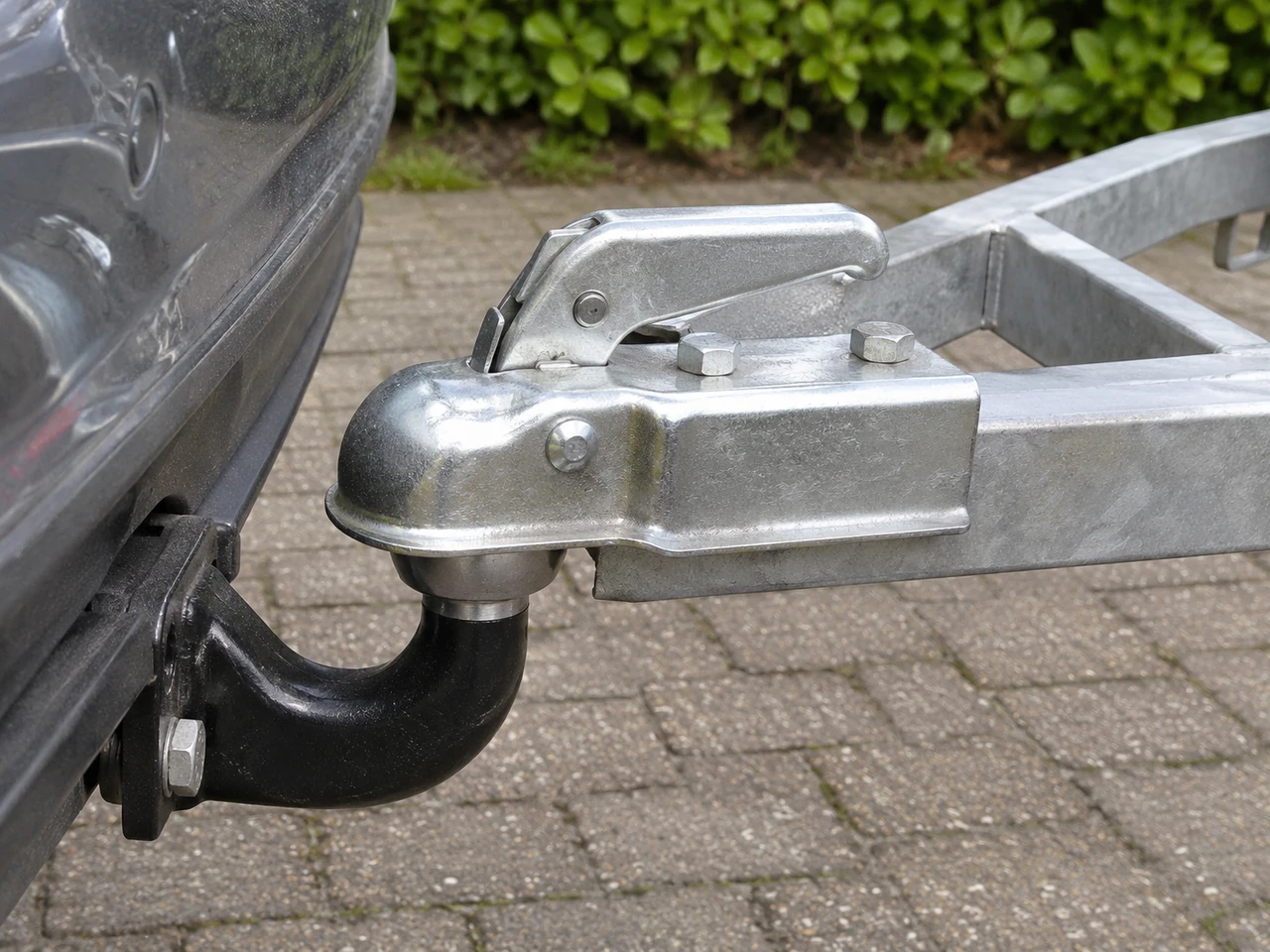
786. You should check that a trailer is correctly coupled before towing it.
Follow the manufacturer's instructions to check the coupling and its locking mechanism. Also check the electrical connection and any required breakaway cable or secondary coupling.
🔗 Sources
DVSA towing guidance (Great Britain) • Safety guidance, Towball and coupling; breakaway cable
Image credit: AI-generated
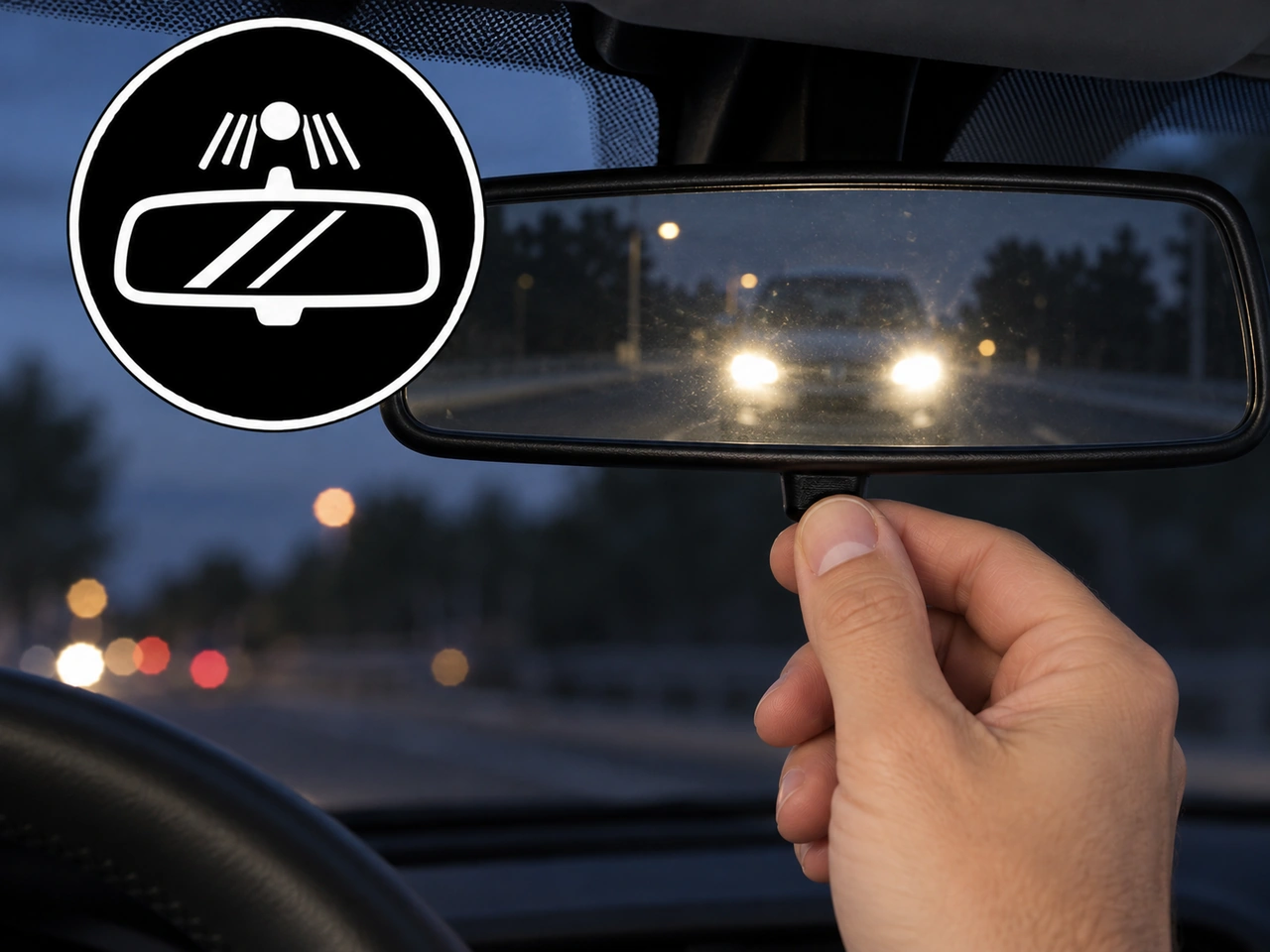
787. What is the purpose of the anti-dazzle control on the rear-view mirror?
The anti-dazzle setting reduces glare from the headlights of vehicles behind, helping the driver maintain a clear view without being dazzled.
On a manual day/night mirror, use the night setting to reduce glare from headlights behind you. Adjust the mirror angle in the day setting before driving.
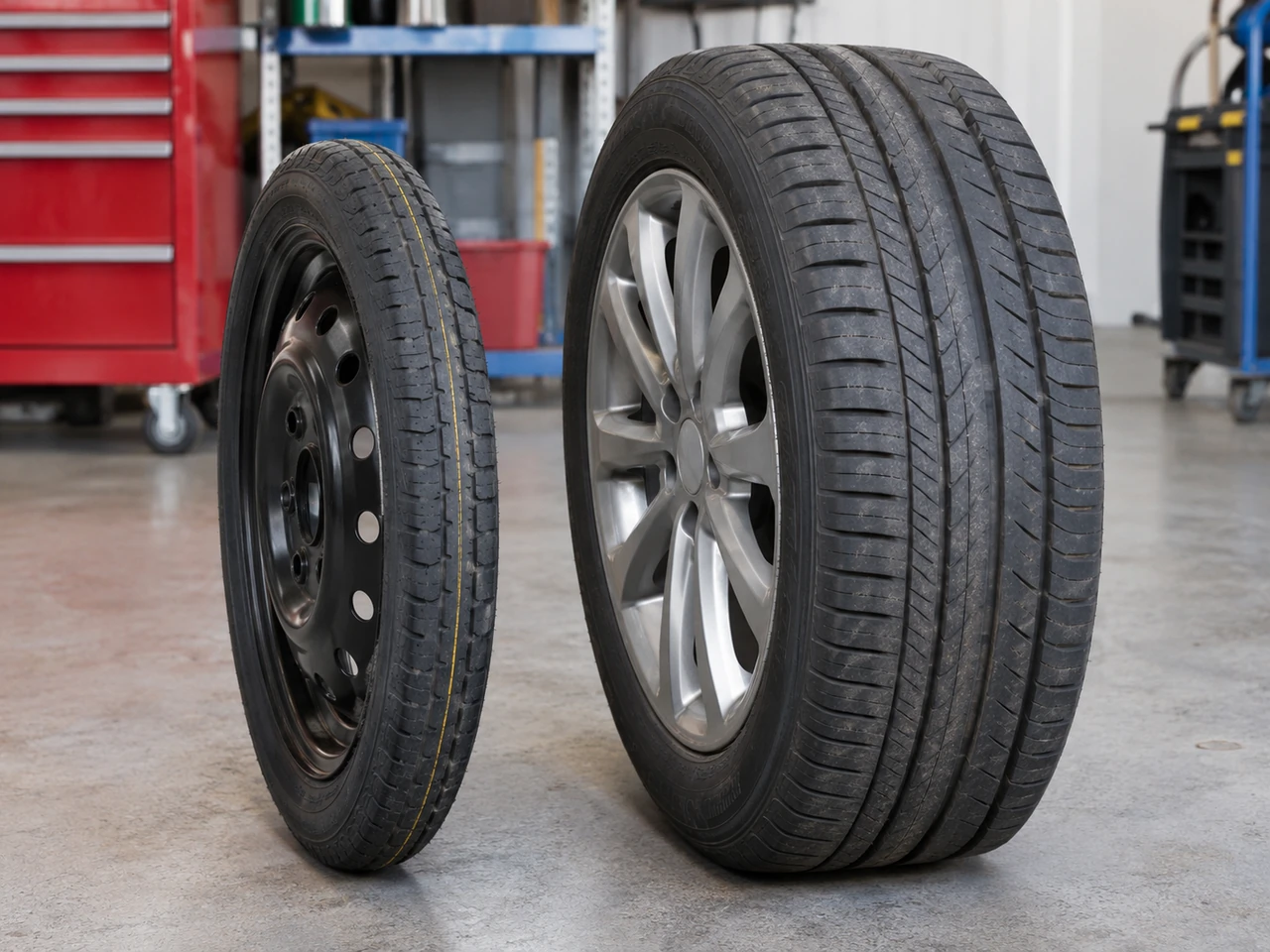
788. A temporary spare wheel may have a restricted maximum speed.
Follow the restrictions marked on the spare and given in the vehicle handbook, including speed, inflation pressure and permitted use. Arrange repair or replacement of the damaged tyre as soon as possible.
🔗 Sources
Volvo Support Argentina — V40 temporary spare; model-specific guidance.
Image credit: AI-generated
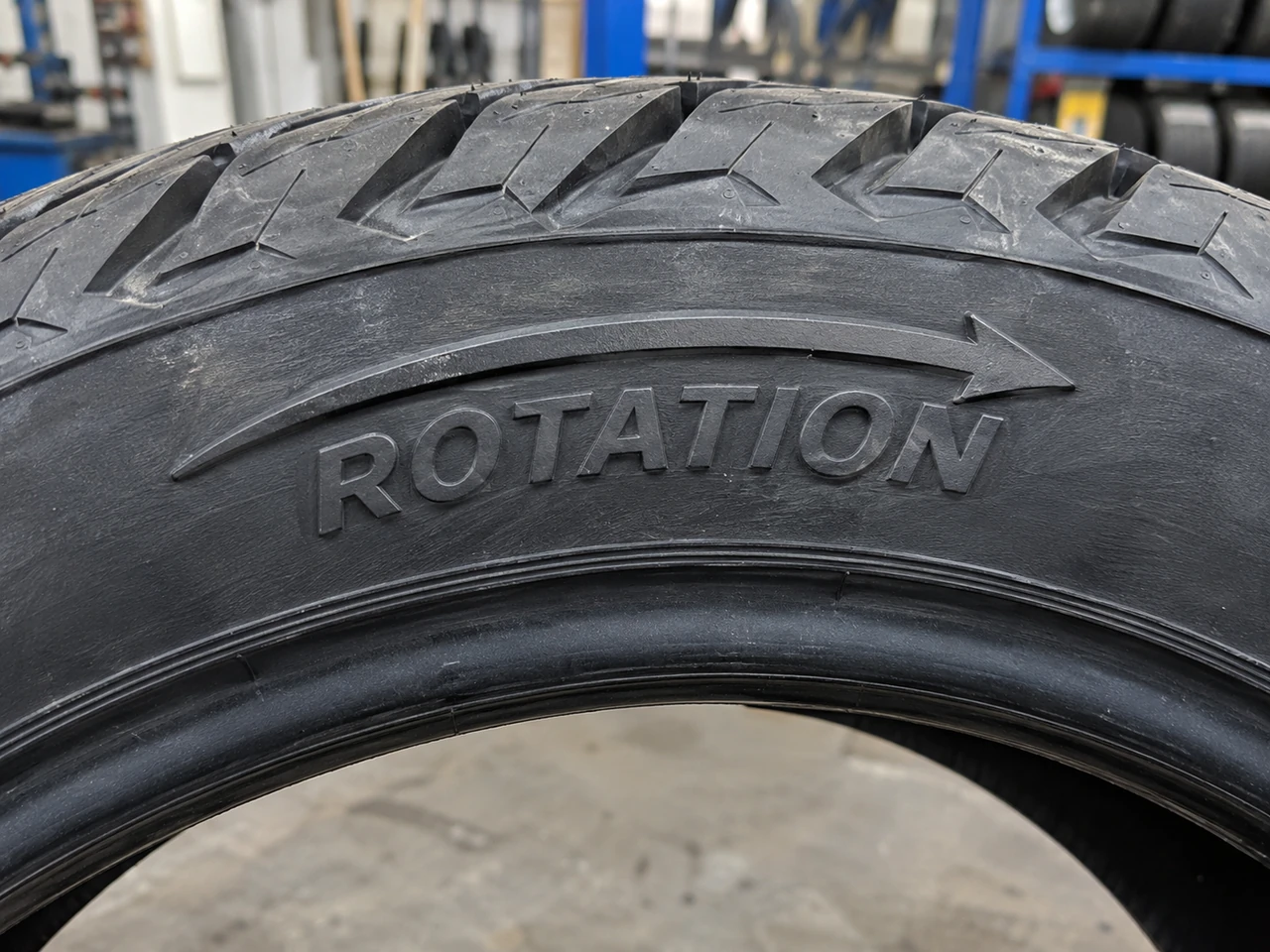
789. A directional tyre's rotation arrow can be ignored when fitting it.
A directional tyre must be fitted so its indicated direction matches the wheel's rotation when travelling forwards. Follow the tyre manufacturer's markings and have the fitting checked if you are unsure.
🔗 Sources
Michelin (manufacturer guidance) • Safety guidance, directional tread and rotation arrows
Image credit: AI-generated
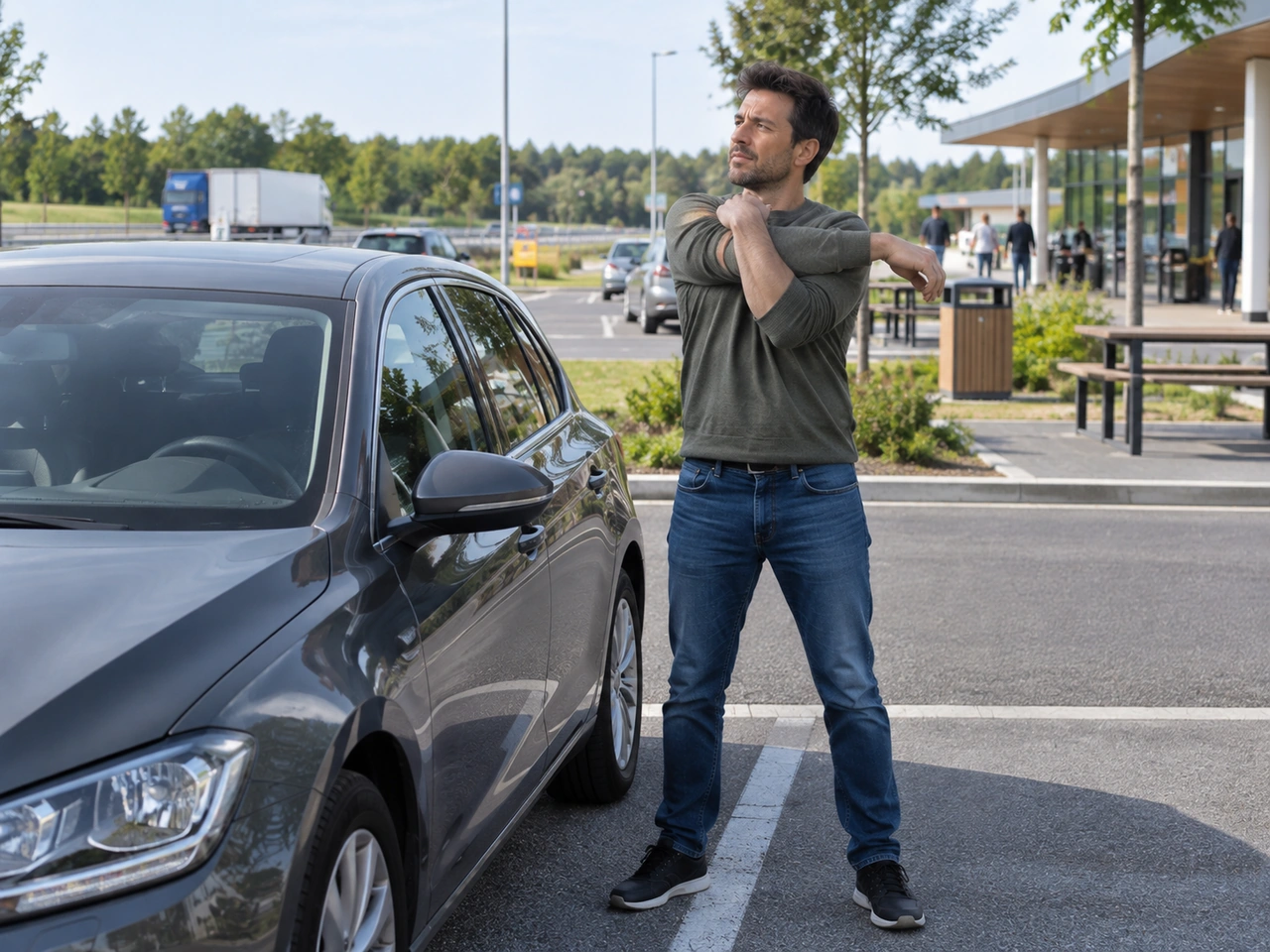
790. Why should you take regular breaks during a long journey?
Regular breaks during a long journey help reduce fatigue and maintain concentration. Do not wait until you are struggling to stay awake before stopping to rest.
Argentina. Plan stops at safe places before a long drive. Regular breaks help you manage fatigue, and signs of drowsiness mean you should stop sooner.
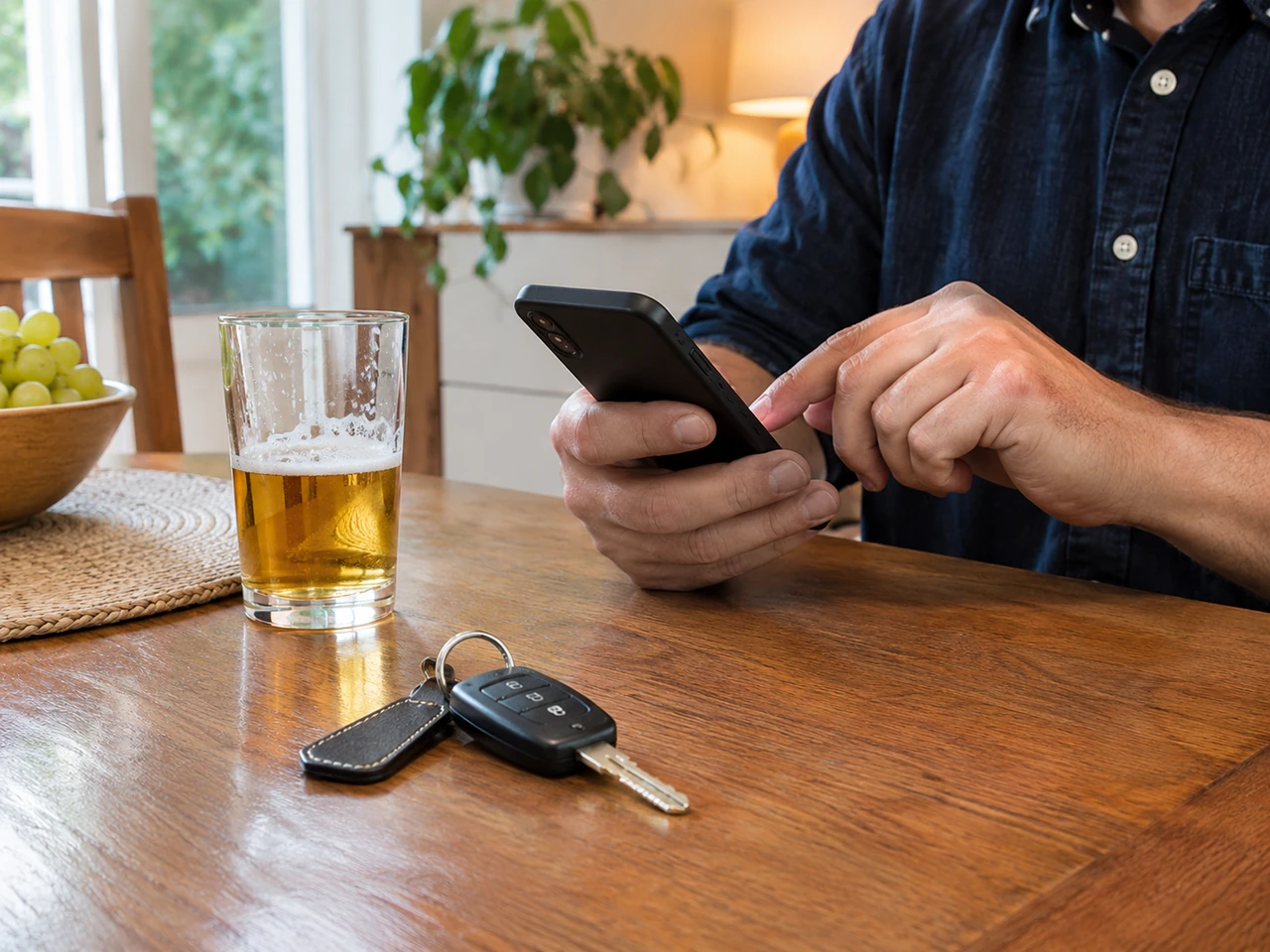
791. Alcohol can slow your reactions when driving.
Alcohol can slow reactions and impair judgement and coordination, even before obvious signs of drunkenness. Arrange a sober driver or another safe way home.
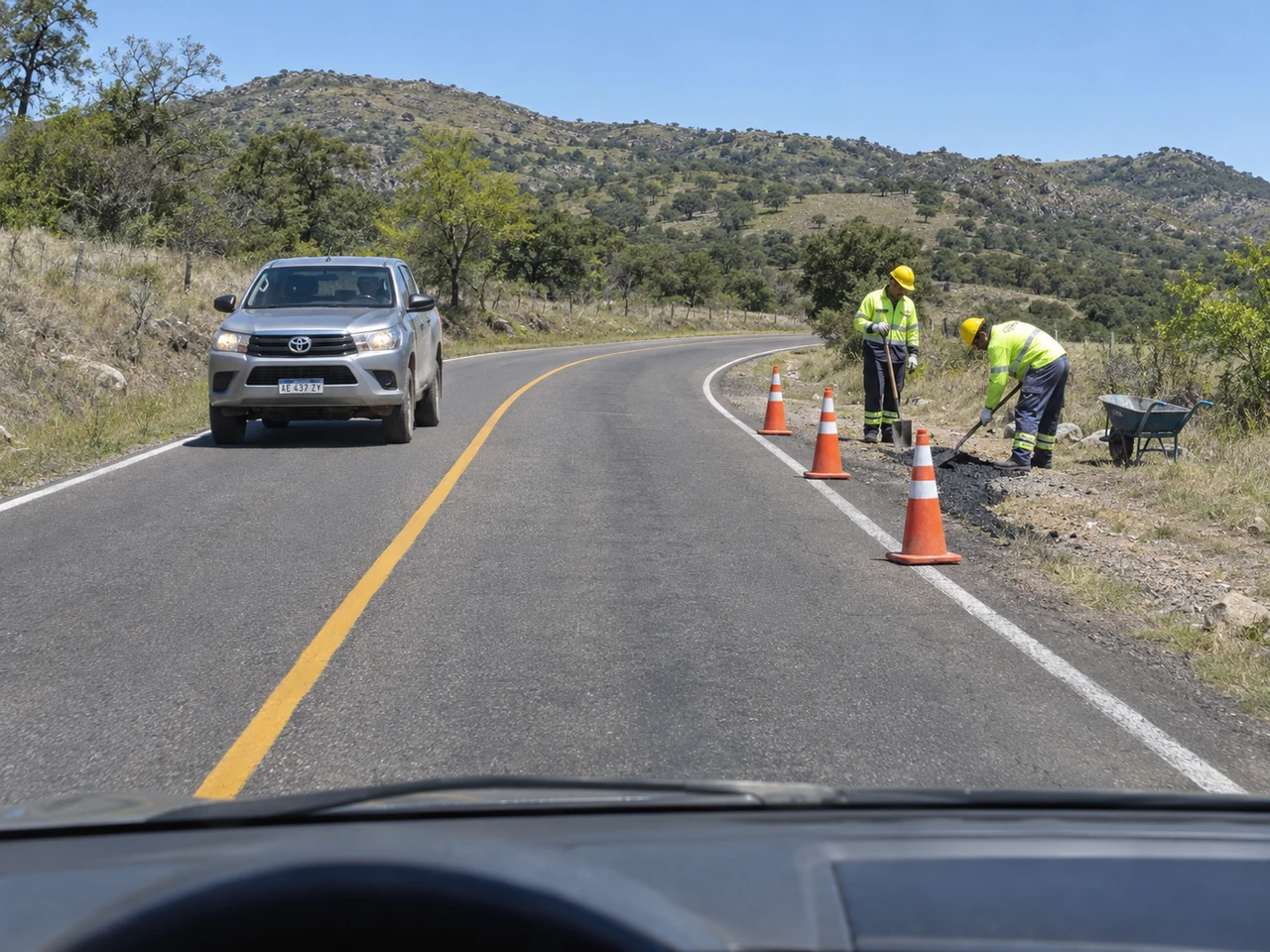
792. Why should you leave extra space when passing road workers?
Workers may be only a short distance from passing vehicles. Reduce speed and leave as much safe space as possible.
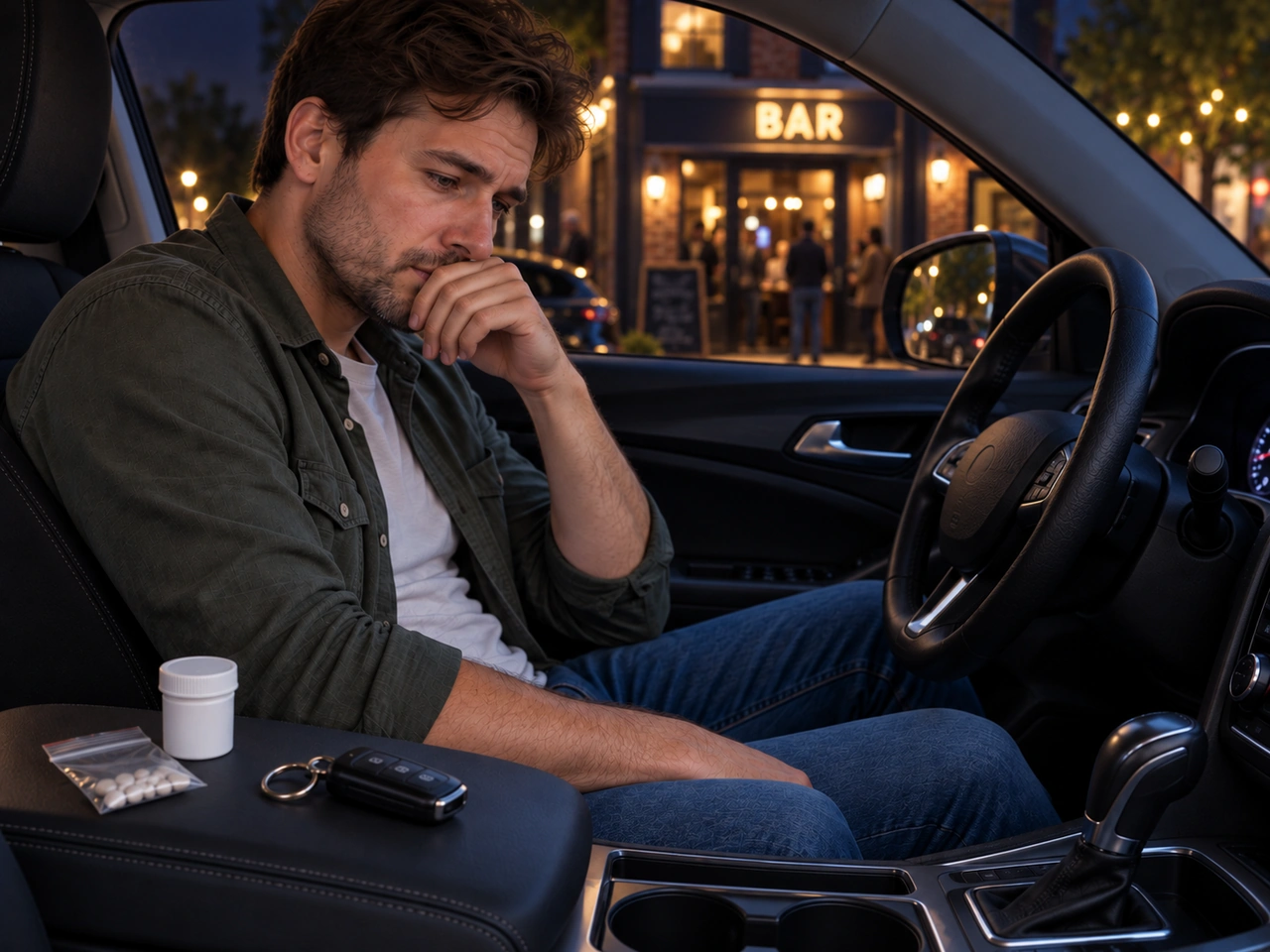
793. What should you do if you have taken drugs that may impair your driving?
Drugs can impair judgement, coordination, concentration, and reaction time. Their effects can be unpredictable and may continue after you feel that the main effects have passed. Do not drive while impaired.
Argentina. Article 48 prohibits driving after consuming narcotics or medicines that reduce fitness to drive. Arrange another way to travel if a substance may still affect your reactions or judgement.
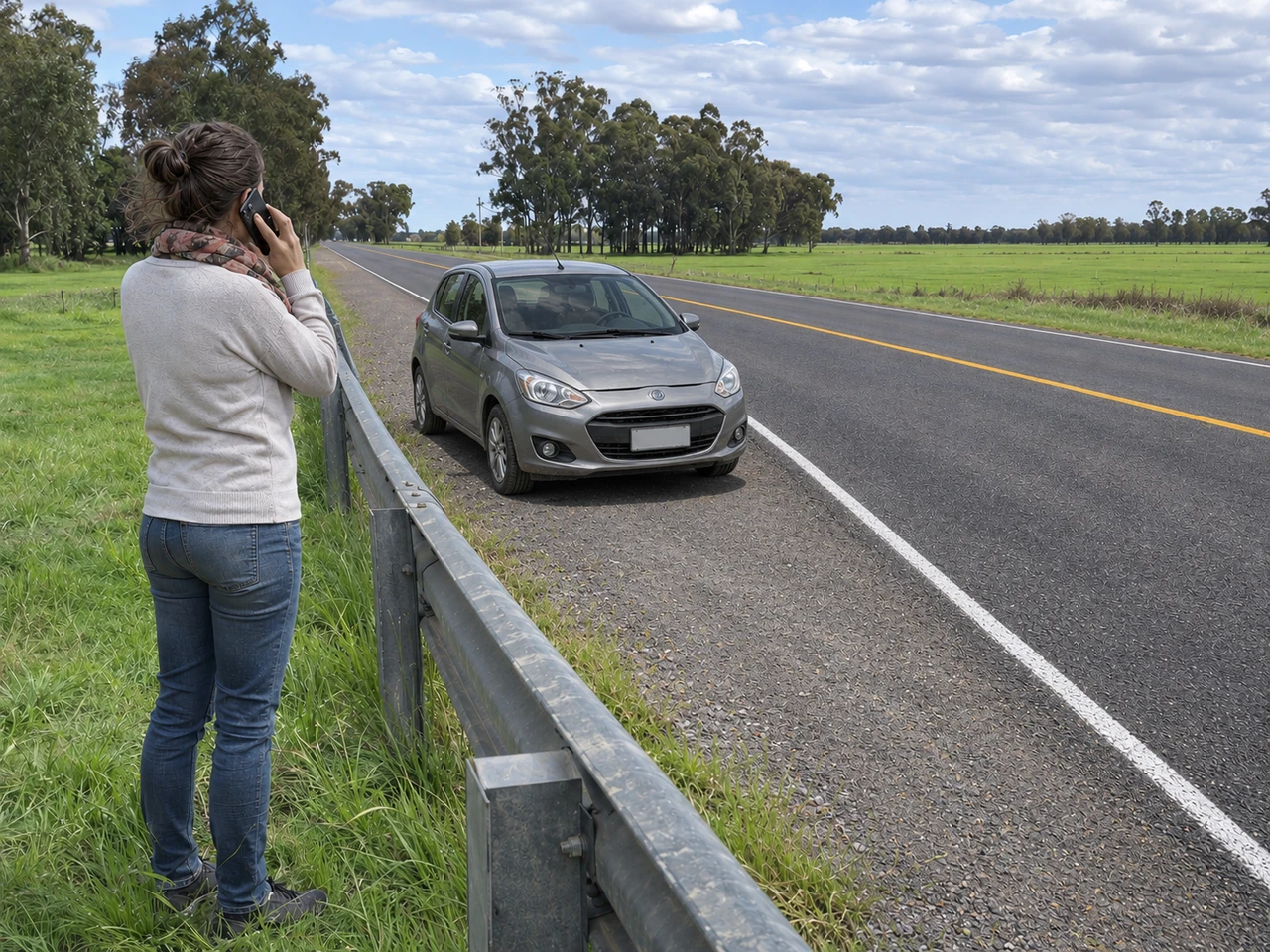
794. When reporting a crash, you should give emergency services the most precise location you can.
Give the road name or number, direction of travel and nearby landmarks or location markers where possible. Describe what happened and any casualties, answer the operator's questions and follow their instructions.
🔗 Sources
Argentine Ministry of Security — safe emergency calls, exact location and incident information.
Image credit: AI-generated
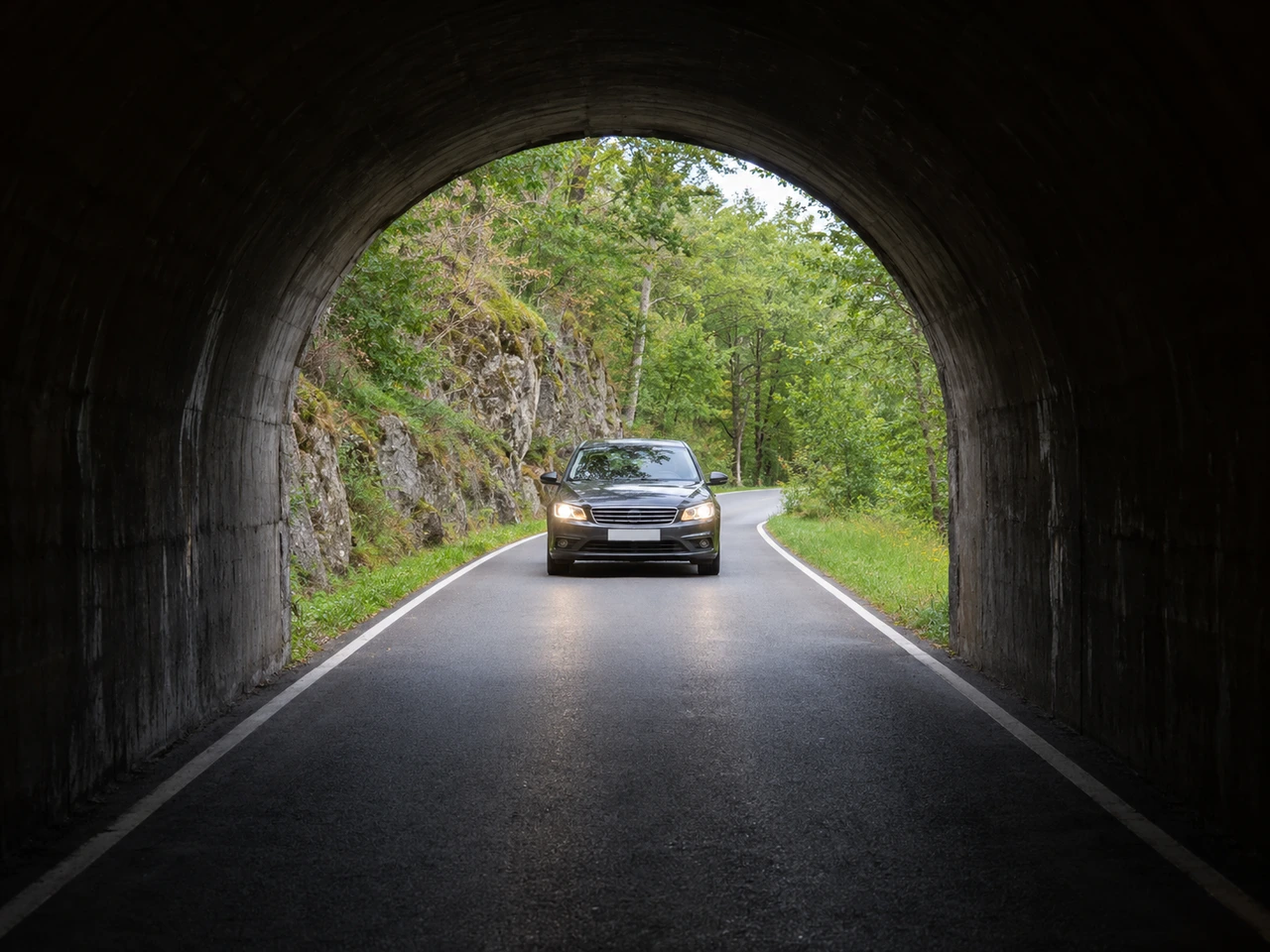
795. Why should you switch on dipped headlights before entering a tunnel?
Tunnel lighting may be much darker than daylight. Dipped headlights help you see and make your vehicle more visible.
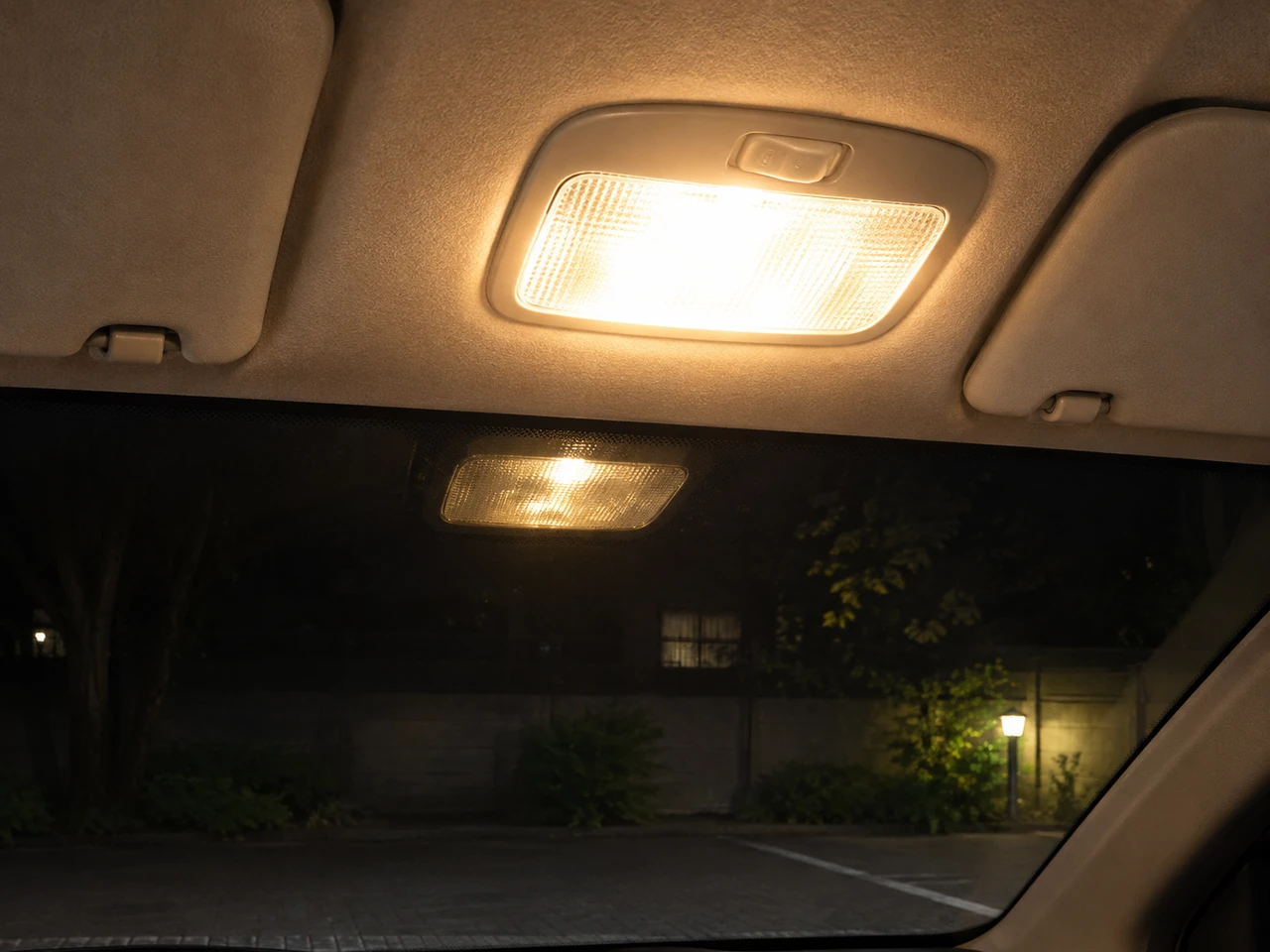
796. Bright interior lighting can make it harder to see outside at night.
Bright cabin lights can cause glare and reflections in the windows. Keep unnecessary interior lighting low or off while driving, while leaving essential controls readable.
🔗 Sources
nidirect (Northern Ireland) • Safety guidance, night vision and interior lights
Image credit: AI-generated
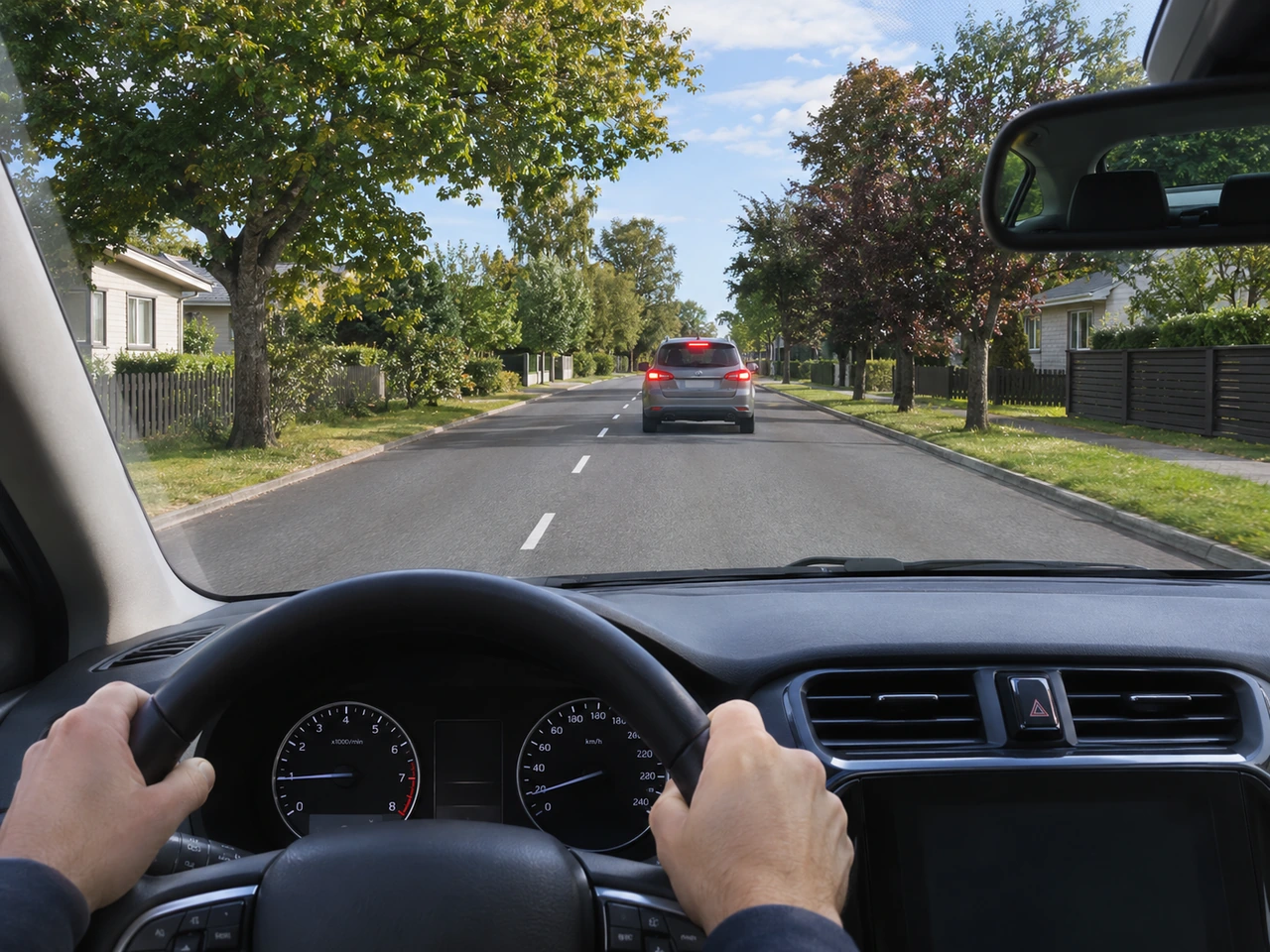
797. What should you remember about automatic emergency braking?
Automatic emergency braking may help avoid a collision or reduce its severity, but detection and braking have limits. Stay alert, keep a safe gap and act when needed. The exact capabilities depend on the vehicle.
🔗 Sources
Tesla — vehicle handbook
NHTSA — United States vehicle safety guidance
Image credit: AI-generated
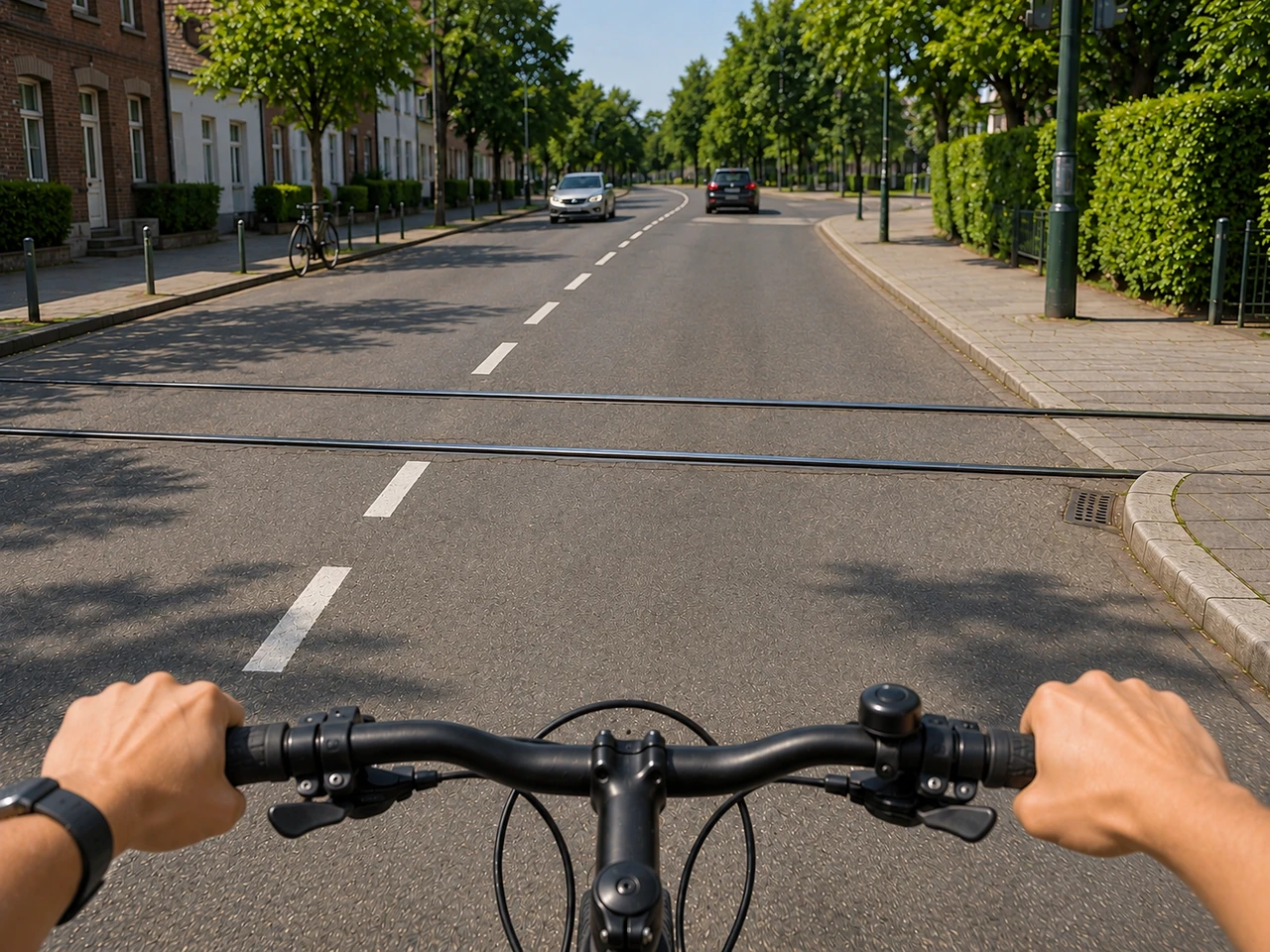
798. How should cyclists cross railway or tram tracks?
A bicycle tyre can become trapped in a rail groove, and metal rails may be slippery. Check for traffic and trams, then cross smoothly at an angle as close to a right angle as can safely be achieved. Avoid sharp braking or steering on the rails. Never swerve into traffic to improve your crossing angle.
🔗 Sources
Argentina — ANSV driver manual, crossing railway tracks, printed page 115
Image credit: AI-generated
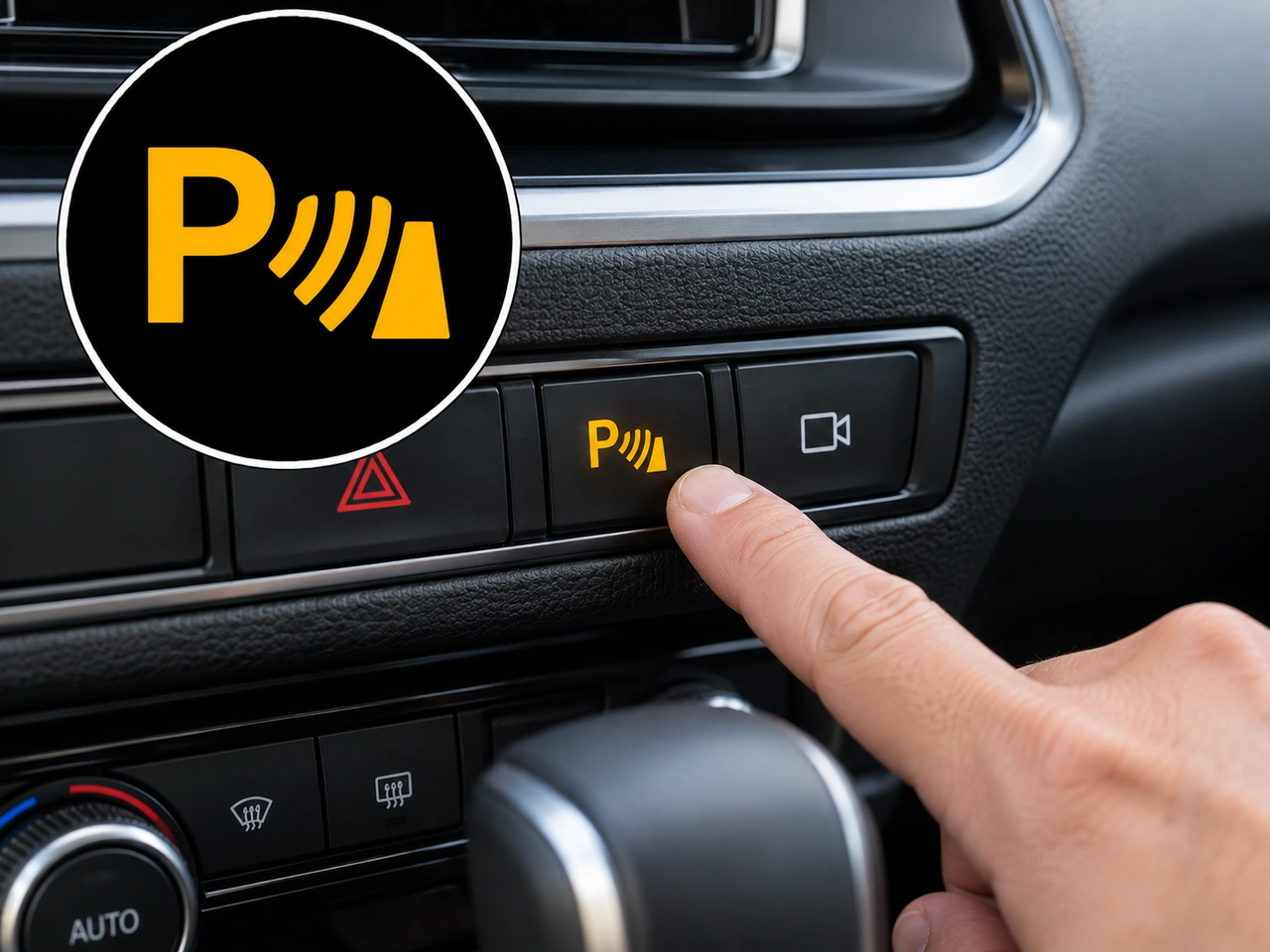
799. What does this dashboard symbol indicate?
This symbol relates to the vehicle's parking assistance system. Depending on the vehicle, the system may use sensors or cameras to detect obstacles and assist the driver while parking.
Parking sensors can help judge the distance to nearby obstacles at low speeds. Keep watching your surroundings while manoeuvring.
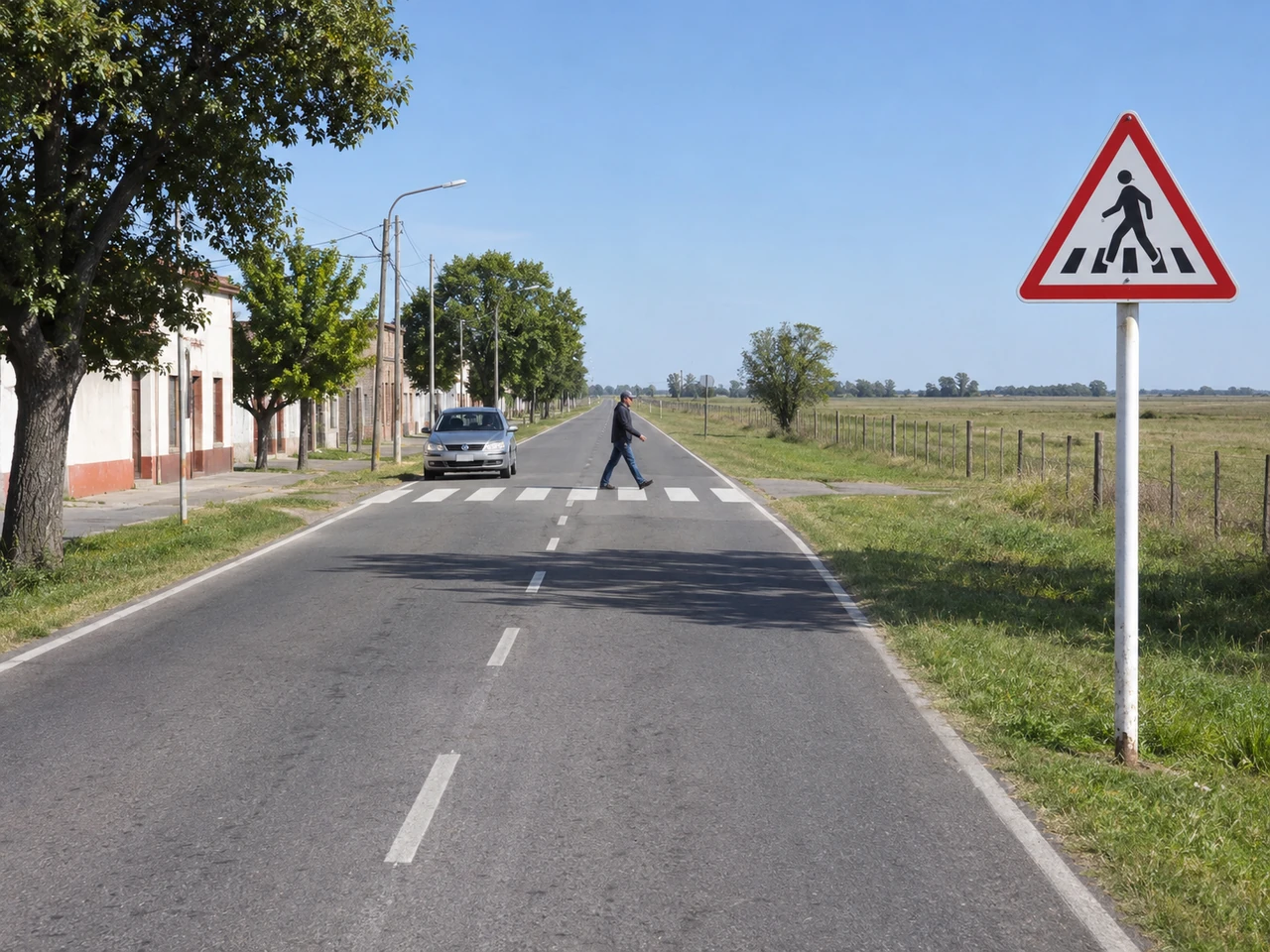
800. What is the purpose of a pedestrian crossing?
A pedestrian crossing provides a designated place to help people cross the road safely. Before entering, check all directions and every lane, and wait until traffic has stopped or the road is clear. Keep looking and listening while crossing. Follow any pedestrian signals and local rules; priority and crossing designs vary by country. A marked crossing does not remove the need to check traffic.