QuizTraffic rulesArgentina

Test your knowledge with our multiple-choice quiz. Learn from each answer and improve your understanding of the traffic rules and road signs of Argentina.

For informational purposes only. Always follow official regulations. Some content and images were created with AI assistance.


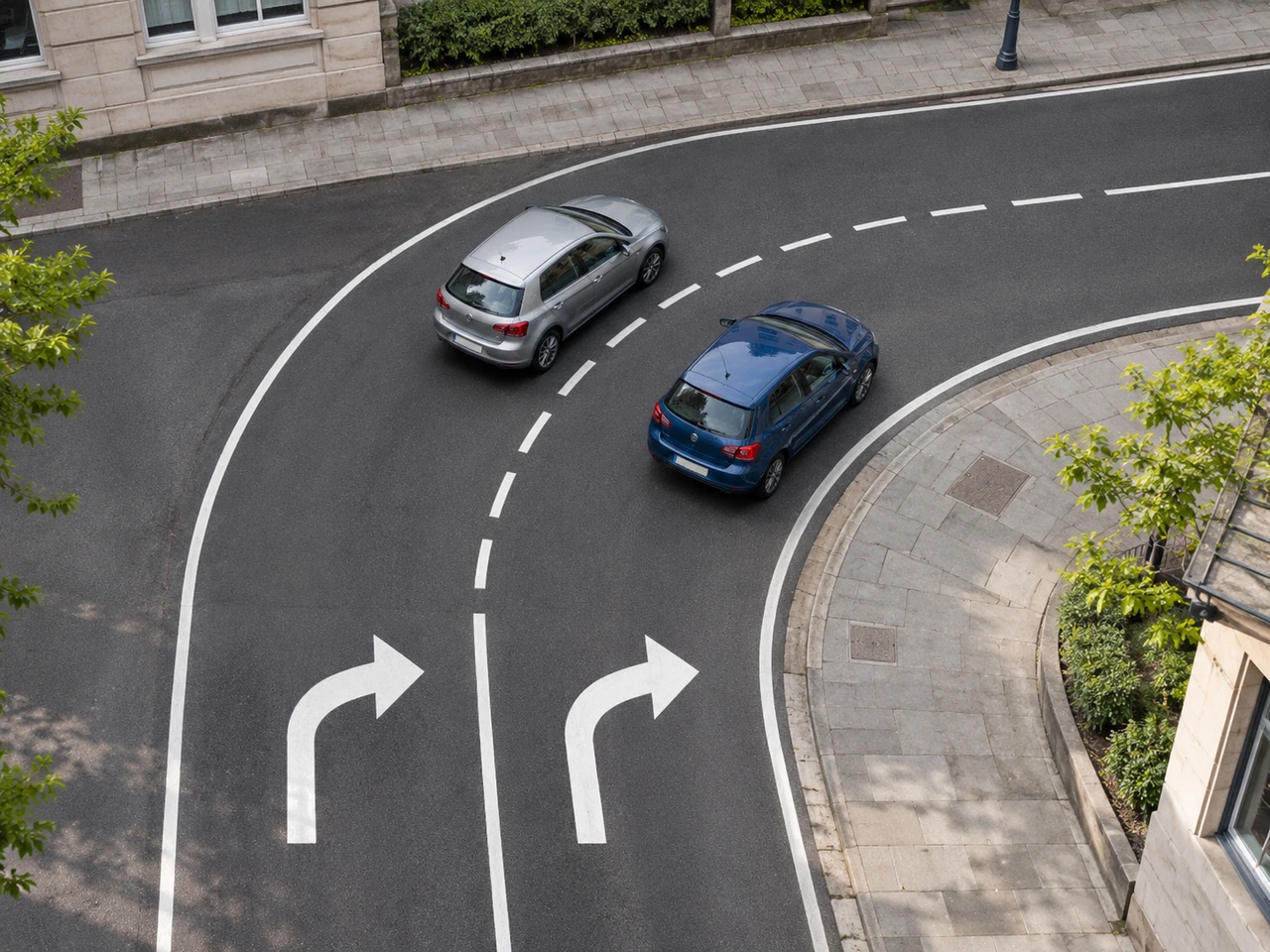
How should you steer when two marked lanes turn together?

801. How should you steer when two marked lanes turn together?

✓ Follow your lane guides without drifting into the next lane.
Cut across both lanes to take the shortest route.
Follow the other car even if it leaves your lane.
Ignore the guides once you begin the turn.

Choose the appropriate lane before the turn, then follow its guide markings throughout the turn. Keep a safe distance from vehicles turning beside you and avoid drifting across their path. Follow local signs and markings.

Two cars following separate marked lanes through a turn. General road-safety guidance: Choose the appropriate lane before the turn, then follow its guide markings throughout the turn. Keep a safe distance from vehicles turning beside you and avoid drifting across their path. Follow local signs and markings.
🔗 Sources

nsw.gov.au — Australian public authority
Reference: lane lines when turning; general safety application

Image credit: AI-generated

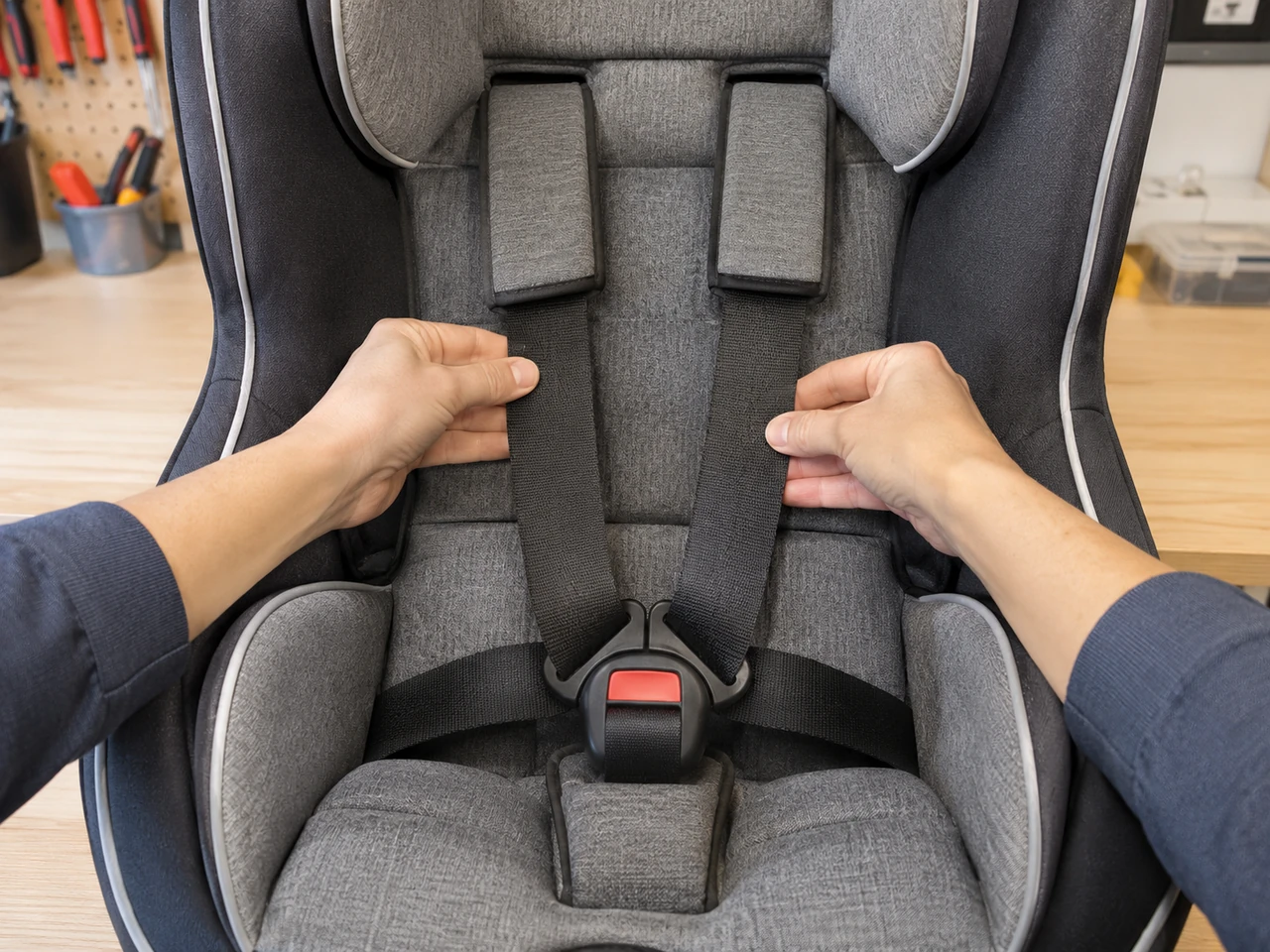
Child-seat harness straps should lie flat without twists.

802. Child-seat harness straps should lie flat without twists.

✓ True.
False.

Twisted straps do not fit as intended. Check that the harness lies flat and is adjusted according to the child-seat instructions before travelling.

Keep a child-seat harness flat and snug. Twisted straps do not fit as intended. Check that the harness lies flat and is adjusted according to the child-seat instructions before travelling.
🔗 Sources

NHTSA (United States) • Safety guidance, Fitting Your Child Correctly In The Seat

Image credit: AI-generated
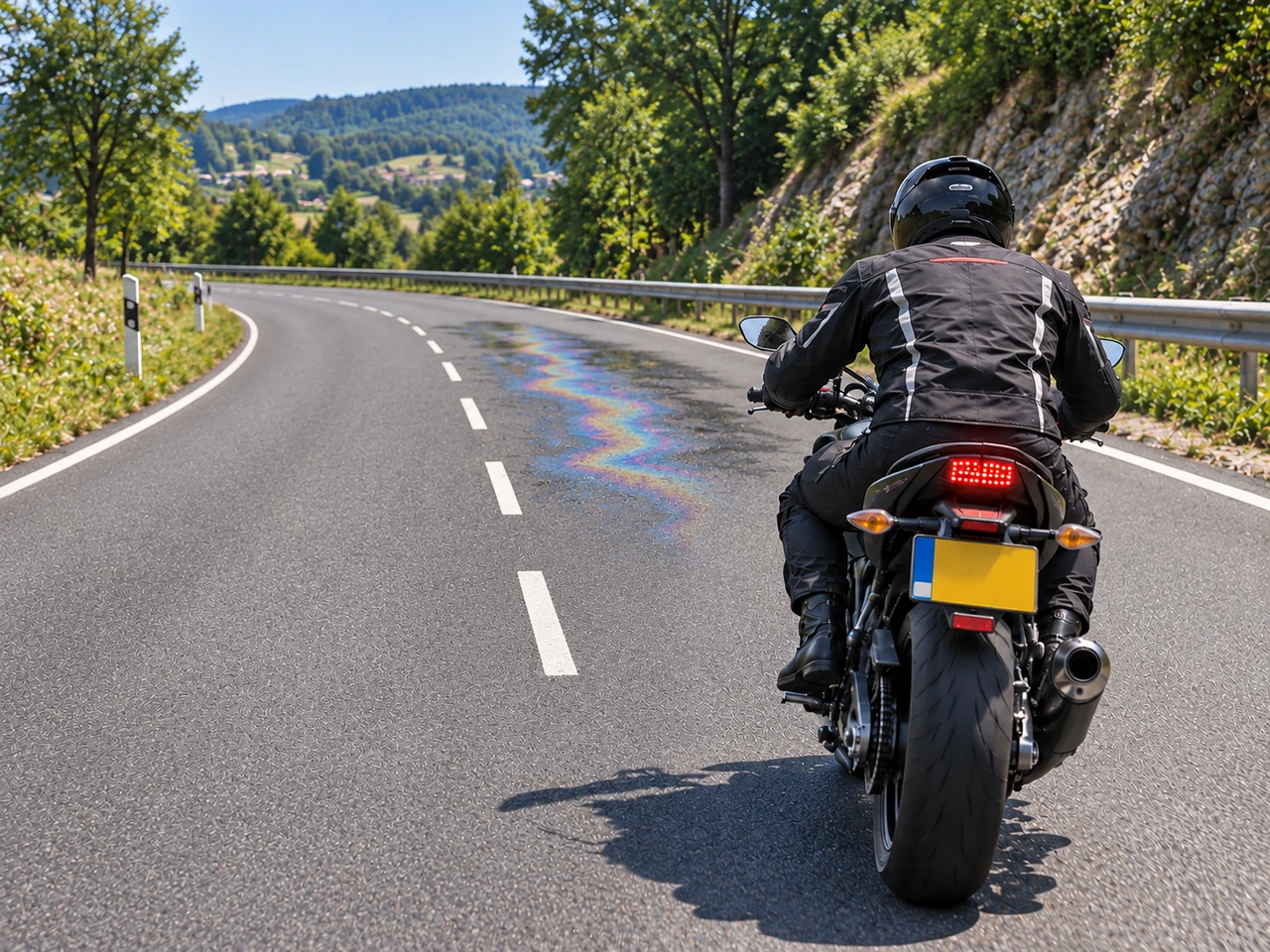
Why should you take extra care if oil or diesel is spilled on the road?

803. Why should you take extra care if oil or diesel is spilled on the road?

✓ It can make the road extremely slippery.
It can make the brakes overheat.
It can make the road surface much softer.
It can increase tyre pressure.

Oil, diesel and other fluids can create a very slippery road surface, particularly for motorcycles and bicycles. Reduce speed, avoid sudden braking or steering and keep the vehicle as stable as possible when crossing a contaminated area.

Motorcyclist approaching a diesel spill in the right lane of a right-hand-traffic road.
🔗 Sources

Great Britain — Highway Code, rule 227; spilled diesel and low grip

Image credit: AI-generated
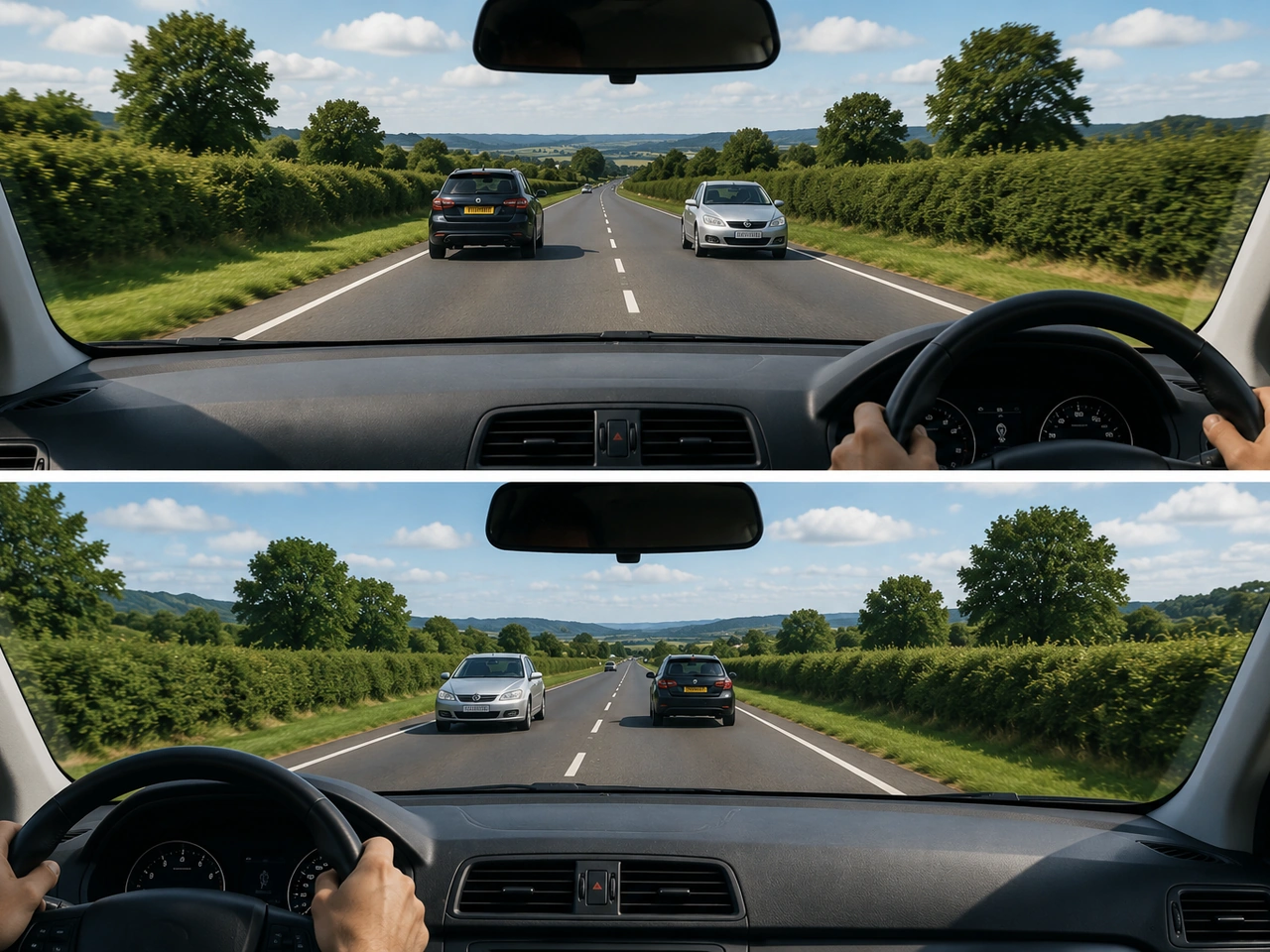
Which side do people drive on?

804. Which side do people drive on?

✓ Right-hand side.
Left-hand side.

Traffic drives on the right-hand side of the road in Argentina.

Road traffic and the designated driving side.
🔗 Sources

Country example: United States, Oregon DMV — right-hand traffic and normal overtaking on the left

Image credit: AI-generated
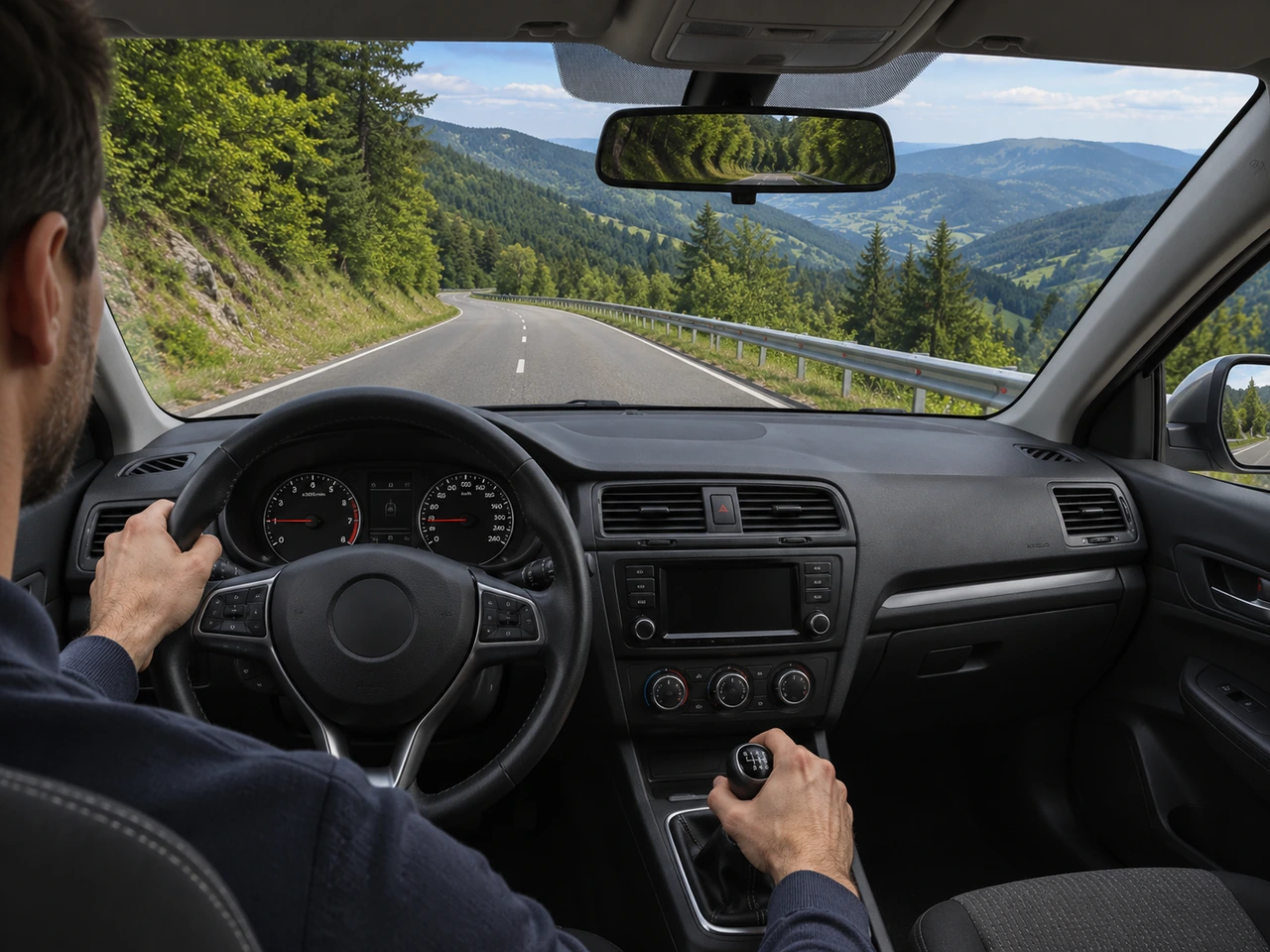
Why should you use a lower gear when driving downhill?

805. Why should you use a lower gear when driving downhill?

It makes the steering lighter on descents.
It allows the vehicle to coast more freely.
✓ It helps control speed using engine braking.
It reduces engine braking to save fuel.

Engine braking helps prevent the vehicle from gaining too much speed and reduces strain on the brakes.

If the car gains too much speed on a descent, a suitable lower gear can help hold it back and reduce repeated footbraking.
🔗 Sources

Image credit: AI-generated, shared right-hand-traffic scene
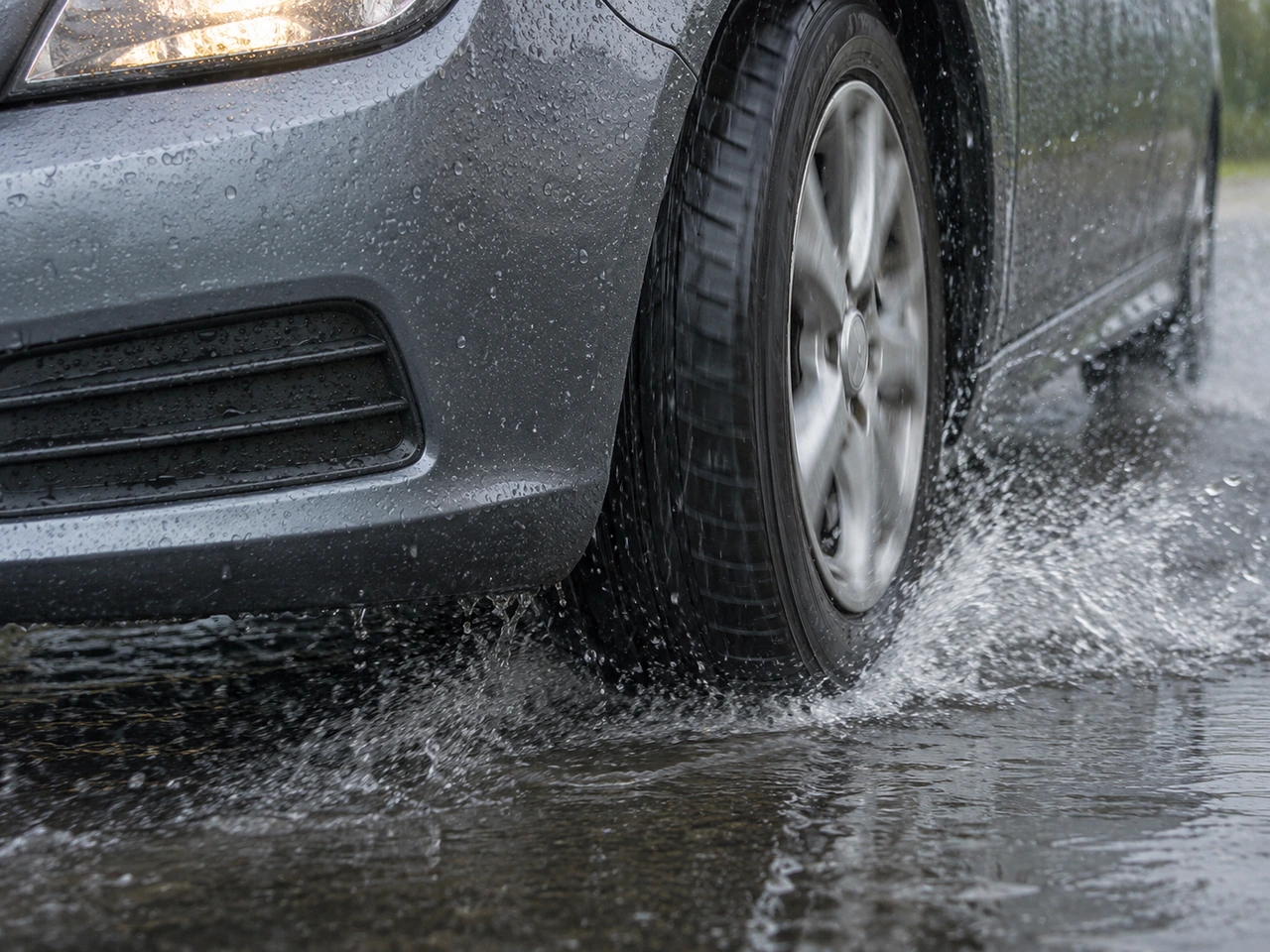
What is aquaplaning?

806. What is aquaplaning?

When low tyre pressure causes a tyre to burst.
When water enters the engine and causes it to stop.
✓ When tyres ride on a layer of water and lose contact with the road.
When steering becomes heavier on a dry road.

Aquaplaning occurs when water separates a tyre from the road, reducing or removing its grip. Steering and braking can become ineffective. The risk depends on speed, surface water and tyre condition; worn tread increases the risk. Reduce speed before reaching standing water.
A tyre throws up spray as it passes through standing water.
🔗 Sources

Michelin — Technical aquaplaning explanation and prevention

Image credit: AI-generated

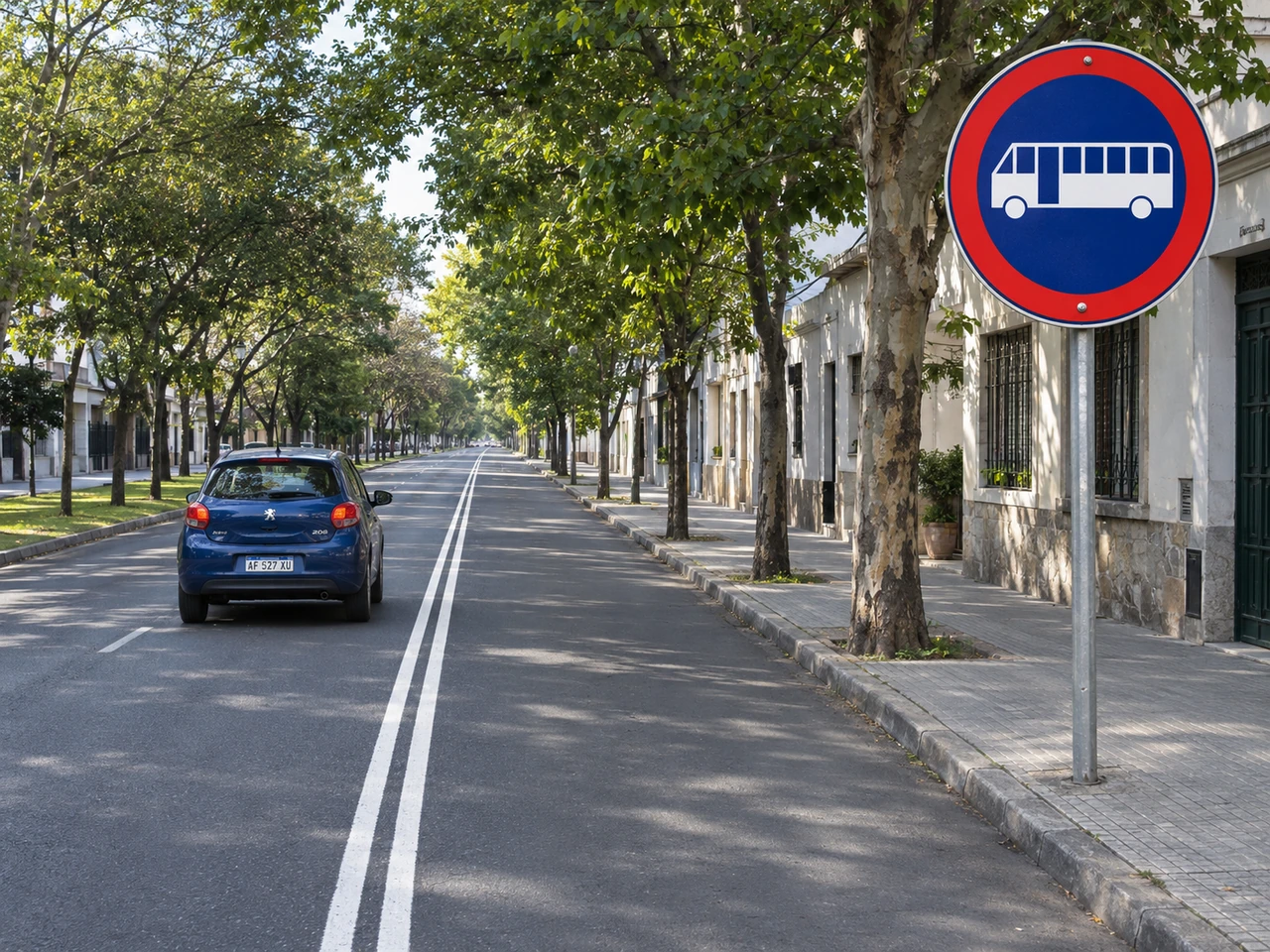
Any private car may use a signed bus lane whenever no bus is visible.

807. Any private car may use a signed bus lane whenever no bus is visible.

✓ False.
True.

An empty bus lane is not automatically open to private cars. During its operating times, access depends on the permitted vehicles and any exceptions in the local rules, signs or markings.

Argentina — exclusive circulation (R.18). The empty right-hand lane is identified by the white bus on a blue circle with a red border. R.18 reserves the indicated lane for the vehicle class shown. The double continuous white boundary distinguishes an exclusive lane from a preferential lane, which has different access rules. An ordinary private car may not use the exclusive bus lane merely because no bus is visible.
🔗 Sources

Argentina national road-signing system, Annex L to Decree 779/1995 as replaced by Decree 196/2025: R.18 and H.2.

Image credit: AI-generated

Sign artwork reference: Municipality of San Miguel — driver-training Module 5, R.18 public-transport variant, PDF page 9.
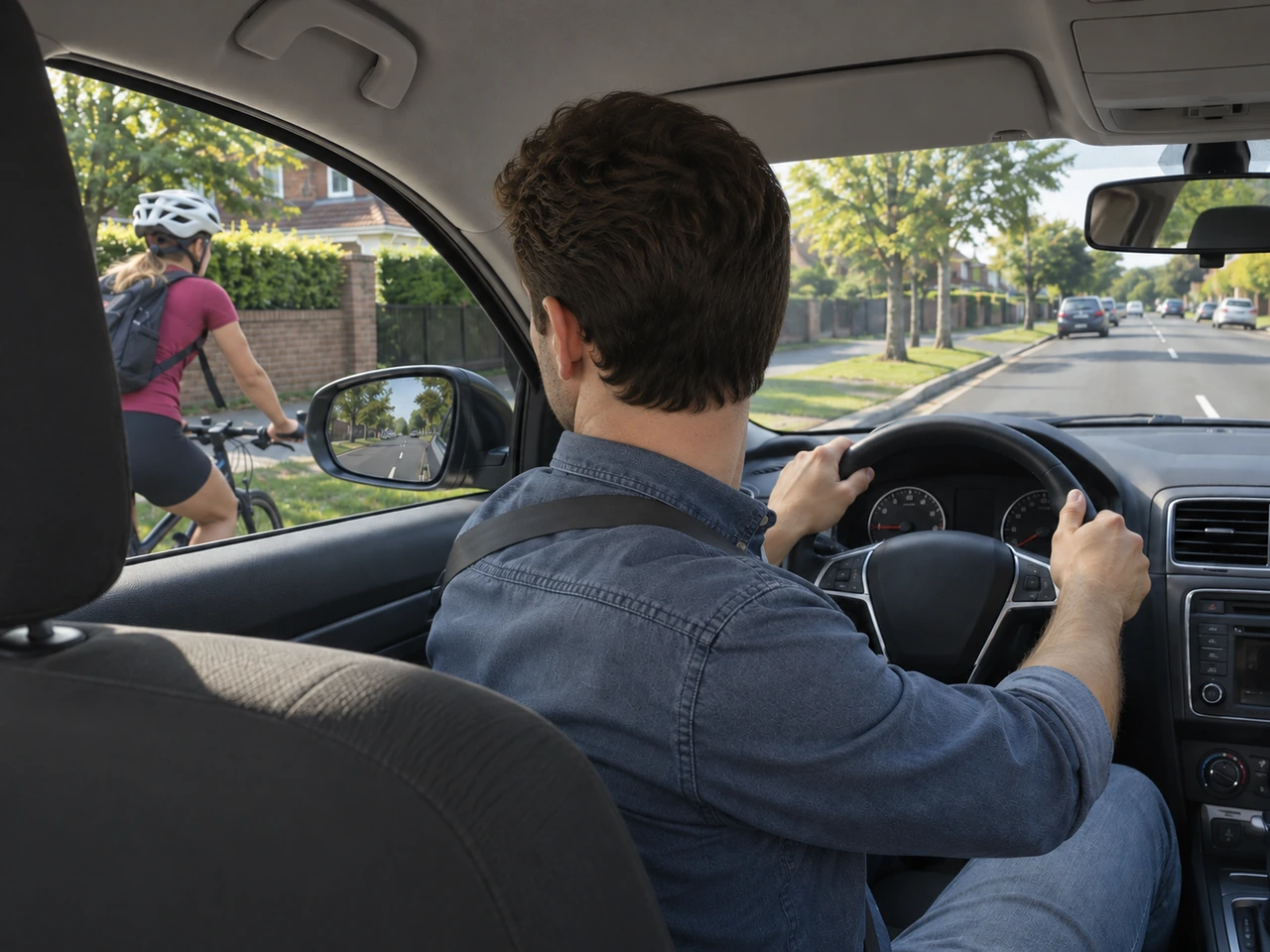
Your mirrors show every area around your vehicle.

808. Your mirrors show every area around your vehicle.

True.
✓ False.

Mirrors leave blind spots. Before moving off or changing lanes, check the relevant blind spots as well as your mirrors.

Use mirrors and direct checks together. Even correctly adjusted mirrors leave areas you cannot see. Before moving off or changing direction, check the relevant blind spots directly as well as the mirrors. Keep checking as the manoeuvre develops; a cyclist or vehicle may move into that space.
🔗 Sources

The Highway Code (Great Britain) • Safety guidance, Rules 159–161

Image credit: AI-generated
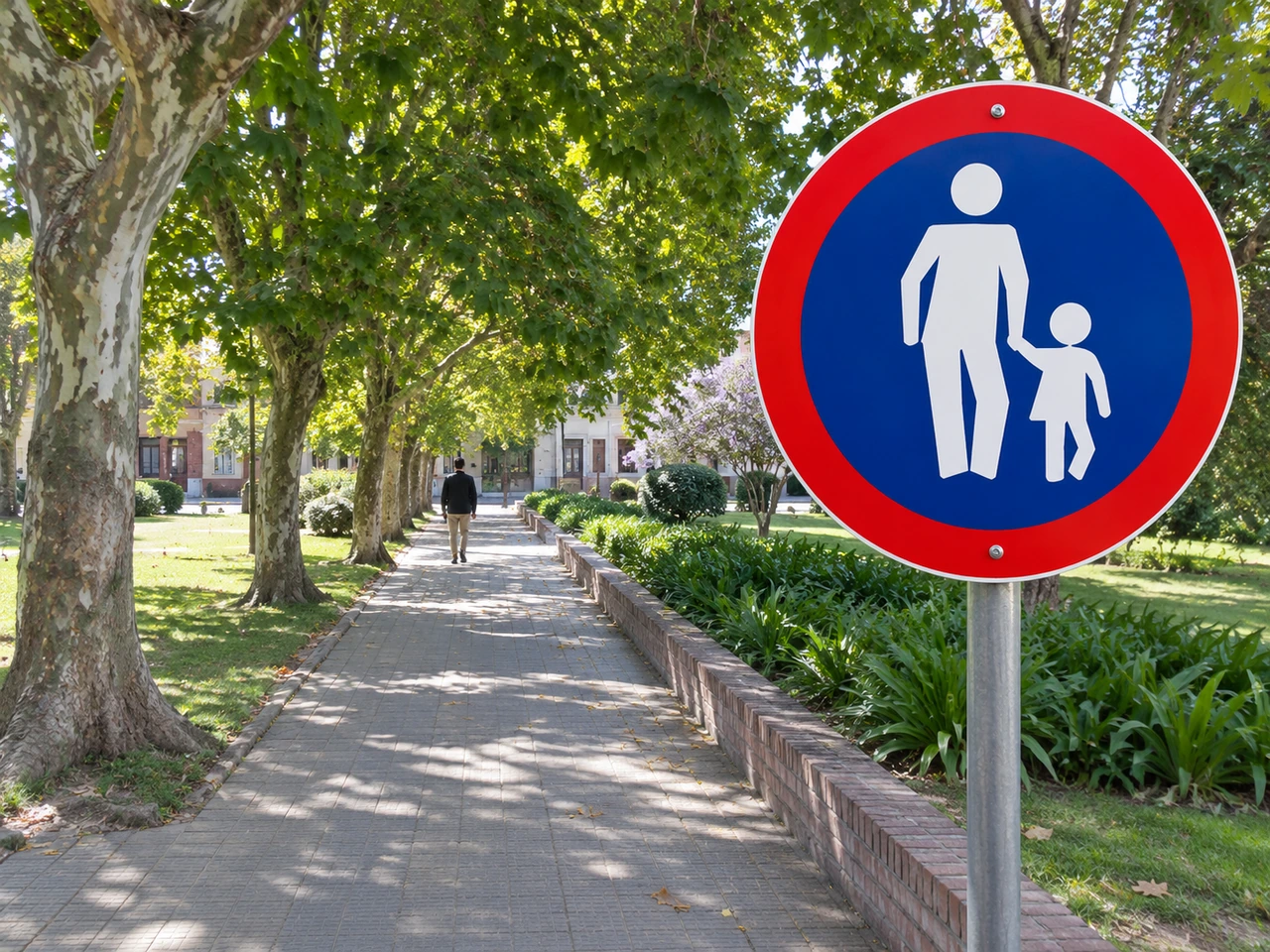
The blue pedestrian-only sign shown also designates a shared cycling path.

809. The blue pedestrian-only sign shown also designates a shared cycling path.

True.
✓ False.

The sign designates a pedestrian path. It is different from a shared pedestrian-and-cycle path. Check supplementary plates and local exceptions before cycling there.

R.18’s pedestrian variant reserves the route for pedestrians. Argentina’s national signing system uses a blue circle with a red border for exclusive circulation. The pedestrian variant shows white pedestrian figures. It marks a route or lane for pedestrians, rather than a shared cycling facility. Bicycle permission cannot be inferred from this pedestrian-only symbol.
🔗 Sources

Decree 196/2025, Annex L: R.18 exclusive circulation

Current official R.18 pedestrian artwork

ANSV driver manual, printed page 78: R-18(e)

Image credit: AI-generated
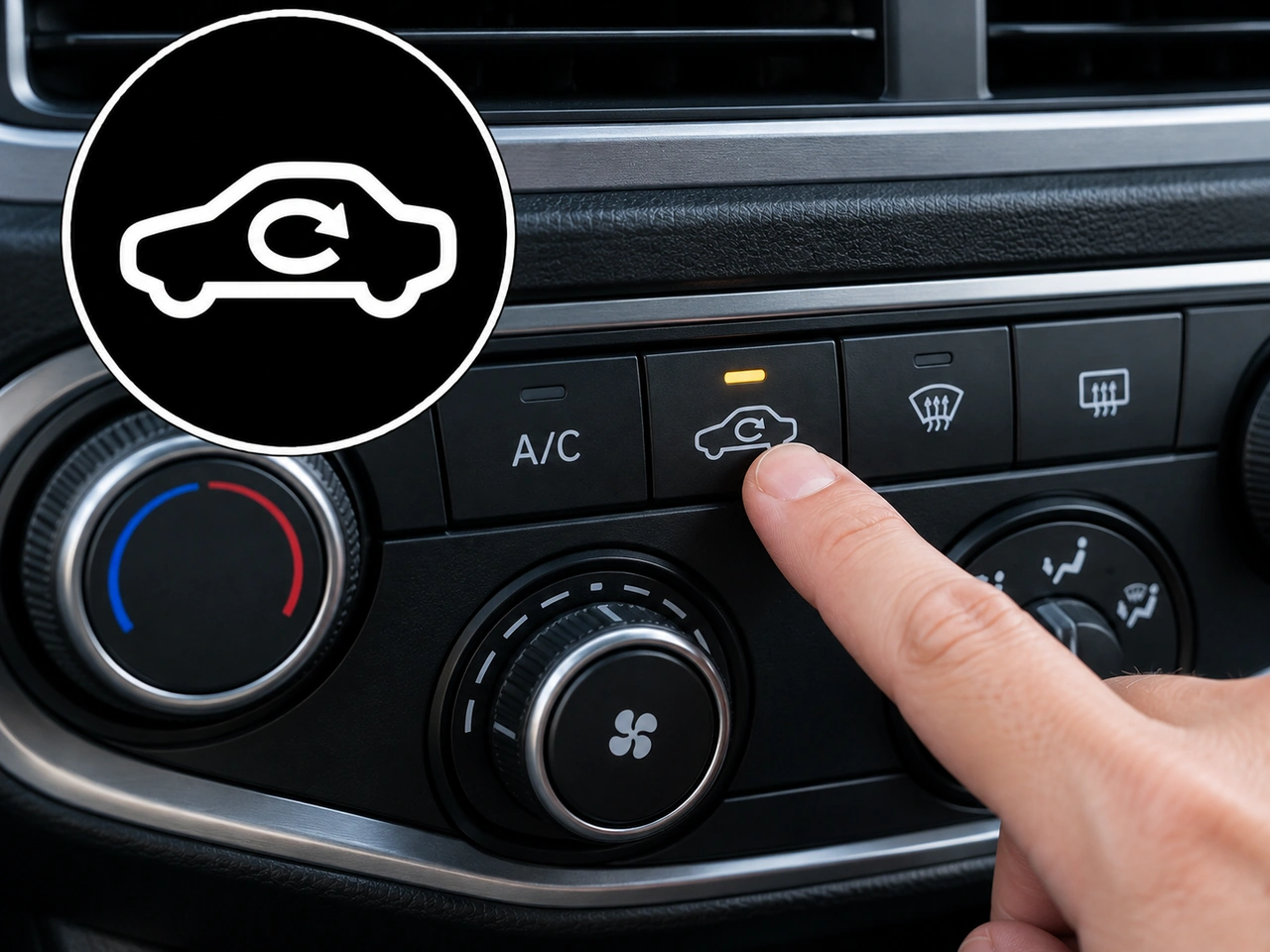
What does this vehicle-control symbol indicate?

810. What does this vehicle-control symbol indicate?

Air conditioning.
✓ Air recirculation.
Rear window demister.
Front windscreen demister.

This symbol activates air recirculation, which reduces the amount of outside air entering the vehicle and recirculates air already inside the cabin. It can be useful when driving through polluted air or when cooling the interior quickly.

Cabin air-recirculation control and symbol.
Recirculation reuses cabin air. Switch back to fresh air if the windows begin to mist up.
🔗 Sources

Ford owner’s manual · Recirculated air

Image credit: AI-generated

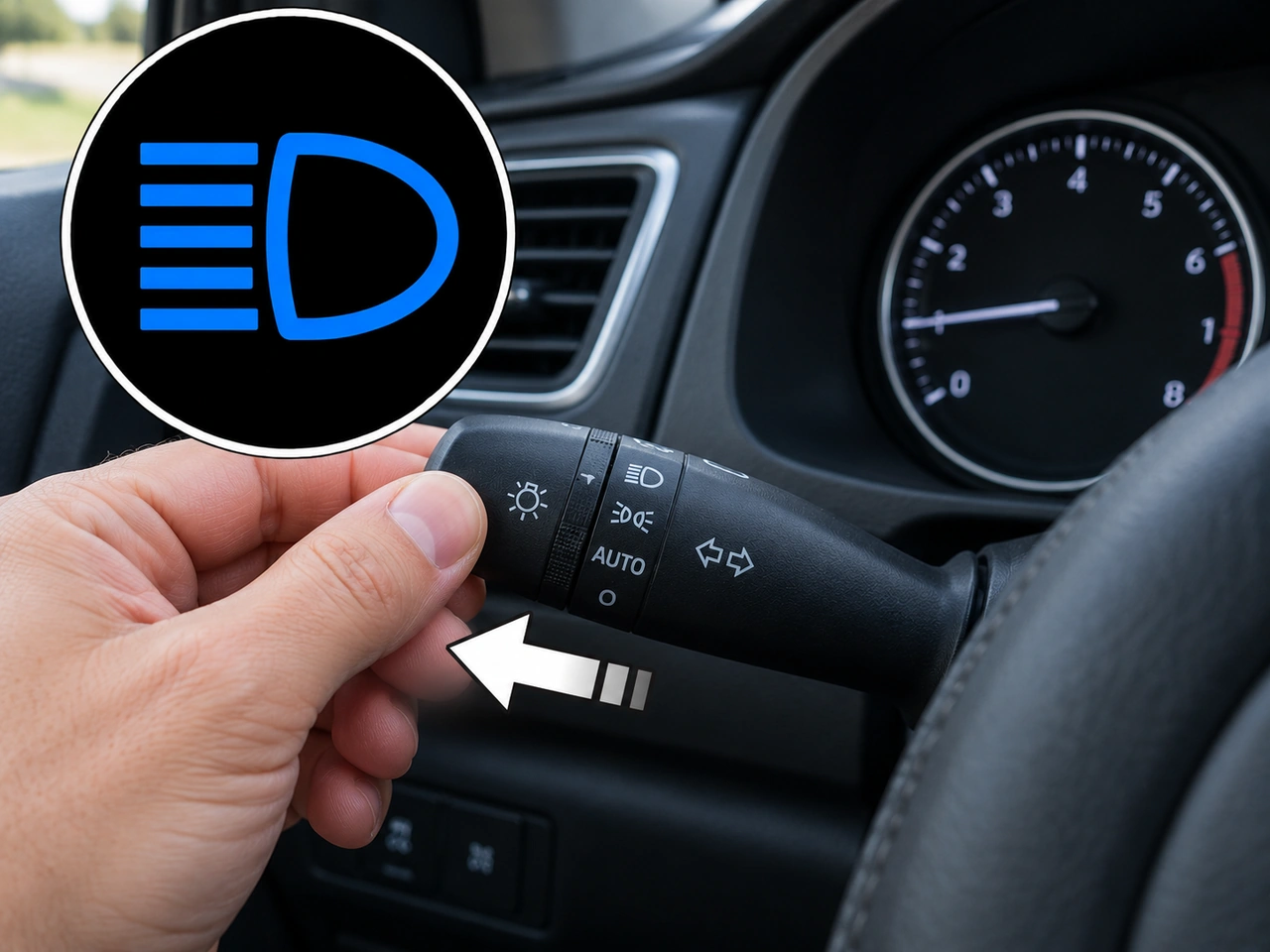
What does pulling the lighting stalk towards you normally do?

811. What does pulling the lighting stalk towards you normally do?

Activate the hazard warning lights.
✓ Flash the main-beam headlights.
Activate the direction indicators.
Switch on the dipped headlights.

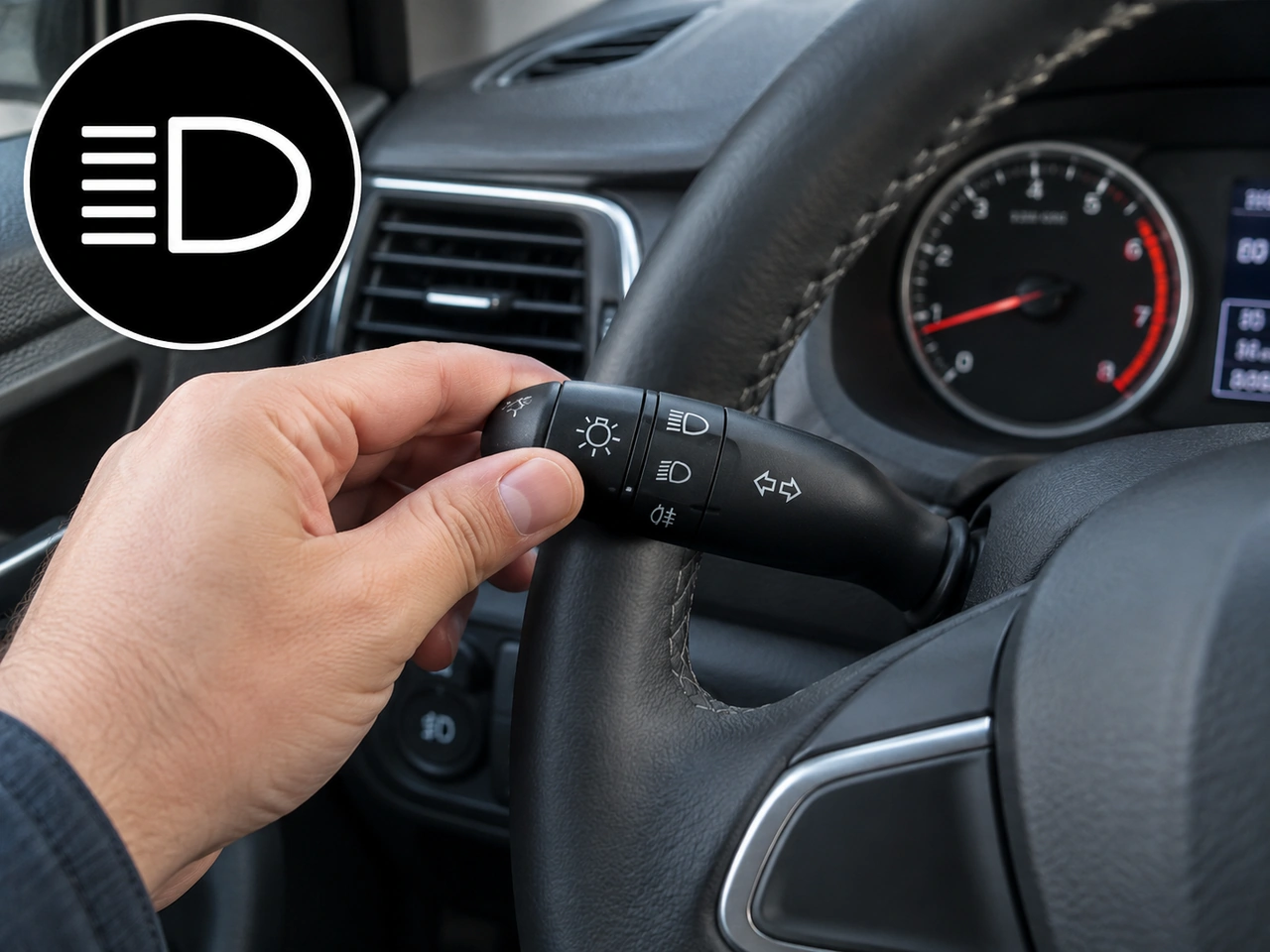
Pulling the lighting stalk towards you normally flashes the main-beam headlights. This briefly illuminates the main beam while the stalk is held or operated.

Lighting stalk used to flash the main-beam headlights.
On a typical lighting stalk, pulling it briefly towards you flashes the main beam. Check your handbook for the control on your vehicle.
🔗 Sources

Ford owner’s manual · Exterior lighting

Image credit: AI-generated

Which control is normally used to switch between dipped and main beam headlights?

812. Which control is normally used to switch between dipped and main beam headlights?

✓ The lighting stalk.
The windscreen-wiper stalk.
The dashboard brightness control.
The hazard warning switch.

The lighting stalk is normally used to switch between dipped and main beam headlights. The exact movement varies between vehicles, so check the vehicle controls before driving.

Lighting stalk for switching between dipped and main beam.
On many cars, pushing the lighting stalk away selects main beam. Check how your car switches back to dipped beam.
🔗 Sources

Ford owner’s manual · Main-beam headlamps

Image credit: AI-generated

Strong crosswinds can push a car off course.

813. Strong crosswinds can push a car off course.

False.
✓ True.

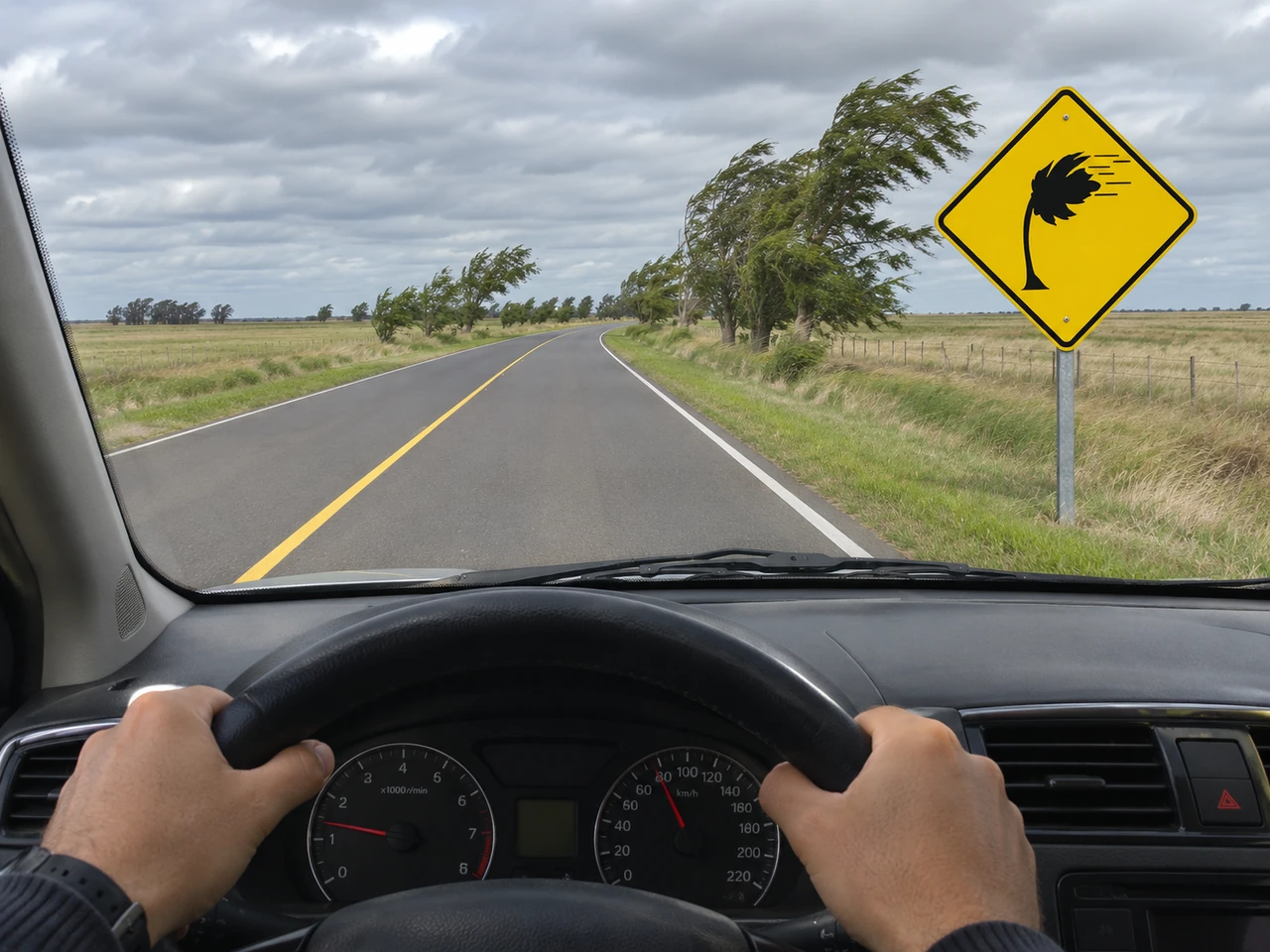
Sudden gusts can affect your direction, especially on exposed roads or when passing gaps in hedges. Reduce speed as needed and keep a firm grip on the steering wheel.

Crosswinds can affect ordinary cars. Sign P.30 warns of strong lateral winds ahead. Reduce speed when conditions require it, keep a firm grip on the steering wheel and allow for sudden gusts on exposed stretches.
🔗 Sources

Argentina • National road-sign system, Decree 196/2025 • P.30 Vientos fuertes laterales

Image credit: AI-generated
What should you do with the clutch when bringing a manual vehicle to a stop?

814. What should you do with the clutch when bringing a manual vehicle to a stop?

✓ Press it before the engine begins to stall.
Keep it released until after the vehicle stops.
Press it before using the brake pedal.
Pump it repeatedly while braking.

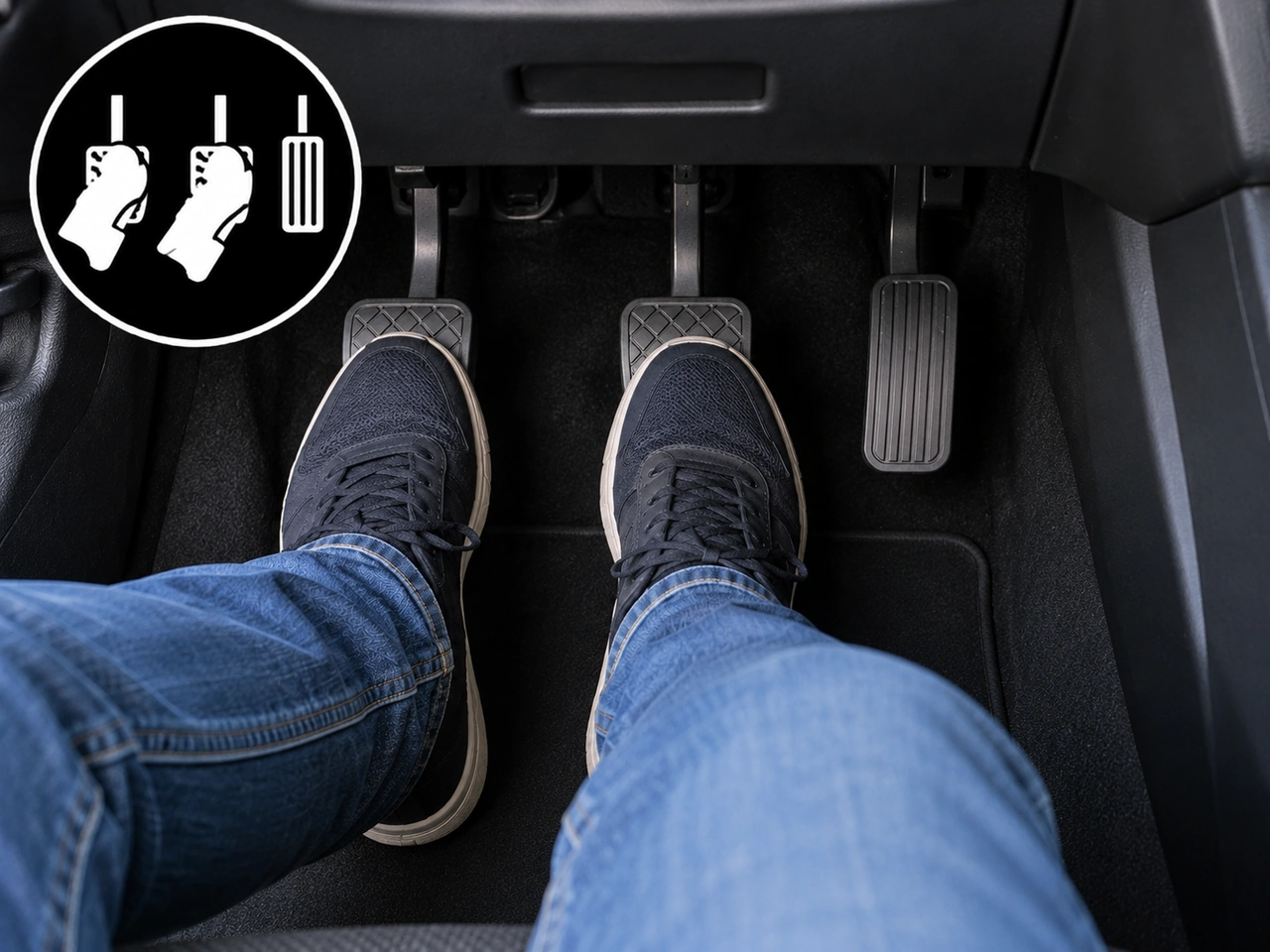
When stopping a manual vehicle, brake normally and press the clutch pedal before the engine speed becomes too low and the engine stalls. Avoid pressing the clutch unnecessarily early, as this reduces engine braking.

Clutch-pedal operation when stopping a manual vehicle.
For a normal stop, brake smoothly and press the clutch fully just before the car comes to rest.
🔗 Sources

NZ Transport Agency · Moving off and stopping

Image credit: AI-generated

How does higher speed affect a vehicle's stopping distance?

815. How does higher speed affect a vehicle's stopping distance?

It affects reaction distance but not braking distance.
✓ It increases the distance needed to stop.
It has no effect if the brakes are in good condition.
It decreases the distance needed to stop.

As speed increases, the vehicle travels farther while the driver reacts and requires more distance to brake. This means the total stopping distance increases significantly as speed rises.
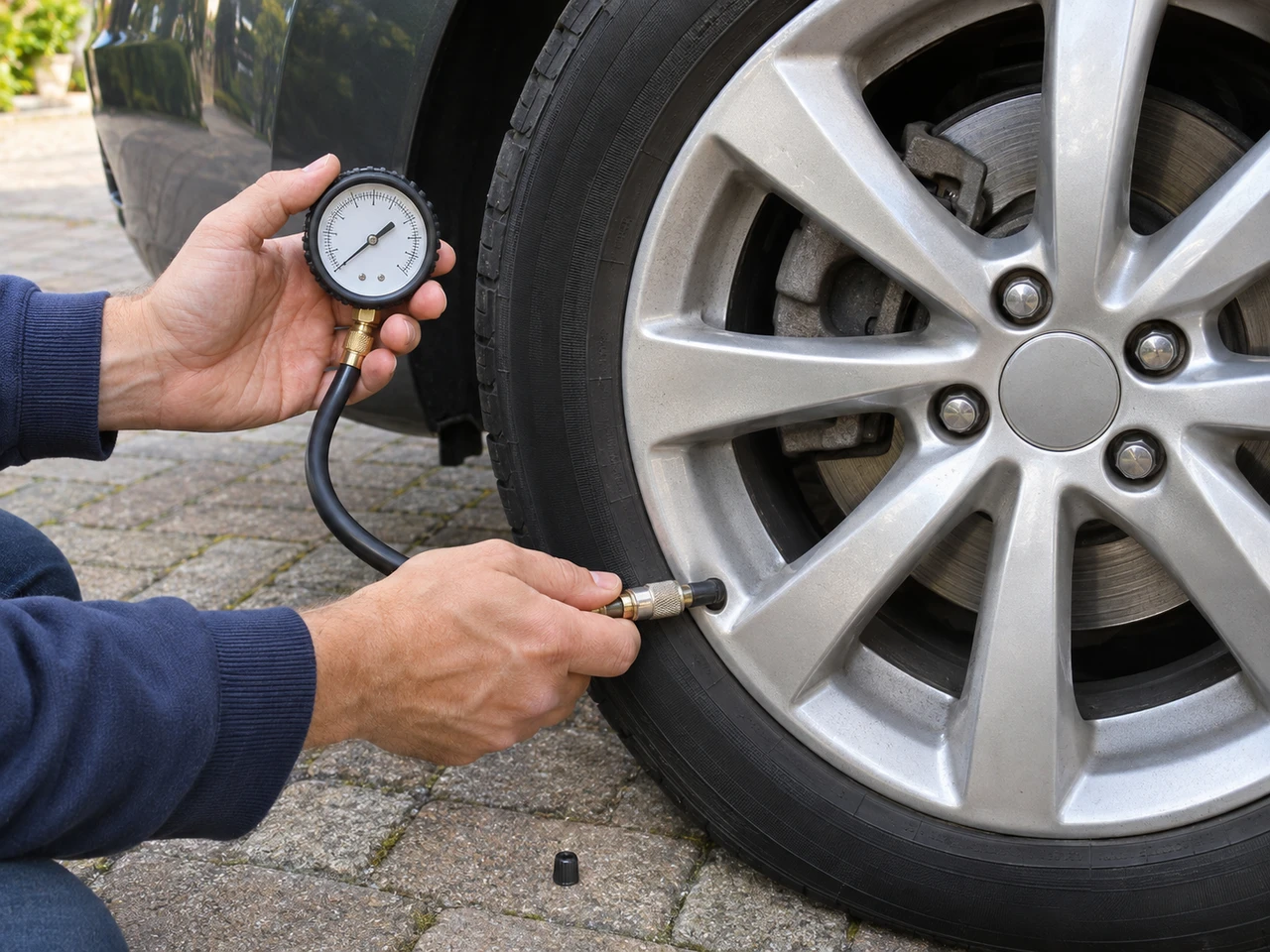
How should tyre pressure normally be checked?

816. How should tyre pressure normally be checked?

Immediately after a long or high-speed journey.
✓ When the tyres are cold, using the manufacturer's recommended pressure.
Using the maximum pressure shown on the tyre.
By looking at whether the tyres appear firm.

Tyre pressure rises as tyres become warm. Check them when cold and use the pressure specified on the vehicle label or in the owner's manual.

Pressure gauge connected to the tyre valve at the outer edge of the wheel rim.
Argentina. Measure pressures when the tyres are cold. Use the pressures specified by the vehicle manufacturer for the load you will be carrying.
🔗 Sources

GOV.UK · Vehicle handbook and routine maintenance checks

Image credit: AI-generated

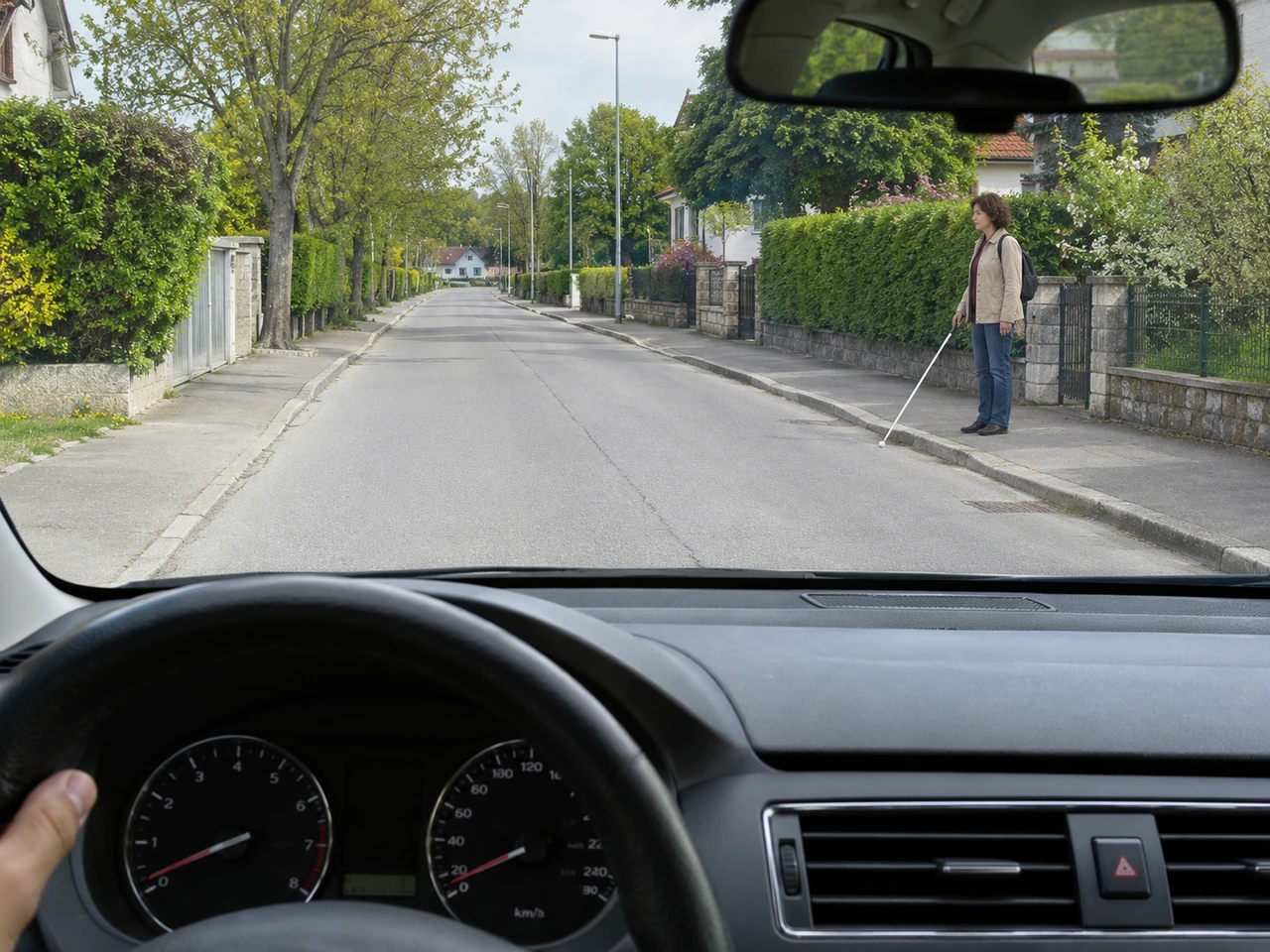
What should you do when a pedestrian with a white cane is preparing to cross?

817. What should you do when a pedestrian with a white cane is preparing to cross?

Rely on a hand gesture to tell them to wait.
✓ Slow down and stop if needed to let them cross safely.
Assume they will hear you and stay out of the road.
Continue unless they make eye contact with you.

A white cane may indicate visual impairment. The pedestrian may not see your vehicle or a hand gesture. Slow down, allow time and stop when needed for safety or to give way under the local rules.

An adult pedestrian with a white cane preparing to cross the road. General road-safety guidance: A white cane may indicate visual impairment. The pedestrian may not see your vehicle or a hand gesture. Slow down, allow time and stop when needed for safety or to give way under the local rules.
🔗 Sources

Wegcode.be — Belgian road legislation
GOV.UK — Great Britain
Reference: Rule 207; Article 40.2

Image credit: AI-generated
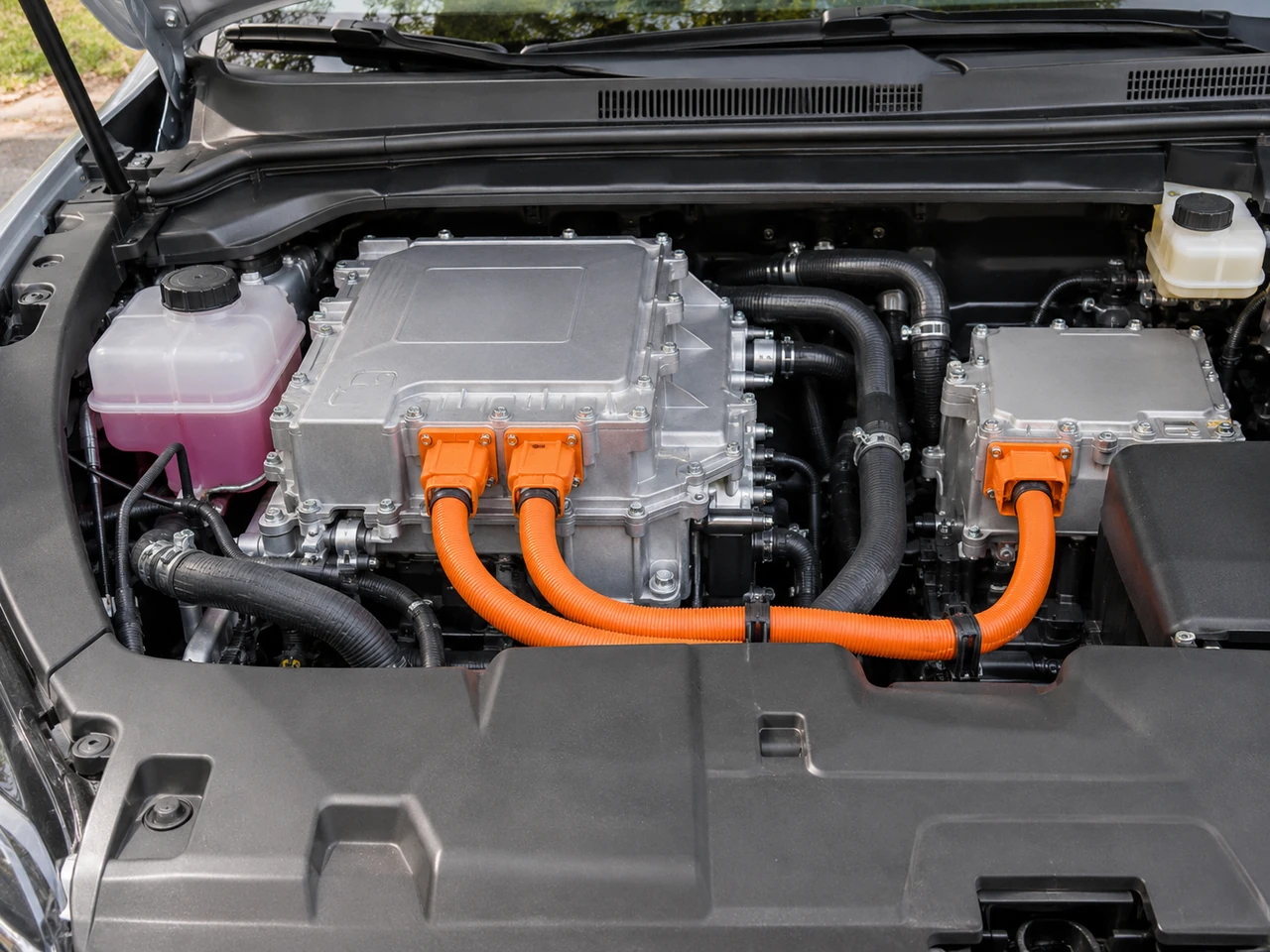
Repairs to an electric car's high-voltage system should be left to suitably trained specialists.

818. Repairs to an electric car's high-voltage system should be left to suitably trained specialists.

False.
✓ True.

High-voltage components can cause a fatal electric shock and may retain dangerous energy after the car is switched off. Do not attempt repairs yourself; use a specialist trained for the vehicle and the work.

Leave high-voltage repairs to trained specialists. High-voltage components can cause a fatal electric shock and may retain dangerous energy after the car is switched off. Do not attempt repairs yourself; use a specialist trained for the vehicle and the work.
🔗 Sources

HSE (Great Britain) • Safety guidance, high-voltage risks, retained energy and competent personnel

Image credit: AI-generated
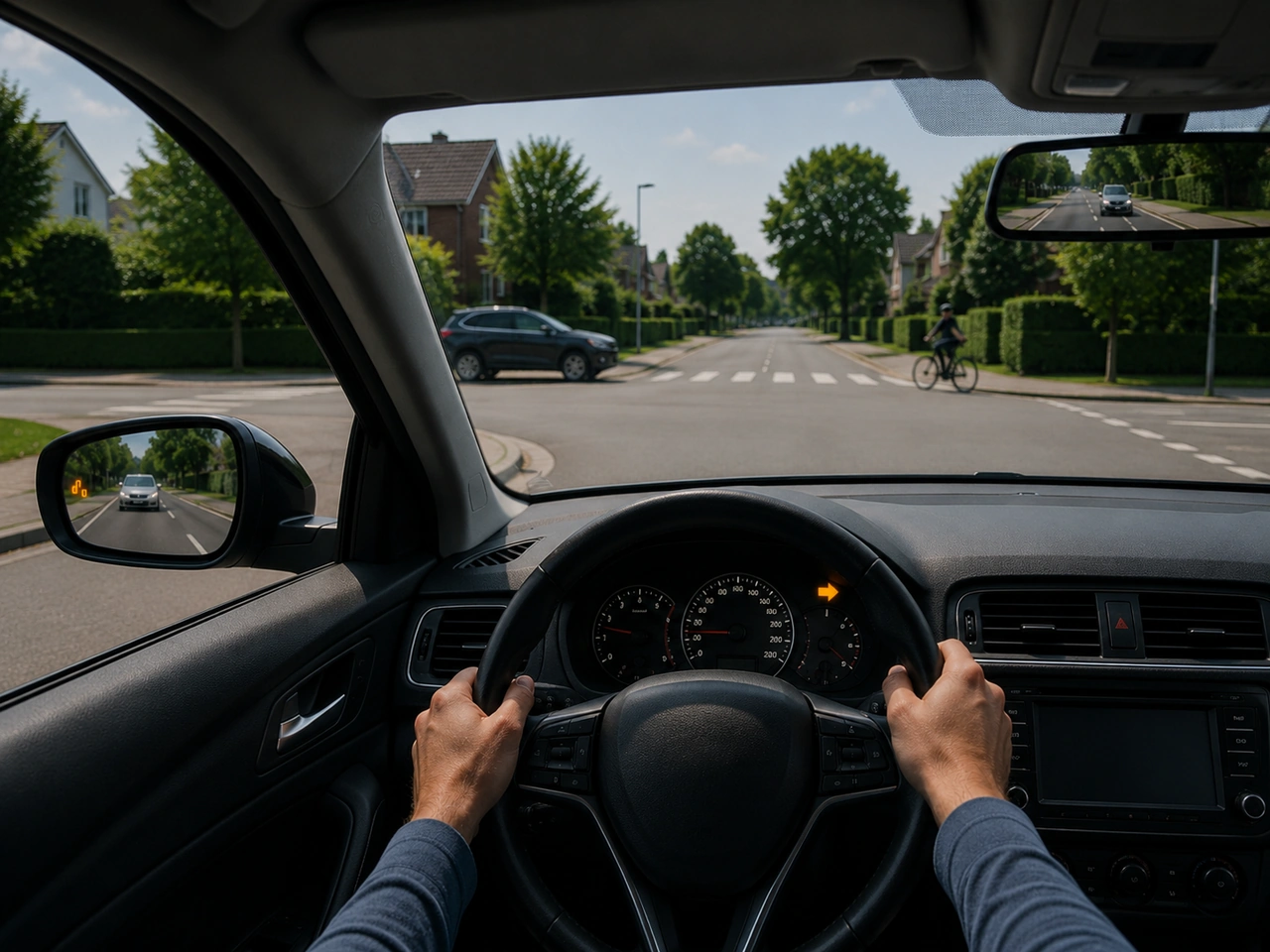
What should you do before making a turn?

819. What should you do before making a turn?

Signal only after you begin turning.
Check only the traffic directly ahead.
Rely on other road users to slow down for you.
✓ Check mirrors, signal, and make sure it is safe.

Before turning, check your mirrors, use your indicator, and make sure the turn can be made safely.

Driver preparing to turn at a junction.
Argentina. Signal in good time and keep signalling until you leave the junction. Move to the side nearest the turn at least 30 metres before it, slow gradually and turn at a moderate speed.
🔗 Sources

National Traffic Law No. 24,449, article 43(a) to (c)

Image credit: AI-generated

What should you do with the parking brake before leaving a parked vehicle?

820. What should you do with the parking brake before leaving a parked vehicle?

✓ Apply it securely.
Release it completely.
Apply it only on a slope.
Leave it partly applied.

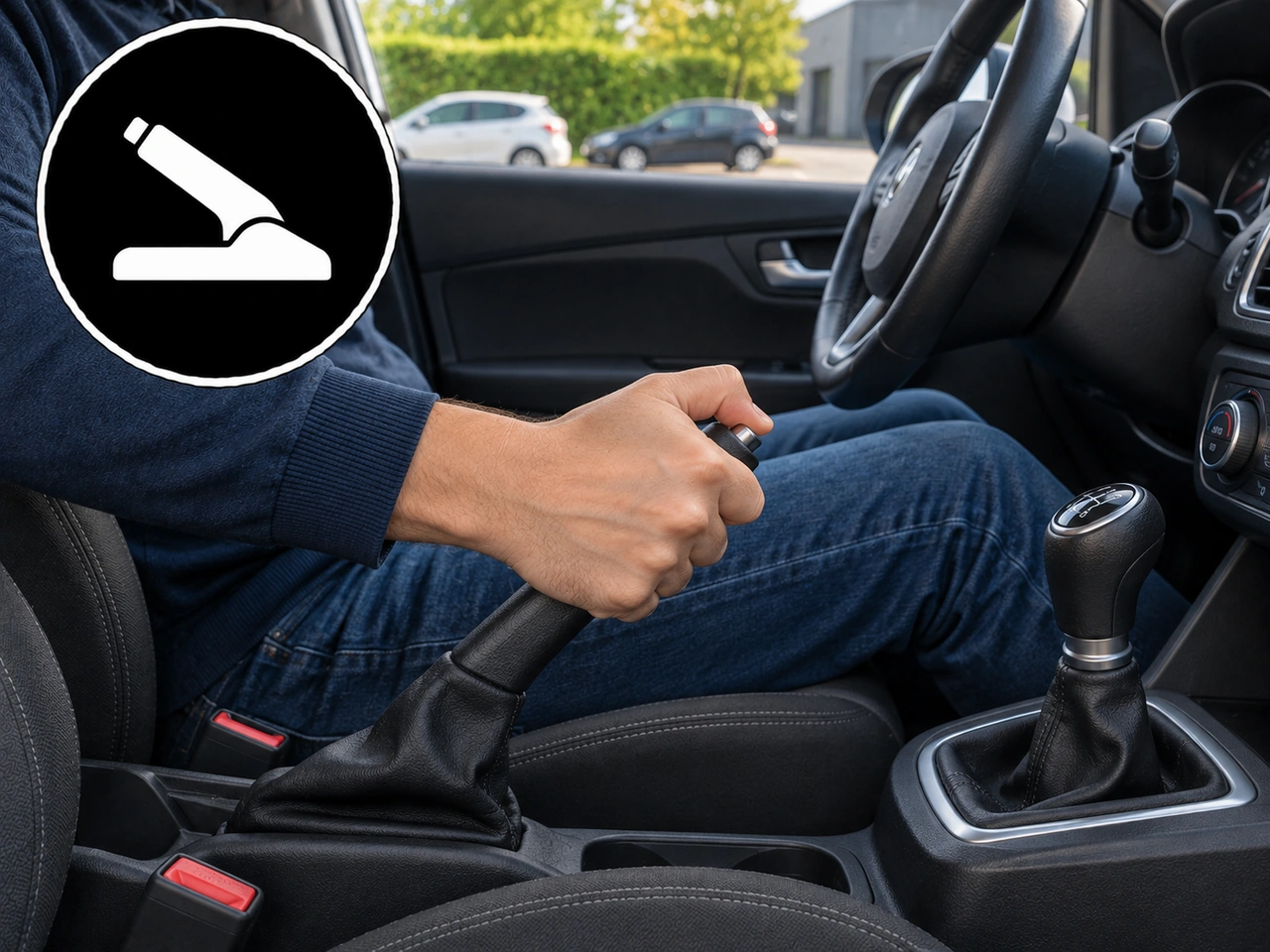
Before leaving a parked vehicle, apply the parking brake securely to help prevent unintended movement. Also select the appropriate gear or transmission position for parking.

Securing a parked vehicle with the parking brake.
Before getting out, secure the vehicle with the parking brake and select Park in an automatic or the appropriate gear in a manual.
🔗 Sources

The Highway Code · Parking on hills

Image credit: AI-generated

What might a cyclist looking over their shoulder be about to do?

821. What might a cyclist looking over their shoulder be about to do?

Give you priority to pass on either side.
Show that they will keep exactly the same position.
Signal that they no longer need space beside them.
✓ Turn or change their position on the road.

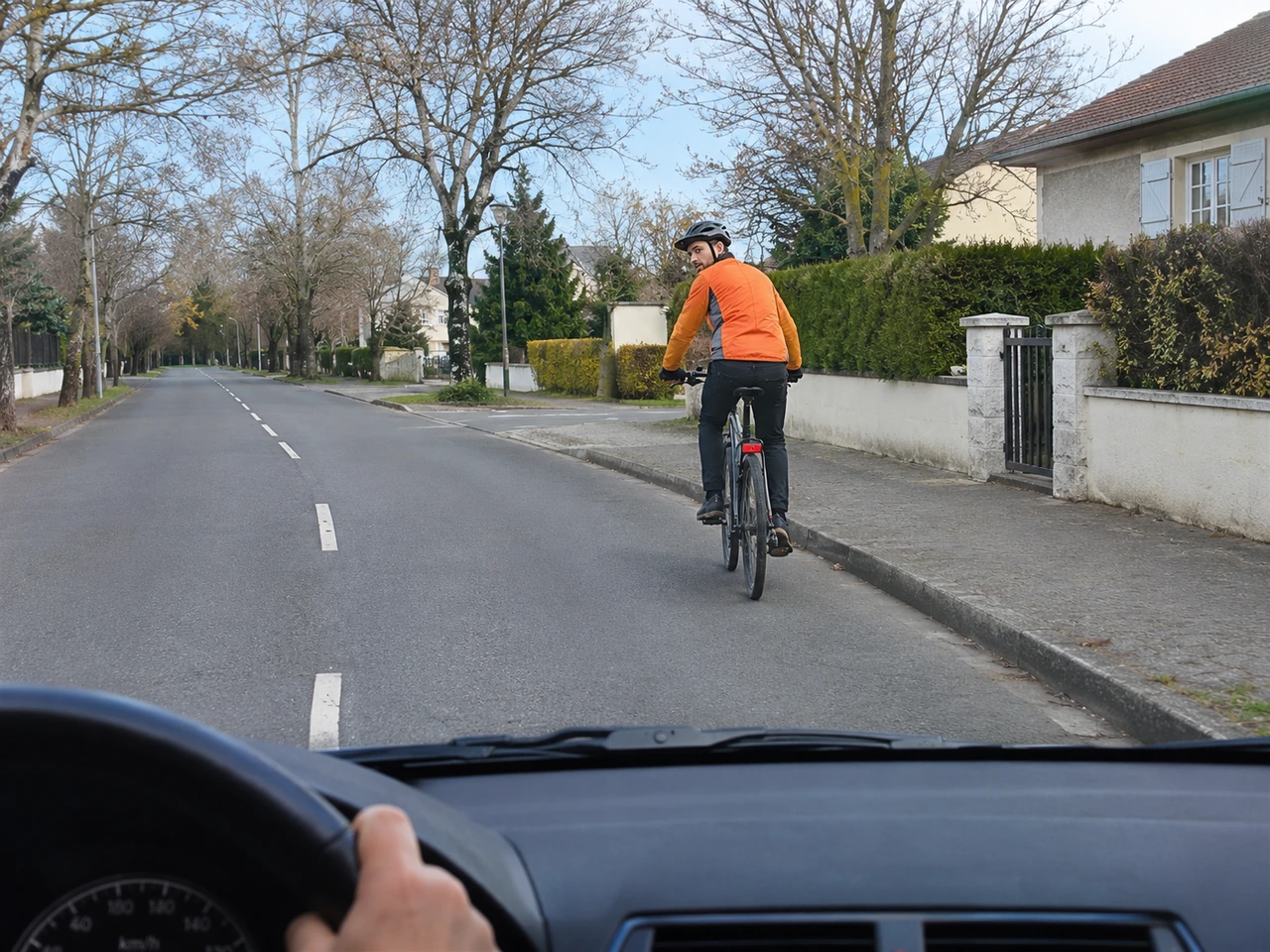
A shoulder check may be an early sign that a cyclist intends to turn or move out. Leave room and time, and do not assume that they will maintain their current line.
A cyclist checking over a shoulder before changing position. General road-safety guidance: A shoulder check may be an early sign that a cyclist intends to turn or move out. Leave room and time, and do not assume that they will maintain their current line.
🔗 Sources

GOV.UK — Great Britain
Reference: Rule 212

Image credit: AI-generated

What should you do if your light turns green while pedestrians are still crossing?

822. What should you do if your light turns green while pedestrians are still crossing?

Move forward slowly to encourage them to hurry.
Proceed because their signal must now be red.
✓ Wait until they have safely cleared your path.
Sound the horn and continue through the crossing.

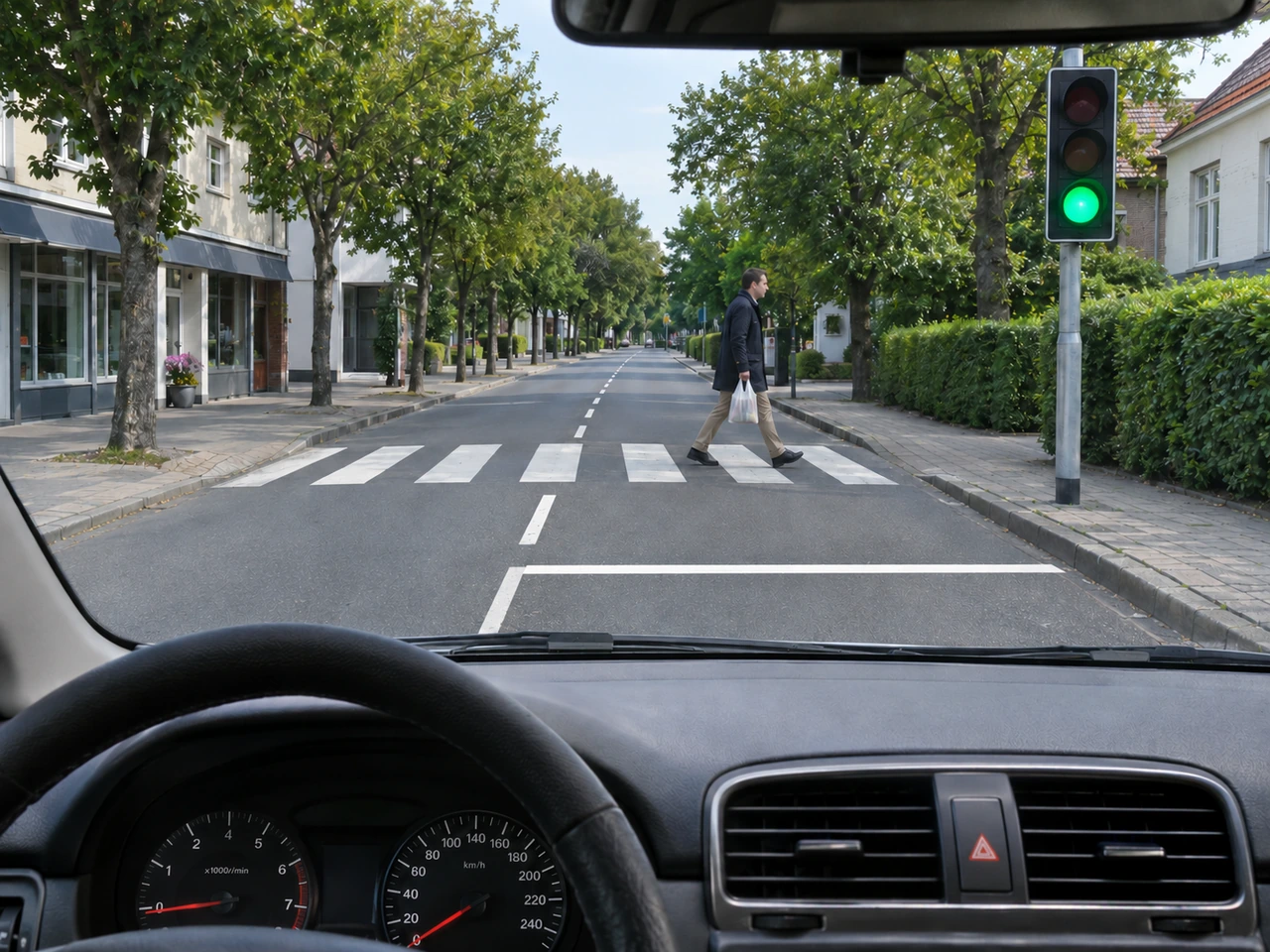
A green light does not make it safe to drive into someone still crossing. Allow pedestrians to finish crossing your path before moving off.

A green vehicle signal while a pedestrian is still crossing ahead. General road-safety guidance: A green light does not make it safe to drive into someone still crossing. Allow pedestrians to finish crossing your path before moving off.
🔗 Sources

Wegcode.be — Belgian road legislation
GOV.UK — Great Britain
Reference: Rule 198; Article 40.4.1

Image credit: AI-generated
Child-seat installation should follow both the seat and vehicle instructions.

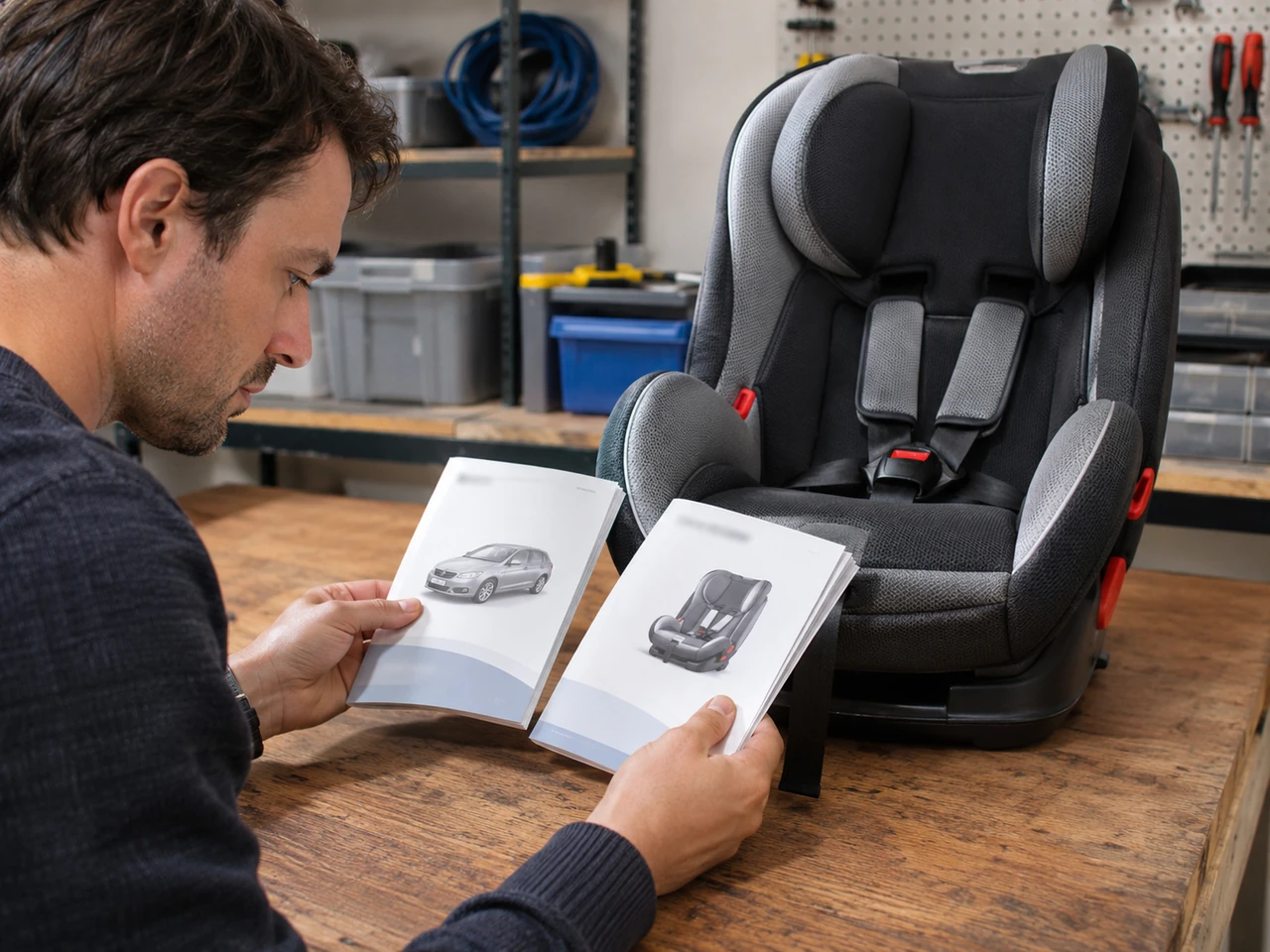
823. Child-seat installation should follow both the seat and vehicle instructions.

✓ True.
False.

Child seats and vehicle attachment systems differ. Read both sets of instructions and use an installation method approved for that seat and vehicle.

Read the child-seat and vehicle instructions. Child seats and vehicle attachment systems differ. Read both sets of instructions and use an installation method approved for that seat and vehicle.
🔗 Sources

NHTSA (United States) • Safety guidance, installation instructions for both seat and vehicle

Image credit: AI-generated
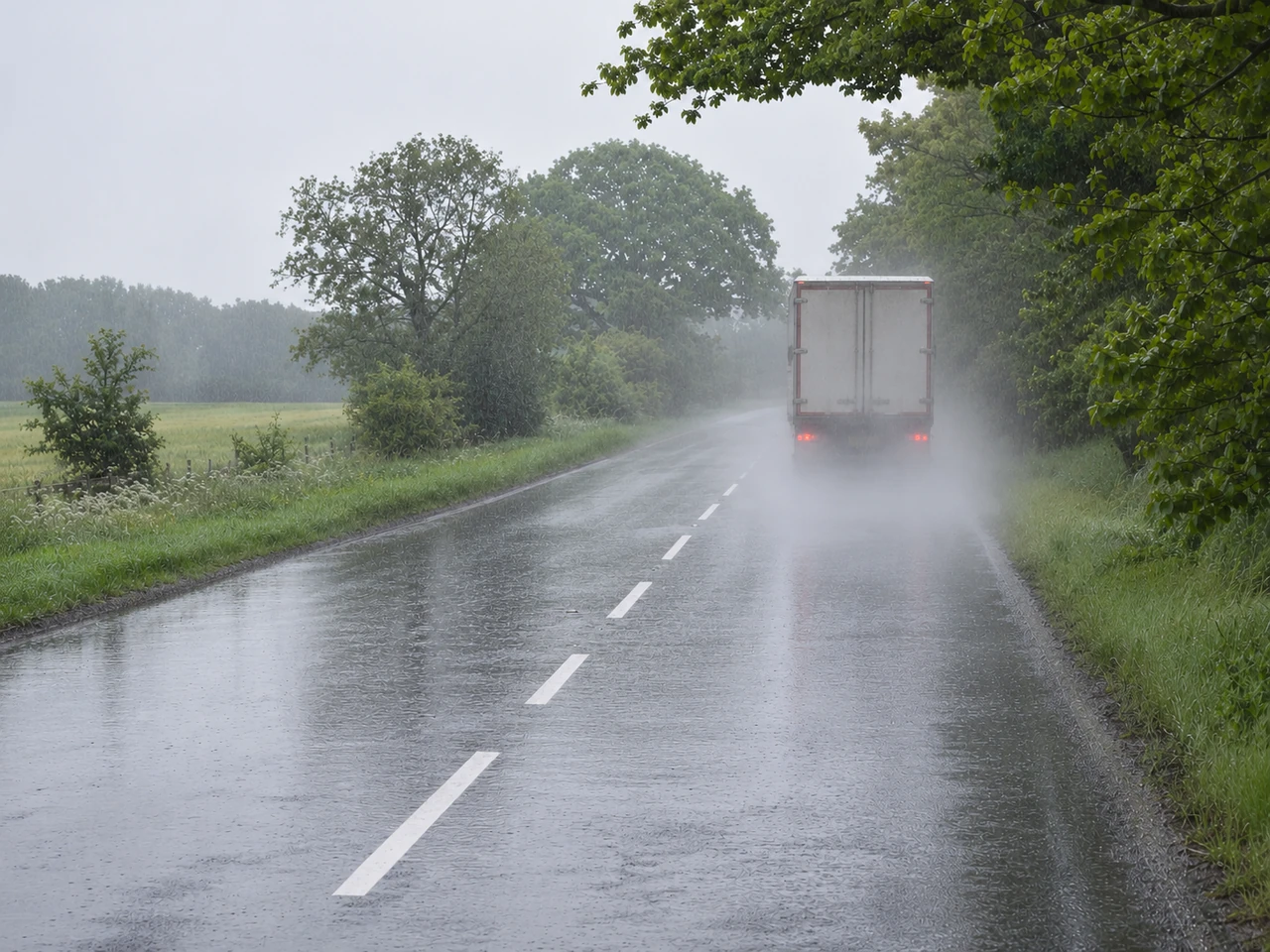
Spray from other vehicles can make traffic harder to see.

824. Spray from other vehicles can make traffic harder to see.

✓ True.
False.

Spray can obscure vehicles and other hazards. Reduce speed if needed and increase your following distance to improve your view and reaction time.
Spray can hide traffic. Spray can obscure vehicles and other hazards. Reduce speed if needed and increase your following distance to improve your view and reaction time.
🔗 Sources

The Highway Code (Great Britain) • Safety guidance, Rule 227

Image credit: AI-generated

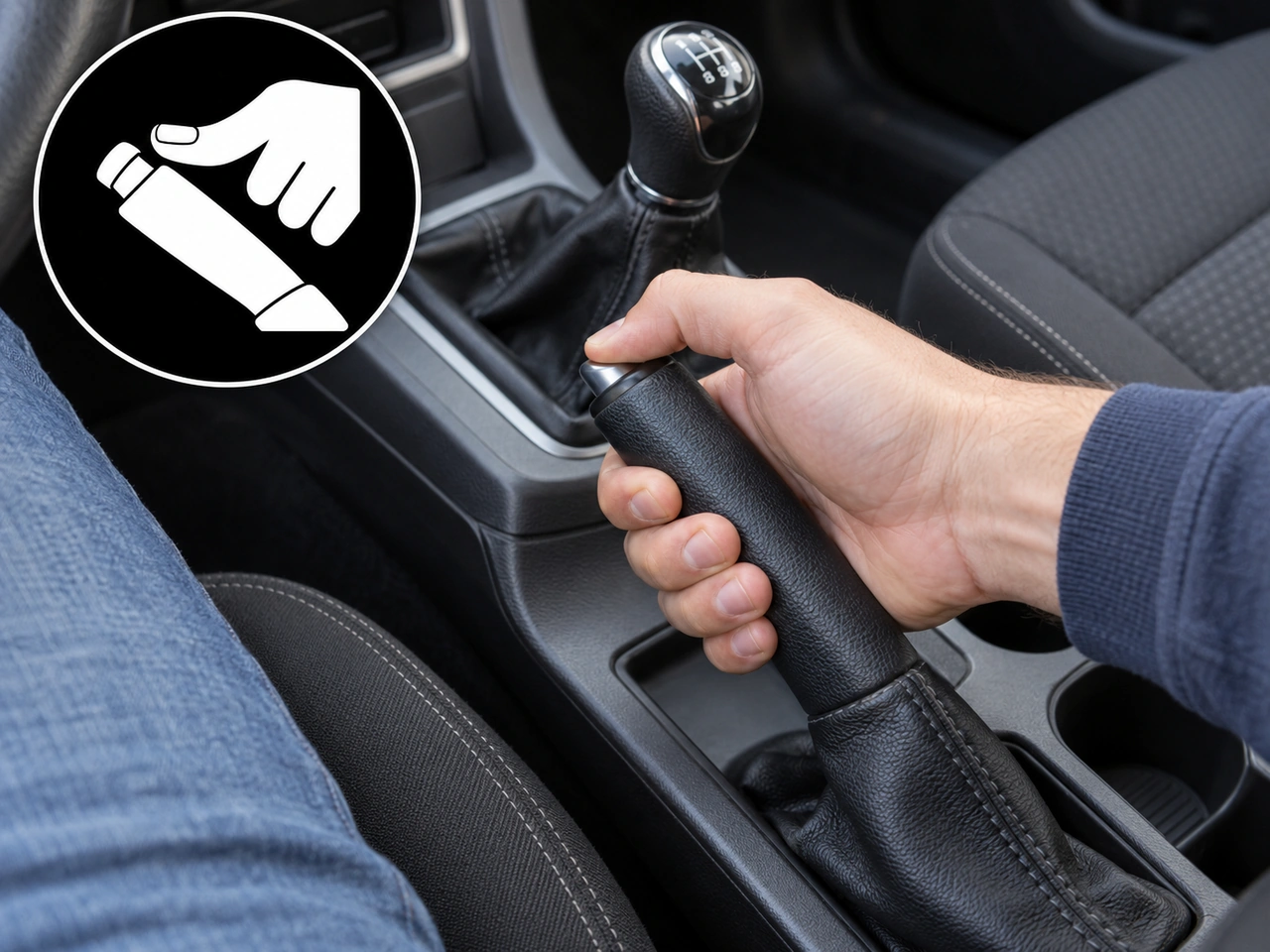
What is the button on a manual handbrake lever used for?

825. What is the button on a manual handbrake lever used for?

To select reverse gear.
To unlock the steering.
✓ To release the handbrake mechanism.
To apply the service brakes.

To release a manual handbrake, pull the lever up slightly, press and hold the release button, then lower the lever under control.

Release button on a manual handbrake lever.
Hold the car with the foot brake. Lift the lever slightly, hold the release button in and lower the lever fully.
🔗 Sources

Ford owner’s manual · Parking brake

Image credit: AI-generated

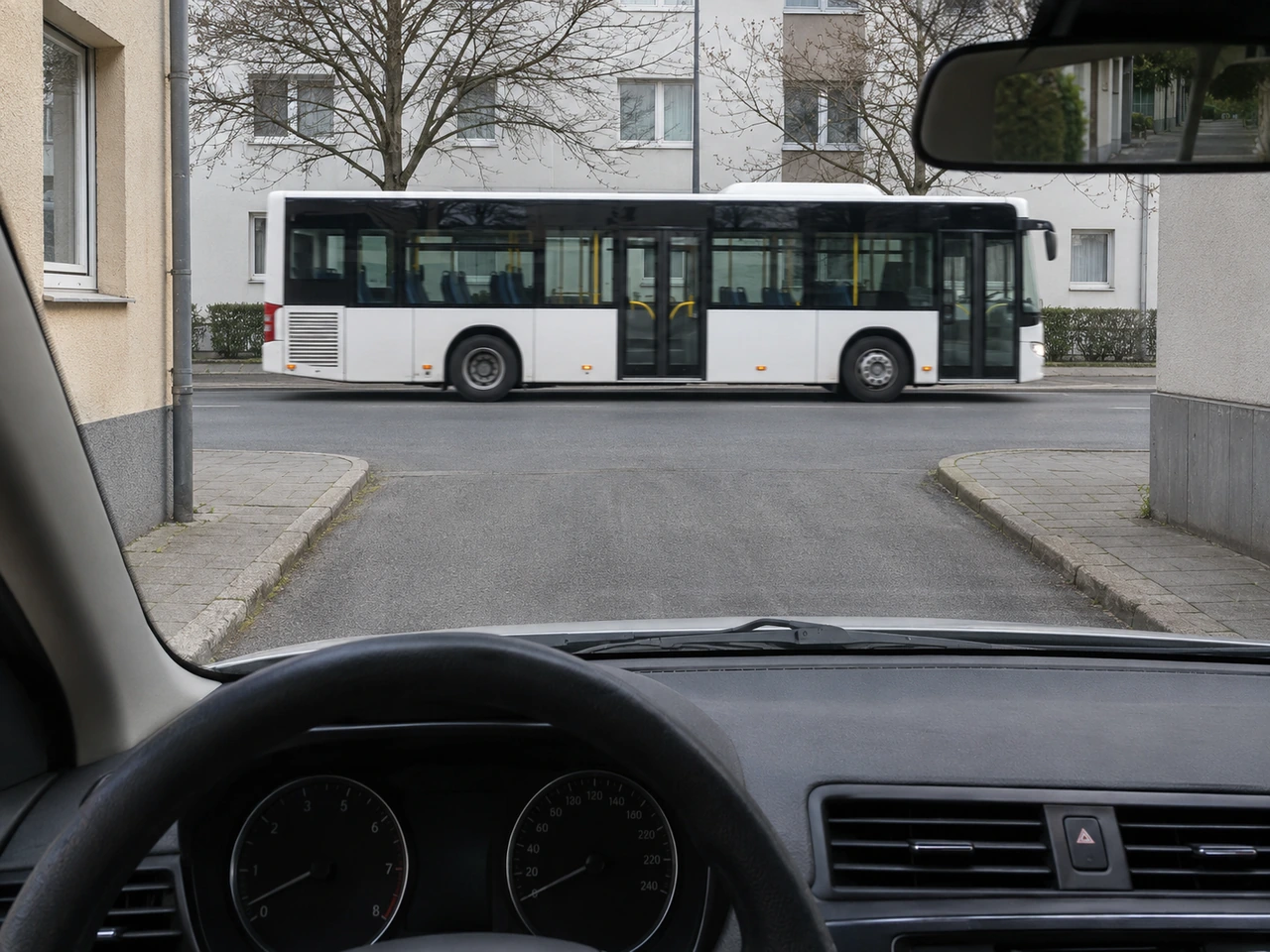
Why should you take extra care when crossing a tram or bus lane?

826. Why should you take extra care when crossing a tram or bus lane?

These lanes are usually free from moving traffic.
Trams and buses must always stop before crossings.
✓ A tram or bus may approach quickly.
You only need to check for traffic from one direction.

Cross only where permitted. Check both directions and wait if needed. Trams cannot steer around obstacles, and both trams and buses may need a long distance to stop.
A driver waits at a side-street entrance while a bus passes across the junction in right-hand traffic. Before crossing a lane used by public transport, check both directions and follow the applicable signs and signals. Cross only where permitted, with a safe gap and enough space to clear the lane. Do not assume the bus will stop to let you through.
🔗 Sources

UK Highway Code — General junction-observation and safe-gap guidance: Rule 170

UK Highway Code — General guidance on bus-lane restrictions: Rule 141

Image credit: AI-generated

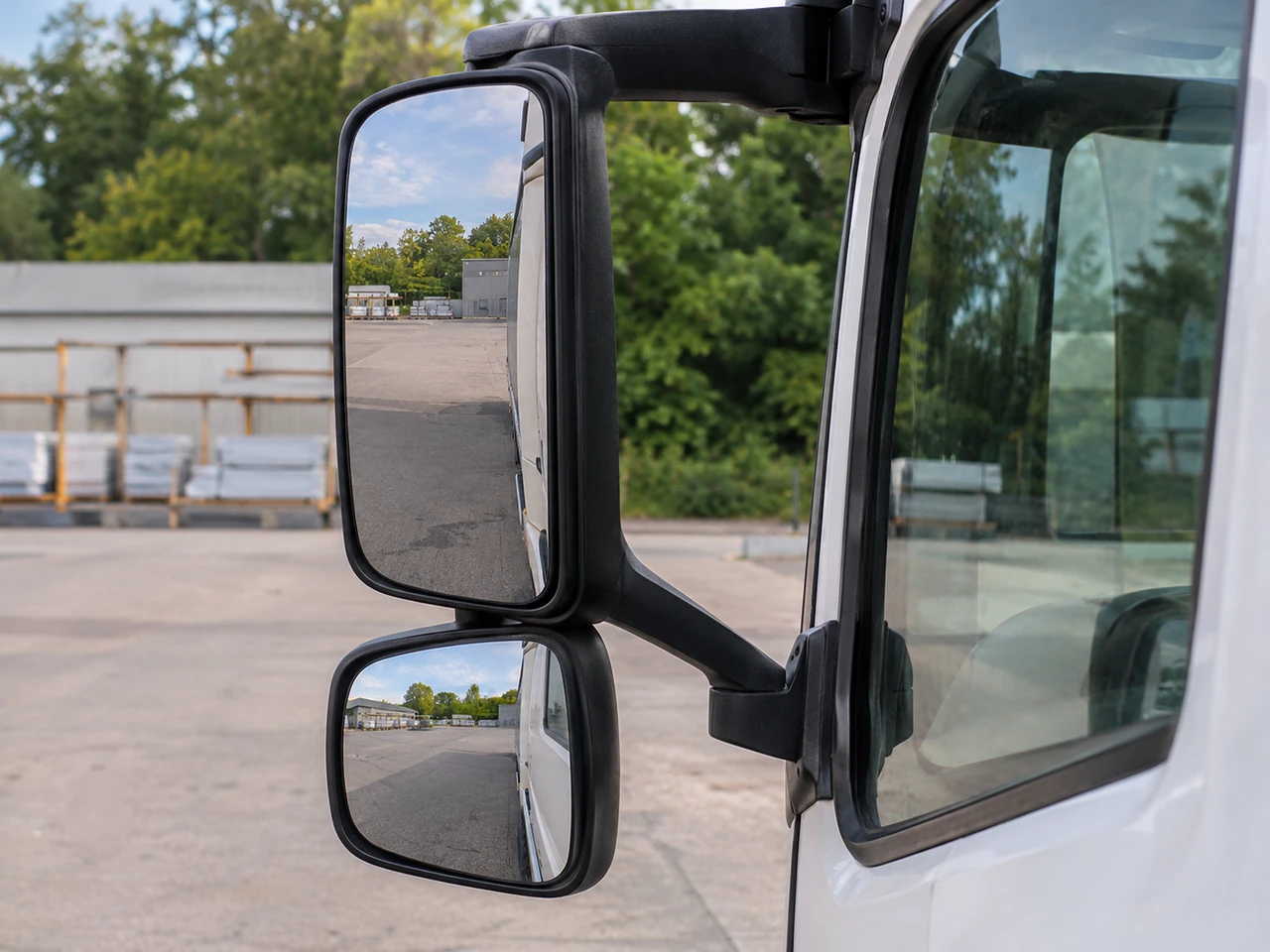
Large mirrors mean a lorry driver has no blind spots.

827. Large mirrors mean a lorry driver has no blind spots.

True.
✓ False.

Even large mirrors leave areas outside the driver's view. Avoid lingering in a lorry's blind spots and never assume its driver can see you.

Large mirrors still leave blind spots. Even large mirrors leave areas outside the driver's view. Avoid lingering in a lorry's blind spots and never assume its driver can see you.
🔗 Sources

Virginia DMV (United States) • Safety guidance, No zones and large-vehicle mirrors

Image credit: AI-generated
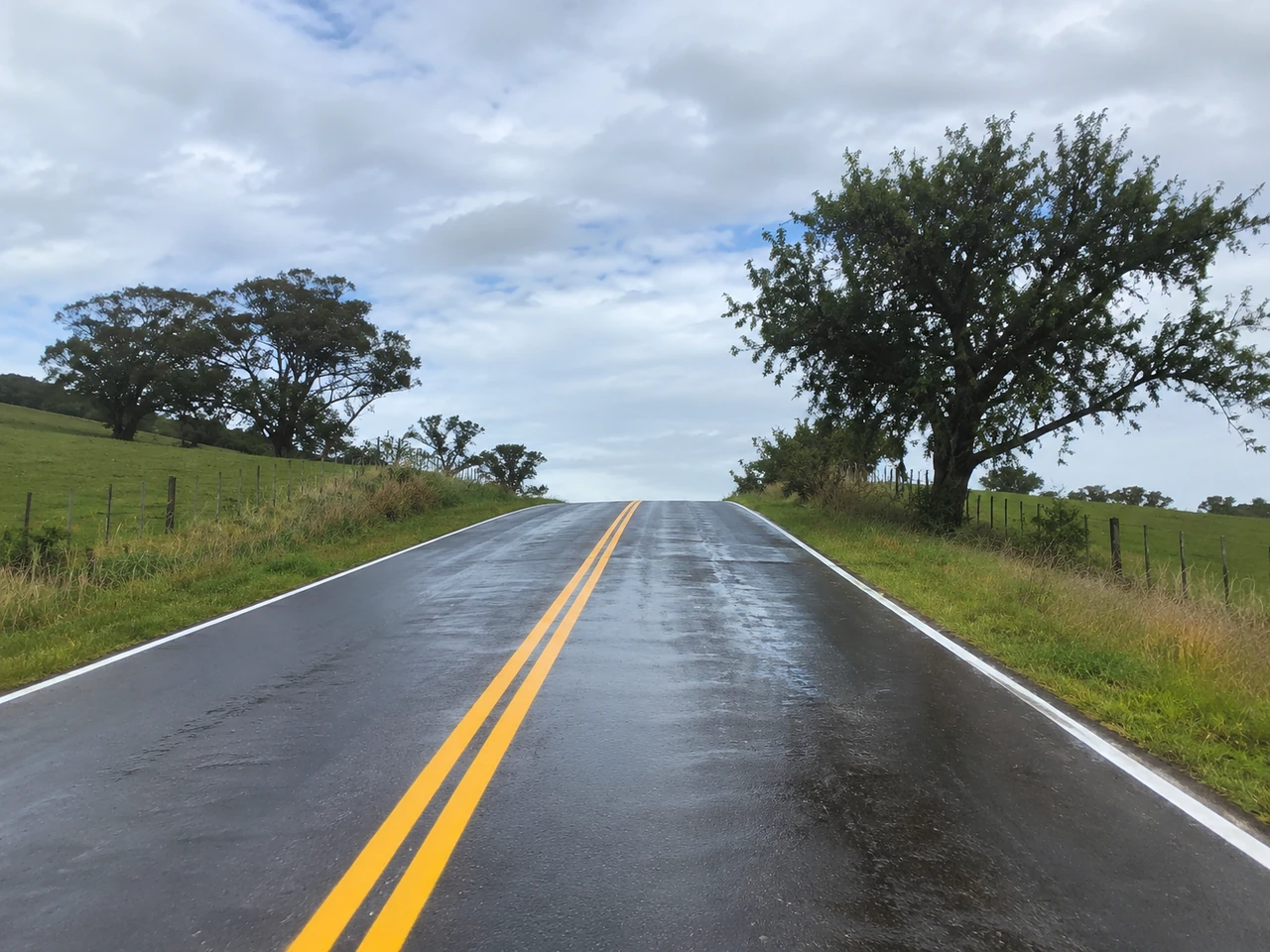
Your speed should let you stop within the clear road you can see.

828. Your speed should let you stop within the clear road you can see.

✓ True.
False.

Choose a speed that lets you stop well within the road you can see to be clear. Allow a larger safety margin when visibility or grip is poor.

Slow down before the crest hides the road. Article 50 requires speed to suit visibility, road and weather conditions while keeping full control of the vehicle. Choose a speed that leaves enough visible, clear road to stop. The double yellow centre line marks a no-overtaking section; do not rely on the unseen road being empty.
🔗 Sources

Argentina, National Traffic Law 24.449, Article 50: precautionary speed.

Decree 196/2025, Annex L, H.1: double yellow lines at crests and other no-overtaking sections.

Image credit: AI-generated country-specific scene.
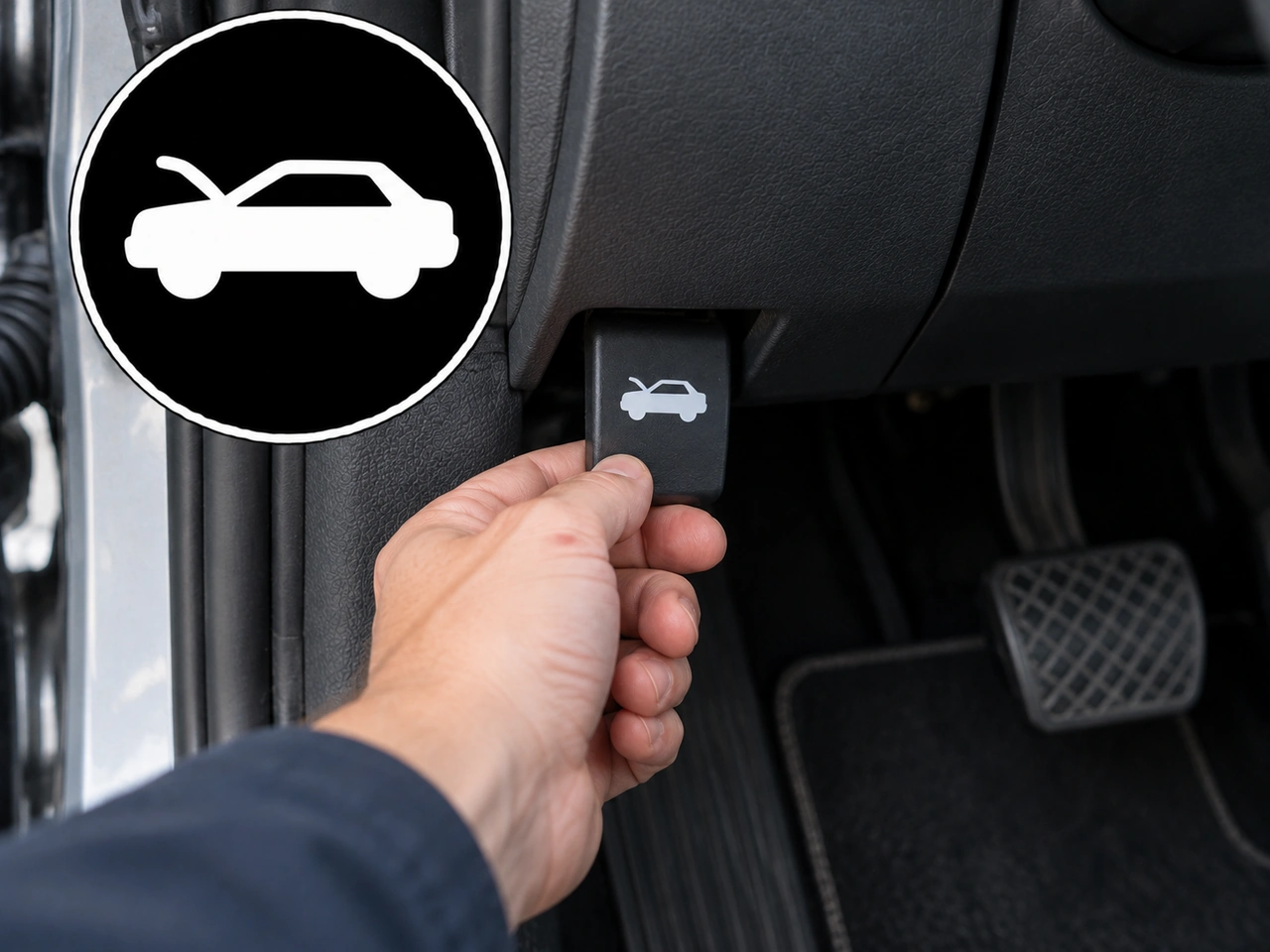
What does this vehicle-control symbol indicate?

829. What does this vehicle-control symbol indicate?

Parking brake.
Fuel-filler flap release.
Central door locking.
✓ Bonnet release.

This control releases the bonnet so that it can be opened. A secondary safety catch under the bonnet normally has to be released before it can be fully raised.

Bonnet-release control and symbol.
After pulling the interior release, follow the handbook to locate the secondary catch before lifting the bonnet. Check the bonnet is latched before driving.
🔗 Sources

Ford owner’s manual · Opening and closing the bonnet

Image credit: AI-generated

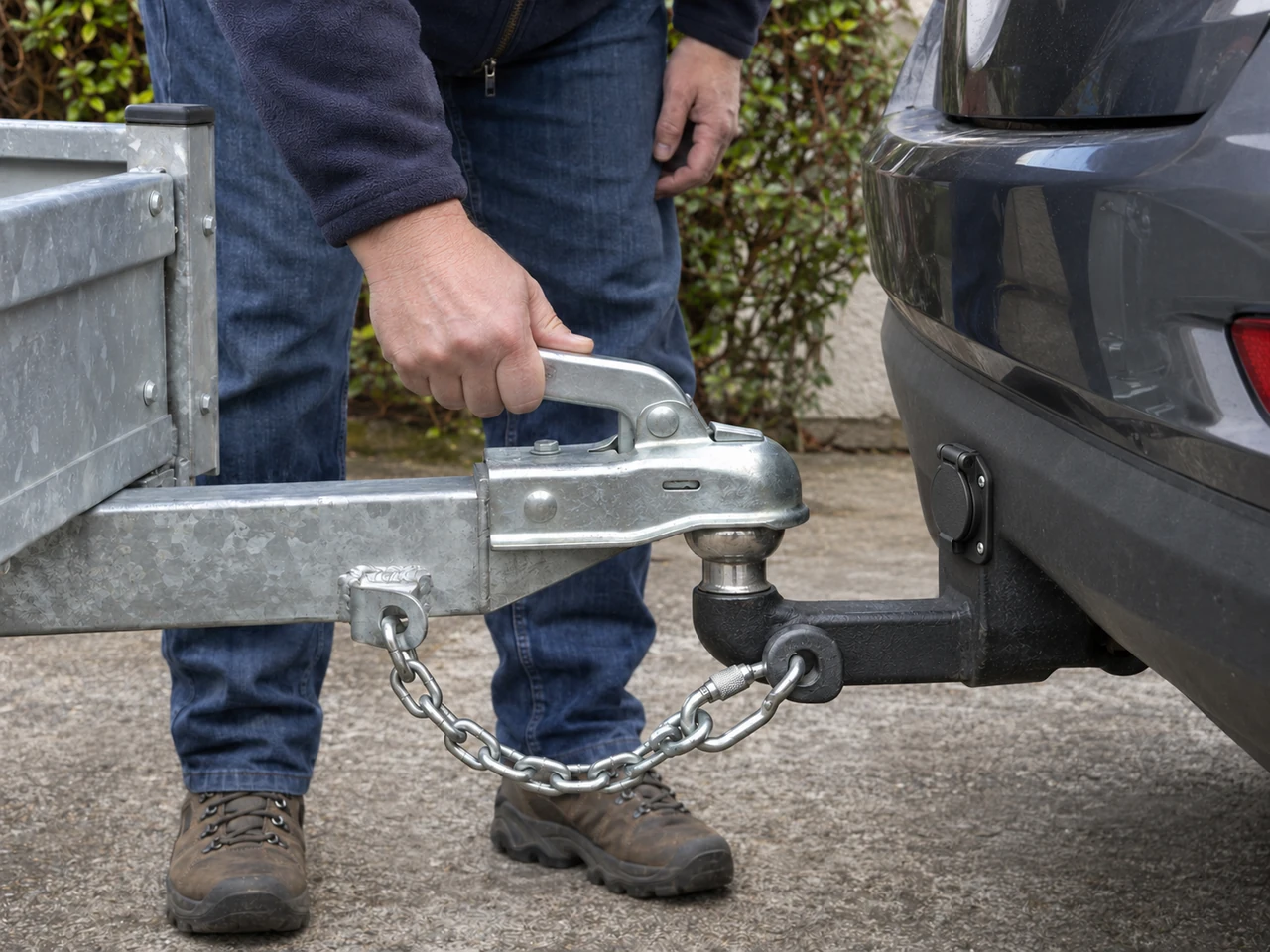
What should you check before towing a trailer?

830. What should you check before towing a trailer?

Check the tyres only if the trailer has been unused.
Check the lights after you have started driving.
Secure the load only if it is heavy.
✓ The coupling, safety connections, lights, tyres, and load.

The trailer must be correctly connected and roadworthy. Its lights, tyres, safety connections, and load should all be checked.
Argentina. Check that the coupling is locked, connect the applicable safety device and electrics, and test the lights. Check the tyres and secure the cargo before leaving.
🔗 Sources

NZTA safe loading and towing guide, practical guidance

Image credit: AI-generated

A vehicle moves into your following gap without immediate danger. What should you do?

831. A vehicle moves into your following gap without immediate danger. What should you do?

✓ Ease back smoothly to restore a safe gap.
Accelerate to stop the gap getting larger.
Overtake immediately to recover your position.
Follow closely until the vehicle moves away.

Restore a safe following distance smoothly, allowing for the road and weather conditions. If a collision is imminent, brake as needed to avoid it rather than relying only on easing back.
A car moving into the gap ahead of the following vehicle. General road-safety guidance: Restore a safe following distance smoothly, allowing for the road and weather conditions. If a collision is imminent, brake as needed to avoid it rather than relying only on easing back.
🔗 Sources

GOV.UK — Great Britain
Reference: Rule 168

Image credit: AI-generated

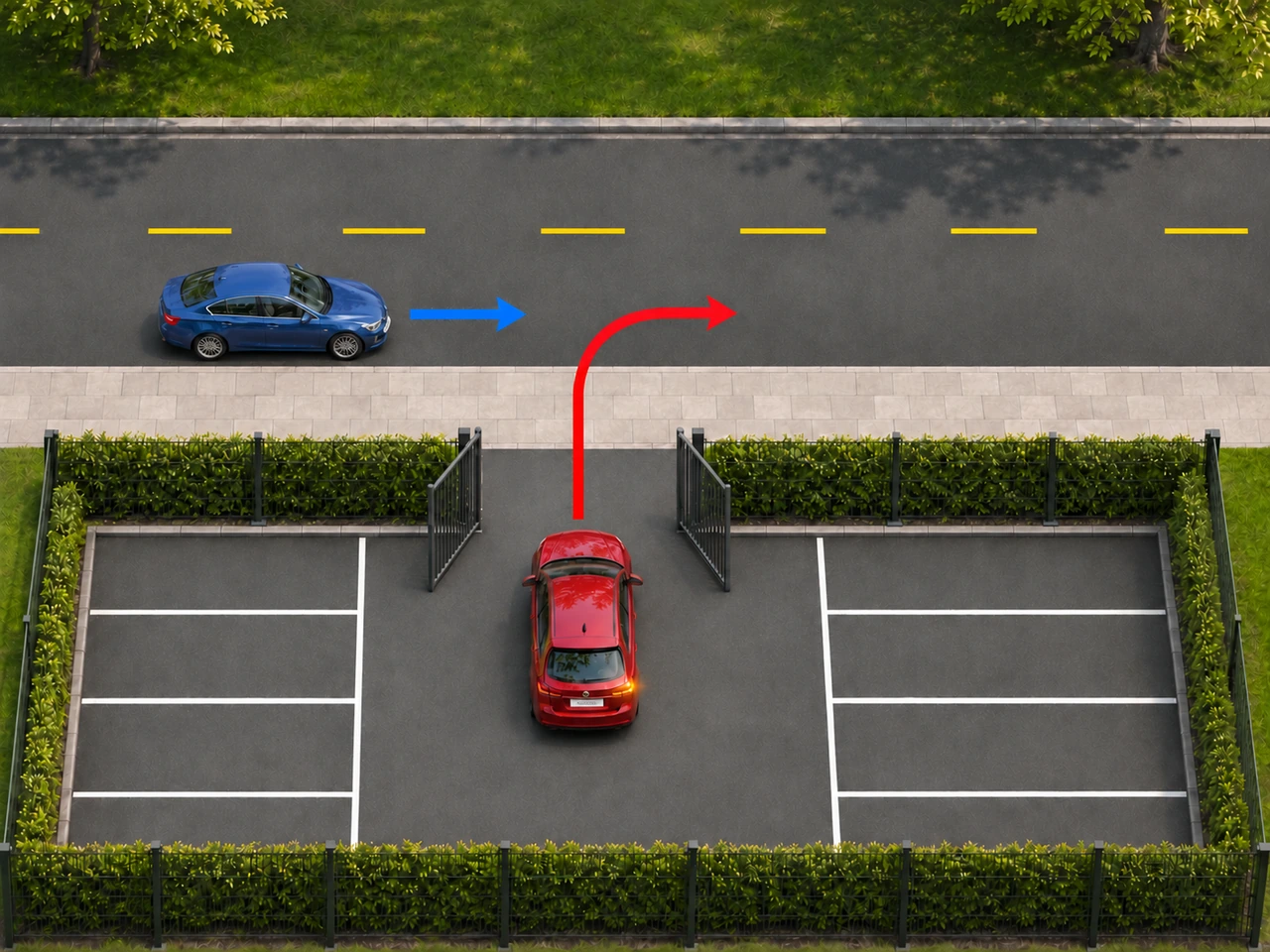
What must red do when leaving this staff car park, which is not open to the public?

832. What must red do when leaving this staff car park, which is not open to the public?

Proceed because traffic leaving a car park has priority.
Give way only if it turns left.
✓ Give way to the blue car.
Stop, then take priority over the blue car.

Red is leaving the clearly identified private staff car park, which is not open to the public. It must give way to blue and to anyone using the pavement it crosses. Wait without blocking the pavement and join only when safe. This answer concerns the private exit shown, rather than every junction in or near a publicly accessible car park.

Red waits at the exit of a private staff car park while blue approaches from the left on the road. Argentina: National Traffic Law article 39(b) requires cautious manoeuvres without risk or disruption to traffic. Red should wait for blue and a safe gap, checking for pedestrians before crossing the pavement.
🔗 Sources

AI-generated illustration • Traffic-rules.com / Rijbewijs-online.be • WCIT • CC BY-SA 4.0.

🔗 Argentina Government • National Traffic Law 24,449, article 39(b)
What should you normally do before changing gear in a manual vehicle?

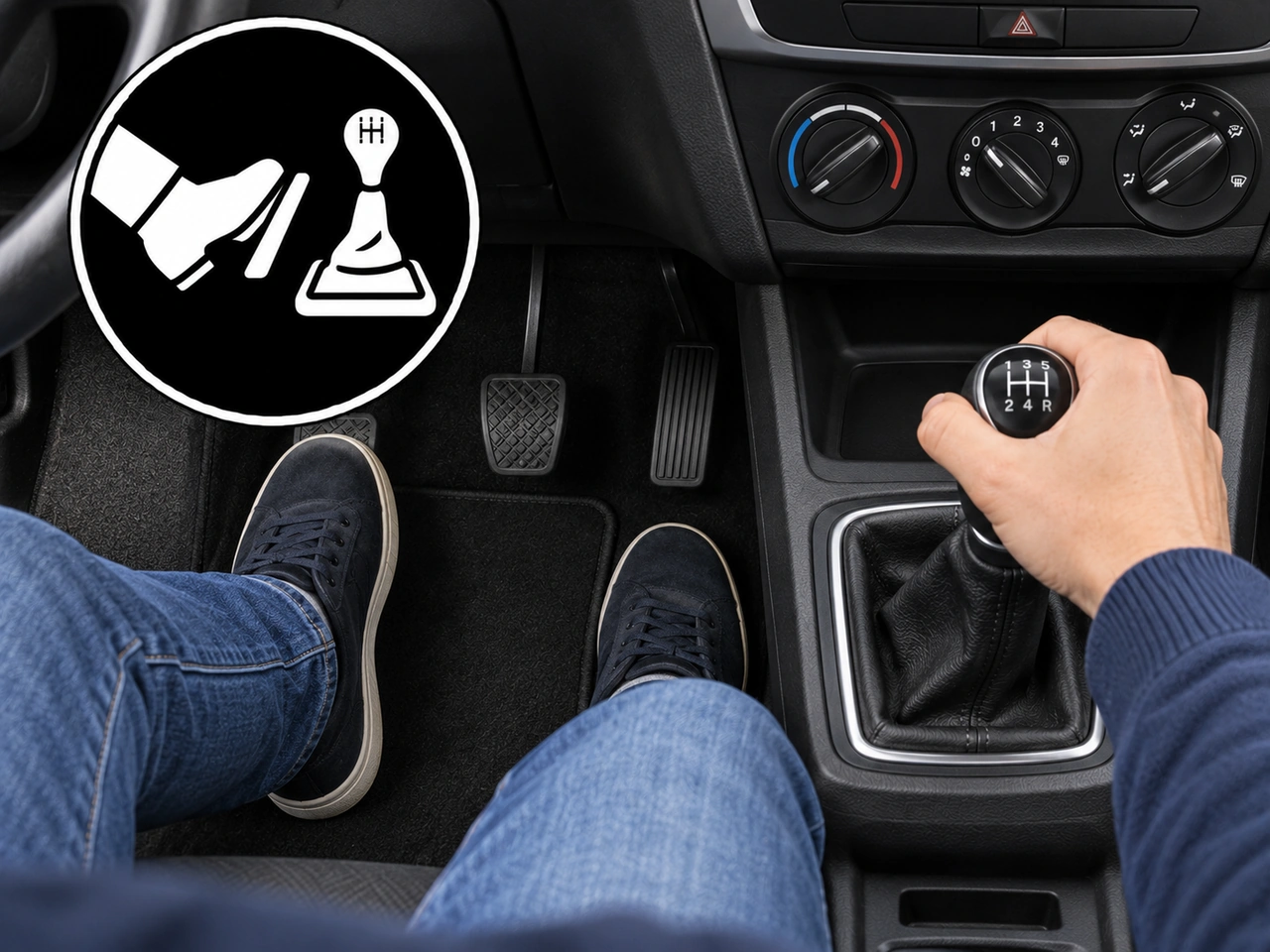
833. What should you normally do before changing gear in a manual vehicle?

Switch off the engine.
✓ Press the clutch pedal fully.
Press the accelerator pedal fully.
Apply the parking brake.

Pressing the clutch pedal disconnects the engine from the transmission so that another gear can be selected. After changing gear, the clutch should be released smoothly.

Clutch operation when changing gear in a manual vehicle.
Press the clutch fully before selecting another gear. Release it smoothly after the gear is engaged.
🔗 Sources

Ford owner’s manual · Manual transmission

Image credit: AI-generated

What should you do after hitting a deep pothole hard?

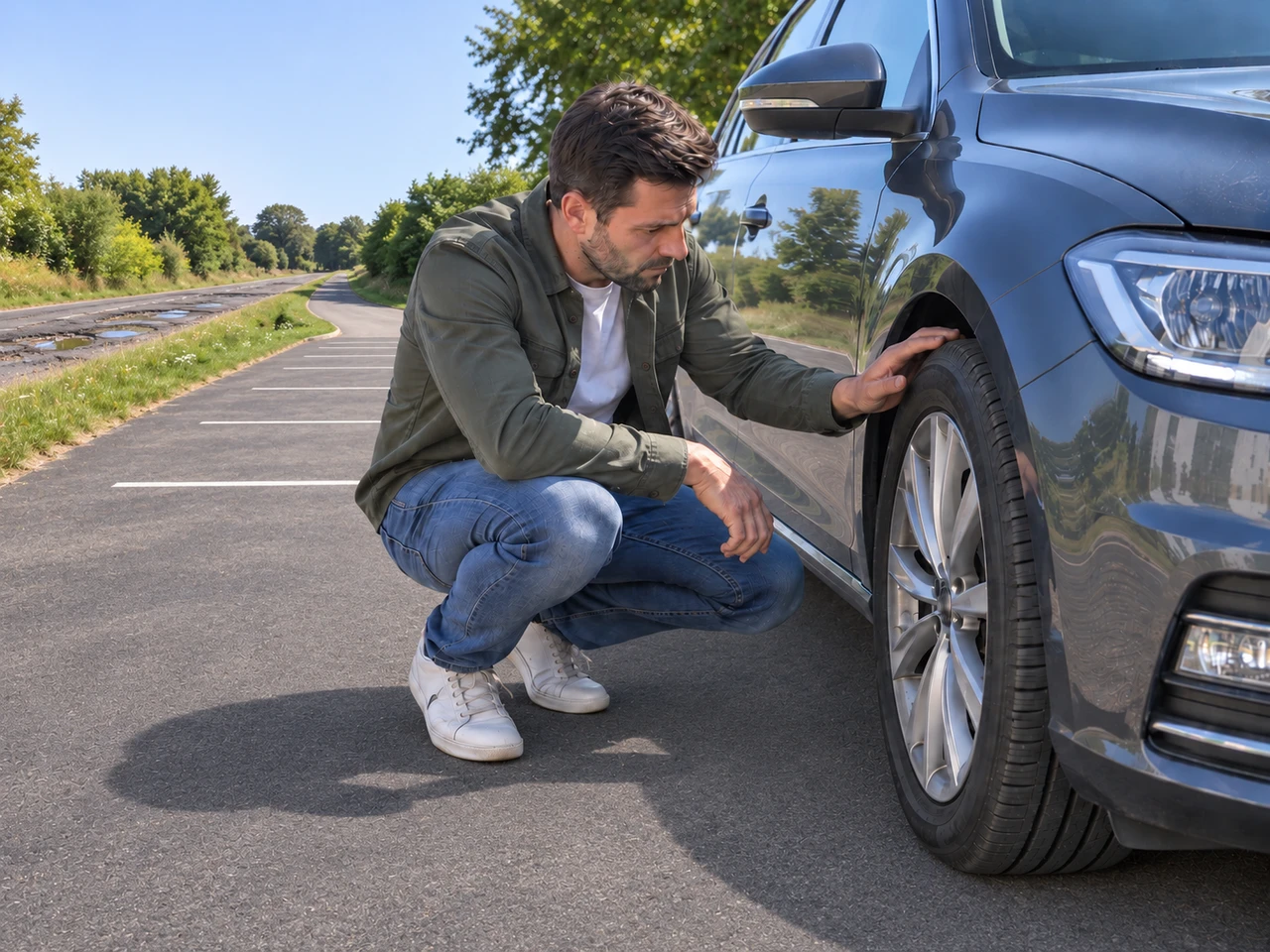
834. What should you do after hitting a deep pothole hard?

Brake sharply to check whether the wheels are damaged.
✓ Check for tyre or wheel damage when it is safe to stop.
Continue driving normally if the tyre still looks inflated.
Increase speed to see whether the steering remains stable.

A hard pothole impact can damage tyres and wheels and cause handling or alignment problems. Reduce speed smoothly and stop somewhere safe before inspecting; do not stand in moving traffic. Look for cuts, bulges, rim damage or loss of pressure. New vibration, pulling or steering changes also require attention. A tyre can have internal damage even when it still looks inflated. Arrange a professional inspection after a significant impact. Do not continue on a visibly damaged or bulging tyre; arrange assistance.

Checking a tyre and wheel after hitting a pothole.
Check tyres for pressure loss or damage after a pothole impact. Arrange professional assessment if noise, vibration or other tyre-performance changes appear.
🔗 Sources

NHTSA (United States): tyre safety.

Image credit: AI-generated

Why does higher speed increase the risk of aquaplaning?

835. Why does higher speed increase the risk of aquaplaning?

✓ The tyres may no longer clear the water effectively.
The brakes cannot remove water from the tyres.
The vehicle becomes heavier as speed increases.
Higher speed increases the tyre pressure.

As speed rises, the tyres may be unable to disperse the water beneath them quickly enough to maintain contact with the road. Reduce speed smoothly before reaching surface water, leave more space ahead and keep tyres in good condition at the recommended pressure. There is no single speed that guarantees protection: water depth and tyre condition also matter.
Vehicle speed and aquaplaning on a wet road.
🔗 Sources

Michelin — Technical aquaplaning explanation and prevention

Image credit: AI-generated

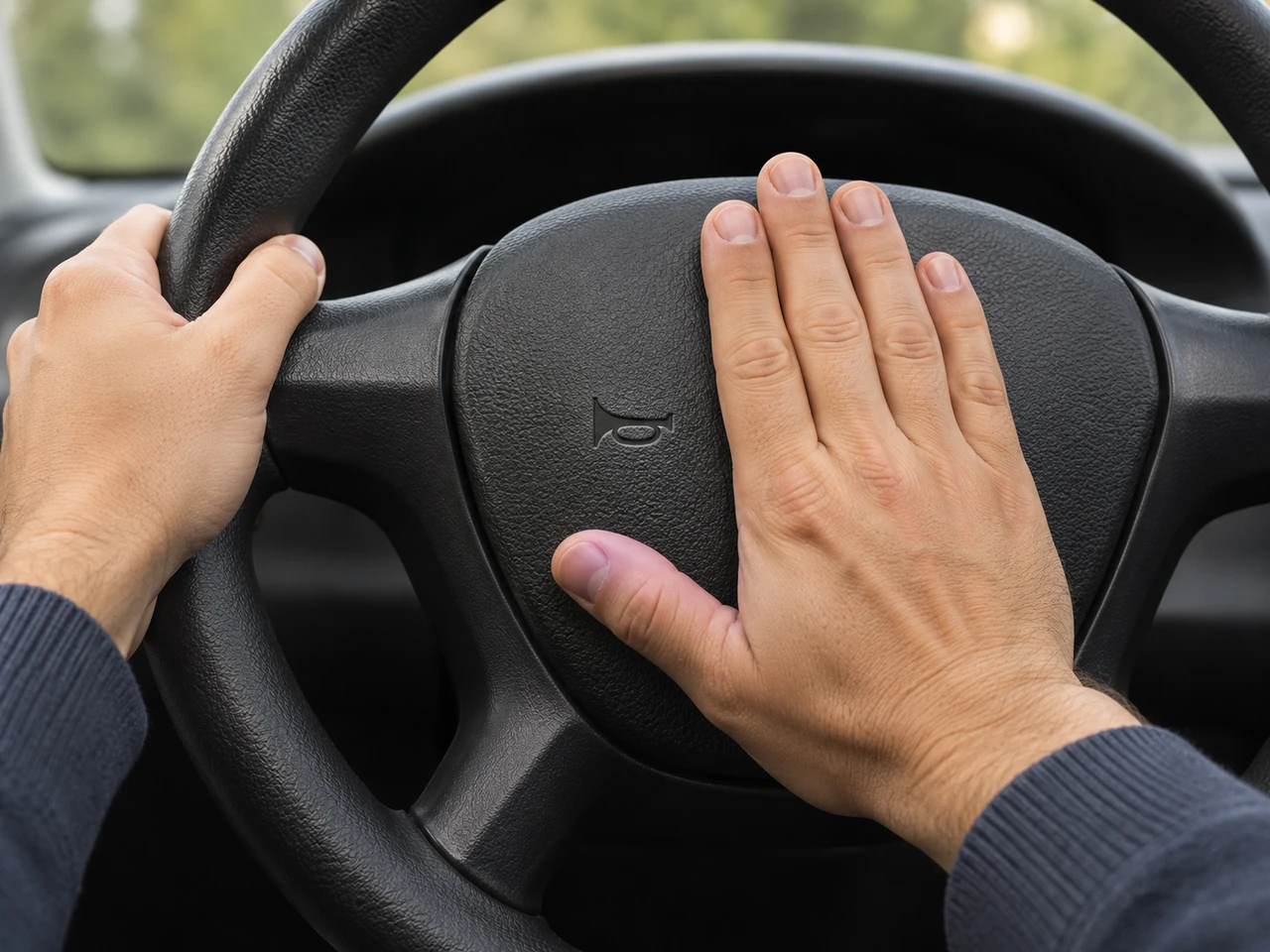
Sounding your horn gives you priority over other road users.

836. Sounding your horn gives you priority over other road users.

✓ False.
True.

The horn can warn others of your presence, but it does not give you priority. Still follow the applicable rules and proceed only when it is safe.

A horn warns; it does not give priority. The horn can warn others of your presence, but it does not give you priority. Still follow the applicable rules and proceed only when it is safe.
🔗 Sources

The Highway Code (Great Britain) • Safety guidance, Rule 112; warning other road users

Image credit: AI-generated
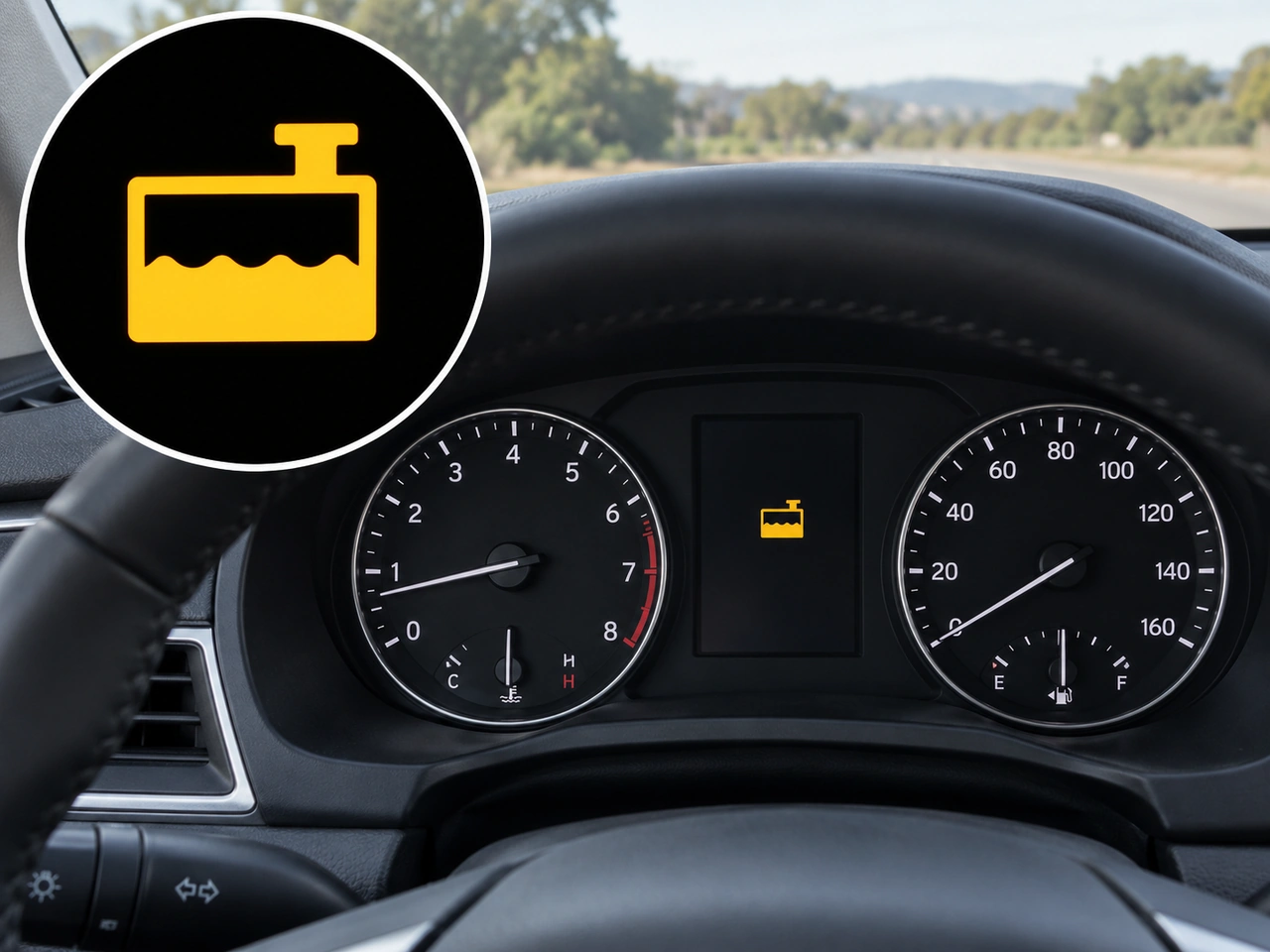
What can this cooling-system warning indicate?

837. What can this cooling-system warning indicate?

Low engine oil.
Low washer fluid.
✓ Low coolant level or excessive coolant temperature.
Low brake fluid.

A cooling-system warning can indicate low coolant, excessive coolant temperature or a system fault. Check any accompanying message for details.

Cooling-system warning symbol on the dashboard.
If a red cooling-system warning comes on while driving, pull over safely and switch off the engine. Let it cool completely before checking the coolant level or opening the reservoir.
🔗 Sources

Volkswagen UK · Red engine cooling-system warning

Image credit: AI-generated

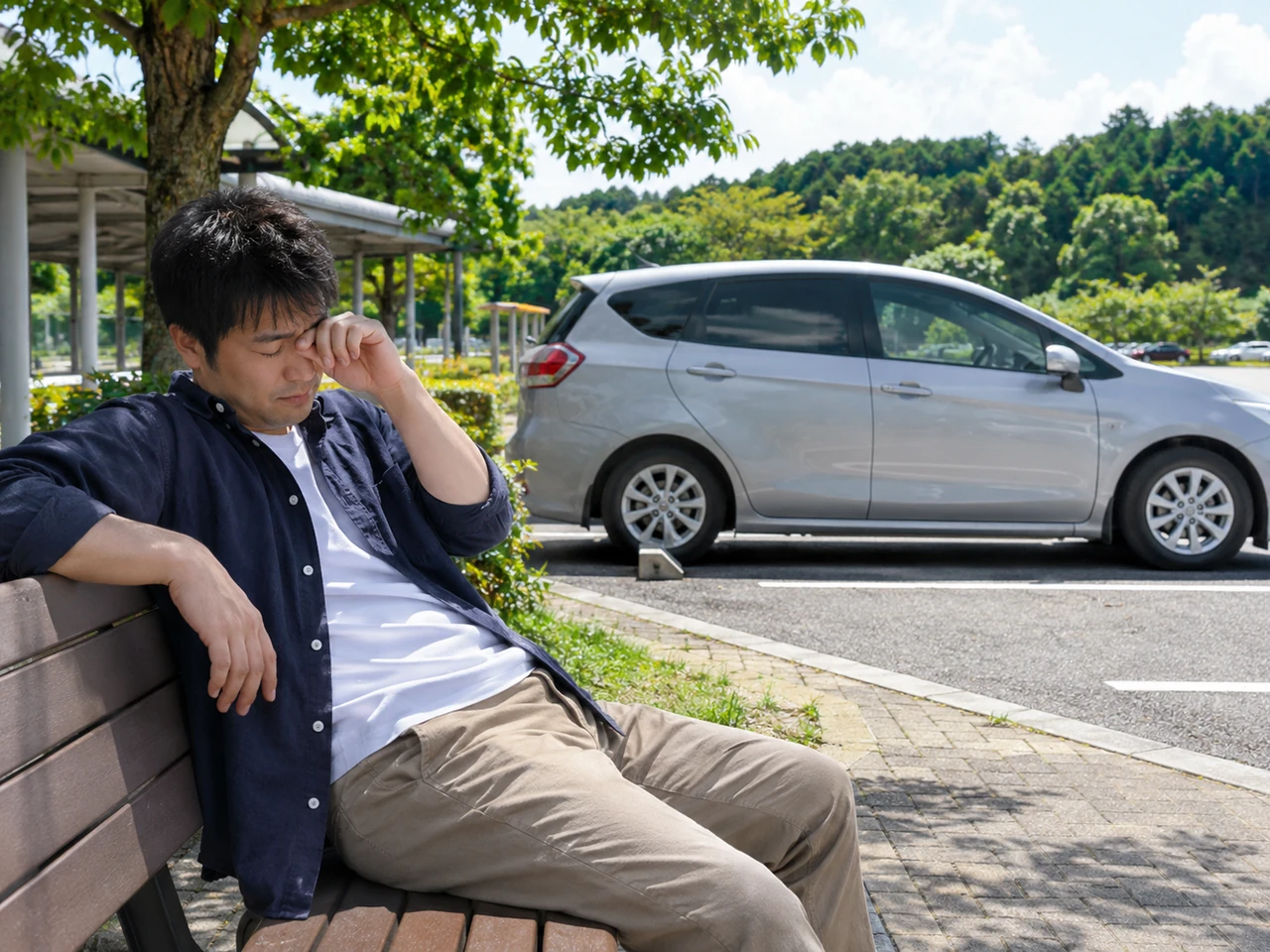
Drowsy-driving crashes only happen at night.

838. Drowsy-driving crashes only happen at night.

✓ False.
True.

Sleepiness can affect driving in daylight too, especially in the late afternoon. If you feel sleepy, stop somewhere safe and rest.

Drowsiness can affect daytime driving. Sleepiness can affect driving in daylight too, especially in the late afternoon. If you feel sleepy, stop somewhere safe and rest.
🔗 Sources

NHTSA (United States) • Safety guidance, daytime sleepiness and safe rest stops

Image credit: AI-generated
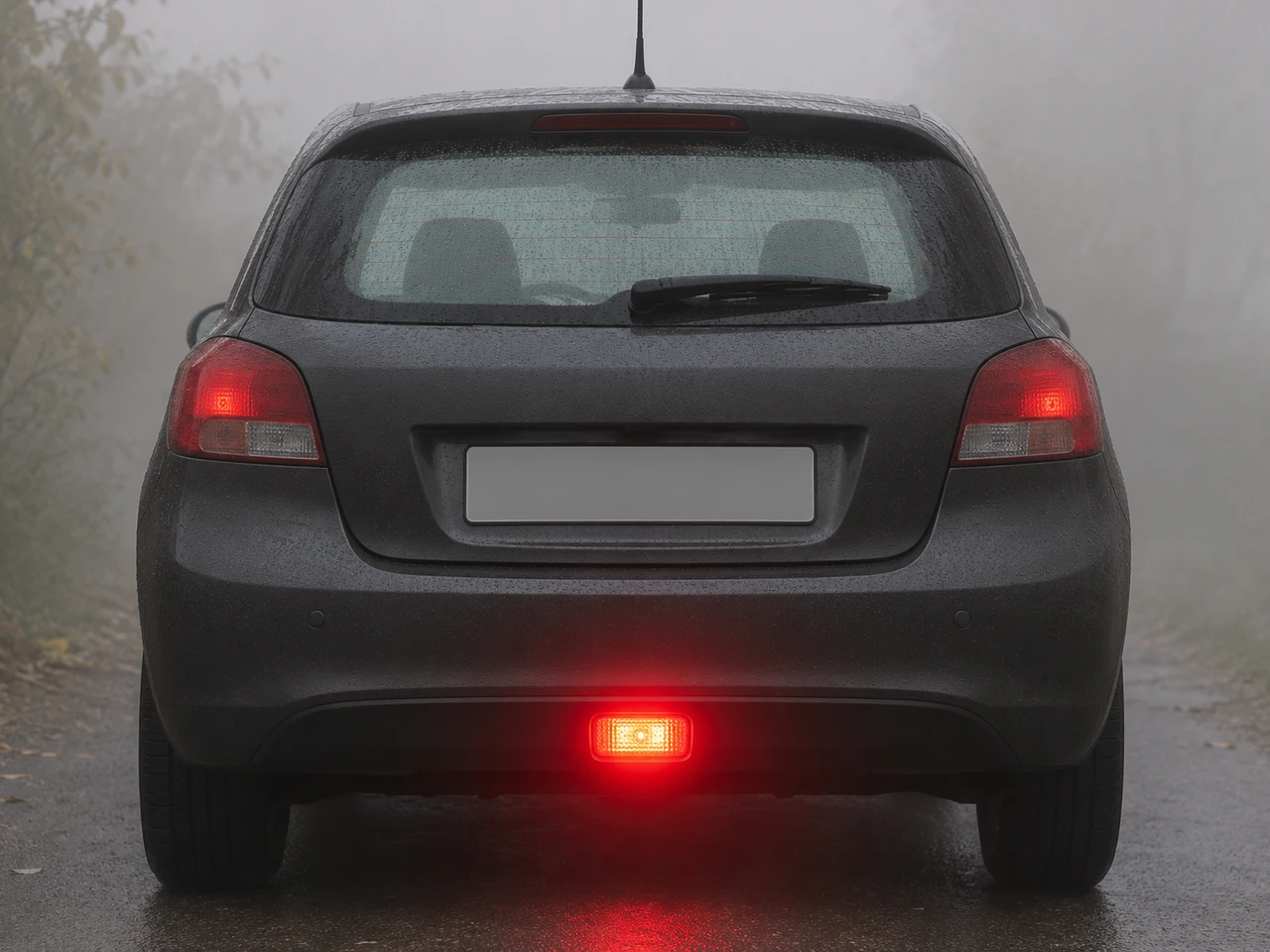
When should you use rear fog lights?

839. When should you use rear fog lights?

When driving on an unlit road.
When driving on high-speed roads at night.
When another vehicle is following closely.
✓ Only when the weather meets the local rules for their use.

Rear fog lights are very bright, and the permitted weather conditions differ between countries.
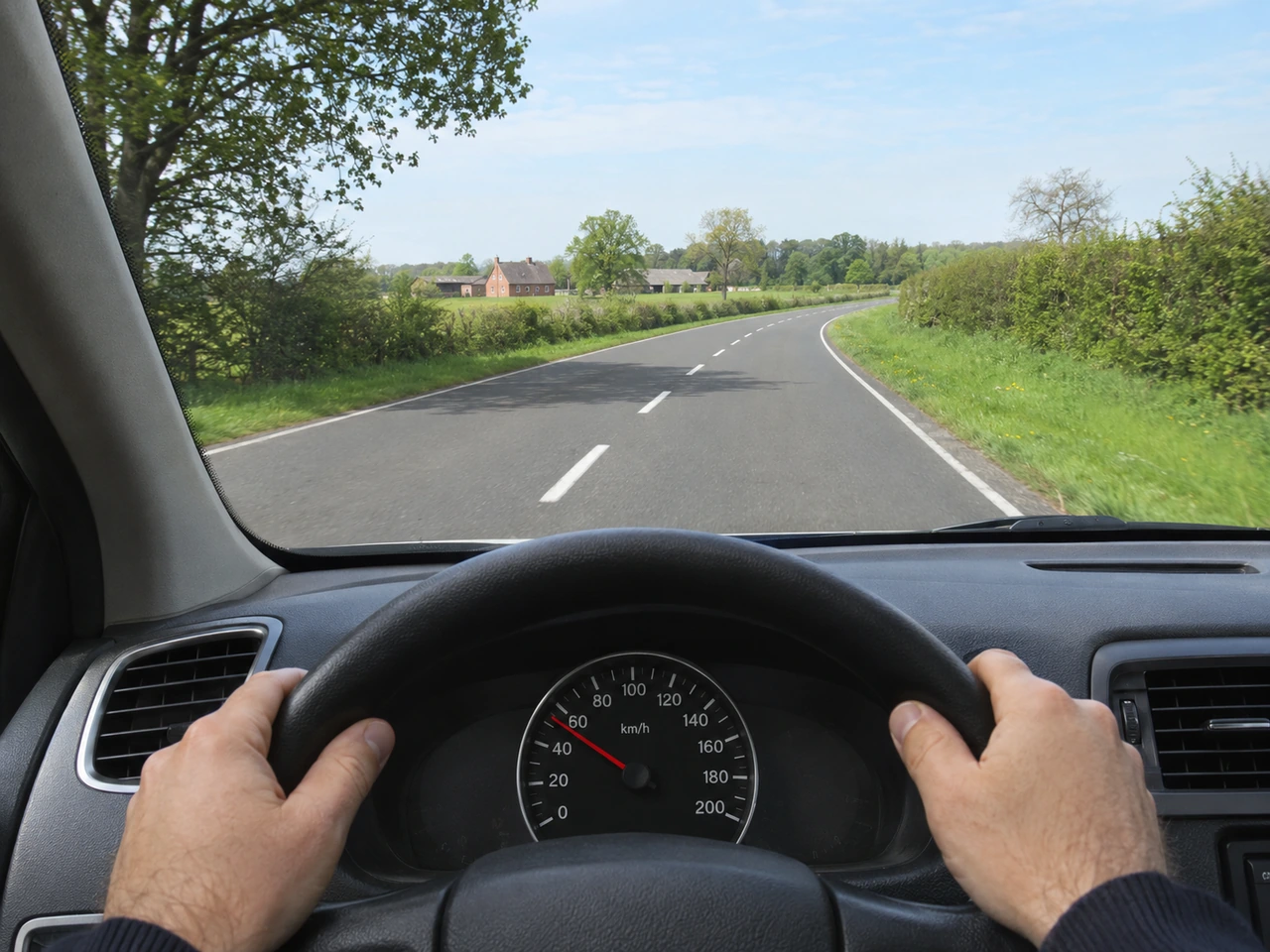
Why should you check your speed after leaving a motorway?

840. Why should you check your speed after leaving a motorway?

Lower-speed roads always have better grip.
✓ Your speed may be higher than it feels.
The motorway speed limit applies on every side road.
Your stopping distance becomes shorter automatically.

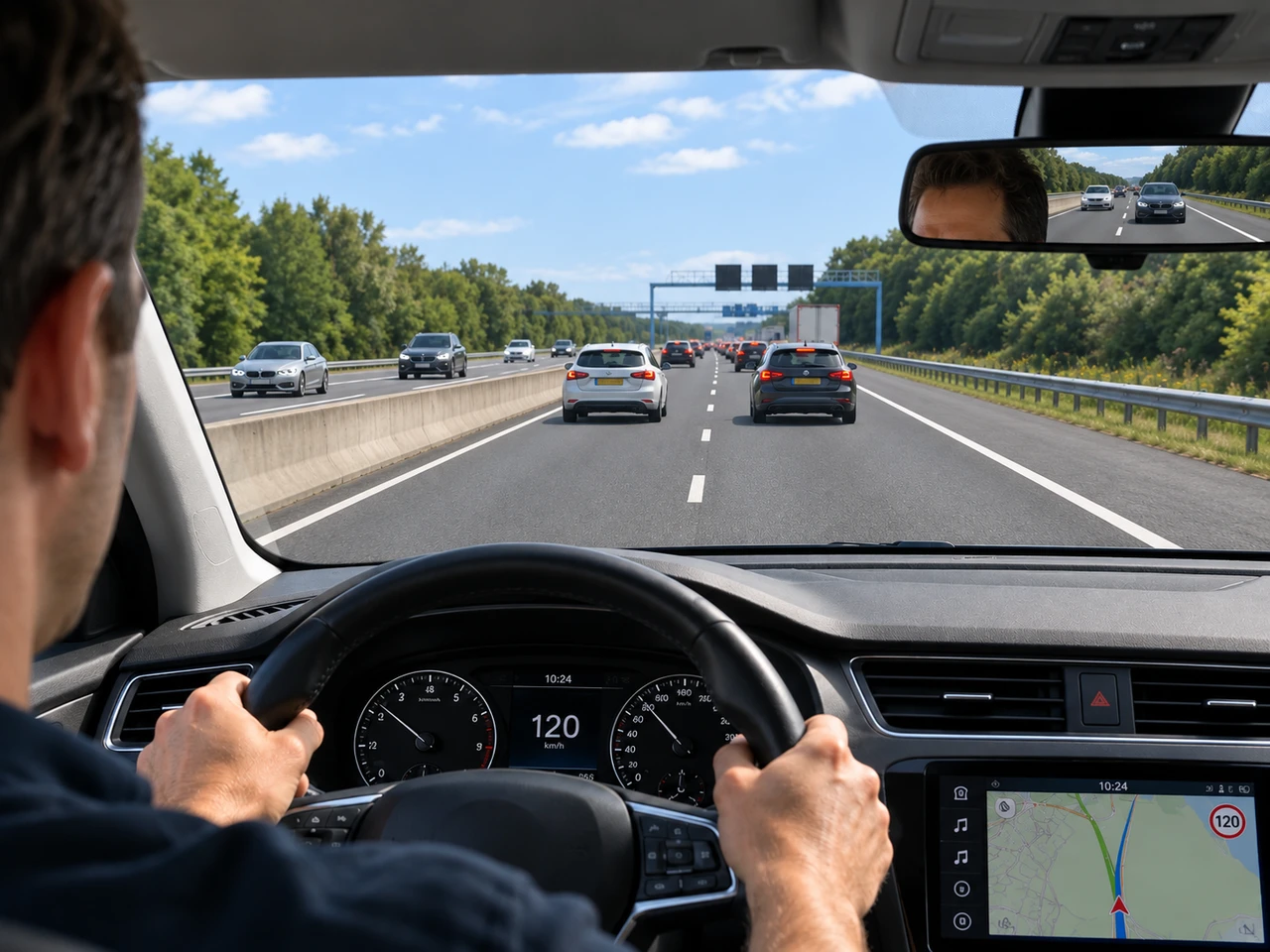
After sustained high-speed driving, a lower speed can feel slower than it really is. Check the speedometer and adjust to the new road, its limits and its hazards.
Checking speed after leaving a motorway. General road-safety guidance: After sustained high-speed driving, a lower speed can feel slower than it really is. Check the speedometer and adjust to the new road, its limits and its hazards.
🔗 Sources

GOV.UK — Great Britain
Reference: Rule 274

Image credit: AI-generated

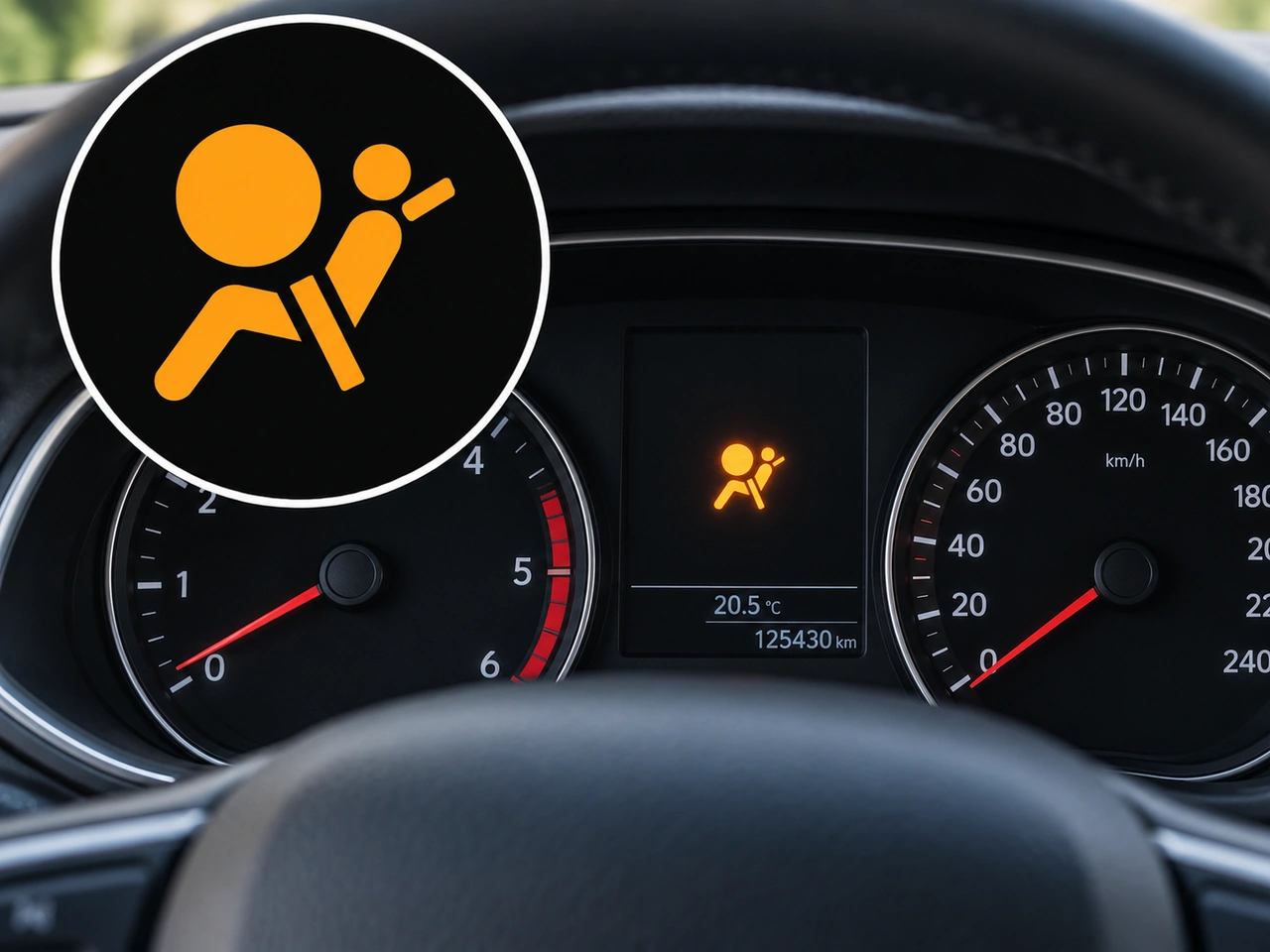
What does this dashboard symbol indicate?

841. What does this dashboard symbol indicate?

Power-steering warning.
Brake-system warning.
Charging-system warning.
✓ Airbag system warning.

This symbol indicates a possible fault in the airbag or supplementary restraint system. If it remains illuminated while driving, the system should be checked because one or more airbags or seat-belt pretensioners may not operate correctly in a collision.

Airbag-system warning symbol on the dashboard.
If this warning stays on after startup, have the restraint system checked promptly. A fault may affect an airbag or a seat-belt pretensioner.
🔗 Sources

Volkswagen · Dashboard warning and indicator lights

Image credit: AI-generated

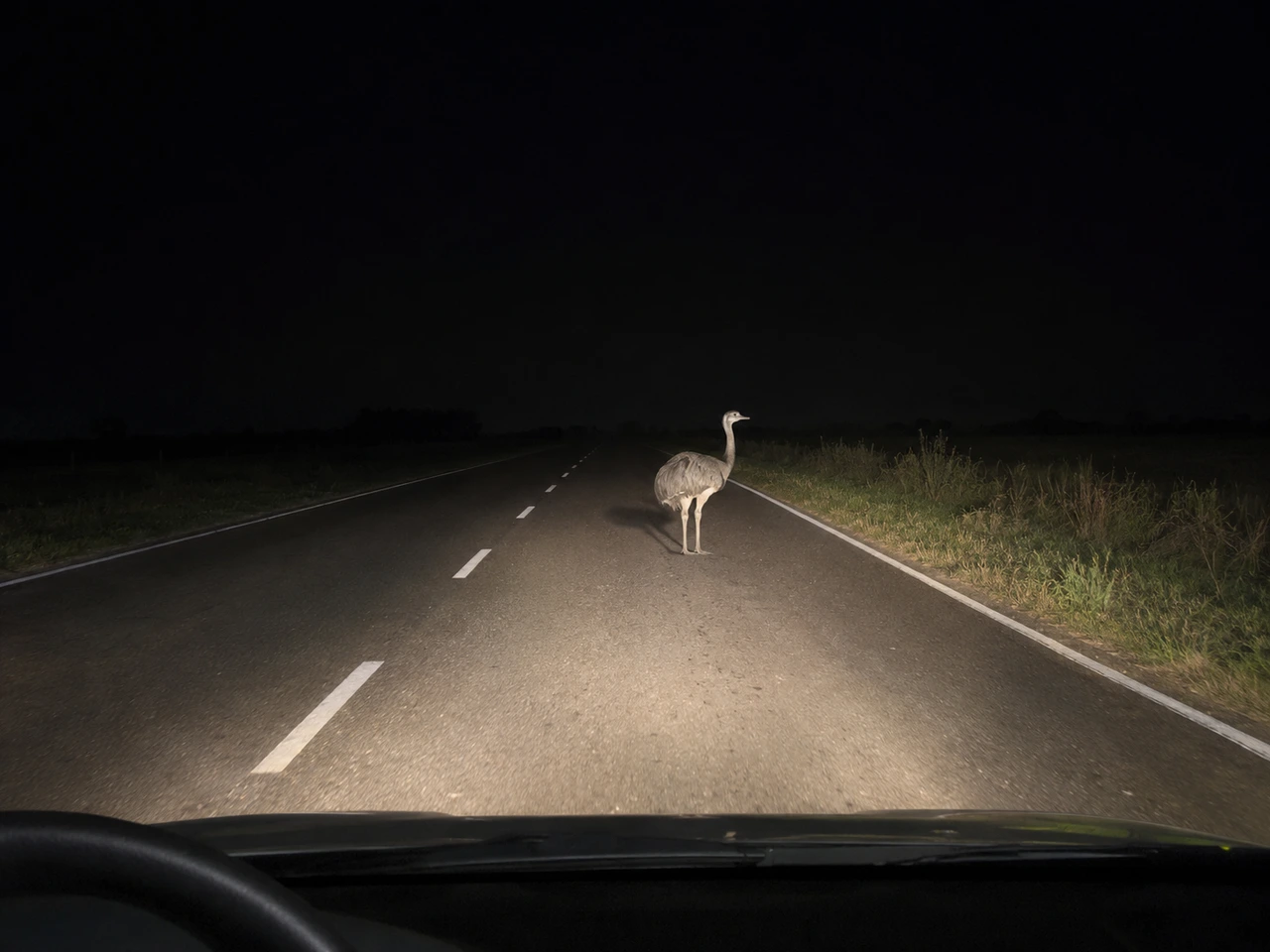
What should you do if an animal is standing on the road at night?

842. What should you do if an animal is standing on the road at night?

Switch off your headlights as you approach.
Flash your headlights repeatedly to make it move.
✓ Slow down and be prepared to stop.
Drive around it immediately without slowing down.

Animals may freeze, turn back, or move unpredictably when caught in vehicle headlights.

An animal is standing in your lane in the headlights. Slow down and be prepared to stop.
🔗 Sources

Manitoba Driver’s Handbook (general guidance on animals on the road).

Image credit: AI-generated.
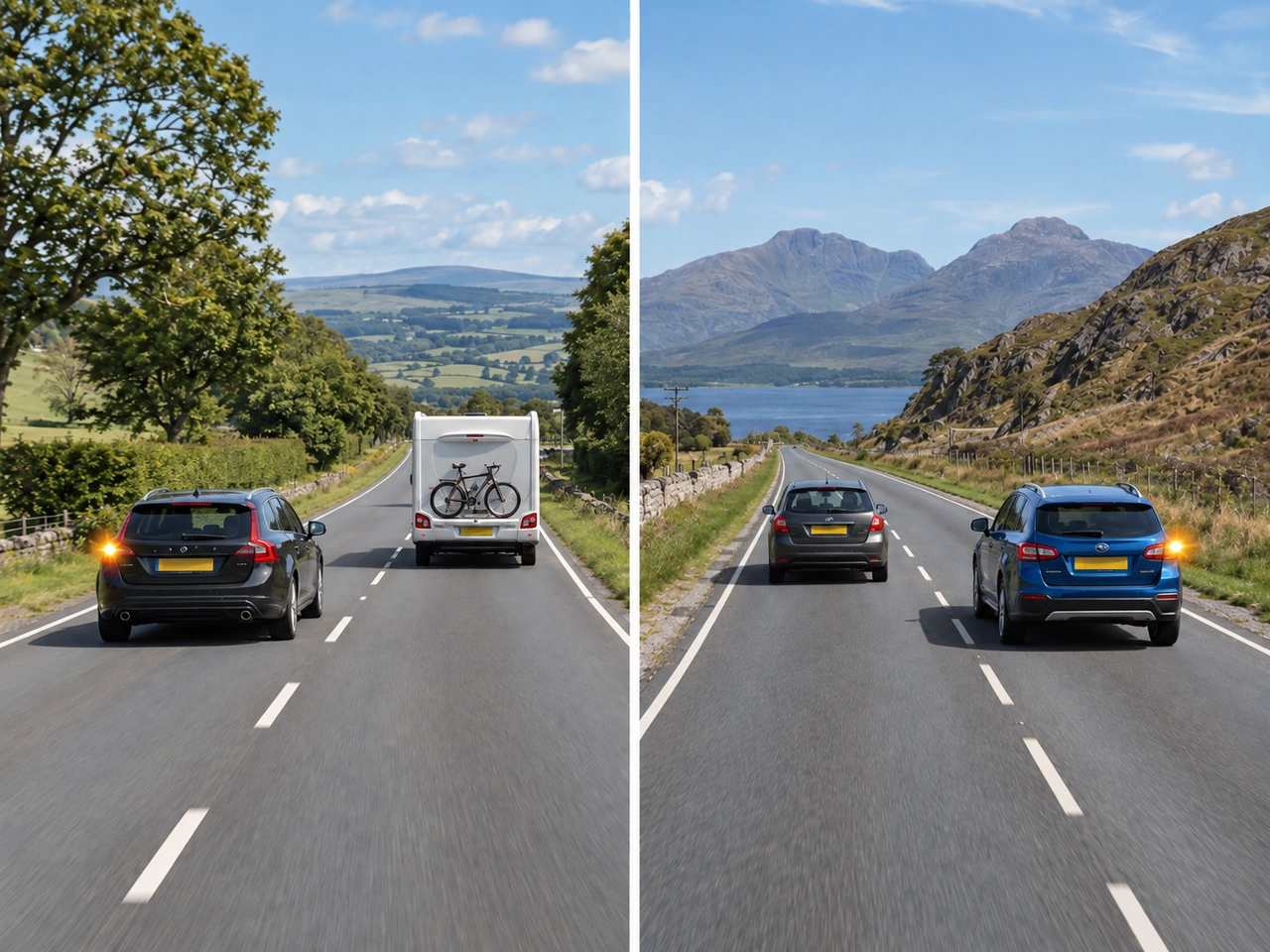
Which side is normally used for overtaking?

843. Which side is normally used for overtaking?

Right-hand side.
✓ Left-hand side.

Drivers normally overtake on the left-hand side in Argentina.

Vehicle overtaking on the left.
🔗 Sources

Country example: United States, Oregon DMV — right-hand traffic and normal overtaking on the left

Image credit: AI-generated
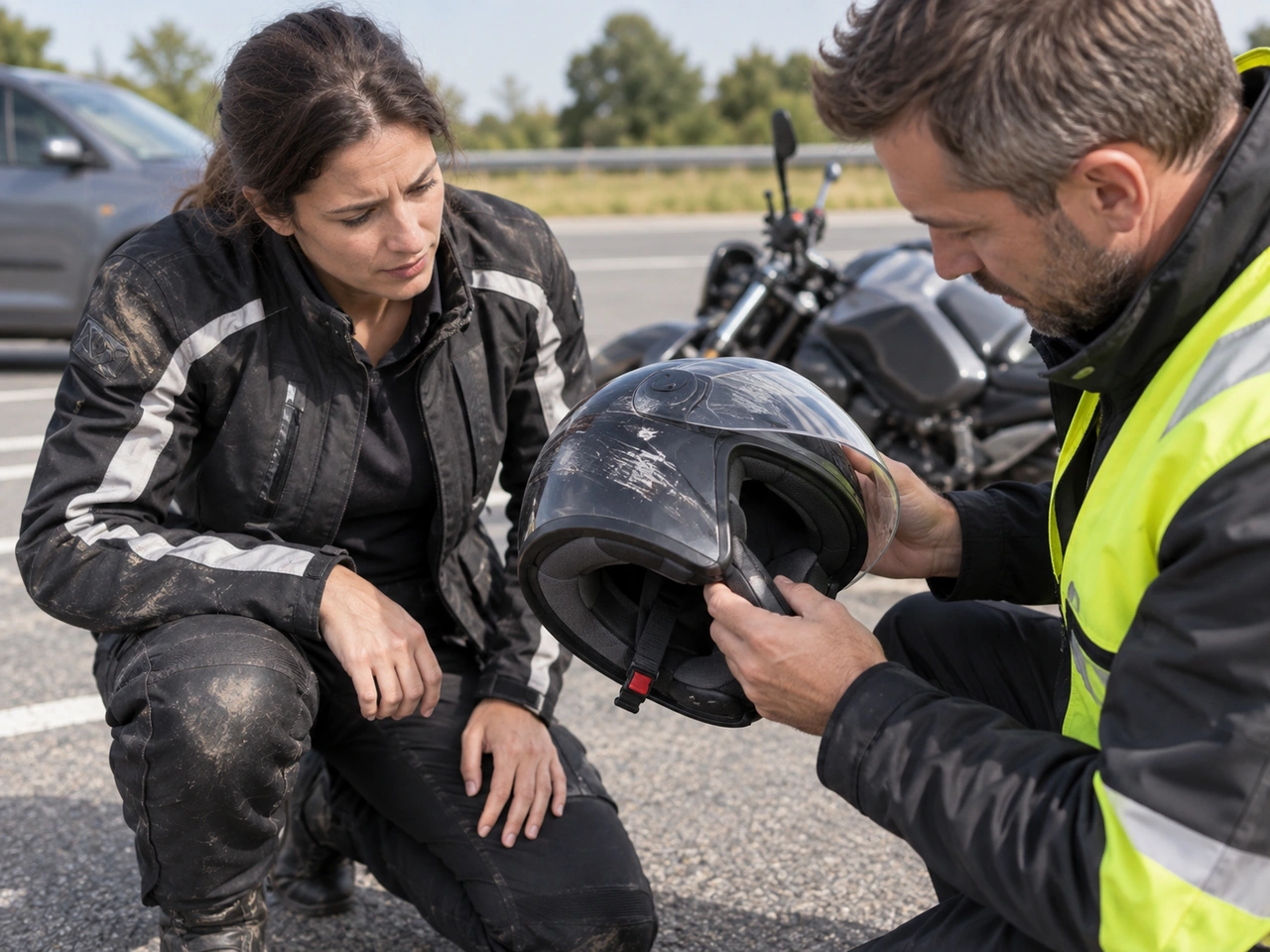
What should you do with a helmet that has taken a significant impact in a collision?

844. What should you do with a helmet that has taken a significant impact in a collision?

✓ Stop using it and follow the manufacturer's replacement guidance.
Replace only the outer shell if it is scratched.
Keep using it if the visor or straps still work.
Keep using it if there are no visible cracks.

A helmet that has taken a significant impact while being worn can have hidden damage to its shell or energy-absorbing liner, even when no cracks are visible. Stop using it and follow the manufacturer's replacement guidance; significant collision impacts commonly require replacement. Tightening straps, changing the visor or a visual inspection cannot restore or confirm its protective performance. If you are unsure about an impact, ask the manufacturer or authorised dealer before using it again.

Helmet inspection after a significant impact.
A helmet worn during a significant collision can hide impact damage. Stop using it and follow its manufacturer's replacement guidance; visual inspection cannot certify protection.
🔗 Sources

SHOEI: helmet impact and replacement guidance.

Image credit: AI-generated

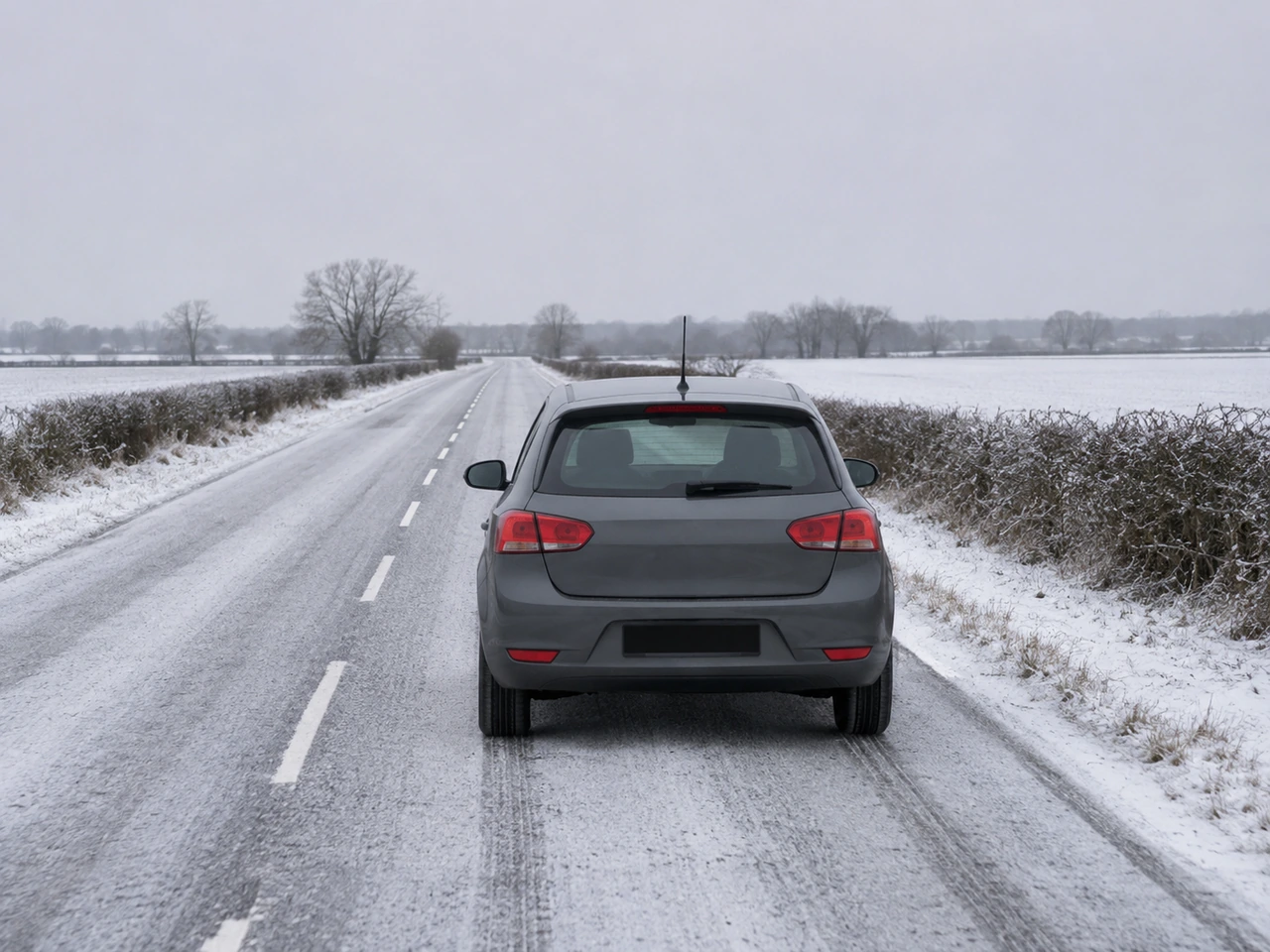
What should you do when the road is covered with snow or ice?

845. What should you do when the road is covered with snow or ice?

Brake firmly in bends to keep control.
Follow other vehicles closely in their tyre tracks.
Use quick steering movements if the vehicle starts to slide.
✓ Reduce speed, increase following distance, and drive gently.

Snow and ice reduce tyre grip, making it easier to lose control and harder to stop. Lower your speed, leave much more space ahead and steer and accelerate smoothly, and brake gently for planned slowing. Anticipate bends and slowing traffic early. Avoid cruise control on slippery roads.

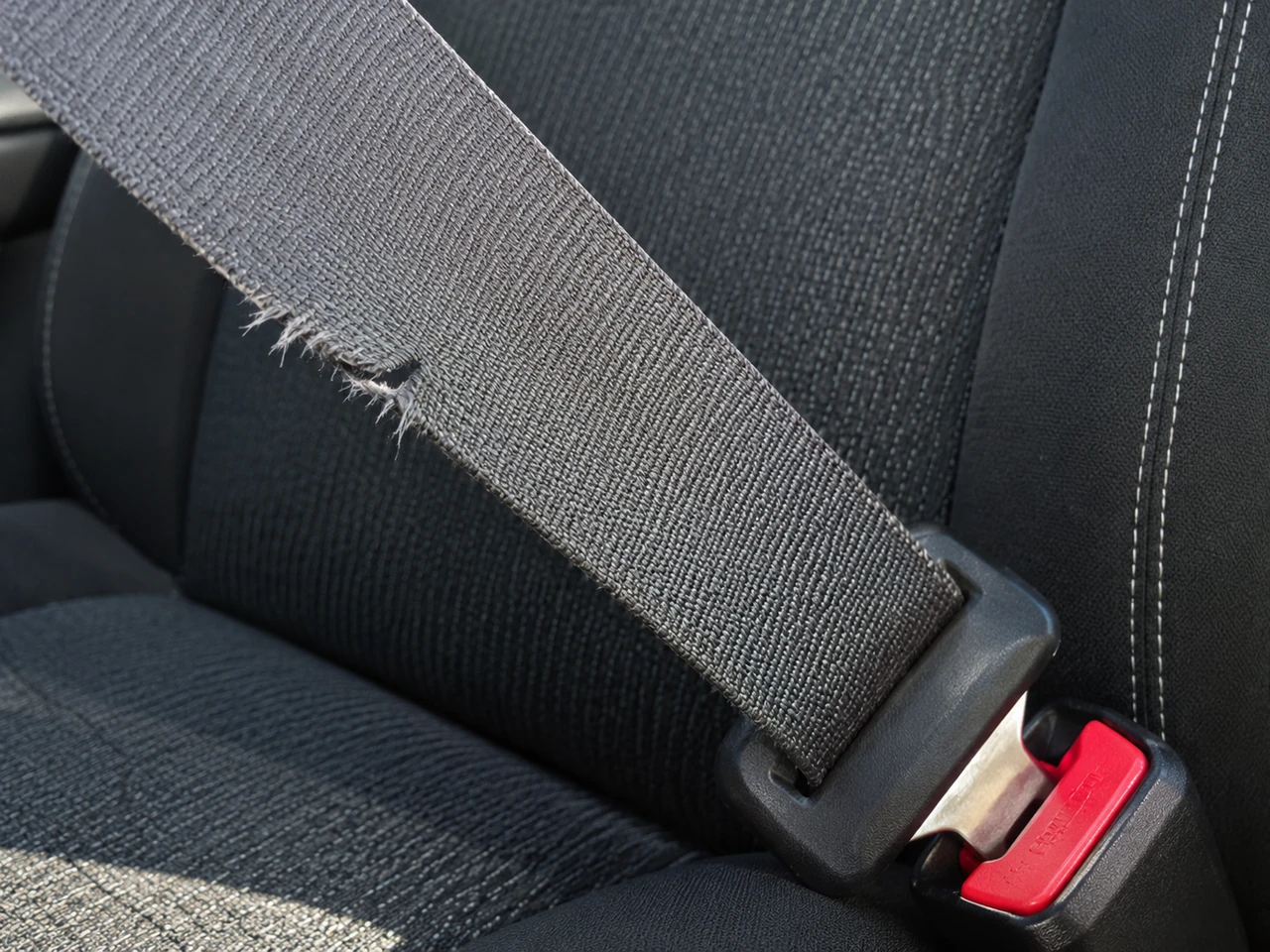
A frayed seat belt is safe to use as long as its buckle still clicks shut.

846. A frayed seat belt is safe to use as long as its buckle still clicks shut.

✓ False.
True.

A working buckle does not make damaged webbing safe. Do not use a damaged belt; have the restraint inspected and replaced as required by a qualified repairer. Do not attempt to repair it yourself.

Have damaged seat belts professionally replaced. A working buckle does not make damaged webbing safe. Do not use a damaged belt; have the restraint inspected and replaced as required by a qualified repairer. Do not attempt to repair it yourself.
🔗 Sources

Volvo owner’s manual (manufacturer guidance) • Safety guidance, seatbelt damage; do not repair belts yourself

Image credit: AI-generated
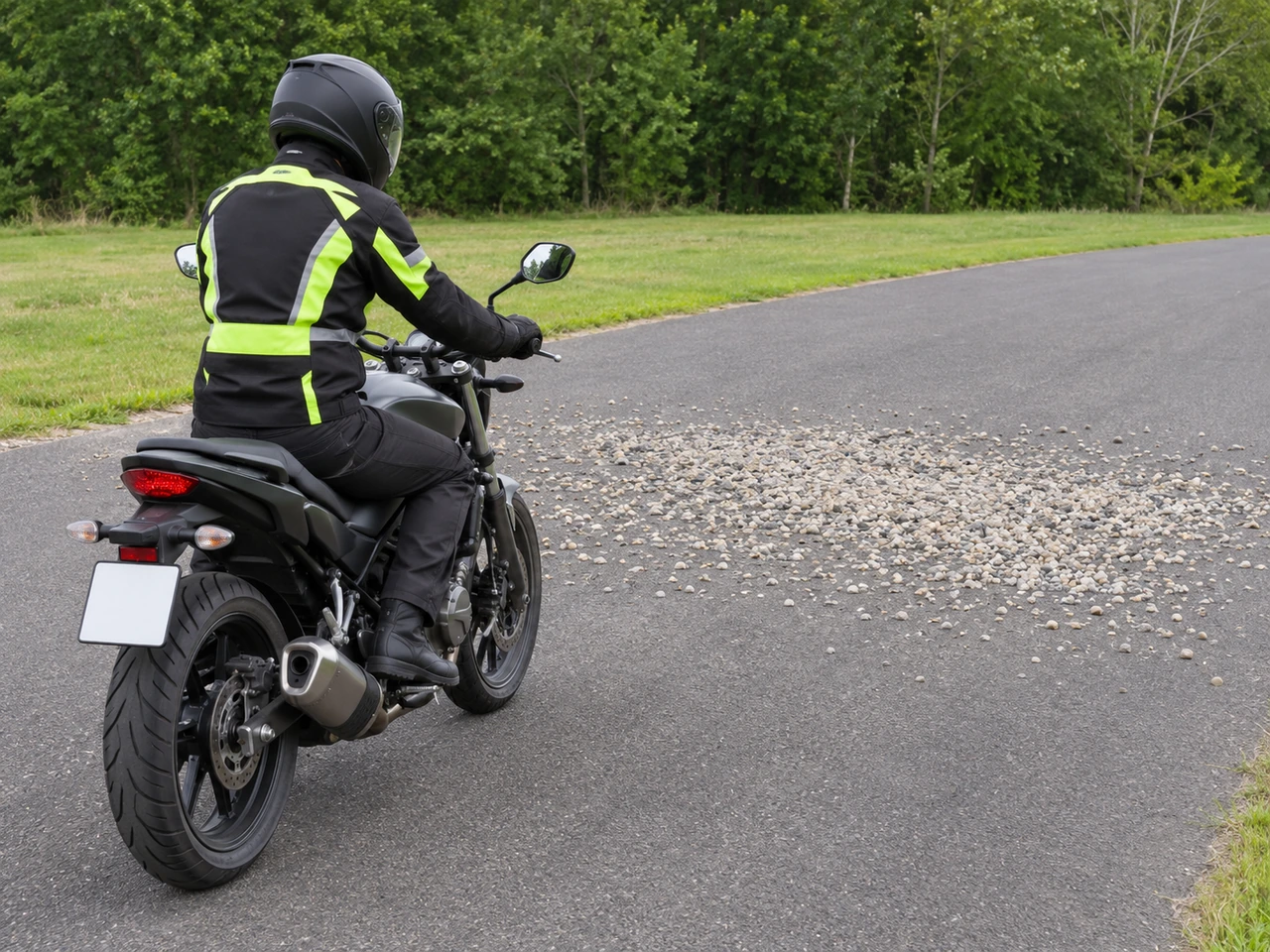
What should a motorcyclist do when approaching loose gravel?

847. What should a motorcyclist do when approaching loose gravel?

✓ Reduce speed before reaching it and use smooth controls.
Lean the motorcycle more than usual.
Turn suddenly to avoid every loose stone.
Brake hard while riding over it.

Loose gravel can significantly reduce tyre grip. Reduce speed before reaching it, keep the motorcycle as upright as practical, and avoid sudden braking, acceleration or steering while crossing the loose surface.
Loose gravel reduces grip. A rider approaches loose stones on asphalt in a neutral training setting. Slow before the loose surface and avoid sudden braking, acceleration or steering.
🔗 Sources

DLD.Utah.gov — Motorcycle Handbook, Handling dangerous surfaces

Image credit: AI-generated

An unusual burning smell from your car needs prompt attention.

848. An unusual burning smell from your car needs prompt attention.

False.
✓ True.

Stop somewhere safe and arrange for the cause to be checked. A burning smell may indicate a fault that could lead to a fire; do not ignore it because the car still drives normally.

Investigate burning smells promptly. Stop somewhere safe and arrange for the cause to be checked. A burning smell may indicate a fault that could lead to a fire; do not ignore it because the car still drives normally.
🔗 Sources

The Highway Code (Great Britain) • Safety guidance, Other problems: unusual smells and fire risk

Image credit: AI-generated
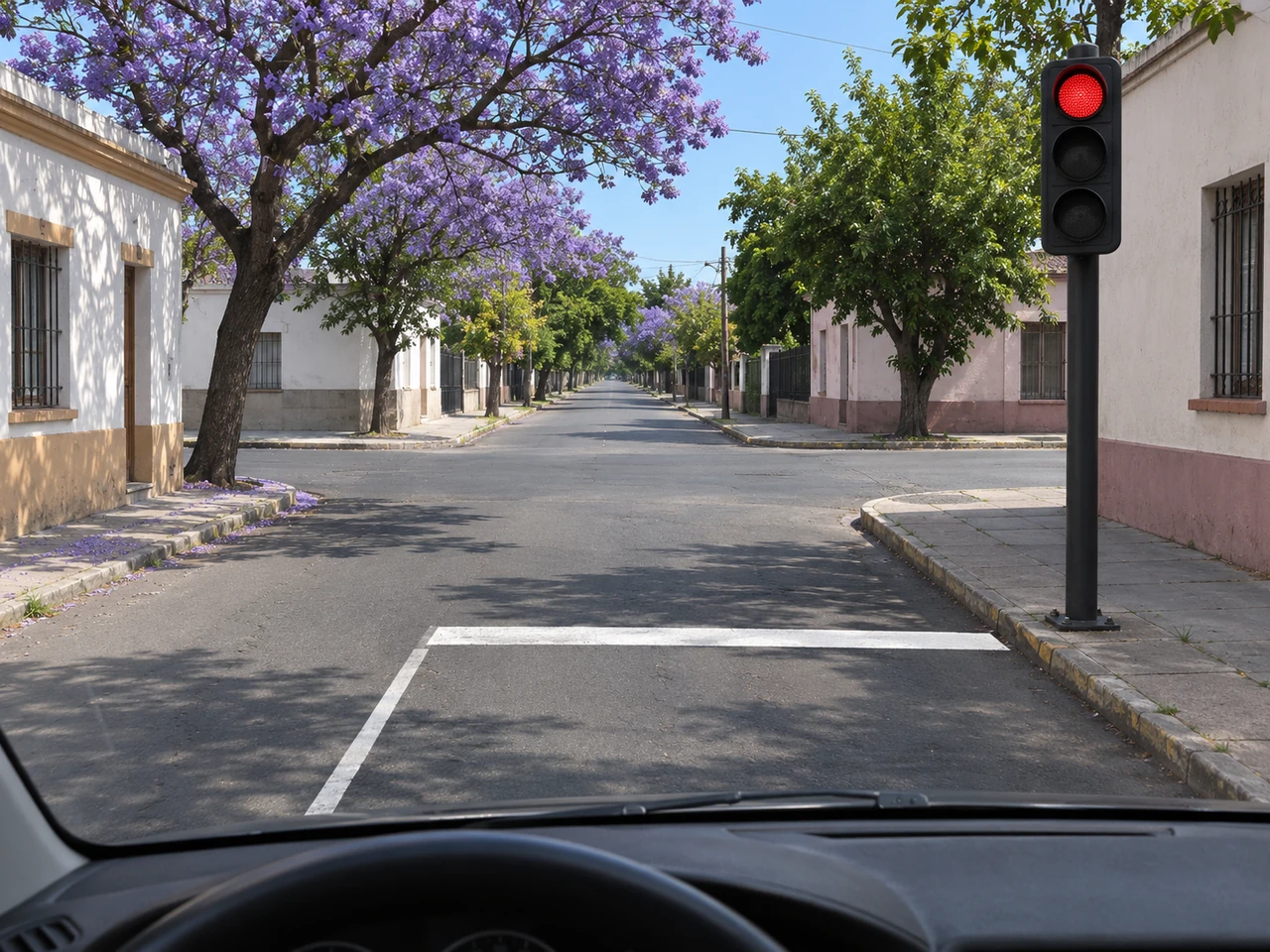
What should you do when a traffic light turns red?

849. What should you do when a traffic light turns red?

✓ Stop and wait until you may proceed.
Cross the stop line before stopping.
Continue if the junction appears clear.
Stop only if other traffic is approaching.

A red traffic light means you must stop before the stop line, pedestrian crossing, or intersection unless a sign or signal indicates otherwise.
Stop before the marked stop line, or before the pedestrian crossing if there is no stop line.
🔗 Sources

Argentina • National Traffic Law 24.449, article 44(a)(2)

Image credit: AI-generated

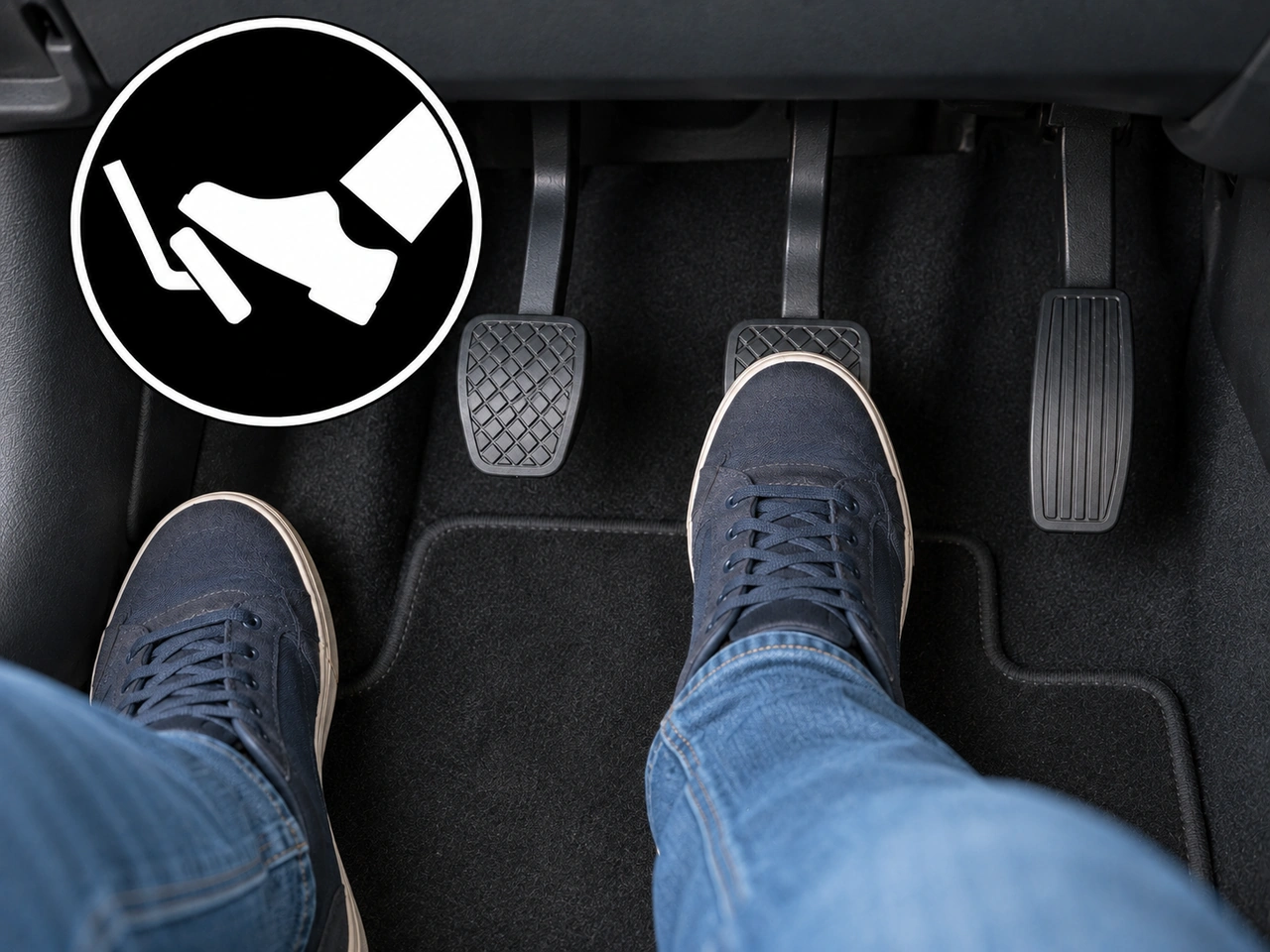
Which pedal is used to slow down or stop the vehicle?

850. Which pedal is used to slow down or stop the vehicle?

✓ The brake pedal.
The footrest.
The clutch pedal.
The accelerator pedal.

The brake pedal is used to reduce the vehicle's speed or bring it to a stop. In a manual vehicle, it is the middle pedal.

Brake pedal in the driver's footwell.
The brake is the middle pedal in a manual car and the left pedal in a conventional two-pedal automatic. Use your right foot to brake.
🔗 Sources

Western Australia · Driving Techniques for Safer Drivers

Image credit: AI-generated