QuizTraffic rulesArgentina

Test your knowledge with our multiple-choice quiz. Learn from each answer and improve your understanding of the traffic rules and road signs of Argentina.

For informational purposes only. Always follow official regulations. Some content and images were created with AI assistance.


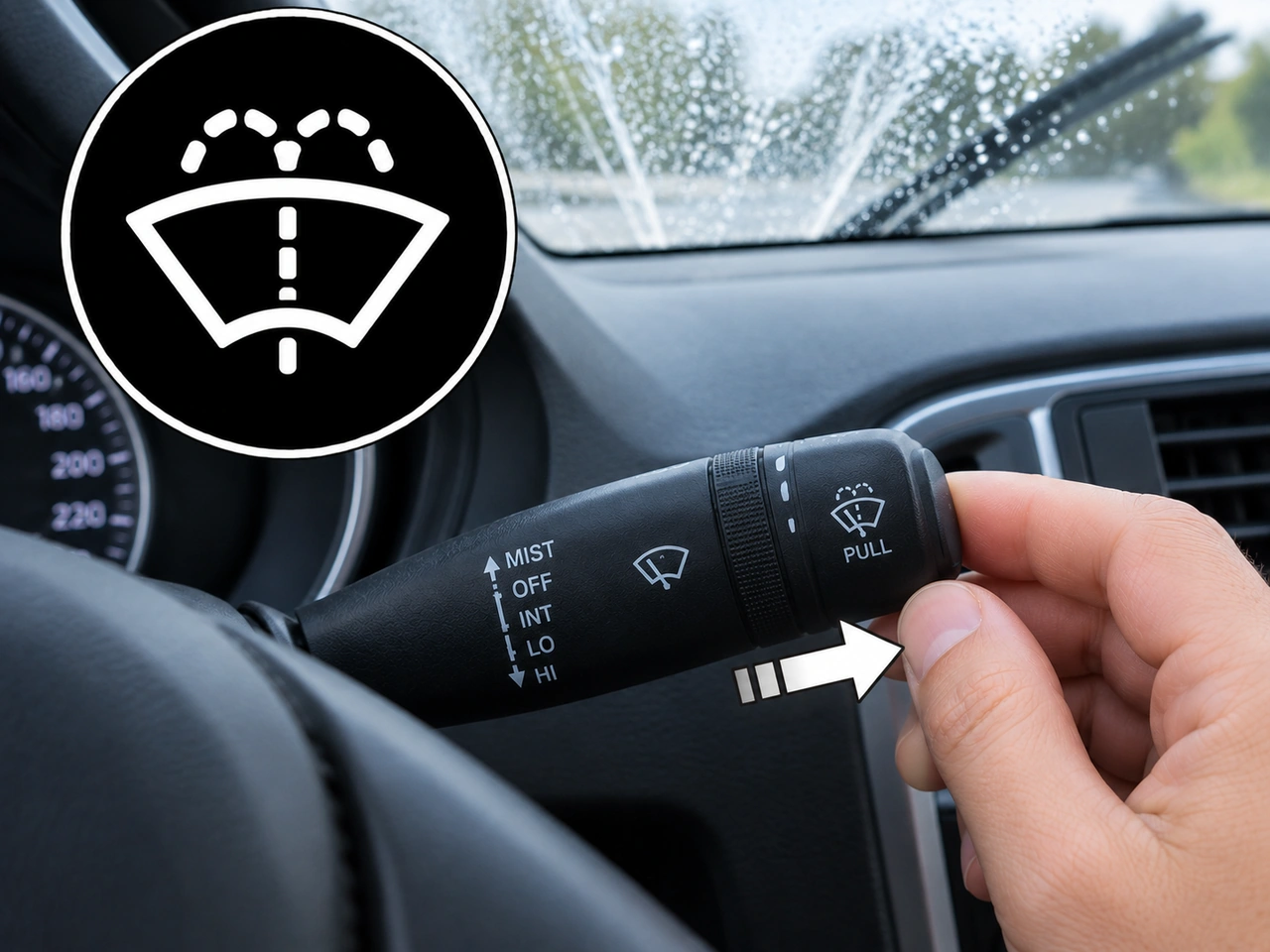
What does this vehicle-control symbol indicate?

301. What does this vehicle-control symbol indicate?

✓ Windscreen washer.
Rear window demister.
Air recirculation.
Windscreen wiper speed.

This symbol indicates the windscreen washer. Operating the control sprays washer fluid onto the windscreen and normally activates the wipers to help clean the glass.

Windscreen-washer control and spray symbol.
The spray symbol identifies the front washer control. The wipers usually sweep the glass after you operate the washer.
🔗 Sources

Ford owner’s manual · Wipers and washers

Image credit: AI-generated

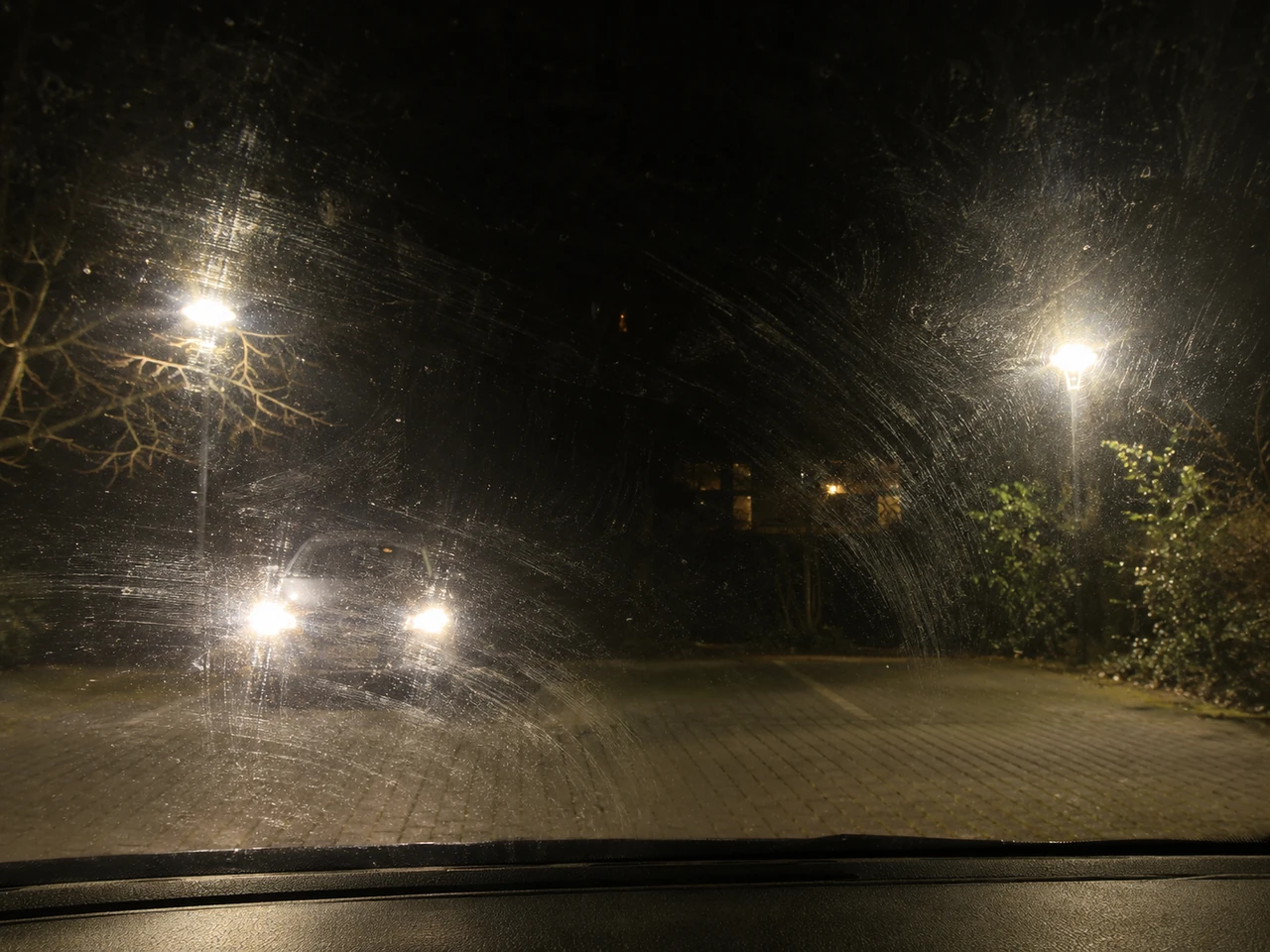
A dirty windscreen is harmless at night if your headlights work.

302. A dirty windscreen is harmless at night if your headlights work.

✓ False.
True.

Dirt and smears can increase glare from other vehicles' lights and make hazards harder to see. Keep the windscreen clean inside and out, as well as checking that your lights work.

A clean windscreen helps reduce glare. Dirt and smears can increase glare from other vehicles' lights and make hazards harder to see. Keep the windscreen clean inside and out, as well as checking that your lights work.
🔗 Sources

Department for Transport (Great Britain) • Safety guidance, Tips to help you deal with headlight glare

Image credit: AI-generated
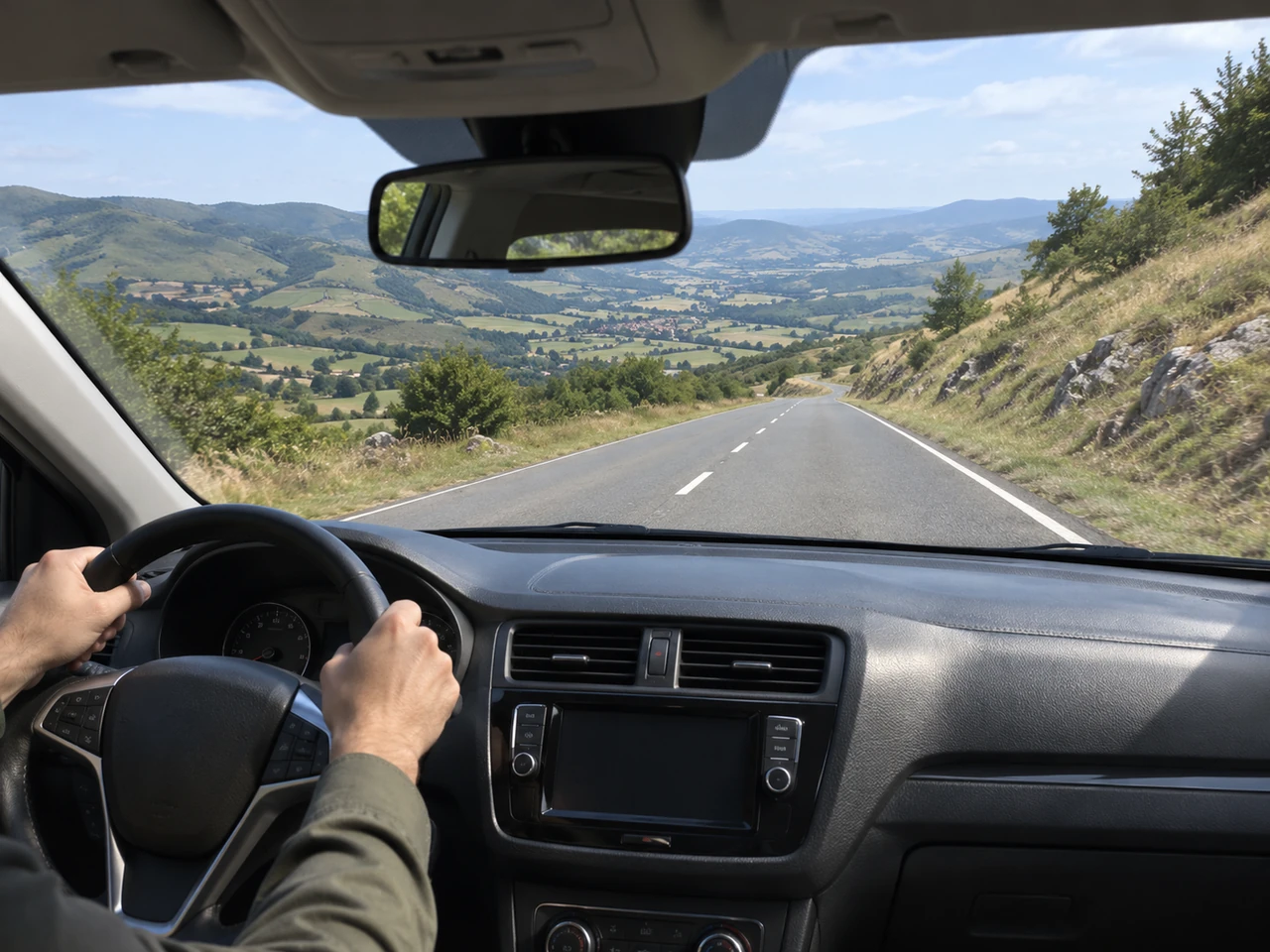
Coasting downhill in neutral gives you better control.

303. Coasting downhill in neutral gives you better control.

✓ False.
True.

In neutral, you lose engine braking and may need to use the brakes more. Select a suitable gear to help control your speed on a descent.

Keep effective control on a descent. Coasting in neutral removes engine braking and can increase reliance on the wheel brakes. In a geared vehicle, select a suitable gear before a steep descent. Follow the handbook for the correct downhill settings in an automatic or electric vehicle.
🔗 Sources

The Highway Code (Great Britain) • Safety guidance, Rule 122

Image credit: AI-generated

Drinking coffee makes you sober enough to drive sooner.

304. Drinking coffee makes you sober enough to drive sooner.

True.
✓ False.

Coffee may make you feel more awake, but it does not reverse alcohol's effects on judgement or coordination. Do not use it as a way to become fit to drive.

Coffee does not reverse alcohol impairment. Coffee may make you feel more awake, but it does not reverse alcohol's effects on judgement or coordination. Do not use it as a way to become fit to drive.
🔗 Sources

NIAAA (United States) • Safety guidance, coffee, judgement and coordination

Image credit: AI-generated
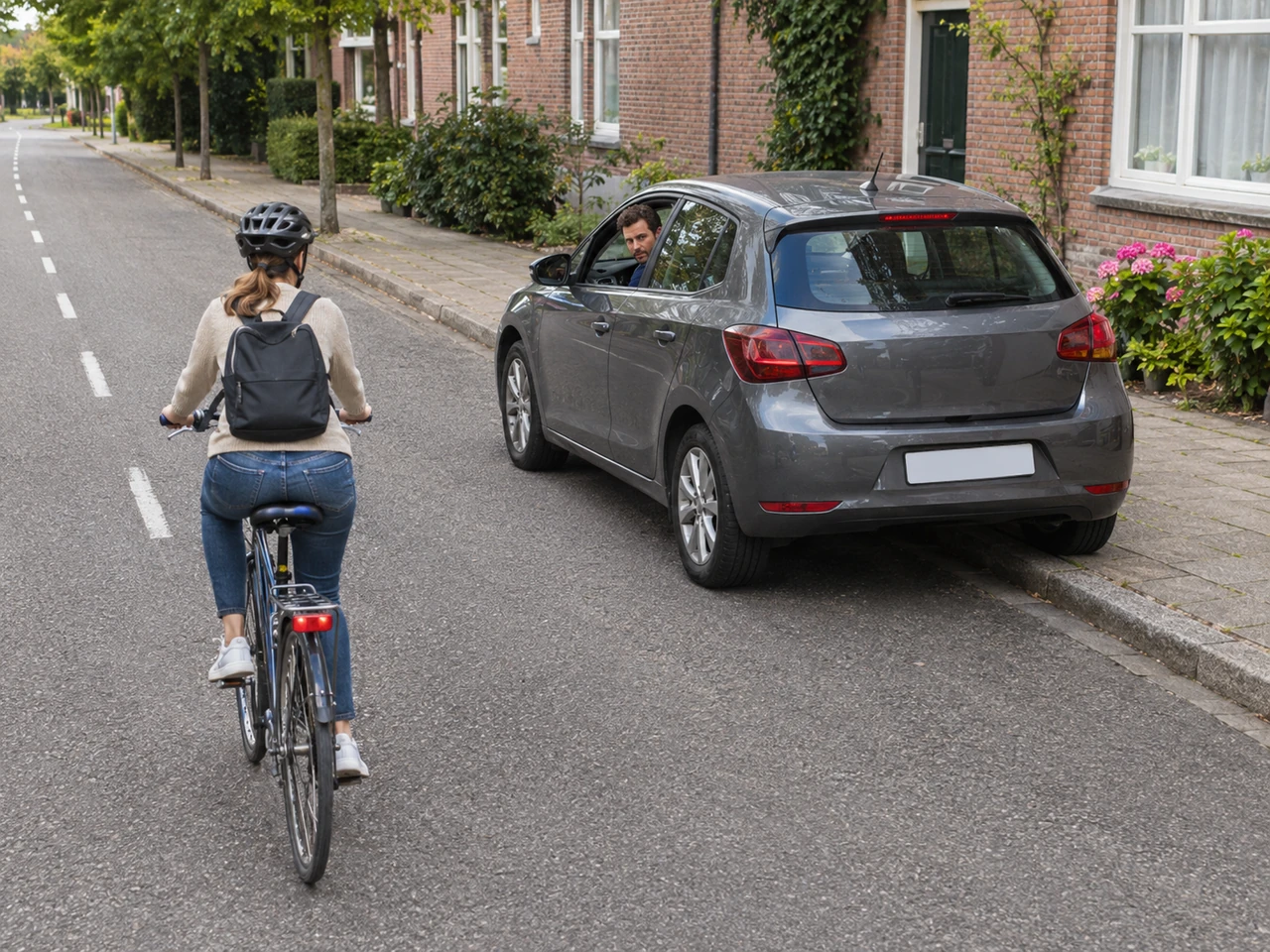
You do not need to look for cyclists when opening your car door.

305. You do not need to look for cyclists when opening your car door.

True.
✓ False.

You should always check for cyclists, motorcyclists, and other road users before opening a door.
Check behind before opening the door. Look in the mirror and turn to check for cyclists, motorcyclists and other approaching road users. Open only when the space is clear, and keep checking as you do so. Using the hand farther from the door can help you turn and look.
🔗 Sources

The Highway Code (Great Britain) • Safety guidance, Rule 239

Image credit: AI-generated

How should pets be carried safely in a vehicle?

306. How should pets be carried safely in a vehicle?

On the driver's lap if they remain calm.
Free to move around during short journeys.
Beside an open window so they can see outside.
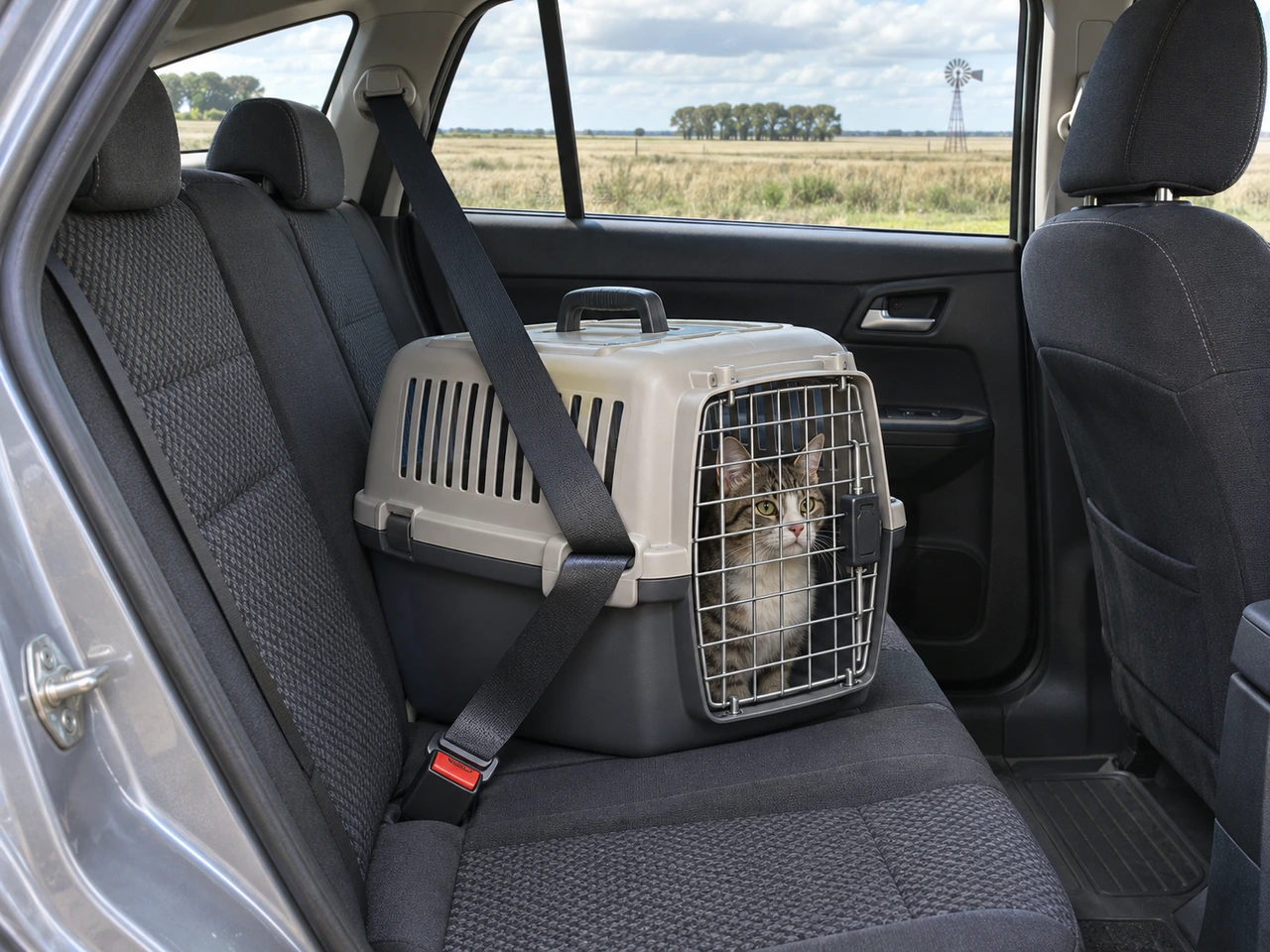
✓ Securely restrained so they cannot distract the driver or move dangerously.

A pet moving freely inside a vehicle can distract the driver and may be thrown around during sudden braking or a collision. Use a suitable carrier, harness, barrier, or other secure restraint appropriate for the animal and vehicle.

A cat travels in a closed carrier on the rear seat. Secure the carrier using the attachment method specified by its manufacturer.
🔗 Sources

Great Britain Highway Code, Rule 57 (general guidance on restraining pets in vehicles).

Image credit: AI-generated.
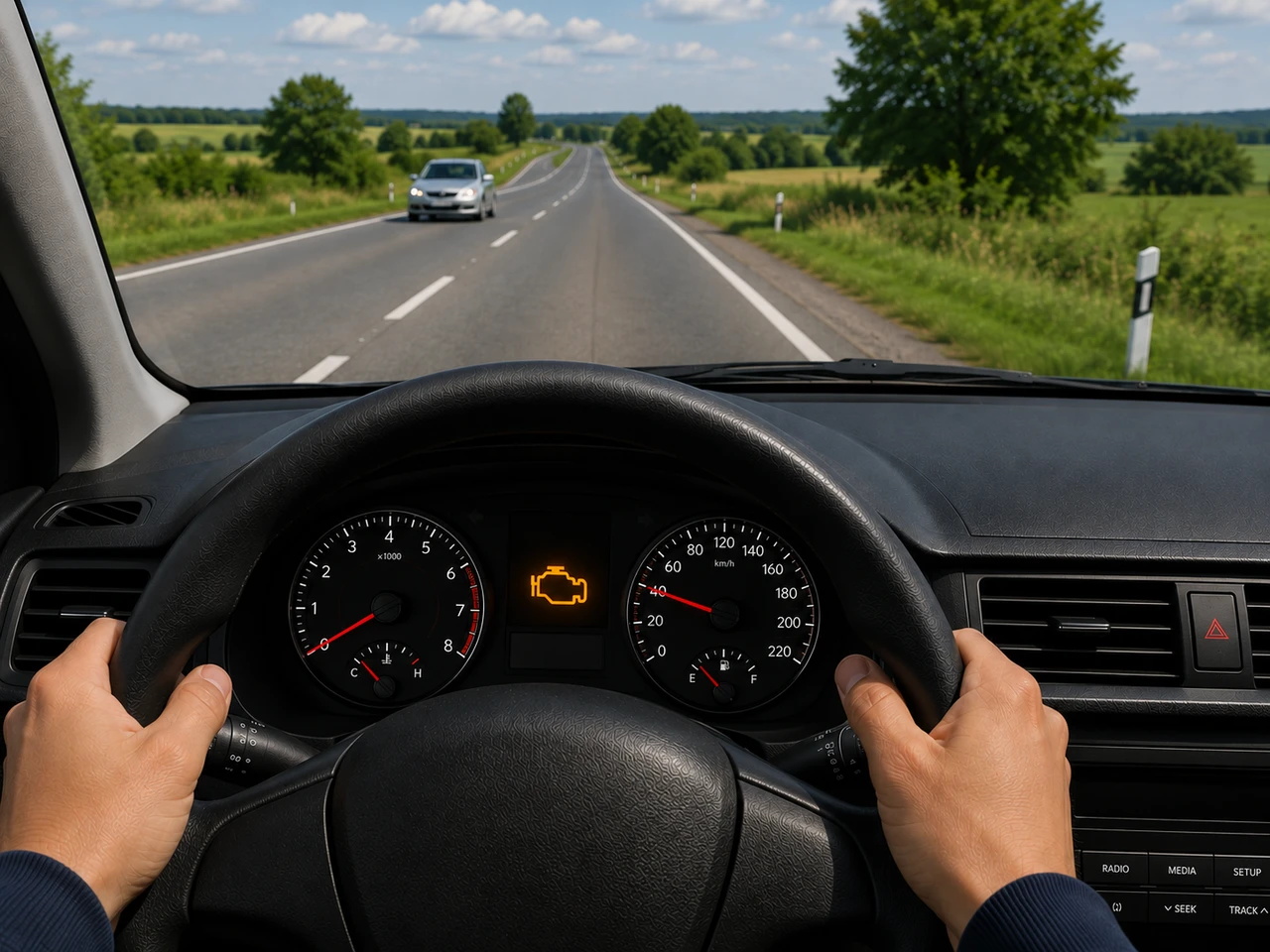
What should you expect if the engine suddenly stalls while the vehicle is moving?

307. What should you expect if the engine suddenly stalls while the vehicle is moving?

The steering and brakes will stop working completely.
The steering will become lighter as the vehicle slows.
✓ Steering and braking may require more effort, so move to a safe place.
The vehicle will stop immediately when the engine stops.

When an engine unexpectedly stops, steering or braking assistance may be reduced, depending on the vehicle. The steering and brakes do not necessarily stop working, but greater effort may be needed. Keep control, apply the brakes with the pressure required and move to a safe stopping area when possible. Warn other traffic if needed and follow the vehicle handbook. Do not confuse an unexpected stall with normal automatic start-stop operation.

Driver holding the steering wheel while coasting with the engine stopped.
Losing engine power can reduce braking or steering assistance. Keep control and stop safely; follow your vehicle's handbook.
🔗 Sources

Ford manual: engine-off assistance example.

Image credit: AI-generated

Can you assume that you are safe to drive the morning after drinking?

308. Can you assume that you are safe to drive the morning after drinking?

Yes, if you eat breakfast before driving.
Yes, if you only need to drive a short distance.
✓ No, alcohol may still remain in your body.
Yes, sleep removes all alcohol from your body.

The body needs time to process alcohol. Sleeping, eating, showering, or drinking coffee does not instantly remove it.

Fitness to drive the morning after drinking.
Argentina. Alcohol can remain in your system the next morning. If alcohol may still be present, leave the vehicle parked, especially if you plan to use a national road where the limit is zero.
🔗 Sources

Argentina Ministry of Health · Alcohol cero al volante

New Zealand Police · The morning-after risk

Image credit: AI-generated
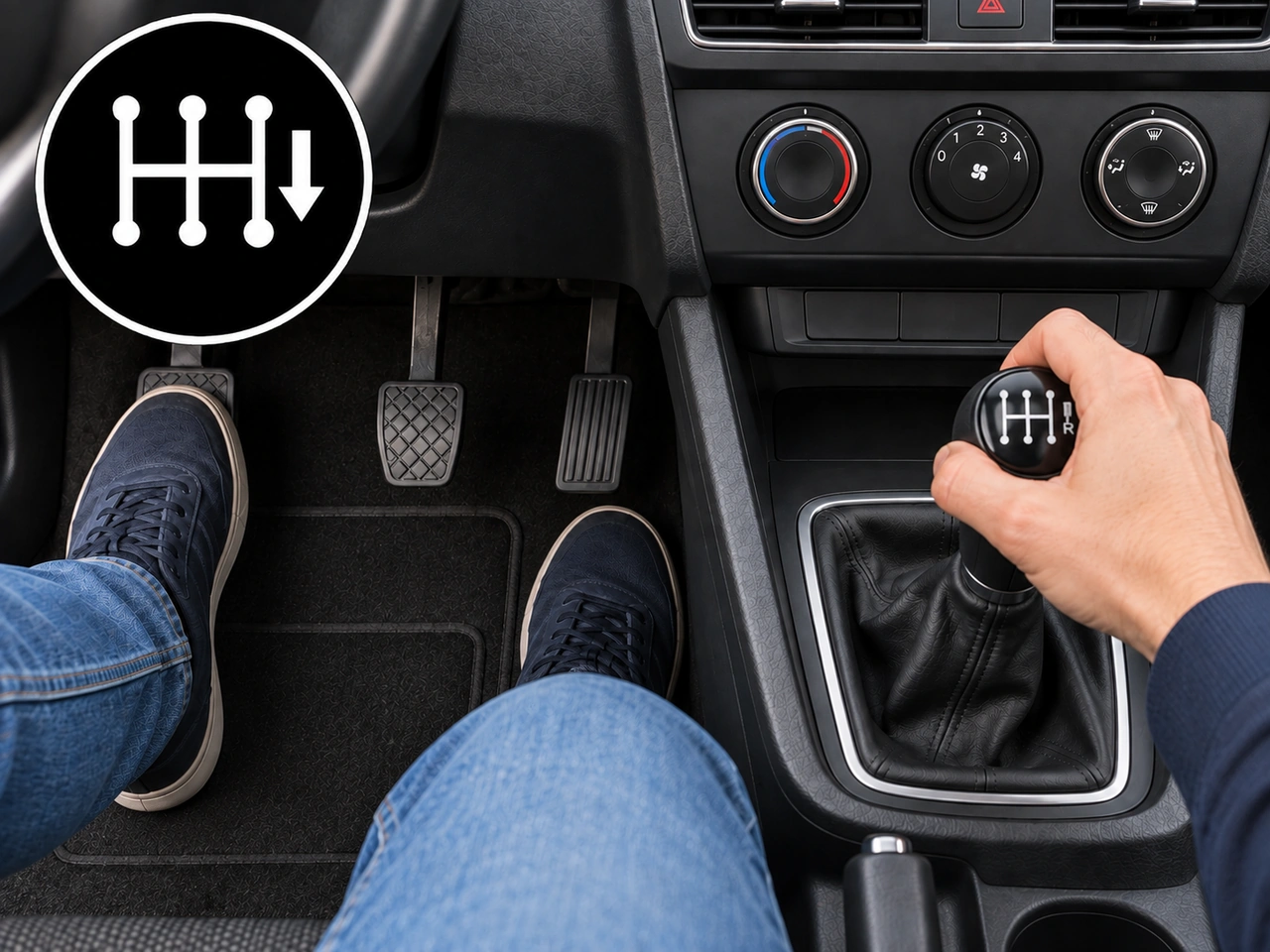
What can selecting a lower gear provide in a manual vehicle?

309. What can selecting a lower gear provide in a manual vehicle?

Automatic parking-brake operation.
Higher tyre pressure.
A shorter steering ratio.
✓ Greater engine braking.

Selecting a suitable lower gear can increase engine braking, helping the vehicle slow or control its speed without relying entirely on the brakes.

Manual gear selection for engine braking.
On a descent, a suitable lower gear can help control speed. Avoid sudden downshifts on slippery roads.
🔗 Sources

Mazda owner’s manual · Manual transmission

Image credit: AI-generated

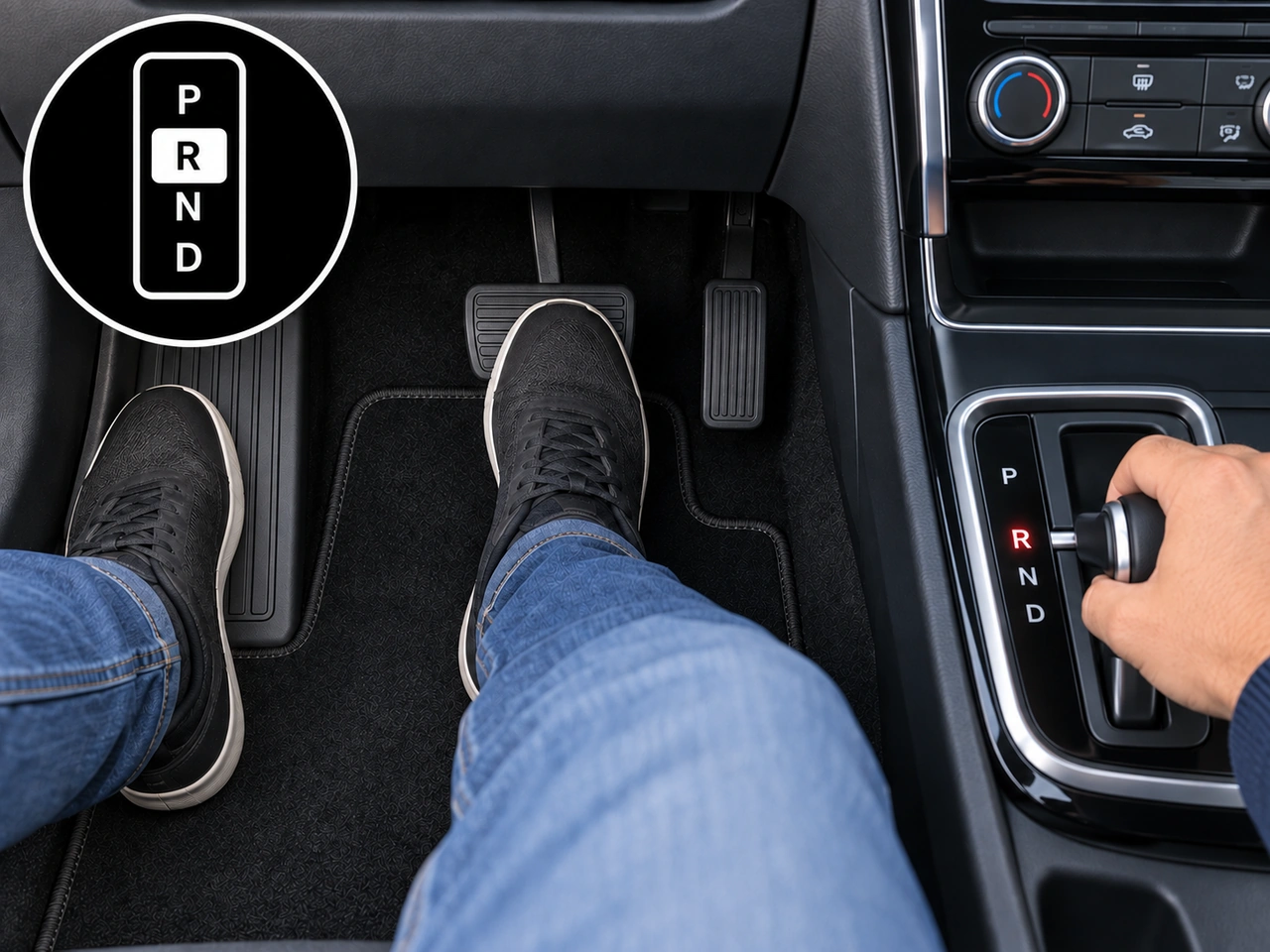
When should you select R (Reverse) in an automatic vehicle?

310. When should you select R (Reverse) in an automatic vehicle?

Whenever you want to reduce speed.
While the vehicle is still moving forward slowly.
Before pressing the brake pedal.
✓ After the vehicle has come to a complete stop.

Select R (Reverse) only after the vehicle has come to a complete stop. Selecting Reverse while the vehicle is still moving forward can damage the transmission.

Selecting Reverse in a stationary automatic vehicle.
Bring the car to a complete stop with the foot brake before shifting into or out of Reverse.
🔗 Sources

Ford owner’s manual · Automatic transmission

Image credit: AI-generated

Overtaking always makes it safe to exceed the speed limit.

311. Overtaking always makes it safe to exceed the speed limit.

✓ False.
True.

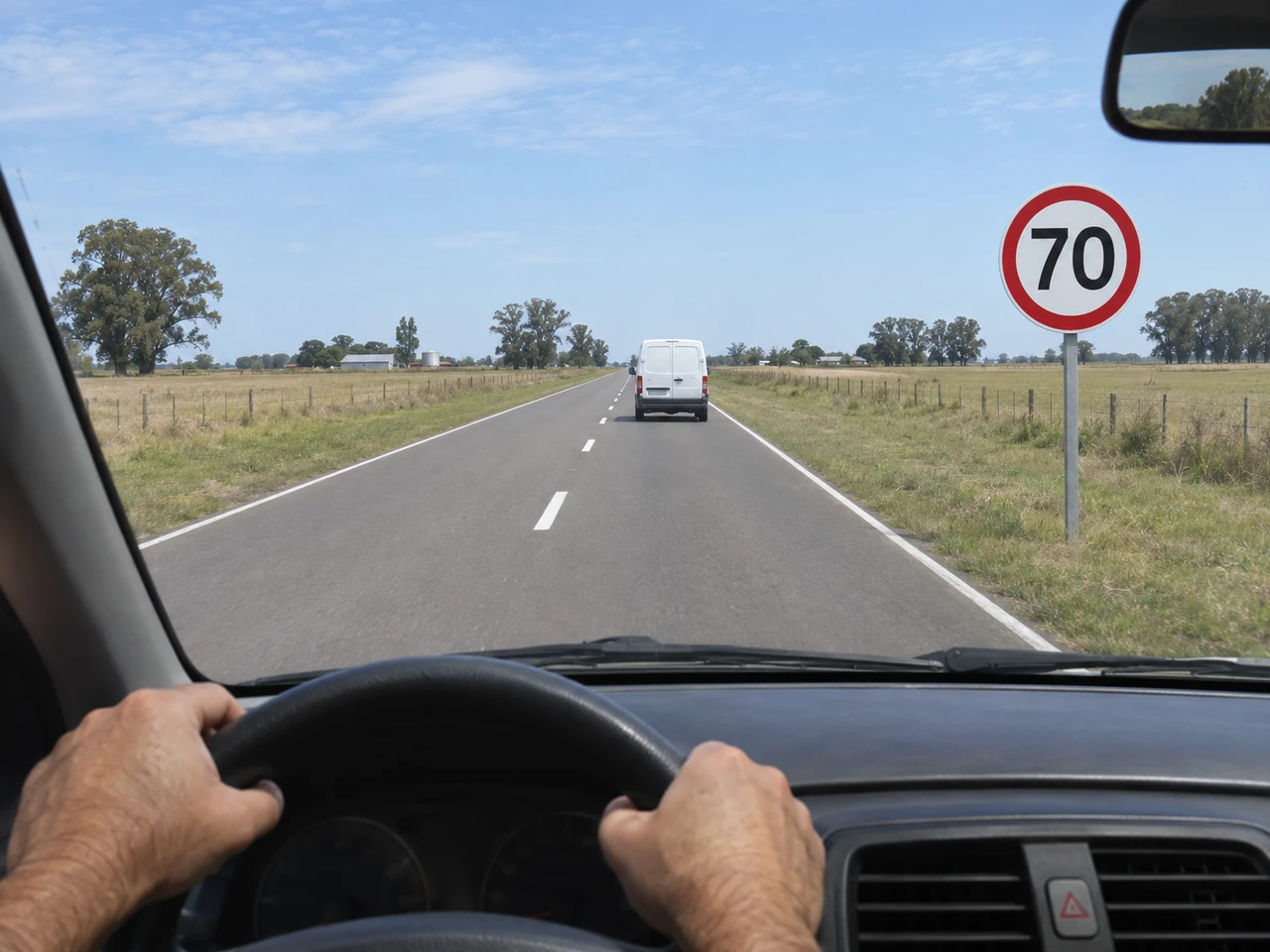
You must still drive safely and obey traffic laws. Speeding increases risk and is not automatically justified by overtaking.

A prompt overtake must still respect the limit. The sign shows a maximum of 70 km/h. Argentina’s national traffic law requires enough visibility and clear road, followed by a return to the right without interfering with the vehicle passed. Its requirement to pass promptly does not provide a general speed-limit exemption. Wait behind the van if a safe, lawful pass is not possible.
🔗 Sources

Argentina, National Traffic Law 24.449, Articles 36, 42 and 50–52: signs, overtaking and speed.

Image credit: AI-generated country-specific scene.
You should check how to cancel cruise control before using it.

312. You should check how to cancel cruise control before using it.

False.
✓ True.

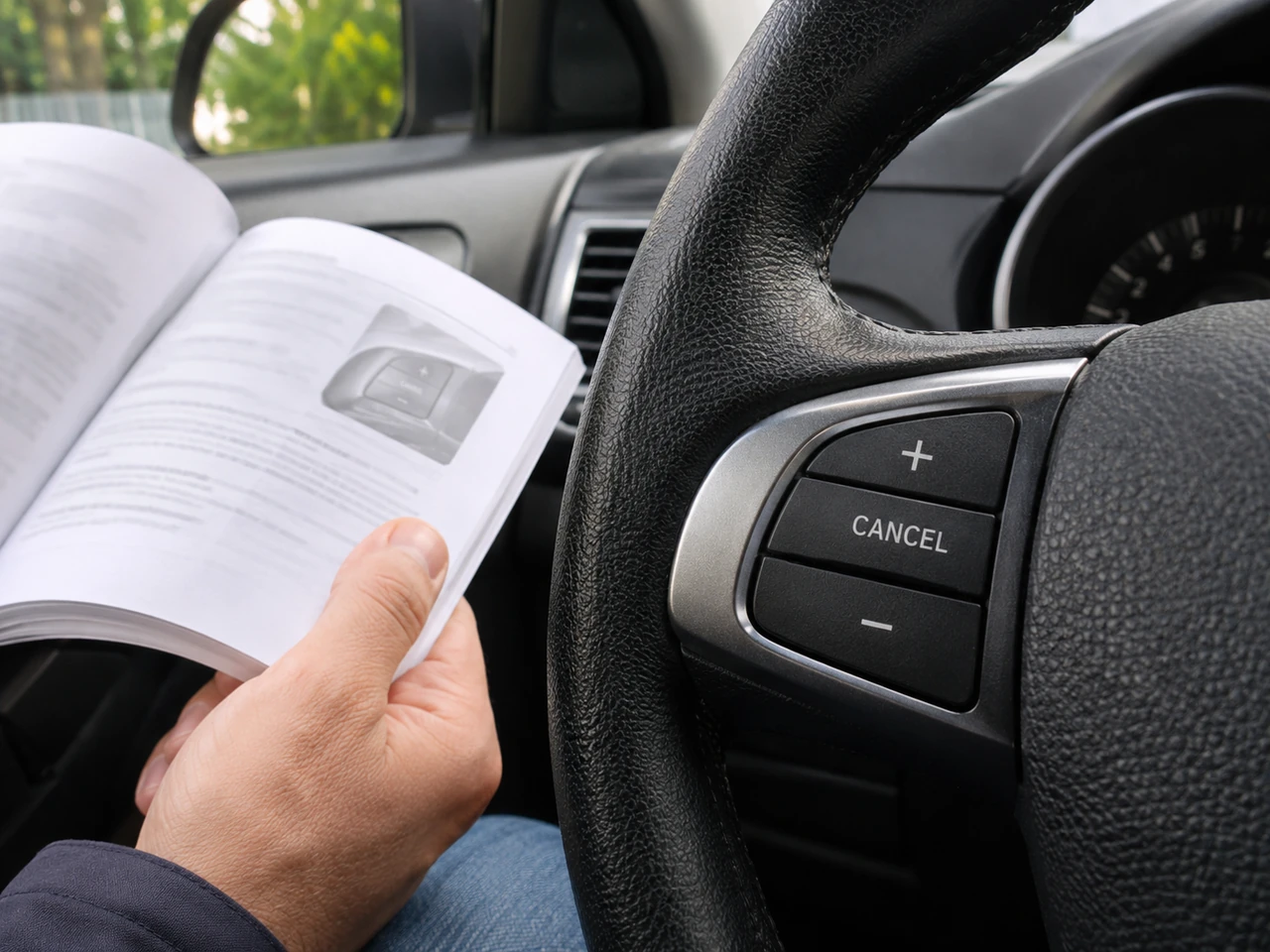
Cruise-control controls and behaviour vary. Read the vehicle handbook and learn how to cancel the system before using it on the road.

Learn your cruise-control system before use. Cruise-control controls and behaviour vary. Read the vehicle handbook and learn how to cancel the system before using it on the road.
🔗 Sources

The Highway Code (Great Britain) • Safety guidance, Rule 160; follow the vehicle manufacturer’s instructions

Image credit: AI-generated
Which road markings should you follow through roadworks?

313. Which road markings should you follow through roadworks?

✓ The temporary markings that show the current traffic route.
Ignore markings and follow only the vehicle ahead.
Use the markings intended for construction vehicles.
Follow the old permanent markings if they are still visible.

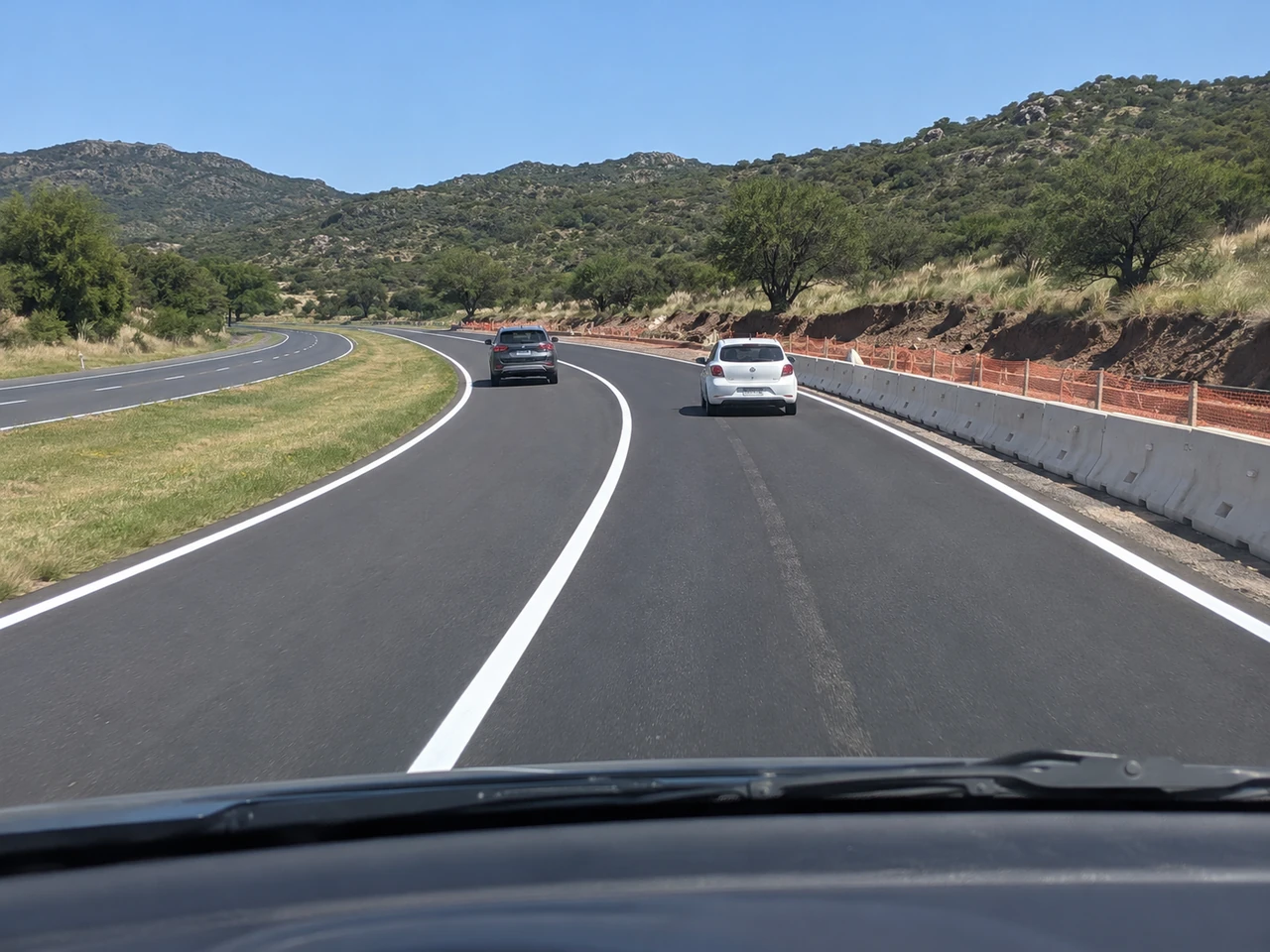
Temporary road markings may replace the normal lane layout during roadworks. Follow the markings and signs that currently guide traffic.
Follow the fresh white divider through the temporary lane shift. The faint asphalt scar shows where the old divider was removed.
🔗 Sources

Resolution 165/2001, section I.7.12

Image credit: AI-generated

What should you do if oncoming headlights dazzle you at night?

314. What should you do if oncoming headlights dazzle you at night?

Move closer to the centre of the road for a clearer view.
Turn on your interior lights to reduce the glare.
Look briefly at the headlights to judge their position.
✓ Slow down and look toward the edge of your lane.

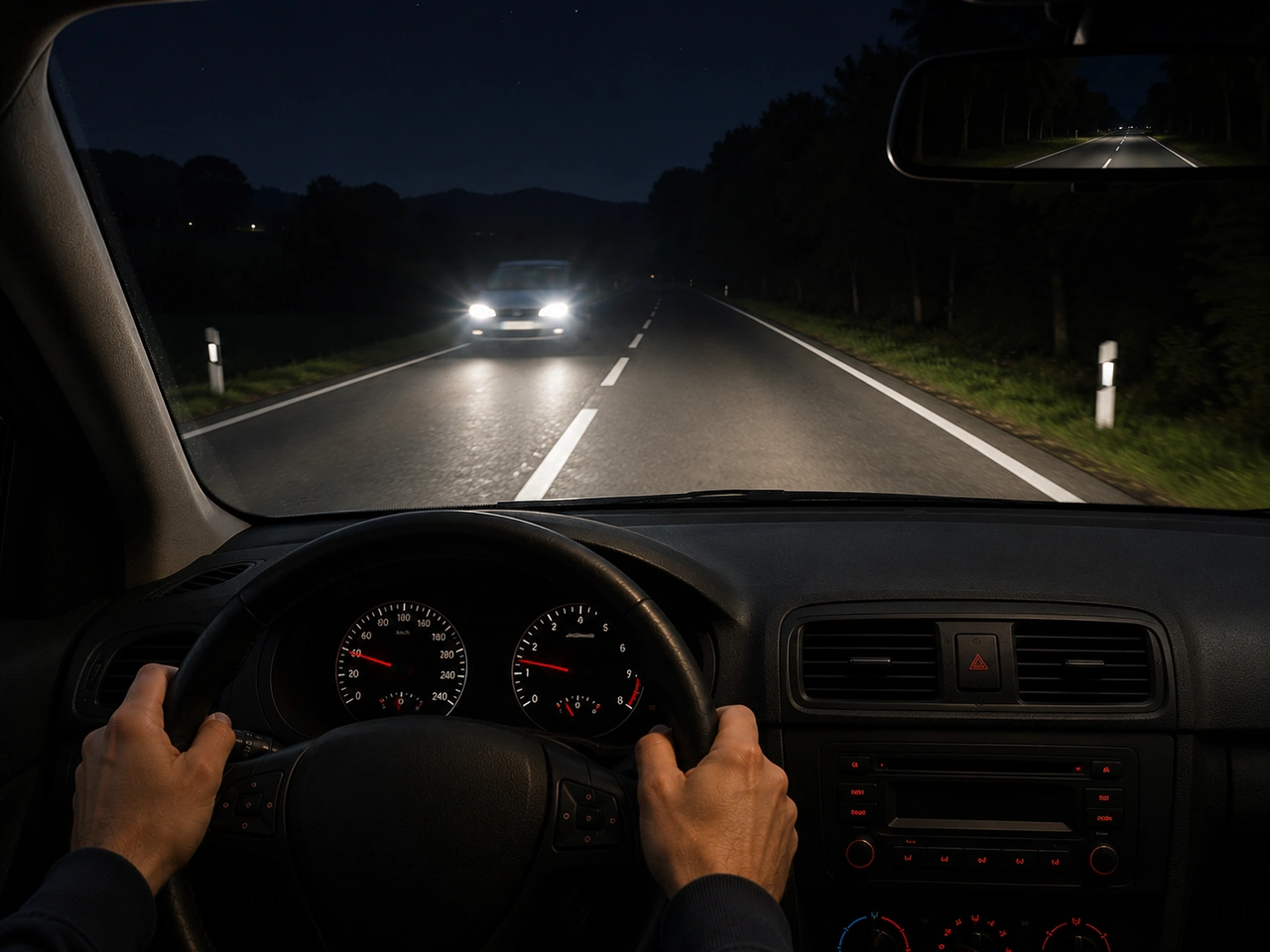
Bright headlights can reduce your vision. Avoid staring at them, slow down if needed, and use the road edge or lane markings to guide you safely.
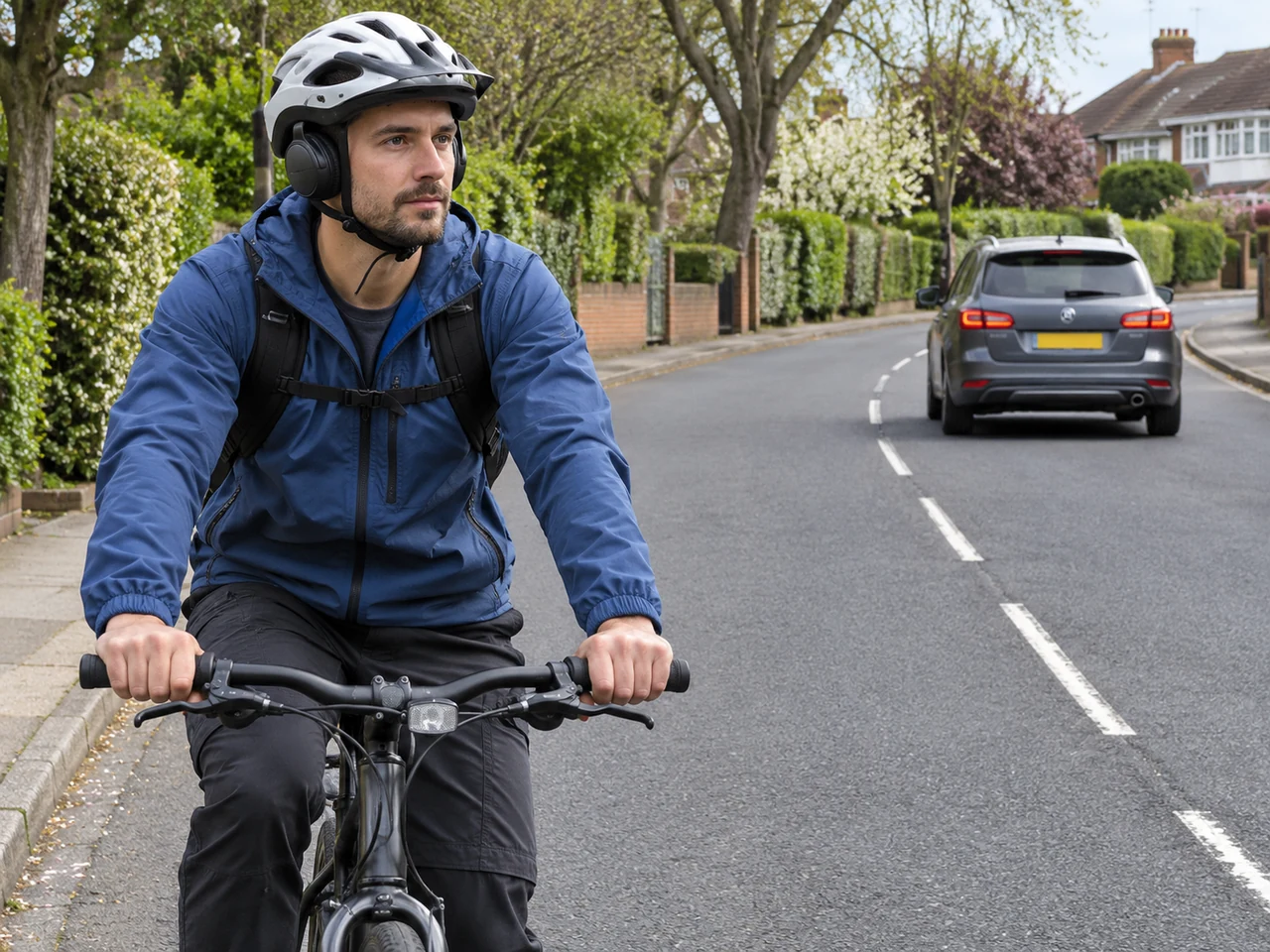
Why can loud music be dangerous while cycling?

315. Why can loud music be dangerous while cycling?

It makes bicycle lights less effective.
It reduces the grip of the tyres.
It makes the brakes respond more slowly.
✓ You may not hear traffic or warning sounds.

Loud music can mask approaching traffic, bells, horns and other warning sounds. Keep your attention on your surroundings and avoid audio that reduces your awareness. Set up any audio before riding and stop safely before changing settings; do not handle a phone while cycling.
Staying alert in Buenos Aires. The city’s cycling guide advises riding without headphones. Keep your hearing clear so you can notice traffic and warnings.
🔗 Sources

Buenos Aires — safe cycling guidance

Image credit: AI-generated

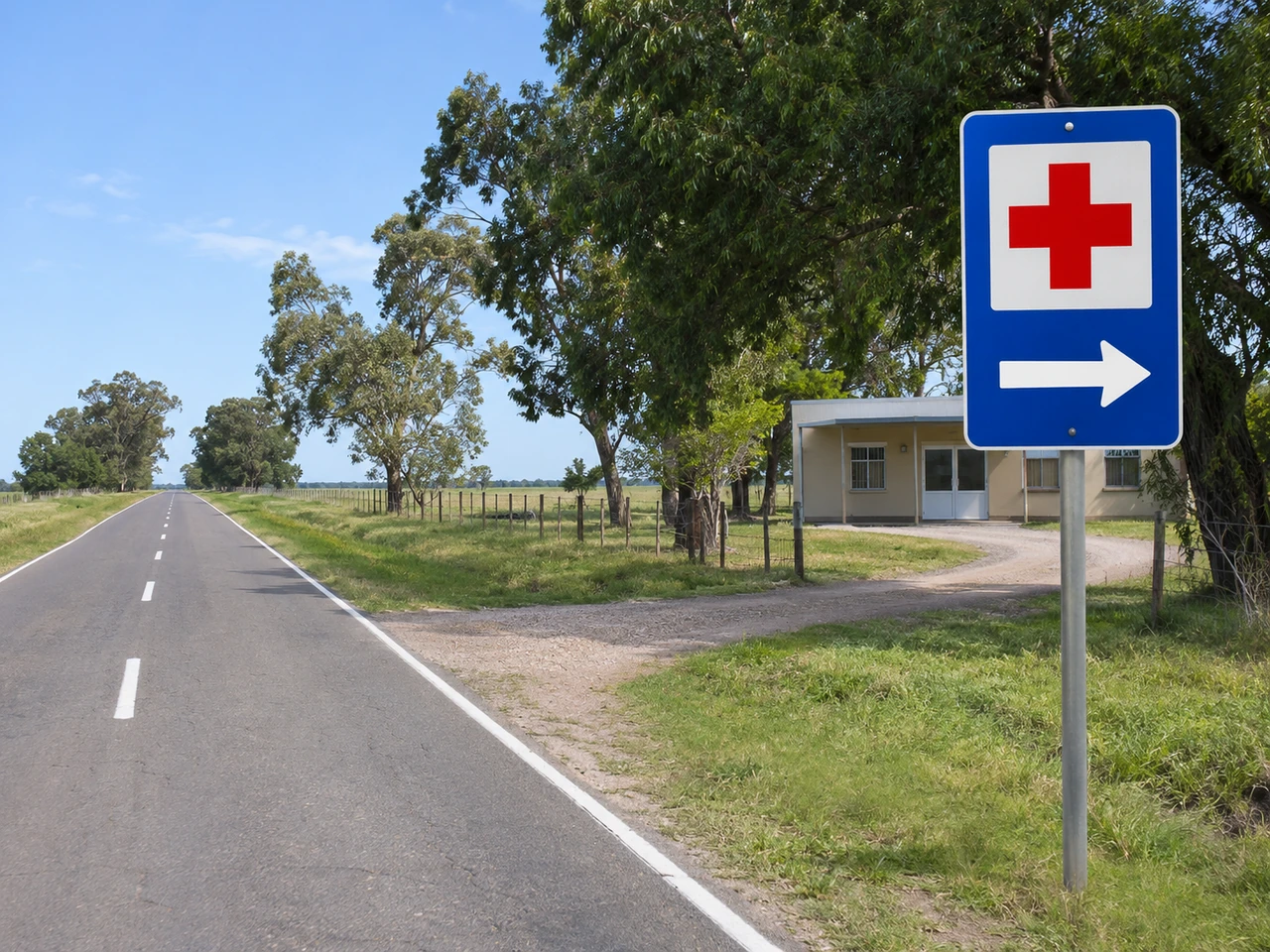
The blue sign showing a red cross on a white panel indicates first aid.

316. The blue sign showing a red cross on a white panel indicates first aid.

False.
✓ True.

This is the first-aid information sign. The red cross in its white panel identifies first aid.

Argentina — medical-aid post. The Puesto sanitario sign identifies a medical-aid or relief post, including one near a hospital. Annex L specifies a red cross centred in a white square on a blue service panel. The lower part provides the relevant information, direction or distance; the arrow in this scene points to the facility on the right.
🔗 Sources

National Road-Signing System, Annex L to Decree 779/1995, replaced by Decree 196/2025; point 24, Puesto sanitario.

Image credit: AI-generated

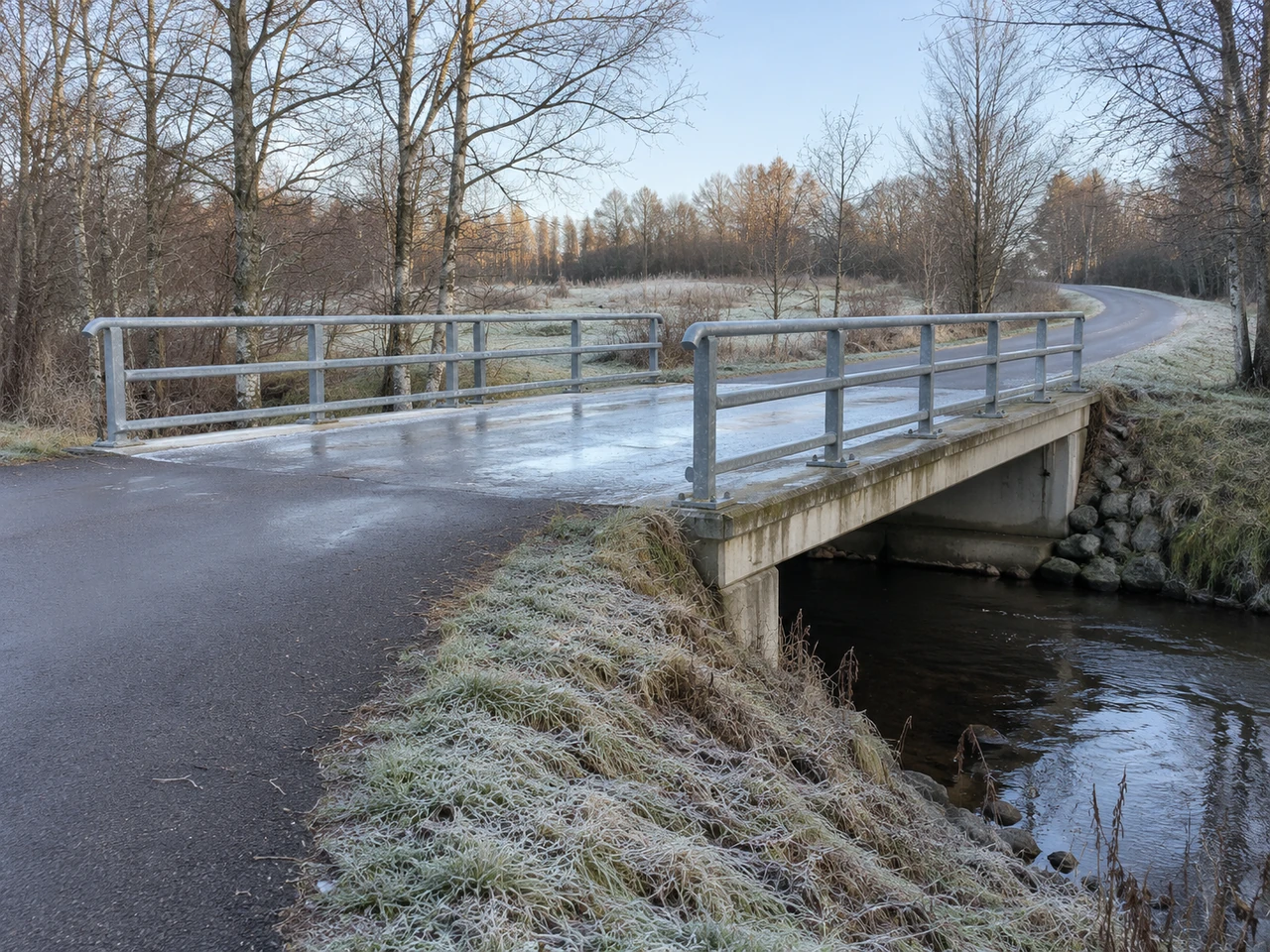
A bridge deck can freeze before the road leading to it.

317. A bridge deck can freeze before the road leading to it.

✓ True.
False.

Cold air can cool a bridge from above and below, so ice may form there before it forms on nearby ground-supported roads. In freezing conditions, approach cautiously and reduce speed before the bridge.

Bridges may freeze before nearby roads. Cold air can cool a bridge from above and below, so ice may form there before it forms on nearby ground-supported roads. In freezing conditions, approach cautiously and reduce speed before the bridge.
🔗 Sources

National Weather Service (United States) • Safety guidance, Bridges Freeze First

Image credit: AI-generated
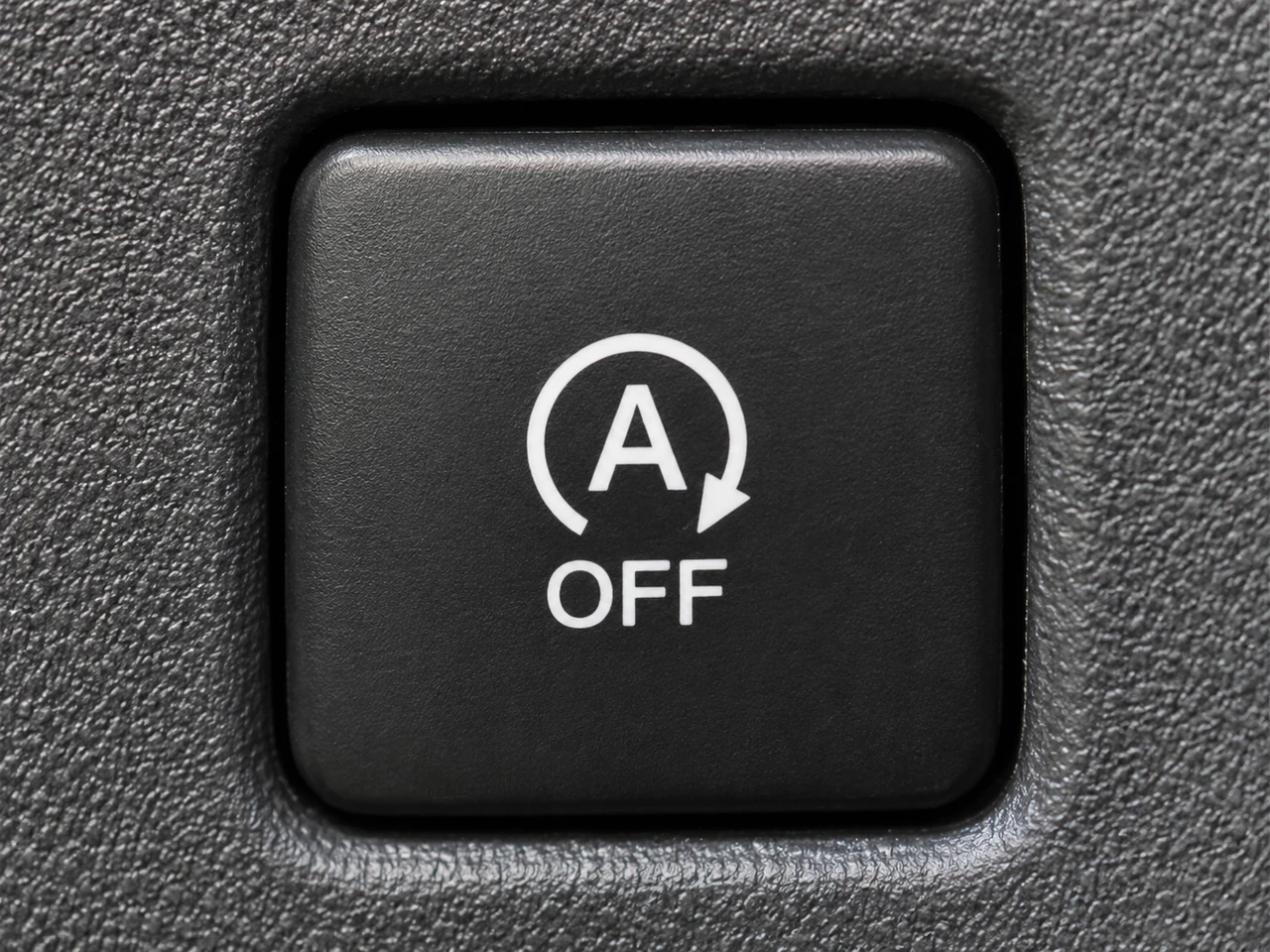
An automatic stop-start system can restart the engine while the vehicle is stationary.

318. An automatic stop-start system can restart the engine while the vehicle is stationary.

False.
✓ True.

An automatic engine stop is not the same as switching the ignition off. The system may restart the engine, for example to maintain the battery charge or cabin temperature. Before leaving the car or working under the bonnet, switch the ignition off and secure the car as the handbook directs.

A stop-start engine can restart automatically. An automatic engine stop is not the same as switching the ignition off. The system may restart the engine, for example to maintain the battery charge or cabin temperature. Before leaving the car or working under the bonnet, switch the ignition off and secure the car as the handbook directs.
🔗 Sources

Ford owner’s manual (manufacturer guidance) • Safety guidance, automatic restart conditions; follow handbook shutdown precautions

Image credit: AI-generated
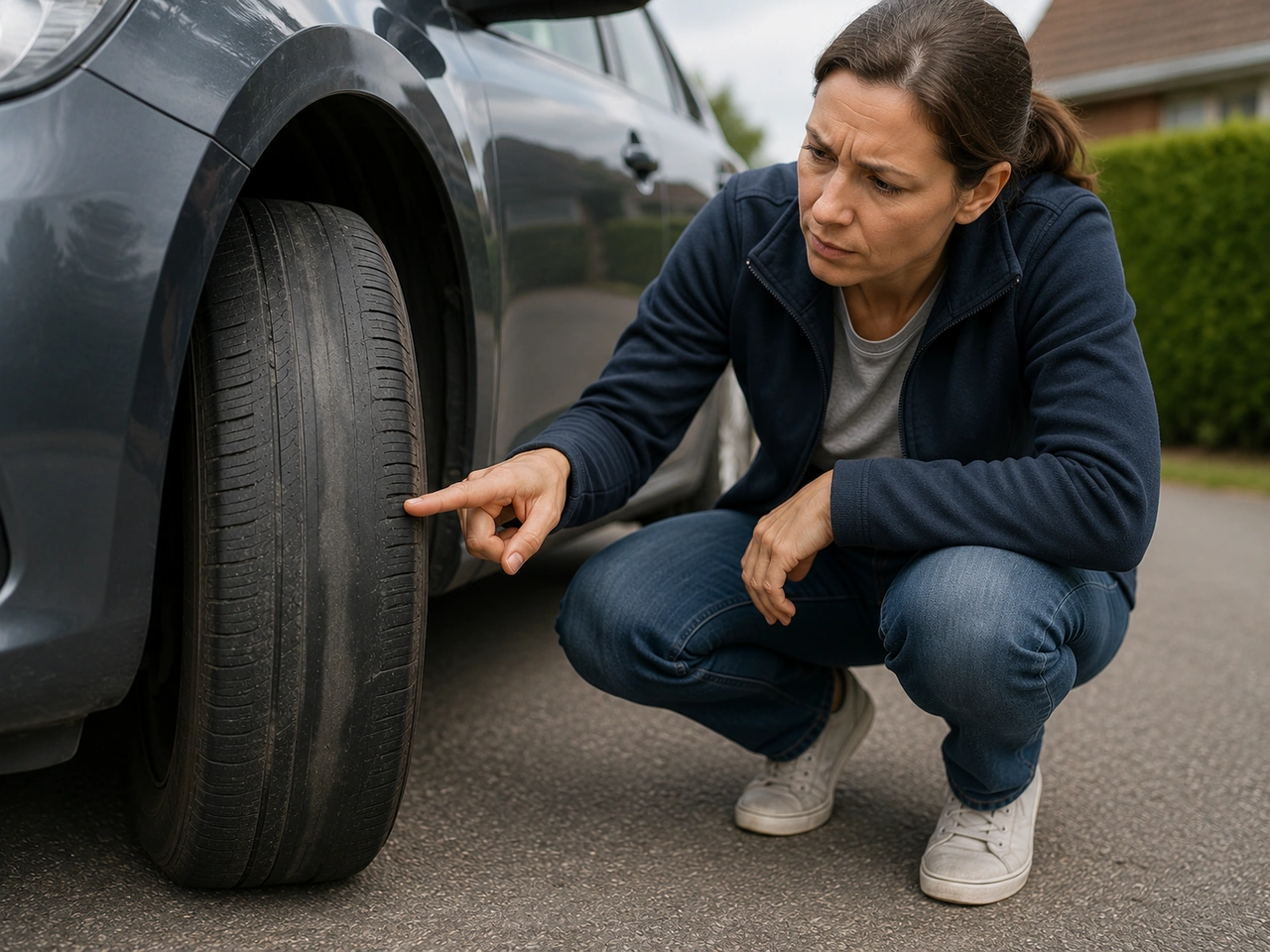
What can uneven tyre wear indicate?

319. What can uneven tyre wear indicate?

The wheels are correctly aligned.
✓ Incorrect pressure, poor alignment, or a suspension or braking problem.
The tyres are correctly inflated.
The tyres have reached normal operating temperature.

Uneven wear may result from incorrect tyre pressure, wheel misalignment, worn suspension parts, or a brake that is not releasing properly.

Uneven wear across a vehicle tyre.
Argentina. Tyres should wear evenly. If one edge wears faster, check the pressures against the handbook and have the steering, suspension or wheel alignment inspected.
🔗 Sources

Michelin · Irregular tyre wear (technical guidance)

Image credit: AI-generated

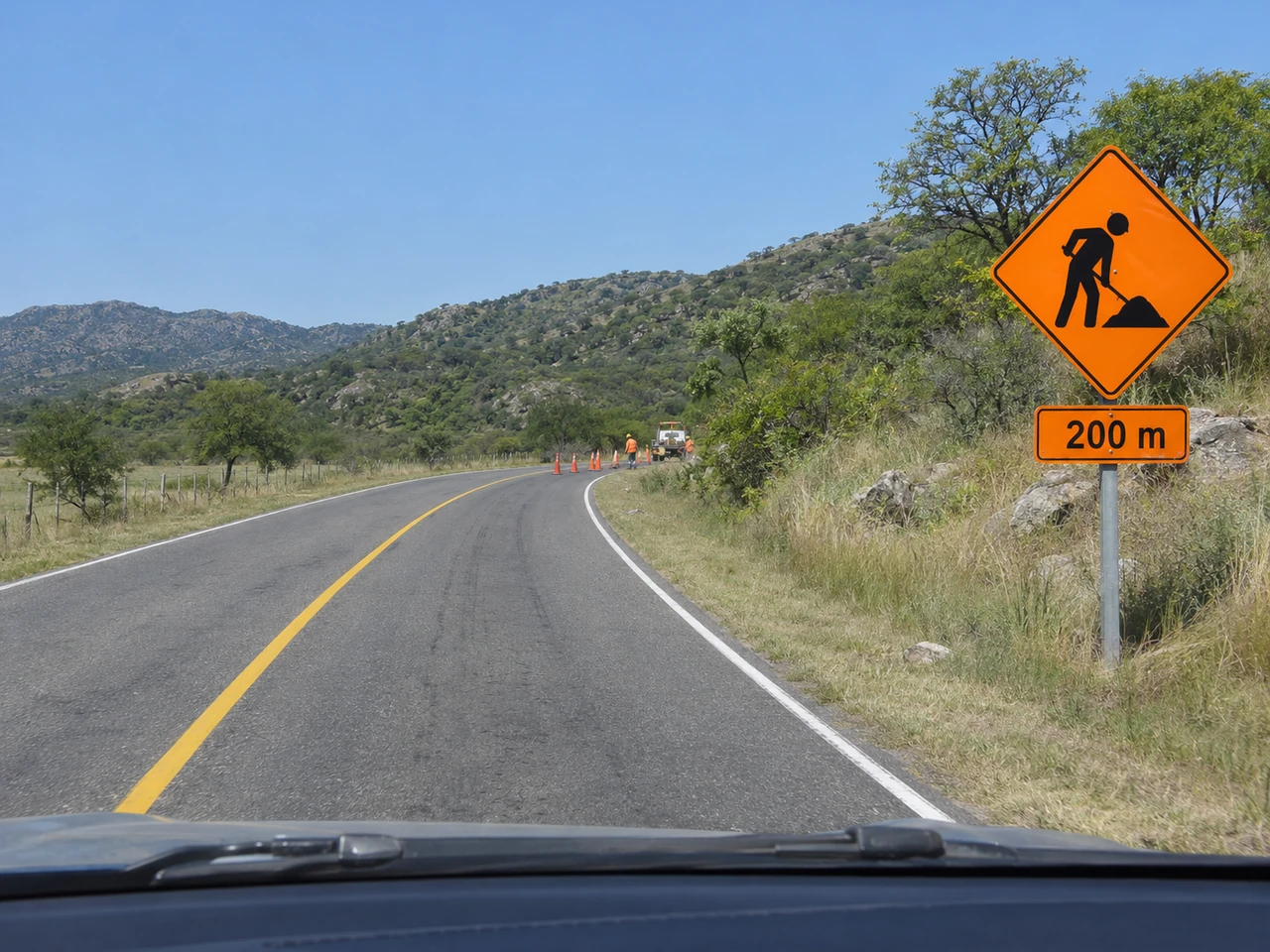
What should you do when roadworks are ahead?

321. What should you do when roadworks are ahead?

Follow the vehicle ahead closely through the work zone.
Ignore temporary signs if permanent signs are still visible.
✓ Slow down and follow the temporary signs.
Maintain normal speed if your lane remains open.

Roadworks can create narrow lanes, workers near traffic, uneven surfaces, and temporary rules. Slow down and follow the signs.
The orange diamond with a worker digging is the T.6 roadworks sign. The plate gives the distance to the workers. Slow down and watch for changes ahead.
🔗 Sources

Decree 196/2025, Annex L, sign T.6

Image credit: AI-generated

Why is it important to use bicycle lights at night?

322. Why is it important to use bicycle lights at night?

They give cyclists priority over other traffic.
✓ They help you see and help others notice you.
They make the bicycle easier to control.
They make reflective clothing unnecessary.

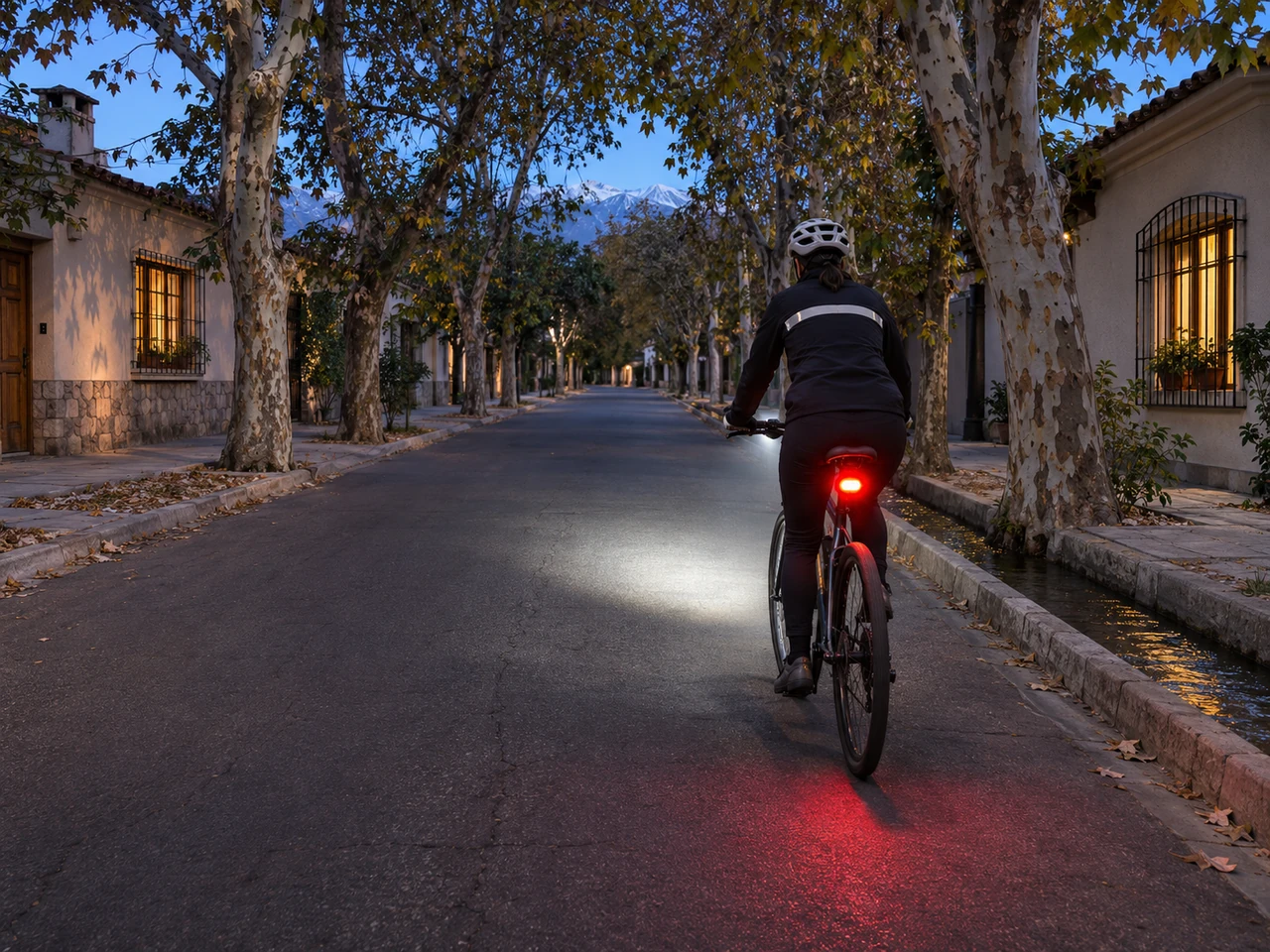
Front and rear lights help other road users notice you, while a suitable front light also helps you see the road ahead. Keep the lights working, visible and correctly aimed so they do not dazzle others. For better visibility, use both front and rear lights at night and follow local rules on lighting and reflectors.
Cycling lights in Argentina. The national traffic law requires lights and reflective markings. Use a white front light to see the road and a red rear light to help others see you.
🔗 Sources

National Traffic Law 24.449, article 40 bis

Argentine road safety guide

Image credit: AI-generated

It is safe to ride a motorcycle with its side stand down.

323. It is safe to ride a motorcycle with its side stand down.

True.
✓ False.

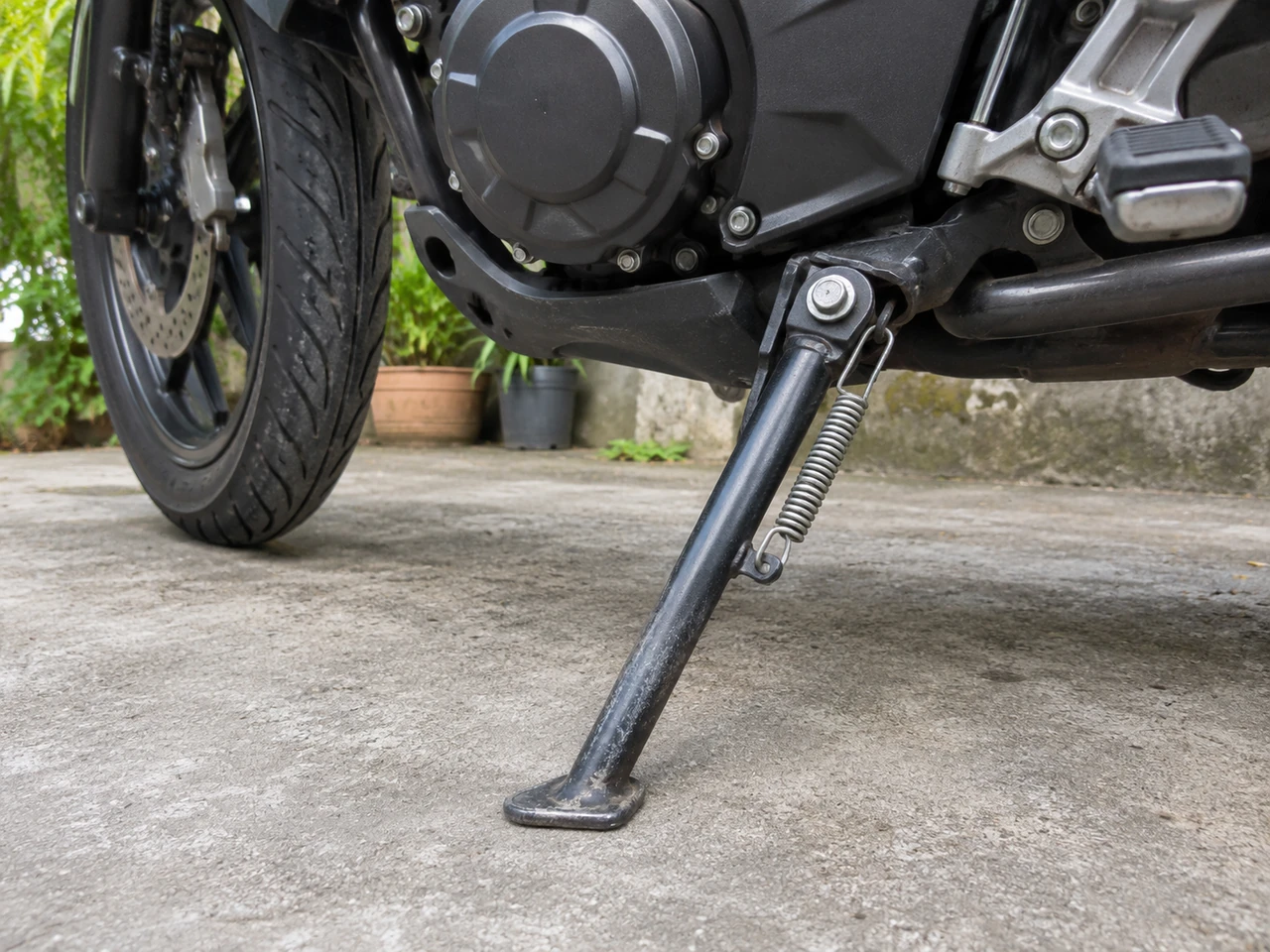
Fully retract the side stand before moving off. A lowered stand can catch the ground and affect control. Do not rely on a safety interlock instead of checking that the stand is raised.

Raise the motorcycle side stand before moving off. Fully retract the side stand before moving off. A lowered stand can catch the ground and affect control. Do not rely on a safety interlock instead of checking that the stand is raised.
🔗 Sources

Honda (manufacturer guidance) • Safety guidance, check that the side stand is fully raised; model-dependent safety interlocks

Image credit: AI-generated
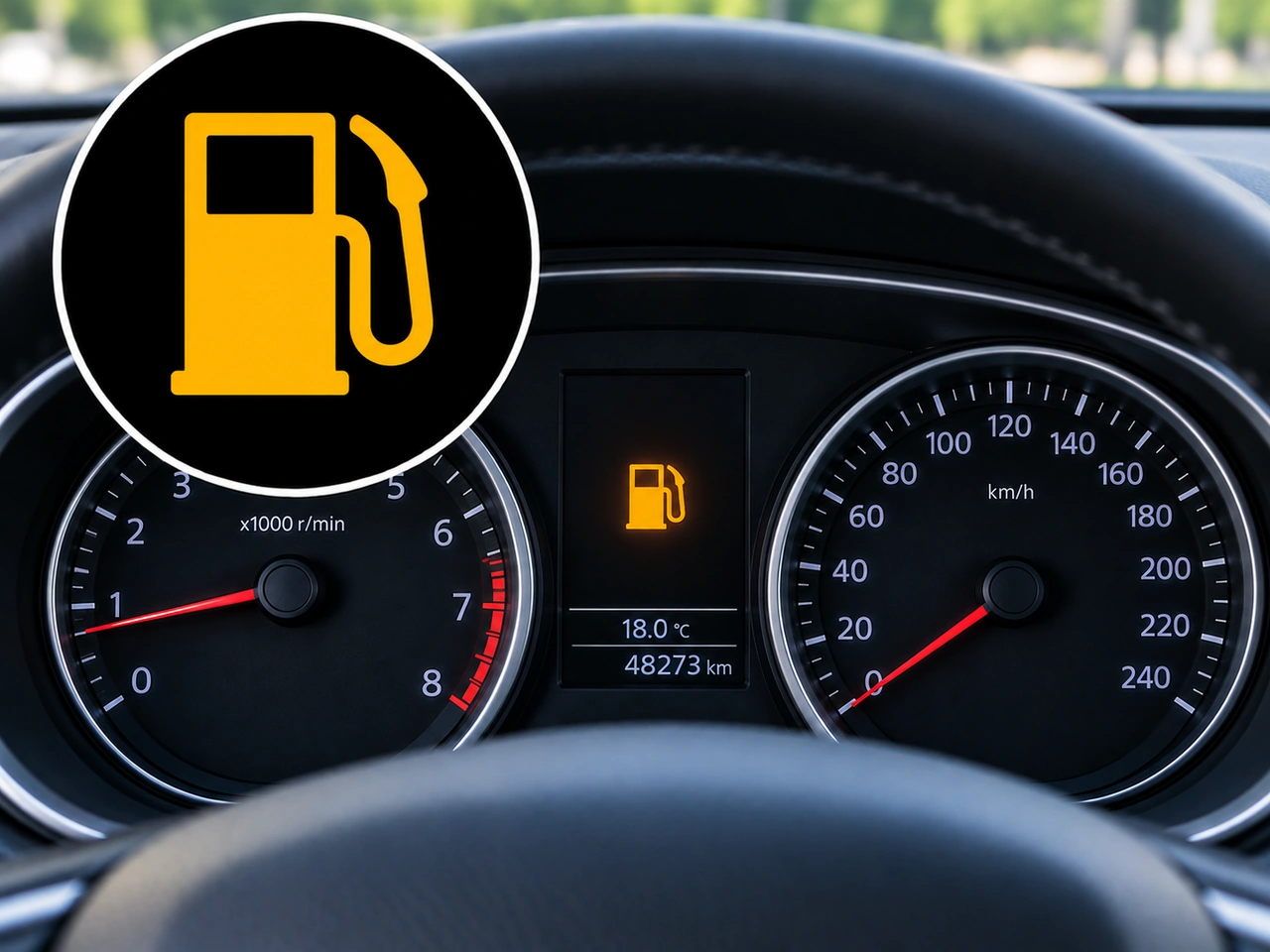
What does this dashboard symbol indicate?

324. What does this dashboard symbol indicate?

Low washer fluid.
Charging-system warning.
Engine-temperature warning.
✓ Low fuel level.

This symbol indicates that the fuel level is low. Refuel soon to reduce the risk of running out of fuel.

Low-fuel warning symbol on the dashboard.
The fuel-pump symbol warns that the remaining fuel is low. Refuel soon, as the reserve varies by vehicle.
🔗 Sources

Volkswagen · Dashboard warning and indicator lights

Image credit: AI-generated

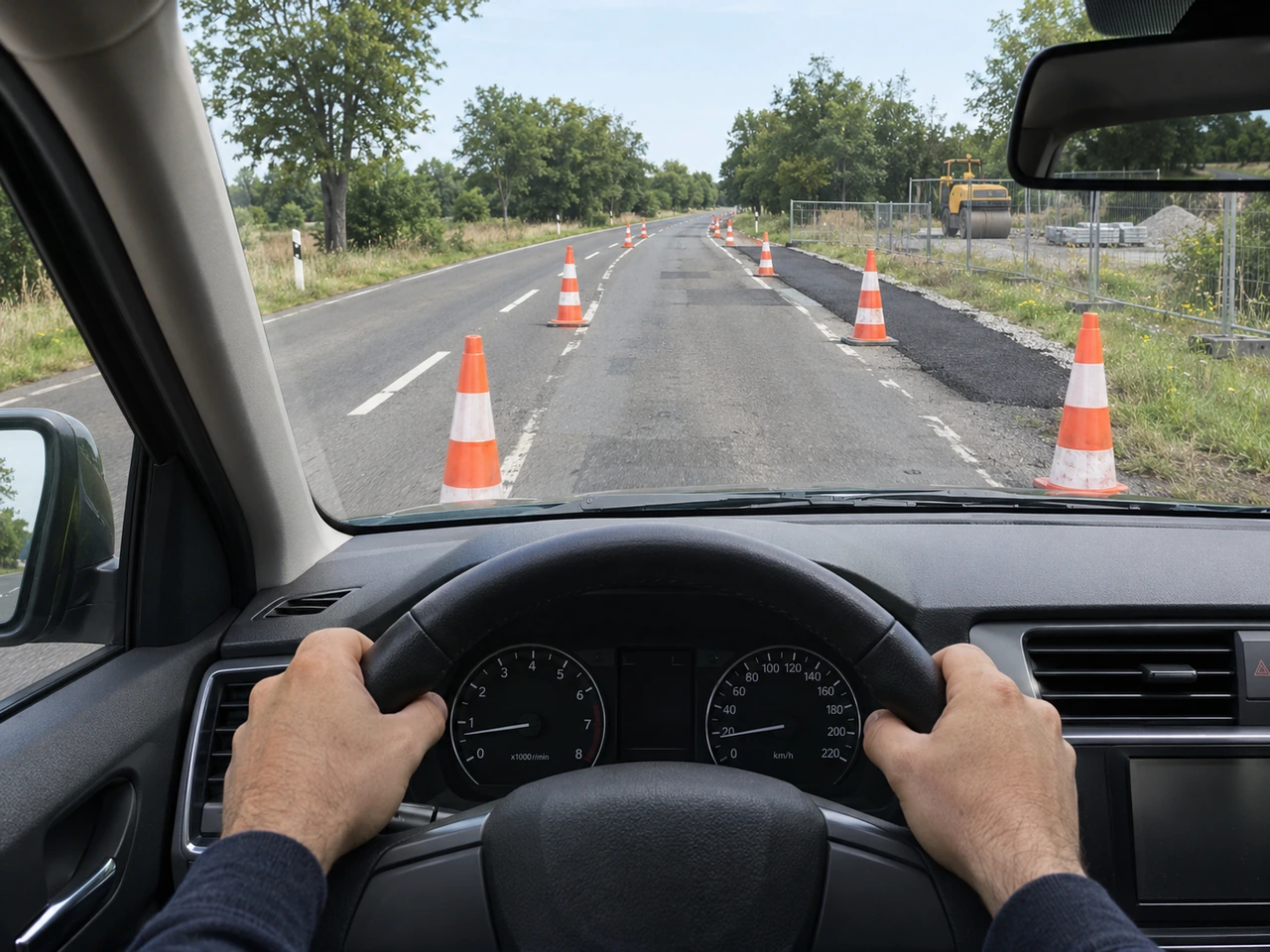
Why may lane assistance be less reliable through roadworks?

325. Why may lane assistance be less reliable through roadworks?

✓ Temporary or unclear markings may confuse the system.
Cones allow the driver to stop watching the road.
Roadworks guarantee that steering assistance improves.
Temporary lanes remove the need to steer carefully.

Some systems may struggle with ambiguous, faded or changing lane markings. Follow the temporary traffic layout yourself, stay attentive and follow the vehicle instructions.
Temporary roadworks markings can limit lane assistance. General road-safety guidance: Some systems may struggle with ambiguous, faded or changing lane markings. Follow the temporary traffic layout yourself, stay attentive and follow the vehicle instructions.
🔗 Sources

Ford — manufacturer guidance

Image credit: AI-generated

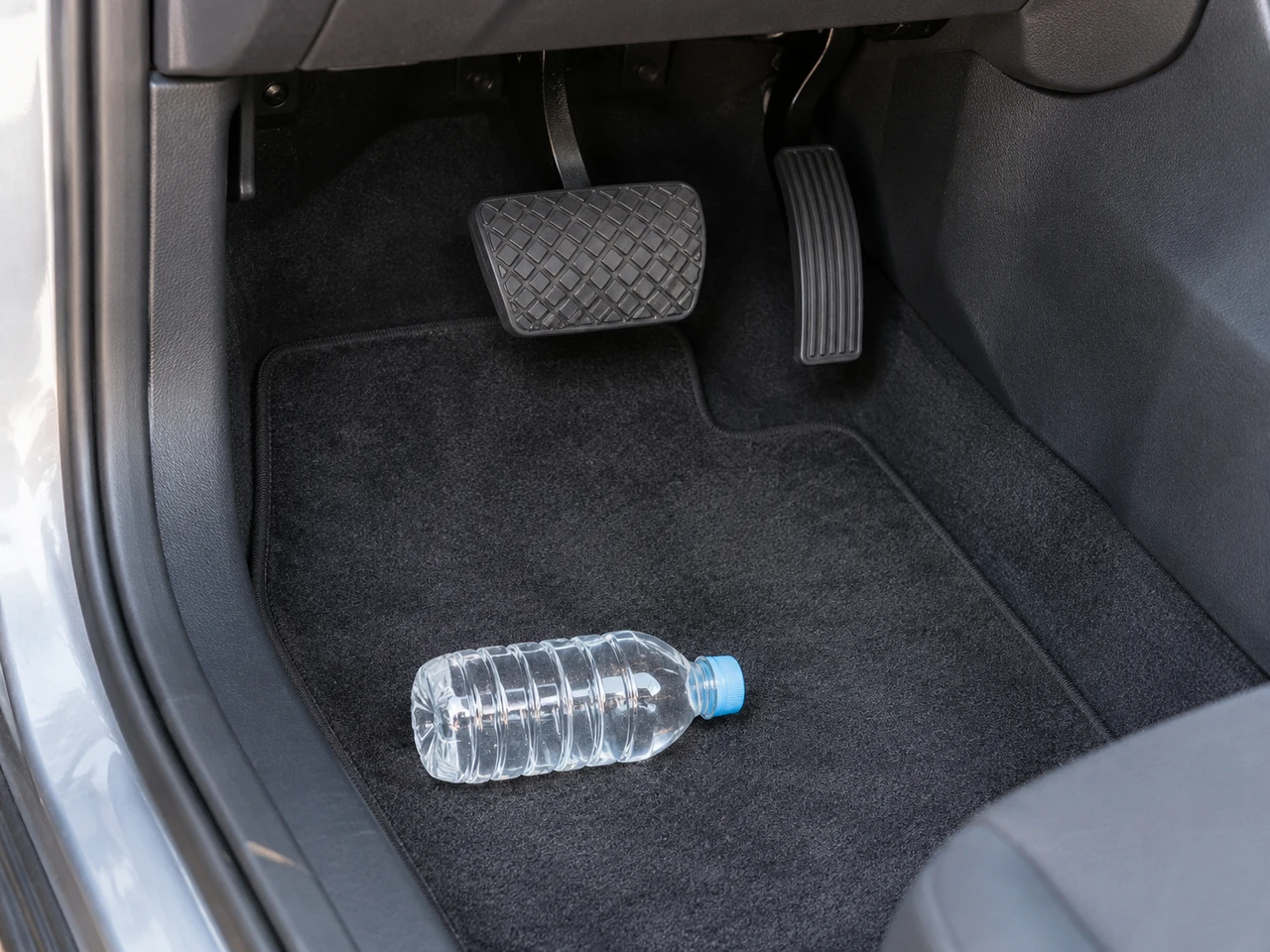
A loose bottle in the driver's footwell is harmless while it is clear of the pedals.

326. A loose bottle in the driver's footwell is harmless while it is clear of the pedals.

True.
✓ False.

The bottle can roll forward and obstruct a pedal. Keep the driver's footwell clear of loose objects and secure items before setting off.

Keep loose objects out of the driver’s footwell. The bottle can roll forward and obstruct a pedal. Keep the driver's footwell clear of loose objects and secure items before setting off.
🔗 Sources

Ford owner’s manual (manufacturer guidance) • Safety guidance, Floor Mats: loose objects and pedal obstruction; follow your vehicle’s handbook

Image credit: AI-generated
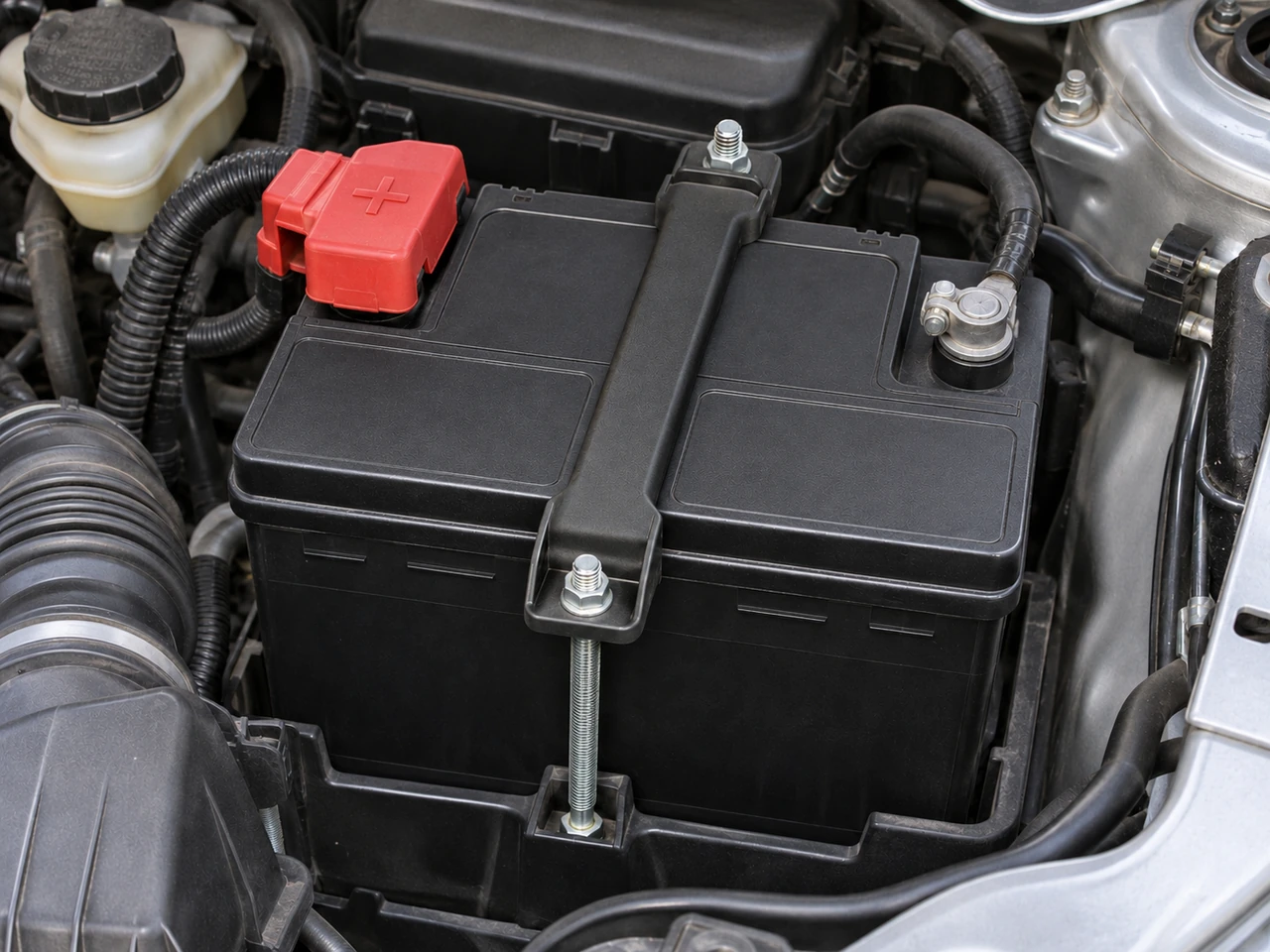
A car's starter battery should be secured in its mounting.

327. A car's starter battery should be secured in its mounting.

False.
✓ True.

A loose battery can move, damage connections or cause a short circuit. Use the correct tray and retaining hardware for the vehicle, and have loose or damaged mountings repaired.

Secure the battery in its tray. Check the retaining bracket for damage and make sure the battery sits correctly. Follow the vehicle handbook and tighten the retaining fixings to the specified torque so the battery cannot move.
🔗 Sources

General technical guidance: VARTA — battery seating, brackets and retaining torque.

Image credit: AI-generated
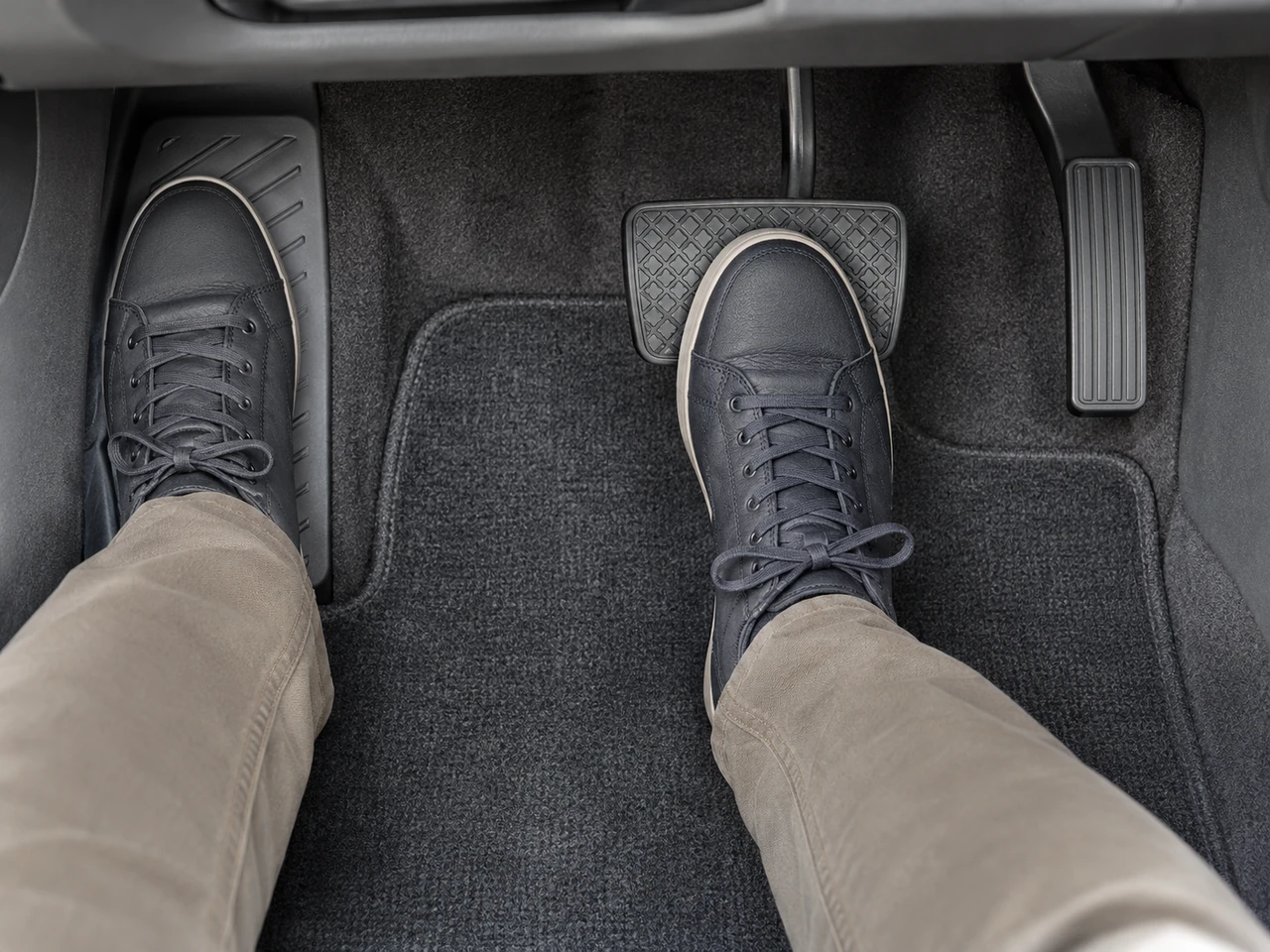
Your footwear cannot affect how well you use the pedals.

328. Your footwear cannot affect how well you use the pedals.

✓ False.
True.

Footwear can interfere with pedal movement or slip off a pedal. Choose footwear that lets you operate the controls securely and accurately.

Choose footwear that allows full pedal control. Shoes should stay securely on your feet and let you press and release the pedals accurately. Footwear that slips, catches or restricts movement can interfere with braking and other controls. Check that you can operate the pedals freely before moving off.
🔗 Sources

The Highway Code (Great Britain) • Rule 97 • General safety guidance on clothing, footwear and control of the vehicle.

Image credit: AI-generated. Existing same-entry detail photograph, reused for both driving sides.
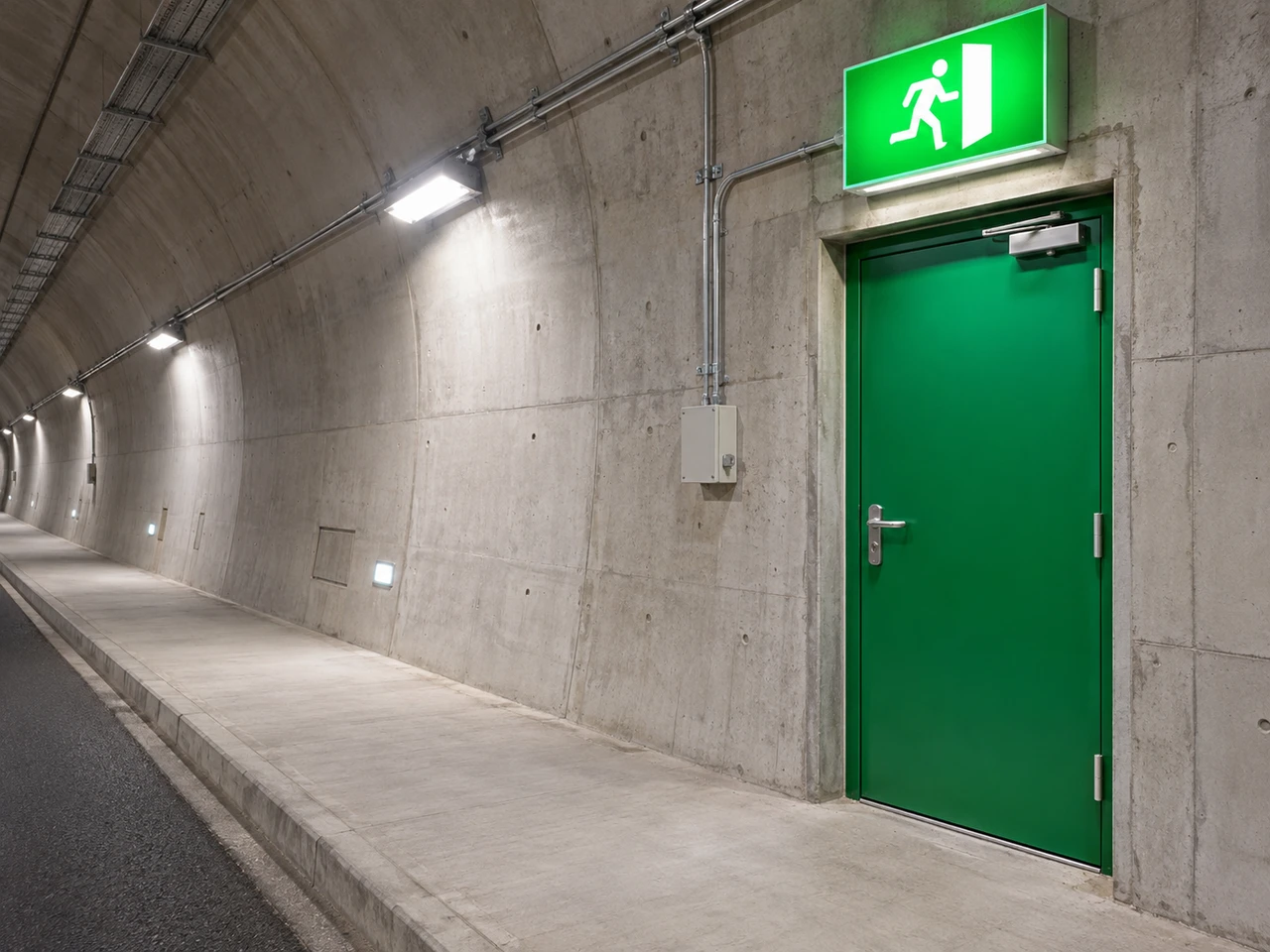
Why should you notice the location of emergency exits in a tunnel?

329. Why should you notice the location of emergency exits in a tunnel?

They provide shortcuts to nearby roads.
✓ You may need to reach one quickly during an emergency.
They show where overtaking is prohibited.
They mark areas where vehicles may stop temporarily.

Knowing where emergency exits and refuge areas are located can save valuable time during a fire, collision, or evacuation.
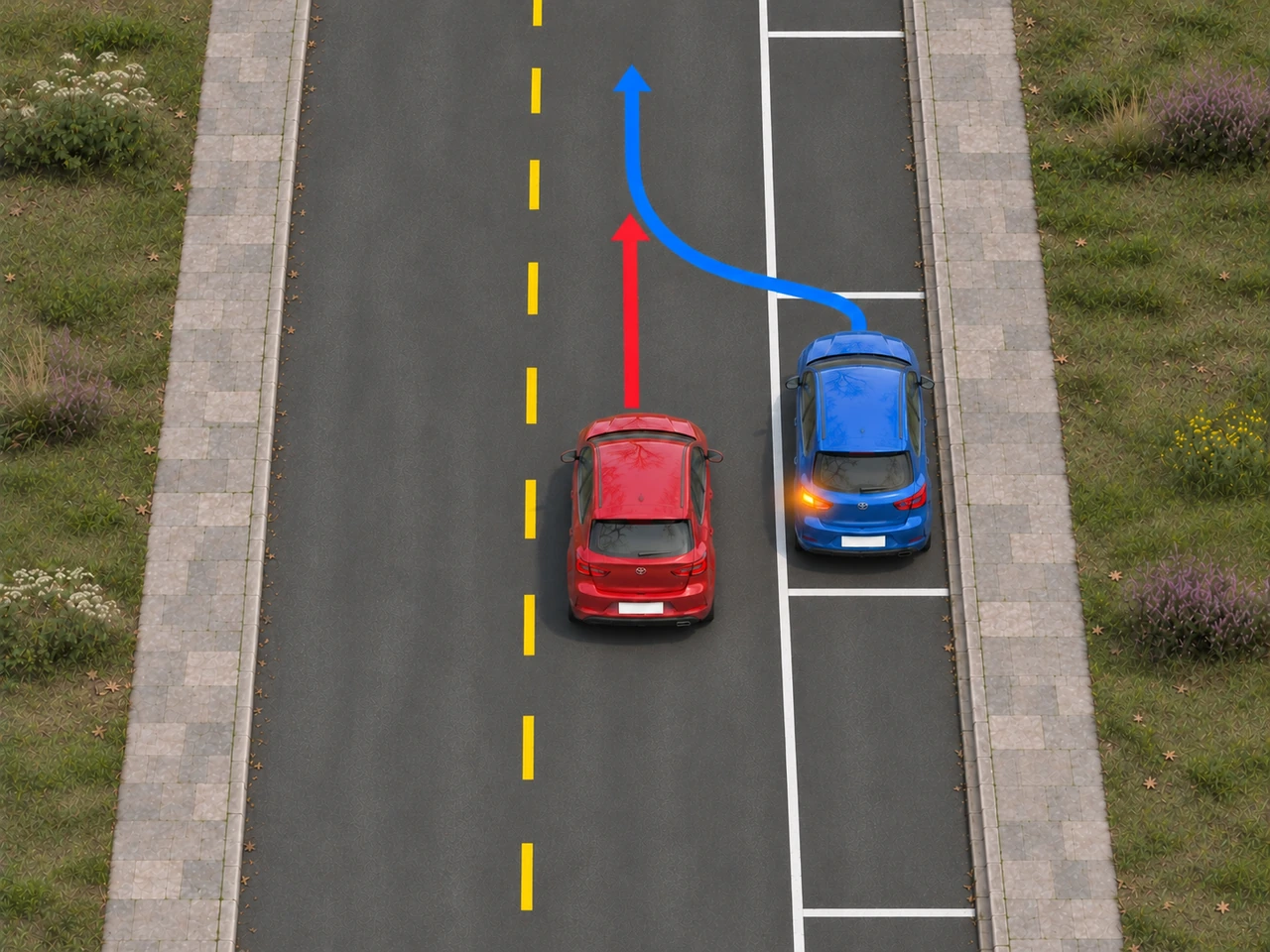
Blue wants to leave this kerbside parking bay. Who must give way?

330. Blue wants to leave this kerbside parking bay. Who must give way?

Red must let blue in under the zipper rule.
Red must give way because blue is closer to the kerb.
Red must give way because blue is indicating.
✓ Blue must give way to red in the traffic lane.

Blue must give way to red before leaving the parking bay and entering the traffic lane. Signal in good time, check other traffic and the blind spot, and wait for a safe gap. Traffic already in the lane has priority. This is an ordinary parked car moving off, rather than zipper merging or the special rule for a bus leaving a stop.

Blue waits in a marked kerbside bay on the right and indicates left; red approaches from behind in the adjacent traffic lane. Argentina: National Traffic Law article 39(b) requires a cautious manoeuvre without risk or disruption to traffic. Blue must wait for red, check mirrors and the blind spot, and pull out only when there is a safe gap. A signal does not create priority.
🔗 Sources

AI-generated illustration • Traffic-rules.com / Rijbewijs-online.be • WCIT • CC BY-SA 4.0.

🔗 Argentina Government • National Traffic Law 24,449, article 39(b)
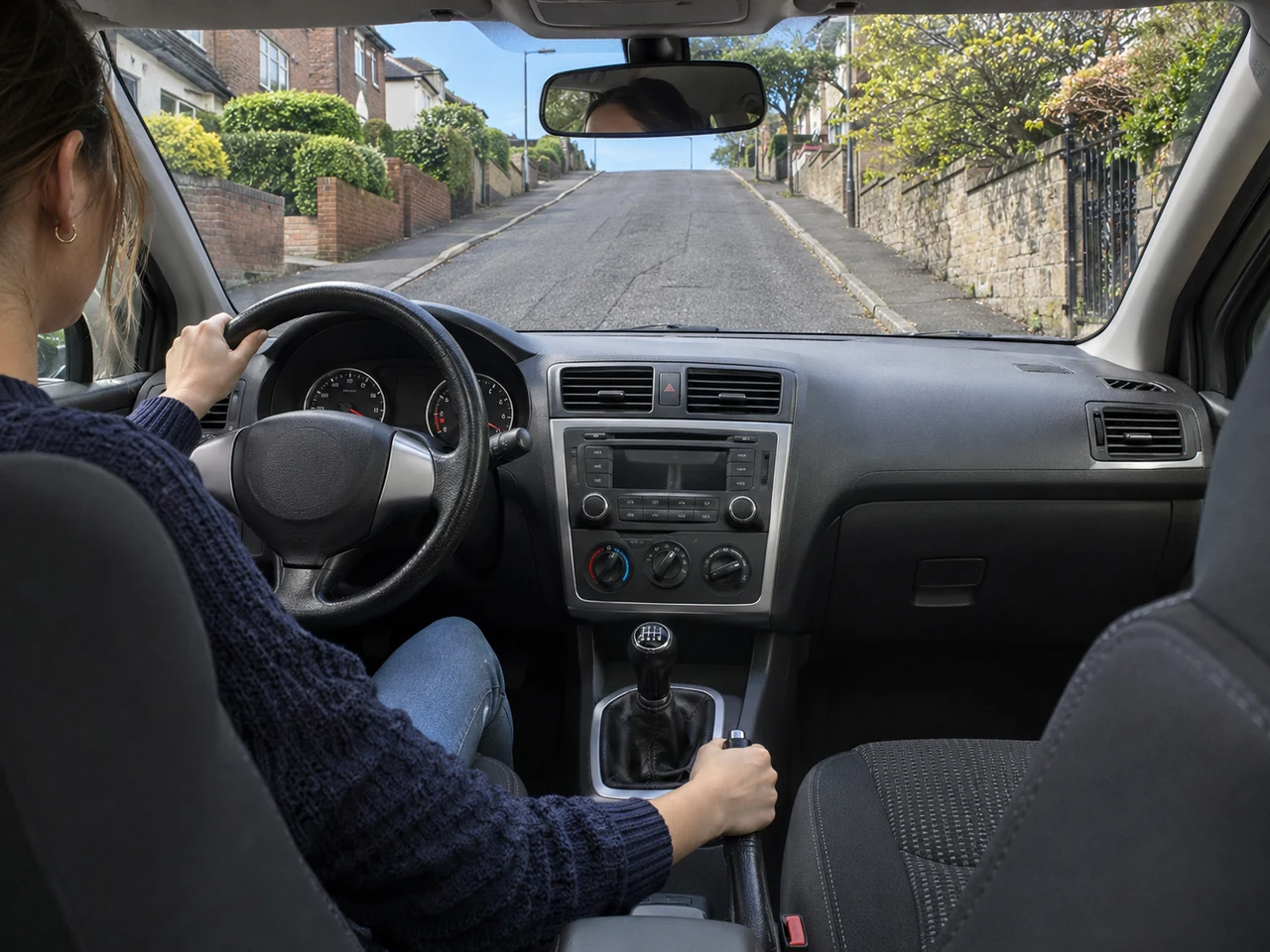
How can the parking brake help when moving off uphill in a manual car?

331. How can the parking brake help when moving off uphill in a manual car?

It increases engine power.
It selects a lower gear automatically.
It releases the clutch.
✓ It can prevent the vehicle from rolling backwards.

When moving off uphill, the parking brake can hold the vehicle stationary while you prepare to move. Release it smoothly once the clutch reaches the biting point and sufficient power is applied.

Parking-brake control during an uphill start.
With the parking brake holding the car, build enough drive at the biting point to prevent rollback before releasing the brake.
🔗 Sources

NZ Transport Agency · Learning systems for driving instructors

Image credit: AI-generated

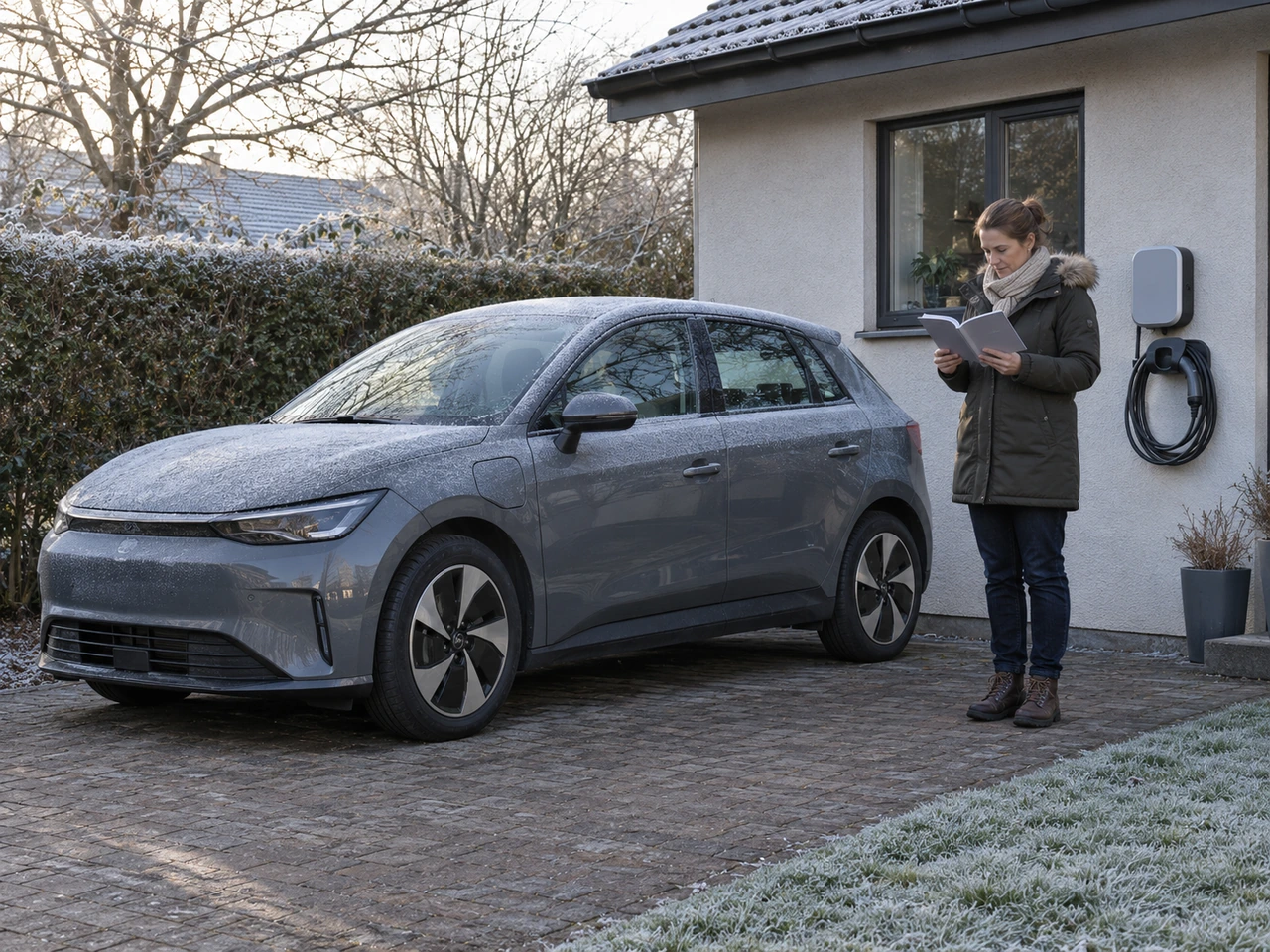
Why might an EV slow less than expected when you release the accelerator?

332. Why might an EV slow less than expected when you release the accelerator?

A full battery always increases regenerative braking.
Releasing the accelerator guarantees the same deceleration.
✓ Regenerative braking can be limited by battery conditions.
The steering wheel position always controls deceleration.

Regenerative braking may be limited when the battery is cold or fully charged. Some vehicles compensate with the normal brakes. Follow the handbook, leave enough space and use the brake pedal whenever needed to slow or stop.

Cold battery conditions can limit regenerative braking. General road-safety guidance: Regenerative braking may be limited when the battery is cold or fully charged. Some vehicles compensate with the normal brakes. Follow the handbook, leave enough space and use the brake pedal whenever needed to slow or stop.
🔗 Sources

Tesla — vehicle handbook
Reference: Braking and Stopping: Regenerative Braking

Image credit: AI-generated
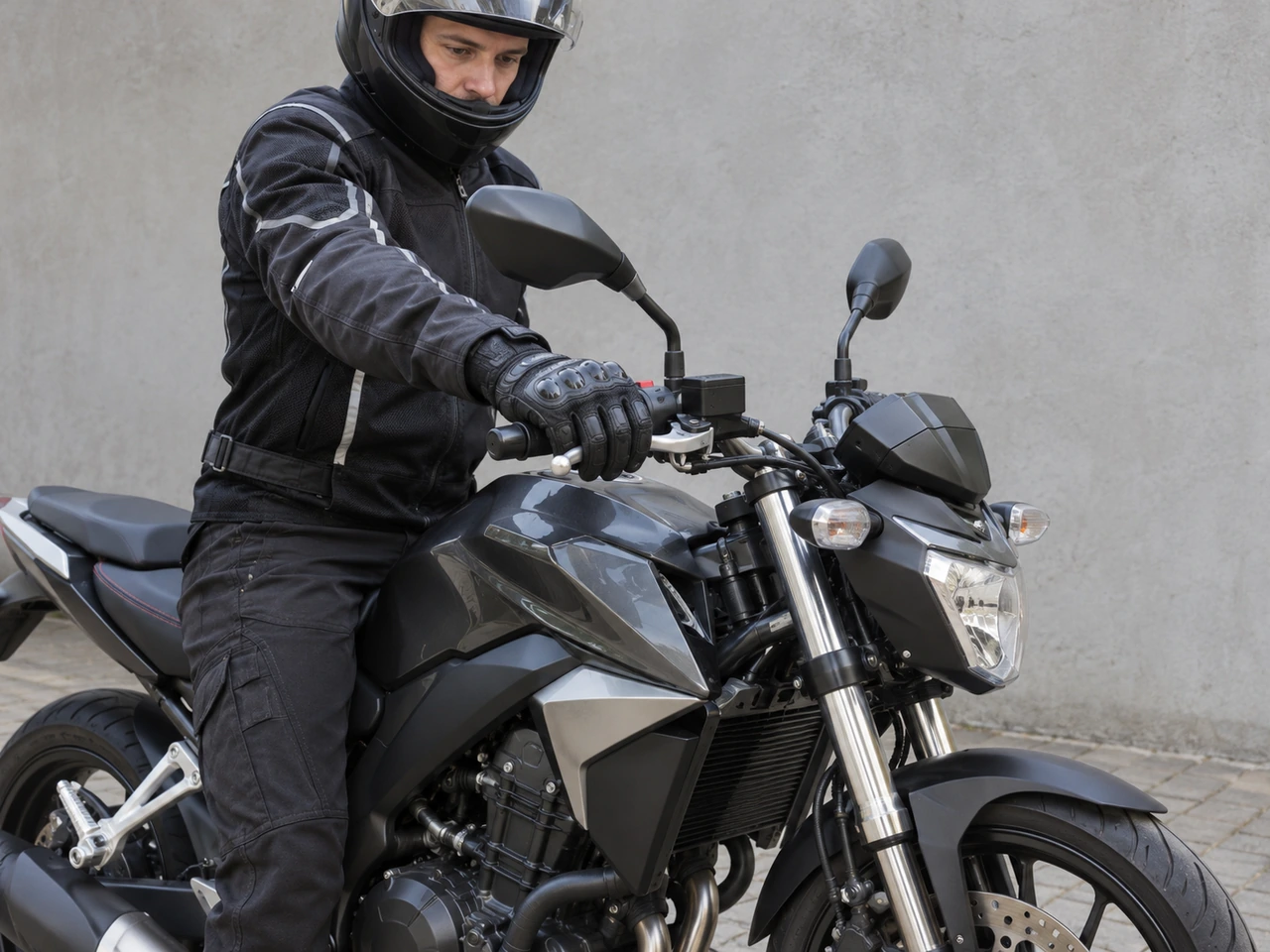
What should you check before starting a motorcycle journey?

333. What should you check before starting a motorcycle journey?

✓ Tyres, brakes, lights, steering, and controls.
Only the fuel level and mirrors.
Nothing if the motorcycle was recently serviced.
Only the tyres if the journey is long.

Before riding, carry out a basic safety check. Check the tyres, brakes, lights, steering and controls, and inspect the drive chain, belt or other drive components where applicable. Finding a problem before setting off can prevent a breakdown or loss of control.
Check controls before riding. The stationary rider checks the front-brake lever. This is one part of a pre-ride inspection: also check tyres, lights, steering, other controls and the drive system as applicable. Resolve safety faults before setting off and follow the motorcycle manual.
🔗 Sources

DLD.Utah.gov — Motorcycle Handbook, Pre-ride inspection

Image credit: AI-generated

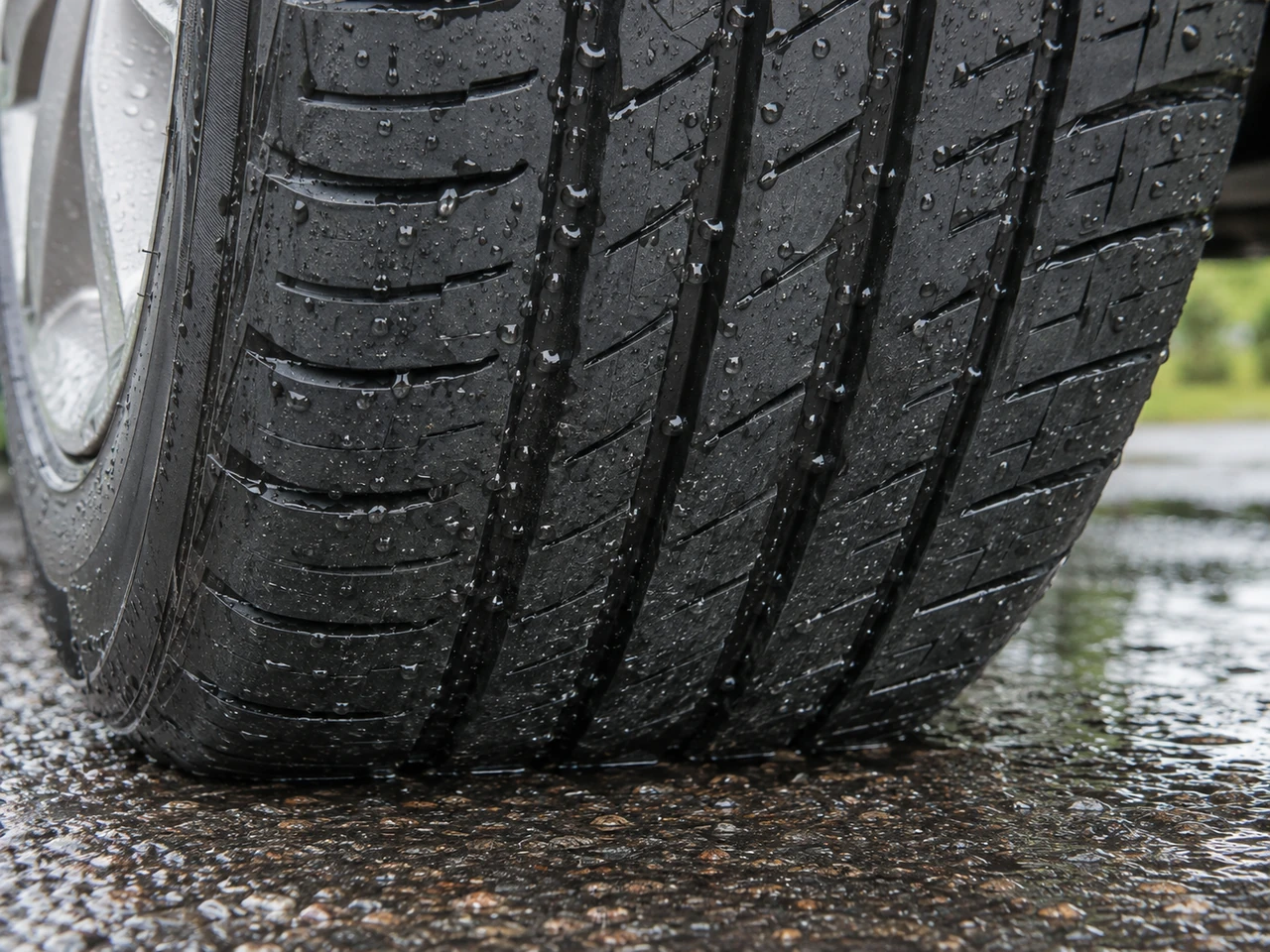
Tyre tread grooves help channel water away from the contact area.

334. Tyre tread grooves help channel water away from the contact area.

False.
✓ True.

The grooves help clear water from between the tyre and the road. Worn tread reduces this ability, but good tread does not remove the need to slow down in wet conditions.

Tread helps clear water from the road contact. The grooves help clear water from between the tyre and the road. Worn tread reduces this ability, but good tread does not remove the need to slow down in wet conditions.
🔗 Sources

Michelin (manufacturer guidance) • Safety guidance, remaining tread and water evacuation

Image credit: AI-generated
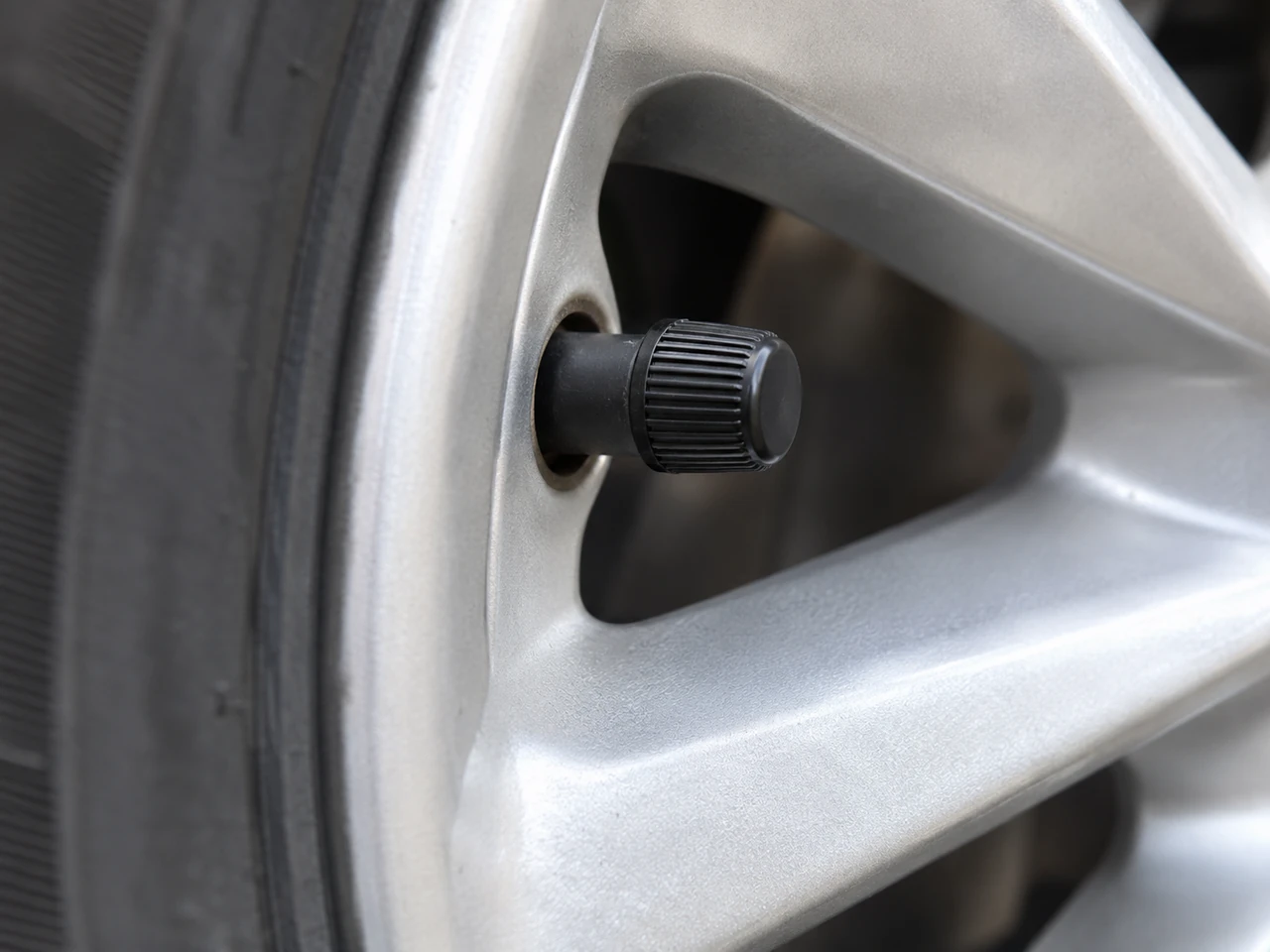
Tyre valve caps help keep dirt and moisture out of the valves.

335. Tyre valve caps help keep dirt and moisture out of the valves.

✓ True.
False.

Keep suitable caps fitted to the tyre valves. They help protect the valve cores from dirt and moisture. A cap does not replace a sound valve or regular pressure checks.

Valve caps help keep dirt and moisture out. Keep suitable caps fitted to the tyre valves. They help protect the valve cores from dirt and moisture. A cap does not replace a sound valve or regular pressure checks.
🔗 Sources

Michelin (manufacturer guidance) • Safety guidance, valve-core protection and tyre-pressure maintenance

Image credit: AI-generated
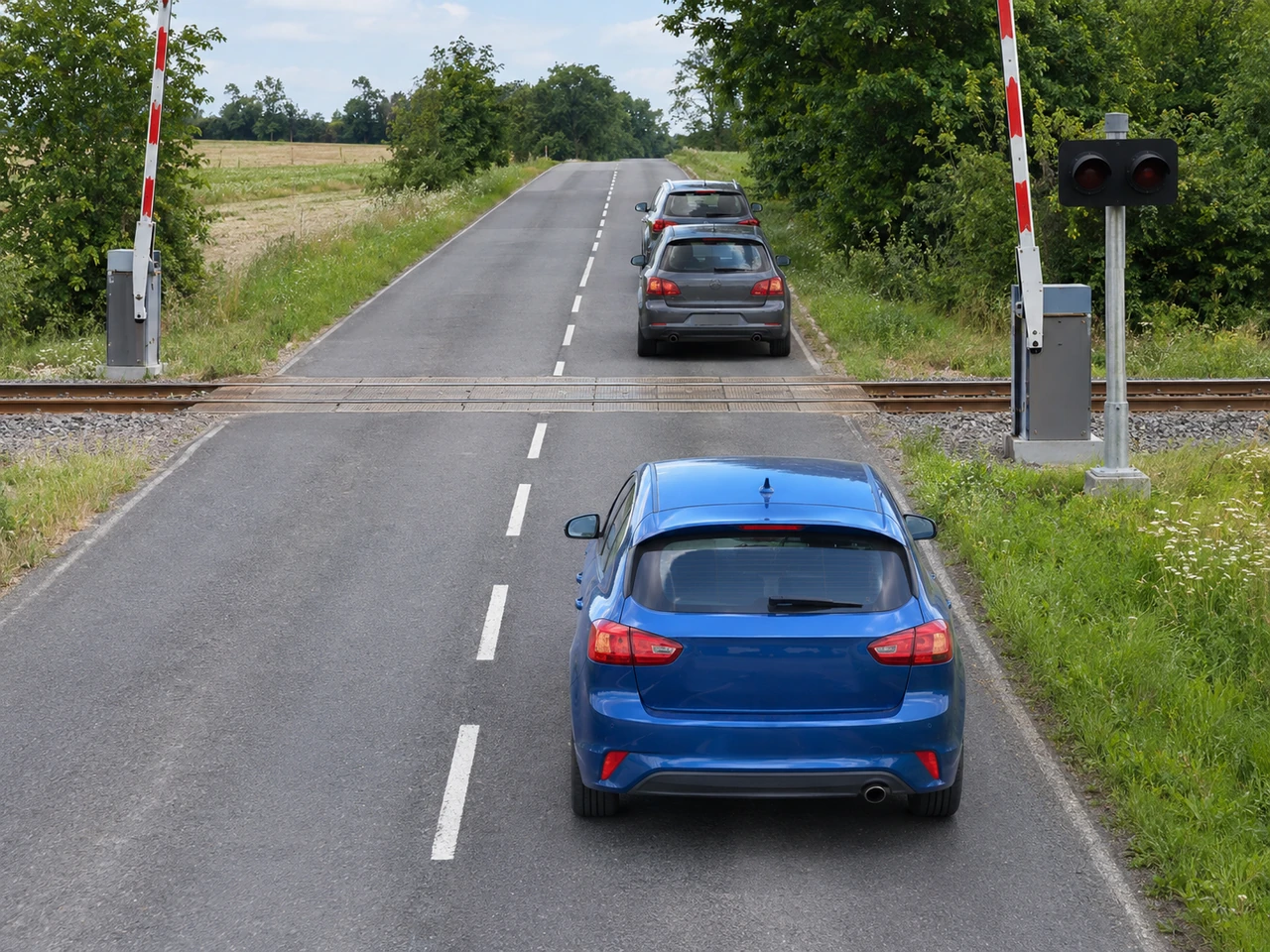
You should wait before a railway crossing if there is no room beyond it.

336. You should wait before a railway crossing if there is no room beyond it.

✓ True.
False.

Wait before the crossing until there is enough room to clear the tracks completely. Do not join a queue that would leave any part of your vehicle on the railway.
Keep the railway exit clear. Wait before the crossing until there is enough room to clear the tracks completely. Do not join a queue that would leave any part of your vehicle on the railway.
🔗 Sources

The Highway Code (Great Britain) • Safety guidance, Rule 291

Image credit: AI-generated

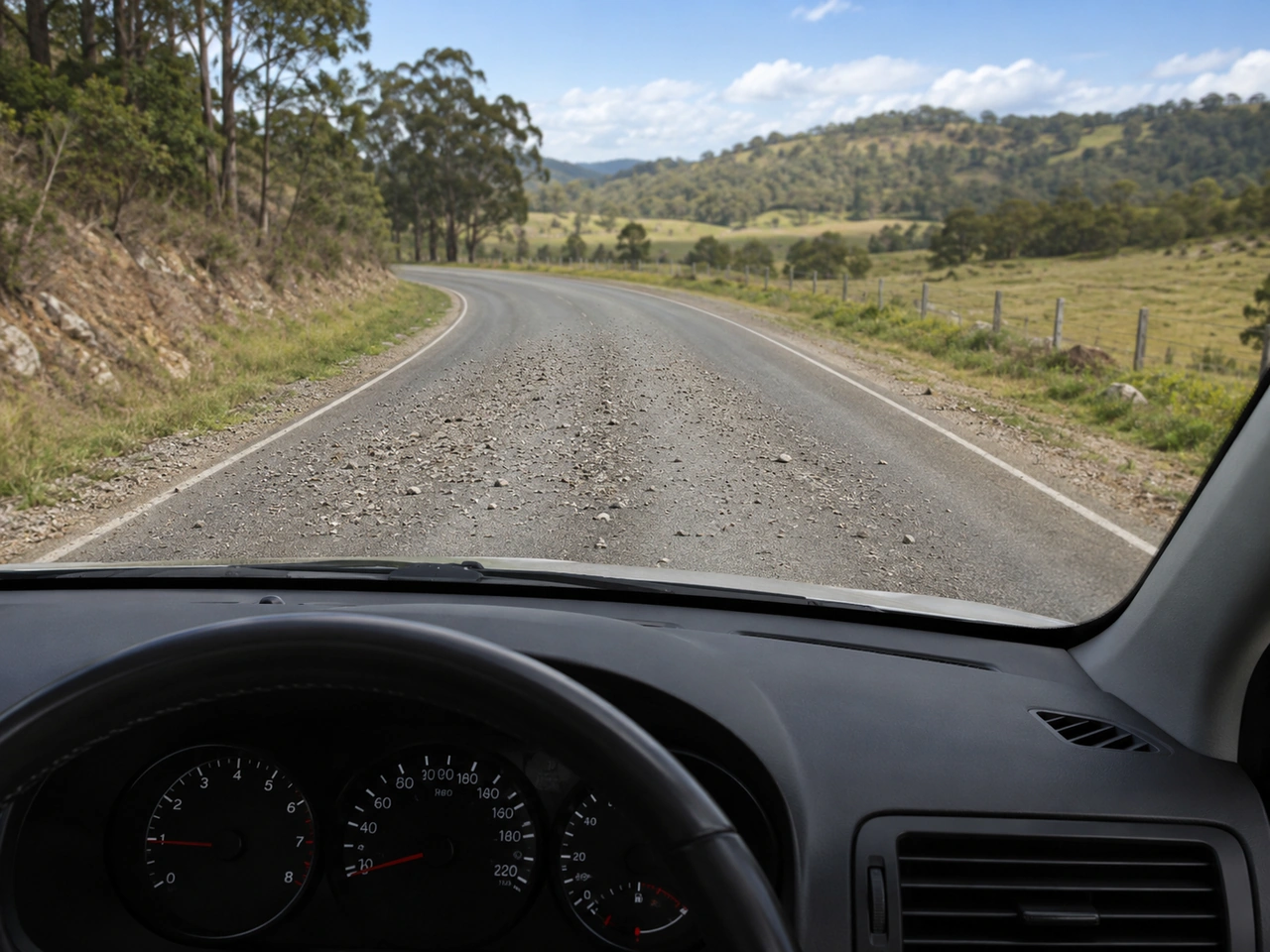
What should you do if you see loose gravel on the road?

337. What should you do if you see loose gravel on the road?

✓ Slow down and avoid sudden steering or braking.
Steer around loose patches whenever possible.
Maintain your speed and avoid using the brakes.
Brake firmly before the tyres begin to slide.

Loose gravel reduces grip and can make the vehicle skid. Slow down and use smooth steering and braking.

Why should loose items inside a vehicle be secured?

338. Why should loose items inside a vehicle be secured?

They can increase the vehicle's fuel consumption.
✓ They can become dangerous projectiles during sudden braking or a collision.
They can interfere with the vehicle's exterior lights.
They can make the engine overheat.

Loose objects can move or be thrown forwards during sudden braking or a collision. Secure luggage and other items so they cannot injure occupants or interfere with the driver or vehicle controls.

Argentina. Store loose items in a closed compartment or restrain them in the boot. They can be thrown forward during sudden braking.
🔗 Sources

Argentina National Traffic Law 24.449, articles 48 and 57

NZTA safe loading and towing guide, practical guidance

Image credit: AI-generated
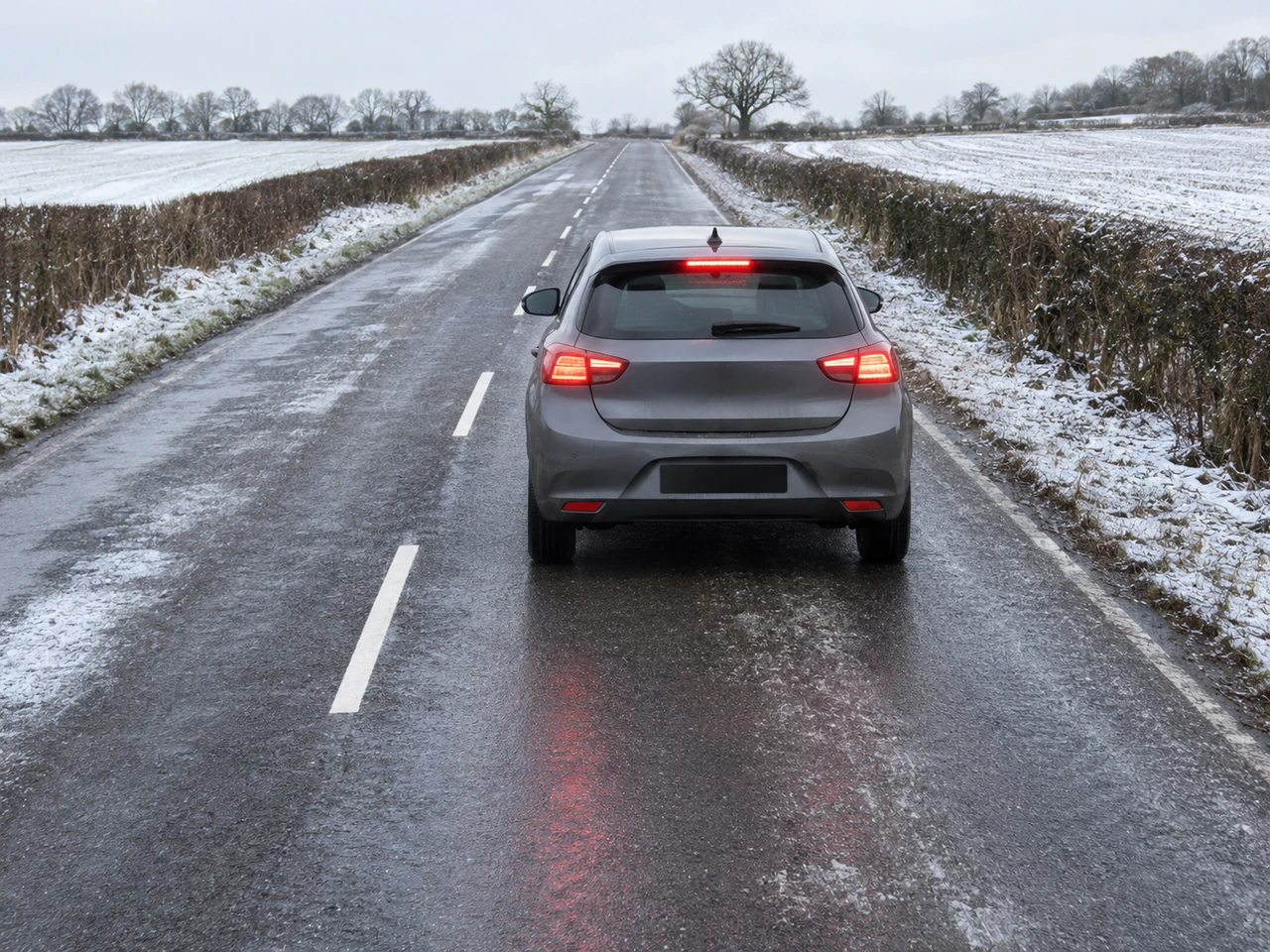
How should you normally brake on a slippery road?

339. How should you normally brake on a slippery road?

Use the parking brake to help slow the vehicle.
✓ Brake gently and progressively.
Brake harder than usual to shorten the stopping distance.
Steer sharply while braking to avoid slippery areas.

For normal slowing, anticipate early and apply the brakes gently and progressively, with extra space ahead. Avoid harsh inputs that can exceed the available grip. In an emergency, brake immediately. If the vehicle has ABS, apply firm, sustained pressure and follow the handbook; do not pump the pedal or release it simply because ABS operates. ABS helps prevent wheel locking but cannot guarantee a shorter stopping distance.
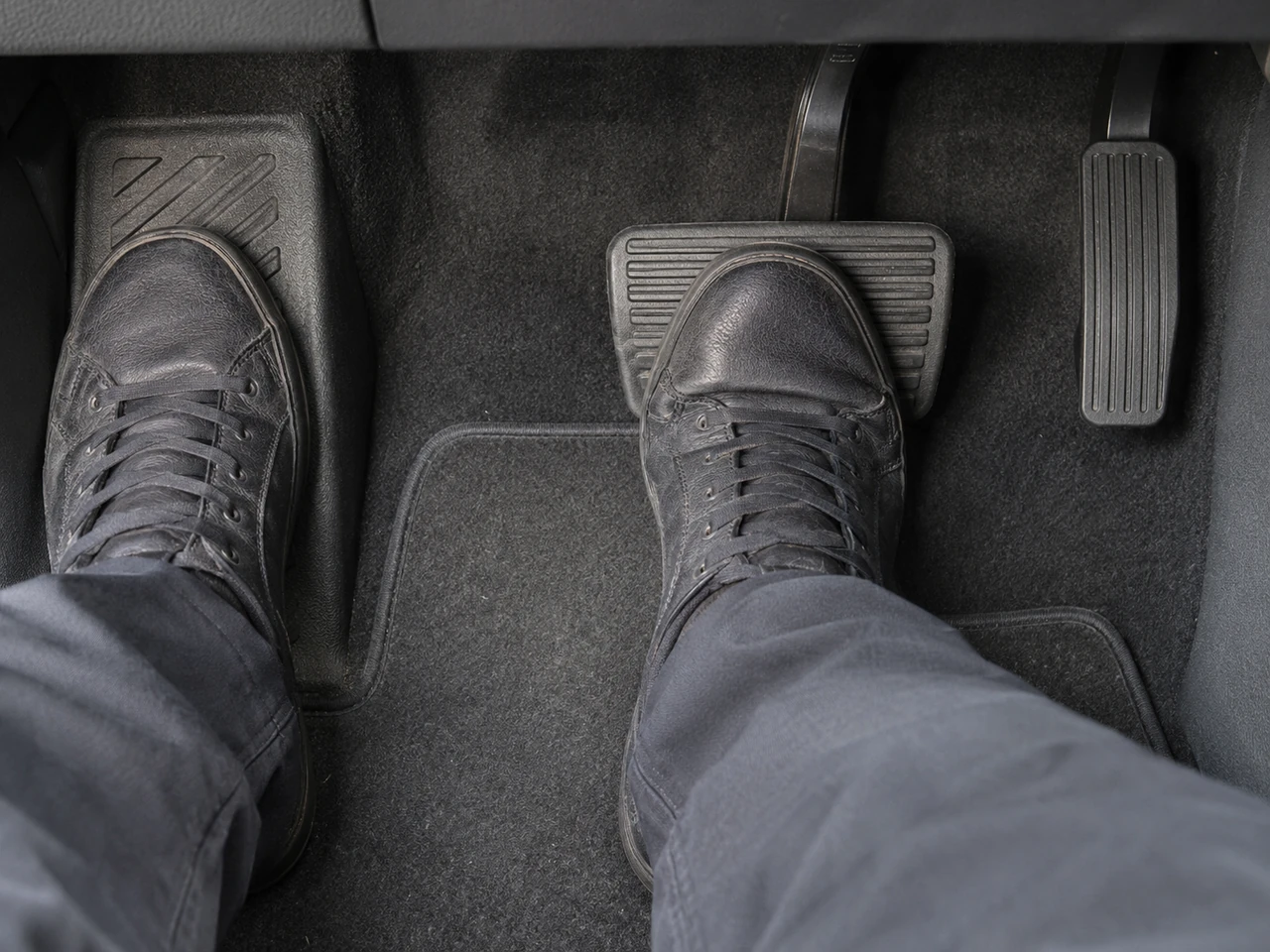
You should pump the brake pedal during emergency braking with ABS.

340. You should pump the brake pedal during emergency braking with ABS.

True.
✓ False.

With ABS, apply firm, continuous pressure to the brake pedal during emergency braking. Do not pump the pedal. Follow the instructions in the vehicle handbook.

Keep firm pressure on the brake with ABS. In an emergency, press the brake firmly and maintain pressure until the vehicle has slowed enough. Do not repeatedly release and reapply the pedal. Follow the vehicle handbook; ABS helps retain steering control during braking.
🔗 Sources

The Highway Code (Great Britain) • Rule 120 • General safety guidance on emergency braking with ABS.

Image credit: AI-generated. Existing same-entry detail photograph, reused for both driving sides.
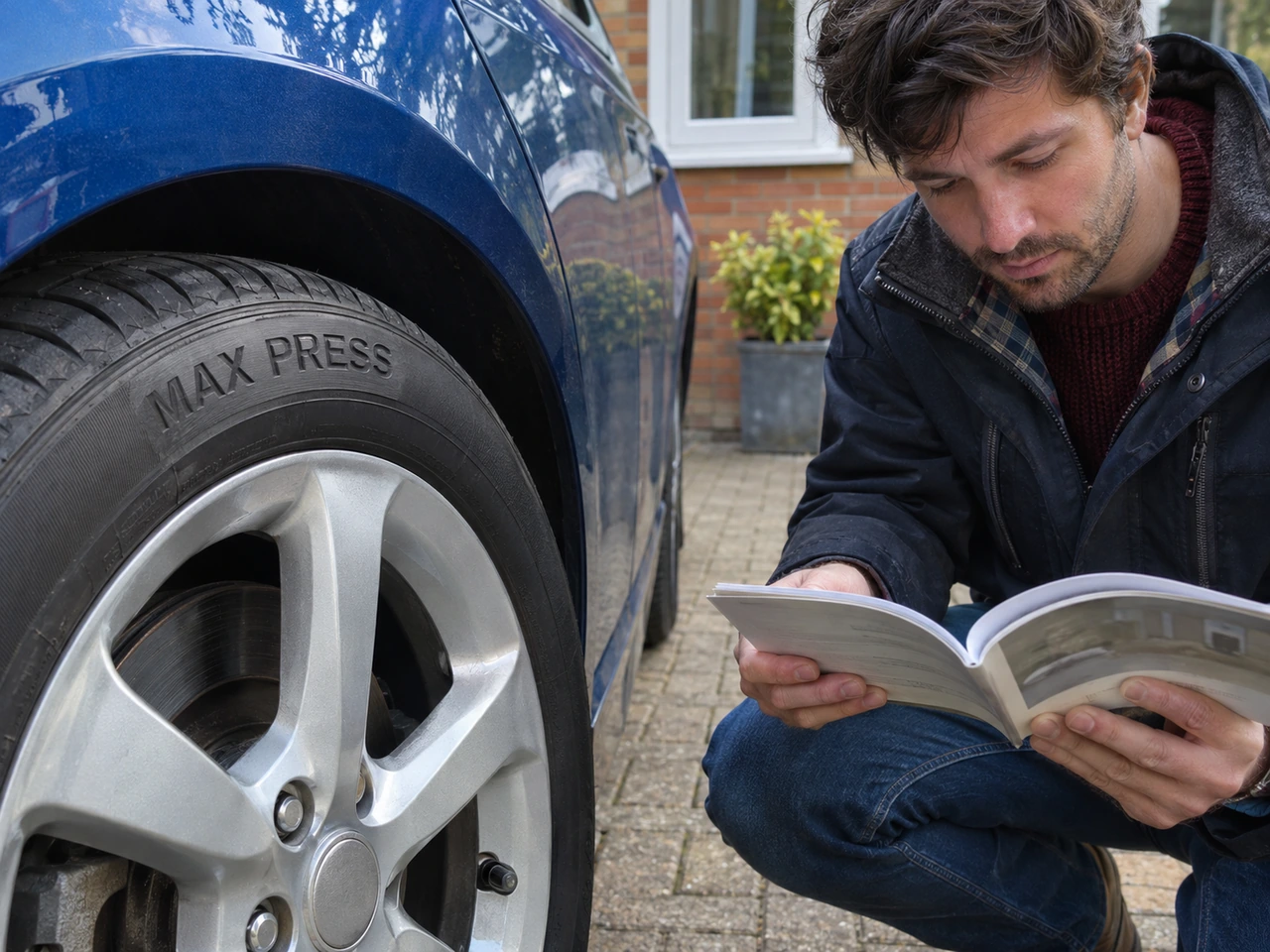
Why should you not use a tyre's MAX PRESS marking as the car's normal pressure setting?

341. Why should you not use a tyre's MAX PRESS marking as the car's normal pressure setting?

It always gives the pressure for a fully loaded car.
It is the minimum pressure for every car.
✓ It is a tyre limit, not the car's recommended setting.
It means the tyre never needs a pressure check.

A MAX PRESS marking describes a limit for that tyre, rather than the recommended operating pressure for your car. Use the vehicle manufacturer's pressure information for the fitted tyres and current load, and check pressures under the specified conditions, normally when cold.

Checking vehicle guidance rather than using a tyre sidewall maximum as the normal setting. General road-safety guidance: A MAX PRESS marking describes a limit for that tyre, rather than the recommended operating pressure for your car. Use the vehicle manufacturer's pressure information for the fitted tyres and current load, and check pressures under the specified conditions, normally when cold.
🔗 Sources

Michelin — tyre manufacturer guidance

Image credit: AI-generated
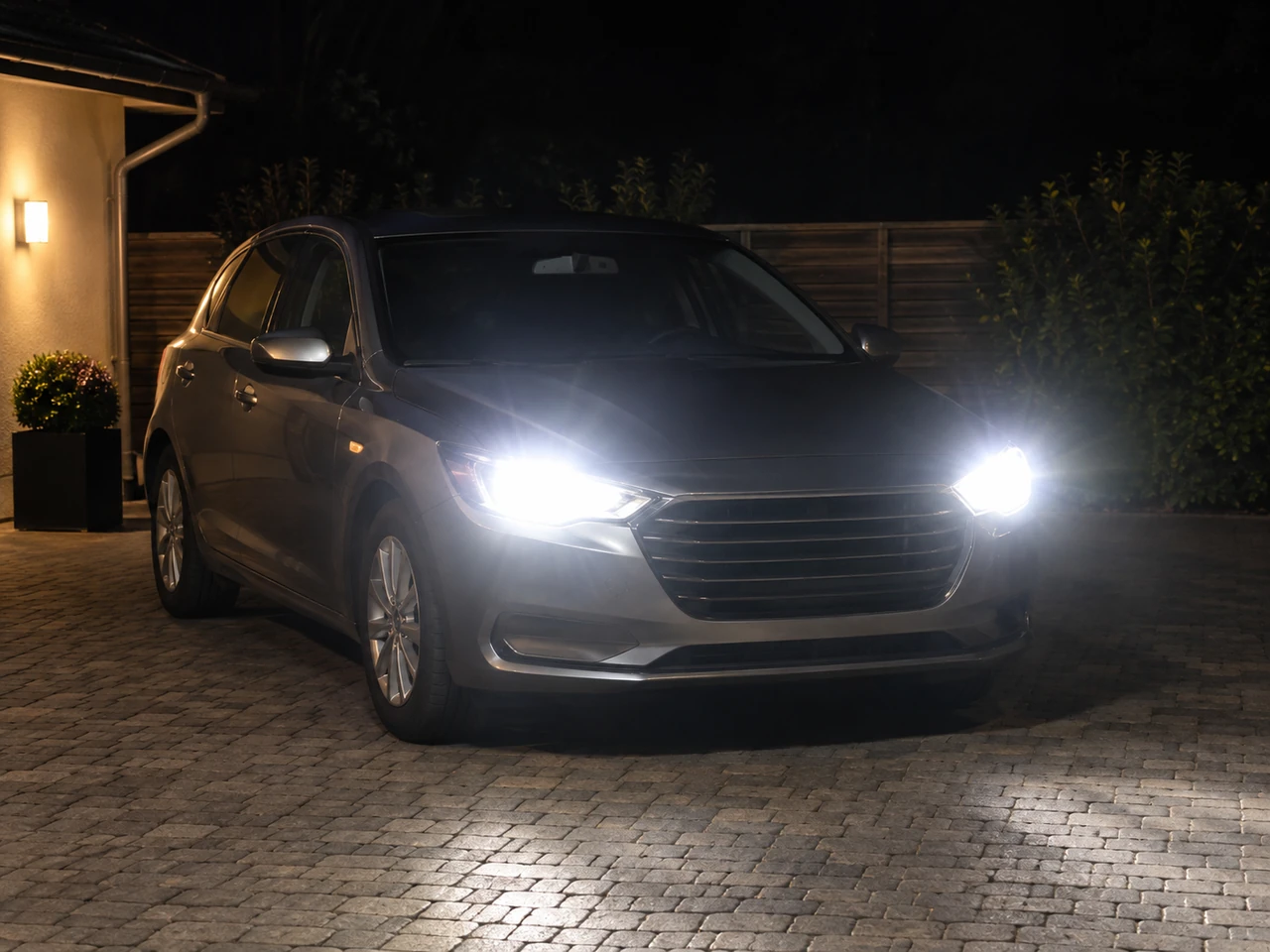
Looking directly at oncoming headlights helps you see the road better.

342. Looking directly at oncoming headlights helps you see the road better.

True.
✓ False.

Do not stare at bright headlights. Keep watching your path, slow down if dazzled, and stop safely if you cannot see. Avoid sudden steering or braking.

Do not stare at dazzling headlights. Do not stare at bright headlights. Keep watching your path, slow down if dazzled, and stop safely if you cannot see. Avoid sudden steering or braking.
🔗 Sources

Department for Transport (Great Britain) • Safety guidance, Tips to help you deal with headlight glare

Image credit: AI-generated
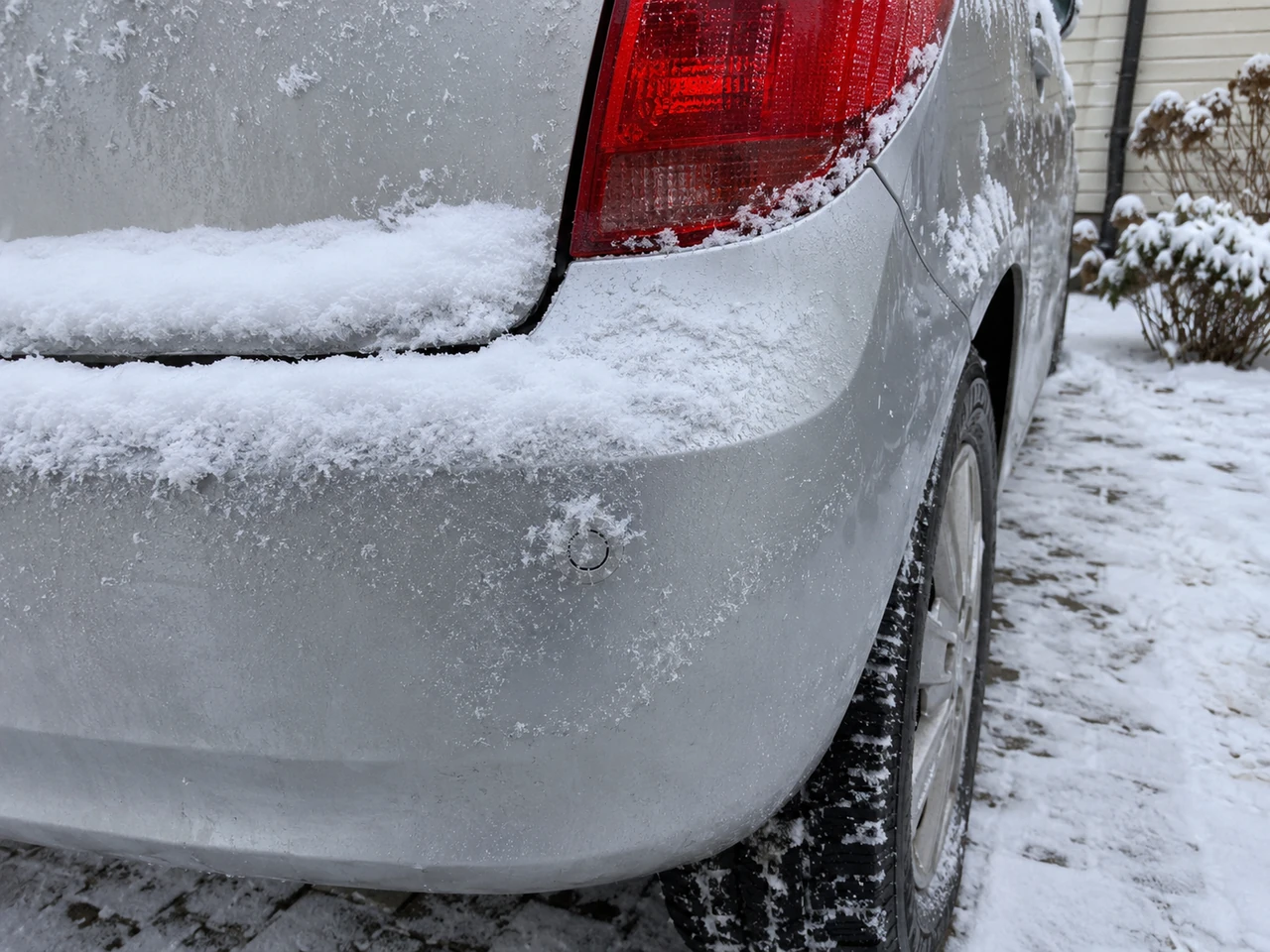
Dirt, snow or ice covering sensors can affect driver-assistance systems.

343. Dirt, snow or ice covering sensors can affect driver-assistance systems.

False.
✓ True.

Covered sensors may detect hazards poorly or stop working. Keep sensor areas clear using the manufacturer's cleaning instructions, and do not assume assistance is available in poor conditions.

Keep driver-assistance sensors clear. Covered sensors may detect hazards poorly or stop working. Keep sensor areas clear using the manufacturer's cleaning instructions, and do not assume assistance is available in poor conditions.
🔗 Sources

Ford owner’s manual (manufacturer guidance) • Safety guidance, parking-aid sensor obstruction; follow your vehicle’s handbook

Image credit: AI-generated
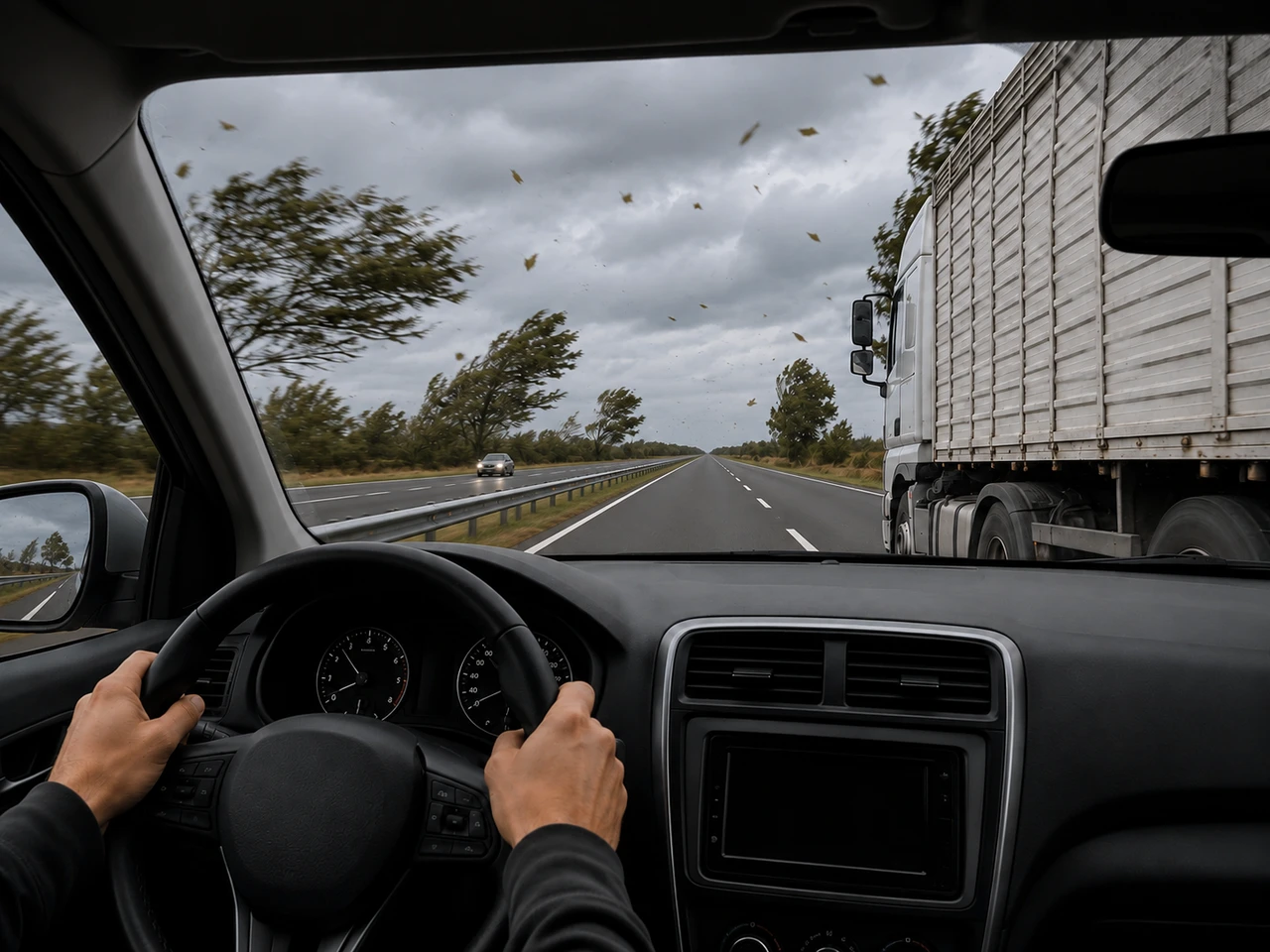
How should you pass a large vehicle in strong winds?

344. How should you pass a large vehicle in strong winds?

Use the horn instead of leaving extra space.
Stay close beside it to remain sheltered from the wind.
✓ Allow room and be ready for sudden changes in wind.
Keep the steering fixed while you move past it.

A large vehicle can briefly shelter you from a crosswind, and its airflow can create turbulence. Wind forces may change as you move alongside and beyond it. Keep a steady grip, allow lateral space and steer smoothly. Avoid unnecessary overtaking in strong winds and wait if you cannot pass safely. Do not rely on the other vehicle to remain perfectly on course.

Vehicle passing a large vehicle in windy conditions

Argentina. Mendoza warns of gusts when meeting lorries or overtaking. Buenos Aires City guidance describes how a large vehicle can shield you from lateral wind, changing the forces during a pass. Expect the pressure to change again as you emerge; postpone the manoeuvre if safety is uncertain.
🔗 Sources

Mendoza Government • Mountain driving: wind and shelter transitions
Buenos Aires City • 2022 driver manual: wind and large vehicles

Image credit: AI-generated
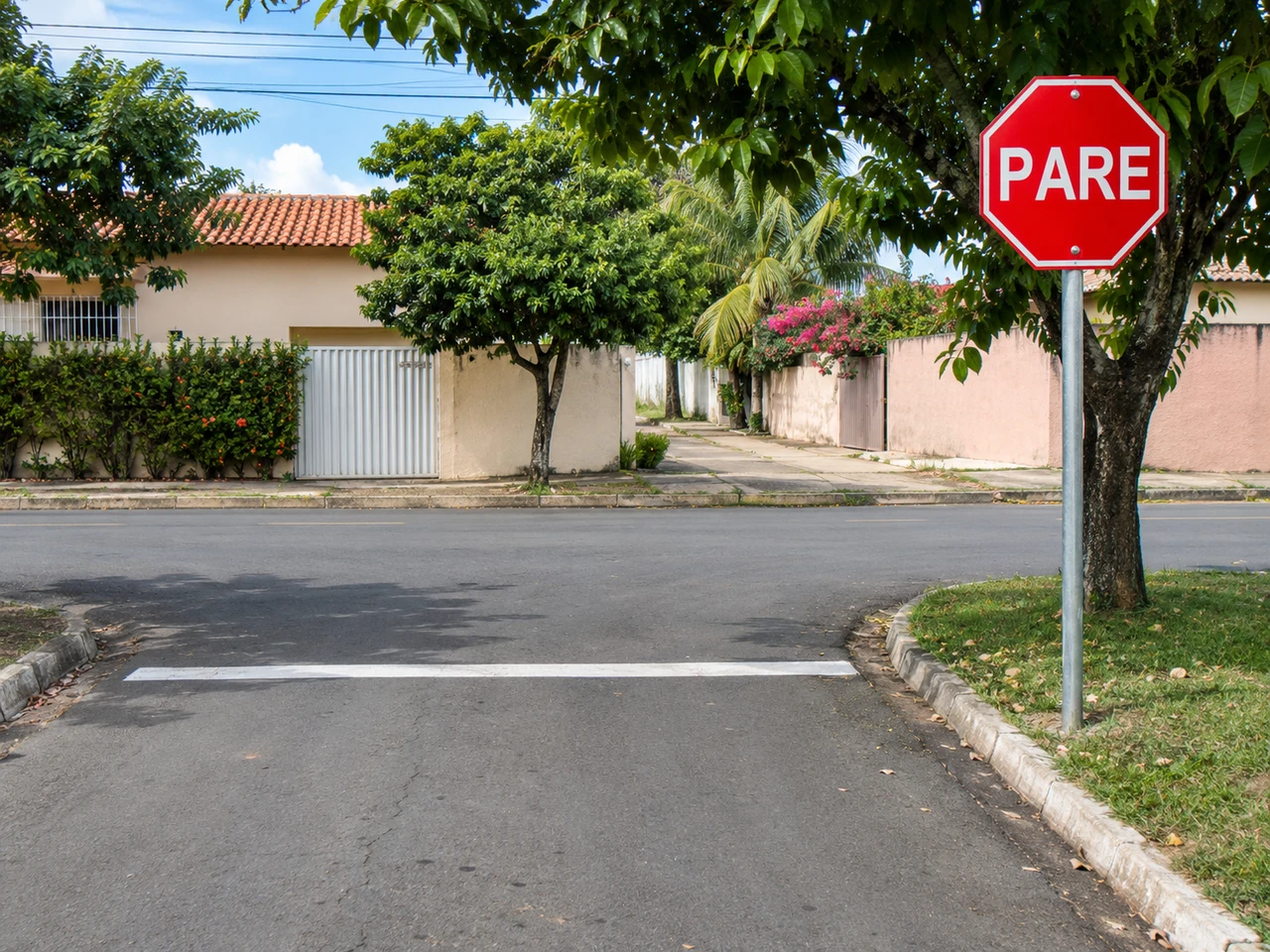
What should you do when approaching a stop sign?

345. What should you do when approaching a stop sign?

Give way without stopping if the road is clear.
Slow down and stop only if traffic is approaching.
✓ Come to a complete stop before proceeding.
Proceed if the vehicle ahead has already stopped.

A stop sign requires you to come to a complete stop at the required position. Check carefully for other road users and proceed only when it is safe.
Red octagonal PARE sign at a junction.
🔗 Sources

Argentina · Decree 196/2025, Annex L: R.27 PARE

Image credit: AI-generated

Why should you avoid overloading a trailer?

346. Why should you avoid overloading a trailer?

It improves braking on steep roads.
It reduces tyre wear on the towing vehicle.
✓ It can reduce stability and place excessive strain on the vehicle.
It makes the trailer easier to control.

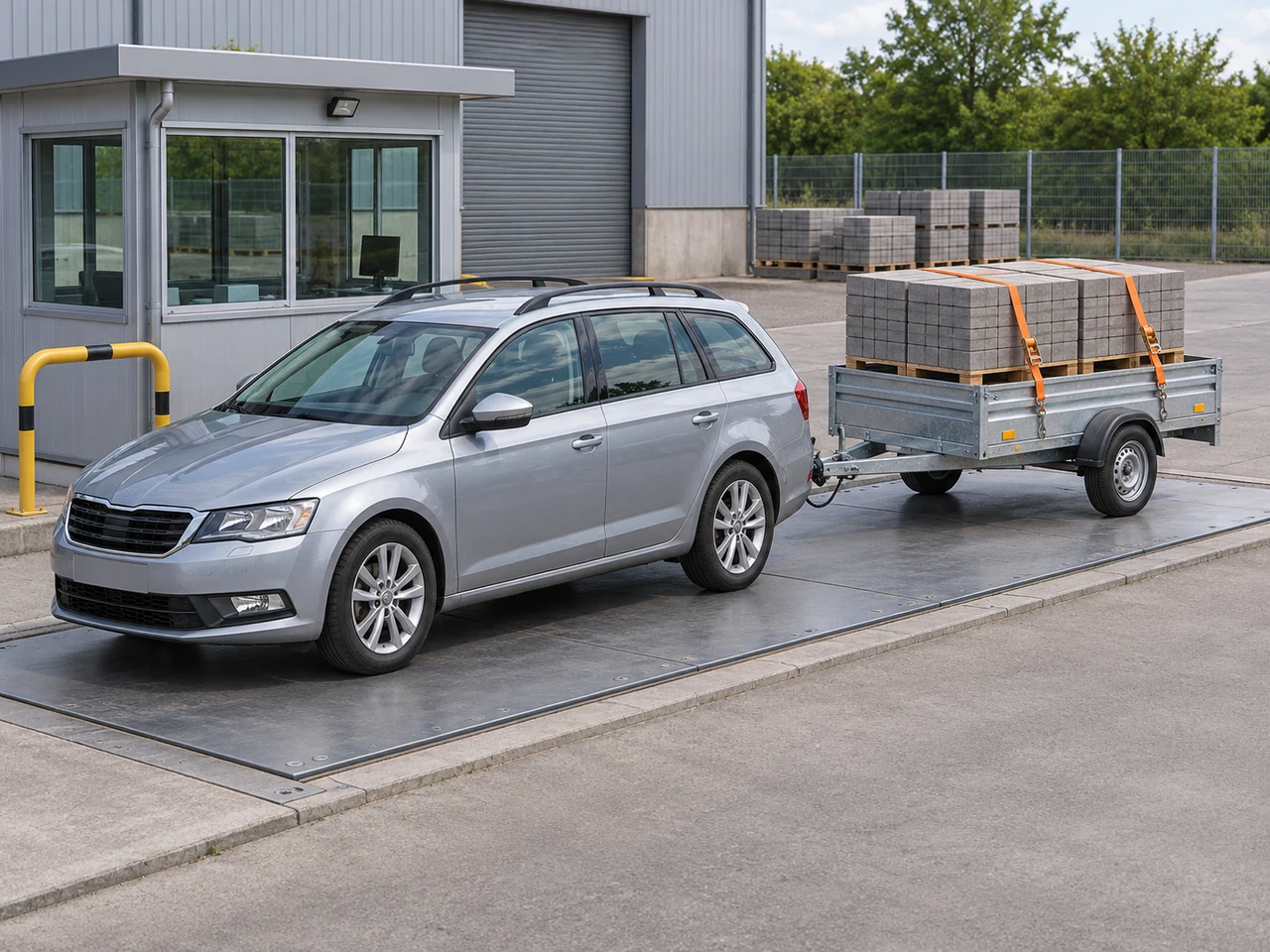
Overloading can affect braking, steering, tyres, suspension, and trailer stability. Always remain within permitted limits. After loading, check that the load is secure and correctly distributed before starting your journey.

Argentina. Check the allowed trailer weight, the axle loads and the vertical load on the towball. Check the car and trailer weight limits and confirm that the permitted mass of the combination is covered by your driving licence.
🔗 Sources

Argentina National Traffic Law 24.449, articles 48 and 57

NZTA safe loading and towing guide, practical guidance

Image credit: AI-generated
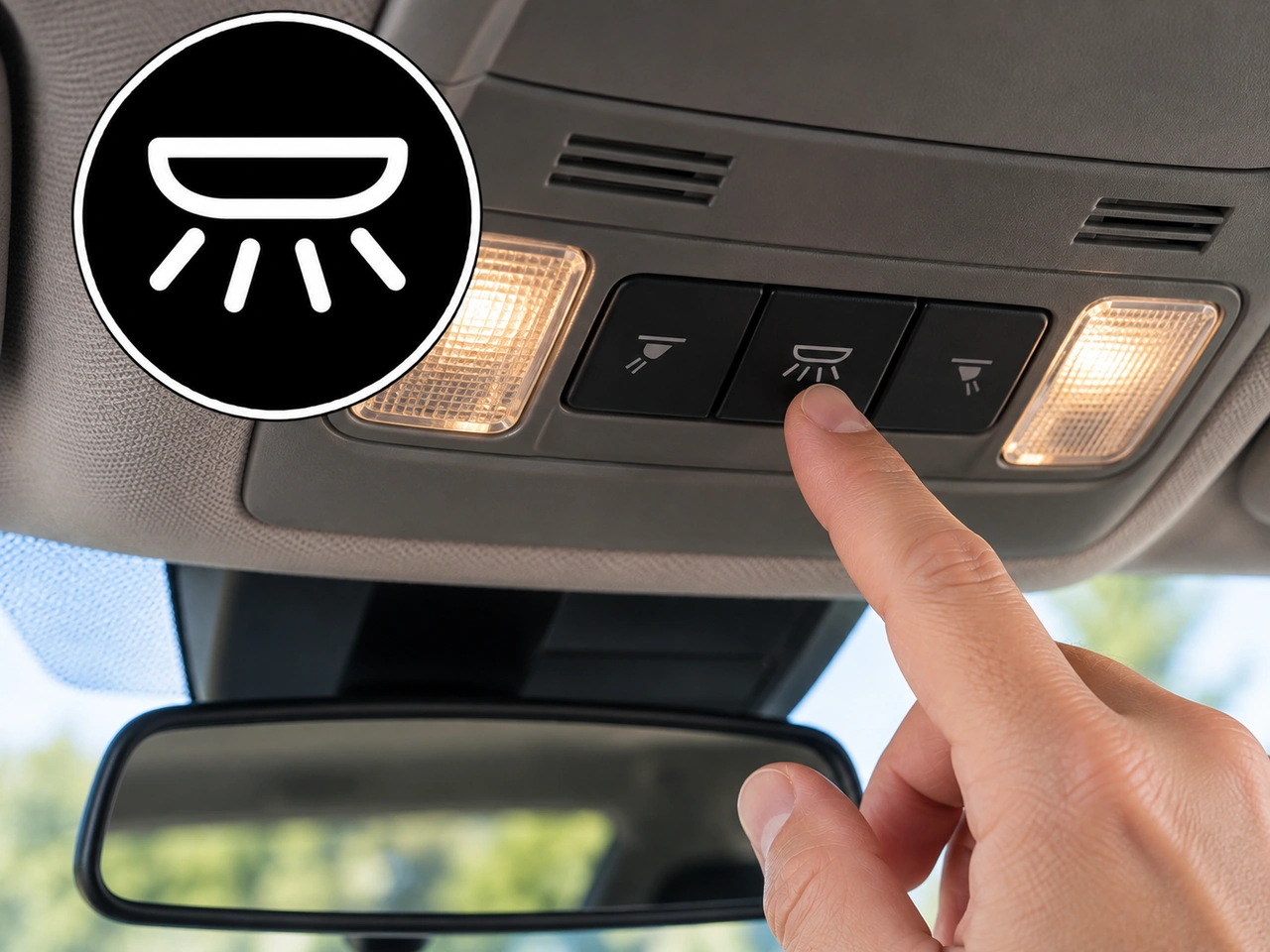
What does this vehicle-control symbol indicate?

347. What does this vehicle-control symbol indicate?

Parking lights.
Hazard warning lights.
Instrument-panel brightness.
✓ Interior lighting.

This control operates the vehicle's interior lighting. Depending on the vehicle, the lights can be switched on manually or set to illuminate automatically when a door is opened.

Control for the vehicle's interior lighting.
The door-linked setting can switch the cabin lamps on automatically when a door opens. A separate setting may let you switch the lamps on manually.
🔗 Sources

Ford owner’s manual · Interior lighting

Image credit: AI-generated

Why should headlights, indicators, and other exterior lights be kept clean and working?

348. Why should headlights, indicators, and other exterior lights be kept clean and working?

They make the vehicle use less fuel.
✓ They help you see, be seen, and communicate your intentions.
They improve braking performance in poor weather.
They prevent the windscreen from misting.

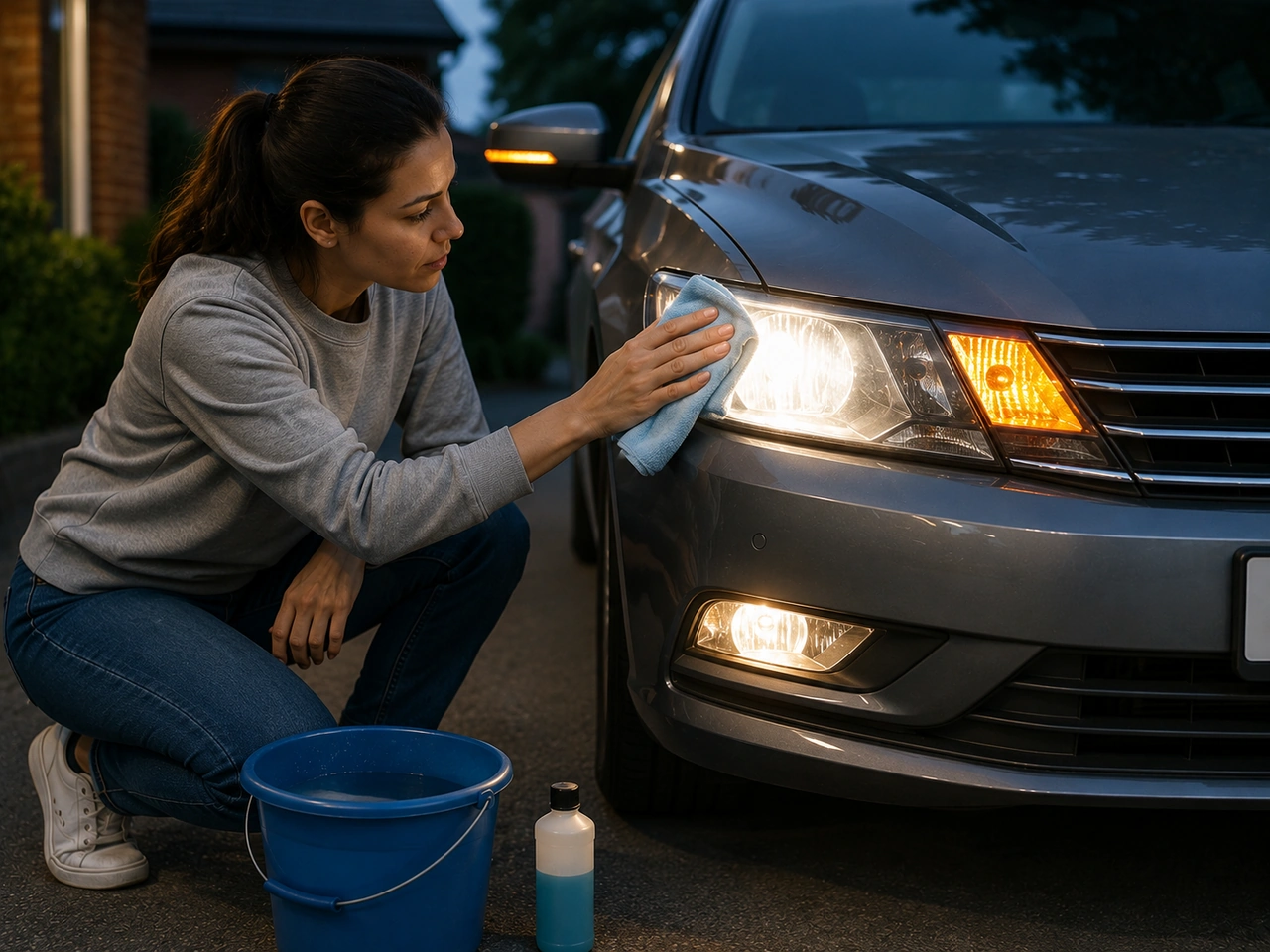
Dirty or faulty lights reduce visibility and make it harder for other road users to understand when you are braking, turning, reversing, or changing position.

Checking and cleaning a vehicle's exterior lights.
Argentina. Check and clean the headlights, indicators, reflectors and other exterior lights so others can see your vehicle and signals.
🔗 Sources

National Road Safety Agency · Car driver course

Image credit: AI-generated

What should you expect when lanes become narrower in roadworks?

349. What should you expect when lanes become narrower in roadworks?

Temporary lane markings no longer need to be followed.
The speed limit automatically increases.
✓ Less space between your vehicle, barriers, and other traffic.
Large vehicles must stop before entering the narrow section.

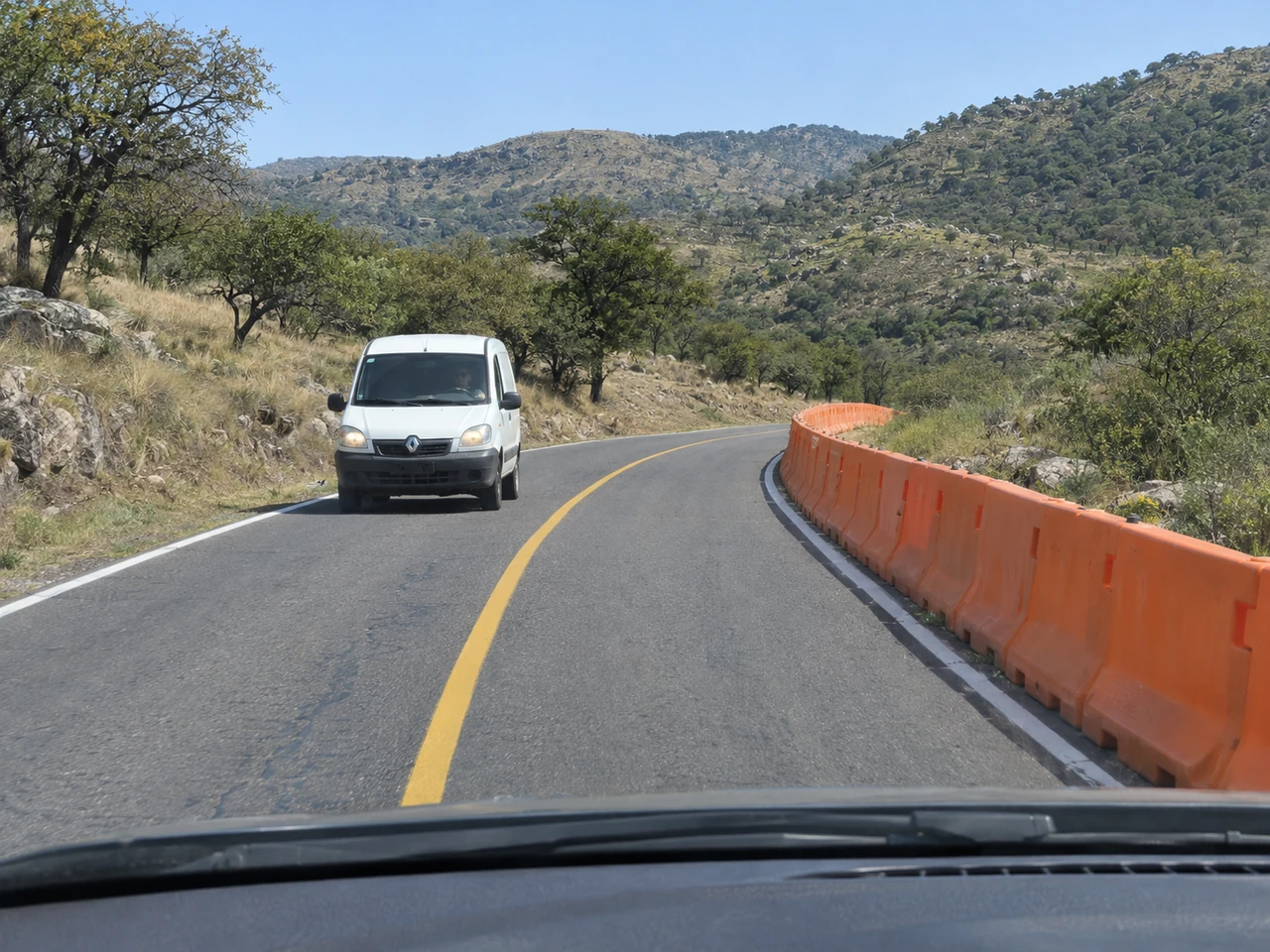
Narrow lanes leave less room for error. Keep a steady position, avoid drifting toward barriers or nearby vehicles, and reduce speed if necessary.
The barrier narrows your lane on the right. Slow down and leave enough room between the barrier and the oncoming van.
🔗 Sources

Resolution 165/2001, section I.7

Image credit: AI-generated

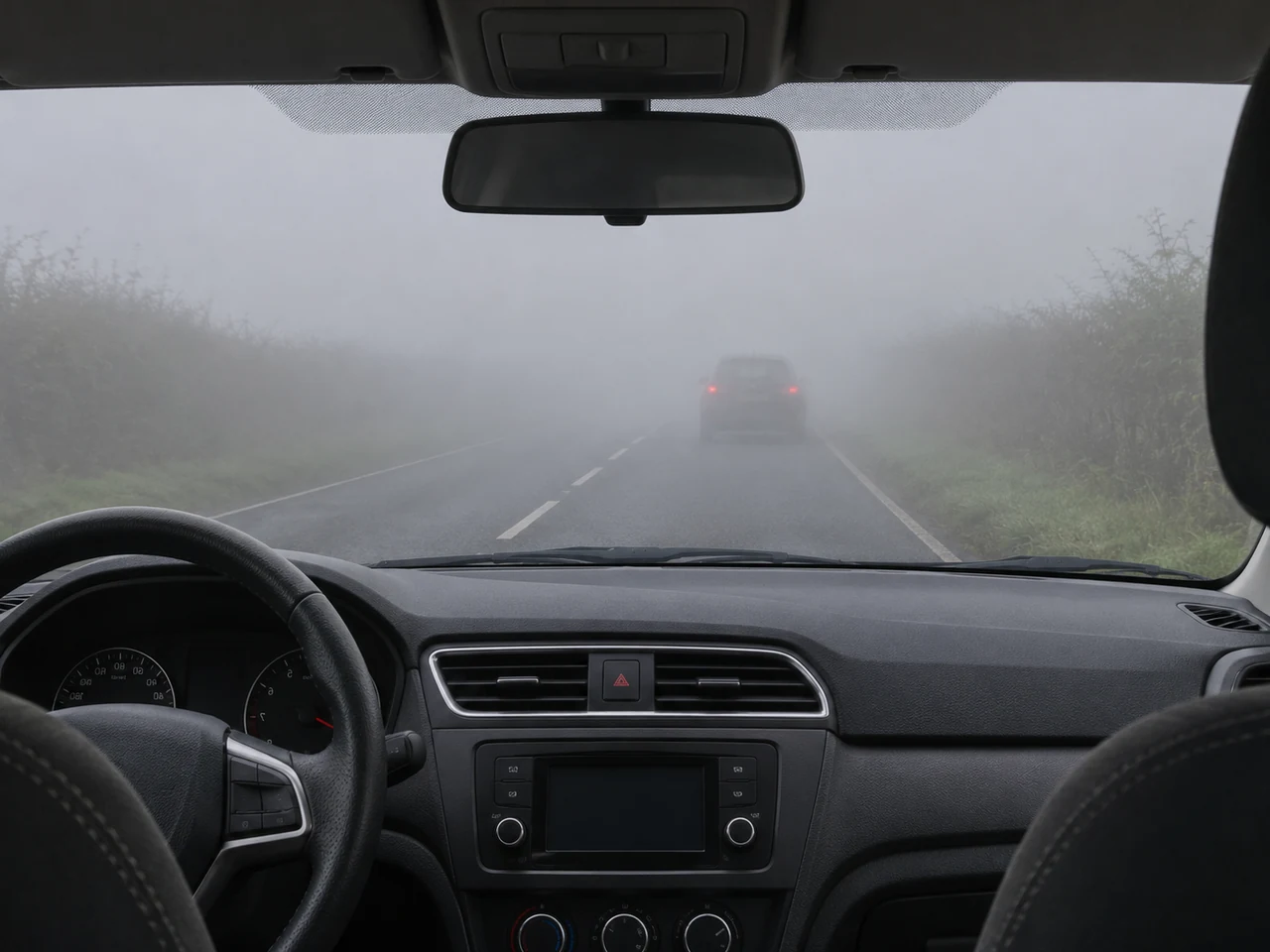
Why can fog make it difficult to judge the speed of other vehicles?

350. Why can fog make it difficult to judge the speed of other vehicles?

✓ Limited visibility makes distances and movement harder to estimate.
Fog makes road markings appear closer together.
Fog changes the way mirrors show moving vehicles.
Fog makes vehicles appear larger than they are.

Fog removes visual detail and distant reference points, making another vehicle's distance and movement harder to judge. A faint light is not a reliable measure of how far away that vehicle is or how quickly it is approaching. Reduce speed, leave extra space and avoid overtaking on uncertain estimates. Fog can also make your own speed feel lower than it is, so check the speedometer without losing attention to the road.

Other traffic partly obscured by fog.
🔗 Sources

UK Met Office — General fog visibility and speed-perception advice

Image credit: AI-generated