QuizTraffic rulesBrussels

This interesting quiz helps you test your knowledge in a clear and visual way. With easy multiple-choice questions, you can quickly build confidence and learn new facts while keeping it simple, interactive, and fun.
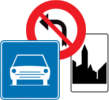

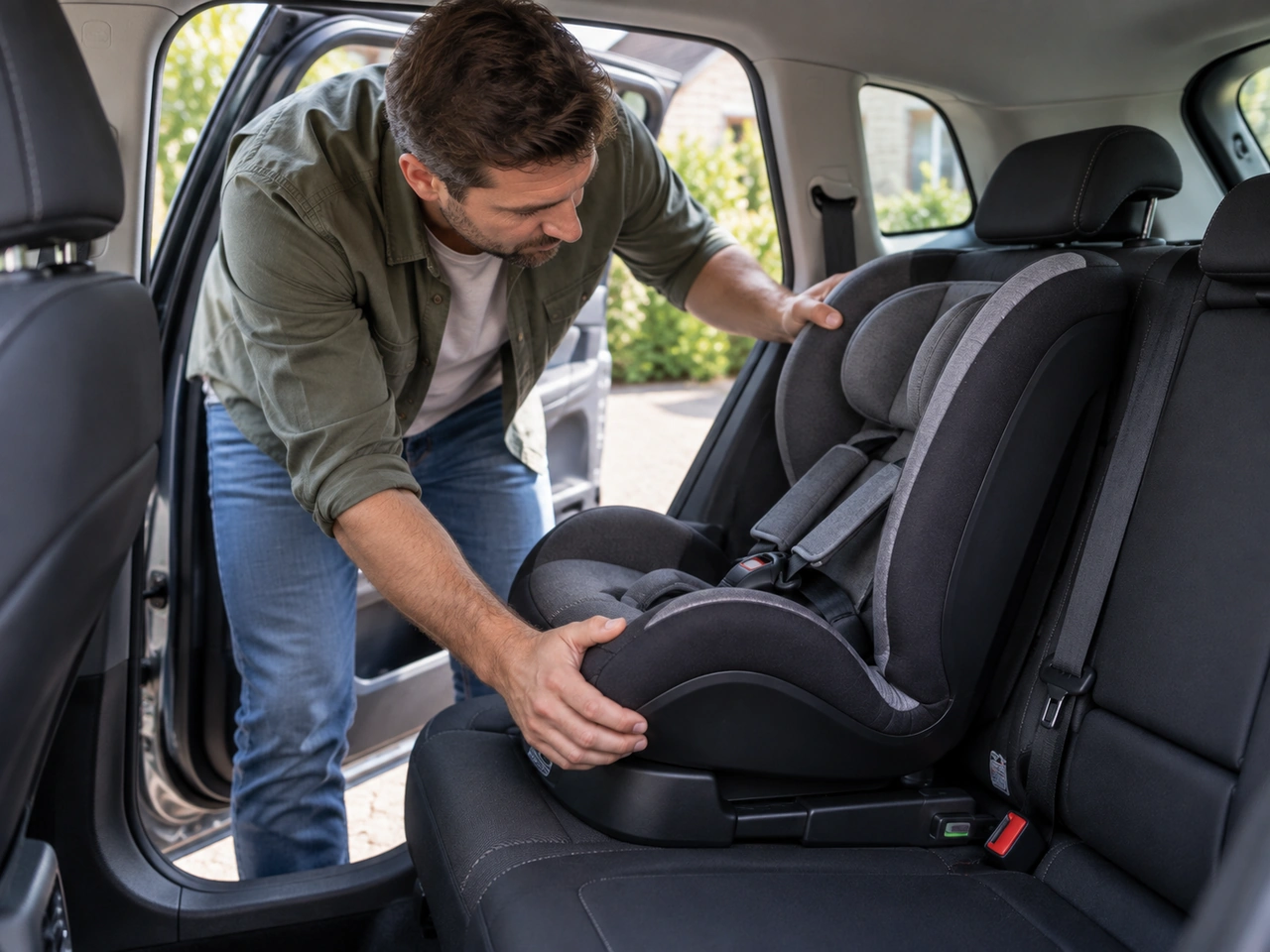
What should you check after fitting a child restraint?

501. What should you check after fitting a child restraint?

That the restraint can move freely on the seat.
✓ That it is securely installed and correctly fitted.
That the child can easily loosen the harness.
That the seat belt is routed in any convenient way.

A child restraint should be installed securely and used according to the manufacturer's instructions. Check that the seat is firmly attached, the belt or ISOFIX connection is correct, and the child is restrained properly before driving.

Checking the installation of a child car seat
AI-generated by Traffic-rules.com • WCIT • CC BY-SA
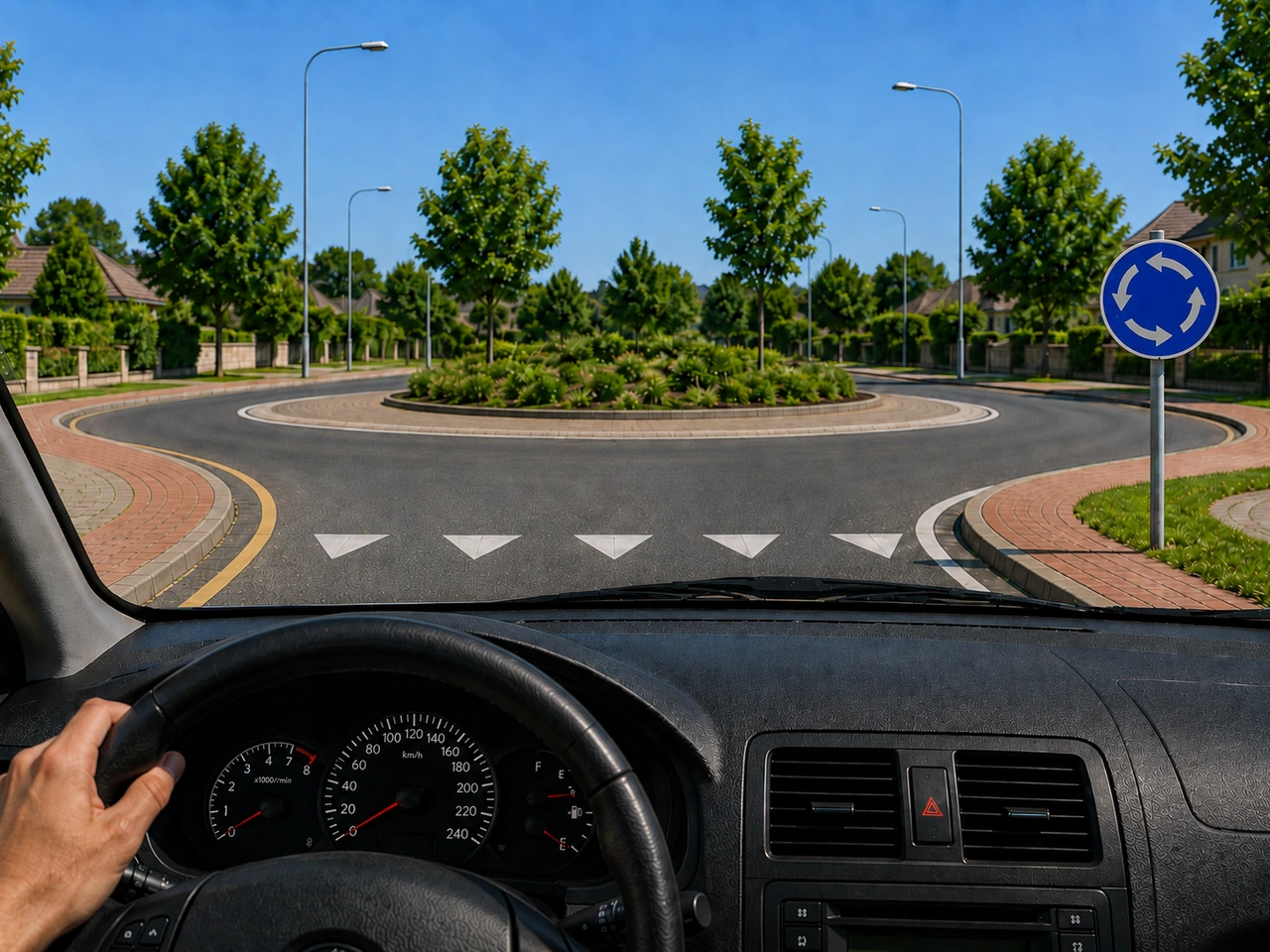
What should you do before entering a roundabout?

502. What should you do before entering a roundabout?

✓ Slow down and give way when required.
Maintain your speed unless another vehicle blocks your path.
Stop before every roundabout, even when it is clear.
Enter without giving way if you are going straight ahead.

Before entering a roundabout, reduce your speed, observe traffic, and give way according to the local rules.

Vehicle approaching a roundabout
AI-generated by Traffic-rules.com • WCIT • CC BY-SA
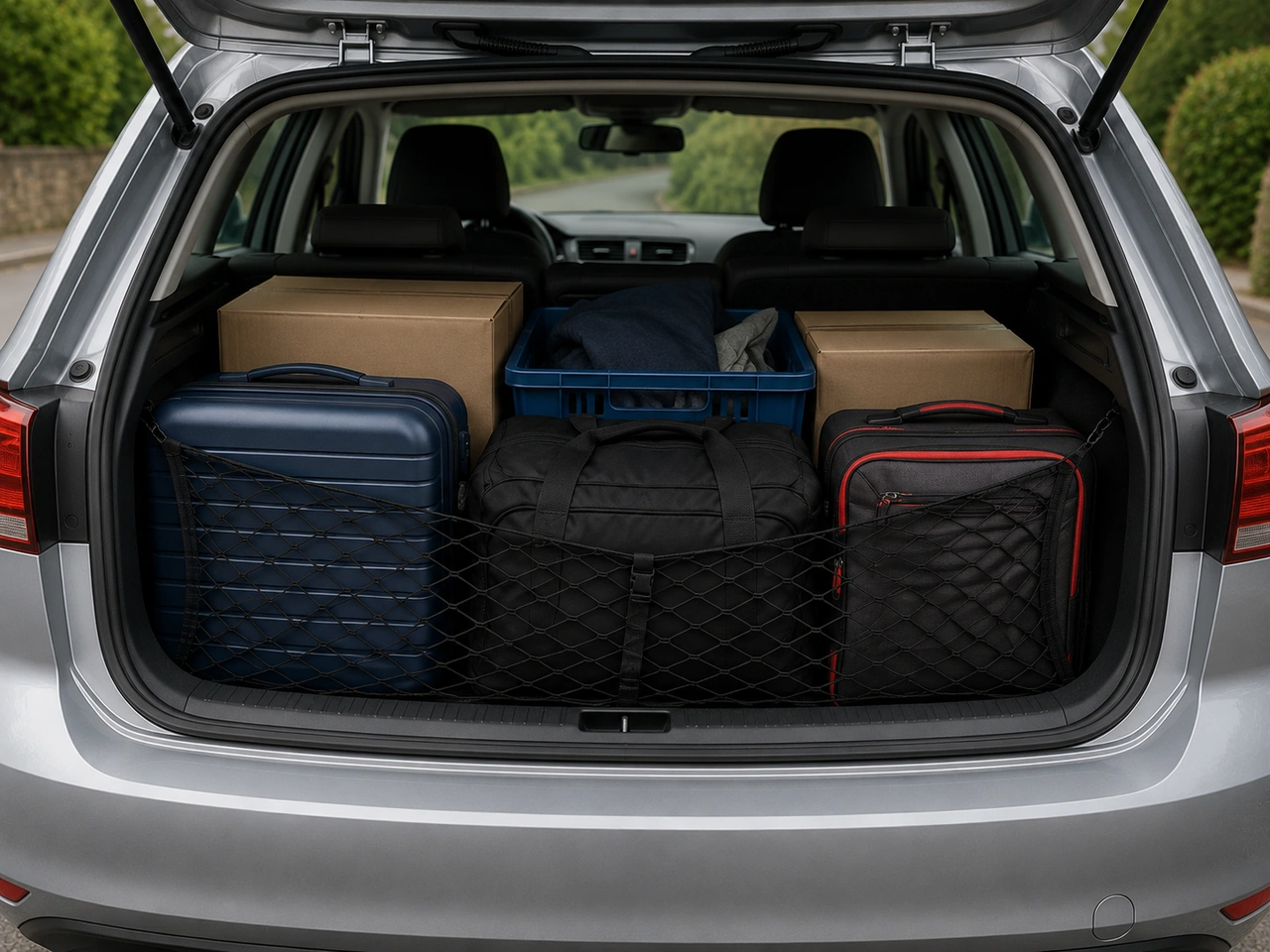
How should luggage or other cargo be carried in or on a vehicle?

503. How should luggage or other cargo be carried in or on a vehicle?

Where it is easiest to reach while driving.
Loosely in the passenger area for short journeys.
✓ Securely, within load limits, without blocking visibility or lights.
Anywhere, as long as the vehicle is not overloaded.

Unsecured or overloaded cargo can affect steering and braking, injure occupants during sudden stops, or fall into the road. It must not obstruct the driver's view or vehicle lights.

Luggage and cargo carried in a vehicle
AI-generated by Traffic-rules.com • WCIT • CC BY-SA
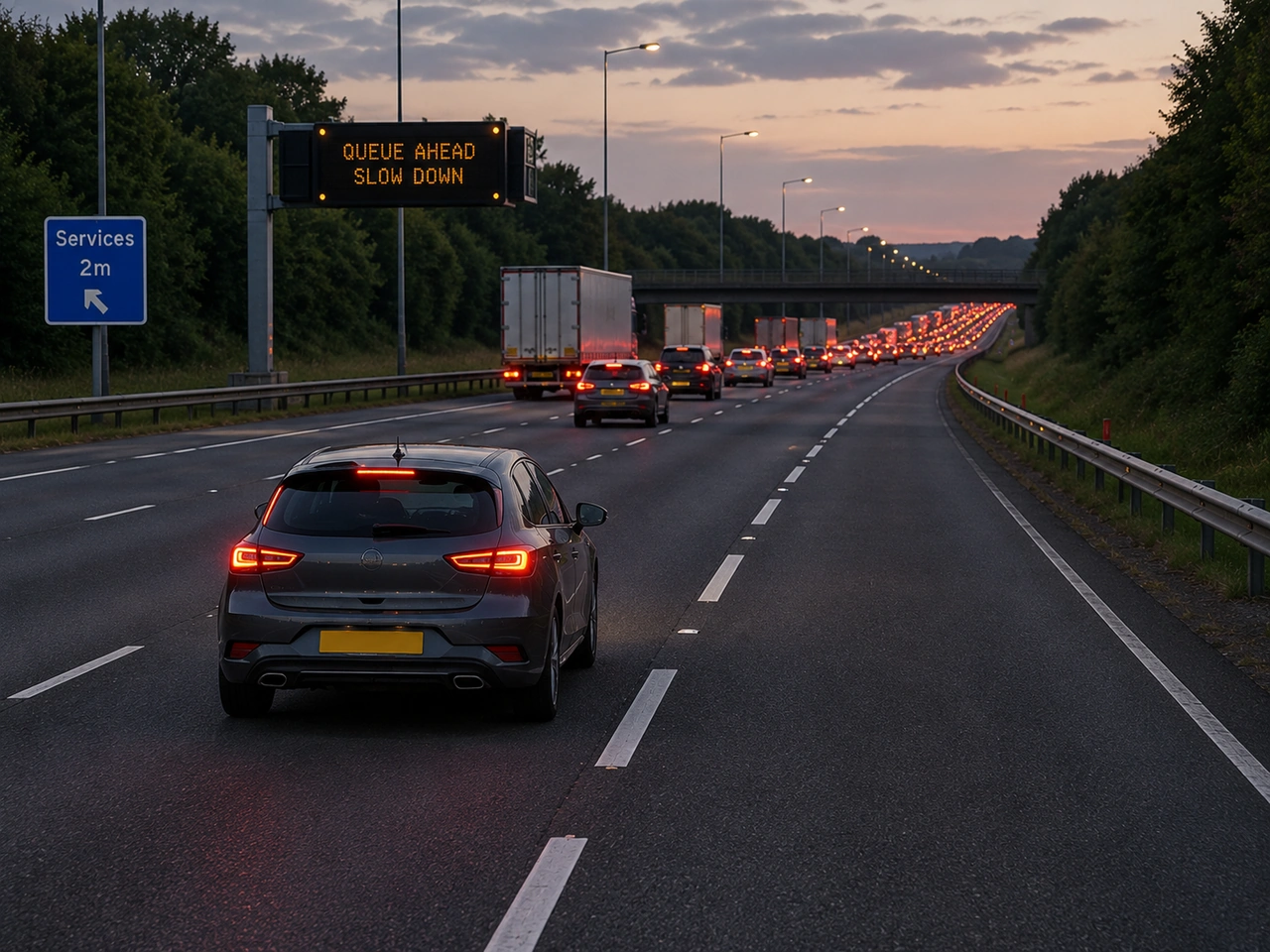
What should you do when approaching stationary or slow-moving traffic on a motorway?

504. What should you do when approaching stationary or slow-moving traffic on a motorway?

Change lanes immediately to avoid slowing down.
Maintain speed until you are close to the queue.
✓ Reduce speed early and be prepared to stop.
Follow the vehicle ahead closely to keep traffic moving.

Motorway queues can appear suddenly. Early braking gives following traffic more time to react.

Slow-moving traffic ahead on a motorway
AI-generated by Traffic-rules.com • WCIT • CC BY-SA
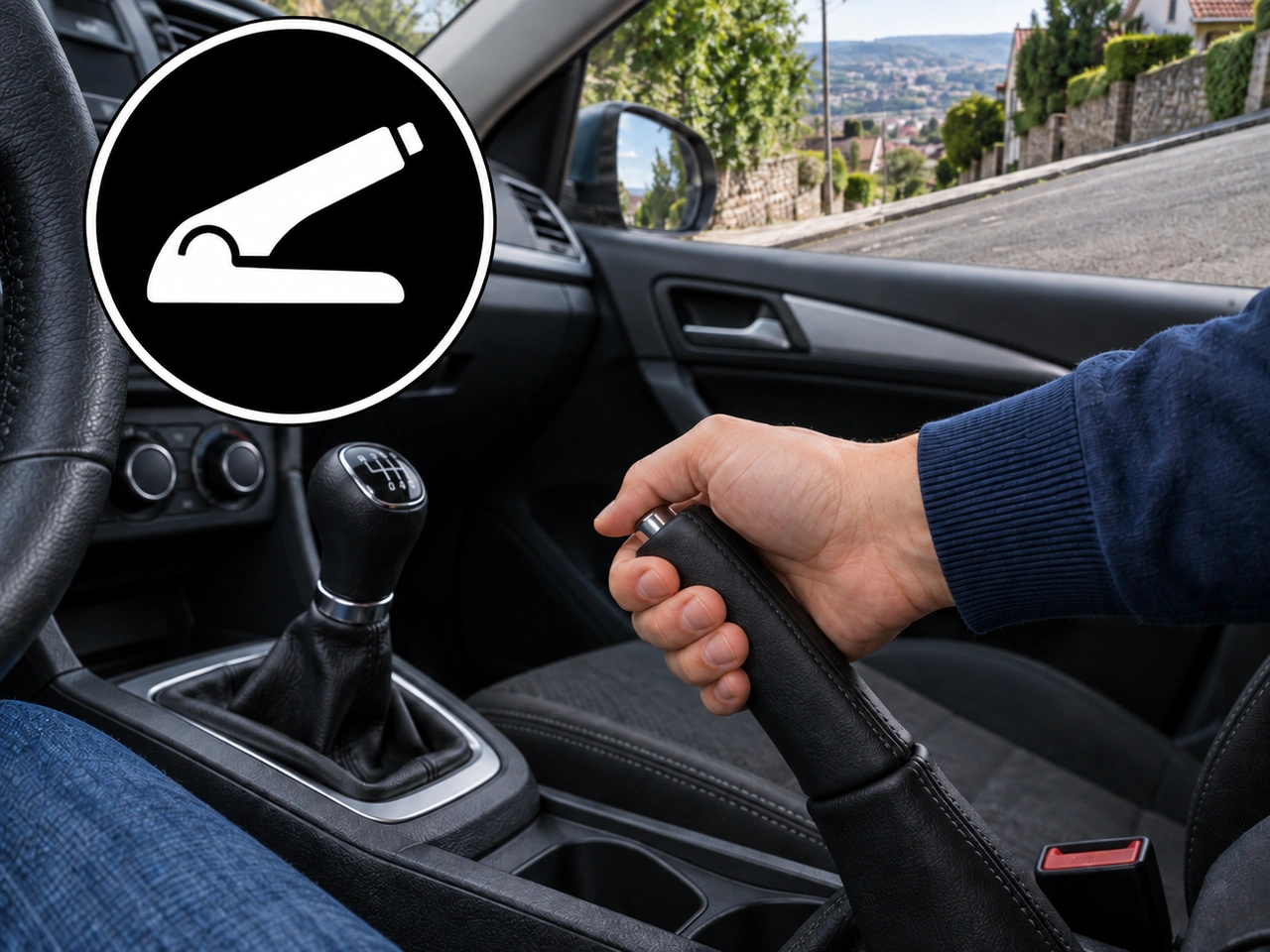
What should you do with the parking brake when parking on a slope?

505. What should you do with the parking brake when parking on a slope?

Release it completely.
✓ Apply it firmly.
Use it only if the engine is running.
Leave it partly applied.

When parking on a slope, apply the parking brake firmly to help prevent the vehicle from rolling. Selecting an appropriate gear or Park provides additional security.

Using the parking brake when parking on a slope
AI-generated by Traffic-rules.com • WCIT • CC BY-SA
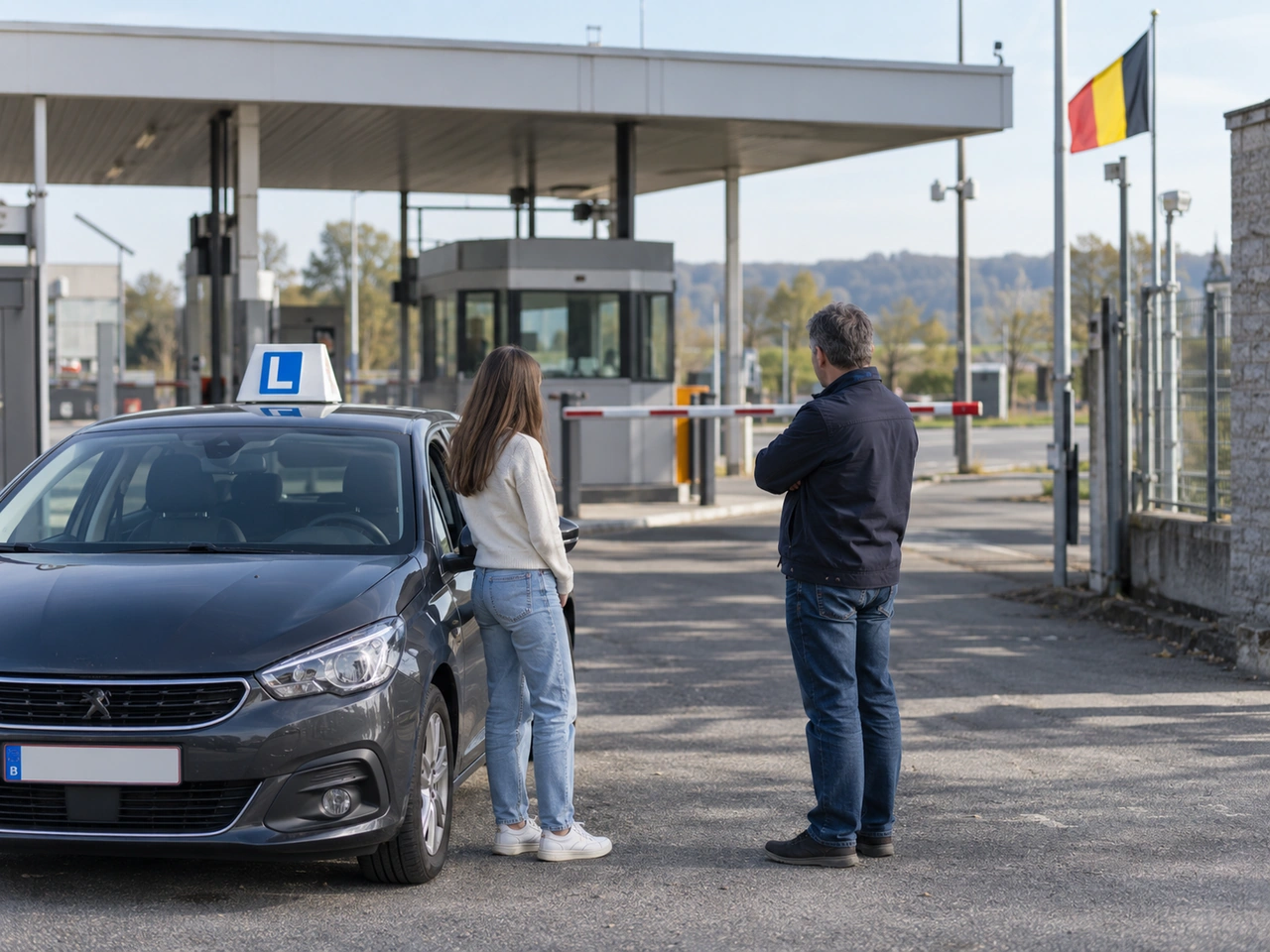
Where is a Belgian provisional driving licence valid?

506. Where is a Belgian provisional driving licence valid?

In Belgium and neighbouring countries.
Anywhere that accepts a Belgian driving licence.
Throughout the Benelux.
✓ Only in Belgium.

Belgian provisional driving licences M36, M18 and M12 are valid only in Belgium. They cannot be used for learner driving abroad.

Belgian territorial limits for provisional driving licences
AI-generated by Traffic-rules.com • WCIT • CC BY-SA
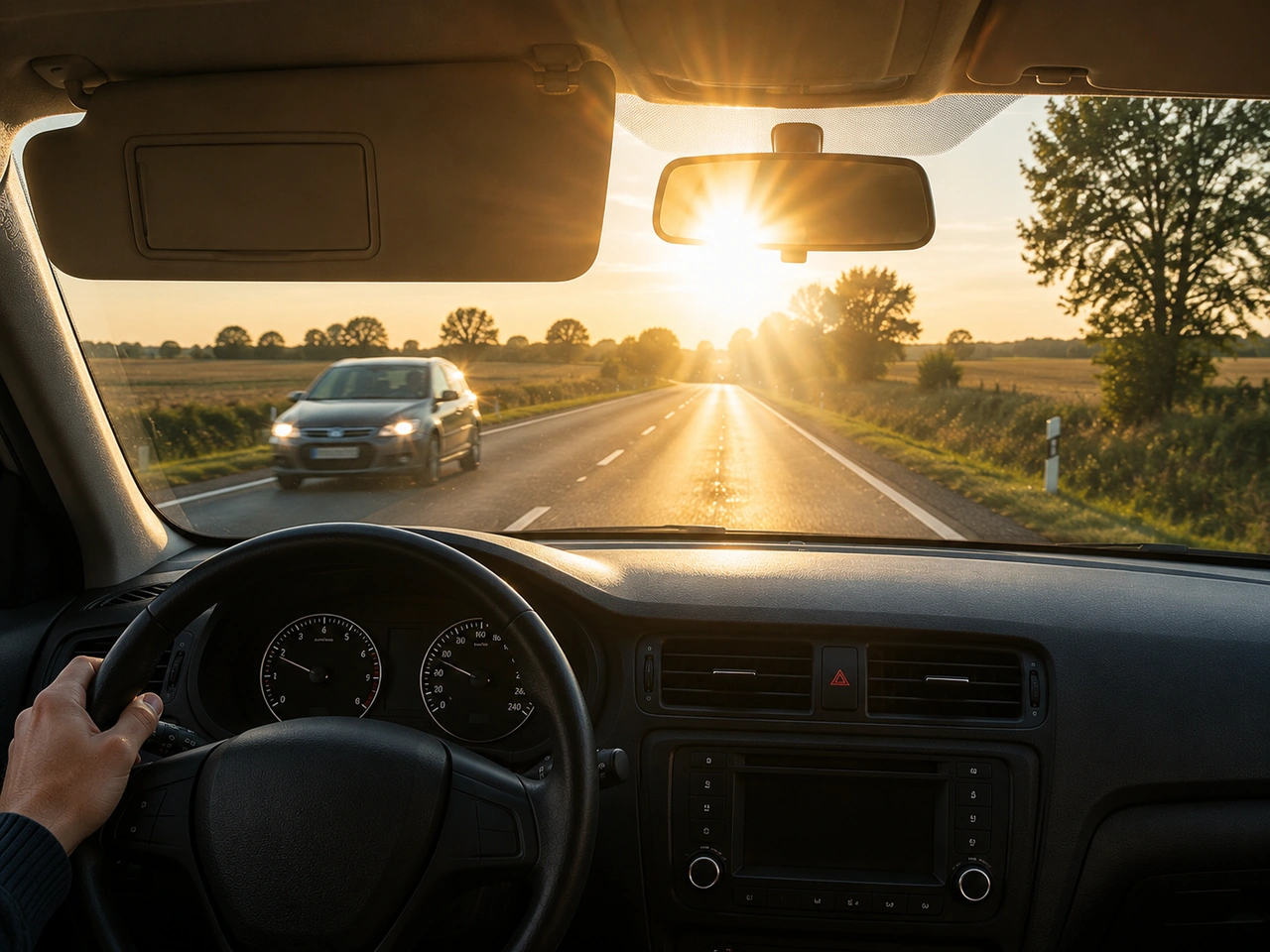
What should you do if you are dazzled by low sun?

507. What should you do if you are dazzled by low sun?

Follow the vehicle ahead closely as a guide.
Maintain your speed if you can still see the road markings.
Look only at the road immediately in front of you.
✓ Slow down and use the sun visor if needed.

Low sun can greatly reduce visibility. Slow down, increase your safety margin, and use the sun visor or sunglasses if needed.

Low sunlight dazzling a driver
AI-generated by Traffic-rules.com • WCIT • CC BY-SA
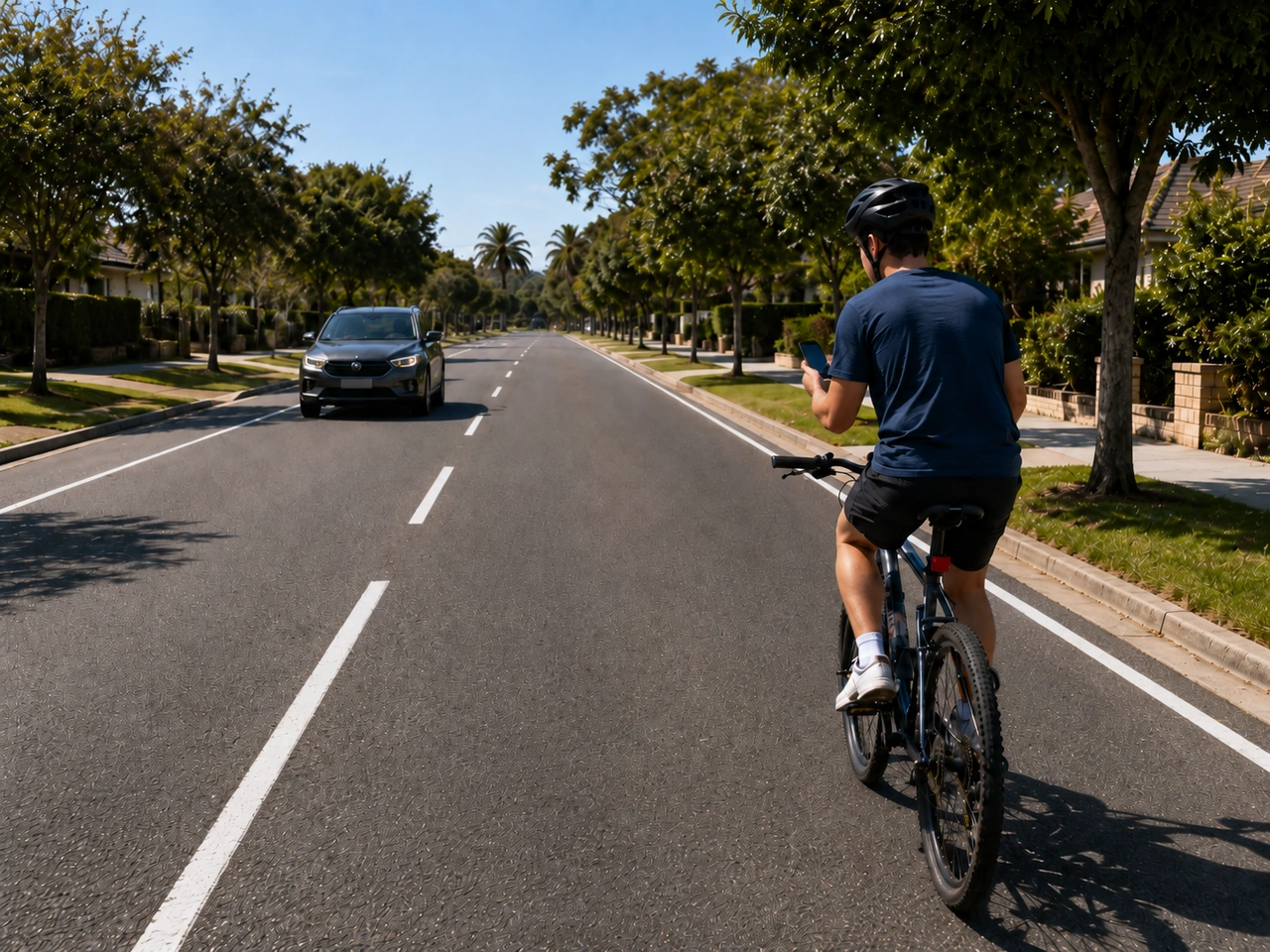
Why should cyclists avoid using a handheld phone?

508. Why should cyclists avoid using a handheld phone?

Because a phone may be used only at low speeds.
✓ It reduces your control and attention.
Because phone signals can interfere with traffic lights.
Because phones can interfere with bicycle electronics.

Using a phone can distract you and may prevent you from steering, braking, or reacting properly.

Cyclist using a handheld phone
AI-generated by Traffic-rules.com • WCIT • CC BY-SA
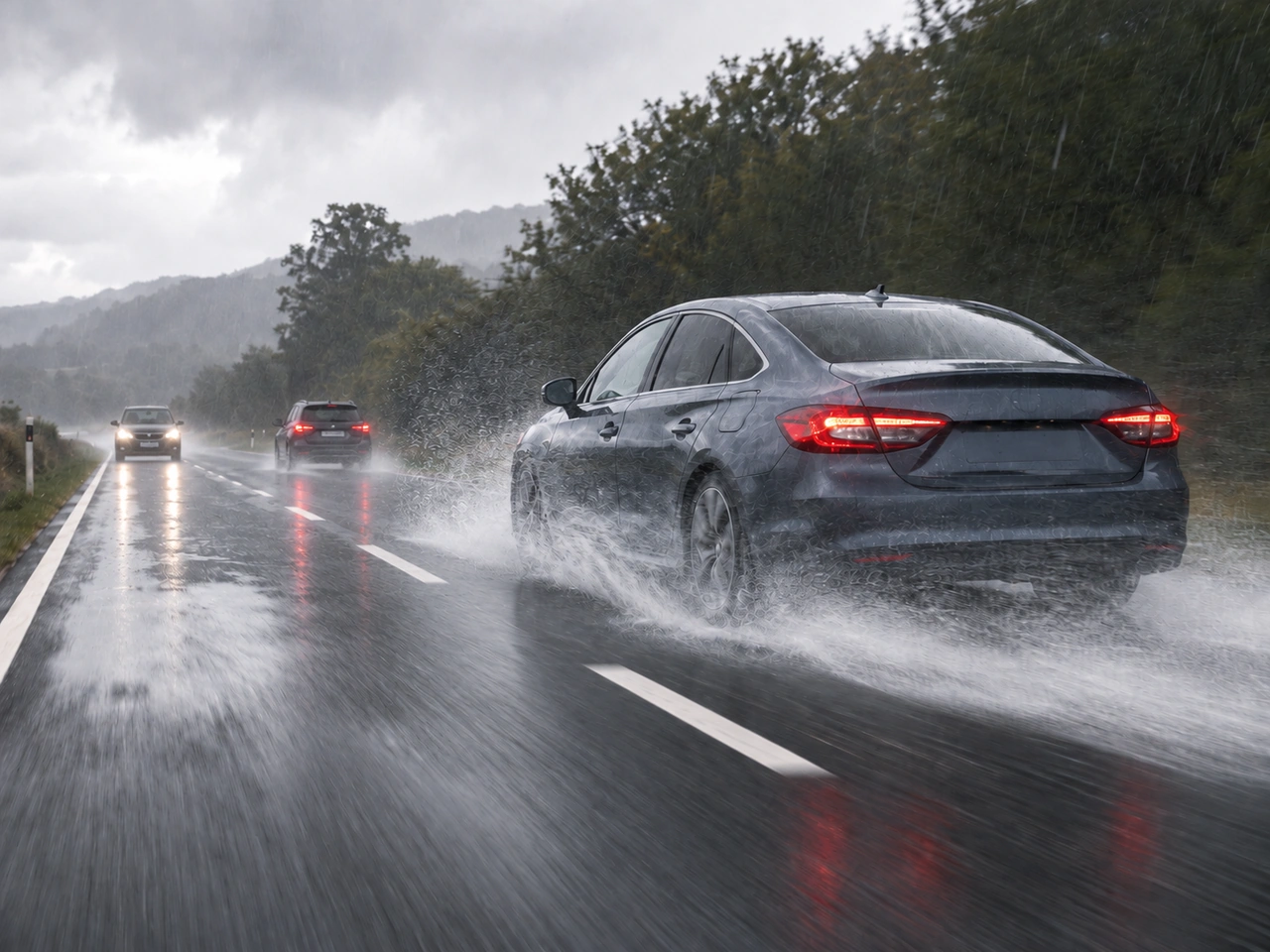
Why does higher speed increase the risk of aquaplaning?

509. Why does higher speed increase the risk of aquaplaning?

✓ The tyres have less time to clear water from the road surface.
Higher speed increases the tyre pressure.
The vehicle becomes heavier as speed increases.
The suspension becomes less effective at high speed.

At higher speeds, the tyres may not disperse water effectively, making it easier for the vehicle to lose contact with the road.

Vehicle speed and aquaplaning on a wet road
AI-generated by Traffic-rules.com • WCIT • CC BY-SA
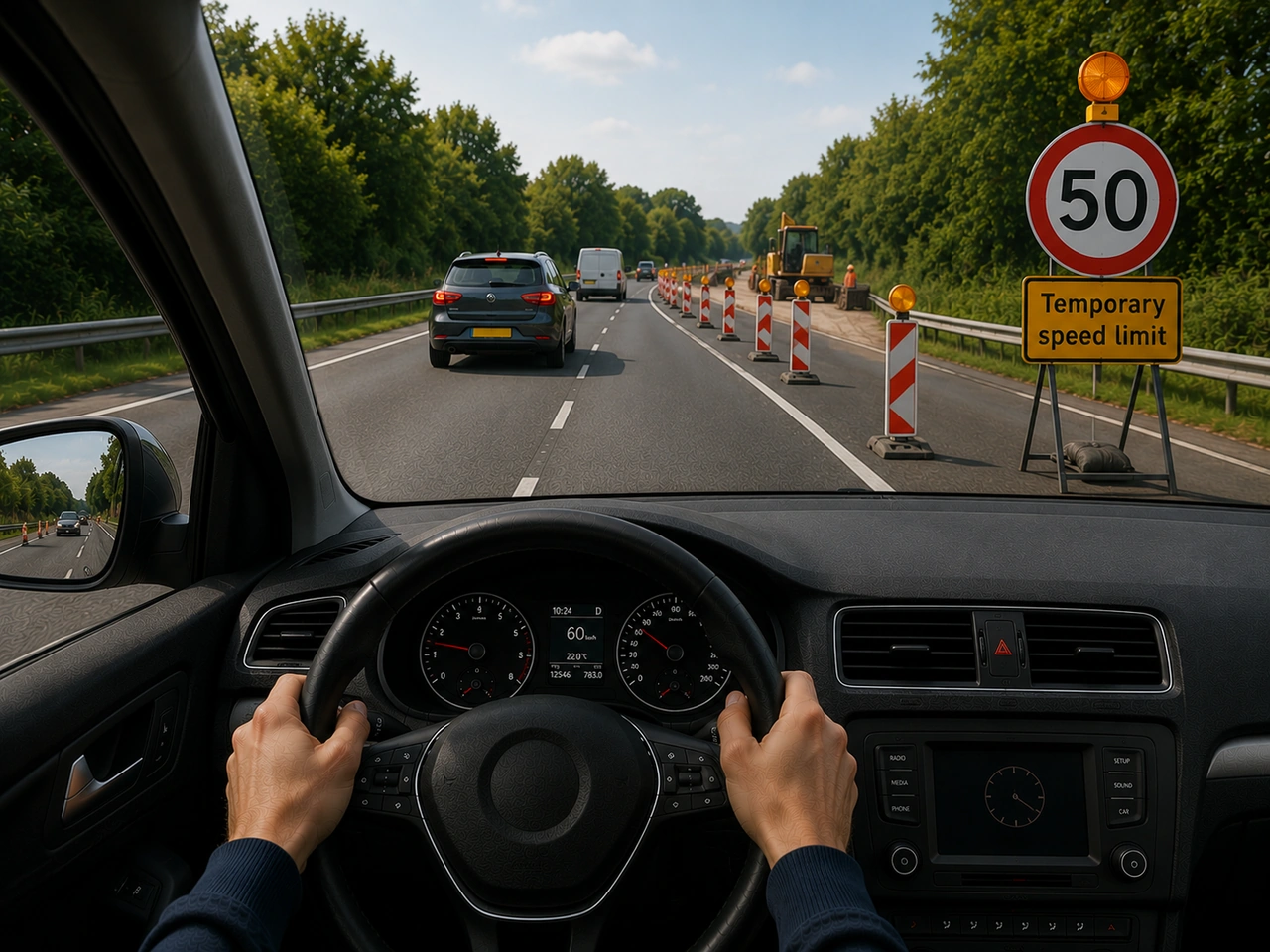
Why should you not ignore temporary speed limits?

510. Why should you not ignore temporary speed limits?

They are recommendations rather than limits.
They apply only when traffic is congested.
They can be ignored when the road looks clear.
✓ They are used to protect people and manage hazards.

Temporary speed limits may be used near roadworks, accidents, events, or dangerous conditions. They help keep traffic safe.

Temporary speed-limit sign at roadworks
AI-generated by Traffic-rules.com • WCIT • CC BY-SA
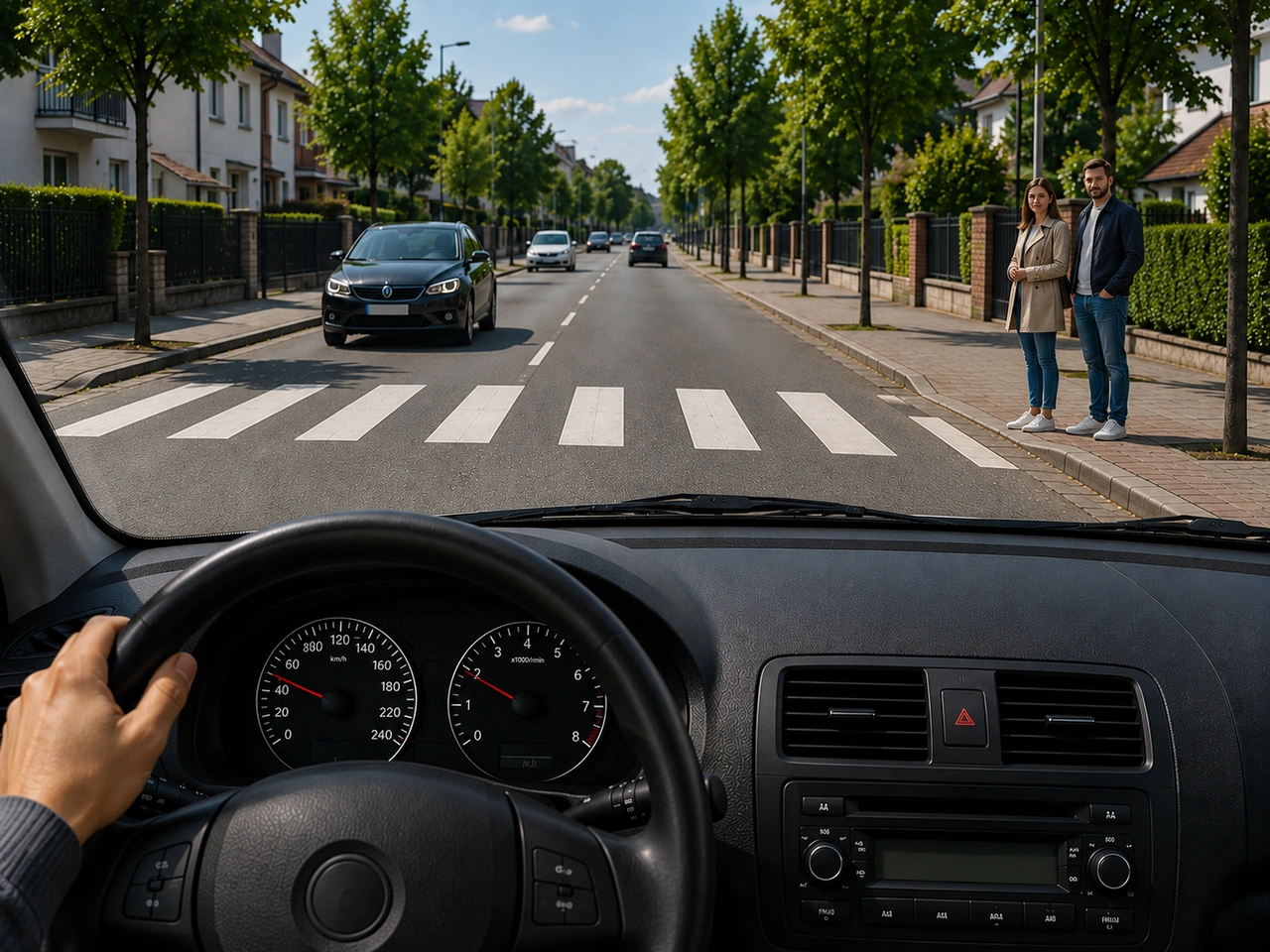
What should you do when people are waiting at a pedestrian crossing?

511. What should you do when people are waiting at a pedestrian crossing?

Sound your horn so pedestrians wait.
✓ Slow down and stop if they want to cross.
Continue if nobody has stepped onto the crossing.
Maintain your speed until someone starts crossing.

When people are waiting near a pedestrian crossing, reduce your speed and be ready to stop. Pedestrians may begin crossing at any moment.

People waiting at a pedestrian crossing
AI-generated by Traffic-rules.com • WCIT • CC BY-SA
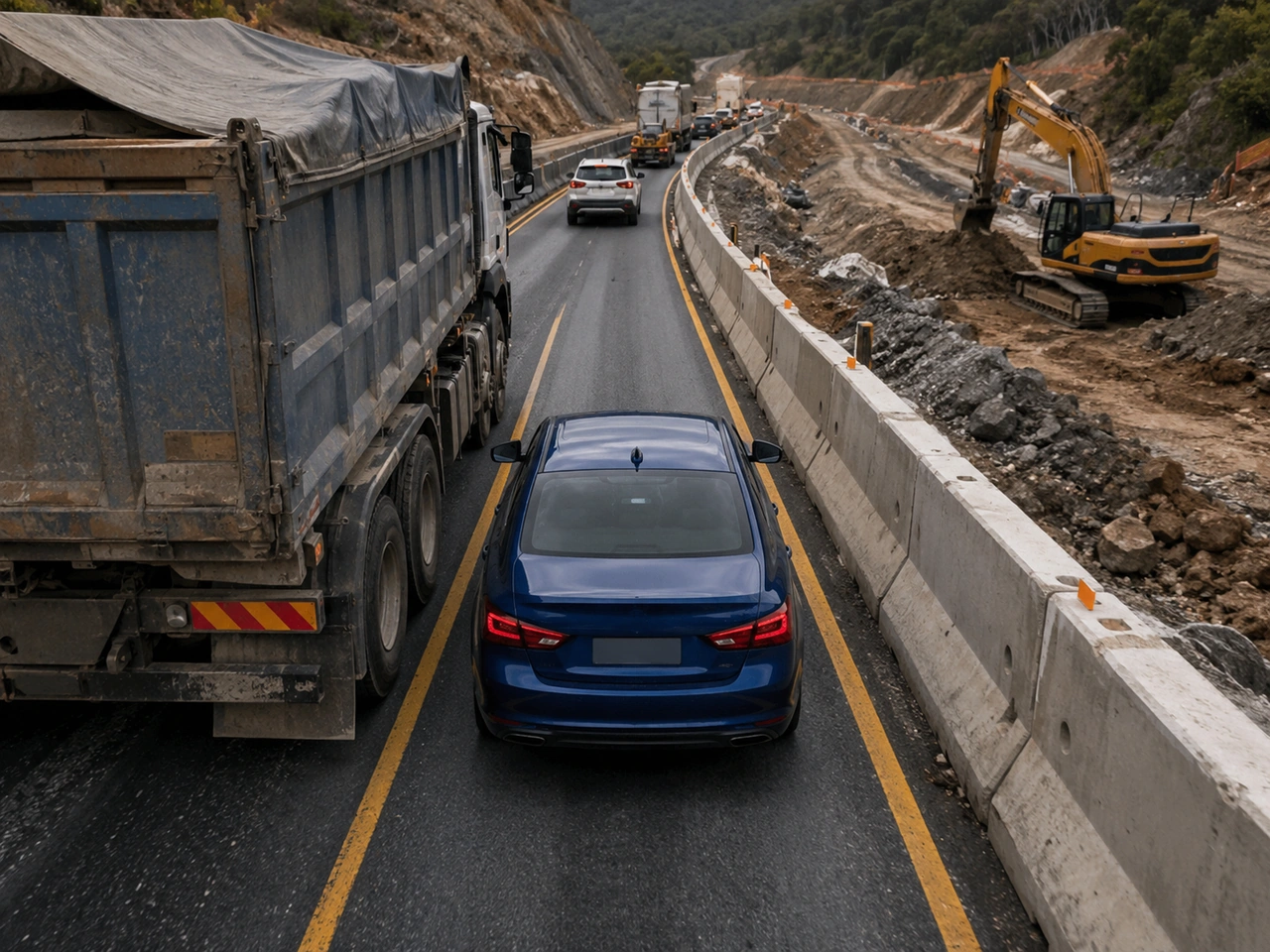
Why should you avoid unnecessary lane changes in roadworks?

512. Why should you avoid unnecessary lane changes in roadworks?

Drivers should always use the lane with fewer vehicles.
✓ Narrow lanes and changing layouts increase the risk of collision.
Lane changes are safer when traffic is moving slowly.
Changing lanes helps traffic move faster through roadworks.

Frequent lane changes create additional risk where space is limited and drivers are already adapting to temporary layouts.

Vehicles travelling through restricted roadworks lanes
AI-generated by Traffic-rules.com • WCIT • CC BY-SA
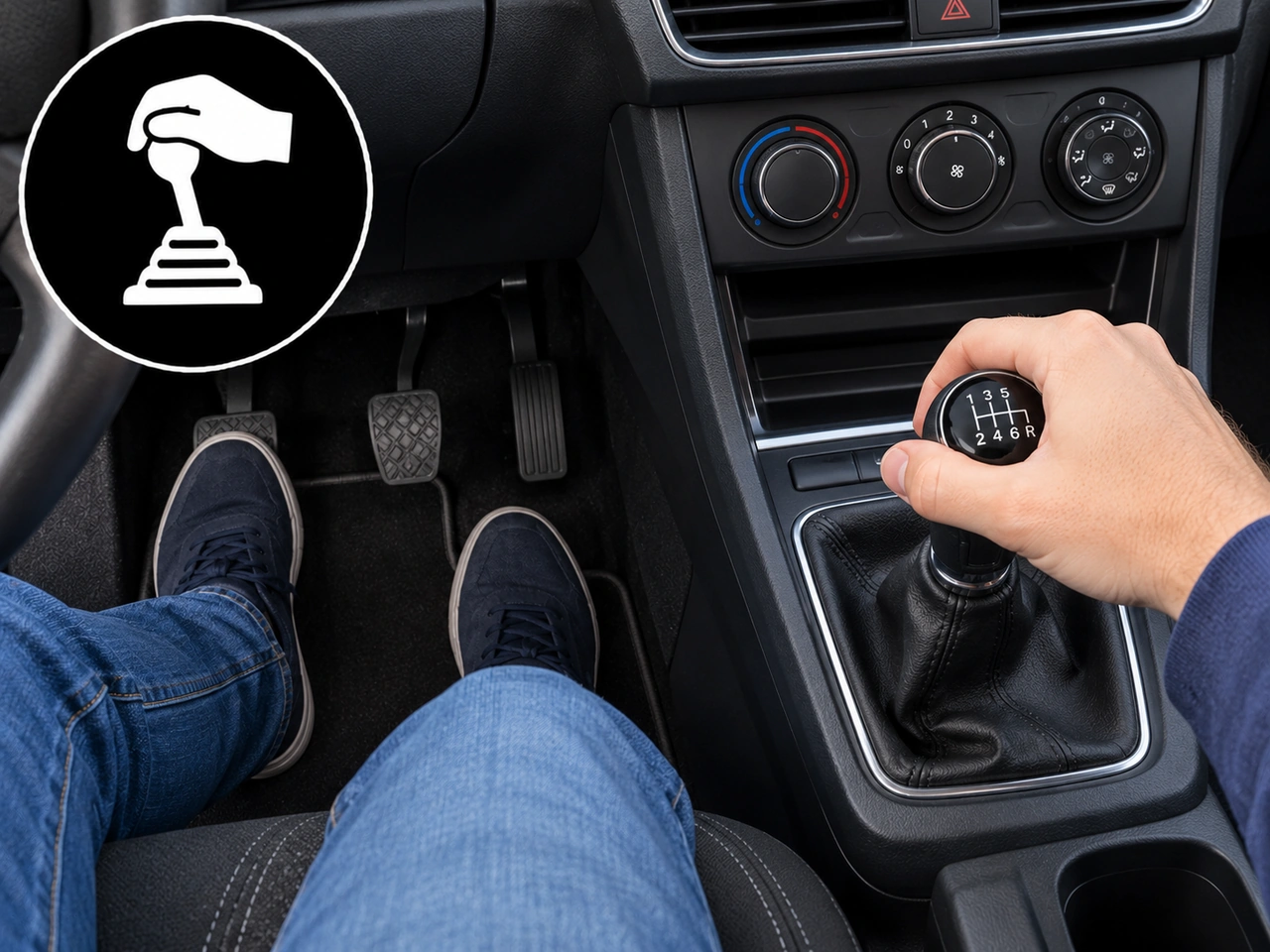
What should you do if a gear does not engage easily in a manual vehicle?

513. What should you do if a gear does not engage easily in a manual vehicle?

Press the accelerator fully.
Push the lever harder until the gear engages.
Release the clutch suddenly.
✓ Avoid forcing the gear lever.

If a gear does not engage easily, do not force the gear lever. Make sure the clutch is fully pressed and the vehicle's speed is suitable for the gear before trying again.

Operating a manual gear lever without forcing it
AI-generated by Traffic-rules.com • WCIT • CC BY-SA
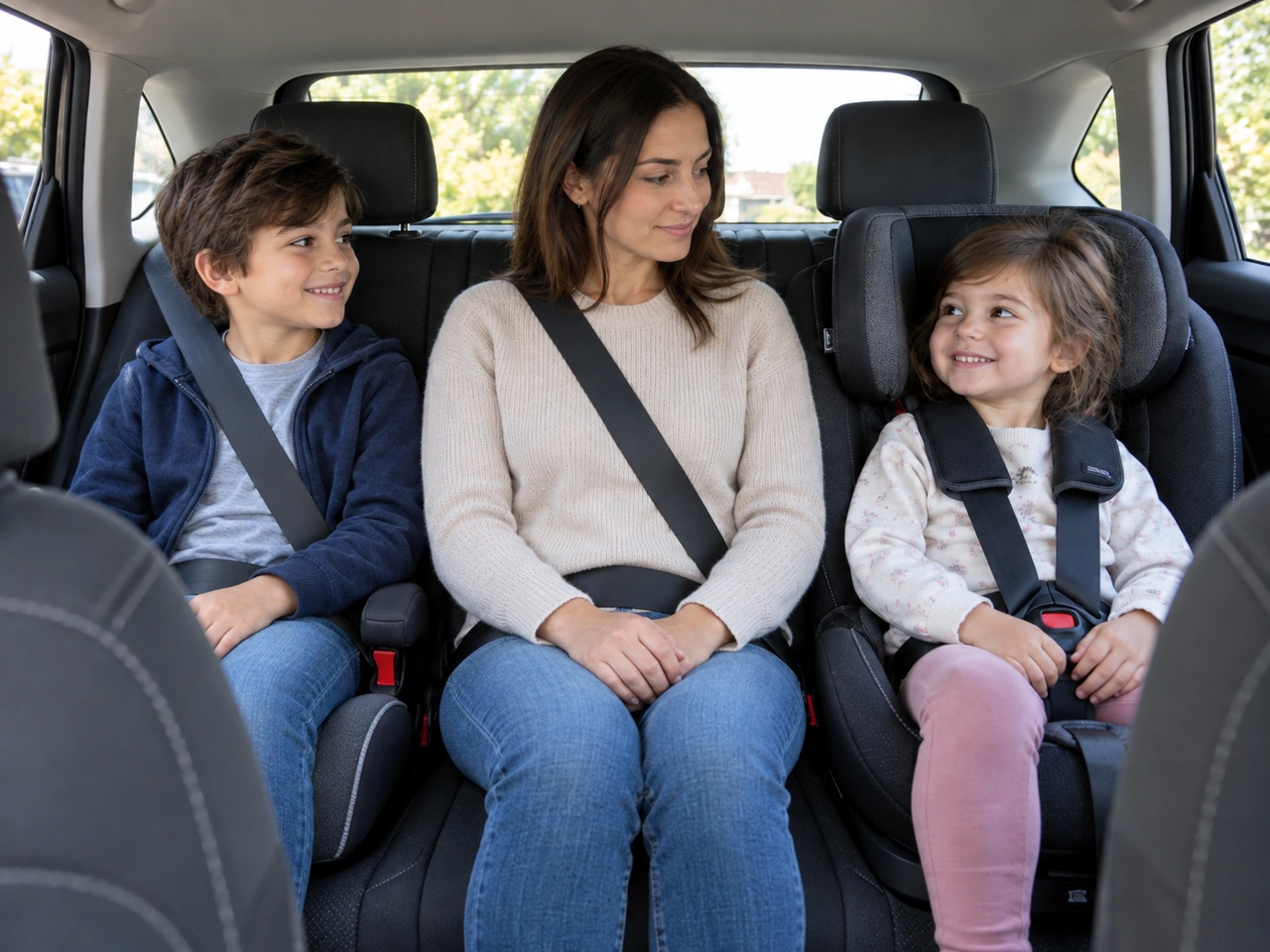
Should rear-seat passengers be securely restrained?

514. Should rear-seat passengers be securely restrained?

No, only front-seat occupants need to be restrained.
✓ Yes, using seat belts or suitable child restraints as appropriate.
Only if the vehicle does not have rear airbags.
Only when travelling on motorways or at higher speeds.

Rear-seat passengers should be securely restrained using seat belts or suitable child restraints as appropriate. Proper restraint reduces the risk of serious injury and prevents occupants from being thrown around or forwards in a collision.

Rear-seat passengers secured for a journey
AI-generated by Traffic-rules.com • WCIT • CC BY-SA
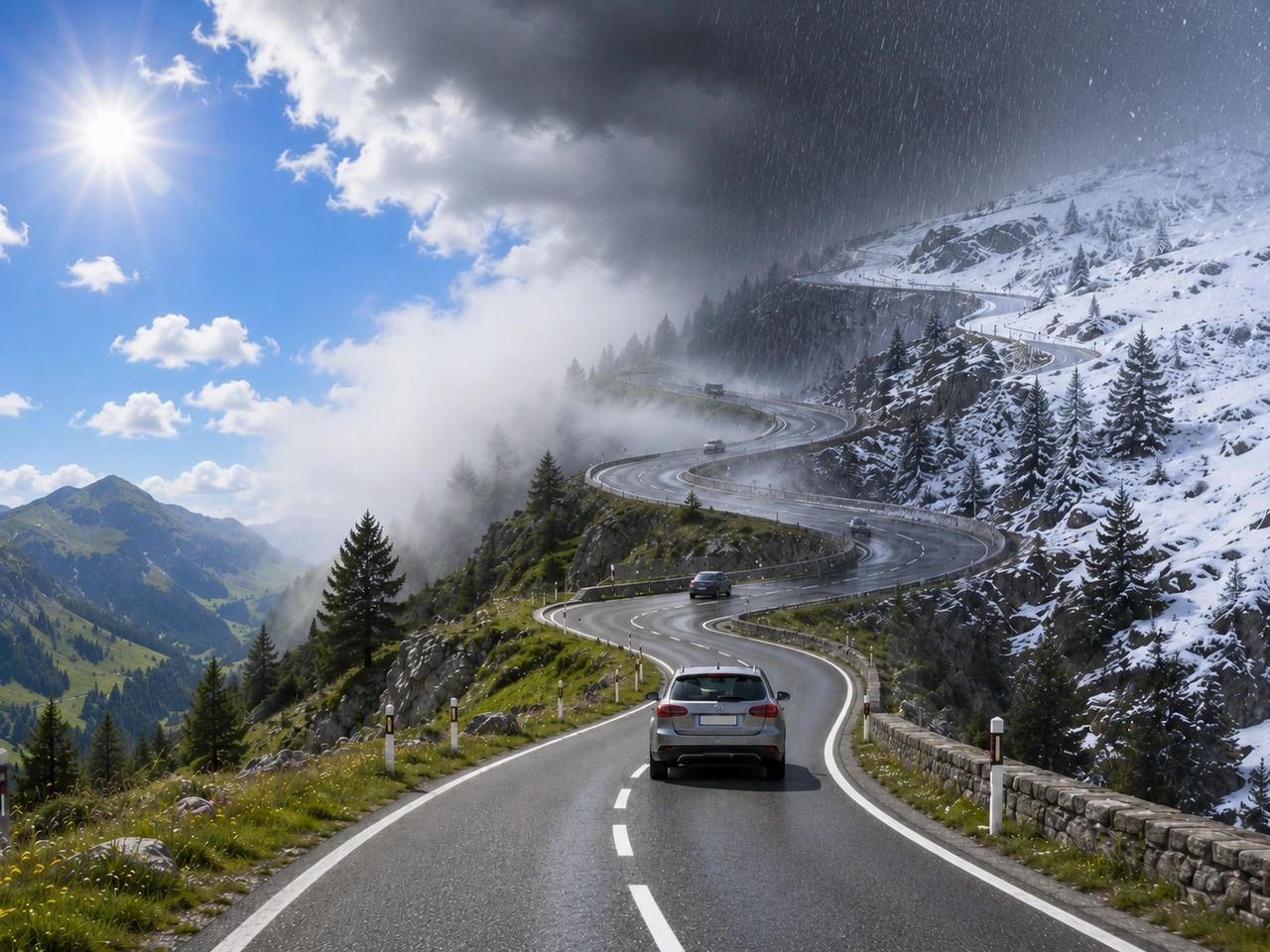
Why should you be prepared for changing conditions on mountain roads?

515. Why should you be prepared for changing conditions on mountain roads?

Road signs become less important at higher elevations.
Vehicles automatically lose engine power in the mountains.
Road conditions usually improve as altitude increases.
✓ Weather, visibility, and road conditions can change quickly.

Fog, rain, snow, ice, falling rocks, and strong winds can develop rapidly in mountainous areas.

Changing visibility and weather on a mountain road
AI-generated by Traffic-rules.com • WCIT • CC BY-SA
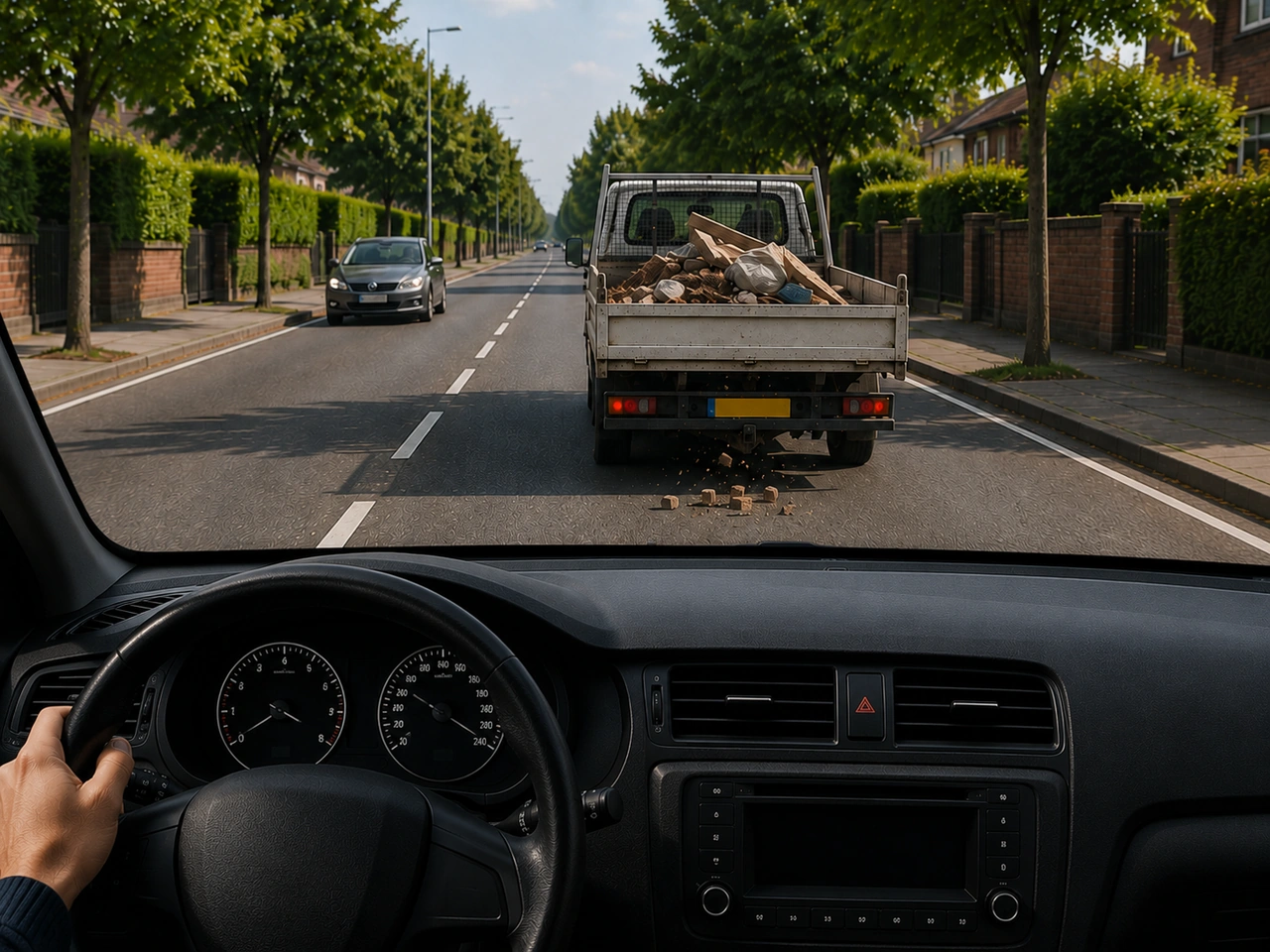
Why should you be cautious when following a vehicle carrying a loose load?

516. Why should you be cautious when following a vehicle carrying a loose load?

✓ Objects may fall onto the road.
The vehicle must stop whenever the load shifts.
The vehicle must always travel at a lower speed.
Loose loads give the vehicle priority when changing lanes.

A poorly secured load can fall or shift suddenly. Keep extra distance and avoid following too closely.

Vehicle carrying an unsecured load ahead
AI-generated by Traffic-rules.com • WCIT • CC BY-SA
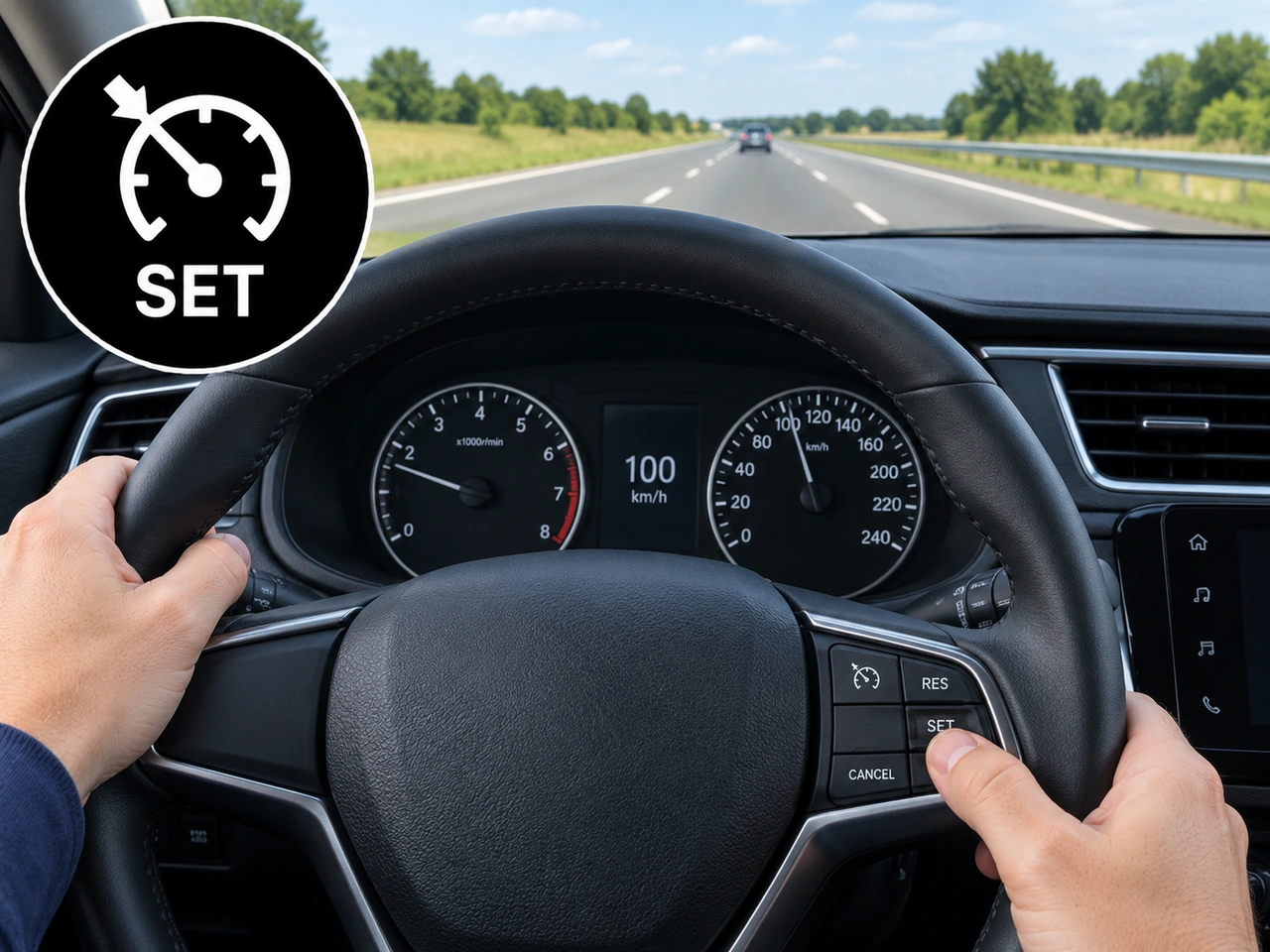
What does the SET function of cruise control normally do?

517. What does the SET function of cruise control normally do?

Returns to a previously stored speed.
Applies the brakes automatically.
Switches cruise control off.
✓ Stores the current speed as the cruising speed.

The SET function normally stores the vehicle's current speed as the cruise-control speed. Use it only when the road, traffic, and driving conditions are suitable.

SET button for storing a cruising speed
AI-generated by Traffic-rules.com • WCIT • CC BY-SA
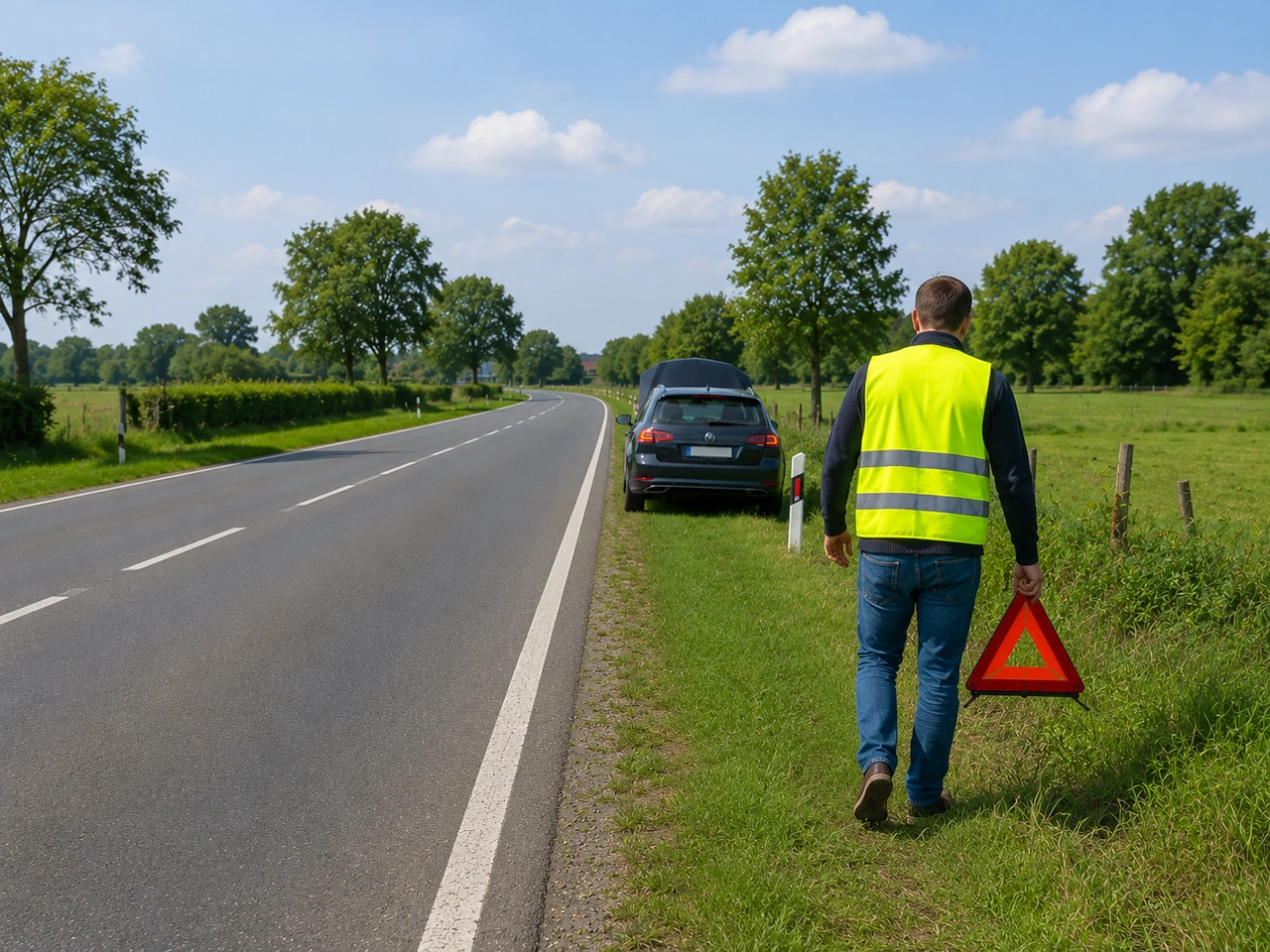
How far behind a broken-down vehicle should the warning triangle normally be placed?

518. How far behind a broken-down vehicle should the warning triangle normally be placed?

Only directly beside the vehicle.
At least 20 metres on every road.
Exactly 50 metres on every road.
✓ At least 30 metres on ordinary roads and at least 100 metres on motorways.

The warning triangle should normally be placed at least 30 metres away on ordinary roads and at least 100 metres away on motorways.

Warning triangle positioned behind a broken-down vehicle
AI-generated by Traffic-rules.com • WCIT • CC BY-SA
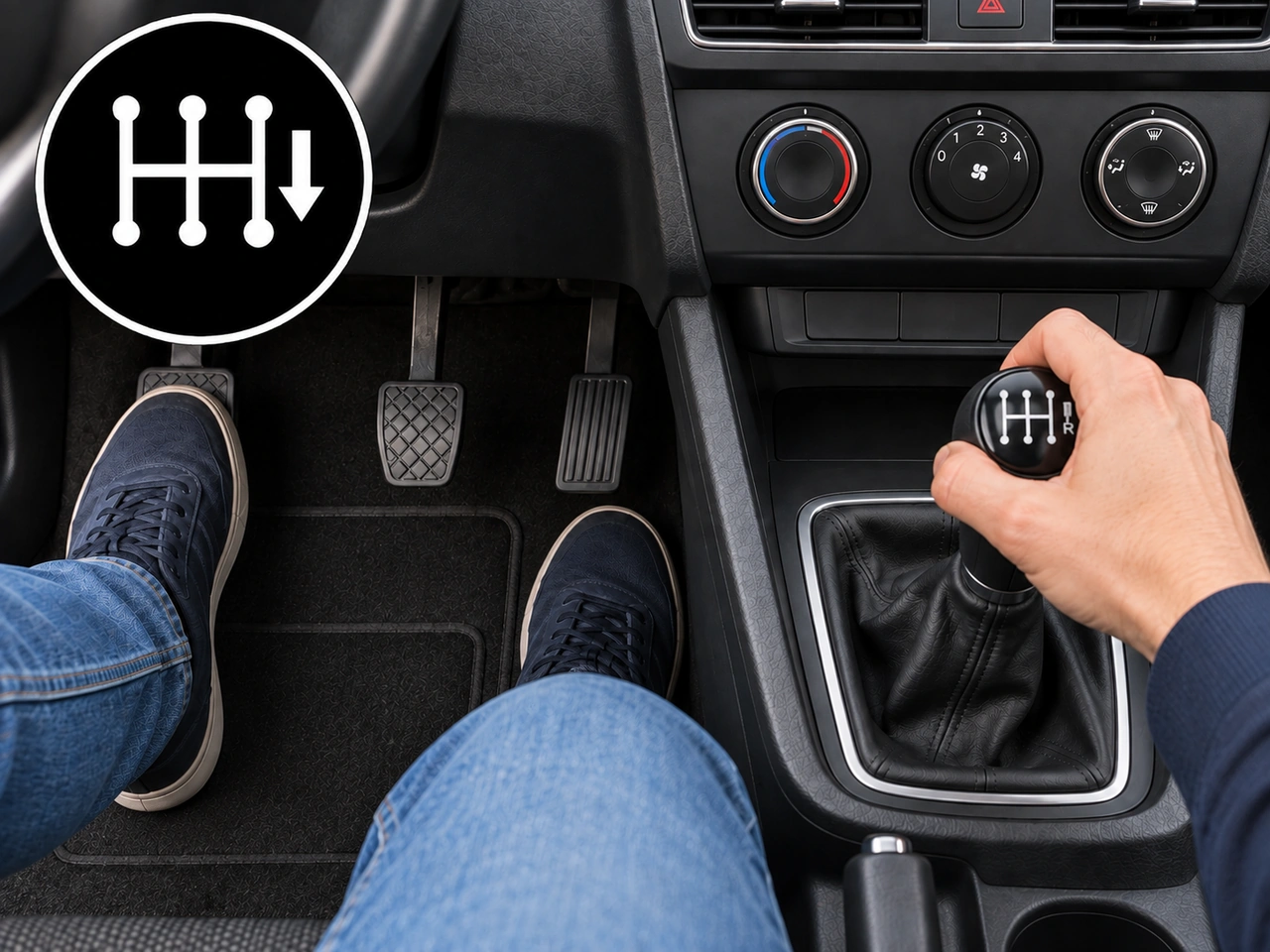
What can selecting a lower gear provide in a manual vehicle?

519. What can selecting a lower gear provide in a manual vehicle?

✓ Greater engine braking.
A shorter steering ratio.
Higher tyre pressure.
Automatic parking-brake operation.

Selecting a suitable lower gear can increase engine braking, helping the vehicle slow or control its speed without relying entirely on the brakes.

Manual gear selection for engine braking
AI-generated by Traffic-rules.com • WCIT • CC BY-SA
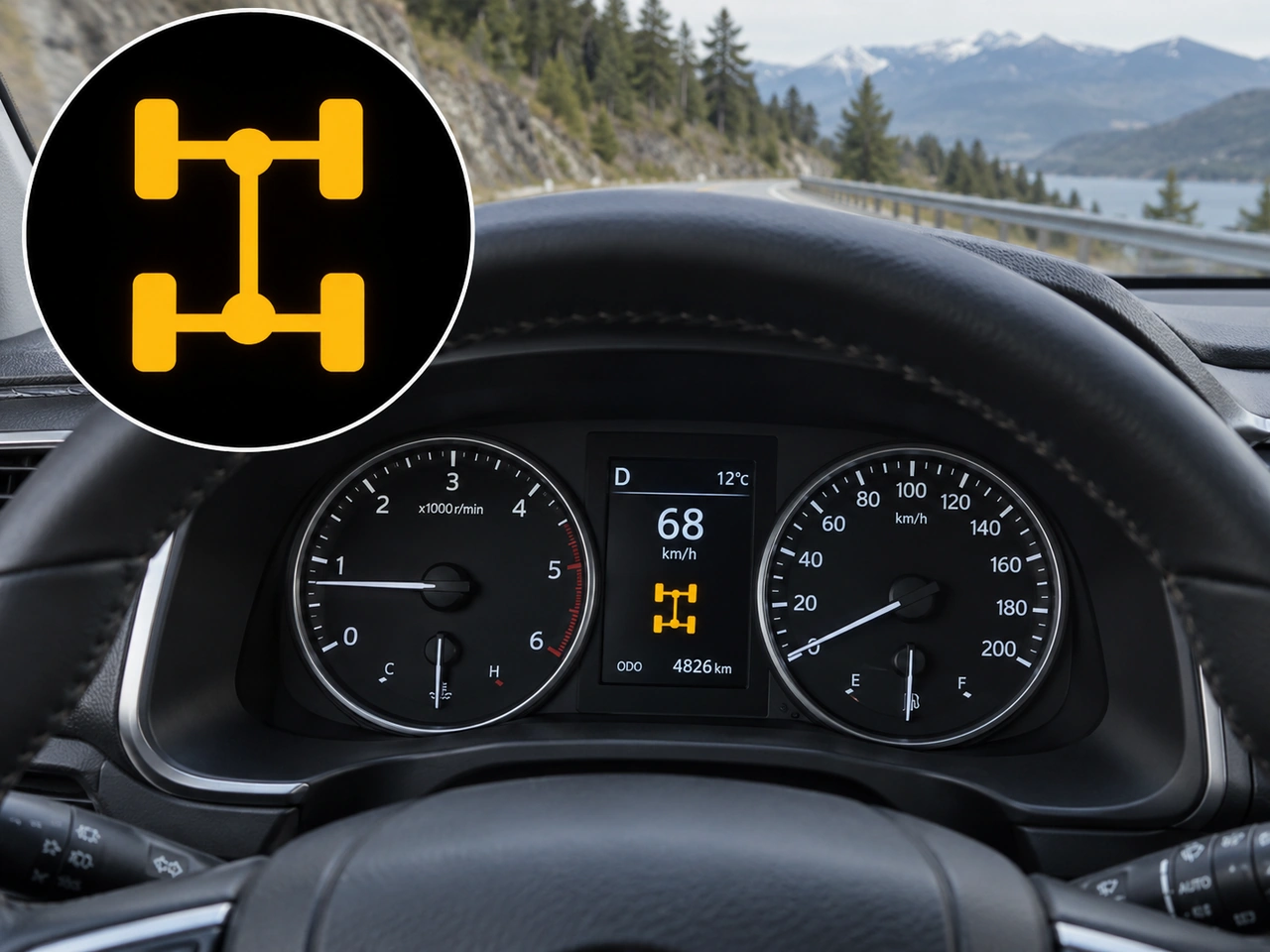
What does this dashboard symbol indicate?

520. What does this dashboard symbol indicate?

Electronic stability control.
Parking assistance.
✓ Four-wheel-drive system.
Low tyre pressure.

This symbol relates to the vehicle's four-wheel-drive system, which can transmit power to all four wheels. The exact symbol and operating modes vary between vehicles.

Four-wheel-drive system symbol on the dashboard
AI-generated by Traffic-rules.com • WCIT • CC BY-SA
How should a motorcyclist brake in an emergency?

521. How should a motorcyclist brake in an emergency?

Steer sharply while braking hard.
Grab the front brake as suddenly as possible.
Release both brakes before stopping.
✓ Apply both brakes firmly and progressively.

During emergency braking, use both brakes firmly and progressively while keeping the motorcycle as upright and stable as practical. Avoid sudden steering. If ABS is fitted, maintain firm braking pressure and allow the system to work.

Motorcyclist making an emergency stop
AI-generated by Traffic-rules.com • WCIT • CC BY-SA
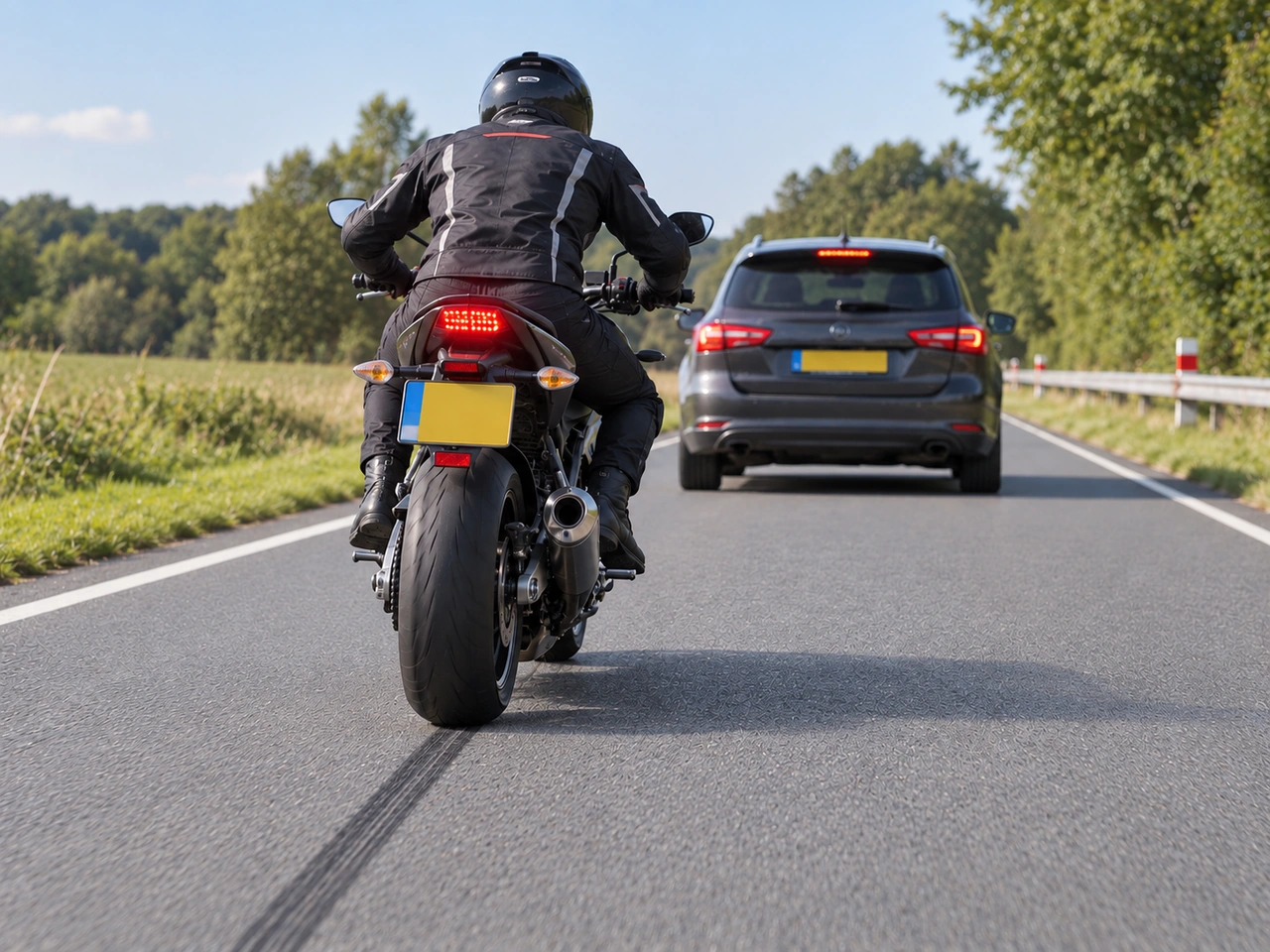
What should you do when driving near animals?

522. What should you do when driving near animals?

✓ Slow down and be ready to stop.
Move closer so you can pass before they react.
Flash your headlights repeatedly to warn them.
Sound your horn to make them move away.

Animals can move unpredictably. Slow down, stay alert, and be prepared to stop safely.

Animals near moving road traffic
AI-generated by Traffic-rules.com • WCIT • CC BY-SA
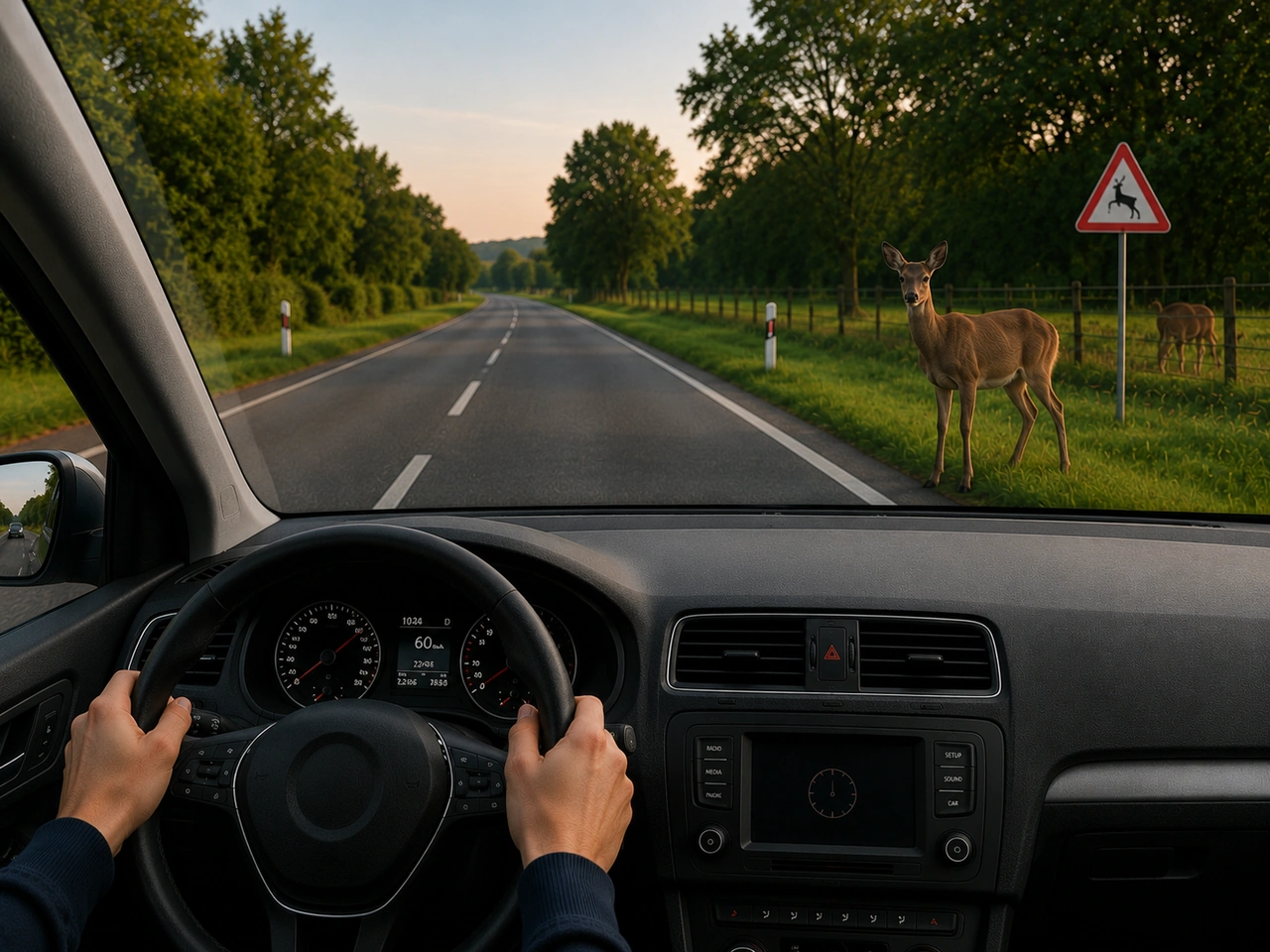
May you carry a passenger on an ordinary electric scooter in Belgium?

523. May you carry a passenger on an ordinary electric scooter in Belgium?

Yes, inside built-up areas only.
Yes, if the passenger is younger than 12.
Yes, when travelling below 20 km/h.
✓ No, unless the device is specifically built to carry passengers.

Carrying passengers is prohibited unless the personal mobility device was specifically designed for passenger transport and has sufficient seats.

Electric scooter carrying a rider and passenger
AI-generated by Traffic-rules.com • WCIT • CC BY-SA
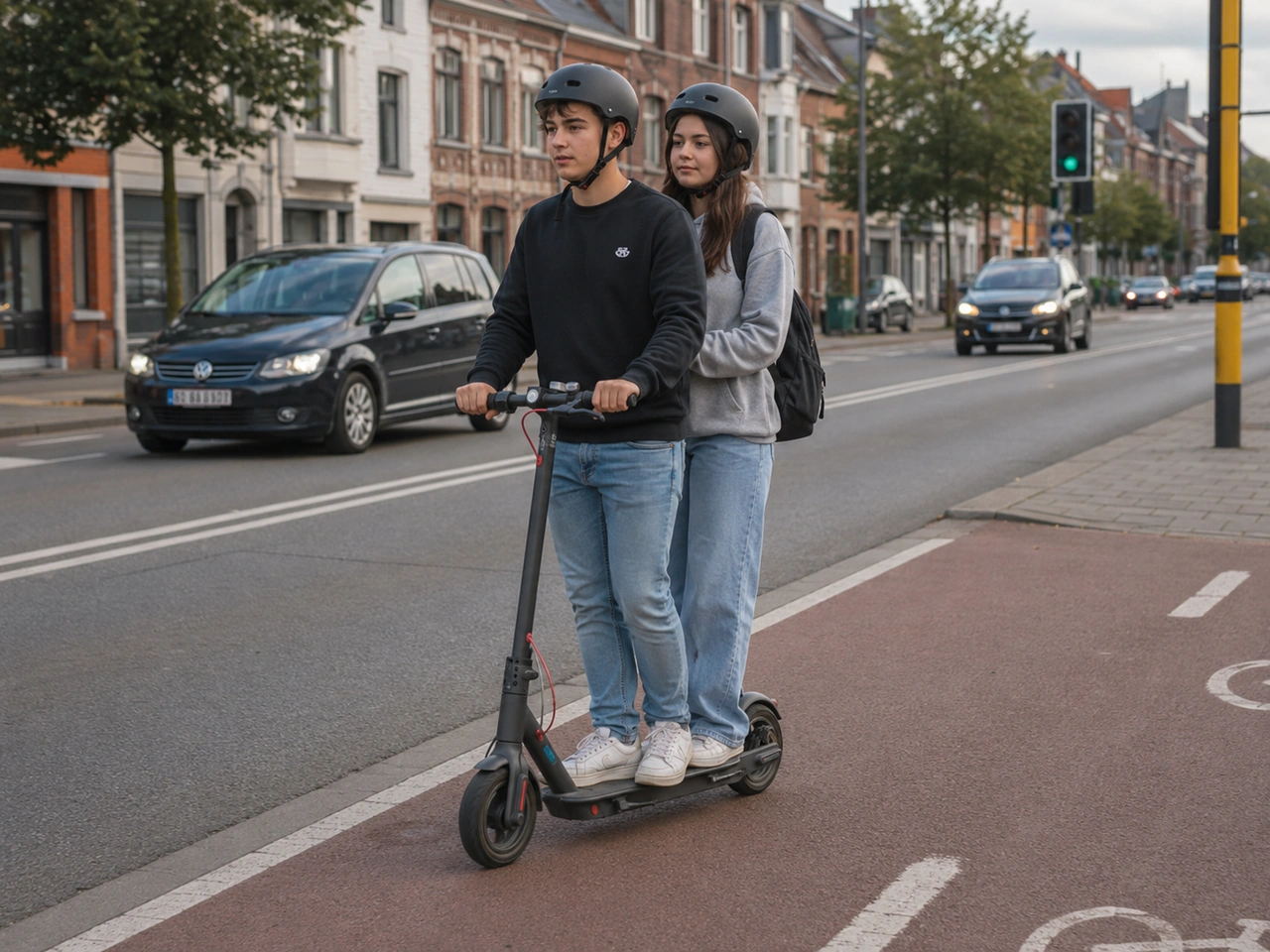
What does this vehicle-control symbol indicate?

524. What does this vehicle-control symbol indicate?

Automatic headlights.
Front fog lights.
Main beam.
✓ Headlight level adjustment.

This control adjusts the vertical aim of the headlights. It can be used to lower the beam when the vehicle is heavily loaded, helping to avoid dazzling other road users.

Control for adjusting the headlight beam height
AI-generated by Traffic-rules.com • WCIT • CC BY-SA
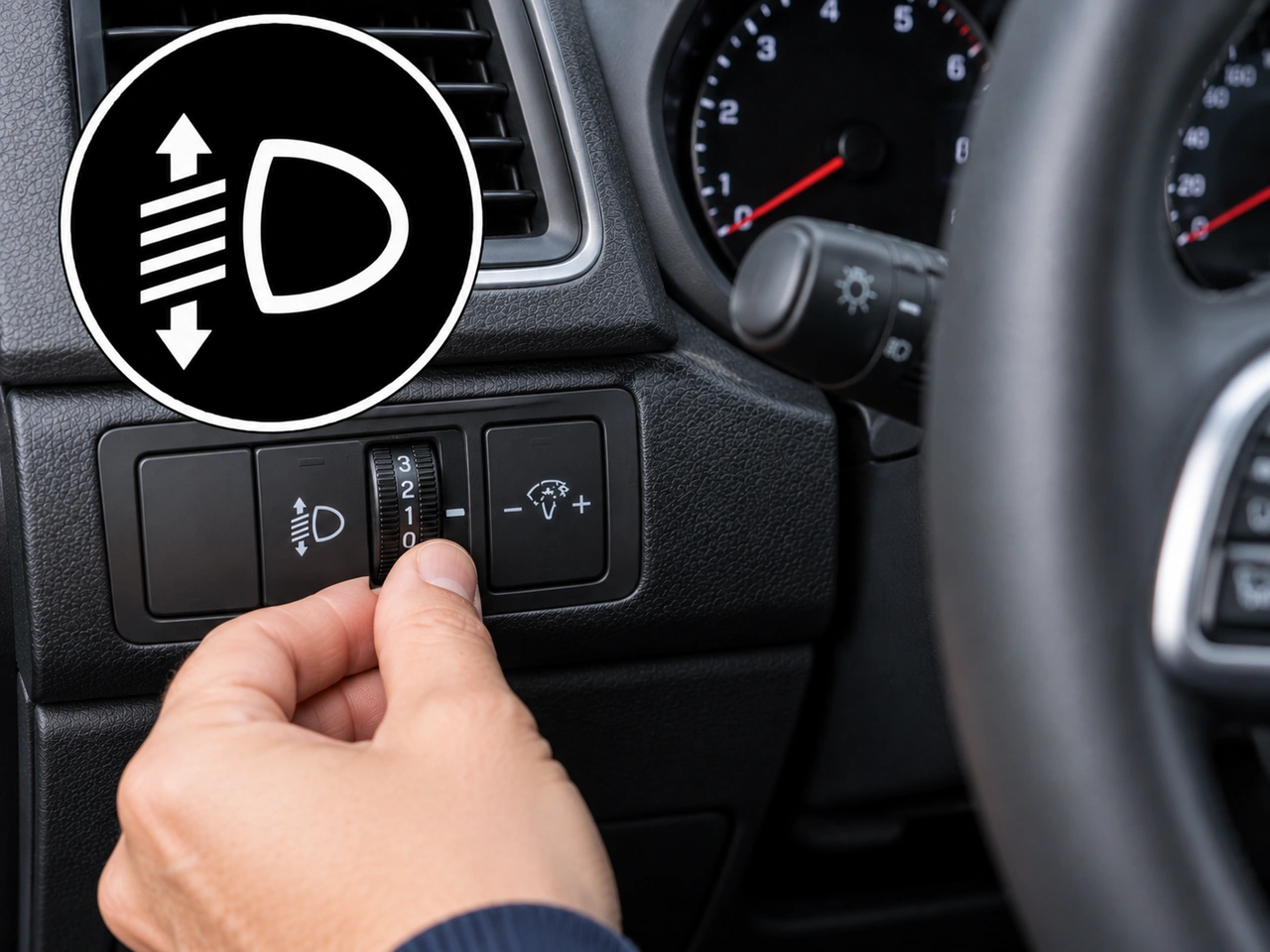
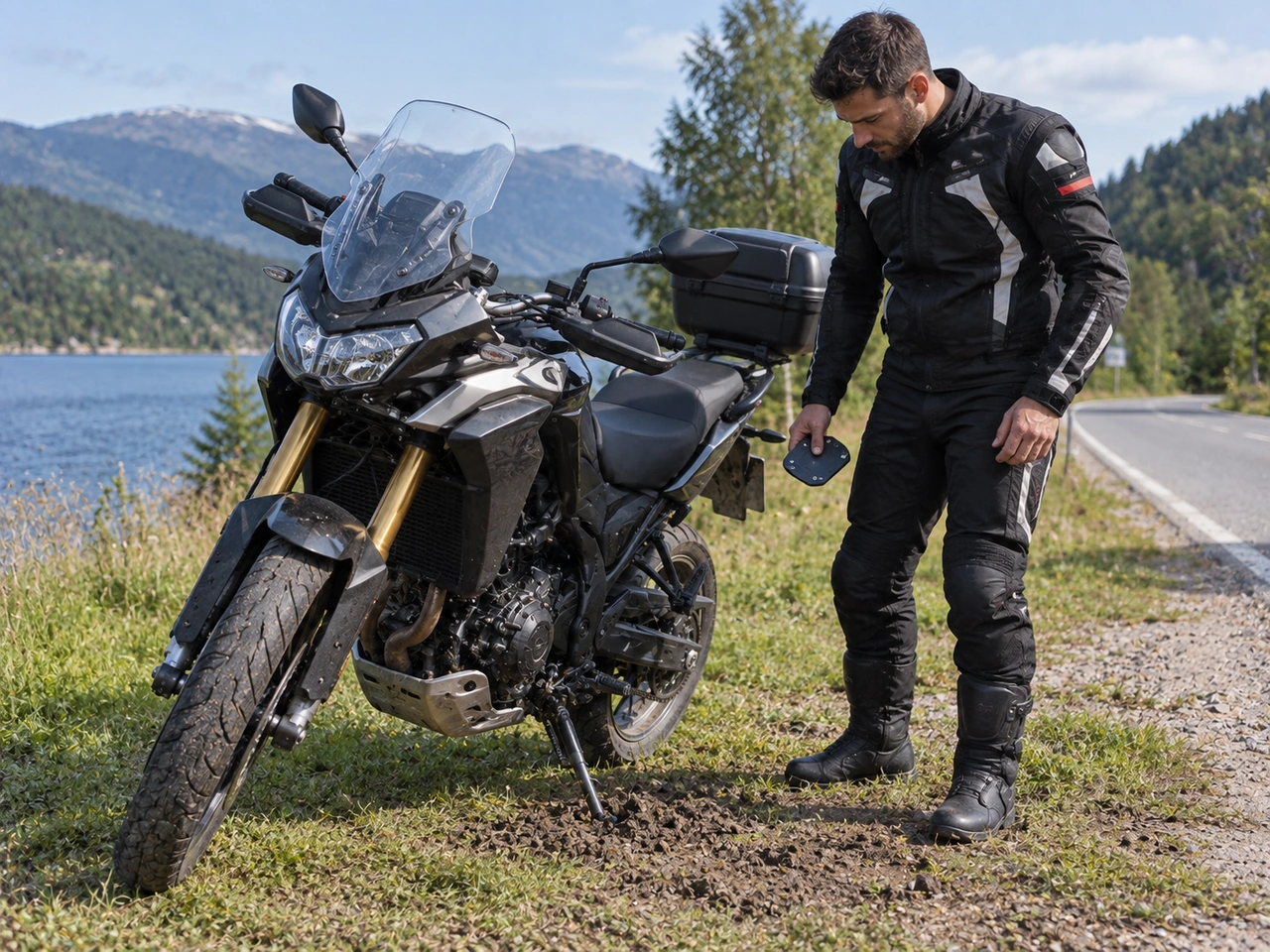
Why should you take care when parking a motorcycle on soft ground?

525. Why should you take care when parking a motorcycle on soft ground?

The tyres may immediately lose air pressure.
The engine may become difficult to start.
✓ The stand may sink into the ground and the motorcycle could fall.
The chain may become too tight.

On soft or unstable ground, the side or centre stand can sink or move, causing the motorcycle to fall. Park on a firm, stable surface or use a suitable support under the stand when necessary.

Motorcycle stand resting on soft ground
AI-generated by Traffic-rules.com • WCIT • CC BY-SA
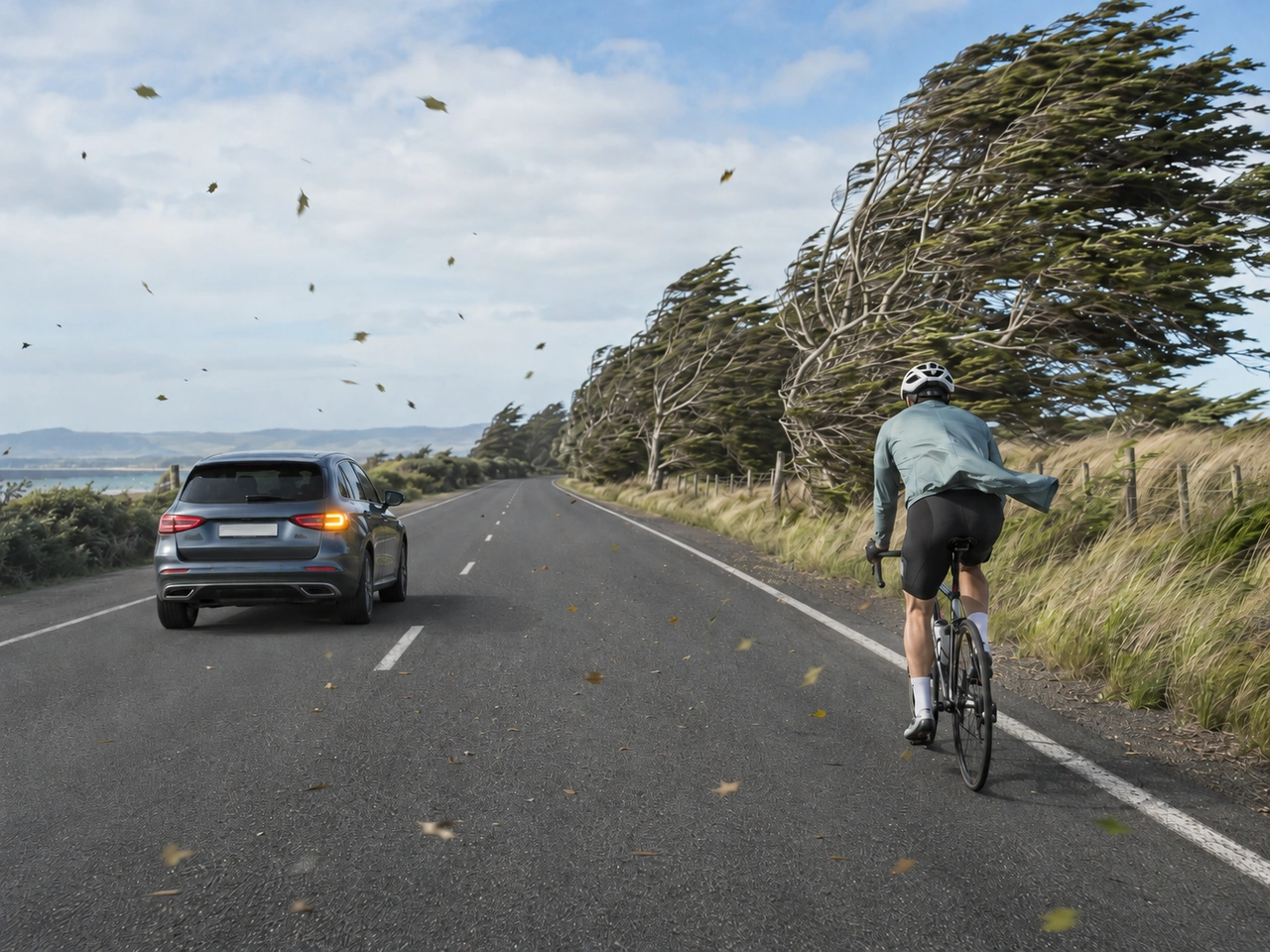
Why should you leave extra space when passing cyclists in strong winds?

526. Why should you leave extra space when passing cyclists in strong winds?

Wind increases the pressure in bicycle tyres.
Cyclists always ride more slowly in strong winds.
Cyclists must stop when a vehicle passes them.
✓ They may be blown sideways unexpectedly.

Strong gusts can affect cyclists' balance and direction. Extra passing space reduces the risk of a collision.

Vehicle passing a cyclist in windy conditions
AI-generated by Traffic-rules.com • WCIT • CC BY-SA
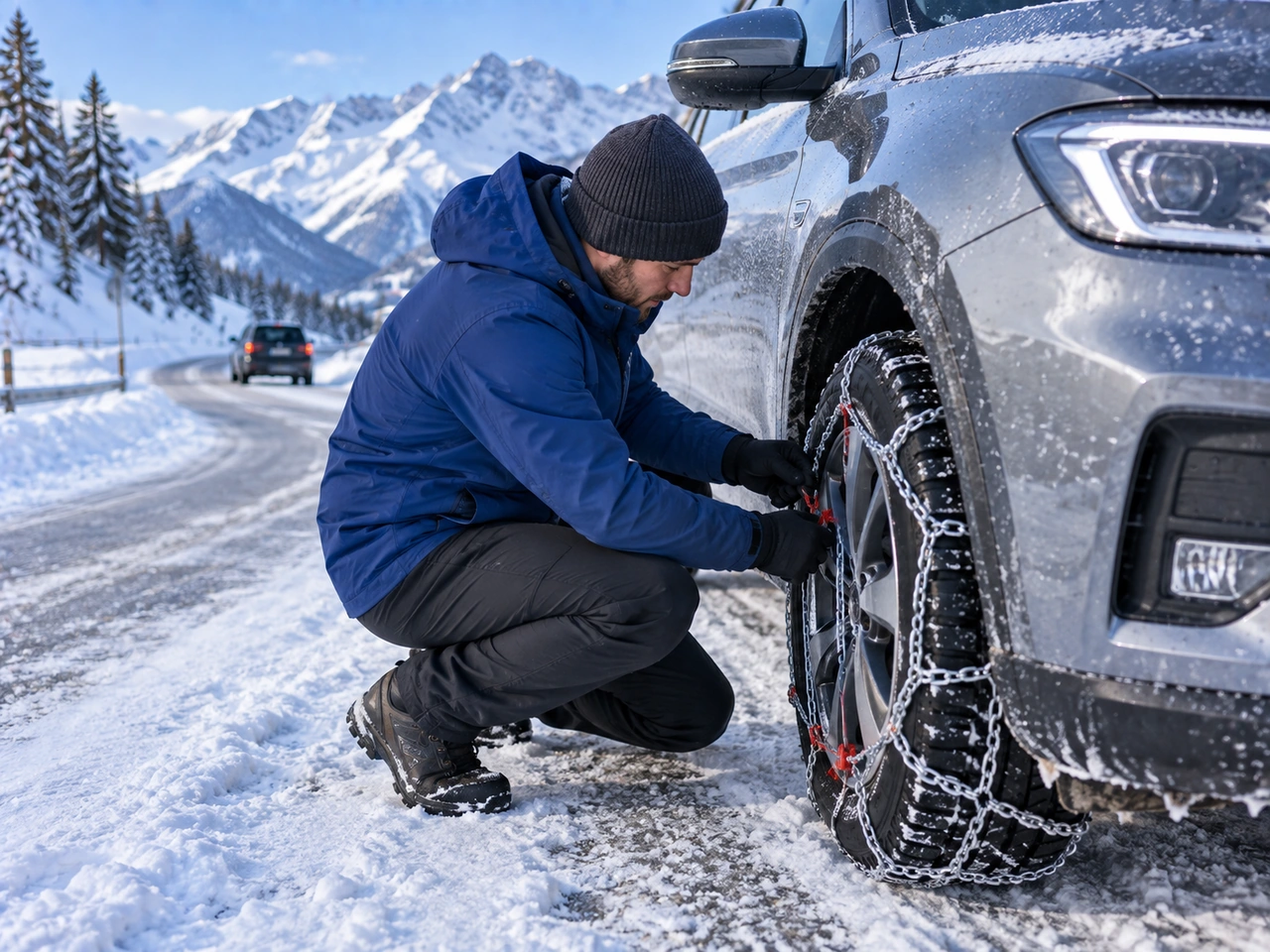
Are snow chains generally required in Brussels?

527. Are snow chains generally required in Brussels?

✓ No.
Yes, throughout the year.
Yes, throughout winter.

Snow chains are not generally required in Brussels, although they may be useful or required in specific conditions or locations.

Snow chains for vehicle tyres
AI-generated by Traffic-rules.com • WCIT • CC BY-SA
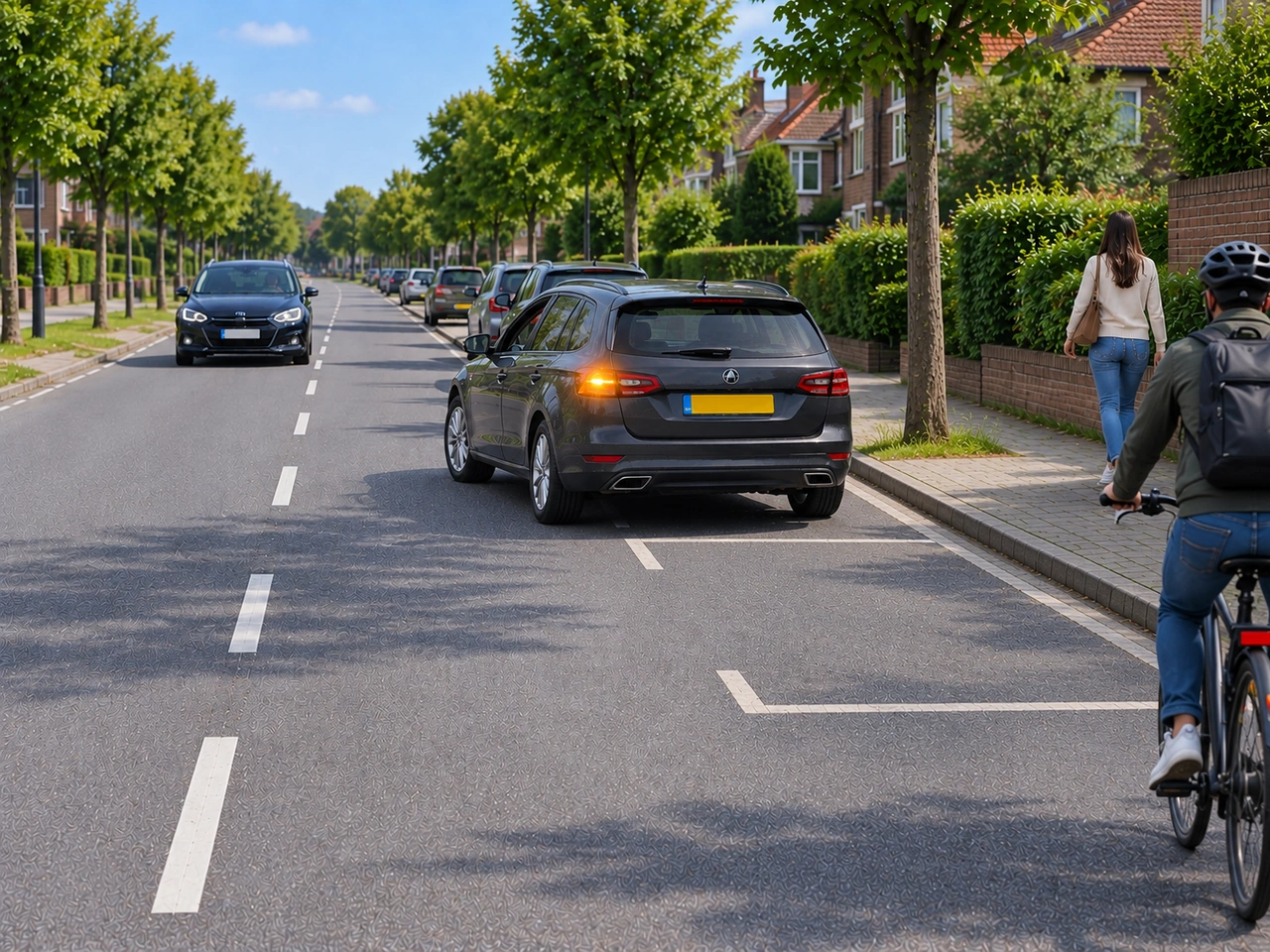
Who must you give way to when leaving a parking place?

528. Who must you give way to when leaving a parking place?

✓ All other road users.
Only pedestrians and cyclists.
Nobody if you use an indicator.
Only vehicles approaching from the right.

Leaving a parking place is a manoeuvre. A driver performing a manoeuvre must give way to all other road users.

Vehicle leaving a parking space near other road users
AI-generated by Traffic-rules.com • WCIT • CC BY-SA
What makes up the total stopping distance of a vehicle?

529. What makes up the total stopping distance of a vehicle?

Tyre distance and braking distance.
✓ Reaction distance and braking distance.
Braking distance and overtaking distance.
Visibility distance and reaction distance.

The total stopping distance consists of the distance travelled while the driver reacts to a hazard plus the distance travelled while the vehicle is braking to a stop.

Reaction and braking distances before a vehicle stops
AI-generated by Traffic-rules.com • WCIT • CC BY-SA
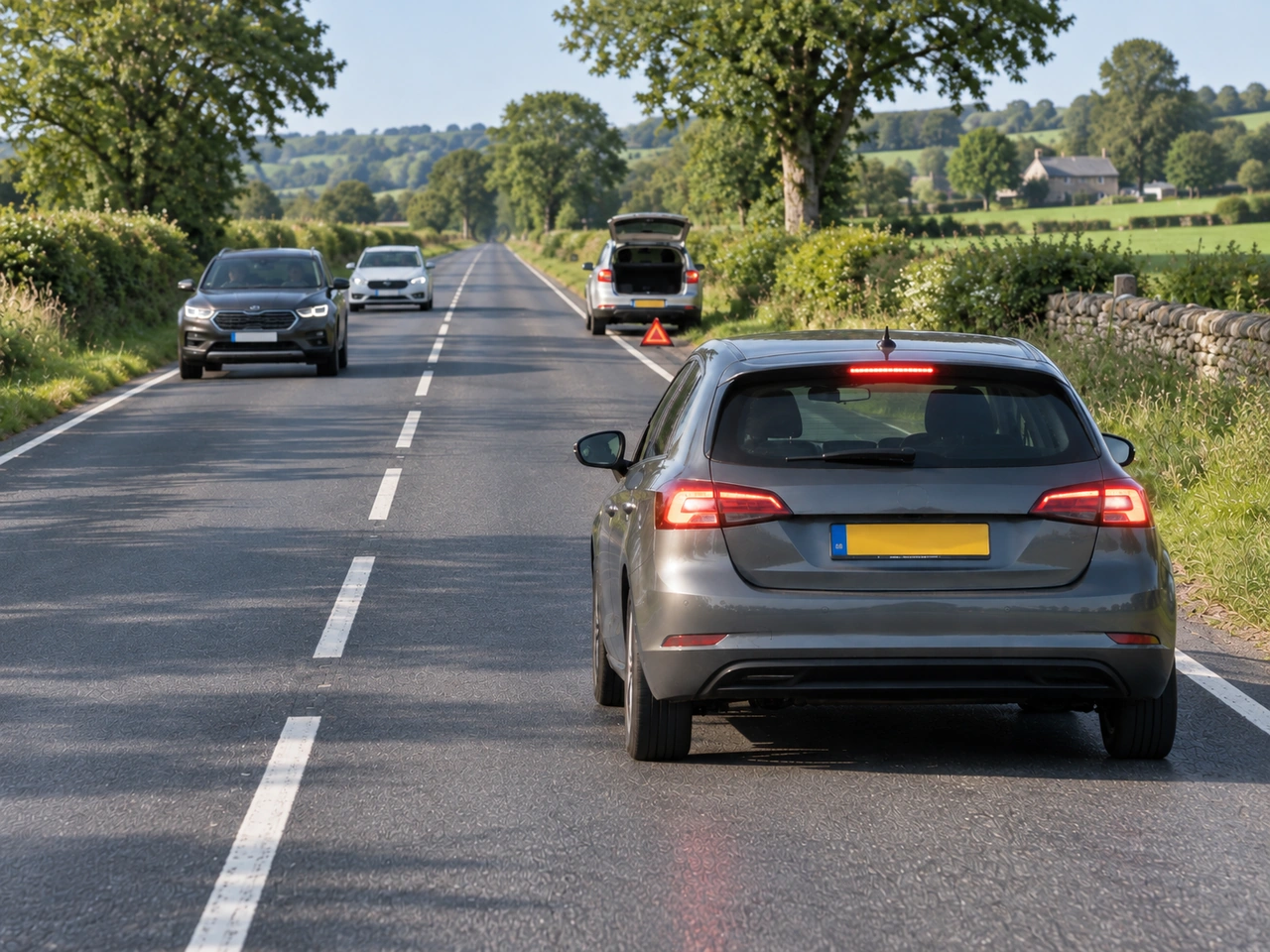
Can you assume that you are safe to drive the morning after drinking?

530. Can you assume that you are safe to drive the morning after drinking?

✓ No, alcohol may still remain in your body.
Yes, if you only need to drive a short distance.
Yes, sleep removes all alcohol from your body.
Yes, if you eat breakfast before driving.

The body needs time to process alcohol. Sleeping, eating, showering, or drinking coffee does not instantly remove it.

Fitness to drive the morning after drinking
AI-generated by Traffic-rules.com • WCIT • CC BY-SA
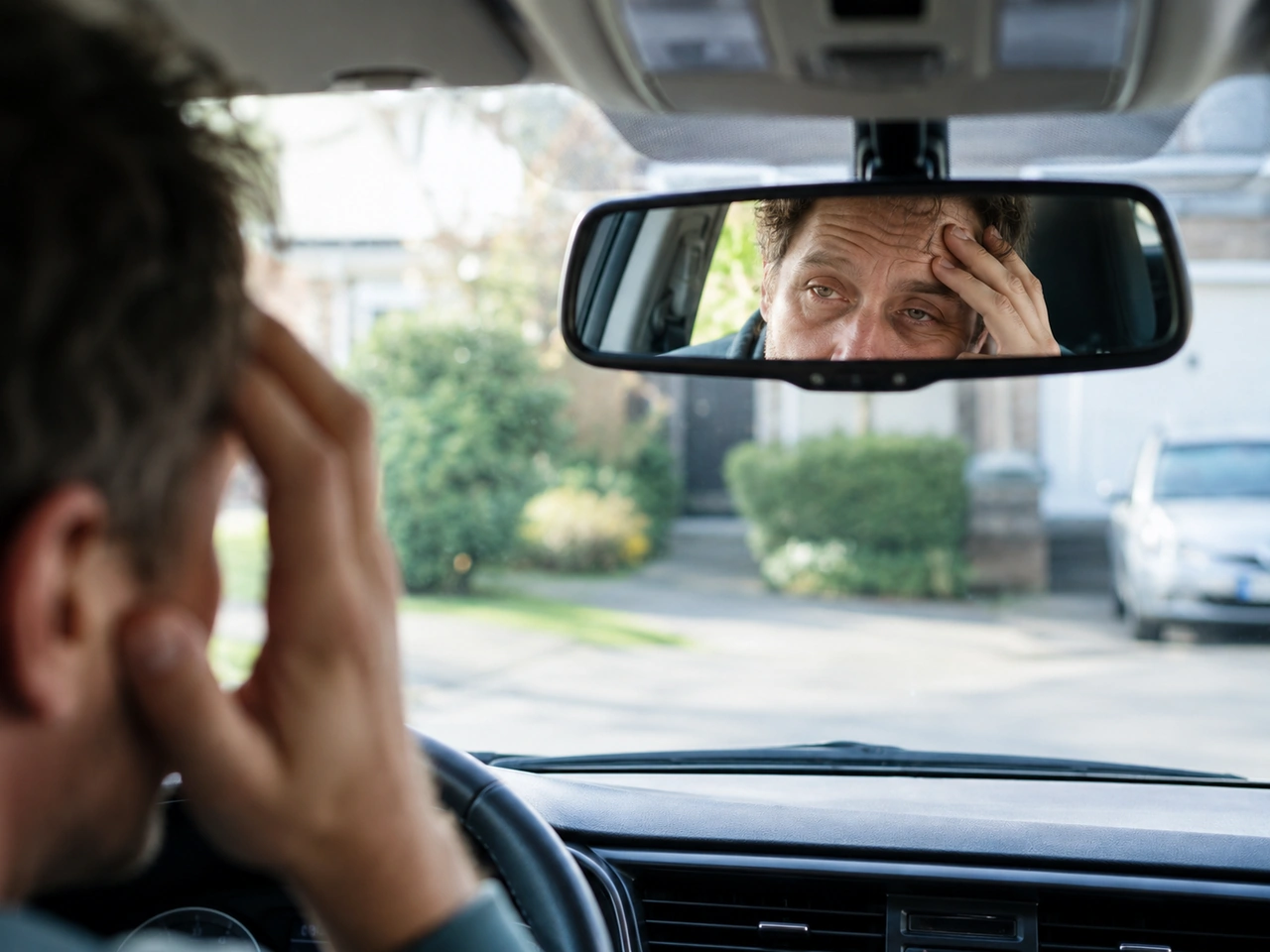
Why should you wear suitable footwear when driving?

531. Why should you wear suitable footwear when driving?

So the clutch cannot wear out.
So the pedals require less force to operate.
✓ So you can operate the pedals accurately and safely.
So the brakes respond more quickly.

Suitable footwear helps you operate the accelerator, brake, and clutch accurately. Loose, bulky, or slippery footwear can interfere with pedal control or become caught around the pedals.

Driver's footwear and contact with the pedals
AI-generated by Traffic-rules.com • WCIT • CC BY-SA
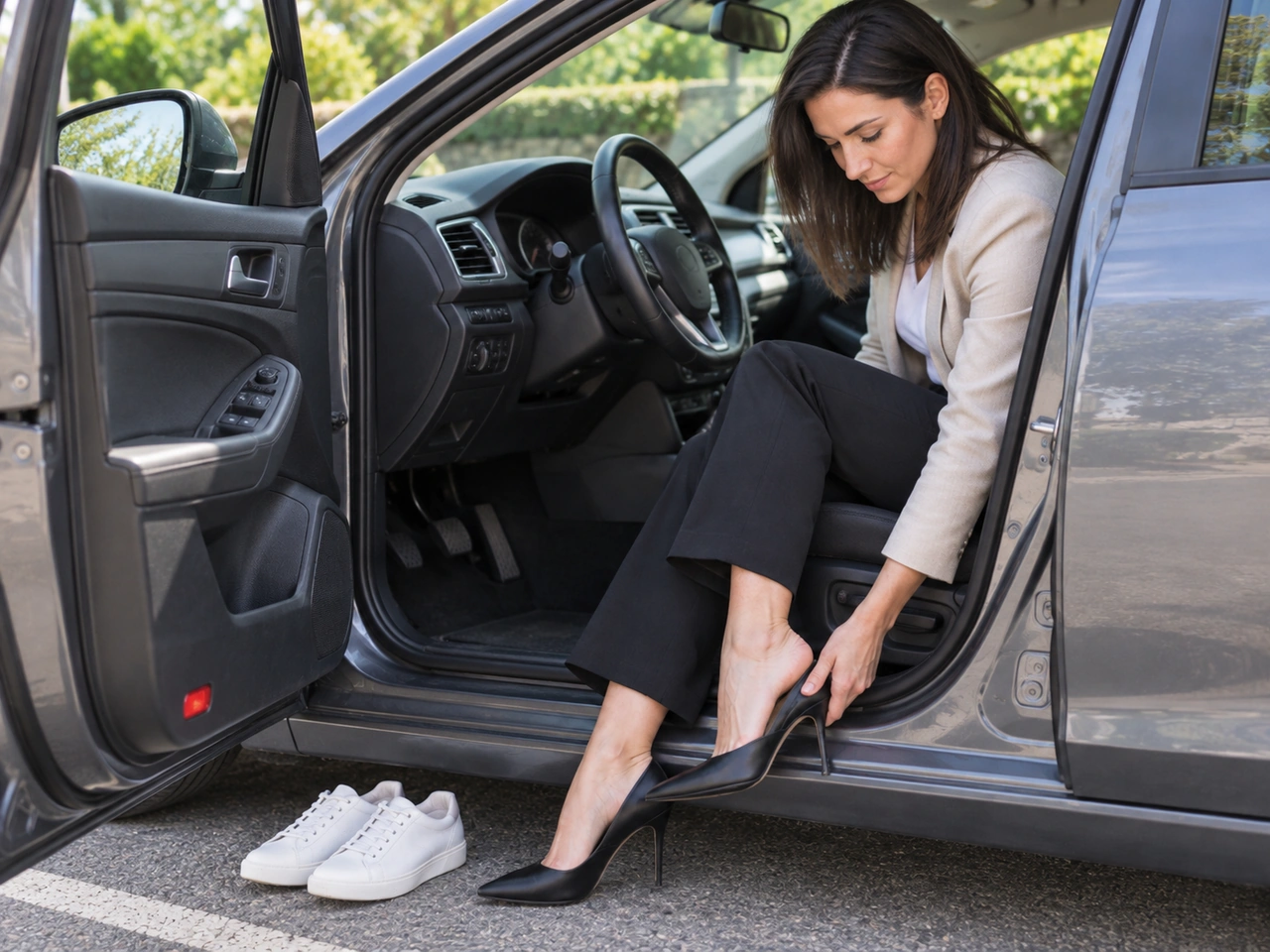
What should you do if an emergency vehicle approaches with lights or siren on?

532. What should you do if an emergency vehicle approaches with lights or siren on?

Stop immediately wherever you are.
✓ Stay calm and make room safely.
Ignore it if there is not enough room to pass.
Move aside without checking surrounding traffic.

When an emergency vehicle uses lights or siren, check your surroundings and make room safely without sudden or dangerous movements.

Emergency vehicle approaching with warning lights flashing
AI-generated by Traffic-rules.com • WCIT • CC BY-SA
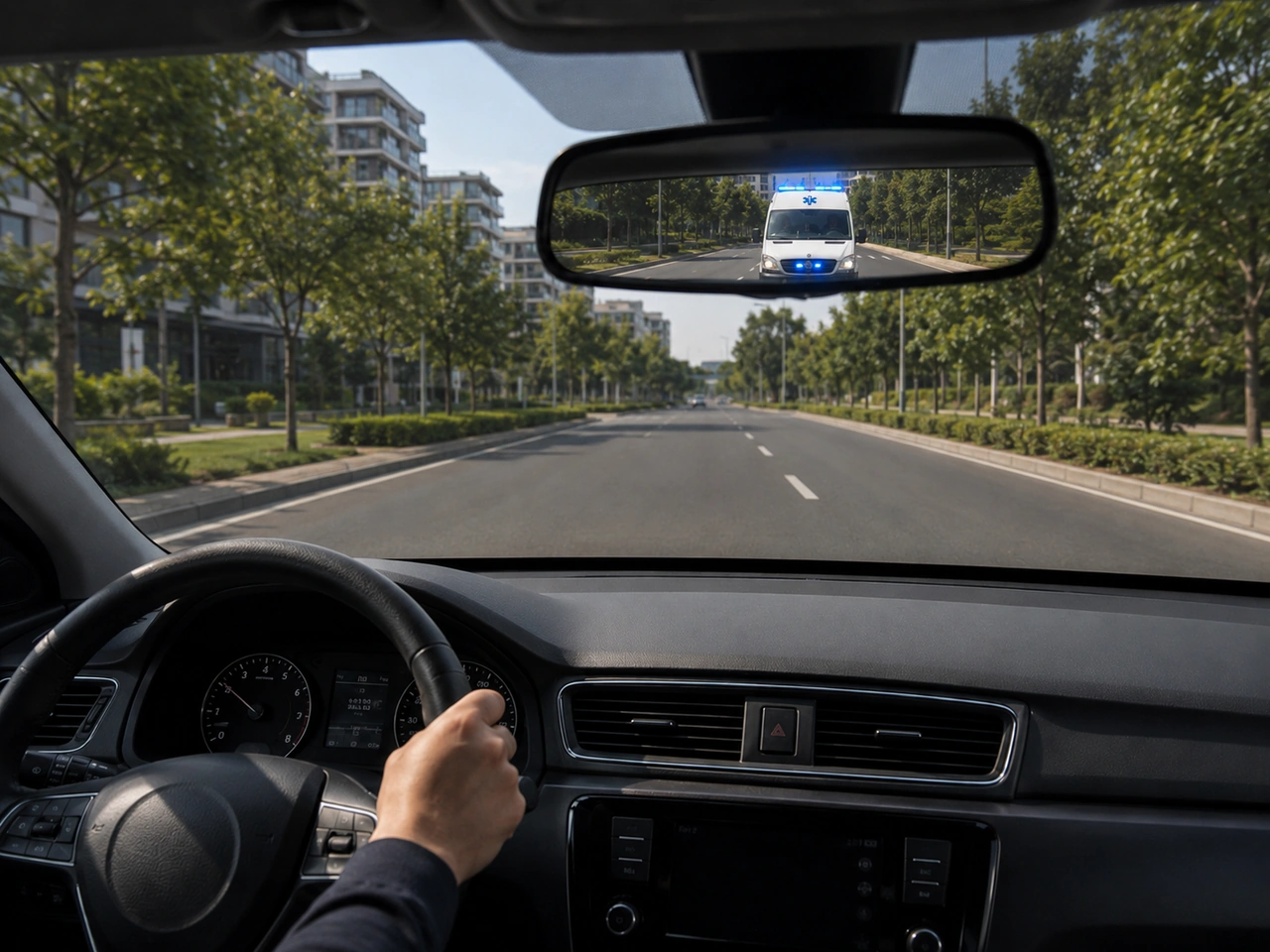
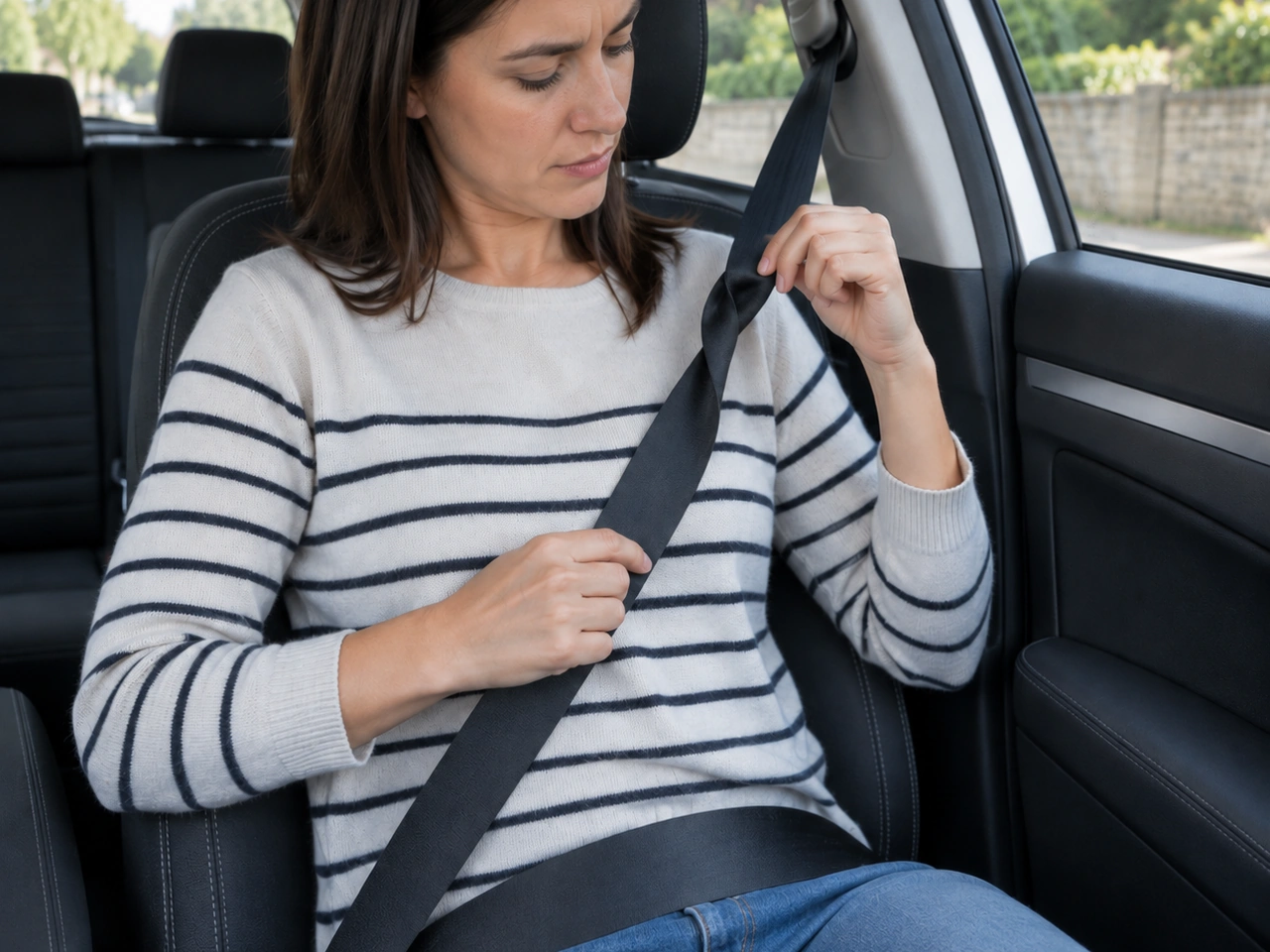
Why should a seat belt not be twisted when worn?

533. Why should a seat belt not be twisted when worn?

A twisted belt makes the brakes less effective.
A flat belt makes the seat easier to adjust.
A twisted belt can cause the buckle to open.
✓ A flat belt spreads collision forces more effectively.

A seat belt should lie flat against the body without twists. A twisted belt concentrates force over a smaller area and may provide less effective protection in a collision.

Twisted seat belt across an occupant's body
AI-generated by Traffic-rules.com • WCIT • CC BY-SA
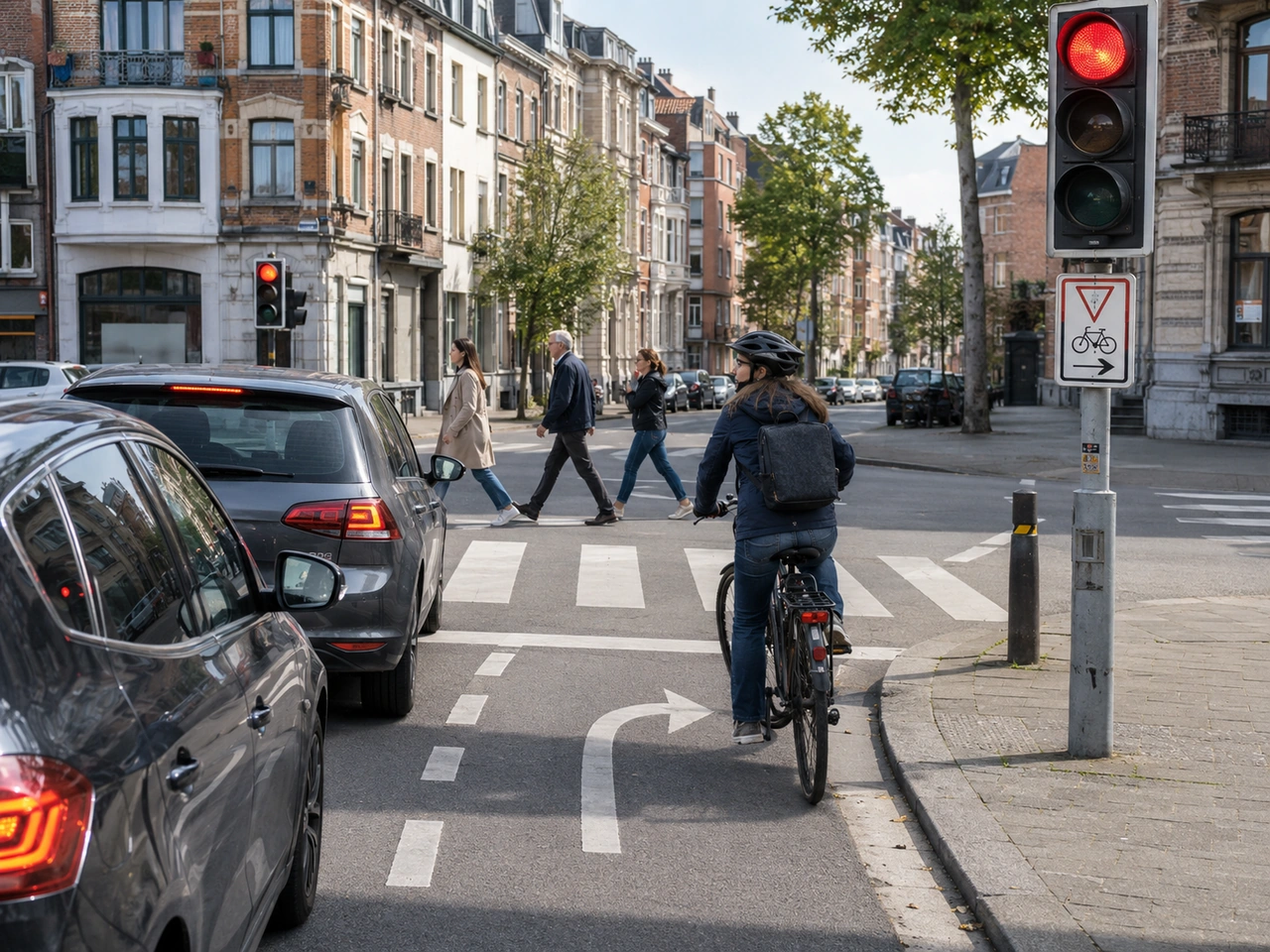
What may cyclists and speed-pedelec riders do at this red traffic light?

534. What may cyclists and speed-pedelec riders do at this red traffic light?

Ignore pedestrians but give way to cars.
Make a U-turn through the intersection.
Treat the red light as a green light for all traffic.
✓ Proceed in the direction shown after giving way to other road users.

A B22 sign allows cyclists and speed-pedelec riders to turn right on red or amber. A B23 sign allows them to continue straight, but they must give way to other road users.

Red traffic light with an exemption sign for cyclists
AI-generated by Traffic-rules.com • WCIT • CC BY-SA
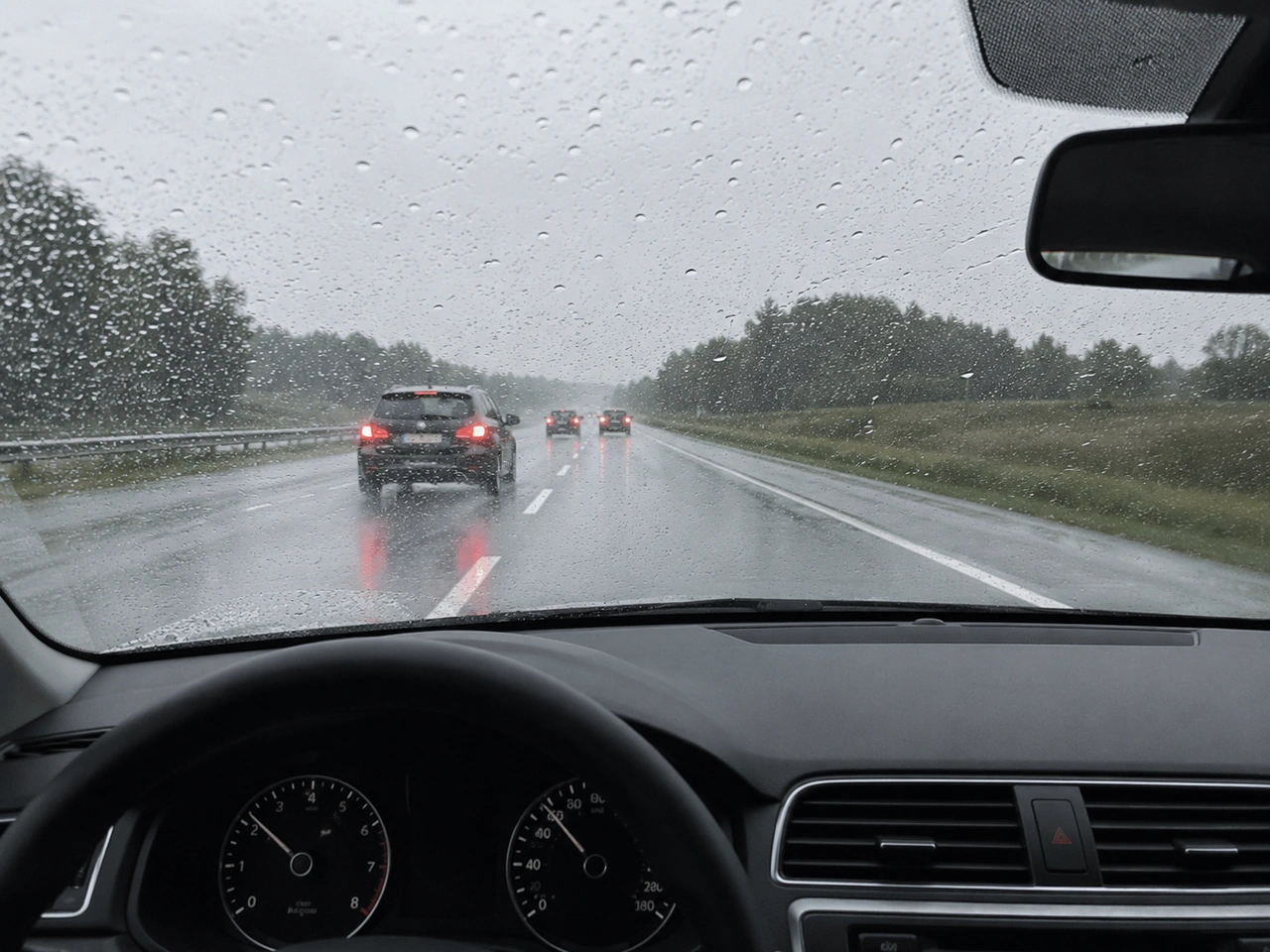
Rain can reduce tyre grip and increase stopping distance.

535. Rain can reduce tyre grip and increase stopping distance.

✓ True.
False.

Wet roads reduce traction, so your vehicle may need more distance to stop safely.

Vehicle travelling on a wet road
AI-generated by Traffic-rules.com • WCIT • CC BY-SA
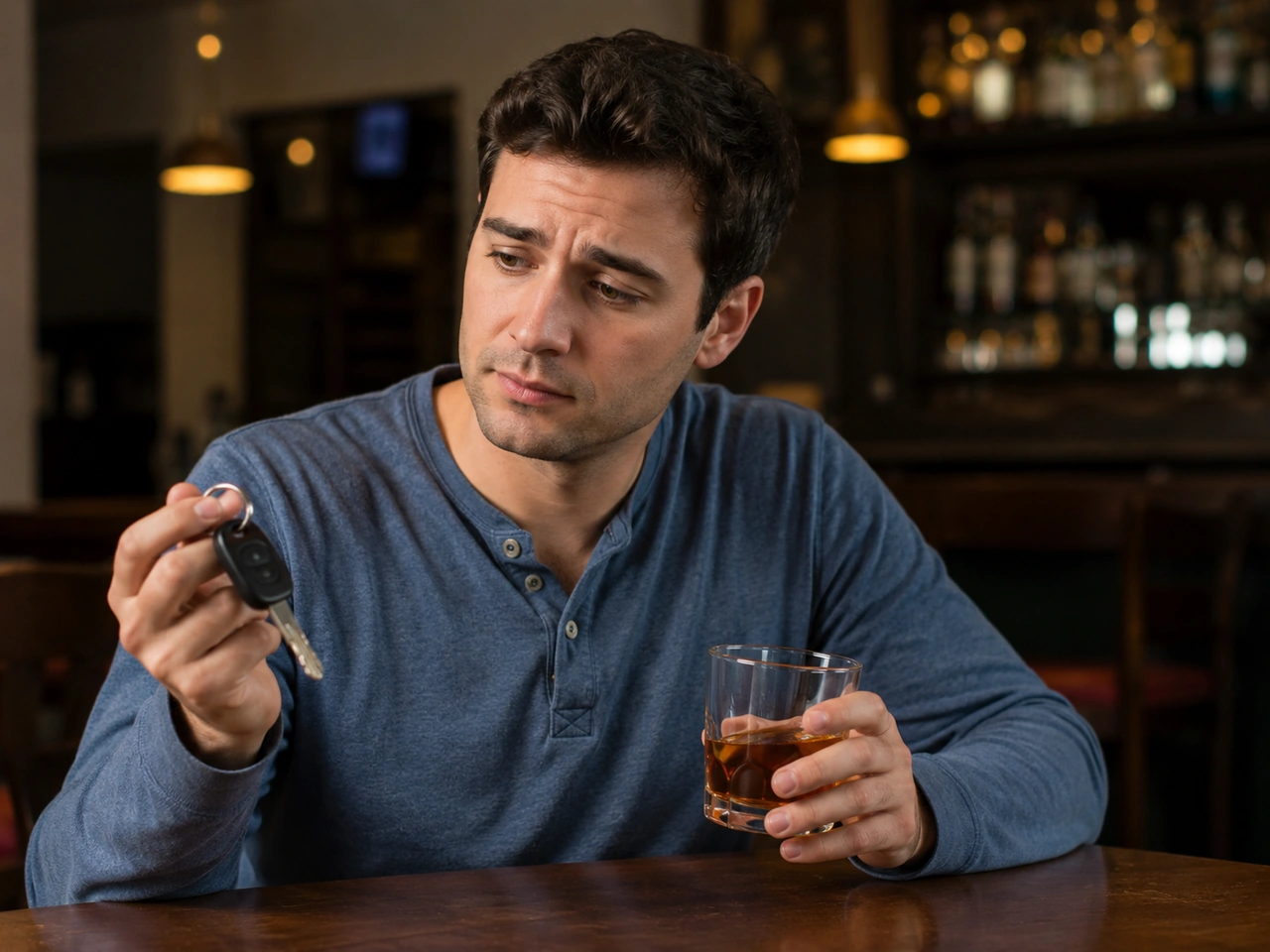
What is the safest choice if you have consumed alcohol?

536. What is the safest choice if you have consumed alcohol?

Drink coffee before driving.
✓ Do not drive and arrange a sober form of transport.
Drive only if you do not feel drunk.
Drive slowly and avoid busy roads.

Alcohol can impair judgement, coordination, vision, and reaction time. A sober driver, taxi, public transport, or an overnight stay is the safer choice.

Alcohol consumption and the decision not to drive
AI-generated by Traffic-rules.com • WCIT • CC BY-SA
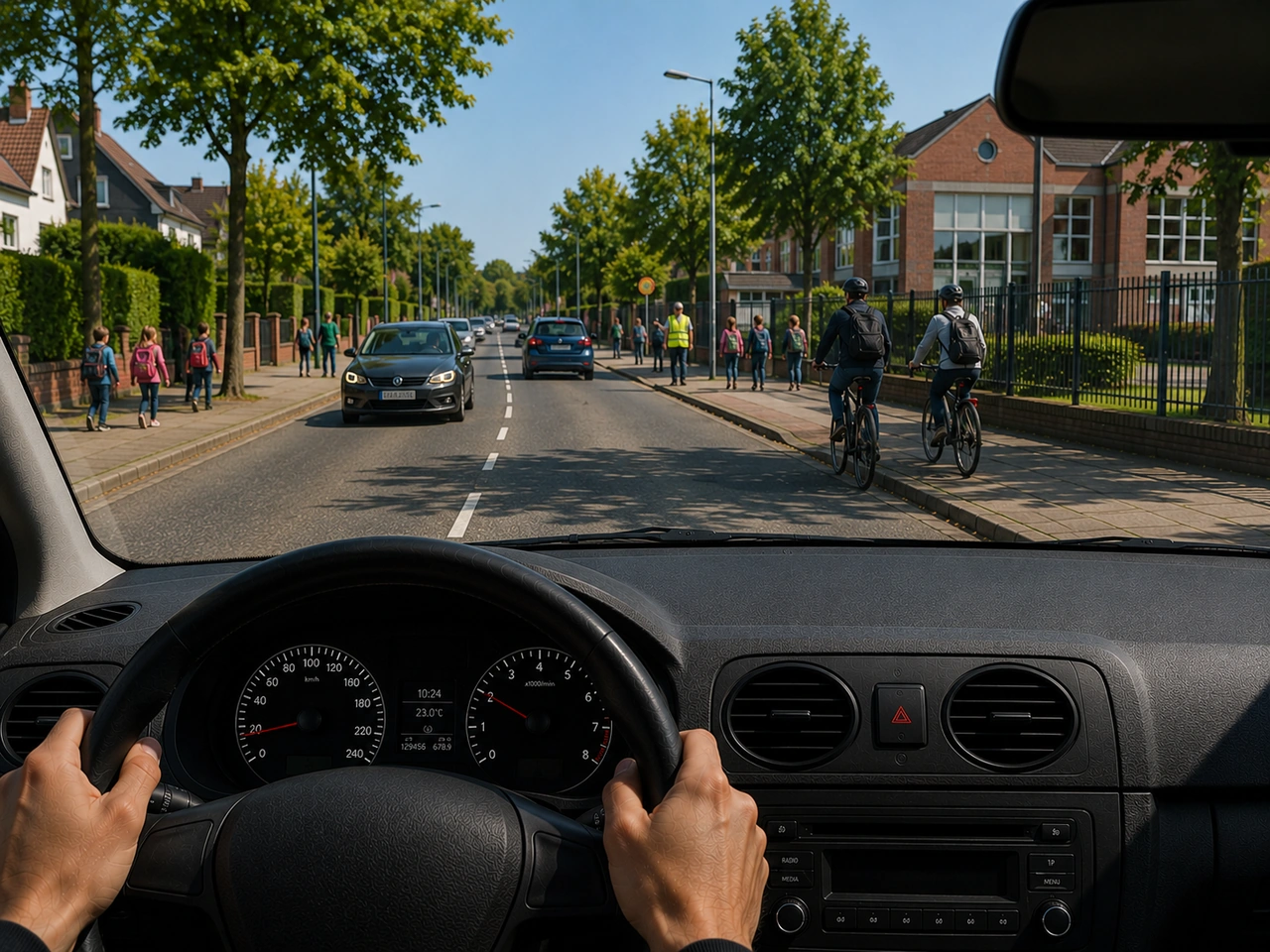
What should you do when driving near a school area?

537. What should you do when driving near a school area?

✓ Slow down and watch carefully for children.
Use your horn so children stay away from traffic.
Drive close behind other vehicles to keep traffic moving.
Maintain your usual speed if the road looks clear.

Children near schools may cross unexpectedly or be hidden between parked vehicles. Reduce speed and be ready to stop.

Vehicle travelling near a school
AI-generated by Traffic-rules.com • WCIT • CC BY-SA
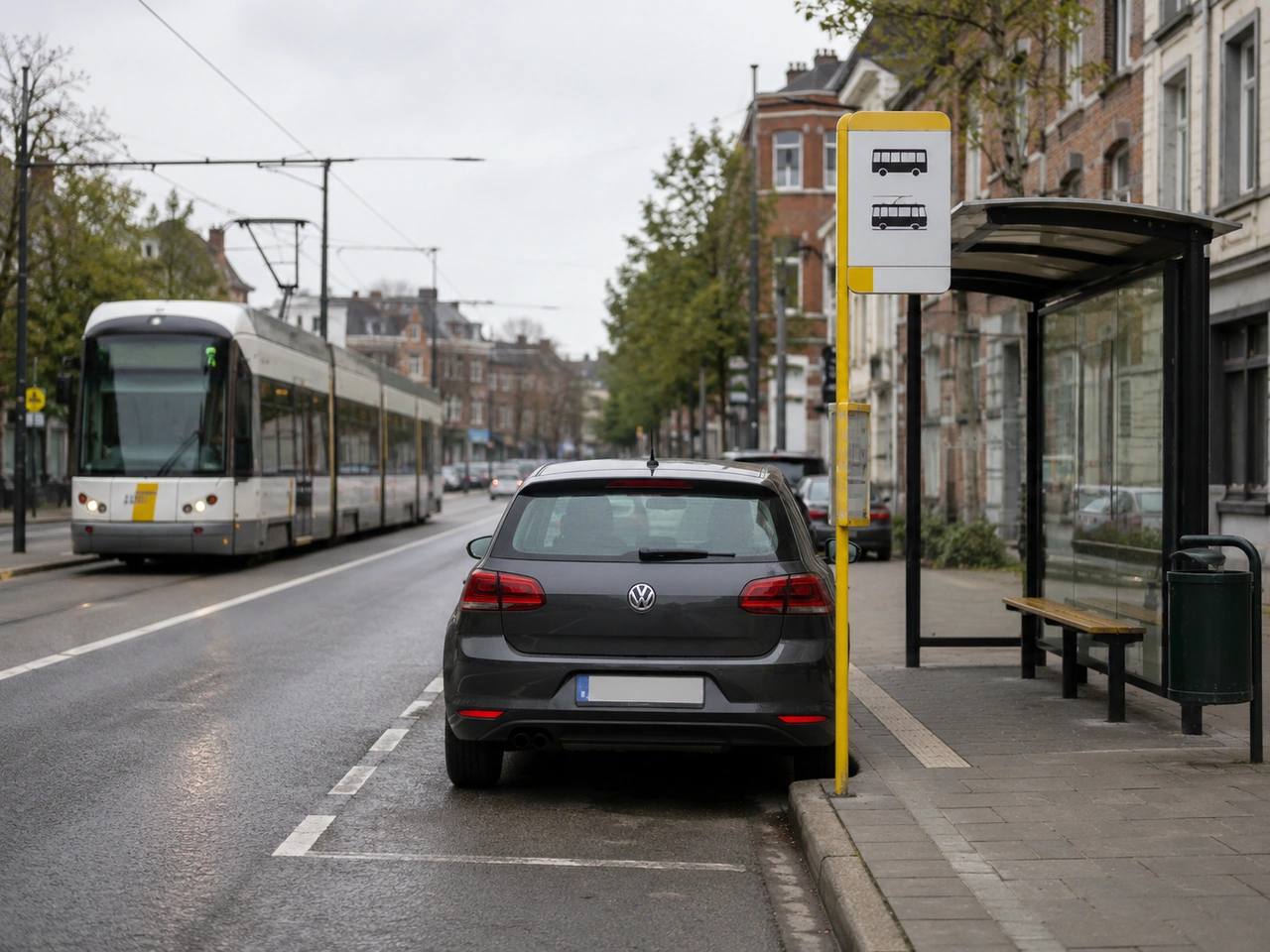
How close may you normally park to a sign marking a bus, trolleybus, or tram stop?

538. How close may you normally park to a sign marking a bus, trolleybus, or tram stop?

The restriction applies only at night.
Not within 2 metres behind the sign.
✓ Not within 15 metres on either side of the sign.
Parking is allowed directly beside the sign.

Parking is prohibited within 15 metres on either side of a sign marking a bus, trolleybus, or tram stop.

Parked vehicle near a public-transport stop
AI-generated by Traffic-rules.com • WCIT • CC BY-SA
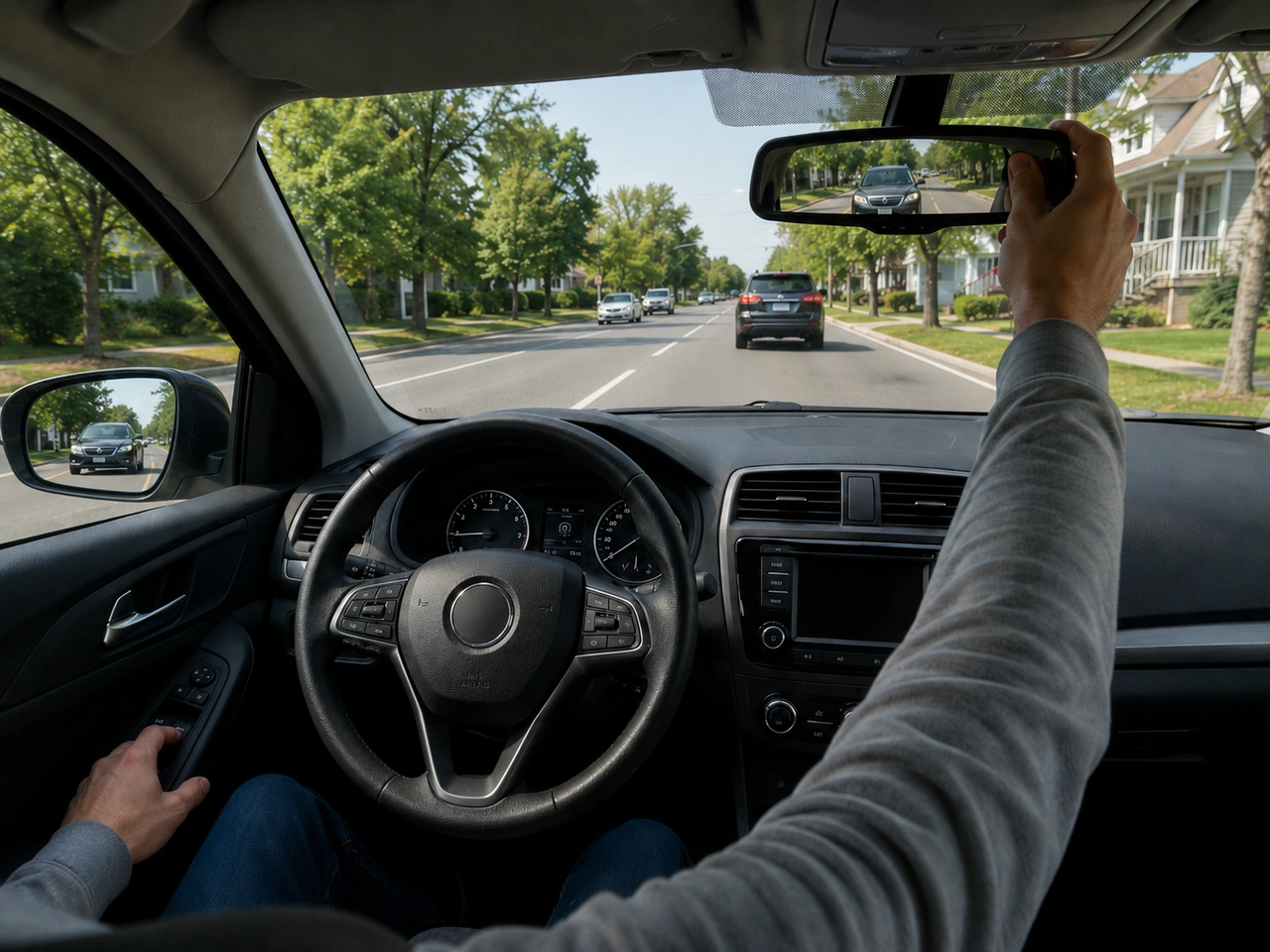
You should adjust your mirrors before you start driving.

539. You should adjust your mirrors before you start driving.

✓ True.
False.

Properly adjusted mirrors improve visibility and help you monitor traffic around your vehicle.

Driver adjusting a mirror before setting off
AI-generated by Traffic-rules.com • WCIT • CC BY-SA
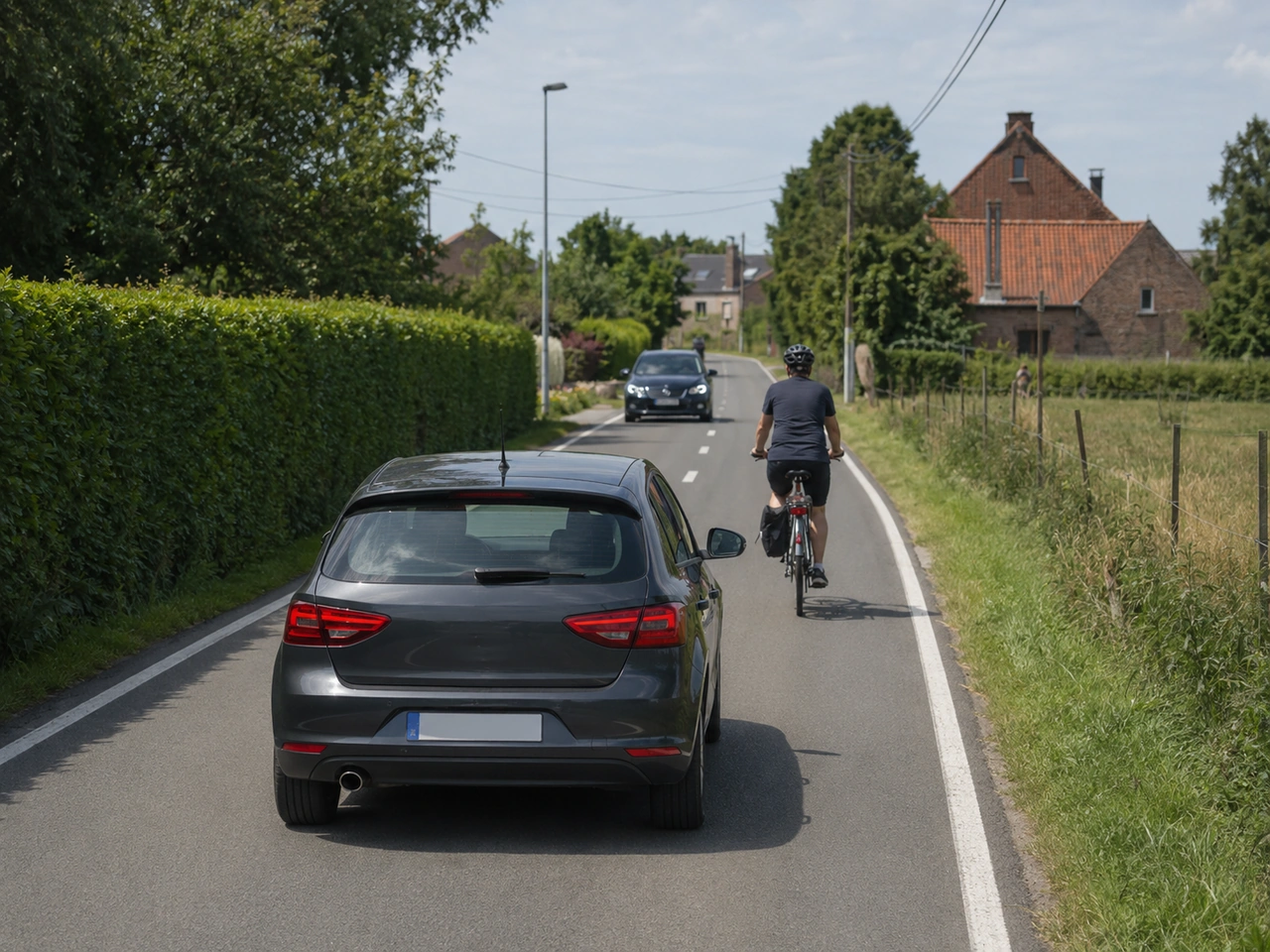
What minimum distance should a driver leave when passing a cyclist in Belgium?

540. What minimum distance should a driver leave when passing a cyclist in Belgium?

At least 2 metres only on motorways.
No minimum distance is required at low speed.
At least 1 metre everywhere.
✓ At least 1 metre inside built-up areas and 1.5 metres outside them.

Drivers must leave at least one metre when passing a cyclist inside a built-up area and at least 1.5 metres outside a built-up area.

Vehicle leaving lateral space when passing a cyclist
AI-generated by Traffic-rules.com • WCIT • CC BY-SA
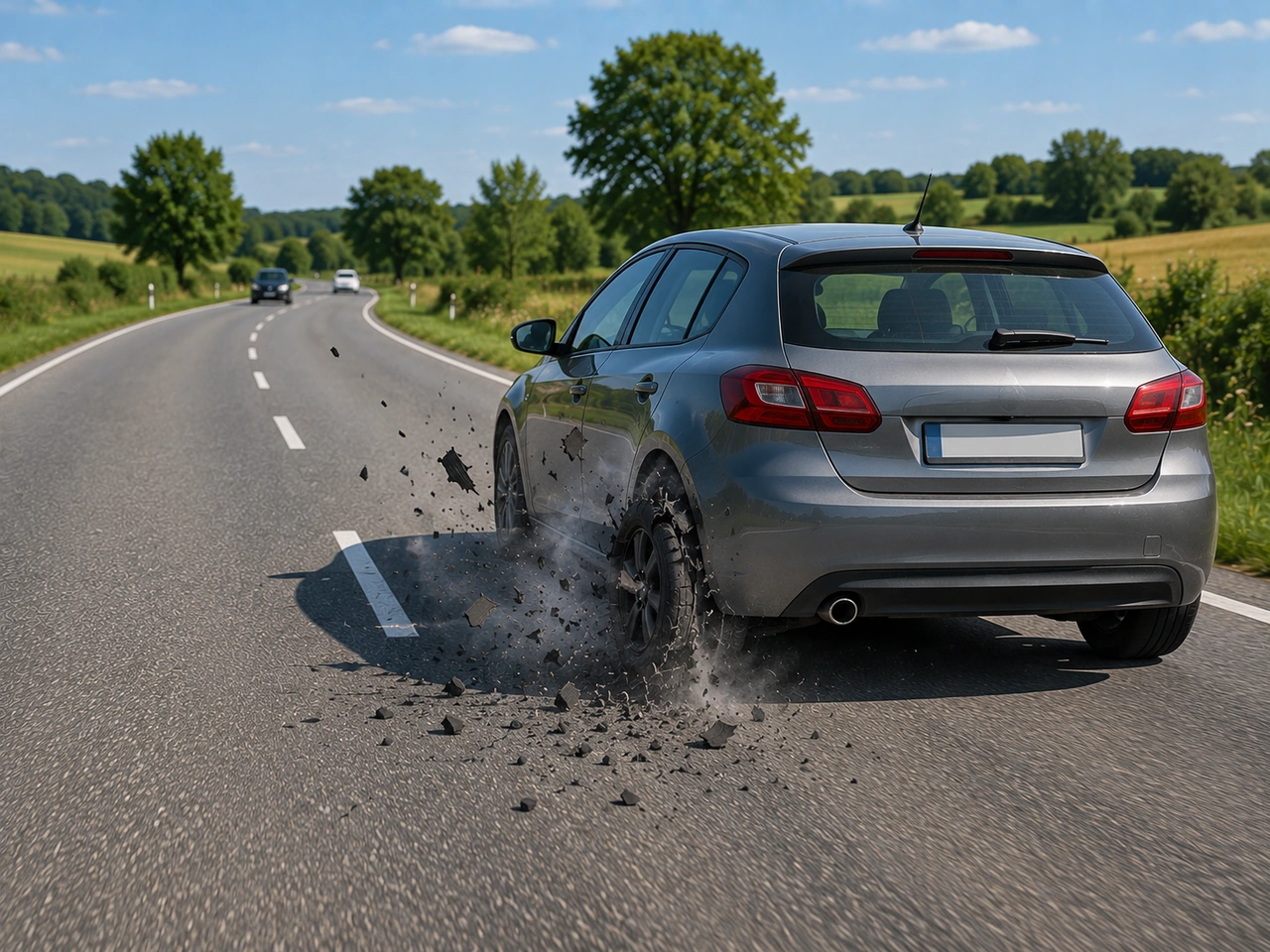
What should you do if one of your tyres suddenly bursts while driving?

541. What should you do if one of your tyres suddenly bursts while driving?

Pump the brake pedal repeatedly.
Accelerate briefly to stabilise the vehicle.
Release the steering wheel and let the vehicle slow itself.
✓ Hold the steering wheel firmly and slow down gradually.

A tyre burst can make the vehicle unstable. Hold the wheel firmly, avoid sudden braking or steering, and slow down gradually.

Vehicle tyre damaged by a sudden blowout
AI-generated by Traffic-rules.com • WCIT • CC BY-SA
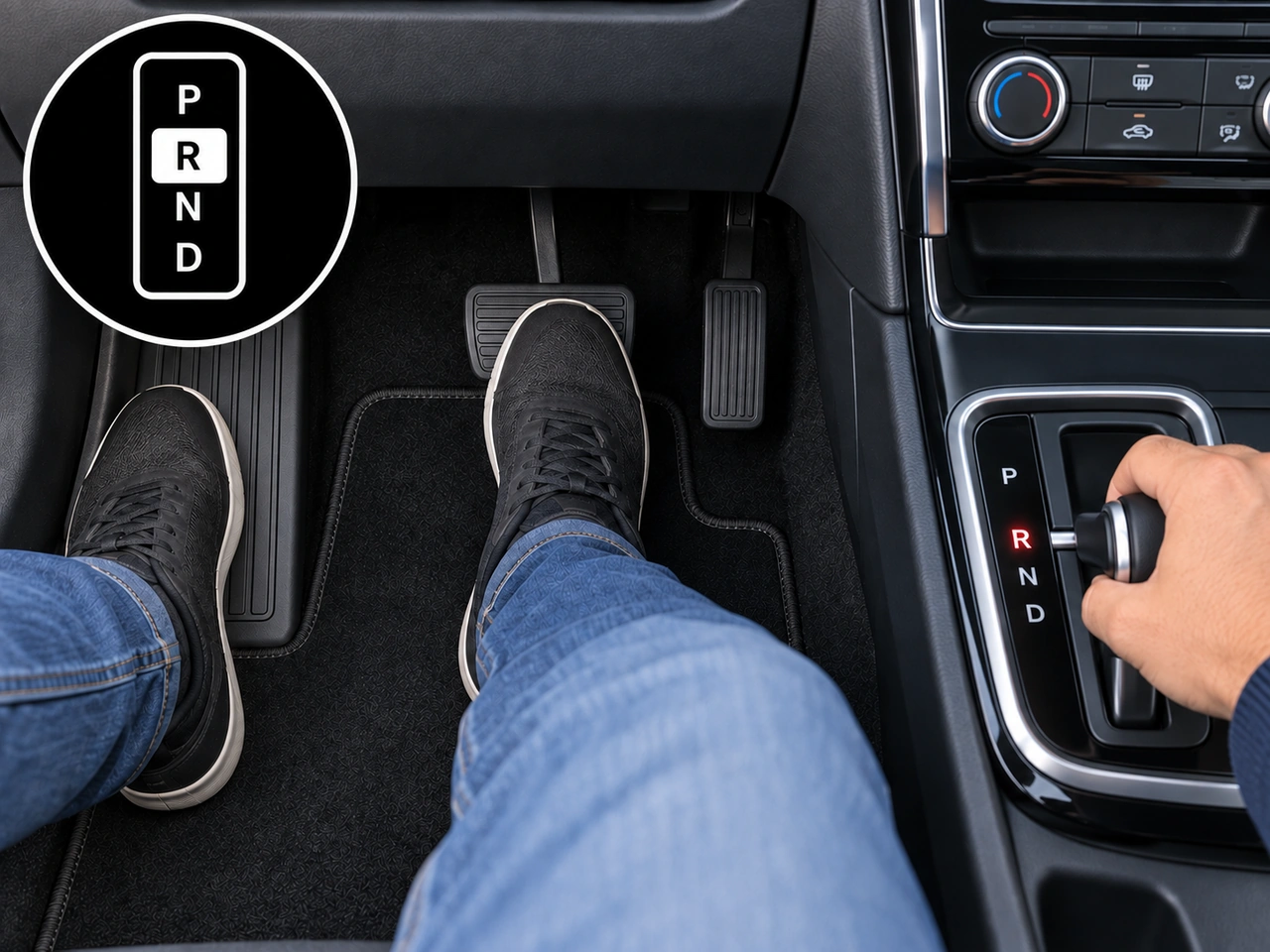
When should you select R (Reverse) in an automatic vehicle?

542. When should you select R (Reverse) in an automatic vehicle?

Whenever you want to reduce speed.
✓ After the vehicle has come to a complete stop.
While the vehicle is still moving forward slowly.
Before pressing the brake pedal.

Select R (Reverse) only after the vehicle has come to a complete stop. Selecting Reverse while the vehicle is still moving forward can damage the transmission.

Selecting Reverse in a stationary automatic vehicle
AI-generated by Traffic-rules.com • WCIT • CC BY-SA
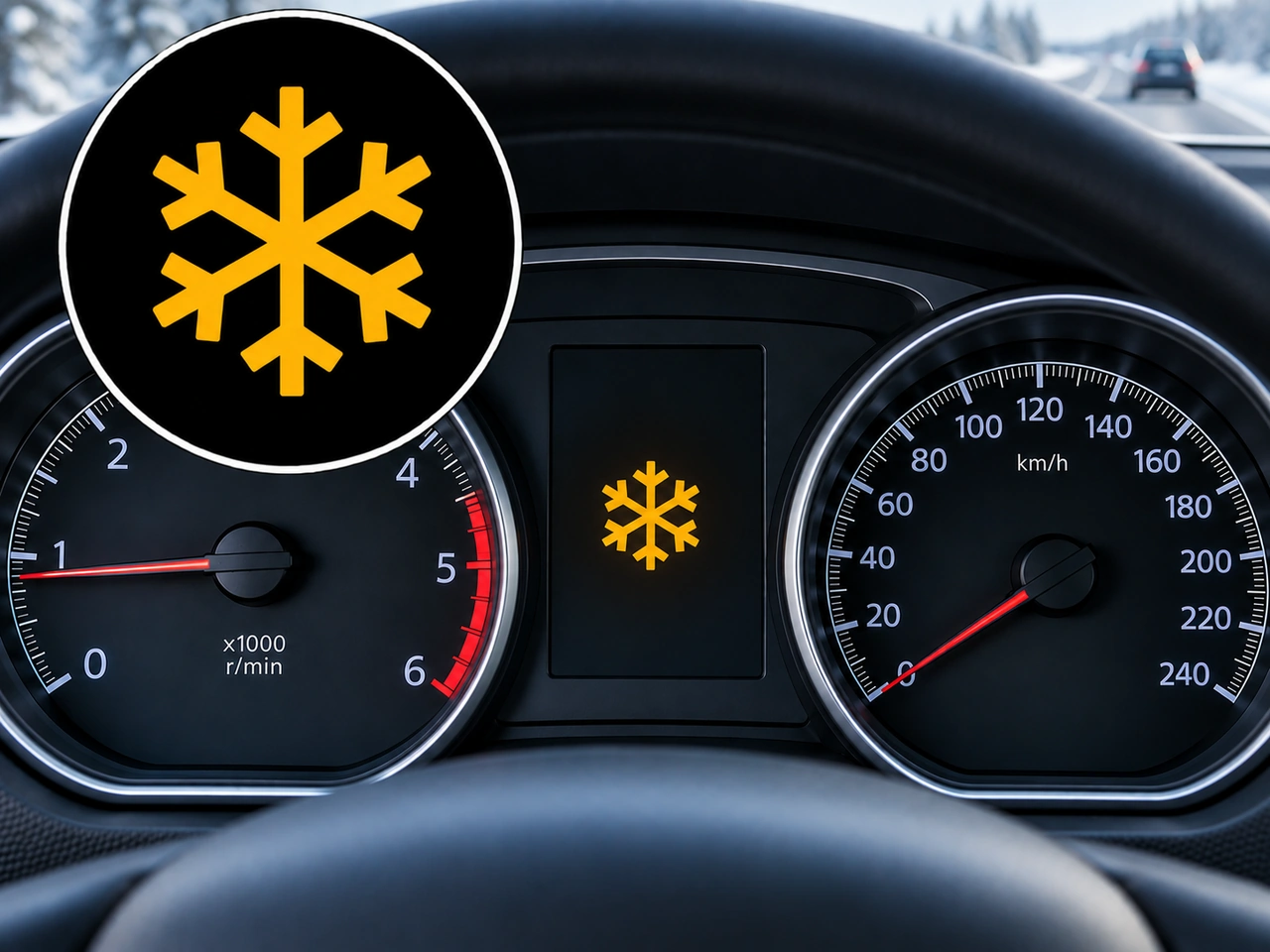
What does this dashboard symbol indicate?

543. What does this dashboard symbol indicate?

✓ Risk of icy road conditions.
Engine coolant is too cold.
The windscreen is frozen.
Air conditioning is active.

This symbol warns that the outside temperature is low enough for ice to form. Road surfaces, especially bridges and shaded areas, may be slippery even when they appear clear.

Icy-road warning symbol on the dashboard
AI-generated by Traffic-rules.com • WCIT • CC BY-SA
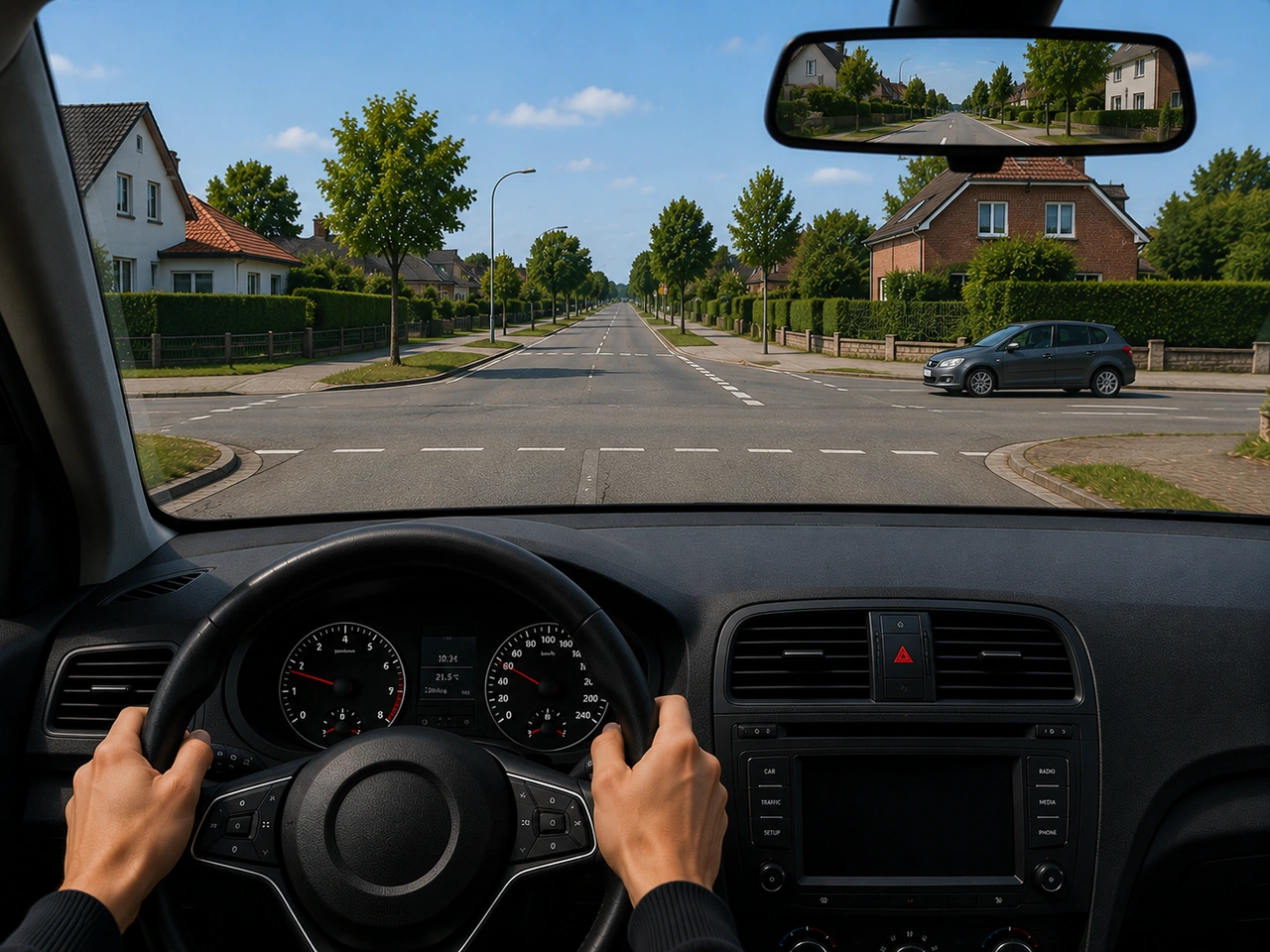
What should you do if you are unsure who has priority at a junction?

544. What should you do if you are unsure who has priority at a junction?

Enter slowly so the other driver has time to react.
Proceed if the other driver appears to be slowing down.
✓ Slow down and proceed only when it is safe.
Check only the direction that normally has priority.

If priority is unclear, reduce speed, observe carefully, and avoid entering the junction until you are sure it is safe.

Vehicles approaching a junction with uncertain priority
AI-generated by Traffic-rules.com • WCIT • CC BY-SA
May you enter a railway crossing when traffic beyond it is blocked?

545. May you enter a railway crossing when traffic beyond it is blocked?

Yes, when no train is visible.
Only with the hazard lights on.
Only if you remain close to the vehicle ahead.
✓ No, if you are likely to stop on the crossing.

You must not enter a railway crossing when congestion may force you to stop on the tracks, even when the signals permit you to proceed.

Traffic queue beyond a railway crossing
AI-generated by Traffic-rules.com • WCIT • CC BY-SA
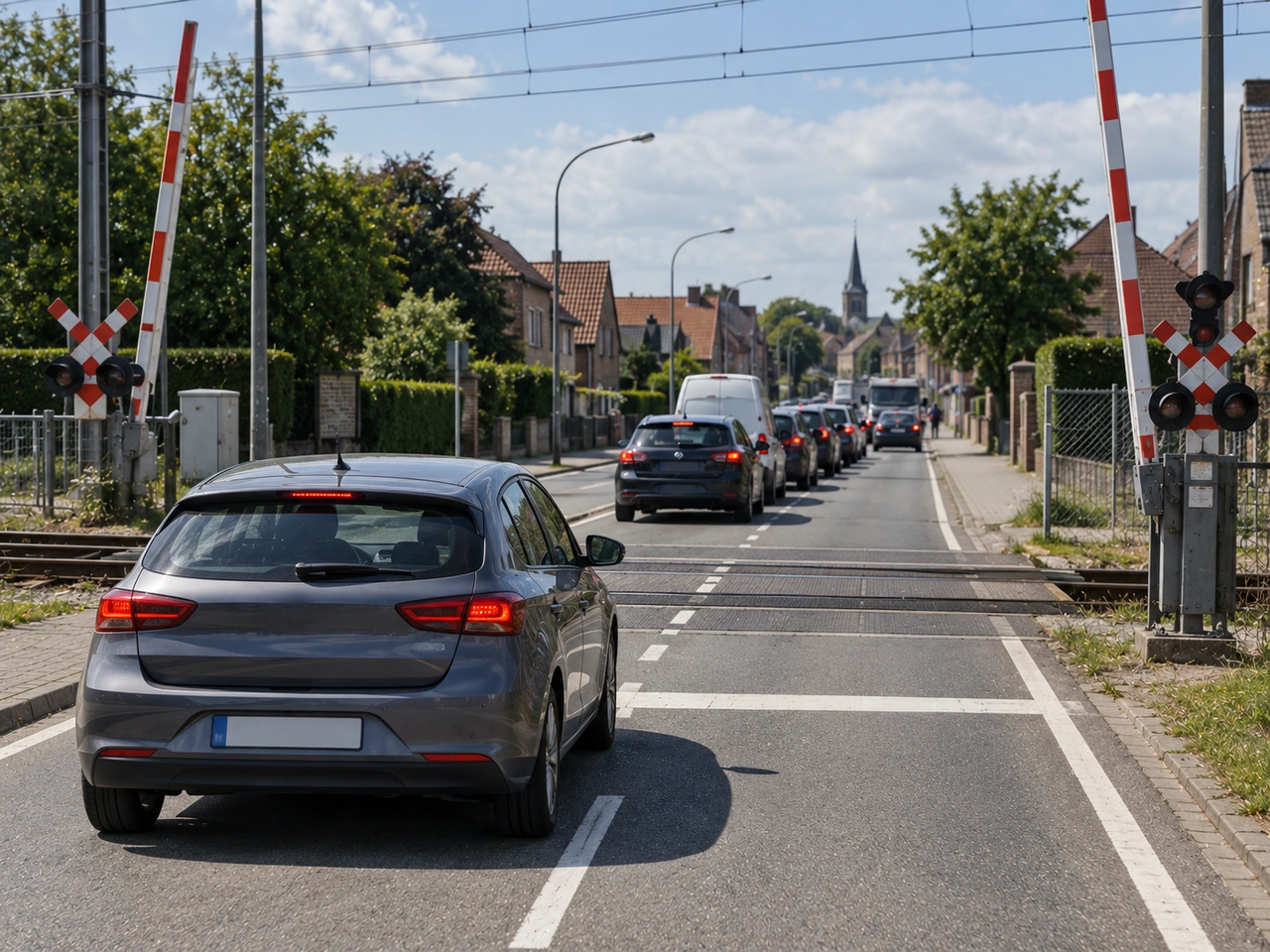
How should you leave a broken-down vehicle when traffic is passing nearby?

546. How should you leave a broken-down vehicle when traffic is passing nearby?

✓ Use the door furthest from moving traffic when it is safe to do so.
Stand beside the vehicle before moving away.
Leave through the door nearest moving traffic.
Get out immediately without checking for traffic.

Leaving through the side away from traffic reduces the risk of being struck by a passing vehicle.

Leaving a broken-down vehicle away from passing traffic
AI-generated by Traffic-rules.com • WCIT • CC BY-SA
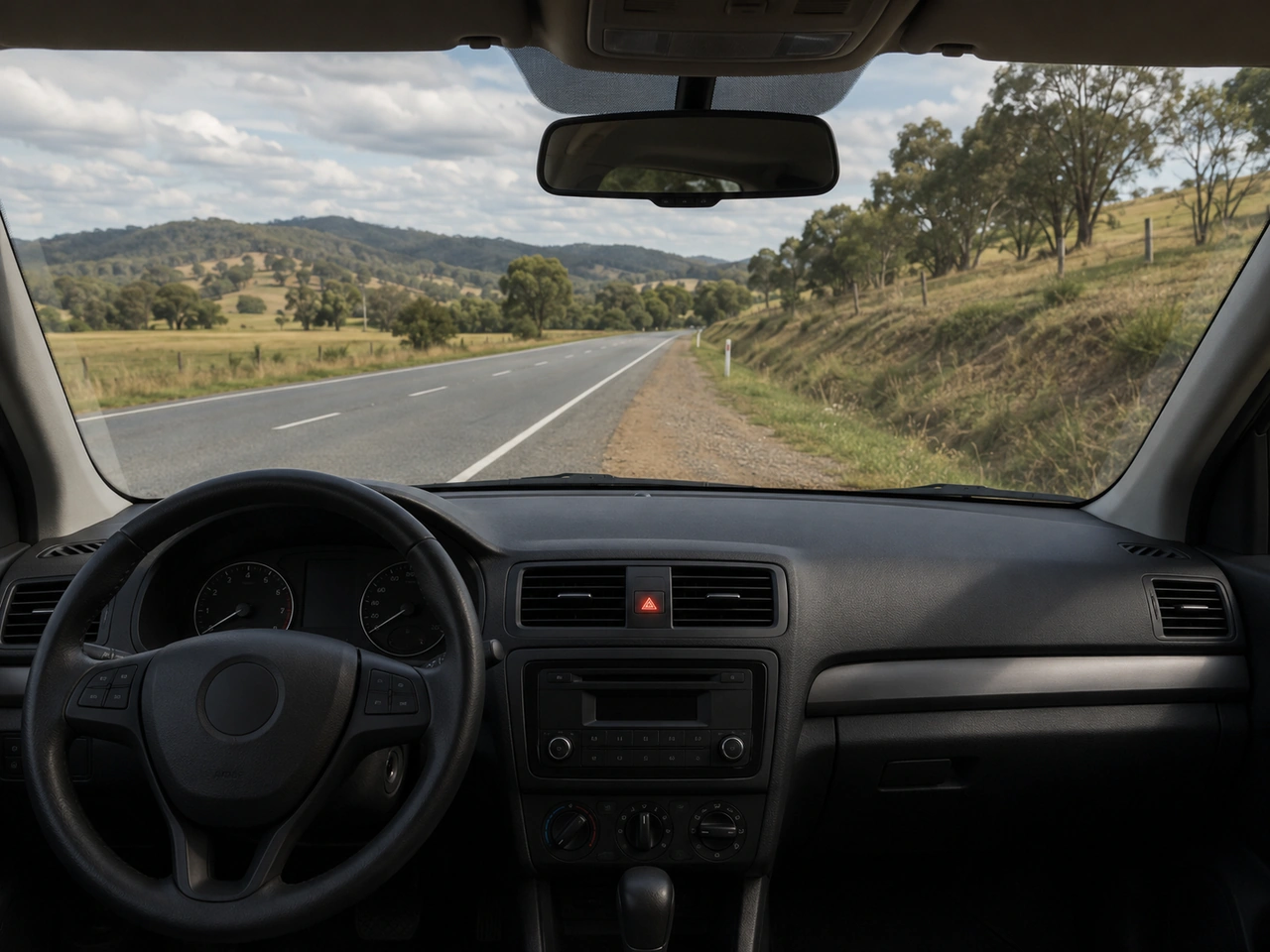
What is the minimum licence for a car with a maximum authorised mass of 3,500 kg?

547. What is the minimum licence for a car with a maximum authorised mass of 3,500 kg?

Licence C1.
Licence C.
Licence D1.
✓ Licence B.

Category B normally covers motor vehicles with a maximum authorised mass not exceeding 3,500 kg and designed to carry no more than eight passengers in addition to the driver.

Car with a maximum authorised mass of 3,500 kg
AI-generated by Traffic-rules.com • WCIT • CC BY-SA
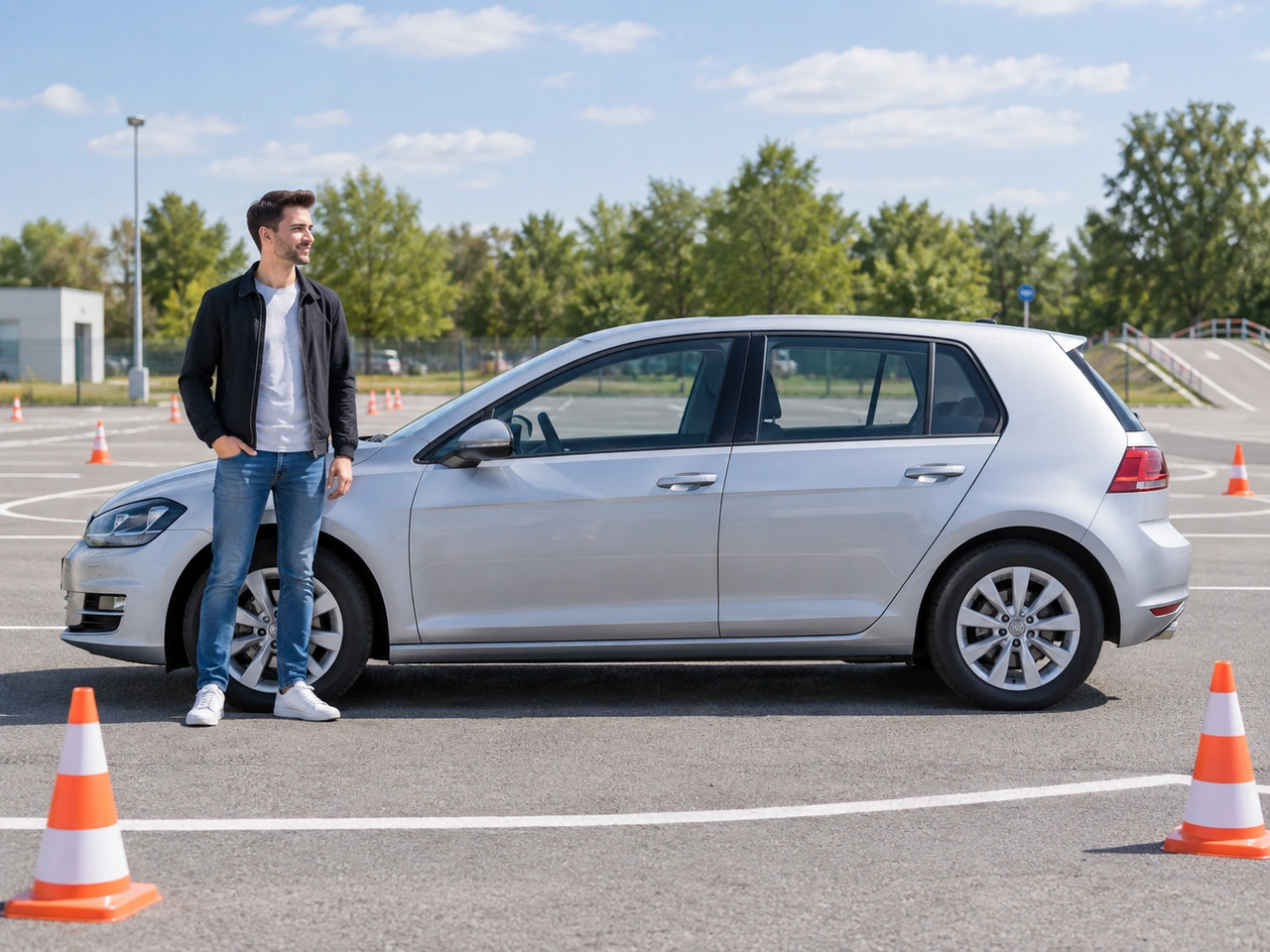
Why should you leave a much larger following distance on an icy road?

548. Why should you leave a much larger following distance on an icy road?

To make the headlights work more effectively.
✓ Because stopping distances can be much longer.
Because ice increases tyre wear.
To give the engine more time to warm up.

Tyres have much less grip on ice, so braking takes longer. Extra distance gives you more time to slow down safely.

Following distance between vehicles on an icy road
AI-generated by Traffic-rules.com • WCIT • CC BY-SA
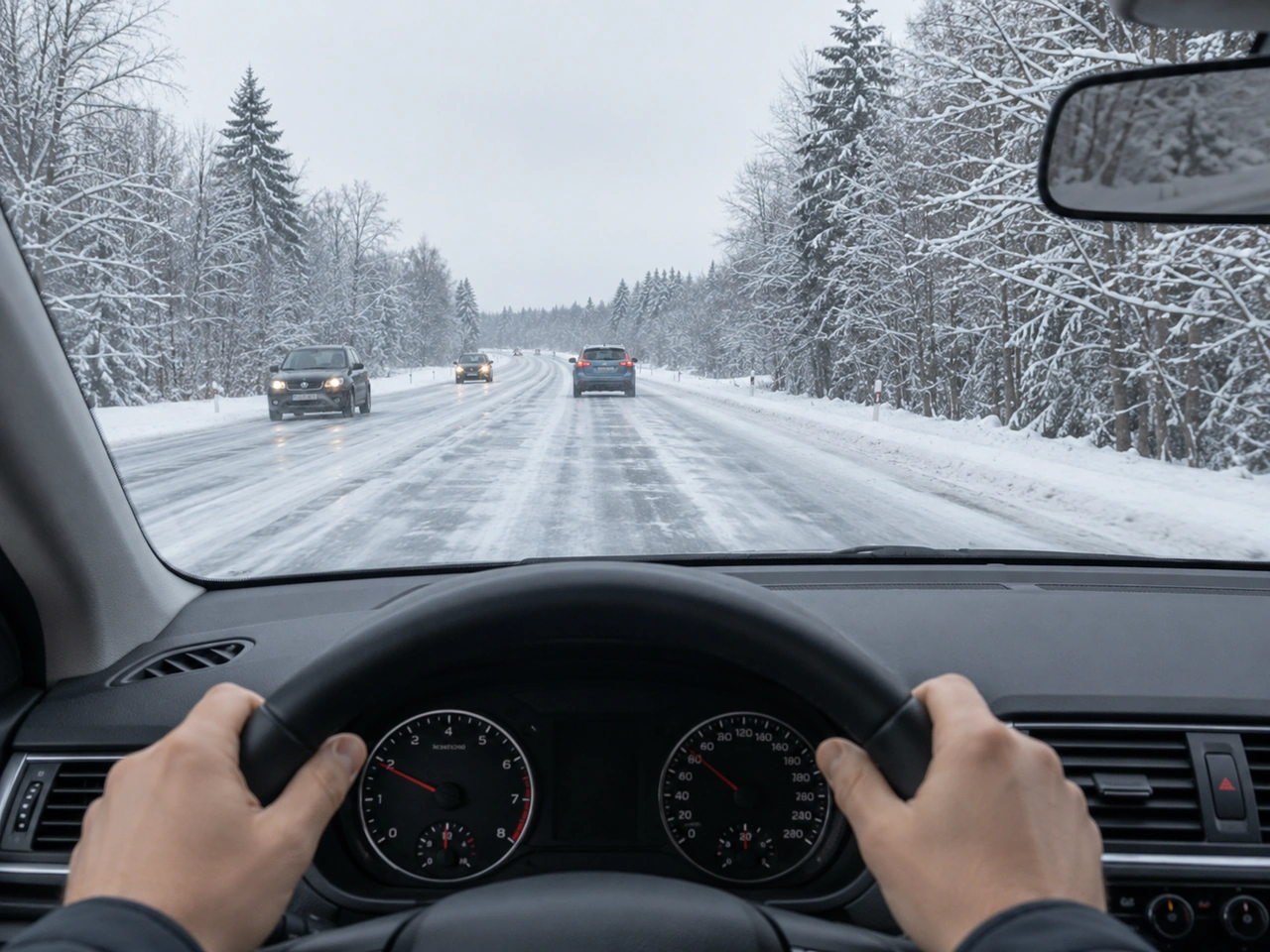
You must stop at a red traffic light.

549. You must stop at a red traffic light.

✓ True.
False.

A red traffic light means you must stop and wait until it is allowed to proceed.

Vehicle stopped at a red traffic light
AI-generated by Traffic-rules.com • WCIT • CC BY-SA
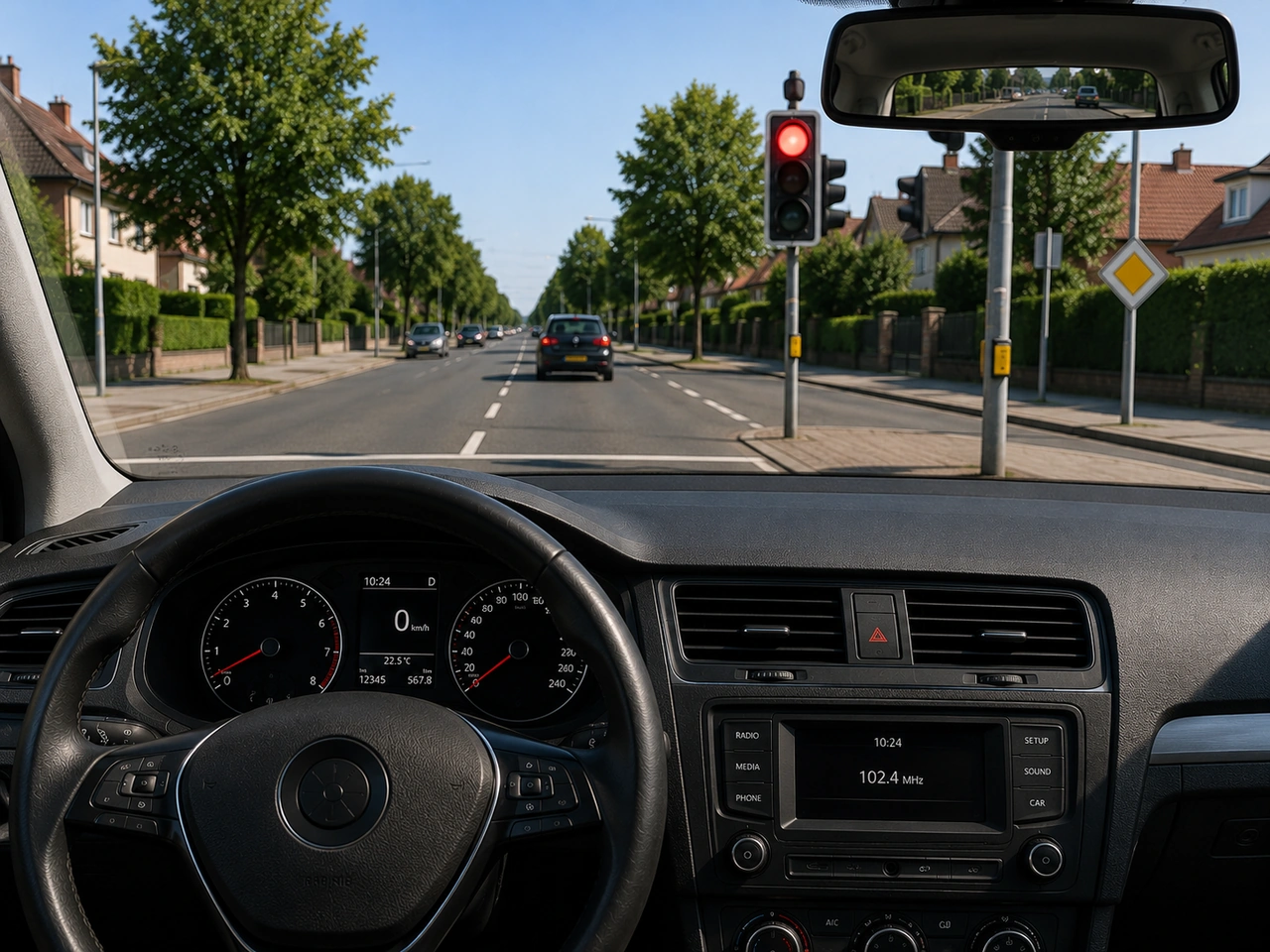
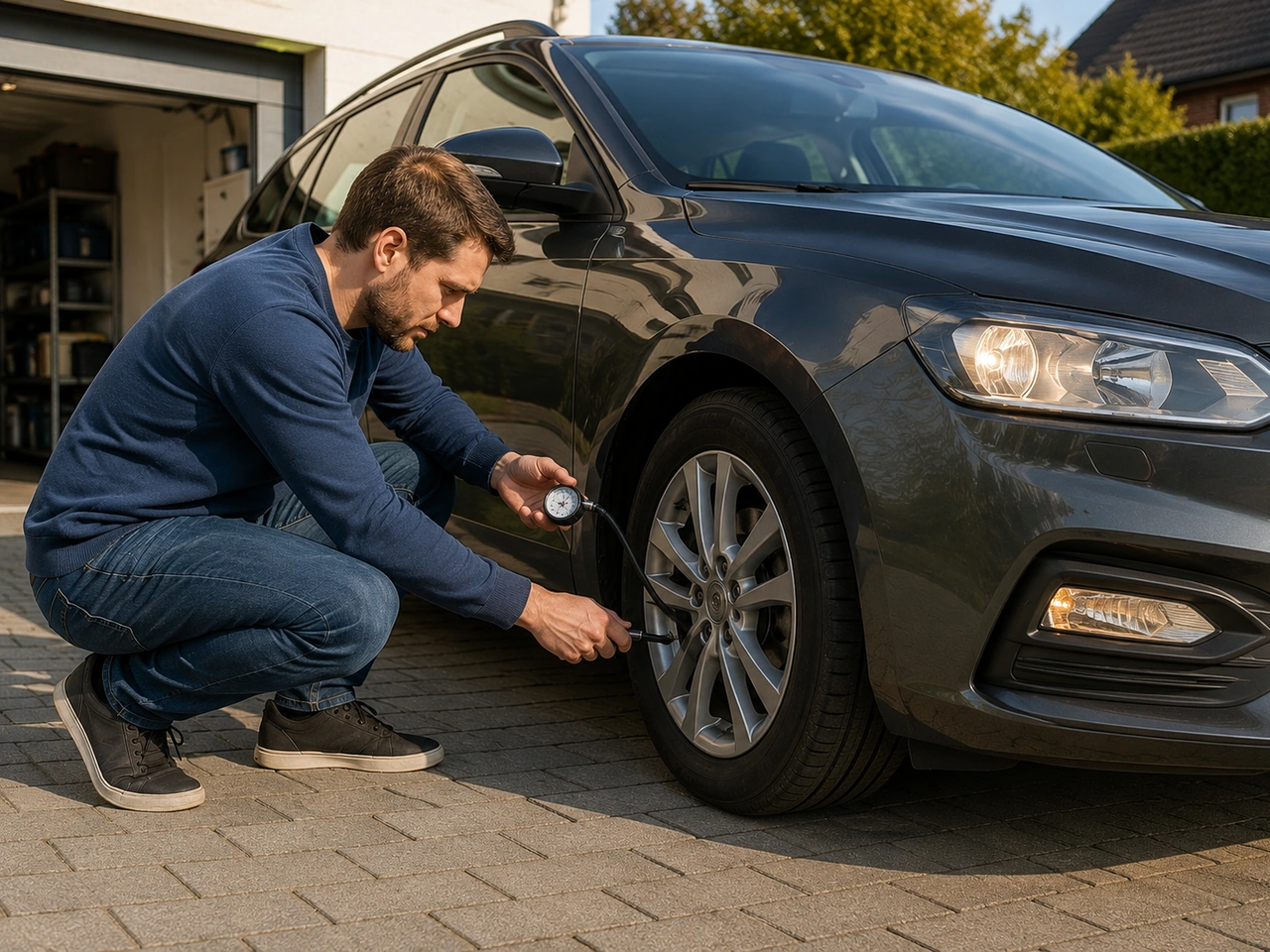
How should tyre pressure normally be checked?

550. How should tyre pressure normally be checked?

✓ When the tyres are cold, using the manufacturer's recommended pressure.
Using the maximum pressure shown on the tyre.
Only by a certified maintenance service.
Immediately after a long or high-speed journey.

Tyre pressure rises as tyres become warm. Check them when cold and use the pressure specified on the vehicle label or in the owner's manual.

Checking a vehicle's tyre pressure
AI-generated by Traffic-rules.com • WCIT • CC BY-SA