


Traffic rulesCzechia
 Traffic rules
 Czechia
1. Czechia
The Czech Republic, also known as Czechia, is a landlocked country in Central Europe, bordered by Germany, Poland, Slovakia and Austria. Traffic drives on the right. Drivers using the motorway network should be aware that passenger cars and other four-wheeled vehicles up to 3.5 tonnes generally need an electronic vignette on tolled motorway sections. Winter conditions are also an important part of driving in Czechia, particularly away from the main cities and in higher areas.
Czech is the main language used on traffic signs and is written in the Latin alphabet with distinctive diacritics such as č, š, ř and ž. In some municipalities in the northeast, especially where there is a significant Polish minority, drivers may also encounter bilingual Czech-Polish place-name signs. Foreign drivers should also pay particular attention to railway crossings, trams and local speed restrictions, as Czech traffic law contains specific rules for each.
AI-generated by Traffic-rules.com • WCIT • CC BY-SA
Which side of the road do you drive on in the Czech Republic?
Drive on the right and normally overtake on the left. On motorways and roads for motor vehicles, drivers should keep to the right except when overtaking or where traffic conditions require otherwise.
Which emergency numbers should you call in the Czech Republic?
Call 112 for the European emergency number, 150 for the fire and rescue service, 155 for emergency medical assistance and 158 for the police.
What is the legal alcohol limit for drivers in the Czech Republic?
The Czech Republic applies zero tolerance for alcohol when driving. Drivers should have no alcohol in their system when they drive.
What is the general speed limit in Czech built-up areas?
The general maximum speed is 50 km/h, unless signs indicate another limit. On a motorway or road for motor vehicles passing through a built-up area, the general maximum is 80 km/h.
What is the general speed limit outside built-up areas in the Czech Republic?
For cars, the general maximum speed on ordinary roads outside built-up areas is 90 km/h, unless signs indicate another limit.
What is the speed limit on Czech roads for motor vehicles?
Outside built-up areas, the general maximum speed on a road designated for motor vehicles is 110 km/h, unless signs indicate another limit.
What is the motorway speed limit in the Czech Republic?
The general maximum motorway speed is 130 km/h. However, a pilot scheme on the D3 motorway between approximately kilometres 84 and 131 can allow a maximum of 150 km/h when variable traffic signs display that limit. The pilot is currently scheduled to continue until the end of 2026.
Do you need a vignette to use Czech motorways?
Vehicles with at least four wheels and a maximum permissible weight of up to 3.5 tonnes generally need an electronic vignette to use tolled motorway sections. Motorcycles and trailers do not require a vignette.
Must cars use lights during the day in the Czech Republic?
Yes. Motor vehicles must use dipped headlights or daytime running lights while driving. In reduced visibility, the appropriate dipped or main headlights must be used instead of relying only on daytime running lights.
When are winter tyres mandatory in the Czech Republic?
Between 1 November and 31 March, winter tyres must be used when the road is covered with snow, ice or frost, or when such conditions can reasonably be expected during the journey. Additional requirements can apply on roads marked with a winter-equipment sign.
Are seat belts mandatory in the Czech Republic?
Seat belts are mandatory for drivers and passengers on seats equipped with them, subject to specific legal exemptions.
When must children use a child restraint in the Czech Republic?
A child who is no taller than 150 cm and weighs no more than 36 kg must generally use an approved child restraint appropriate for the child and vehicle. Once either the height or weight threshold is exceeded, the normal seat-belt rules apply.
Who must wear a helmet in the Czech Republic?
Motorcycle and moped riders and passengers must wear an approved protective helmet. Cyclists younger than 18 years must also wear a properly fastened bicycle helmet.
Can you use a mobile phone while driving in the Czech Republic?
A driver may not hold a mobile phone or other communication or recording device in the hand while driving. Hands-free use is permitted, although drivers must remain fully attentive to the road.
When must you give way to traffic approaching from the right?
At an intersection where priority is not controlled by signs, traffic lights or another special rule, drivers must generally give way to vehicles approaching from the right.
What must drivers do at pedestrian crossings in the Czech Republic?
Drivers must not endanger or obstruct a pedestrian who is already on a pedestrian crossing or who clearly intends to use it, and must slow down or stop when necessary. Pedestrians do not have absolute priority and may not step immediately in front of an approaching vehicle.
Do pedestrians have priority over trams at Czech pedestrian crossings?
No. A pedestrian must give way to a tram, even at a pedestrian crossing. The normal obligation for drivers to allow pedestrians to cross does not apply in the same way to tram drivers.
When must drivers create an emergency corridor in the Czech Republic?
When slow-moving or stationary congestion forms on a motorway or road for motor vehicles with at least two lanes in the same direction, drivers must create an emergency corridor between the leftmost lane and the lane immediately to its right.
How should drivers merge when a lane closes in the Czech Republic?
Where traffic lanes merge during congestion, drivers should use the available lanes up to the narrowing and then merge alternately using the zipper principle.
How much space must drivers leave when overtaking cyclists in the Czech Republic?
Drivers must normally leave at least 1.5 metres when overtaking a cyclist. Where the maximum permitted speed is no more than 30 km/h, a minimum distance of 1 metre is sufficient.
What is the speed limit in Czech residential and pedestrian zones?
In residential and pedestrian zones, the maximum speed is 20 km/h. Drivers must show particular consideration for pedestrians and other vulnerable road users.
What speed limit applies when approaching a railway crossing in the Czech Republic?
For the final 50 metres before a railway crossing and while crossing it, the maximum speed is normally 30 km/h. If a flashing white signal confirms that the crossing is clear, the maximum is 50 km/h.
What safety equipment should you carry in a car in the Czech Republic?
Passenger cars must generally carry an approved first-aid kit and warning triangle. A reflective garment should be kept accessible because it must be worn when a driver leaves the vehicle on the road in connection with an emergency stop. A spare wheel, wheel wrench and jack are generally required unless the vehicle qualifies for an exception, such as having run-flat tyres, a tyre-repair kit or suitable roadside-assistance coverage.

2. Motorway
A motorway is a road specially designed and signposted for motor traffic. Motorways normally have separate carriageways for opposing traffic, controlled access through designated entrances and exits, no direct access to neighbouring properties, and no level crossings with other roads, railways or paths.
Special traffic rules apply on motorways. The permitted road users, speed limits, lane rules, tolls and emergency procedures vary between countries, so drivers must follow the local traffic signs and regulations.
Wikimedia.org • RomanM82 • CC BY-SA
How can you recognise a motorway?
A motorway is normally identified by a special motorway sign at its entrance. It commonly has separate carriageways, controlled entrances and exits, and no ordinary intersections or direct access to neighbouring properties.
Who may use a motorway?
Motorways are primarily intended for motor vehicles capable of travelling safely at motorway speeds. Pedestrians, cyclists, animals and certain slow vehicles are generally prohibited, but the exact access requirements differ between countries.
What is the speed limit on a motorway?
There is no universal motorway speed limit. The applicable limit depends on the country, road section, vehicle category and driving conditions. Posted or variable speed-limit signs may replace the general national limit.
How should you enter a motorway?
Use the entrance or acceleration lane to observe motorway traffic and adjust your speed where possible. Enter only when there is a safe gap and follow the local priority and merging rules.
How should you leave a motorway?
Move into the correct lane in good time and signal when required. Enter the exit or deceleration lane before reducing your speed, unless traffic, signs or road conditions require you to slow down earlier.
Which lane should you use on a motorway?
Follow the local keep-left or keep-right rule and any lane-direction signs. Lanes closer to the centre of the motorway are commonly used for overtaking, but lane-use rules differ between countries and vehicle categories.
Can you stop on a motorway?
Voluntary stopping and parking are normally permitted only in designated parking or service areas. Drivers may still have to stop because of congestion, an emergency or another unavoidable situation.
Can you reverse or make a U-turn on a motorway?
Reversing, making a U-turn and driving against the direction of traffic are generally prohibited. If you miss an exit, continue to the next suitable exit.
What should you do if your vehicle breaks down?
Move the vehicle out of the traffic lanes when this can be done safely, activate the hazard warning lights and follow the local breakdown procedures. Leave the vehicle safely, keep away from moving traffic and use a warning triangle or safety vest where required by local law.
What is the difference between a motorway and an expressway?
A motorway normally has the highest level of access control and is governed by specific motorway rules. An expressway may have similar characteristics but may permit different road users or contain lower-standard junctions. The legal distinction varies between countries.
3. Residential area
A residential area is a street or group of streets where housing and access to local properties are the main functions. Drivers should expect pedestrians, cyclists, children, parked vehicles and vehicles entering or leaving driveways.
Some countries identify particular residential areas with traffic signs and apply special low-speed and residential-area rules. The speed limit, pedestrian rights, parking rules and permitted road users therefore depend on local signs and regulations.
Wikimedia.org • ŠJů • CC BY-SA
How can you recognise a residential area?
A residential area commonly contains homes, driveways, parked vehicles and local streets. It may also have special entrance signs, traffic-calming measures or shared road space, but its appearance and legal status differ between countries.
Is a residential area the same as a built-up area?
Not necessarily. A built-up area may include residential, commercial and industrial streets. A residential area is primarily associated with housing and local access and may form only one part of a larger built-up area.
Is every residential neighbourhood a legally designated residential zone?
No. In many countries, special residential-zone rules apply only where an official entrance sign is displayed. An ordinary neighbourhood may remain subject to the normal rules for the surrounding road or built-up area.
What is the speed limit in a residential area?
There is no universal residential-area speed limit. Some countries apply a very low limit in signposted residential or shared-space zones, while ordinary residential streets may follow the general built-up-area limit or a posted zone limit.
Do pedestrians have priority in a residential area?
The rights of pedestrians depend on the country and the type of residential area. In some signposted shared-space zones, pedestrians may use the whole road and drivers must give them special consideration. On ordinary residential streets, the normal pedestrian and crossing rules may apply.
May children play in a residential area?
Playing may be expressly permitted in certain legally designated residential or shared-space zones. This is not automatically allowed on every residential street. Drivers should nevertheless remain especially alert for children, who may enter the road unexpectedly.
Which road users may enter a residential area?
Residential areas are normally accessible to local motor traffic, cyclists and pedestrians, but additional signs may restrict certain vehicles or through traffic. A residential area is therefore not necessarily a pedestrian-only zone.
How should you drive in a residential area?
Drive at a speed that allows you to stop safely, watch both sides of the road and expect pedestrians, cyclists, children, pets and vehicles emerging from entrances. Leave enough space and avoid unnecessary acceleration, noise or aggressive overtaking.
May you overtake in a residential area?
Overtaking is not universally prohibited, but it may be restricted by local law, signs or road design. Even where it is permitted, drivers should not overtake when the limited space or presence of vulnerable road users makes it unsafe.
Where may you park in a residential area?
Follow the local parking signs, markings and general parking rules. Do not block entrances, pavements, crossings, sight lines or the passage of other road users. Special residential zones may permit parking only in designated spaces.
What is the difference between a residential area and a pedestrian zone?
Motor vehicles are normally still permitted in a residential area, although they may be subject to strict speed and parking rules. In a pedestrian zone, vehicle access is generally prohibited or limited to specific users, purposes or times.
4. Zone
A traffic zone is an area in which a traffic rule applies throughout all included roads or road sections. The rule normally begins at a zone-entry sign and remains applicable until the corresponding end-of-zone sign is passed.
Zones may regulate speed, parking, access, vehicle categories, emissions or other traffic behaviour. The signs used, the roads covered and the effect of intersections or local exceptions depend on local traffic law.
Wikimedia.org • Petr1888 • CC BY-SA
What is a traffic zone?
A traffic zone is a defined area in which a particular restriction, prohibition or obligation applies throughout the included roads rather than only at one location.
How can you recognise a traffic zone?
A traffic zone normally begins with a zone-entry sign showing the applicable rule. A corresponding end-of-zone sign indicates where that rule stops applying.
What is the difference between a zone sign and an ordinary traffic sign?
An ordinary sign usually applies to a particular road, direction, lane or section. A zone sign applies throughout a designated area, which may contain several roads and intersections.
Does a zone normally continue after an intersection?
Usually, yes. A zonal rule commonly continues through intersections until an end-of-zone sign is reached. The exact effect of intersections depends on local law.
How does a traffic zone end?
A traffic zone normally ends when you pass the corresponding end-of-zone sign. The normal road rules or another signed regulation then apply.
Can more than one rule apply inside a zone?
Yes. A zone may contain several regulations, such as a speed limit together with parking or access restrictions. Drivers must observe every applicable sign.
Can another traffic sign apply inside a zone?
Yes. A local sign may introduce a different or more restrictive rule on a particular road or section. Whether the original zonal rule resumes afterwards depends on local law and the type of regulation.
What types of traffic zones exist?
Common examples include speed zones, parking zones, low-emission zones, pedestrian zones, cycling zones, school zones and zones restricting particular vehicle categories.
Is a traffic zone the same as a built-up area?
No. A built-up area is a broader legally defined urban area. A traffic zone imposes a specific signed rule and may be located inside or outside a built-up area.
Is a traffic zone the same as a residential area?
No. A residential area describes an area mainly used for housing. It may contain one or more traffic zones, but the terms do not automatically have the same legal meaning.
Does a zonal rule apply to every road user?
Not necessarily. The sign, symbol or additional panel may limit the rule to particular vehicles, road users, times or circumstances.
What should you do when entering a traffic zone?
Observe the entrance sign carefully, identify every displayed rule and remember that the regulation may continue across several roads and intersections until the zone ends.
5. Speed limit
A speed limit is the maximum legal speed permitted on a road, lane or within a designated area. It may be established by general traffic law or indicated by fixed, variable or temporary traffic signs.
A speed limit is a maximum, not a target speed. Drivers must travel more slowly whenever traffic, visibility, weather, road conditions, vulnerable road users or the condition of the vehicle make the maximum permitted speed unsafe.
Wikimedia.org • ŠJů • CC BY
What is a speed limit?
A speed limit is the maximum legal speed permitted on a road, lane or within a designated area. It does not require drivers to travel at that speed.
How can you recognise a speed limit?
A speed limit is commonly displayed as a number on a regulatory traffic sign. General limits may also apply automatically because of the country, road category, vehicle type or surrounding area, even when no speed-limit sign is present.
Is the speed limit a recommended driving speed?
No. It is the highest speed legally permitted under suitable conditions. Drivers must reduce their speed whenever travelling at the limit would be unsafe.
Can you drive more slowly than the speed limit?
Yes. Drivers should travel more slowly when required by traffic, weather, visibility, road conditions or nearby vulnerable road users. Driving unnecessarily slowly may nevertheless be prohibited when it obstructs normal traffic.
Does the same speed limit apply to every vehicle?
Not always. Lower limits may apply to heavy vehicles, buses, vehicles towing trailers, novice drivers or other vehicle categories. The lowest applicable limit must be respected.
What is a default speed limit?
A default speed limit applies automatically to a particular road type or area when no traffic sign indicates another limit. Examples include general limits for motorways, built-up areas or roads outside built-up areas.
Does a posted speed limit replace the default limit?
Usually, yes. A legally placed speed-limit sign normally introduces another maximum speed, although lower vehicle-specific or special-road limits may continue to apply.
When does a speed-limit sign take effect?
A speed restriction normally begins at the location of the sign. Drivers should reduce their speed before passing the sign so that they are already travelling within the limit when it takes effect.
When does a speed limit end?
A signed limit may end at an intersection, an end-of-limit sign, another speed-limit sign or the beginning or end of a legally defined area. The exact rule differs between countries.
Does an intersection end a speed limit?
This depends on local law. An ordinary speed restriction may end at an intersection in some countries, while a zonal speed limit normally continues across intersections until an end-of-zone sign.
What is a speed zone?
A speed zone is an area in which the displayed maximum speed applies throughout all included roads. The limit normally remains in force until the corresponding end-of-zone sign.
What is a variable speed limit?
A variable speed limit is displayed on an electronic or changeable sign and may be adjusted according to congestion, weather, incidents or roadworks. When activated, it has the same legal importance as another applicable regulatory speed sign.
Can different lanes have different speed limits?
Yes. Signs positioned above individual lanes may impose different limits on those lanes. Drivers must observe the limit applying to the lane they use.
Can a temporary speed limit apply?
Yes. Temporary limits may be introduced near roadworks, collisions, hazards or special events. Drivers must follow the temporary traffic signs and instructions that are legally in force.
May you exceed the speed limit while overtaking?
No. Overtaking does not normally permit a driver to exceed the applicable maximum speed. The manoeuvre must be completed safely while respecting the speed limit.
Do poor conditions change the legal speed limit?
Some countries impose specific lower limits in rain, snow or other conditions. Even where the numerical limit does not change, drivers must reduce their speed sufficiently for the conditions.
6. Advisory speed
An advisory speed is a recommended speed for a particular road section or hazard rather than a legally imposed maximum speed. It may be shown near bends, junctions, steep gradients, roadworks or other locations where a lower speed can help drivers negotiate the road safely.
Drivers should treat an advisory speed as guidance for safe driving conditions and should travel even more slowly when weather, visibility, traffic or road conditions require it. A separate legally binding speed limit must still be obeyed.

Wikimedia.org • Krystian Kuchta • CC BY-SA
What is an advisory speed?
An advisory speed is a recommended speed intended to help drivers negotiate a road section or hazard safely.
Is an advisory speed the same as a speed limit?
No. An advisory speed normally provides guidance, while a regulatory maximum-speed sign establishes a legally enforceable speed limit.
Can you drive slower than an advisory speed?
Yes. Drivers should reduce their speed further whenever road, traffic, visibility or weather conditions make the recommended speed unsafe.
7. Footpath
A footpath is a path or part of a road intended primarily for pedestrian traffic. It may run alongside a road, through a park or residential area, or independently from roads used by motor vehicles.
A footpath may be reserved exclusively for pedestrians or may form part of a shared route with cyclists or other permitted users. Access, priority and permitted users depend on the traffic signs and local regulations applying to the path.
Wikimedia.org • ŠJů • CC BY
What is a footpath?
A footpath is a path or part of a road intended primarily for pedestrians.
Is a footpath the same as a pavement?
Not necessarily. A pavement or sidewalk normally runs alongside a roadway, while a footpath may follow an independent route or pass through an area without an adjacent roadway.
Who may use a footpath?
Pedestrians are the primary users. Depending on the signs and local regulations, cyclists or other categories may also be permitted on shared paths.
Can cyclists use a pedestrian-only footpath?
Normally no when the path is specifically reserved for pedestrians. Cyclists may have to dismount unless local rules or signs allow cycling.
Can someone walking a bicycle use a footpath?
In many countries, a person walking a bicycle by hand is treated as a pedestrian and may therefore use pedestrian facilities, subject to local rules.
Can motor vehicles use a footpath?
Normally no when the route is reserved for pedestrians. Limited access may sometimes be authorised for maintenance, emergency or other specific purposes.
Can a footpath be shared with cyclists?
Yes. A route may be designated as a shared pedestrian-and-cycle path. Users must follow any signs indicating how the space should be shared.
Do pedestrians have priority on a shared footpath?
This depends on the local traffic rules and type of shared facility. Cyclists and other permitted users should always avoid endangering pedestrians.
Can a footpath cross a roadway?
Yes. Where a path crosses a roadway, pedestrians must follow the applicable crossing, priority and traffic-light rules.
Can a footpath be part of the public road?
Yes. Pedestrian paths can form part of the wider public-road network even though ordinary motor traffic may not use them.
Can a footpath have its own traffic sign?
Yes. Many countries use a specific pedestrian symbol to indicate a path reserved or compulsory for pedestrians.
What should cyclists do when a footpath is not open to cycling?
Use the appropriate cycle facility or roadway. Where local law permits it, a cyclist may also dismount and continue as a pedestrian.
8. Bike path
A bike path is a part of a road or a separate route intended primarily or exclusively for people riding bicycles. It may be physically separated from motor traffic, marked on the road surface or identified by traffic signs.
Bike paths may be one-way, two-way or shared with other road users. The permitted users, direction of travel, priority rules and obligation to use the path depend on local traffic signs and regulations.
Wikimedia.org • Trávníkář Stanouš • CC BY-SA
How can you recognise a bike path?
A bike path may be identified by a bicycle traffic sign, bicycle symbols, coloured surfacing or road markings. It may run beside the carriageway or follow a completely separate route.
Is a bike path the same as a bike lane?
Not always. A bike lane is normally marked directly on or beside the carriageway, while a bike path may be physically separated from motor traffic. The terminology and legal distinction vary between countries.
Must cyclists use a bike path?
This depends on local law and the signs displayed. Some bike paths are mandatory, while others are optional. Cyclists may also be permitted to leave a path to turn, overtake or avoid an obstruction.
Can a bike path carry traffic in both directions?
Yes. Some bike paths are two-way, but others may be used only in the direction indicated by signs, markings or their position beside the road. Cyclists should not assume that every path permits travel in both directions.
May pedestrians use a bike path?
Pedestrians may use a bike path where it is designated as a shared-use path or where local law permits it. On a cycle-only path, pedestrians may be prohibited or permitted only when no suitable pedestrian facility is available.
May mopeds or speed pedelecs use a bike path?
This depends on the country, vehicle category, road speed and traffic signs. Some bike paths permit or require certain mopeds or speed pedelecs, while others are reserved exclusively for ordinary bicycles.
May motor vehicles use a bike path?
Normally not. Motor vehicles may cross a bike path to enter another road or property where this is permitted, but they must follow the applicable priority rules and must not endanger path users.
Who has priority where a vehicle crosses a bike path?
Priority depends on the road layout, signs, signals and local law. Drivers crossing a continuous bike path commonly have to give way to its users, but cyclists approaching a separate cycle crossing may not automatically have priority before entering it.
Does a cyclist always have priority at a cycle crossing?
No. A marked cycle crossing does not universally give an approaching cyclist priority. Cyclists should enter cautiously and observe approaching traffic unless signs, signals or local rules clearly give them priority.
Is there a speed limit on a bike path?
Some countries or local authorities impose specific limits, particularly on shared paths. Even without a posted limit, cyclists must travel at a safe and considerate speed for the width, visibility and number of other users.
May you stop or park on a bike path?
Normally not. Stopping or parking on a bike path can force cyclists into motor traffic and may be expressly prohibited by law.
What should cyclists do when passing pedestrians?
Reduce speed, give a clear warning where appropriate and leave sufficient space. Pedestrians may change direction unexpectedly, especially on a shared path.
What should cyclists do when a bike path is blocked?
Slow down and check surrounding traffic before leaving the path. Avoid the obstruction safely and return to the bike path when permitted and practical.
Can cyclists ride side by side on a bike path?
This depends on local law and the available width. Even where riding side by side is permitted, cyclists must not block, endanger or unnecessarily hinder other path users.
What is the difference between a bike path and a shared-use path?
A bike path is intended primarily or exclusively for cycling. A shared-use path is legally intended for cyclists together with pedestrians or other indicated road users, who must use the space considerately.
9. Shared-use path
A shared-use path is a path or part of a road intended for use by both pedestrians and cyclists. Unlike facilities where pedestrians and cyclists have clearly separated sections, users of a shared-use path normally travel within the same general space.
Because users may travel at very different speeds, cyclists should approach pedestrians carefully, adapt their speed and leave sufficient space when passing. The permitted users, priority rules and any speed restrictions depend on the local traffic signs and regulations.

What is a shared-use path?
A shared-use path is a path or part of a road intended to be used by both pedestrians and cyclists.
Is a shared-use path the same as a cycle path?
Not necessarily. A cycle path is primarily intended for cyclists, while a shared-use path is specifically intended to accommodate pedestrians and cyclists together.
Do pedestrians and cyclists have separate sides on a shared-use path?
Not always. On a genuinely shared path, both categories may use the same space. Other facilities may divide pedestrians and cyclists into separate sections using signs, markings or physical separation.
Should cyclists slow down near pedestrians?
Yes. Cyclists should adapt their speed when approaching or passing pedestrians and leave sufficient space to avoid creating danger or discomfort.
Can cyclists ring a bell before passing pedestrians?
Yes, where appropriate. An audible warning can help alert pedestrians before a cyclist passes, but it should be used considerately and does not give the cyclist priority.
Do cyclists automatically have priority over pedestrians?
No. The applicable priority and conduct rules depend on local law. On a shared facility, cyclists should expect pedestrians to move within the available space.
Can mopeds use a shared-use path?
This depends on the signs and local vehicle classifications. Some shared facilities are limited to pedestrians and bicycles, while others also permit specified moped categories.
Can speed pedelecs use a shared-use path?
This depends on local law. Because speed pedelecs can travel substantially faster than ordinary bicycles, some countries or facilities exclude them from pedestrian-and-cycle shared paths.
Can motor vehicles use a shared-use path?
Normally no. Motor vehicles may use such a path only where a specific exception or local rule permits access, for example for maintenance or emergency purposes.
Can a shared-use path cross a roadway?
Yes. At crossings, pedestrians and cyclists must follow the applicable traffic lights, priority signs, road markings and crossing rules.
Can a shared-use path be two-way?
Yes. Many shared-use paths carry pedestrians and cyclists travelling in both directions. Users should therefore remain alert for approaching traffic from ahead as well as users travelling in the same direction.
What should cyclists do when a shared-use path is crowded?
Reduce speed and be prepared to stop. Crowded conditions may make normal cycling speed unsafe even when no specific lower speed limit is posted.
10. Pedestrian warning
A pedestrian warning is a traffic warning indicating that pedestrians may be crossing or entering the roadway ahead. It is commonly used near pedestrian crossings or other locations where drivers need advance notice of frequent pedestrian activity.
Drivers approaching a pedestrian warning should reduce speed when necessary, watch carefully for pedestrians and be prepared to stop. The design of the warning sign and the priority rules at the crossing vary between countries.

Wikimedia.org • ŠJů • CC BY-SA
What does a pedestrian warning mean?
A pedestrian warning alerts drivers that pedestrians may be crossing or entering the road ahead.
Where are pedestrian warning signs commonly used?
They are commonly placed near pedestrian crossings or other locations with significant pedestrian activity.
How should you react to a pedestrian warning?
Reduce speed when necessary, watch both sides of the road and be prepared to give way or stop for pedestrians according to the applicable traffic rules.
11. Pedestrian zone
A pedestrian zone is an area consisting of one or more streets that are reserved primarily for pedestrians. Motor-vehicle access is normally prohibited or restricted to authorised users, particular purposes or specified times.
Pedestrians may usually use the full width of the available road space. Rules concerning cyclists, deliveries, public transport, vehicle speed, stopping and parking depend on local traffic signs and regulations.
Wikimedia.org • ŠJů • CC BY-SA
What is a pedestrian zone?
A pedestrian zone is an area where pedestrians are the principal road users and ordinary motor-vehicle access is prohibited or strictly restricted.
How can you recognise a pedestrian zone?
A pedestrian zone is normally identified by a special entrance sign. An end sign indicates where the pedestrian-zone rules stop applying.
Is a pedestrian zone the same as a pavement?
No. A pavement is a part of a road intended for pedestrians. A pedestrian zone may include the entire width of one or more streets, squares or other public spaces.
Is a pedestrian zone completely free of vehicles?
Not always. Emergency vehicles, maintenance vehicles, public transport, delivery vehicles, residents or other authorised traffic may be permitted under local rules.
May cyclists enter a pedestrian zone?
This depends on the traffic signs and local law. Cycling may be permitted at all times, during specified hours or not at all. Cyclists who are not permitted to ride may normally walk while pushing their bicycles.
Must cyclists give way to pedestrians?
Where cycling is permitted, cyclists must normally adapt their speed and avoid hindering or endangering pedestrians. They may be required to dismount when the zone is crowded.
May electric scooters enter a pedestrian zone?
This depends on how electric scooters are legally classified and on the signs displayed. They may be treated as pedestrians at very low speeds, as cyclists or as another vehicle category.
May pedestrians use the whole street?
Usually, yes. Pedestrians may generally use the full width of the pedestrian zone, although marked sections may be reserved for authorised vehicles, cyclists or public transport.
Do pedestrians have priority over authorised vehicles?
Authorised drivers must normally travel cautiously, leave pedestrians sufficient space and stop when necessary. The precise priority rule depends on local law.
What is the speed limit for authorised vehicles?
There is no universal numerical limit. Many countries require authorised vehicles to travel at walking pace or another very low speed.
May children play in a pedestrian zone?
Playing may be permitted because the area is primarily reserved for pedestrians, but this depends on local law. Children must still be supervised where authorised vehicles, cyclists or public transport are present.
May vehicles enter for deliveries?
Deliveries may be permitted during specified hours or under particular access conditions. Drivers must observe the information displayed at the entrance.
May taxis enter a pedestrian zone?
Taxis may be permitted to enter for passenger collection or drop-off, but access may be restricted to certain destinations, times or permit holders.
May you stop or park in a pedestrian zone?
Parking is normally prohibited or limited to specially authorised places. Brief stopping for authorised loading, unloading or passenger access may be permitted under local rules.
Does an intersection end a pedestrian zone?
Not necessarily. A pedestrian zone may include several connected streets and intersections. Its rules normally continue until the corresponding end sign is passed.
What is the difference between a pedestrian zone and a residential shared-space area?
A pedestrian zone is primarily reserved for pedestrians and usually restricts motor traffic. A residential shared-space area normally permits general local traffic but imposes very low speeds and special pedestrian and parking rules.
When do the pedestrian-zone rules end?
The special rules normally end at an end-of-pedestrian-zone sign. The ordinary rules of the surrounding road or another signed zone then apply.
12. Speed bump
A speed bump is a raised traffic-calming device placed across all or part of a road to make drivers reduce their speed. It is commonly used near homes, schools, crossings, parking areas and other places where low vehicle speeds are important.
Speed bumps vary in shape, height and legal status. Drivers should approach them at a low, controlled speed and follow any warning signs or speed limits that apply.
Wikimedia.org • ŠJů • CC BY-SA
What is the purpose of a speed bump?
A speed bump is intended to physically reduce vehicle speeds. It encourages drivers to slow down in places where pedestrians, cyclists, children or local traffic may be present.
How can you recognise a speed bump?
A speed bump is a raised section extending across all or part of the road. It may be marked with contrasting paint, road markings or warning signs to make it more visible.
Is a speed bump the same as a speed table?
No. A speed bump or speed hump normally has a rounded profile. A speed table has ramps leading to a longer, flat raised section that may contain an intersection or pedestrian crossing.
Is a speed cushion the same as a speed bump?
No. A speed cushion is a narrower raised device that does not cover the full width of a traffic lane. Its design may allow buses and emergency vehicles to pass with less disturbance while still slowing smaller vehicles.
Is there a universal speed limit over a speed bump?
No. The legal speed depends on the country, traffic signs and road type. Even when no special limit applies, drivers must cross the device at a speed that is safe for the road, vehicle and passengers.
How should you approach a speed bump?
Check surrounding traffic, reduce your speed smoothly and approach in a straight line where possible. Avoid sudden braking immediately before the bump.
Should you brake while crossing a speed bump?
Most of the necessary braking should be completed before reaching the raised surface. Cross at a steady, low speed and avoid harsh braking or acceleration while the wheels are on the device.
Should you drive across a speed bump at an angle?
Normally not. Cross in the normal direction of the traffic lane unless the road layout requires otherwise. Driving diagonally may place the vehicle in the path of approaching or overtaking traffic.
May motorcycles and bicycles use a speed bump?
Yes. Riders should reduce speed, keep the vehicle stable and cross as directly as possible. Painted or wet raised surfaces may provide less grip.
Do pedestrians have priority at a speed bump?
Not automatically. A speed bump does not by itself create a pedestrian crossing. Pedestrian priority depends on crossings, traffic signals, signs and local law.
Does a speed bump change priority at an intersection?
No. The presence of a raised surface does not normally change the priority rules. Drivers must continue to follow traffic signs, signals and the ordinary intersection rules.
May you overtake on a speed bump?
Overtaking may be restricted by local law or signs. Even where it is not expressly prohibited, drivers should avoid overtaking when the raised surface, limited space or nearby vulnerable road users make the manoeuvre unsafe.
May you stop or park on a speed bump?
This depends on local law. Stopping or parking may be prohibited because the vehicle could obstruct visibility, traffic flow or the purpose of the traffic-calming device.
Can a speed bump damage a vehicle?
A correctly designed speed bump should be crossed safely at an appropriate speed. Crossing too quickly may damage tyres, wheels, suspension, bodywork or cargo and may cause passengers discomfort.
Does the road speed limit change after a speed bump?
Not necessarily. A special limit may apply only to the raised device, while a signed speed restriction or speed zone may continue beyond it. Drivers must follow the applicable signs and local rules.
Why do buses and emergency vehicles sometimes avoid speed bumps?
Raised devices can affect passenger comfort, emergency response and large vehicles. Some roads therefore use speed tables, cushions or other traffic-calming measures designed to reduce these effects.
13. Customs
Customs is the government authority responsible for controlling goods entering or leaving a country or customs territory. In road traffic, a customs checkpoint is a place where drivers may be required to stop so officers can inspect the vehicle, luggage, cargo and relevant documents.
Customs controls may take place at borders, ports, ferry terminals, airports or inland control locations. Drivers must follow all traffic signs, lane signals, barriers and instructions from customs officers. Declaration requirements depend on the countries involved and on the type, value, quantity and intended use of the goods being carried.
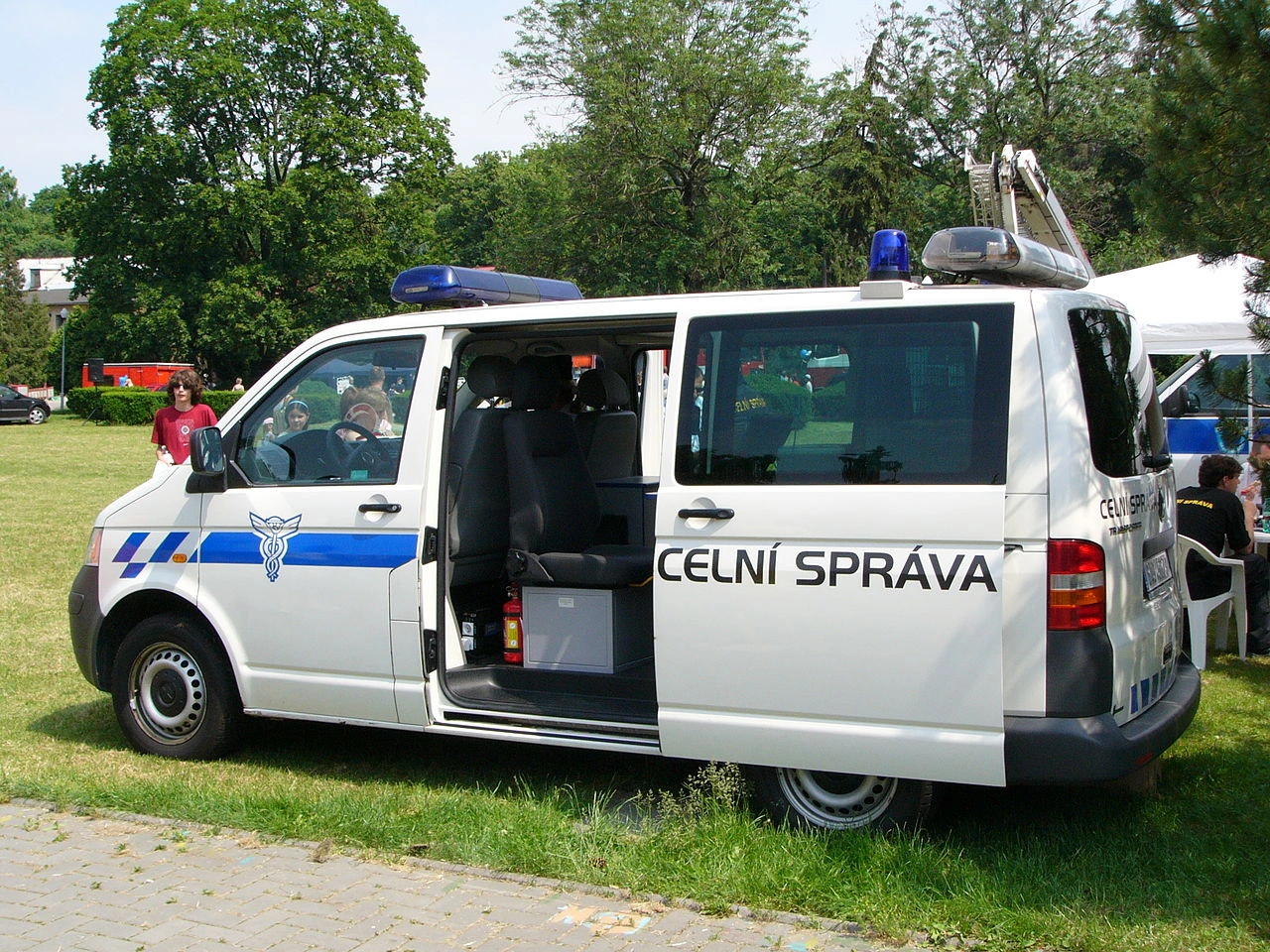
Wikimedia.org • Michal Maňas • CC BY
What is customs?
Customs is the government service that controls goods entering or leaving a country or customs territory, collects applicable duties and taxes, and enforces restrictions on prohibited or regulated goods.
What is a customs checkpoint?
A customs checkpoint is a control point where drivers and passengers may be required to stop, declare goods and present documents. Vehicles, luggage and cargo may be inspected in accordance with local law.
How can you recognise a customs checkpoint?
It may be indicated by signs displaying words such as Customs, Douane, Zoll or another local-language equivalent. Barriers, traffic lights, lane arrows and instructions from officers may also control access.
Must you stop at a customs sign?
Yes, when the sign or officer requires it. Reduce speed, enter the indicated lane and stop at the line, barrier or place shown.
Is customs the same as passport control?
No. Customs primarily controls goods, money and cargo. Passport or immigration control concerns people, identity documents and permission to enter or leave a territory. Both controls may take place at the same border facility.
Is a customs border always the same as a national border?
No. Several countries may form a customs union with no routine customs formalities between them. Some territories may also have a different customs status from the country to which they belong.
Does every border have a permanent customs checkpoint?
No. Some borders have permanent facilities, while others have mobile, temporary or selective controls. Borders within a customs union may have no routine customs checkpoint.
Can customs checks take place away from a border?
Yes. Depending on local law, checks may occur at ports, ferry terminals, airports, warehouses, inspection areas or inland road-control locations.
What should you do when approaching customs?
Reduce speed, observe the lane signs and be prepared to stop. Keep the required identification, vehicle, travel and goods documents accessible and follow the officers’ instructions.
Which documents may customs request?
Customs may request identification, vehicle documents, receipts, invoices, transport papers, customs declarations, permits or proof of ownership, depending on the journey and goods carried.
Which goods must be declared?
Goods exceeding duty-free allowances, commercial goods and certain restricted products may require a declaration. The applicable rules depend on the customs territory, journey, quantity, value and intended use.
What do red and green customs channels mean?
Where these channels are used, the red channel is generally for travellers who have goods to declare or need assistance. The green channel is for travellers who believe they have nothing that must be declared. Using the green channel does not prevent an inspection.
Can customs inspect your vehicle or luggage?
Yes, subject to local law. Officers may examine luggage, cargo spaces, vehicle compartments and accompanying documents to verify that customs rules are being followed.
Does duty-free mean that goods never need to be declared?
No. Duty-free allowances normally apply only within specified values, quantities and conditions. Restricted goods or quantities exceeding an allowance may still require declaration and payment.
Must cash be declared?
Many countries require travellers carrying cash or other monetary instruments above a specified amount to make a declaration. The threshold, definition of cash and procedure differ between customs territories.
Do personal belongings count as imported goods?
Ordinary personal belongings used during a journey are often admitted without duties, but newly purchased, high-value, commercial or restricted goods may be subject to special requirements.
What rules apply to commercial cargo?
Commercial goods normally require customs documentation and may be subject to duties, taxes, inspections, permits, origin rules and transit procedures. The driver must carry the documents required for the shipment.
What are restricted goods?
Restricted goods may include certain foods, plants, animals, medicines, weapons, cultural objects, protected species, counterfeit products and hazardous materials. Requirements vary by country.
What happens if goods are not declared?
Undeclared goods may be detained or seized, and the traveller may have to pay duties, taxes, fines or other penalties. Serious cases may lead to criminal proceedings.
Whose instructions should you follow at a customs checkpoint?
Follow the instructions of authorised customs, police and border officers, together with traffic lights, barriers, lane signals and road signs.
14. Slope
A slope is a section of road that rises or descends noticeably. A steep slope can affect vehicle speed, braking distance, traction, visibility and the ability of heavy or low-powered vehicles to maintain a steady speed.
Warning signs may indicate a steep ascent or dangerous descent and may show the gradient as a percentage. Drivers should adjust their speed early, select a suitable gear and remain prepared for slow vehicles, bends and changing road conditions.
Wikimedia.org • donald judge • CC BY
What is a road slope?
A road slope is a section of road that rises or descends over a particular distance. It may also be called a gradient, incline or decline.
How can you recognise a steep slope?
A steep slope may be indicated by a warning sign showing an ascending or descending road. The sign may also display the gradient as a percentage.
What does a gradient of 10% mean?
A gradient of 10% means that the road rises or falls approximately 10 metres for every 100 metres travelled horizontally. It does not mean that the road is inclined at 10 degrees.
What is the difference between an ascent and a descent?
An ascent rises in the direction of travel, while a descent falls in the direction of travel. The same section of road is therefore an ascent in one direction and a descent in the other.
Does a slope warning sign impose a speed limit?
Not normally. It warns of a hazard rather than setting a numerical limit. Drivers must still respect the applicable speed limit and reduce their speed further when necessary.
How should you approach a steep descent?
Reduce speed before the descent, select a suitable gear and maintain a safe following distance. Avoid allowing the vehicle to gain excessive speed.
Which gear should you use when descending?
Use a gear that provides sufficient engine braking and helps keep the vehicle at a controlled speed. The appropriate gear depends on the vehicle, gradient and road conditions.
Should you coast downhill in neutral?
No. Coasting reduces engine braking and may make it harder to control the vehicle’s speed. Keep the transmission engaged while descending.
Why should you avoid continuous heavy braking?
Continuous braking on a long descent can cause the brakes to become excessively hot and lose effectiveness. Select a suitable gear, control speed early and use the brakes progressively when needed.
What is brake fade?
Brake fade is a reduction in braking performance caused by excessive heat. It can occur when the brakes are used continuously during a long or steep descent.
How should you drive uphill?
Select a suitable gear before the engine begins to struggle and maintain a steady speed where possible. Be prepared for heavy or low-powered vehicles travelling slowly ahead.
May a vehicle lose speed on a steep ascent?
Yes. Heavy vehicles, vehicles towing trailers and low-powered vehicles may slow considerably. Other drivers should maintain a safe distance and avoid impatient manoeuvres.
May you overtake near the top of a slope?
Do not overtake when the crest prevents you from seeing far enough ahead. Overtaking near a hilltop may also be expressly prohibited by local law, signs or road markings.
Why is visibility limited near the crest of a slope?
The road surface itself may hide approaching traffic, stopped vehicles, pedestrians or other hazards beyond the crest.
Who has priority on a narrow slope?
Some countries give priority to uphill traffic, while others rely on signs or ordinary obstruction rules. Drivers must follow local law and cooperate when passing is difficult.
How should you meet another vehicle on a narrow slope?
Reduce speed and use a passing place where available. The driver who can reverse or move aside more safely should cooperate, subject to any applicable priority signs or local rules.
How do rain, snow or ice affect a slope?
They reduce traction and make acceleration, braking and steering more difficult. Increase the following distance, use smooth controls and reduce speed before entering the slope.
Why are cyclists vulnerable on slopes?
Cyclists may travel slowly and move less steadily when climbing, while they may reach high speeds when descending. Drivers should leave sufficient space and avoid overtaking without a clear view.
How should you park on a slope?
Use the parking brake, select the appropriate gear or parking position and follow local rules concerning wheel position. Make sure the vehicle cannot roll into traffic.
Can a slope affect towing?
Yes. A trailer increases the load on the engine and brakes and may affect stability. Drivers should use a suitable gear, maintain additional distance and avoid excessive speed.
15. Bus lane
A bus lane is a traffic lane reserved primarily for buses or other authorised public-transport vehicles. It is intended to improve the reliability and flow of public transport by allowing authorised vehicles to avoid general traffic congestion.
Other road users, such as taxis, cyclists, motorcycles or vehicles carrying several occupants, may also be permitted when signs expressly allow them. The operating hours, permitted vehicles, direction of travel and rules for entering or crossing the lane depend on local traffic signs and regulations.

Wikimedia.org • ŠJů • CC BY
What is a bus lane?
A bus lane is a lane reserved primarily for buses or other authorised public-transport vehicles. Its purpose is to help public transport move efficiently through traffic.
How can you recognise a bus lane?
A bus lane may be identified by a bus-lane sign, lane markings, coloured surfacing or the word BUS painted on the road. The markings and colours differ between countries.
Is a bus lane the same as a bus-only road?
No. A bus lane forms part of a wider road arrangement, while a bus-only road may reserve the entire road for buses and other authorised users.
Who may use a bus lane?
Buses operating authorised or scheduled services may normally use it. Other vehicles may enter only when the traffic signs or local regulations expressly permit them.
May taxis use a bus lane?
This depends on local law and the signs displayed. Some bus lanes permit licensed taxis, while others are reserved exclusively for buses.
May cyclists use a bus lane?
Cyclists may use a bus lane where signs or local law permit them. They should remain alert for large vehicles, stops, passengers and buses moving towards the kerb.
May motorcycles use a bus lane?
Only where motorcycles are expressly permitted. Permission may apply to all motorcycles, particular times or specific bus lanes.
Can a bus lane operate only at certain times?
Yes. A sign may show days or hours during which the restriction applies. Outside those periods, the lane may become available to general traffic, subject to the local rules.
Does a bus lane have a special speed limit?
Not necessarily. The normal road or posted speed limit generally applies unless a separate restriction is displayed.
May ordinary vehicles enter a bus lane to turn?
Some countries allow drivers to enter a bus lane shortly before a junction to make a turn. Drivers must follow the lane markings and enter only at the point where local rules permit it.
May you cross a bus lane?
Usually, where necessary and permitted. A driver may need to cross it at an intersection or to enter or leave a property, parking area or side road. The driver must check carefully for buses, cyclists and other authorised users.
May you use a bus lane to pass congestion?
No. An unauthorised driver may not use the bus lane simply to overtake a queue or reach the front of traffic.
May you stop or park in a bus lane?
Stopping and parking are normally prohibited unless a sign or marked bay expressly permits them. A stopped vehicle can obstruct buses and force authorised lane users into general traffic.
Do buses always have priority when leaving a stop?
Not universally. Some countries require drivers to allow a signalling bus to leave a stop, particularly inside built-up areas. Elsewhere, ordinary merging rules apply.
Does a bus lane change priority at an intersection?
No. Traffic lights, priority signs and the ordinary intersection rules continue to apply unless special public-transport signals indicate otherwise.
Can a bus lane run against the direction of general traffic?
Yes. A contraflow bus lane may carry authorised vehicles in the opposite direction from nearby general traffic. Drivers and pedestrians should check both directions before crossing.
What do special bus traffic lights mean?
Some countries use separate lights or symbols for public-transport vehicles. Only drivers authorised to use that lane should follow those signals, while other traffic follows its own lights.
What should you check before crossing a bus lane?
Check mirrors and blind spots and look for buses, taxis, cyclists, motorcycles or other authorised vehicles. Their lane may be moving even when general traffic is stationary.
How does a bus lane end?
It may end at a sign, a change in road markings, an intersection or the end of its stated operating period. Drivers should follow the lane arrows and merge safely where required.
16. Bus stop
A bus stop is a designated place where buses stop to allow passengers to board or leave. It may be identified by a sign, shelter, raised platform, road marking or other public-transport infrastructure and can be located beside the road or in a specially constructed stopping area.
Drivers approaching a bus stop should watch carefully for buses, pedestrians and passengers crossing or entering the roadway. Parking or stopping restrictions may apply around bus stops to keep the area accessible and visible.

Wikimedia.org • ŠJů • CC BY
What is a bus stop?
A bus stop is a designated location where buses stop so that passengers can board or leave the vehicle.
What should you watch for near a bus stop?
Watch for buses entering or leaving the stop, passengers near the roadway and pedestrians who may cross the road.
Can you park at a bus stop?
Parking or stopping at or near a bus stop is often restricted or prohibited so that buses can reach the stop safely. The exact restrictions depend on local traffic rules.
17. Dead end
A dead-end road is a road that does not provide a through route for some or all vehicles. It may end completely, terminate at a barrier or continue as a path that only certain road users may use.
Drivers may normally enter a dead-end road to reach homes, businesses, parking places or other destinations, but they must be prepared to turn around or leave by the same route. Signs may indicate that pedestrians or cyclists can continue beyond the point where motor traffic cannot.
Wikimedia.org • ŠJů • CC BY-SA
What is a dead-end road?
A dead-end road is a road that provides no through route for some or all vehicles. Traffic entering it normally has to return by the same route.
How can you recognise a dead end?
A dead end may be indicated by a blue rectangular sign showing a road blocked at one end. The exact colour, design and symbol vary between countries.
Does a dead-end sign prohibit entry?
Normally not. It generally provides information rather than prohibiting access. Drivers may enter to reach a destination unless another sign restricts entry.
Is a dead-end sign the same as a no-entry sign?
No. A dead-end sign warns that the road does not continue as a through route. A no-entry sign prohibits drivers from entering in the indicated direction.
Does a dead-end road always physically end?
No. It may end at a wall, gate, turning area or private property, or it may continue as a narrower path that motor vehicles cannot use.
Can pedestrians continue through a dead end?
Sometimes. A separate symbol, sign or visible path may indicate that pedestrians can continue beyond the point where motor traffic ends.
Can cyclists continue through a dead end?
Sometimes. A sign may indicate a through route for cyclists, but cyclists must still follow any access, direction and path-use rules that apply.
Does a dead-end sign change the speed limit?
No. The normal road, zonal or posted speed limit remains applicable. Drivers should nevertheless reduce speed when space, visibility or nearby pedestrians require it.
Does a dead-end road have different priority rules?
No. Traffic lights, priority signs and the ordinary intersection rules continue to apply.
Does traffic leaving a dead-end road have to give way?
Not solely because the road is a dead end. Priority depends on the signs, road surface, road category and local priority rules.
May you make a U-turn in a dead-end road?
A driver may turn around where the manoeuvre is legal, safe and does not obstruct other road users. Local signs or road markings may prohibit it.
May you reverse in a dead-end road?
Reverse only when necessary and when the route is clear. Give way to all other road users and avoid reversing for a long distance where a safer turning place is available.
Who has priority while a vehicle is turning around?
A driver performing a turning or reversing manoeuvre must normally give way to other road users.
May you park in a dead-end road?
The dead-end sign itself does not normally prohibit parking. Drivers must follow the ordinary parking rules and must not block entrances, pedestrian routes, emergency access or turning areas.
May you park in the turning area?
Only where parking is permitted and sufficient room remains for other vehicles to turn. Blocking the turning area can force vehicles to reverse for an unsafe distance.
Why should large vehicles avoid some dead-end roads?
Trucks, buses and vehicles towing trailers may not have enough space to turn around. Drivers should check the route and any length, width, weight or access restrictions before entering.
Can emergency vehicles enter a dead-end road?
Yes. Emergency and service vehicles may need access to properties within it. Other vehicles should not block the road or its turning space.
What should you do after entering a dead end by mistake?
Continue cautiously to a suitable turning place. Turn around or reverse only after checking carefully for pedestrians, cyclists, vehicles and other obstacles.
Does the absence of a dead-end sign guarantee a through route?
No. Temporary closures, private access, gates, roadworks or outdated navigation information may still prevent passage. Drivers must observe the actual road and signs.
18. Stop sign
A stop sign requires drivers to bring their vehicle to a complete stop and give way before entering or crossing the road ahead. The stop must be made at the stop line or another legally prescribed position.
After stopping, the driver may continue only when this can be done safely and without interfering with traffic that has priority. The sign does not create priority for the driver who has stopped.
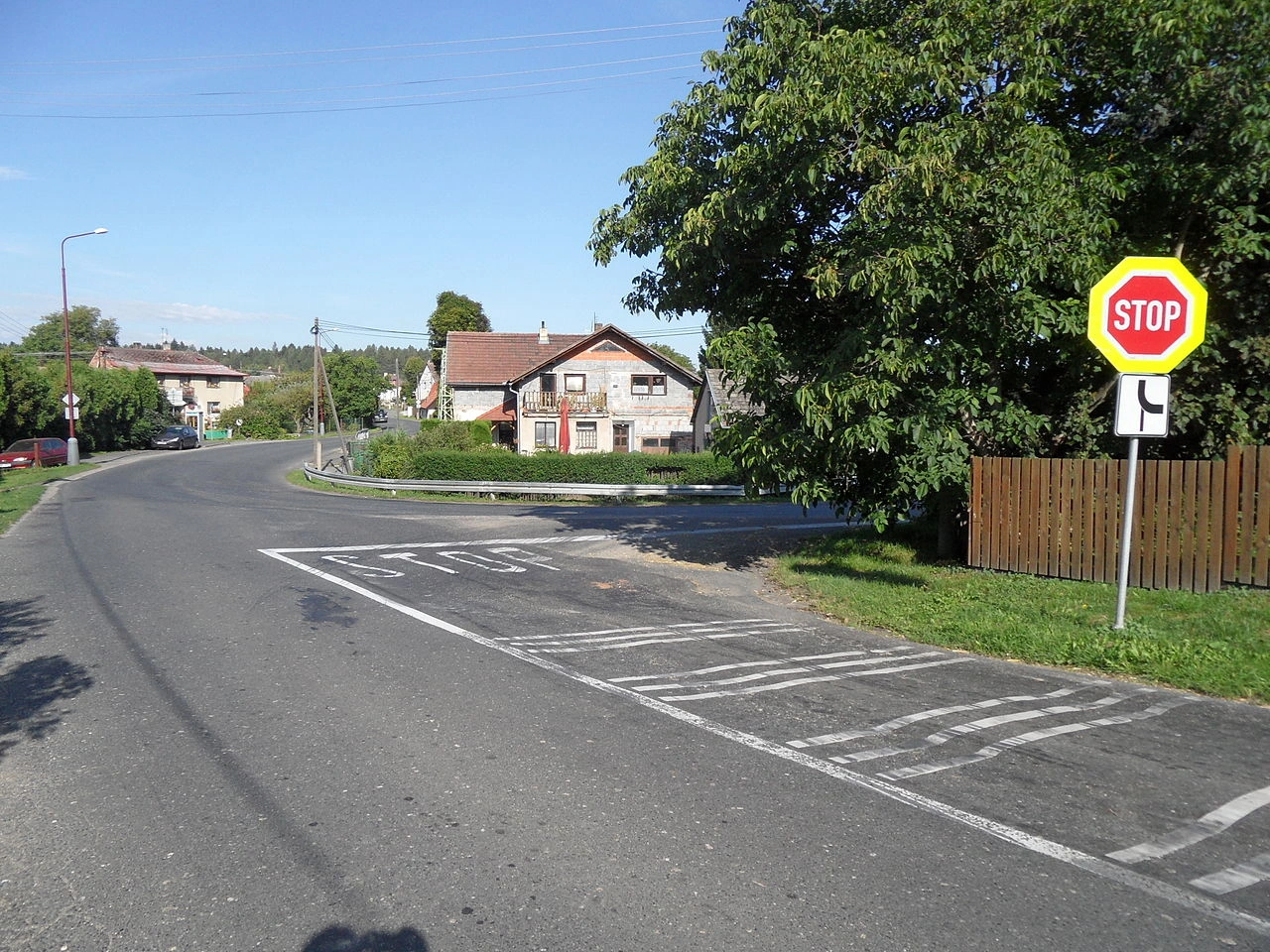
Wikimedia.org • Stribrohorak • CC BY-SA
What does a stop sign mean?
A stop sign requires a driver to come to a complete stop and give way before proceeding.
How can you recognise a stop sign?
A stop sign is commonly a red octagonal sign displaying the word STOP. Some countries use another legally recognised design, so drivers must learn the signs used locally.
Must you stop when no other traffic is visible?
Yes. The obligation to stop applies even when the road appears completely clear.
What is a complete stop?
A complete stop means that the vehicle has ceased moving entirely. Merely slowing down or allowing the vehicle to continue rolling does not satisfy the requirement.
Where should you stop?
Stop before the stop line where one is provided. Without a line, stop at the legally prescribed position before entering the intersection, crossing or priority road.
May you stop beyond the stop line?
No. The required first stop must be made before the line. If visibility is limited, move forward cautiously after stopping and stop again where necessary before proceeding.
Must every vehicle in a queue stop separately?
Yes. Each driver must make an individual complete stop. Following another vehicle through without stopping is not permitted.
Does stopping give you priority?
No. After stopping, you must continue to give way to all road users who have priority.
Who must you give way to?
Give way to traffic on the road being entered or crossed and to pedestrians, cyclists or other road users who have priority under the applicable rules.
What is the difference between a stop sign and a give-way sign?
A stop sign always requires a complete stop. A give-way sign requires the driver to yield but normally allows continued movement when the road is clearly free.
May you turn after stopping?
Yes. After stopping and giving way, you may turn in any direction permitted by signs, signals, lane arrows and road markings.
May you turn right at a red traffic light after stopping?
This depends entirely on local law and traffic signs. A stop sign does not by itself permit a turn against a red light.
Does a stop sign impose a speed limit?
No. It imposes a stopping and yielding obligation. The normal posted or general speed limit remains applicable before and after the intersection.
Does a stop sign apply to cyclists?
In many countries, cyclists are drivers and must stop unless a specific sign or local rule provides an exception.
What happens at an all-way stop?
The order in which drivers may proceed depends on local rules, commonly involving arrival order, vehicle position and turning direction. Drivers should communicate cautiously and never assume another driver will yield.
What if two vehicles stop at the same time?
Apply the local priority rule and proceed only when the intentions of the other driver are clear. Avoid forcing the other vehicle to brake or change direction.
Do traffic lights override a stop sign?
Where functioning traffic lights control the same movement, they commonly take precedence over the stop sign. Local rules determine what applies when the lights are switched off or flashing.
Do instructions from a police officer override a stop sign?
Yes. Instructions from an authorised traffic officer normally take precedence over traffic signs and ordinary priority rules.
Can a temporary stop sign be legally binding?
Yes. A correctly placed temporary stop sign at roadworks, an event or another temporary traffic arrangement must be obeyed.
What should you do when the stop sign is partly hidden?
If you recognise that a stop sign applies, reduce speed and obey it. Report damaged, obscured or missing signs to the responsible road authority where appropriate.
19. Give way
A give-way sign requires drivers to allow traffic with priority to proceed before entering, crossing or joining a road. Drivers must reduce speed, observe approaching traffic and stop when necessary.
Unlike a stop sign, a give-way sign does not always require a complete stop. The driver may continue without stopping only when the route is clearly safe and no road user with priority is forced to change speed or direction.
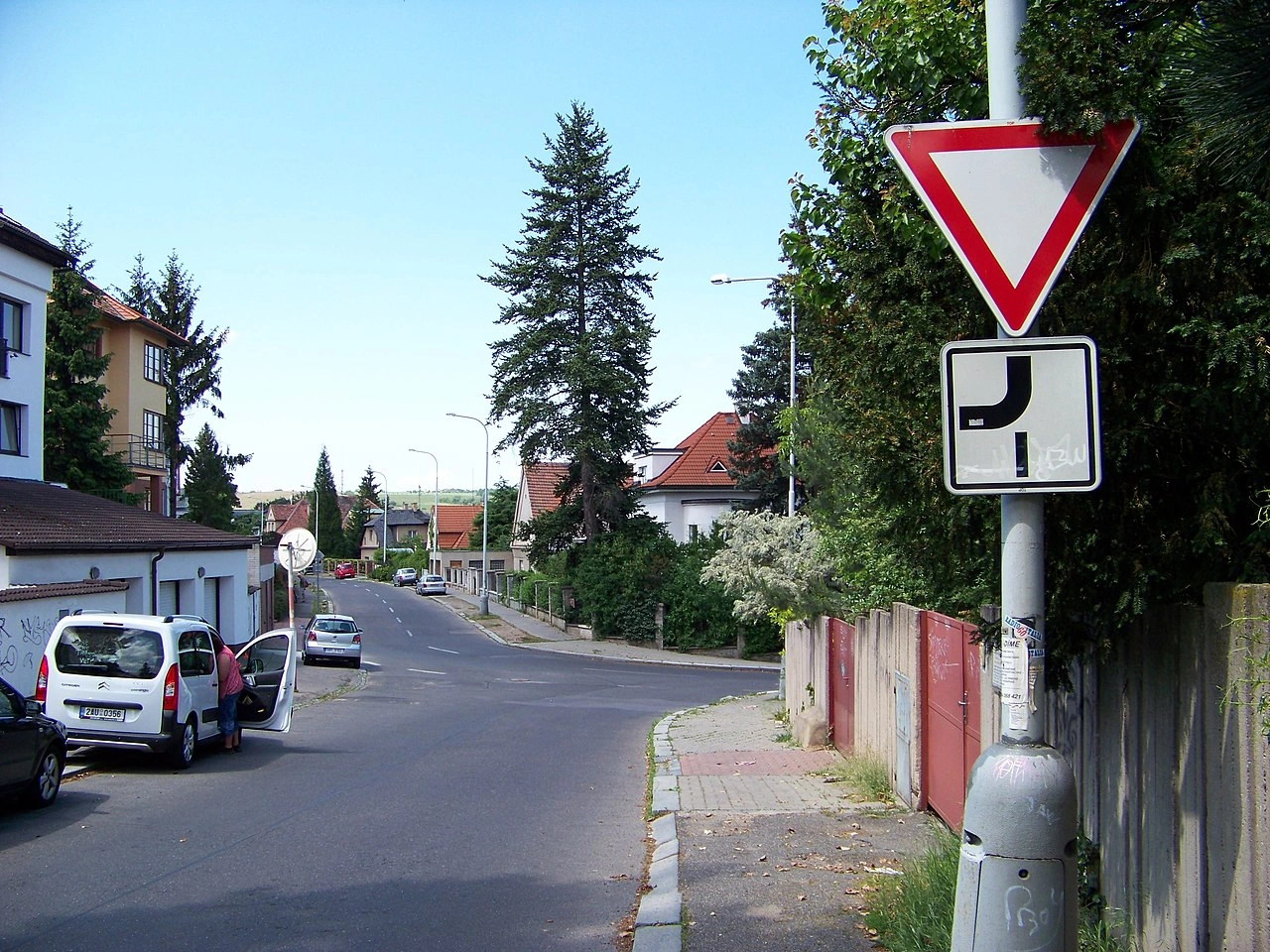
Wikimedia.org • ŠJů • CC BY-SA
What does a give-way sign mean?
A give-way sign requires drivers to allow traffic with priority to proceed first. The driver must slow down and stop when necessary.
How can you recognise a give-way sign?
It is commonly an inverted triangular sign with a red border and a light-coloured centre. In some countries, it is called a yield sign.
Must you always stop at a give-way sign?
No. You must stop only when necessary to give way or obtain a sufficiently clear view. You may continue slowly when the road is clearly free.
What does giving way mean?
Giving way means allowing another road user to continue without being forced to brake, accelerate, stop or change direction because of your movement.
Where should you stop when necessary?
Stop before the give-way line where one is provided. Without a line, stop before entering the intersection or priority road at a position where you can observe traffic safely.
May you cross the give-way line before stopping?
You may move beyond the line only when this does not interfere with traffic that has priority. Where visibility is limited, first slow or stop at the line and then move forward cautiously.
What is the difference between give way and stop?
A stop sign always requires a complete stop. A give-way sign permits the driver to continue without stopping when the road is clearly free and it is safe to proceed.
Does slowing down satisfy the give-way requirement?
Only when slowing down is sufficient to let all priority traffic proceed safely. If another road user would be hindered, the driver must slow further or stop.
Who must you give way to?
Give way to traffic travelling on the road being entered or crossed and to any pedestrians, cyclists or other road users who have priority under the applicable rules.
Does giving way apply only to vehicles approaching from one direction?
No. Check every direction from which lawful traffic may approach, including cycle paths, one-way roads with authorised contraflow traffic and separate carriageways.
Does a give-way sign give the other road permanent priority?
The sign determines priority at the particular location. The priority arrangement at later intersections may be different unless the road is separately identified as a priority road.
Does giving way give you priority afterwards?
No. You may proceed only when it is safe. Another driver’s hesitation or courtesy does not remove your responsibility to avoid danger.
Must every vehicle in a queue give way separately?
Yes. Each driver must observe the road and make an individual decision. You may not follow another vehicle through without checking that the way remains clear.
Does a give-way sign apply to cyclists?
Normally, yes. Cyclists are generally treated as drivers and must obey the sign unless a supplementary sign or local rule provides otherwise.
Can a give-way sign apply only to cyclists?
Yes. Some countries use supplementary signs or path-specific signs to require cyclists to give way while other traffic follows a different priority arrangement.
Does a give-way sign change the speed limit?
No. It regulates priority rather than speed. Drivers must still approach slowly enough to observe traffic and stop when necessary.
Does a give-way sign change turning rules?
No. Drivers must still obey traffic lights, lane arrows, mandatory-direction signs and turning prohibitions.
How does give way work at a roundabout?
Many roundabout entrances have give-way signs requiring entering traffic to yield to vehicles already circulating. Drivers must follow the actual signs because roundabout priority rules differ between countries.
Do traffic lights override a give-way sign?
Functioning traffic lights commonly take precedence over priority signs controlling the same movement. The give-way sign may apply again when the lights are switched off or flashing, depending on local law.
Do police instructions override a give-way sign?
Yes. Instructions from an authorised traffic officer normally take precedence over traffic signs and ordinary priority rules.
What should you do when visibility is limited?
Reduce speed substantially and stop when necessary. Move forward cautiously only after giving way and checking that the road can be entered without danger.
20. Roundabout
A roundabout is a circular road arrangement in which traffic travels around a central island in one designated direction. Vehicles enter and leave through connecting roads, and traffic signs or local rules determine who has priority.
Drivers should reduce speed, choose a suitable lane, observe all road users and signal as required when leaving. The direction of travel, entry priority, lane use and rules for cyclists and pedestrians depend on local traffic signs and regulations.
Wikimedia.org • ŠJů • CC BY-SA
What is a roundabout?
A roundabout is a circular road arrangement where traffic travels in one direction around a central island before leaving through the chosen exit.
How can you recognise a roundabout?
A roundabout is normally identified by a circular-direction sign, a central island and entry roads controlled by signs, markings or local priority rules.
Which direction does traffic travel around a roundabout?
The direction depends on the country’s driving side. Traffic normally travels anticlockwise in right-hand-traffic countries and clockwise in left-hand-traffic countries.
Who has priority at a roundabout?
Priority differs between countries and roundabout designs. Entering traffic commonly gives way to traffic already circulating, but drivers must always follow the actual priority signs and signals.
Must you stop before entering a roundabout?
Not always. Stop when required by a stop sign, traffic light or approaching priority traffic. Otherwise, reduce speed and enter only when there is a safe gap.
Does a roundabout always have a give-way sign?
No. The sign arrangement depends on local law. Some circular intersections use ordinary priority rules or traffic lights instead.
How should you approach a roundabout?
Reduce speed, observe the signs and markings, choose the appropriate lane and check for pedestrians, cyclists and circulating traffic.
Which lane should you choose?
Follow the lane arrows and destination signs. As a general guide, use the lane appropriate for your exit, but exact lane-selection rules differ between countries and roundabout layouts.
May you use an inner lane?
Yes, where the road layout and local rules permit it. Before leaving, change lanes safely and give way to road users already travelling in the lane you wish to enter.
Do you need to signal when entering?
This depends on local law. Some countries require a signal for particular exits, while others require no signal when entering.
Do you need to signal when leaving?
Usually, yes. Signal in the direction of the exit early enough to inform other road users, but not so early that your intention becomes misleading.
Does signalling give you priority?
No. A direction indicator communicates your intention but does not permit you to force another road user to brake or change direction.
May you change lanes on a roundabout?
Only when the lane markings permit it and the manoeuvre can be completed safely. Check mirrors and blind spots, signal where required and give way to traffic already in the target lane.
What should you do if you miss your exit?
Continue around the roundabout and approach the exit again. Do not stop, reverse or cut suddenly across another lane.
May you drive over the central island?
Normally not. Some small roundabouts have a mountable central section intended only for vehicles that cannot otherwise negotiate the road safely.
Do cyclists have priority at a roundabout?
Priority depends on whether cyclists use the carriageway, a continuing bike path or a separate cycle crossing. Drivers and cyclists must follow the signs, markings and local priority rules.
What should drivers check before leaving?
Check mirrors and blind spots for cyclists, mopeds, motorcycles and vehicles beside you. Also check for pedestrians crossing the exit road.
Do pedestrians have priority at roundabout exits?
Pedestrian priority depends on crossings and local law. Drivers should approach exits slowly and be prepared to yield to pedestrians crossing or about to cross.
Does a roundabout have a special speed limit?
Not universally. The posted or general road limit applies, but drivers must travel slowly enough to negotiate the roundabout safely.
May you overtake on a roundabout?
Passing another vehicle may be permitted on a multilane roundabout, but drivers must remain within their lane and avoid unsafe lane changes. Local overtaking restrictions may apply.
May you stop or park on a roundabout?
Follow local signs and parking rules. Stopping or parking on the circulating roadway is commonly prohibited or unsafe because it obstructs traffic and reduces visibility.
Is every circular intersection a roundabout?
No. A circular junction may be governed by traffic lights, ordinary priority rules or another road design. Its legal status depends on its signs and local definition.
21. Priority road
A priority road is a road whose traffic is given priority over traffic entering from intersecting roads. It is normally identified by a priority-road sign, while an end sign indicates where that continuing priority status stops.
Drivers on a priority road must still obey traffic lights, authorised officers, speed limits, crossings and turning rules. Having priority never allows a driver to proceed when doing so would create danger or block an intersection.
Wikimedia.org • ŠJů • CC BY-SA
What is a priority road?
A priority road is a road on which drivers normally have priority over traffic entering from intersecting side roads.
How can you recognise a priority road?
It is normally indicated by a priority-road sign at or near its beginning. A corresponding end sign indicates where its continuing priority status stops.
Does a priority road have priority at every intersection?
Normally, yes, while the priority-road designation remains in force. Drivers must still observe traffic lights, authorised officers and any signs applying at a particular intersection.
Does an intersection end a priority road?
Not necessarily. A priority road commonly continues across successive intersections until an end sign or another legally defined change in priority.
Must side roads have give-way or stop signs?
Side roads are commonly controlled by give-way or stop signs, but sign placement and legal requirements differ between countries.
Does traffic from both the left and right have to give way?
Where the priority-road signs apply, drivers entering from intersecting side roads must normally give way regardless of whether they approach from the left or right.
Is a priority road the same as having priority at one intersection?
No. A priority-road sign normally creates continuing priority across several intersections. Another sign may grant priority only at the next intersection.
Does a priority road always continue straight ahead?
No. The priority route may turn at an intersection. A supplementary diagram may show which branch retains priority.
Must you signal when the priority road bends?
Priority does not remove the duty to signal. Use the direction indicators whenever following or leaving the priority route involves a change of direction or lateral movement.
Does having priority mean you may enter without slowing down?
No. Approach every intersection at a safe speed and remain prepared for another road user to fail to give way.
Does a priority road have a special speed limit?
No. The applicable general, zonal or posted speed limit remains in force.
Do traffic lights override priority-road signs?
Functioning traffic lights normally control the intersection instead of the priority signs. Local rules determine what applies when the lights are switched off or flashing.
Do police instructions override priority-road signs?
Yes. Instructions from an authorised traffic officer normally take precedence over traffic signs and ordinary priority rules.
Do pedestrians still have priority at crossings?
Yes, where the applicable crossing rules give them priority. Priority over side-road traffic does not remove duties towards pedestrians.
Must you give way when turning off a priority road?
You must still give way to oncoming traffic, pedestrians, cyclists and other road users where the normal turning rules require it.
Do cyclists on a priority road have priority?
Cyclists using the road or a continuing bike path may have priority over entering or turning traffic, depending on signs, markings and local law.
Does a priority road give priority at a roundabout?
Not automatically. Roundabout priority is determined by its own signs, signals and local rules.
May you overtake on a priority road?
Priority-road status does not itself permit or prohibit overtaking. Drivers must follow the ordinary overtaking rules, markings and visibility requirements.
May you stop or park on a priority road?
This depends on local law and signs. Some countries prohibit parking on priority roads outside built-up areas, while other parking rules may apply inside towns and cities.
Does a vehicle leaving a property have priority?
No. A driver entering the road from a property, parking place or other off-road location normally performs a manoeuvre and must give way to road users already present.
May you enter a blocked intersection when you have priority?
No. Do not enter when congestion would force you to stop inside the intersection and obstruct crossing traffic.
How does a priority road end?
Its continuing priority normally ends at an end-of-priority-road sign. Drivers must then follow the signs or ordinary priority rule applying at the next intersection.
22. Road narrowing
A road narrowing is a section where the available width of the road or carriageway becomes smaller. The narrowing may occur on both sides, on one side only, or because one or more traffic lanes end.
Drivers should reduce speed, observe approaching and adjacent traffic, maintain sufficient lateral clearance and merge when necessary. Warning signs do not always determine priority, so drivers must follow any priority signs, lane markings and local traffic rules.
Wikimedia.org • ŠJů • CC BY-SA
What is a road narrowing?
A road narrowing is a section where the usable width of the road becomes smaller. Traffic may have less space to pass, merge or travel beside other road users.
How can you recognise a road narrowing?
It may be indicated by a triangular warning sign showing the road edges moving closer together. The symbol may show narrowing on both sides, the left side or the right side.
What can cause a road to narrow?
A road may narrow because of a bridge, tunnel, barrier, traffic-calming measure, roadworks, parked vehicles, landslide, damaged road edge or reduction in the number of lanes.
Does a narrowing sign impose a speed limit?
No. It normally warns of danger rather than setting a numerical speed limit. Drivers must still reduce speed when necessary to pass safely.
Does a narrowing sign determine who has priority?
Not by itself. Priority may be established by separate signs, signals or local rules. Without them, drivers should approach cautiously and cooperate.
Who has priority when the obstruction is on one side?
In many countries, the driver whose side is obstructed must give way to approaching traffic. The precise rule depends on local law and any priority signs displayed.
What if the road narrows equally from both sides?
Neither direction necessarily has automatic priority. Drivers should reduce speed, assess who can pass safely and avoid entering when doing so would block approaching traffic.
What do priority signs at a narrow section mean?
One sign may require you to give way to oncoming traffic, while the corresponding sign may indicate that you have priority. Drivers must still avoid entering when the passage is already occupied or blocked.
Does having priority mean you must continue?
No. Priority is not an obligation to proceed. Slow down or stop when another vehicle is already in the narrow section or when continuing would create danger.
What should you do when another vehicle is already in the narrowing?
Allow it enough room to leave the narrow section. Do not enter if the available width is insufficient for both vehicles to pass safely.
How should you approach a road narrowing?
Check mirrors, reduce speed smoothly and observe oncoming traffic, cyclists, pedestrians and vehicles beside you. Be prepared to stop or merge.
Must you use an indicator when the road narrows?
Use an indicator when you must change lanes or move laterally. Merely following a lane that bends with the road may not require a signal under local law.
What should you do when your lane ends?
Check the adjacent lane, signal and merge safely according to the local merging rules. Do not force another driver to brake or leave the road.
What is zipper merging?
Zipper merging means that vehicles from an ending or blocked lane merge alternately with vehicles in the continuing lane, usually immediately before the narrowing during congestion.
Should you merge early during heavy congestion?
Where zipper merging applies, continue using both lanes and merge alternately near the narrowing. In free-flowing traffic, change lanes safely when a suitable gap is available.
May you overtake near a road narrowing?
A narrowing sign does not always prohibit overtaking, but overtaking should be avoided when there is insufficient width, visibility or distance to complete the manoeuvre safely.
How should you pass cyclists at a narrowing?
Wait behind the cyclist when the required passing distance cannot be maintained. Do not squeeze past or force the cyclist towards a kerb, barrier or damaged road edge.
How should large vehicles use a narrow section?
Large vehicles may need additional width and may cross lane or centre markings where legally permitted. Other drivers should leave sufficient space and avoid passing alongside them in the narrowing.
May pedestrians be present at a road narrowing?
Yes. Pavements or verges may also become narrow or blocked. Drivers should expect pedestrians or wheelchair users to enter the carriageway to pass an obstruction.
May you stop or park in a road narrowing?
Only where it is permitted and enough width remains for traffic to pass safely. Never stop or park where the vehicle would create danger, obstruct visibility or prevent other vehicles from passing.
What should you do at a temporary roadworks narrowing?
Follow temporary signs, signals, barriers and instructions from authorised workers. Temporary traffic controls may replace the normal priority or lane arrangement.
What should you do in poor visibility?
Reduce speed further, increase the following distance and be prepared for a stopped vehicle beyond the narrowing. Use the required lights without dazzling approaching road users.
23. Priority over oncoming traffic
Priority over oncoming traffic means that drivers travelling in one direction have priority through a narrow section of road over drivers approaching from the opposite direction. The rule is normally indicated by a priority sign facing one direction and a corresponding give-way sign facing the other.
Drivers with priority must still approach cautiously and must not force their way through when the passage is blocked or already occupied. The signs regulate priority through the narrow section, not speed, parking or priority at nearby intersections.
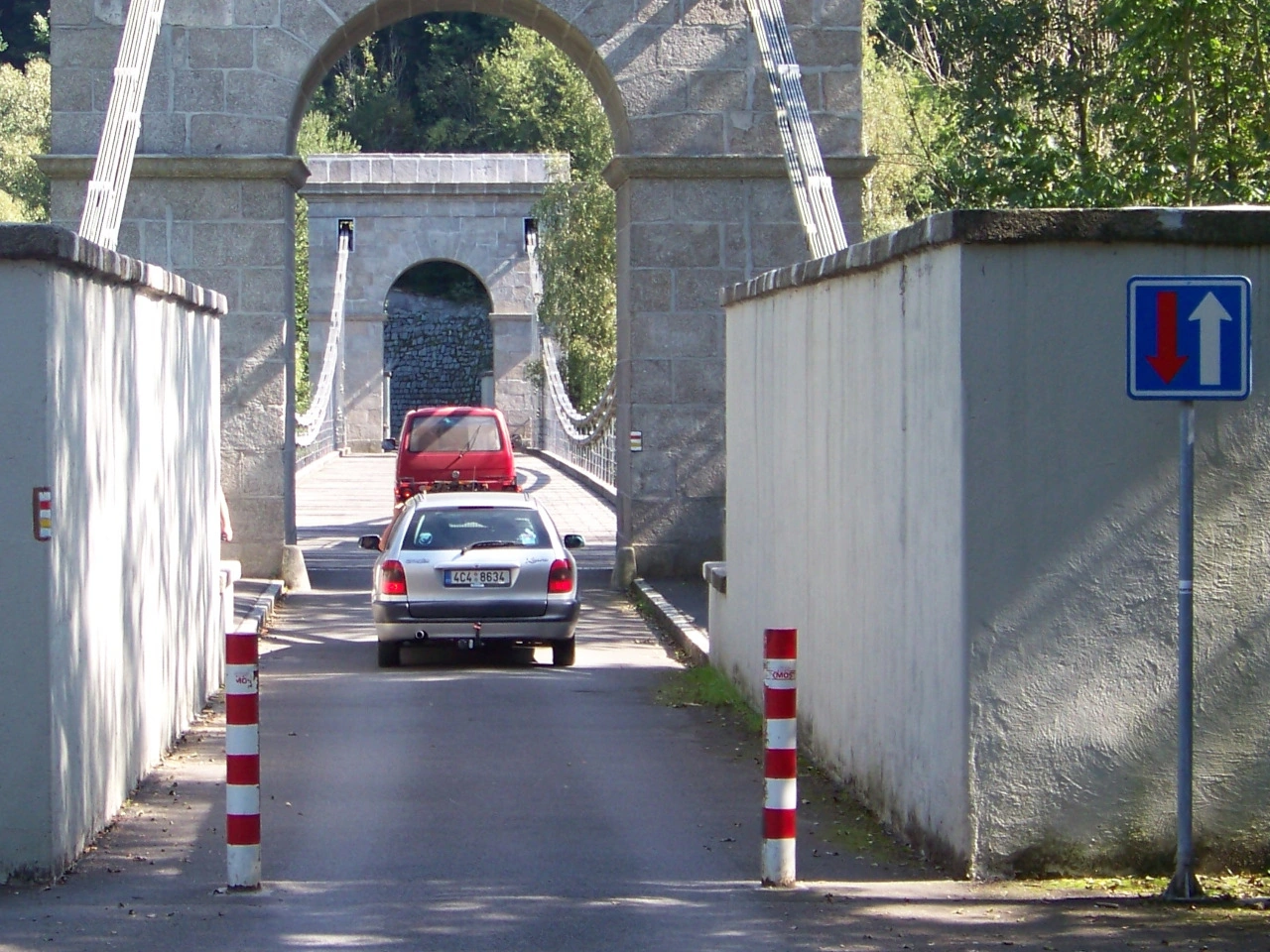
Wikimedia.org • ŠJů • CC BY-SA
What does priority over oncoming traffic mean?
It means that drivers travelling in your direction have priority through the narrow passage over drivers approaching from the opposite direction.
How can you recognise the sign?
It is commonly a rectangular sign showing two arrows in opposite directions. The larger or lighter arrow represents the direction that has priority, while the other arrow represents oncoming traffic.
Where is this sign normally used?
It is used at a bridge, roadworks area, traffic-calming feature or another narrow section where vehicles travelling in opposite directions cannot pass safely.
What sign does oncoming traffic see?
Drivers approaching from the opposite end normally see a corresponding sign requiring them to give way to oncoming traffic.
Does the sign mean that the road is one-way?
No. Traffic may use the road in both directions, but only one direction should normally pass through the narrow section at a time.
Does the sign give priority along the entire road?
No. It applies only to the particular narrow section associated with the sign.
Does it give you priority at an intersection?
No. It regulates priority between opposing traffic at the narrowing. Traffic lights, intersection signs and ordinary priority rules remain applicable elsewhere.
Does it impose a speed limit?
No. Drivers must respect the applicable speed limit and approach slowly enough to stop safely if the passage is occupied.
Must you stop before entering?
Not normally. You may continue when the passage is clear, but you must slow or stop when necessary to avoid danger.
Does having priority mean you must enter first?
No. Priority is a right to proceed before approaching traffic, not an obligation to continue. Wait when entering would create danger or block the passage.
What if an oncoming vehicle is already in the narrow section?
Reduce speed and allow the vehicle enough room to leave. Do not enter simply because your sign gives you priority if doing so would trap the other vehicle or cause a collision.
May you force an oncoming driver to reverse?
No. Drivers must avoid creating danger. When another vehicle is already committed to the passage, the safest solution may be to wait until it has cleared.
What if both vehicles arrive at the same time?
The driver facing the priority sign may normally proceed first, while the opposite driver must wait. Both drivers should reduce speed and make sure the other has understood the situation.
Does the rule apply to cyclists and motorcycles?
It normally applies to all drivers, including cyclists and motorcyclists, but local law may define the exact road users covered.
Should you leave space for cyclists?
Yes. Do not pass a cyclist in the narrow section unless the required safe lateral distance can be maintained.
What should you do when meeting a large vehicle?
Allow additional width and time. Buses, trucks and vehicles towing trailers may need most or all of the available road space.
May pedestrians be present in the narrow section?
Yes. Drivers must remain alert for pedestrians, particularly where a pavement or verge also becomes narrow or unavailable.
Does the sign permit overtaking?
No. It regulates opposing traffic only. Overtaking remains subject to the ordinary rules, and it is often unsafe near a narrow passage.
May you stop or park in the narrow section?
Only where local law permits it and sufficient space remains. Stopping or parking must not block the passage or create danger.
What if temporary traffic lights are operating?
Follow the traffic lights. Active temporary signals or instructions from authorised workers normally take precedence over the fixed priority arrangement.
Do police or road-worker instructions override the sign?
Yes. Follow instructions from an authorised person even when they differ from the priority indicated by the sign.
When does the priority rule end?
It ends after you have passed through the narrow section controlled by the signs. The ordinary traffic rules then apply again.
24. Give way to oncoming traffic
Give way to oncoming traffic means that drivers must allow vehicles approaching from the opposite direction to pass first through a narrow section of road. The rule is normally indicated by a sign facing the direction that must yield and a corresponding priority sign facing oncoming traffic.
Drivers must reduce speed and stop when necessary before entering the narrow passage. They may continue only when they can do so safely and without obstructing oncoming traffic that has priority.
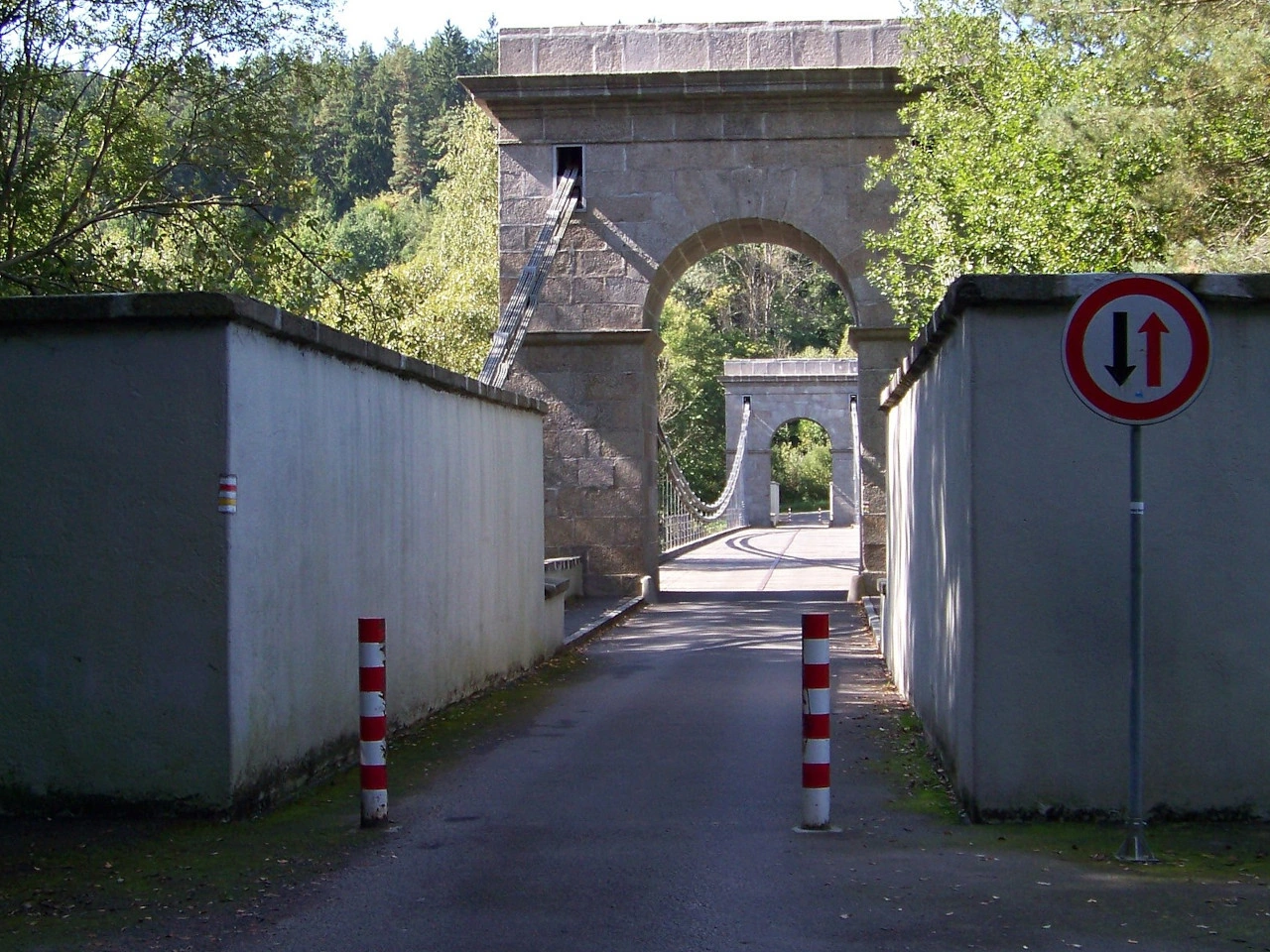
Wikimedia.org • ŠJů • CC BY-SA
What does give way to oncoming traffic mean?
It means that you must allow drivers approaching from the opposite direction to pass through the narrow section first.
How can you recognise the sign?
The sign normally displays two arrows pointing in opposite directions. The arrow representing oncoming traffic is shown as the priority direction, although the exact sign design differs between countries.
Where is this sign normally used?
It is commonly placed before a narrow bridge, roadworks area, traffic-calming feature or other passage where opposing vehicles cannot pass safely at the same time.
What sign does traffic at the opposite end see?
Drivers approaching from the opposite direction normally see a corresponding sign indicating that they have priority over oncoming traffic.
Does the sign make the road one-way?
No. The road remains open in both directions, but traffic from one direction must wait when opposing vehicles are approaching.
Must you always stop at the sign?
No. You must stop only when necessary to give way. You may continue cautiously when the narrow passage is clear and no priority traffic is approaching.
How far away must an oncoming vehicle be before you may enter?
There is no universal fixed distance. You may enter only when the oncoming driver can continue without being forced to brake, stop, reverse or leave the road.
Does reaching the narrowing first give you priority?
No. Priority is determined by the traffic signs, not simply by which driver arrives first.
What if you have already entered the narrow passage?
Continue cautiously when reversing or stopping would create greater danger. Both drivers should cooperate, but entering first does not cancel an obligation that should have been respected before entering.
What if an oncoming vehicle is already inside?
Wait outside the narrow section and leave enough room for the vehicle to exit. Do not enter and force it to stop or reverse.
What if both vehicles arrive at the same time?
The driver facing the give-way sign must wait, while the driver facing the corresponding priority sign may normally proceed first.
Does the sign apply to cyclists and motorcycles?
It normally applies to all drivers, including cyclists and motorcyclists, unless local signs or regulations provide otherwise.
Must you give way to an oncoming cyclist?
Yes. When the sign applies and the passage is too narrow to maintain a safe distance, wait until the cyclist has passed.
What should you do when a bus or truck approaches?
Stop before the narrow section and leave additional space. Large vehicles may require most or all of the available road width.
Does the sign impose a speed limit?
No. It regulates priority rather than speed. Drivers must nevertheless approach slowly enough to observe oncoming traffic and stop safely.
Does it change priority at an intersection?
No. It applies only between opposing traffic at the narrow passage. Priority at nearby intersections is determined separately.
May you overtake near the narrow passage?
The sign does not itself create an overtaking prohibition, but overtaking is normally unsafe when the road width or visibility is limited.
May you stop or park in the narrow passage?
Only where local law permits it and sufficient space remains. A vehicle must not block the passage or force other traffic into danger.
What if temporary traffic lights are operating?
Follow the active traffic lights. Temporary signals controlling alternating traffic normally take precedence over the fixed priority signs.
What if an authorised person directs traffic?
Follow the authorised person’s instructions. Those instructions normally take precedence over traffic lights, signs and ordinary traffic rules.
When does the obligation end?
The obligation ends after the narrow passage controlled by the signs has been cleared. The ordinary traffic rules then apply again.
25. Pedestrian crossing
A pedestrian crossing is a designated place where pedestrians may cross a road. It is commonly indicated by road markings, traffic signs, signals or a combination of these measures.
Drivers must approach with appropriate caution and give way when required by local law. Pedestrians must also observe approaching traffic and follow any pedestrian signals or instructions from authorised traffic controllers.
Wikimedia.org • ŠJů • CC BY-SA
What is a pedestrian crossing?
A pedestrian crossing is a designated place for pedestrians to cross a road. It may be controlled by traffic lights or operate without signals.
How can you recognise a pedestrian crossing?
It may be indicated by white road markings, traffic signs, flashing lights, pedestrian signals or a raised crossing. Its appearance varies between countries.
Is a pedestrian crossing the same as a zebra crossing?
A zebra crossing is a type of pedestrian crossing marked by broad contrasting stripes or rectangles. Not every pedestrian crossing uses this design.
Do pedestrians always have priority?
Not universally. Priority depends on local law, traffic signals and whether the pedestrian is already crossing or clearly preparing to cross.
Must drivers stop for pedestrians waiting beside the crossing?
This depends on local law. In many countries, drivers must give way when a pedestrian is clearly intending or preparing to enter the crossing.
How should drivers approach a pedestrian crossing?
Reduce speed, observe both sides of the road and be prepared to stop. Pay particular attention to children, older people and persons with limited mobility.
May you enter a crossing when traffic is congested?
No. Do not enter when traffic ahead may force you to stop on the crossing and block pedestrians.
Where should you stop for a pedestrian?
Stop before the crossing or before the applicable stop line. Leave the crossing completely clear.
May you overtake near a pedestrian crossing?
Overtaking may be prohibited, particularly when another vehicle has stopped or slowed for the crossing. Even where no specific prohibition applies, overtaking is unsafe when pedestrians may be hidden from view.
May you stop or park on a pedestrian crossing?
Normally not. Stopping or parking on or immediately before a crossing can obstruct pedestrians and hide them from approaching drivers.
Does a pedestrian crossing impose a speed limit?
Not by itself. Drivers must respect the applicable speed limit and reduce their speed further when necessary to stop safely.
Do traffic lights change the priority rules?
Yes. Drivers and pedestrians must follow the signals applying to them. Drivers must still allow pedestrians who lawfully started crossing to finish safely.
May pedestrians cross when their signal is red?
No. Pedestrians must wait when the pedestrian signal prohibits them from entering the road.
What if the pedestrian signal changes while someone is crossing?
A pedestrian who entered lawfully should continue at a normal pace. Drivers must allow the crossing to be completed safely.
May cyclists ride across a pedestrian crossing?
This depends on local law. In many countries, a person riding a bicycle is treated as a driver and does not receive pedestrian priority. A cyclist walking beside the bicycle is normally treated as a pedestrian.
Is a pedestrian crossing also a cycle crossing?
Not automatically. A separate cycle crossing, cycle path or combined crossing may be indicated by additional markings or signs.
Must pedestrians use a nearby crossing?
Some countries require pedestrians to use a crossing when one is located within a specified distance. Other countries allow crossing elsewhere when it can be done safely.
May pedestrians remain standing on the crossing?
No. Pedestrians should cross without unnecessary delay and should not obstruct traffic by stopping or lingering on the road.
Does a raised pedestrian crossing change priority?
The raised surface itself does not necessarily determine priority. Drivers and pedestrians must follow the crossing markings, signs, signals and local rules.
What should drivers check when turning across a crossing?
Check for pedestrians approaching from both sides and give way where required. Turning drivers should not focus only on motor traffic.
What should pedestrians do before crossing?
Observe approaching traffic, make sure drivers have sufficient time to react and cross carefully. Priority does not remove the need to avoid stepping into the path of a vehicle that cannot stop safely.