


Traffic signsGermany
 Traffic rules
 Germany
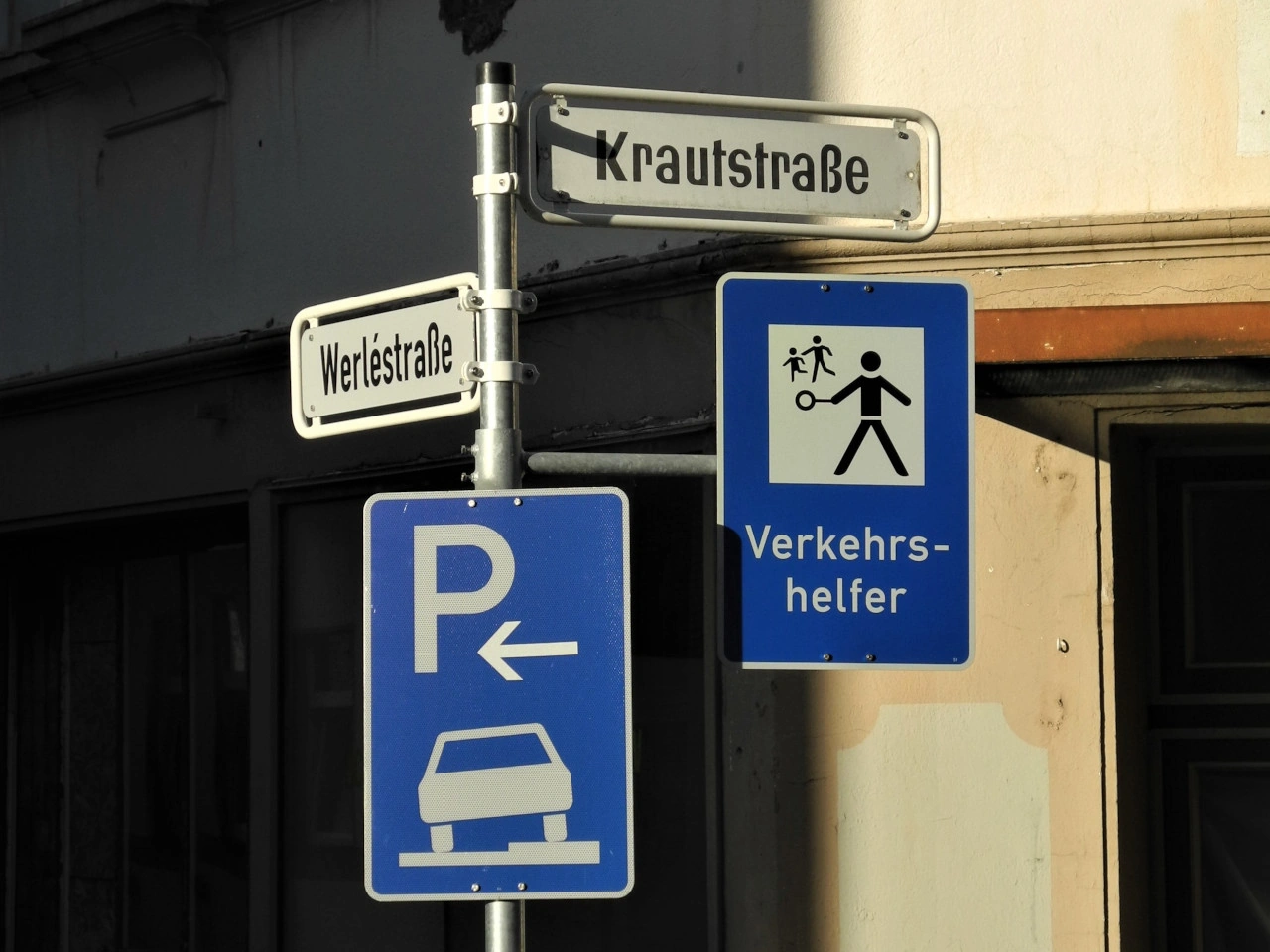
176. Crossing guard
A crossing guard is a person who helps pedestrians cross a road safely, particularly near schools or other places where children, older people or vulnerable pedestrians frequently cross. Depending on local law, a crossing guard may be authorised to stop traffic or may simply assist pedestrians in choosing a safe moment to cross.
Drivers approaching a crossing guard should reduce speed, remain alert and obey any legally authorised stop signal or instruction. The powers, equipment and training requirements for crossing guards vary between countries.
Wikimedia.org • Im Fokus • CC BY-SA
How should drivers behave near a crossing guard?
Drivers should slow down, remain attentive and obey authorised stop signals so that pedestrians can cross safely.
🔗 gov.uk • Great Britain Highway Code, Rule 210, school crossing patrol; national guidance example

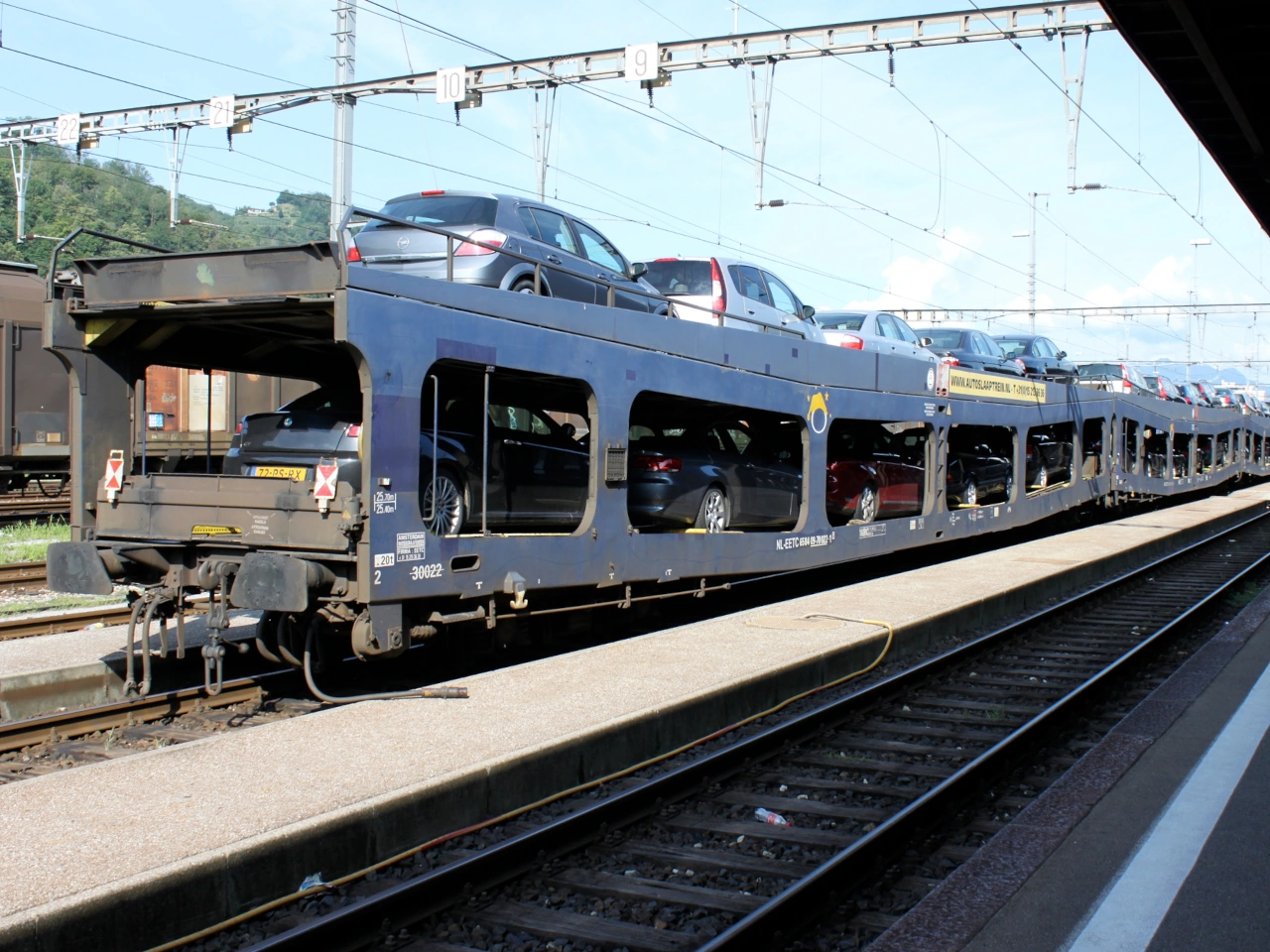
177. Motorail
Motorail is a rail service that transports passengers together with their car, motorcycle or other eligible vehicle on the same journey. The passengers normally travel in passenger coaches or sleeping accommodation while their vehicle is carried on dedicated vehicle-transport wagons.
Motorail services are mainly intended for long-distance travel, allowing travellers to avoid driving the entire route while still having their own vehicle available at their destination. Vehicle dimensions, loading procedures and eligible routes depend on the operator.
Wikimedia.org • NAC • CC BY-SA
Which vehicles can be carried on a Motorail train?
Depending on the operator and route, Motorail services may carry cars, motorcycles or other eligible road vehicles. Size and weight restrictions may apply.
🔗 nightjet.com • ÖBB Nightjet, cars and motorcycles on the train; operator-specific conditions
Do passengers remain inside their car on a Motorail train?
On services such as ÖBB Nightjet, passengers must leave the vehicle after loading and use the passenger accommodation. Follow the operator’s instructions; do not assume that every train carrying road vehicles uses the same arrangements.
🔗 nightjet.com • ÖBB Nightjet, cars and motorcycles on the train; operator-specific conditions
178. Snowplough
A snowplough is a vehicle equipped with a blade or other device for removing snow from roads and other paved surfaces. Snowploughs may also carry equipment for spreading salt, grit or other materials intended to reduce ice and improve traction.
Drivers approaching or following a snowplough should reduce speed, keep a safe distance and avoid overtaking unless there is sufficient visibility and space. Snow, salt or other material discharged by the vehicle can reduce visibility and create additional hazards.
Wikimedia.org • Superbass • CC BY-SA
How should you drive near a snowplough?
Keep a safe distance, reduce speed and avoid unnecessary overtaking. Snow or road-treatment material may be thrown from the vehicle and visibility may be reduced.
🔗 gov.uk • Great Britain Highway Code, Rules 226–237, adverse weather; national guidance example
🔗 gov.uk • Great Britain Highway Code, Rules 162–169, safe overtaking; national guidance example
179. Parking violation
A parking violation occurs when a vehicle is parked contrary to the traffic rules, signs, road markings or parking conditions that apply at that location. Examples include parking where it is prohibited, obstructing traffic, using a reserved space without authorisation or exceeding an applicable parking restriction.
Parking violations may result in fines, parking charges, wheel clamping, removal of the vehicle or other enforcement measures, depending on the country and the type and seriousness of the violation.
Wikimedia.org • Wikitarisch • CC BY
What can happen after a parking violation?
Depending on local law and the offence, the vehicle owner or driver may receive a fine, parking charge or other enforcement measure, and a dangerously or illegally parked vehicle may sometimes be removed.
🔗 gov.uk • Great Britain, Highway Code, waiting and parking; 🔗 metro.net • LA Metro, parking at Metro stations; 🔗 dmv.ca.gov • California DMV, Driver Handbook, parking rules
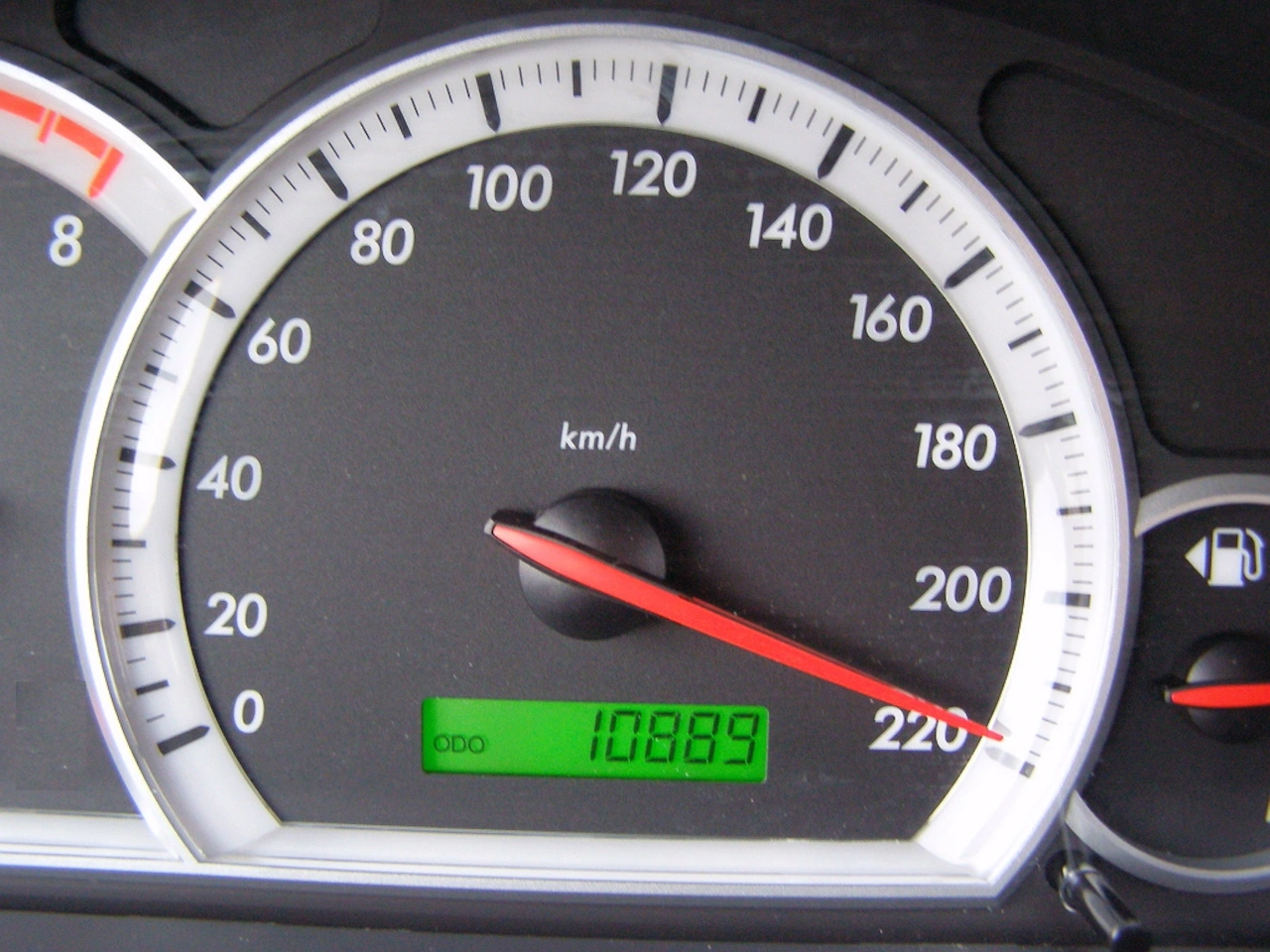
180. km/h
km/h means kilometres per hour and is a unit used to measure speed. It expresses how many kilometres a vehicle or other moving object would travel in one hour if it maintained the same speed.
For example, a speed of 50 km/h means travelling at a rate of 50 kilometres per hour. Kilometres per hour are widely used for road speeds and speed limits in countries that use the metric system.
Wikimedia.org • Bluescan sv.wiki • CC0
What does km/h mean?
km/h is the abbreviation for kilometres per hour, a unit used to measure speed.
🔗 nist.gov • NIST, conversion factors for units, Speed conversion factors
Is km/h the same as mph?
No. km/h measures speed in kilometres per hour, while mph measures speed in miles per hour. The two units therefore represent different numerical speeds.
🔗 nist.gov • NIST, conversion factors for units, Speed conversion factors
181. mph
mph means miles per hour and is a unit used to measure speed. It expresses how many miles a vehicle or other moving object would travel in one hour if it maintained the same speed.
For example, a speed of 50 mph means travelling at a rate of 50 miles per hour. One mile per hour is approximately 1.61 km/h, so speeds expressed in mph and km/h have different numerical values.

Wikimedia.org • Greg Gjerdingen • CC BY
What does mph mean?
mph is the abbreviation for miles per hour, a unit used to measure speed.
🔗 nist.gov • NIST, conversion factors for units, Speed conversion factors
Is mph the same as km/h?
No. mph measures speed in miles per hour, while km/h measures speed in kilometres per hour. 1 mph is approximately 1.61 km/h.
🔗 nist.gov • NIST, conversion factors for units, Speed conversion factors
182. Speedometer
A speedometer is an instrument in a vehicle that shows the vehicle's current speed. It is normally displayed on the instrument panel and may use an analogue dial, a digital display or both.
Drivers should use the speedometer to monitor their speed and remain within the applicable speed limit. The displayed unit is usually kilometres per hour or miles per hour, depending on the country and vehicle.

Wikimedia.org • Andreas Schmidt • CC BY-SA
Which units can a speedometer use?
A speedometer may display speed in kilometres per hour (km/h), miles per hour (mph) or both, depending on the vehicle and market.
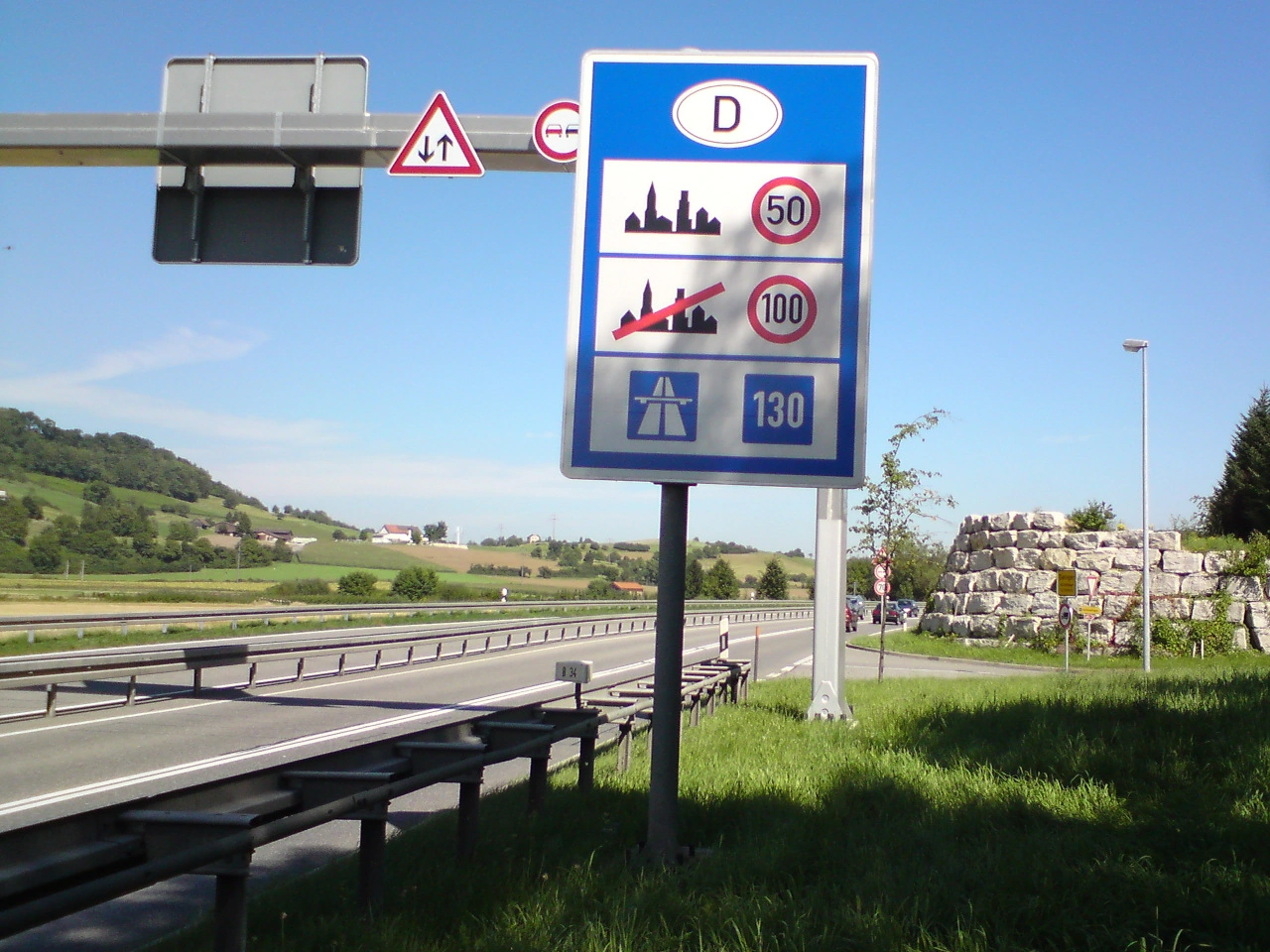
183. National speed
A national speed limit is a default maximum speed established by law for a particular type of road or vehicle when no lower or different local speed limit is indicated. National or general speed limits can differ according to whether the road is a motorway, rural road, built-up-area road or another road category.
Drivers should know the default speed limits that apply in the country or region where they are travelling and always obey any posted speed limit that overrides the general rule.
Wikimedia.org • Heini Woldschläger • CC BY-SA
Can a traffic sign override the national speed limit?
Yes. A posted regulatory speed limit may impose a lower or, where legally permitted, higher maximum speed than the general limit for that road.
🔗 gov.uk • Great Britain Highway Code, Rules 124–126; national guidance example
🔗 gov.uk • Great Britain Highway Code, Rules 226–237; national guidance example
184. Rumble strip
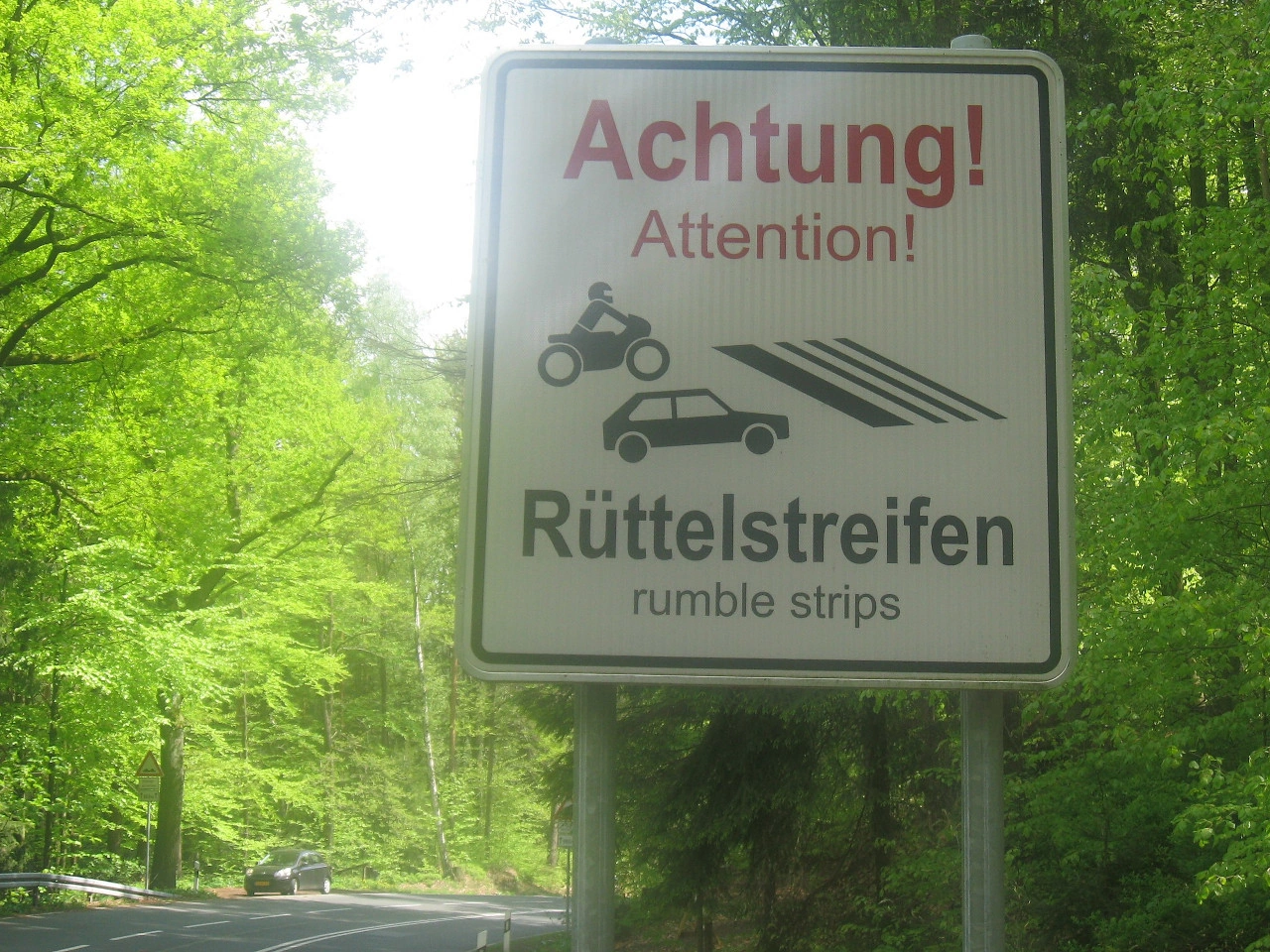
A rumble strip is a raised, grooved or textured section of road surface that creates vibration and noise when a vehicle drives over it. Rumble strips are used to attract a driver's attention and warn of hazards, lane departure, an approaching junction or another situation requiring increased caution.
Rumble strips may be installed across a traffic lane or along the edge or centre of a road. They are primarily a warning device and do not by themselves necessarily impose a particular speed limit or traffic restriction.
Wikimedia.org • Michiel TM • CC BY-SA
Does a rumble strip impose a speed limit?
Not by itself. A rumble strip warns or attracts attention, while any legally binding speed restriction must be established by the applicable traffic rules or regulatory signs.
🔗 hse.gov.uk • UK HSE, workplace transport speed and physical traffic calming; design example
🔗 gov.uk • Great Britain Highway Code, Rules 124–126; national guidance example
185. Ride height
Ride height is the height at which a vehicle's body or chassis sits above the road surface. It is determined mainly by the suspension, wheels and tyres and can also change according to the vehicle's load.
Changing the ride height by lowering or raising the suspension can affect ground clearance, wheel alignment, handling and the space available between the vehicle and the road. Vehicle modifications must comply with the technical and approval rules that apply in the country.
Wikimedia.org • mark6mauno • CC BY
Can a vehicle's ride height be changed?
Yes, but suspension changes must remain safe and meet local requirements. Britain’s MOT manual, for example, treats a suspension modification that makes the system inoperative or likely to foul other components as a dangerous defect. Check the applicable modification and inspection rules before altering the vehicle.
🔗 gov.uk • DVSA, suspension inspection and unsafe modifications
🔗 gov.uk • DVLA, current structural vehicle modifications guidance
186. Dirt road
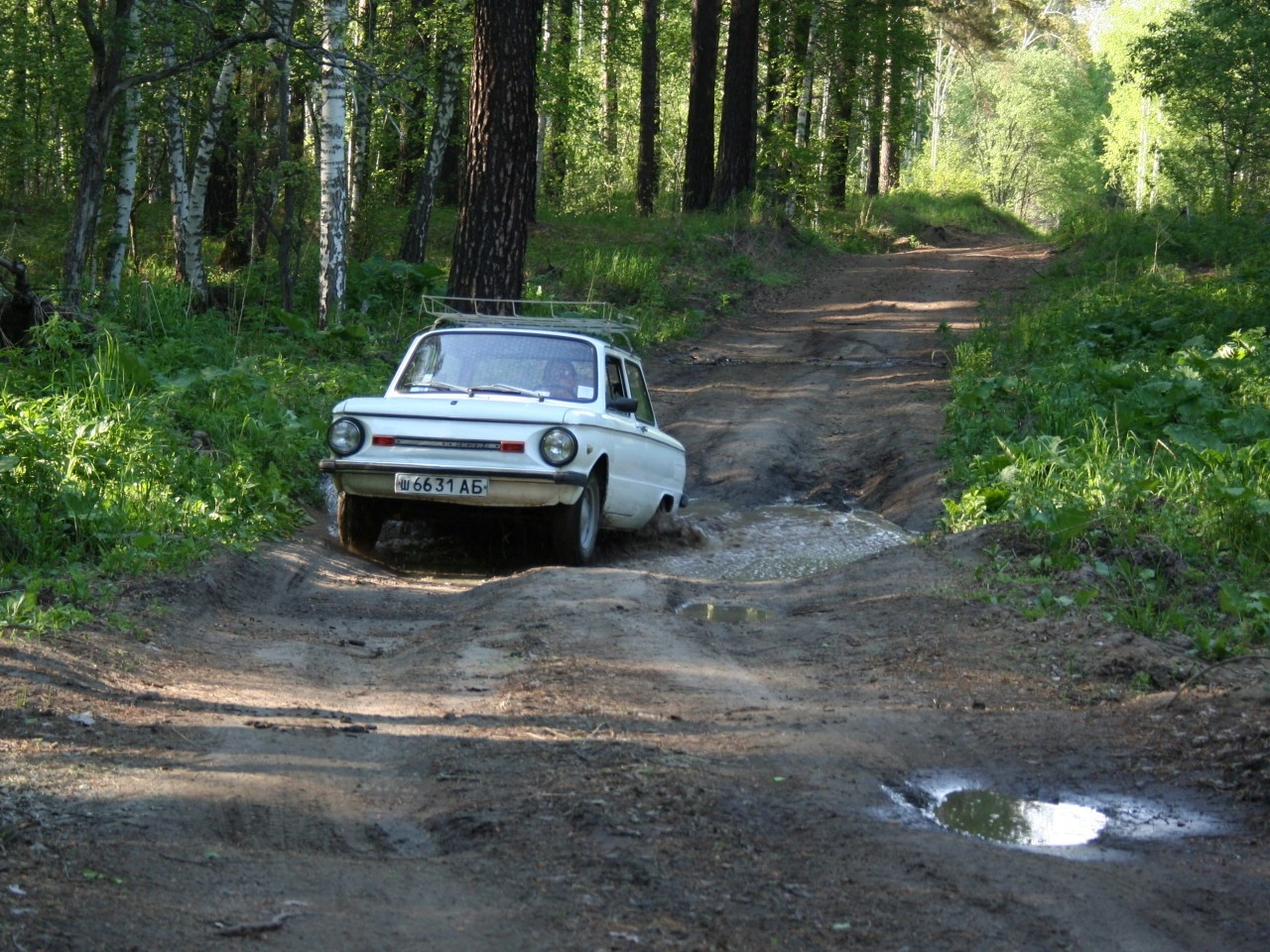
A dirt road is an unpaved road whose surface consists mainly of natural soil, earth or compacted ground rather than asphalt, concrete or an added gravel surface. Dirt roads are commonly found in rural, agricultural, forest and remote areas.
Drivers on dirt roads should adapt their speed to the surface conditions and avoid sudden braking, acceleration or steering. Dust, mud, ruts, potholes and reduced tyre grip can make driving more difficult, especially during or after bad weather.
Wikimedia.org • Игоревич • CC0
How should you drive on a dirt road?
Use a suitable speed, increase following distance when necessary and accelerate, brake and steer smoothly. Extra care may be required when the surface is dusty, muddy, rutted or uneven.
🔗 gov.uk • Great Britain Highway Code, Rules 124–126; national guidance example
🔗 gov.uk • Great Britain Highway Code, Rules 226–237; national guidance example
187. Driving
Driving is the act of controlling and operating a vehicle or other recognised means of transport in traffic. It involves steering, accelerating, braking, observing the road and interacting safely with other road users.
Safe driving requires the driver to remain in control, follow traffic rules and signals, observe surrounding traffic and adapt to road, weather and visibility conditions.

Wikimedia.org • BP63Vincent • CC BY-SA
Who can legally drive a motor vehicle?
The requirements vary by country and vehicle type. Drivers may need to meet minimum-age, driving-licence, medical-fitness and vehicle-category requirements.
🔗 gov.uk • Great Britain Highway Code, Rules 124–126; national guidance example
🔗 gov.uk • Great Britain Highway Code, Rules 226–237; national guidance example
188. Start-stop system
A start-stop system is a vehicle system that automatically switches off the engine when the vehicle is stationary and restarts it when the driver is ready to move again. It is commonly used in vehicles with combustion engines to reduce unnecessary engine idling.
The system normally operates automatically when certain conditions are met, such as when the vehicle stops in traffic. Its operation does not replace the driver's responsibility to control the vehicle safely and follow the applicable traffic rules.
Wikimedia.org • Bindydad123 • CC BY-SA
Does the engine always switch off when the vehicle stops?
Not necessarily. The system may keep the engine running when operating conditions do not allow an automatic stop, depending on the vehicle and its systems.
189. Manual transmission
A manual transmission is a vehicle transmission in which the driver selects the gears manually, usually using a gear lever together with a clutch pedal. The driver operates the clutch to disconnect and reconnect the engine from the transmission when starting, stopping or changing gears.
Driving a manual vehicle requires the driver to coordinate the clutch, accelerator and gear selection. Compared with an automatic transmission, gear changes are controlled directly by the driver rather than being performed automatically by the vehicle.
Wikimedia.org • 21C117 • CC BY-SA
What is the difference between a manual and automatic transmission?
With a manual transmission, the driver selects and changes gears. An automatic transmission normally selects the appropriate gears automatically without requiring a conventional clutch pedal.
190. Automatic transmission
An automatic transmission is a vehicle transmission that changes gears automatically without requiring the driver to operate a conventional clutch pedal and manually select each gear. Depending on the design, the driver normally selects positions such as park, reverse, neutral and drive while the transmission manages gear changes.
An automatic transmission can make driving simpler by removing the need to coordinate a clutch pedal and manual gear changes. Automatic transmissions include several different technologies, such as conventional automatics, continuously variable transmissions and dual-clutch systems.
Wikimedia.org • Jhcbs1019 • CC BY-SA
Do all automatic transmissions work in the same way?
No. Automatic transmission controls, operating modes and procedures differ between vehicles. Read the handbook for selecting drive, parking, hill driving and breakdown towing rather than assuming that a familiar selector or procedure works in every model.
191. Throttle
A throttle is a control used to regulate the power produced by an engine or motor. In most cars and trucks, the driver controls the throttle through the accelerator pedal, while motorcycles commonly use a twist grip on the handlebar.
Increasing the throttle generally increases the power available for acceleration, while reducing it decreases the power delivered to the wheels. The exact system differs between combustion-engine, hybrid and electric vehicles.

Wikimedia.org • Santeri Viinamäki • CC BY-SA
Is the throttle the same as the accelerator?
They are closely related. The accelerator is the driver’s control. In a combustion-engine vehicle, it commands the throttle system that regulates engine output; electronic systems can transmit that command through a computer rather than a mechanical linkage.
192. Tachometer
A tachometer is an instrument that shows the rotational speed of an engine or motor, usually measured in revolutions per minute (RPM). It is commonly displayed on the vehicle's instrument panel near the speedometer.
A tachometer helps the driver understand how fast the engine is rotating and can assist with selecting an appropriate gear in vehicles with a manual transmission. It measures engine speed rather than the vehicle's road speed.
Wikimedia.org • メルビル • CC BY-SA
Is a tachometer the same as a speedometer?
No. A tachometer shows engine rotational speed, while a speedometer shows the vehicle's road speed.
193. Steering wheel
A steering wheel is the primary control used by a driver to change the direction of a vehicle. Turning the steering wheel operates the steering system, which changes the angle of the steered wheels and directs the vehicle along the intended path.
The driver should use the steering wheel smoothly and remain in full control of the vehicle. Modern steering systems may include power assistance, electronic controls and buttons for functions such as audio, cruise control or driver information.

Wikimedia.org • Mario Roberto Durán Ortiz • CC BY-SA
Should you make sudden steering movements?
Normally, no. Steering should be smooth and controlled because sudden movements can destabilise the vehicle or create danger for other road users.
🔗 hella.com • HELLA, hydraulic steering pump function and failure effects
194. Power steering
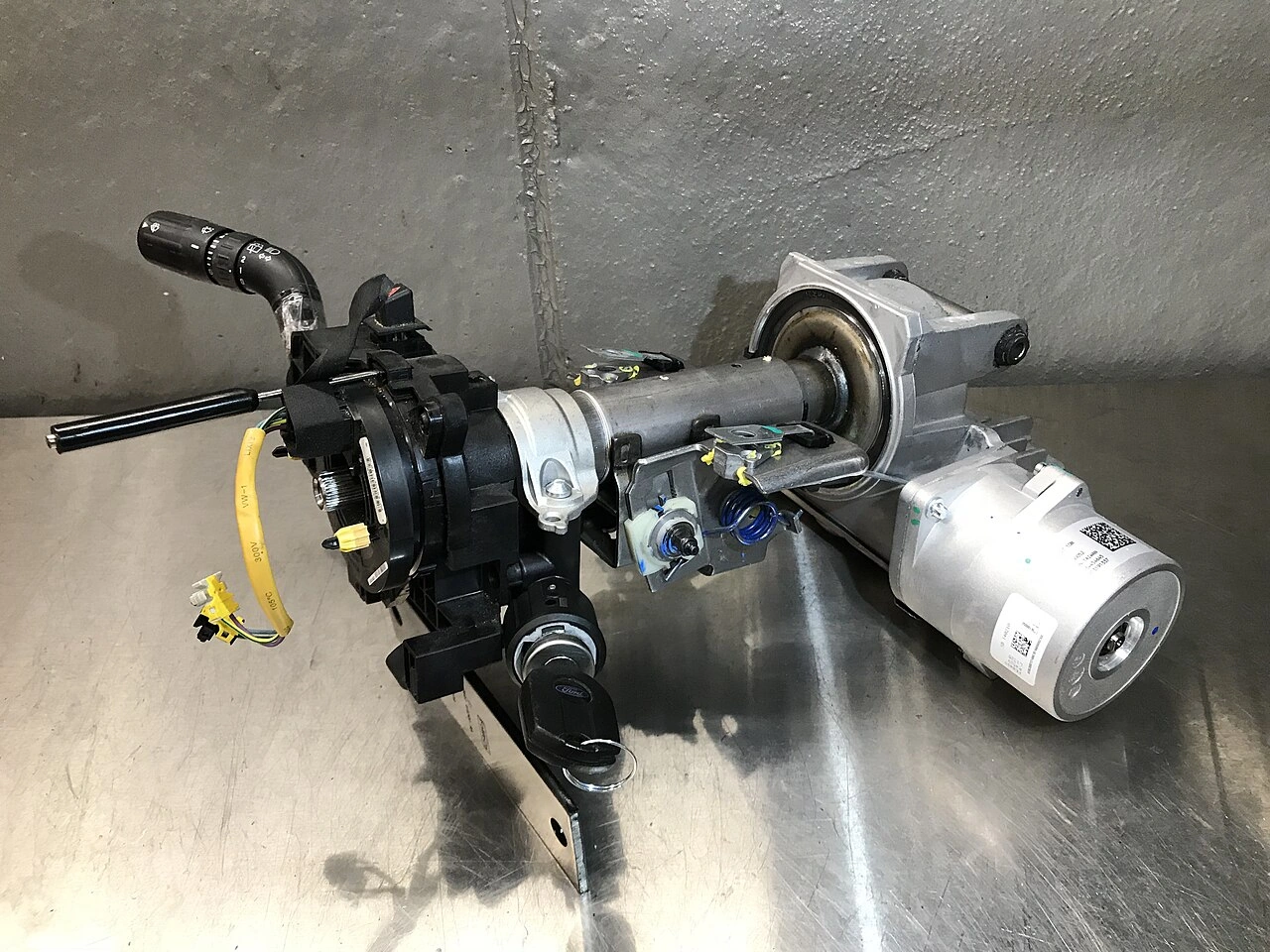
Power steering is a steering system that assists the driver in turning the vehicle's wheels, reducing the physical effort required at the steering wheel. The assistance may be provided hydraulically, electrically or by a combination of systems.
Power steering makes vehicles easier to manoeuvre, particularly at low speeds and while parking. The amount of assistance may vary with vehicle speed so that steering remains stable and responsive during faster driving.
Wikimedia.org • Samf4u • CC BY-SA
What happens if power steering fails?
Steering may become considerably heavier or a warning may appear. The driver should maintain control, reduce speed safely and have the steering system checked as soon as possible.
🔗 hella.com • HELLA, hydraulic steering pump function and failure effects
195. Visual scanning
Visual scanning is the driving technique of continuously observing the road ahead, mirrors, side areas and surrounding traffic to identify hazards and changing traffic situations as early as possible. Effective scanning means moving attention regularly between different parts of the traffic environment rather than concentrating on a single point.
Drivers should look well ahead, check mirrors regularly and observe relevant side areas and blind spots, particularly before changing speed, direction or road position.

Wikimedia.org • B137 • CC BY-SA
Why is scanning important?
Scanning helps drivers identify hazards earlier and gives them more time to adjust speed, position or direction safely.
196. Mirror
A mirror is a device fitted to a vehicle that allows the driver to observe traffic behind and beside the vehicle without turning away from the road ahead for an extended period. Vehicles commonly use an interior rear-view mirror and one or more exterior side mirrors.
Mirrors help drivers monitor surrounding traffic before changing direction, changing lane, overtaking, merging or slowing down. Because mirrors cannot show every area around a vehicle, drivers should also check their blind spots by direct observation where necessary before manoeuvring.
Wikimedia.org • Petar Milošević • CC BY-SA
What is a vehicle mirror?
A vehicle mirror allows the driver to observe traffic and other road users behind or beside the vehicle.
What is the difference between an interior and exterior mirror?
An interior rear-view mirror normally provides a view through the rear window, while exterior side mirrors provide views along the sides and towards the rear of the vehicle.
Can a damaged mirror affect road safety?
Yes. A cracked, loose, missing or badly adjusted mirror can reduce the driver's view of surrounding traffic and should be repaired or replaced when necessary.
197. Fuel
Fuel is a source of energy used to power a vehicle's engine. Common vehicle fuels include petrol, diesel, LPG, CNG and alternative fuels. Electric vehicles use electricity rather than conventional liquid or gaseous fuel.
Drivers should always use a fuel that is compatible with their vehicle. Using the wrong fuel can damage the engine or fuel system, while economical driving and proper vehicle maintenance can reduce fuel consumption.

Wikimedia.org • Santeri Viinamäki • CC BY-SA
Which fuels are commonly used in road vehicles?
Common road-vehicle fuels include petrol, diesel, LPG, CNG and compatible alternative fuels. Battery-electric vehicles store electricity in a traction battery; other electric-drive designs, such as fuel-cell vehicles, obtain their propulsion energy differently.
🔗 energy.gov • US Department of Energy, Internal Combustion Engine Basics
🔗 afdc.energy.gov • US Department of Energy AFDC, BEV components
🔗 afdc.energy.gov • US Department of Energy AFDC, fuel-cell electric components
🔗 afdc.energy.gov • US Department of Energy AFDC, hybrid components
🔗 gov.uk • GOV.UK, E10 petrol explained; GB fuel-compatibility example
How can a driver reduce fuel consumption?
Smooth acceleration, anticipating traffic, maintaining an appropriate speed, correct tyre pressure, avoiding unnecessary loads and keeping the vehicle properly maintained can help reduce fuel consumption.
🔗 energy.gov • US Department of Energy, Internal Combustion Engine Basics
🔗 afdc.energy.gov • US Department of Energy AFDC, BEV components
🔗 afdc.energy.gov • US Department of Energy AFDC, fuel-cell electric components
🔗 afdc.energy.gov • US Department of Energy AFDC, hybrid components
🔗 gov.uk • GOV.UK, E10 petrol explained; GB fuel-compatibility example
198. Fuel economy
Fuel economy describes how efficiently a vehicle uses fuel to travel a certain distance. It is commonly expressed as fuel consumption, such as litres per 100 kilometres (L/100 km), or as distance travelled per unit of fuel, such as miles per gallon (mpg).
Fuel economy is affected by driving style, speed, traffic, vehicle weight, tyre pressure, aerodynamics, road conditions and maintenance. Smooth driving and anticipating traffic can reduce fuel consumption.

Wikimedia.org • Axel Schwenke • CC BY-SA
What does good fuel economy mean?
Good fuel economy means that a vehicle uses relatively little fuel for the distance travelled. When consumption is expressed in litres per 100 kilometres, a lower number generally indicates better fuel economy.
🔗 energy.gov • US Department of Energy, Internal Combustion Engine Basics
🔗 afdc.energy.gov • US Department of Energy AFDC, BEV components
🔗 afdc.energy.gov • US Department of Energy AFDC, fuel-cell electric components
🔗 afdc.energy.gov • US Department of Energy AFDC, hybrid components
🔗 gov.uk • GOV.UK, E10 petrol explained; GB fuel-compatibility example
What vehicle factors affect fuel economy?
Fuel economy can be affected by tyre pressure, vehicle weight, roof racks, mechanical condition, air conditioning and other electrical loads. Proper maintenance and removing unnecessary loads can improve efficiency.
🔗 energy.gov • US Department of Energy, Internal Combustion Engine Basics
🔗 afdc.energy.gov • US Department of Energy AFDC, BEV components
🔗 afdc.energy.gov • US Department of Energy AFDC, fuel-cell electric components
🔗 afdc.energy.gov • US Department of Energy AFDC, hybrid components
🔗 gov.uk • GOV.UK, E10 petrol explained; GB fuel-compatibility example
199. Fuel gauge
A fuel gauge is an instrument on a vehicle's dashboard that indicates approximately how much fuel remains in the fuel tank. It usually displays a scale from empty to full and may also include a low-fuel warning light.
The reading is an estimate and can change slightly when the vehicle is on a slope, accelerating, braking or cornering. Drivers should refuel before the tank becomes completely empty.

Wikimedia.org • Santeri Viinamäki • CC BY-SA
What does a fuel gauge show?
A fuel gauge shows the approximate amount of fuel remaining in the vehicle's tank. Most gauges use a scale between empty and full.
Is a fuel gauge completely accurate?
Treat the fuel gauge as an estimate and follow the handbook’s low-fuel warnings. Do not assume that one indicated level guarantees an exact usable quantity or remaining distance; the display and warning behaviour depend on the vehicle.
200. Petrol
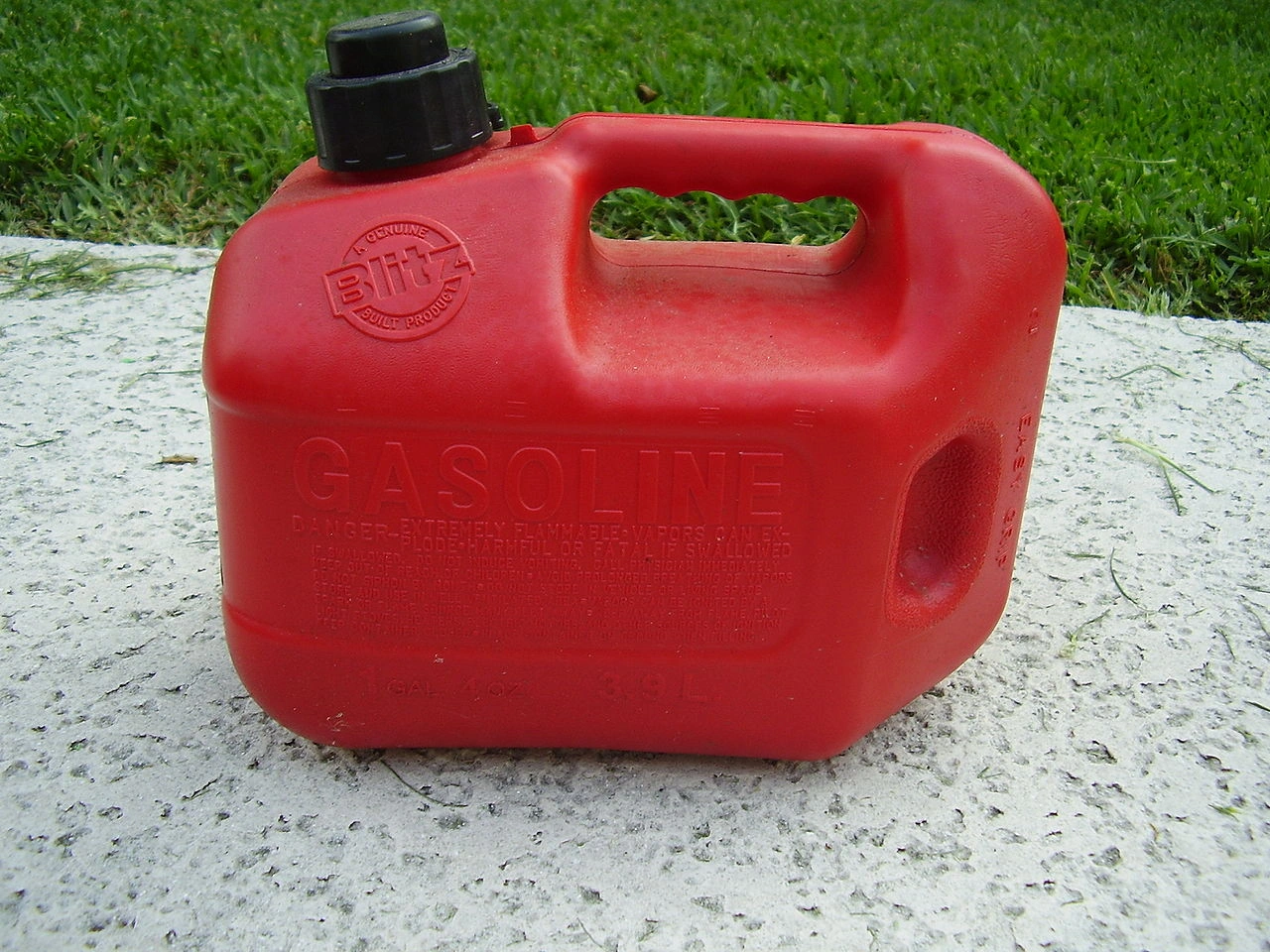
Petrol, also called gasoline, is a liquid fuel commonly used in spark-ignition engines. It is produced mainly from petroleum and may contain renewable components such as ethanol.
Different grades of petrol are identified by their octane rating and ethanol content. Drivers should always use a fuel that meets the specifications recommended by the vehicle manufacturer.
Wikimedia.org • WhisperToMe • CC0
What is the difference between E5 and E10 petrol?
E5 and E10 indicate the permitted ethanol content of petrol. E5 contains up to 5% ethanol by volume, while E10 contains up to 10%. Drivers should check whether their vehicle is compatible with the selected fuel.
🔗 energy.gov • US Department of Energy, Internal Combustion Engine Basics
🔗 afdc.energy.gov • US Department of Energy AFDC, BEV components
🔗 afdc.energy.gov • US Department of Energy AFDC, fuel-cell electric components
🔗 afdc.energy.gov • US Department of Energy AFDC, hybrid components
🔗 gov.uk • GOV.UK, E10 petrol explained; GB fuel-compatibility example