loading

Book

This informative book is designed for students who want to pass the quiz with confidence. Packed with clear explanations and visual examples, it keeps you engaged while helping you learn faster and succeed.


1. Tire pressure

Tire pressure refers to the amount of air inside a tire, measured in PSI (pounds per square inch) or kPa (kilopascals). It’s a key factor in your vehicle’s safety, performance, and fuel efficiency. Correct pressure ensures: proper traction and handling, even tire wear, better fuel economy and shorter braking distances. Incorrect pressure can lead to: poor grip, increased tire wear, blowouts or tire failure and reduced control, especially in wet or icy conditions. In short: Tire pressure is a small detail with big safety and performance impacts. Checking it regularly keeps your car running smoothly and safely.
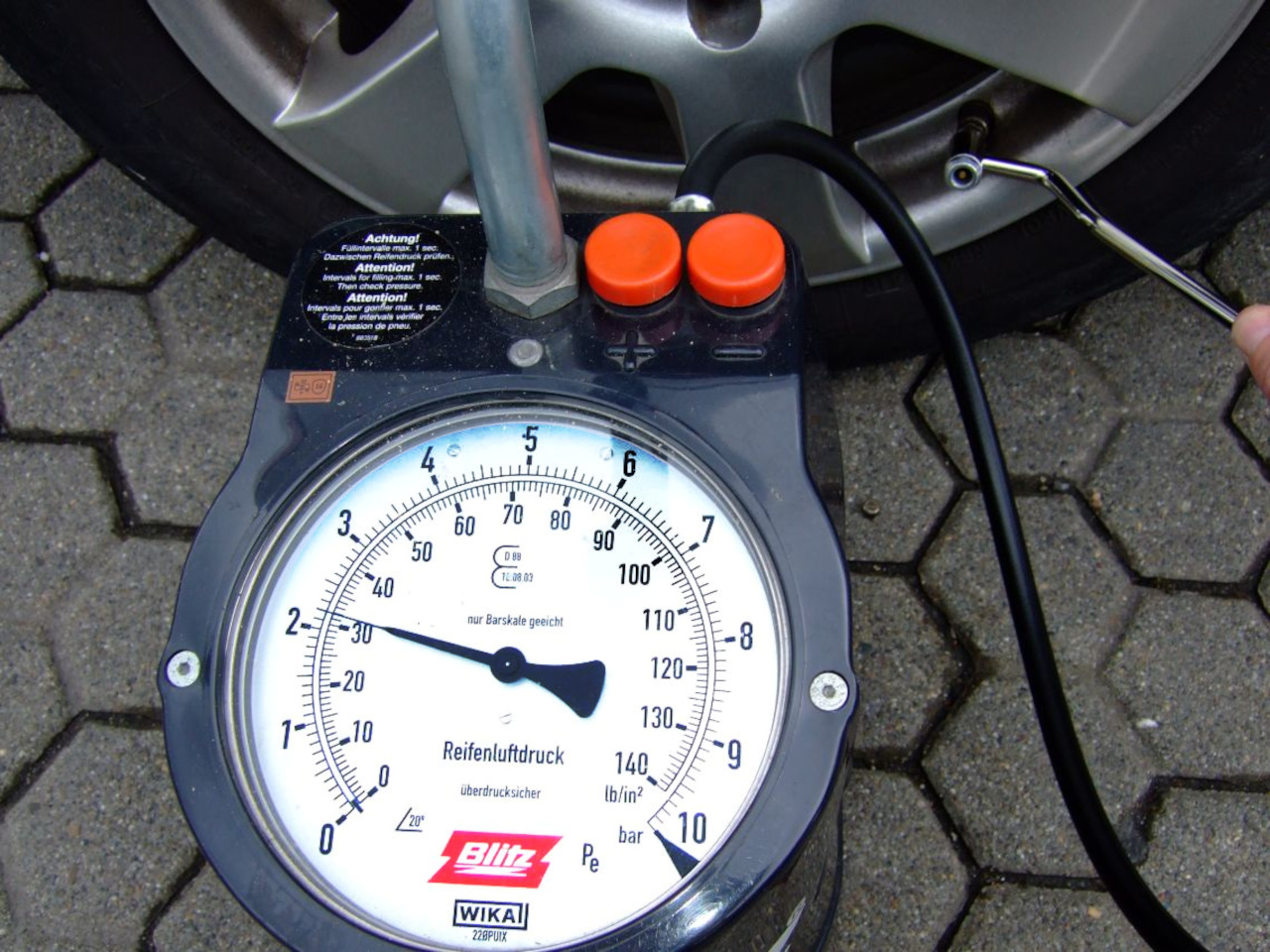
  • Recommended Tire Pressure:
    • Found in your vehicle’s manual or on a sticker inside the driver’s door frame.
    • Common passenger car pressure: 30–35 PSI (2.0–2.4 bar).
    • Do not use the number on the tire itself—that's the maximum, not the recommended value.
  • How to Check Tire Pressure:
    • Use a tire pressure gauge (digital or analog).
    • Check when tires are cold (before driving or after sitting for a few hours).
    • Compare the reading to your vehicle's recommended pressure.
    • Inflate or deflate as needed.
    • Modern cars have a Tire Pressure Monitoring System (TPMS) that alerts you if the pressure drops too low.

© Wikimedia.org/JEG14, CC0