Traffic signsColombia
 Traffic rules
 Colombia
 Priority signs
 Warning signs
 Prohibitory signs
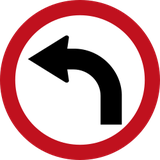 Mandatory signs
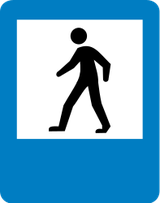 Information signs
Traffic signs
A traffic sign is a standardised visual symbol placed along roads to guide, warn, or regulate drivers, cyclists, and pedestrians. These signs provide essential information about road conditions, rules, directions, and potential hazards, helping to ensure safety and smooth traffic flow. They come in various shapes and colours—such as triangular warning signs, circular prohibitory or mandatory signs, and rectangular information signs—each designed for quick recognition and clear understanding.

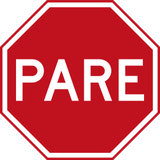
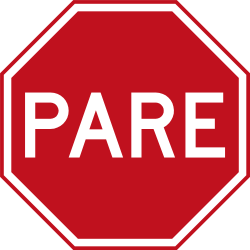
1. Stop and give way
This traffic sign means stop and give way. You must come to a complete stop before entering the intersection and give way to traffic that has priority. Proceed only when it is safe.
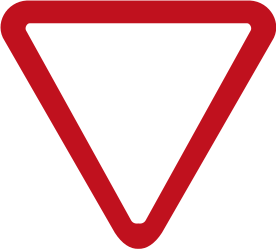
2. Give way
This traffic sign means give way. Slow down and give way to traffic that has priority. Stop if necessary and proceed only when it is safe.
3. Give way ahead
This traffic sign indicates give way ahead. A give-way requirement applies at the location ahead. Reduce speed in good time and be prepared to stop if necessary.
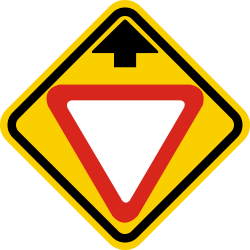
4. Stop and give way ahead
This traffic sign indicates stop and give way ahead. A stop sign applies at the location ahead. Reduce speed in good time and be prepared to come to a complete stop.
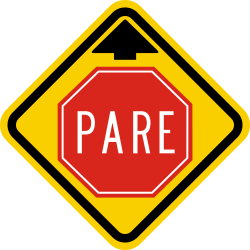
5. Warning for an uncontrolled crossroad
This traffic sign indicates a warning for an uncontrolled crossroad. An intersection without traffic signals or signs assigning priority lies ahead. Reduce speed, watch for traffic approaching from other directions and follow the applicable local priority rules.
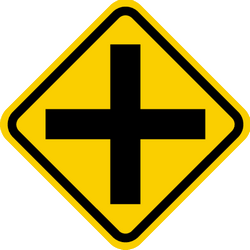
6. Warning for a side road from the left
This traffic sign indicates a warning for a side road from the left. A side road joins the road ahead from the left at an uncontrolled junction. Reduce speed, watch for traffic entering from the side road and follow the applicable default priority rules.
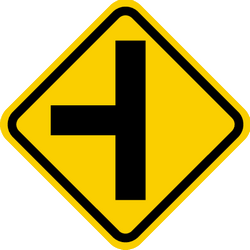
7. Warning for merging traffic from the left
This traffic sign indicates a warning for merging traffic from the left. Traffic travelling in the same general direction may join your traffic stream from the left. Stay alert for entering vehicles and follow the applicable priority signs and local rules.
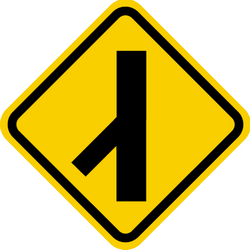
8. Warning for a side road from the right
This traffic sign indicates a warning for a side road from the right. A side road joins the road ahead from the right at an uncontrolled junction. Reduce speed, watch for traffic entering from the side road and follow the applicable default priority rules.
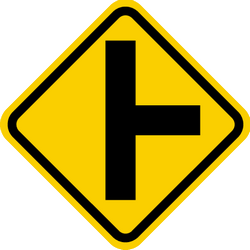
9. Warning for merging traffic from the right
This traffic sign indicates a warning for merging traffic from the right. Traffic travelling in the same general direction may join your traffic stream from the right. Stay alert for entering vehicles and follow the applicable priority signs and local rules.
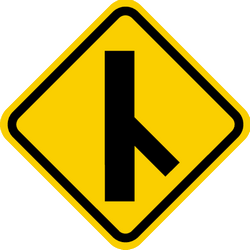
10. Warning for a roundabout
This traffic sign indicates a warning for a roundabout. A roundabout lies ahead. Reduce speed and follow the applicable priority signs, traffic signals and local roundabout rules when approaching and entering it.
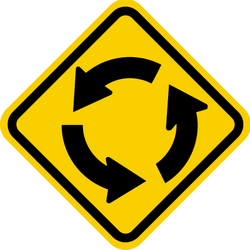
11. Warning for a staggered junction
This traffic sign indicates a warning for a staggered junction. Side roads join the main road at different points rather than directly opposite each other. Reduce speed and watch carefully for vehicles entering, leaving or crossing the main road.
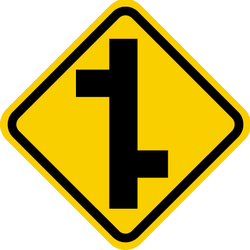
12. Warning for a staggered junction
This traffic sign indicates a warning for a staggered junction. Side roads join the main road at different points rather than directly opposite each other. Reduce speed and watch carefully for vehicles entering, leaving or crossing the main road.
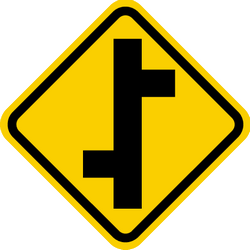
13. Warning for an uncontrolled T-junction
This traffic sign indicates a warning for an uncontrolled T-junction. The road ends at an intersection where no traffic signs or signals assign priority. Reduce speed and follow the applicable default priority rules.
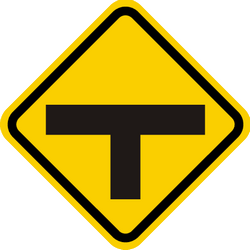
14. Warning for an uncontrolled Y-junction
This traffic sign indicates a warning for an uncontrolled Y-junction. The road divides or meets another road at a Y-shaped intersection where no signs or signals assign priority. Reduce speed and follow the applicable default priority rules.
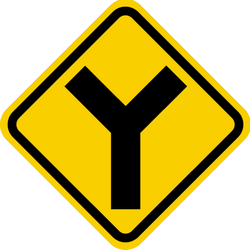
15. Warning for a curve to the left
This traffic sign indicates a warning for a curve to the left. A left-hand bend lies ahead. Reduce speed before entering the curve, maintain your lane position and use smooth steering.
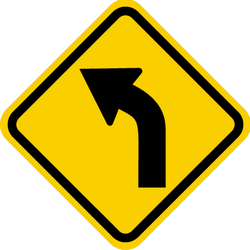
16. Warning for a curve to the right
This traffic sign indicates a warning for a curve to the right. A right-hand bend lies ahead. Reduce speed before entering the curve, maintain your lane position and use smooth steering.
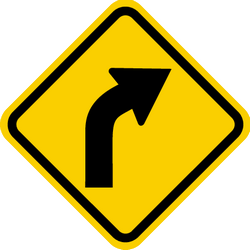
17. Warning for a sharp curve to the left
This traffic sign indicates a warning for a sharp curve to the left. A tight left-hand bend lies ahead. Reduce speed before entering the curve, remain within your lane and use smooth steering.
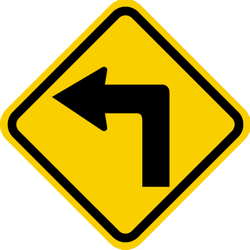
18. Warning for a sharp curve to the right
This traffic sign indicates a warning for a sharp curve to the right. A tight right-hand bend lies ahead. Reduce speed before entering the curve, remain within your lane and use smooth steering, particularly when visibility or road grip is reduced.
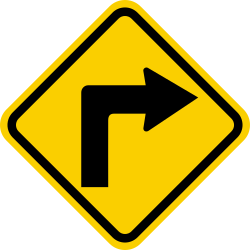
19. Warning for a double curve, first left then right
This traffic sign indicates a warning for successive curves, with the first curve to the left. Reduce speed before entering the winding section, maintain your lane position and be prepared for further changes in direction.
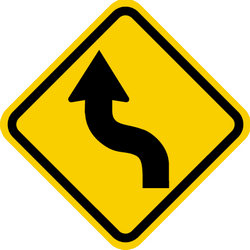
20. Warning for a double curve, first right then left
This traffic sign indicates a warning for successive curves, with the first curve to the right. Reduce speed before entering the winding section, maintain your lane position and be prepared for further changes in direction.
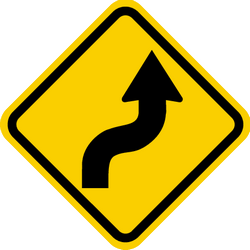
21. Warning for sharp curves, first left then right
This traffic sign indicates a warning for successive sharp curves, with the first curve to the left. Reduce speed before entering the winding section and be prepared for rapid changes in direction.
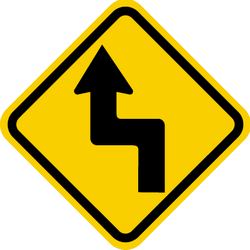
22. Warning for sharp curves, first right then left
This traffic sign indicates a warning for successive sharp curves, with the first curve to the right. Reduce speed before entering the winding section and be prepared for rapid changes in direction.
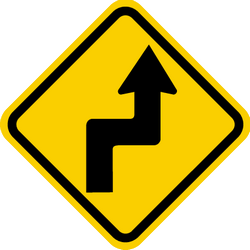
23. Warning for curves
This traffic sign indicates a warning for a series of curves. One or more changes in direction lie ahead and may occur in quick succession. Reduce speed before entering the winding section, maintain your lane position and use smooth steering.
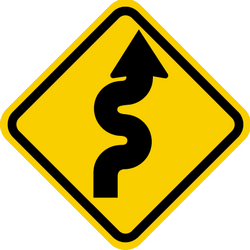
24. Warning for a road narrowing
This traffic sign indicates a warning for a road narrowing. The available width of the road or carriageway decreases ahead. Reduce speed, maintain sufficient lateral clearance and watch carefully for approaching or adjacent traffic.
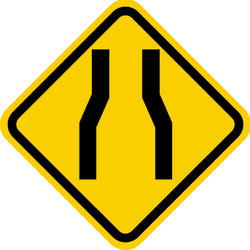
25. Warning for a road narrowing on the left
This traffic sign indicates a warning for a road narrowing on the left. The available road width decreases from the left side ahead. Reduce speed, follow the lane markings and maintain sufficient clearance from other traffic and the road edge.
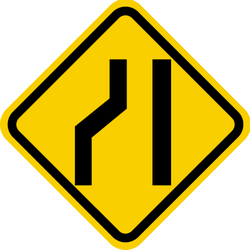
26. Warning for a road narrowing on the right
This traffic sign indicates a warning for a road narrowing on the right. The available road width decreases from the right side ahead. Reduce speed, follow the lane markings and maintain sufficient clearance from other traffic and the road edge.
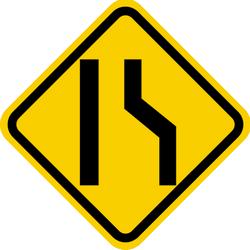
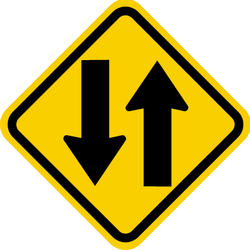
27. Warning for a road with two-way traffic
This traffic sign indicates a warning for two-way traffic. Oncoming traffic will use the same road or carriageway ahead. Keep to the correct side of the road and overtake only where it is permitted and clearly safe.
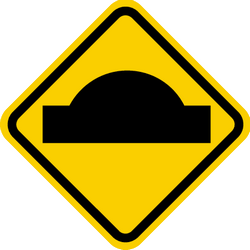
28. Warning for a speed bump
This traffic sign indicates a warning for a speed bump. A raised traffic-calming feature lies ahead. Reduce speed before reaching it to maintain vehicle control and avoid damage or discomfort.
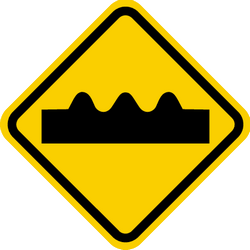
29. Warning for a bad road surface
This traffic sign indicates a warning for a bad or uneven road surface. Potholes, bumps, depressions or other surface irregularities may affect vehicle stability and braking. Reduce speed and avoid sudden manoeuvres.
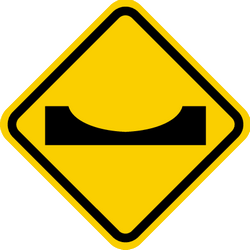
30. Warning for a dip in the road
This traffic sign indicates a warning for a dip in the road. A sudden depression in the road surface lies ahead and may affect vehicle stability or visibility. Reduce speed before reaching the dip and be prepared for water or other hazards that may collect in the lowered section.
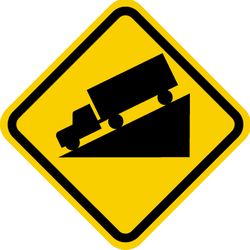
31. Warning for a steep descent
This traffic sign indicates a warning for a steep descent. A steep downhill gradient lies ahead and the vehicle may gain speed quickly. Reduce speed before the descent, select a suitable gear and use engine braking where appropriate. Allow extra distance for heavy or towing vehicles.
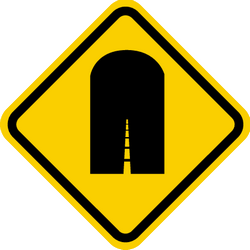
32. Warning for a tunnel
This traffic sign indicates a warning for a tunnel. Driving conditions may change at the tunnel entrance because of reduced light, limited visibility or restricted space. Reduce speed when necessary and follow the applicable rules for vehicle lighting, stopping, overtaking and lane use.
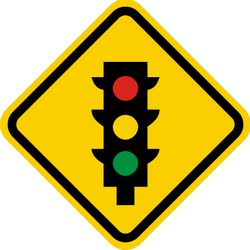
33. Warning for traffic lights ahead
This traffic sign indicates a warning for traffic lights ahead. Traffic signals are located ahead and may not be visible early enough without advance warning. Reduce speed and be prepared to stop if the signal requires it.
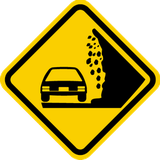
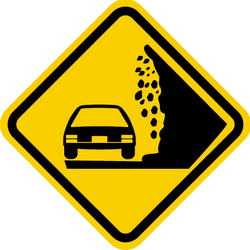
34. Warning for falling rocks
This traffic sign indicates a warning for falling rocks. Rocks or stones may fall from nearby slopes or may already be lying on the road. Reduce speed, scan the road ahead and be prepared to avoid or stop for fallen material.
35. Warning for loose chippings on the road surface
This traffic sign indicates a warning for loose chippings. Loose stones or gravel may reduce tyre grip and can be thrown up by passing vehicles. Reduce speed, increase your following distance and avoid sudden braking, acceleration or steering movements.
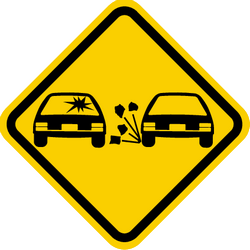
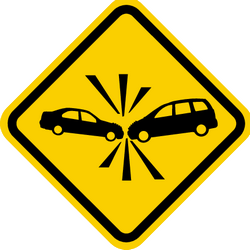
36. Warning for accidents
This traffic sign indicates a warning for accidents. It warns drivers of an accident hazard or an accident affecting the road ahead. Reduce speed, increase your following distance and be prepared for stopped traffic, emergency services or an obstruction.
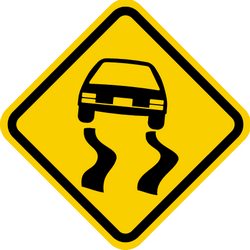
37. Warning for a slippery road surface
This traffic sign indicates a warning for a slippery road surface. The road ahead may provide reduced tyre grip because of water, ice, mud, oil or another surface condition. Reduce speed and avoid sudden braking, acceleration or steering movements.
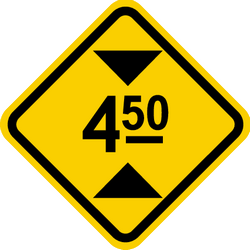
38. Warning for a height restriction
This traffic sign indicates a warning for a height restriction. The available clearance ahead is limited, for example at a bridge, tunnel or other overhead structure. Drivers of tall vehicles should check their vehicle height and use another route if the vehicle cannot pass safely.
39. Warning for a weight restriction
This traffic sign indicates a warning for a weight restriction. A maximum permitted vehicle weight applies ahead. Drivers of heavy vehicles should check the applicable vehicle weight and use another route if the limit would be exceeded.
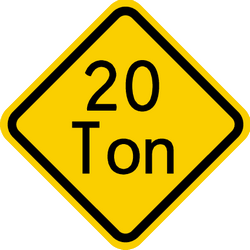
40. Warning for a width restriction
This traffic sign indicates a warning for a width restriction. The available passage ahead is limited in width. Drivers of wide vehicles should check their vehicle width and use another route if the vehicle cannot pass safely.
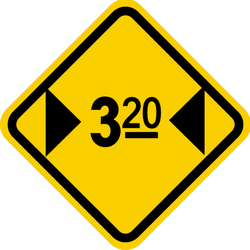
41. Warning for a narrowing
This traffic sign indicates a warning for a narrowing ahead. The available road width decreases ahead. Reduce speed when necessary and be prepared for less lateral space between vehicles, obstacles or the road edge.
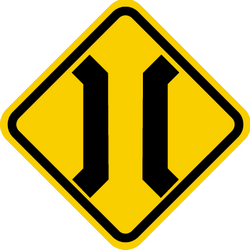
42. Warning for an obstacle, pass either side
This traffic sign indicates a warning for an obstacle that may be passed on either side. A fixed obstacle or traffic island lies ahead. Pass on either permitted side while following the lane markings and any additional signs.
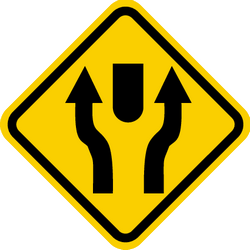
43. Warning for a divided road
This traffic sign indicates a warning for a divided road. The road ahead separates into carriageways for opposing directions of traffic, usually divided by a central reservation or traffic island. Follow the lane markings and adjust your position to the new road layout.
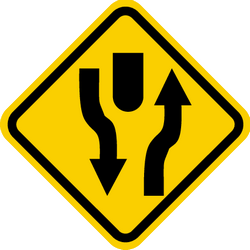
44. Warning for the end of a divided road
This traffic sign indicates a warning for the end of a divided road. The separation between opposing directions of traffic ends ahead, and oncoming traffic will no longer be divided by a central reservation. Reduce speed and adjust to the new road layout.
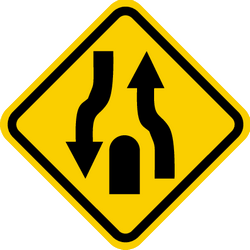
45. Warning for two roads that merge
This traffic sign indicates a warning for two roads that merge. Two traffic streams join ahead. Adjust your speed and position, maintain a safe gap and be prepared for vehicles merging into the traffic flow.
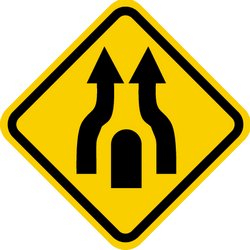
46. Warning for an unpaved road surface
This traffic sign indicates a warning for an unpaved road surface. The paved surface ends or changes to gravel, dirt or another loose material. Reduce speed and be prepared for reduced grip, uneven surfaces, dust and loose stones.
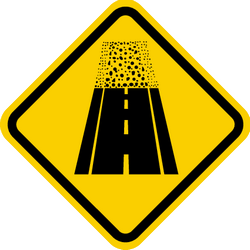
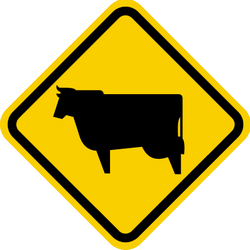
47. Warning for cattle on the road
This traffic sign indicates a warning for cattle. Cattle or other livestock may be crossing, walking along or standing near the road. Reduce speed, be prepared to stop and avoid sudden movements or unnecessary use of the horn that could startle the animals.
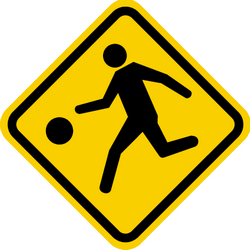
48. Warning for a playground
This traffic sign indicates a warning for a playground. Children may be playing close to the road and may enter or cross it unexpectedly. Reduce speed, watch the roadside carefully and be prepared to stop.
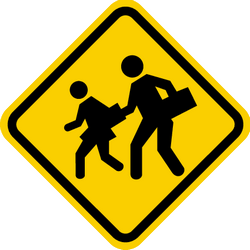
49. Warning for children
This traffic sign indicates a warning for children. Children may be present on or near the road and may cross unexpectedly. Reduce speed, scan both sides of the road carefully and be prepared to stop.
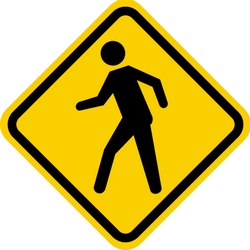
50. Warning for pedestrians
This traffic sign indicates a warning for pedestrians. Pedestrians may be walking near or crossing the road ahead. Reduce speed, watch carefully and be prepared to stop.