Traffic signsNew Zealand
 Traffic rules
 New Zealand
 Priority signs
 Warning signs
 Prohibitory signs
 Mandatory signs
 Information signs
Traffic signs
A traffic sign is a standardised visual symbol placed along roads to guide, warn, or regulate drivers, cyclists, and pedestrians. These signs provide essential information about road conditions, rules, directions, and potential hazards, helping to ensure safety and smooth traffic flow. They come in various shapes and colours—such as triangular warning signs, circular prohibitory or mandatory signs, and rectangular information signs—each designed for quick recognition and clear understanding.

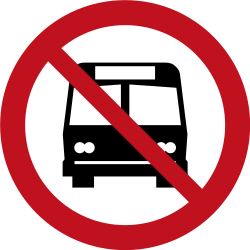
51. Buses prohibited
This traffic sign indicates that buses are prohibited. Buses covered by the sign may not enter or continue beyond it. Other road users may still be permitted unless another restriction applies.
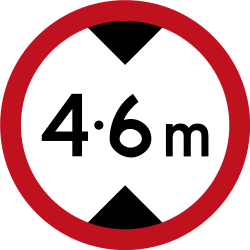
52. Vehicles higher than indicated prohibited
This traffic sign indicates that vehicles higher than indicated are prohibited. A vehicle or vehicle combination whose overall height, including its load, exceeds the displayed limit may not continue beyond the sign.
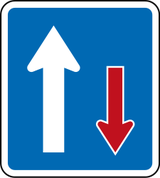
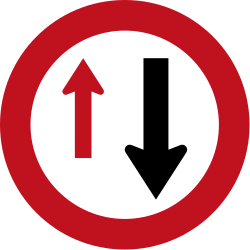
53. Road narrowing, give way to oncoming drivers
This traffic sign indicates a road narrowing where you must give way to oncoming traffic. Allow approaching traffic to pass before entering or continuing through the narrow section when required.
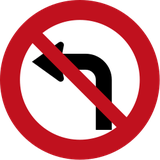
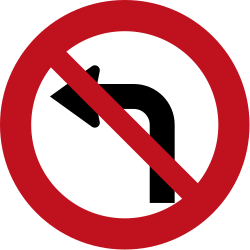
54. Turning left prohibited
This traffic sign indicates that turning left is prohibited. A left turn may not be made where the sign applies. Other movements may still be permitted unless another restriction applies.
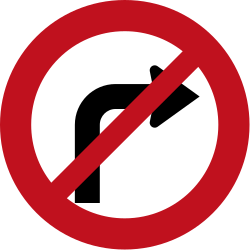
55. Turning right prohibited
This traffic sign indicates that turning right is prohibited. A right turn may not be made where the sign applies. Other movements may still be permitted unless another restriction applies.
56. Turning around prohibited (U-turn)
This traffic sign indicates that turning around (making a U-turn) is prohibited. A U-turn may not be made where the prohibition applies. Other movements may still be permitted unless another restriction applies.
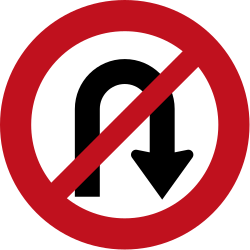
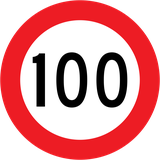
57. Start of a speed limit
This traffic sign indicates the start of a speed limit. The displayed value is the maximum permitted speed from this point. The limit remains in force until it ends or is replaced according to the applicable traffic signs and local rules.
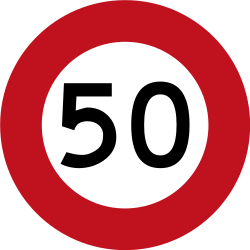
58. Start of a zone with speed limit
This traffic sign indicates the start of a zone with a speed limit. The displayed speed limit applies throughout the zone according to the applicable zonal rules, until the zone is ended or another rule replaces it.
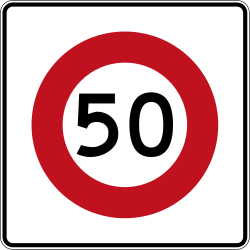
59. Parking prohibited
This traffic sign indicates that parking is prohibited. Vehicles may not be parked in the area covered by the sign unless an exception applies. Brief stopping to pick up or drop off passengers or to load or unload goods may still be permitted where local rules allow it.
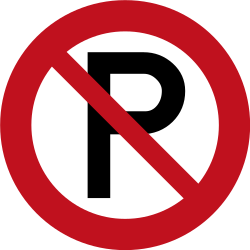
60. Parking and stopping prohibited
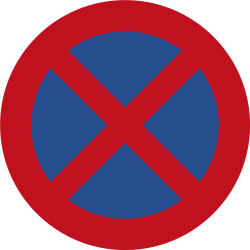
This traffic sign indicates that parking and stopping are prohibited. Vehicles may not stop or park voluntarily where the restriction applies, except where an applicable rule provides an exemption or stopping is required by traffic conditions.
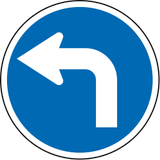
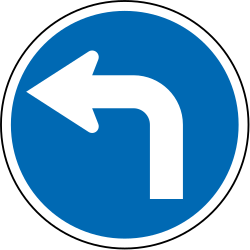
61. Turning left mandatory
This traffic sign indicates that turning left is mandatory at the junction ahead. Traffic must turn left and may not continue straight ahead or turn right.
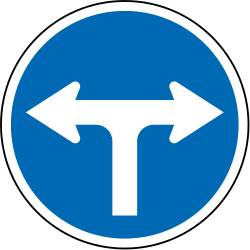
62. Turning left or right mandatory
This traffic sign indicates that turning left or right is mandatory at the junction ahead. Traffic may turn either left or right but may not continue straight ahead.
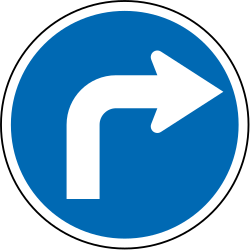
63. Turning right mandatory
This traffic sign indicates that turning right is mandatory at the junction ahead. Traffic must turn right and may not continue straight ahead or turn left.
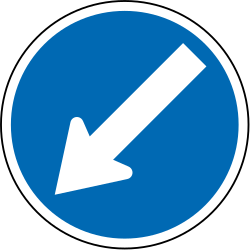
64. Pass obstacle on the left
This traffic sign indicates that traffic must pass an obstacle on the left. Keep to the left of the obstacle and follow any accompanying signs or road markings.
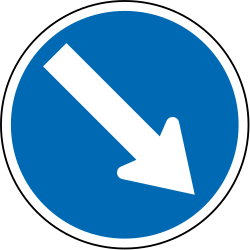
65. Pass obstacle on the right
This traffic sign indicates that traffic must pass an obstacle on the right. Keep to the right of the obstacle and follow any accompanying signs or road markings.
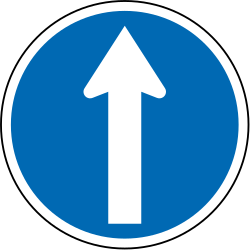
66. Driving straight ahead mandatory
This traffic sign indicates that driving straight ahead is mandatory. Traffic must continue straight ahead and may not turn left or right at the location to which the sign applies.
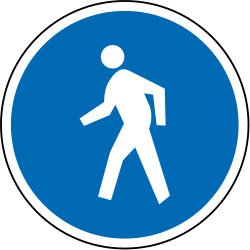
67. Mandatory path for pedestrians
This traffic sign indicates the start of a mandatory path for pedestrians. Pedestrians must use the designated path, while other road users may use it only where the applicable signs or local rules permit them to do so.
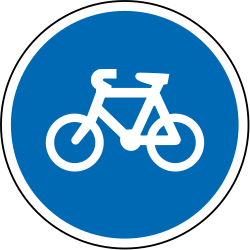
68. Mandatory path for cyclists
This traffic sign indicates a mandatory path for cyclists. Cyclists must use the designated path where the sign applies. Other road users may use the path only where the applicable signs or local rules permit them to do so.
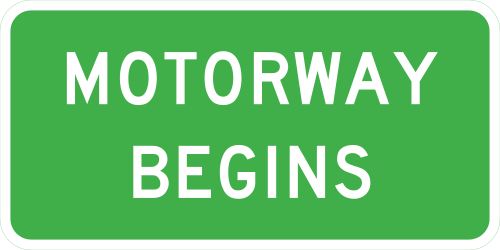
69. Start of a motorway
This traffic sign indicates the start of a motorway. From this point, special motorway rules apply, including restrictions on which road users may enter and on stopping, reversing and other manoeuvres. Follow the applicable speed limits, lane rules and local motorway regulations.
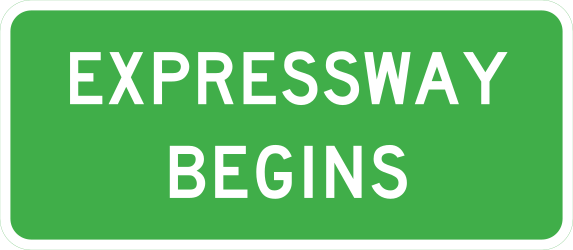
70. Start of an expressway
This traffic sign indicates the start of an expressway. From this point, the traffic rules and access conditions that apply to expressways take effect according to the applicable local regulations.
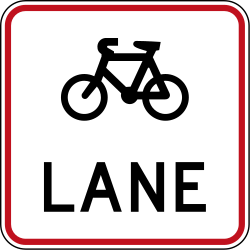
71. Lane for cyclists
This traffic sign indicates a lane for cyclists. The lane is designated for bicycle traffic, subject to the applicable road markings, traffic signs and local rules.
72. Road narrowing, oncoming drivers have to give way
This traffic sign indicates a road narrowing where oncoming drivers have to give way.
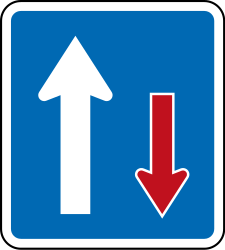
73. Road with one-way traffic
This traffic sign indicates a road with one-way traffic. Drivers may travel only in the permitted direction.
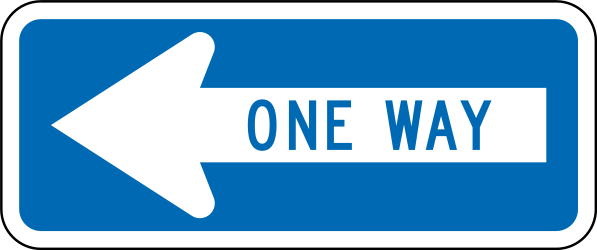
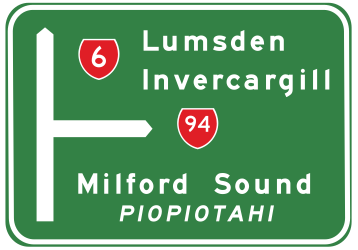
74. Ramp destination
This traffic sign gives information about the destination reached via the ramp. The displayed destination indicates where the ramp leads.
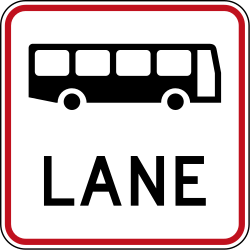
75. Lane for buses
This traffic sign indicates a lane for buses. The lane is intended for buses and any other road users permitted by the applicable signs or local rules.
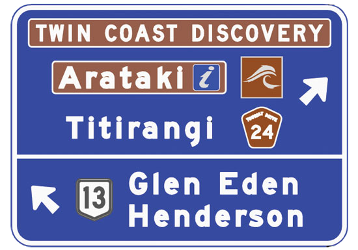
76. General information about the directions
This traffic sign gives general information about road directions. The arrows, destinations and route information show which direction to follow.
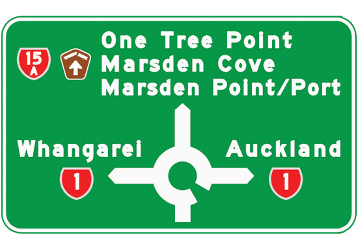
77. Information about the directions of the roundabout
This traffic sign gives information about directions at a roundabout. The diagram shows the available exits and the destinations reached from them.
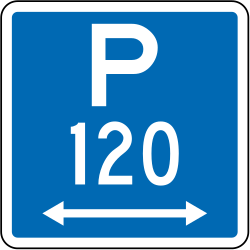
78. Parking allowed
This traffic sign indicates that parking is allowed. Vehicles may be parked in the area covered by the sign subject to any indicated conditions, restrictions or local parking rules.