

PanamaPanama
 Traffic rules
 Panama
1. Panama
Panama forms the narrow land bridge between Costa Rica and Colombia, with the Caribbean Sea to the north and the Pacific Ocean to the south. Traffic drives on the right. Driving conditions range from dense traffic in Panama City to long intercity roads and winding routes through tropical and mountainous areas. Heavy seasonal rainfall is an important hazard: flooding, landslides and fallen trees can obstruct roads, particularly during periods of intense rain.
Panama has no nationwide vignette, but several high-speed corridors around Panama City are tolled; ENA's Corredor Norte and Corredor Sur use the Panapass electronic payment system. National regulations set speed limits according to road type, including 40 km/h in residential streets, 100 km/h on carreteras and 120 km/h on autopistas, unless signs establish another limit. Traffic signs follow a national system and written information is primarily in Spanish. Tourists may drive with a valid licence from their home country for up to 90 days.
AI-generated by Traffic-rules.com • WCIT • CC BY-SA
Which side of the road do you drive on in Panama?
Drive on the right-hand side of the road.
Which side should you overtake on in Panama?
Normally overtake on the left. On carreteras and autopistas, drivers should normally use the right lane, and the left lane of an autopista is reserved for overtaking.
What are the emergency telephone numbers in Panama?
Call 911 for general emergency assistance, 104 for the National Police and 103 for the Fire Department. On ENA's toll corridors, roadside assistance is available on 191.
What is the alcohol limit for drivers in Panama?
Panama's regulation uses alcohol-concentration categories rather than one simple permitted BAC figure. A blood concentration of 10–50 mg/dL is classified as the tolerance level and results in a warning; 51–85 mg/dL is classified as alcoholic breath and is subject to a sanction, while 86 mg/dL or more is classified as proven intoxication. The safest rule is not to drink before driving.
What is the speed limit on residential streets in Panama?
The general maximum on streets and in residential areas is 40 km/h, unless a different signed limit applies.
What is the speed limit on avenues in Panama?
The general maximum on an avenue is 60 km/h. Special lane-based limits apply on certain multi-lane urban roads and two-lane avenues, and posted signs take precedence.
What are the lane-based speed limits on multi-lane urban roads in Panama?
On multi-lane carreteras in urban areas, the regulation sets 80 km/h for the far-left lane, 60 km/h for the centre lane and 50 km/h for the right lane, unless signs establish another limit.
What is the general speed limit on carreteras in Panama?
The general maximum on a carretera is 100 km/h, unless a lower or otherwise different limit is posted.
What is the general speed limit on autopistas in Panama?
The general maximum on an autopista is 120 km/h. Always follow any lower speed limit displayed by traffic signs.
What is the speed limit near schools in Panama?
Near schools and heavily attended sports facilities, the precautionary maximum is 30 km/h during operating hours. A lower locally signed limit must be followed.
Do you need a vignette to drive in Panama?
No. Panama does not use a nationwide road vignette. Tolls are charged for particular roads and corridors instead.
How are tolls paid on Panama City's Corredor Norte and Corredor Sur?
Both corridors use the Panapass electronic toll system. Drivers using a prepaid account should make sure that sufficient balance is available before entering the toll corridor.
Can motorcycles use Panama City's toll corridors?
ENA permits motorcycles with an engine displacement of more than 250 cc on its corridors. Motorcycles are included in the toll classifications and must comply with the applicable Panapass requirements.
Are seat belts compulsory in Panama?
Yes. In ordinary motor vehicles, the driver must wear a seat belt and require passengers to use theirs. The current regulation contains specific exceptions for passengers in collective, school and tourist transport vehicles.
Are child car seats compulsory in Panama?
The current regulation specifically requires a child under 2 years old travelling in the rear seat in the circumstances covered by the rule to use a safety seat that can be securely fixed to the vehicle. Panama does not currently use a general national 135 cm or 150 cm child-seat threshold.
Can young children sit in the front seat in Panama?
Children under 5 years old may not travel in the front seat, except in a single-cab vehicle. Special safety-seat requirements apply to children under 2 in single-cab vehicles.
Are motorcycle helmets compulsory in Panama?
Yes. Motorcycle riders must wear a protective helmet and require their passenger to wear one.
Must motorcycles use their lights during the daytime in Panama?
Yes. Motorcycles and tricycles must keep their exterior lights switched on throughout the day.
When must cars use their lights in Panama?
Vehicles must use their exterior lights from 18:00 to 06:00 and whenever visibility conditions are adverse.
Can you use a mobile phone while driving in Panama?
Talking on a phone while driving is an explicit traffic offence. ATTT also advises drivers to avoid mobile-phone distraction while behind the wheel.
Who has priority at an uncontrolled intersection in Panama?
At an unsigned intersection between roads of equal status, the vehicle approaching from the right has priority. A driver who sees another vehicle approaching from the right must yield when they arrive simultaneously.
Who has priority at a roundabout in Panama?
A vehicle already moving within the roundabout has priority over vehicles entering it.
Who has priority on a steep road in Panama?
When vehicles travelling in opposite directions meet on a slope, the regulation gives priority to the vehicle travelling uphill.
Do pedestrians have priority in Panama?
Drivers have a duty to protect pedestrians and must respect pedestrian crossings, traffic signals and stop lines. ATTT's current road-safety guidance specifically instructs drivers to give pedestrians priority.
Must drivers keep right on Panama's highways and motorways?
Yes. On multi-lane carreteras and autopistas, drivers should normally travel in the right-hand lane. The left lane on an autopista is used for overtaking, subject to permitted exceptions and traffic conditions.
Who is prohibited from using an autopista in Panama?
The traffic regulation prohibits pedestrians, bicycles and animal-drawn vehicles from travelling on autopistas.
Can tourists drive in Panama with a foreign driving licence?
Yes. A tourist may drive using a valid licence issued by their home country for up to 90 days. A tourist cannot extend that driving period simply because their immigration stay has been extended.
Is vehicle insurance compulsory in Panama?
Yes. Vehicles must have a valid third-party insurance policy. Driving without a current policy is an offence.
What safety equipment must a car carry in Panama?
Panama's vehicle-safety requirements include a reflective warning triangle. Public-transport and goods vehicles have additional equipment requirements, including specified fire extinguishers and emergency tools.
Do vehicles need a roadworthiness inspection in Panama?
Yes. Panama uses an annual vehicle inspection known as the Revisado Vehicular to verify that registered vehicles meet the required technical and safety conditions.
Can you park on a sidewalk or yellow line in Panama?
No. ATTT identifies parking on sidewalks and along prohibited yellow-line areas as traffic violations. Always obey local parking signs and markings.
What should drivers know about heavy rain in Panama?
Intense rainfall can cause flash flooding, landslides, fallen trees and temporary road blockages. Do not enter flooded roads or cross swollen rivers or streams, and follow SINAPROC and road-authority warnings.
What languages are used on road signs in Panama?
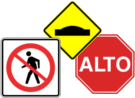
Panama uses nationally standardised traffic signs with internationally recognisable shapes and symbols, while written legends and destination information are primarily in Spanish.

