Camión articuladoBosnia y Herzegovina

Aprende normas de tráfico con explicaciones claras y ejemplos visuales en nuestro libro ilustrado, diseñado para que estudiar sea sencillo y ameno.


27. Camión articulado

Un camión articulado es un conjunto formado por una cabeza tractora y un semirremolque utilizado principalmente para transportar mercancías. El semirremolque se acopla de modo que una parte importante de su peso es soportada por la tractora en lugar de únicamente por sus propias ruedas.

Se utiliza habitualmente para transporte de larga distancia y puede llevar contenedores, mercancías refrigeradas, líquidos, graneles u otras cargas. Pueden aplicarse normas especiales sobre permisos, dimensiones y masas máximas, velocidad, carriles, adelantamiento, carga y tiempos de conducción y descanso.
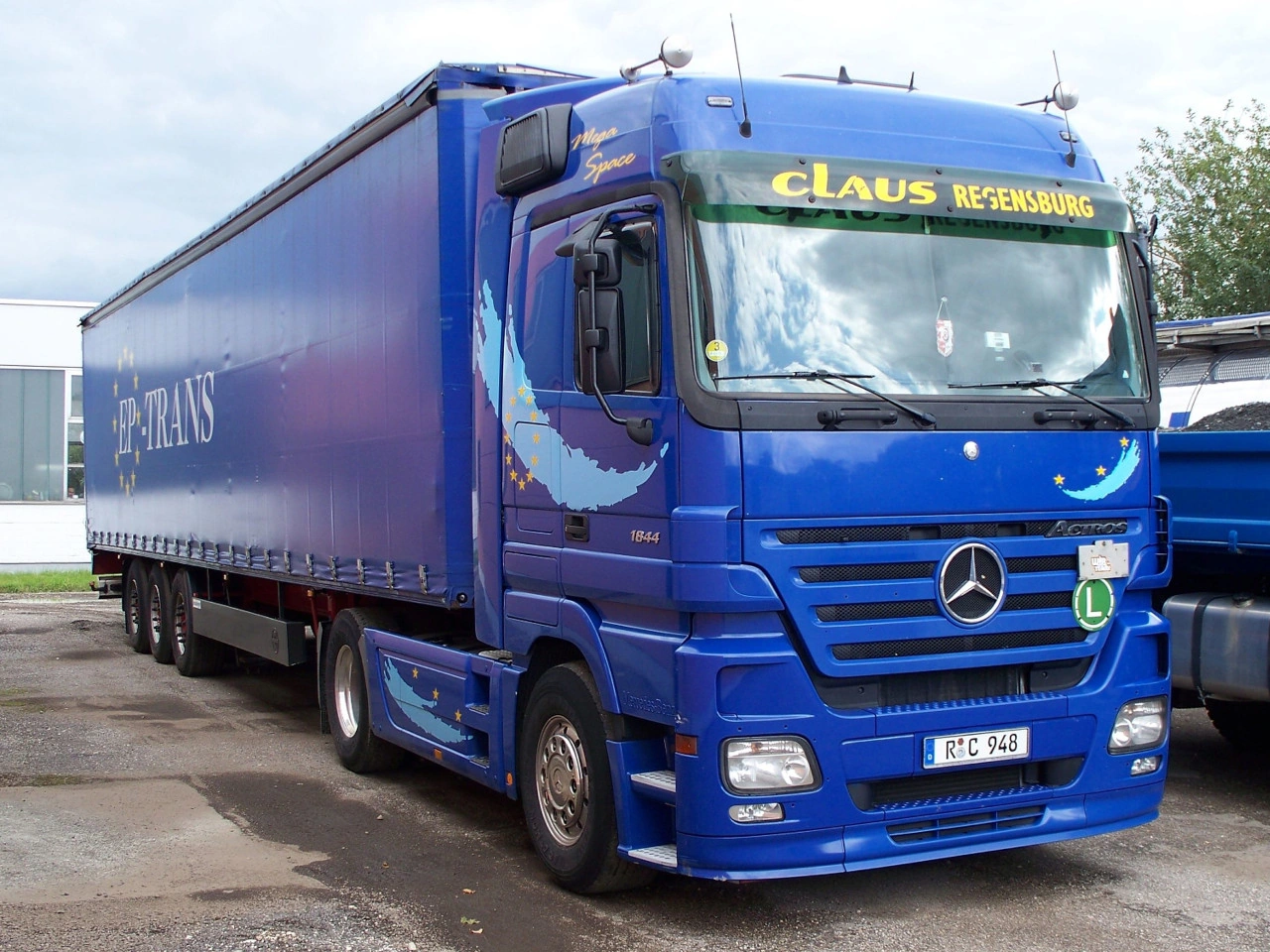
Camión articulado
What is a semi-trailer truck?

A semi-trailer truck consists of a powered road tractor coupled to a semi-trailer primarily used to transport goods.

What is a semi-trailer?

A semi-trailer is a trailer designed so that part of the trailer and a significant part of its load are supported by the towing tractor.

What is the difference between a semi-trailer and an ordinary trailer?

An ordinary trailer generally supports its own weight through its axles, while a semi-trailer transfers a substantial vertical load to the tractor through its coupling.

How is a semi-trailer connected to the tractor?

The semi-trailer is normally connected through a kingpin and fifth-wheel coupling mounted behind the tractor cab.

Why are semi-trailer trucks called articulated vehicles?

The tractor and semi-trailer are connected by a pivoting coupling, allowing the two parts to turn relative to each other when the combination changes direction.

Do you need a special licence to drive a semi-trailer truck?

Yes. Heavy articulated trucks normally require a heavy-goods-vehicle licence that also authorises the driver to tow a heavy trailer or semi-trailer. The precise licence categories differ between countries.

Do semi-trailer trucks have lower speed limits?

They often do. Many countries impose vehicle-specific maximum speeds on heavy goods vehicles, particularly on motorways and other high-speed roads.

Why do semi-trailer trucks need more space to turn?

The semi-trailer's rear wheels follow a tighter path than the tractor's front wheels. Drivers therefore need additional space when turning, particularly at narrow intersections.

Why should you leave extra distance behind a semi-trailer truck?

Large trucks can restrict your view of traffic ahead and require considerable stopping distance. Keeping an appropriate following distance improves visibility and reaction time.

Why should you take care when driving beside a semi-trailer truck?

Large trucks have substantial blind spots around the cab and trailer. Avoid remaining beside the vehicle unnecessarily and be particularly careful when the truck is turning or changing lane.

1 Bosnia y Herzegovina 2 Autopista 3 Muelle 4 Ceda el paso 5 Glorieta 6 Paso a nivel 7 Semáforos 8 Frontera internacional 9 Marcha atrás 10 Límite de población 11 Atracción turística 12 Autobús 13 Policía 14 Ambulancia 15 Taxi 16 Norma europea de emisiones 17 Bache 18 Camino 19 Partículas 20 Contaminación del aire 21 Hora punta 22 Código de circulación 23 Canaleta de la calle 24 Bicicleta de carga 25 Vehículo forestal 26 Vehículo de construcción 27 Camión articulado 28 Trolebús 29 Speed pedelec 30 Vehículo de reparto 31 Motor al ralentí 32 Grúa 33 Tracción a las cuatro ruedas 34 Bicicleta 35 Equipamiento de motocicleta 36 Vía férrea 37 Caravana 38 Remolque 39 Enganche de remolque 40 Camión de bomberos 41 Sirena 42 Convoy 43 Luces de vehículos de emergencia 44 Maquinaria agrícola 45 Bicicleta eléctrica 46 Vehículo eléctrico 47 Pedelec 48 Cuadriciclo 49 Microcoche 50 Vehículo todoterreno 51 Furgoneta 52 Vehículo recreativo 53 Scooter 54 Trikke 55 Vehículo de movilidad personal 56 Monopatín 57 Segway 58 Patinete 59 Patines 60 Cartero 61 Autoestopista 62 Niño pequeño 63 Niño 64 Discapacidad 65 Tren para automóviles 66 km/h 67 mph 68 Velocímetro 69 Altura libre del vehículo 70 Camino de tierra 71 Conducción 72 Sistema start-stop 73 Cambio manual 74 Cambio automático 75 Acelerador 76 Cuentarrevoluciones 77 Volante 78 Dirección asistida 79 Exploración visual 80 Espejo 81 Combustible 82 Indicador de combustible 83 Gasolina 84 Diésel 85 Líquido de escape diésel 86 Seguro de automóvil 87 Botiquín de primeros auxilios 88 Extintor 89 Ropa de alta visibilidad 90 Primeros auxilios 91 Barrera escalonada de hormigón 92 Barreras 93 Luces del vehículo 94 Alumbrado público 95 Luces de cruce 96 Luces de carretera 97 Luces antiniebla 98 Luces antiniebla delanteras 99 Luces antiniebla traseras 100 Luces de posición ...