Véhicule de chantierBosnie-Herzégovine
26. Véhicule de chantier
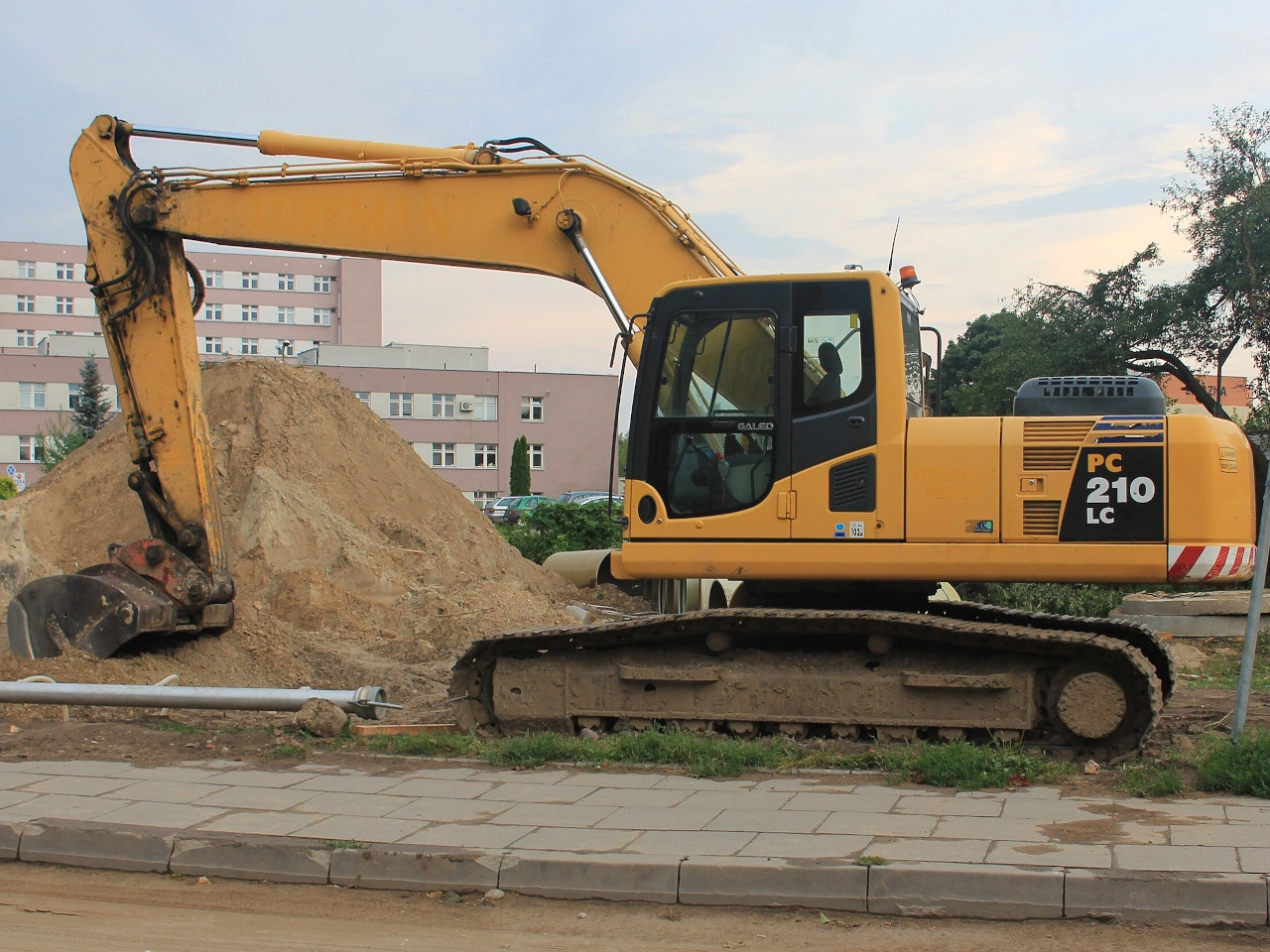
Un véhicule de chantier est un véhicule ou une machine mobile conçu ou adapté pour des travaux liés à la construction, aux travaux routiers, à l’excavation, au levage ou au déplacement de matériaux. Les exemples comprennent les excavatrices, chargeuses, bulldozers, rouleaux compresseurs, grues mobiles, tombereaux et bétonnières.
Les véhicules de chantier varient fortement par leur taille, leur vitesse et leur classification juridique. Certains sont des véhicules routiers ordinaires, tandis que d’autres sont des machines spécialisées principalement destinées aux chantiers. Lorsqu’ils circulent sur la voie publique, ils doivent respecter les règles applicables concernant l’immatriculation, le permis de conduire, l’éclairage, les dimensions, le poids, la vitesse et la circulation.
What is a construction vehicle?
A construction vehicle is a vehicle or mobile machine used for construction, excavation, lifting, roadworks or transporting construction materials.
What are examples of construction vehicles?
Examples include excavators, wheel loaders, bulldozers, road rollers, mobile cranes, dump trucks and concrete mixers.
Is every construction vehicle legally the same type of vehicle?
No. A construction vehicle may legally be classified as a truck, mobile machine, special-purpose vehicle or another vehicle category depending on its design and use.
Can construction vehicles travel on public roads?
Yes, when the vehicle is legally permitted and suitably equipped for road use. Some machines are designed mainly for construction sites and may be subject to special restrictions when travelling on public roads.
Do you need a driving licence for a construction vehicle?
This depends on the vehicle category, mass, speed and local law. Heavy trucks, mobile cranes and specialised machines may require different licence categories.
Do construction vehicles have special speed limits?
They may. A vehicle's design speed, mass, tyres, suspension and legal classification can result in a lower permitted speed than that applying to ordinary cars.
Why should you take extra care near construction vehicles?
Construction vehicles can be large, slow and difficult to manoeuvre and may have significant blind spots. They may also turn, reverse or enter a construction site unexpectedly.
What do flashing amber lights on a construction vehicle mean?
Flashing amber lights generally warn other road users that the vehicle is working, moving slowly or creating an unusual obstruction or hazard. They do not normally give the vehicle the same priority as an emergency vehicle.
Can a construction vehicle be wider or heavier than an ordinary vehicle?
Yes. Some construction machinery exceeds normal vehicle dimensions or masses. Special permits, route restrictions, warning equipment or escorts may then be required.
What should you do when passing a construction vehicle?
Reduce speed where necessary and leave sufficient space. Be aware of blind spots, projecting equipment, wide turns and workers who may be present nearby.

Règles de circulation
Bosnie-Herzégovine