

Passage pour piétonsBruxelles
 Règles de circulation
 Bruxelles
25. Passage pour piétons
Un passage pour piétons est un emplacement désigné où les piétons peuvent traverser une route. Il est généralement indiqué par des marquages routiers, des panneaux, des signaux lumineux ou une combinaison de ces éléments.
Les conducteurs doivent l’aborder avec la prudence appropriée et céder le passage lorsque la loi locale l’exige. Les piétons doivent également observer la circulation approchante et respecter les signaux pour piétons ou les instructions des agents habilités.
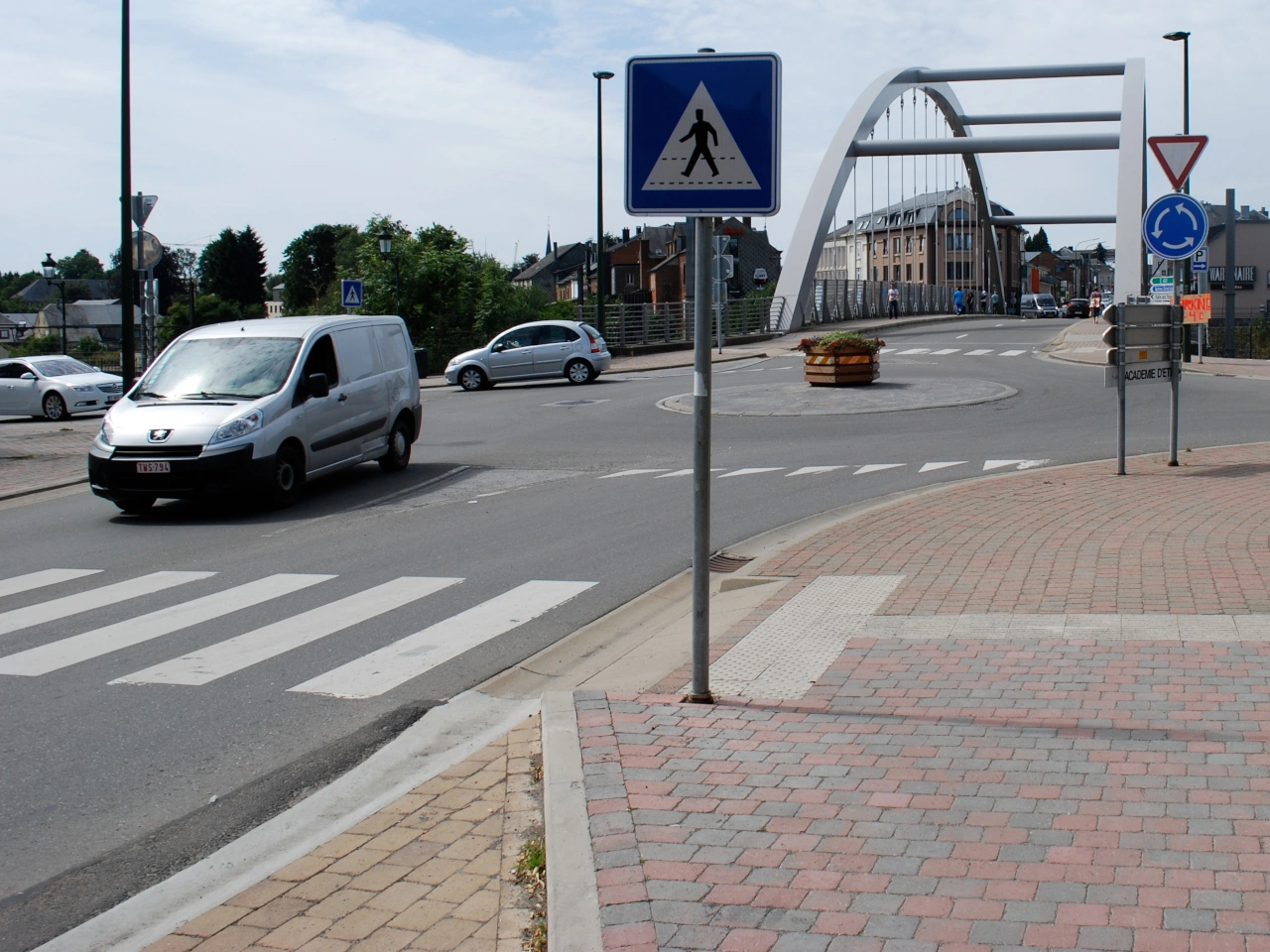
Which Belgian traffic signs indicate or warn of a pedestrian crossing?
Traffic sign F49 indicates the location of a pedestrian crossing, while warning sign A21 warns drivers that they are approaching a pedestrian crossing.
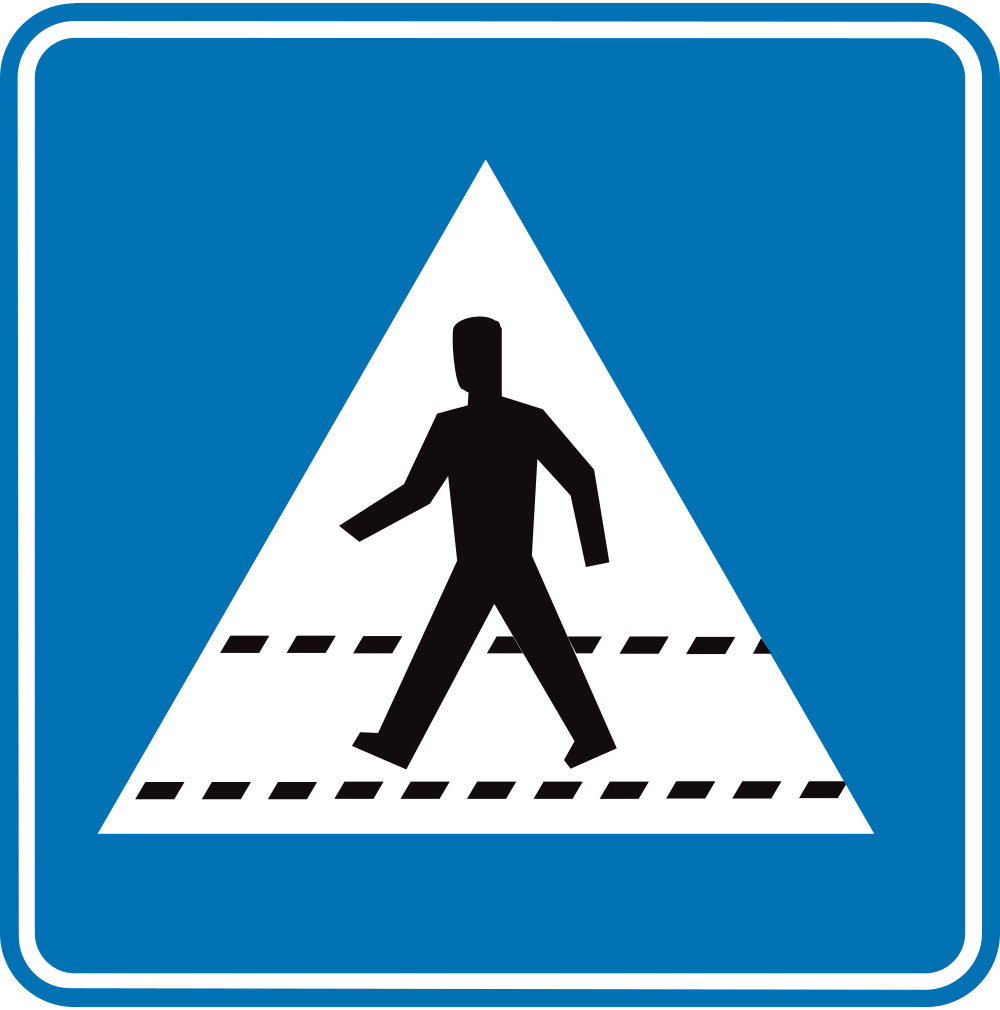 Passage pour piétons.
Signal routier F49 • Passage pour piétons.
Verkeersbord F49 • Oversteekplaats voor voetgangers.
 Attention, passage pour piétons.
Signal routier A21 • Passage pour piétons.
Verkeersbord A21 • Oversteekplaats voor voetgangers.
How is a pedestrian crossing marked in Belgium?
A Belgian pedestrian crossing is marked by white rectangles placed parallel to the centre line of the carriageway. It is commonly called a zebra crossing.
Which Belgian sign warns that a pedestrian crossing is ahead?
Warning sign A21 warns drivers that they are approaching a pedestrian crossing.
Do pedestrians have priority at an uncontrolled Belgian crossing?
Yes. Drivers must give way to pedestrians who are on the crossing or are about to enter it.
How must drivers approach an uncontrolled crossing?
Drivers must approach at a moderate speed and be prepared to stop for pedestrians.
Must you stop for someone standing near the crossing?
You must give way when the pedestrian is clearly about to enter the crossing. Observe the pedestrian’s position and apparent intention and be prepared to stop.
May a pedestrian step onto the crossing without looking?
No. At a crossing without traffic lights or an authorised controller, pedestrians may enter only cautiously and while taking approaching vehicles into account.
Where should a driver stop?
Stop before the pedestrian crossing and leave it completely clear. Where traffic lights provide a stop line, stop before that line when the signal requires it.
May you stop on the crossing during congestion?
No. You may not enter a pedestrian crossing when congestion is likely to force you to stop on it.
What happens at a crossing controlled by traffic lights?
Drivers and pedestrians must follow the applicable signals. Even when vehicle traffic receives a green light, drivers must allow pedestrians who entered lawfully to finish crossing at a normal pace.
Where must you stop when the traffic light is red?
Stop before the stop line. When the crossing is positioned before or at the signal, you must not stop on the pedestrian crossing.
May pedestrians enter when their pedestrian light is red?
No. Where two-colour pedestrian lights are installed, pedestrians may not enter the carriageway while their signal prohibits crossing.
Must pedestrians use a nearby Belgian crossing?
Yes. When a pedestrian crossing is located within approximately 20 metres, pedestrians must use it.
How must pedestrians cross when no crossing is nearby?
They must cross approximately perpendicular to the centre line, proceed cautiously and avoid lingering or stopping unnecessarily on the carriageway.
May you overtake a vehicle near an uncontrolled pedestrian crossing?
Left-side overtaking of certain vehicles is prohibited when the vehicle being overtaken stops for or approaches an uncontrolled pedestrian or cycle crossing.
Why is overtaking near a crossing dangerous?
The stopped or slowing vehicle may conceal a pedestrian. Passing it could place the overtaking vehicle directly in the pedestrian’s path.
May you stop or park on a Belgian pedestrian crossing?
No. Both stopping and parking are prohibited on the crossing.
How far before a pedestrian crossing is stopping or parking prohibited?
Stopping and parking on the carriageway are prohibited within five metres before the crossing.
Does the five-metre prohibition apply after the crossing?
The crossing-specific five-metre rule applies before the crossing, not automatically after it. Other parking restrictions may still prohibit stopping or parking after the crossing.
May cyclists ride across a Belgian pedestrian crossing?
A cyclist may cross where this is otherwise permitted, but a cyclist who remains on the bicycle is a driver and does not receive pedestrian priority merely because of the zebra crossing.
What if a cyclist dismounts and walks across?
A person walking beside a bicycle is treated as a pedestrian and benefits from the pedestrian-crossing rules.
Is a zebra crossing also a cycle crossing?
No. A cycle crossing is indicated separately. Drivers and cyclists must follow the rules and markings applying to that crossing.
What if a pedestrian crossing crosses tram tracks?
Unless traffic lights permit crossing, pedestrians may not enter a pedestrian crossing over tram tracks or a reserved tram site when a tram is approaching.
Must turning drivers give way to pedestrians?
Yes. Drivers changing direction must give way to pedestrians crossing the road they are entering, in addition to respecting any marked pedestrian crossing.
Do police instructions override crossing signals?
Yes. Instructions from an authorised person take precedence over traffic lights, traffic signs, road markings and ordinary rules.
Must drivers obey an authorised crossing supervisor?
Yes. Drivers must follow the instructions given by authorised supervisors protecting groups of children, school pupils, older people or persons with disabilities.
Must drivers take extra care around vulnerable pedestrians?
Yes. Belgian drivers must be especially careful around children, older people and persons with disabilities and must slow down or stop when necessary.
Does a pedestrian crossing impose a special speed limit?
No. The crossing does not create a numerical speed limit, but drivers must approach an uncontrolled crossing at moderate speed and remain able to stop.
What changes under Belgium’s new road code?
From 1 June 2027, the pedestrian-crossing indication sign will be numbered F48 instead of F49. The white rectangular crossing markings and the duty to give way to pedestrians on or about to enter the crossing remain.


