道路標識ドイツ
151. 車列
車列は、通常同じ経路と目的地へ向かい、組織的な集団として一緒に走行する複数の車両です。一般車両、軍用車両、特殊輸送車両、組織的な移動に参加する車両などで構成されることがあります。
車列で走行する運転者は安全な車間距離を保ち、適用される交通規則に従い、他の交通を妨げない必要があります。特別な法律、護衛、交通規制が適用されない限り、車列に参加しているだけで特別な優先権が与えられるわけではありません。
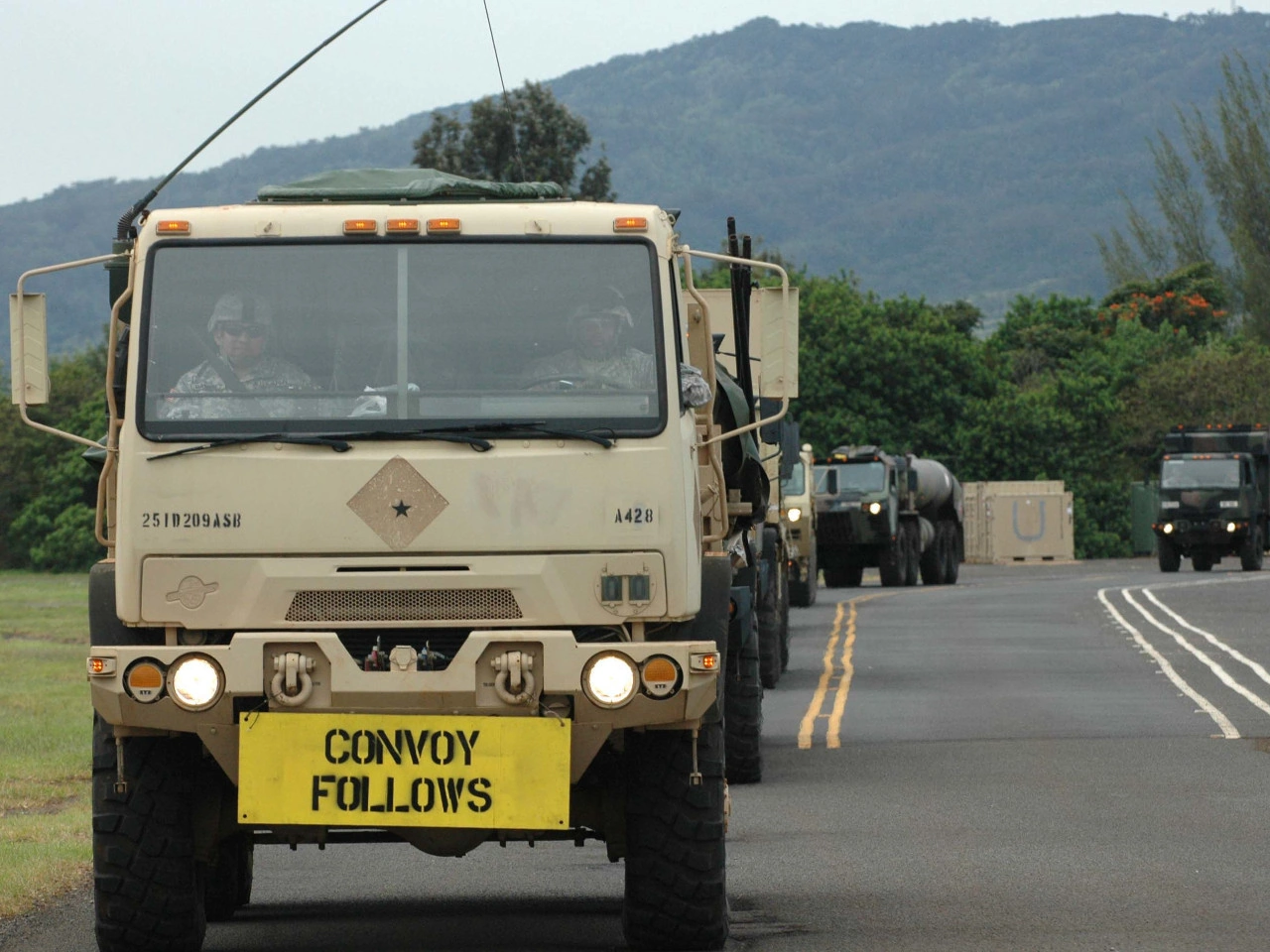
What is a convoy?
A convoy is an organised group of vehicles travelling together along the same route.
Do vehicles in a convoy automatically have priority?
No. An ordinary convoy does not automatically have priority over other traffic. Special rules may apply to military convoys, exceptional transports or officially escorted groups.
Should vehicles in a convoy maintain a safe distance?
Yes. Drivers should maintain sufficient distance from the vehicle ahead so they can react safely and so that other traffic can interact with the convoy where permitted.
152. 緊急車両の警光灯
緊急車両の警光灯は、権限ある緊急車両や優先車両を目立たせ、他の道路利用者へ警告するための特別な点滅灯または回転灯です。警察車両、救急車、消防車などが緊急対応時に特徴的な警光灯を使用します。
警光灯の色、意味、使用条件は国によって異なります。点灯している場合、道路利用者は注意を保ち、接近車両を確認し、道を譲る、通路を空けるなど現地規則に従います。
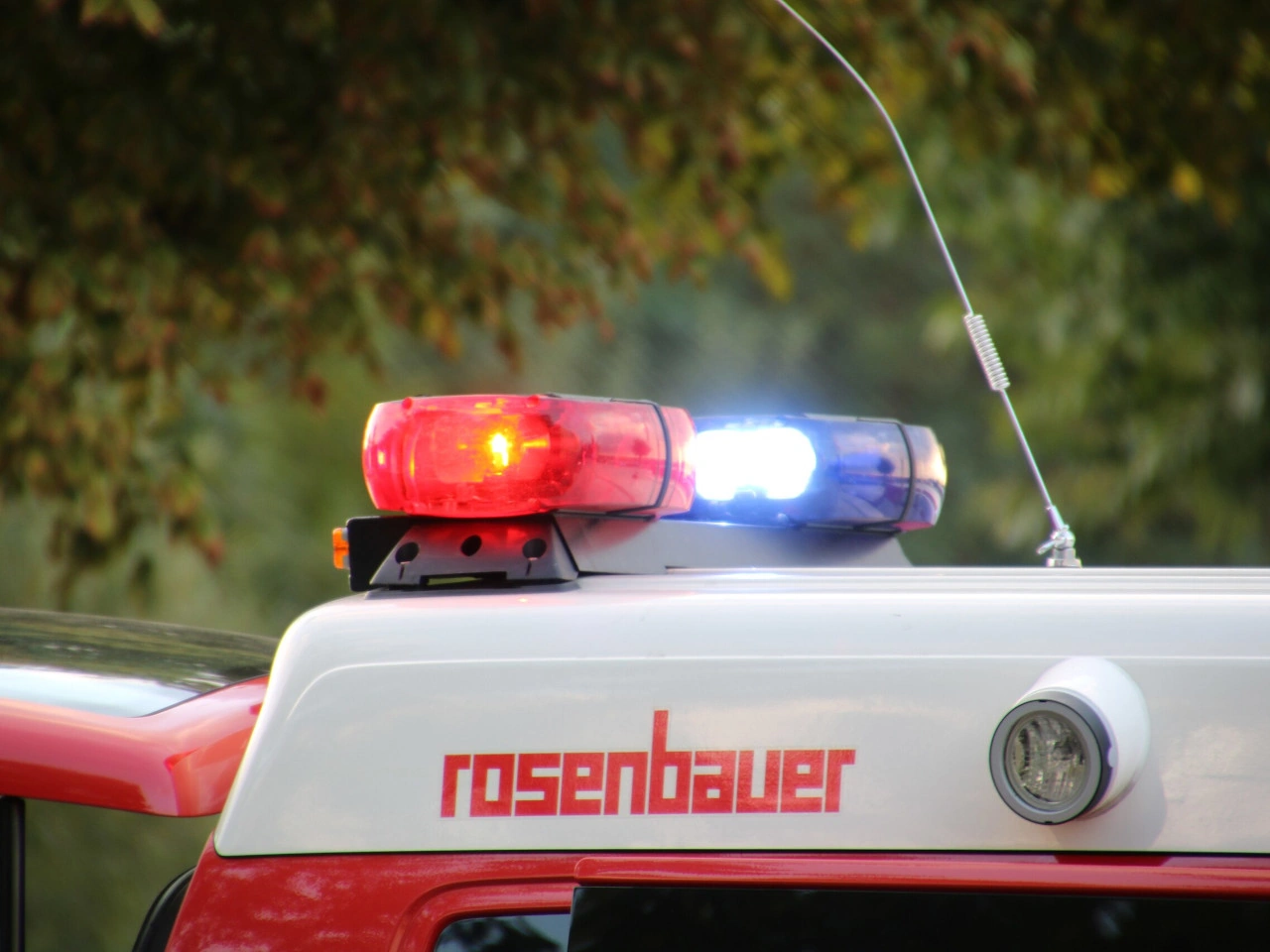
What is emergency vehicle lighting?
Emergency vehicle lighting consists of special warning lights fitted to authorised emergency or priority vehicles to increase their visibility and alert other road users.
Which vehicles use emergency warning lights?
Depending on the country, they may be used by police vehicles, ambulances, fire engines, rescue vehicles and other authorised emergency services.
What should you do when you see emergency lights?
Remain alert, determine where the emergency vehicle is coming from and follow the applicable rules for giving way or creating a safe passage. The precise obligation depends on the country's traffic laws and whether an audible warning is also being used.
153. 農業機械
農業機械には、土壌耕作、播種、収穫、草刈り、作物輸送、農具の操作など農業作業向けに設計された車両、機械、装置が含まれます。トラクター、コンバイン、農薬散布機、草刈機などがあります。
主に農地で使う設計でも、公道を走行する必要がある場合があります。公道走行時の登録、運転免許、灯火、寸法、速度、道路利用規則は、機械の種類と法的分類によって異なります。
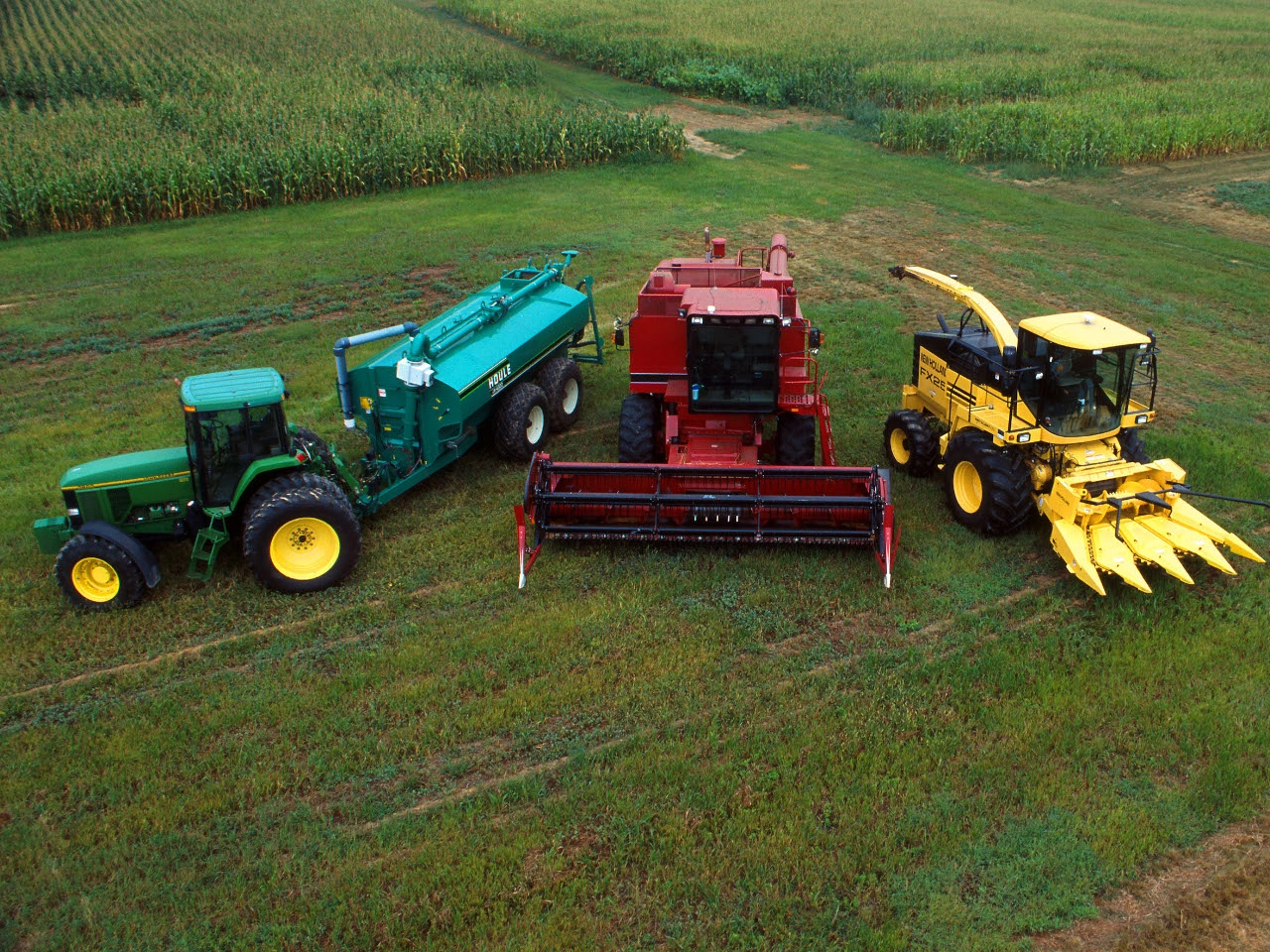
What is agricultural machinery?
Agricultural machinery includes vehicles and machines designed to perform farming operations such as cultivating, planting, harvesting, mowing or transporting agricultural materials.
What are examples of agricultural machinery?
Examples include tractors, combine harvesters, self-propelled sprayers, forage harvesters, mowing machines and agricultural trailers.
Is all agricultural machinery legally considered a vehicle?
No. Some agricultural machines are self-propelled vehicles, while others are implements or equipment that must be attached to or towed by another vehicle. Their legal classification depends on their construction and use.
Can agricultural machinery use public roads?
Yes, when legally permitted and suitably equipped. Registration, insurance, lighting, dimensions, speed and driving-licence requirements may apply.
Do you need a special licence to drive agricultural machinery?
This depends on the country and type of machine. Some countries have a dedicated agricultural-vehicle licence, while other vehicles fall under ordinary car or heavy-vehicle licence categories.
Do agricultural machines have special speed limits?
They may. The permitted speed can depend on the machine's construction speed, mass, tyres and road type. Many agricultural machines are designed to travel considerably more slowly than ordinary road vehicles.
Can agricultural machinery use motorways?
Agricultural vehicles are frequently prohibited from motorways or other high-speed roads. The exact restrictions depend on local traffic law.
Why should drivers take care when approaching agricultural machinery?
Agricultural machinery can be slow, wide or unusually long and may turn into fields or farm entrances. Drivers should reduce speed where necessary and overtake only with sufficient visibility and space.
Can agricultural machinery be wider than an ordinary vehicle?
Yes. Some machinery exceeds normal road dimensions. Folding equipment, special markings, permits or other restrictions may apply before it can travel on public roads.
Can agricultural machinery tow trailers or implements?
Yes, when designed and approved to do so. Tractors commonly tow agricultural trailers and implements, subject to applicable mass, braking, coupling and dimensional requirements.
154. 電動自転車
電動自転車(e-bike)は、走行中に利用者を補助する電動モーターを備えた自転車です。多くはペダルアシスト方式で、利用者がペダルをこぐ間にモーターが追加の力を提供します。
法的分類は、モーター出力、最大アシスト速度、ペダルをこがずにモーターだけで走行できるかなどで決まります。より高速または高出力の車両はモペッドなどの自動車に分類され、異なる免許、ヘルメット、登録、保険要件が適用される場合があります。
What is an electric bicycle?
An electric bicycle is a bicycle equipped with an electric motor that provides assistance to the rider.
What is pedal assistance?
Pedal assistance means that the electric motor provides power while the rider pedals. The assistance normally decreases or stops when a specified speed is reached.
Is an electric bicycle still a bicycle?
It can be. Electric bicycles that remain within the applicable motor-power and assistance-speed limits are commonly treated as bicycles. Faster or more powerful models may belong to another vehicle category.
How fast can an electric bicycle assist the rider?
The permitted assistance speed depends on the vehicle category and local law. Ordinary pedal-assisted bicycles commonly stop providing motor assistance at approximately 25 km/h.
Can you ride an electric bicycle faster than the assistance limit?
Yes, by your own effort where otherwise permitted. The assistance limit normally determines when the motor stops helping; it does not necessarily prevent the bicycle itself from travelling faster downhill or through pedalling.
Do you need a driving licence for an electric bicycle?
This depends on its legal classification. Ordinary low-power pedal-assisted bicycles commonly require no driving licence, while faster electric bicycles may require a moped or another licence.
Does an electric bicycle need a licence plate?
Ordinary pedal-assisted bicycles generally do not require registration, but high-speed electric bicycles may require registration and a licence plate.
Is a helmet compulsory on an electric bicycle?
Helmet requirements depend on the country and vehicle category. Ordinary e-bikes may follow normal bicycle helmet rules, while faster electric bicycles can have specific compulsory helmet requirements.
Can an electric bicycle use a cycle path?
Ordinary electric bicycles generally follow the same cycle-path rules as conventional bicycles. Different rules can apply to faster or more powerful electric bicycles.
Does an electric bicycle need insurance?
This depends on the vehicle's technical characteristics and local law. Ordinary pedal-assisted bicycles commonly do not require motor-vehicle insurance, while vehicles capable of greater independent motor propulsion may be subject to insurance requirements.
Can you ride an electric bicycle when the battery is empty?
Usually yes. Most electric bicycles can still be pedalled like conventional bicycles when the motor is switched off or the battery is depleted, although their additional weight may make pedalling harder.
Can an electric bicycle carry passengers or goods?
Yes, when the bicycle is designed and legally equipped for them. Passenger seats, cargo areas, child restraints and trailers must satisfy the applicable safety and traffic rules.
155. 電気自動車
電気自動車(EV)は、1基以上の電動モーターで走行し、充電可能なバッテリーなどに電気エネルギーを蓄える車両です。完全電気自動車は走行に電気だけを使い、プラグインハイブリッドは電動駆動系と内燃機関など別の動力源を組み合わせます。
適切な充電ポイントまたは充電ステーションを使って外部電源から充電できます。免許、登録、保険、駐車、道路進入規則は、電動であること自体ではなく車両区分と現地規則によって決まります。
What is an electric vehicle?
An electric vehicle is a vehicle that uses one or more electric motors for propulsion and stores electrical energy in a rechargeable battery or another electrical energy-storage system.
What is a fully electric vehicle?
A fully electric or battery-electric vehicle uses only electric motors for propulsion and obtains its driving energy from rechargeable electrical energy storage rather than a combustion engine.
Is a plug-in hybrid an electric vehicle?
A plug-in hybrid uses both electric propulsion and another power source, normally a combustion engine, and its battery can be charged from an external electricity supply. It is therefore different from a fully electric vehicle.
How is an electric vehicle charged?
An electric vehicle is connected to a suitable charging point that supplies electrical energy to its rechargeable battery. Charging power and connector types vary between vehicles and charging stations.
Do all electric vehicles charge at the same speed?
No. Charging speed depends on the vehicle, battery, charger, electrical supply, temperature and current battery condition.
Does an electric vehicle produce exhaust emissions?
A fully electric vehicle produces no combustion-engine exhaust emissions while driving. It can still contribute to non-exhaust emissions through tyres, brakes and road wear.
Is an electric vehicle automatically allowed to park at a charging point?
Not necessarily. Charging spaces can have specific conditions requiring the vehicle to be connected, actively charging, within a time limit or otherwise complying with local parking rules.
Do electric vehicles follow different traffic rules?
Normally no. A car remains subject to the rules for cars, a motorcycle to those for motorcycles and so on. Electric propulsion does not generally change ordinary priority, speed or lane rules.
Do electric vehicles need registration and insurance?
Where an electric vehicle belongs to a vehicle category that normally requires registration and insurance, those requirements continue to apply.
Can an electric vehicle use a low-emission zone?
Fully electric vehicles are commonly permitted in low-emission zones because they have no combustion-engine exhaust emissions, but access rules are determined locally.
Can electric vehicles use motorways?
Yes, when their vehicle category satisfies the normal motorway-access requirements. Electric propulsion by itself neither grants nor prevents motorway access.
Is an electric vehicle the same as an electric bicycle?
No. Electric bicycles belong to separate pedal-cycle categories and are subject to their own power, assistance-speed and traffic rules.
156. ペデレック
ペデレック(pedal electric cycle)は、利用者がペダルをこいでいる間に補助する電動モーターを備えた自転車です。モーターはペダリングを置き換えるのではなく、利用者の力を補助します。
許容される最大モーター出力とアシスト速度は現地法によります。規定範囲内であれば通常はモペッドやオートバイではなく自転車として扱われます。より高速の電動アシスト自転車はスピードペデレックとして別区分になるのが一般的です。
What is a pedelec?
A pedelec is an electrically assisted bicycle whose motor provides assistance while the rider pedals.
What does pedal assistance mean?
Pedal assistance means that the electric motor provides additional power when the rider uses the pedals. The assistance stops according to the speed and operating limits applying to the bicycle.
Is a pedelec the same as an electric bicycle?
A pedelec is a type of electric bicycle. The term specifically emphasises that the motor assists the rider while pedalling rather than functioning primarily as an independent means of propulsion.
Is a pedelec the same as a speed pedelec?
No. A speed pedelec can provide assistance at considerably higher speeds and is commonly subject to additional requirements concerning helmets, licences, registration or road use.
Do you have to pedal a pedelec?
Yes. With an ordinary pedelec, the motor is intended to assist the rider's pedalling rather than propel the bicycle independently during normal riding.
Can you ride a pedelec faster than the assistance limit?
Yes, by your own effort where otherwise permitted. The assistance limit determines when the motor stops helping; it does not normally prevent the bicycle itself from travelling faster through pedalling or downhill.
Do you need a driving licence for a pedelec?
Ordinary low-power pedelecs are generally treated as bicycles in jurisdictions that recognise the category and therefore commonly require no driving licence. Local rules should always be checked.
Does a pedelec need a licence plate?
Ordinary pedelecs commonly require no registration plate when they remain legally classified as bicycles. Faster electric cycles may have different requirements.
Can a pedelec use cycle paths?
When legally classified as a bicycle, a pedelec normally follows the same cycle-path rules as conventional bicycles.
Is a helmet compulsory on a pedelec?
This depends on local bicycle law. Some countries require helmets for particular riders or circumstances, while others recommend them without making them compulsory.
Can a pedelec carry passengers?
Yes, where the bicycle is designed and legally equipped to carry them. Appropriate seating, foot protection or child-restraint requirements may apply.
What happens if an electric bicycle is too powerful or too fast to qualify as a pedelec?
It may be classified as a motorised cycle, speed pedelec, moped or another vehicle category, resulting in different technical and traffic requirements.
157. クアドリシクル
クアドリシクルは、4輪を持ち、通常の乗用車より下位または別の車両区分に属する自動車です。旅客輸送、貨物輸送、レクリエーション向けに設計され、内燃機関または電動モーターで駆動します。
交通法では一般に、比較的低出力・低設計速度の軽四輪車と、より重く高出力の四輪車を区別します。免許、ヘルメット、登録、保険、道路利用要件は車両の法的分類と現地交通規則によります。
What is a quadricycle?
A quadricycle is a four-wheeled motor vehicle belonging to a specialised vehicle category distinct from an ordinary passenger car.
What is a light quadricycle?
A light quadricycle is a relatively low-powered four-wheel motor vehicle with a restricted maximum design speed. In European vehicle classification, light quadricycles belong to category L6e.
What is a heavy quadricycle?
A heavier or more powerful quadricycle that does not qualify as a light quadricycle can fall within category L7e under European vehicle-classification rules.
Is a quadricycle the same as a car?
No. Although some enclosed quadricycles resemble very small cars, they belong to a different technical and legal vehicle category and can have different licence, power, mass and road-access rules.
Is a quadricycle the same as a quad or ATV?
Not necessarily. The quadricycle category includes several types of four-wheel motor vehicles. Some are open recreational quads, while others are enclosed road-going microcars designed for passengers or goods.
Can a quadricycle be electric?
Yes. Quadricycles can use electric motors, combustion engines or other approved propulsion systems.
Do you need a driving licence for a quadricycle?
Usually yes, but the required licence depends on whether the vehicle is classified as a light or heavier quadricycle and on the country's licensing system.
Does a quadricycle need a licence plate?
Road-going quadricycles commonly require registration and a registration plate. Exact requirements vary between countries.
Must quadricycle occupants wear helmets?
This depends on the vehicle design and local law. Open quadricycles may require helmets, while enclosed vehicles with a passenger compartment and restraint systems can be subject to seat-belt rules instead.
Can a quadricycle carry passengers?
Yes, when it is designed and approved to do so. The number of passengers may not exceed the vehicle's approved seating capacity.
Can a quadricycle use a motorway?
This depends on its vehicle category, construction speed and local motorway-access rules. Low-speed light quadricycles are normally unsuitable for motorway traffic.
Does a quadricycle follow motorcycle or car traffic rules?
This depends on its legal classification. Some light quadricycles are treated similarly to mopeds, while heavier quadricycles may follow many of the ordinary rules applying to cars.
158. マイクロカー
マイクロカーは、主に短距離・都市内移動向けに設計された非常に小型の自動車です。通常、密閉された客室、4輪、1~2人分の座席を備えますが、設計や法的分類は異なります。
多くは通常の乗用車ではなく軽四輪車として法的に分類されます。より高出力・高速なモデルは重い四輪車または乗用車区分に入る場合があります。免許、最低年齢、登録、保険、最高速度、道路利用は正式な法的分類によって決まります。
What is a microcar?
A microcar is a very small enclosed motor vehicle generally intended for short journeys and urban transport.
Is a microcar the same as an ordinary car?
Not necessarily. Many microcars are legally classified as light or heavy quadricycles rather than passenger cars and can therefore have different licence, speed and road-access rules.
Is a microcar the same as a light quadricycle?
Many microcars are light quadricycles, but the terms are not identical. Microcar describes the general vehicle design, while light quadricycle is a specific legal vehicle category.
Can a microcar be electric?
Yes. Microcars may use electric motors, combustion engines or other approved propulsion systems.
How fast can a microcar travel?
This depends on its legal category and construction. Light quadricycles commonly have a substantially lower maximum design speed than ordinary passenger cars.
Do you need a driving licence for a microcar?
Usually yes. The required licence depends on whether the vehicle is classified as a light quadricycle, heavier quadricycle or ordinary passenger car.
Can teenagers drive a microcar?
Some countries allow light quadricycles to be driven at a younger age than ordinary cars, subject to the appropriate licence. Minimum ages vary between countries.
Does a microcar need a licence plate?
Road-going microcars generally require registration and a registration plate according to their vehicle category.
Does a microcar need insurance?
Normally yes. Motor vehicles used on public roads are generally subject to the motor-liability insurance requirements of the country in which they are registered or used.
Must you wear a helmet inside a microcar?
This depends on the vehicle construction and local law. Enclosed quadricycles equipped with seat belts may be treated differently from open quadricycles, where helmet requirements are more common.
Can a microcar use a motorway?
Low-speed microcars classified as light quadricycles are commonly prohibited from motorways. Faster vehicles may have different access rights according to their classification and construction speed.
Is a microcar as protective as a conventional passenger car?
A microcar belongs to a different vehicle category and may be subject to different construction and type-approval requirements from an ordinary passenger car. Drivers should not assume that the two vehicle types provide identical levels of crash protection.
159. 全地形対応車
全地形対応車(ATV)は、荒れた路面や不整地を走行するため設計された自動車で、場合によっては一般道路も走行できます。通常、4輪、幅広タイヤ、コンパクトな車体を持ち、レクリエーション、農業、林業などに使われます。
公道走行の可否は車両区分、登録、装備、現地交通法によります。公道走行が認可されたATVもあれば、オフロード専用のものもあります。
What is an all-terrain vehicle?
An all-terrain vehicle is a motor vehicle designed to travel over rough or uneven terrain, commonly using four wheels and wide tyres.
Can an ATV be driven on public roads?
It depends on the country and vehicle. An ATV may need to meet specific registration, equipment, insurance and licensing requirements before it can legally use public roads.
Are all ATVs four-wheeled vehicles?
Not necessarily. The term can cover different types of off-road vehicles, although four-wheeled quads are among the most common forms.
160. バン
バンは、荷物、機器、乗客の輸送に一般的に使われる閉鎖型ボディの自動車です。小型配送車から大型商用車まであり、荷室、座席、またはその両方を備えます。
大きさ、重量、用途が大きく異なるため、国ごとの車両分類に応じて免許、速度、駐車、道路進入規則が異なる場合があります。
What is a van?
A van is an enclosed motor vehicle commonly designed to transport goods, equipment or passengers.
Are all vans goods vehicles?
No. Many vans are designed primarily for goods transport, while others are configured mainly or partly for carrying passengers.
Do all vans follow the same traffic rules?
Not necessarily. Rules can depend on the van's maximum authorised mass, vehicle category, use and number of passenger seats.
161. キャンピング車
キャンピング車(RV)は、旅行、レクリエーション、一時的な居住のため設計・改造された車両です。モーターホーム、キャンピングバン、広い意味では牽引式キャラバンやキャンピングトレーラーも含まれます。
就寝、座席、調理、収納、衛生設備を備える場合があります。法的分類、必要免許、駐車規則、許容寸法・重量は国によって異なります。
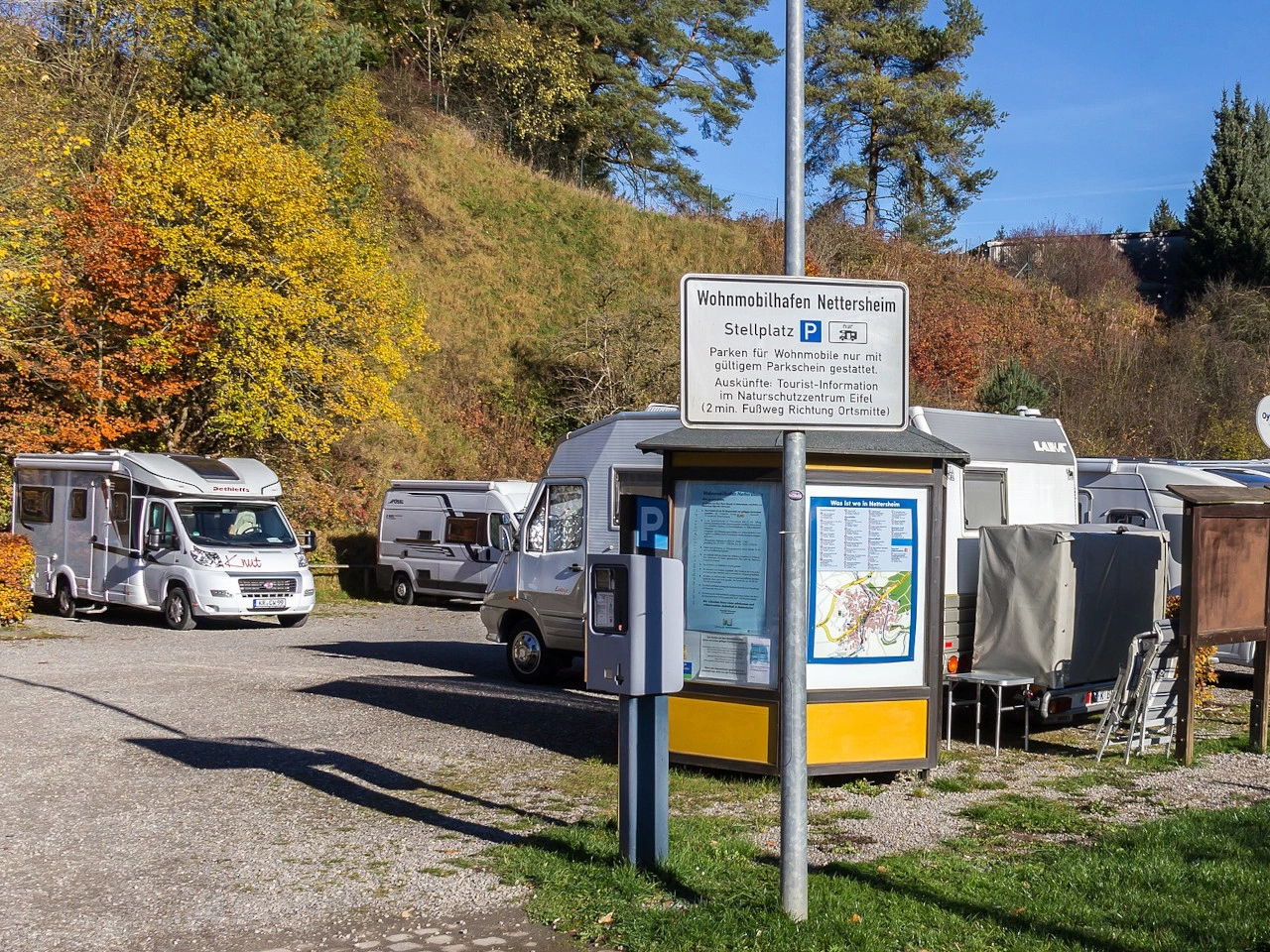
What is a recreational vehicle?
A recreational vehicle is a vehicle designed or adapted for travelling and temporary living accommodation.
What types of vehicles are considered recreational vehicles?
The term commonly includes motorhomes and campervans and may also be used more broadly for caravans and camping trailers.
Do recreational vehicles follow the same rules as passenger cars?
Not always. The applicable rules can depend on the vehicle's classification, weight, dimensions and whether it is self-propelled or towed.
162. スクーター
スクーターは、通常、またぎやすいフレーム、足を置くフロアまたはステップ、比較的小径の車輪を特徴とする二輪自動車です。ガソリンまたは電気で駆動し、低速モペッドから法律上オートバイに分類される高出力車まであります。
適用交通規則は主に最高速度、出力、排気量、法的車両区分で決まります。ヘルメット、免許、登録、道路上の位置に関する要件は国や種類によって異なります。
What is a scooter?
A scooter is a two-wheeled motor vehicle with a characteristic step-through design that may be powered by a combustion engine or electric motor.
Is a scooter a moped or a motorcycle?
It can be either. The legal classification depends on characteristics such as the scooter's maximum design speed, power and engine capacity.
Do all scooters follow the same traffic rules?
No. Different rules may apply according to whether the scooter is legally classified as a moped, motorcycle or another vehicle category.
163. Trikke
Trikkeは、前1輪・後2輪を持つ立ち乗り式の三輪パーソナルモビリティです。利用者は車輪間のステップに立ち、ハンドルで操舵します。モデルにより、身体の動きまたは電動モーターで推進します。
独特のリーン・カンバー機構を持ち、体重移動によって旋回・操作できます。適用交通規則は、電動かどうかと技術的特性によって決まります。
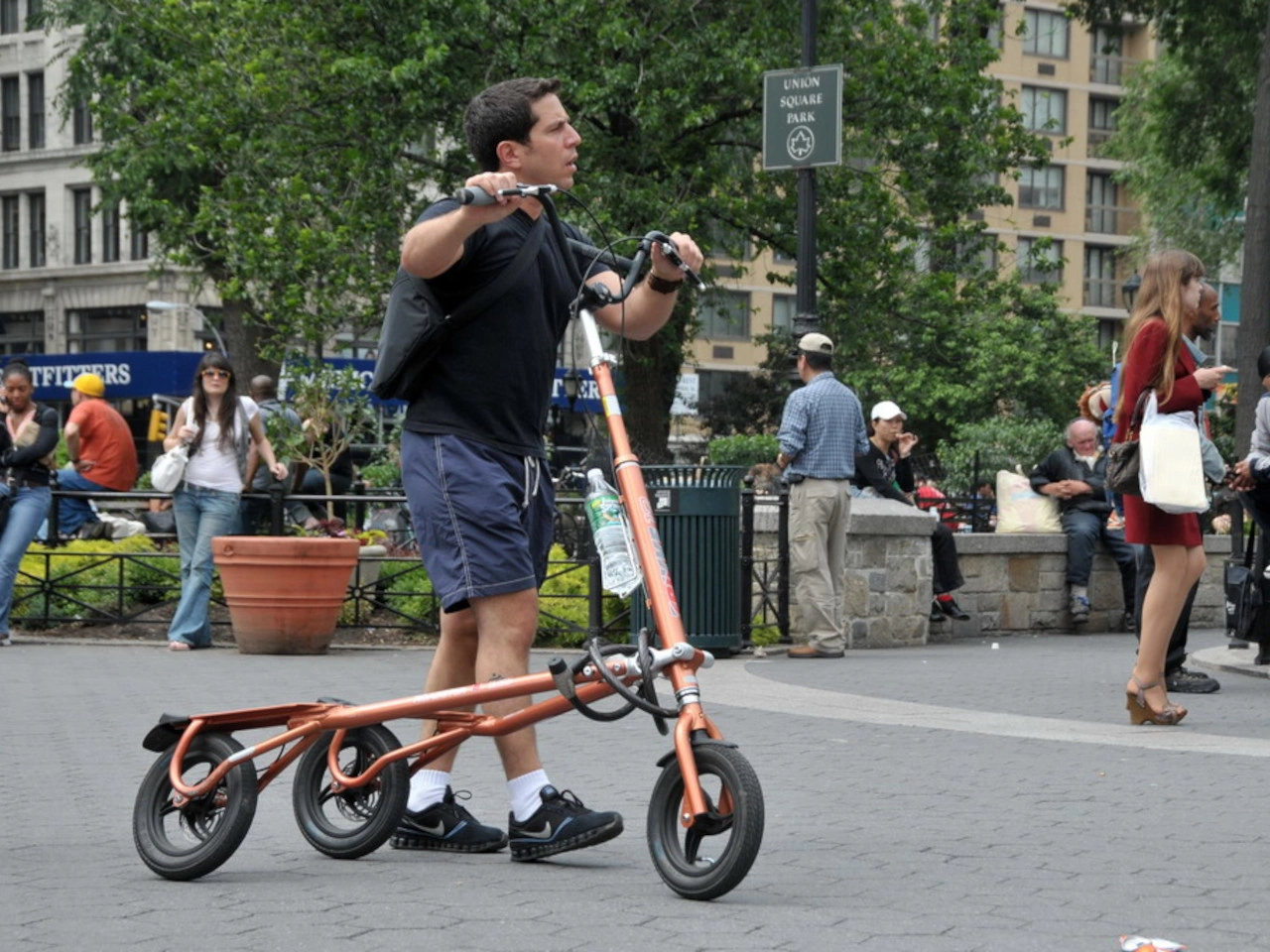
What is a Trikke?
A Trikke is a three-wheeled standing personal-mobility vehicle that is steered with handlebars and by leaning or shifting the rider's body.
Can a Trikke have an electric motor?
Yes. Trikke-type vehicles can be human-powered or electrically powered, depending on the model.
Which traffic rules apply to a Trikke?
The applicable rules depend on the vehicle's propulsion, maximum design speed and legal classification. A human-powered and an electric Trikke may therefore be treated differently.
164. パーソナルモビリティ
パーソナルモビリティは、1人を比較的短距離運ぶための小型移動装置です。キックスクーター、電動スクーター、スケートボード、自己平衡型装置、移動支援装置などが含まれます。
人力または電動モーターで動きます。法的分類、最高速度、最低利用年齢、通行できる道路部分は国によって異なるため、現地の交通標識と規則に従います。
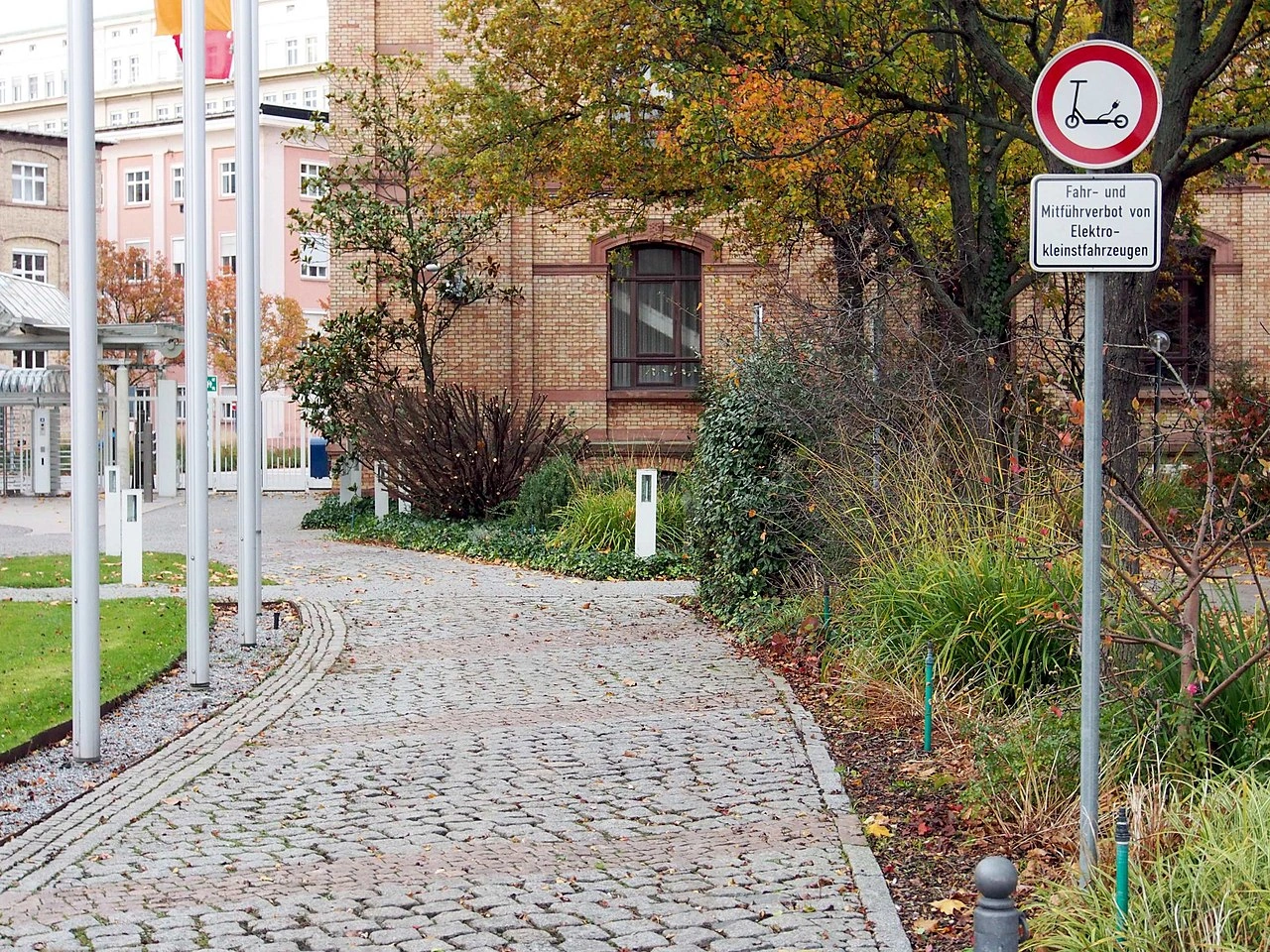
What is a personal transporter?
A personal transporter is a compact device designed to transport an individual, commonly over relatively short distances.
What are examples of personal transporters?
Examples can include electric scooters, kick scooters, skateboards, self-balancing devices, monowheels and certain mobility devices.
Is an electric scooter a personal transporter?
Yes, commonly. Electric scooters are one of the most widespread forms of motorised personal transporter, although their precise legal classification varies between countries.
Is a personal transporter the same as a bicycle?
No. A bicycle is primarily propelled through pedals or hand cranks. Personal transporters can use other methods of propulsion and may belong to a separate legal category.
Is a personal transporter the same as a moped?
Not necessarily. Low-speed personal mobility devices are often classified separately from mopeds. Devices exceeding specified speed or construction limits may fall into another vehicle category.
Can personal transporters use cycle paths?
This depends on the country and type of device. Motorised personal transporters are often permitted or required to use cycle infrastructure where available.
Can personal transporters use the pavement?
This depends on local law. Motorised devices may be prohibited from ordinary pavements, while people using non-motorised devices at walking speed may sometimes be treated as pedestrians.
Is there a minimum age for using an electric personal transporter?
Some countries impose a minimum riding age for electric scooters and similar motorised devices. The applicable age and exceptions vary between jurisdictions.
Can you carry a passenger on a personal transporter?
Only when the device is specifically designed and legally permitted to carry passengers. Most ordinary electric scooters are designed for one person only.
Do personal transporters need lights and brakes?
Motorised devices may be subject to requirements concerning lights, reflectors, brakes and audible warning devices. The required equipment depends on local traffic and technical regulations.
Is a helmet compulsory on a personal transporter?
This varies between countries and device categories. Even where a helmet is not legally compulsory, wearing an appropriate helmet can provide additional protection in a fall or collision.
Can you modify a personal transporter to make it faster?
A modification that increases the vehicle beyond the legal speed or technical limits may change its classification or make it illegal for use on public roads.
165. スケートボード
スケートボードは、車輪付きの小さな板で、デッキ上に立ち、地面を蹴るか重力を利用して進みます。レクリエーション、スポーツ、短距離移動に使われます。
利用者は常に制御を保ち、歩行者や交通へ注意し、周囲に合わせて速度を調整します。利用できる場所と適用交通規則は国によって異なります。
What is a skateboard?
A skateboard is a board fitted with wheels that is ridden while standing and normally propelled by pushing against the ground or by gravity.
Can a skateboard be used for transport?
Yes. In addition to recreational and sporting use, skateboards can be used for short-distance personal travel where local traffic rules permit.
Where can skateboard users ride?
This depends on the country and the user's speed. Skateboard users may be treated similarly to pedestrians or cyclists under some traffic-law systems.
166. セグウェイ
セグウェイは、利用者が立ったまま身体を傾けて移動し、電子制御のバランスシステムで安定を保つ自己平衡型電動パーソナルモビリティです。典型的なSegway Personal Transporterは2輪で、ハンドルなどで操作します。
個人移動、観光、警備、短距離移動などに使われます。法的地位と利用可能な場所は、パーソナルモビリティを規制する各国の交通規則によります。
What is a Segway?
A Segway is a self-balancing electric personal transporter designed to carry a standing rider.
How does a Segway stay balanced?
A Segway uses an electronic self-balancing system that continuously responds to the rider's movements and helps keep the vehicle upright.
Where can you ride a Segway?
This depends on local traffic laws. Segways may be classified as personal mobility devices, bicycles or another vehicle category, which determines whether they may use cycle paths, roads or other areas.
167. キックスクーター
キックスクーターは、細いデッキ、2輪以上の車輪、ハンドルを備えるパーソナルモビリティです。非電動型は片足で地面を蹴って進み、電動キックスクーターは電動モーターで走行します。
レクリエーションや短距離移動に使われます。通行できる場所や交通規則は、電動かどうかと法的分類によって決まります。
What is a kick scooter?
A kick scooter is a personal mobility device with a standing platform, wheels and a handlebar, normally propelled by pushing against the ground with one foot.
Can a kick scooter have an electric motor?
Yes. Electric kick scooters use a motor for propulsion and may be subject to different traffic rules from non-motorised kick scooters.
Where can you ride a kick scooter?
This depends on the country's traffic rules and whether the scooter is motorised. Users may be treated as pedestrians, cyclists or another category of road user.
168. ローラースケート
ローラースケートは、車輪を取り付けた履物で、滑らかな表面を滑走できます。伝統的なものは2列4輪、インラインスケートは車輪が1列に並びます。
利用者は制御を保ち、周囲に合わせて速度を調整し、歩行者、自転車、車両、路面の凹凸へ注意します。利用可能な場所や適用交通規則は国によって異なります。
What are roller skates?
Roller skates are footwear equipped with wheels that allow the user to move by skating.
What is the difference between roller skates and inline skates?
Traditional roller skates normally have two pairs of wheels, while inline skates have several wheels arranged in a single line.
Where can roller skates be used?
This depends on local traffic rules. Roller skaters may be required to follow pedestrian or cyclist rules depending on the country, location and speed at which they are travelling.
169. 郵便配達員
郵便配達員は、手紙、小包、その他の郵便物を集荷、輸送、配達する人です。配達経路では徒歩、自転車、バン、オートバイなどを利用します。
道路付近で作業する際は、移動方法に応じて歩行者、自転車利用者、運転者に適用される交通規則に従います。他の道路利用者は、頻繁な停止、道路横断、車両への出入りがある場所で注意します。
What is a mailman?
A mailman, also called a postal worker or mail carrier, is a person who collects or delivers letters, parcels and other postal items.
How do postal workers travel while delivering mail?
Depending on the delivery route, postal workers may travel on foot, by bicycle, motorcycle, van or another delivery vehicle.
Do postal workers have special traffic priority?
Not automatically. Postal workers normally follow the traffic rules applicable to them as pedestrians, cyclists or drivers unless a country's laws provide a specific exemption.
170. ヒッチハイカー
ヒッチハイカーは、道路脇など適切な場所で待ち、通過する運転者に目的地方面への無料乗車を依頼する人です。ヒッチハイクは非公式な交通手段で、国・地域の規則により許可、制限、禁止されています。
走行中の交通から離れた、安全で合法的な場所で待ち、交通を妨げたり危険な場所で車両を停止させたりしないようにします。
What is a hitchhiker?
A hitchhiker is a person who asks passing drivers for a ride, usually without using a formal public-transport or taxi service.
Where should a hitchhiker wait?
A hitchhiker should wait in a safe and legally permitted location away from moving traffic, where a driver can stop without creating a danger or obstruction.
Can you hitchhike on a motorway?
Generally, no. Pedestrians are prohibited from motorways in many countries, so hitchhikers should use suitable locations outside the motorway itself, subject to local rules.
171. 幼児
幼児は、乳児期を過ぎても道路や車両の近くで継続的な監督と特別な保護を必要とする幼い子どもです。各国の安全要件に従い、乗用車、公共交通、自転車などの乗客として移動します。
乗用車では体格に適したチャイルドシートを使用します。道路、駐車場、動く車両の近くでは大人が注意深く監督します。
How should a toddler travel in a car?
A toddler should travel in an appropriate child restraint system that is suitable for the child's size and correctly installed in the vehicle.
Why do toddlers need special protection around traffic?
Toddlers are particularly vulnerable and may not understand traffic hazards, so they require close adult supervision and suitable protection when travelling in vehicles.
Can a rear-facing toddler seat be placed in front of an active airbag?
No. A rear-facing child restraint should not be placed in front of an active frontal airbag because the airbag can create a serious danger to the child.
172. 子ども
子どもは、体が小さく経験が少なく、交通危険を認識する能力が発達途中であるため、道路交通で特別な配慮と保護を必要とする若年者です。歩行者、自転車利用者、車両の乗客などとして交通に参加します。
運転者は、特に学校、遊び場、住宅地、横断歩道などで子どもがいる、またはいる可能性がある場合に特に注意します。
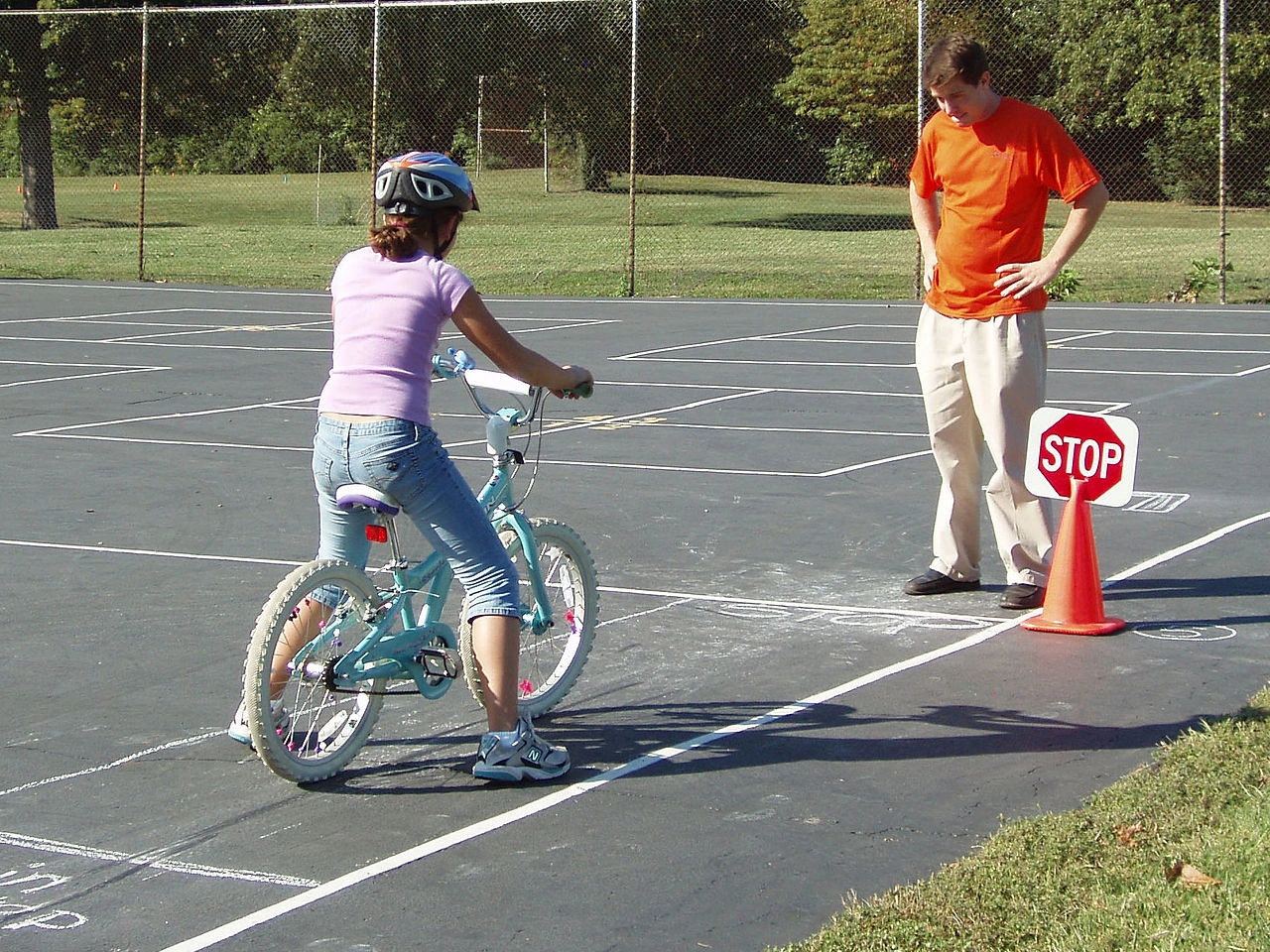
Why are children particularly vulnerable in traffic?
Children may have more difficulty judging vehicle speed, distance and traffic situations and are less visible to drivers because of their smaller size.
How should drivers behave when children are near the road?
Drivers should reduce speed when necessary, remain especially alert and be prepared to stop if a child enters or approaches the roadway.
How should children travel in a car?
Children should use an appropriate child restraint or seat belt according to their size, age and the applicable national rules.
173. 障害
障害は、身体、感覚、知的などの長期的な状態が、環境やアクセシビリティ上の障壁と相まって日常活動への参加に影響することを指します。道路交通では歩行者、運転者、自転車利用者、乗客、移動支援機器利用者などとして参加します。
道路システムはアクセシビリティ、安全な横断、適切な駐車、異なる移動・感覚ニーズに十分な時間と空間を考慮する必要があります。運転者も追加の時間や空間を必要とする道路利用者に特に配慮します。
Are people with disabilities separate road users?
No. A person with a disability may participate in traffic as a pedestrian, driver, cyclist, passenger or another type of road user and generally follows the rules applying to that role.
Why is accessibility important in road traffic?
Accessible infrastructure such as step-free routes, suitable crossings, clear signals and reserved parking can make it easier and safer for people with different mobility or sensory needs to travel independently.
How should drivers behave around people with disabilities?
Drivers should remain patient, leave sufficient space and allow enough time for people to move or cross safely, particularly where their mobility or perception may be affected.
174. 手押し車
手押し車は、人が押す、または引く小型の非動力車両で、短距離で商品、機器、その他の荷物を運ぶため使われます。2輪以上の場合があり、配送、市場、園芸、手作業による運搬などに使われます。
利用者は手押し車を制御し、荷物を固定し、歩行者や他の交通を不必要に妨げないようにします。人と車の法的地位は大きさや国の交通規則によって異なる場合があります。
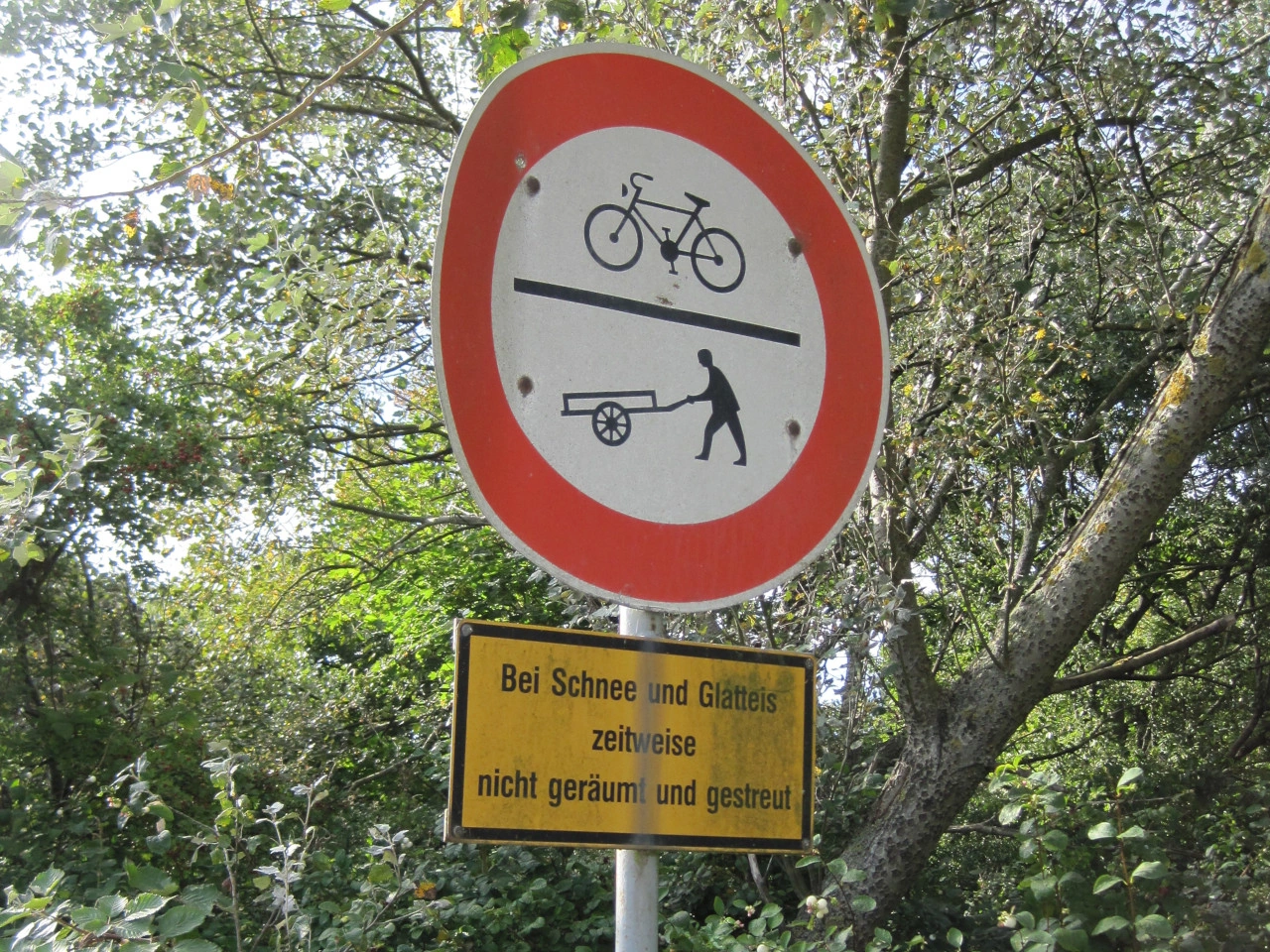
What is a handcart?
A handcart is a non-motorised wheeled vehicle that is pushed or pulled by a person and used for carrying goods or equipment.
Where are handcarts commonly used?
Handcarts are commonly used for deliveries, market goods, gardening, luggage and other short-distance manual transport.
Is a person pushing a handcart considered a pedestrian?
It depends on the country's rules and the size of the cart. Some traffic laws treat people pushing sufficiently small non-motorised vehicles as pedestrians, while larger carts may be subject to vehicle or driver rules.
175. 馬車
馬車は、1頭以上の馬が牽引し、御者が操作する車輪付き車両です。輸送、農業、観光、レクリエーション、儀式などに使われます。
馬は交通、騒音、急な動きに予想外の反応をすることがあるため、他の道路利用者は減速し、十分な間隔を取り、馬を驚かせる行動を避ける必要があります。
What is a horsecart?
A horsecart is a wheeled vehicle that is pulled by one or more horses and controlled by a driver.
Where can horsecarts be used?
Depending on local rules, horsecarts may use public roads, rural routes or specially designated areas and may be used for transport, agriculture, tourism or recreation.
How should drivers behave around a horsecart?
Drivers should slow down, leave sufficient space and pass calmly, avoiding unnecessary noise or sudden movements that could frighten the horses.

交通ルール
ドイツ