


道路工事ハンガリー
 交通ルール
交通ルール
 ハンガリー
ハンガリー
27. 道路工事
道路工事は、道路上または道路脇で行われる建設、維持、修理、点検作業です。道路配置、車線幅、速度制限、優先関係、通行方向、歩行者・自転車施設が一時的に変更されることがあります。
運転者は仮設標識、信号、バリア、路面表示、作業員の指示に従い、減速し、車間距離を増やし、狭い車線、渋滞、作業員、重機、急な経路変更に備える必要があります。
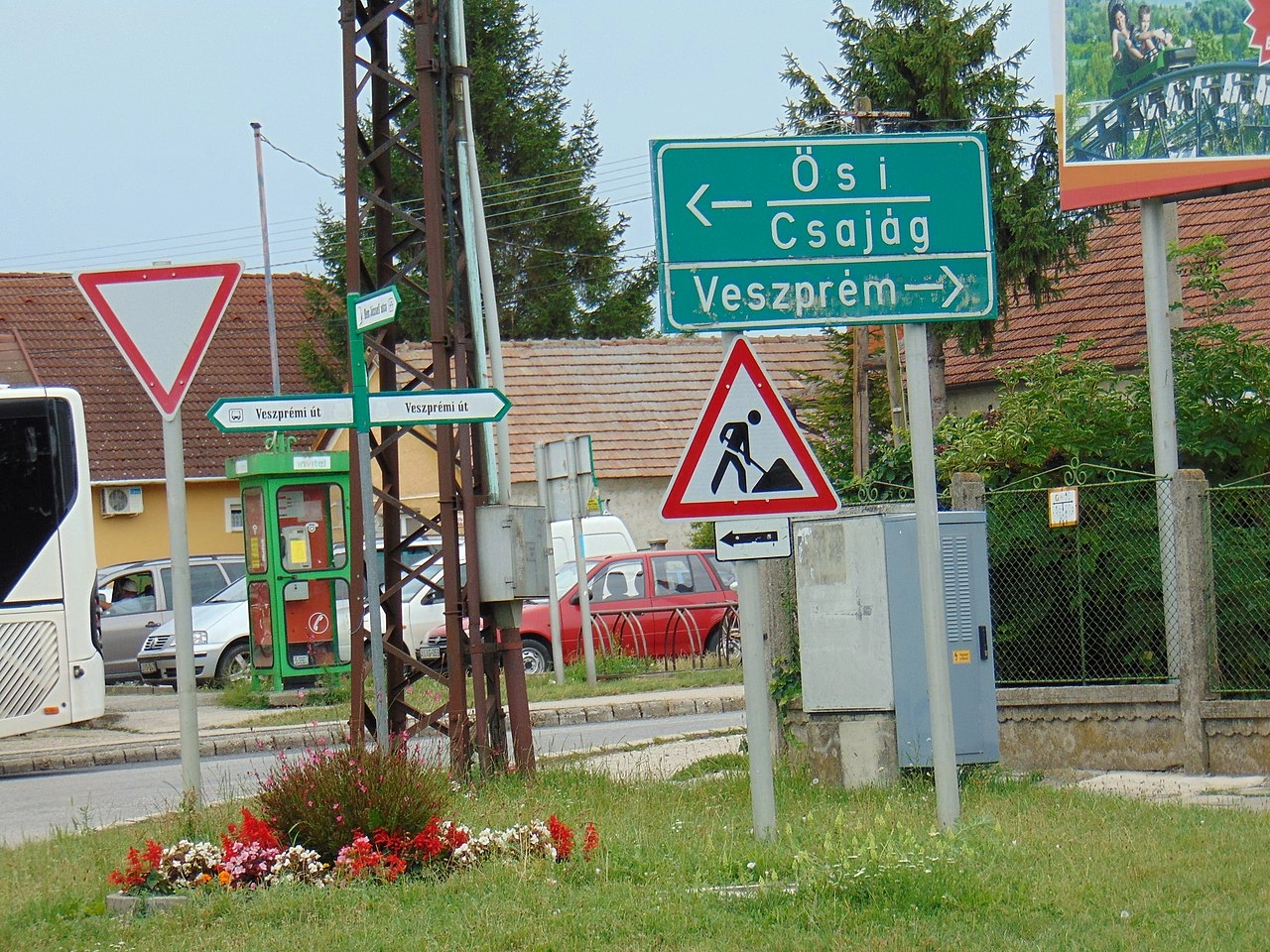
What are roadworks?
Roadworks are construction, maintenance, repair or inspection activities carried out on or beside a road.
How can you recognise roadworks?
They may be indicated by a roadworks warning sign, cones, barriers, temporary markings, flashing lights, machinery or workers.
Does a roadworks sign impose a speed limit?
No, not by itself. A separate temporary or permanent speed-limit sign establishes the legal maximum speed.
Must you drive below the speed limit?
Yes, when necessary. Narrow lanes, workers, machinery, poor surfaces, congestion or limited visibility may require a substantially lower speed.
Are temporary traffic signs legally binding?
Yes. Correctly installed temporary signs must be obeyed for as long as they are in force.
Which road markings should you follow?
Follow the temporary markings that guide traffic through the works. Local law determines how they take priority over older permanent markings.
Must you obey temporary traffic lights?
Yes. Stop at the line or signal when required and do not proceed until the applicable light permits it.
Must you obey road workers directing traffic?
Obey instructions from workers or controllers who are legally authorised to regulate traffic. Their signals may temporarily replace the ordinary traffic arrangement.
What should you do when a lane closes?
Observe the signs and lane arrows, check mirrors and blind spots and merge safely into the continuing lane.
What is zipper merging?
Zipper merging means that vehicles in an ending or blocked lane merge alternately with vehicles in the continuing lane near the narrowing during congested traffic.
Should you merge early?
This depends on local law and traffic conditions. Where zipper merging applies during congestion, use both lanes and merge near the narrowing. In flowing traffic, change lanes when a safe gap is available.
Who has priority when your lane is obstructed?
Without another traffic control, the driver whose route is obstructed commonly has to yield before moving into the path of approaching or adjacent traffic.
Can temporary lights control alternating traffic?
Yes. Temporary signals may allow only one direction at a time through a narrow section.
May you enter when the exit is blocked?
No. Do not enter a narrow section, intersection or temporary crossing when congestion may leave you stopped inside it.
May you move cones or barriers?
No. Do not move, pass around or ignore traffic-control equipment unless an authorised person instructs you to do so.
May you overtake in roadworks?
Only when signs and markings permit it and sufficient width and visibility remain. Overtaking is often unsafe in narrow or shifted lanes.
May you stop or park in roadworks?
Only where temporary and permanent signs permit it. Do not obstruct workers, machinery, emergency access or temporary pedestrian and cycle routes.
What should you watch for near workers?
Expect workers to enter the road, machinery to move or reverse and vehicles to leave the worksite. Reduce speed and leave generous space.
What should cyclists do at roadworks?
Follow the signed temporary cycle route or lane. Check surrounding traffic carefully before leaving a closed or obstructed bike path.
What should pedestrians do?
Use the designated temporary walkway or crossing and follow barriers, signs, signals and instructions from authorised personnel.
Why should you increase your following distance?
Traffic may brake suddenly because of queues, lane changes, machinery, debris or changing signals. Additional distance provides more time to react.
What should you do if your vehicle breaks down in roadworks?
Move to the safest available location where possible, activate the hazard warning lights and contact assistance. Avoid standing in a live or narrow traffic lane.
Do ordinary traffic rules still apply?
Yes. Rules concerning safe speed, following distance, signalling, priority and vulnerable road users continue to apply unless a lawful temporary arrangement changes them.


