


道路標識ウクライナ
 交通ルール
交通ルール
 ウクライナ
ウクライナ
101. 車両灯火
車両灯火は、運転者の視界を確保し、車両を見えやすくし、他の道路利用者へ意思を伝えるための灯火・合図装置です。ロービーム、ハイビーム、車幅灯、デイタイムランニングライト、尾灯、制動灯、方向指示器、後退灯、フォグランプ、ハザードランプなどがあります。
視界、天候、交通状況に適した灯火を使用します。灯火は清潔で正常に作動する状態に保ち、他の道路利用者を眩惑する可能性のある灯火は許可される場合だけ使用します。
What are the main types of vehicle lights?
Common vehicle lights include dipped-beam and main-beam headlights, position lights, daytime running lights, rear lights, brake lights, direction indicators, reversing lights, fog lights and hazard warning lights.
When should dipped-beam headlights be used?
Dipped-beam headlights are normally used at night and whenever visibility is poor. Unlike main beams, they are designed to illuminate the road while reducing glare for other road users.
When should main-beam headlights not be used?
Main beams should be changed to dipped beams whenever they could dazzle approaching or preceding road users. The precise requirements and distances vary between countries.

102. 街路灯
街路灯は、暗い時間帯に道路、交差点、横断場所、歩道など公共交通区域を照らす固定照明設備です。路面、道路利用者、潜在的な危険の視認性を高めます。
街路照明があっても、運転者が必要な車両灯火を使い、視界に合わせて速度を調整する責任はなくなりません。照明レベルは道路によって大きく異なり、一部だけ照明される道路や全く照明のない道路もあります。

What is the purpose of street lights?
Street lights improve visibility during darkness and can help road users see the road layout, intersections, pedestrians, cyclists, obstacles and other traffic more clearly.
Do you still need vehicle lights on a street with street lighting?
Usually yes. Street lighting does not normally replace the vehicle-lighting requirements that apply at night or in poor visibility. Drivers must follow the lighting rules of the country in which they are driving.
Should you use main-beam headlights on a well-lit street?
Main beam should not be used when it could dazzle other road users, and many countries require dipped beam instead on sufficiently illuminated roads. Drivers should use the appropriate lighting for the road and traffic conditions.
103. ロービーム
ロービームは、車両ヘッドライトの下向き照射設定です。前方道路を照らしながら光を下向きに配光し、他の運転者や道路利用者を眩惑しにくくします。
通常、夜間、視界不良時、ハイビームが他の道路利用者を眩惑する可能性がある場合に使用します。ハイビームより照射範囲は短いですが、周囲に交通がある通常走行に適しています。

What is dipped beam?
Dipped beam is the normal low-beam headlight setting. It illuminates the road in front of the vehicle while limiting glare towards approaching and preceding road users.
When should dipped beam be used?
Dipped beam is generally used during darkness, in reduced visibility and whenever main-beam headlights could dazzle another road user. Exact requirements vary between countries.
What is the difference between dipped beam and main beam?
Dipped beam directs light lower and is suitable when other traffic is present. Main beam projects light farther ahead but must be switched off when it could dazzle other road users.
104. ハイビーム
ハイビームは、遠方の道路を照らすためのヘッドライト設定です。ロービームより強く遠くまで照らしますが、誤って使用すると他の道路利用者を眩惑する可能性があります。
主に近くに眩惑される交通がいない暗い道路で有効です。交通状況または国の規則で求められる場合はロービームへ切り替えます。

What is high beam used for?
High beam provides long-range illumination and can help a driver see farther ahead on dark roads where there is little or no other traffic.
When should you switch from high beam to dipped beam?
You should switch to dipped beam whenever high beam could dazzle approaching or preceding road users. Exact requirements and distances vary between countries.
Can high beam be used on a well-lit road?
Often not when the existing road lighting already provides sufficient visibility. National traffic rules may specifically require dipped beam instead in adequately illuminated areas.
105. フォグランプ
フォグランプは、霧、雪、その他の悪天候で視界が著しく低下した場合に使用する車両灯火です。前部フォグランプは低い位置から前方路面を照らし、後部フォグランプは後方から接近する道路利用者に車両を見えやすくします。
現地交通規則で許可される条件だけで使用します。特に後部フォグランプは非常に明るく、視界が良い場合は後続運転者を眩惑・妨害することがあります。
What are front fog lights used for?
Front fog lights provide additional low-level illumination in poor visibility such as fog, snowfall or heavy rain. Their design helps illuminate the road close to the vehicle.
What are rear fog lights used for?
Rear fog lights produce an intense red light that makes a vehicle easier to see from behind when visibility is seriously reduced.
Should fog lights be used in normal weather?
No. Fog lights should only be used when the applicable traffic rules and weather conditions justify them. Rear fog lights in particular can cause unnecessary glare when visibility is good.
106. 前部フォグランプ
前部フォグランプは、霧、雪、大雨で視界が低下したときに直前の道路を見やすくするため低い位置に取り付ける灯火です。一般に幅広く低い方向へ配光します。
現地交通規則で許可される天候条件だけで使用します。補助灯であり、通常の視界で不必要に使用してはいけません。

What are front fog lights used for?
Front fog lights provide additional low-level illumination when fog, snow, heavy rain or similar conditions make it difficult to see the road ahead.
Where are front fog lights located?
They are normally mounted relatively low at the front of the vehicle so that their wide beam illuminates the road surface without projecting as much light directly into fog or precipitation.
Should front fog lights be used in normal weather?
No. Front fog lights should only be used when conditions and local traffic rules permit them. Unnecessary use can create glare or distraction for other road users.
107. 後部フォグランプ
後部フォグランプは、視界が著しく低下したときに後続の道路利用者から車両を見えやすくする、車両後部の明るい赤色灯です。通常の尾灯より大幅に明るくなっています。
後続運転者を眩惑・妨害する可能性があるため、現地交通規則で許可される天候条件だけで使用し、視界が改善したら消灯します。

What are rear fog lights used for?
Rear fog lights make a vehicle more visible from behind when fog, snow, heavy rain or other severe weather significantly reduces visibility.
Why are rear fog lights so bright?
They are designed to remain clearly visible through poor weather. Because of their high intensity, they can cause glare when visibility is normal.
Should rear fog lights be switched off when visibility improves?
Yes. They should only remain on while the conditions that justify their use continue. Exact legal requirements vary between countries.
108. 車幅灯
車幅灯(position lights)は、車両の存在とおおよその幅を示し、見えやすくする低輝度灯火です。ロービームやハイビームと異なり、夜間の通常走行に必要な距離まで道路を照らすものではありません。
他の灯火と一緒に使用されるのが一般的で、暗い場所で停止・駐車中の車両を見えやすくするためにも使われます。必要な使用条件は国の交通規則によります。

What are side lights used for?
Side lights make a vehicle easier to see and indicate its position and width. They provide much less road illumination than dipped-beam or high-beam headlights.
Are side lights the same as dipped-beam headlights?
No. Side lights mainly make the vehicle visible, while dipped-beam headlights illuminate the road ahead sufficiently for driving without unnecessarily dazzling other road users.
Can side lights be used when a vehicle is parked?
Yes. In some countries, position or parking lights must be used when a vehicle is parked on the road at night or in poor visibility. The exact requirements depend on local traffic rules.
109. 方向指示器
方向指示器は、右左折や車線変更など、方向・横方向への移動意思を他の道路利用者へ知らせる点滅灯です。通常、車両が移動しようとする側で点滅します。
他の道路利用者へ十分な予告時間を与えるよう早めに作動させ、操作完了後に解除します。合図を出しただけで優先権が生じたり、安全でない操作が許されるわけではありません。

When should turn signals be used?
Turn signals should be used when turning, changing lanes or making another lateral movement where signalling is required. The signal should be given early enough for other road users to understand the driver's intention.
Does using a turn signal give you priority?
No. A turn signal only communicates an intended movement. The driver must still follow the applicable priority rules and make sure the movement can be completed safely.
When should a turn signal be switched off?
The signal should be cancelled once the turn, lane change or other indicated movement has been completed so that it does not mislead other road users.
110. ハザードランプ
ハザードランプは、車両のすべての方向指示器を同時に点滅させます。車両または交通状況に異常・緊急の危険があることを他の道路利用者へ知らせるために使います。
故障、衝突、突然の危険を後続交通へ知らせる場合などに適します。通常、適切な駐車、方向指示、車両灯火の代わりとして使用すべきものではありません。

What are hazard lights used for?
Hazard lights warn other road users of an unusual or potentially dangerous situation involving the vehicle or traffic ahead. Common examples include breakdowns, collisions and sudden obstructions.
Do hazard lights give a driver permission to park anywhere?
No. Switching on hazard lights does not normally make prohibited stopping or parking legal. The driver must still comply with the applicable stopping and parking rules.
Can hazard lights be used to warn drivers behind of sudden congestion?
In many countries they may be used briefly to warn following traffic of an immediate danger such as a sudden queue. The exact rules governing their use vary between countries.
111. ダッシュボード警告灯
ダッシュボード警告灯は、車両の作動状態、各システム、故障の可能性などを知らせる計器盤上の点灯記号・表示です。ヘッドライト、方向指示器、燃料量、エンジン状態、タイヤ空気圧、ブレーキ、安全装備などを示します。
重要度を色で区別するのが一般的です。緑や青は通常作動中、黄や橙は注意が必要な可能性、赤は早急な対応を要する重大状態を示すことが多くあります。
What do dashboard warning lights mean?
Dashboard warning lights communicate information about vehicle systems. Their exact meaning depends on the symbol, colour and vehicle, so drivers should consult the vehicle handbook when a warning is unfamiliar.
What does a red dashboard warning light usually mean?
A red warning light generally indicates a serious problem or a condition requiring immediate attention. Depending on the warning, the driver may need to stop the vehicle safely and switch off the engine.
What does an amber or yellow dashboard light mean?
An amber or yellow light usually indicates a fault, maintenance requirement or condition that should be checked soon. The vehicle may still be driveable, but the warning should not be ignored.
112. 自転車の灯火
自転車の灯火とは、特に薄暗い時間帯や夜間に、利用者が前方を見て他者から見つけてもらうため、自転車に取り付けるライトと反射器を指します。安全のため重要で、多くの場合法律で義務付けられています。

113. 自転車ベル
自転車ベルは、通常ハンドルに取り付ける小型の音響装置で、歩行者、他の自転車利用者、車両へ自分の存在を知らせるために使います。多くの国や都市では、公道や自転車道を走る自転車に正常なベルを備えることが法的に必要です。安全と配慮のための小さくても重要な装置です。

114. パッシング
パッシングは、運転者が車両のハイビーム(場合によってはロービーム)を短時間素早く点滅させ、他の道路利用者へ合図することです。タイミングは明確かつ慎重にし、過度に速く・攻撃的に点滅させず、霧、大雨、夜間など他者を眩惑する可能性がある状況では避けます。

115. シートベルト
シートベルトは、急制動や衝突時に乗員を座席へ確実に保持する拘束装置です。車内へ衝突したり、車外へ放出されたりする危険を減らします。
腰ベルト部は腰骨の低い位置、肩ベルト部は胸部を通るよう体へしっかり沿わせます。ねじれ、背中の後ろへ回すなど保護効果を低下させる使い方をしてはいけません。

Why is wearing a seat belt important?
A seat belt restrains the occupant during sudden deceleration or a collision, helping prevent contact with the vehicle interior and reducing the risk of being thrown from the vehicle.
How should a seat belt be worn?
The belt should fit securely without twists. The lap section should lie low across the hips and the shoulder section should pass across the chest and shoulder rather than behind the back or under the arm.
Do airbags replace the need for a seat belt?
No. Seat belts and airbags are designed to work together. An airbag does not replace the restraint provided by a correctly worn seat belt.
116. チャイルドシート
チャイルドシートは、車両で移動する子どもを保護する安全装置です。後ろ向き・前向きチャイルドシートやブースターシートなどがあり、子どもの体格と製品仕様に応じて位置・拘束します。
子どもと車両に適したものを選び、メーカーの指示どおり取り付け、毎回正しく固定します。後ろ向きチャイルドシートを作動中の前面エアバッグの前に設置してはいけません。
What is a child restraint system?
A child restraint system is a safety device designed to secure a child in a vehicle. Depending on the child's size and the system, it can include a child seat, harness or booster seat used together with the vehicle's seat belt or dedicated anchorage system.
How should you choose a child restraint?
The restraint should be approved for the child's size and compatible with the vehicle. The manufacturer's instructions should be followed carefully when selecting, installing and using it.
Can a rear-facing child seat be placed in front of an active airbag?
No. A rear-facing child restraint must not be used on a seat with an active frontal airbag because deployment of the airbag can seriously endanger the child.
117. ヘッドレスト
ヘッドレストは、衝突時に身体に対する頭部の後方移動を抑え、特に追突時の首や頸椎の負傷リスクを減らすための車両安全装置です。
調整式の場合、首ではなく後頭部を支え、できるだけ頭に近づく位置へ調整します。運転者と乗客は出発前に体格へ合わせて調整します。
What is the purpose of a head restraint?
A head restraint limits excessive rearward movement of the head during a collision, helping reduce the forces acting on the neck and cervical spine.
How should a head restraint be adjusted?
It should be adjusted to support the back of the head rather than the neck and positioned as close to the head as practical. The seat and head restraint should be adjusted together to provide a comfortable and protective driving position.
Are head restraints part of passive safety?
Yes. Head restraints are passive safety devices because their main purpose is to reduce injury when a collision occurs rather than to prevent the collision itself.
118. エアバッグ
エアバッグは、特定の衝突時に急速展開し、乗員がハンドル、ダッシュボード、ドア、その他の車内部品へ衝突するリスクを減らす車両安全装置です。前面、側面、カーテンなどの種類があります。
補助拘束装置(SRS)の一部で、シートベルトの代わりではなく併用する設計です。乗員は正しい姿勢で座り、シートベルトを着用し、エアバッグとチャイルドシートに関するメーカー指示に従います。
What is an airbag?
An airbag is an inflatable vehicle safety device designed to help protect occupants during certain types of collision.
How does an airbag work?
Sensors detect collision conditions and, when the system determines that deployment is required, the airbag inflates extremely quickly to provide additional protection between the occupant and parts of the vehicle interior.
Does an airbag replace a seat belt?
No. Airbags are supplemental restraints and are designed to work together with seat belts. Occupants should always wear their seat belts where required.
What types of airbags can a car have?
Vehicles may have front airbags, side airbags, curtain airbags, knee airbags and other specialised airbags. The number and location depend on the vehicle design.
Does an airbag deploy in every collision?
No. Airbag systems are designed to deploy only when sensors detect collision conditions for which deployment is intended. Different airbags may deploy in different types of crashes.
Can an airbag be dangerous to a rear-facing child seat?
Yes. A rear-facing child restraint must not be placed in front of an active frontal passenger airbag because deployment can cause severe injury. The airbag must be deactivated where the vehicle and local rules permit such installation.
Can you switch off a passenger airbag?
Some vehicles allow the front passenger airbag to be deactivated, particularly when a rear-facing child restraint must be installed there. Follow the vehicle manufacturer's instructions carefully.
What does the airbag warning light mean?
An illuminated airbag or SRS warning light can indicate a fault in the restraint system. The system should be checked and repaired according to the vehicle manufacturer's instructions.
Can an airbag be reused after it deploys?
No. A deployed airbag is normally a single-use component and must be replaced together with any other affected restraint-system components before the system can function correctly again.
Should you sit close to an airbag?
Occupants should use a normal, correctly adjusted seating position and avoid placing themselves unnecessarily close to the airbag cover. Follow the seating and steering-wheel adjustment guidance provided by the vehicle manufacturer.
119. ABS
ABS(アンチロック・ブレーキ・システム)は、強い制動時に車輪がロックするのを防ぐアクティブセーフティシステムです。各車輪の制動圧を自動調整し、方向制御に必要な回転を維持します。
作動時はブレーキペダルに速い脈動や振動を感じる場合があります。通常、運転者はブレーキを繰り返し離すのではなく、強い踏力を維持しながら安全な方向へ操舵します。

What does ABS do?
ABS helps prevent the wheels from locking during heavy braking. By controlling wheel slip, it helps the driver retain steering control while braking strongly.
How should you brake when ABS activates?
Apply firm, continuous pressure to the brake pedal and keep steering as necessary. Pulsing or vibration through the pedal is normal while ABS is regulating the braking pressure.
Does ABS always reduce braking distance?
No. The main purpose of ABS is to prevent wheel lock and help maintain vehicle control. Actual stopping distance still depends on speed, tyres, road surface, weather and other conditions.
120. ESP
ESP(Electronic Stability Program、ESCとも呼ばれる)は、車両の横滑りや方向制御喪失を防ぐためのアクティブセーフティシステムです。運転者が意図する方向と実際の車両運動を比較し、不安定状態を検知すると介入します。
個別車輪へ自動的にブレーキをかけ、車両によってはエンジン出力も下げて意図した進路へ戻すのを支援します。タイヤグリップの限界内で作動するため、過大な速度や非常に滑りやすい条件を克服できるものではありません。

What does ESP do?
ESP helps maintain vehicle stability when it detects that the vehicle is beginning to deviate from the driver's intended direction. It can selectively brake individual wheels and may reduce engine power to help restore control.
What is the difference between ESP and ESC?
ESP and ESC refer to the same general type of electronic stability-control system. ESP means Electronic Stability Program, while ESC means Electronic Stability Control. Vehicle manufacturers may also use other names for similar systems.
Can ESP prevent every skid?
No. ESP can assist in maintaining stability, but it cannot overcome the physical limits of tyre grip. Excessive speed, worn tyres, ice or other very slippery conditions can still cause a vehicle to lose control.
121. トラクションコントロールシステム
トラクションコントロールシステム(TCS)は、加速時に駆動輪が過度に空転するのを防ぐアクティブセーフティシステムです。グリップ低下を検知すると、エンジン出力低減、1輪以上への制動、または両方を行います。
濡れた、凍結した、雪のある、または緩い路面での加速に特に有効です。利用可能なタイヤグリップをより効果的に使うのを助けますが、グリップがほとんどない場所に新たなグリップを作ることはできません。

What does traction control do?
Traction control detects excessive wheel spin during acceleration and intervenes to help the driven wheels regain grip. Depending on the vehicle, it can reduce engine power or apply braking to individual wheels.
When is traction control most useful?
It is particularly useful when accelerating on surfaces with limited grip, such as wet roads, snow, ice, mud or loose gravel.
What is the difference between traction control and ESP?
Traction control primarily limits wheel spin during acceleration. ESP or ESC has a broader function and helps stabilise the vehicle when it begins to deviate from the driver's intended direction. The systems commonly share wheel-speed sensors and braking components.
122. ヘルメット
ヘルメットは、衝突や転倒時の頭部負傷のリスクと重症度を減らすための防護具です。オートバイ、モペッド、自転車など用途別の種類があり、特定の安全規格が適用される場合があります。
着用義務は国、車両区分、利用者、場合によっては年齢によって異なります。用途に適したものを選び、正しいサイズで確実に装着して初めて設計された保護性能を発揮します。

What is a helmet?
A helmet is protective headgear designed to reduce the risk and severity of head injury if a rider falls or is involved in a collision.
Who should wear a helmet?
Helmet requirements depend on the vehicle and local traffic law. Motorcyclists and moped riders commonly have compulsory helmet requirements, while bicycle rules vary between countries.
Is a motorcycle helmet the same as a bicycle helmet?
No. Motorcycle and bicycle helmets are designed and tested for different conditions and are subject to different safety standards. Use a helmet approved for the type of vehicle concerned.
Should a passenger also wear a helmet?
Yes, where required. Passengers on motorcycles, mopeds and certain other vehicles are generally exposed to the same head-injury risks as the rider and may be subject to the same helmet requirement.
How should a helmet fit?
A helmet should fit securely and comfortably without excessive movement. It should be worn and fastened according to the manufacturer's instructions.
Can you use a damaged helmet?
A helmet that has suffered a significant impact or has visible structural damage may no longer provide its intended protection and should normally be inspected or replaced.
Can any helmet be used on a motorcycle?
No. Where motorcycle helmets are regulated, the helmet must comply with the applicable approval or safety standard. A recreational or ordinary bicycle helmet is generally not an acceptable substitute.
Are bicycle helmets compulsory everywhere?
No. Some countries require helmets for all cyclists, others only for particular age groups or types of bicycle, and some recommend them without making them compulsory.
Do speed pedelecs require a special helmet?
They may. Because speed pedelecs can travel considerably faster than ordinary bicycles, some countries require an approved moped helmet or a bicycle helmet satisfying additional requirements.
Does wearing a helmet replace safe riding?
No. A helmet provides additional protection but does not replace safe speed, observation, correct road position, appropriate clothing or compliance with traffic rules.
123. 自転車ヘルメット
自転車ヘルメットは、転倒や衝突時の頭部負傷のリスクと重症度を減らすための防護具です。通常、衝撃吸収ライナー、外殻、頭部へ保持するあご紐で構成されます。
正しいサイズで水平に装着し、確実に締めます。損傷したヘルメットは、外見上分かりにくくても保護性能が低下している可能性があるため交換します。

What is the purpose of a bicycle helmet?
A bicycle helmet is designed to absorb part of the impact energy during a fall or collision and help reduce the risk and severity of head injuries.
How should a bicycle helmet fit?
The helmet should fit snugly, sit level on the head and be secured with the retention strap. It should not move excessively when the cyclist moves their head.
Is wearing a bicycle helmet compulsory everywhere?
No. Helmet requirements vary between countries and may also depend on the cyclist's age or the type of bicycle being used. Riders should check the rules that apply where they are cycling.
124. ハンズフリー
ハンズフリーは、電話や通信機器を手で持たずに使用することを指します。車載システム、ヘッドセット、イヤホン、音声操作、適切なホルダーへ固定した電話などを使います。
機器を物理的に扱う必要は減りますが、会話や操作自体が運転者の注意をそらす可能性があります。使用を最小限にし、道路へ注意を集中します。
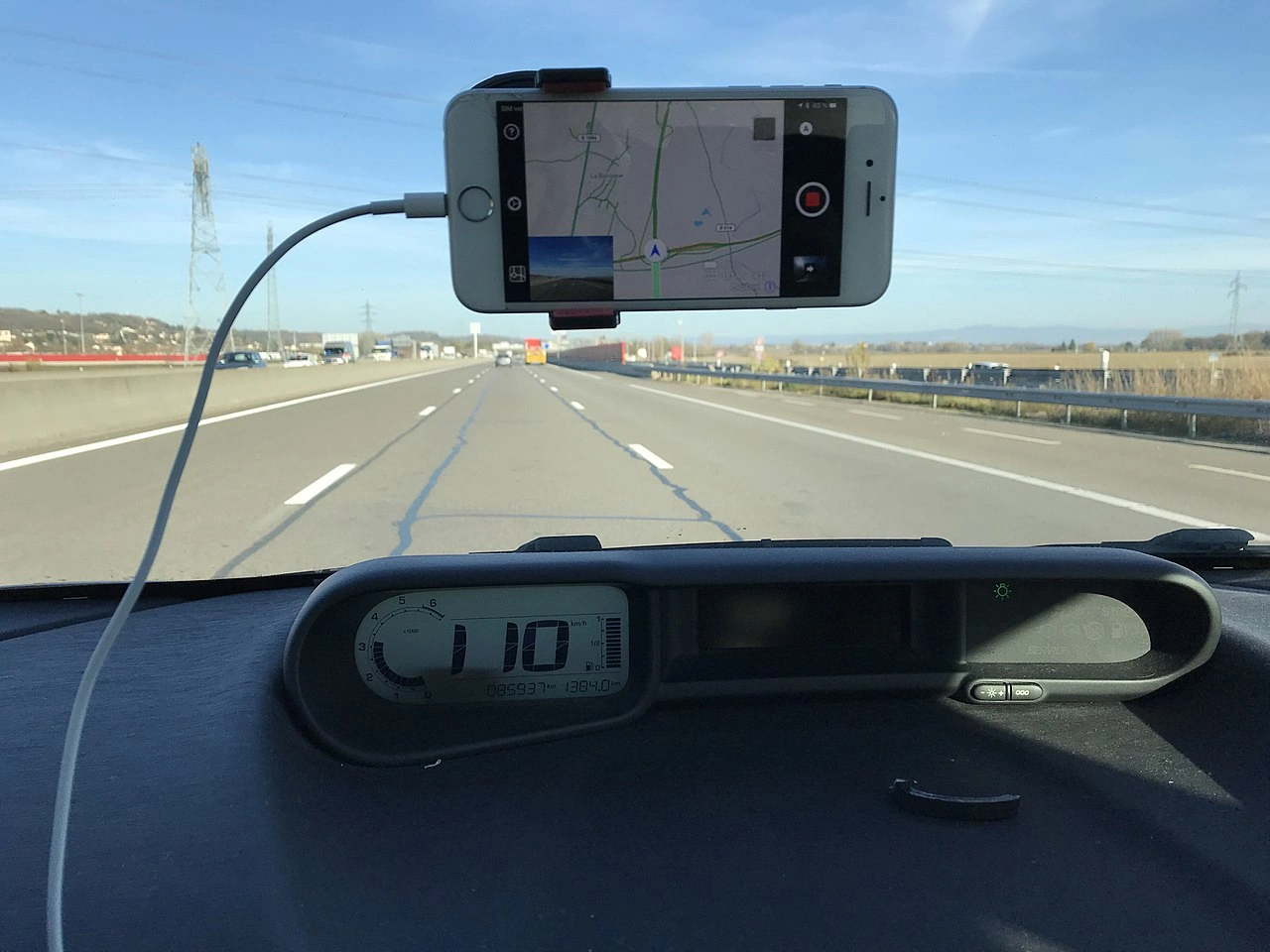
What does hands-free mean while driving?
Hands-free means using a communication device without holding it. Calls can be handled through a vehicle system, headset, earphones, voice control or another permitted system.
Is hands-free phone use completely distraction-free?
No. Even when the driver does not physically handle the phone, a conversation or interaction with a device can reduce attention to traffic. Drivers should keep such use to a minimum.
Does hands-free use allow you to hold the phone?
No. Holding a telephone while calling is not hands-free use. Whether handheld or mounted-device use is legally permitted depends on the traffic rules of the country.
125. スマートフォン
スマートフォンは、電話、メッセージ、インターネット、ナビゲーション、カメラ、アプリなどを組み合わせた携帯電子機器です。交通ではナビゲーションやハンズフリー通信に役立つ一方、視覚、手動、精神面の大きな注意散漫を生む可能性があります。
運転中に手で操作したり見続けたりしないようにします。使用が認められる場合も、現地交通規則に従って設置・操作し、安全な車両制御を妨げてはいけません。

Why is smartphone use dangerous while driving?
Using a smartphone can take the driver's eyes off the road, hands away from the controls and attention away from traffic. Reading messages, typing or selecting apps can therefore significantly increase distraction.
Can a smartphone be used for navigation while driving?
It may be permitted when the device is properly mounted and used according to local traffic rules. The route should preferably be programmed before starting the journey and interaction with the screen should be kept to a minimum.
Is hands-free smartphone use completely safe?
No. Hands-free operation removes the need to hold the device but conversations, navigation changes and other interactions can still distract the driver.