ParkenFlandern

Lerne Verkehrsregeln mit klaren Erklärungen und visuellen Beispielen in unserem illustrierten Buch – einfach, verständlich und anschaulich.


50. Parken

Parken bedeutet, ein Fahrzeug für eine gewisse Zeit an einer Stelle abzustellen, statt nur kurz wegen der Verkehrslage oder einer unmittelbaren Notwendigkeit anzuhalten. Viele Länder unterscheiden Parken von einem kurzen Halt zum Ein- oder Aussteigenlassen von Personen oder zum Be- oder Entladen von Gütern; die genaue rechtliche Definition unterscheidet sich jedoch.

Parken kann durch Verkehrszeichen, Fahrbahnmarkierungen, Parkzonen und örtliche Vorschriften erlaubt, eingeschränkt, reserviert, zeitlich begrenzt oder verboten sein. Fahrer müssen so parken, dass keine Gefahr oder unnötige Behinderung entsteht, und Bedingungen zu Gebühren, Genehmigungen, Fahrzeugkategorien oder maximaler Parkdauer einhalten.
Parken
When is a vehicle considered parked in Belgium?

A vehicle is considered parked when it remains stationary for longer than necessary for passengers to get in or out or for goods to be loaded or unloaded. Refuelling a vehicle or charging the battery of an electric or hybrid vehicle is also considered parking.

What is the difference between stopping and parking in Belgium?

A vehicle is considered stopped when it remains stationary only for the time necessary for passengers to get in or out or for goods to be loaded or unloaded. If it remains there longer, it is considered parked. Being forced to stop by traffic conditions is treated separately from voluntary stopping or parking.

On which side of the road should you park in Belgium?

A parked vehicle must normally be positioned on the right-hand side relative to its direction of travel. On a one-way carriageway, it may be positioned on either side. A vehicle parked wholly or partly on the carriageway must normally be placed as far as possible from the centre, parallel with the edge and in a single line.

May you park on the pavement in Belgium?

As a general rule, ordinary motor vehicles may not park on a pavement. Parking on raised verges within built-up areas is also prohibited unless local regulations permit it. Where a usable verge must be used by pedestrians, a passable strip of at least 1.5 metres must normally remain available.

How close may you park to a pedestrian or cyclist crossing in Belgium?

You may not stop or park on a pedestrian or cyclist crossing or on the carriageway within 5 metres before the crossing. This rule helps preserve visibility between approaching traffic and people using the crossing.

How close may you park to an intersection in Belgium?

Stopping and parking are generally prohibited within 5 metres of the extension of the nearest edge of the transverse carriageway at an intersection, unless local regulations provide otherwise.

May you park near a bus or tram stop in Belgium?

Parking is prohibited within 15 metres on either side of a sign indicating a bus, trolleybus or tram stop. This is a parking prohibition, so the rules concerning a brief legal stop must be distinguished from leaving the vehicle parked.

How much road space must remain when parking in Belgium?

You may not park where doing so would leave less than 3 metres of free passage on the carriageway. Parking is also prohibited where your vehicle would prevent another parked vehicle from being entered or moved or would obstruct access to parking places located outside the carriageway.

How does a Belgian blue parking zone work?

Where the parking-disc rules apply, the driver must place an approved parking disc visibly in the vehicle and set the arrow to the mark immediately following the arrival time. Unless the signs specify different conditions, the system applies from 09:00 to 18:00 on working days and allows a maximum parking period of two hours.

How does paid parking work in Belgium?

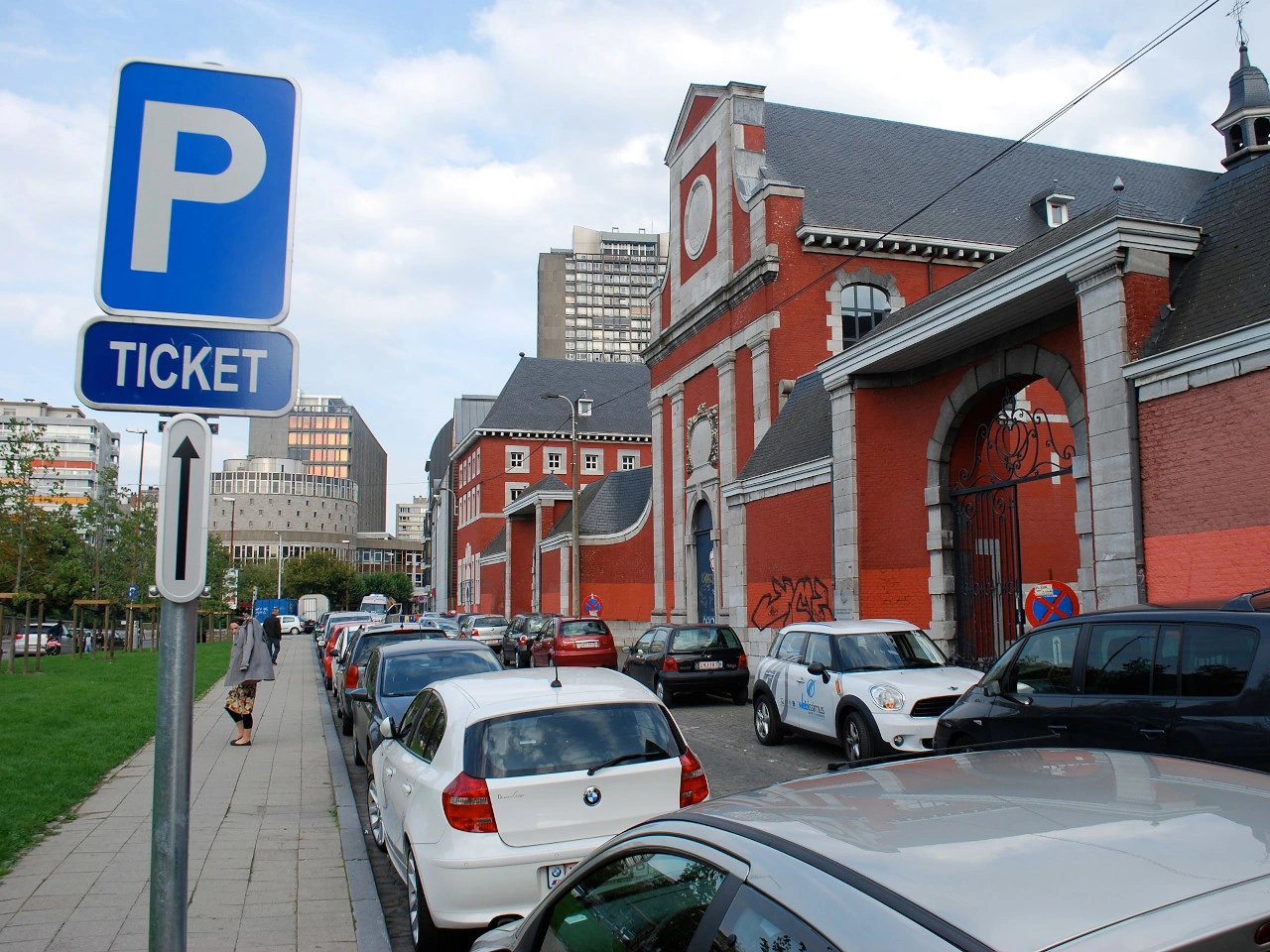
At parking metres or ticket machines, drivers must comply with the conditions displayed at the location. Other authorised payment methods may also be provided. Where paid parking applies, the local signs and payment system determine the applicable period, price and maximum parking duration.

May you park in a space reserved for people with disabilities in Belgium?

Only vehicles used by persons entitled to the recognised parking card for people with disabilities may use spaces specifically reserved for them. The card or recognised equivalent must be displayed as required when the vehicle is parked there.

May you park in front of a driveway in Belgium?

Parking in front of an entrance or driveway to a property is prohibited. An exception applies to a vehicle whose registration number is legibly displayed on that entrance, allowing the vehicle associated with the property to park there.

1 Flandern 2 Autobahn 3 Schnellstraße 4 Wohngebiet 5 Geschlossene Ortschaft 6 Zone 7 Geschwindigkeitsbegrenzung 8 Radweg 9 Fahrradstraße 10 Fußgängerzone 11 Bremsschwelle 12 Zoll 13 Einbahnverkehr 14 Kaianlage 15 Steigung oder Gefälle 16 Busspur 17 Sackgasse 18 Stoppschild 19 Vorfahrt gewähren 20 Kreisverkehr 21 Vorfahrtstraße 22 Fahrbahnverengung 23 Vorrang vor dem Gegenverkehr 24 Gegenverkehr Vorrang gewähren 25 Fußgängerüberweg 26 Bahnübergang 27 Vorgeschriebene Fahrtrichtung 28 Abbiegeverbot 29 Schulbereich 30 Wild- oder Viehwechsel 31 Steinschlag 32 Kurve 33 Richtungstafel 34 Falschfahrt 35 Straßenarbeiten 36 Höhenbegrenzung 37 Breitenbegrenzung 38 Gewichtsbeschränkung 39 Geschwindigkeitskontrolle 40 Selektive Sperren 41 Wegweiser an einer Kreuzung 42 Vorfahrt an der nächsten Kreuzung 43 Ampeln 44 Fußgängerampeln 45 Führerschein 46 Kilometrierungsmarkierung 47 Verkehrsspiegel 48 Staatsgrenze 49 Radroute 50 Parken 51 Parkverbot 52 Kiss and Ride 53 Parkuhr 54 Verkehrsmanagement 55 Rückwärtsfahren 56 Ungeregelte Kreuzung 57 Fahrbahnschäden 58 Ringstraße 59 Radschnellweg 60 Kennzeichen 61 Ladestation 62 Allgemeine Gefahr 63 Abbiegen bei Rot 64 Personalausweis 65 Brandgefahr 66 Fußgänger 67 Moped 68 Pkw 69 Lkw 70 Bus 71 Polizei 72 Krankenwagen 73 Straßenbahnsignale 74 Europäische Abgasnorm 75 Schlagloch 76 Platz 77 Weg 78 Feinstaub 79 Luftverschmutzung 80 Hauptverkehrszeit 81 Straßenverkehrsordnung 82 Straßenrinne 83 Lastenfahrrad 84 Forstfahrzeug 85 Baufahrzeug 86 Sattelzug 87 Oberleitungsbus 88 Speed-Pedelec 89 Lieferfahrzeug 90 Leerlauf 91 Abschleppwagen 92 Allradantrieb 93 Verbot für Fahrzeuge 94 Fahrrad 95 Motorradausrüstung 96 Triebwagen 97 Gleis 98 Öffentlicher Verkehr 99 Wohnwagen 100 Anhänger ...