


Mandatory signsAustralia
 Traffic rules
 Australia
 Priority signs
 Warning signs
 Prohibitory signs
 Mandatory signs
 Information signs
Mandatory signs
A mandatory sign is a traffic sign that tells drivers what they must do. Instead of prohibiting actions, these signs impose obligations such as following a specific direction, using a particular lane, or keeping a minimum speed. Their purpose is to guide traffic safely and efficiently by ensuring that all road users follow the same required behaviour in places where it is necessary for order and safety.
How are compulsory instructions shown in Australia?
In NSW, Keep Left and Keep Right signs are regulatory and must be obeyed; compulsory instructions are not necessarily blue circles.
🔗 nsw.gov.au • Australia, NSW official road-user guidance — mandatory-signs
How can a mandatory turn be indicated in Australia?
New South Wales example: Mandatory movements may be shown by regulatory signs, lane-direction arrows or turn-only indications. Do not expect the sign shape to be identical to the European blue circular sign system.
🔗 nsw.gov.au • Australia, NSW official road-user guidance — mandatory-signs
Does a mandatory-direction sign give me priority over pedestrians in Australia?
New South Wales example: No. It tells you which way to move, not who goes first. Check traffic lights, other priority signs, pedestrians and cyclists, and give way when required before completing the manoeuvre.
🔗 nsw.gov.au • Australia, NSW official road-user guidance — mandatory-signs

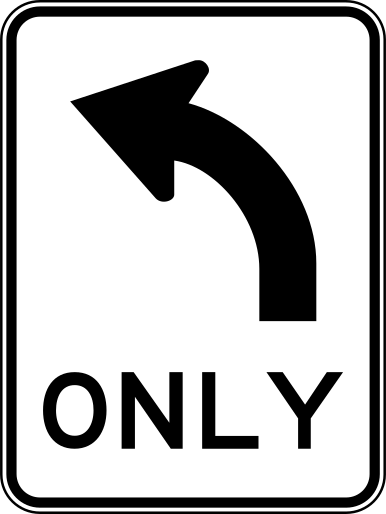
1. Turning left mandatory
This traffic sign indicates that turning left is mandatory at the junction ahead. Traffic must turn left and may not continue straight ahead or turn right.
English • Model rule 88 • left turn only sign • Left turn only. All traffic approaching this sign must turn left at the intersection. State and territory rules and exceptions apply.
Sources
🔗 Commons.wikimedia.org (Cassowary • GFDL 1.2 or later • no Invariant Sections or Cover Texts)
🔗 Pcc.gov.au • Australian Road Rules • model law • rule88; Schedule2p309
🔗 Legislation.qld.gov.au • Queensland Road Rules • local legislation example
Image via Commons.wikimedia.org
Cassowary • GFDL • Source revision 2012-10-11. Wikimedia original unmodified.
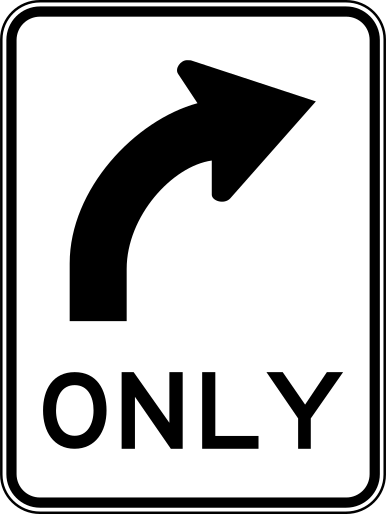
2. Turning right mandatory
This traffic sign indicates that turning right is mandatory at the junction ahead. Traffic must turn right and may not continue straight ahead or turn left.
English • Model rule 89 • right turn only sign • Right turn only. All traffic approaching this sign must turn right at the intersection. State and territory rules and exceptions apply.
Sources
🔗 Commons.wikimedia.org (Cassowary • GFDL 1.2 or later • no Invariant Sections or Cover Texts)
🔗 Pcc.gov.au • Australian Road Rules • model law • rule89; Schedule2p314
🔗 Legislation.qld.gov.au • Queensland Road Rules • local legislation example
Image via Commons.wikimedia.org
Cassowary • GFDL • Source revision 2012-10-11. Wikimedia original unmodified.
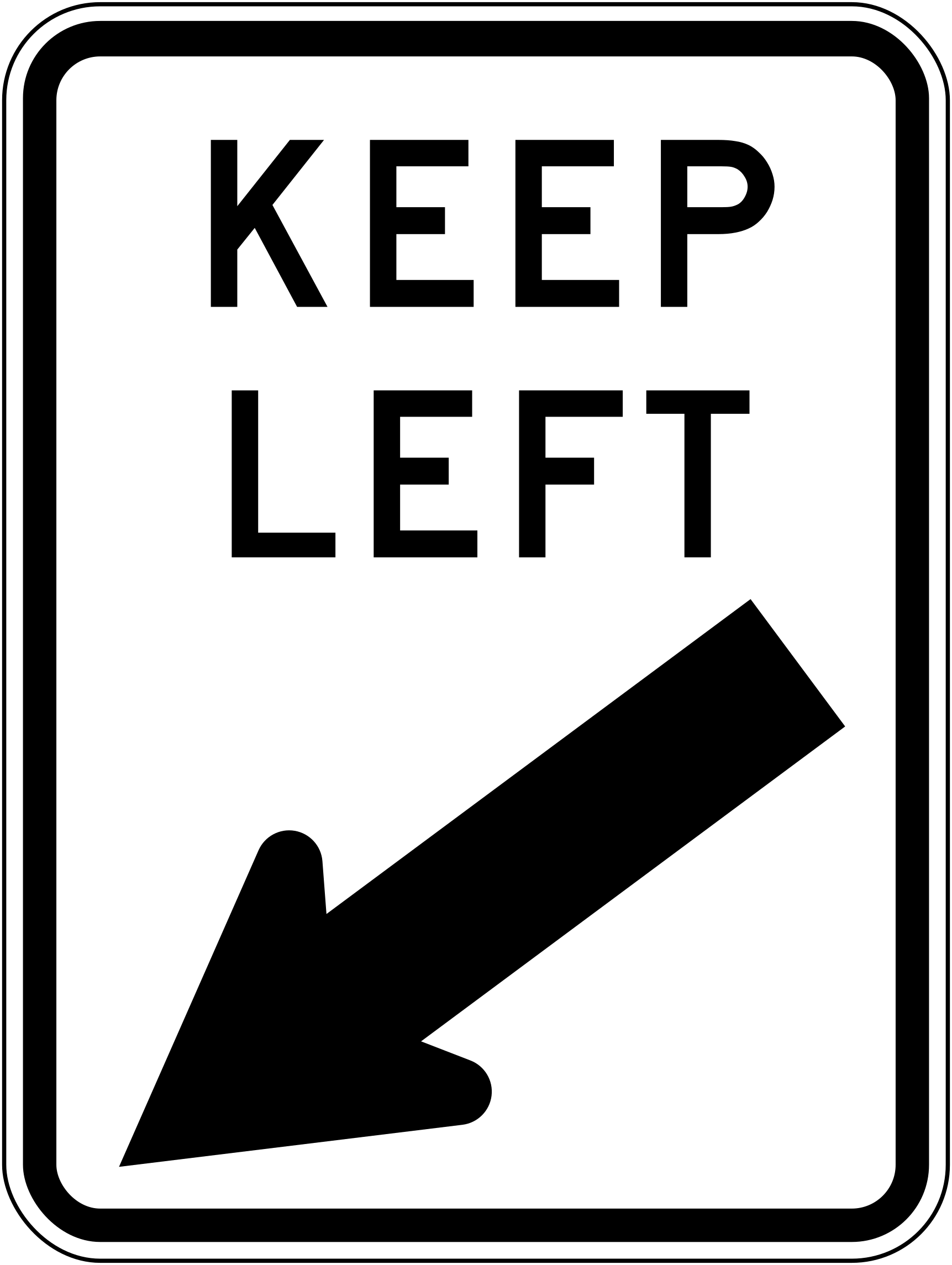
3. Pass obstacle on the left
This traffic sign indicates that traffic must pass an obstacle on the left. Keep to the left of the obstacle and follow any accompanying signs or road markings.
English • Model rule 99 • keep left sign • Keep left. Pass to the left of this sign. State and territory rules and exceptions apply.
Sources
🔗 Commons.wikimedia.org
🔗 Pcc.gov.au • Australian Road Rules • model law • rule99; Schedule2p309
🔗 Legislation.qld.gov.au • Queensland Road Rules • local legislation example
SVG source: Standards Australia • Public domain • Original revision 2020-04-01. Wikimedia original unmodified.
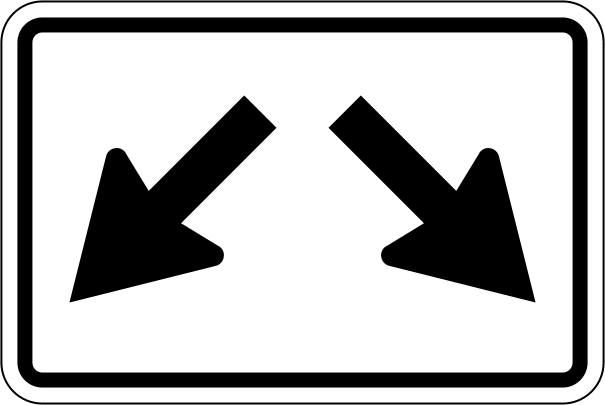
4. Pass obstacle on either side
This traffic sign indicates that traffic must pass an obstacle on either the left or the right. Use either permitted side while following the road layout and any accompanying signs or markings.
Sources
Image via Commons.wikimedia.org
Government of Victoria derivative work: Cassowary derivative work: Fry1989 eh? • CC BY 3.0 AU • Source revision 2015-06-23. Wikimedia original unmodified.
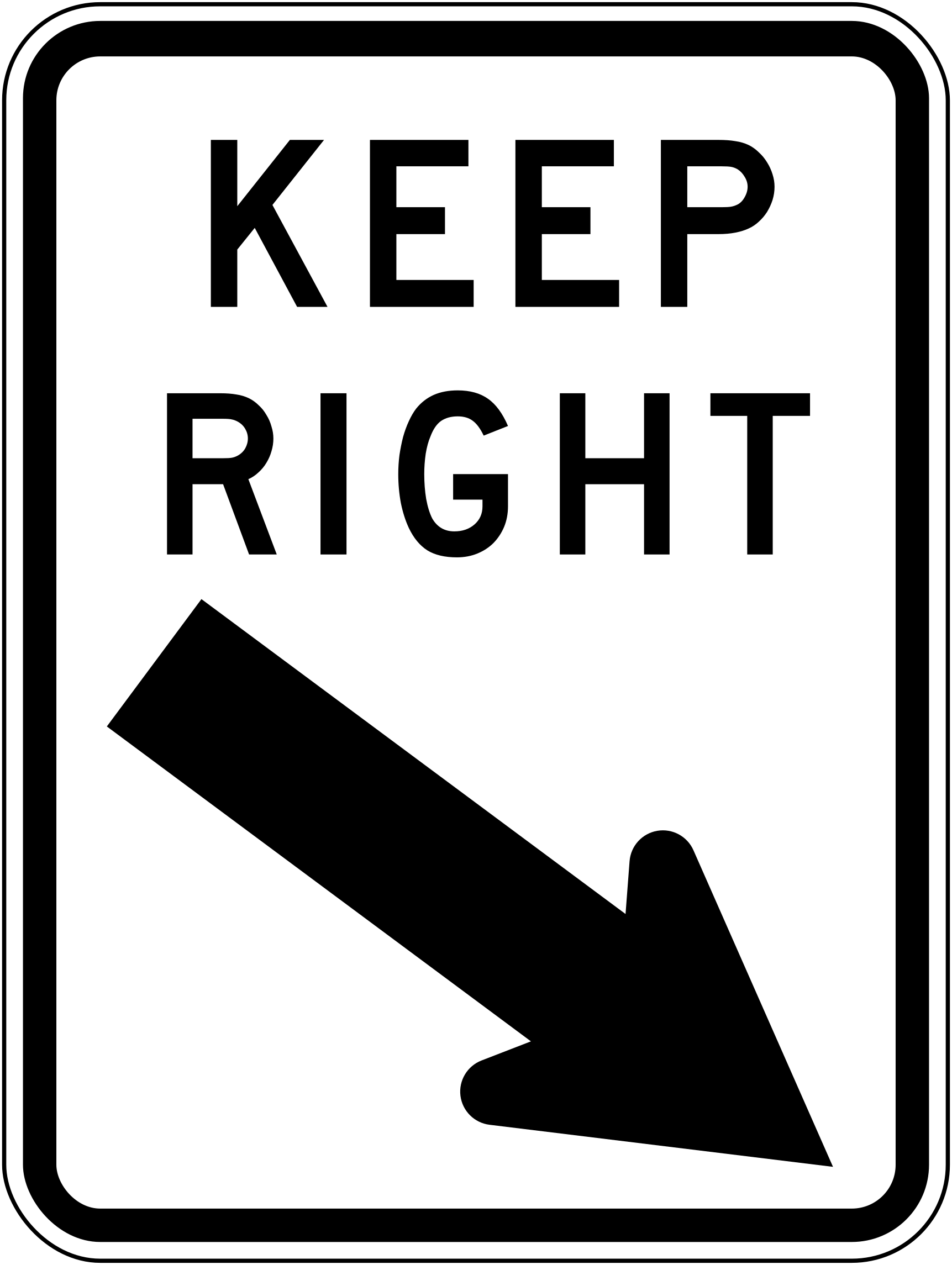
5. Pass obstacle on the right
This traffic sign indicates that traffic must pass an obstacle on the right. Keep to the right of the obstacle and follow any accompanying signs or road markings.
English • Model rule 99 • keep right sign • Keep right. Pass to the right of this sign. State and territory rules and exceptions apply.
Sources
🔗 Commons.wikimedia.org
🔗 Pcc.gov.au • Australian Road Rules • model law • rule99; Schedule2p309
🔗 Legislation.qld.gov.au • Queensland Road Rules • local legislation example
SVG source: Standards Australia • Public domain • Original revision 2020-04-01. Wikimedia original unmodified.
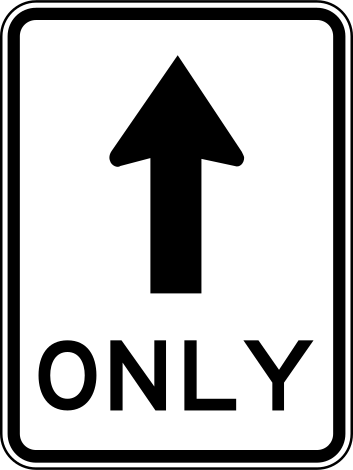
6. Driving straight ahead mandatory
This traffic sign indicates that driving straight ahead is mandatory. Traffic must continue straight ahead and may not turn left or right at the location to which the sign applies.
English • Model rule 90 • no turns sign • No turns. Continue straight ahead. Do not turn left, turn right or make a U-turn at the intersection. State and territory rules and exceptions apply.
Sources
🔗 Commons.wikimedia.org (Cassowary • GFDL 1.2 or later • no Invariant Sections or Cover Texts)
🔗 Pcc.gov.au • Australian Road Rules • model law • rule90; Schedule2p312
🔗 Legislation.qld.gov.au • Queensland Road Rules • local legislation example
Image via Commons.wikimedia.org
Cassowary • GFDL • Source revision 2012-10-11. Wikimedia original unmodified.
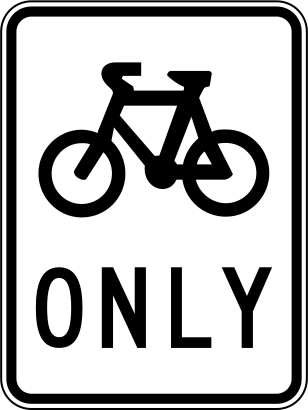
7. Mandatory path for cyclists
This traffic sign indicates a mandatory path for cyclists. Cyclists must use the designated path where the sign applies. Other road users may use the path only where the applicable signs or local rules permit them to do so.
English • Model rules 239 and 252 • bicycle path sign • Bicycle path. This path is designated for bicycles. Pedestrians may cross only as permitted by the local rules; other users and exceptions depend on the jurisdiction. State and territory rules and exceptions apply.
Sources
🔗 Commons.wikimedia.org (Government of Queensland • CC BY 3.0 au)
🔗 Pcc.gov.au • Australian Road Rules • model law • rules239,252; Schedule2p303
🔗 Legislation.qld.gov.au • Queensland Road Rules • local legislation example
SVG source: Government of Queensland • CC BY 3.0 au • Original revision 2012-10-10. Wikimedia original unmodified.
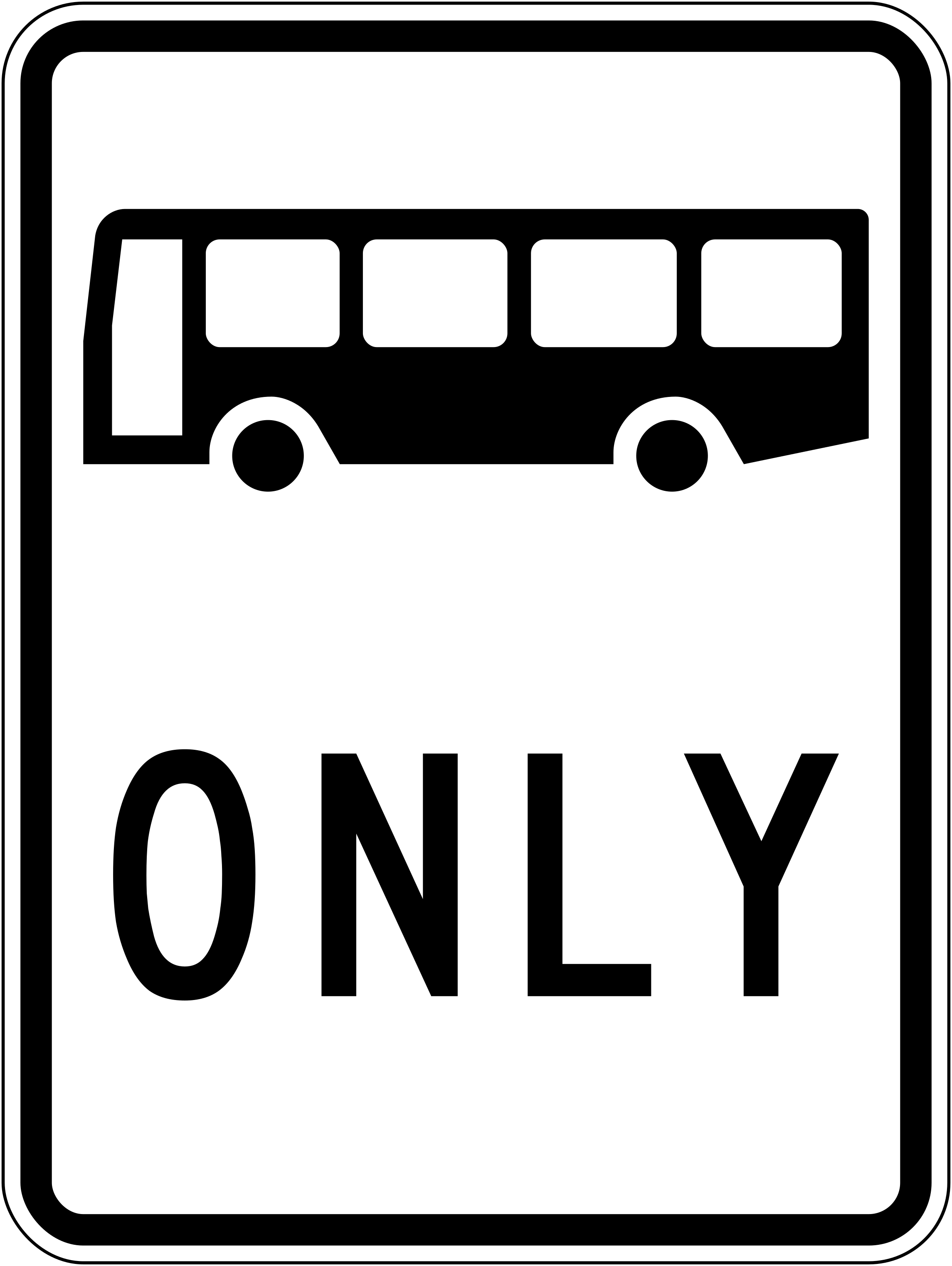
8. Mandatory lane for buses
This traffic sign indicates a mandatory lane for buses. Buses must use the designated lane where the sign applies. Other road users may use the lane only where the applicable signs or local rules permit them to do so.
English • Model rule 154A • bus only lane illustration • Bus only lane. A lane for authorised buses or busway vehicles. Ordinary traffic must not use it; the local rules determine permitted vehicles and limited exceptions. Illustration identified by its sign family or meaning; the exact current prescribed design has not been confirmed. State and territory rules and exceptions apply.
Sources
🔗 Commons.wikimedia.org
🔗 Pcc.gov.au • Australian Road Rules • model law • rule154A; Schedule2p304; Schedule3pp320–321 (different graphic)
🔗 Legislation.qld.gov.au • Queensland Road Rules • local legislation example
SVG source: Standards Australia • Public domain • Original revision 2020-04-11. Wikimedia original unmodified.
