

Book
 Traffic rules
 Priority signs
 Warning signs
 Prohibitory signs
 Mandatory signs
 Information signs
Prohibitory signs
A prohibitory sign is a traffic sign that tells drivers what is not allowed on that specific road or in that situation. These signs impose restrictions such as no entry, no overtaking, no parking, speed limits, or bans on certain types of vehicles. Their purpose is to clearly indicate actions that are forbidden to ensure safety, maintain traffic flow, and protect vulnerable road users.




1. Buses prohibited
This traffic sign indicates buses are prohibited. It means that buses are not allowed to enter or use the road beyond the sign. Only buses (typically public transport or large passenger buses) are prohibited. Other vehicles (cars, trucks, etc.) may be allowed unless otherwise restricted.
© via Wikimedia.org

2. Cyclists prohibited
This traffic sign indicates cyclists are prohibited. It means that bicycles (cyclists) are not allowed to enter or use the road beyond this point. Other vehicles (cars, pedestrians, etc.) may be allowed, unless separately restricted.
© via Wikimedia.org
3. Direction prohibited (road with one-way traffic)
This traffic sign indicates direction is prohibited for all drivers, the road has one-way traffic. The "Direction Prohibited" sign means that entry from this direction is not allowed — it prohibits traffic from entering a street or road. No vehicles are allowed to enter from this side. Vehicles may still exit from the other end (it's often a one-way street in the opposite direction)
© via Wikimedia.org
4. Pedestrians prohibited
This traffic sign indicates pedestrians are prohibited. It means that pedestrians are not allowed beyond this point. Other users (vehicles, bicycles, etc.) may still be allowed unless restricted by other signs.
© via Wikimedia.org
5. Trucks prohibited
This traffic sign indicates trucks are prohibited. It means that trucks (heavy goods vehicles) are not allowed beyond this point. typically those with a maximum authorized mass over 3.5 tonnes (unless otherwise specified). Other vehicles like cars, motorcycles, mopeds, and light vans may still be allowed unless restricted by other signs.
© via Wikimedia.org
6. Begin of a speed limit
This traffic sign indicates the begin of a speed limit. It means the start of a maximum speed limit that road users must obey from that point onward, driving faster than indicated is prohibited. It applies until: a new speed limit sign appears or the “end of speed limit” sign.
© via Wikimedia.org
7. End of the speed limit
This traffic sign indicates the end of the speed limit. It means the end of a previously posted maximum speed limit. From this point onward, the general (default) speed limits for the road type and vehicle category apply.
© via Wikimedia.org
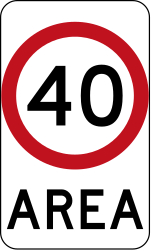
8. Begin of a zone with speed limit
This traffic sign indicates the begin of a zone with a speed limit. It means the start of a zone (not just a single stretch of road) where a specific speed limit applies throughout until an explicit end sign is posted. The limit remains in force until a sign explicitly ends the zone. Used commonly in: residential areas, school zones, city centers or traffic-calmed areas.
© via Wikimedia.org
9. End of the zone with speed limit
This traffic sign indicates the end of the zone with speed limit. It means the end of a zone where a specific speed limit was in force. From this point onward, the default speed limits or newly posted limits apply.
© via Wikimedia.org
10. Turning left prohibited
This traffic sign indicates turning left is prohibited. It means that left turns are not allowed at the intersection or junction where the sign is posted. Going straight or turning right may still be allowed (unless restricted by other signs).
© via Wikimedia.org