


Priority signsAustralia
 Traffic rules
 Australia
 Priority signs
 Warning signs
 Prohibitory signs
 Mandatory signs
 Information signs
Priority signs
A priority sign is a traffic sign that indicates the order in which vehicles shall pass intersection points. Vehicles often come into conflict with other vehicles and pedestrians because their intended courses of travel intersect, and thus interfere with each other's routes. The general principle that establishes who has the right to go first is called 'right of way' or 'priority'. It establishes who has the right to use the conflicting part of the road and who has to wait until the other does so. The vehicle that does not need to wait is said to 'have the right of way' or to 'have priority.'
What should I know about priority signs in Australia?
In New South Wales, STOP requires stopping and giving way; a Give Way control requires yielding under the applicable road rules.
🔗 nsw.gov.au • Australia, NSW official road-user guidance — priority-signs
Must you always stop when giving way in Australia?
In New South Wales, you must stop at a Stop sign or line, but a Give Way control requires stopping only when necessary to give way. Apply the rules of the state or territory where you are driving.
🔗 nsw.gov.au • Australia, NSW official road-user guidance — priority-signs

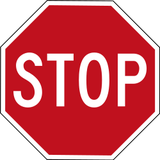
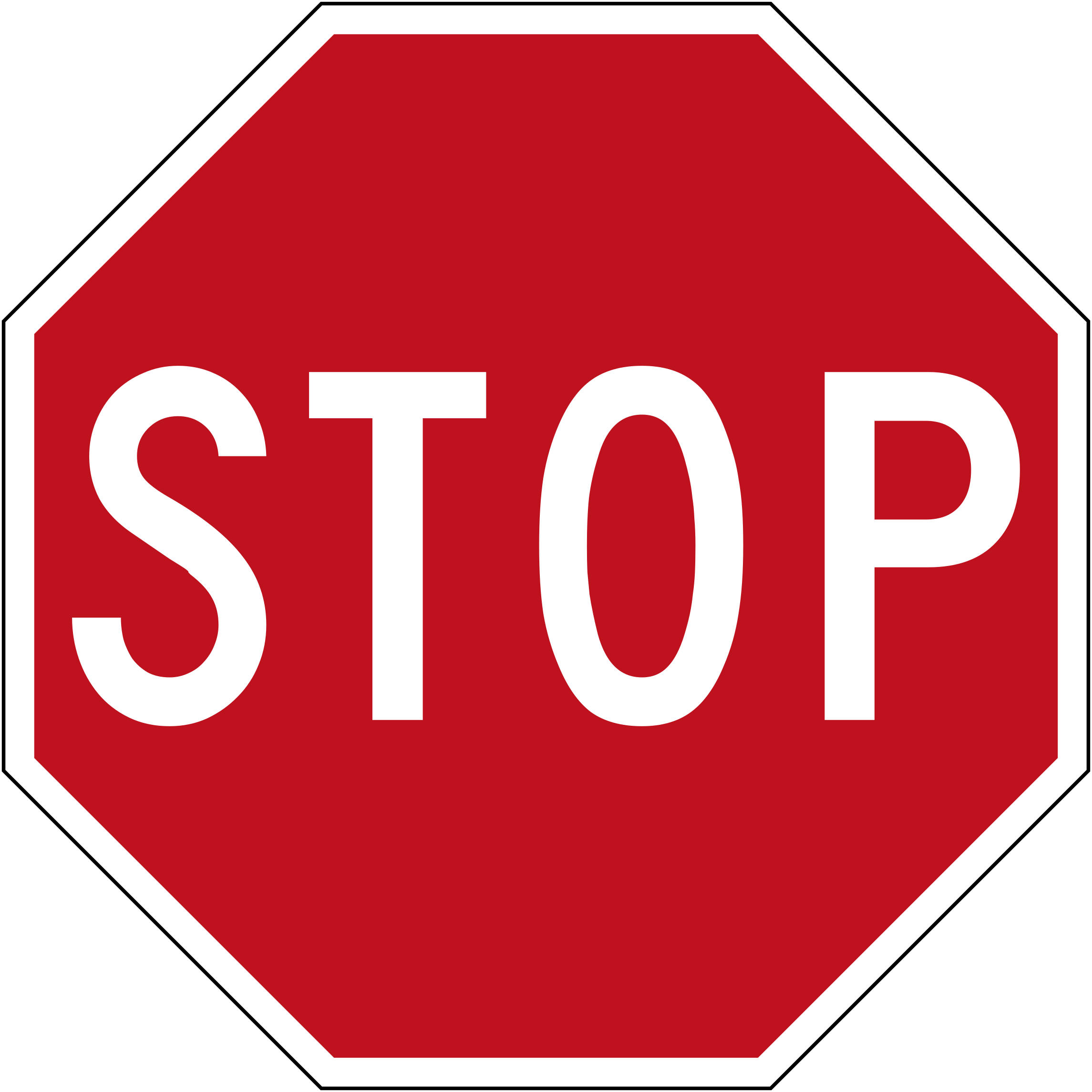
1. Stop and give way
This traffic sign means stop and give way. You must come to a complete stop before entering the intersection and give way to traffic that has priority. Proceed only when it is safe.
English • R1-1 • model rule 67 • Stop. Stop completely at the stop line, or before entering the intersection if there is no line, and give way as required before proceeding. State and territory rules and exceptions apply.
Sources
🔗 Commons.wikimedia.org
🔗 Pcc.gov.au • Australian Road Rules • model law • rule67; Schedule2p316
🔗 Legislation.qld.gov.au • Queensland Road Rules • local legislation example
SVG source: Standards Australia • Public domain • Original revision 2020-04-09. Wikimedia original unmodified.
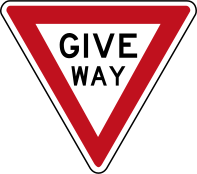
2. Give way
This traffic sign means give way. Slow down and give way to traffic that has priority. Stop if necessary and proceed only when it is safe.
English • R1-2 • model rule 69 • Give way. Slow down and, if necessary, stop. Give way to traffic as required before entering the intersection. State and territory rules and exceptions apply.
Sources
🔗 Commons.wikimedia.org
🔗 Pcc.gov.au • Australian Road Rules • model law • rule69; Schedule2p308
🔗 Legislation.qld.gov.au • Queensland Road Rules • local legislation example
SVG source: Standards Australia • Public domain • Original revision 2012-10-07. Wikimedia original unmodified.
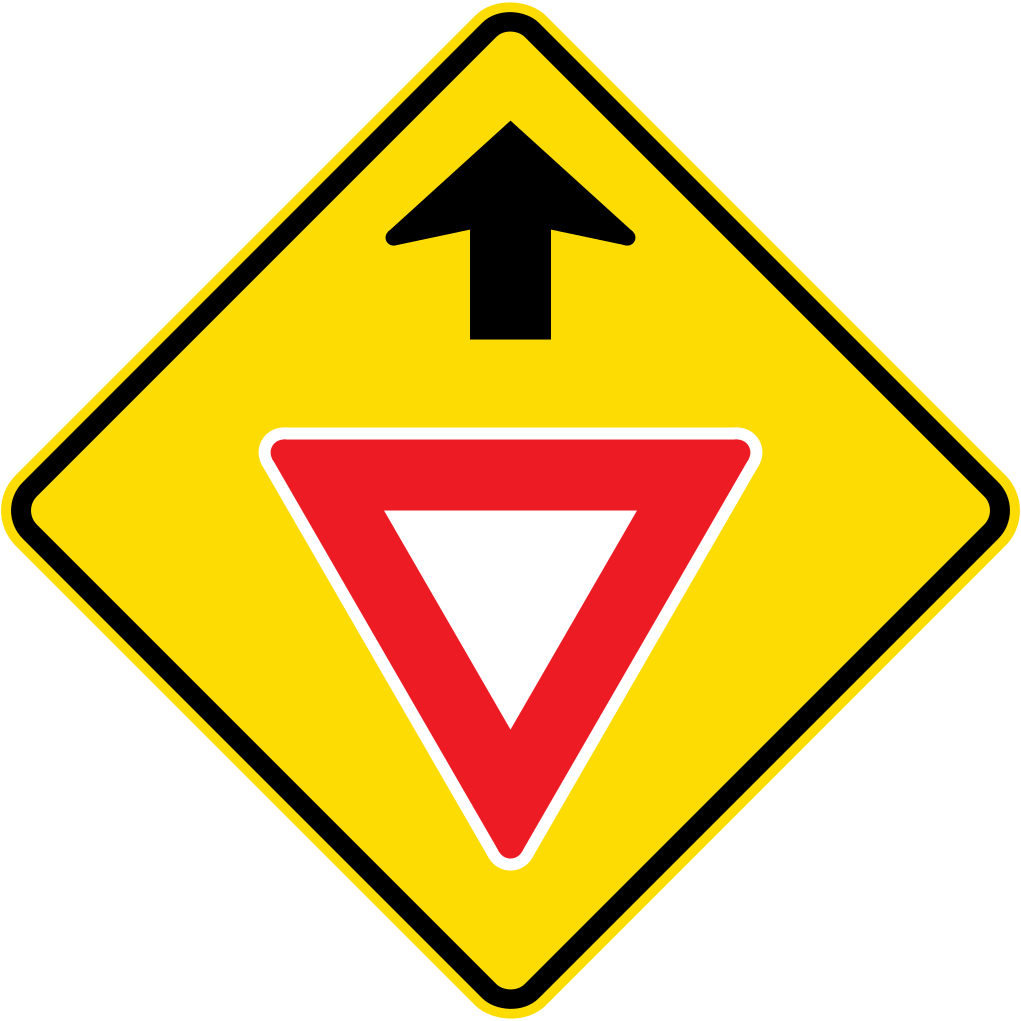
3. Give way ahead
This traffic sign indicates give way ahead. A give-way requirement applies at the location ahead. Reduce speed in good time and be prepared to stop if necessary.
English • W3-2 • Give way sign ahead. A give way sign is ahead. Reduce speed and prepare to give way or stop.
Sources
🔗 Commons.wikimedia.org
🔗 Transport.nsw.gov.au • Transport for NSW • W3-2
SVG source: Standards Australia • Public domain • Original revision 2024-09-19. Wikimedia original unmodified.
Artwork verified against Qld.gov.au • official published diagram W3-2.
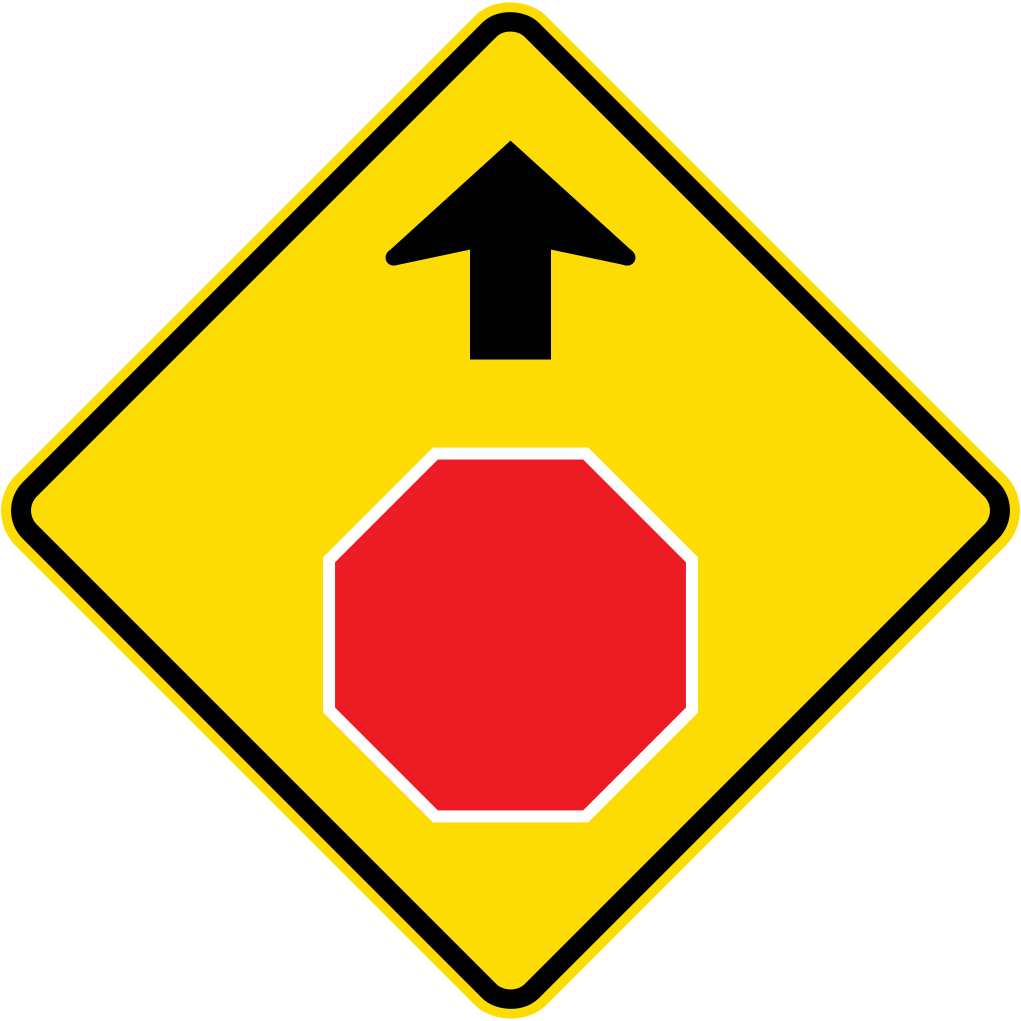
4. Stop and give way ahead
This traffic sign indicates stop and give way ahead. A stop sign applies at the location ahead. Reduce speed in good time and be prepared to come to a complete stop.
English • W3-1 • Stop sign ahead. A stop sign is ahead. Prepare to stop completely at the intersection.
Sources
🔗 Commons.wikimedia.org
🔗 Transport.nsw.gov.au • Transport for NSW • W3-1
SVG source: Standards Australia • Public domain • Original revision 2024-09-19. Wikimedia original unmodified.
Artwork verified against Qld.gov.au • official published diagram W3-1.
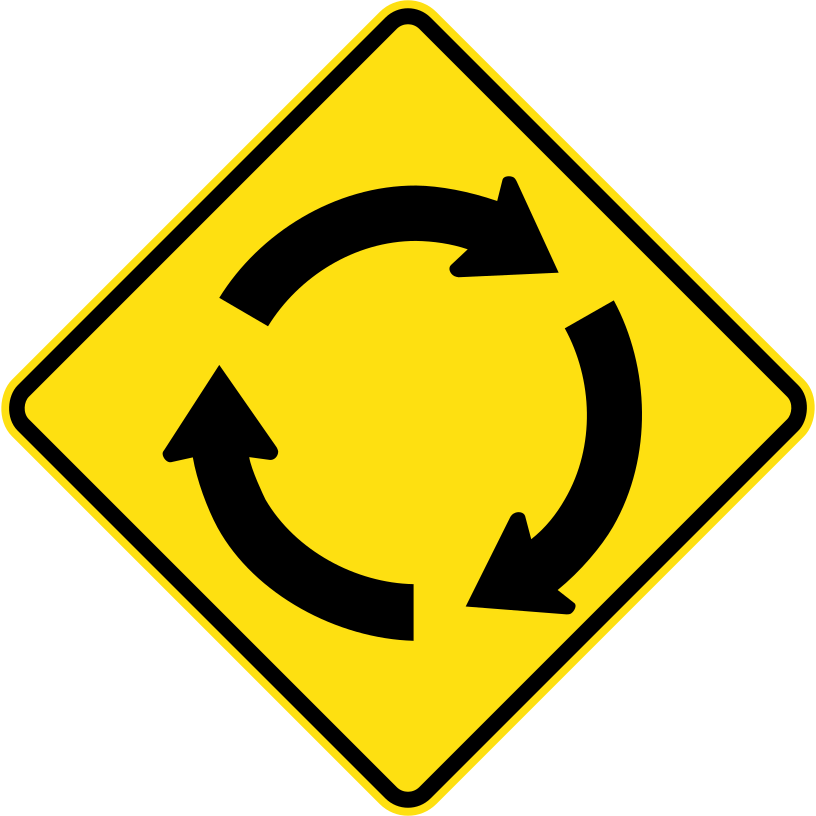
5. Warning for a roundabout
This traffic sign indicates a warning for a roundabout. A roundabout lies ahead. Reduce speed and follow the applicable priority signs, traffic signals and local roundabout rules when approaching and entering it.
English • W2-7 • Roundabout ahead. A roundabout is ahead. Approach slowly and prepare to give way to vehicles already on it.
Sources
🔗 Commons.wikimedia.org
🔗 Transport.nsw.gov.au • Transport for NSW • W2-7
SVG source: Standards Australia • Public domain • Original revision 2015-10-29. Wikimedia original unmodified.
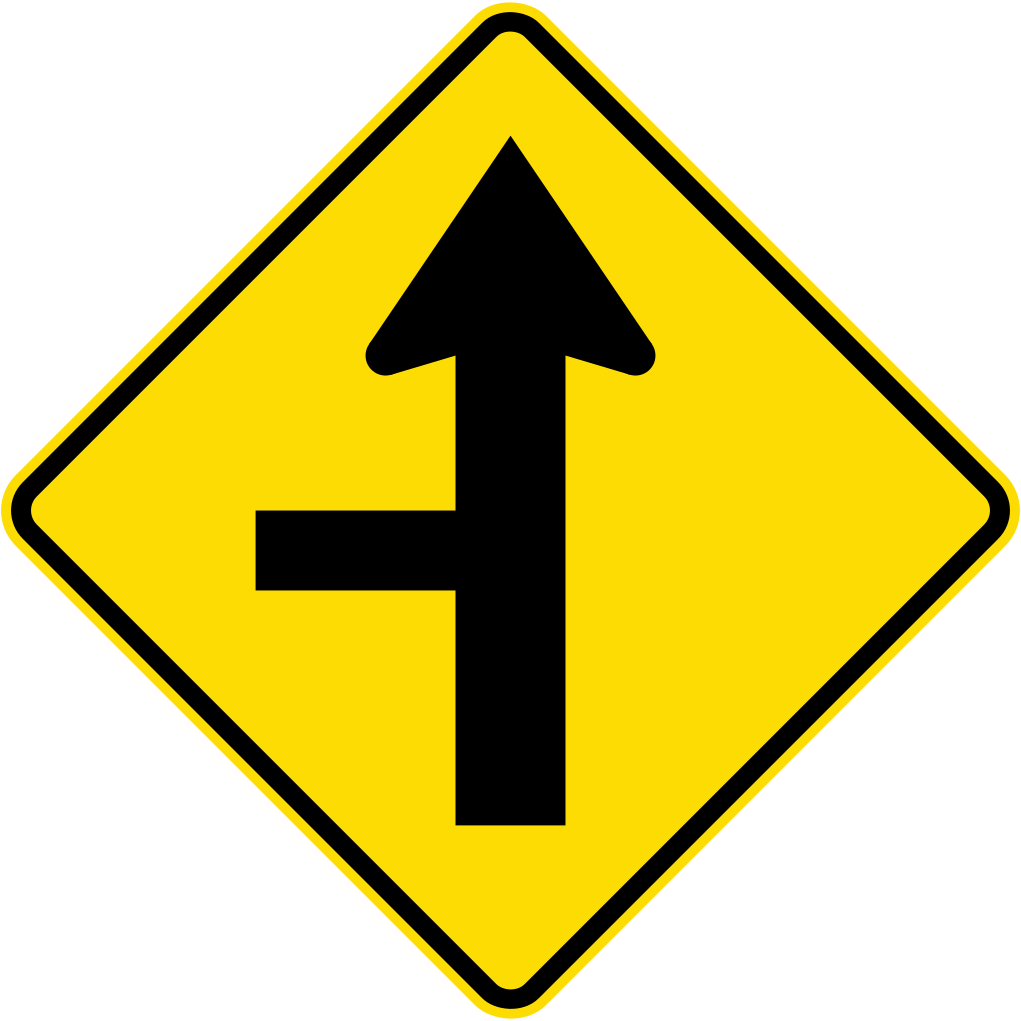
6. Priority at the junction
This traffic sign indicates that you have priority at the next intersection. A side road joins from the left, and traffic entering from that side road must give way.
English • W2-4(L) • Side road on the left. A road joins from the left at the intersection ahead. Watch for entering or turning traffic.
Sources
🔗 Commons.wikimedia.org
🔗 Transport.nsw.gov.au • Transport for NSW • W2-4(L)
SVG source: Standards Australia • Public domain • Original revision 2024-10-02. Wikimedia original unmodified.
Artwork verified against Qld.gov.au • official published diagram W2-4-L.
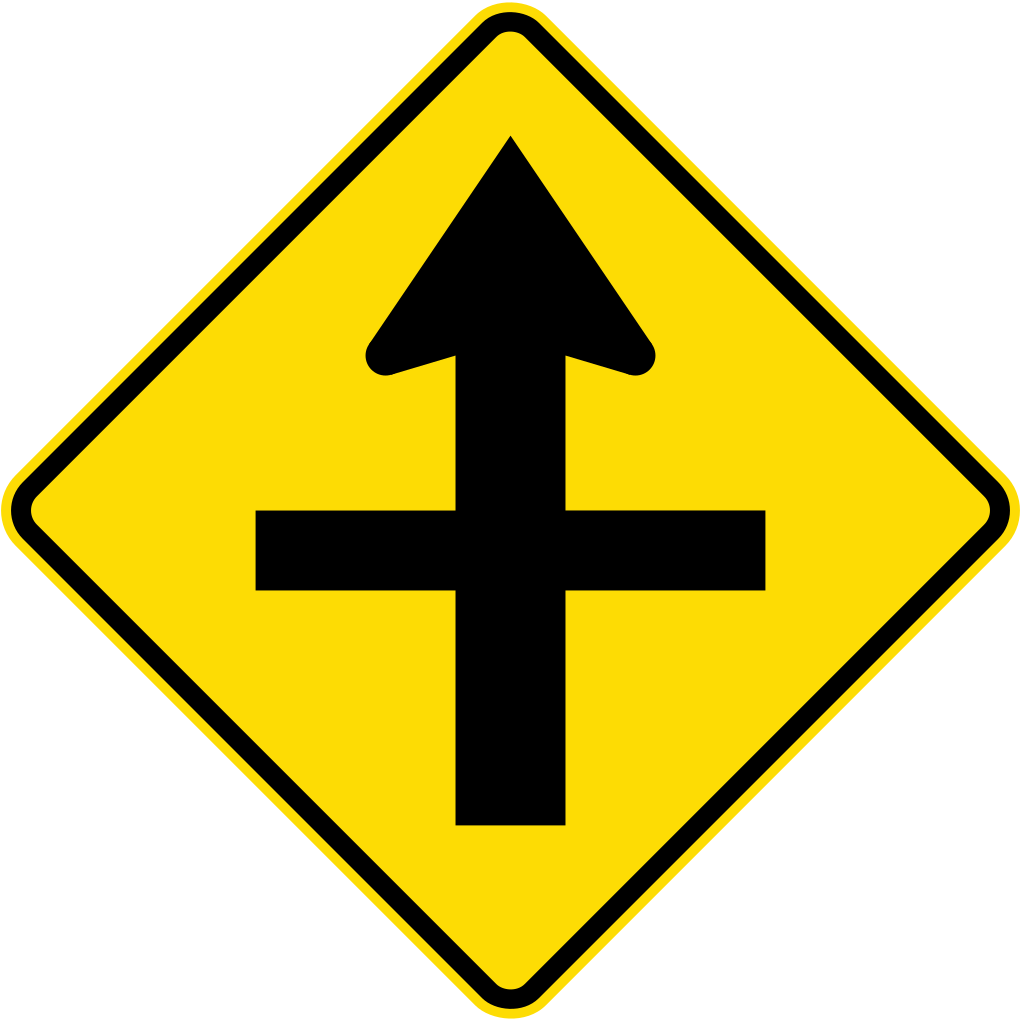
7. Priority at the junction
This traffic sign indicates that you have priority at the next intersection. Side roads join from the left and right, and traffic entering from those side roads must give way.
English • W2-1 • Crossroad. An intersecting road crosses the road ahead. Watch for traffic entering or turning at the junction.
Sources
🔗 Commons.wikimedia.org
🔗 Transport.nsw.gov.au • Transport for NSW • W2-1
SVG source: Standards Australia • Public domain • Original revision 2024-09-19. Wikimedia original unmodified.
Artwork verified against Qld.gov.au • official published diagram W2-1.
