

Mandatory signsBrussels
 Traffic rules
 Brussels
 Priority signs
 Warning signs
 Prohibitory signs
 Mandatory signs
 Information signs
 Additional signs
Mandatory signs
A mandatory sign is a traffic sign that tells drivers what they must do. Instead of prohibiting actions, these signs impose obligations such as following a specific direction, using a particular lane, or keeping a minimum speed. Their purpose is to guide traffic safely and efficiently by ensuring that all road users follow the same required behaviour in places where it is necessary for order and safety.







1. Mandatory roundabout direction
This traffic sign indicates the mandatory direction around a roundabout. Traffic must circulate in the direction shown by the arrows. The sign does not itself determine priority; follow the applicable priority signs, traffic signals and local rules.
Signal routier D5 • Rond-point. Sens giratoire obligatoire dans le sens indiqué par les flèches.
Verkeersbord D5 • Rotonde. Verplicht rondgaand verkeer in de door de pijlen aangeduide richting.
2. Turning left mandatory
This traffic sign indicates that turning left is mandatory at the junction ahead. Traffic must turn left and may not continue straight ahead or turn right.
Signal routier D1c • Obligation pour les conducteurs de suivre, au carrefour, la direction indiquée par la flèche.
Verkeersbord D1c • Verplichting voor de bestuurders om op het kruispunt de door de pijl aangeduide richting te volgen.
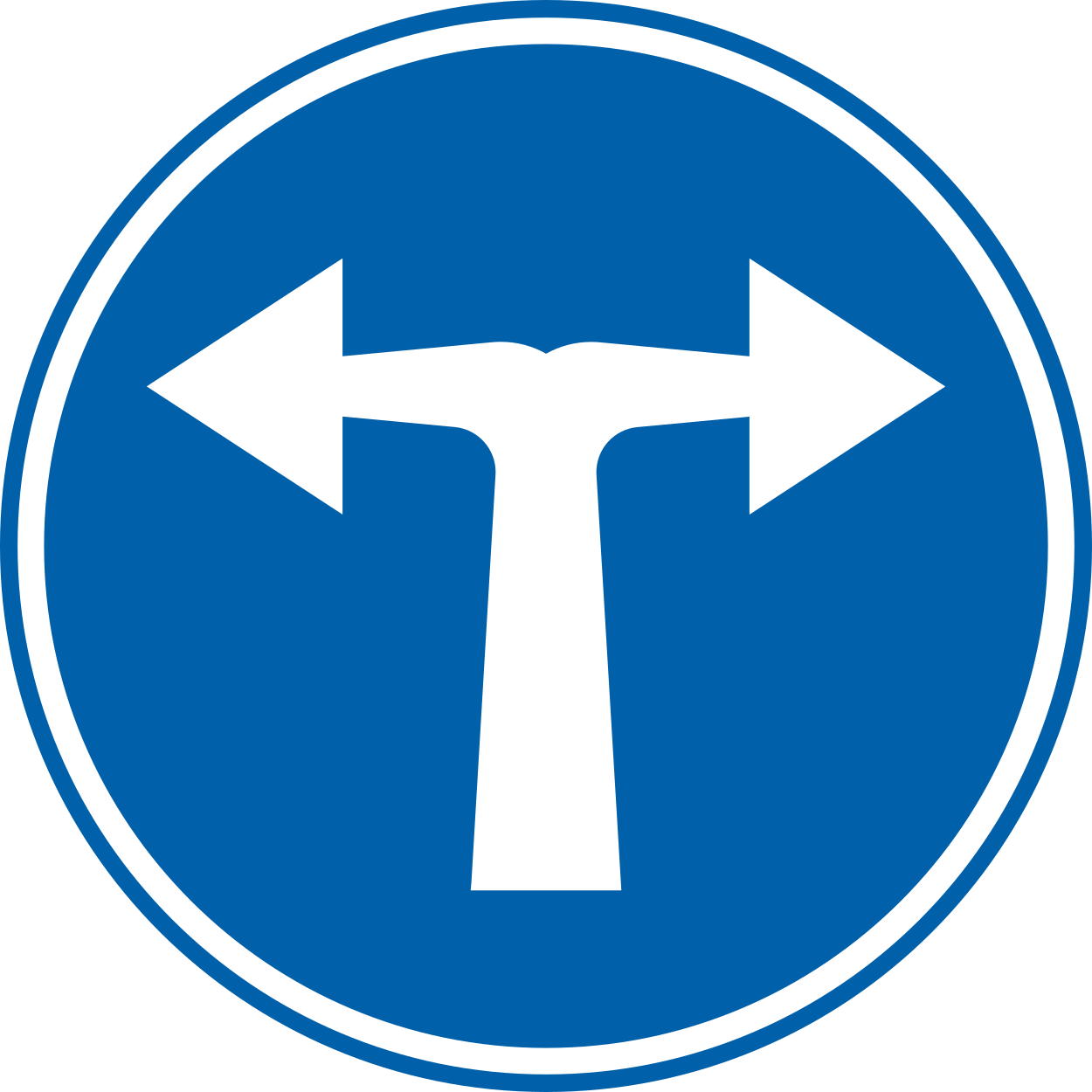
3. Turning left or right mandatory
This traffic sign indicates that turning left or right is mandatory at the junction ahead. Traffic may turn either left or right but may not continue straight ahead.
Signal routier D3c • Obligation pour les conducteurs de suivre, au carrefour, la direction indiquée par la flèche.
Verkeersbord D3c • Verplichting voor de bestuurders om op het kruispunt de door de pijl aangeduide richting te volgen.
4. Turning right mandatory
This traffic sign indicates that turning right is mandatory at the junction ahead. Traffic must turn right and may not continue straight ahead or turn left.
Signal routier D1b • Obligation pour les conducteurs de suivre, au carrefour, la direction indiquée par la flèche.
Verkeersbord D1b • Verplichting voor de bestuurders om op het kruispunt de door de pijl aangeduide richting te volgen.
5. Pass obstacle on the left
This traffic sign indicates that traffic must pass an obstacle on the left. Keep to the left of the obstacle and follow any accompanying signs or road markings.
Signal routier D1e • Obligation pour les conducteurs de suivre, au carrefour, la direction indiquée par la flèche.
Verkeersbord D1e • Verplichting voor de bestuurders om op het kruispunt de door de pijl aangeduide richting te volgen.
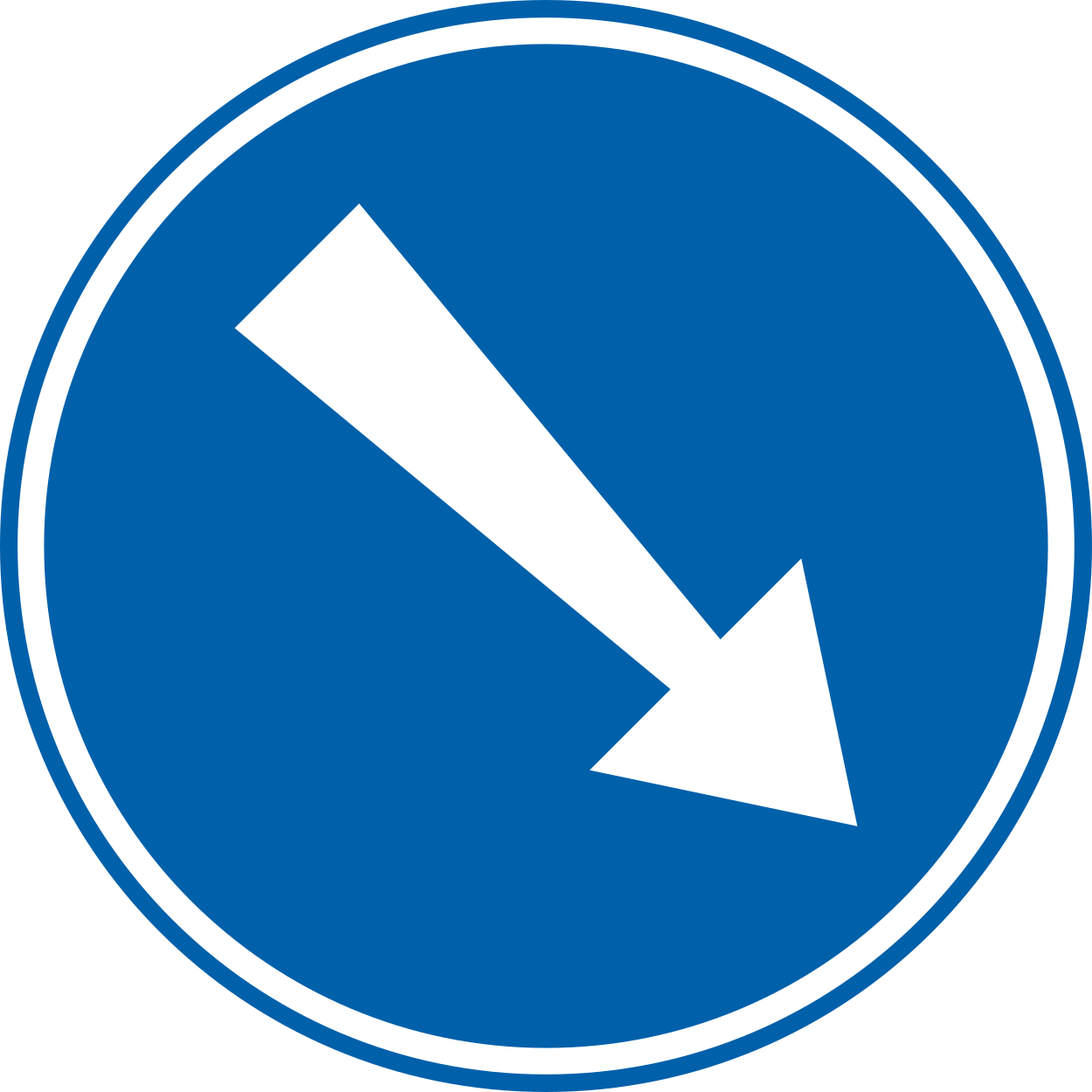
6. Pass obstacle on the right
This traffic sign indicates that traffic must pass an obstacle on the right. Keep to the right of the obstacle and follow any accompanying signs or road markings.
Signal routier D1d • Obligation pour les conducteurs de suivre, au carrefour, la direction indiquée par la flèche.
Verkeersbord D1d • Verplichting voor de bestuurders om op het kruispunt de door de pijl aangeduide richting te volgen.
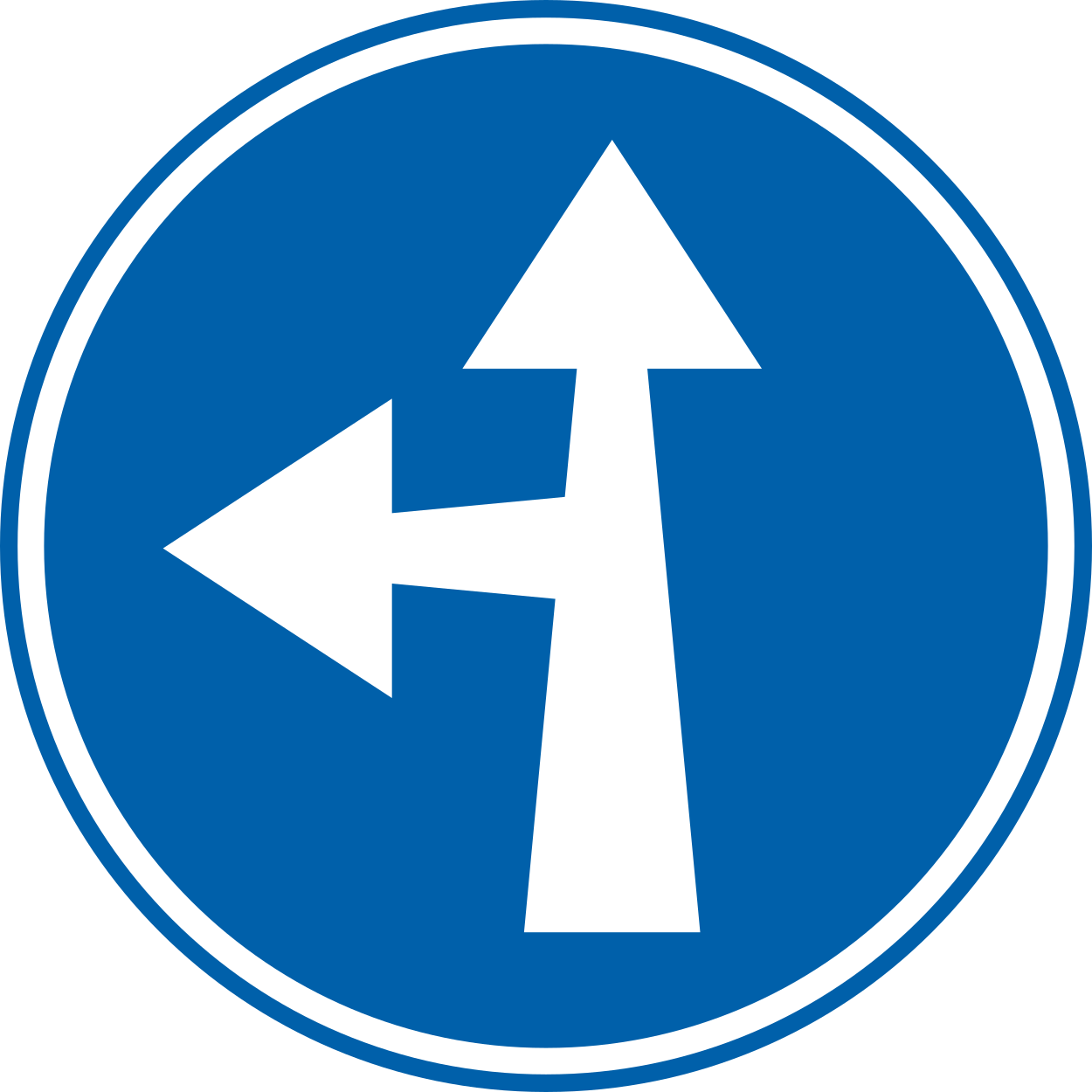
7. Driving straight ahead or turning left mandatory
This traffic sign indicates that traffic must continue straight ahead or turn left. One of the indicated directions must be followed; turning right is prohibited.
Signal routier D3b • Obligation pour les conducteurs de suivre une des directions indiquées par les flèches. La disposition des lieux détermine la position des flèches.
Verkeersbord D3b • Verplichting voor de bestuurders één van de door de pijlen aangeduide richtingen te volgen. De plaatsgesteldheid bepaalt de stand van de pijlen.
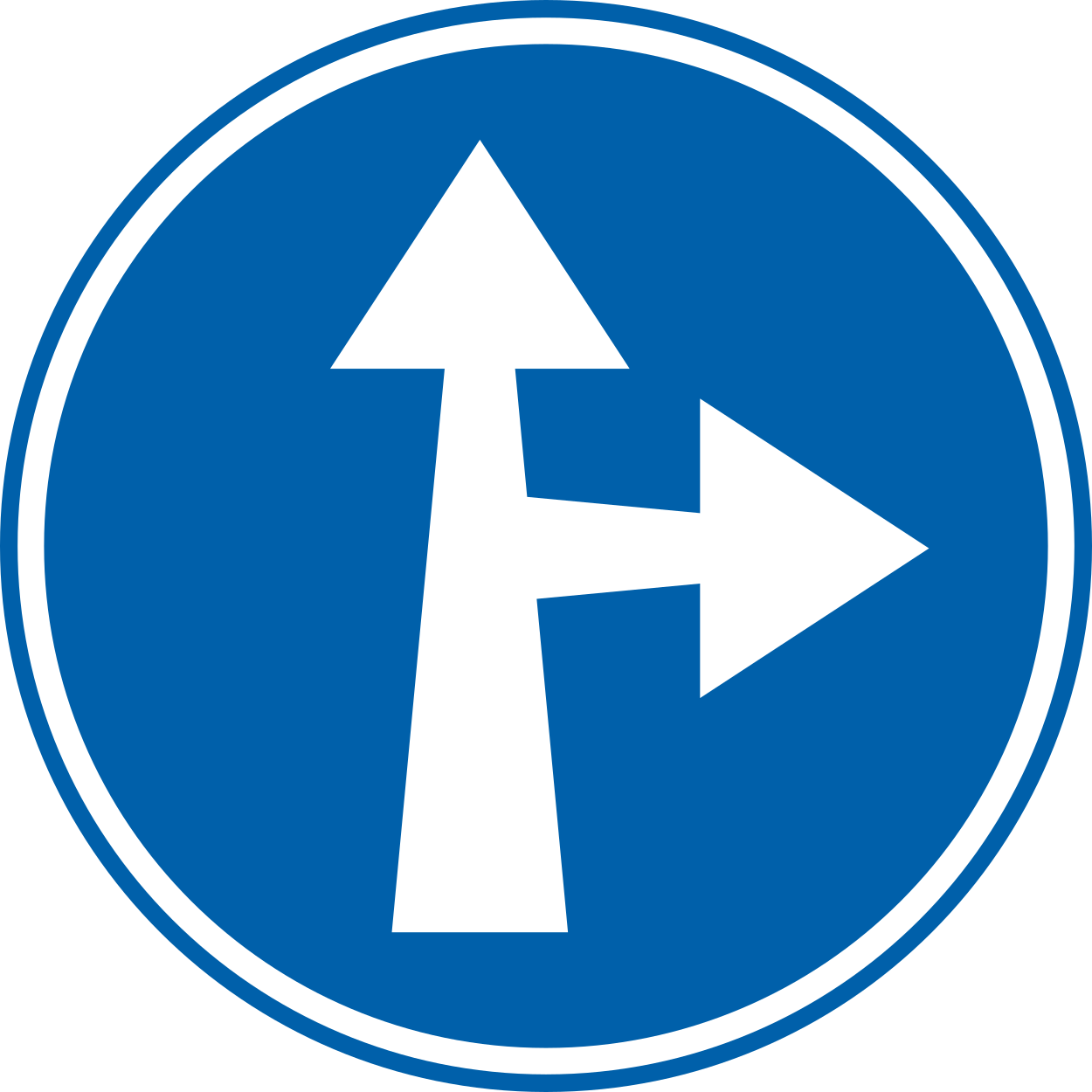
8. Driving straight ahead or turning right mandatory
This traffic sign indicates that traffic must continue straight ahead or turn right. One of the indicated directions must be followed; turning left is prohibited.
Signal routier D3a • Obligation pour les conducteurs de suivre une des directions indiquées par les flèches. La disposition des lieux détermine la position des flèches.
Verkeersbord D3a • Verplichting voor de bestuurders één van de door de pijlen aangeduide richtingen te volgen. De plaatsgesteldheid bepaalt de stand van de pijlen.
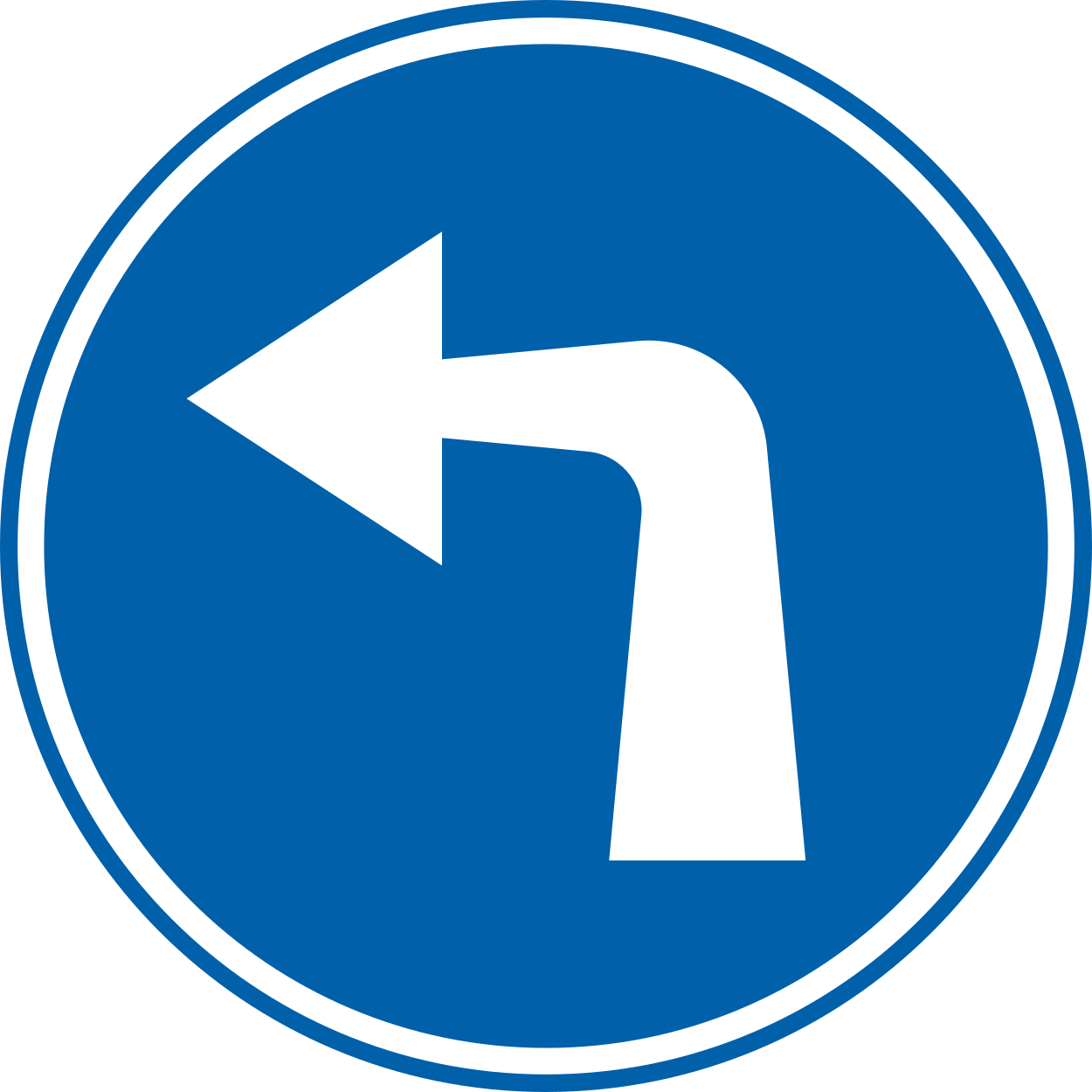
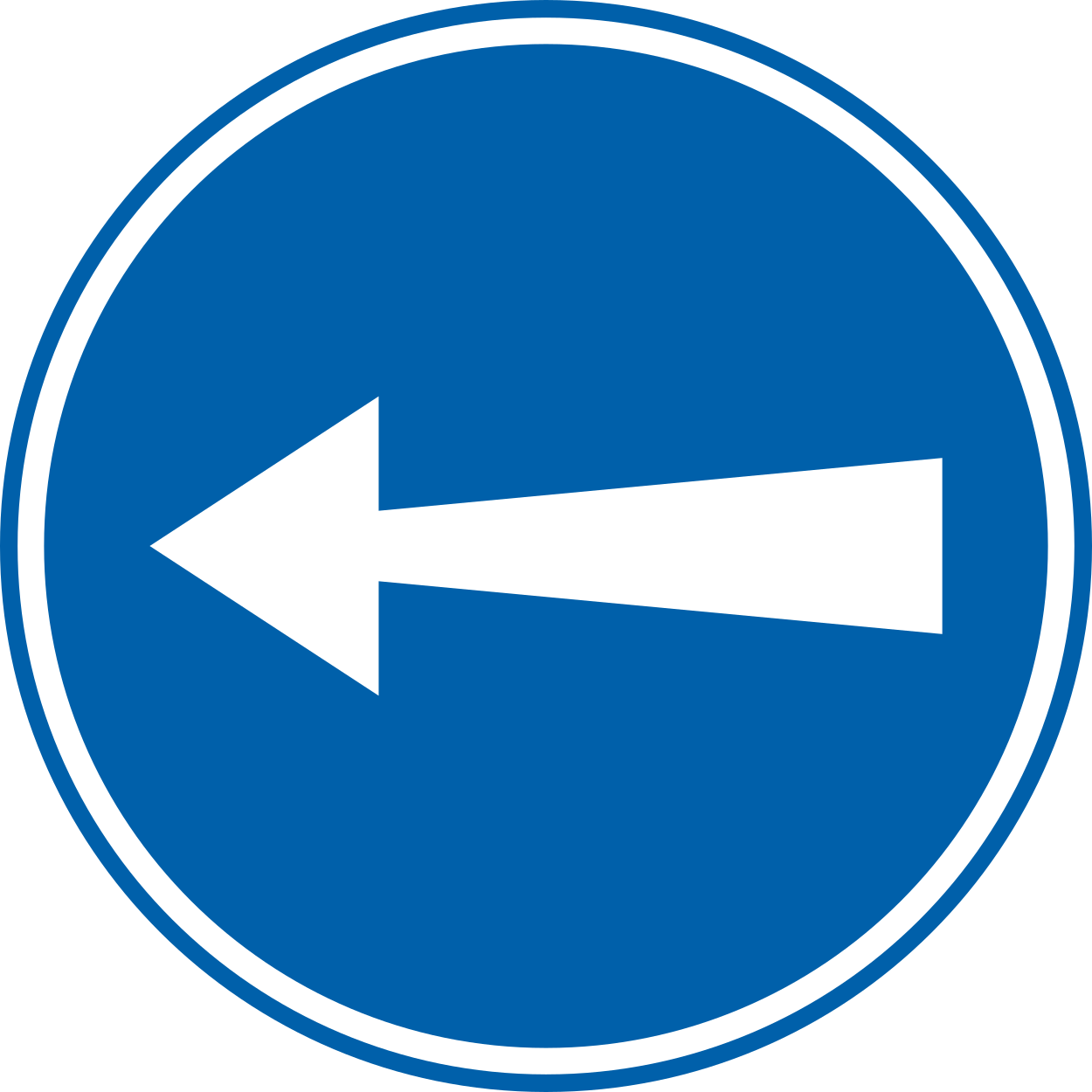
9. Mandatory left
This traffic sign indicates a mandatory direction to the left. Traffic must proceed to the left at the sign and may not continue straight ahead or to the right.
Signal routier D1g • Obligation pour les conducteurs de suivre la direction indiquée par la flèche.
Verkeersbord D1g • Verplichting voor de bestuurders de door de pijl aangeduide richting te volgen.
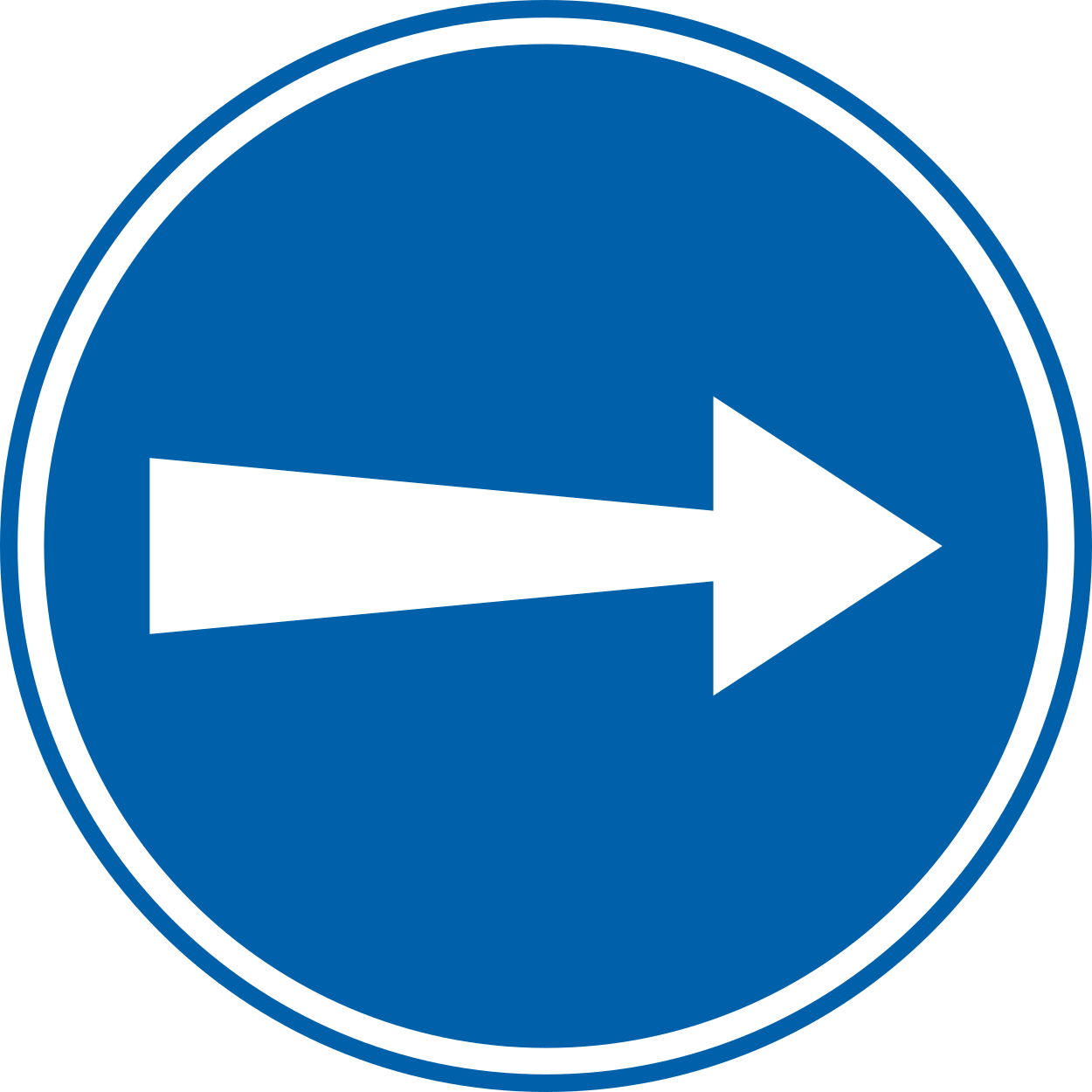
10. Mandatory right
This traffic sign indicates a mandatory direction to the right. Traffic must proceed to the right at the sign and may not continue straight ahead or to the left.
Signal routier D1f • Obligation pour les conducteurs de suivre la direction indiquée par la flèche.
Verkeersbord D1f • Verplichting voor de bestuurders de door de pijl aangeduide richting te volgen.
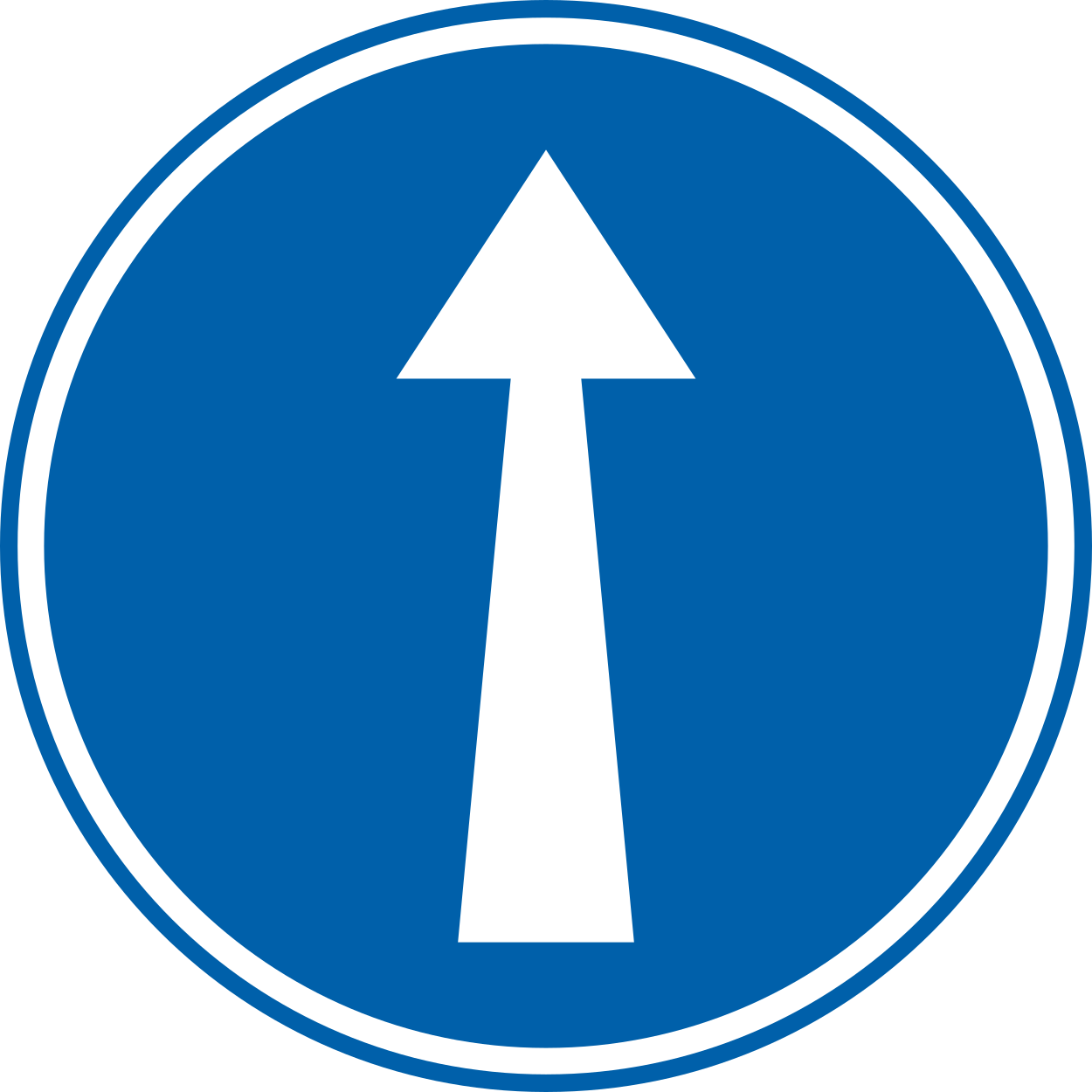
11. Driving straight ahead mandatory
This traffic sign indicates that driving straight ahead is mandatory. Traffic must continue straight ahead and may not turn left or right at the location to which the sign applies.
Signal routier D1a • Obligation pour les conducteurs de suivre la direction indiquée par la flèche.
Verkeersbord D1a • Verplichting voor de bestuurders de door de pijl aangeduide richting te volgen.
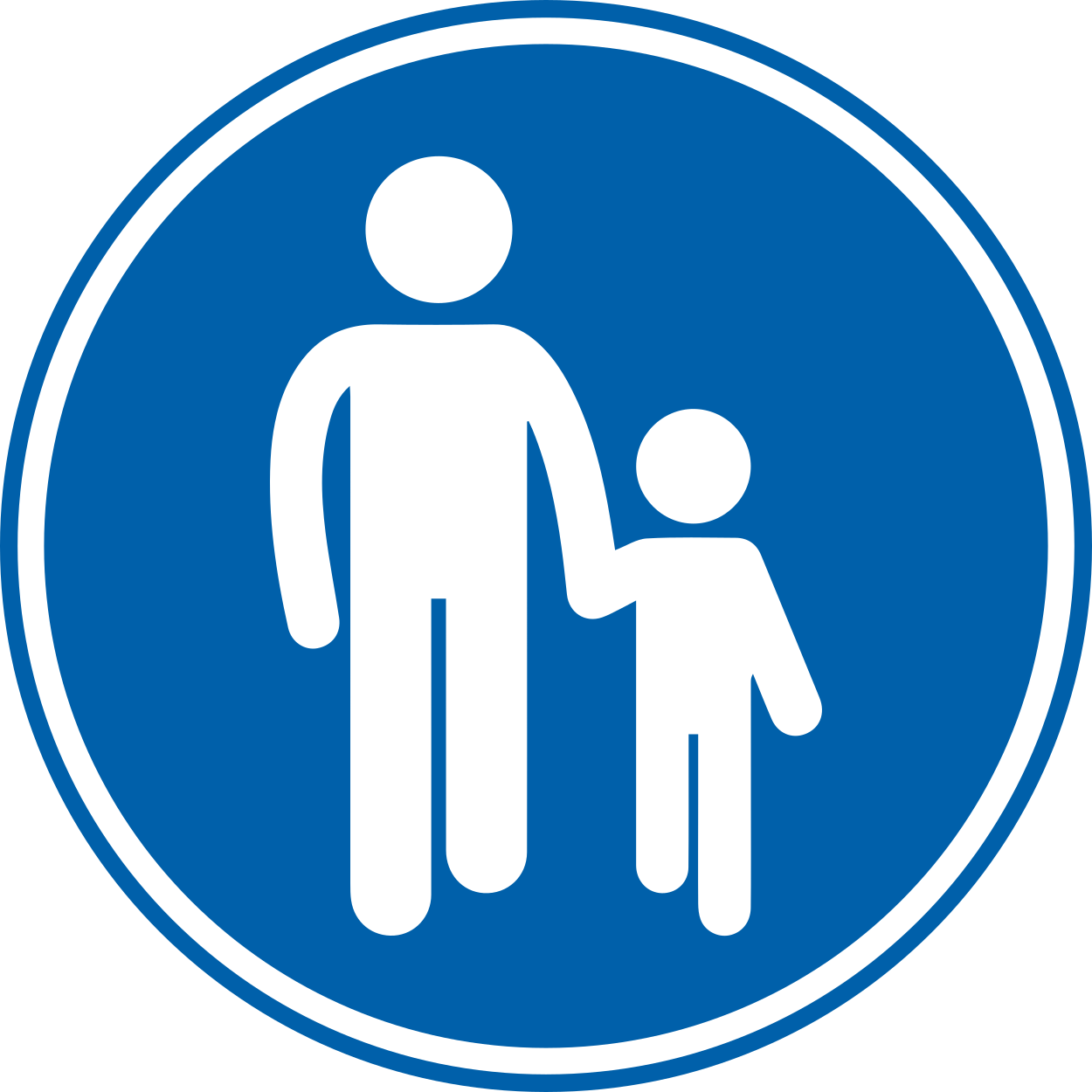
12. Mandatory path for pedestrians
This traffic sign indicates the start of a mandatory path for pedestrians. Pedestrians must use the designated path, while other road users may use it only where the applicable signs or local rules permit them to do so.
Signal routier D13 • Partie de la voie publique obligatoire pour les piétons. Le signal vaut jusqu’au prochain carrefour inclus.
Verkeersbord D13 • Deel van de openbare weg verplicht voor voetgangers. Het verkeersbord geldt tot en met het volgend kruispunt.
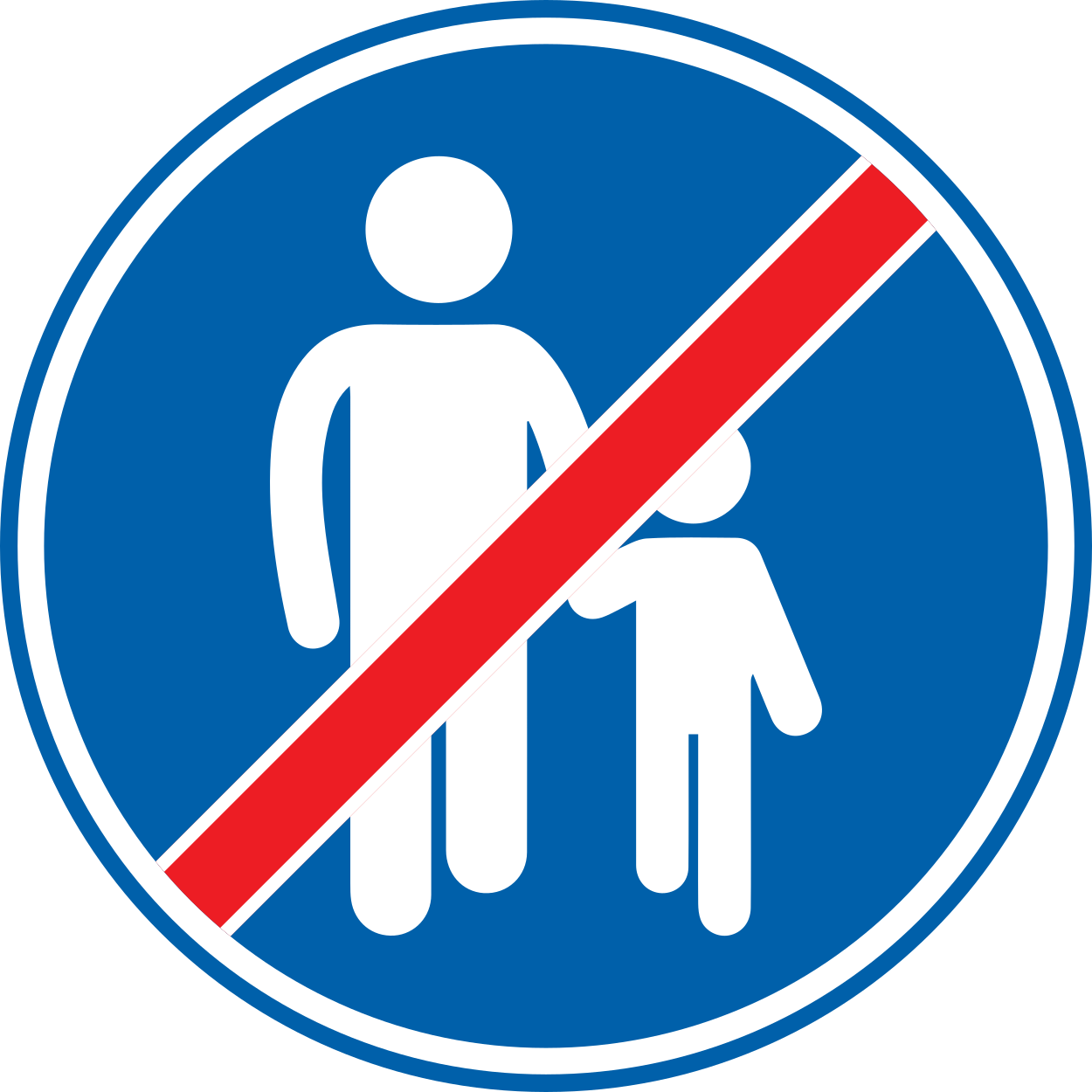
13. End of mandatory path for pedestrians
This traffic sign indicates the end of the mandatory path for pedestrians. The requirement associated with the designated path ends at this point. Pedestrians must continue according to the subsequent path or road layout and applicable local rules.
Signal routier D14 • Fin de la partie de la voie publique obligatoire pour les piétons.
Verkeersbord D14 • Einde van het deel van de openbare weg verplicht voor voetgangers.
14. Mandatory path for cyclists
This traffic sign indicates a mandatory path for cyclists. Cyclists must use the designated path where the sign applies. Other road users may use the path only where the applicable signs or local rules permit them to do so.
Signal routier D7 • Piste cyclable. Le signal vaut jusqu’au prochain carrefour inclus.
Verkeersbord D7 • Fietspad. Het verkeersbord geldt tot en met het volgend kruispunt.
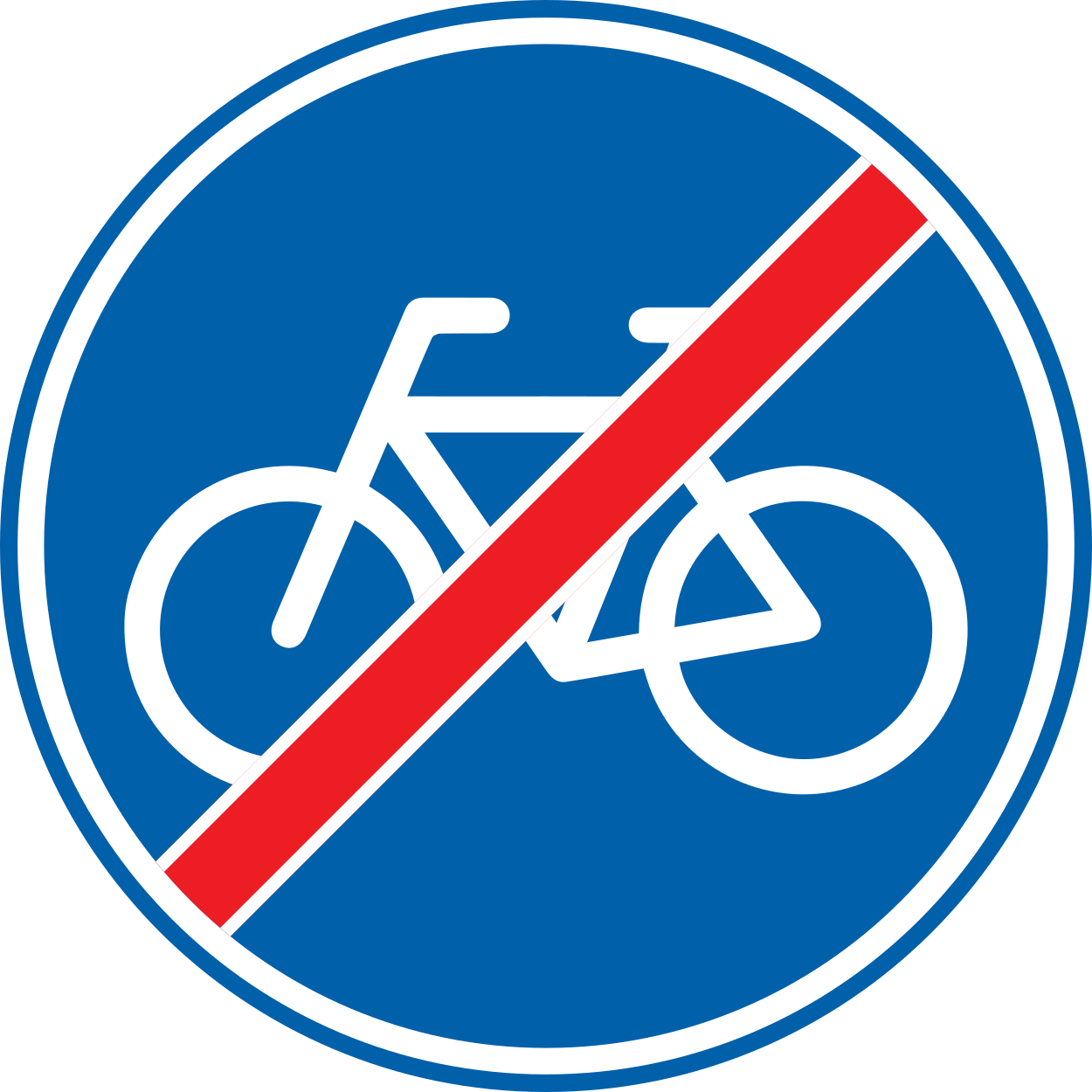
15. End of mandatory path for cyclists
This traffic sign indicates the end of the mandatory path for cyclists. The requirement associated with the designated path ends at this point. Cyclists must continue according to the road layout, other traffic signs and applicable local rules.
Signal routier D8 • Fin de piste cyclable.
Verkeersbord D8 • Einde fietspad.
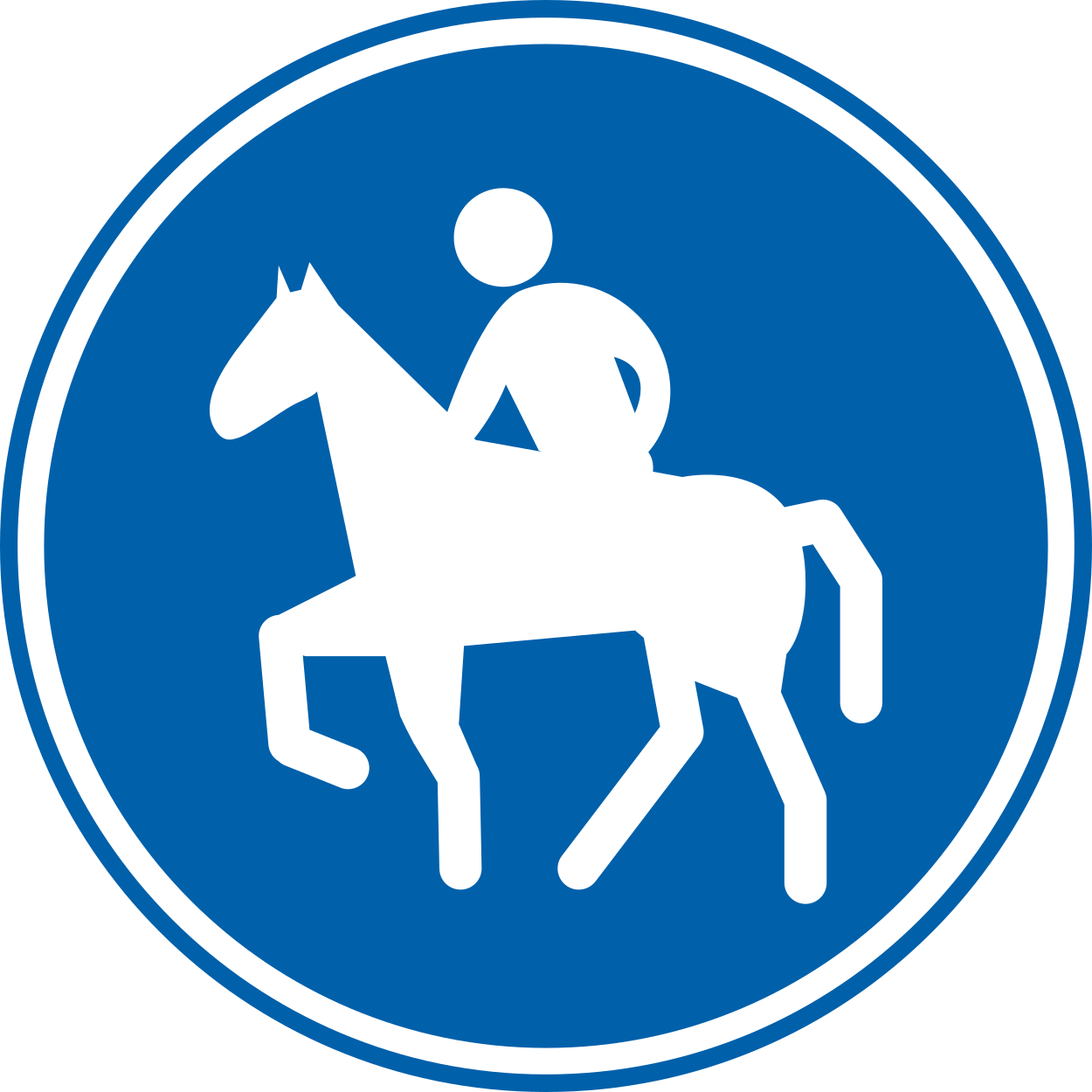
16. Mandatory path for equestrians
This traffic sign indicates a mandatory path for equestrians. Equestrians must use the designated path where the sign applies. Other road users may use it only where the applicable signs or local rules permit them to do so.
Signal routier D15 • Partie de la voie publique obligatoire pour les cavaliers. Le signal vaut jusqu’au prochain carrefour inclus.
Verkeersbord D15 • Deel van de openbare weg verplicht voor ruiters. Het verkeersbord geldt tot en met het volgend kruispunt.
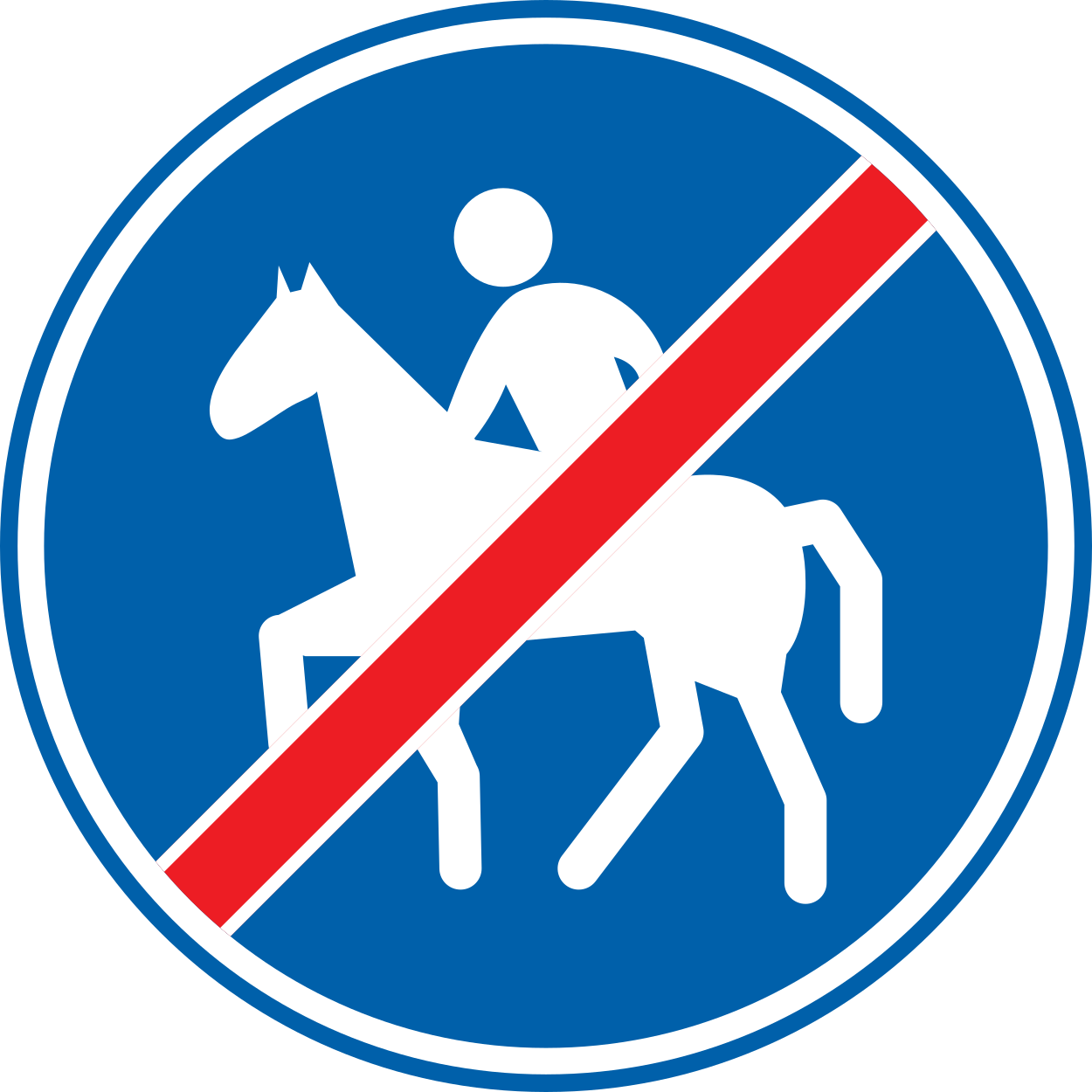
17. End of mandatory path for equestrians
This traffic sign indicates the end of the mandatory path for equestrians. The requirement associated with the designated path ends at this point. Equestrians must continue according to the subsequent path or road layout and applicable local rules.
Signal routier D16 • Fin de la partie de la voie publique obligatoire pour les cavaliers.
Verkeersbord D16 • Einde van het deel van de openbare weg verplicht voor ruiters.
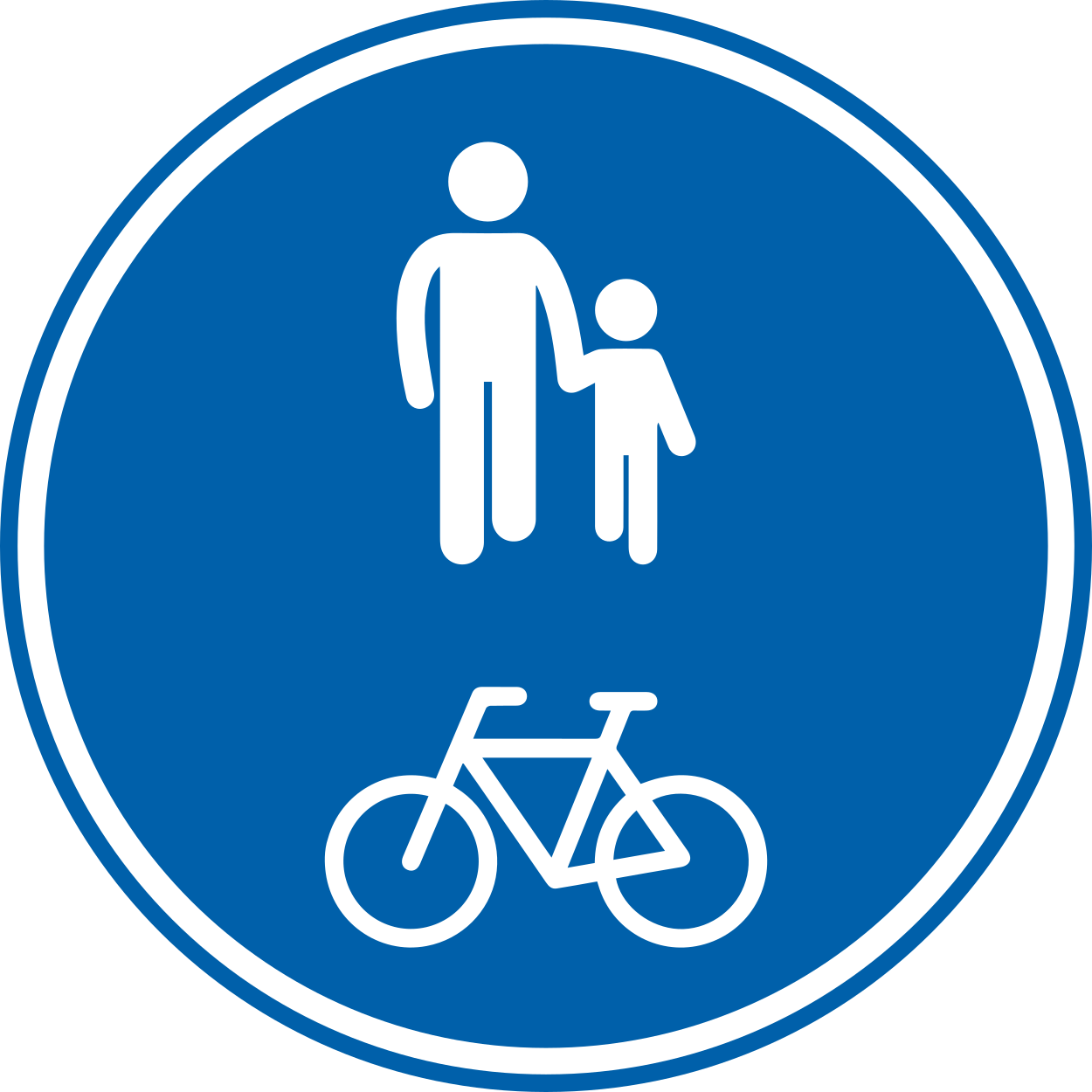
18. Mandatory shared pedestrian and cycle path
This traffic sign indicates a mandatory shared path for pedestrians and cyclists. Pedestrians and cyclists must use the same designated path rather than separate sections. They must share the space safely and follow the applicable local rules.
Signal routier D11 • Partie de la voie publique obligatoire pour les piétons et les cyclistes. Le signal vaut jusqu’au prochain carrefour inclus.
Verkeersbord D11 • Deel van de openbare weg verplicht voor voetgangers en fietsers. Het verkeersbord geldt tot en met het volgend kruispunt.
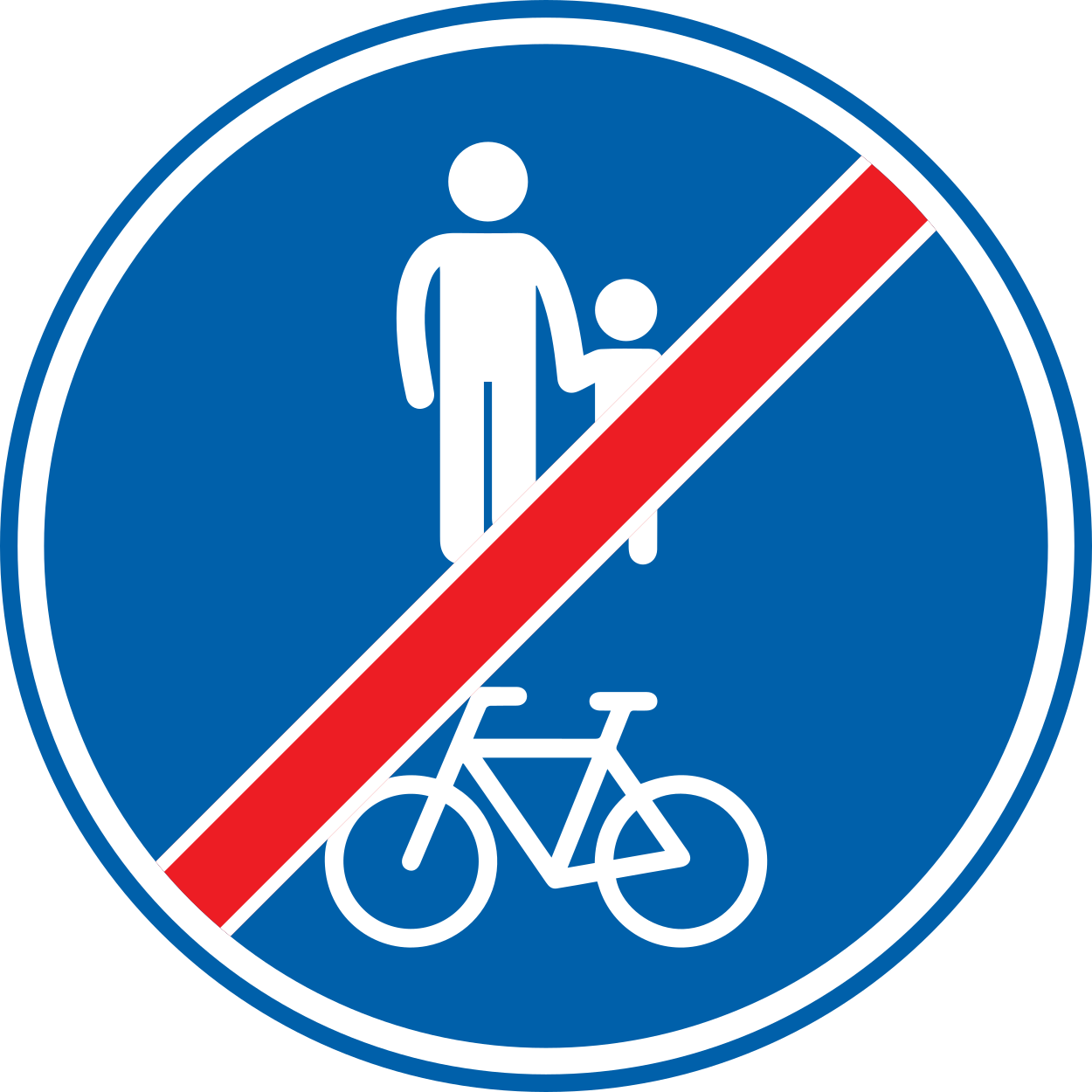
19. End of shared pedestrian and cycle path
This traffic sign indicates the end of the mandatory shared path for pedestrians and cyclists. The shared-path requirement ends at this point. Pedestrians and cyclists must continue according to the subsequent path or road layout and applicable local rules.
Signal routier D12 • Fin de la partie de la voie publique obligatoire pour les piétons et les cyclistes.
Verkeersbord D12 • Einde van het deel van de openbare weg verplicht voor voetgangers en fietsers.
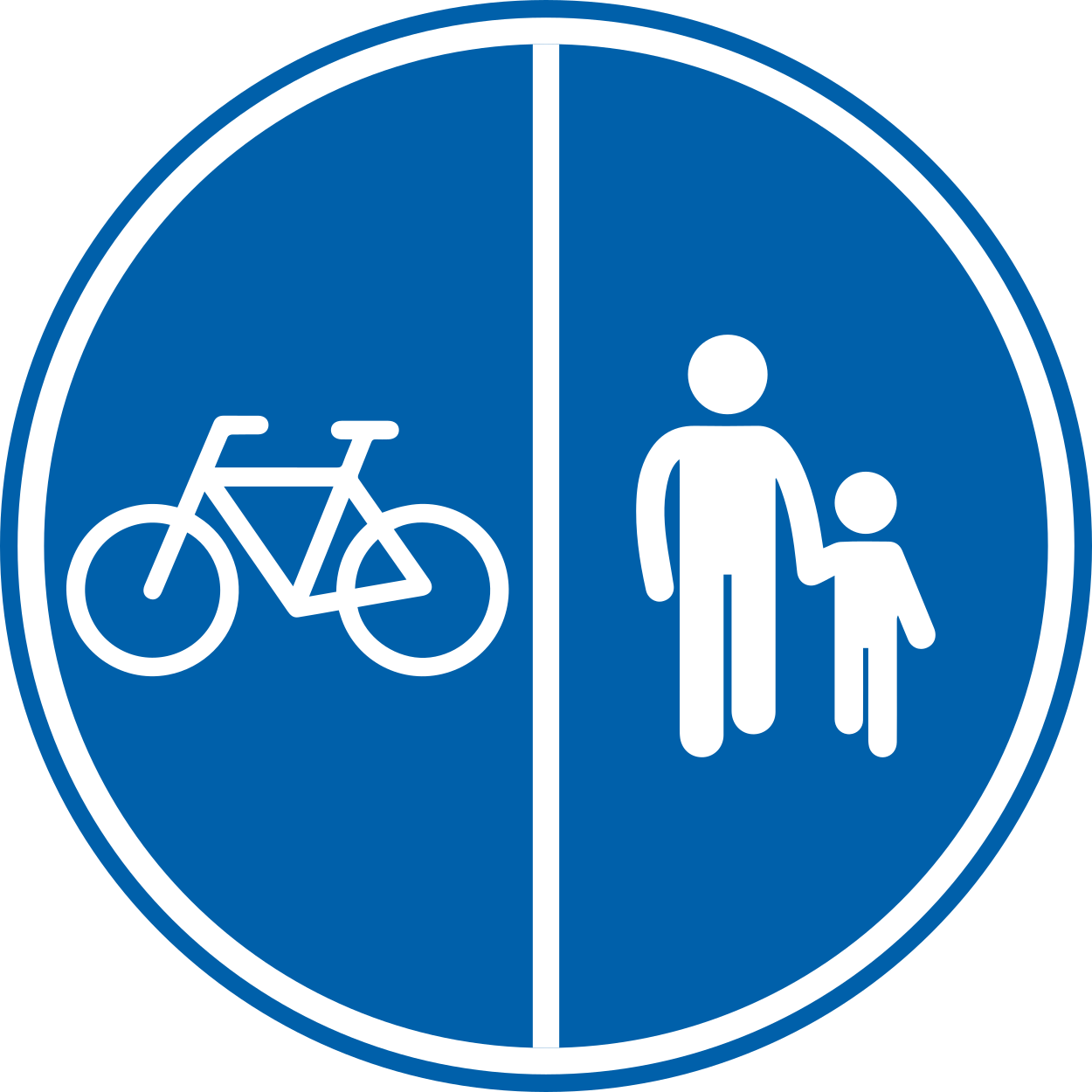
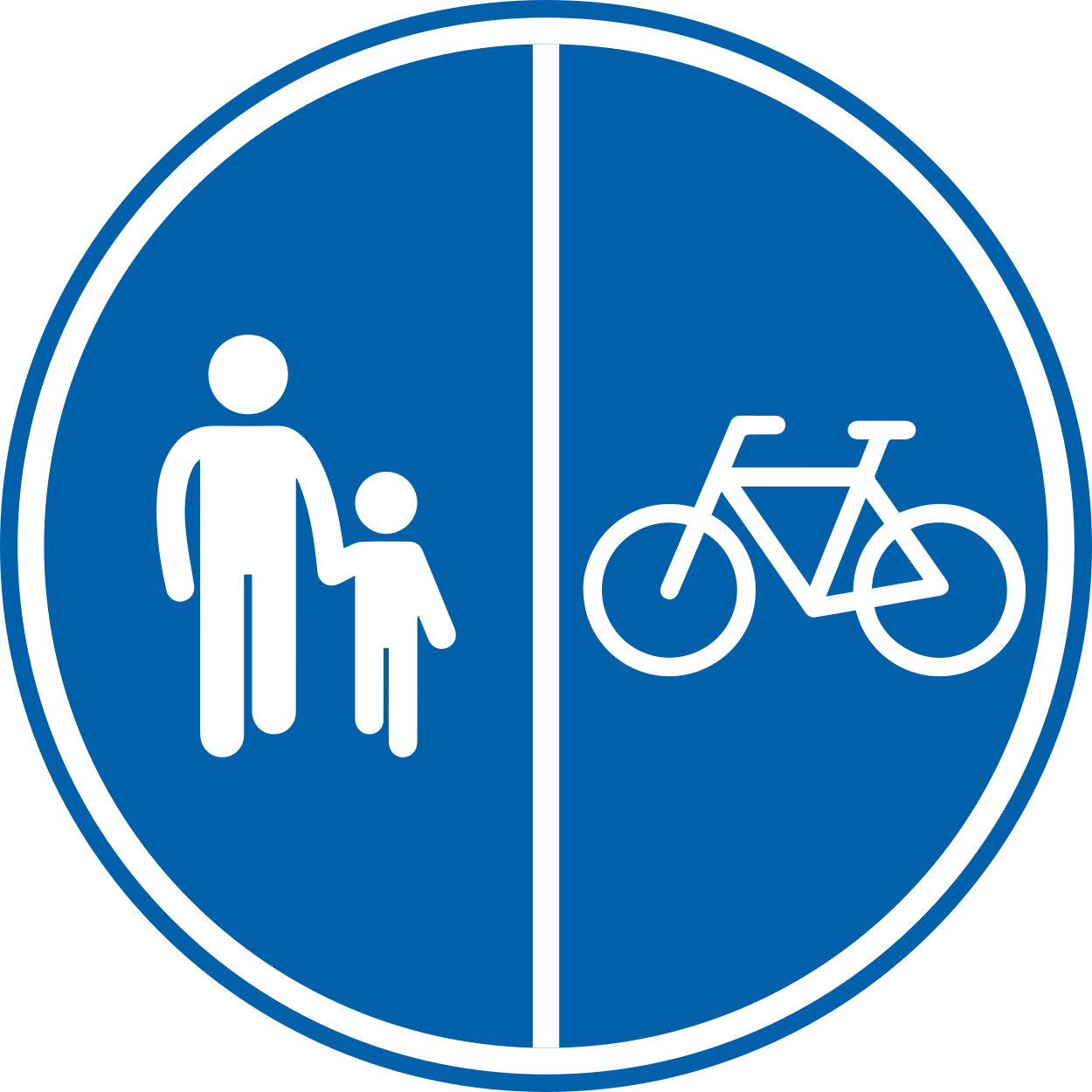
20. Mandatory divided pedestrian and cycle path
This traffic sign indicates a mandatory divided path for pedestrians and cyclists. Pedestrians and cyclists must use the section designated for them. Other road users may use the path only where the applicable signs or local rules permit them to do so.
Signal routier D9 • Partie de la voie publique obligatoire pour les piétons, les cyclistes et les conducteurs de cyclomoteurs classe A. Le signal vaut jusqu’au prochain carrefour inclus.
Verkeersbord D9 • Deel van de openbare weg verplicht voor voetgangers, fietsers en bestuurders van tweewielige bromfietsen klasse A. Het verkeersbord geldt tot en met het volgend kruispunt.
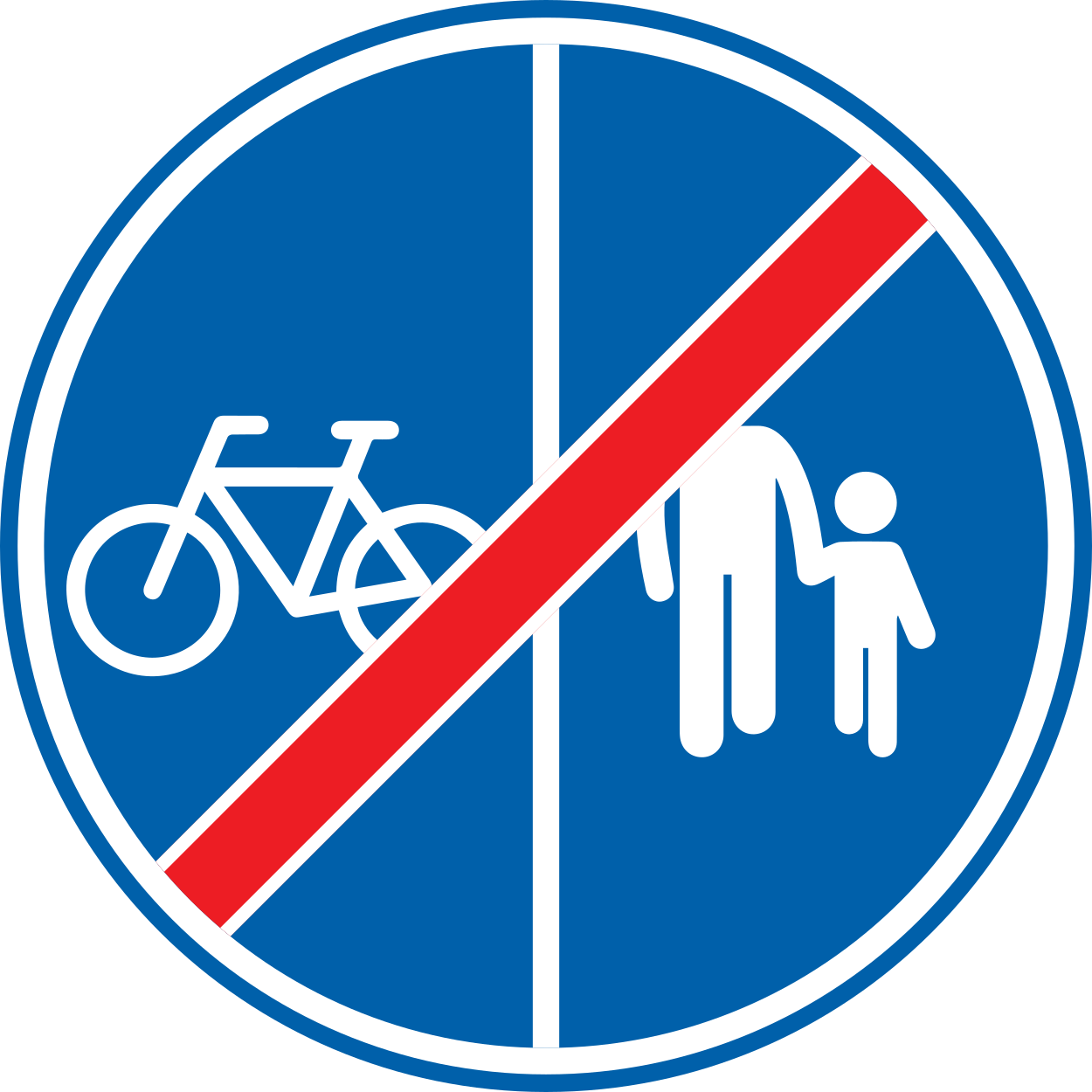
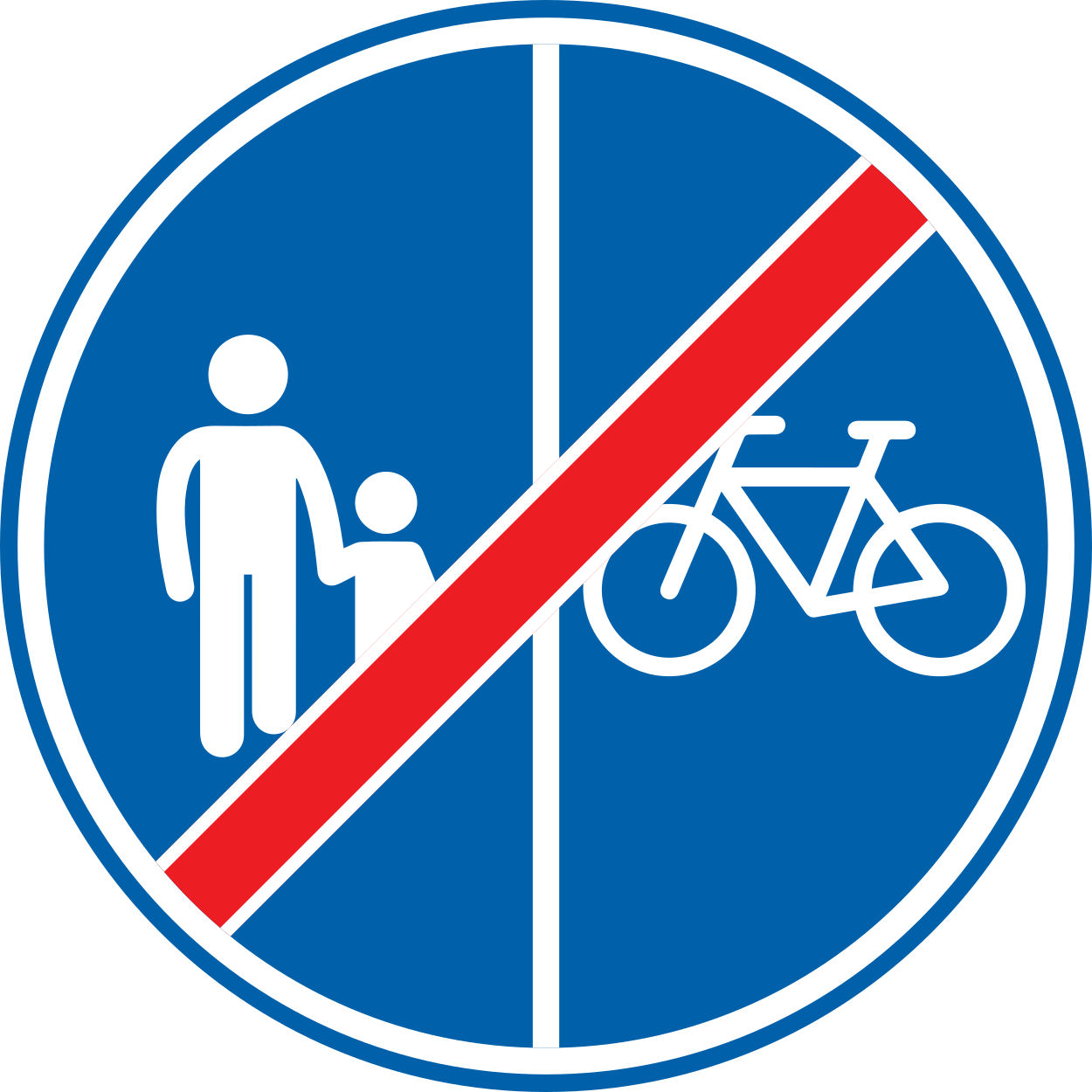
21. End of divided pedestrian and cycle path
This traffic sign indicates the end of the mandatory divided path for pedestrians and cyclists. The requirement to use the separately designated sections ends at this point. Continue according to the subsequent path or road layout and applicable local rules.
Signal routier D10 • Fin de la partie de la voie publique obligatoire pour les piétons, les cyclistes et les conducteurs de cyclomoteurs classe A.
Verkeersbord D10 • Einde van het deel van de openbare weg verplicht voor voetgangers, fietsers en bestuurders van tweewielige bromfietsen klasse A.
22. Mandatory divided pedestrian and cycle path
This traffic sign indicates a mandatory divided path for pedestrians and cyclists. Pedestrians and cyclists must use the section designated for them. Other road users may use the path only where the applicable signs or local rules permit them to do so.
Signal routier D9 • Partie de la voie publique obligatoire pour les piétons, les cyclistes et les conducteurs de cyclomoteurs classe A. Le signal vaut jusqu’au prochain carrefour inclus.
Verkeersbord D9 • Deel van de openbare weg verplicht voor voetgangers, fietsers en bestuurders van tweewielige bromfietsen klasse A. Het verkeersbord geldt tot en met het volgend kruispunt.
23. End of divided pedestrian and cycle path
This traffic sign indicates the end of the mandatory divided path for pedestrians and cyclists. The requirement to use the separately designated sections ends at this point. Continue according to the subsequent path or road layout and applicable local rules.
Signal routier D10 • Fin de la partie de la voie publique obligatoire pour les piétons, les cyclistes et les conducteurs de cyclomoteurs classe A.
Verkeersbord D10 • Einde van het deel van de openbare weg verplicht voor voetgangers, fietsers en bestuurders van tweewielige bromfietsen klasse A.
24. Dipped headlights mandatory
This traffic sign indicates that the use of dipped headlights is mandatory. Drivers must use dipped headlights from this point until the requirement ends or is replaced, while continuing to follow the general lighting rules.
Signal routier D17 • Usage obligatoire des feux de croisement.
Verkeersbord D17 • Verplicht gebruik van de dimlichten.
25. End of mandatory use of dipped headlights
This traffic sign indicates the end of the requirement to use dipped headlights. Dipped headlights are no longer mandatory because of this sign, but they must still be used whenever required by the general traffic rules or driving conditions.
Signal routier D18 • Fin de l’usage obligatoire des feux de croisement, sans préjudice de l’article 44.
Verkeersbord D18 • Einde van het verplicht gebruik van de dimlichten, onverminderd artikel 44.
26. Mandatory route for dangerous goods
This traffic sign indicates a mandatory route for vehicles carrying dangerous goods. Vehicles carrying dangerous goods must use the route indicated by the sign.
Signal routier D4 • Obligation pour les véhicules transportant des marchandises dangereuses de suivre la direction indiquée par la flèche.
Verkeersbord D4 • Verplichting voor voertuigen die gevaarlijke goederen vervoeren om de door de pijl aangeduide richting te volgen.
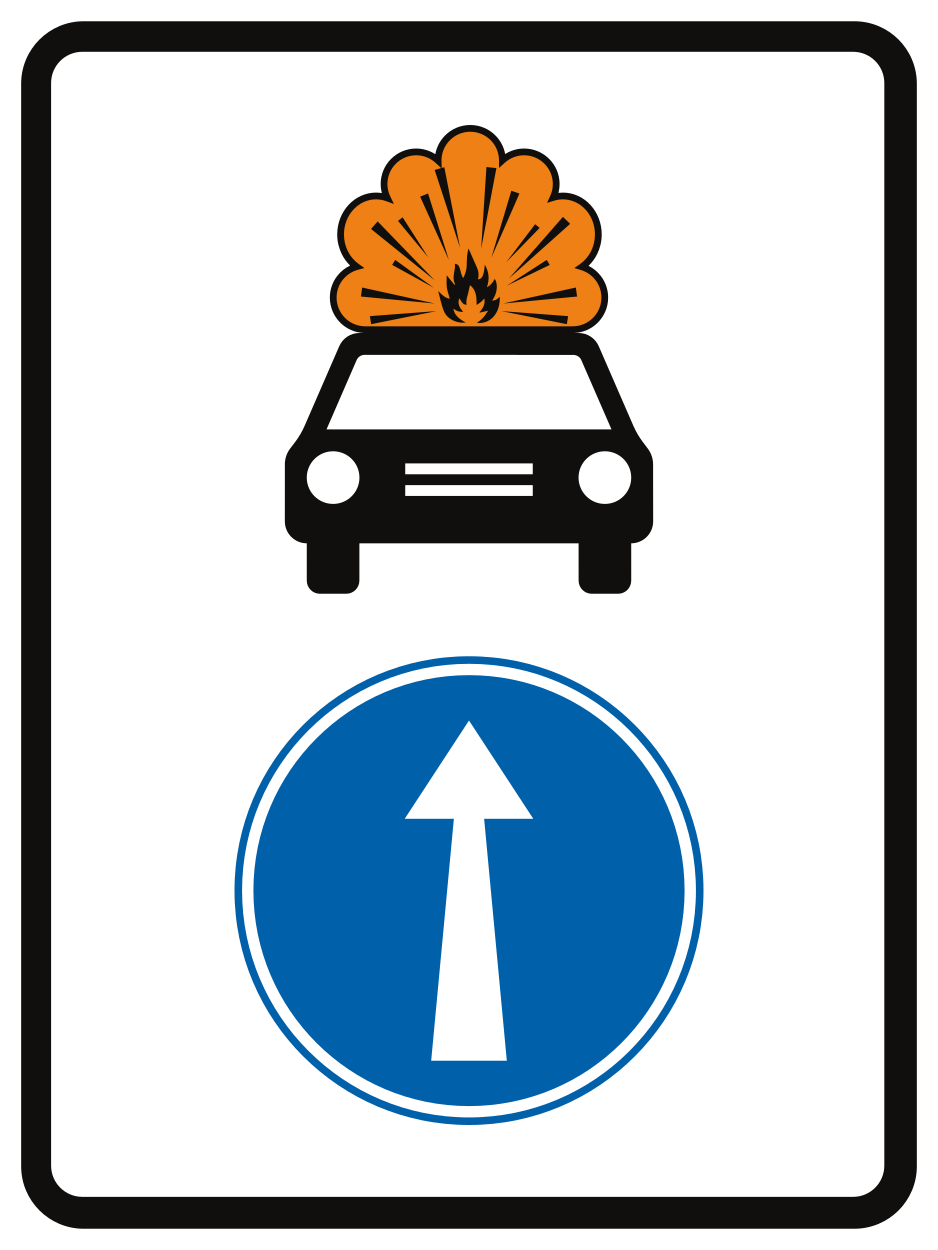
27. Mandatory route for explosive materials
This traffic sign indicates a mandatory route for vehicles carrying explosive materials. Vehicles carrying explosive materials must use the route indicated by the sign.
Signal routier D4 • Obligation pour les véhicules transportant des marchandises dangereuses de suivre la direction indiquée par la flèche.
Verkeersbord D4 • Verplichting voor voertuigen die gevaarlijke goederen vervoeren om de door de pijl aangeduide richting te volgen.
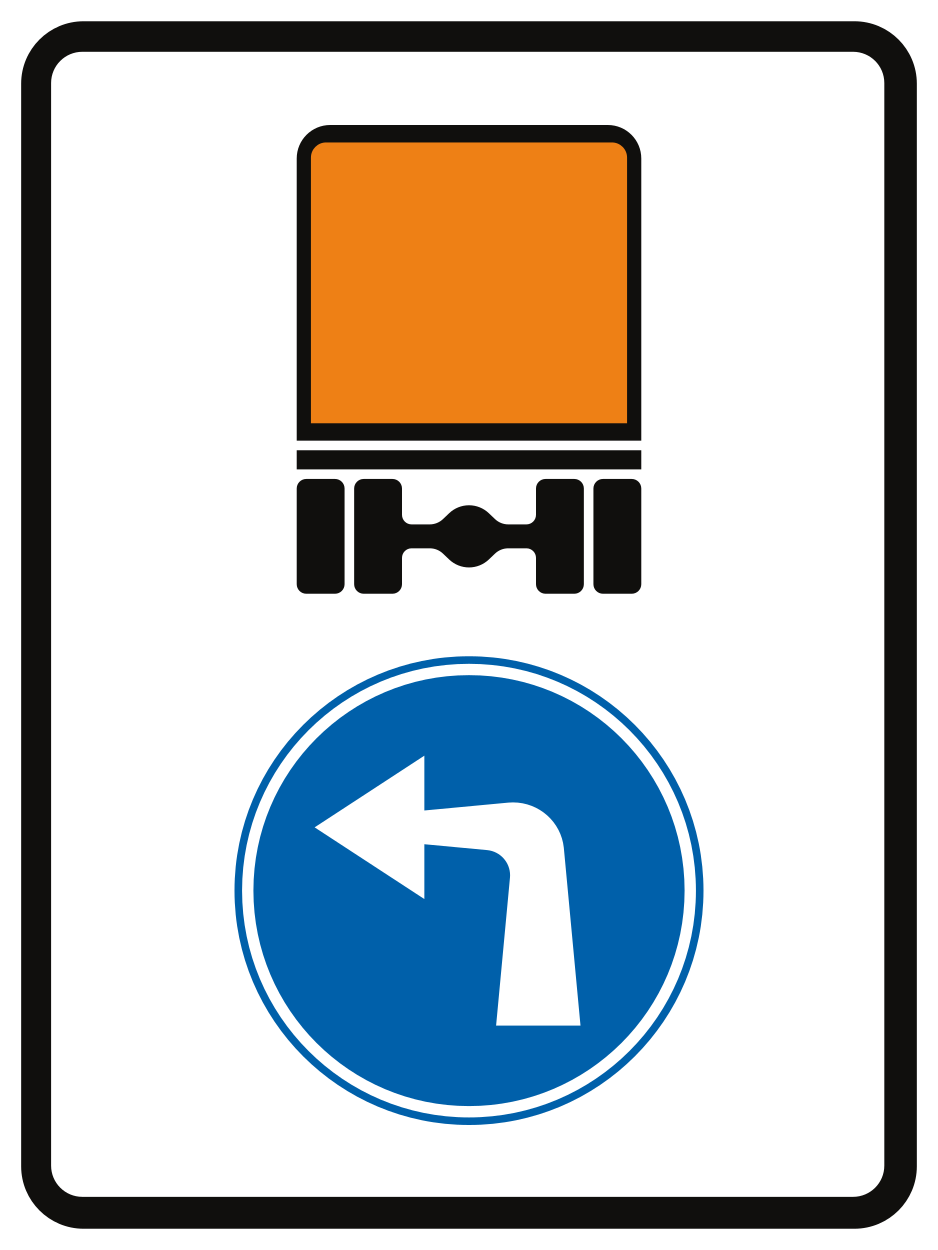
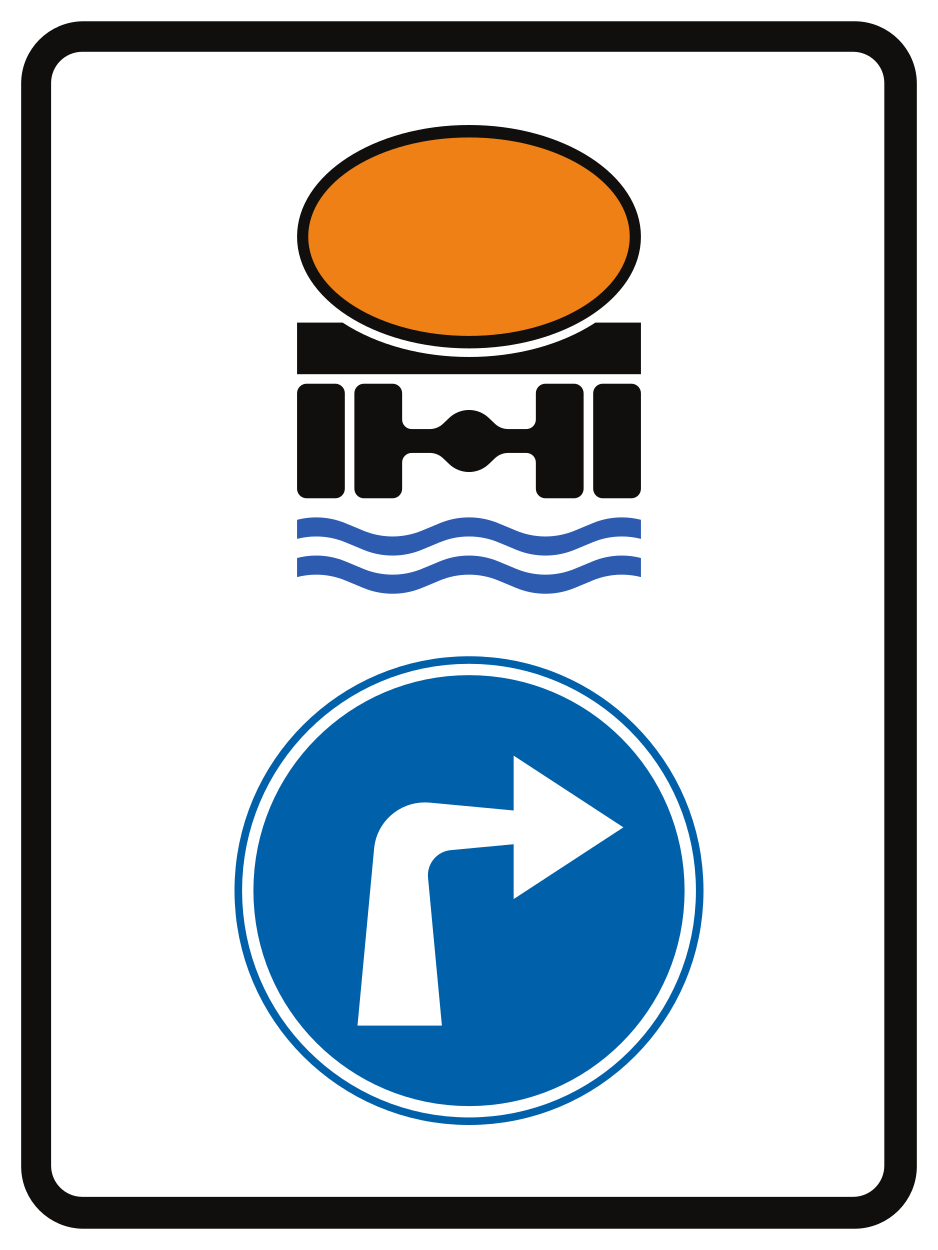
28. Mandatory route for water-polluting substances
This traffic sign indicates a mandatory route for vehicles carrying water-polluting substances. Vehicles carrying water-polluting substances must use the route indicated by the sign.
Signal routier D4 • Obligation pour les véhicules transportant des marchandises dangereuses de suivre la direction indiquée par la flèche.
Verkeersbord D4 • Verplichting voor voertuigen die gevaarlijke goederen vervoeren om de door de pijl aangeduide richting te volgen.
