


HungaryHungary
 Traffic rules
 Hungary
1. Hungary
Hungary is a landlocked country in Central Europe, bordered by Austria, Slovakia, Ukraine, Romania, Serbia, Croatia and Slovenia. Traffic drives on the right, and passenger cars using tolled sections of the motorway and expressway network generally need an electronic motorway vignette (e-matrica). Hungary also applies a strict zero-alcohol rule for drivers, while cars must use daytime running lights or dipped headlights on roads outside built-up areas even during good daylight conditions.
Hungarian is the official language and is the main language used on text-based road and destination signs. Hungarian uses the Latin alphabet but includes distinctive accented letters such as á, é, í, ó, ö, ő, ú, ü and ű. In some communities with recognised national minorities, drivers may also encounter bilingual settlement and street-name signs alongside Hungarian. Winter tyres are not generally compulsory during a fixed season, but snow chains become mandatory where the appropriate traffic sign requires them.
AI-generated by Traffic-rules.com • WCIT • CC BY-SA
Which side of the road do you drive on in Hungary?
Drive on the right and normally overtake on the left.
Which emergency number should you call in Hungary?
Call 112 for urgent police, ambulance, fire or other emergency assistance.
What is the legal alcohol limit for drivers in Hungary?
Hungary applies a zero-alcohol rule for drivers. A driver must not have alcohol from alcoholic drinks in their body while driving.
What is the general speed limit in Hungarian built-up areas?
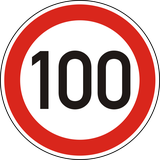
For passenger cars, the general maximum speed is 50 km/h, unless signs indicate another limit.
What is the general speed limit outside built-up areas in Hungary?
For passenger cars, the general maximum speed on ordinary roads outside built-up areas is 90 km/h, unless signs indicate another limit.
What is the speed limit on Hungarian expressways?
For passenger cars, the general maximum speed on an autóút is 110 km/h, unless signs indicate another limit.
What is the motorway speed limit in Hungary?
For passenger cars, the general maximum speed on an autópálya is 130 km/h, unless signs indicate a lower limit.
Which vehicles may use Hungarian motorways and expressways?
Motorways and expressways may generally only be used by motor vehicles and vehicle combinations that are capable of travelling at least 60 km/h on a level road.
Do you need a vignette to use Hungarian motorways?
Passenger cars and other qualifying vehicles generally need a valid electronic motorway vignette (e-matrica) to use tolled motorway and expressway sections. The vignette is linked electronically to the vehicle's registration number.
Must cars use lights during the day in Hungary?
On roads outside built-up areas, cars must use daytime running lights or dipped headlights even during daylight and good visibility. Appropriate headlights must also be used at night and when visibility is reduced.
Are winter tyres mandatory in Hungary?
There is no general fixed period during which winter tyres are mandatory for passenger cars in Hungary, although their use is strongly recommended in winter conditions.
When are snow chains mandatory in Hungary?
Snow chains must be fitted when the snow-chains-mandatory sign applies. They must be fitted to the tyres of at least one driven axle. A vehicle fitted with snow chains may travel at no more than 50 km/h.
Are seat belts mandatory in Hungary?
Seat belts must be worn by drivers and passengers using seats equipped with them, subject to specific legal exemptions.
When must children use a child restraint in Hungary?
Children shorter than 150 cm must generally use an appropriate child-restraint system. A child aged at least three and at least 135 cm tall may use the normal seat belt on a rear seat if it fits the child safely.
Can a rear-facing child seat be used in the front seat in Hungary?
Yes, but a rear-facing child restraint may only be fitted to the front seat if the frontal airbag is absent or deactivated.
Who must wear a helmet in Hungary?
Drivers and passengers on motorcycles and mopeds without an enclosed passenger compartment must wear a properly fastened motorcycle helmet.
Do cyclists have to wear a helmet in Hungary?
There is no general helmet requirement for ordinary cyclists. However, outside built-up areas a cyclist may travel at up to 50 km/h only when wearing a helmet and carrying no passenger; otherwise the maximum is 40 km/h.
Can you use a handheld mobile phone while driving in Hungary?
A car driver may not use a handheld mobile phone while driving. The restriction also applies to riders of two-wheeled and certain three-wheeled vehicles while temporarily stopped for traffic reasons.
When must you give way to traffic approaching from the right in Hungary?
At an intersection where priority is not otherwise regulated, drivers must generally give way to traffic approaching from the right. Drivers must also give way to a tram approaching from the left unless another rule or signal determines priority.
Who has priority at a roundabout in Hungary?
Drivers must follow the priority signs at the entrance. Where a Give Way sign is installed, traffic already circulating has priority. The roundabout sign itself determines the direction of circulation and should not be treated as a separate priority rule.
What must drivers do at pedestrian crossings in Hungary?
Drivers must give way to pedestrians at marked pedestrian crossings and approach at a speed that allows them to stop before the crossing when necessary. Turning drivers must also give way to pedestrians crossing the road they are entering.
What is the speed limit in a Hungarian residential and recreation zone?
In a designated residential and recreation zone, the maximum speed is 20 km/h. Drivers must show particular consideration for pedestrians and cyclists.
When must drivers create an emergency corridor in Hungary?
When congestion forms on a motorway or expressway with at least two lanes travelling in the same direction, drivers must create a corridor for emergency vehicles. Traffic in the leftmost lane moves as far left as possible, while traffic in the other lanes moves as far right as possible.
Must cyclists wear reflective clothing in Hungary?
When cycling outside built-up areas at night or in reduced visibility, cyclists must wear a reflective vest or other suitable reflective clothing and must use the required bicycle lights and reflectors.
What do red and amber traffic lights mean in Hungary?
Red means stop. A steady amber light also means stop unless the driver is already too close to stop safely. Red and amber displayed together still mean stop and indicate that green will follow.
What safety equipment should you carry in a car in Hungary?
Passenger cars must have the prescribed first-aid equipment. A warning triangle must be used to mark a broken-down vehicle on the carriageway or hard shoulder outside built-up areas. Reflective clothing should also be kept accessible because anyone on the carriageway, hard shoulder or roadside verge outside built-up areas at night or in poor visibility must wear it.

