


Personal mobility deviceHungary
 Traffic rules
 Hungary
99. Personal mobility device
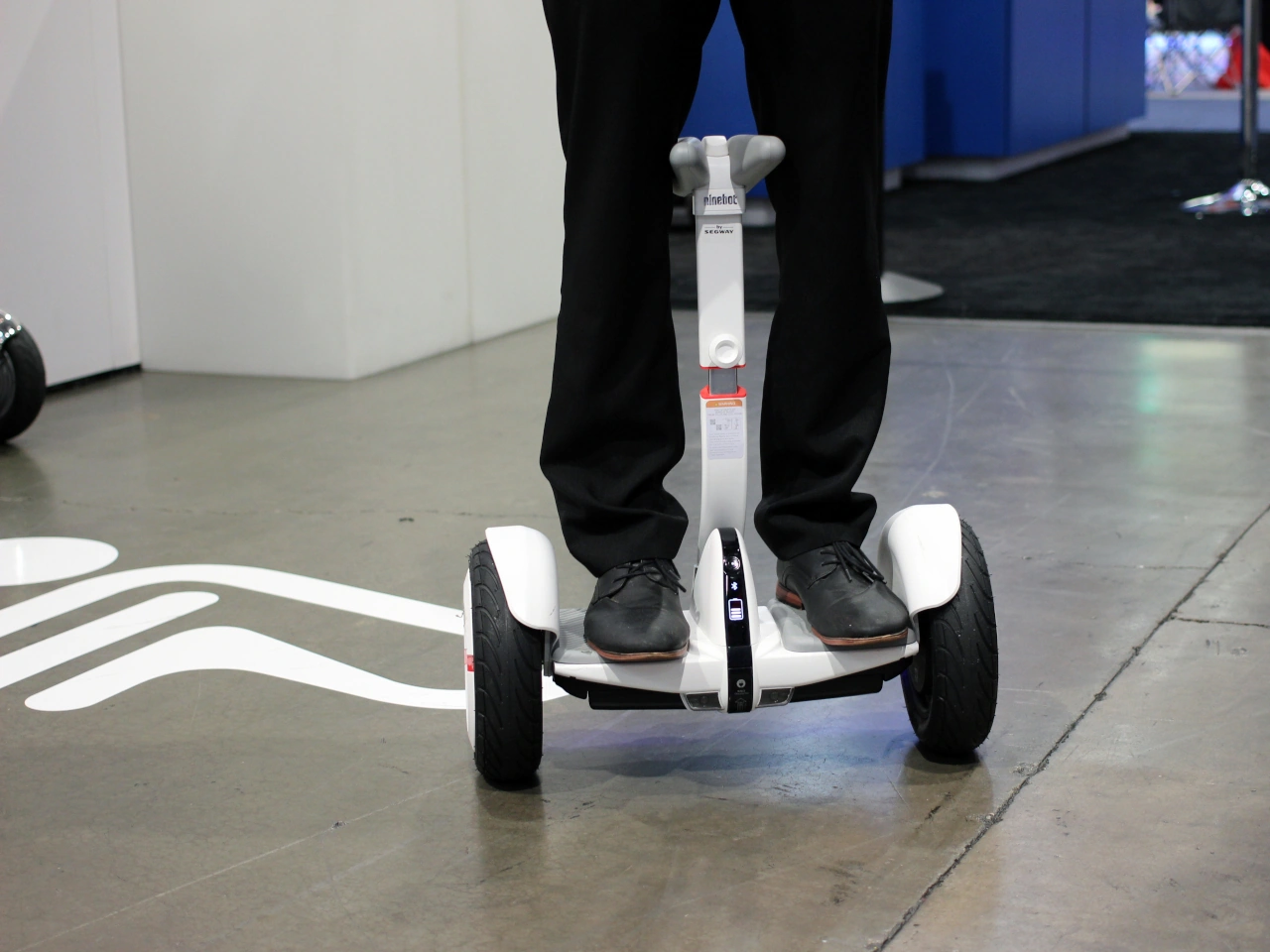
A personal mobility device, also called a personal transporter, is a compact device designed to transport one person over relatively short distances. Examples can include kick scooters, electric scooters, skateboards, self-balancing devices and mobility devices.
Personal transporters may be powered by the user's own effort or by an electric motor. Their legal classification, maximum speed, minimum riding age and permitted place on the road vary between countries, so users must follow the local traffic signs and regulations.
Wikimedia.org • Maurizio Pesce • CC BY
What is a personal transporter?
A personal transporter is a compact device designed to transport an individual, commonly over relatively short distances.
What are examples of personal transporters?
Examples can include electric scooters, kick scooters, skateboards, self-balancing devices, monowheels and certain mobility devices.
Is an electric scooter a personal transporter?
Yes, commonly. Electric scooters are one of the most widespread forms of motorised personal transporter, although their precise legal classification varies between countries.
Is a personal transporter the same as a bicycle?
No. A bicycle is primarily propelled through pedals or hand cranks. Personal transporters can use other methods of propulsion and may belong to a separate legal category.
Is a personal transporter the same as a moped?
Not necessarily. Low-speed personal mobility devices are often classified separately from mopeds. Devices exceeding specified speed or construction limits may fall into another vehicle category.
Can personal transporters use cycle paths?
This depends on the country and type of device. Motorised personal transporters are often permitted or required to use cycle infrastructure where available.
Can personal transporters use the pavement?
This depends on local law. Motorised devices may be prohibited from ordinary pavements, while people using non-motorised devices at walking speed may sometimes be treated as pedestrians.
Is there a minimum age for using an electric personal transporter?
Some countries impose a minimum riding age for electric scooters and similar motorised devices. The applicable age and exceptions vary between jurisdictions.
Can you carry a passenger on a personal transporter?
Only when the device is specifically designed and legally permitted to carry passengers. Most ordinary electric scooters are designed for one person only.
Do personal transporters need lights and brakes?
Motorised devices may be subject to requirements concerning lights, reflectors, brakes and audible warning devices. The required equipment depends on local traffic and technical regulations.
Is a helmet compulsory on a personal transporter?
This varies between countries and device categories. Even where a helmet is not legally compulsory, wearing an appropriate helmet can provide additional protection in a fall or collision.
Can you modify a personal transporter to make it faster?
A modification that increases the vehicle beyond the legal speed or technical limits may change its classification or make it illegal for use on public roads.


