QuizTraffic rulesPhilippines

This interesting quiz helps you test your knowledge in a clear and visual way. With easy multiple-choice questions, you can quickly build confidence and learn new facts while keeping it simple, interactive, and fun.

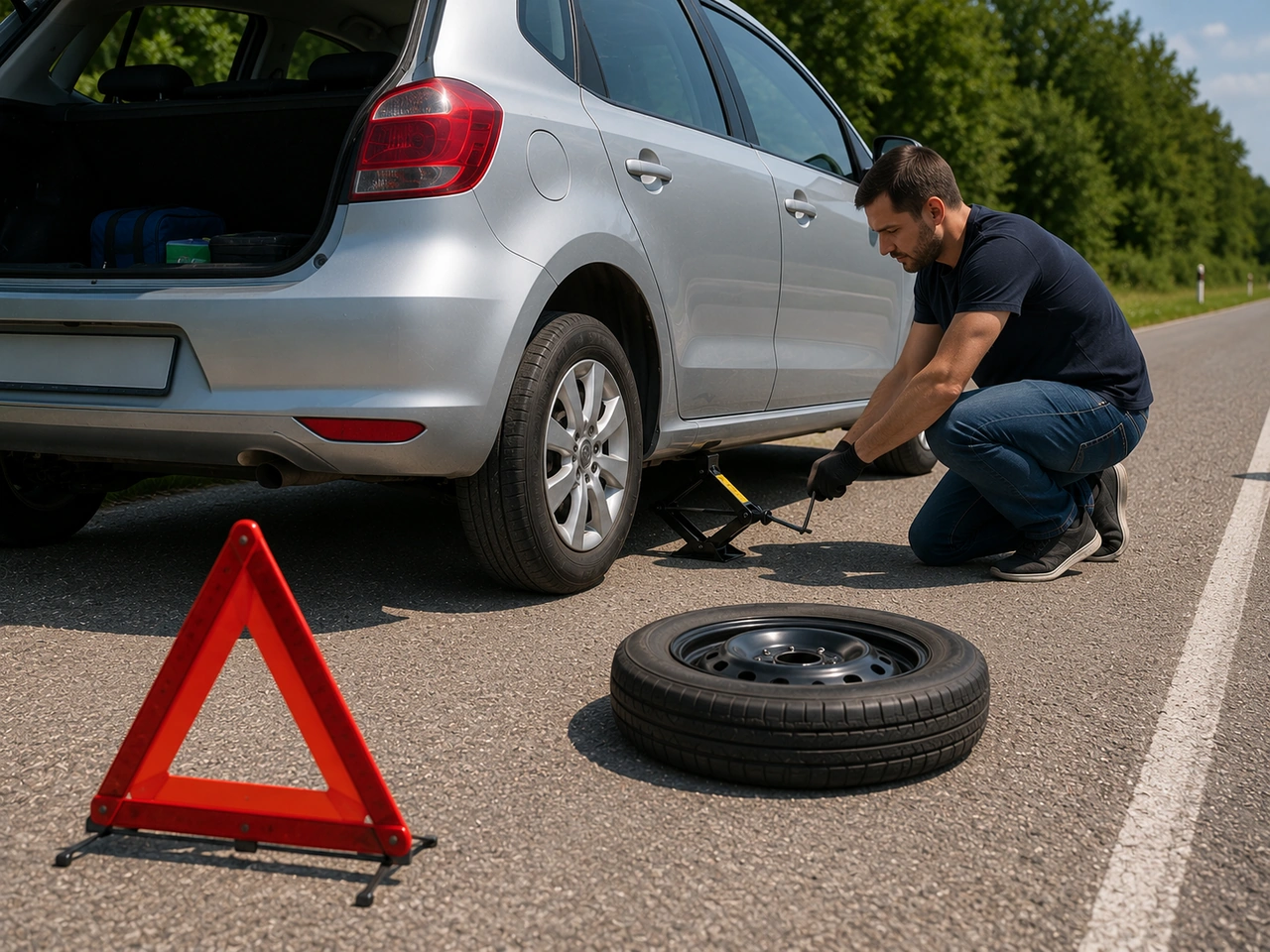
What is important when raising a vehicle with its jack?

251. What is important when raising a vehicle with its jack?

Raise the vehicle before applying the parking brake.
Use any solid-looking part underneath the vehicle.
✓ Use the correct jacking point and never go underneath a vehicle on a jack.
Place the jack on soft ground to prevent floor damage.

A jack can slip or fail if it is incorrectly positioned. Secure the vehicle and use additional approved supports before working underneath it.

Vehicle raised at a jacking point for a wheel change
AI-generated by Traffic-rules.com • WCIT • CC BY-SA
Why should you avoid keeping the clutch pedal pressed while driving?

252. Why should you avoid keeping the clutch pedal pressed while driving?

It locks the steering.
It applies the parking brake.
It increases tyre pressure.
✓ It reduces engine braking and vehicle control.

Keeping the clutch pedal pressed while the vehicle is moving disconnects the engine from the transmission. This reduces engine braking and can reduce your control of the vehicle.

Clutch held down while a vehicle is moving
AI-generated by Traffic-rules.com • WCIT • CC BY-SA
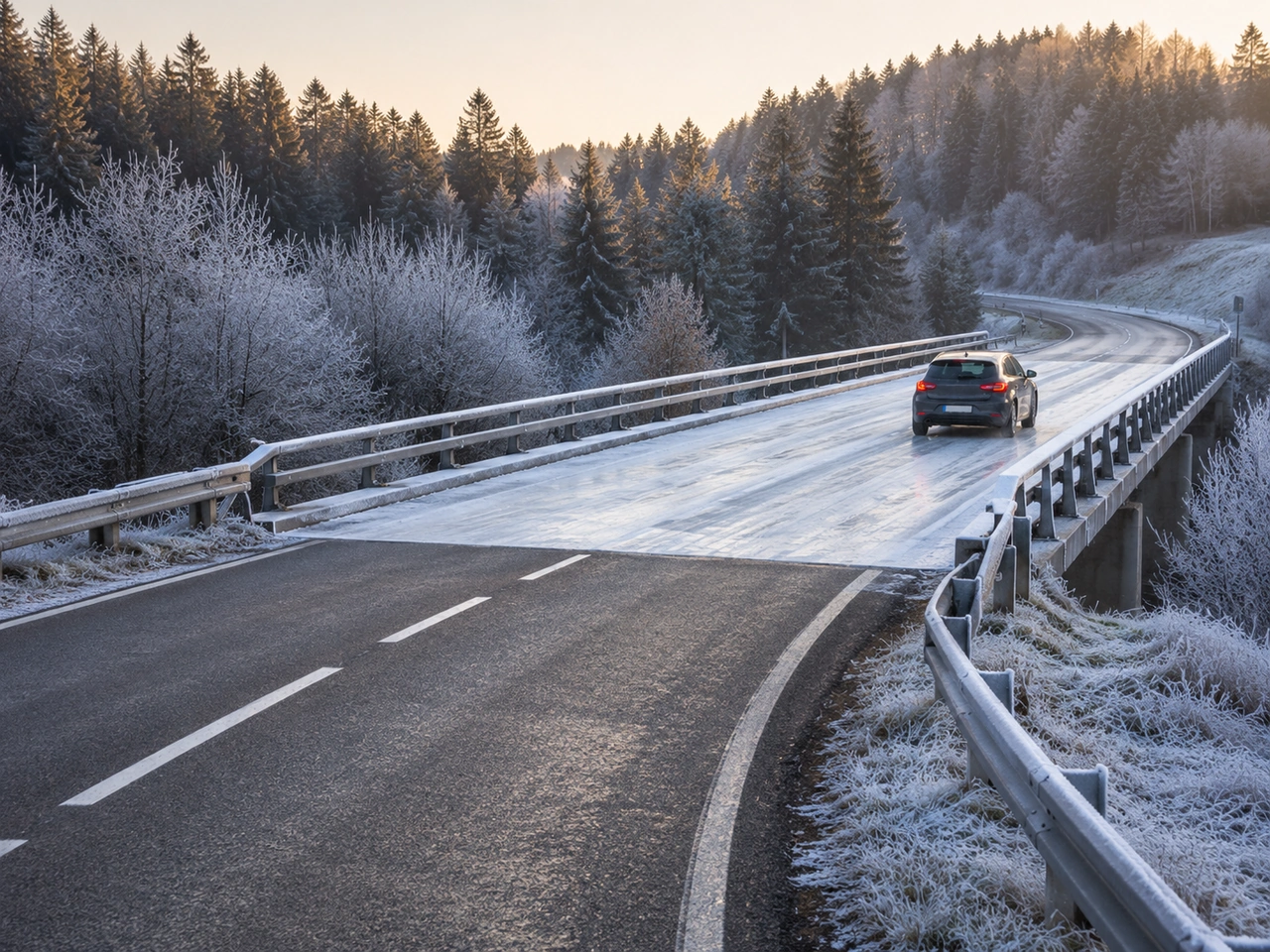
Why can bridges and overpasses become icy before nearby roads?

253. Why can bridges and overpasses become icy before nearby roads?

Road salt is less effective on bridges.
✓ Cold air circulates above and below them.
Traffic usually moves faster across bridges.
Bridges are always at a higher altitude.

Bridges lose heat from both their upper and lower surfaces, so they can freeze before roads built directly on the ground.

Icy surface on an exposed bridge
AI-generated by Traffic-rules.com • WCIT • CC BY-SA
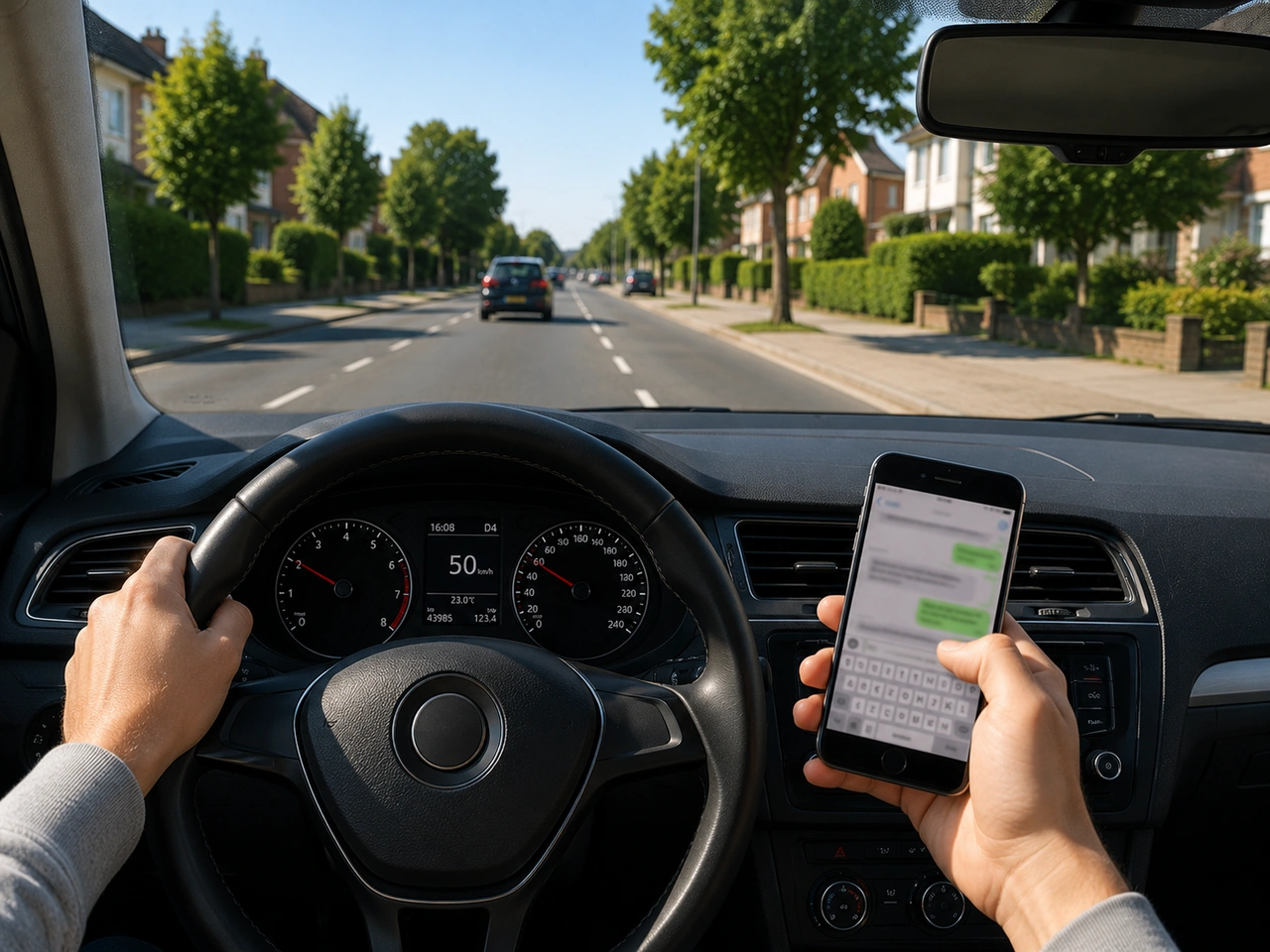
It is safe to look at your phone briefly while driving.

254. It is safe to look at your phone briefly while driving.

True.
✓ False.

Using your phone while driving is distracting and dangerous, even for a very short moment.

Driver glancing at a phone while driving
AI-generated by Traffic-rules.com • WCIT • CC BY-SA
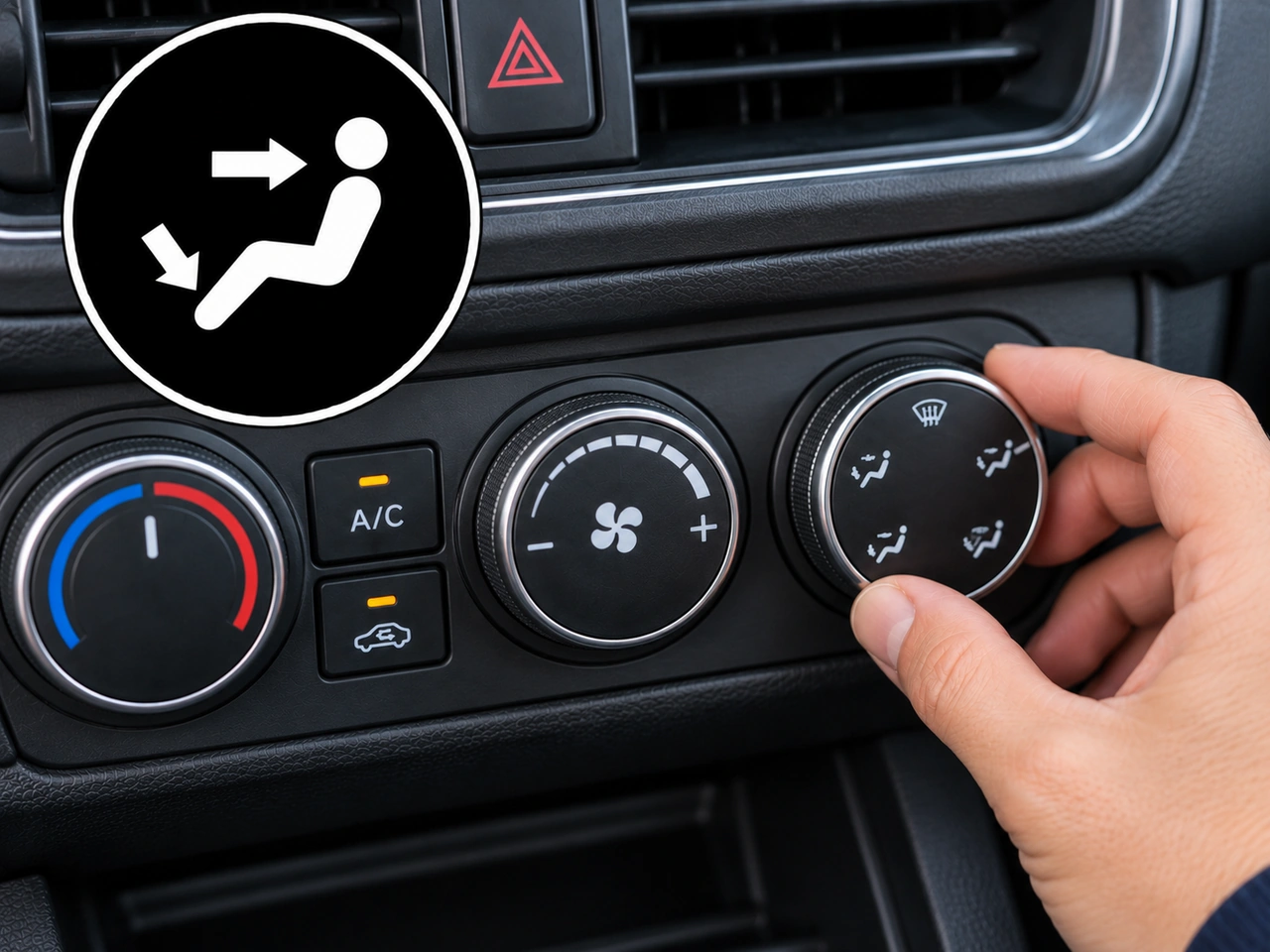
What does this vehicle-control symbol indicate?

255. What does this vehicle-control symbol indicate?

Cabin temperature adjustment.
Air recirculation.
Air conditioning.
✓ Airflow direction.

This control selects the direction of the ventilation airflow, such as towards the face, feet or windscreen.

Control for directing cabin ventilation airflow
AI-generated by Traffic-rules.com • WCIT • CC BY-SA
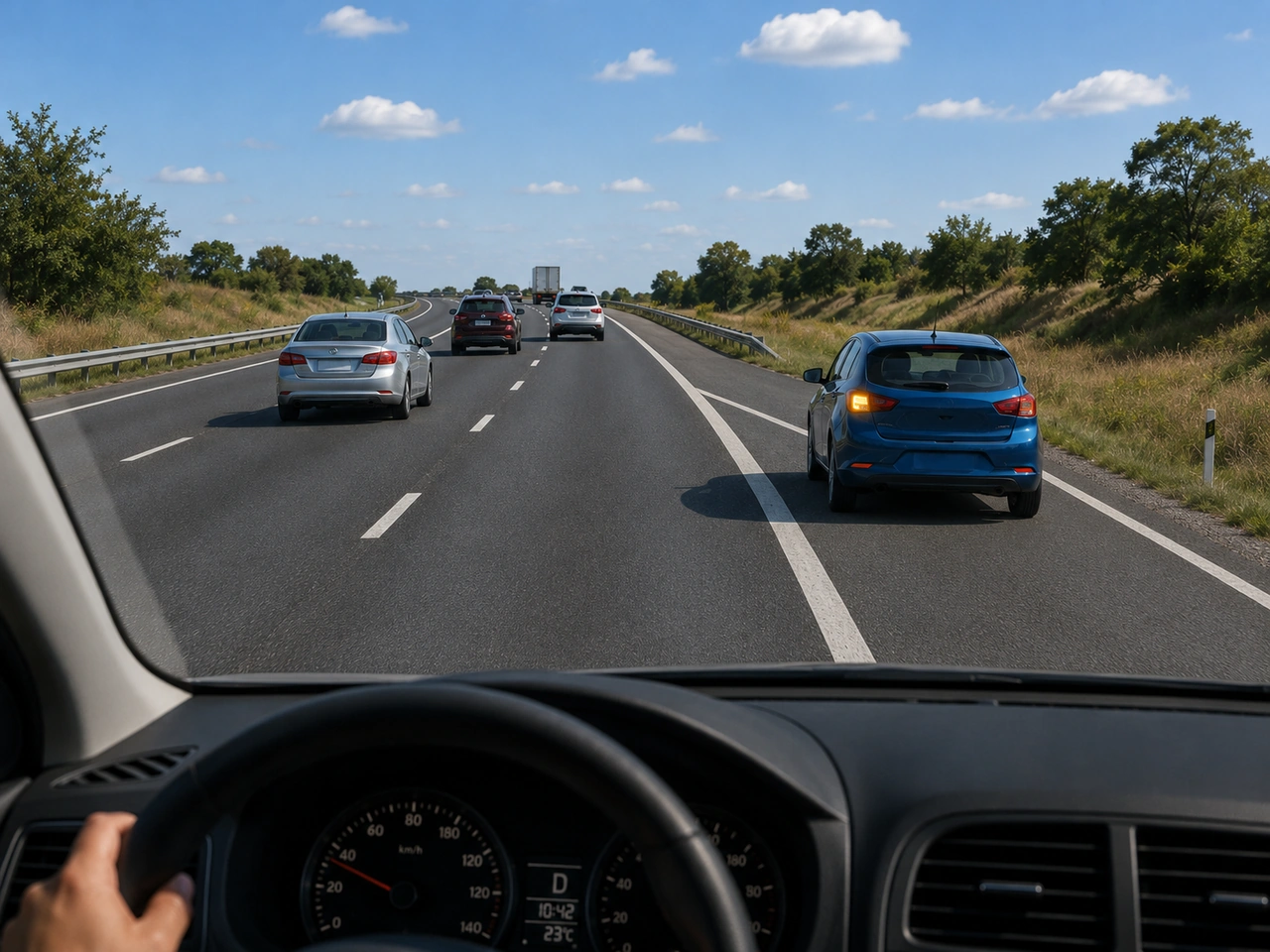
What should you do when joining a motorway from an entry lane?

256. What should you do when joining a motorway from an entry lane?

✓ Match your speed, check around you, and merge into a safe gap.
Stop at the end of the entry lane and wait for a large gap.
Enter at a low speed and let motorway traffic adjust.
Merge as soon as the entry lane begins.

Use the entry lane to build a suitable speed, check carefully, signal, and merge only when it is safe.

Vehicle joining a motorway from an entry lane
AI-generated by Traffic-rules.com • WCIT • CC BY-SA
What should you do if you are unsure who has priority at a junction?

257. What should you do if you are unsure who has priority at a junction?

Rely on eye contact and enter the junction first.
Check only the direction that normally has priority.
Enter slowly so the other driver has time to react.
✓ Slow down and proceed only when it is safe.

If priority is unclear, reduce speed, observe carefully, and avoid entering the junction until you are sure it is safe.

Vehicles approaching a junction with uncertain priority
AI-generated by Traffic-rules.com • WCIT • CC BY-SA
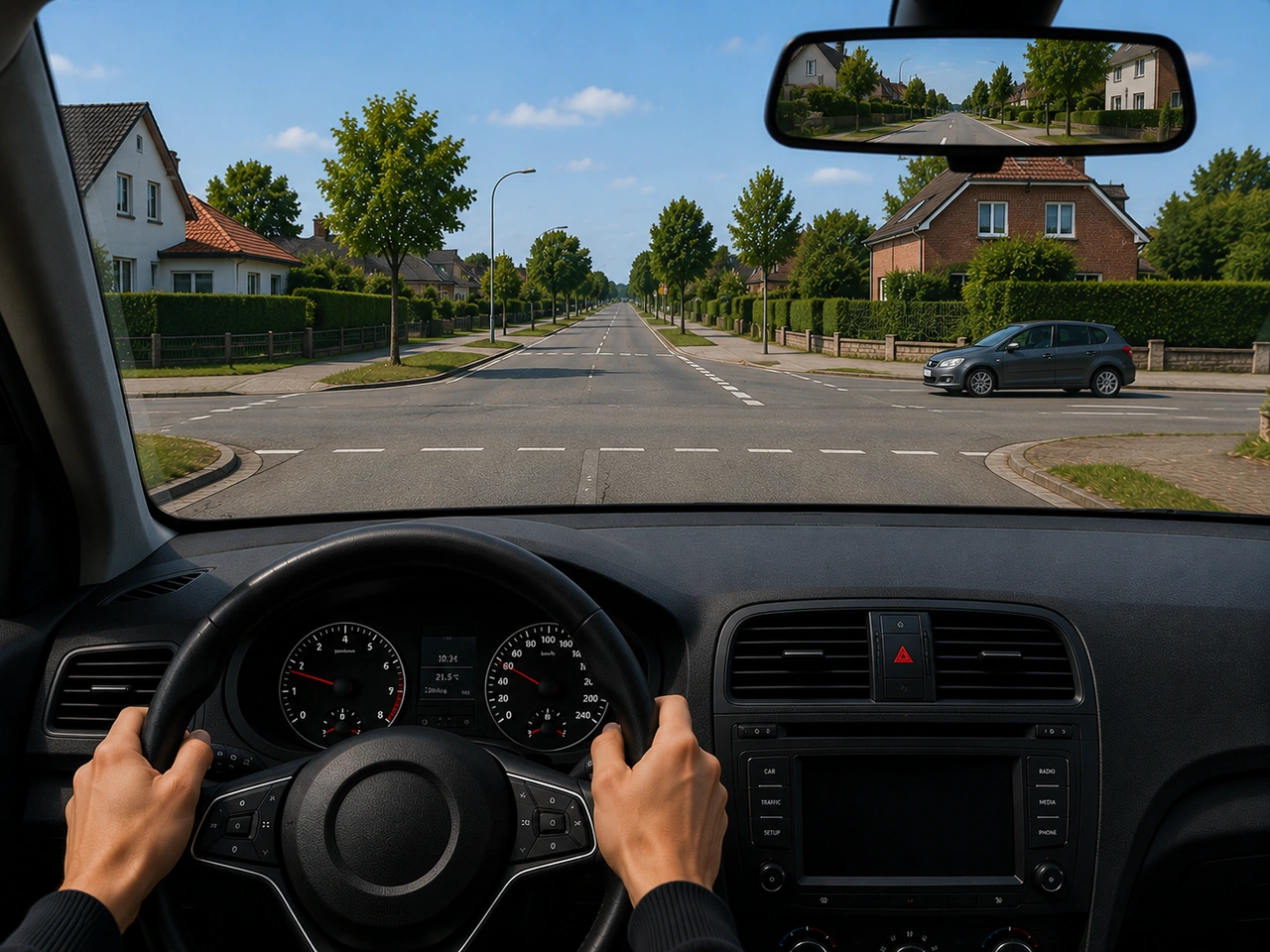
What should you do if the power steering suddenly stops assisting you?

258. What should you do if the power steering suddenly stops assisting you?

Accelerate to make the steering easier.
✓ Hold the wheel firmly, use greater steering effort, and stop safely.
Make sharp steering movements to test the remaining assistance.
Keep driving normally if the vehicle still turns.

The vehicle can normally still be steered, but much more effort may be required. Reduce speed and arrange an inspection.

Driver coping with a loss of power-steering assistance
AI-generated by Traffic-rules.com • WCIT • CC BY-SA
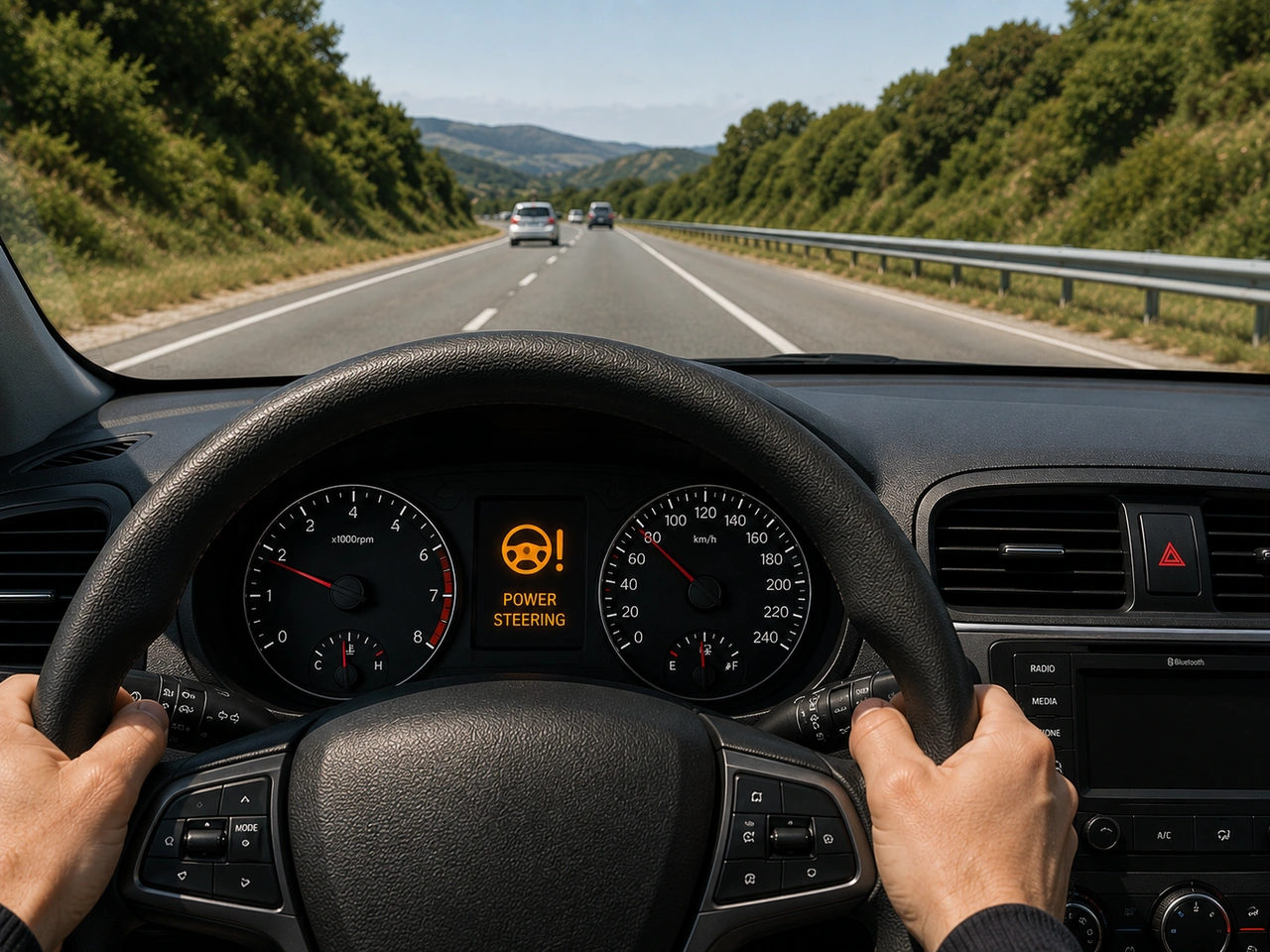
What should you do if you notice an unfamiliar fluid underneath your vehicle?

259. What should you do if you notice an unfamiliar fluid underneath your vehicle?

Top up the fluid levels and continue driving.
✓ Do not ignore it. Identify the fluid and arrange an inspection if necessary.
Ignore it if no warning light is showing.
Wait until the vehicle develops another problem.

Clear water from air conditioning can be normal, but oil, coolant, fuel, transmission fluid, or brake fluid may indicate a fault requiring urgent attention.

Fluid leaking underneath a parked vehicle
AI-generated by Traffic-rules.com • WCIT • CC BY-SA
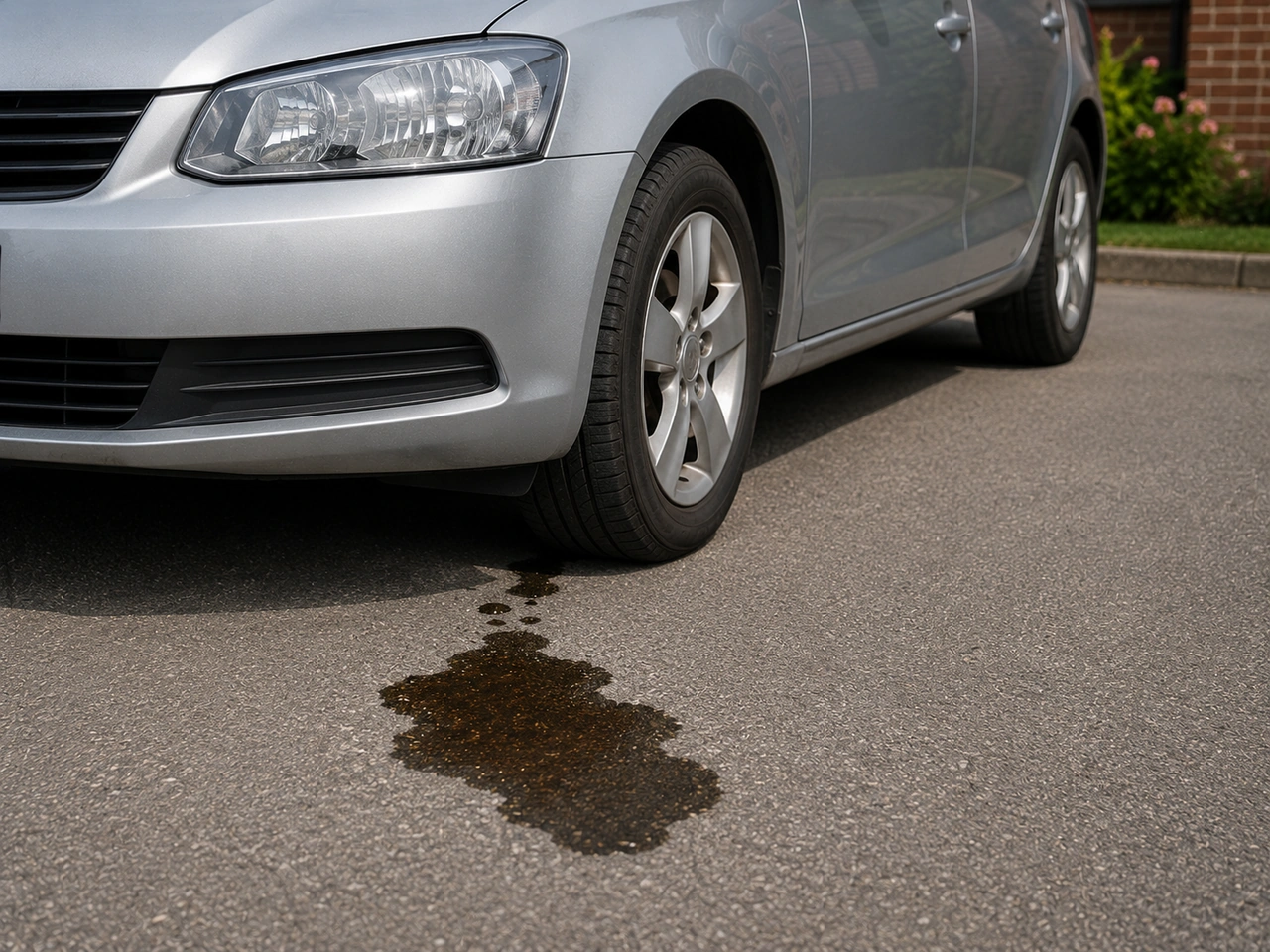
Why should you keep a dog on a leash near traffic?

260. Why should you keep a dog on a leash near traffic?

To give the dog priority when crossing the road.
To make it easier for drivers to hear the dog.
To allow the dog to walk closer to moving traffic.
✓ To prevent it from suddenly running into the road.

Dogs can react unpredictably to vehicles, people, noises, or other animals. Keeping a dog under close control on a leash near traffic reduces the risk of it suddenly entering the road and endangering itself or other road users.

Pedestrian keeping a dog on a leash near traffic
AI-generated by Traffic-rules.com • WCIT • CC BY-SA
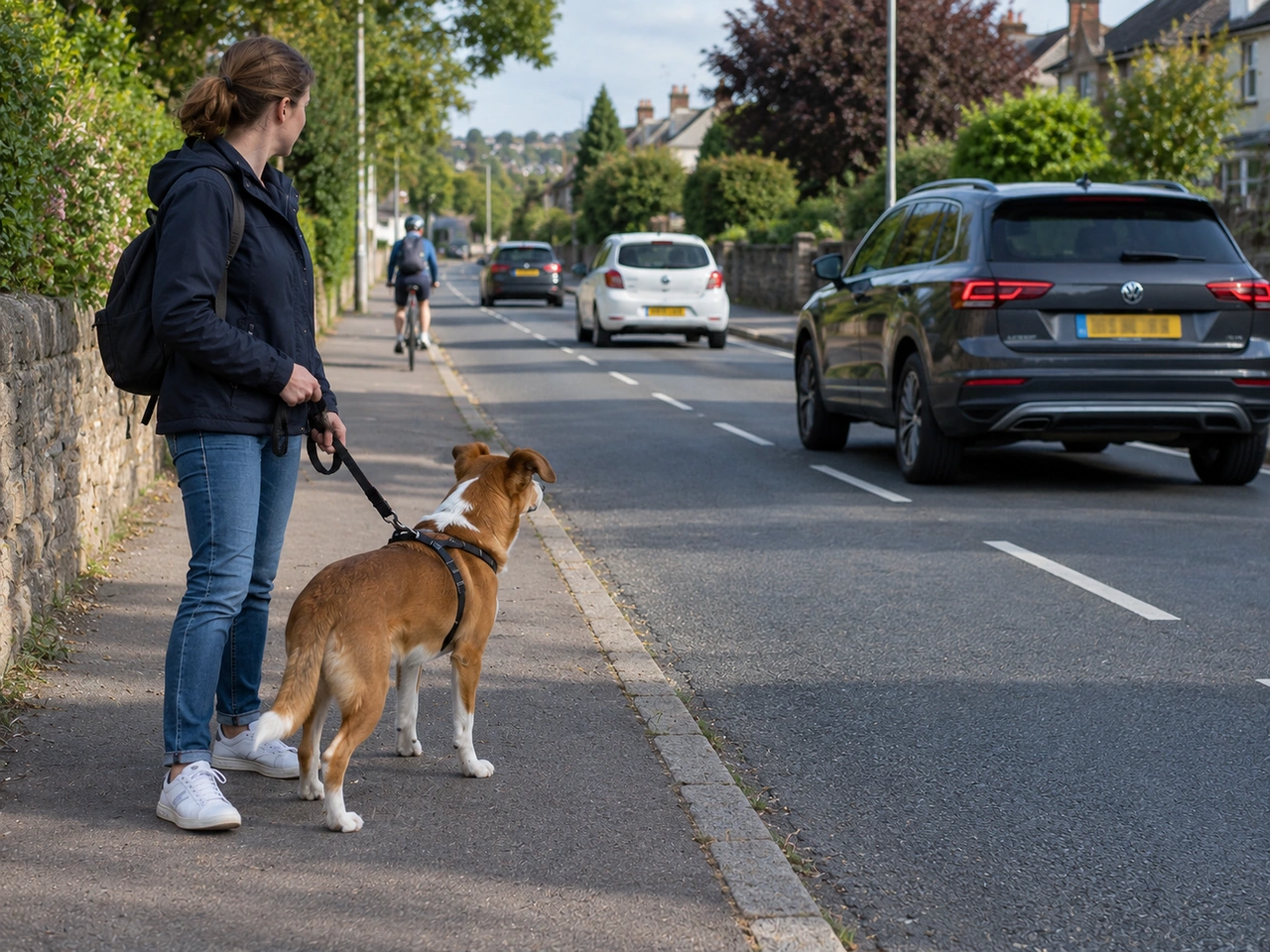
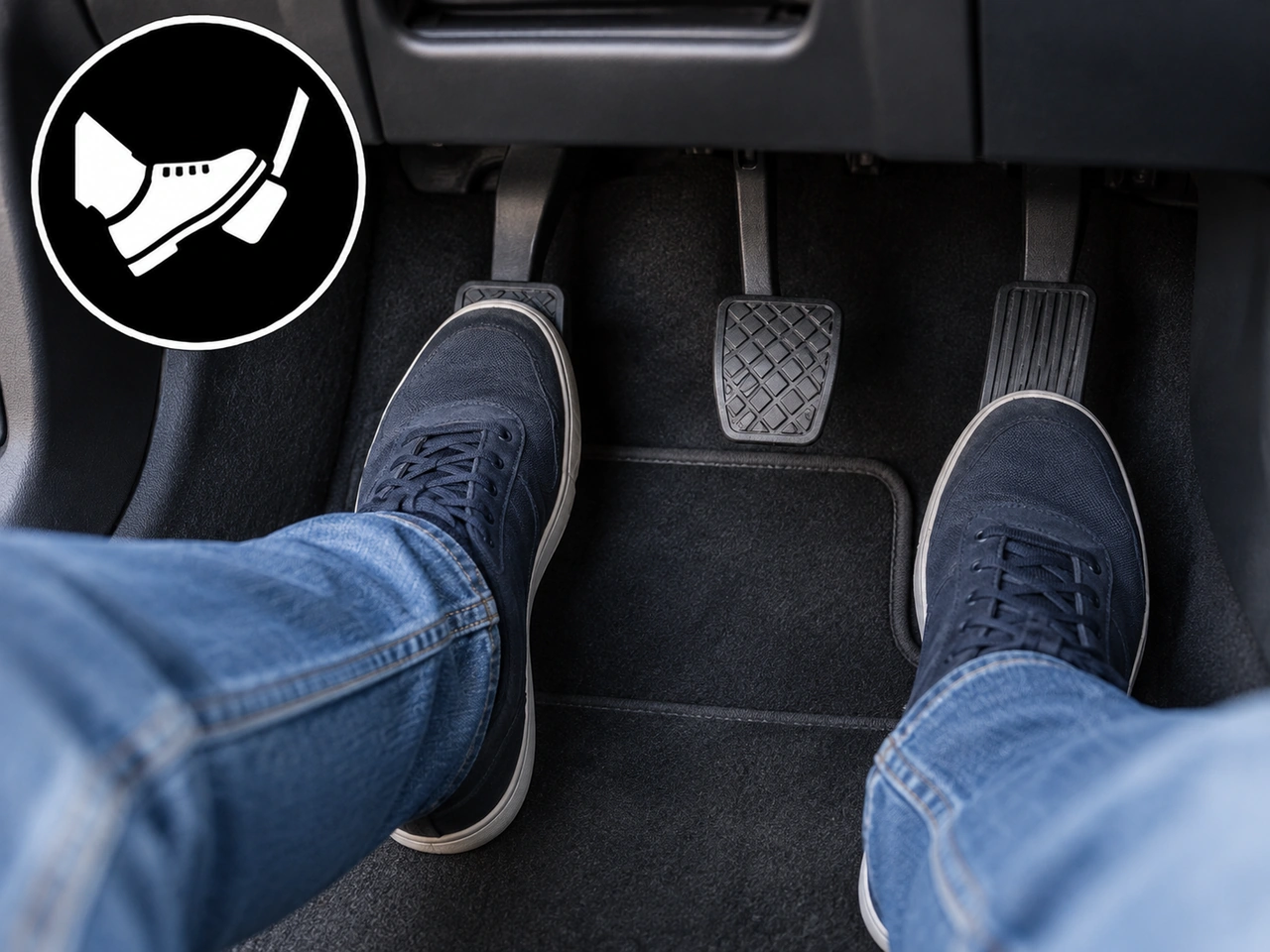
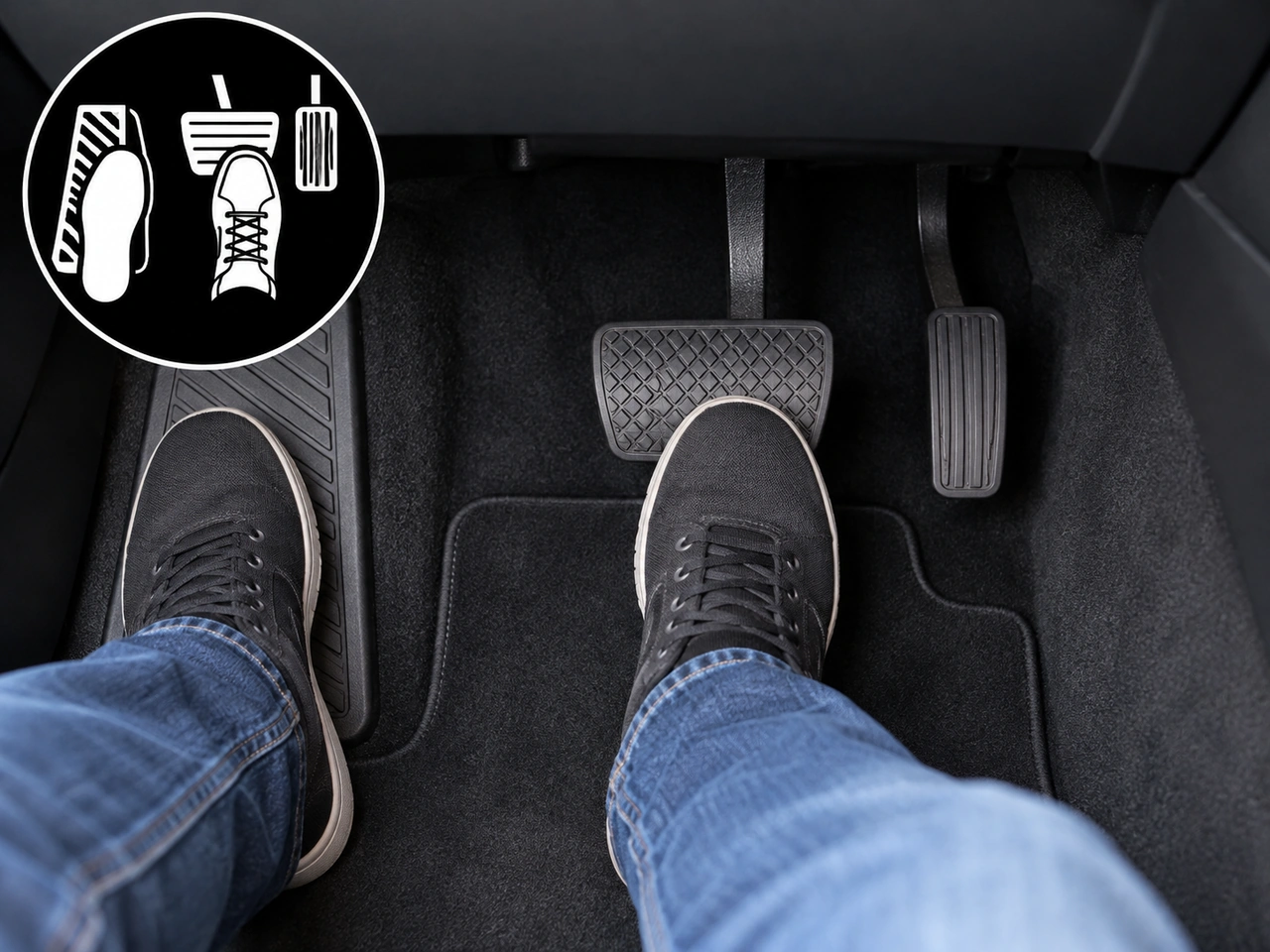
Which foot should normally operate the brake and accelerator in an automatic vehicle?

261. Which foot should normally operate the brake and accelerator in an automatic vehicle?

Both feet together.
✓ The right foot.
Either foot at the same time.
The left foot.

In an automatic vehicle, the right foot should normally operate both the brake and accelerator pedals. The left foot should rest on the footrest to reduce the risk of pressing both pedals at the same time.

Right-foot control of an automatic vehicle's pedals
AI-generated by Traffic-rules.com • WCIT • CC BY-SA
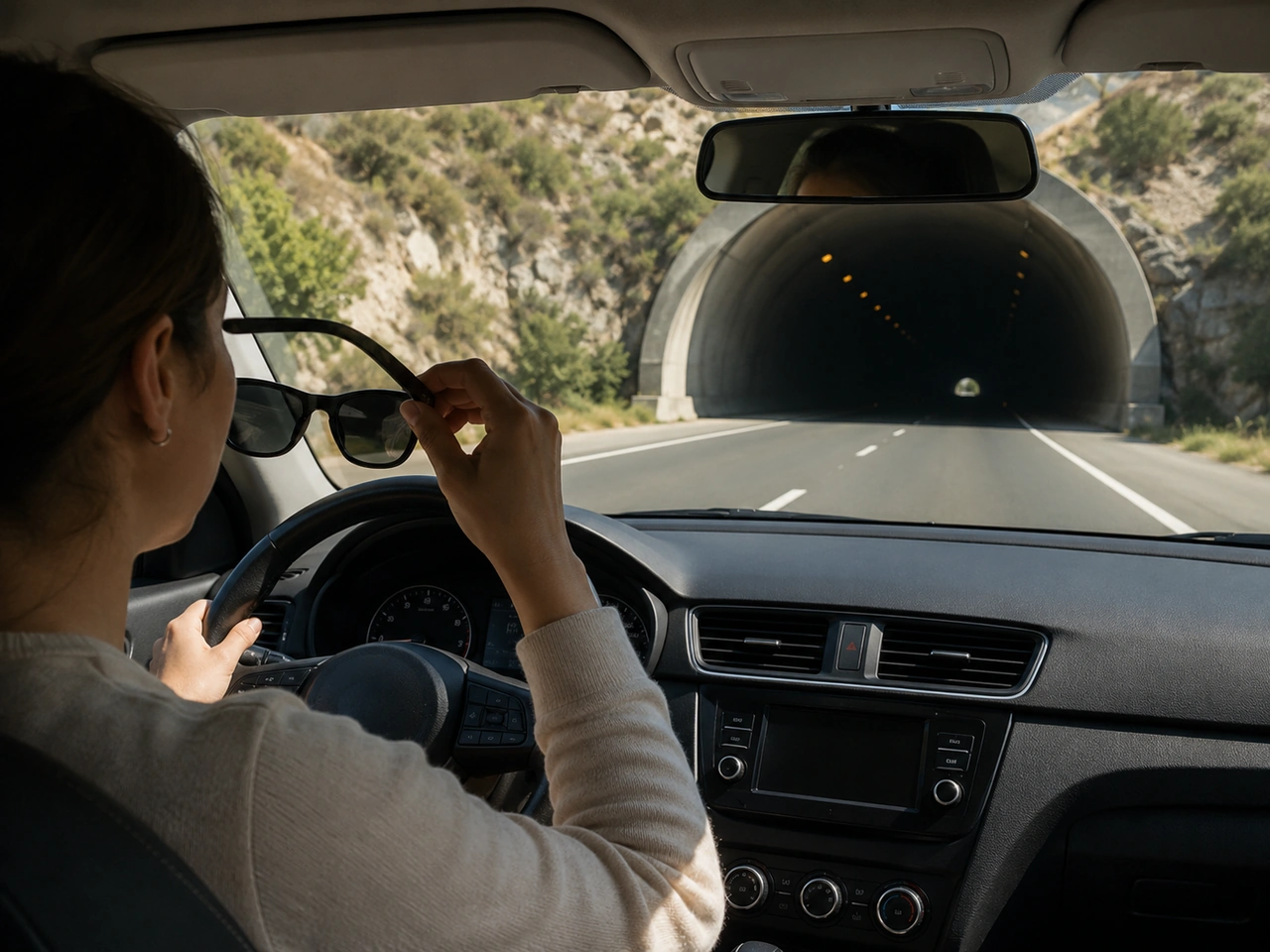
Why should you remove dark sunglasses before entering a tunnel?

262. Why should you remove dark sunglasses before entering a tunnel?

To make the vehicle headlights work more effectively.
To prevent the automatic lights from switching on.
Because tunnel lighting can damage dark lenses.
✓ Your eyes need to adjust to the lower light level.

Dark sunglasses reduce the amount of light reaching your eyes and can make hazards inside a tunnel harder to see.

Driver removing sunglasses before entering a tunnel
AI-generated by Traffic-rules.com • WCIT • CC BY-SA
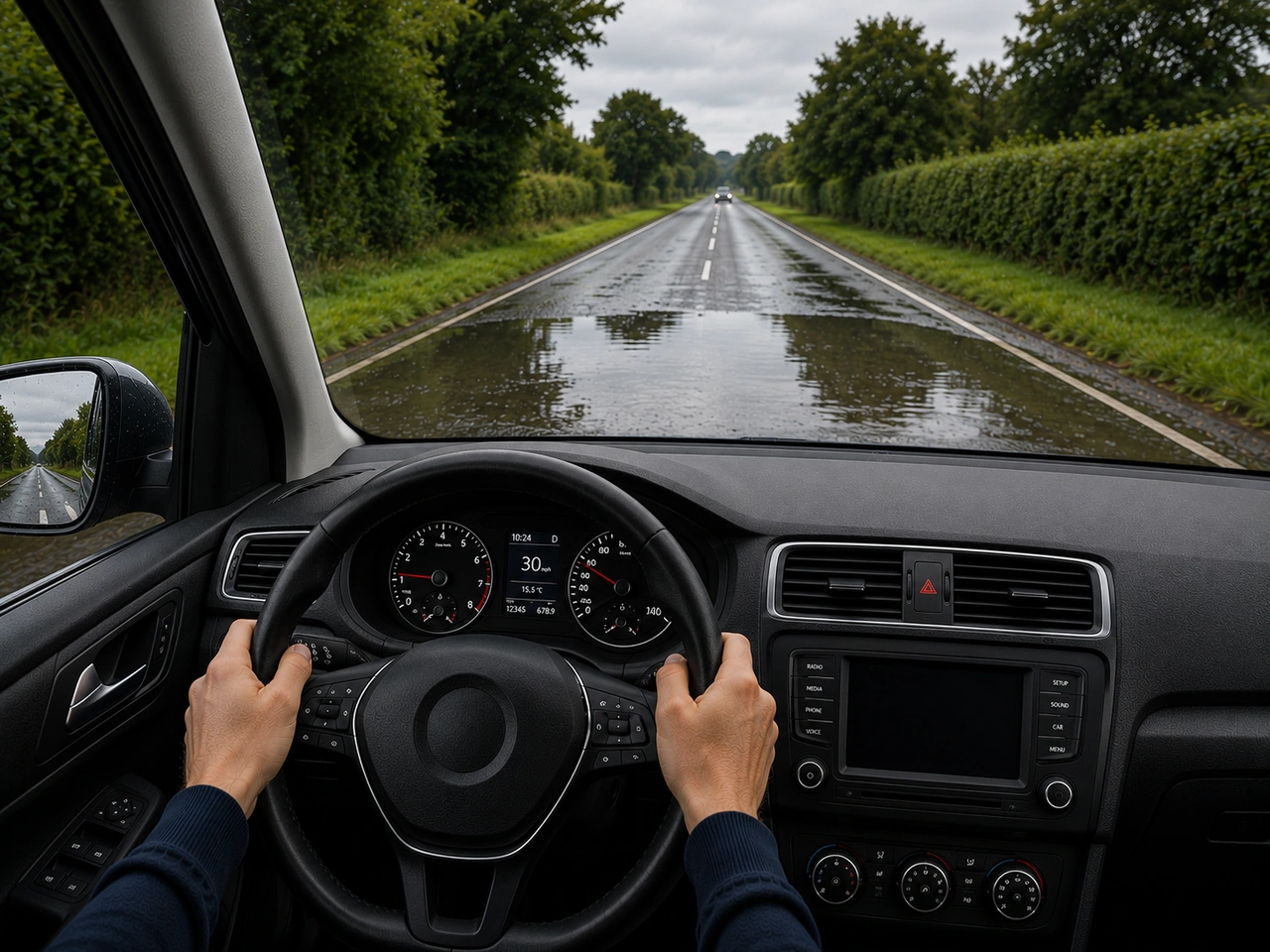
What should you do before driving through a puddle?

263. What should you do before driving through a puddle?

Follow another vehicle closely to judge the depth.
Brake firmly while driving through the water.
Maintain your normal speed if the road looks clear.
✓ Slow down and check that it is safe.

Large puddles can hide holes, reduce grip, or cause water to splash onto pedestrians or other vehicles. Slow down and proceed carefully.

Vehicle approaching a puddle on the road
AI-generated by Traffic-rules.com • WCIT • CC BY-SA
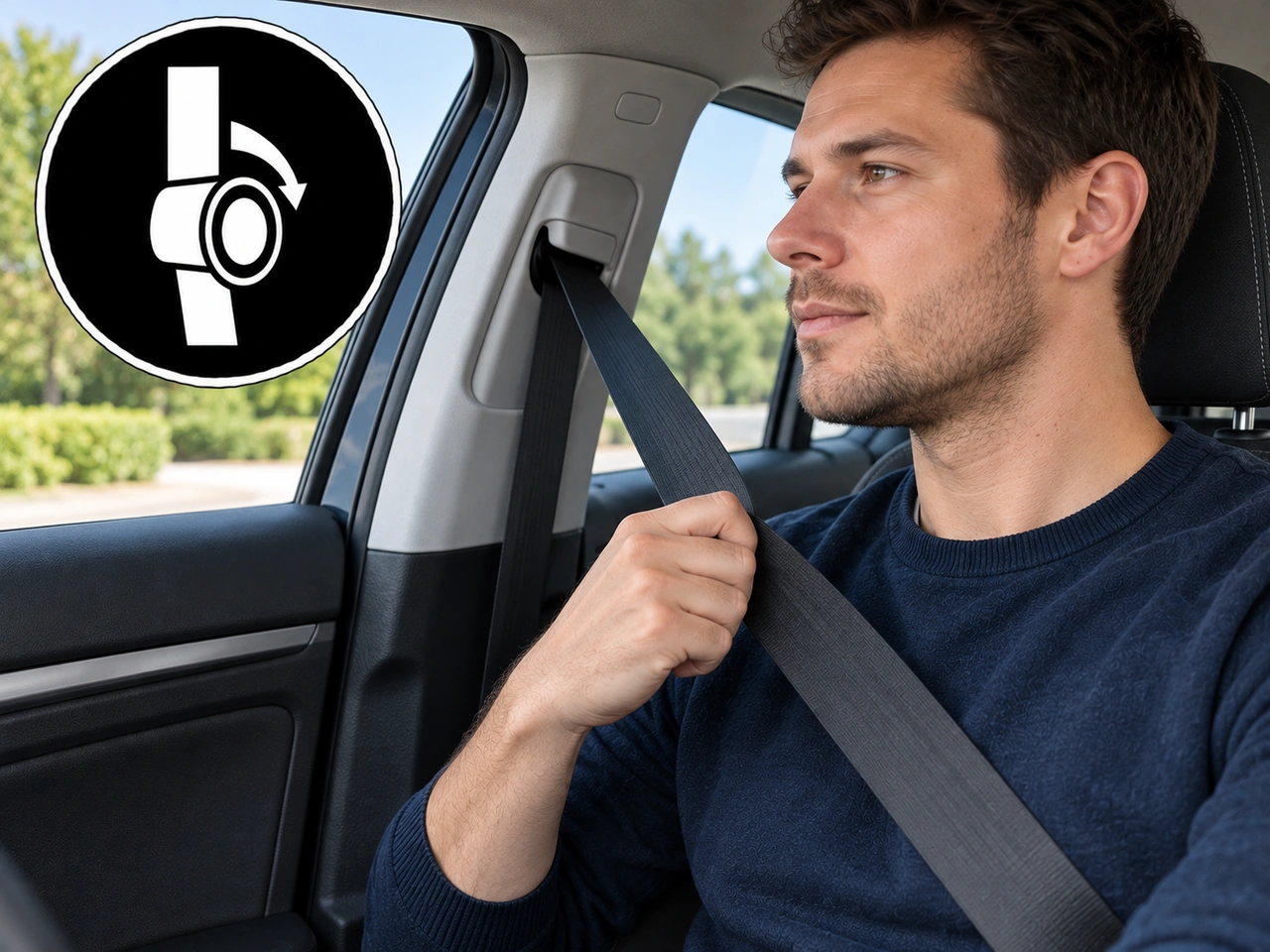
What is the purpose of the seat-belt retractor?

264. What is the purpose of the seat-belt retractor?

To release the seat belt from the buckle.
To adjust the seat height.
✓ To take up slack and lock the belt when necessary.
To tighten the parking brake.

The seat-belt retractor takes up slack and helps keep the belt properly positioned against the body. It allows normal movement but can lock during sudden braking, rapid belt movement or a collision.

Seat-belt webbing and retracting mechanism
AI-generated by Traffic-rules.com • WCIT • CC BY-SA
What does this vehicle-control symbol indicate?

265. What does this vehicle-control symbol indicate?

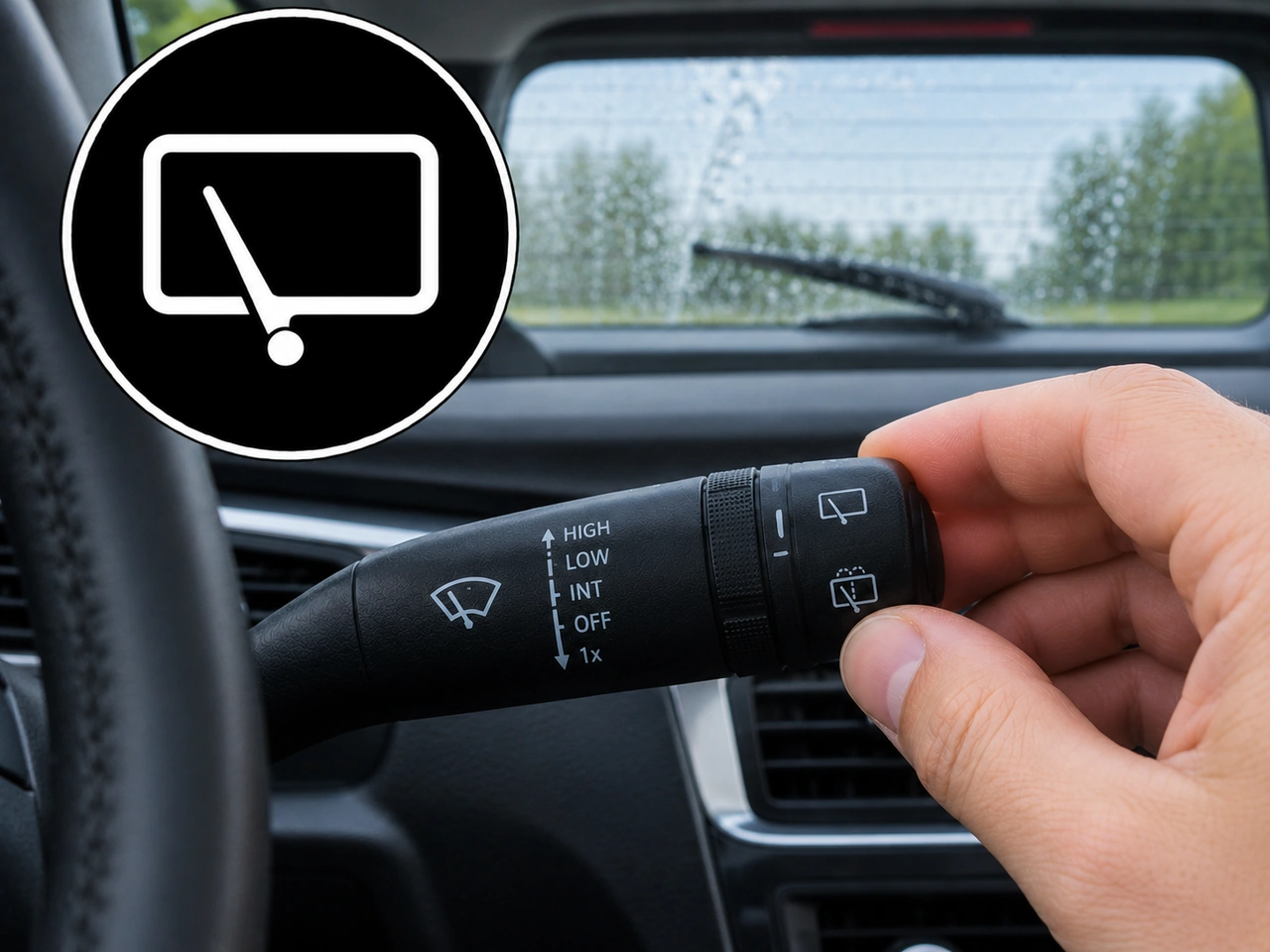
Windscreen washer.
Rear window demister.
Front windscreen demister.
✓ Rear window wiper.

This symbol controls the rear window wiper. Depending on the vehicle, the same control may also operate the rear-window washer.

Rear-window wiper control and symbol
AI-generated by Traffic-rules.com • WCIT • CC BY-SA
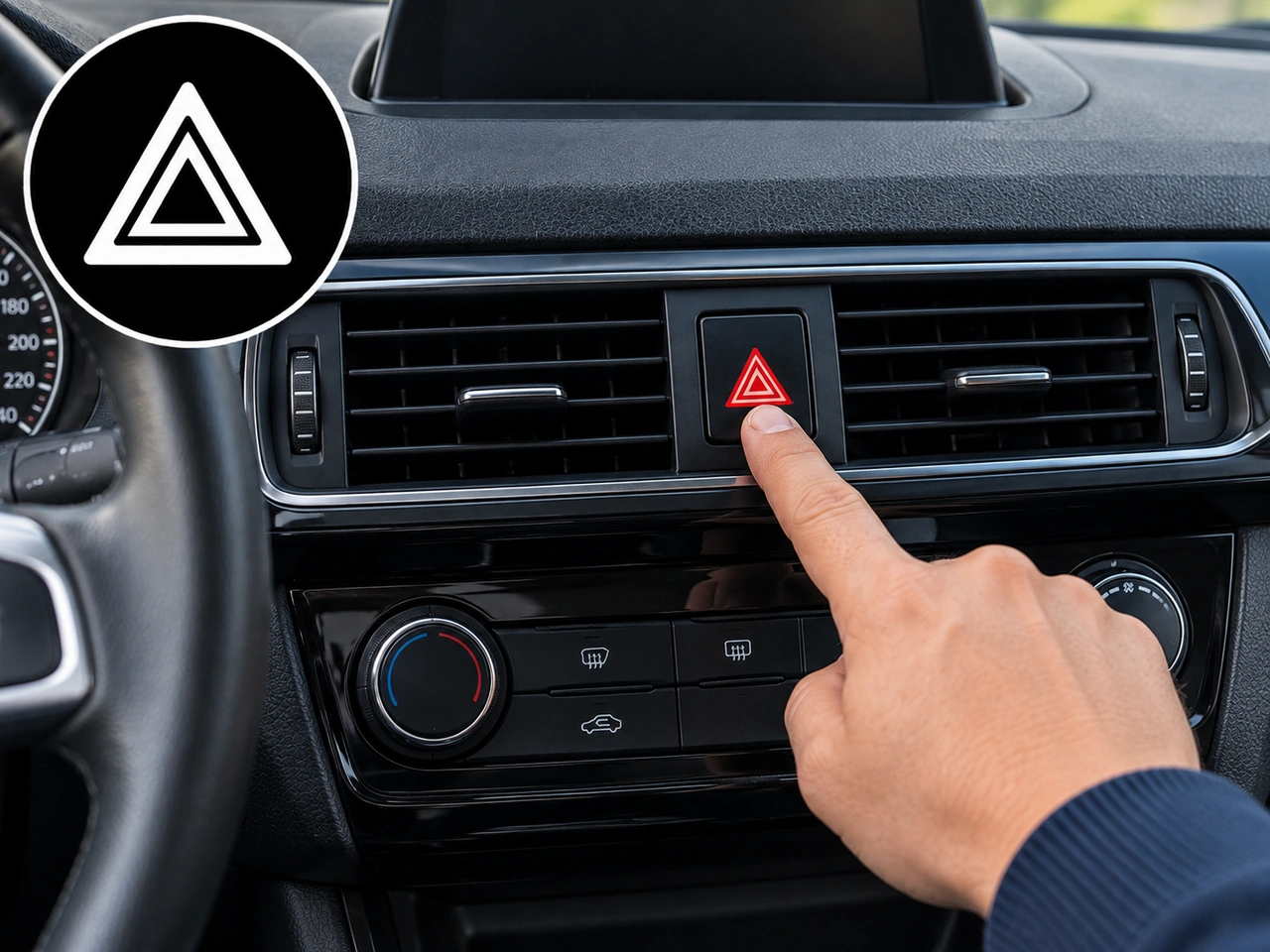
Which control activates all direction indicators at the same time?

266. Which control activates all direction indicators at the same time?

✓ The hazard warning light switch.
The rear-window demister.
The headlight switch.
The parking-brake control.

The hazard warning light switch activates all direction indicators at the same time to warn other road users of a hazard or emergency.

Hazard warning light switch and triangle symbol
AI-generated by Traffic-rules.com • WCIT • CC BY-SA
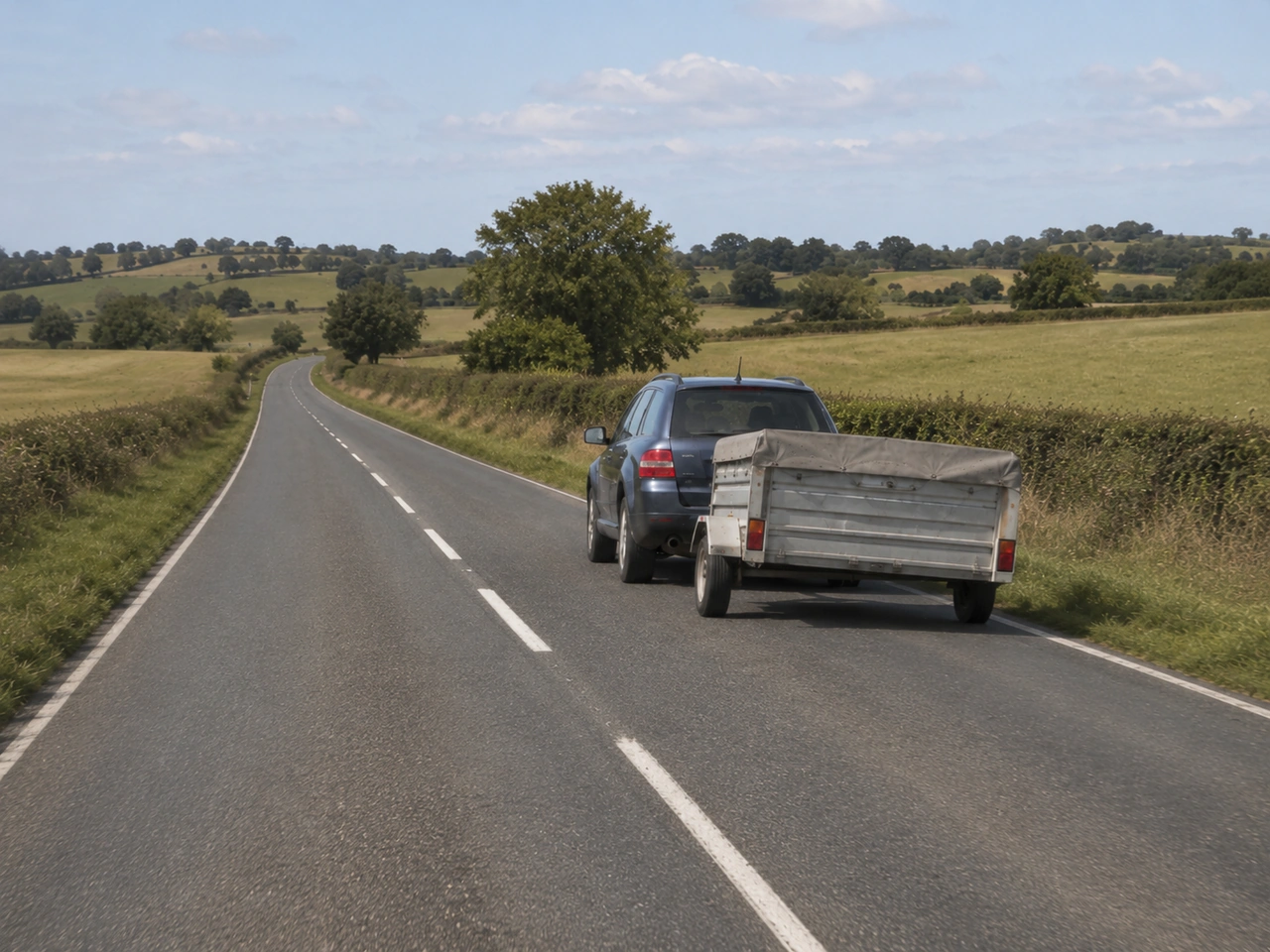
What should you do if a trailer begins to sway?

267. What should you do if a trailer begins to sway?

Steer quickly from side to side.
Brake hard as soon as the sway begins.
✓ Ease off the accelerator and reduce speed smoothly.
Accelerate to pull the trailer straight.

Sudden steering or braking can worsen trailer sway. Stay calm, hold a steady course, and reduce speed smoothly.

Trailer swaying behind a towing vehicle
AI-generated by Traffic-rules.com • WCIT • CC BY-SA
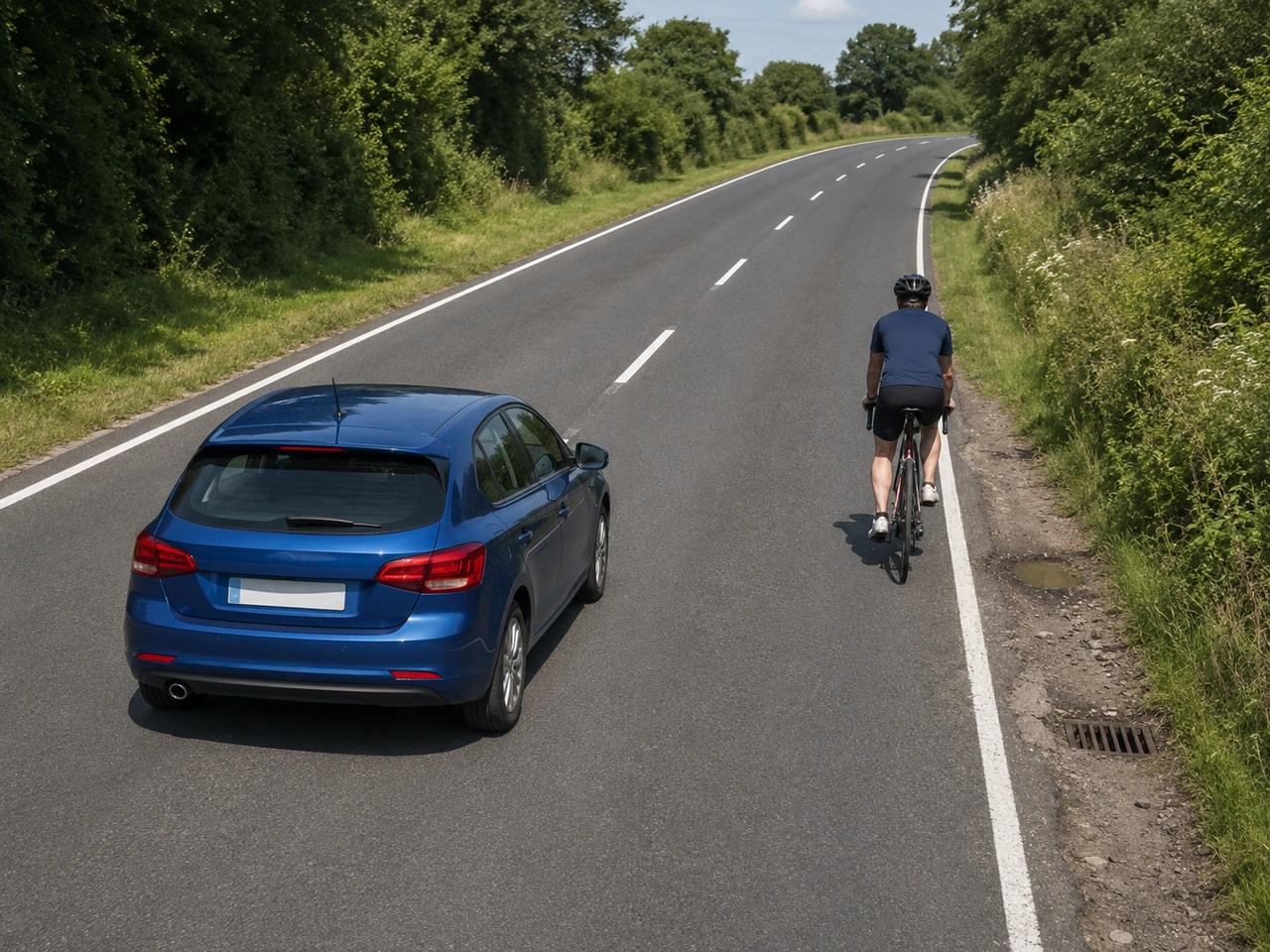
Why should you keep a safe distance from cyclists?

268. Why should you keep a safe distance from cyclists?

✓ They may need space to avoid obstacles.
Cyclists always have priority over other traffic.
Bicycles need more stopping distance than cars.
Cyclists cannot signal before changing direction.

Cyclists may need to move around potholes, parked cars, or drains. Giving them enough space helps prevent dangerous situations.

Lateral clearance between a vehicle and a cyclist
AI-generated by Traffic-rules.com • WCIT • CC BY-SA
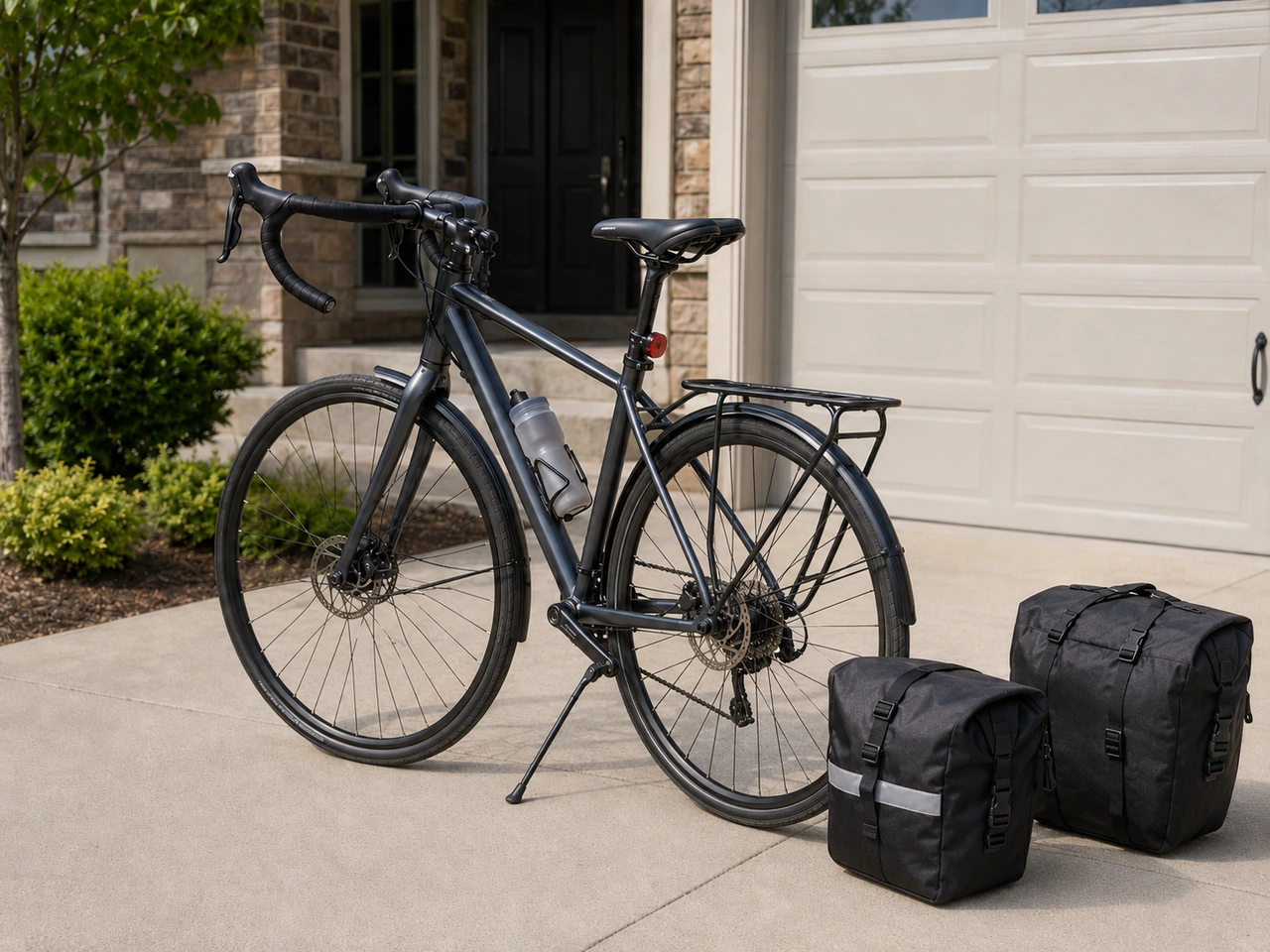
How should luggage be carried on a bicycle?

269. How should luggage be carried on a bicycle?

On the rear carrier without securing it for a short trip.
As high as possible to keep it away from the wheels.
On one side of the bicycle to leave the other side clear.
✓ Securely, without affecting steering, braking, or balance.

Loose or badly positioned luggage can interfere with control, become caught in the wheels, or hide bicycle lights.

Luggage carried on a bicycle
AI-generated by Traffic-rules.com • WCIT • CC BY-SA
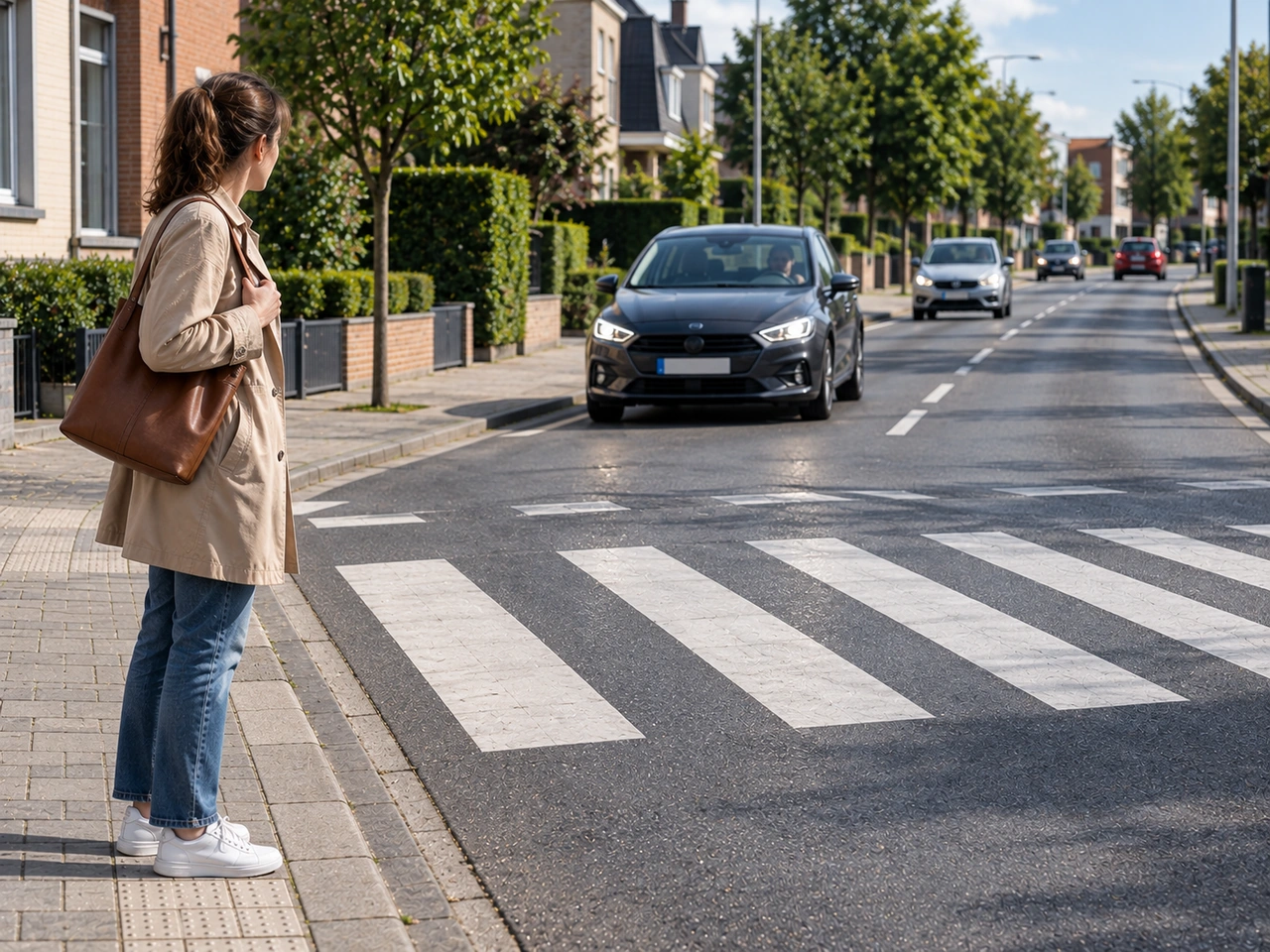
What should you do before using a pedestrian crossing?

270. What should you do before using a pedestrian crossing?

Check only the lane nearest to you before crossing.
Cross once a driver makes eye contact with you.
✓ Make sure it is safe to cross.
Rely on the crossing markings to make every vehicle stop.

Even at a pedestrian crossing, make sure approaching drivers have seen you and are able to stop before you cross.

Pedestrian checking traffic before using a crossing
AI-generated by Traffic-rules.com • WCIT • CC BY-SA
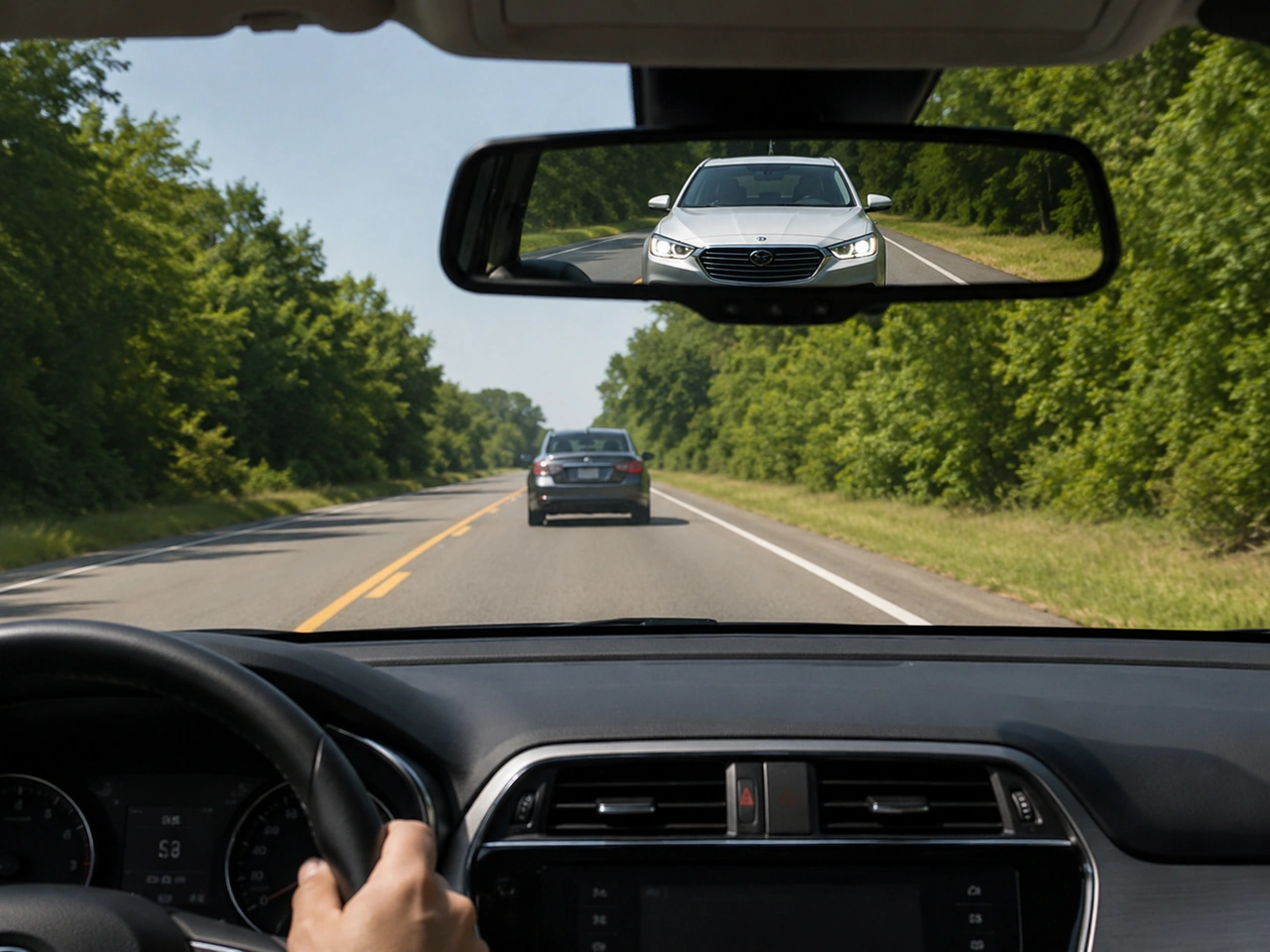
What should you do if another vehicle is tailgating you?

271. What should you do if another vehicle is tailgating you?

Tap the brakes to make them increase their distance.
✓ Stay calm and increase your safety margin ahead.
Reduce the gap ahead so they cannot move into it.
Move toward the centre to discourage them from passing.

If someone follows too closely, avoid sudden actions. Keeping more space in front gives you more time to brake gently if needed. If it is safe, allow the tailgating vehicle to pass.

Following vehicle visible close behind
AI-generated by Traffic-rules.com • WCIT • CC BY-SA
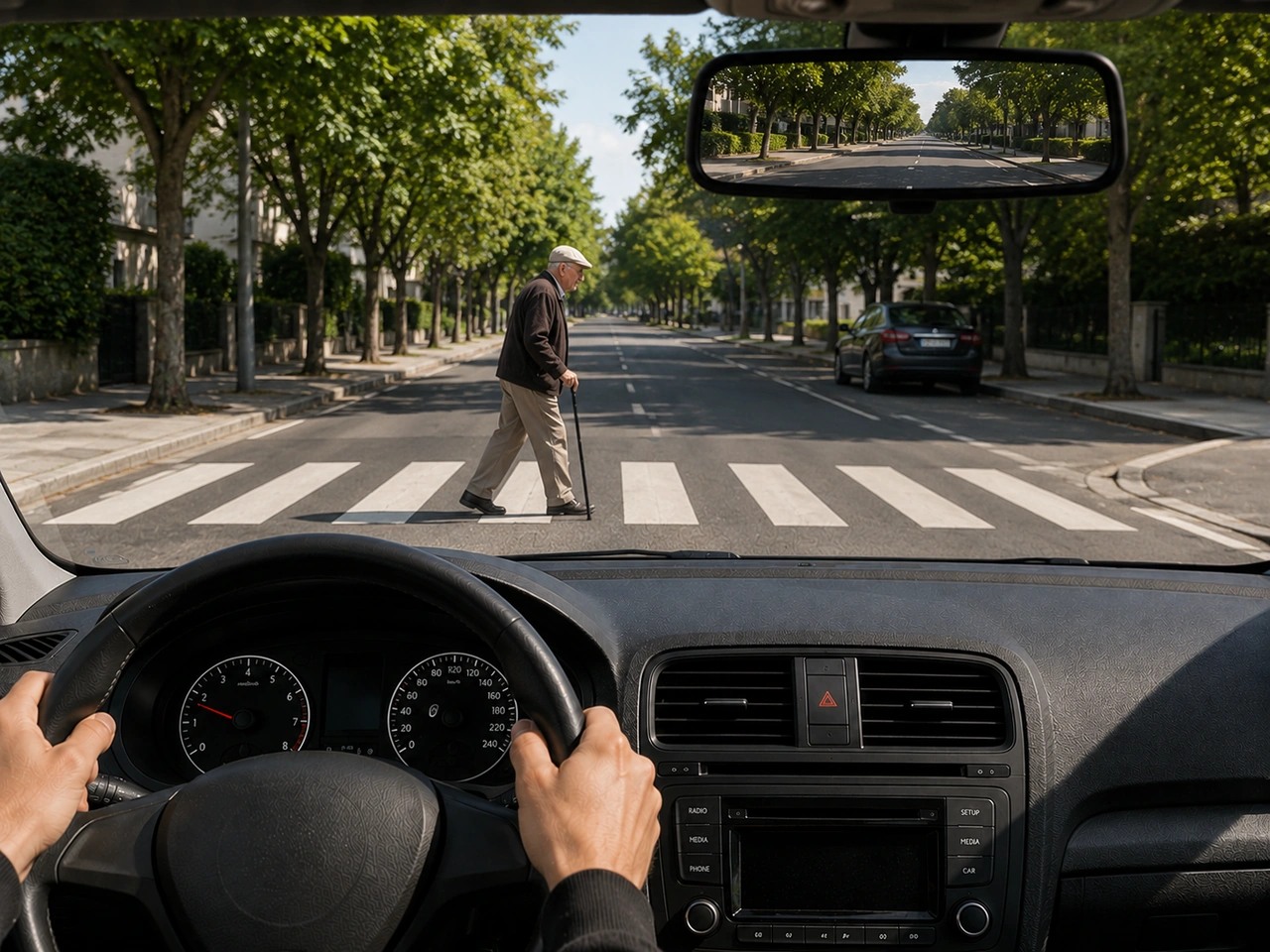
What should you do if a pedestrian is crossing slowly?

272. What should you do if a pedestrian is crossing slowly?

Drive around them if there is enough room.
✓ Wait patiently and let them finish crossing.
Move forward slowly to show that you are waiting.
Sound your horn to encourage them to cross faster.

Some pedestrians may need more time to cross. Stay patient, keep a safe distance, and do not pressure them.

Pedestrian crossing the road slowly
AI-generated by Traffic-rules.com • WCIT • CC BY-SA
Why must luggage or other objects not obstruct the driver's view?

273. Why must luggage or other objects not obstruct the driver's view?

✓ They can hide hazards and reduce the driver's ability to see safely.
They can reduce the brightness of the headlights.
They can increase tyre pressure.
They can increase the vehicle's braking distance.

The driver must have a clear view of the road and surroundings. Luggage, decorations, or other objects that obstruct the windscreen, windows, or mirrors can hide pedestrians, cyclists, vehicles, signs, or other hazards.

Luggage obstructing the driver's view
AI-generated by Traffic-rules.com • WCIT • CC BY-SA
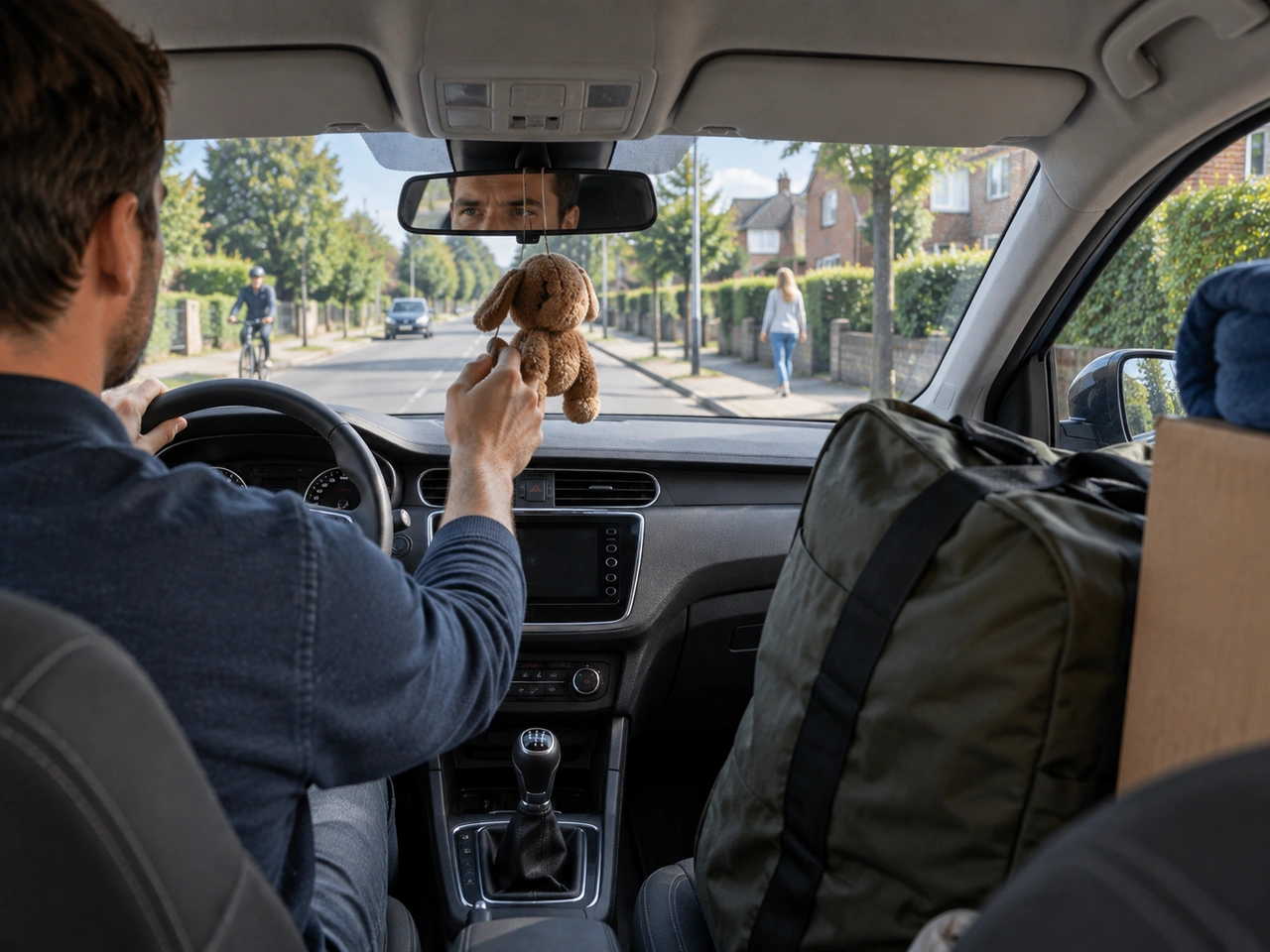
What should you check shortly after securing a load?

274. What should you check shortly after securing a load?

Increase speed briefly to test the restraints.
Check the load only when you reach your destination.
Loosen the restraints slightly after the load has settled.
✓ Stop safely and check that the restraints are still tight.

Loads and straps may settle or loosen after the journey begins. Recheck them at a safe stopping place.

Rechecking straps securing a vehicle's load
AI-generated by Traffic-rules.com • WCIT • CC BY-SA
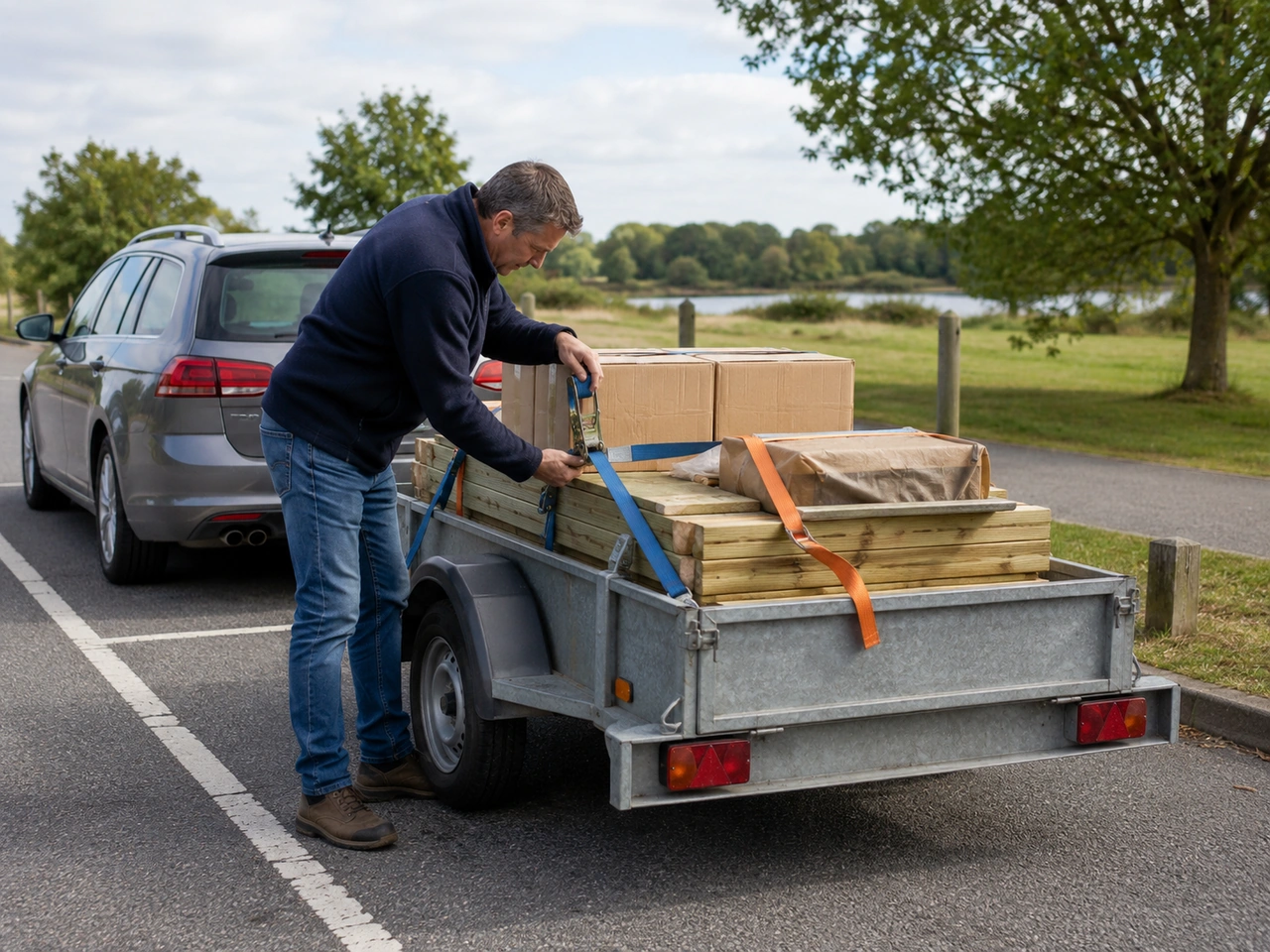
What should you do when driving in strong wind?

275. What should you do when driving in strong wind?

✓ Hold the steering wheel firmly and reduce speed if needed.
Open the windows to improve aerodynamics.
Use main beam to make your vehicle more visible.
Increase speed so the vehicle is less affected by gusts.

Strong wind can affect vehicle control, especially near open areas, bridges, large vehicles, cyclists, and motorcyclists.

Driver controlling a vehicle in strong wind
AI-generated by Traffic-rules.com • WCIT • CC BY-SA
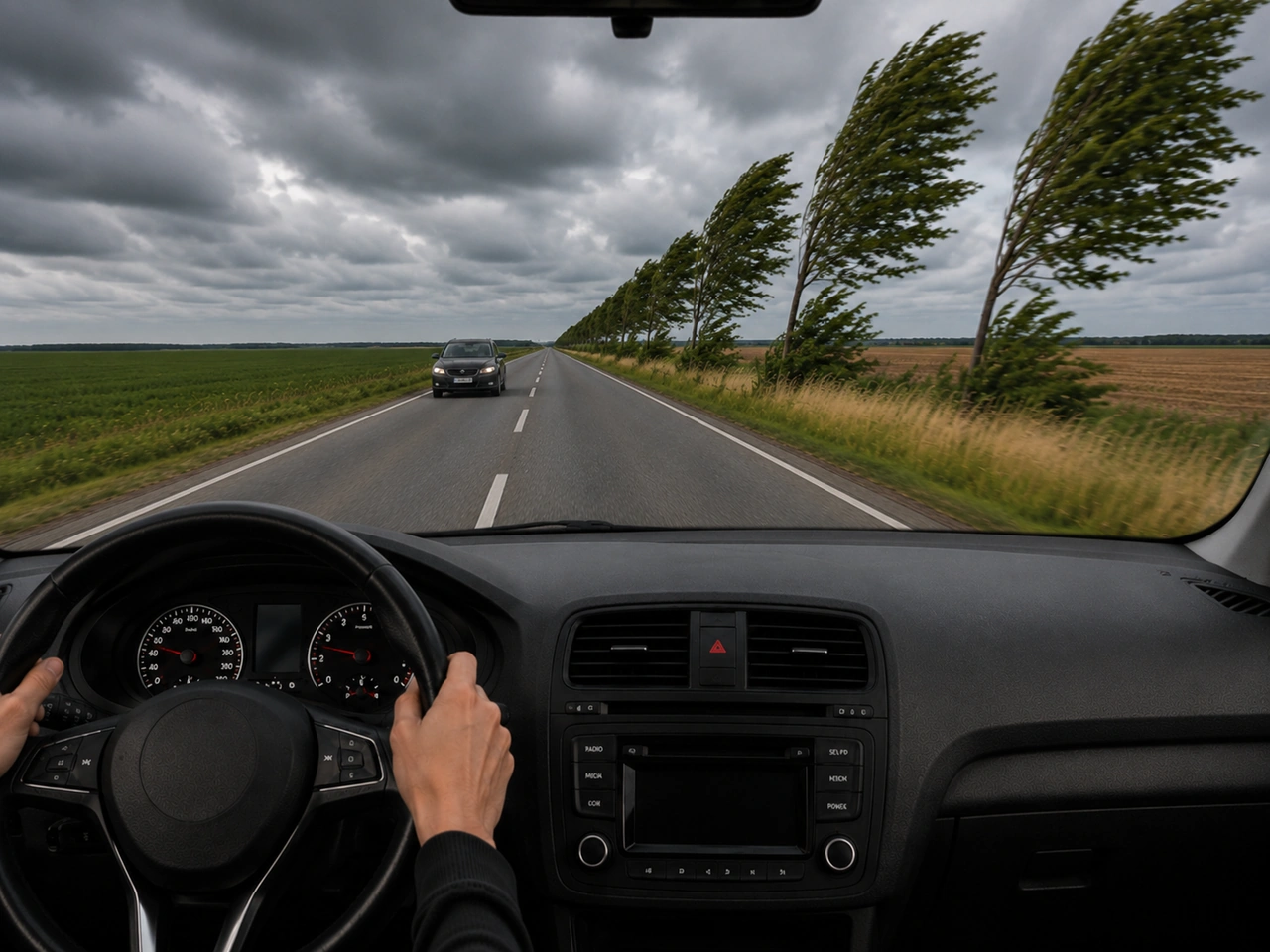
Why must you take wider turns when towing a trailer?

276. Why must you take wider turns when towing a trailer?

Wider turns reduce the trailer's stopping distance.
✓ The trailer follows a tighter path than the towing vehicle.
Wide turns prevent the trailer from swaying.
The trailer always follows the same path as the towing vehicle.

Trailer wheels cut closer to the inside of a turn. Allow enough clearance from kerbs, signs, pedestrians, and other vehicles.

Towing vehicle and trailer negotiating a turn
AI-generated by Traffic-rules.com • WCIT • CC BY-SA
What should you do if an overtaking vehicle is coming toward you?

277. What should you do if an overtaking vehicle is coming toward you?

✓ Slow down and move slightly aside if safe.
Accelerate to pass the danger point more quickly.
Brake sharply as soon as the vehicle enters your lane.
Maintain your speed and expect the other driver to return to their lane.

If an oncoming vehicle creates danger while overtaking, reduce speed and make space if it is safe to do so. Avoid sudden movements that could create an additional hazard.

Oncoming vehicle overtaking into the driver's lane
AI-generated by Traffic-rules.com • WCIT • CC BY-SA
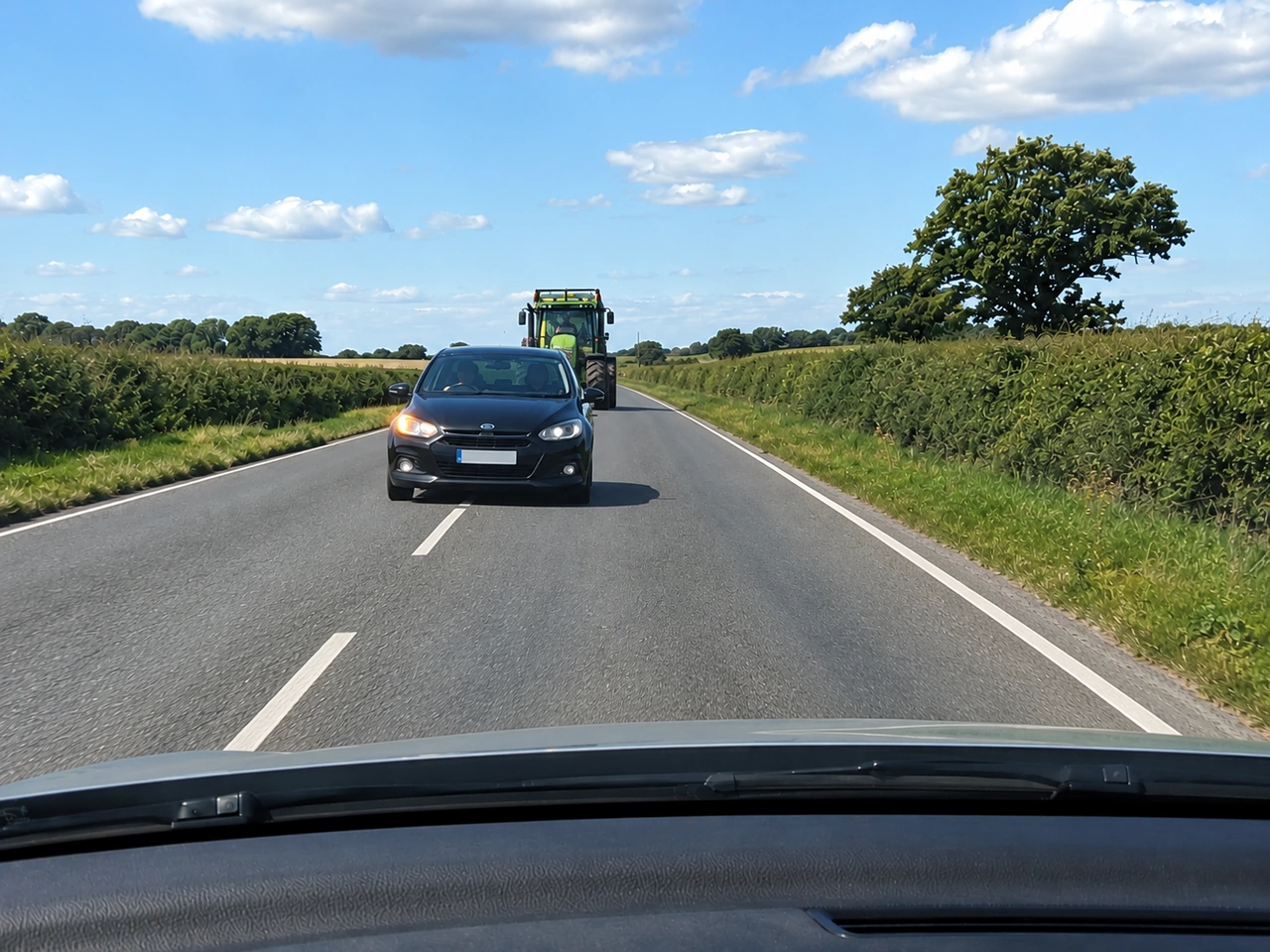
What should you do with the steering wheel after completing a turn?

278. What should you do with the steering wheel after completing a turn?

✓ Guide it smoothly back towards the straight-ahead position.
Release it completely and let it spin freely.
Hold it in the turned position.
Turn it quickly in the opposite direction.

After completing a turn, guide the steering wheel smoothly back towards the straight-ahead position while maintaining control. Do not allow the wheel to spin freely through your hands.

Guiding the steering wheel back after a turn
AI-generated by Traffic-rules.com • WCIT • CC BY-SA
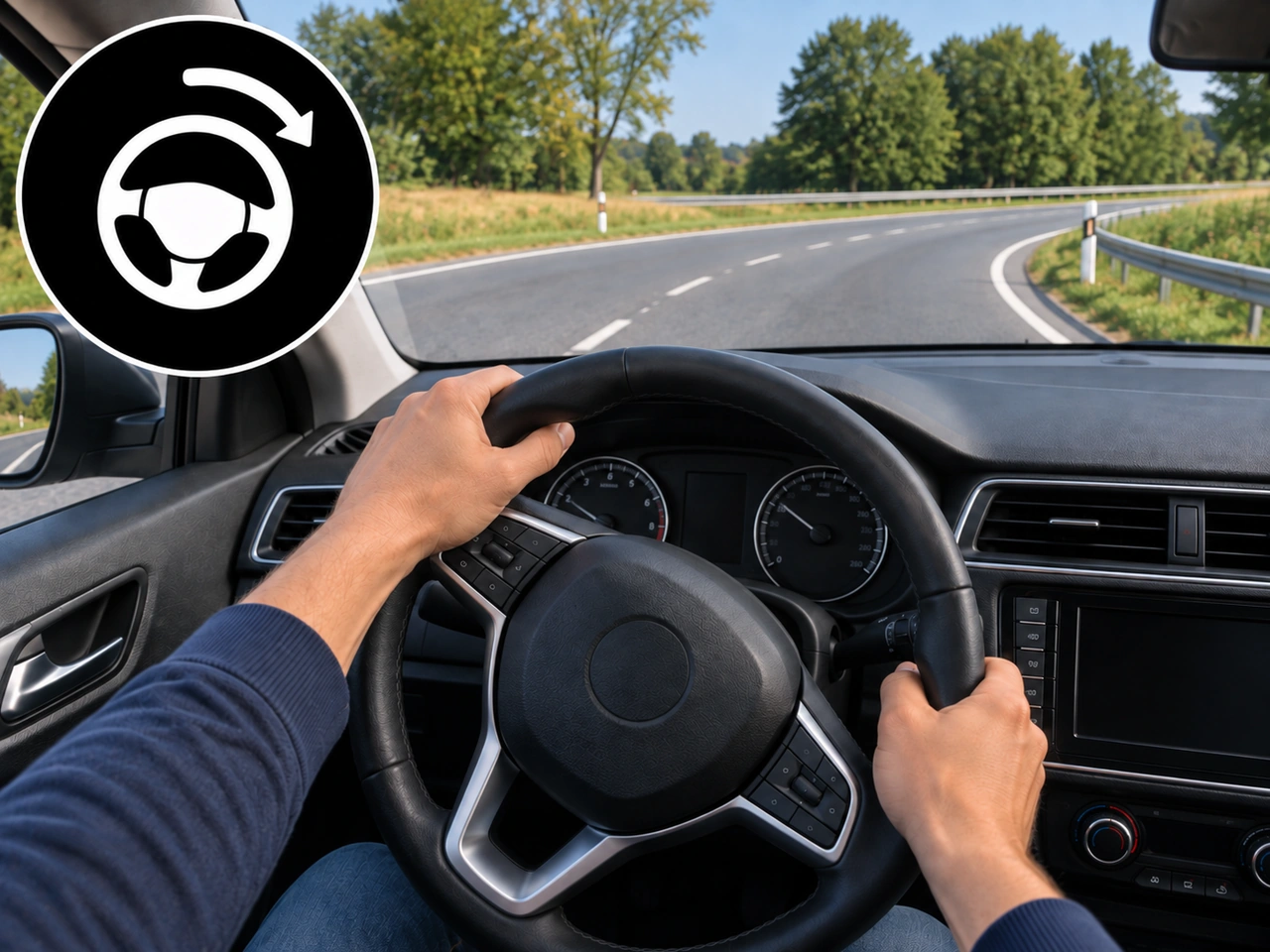
How should cyclists brake on a wet road?

279. How should cyclists brake on a wet road?

Brake sharply once you are close to stopping.
Use only one brake to avoid skidding.
Brake normally because wet roads do not affect grip.
✓ Brake earlier and more gradually than usual.

Wet surfaces reduce grip and increase stopping distance. Smooth, early braking helps prevent skidding.

Cyclist braking on a wet road
AI-generated by Traffic-rules.com • WCIT • CC BY-SA
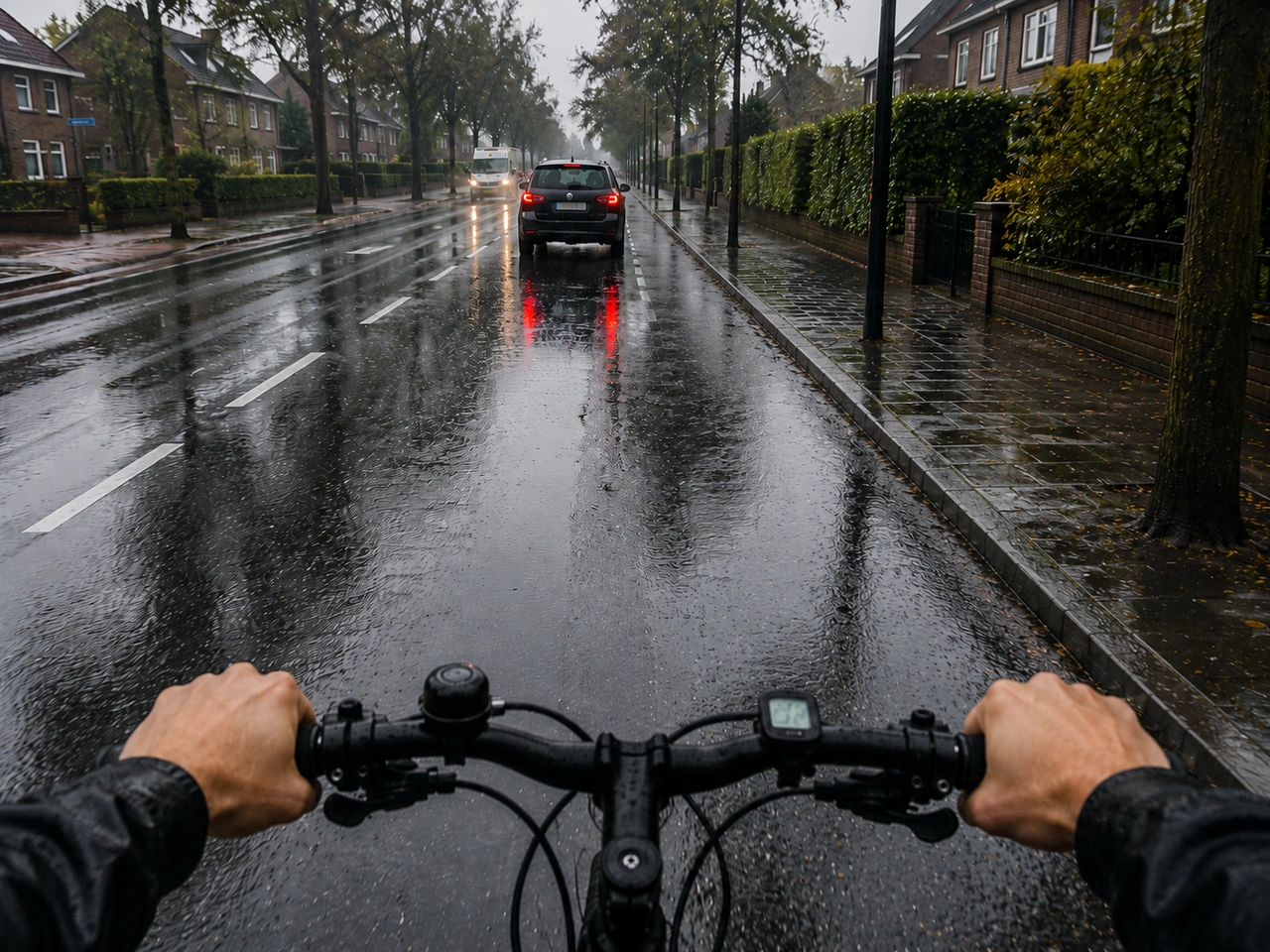
What should you normally do before starting an automatic vehicle?

280. What should you normally do before starting an automatic vehicle?

Leave the selector between two positions.
Select R and release the parking brake.
Select D and press the accelerator.
✓ Select P or N and press the brake pedal.

Before starting an automatic vehicle, make sure P (Park) or N (Neutral) is selected and press the brake pedal. Many automatic vehicles will only allow the engine to start when these conditions are met.

Gear selector and brake before starting an automatic vehicle
AI-generated by Traffic-rules.com • WCIT • CC BY-SA
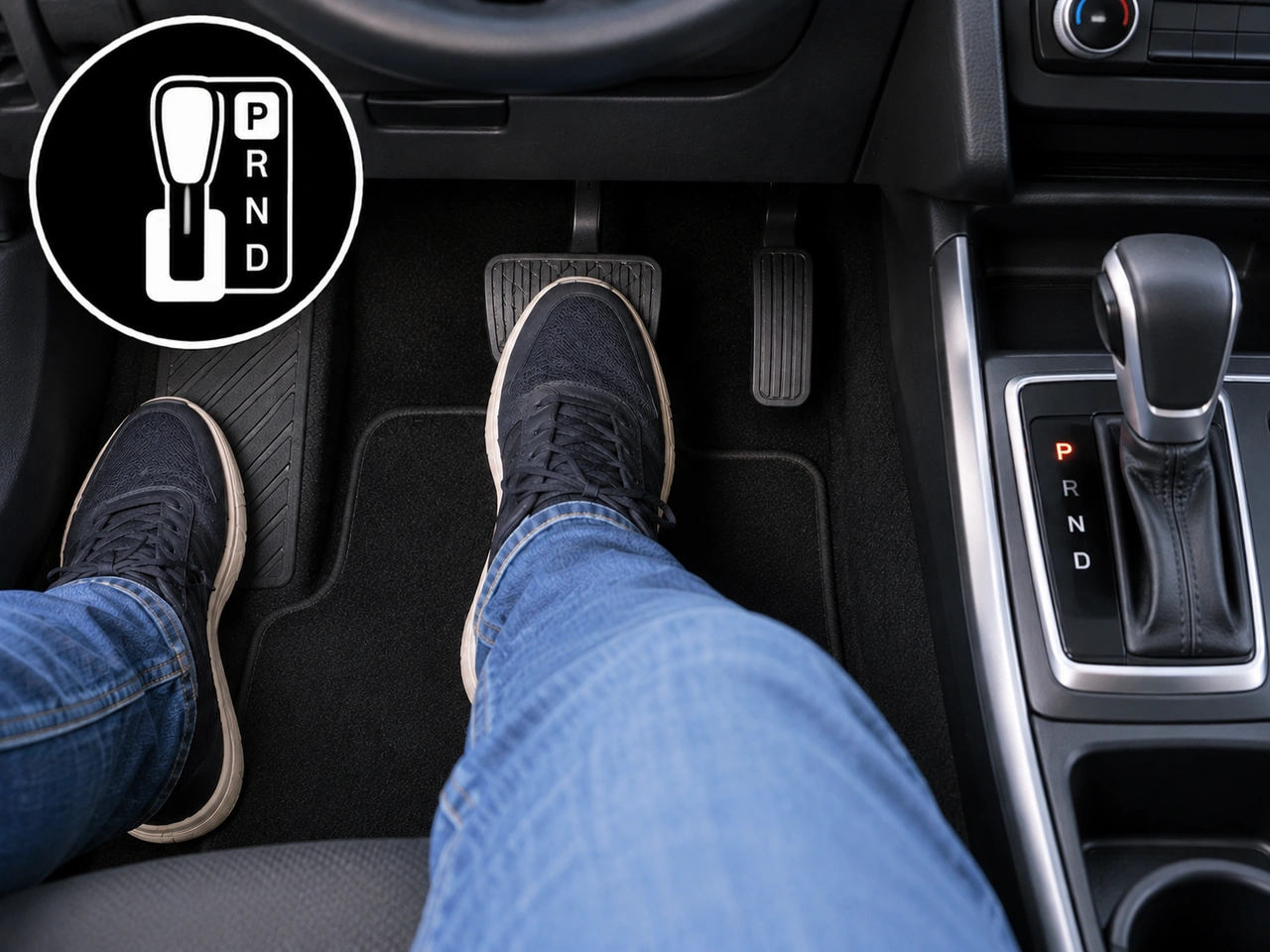
Why should you look well ahead while driving?

281. Why should you look well ahead while driving?

To avoid checking your mirrors as often.
To concentrate only on traffic in your lane.
✓ To identify developing hazards early and gain more time to react.
To maintain the same speed in every situation.

Looking well ahead helps you identify developing hazards early, such as slowing traffic, pedestrians, junctions, or changing road conditions. Earlier detection gives you more time to assess the situation and respond smoothly and safely.

Driver observing the road and traffic ahead
AI-generated by Traffic-rules.com • WCIT • CC BY-SA
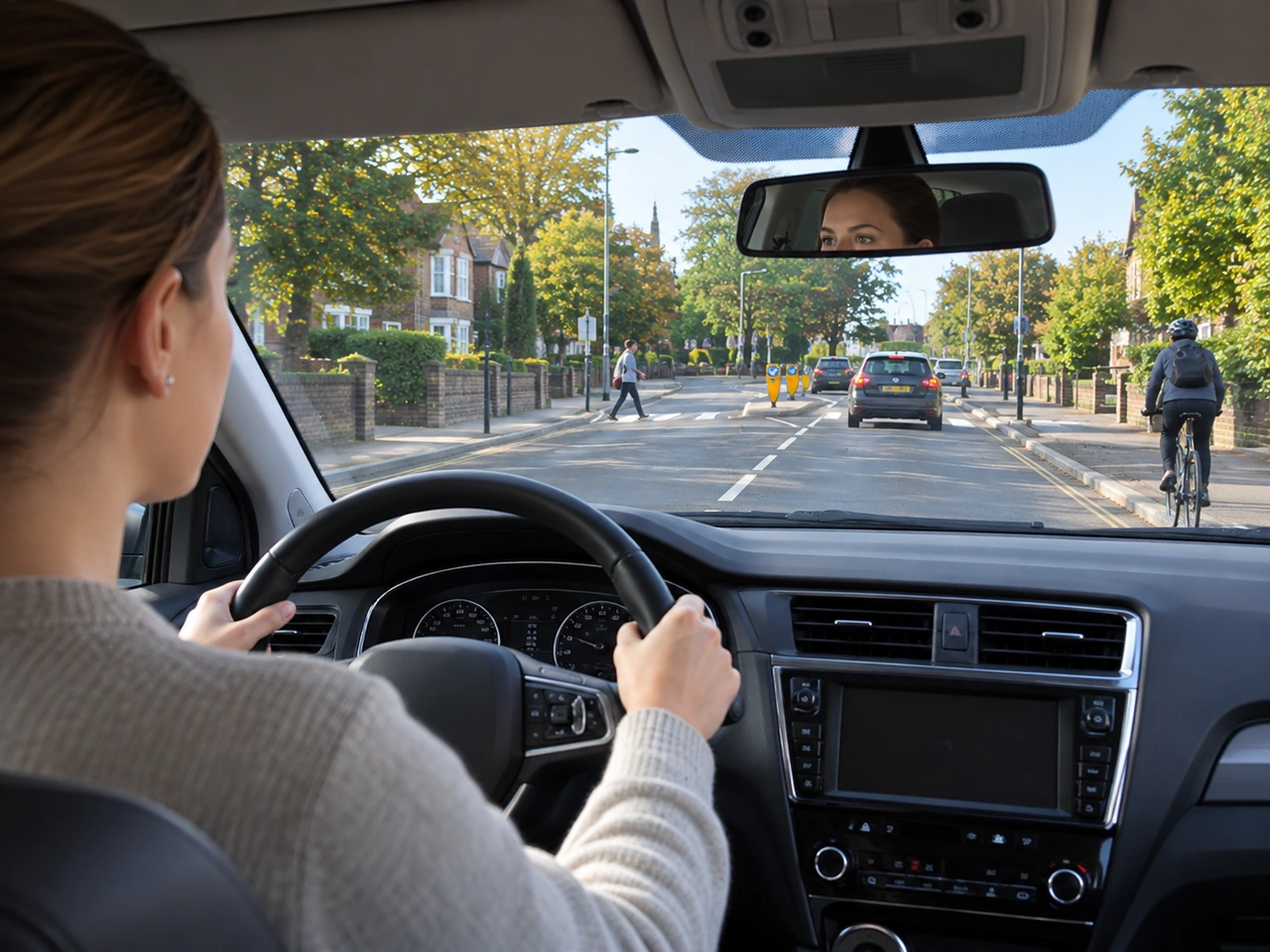
Why is counting drinks an unreliable way to decide whether you can drive?

282. Why is counting drinks an unreliable way to decide whether you can drive?

Food makes each drink count as less alcohol.
✓ Drink strength, serving size, and individual effects can vary.
The number of drinks matters more than their strength.
You can judge your alcohol level by how sober you feel.

Alcohol concentration and serving sizes vary, and factors such as body size, food, medication, and time can affect impairment.

Alcoholic drinks with different strengths and serving sizes
AI-generated by Traffic-rules.com • WCIT • CC BY-SA
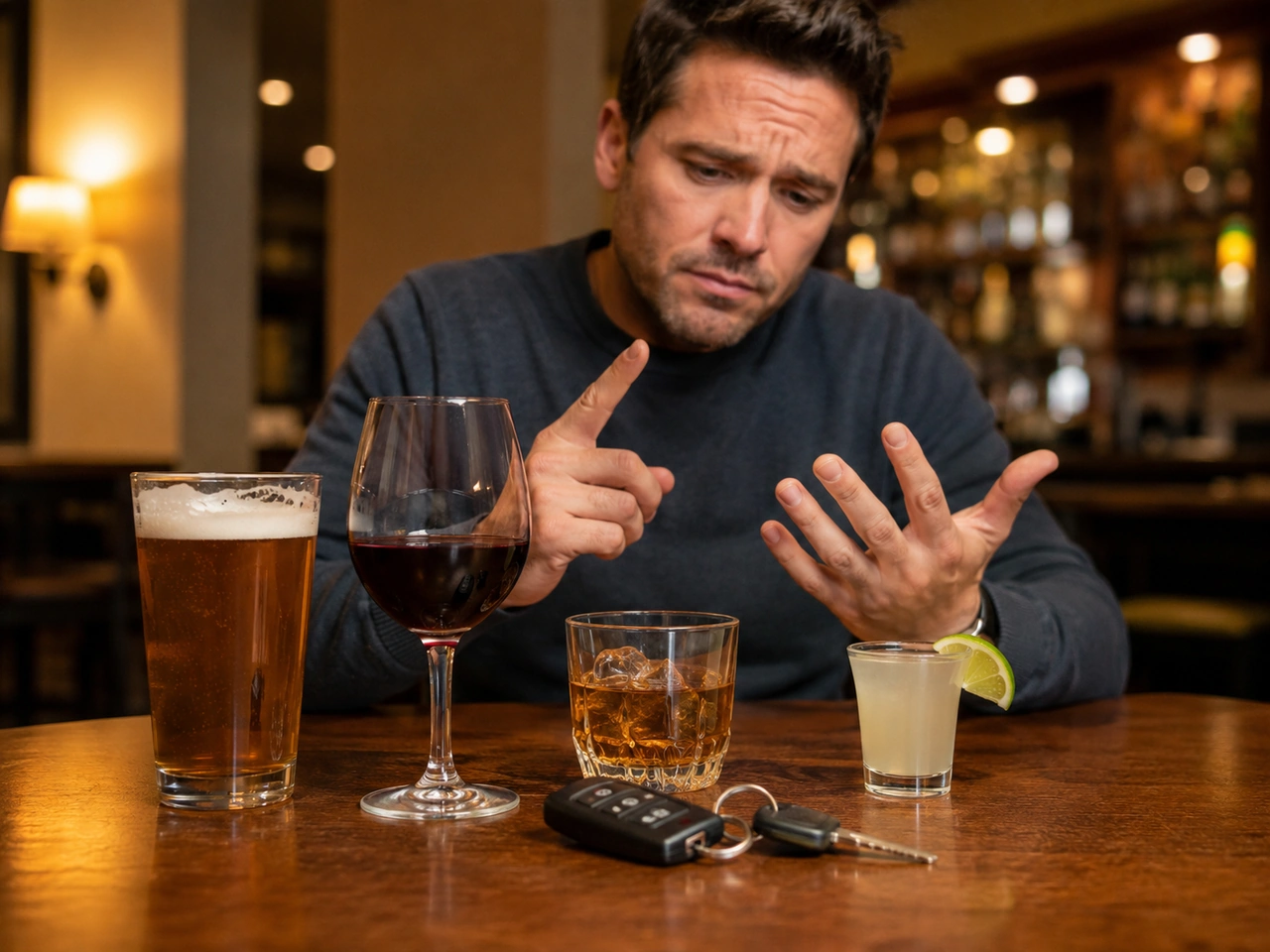
Why should you not rely only on a reversing camera?

283. Why should you not rely only on a reversing camera?

It shows every blind spot around the vehicle.
✓ It may not show everything around the vehicle.
It removes the need to look around before reversing.
It makes mirrors unnecessary when reversing.

Reversing cameras can help, but they may have blind spots and limited coverage. Always check your mirrors and surroundings, look around where possible, and reverse slowly.

Reversing-camera display inside a vehicle
AI-generated by Traffic-rules.com • WCIT • CC BY-SA
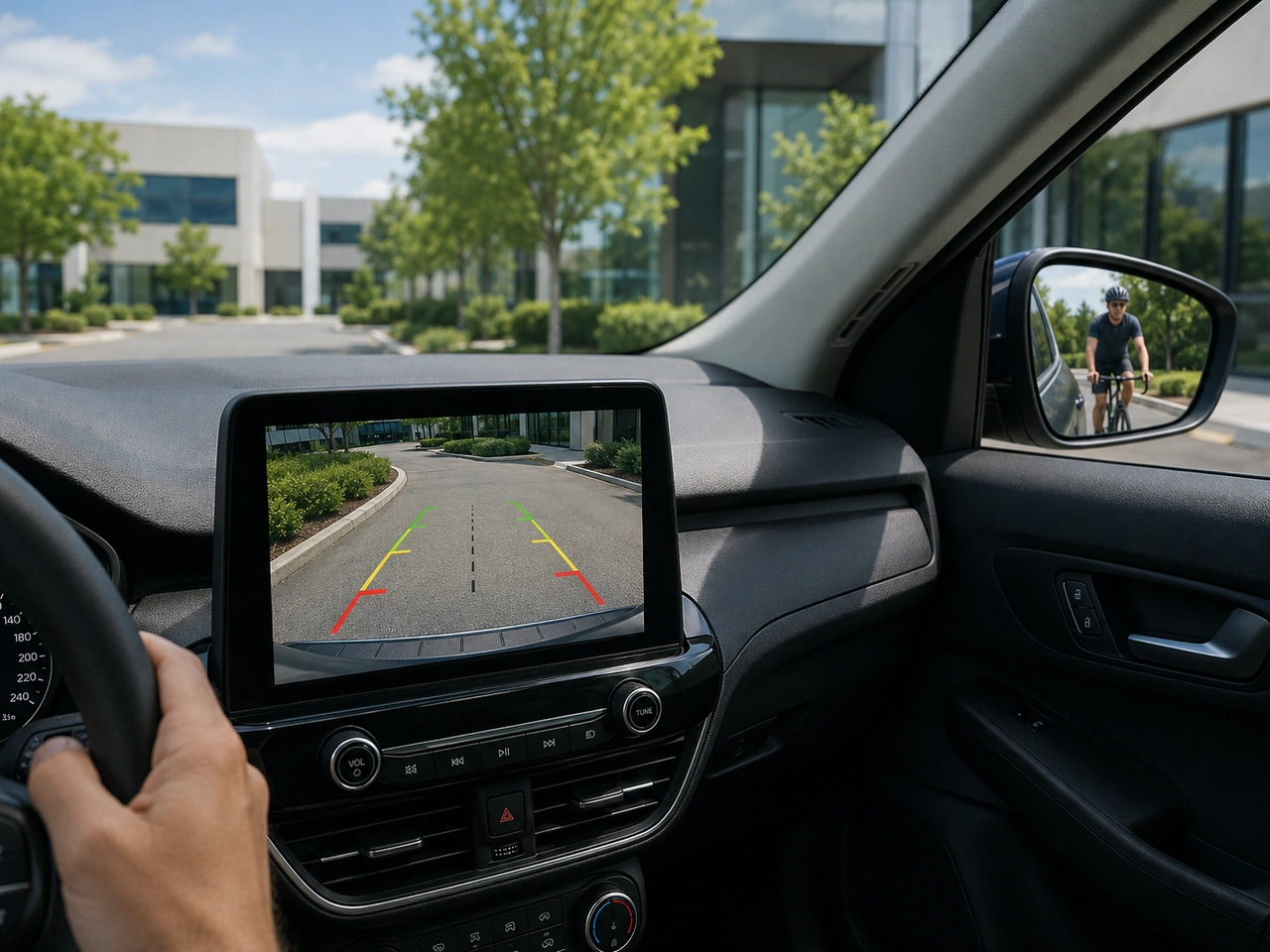
Why should headlights, indicators, and other exterior lights be kept clean and working?

284. Why should headlights, indicators, and other exterior lights be kept clean and working?

They prevent the windscreen from misting.
✓ They help you see, be seen, and communicate your intentions.
They improve braking performance in poor weather.
They only need to work when you drive at night.

Dirty or faulty lights reduce visibility and make it harder for other road users to understand when you are braking, turning, reversing, or changing position.

Checking and cleaning a vehicle's exterior lights
AI-generated by Traffic-rules.com • WCIT • CC BY-SA
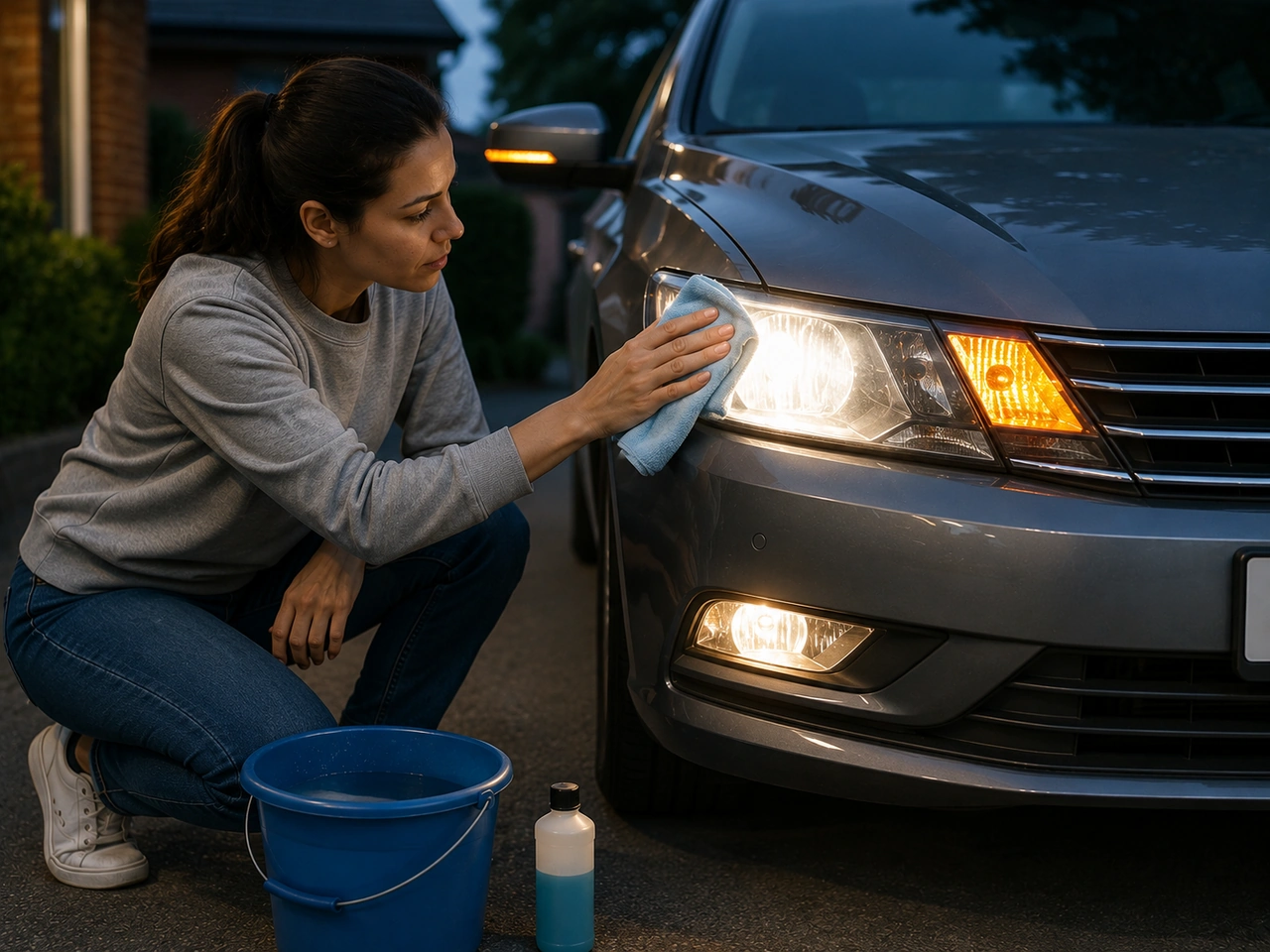
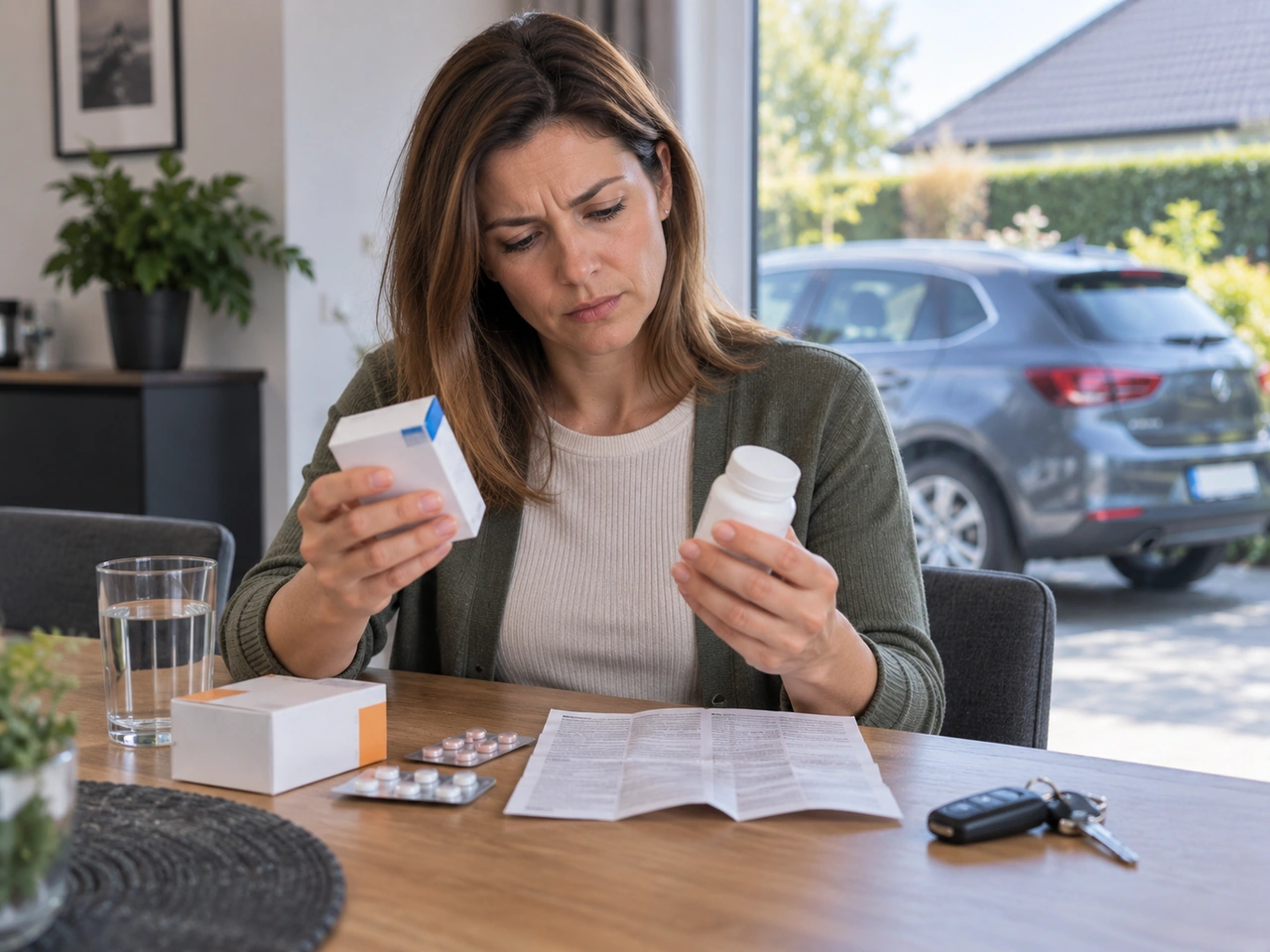
Why should you be careful when taking more than one medicine before driving?

285. Why should you be careful when taking more than one medicine before driving?

They can change the tyre pressure.
They may interfere with the vehicle's electronics.
They usually make road signs harder to see.
✓ Their combined effects may impair your ability to drive.

Different medicines can interact or have combined side effects such as drowsiness, dizziness, blurred vision, or slower reactions. Check the instructions and seek advice from a doctor or pharmacist if you are unsure whether it is safe to drive.

Multiple medicines and their potential effects on driving
AI-generated by Traffic-rules.com • WCIT • CC BY-SA
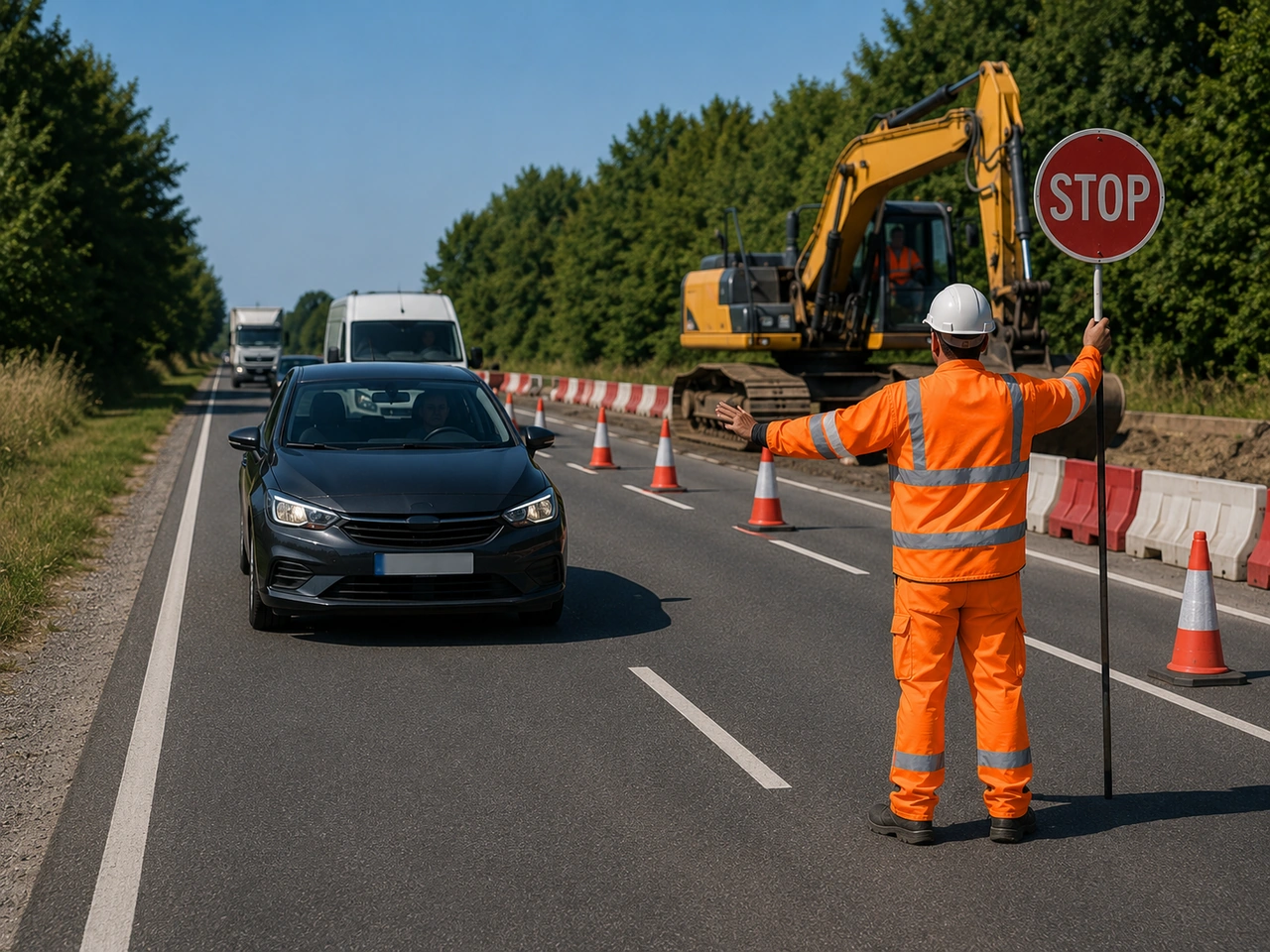
What should you do when a road worker directs traffic?

286. What should you do when a road worker directs traffic?

Obey only if traffic has completely stopped.
Wait for a police officer to confirm the signal.
✓ Follow the worker's signals and instructions.
Follow the normal traffic signs instead.

Authorised road workers may control traffic through a work zone. Watch carefully and follow their directions.

Road worker directing traffic
AI-generated by Traffic-rules.com • WCIT • CC BY-SA
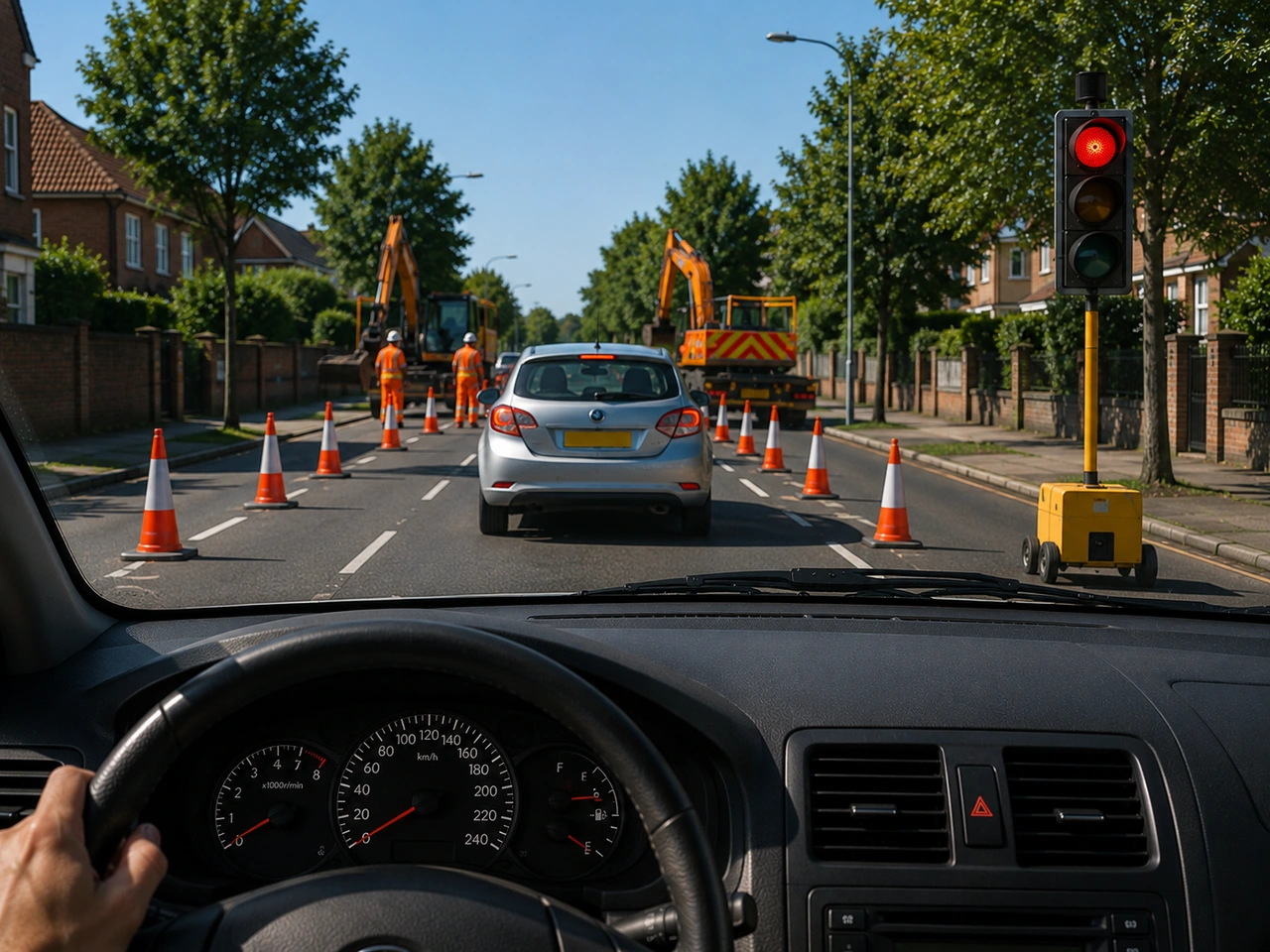
What should you do when roadworks are ahead?

287. What should you do when roadworks are ahead?

Maintain normal speed if your lane remains open.
Use your horn to warn road workers that you are approaching.
✓ Slow down and follow the temporary signs.
Follow the vehicle ahead closely through the work zone.

Roadworks can create narrow lanes, workers near traffic, uneven surfaces, and temporary rules. Slow down and follow the signs.

Roadworks and temporary traffic signs ahead
AI-generated by Traffic-rules.com • WCIT • CC BY-SA
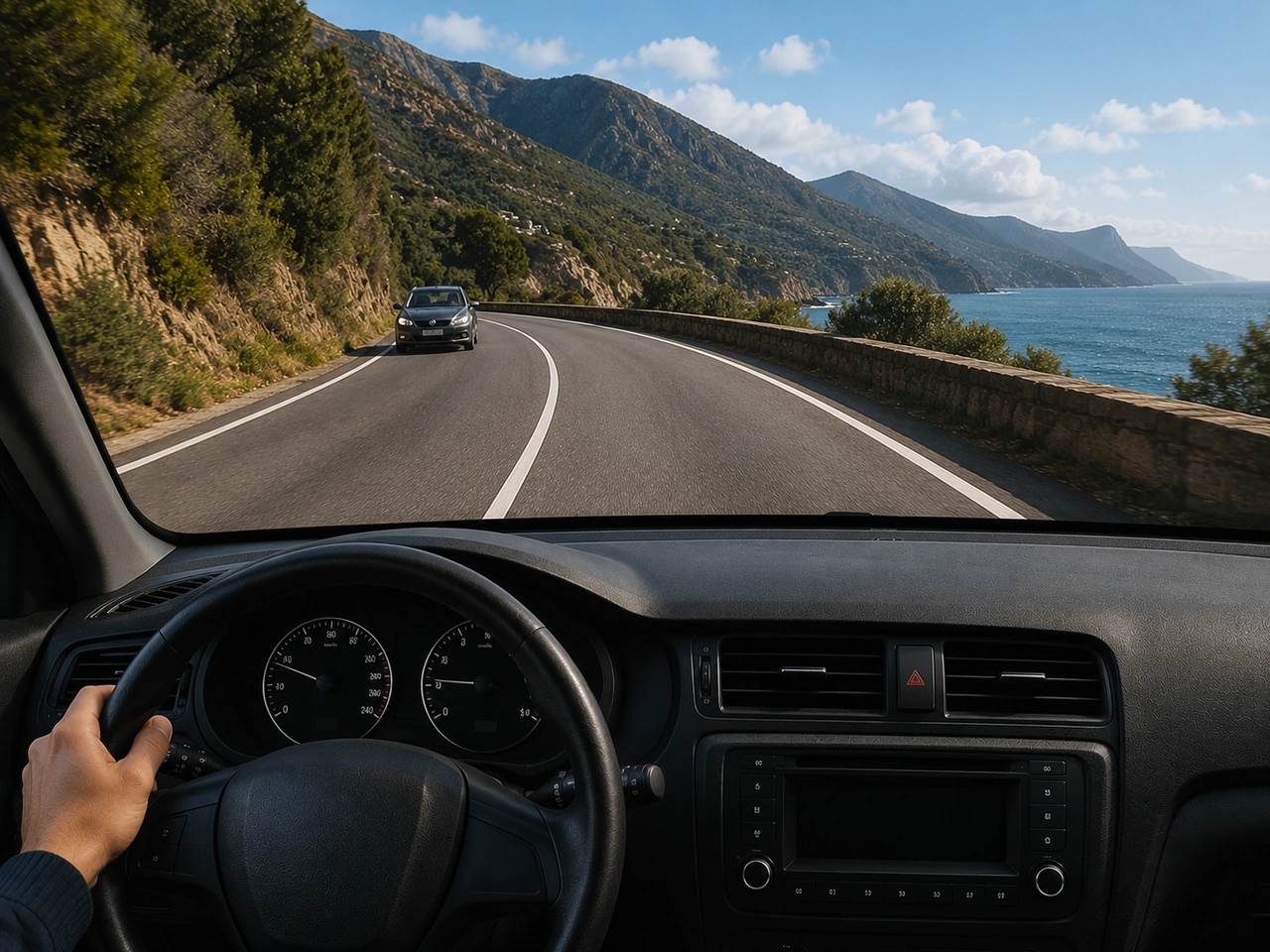
Why should you avoid braking hard on a curve?

288. Why should you avoid braking hard on a curve?

It can make the tyres grip the road more strongly.
It can make the vehicle accelerate more slowly afterwards.
✓ It can reduce control and increase the risk of skidding.
It can make the steering feel heavier.

Hard braking on a curve can upset the vehicle's balance and reduce grip. Slow down before the curve and steer smoothly.

Vehicle braking while negotiating a bend
AI-generated by Traffic-rules.com • WCIT • CC BY-SA
What should you do if you see loose gravel on the road?

289. What should you do if you see loose gravel on the road?

Brake firmly before the tyres begin to slide.
Steer around loose patches whenever possible.
✓ Slow down and avoid sudden steering or braking.
Maintain your speed and avoid using the brakes.

Loose gravel reduces grip and can make the vehicle skid. Slow down and use smooth steering and braking.

Vehicle on a loose gravel road
AI-generated by Traffic-rules.com • WCIT • CC BY-SA
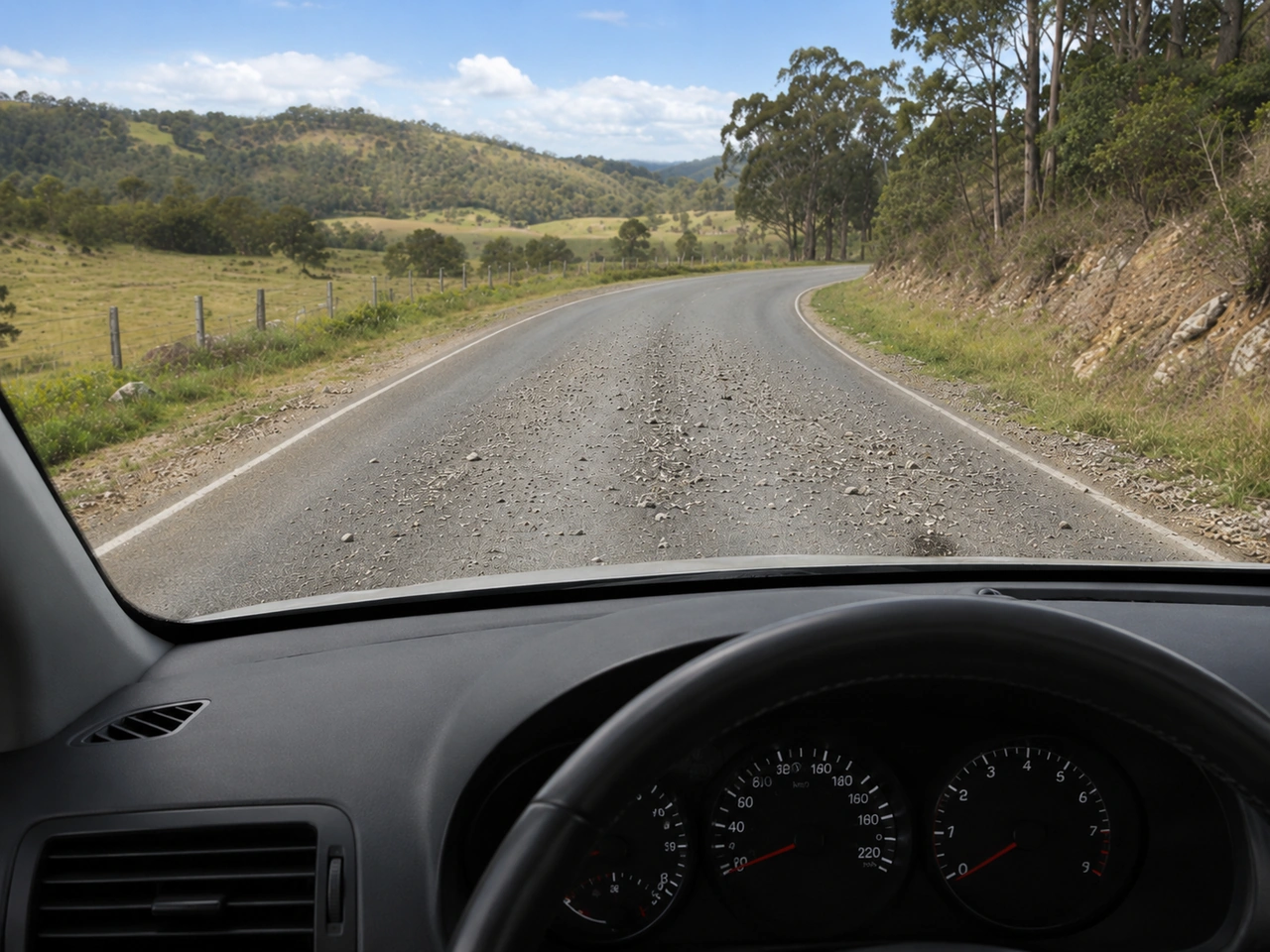
Why should you keep your windscreen clean?

290. Why should you keep your windscreen clean?

To prevent windscreen damage.
✓ To see the road clearly.
To improve engine cooling.
To reduce fuel consumption.

A clean windscreen gives you a clear view of the road, signs, pedestrians, cyclists, and other vehicles.

Cleaning a windscreen to improve the driver's view
AI-generated by Traffic-rules.com • WCIT • CC BY-SA
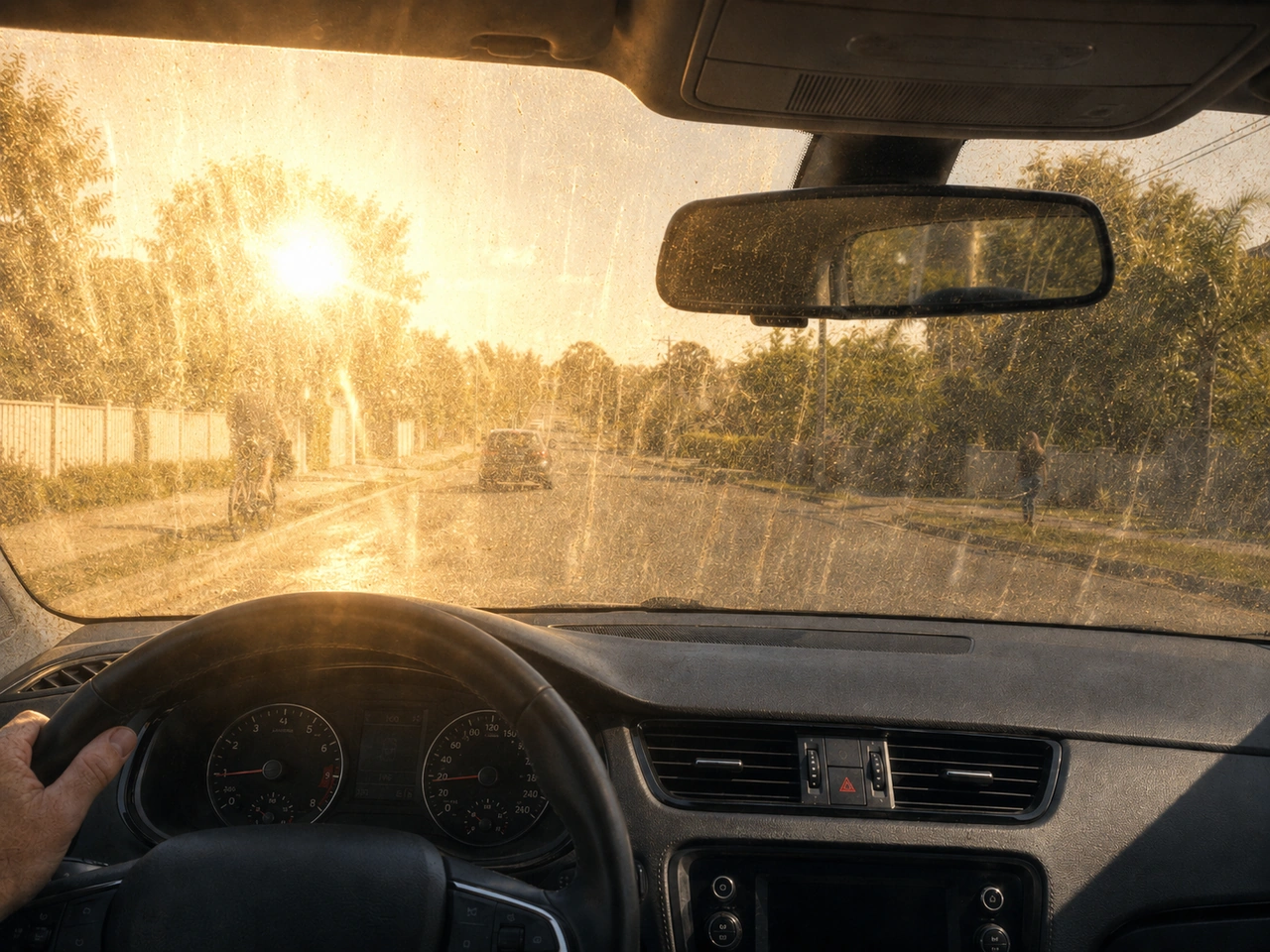
Why should you check your mirrors before braking?

291. Why should you check your mirrors before braking?

To check whether the road surface is slippery.
To decide which gear to use while slowing down.
To check whether your brake lights are working.
✓ To know what is happening behind you.

Checking your mirrors helps you understand what is happening behind you and anticipate how following traffic may react. In an emergency, do not delay necessary braking.

Driver checking following traffic before braking
AI-generated by Traffic-rules.com • WCIT • CC BY-SA
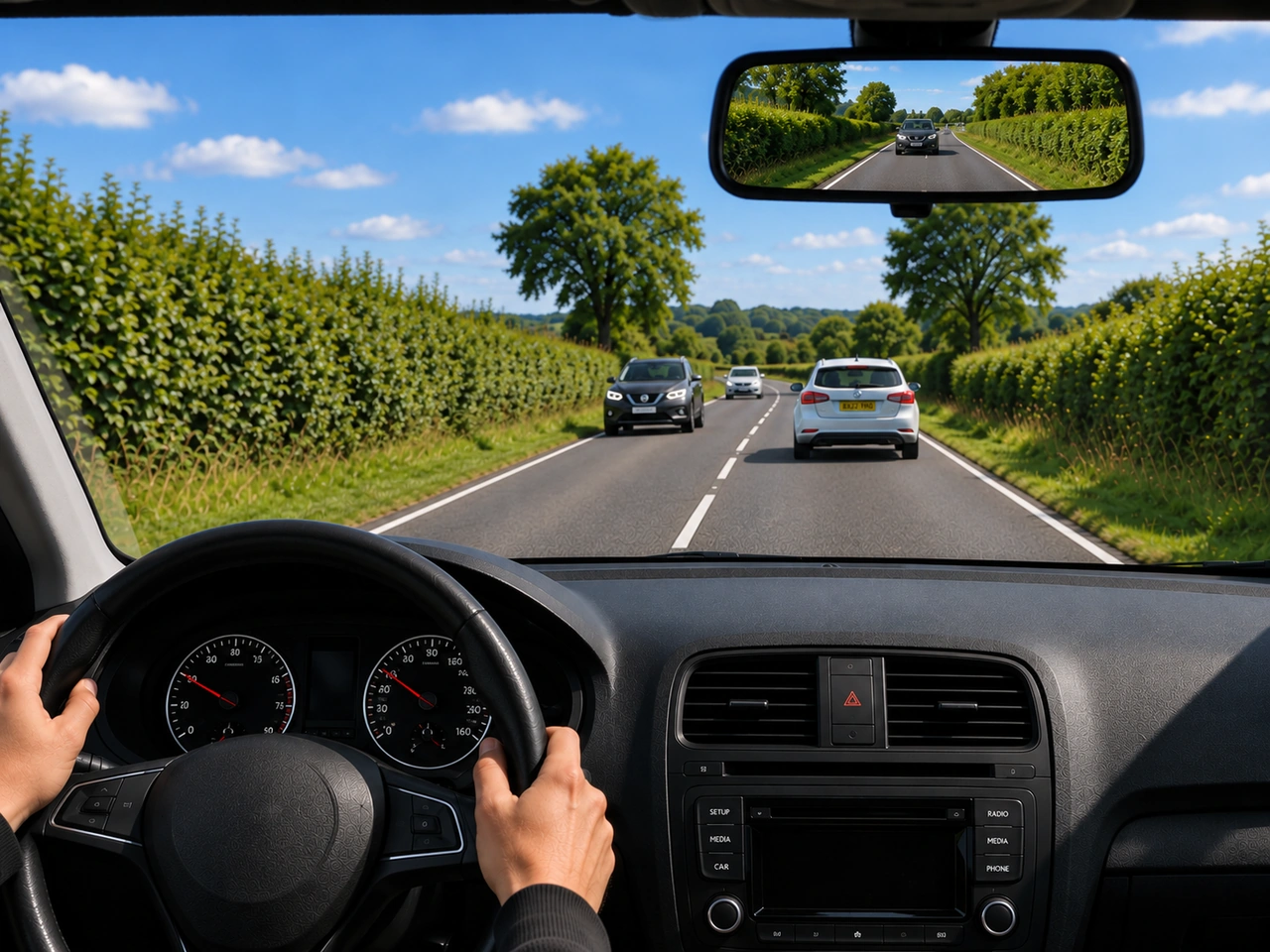
Should motorcyclists wear protective clothing?

292. Should motorcyclists wear protective clothing?

No, a helmet provides enough protection on its own.
✓ Yes, it can reduce injuries from falls and contact with the road.
Yes, but only when riding on motorways.
No, it is only useful when riding at high speeds.

Motorcyclists should wear protective clothing because it can reduce injuries from falls, impacts and sliding on the road. Suitable jackets, trousers, gloves and boots provide additional protection, but they do not replace a securely fitted helmet or safe riding.

Motorcyclist wearing protective riding clothing
AI-generated by Traffic-rules.com • WCIT • CC BY-SA
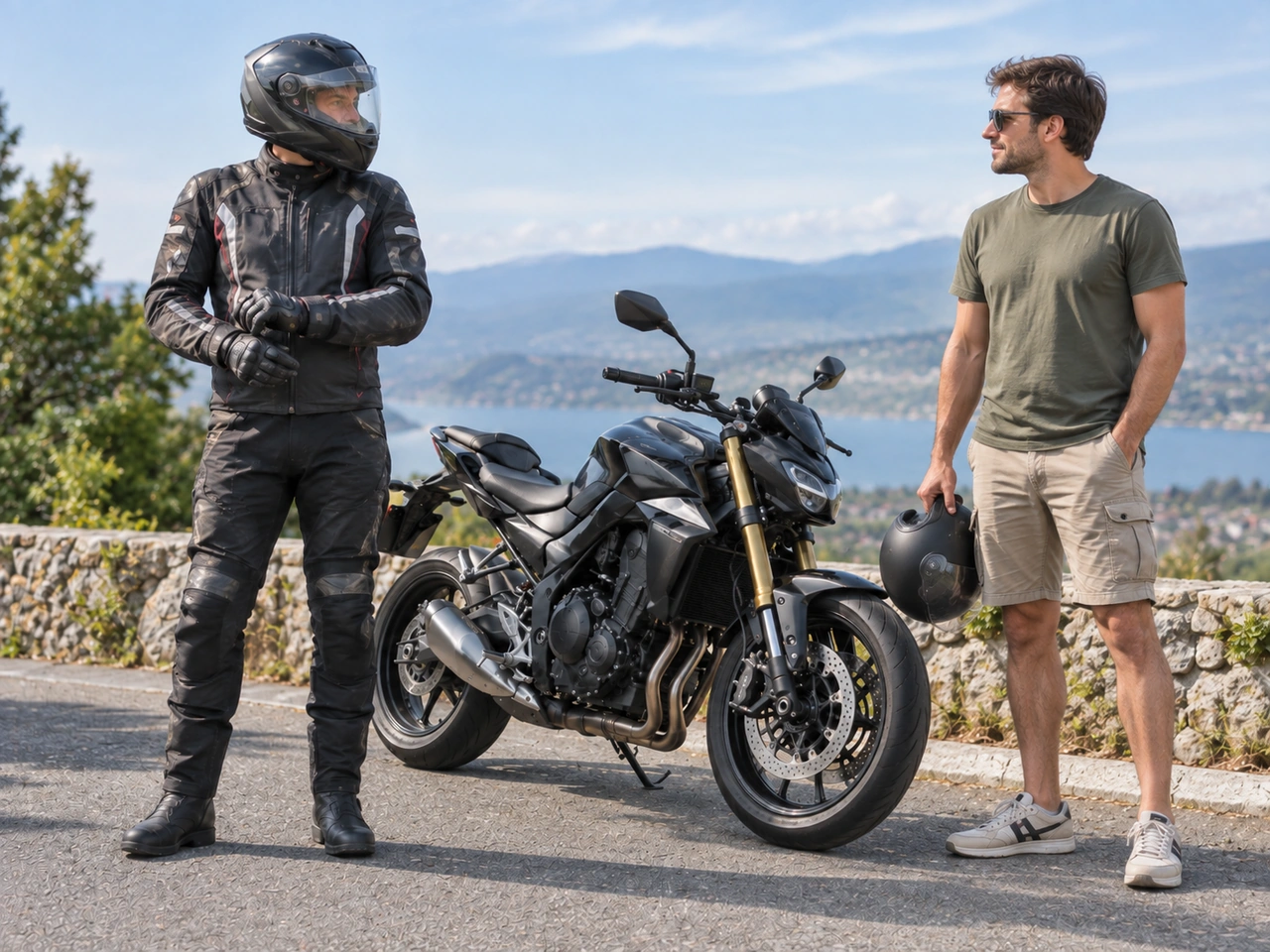
You should check your mirrors before changing lanes.

293. You should check your mirrors before changing lanes.

✓ True.
False.

Checking your mirrors helps you see surrounding traffic before moving into another lane.

Driver checking a mirror before changing lanes
AI-generated by Traffic-rules.com • WCIT • CC BY-SA
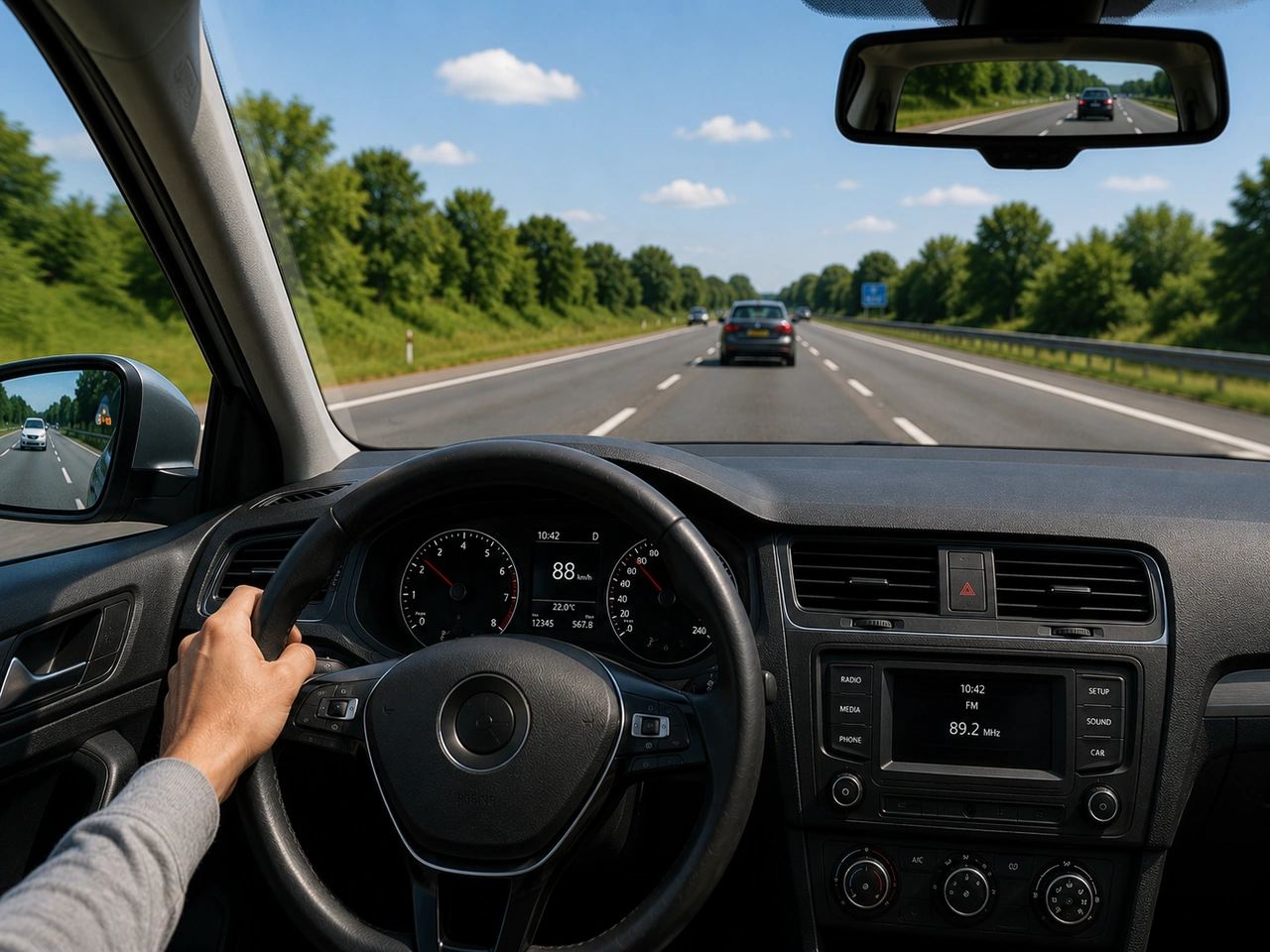
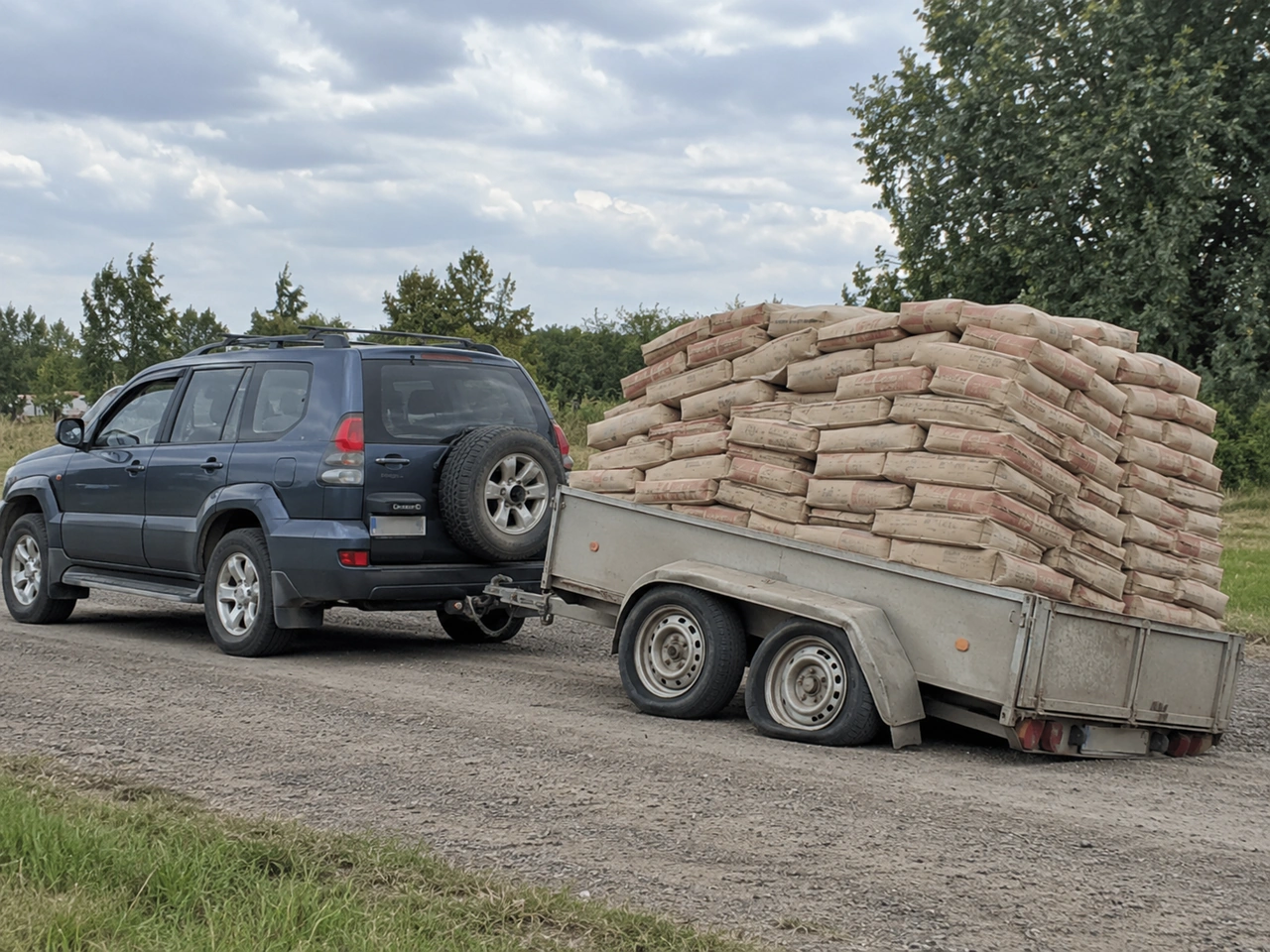
Why should you avoid overloading a trailer?

294. Why should you avoid overloading a trailer?

It keeps the trailer more stable in strong winds.
It makes the trailer easier to control.
✓ It can reduce stability and place excessive strain on the vehicle.
It reduces tyre wear on the towing vehicle.

Overloading can affect braking, steering, tyres, suspension, and trailer stability. Always remain within permitted limits. After loading, check that the load is secure and correctly distributed before starting your journey.

Loaded trailer and towing limits
AI-generated by Traffic-rules.com • WCIT • CC BY-SA
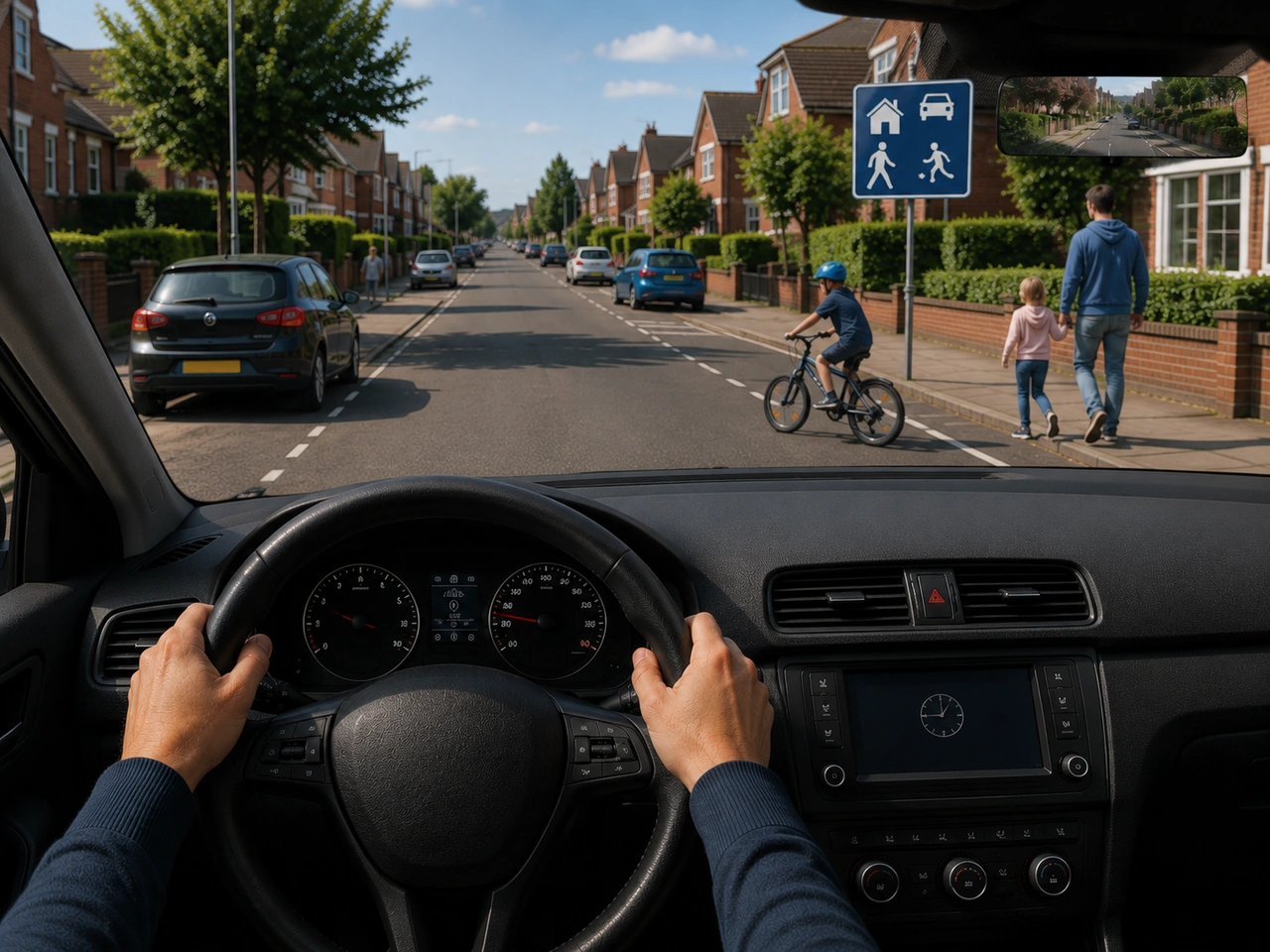
Why should you reduce speed in residential areas?

295. Why should you reduce speed in residential areas?

✓ Pedestrians, cyclists, and children may be nearby.
Overtaking is prohibited throughout residential areas.
Traffic from side roads must always give way.
Because residential roads are usually more slippery.

Residential areas often have pedestrians, cyclists, parked vehicles, driveways, and children, and hazards may appear suddenly. Lower speed gives you more time to react and stop safely.

Vehicle travelling through a residential street
AI-generated by Traffic-rules.com • WCIT • CC BY-SA
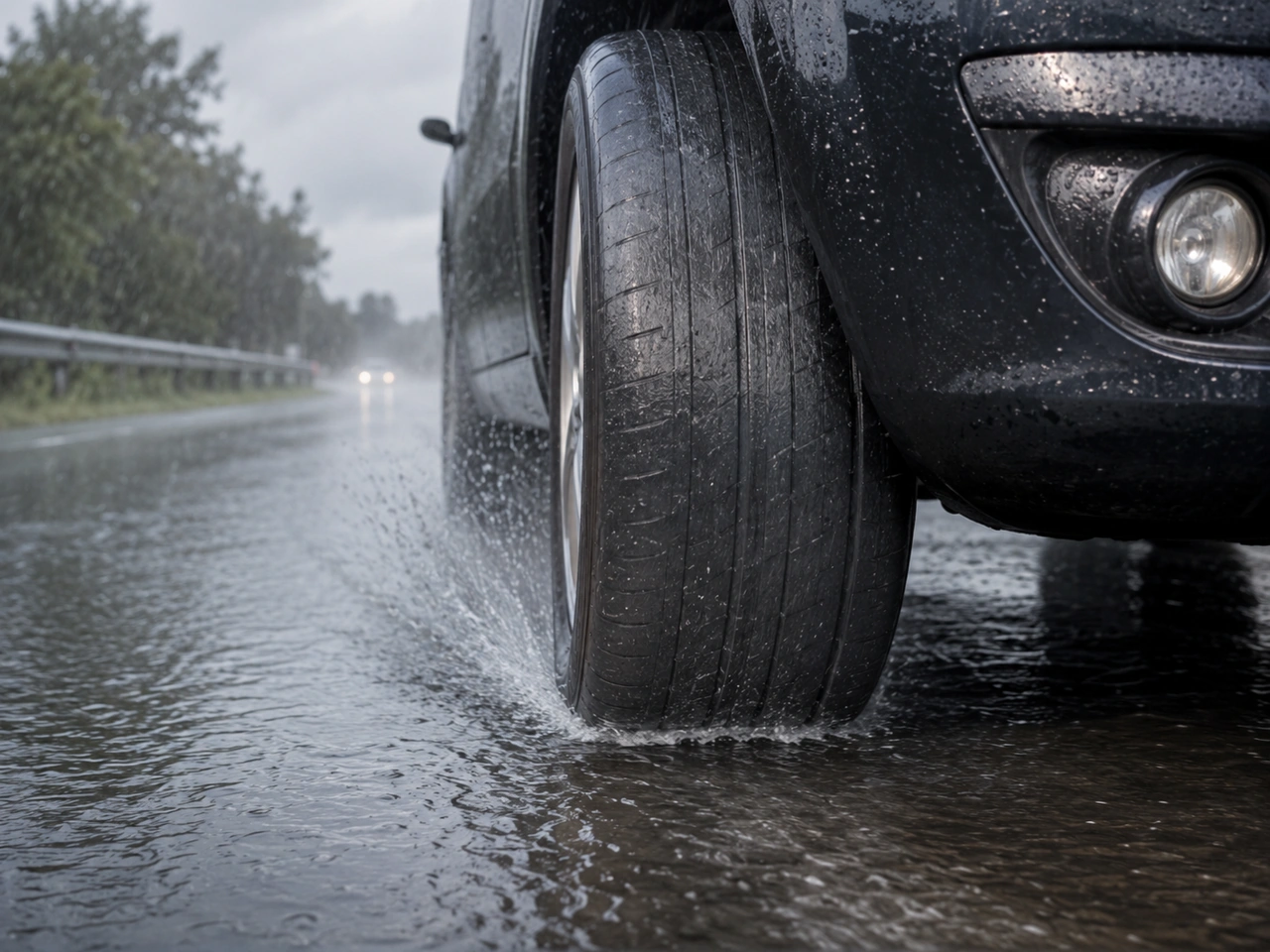
How can worn tyres affect driving in heavy rain?

296. How can worn tyres affect driving in heavy rain?

They clear water from the road more effectively.
✓ They increase the risk of aquaplaning.
They make steering more responsive in heavy rain.
They shorten the stopping distance on wet roads.

Tyre tread helps channel water away and maintain grip. Worn tyres cannot clear water as effectively, increasing stopping distance and the risk of aquaplaning.

Worn tyre tread and wet-road grip
AI-generated by Traffic-rules.com • WCIT • CC BY-SA
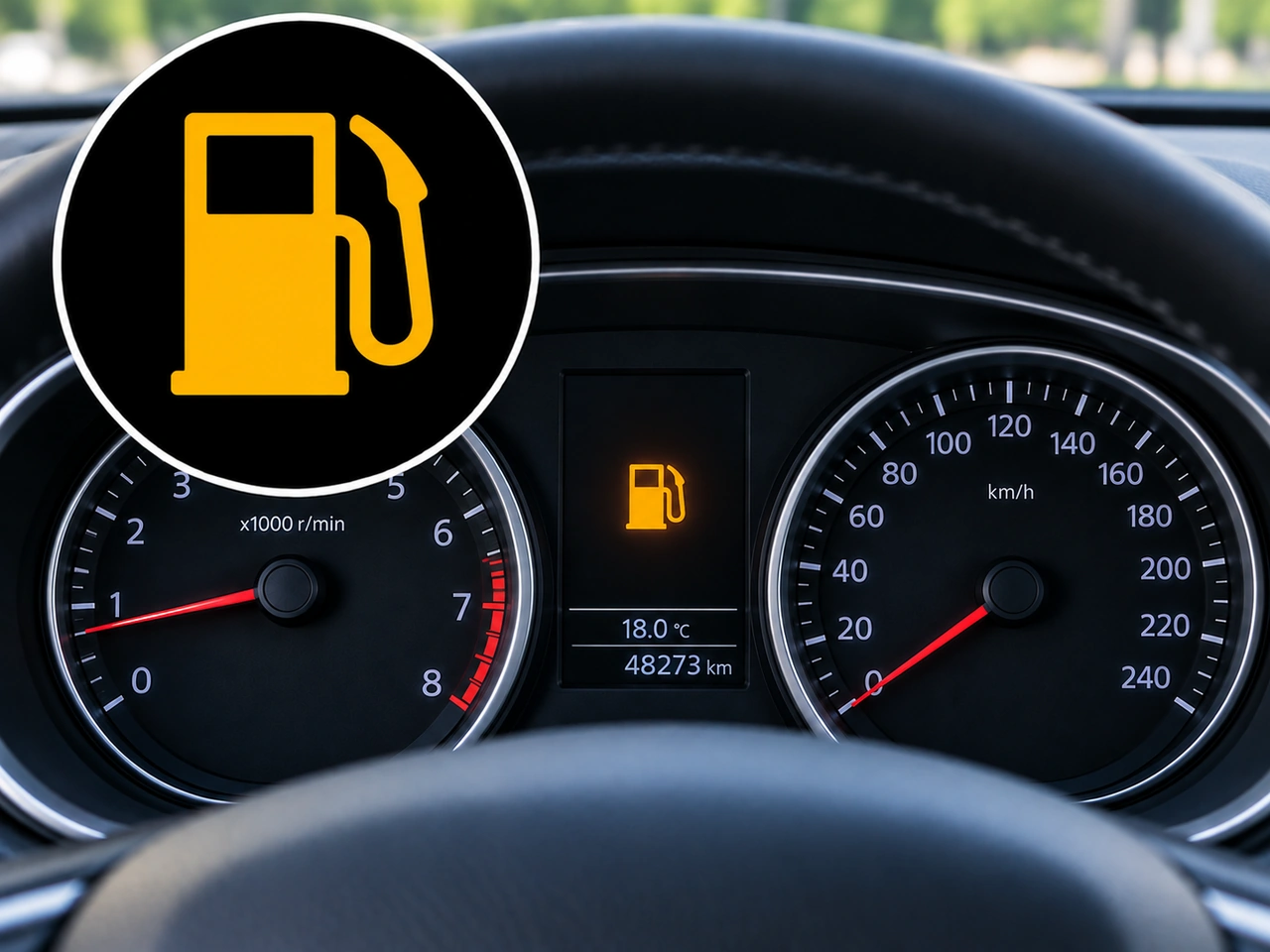
What does this dashboard symbol indicate?

297. What does this dashboard symbol indicate?

Low engine oil.
✓ Low fuel level.
Charging-system warning.
Low washer fluid.

This symbol indicates that the fuel level is low. Refuel soon to reduce the risk of running out of fuel.

Low-fuel warning symbol on the dashboard
AI-generated by Traffic-rules.com • WCIT • CC BY-SA
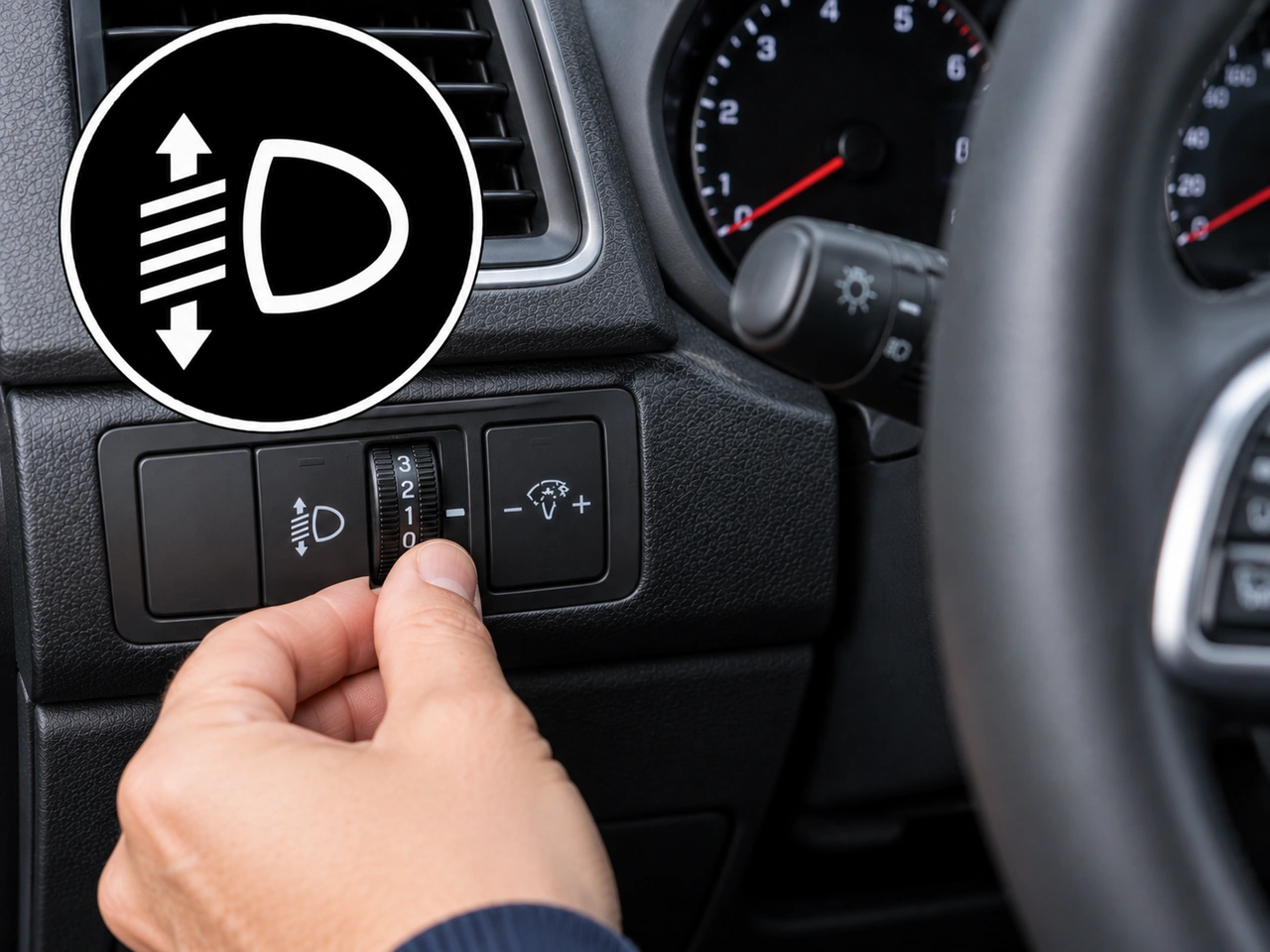
What does this vehicle-control symbol indicate?

298. What does this vehicle-control symbol indicate?

Automatic headlights.
Front fog lights.
✓ Headlight level adjustment.
Instrument-panel brightness.

This control adjusts the vertical aim of the headlights. It can be used to lower the beam when the vehicle is heavily loaded, helping to avoid dazzling other road users.

Control for adjusting the headlight beam height
AI-generated by Traffic-rules.com • WCIT • CC BY-SA
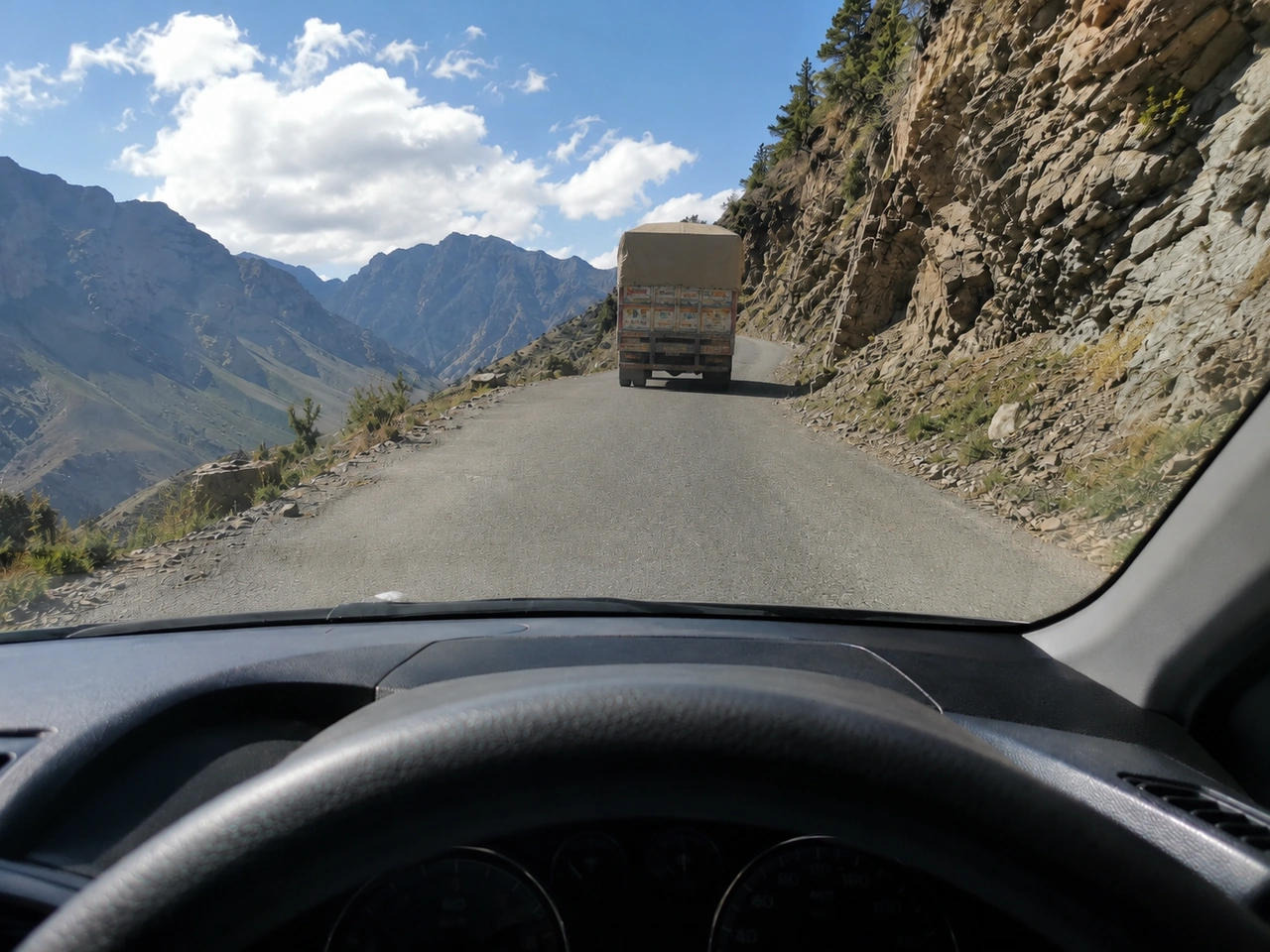
What should you do if your vehicle begins rolling backward on a steep incline?

299. What should you do if your vehicle begins rolling backward on a steep incline?

Let it roll backwards and try again.
✓ Apply the brake, secure the vehicle, and restart carefully.
Accelerate while continuing to roll backward.
Switch off the engine and restart immediately.

Stop the vehicle under control, apply the parking brake if necessary, and prepare to move away again safely.

Vehicle rolling backwards on a steep incline
AI-generated by Traffic-rules.com • WCIT • CC BY-SA
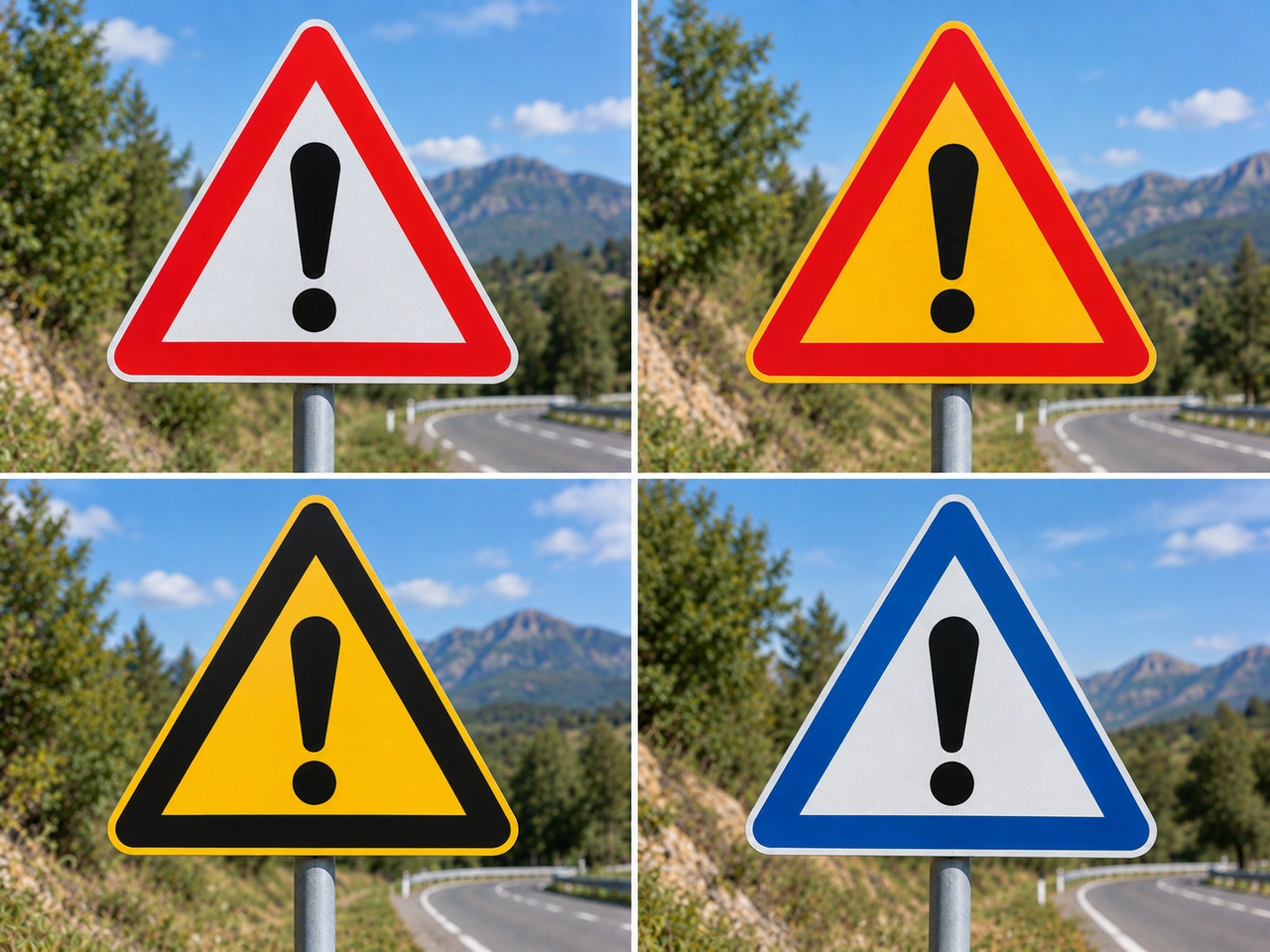
Which colour combination is commonly used for warning signs in Philippines?

300. Which colour combination is commonly used for warning signs in Philippines?

Blue border with white background.
Red border with white background.
✓ Black border with yellow background.
Red border with yellow background.

Most warning signs in Philippines have a black border with a yellow background.

Colour combinations used for road warning signs
AI-generated by Traffic-rules.com • WCIT • CC BY-SA