


Señales de prioridadReino Unido
 Normas de tráfico
 Reino Unido
 Señales de prioridad
 Señales de advertencia
 Señales de prohibición
 Señales de obligación
 Señales de información
 Señales adicionales
Señales de prioridad
Una señal de prioridad es una señal de tráfico que indica el orden en que los vehículos deben pasar por puntos donde sus trayectorias se cruzan. Los vehículos suelen entrar en conflicto con otros vehículos y peatones porque sus recorridos previstos se intersectan e interfieren entre sí. El principio general que determina quién puede pasar primero se denomina «prioridad» o «derecho de paso». Establece quién tiene derecho a utilizar la parte conflictiva de la vía y quién debe esperar. Se dice que el vehículo que no tiene que esperar «tiene prioridad» o «tiene el derecho de paso».



¿Qué debo saber sobre las señales de prioridad en el Reino Unido?
STOP exige parar y comprobar antes de entrar; GIVE WAY, ceder a principal. Consulte código propio de Irlanda del Norte cuando proceda.
🔗 nidirect.gov.uk • Gobierno de Irlanda del Norte — señales y marcas del Highway Code separado
¿Debe detenerse siempre al ceder el paso en el Reino Unido?
En Gran Bretaña, Give Way exige ceder a la vía principal y parar si hace falta. STOP y su línea exigen parada completa. Irlanda del Norte tiene código separado.
🔗 nidirect.gov.uk • Gobierno de Irlanda del Norte — señales y marcas del Highway Code separado

1. Detenerse y ceder el paso
Esta señal significa detenerse y ceder el paso. Debe detenerse por completo antes de entrar en la intersección y ceder el paso al tráfico que tenga prioridad. Continúe solo cuando sea seguro.
Diagrama GB 601.1 • Deténgase y ceda el paso. Deténgase en la línea de detención y ceda el paso al tráfico de la vía principal. Si la línea no se ve con claridad, deténgase antes de entrar en la vía principal.
Fuentes
🔗 Commons.wikimedia.org
🔗 Legislation.gov.uk • Traffic Signs Regulations and General Directions • Great Britain
🔗 Gov.uk • Department for Transport • Know your traffic signs
SVG source: UK Department of Transport • Public domain • Original revision 2022-10-02. Wikimedia original unmodified.
Artwork verified against Legislation.gov.uk • official published diagram 601.1.
English • GB diagram 601.1 • Stop and give way. You must stop at the stop line and give way to traffic on the major road. If the line is not clearly visible, stop before entering the major road.
2. Ceda el paso
Esta señal significa ceda el paso. Reduzca la velocidad y ceda el paso al tráfico que tenga prioridad. Deténgase si es necesario y continúe solo cuando sea seguro.
Diagrama GB 602 • Ceda el paso. Ceda el paso al tráfico de la vía principal. Deténgase si es necesario antes de continuar con seguridad.
Fuentes
🔗 Commons.wikimedia.org (Government of the United Kingdom • Crown copyright • OGL v1.0)
🔗 Legislation.gov.uk • Traffic Signs Regulations and General Directions • Great Britain
🔗 Gov.uk • Department for Transport • Know your traffic signs
SVG source: Government of the United Kingdom • OGL v1.0 • Original revision 2016-07-03. Wikimedia original unmodified. © Crown copyright. Traffic signs are Crown copyright. You may reproduce traffic signs free of charge and without having to seek permission, but you must reproduce them accurately and not in a misleading context (e.g. not on roadside billboards where they could mislead drivers). (ref [1])
Artwork verified against Gov.uk • official published diagram 602.
Current design and permitted variants verified against Legislation.gov.uk • TSRGD, current text.
English • GB diagram 602 • Give way. Give way to traffic on the major road. Stop if necessary before proceeding safely.
3. Advertencia de glorieta
Esta señal advierte de una glorieta. Hay una glorieta más adelante. Reduzca la velocidad y siga las señales de prioridad, los semáforos y las normas locales de circulación en glorietas al aproximarse y entrar.
Diagrama GB 510 • Glorieta próxima. Hay una glorieta más adelante. Reduzca la velocidad y prepárese para ceder el paso conforme a las señales y marcas del cruce.
Fuentes
🔗 Commons.wikimedia.org
🔗 Legislation.gov.uk • Traffic Signs Regulations and General Directions • Great Britain
🔗 Gov.uk • Department for Transport • Know your traffic signs
SVG source: UK Government • Public domain • Original revision 2013-12-13. Wikimedia original unmodified.
English • GB diagram 510 • Roundabout ahead. A roundabout is ahead. Reduce speed and prepare to give way as required by the signs and markings at the junction.
4. Prioridad en la intersección
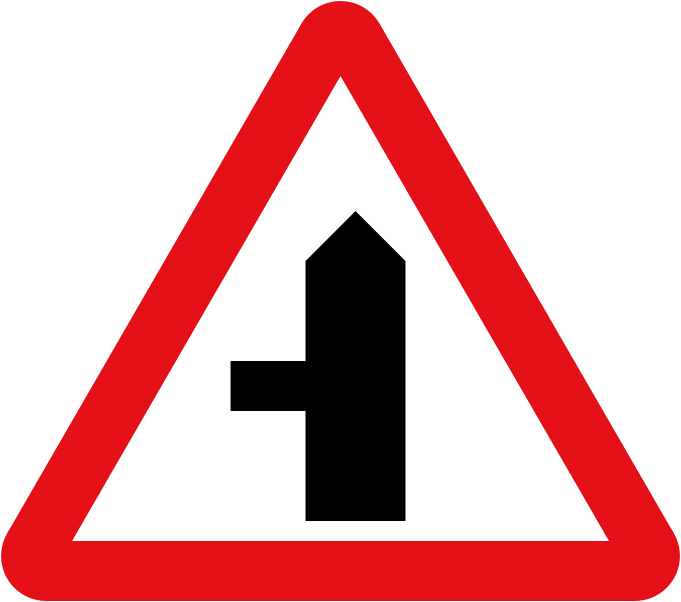
Esta señal indica que tiene prioridad en la siguiente intersección. Una vía lateral se incorpora por la izquierda y el tráfico que entra desde ella debe ceder el paso.
Diagrama GB 506.1 • Vía lateral más adelante. Se incorpora una vía lateral desde la izquierda. La línea gruesa representa el itinerario principal en el cruce.
Fuentes
🔗 Commons.wikimedia.org (Government of the United Kingdom – Department for Transport • Crown copyright • OGL v1.0)
🔗 Legislation.gov.uk • Traffic Signs Regulations and General Directions • Great Britain
🔗 Gov.uk • Department for Transport • Know your traffic signs
SVG source: Government of the United Kingdom – Department for Transport • OGL v1.0 • Original revision 2022-02-15. Wikimedia original unmodified. © Crown copyright. Traffic signs are Crown copyright. You may reproduce traffic signs free of charge and without having to seek permission, but you must reproduce them accurately and not in a misleading context (e.g. not on roadside billboards where they could mislead drivers). (ref [1])
Artwork verified against Gov.uk • official published diagram 506.1.
Current design and permitted variants verified against Legislation.gov.uk • TSRGD, current text.
English • GB diagram 506.1 • Side road ahead. A side road joins from the left. The broad line represents the main route through the junction.
5. Incorporación de tráfico por la izquierda
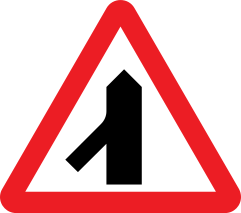
Esta señal advierte de una incorporación de tráfico por la izquierda. El tráfico que circula en la misma dirección general puede incorporarse desde la izquierda. Manténgase atento y ajuste la velocidad o la posición cuando sea necesario para permitir una incorporación segura.
Diagrama GB 506.1 • Vía lateral más adelante. Se incorpora oblicuamente una vía lateral desde la izquierda. La línea gruesa representa el itinerario principal.
Fuentes
🔗 Commons.wikimedia.org
🔗 Legislation.gov.uk • Traffic Signs Regulations and General Directions • Great Britain
🔗 Gov.uk • Department for Transport • Know your traffic signs
SVG source: UK Government • Public domain • Original revision 2011-11-12. Wikimedia original unmodified.
English • GB diagram 506.1 • Side road ahead. A side road joins from the left at an angle. The broad line represents the main route.
6. Prioridad en la intersección
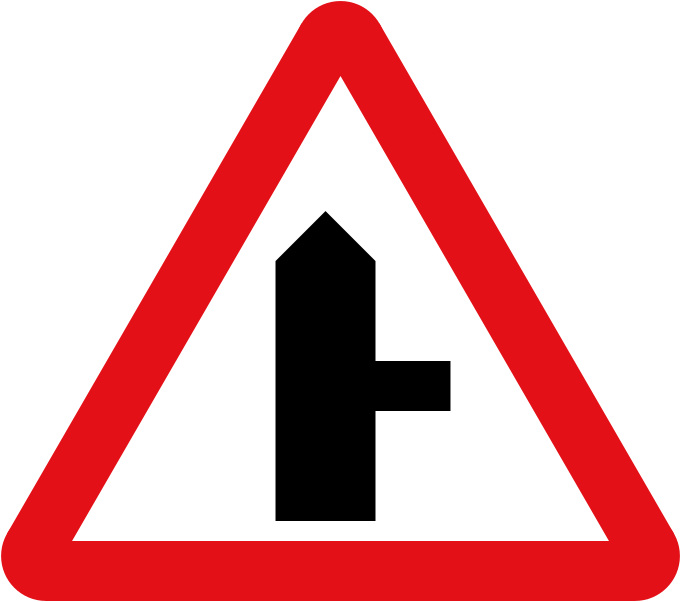
Esta señal indica que tiene prioridad en la siguiente intersección. Una vía lateral se incorpora por la derecha y el tráfico que entra desde ella debe ceder el paso.
Diagrama GB 506.1 • Vía lateral más adelante. Se incorpora una vía lateral desde la derecha. La línea gruesa representa el itinerario principal.
Fuentes
🔗 Commons.wikimedia.org (Government of the United Kingdom – Department for Transport • Crown copyright • OGL v1.0)
🔗 Legislation.gov.uk • Traffic Signs Regulations and General Directions • Great Britain
🔗 Gov.uk • Department for Transport • Know your traffic signs
SVG source: Government of the United Kingdom – Department for Transport • OGL v1.0 • Original revision 2022-02-15. Wikimedia original unmodified. © Crown copyright. Traffic signs are Crown copyright. You may reproduce traffic signs free of charge and without having to seek permission, but you must reproduce them accurately and not in a misleading context (e.g. not on roadside billboards where they could mislead drivers). (ref [1])
Artwork verified against Gov.uk • official published diagram 506.1.
Current design and permitted variants verified against Legislation.gov.uk • TSRGD, current text.
English • GB diagram 506.1 • Side road ahead. A side road joins from the right. The broad line represents the main route.
7. Prioridad en la intersección
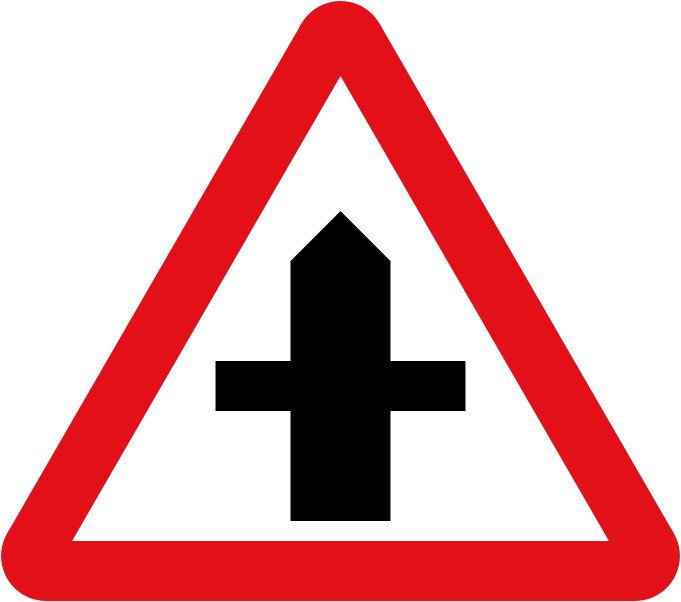
Esta señal indica que tiene prioridad en la siguiente intersección. Se incorporan vías laterales por la izquierda y por la derecha, y el tráfico que entra desde ellas debe ceder el paso.
Diagrama GB 504.1 • Cruce más adelante. Hay un cruce más adelante. La línea gruesa representa el itinerario principal a través del cruce.
Fuentes
🔗 Commons.wikimedia.org (Government of the United Kingdom – Department for Transport • Crown copyright • OGL v1.0)
🔗 Legislation.gov.uk • Traffic Signs Regulations and General Directions • Great Britain
🔗 Gov.uk • Department for Transport • Know your traffic signs
SVG source: Government of the United Kingdom – Department for Transport • OGL v1.0 • Original revision 2022-02-12. Wikimedia original unmodified. © Crown copyright. Traffic signs are Crown copyright. You may reproduce traffic signs free of charge and without having to seek permission, but you must reproduce them accurately and not in a misleading context (e.g. not on roadside billboards where they could mislead drivers). (ref [1])
Artwork verified against Gov.uk • official published diagram 504.1.
Current design and permitted variants verified against Legislation.gov.uk • TSRGD, current text.
English • GB diagram 504.1 • Crossroads ahead. A crossroads is ahead. The broad line represents the main route through the junction.
8. Advertencia de intersección escalonada
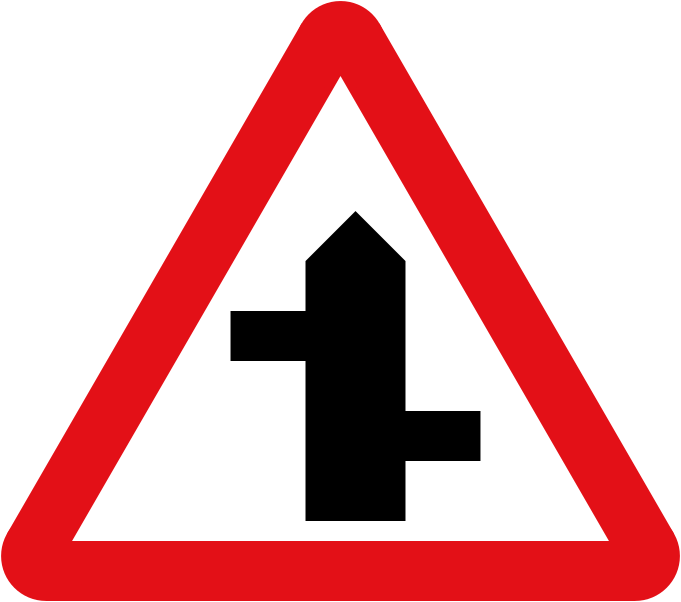
Esta señal advierte de una intersección escalonada. Las vías laterales se unen a la vía principal en puntos diferentes en vez de quedar una frente a otra. Reduzca la velocidad y vigile atentamente los vehículos que entran, salen o cruzan la vía principal.
Diagrama GB 507.1 • Intersección escalonada más adelante. Al aproximarse desde la parte inferior del esquema, se incorpora una vía lateral primero por la derecha y luego otra por la izquierda.
Fuentes
🔗 Commons.wikimedia.org (Government of the United Kingdom – Department for Transport • Crown copyright • OGL v1.0)
🔗 Legislation.gov.uk • Traffic Signs Regulations and General Directions • Great Britain
🔗 Gov.uk • Department for Transport • Know your traffic signs
SVG source: Government of the United Kingdom – Department for Transport • OGL v1.0 • Original revision 2022-02-17. Wikimedia original unmodified. © Crown copyright. Traffic signs are Crown copyright. You may reproduce traffic signs free of charge and without having to seek permission, but you must reproduce them accurately and not in a misleading context (e.g. not on roadside billboards where they could mislead drivers). (ref [1])
Artwork verified against Gov.uk • official published diagram 507.1.
Current design and permitted variants verified against Legislation.gov.uk • TSRGD, current text.
English • GB diagram 507.1 • Staggered junction ahead. Side roads join first from the right and then from the left, when approaching from the bottom of the diagram.
9. Advertencia de intersección escalonada
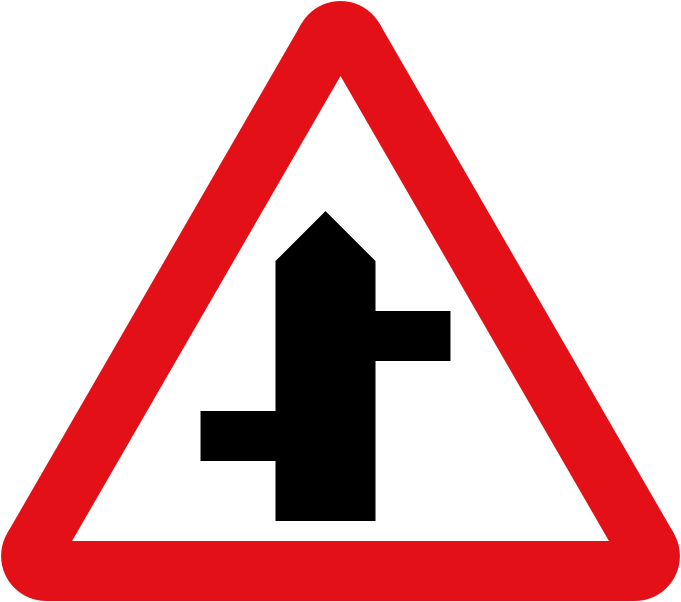
Esta señal advierte de una intersección escalonada. Las vías laterales se unen a la vía principal en puntos diferentes en vez de quedar una frente a otra. Reduzca la velocidad y vigile atentamente los vehículos que entran, salen o cruzan la vía principal.
Diagrama GB 507.1 • Intersección escalonada más adelante. Al aproximarse desde la parte inferior del esquema, se incorpora una vía lateral primero por la izquierda y luego otra por la derecha.
Fuentes
🔗 Commons.wikimedia.org (Government of the United Kingdom – Department for Transport • Crown copyright • OGL v1.0)
🔗 Legislation.gov.uk • Traffic Signs Regulations and General Directions • Great Britain
🔗 Gov.uk • Department for Transport • Know your traffic signs
SVG source: Government of the United Kingdom – Department for Transport • OGL v1.0 • Original revision 2022-02-17. Wikimedia original unmodified. © Crown copyright. Traffic signs are Crown copyright. You may reproduce traffic signs free of charge and without having to seek permission, but you must reproduce them accurately and not in a misleading context (e.g. not on roadside billboards where they could mislead drivers). (ref [1])
Artwork verified against Gov.uk • official published diagram 507.1.
Current design and permitted variants verified against Legislation.gov.uk • TSRGD, current text.
English • GB diagram 507.1 • Staggered junction ahead. Side roads join first from the left and then from the right, when approaching from the bottom of the diagram.
10. Estrechamiento: ceda el paso al tráfico en sentido contrario
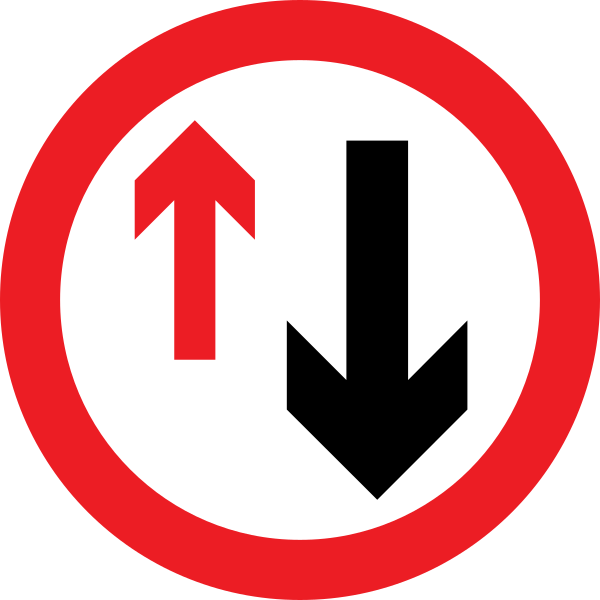
Esta señal indica un estrechamiento en el que debe ceder el paso al tráfico en sentido contrario. Cuando corresponda, deje pasar a los vehículos que se aproximan antes de entrar o continuar por el tramo estrecho.
Diagrama GB 615 • Ceda el paso a los vehículos en sentido contrario. Ceda el paso a los vehículos en sentido contrario en el estrechamiento.
Fuentes
🔗 Commons.wikimedia.org
🔗 Legislation.gov.uk • Traffic Signs Regulations and General Directions • Great Britain
🔗 Gov.uk • Department for Transport • Know your traffic signs
SVG source: UK Government • Public domain • Original revision 2011-01-20. Wikimedia original unmodified.
English • GB diagram 615 • Give way to oncoming vehicles. You must give priority to vehicles approaching from the opposite direction at the narrow section.
11. Sentido obligatorio de la glorieta
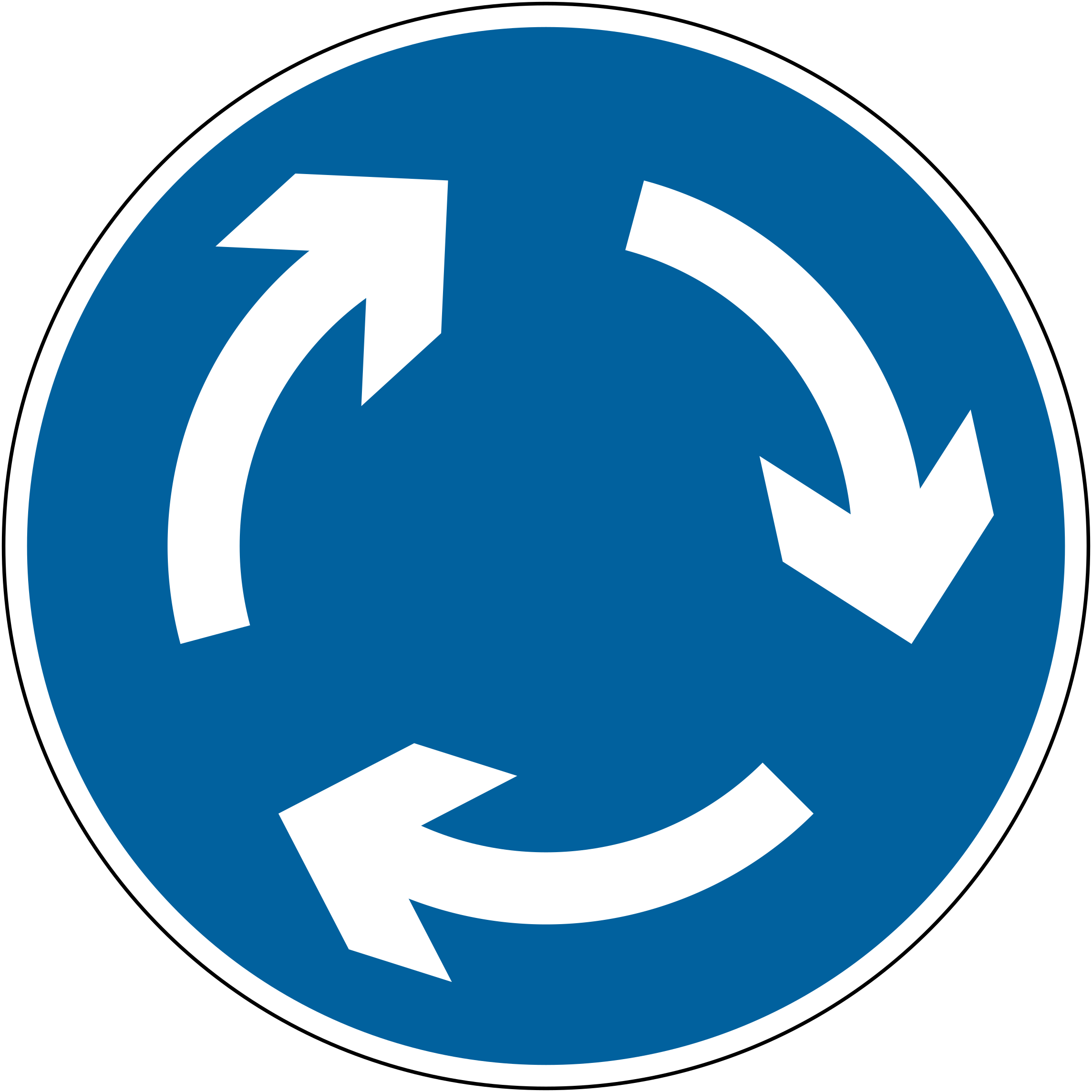
Esta señal indica el sentido obligatorio alrededor de una glorieta. El tráfico debe circular en la dirección mostrada por las flechas. La señal no determina por sí sola la prioridad; siga las señales de prioridad, semáforos y normas locales aplicables.
Diagrama GB 611.1 • Miniglorieta. Ceda el paso al tráfico de la derecha en las marcas de ceda el paso. Pase por la izquierda del círculo blanco central y circule en sentido horario, salvo si el tamaño del vehículo o el trazado impide pasar por la izquierda.
Fuentes
🔗 Commons.wikimedia.org (Government of the United Kingdom – Department for Transport • Crown copyright • OGL v1.0)
🔗 Legislation.gov.uk • Traffic Signs Regulations and General Directions • Great Britain
🔗 Gov.uk • Department for Transport • Know your traffic signs
SVG source: Government of the United Kingdom – Department for Transport • OGL v1.0 • Original revision 2021-12-21. Wikimedia original unmodified. © Crown copyright. Traffic signs are Crown copyright. You may reproduce traffic signs free of charge and without having to seek permission, but you must reproduce them accurately and not in a misleading context (e.g. not on roadside billboards where they could mislead drivers). (ref [1])
Artwork verified against Gov.uk • official published diagram 611.1.
Current design and permitted variants verified against Legislation.gov.uk • TSRGD, current text.
English • GB diagram 611.1 • Mini-roundabout. Give priority to traffic from the right at the give-way markings. Pass to the left of the central white circle and circulate clockwise, unless the size of the vehicle or layout makes passing to the left impracticable.
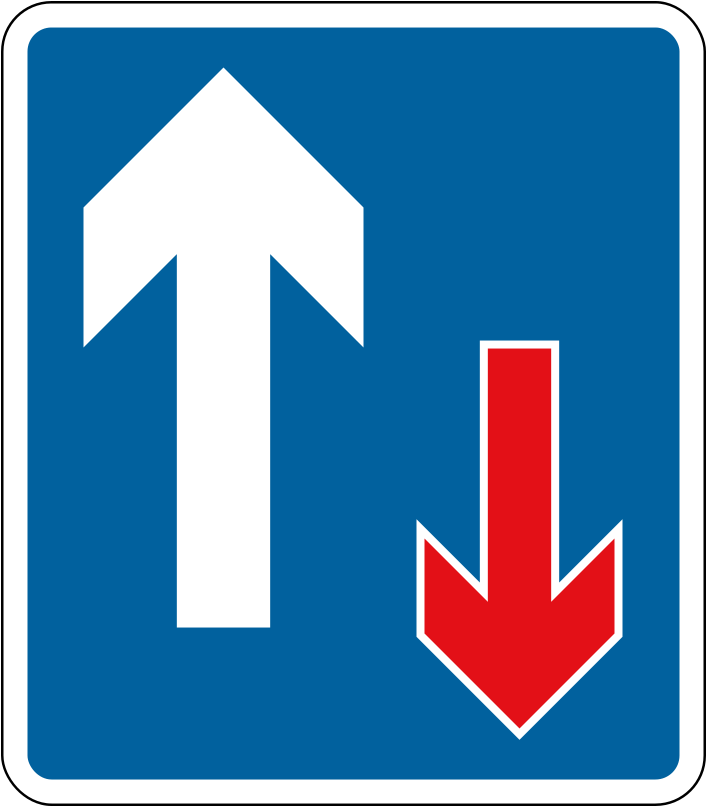
12. Estrechamiento: el tráfico contrario debe ceder el paso
Esta señal indica un estrechamiento donde el tráfico en sentido contrario debe ceder el paso.
Diagrama GB 811A • Prioridad sobre los vehículos en sentido contrario. Tiene prioridad sobre los vehículos en sentido contrario en el estrechamiento. Continúe solo si es seguro.
Fuentes
🔗 Commons.wikimedia.org (Government of the United Kingdom – Department for Transport • Crown copyright • OGL v1.0)
🔗 Legislation.gov.uk • Traffic Signs Regulations and General Directions • Great Britain
🔗 Gov.uk • Department for Transport • Know your traffic signs
SVG source: Government of the United Kingdom – Department for Transport • OGL v1.0 • Original revision 2022-01-10. Wikimedia original unmodified. © Crown copyright. Traffic signs are Crown copyright. You may reproduce traffic signs free of charge and without having to seek permission, but you must reproduce them accurately and not in a misleading context (e.g. not on roadside billboards where they could mislead drivers). (ref [1])
Artwork verified against Gov.uk • official published diagram 811.
Current design and permitted variants verified against Legislation.gov.uk • TSRGD, current text.
English • GB diagram 811A • Priority over oncoming vehicles. You have priority over vehicles approaching from the opposite direction at the narrow section. Proceed only when it is safe.
