EinbahnverkehrBrüssel
13. Einbahnverkehr
Einbahnverkehr bedeutet, dass Fahrzeuge auf einer Straße oder Fahrbahn nur in einer festgelegten Richtung fahren dürfen. Die zulässige Richtung wird normalerweise durch Verkehrszeichen, Fahrstreifenpfeile oder Fahrbahnmarkierungen angezeigt.
Bestimmte Verkehrsteilnehmer wie Radfahrer oder öffentliche Verkehrsmittel können entgegen der allgemeinen Fahrtrichtung zugelassen sein, wenn dies ausdrücklich ausgeschildert ist. Eine Einbahnstraße bestimmt für sich allein weder Geschwindigkeitsbegrenzung, Vorfahrt noch Parkregeln.
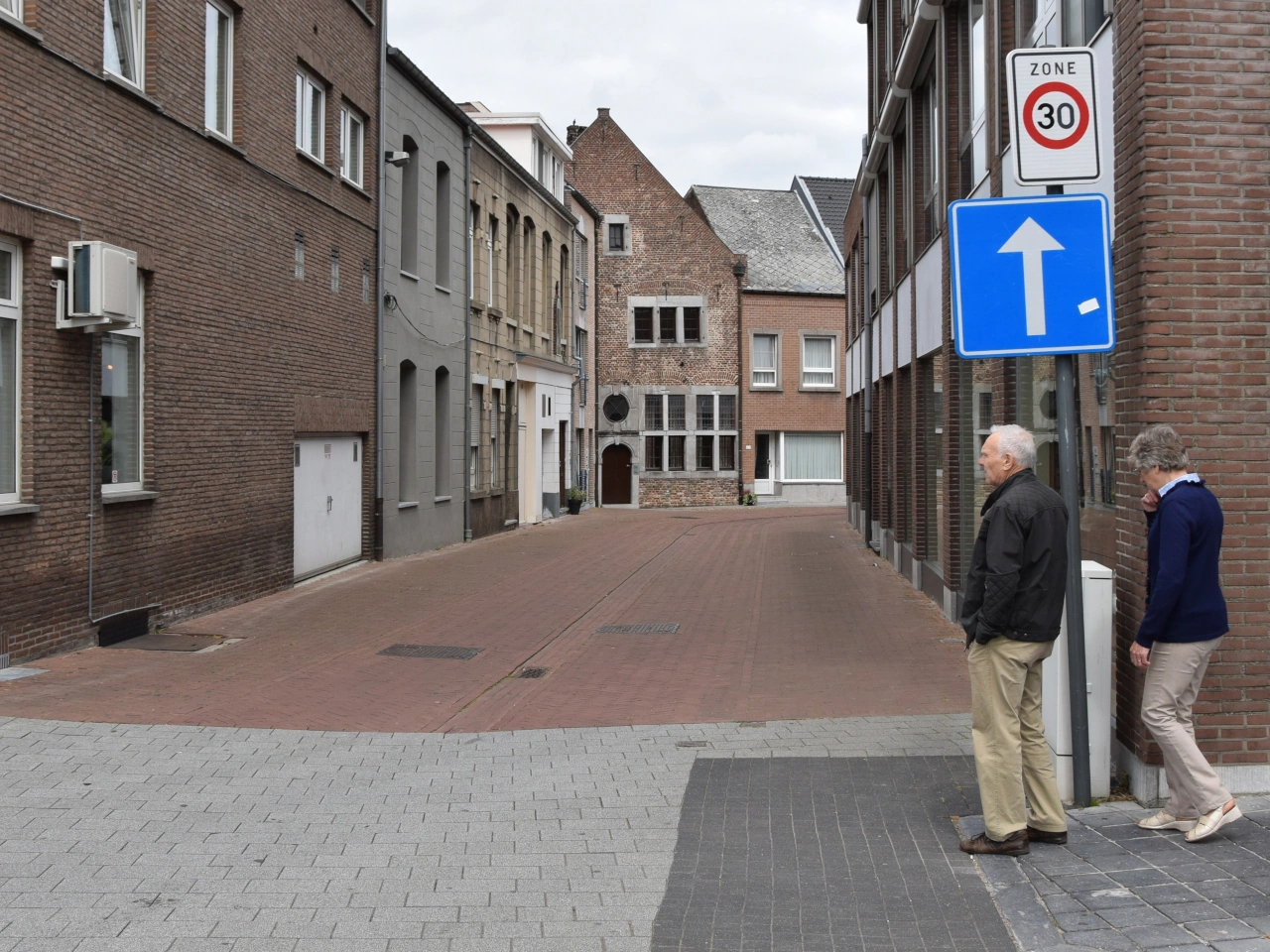
How can you recognise a one-way road in Belgium?
Traffic sign F19 indicates a public road with one-way traffic. Drivers may travel only in the direction shown by the arrow.
Einbahnstraße.
Signal routier F19 • Voie publique à sens unique.
Verkeersbord F19 • Openbare weg met eenrichtingsverkeer.
What does Belgian traffic sign C1 mean?
Traffic sign C1 means that entry in that direction is prohibited for every driver, unless a supplementary sign provides an exception.
Einfahrt verboten.
Signal routier C1 • Sens interdit à tout conducteur.
Verkeersbord C1 • Verboden richting voor iedere bestuurder.
What changes for one-way traffic under Belgium’s new Road Code?
Belgium’s new Code of the Public Road takes effect on 1 June 2027. The main traffic signs for one-way traffic keep their existing numbers: traffic sign F19 continues to indicate a public road with one-way traffic, while traffic sign C1 continues to indicate a prohibited direction for all drivers. Traffic sign A39 continues to warn that two-way traffic begins after a section of one-way road. Drivers who are exceptionally allowed to travel in the opposite direction, such as certain cyclists, must keep as far to the right as possible.
Einbahnstraße.
Signal routier F19 • Voie publique à sens unique.
Verkeersbord F19 • Openbare weg met éénrichtingsverkeer.
Einfahrt verboten.
Signal routier C1 • Sens interdit à tout conducteur.
Verkeersbord C1 • Verboden richting voor iedere bestuurder.
Warnung vor Gegenverkehr.
Signal routier A39 • Circulation admise dans les deux sens après une section de chaussée à sens unique.
Verkeersbord A39 • Verkeer toegelaten in beide richtingen na een gedeelte van de rijbaan met éénrichtingsverkeer.
What is the difference between F19 and C1?
F19 is placed at the permitted entrance and confirms the one-way direction. C1 is placed at the opposite end and prohibits entry from that direction.
Must drivers follow the direction shown by F19?
Yes. Drivers may not travel against the indicated direction unless their vehicle category is expressly exempted by a supplementary sign.
May cyclists ride against one-way traffic in Belgium?
Yes, when supplementary signs permit it. An M4 panel with F19 indicates that cyclists may ride in both directions. The corresponding exception is displayed beneath the C1 sign at the opposite entrance.
May class A mopeds ride against the direction?
They may do so when the signs contain the appropriate M5 or corresponding exception panel. Without that indicated exception, they must follow the ordinary one-way direction.
May speed pedelecs ride against the direction?
They may do so when the appropriate supplementary sign, such as M17 or M18, expressly permits them to travel in both directions.
Must drivers expect oncoming cyclists?
Yes. When supplementary signs permit contraflow cycling, drivers must expect cyclists or other authorised two-wheeled vehicles to approach from the opposite direction.
Does an oncoming contraflow cyclist come from a prohibited direction?
No. When the signs legally permit contraflow cycling, the cyclist is travelling in an authorised direction and must be treated as lawful traffic.
Does a Belgian one-way road automatically have priority?
No. F19 regulates only the direction of traffic. Drivers must continue to obey priority signs, traffic lights and the priority-from-the-right rule where applicable.
Can a contraflow cyclist have priority from the right?
Yes. When the cyclist is authorised to travel against the general one-way direction, the ordinary priority rules may apply. Drivers should not assume that an approaching cyclist is coming from a prohibited direction.
What is the speed limit on a Belgian one-way road?
There is no special speed limit solely because the road is one-way. The applicable limit depends on the region, built-up area, speed zone, road type and traffic signs.
Which side of a Belgian one-way road should you normally use?
Drivers must normally keep as close as possible to the right-hand side, unless lane selection, overtaking, congestion, turning or another traffic rule justifies a different position.
Where should you position yourself before turning left?
On a one-way carriageway, a driver turning left must normally move as close as possible to the left-hand edge before completing the turn at moderate speed.
May you overtake on the right?
Not merely because the road is one-way. Overtaking normally takes place on the left. Overtaking on the right is permitted in specific situations, such as when the vehicle ahead has indicated a left turn and has moved left. Faster movement in another marked lane or traffic queue may not legally count as overtaking in certain conditions.
May you stop or park on either side?
Yes. On a Belgian one-way carriageway, a stationary or parked vehicle may be positioned along either side, provided stopping or parking is permitted and all other positioning and clearance rules are respected.
May you park facing against the traffic direction?
The rule allowing parking on either side does not remove the other legal positioning requirements. Drivers should enter the parking place from the permitted direction and position the vehicle safely and lawfully.
May you reverse on a Belgian one-way road?
Reversing is a manoeuvre, so the driver must give way to all other road users. It may be used only where it is safe and not otherwise prohibited; it must not be used as a way to travel along the road against the prescribed direction.
May you make a U-turn?
You may not turn around and then continue against the one-way direction. A driver who has missed a destination should continue in the permitted direction and use another legal route.
Can part of a one-way carriageway temporarily carry traffic in both directions?
Yes. Traffic sign F85 indicates that traffic is permitted in both directions on a section of a carriageway that otherwise carries one-way traffic, often because of roadworks or a temporary traffic arrangement.
What does warning sign A39 mean?
Traffic sign A39 warns that two-way traffic begins after a section of carriageway with one-way traffic.
Warnung vor Gegenverkehr.
Signal routier A39 • Circulation admise dans les deux sens après une section de chaussée à sens unique.
Verkeersbord A39 • Verkeer toegelaten in twee richtingen na een gedeelte van de rijbaan met eenrichtingsverkeer.
When should you check for contraflow traffic?
Check carefully before turning across the road, leaving a parking place, crossing a cycle route or opening a door. Supplementary signs may permit cyclists, class A mopeds or speed pedelecs to approach from the opposite direction.

Verkehrsregeln
Brüssel