WohngebietBrüssel

Lerne Verkehrsregeln mit klaren Erklärungen und visuellen Beispielen in unserem illustrierten Buch – einfach, verständlich und anschaulich.


4. Wohngebiet

Ein Wohngebiet ist eine Straße oder Gruppe von Straßen, in der Wohnnutzung und die Zufahrt zu örtlichen Grundstücken die Hauptfunktionen darstellen. Fahrer müssen mit Fußgängern, Radfahrern, Kindern, geparkten Fahrzeugen sowie Fahrzeugen rechnen, die aus Einfahrten heraus- oder hineinfahren.

Einige Länder kennzeichnen bestimmte Wohngebiete mit Verkehrszeichen und wenden dort besondere Niedriggeschwindigkeits- oder Mischverkehrsregeln an. Geschwindigkeitsbegrenzung, Rechte von Fußgängern, Parkregeln und zugelassene Verkehrsteilnehmer richten sich daher nach den örtlichen Verkehrszeichen und Vorschriften.

How can you recognise a residential area in Belgium?

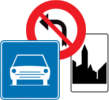
A legally designated Belgian residential area begins at traffic sign F12a. Its special rules continue throughout the area until traffic sign F12b indicates the end.

Beginn eines Wohngebiets. Beginn eines Wohngebiets.

Signal routier F12a • Commencement d'une zone résidentielle ou d'une zone de rencontre. Les règles spéciales de circulation dans les zones résidentielles ou les zones de rencontre s'appliquent à partir de l'endroit où le signal est placé. Ce signal est placé à droite de chaque accès à une zone résidentielle ou une zone de rencontre; il peut être répété à gauche.

Verkeersbord F12a • Begin van een woonerf of van een erf. De bijzondere verkeersregelen in de woonerven of erven gelden vanaf de plaats waar het verkeersbord aangebracht is. Dit verkeersbord wordt rechts geplaatst aan elke toegang tot een woonerf of erf; het mag links herhaald worden.

Ende des Wohngebiets. Ende des Wohngebiets.

Signal routier F12b • Fin d'une zone résidentielle. Ce signal est placé à droite de chaque sortie d'une zone résidentielle ou d'une zone de rencontre; il peut être répété à gauche.

Verkeersbord F12b • Einde van een woonerf of van een erf. Dit verkeersbord wordt rechts geplaatst aan elke uitgang van een woonerf of erf; het mag links herhaald worden.

What changes for residential areas under Belgium’s new Road Code?

Belgium’s new Code of the Public Road takes effect on 1 June 2027. The residential-area signs are renumbered: the current traffic sign F12a for the beginning of a residential area becomes traffic sign R5, while traffic sign F12b for the end of a residential area becomes traffic sign R7. The special traffic rules for residential areas continue to apply between the beginning and end signs. During the transition period, drivers may encounter both the current and new signs.

Beginn eines Wohngebiets. Beginn eines Wohngebiets.

Signal routier R5 • Début d’une zone de rencontre. La vitesse maximale qui s’y applique peut être indiquée à titre informatif sur le signal en bas à droite.

Verkeersbord R5 • Begin van een erf. De maximale snelheid die er geldt, kan rechtsonder als aanwijzing op het verkeersbord aangeduid zijn.

Ende des Wohngebiets. Ende des Wohngebiets.

Signal routier R7 • Fin d’une zone de rencontre.

Verkeersbord R7 • Einde van een erf.

Is every residential neighbourhood in Belgium a woonerf?

No. The special rules apply only to roads included in an officially designated woonerf or erf marked by sign F12a. An ordinary residential street remains subject to the normal road rules and any other posted zone restrictions.

What is the difference between a woonerf and an erf?

In a woonerf, the residential function is predominant. An erf has similar road characteristics, but may also contain shops, workshops, tourism, education or recreational activities. The traffic rules are the same in both areas.

What is the speed limit in a Belgian woonerf or erf?

The maximum speed is 20 km/h. Drivers must still travel more slowly when necessary to avoid endangering or hindering pedestrians.

Where may pedestrians walk in a Belgian woonerf or erf?

Pedestrians may use the entire width of the public road. They are not limited to a pavement, although they may not obstruct traffic unnecessarily.

Are children allowed to play in a Belgian woonerf or erf?

Yes. Playing is permitted throughout the area. Drivers must therefore be especially cautious around children and be prepared to slow down or stop immediately.

Must drivers give way to pedestrians?

Drivers may not endanger or hinder pedestrians and must stop when necessary. Pedestrians may use the whole road, but they may not obstruct vehicle traffic without a reason.

May cyclists and motor vehicles use a Belgian woonerf or erf?

Yes. Cyclists and motor vehicles may normally enter unless additional traffic signs prohibit or restrict them. All drivers must respect the 20 km/h limit and must not endanger or hinder pedestrians.

Where may you park in a Belgian woonerf or erf?

Parking is permitted only in spaces marked by road markings or a differently coloured surface bearing the letter P, or in places where a traffic sign expressly permits parking.

May you park on either side of the road?

Yes. In a woonerf or erf, a stationary or parked vehicle may be positioned on either the right or left side relative to its direction of travel, provided parking is allowed at that location.

Is stopping prohibited in a Belgian woonerf or erf?

The special rule restricts parking, not every brief stop. General stopping rules still apply, and a vehicle may not be stopped where it creates danger or unnecessarily obstructs other road users.

Is a Belgian woonerf the same as a Zone 30?

No. A Zone 30 mainly imposes a maximum speed of 30 km/h. In a woonerf or erf, the limit is 20 km/h, pedestrians may use the whole public road, playing is permitted and parking is restricted to authorised places.

When do the special residential-area rules end?

The special rules remain applicable throughout the area until the driver passes the F12b end sign. After that sign, the speed limit and other rules of the surrounding road or zone apply again.

1 Brüssel 2 Autobahn 3 Schnellstraße 4 Wohngebiet 5 Geschlossene Ortschaft 6 Zone 7 Geschwindigkeitsbegrenzung 8 Radweg 9 Fahrradstraße 10 Fußgängerzone 11 Bremsschwelle 12 Zoll 13 Einbahnverkehr 14 Kaianlage 15 Steigung oder Gefälle 16 Busspur 17 Sackgasse 18 Stoppschild 19 Vorfahrt gewähren 20 Kreisverkehr 21 Vorfahrtstraße 22 Fahrbahnverengung 23 Vorrang vor dem Gegenverkehr 24 Gegenverkehr Vorrang gewähren 25 Fußgängerüberweg 26 Bahnübergang 27 Vorgeschriebene Fahrtrichtung 28 Abbiegeverbot 29 Schulbereich 30 Wild- oder Viehwechsel 31 Steinschlag 32 Kurve 33 Richtungstafel 34 Falschfahrt 35 Straßenarbeiten 36 Höhenbegrenzung 37 Breitenbegrenzung 38 Gewichtsbeschränkung 39 Geschwindigkeitskontrolle 40 Selektive Sperren 41 Wegweiser an einer Kreuzung 42 Vorfahrt an der nächsten Kreuzung 43 Ampeln 44 Fußgängerampeln 45 Führerschein 46 Kilometrierungsmarkierung 47 Verkehrsspiegel 48 Staatsgrenze 49 Radroute 50 Parken 51 Parkverbot 52 Kiss and Ride 53 Parkuhr 54 Verkehrsmanagement 55 Rückwärtsfahren 56 Ungeregelte Kreuzung 57 Fahrbahnschäden 58 Ringstraße 59 Radschnellweg 60 Kennzeichen 61 Ladestation 62 Allgemeine Gefahr 63 Abbiegen bei Rot 64 Personalausweis 65 Brandgefahr 66 Fußgänger 67 Moped 68 Pkw 69 Lkw 70 Bus 71 Polizei 72 Krankenwagen 73 Straßenbahnsignale 74 Europäische Abgasnorm 75 Schlagloch 76 Platz 77 Weg 78 Feinstaub 79 Luftverschmutzung 80 Hauptverkehrszeit 81 Straßenverkehrsordnung 82 Straßenrinne 83 Lastenfahrrad 84 Forstfahrzeug 85 Baufahrzeug 86 Sattelzug 87 Oberleitungsbus 88 Speed-Pedelec 89 Lieferfahrzeug 90 Leerlauf 91 Abschleppwagen 92 Allradantrieb 93 Verbot für Fahrzeuge 94 Fahrrad 95 Motorradausrüstung 96 Triebwagen 97 Gleis 98 Öffentlicher Verkehr 99 Wohnwagen 100 Anhänger ...