Gegenverkehr Vorrang gewährenTschechien

Lerne Verkehrsregeln mit klaren Erklärungen und visuellen Beispielen in unserem illustrierten Buch – einfach, verständlich und anschaulich.


24. Gegenverkehr Vorrang gewähren

Gegenverkehr Vorrang gewähren bedeutet, dass Fahrer entgegenkommende Fahrzeuge zuerst durch einen engen Straßenabschnitt fahren lassen müssen. Die Regel wird normalerweise durch ein Zeichen in der wartepflichtigen Richtung und ein entsprechendes Vorrangzeichen für den Gegenverkehr angezeigt.

Fahrer müssen vor der Engstelle die Geschwindigkeit verringern und bei Bedarf anhalten. Weiterfahren dürfen sie nur, wenn dies sicher und ohne Behinderung des bevorrechtigten Gegenverkehrs möglich ist.
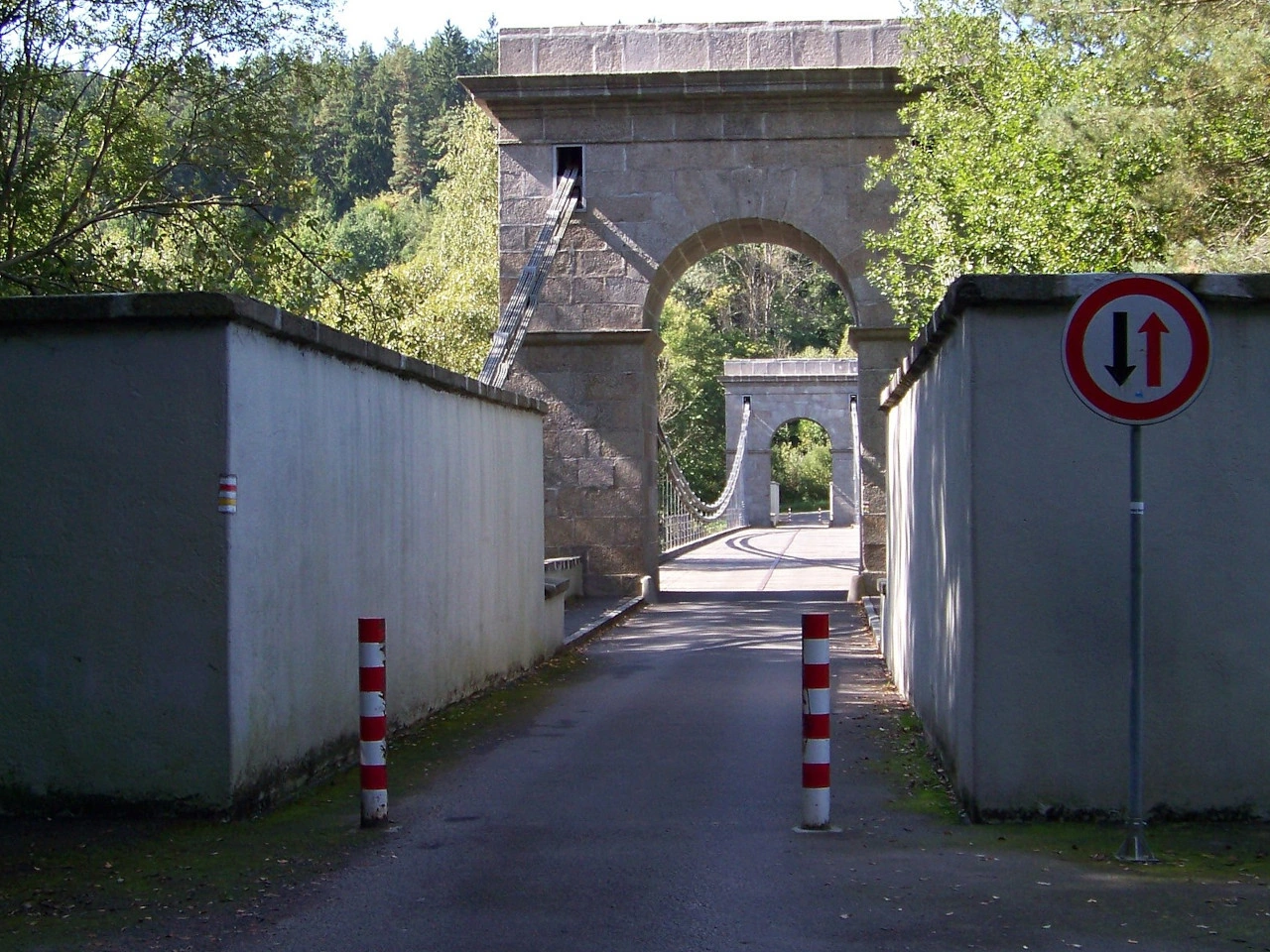
Gegenverkehr Vorrang gewähren
What does give way to oncoming traffic mean?

It means that you must allow drivers approaching from the opposite direction to pass through the narrow section first.

How can you recognise the sign?

The sign normally displays two arrows pointing in opposite directions. The arrow representing oncoming traffic is shown as the priority direction, although the exact sign design differs between countries.

Where is this sign normally used?

It is commonly placed before a narrow bridge, roadworks area, traffic-calming feature or other passage where opposing vehicles cannot pass safely at the same time.

What sign does traffic at the opposite end see?

Drivers approaching from the opposite direction normally see a corresponding sign indicating that they have priority over oncoming traffic.

Does the sign make the road one-way?

No. The road remains open in both directions, but traffic from one direction must wait when opposing vehicles are approaching.

Must you always stop at the sign?

No. You must stop only when necessary to give way. You may continue cautiously when the narrow passage is clear and no priority traffic is approaching.

How far away must an oncoming vehicle be before you may enter?

There is no universal fixed distance. You may enter only when the oncoming driver can continue without being forced to brake, stop, reverse or leave the road.

Does reaching the narrowing first give you priority?

No. Priority is determined by the traffic signs, not simply by which driver arrives first.

What if you have already entered the narrow passage?

Continue cautiously when reversing or stopping would create greater danger. Both drivers should cooperate, but entering first does not cancel an obligation that should have been respected before entering.

What if an oncoming vehicle is already inside?

Wait outside the narrow section and leave enough room for the vehicle to exit. Do not enter and force it to stop or reverse.

What if both vehicles arrive at the same time?

The driver facing the give-way sign must wait, while the driver facing the corresponding priority sign may normally proceed first.

Does the sign apply to cyclists and motorcycles?

It normally applies to all drivers, including cyclists and motorcyclists, unless local signs or regulations provide otherwise.

Must you give way to an oncoming cyclist?

Yes. When the sign applies and the passage is too narrow to maintain a safe distance, wait until the cyclist has passed.

What should you do when a bus or truck approaches?

Stop before the narrow section and leave additional space. Large vehicles may require most or all of the available road width.

Does the sign impose a speed limit?

No. It regulates priority rather than speed. Drivers must nevertheless approach slowly enough to observe oncoming traffic and stop safely.

Does it change priority at an intersection?

No. It applies only between opposing traffic at the narrow passage. Priority at nearby intersections is determined separately.

May you overtake near the narrow passage?

The sign does not itself create an overtaking prohibition, but overtaking is normally unsafe when the road width or visibility is limited.

May you stop or park in the narrow passage?

Only where local law permits it and sufficient space remains. A vehicle must not block the passage or force other traffic into danger.

What if temporary traffic lights are operating?

Follow the active traffic lights. Temporary signals controlling alternating traffic normally take precedence over the fixed priority signs.

What if an authorised person directs traffic?

Follow the authorised person’s instructions. Those instructions normally take precedence over traffic lights, signs and ordinary traffic rules.

When does the obligation end?

The obligation ends after the narrow passage controlled by the signs has been cleared. The ordinary traffic rules then apply again.

1 Tschechien 2 Autobahn 3 Wohngebiet 4 Zone 5 Geschwindigkeitsbegrenzung 6 Richtgeschwindigkeit 7 Gehweg 8 Radweg 9 Gemeinsamer Geh- und Radweg 10 Warnung vor Fußgängern 11 Fußgängerzone 12 Bremsschwelle 13 Zoll 14 Steigung oder Gefälle 15 Busspur 16 Bushaltestelle 17 Sackgasse 18 Stoppschild 19 Vorfahrt gewähren 20 Kreisverkehr 21 Vorfahrtstraße 22 Fahrbahnverengung 23 Vorrang vor dem Gegenverkehr 24 Gegenverkehr Vorrang gewähren 25 Fußgängerüberweg 26 Bahnübergang 27 Schulbereich 28 Wild- oder Viehwechsel 29 Rutschige Fahrbahn 30 Flugzeuge 31 Kurve 32 Richtungstafel 33 Falschfahrt 34 Straßenarbeiten 35 Höhenbegrenzung 36 Gewichtsbeschränkung 37 Geschwindigkeitskontrolle 38 Selektive Sperren 39 Vorfahrt an der nächsten Kreuzung 40 Ampeln 41 Warnung vor Ampeln 42 Fußgängerampeln 43 Fahrbahnmarkierungen 44 Kreuzungsverlauf 45 Aufstellfläche für Radfahrer 46 Geschwindigkeitsanzeige 47 Kilometrierungsmarkierung 48 Entfernungstafeln 49 Verkehrsspiegel 50 Notruftelefon 51 Staatsgrenze 52 Fußgängerunterführung 53 Radroute 54 Parken 55 Parkverbot 56 Halteverbot 57 Park and Ride 58 Kiss and Ride 59 Behindertenparkplatz 60 Verkehrsmanagement 61 Rückwärtsfahren 62 Fahrbahnschäden 63 Vorläufiger Führerschein 64 Gefahrgut 65 Notfall-Auslaufspur 66 Sehenswürdigkeit 67 Achslastbegrenzung 68 Kennzeichen 69 Ladestation 70 Allgemeine Gefahr 71 Radfahrer 72 Bus 73 Polizei 74 Krankenwagen 75 Taxi 76 Polizeizeichen 77 Europäische Abgasnorm 78 Schlagloch 79 Weg 80 Feinstaub 81 Luftverschmutzung 82 Hauptverkehrszeit 83 Straßenverkehrsordnung 84 Bahnhof 85 Straßenrinne 86 Lastenfahrrad 87 Forstfahrzeug 88 Baufahrzeug 89 Sattelzug 90 Oberleitungsbus 91 Speed-Pedelec 92 Lieferfahrzeug 93 Leerlauf 94 Abschleppwagen 95 Allradantrieb 96 Verbot für Fahrzeuge 97 Fahrrad 98 Motorradausrüstung 99 Straßenbahn 100 Gleis ...