


Give wayNew Zealand
 Traffic rules
 New Zealand
13. Give way
A give-way sign requires drivers to allow traffic with priority to proceed before entering, crossing or joining a road. Drivers must reduce speed, observe approaching traffic and stop when necessary.
Unlike a stop sign, a give-way sign does not always require a complete stop. The driver may continue without stopping only when the route is clearly safe and no road user with priority is forced to change speed or direction.

Wikimedia.org • Phillip Capper • CC BY
What does giving way mean in New Zealand?
New Zealand uses Give Way signs and markings. Slow down, be ready to stop and apply the give-way rules to the vehicles whose paths conflict with yours.
🔗 nzta.govt.nz • New Zealand, NZTA official Road Code — give-way
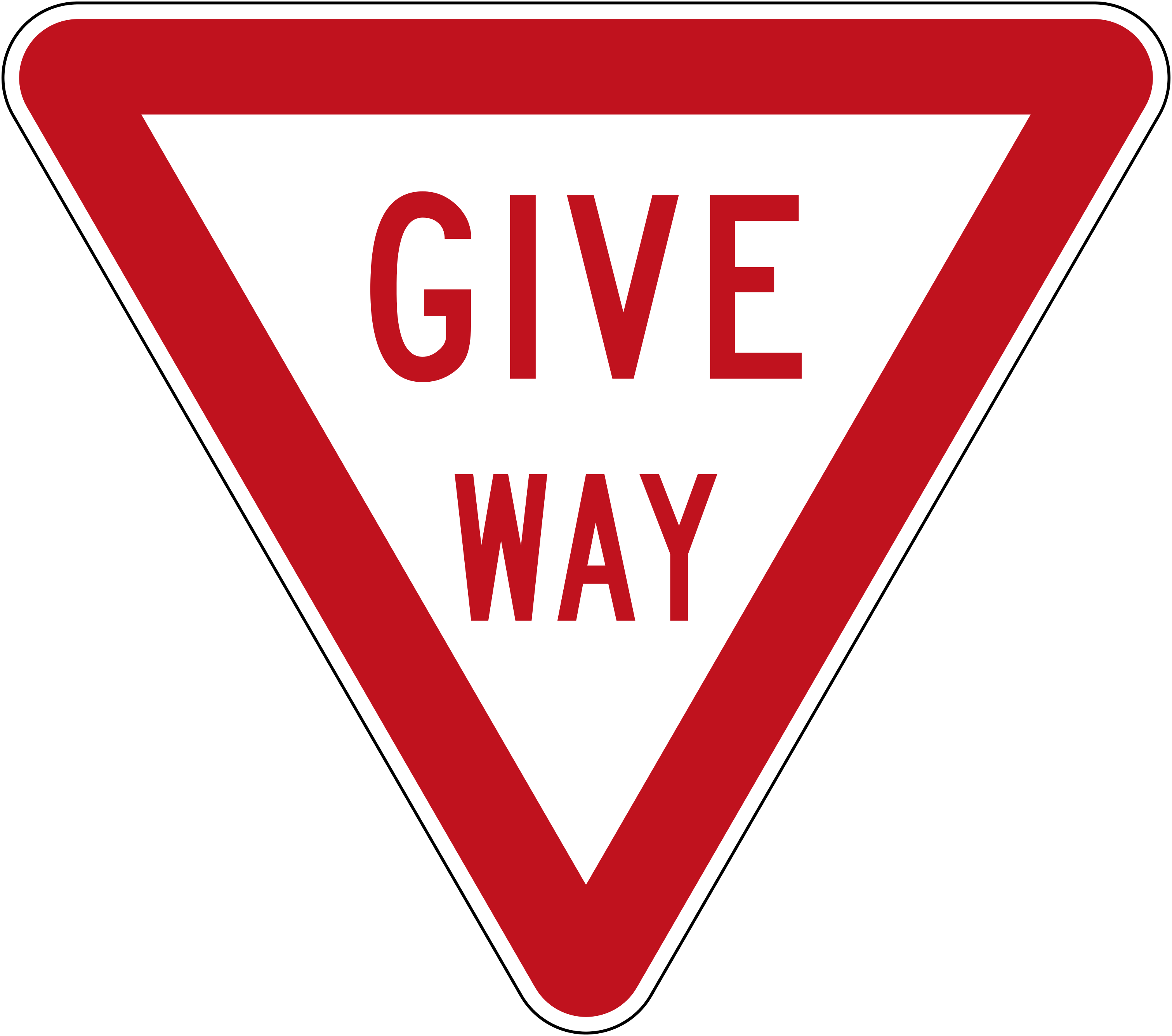 Give way.
English • R2-2 • Give way. Slow down and give way to traffic with priority; stop if necessary.
Sources
🔗 Commons.wikimedia.org
🔗 Nzta.govt.nz • NZTA sign specifications • R2-2
Image via Commons.wikimedia.org
New Zealand Transport Agency • NZTA-Sign-Spec • Source revision 2020-05-07. Wikimedia original unmodified.
Must you always stop when giving way in New Zealand?
No. A give-way control requires stopping when necessary to yield or obtain a safe view. A stop sign requires a complete stop even if the road appears empty.
🔗 nzta.govt.nz • New Zealand, NZTA official Road Code — give-way
What should you check before proceeding after giving way in New Zealand?
Wait until the manoeuvre is safe. Check the priority traffic, the view in both directions and enough space to complete the entry. Giving way to one vehicle does not remove duties towards another driver, a cyclist or a pedestrian.
🔗 nzta.govt.nz • New Zealand, NZTA official Road Code — give-way


