Señal de STOPCanadá

Aprende normas de tráfico con explicaciones claras y ejemplos visuales en nuestro libro ilustrado, diseñado para que estudiar sea sencillo y ameno.


14. Señal de STOP

Una señal de STOP obliga a los conductores a detener completamente el vehículo antes de continuar. La parada debe realizarse en la línea de detención, antes del paso de peatones o, si no existen, en un punto desde el que se pueda observar con seguridad el tráfico transversal.

Después de detenerse, el conductor debe ceder el paso a cualquier usuario que tenga prioridad y continuar solo cuando sea seguro. La forma y el texto de la señal pueden variar ligeramente entre países.
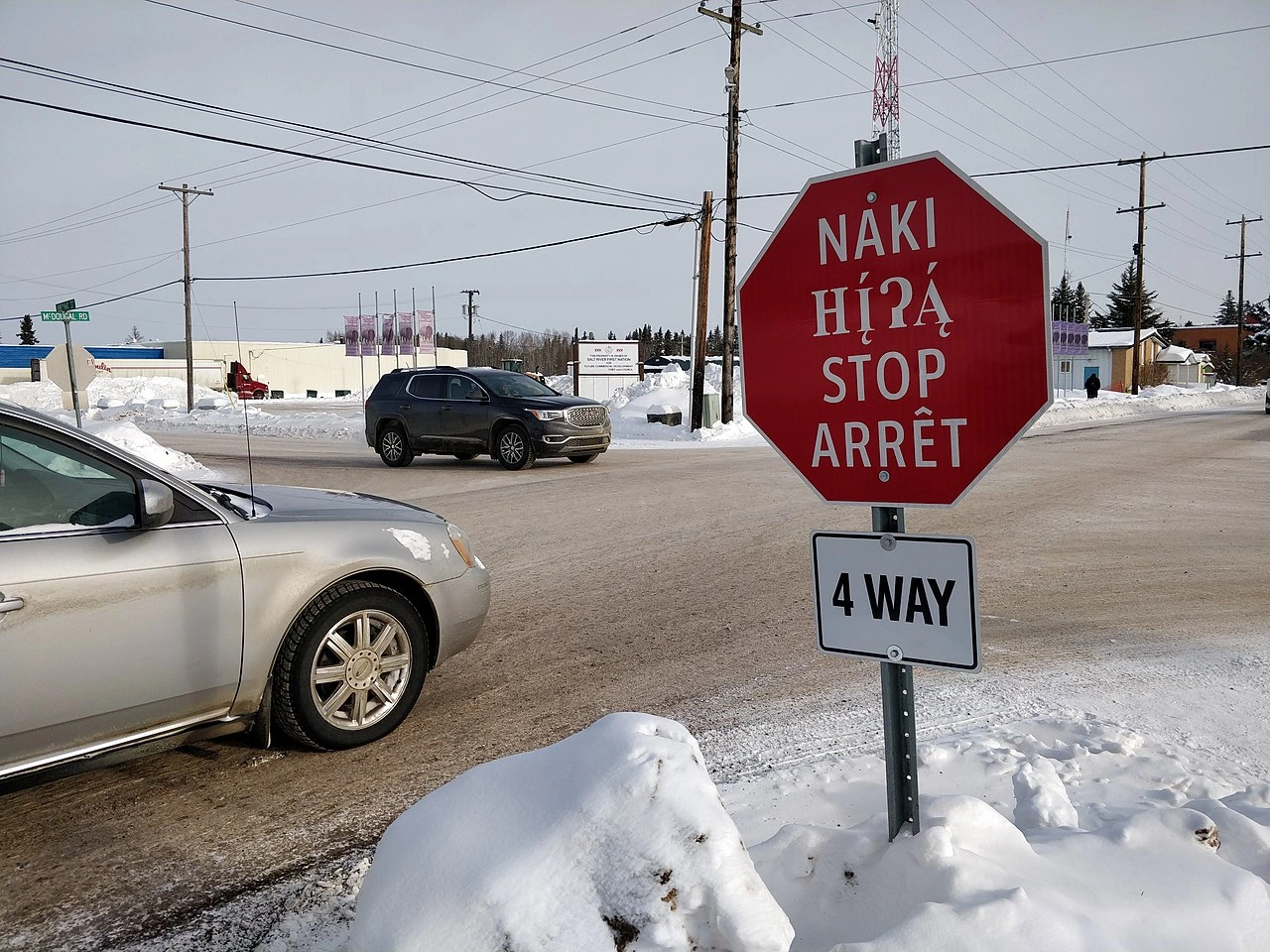
Señal de STOP
What does a stop sign mean?

A stop sign requires a driver to come to a complete stop and give way before proceeding.

How can you recognise a stop sign?

A stop sign is commonly a red octagonal sign displaying the word STOP. Some countries use another legally recognised design, so drivers must learn the signs used locally.

Must you stop when no other traffic is visible?

Yes. The obligation to stop applies even when the road appears completely clear.

What is a complete stop?

A complete stop means that the vehicle has ceased moving entirely. Merely slowing down or allowing the vehicle to continue rolling does not satisfy the requirement.

Where should you stop?

Stop before the stop line where one is provided. Without a line, stop at the legally prescribed position before entering the intersection, crossing or priority road.

May you stop beyond the stop line?

No. The required first stop must be made before the line. If visibility is limited, move forward cautiously after stopping and stop again where necessary before proceeding.

Must every vehicle in a queue stop separately?

Yes. Each driver must make an individual complete stop. Following another vehicle through without stopping is not permitted.

Does stopping give you priority?

No. After stopping, you must continue to give way to all road users who have priority.

Who must you give way to?

Give way to traffic on the road being entered or crossed and to pedestrians, cyclists or other road users who have priority under the applicable rules.

What is the difference between a stop sign and a give-way sign?

A stop sign always requires a complete stop. A give-way sign requires the driver to yield but normally allows continued movement when the road is clearly free.

May you turn after stopping?

Yes. After stopping and giving way, you may turn in any direction permitted by signs, signals, lane arrows and road markings.

May you turn right at a red traffic light after stopping?

This depends entirely on local law and traffic signs. A stop sign does not by itself permit a turn against a red light.

Does a stop sign impose a speed limit?

No. It imposes a stopping and yielding obligation. The normal posted or general speed limit remains applicable before and after the intersection.

Does a stop sign apply to cyclists?

In many countries, cyclists are drivers and must stop unless a specific sign or local rule provides an exception.

What happens at an all-way stop?

The order in which drivers may proceed depends on local rules, commonly involving arrival order, vehicle position and turning direction. Drivers should communicate cautiously and never assume another driver will yield.

What if two vehicles stop at the same time?

Apply the local priority rule and proceed only when the intentions of the other driver are clear. Avoid forcing the other vehicle to brake or change direction.

Do traffic lights override a stop sign?

Where functioning traffic lights control the same movement, they commonly take precedence over the stop sign. Local rules determine what applies when the lights are switched off or flashing.

Do instructions from a police officer override a stop sign?

Yes. Instructions from an authorised traffic officer normally take precedence over traffic signs and ordinary priority rules.

Can a temporary stop sign be legally binding?

Yes. A correctly placed temporary stop sign at roadworks, an event or another temporary traffic arrangement must be obeyed.

What should you do when the stop sign is partly hidden?

If you recognise that a stop sign applies, reduce speed and obey it. Report damaged, obscured or missing signs to the responsible road authority where appropriate.

1 Canadá 2 Autopista 3 Límite de velocidad 4 Velocidad recomendada 5 Carril bici 6 Advertencia de peatones 7 Puente 8 Resalto 9 Carretera de peaje 10 Sentido único 11 Carril bus 12 Parada de autobús 13 Calle sin salida 14 Señal de STOP 15 Ceda el paso 16 Glorieta 17 Estrechamiento de calzada 18 Paso de peatones 19 Paso a nivel 20 Dirección obligatoria 21 Prohibición de giro 22 Zona escolar 23 Cruce de animales 24 Calzada deslizante 25 Desprendimiento de rocas 26 Curva 27 Circulación en sentido contrario 28 Obras 29 Límite de altura 30 Límite de peso 31 Señal de control de velocidad 32 Barreras selectivas 33 Prioridad en la próxima intersección 34 Semáforos 35 Advertencia de semáforos 36 Semáforos peatonales 37 STOP en todos los accesos 38 Teléfono de emergencia 39 Prohibido estacionar 40 Prohibido parar 41 Estacionamiento en línea 42 Estacionamiento para personas con discapacidad 43 Gestión del tráfico 44 Marcha atrás 45 Cambio de sentido 46 Desvío 47 Intersección sin regulación 48 Estado de la calzada 49 Carril de emergencia 50 Permiso provisional 51 Límite de población 52 Carretera cerrada 53 Matrícula 54 Estación de carga 55 Peatón 56 Autobús 57 Policía 58 Ambulancia 59 Taxi 60 Circular demasiado cerca 61 Bache 62 Camino 63 Partículas 64 Contaminación del aire 65 Hora punta 66 Código de circulación 67 Carril reversible 68 Canaleta de la calle 69 Bicicleta de carga 70 Vehículo forestal 71 Vehículo de construcción 72 Camión articulado 73 Trolebús 74 Speed pedelec 75 Vehículo de reparto 76 Motor al ralentí 77 Grúa 78 Tracción a las cuatro ruedas 79 Bicicleta 80 Equipamiento de motocicleta 81 Vía férrea 82 Caravana 83 Remolque 84 Enganche de remolque 85 Camión de bomberos 86 Sirena 87 Convoy 88 Luces de vehículos de emergencia 89 Maquinaria agrícola 90 Bicicleta eléctrica 91 Vehículo eléctrico 92 Pedelec 93 Cuadriciclo 94 Microcoche 95 Vehículo todoterreno 96 Furgoneta 97 Vehículo recreativo 98 Scooter 99 Trikke 100 Vehículo de movilidad personal ...